[caption id="attachment_24287" align="aligncenter" width="1200"]
The Marvelous Time[/caption]
The 2017
Busan International Film Festival will hold a Special Program ‘Sakha Cinema: World of Magical Nature and Myth’ to spotlight the unexplored Sakha films for the first time. Special Program in Focus introduces 7 feature-length films and 5 short films to embrace around 30 year-history of the contemporary Sakha cinema from 1990s to 2017, including Mother by Alexey Romanov, a pioneering work of Sakha cinema.
The Sakha Republic (also referred as Yakutia), located in far Eastern Russia, is a republic under the jurisdiction of the Russian Federation. With thousands years of Far East tradition blended with the Russian social system, Sakha has significant socio-cultural features.
This year’s special program focuses on Sakha cinema which develops an independent film industry and has exclusive cinematic style, regardless of its short history. Sakha cinema, combines regional legends and folk religions with contemporary values and film, shows authentic charm that is rarely found in other regional films. Sakha cinema is constantly drawing attention from the international society, experiencing growth with the active production of The National Film Company ‘Sakha Film’, a rapid wave of young and independent filmmakers in art-house film scene and success in commercial films in Yakutian. After Bonfire by Dmitri Davidov premiered in 2016 Busan International Film Festival, Sakha cinema has been presented in many international film festivals including Belinale and additional broadcasts outside of Russia.
With the attempt to across boundaries of diverse genre and style and the blending of tradition, nature, changes and freshness, Sakha cinema will provide a unique experience to cinephiles visiting the 22nd Busan International Film Festival. Other additional events, where directors and critics from the region will introduce films, will also be placed as part of the special program.
Focus ‘Sakha Cinema: World of Magical Nature and Myth’
Feature-length films
Summer Homestead │ Anatoly VASILIEV
A man returns to his village to buy an abandoned house, where he lived as a child. One night, he met the phantoms of his family members in his summer homestead. After a heart attack, he finds himself between this life and eternity.
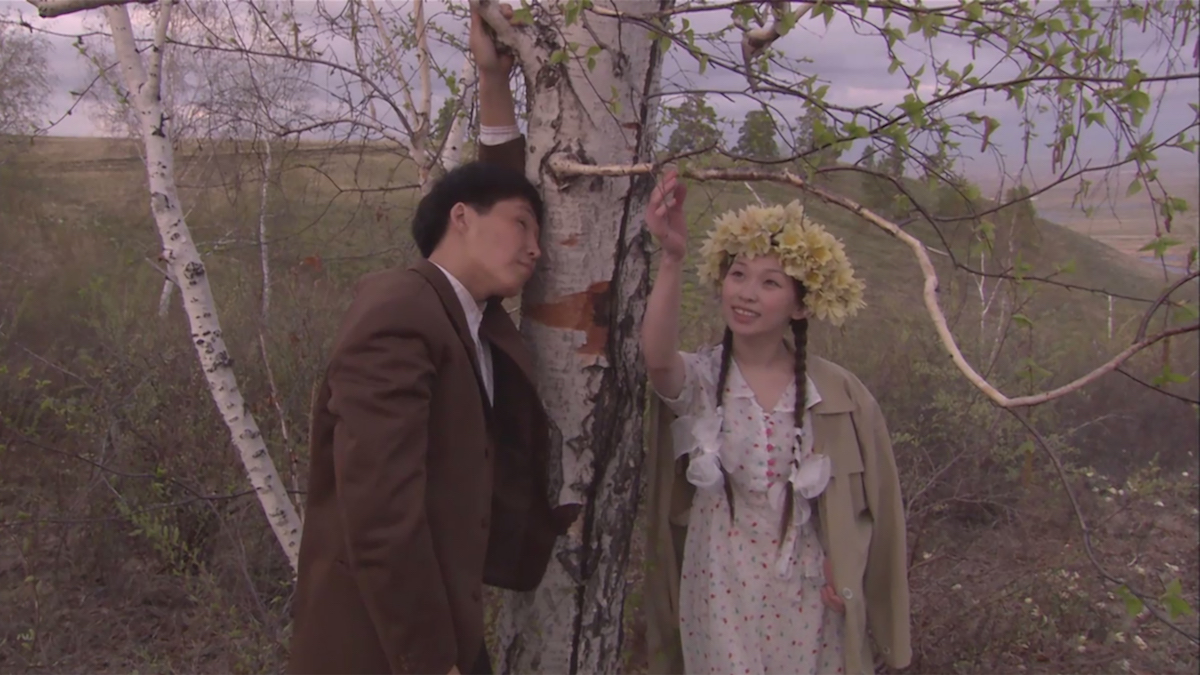
The Marvelous Time │ Nikita ARZHAKOV
A story of marvelous time – youth, eternal spring in souls, emotional tumult, problems of growing up, love, friendship, and self-affirmation. The film’s characters are rural high school students in 1960s. A screen version of a classical Yakut novel of Soviet times.
His Daughter │ Tatyana EVERSTOVA
Little Tanya lives with her grandparents in a remote village in Yakutia. Tanya thinks that the world is beautiful, and always will be so. She doesn’t want anything to change, but changes are coming in her life as the season changes.
24 Snow │ Mikhail BARYNIN
Sergey is a horse breeder, who spends the most part of the year in tundra, looking after his herd. Exhausting life in the North makes a man face one of the hardest questions: who is he? This documentary portrays a man who still leads a way of traditional lifestyle in the modern times.
While There Is Wind │ Sergey POTAPOV
An outcast hero Er Sogotokh kidnaps the daughter of a rich man. A squad of thugs led by her fiancé set out to save her. Meeting with Er Sogotokh changes the life of the beauty. Envy, betrayal, possessiveness are tightly tangled. Can love defeat death?
Keskil 2: Rematch │ Dmitry SHADRIN, Alexey EGOROV, Roman DOROFEYEV
How to get the girl that you love, how to find a job, how to settle in a new place? A comedy about adventures of a naive simpleton named Keskil and his enterprising friend Vitka, which became a hit of Yakutian box-office.
Outlaw │ Stepan BURNASHOV
Three runaway prisoners hide in the winter taiga, leaving a bloody trace behind. Are all the fugitive ruthless criminals? Who will win the fight for life and escape at the peak of winter, when the temperature outside of a secluded hunting hut falls below 50 degrees?
Short films
Mother │ Alexey ROMANOV
A tragic story of love between a lone traveler and a beautiful girl, who turns out to be a ghost. Restless soul of the dead beauty cannot find peace in this world, and the girl asks her beloved one to bury her according to customs.
Deliverance │ Gennady BAGYNANOV
Two contrasting men – a mature hunter, keeper of traditional patriarchal values, and his guest, a recently baptized young Christian – collide because of a woman. Only a duel can decide their fate. The film is based on an old legend.
Fisherman │ Vyacheslav SEMYONOV
A cinematic parable about a lonely old Balyksyt, who has lived his entire life near a big lake. He treats the lake as if it was a living creature with a soul. Once Balyksyt saves a suicide, and brings the desperate man back to confidence.
Wooden Horse │ Prokopy NOGOVITSYN
A cinematic poem with a nostalgic view on childhood: dreams, happiness, and loneliness of a rural kid.
Premonition │ Mikhail LUKACHEVSKY, Prokopy NOGOVITSYN
A Sakha tradition of a boy and his grandfather embarking on a fishing trip turns into philosophical thoughts about life and death in this cinematically stunning fragmentation of physical and mental reality.
Read more


 Lee Jang-ho[/caption]
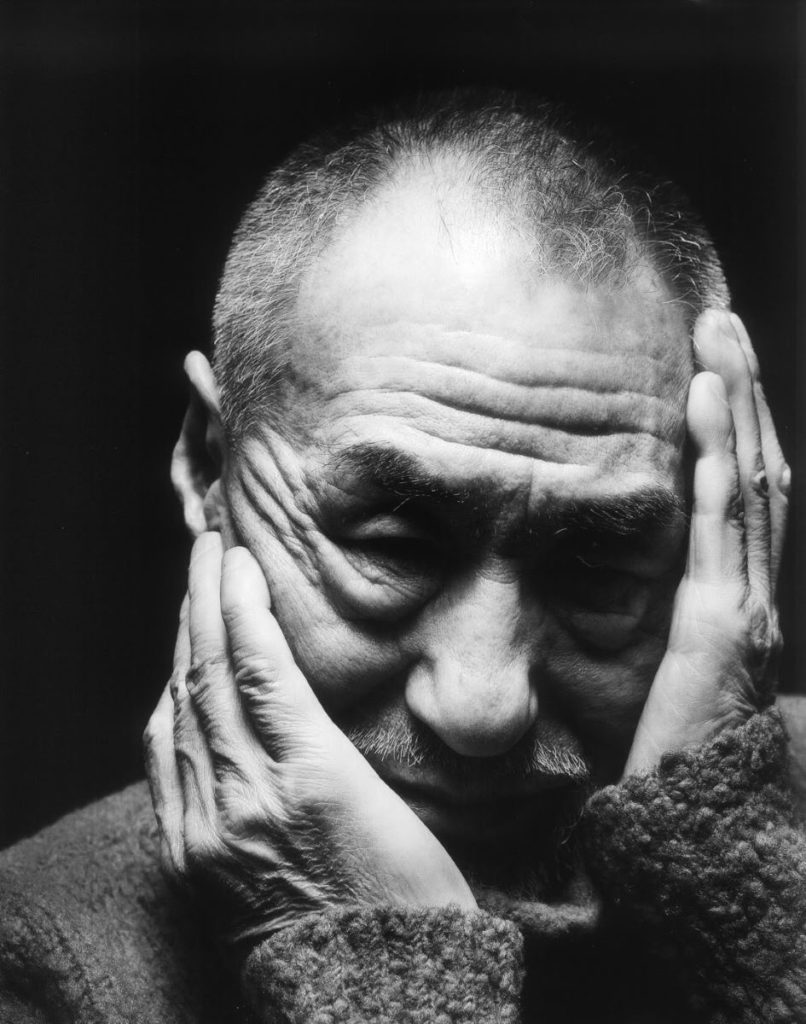
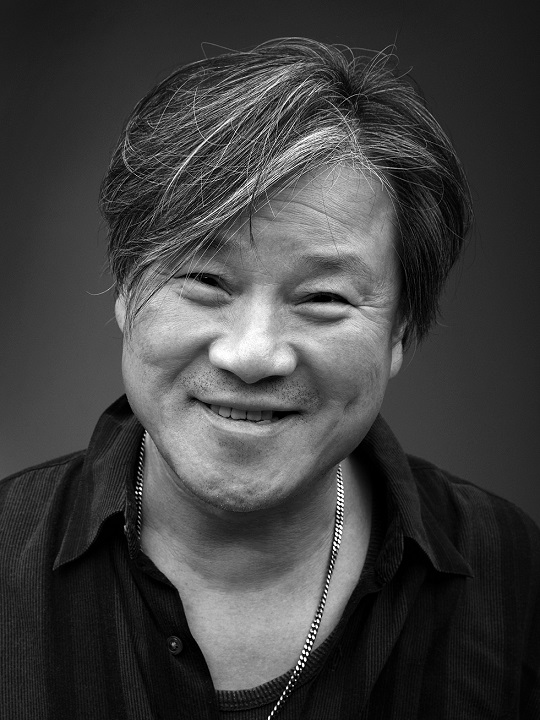
The 23rd Busan International Film Festival will honor Lee Jang-ho with a Korean Cinema Retrospective and will screen 8 of his representative films.
Lee Jang-ho is a representative director of the 1970’s and the 1980’s Korean cinema. His debut film, Heavenly Homecoming to Stars (1974) opened to 460,000 audiences, which was extraordinary for that time. He immediately became one of the most prominent directors of that era. Lee came into the spotlight with his social realism, criticizing poverty and oppression in early 1980’s Korea with films such as Good Windy Days (1980), Children of Darkness (1981), Widow Dance (1983), and Declaration of Fools (1983). He became a renowned director again with his erotic films, Between the Knees (1984) and Eoh Wu-dong (1985), and Lee Jang-ho’s Baseball Team (1986), based on Lee Hyun-se’s comic book. Lee Jang-ho, one of the most significant Korean directors in the 1980’s, released The Man with Three Coffins (1987), a masterpiece of Lee’s films. Four of Lee’s films – Heavenly Homecoming to Stars (1974), Good Windy Days (1980), Declaration of Fools (1983), and The Man with Three Coffins (1987) are included in the 2013 edition of The 100 Korean Films listed by the Korean Film Archive. Lee’s achievement in film is undeniably outstanding. Lee was the executive chairman at the Bucheon International Fantastic Film Festival and is currently the chairman of the Seoul Film Commission. Lee’s 8 representative films selected for the Korean Cinema Retrospective will be screened at the 23rd Busan International Film Festival from October 4 to October 13. His old but fascinating films have important implications for both cineasts and new audiences.
Lee Jang-ho’s debut film, Heavenly Homecoming to Stars (1974) is based on a serialized novel of Choi In-ho’s that was first published in newspaper installments. The film opened to 460,000 audiences, crushing domestic box office records. After Kyeong-A (Ahn In-suk), the main character of the film, was dumped by her first love, she becomes the second wife of a man who suffers delusional jealousy. She divorces the man and later becomes a prostitute. Her life story touches all audiences. The film reflects the new wave of the 70’s youth culture with Lee Jang-hee’s songs. The film is also the start of ‘Hostess Melodrama’ films such as Yeong-Ja’s Heydays and Winter Woman.
Good Windy Days (1980) is the film that defines Lee Jang-ho as a critical social realism writer. Ahn Sung-ki returns to the big screen as an adult actor for the first time in this film. Numerous actors such as Kim Seong-chan, Lee Yeong-ho, Yu Ji-in, Kim Bo-yeon, Choi Bool-am, Kim Hee-ra, Park Won-suk, Kim In-moon, Kim Young-ae, and Im Ye-jin provide unforgettable performances. The film was considered a must-see film for other young cineasts at that time. The film describes 1970’s Seoul after the development of Gangnam in southern Seoul. The film is focused on three young impoverished rural men who migrate to an urban life. It also includes different stories from different generations that portray the identification of an era.
Children of Darkness (1981) is based on Lee Cheol-yong’s novel of the same title. The story of the film corresponds to Lee Jang-ho’s other film, Heavenly Homecoming to Stars, in regards to dealing with a woman who becomes a prostitute. The main character of the film, Young-Ae (Na Young-hee)’s dream is to be a singer. She runs away from home and goes to a singer audition despite her parents’ opposition. After the audition, she tries to learn how to sing; however, she is raped and sent to a club band who moves around the local area. She gives birth to a daughter after she begins to live with a man who plays lead saxophone in the club band. Unfortunately, the man is arrested for assault and the daughter dies from pneumonia. Young-Ae later becomes a prostitute who lives a life of hardships in the red-light district.
Widow Dance (1983) is based on Lee Cheol-yong’s novel along with Children of Darkness. The film criticizes society by describing the life of widows who have divorced for different reasons. The film consists of three episodes. The first episode is Mal-suk (Lee Bo-hee), who commits fraud on a suitor to deprive him of money by pretending to be divorced from a rich Korean-Japanese guy. Her fraud is revealed and then she is finally arrested. The second episode is about Mal-suk’s sister-in-law (Park Won-suk). Mal-suk’s sister-in-law becomes a widow after her husband dies in a car accident. The last episode follows the previous two episodes. The widows lead hopeless and on-going lives.
Declaration of Fools (1983), by typical realist film director Lee Jang-ho, adopts the use of innovative film techniques that influence next generation filmmakers. He recorded ironic narration with a children’s voice, shot in low-speed cinematography as seen in classic silent films, and uses the film to express sarcastic acts. The experimental sound of the film is remarkable in mixing electronic game sounds and Buddhist sounds. Lee stated in an interview, “I don’t think that Declaration of Fools was created by myself. The period of dictatorship that overshadowed Korea creates the film. I was forced to make up the story for Declaration of Fools at the beginning of making the film. I was not able to film the movie that I wanted to. I would have quit filming if I had to.” The film reflects a director’s raging spirit that is not afraid of limitations.
[caption id="attachment_31563" align="aligncenter" width="1200"]
Lee Jang-ho[/caption]
The 23rd Busan International Film Festival will honor Lee Jang-ho with a Korean Cinema Retrospective and will screen 8 of his representative films.
Lee Jang-ho is a representative director of the 1970’s and the 1980’s Korean cinema. His debut film, Heavenly Homecoming to Stars (1974) opened to 460,000 audiences, which was extraordinary for that time. He immediately became one of the most prominent directors of that era. Lee came into the spotlight with his social realism, criticizing poverty and oppression in early 1980’s Korea with films such as Good Windy Days (1980), Children of Darkness (1981), Widow Dance (1983), and Declaration of Fools (1983). He became a renowned director again with his erotic films, Between the Knees (1984) and Eoh Wu-dong (1985), and Lee Jang-ho’s Baseball Team (1986), based on Lee Hyun-se’s comic book. Lee Jang-ho, one of the most significant Korean directors in the 1980’s, released The Man with Three Coffins (1987), a masterpiece of Lee’s films. Four of Lee’s films – Heavenly Homecoming to Stars (1974), Good Windy Days (1980), Declaration of Fools (1983), and The Man with Three Coffins (1987) are included in the 2013 edition of The 100 Korean Films listed by the Korean Film Archive. Lee’s achievement in film is undeniably outstanding. Lee was the executive chairman at the Bucheon International Fantastic Film Festival and is currently the chairman of the Seoul Film Commission. Lee’s 8 representative films selected for the Korean Cinema Retrospective will be screened at the 23rd Busan International Film Festival from October 4 to October 13. His old but fascinating films have important implications for both cineasts and new audiences.
Lee Jang-ho’s debut film, Heavenly Homecoming to Stars (1974) is based on a serialized novel of Choi In-ho’s that was first published in newspaper installments. The film opened to 460,000 audiences, crushing domestic box office records. After Kyeong-A (Ahn In-suk), the main character of the film, was dumped by her first love, she becomes the second wife of a man who suffers delusional jealousy. She divorces the man and later becomes a prostitute. Her life story touches all audiences. The film reflects the new wave of the 70’s youth culture with Lee Jang-hee’s songs. The film is also the start of ‘Hostess Melodrama’ films such as Yeong-Ja’s Heydays and Winter Woman.
Good Windy Days (1980) is the film that defines Lee Jang-ho as a critical social realism writer. Ahn Sung-ki returns to the big screen as an adult actor for the first time in this film. Numerous actors such as Kim Seong-chan, Lee Yeong-ho, Yu Ji-in, Kim Bo-yeon, Choi Bool-am, Kim Hee-ra, Park Won-suk, Kim In-moon, Kim Young-ae, and Im Ye-jin provide unforgettable performances. The film was considered a must-see film for other young cineasts at that time. The film describes 1970’s Seoul after the development of Gangnam in southern Seoul. The film is focused on three young impoverished rural men who migrate to an urban life. It also includes different stories from different generations that portray the identification of an era.
Children of Darkness (1981) is based on Lee Cheol-yong’s novel of the same title. The story of the film corresponds to Lee Jang-ho’s other film, Heavenly Homecoming to Stars, in regards to dealing with a woman who becomes a prostitute. The main character of the film, Young-Ae (Na Young-hee)’s dream is to be a singer. She runs away from home and goes to a singer audition despite her parents’ opposition. After the audition, she tries to learn how to sing; however, she is raped and sent to a club band who moves around the local area. She gives birth to a daughter after she begins to live with a man who plays lead saxophone in the club band. Unfortunately, the man is arrested for assault and the daughter dies from pneumonia. Young-Ae later becomes a prostitute who lives a life of hardships in the red-light district.
Widow Dance (1983) is based on Lee Cheol-yong’s novel along with Children of Darkness. The film criticizes society by describing the life of widows who have divorced for different reasons. The film consists of three episodes. The first episode is Mal-suk (Lee Bo-hee), who commits fraud on a suitor to deprive him of money by pretending to be divorced from a rich Korean-Japanese guy. Her fraud is revealed and then she is finally arrested. The second episode is about Mal-suk’s sister-in-law (Park Won-suk). Mal-suk’s sister-in-law becomes a widow after her husband dies in a car accident. The last episode follows the previous two episodes. The widows lead hopeless and on-going lives.
Declaration of Fools (1983), by typical realist film director Lee Jang-ho, adopts the use of innovative film techniques that influence next generation filmmakers. He recorded ironic narration with a children’s voice, shot in low-speed cinematography as seen in classic silent films, and uses the film to express sarcastic acts. The experimental sound of the film is remarkable in mixing electronic game sounds and Buddhist sounds. Lee stated in an interview, “I don’t think that Declaration of Fools was created by myself. The period of dictatorship that overshadowed Korea creates the film. I was forced to make up the story for Declaration of Fools at the beginning of making the film. I was not able to film the movie that I wanted to. I would have quit filming if I had to.” The film reflects a director’s raging spirit that is not afraid of limitations.
[caption id="attachment_31563" align="aligncenter" width="1200"]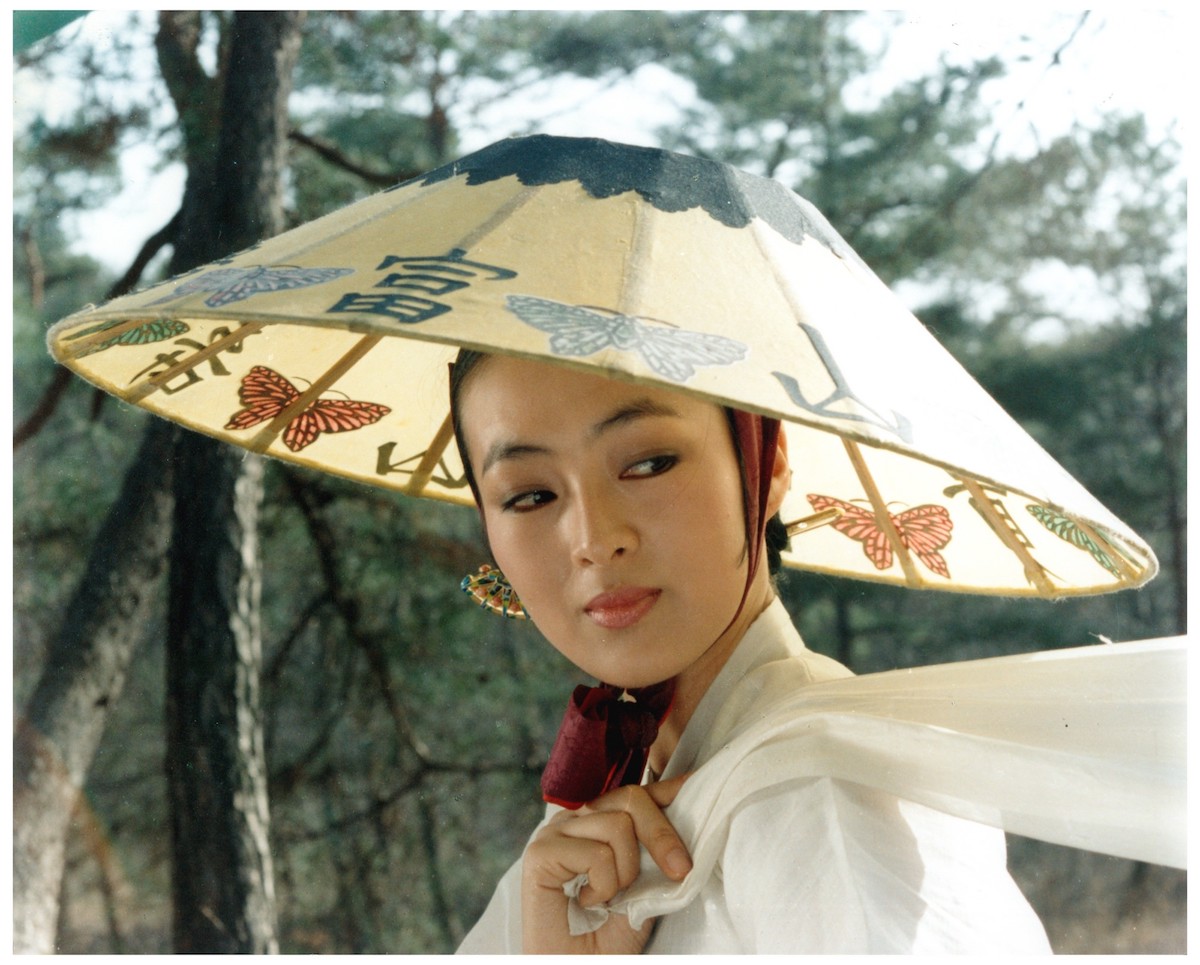 Eoh Wu-dong (1985)[/caption]
Eoh Wu-dong (1985) is a representative erotic film of Lee Jang-ho, with the film Between the Knees (1984). During the Joseon Dynasty reign of King Seongjong, Eoh Wu-dong born of a noble family, falls in love with a lowly man. The true love is forbidden due to the hierarchical nature of society at that time. After a failed suicide attempt, she becomes a Korean geisha who uses her body to tease the nobility. Her family-in-laws attempt to kill her because they do not want the relationship with Eoh Wu-dong noticed. Eoh Wu-dong, the main independent female character, is impressive in regards to being against the male dominant society, unlike the film, Between the Knees (1984).
The Man with Three Coffins (1987) is Lee Jang-ho’s masterpiece work of his subsequent period, based on Lee Je-ha’s novel with the same title. The main character travels with his wife’s ashes who died 3 years earlier. He meets a sick old man and the nurse who cares for him at the motel by chance. The owner of the restaurant delivers a message of the old man’s special offer to take him to Wolsan, but the protagonist denies. After that, women who have had a sexual relationship with the protagonist continuously end up dead under strange circumstances. He meets the nurse again. Lee Bo-hee simultaneously plays three different roles, including a nurse, who meets the protagonist. The film maximizes a surreal mood.
Lee Jang-ho released the feature film, God’s Eye View (2013), 18 years after his feature film, Declaration of Genius (1995). A missionary group comprised of a church minister, a missionary, and a church elder is kidnapped by the Islamic rebel forces. The missionary group is afraid of the rebel forces, who demand the release of the rebel force leader from prison in return for releasing the missionary group. The missionary group begins to distrust each other. They are required to choose between life or a religious belief, revealing each one’s naked truth. They consider taking martyrdom is for granted because of the religious beliefs; however, the real martyrdom is not about committing suicide. They are questioned in regards to neglecting another’s death for a religious belief.
Eoh Wu-dong (1985)[/caption]
Eoh Wu-dong (1985) is a representative erotic film of Lee Jang-ho, with the film Between the Knees (1984). During the Joseon Dynasty reign of King Seongjong, Eoh Wu-dong born of a noble family, falls in love with a lowly man. The true love is forbidden due to the hierarchical nature of society at that time. After a failed suicide attempt, she becomes a Korean geisha who uses her body to tease the nobility. Her family-in-laws attempt to kill her because they do not want the relationship with Eoh Wu-dong noticed. Eoh Wu-dong, the main independent female character, is impressive in regards to being against the male dominant society, unlike the film, Between the Knees (1984).
The Man with Three Coffins (1987) is Lee Jang-ho’s masterpiece work of his subsequent period, based on Lee Je-ha’s novel with the same title. The main character travels with his wife’s ashes who died 3 years earlier. He meets a sick old man and the nurse who cares for him at the motel by chance. The owner of the restaurant delivers a message of the old man’s special offer to take him to Wolsan, but the protagonist denies. After that, women who have had a sexual relationship with the protagonist continuously end up dead under strange circumstances. He meets the nurse again. Lee Bo-hee simultaneously plays three different roles, including a nurse, who meets the protagonist. The film maximizes a surreal mood.
Lee Jang-ho released the feature film, God’s Eye View (2013), 18 years after his feature film, Declaration of Genius (1995). A missionary group comprised of a church minister, a missionary, and a church elder is kidnapped by the Islamic rebel forces. The missionary group is afraid of the rebel forces, who demand the release of the rebel force leader from prison in return for releasing the missionary group. The missionary group begins to distrust each other. They are required to choose between life or a religious belief, revealing each one’s naked truth. They consider taking martyrdom is for granted because of the religious beliefs; however, the real martyrdom is not about committing suicide. They are questioned in regards to neglecting another’s death for a religious belief. Musician Ryuichi Sakamoto, the first Asian to win the Academy Award for Best Original Score for The Last Emperor (1986), will receive the Asian Filmmaker of the Year Award at the 23rd Busan International Film Festival. The Asian Filmmaker of the Year Award is granted to a notable figure or organization with outstanding achievements in improving and developing the Asian Film industry and facilitating cultural development.
Debuting in 1978 with YMO (Yellow Magic Orchestra), Ryuichi Sakamoto pioneered electronic music and electro hop. Ryuichi has continuously expanded his musical boundaries from classical music into rock and opera. He also entered the world of film music with Merry Christmas, Mr. Lawrence (1983) by director Nagisa Oshima. Ryuichi was the first Asian to win the Academy Award for Best Original Score for The Last Emperor (1986), and accordingly won the Golden Globe Awards and the British Academy Film Awards for The Sheltering Sky (1990) and Little Buddha (1993) to become and remain the master of film music. Ryuichi has constantly composed film music such as The Fortress (2017) and My TYRANO: Together, Forever (2019) followed by his triumphant musical return after a diagnosis of throat cancer in 2014 – The Revenant (2015), which was nominated for the Golden Globe Awards and Grammy Awards. The score will further establish his prominence in contemporary film music.
Ryuichi Sakamoto, celebrating his 40th anniversary of music involvement, is deeply admired and loved by the public as an artist who remains a prominent musician in the history of world cinema and contributes his voice to various social issues and causes. In response to his sheer amount of time, effort, and passion, the 23rd Busan International Film Festival announces Ryuichi Sakamoto as the winner of the Asian Filmmaker of the Year Award in recognition of his music and life.
The opening ceremony of the 23rd Busan International Film Festival at the BIFF Theater of Busan Cinema Center on October 4 will host Ryuichi Sakamoto’s opening performance to commemorate the 40th anniversary of his musical debut.
Musician Ryuichi Sakamoto, the first Asian to win the Academy Award for Best Original Score for The Last Emperor (1986), will receive the Asian Filmmaker of the Year Award at the 23rd Busan International Film Festival. The Asian Filmmaker of the Year Award is granted to a notable figure or organization with outstanding achievements in improving and developing the Asian Film industry and facilitating cultural development.
Debuting in 1978 with YMO (Yellow Magic Orchestra), Ryuichi Sakamoto pioneered electronic music and electro hop. Ryuichi has continuously expanded his musical boundaries from classical music into rock and opera. He also entered the world of film music with Merry Christmas, Mr. Lawrence (1983) by director Nagisa Oshima. Ryuichi was the first Asian to win the Academy Award for Best Original Score for The Last Emperor (1986), and accordingly won the Golden Globe Awards and the British Academy Film Awards for The Sheltering Sky (1990) and Little Buddha (1993) to become and remain the master of film music. Ryuichi has constantly composed film music such as The Fortress (2017) and My TYRANO: Together, Forever (2019) followed by his triumphant musical return after a diagnosis of throat cancer in 2014 – The Revenant (2015), which was nominated for the Golden Globe Awards and Grammy Awards. The score will further establish his prominence in contemporary film music.
Ryuichi Sakamoto, celebrating his 40th anniversary of music involvement, is deeply admired and loved by the public as an artist who remains a prominent musician in the history of world cinema and contributes his voice to various social issues and causes. In response to his sheer amount of time, effort, and passion, the 23rd Busan International Film Festival announces Ryuichi Sakamoto as the winner of the Asian Filmmaker of the Year Award in recognition of his music and life.
The opening ceremony of the 23rd Busan International Film Festival at the BIFF Theater of Busan Cinema Center on October 4 will host Ryuichi Sakamoto’s opening performance to commemorate the 40th anniversary of his musical debut.
 Ash l LI Xiaofeng[/caption]
The 22nd
Ash l LI Xiaofeng[/caption]
The 22nd  The late Japanese Master film director Suzuki Seijun has been selected as the Asian Filmmaker of the Year by the 22nd
  The 22nd
  The Last Verse by Tseng Ying-Ting,[/caption]
10 official selections from up-and-coming Asian directors will compete in the New Currents section at the 22nd
The Last Verse by Tseng Ying-Ting,[/caption]
10 official selections from up-and-coming Asian directors will compete in the New Currents section at the 22nd  The 22nd
 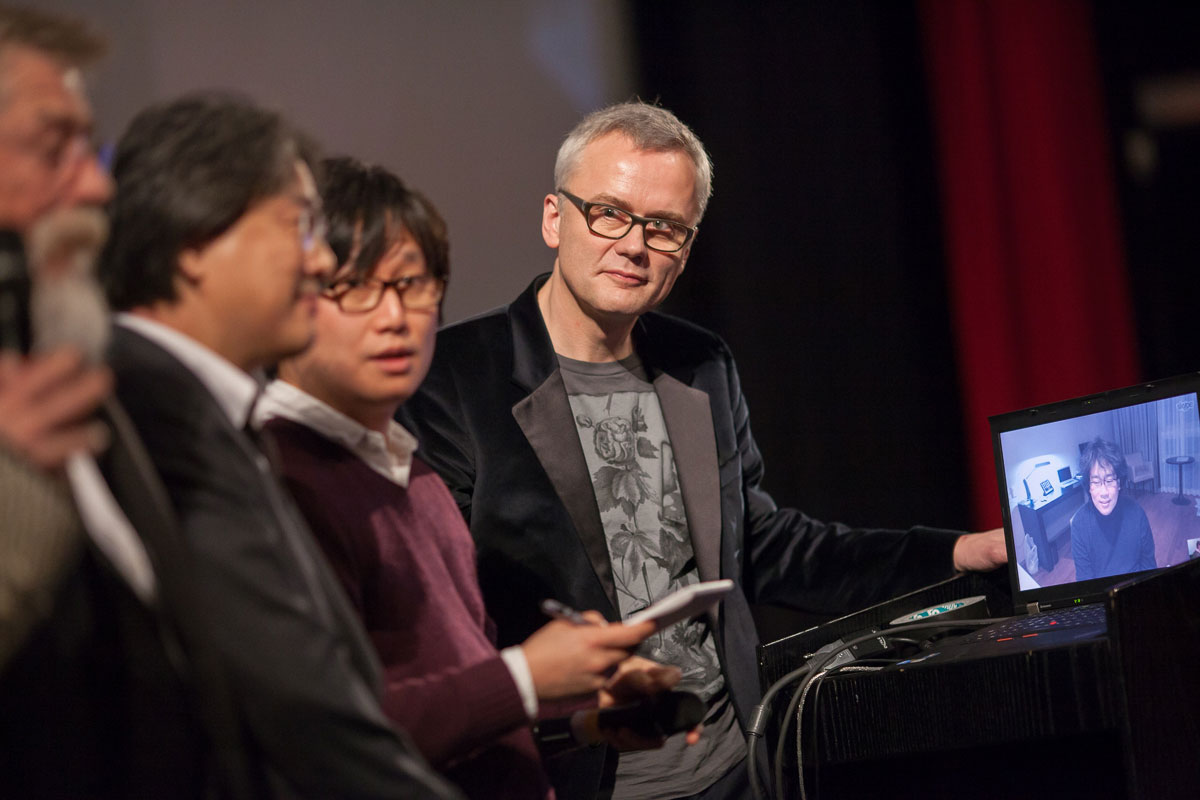 Christoph Terhechte (far right) with John Hurt, Park Chan-Wook at Berlin Film Festival[/caption]
Berlin International Film Festival exec Christoph Terhechte will be the recipient of this year’s Korean Cinema Award at the 22nd
Christoph Terhechte (far right) with John Hurt, Park Chan-Wook at Berlin Film Festival[/caption]
Berlin International Film Festival exec Christoph Terhechte will be the recipient of this year’s Korean Cinema Award at the 22nd 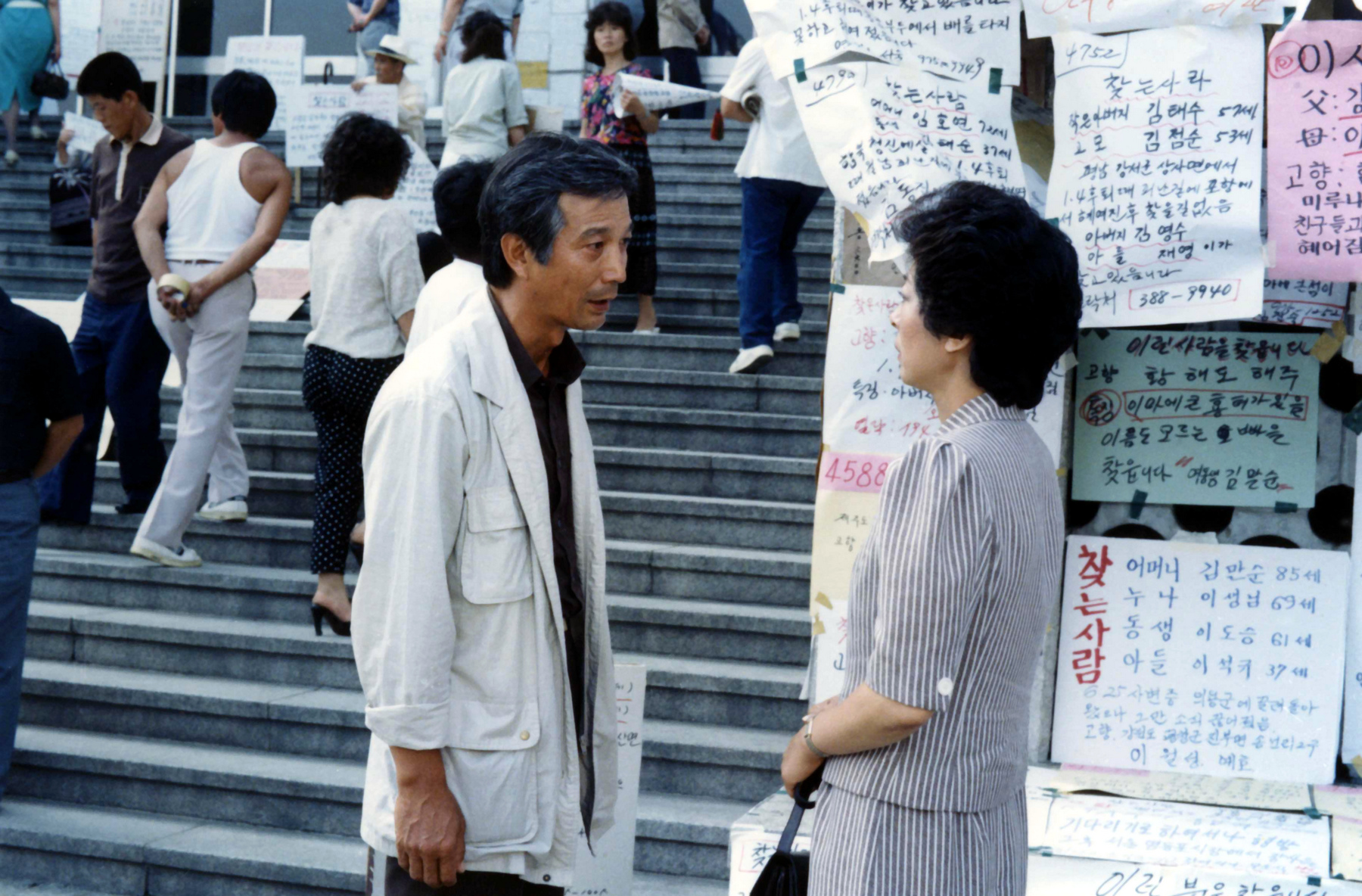 Gilsotteum[/caption]
The 22nd
Gilsotteum[/caption]
The 22nd