
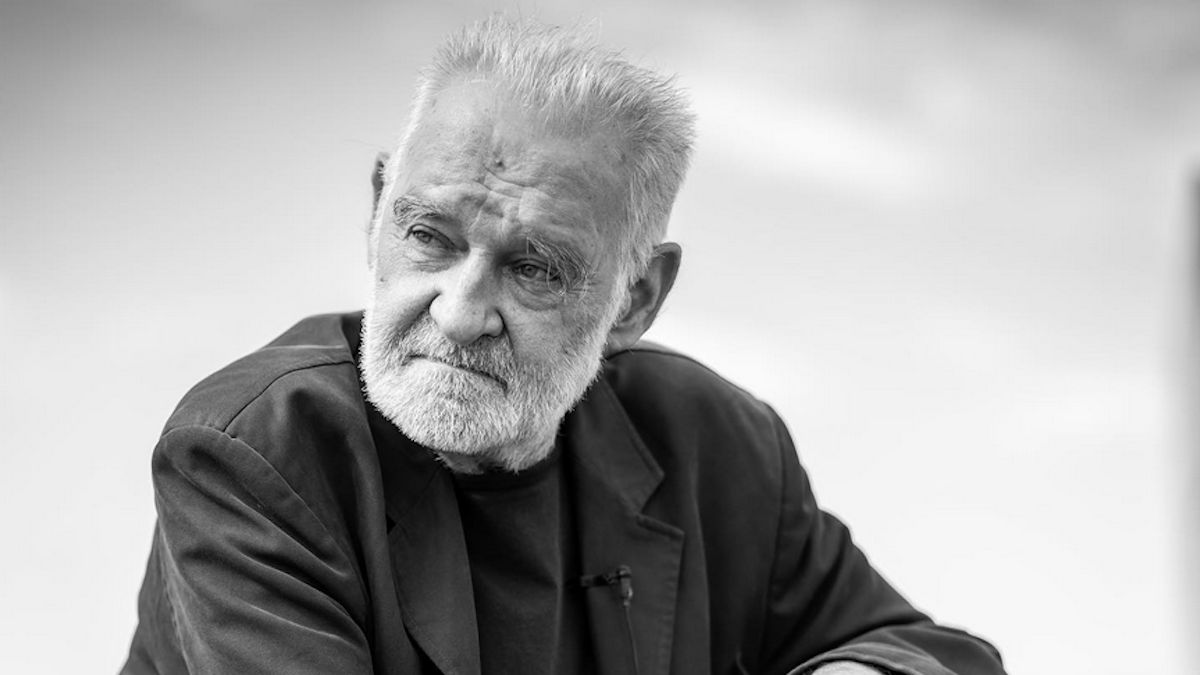
Béla Tarr, the influential Hungarian director, widely celebrated for a body of work marked by long takes, black-and-white cinematography and a profound exploration of human existence, has died at the age of 70.
The European Film Academy issued a statement, saying, “It is with deep sorrow that the European Film Academy announces that the iconic Hungarian film director Béla Tarr passed away this morning after a long and serious illness. The European Film Academy mourns an outstanding director and a personality with a strong political voice, who is not only deeply respected by his colleagues but also celebrated by audiences world-wide. The grieving family asks for the understanding of the press and the public and that they not be sought for a statement during these difficult days.”
Born on July 21, 1955, in Pécs, Hungary, Tarr began his career in social realist cinema, making his feature debut with Family Nest (1979), a gritty portrayal of ordinary working-class life in post-war Hungary. Over the next decade he developed a distinctive cinematic style that rejected conventional narrative pacing in favor of enduring shots and atmospheric sound design, establishing him as a key figure in European art cinema.
Tarr’s international breakthrough came with Damnation (1988), a haunting black-and-white drama that signaled his shift toward more meditative and symbolic filmmaking. This was followed by Sátántangó (1994), an epic more than seven hours long adapted from the novel by László Krasznahorkai, which has been widely praised as one of the great achievements of slow cinema. Critics and cinephiles have noted Sátántangó for its immersive depiction of a decaying collective farm community and its patient, panoramic imagery.
Among his other major works were Werckmeister Harmonies (2000), a bleak existential tale of a provincial town disrupted by mysterious forces, and The Man from London (2007), a noir-inflected story of obsession and moral erosion. These films further solidified Tarr’s reputation as a director with a unique philosophical voice and uncompromising artistic vision. His films often conveyed a pessimistic view of humanity and society, marked by long, contemplative takes and minimal dialogue.
Tarr’s last released film was The Turin Horse (2011), co-directed with Ágnes Hranitzky. Shot in stark black-and-white and composed of extended takes, the film depicts the repetitive, bleak existence of a farmer and his daughter struggling against elemental forces. Tarr himself announced that The Turin Horse would be his final feature, and he subsequently retired from filmmaking, though he remained active through lectures, retrospectives and occasional artistic projects.
Throughout his career Tarr received numerous awards and global recognition, including lifetime achievement honors from international film festivals and critical acclaim across Europe and beyond.
Leave a Reply
You must be logged in to post a comment.