
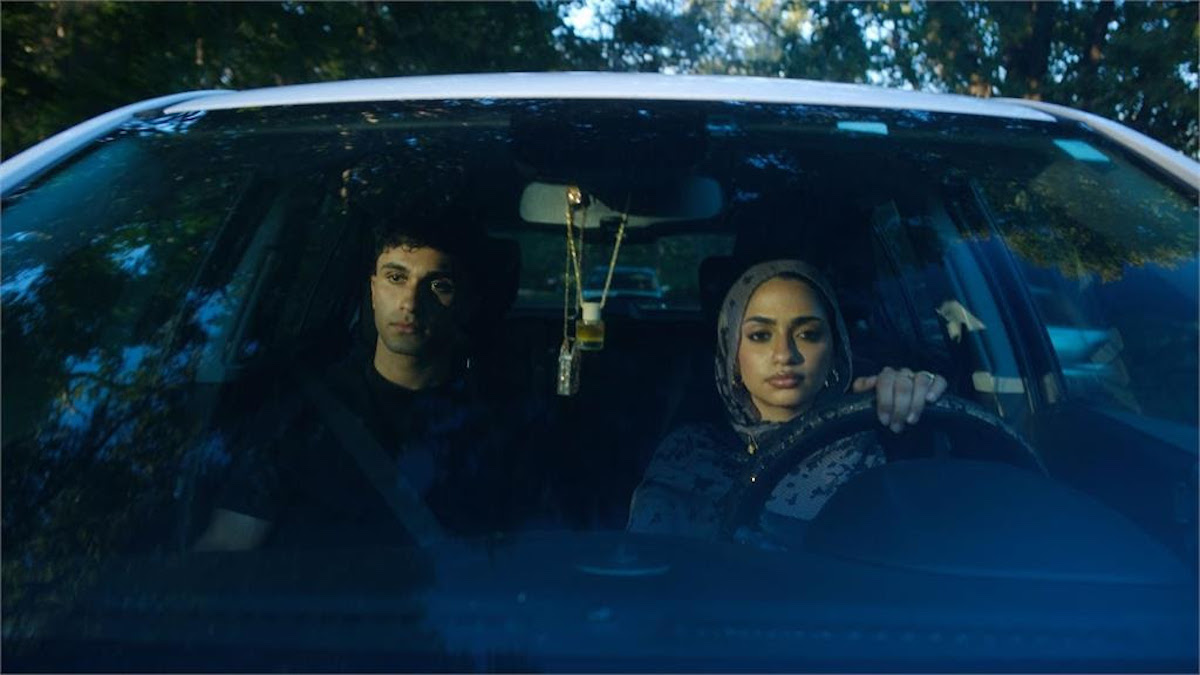
When we first meet Yosef, the subject of Naveen Chaubal’s coming-of-age documentary, Pinball, which celebrated its world premiere at True/False Film Festival on March 6, he seems to be the typical American teenager. He plays soccer, debates college admissions, works at a restaurant to support his family, and spends free time hanging out with friends in his Louisville, Kentucky home.
However, Yosef’s story deviates from the narrative of quintessential American adolescence in one major way: he was born in Baghdad and fled with his family to Egypt at only four years old in 2004, after the United States invaded Iraq, before receiving asylum in Louisville.
In Pinball, audiences watch as Yosef, who is in the midst of a transition into young adulthood, begins to feel unsettled by questions of identity, belonging, and dreams for the future. These uncertainties are familiar to most adults, but for Yosef, they are further muddied by the contrasting perspectives of his family – his sister, Azraa, sees a better path for herself back in Egypt, while his father hopes for a strong future for his family in the United States.
What plays out is a story of becoming, a familiar molding of identity and purpose through the lens of an intimate portrait of the film’s subject. Director Naveen Chaubal met with VIMooZ to provide a deeper look into the process, intentions, and themes of Pinball ahead of its premiere.
MAKENNA BROWN: In your own words, could you give a brief description of what Pinball is about, and what you hope audiences will take away from the film?
NAVEEN CHAUBAL: I think Pinball, at its heart, is a story about how we belong and the role that we play in our families, and how our family history shapes how we move through the world. I really hope that people take away that this idea of migration and movement and straddling between cultures is a story that’s so specific, and unfortunately is continually repeating itself, but it’s something that, I think, if we can really lend ourselves some empathy and compassion to our neighbors who have gone through experiences like this, we can build strong communities, and more empathetic communities.
MB: How did this film come about? I’m curious how you found Yosef, the subject of the film.
NC: Yeah, that’s an interesting story. My producer and collaborator, Bryn Silverman [and I], we met him almost 10 years ago now. We were working on a short experimental film and casting here in Louisville, Kentucky, where we both live. And he was just a really kind of serious young person. He talked about his dreams and his family with such grace, but also intensity. He was really thoughtful about how he spoke about his past and what he hoped for the future. And so we worked on the short film, and through the making of that we met his family, because we had to go pick him up to take him and film. And in that process, it just felt like, ‘This is so familial to me. This is so familiar to me.’
I grew up in a small town in Indiana. My family’s from India. I grew up in this kind of tight-knit Indian community. And so, although our families are here in this country for different reasons, these kinds of moments felt like I was seeing a version of my past a little bit. So I knew there was something there—of a story being told in this part of the country, in the Midwest, in the Mid-South, that I felt had never been seen before. We’d never seen it before on screen.
It was really important that we had these conversations with Yosef about what this film could be in the beginning, and he was so interested in what it could be like because he also had never seen anything like it on screen. We didn’t know what we wanted to do at first, but we knew something was there. We knew this idea of our family histories and, in a way, the burdens that immigrant children carry with them, of the past, and trying to forge a future from that past, was a heavy burden to carry.
So we started filming about six, seven years ago, and the story has shape-shifted throughout time and over the years, and we realized family became such an important part [of it]. And that’s where his younger sister, Azraa, came into the picture as well. After many years of shooting, she wanted to be involved in the film as well. And we saw that their relationship was morphing and changing as sibling relationships do, and they started to grow stronger and blossom into this really amazing way to tell their story together, and to tell their family’s story, but through them. So it definitely took on many shifts in its appearance throughout the years of filming the story.
MB: I think that the setting of Louisville is something that we don’t see often, especially when telling stories of immigrant families. It’s often the big bicoastal cities [that are centered]. Within this family unit, Azraa had a different perspective. She was more drawn towards moving back to Egypt and going to university there. Although as family, [Yosef and Azraa] had similar upbringings, they got different things out of it and had different hopes for what they wanted from the future. Did you want to say anything more about that?
NC: What you’ve pointed out is so interesting and such an integral part, I think, to the story of how siblings in the same family can have very different perspectives and hopes and dreams. I think that’s a big theme of the film as well.
MB: Related to these different perspectives within the family, another scene that stood out to me was when Yosef was having a conversation with his father at the dinner table, and they were kind of talking about their dreams for the future, and he was asking his father about what he dreams about. Could you talk about why it was important to highlight these generational differences while telling this story, and what Pinball has to say about this idea of the “American Dream”?
NC: I think that generational question is at the heart of Pinball. The differing perspectives are so vast between parents and kids, and I love that you bring up that scene. That’s one of my favorite scenes in the film because it says so much about that relationship, especially between a father and a son. To me, again, it felt so familiar. And I think their differing perspectives tie so much into their relationships to the American Dream. I think his parents’ generation was sold on this idea that life will inherently be better here, no matter what, and our generation, his generation, they’re questioning that. We’re at a place now where the façade of this dream has fallen. And what do we do now?
I think it’s so interesting that both Yosef and his sister, Azraa, are questioning that dream and imagining a life that takes them back to a place that they used to live. I think that is a story that hasn’t been told, too. As you said, it’s usually from a perspective from the coast, where these are the places that you want to go, but this idea of going back to a literal homeland, or in their case, a proverbial homeland in Egypt, where there’s obviously some tension there with them. I thought those perspectives were so interesting, and that dinner table scene is so amazing to me in that respect, where his dad has considered wanting to go back but realizes no, his journey was to bring his family here, and this is where their family is now, and he wants to pay off the mortgage and set his kids up for a better life. And now, what is that better life that Yosef can create? He’s still figuring that out. I feel like a lot of kids in our generation are still figuring that out. So that’s kind of the question that to me, Pinball is trying to raise, is ‘What is that better life that we can create? And how does it weave into the American Dream?’
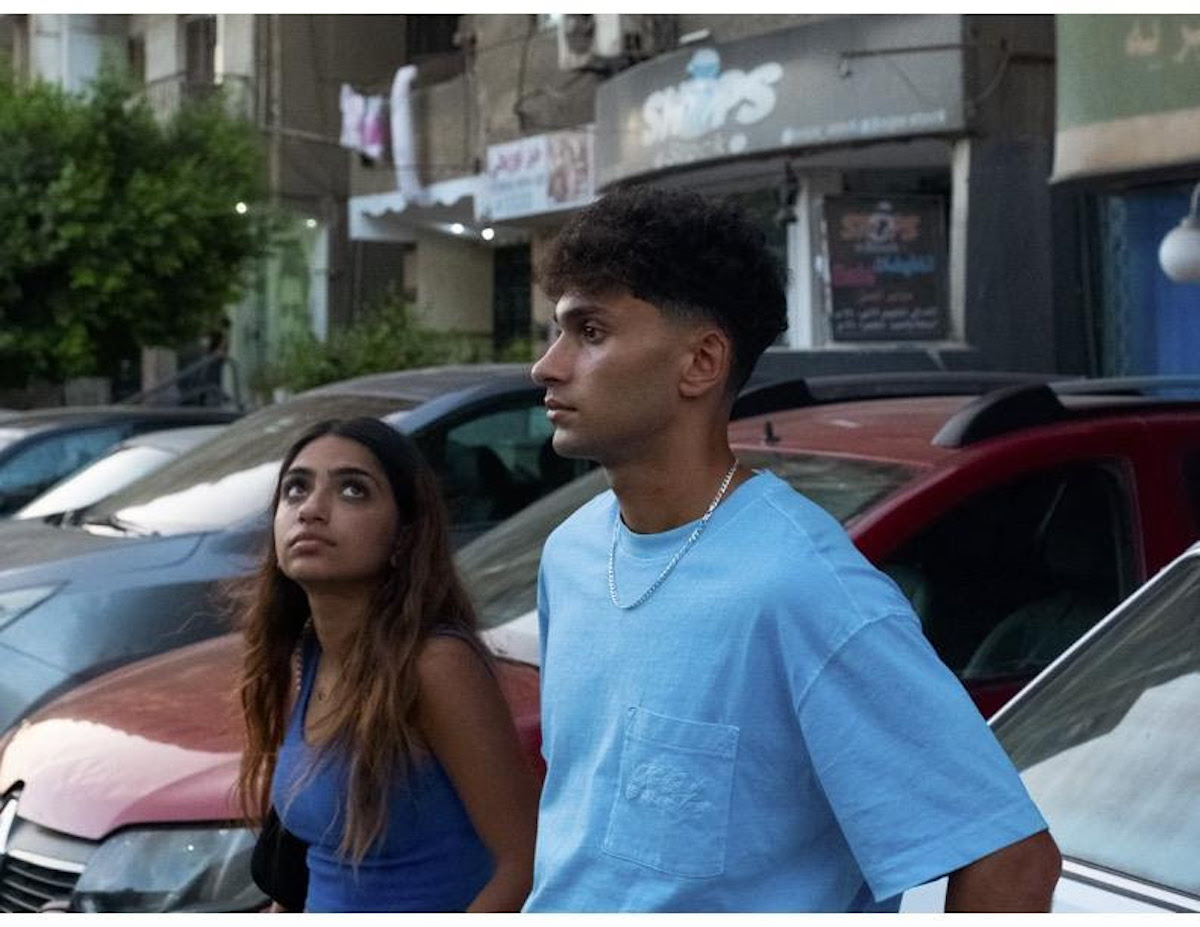
MB: While we’re talking about Louisville as the setting of the film, another moment that stood out to me is when we see Yosef participating in a protest following the murder of Breonna Taylor. Could you talk a little bit about the decision to include that in the film, and why it was important to you?
NC: I think it was really important to include as many scenes as we could to really tell the story of Louisville, because it is such an interesting place that Yosef and his family have ended up in it. It’s a part of the country that isn’t highlighted, and light isn’t shone on too often. So for us, any of these moments where we could really understand the environment that he’s living in, it was really important to put into the film.
The Breonna Taylor protest was a huge moment for the city. It put us in the national spotlight, and it was a topic of conversation for months and years. We knew it was an important part of the story of Louisville, and therefore also an important part of Yosef’s story, because I think for a lot of immigrant kids in this city, and a lot of people his age, you’re trying to figure out what your role is in a lot of these social justice movements, and especially in the Black Lives Matter movement, as someone who’s part of this country but doesn’t have a deep rooted history in the way that African-Americans have in this country.
So his being a part of this protest, to me, felt like it was a way of him trying to learn and understand what’s going on in the city and be a part of the conversation, even though he didn’t fully know what was at stake, I think. But I think his showing up and trying to be a part of it was his way of showing that he wants support and understands what’s going on in the city.
MB: In the documentary, we’re following Yosef around for several years of this journey, this transitional period of life, of him coming of age, becoming an adult. How did you end up deciding on this timeline?
NC: You’re getting at the heart of documentary filmmaking right there. When do you stop, right?
I think for us, it wasn’t a final moment of realizing that, okay, we had the film, we were done. I think we continually worked on scenes and sequences as we were shooting. It was a very circular process of making this movie, because we live in Louisville and Yosef lives 10 minutes away. We could shoot on a Monday, and then start editing the scene on a Wednesday, and then shoot the next week again and incorporate what we were doing. And we did that. That’s how we kind of slowly pieced the film together. We slowly found the structure and understood that we have all this footage, so much of it is not included, but we realized after watching so many of the interviews, and the way he talked about his body and how he’s an athlete, that kind of really revealed itself last year, actually. That was kind of a turning point.
So it wasn’t so much that we realized we had everything that we needed, and we stopped shooting. It was kind of just constantly revisiting the footage, and revisiting these interviews, and realizing the way he talked about his body, and his body fitting in, and fitting in this environment, and fitting in a place like Kentucky, that kind of revealed itself last year and broke open how we wanted to structure the story around that.
MB: What does it mean to you to be releasing Pinball right now, with everything that’s going on within our current American sociopolitical climate?
NC: The timeliness, in a way, saddens me, that it’s constantly being repeated. And to me, that’s why it was really important that, yes, this is a story of a family who had to flee their home, and flee their country, and make a life somewhere else. But to me, this is a story about my friend Yosef. That, to me, is the perspective that I took going into this film. And we had a lot of conversations—Bryn, myself, Yosef, and his sister, Azraa- we just wanted to tell a personal story. This historical context, and the context of why they’re here, we touch upon it, but it’s a family story. That, to me, is the perspective that I want people to take out of this: that, through all these headlines, there are specific people and families whose lives are going to be forever changed. And that kind of intimacy is really important to understand when we talk about these conversations from such a global, bird’s-eye perspective.
This interview has been edited for length, clarity, and formatting. Some responses may have been condensed or lightly modified to improve readability while maintaining the original intent.
Leave a Reply
You must be logged in to post a comment.