
Presented by Film at Lincoln Center and The Museum of Modern Art, the 55th edition of New Directors/New Films (ND/NF) returns from April 8 through April 19, 2026, with 24 features and 10 shorts.
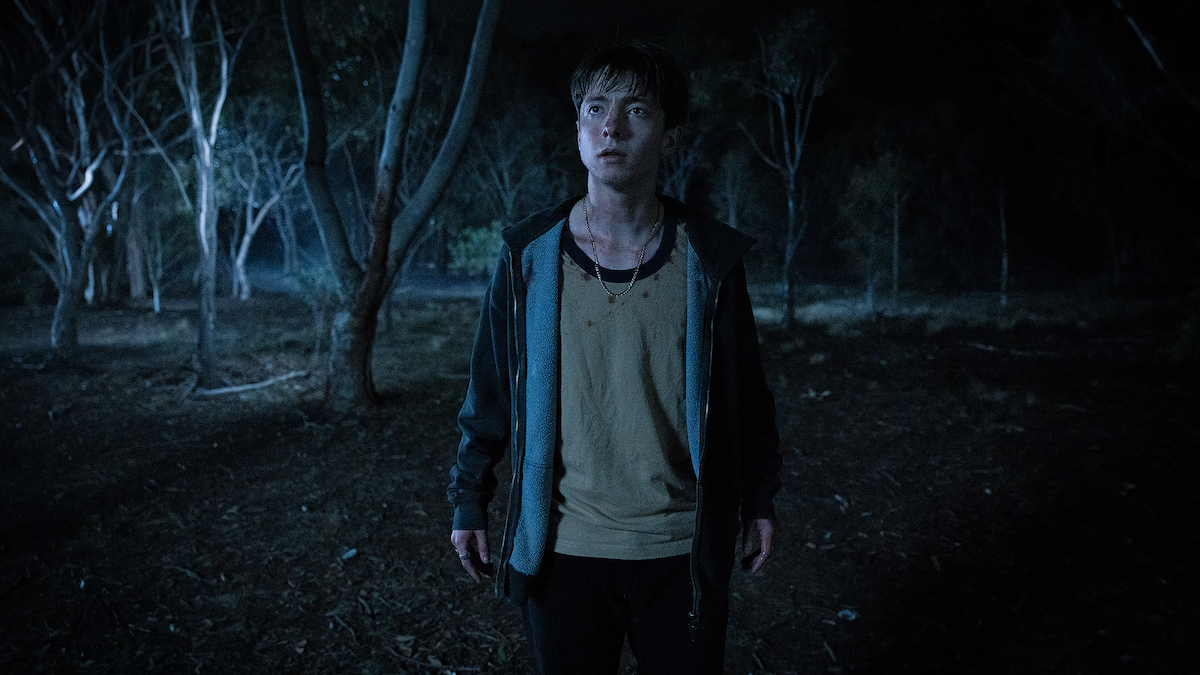
The festival opens with the New York premiere of Leviticus, Adrian Chiarella’s chilling directorial debut about a small Australian town haunted by religious fanatics set on “curing” local boys of their queer urges.
The festival will close with the U.S. premiere of Rosanne Pel’s Donkey Days, a darkly comic, lacerating portrait of two adult women relentlessly competing for their mother’s withheld affection.
The 55th ND/NF showcases premieres and prizewinners from the world’s leading film festivals, including Sho Miyake’s Two Seasons, Two Strangers, winner of the Golden Leopard at the Locarno Film Festival.
Selections from the Berlin Film Festival include Forest High, winner of a Special Mention by the Perspectives section jury; Xinyang Zhang’s Panda; Viv Li’s Two Mountains Weighing Down My Chest; and Kai Stänicke’s Trial of Hein, which won the Teddy Jury Award in the Perspectives section.
Standouts from the International Film Festival Rotterdam are Kevin Walker and Jack Auen’s Chronovisor, and Jason Jacobs and Devon Delmar’s Variations on a Theme, winner of the Tiger Award, IFFR’s top prize.
Also featured are celebrated works from the Venice Film Festival, including Giulio Bertelli’s Agon, winner of the FIPRESCI Prize at Venice Critics’ Week; Vladlena Sandu’s Memory, the opening night selection of Venice Days; Jaume Claret Muxart’s Strange River, which premiered in the Orizzonti section, and Lana Daher’s Do You Love Me, a Venice Days special event.
From the 2025 Cannes Film Festival are Alexe Poukine’s Kika, presented in Critics’ Week, and Yuiga Danzuka’s Brand New Landscape, which screened in the Directors’ Fortnight.
Further festival highlights include Irati Gorostidi Agirretxe’s Aro Berria, which follows the residents of a Basque commune as it splits in the aftermath of Francisco Franco’s death; Fantasy, Isabel Pagliai’s shape-shifting docu-fiction about a young girl’s roiling inner life, which won the First Film Award at FIDMarseille; and John Early’s wry yet tender feature debut Maddie’s Secret, starring Early as Maddie, which balances the trauma of a reemerging eating disorder with a scathing roast of social media.
Other highlights include Sanju Surendran’s If on a Winter’s Night, following a Malayali couple dealing with the economic and linguistic challenges of living in Delhi; Tenzin Phuntsog’s Next Life, which follows a Tibetan-American family preparing for the death of its patriarch; Erupcja, which follows a party girl facing the impending commitments of her thirties, and stars Charli XCX and Jeremy O. Harris; and Lorenzo Ferro and Lucas A. Vignale’s feature debut The River Train, in which a 9-year-old aspiring dancer runs away to Buenos Aires to escape his rigorously controlling, uncompromising father.
La Frances Hui, Curator, Department of Film, MoMA, and 2026 ND/NF Co-chair, observes, “We are thrilled to spotlight two distinctive new directors whose compelling works bookend this year’s festival. In Leviticus, Adrian Chiarella harnesses horror’s visceral power to confront homophobia with intelligence and imaginative flair, transforming a story of young love under siege into a gripping, urgent debut. In bold counterpoint, Rosanne Pel’s Donkey Days is a darkly comic exploration of family dynamics, ingeniously blending Dogme-inspired naturalism with flashes of surrealism to create a work that is at once caustic and unexpectedly tender. Startlingly different in tone yet united in emotional candor and fearlessness, these two films exemplify the diverse, unflinching, and defiant spirit of this year’s lineup.”
Dan Sullivan, Programmer, Film at Lincoln Center, and 2026 ND/NF Co-Chair, says, “The lineup for this year’s edition of New Directors/New Films is replete with artists who—to paraphrase Jean-Luc Godard—aren’t afraid to make political films nor to make films politically. Their curiosity and courage offer us something like a guiding light in our present darkness. Cinema has borne witness to most of recent history’s worst moments, and there’s something—maybe not comfort, but something like it—in knowing that the filmmakers of today and tomorrow won’t shy away from this immense responsibility.”
Films will screen at either Film at Lincoln Center’s Walter Reade Theater (165 W. 65th Street) or The Museum of Modern Art’s Titus 1/Titus 2 theaters (11 W. 53rd Street)
Film Titles and Descriptions
Opening Night
Leviticus
Adrian Chiarella, 2026, Australia, 88m
New York Premiere
Sundance favorite Leviticus expounds daringly on the horror-movie truism that sexual desire makes you vulnerable—notably, to gruesome death. Named for the book of the Old Testament used to justify homophobia, the wrenching and terrifying feature debut from Adrian Chiarella begins with Niam (Joe Bird) and Ryan (Stacy Clausen) breaking into an abandoned mill, their matey horseplay soon surrendering to its powerful homoerotic subtext. Fans of Heated Rivalry will appreciate how Chiarella draws out the intuitive connections that form beneath the show of machismo that the young men take pains to maintain for their traditional community—in this case, the provincial Australian town where Niam’s mother (Mia Wasikowska in a complex, calibrated performance) has relocated them, dragging him along to a local church’s praise meetings in search of fellowship. Gothic iconography lurks in Chiarella’s oppressive and foreboding widescreen compositions, and soon, after Ryan and another boy are subjected to a disturbing exorcism intended to cure them of their urges, the community’s queer youths, already picked on, begin to be picked off by a spectral killer that appears to them in the form of their forbidden love objects. Ingeniously complicating the deep interrelation between teen sexuality and slasher movie iconography, and staging his set pieces with chilling precision, Chiarella announces himself as a new Aussie horror auteur to stand alongside Jennifer Kent and the Philippous. A NEON release.
Closing Night
Donkey Days
Rosanne Pel, 2025, Netherlands/Germany, 107m
German and English with English subtitles
U.S. Premiere
Having strong-willed, carelessly manipulative Ines (Hildegard Schmahl) for a mother has driven adult sisters Anna (Jil Krammer) and Charlotte (Susanne Wolff) further apart, not closer together. Anna feels judged and unloved for being overweight, to the point of alienating her girlfriend by sulking through a night of lesbian performance art, while Charlotte is polished, cold, brittle. Festering wounds come to a head when Ines throws them one final curveball—it has to do with the film’s title, the meaning of which Dutch director Rosanne Pel is confident enough to hold back until a late, bizarre reveal. Shot in Hamburg with a German cast, the film’s cinematography, with Dogme 95–esque handheld camera and delicately pictorial 16mm, is a hint that Donkey Days will have the subtle savagery of Thomas Vinterberg’s unhappy-family sagas, and the cutting barbs, tending inexorably to farce, of Kristoffer Borgli’s post-politeness domestic satires. Unresolved surrealist flourishes itch at the edges of a narrative that tightens or slackens with the unpredictable tension of a family dinner—in fact, the daughters’ issues around food are at the heart of the movie, and Pel films meals with an uncomfortable intimacy, shooting haute cuisine and improvised snacks alike with a queasy eye evocative of burgeoning adolescent neurosis. It’s one of many touches in Donkey Days, Pel’s follow-up to her award-winning 2018 debut Light as Feathers, that reveal her as a visceral, instinctive sketch artist.
Agon
Giulio Bertelli, 2025, Italy/U.S./France, 100m
Italian and English with English subtitles
North American Premiere
Forget the John Williams fanfare, the A.I. advertisements, the kiss-and-cry reaction shots and the Snoop Dogg interludes: Agon is an Italian Olympic story straight out of the muscular nationalism that birthed the modern games at the turn of the 20th century. Set during the run-up to the fictional Ludoj Olympics of 2024 (“ludoj” is Esperanto for “games”), it follows three competitors in conspicuously martial sports: shooting, fencing, and judo. They’re played by Sofija Zobina and Yile Vianello, both recently seen in Alice Rohrwacher’s La Chimera, and real-life judoka Alice Bellandi, reigning world and Olympic champion in the women’s -78 kg class. Following the classical and psychoanalytic implications of its title, Agon is concerned with the essence of competition in the abstract, following the athletes through their mostly solitary, frequently punishing training in process-oriented sequences that take on the air of ritual. First-time feature director Giulio Bertelli shows how the athletes’ preparation is dominated by technologies, from arthroscopic surgery footage to simulators to video games, suggesting the dehumanization of vulnerable bodies inside the global behemoth that is modern organized sport. Winner of the FIPRESCI Prize and Luciano Sovena Award for best independent production at Venice Critics’ Week.
Aro Berria
Irati Gorostidi Agirretxe, 2025, Spain, 102m
Basque and Spanish with English subtitles
North American Premiere
Aro Berria—Basque for “new age”—resurrects a largely overwritten episode in the story of Spain’s transition to democracy, observing with sensitivity as idealists test the limits of the moment’s radical possibilities. This heady and intricate ensemble drama begins in San Sebastián in 1978, where the union representing the metalworkers at the water-meter factory has just negotiated a contract that leaves its most extreme members disillusioned. Several leftists decamp to one of the alternative communities then springing up in rural areas, in Spain as elsewhere, and take up new spiritual and sexual practices (Sirāt director Oliver Laxe memorably pops up as a Tantric guru), hoping to follow their egalitarian principles all the way to a total reinvention of private property and the family. Basque writer-director Irati Gorostidi Agirretxe, whose own parents lived in an alternative community before her birth, mixes nimble intellectual discourse with a loving tactility in her debut feature, lingering over the process of screen-printing leaflets and baking bread as she recreates an inflection point in the history of the counterculture. Special Jury Mention, San Sebastián Film Festival.
Brand New Landscape / 見はらし世代
Yuiga Danzuka, 2025, Japan, 115m
Japanese with English subtitles
New York Premiere
Adult siblings Ren (Kodai Kurosaki) and Emi (Mai Kiryu) have recovered, more or less, from the family tragedy that marked their childhood: Ren now drifts through life as a flower deliveryman, and Emi is engaged, though she privately doubts her suitability for long-term commitment. Their fragile equilibrium is shaken when they reunite with their father, Hajimi (Kenichi Endo), a starchitect who has taken control of a controversial new urban-redevelopment project in Shibuya that will displace the neighborhood’s unhoused population. As in their childhood, when he left the family after their mother’s sudden death, Hajimi is willing to take a bulldozer to the past to make room for the future. In his debut feature, which premiered at Cannes Directors’ Fortnight, writer-director Yuiga Danzuka (son of renowned earthscape designer Eiki Danzuka, whose Miyashita Park stands in for Hajimi’s project in the film) casts a calm gaze over Tokyo’s “brand-new landscape” of modern architecture—and over the architecture of modernity and its discontents. Opening with a shot of a fast-food family meal, the film picks up where Edward Yang left off in Yi Yi, taking a domestic drama and seeding it with an ambitious commentary on how the structure of capitalism shapes and distorts our most intimate relationships.
Chronovisor
Kevin Walker, Jack Auen, 2026, U.S., 100m
French, English, German, and Italian with English subtitles
North American Premiere
Father Pellegrino Ernetti, a Benedictine monk who died in 1994, claimed to have invented, alongside Enrico Fermi and Wernher von Braun, a device called the Chronovisor, capable of transmitting events of the past as if live on TV. He professed to have witnessed orations by Cicero and the Crucifixion, though the evidence he provided—reported in the Italian press—was later shown to be faked. Taking this as their jumping-off point, filmmakers Kevin Walker (ND/NF 2025 shorts alum) and Jack Auen engage in a form of time travel as well, following Columbia scholar Béatrice Courte (real-life professor Anne-Laure Sellier), who comes across the Chronovisor while researching an unrelated topic, and then, like countless hyperlink- or microfiche-surfing grad students before her, gets lost on an academic side quest. Traveling deeper and deeper into a stubbornly analog archive, she unearths an elaborate web of conjecture and conspiracy reaching all the way up to the highest echelons of the Vatican. Dense with onscreen text from real primary sources, scored to music by Gustav Holst, and shot on 16mm in the pooling shadows of many of New York City’s historic libraries, Chronovisor is a witty literary mystery about one of the many secrets that still hide out in libraries, waiting for someone with time, curiosity, and a JSTOR login to come along and disturb the dusty stacks.
Cold Metal / Frío metal
Clemente Castor, 2025, Mexico, 102m
Spanish with English subtitles
U.S. Premiere
Óscar (Óscar Hernández) has escaped from rehab, while his brother Mario (Mario Banderas) is afflicted and confounded by “images that don’t belong to him.” One has disappeared physically, the other mentally, and both wander through the folds of Clemente Castor’s shape-shifting second feature, an entrancing modernist narrative whose drifting, nonlinear structure hints at the latent violence of displacement. In recurrent scenes shot with an ominous Lynchian sound design and tenebrous lighting, Mario explores a warren of underground caverns, before the narrative emerges, like a soul from limbo, into low-key neorealist vignettes depicting adolescent languor in the cramped interiors and sprawling streetscape of the working-class Mexico City suburb of Iztapalapa. Games and signs are a constant in the film from its opening scene of a carnival roulette game, the wheel spinning and the arrow pointing. Like Rivette, Castor rewrites his own rules and redraws his own map anew with every scene. Winner of the Prix Georges de Beauregard at FIDMarseille.
Do You Love Me
Lana Daher, 2025, France/Lebanon/Germany/Qatar, 76m
French, Arabic, and English with English subtitles
New York Premiere
“In Lebanon, contemporary history is not taught in schools.” So proclaims the opening title card in Do You Love Me, multidisciplinary artist Lana Daher’s assemblage-style documentary, which premiered as a Venice Days special event. In the absence of a centralized national audiovisual archive, Daher works from a trove of sources—including fiction films, documentaries, newsreels, art installations, home movies, television shows, still photographs, and pop songs—as rich and variegated as the pluralistic nation’s history (among the notable works included are films by Jocelyne Saab and ND/NF alum Nadine Labaki). Moving fluidly across time and between genres, the associative editing, reminiscent of Christian Marclay’s The Clock, weaves together the political and the ephemeral. Images of war—the long-roiling civil war, the current Israeli bombardment—give way to images of weddings in a reverie that doubles as a statement of hard-won national pride. To accompany the film, Daher has created a website, doyouloveme.film, which serves as an annotated index of her sources. An Icarus Films release.
Erupcja
Pete Ohs, 2025, Poland/U.S., 71m
Polish and English with English subtitles
New York Premiere
Charli XCX stars as party girl Bethany, who touches down in Warsaw with her slightly soppy boyfriend Rob (Will Madden), declaring that the Polish capital is more romantic than Paris. But what she really means is that she’s hoping her return will occasion a reunion with her friend Nel (Lena Góra), with whom every meeting going back to Bethany’s teen years has been charged with ambiguous intimacy and chaotic energy. Reminiscent of Rossellini’s Voyage to Italy, Erupcja updates the couples-in-trouble vacation movie for an era of budget airlines and Airbnb city breaks, as millennial characters aging out of their carefree study-abroad years face up to the impending commitments of their thirties. Director Pete Ohs also works as his own DP and sound recordist, shooting chronologically from scenarios developed in real time collaboratively with his actors (also including Jeremy O. Harris). In a film shot just before the Brat tour, Charli XCX announces herself as a resourceful and substantive actor, translating the ambivalent hedonism of her lyrics into an everyday register with real-life stakes. A 1-2 Special release.
Fantasy
Isabel Pagliai, 2025, France, 79m
French with English subtitles
North American Premiere
Director Isabel Pagliai, an ND/NF alum whose previous shorts blended the mental spaces of childhood and mythology, creates a beguiling and very free act of psychological portraiture for her first feature, which won the First Film Award at FIDMarseille. What starts as a documentary profile of Louise, a young French girl whom director Isabel Pagliai met by chance, shifts shape and genre, evoking the protean depths of the subconscious. The film begins with Isabel’s journey, found and read aloud by an initially unseen narrator. We meet Louise, and learn her anxieties, in low-resolution video diaries and semi-staged vignettes, chiaroscuro portraits of a restless, sometimes depressive adolescent listening to music, playing with her calico cat, reading news items, or watching videos on her phone in the dark in an empty house that is almost like a doll’s house. And then, what has thus far been a study of a young person’s banal exterior and roiling inner life changes radically, as Louise wakes to find herself in the woods, where she and the narrator—his face now revealed—begin to externalize her psyche in a symbolically fraught setting of play and contested innocence.
Forest High / Forêt Ivre
Manon Coubia, 2026, Belgium/France, 102m
French with English subtitles
North American Premiere
A film about the effect that solitude has on the caretakers of a remote mountain lodge, Forest High is about as different from The Shining as any movie with that description could possibly be—it’s almost closer to a Japanese iyashikei, a genre intended to have a healing or soothing effect on the audience. Across four seasons, three women—thirtysomething Anna (Salomé Richard), middle-aged Hélène (Aurélia Petit), and empty nester Suzanne (Anne Coesens)—serve in turn as the seasonal caretaker for an Alpine hut, keeping up the space and tending to the basic needs of the hardy hikers who come through on offseason treks or summer tours. The guests come and go, but the caretakers remain. Director Manon Coubia remains attuned not to the passing dramas nor comedies of leisure, but to these women and their labor, delicately allowing their histories, and their reasons for choosing to live alone, to emerge. Shooting her debut feature with a tiny crew in a real mountain hut, Coubia did double duty as filmmaker and manager of the hut, which was open to the public during the production. A lengthy location shoot open to serendipitous occurrences, and 16mm film stock, allowed the filmmaker and her cast to commune with the natural world with which each woman coexists, and upon which the modern world continues to encroach. Winner of a Special Mention by the Perspectives section jury at the 2026 Berlinale.
If on a Winter’s Night / Khidki Gaav
Sanju Surendran, 2025, India, 100m
Malayalam and Hindi with English subtitles
North American Premiere
All We Imagine as Light director Payal Kapadia is executive producer on another film about the insecurities of Malayali internal migrants from Kerala in a Hindi-speaking metropolis—in this case Delhi, where loving young couple Sarah (Bhanu Priyamvada) and Abhi (Roshan Abdool Rahoof) have moved. Escaping Sarah’s overbearing and patriarchal family—but only up to a point—they find themselves facing a different kind of scrutiny as outsiders in the big city, struggling to keep up in a language they don’t understand, with their every flick of a light switch monitored by an overbearing landlady. Abhi is an artist whose plans for an exhibition keep getting deferred, while Sarah works brutal, thankless hours as seasonal support staff at an international film festival. Sarah and Abhi’s dream of cosmopolitan reinvention crumbles alongside their romantic images of themselves and each other in Sanju Surendran’s closely observed and propulsively edited drama, which mercilessly maps a chasm between two people as it’s driven open by economic stress.
Kika
Alexe Poukine, 2025, Belgium/France, 104m
French with English subtitles
New York Premiere
Brussels social worker Kika (Manon Clavel) starts out as a rom-com ingénue, blowing up her life for a shot at happiness with a new man, before a personal tragedy turns her into a Dardennes heroine, a single mother scrabbling for the money to provide for her young daughter. Soon enough she’s making her living as a novice dominatrix, while still maintaining a middle-class domestic life—a dual existence of respectability and precarity common to many people hustling, in one way or another, to fill the gaps in an inadequate social safety net. In her first fiction feature, which premiered at Cannes Critics’ Week, Alexe Poukine retains the naturalism and psychological acuity of her previous documentaries that dealt with trauma and recovery, as she shows us the world of sex work through newcomer Kika’s eyes. The film is inquisitive and tonally flexible, acknowledging the awkward comedy as Kika navigates new kinks, while mounting a serious exploration of the contested border between consent and economic necessity. A nuanced study of the personal and political, Kika showcases one woman’s journey into new realms of self-knowledge and social consciousness, conveyed with brilliant subtlety in a fearless performance from Clavel, who earned a César Award nomination for Best Female Newcomer.
Maddie’s Secret
John Early, 2025, U.S., 98m
New York Premiere
In his feature directorial debut, Emmy-nominated writer-actor-comedian John Early uses high-concept comic conceits to uncover deep social and interpersonal insights. Early himself plays Maddie Ralph, a content creator at “Gourmaybe”—which is definitely not the Bon Appétit Test Kitchen—whose childhood struggle with bulimia resurfaces just as videos of her eggplant smashburgers start to rack up hits. On one level, Maddie’s Secret is like the ’80s and ’90s “movies of the week,” which despite their downmarket status and campy infelicities were among the only films of the era to take women’s issues such as eating disorders seriously. (The title is a nod to 1986’s Kate’s Secret, starring Meredith Baxter as a bulimic housewife.) But the gauzy colors, rapid dollies, and emphatic scoring also evoke the knowing, neoclassical women’s pictures of John Waters and Todd Haynes. Never winking from beneath his wig, Early gives us a Maddie inspired by the high-femme sincerity of Elizabeth Berkeley in Showgirls, and uses the heightened language of melodrama to evoke a manicured, image-conscious Los Angeles where everyone is a potential influencer. A supporting cast full of Early’s fellow alt-comedy icons, including Kate Berlant and Conner O’Malley, underlines the absurdity even as the raw psychodrama pushes toward aching catharsis. A Magnolia Pictures release.
Memory
Vladlena Sandu, 2025, France/Netherlands, 98m
Russian with English subtitles
North American Premiere
When she was 6 years old, Vladlena Sandu was sent to live in Grozny, the capital of Chechnya, with her tyrannical grandfather, who would whip her when she received bad marks for miswriting Lenin’s name on a school assignment. She was still living there a few years later when the Soviet Union collapsed, Lenin’s portraits came down in the classroom, and Chechnya’s war of independence brought different forms of violence to her door. Initially resulting in a degree of autonomy for the Chechens, their revolution was a humiliation for post-Soviet Russia, which retook the republic and leveled Grozny in a second conflict, fueling Vladimir Putin’s ascent to power. These historical currents are the unsteady backdrop of Sandu’s autobiographical first feature, which restages moments from her childhood as jewel-like 16mm vignettes with the saturated colors of Parajanov, the metaphoric imagery of Tarkovsky, and the handcrafted stage-magic resourcefulness of Fanny and Alexander. The traumas of war and family separation are transmuted into flashes of sense memory, as Sandu filters a searingly relevant recent history through a child’s imagination.
Next Life
Tenzin Phuntsog, U.S./Mexico, 2025, 73m
English and Tibetan with English subtitles
New York Premiere
Multiple films—including Adrian Lyne’s Jacob’s Ladder and Gaspar Noé’s Enter the Void—have drawn inspiration from The Tibetan Book of the Dead, a classic text that functions as a guide to the unsettling and turbulent states experienced shortly before and after death, until the consciousness moves toward rebirth in a new form. Whereas those works depict death as a hallucinatory passage, multimedia artist Tenzin Phuntsog’s fiction debut, which was executive produced by Carlos Reygadas (Silent Light), offers a markedly different vision: a calm, serene, and documentary-like voyage captured on 35mm film. A Tibetan American family in Northern California prepares for the impending death of its patriarch, who hopes to be reincarnated as a bird. Their preparations include a frustrating attempt to secure a Chinese visa that would permit him to make one final return to his birthplace in Tibet. Shot in the director’s family home in Fairfield, California, and juxtaposing traditional Buddhist rituals with the American built environment, Next Life achieves a profound emotional clarity in its exploration of grief, longing, and spirituality. A Lunette Films release.
Panda / 傷寒雜病論
Xinyang Zhang, 2026, Singapore/Hong Kong, 146m
Nanjing dialect and Mandarin with English subtitles
North American Premiere
Xinyang Zhang, a past winner of Jia Zhangke’s Next Talent Project scholarship, arrives with one of the most exciting Chinese debuts of recent times, a grimy and glorious epic set along the banks of the Yangtze River. A recent Berlinale premiere, Panda follows the wanderings of four characters: a poet with a gift for connection, a drifter obsessed with dragons, a man grieving the loss of his wife (and of his finger), and a lost young woman. Liminal figures in multiple senses, social outcasts lost in their memories, each is seeking salvation, perhaps in mythic terms. Two and a half hours of tenacious and hardscrabble veracity, conveyed in magisterial compositions, steeped in classical Chinese themes, and enlivened by a protean formal imagination, Panda has the beguiling vastness of a multithreaded magical-realist novel.
The Prophet / O Profeta
Ique Langa, 2026, Mozambique/South Africa/Qatar, 94m
Portuguese and Changana with English subtitles
New York Premiere
Christian doctrine and black magic clash in this tale from Mozambique, shot over the course of nine years in the rural village of Manjacaze, hometown of filmmaker Ique Langa’s father. Leading the nonprofessional cast of local residents, Admiro De Laura Munguambe plays Hélder, a pastor tending to a dwindling congregation and weathering a crisis of faith. A journey through the wilderness leads him to a local witch, whose sorcery refreshes his spirit and yields material rewards: Hélder gains healing powers and new followers, but maintaining his growing reputation as a holy man demands greater and greater sacrifices. Photographed on film in stark and shimmering black and white (at times in a radically constricted aspect ratio), Langa’s haunting and deliberate feature debut—which premiered at the 2026 International Film Festival Rotterdam—draws inspiration from the masters of transcendental style, from Dreyer to Schrader, to unfurl a parable of faith, temptation, and ambition.
The River Train / El tren fluvial
Lorenzo Ferro, Lucas A. Vignale, 2026, Argentina, 75m
Spanish with English subtitles
North American Premiere
Newcomer Milo Barría is remarkable—serious, inquiring, even a little withholding—as Milo, a 9-year-old from Argentina’s rural provinces who trains day and night at the Malambo under the demanding and disapproving eye of his father. Milo is a prodigy at the gaucho folk dance, with its whipcrack footwork and machismo, but one night, he slips a mickey into the family dinner and heads off by rail for adventures in Buenos Aires. Seeing through his eyes, writer-directors Lorenzo Ferro and Lucas A. Vignale conjure a big city full of small curiosities: a poetry-spouting train engineer, street vendors hawking wind-up toys, and a ravishing experimental theater maker who opens Milo’s eyes to the thrilling flux of identity. At once naturalistic and fanciful, with a sparkle of mischief animating nearly every scene, this debut feature is guided by a rambunctious spirit that exhausts itself only as the end credits roll.
Strange River / Estrany Riu
Jaume Claret Muxart, 2025, Spain/Germany, 105m
Catalan, German, and English with English subtitles
New York Premiere
Drawing on his own memories of riverside campsites, overstuffed bike bags, stifling tents, and the buzz of cicadas, Catalan writer-director Jaume Claret Muxart drops us amongst a family of three boys on a summer holiday along the Danube. Amid the brothers’ bickering and detours into one parent’s love of Bauhaus architecture and the other’s affinity for Romantic poetry, Muxart zeroes in on the more intuitive and inchoate passions of 16-year-old Dídac (dazzling newcomer Jan Monter, nominated for best new actor at both the Goya and Gaudí Awards). The oldest of the boys, Dídac is perhaps taking his last family vacation as a child, with all the moodiness and confusion that implies. Swimming in the Danube, Dídac is the only one to see a skinny-dipper—a lithe young man about his own age—and he keeps seeing him throughout the trip in ambiguous sequences, possibly fantasies, that plumb the romantic depths of the indolent adolescent imagination. Shooting on 16mm and scoring scenes with the Penguin Cafe Orchestra and Ravel, Muxart conjures up a sun-kissed daydream in his acclaimed feature debut.
Trial of Hein / Der Heimatlose
Kai Stänicke, 2026, Germany, 122m
German with English subtitles
North American Premiere
After 14 years away, a wary Heinrich (Paul Boche) returns to his hometown, a gray and windblown fishing village on an isolated island (perhaps one of the Frisian Islands off the North Sea coast of Germany, though the geography is pointedly undefined). Its people are self-reliant and closed-off to the world, and hardly welcome Hein home with open arms: So suspicious are they of the outsider that they hold a trial to determine his identity. Hein is challenged to recall incidents from his childhood, which he seems to remember quite differently from his community—especially from his childhood best friend (Philip Froissant), whose once-close bond with Hein may have occasioned his departure from their oppressive hometown. A classic folk-legend melodrama in the vein of The Return of Martin Guerre, Kai Stänicke’s feature debut is directed daringly, with a restricted color palette similar to Sound of Falling and a rustic production design that resists easy historicizing. The location is constructed like a stage set, with only one or two walls enclosing each cottage—a Brechtian device in the tradition of Dogville, apt for this grand allegory of memory, identity, community, and belonging. Winner of the Teddy Jury Award in the Perspectives section at the 2026 Berlinale.
Two Mountains Weighing Down My Chest / 东山飘雨西山晴
Viv Li, 2026, Germany/Netherlands, 85m
English, Chinese, and German with English subtitles
North American Premiere
Immersed in Berlin’s body-positive, gender-nonconforming, multilingual alternative art scene, Beijing-born artist Viv Li is feeling her way through new and rules and norms around social restrictions and physical touch when she returns for a visit to her more conservative home country—a bout of whiplash exacerbated by the world’s strictest COVID-19 lockdown protocols. As unclassifiable in genre as its subjects are by gender, nationality, or any other identity, Two Mountains Weighing Down My Chest leaps back and forth between twin peeks at Europe and China in film-diary entries and snippets of documentary that come at the audience rapid-fire. Li jumps between continents and tones at an unpredictable rhythm that evokes the often hilarious dislocations and disconnections of globalism and the freedom of personal reinvention, with each scene radically open to self-deprecating humor, defiant awkwardness, sidelong pathos, and the electric feeling of discovery.
Two Seasons, Two Strangers / 旅と日々
Sho Miyake, 2025, Japan, 89m
Japanese with English subtitles
North American Premiere
A tale of cinema with a bifurcated film-within-a-film structure reminiscent of Hong Sangsoo, Two Seasons, Two Strangers begins in a seaside town, where tourist Nagisa (Yuumi Kawai) and local Natsuo (Mansaku Takada) fall into a lush summer romance, all deep-sea blues and wind-whipped sundresses. It then yanks us out of this story to show its screenwriter, Li (Eun-kyung Shim, a former Korean child star who also acts in Japan), ducking questions and musing on her own creative block at a deliciously awkward post-screening Q&A (“I don’t have much talent”). In need of a creative and personal refresh, Li heads off to a snowy resort, where she meets the divorced innkeeper Benzo (Shinichi Tsutsumi). The two soon form the kind of relationship that a filmmaker without “much talent” would struggle to make compelling. But not Sho Miyake, who builds his story—adapted from two manga by the legendary Yoshiharu Tsuge—on a foundation of shimmering, serendipitous images, at once cozy and profound, like the way the steam off a bowl of noodles fogs up a pair of glasses, or the revelation of a landscape as a train emerges from a tunnel. Miyake’s Small, Slow But Steady was one of the highlights of the 2022 Berlinale, and Locarno Golden Leopard winner Two Seasons, Two Strangers further confirms his status as a master of deceptively placid, sensitive, and witty studies of surprising human connection. A Several Futures release.
Variations on a Theme / Variasies op ’n Tema
Jason Jacobs, Devon Delmar, 2026, South Africa/Netherlands/Qatar, 65m
Afrikaans with English subtitles
North American Premiere
A scam purporting to offer long-deferred reparations to the descendants of Black veterans of the Second World War calls up memories in an elderly goatherd in Variations on a Theme, the top prize winner at Rotterdam this year. Hettie (Hettie Farmer) is the daughter of one such soldier, who after four years in the Native Military Corps was sent back home with a bicycle and a new pair of boots. Decades on, the inequities of apartheid still shape the contours of life in the village of Kharkams, as is revealed to us in droll and unassuming snapshots of daily life, filmed in widescreen compositions dripping with saturated color. The film casts its eye across the village, taking in its eccentrics, its dreamers, and its survivors, but returns again and again to Hettie. Her husband long dead, her body bowed, and her family pressuring her to move away, Hettie persists with quiet endurance. As she minds her goats and prepares for her 80th birthday celebration, an eloquent, ironic voice-over narration read by co-director Jason Jacobs (Farmer’s grandson) evokes her rich inner life. It’s a gesture typical of the film’s porous, unassuming realism, in which past and present, human and animal, quotidian and cosmic all exist on equal footing.
ND/NF 2026 Shorts Program I
81m
This program includes El Mahdi L Youbi’s Marseille, 14th July, James Paul Dallas’s Division, Conor Fay’s The Following Day, Renzo Cozza’s Time To Go, and Emma Hütt and Tina Muffler’s Unleaded 95.
Marseille, 14th July / Marseille, 14 Juillet
El Mahdi L Youbi, 2025, France/Morocco, 9m
French with English subtitles
North American Premiere
Celebrations break out in Marseille on Bastille Day, 2019, after Algeria defeats Nigeria in the semi-final of the Africa Cup of Nations. Scenes of collective joy and state violence, soundtracked by an archival broadcast from 1974, echo France’s colonial past amid a night of pride.
Division
James Paul Dallas, 2026, U.S., 15m
U.S. Premiere
Spring 2025. Brooklyn, New York. One chapter closes and another begins.
The Following Day
Conor Fay, 2026, U.S., 12m
World Premiere
It’s a sweltering summer in New York. Morgan, a soft-spoken young woman prone to daydreaming, finds refuge inside the cinema where the boundaries between fantasy and reality blur, on screen and off.
Time To Go / La hora de irse
Renzo Cozza, 2026, Argentina, 20m
Spanish with English subtitles
North American Premiere
Patricio has been working for his sisters for… centuries. Trapped in a bloody family business, he is torn between loyalty to his family and a life of his own, one where daylight love is more than a mere dream. One night, a sweet melody tells him it might be time to let go.
Unleaded 95 / Bleifrei 95
Emma Hütt, Tina Muffler, 2025, Germany/Austria, 25m
German with English subtitles
New York Premiere
Three friends unite to celebrate a bachelorette party and end up navigating their friendship and confronting its secrets by transforming male-dominated spaces—gas stations, their restrooms, the highway—into queer places fed by anonymous sex, inebriated arguments, and a celebration of unpredictable freedom.
ND/NF 2026 Shorts Program II
100m
This program includes Ananth Subramaniam’s Bleat!, Gaël Kamilindi’s Taxi Moto, Mars Verrone’s Buckskin, Clément Pinteaux’s Only Angels, and Falcão Nhaga’s Sabura.
Bleat! / கத்து!
Ananth Subramaniam, 2025, Malaysia/Philippines, 15m
Tamil with English subtitles
New York Premiere
An elderly Malaysian-Tamil couple is giving away their male goat for an upcoming ceremonial slaughter. One night, they discover it is pregnant. Unsure what to do, they consider whether to get rid of it or find out how local deities will receive it.
Taxi Moto
Gaël Kamilindi, 2026, Switzerland/France, 20m
French with English subtitles
North American Premiere
A film director has to rethink his project after he is unable to shoot a love story between two men in the Democratic Republic of Congo, his home country. In a new location, he meets another actor and walks him through the story as they consider what to show and explore in a new testament to freedom.
Buckskin
Mars Verrone, 2026, U.S., 17m
New York Premiere
Mars Verrone turns the camera on their grandfather Carroll B. Williams Jr., a Black pioneer in the natural sciences, whose reflections on facing institutional discrimination throughout an accomplished career offer a template for resilience and survival for future generations.
Only Angels / Seuls les anges
Clément Pinteaux, 2026, France, 22m
Ukrainian and Russian with English subtitles
North American Premiere
Five tales of immigration, spurred by Russia’s invasion of Ukraine in 2022, converge in the industrial French port town of Saint-Nazaire.
Sabura
Falcão Nhaga, 2025, Portugal, 26m
Guinea-Bissau Creole, Fula, Hindi, and Portuguese with English subtitles
U.S. Premiere
A young African couple finally reunites in Portugal after a young woman immigrates to Lisbon, where her lover has been working in construction. After settling into a house shared with other immigrants, their future is upended when she shares news of a personal opportunity in another European country.
Leave a Reply
You must be logged in to post a comment.