
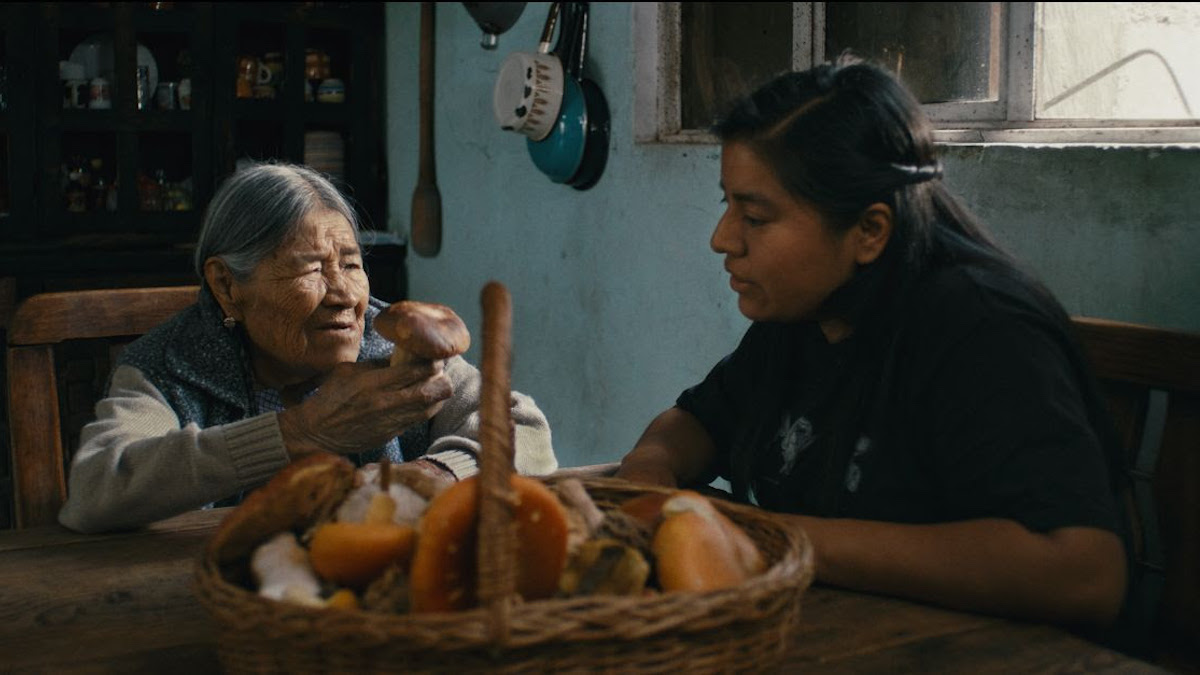
There is an entwined relationship between humans and nature, the visible and invisible, and a world that is being threatened by ecological loss. In a sci-fi documentary centering two scientifically trained women from Indigenous communities in Mexico, Daughters of the Forest (Hijas del Bosque) explores how mushrooms offer models of coexistence.
Directed by Otilia Portillo Padua, Daughters of the Forest follows Lis and Juli as they uncover the complex and intertwining world of fungi and human existence. By sharing their work and highlighting their discoveries, the film explores how mushrooms can model coexistence and reimagine relationships between humans.
What makes the film especially captivating is the way it blends documentary realism with speculative sci-fi elements. As Portillo Padua describes, “speculative fiction allows you to look at the other side of the mirror.” The genre opens up opportunities to explore the past, present, and future while engaging other scientific ideas. “It is an incredibly transgressive genre where one can explore ideas about the non-human, and be able to make the invisible seem visible.”
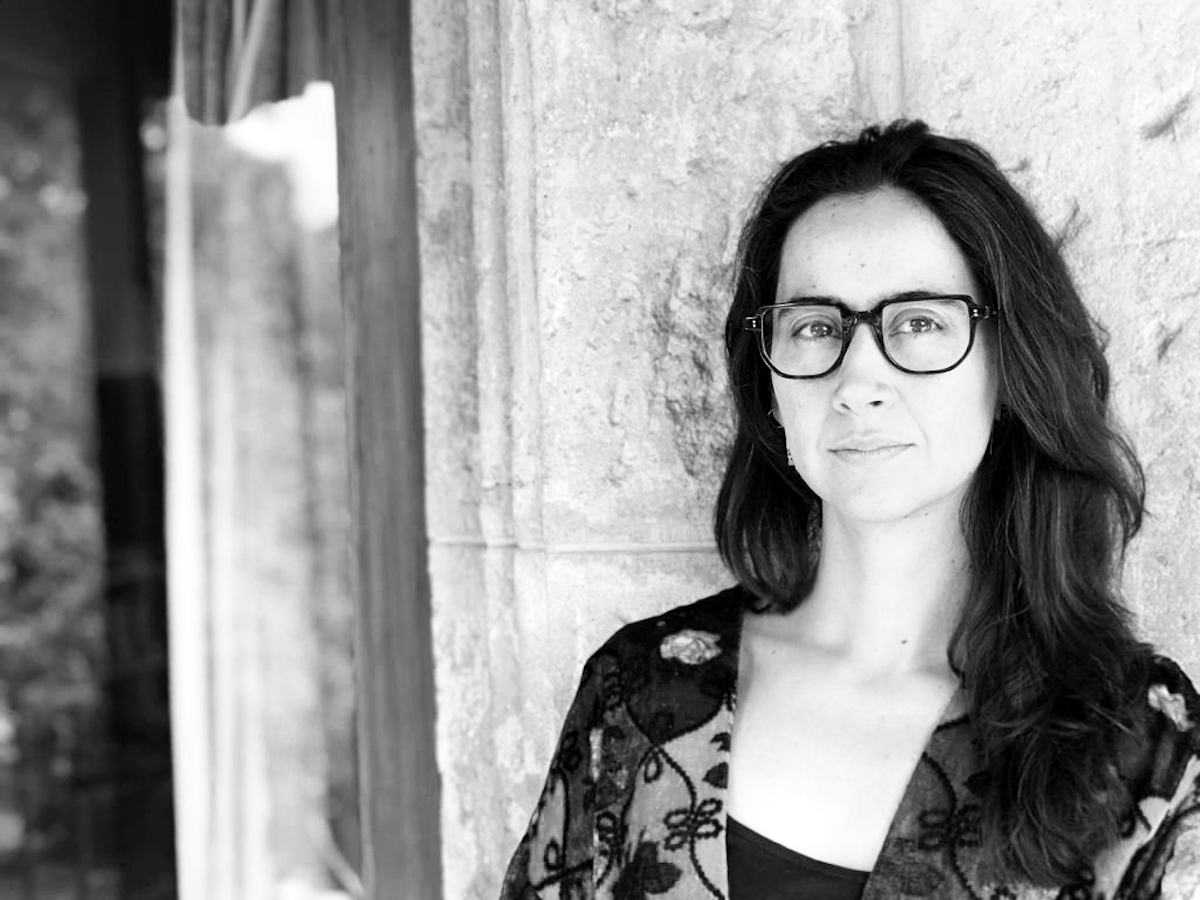
Below, Portillo Padua discusses the film’s speculative form, its visual and sonic world, and the kinds of conversations she hopes it sparks.
(This interview has been edited for length and clarity.)
MALAYA O’CONNOR: What inspired you to use sci-fi and speculative documentary elements to tell a story so rooted in ancestral knowledge, ecology, and fungi?
OTILIA PORTILLO PADUA: Speculative fiction allows you to look through the other side of the mirror. Explore the impossible and the possible. It is an incredibly transgressive genre where one can explore ideas about the non-human, and be able to make visible that which seems invisible, but is still present.
Also, there is sci-fi, a lot written by women, which revisits the past to imagine the future, which focuses on the more than human and you give weight to other forms of knowledges, as well as other sciences such as anthropology, sociology, biology.
MOC: The film moves between documentary realism and more science-fiction-based modes of storytelling. What were the creative challenges of balancing those two approaches while keeping the film grounded in the lives of Lis and Juli and their communities?
OPP: The film took 18 months to edit. There were two storylines with different narrative structures, and then there was the fungal storyline where they entangle. [Editor] Lorenzo Mora and I discussed for a long time that the film did not feel like a linear destination, but a series of entanglements, where many elements intersect and overlap.
MOC: A central idea in the film is interdependence. What kinds of conversations do you hope the film sparks?
OPP: I think a very important conversation to have is one about reciprocity – how we work together with people of different backgrounds, how to work through our differences, and find common ground, because we have to build different futures together.
MOC: In your director’s statement, you describe wanting to counter apocalyptic narratives with other kinds of stories. Why does it feel important to tell films like this right now?
OPP: The current situation in the world makes you feel small and helpless. Even as we seem to be more aware of everything happening around us, the algorithm is still deciding what to show us. So we are all actually isolating behind our screens.
Lis and Juli were living examples of how you can do so much with what is around you when you learn to relate to your surroundings differently. They changed their lives and the lives of humans and non-humans around them. They didn’t have to do it on an epic scale, but yet there was something epic about what they had achieved.
MOC: The trailer already suggests a rich and immersive visual world. How did you and cinematographer Martín Boege develop the film’s visual language, and how did sound, music, and editing work together to shape the film’s tone and sense of immersion?
OPP: Martin Boege is not only incredibly experienced but patient, curious, and a great collaborator. He was involved in the film since its early days of development, around 2021. We had ongoing conversations about how to capture the non-human fungal presences and provide them with subjectivity.
It actually took a lot of experiments, including finding the appropriate optics and textures for the film. Throughout the years, we started feeling more confident that we had found a way to capture a more fungal perspective.
At one of the screenings at SXSW, a mycologist told us the film felt very fungi-like, because it wasn’t trying to have perfect, clean imagery, and it felt very tactile. All the images in the film are shot and composited through VFX.
Javier Umpierrez, the sound designer, and I had long conversations about the nature of the fungal voices. We tried many avenues, in some the voice was more abstract, more creature-like, but, after many trials, we decided to work with human voices, because that gave the narration emotion, and made it feel plural, and intergenerational.
This is something you feel at some times more than others, because the whole soundscape has to feel like part of an ecosystem. Is it one voice or is it multiple? At times, we made this more evident, so that by the end, you notice it. We were fortunate to have the opportunity to work with the immensely talented composer Hannah Peel, and her music beautifully blended with Javier’s textured work.
MOC: Because the film is so invested in the visible and invisible, how did you approach evoking the unseen worlds of fungal life?
OPP: The film is about entanglements, so while there are several elements at play, that was intentional, but it also had to resemble life, where there is no defined resolution or answer.
MOC: What’s next for you and the film?
OPP: Following the film’s world premiere and extended screenings at CPH:DOX, as well as its North American premiere at SXSW, we’re focused on preparing for the Mexican premiere of the film. We are also turning their attention toward the project’s impact campaign in the months ahead.
Like life itself, the film resists simple resolutions and offers a more open-ended way of thinking through care, relation, and imagination. Daughters of the Forest suggests that the future is still unwritten and may depend on our ability to live more reciprocally with one another and the world around us.
Watch the trailer for Daughters of the Forest below.
This interview has been edited for length, clarity, and formatting. Some responses may have been condensed or lightly modified to improve readability while maintaining the original intent.
Leave a Reply
You must be logged in to post a comment.