
 Letyat Zhuravli (The Cranes are Flying)[/caption]
The Berlinale Classics section of the 68th Berlin International Film Festival will present the world premieres of a total of seven films in digitally restored versions.
Wim Wenders’ prize-winning classic Der Himmel über Berlin (Wings of Desire, Federal Republic of Germany / France 1987) returns to the screen in a new, digitally restored 4K DCP version. Two guardian angels keep watch over Berlin, until one of them falls in love with a mortal woman. He chooses to become human, giving up his immortality, and an entirely new world is revealed to him. The film was shot on both black-and-white and colour stock. At the time, that required several additional steps in the lab in order to produce a final colour negative, which was several generations removed from the camera negatives. This version, restored by the Wim Wenders Foundation, is based on the original negatives; STUDIOCANAL will be releasing it in German cinemas in the near future.
Az én XX. századom (My 20th Century, Hungary / Federal Republic of Germany 1989), the feature debut of the winner of the 2017 Golden Bear, Ildikó Enyedi, is a complex, poetic fairy tale, and an homage to silent movies. Shot in black-and-white, the film follows the very different live of identical twins in Old Europe at the dawn of the 20th century. Using the original camera negative and the magnetic sound track, the film was digitally restored in 4K by the Hungarian National Film Fund – Hungarian National Film Archive, working with Hungarian Filmlab. Cinematographer Tibor Máthé (HSC – Hungarian Society of Cinematographers) supervised the digital grading.
Sidney Lumet’s thriller Fail Safe (USA 1964) is an impressive critique of the Cold War military doctrine. When an errant U.S. bomber threatens to destroy Moscow, the president calls the Soviet premier on the red phone to try to prevent a retaliatory nuclear strike. The film was restored in 4K under the aegis of Sony Pictures Entertainment and its head of restoration, Grover Crisp. The incomplete camera negative was supplemented with the use of a duplicate negative. Conforming the various different source materials presented a special challenge to the restoration team.
Letyat Zhuravli (The Cranes Are Flying, USSR 1957) by Mikhail Kalatozov was Soviet cinema’s first international hit after World War II. Made during the period of liberalisation that followed Joseph Stalin’s death, this unusual black-and-white film’s expressionist images tell the tragic story of two lovers after Germany’s invasion of the Soviet Union. The film brought international fame to Mikhail Kalatozov and his lead actress, Tatiana Samoilova. Letyat Zhuravli was restored by Mosfilm under the leadership of general director Karen Shakhnazarov. The ditigal 2K restoration, on the basis of the original negative, was supervised by the head of restoration Igor Bogdasarov.
Director Assi Dayan was lauded by the International Jury of the Berlinale in 1993 for the courage and honesty of his HaChayim Al-Pi Agfa (Life According to Agfa, Israel 1992). The film revolves around a Tel Aviv bar, where a world of bohemians, business people, junkies, tourists, pimps, and soldiers all meet. The events of a single night, captured in black-and-white photos, are a microcosm of a society that considers itself liberal and tolerant, but in which seemingly trivial actions can become explosive. The 4K restoration was produced by the Jerusalem Cinematheque – Israel Film Archive, where the negative was scanned. It was supervised by cinematographer Yoav Kosh and supported by the Israel Film Fund.
With Tokyo Boshoku (Tokyo Twilight, Japan 1957), Berlinale Classics will provide a rare opportunity to see a largely unknown and seldom shown work by Yasujiro Ozu. The theme of the end of a family living together is one that Japanese directing maestro Yasujiro Ozu often reworks, and here he has given it a dramatic twist. In wintery Tokyo, a family’s silence leads to its breakdown. Tokyo Boshoku, considered Ozu’s most sombre post-war film, was digitally restored in 4K on the basis of the 35mm duplicate negative provided by the Japanese production company Shochiku, managed by Shochiku MediaWorX Inc. Colour correction was led by Ozu’s former assistant cameraman Takashi Kawamata and cinematographer Masashi Chikamori.
The Berlinale Classics section will open on February 16, 2018, at 5 pm in the Friedrichstadt-Palast with the premiere of the Deutsche Kinemathek’s digital restoration of the 1923 silent film classic Das alte Gesetz (The Ancient Law) directed by E.A. Dupont (see press release of December 5, 2017). ZDF/ARTE commissioned French composer Philippe Schoeller to create new music for this version, which will be presented by the Orchester Jakobsplatz München with Daniel Grossmann at the podium.
The full programme of the Berlinale Classics section:
Das alte Gesetz (The Ancient Law)
Dir: Ewald André Dupont, Germany, 1923
World premiere of the digitally restored version
in 2K DCP
Az én XX. századom (My 20th Century)
Dir: Ildikó Enyedi, Hungary / Federal Republic of Germany, 1989
Presented by Ildikó Enyedi and Tibor Máthé
World premiere of the digitally restored version
in 4K DCP
Fail Safe
Dir: Sidney Lumet, USA, 1964
World premiere of the digitally restored version
in 4K DCP
HaChayim Al-Pi Agfa (Life According To Agfa)
Dir: Assi Dayan, Israel, 1992
World premiere of the digitally restored version
in 4K DCP
Der Himmel über Berlin (Wings of Desire)
Dir: Wim Wenders, Germany / France, 1987
Presented by Wim Wenders
World premiere of the digitally restored version
in 4K DCP
Letyat Zhuravli (The Cranes are Flying)
Dir: Mikhail Kalatozov, USSR, 1957
World premiere of the digitally restored version
in 2K DCP
Tokyo Boshoku (Tokyo Twilight)
Dir: Yasujiro Ozu, Japan, 1957a
Presented by Wim Wenders
World premiere of the digitally restored version
in 4K DCP
Letyat Zhuravli (The Cranes are Flying)[/caption]
The Berlinale Classics section of the 68th Berlin International Film Festival will present the world premieres of a total of seven films in digitally restored versions.
Wim Wenders’ prize-winning classic Der Himmel über Berlin (Wings of Desire, Federal Republic of Germany / France 1987) returns to the screen in a new, digitally restored 4K DCP version. Two guardian angels keep watch over Berlin, until one of them falls in love with a mortal woman. He chooses to become human, giving up his immortality, and an entirely new world is revealed to him. The film was shot on both black-and-white and colour stock. At the time, that required several additional steps in the lab in order to produce a final colour negative, which was several generations removed from the camera negatives. This version, restored by the Wim Wenders Foundation, is based on the original negatives; STUDIOCANAL will be releasing it in German cinemas in the near future.
Az én XX. századom (My 20th Century, Hungary / Federal Republic of Germany 1989), the feature debut of the winner of the 2017 Golden Bear, Ildikó Enyedi, is a complex, poetic fairy tale, and an homage to silent movies. Shot in black-and-white, the film follows the very different live of identical twins in Old Europe at the dawn of the 20th century. Using the original camera negative and the magnetic sound track, the film was digitally restored in 4K by the Hungarian National Film Fund – Hungarian National Film Archive, working with Hungarian Filmlab. Cinematographer Tibor Máthé (HSC – Hungarian Society of Cinematographers) supervised the digital grading.
Sidney Lumet’s thriller Fail Safe (USA 1964) is an impressive critique of the Cold War military doctrine. When an errant U.S. bomber threatens to destroy Moscow, the president calls the Soviet premier on the red phone to try to prevent a retaliatory nuclear strike. The film was restored in 4K under the aegis of Sony Pictures Entertainment and its head of restoration, Grover Crisp. The incomplete camera negative was supplemented with the use of a duplicate negative. Conforming the various different source materials presented a special challenge to the restoration team.
Letyat Zhuravli (The Cranes Are Flying, USSR 1957) by Mikhail Kalatozov was Soviet cinema’s first international hit after World War II. Made during the period of liberalisation that followed Joseph Stalin’s death, this unusual black-and-white film’s expressionist images tell the tragic story of two lovers after Germany’s invasion of the Soviet Union. The film brought international fame to Mikhail Kalatozov and his lead actress, Tatiana Samoilova. Letyat Zhuravli was restored by Mosfilm under the leadership of general director Karen Shakhnazarov. The ditigal 2K restoration, on the basis of the original negative, was supervised by the head of restoration Igor Bogdasarov.
Director Assi Dayan was lauded by the International Jury of the Berlinale in 1993 for the courage and honesty of his HaChayim Al-Pi Agfa (Life According to Agfa, Israel 1992). The film revolves around a Tel Aviv bar, where a world of bohemians, business people, junkies, tourists, pimps, and soldiers all meet. The events of a single night, captured in black-and-white photos, are a microcosm of a society that considers itself liberal and tolerant, but in which seemingly trivial actions can become explosive. The 4K restoration was produced by the Jerusalem Cinematheque – Israel Film Archive, where the negative was scanned. It was supervised by cinematographer Yoav Kosh and supported by the Israel Film Fund.
With Tokyo Boshoku (Tokyo Twilight, Japan 1957), Berlinale Classics will provide a rare opportunity to see a largely unknown and seldom shown work by Yasujiro Ozu. The theme of the end of a family living together is one that Japanese directing maestro Yasujiro Ozu often reworks, and here he has given it a dramatic twist. In wintery Tokyo, a family’s silence leads to its breakdown. Tokyo Boshoku, considered Ozu’s most sombre post-war film, was digitally restored in 4K on the basis of the 35mm duplicate negative provided by the Japanese production company Shochiku, managed by Shochiku MediaWorX Inc. Colour correction was led by Ozu’s former assistant cameraman Takashi Kawamata and cinematographer Masashi Chikamori.
The Berlinale Classics section will open on February 16, 2018, at 5 pm in the Friedrichstadt-Palast with the premiere of the Deutsche Kinemathek’s digital restoration of the 1923 silent film classic Das alte Gesetz (The Ancient Law) directed by E.A. Dupont (see press release of December 5, 2017). ZDF/ARTE commissioned French composer Philippe Schoeller to create new music for this version, which will be presented by the Orchester Jakobsplatz München with Daniel Grossmann at the podium.
The full programme of the Berlinale Classics section:
Das alte Gesetz (The Ancient Law)
Dir: Ewald André Dupont, Germany, 1923
World premiere of the digitally restored version
in 2K DCP
Az én XX. századom (My 20th Century)
Dir: Ildikó Enyedi, Hungary / Federal Republic of Germany, 1989
Presented by Ildikó Enyedi and Tibor Máthé
World premiere of the digitally restored version
in 4K DCP
Fail Safe
Dir: Sidney Lumet, USA, 1964
World premiere of the digitally restored version
in 4K DCP
HaChayim Al-Pi Agfa (Life According To Agfa)
Dir: Assi Dayan, Israel, 1992
World premiere of the digitally restored version
in 4K DCP
Der Himmel über Berlin (Wings of Desire)
Dir: Wim Wenders, Germany / France, 1987
Presented by Wim Wenders
World premiere of the digitally restored version
in 4K DCP
Letyat Zhuravli (The Cranes are Flying)
Dir: Mikhail Kalatozov, USSR, 1957
World premiere of the digitally restored version
in 2K DCP
Tokyo Boshoku (Tokyo Twilight)
Dir: Yasujiro Ozu, Japan, 1957a
Presented by Wim Wenders
World premiere of the digitally restored version
in 4K DCPBerlin International Film Festival
The Berlinale is a unique place of artistic exploration and entertainment. It is one of the largest public film festivals in the world, attracting tens of thousands of visitors from around the globe each year. For the film industry and the media, the eleven days in February are also one of the most important events in the annual calendar and an indispensable trading forum.
The Berlin International Film Festival enjoys an eventful history. The festival was created for the Berlin public in 1951, at the beginning of the Cold War, as a “showcase of the free world”. Shaped by the turbulent post-war period and the unique situation of a divided city, the Berlinale has developed into a place of intercultural exchange and a platform for the critical cinematic exploration of social issues. To this day it is considered the most political of all the major film festivals.
Berlin International Film Festival started in 1951 and takes place in Berlin, Germany, Europe
-
Seven Restorations to Celebrate Their World Premieres in Berlinale Classics 2018 at Berlin International Film Festival
[caption id="attachment_26567" align="aligncenter" width="1200"] Letyat Zhuravli (The Cranes are Flying)[/caption]
The Berlinale Classics section of the 68th Berlin International Film Festival will present the world premieres of a total of seven films in digitally restored versions.
Wim Wenders’ prize-winning classic Der Himmel über Berlin (Wings of Desire, Federal Republic of Germany / France 1987) returns to the screen in a new, digitally restored 4K DCP version. Two guardian angels keep watch over Berlin, until one of them falls in love with a mortal woman. He chooses to become human, giving up his immortality, and an entirely new world is revealed to him. The film was shot on both black-and-white and colour stock. At the time, that required several additional steps in the lab in order to produce a final colour negative, which was several generations removed from the camera negatives. This version, restored by the Wim Wenders Foundation, is based on the original negatives; STUDIOCANAL will be releasing it in German cinemas in the near future.
Az én XX. századom (My 20th Century, Hungary / Federal Republic of Germany 1989), the feature debut of the winner of the 2017 Golden Bear, Ildikó Enyedi, is a complex, poetic fairy tale, and an homage to silent movies. Shot in black-and-white, the film follows the very different live of identical twins in Old Europe at the dawn of the 20th century. Using the original camera negative and the magnetic sound track, the film was digitally restored in 4K by the Hungarian National Film Fund – Hungarian National Film Archive, working with Hungarian Filmlab. Cinematographer Tibor Máthé (HSC – Hungarian Society of Cinematographers) supervised the digital grading.
Sidney Lumet’s thriller Fail Safe (USA 1964) is an impressive critique of the Cold War military doctrine. When an errant U.S. bomber threatens to destroy Moscow, the president calls the Soviet premier on the red phone to try to prevent a retaliatory nuclear strike. The film was restored in 4K under the aegis of Sony Pictures Entertainment and its head of restoration, Grover Crisp. The incomplete camera negative was supplemented with the use of a duplicate negative. Conforming the various different source materials presented a special challenge to the restoration team.
Letyat Zhuravli (The Cranes Are Flying, USSR 1957) by Mikhail Kalatozov was Soviet cinema’s first international hit after World War II. Made during the period of liberalisation that followed Joseph Stalin’s death, this unusual black-and-white film’s expressionist images tell the tragic story of two lovers after Germany’s invasion of the Soviet Union. The film brought international fame to Mikhail Kalatozov and his lead actress, Tatiana Samoilova. Letyat Zhuravli was restored by Mosfilm under the leadership of general director Karen Shakhnazarov. The ditigal 2K restoration, on the basis of the original negative, was supervised by the head of restoration Igor Bogdasarov.
Director Assi Dayan was lauded by the International Jury of the Berlinale in 1993 for the courage and honesty of his HaChayim Al-Pi Agfa (Life According to Agfa, Israel 1992). The film revolves around a Tel Aviv bar, where a world of bohemians, business people, junkies, tourists, pimps, and soldiers all meet. The events of a single night, captured in black-and-white photos, are a microcosm of a society that considers itself liberal and tolerant, but in which seemingly trivial actions can become explosive. The 4K restoration was produced by the Jerusalem Cinematheque – Israel Film Archive, where the negative was scanned. It was supervised by cinematographer Yoav Kosh and supported by the Israel Film Fund.
With Tokyo Boshoku (Tokyo Twilight, Japan 1957), Berlinale Classics will provide a rare opportunity to see a largely unknown and seldom shown work by Yasujiro Ozu. The theme of the end of a family living together is one that Japanese directing maestro Yasujiro Ozu often reworks, and here he has given it a dramatic twist. In wintery Tokyo, a family’s silence leads to its breakdown. Tokyo Boshoku, considered Ozu’s most sombre post-war film, was digitally restored in 4K on the basis of the 35mm duplicate negative provided by the Japanese production company Shochiku, managed by Shochiku MediaWorX Inc. Colour correction was led by Ozu’s former assistant cameraman Takashi Kawamata and cinematographer Masashi Chikamori.
The Berlinale Classics section will open on February 16, 2018, at 5 pm in the Friedrichstadt-Palast with the premiere of the Deutsche Kinemathek’s digital restoration of the 1923 silent film classic Das alte Gesetz (The Ancient Law) directed by E.A. Dupont (see press release of December 5, 2017). ZDF/ARTE commissioned French composer Philippe Schoeller to create new music for this version, which will be presented by the Orchester Jakobsplatz München with Daniel Grossmann at the podium.
The full programme of the Berlinale Classics section:
Das alte Gesetz (The Ancient Law)
Dir: Ewald André Dupont, Germany, 1923
World premiere of the digitally restored version
in 2K DCP
Az én XX. századom (My 20th Century)
Dir: Ildikó Enyedi, Hungary / Federal Republic of Germany, 1989
Presented by Ildikó Enyedi and Tibor Máthé
World premiere of the digitally restored version
in 4K DCP
Fail Safe
Dir: Sidney Lumet, USA, 1964
World premiere of the digitally restored version
in 4K DCP
HaChayim Al-Pi Agfa (Life According To Agfa)
Dir: Assi Dayan, Israel, 1992
World premiere of the digitally restored version
in 4K DCP
Der Himmel über Berlin (Wings of Desire)
Dir: Wim Wenders, Germany / France, 1987
Presented by Wim Wenders
World premiere of the digitally restored version
in 4K DCP
Letyat Zhuravli (The Cranes are Flying)
Dir: Mikhail Kalatozov, USSR, 1957
World premiere of the digitally restored version
in 2K DCP
Tokyo Boshoku (Tokyo Twilight)
Dir: Yasujiro Ozu, Japan, 1957a
Presented by Wim Wenders
World premiere of the digitally restored version
in 4K DCP
-
65 Films to Compete in Generation Kplus and Generation 14plus Competition at 2018 Berlin International Film Festival
[caption id="attachment_26562" align="aligncenter" width="1200"] 303[/caption]
Selected from considerably more than 2,000 submissions, this year a total of 65 full-length and short films have been invited to compete in the Generation Kplus and Generation 14plus competitions at the 2018 Berlin International Film Festival. Highly contemporary, the selection reflects on both cinematic developments as well as current socio-political situations. The diversity in content and format relentlessly reflects a complex and frequently inconsistent world while at the same time leaving room for interpretation. In the zone between reality and imagination, the filmmakers open doors for alternative options – not only for the young protagonists – and simultaneously reframe a young generations’ yearning for commitment.
“Every single selection is an invitation to the audience to experience life from the perspective of youth. They are films with young people, as opposed to about them. An impressive characteristic throughout the program is not only the deep respect with which the filmmakers paint portraits of their protagonists, but also the immediacy and intimacy with which they approach these very individual world views,” says section head Maryanne Redpath about this year’s program.
The Generation 14plus competition will open at Haus der Kulturen der Welt with the road movie 303, with director Hans Weingartner (White Noise and The Edukators, among others) and cast attending. The Generation Kplus competition will open with an adventurous journey of an altogether different nature: the fast-paced Danish animation Den utrolige historie om den kæmpestore pære (The Incredible Story of the Giant Pear) by Philip Einstein Lipski, Amalie Næsby Fick and Jørgen Lerdam.
303[/caption]
Selected from considerably more than 2,000 submissions, this year a total of 65 full-length and short films have been invited to compete in the Generation Kplus and Generation 14plus competitions at the 2018 Berlin International Film Festival. Highly contemporary, the selection reflects on both cinematic developments as well as current socio-political situations. The diversity in content and format relentlessly reflects a complex and frequently inconsistent world while at the same time leaving room for interpretation. In the zone between reality and imagination, the filmmakers open doors for alternative options – not only for the young protagonists – and simultaneously reframe a young generations’ yearning for commitment.
“Every single selection is an invitation to the audience to experience life from the perspective of youth. They are films with young people, as opposed to about them. An impressive characteristic throughout the program is not only the deep respect with which the filmmakers paint portraits of their protagonists, but also the immediacy and intimacy with which they approach these very individual world views,” says section head Maryanne Redpath about this year’s program.
The Generation 14plus competition will open at Haus der Kulturen der Welt with the road movie 303, with director Hans Weingartner (White Noise and The Edukators, among others) and cast attending. The Generation Kplus competition will open with an adventurous journey of an altogether different nature: the fast-paced Danish animation Den utrolige historie om den kæmpestore pære (The Incredible Story of the Giant Pear) by Philip Einstein Lipski, Amalie Næsby Fick and Jørgen Lerdam.
Generation 14plus
Adam Germany / Iceland / USA by Maria Solrun World premiere After her debut film Jargo (Generation 14plus 2004), Icelandic director Maria Solrun presents a feature film for the second time in Generation. The aurally handicapped young protagonist Adam and his mother, a techno musician, have always lived in different worlds. At the same time, they are symbiotically connected: he feels her music directly with his body. When his mother is diagnosed with irreversible brain damage caused by alcohol, Adam suddenly has to look after himself. He faces his mother’s eager death wish in his very own laconic way, and the director gives him his voice, as well as plenty of space to develop. Dressage Iran by Pooya Badkoobeh World premiere Motivated primarily by boredom rather than greed, Golsa and her friends rob a corner shop. But while evaluating the booty, they are dismayed to realise that they forgot to take the security camera footage. One of them must return to the crime scene and retrieve it. The vote falls on Golsa, who bravely completes the mission. Her friends’ behaviour makes her think, and she hides the hard drive somewhere secret. But her accomplices and their well-to-do families put more and more pressure on Golsa, worried about their social standing. Director Pooya Badkoobeh radically staged story about control, blackmail and the power of money holds an uncompromising mirror up to Iranian society. Fortuna Switzerland / Belgium by Germinal Roaux World premiere Amidst the snow-covered mountains of the Swiss Simplon Pass, 14-year-old Fortuna clasps her hands in prayer. She hasn’t seen her parents since their traumatic crossing of the Mediterranean. Like many other refugees, the young girl from the Ethiopia/Eritrea border area has found refuge in an Augustinian monastery. The feelings of loneliness and yearning for love that tear at Fortuna are weighed against a secret that she can’t even tell the head friar – insightfully played by Bruno Ganz. Director Germinal Roaux fathoms the depths of Christian charity in expressive black-and-white imagery. Hendi & Hormoz Iran / Czech Republic by Abbas Amini World premiere After Valderama (Generation 2016), Iranian director Abbas Amini presents his second feature film in Generation 14plus. Hendi & Hormoz takes place on Iran’s Hormuz Island in the Persian Gulf, where hematite deposits in the soil turn the ocean waves blood-red. 16-year-old Hormoz is married to Hendi, three years his junior, after he promises that he can work as a miner. But the young man, stirringly played by Hamed Alipour (Valderama), finds closed doors instead of a job. When Hendi becomes pregnant unexpectedly, Hormoz is forced to make an ill-advised pact with a smuggler. Director Amini portrays the existential struggle of two young people who must abandon their carefree youth in a harsh world. High Fantasy South Africa by Jenna Bass European premiere After The Tunnel (Berlinale Shorts 2010), Berlinale Talents alumna and London native Jenna Bass now presents a film in Generation 14plus. Filmed by the four protagonists exclusively on smartphones in the wide expanses of the South African veldt, Bass’s second feature film High Fantasy brings a common vision to life: being inside the body of another person. When Lexi and her friends experience exactly that during a camping trip, a suspense-laden dynamic ensues between the three women and Thami, the only man with them, but also between Lexi, who is white and Xoli, who is black. A smart and biting essay on the unrelenting politics of the human body – and still highly relevant even decades after the alleged end of Apartheid. Kissing Candice Ireland / United Kingdom by Aoife McArdle European premiere Candice, 17, has a vivid imagination. In the glaring and graphic realms she experiences during her epileptic seizures, a man appears with whom she falls in love. Soon after, she meets him in the real world. But that’s just one bit of trouble in the Irish town where the young people see a pony as a status symbol on par with a car. One boy is missing and a violent clique of youths is terrorising the village inhabitants. Candice’s father, a police officer who longs for the “good old days” of “the Troubles”, is on the case. In her debut film, director Aoife McArdle stages highly aesthetic chaos against the harsh backdrop of a coastal Irish village. The director’s ample experience making music videos is clearly visible throughout. Retablo Peru / Germany / Norway by Álvaro Delgado-Aparicio L. European premiere 14-year-old Segundo lives with his parents in a village high in the magnificent mountains of Peru. His father Noé is a respected artist and Segundo’s role model. Noé hand-crafts altarpieces, decorated shrines for church and home, and is teaching Segundo the necessary skills to carry on in his footsteps. But cracks have developed in their close relationship because Noé is keeping a dark secret. With brutal honesty and saturated colours, the film peeks behind the facade of a seemingly intact village community where homophobic attidtudes enforced by patriarchal laws are carried out with remorseless violence. It sketches a visually powerful panorama of a world in which a young artist is searching for his niche. What Walaa Wants Canada / Denmark by Christy Garland World premiere The Palestinian girl Walaa – whose mother was incarcerated in an Israeli prison for eight years for allegedly aiding an assassination – shows little interest in school. She’d rather join the Palestinian National Authority – the provisional governmental body that governs the Palestinian territories in the West Bank and Gaza – as soon as possible, were it not for her distrust of any kind of authority. Director Christy Garland’s documentary follows the obstreperous young woman over the course of five years, from age 15 to 20. Always maintaining a level playing field with her young protagonist, Christy Garland gives an intimate look at the rebellious girl fighting at times uncontrollably but tenaciously for her dream. 303, Germany, Hans Weingartner — WP Cobain, Netherlands / Belgium / Germany, Nanouk Leopold — WP Danmark (Denmark), Denmark, Kaspar Rune Larsen — IP Güvercin (The Pigeon), Turkey, Banu Sıvacı — WP Les faux tatouages (Fake Tattoos), Canada, Pascal Plante — EP Para Aduma (Red Cow), Israel, Tsivia Barkai Jacov — WP Unicórnio (Unicorn), Brazil, Eduardo Nunes — IP Virus Tropical, Colombia, Santiago Caicedo — EPShort films in Generation 14plus
Fry-Up, United Kingdom, Charlotte Regan — EP Follower, Germany, Jonathan B. Behr — WP Je fais où tu me dis (Dressed for Pleasure), Switzerland, Marie de Maricourt — IP Juck, Sweden, Olivia Kastebring, Julia Gumpert, Ulrika Bandeira — IP Kiem Holijanda, Netherlands, Sarah Veltmeyer — IP Na zdrowie! (Bless You!), Poland, Paulina Ziólkowska — WP Neputovanja (Untravel), Serbia / Slovakian Republic, Ana Nedeljković, Nikola Majdak Jr. — WP Nuuca, USA / Canada, Michelle Latimer — EP Playa (Beach), Mexico, Francisco Borrajo — EP Pop Rox, USA, Nate Trinrud — EP Premier amour (First Love), Switzerland, Jules Carrin — IP Sinfonía de un mar triste (Symphony of a Sad Sea), Mexico, Carlos Morales — EP Tangles and Knots, Australia, Renée Marie Petropoulos — EP Three Centimetres, United Kingdom, Lara Zeidan — WP Vermine (Vermin), Denmark, Jeremie Becquer — WP Voltage, Austria, Samira Ghahremani — IPGeneration Kplus
Blue Wind Blows Japan by Tetsuya Tomina World premiere In his poetic full-length film debut, director Tetsuya Tomina follows shy Ao, who lives with his mother and younger sister Kii on the Japanese island of Sado. Their father recently disappeared without a trace, but nobody talks much about that. Ao and Kii wander around the island and vent their incomprehension to the expanses of the sea. Then Ao finds a soulmate in the secretive Sayoko. These two daydreamers need only a few words and feel immediately connected to one another. Against the impressive backdrop of an industrial coastal village, Tomina (who also wrote the screenplay) tells a touching story about hope, loss and letting go. Ceres Belgium / Netherlands by Janet van den Brand World premiere In her full-length documentary debut, Dutch director Janet van den Brand accompanies her four young protagonists as they go about their daily agricultural business. Piglets are born, as well as calves, lambs and chicks. Sowing, planting and harvesting. Butchering. No matter what, the camera is close by, along with Koen, Daan, Sven and Jeanine. They help with the farm work from a young age, learning to take responsibility, and to say farewell. Will they run their parents’ farms one day? Using documental imagery, Van den Brand presents a realistic picture of life and work in agriculture – one without idealism, and yet full of poetry. Cirkeline, Coco og det vilde næsehorn (Circleen, Coco and the Wild Rhinoceros) Denmark by Jannik Hastrup World premiere The works of Danish director Jannik Hastrup, seasoned master of animation film, have competed in the Generation programmes since 1985. This year he presents the fourth screen adventure of the matchbook-sized elf Cirkeline. Travel is once again on the agenda, this time with Princess Coco and a moody baby rhinoceros, who both want to return to their home in Africa. Cirkeline and her mouse friends spontaneously decide to go along. A musical story told in episodes and lively, colorful images, Hastrup’s film once again illustrates how travel can open our eyes, and that not everything is the way it seems at first glance. Los Bando Norway / Sweden by Christian Lo International premiere Best friends Axel and Grim finally want to perform at this year’s Norwegian rock championship with their band, Los Bando Immortale. Nine-year-old runaway and cellist Thilda, and underage rally driver Martin complete the troupe, and the quartet sets off on a turbulent road trip to the wild north. With the police and crazy relatives on their tail, and confronted with harsh truths in life and love, the four friends continue toward their dream, unperturbed. After Bestevenner (2010), Norwegian director Christian Lo presents his second feature film in Generation Kplus. Mochila de plomo (Packing Heavy) Argentina by Darío Mascambroni World premiere 12-year-old Tomás tolerated it for far too long – being put off by the grownups, who built a labyrinth of silence, excuses and contradictions all around him. But today is the day of truth. Today, the man who killed his father will be released from prison. And Tomás is ready. In his rucksack is a loaded gun. Restless and determined to liberate himself from the half-truths of the adults, Tomás takes a trip through his hometown. Following his debut Primero enero (Generation Kplus 2017), director Darío Mascambroni once again demonstrates his talent for the attentively observed father-son narrative, told in atmospheric images and in close proximity to his protagonists. Wang Zha de yuxue (Wangdrak’s Rain Boots) People’s Republic of China by Lhapal Gyal World premiere After heavy rains, puddles and mud cover the streets of the Tibetan mountain village. It’s good for the crops, but bad for young Wangdrak, the only boy in the village without rubber boots. While his father is busy with other worries, Wangdrak’s mother fulfills her son’s wish. But new shoes bring new problems. For Wangdrak, a battle against the blue sky and for the rain begins, fought alongside his loyal friend Lhamo. Nestled in the inimitable mountain landscape, director Lhapal Gyal uses vivid imagery to show us a culture steeped in ancient traditions, paying special attention to the young protagonist’s dreams. Allons enfants (Cléo & Paul), France, Stéphane Demoustier — WP Den utrolige historie om den kæmpestore pære (The Incredible Story of the Giant Pear), Denmark, Philip Einstein Lipski, Amalie Næsby Fick, Jørgen Lerdam — IP Dikkertje Dap (My Giraffe), Netherlands / Belgium / Germany, Barbara Bredero — IP El día que resistía (The Endless Day), Argentina / France, by Alessia Chiesa — WP Gordon och Paddy (Gordon and Paddy), Sweden, Linda Hambäck — IP Les rois mongols (Cross My Heart), Canada, Luc Picard — EP Sekala Niskala (The Seen and Unseen), Indonesia / Netherlands / Australia / Qatar, Kamila Andini — EP Supa Modo, Germany / Kenya, Likarion Wainaina — WPShort films in Generation Kplus
A Field Guide to Being a 12-Year-Old Girl, Australia, Tilda Cobham-Hervey — IP L’après-midi de Clémence (The Afternoon of Clémence), France, Lénaïg Le Moigne — WP Vdol´ i poperyok (Between the Lines), Russian Federation, Maria Koneva — WP Brottas (Tweener), Sweden, Julia Thelin — IP Cena d’aragoste (Lobster Dinner), USA / Italy, Gregorio Franchetti — IP De Natura, Romania, Lucile Hadžihalilović — IP Fisketur (Out Fishing), Sweden, Uzi Geffenblad — IP Fire in Cardboard City, New Zealand, Phil Brough — EP Hvalagapet, Norway, Liss-Anett Steinskog — IP Jaalgedi (A Curious Girl), Nepal, Rajesh Prasad Khatri — EP Lost & Found, Australia, Bradley Slabe — WP Neko no Hi (Cat Days), Germany, Jon Frickey — WP Paper Crane, Australia, Takumi Kawakami — WP Pinguin (Penguin), Germany, Julia Ocker — WP Snijeg za Vodu (Snow for Water), Bosnia and Herzegovina / United Kingdom, Christopher Villiers — IP Toda mi alegría (All My Joy), Argentina, Micaela Gonzalo — IP Tråder (Threads), Norway / Canada, Torill Kove — EP Trois rêves de ma jeunesse (Three Dreams of My Childhood), Romania, Valérie Mréjen, Bertrand Schefer — IP Yover, Colombia, Edison Sánchez — WP
-
Berlin International Film Festival Complete 13th Forum Expanded Program Lineup
[caption id="attachment_26557" align="aligncenter" width="1200"] Der Schwarze Samurai Yasuke in Café Togo von Musquiqui Chihying, Gregor Kasper Darsteller*: Yugen Yah[/caption]
34 film and video works, along 15 installations will be featured in the 13th Forum Expanded program at the upcoming 2018 Berlin International Film Festival, which opens on February 14 under the title “A Mechanism Capable of Changing Itself.” The program is now complete.
This year’s program once again includes a variety of works that use documentary techniques to examine and explore the potential for both cinema and music to question, illustrate, analyze and bring about change in such a way that they are capable of intervening in social and political events on the global stage. In so doing, they also expand the very concept of the documentary.
The title of Margaret Honda’s work 6144 X 1024 recalls James Benning’s 11 x 14 from 1977. 6144 X 1024 separates out the entire colour spectrum of a digital projector in a computer-generated screening. This process lasts 36 hours in total and will be shown for a few hours each day over the course of the festival in the smaller of the two Arsenal cinema auditoria.
Like Benning’s work, Honda’s piece turns form into content and seems almost paradigmatic for the demands to which contemporary cinema is once again subject. While for Benning the primary focus was on finding a new cinematic language, today the emphasis has shifted to altered spatial, temporal and power relations, as well as the new systems of reference within reality that dictate structure.
The resulting need for alternative histories is apparent in many of the works in the programme: Kudzanai Chiurai’s film We Live in Silence: Chapters 1-7 takes Med Hondo’s classic Soleil Ô as a point of departure for staging historical narratives and visions of the future that reject the assumption that African migrants are supposed to think, speak and understand language in the way their colonisers do. Alternative history is also what structures High Dam, a slide installation by Ala Younis which focusses on two films made by Egyptian director Youssef Chahine about the Aswan Dam in the 1960s and 1970s. High Dam shines a light on the politics of the era and Chahine’s efforts to evade censorship.
The installation Café Togo by Musquiqui Chihying and Gregor Kasper examines the campaign to rename streets with colonial connotations in the so-called African Quarter of Berlin-Wedding. It also explores Black activist Abdel Amine Mohammed’s vision of a multidimensional politics of memory. Laura Horelli’s installation Namibia Today is also set in Berlin. In an underground station in former East Berlin, seven people talk about the history of the magazine “Namibia Today“, which was published in the GDR between 1980 and 1985.
Zach Blas’s Contra-Internet: Jubilee 2033 is inspired by Derek Jarman’s queer punk film Jubilee (1978). Blas shows philosopher Ayn Rand and economist Alan Greenspan on a drug trip in 1955, during which they witness the end of the Internet in 2033. In Watching the Detectives, Chris Kennedy takes a critical look at the internet as we know it today by retracing the efforts of amateur detectives to reconstruct the events of the Boston Marathon bombing.
In the Marshall McLuhan Salon at the Embassy of Canada, Forum Expanded presents an installation by artist-duo Bambitchell in which surveillance is investigated as an aesthetic practice. The exhibition opens on February 15. Its title, Special Works School, refers to the code name used by the British War Office between 1917 and 1919 for a group of artists employed to design camouflage patterns and technologies.
SAVVY Contemporary will present an exhibition by artist and filmmaker Jasmina Metwaly from February 13 onwards. We Are Not Worried in the Least confronts viewers with footage from the film archive that she put together in Egypt between 2001 and 2016. Egypt’s turbulent social and political landscape during this period form the historical backdrop to these images.
Music, Avant-garde and Underground
A series of works bring together film and music as interrelated elements of social and artistic movements which each carry the same importance.
The Third Part of the Third Measure is an audio-visual composition by The Otolith Group that can be seen and heard in the group exhibition. It stages an encounter with the militant minimalism of avant-garde composer Julius Eastman, inviting visitors to immerse themselves in the ecstatic aesthetics of black radicalism, which Eastman himself once described as “full of honour, integrity and boundless courage”.
Andreas Reihse, who is well-known as a member of the band Kreidler, collaborated with artist and author Mohamed A. Gawad and filmmaker and author Dalia Neis (aka Dice Miller) in composing two audio essays. Entitled Celluloid Corridors, these two works will be presented as a cinematic event.
Morgan Fisher, one of the most famous representatives of structural cinema, will present his response to Bruce Conner’s classic found-footage film A Movie (1958), which he has dubbed Another Movie. By making reference to Ottorino Respighi’s composition “Pini di Roma”, Fisher generates visual associations to Conner’s film almost automatically.
Three more representatives of the North American avant-garde and underground scene that emerged in the 1970s will be showing their new works at Forum Expanded: James Benning, whose installation L. Cohen will be in the group exhibition, as well as Barbara Hammer and Ken Jacobs. And both Heinz Emigholz and Ben Russell once again return to the programme, the latter with Ben Rivers.
At silent green Kulturquartier Forum Expanded will be presenting a concert by The Invisible Hands, an Egyptian band co-founded in Cairo in 2011 by Alan Bishop (aka Alvarius B., best-known as a member of Sun City Girls). The band is also the subject of Marina Gioti’s and Georges Salameh’s documentary of the same name, which was shown for the first time at the documenta 14 in Athens.
Another two documentaries are dedicated to underground icons: In Eu sou o Rio, Gabraz Sanna and Anne Santos create both a portrait of Brazilian artist and musician Tantão and of the city of Rio. In Escape From Rented Island: The Lost Paradise of Jack Smith, Jerry Tartaglia combines glamorous pictures of the performer and filmmaker, who died in 1989, with music from his own eccentric record collection.
Archival Constellations
“Think Film No. 6 – Archival Constellations”, an international symposium on themes relating to film archives and alternative archive projects, will take place on February 22 at silent green Kulturquartier in Berlin-Wedding. Film archives and projects from Nigeria, Egypt, Palestine, Mexico, Japan and India have all been invited to take part.
During the festival, Prinzessinnengärten will be responsible for designing the foyer of the Arsenal cinema, with b_books once again offering a selection of literature.
Der Schwarze Samurai Yasuke in Café Togo von Musquiqui Chihying, Gregor Kasper Darsteller*: Yugen Yah[/caption]
34 film and video works, along 15 installations will be featured in the 13th Forum Expanded program at the upcoming 2018 Berlin International Film Festival, which opens on February 14 under the title “A Mechanism Capable of Changing Itself.” The program is now complete.
This year’s program once again includes a variety of works that use documentary techniques to examine and explore the potential for both cinema and music to question, illustrate, analyze and bring about change in such a way that they are capable of intervening in social and political events on the global stage. In so doing, they also expand the very concept of the documentary.
The title of Margaret Honda’s work 6144 X 1024 recalls James Benning’s 11 x 14 from 1977. 6144 X 1024 separates out the entire colour spectrum of a digital projector in a computer-generated screening. This process lasts 36 hours in total and will be shown for a few hours each day over the course of the festival in the smaller of the two Arsenal cinema auditoria.
Like Benning’s work, Honda’s piece turns form into content and seems almost paradigmatic for the demands to which contemporary cinema is once again subject. While for Benning the primary focus was on finding a new cinematic language, today the emphasis has shifted to altered spatial, temporal and power relations, as well as the new systems of reference within reality that dictate structure.
The resulting need for alternative histories is apparent in many of the works in the programme: Kudzanai Chiurai’s film We Live in Silence: Chapters 1-7 takes Med Hondo’s classic Soleil Ô as a point of departure for staging historical narratives and visions of the future that reject the assumption that African migrants are supposed to think, speak and understand language in the way their colonisers do. Alternative history is also what structures High Dam, a slide installation by Ala Younis which focusses on two films made by Egyptian director Youssef Chahine about the Aswan Dam in the 1960s and 1970s. High Dam shines a light on the politics of the era and Chahine’s efforts to evade censorship.
The installation Café Togo by Musquiqui Chihying and Gregor Kasper examines the campaign to rename streets with colonial connotations in the so-called African Quarter of Berlin-Wedding. It also explores Black activist Abdel Amine Mohammed’s vision of a multidimensional politics of memory. Laura Horelli’s installation Namibia Today is also set in Berlin. In an underground station in former East Berlin, seven people talk about the history of the magazine “Namibia Today“, which was published in the GDR between 1980 and 1985.
Zach Blas’s Contra-Internet: Jubilee 2033 is inspired by Derek Jarman’s queer punk film Jubilee (1978). Blas shows philosopher Ayn Rand and economist Alan Greenspan on a drug trip in 1955, during which they witness the end of the Internet in 2033. In Watching the Detectives, Chris Kennedy takes a critical look at the internet as we know it today by retracing the efforts of amateur detectives to reconstruct the events of the Boston Marathon bombing.
In the Marshall McLuhan Salon at the Embassy of Canada, Forum Expanded presents an installation by artist-duo Bambitchell in which surveillance is investigated as an aesthetic practice. The exhibition opens on February 15. Its title, Special Works School, refers to the code name used by the British War Office between 1917 and 1919 for a group of artists employed to design camouflage patterns and technologies.
SAVVY Contemporary will present an exhibition by artist and filmmaker Jasmina Metwaly from February 13 onwards. We Are Not Worried in the Least confronts viewers with footage from the film archive that she put together in Egypt between 2001 and 2016. Egypt’s turbulent social and political landscape during this period form the historical backdrop to these images.
Music, Avant-garde and Underground
A series of works bring together film and music as interrelated elements of social and artistic movements which each carry the same importance.
The Third Part of the Third Measure is an audio-visual composition by The Otolith Group that can be seen and heard in the group exhibition. It stages an encounter with the militant minimalism of avant-garde composer Julius Eastman, inviting visitors to immerse themselves in the ecstatic aesthetics of black radicalism, which Eastman himself once described as “full of honour, integrity and boundless courage”.
Andreas Reihse, who is well-known as a member of the band Kreidler, collaborated with artist and author Mohamed A. Gawad and filmmaker and author Dalia Neis (aka Dice Miller) in composing two audio essays. Entitled Celluloid Corridors, these two works will be presented as a cinematic event.
Morgan Fisher, one of the most famous representatives of structural cinema, will present his response to Bruce Conner’s classic found-footage film A Movie (1958), which he has dubbed Another Movie. By making reference to Ottorino Respighi’s composition “Pini di Roma”, Fisher generates visual associations to Conner’s film almost automatically.
Three more representatives of the North American avant-garde and underground scene that emerged in the 1970s will be showing their new works at Forum Expanded: James Benning, whose installation L. Cohen will be in the group exhibition, as well as Barbara Hammer and Ken Jacobs. And both Heinz Emigholz and Ben Russell once again return to the programme, the latter with Ben Rivers.
At silent green Kulturquartier Forum Expanded will be presenting a concert by The Invisible Hands, an Egyptian band co-founded in Cairo in 2011 by Alan Bishop (aka Alvarius B., best-known as a member of Sun City Girls). The band is also the subject of Marina Gioti’s and Georges Salameh’s documentary of the same name, which was shown for the first time at the documenta 14 in Athens.
Another two documentaries are dedicated to underground icons: In Eu sou o Rio, Gabraz Sanna and Anne Santos create both a portrait of Brazilian artist and musician Tantão and of the city of Rio. In Escape From Rented Island: The Lost Paradise of Jack Smith, Jerry Tartaglia combines glamorous pictures of the performer and filmmaker, who died in 1989, with music from his own eccentric record collection.
Archival Constellations
“Think Film No. 6 – Archival Constellations”, an international symposium on themes relating to film archives and alternative archive projects, will take place on February 22 at silent green Kulturquartier in Berlin-Wedding. Film archives and projects from Nigeria, Egypt, Palestine, Mexico, Japan and India have all been invited to take part.
During the festival, Prinzessinnengärten will be responsible for designing the foyer of the Arsenal cinema, with b_books once again offering a selection of literature.
Films
‘abl ma ‘ansa by Mariam Mekiwi (Egypt / Germany, 27´) 6144 X 1024 by Margaret Honda (USA, 360´) A Movie by Bruce Conner (USA, 12´) Aala Kad Al Shawk – Le Voyage Immobile by Ghassan Salhab and Mohamed Soueid (Lebanon / France, 23´) Another Movie by Morgan Fisher (USA, 22´) Araf by Didem Pekün (Turkey / Greece / Bosnia and Herzegovina, 47´) Ard al mahshar by Milad Amin (Lebanon / Syria, 19´) Bayna Hayakel Studio Baalbeck by SISKA (Lebanon / Germany, 48´) Celluloid Corridors: Sermon by Mohamed A. Gawad, Dalia Neis and Andreas Reihse (Germany, 11´) Celluloid Corridors: Timehelix by Mohamed A. Gawad, Dalia Neis and Andreas Reihse (Germany, 9´) Cinema Olanda Film by Wendelien van Oldenborgh (Netherlands, 17´) Contra-Internet: Jubilee 2033 by Zach Blas (USA / United Kingdom, 29´) The Disappeared by Adam Kaplan and Gilad Baram (Germany / Israel, 46´) DUG by Jan Peter Hammer (Germany / Norway, 27´) Escape From Rented Island: The Lost Paradise of Jack Smith by Jerry Tartaglia (USA, 88´) Eu sou o Rio by Gabraz Sanna and Anne Santos (Brazil, 78´) Evidence of the Evidence by Alexander Johnston (USA, 22´) Evidentiary Bodies by Barbara Hammer (USA, 10´) The Invisible Hands by Marina Gioti and Georges Salameh (Greece / Egypt, 97´) It by Anouk De Clercq and Tom Callemin (Belgium, 13´) Manila Scream Expanded by Roxlee (Philippines, 66´) Onward Lossless Follows by Michael Robinson (USA, 17´) Optimism by Deborah Stratman (USA / Canada, 15´) The Rare Event by Ben Rivers and Ben Russell (Switzerland / France / United Kingdom, 48´) RIOT: 3 Movements by Rania Stephan (Lebanon / United Arab Emirates, 17´) Die Schläferin by Alex Gerbaulet (Germany, 16´) Shelley Duval is Olive Oyl by Ken Jacobs (USA, 21´) Song for Europe by John Smith (United Kingdom, 4´) Today Is 11th June 1993 by Clarissa Thieme (Germany / Bosnia and Herzegovina, 15´) TWO BASILICAS by Heinz Emigholz (Denmark / Germany, 36´) An Untimely Film For Every One and No One by Ayreen Anastas and Rene Gabri (USA / Palestine / Armenia, 90´) wa akhiran musiba by Maya Shurbaji (Syria,15´) Watching the Detectives by Chris Kennedy (Canada, 36´) We Live in Silence: Chapters 1-7 by Kudzanai Chiurai (Zimbabwe, 36´)Group exhibition at Akademie der Künste am Hanseatenweg
Article 9303 by Ash Moniz (Egypt, 7´) Bläue by Kerstin Schroedinger (Germany / United Kingdom, 48´) Café Togo by Musquiqui Chihying and Gregor Kasper (Germany / Taiwan, 27´) Cold Body Shining by Marta Hryniuk (Poland, 33´) Come Back Alive Baby by Song Sanghee (Republic of Korea, 17´) Extended Sea by Nesrine Khodr (Lebanon / United Arab Emirates, 705´) High Dam by Ala Younis (Jordan, 7´) Cohenby James Benning (USA, 45´) Namibia Today by Laura Horelli (Germany / Finland, 21´) Pink Slime Caesar Shift by Jen Liu (USA, 24´) Strange Meetings by Jane Jin Kaisen (Republic of Korea, 11´) The Third Part of the Third Measure by The Otolith Group (United Kingdom / United Arab Emirates / USA, 50´) Ultima Ratio Δ Mountain of the Sun by Bahar Noorizadeh (Lebanon / Canada, 13´)
-
DAMSEL Starring Robert Pattinson + More Films Added to 2018 Berlin Film Festival Competition and Berlinale Special Lineup
[caption id="attachment_26511" align="aligncenter" width="1200"] Mia Wasikowska, Robert Pattinson in Damsel.[/caption]
Another ten films including Damsel starring Robert Pattinson, have been added to the Competition of the 68th edition of the Berlin International Film Festival. Three more have also been selected for the program of the Berlinale Special.
Joining the eight Competition films and two Berlinale Special titles are 13 productions from Argentina, Australia, Austria, Brazil, Bulgaria, Czech Republic, France, Germany, Hong Kong – China, Iran, Ireland, Luxembourg, Norway, Paraguay, People’s Republic of China, Romania, Sweden, Switzerland, the United Kingdom, Uruguay, and the USA.
Further films of the Competition and Berlinale Special programme will be revealed soon.
Mia Wasikowska, Robert Pattinson in Damsel.[/caption]
Another ten films including Damsel starring Robert Pattinson, have been added to the Competition of the 68th edition of the Berlin International Film Festival. Three more have also been selected for the program of the Berlinale Special.
Joining the eight Competition films and two Berlinale Special titles are 13 productions from Argentina, Australia, Austria, Brazil, Bulgaria, Czech Republic, France, Germany, Hong Kong – China, Iran, Ireland, Luxembourg, Norway, Paraguay, People’s Republic of China, Romania, Sweden, Switzerland, the United Kingdom, Uruguay, and the USA.
Further films of the Competition and Berlinale Special programme will be revealed soon.
Competition
The following films will be celebrating world or international premieres in the Competition of the Berlinale 2018. 3 Tage in Quiberon (3 Days in Quiberon) Germany / Austria / France By Emily Atef (Molly’s Way, The Stranger In Me) With Marie Bäumer, Birgit Minichmayr, Charly Hübner, Robert Gwisdek, Denis Lavant World premiere Black 47 Ireland / Luxembourg By Lance Daly (Kisses, The Good Doctor) With Hugo Weaving, James Frecheville, Stephen Rea, Freddie Fox, Barry Keoghan, Moe Dunford, Sarah Greene, Jim Broadbent World premiere – Out of competition Damsel USA By David Zellner, Nathan Zellner (Kid-Thing, Kumiko, The Treasure Hunter) With Robert Pattinson, Mia Wasikowska, David Zellner, Nathan Zellner, Robert Forster, Joe Billingiere International premiere Eldorado – Documentary Switzerland / Germany By Markus Imhoof (The Boat Is Full, More Than Honey) World premiere – Out of competition Las herederas (The Heiresses) Paraguay / Germany / Uruguay / Norway / Brazil / France By Marcelo Martinessi With Ana Brun, Margarita Irún, Ana Ivanova World premiere – First Feature Khook (Pig) Iran By Mani Haghighi (Modest Reception, A Dragon Arrives!) With Hasan Majuni, Leila Hatami, Leili Rashidi, Parinaz Izadyar, Ali Bagheri World premiere La prière (The Prayer) France By Cédric Kahn (Red Lights, Wild Life) With Anthony Bajon, Damien Chapelle, Alex Brendemühl, Louise Grinberg, Hanna Schygulla World premiere Toppen av ingenting (The Real Estate) Sweden / United Kingdom By Måns Månsson (The Yard, Mr Governor), Axel Petersén (Avalon) With Léonore Ekstrand, Christer Levin, Christian Saldert, Olof Rhodin, Carl Johan Merner, Don Bennechi World premiere Touch Me Not Romania / Germany / Czech Republic / Bulgaria / France By Adina Pintilie (Don’t Get Me Wrong) With Laura Benson, Tómas Lemarquis, Christian Bayerlein, Grit Uhlemann, Hanna Hofmann, Seani Love, Irmena Chichikova World premiere – First Feature Transit Germany / France By Christian Petzold (Yella, Barbara, Phoenix) With Franz Rogowski, Paula Beer, Godehard Giese, Lilien Batman, Maryam Zaree, Barbara Auer, Matthias Brandt, Sebastian Hülk, Emilie de Preissac, Antoine Oppenheim World premiereBerlinale Special Gala at the Friedrichstadt-Palast
Monster Hunt 2 People’s Republic of China / Hong Kong, China By Raman Hui (Monster Hunt) With Tony Leung Chiu Wai, Baihe Bai, Boran Jing European premiereBerlinale Special at the Haus der Berliner Festspiele
Gurrumul – Documentary Australia By Paul Williams International premiere – Debut film In Cooperation with NATIVe Viaje a los Pueblos Fumigados – Documentary Argentina By Fernando Solanas (The Hour Of The Furnaces, Tangos, The Exile Of Gardel, Memoria del saqueo – A Social Genocide) World premiere
-
14 Films to Compete in Perspektive Deutsches Kino 2018 at Berlin International Film Festival
[caption id="attachment_26432" align="aligncenter" width="1200"] Whatever Happens Next[/caption]
14 films, including six full-length fiction and four documentary films, will compete for the Kompass-Perspektive-Preis, endowed with 5,000 euros, at the 2018 Berlin International Film Festival. In addition, a neighborhood film project that focuses on Rosa-Luxemburg-Platz in Berlin will be a guest at Perspektive Deutsches Kino 2018.
Sure, you can always take off. Soon. Right now. Or later. You could just be gone, just steal away from a fully furnished life. But then what happens? Everyone has thought about it but very few actually do it: leave their intended path. It’s risky, it’s exciting, it’s brave and whimsical. Paul Zeise (Sebastian Rudolph) goes for it in the debut film Whatever Happens Next (produced by The StoryBay, Salzwedel) by director Julian Pörksen. Paul travels across the country crashing funerals and parties, moves in with off-the-wall Nele (Lilith Stangenberg) for a while, and generally floats around in the wonderland we call life. A short film by director Julian Pörksen was presented at Perspektive Deutsches Kino in 2012. Whatever Happens Next is his first feature-length fiction work.
Director Susan Gordanshekan is also returning to Perspektive Deutsches Kino with her debut feature Die defekte Katze (A Dysfunctional Cat, produced by Glory Film, Munich). The film tells the story of an Iranian couple who only begin to get to know each other after entering traditional marriage, and then fall short of success when faced with the challenges of life together in Germany. The story is about liberating oneself from different lifestyle ideals and giving love a second chance.
The debut film Verlorene (Lost Ones, produced by VIAFILM, Munich) by Felix Hassenfratz takes us deep into provincial Baden, where everyone knows everybody and the siblings Maria (Maria Dragus) and Hannah (Anna Bachmann) live alone with their father (Clemens Schick) following the death of their mother. Director Felix Hassenfratz is well acquainted with the environment and tells a small town story where fear of the unknown is just as strong as a yearning for it.
The horror/love story Luz is the graduation film by director Tilman Singer and production designer Dario Méndez Acosta from the Academy of Media Arts Cologne. Luz, a young taxi driver from Latin America, stumbles into a police headquarters with the last of her strength. She’s being pursued by a demon, who is determined to finally be close to his beloved. Tilman Singer describes the work as an erotic 16mm thriller that plays with audience perception.
Three more documentary films have also been selected for the Perspektive program. In The Best Thing You Can Do With Your Life (produced by Zita Erffa, Petruvski Films, in Tegernsee, with co-production by the HFF Munich), director Zita Erffa asks her brother László about his motivation for entering a Legion of Christ monastery. Eight years after his departure, she can finally visit him and ask why he left her alone in her family. For both, the camera functions as a catalyst to find harmony. The political documentary Impreza – Das Fest (Impreza – The Celebration, produced by DREIFILM, Munich) also takes a highly personal approach. Her aunt’s 50th wedding anniversary is an opportunity for director Alexandra Wesolowski to visit her family in Poland. But instead of being about the party, the conversations she documents soon focus completely on politics. In Überall wo wir sind (Everywhere We Are, produced by Veronika Kaserer) director Veronika Kaserer follows a family after the death of one of its members – the parents who lost a son and a sister who lost a brother. In the organisation of daily activities and the narratives of the protagonists, battling or grieving, we see the “pact with death” become a “pact with life”.
The 22-minute fiction film Kein sicherer Ort (No Safe Place, produced by Filmmagnet, Munich, with co-production by the HFF Munich) by director Antje Beine supplements the mostly mid-length program with one more young protagonist. Through the eyes of 10-year-old Marie (Lucia Stickel), we see what it means when you’re not allowed to be a child in the place you call home.
The series Film Wanderungen (Film Walks) completes the Perspektive Deutsches Kino program. The project was invited to Perspektive 2018 as a guest. What does “neighborhood” mean? And what is “home”? In the summer of 2017, 140 residents of the Rosa-Luxemburg-Platz area in the Mitte district of Berlin were interviewed. On the second Berlinale weekend, audiences are invited to take a trip through the living rooms of those residents to watch films together, and engage in conversation.
On Berlinale Publikumstag, February 25, 2018, Perspektive Deutsches Kino will present the winning work in the fiction film competition “Max-Ophüls-Preis 2018”, and the winner of the documentary film competition First Steps Award 2017 (Ohne diese Welt, directed by Nora Fingscheidt).
Whatever Happens Next[/caption]
14 films, including six full-length fiction and four documentary films, will compete for the Kompass-Perspektive-Preis, endowed with 5,000 euros, at the 2018 Berlin International Film Festival. In addition, a neighborhood film project that focuses on Rosa-Luxemburg-Platz in Berlin will be a guest at Perspektive Deutsches Kino 2018.
Sure, you can always take off. Soon. Right now. Or later. You could just be gone, just steal away from a fully furnished life. But then what happens? Everyone has thought about it but very few actually do it: leave their intended path. It’s risky, it’s exciting, it’s brave and whimsical. Paul Zeise (Sebastian Rudolph) goes for it in the debut film Whatever Happens Next (produced by The StoryBay, Salzwedel) by director Julian Pörksen. Paul travels across the country crashing funerals and parties, moves in with off-the-wall Nele (Lilith Stangenberg) for a while, and generally floats around in the wonderland we call life. A short film by director Julian Pörksen was presented at Perspektive Deutsches Kino in 2012. Whatever Happens Next is his first feature-length fiction work.
Director Susan Gordanshekan is also returning to Perspektive Deutsches Kino with her debut feature Die defekte Katze (A Dysfunctional Cat, produced by Glory Film, Munich). The film tells the story of an Iranian couple who only begin to get to know each other after entering traditional marriage, and then fall short of success when faced with the challenges of life together in Germany. The story is about liberating oneself from different lifestyle ideals and giving love a second chance.
The debut film Verlorene (Lost Ones, produced by VIAFILM, Munich) by Felix Hassenfratz takes us deep into provincial Baden, where everyone knows everybody and the siblings Maria (Maria Dragus) and Hannah (Anna Bachmann) live alone with their father (Clemens Schick) following the death of their mother. Director Felix Hassenfratz is well acquainted with the environment and tells a small town story where fear of the unknown is just as strong as a yearning for it.
The horror/love story Luz is the graduation film by director Tilman Singer and production designer Dario Méndez Acosta from the Academy of Media Arts Cologne. Luz, a young taxi driver from Latin America, stumbles into a police headquarters with the last of her strength. She’s being pursued by a demon, who is determined to finally be close to his beloved. Tilman Singer describes the work as an erotic 16mm thriller that plays with audience perception.
Three more documentary films have also been selected for the Perspektive program. In The Best Thing You Can Do With Your Life (produced by Zita Erffa, Petruvski Films, in Tegernsee, with co-production by the HFF Munich), director Zita Erffa asks her brother László about his motivation for entering a Legion of Christ monastery. Eight years after his departure, she can finally visit him and ask why he left her alone in her family. For both, the camera functions as a catalyst to find harmony. The political documentary Impreza – Das Fest (Impreza – The Celebration, produced by DREIFILM, Munich) also takes a highly personal approach. Her aunt’s 50th wedding anniversary is an opportunity for director Alexandra Wesolowski to visit her family in Poland. But instead of being about the party, the conversations she documents soon focus completely on politics. In Überall wo wir sind (Everywhere We Are, produced by Veronika Kaserer) director Veronika Kaserer follows a family after the death of one of its members – the parents who lost a son and a sister who lost a brother. In the organisation of daily activities and the narratives of the protagonists, battling or grieving, we see the “pact with death” become a “pact with life”.
The 22-minute fiction film Kein sicherer Ort (No Safe Place, produced by Filmmagnet, Munich, with co-production by the HFF Munich) by director Antje Beine supplements the mostly mid-length program with one more young protagonist. Through the eyes of 10-year-old Marie (Lucia Stickel), we see what it means when you’re not allowed to be a child in the place you call home.
The series Film Wanderungen (Film Walks) completes the Perspektive Deutsches Kino program. The project was invited to Perspektive 2018 as a guest. What does “neighborhood” mean? And what is “home”? In the summer of 2017, 140 residents of the Rosa-Luxemburg-Platz area in the Mitte district of Berlin were interviewed. On the second Berlinale weekend, audiences are invited to take a trip through the living rooms of those residents to watch films together, and engage in conversation.
On Berlinale Publikumstag, February 25, 2018, Perspektive Deutsches Kino will present the winning work in the fiction film competition “Max-Ophüls-Preis 2018”, and the winner of the documentary film competition First Steps Award 2017 (Ohne diese Welt, directed by Nora Fingscheidt).
The Best Thing You Can Do With Your Life By Zita Erffa Documentary World premiere
Die defekte Katze (A Dysfunctional Cat) By Susann Gordanshekan With Pegah Ferydoni, Hadi Khanjanpour, Henrike von Kuick, Constantin von Jascheroff, Arash Marandi Feature film World premiere
Impreza – Das Fest (Impreza – The Celebration) By Alexandra Wesolowski Documentary German premiere
Kein sicherer Ort (No Safe Place) By Antje Beine With Lucia Stickel, Kristina Pauls, Robin Sondermann Medium-long feature films World premiere
Luz By Tilman Singer With Luana Velis, Jan Bluthardt, Julia Riedler, Nadja Stübiger, Johannes Benecke Feature film World premiere
Verlorene (Lost Ones) By Felix Hassenfratz With Maria Dragus, Anna Bachmann, Clemens Schick, Enno Trebs, Meira Durand Feature film World premiere
Whatever Happens Next By Julian Pörksen With Sebastian Rudolph, Lilith Stangenberg, Peter René Lüdicke, Christine Hoppe, Eike Weinreich Feature film World premiere
Überall wo wir sind (Everywhere We Are) By Veronika Kaserer Documentary World premiere
Films announced so far:
draußen (outside) By Johanna Sunder-Plassmann, Tama Tobias-Macht Documentary World premiere
Feierabendbier (After-Work Beer) By Ben Brummer With Tilman Strauß, Julia Dietze, Johann Jürgens, Christian Tramitz Feature film World premiere
Kineski zid (Great Wall of China) By Aleksandra Odić With Elena Matić, Tina Keserović, Faketa Salihbegović-Avdagić, Anja Stanić, Mugdim Avdagić Medium-long feature film German premiere
Rå By Sophia Bösch With Sofia Aspholm, Lennart Jähkel, Lars T. Johansson, Ingmar Virta, Ivan Mathias Petersson Medium-long feature film World premiere
Rückenwind von vorn (Away You Go) By Philipp Eichholtz With Victoria Schulz, Aleksandar Radenković, Daniel Zillmann, Angelika Waller Feature film World premiere
Storkow Kalifornia By Kolja Malik With Daniel Roth, Lana Cooper, Franziska Ponitz Medium-long feature film World premiere
Guest Projects:
Film Wanderungen (Film Walks) 27 participants Doc-series
Ohne diese Welt (Without This World) By Nora Fingscheidt Documentary
Award winner “Max-Ophüls-Preis 2018” for Best Feature Film
-
2018 Berlinale Shorts Program to Feature 22 Films in Competition + Special Program “1968 – Red Flags for Everyone”
[caption id="attachment_26340" align="aligncenter" width="1200"] Circle[/caption]
This year’s 2018 Berlinale Shorts competition includes 22 films from 18 countries competing for the Golden and the Silver Bear, as well as the Audi Short Film Award, worth € 20,000, and a nomination for the European Film Awards. The Nigerian film Besida by Chuko Esiri and the Austrian film The Shadow of Utopia by Antoinette Zwirchmayr will be screened out of competition.
The competition includes films by João Salaviza, Réka Bucsi, Bárbara Wagner & Benjamin de Burca, Manque La Banca, Sylvia Schedelbauer, Ulu Braun, Arash Nassir, João Viana, among others. In addition the Berlinale Shorts will present a special programme about 1968.
In City of Tales by Arash Nassiri, a polyphony of Persian dialects can be heard that turns Los Angeles into Teheran. The sites of memory are the cities of others. In Onde o Verão Vai (episódios da juventude), Portuguese director David Pinheiro Vicente stages a queer exodus from the Garden of Eden and so rethinks the beginnings of humankind. In her documentary Circle, Jayisha Patel shows how the family can be a breeding ground for the trafficking of women. It is the grandmother who accepts money for her granddaughter’s rape. For the first time, a film from Rwanda will be shown in the competition, the co-production Imfura by Samuel Ishimwe.
The members of the International Short Film Jury are Portuguese filmmaker and winner of the Golden Bear for Best Short Film at the Berlinale 2017, Diogo Costa Amarante; US filmmaker and curator Mark Toscano; and South African filmmaker and academic Jyoti Mistry.
50 years since 1968: The Berlinale Shorts special programme “1968 – Red Flags for Everyone” will present aesthetic strategies that are still relevant to this day. “Without raising the question of social unrest, it would be impossible to examine 1968 – the subjective gaze in its aesthetic diversity is the kaleidoscope that makes the conditions then accessible today. By radically reducing everything to the material itself, the artists free film from any sort of narrative and allow a new reality to become apparent,” states Berlinale Shorts curator Maike Mia Höhne.
In Programmhinweise, Christiane Gehner ponders gender roles: “I’m not sure, but sometimes it feels like it might be better to just comply with men’s demands – for isolation is even worse than suppression.” In Antigone, Ula Stöckl discloses the structures involved in imbalances of power. In Na und…?, Marquard Bohm and Helmut Herbst reveal – at the home of Bohm’s own family in Hamburg – the often-depicted fustiness hidden beneath the academic gown. Dore O. describes her film Alaska as a dream about herself, as a consequence of interacting with society. In 1968, Helmut Herbst and Dore O. were founding members of the first Hamburg Filmmakers’ Cooperative, which radically influenced contemporary social discourse with their films.
Circle[/caption]
This year’s 2018 Berlinale Shorts competition includes 22 films from 18 countries competing for the Golden and the Silver Bear, as well as the Audi Short Film Award, worth € 20,000, and a nomination for the European Film Awards. The Nigerian film Besida by Chuko Esiri and the Austrian film The Shadow of Utopia by Antoinette Zwirchmayr will be screened out of competition.
The competition includes films by João Salaviza, Réka Bucsi, Bárbara Wagner & Benjamin de Burca, Manque La Banca, Sylvia Schedelbauer, Ulu Braun, Arash Nassir, João Viana, among others. In addition the Berlinale Shorts will present a special programme about 1968.
In City of Tales by Arash Nassiri, a polyphony of Persian dialects can be heard that turns Los Angeles into Teheran. The sites of memory are the cities of others. In Onde o Verão Vai (episódios da juventude), Portuguese director David Pinheiro Vicente stages a queer exodus from the Garden of Eden and so rethinks the beginnings of humankind. In her documentary Circle, Jayisha Patel shows how the family can be a breeding ground for the trafficking of women. It is the grandmother who accepts money for her granddaughter’s rape. For the first time, a film from Rwanda will be shown in the competition, the co-production Imfura by Samuel Ishimwe.
The members of the International Short Film Jury are Portuguese filmmaker and winner of the Golden Bear for Best Short Film at the Berlinale 2017, Diogo Costa Amarante; US filmmaker and curator Mark Toscano; and South African filmmaker and academic Jyoti Mistry.
50 years since 1968: The Berlinale Shorts special programme “1968 – Red Flags for Everyone” will present aesthetic strategies that are still relevant to this day. “Without raising the question of social unrest, it would be impossible to examine 1968 – the subjective gaze in its aesthetic diversity is the kaleidoscope that makes the conditions then accessible today. By radically reducing everything to the material itself, the artists free film from any sort of narrative and allow a new reality to become apparent,” states Berlinale Shorts curator Maike Mia Höhne.
In Programmhinweise, Christiane Gehner ponders gender roles: “I’m not sure, but sometimes it feels like it might be better to just comply with men’s demands – for isolation is even worse than suppression.” In Antigone, Ula Stöckl discloses the structures involved in imbalances of power. In Na und…?, Marquard Bohm and Helmut Herbst reveal – at the home of Bohm’s own family in Hamburg – the often-depicted fustiness hidden beneath the academic gown. Dore O. describes her film Alaska as a dream about herself, as a consequence of interacting with society. In 1968, Helmut Herbst and Dore O. were founding members of the first Hamburg Filmmakers’ Cooperative, which radically influenced contemporary social discourse with their films.
Films screening in the Berlinale Shorts 2018:
After/Life, Puck Lo, USA, 15’ (WP) Alma Bandida, Marco Antônio Pereira, Brazil, 15’ (WP) And What Is the Summer Saying, Payal Kapadia, India, 23’ (WP) Babylon, Keith Deligero, Philippines, 20’ (IP) Besida, Chuko Esiri, Nigeria, 12’ (WP) – out of competition Blau, David Jansen, Germany, 15’ (WP) Burkina Brandenburg Komplex, Ulu Braun, Germany, 19’ (WP) Circle, Jayisha Patel, Great Britain / India / Canada, 14’ (WP) City of Tales, Arash Nassiri, France, 21’ (WP) Coyote, Lorenz Wunderle, Switzerland, 10’ (WP) Imfura, Samuel Ishimwe, Switzerland / Rwanda, 36’ (IP) Imperial Valley (Cultivated Run-Off), Lukas Marxt, Germany / Austria, 14’ (WP) Des jeunes filles disparaissent, Clément Pinteaux, France, 16’ (IP) Madness, João Viana, Mozambique / Guinea-Bissau / Qatar / Portugal / France, 13‘ (WP) The Men Behind the Wall, Ines Moldavsky, Israel, 28’ (WP) Onde o Verão Vai (episódios da juventude), David Pinheiro Vicente, Portugal, 20’ (WP) Russa, João Salaviza & Ricardo Alves Jr., Portugal / Brazil, 20’ (WP) The Shadow of Utopia, Antoinette Zwirchmayr, Austria, 23’ (IP) – out of competition Solar Walk, Réka Bucsi, Denmark, 21’ (WP) Terremoto Santo, Bárbara Wagner & Benjamin de Burca, Brazil, 20’ (IP) Le Tigre de Tasmanie, Vergine Keaton, France, 14’ (WP) T.R.A.P, Manque La Banca, Argentina, 16’ (WP) While I Yet Live, Maris Curran, USA, 15’ (IP) Wishing Well, Sylvia Schedelbauer, Germany, 13‘ (WP)Berlinale Shorts Special Program “1968 – Red Flags for Everyone”
Alaska, Dore O., Federal Republic of Germany, 18‘, 1968 Antigone, Ula Stöckl, Federal Republic of Germany, 9‘, 1964 Farbtest Rote Fahne, Gerd Conradt, Federal Republic of Germany, 12‘, 1968 Fundevogel, Claudia von Alemann, Federal Republic of Germany, 22‘, 1967 I Ruhrområdet, Peter Nestler, Sweden, 34‘, 1967 Ja/Nein, Ernst Schmidt jr., Austria, 3‘, 1968 Kunst & Revolution, Ernst Schmidt jr., Austria, 2‘, 1968 My Name is Oona, Gunvor Nelson, USA, 10‘, 1969 Na und…?, Marquard Bohm & Helmut Herbst, Federal Republic of Germany, 33‘, 1966 Programmhinweise, Christiane Gehner, Federal Republic of Germany, 10‘, 1970 Rohfilm, Birgit & Wilhelm Hein, Federal Republic of Germany, 20‘, Tapp und Tastkino, VALIE EXPORT, Austria, 2‘, 1968
-
Filmmakers Diogo Costa Amarante, Jyoti Mistry and Mark Toscano Selected for Berlinale 2018 International Short Film Jury
[caption id="attachment_26197" align="aligncenter" width="1200"] Diogo Costa Amarante, Jyoti Mistry and Mark Toscano[/caption]
Portuguese filmmaker and winner of the Golden Bear for Best Short Film at the Berlinale 2017, Diogo Costa Amarante; US filmmaker and curator Mark Toscano; and South African filmmaker and academic Jyoti Mistry will make up the International Short Film Jury of 2018 Berlin Film Festival.
They will award the Golden and the Silver Bear, as well as the Audi Short Film Award. In addition, they will nominate a film for the European Film Awards in the category European Short Film 2018. “The diverse perspectives that Mark Toscano, Jyoti Mistry and Diogo Costa Amarante bring to the jury portend a well-versed, young and contemporary discussion on the 2018 selection,” comments Maike Mia Höhne, curator of Berlinale Shorts.
Diogo Costa Amarante (Portugal)
Diogo Costa Amarante completed his Master of Fine Arts at New York University / Tisch School of the Arts in 2016 with his film Cidade Pequena, which celebrated its international premiere at the 67th Berlinale in 2017 and received the Golden Bear for Best Short Film. Amarante is a member of the widely acclaimed third generation of Portuguese filmmakers, whose works have established an impressive position for Portugal in the cinematic world. His first film Jumate/Jumate received accolades at many festivals, and in 2007 he received a scholarship for documentary film and cinematography at the School of Cinema and Audiovisuals of Catalonia (ESCAC). In 2009, he was a participant at Berlinale Talents, and shot his second documentary film In January, perhaps.
Jyoti Mistry (South Africa)
Filmmaker Jyoti Mistry is an Associate Professor and Deputy Head of Division at the Wits School of Arts in South Africa. She received the CILECT Teaching Award (The International Association of Film and Television Schools) in 2016 in recognition of her outstanding achievements in film pedagogy and film practice research. Her research areas include cultural policy, questions of identity, and multiculturalism. Her experimental film The Bull On the Roof (2010) celebrated its debut at the Durban International Film Festival and was presented at the Galerie nationale du Jeu de Paume in Paris, among other institutions. Her feature film Impunity (2014) celebrated its premiere at the Toronto International Film Festival, and her most recent short film When I Grow Up I Want to Be a Black Man was a competition selection at the short film festival Winterthur in 2017. Her publications include “’we remember differently’: Race, Memory, Imagination” (2012), “Gaze Regimes: Film and Feminisms in Africa” (2015) and “Places to Play – Practice, Research & Pedagogy” (2017) which was adapted for the screen.
Mark Toscano (USA)
Mark Toscano has worked for many noted institutions such as The Museum of Modern Art, Arsenal – Institute for Film and Video Art, EYE Filmmuseum, Tate Modern, Los Angeles Filmforum, as well as for festivals in Rotterdam, London, Oberhausen, Zagreb and Bangalore, functioning as curator and presenter of stand-out programmes. In addition, he lectures on experimental film and archiving at numerous universities. At the California Institute of the Arts, he is an instructor in the area of Experimental Animation. A distinguished filmmaker and curator, Mark Toscano has been a contributor to the conservation of cinematic heritage at the Academy Film Archive since 2003, where he specialises in the conservation of noteworthy films, maintaining exchange with over 100 international filmmakers.
Diogo Costa Amarante, Jyoti Mistry and Mark Toscano[/caption]
Portuguese filmmaker and winner of the Golden Bear for Best Short Film at the Berlinale 2017, Diogo Costa Amarante; US filmmaker and curator Mark Toscano; and South African filmmaker and academic Jyoti Mistry will make up the International Short Film Jury of 2018 Berlin Film Festival.
They will award the Golden and the Silver Bear, as well as the Audi Short Film Award. In addition, they will nominate a film for the European Film Awards in the category European Short Film 2018. “The diverse perspectives that Mark Toscano, Jyoti Mistry and Diogo Costa Amarante bring to the jury portend a well-versed, young and contemporary discussion on the 2018 selection,” comments Maike Mia Höhne, curator of Berlinale Shorts.
Diogo Costa Amarante (Portugal)
Diogo Costa Amarante completed his Master of Fine Arts at New York University / Tisch School of the Arts in 2016 with his film Cidade Pequena, which celebrated its international premiere at the 67th Berlinale in 2017 and received the Golden Bear for Best Short Film. Amarante is a member of the widely acclaimed third generation of Portuguese filmmakers, whose works have established an impressive position for Portugal in the cinematic world. His first film Jumate/Jumate received accolades at many festivals, and in 2007 he received a scholarship for documentary film and cinematography at the School of Cinema and Audiovisuals of Catalonia (ESCAC). In 2009, he was a participant at Berlinale Talents, and shot his second documentary film In January, perhaps.
Jyoti Mistry (South Africa)
Filmmaker Jyoti Mistry is an Associate Professor and Deputy Head of Division at the Wits School of Arts in South Africa. She received the CILECT Teaching Award (The International Association of Film and Television Schools) in 2016 in recognition of her outstanding achievements in film pedagogy and film practice research. Her research areas include cultural policy, questions of identity, and multiculturalism. Her experimental film The Bull On the Roof (2010) celebrated its debut at the Durban International Film Festival and was presented at the Galerie nationale du Jeu de Paume in Paris, among other institutions. Her feature film Impunity (2014) celebrated its premiere at the Toronto International Film Festival, and her most recent short film When I Grow Up I Want to Be a Black Man was a competition selection at the short film festival Winterthur in 2017. Her publications include “’we remember differently’: Race, Memory, Imagination” (2012), “Gaze Regimes: Film and Feminisms in Africa” (2015) and “Places to Play – Practice, Research & Pedagogy” (2017) which was adapted for the screen.
Mark Toscano (USA)
Mark Toscano has worked for many noted institutions such as The Museum of Modern Art, Arsenal – Institute for Film and Video Art, EYE Filmmuseum, Tate Modern, Los Angeles Filmforum, as well as for festivals in Rotterdam, London, Oberhausen, Zagreb and Bangalore, functioning as curator and presenter of stand-out programmes. In addition, he lectures on experimental film and archiving at numerous universities. At the California Institute of the Arts, he is an instructor in the area of Experimental Animation. A distinguished filmmaker and curator, Mark Toscano has been a contributor to the conservation of cinematic heritage at the Academy Film Archive since 2003, where he specialises in the conservation of noteworthy films, maintaining exchange with over 100 international filmmakers.
-
Berlin Film Fest Selects First 6 Films in 2018 Perspektive Deutsches Kino
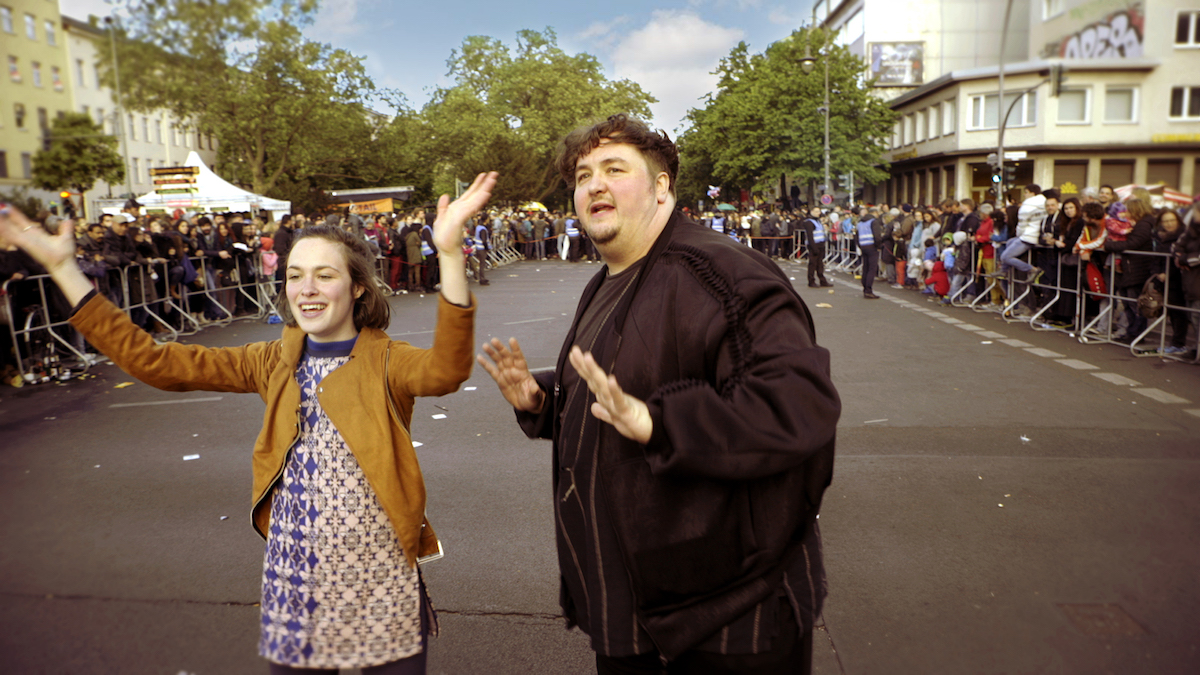 The Berlin International Film Festival has selected the first six films in the 2018 Perspektive Deutsches Kino section. The program will open with the new feature film by Philipp Eichholtz Rückenwind von vorn (Away You Go) (production: Von Oma gefördert). Staying true to himself, director Eichholtz lovingly and energetically tells the story of self-discovery against the wind. Headwind is uncomfortable and slows down forward motion unless you dress warmly, overcome the obstacles and occasionally change direction or take a detour. The young Berlin schoolteacher Charlie (Victoria Schulz) no longer wants to continue as usual on her chosen path and asks herself what she really wants and needs.
“When confronted with powerful winds from ahead, one must push harder to achieve one’s goals. That’s the challenge we accept, and one that transforms the headwind into a mobilizing tailwind from ahead,” comments section head Linda Söffker on her selection.
In Feierabendbier (After-work Beer), the directorial debut by Ben Brummer, and a production of the new Munich production company GAZE Film, barkeeper Magnus (Tilman Strauß) experiences an identity crisis when his precious classic car is stolen. Sporting a cool’n’casual attitude at all times, Magnus and especially his friend Dimi (Johann Jürgens) perfectly personify the hipster cliché: self-realisation through visible symbols of understatement. With the help of props, dress and music, director Brummer sketches a setting that creates a highly entertaining larger-than-life, comic-esque world for adults.
Three mid-length fiction works delve into love and farewells, each approaching the themes with a different aesthetic: Kineski zid (Great Wall of China) by dffb student Aleksandra Odić is a poetic narrative on the Bosnian mentality and spirited warmth of a family as experienced through the eyes of eight-year-old Maja. They all meet one summer day and Maja is the only family member who understands that her favourite aunt Ljilja is secretly emigrating to Germany later that day.
In Storkow Kalifornia by directing student Kolja Malik (Filmakademie Baden-Württemberg), 30-year-old outlaw Sunny (Daniel Roth) of Storkow is torn between his mother and his new love (Lana Cooper), and between staying and going. A film like a road trip: Goodbye Storkow, hello Berlin!
Rå by Filmuniversität Babelsberg student Sophia Bösch is the story of an initiation. 16-year-old Linn (Sofia Aspholm) wants to be accepted into her father’s hunting group at all costs and realises, little by little, that she will never truly belong. A film on growing up and discovering how difficult it is for a woman to find her place in a community of men with antiquated hierarchies.
The documentary film draußen (outside), produced by Titus Kreyenberg (unafilm) and directed by Johanna Sunder-Plassmann and Tama Tobias-Macht, paints a portrait of the homeless individuals Matze, Elvis, Filzlaus and Sergio with the help of personal objects laden with memories and emotions that act as witnesses to their lives. The film takes the viewer out onto the streets and opens our minds to ideas on alternative lifestyles.
The complete Perspektive Deutsches Kino program will be available in January 2018.
draußen (outside)
By Johanna Sunder-Plassmann, Tama Tobias-Macht
Documentary
World premiere
Feierabendbier (After-work Beer)
By Ben Brummer
With Tilman Strauß, Julia Dietze, Johann Jürgens, Christian Tramitz
Feature film
World premiere
Kineski zid (Great Wall of China)
By Aleksandra Odić
With Elena Matić, Tina Keserović, Faketa Salihbegović-Avdagić, Anja Stanić, Mugdim Avdagić
Medium-long feature film
German premiere
Rå
By Sophia Bösch
With Sofia Aspholm, Lennart Jähkel, Lars T. Johansson, Ingmar Virta, Ivan Mathias Petersson
Medium-long feature film
World premiere
Rückenwind von vorn (Away You Go)
By Philipp Eichholtz
With Victoria Schulz, Aleksandar Radenković, Daniel Zillmann, Angelika Waller
Feature film
World premiere
Storkow Kalifornia
By Kolja Malik
With Daniel Roth, Lana Cooper, Franziska Ponitz
Medium-long feature film
World premiere
Image: Victoria Schulz, Daniel Zillmann. Rückenwind von vorn (Away You Go). Regie/director: Philipp Eichholtz
The Berlin International Film Festival has selected the first six films in the 2018 Perspektive Deutsches Kino section. The program will open with the new feature film by Philipp Eichholtz Rückenwind von vorn (Away You Go) (production: Von Oma gefördert). Staying true to himself, director Eichholtz lovingly and energetically tells the story of self-discovery against the wind. Headwind is uncomfortable and slows down forward motion unless you dress warmly, overcome the obstacles and occasionally change direction or take a detour. The young Berlin schoolteacher Charlie (Victoria Schulz) no longer wants to continue as usual on her chosen path and asks herself what she really wants and needs.
“When confronted with powerful winds from ahead, one must push harder to achieve one’s goals. That’s the challenge we accept, and one that transforms the headwind into a mobilizing tailwind from ahead,” comments section head Linda Söffker on her selection.
In Feierabendbier (After-work Beer), the directorial debut by Ben Brummer, and a production of the new Munich production company GAZE Film, barkeeper Magnus (Tilman Strauß) experiences an identity crisis when his precious classic car is stolen. Sporting a cool’n’casual attitude at all times, Magnus and especially his friend Dimi (Johann Jürgens) perfectly personify the hipster cliché: self-realisation through visible symbols of understatement. With the help of props, dress and music, director Brummer sketches a setting that creates a highly entertaining larger-than-life, comic-esque world for adults.
Three mid-length fiction works delve into love and farewells, each approaching the themes with a different aesthetic: Kineski zid (Great Wall of China) by dffb student Aleksandra Odić is a poetic narrative on the Bosnian mentality and spirited warmth of a family as experienced through the eyes of eight-year-old Maja. They all meet one summer day and Maja is the only family member who understands that her favourite aunt Ljilja is secretly emigrating to Germany later that day.
In Storkow Kalifornia by directing student Kolja Malik (Filmakademie Baden-Württemberg), 30-year-old outlaw Sunny (Daniel Roth) of Storkow is torn between his mother and his new love (Lana Cooper), and between staying and going. A film like a road trip: Goodbye Storkow, hello Berlin!
Rå by Filmuniversität Babelsberg student Sophia Bösch is the story of an initiation. 16-year-old Linn (Sofia Aspholm) wants to be accepted into her father’s hunting group at all costs and realises, little by little, that she will never truly belong. A film on growing up and discovering how difficult it is for a woman to find her place in a community of men with antiquated hierarchies.
The documentary film draußen (outside), produced by Titus Kreyenberg (unafilm) and directed by Johanna Sunder-Plassmann and Tama Tobias-Macht, paints a portrait of the homeless individuals Matze, Elvis, Filzlaus and Sergio with the help of personal objects laden with memories and emotions that act as witnesses to their lives. The film takes the viewer out onto the streets and opens our minds to ideas on alternative lifestyles.
The complete Perspektive Deutsches Kino program will be available in January 2018.
draußen (outside)
By Johanna Sunder-Plassmann, Tama Tobias-Macht
Documentary
World premiere
Feierabendbier (After-work Beer)
By Ben Brummer
With Tilman Strauß, Julia Dietze, Johann Jürgens, Christian Tramitz
Feature film
World premiere
Kineski zid (Great Wall of China)
By Aleksandra Odić
With Elena Matić, Tina Keserović, Faketa Salihbegović-Avdagić, Anja Stanić, Mugdim Avdagić
Medium-long feature film
German premiere
Rå
By Sophia Bösch
With Sofia Aspholm, Lennart Jähkel, Lars T. Johansson, Ingmar Virta, Ivan Mathias Petersson
Medium-long feature film
World premiere
Rückenwind von vorn (Away You Go)
By Philipp Eichholtz
With Victoria Schulz, Aleksandar Radenković, Daniel Zillmann, Angelika Waller
Feature film
World premiere
Storkow Kalifornia
By Kolja Malik
With Daniel Roth, Lana Cooper, Franziska Ponitz
Medium-long feature film
World premiere
Image: Victoria Schulz, Daniel Zillmann. Rückenwind von vorn (Away You Go). Regie/director: Philipp Eichholtz
-
2018 Berlin International Film Festival Unveils Official Posters
 When the 68th Berlin International Film Festival takes place from February 15 to 25, 2018, Berlin will once again belong to the bears.
The festival today unveiled the 2018 poster series, featuring six different scenes, again designed by the Swiss agency Velvet. The posters will go up city-wide and be available for purchase at the Berlinale Online Shop starting on January 22.
“It’s that time of year again: The bears are out and about! On this year’s posters they’ll be popping up at well-known Berlin landmarks to get us in the mood for terrific festival days,” comments Festival Director Dieter Kosslick.
When the 68th Berlin International Film Festival takes place from February 15 to 25, 2018, Berlin will once again belong to the bears.
The festival today unveiled the 2018 poster series, featuring six different scenes, again designed by the Swiss agency Velvet. The posters will go up city-wide and be available for purchase at the Berlinale Online Shop starting on January 22.
“It’s that time of year again: The bears are out and about! On this year’s posters they’ll be popping up at well-known Berlin landmarks to get us in the mood for terrific festival days,” comments Festival Director Dieter Kosslick.
-
Berlin International Film Festival Reveals First Films in 2018 Generation Program
[caption id="attachment_26059" align="aligncenter" width="1200"] Unicórnio (Unicorn), Regie/director: Eduardo Nunes[/caption]
The 41st edition of the Generation program at the Berlin International Film Festival will highlight the festival’s reputation for presenting ambitious new discoveries in international contemporary film to young people told at eye level.
“Generation shows films that stay close to the daily lives and fields of experience of children and young people, frequently in challenging situations. And we won’t ever tire of promoting a broader understanding of film for young viewers. At the same time, a visit to Generation has to be a joyful one, an adventure – and whet the appetite for more great cinema,” comments section head Maryanne Redpath.
16 feature-length films have already been selected for the competition programs Kplus and 14plus. In the diverse cinematic formats characteristic of the section, narratives follow their young protagonists through magical worlds of imagery, creating their very own realities that make the contradictions of the fragile adult world visible in subtle ways.
The complete 2018 Generation program will be publicized in mid-January.
Unicórnio (Unicorn), Regie/director: Eduardo Nunes[/caption]
The 41st edition of the Generation program at the Berlin International Film Festival will highlight the festival’s reputation for presenting ambitious new discoveries in international contemporary film to young people told at eye level.
“Generation shows films that stay close to the daily lives and fields of experience of children and young people, frequently in challenging situations. And we won’t ever tire of promoting a broader understanding of film for young viewers. At the same time, a visit to Generation has to be a joyful one, an adventure – and whet the appetite for more great cinema,” comments section head Maryanne Redpath.
16 feature-length films have already been selected for the competition programs Kplus and 14plus. In the diverse cinematic formats characteristic of the section, narratives follow their young protagonists through magical worlds of imagery, creating their very own realities that make the contradictions of the fragile adult world visible in subtle ways.
The complete 2018 Generation program will be publicized in mid-January.
Generation 14plus
303 Germany By Hans Weingartner World premiere 303 tells the story of two university students, Jule (Mala Emde) and Jan (Anton Spieker) who leave Berlin together in an old camper on a road trip south, but for different reasons. As they philosophise on the world and themselves in passionate discussions, director Hans Weingartner maintains a natural closeness to the two young people against breathtaking backgrounds. After his contribution for the episodic film Germany 09, 13 Short Films About The State Of The Nation (Competition 2009), Weingartner, who was also a GWFF Best First Feature Award jury member in 2006, presents his second film at the Berlinale. Cobain Netherlands / Belgium / Germany By Nanouk Leopold World premiere After Wolfsbergen (Forum 2007), Brownian Movement (Forum 2011) and Boven is Het Still (Panorama 2013), Dutch director Nanouk Leopold will be represented at the 2018 festival in the Generation 14plus competition. In her characteristic style of quiet radicalism, her newest film follows 15-year-old Cobain as he wanders through the city in search of his self-destructive mother. On his way he runs into her old friends, social workers and the methadone clinic. In his feature film debut, Bas Keizer gently and stirringly embodies the young man who must grow up far before his time. Danmark (Denmark) Denmark By Kasper Rune Larsen International premiere When 16-year-old Josephine finds out she’s pregnant, she sleeps with laconic Norge and tells him he’s the father. What follows is a wary approach in which questions on responsibility and commitment become increasingly important for the two young people. In his feature film debut, in attentively registered gestures and looks, and keenly observed bodies, faces and things the two protagonists say or don’t say, Kasper Rune Larsen paints a perceptive portrait of young people with deep respect for their wishes and fears, their mistakes and desires. Güvercin (The Pigeon) Turkey By Banu Sıvacı World premiere Only on the roof of his parents’ house, above the alleys of a slum in Adana, with his beloved pigeons, can Yusuf find peace, and himself. Finding a foothold in the dystopian world outside is more difficult. Banu Sıvacı’s feature film debut – which she also wrote and produced – follows Yusuf in sharply composed imagery through difficult times. His expressions and the twists and turns of his body open up his very own inner world that has lots to tell about the outside one. Les faux tatouages (Tattoos) Canada By Pascal Plante International premiere In Les faux tatouages (Tattoos), Pascal Plante tells the story of young love – tenderly, but without drifting into pathos. Misfit Theo, played by Anthony Therrien (lead in Corbo, Generation 14plus 2015), meets Mag on his 18th birthday, and she invites him to spend the night with her. Music is the language they have in common: Framed by wild punk rhythms and filled with youthful passion, a relationship unfolds whose intensity is only increased by its unavoidably approaching end. With great candour and precision, Plante captures the hopes and dreams of young people on their path into an uncertain future. Para Aduma (Red Cow) Israel By Tsivia Barkai World premiere Director, Berlinale Talents alumna and Jerusalem native Tsivia Barkai was already a guest of Generation in the 2006 14plus competition with her first short film Vika. In her feature film debut, she tells the story of patriarchic order, and youthful desire and rebellion. Benny, a young woman, lives in East Jerusalem and sees her father’s religious, utopian nationalism with increasing scepticism – unlike the secret embraces of her girlfriend Yael. A story told in pictures as powerful as the stormy yearnings of its heroine. Unicórnio (Unicorn) Brazil By Eduardo Nunes International premiere The mysterious drama by Brazilian director Eduardo Nunes develops the story of 13-year-old Maria, who lives alone with her mother in rural isolation. When a young man moves into the neighborhood with his herd of goats, their lives are thrown off balance. Using intoxicatingly immersive images, Nunes transmits the radical language and magical realism of author Hilda Hilst into a mystical, fairy-tale world in an imposing widescreen format. Virus Tropical Columbia / France By Santiago Caicedo European premiere Paola is growing up in Quito, Ecuador, as the youngest of three sisters. Dreams burst, companies fail, love grows and withers. In his feature film debut, director Santiago Caicedos translates the autobiographical story of the Ecuadorian comic illustrator Powerpaola into fast-paced, graphically daring, animated images. Emancipatory protest and a declaration of love combine to form an ironic perspective on contemporary Latin America.Generation Kplus
Allons enfants (Cléo & Paul) France By Stéphane Demoustier World premiere Three-and-a-half-year-old Cléo is the reigning hide-and-seek champion. But then one day she forgets which path she took in the park. Suddenly the world is full of strangers staring at their smartphones. Cléo sets out on her own in the hustle-bustle of Paris in search of her brother Paul, who is only slightly older – and lost as well. In tender proximity to its tiny protagonists, this laconic cinematic fairy tale by Stéphane Demoustier turns the daily urban doldrums into a marvelous cosmos of wonderful things, places and encounters. Den utrolige historie om den kæmpestore pære (The Incredible Story of the Giant Pear) Denmark By Philip Einstein Lipski, Amalie Næsby Fick, Jørgen Lerdam International premiere Mitcho and Sebastian are quite surprised when they fish a message in a bottle out of the water one day. Inside is a letter from the mayor J.B., who vanished without a trace, and a seed that grows into a giant pear overnight. The pear turns into a sailboat and suddenly the anxious Sebastian and the hydrophobic Mitcho find themselves in the middle of the ocean with a mad professor. Based on the picture book by Jakob Martin Strid, this fast-paced, magical animation by a trio of directors tells the story of an adventurous journey to the mysterious island where Mayor J.B. is now believed to be located. Dikkertje Dap (My Giraffe) Netherlands / Belgium / Germany By Barbara Bredero International premiere Patterson’s best friend has a long neck and soft, brightly-spotted fur. His name is Raf, he was born the same day as Patterson, and he is: a talking giraffe. Now the two of them are turning four, and soon it’ll be their first day of school. Only animals aren’t allowed at school. Inspired by the classic Dutch children’s song and poem by Annie M.G. Schmidt, and told with a wink, this film is an imaginative story on value and flux in an unusual friendship. El día que resistía (The day I Resisted) Argentina / France By Alessia Chiesa World premiere They play hide-and-seek, read to each other, roughhouse and tumble with their dog Coco: At first glance, the siblings Fan (8), Tino (6) and Claa (4) lead an unburdened childhood life. But they are completely alone, and the forest is just outside, and wasn’t there something about a big bad wolf? With ample sensuality, Berlinale Talents alumna and Argentina native Alessia Chiesa’s feature-length debut unfolds into a dreamy but increasingly gloomy world. Gordon och Paddy (Gordon and Paddy) Sweden By Linda Hambäck International premiere Told in wildly popular Scandinavian whodunit style, frog police chief Gordon, voiced by Stellan Skarsgård, and his assistant Paddy (Melinda Kinnaman) uphold the law of the forest, track down nut thieves and protect forest residents from the fox. Courteousness is legal and dirty tricks are illegal. But that’s always a question of perspective, as this absorbing animation shows using oodles of charm and attention to detail, by filmmaker Linda Hambäck, born in South Korea. Les rois mongols (Cross My Heart) Canada By Luc Picard European premiere Montreal, October 1970. Twelve-year-old Manon’s poverty-stricken family breaks apart: His father has cancer and his mother is on the verge of a nervous breakdown. When Manon and her little brother are to be taken to a foster family, she makes a daredevil plan. Featuring stirring actors and skillfully linked to the real-life upheavals, this film manages to create a moving portrayal of those times, simultaneously exposing the lies and lack of understanding in the grown-up world in tragic and humorous ways. Sekala Niskala (The Seen and Unseen) Indonesia / Netherlands / Australia / Qatar By Kamila Andini European premiere In Sekala Niskala (The Seen and Unseen), Indonesian director Kamila Andini, who presented her debut film The Mirror Never Lies at the Berlinale (Generation 2012) searches for answers to the question of how to say goodbye to a beloved person. Shaped by the Balinese understanding of Sekala – the seen, and Niskala – the unseen, Andini gives the world experience of a ten-year-old girl and her very ill twin brother an imagery of remarkable expressive power. Supa Modo Germany / Kenya By Likarion Wainaina World premiere This drama by Kenyan director Likarion Wainaina, co-produced by Tom Tykwer, tells the inspiring story of nine-year-old Jo. In her acting debut, Stycie Waweru embodies with touching earnestness the terminally ill girl who dreams of being a superhero. Against all odds and battling the time left her, a whole village takes it upon themselves to make Jo’s last wish a reality: to make a film and star in it. Wainaina succeeds in creating a deeply moving observation of the comforting value of imagination in the face of the finiteness of a still young life.
-
2018 Berlin Film Festival Reveals First 10 Films in Competition and Berlinale Special
[caption id="attachment_26023" align="aligncenter" width="1200"] “Eva” By Benoit Jacquot[/caption]
The first ten films have been selected for the Competition and the Berlinale Special of the 2018 Berlin International Film Festival.
Alongside the previously announced opening film, Isle of Dogs by Wes Anderson, films by Benoit Jacquot, Gus Van Sant, Alexey German Jr., Małgorzata Szumowska, Philip Gröning, Thomas Stuber, and Laura Bispuri will screen in Competition.
So far two films by Isabel Coixet and Lars Kraume have been invited to participate in the Berlinale Special. As part of the Official Program, it screens recent works by contemporary filmmakers, as well as documentaries and works with extraordinary formats.
“Eva” By Benoit Jacquot[/caption]
The first ten films have been selected for the Competition and the Berlinale Special of the 2018 Berlin International Film Festival.
Alongside the previously announced opening film, Isle of Dogs by Wes Anderson, films by Benoit Jacquot, Gus Van Sant, Alexey German Jr., Małgorzata Szumowska, Philip Gröning, Thomas Stuber, and Laura Bispuri will screen in Competition.
So far two films by Isabel Coixet and Lars Kraume have been invited to participate in the Berlinale Special. As part of the Official Program, it screens recent works by contemporary filmmakers, as well as documentaries and works with extraordinary formats.
Competition
Don’t Worry, He Won’t Get Far on Foot USA By Gus Van Sant (Milk, Promised Land) With Joaquin Phoenix, Jonah Hill, Rooney Mara, Jack Black, Udo Kier International premiere Dovlatov Russian Federation / Poland / Serbia By Alexey German Jr. (Paper Soldier, Under Electric Clouds) With Milan Maric, Danila Kozlovsky, Helena Sujecka, Artur Beschastny, Elena Lyadova World premiere Eva France By Benoit Jacquot (Three Hearts, Diary of a Chambermaid) With Isabelle Huppert, Gaspard Ulliel, Julia Roy, Richard Berry World premiere Figlia mia (Daughter of Mine) Italy / Germany / Switzerland By Laura Bispuri (Sworn Virgin) With Valeria Golino, Alba Rohrwacher, Sara Casu, Udo Kier World premiere In den Gängen (In the Aisles) Germany By Thomas Stuber (Teenage Angst, A Heavy Heart) With Franz Rogowski, Sandra Hüller, Peter Kurth World premiere Mein Bruder heißt Robert und ist ein Idiot (My Brother’s Name is Robert and He’s an Idiot) Germany By Philip Gröning (Into Great Silence, The Police Officer’s Wife) With Josef Mattes, Julia Zange, Urs Jucker, Stefan Konarske, Zita Aretz, Karolina Porcari, Vitus Zeplichal World premiere Twarz (Mug) Poland By Małgorzata Szumowska (In the Name of, Body) With Mateusz Kościukiewicz, Agnieszka Podsiadlik, Małgorzata Gorol, Roman Gancarczyk, Dariusz Chojnacki, Robert Talarczyk, Anna Tomaszewska, Martyna Krzysztofik World premiereBerlinale Special Gala
The Bookshop Spain / United Kingdom / Germany By Isabel Coixet (Things I Never Told You, My Life Without Me, The Secret Life of Words) With Emily Mortimer, Bill Nighy, Patricia Clarkson German premiere Das schweigende Klassenzimmer (The Silent Revolution) Germany By Lars Kraume (The People vs. Fritz Bauer) With Leonard Scheicher, Tom Gramenz, Lena Klenke, Jonas Dassler, Florian Lukas, Jördis Triebel, Michael Gwisdek, Ronald Zehrfeld, Burghart Klaußner World premiere
-
Berlin Film Festival Confirms First Films in 2018 Panorama Program
[caption id="attachment_25976" align="aligncenter" width="1200"]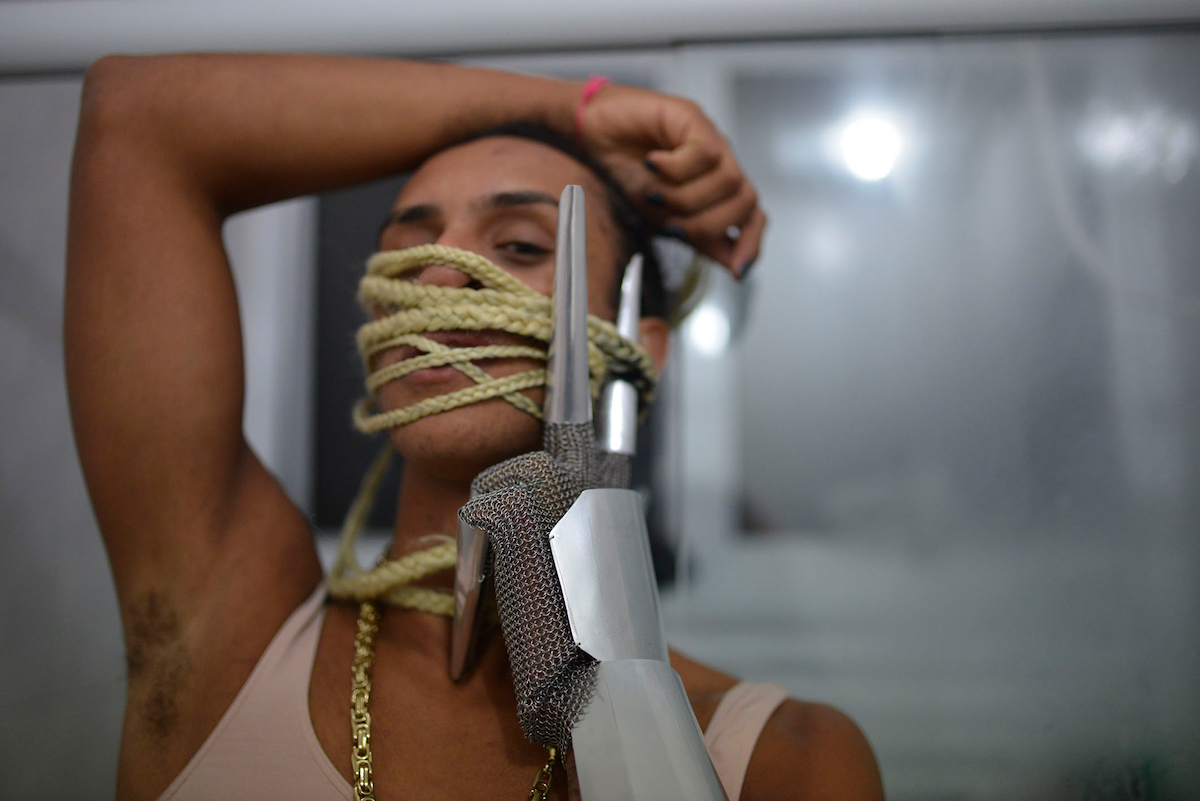 Bixa Travesty (Tranny Fag)[/caption]
The first eleven films have been confirmed for the Panorama program of the upcoming 2018 Berlin International Film Festival.
In the German documentary Zentralflughafen THF (Central Airport THF), Brazilian-Algerian director Karim Aïnouz films the everyday lives of refugees in the hangars of the defunct Berlin airport Tempelhof. While they dream of having finally reached their destination, Berliners flee from their everyday lives to the public park on Tempelhofer Feld.
In Timur Bekmambetov’s US fiction film Profile, a British journalist goes undercover and infiltrates the digital propaganda channels of the so-called Islamic State, which has been mobilising ever greater numbers of young women from Europe. Her daily internet contacts with ISIS recruiters gradually pull her in and push the limits of her investigation.
In Yocho (Yocho (Foreboding)), the latest science fiction film by Japanese director Kiyoshi Kurosawa, aliens take over human emotions. Their uncanny system of subjugation kindles a paranoia that turns individual initiative into obedience. Inspired by a manga of the same name is River’s Edge by Isao Yukisada. In the 1990s, shortly after the collapse of the economic boom in Japan, a group of young people struggle to reconnect with their feelings. Anger and frustration unleash a frenzy of sex and turmoil.
Four productions from Latin America have already been confirmed. La omisión (The Omission), Argentinian filmmaker Sebastián Schjaer’s first full-length fiction film, intimately depicts a transient worker. Wrapped in thick winter clothing, she defies the cold of Tierra del Fuego and the expectations put on her as a young mother. Also from Argentina is Malambo, el hombre bueno (Malambo, the Good Man) by Santiago Loza. Mesmerizing black-and-white images tell the story of a malambo dancer whose body becomes his adversary. The “malambistas” train a lifetime for competitions – and when a dancer finally wins he has to retire. A struggle for freedom in which torment and fulfilment are remarkably one. In dense images, the Brazilian documentary Ex-Pajé (Ex Shaman) by Luiz Bolognesi shows the imminent ethnocide of the indigenous Paiter Suruí who live in the Amazon basin. A former Christianized shaman turns to the spirits he had abandoned in order to preserve their cultural identity.
Another film from Brazil is dealing with “body politics”: Bixa Travesty (Tranny Fag). The female trans*body becomes a political means of expression in both public and private space. The black, transgender singer Linn da Quebrada deconstructs how alpha males conceive of themselves. Kiko Goifman and Claudia Priscilla portray a charismatic artist who reflects on gender and has an extraordinary stage presence.
The dreamlike cinematographic poem Obscuro Barroco by Greek director Evangelia Kranioti focuses on a transgender Brazilian personality: Luana Muniz (1961-2017), icon of queer subculture, drifts through the world of Rio de Janeiro, a city of extremes, with its political conflicts, carnival masquerades, and novel bodies whose transformations no longer acknowledge clear gender lines.
Two works deal with another important topic of the Panorama 2018 – “resistance to machismo”: La omisión and the Austrian fiction film L’Animale by Katharina Mückstein, where an 18-year-old high school graduate and her motocross clique are the source of unease in the neighbourhood. Her need to belong, her experience of male dominance and the ardent devotion to her clique arouse conflicting emotions in her.
After the success of The Black Power Mixtape 1967-1975 and Concerning Violence in the Panorama, Swedish filmmaker Göran Hugo Olsson will return to present his new documentary That Summer. In it he brings back the eccentric universe of the symbiotic mother-daughter duo from the documentary classic Grey Gardens. That Summer presents what was believed to have been lost: footage from the summer of 1972, filmed by Peter Beard and Lee Radziwill, Jacqueline Kennedy Onassis’s sister. Additional material – shot by Andy Warhol, Jonas Mekas, Albert Maysles, and Vincent Fremont – provides insight into the dynamics of the former artist community in the Hamptons.
L’Animale – Austria
By Katharina Mückstein
With Sophie Stockinger, Kathrin Resetarits, Dominik Warta, Julia Franz Richter, Jack Hofer, Dominic Marcus Singer, Simon Morzé
World premiere
Bixa Travesty (Tranny Fag) – Brazil
By Claudia Priscilla, Kiko Goifman
With Linn da Quebrada, Jup do Bairro, Liniker
Documentary
World premiere
Ex Pajé (Ex Shaman) – Brazil
By Luiz Bolognesi
Documentary
World premiere
Malambo, el hombre bueno (Malambo, the Good Man) – Argentina
By Santiago Loza
With Gaspar Jofre, Fernando Muñoz, Pablo Lugones, Nubecita Vargas, Gabriela Pastor, Carlos Defeo
World premiere
Obscuro Barroco – France / Greece
By Evangelia Kranioti
Documentary
World premiere
La omisión (The Omission) – Argentina / The Netherlands / Switzerland
By Sebastián Schjaer
With Sofía Brito, Lisandro Rodriguez, Malena Hernández Díaz, Victoria Raposo, Pablo Sigal
World premiere
Profile – USA / UK / Cyprus
By Timur Bekmambetov
With Valene Kane, Shazad Latif, Christine Adams, Morgan Watkins, Amir Rahimzadeh
World premiere
River’s Edge – Japan
By Isao Yukisada
With Fumi Nikaidou, Ryo Yoshizawa, SUMIRE , Shiori Doi, Aoi Morikawa
International premiere
That Summer – Sweden / Denmark / USA
By Göran Hugo Olsson
With Peter Beard, Lee Radziwill, Edith Ewing Bouvier Beale, Edith Bouvier Beale, Andy Warhol
Documentary
European premiere
Yocho (Yocho (Foreboding)) – Japan
By Kiyoshi Kurosawa
With Kaho, Shota Sometani, Masahiro Higashide
European premiere
Zentralflughafen THF (Central Airport THF) – Germany / Brazil / France
By Karim Aïnouz
Documentary
World premiere
Bixa Travesty (Tranny Fag)[/caption]
The first eleven films have been confirmed for the Panorama program of the upcoming 2018 Berlin International Film Festival.
In the German documentary Zentralflughafen THF (Central Airport THF), Brazilian-Algerian director Karim Aïnouz films the everyday lives of refugees in the hangars of the defunct Berlin airport Tempelhof. While they dream of having finally reached their destination, Berliners flee from their everyday lives to the public park on Tempelhofer Feld.
In Timur Bekmambetov’s US fiction film Profile, a British journalist goes undercover and infiltrates the digital propaganda channels of the so-called Islamic State, which has been mobilising ever greater numbers of young women from Europe. Her daily internet contacts with ISIS recruiters gradually pull her in and push the limits of her investigation.
In Yocho (Yocho (Foreboding)), the latest science fiction film by Japanese director Kiyoshi Kurosawa, aliens take over human emotions. Their uncanny system of subjugation kindles a paranoia that turns individual initiative into obedience. Inspired by a manga of the same name is River’s Edge by Isao Yukisada. In the 1990s, shortly after the collapse of the economic boom in Japan, a group of young people struggle to reconnect with their feelings. Anger and frustration unleash a frenzy of sex and turmoil.
Four productions from Latin America have already been confirmed. La omisión (The Omission), Argentinian filmmaker Sebastián Schjaer’s first full-length fiction film, intimately depicts a transient worker. Wrapped in thick winter clothing, she defies the cold of Tierra del Fuego and the expectations put on her as a young mother. Also from Argentina is Malambo, el hombre bueno (Malambo, the Good Man) by Santiago Loza. Mesmerizing black-and-white images tell the story of a malambo dancer whose body becomes his adversary. The “malambistas” train a lifetime for competitions – and when a dancer finally wins he has to retire. A struggle for freedom in which torment and fulfilment are remarkably one. In dense images, the Brazilian documentary Ex-Pajé (Ex Shaman) by Luiz Bolognesi shows the imminent ethnocide of the indigenous Paiter Suruí who live in the Amazon basin. A former Christianized shaman turns to the spirits he had abandoned in order to preserve their cultural identity.
Another film from Brazil is dealing with “body politics”: Bixa Travesty (Tranny Fag). The female trans*body becomes a political means of expression in both public and private space. The black, transgender singer Linn da Quebrada deconstructs how alpha males conceive of themselves. Kiko Goifman and Claudia Priscilla portray a charismatic artist who reflects on gender and has an extraordinary stage presence.
The dreamlike cinematographic poem Obscuro Barroco by Greek director Evangelia Kranioti focuses on a transgender Brazilian personality: Luana Muniz (1961-2017), icon of queer subculture, drifts through the world of Rio de Janeiro, a city of extremes, with its political conflicts, carnival masquerades, and novel bodies whose transformations no longer acknowledge clear gender lines.
Two works deal with another important topic of the Panorama 2018 – “resistance to machismo”: La omisión and the Austrian fiction film L’Animale by Katharina Mückstein, where an 18-year-old high school graduate and her motocross clique are the source of unease in the neighbourhood. Her need to belong, her experience of male dominance and the ardent devotion to her clique arouse conflicting emotions in her.
After the success of The Black Power Mixtape 1967-1975 and Concerning Violence in the Panorama, Swedish filmmaker Göran Hugo Olsson will return to present his new documentary That Summer. In it he brings back the eccentric universe of the symbiotic mother-daughter duo from the documentary classic Grey Gardens. That Summer presents what was believed to have been lost: footage from the summer of 1972, filmed by Peter Beard and Lee Radziwill, Jacqueline Kennedy Onassis’s sister. Additional material – shot by Andy Warhol, Jonas Mekas, Albert Maysles, and Vincent Fremont – provides insight into the dynamics of the former artist community in the Hamptons.
L’Animale – Austria
By Katharina Mückstein
With Sophie Stockinger, Kathrin Resetarits, Dominik Warta, Julia Franz Richter, Jack Hofer, Dominic Marcus Singer, Simon Morzé
World premiere
Bixa Travesty (Tranny Fag) – Brazil
By Claudia Priscilla, Kiko Goifman
With Linn da Quebrada, Jup do Bairro, Liniker
Documentary
World premiere
Ex Pajé (Ex Shaman) – Brazil
By Luiz Bolognesi
Documentary
World premiere
Malambo, el hombre bueno (Malambo, the Good Man) – Argentina
By Santiago Loza
With Gaspar Jofre, Fernando Muñoz, Pablo Lugones, Nubecita Vargas, Gabriela Pastor, Carlos Defeo
World premiere
Obscuro Barroco – France / Greece
By Evangelia Kranioti
Documentary
World premiere
La omisión (The Omission) – Argentina / The Netherlands / Switzerland
By Sebastián Schjaer
With Sofía Brito, Lisandro Rodriguez, Malena Hernández Díaz, Victoria Raposo, Pablo Sigal
World premiere
Profile – USA / UK / Cyprus
By Timur Bekmambetov
With Valene Kane, Shazad Latif, Christine Adams, Morgan Watkins, Amir Rahimzadeh
World premiere
River’s Edge – Japan
By Isao Yukisada
With Fumi Nikaidou, Ryo Yoshizawa, SUMIRE , Shiori Doi, Aoi Morikawa
International premiere
That Summer – Sweden / Denmark / USA
By Göran Hugo Olsson
With Peter Beard, Lee Radziwill, Edith Ewing Bouvier Beale, Edith Bouvier Beale, Andy Warhol
Documentary
European premiere
Yocho (Yocho (Foreboding)) – Japan
By Kiyoshi Kurosawa
With Kaho, Shota Sometani, Masahiro Higashide
European premiere
Zentralflughafen THF (Central Airport THF) – Germany / Brazil / France
By Karim Aïnouz
Documentary
World premiere