Berlin International Film Festival announced the winners of Generation Kplus and Generation 14plus competitions, designed for a young audience.
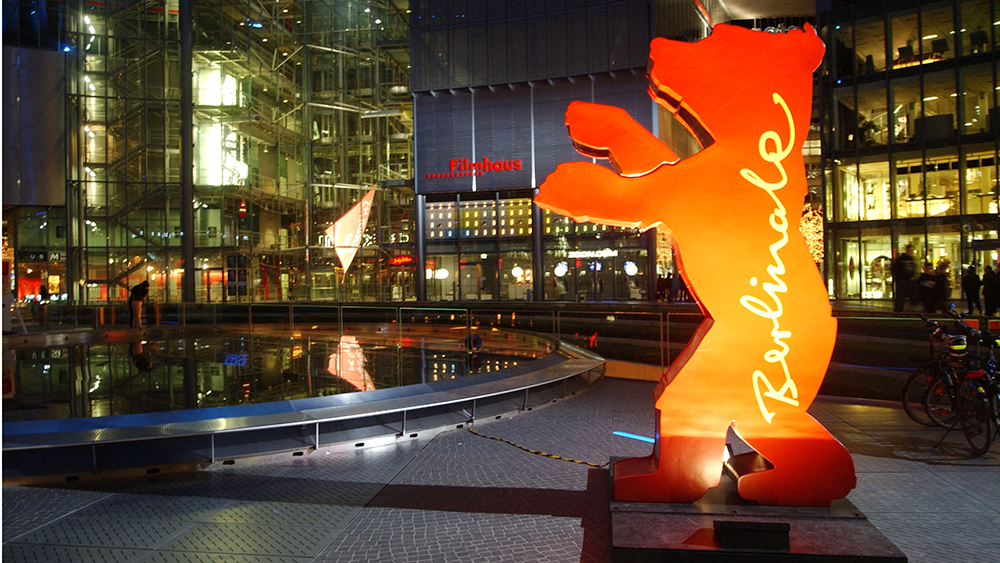
The Berlinale is a unique place of artistic exploration and entertainment. It is one of the largest public film festivals in the world, attracting tens of thousands of visitors from around the globe each year. For the film industry and the media, the eleven days in February are also one of the most important events in the annual calendar and an indispensable trading forum.
The Berlin International Film Festival enjoys an eventful history. The festival was created for the Berlin public in 1951, at the beginning of the Cold War, as a “showcase of the free world”. Shaped by the turbulent post-war period and the unique situation of a divided city, the Berlinale has developed into a place of intercultural exchange and a platform for the critical cinematic exploration of social issues. To this day it is considered the most political of all the major film festivals.
Berlin International Film Festival started in 1951 and takes place in Berlin, Germany, Europe

Berlin International Film Festival announced the winners of Generation Kplus and Generation 14plus competitions, designed for a young audience.

After expressing some earlier doubts, Berlinale has confirmed that the Summer Special set for June 9-20, 2021 will take place as an outdoor open-air cinema experience at 16 venues.

Berlin Film Festival is reconsidering its Summer Special edition after a spike in ongoing COVID-19 infections caused officials to implement restrictions that make hosting the event difficult, if not impossible.

Bad Luck Banging or Loony Porn (Babardeală cu bucluc sau porno balamuc) directed by Radu Jude was awarded the Golden Bear for Best Film at the Berlin International Film Festival. In the film, a school teacher, finds her career and reputation under threat after a personal sex tape is leaked on the Internet. Bad Luck Banging or Loony Porn stars Katia Pascariu, Claudia Ieremia, Olimpia Mălai, Nicodim Ungureanu, Alexandru Potocean, and Andi Vasluianu.

Berlin International Film Festival announced the winners of the Awards of the International Juries of Berlinale Shorts and Generation 2021.
The Berlin International Film Festival announced the 2021 International Jury, Encounters Jury, International Short Film Jury and Generation Jury. International juries will decide on the prizes for the competition Berlinale Shorts, Encounters and Generation during the Industry Event (March 1 to 5, 2021). The winners will be announced on March 4 (Berlinale Shorts, Generation) and March 5 (competition, Encounters). The award ceremony of the 71st Berlinale will take place in the presence of the audience at the Summer Special in June.

17 films makes up the 51st Berlinale Forum program and the Forum Expanded film selection consists of four short film selections, one medium-length film and two feature-length films, with a total of 18 films to be shown in March at the 2021 Berlin International Film Festival. Eight installations will also be shown in June.

Berlinale Shorts 2021 program of the Berlin International Film Festival will showcase 20 short films from 16 countries featuring different languages and ranging from fictional formats to experimental films, animations, hybrid and documentary forms

Berlinale revealed the 15 films including seven world premieres and six debuts for the Generation program in the two competitions Kplus and 14plus.

For the Retrospective of the 2021 Berlin International Film Festival, the festival will showcase a program of 27 comedies featuring three different American actresses under the title “No Angels – Mae West, Rosalind Russell & Carole Lombard”. The films were chosen with a focus on the strict morality rules of the Motion Picture Production Code, which were increasingly enforced after 1934. Officially adopted in 1930 and dubbed the “Hays Code”, it was a voluntary system by which the Hollywood Studios agreed to uphold moral standards in filmmaking to avoid the censors’ knife. But the Hays Office soon became an even stricter arbiter than the actual censorship office of what could and couldn’t be shown on screen. The code prohibited explicit depictions of sex and promiscuity, as well as the use of profanity. Yet during that period, these three women succeeded in shaping their own film roles, finding their own style, and subtly subverting the Hays Code rules.