Durban International Film Festival

  • Full Program Announced for 2014 Durban International Film Festival

    durban film film festival 2014

    2014 sees the Durban International Film Festival (DIFF) return for its 35th year to celebrate the wonder and diversity of global cinema. From 17 to 27 July, Durban will be lit by the glow of the silver screen, with over 250 screenings in 9 venues across the city. Alongside this smorgasbord of the best of contemporary cinema from around the planet, including 69 feature films, 60 documentaries, 57 short films and 19 surf films, the festival offers a comprehensive workshop and seminar programme that facilitates the sharing of knowledge and skills by film industry experts. 

    This year’s diverse line-up of world-class cinema includes a key focus on 20 years of freedom and democracy in South Africa, as well as a snapshot of contemporary British film and various focus areas. DIFF 2014 includes a generous selection of feature films, cutting edge documentaries, eight packages of short films and a selection of thrilling surf films in the Wavescape Film Festival. This year also sees the return of Durban Wild Talk Africa, which includes a selection of the best environmentally themed films from around the world, as well as the second edition of ‘The Films That Made Me’, in which an acclaimed director introduces five films that have been important to their growth as a filmmaker . 

    South African Focus

    The ever-expanding African film industry will once more be represented at DIFF 2014, although South African film retains its key focus, with 40 feature-length films and 38 short films – most of them receiving their world premieres on Durban screens, and collectively representing by far the largest number of South African films in DIFF’s history.

    This year’s opening night film see the world premiere of Hard to Get, the electrifying feature debut from South African filmmaker Zee Ntuli, who has already received critical acclaim for his short films. The story of the mercurial relationship between a handsome young womaniser and a beautiful, reckless petty criminal, Hard to Get is fuelled by a bewitching visual poetry. Other high-profile South African films being showcased include the engaging thriller Cold HarbourBetween Friends, which recounts a reunion between old varsity friends, Hear Me Move, a locally flavoured dance movie, and Love the One you Love, which explores a constellation of relationships between young South Africans.

    Then there’s the Tyler Perry-flavoured Two ChoicesThe Two of Us which tells of a relationship between two siblings, and Icehorse, a surreal mystery drama set in the Netherlands from South African director Elan Gamaker. Young Ones is a dystopian down-beat sci-fi flick directed by Jake Paltrow, produced by Spier Films and shot in South Africa, while the French/South African co-production Zulu explores the unhealed wounds of the new South Africa. Finally, DIFF is very proud to present the 1973 film Joe Bullet, the first work to benefit from the Gravel Road legacy project, which aims to restore films lost in the dusty archives of apartheid.

    African Focus

    The rich programme of films from elsewhere on the continent includes a number of artistically and politically brave directorial voices that are unafraid to experiment with form or content. The bewitching and high experimental Bloody Beans recounts the Algerian revolution using a band of young children as its medium of expression, while the utterly charming and super-low-budget Beti and Amare is an Ethiopian vampire film with a difference. 

    DIFF 2014 also acknowledges the political reality of contemporary Africa with films such as Timbuktu from Malian master Abderrahmane Sissako, which recounts Timbuktu’s brief occupation by militant Islamic rebels. The mockumentary hybrid They Are the Dogs is set in Morocco in the aftermath of the Arab Spring, while the engagingly authentic semi-autographical film Die Welt is set in Tunisia shortly after the recent Jasmine Revolution. Imbabazi: The Pardon explores the possibilities of reconciliation in the wake of the Rwandan genocide, and Difret examines the potentially destructive role of patriarchal traditions in contemporary Ethiopia.

    Set in Tanzania, the disturbing but visually powerful White Shadow tells the story of a young albino boy named Alias who is targeted for body parts by muti traders. Veve, the latest film from the producers of the award-winning crime drama Nairobi Half Life, documents the double-crossing lives of those trading in khat or ‘veve’, a mildly narcotic local crop. From Moroccan director Abdellah Taia comes Salvation Army, which tells of a young Arab man grappling with notions of family and sexuality. Then there is the highly anticipated film adaptation of Chimamanda Ngozi Adichie’s Half of a Yellow Sun, set against the difficulties of post-independence Nigeria.

    Coz Ov Moni II: FOKN Revenge, billed as ‘the world’s second first pidgin musical’ is a Ghanaian hop-hop opera from rap duo the FOKN Bois, while B for Boy tells the story of how a Nigerian woman’s life is corrupted by the forces of patriarchy and tradition. 

    SPECIAL FOCUS: 20 Years of Freedom and Democracy

    2014 is the 20th anniversary of the advent of a free and non-racial democracy in South Africa. This year’s programme includes a generous spread of documentaries, both from home and abroad, which celebrates, explores and interrogates the progress that South Africa has made as a country over the last two decades. The 20 Years of Freedom and Democracy programme features an expanded South African documentary programme in response to the large number of high quality doccies currently being produced in the country.  

    The result is a rich and diverse slate of films, including Khalo Matabane’s Nelson Mandela: The Myth and Me and Miners Shot Down, Rehad Desai’s devastating account of Marikana. They are joined by many other films that chronicle lesser known but no less significant stories behind the end of apartheid and the rebirth of South Africa into a new country. 

    Word Down the Line with Poet Lesego Rampolokeng speaking to Gift (Makahafula Vilakazi) RamashiaWord Down the Line with Poet Lesego Rampolokeng speaking to Gift (Makahafula Vilakazi) Ramashia

    The full selection of the 20 Years of Freedom and Democracy programme are 1994 The Bloody Miracle,  Concerning ViolenceFatherlandFreedom Mixtape (1994-2014)Future Sounds Of MzansiGangster BackstageI,AfrikanerLetters To ZohraMiners Shot DownMy HoodNelson Mandela: The Myth & MeOne Humanity , The Other ManPlot For PeaceRainbow Makers: Tribute To The Frontline StatesShield And SpearA Snake Gives Birth To A SnakeSoft Vengeance: Albie Sachs And The New South Africa and Word Down The Line. 

    UK Focus

    This year’s UK focus is part a UK-South African cultural season taking place over the next two years. In recognition of this season, DIFF presents a diverse snapshot of contemporary British cinema – including the strangely compelling Lilting which tells the story of the triangular relationship between two gay men and one of their mothers, ’71 which is set in Belfast at the beginning of The Troubles and the highly endearing Frank, which chronicles the misadventures of a band of outsider musicians.

    How I Live Now is a post-apocalyptic tale set in rural England in the wake of a nuclear bomb. The Selfish Giant is a Dickensian tale of two working class boys who live on the knife’s edge of poverty and adolescence. Gone Too Far offers a nuanced look at race in contemporary Britain, while Only Lovers Left Alive is the UK-produced downbeat vampire masterpiece from Jim Jarmusch.

    British Documentaries include InRealLife, which explores our relationship with the internet and social networking technology, the real-life heist drama Smash and Grab: The Story of the Pink Panthers20 000 Days On Earth, which documents a fictitious day in the life of much-loved musician Nick Cave, Coach Zoran And His African Tigers which tells of the birth of the South Sudan national soccer team, and the UK/SA coproduction One Humanity, which documents the global anti-apartheid movement from the perspective of the two tribute concerts to Nelson Mandela that took place in London in 1988 and 1990.

    In addition to this focus area in DIFF’s programing, the DIFF UK Focus also includes free public screenings of British films, preceded by a programme of short films from South African filmmakers, courtesy of the South African National Film and Video Foundation (NFVF). These screenings will take place on Friday 18 July, Saturday 19 July, Friday 25 July and Saturday 26 July.

    The UK Focus is supported by the British Council, while the beach screenings form part of the British Council’s Connect ZA programme in partnership with the NFVF.

    World Cinema

    Beyond its strong focus on Africa and South Africa, DIFF is a festival of world cinema and, as is the case every year, this year’s edition is filled with a richly diverse selection of films from around the world. From Sweden comes The 100-Year-Old Man Who Climbed Out Of The Window And Disappeared based on the popular novel by Jonas Jonasson. Amazonia (France/ Brazil) follows the epiphanic journey of Sai, a tame capuchin monkey unaware of the wider natural world until the plane on which he is being transported crashes in the Amazon basin. An Episode In The Life Of An Iron Picker (Bosnia and Herzegovina/France/Slovenia) follows a Roma couple as they eke out a tenuous existence, and Arwad (Canada) tells the story of Ali, who, after the death of his mother, escapes to the island of Arwad, off the coast of Syria.

    Then there is the Chinese noir film Black Coal, Thin Ice which follows a dissolute former detective who falls under the spell of a widow with a dark secret. Concrete Clouds (Thailand, Hong Kong SAR China) is a complex story about identity and belonging set against the 1997 Asian economic crisis. The Congress (Israel/ Germany/Poland/ Luxembourg/France/Belgium) is the latest left-field masterpiece from Israeli animator Ari Folman (Waltz with Bashir), while The Lunchbox (France/Germany/ India) is a luminous tale of an isolated housewife who attempts to reignite her relationship with her husband through her delectably prepared meals. In Mary Is Happy, Mary Is Happy from Thailand, cinema meets social media in an innovative film that is constructed around 410 consecutive Twitter updates. The Austrian film My Blind Heart follows a young man suffering from a rare genetic disorder as he lives a marginal life in the city of Vienna, and Nuoc 2030 from Vietnam is set in a near-futuristic landscape flooded as a result of global warming.

    Nymphomaniac (Denmark/Germany/ France/Belgium/Sweden), from controversial filmmaker Lars von Trier, is an ambitiously explicit sexual epic while Omar (Palestinian Territories) is a tense political thriller set in the West Bank. Papilio Buddha (India/United States) tells of the university-educated son of a Dalit activist who is politically apathetic until he receives bad treatment at the hands of the state. The Rocket (Australia/Laos/ Thailand) is set in the lush mountain countryside of Laos and chronicles the attempts of a young outsider to overcome his fate. The Rover (Australia/United States) is the latest film from Australian filmmaker David Michôd, director of the 2010 DIFF hit Animal Kingdom, while the American film Wish I Was Here is a sequel of sorts to Zach Braff’s 2004 hit debut Garden State.

    Gender and Sexuality

    As is usually the case, this edition of DIFF has a strong selection of films exploring sexuality and gender issues. 52 Tuesdays chronicles the female-to-male gender transition of a woman from the perspective of her daughter, who visits her mother once a week during the year-long process. The frank yet mercurial Love is Strange tells of two gay New Yorkers who decide to get married after 40 years of living together, and suddenly find themselves separated from each other. The Indian film Qissa blurs the boundaries of gender and genre in its story of girl who is brought up as a boy, while Something Must Break introduces us to the apparently straight Andreas, who finds himself drawn to Sebastian, who is wrestling with the emerging strength of Ellie, the women he feels he must become. 

    Peaches Does Herself is an instant concert film classic and also a neo-queer, post-punk camp extravaganza, with the Canadian electroclash artist directing herself. Eastern Boys follows the shifting relationship between the between a mild-mannered, middle-aged Parisian named Daniel and Marek, a young Eastern European boy who he picks up in a train station. Finally, Salvation Army is an unflinching, poetic study of a young Arab man grappling with notions of family and sexuality. Rendered in filmmaking styles as diverse as the sexuality they document, this is a fascinating selection of films about the edges of sexuality.

    Documentaries

    This year’s selection of documentaries is the largest yet in DIFF’s 35 year history. As well as the rich selection of doccies presented in the 20 Years of Freedom special focus area, there are a number of other local offerings included in the Wild Talk stream. Then there is a stellar selection of documentaries from around the world, collectively presenting a global snapshot of life on earth. We Come as Friends explores the human cost of neo-colonialism in newly independent South Sudan, A World Not Ours provides a deeply compassionate but acerbic glimpse into life in a Palestinian refugee camp in Lebanon, and Cairo Drive looks at life in contemporary Cairo from the perspective of its anarchic traffic system. 

    These Birds Walk tells the heart-breaking and cinematically astounding story of a Pakistani orphanage and ambulance service, while The Kill Team is a dark catalogue of illicit killings of civilians by American soldiers in Afghanistan. The King and the People documents the repressive rule of Swaziland’s King Mswati III, Africa’s last remaining absolute monarch, and Life Itself chronicles the life of Roger Ebert, the much loved film critic who died last year. Finally, Prophecy. Pasolini’s Africa and How Strange to be Named Federico present two very different tributes to two of the greatest names in Italian cinema.

    The Encounters-DIFF Connection

    This year DIFF presents several films in association with Encounters Film Festival. These films include Annalet Steenkamp’s I, Afrikaner, Rehad Desai’s Miners Shot Down, Jolynn Minnaar’s Unearthed, Marion Edmund’s The Vula Connection and Abby Ginzberg’ Soft Vengeance: Albie Sachs and the New South Africa.

    Wavescape Film Festival

    For the ninth year, DIFF partners with Wavescape to bring you a feast of surfing cinema, including 8 features and 11 shorts.  Inspired by such films as Rattle and Hum and Endless SummerFading West follows Grammy-winning alternative-rock band Switchfoot as they hunt for surf around the globe. In Land of Patagones two brothers trek to the guano-infested solitude of Patagonia, the far southern home of toothfish and uncharted surf. In Out in the Line Up two gay surfers unite to uncover the taboo of homosexuality in surfing, while Stephanie in the Water tells the story of Stephanie Gilmore who won her first world surfing championship event at the age of 17 on a day off from high school.

    Other Wavescape films include Tidelines, in which a South African crew circumnavigates the world to find waves but also to document how badly plastic debris has impacted our oceans, while McConkey is a tribute to Shane McConkey, the extreme skier.

    Wavescape opens with a free outdoor screening at the Bay of Plenty Lawns on Sunday 20 July, before locating at Ster-Kinekor Musgrave Monday 21 July to Friday 25 July.

    The Films That Made Me 

    This year, for the second time, DIFF presents a repertory section in which film lovers and filmmakers have the opportunity to access a slice of film history. In ‘The Films That Made Me’ section, acclaimed South African director Khalo Matabane presents five films that have been influential in his growth as a filmmaker. The five films that Matabane will present are Krzysztof Kieślowski’s A Short Film About Killing (1988), Denys Arcand’s The Decline Of The American Empire (1986), Martin Scorsese’s Raging Bull (1980), Alfred Hitchcock‘s Rear Window (1954) and Spike Lee’s Do The Right Thing (1989). After each screening, Matabane will lead a discussion regarding the importance of the film. These screenings will be part of the Talents Durban programme but will also be open to the public

    Wild Talk

    For the second year running, DIFF is host to the Durban Wild Talk Africa showcase of local and international environmentally and wildlife-focused films. The Durban Wild Talk Africa Film Festival and Conference, now in its 9th year, brings a world-class television market and natural history conference to South Africa every two years. After the success of last year’s conference at DIFF, Durban Wild Talk Africa will again present a programme of nature films. The full Wild Talk conference will be back in Durban next year.

    This year, the Wild Talk strand offers entertaining and enlightening viewing for nature enthusiasts, animal-lovers, adrenalin junkies and environmentalists alike. Some not-to-be-missed films include Unearthed, a shocking insight into the world of hydraulic fracking and the dark underbelly of America’s gas industry, Black Mamba: Kiss of Death, in which we witness an hour in the life of the most feared snake in Africa, and Birdman Chronicles, which launches head-first into the adrenaline-charged world of wing-suit flying. DamNation explores the changing attitudes towards dams and the devastating effect of these man-made structures while Expedition to the End of the World is an account of a visit by a group of artists and scientists to the rapidly melting massifs of North-East Greenland.

    Other Wild Talk films include the award-winning Iranian astronaut-inspired SepidehThe Ghosts in our Machines, Liz Marshall’s photographic exploration into the commodification of animals, an artistic voyage into water with Watermark, and the world premiere of Lady Baboon, which chronicles the life of the woman who single-handedly started the controversial baboon conservation movement in South Africa.

    Architecture Film

    The week after DIFF ends, Durban will be hosting the World Congress of Architects at UIA2014. In acknowledgement of this fact, the festival presents a small stream of films which explore various aspects of architecture. Cathedrals of Culture begins with the question “If buildings could talk, what would they say about us?”, and offers six startling responses from six filmmakers from around the world. Great Expectations presents the grand architectural visions of our time, from the functionalist cities of Le Corbusier to the light-weight structures of Buckminster Fuller to Paolo Soleri’s crystalline villages in the desert. The Human Scale documents how modern cities tend to leave us each alone in an almost infinitely large crowd and suggests that we can build cities in ways that takes human needs for inclusion and intimacy into account. Lastly, Microtopia  investigates various ways in which architects, artists and ordinary problem-solvers are pushing the limits to find answers to the dream of portable, flexible and sustainable housing.

    The architecture stream of programming is presented in partnership with the Architect Africa Film Festival and UIA2014.


    Read more


  • “Hard to Get” Selected to Open 35th Durban International Film Festival

    Hard To Get

    The Durban International Film Festival taking place July 17 to 27, 2014, announced that the opening film at DIFF 2014 will be Hard To Get from first-time feature director Zee Ntuli and produced by Junaid Ahmed and Helena Spring.

     The film tells the story of TK, a handsome young womanizer from a small community who falls for a sexy, reckless young thief named Skiets. Thrust into Joburg’s criminal underworld TK realises that his best bet is to trust her and hang on for dear life.

    The action romance explores the universal theme of love in the very specific context of contemporary South Africa. At its heart, it is simply a story of two young South Africans embarking on the universal adventure of falling in love, symbolically set against the dangerous, unpredictable, cruel and ruthless backdrop of Joburg’s criminal underworld. Says Zee Ntuli, “The criminal gauntlet parallels the emotional journey of TK and Skiets, providing a metaphor for how scary falling in love can be. Ultimately it is a hopeful story, one which carries the message that love is worth fighting for.”

    Talking about the film, Festival Manager, Peter Machen, said, “I am very excited about Hard To Get. It’s a beautifully made film that works on every level and will satisfy commercial and art-house audiences alike. I also think that it’s going to make instant stars of its two leads Thishiwe Ziqubu and Pallance Dladla, who are both electrifying, as well as director Zee Ntuli, who is virtually guaranteed a bright future on the global filmmaking stage on the basis of this first feature.”

    Machen continued, “With the production team of Helena Spring and Junaid Ahmed behind the film, I have a strong suspicion that this is going to be the one that cracks open local audience’s desire to watch strong local film products. I have no doubt that audiences will walk out of the theatre electrified, and will be filled with excitement about the rest of the festival. All of this makes Hard To Get the perfect opening film for DIFF 2014. Co-producer Helena Spring said, “Junaid and I are thrilled to be launching major new talent with Hard to Get. We are incredibly proud of the work that director Zee Ntuli, his team and cast, have delivered. There is already a great deal of buzz around the film and we have no doubt that a bright future awaits them.”

    Hard To Get

    Junaid Ahmed mentioned that Hard To Get is the first of a slate of films that he and Spring are producing which showcase the talent of previously marginalised black filmmakers in South Africa. Ahmed went on to praise the assured and distinctive directorial debut of Ntuli, as well as that of co-writer TT Sibisi. “Hard To Get heralds the arrival of exciting new voices in South African cinema”. 

    Although, Hard To Get is Ntuli’s first feature, he has already made his mark on the local film scene. He has written for the award-winning hit show Intersexions and has directed a humorous 40sec advert entitled Grandfather for Ster-Kinekor’s Vision Mission initiative. He has also directed music videos for the bands Crash Car Burn and Wrestlerish, as well having worked on Soul City and the crime drama Mshika-shika. Ntuli studied at AFDA, the School Of Motion Picture Medium and Live Performance, winning the award for Best Film during all four years of studies. His 24 minute short film, Bomlambo (Those Of The Water), won the award for best fantasy film at the New York International Film Festival. Ntuli was nominated for best short film at the 2012 SAFTAs and has already had his short films screened at festivals in South Africa and around the world. His 12 minute short In Return (Emasisweni) was nominated as the South African candidate for the Student Oscars in 2010.

    The Durban International Film Festival takes place from 17 – 27 July 2014. The festival includes more than 200 theatrical screenings and a full seminar and workshop programme, as well as the Wavescape Film Festival, the Wild Talk Africa Film Festival, and various industry initiatives, including the 7th Talent Campus Durban (in cooperation with the Berlin Talent Campus) and  the 5th Durban FilmMart co-production market (in partnership with the Durban Film Office).  For more information go to www.durbanfilmfestival.co.za

    The 35th Durban International Film Festival is organised by the Centre for Creative Arts at the University of KwaZulu-Natal (a special project of the Deputy Vice Chancellor of Humanities, Cheryl Potgieter) with support from the National Film and Video Foundation, KwaZulu-Natal Department of Economic Development & Tourism, KwaZulu-Natal Film Commission, City of Durban, German Embassy, Goethe Institut, Industrial Development Corporation, KwaZulu-Natal Department of Arts and Culture and arange of other valued partners.

    Read more


  • 35th Durban International Film Festival to Run July 17 – 27, 2014

    I AfrikanerI Afrikaner

    South Africa’s largest and longest-running film festival, the Durban International Film Festival, hosted by the University of KwaZulu-Natal’s Centre for Creative Arts, (a special project of the Deputy Vice Chancellor, College of Humanities, Prof Cheryl Potgieter) presents its 35th edition from 17 to 27 July 2014. This year, the ten day celebration of world class cinema will see over 200 screenings of new films from South Africa, the continent and the world, with a number of world premiere screenings of local and international films.

    Industry initiatives include a program of seminars and workshops with notable industry figures from across the globe, the 7th Talents Durban, in cooperation with the Berlin Talents (which seeks to incubate African talent through master classes and networking opportunities), and the 5th Durban FilmMart coproduction market in partnership with the Durban Film Office, which is currently open for delegate registration.

    Black Coal Thin IceBlack Coal Thin Ice

    Thematically, this edition of DIFF will reflect on South Africa’s twenty years of democracy with a focus on film that explores the many diverse facets of the nation’s history over the past two decades. Other focus areas for this year include African cinema, British cinema, the Wildtalk Wildlife Film Festival, Wavescape Surf Film Festival and a program of cinema centered on architecture, in acknowledgement of the city of Durban’s hosting of the International Union of Architects Congress 2014. Among this year’s plentiful offerings, viewers will get the chance to watch Khalo Matabane’s Nelson Mandela:  The Myth and Me, Richard Linklater’s Boyhood, Mickey Dube’s One Humanity, Annalet Steenkamp’s I, Afrikaner, Carey Mackenzie’s Cold Harbour, Diao Yinan’s Black Coal, Thin Ice and Jane Pollard and Iain Forsyth’s 20 000 Days on Earth, to name just a few. 

    While DIFF will returns once more to light up screens in numerous venues across the city with a program of fresh and exciting global cinema, the festival is delighted to announce that the festival hub, which houses both screenings and industry events, will now be located at the new, lavishly renovated Tsogo Sun hotel on Durban beachfront’s Golden Mile. 

    20,000 Days on Earth20,000 Days on Earth

    Mike Jackson, Director of Operations for Tsogo Sun KZN said, “Tsogo Sun, the leading hotels, gaming and entertainment company in South Africa, is proud to be associated with the forthcoming Durban International Film Festival (DIFF) and the Durban Film Mart (DFM). This is the first time that Tsogo Sun has been appointed the official event and accommodation partner for this prestigious event and we are proud that our mega-complex – Southern Sun Elangeni & Maharani – is the chosen venue. We see this as a fantastic opportunity to showcase Durban to national and international film producers, buyers, sales agents, broadcasters and film financiers, with great networking opportunities for local talent. We look forward to welcoming both national and international visitors to our Province to enjoy the warm hospitality at our hotels.”

    Festival manager, Peter Machen, is looking forward to the move, which is, according to him, “both strategic and practical. Both the festival and market have grown tremendously over the years and we needed to consider a venue that could accommodate the size of our current set of programs, as well as allow for growth in line with future plans”.

    Read more


  • Winners Announced for 34th Durban International Film Festival, “THE LAND OF HOPE” Wins Best FeatureFilm

    THE LAND OF HOPETHE LAND OF HOPE

    The 34th edition of the Durban International Film Festival announced its award-winners, presenting the award for Best Feature Film to the film THE LAND OF HOPE. The International Jury commended Sion Sono for a film that “masterfully and humbly draws together an array of cinematic means of expression to engage us in a story”. The Best South African Feature Film was awarded to South African filmmaker Andrew Worsdale for his film DURBAN POISON.

    Unfortunately the International Jury was unable to consider Jahmil XT Qubeka’s film OF GOOD REPORT for competition saying “As a jury, we were privileged to be taken on a global journey through cinema, and we would like to thank Peter Machen and the Film Festival programmers for this great honor. However, we have to express our regret that this journey could not include the South African competition entry OF GOOD REPORT, which the Film and Publication Board did not license for public screening in time for us to take it into consideration. The jury is saddened and concerned about the limitations to freedom of expression that are still in force on the continent and beyond, but we are glad that on this occasion the decision has been over-turned.”

    DIFFOpening: Recipient of the Durban International Film Festival Award for Artistic Bravery Jahmil XT Qubeka for his film 'Of Good Report'DIFFOpening: Recipient of the Durban International Film Festival Award for Artistic Bravery Jahmil XT Qubeka for his film ‘Of Good Report’

    Following the refusal to classify the Opening Night Film Of Good Report, the Film and Publications Board reversed their decision and gave the film an R-Rating of 16 this afternoon (Saturday, July 27), however, too late to be screened in any of its allocated slots as a result of the refusal for classification and so could not be in competition. The Durban International Film Festival acknowledged the film’s achievements in stimulating worldwide debate and highlighting important issues in South African society. Festival manager Peter Machen therefore announced a new annual award for Artistic Bravery, the first of which was given to OF GOOD REPORT director, Jahmil XT Qubeka. OF GOOD REPORT will now be screened a preview on the last day of the festival (Sunday, July 28).

    The full list of awards is:

    Best Short Film – MERCY (dir. Eliza Subotowicz)

    Best South African Short Film – THE BRAVE UNSEEN (dir. Duan Myburgh)

    Best Documentary Film – FAR OUT ISN’T FAR ENOUGH: THE TOMI UNGERER STORY (dir. Brad Bernstein)

    Special Mention: Best Documentary Film – I AM BREATHING (dir. Emma Davie and Morag McKinonn)

    Best South African Documentary Film – ANGEL’S IN EXILE (dir. Billy Raftery)

    Special Mention: Best South African Documentary Film – ORANIA (dir. Tobias Lindner)

    Amnesty International Durban Human Rights Award – PUSSY RIOT – A PUNK PRAYER (dir. Mike Lerner and Maxim Pozdorovkin)

    Audience Choice Best Film – FELIX (dir. Roberta Durrant)

    Audience Choice Best Documentary – PUSSY RIOT – A PUNK PRAYER (dir. Mike Lerner and Maxim Pozdorovkin)

    Audience Choice Best Wavescapes Film – STAND (dir. Anthony Bonello and Nicolas Teichrob)

    Audience Choice Best WildTalk Film – 2 WINGS MANY PRAYERS (dir. Lloyd Ross)

    Best Feature Film – THE LAND OF HOPE (dir. Sion Sono)

    Best First Feature Film – WADJDA (dir. Al-Mansour Haifaa)

    Best South African Feature Film – DURBAN POISON (dir. Andrew Worsdale)

    Best Direction – Xavier Dolan for LAURENCE ANYWAYS

    Best Cinematography – MatÍas Penachino for HALLEY

    Best Screenplay – Asghar Fahradi for THE PAST

    Best Actor – David and Eitan Cunio for YOUTH

    Best Actress – Paulina Garcia for Gloria and Suzanne Clément for LAURENCE ANYWAYS

    Durban International Film Festival Award for Artistic Bravery – Jahmil XT Qubeka

    Read more


  • Durban International Film Festival Opening Night Film Screening of “OF GOOD REPORT” Canceled; Government Refuses to Allow Sreening

    of-good-report-canceled-diff

    As we reported earlier, the World Premiere “OF GOOD REPORT” from South African director Jahmil XT Qubeka was scheduled to open the 34th Durban International Film Festival (DIFF), in Durban, South Africa, on Thursday, July 18, 2013. However, just before the festival was scheduled to begin, the filmmakers tweeted that the opening night film screening had to be canceled at the last minute after the South African government Film and Publication Board effectively censored the film. Instead an image was displayed on the screen that read, “This film has been refused classification by the Film and Publication Board, in terms of the Film and Publications Act of 1996. Unfortunately we may not legally screen the film, Of Good Report, as doing so would constitute a criminal offense.”

    This didn’t go over too well with the filmmakers, who tweeted

    @diffest opening film @ofgoodreportogr has been cancelled by the South African Film and Publications board. Full press release to follow.

    — Of Good Report (@OfGoodReportOGR) July 18, 2013

    “Unfortunately, the film and publication board has refused to allow the release of OF GOOD REPORT. According to their communication to the festival, the film contains a scene, which constitutes child pornography, and we are unable to legally show the film. I am very sorry about this,” said Durban International Film Festival manager Peter Machen.

    Some more twitter feedback

    “This is unconstitutional and we will fight it! On Mandela’s birthday we’ve returned to the dark days of apartheid censorship” – Producer

    — Of Good Report (@OfGoodReportOGR) July 18, 2013

    I’ve seen #OfGoodReport. There was nothing that hasn’t been shown before. Can’t believe it was censored for child pornography @DIFFest

    — Dylan Bosman (@DylanBosman) July 18, 2013

    DAMN! The whole cast and crew in the brink of tears. Emotions running rampant right now. #DIFF#OfGoodReport

    — Khetha Mkhize (@Khetha) July 18, 2013

    “This is unconstitutional and we will fight it! On Mandela’s birthday we’ve returned to the dark days of apartheid censorship” – Producer

    — Of Good Report (@OfGoodReportOGR) July 18, 2013

    OF GOOD REPORT is described as “a passionate homage to classic film noir”, tells the somber tale of a small-town high-school teacher with a penchant for young girls.”

    The trouble for Parker Sithole (Mothusi Magano) begins when he accepts an invitation to a drinking session at the local tavern. Here, he meets the undeniably gorgeous Nolitha Ngubane (Petronella Tshuma). Captivated by her beauty, Parker experiences an ecstasy he’s never known before and truly feels like a man reborn. From this mutual attraction, an illicit affair ensues. However, there ’s just one problem: the beautiful Nolitha is one of Parker’s pupils and just sixteen years old. Parker quickly spirals into a deep obsession that ultimately turns to a tragedy.

    Six months later, the sociopathic Parker has moved on from his previous job. Trudging along the barren landscape, he stumbles upon an opportunity for a fresh start. According to a caption on an old strewn newspaper, there is a shortage of teachers in Zimbabwe. A qualified educator like him shouldn’t struggle to find a post; after all, he does come ‘of good report’.

    In Qubeka’s words, Of Good Report, “is a serial killer origins story about how a social misfit turns into an inadequate man hell-bent on satisfying his shameful lust. It is Little Red Riding Hood, told from the wolf’s perspective.”

    DIFF manager, Peter Machen said the University of KwaZulu-Natal, as the organizing body of the Durban International Film Festival would appeal and he hoped it could still be screened before the festival ends on July 28.

    image via  instagram.com/makhulu_

    Read more


  • “AFRICAN GOTHIC” based on Reza de Wet’s master piece – Diepe Grond – to premiere at Durban International Film Festival

    Connie Jackson as Alina, the housekeeper, Damon Shalit as Frikkie and Chella Ferrow as Sussie in African Gothic directed by Gabriel Bologna which will have its SA Premiere at DIFFConnie Jackson as Alina, the housekeeper, Damon Shalit as Frikkie and Chella Ferrow as Sussie in African Gothic directed by Gabriel Bologna which will have its SA Premiere at DIFF

    AFRICAN GOTHIC, the new international film version of Reza de Wet’s iconic masterpiece, Diepe Grond, will have its South African and African premiere at the 2013 Durban International Film Festival.

    Chella Ferrow as Sussie and Damon Shalit as Frikkie in African Gothic directed by Gabriel Bologna, which will have its SA Premiere at DIFFChella Ferrow as Sussie and Damon Shalit as Frikkie in African Gothic directed by Gabriel Bologna, which will have its SA Premiere at DIFF

    AFRICAN GOTHIC, directed by Gabriel Bologna, is described as a gritty, poignant drama set in a decaying farmhouse in the desolate heart of the parched Free State, about a dangerous and passionate relationship between deeply troubled lovers, their benign domestic worker and a hapless lawyer who pays them a visit. The production features two South African-born actors from Johannesburg who play the pivotal roles of Frikkie and Sussie: Damon Shalit plays the menacing Frikkie, and Chella Ferrow plays his beautiful and complex, sweetheart from childhood.

    The Durban International Film Festival takes place in Durban, South Africa from July 18 to 28, 2013.

    http://youtu.be/YscH8QR5hhc

    Read more


  • Durban International Film Festival Announces 2013 Film Lineup incl Focus on African Films, American Indies and Films About Sexual Identity

    Free AngelaClosing Night Film – Free Angela

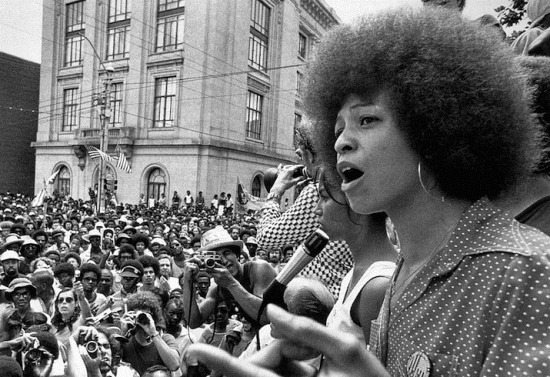
    From July 18 to 28, 2013, Durban International Film Festival (DIFF) in South Africa, will feature over 250 screenings, including 72 feature films, 48 documentaries and 45 short films. As part of its African Focus this year’s festival will open with ‘ground-breaking African-noir work’ Of Good Report by filmmaker-on-the-rise Jahmil XT Qubeka. Telling the story of a serial killer obsessed with beautiful young girls, the film expands the language of African cinema. The festival’s closing film acknowledges Angela Davis, an important figure in the African diaspora, with the film Free Angela – and all political prisoners, directed by Shola Lynch.

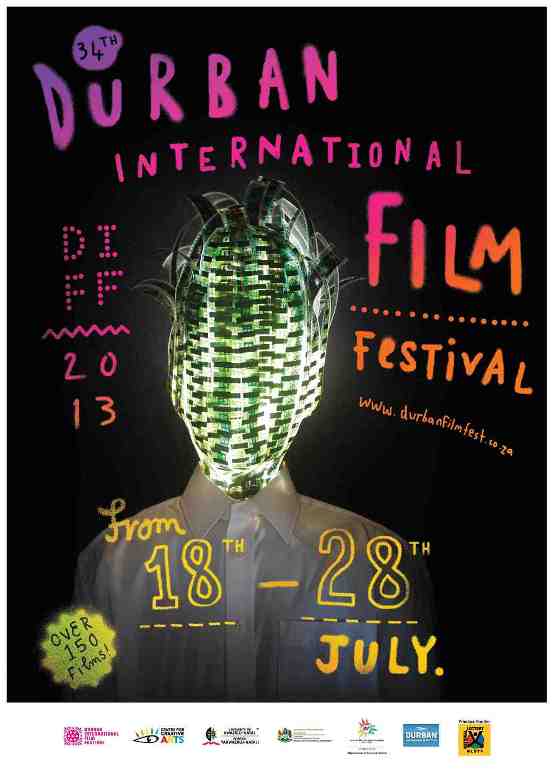
    Durban International Film Festival 2013 poster

    High-profile South African films being showcased include Layla Fourie (which received its world premier at Berlin earlier this year), The Forgotten Kingdom which is set in the movingly beautiful landscape of Lesotho, Felix, which tells the story of a young township boy intent following his dreams of being a musician, and The Good Man, an intriguing look at a globalised reality.

    Other local films include Everyman’s Taxi Ian Robert’s anarchic celebration of the new South Africa, Andrew Worsdale’s long-awaited Durban Poison and Khumba, the latest outing from Cape Town animation studio Triggerfish that won best South African film at DIFF 2012 for Adventures in Zambezia and has gone on to widespread commercial success around the world. Blood Tokolosh tells the disturbing story of a man who finds himself under the spell of the mythical Southern African creature, while Angel of the Sky reprises the role of South African pilots during the second world war. Actorholic comes from Oliver Rodger, who gave us last year’s Copposites, and African Gothic is a US/South African co-production based on the Reza de Wet play Diepe Grond.

    From further afield, DIFF 2013 presents a number of cinematic gems, most of which are engaged in expanding the language of African cinema while dealing with significant issues around life on the continent. Tall As The Baobab Tree, from Senegal, tells the story of a poor couple who try to sell their daughter off into a forced marriage. Yema, from Algeria, tells the metaphoric story of a how a mother’s relationship with her sons is defined by war and violence, while Virgin Margarida chronicles a dark chapter in Mozambican history. The Battle Of Tabato is a fascinating blend of history, music and surrealism while Le Presidente bends the form of the fiction film while asking fascinating questions. Something Necessary chronicles an intimate moment in the lives of two people from very different sides of history, while It’s Us deals with tribalised violence in Kenya with hope and vibrancy.

    This year’s program also showcases films of contemporary Europe and includes the new Sally Potter film Ginger and Rosa which tells the story of two close friends during the liberal years of the 1960s. The Look of Love is the new film from DIFF regular Michael Winterbottom while Me and You is the first film in more than a decade from master filmmaker Bernardo Bertolucci.

    American Independents includes Wrong the latest film from Quentin Dupieux who gave us the DIFF cult-hit Rubber in 2011 and Spring Breakers from Harmony Korine, the enfant terrible of American independent cinema. Francine tells the small and delicately drawn story of a socially inept woman who has just come of out prison, while The Place Beyond the Pines is the highly anticipated new drama from director Derek Cianfrance who gave us Blue Valentine.

    This year DIFF acknowledges the wide diversity of sexual identities with films from Dennis Cotes drama Vic+Flo Saw a Bear which chronicles the relationship between an ex-convict and her much younger lover to the documentary Valentine Road which provides a sociological post-mortem on the death of a young transgender boy to Interior. Leather Bar which examines contemporary masculinity through reconstructing a censored scene from the 1980 Al Pacino film Cruising, DIFF 2013 explores a very broad continuum of sexuality. Laurence Anyways tells the sprawling but immaculately rendered tale of a transgendered man and her female lover. Dust presents a diverse group of siblings forced to confront their unfulfilled lives while Two Mothers portrays the difficult involved in a gay couple adopting a child in progressive Germany.

    In keeping with a broad acceptance of diversity, DIFF’s focus includes not only GLBT sexuality but also an exploration of heterosexuality in films such It Felt Like Love in which a young girl is determined to lose her virginity and The Future in which a young girl becomes a sexual companion to a blind former action hero. Una Noche tells of two Cuban boys, one of whom has unrequited feelings for the other, as they attempt to escape across the ocean to Miami.

    Documentaries that deal with sexuality gender include Pussy Riot – A Punk Prayer, I Am Divine a biopic about the gender-bending singer and artist Divine and Born This Way, about the lives of gay and lesbian people in Cameroon. Then there is the short film Atlantic Avenue which deals with the sexual attraction between a young man and a physically challenged woman.

    DIFF 2013 will showcase a selection of films from the current Zombie wave, and headlining this area is the  remake of the Evil Dead which conforms in many ways to the classic zombie genre, as does Zombie Fever 3D, one of the first zombie films from Russia. On a more serious note, there’s the slow, mournful and thoroughly beautiful Halley which tells of a man whose body is rotting away. Frankenstein’s Army tells of a secret Nazi lab in which all manner of strange machines have been stitched together with human bodies. Then there’s Harold’s Going Stiff, an ultra-dry British zombie comedy with a big heart.

    In addition, DIFF 2013 will screen a host of award-winning films from around the world, including works from many of contemporary cinema’s great masters. From Chinese director Wong Kar Wai comes The Grandmaster, which opened Berlin earlier this year, while Canadian director David Cronenberg descends once more into the darkness with Cosmopolis based on the Don deLillo novel. Takeshi Kitano, the king of stylised violence, delivers Outrage Beyond, while the enigmatic Closed Curtain comes from banned Iranian filmmaker Jafar Panahi. Deepa Mehta gives us a gorgeously sprawling rendition of Salman Rushdie’s Midnight’s Children while Danish dogma director Thomas Vinterberg’s The Hunt will chill you to the bone. Then there’s the exciting news that Ashgar Farhadi, whose A Separation won both the best Foreign Picture Oscar this year as well as best film at DIFF, returns with his latest film The Past.

    In addition to the best fiction features from around the world, DIFF 2013 has a wealth of documentaries to satisfy a broad spectrum of tastes and interests, including a strong selection from South Africa.  Riaan Hendrick’s The Devil’s Lair transports us deep into a claustrophobic drug den on the Cape Flats, while celebrated local documentary-maker Damon Foster gives us a window into the lives of crocodiles with Touching The Dragon. Angels in Exile is a moving documentary about two proud yet impoverished children who live on the streets of Durban and The Creators pays tribute to the creative power of South Africa’s youth, including acclaimed graffiti artist Faith 47. From further afield, Drama Consult tells the cannily directed story of Nigerian entrepreneurs heading to Europe to explore the possibilities of economic co-operation, while African Metropolis is a collection of short slices of reality from around the continent. The Spirit of 45, from British feature director Ken Loach looks at the enduring influence of the labour movement during the war years while More Than Honey looks at the importance of maintaining the earth’s bee population. Algorithms presents the riveting story of blind chess players in India and Fidai is a very personal story set against the Algerian battle for independence.

    For the ninth year, DIFF partners with Wavescape to screen films focusing on surfing cinema and shark stories. Bending Colors (Jordy Smith) chronicles the rise South Africa’s prodigal son who goes from teen sensation to world super star. In Revolution true life adventurer Rob Stewart goes on a mission to reveal the rapidly deteriorating circle of life on planet earth while The Heart and the Sea is a soulful and unpretentious tribute to the surf lifestyle. Other Wavescape films, including Immersion, Desert Rebels and Water From the Moon, take us around the world for some of the sickest waves on the planet.


    Read more


  • World Premiere of South African Director Jahmil XT Qubeka’s OF GOOD REPORT to Open 2013 Durban International Film Festival

    [caption id="attachment_4080" align="alignnone" width="550"]Mothusi Magano as Parker Sithole in OF GOOD REPORT[/caption]
    OF GOOD REPORT, from South African director Jahmil XT Qubeka, will have its World Premiere as the opening night film of the 34th Durban International Film Festival in South Africa on July 18. OF GOOD REPORT, which Qubeka describes as “a passionate homage to classic film noir”, tells the somber tale of a small-town high-school teacher with a penchant for young girls.

    The trouble for Parker Sithole (Mothusi Magano) begins when he accepts an invitation to a drinking session at the local tavern. Here, he meets the undeniably gorgeous Nolitha Ngubane (Petronella Tshuma). Captivated by her beauty, Parker experiences an ecstasy he’s never known before and truly feels like a man reborn. From this mutual attraction, an illicit affair ensues. However, there ’s just one problem: the beautiful Nolitha is one of Parker’s pupils and just sixteen years old. Parker quickly spirals into a deep obsession that ultimately turns to a tragedy.

    Six months later, the sociopathic Parker has moved on from his previous job. Trudging along the barren landscape, he stumbles upon an opportunity for a fresh start. According to a caption on an old strewn newspaper, there is a shortage of teachers in Zimbabwe. A qualified educator like him shouldn’t struggle to find a post; after all, he does come ‘of good report’.

    In Qubeka’s words, Of Good Report, “is a serial killer origins story about how a social misfit turns into an inadequate man hell-bent on satisfying his shameful lust. It is Little Red Riding Hood, told from the wolf’s perspective.”

    [caption id="attachment_4081" align="alignnone" width="550"]OF GOOD REPORT Director Jahmil XT Qubeka[/caption]

    The director of television programs and documentaries, Qubeka’s documentary and feature film work has screened at festivals around the world. He has directed Talk to Me, an hour-long HIV/Aids documentary special with Sesame Street New York, which won the Peabody Award for best Actuality Programming. He also produced the low budget feature film uMalusi, which was released by Ster Kinekor in March 2009. His second feature, A Small Town Called Descent enjoyed its world premiere at the 31st Durban International Film Festival, and won the Founders’ Award for Narrative Feature at the Pan African Film Festival.201

    The Durban International Film Festival takes place from July 18 – 28, 2013

    Read more


  • Eighteen Projects by African Filmmakers Selected for Durban FilmMart at 34th Durban International Film Festival

    Eighteen film projects by African filmmakers have been selected for the finance forum of the Durban FilmMart (DFM) which takes place from July 19 to 22 during the 34th Durban International Film Festival held July 18 to 28 in Durban South Africa.

    The Durban FilmMart (DFM) is a co-production and finance market and is a joint program of the Durban Film Office (DFO) and the Durban International Film Festival (DIFF). DFM provides filmmakers from across Africa a valued opportunity to pitch projects to financiers, distributors, sales agents and potential co-producers, and participate in meetings, project presentations and a series of master classes and workshops on latest industry trends.

    Selected Documentaries

    Blindness (South Africa): Directed by Sarah Ping Nie Jones and produced by Jean Meeran  
    Behind the Falls (South Africa): Directed by Rowan Pybus and produced by  Sydelle Willow Smith
    Miners Shot Down (South Africa): Directed/Produced by Rehad Desai, produced/written and co-directd by Anita Khanna and produced by Brian Tilley 
    Not Just a Stripper (South Africa): Directed and produced by Izette Mostert 
    GTI – Paradise in Hell (Rwanda): Directed and produced by Yves Montand 
    Searching for Janitou (Algeria): Directed by Mohamed el Amine Hattou and produced by Anusha Nandakumar and co-produced by Claire Mazeau-Karoum 
    Unearthed (South Africa): Directed and produced by Jolynn Minnaar
    We Want Development (Kenya): Directed by Phillipa Ndisi-Hermann and produced by Atieno Odenyo 

    Selected Fiction Projects

    Andani and the Mechanic (South Africa): Directed and produced by Sara Blecher 
    Black Sunshine (Ghana): Directed by Akosua Adoma Owusu and co-produced by Julio Chavezmontes and Angele Diabang
    Five Fingers for Marseilles (South Africa): Directed and produced by Michael Matthews and written and produced by Sean Drummond 
    Free the Town (Kenya): Directed by Nikyatu Jusu and produced by Vincho Nchogu 
    Life More or Less (Nigeria): Directed by Julius Morno and produced by Kinsley Madueke 
    Njangi- Fifty Fifty (Cameroon): Directed and produced by Victor Viyuoh 
    Sea Monster (South Africa): Directed by Anthony Silverston and co-produced by  Stuart Forrest and Mike Buckland 
    Solidarity (Zambia): Directed by Rungano Nyoni and produced by Juliette Grandmont 
    The Bill (South Africa): Directed by Nosipho Dumisa and produced by Travis Taute 
    Whiplash (South Africa): Directed by Meg Rickards and produced by Jacky Lourens 

    The 4th edition of the Durban FilmMart takes place from July 19-22 2013, during the 34th edition of the DIFF (18-28 July 2012).

    Image: From top left clockwise

    Julius Morno (Life More or Less – Nigeria); Victor Viyuoh (Njangi- Fifty Fifty – Cameroon); Rehad Desai (Miners Shot Down – South Africa); Izette Mostert (Not Just a Stripper – South Africa); Phillipa Ndisi-Hermann (We Want Development – Kenya); Nikkia Moulterie

    Read more


  • Durban International Film Festival Gets A New Manager

    Film critic and arts journalist, Peter Machen, has been appointed the Durban International Film Festival Manager. The 34th Durban International Film Festival, South Africa’s largest and longest running film festival hosted by the University of KwaZulu-Natal’s Centre for Creative Arts (CCA), will take place from July 18 to 28, 2013.

    Read more


  • Durban International Film Festival Announces 2012 Dates, and Call for Films

    The 33rd DURBAN INTERNATIONAL FILM FESTIVAL will take place from July 19 to 29, 2012, and will present over 200 screenings of films from around the world, with a special focus on films from South African and Africa. Screenings will take place throughout Durban, South Africa,  including township areas where cinemas are non-existent. The festival will also offer an extensive seminar and workshop programme featuring local and international filmmakers.  2012 will also see the return of Talent Campus Durban and the Durban FilmMart.

    The festival calls for entries from around the world. Feature films, short films and documentaries are all welcome. The festival does have a competition component.

    The deadline for entries is March 16, 2012 for short films and documentaries; April 6, 2012 for feature films. Early submissions are encouraged.


    All submissions can be done via the Festival’s Eventival online system.

    Read more


  • Winners of the 32nd Durban International Film Festival; Nader and Simin, A Separation wins Best Film

    [caption id="attachment_1586" align="alignnone" width="550"]Nader and Simin, a Separation[/caption]

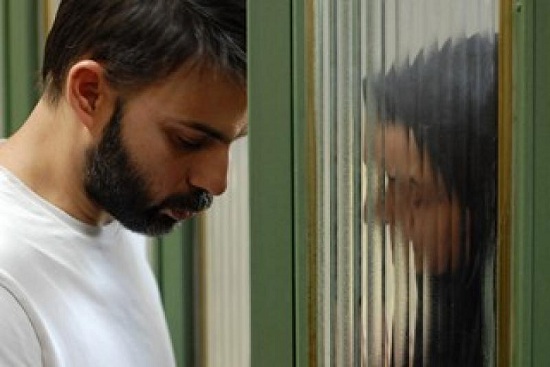
    The 32nd edition of the Durban International Film Festival last night announced its award-winners. Winner of the Best Feature Film award, Nader and Simin, A Separation (Iran), directed by Asghar Farhadi, was lauded by the International Jury as a “masterpiece” with “astonishing performances from the ensemble cast”.

    The Best South African Feature Film was awarded to Skoonheid (France/South Africa), directed by Oliver Hermanus. The jury commended the film as revealing a director on a “remarkable trajectory”, praising the film’s “subtlety, control and knowledge of film history” and one which “tells a complex South African story with universal appeal”.

    The Amnesty International Durban Human Rights Award went to Sobukwe, A Great Soul (South Africa), directed by Mickey Madoda Dube, and the prize for Best First Feature Film was awarded to Matthew Gordon for The Dynamiter (USA).

    The full list of awards are: 

    Best Film: Nader and Simin, A Separation (Iran), directed by Asghar Farhadi

    Best South African Feature: Skoonheid (France/South Africa), directed by Oliver Hermanus

    Best First Feature: The Dynamiter (USA), directed by Matthew Gordon

    Best Director: Andrey Zvyagintsev for Elena (Russia)

    Best Actress: Nadezhda Markina in Elena (Russia)

    Best Actor: William Patrick Ruffin in The Dynamiter (USA)

    Best Cinematography: Mikhail Krichman for Elena (Russia)

    Best Screenplay: Asghar Farhadi for Nader and Simin, A Separation (Iran)

    Special Mention Feature Film: Skoonheid (South Africa), directed by Oliver Hermanus

    Special Mention South African Feature Film: Eldorado (South Africa), directed by Shaldon Ferris and Lorreal Ferris

    Best Documentary: Position Among the Stars (Stand van de Sterren) (The Netherlands), directed by Leonard Retel Helmrich

    Best South African Documentary: Dear Mandela (South Africa/USA), directed by Dara Kell and Christopher Nizza

    Best Short Film: Dirty Laundry (South Africa), directed by Stephen Abbott

    Best South African Short Film: Dirty Laundry (South Africa), directed by Stephen Abbott

    Amnesty International Durban Human Rights Award: Sobukwe, A Great Soul (South Africa), directed by Mickey Madoda Dube
    DIFF Wavescape Surf Film Festival Audience Award: A Deeper Shade Of Blue (Australia) directed by Jack McCoy

    DIFF Documentary Audience Award: Fire in Babylon (United Kingdom), directed by Stevan Riley

    DIFF Feature Film Audience Award: The First Grader (Kenya,United Kingdom,South Africa), directed by Justin Chadwick

    Read more