Film Comment Selects

  • Film Comment Selects Festival Announces 2019 Lineup, László Nemes’s SUNSET, Steven Soderbergh’s HIGH FLYING BIRD

    Sunset by Laszlo Nemes
    Sunset by Laszlo Nemes

    The Film Society of Lincoln Center announces the lineup for the 19th edition of Film Comment magazine’s annual festival, Film Comment Selects, February 6-10. The cinematic showcase returns with a selection of titles curated by the magazine’s editors, offering strikingly bold visions, mixing North American, U.S., and New York premieres of new films and long-unseen older titles that deserve the big-screen treatment.

    Read more


  • Film Comment Selects Reveals 2018 Lineup, Opens with “Life and Nothing More”

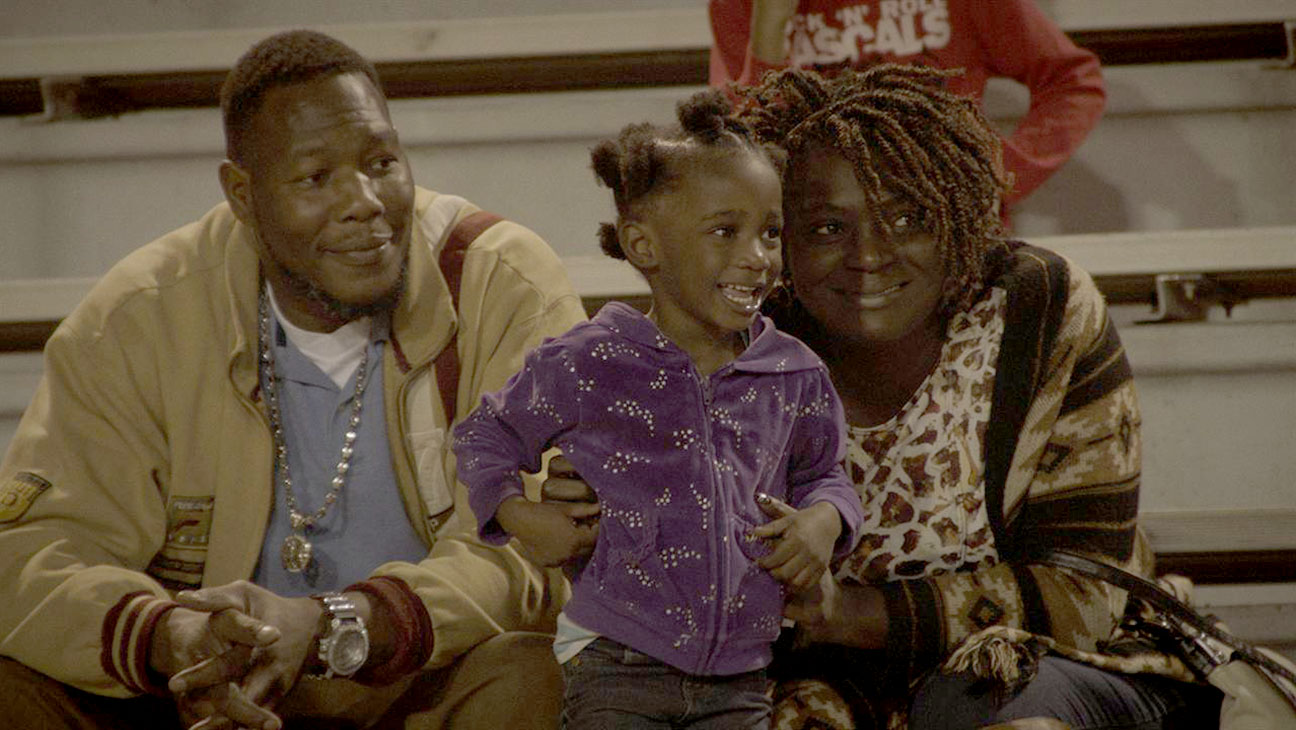
    [caption id="attachment_26540" align="aligncenter" width="1296"]Life and Nothing More Life and Nothing More[/caption] The Film Comment magazine’s annual cinematic showcase series, Film Comment Selects, returns for the 18th edition, February 23 to 27, 2018, featuring films curated by the magazine’s editors. The festival opens with the New York premiere of Antonio Mendez Esparza’s Life and Nothing More, an intimate chronicle of an African American family living on the margins in Florida, starring an astonishing non-professional cast. Other new works in the lineup are Ildikó Enyedi’s Berlinale Golden Bear-winner On Body and Soul; Mrs. Fang, Wang Bing’s unflinching document of an elderly woman in her final days, which won the Golden Leopard at Locarno; the North American premiere of Katharina Wyss’s powerful debut feature Sarah Plays a Werewolf, about a woman who channels her fears into theater; Govinda Van Maele’s fiction feature debut Gutland, featuring Phantom Thread’s Vicky Krieps; the U.S. premiere of Slovenian director Rok Biček‘s The Family, a compassionate portrait of a young man’s life over the course of 10 years; and experimental artist Bertrand Mandico’s exhilarating, gender-bending Wild Boys. In addition to these anticipated new works, the 2018 slate features a retrospective of radical filmmaker Nico Papatakis, who had a “body of work that blends anarchic fury with visceral and transcendent poetry” (Yonca Talu, Film Comment). All five features directed by Papatakis, who subversively and provocatively explored themes of race, class, gender, and politics and produced films by Cassavetes and Genet, will be screened, including the meta terrorist drama Gloria Mundi, Cannes selection Les Abysses, and Walking a Tightrope, which stars Michel Piccoli as writer Jean Genet (a personal friend of the filmmaker). Film Comment Selects will also present a 25th anniversary screening of Tom Joslin & Peter Friedman’s extraordinarily powerful documentary Silverlake Life: The View from Here, which follows Joslin and his partner Mark Massi as they struggle to live with AIDS. “It’s a rare chance to see the lively mix of films that our critics have raved about but that haven’t hit New York theaters yet,” said Nicolas Rapold, Editor-in-Chief of Film Comment. “This year’s edition is made especially exciting by a rare retrospective of the inimitable Nico Papatakis, whose work will be exciting for many to discover.”

    FILMS & DESCRIPTIONS

    Opening Night Life and Nothing More Antonio Mendez Esparza, U.S./Spain, 2017, 114m “The African American single mom and teenage son at the center of this drama are lifelong residents of northern Florida but remain, at best, provisional citizens of their own country. Rendering characters they developed in tandem with their director, these non-professional but astoundingly gifted performers convey so much of what matters in so many working-class black lives.” —Nick Davis, Toronto Film Festival 2017 online coverage New York premiere The Family Rok Biček, Slovenia/Austria, 2017, 106m “Slovenian director Rok Biček started The Family as a film-school student and proceeded to film a life in full: a boy, Matej, seen growing up, watching his father die and becoming a father himself, breaking up with his girlfriend, and battling her for child custody. A twist on observational cinema, Biček’s portrait of the anti-heroic young man defies stereotypes of working-class and dysfunctional families, refrains from passing moral judgments, and retains an open fondness of his subject.” —Tina Poglajen, Nov/Dec 2017 issue U.S. premiere Gutland Govinda Van Maele, Luxembourg/Belgium/Germany/France, 2017, 107m “A stranger wends through twilit wheat fields in the exquisite opening moments of Govinda Van Maele’s fiction feature debut [starring Phantom Thread’s Vicky Krieps] … By the following morning he’s courted by an elder who finds him a gig and lodging—and then Gutland quietly maunders from folktale to pastoral noir to Polanski-esque uncanny and, finally, back to folk tale. Call it a ‘village film,’ with an eerie ambiance of secrets, insularity, and sinister solidarity.” —José Teodoro, Nov/Dec 2017 issue New York premiere Mrs. Fang Wang Bing, China, 2017, 86m “Wang Bing’s latest documentary trains its camera very tightly on the face of a bedridden elderly woman suffering from Alzheimer’s in a small rural Chinese village. For a while, it seems as though Mrs. Fang is content to use the camera as a tool to unflinchingly record a human being close to her final breath. Yet Wang Bing is after something completely different, as the filmmaker goes into other territory, somehow more and less tangible than a portrait of dying.” —Michael Koresky, Toronto Film Festival 2017 online coverage New York premiere On Body and Soul Ildikó Enyedi, 2017, Hungary, 116m Winner of the Golden Bear at Berlin, Ildikó Enyedi’s visually imaginative film tracks the highs and lows of an unforeseen romance conducted partly through dreams. Film Comment celebrated Enyedi’s “ludic, freewheeling storytelling” with last year’s home-video release of her 1989 favorite My Twentieth Century, and her newest marks a triumphant return for this Hungarian filmmaker. A Netflix release. New York premiere Sarah Plays a Werewolf Katharina Wyss, Switzerland/Germany, 2017, 86m “Katharina Wyss’s heady debut feature centers on Sarah, a young woman channeling her powerful depth of feeling into the artistic and psychological outlet of theater. As the 17-year-old protagonist in a staid Swiss town, Loane Balthasar is unnervingly transparent, giving herself over to her character—and, like Sarah, 20 times more present than anyone around her. The film’s title captures a life fraught with energy.” —Nicolas Rapold, Jan/Feb 2018 issue North American premiere Wild Boys Bertrand Mandico, France, 2017, 110m “Some might be quick to suggest Mandico’s similarities with Guy Maddin due to his new film’s whacked-out narrative, alienating use of studio sets, and brusquely outré acting. Exiled teenagers are sentenced to hard labor on a mysterious island, left to their own devices and then transformed… All the teens are played by actresses, with ever-fearless, weather-beaten Elina Löwensohn leading the way. Little else in 2017 was quite as exhilarating, eye-popping, intoxicating, seductive, carefree, funky, sexy, and fun.” —Olaf Möller, Jan/Feb 2018 issue New York premiere 25th Anniversary Screening Silverlake Life: The View from Here Tom Joslin & Peter Friedman, U.S., 1993, 99m Winner of the Grand Jury Prize at Sundance, this is one of the cornerstone documentaries abot the AIDS crisis. “Silverlake Life is about a couple, and one of the guys is filming his boyfriend, who is ill and dying. I didn’t want to represent the disease too much [in BPM (Beats Per Minute)], because I thought it was so real in Silverlake Life. I didn’t want to make the same thing because you can’t do more than this film, because it was real and it’s a very, very moving film. I love it so much.”—Robin Campillo, director of BPM (Beats Per Minute), interviewed in July/Aug 2017 issue Special Section: Five Films by Nico Papatakis “It’s become a cliché to call a filmmaker ‘rebellious,’ but from Gance to Eisenstein to Pasolini to Buñuel, the 20th century saw true rebels who fiercely defied both the cinematic and political establishments of their time. Nikos Papatakis (1918-2010)—nicknamed Nico in France—holds a profound and unique place in this lineage through a body of work that blends anarchic fury with visceral and transcendent poetry. Born in Addis Ababa to an Ethiopian mother and a Greek father, Papatakis was an outcast by nature, mocked and ostracized as a child for being biracial. Deeply rooted in personal experience, Papatakis’s films are politically, morally, and formally subversive explorations of race, gender, and class that use the medium as a vehicle of opposition and dissent.” —Yonca Talu, Sept/Oct 2017 issue Les Abysses Nico Papatakis, France, 1963, 90m This allegorical portrait of the Algerian resistance was inspired by the real-life story of the Papin sisters, two maids who brutally murdered their employers in 1930s France—also the basis for Jean Genet’s influential 1947 play The Maids and Claude Chabrol’s 1995 psychological thriller La Cérémonie. The Shepherds of Disorder Nico Papatakis, Greece, 1967, 117m The Shepherds of Disorder (aka Thanos and Despina) juxtaposes an anthropological and materialist study of a rigid rural community with the mythologically imbued, forbidden romance between a rebellious shepherd and the angelic and compliant daughter (Olga Karlatos) of a rich conservative family, engaged in an erotically charged power game. Gloria Mundi Nico Papatakis, France, 1976, 115m Papatakis’s most psychedelic film, Gloria Mundi centers on an actress (Olga Karlatos) playing an Arab terrorist who takes her role to another level. Papatakis’s virulent denunciation of consumer capitalism and a hypocritical left-wing intelligentsia that deems itself political but does not take any action, begins with a scream and ends with an explosion. The Photograph Nico Papatakis, Greece/France, 1986, 102m Papatakis’s most accessible, gripping, and poignant work is a meticulously crafted, intimate meditation on immigration and exile centering on a 26-year-old Greek man fresh out of prison (where he was tortured for being a communist’s son) who leaves for France in hopes of a better life and strikes up a complicated friendship with a distant relative. Walking a Tightrope / Les Équilibristes Nico Papatakis, France, 1992, 120m The director’s final film—starring Michel Piccoli as a fictional version of Papatakis’s friend Jean Genet—is a compendium of the themes and motifs that pervade his distinctive filmography, including the torturous nature of love, the suffering induced by exile, and suicide as an act of rebellion.

    Read more


  • Film Society of Lincoln Center Announces Lineup for 2016 Film Comment Selects Festival

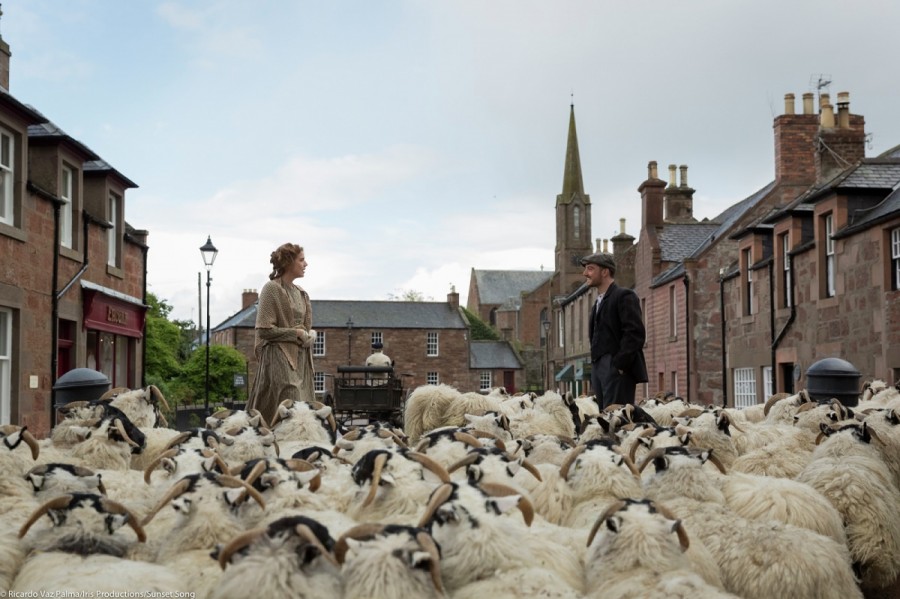
    Sunset Song Terence Davies The Film Society of Lincoln Center announced the lineup for the 16th edition of Film Comment magazine’s annual festival, 2016 Film Comment Film Festival taking place February 17 to 24, 2016. Opening the festival is the New York premiere of Sunset Song (pictured above), the long-awaited must-see from Terence Davies, a glorious study in hardship and romantic loss starring Agyness Deyn and Peter Mullan. Closing night is a tribute to the late Chantal Akerman, with a revival of her rare, utterly delightful musical Golden Eighties. Among the hard-hitters are a pair of wrenching discoveries from Serbia and Iran, No One’s Child by Vuk Rsumovic and The Paternal House by Kianoush Ayyari; Damien Odoul’s The Fear, a harrowing yet serene vision of World War I; plus the latest work from Benoît Jacquot, Alexei German Jr., and Hirokazu Kore-eda. A sidebar of restored works by the Polish master Andrzej Żuławski features a selection of new digital restorations of his landmark Polish films, including his debut, The Third Part of the Night; his towering film maudit On the Silver Globe; and the U.S. premiere of his new film, Cosmos. Revivals featured in the 16th edition also include a two-film spotlight on Charles Bronson, taking its cue from Film Comment’s November/December issue, and a rare glimpse of The Kinks singer-songwriter Ray Davies’s 1984 Return to Waterloo (also featured in the magazine’s November/December issue). FILMS & DESCRIPTIONS Opening Night Sunset Song Terence Davies, UK/Luxembourg, 2015, DCP, 135m The much-anticipated new film by contemporary British cinema’s reigning master, Sunset Song is the story of Chris (Agyness Deyn), the bright daughter of a brutish farmer (Peter Mullan in top form) who lives with on the family farm in northern Scotland on the cusp of World War I. When her mother commits suicide, Chris sees her educational prospects and hopes of a teaching career evaporate. She faces a bleak future as her father’s housekeeper, but an unexpected turn of events opens up new possibilities. As a study in hardship and romantic loss, Davies returns to territory with which he is intimately familiar. This adaptation of a 1932 novel by Lewis Grassic Gibbon is a long-standing passion project for the director, and showcases a wondrous central performance by Deyn. As deeply felt as The House of Mirth and The Long Day Closes, Sunset Song is an emotionally devastating film that’s nothing short of sublime. A Magnolia Pictures release. https://www.youtube.com/watch?v=6X946THCqdQ Closing Night Chantal Akerman Tribute: Golden Eighties Chantal Akerman, France/Belgium/Switzerland, 1986, 35mm, 96m French with English subtitles After her successes in the 1970s, Chantal Akerman turned toward the pleasures of popular cinema with a playful series of comedies and love stories, culminating in this extraordinary multi-character musical, set entirely in a shopping mall. A stylish, bittersweet look at the romantic tribulations of an assortment of shop owners and retail workers, the film evokes The Umbrellas of Cherbourg in its charm, but with a distinctly feminist bent. With songs co-written by Akerman and Marc Herouet, the film leads us through the tangled predicaments of clothing-shop owner Jeanne (Delphine Seyrig), who finds herself torn when her long-lost G.I. love, Eli (filmmaker John Berry), looks her up after 40 years; her son Robert (Nicolas Tronc), who is infatuated with Lili (Fanny Cottençon), a salon manager who in turn is having an affair with its owner, married gangster Monsieur Jean (Jean-François Balmer); hairdresser Mado (pop singer Lio), who has a crush on Robert; and coffee-bar proprietor Sylvie (Myriam Boyer), who pines for her boyfriend who’s gone to work in America. For this utterly delightful passion project, which she described as a postmodern cross between women’s cinema, Jewish literature, and musicals, Akerman collaborated with an extraordinary/unlikely dream team of writers—Desperately Seeking Susan screenwriter Leora Barish, veteran Truffaut/Rivette/Resnais scenarist Jean Gruault, former Cahiers du Cinéma critic Pascal Bonitzer, and filmmaker Henry Bean (The Believer). Blood of My Blood / Sangue del mio sangue Marco Bellocchio, Italy/France/Switzerland, 2015, DCP, 107m Italian with English subtitles From Italian master Marco Bellocchio, FIPRESCI prizewinner Blood of My Blood pairs two haunting stories from the past and the present, bound together by a convent prison in Bobbio (the director’s hometown and setting of his 1965 debut masterpiece, Fists in the Pocket). During the Inquisition period, Federico (Pier Giorgio Bellocchio) witnesses the harrowing trial of Benedetta (Lidiya Liberman), an alluring nun accused of seducing and driving his brother to suicide. Centuries later, a vampiric old man (Roberto Herlitzka) hides within the convent’s abandoned walls and faces eviction when a tax investigator and Russian millionaire come to purchase the property. Amid painterly lensing and an expressive score, the film is a gothic, shrewdly comic, and, above all, mystifying tapestry that mines the complexities of Italian life—whether in the cloistered darkness of the 17th century or in the confused, garish revelry of the present. https://www.youtube.com/watch?v=kS-RqI3ws_Y Diary of a Chambermaid / Journal d’une femme de chambre Benoît Jacquot, France/Belgium, 2015, DCP, 96m French with English subtitles Léa Sedoux follows in the footsteps of Paulette Goddard and Jeanne Moreau as Célestine, a resentful young Parisian chambermaid who finds herself exiled to a position in the provinces where she immediately chafes against the noxious iron rules and pettiness of her high-handed bourgeois mistress (Clotilde Mollet), must rebuff the groping advances of Monsieur (Hervé Pierre), and reckon with her fascination with the earthy, brooding gardener Joseph (Vincent Lindon). Backtracking past the fetishism and peculiarities of Buñuel’s version to Octave Mirbeau’s original 1900 novel, Benoît Jacquot has one eye on 21st-century France: the sense of social stiflement, Célestine’s humiliating submission to Madame’s onerous terms of employment, Joseph’s virulent anti-Semitism. But he keeps his other on the turn-of-the-century setting, when psychoanalysis, a discipline that he holds dear, burst forth: at all times he strikes a balance between appearances and what lies beneath them, between the sadism of the bourgeois employers and their repression, the social codes and the compulsions they conceal. As class-conscious as ever, Jacquot has found some material he can really sink his teeth into. A Cohen Media Group release. U.S. Premiere The Fear / La peur French with English subtitles Damien Odoul, France, 2015, DCP, 93m Summer 1914. Imagining the war to be “a great spectacle not to be missed,” 19-year-old Gabriel (Nino Rocher) volunteers for the French Army—more out of curiosity than the mad, virulent nationalism that consumes the populace. Accompanied by his best friend Bertrand (Eliott Margueron) and young poet Théo (Théo Chazal), he arrives at the battlefront within a few days and is soon engulfed in the horrors of trench warfare. Recounting his experiences in a series of voiceover letters to his sweetheart back home, Gabriel maintains a detached and rational view of the ordeal of war, which is complemented by the anarchic rabble-rousing of the sardonic Sergeant Négre (Pierre Martial Gaillard). Meanwhile, offsetting the film’s emphasis on the inner life and dissent of its protagonist, Damien Odoul’s direction, which earned him the 2015 Prix Jean Vigo, supplies a relentlessly physical depiction of the realities of life and death in the killing fields. Based on Gabriel Chevallier’s 1930 autobiographical novel, The Fear moves at a fast clip, replete with painterly landscape shots and images of startling, surreal horror. Never less than gripping, this is not so much a film about combat than a series of dispatches from a war zone, warts and all. A Wild Bunch release. U.S. Premiere https://www.youtube.com/watch?v=bjtdBjjEEj4 Malgré la nuit / Despite the Night Philippe Grandrieux, France, 2015, DCP, 154m French with English subtitles The director of Sombre, La Vie nouvelle, and Un lac returns with his latest investigation of extreme experience, a darkly erotic psychodrama. English musician Lenz (Kristian Marr) searches for his lover Madeleine, aka Lena (Roxane Mesquida), who has mysteriously disappeared, but tumbles into an amour fou with troubled, self-destructive Héléne (French indie It-Girl Ariane Labed). Grieving the loss of her infant son, Héléne seeks oblivion in the murky subterranean world of a brutal sex ring, followed by Lenz. A stark, elliptical, hauntingly spectral narrative co-written by Grand Central director Rebecca Zlotowski, in which Grandrieux continues his exploration of the body initiated with White Epilepsy in scenes of sensual abandon and raw carnality. No One’s Child / Nicije dete Vuk Rsumovic, Serbia/Croatia, 2014, DCP, 95m Serbian with English subtitles Vuk Rsumovic’s debut film begins in late-’80s Yugoslavia with the discovery of a feral boy running on all fours in the woods of central Bosnia—abandoned years before to survive or perish, unable to walk or talk. Sent to an orphanage in Belgrade, with the help of a teacher and another boy he slowly acquires the trappings of civilized behavior. But as war breaks out between Serbia and Bosnia, his future suddenly becomes uncertain as he’s assumed to be a Bosnian Muslim. No One’s Child is unabashedly pro the former Yugoslavia—a state that maintained a civil society and took care of its citizens. With its discreet, muscular, no-nonsense style, Rsumovic’s film gives us an update of Truffaut’s The Wild Child for a grim new era. (Olaf Möller, Film Comment, May/June 2014) https://www.youtube.com/watch?v=4ueugMq1Gxo Notfilm Ross Lipman, USA/UK, 2015, DCP, 130m In 1964, playwright Samuel Beckett, Buster Keaton, cinematographer Boris Kaufman, and director Alan Schneider came together to make a short, dialogue-free work simply titled Film. An investigation of both the cinematic medium and the nature of human consciousness, it premiered at the Venice Film Festival and screened at the 2nd New York Film Festival to mixed critical response. In Beckett’s scenario, Keaton plays “O,” who tries desperately to evade the reality of the maxim esse est percipi (to be is to be seen) but finds his every effort futile. Beckett judged the final result “an interesting failure”—interesting enough for Ross Lipman to devote two-plus hours to this remarkable exploration of the making of a 22-minute film. Featuring audio recordings of Beckett in discussion with Schneider, Kaufman, and producer and Grove Press head Barney Rosset, this fascinating and unprecedented “making-of” also gives us interviews with Rosset and actress and Beckett muse Billie Whitelaw. As Scott Eyman puts it in a soon-to-be-published Film Comment piece: “As we witness Rossett and Whitelaw struggling beneath the oppressive weight of age, the documentary becomes about memory and its fading. In other words, the obliteration that waits for us all—the foundation of Beckett’s art.” A Milestone Films release. https://www.youtube.com/watch?v=vaqX9b_B6rA Our Little Sister Hirokazu Kore-eda, Japan, 2015, DCP, 128m Japanese with English subtitles Based on Umimachi Diary, a manga by Akimi Yoshida, Hirokazu Kore-eda’s latest subtle and moving exploration of family ties centers on three twentysomething sisters, Sachi (Haruka Ayase), Yoshino (Masami Nagasawa), and Chika (Kaho), who live together in their grandmother’s house. Traveling to the countryside to attend the funeral of their estranged father, they discover that they have a teenage half-sister, Suzu (Suzu Hirose). Quickly sizing up their stepmother as someone unfit to take care of the young girl, the trio impulsively invite their newfound sibling to come and live with them. Suzu soon settles in and her elder sisters’ placid but quietly discontented lives continue as before, but her presence—and the unexpected arrival of their long-absent mother Miyako (Shinobu Otake), who departed 15 years ago leaving Sachi to raise her younger sisters—finally bring into the open the three women’s unresolved feelings about being abandoned by their parents and the frustrations that burden their unfulfilled lives. As ever with Kore-eda, the performances are beautifully understated and down to earth and the filmmaking is delicate and graceful. A Sony Pictures Classics release. https://www.youtube.com/watch?v=1GNjSKcBkoE The Paternal House / Khanéh Pedari Kianoush Ayyari, Iran, 2012, DCP, 97m Farsi with English subtitles Beginning in 1929 and ending in the present day, Kianoush Ayyari’s powerful drama is about so-called honor killing, a taboo subject in modern Iran. The action, which is confined to the closed-off world of a family house and its grounds, with outside reality only impinging in the form of sounds and rumors, starts with a father murdering his daughter in an act of honor killing. With the complicity of his wife and son, he buries her corpse in the cellar. Family life continues, haunted by the shared knowledge of the murder across several generations. This conspiracy of silence and the film’s exploration of the nature of complicity make for a powerful commentary on life in Iran, but Ayyari constructs his fable in such a fashion that ultimately it transcends nationality, culture, and religion and comes to depict the structure and inner workings of totalitarianism itself. (Olaf Möller, Film Comment, November/December 2012) An Iranian Independents release. U.S. Premiere Return to Waterloo Ray Davies, UK, 1984, 35mm, 58m The little-seen first and only film by Ray Davies, songwriter and lead singer of The Kinks, is an offbeat musical that takes off from and expands the possibilities of the then-newly emergent music-video format while revisiting many of the themes of Davies’s songs of modern discontent and nostalgia. The reverie of a middle-aged man (Kenneth Colley) over the course of his train commute plays out memories of tarnished dreams, regrets, and unsettling imaginings and intimations of dark impulses, accompanied by nine Davies compositions that together encapsulate a life of quiet desperation. Modestly mounted but made with great assurance, with camerawork by Roger Deakins, it’s a time capsule of 1980s London that could almost be a rebuke to the bombast of Pink Floyd The Wall and its more overblown vision of modern discontent. Bonus early appearance by Tim Roth. Under Electric Clouds Aleksei German Jr., Russia/Ukraine/Poland, 2015, DCP, 138m Russian with English subtitles A work of epic ambition, this vision of near-future Russia consists of seven vignettes centered on an unfinished building whose architect perhaps went mad. In some of the segments the building is seen, in others merely mentioned. Its ensemble of characters mainly represent Russia’s “superfluous” people (artists, intellectuals). Many voices are heard, ranging from Kyrgyz migrant workers to the children of a deceased oligarch; some sections are only loosely connected to the story of the ruin, one turns out to be a flashback, and others recapitulate events seen earlier from slightly different angles. Of course Under Electric Clouds is a meditation on today’s Russia: a country torn to shreds by delusions of grandeur, corruption, an unquestioning belief in authority, and a fatal passion for the past that goes hand in hand with an outrageous obsession with the future—making for an empty present. Like his late father, German Jr. favors wildly meandering plan-séquences, expansive choreographies of actors milling in and out of scenes, blasted landscapes, and dialogue delivered with fierce panache, but in place of German Sr.’s fury, there’s a playful, lighthearted, dreamy and almost earnest quality here that’s a joy to behold. (Olaf Möller, Film Comment May/June 2015) https://www.youtube.com/watch?v=oqSsHILSGZQ Spotlight on Andrzej Żuławski: On the occasion of the U.S. premiere of his latest feature, Cosmos, we’re pleased to spotlight the work of legendary maverick director Andrzej Żuławski, featuring a selection of new digital restorations of his landmark Polish films, including his debut, The Third Part of the Night, and his towering film maudit On the Silver Globe. Presented in partnership with the Polish Cultural Institute New York, with additional support from the Polish Film Institute. Organized by Florence Almozini. Restorations courtesy of the Polish Film Institute. Acknowledgments: Andrzej Żuławski; Paolo Branco, Alfama Films; Polish Cultural Institute New York; Polish Film Institute Cosmos Andrzej Żuławski, France/Portugal, 2015, DCP, 97m French with English subtitles Andrzej Żuławski’s first film in 15 years, a literary adaptation suffused with his trademark freneticism, transforms Polish writer Witold Gombrowicz’s novel of the same name into an ominous and manic exploration of desire. Witold (Jonathan Genet), who has just failed the bar, and his companion Fuchs (Johan Libéreau), who has recently quit his fashion job, are staying at a guesthouse run by the intermittently paralytic Madame Woytis (Sabine Azéma). Upon discovering a sparrow hanged in the woods near the house, Witold’s reality mutates into a whirlwind of tension, histrionics, foreboding omens, and surrealistic logic as he becomes obsessed with Madame Woytis’s daughter Lena (Victoria Guerra), newly married to Lucien (Andy Gillet)—in other words, he finds himself starring in a Żuławski film. The Polish master’s auspicious return bears his imprimatur at all times. Winner of the Best Director prize at this year’s Locarno Film Festival. U.S. Premiere The Devil / Diabeł Andrzej Żuławski, Poland, 1972, DCP, 112m Polish with English subtitles This thoroughly unhinged period film by Andrzej Żuławski is a hellish tour of late 18th-century Poland that more than makes good on the demonic promise of its title. A murderous nobleman who has just escaped from prison returns to his family’s home, which has become a desiccated, barbaric realm in his absence. It’s not long before a black-clad Satanic proxy appears on the scene, roping the nobleman into a series of political intrigues that rapidly assumes the form of a frenzied, vengeful killing spree. Deservedly controversial for its violence (rendered via Żuławski’s customary wild, free-ranging cinematography), The Devil winds up as a fascinating meditation on the soul in the crucible of madness. New digital restoration courtesy of the Polish Film Institute. On the Silver Globe / Na srebrnym globie Andrzej Żuławski, Poland, 1988, DCP, 166m Polish with English subtitles After a 16-year absence, Andrzej Żuławski returned to Polish cinema with On the Silver Globe, which proved to be the most ambitious and difficult project of his career. The largest Polish production of all time when shooting began in 1976, it was halted by the Ministry of Culture for two years due to it its alleged subversiveness, before finally being reconstituted and completed after the fall of communism over a decade later. The resulting sci-fi epic follows a group of astronauts who, after crash-landing on the moon, forge a new society. As the first generation dies off, their children devise new rituals and mythologies to structure the emergent civilization, until a politician from Earth arrives and is hailed as the Messiah… An inexhaustibly inventive and absorbing film maudit that quite literally creates a new cinematic world, On the Silver Globe is perhaps the grandest expression of Żuławski’s visionary artistry. New digital restoration courtesy of the Polish Film Institute. The Third Part of the Night / Trzecia część nocy Andrzej Żuławski, Poland, 1972, DCP, 105m Polish with English subtitles The first feature by Andrzej Żuławski immediately established his emotionally charged, fast-and-furious style. Drawing from the biography of his father, particularly his experiences in Nazi German-occupied Poland, the film follows a fugitive whose reality implodes when he witnesses the murders of his family, propelling him into a nightmarish world filled with doppelgängers, fluid identities, pervasive dread, and an enigmatic Nazi vaccine laboratory. In all its fantastic and macabre glory, The Third Part of the Night is a delirious portrayal of the chaos wrought upon the psyche by the horrors of war, and one of the most remarkable directorial debuts of all time. New digital restoration courtesy of the Polish Film Institute. Spotlight on Charles Bronson: Breakout Tom Gries, USA, 1974, 35mm, 96m An underrated thriller from journeyman director Tom Gries, Breakout ranks among the highlights of Charles Bronson’s ’70s superstardom phase. Bronson plays pilot Nick Colton, bankrolled by a tycoon (John Huston) to rescue his son Jay Wagner (Robert Duvall) who’s been imprisoned in Mexico on trumped-up charges. Aided by Wagner’s wife Ann (Jill Ireland) and an assortment of cohorts (Randy Quaid, Sheree North, Alan Vint), Colton soon discovers that it’s a tough proposition in part due to a phony escape-route scheme run by corrupt warders in which escapees wind up dead. Featuring top-notch action sequences and superior technical credits (cinematography by Lucien Ballard, music by Jerry Goldsmith). Rider on the Rain / Le Passager de la pluie René Clément, France/Italy, 1969, 35mm, 119m Smack in the middle of Charles Bronson’s four-year, 10-film stint starring in European productions of variable quality came this stylish, small-scale Hitchcockian thriller from French director René Clément, who demonstrated his flair for tense drama with 1960’s Purple Noon. In the South of France, Mellie (Marlène Jobert) is stalked and then raped by a stranger while her husband is away, and then kills her attacker and disposes of his body. Soon after, a mysterious American (Bronson) who seems to know everything begins a game of cat and mouse with the young woman.

    Read more


  • Film Society of Lincoln Center Announces Lineup for 14th Film Comment Selects; Opens with Hong Sang-soo OUR SUNHI

    HONG SANG-SOO’s OUR SUNHI SELECTED FOR OPENING NIGHTHONG SANG-SOO’s OUR SUNHI SELECTED FOR OPENING NIGHT

    The Film Society of Lincoln Center announced the lineup for the upcoming 14th edition of Film Comment magazine’s Film Comment Selects, taking place from February 17 to 27, 2014. The annual festival will present 22 discoveries and rediscoveries, 17 of them New York premieres, and nine without U.S. distribution, handpicked by the magazine’s editors after scouring the international festival circuit in 2013.  This year’s lineup include new films by Hong Sang-soo, whose Opening Night selection OUR SUNHIwon the director’s prize in Locarno and the 15th feature from the South Korean master, Bernardo Bertolucci, who returns with his first Italian-language feature in 32 years, ME AND YOU, which will screen on Closing Night.
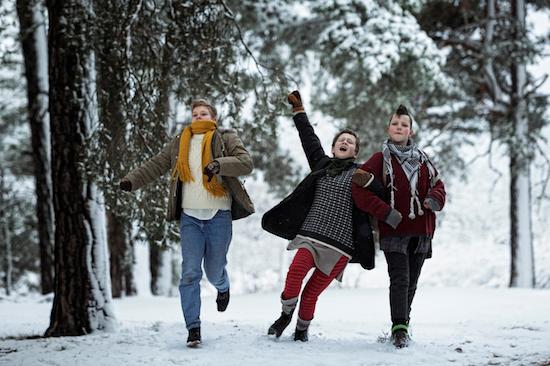
    WE ARE THE BEST! WE ARE THE BEST!

    Director Lukas Moodysson, returns with WE ARE THE BEST! described as “an energetic rough and tumble story of three rebellious teenage girls who form a punk rock band.” Another filmmaker to premiere new work is Lasse Hallström with THE HYPNOTIST, described as “an engrossing, chilly Nordic noir about a psychologist who uses hypnotism to help solve a horrific crime.” This also marks a return for Hallström to his native tongue for the first time in 25 years.

     All screenings will take place at the Film Society of Lincoln Center’s Walter Reade Theater.

      FILMS, DESCRIPTIONS & SCHEDULE

    OPENING NIGHT
    OUR SUNHI
    Hong Sang-soo, South Korea, 2013, 88m; HDCam
    Another dryly comic and acutely observed take on misread behavior, indecision, and awkward interchanges between the sexes from one of cinema’s undisputed masters of moral comedy, the ever-prolific Hong Sang-soo. Call this one “Who’s That Girl?” or “Identification of a Woman.” Attempting to make a new start, slightly lost former film school student Sunhi (Jung Yumi) returns to her college to get a reference letter and inadvertently awakens vague romantic longings first in her old professor, then in a graduate student ex-boyfriend, and finally in a film director and potential mentor from her class. The three men move into orbit around Sunhi, proffering career and life-choice advice while attempting to define and “understand” her, but in the end they are merely projecting their own feelings and interpretations onto their obscure and unwitting object of desire, to quietly comical effect.
    Monday, February 17 at 9PM
    Thursday, February 20 at 4:45PM

    CLOSING NIGHT
    ME AND YOU
    Bernardo Bertolucci, Italy, 2012, 103m; DCP
    Bertolucci returns with his first Italian-language feature in 32 years. Following on from Besieged and The Dreamers it continues a minimalist phase for the director after a series of huge international co-productions—this is his third film in a row mostly set in a claustrophobic, very bourgeois interior, and likeBesieged, it concerns the solipsistic self-confinement of an obsessive narcissist who is “saved” and led out into the world by a woman who may well be nothing more than a projection of his insecurities. Lorenzo (Jacopo Olmo Antinori), a 14-year-old from a well-to-do family, takes no interest whatsoever in the outside world, and withdraws into himself completely: pretending to go on a school skiing trip, he shuts himself in the basement of his mother’s apartment building for an entire week. But the basement turns out to be a regular refuge for Olivia (Tea Falco), his heroin-addicted older half-sister, and so Lorenzo doesn’t find the perfect solitude he’s looking for. An Emerging Pictures release and one of five films being released under the Cinema Made in Italy label.
    Thursday, February 27 at 8:30PM

    BETRAYAL
    David Jones, U.K., 1983, 95m; 35mm
    Jeremy Irons, Ben Kingsley, and Patricia Hodge star in this rarely screened adaptation of one of Harold Pinter’s greatest plays, a semi-autobiographical portrait of an adulterous affair. In a unique structural gambit, nine scenes, each marking a significant stage in the development and termination of the affair, are presented in reverse order, starting at the bitter end and working their way back to the beginning. Kingsley is the husband with an unfaithful wife (Hodge) and a bad best friend (Irons). The reverse chronology frees the viewer to concentrate on the subtext: our age has sanctioned betrayal, and as betrayers, we get caught in a web of who knows what and when, and  once the rules are broken, there is no one to trust. David Jones, who had previously worked with Pinter and Irons on the 1978 TV drama Langrishe, Go Down, stepped in to direct after Mike Nichols dropped out—and 30 years on Nichols would direct the recent Broadway production.
    Tuesday, February 18 at 8:45PM

    Blood Glacier (formerly titled The Station)
    Marvin Kren, Austria, 2013, 98m; HDCam
    An over-the-top creature feature for the Global Warming age. Scientists researching climate change at a research base in the German Alps discover a mysterious substance leaking from a glacier containing micro-organisms that can infect multiple hosts—and soon do. The local wildlife begin to mutate into predatory “hybrid creatures” just as a government minister and her entourage are due to arrive for a publicity op. Panic sets in as the station is besieged by biological mutations, and the team and their visitors find themselves fighting for survival—and with each other. Director Marvin Kren builds the tension without dumbing down the characters in this alpine homage to John Carpenter’s The Thing, and delivers the requisite shocks and gore while favoring old-school special effects over CGI. AN IFC Films release.
    Saturday, February 22 at 9:45PM

    Cannibal 
    Manuel Martín Cuenca, Spain, 2013, 116m; DCP
    The blunt title of this quietly disturbing, creepily atmospheric, and deeply perverse character study won’t prepare you for the slow and mesmerizingly deliberate experience in store for you. Introverted small-town tailor Carlos, hauntingly played by Antonio de la Torre, keeps to himself, but his solitary life is disturbed by the arrival of Alexandra (Olimpia Melinte), a Romanian “masseuse” who moves into an apartment upstairs. While she receives male clients, Carlos keeps his distance despite her seductive overtures until one night she comes calling on him, seeking his help after a brutal “boyfriend” pays her a visit. The tailor agrees to drive her to the police station. Cut to the arrival of Alexandra’s twin sister Nina (Melinte again), who comes looking for her sibling who owes her money… A story of loneliness and longing, Manuel Martín Cuenca’s low-key chiller of uncommon restraint and unease, Cannibal revolves around the mysteries and dark impulses of the human heart. A Film Movement release.
    Saturday, February 22 at 3:20PM
    Wednesday, February 26 at 3:30PM

    Cherchez Hortense
    Pascal Bonitzer, France, 2012, 100m; DCP
    Jean-Pierre Bacri and Kristin Scott Thomas together at last—enough said? Another of the pleasing, underrated comedy-dramas of frequent Rivette and Ruiz screenplay collaborator and ex–Cahiers du cinéma critic Pascal Bonitzer. Bacri is a conflicted and ineffectual academic who reluctantly agrees to ask his father, a senior judge, to pull some strings on behalf of a Polish woman facing deportation—a task that fills him with horror since his relationship with his father is, you know, complicated. His marriage to a celebrated stage director (Scott Thomas) is on the skids, his teenage son is going through growing pains, a cranky old friend (Jackie Berroyer) is suicidal, and amidst all this he’s befriended by Aurore (Isabelle Carré), a girl half his age. Full of delightful moments and wry observations, this is an old-school relationship movie in which a self-involved member of the Parisian cultural elite comes to see how the other half lives, and it’s more than carried by Bacri, one of the best actors in contemporary French cinema.
    Tuesday, February 18 at 6:30PM
    Tuesday, February 25 at 4:45PM

    City of Pirates 
    Raul Ruiz, France/Portugal, 1983, 111m; 35mm
    Propelled by a ferocious creative energy and blending folk legends, surrealist poetry, children’s adventure stories, and Hollywood horror movies, this vintage film by the late Raúl Ruiz follows a decidedly nonlinear narrative about a sleep-walking virgin (Anne Alvaro), a 10-year-old boy (Melvil Poupaud) who claims to have raped and murdered his entire family, and the lone inhabitant of an island castle (Hughes Quester) who shares his body with an imaginary sister. Funny, frightening, and enigmatic, City of Pirates is like a cross between Peter Pan and Friday the 13th as told through a wildly baroque visual style that suggests a collaboration between Georges Méliès and Sergio Leone. A rare screening of one of Raúl Ruiz’s classics.
    Wednesday, February 26 at 9:50PM

    Enemy
    Denis Villeneuve, Canada/Spain, 2013; 90m; DCP
    Jake Gyllenhaal gives his best performance to date as both Adam, a reserved and humorless history professor, and Anthony, a more animated and cocksure bit-part actor who catches the academic’s eye on screen due to his alarming resemblance to him. So begins Adam’s obsessive journey to confront his doppelgänger face to face. With this provocative existential thriller, and second collaboration (followingPrisoners), director Denis Villeneuve and Gyllenhaal score again, this time with a moodily absurdist adaptation of José Saramago’s The Double that if anything actually deepens the possibilities explored in the novel. An A24 release.
    Thursday, February 27 at 6:30PM

    Fat Shaker
    Mohammad Shirvani, Iran, 2013, 85m; DCP
    A singular, cryptic, and ambiguous object that surely breaks with and subverts the orthodoxies of Iranian art cinema, and may be the first hint of the emergence of a new, younger generation of filmmakers. The action centers on an obese con man who uses his deaf-mute, cute adult son as bait to extort money from predatory young women looking for a boy-toy—until the pair’s sketchy life on the social margins is inexplicably upended by the arrival of a mysterious woman who makes herself at home, with unexpected consequences. The film may be an allegorical attack on patriarchy, but its emphasis on the grotesque and the absurd, its off-kilter, unstable style, and its enigmatic refusal to define itself in narrative terms signal the emergence of a talent looking to break fresh ground.
    Saturday, February 22 at 1:30PM

    Felony
    Matthew Saville, Australia, 2013, 105m; DCP
    Moral dilemmas abound in this tense police drama, another knockout from Australia’s Blue-Tongue Films, the production company behind Animal Kingdom. A detective (Joel Edgerton, who also wrote the screenplay) wrestles with guilt after running down a nine-year-old cyclist while driving under the influence and allowing his boss (Tom Wilkinson) to cover things up. To make matters worse the squad rookie (Jai Courtney) begins to take a closer look at the facts of the supposed hit-and-run case while the comatose victim hovers between life and death… Edgerton delivers another compelling performance and Matthew Saville’s tight direction makes for gripping stuff. A Gravitas Ventures release.
    Monday, February 17 at 6:30PM

    Film Comment Double Feature: Healthcare Mayhem
    The Carey Treatment
    Blake Edwards, 1972, 101m, 35mm
    In this elaborately plotted mystery thriller, hospital pathologist James Coburn slowly uncovers the truth behind the death of a teenager after a botched illegal abortion. Co-starring Jennifer O’Neill, Pat Hingle, and Dan O’Herlihy and based on a novel pseudonymously written by Michael Crichton and pseudonymously adapted by husband and wife screenwriting team Harriet Frank and Irving Ravetch!
    The Hospital
    Arthur Hiller, 1971, 101m, 35mm
    George C. Scott is the head of a hospital beset by crisis and suspicious medical mishaps in a blackly comic drama by Network writer Paddy Chayevsky, who won an Academy Award for his screenplay. Co-starring Diana Rigg, Barnard Hughes, Richard Dysart, and Nancy Marchand. (Plus: blink or you’ll miss them uncredited walk-ons by Stockard Channing and Christopher Guest!)
    Tuesday, February 25 at 7PM

    Flesh of My Flesh 
    Denis Dercourt, France, 2013, 76m; DCP
    An unsettling and strikingly oblique psychological horror film that gives new meaning to the term “mother love,” Flesh of My Flesh takes us into the schizoid reality of Anna (Anna Juliana Jaenner), a woman whose young child has a rare medical condition that requires a highly unusual diet. Writer-director Denis Dercourt, best known for 2006’s The Page Turner, uses an unconventional bare-bones approach, evoking his estranged protagonist’s subjectivity with a cold, distorted visual style that blends sharp clarity and hazy shallow-focus while maintaining a distinctly clinical distance. Inspired by a real-life case in Germany and taking inspiration from George’s Franju’s Eyes Without a Face, Dercourt made the film almost single-handedly (he also did the camerawork, sound recording, and editing), while Austrian actress Jaenner, onscreen from start to finish in her screen debut, gives a truly memorable performance.
    Saturday, February 22 at 5:45PM

    Ghosts
    Christian Petzold, Germany, 2005, 85m; 35mm
    Unreleased in the U.S., the third film by one of the most exciting directors from Germany’s Berlin School interweaves two intersecting storylines to explore the spectral existences of three female outsiders—a pair of late adolescent girls and an unstable middle-aged woman—who struggle to reconnect with “normal” society and find a place to belong. The action unfolds in Berlin’s redeveloped Potsdamer Platz, symbol of the post-reunification German social and economic order, but nonethless haunted by three “ghosts”: lonely, unworldly Nina (Julia Hummer), who lives in a youth home, manipulative homeless delinquent Toni (Sabine Timoteo), with whom Nina becomes infatuated, and Francoise (Marianne Basler), who is searching for her long-ago kidnapped and still missing child and comes to believe that Nina may be her grown up daughter. Petzold’s film forms the middle section of his “Ghosts Trilogy” (initiated by The State I Am In in 2000 and concluded in 2007 with Yella). Here the ghosts are not just his three main characters—one lost in a traumatic past, one trapped in an empty present, and one grasping at an imagined but hollow future—but the collective and historical ghosts of Germany’s unconscious.
    Wednesday, February 26 at 8PM

    The Hypnotist
    Lasse Hallström, Sweden, 2012; 122m; DCP
    Lasse Hallström returns to his native tongue for the first time in 25 years for this twisty, visually striking Nordic noir about a psychologist (the great Mikael Persbrandt) who’s lured back into hypnotism—a practice he’d sworn off—to help solve a horrific crime. A brutal family slaying has left only one survivor: a badly injured, shell-shocked teenage boy, whose memory the doctor sets out to penetrate. It turns out to be a dangerous undertaking, and what surfaces places the detective on the case and the doctor and his wife (Lena Olin) and young son in harm’s way. An engrossing, chilly nail-biter based on the international best-seller by Lars Kepler.
    Friday, February 21 at 3:30PM
    Sunday, February 23 at 7:30PM

    Intruders 
    Noh Young-seok, South Korea, 2013, 99m; DCP
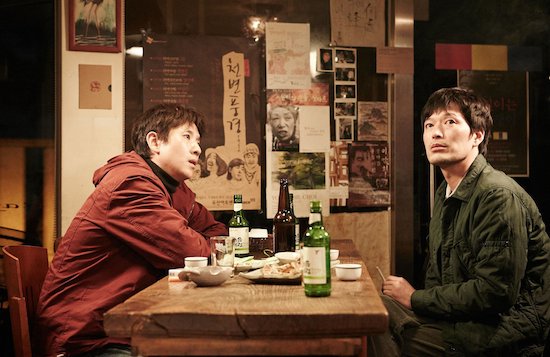
    A twisty blackly comic suspense thriller from South Korea, where sometimes it seems like they do this sort of thing better than anyone else. Looking for peace and quiet, a screenwriter rents a winter cabin in a remote country backwater to concentrate on his latest project. On the bus he does his best to rebuff a talkative character fresh out of prison, who unfortunately gets off at the same destination. Throw in a group of obnoxious kids on a ski vacation in the cabin next door, a pair of menacing game hunters who turn out to be related to the ex-con, and a shifty cop and you can see where things are headed, right? Maybe, maybe not. In his second effort, indie director Noh Young-seok shows he’s a talent to watch out for. Co-presented with the Korea Society and Subway Cinema.
    Thursday, February 20 at 6:45PM
    Thursday, February 27 at 4:15PM
    *Director Noh Young-seok in person

    Metro Manila
    Sean Ellis, U.K./Philippines, 2013; 115m
    Poor rice-farmers Oscar (Jake Macapagal) and Mai (Althea Vega) travel from the desolate mountains to bustling Manila with their two young children in the hopes of making some money, only to discover that the exploitation they faced at home is nothing compared to what greets them in the big city. From the moment they arrive they fall into a downward spiral: Oscar takes a hazardous job as an armored truck driver, while Mai is forced to dance at a sleazy strip joint, not an ideal line of work for any woman, much less an expectant mother. This harrowing domestic/crime drama was the much-deserved winner of a 2013 Sundance Audience Award. A Paladin/108 Media release.
    Friday, February 21 at 6PM

    The Sacrament 
    Ti West, U.S., 2013, 95m; DCP
    Indie horror specialist Ti West’s story of a Jim Jones–type religious cult will stick in your mind long after the credits roll. Continuing to go from strength to strength, with support from producer Eli Roth, West adopts a first-person found-footage approach with his usual flair and assurance. A VICE magazine photojournalist (Kentucker Audley) arrives at “Eden Parish,” a self-sustaining utopian commune established at a remote undisclosed jungle location outside the U.S. He’s there at the invitation of his estranged sister (Amy Seimetz), and brings along a cameraman (Joe Swanberg) and sound recordist (AJ Bowen), ready to make an exposé documentary. While the trio find no signs of trouble at first—although what’s with the compound’s armed guards?—before long they their doubts prove more than justified as the commune’s mysterious leader, Father (Gene Jones), finally reveals his plans for his followers. A Magnolia release.
    Friday, February 21 at 8:30PM
    Director Ti West in person

    Top of the Lake 
    Jane Campion & Garth Davis, New Zealand, 2013, 350m; DCP
    Twin Peaks crossed with The Killing—and that isn’t the half of it. Mad Men’s Elizabeth Moss stars in this thrilling seven-episode television series, the toughest, wildest picture Jane Campion has ever made. With the emotional intensity of the performances and the urgency of the drama scaled to match the vast, primal setting and the six-hour time frame, Top of the Lake is episodic television as epic poem, the Trojan wars recast as the gender war. Moss plays a detective who has returned to the bleak rural town where she grew up in order to spend time with her dying mother, and is recruited by the sole local police officer (David Wenham) to investigate a case of statutory rape. The 12-year-old victim refuses to disclose who got her pregnant, but there are no lack of suspects, starting with her father Mitcham (Peter Mullan), who runs a meth and ecstasy factory in his tumbled-down fortress of a home and seems to have fathered near a half-dozen children with several mothers, making incest as well as violence the subtext of desire, past and present. There are also Mitcham’s sullen, gun-toting sons, and a “foreign” teacher with a pedophile past. A stellar embodiment of  “the law of the father,” Mitcham goes on the offensive when women challenge his rule. Enter GJ (Holly Hunter), who buys the lakefront property that Mitcham presumes is his by right and establishes a community of women attempting to recover from abuse through anarchic hijinks—damaged goods empowered by their own sense of comedy. A perfect example of auteurist television, made in collaboration with writer Gerald Lee (who co-wrote Campion’s Sweetie) and co-director Garth Davis.—from Amy Taubin’s article on Top of the Lake in the March/April 2013 issue of Film Comment. A See-Saw Films production in association with Sundance Channel.
    Sunday, February 23 at 1PM
    *Includes a 15m intermission

    We Are the Best! 
    Lukas Moodysson, Sweden, 2013, 102m; DCP
    The director of Together and Lilya 4-ever is back on form with an energetic rough-and-tumble story of three rebellious teenage girls who form a punk rock band to defy the stifling conformity of early 1980s Stockholm. Adapting his wife Coco’s graphic novel, Moodysson affirms that an adolescent girl’s bedroom is as good a place as anywhere to find the ingredients for personal development and political foment as he sketches the friendship between Klara and Bobo, who use punk ideals and music to process the narrow thinking, variable parenting, inconsistent authority, and sexism they encounter in their lives. The action unfolds in a loose series of episodes during which the girls define and give voice to their untested feminist, spiritual, and political ideas, although they can be just as intolerant and conformist as their peers and parents—they recruit classmate and gifted guitar player Hedvig, ostracized for being a devout Christian, but insist that she renounce her religion! Returning to his roots, Moodysson depicts the exploits and follies of his unruly trio with warmth and affection, while cheerfully celebrating the DIY ethos and the urge to revolt. A Magnolia release.
    Saturday, February 22 at 7:30PM

    The Weight
    Jeon Kyu-hwan, South Korea, 2012; 107m, DCP
    Jung (Jo Jae-hyeon) is a sickly hunchbacked mortician who takes pride and pleasure in cleaning and dressing the dead. Gong-bae (Zia) is his burdensome younger stepbrother, who wants nothing more than to be a woman. Their story, fraught with human misery and cruelty—and yes, be warned, some necrophilia and graphic gore—is by no means to all tastes. But looking past the film’s bleak exterior there’s actually much beauty to be found within the grotesquerie. The Weight is exquisitely shot and directed and Jo and Zia deliver staggering performances as two catastrophically confused souls. Unsettling, heartbreaking, and altogether bizarre, The Weight is truly one of a kind.
    Thursday, February 20 at 9PM

    Wolfsburg 
    Christian Petzold, Germany, 2003, 90m
    Unavailable in the U.S., the second film by the Berlin School’s leading light and his first collaboration with actress Nina Hoss, star of his art-house hit Barbara, is a slow-burning thriller that uses the relationship between a hit-and-run driver and the victim’s mother to examine the role of chance in people’s lives and the existential malaise of modern Germany. Upwardly mobile car salesman Philipp (Benno Fürmann) seems to have it made—high-pressure job,perfect house and beautiful fiancée, Katja (Antje Westermann), who happens to be his boss’s sister. But Katja has her doubts about Philipp, and when he runs down a boy on a bicycle and drives on, his life begins to unravel. After the boy’s death, his struggling single mother Laura (Hoss), who works in a retail warehouse, sets out to track down his killer, but after a chance meeting between hunter and hunted, a cautious romantic relationship develops, with the guilty Philipp setting out to find a better job for the unknowing Laura. Petzold’s exploration of the nature of work and economics in today’s Germany is echoed in the film’s title, which invokes the factory town where Volkswagen is based.
    Wednesday, February 26 at 6PM

    Read more