
 Jean Rouch[/caption]
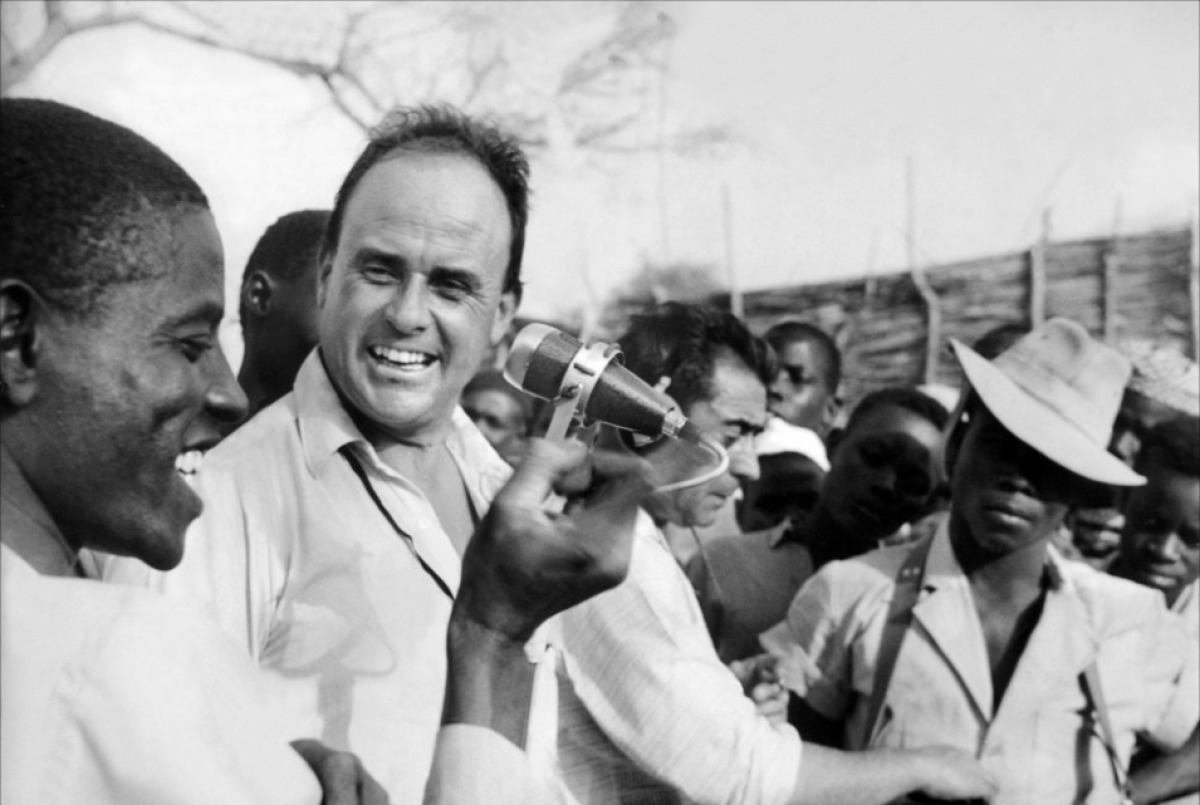
For the one-hundredth anniversary of the birth of the great French director and ethnographer Jean Rouch, the Venice Film Festival adds to its line-up the world-premiere screening of Cousin, cousine (1985-1987, 31′, color), the only film that Rouch made in Venice, the very unusual and previously unreleased short film, with Damouré Zika and Mariama Hima (Venice Classics).
Cousin, cousine has been fully restored by the French CNC (Centre national du cinéma e de l’image animée) in collaboration with the Fondation Jean Rouch and the Association Centenaire Jean Rouch 2017.
Cousin, cousine is a “caprice” invented in Venice by Jean Rouch and by his two friends and performers, Nigerian actor Damouré Zika and Nigerian filmmaker Mariama Hima, who came to the Venice Film Festival in 1985 to present Mariama Hima’s film Baabu Banza in the “Venezia Genti” section, where it won an award. On that occasion, they decided to make a film fantasy built around a painting by Gentile Bellini and several locations and stories within the city. The plot has Mariama and Damouré, two cousins, meeting in Venice to look for a long-lost relic, like in one of Gentile Bellini’s most famous paintings. Mariama thus introduces Damouré to the city, taking him to a “squero”, a boatyard where he can study how gondolas are made (which is very different from building pirogues).
Cousin, cousine will screen at the 74th Venice Film Festival in the Venice Classics section, following the documentary L’Enigma di Jean Rouch a Torino – Cronaca di un film raté by Marco di Castri, Paolo Favaro and Daniele Pianciola.
Jean Rouch (1917-2004), a French ethnographer and director, made over 180 films (some unfinished), along with a great number of photographs, sound recordings and writings of various kinds. He founded important centres and institutions such as the Comité du film ethnographique and events such as the Cinéma du Réel festival. He taught, defended and promoted ethnographic and documentary filmmaking, and visual anthropology.
Jean Rouch[/caption]
For the one-hundredth anniversary of the birth of the great French director and ethnographer Jean Rouch, the Venice Film Festival adds to its line-up the world-premiere screening of Cousin, cousine (1985-1987, 31′, color), the only film that Rouch made in Venice, the very unusual and previously unreleased short film, with Damouré Zika and Mariama Hima (Venice Classics).
Cousin, cousine has been fully restored by the French CNC (Centre national du cinéma e de l’image animée) in collaboration with the Fondation Jean Rouch and the Association Centenaire Jean Rouch 2017.
Cousin, cousine is a “caprice” invented in Venice by Jean Rouch and by his two friends and performers, Nigerian actor Damouré Zika and Nigerian filmmaker Mariama Hima, who came to the Venice Film Festival in 1985 to present Mariama Hima’s film Baabu Banza in the “Venezia Genti” section, where it won an award. On that occasion, they decided to make a film fantasy built around a painting by Gentile Bellini and several locations and stories within the city. The plot has Mariama and Damouré, two cousins, meeting in Venice to look for a long-lost relic, like in one of Gentile Bellini’s most famous paintings. Mariama thus introduces Damouré to the city, taking him to a “squero”, a boatyard where he can study how gondolas are made (which is very different from building pirogues).
Cousin, cousine will screen at the 74th Venice Film Festival in the Venice Classics section, following the documentary L’Enigma di Jean Rouch a Torino – Cronaca di un film raté by Marco di Castri, Paolo Favaro and Daniele Pianciola.
Jean Rouch (1917-2004), a French ethnographer and director, made over 180 films (some unfinished), along with a great number of photographs, sound recordings and writings of various kinds. He founded important centres and institutions such as the Comité du film ethnographique and events such as the Cinéma du Réel festival. He taught, defended and promoted ethnographic and documentary filmmaking, and visual anthropology.Classics
-
World Premiere of COUSIN, COUSINE An Unreleased Short by French Filmmaker Jean Rouch Added to Venice Film Festival
[caption id="attachment_23855" align="aligncenter" width="1200"] Jean Rouch[/caption]
For the one-hundredth anniversary of the birth of the great French director and ethnographer Jean Rouch, the Venice Film Festival adds to its line-up the world-premiere screening of Cousin, cousine (1985-1987, 31′, color), the only film that Rouch made in Venice, the very unusual and previously unreleased short film, with Damouré Zika and Mariama Hima (Venice Classics).
Cousin, cousine has been fully restored by the French CNC (Centre national du cinéma e de l’image animée) in collaboration with the Fondation Jean Rouch and the Association Centenaire Jean Rouch 2017.
Cousin, cousine is a “caprice” invented in Venice by Jean Rouch and by his two friends and performers, Nigerian actor Damouré Zika and Nigerian filmmaker Mariama Hima, who came to the Venice Film Festival in 1985 to present Mariama Hima’s film Baabu Banza in the “Venezia Genti” section, where it won an award. On that occasion, they decided to make a film fantasy built around a painting by Gentile Bellini and several locations and stories within the city. The plot has Mariama and Damouré, two cousins, meeting in Venice to look for a long-lost relic, like in one of Gentile Bellini’s most famous paintings. Mariama thus introduces Damouré to the city, taking him to a “squero”, a boatyard where he can study how gondolas are made (which is very different from building pirogues).
Cousin, cousine will screen at the 74th Venice Film Festival in the Venice Classics section, following the documentary L’Enigma di Jean Rouch a Torino – Cronaca di un film raté by Marco di Castri, Paolo Favaro and Daniele Pianciola.
Jean Rouch (1917-2004), a French ethnographer and director, made over 180 films (some unfinished), along with a great number of photographs, sound recordings and writings of various kinds. He founded important centres and institutions such as the Comité du film ethnographique and events such as the Cinéma du Réel festival. He taught, defended and promoted ethnographic and documentary filmmaking, and visual anthropology.
-
The Joseph Losey Retrospective at San Sebastian Film Festival to Showcase ALL of His Feature Films
 The 65th edition of the San Sebastian Film Festival will honor Joseph Losey with a retrospective of his 32 feature films and 6 short films.
In the seventies, Joseph Losey represented the greatest expression of auteur or art-house cinema with works like The Servant (1963), King and Country (1964), Accident (1967) and The Go-Between (1971), all of which, with the exception of the second, were written by the playwright Harold Pinter. But before becoming a leading figure of European independent film, Losey endured a complicated situation like so many others affected by the reprisals of the Hollywood witch hunt from 1947 onwards. His work is divided into three periods: his early period in North American film until the early fifties, the prestige he achieved in the UK of the sixties and seventies and a later, more itinerant stage when he worked for Italian, French and Spanish production.
Born in La Crosse, Wisconsin, in 1909, Losey turned his steps towards written and broadcast journalism, later moving into theatre. His openly left-wing beliefs led him to work on several mises en scène with Bertold Brecht and to spend a period in the former Soviet Union studying new theatre concepts. In the late thirties he started to direct short films with Metro Goldwyn Mayer, making his feature debut in 1948 with The Boy with Green Hair, a parable against war, totalitarianism and intransigence towards difference, produced by RKO. Although he did succeed in making a number of low-cost films noirs of undisguised social slant – The Lawless (1950), The Prowler (1951) and The Big Night (1951), all three penned by screenwriters blacklisted by the Un-American Activities Commission, Daniel Mainwaring, Daltun Trumbo and Ring Lardner Jr – and even a remake of Fritz Lang’s famous M in 1951, his name appeared on the blacklist for the tone of his early films and he was accused of belonging to the North American Communist Party.
When called to testify, he was in Italy shooting Stranger on the Prowl / Imbarco a mezzanotte (1952). He decided not to return to the United States and settled in Britain. He released said film under the pseudonym Andrea Forzano and trade union issues prevented his name from featuring on the first two movies made in his country of adoption: in The Sleeping Tiger (1954), first collaboration with one of his actors fetiche, Dirk Bogarde, he is credited as Victor Hanbury and, in The Intimate Stranger (1956), as Joseph Walton.
Losey took up his place in British cinema at a time of change. These were not only the days of rising Free Cinema, a trend he had no part in even if some of his earlier films made in the sixties did have a certain realistic and social angle, but also of the horror movie makers Hammer Film Productions, for which Losey started X The Unknown (1956), before he was ousted from the shooting and replaced by Leslie Norman, later directing The Damned (1962); these were Losey’s only inroads to the sci-fi domain.
Following a timid attempt at integration to the great British film industry with The Gypsy and the Gentleman (1958), a Rank production headlining Melina Mercouri, his work attracted outstanding interest from the mystery movie Blind Date (1959) and the prison drama The Criminal (1961), the beginning of his collaboration with the other actor with whom he would enjoy close understanding, Stanley Baker. Until the mid-seventies, Losey alternated highly personal films reflecting on relations of power (between both men and institutional bodies) constructed around mises en scène packed with symbols (his particular use of spectacular images), with what at first glance seemed to be more commercial titles served up by the big stars of the moment and taking their inspiration from works of enormous popularity or unquestionable literary prestige.
To this first group belonged the film that best defines his work, The Servant, with Pinter’s acerbic writing and the acting duel between Bogarde and James Fox, Accident (Grand Prix du Jury at the Cannes Festival), The Go-Between (Palme d’Or at Cannes) and the anti-war King and Country, played out in the British trenches of the First World War during a summary trial for desertion. The second group includes works like Eve (1962), adaptation of a novel by James Hadley Chase, starring Jeanne Moreau and which was the first of many films consecrated by Losey to female characters who irradiate a strange fascination; Modesty Blaise (1966), iconoclastic version of Peter O’Donnell and Jim Holdaway’s spy-fi comic strip featuring Monica Vitti; Boom (1968), a piece by Tennessee Williams dished up by the explosive couple Elizabeth Taylor & Richard Burton; Secret Ceremony (1968), a psychological and claustrophobic drama once again starring Elizabeth Taylor, with Robert Mitchum and Mia Farrow; A Doll’s House (1973), based on Henrik Ibsen’s piece and with Jane Fonda, David Warner and Trevor Howard, and A Romantic Englishwoman (1975), another of his defining movies, an intense and evil triangular game written by Tom Stoppard and performed by Glenda Jackson, Michael Caine and Helmut Berger.
During this prolific period, Losey made hugely abstract works including Figures in a Landscape (1970), following the flight of two prisoners pursued by a mysterious helicopter (with a screenplay written by actor Robert Shaw, its leading man alongside Malcolm McDowell; the film competed in San Sebastian) and Mr. Klein (1976), with Alain Delon in the part of an unsavoury character accused of being a Jew during the Nazi occupation in France (winner of the César for Best Film). But he also shot films of obvious political accent such as L’assassinio di Trotsky / The Assassination of Trotsky (1972), with Delon as Ramón Mercader and Burton in the role of Leon Trotsky, and Les routes du Sud (1978), continuation of La guerre est finie (1966) by Alain Resnais, once again written by Jorge Semprún and with Yves Montand repeating his role of Spanish exile in constant ideological conflict.
Losey returned to Brecht many years later with a cinema adaptation of Galileo (1974), based on the English translation by Charles Laughton and starring Topol, hugely popular at the time for his leading part in Fiddler on the Roof (1971). He also made the filmed opera Don Giovanni (1979) with Ruggero Raimondi and, in France, La Truite (1982) with Isabelle Huppert in the part of yet another of the director’s complex female characters. His last film was Steaming (1985) which, like the one before it, was never screened in Spain. This is a work of theatrical roots starring Vanessa Redgrave and Sarah Miles and set in London Turkish baths as they fight its closure on ladies day. Losey never saw the final cut of the film; he passed away in June 1984, almost a year before its presentation at Cannes.
Losey’s relationship with the San Sebastian Festival was always complicated owing to the Franco dictatorship. In addition to Figures in a Landscape, the Festival screened The Sleeping Tiger, Boom and, in the informative section, The Go-Between.The Romantic Englishman was also selected, but the director and Glenda Jackson refused to come to the event in protest against the death sentences recently signed by Franco.
The retrospective is organised jointly with the Filmoteca Española, and has the collaboration of the San Telmo Museum (San Sebastián), the Filmoteca Vasca and CulturArts-IVAC (Valencia). The cycle is complemented by the publication of a book about the director coordinated by Quim Casas in which different Spanish and British authors have participated.
After its screening in San Sebastian, the retrospective will run at the Filmoteca Española in Madrid.
The 65th edition of the San Sebastian Film Festival will honor Joseph Losey with a retrospective of his 32 feature films and 6 short films.
In the seventies, Joseph Losey represented the greatest expression of auteur or art-house cinema with works like The Servant (1963), King and Country (1964), Accident (1967) and The Go-Between (1971), all of which, with the exception of the second, were written by the playwright Harold Pinter. But before becoming a leading figure of European independent film, Losey endured a complicated situation like so many others affected by the reprisals of the Hollywood witch hunt from 1947 onwards. His work is divided into three periods: his early period in North American film until the early fifties, the prestige he achieved in the UK of the sixties and seventies and a later, more itinerant stage when he worked for Italian, French and Spanish production.
Born in La Crosse, Wisconsin, in 1909, Losey turned his steps towards written and broadcast journalism, later moving into theatre. His openly left-wing beliefs led him to work on several mises en scène with Bertold Brecht and to spend a period in the former Soviet Union studying new theatre concepts. In the late thirties he started to direct short films with Metro Goldwyn Mayer, making his feature debut in 1948 with The Boy with Green Hair, a parable against war, totalitarianism and intransigence towards difference, produced by RKO. Although he did succeed in making a number of low-cost films noirs of undisguised social slant – The Lawless (1950), The Prowler (1951) and The Big Night (1951), all three penned by screenwriters blacklisted by the Un-American Activities Commission, Daniel Mainwaring, Daltun Trumbo and Ring Lardner Jr – and even a remake of Fritz Lang’s famous M in 1951, his name appeared on the blacklist for the tone of his early films and he was accused of belonging to the North American Communist Party.
When called to testify, he was in Italy shooting Stranger on the Prowl / Imbarco a mezzanotte (1952). He decided not to return to the United States and settled in Britain. He released said film under the pseudonym Andrea Forzano and trade union issues prevented his name from featuring on the first two movies made in his country of adoption: in The Sleeping Tiger (1954), first collaboration with one of his actors fetiche, Dirk Bogarde, he is credited as Victor Hanbury and, in The Intimate Stranger (1956), as Joseph Walton.
Losey took up his place in British cinema at a time of change. These were not only the days of rising Free Cinema, a trend he had no part in even if some of his earlier films made in the sixties did have a certain realistic and social angle, but also of the horror movie makers Hammer Film Productions, for which Losey started X The Unknown (1956), before he was ousted from the shooting and replaced by Leslie Norman, later directing The Damned (1962); these were Losey’s only inroads to the sci-fi domain.
Following a timid attempt at integration to the great British film industry with The Gypsy and the Gentleman (1958), a Rank production headlining Melina Mercouri, his work attracted outstanding interest from the mystery movie Blind Date (1959) and the prison drama The Criminal (1961), the beginning of his collaboration with the other actor with whom he would enjoy close understanding, Stanley Baker. Until the mid-seventies, Losey alternated highly personal films reflecting on relations of power (between both men and institutional bodies) constructed around mises en scène packed with symbols (his particular use of spectacular images), with what at first glance seemed to be more commercial titles served up by the big stars of the moment and taking their inspiration from works of enormous popularity or unquestionable literary prestige.
To this first group belonged the film that best defines his work, The Servant, with Pinter’s acerbic writing and the acting duel between Bogarde and James Fox, Accident (Grand Prix du Jury at the Cannes Festival), The Go-Between (Palme d’Or at Cannes) and the anti-war King and Country, played out in the British trenches of the First World War during a summary trial for desertion. The second group includes works like Eve (1962), adaptation of a novel by James Hadley Chase, starring Jeanne Moreau and which was the first of many films consecrated by Losey to female characters who irradiate a strange fascination; Modesty Blaise (1966), iconoclastic version of Peter O’Donnell and Jim Holdaway’s spy-fi comic strip featuring Monica Vitti; Boom (1968), a piece by Tennessee Williams dished up by the explosive couple Elizabeth Taylor & Richard Burton; Secret Ceremony (1968), a psychological and claustrophobic drama once again starring Elizabeth Taylor, with Robert Mitchum and Mia Farrow; A Doll’s House (1973), based on Henrik Ibsen’s piece and with Jane Fonda, David Warner and Trevor Howard, and A Romantic Englishwoman (1975), another of his defining movies, an intense and evil triangular game written by Tom Stoppard and performed by Glenda Jackson, Michael Caine and Helmut Berger.
During this prolific period, Losey made hugely abstract works including Figures in a Landscape (1970), following the flight of two prisoners pursued by a mysterious helicopter (with a screenplay written by actor Robert Shaw, its leading man alongside Malcolm McDowell; the film competed in San Sebastian) and Mr. Klein (1976), with Alain Delon in the part of an unsavoury character accused of being a Jew during the Nazi occupation in France (winner of the César for Best Film). But he also shot films of obvious political accent such as L’assassinio di Trotsky / The Assassination of Trotsky (1972), with Delon as Ramón Mercader and Burton in the role of Leon Trotsky, and Les routes du Sud (1978), continuation of La guerre est finie (1966) by Alain Resnais, once again written by Jorge Semprún and with Yves Montand repeating his role of Spanish exile in constant ideological conflict.
Losey returned to Brecht many years later with a cinema adaptation of Galileo (1974), based on the English translation by Charles Laughton and starring Topol, hugely popular at the time for his leading part in Fiddler on the Roof (1971). He also made the filmed opera Don Giovanni (1979) with Ruggero Raimondi and, in France, La Truite (1982) with Isabelle Huppert in the part of yet another of the director’s complex female characters. His last film was Steaming (1985) which, like the one before it, was never screened in Spain. This is a work of theatrical roots starring Vanessa Redgrave and Sarah Miles and set in London Turkish baths as they fight its closure on ladies day. Losey never saw the final cut of the film; he passed away in June 1984, almost a year before its presentation at Cannes.
Losey’s relationship with the San Sebastian Festival was always complicated owing to the Franco dictatorship. In addition to Figures in a Landscape, the Festival screened The Sleeping Tiger, Boom and, in the informative section, The Go-Between.The Romantic Englishman was also selected, but the director and Glenda Jackson refused to come to the event in protest against the death sentences recently signed by Franco.
The retrospective is organised jointly with the Filmoteca Española, and has the collaboration of the San Telmo Museum (San Sebastián), the Filmoteca Vasca and CulturArts-IVAC (Valencia). The cycle is complemented by the publication of a book about the director coordinated by Quim Casas in which different Spanish and British authors have participated.
After its screening in San Sebastian, the retrospective will run at the Filmoteca Española in Madrid.
-
Don McHoull Creatively Uses GIFs to Preserve the Silent Era
 The discovery and preservation of silent films, especially those that are considered “lost” or destroyed, is a lifelong pursuit for some of the world’s most dedicated movie buffs. Like all historical and anthropological studies, the foundations of film help us understand where we’ve been, and where we’re going. Don McHoull, creator of SilentMovieGIFs, is putting his own twist on this idea, using silent films as the foundation for a series of some pretty wonderful images while utilizing one of the newest imaging technologies to hit the internet. I had a chance to ask Don a couple of questions about his GIFs, including his Halloween-themed images that showcase some of Old Hollywood’s most beloved characters.
http://i.imgur.com/qg2bmRs.gifv
Josef: The most obvious question here is, what inspired you to create these GIFs in the first place? It’s such an odd juxtaposition between classic film and a very modern form of imaging, but one that works extremely well.
Don: I was a fan of silent film, and GIFs just seemed like a natural medium for taking some of the amazing visual ideas in silent movies and sharing them. I’d seen some silent movie GIFs that were really well received on places like Reddit, even though some of them were clearly made from poor quality source material. I had Photoshop and some Chaplin and Keaton Blu-rays, and I figured I’d try to make some cleaner looking GIFs. I think a lot of people have the idea that the image quality of silent films wasn’t that great, but with movies that have been well-preserved and carefully restored the picture quality can actually be really good.
http://i.imgur.com/TKhfDW0.gifv
J: Do you attribute any significance to that juxtaposition? In other words, was it a conscious decision to pair the oldest form of cinema available with the newest form of imaging?
D: The GIF is a popular medium that’s strictly visual, so it just seems like a perfect fit for silent movies. My preferred way to watch a silent film would be a in theatre, ideally with live music, but GIFs can take a gag or another visual from a silent movie and make it really easy to share online. I’ve had quite a few GIFs now that have racked up over a million views, and a lot of other ones in the hundreds of thousands. Ideally, someone might see, for example, a few Buster Keaton GIFs, and be interested enough to actually seek out and watch some of his movies, but even if they just watch some GIFs, a least they would have some appreciation for Keaton’s work.
I hope that the GIF can be a sort of gateway drug for silent films, similar to how TV introduced people to silent films. I made a Charley Chase GIF last week for his birthday that’s up to 238,000 views, even though Chase doesn’t really have anything like the name recognition of Chaplin or Keaton (most people seem to be much more familiar with the adult film star of the same name.) I thought it was pretty cool that 92 years later there was still a good sized audience of people who could appreciate the brilliance of Chase’s (and his brother’s) performance.
http://i.imgur.com/qMVWgU8.gifv
J: A recent album you posted, one that features GIFs from classic silent horror films, really emphasizes the care and precision that went into the prosthetic and costume design of the era. Do you think recent horror films have lost that attention to detail, and have you noticed any contemporary films that are clearly inspired by the designs of the silent era?
D: The Babadook had a real kind of Expressionist vibe to it. And it seems like most modern depictions of vampires owe a lot to Nosferatu. Obviously makeup and special effects have made huge leaps over the last 90 or so years, and it would be fascinating to see what someone like Lon Chaney or Jack Pierce could do with the stuff that’s out there today.
http://i.imgur.com/n6uSO1A.gifv
J: What’s your process for selecting which shots and films you end up turning into GIFs, and can you give us a sneak peek as to what your followers might expect from you in the coming weeks?
After I watch a movie, I like to go through it and pick out scenes that I think could work well as GIFs. I try to cover a wide range of silent films, from different time periods and genres, but my mainstay will probably always be Keaton/Chaplin/Lloyd GIFs.
For the rest of October, I’ll be focusing on the horror genre. I’m interested in the connections between different eras. Today I was looking connections between Nosferatu and Dracula, but there’s also a lot of links you could draw between movies like Frankenstein and King Kong and the silent era. Tonight I’m watching Haxan, so there should be some GIFs from that.
After October, maybe I’ll focus on a different genre, like science fiction, or the invention of the gangster movie. I’ve also been working my way back through Chaplin’s short films, and I’ve noticed that his later feature films return to a lot of ideas and visuals from his early work, I think that would be an interesting thing to explore.
These GIFs and many more can be seen on Reddit (/r/silentmoviegifs) or on his Twitter page (@SilentMovieGIFs)
http://i.imgur.com/Tj8dhsE.gifv
http://i.imgur.com/sU4aRaj.gifv
http://i.imgur.com/sroL9XO.gifv
http://i.imgur.com/qilDHlE.gifv
The discovery and preservation of silent films, especially those that are considered “lost” or destroyed, is a lifelong pursuit for some of the world’s most dedicated movie buffs. Like all historical and anthropological studies, the foundations of film help us understand where we’ve been, and where we’re going. Don McHoull, creator of SilentMovieGIFs, is putting his own twist on this idea, using silent films as the foundation for a series of some pretty wonderful images while utilizing one of the newest imaging technologies to hit the internet. I had a chance to ask Don a couple of questions about his GIFs, including his Halloween-themed images that showcase some of Old Hollywood’s most beloved characters.
http://i.imgur.com/qg2bmRs.gifv
Josef: The most obvious question here is, what inspired you to create these GIFs in the first place? It’s such an odd juxtaposition between classic film and a very modern form of imaging, but one that works extremely well.
Don: I was a fan of silent film, and GIFs just seemed like a natural medium for taking some of the amazing visual ideas in silent movies and sharing them. I’d seen some silent movie GIFs that were really well received on places like Reddit, even though some of them were clearly made from poor quality source material. I had Photoshop and some Chaplin and Keaton Blu-rays, and I figured I’d try to make some cleaner looking GIFs. I think a lot of people have the idea that the image quality of silent films wasn’t that great, but with movies that have been well-preserved and carefully restored the picture quality can actually be really good.
http://i.imgur.com/TKhfDW0.gifv
J: Do you attribute any significance to that juxtaposition? In other words, was it a conscious decision to pair the oldest form of cinema available with the newest form of imaging?
D: The GIF is a popular medium that’s strictly visual, so it just seems like a perfect fit for silent movies. My preferred way to watch a silent film would be a in theatre, ideally with live music, but GIFs can take a gag or another visual from a silent movie and make it really easy to share online. I’ve had quite a few GIFs now that have racked up over a million views, and a lot of other ones in the hundreds of thousands. Ideally, someone might see, for example, a few Buster Keaton GIFs, and be interested enough to actually seek out and watch some of his movies, but even if they just watch some GIFs, a least they would have some appreciation for Keaton’s work.
I hope that the GIF can be a sort of gateway drug for silent films, similar to how TV introduced people to silent films. I made a Charley Chase GIF last week for his birthday that’s up to 238,000 views, even though Chase doesn’t really have anything like the name recognition of Chaplin or Keaton (most people seem to be much more familiar with the adult film star of the same name.) I thought it was pretty cool that 92 years later there was still a good sized audience of people who could appreciate the brilliance of Chase’s (and his brother’s) performance.
http://i.imgur.com/qMVWgU8.gifv
J: A recent album you posted, one that features GIFs from classic silent horror films, really emphasizes the care and precision that went into the prosthetic and costume design of the era. Do you think recent horror films have lost that attention to detail, and have you noticed any contemporary films that are clearly inspired by the designs of the silent era?
D: The Babadook had a real kind of Expressionist vibe to it. And it seems like most modern depictions of vampires owe a lot to Nosferatu. Obviously makeup and special effects have made huge leaps over the last 90 or so years, and it would be fascinating to see what someone like Lon Chaney or Jack Pierce could do with the stuff that’s out there today.
http://i.imgur.com/n6uSO1A.gifv
J: What’s your process for selecting which shots and films you end up turning into GIFs, and can you give us a sneak peek as to what your followers might expect from you in the coming weeks?
After I watch a movie, I like to go through it and pick out scenes that I think could work well as GIFs. I try to cover a wide range of silent films, from different time periods and genres, but my mainstay will probably always be Keaton/Chaplin/Lloyd GIFs.
For the rest of October, I’ll be focusing on the horror genre. I’m interested in the connections between different eras. Today I was looking connections between Nosferatu and Dracula, but there’s also a lot of links you could draw between movies like Frankenstein and King Kong and the silent era. Tonight I’m watching Haxan, so there should be some GIFs from that.
After October, maybe I’ll focus on a different genre, like science fiction, or the invention of the gangster movie. I’ve also been working my way back through Chaplin’s short films, and I’ve noticed that his later feature films return to a lot of ideas and visuals from his early work, I think that would be an interesting thing to explore.
These GIFs and many more can be seen on Reddit (/r/silentmoviegifs) or on his Twitter page (@SilentMovieGIFs)
http://i.imgur.com/Tj8dhsE.gifv
http://i.imgur.com/sU4aRaj.gifv
http://i.imgur.com/sroL9XO.gifv
http://i.imgur.com/qilDHlE.gifv
-
Toronto International Film Festival to Hold Live Script Read of Rob Reiner’s Classic “The Princess Bride”
 The Princess Bride script is the subject of the Jason Reitman Live Read at the upcoming 40th Toronto International Film Festival. Jason Reitman Live Read is a unique event in which classic movie scripts are read by contemporary actors. The script of Rob Reiner’s “beloved classic” will be presented to audiences in a one-take read-through with Reitman narrating stage direction.
“The Princess Bride premiered at the Festival in 1987 and has captured audiences’ imaginations ever since,” said Cameron Bailey, Artistic Director of the Toronto International Film Festival. “To have this title return on the occasion of our 40th Festival, and be re-explored by a contemporary cast, is pure magic.”
Who will avenge Inigo Montoya’s father? Who will fill the inimitable Fezzik’s enormous shoes? Who will breathe new life into the part of Miracle Max? The cast for the Live Read will be announced by Jason Reitman on Twitter (@JasonReitman) in the days leading up to the event.
The Festival previously welcomed Reitman and all-star casts for live table reads of Paul Thomas Anderson’s Boogie Nights and Alan Ball’s American Beauty.
Jason Reitman created Live Read in October 2011, in collaboration with Elvis Mitchell, for the film society of Los Angeles County Museum of Arts (LACMA). The six-month hit series featured Breakfast Club (Jennifer Garner and Aaron Paul), The Apartment (Steve Carell and Natalie Portman), The Princess Bride (Paul Rudd), Shampoo (Bradley Cooper and Kate Hudson), The Big Lebowski (Seth Rogen), and Reservoir Dogs, which featured an all-African American cast including actors Laurence Fishburne and Terrence Howard.
The 40th Toronto International Film Festival runs September 10 to 20, 2015.
https://www.youtube.com/watch?v=VYgcrny2hRs
The Princess Bride script is the subject of the Jason Reitman Live Read at the upcoming 40th Toronto International Film Festival. Jason Reitman Live Read is a unique event in which classic movie scripts are read by contemporary actors. The script of Rob Reiner’s “beloved classic” will be presented to audiences in a one-take read-through with Reitman narrating stage direction.
“The Princess Bride premiered at the Festival in 1987 and has captured audiences’ imaginations ever since,” said Cameron Bailey, Artistic Director of the Toronto International Film Festival. “To have this title return on the occasion of our 40th Festival, and be re-explored by a contemporary cast, is pure magic.”
Who will avenge Inigo Montoya’s father? Who will fill the inimitable Fezzik’s enormous shoes? Who will breathe new life into the part of Miracle Max? The cast for the Live Read will be announced by Jason Reitman on Twitter (@JasonReitman) in the days leading up to the event.
The Festival previously welcomed Reitman and all-star casts for live table reads of Paul Thomas Anderson’s Boogie Nights and Alan Ball’s American Beauty.
Jason Reitman created Live Read in October 2011, in collaboration with Elvis Mitchell, for the film society of Los Angeles County Museum of Arts (LACMA). The six-month hit series featured Breakfast Club (Jennifer Garner and Aaron Paul), The Apartment (Steve Carell and Natalie Portman), The Princess Bride (Paul Rudd), Shampoo (Bradley Cooper and Kate Hudson), The Big Lebowski (Seth Rogen), and Reservoir Dogs, which featured an all-African American cast including actors Laurence Fishburne and Terrence Howard.
The 40th Toronto International Film Festival runs September 10 to 20, 2015.
https://www.youtube.com/watch?v=VYgcrny2hRs
-
Archive Gala of 59th BFI London Film Festival to World Premiere of New Restoration of Anthony Asquith’s SHOOTING STARS
 The Archive gala screening at the 59th BFI London Film Festival will be the world premiere of a new restoration of Anthony Asquith’s Shooting Stars (1928). Asquith’s first film as co-director and scriptwriter, Shooting Stars is a fascinating drama set behind the scenes at a contemporary film studio. Newly restored by the BFI National Archive, Shooting Stars will be presented with a new live score by John Altman, BAFTA and Emmy award-winning composer whose work includes Titanic and Goldeneye.
Shooting Stars is a dazzling debut which boasts a boldly expressionist shooting style, dramatic lighting and great performances from its leads. Annette Benson (Mae Feather) and Brian Aherne (Julian Gordon) play two mis-matched, married stars and Donald Calthrop (Andy Wilkes) a Chaplin-esque star at the same studio, with whom Mae becomes romantically involved. Chili Bouchier, Britain’s first sex symbol of the silent era, plays a key role as an actress/bathing beauty, an attractive foil to the comic antics of the comedian. The film manages to operate as a sophisticated, modern morality tale, while it’s also both an affectionate critique of the film industry and a celebration of its possibilities. It teases the audience with its revelations of how the illusions of the world of film-making conceal ironic and hidden truths.
Asquith (son of the former Prime Minister Herbert Asquith) had privileged access to see Chaplin making The Circus on a trip to Hollywood and he had also been behind the scenes at German film studios. Both influences are clearly seen in the film. Asquith went on to have a hugely successful international career in the sound era with films such as Pygmalion, The Importance of Being Earnest, The Browning Version and The VIPs.
The film has been meticulously restored by a team of BFI experts from materials held in the BFI National Archive, making this the definitive restoration to stand alongside those of previous BFI restorations of Asquith’s Underground (1928) and A Cottage on Dartmoor (1929).
Robin Baker, Head Curator, BFI National Archive said, “We are delighted to be showcasing this remarkable film in a brilliant new restoration achieved after months of work from our dedicated teams at the BFI. Shooting Stars is a fascinating debut from one of Britain’s greatest film-makers and to see it with a newly commissioned score performed live in the Art Deco splendor of the Odeon Leicester Square promises to be a very special experience.”
The new score by composer, John Altman, has been written for a twelve piece ensemble playing multiple instruments. It is full of a lively jazz influence, inspired by some of the sheet music for the popular song “Ain’t She Sweet” which is seen on screen in the film. Altman is both an authentic and accomplished jazz musician as well as a BAFTA and Emmy award winning composer of music for the big screen. He has composed, orchestrated and conducted for many films including the period music for James Cameron’s Titanic, and he composed the tank chase sequence in the James Bond film GoldenEye and won the Anthony Asquith Award for Achievement in Film Music for Hear My Song.
John Altman said, “For the new score I have been inspired by dance band sounds and Duke Ellington in 1927. It’s not a slavish period recreation but I have tried to find an appropriate way of reflecting some of the plot twists and ironic deceptions through a series of interlinked musical themes. The score will be played by a very versatile group of musicians and we will end up using almost as many instruments as a complete orchestra through the whole film. I hope that the music will carry audiences effortlessly through the emotional highs and lows of this brilliant film.”
There were famously two opposing reviews published in Variety, one British, one American, with the British review disparaging the film and the American giving it a strong thumbs-up. The film is now however fully appreciated as one of the few undisputed masterpieces of British silent cinema. Only Alfred Hitchcock has a higher critical reputation than Asquith in this period of late silent British cinema.
Credits:
SHOOTING STARS (UK 1928)
Director, AV Bramble, co-directed by Anthony Asquith.
Producer: H. Bruce Woolfe.
Screenplay: Anthony Asquith and J. Orton
Shooting Stars is a dazzling debut from first-time filmmaker Anthony Asquith, audaciously taking the
film industry itself as the theme.
Despite the director credit going to veteran director A.V. Bramble, this is demonstrably the original work of rising talent Anthony Asquith, exhibiting all the attention-grabbing bravado of a young filmmaker with everything to prove. His original story offers sardonic insight into the shallowness of film stardom and Hollywood formulas by use of ironic counterpoint. He flaunts his dynamic cinematographic style and upgrades design and lighting by bringing in professionals.
Synopsis
A love triangle develops on set in a British movie studio filmed at Cricklewood in NW London, where a western and a slapstick comedy are being filmed back-to-back. Mae Feather (Annette Benson), a spoiled star jilts her husband, played by Brian Aherne for the comedian played by Donald Calthrop. In one of the best opening scenes of British silent cinema the handsome Brian Aherne appears as a cowboy, with his ‘gal’ in a calico frock in a classic ‘western’ rural romantic scene. The dove she cradles in her hands pecks at her viciously and the illusion is suddenly dispelled as the camera tracks back to reveal a studio’s wooden sets. She becomes the screeching prima donna while her co-star husband remains calm, slightly amused and dignified as the entire studio staff tries to catch the offending bird. He is, in other words the real thing – he is his star persona. She on the other hand is entirely unlike her nice-girl character and is unwilling to give up the romance of the movies for the real thing. The situation spins rapidly out of control.
Shooting Stars marked the fiction feature debut of British Instructional Films which went on to produce a short-lived but significant run of very good late silent features including several which have been restored and released by the BFI in recent years: Walter Summers’ The Battles of Coronel and Falkland Islands(1928), Asquith’s Underground (1928), A Cottage on Dartmoor (1929).
The Archive gala screening at the 59th BFI London Film Festival will be the world premiere of a new restoration of Anthony Asquith’s Shooting Stars (1928). Asquith’s first film as co-director and scriptwriter, Shooting Stars is a fascinating drama set behind the scenes at a contemporary film studio. Newly restored by the BFI National Archive, Shooting Stars will be presented with a new live score by John Altman, BAFTA and Emmy award-winning composer whose work includes Titanic and Goldeneye.
Shooting Stars is a dazzling debut which boasts a boldly expressionist shooting style, dramatic lighting and great performances from its leads. Annette Benson (Mae Feather) and Brian Aherne (Julian Gordon) play two mis-matched, married stars and Donald Calthrop (Andy Wilkes) a Chaplin-esque star at the same studio, with whom Mae becomes romantically involved. Chili Bouchier, Britain’s first sex symbol of the silent era, plays a key role as an actress/bathing beauty, an attractive foil to the comic antics of the comedian. The film manages to operate as a sophisticated, modern morality tale, while it’s also both an affectionate critique of the film industry and a celebration of its possibilities. It teases the audience with its revelations of how the illusions of the world of film-making conceal ironic and hidden truths.
Asquith (son of the former Prime Minister Herbert Asquith) had privileged access to see Chaplin making The Circus on a trip to Hollywood and he had also been behind the scenes at German film studios. Both influences are clearly seen in the film. Asquith went on to have a hugely successful international career in the sound era with films such as Pygmalion, The Importance of Being Earnest, The Browning Version and The VIPs.
The film has been meticulously restored by a team of BFI experts from materials held in the BFI National Archive, making this the definitive restoration to stand alongside those of previous BFI restorations of Asquith’s Underground (1928) and A Cottage on Dartmoor (1929).
Robin Baker, Head Curator, BFI National Archive said, “We are delighted to be showcasing this remarkable film in a brilliant new restoration achieved after months of work from our dedicated teams at the BFI. Shooting Stars is a fascinating debut from one of Britain’s greatest film-makers and to see it with a newly commissioned score performed live in the Art Deco splendor of the Odeon Leicester Square promises to be a very special experience.”
The new score by composer, John Altman, has been written for a twelve piece ensemble playing multiple instruments. It is full of a lively jazz influence, inspired by some of the sheet music for the popular song “Ain’t She Sweet” which is seen on screen in the film. Altman is both an authentic and accomplished jazz musician as well as a BAFTA and Emmy award winning composer of music for the big screen. He has composed, orchestrated and conducted for many films including the period music for James Cameron’s Titanic, and he composed the tank chase sequence in the James Bond film GoldenEye and won the Anthony Asquith Award for Achievement in Film Music for Hear My Song.
John Altman said, “For the new score I have been inspired by dance band sounds and Duke Ellington in 1927. It’s not a slavish period recreation but I have tried to find an appropriate way of reflecting some of the plot twists and ironic deceptions through a series of interlinked musical themes. The score will be played by a very versatile group of musicians and we will end up using almost as many instruments as a complete orchestra through the whole film. I hope that the music will carry audiences effortlessly through the emotional highs and lows of this brilliant film.”
There were famously two opposing reviews published in Variety, one British, one American, with the British review disparaging the film and the American giving it a strong thumbs-up. The film is now however fully appreciated as one of the few undisputed masterpieces of British silent cinema. Only Alfred Hitchcock has a higher critical reputation than Asquith in this period of late silent British cinema.
Credits:
SHOOTING STARS (UK 1928)
Director, AV Bramble, co-directed by Anthony Asquith.
Producer: H. Bruce Woolfe.
Screenplay: Anthony Asquith and J. Orton
Shooting Stars is a dazzling debut from first-time filmmaker Anthony Asquith, audaciously taking the
film industry itself as the theme.
Despite the director credit going to veteran director A.V. Bramble, this is demonstrably the original work of rising talent Anthony Asquith, exhibiting all the attention-grabbing bravado of a young filmmaker with everything to prove. His original story offers sardonic insight into the shallowness of film stardom and Hollywood formulas by use of ironic counterpoint. He flaunts his dynamic cinematographic style and upgrades design and lighting by bringing in professionals.
Synopsis
A love triangle develops on set in a British movie studio filmed at Cricklewood in NW London, where a western and a slapstick comedy are being filmed back-to-back. Mae Feather (Annette Benson), a spoiled star jilts her husband, played by Brian Aherne for the comedian played by Donald Calthrop. In one of the best opening scenes of British silent cinema the handsome Brian Aherne appears as a cowboy, with his ‘gal’ in a calico frock in a classic ‘western’ rural romantic scene. The dove she cradles in her hands pecks at her viciously and the illusion is suddenly dispelled as the camera tracks back to reveal a studio’s wooden sets. She becomes the screeching prima donna while her co-star husband remains calm, slightly amused and dignified as the entire studio staff tries to catch the offending bird. He is, in other words the real thing – he is his star persona. She on the other hand is entirely unlike her nice-girl character and is unwilling to give up the romance of the movies for the real thing. The situation spins rapidly out of control.
Shooting Stars marked the fiction feature debut of British Instructional Films which went on to produce a short-lived but significant run of very good late silent features including several which have been restored and released by the BFI in recent years: Walter Summers’ The Battles of Coronel and Falkland Islands(1928), Asquith’s Underground (1928), A Cottage on Dartmoor (1929).
-
San Sebastian Festival to Honor Original KING KONG Directors Merian C. Cooper and Ernest B. Schoedsack with a Retrospective
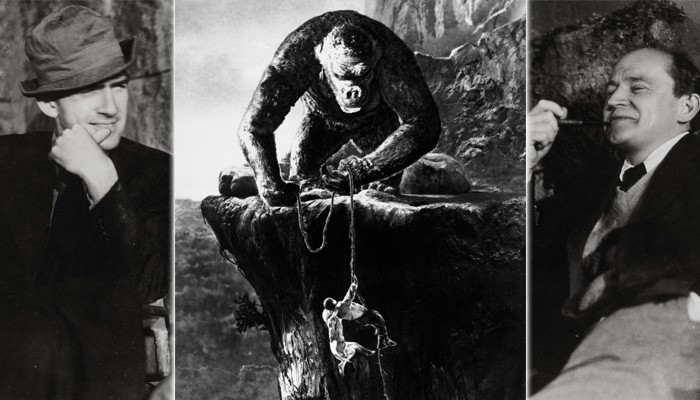 The 63rd San Sebastian Festival will dedicate a retrospective to directors Merian C. Cooper and Ernest B. Schoedsack, masterminds of the iconic King Kong (1933). Merian C. Cooper (1893-1973) and Ernest B. Schoedsack (1893-1979) were, in the golden age of Hollywood, one of the strangest and most exciting creative twosomes ever to come out of Hollywood. The coming edition of the San Sebastian Festival will recover their work in a cycle dedicated to their films.
Acclaimed for generations as the masterminds of the iconic King Kong (1933), Cooper and Schoedsack’s contribution to cinema didn’t stop at this masterpiece. Their career began with two masterpieces in the history of documentary filmmaking, Grass; A Nation’s Battle for Life (1925) and Chang (1927). They later made fantasy, drama, adventure and mystery movies, some of which are now cult titles: The Four Feathers (1929), The Most Dangerous Game (1932), The Last Days of Pompeii (1935), Dr. Cyclops (1940), Son of Kong (1933) and Mighty Joe Young (1949).
GRASS; A NATION’S BATTLE FOR LIFE
MERIAN C. COOPER, MARGUERITE HARRISON, ERNEST B. SCHOEDSACK (USA) 1925
Cooper and Schoedsack’s debut behind the cameras took the shape of this anthropological documentary classic shot in the spectacular landscapes of Iran. The everyday life of the Bakhtiari tribe, in the former Persia, and their migration in search of pastures for their livestock: 50,000 people and their flocks must cross natural obstacles and overcome harsh atmospheric conditions to find food for their animals.
CHANG
MERIAN C. COOPER, ERNEST B. SCHOEDSACK (USA) 1927
Cooper and Schoedsack’s second cinematic adventure took them to the forests of Thailand. A documentary with elements of fiction where the directors give free rein to their passion for exotic settings and sense of spectacle thanks to this fascinating tale of a man’s struggle against the beast.
THE FOUR FEATHERS
MERIAN C. COOPER , ERNEST B. SCHOEDSACK , LOTHAR MENDES (USA) 1929
Schoedsack and Cooper made the first sound adaptation of the famous colonial novel by A.E.W. Mason, taken to the screen on several occasions. The Sudanese adventures of Lieutenant Faversham, accused of cowardice by his friends, are the perfect excuse for the directors to impress upon the original narration the verve and dynamism so typical of their films. This was their first collaboration with a recurring actress in their filmography, Fay Wray.
RANGO
ERNEST B. SCHOEDSACK (USA) 1931
Two years before shooting their masterpiece, King Kong, Cooper and Schoedsack fantasized about relations between men and monkeys in this tale of adventures set in the Sumatran forests with its anthropological vocation. However, as was usual in their films, their ability to narrate fables always imposed itself upon the simple observation of reality.
THE MOST DANGEROUS GAME
ERNEST B. SCHOEDSACK, IRVING PICHEL (USA) 1932
Adaptation of a classic tale by Richard Connell, Cooper and Schoedsack used this film as a testing ground for the mind-boggling nightmare atmospheres that would culminate in King Kong the following year, since both titles were shot on the same sets. Adventure cinema merges with a gothic tale in a cruel, savage film of frenzied scenes that still raise eyebrows even today.
BLIND ADVENTURE
ERNEST B. SCHOEDSACK (USA) 1933
Cooper and Schoedsack abandon the exotic settings so often found in their films to take us to the London of detective mysteries. Here, their fetish actor, Robert Armstrong, plays an American lost in the London fog ensnared in a complicated plot that feels like something out of an Alfred Hitchcock movie.
KING KONG
MERIAN C. COOPER, ERNEST B. SCHOEDSACK (USA) 1933
The best known monster film in the history of cinema, a mythical title that gave us one of the most lasting icons of the seventh art. The sad tale of the giant gorilla who loses his kingdom for an impossible love is not only a dreamlike take on the Beauty and the Beast myth, recovered by intellectuals and artists all over the world, but a fabulous display of special effects, spectacle, imagination and poetry in its purest state.
https://www.youtube.com/watch?v=H0WpKl2A_2k
The 63rd San Sebastian Festival will dedicate a retrospective to directors Merian C. Cooper and Ernest B. Schoedsack, masterminds of the iconic King Kong (1933). Merian C. Cooper (1893-1973) and Ernest B. Schoedsack (1893-1979) were, in the golden age of Hollywood, one of the strangest and most exciting creative twosomes ever to come out of Hollywood. The coming edition of the San Sebastian Festival will recover their work in a cycle dedicated to their films.
Acclaimed for generations as the masterminds of the iconic King Kong (1933), Cooper and Schoedsack’s contribution to cinema didn’t stop at this masterpiece. Their career began with two masterpieces in the history of documentary filmmaking, Grass; A Nation’s Battle for Life (1925) and Chang (1927). They later made fantasy, drama, adventure and mystery movies, some of which are now cult titles: The Four Feathers (1929), The Most Dangerous Game (1932), The Last Days of Pompeii (1935), Dr. Cyclops (1940), Son of Kong (1933) and Mighty Joe Young (1949).
GRASS; A NATION’S BATTLE FOR LIFE
MERIAN C. COOPER, MARGUERITE HARRISON, ERNEST B. SCHOEDSACK (USA) 1925
Cooper and Schoedsack’s debut behind the cameras took the shape of this anthropological documentary classic shot in the spectacular landscapes of Iran. The everyday life of the Bakhtiari tribe, in the former Persia, and their migration in search of pastures for their livestock: 50,000 people and their flocks must cross natural obstacles and overcome harsh atmospheric conditions to find food for their animals.
CHANG
MERIAN C. COOPER, ERNEST B. SCHOEDSACK (USA) 1927
Cooper and Schoedsack’s second cinematic adventure took them to the forests of Thailand. A documentary with elements of fiction where the directors give free rein to their passion for exotic settings and sense of spectacle thanks to this fascinating tale of a man’s struggle against the beast.
THE FOUR FEATHERS
MERIAN C. COOPER , ERNEST B. SCHOEDSACK , LOTHAR MENDES (USA) 1929
Schoedsack and Cooper made the first sound adaptation of the famous colonial novel by A.E.W. Mason, taken to the screen on several occasions. The Sudanese adventures of Lieutenant Faversham, accused of cowardice by his friends, are the perfect excuse for the directors to impress upon the original narration the verve and dynamism so typical of their films. This was their first collaboration with a recurring actress in their filmography, Fay Wray.
RANGO
ERNEST B. SCHOEDSACK (USA) 1931
Two years before shooting their masterpiece, King Kong, Cooper and Schoedsack fantasized about relations between men and monkeys in this tale of adventures set in the Sumatran forests with its anthropological vocation. However, as was usual in their films, their ability to narrate fables always imposed itself upon the simple observation of reality.
THE MOST DANGEROUS GAME
ERNEST B. SCHOEDSACK, IRVING PICHEL (USA) 1932
Adaptation of a classic tale by Richard Connell, Cooper and Schoedsack used this film as a testing ground for the mind-boggling nightmare atmospheres that would culminate in King Kong the following year, since both titles were shot on the same sets. Adventure cinema merges with a gothic tale in a cruel, savage film of frenzied scenes that still raise eyebrows even today.
BLIND ADVENTURE
ERNEST B. SCHOEDSACK (USA) 1933
Cooper and Schoedsack abandon the exotic settings so often found in their films to take us to the London of detective mysteries. Here, their fetish actor, Robert Armstrong, plays an American lost in the London fog ensnared in a complicated plot that feels like something out of an Alfred Hitchcock movie.
KING KONG
MERIAN C. COOPER, ERNEST B. SCHOEDSACK (USA) 1933
The best known monster film in the history of cinema, a mythical title that gave us one of the most lasting icons of the seventh art. The sad tale of the giant gorilla who loses his kingdom for an impossible love is not only a dreamlike take on the Beauty and the Beast myth, recovered by intellectuals and artists all over the world, but a fabulous display of special effects, spectacle, imagination and poetry in its purest state.
https://www.youtube.com/watch?v=H0WpKl2A_2k
-
Restored THE THIRD MAN Starring Orson Welles to Get Two Week Theater Run |TRAILER
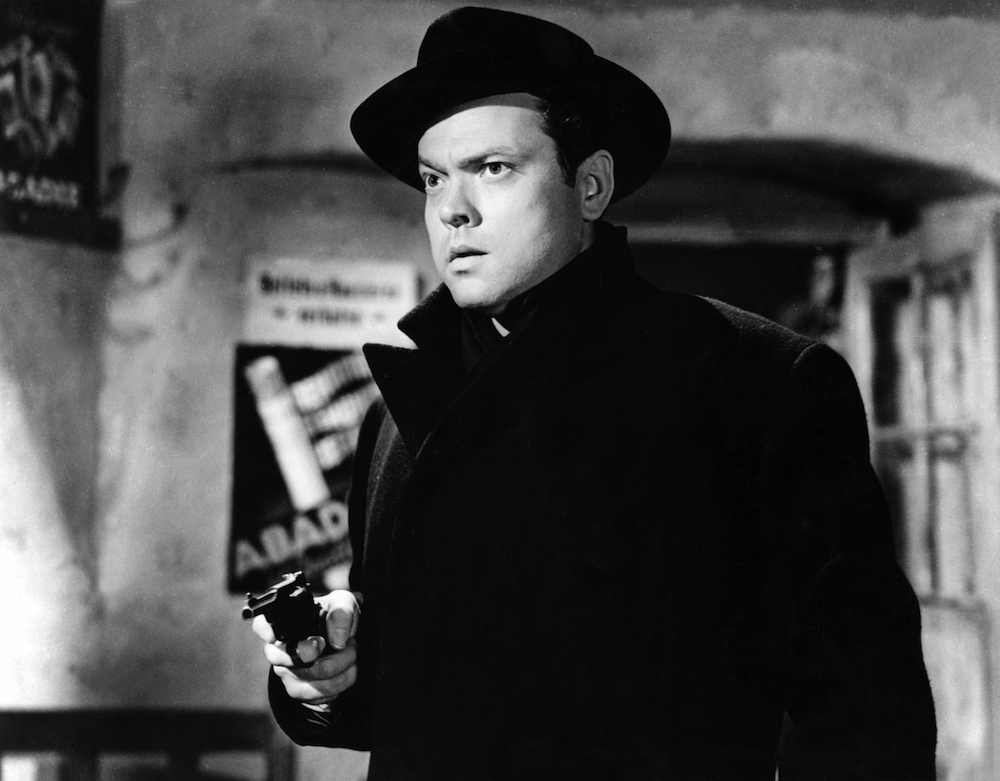 Carol Reed’s Film Noir masterpiece THE THIRD MAN (1949), starring Joseph Cotten, Alida Valli, and Orson Welles, will run at Film Forum from Friday, June 26 through Thursday, July 9 (two weeks), in a new 4K restoration – its first major restoration ever.
In rubble-strewn postwar Vienna, pulp Western writer Holly Martins (Joseph Cotten) arrives to meet up with his old friend Harry Lime (Orson Welles), only to find that he’s dead — or is he? As the supremely naïve Cotten descends through the levels of deception, and discovers his friend’s corruption, the moral choices loom. A triumph of atmosphere — with its Vienna locations (including the gigantic Riesenrad Ferris Wheel and the dripping sewers), its tilted camera angles, shadows, and unforgettable zither theme — and with its stars in perhaps their most iconic roles: bereted Trevor Howard at his most Britishly military; Alida Valli, truly enigmatic and Garboesque; and Welles, arriving in one of the greatest star entrances ever (he added the famous “cuckoo clock” speech to Graham Greene’s original script); and topped by its legendary, almost endlessly drawn-out final shot.
A rare collaboration of legendary producers Alexander Korda and David O. Selznick, THE THIRD MAN was Reed’s second collaboration with novelist/screenwriter Greene. An instant critical and commercial sensation, it won the Palme D’Or at Cannes, the British Film Academy’s Best British Film award, and three Oscar nominations: for director Reed, editor Oswald Hafenrichter, and cinematographer Krasker, with a win for the latter’s expressionist, now iconic b&w cinematography. Anton Karas’ haunting “Third Man Theme,” performed by the composer on a zither, was a worldwide hit.
THE THIRD MAN remains the only movie on both the American Film Institute and British Film Institute Top 100 lists of, respectively, the greatest American and British films of all time (the Brits named it their Number One), as well as being as well as being named The Greatest Foreign Film of All Time… by the Japanese.
The award-winning team at Deluxe Restoration carried out the new 4K digital restoration of THE THIRD MAN on behalf of Studiocanal. Following rigorous comparison of different available elements, the 4K scan was done from a fine grain master positive struck from the original camera negative.
https://www.youtube.com/watch?v=F-QWLAndD1E
Carol Reed’s Film Noir masterpiece THE THIRD MAN (1949), starring Joseph Cotten, Alida Valli, and Orson Welles, will run at Film Forum from Friday, June 26 through Thursday, July 9 (two weeks), in a new 4K restoration – its first major restoration ever.
In rubble-strewn postwar Vienna, pulp Western writer Holly Martins (Joseph Cotten) arrives to meet up with his old friend Harry Lime (Orson Welles), only to find that he’s dead — or is he? As the supremely naïve Cotten descends through the levels of deception, and discovers his friend’s corruption, the moral choices loom. A triumph of atmosphere — with its Vienna locations (including the gigantic Riesenrad Ferris Wheel and the dripping sewers), its tilted camera angles, shadows, and unforgettable zither theme — and with its stars in perhaps their most iconic roles: bereted Trevor Howard at his most Britishly military; Alida Valli, truly enigmatic and Garboesque; and Welles, arriving in one of the greatest star entrances ever (he added the famous “cuckoo clock” speech to Graham Greene’s original script); and topped by its legendary, almost endlessly drawn-out final shot.
A rare collaboration of legendary producers Alexander Korda and David O. Selznick, THE THIRD MAN was Reed’s second collaboration with novelist/screenwriter Greene. An instant critical and commercial sensation, it won the Palme D’Or at Cannes, the British Film Academy’s Best British Film award, and three Oscar nominations: for director Reed, editor Oswald Hafenrichter, and cinematographer Krasker, with a win for the latter’s expressionist, now iconic b&w cinematography. Anton Karas’ haunting “Third Man Theme,” performed by the composer on a zither, was a worldwide hit.
THE THIRD MAN remains the only movie on both the American Film Institute and British Film Institute Top 100 lists of, respectively, the greatest American and British films of all time (the Brits named it their Number One), as well as being as well as being named The Greatest Foreign Film of All Time… by the Japanese.
The award-winning team at Deluxe Restoration carried out the new 4K digital restoration of THE THIRD MAN on behalf of Studiocanal. Following rigorous comparison of different available elements, the 4K scan was done from a fine grain master positive struck from the original camera negative.
https://www.youtube.com/watch?v=F-QWLAndD1E