[caption id="attachment_25948" align="aligncenter" width="1200"]

4 Little Girls[/caption]
25 motion pictures including an early film of the New York subway in 1905, and Spike Lee’s documentary “4 Little Girls,” are among the 2017 selections to the National Film Registry of the Library of Congress.
Spanning the period 1905 to 2000, the films named to this year’s registry include Hollywood blockbusters, documentaries, silent movies, animation, shorts and independent and home movies. The 2017 selections bring the number of films in the registry to 725, which is a small fraction of the Library’s vast moving-image collection of 1.3 million items.
Several films on the registry showcased the ethnic diversity of American cinema. The 1979 documentary-styled “Boulevard Nights” depicts the struggles facing Chicano youth in Los Angeles, and the 1987 musical biopic “La Bamba” told the story of rock’s first Mexican-American superstar, Ritchie Valens.
African-American director Charles Burnett’s “To Sleep with Anger” (1990) examines cultural and generational conflicts within a black family. “I can’t imagine being in the mix with such great films and directors,” Burnett said about the film’s inclusion in the registry. “I’m so happy for the people who believed in the film. I’m thankful that the film reached so many people in a good way. I hope this means that people will be able to see the film for a long time to come and will still be meaningful.”
The documentaries and shorts named to the registry include “4 Little Girls,” Spike Lee’s sensitive account of the deaths of four young children in the 1963 church firebombing in Alabama; “Thelonious Monk: Straight, No Chaser,” an insightful 1988 film about the famed jazz pianist-composer, directed by Charlotte Zwerin; “With the Abraham Lincoln Brigade in Spain” (1937-1938), an advocacy documentary shot during the Spanish Civil War; and “Time and Dreams” (1976), a student film by Mort Jordan, who documents the two racially divided societies in his Alabama hometown.
Other selections include “Wanda” (1971), a character study about loneliness and personal isolation written and directed by actress Barbara Loden, and a collection of home movies of the Fuentes family in the 1920s and 1930s in Corpus Christi. These films are among the earliest visual records of the Mexican-American community in Texas.
Two animated films that made the list are “Dumbo,” Disney’s 1941 timeless tale about a little imperfect elephant, and “The Sinking of the Lusitania,” a 1918 propaganda short combining animation, editorial cartoon and live-action documentary techniques.
Silent motion pictures include an actuality film of the interior of the New York subway, documenting the transportation marvel in 1905—less than seven months after its opening—and the 1924 landmark drama “He Who Gets Slapped,” starring Lon Chaney in one of the earliest “creepy clown” movies.
Under the terms of the National Film Preservation Act, each year the Librarian of Congress names to the National Film Registry 25 motion pictures that are “culturally, historically or aesthetically” significant. The films must be at least 10 years old.
Films Selected for the 2017 National Film Registry
(alphabetical order)
Ace in the Hole (aka Big Carnival) (1951)
Boulevard Nights (1979)
Die Hard (1988)
Dumbo (1941)
Field of Dreams (1989)
4 Little Girls (1997)
Fuentes Family Home Movies Collection (1920s and 1930s)
Gentleman’s Agreement (1947)
The Goonies (1985)
Guess Who’s Coming to Dinner (1967)
He Who Gets Slapped (1924)
Interior New York Subway, 14th Street to 42nd Street (1905)
La Bamba (1987)
Lives of Performers (1972)
Memento (2000)
Only Angels Have Wings (1939)
The Sinking of the Lusitania (1918)
Spartacus (1960)
Superman (1978)
Thelonious Monk: Straight, No Chaser (1988)
Time and Dreams (1976)
Titanic (1997)
To Sleep with Anger (1990)
Wanda (1971)
With the Abraham Lincoln Brigade in Spain (1937-1938)
2017 National Film Registry
(alphabetical order)
Ace in the Hole (aka Big Carnival) (1951)
Based on the infamous 1925 case of Kentucky cave explorer Floyd Collins, who became trapped underground and whose gripping saga created a national sensation lasting two weeks before Collins died. A deeply cynical look at journalism, “Ace in the Hole” features Kirk Douglas as a once-famous New York reporter, now a down-and-out has-been in Albuquerque. Douglas plots a return to national prominence by milking the story of a man trapped in a Native American cave dwelling as a riveting human-interest story, complete with a tourist-laden, carnival atmosphere outside the rescue scene. The callously indifferent wife of the stricken miner is no more sympathetic: “I don’t go to church. Kneeling bags my nylons.” Providing a rare moral contrast is Porter Hall, who plays Douglas’ ethical editor appalled at his reporter’s actions. Such a scathing tale of media manipulation might have helped turn this brilliant film into a critical and commercial failure, which later led Paramount to reissue the film under a new title, “The Big Carnival.”
Boulevard Nights (1979)
“Boulevard Nights” had its genesis in a screenplay by UCLA student Desmond Nakano about Mexican-American youth and the lowrider culture. Director Michael Pressman and cinematographer John Bailey shot the film in the barrios of East Los Angeles with the active participation of the local community (including car clubs and gang members). This street-level strategy using mostly non-professional actors produced a documentary-style depiction of the tough choices faced by Chicano youth as they come of age and try to escape or navigate gang life (“Two brothers…the street was their playground and their battleground”). In addition to “Boulevard Nights,” this era featured several films chronicling youth gangs and rebellion — “The Warriors” (1979), “Over the Edge” (1979), “Walk Proud” (1979) and “The Outsiders” (1983). The film faced protests and criticism from some Latinos who saw outsider filmmakers, albeit well-intentioned, adopting an anthropological perspective with an excessive focus on gangs and violent neighborhoods. Nevertheless, “Boulevard Nights” stands out as a pioneering snapshot of East L.A. and enjoys semi-cult status in the lowrider community.
Die Hard (1988)
In this now-classic slam-bang thriller, Bruce Willis stars as a New York cop who faces off, alone, against a team of terrorists inside a high-tech, high-rise Los Angeles office tower. Gripping action sequences and well-crafted humor made this film a huge hit and launched Willis as a major box-office star. Alan Rickman, as witty insouciant terrorist and “exceptional thief” Hans Gruber, serves as Willis’ memorable foe. Because the film is set during the Christmas season, many people now consider “Die Hard” a necessary part of their annual holiday viewing, a counterpoint to other holiday staples such as “It’s a Wonderful Life.”
Dumbo (1941)
Disney’s charming, trademark animation finds a perfect subject in this timeless tale of a little elephant with oversize ears who lacks a certain confidence until he learns — with the help of a friendly mouse — that his giant lobes enable him to fly. Disney’s fourth feature film gained immediate classic status thanks to its lovely drawing, original score (which would go on to win the Oscar that year) and enduring message of always believing in yourself.
Field of Dreams (1989)
Iowa farmer Kevin Costner one day hears a voice telling him to turn a small corner of his land into a baseball diamond: “If you build it, they will come.” “They” are the 1919 Black Sox team led by the legendary Shoeless Joe Jackson. Although ostensibly about the great American pastime, baseball here serves as a metaphor for more profound issues. Leonard Maltin lauded “Field of Dreams” as “a story of redemption and faith, in the tradition of the best Hollywood fantasies with moments of pure magic.”
4 Little Girls (1997)
An important documentary concerning America’s civil rights struggle, “4 Little Girls” revisits the horrific story of the young children who died in the 1963 firebombing of the 16th Street Baptist Church in Birmingham, Alabama. Director Spike Lee first became interested in the story as a student at NYU when he read a 1983 New York Times Magazine article by Howell Raines. Lee combines his experience in fiction filmmaking with documentary techniques, sensitively rendered interviews, photos and home movies to tell the story. The timing of this production was important due to the ages of the key witnesses and relatives and the need to refresh viewers’ memories regarding a dark period in U.S. history.
Fuentes Family Home Movies Collection (1920s-1930s)
Longtime Corpus Christi, Texas, residents Antonio Rodríguez Fuentes (1895-1988) and Josefina Barrera Fuentes (1898-1993) were very active in their local Mexican-American community. Their collection of home movies — mostly from the 1920s and shot on 9.5 mm amateur film format — are among the earliest visual records of the Mexican-American community in Texas and among the first recorded by Mexican-American filmmakers. As with the best home movies, the images provide a priceless snapshot of time and place, including parades, holidays, fashions and the rituals of daily life. The beautiful images also reflect the traditionally fluid nature of the U.S.-Mexico border. The collection is a joint project between the Texas Archive of the Moving Image and Texas A&M University-Corpus Christi.
Gentleman’s Agreement (1947)
Winning the 1947 Academy Award for best picture and considered daring at the time, “Gentleman’s Agreement” was one of the first films to directly explore the still-timely topic of religious-based discrimination. Philip Green (Gregory Peck), a Gentile, is a renowned magazine writer. In order to obtain firsthand knowledge of anti-Semitism, he decides to pose as a Jew. What he discovers about society, and even his own friends and colleagues, radically alters his perspective and throws his own life into turmoil. Director Elia Kazan masterfully crafts scenes that reveal bigotry both overt and often insidiously subtle. The film was based on a book by Laura Z. Hobson.
The Goonies (1985)
The fingerprints of executive producer Steven Spielberg visibly mark every second of “The Goonies,” with the plot sporting a narrative structure and many themes characteristic of his work. Spielberg penned the original story, hand-selected director Richard Donner and hired Chris Columbus (who had written the 1983 “Gremlins”) to do the offbeat screenplay. With its keen focus on kids of agency and adventure, “The Goonies” protagonists are Tom Sawyeresque outsiders on a magical treasure hunt, and the story lands in the continuum between where “Our Gang” quests leave off and the darker spaces of Netflix’s recent “Stranger Things” pick up.
Guess Who’s Coming to Dinner (1967)
Though it would be Spencer Tracy’s last film and the second film for which Katharine Hepburn would win an Academy Award for best actress, even these movie milestones are somewhat overshadowed by the then-novel plot of the 1967 “Guess Who’s Coming to Dinner.” Hepburn and Tracy play an older married couple whose progressiveness is challenged when their daughter (Katharine Houghton, Hepburn’s real-life niece) brings home a new fiancé, who happens to be black. Celebrated actor Sidney Poitier plays the young man with his customary on-screen charisma, fire and grace.
He Who Gets Slapped (1924)
One of the earliest “creepy clown” movies, “He Who Gets Slapped” was the first film produced completely by the MGM studio, though not the first released. The film features Lon Chaney in a memorable role as a scientist who is humiliated when a rival and his wife steal his ideas just as he is to present them to the Academy of Sciences. He then becomes a masochistic circus clown where the highlight of his act is being repeatedly slapped. One of many stand-out scenes occurs during a circus performance where Chaney spots those who betrayed him and tries to call them out, but his fellow clowns are doing their normal crowd-pleasing routine of slapping him in the face. Filled with nightmarish vignettes, this landmark film from the silent era was directed by Victor Sjöström (newly arrived from Sweden and using an anglicized last name of Seastrom) and also features Norma Shearer and John Gilbert, each on the cusp of stardom.
Interior New York Subway, 14th Street to 42nd Street (1905)
This early actuality film documents New York City’s newest marvel, the subway, less than seven months after its opening. However, the film is not as simple as it first appears. It required coordinating three trains: the one we watch, the one carrying the camera and a third (glimpsed on the parallel track) to carry a bank of lights. The artistic flair is the vision of legendary cameraman G.W. “Billy” Bitzer.
La Bamba (1987)
“La Bamba” is a biopic of the life of rock star Ritchie Valens, rock’s first Mexican-American superstar. Directed by Luis Valdez, “La Bamba” (the film draws its name from Valens’ signature song) charts Valens’ meteoric rise as a musician and his tragic death at age 17 in a 1959 plane crash, along with Buddy Holly and The Big Bopper. Lou Diamond Phillips stars as the late Valens. The film’s success not only reinvigorated interest in Valens’ brief but notable musical legacy, it also brought the title tune back to the charts (in a cover version by Los Lobos) 28 years after its first appearance.
Lives of Performers (1972)
Yvonne Rainer was born in San Francisco in 1934. At a very young age, Rainer’s father introduced her to films and her mother introduced her to ballet. She moved to New York in 1956, where she studied dance at the Martha Graham School while also learning ballet at Ballet Arts. Much like other choreographers of her era, Rainer sought to blur the stark line separating dancers from non-dancers. Her work has been described as “foundational across multiple disciplines and movements: dance, cinema, feminism, minimalism, conceptual art and postmodernism.” “Lives of Performers” has been characterize as “a stark and revealing examination of romantic alliances … the dilemma of a man who can’t choose between two women and makes them both suffer.”
Memento (2000)
This innovative detective-murder, psychological puzzle (and director Christopher Nolan’s breakthrough film) tells its story in non-linear stops and starts in order to put the audience in a position approximating the hero’s short-term amnesia. Guy Pearce tries to avenge his wife’s murder but his anterograde amnesia forces him to rely on sticky notes, tattoos and Polaroids. Nolan recounts, “My solution to telling the story subjectively was to deny the audience the same information that the protagonist is denied, and my approach to doing that was to effectively tell the story backwards … so the story is told as a series of flashbacks which go further and further back in time.” According to Nolan, he frequently intercut between the black-and-white “objective” sequences and “subjective” sequences in color. The goal was to show the conflict between how humans see and experience objective versus subjective and the complex relationship between imagination and memory.
Only Angels Have Wings (1939)
Considered the “quintessential” Howard Hawks male melodrama by many, “Only Angels Have Wings” stars Cary Grant as the tough-talking head of a cut-rate air freight company in the Andes. Grant has a dangerous business to run and spurns romantic entanglements, fearing women blanch at the inherent danger. Displaced showgirl Jean Arthur arrives and tries to prove him wrong. Along with sparkling dialogue from Grant, Arthur and renowned character actor Thomas Mitchell, “Only Angels Have Wings” captivates with dazzling air sequences featuring landings on canyon rims, vertiginous ups and downs and perilous flights through foggy mountain passes.
The Sinking of the Lusitania (1918)
Having virtually established animation as a viable medium through films such as “Little Nemo” (1911) and “Gertie the Dinosaur” (1914), newspaper cartoonist Winsor McCay produced this propaganda short (combining animation, editorial cartoon and live-action documentary techniques) to stir Americans into action after a German submarine sank the British liner RMS Lusitania in 1915, killing 1,198 passengers and crew, including 128 Americans. McCay was upset with the isolationist sentiment present in the country and at his employer, the Hearst newspapers chain. It took McCay nearly two years working on his own to produce the film, debuting a year after America entered the war. Nevertheless, this is a significant film historically and a notable early example of animation being used for a purpose other than comedy. In his seminal “American Silent Film,” William K. Everson called the film “a wartime film that was both anti-German propaganda and an attempt to provide a documentary reconstruction of a major news event not covered by regular newsreel cameramen. The incredibly detailed drawings of the Lusitania, intercut with inserts of newspaper headlines relative to the notable victims, and strongly-worded editorializing sub-titles concerning the bestiality of the Hun, make this a fascinating and seldom-repeated experiment.”
Spartacus (1960)
Even among the mega epics being produced by Hollywood at the time (such as “The Ten Commandments” and “Cleopatra”), “Spartacus” stands out for its sheer grandeur and remarkable cast (Kirk Douglas, Laurence Olivier, Jean Simmons, Charles Laughton, Peter Ustinov), as well as for Stanley Kubrick’s masterful direction. The film is also credited with helping to end the notorious Hollywood blacklist of the 1950s – its producer, Douglas, hired then-blacklisted writer Dalton Trumbo to author the script, which was based on a book by another blacklisted author, Howard Fast.
Superman (1978)
Director Richard Donner’s treatment of the famous superhero was not the first time the character had been on the big screen. Kirk Alyn played the role back in a 1948 serial and George Reeves appeared in both theatrical and TV versions in the 1950s. However, for many, Christopher Reeve remains the definitive Man of Steel. This film, an “origins” story, recounts Superman’s journey to Earth as a boy, his move from Smallville to Metropolis and his emergence as a true American hero. Beautiful in its sweep, score and special effects, which create a sense of awe and wonder, “Superman” — as the tag line reads — makes you “believe a man can fly.”
Thelonious Monk: Straight, No Chaser (1988)
Charlotte Zwerin’s insightful documentary of the jazz pianist-composer Thelonious Monk blends together excellent interviews with those who knew him best and riveting concert performances, many shot in the 1960s by Christian Blackwood. Reviewing the film in The New York Times, Stephen Holden noted, “Charlotte Zwerin’s remarkable documentary … reminds us again and again that Monk was as important a jazz composer as he was a pianist.”
Time and Dreams (1976)
Created in 1976 by Mort Jordan, a student at Temple University, “Time and Dreams” is a unique and personal elegiac approach to the civil rights movement. The filmmaker has described “Time and Dreams” as a personal journey back to his Alabama home, where he contrasts two societies: the nostalgia some residents have for past values versus the deferred dreams of those who are well past waiting for their time to fully participate in the promise of their own dreams. Through vignettes and personal testimonies, the film portrays Greene County, Alabama, as its people move toward understanding and cooperation in a time of social change.
Titanic (1997)
James Cameron’s epic retold the story of the great maritime disaster and made mega-stars of both its leads, Leonardo DiCaprio and Kate Winslet. Their upstairs-downstairs romance transported the audience to another world and time via spectacular sweeping scenes in the bow of the ship and beyond. The film cost $200 million to produce, leading many to predict a historic box office disaster, but “Titanic” became one of the top-grossing films of all-time and a cultural touchstone of the era. Newsweek’s David Ansen spoke of how Cameron managed to fulfill expectations for the film: “When Cameron’s camera pulls back from a closeup of the exuberant DiCaprio at the bow of the ship and lifts to peer down from the sky at the Titanic passing majestically underneath, you feel the kind of jaw-dropping delight you felt as a child overwhelmed by the sheer size of Hollywood’s dreams. ‘Titanic’ is big, bold, touchingly uncynical filmmaking.”
To Sleep with Anger (1990)
Beginning with his UCLA student film, the austere neo-realistic “Killer of Sheep,” director Charles Burnett has carved out a distinctive and exalted niche in American independent cinema. Burnett often sets his films on a small scale but deftly explores universal themes, including the power to endure and the rewards and burdens of family. Critic Leonard Maltin called “To Sleep with Anger” an “evocative domestic drama about the effect storyteller/trickster (Danny) Glover has on the various members of a black family. More than just a portrait of contemporary black society, it’s a story of cultural differences between parents and children of how individuals learn (or don’t learn) from experience, and of how there should be no place for those who cause violence and strife.”
Wanda (1971)
Film and TV actress Barbara Loden wrote and directed this affecting and insightful character study about an uneducated, passive woman from the coal-mining region of Pennsylvania, where the cinema verite-like film was shot. The title character possesses critically low self-esteem, leaves her kids and husband and then drifts aimlessly into a series of one-night stands and a dangerous relationship with a bank robber. Today, many consider this low-budget study of loneliness and personal isolation one of the finest works of independent cinema during the 1970s.
With the Abraham Lincoln Brigade in Spain (1937-1938)
This advocacy documentary about the Lincoln Brigade was shot during the Spanish Civil War to raise funds for bringing wounded American volunteers home. Some 2,800 Americans enlisted in the International Brigades to fight against fascism in defense of the Spanish Republic. The film was directed by Henri Cartier-Bresson with Herbert Kline and additional photography was provided by Jacques Lemare and Robert Capa. This film is held at New York University’s Tamiment Library and is part of a vast collection of materials in the Abraham Lincoln Brigades Archive.
Read more

 As part of the Berlinale Classics program, the 68th Berlin International Film Festival will be presenting Ewald André Dupont’s silent Das alte Gesetz (The Ancient Law, Germany, 1923) as a special screening with live music. The film, digitally restored under the auspices of the Deutsche Kinemathek, and accompanied by new music by French composer Philippe Schoeller, will have its world premiere on February 16, 2018 in the Friedrichstadt-Palast.
Das alte Gesetz (The Ancient Law) is an important piece of German-Jewish cinematic history; it contrasts the closed world of an Eastern European shtetl with the liberal mores of 1860s Vienna, and tackles the issue of the assimilation of Jews in 19th century Europe.
The Deutsche Kinemathek undertook the first efforts at reconstructing the film in 1984, trying to get as close to the original version as possible, as far as the sources available at the time allowed. When the original censor’s certificate was later uncovered, containing the text of the title cards, it would eventually provide the impetus for renewed research efforts world-wide and finally for a new, digital restoration.
“With its authentic set design and an excellent ensemble of actors, all captured magnificently by cinematographer Theodor Sparkuhl, The Ancient Law is an outstanding example of the creativity of Jewish filmmakers in 1920s Germany”, says Rainer Rother, head of the Retrospective section and artistic director of the Deutsche Kinemathek – Museum für Film und Fernsehen.
The new music by Philippe Schoeller was commissioned by the broadcasters ZDF/ARTE. Schoeller gets to the heart of the film with meticulously composed ensemble music that employs all the techniques of a modern soundtrack. It consciously establishes some historical distance to the film itself and uses a tapestry of translucid sounds to emphasise the visual excellence of the silent classic. The composition will be performed by the Orchester Jakobsplatz München, with Daniel Grossmann at the podium. The orchestra, founded in 2005, focuses on the work of Jewish composers, as well as 20th and 21st century music, making an important contribution to contemporary German-Jewish culture. Its most recent guest appearance at the Berlinale was in 2013.
The new restoration drew upon nitrate prints in five different languages found in archives in Europe and the US. The text of the original German title cards was long thought lost. It was not until the censor’s certificate listing the intertitles was unearthed that the restoration team from the Deutsche Kinemathek could accurately reconstruct them, as well as correcting and finalising the editing. The colour concept was based primarily on two found prints nearly identical in their colourisation. So this is the first time that a version corresponding to the 1920s German theatrical release will be shown, both in its original length, and with the colourisation digitally restored.
The Berlinale screening marks the start of the film’s tour to several cities, mainly in Eastern Europe, that were once hubs of Jewish life, including Vilnius, Budapest, Warsaw, and Vienna. It will also be shown at the Silent Film Festival in San Francisco.
As part of the Berlinale Classics program, the 68th Berlin International Film Festival will be presenting Ewald André Dupont’s silent Das alte Gesetz (The Ancient Law, Germany, 1923) as a special screening with live music. The film, digitally restored under the auspices of the Deutsche Kinemathek, and accompanied by new music by French composer Philippe Schoeller, will have its world premiere on February 16, 2018 in the Friedrichstadt-Palast.
Das alte Gesetz (The Ancient Law) is an important piece of German-Jewish cinematic history; it contrasts the closed world of an Eastern European shtetl with the liberal mores of 1860s Vienna, and tackles the issue of the assimilation of Jews in 19th century Europe.
The Deutsche Kinemathek undertook the first efforts at reconstructing the film in 1984, trying to get as close to the original version as possible, as far as the sources available at the time allowed. When the original censor’s certificate was later uncovered, containing the text of the title cards, it would eventually provide the impetus for renewed research efforts world-wide and finally for a new, digital restoration.
“With its authentic set design and an excellent ensemble of actors, all captured magnificently by cinematographer Theodor Sparkuhl, The Ancient Law is an outstanding example of the creativity of Jewish filmmakers in 1920s Germany”, says Rainer Rother, head of the Retrospective section and artistic director of the Deutsche Kinemathek – Museum für Film und Fernsehen.
The new music by Philippe Schoeller was commissioned by the broadcasters ZDF/ARTE. Schoeller gets to the heart of the film with meticulously composed ensemble music that employs all the techniques of a modern soundtrack. It consciously establishes some historical distance to the film itself and uses a tapestry of translucid sounds to emphasise the visual excellence of the silent classic. The composition will be performed by the Orchester Jakobsplatz München, with Daniel Grossmann at the podium. The orchestra, founded in 2005, focuses on the work of Jewish composers, as well as 20th and 21st century music, making an important contribution to contemporary German-Jewish culture. Its most recent guest appearance at the Berlinale was in 2013.
The new restoration drew upon nitrate prints in five different languages found in archives in Europe and the US. The text of the original German title cards was long thought lost. It was not until the censor’s certificate listing the intertitles was unearthed that the restoration team from the Deutsche Kinemathek could accurately reconstruct them, as well as correcting and finalising the editing. The colour concept was based primarily on two found prints nearly identical in their colourisation. So this is the first time that a version corresponding to the 1920s German theatrical release will be shown, both in its original length, and with the colourisation digitally restored.
The Berlinale screening marks the start of the film’s tour to several cities, mainly in Eastern Europe, that were once hubs of Jewish life, including Vilnius, Budapest, Warsaw, and Vienna. It will also be shown at the Silent Film Festival in San Francisco.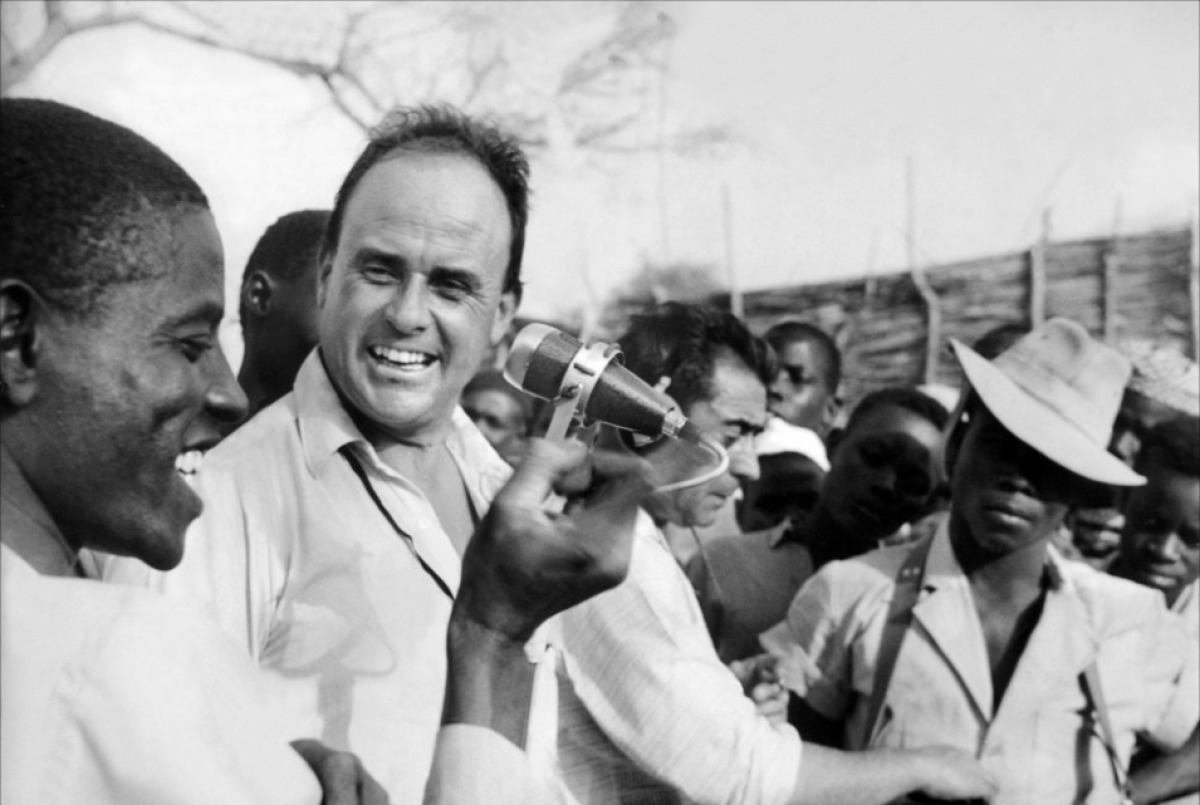 Jean Rouch[/caption]
For the one-hundredth anniversary of the birth of the great French director and ethnographer Jean Rouch, the Venice Film Festival adds to its line-up the world-premiere screening of Cousin, cousine (1985-1987, 31′, color), the only film that Rouch made in Venice, the very unusual and previously unreleased short film, with Damouré Zika and Mariama Hima (Venice Classics).
Cousin, cousine has been fully restored by the French CNC (Centre national du cinéma e de l’image animée) in collaboration with the Fondation Jean Rouch and the Association Centenaire Jean Rouch 2017.
Cousin, cousine is a “caprice” invented in Venice by Jean Rouch and by his two friends and performers, Nigerian actor Damouré Zika and Nigerian filmmaker Mariama Hima, who came to the Venice Film Festival in 1985 to present Mariama Hima’s film Baabu Banza in the “Venezia Genti” section, where it won an award. On that occasion, they decided to make a film fantasy built around a painting by Gentile Bellini and several locations and stories within the city. The plot has Mariama and Damouré, two cousins, meeting in Venice to look for a long-lost relic, like in one of Gentile Bellini’s most famous paintings. Mariama thus introduces Damouré to the city, taking him to a “squero”, a boatyard where he can study how gondolas are made (which is very different from building pirogues).
Cousin, cousine will screen at the 74th Venice Film Festival in the Venice Classics section, following the documentary L’Enigma di Jean Rouch a Torino – Cronaca di un film raté by Marco di Castri, Paolo Favaro and Daniele Pianciola.
Jean Rouch (1917-2004), a French ethnographer and director, made over 180 films (some unfinished), along with a great number of photographs, sound recordings and writings of various kinds. He founded important centres and institutions such as the Comité du film ethnographique and events such as the Cinéma du Réel festival. He taught, defended and promoted ethnographic and documentary filmmaking, and visual anthropology.
Jean Rouch[/caption]
For the one-hundredth anniversary of the birth of the great French director and ethnographer Jean Rouch, the Venice Film Festival adds to its line-up the world-premiere screening of Cousin, cousine (1985-1987, 31′, color), the only film that Rouch made in Venice, the very unusual and previously unreleased short film, with Damouré Zika and Mariama Hima (Venice Classics).
Cousin, cousine has been fully restored by the French CNC (Centre national du cinéma e de l’image animée) in collaboration with the Fondation Jean Rouch and the Association Centenaire Jean Rouch 2017.
Cousin, cousine is a “caprice” invented in Venice by Jean Rouch and by his two friends and performers, Nigerian actor Damouré Zika and Nigerian filmmaker Mariama Hima, who came to the Venice Film Festival in 1985 to present Mariama Hima’s film Baabu Banza in the “Venezia Genti” section, where it won an award. On that occasion, they decided to make a film fantasy built around a painting by Gentile Bellini and several locations and stories within the city. The plot has Mariama and Damouré, two cousins, meeting in Venice to look for a long-lost relic, like in one of Gentile Bellini’s most famous paintings. Mariama thus introduces Damouré to the city, taking him to a “squero”, a boatyard where he can study how gondolas are made (which is very different from building pirogues).
Cousin, cousine will screen at the 74th Venice Film Festival in the Venice Classics section, following the documentary L’Enigma di Jean Rouch a Torino – Cronaca di un film raté by Marco di Castri, Paolo Favaro and Daniele Pianciola.
Jean Rouch (1917-2004), a French ethnographer and director, made over 180 films (some unfinished), along with a great number of photographs, sound recordings and writings of various kinds. He founded important centres and institutions such as the Comité du film ethnographique and events such as the Cinéma du Réel festival. He taught, defended and promoted ethnographic and documentary filmmaking, and visual anthropology. The 65th edition of the San Sebastian Film Festival will honor Joseph Losey with a retrospective of his 32 feature films and 6 short films.
In the seventies, Joseph Losey represented the greatest expression of auteur or art-house cinema with works like The Servant (1963), King and Country (1964), Accident (1967) and The Go-Between (1971), all of which, with the exception of the second, were written by the playwright Harold Pinter. But before becoming a leading figure of European independent film, Losey endured a complicated situation like so many others affected by the reprisals of the Hollywood witch hunt from 1947 onwards. His work is divided into three periods: his early period in North American film until the early fifties, the prestige he achieved in the UK of the sixties and seventies and a later, more itinerant stage when he worked for Italian, French and Spanish production.
Born in La Crosse, Wisconsin, in 1909, Losey turned his steps towards written and broadcast journalism, later moving into theatre. His openly left-wing beliefs led him to work on several mises en scène with Bertold Brecht and to spend a period in the former Soviet Union studying new theatre concepts. In the late thirties he started to direct short films with Metro Goldwyn Mayer, making his feature debut in 1948 with The Boy with Green Hair, a parable against war, totalitarianism and intransigence towards difference, produced by RKO. Although he did succeed in making a number of low-cost films noirs of undisguised social slant – The Lawless (1950), The Prowler (1951) and The Big Night (1951), all three penned by screenwriters blacklisted by the Un-American Activities Commission, Daniel Mainwaring, Daltun Trumbo and Ring Lardner Jr – and even a remake of Fritz Lang’s famous M in 1951, his name appeared on the blacklist for the tone of his early films and he was accused of belonging to the North American Communist Party.
When called to testify, he was in Italy shooting Stranger on the Prowl / Imbarco a mezzanotte (1952). He decided not to return to the United States and settled in Britain. He released said film under the pseudonym Andrea Forzano and trade union issues prevented his name from featuring on the first two movies made in his country of adoption: in The Sleeping Tiger (1954), first collaboration with one of his actors fetiche, Dirk Bogarde, he is credited as Victor Hanbury and, in The Intimate Stranger (1956), as Joseph Walton.
Losey took up his place in British cinema at a time of change. These were not only the days of rising Free Cinema, a trend he had no part in even if some of his earlier films made in the sixties did have a certain realistic and social angle, but also of the horror movie makers Hammer Film Productions, for which Losey started X The Unknown (1956), before he was ousted from the shooting and replaced by Leslie Norman, later directing The Damned (1962); these were Losey’s only inroads to the sci-fi domain.
Following a timid attempt at integration to the great British film industry with The Gypsy and the Gentleman (1958), a Rank production headlining Melina Mercouri, his work attracted outstanding interest from the mystery movie Blind Date (1959) and the prison drama The Criminal (1961), the beginning of his collaboration with the other actor with whom he would enjoy close understanding, Stanley Baker. Until the mid-seventies, Losey alternated highly personal films reflecting on relations of power (between both men and institutional bodies) constructed around mises en scène packed with symbols (his particular use of spectacular images), with what at first glance seemed to be more commercial titles served up by the big stars of the moment and taking their inspiration from works of enormous popularity or unquestionable literary prestige.
To this first group belonged the film that best defines his work, The Servant, with Pinter’s acerbic writing and the acting duel between Bogarde and James Fox, Accident (Grand Prix du Jury at the Cannes Festival), The Go-Between (Palme d’Or at Cannes) and the anti-war King and Country, played out in the British trenches of the First World War during a summary trial for desertion. The second group includes works like Eve (1962), adaptation of a novel by James Hadley Chase, starring Jeanne Moreau and which was the first of many films consecrated by Losey to female characters who irradiate a strange fascination; Modesty Blaise (1966), iconoclastic version of Peter O’Donnell and Jim Holdaway’s spy-fi comic strip featuring Monica Vitti; Boom (1968), a piece by Tennessee Williams dished up by the explosive couple Elizabeth Taylor & Richard Burton; Secret Ceremony (1968), a psychological and claustrophobic drama once again starring Elizabeth Taylor, with Robert Mitchum and Mia Farrow; A Doll’s House (1973), based on Henrik Ibsen’s piece and with Jane Fonda, David Warner and Trevor Howard, and A Romantic Englishwoman (1975), another of his defining movies, an intense and evil triangular game written by Tom Stoppard and performed by Glenda Jackson, Michael Caine and Helmut Berger.
During this prolific period, Losey made hugely abstract works including Figures in a Landscape (1970), following the flight of two prisoners pursued by a mysterious helicopter (with a screenplay written by actor Robert Shaw, its leading man alongside Malcolm McDowell; the film competed in San Sebastian) and Mr. Klein (1976), with Alain Delon in the part of an unsavoury character accused of being a Jew during the Nazi occupation in France (winner of the César for Best Film). But he also shot films of obvious political accent such as L’assassinio di Trotsky / The Assassination of Trotsky (1972), with Delon as Ramón Mercader and Burton in the role of Leon Trotsky, and Les routes du Sud (1978), continuation of La guerre est finie (1966) by Alain Resnais, once again written by Jorge Semprún and with Yves Montand repeating his role of Spanish exile in constant ideological conflict.
Losey returned to Brecht many years later with a cinema adaptation of Galileo (1974), based on the English translation by Charles Laughton and starring Topol, hugely popular at the time for his leading part in Fiddler on the Roof (1971). He also made the filmed opera Don Giovanni (1979) with Ruggero Raimondi and, in France, La Truite (1982) with Isabelle Huppert in the part of yet another of the director’s complex female characters. His last film was Steaming (1985) which, like the one before it, was never screened in Spain. This is a work of theatrical roots starring Vanessa Redgrave and Sarah Miles and set in London Turkish baths as they fight its closure on ladies day. Losey never saw the final cut of the film; he passed away in June 1984, almost a year before its presentation at Cannes.
Losey’s relationship with the San Sebastian Festival was always complicated owing to the Franco dictatorship. In addition to Figures in a Landscape, the Festival screened The Sleeping Tiger, Boom and, in the informative section, The Go-Between.The Romantic Englishman was also selected, but the director and Glenda Jackson refused to come to the event in protest against the death sentences recently signed by Franco.
The retrospective is organised jointly with the Filmoteca Española, and has the collaboration of the San Telmo Museum (San Sebastián), the Filmoteca Vasca and CulturArts-IVAC (Valencia). The cycle is complemented by the publication of a book about the director coordinated by Quim Casas in which different Spanish and British authors have participated.
After its screening in San Sebastian, the retrospective will run at the Filmoteca Española in Madrid.
The 65th edition of the San Sebastian Film Festival will honor Joseph Losey with a retrospective of his 32 feature films and 6 short films.
In the seventies, Joseph Losey represented the greatest expression of auteur or art-house cinema with works like The Servant (1963), King and Country (1964), Accident (1967) and The Go-Between (1971), all of which, with the exception of the second, were written by the playwright Harold Pinter. But before becoming a leading figure of European independent film, Losey endured a complicated situation like so many others affected by the reprisals of the Hollywood witch hunt from 1947 onwards. His work is divided into three periods: his early period in North American film until the early fifties, the prestige he achieved in the UK of the sixties and seventies and a later, more itinerant stage when he worked for Italian, French and Spanish production.
Born in La Crosse, Wisconsin, in 1909, Losey turned his steps towards written and broadcast journalism, later moving into theatre. His openly left-wing beliefs led him to work on several mises en scène with Bertold Brecht and to spend a period in the former Soviet Union studying new theatre concepts. In the late thirties he started to direct short films with Metro Goldwyn Mayer, making his feature debut in 1948 with The Boy with Green Hair, a parable against war, totalitarianism and intransigence towards difference, produced by RKO. Although he did succeed in making a number of low-cost films noirs of undisguised social slant – The Lawless (1950), The Prowler (1951) and The Big Night (1951), all three penned by screenwriters blacklisted by the Un-American Activities Commission, Daniel Mainwaring, Daltun Trumbo and Ring Lardner Jr – and even a remake of Fritz Lang’s famous M in 1951, his name appeared on the blacklist for the tone of his early films and he was accused of belonging to the North American Communist Party.
When called to testify, he was in Italy shooting Stranger on the Prowl / Imbarco a mezzanotte (1952). He decided not to return to the United States and settled in Britain. He released said film under the pseudonym Andrea Forzano and trade union issues prevented his name from featuring on the first two movies made in his country of adoption: in The Sleeping Tiger (1954), first collaboration with one of his actors fetiche, Dirk Bogarde, he is credited as Victor Hanbury and, in The Intimate Stranger (1956), as Joseph Walton.
Losey took up his place in British cinema at a time of change. These were not only the days of rising Free Cinema, a trend he had no part in even if some of his earlier films made in the sixties did have a certain realistic and social angle, but also of the horror movie makers Hammer Film Productions, for which Losey started X The Unknown (1956), before he was ousted from the shooting and replaced by Leslie Norman, later directing The Damned (1962); these were Losey’s only inroads to the sci-fi domain.
Following a timid attempt at integration to the great British film industry with The Gypsy and the Gentleman (1958), a Rank production headlining Melina Mercouri, his work attracted outstanding interest from the mystery movie Blind Date (1959) and the prison drama The Criminal (1961), the beginning of his collaboration with the other actor with whom he would enjoy close understanding, Stanley Baker. Until the mid-seventies, Losey alternated highly personal films reflecting on relations of power (between both men and institutional bodies) constructed around mises en scène packed with symbols (his particular use of spectacular images), with what at first glance seemed to be more commercial titles served up by the big stars of the moment and taking their inspiration from works of enormous popularity or unquestionable literary prestige.
To this first group belonged the film that best defines his work, The Servant, with Pinter’s acerbic writing and the acting duel between Bogarde and James Fox, Accident (Grand Prix du Jury at the Cannes Festival), The Go-Between (Palme d’Or at Cannes) and the anti-war King and Country, played out in the British trenches of the First World War during a summary trial for desertion. The second group includes works like Eve (1962), adaptation of a novel by James Hadley Chase, starring Jeanne Moreau and which was the first of many films consecrated by Losey to female characters who irradiate a strange fascination; Modesty Blaise (1966), iconoclastic version of Peter O’Donnell and Jim Holdaway’s spy-fi comic strip featuring Monica Vitti; Boom (1968), a piece by Tennessee Williams dished up by the explosive couple Elizabeth Taylor & Richard Burton; Secret Ceremony (1968), a psychological and claustrophobic drama once again starring Elizabeth Taylor, with Robert Mitchum and Mia Farrow; A Doll’s House (1973), based on Henrik Ibsen’s piece and with Jane Fonda, David Warner and Trevor Howard, and A Romantic Englishwoman (1975), another of his defining movies, an intense and evil triangular game written by Tom Stoppard and performed by Glenda Jackson, Michael Caine and Helmut Berger.
During this prolific period, Losey made hugely abstract works including Figures in a Landscape (1970), following the flight of two prisoners pursued by a mysterious helicopter (with a screenplay written by actor Robert Shaw, its leading man alongside Malcolm McDowell; the film competed in San Sebastian) and Mr. Klein (1976), with Alain Delon in the part of an unsavoury character accused of being a Jew during the Nazi occupation in France (winner of the César for Best Film). But he also shot films of obvious political accent such as L’assassinio di Trotsky / The Assassination of Trotsky (1972), with Delon as Ramón Mercader and Burton in the role of Leon Trotsky, and Les routes du Sud (1978), continuation of La guerre est finie (1966) by Alain Resnais, once again written by Jorge Semprún and with Yves Montand repeating his role of Spanish exile in constant ideological conflict.
Losey returned to Brecht many years later with a cinema adaptation of Galileo (1974), based on the English translation by Charles Laughton and starring Topol, hugely popular at the time for his leading part in Fiddler on the Roof (1971). He also made the filmed opera Don Giovanni (1979) with Ruggero Raimondi and, in France, La Truite (1982) with Isabelle Huppert in the part of yet another of the director’s complex female characters. His last film was Steaming (1985) which, like the one before it, was never screened in Spain. This is a work of theatrical roots starring Vanessa Redgrave and Sarah Miles and set in London Turkish baths as they fight its closure on ladies day. Losey never saw the final cut of the film; he passed away in June 1984, almost a year before its presentation at Cannes.
Losey’s relationship with the San Sebastian Festival was always complicated owing to the Franco dictatorship. In addition to Figures in a Landscape, the Festival screened The Sleeping Tiger, Boom and, in the informative section, The Go-Between.The Romantic Englishman was also selected, but the director and Glenda Jackson refused to come to the event in protest against the death sentences recently signed by Franco.
The retrospective is organised jointly with the Filmoteca Española, and has the collaboration of the San Telmo Museum (San Sebastián), the Filmoteca Vasca and CulturArts-IVAC (Valencia). The cycle is complemented by the publication of a book about the director coordinated by Quim Casas in which different Spanish and British authors have participated.
After its screening in San Sebastian, the retrospective will run at the Filmoteca Española in Madrid. The discovery and preservation of silent films, especially those that are considered “lost” or destroyed, is a lifelong pursuit for some of the world’s most dedicated movie buffs. Like all historical and anthropological studies, the foundations of film help us understand where we’ve been, and where we’re going. Don McHoull, creator of SilentMovieGIFs, is putting his own twist on this idea, using silent films as the foundation for a series of some pretty wonderful images while utilizing one of the newest imaging technologies to hit the internet. I had a chance to ask Don a couple of questions about his GIFs, including his Halloween-themed images that showcase some of Old Hollywood’s most beloved characters.
http://i.imgur.com/qg2bmRs.gifv
Josef: The most obvious question here is, what inspired you to create these GIFs in the first place? It’s such an odd juxtaposition between classic film and a very modern form of imaging, but one that works extremely well.
Don: I was a fan of silent film, and GIFs just seemed like a natural medium for taking some of the amazing visual ideas in silent movies and sharing them. I’d seen some silent movie GIFs that were really well received on places like Reddit, even though some of them were clearly made from poor quality source material. I had Photoshop and some Chaplin and Keaton Blu-rays, and I figured I’d try to make some cleaner looking GIFs. I think a lot of people have the idea that the image quality of silent films wasn’t that great, but with movies that have been well-preserved and carefully restored the picture quality can actually be really good.
http://i.imgur.com/TKhfDW0.gifv
J: Do you attribute any significance to that juxtaposition? In other words, was it a conscious decision to pair the oldest form of cinema available with the newest form of imaging?
D: The GIF is a popular medium that’s strictly visual, so it just seems like a perfect fit for silent movies. My preferred way to watch a silent film would be a in theatre, ideally with live music, but GIFs can take a gag or another visual from a silent movie and make it really easy to share online. I’ve had quite a few GIFs now that have racked up over a million views, and a lot of other ones in the hundreds of thousands. Ideally, someone might see, for example, a few Buster Keaton GIFs, and be interested enough to actually seek out and watch some of his movies, but even if they just watch some GIFs, a least they would have some appreciation for Keaton’s work.
I hope that the GIF can be a sort of gateway drug for silent films, similar to how TV introduced people to silent films. I made a Charley Chase GIF last week for his birthday that’s up to 238,000 views, even though Chase doesn’t really have anything like the name recognition of Chaplin or Keaton (most people seem to be much more familiar with the adult film star of the same name.) I thought it was pretty cool that 92 years later there was still a good sized audience of people who could appreciate the brilliance of Chase’s (and his brother’s) performance.
http://i.imgur.com/qMVWgU8.gifv
J: A recent album you posted, one that features GIFs from classic silent horror films, really emphasizes the care and precision that went into the prosthetic and costume design of the era. Do you think recent horror films have lost that attention to detail, and have you noticed any contemporary films that are clearly inspired by the designs of the silent era?
D: The Babadook had a real kind of Expressionist vibe to it. And it seems like most modern depictions of vampires owe a lot to Nosferatu. Obviously makeup and special effects have made huge leaps over the last 90 or so years, and it would be fascinating to see what someone like Lon Chaney or Jack Pierce could do with the stuff that’s out there today.
http://i.imgur.com/n6uSO1A.gifv
J: What’s your process for selecting which shots and films you end up turning into GIFs, and can you give us a sneak peek as to what your followers might expect from you in the coming weeks?
After I watch a movie, I like to go through it and pick out scenes that I think could work well as GIFs. I try to cover a wide range of silent films, from different time periods and genres, but my mainstay will probably always be Keaton/Chaplin/Lloyd GIFs.
For the rest of October, I’ll be focusing on the horror genre. I’m interested in the connections between different eras. Today I was looking connections between Nosferatu and Dracula, but there’s also a lot of links you could draw between movies like Frankenstein and King Kong and the silent era. Tonight I’m watching Haxan, so there should be some GIFs from that.
After October, maybe I’ll focus on a different genre, like science fiction, or the invention of the gangster movie. I’ve also been working my way back through Chaplin’s short films, and I’ve noticed that his later feature films return to a lot of ideas and visuals from his early work, I think that would be an interesting thing to explore.
These GIFs and many more can be seen on Reddit (/r/silentmoviegifs) or on his Twitter page (@SilentMovieGIFs)
http://i.imgur.com/Tj8dhsE.gifv
http://i.imgur.com/sU4aRaj.gifv
http://i.imgur.com/sroL9XO.gifv
http://i.imgur.com/qilDHlE.gifv
The discovery and preservation of silent films, especially those that are considered “lost” or destroyed, is a lifelong pursuit for some of the world’s most dedicated movie buffs. Like all historical and anthropological studies, the foundations of film help us understand where we’ve been, and where we’re going. Don McHoull, creator of SilentMovieGIFs, is putting his own twist on this idea, using silent films as the foundation for a series of some pretty wonderful images while utilizing one of the newest imaging technologies to hit the internet. I had a chance to ask Don a couple of questions about his GIFs, including his Halloween-themed images that showcase some of Old Hollywood’s most beloved characters.
http://i.imgur.com/qg2bmRs.gifv
Josef: The most obvious question here is, what inspired you to create these GIFs in the first place? It’s such an odd juxtaposition between classic film and a very modern form of imaging, but one that works extremely well.
Don: I was a fan of silent film, and GIFs just seemed like a natural medium for taking some of the amazing visual ideas in silent movies and sharing them. I’d seen some silent movie GIFs that were really well received on places like Reddit, even though some of them were clearly made from poor quality source material. I had Photoshop and some Chaplin and Keaton Blu-rays, and I figured I’d try to make some cleaner looking GIFs. I think a lot of people have the idea that the image quality of silent films wasn’t that great, but with movies that have been well-preserved and carefully restored the picture quality can actually be really good.
http://i.imgur.com/TKhfDW0.gifv
J: Do you attribute any significance to that juxtaposition? In other words, was it a conscious decision to pair the oldest form of cinema available with the newest form of imaging?
D: The GIF is a popular medium that’s strictly visual, so it just seems like a perfect fit for silent movies. My preferred way to watch a silent film would be a in theatre, ideally with live music, but GIFs can take a gag or another visual from a silent movie and make it really easy to share online. I’ve had quite a few GIFs now that have racked up over a million views, and a lot of other ones in the hundreds of thousands. Ideally, someone might see, for example, a few Buster Keaton GIFs, and be interested enough to actually seek out and watch some of his movies, but even if they just watch some GIFs, a least they would have some appreciation for Keaton’s work.
I hope that the GIF can be a sort of gateway drug for silent films, similar to how TV introduced people to silent films. I made a Charley Chase GIF last week for his birthday that’s up to 238,000 views, even though Chase doesn’t really have anything like the name recognition of Chaplin or Keaton (most people seem to be much more familiar with the adult film star of the same name.) I thought it was pretty cool that 92 years later there was still a good sized audience of people who could appreciate the brilliance of Chase’s (and his brother’s) performance.
http://i.imgur.com/qMVWgU8.gifv
J: A recent album you posted, one that features GIFs from classic silent horror films, really emphasizes the care and precision that went into the prosthetic and costume design of the era. Do you think recent horror films have lost that attention to detail, and have you noticed any contemporary films that are clearly inspired by the designs of the silent era?
D: The Babadook had a real kind of Expressionist vibe to it. And it seems like most modern depictions of vampires owe a lot to Nosferatu. Obviously makeup and special effects have made huge leaps over the last 90 or so years, and it would be fascinating to see what someone like Lon Chaney or Jack Pierce could do with the stuff that’s out there today.
http://i.imgur.com/n6uSO1A.gifv
J: What’s your process for selecting which shots and films you end up turning into GIFs, and can you give us a sneak peek as to what your followers might expect from you in the coming weeks?
After I watch a movie, I like to go through it and pick out scenes that I think could work well as GIFs. I try to cover a wide range of silent films, from different time periods and genres, but my mainstay will probably always be Keaton/Chaplin/Lloyd GIFs.
For the rest of October, I’ll be focusing on the horror genre. I’m interested in the connections between different eras. Today I was looking connections between Nosferatu and Dracula, but there’s also a lot of links you could draw between movies like Frankenstein and King Kong and the silent era. Tonight I’m watching Haxan, so there should be some GIFs from that.
After October, maybe I’ll focus on a different genre, like science fiction, or the invention of the gangster movie. I’ve also been working my way back through Chaplin’s short films, and I’ve noticed that his later feature films return to a lot of ideas and visuals from his early work, I think that would be an interesting thing to explore.
These GIFs and many more can be seen on Reddit (/r/silentmoviegifs) or on his Twitter page (@SilentMovieGIFs)
http://i.imgur.com/Tj8dhsE.gifv
http://i.imgur.com/sU4aRaj.gifv
http://i.imgur.com/sroL9XO.gifv
http://i.imgur.com/qilDHlE.gifv The Princess Bride script is the subject of the Jason Reitman Live Read at the upcoming 40th Toronto International Film Festival. Jason Reitman Live Read is a unique event in which classic movie scripts are read by contemporary actors. The script of Rob Reiner’s “beloved classic” will be presented to audiences in a one-take read-through with Reitman narrating stage direction.
“The Princess Bride premiered at the Festival in 1987 and has captured audiences’ imaginations ever since,” said Cameron Bailey, Artistic Director of the Toronto International Film Festival. “To have this title return on the occasion of our 40th Festival, and be re-explored by a contemporary cast, is pure magic.”
Who will avenge Inigo Montoya’s father? Who will fill the inimitable Fezzik’s enormous shoes? Who will breathe new life into the part of Miracle Max? The cast for the Live Read will be announced by Jason Reitman on Twitter (@JasonReitman) in the days leading up to the event.
The Festival previously welcomed Reitman and all-star casts for live table reads of Paul Thomas Anderson’s Boogie Nights and Alan Ball’s American Beauty.
Jason Reitman created Live Read in October 2011, in collaboration with Elvis Mitchell, for the film society of Los Angeles County Museum of Arts (LACMA). The six-month hit series featured Breakfast Club (Jennifer Garner and Aaron Paul), The Apartment (Steve Carell and Natalie Portman), The Princess Bride (Paul Rudd), Shampoo (Bradley Cooper and Kate Hudson), The Big Lebowski (Seth Rogen), and Reservoir Dogs, which featured an all-African American cast including actors Laurence Fishburne and Terrence Howard.
The 40th Toronto International Film Festival runs September 10 to 20, 2015.
https://www.youtube.com/watch?v=VYgcrny2hRs
The Princess Bride script is the subject of the Jason Reitman Live Read at the upcoming 40th Toronto International Film Festival. Jason Reitman Live Read is a unique event in which classic movie scripts are read by contemporary actors. The script of Rob Reiner’s “beloved classic” will be presented to audiences in a one-take read-through with Reitman narrating stage direction.
“The Princess Bride premiered at the Festival in 1987 and has captured audiences’ imaginations ever since,” said Cameron Bailey, Artistic Director of the Toronto International Film Festival. “To have this title return on the occasion of our 40th Festival, and be re-explored by a contemporary cast, is pure magic.”
Who will avenge Inigo Montoya’s father? Who will fill the inimitable Fezzik’s enormous shoes? Who will breathe new life into the part of Miracle Max? The cast for the Live Read will be announced by Jason Reitman on Twitter (@JasonReitman) in the days leading up to the event.
The Festival previously welcomed Reitman and all-star casts for live table reads of Paul Thomas Anderson’s Boogie Nights and Alan Ball’s American Beauty.
Jason Reitman created Live Read in October 2011, in collaboration with Elvis Mitchell, for the film society of Los Angeles County Museum of Arts (LACMA). The six-month hit series featured Breakfast Club (Jennifer Garner and Aaron Paul), The Apartment (Steve Carell and Natalie Portman), The Princess Bride (Paul Rudd), Shampoo (Bradley Cooper and Kate Hudson), The Big Lebowski (Seth Rogen), and Reservoir Dogs, which featured an all-African American cast including actors Laurence Fishburne and Terrence Howard.
The 40th Toronto International Film Festival runs September 10 to 20, 2015.
https://www.youtube.com/watch?v=VYgcrny2hRs The Archive gala screening at the 59th BFI London Film Festival will be the world premiere of a new restoration of Anthony Asquith’s Shooting Stars (1928). Asquith’s first film as co-director and scriptwriter, Shooting Stars is a fascinating drama set behind the scenes at a contemporary film studio. Newly restored by the BFI National Archive, Shooting Stars will be presented with a new live score by John Altman, BAFTA and Emmy award-winning composer whose work includes Titanic and Goldeneye.
Shooting Stars is a dazzling debut which boasts a boldly expressionist shooting style, dramatic lighting and great performances from its leads. Annette Benson (Mae Feather) and Brian Aherne (Julian Gordon) play two mis-matched, married stars and Donald Calthrop (Andy Wilkes) a Chaplin-esque star at the same studio, with whom Mae becomes romantically involved. Chili Bouchier, Britain’s first sex symbol of the silent era, plays a key role as an actress/bathing beauty, an attractive foil to the comic antics of the comedian. The film manages to operate as a sophisticated, modern morality tale, while it’s also both an affectionate critique of the film industry and a celebration of its possibilities. It teases the audience with its revelations of how the illusions of the world of film-making conceal ironic and hidden truths.
Asquith (son of the former Prime Minister Herbert Asquith) had privileged access to see Chaplin making The Circus on a trip to Hollywood and he had also been behind the scenes at German film studios. Both influences are clearly seen in the film. Asquith went on to have a hugely successful international career in the sound era with films such as Pygmalion, The Importance of Being Earnest, The Browning Version and The VIPs.
The film has been meticulously restored by a team of BFI experts from materials held in the BFI National Archive, making this the definitive restoration to stand alongside those of previous BFI restorations of Asquith’s Underground (1928) and A Cottage on Dartmoor (1929).
Robin Baker, Head Curator, BFI National Archive said, “We are delighted to be showcasing this remarkable film in a brilliant new restoration achieved after months of work from our dedicated teams at the BFI. Shooting Stars is a fascinating debut from one of Britain’s greatest film-makers and to see it with a newly commissioned score performed live in the Art Deco splendor of the Odeon Leicester Square promises to be a very special experience.”
The new score by composer, John Altman, has been written for a twelve piece ensemble playing multiple instruments. It is full of a lively jazz influence, inspired by some of the sheet music for the popular song “Ain’t She Sweet” which is seen on screen in the film. Altman is both an authentic and accomplished jazz musician as well as a BAFTA and Emmy award winning composer of music for the big screen. He has composed, orchestrated and conducted for many films including the period music for James Cameron’s Titanic, and he composed the tank chase sequence in the James Bond film GoldenEye and won the Anthony Asquith Award for Achievement in Film Music for Hear My Song.
John Altman said, “For the new score I have been inspired by dance band sounds and Duke Ellington in 1927. It’s not a slavish period recreation but I have tried to find an appropriate way of reflecting some of the plot twists and ironic deceptions through a series of interlinked musical themes. The score will be played by a very versatile group of musicians and we will end up using almost as many instruments as a complete orchestra through the whole film. I hope that the music will carry audiences effortlessly through the emotional highs and lows of this brilliant film.”
There were famously two opposing reviews published in Variety, one British, one American, with the British review disparaging the film and the American giving it a strong thumbs-up. The film is now however fully appreciated as one of the few undisputed masterpieces of British silent cinema. Only Alfred Hitchcock has a higher critical reputation than Asquith in this period of late silent British cinema.
Credits:
SHOOTING STARS (UK 1928)
Director, AV Bramble, co-directed by Anthony Asquith.
Producer: H. Bruce Woolfe.
Screenplay: Anthony Asquith and J. Orton
Shooting Stars is a dazzling debut from first-time filmmaker Anthony Asquith, audaciously taking the
film industry itself as the theme.
Despite the director credit going to veteran director A.V. Bramble, this is demonstrably the original work of rising talent Anthony Asquith, exhibiting all the attention-grabbing bravado of a young filmmaker with everything to prove. His original story offers sardonic insight into the shallowness of film stardom and Hollywood formulas by use of ironic counterpoint. He flaunts his dynamic cinematographic style and upgrades design and lighting by bringing in professionals.
Synopsis
A love triangle develops on set in a British movie studio filmed at Cricklewood in NW London, where a western and a slapstick comedy are being filmed back-to-back. Mae Feather (Annette Benson), a spoiled star jilts her husband, played by Brian Aherne for the comedian played by Donald Calthrop. In one of the best opening scenes of British silent cinema the handsome Brian Aherne appears as a cowboy, with his ‘gal’ in a calico frock in a classic ‘western’ rural romantic scene. The dove she cradles in her hands pecks at her viciously and the illusion is suddenly dispelled as the camera tracks back to reveal a studio’s wooden sets. She becomes the screeching prima donna while her co-star husband remains calm, slightly amused and dignified as the entire studio staff tries to catch the offending bird. He is, in other words the real thing – he is his star persona. She on the other hand is entirely unlike her nice-girl character and is unwilling to give up the romance of the movies for the real thing. The situation spins rapidly out of control.
Shooting Stars marked the fiction feature debut of British Instructional Films which went on to produce a short-lived but significant run of very good late silent features including several which have been restored and released by the BFI in recent years: Walter Summers’ The Battles of Coronel and Falkland Islands(1928), Asquith’s Underground (1928), A Cottage on Dartmoor (1929).
The Archive gala screening at the 59th BFI London Film Festival will be the world premiere of a new restoration of Anthony Asquith’s Shooting Stars (1928). Asquith’s first film as co-director and scriptwriter, Shooting Stars is a fascinating drama set behind the scenes at a contemporary film studio. Newly restored by the BFI National Archive, Shooting Stars will be presented with a new live score by John Altman, BAFTA and Emmy award-winning composer whose work includes Titanic and Goldeneye.
Shooting Stars is a dazzling debut which boasts a boldly expressionist shooting style, dramatic lighting and great performances from its leads. Annette Benson (Mae Feather) and Brian Aherne (Julian Gordon) play two mis-matched, married stars and Donald Calthrop (Andy Wilkes) a Chaplin-esque star at the same studio, with whom Mae becomes romantically involved. Chili Bouchier, Britain’s first sex symbol of the silent era, plays a key role as an actress/bathing beauty, an attractive foil to the comic antics of the comedian. The film manages to operate as a sophisticated, modern morality tale, while it’s also both an affectionate critique of the film industry and a celebration of its possibilities. It teases the audience with its revelations of how the illusions of the world of film-making conceal ironic and hidden truths.
Asquith (son of the former Prime Minister Herbert Asquith) had privileged access to see Chaplin making The Circus on a trip to Hollywood and he had also been behind the scenes at German film studios. Both influences are clearly seen in the film. Asquith went on to have a hugely successful international career in the sound era with films such as Pygmalion, The Importance of Being Earnest, The Browning Version and The VIPs.
The film has been meticulously restored by a team of BFI experts from materials held in the BFI National Archive, making this the definitive restoration to stand alongside those of previous BFI restorations of Asquith’s Underground (1928) and A Cottage on Dartmoor (1929).
Robin Baker, Head Curator, BFI National Archive said, “We are delighted to be showcasing this remarkable film in a brilliant new restoration achieved after months of work from our dedicated teams at the BFI. Shooting Stars is a fascinating debut from one of Britain’s greatest film-makers and to see it with a newly commissioned score performed live in the Art Deco splendor of the Odeon Leicester Square promises to be a very special experience.”
The new score by composer, John Altman, has been written for a twelve piece ensemble playing multiple instruments. It is full of a lively jazz influence, inspired by some of the sheet music for the popular song “Ain’t She Sweet” which is seen on screen in the film. Altman is both an authentic and accomplished jazz musician as well as a BAFTA and Emmy award winning composer of music for the big screen. He has composed, orchestrated and conducted for many films including the period music for James Cameron’s Titanic, and he composed the tank chase sequence in the James Bond film GoldenEye and won the Anthony Asquith Award for Achievement in Film Music for Hear My Song.
John Altman said, “For the new score I have been inspired by dance band sounds and Duke Ellington in 1927. It’s not a slavish period recreation but I have tried to find an appropriate way of reflecting some of the plot twists and ironic deceptions through a series of interlinked musical themes. The score will be played by a very versatile group of musicians and we will end up using almost as many instruments as a complete orchestra through the whole film. I hope that the music will carry audiences effortlessly through the emotional highs and lows of this brilliant film.”
There were famously two opposing reviews published in Variety, one British, one American, with the British review disparaging the film and the American giving it a strong thumbs-up. The film is now however fully appreciated as one of the few undisputed masterpieces of British silent cinema. Only Alfred Hitchcock has a higher critical reputation than Asquith in this period of late silent British cinema.
Credits:
SHOOTING STARS (UK 1928)
Director, AV Bramble, co-directed by Anthony Asquith.
Producer: H. Bruce Woolfe.
Screenplay: Anthony Asquith and J. Orton
Shooting Stars is a dazzling debut from first-time filmmaker Anthony Asquith, audaciously taking the
film industry itself as the theme.
Despite the director credit going to veteran director A.V. Bramble, this is demonstrably the original work of rising talent Anthony Asquith, exhibiting all the attention-grabbing bravado of a young filmmaker with everything to prove. His original story offers sardonic insight into the shallowness of film stardom and Hollywood formulas by use of ironic counterpoint. He flaunts his dynamic cinematographic style and upgrades design and lighting by bringing in professionals.
Synopsis
A love triangle develops on set in a British movie studio filmed at Cricklewood in NW London, where a western and a slapstick comedy are being filmed back-to-back. Mae Feather (Annette Benson), a spoiled star jilts her husband, played by Brian Aherne for the comedian played by Donald Calthrop. In one of the best opening scenes of British silent cinema the handsome Brian Aherne appears as a cowboy, with his ‘gal’ in a calico frock in a classic ‘western’ rural romantic scene. The dove she cradles in her hands pecks at her viciously and the illusion is suddenly dispelled as the camera tracks back to reveal a studio’s wooden sets. She becomes the screeching prima donna while her co-star husband remains calm, slightly amused and dignified as the entire studio staff tries to catch the offending bird. He is, in other words the real thing – he is his star persona. She on the other hand is entirely unlike her nice-girl character and is unwilling to give up the romance of the movies for the real thing. The situation spins rapidly out of control.
Shooting Stars marked the fiction feature debut of British Instructional Films which went on to produce a short-lived but significant run of very good late silent features including several which have been restored and released by the BFI in recent years: Walter Summers’ The Battles of Coronel and Falkland Islands(1928), Asquith’s Underground (1928), A Cottage on Dartmoor (1929).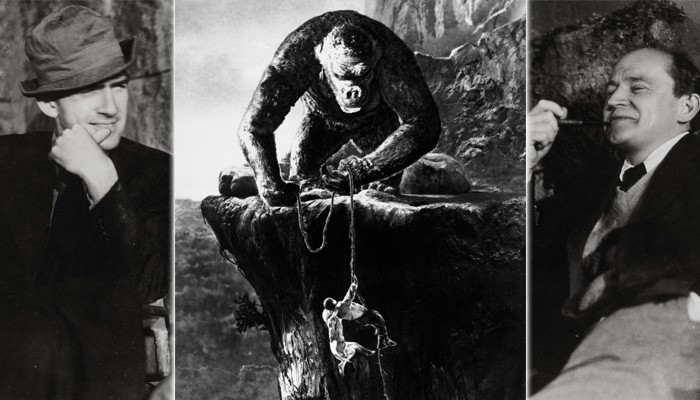 The 63rd San Sebastian Festival will dedicate a retrospective to directors Merian C. Cooper and Ernest B. Schoedsack, masterminds of the iconic King Kong (1933). Merian C. Cooper (1893-1973) and Ernest B. Schoedsack (1893-1979) were, in the golden age of Hollywood, one of the strangest and most exciting creative twosomes ever to come out of Hollywood. The coming edition of the San Sebastian Festival will recover their work in a cycle dedicated to their films.
Acclaimed for generations as the masterminds of the iconic King Kong (1933), Cooper and Schoedsack’s contribution to cinema didn’t stop at this masterpiece. Their career began with two masterpieces in the history of documentary filmmaking, Grass; A Nation’s Battle for Life (1925) and Chang (1927). They later made fantasy, drama, adventure and mystery movies, some of which are now cult titles: The Four Feathers (1929), The Most Dangerous Game (1932), The Last Days of Pompeii (1935), Dr. Cyclops (1940), Son of Kong (1933) and Mighty Joe Young (1949).
GRASS; A NATION’S BATTLE FOR LIFE
MERIAN C. COOPER, MARGUERITE HARRISON, ERNEST B. SCHOEDSACK (USA) 1925
Cooper and Schoedsack’s debut behind the cameras took the shape of this anthropological documentary classic shot in the spectacular landscapes of Iran. The everyday life of the Bakhtiari tribe, in the former Persia, and their migration in search of pastures for their livestock: 50,000 people and their flocks must cross natural obstacles and overcome harsh atmospheric conditions to find food for their animals.
CHANG
MERIAN C. COOPER, ERNEST B. SCHOEDSACK (USA) 1927
Cooper and Schoedsack’s second cinematic adventure took them to the forests of Thailand. A documentary with elements of fiction where the directors give free rein to their passion for exotic settings and sense of spectacle thanks to this fascinating tale of a man’s struggle against the beast.
THE FOUR FEATHERS
MERIAN C. COOPER , ERNEST B. SCHOEDSACK , LOTHAR MENDES (USA) 1929
Schoedsack and Cooper made the first sound adaptation of the famous colonial novel by A.E.W. Mason, taken to the screen on several occasions. The Sudanese adventures of Lieutenant Faversham, accused of cowardice by his friends, are the perfect excuse for the directors to impress upon the original narration the verve and dynamism so typical of their films. This was their first collaboration with a recurring actress in their filmography, Fay Wray.
RANGO
ERNEST B. SCHOEDSACK (USA) 1931
Two years before shooting their masterpiece, King Kong, Cooper and Schoedsack fantasized about relations between men and monkeys in this tale of adventures set in the Sumatran forests with its anthropological vocation. However, as was usual in their films, their ability to narrate fables always imposed itself upon the simple observation of reality.
THE MOST DANGEROUS GAME
ERNEST B. SCHOEDSACK, IRVING PICHEL (USA) 1932
Adaptation of a classic tale by Richard Connell, Cooper and Schoedsack used this film as a testing ground for the mind-boggling nightmare atmospheres that would culminate in King Kong the following year, since both titles were shot on the same sets. Adventure cinema merges with a gothic tale in a cruel, savage film of frenzied scenes that still raise eyebrows even today.
BLIND ADVENTURE
ERNEST B. SCHOEDSACK (USA) 1933
Cooper and Schoedsack abandon the exotic settings so often found in their films to take us to the London of detective mysteries. Here, their fetish actor, Robert Armstrong, plays an American lost in the London fog ensnared in a complicated plot that feels like something out of an Alfred Hitchcock movie.
KING KONG
MERIAN C. COOPER, ERNEST B. SCHOEDSACK (USA) 1933
The best known monster film in the history of cinema, a mythical title that gave us one of the most lasting icons of the seventh art. The sad tale of the giant gorilla who loses his kingdom for an impossible love is not only a dreamlike take on the Beauty and the Beast myth, recovered by intellectuals and artists all over the world, but a fabulous display of special effects, spectacle, imagination and poetry in its purest state.
https://www.youtube.com/watch?v=H0WpKl2A_2k
The 63rd San Sebastian Festival will dedicate a retrospective to directors Merian C. Cooper and Ernest B. Schoedsack, masterminds of the iconic King Kong (1933). Merian C. Cooper (1893-1973) and Ernest B. Schoedsack (1893-1979) were, in the golden age of Hollywood, one of the strangest and most exciting creative twosomes ever to come out of Hollywood. The coming edition of the San Sebastian Festival will recover their work in a cycle dedicated to their films.
Acclaimed for generations as the masterminds of the iconic King Kong (1933), Cooper and Schoedsack’s contribution to cinema didn’t stop at this masterpiece. Their career began with two masterpieces in the history of documentary filmmaking, Grass; A Nation’s Battle for Life (1925) and Chang (1927). They later made fantasy, drama, adventure and mystery movies, some of which are now cult titles: The Four Feathers (1929), The Most Dangerous Game (1932), The Last Days of Pompeii (1935), Dr. Cyclops (1940), Son of Kong (1933) and Mighty Joe Young (1949).
GRASS; A NATION’S BATTLE FOR LIFE
MERIAN C. COOPER, MARGUERITE HARRISON, ERNEST B. SCHOEDSACK (USA) 1925
Cooper and Schoedsack’s debut behind the cameras took the shape of this anthropological documentary classic shot in the spectacular landscapes of Iran. The everyday life of the Bakhtiari tribe, in the former Persia, and their migration in search of pastures for their livestock: 50,000 people and their flocks must cross natural obstacles and overcome harsh atmospheric conditions to find food for their animals.
CHANG
MERIAN C. COOPER, ERNEST B. SCHOEDSACK (USA) 1927
Cooper and Schoedsack’s second cinematic adventure took them to the forests of Thailand. A documentary with elements of fiction where the directors give free rein to their passion for exotic settings and sense of spectacle thanks to this fascinating tale of a man’s struggle against the beast.
THE FOUR FEATHERS
MERIAN C. COOPER , ERNEST B. SCHOEDSACK , LOTHAR MENDES (USA) 1929
Schoedsack and Cooper made the first sound adaptation of the famous colonial novel by A.E.W. Mason, taken to the screen on several occasions. The Sudanese adventures of Lieutenant Faversham, accused of cowardice by his friends, are the perfect excuse for the directors to impress upon the original narration the verve and dynamism so typical of their films. This was their first collaboration with a recurring actress in their filmography, Fay Wray.
RANGO
ERNEST B. SCHOEDSACK (USA) 1931
Two years before shooting their masterpiece, King Kong, Cooper and Schoedsack fantasized about relations between men and monkeys in this tale of adventures set in the Sumatran forests with its anthropological vocation. However, as was usual in their films, their ability to narrate fables always imposed itself upon the simple observation of reality.
THE MOST DANGEROUS GAME
ERNEST B. SCHOEDSACK, IRVING PICHEL (USA) 1932
Adaptation of a classic tale by Richard Connell, Cooper and Schoedsack used this film as a testing ground for the mind-boggling nightmare atmospheres that would culminate in King Kong the following year, since both titles were shot on the same sets. Adventure cinema merges with a gothic tale in a cruel, savage film of frenzied scenes that still raise eyebrows even today.
BLIND ADVENTURE
ERNEST B. SCHOEDSACK (USA) 1933
Cooper and Schoedsack abandon the exotic settings so often found in their films to take us to the London of detective mysteries. Here, their fetish actor, Robert Armstrong, plays an American lost in the London fog ensnared in a complicated plot that feels like something out of an Alfred Hitchcock movie.
KING KONG
MERIAN C. COOPER, ERNEST B. SCHOEDSACK (USA) 1933
The best known monster film in the history of cinema, a mythical title that gave us one of the most lasting icons of the seventh art. The sad tale of the giant gorilla who loses his kingdom for an impossible love is not only a dreamlike take on the Beauty and the Beast myth, recovered by intellectuals and artists all over the world, but a fabulous display of special effects, spectacle, imagination and poetry in its purest state.
https://www.youtube.com/watch?v=H0WpKl2A_2k Carol Reed’s Film Noir masterpiece THE THIRD MAN (1949), starring Joseph Cotten, Alida Valli, and Orson Welles, will run at Film Forum from Friday, June 26 through Thursday, July 9 (two weeks), in a new 4K restoration – its first major restoration ever.
In rubble-strewn postwar Vienna, pulp Western writer Holly Martins (Joseph Cotten) arrives to meet up with his old friend Harry Lime (Orson Welles), only to find that he’s dead — or is he? As the supremely naïve Cotten descends through the levels of deception, and discovers his friend’s corruption, the moral choices loom. A triumph of atmosphere — with its Vienna locations (including the gigantic Riesenrad Ferris Wheel and the dripping sewers), its tilted camera angles, shadows, and unforgettable zither theme — and with its stars in perhaps their most iconic roles: bereted Trevor Howard at his most Britishly military; Alida Valli, truly enigmatic and Garboesque; and Welles, arriving in one of the greatest star entrances ever (he added the famous “cuckoo clock” speech to Graham Greene’s original script); and topped by its legendary, almost endlessly drawn-out final shot.
A rare collaboration of legendary producers Alexander Korda and David O. Selznick, THE THIRD MAN was Reed’s second collaboration with novelist/screenwriter Greene. An instant critical and commercial sensation, it won the Palme D’Or at Cannes, the British Film Academy’s Best British Film award, and three Oscar nominations: for director Reed, editor Oswald Hafenrichter, and cinematographer Krasker, with a win for the latter’s expressionist, now iconic b&w cinematography. Anton Karas’ haunting “Third Man Theme,” performed by the composer on a zither, was a worldwide hit.
THE THIRD MAN remains the only movie on both the American Film Institute and British Film Institute Top 100 lists of, respectively, the greatest American and British films of all time (the Brits named it their Number One), as well as being as well as being named The Greatest Foreign Film of All Time… by the Japanese.
The award-winning team at Deluxe Restoration carried out the new 4K digital restoration of THE THIRD MAN on behalf of Studiocanal. Following rigorous comparison of different available elements, the 4K scan was done from a fine grain master positive struck from the original camera negative.
https://www.youtube.com/watch?v=F-QWLAndD1E
Carol Reed’s Film Noir masterpiece THE THIRD MAN (1949), starring Joseph Cotten, Alida Valli, and Orson Welles, will run at Film Forum from Friday, June 26 through Thursday, July 9 (two weeks), in a new 4K restoration – its first major restoration ever.
In rubble-strewn postwar Vienna, pulp Western writer Holly Martins (Joseph Cotten) arrives to meet up with his old friend Harry Lime (Orson Welles), only to find that he’s dead — or is he? As the supremely naïve Cotten descends through the levels of deception, and discovers his friend’s corruption, the moral choices loom. A triumph of atmosphere — with its Vienna locations (including the gigantic Riesenrad Ferris Wheel and the dripping sewers), its tilted camera angles, shadows, and unforgettable zither theme — and with its stars in perhaps their most iconic roles: bereted Trevor Howard at his most Britishly military; Alida Valli, truly enigmatic and Garboesque; and Welles, arriving in one of the greatest star entrances ever (he added the famous “cuckoo clock” speech to Graham Greene’s original script); and topped by its legendary, almost endlessly drawn-out final shot.
A rare collaboration of legendary producers Alexander Korda and David O. Selznick, THE THIRD MAN was Reed’s second collaboration with novelist/screenwriter Greene. An instant critical and commercial sensation, it won the Palme D’Or at Cannes, the British Film Academy’s Best British Film award, and three Oscar nominations: for director Reed, editor Oswald Hafenrichter, and cinematographer Krasker, with a win for the latter’s expressionist, now iconic b&w cinematography. Anton Karas’ haunting “Third Man Theme,” performed by the composer on a zither, was a worldwide hit.
THE THIRD MAN remains the only movie on both the American Film Institute and British Film Institute Top 100 lists of, respectively, the greatest American and British films of all time (the Brits named it their Number One), as well as being as well as being named The Greatest Foreign Film of All Time… by the Japanese.
The award-winning team at Deluxe Restoration carried out the new 4K digital restoration of THE THIRD MAN on behalf of Studiocanal. Following rigorous comparison of different available elements, the 4K scan was done from a fine grain master positive struck from the original camera negative.
https://www.youtube.com/watch?v=F-QWLAndD1E