
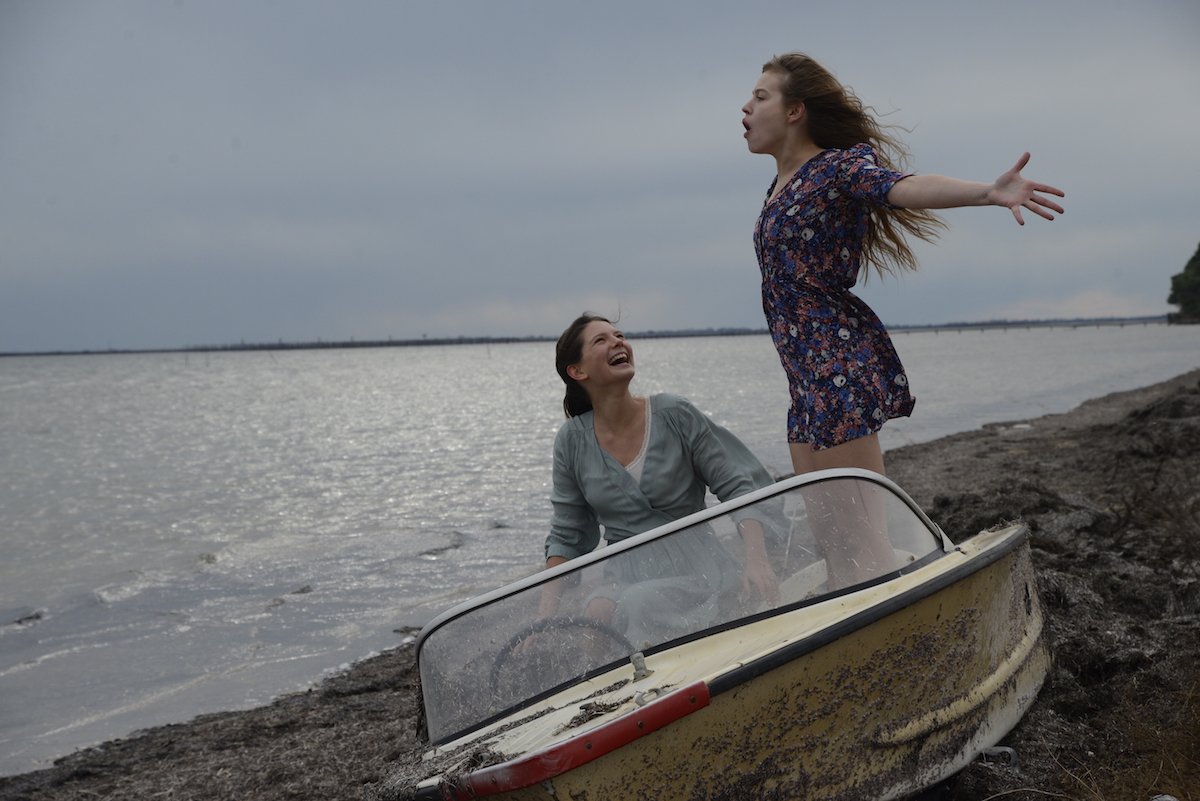
 BREATHE, described as a taut coming-of-age tale of the depths and escalating passions in female friendships, and starring talented newcomers Joséphine Japy and Lou De Laâge as two young girls whose all-consuming friendship takes a dark and dangerous turn, will open at the IFC Center in New York on September 11th, and at the Laemmle Royal in LA on September 18th. A national release will follow.
BREATHE is the second feature by actress-turned-director Mélanie Laurent ( Inglorious Basterds, Beginnings ), and her assured adaptation of the French young-adult novel of the same name.
Charlie (Joséphine Japy) is seventeen and bored. Her estranged parents are too caught up in their own drama to pay much attention to her. School holds no surprises either and Charlie grows tired of her staid friends. Enter Sarah (Lou De Laâge), a hip new transfer student who brings with her an alluring air of boldness and danger. The two girls form an instant connection. Sarah brings the excitement Charlie so desperately seeks, and Charlie is a stable influence on the wild child. Through shared secrets, love interests and holiday getaways, their relationship deepens to levels of unspoken intimacy, which eventually leads to jealousy and unrealistic expectations, and the teens soon find themselves on a trajectory toward a jarring outcome.
Already well-known as an actress in her native France, Mélanie Laurent ’s international breakthrough was her portrayal of Shosanna Dreyfus in Quentin Tarantino’s Inglourious
BREATHE, described as a taut coming-of-age tale of the depths and escalating passions in female friendships, and starring talented newcomers Joséphine Japy and Lou De Laâge as two young girls whose all-consuming friendship takes a dark and dangerous turn, will open at the IFC Center in New York on September 11th, and at the Laemmle Royal in LA on September 18th. A national release will follow.
BREATHE is the second feature by actress-turned-director Mélanie Laurent ( Inglorious Basterds, Beginnings ), and her assured adaptation of the French young-adult novel of the same name.
Charlie (Joséphine Japy) is seventeen and bored. Her estranged parents are too caught up in their own drama to pay much attention to her. School holds no surprises either and Charlie grows tired of her staid friends. Enter Sarah (Lou De Laâge), a hip new transfer student who brings with her an alluring air of boldness and danger. The two girls form an instant connection. Sarah brings the excitement Charlie so desperately seeks, and Charlie is a stable influence on the wild child. Through shared secrets, love interests and holiday getaways, their relationship deepens to levels of unspoken intimacy, which eventually leads to jealousy and unrealistic expectations, and the teens soon find themselves on a trajectory toward a jarring outcome.
Already well-known as an actress in her native France, Mélanie Laurent ’s international breakthrough was her portrayal of Shosanna Dreyfus in Quentin Tarantino’s Inglourious Foreign Language Films
-
French Coming of Age Film BREATHE Gets US Release Date
BREATHE, described as a taut coming-of-age tale of the depths and escalating passions in female friendships, and starring talented newcomers Joséphine Japy and Lou De Laâge as two young girls whose all-consuming friendship takes a dark and dangerous turn, will open at the IFC Center in New York on September 11th, and at the Laemmle Royal in LA on September 18th. A national release will follow.
BREATHE is the second feature by actress-turned-director Mélanie Laurent ( Inglorious Basterds, Beginnings ), and her assured adaptation of the French young-adult novel of the same name.
Charlie (Joséphine Japy) is seventeen and bored. Her estranged parents are too caught up in their own drama to pay much attention to her. School holds no surprises either and Charlie grows tired of her staid friends. Enter Sarah (Lou De Laâge), a hip new transfer student who brings with her an alluring air of boldness and danger. The two girls form an instant connection. Sarah brings the excitement Charlie so desperately seeks, and Charlie is a stable influence on the wild child. Through shared secrets, love interests and holiday getaways, their relationship deepens to levels of unspoken intimacy, which eventually leads to jealousy and unrealistic expectations, and the teens soon find themselves on a trajectory toward a jarring outcome.
Already well-known as an actress in her native France, Mélanie Laurent ’s international breakthrough was her portrayal of Shosanna Dreyfus in Quentin Tarantino’s Inglourious Basterds, for which she shared the Screen Actors Guild Award for Outstanding Performance by a Cast with her co-stars. Her numerous credits include Beginners in which she played Ewan McGregor’s girlfriend, the Golden Globe-nominated film The Concert, and Denis Villeneuve’s Enemy co-starring Jake Gyllenhaal. Ms. Laurent will next be seen in the Angelina Jolie-directed film By the Sea, co-starring Ms. Jolie and Brad Pitt, as well as in French-Vietnamese director Tran Anh Hung’s Eternité. Her next directorial effort is Demain, a documentary about the environment. https://www.youtube.com/watch?v=VXncAEif-zY
-
THE DEMONS Directed by Philippe Lesage to World Premiere at San Sebastian International Film Festival
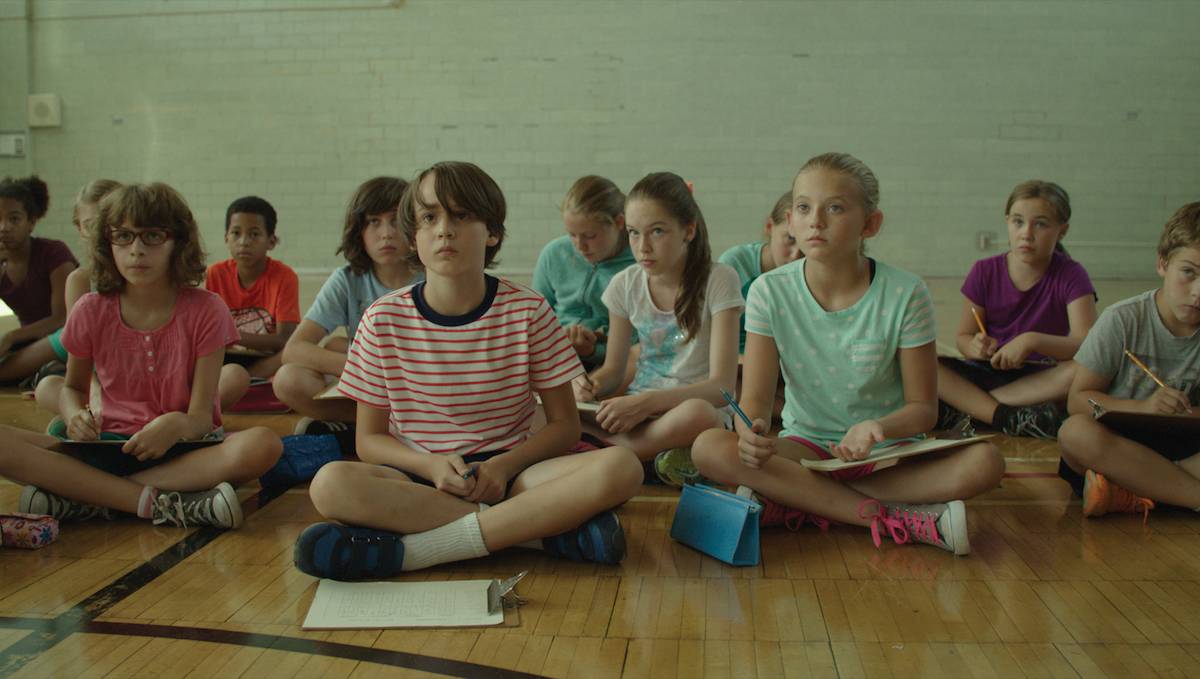 The Demons, directed by Quebec director Philippe Lesage, will get its world premiere in official competition at the 63rd San Sebastian International Film Festival (Donostia Zinemaldia) in Spain, which runs Sept. 18 to 26. The Demons will be competing for the Concha de Oro, the festival’s top prize, awarded in the past to such luminaries as Francis Ford Coppola, Claude Chabrol, Bahman Ghobadi, François Ozon, Peter Mullan and Arturo Ripstein. “I’m very honoured and happy to see my first feature selected in official competition at the prestigious San Sebastian festival,” said Lesage. “Bravo to our entire team!”
The film’s exceptional cast is mostly made up of children and teenagers, some making their first appearance on screen. The young actors include Édouard Tremblay-Grenier, Yannick Gobeil-Dugas, Vassili Schneider, Sarah Mottet, Mathis Thomas, Théodore Pellerin and Rose-Marie Perreault. They play alongside such seasoned professionals as Laurent Lucas, Pascale Bussières, Bénédicte Décary and younger talents including Victoria Diamond and Pier-Luc Funk.
The Demons, directed by Quebec director Philippe Lesage, will get its world premiere in official competition at the 63rd San Sebastian International Film Festival (Donostia Zinemaldia) in Spain, which runs Sept. 18 to 26. The Demons will be competing for the Concha de Oro, the festival’s top prize, awarded in the past to such luminaries as Francis Ford Coppola, Claude Chabrol, Bahman Ghobadi, François Ozon, Peter Mullan and Arturo Ripstein. “I’m very honoured and happy to see my first feature selected in official competition at the prestigious San Sebastian festival,” said Lesage. “Bravo to our entire team!”
The film’s exceptional cast is mostly made up of children and teenagers, some making their first appearance on screen. The young actors include Édouard Tremblay-Grenier, Yannick Gobeil-Dugas, Vassili Schneider, Sarah Mottet, Mathis Thomas, Théodore Pellerin and Rose-Marie Perreault. They play alongside such seasoned professionals as Laurent Lucas, Pascale Bussières, Bénédicte Décary and younger talents including Victoria Diamond and Pier-Luc Funk.
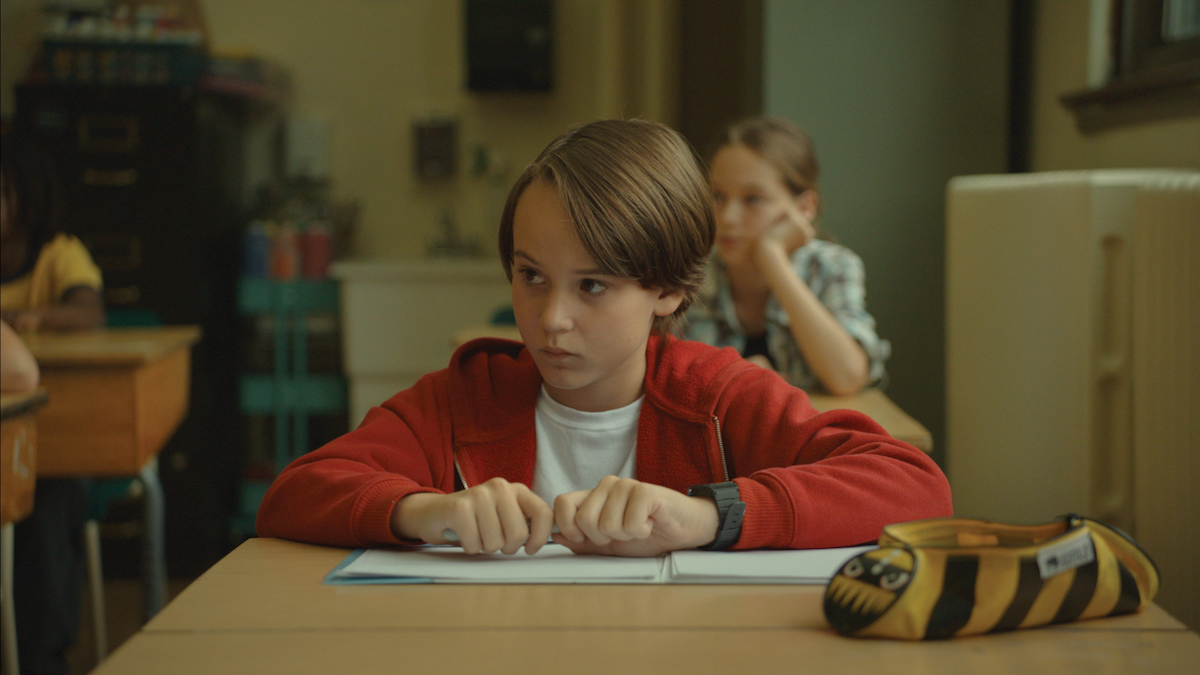 With the city of Montreal shaken by a series of kidnappings of young boys, a sensitive 10-year-old named Félix lets his imagination run wild as he comes to the end of his school year. Nothing much ever seems to happen in the quiet suburbs where he lives, but Félix is afraid of everything: his parents’ impending divorce, the maniacs who target little boys, his weird neighbours, even the AIDS epidemic. Slowly but surely, the child’s imaginary demons begin to resemble those of the real, disturbing world around him.
Before venturing into fiction, Philippe Lesage made four feature-length documentaries: Pourrons-nous vivre ensemble ? (2007), Comment savoir si les petits poissons sont heureux ? (2009), Ce cœur qui bat (2010) andLaylou (2011). Centred on life in a Montreal hospital, Ce cœur qui bat won the prize for best Canadian film and most promising Canadian film at the 2010 Rencontres internationales du documentaire de Montréal (RIDM), as well as the prize for best feature documentary at the 2012 Jutras. In 2011, Lepage was honoured with a retrospective of his works at the Cinémathèque Québécoise called Découvrir Lesage, giving the public a chance to see his early films. Between his many projects, Lesage also taught filmmaking at the European Film College in Denmark. His first two feature dramas – Copenhague A Love Story and The Demons – have been selected at a number of festivals and will open in cinemas in 2015 and 2016. His next feature, Genèse, is now in pre-production, with shooting slated to begin in the summer of 2016.
Produced by Galilé Marion-Gauvin and Philippe Lesage for Les Films de l’Autre in collaboration with Unité Centrale, The Demons is written and directed by Philippe Lesage (2012 Jutra for best documentary, Ce cœur qui bat). The crew includes Dominique Noujeim, associate producer; Nicolas Canniccioni, director of photography; Marjorie Rhéaume, artistic director; Marcel Chouinard and Pascal Van Strydonck, sound (with overall design by Olivier Calvert); and Mathieu Bouchard Malo, editing. The Demons received funding from the SODEC, Téléfilm Canada, the CALQ, Super Écran and La Société Radio-Canada , as well as federal and Quebec tax credits.
The film is distributed in Canada by Funfilm Distribution and will open in Quebec cinemas on Oct. 30.
With the city of Montreal shaken by a series of kidnappings of young boys, a sensitive 10-year-old named Félix lets his imagination run wild as he comes to the end of his school year. Nothing much ever seems to happen in the quiet suburbs where he lives, but Félix is afraid of everything: his parents’ impending divorce, the maniacs who target little boys, his weird neighbours, even the AIDS epidemic. Slowly but surely, the child’s imaginary demons begin to resemble those of the real, disturbing world around him.
Before venturing into fiction, Philippe Lesage made four feature-length documentaries: Pourrons-nous vivre ensemble ? (2007), Comment savoir si les petits poissons sont heureux ? (2009), Ce cœur qui bat (2010) andLaylou (2011). Centred on life in a Montreal hospital, Ce cœur qui bat won the prize for best Canadian film and most promising Canadian film at the 2010 Rencontres internationales du documentaire de Montréal (RIDM), as well as the prize for best feature documentary at the 2012 Jutras. In 2011, Lepage was honoured with a retrospective of his works at the Cinémathèque Québécoise called Découvrir Lesage, giving the public a chance to see his early films. Between his many projects, Lesage also taught filmmaking at the European Film College in Denmark. His first two feature dramas – Copenhague A Love Story and The Demons – have been selected at a number of festivals and will open in cinemas in 2015 and 2016. His next feature, Genèse, is now in pre-production, with shooting slated to begin in the summer of 2016.
Produced by Galilé Marion-Gauvin and Philippe Lesage for Les Films de l’Autre in collaboration with Unité Centrale, The Demons is written and directed by Philippe Lesage (2012 Jutra for best documentary, Ce cœur qui bat). The crew includes Dominique Noujeim, associate producer; Nicolas Canniccioni, director of photography; Marjorie Rhéaume, artistic director; Marcel Chouinard and Pascal Van Strydonck, sound (with overall design by Olivier Calvert); and Mathieu Bouchard Malo, editing. The Demons received funding from the SODEC, Téléfilm Canada, the CALQ, Super Écran and La Société Radio-Canada , as well as federal and Quebec tax credits.
The film is distributed in Canada by Funfilm Distribution and will open in Quebec cinemas on Oct. 30.
-
Watch Red Band TRAILER for PRINCE directed by Sam De Jong, in Theaters on August 14th
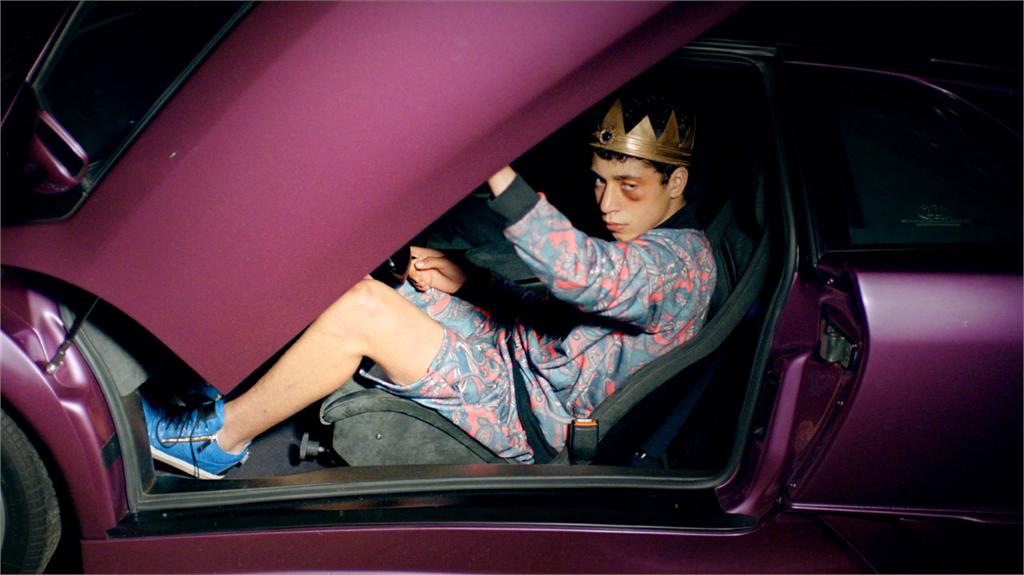 VICE released the Red Band Trailer for PRINCE directed by Sam De Jong and winner of 2015 Berlinale – Honorary Mention: Crystal Bear for Best First Feature. PRINCE will be released in theaters and on VOD platforms August 14th.
Seventeen-year-old Ayoub (Ayoub Elasri) has a lot on his plate: his father (Chaib Massaoudi) is a junkie, his mother (Elsie de Brauw) is a lonely divorcé, and his sister (Olivia Lonsdale) is falling in with the wrong crowd. Haunted by his father’s terrible reputation, Ayoub can’t get the attention of Laura (Sigrid ten Napel), the most beautiful girl in the neighborhood. He does, however, gain the attention of Kalpa (Freddy Tratlehner), an eccentric, purple Lamborghini-driving, psychotically violent local criminal. Falling in with Kalpa, Ayoub tries to enlarge his status (and wallet) enough to win Laura over, but soon finds that his new life is far more than he bargained for.
https://www.youtube.com/watch?v=JgXbuIcGInA
VICE released the Red Band Trailer for PRINCE directed by Sam De Jong and winner of 2015 Berlinale – Honorary Mention: Crystal Bear for Best First Feature. PRINCE will be released in theaters and on VOD platforms August 14th.
Seventeen-year-old Ayoub (Ayoub Elasri) has a lot on his plate: his father (Chaib Massaoudi) is a junkie, his mother (Elsie de Brauw) is a lonely divorcé, and his sister (Olivia Lonsdale) is falling in with the wrong crowd. Haunted by his father’s terrible reputation, Ayoub can’t get the attention of Laura (Sigrid ten Napel), the most beautiful girl in the neighborhood. He does, however, gain the attention of Kalpa (Freddy Tratlehner), an eccentric, purple Lamborghini-driving, psychotically violent local criminal. Falling in with Kalpa, Ayoub tries to enlarge his status (and wallet) enough to win Laura over, but soon finds that his new life is far more than he bargained for.
https://www.youtube.com/watch?v=JgXbuIcGInA
-
African Music Documentary TANGO NEGRO gets NYC and Chicago Theatrical Release | TRAILER
 The music documentary Tango Negro: The African Roots of Tango will be released in Chicago and in New York City for a one week run starting on August 14, 2015. In Chicago, Tango Negro: The African Roots of Tango will play at Facets Cinematheque (1517 West Fullerton Ave.) and in New York City at MIST Harlem (46 West 116th). The film will also screen in Washington DC at the Goethe Institute (812 Seventh St, NW) in the context of the 9th Annual African Diaspora International Film Festival.
Tango Negro explores the expression of Africanness inherent in the dance of the “tango” and the contribution of African cultures to the dance’s creation. Angolan director, Dom Pedro, details the dance’s early cultural significance as a depiction of the social life of captured African slaves and provides an expansive compilation of musical performances and interviews from tango enthusiasts and historians alike. Tango Negro provides a novel insight into the depth of tango’s sub-Saharan African musical influence, a presence that has crossed oceans and endured the tides of forced bondage.
https://www.youtube.com/watch?v=b1OCMY06u7M
The music documentary Tango Negro: The African Roots of Tango will be released in Chicago and in New York City for a one week run starting on August 14, 2015. In Chicago, Tango Negro: The African Roots of Tango will play at Facets Cinematheque (1517 West Fullerton Ave.) and in New York City at MIST Harlem (46 West 116th). The film will also screen in Washington DC at the Goethe Institute (812 Seventh St, NW) in the context of the 9th Annual African Diaspora International Film Festival.
Tango Negro explores the expression of Africanness inherent in the dance of the “tango” and the contribution of African cultures to the dance’s creation. Angolan director, Dom Pedro, details the dance’s early cultural significance as a depiction of the social life of captured African slaves and provides an expansive compilation of musical performances and interviews from tango enthusiasts and historians alike. Tango Negro provides a novel insight into the depth of tango’s sub-Saharan African musical influence, a presence that has crossed oceans and endured the tides of forced bondage.
https://www.youtube.com/watch?v=b1OCMY06u7M
-
Pakistani Film, DUKHTAR (Daughter), Sets U.S. October Release Date | TRAILER
 DUKHTAR (Daughter), a film written, produced and directed by Afia Nathaniel, and Pakistan’s Official Submission for Foreign Language Film at the 87th Academy Awards, will open in New York at Cinema Village on October 9, and in Los Angeles at the Laemmle Music Hall on October 16. The opening weekend of DUKHTAR in New York will coincide with the International Day of the Girl Child and will feature special Q+As after the screenings. A national release will follow.
DUKHTAR premiered at the 2014 Toronto International Film Festival and went on to screen at numerous international film festivals including Busan, Sao Paulo, London, Stockholm, Dubai and Palm Springs, winning several awards along the way including “Best Director” and Audience Award for “Best Feature Film” at South Asian International Film Festival, Jury Award “Best World Feature” at Sonoma International Film Festival and Audience Award “Best Feature Film” at Créteil International Women’s Film Festival.
In a village in Pakistan, a young mother Allah Rakhi (Samiya Mumtaz) kidnaps her ten-year old daughter Zainab (Saleha Aref) to save her from a child marriage. Pursued by her husband’s family and the groom’s henchmen, they escape onto the open mountainous highway where seeking help Allah Rakhi convinces a reluctant Sohail, (Mohib Mirza) a cynical ex-Mujahid truck driver, to take them on-board. Described by Variety as “Crisp Grandeur”, the film unfolds against the surreal landscapes of northern mountainous Pakistan all the way to the vibrant city of Lahore as the deadly hunt for mother and daughter intensifies.
Shot in 30 days in below freezing conditions mostly in the disputed territory between Pakistan and India with more than 200 extras, and chase scenes filmed on the world’s highest altitude roads, helmed by a first-time female director-producer with an all-male crew of 40 men, this feminist road-trip movie has created history in the fledgling independent film industry of Pakistan.
Director Afia Nathaniel says, “The seed of the film is inspired by the true story of a mother from the tribal areas of Pakistan who kidnaps her two daughters and seeks a new future for them. The story resonated with me deeply because in Pakistan, I come from a humble family of very strong women, women who have endured extremely tough lives in hope of a better one for their children. So while studying Film Directing at Columbia University in New York, I penned a fictional screenplay for this road-trip thriller. The mother’s journey into the unknown would raise important questions about the price we are willing to pay for freedom, dignity and love in a time when modernity, tradition and fundamentalism have come to a head. In the ten years that it took me to make this film, I became a mother to a daughter myself and the issue of child marriage became even more personal. Every year, around the world, nearly 15 million girls lose their childhood to marriage and for me this is an unacceptable reality. And so the determination to make the film and have it seen by audiences never left me.”
https://www.youtube.com/watch?v=Zo5xat8WLjU
DUKHTAR (Daughter), a film written, produced and directed by Afia Nathaniel, and Pakistan’s Official Submission for Foreign Language Film at the 87th Academy Awards, will open in New York at Cinema Village on October 9, and in Los Angeles at the Laemmle Music Hall on October 16. The opening weekend of DUKHTAR in New York will coincide with the International Day of the Girl Child and will feature special Q+As after the screenings. A national release will follow.
DUKHTAR premiered at the 2014 Toronto International Film Festival and went on to screen at numerous international film festivals including Busan, Sao Paulo, London, Stockholm, Dubai and Palm Springs, winning several awards along the way including “Best Director” and Audience Award for “Best Feature Film” at South Asian International Film Festival, Jury Award “Best World Feature” at Sonoma International Film Festival and Audience Award “Best Feature Film” at Créteil International Women’s Film Festival.
In a village in Pakistan, a young mother Allah Rakhi (Samiya Mumtaz) kidnaps her ten-year old daughter Zainab (Saleha Aref) to save her from a child marriage. Pursued by her husband’s family and the groom’s henchmen, they escape onto the open mountainous highway where seeking help Allah Rakhi convinces a reluctant Sohail, (Mohib Mirza) a cynical ex-Mujahid truck driver, to take them on-board. Described by Variety as “Crisp Grandeur”, the film unfolds against the surreal landscapes of northern mountainous Pakistan all the way to the vibrant city of Lahore as the deadly hunt for mother and daughter intensifies.
Shot in 30 days in below freezing conditions mostly in the disputed territory between Pakistan and India with more than 200 extras, and chase scenes filmed on the world’s highest altitude roads, helmed by a first-time female director-producer with an all-male crew of 40 men, this feminist road-trip movie has created history in the fledgling independent film industry of Pakistan.
Director Afia Nathaniel says, “The seed of the film is inspired by the true story of a mother from the tribal areas of Pakistan who kidnaps her two daughters and seeks a new future for them. The story resonated with me deeply because in Pakistan, I come from a humble family of very strong women, women who have endured extremely tough lives in hope of a better one for their children. So while studying Film Directing at Columbia University in New York, I penned a fictional screenplay for this road-trip thriller. The mother’s journey into the unknown would raise important questions about the price we are willing to pay for freedom, dignity and love in a time when modernity, tradition and fundamentalism have come to a head. In the ten years that it took me to make this film, I became a mother to a daughter myself and the issue of child marriage became even more personal. Every year, around the world, nearly 15 million girls lose their childhood to marriage and for me this is an unacceptable reality. And so the determination to make the film and have it seen by audiences never left me.”
https://www.youtube.com/watch?v=Zo5xat8WLjU
-
Watch TRAILER for Psychological Thriller TOM AT THE FARM
 Here is the official trailer for the the psychological thriller Tom at the Farm, written and directed by Xavier Dolan. Tom at the Farm which also stars Xavier Dolan along with Pierre-Yves Cardinal, Lise Roy, and Evelyne Brochu will be released unrated in the U.S. in theaters and on VOD platforms on August 14, 2015.
From the creative mind of Xavier Dolan (Mommy, Heartbeats) comes the psychological thriller Tom at the Farm. After the sudden death of his lover, Guillaume (Caleb Landry Jones of Heaven Knows What), Tom (Dolan), travels from his home in the city to a remote country farm for the funeral. Upon arriving, he’s shocked to find that Guillaume’s family knows nothing about him and was expecting a woman in his place. Torn between his own grief and that of the family, Tom keeps his identity a secret but soon finds himself increasingly drawn into a twisted, sexually-charged game by Guillaume’s aggressive brother (Pierre-Yves Cardinal of Through the Mist), who suspects the truth. Stockholm syndrome, deception, grief, and savagery pervade this stirring tale from Dolan.
https://www.youtube.com/watch?v=rZNzJhTczZQ
Here is the official trailer for the the psychological thriller Tom at the Farm, written and directed by Xavier Dolan. Tom at the Farm which also stars Xavier Dolan along with Pierre-Yves Cardinal, Lise Roy, and Evelyne Brochu will be released unrated in the U.S. in theaters and on VOD platforms on August 14, 2015.
From the creative mind of Xavier Dolan (Mommy, Heartbeats) comes the psychological thriller Tom at the Farm. After the sudden death of his lover, Guillaume (Caleb Landry Jones of Heaven Knows What), Tom (Dolan), travels from his home in the city to a remote country farm for the funeral. Upon arriving, he’s shocked to find that Guillaume’s family knows nothing about him and was expecting a woman in his place. Torn between his own grief and that of the family, Tom keeps his identity a secret but soon finds himself increasingly drawn into a twisted, sexually-charged game by Guillaume’s aggressive brother (Pierre-Yves Cardinal of Through the Mist), who suspects the truth. Stockholm syndrome, deception, grief, and savagery pervade this stirring tale from Dolan.
https://www.youtube.com/watch?v=rZNzJhTczZQ
-
Le Dep by Sonia Bonspille-Boileau to Close 25th First Peoples Festival l TRAILER
 Le Dep, directed by Sonia Bonspille-Boileau will close the 25th edition of First Peoples Festival in Montreal, Canada. The film stars Eve Ringuette (a Jutra nominee for the film Mesnak) Marco Colin, Charles Buckell-Roberston, also in the Mesnak cast, and Yan England.
One evening, in an Outaouais region Amerindian community, Lydia (Eve Ringuette) is just about to close her father’s convenience store where she occasionally works for the night. But an armed and masked individual suddenly bursts inside, and orders her to hand over the cash. However she recognizes the thief from his voice and eyes. Her subsequent decisions will have many consequences in her life.
“The story takes place in an Aboriginal community, and exposes modern Aboriginal problems in Canada, but the emotions I wanted to convey and the characters I tried to create aim first and foremost to develop public awareness”. Sonia Bonspille-Boileau
The film production received a grant from Telefilm Canada’s microbudget program. The producer and director will take part in workshops focusing on this type of production, as part of the professional workshops organized by First Peoples Festival.
Le Dep, distributed by K-Films Amérique, will be released in Quebec on August 7th.
https://www.youtube.com/watch?v=yzwTbICOLPY
Le Dep, directed by Sonia Bonspille-Boileau will close the 25th edition of First Peoples Festival in Montreal, Canada. The film stars Eve Ringuette (a Jutra nominee for the film Mesnak) Marco Colin, Charles Buckell-Roberston, also in the Mesnak cast, and Yan England.
One evening, in an Outaouais region Amerindian community, Lydia (Eve Ringuette) is just about to close her father’s convenience store where she occasionally works for the night. But an armed and masked individual suddenly bursts inside, and orders her to hand over the cash. However she recognizes the thief from his voice and eyes. Her subsequent decisions will have many consequences in her life.
“The story takes place in an Aboriginal community, and exposes modern Aboriginal problems in Canada, but the emotions I wanted to convey and the characters I tried to create aim first and foremost to develop public awareness”. Sonia Bonspille-Boileau
The film production received a grant from Telefilm Canada’s microbudget program. The producer and director will take part in workshops focusing on this type of production, as part of the professional workshops organized by First Peoples Festival.
Le Dep, distributed by K-Films Amérique, will be released in Quebec on August 7th.
https://www.youtube.com/watch?v=yzwTbICOLPY
-
Bollywood Film BROTHERS…BLOOD AGAINST BLOOD Starring Akshay Kumar Opens Worldwide August 14 | TRAILER
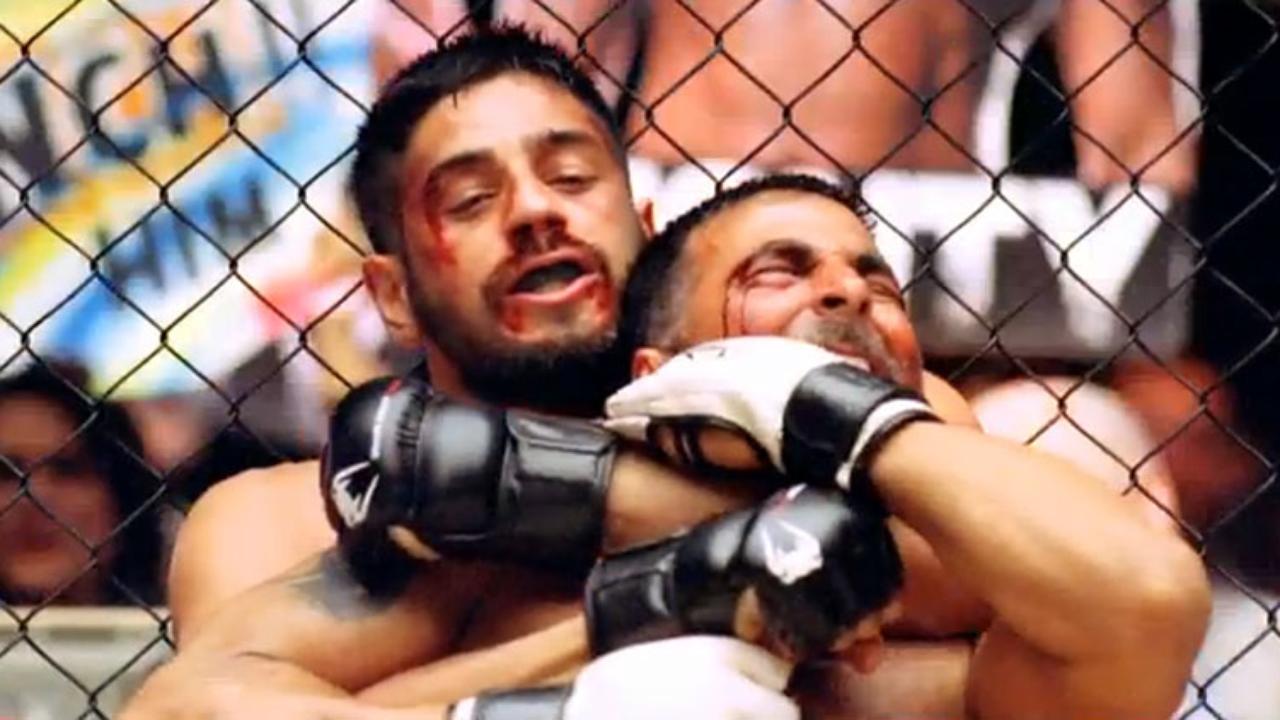 Bollywood superstar Akshay Kumar returns with his latest film BROTHERS…BLOOD AGAINST BLOOD which opens in theaters worldwide on August 14 in time for India’s Independence Day holiday weekend. The Mixed Martial Arts saga will release in over 100 theaters across the U.S. including the AMC Empire in NYC.
https://www.youtube.com/watch?v=wQO8LZ1Vh74
Gary Fernandes (Jackie Shroff), a former alcoholic and street-fighter, returns home after serving a prison sentence of 10 long years to find that the wounds of the past still haunt his family. His two sons, David (Akshay Kumar) and Monty (Siddharth Malhotra), who had parted ways as kids, are grown men now, but are still bitterly estranged. Gary himself carries the burden of his guilt. His elder son, David is an ex-fighter turned school teacher. He and his wife Jenny work hard to make ends meet and to provide the best they can for their ailing daughter Poopoo. Troubled financial circumstances drive a desperate David to return to the world of street fighting.
Meanwhile, Monty struggles with his lonely complex existence. An alcoholic, he is active in the world of street fighting, but lacks focus and determination. He strongly yearns for the acceptance, love and respect of his family. As the story unfolds, we see the journey of these three men, as they seek to find redemption and healing. Meanwhile, the arrival of ‘Right to Fight’ is announced in India — the biggest international event in mixed martial arts history. Both brothers, at the crossroads of their lives, end up enlisting to fight in this ‘Winner-takes-all’ event. And it is here after an age of estrangement, unknown to the two siblings, they finally stand to face off with each other and against their personal demons, in the ultimate final battle. It is said, that when a deep injury is done to us, we can never recover until we forgive. With twists and turns, pouring emotions and edge-of-the-seat action, will this final battle between the two brothers repair old wounds?
https://www.youtube.com/watch?v=obHPQU0C1oo
Bollywood superstar Akshay Kumar returns with his latest film BROTHERS…BLOOD AGAINST BLOOD which opens in theaters worldwide on August 14 in time for India’s Independence Day holiday weekend. The Mixed Martial Arts saga will release in over 100 theaters across the U.S. including the AMC Empire in NYC.
https://www.youtube.com/watch?v=wQO8LZ1Vh74
Gary Fernandes (Jackie Shroff), a former alcoholic and street-fighter, returns home after serving a prison sentence of 10 long years to find that the wounds of the past still haunt his family. His two sons, David (Akshay Kumar) and Monty (Siddharth Malhotra), who had parted ways as kids, are grown men now, but are still bitterly estranged. Gary himself carries the burden of his guilt. His elder son, David is an ex-fighter turned school teacher. He and his wife Jenny work hard to make ends meet and to provide the best they can for their ailing daughter Poopoo. Troubled financial circumstances drive a desperate David to return to the world of street fighting.
Meanwhile, Monty struggles with his lonely complex existence. An alcoholic, he is active in the world of street fighting, but lacks focus and determination. He strongly yearns for the acceptance, love and respect of his family. As the story unfolds, we see the journey of these three men, as they seek to find redemption and healing. Meanwhile, the arrival of ‘Right to Fight’ is announced in India — the biggest international event in mixed martial arts history. Both brothers, at the crossroads of their lives, end up enlisting to fight in this ‘Winner-takes-all’ event. And it is here after an age of estrangement, unknown to the two siblings, they finally stand to face off with each other and against their personal demons, in the ultimate final battle. It is said, that when a deep injury is done to us, we can never recover until we forgive. With twists and turns, pouring emotions and edge-of-the-seat action, will this final battle between the two brothers repair old wounds?
https://www.youtube.com/watch?v=obHPQU0C1oo
-
Nicolas Steiner’s Documentary ABOVE AND BELOW To be Released in US | TRAILER
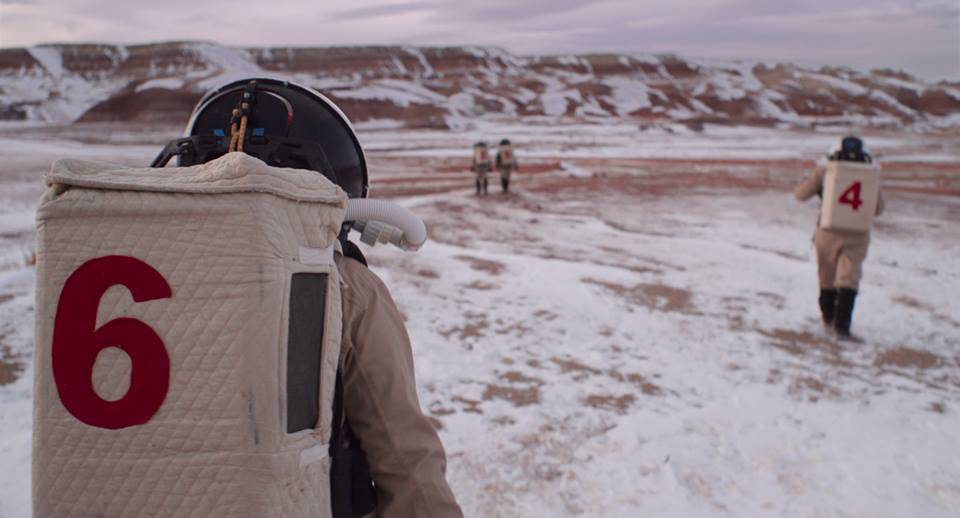 The documentary “Above and Below,” the debut film from Swiss director Nicolas Steiner will reportedly be released in the US via Oscilloscope Laboratories.
Above and Below is a rough and rhythmic roller coaster ride seating five survivors in their daily hustle through an apocalyptic world.
Far, far away and out of sight, that’s where April, Dave, Cindy, Rick and the Godfather are creating life on their own terms. From the depths of the flood channels under Sin City, to a reclaimed military bunker in the middle of the dusty, heated Californian nowhere land to beyond the stratosphere where Mars now lives on earth. Each individual has been flung into periling circumstances on this rollercoaster ride called life. Through the hustle, pain, and laughter, we are whisked away to an unfamiliar world where we discover its inhabitants to be souls not unlike our very own.
Oscilloscope plans to release the film theatrically followed by a release on digital and other ancillary platforms.
Interview with director Nicolas Steiner via official film site
The documentary “Above and Below,” the debut film from Swiss director Nicolas Steiner will reportedly be released in the US via Oscilloscope Laboratories.
Above and Below is a rough and rhythmic roller coaster ride seating five survivors in their daily hustle through an apocalyptic world.
Far, far away and out of sight, that’s where April, Dave, Cindy, Rick and the Godfather are creating life on their own terms. From the depths of the flood channels under Sin City, to a reclaimed military bunker in the middle of the dusty, heated Californian nowhere land to beyond the stratosphere where Mars now lives on earth. Each individual has been flung into periling circumstances on this rollercoaster ride called life. Through the hustle, pain, and laughter, we are whisked away to an unfamiliar world where we discover its inhabitants to be souls not unlike our very own.
Oscilloscope plans to release the film theatrically followed by a release on digital and other ancillary platforms.
Interview with director Nicolas Steiner via official film site
“Above and Below” combines Mars, Earth and the subterranean. How did you come up with this unusual idea? I’m principally inspired by pictures. My imagination functions better that way, rather than when I take my lead from formulated premises. In this case it was above all pictures by Joel Sternfeld; photographs of deserts and water parks taken in massive long shots yet with an air of the unnatural to them. They contain an element of the absurd. I also studied for a year at San Francisco Art Institute as[NS3] a Fulbright scholarship holder, where I gave much attention to ghost towns. This was during the same period when the earthquake hit Japan. While surfing in Santa Cruz a presumably contaminated streetlight bearing Japanese characters floated towards us. This experience was decisive for the broader context of “Above and Below” In what way? As a director I consider myself something of a hunter-gatherer. My concepts and ideas initially overflow. Then I set about filtering them. I search for contexts that are only visible at second glance. At the same time, simple processes fascinate me. The more archaic the better. It was from such jigsaw pieces that the journey in the film, one from Mars to Earth and beneath its surface, finally emerged. The so-called tunnel-people play a central role in the film. How did you hear of them? I often made trips from San Francisco to the surrounding areas. I wanted to leave the city for a few days and visited Las Vegas. I had meant to relax, but the stay made me feel as if I were on steroids. It was all a garish sensual-overload. I walked numbly through the streets and saw in a water tunnel a guy in a nightgown with a chessboard. The idea for the film immediately became more tangible. How did you come across your tunnel-people? I made a five-week research trip to Las Vegas. I was initially with a journalist who had written about the tunnel-dwellers. I also studied old city plans of the tunnels and went off on my own to look for possible protagonists. How dangerous was that? Let’s put it this way, I wouldn’t necessarily rush off to do it again. Inflamed by my idea I recklessly entered situations that might have turned out differently. Lots of the tunnel-people are very nice but also heavily addicted to crystal meth, which makes them unpredictable. I met my protagonist Lalo, for example, in one of the tunnels in which neither the journalist nor a city social worker had entered. I could hear Lalo growling “Who is it?” in the distance. Later, when filming, he told me that he was a former electrician and cage-fighter who was responsible for the death of two people “because of a stupid accident”. My cameraman and I had a €80,000 camera with us. So of course there was a certain uneasiness, particularly when Lalo wanted to know how expensive such a device might be. I think, however, that this recklessness was taken as bravery and won us respect. The research phase and shooting were intense. I hope this is apparent in the film. It’s important for me to share experiences so viewers feel they experienced them, too. Did the police always just let you be? We were arrested once. Of course the possibility had crossed my mind, since during research and filming I was perpetually entering fenced-off territory. And I was aware, too, that trespassing is a serious offence in America. How did this come about? We parked our transporter next to a tunnel and lugged a camera crane in black bags down into it. Somebody observed us and assumed that we were smuggling dynamite and weapons since under the tunnel there was a second one running between two banks. The police, once summoned, pushed us up against a wall and searched us. The interesting thing was the police officer shouted at me irritatedly, why don’t you shoot your film in Berlin? There are homeless there, too! Fortunately the officers were informed at that very moment of an ongoing armed robbery and headed out. That was more important than our case. How important then is the topic of homelessness in the film? Of course “Above and Below” does deal with poverty and homelessness. If my last film, “Battle of the Queens”, can be seen as a film about the homeland, then I have now made a film about “not having a home”. But nothing could be further from my actual aim than explaining America and its society to Americans. I didn’t approach the film thematically, but rather conceptually, although the focus is definitely on individuals. To me it was about cowboys, ghosts and aliens. The idea was to make a film leading viewers from Mars down to Earth, and thence into its bowels. The film might equally have played out in the desert of Dubai. Or in China. But try telling that to a furious police officer! Could the film have been shot in Switzerland, too? Was that ever considered? No, the film could not have been made in Switzerland. There is always something adventuresome about filmmaking. And I shot my last two films in my homeland, Valais in the Southern alps of Switzerland[NS6] . It was time to move on and leave my garden behind me. Furthermore there is a keyword for this film, an important one: DESERT. Aridity. The visual beauty of death and destruction. I found optimal conditions in America to deal with the themes, circumstances and socio-political views that interest me. After all, the film lives from these people and their bleak biographies, and these led me through its making. How are your protagonists now? I intend to show them the film at the given locations. I’m still in contact with Rick and Cindy, they are both clean now. Among the Mars-crew I’m most frequently in contact with April. She finished her geology studies and is continuing in research. Dave vanished a year ago but I’m still in contact with his daughter. He once called me after having swapped his[NS7] old camper for a mobile phone. I’ll find him again. Things aren’t looking so good with Lalo. I don’t know if he’s still alive, he had potentially fatal abscesses back then and was in beaten-up shape. How did you come upon the peculiar Mars-Society? At San Francisco Art Institute I saw a picture in a magazine of a lonely astronaut in a red desert. I was confused since I knew that no one could be there. When I looked more closely I saw a garden hose, and that was how I met the Mars-Society, a non-profit organisation working towards exploring and colonising the red planet. Scientists, fans of space travel, James Cameron and a couple of millionaires founded the society in the 90s. I was interested by the science behind it, but the real attraction was the trashy-cum-absurd look of the Mars people and their equipment. And at the same time the terrain on which they simulate Mars expeditions is of a poetically wistful abandonment. You rejected the classic talking-heads structure in your documentary. Why? My intention and aim was to keep my protagonists un-coerced and at their ease in conversation. I don’t like classical interviews or Q and As. I prefer conversations. Which doesn’t mean I don’t appreciate well-lit faces and spaces, but I try not to employ them at any cost. I tell my team approximately where I want to arrive, but spontaneity and flexibility are important for me, too. I think talking-heads are a matter of taste and don’t suit every content. In “Above and Below” the audiovisual level was more important to me than just precise statements. The film uses a conspicuously large amount of music There are almost 50 minutes of composed music in total. The soundtrack leads the way through the film. It was created in part before shooting, using photos that I brought back from my research-trips. This meant that we could already use music while shooting. It was apparent to me during research that music plays a very important role, since some of the protagonists do play instruments – Dave, say, with his drum set in the middle of the desert wastes. Lots of people know your abundantly prize-doted short, “It’s me.. Helmut”. What parallels, if any, do you see to “Above and Below”? The short was a twelve-minute fictional project and “Above and Below” a two-hour cinema documentary. But both films are about life and death and transience. Everything is beautiful yet, equally, destroyed. Both films feel a little tragicomic and play by-and-large outside, in nature. In the one, it’s the mountains, in the other, the desert. And in both films I attempted to use sound and image to make cinema into adventure. In “Helmut” the backdrop vanishes, with “Above and Below” it’s swept away. “Above and Below” is your film school graduation film. Will you remain faithful to documentary-making? I very much enjoy documentary-making. It broadens the horizons. And the extremely intensive research periods are something I don’t want to do without. But as for fiction, I’m certainly not excluding it. Because at a formal level, feature films generally inspire me more than documentaries. And theoretically I’m now geared up to make a great thriller or drama about the tunnel-people. Particularly since the series “True Detective”, which features existential themes in a bare landscape and pleased me well.
https://www.youtube.com/watch?v=omnPDGcGXJ8
-
MAY ALLAH BLESS FRANCE Sets US Release Date of August 11| US TRAILER
 Here is the new trailer for rapper and spoken word artist, Abd Al Malik’s feature directorial debut, “May Allah Bless France,” adapted from his autobiographical book of the same name, that tells the story of Régis, the offspring of African immigrants in France, who is raised, with his two brothers, by his Catholic mother in the high-rise, underprivileged hinterlands of Strasbourg. Between deliquency, rap and Islam, he discovers love and finds his true path.
Strand Releasing has set an August 11, 2015 US theatrical release date.
Celebrated rapper and spoken word artist Abd Al Malik makes his directorial debut with May Allah Bless France!, a candid account of his early life and artistic awakening that earned him the FIPRESCI Discovery Prize at the 2014 Toronto International Film Festival. Born Régis Fayette-Mikano to Congolese immigrants, he grew up in Strasbourg’s housing projects, participating in petty crimes that cost the lives of his friends. He found release in writing and performance, converting to Sufism at age 24 and penning the memoir that informed this adaptation. Marc Zinga ably inhabits the role of young Régis, movingly limning his journey to redemption. Shot in black and white, the film visually and thematically recalls Mathieu Kassovitz’s seminal urban crime drama La Haine. Nominated for two César Awards including Best Debut Feature. [filmlinc]
https://www.youtube.com/watch?v=2ocM5klJWhA
Here is the new trailer for rapper and spoken word artist, Abd Al Malik’s feature directorial debut, “May Allah Bless France,” adapted from his autobiographical book of the same name, that tells the story of Régis, the offspring of African immigrants in France, who is raised, with his two brothers, by his Catholic mother in the high-rise, underprivileged hinterlands of Strasbourg. Between deliquency, rap and Islam, he discovers love and finds his true path.
Strand Releasing has set an August 11, 2015 US theatrical release date.
Celebrated rapper and spoken word artist Abd Al Malik makes his directorial debut with May Allah Bless France!, a candid account of his early life and artistic awakening that earned him the FIPRESCI Discovery Prize at the 2014 Toronto International Film Festival. Born Régis Fayette-Mikano to Congolese immigrants, he grew up in Strasbourg’s housing projects, participating in petty crimes that cost the lives of his friends. He found release in writing and performance, converting to Sufism at age 24 and penning the memoir that informed this adaptation. Marc Zinga ably inhabits the role of young Régis, movingly limning his journey to redemption. Shot in black and white, the film visually and thematically recalls Mathieu Kassovitz’s seminal urban crime drama La Haine. Nominated for two César Awards including Best Debut Feature. [filmlinc]
https://www.youtube.com/watch?v=2ocM5klJWhA
-
South Korean Thriller A HARD DAY to Open in US on Friday July 17 | TRAILER
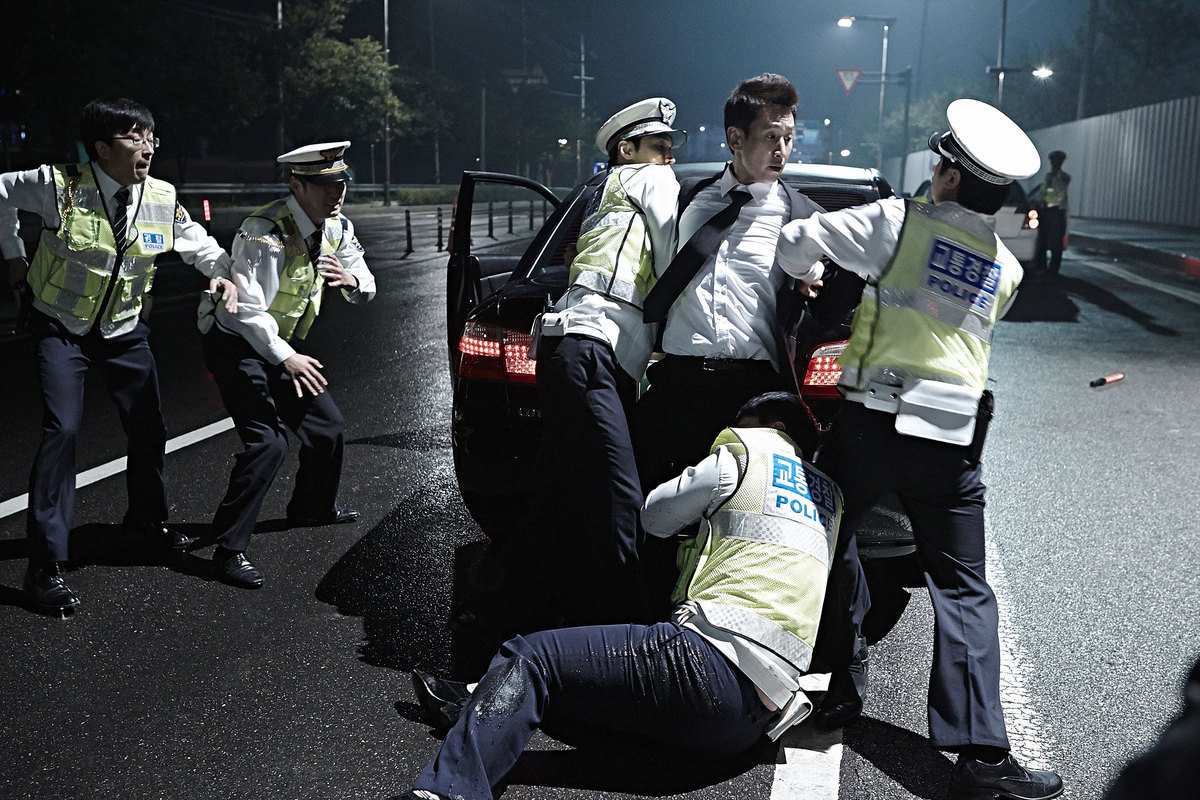 A HARD DAY, the South Korean thriller written and directed by Kim Seong-hun, will open in the US on Friday July 17, 2015 in New York at Village East Cinemas with a national release to follow by KINO LORBER. A HARD DAY, an official selection at Cannes Film Festival 2014 (Director’s Fortnight), Toronto International Film Festival 2014, and London Film Festival 2014, stars Lee Sun-kyun, Cho Jin-woong, Jeong Man-sik, Shin Jung-keun and Jang In-sub.
Homicide detective Geon-soo Go is having a hard day: in less than 24 hours, he receives a divorce notice from his wife, his mother passes away, and along with his coworkers, he becomes the focus of a police investigation over alleged embezzlement. Making things worse, on his way to his mother’s funeral, Geon-soo commits a fatal hit and run and then, desperately tries to hide the accident by hiding the man’s corpse in his deceased mother’s coffin. But when Geon-soo gets a mysterious call from a person claiming to be the sole witness of the crime, he realizes that someone has been watching him all along.
https://www.youtube.com/watch?v=fMHH08BRAOg
-
Nanni Moretti’s MY MOTHER Starring John Turturro to Open 32nd Jerusalem Film Festival
 My Mother (Mia Madre), Nanni Moretti’s latest film, will open the 32nd Jerusalem Film Festival, at the Sultan’s Pool on July 9th, only months after its screening in the official competition at Cannes. The opening ceremony will be attended by John Turturro, who stars in the film.
My Mother tells the story of Margherita, a famous Italian director who, while shooting her new film, has to deal with her lead actor (John Turturro) – an annoying but charming American with a proclivity for exaggeration. In addition to the pressure on the set, she also has to deal with her hospitalized aging mother’s health and with her adolescent daughter. Her brother (Nanni Moretti), is there to support and assist her, but very soon she understands that she cannot separate her personal life from her work on the film.
https://www.youtube.com/watch?v=8-l1oOMmkrg
My Mother (Mia Madre), Nanni Moretti’s latest film, will open the 32nd Jerusalem Film Festival, at the Sultan’s Pool on July 9th, only months after its screening in the official competition at Cannes. The opening ceremony will be attended by John Turturro, who stars in the film.
My Mother tells the story of Margherita, a famous Italian director who, while shooting her new film, has to deal with her lead actor (John Turturro) – an annoying but charming American with a proclivity for exaggeration. In addition to the pressure on the set, she also has to deal with her hospitalized aging mother’s health and with her adolescent daughter. Her brother (Nanni Moretti), is there to support and assist her, but very soon she understands that she cannot separate her personal life from her work on the film.
https://www.youtube.com/watch?v=8-l1oOMmkrg