
 In celebration of Black History Month, MOONLIGHT is partnering with My Brother’s Keeper Alliance, a mentoring program started by President Obama’s Administration for young men of color
to empower them with the resources and support to achieve their full potential regardless of circumstance.
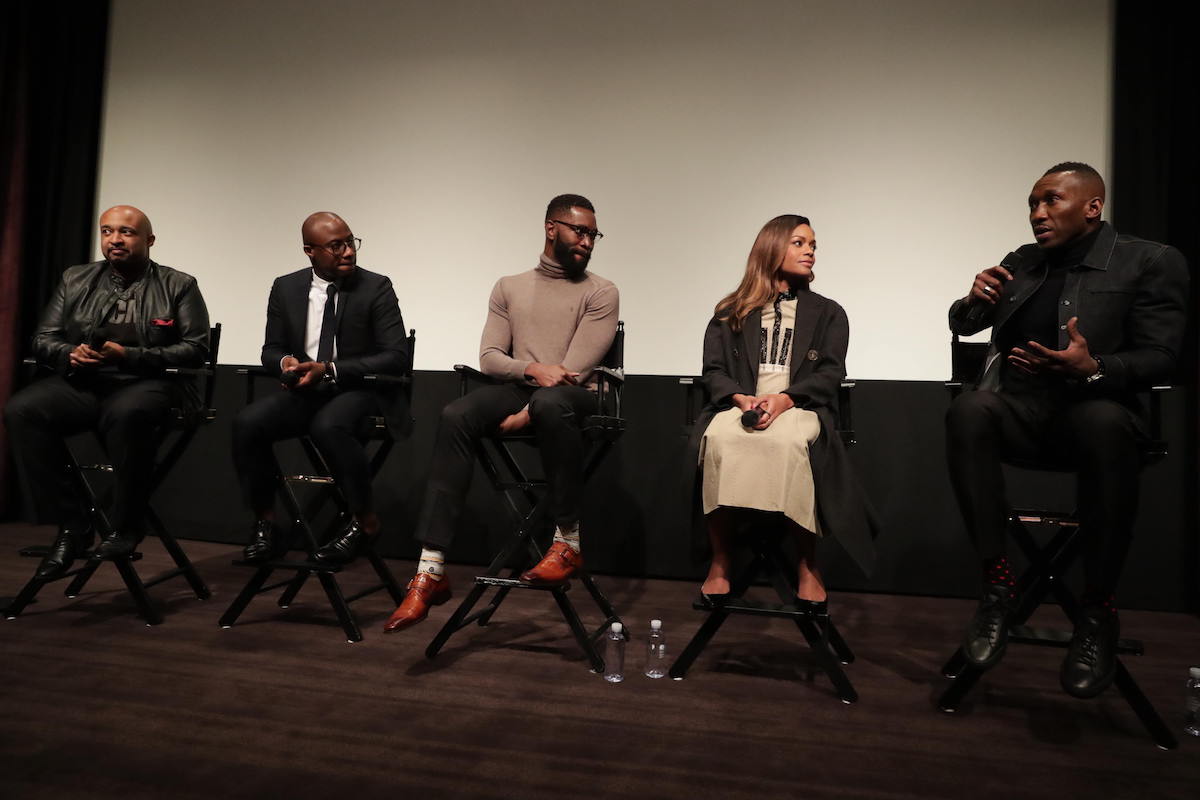
The screenings kicked off earlier this week in Los Angeles with My Brother’s Keeper and attended by dozens of young men from several local high schools. After the film, Mike Muse of My Brother’s Keeper moderated a talk-back session with the students and MOONLIGHT’s Oscar-Nominated stars Mahershala Ali, Naomie Harris, writer/director Barry Jenkins, and writer Tarell Alvin McCraney. A screening and talk back with high schoolers in New York is also set for next week.
MOONLIGHT chronicles the life of Chiron, a boy growing up in a rough neighborhood of Miami, Florida. Lauded by critics and audiences alike, the film is nominated for eight Academy Awards®, including Best Picture, Best Director, Best Adapted Screenplay, Best Actor in a Supporting Role (Mahershala Ali), and Best Actress in a Supporting Role (Naomie Harris). To date, MOONLIGHT has won the Golden Globe® for Best Picture – Drama and was nominated for an additional five Golden Globes®, and Screen Actors Guild Award for Outstanding Male Actor in a Supporting Role (Mahershala Ali). The film is also nominated for five Independent Spirit Awards, and additionally is the this year’s recipient of the Spirits’ Robert Altman Award, which honors an outstanding ensemble cast in a motion picture. MOONLIGHT has been named the Best Picture of 2016 by the Gotham Awards, the Los Angeles Film Critics Association, The National Society of Film Critics, and The New York Times, among many others.
[gallery type="rectangular" size="medium" ids="20507,20511,20510,20509,20508"]
In celebration of Black History Month, MOONLIGHT is partnering with My Brother’s Keeper Alliance, a mentoring program started by President Obama’s Administration for young men of color
to empower them with the resources and support to achieve their full potential regardless of circumstance.
The screenings kicked off earlier this week in Los Angeles with My Brother’s Keeper and attended by dozens of young men from several local high schools. After the film, Mike Muse of My Brother’s Keeper moderated a talk-back session with the students and MOONLIGHT’s Oscar-Nominated stars Mahershala Ali, Naomie Harris, writer/director Barry Jenkins, and writer Tarell Alvin McCraney. A screening and talk back with high schoolers in New York is also set for next week.
MOONLIGHT chronicles the life of Chiron, a boy growing up in a rough neighborhood of Miami, Florida. Lauded by critics and audiences alike, the film is nominated for eight Academy Awards®, including Best Picture, Best Director, Best Adapted Screenplay, Best Actor in a Supporting Role (Mahershala Ali), and Best Actress in a Supporting Role (Naomie Harris). To date, MOONLIGHT has won the Golden Globe® for Best Picture – Drama and was nominated for an additional five Golden Globes®, and Screen Actors Guild Award for Outstanding Male Actor in a Supporting Role (Mahershala Ali). The film is also nominated for five Independent Spirit Awards, and additionally is the this year’s recipient of the Spirits’ Robert Altman Award, which honors an outstanding ensemble cast in a motion picture. MOONLIGHT has been named the Best Picture of 2016 by the Gotham Awards, the Los Angeles Film Critics Association, The National Society of Film Critics, and The New York Times, among many others.
[gallery type="rectangular" size="medium" ids="20507,20511,20510,20509,20508"]
Films
-
MOONLIGHT Partners with President Obama’s ‘My Brother’s Keeper’ Mentoring Program
In celebration of Black History Month, MOONLIGHT is partnering with My Brother’s Keeper Alliance, a mentoring program started by President Obama’s Administration for young men of color
to empower them with the resources and support to achieve their full potential regardless of circumstance.
The screenings kicked off earlier this week in Los Angeles with My Brother’s Keeper and attended by dozens of young men from several local high schools. After the film, Mike Muse of My Brother’s Keeper moderated a talk-back session with the students and MOONLIGHT’s Oscar-Nominated stars Mahershala Ali, Naomie Harris, writer/director Barry Jenkins, and writer Tarell Alvin McCraney. A screening and talk back with high schoolers in New York is also set for next week.
MOONLIGHT chronicles the life of Chiron, a boy growing up in a rough neighborhood of Miami, Florida. Lauded by critics and audiences alike, the film is nominated for eight Academy Awards®, including Best Picture, Best Director, Best Adapted Screenplay, Best Actor in a Supporting Role (Mahershala Ali), and Best Actress in a Supporting Role (Naomie Harris). To date, MOONLIGHT has won the Golden Globe® for Best Picture – Drama and was nominated for an additional five Golden Globes®, and Screen Actors Guild Award for Outstanding Male Actor in a Supporting Role (Mahershala Ali). The film is also nominated for five Independent Spirit Awards, and additionally is the this year’s recipient of the Spirits’ Robert Altman Award, which honors an outstanding ensemble cast in a motion picture. MOONLIGHT has been named the Best Picture of 2016 by the Gotham Awards, the Los Angeles Film Critics Association, The National Society of Film Critics, and The New York Times, among many others.
[gallery type="rectangular" size="medium" ids="20507,20511,20510,20509,20508"]
-
Watch the First Trailer for Horror Film IT COMES AT NIGHT Starring Joel Edgerton
 The horror film IT COMES AT NIGHT, starring Joel Edgerton has released its terrifying first trailer and poster. A24 will release IT COMES AT NIGHT, Trey Edward Shults’ follow-up to the critically acclaimed KRISHA on August 25th.
Imagine the end of the world— Now imagine something worse.
Award-winning filmmaker Trey Edward Shults follows his incredible debut feature Krisha with It Comes At Night, a horror film following a man (Joel Edgerton) as he is learns that the evil stalking his family home may be only a prelude to horrors that come from within.
Secure within a desolate home as an unnatural threat terrorizes the world, the tenuous domestic order he has established with his wife and son is put to the ultimate test with the arrival of a desperate young family seeking refuge.
Despite the best intentions of both families, paranoia and mistrust boil over as the horrors outside creep ever-closer, awakening something hidden and monstrous within him as he learns that the protection of his family comes at the cost of his soul.
https://www.youtube.com/watch?v=sKnigN8OiNc
The horror film IT COMES AT NIGHT, starring Joel Edgerton has released its terrifying first trailer and poster. A24 will release IT COMES AT NIGHT, Trey Edward Shults’ follow-up to the critically acclaimed KRISHA on August 25th.
Imagine the end of the world— Now imagine something worse.
Award-winning filmmaker Trey Edward Shults follows his incredible debut feature Krisha with It Comes At Night, a horror film following a man (Joel Edgerton) as he is learns that the evil stalking his family home may be only a prelude to horrors that come from within.
Secure within a desolate home as an unnatural threat terrorizes the world, the tenuous domestic order he has established with his wife and son is put to the ultimate test with the arrival of a desperate young family seeking refuge.
Despite the best intentions of both families, paranoia and mistrust boil over as the horrors outside creep ever-closer, awakening something hidden and monstrous within him as he learns that the protection of his family comes at the cost of his soul.
https://www.youtube.com/watch?v=sKnigN8OiNc
-
French Erotic Thriller SEX DOLLS Opens in Theaters on Friday, February 10 | Trailer
 Check out the trailer for the French erotic thriller SEX DOLLS starring César Award winner Hafsia Herzi. The film, written and directed by Sylvie Verheyde, and co-starring Ash Stymest, Karole Rocher, Paul Hamy, opens in theaters – in New York at the IFC Center, and in Los Angeles at the Arena Cinelounge, Hollywood – on VOD Friday February 10th.
A high-priced call girl navigates the shadowy world of London’s sex trade underground in this provocative, erotic thriller. Virginie (César Award winner Hafsia Herzi) goes about her work as a prostitute with a cool detachment, trading sex with wealthy businessmen for money, but never getting emotionally involved. That all changes when she meets Rupert (Ash Stymest), an enigmatic stranger with unclear intentions. Risking everything, Virginie plunges into a dangerous affair that tears her between a ruthless madame who forbids romantic attachments and a dark, sexy man who could be her savior or her downfall.
Check out the trailer for the French erotic thriller SEX DOLLS starring César Award winner Hafsia Herzi. The film, written and directed by Sylvie Verheyde, and co-starring Ash Stymest, Karole Rocher, Paul Hamy, opens in theaters – in New York at the IFC Center, and in Los Angeles at the Arena Cinelounge, Hollywood – on VOD Friday February 10th.
A high-priced call girl navigates the shadowy world of London’s sex trade underground in this provocative, erotic thriller. Virginie (César Award winner Hafsia Herzi) goes about her work as a prostitute with a cool detachment, trading sex with wealthy businessmen for money, but never getting emotionally involved. That all changes when she meets Rupert (Ash Stymest), an enigmatic stranger with unclear intentions. Risking everything, Virginie plunges into a dangerous affair that tears her between a ruthless madame who forbids romantic attachments and a dark, sexy man who could be her savior or her downfall.
-
DISGRACED, Documentary on Basketball Star Patrick Dennehy to World Premiere at SXSW 2017
[caption id="attachment_20497" align="aligncenter" width="1200"] DISGRACED – Former Baylor basketball coach Dave Bliss. | Credit: M. Andrew Barrera[/caption]
The documentary DISGRACED, which recounts the shocking murder of Baylor University men’s basketball star Patrick Dennehy as well as an attempted cover-up of NCAA rule violations, will world premiere at the 2017 SXSW Film Festival, followed by its debut on SHOWTIME on March 31.
DISGRACED examines the tragic events surrounding the 2003 murder of Dennehy, to which fellow teammate and friend Carlton Dotson pled guilty in the only known instance in the history of the NCAA where one student-athlete was convicted of murdering another. Through first-hand accounts from students, investigators, family and friends, DISGRACED calls into question the plea and conviction of Dotson.
The film also includes exclusive and revealing interviews with former head coach Dave Bliss, who directly addresses the attempted cover-up and secretly recorded statements he made in 2003 that implicated him in NCAA rule violations. The violations, revealed in part by whistle blower and then assistant coach Abar Rouse, ultimately led to Bliss’ resignation and a partial ban on NCAA play for the Baylor Bears basketball team.
“This is a complex story, told through powerful first-person accounts, about both a senseless murder and an attempted cover-up of NCAA rule violations that still reverberate within Baylor University and collegiate athletics to this day,” said Stephen Espinoza, Executive Vice President and General Manager, SHOWTIME Sports. “DISGRACED is yet another provocative, compelling and culturally relevant documentary delivered with the inside perspective that has become the hallmark of unscripted programming from SHOWTIME Sports.”
Recruited by Coach Bliss, Dennehy was a standout player with a bright future until the 6-foot-10 forward went missing under a set of bizarre circumstances. The murder and then the attempted cover-up of improper payments to players rocked the Baptist university in Waco, Texas. Ultimately, Dotson pled guilty and the university and Bliss were cited for multiple NCAA rule violations. Bliss essentially was ousted from NCAA basketball for 10 years.
In contemplating his involvement in the attempted cover-up, his 2003 resignation and his religious faith, Bliss said, “A question that a man always has to ask himself when he goes through something like I went through, are you in a better spot than you were before? Was it worth it? And the answer to me is yes.”
Bliss recently returned to coaching at Southwestern Christian University in Oklahoma competing in the National Association of Intercollegiate Athletics (NAIA).
DISGRACED – Former Baylor basketball coach Dave Bliss. | Credit: M. Andrew Barrera[/caption]
The documentary DISGRACED, which recounts the shocking murder of Baylor University men’s basketball star Patrick Dennehy as well as an attempted cover-up of NCAA rule violations, will world premiere at the 2017 SXSW Film Festival, followed by its debut on SHOWTIME on March 31.
DISGRACED examines the tragic events surrounding the 2003 murder of Dennehy, to which fellow teammate and friend Carlton Dotson pled guilty in the only known instance in the history of the NCAA where one student-athlete was convicted of murdering another. Through first-hand accounts from students, investigators, family and friends, DISGRACED calls into question the plea and conviction of Dotson.
The film also includes exclusive and revealing interviews with former head coach Dave Bliss, who directly addresses the attempted cover-up and secretly recorded statements he made in 2003 that implicated him in NCAA rule violations. The violations, revealed in part by whistle blower and then assistant coach Abar Rouse, ultimately led to Bliss’ resignation and a partial ban on NCAA play for the Baylor Bears basketball team.
“This is a complex story, told through powerful first-person accounts, about both a senseless murder and an attempted cover-up of NCAA rule violations that still reverberate within Baylor University and collegiate athletics to this day,” said Stephen Espinoza, Executive Vice President and General Manager, SHOWTIME Sports. “DISGRACED is yet another provocative, compelling and culturally relevant documentary delivered with the inside perspective that has become the hallmark of unscripted programming from SHOWTIME Sports.”
Recruited by Coach Bliss, Dennehy was a standout player with a bright future until the 6-foot-10 forward went missing under a set of bizarre circumstances. The murder and then the attempted cover-up of improper payments to players rocked the Baptist university in Waco, Texas. Ultimately, Dotson pled guilty and the university and Bliss were cited for multiple NCAA rule violations. Bliss essentially was ousted from NCAA basketball for 10 years.
In contemplating his involvement in the attempted cover-up, his 2003 resignation and his religious faith, Bliss said, “A question that a man always has to ask himself when he goes through something like I went through, are you in a better spot than you were before? Was it worth it? And the answer to me is yes.”
Bliss recently returned to coaching at Southwestern Christian University in Oklahoma competing in the National Association of Intercollegiate Athletics (NAIA).
-
South African Film THE WOUND to Open the Panorama Program of Berlin International Film Festival
[caption id="attachment_18693" align="aligncenter" width="1200"] The Wound, John Trengove[/caption]
Just after celebrating its selection to have its world premiere in competition at the Sundance Film Festival, the film-makers of the South African film The Wound, have received news that the film has been selected to open the Berlin International Film Festival’s Panorama section in February 2017.
Produced by Urucu Media, directed by John Trengove and co-written by Trengove, Thando Mgqolozana and Malusi Bengu , The Wound stars multi-talented musician and novelist, Nakhane Touré in his acting debut, with Bongile Mantsai and Niza Jay Ncoyini.
The Wound tells the story Xolani, a lonely Xhosa factory worker who joins the men of his community in the mountains of the Eastern Cape to initiate a group of teenage boys into manhood. When a defiant initiate from the city discovers his best kept secret, Xolani’s entire existence begins to unravel.
Speaking from Cape Town, producer Elias Ribeiro said “We could not have wished for a stronger start for The Wound. We will have the spotlight in the two top festivals in North America and Europe, and that bodes well for its future, as Pyramide, our International Sales Agents will be representing the film at their booth inside the European Film Market in Berlin in February.”
“The fabrication of masculinity has long been a consistent theme in Panorama,” said the statement from the festival. “Producer Elias Ribeiro previously delighted festival audiences in Panorama 2015 with Necktie Youth.”
John Trengove commented: “I was interested in what happens when groups of men come together and organize themselves outside of society and the codes of their everyday lives. I wanted to show the intense emotional and physical exchanges that are possible in these spaces and how repressing strong feelings leads to a kind of toxicity and violence. As an outsider to this culture, it was important that I approach this story from the perspective of characters who are themselves outsiders, who struggle to conform to the status quo of which they are part.”
The Wound, John Trengove[/caption]
Just after celebrating its selection to have its world premiere in competition at the Sundance Film Festival, the film-makers of the South African film The Wound, have received news that the film has been selected to open the Berlin International Film Festival’s Panorama section in February 2017.
Produced by Urucu Media, directed by John Trengove and co-written by Trengove, Thando Mgqolozana and Malusi Bengu , The Wound stars multi-talented musician and novelist, Nakhane Touré in his acting debut, with Bongile Mantsai and Niza Jay Ncoyini.
The Wound tells the story Xolani, a lonely Xhosa factory worker who joins the men of his community in the mountains of the Eastern Cape to initiate a group of teenage boys into manhood. When a defiant initiate from the city discovers his best kept secret, Xolani’s entire existence begins to unravel.
Speaking from Cape Town, producer Elias Ribeiro said “We could not have wished for a stronger start for The Wound. We will have the spotlight in the two top festivals in North America and Europe, and that bodes well for its future, as Pyramide, our International Sales Agents will be representing the film at their booth inside the European Film Market in Berlin in February.”
“The fabrication of masculinity has long been a consistent theme in Panorama,” said the statement from the festival. “Producer Elias Ribeiro previously delighted festival audiences in Panorama 2015 with Necktie Youth.”
John Trengove commented: “I was interested in what happens when groups of men come together and organize themselves outside of society and the codes of their everyday lives. I wanted to show the intense emotional and physical exchanges that are possible in these spaces and how repressing strong feelings leads to a kind of toxicity and violence. As an outsider to this culture, it was important that I approach this story from the perspective of characters who are themselves outsiders, who struggle to conform to the status quo of which they are part.”
-
YOUTH IN OREGON Starring Frank Langella, Christina Applegate, Sets February 2017 Release Date
[caption id="attachment_19190" align="aligncenter" width="1000"] Youth in Oregon[/caption]
Youth in Oregon, directed by Joel David Moore will be released in 2017 via Orion Pictures and Samuel Goldwyn Films. The film will be released in U.S. theaters and VOD on February 3, 2017.
Youth in Oregon, which premiered at the Tribeca Film Festival and is set to screen at the upcoming Palm Springs International Film Festival, stars Frank Langella, Billy Crudup, Christina Applegate, Mary Kay Place, Josh Lucas, Nicola Peltz and Alex Shaffer.
“This beautiful film tackles one of humanity’s most universal dilemmas, told through the lens of an estranged, intimacy-parched family that has to bear the burden of a patriarch’s decision to leave them all behind,” Moore said of the drama.
Frank Langella, Billy Crudup, Christina Applegate, Mary Kay Place and Josh Lucas star in this moving family road trip dramedy. Raymond Engersoll (Langella) aims to reach Oregon in time for an appointment to legally end his life under the state’s laws, but his headstrong daughter (Applegate) sends her unwilling husband (Crudup) along for the ride, convinced they can talk him out of the scheme before he reaches his destination. Along the way Engersoll works to reconcile with his estranged son (Lucas) and convince his tuned-out wife (Place) of the veracity of his purpose. Tribeca Film Festival
Youth in Oregon[/caption]
Youth in Oregon, directed by Joel David Moore will be released in 2017 via Orion Pictures and Samuel Goldwyn Films. The film will be released in U.S. theaters and VOD on February 3, 2017.
Youth in Oregon, which premiered at the Tribeca Film Festival and is set to screen at the upcoming Palm Springs International Film Festival, stars Frank Langella, Billy Crudup, Christina Applegate, Mary Kay Place, Josh Lucas, Nicola Peltz and Alex Shaffer.
“This beautiful film tackles one of humanity’s most universal dilemmas, told through the lens of an estranged, intimacy-parched family that has to bear the burden of a patriarch’s decision to leave them all behind,” Moore said of the drama.
Frank Langella, Billy Crudup, Christina Applegate, Mary Kay Place and Josh Lucas star in this moving family road trip dramedy. Raymond Engersoll (Langella) aims to reach Oregon in time for an appointment to legally end his life under the state’s laws, but his headstrong daughter (Applegate) sends her unwilling husband (Crudup) along for the ride, convinced they can talk him out of the scheme before he reaches his destination. Along the way Engersoll works to reconcile with his estranged son (Lucas) and convince his tuned-out wife (Place) of the veracity of his purpose. Tribeca Film Festival
-
Next American Masters Season to Kick Off with Exclusive U.S. Broadcast Premiere of BY SIDNEY LUMET
[caption id="attachment_19177" align="aligncenter" width="1000"] By Sidney Lumet[/caption]
Prolific and versatile filmmaker Sidney Lumet (1924-2011) made 44 films in 50 years, earning the Academy Honorary Award for lifetime achievement after four Oscar nominations. Considered a quintessential New York filmmaker, Lumet frequently used New York City’s urban mettle to infuse his films with a realism and intensity that kept audiences in suspense while prodding them to consider their own morality.
In American Masters: By Sidney Lumet, he tells his own story in a never-before-seen interview shot in 2008 by late filmmaker Daniel Anker and producer Thane Rosenbaum. With candor, humor and grace, Lumet reveals what matters to him as an artist and as a human being. Launching Season 31, American Masters: By Sidney Lumet premieres nationwide Tuesday, January 3 at 8 p.m. on PBS (check local listings) and features a new, exclusive interview with Golden Globe- and Emmy Award-nominated actor Treat Williams, who starred in Lumet’s Prince of the City, afterward.
Peabody and Emmy Award-winning filmmaker Nancy Buirski (Afternoon of a Faun, The Loving Story, Loving) weaves Lumet’s personal stories and commentary with scenes from his films to create a portrait of one of the most accomplished, influential and socially conscious directors in the history of cinema. Clips spanning his canon, from 12 Angry Men, Serpico, Dog Day Afternoon, Network, Prince of the City, The Verdict, and many more, reveal the spiritual and ethical lessons at the core of his work.
Looking back over his career, Lumet speaks intimately about the experiences that informed his work, which he loved. His Depression-era, working-class Lower East Side beginnings as a child actor with his father in Yiddish theater, on Broadway, and his gradual transition to directing live TV, informed the stories he chose and his ability to translate important stage works into film, such as The Sea Gull, The Fugitive Kind and Long Day’s Journey into Night. In clips from these films, American Masters: By Sidney Lumet underscores Lumet’s own journey: his relationship with his father mirrored in Long Day’s Journey into Night, Daniel, Running on Empty and Before the Devil Knows You’re Dead.
Marching for workers’ rights in the 1930s, standing up to McCarthy-era blacklist interrogation and finding ways to employ his blacklisted friends, Lumet developed an appreciation for people who question authority. His movies often featured characters fighting for justice, standing up to the crowd and questioning personal responsibility. First and foremost a storyteller, Lumet’s strongly moral tales captured the dilemmas and concerns of a society struggling with essentials: how does one behave to others and to oneself?
“Sidney Lumet started in theater, learned about directing in television and made a career in film,” said Michael Kantor, American Masters series executive producer. “His work is legendary, and Nancy Buirski and her team were able to pull insights from the 14-hour goldmine of an interview and couple them with Lumet’s remarkable work to create a deeply insightful master class for the ages.”
“It was my job to distill what I felt were the crucial threads, the story Lumet most wanted to tell,” said Buirski. “What our film reveals is a man whose life experiences infused his movies with a sense of fairness and conscience, and whose strong moral code, conscious or not, found expression in his art.”
By Sidney Lumet had its world premiere at Cannes Film Festival and was featured at the Tribeca Film Festival. The film will be available on digital video on demand and DVD/Blu-ray from FilmRise on January 9.
By Sidney Lumet[/caption]
Prolific and versatile filmmaker Sidney Lumet (1924-2011) made 44 films in 50 years, earning the Academy Honorary Award for lifetime achievement after four Oscar nominations. Considered a quintessential New York filmmaker, Lumet frequently used New York City’s urban mettle to infuse his films with a realism and intensity that kept audiences in suspense while prodding them to consider their own morality.
In American Masters: By Sidney Lumet, he tells his own story in a never-before-seen interview shot in 2008 by late filmmaker Daniel Anker and producer Thane Rosenbaum. With candor, humor and grace, Lumet reveals what matters to him as an artist and as a human being. Launching Season 31, American Masters: By Sidney Lumet premieres nationwide Tuesday, January 3 at 8 p.m. on PBS (check local listings) and features a new, exclusive interview with Golden Globe- and Emmy Award-nominated actor Treat Williams, who starred in Lumet’s Prince of the City, afterward.
Peabody and Emmy Award-winning filmmaker Nancy Buirski (Afternoon of a Faun, The Loving Story, Loving) weaves Lumet’s personal stories and commentary with scenes from his films to create a portrait of one of the most accomplished, influential and socially conscious directors in the history of cinema. Clips spanning his canon, from 12 Angry Men, Serpico, Dog Day Afternoon, Network, Prince of the City, The Verdict, and many more, reveal the spiritual and ethical lessons at the core of his work.
Looking back over his career, Lumet speaks intimately about the experiences that informed his work, which he loved. His Depression-era, working-class Lower East Side beginnings as a child actor with his father in Yiddish theater, on Broadway, and his gradual transition to directing live TV, informed the stories he chose and his ability to translate important stage works into film, such as The Sea Gull, The Fugitive Kind and Long Day’s Journey into Night. In clips from these films, American Masters: By Sidney Lumet underscores Lumet’s own journey: his relationship with his father mirrored in Long Day’s Journey into Night, Daniel, Running on Empty and Before the Devil Knows You’re Dead.
Marching for workers’ rights in the 1930s, standing up to McCarthy-era blacklist interrogation and finding ways to employ his blacklisted friends, Lumet developed an appreciation for people who question authority. His movies often featured characters fighting for justice, standing up to the crowd and questioning personal responsibility. First and foremost a storyteller, Lumet’s strongly moral tales captured the dilemmas and concerns of a society struggling with essentials: how does one behave to others and to oneself?
“Sidney Lumet started in theater, learned about directing in television and made a career in film,” said Michael Kantor, American Masters series executive producer. “His work is legendary, and Nancy Buirski and her team were able to pull insights from the 14-hour goldmine of an interview and couple them with Lumet’s remarkable work to create a deeply insightful master class for the ages.”
“It was my job to distill what I felt were the crucial threads, the story Lumet most wanted to tell,” said Buirski. “What our film reveals is a man whose life experiences infused his movies with a sense of fairness and conscience, and whose strong moral code, conscious or not, found expression in his art.”
By Sidney Lumet had its world premiere at Cannes Film Festival and was featured at the Tribeca Film Festival. The film will be available on digital video on demand and DVD/Blu-ray from FilmRise on January 9.
-
Animated Film SGT. STUBBY: AN AMERICAN HERO Sets April 2018 Release Date
[caption id="attachment_19168" align="aligncenter" width="1200"] Sgt. Stubby: An American Hero[/caption]
Fun Academy™ Motion Pictures, an innovator in educational entertainment for digital cinemas, has set an April 13, 2018 U.S. release date for “Sgt. Stubby: An American Hero,” a new animated feature based on the life and times of the United States Army’s most decorated dog.
The film is produced by Labyrinth Media & Publishing, Ltd. with animation by Mikros Image, a Technicolor company, from their studios in Paris and Montreal. Fun Academy will distribute the film throughout North America.
Academy Award® nominees Helena Bonham Carter (“The King’s Speech,” “Harry Potter” franchise) and Gérard Depardieu (“The Life of Pi”) will star, with more voice cast to be announced. The film will also feature a score by award-winning composer Patrick Doyle (“Brave,” “Cinderella”).
Production of “Sgt. Stubby” is led by Laurent Rodon and Richard Lanni, who co-wrote the original screenplay with Mike Stokey. César Award-nominated filmmaker Bibo Bergeron (“Shark Tale”) will serve as director of story and 2016 Annie Award nominee Céline Desrumaux (“The Little Prince”) as production designer.
“Sgt. Stubby” tells the incredible true story of a stray dog and the bond he forged with the doughboys of the 26th “Yankee” Division at the onset of America’s entry into World War I.
As writer and executive producer Richard Lanni explains, “2018 marks the 100th anniversary of American involvement in the WWI, leading up to the armistice in November. Our film will be part of the global conversation about the Great War and remembering those who served.”
After being adopted off the streets by Private Robert Conroy, Stubby saved hundreds of lives by sounding the alarm for incoming attacks and catching an enemy spy in the trenches. For his valorous actions, Stubby was the first dog to be promoted in U.S. Army history.
Sgt. Stubby: An American Hero[/caption]
Fun Academy™ Motion Pictures, an innovator in educational entertainment for digital cinemas, has set an April 13, 2018 U.S. release date for “Sgt. Stubby: An American Hero,” a new animated feature based on the life and times of the United States Army’s most decorated dog.
The film is produced by Labyrinth Media & Publishing, Ltd. with animation by Mikros Image, a Technicolor company, from their studios in Paris and Montreal. Fun Academy will distribute the film throughout North America.
Academy Award® nominees Helena Bonham Carter (“The King’s Speech,” “Harry Potter” franchise) and Gérard Depardieu (“The Life of Pi”) will star, with more voice cast to be announced. The film will also feature a score by award-winning composer Patrick Doyle (“Brave,” “Cinderella”).
Production of “Sgt. Stubby” is led by Laurent Rodon and Richard Lanni, who co-wrote the original screenplay with Mike Stokey. César Award-nominated filmmaker Bibo Bergeron (“Shark Tale”) will serve as director of story and 2016 Annie Award nominee Céline Desrumaux (“The Little Prince”) as production designer.
“Sgt. Stubby” tells the incredible true story of a stray dog and the bond he forged with the doughboys of the 26th “Yankee” Division at the onset of America’s entry into World War I.
As writer and executive producer Richard Lanni explains, “2018 marks the 100th anniversary of American involvement in the WWI, leading up to the armistice in November. Our film will be part of the global conversation about the Great War and remembering those who served.”
After being adopted off the streets by Private Robert Conroy, Stubby saved hundreds of lives by sounding the alarm for incoming attacks and catching an enemy spy in the trenches. For his valorous actions, Stubby was the first dog to be promoted in U.S. Army history.
-
Interview: Paul Hildebrandt Talks About His Documentary FIGHT FOR SPACE
 “If you have ever looked up at the night sky and wondered what is out there, this is the film for you.” Director Paul Hildebrandt puts into perspective the danger and detachment of America’s growing apathy for astronomy in his documentary Fight for Space. Though the Space Race inspired several generations to chase space and seek careers in science and technology, we’ve seen a steady decline in educational pursuit of space exploration in recent years. Fight for Space urges viewers to reawaken the sense of wonder and discovery and includes interviews with big names such as Bill Nye and Apollo 13 astronaut Jim Lovell who share Hildebrandt’s vision for the future of the final frontier. We sat down with Paul, who’s love for astronomy, fascination with science fiction and concern for future generations galvanized this push to reinvest money and minds into space education.
What was your main motivation for making the documentary?
As an aspiring science fiction writer and soon-to-be father in 2012, I began to think of both how little the future seemed to be offering the next generation in terms of space flight. With the Space Shuttle just having been retired, and the Constellation program canceled, things were not looking up. I dropped the pen on trying to write a science fiction movie, believing that the Star Trek future would never exist until we figure out how to get out of low earth orbit. I had the idea to do a documentary on these issues as a way of bringing attention to them, and off we went.
Have you always been interested in Astronomy or is it something you came to later in life?
For as long as I can remember I’ve always been interested in space. Through both practical astronomy and science fiction. I’ve always wondered what could be out there.
Why do you think we lost interest in space education?
Interest in space education and space flight in general has had a bumpy road. In the 60s we were in a cold war with the Soviet Union and this spurred science education further than it had ever been before. Ever since then the focus has been mostly on earth bound problems which seem to resurface and repeat themselves constantly. Today space gets a few headlines and tv specials when NASA or SpaceX announces something, but we haven’t seen any of this come to be yet. To reignite interest in space we need to actually do something, not just talk about. Pulling back from the Moon and ending that program was I believe, a huge mistake and the ultimate answer to your question.
How long did it take to shoot? Did you run into any challenges while making it?
The film took about 4 years and change to make and it was incredibly challenging for me, both personally and professionally. NASA for example, did not want any part of the project because the question of “Why haven’t we gone back to the Moon?” Was too negative for their PR. I was given great help in finding footage and acquiring information but completely restricted from visiting any NASA facility or interviewing any NASA personnel officially. So a film that was originally going to be a film looking at how NASA was going to do all these great things in the future turned into more of a tragedy about why we stopped going and how messed up things are today. I learned a lot making this film and I’m excited to take these lessons into my next film, producing it quicker and more efficiently.
Can you tell our readers why they should see Fight for Space and what you want the audience to take away from the film?
Fight for Space is a film about the great things that we have done, and what we can do if we put our heads together and just do it. I’d like the audience to take away from this film all of the benefits that can be gained by doing space exploration and to see how badly it’s been messed up over the years. If you have ever looked up at the night sky and wondered what is out there, this is the film for you.
Can you give tips to any prospective Documentary film makers and what did you learn while making Fight for Space?
First, film making is collaborative, you can’t do everything yourself as much as you want to try. With that said it’s also important to follow your heart and make the film how you want to make it. Be expressive with your style of film making.
I learned more making Fight for Space than I ever did in any film class or formal training. Trial and error in both film making, dealing with people both close and far, public relations, technical requirements, archival research, the list is endless. I think the greatest way to learn how to make a movie is to make one. You can’t be told how to do it.
What’s next step for both you and the doc?
For the doc, I hope to continue showing it around the country and various festivals and then finally get it on some streaming services so everyone can see it as soon as possible.
As for me, after I wind down from this it’s off to make more documentaries, maybe about space, maybe not. Taking what I’ve learned and doing it better than I did last time, that’s what it’s about.
https://www.youtube.com/watch?v=e58zMy9kvuU
“If you have ever looked up at the night sky and wondered what is out there, this is the film for you.” Director Paul Hildebrandt puts into perspective the danger and detachment of America’s growing apathy for astronomy in his documentary Fight for Space. Though the Space Race inspired several generations to chase space and seek careers in science and technology, we’ve seen a steady decline in educational pursuit of space exploration in recent years. Fight for Space urges viewers to reawaken the sense of wonder and discovery and includes interviews with big names such as Bill Nye and Apollo 13 astronaut Jim Lovell who share Hildebrandt’s vision for the future of the final frontier. We sat down with Paul, who’s love for astronomy, fascination with science fiction and concern for future generations galvanized this push to reinvest money and minds into space education.
What was your main motivation for making the documentary?
As an aspiring science fiction writer and soon-to-be father in 2012, I began to think of both how little the future seemed to be offering the next generation in terms of space flight. With the Space Shuttle just having been retired, and the Constellation program canceled, things were not looking up. I dropped the pen on trying to write a science fiction movie, believing that the Star Trek future would never exist until we figure out how to get out of low earth orbit. I had the idea to do a documentary on these issues as a way of bringing attention to them, and off we went.
Have you always been interested in Astronomy or is it something you came to later in life?
For as long as I can remember I’ve always been interested in space. Through both practical astronomy and science fiction. I’ve always wondered what could be out there.
Why do you think we lost interest in space education?
Interest in space education and space flight in general has had a bumpy road. In the 60s we were in a cold war with the Soviet Union and this spurred science education further than it had ever been before. Ever since then the focus has been mostly on earth bound problems which seem to resurface and repeat themselves constantly. Today space gets a few headlines and tv specials when NASA or SpaceX announces something, but we haven’t seen any of this come to be yet. To reignite interest in space we need to actually do something, not just talk about. Pulling back from the Moon and ending that program was I believe, a huge mistake and the ultimate answer to your question.
How long did it take to shoot? Did you run into any challenges while making it?
The film took about 4 years and change to make and it was incredibly challenging for me, both personally and professionally. NASA for example, did not want any part of the project because the question of “Why haven’t we gone back to the Moon?” Was too negative for their PR. I was given great help in finding footage and acquiring information but completely restricted from visiting any NASA facility or interviewing any NASA personnel officially. So a film that was originally going to be a film looking at how NASA was going to do all these great things in the future turned into more of a tragedy about why we stopped going and how messed up things are today. I learned a lot making this film and I’m excited to take these lessons into my next film, producing it quicker and more efficiently.
Can you tell our readers why they should see Fight for Space and what you want the audience to take away from the film?
Fight for Space is a film about the great things that we have done, and what we can do if we put our heads together and just do it. I’d like the audience to take away from this film all of the benefits that can be gained by doing space exploration and to see how badly it’s been messed up over the years. If you have ever looked up at the night sky and wondered what is out there, this is the film for you.
Can you give tips to any prospective Documentary film makers and what did you learn while making Fight for Space?
First, film making is collaborative, you can’t do everything yourself as much as you want to try. With that said it’s also important to follow your heart and make the film how you want to make it. Be expressive with your style of film making.
I learned more making Fight for Space than I ever did in any film class or formal training. Trial and error in both film making, dealing with people both close and far, public relations, technical requirements, archival research, the list is endless. I think the greatest way to learn how to make a movie is to make one. You can’t be told how to do it.
What’s next step for both you and the doc?
For the doc, I hope to continue showing it around the country and various festivals and then finally get it on some streaming services so everyone can see it as soon as possible.
As for me, after I wind down from this it’s off to make more documentaries, maybe about space, maybe not. Taking what I’ve learned and doing it better than I did last time, that’s what it’s about.
https://www.youtube.com/watch?v=e58zMy9kvuU
-
Julie Sokolow Talks WOMAN ON FIRE, Her Documentary on NYC’s First Openly Transgendered Firefighter
[caption id="attachment_18351" align="aligncenter" width="1000"] Woman On Fire[/caption]
In addition to the grueling physical and emotional strength it takes to be a firefighter, Brooke Guinan bore the weight of judgment and the weight of hormonal changes to carry out both her desire to be a firefighter and her destiny to transition from male to female. Woman On Fire documents the life and struggles Guinan went through to fulfill both sides of who she was meant to be. The documentary takes a powerful look at the path of transitioning your gender in an overwhelmingly macho profession. We interviewed the director Julie Sokolow to discuss the trials, tribulations, and triumphs of making the film and the message it gets across.
This is such an important and moving topic, can you briefly describe what Women on Fire is about?
Woman on Fire tells the story of Brooke Guinan, the first openly transgender firefighter in NYC. She’s also a third generation firefighter whose father and grandfather served in the FDNY. We follow Brooke as she emerges as a national role model – working against all odds to come out as transgender in an old-school, conservative workplace all while recruiting and training women and LGBTQ people for one of the most traditional jobs in the world.
What was your main motivation for making the documentary?
In 2014, an empowering photograph of Brooke went viral. She’s standing tall with her hands on her hips in a shirt that reads, “So Trans So What”. I thought, wow, she is the future. Her story sparked my imagination of a society in which we work peacefully alongside trans individuals in all sorts of professions. Brooke’s father George is a respected lieutenant with 35 years on the job. He’s also Republican, devoutly Christian, and very accepting of Brooke. To me, their relationship embodied the polarized political forces in America today. I wanted to explore that and celebrate Brooke’s unique life and family.
How long did it take to shoot? Did you run into any challenges while making it?
The film took about a year and a half to shoot. I was simultaneously editing while shooting towards the end. Brooke’s life was so dynamic, I didn’t want to leave anything out of the edit. She was busy working at FDNY headquarters and volunteering with the United Women Firefighters, all while buying a house with her partner Jim and considering marriage. So the film is all of these things – part family history, part love story, part expose.
Can you tell our readers why they should see Woman on Fire and what you want the audience to take away from the film?
You should see Woman on Fire because it is authentic, funny, sweet, and inspiring – just like Brooke. Brooke and I became great friends through the making of this film. I hope our friendship is contagious to audiences and people leave the theater with a sense of kindness for the trans people they encounter in their own lives.
Can you give tips to any prospective Documentary filmmakers?/What did you learn while making Woman on Fire?
One of the coolest parts of making this film was getting really close with Brooke and her family. I would stay at their house for weeks at a time while filming. I know that’s not possible for every documentary, but I really liked the intimacy. It wasn’t just me filming for a couple of hours and then running back home to my own life. Brooke became part of my life and I became part of hers. I think that helped me tell a better story. So I guess the advice is to be immersed and invested in the stories you tell as best you can.
What’s the next step for both you and the doc?
Woman on Fire premieres at DOC NYC on November 15th, followed by an encore screening on November 17th. After that, we’ll play more festivals, tour around, and try to share Brooke’s story as much as we can. The story is a beacon of hope in these tough times so I can’t wait for people to be able to see it and get inspired by Brooke the way she inspired me.
Woman On Fire[/caption]
In addition to the grueling physical and emotional strength it takes to be a firefighter, Brooke Guinan bore the weight of judgment and the weight of hormonal changes to carry out both her desire to be a firefighter and her destiny to transition from male to female. Woman On Fire documents the life and struggles Guinan went through to fulfill both sides of who she was meant to be. The documentary takes a powerful look at the path of transitioning your gender in an overwhelmingly macho profession. We interviewed the director Julie Sokolow to discuss the trials, tribulations, and triumphs of making the film and the message it gets across.
This is such an important and moving topic, can you briefly describe what Women on Fire is about?
Woman on Fire tells the story of Brooke Guinan, the first openly transgender firefighter in NYC. She’s also a third generation firefighter whose father and grandfather served in the FDNY. We follow Brooke as she emerges as a national role model – working against all odds to come out as transgender in an old-school, conservative workplace all while recruiting and training women and LGBTQ people for one of the most traditional jobs in the world.
What was your main motivation for making the documentary?
In 2014, an empowering photograph of Brooke went viral. She’s standing tall with her hands on her hips in a shirt that reads, “So Trans So What”. I thought, wow, she is the future. Her story sparked my imagination of a society in which we work peacefully alongside trans individuals in all sorts of professions. Brooke’s father George is a respected lieutenant with 35 years on the job. He’s also Republican, devoutly Christian, and very accepting of Brooke. To me, their relationship embodied the polarized political forces in America today. I wanted to explore that and celebrate Brooke’s unique life and family.
How long did it take to shoot? Did you run into any challenges while making it?
The film took about a year and a half to shoot. I was simultaneously editing while shooting towards the end. Brooke’s life was so dynamic, I didn’t want to leave anything out of the edit. She was busy working at FDNY headquarters and volunteering with the United Women Firefighters, all while buying a house with her partner Jim and considering marriage. So the film is all of these things – part family history, part love story, part expose.
Can you tell our readers why they should see Woman on Fire and what you want the audience to take away from the film?
You should see Woman on Fire because it is authentic, funny, sweet, and inspiring – just like Brooke. Brooke and I became great friends through the making of this film. I hope our friendship is contagious to audiences and people leave the theater with a sense of kindness for the trans people they encounter in their own lives.
Can you give tips to any prospective Documentary filmmakers?/What did you learn while making Woman on Fire?
One of the coolest parts of making this film was getting really close with Brooke and her family. I would stay at their house for weeks at a time while filming. I know that’s not possible for every documentary, but I really liked the intimacy. It wasn’t just me filming for a couple of hours and then running back home to my own life. Brooke became part of my life and I became part of hers. I think that helped me tell a better story. So I guess the advice is to be immersed and invested in the stories you tell as best you can.
What’s the next step for both you and the doc?
Woman on Fire premieres at DOC NYC on November 15th, followed by an encore screening on November 17th. After that, we’ll play more festivals, tour around, and try to share Brooke’s story as much as we can. The story is a beacon of hope in these tough times so I can’t wait for people to be able to see it and get inspired by Brooke the way she inspired me.
-
Marc Levin Talks About His New Documentary RIKERS World Premiering at DOC NYC
[caption id="attachment_18346" align="aligncenter" width="1000"] Ismael Nazario spent more than two years at Rikers. Credit: Mark Benjamin[/caption]
In his latest documentary, Rikers, Marc Levin delves into one of the country’s most famous correctional facilities to put you face to face with those who faced time in one of the world most violent and notorious prisons. The documentary features personal stories of former prisoners from the late 70’s to present day, who vividly describe their experiences of the torture of solidarity confinement, what it’s like living in a cage with criminals and being at the mercy of the hands of the correctional officers, as well as the kind of life you face if you’re fortunate enough to leave.The documentary features about 12 testimonials of former prisoners from Rikers Island and how the prison managed to bring out violence in them that they never knew they were capable of. We interviewed Marc on his journey to get the word out on those who couldn’t get out.
In a brief summary, could you tell us what the documentary is about?
Rikers is about the experience of being incarcerated at Rikers Island, NYC’s largest jail that holds about 7,500 people on any given day. We gave former detainees who have been incarcerated there – some for months, some for years – the opportunity to describe what they experienced, direct to camera.
[gallery type="rectangular" ids="18343,18344,18345,18346,18347,18348"]
What was your motivation for making a documentary about Rikers?
The film was an idea that Bill Moyers had, and he approached us with it. We’ve worked with Bill over decades, and he knew that we had a deep background making films about jails – where people are held awaiting trial – as well as prisons, where people are sent to serve their sentence. Like many of us, Bill had been reading the excellent investigative journalism about the abuses and corruption at Rikers Island, and it started him thinking that we really hadn’t heard directly from the people who have endured it. How long did this film take? Did you run into any roadblocks while making it? The film took about a year to make.
What was the most challenging part of getting the film made?
The biggest challenge was finding the right people to feature. We interviewed over 100 people and then narrowed it down to about a dozen who are in the documentary. The other major challenge was editing it into a composite narrative. We used very little B-roll or archival. As Bill Moyers said to us,“There is no production value greater than the human face.”
What do you want the audience to take away from RIKERS?
We have criminalized so many people that the word CRIMINAL has come to mean something subhuman and undeserving of any empathy or compassion. The people that you meet in Rikers are thoughtful, articulate, humble, spiritual human beings. They have families, and they have hope. Some were found guilty of the charges against them. Others endured Rikers and then they were cleared of the charges. None were spared the culture of violence that exists there. We need to think about that and what we want justice in New York, and in America, to look like. In a sentence or two tell our readers why they should see the film. We’ve had a very powerful reaction from audiences already, and I think it will move people. There seems to be a growing understanding that our criminal justice system needs real reform. This film is not just about “them,” it’s about us, who we are. You don’t have to travel to Guantanamo or Abu Ghraib to see torture. You can just go a few miles from the heart of Manhattan. Remember what Fyodor Dostoevsky wrote over a hundred years ago, “The degree of civilization in a society can be judged by entering its prisons.
What did you learn while making Rikers and can you give tips to any prospective Documentary filmmakers?
Many of these characters had other compelling stories about their early lives, their time in prison, and their struggles reentering society. It was very difficult to leave them on the editing room floor. But we wanted to focus exclusively on their experiences on Rikers Island. It sounds rather straightforward to edit together the stories of a dozen people so they tell a collective story, while also each offering their own unique perspective. But finding the right rhythm, pace, and structure is a lot trickier than it appears. The editing room is where it all comes together
What’s next step for both you and the doc?
After premiering at the DOC NYC film festival on Saturday, November 12th , Rikers will be broadcast on THIRTEEN/WNET in New York on November 15th at 10pm and again on the 20th at 10pm. We are in discussion for national television distribution, but in the meantime, it will be streaming at RIKERSfilm.org starting with the broadcast premiere. Already many organizations are hosting screenings of the film, and we hope it will continue to be used for education and a catalyst for change.
Rikers had its world premiere at the DOC NYC 2016.
For more information click here.
Ismael Nazario spent more than two years at Rikers. Credit: Mark Benjamin[/caption]
In his latest documentary, Rikers, Marc Levin delves into one of the country’s most famous correctional facilities to put you face to face with those who faced time in one of the world most violent and notorious prisons. The documentary features personal stories of former prisoners from the late 70’s to present day, who vividly describe their experiences of the torture of solidarity confinement, what it’s like living in a cage with criminals and being at the mercy of the hands of the correctional officers, as well as the kind of life you face if you’re fortunate enough to leave.The documentary features about 12 testimonials of former prisoners from Rikers Island and how the prison managed to bring out violence in them that they never knew they were capable of. We interviewed Marc on his journey to get the word out on those who couldn’t get out.
In a brief summary, could you tell us what the documentary is about?
Rikers is about the experience of being incarcerated at Rikers Island, NYC’s largest jail that holds about 7,500 people on any given day. We gave former detainees who have been incarcerated there – some for months, some for years – the opportunity to describe what they experienced, direct to camera.
[gallery type="rectangular" ids="18343,18344,18345,18346,18347,18348"]
What was your motivation for making a documentary about Rikers?
The film was an idea that Bill Moyers had, and he approached us with it. We’ve worked with Bill over decades, and he knew that we had a deep background making films about jails – where people are held awaiting trial – as well as prisons, where people are sent to serve their sentence. Like many of us, Bill had been reading the excellent investigative journalism about the abuses and corruption at Rikers Island, and it started him thinking that we really hadn’t heard directly from the people who have endured it. How long did this film take? Did you run into any roadblocks while making it? The film took about a year to make.
What was the most challenging part of getting the film made?
The biggest challenge was finding the right people to feature. We interviewed over 100 people and then narrowed it down to about a dozen who are in the documentary. The other major challenge was editing it into a composite narrative. We used very little B-roll or archival. As Bill Moyers said to us,“There is no production value greater than the human face.”
What do you want the audience to take away from RIKERS?
We have criminalized so many people that the word CRIMINAL has come to mean something subhuman and undeserving of any empathy or compassion. The people that you meet in Rikers are thoughtful, articulate, humble, spiritual human beings. They have families, and they have hope. Some were found guilty of the charges against them. Others endured Rikers and then they were cleared of the charges. None were spared the culture of violence that exists there. We need to think about that and what we want justice in New York, and in America, to look like. In a sentence or two tell our readers why they should see the film. We’ve had a very powerful reaction from audiences already, and I think it will move people. There seems to be a growing understanding that our criminal justice system needs real reform. This film is not just about “them,” it’s about us, who we are. You don’t have to travel to Guantanamo or Abu Ghraib to see torture. You can just go a few miles from the heart of Manhattan. Remember what Fyodor Dostoevsky wrote over a hundred years ago, “The degree of civilization in a society can be judged by entering its prisons.
What did you learn while making Rikers and can you give tips to any prospective Documentary filmmakers?
Many of these characters had other compelling stories about their early lives, their time in prison, and their struggles reentering society. It was very difficult to leave them on the editing room floor. But we wanted to focus exclusively on their experiences on Rikers Island. It sounds rather straightforward to edit together the stories of a dozen people so they tell a collective story, while also each offering their own unique perspective. But finding the right rhythm, pace, and structure is a lot trickier than it appears. The editing room is where it all comes together
What’s next step for both you and the doc?
After premiering at the DOC NYC film festival on Saturday, November 12th , Rikers will be broadcast on THIRTEEN/WNET in New York on November 15th at 10pm and again on the 20th at 10pm. We are in discussion for national television distribution, but in the meantime, it will be streaming at RIKERSfilm.org starting with the broadcast premiere. Already many organizations are hosting screenings of the film, and we hope it will continue to be used for education and a catalyst for change.
Rikers had its world premiere at the DOC NYC 2016.
For more information click here.
-
Director Michael Galinsky Talks About ALL THE RAGE ( SAVED BY DR. SARNO)
[caption id="attachment_18275" align="aligncenter" width="1000"] All the Rage ( Saved by Dr. Sarno)[/caption]
In a world where instant gratification and quick fixes are king, alternative approaches to healing are commonly dismissed. Director Michael Galinsky explores the world of psychosomatic pain in All the Rage ( Saved by Dr. Sarno) by documenting both the teachings of Dr. Sarno as well as the Galinsky’s own experiences of applying Dr. Sarno’s theories to his immobilizing back pain. The documentary boasts big names whose lives have been changed by Dr. Sarno, like Howard Stern and Larry David, and is a refreshing angle on a medical innovation. Rather than relying on the more clinical approach of talking heads and client confessions, watching the director himself go on this journey gives a point of view that isn’t often shown in medical documentaries and is a key factor in successfully persuading the audience on something that could be a very hard sell. All the Rage ( Saved by Dr. Sarno) is world premiering at the DOC NYC 2016.
We interviewed Director Michael Galinsky to give us more insight on All the Rage.
Can you briefly tell the readers what All the Rage is about?
All The Rage began as a film about Dr. John Sarno and his mind body approach to back pain. We came to the story because of a personal connection to it. Michael’s father read Dr. Sarno’s book “Healing Back Pain” in the 80’s and healed from years of chronic whiplash pain. Later Michael’s brother went to see Dr. Sarno when he had such bad hand problems that he could not type or drive. Michael read the book at that point and banished his own recurrent back pain for a decade. When it came roaring back and he was slammed to the floor in incredible pain, he went to see Dr Sarno as well, and thus began a 12 year odyssey to make this film. Over the course of filming it became an increasingly personal story.
What was your main motivation for making the documentary?
We at Rumur knew that Dr. Sarno had a powerful story that needed to be told. We have made four other feature docs about characters who are fighting for what they believe in against great odds. We originally tried making this film as a verite documentary, but quickly found it difficult. In fact, it ended up getting put on hold for many years because we couldn’t raise any funding and we weren’t convinced that we knew how to make it. When Michael’s back problems flared up again in 2011, we were more determined than ever to finish the film. The good news was that the culture had shifted dramatically in the time that the project was on hold. People were much more open to the idea that many health problems had a psychosomatic connection. That made it much more exciting to work on it. That process has only ramped up over the last 5 years.
Being that psychosomatic pain is so often dismissed, were you at all reluctant to make a film about it?
We weren’t reluctant to make, but we did find it hard to fund, and hard to conceptualize. The idea that pain has a psychosomatic basis was widely dismissed as unscientific a dozen years ago. Both doctors and patients found it hard to wrap their minds around the idea that back pain might have an emotional cause. Because of that reality, we needed to be very deliberate about how we told the story. Now the idea is much more accepted and there is a flood of research supporting this idea.
How long did it take to shoot? Did you run into any challenges while making it?
In our first 3 years of trying to get the film off the ground, we shot only 6 hours of tape. By contrast we shot nearly 300 hours on another doc that we were working on at the same time. The first challenge was funding. We applied for dozens of grants, many of them multiple times, but the ideas at the heart of the film didn’t connect. While Dr. Sarno’s ideas are controversial with the mainstream, he does have a large and dedicated following thanks to the success of his best-selling books on back pain. Hundreds of people have said his books changed their lives. That way, we were able to raise funding via kickstarter once we restarted the film. At that point, the only way we could think of a film was in terms of direct cinema. We had no interest in doing talking head interviews. At the same time, there wasn’t much action we could follow. Dr. Sarno would not introduce us to patients and we couldn’t find anyone to follow, so we were kind of stuck. Eventually, we made it more personal as we went along, using Michael’s story as a way to give the audience a character to relate to. We were thenable to make use of the footage we had shot and we ended up interviewing a number of people because it was a complex story that needed many voices.
Can you tell our readers why they should see All the Rage and what you want the audience to take away from the film?
All The Rage won’t provide people with an easy answer to their problems, but it will give them a way to view their lives, and their emotions, in a more open way that should put them on a pathway towards healing. We were very conscious of making a film that honors Dr. Sarno’s legacy without making a film that was just for people who are already fans of his work. We also didn’t want to make a film that was essentially his book in a shortened form, but instead a film that would inspire people to do their own work in coming to understand the ideas. Almost everyone we have shown the film to so far has asked, “Can I show this to my brother/father/friend”. Most people have also said, “This will help so many people!” Last week we saw that a well know comedian cancelled a show due to back pain. We sent him a link that night and in the morning we got a message that said, “Fabulous Film!, Finish it! I’ll promote it!” That same day we heard from another comedian who had just read the book and echoed the sentiments above. The goal was to make a film that drove home the idea that our minds and bodies are intimately connected. I think we accomplished that.
What would you say to nonbelievers in psychosomatic pain? How can a friend or family member convince a nonbeliever with chronic pain to get this kind of help?
As Dr. Sarno points out, you can’t convince anyone of anything. For this reason, we tried to make a film that wouldn’t feel like we were trying to convince them. However we did want to show, to illustrate that connection. By the end of the film it can’t be ignored.
Can you give tips to any prospective Documentary filmmakers?What did you learn while making All the Rage?
Making films takes time. There’s always a way around no. This morning on the way to NY we ran into a friend who works at the airport. We met her when she inquired about our camera bag last year. Turned out that she was interested in film. A couple of weeks later she started to shoot a documentary about a transgender co-worker who was becoming a major advocate for transgender rights. We started to help her shoot and conceptualize the film. There’s been a learning curve there for sure, but she showed us something she shot earlier this week just before the election. It’s going to be a several year shoot and she is coming to understand what needs to get shot and what she can let go. It was awesome to see how much she’s learned- which leads to you learn by doing!
What’s next step for both you and the doc?
We hope that the film changes the conversation about health care. We have a half dozen films in the fire- but we know we are going to spend the next year getting this film out.
All the Rage World Premiered at DOC NYC 2016 and will screen again on Tuesday, November 15, 2016, 9:45 PM at the IFC Center.
For tickets and more information click here.
All the Rage ( Saved by Dr. Sarno)[/caption]
In a world where instant gratification and quick fixes are king, alternative approaches to healing are commonly dismissed. Director Michael Galinsky explores the world of psychosomatic pain in All the Rage ( Saved by Dr. Sarno) by documenting both the teachings of Dr. Sarno as well as the Galinsky’s own experiences of applying Dr. Sarno’s theories to his immobilizing back pain. The documentary boasts big names whose lives have been changed by Dr. Sarno, like Howard Stern and Larry David, and is a refreshing angle on a medical innovation. Rather than relying on the more clinical approach of talking heads and client confessions, watching the director himself go on this journey gives a point of view that isn’t often shown in medical documentaries and is a key factor in successfully persuading the audience on something that could be a very hard sell. All the Rage ( Saved by Dr. Sarno) is world premiering at the DOC NYC 2016.
We interviewed Director Michael Galinsky to give us more insight on All the Rage.
Can you briefly tell the readers what All the Rage is about?
All The Rage began as a film about Dr. John Sarno and his mind body approach to back pain. We came to the story because of a personal connection to it. Michael’s father read Dr. Sarno’s book “Healing Back Pain” in the 80’s and healed from years of chronic whiplash pain. Later Michael’s brother went to see Dr. Sarno when he had such bad hand problems that he could not type or drive. Michael read the book at that point and banished his own recurrent back pain for a decade. When it came roaring back and he was slammed to the floor in incredible pain, he went to see Dr Sarno as well, and thus began a 12 year odyssey to make this film. Over the course of filming it became an increasingly personal story.
What was your main motivation for making the documentary?
We at Rumur knew that Dr. Sarno had a powerful story that needed to be told. We have made four other feature docs about characters who are fighting for what they believe in against great odds. We originally tried making this film as a verite documentary, but quickly found it difficult. In fact, it ended up getting put on hold for many years because we couldn’t raise any funding and we weren’t convinced that we knew how to make it. When Michael’s back problems flared up again in 2011, we were more determined than ever to finish the film. The good news was that the culture had shifted dramatically in the time that the project was on hold. People were much more open to the idea that many health problems had a psychosomatic connection. That made it much more exciting to work on it. That process has only ramped up over the last 5 years.
Being that psychosomatic pain is so often dismissed, were you at all reluctant to make a film about it?
We weren’t reluctant to make, but we did find it hard to fund, and hard to conceptualize. The idea that pain has a psychosomatic basis was widely dismissed as unscientific a dozen years ago. Both doctors and patients found it hard to wrap their minds around the idea that back pain might have an emotional cause. Because of that reality, we needed to be very deliberate about how we told the story. Now the idea is much more accepted and there is a flood of research supporting this idea.
How long did it take to shoot? Did you run into any challenges while making it?
In our first 3 years of trying to get the film off the ground, we shot only 6 hours of tape. By contrast we shot nearly 300 hours on another doc that we were working on at the same time. The first challenge was funding. We applied for dozens of grants, many of them multiple times, but the ideas at the heart of the film didn’t connect. While Dr. Sarno’s ideas are controversial with the mainstream, he does have a large and dedicated following thanks to the success of his best-selling books on back pain. Hundreds of people have said his books changed their lives. That way, we were able to raise funding via kickstarter once we restarted the film. At that point, the only way we could think of a film was in terms of direct cinema. We had no interest in doing talking head interviews. At the same time, there wasn’t much action we could follow. Dr. Sarno would not introduce us to patients and we couldn’t find anyone to follow, so we were kind of stuck. Eventually, we made it more personal as we went along, using Michael’s story as a way to give the audience a character to relate to. We were thenable to make use of the footage we had shot and we ended up interviewing a number of people because it was a complex story that needed many voices.
Can you tell our readers why they should see All the Rage and what you want the audience to take away from the film?
All The Rage won’t provide people with an easy answer to their problems, but it will give them a way to view their lives, and their emotions, in a more open way that should put them on a pathway towards healing. We were very conscious of making a film that honors Dr. Sarno’s legacy without making a film that was just for people who are already fans of his work. We also didn’t want to make a film that was essentially his book in a shortened form, but instead a film that would inspire people to do their own work in coming to understand the ideas. Almost everyone we have shown the film to so far has asked, “Can I show this to my brother/father/friend”. Most people have also said, “This will help so many people!” Last week we saw that a well know comedian cancelled a show due to back pain. We sent him a link that night and in the morning we got a message that said, “Fabulous Film!, Finish it! I’ll promote it!” That same day we heard from another comedian who had just read the book and echoed the sentiments above. The goal was to make a film that drove home the idea that our minds and bodies are intimately connected. I think we accomplished that.
What would you say to nonbelievers in psychosomatic pain? How can a friend or family member convince a nonbeliever with chronic pain to get this kind of help?
As Dr. Sarno points out, you can’t convince anyone of anything. For this reason, we tried to make a film that wouldn’t feel like we were trying to convince them. However we did want to show, to illustrate that connection. By the end of the film it can’t be ignored.
Can you give tips to any prospective Documentary filmmakers?What did you learn while making All the Rage?
Making films takes time. There’s always a way around no. This morning on the way to NY we ran into a friend who works at the airport. We met her when she inquired about our camera bag last year. Turned out that she was interested in film. A couple of weeks later she started to shoot a documentary about a transgender co-worker who was becoming a major advocate for transgender rights. We started to help her shoot and conceptualize the film. There’s been a learning curve there for sure, but she showed us something she shot earlier this week just before the election. It’s going to be a several year shoot and she is coming to understand what needs to get shot and what she can let go. It was awesome to see how much she’s learned- which leads to you learn by doing!
What’s next step for both you and the doc?
We hope that the film changes the conversation about health care. We have a half dozen films in the fire- but we know we are going to spend the next year getting this film out.
All the Rage World Premiered at DOC NYC 2016 and will screen again on Tuesday, November 15, 2016, 9:45 PM at the IFC Center.
For tickets and more information click here.