Interviews

  • Justin Reichman Talks About His New Film “A WIFE ALONE” World Premiere at the Brooklyn Film Festival

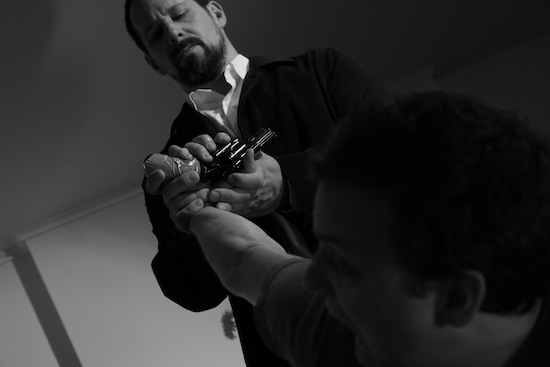
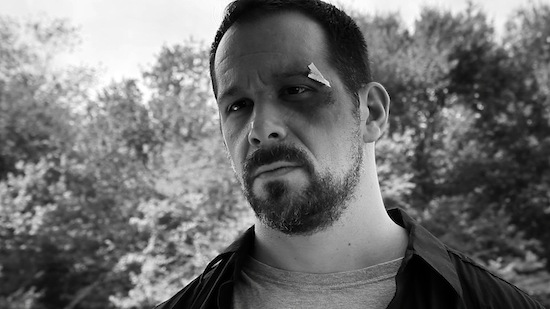
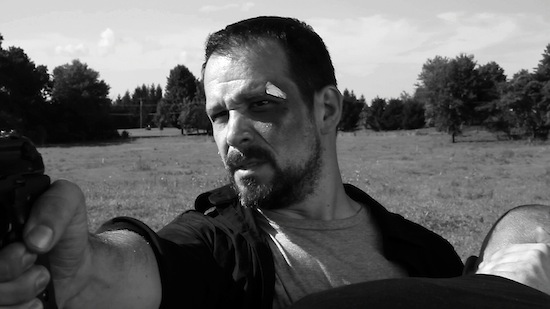
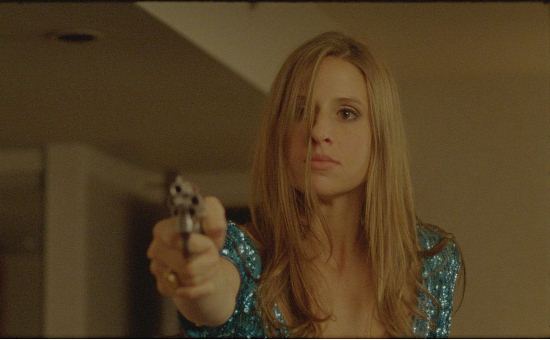
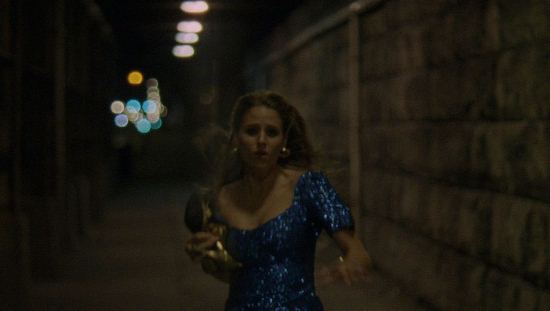
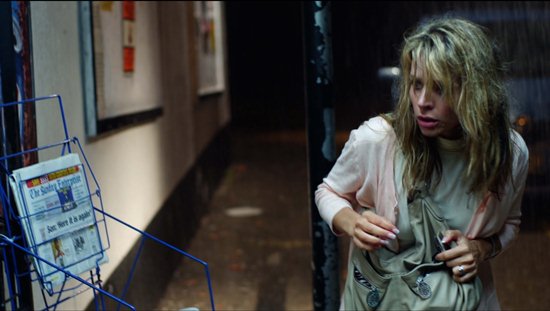
    A WIFE ALONE, “a neo-noir thriller about an ill-fated marriage in the suburbs of upstate New York,” directed by Justin Reichman is having its World Premiere on Thursday June 6, at the 2013 Brooklyn Film Festival, in Brooklyn, New York City. We had the opportunity to catch up with the director, to talk about how he got into filmmaking , his new film A WIFE ALONE  and all about taking the ‘plunge.’ Justin Reichman should know a lot about taking the plunge, after all, he left a pretty stable job as a lab tech at an AIDS research facility on 21st street in New York City to pursue his dream. Now he’s back in New York, years later, to premiere his first major film.

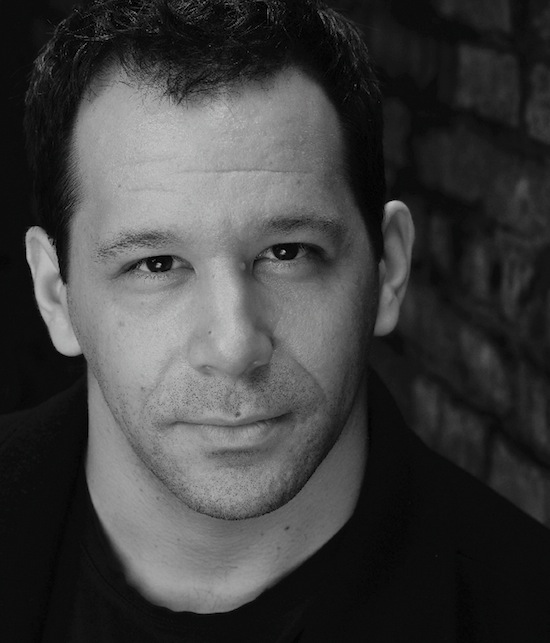
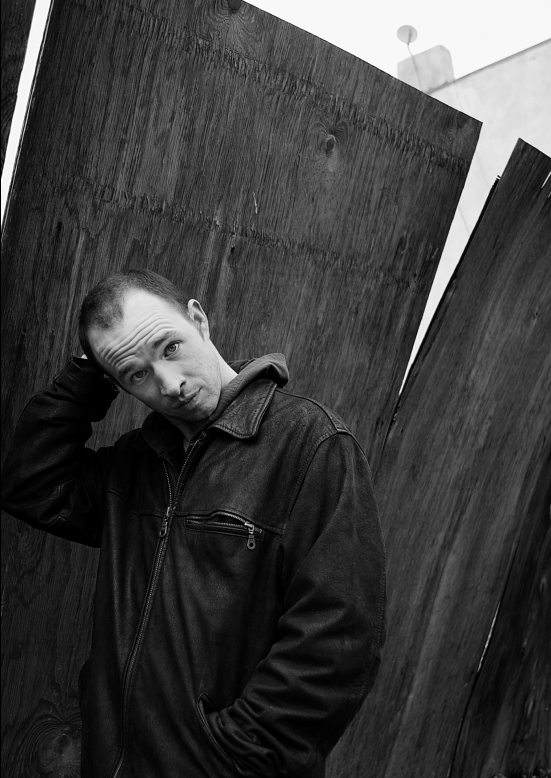
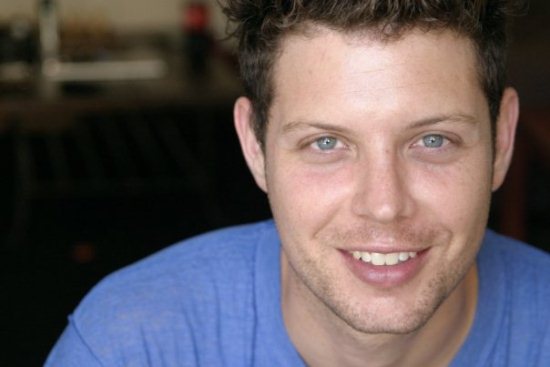
    [caption id="attachment_4039" align="alignnone" width="551"]Justin Reichman[/caption]

    VIMOOZ: Congratulations on your film “A WIFE ALONE” being an Official Selection in the 2013 Brooklyn Film Festival. How does it feel being included in the festival?

    Justin Reichman: It feels great to have a festival like Brooklyn on our home turf to premiere.

    VIMOOZ: Is this your first film?

    Reichman: Yes, it is. I did a few shorts, but nothing approaching the scope of A WIFE ALONE.

    VIMOOZ: How did you get into filmmaking?

    Reichman: I always loved to read and draw. When I was a kid I’d make stupid home videos with my siblings, but the decision to pursue filmmaking came about later in life after working a 9-5 job at an AIDS research institution in NYC and realizing that the sciences weren’t for me. I traveled around a lot after that, lived in South America for a year and started writing, doing some acting and working on sets.

    VIMOOZ: Tell me about the film. What is it about?

    Reichman: It’s about a ruthless young woman, a former prostitute, who infiltrates the upper echelon of suburbia through marriage.

    VIMOOZ: By the way, are you also the writer?

    Reichman: Yes, myself and Pete. We wrote the script while I was engaged to be married so a lot of it plays on the fears young people have before taking the plunge. Do I really know this person? Is our love real? That kind of thing. We created a noir story revolving around this collective psychological questions we all ask and then created the nightmare version of that. Infidelity, mistrust, sex tourism, years of misery tied to a lifestyle rather than love.

    VIMOOZ: The film is set in upstate NY, whats the connection there?

    Reichman: I grew up there. After traveling around a lot, I had a distant, objective affection for Rochester that I had fun playing around with in storyland.

    VIMOOZ: What happens after Brooklyn Film Festival?

    Reichman: We have a stunning theatrical release and sign a 3 project deal with a reputable studio. We all have agents and don’t have to worry about money ever again. I’d like to make a black comedy.

    Read more


  • Jeremy O’Keefe Talks About His New Film “SOMEWHERE SLOW” at Brooklyn Film Festival

    Jeremy O’Keefe is the director of the new independent film SOMEWHERE SLOW, now playing at the Brooklyn Film Festival in Brooklyn, New York through Saturday, June 9, 2013. SOMEWHERE SLOW, also an Official Selection at Cinequest, Omaha Film Festival, Vail Film Festival and the Monadnock International Film Festival, is described by the Brooklyn Film Festival as “intimate, raw and funny,” and “a searing and complex portrait of Anna Thompson, a 40 year old skin care rep, coasting through an unfulfilled marriage and an estranged relationship with her family.”

     [caption id="attachment_4030" align="alignnone" width="550"]Jeremy O’Keefe[/caption]

    We recently caught up with the Los Angeles native O’Keefe at the Brooklyn Film Festival to find about more about his film, SOMEWHERE SLOW.

    VIMOOZ: First, congratulations on SOMEWHERE SLOW being an official selection in the 2013 Brooklyn Film Festival … this is the East Coast premiere – are you ready for the NY audience?

    Jeremy O’Keefe: Thank you! I have been dying to screen a film for a NYC audience for a decade.  I used to live in NYC as I was just scraping together my first film, WRESTLING, and I loved nothing more than discovering small indie movies in the Village Voice and checking them out at the Quad or Sunshine Cinemas.   Screening in Brooklyn is a major personal feat for me! 

    VIMOOZ: You’ve screened SOMEWHERE SLOW at other film festivals, is the NY audience really different?

    O’Keefe: We’ve been fortunate to screen in a lot of various places around the country and the audience response has been passionate.   The Brooklyn Film Festival will certainly be opening up our film to an even broader cross section of people from all walks of life, and it’s really exciting for Jessalyn and I.   I don’t anticipate that the audience response will be all that different — people who go to see movies at festivals tend to be cut from the same cloth.   Should I be scared?? 

    VIMOOZ: No, but New Yorkers are known to be very opinionated. Tell us about “SOMEWHERE SLOW” – the story?

    O’Keefe: Plot-wise the film is about a woman (played by Jessalyn Gilsig, who produced with me) who breaks free of a boring, suffocating life and goes an adventure in New England with a teenage drifter  (played by Graham Patrick Martin of TNT’s Major Crimes).    Thematically, the movie is about taking risks and making the changes necessary to find the life you’ve been yearning to live.  It’s something I believe we can all relate to and a desire we all have at some point (or several points) in our lives.  The movie is funny and sexy, heartbreaking and provocative.

    VIMOOZ: You have a very impressive cast for an independent film. How were you able to get such great talent?

    O’Keefe: I, too, am impressed with who we were able to get to tell this story with us. I honestly can’t believe it.    Jessalyn reminds me that we were able to get talents like David Costabile and Robert Forster because of the script I wrote.  The film has become so much bigger than the 100 pages of paper I wrote it on  — with so many brilliant and creative actors, designers, producers and crew members all investing so much that I forget that it all began with an idea I had one day a few years ago.    I set out to tell a story that didn’t gloss over the imperfections and inconsistencies of real people.  I wanted to live in the nuance of life.  Actors are first and foremost warriors of the human experience.  I believe we were able to get the talent we did because they wanted to get down and dirty and explore some of the moments in life that are too crucial to be lost in a montage.  

    VIMOOZ: You also wrote the screenplay, how did you come up with the idea? 

    O’Keefe: Like most writers, we draw from our own experiences.  I wrote the script to explore a time in my life when I was living at the bare-minimum and floating through a kind of stasis.   I think we, as people, often look to external events to tell us whether we are meant to be happy or sad.  It’s human nature to look outside for change, but I’ve discovered that the best, sturdiest change comes when we look inside.  And that’s what I wanted to write about — a bunch of  external events taking my main character on a roller coaster that would cause her to take control of herself for the first time in her life. 

    VIMOOZ: What’s up next for SOMEWHERE SLOW?

    O’Keefe: Exciting things! We are playing in Brooklyn and at the Lighthouse International Film Festival in Long Beach Island, NJ this weekend, and we are signing our distribution deal so we can share everybody’s efforts with a worldwide audience.  

    VIMOOZ: What’s up next for you?

    O’Keefe: I’ve got a comedy short about hospice care called FINALE about to start festivals and am prepping two different features, a sex comedy and a 1940’s revenge thriller. I’m also shopping a pilot script based on the critically-acclaimed novel, BODY OF A GIRL, written by my sister-in-law, Leah Stewart.    I want continued success for Somewhere Slow and my other projects because it means I get to get another crew together, make a make-shift family again, and tell another story. 

    Read more


  • Terence Nash Explains His New Film OVERSIMPLIFICATION OF HER BEAUTY

    by DeVon Hyman

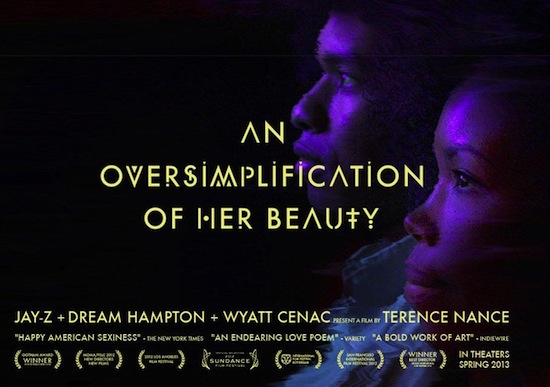
    April 26th 2013 marked the official New York City release of Terence Nance’s Dream Hampton, and Jay Z executive produced “Oversimplification” Described as “Happy American Sexiness” (New York Times) the autobiographical nature of the film takes you on a journey of Mr Nance’s inner most thoughts, played out on the big screen, narrated by what would seemingly be the conscious subconscious. After viewing the film, I was left with many a question, as my intrigue was at an all-time high. I sat down with Terence to pick his brain on all things Oversimplified, from the blueprinting of the capture of his ideas, to his co-star selection.

    The Beauty of the film, and his demeanor is his straight-shot approach. Share in this moment, as you are provided insight to the methods, reasons, and strategies behind the film OVERSIMPLIFICATION OF HER BEAUTY, by Terence Nash

    VIMOOZ: Your usage of Animation in the film is very unique and descriptive; in the grand scheme of your blueprinting the film pre-production, where did the inspiration to use such imagery come from?

    Terence Nance: I started with my main objective and place the pieces from there. I was trying to illustrate experiences that were to me un-filmable; things like dreams, and thoughts that go through my mind when reading a letter, or my adolescent years. These images were in the writing, in the text of the script and I created a piece of concept art to guide the aesthetic for each section. I wanted each to be visually distinct because the film is constructed from episodes that are told from a variety of perspectives and jump around in time and space.

    VIMOOZ: The movie is described by the narrator as a two in one of sorts, aptly announced as How Would You Feel being interrupted by Oversimplification Of Her Beauty; were you ever concerned that the message of each individual piece would get lost in the other?

    Terence: I think that the two conjoining and “getting lost in each other” was actually kind of the desired effect. I wanted a kind of formal meta-textual film but I think that dynamic inherently breaks down on itself specifically under the weight of the sincerity of the emotions presented. The films are “different” but they are at their heart coming from the same emotional space of goddess worship and being in love.

    VIMOOZ: Relationships are a big theme in the film, with advice being given, forewarnings, and more. How much of your personal experiences were the subject of content?

    Terence: All of them the film is an attempt to very directly tell the story of my personal experiences without the use of symbol, allegory, or metaphor.

    VIMOOZ: I want to ask about your decision to make a film, and cast yourself as the main actor. Please explain

    Terence: I saw the film as a self-portrait and it felt most natural for me to perform as myself.

    VIMOOZ: What was the experience like working with two iconic individuals the caliber of Jay Z and Dream Hampton.  Were you a fan of their work beforehand?

    Terence: Big fan of both and highly honored that they championed my work. It’s hard for me to talk about it because I’m still sort of in disbelief – pinching myself and what-not.

    VIMOOZ: How did the collaborations come about? How hands on were they in the process of putting this film together?

    Terence: They both saw the film in the wake of our Sundance premiere so they came along to help elevate the films profile.

    VIMOOZ: We spoke earlier about the imagery and use of animation. The content and art can be described as very abstract in a sense; was that your goal, or did you want more of a literal comprehension on the part of the audience? 

    Terence: I wouldn’t dare say what I want the audience to “comprehend” but the animation illustrates emotions which are usually more abstract that representational.

    VIMOOZ: How long did it take to complete Oversimplification of her Beauty?

    Terence: 6 years

    VIMOOZ: When did you realize that you had a passion for videography?

    Terence: I don’t. I’m more into the idea of art making and culture building in the abstract.

     VIMOOZ: Self-Taught, or institution educated?

    Terence: Both! I’m a notorious autodidact but I did go to art school.

    VIMOOZ: What are your 3 favorite movies and why?

    Terence: I don’t have actual favorite movies, but Coming to America is dope because of Semi’s accent; Barry Lyndon has always appealed to me because of the NASA lenses and I recently saw an amazing French film by a really dynamic director, boxer, Author called Rengaine. Maybe my current favorite film is THE LAST CHANT OF JIMMIE BLACKSMITH

    VIMOOZ: Who were your Directorial influences ?

    Terence: Both Spikes, Kubrick, PTA, Wes, Kahlil Joseph, Charlie Kaufman, Julie Dash, Jeunet, Bergman, Lynch, Charles Burnett, Terrence Malick, Terrence Malik, and Terrence what’s his last name? Malick.

    VIMOOZ: Tell us some of the factors in settling on Namik Minter as co-star?

    Terence: I’m in love with her soooooooo.

    VIMOOZ: Why did you choose to go the route of narration, versus pure character based dialogue?

    Terrence: Didn’t make a conscious decision, impulse is the way to go when making art. I like drawing and most interesting things happen in the head and heart not the voice box.

    http://youtu.be/ycC3sKweQyc

    Read more


  • AN INTRODUCTION TO: Damon Terry, Up-and-Coming Filmmaker

    by DeVon Hyman

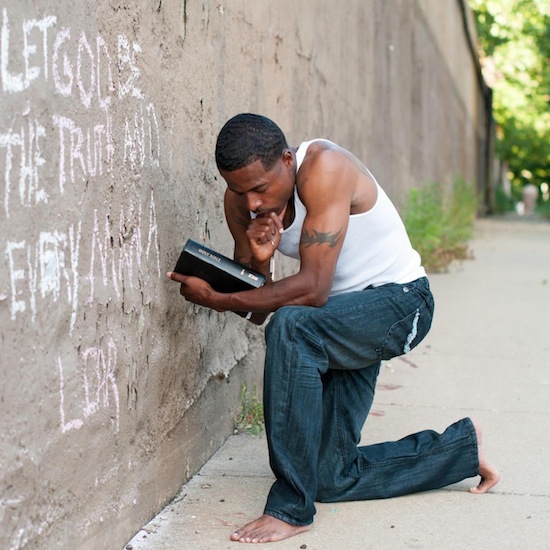
    It is an age old conclusion that experience is the best teacher. A hands on tool when applied can be the greatest conduit to redemption, and maturation.  An a youngster, Indy filmmaker Damon Terry;’s life was marred by much trial and tribulation. At his own doing, he became a young man on his way to being a statistic for all intents and purposes. Stereotypically, and similar to many others reared in the environment which spawned his upbringing. Ultimately landing in prison, Terry used the time to reflect and rectify. Overhauling not only his perspective, but his goals in life he was ready for his second chance at freedom, and opportunity. When it came, he hit the grown running; inspired by a restored faith in a highpower, whom he praises at every moment, Damon Terry was moved by a calling to literature and eventually script-writing. A passion was born, a career iniated, and the rest, is the subject for documentation. Often compared to others whose platform of the gospel, has brought upon exponential success, Damon Terry seeks to follow in that path, yet in a uniquely refreshing manner which adds to the intrigue of this brothers existence. I present to you, the life and times of Independent filmmaker Damon Terry. 

    First off for those who are not familiar with your work, please tell us a little about your credentials thus far:

    Praise the Lord everybody, I am a writer of the Gospel, I write films, I create television shows, I create ringtones, I write stage plays, Greeting cards, and I also write books. I have created over 100 single projects in the last four in a half years.

    As a director you have been quite successful with the commercials and such mentioned, describe the point where you made the decision to transition to filmmaker?

    All the work that the Lord has provided such as the commercials that are listed are all hand written work ready to be pitched. The Lord did not just allow me to write films or stage plays, I have written over 20 commercials. I have not directed any of my own but I have worked on featured films behind the scene and television shows and have been taught by some of the best in the business and paid attention to their craft and learned from them. First featured film I worked with director Jeb Stuart and continued on to work with Jeff Rose and Victor Hobson which I watched and learned a lot of great things from and many, many more. The Lord allowed me around such great individuals to learn this craft and now I am able to direct featured films and short films, television shows and stage plays by myself and with help from a great team. Every great director needs a great team of people to make the production happen.

    You own and operate two brands simultaneously correct. What are those brands, and their objective?

    I am owner and founder of Let God be The Truth and every Man a Liar Production LLC. My first main objective is to save souls. Second to promote the truth of the Gospel all over the world to present the miracle that was put in me with no knowledge of writing in script format or God these films are going to touch lives there going to make people aware that God is real and no matter what test or trial that you can be victorious over all things it’s a held accountable Gospel the sermon pieces in the movie is the reason why this is a true Gospel film.

    Your core support if you will has been largely in part within the gospel community, how hard is it as a man of great faith and value to make your mark in the entertainment industry, all be it directing but still, an industry where success comes from pushing the envelope with ideas?

    Actually the support is quite equal with the Gospel community and the non-Gospel community because a lot of people are aware of the miracle that was put in me and on how I started writing my testimony turns the nonbelievers into believers. I have to endure a lot of test and trials as I am a man of God coming into this entertainment business with four in a half years of knowledge of the business in promoting to the world that this is a miracle from God it’s going to make some people feel some type of way. But the most difficult part about pitching the films to the entertainment business is that a lot of them don’t believe in God. I promote to the world that everything that the Lord has put in me which is a true miracle has never ever been successfully presented to the world before and I can prove it.

    Your past is public record of course, and you have been extremely candid in your interviews and more about used to be, and the change that occurred- how did you find your way to the camera?

    My past life I was a gangster I sold a lot of drugs from state to state I terrorized coned tricked and deceived a whole lot of people and in December of 2008 I called out to the lord and said I don’t want to live like this anymore and that is when the Lord told me to write a movie and on that night the Lord deposited a dream inside of me then I woke at 4am and I wrote my first film” Practice What You Preach” and I wrote this 13 page script in 13 hours and from there continued writing and still have not stopped. I found my way to the camera by traveling pitching the movie scripts working behind the scenes with other productions learning the craft.

    “Practice what you preach” was your first script written correct? What’s the premise behind this screenplay. The cliche is highly utilized but what is unique about your spin on it, which ultimately will be played out on the big screen?

    “Practice What you Preach” was the first script that I wrote, and it’s about a preacher that did not practice what he preached a true Gospel drama. You can log onto juntoboxfilms.com and search “Practice What You Preach” and read my 25 minute knock you off your feet screen play book teaser, brace yourselves as you read. And witness the power from the Lord. This is the dream that was put in me. From start to finish. Featured full length industry standard script is also available.

    I must commend you on being a self-taught cinematographer; do you catch any flack from not having said the formal training that some of your contemporaries have?

    My training comes from the Lord so it’s going to be people that’s not going to support in anything that you do, I’m not self-taught I am God taught so I keep going and not allow others criticism to hinder me.

    You are originally from Ohio? What part? So many artists in all genres speak of the obstacle before them by way of living in smaller markets, have you experienced that same tribulation?

     I was born in Wood County; Parkersburg, West Virgina. I was raised in Tazewell Virginia and my parents moved me and my siblings to Columbus Ohio in 1991. To be honest I have had the same trials and tribulations making people aware of what I have to present to the world everywhere I go. The Lord has allowed me to travel to a lot of places and it’s a lot of people aware of what I have to offer from the large entertainment companies to the smaller entertainment companies and also a lot of Churches but I keep my faith and keep pushing. That I am taught from Bishop Edgar A. Posey out of Living Faith Apostolic Church in Columbus Ohio that the greater the test and trial the greater the reward. God is not going to put all this in me and not allow it to be successful. Somebody is going to plant the seed to invest the miracle that was put in me to present to the world. And whoever does so will reap 100 fold blessing on good grounds. 

    What do you say to those who question the entertainment value in “gospel films” or to those who humor that you are taking pages out of the TD Jakes and Tyler Perry handbook?

    A Damon Terry film is a true Gospel drama there is nothing Gospel based about a Damon Terry film everything that is put in me from the Lord a true miracle from the Lord is different there’s nothing old about the Lord all things are new so some people may say that I am something like Tyler Perry or TD jakes but that is not so. Because if my films that are put in me from the Lord were the same as there’s he would not put it in me. People have to understand with the Lord all things are new and I know the scripture says Ecclesiastes chapter 1 verse 9 says That there is no new thing under the sun and that means that the Lord has already done everything, everything is already in place so the Lord will use people that’s going to give him all the praise all the honor all the credit an all the glory to fulfill the ministry all the work that the Lord has put in me is going to change the entertainment industry forever.

    Ultimately for the audience what is the message of your screen plays?

    The main message in a Damon Terry film that the Bible is the inspired word of God that there’s one Lord one Faith and one baptism and that name of the Lord is Jesus in order to obtain salvation we believe an individual must be born of the water and of the Spirit by being baptize in the name of the Lord Jesus Christ for the remission of sin and being filled with the Holy Ghost with the evidence in speaking in other tongues as the Spirit of God gives the utterance. A Damon Terry film is going to show how people can stay saved while going through test and trials it’s going to show how people that are not of the Lord how to seek the Lord and stay in the walks of Lord. A Damon terry film is going to be a true blessing to the world it’s going to save souls it’s going to give hope it’s going to make people want to plant seeds on good grounds and I’m super excited to present it to the world because it’s going to happen.

    Read more


  • Director Matteo Garrone talks about the real-life story behind his amazing new film “Reality”


    by Francesca McCaffery

    Garnering the illustrious Grand Prix at Cannes this year, Reality is an Italian film that is much more American in nature than we would want to believe possible.  Following up his gritty, grimy crime drama Gomorrah,  director Matteo Garrone is a master at keeping it real while telling a profound story about humanity in its most vulnerable state.(It helps that Garrone has a natural talent for finding brilliant non-actors. His lead actor is actually a prisoner who had to get permission to come to set and film.) 

    Shot in the city of Naples, Reality opens taking us right into a city that is grimy and filled with the sweat and dirt of every day people hustling and struggling. Crammed into tiny apartments together, with extended families living several to a room, you can smell the city of Naples from the beautiful opening.  His story centers around Luciano (an amazing Aniello Arena), a local fishmonger who is busy unloading robotic pasta-makers for extra cash with his wife, and trying to make a decent living for the entire family.  Apparently, the reality show Big Brother is somewhat of a major obsession in Italy in its own incarnation there, and at a friend’s wedding, the dorky hipster “Enzo” from the cast makes a paid appearance, wishing the bride and groom congrats. As a gag, Luciano dresses a woman and schticks around for a few moments with Enzo, garnering a cherished photo with Enzo for his daughter. When sweetly bull-dozed by cellphone by the same daughter, as well as his amused wife, to come to the mall for an “audition” for Big Brother, Luciano at first refuses, not really caring a bit. But then, to make everyone happy and shut them up, he decides to go. What follows is a long and winding trip into the psyche of someone who trades his life for a profound, inexplicable fantasy version, and it is completely mesmerizing to watch.

    Garrone manages, somehow, to exert a glaring and tender touch, and Arena’s performance is so complete, so, well, both adorable and devastating, it is hard not to follow him down this path with both awe and an ashamed “I get it!” Because who among us living in the US, with extra time on their hands, has not at least once in a while fallen prey to the the thoughts of what others more powerful, beautiful, wealthier or more “fabulous” in general are doing with their lives? I don’t know if it makes one feel to better to know than even in Europe they are as bad as we are in terms of projecting themselves into alternate versions of their own lives, or much, much worse. The point is, Garrone is digging deeper than our obsession with reality TV. He is not skewering us, judging us, or gleefully unveiling something vile- Garrone is simply and effectively recreating his own version of classic Italian neo-realism in Reality, and is exciting to witness this evolution of an artist. The film open in the US on March 15th. We were lucky enough to sit down with the director last week, the once-painter who is now taking the helm as a new Italian, cinematic wonder…

    VIMOOZ: Can you tell us what inspired the script? How did it develop, exactly?

    Matteo Garrone: From a true story! It happened to the brother of my wife. My wife is from Naples, and she comes from a very big family. Her brother was a guy, that, every time there was a party, he was always making fun, the life of the party; everyone would always say to him, “You are perfect to go on television…” He asked me if I could help to film an audition for him. At that time. My studio was where they were doing the big casting for Big Brother.   So I said “sure.” What I didn’t know that it was the beginning of at tragedy! (laughs) Enzo, in the film, is me, in a way. We had to invent him, a character to give him the chance to make an audition.  I went through several treatments for the idea of the film, and soon asked him to look at them. We then decided together to do it.

    VIMOOZ: How did it make him feel? Did he mind, at first, that you were basing the story on him? 

    Matteo Garrone: He followed me during the shooting, and talked a lot with the actor  (playing Luciano) and we had a happy ending, because we gave him money to re-buy his fish shop!

    VIMOOZ: He actually had a fish shop in real life in Naples?

    MG: Yeah. He had sold it. We invented some things, but the parts that we invented  are the more normal things. For instance, when the brother makes the crank phone call, pretending to be the Big Brother producer, we incented. The cricket , though, which seems more surreal, really happened! His fish shop is now going well. The real story has a happy ending. The movie, well…(laughs again)

    VIMOOZ: Did you have the cinematic temptation to show Luciano losing his mind stylistically? To show his heightened metal reality visually?

    MG: No, because in that moment, I think the audience could better understand the situation, from the point of view of the wife. So, we wanted to switch perceptions, otherwise, his mental state would have just become, after a while, repetitive. So we switched points of view, to the wife, and the parents, and the family. And in this story, they have a big complicity, because they pushed him to audition. That also happened in real life, but maybe not so aggressively. That’s why I think it’s a movie about illusion, but also, about capitalism. Because, you know, you never are satisfied with what you have, always grappling with the desire to have something else making you happy. I always said Luciano is not so far from myself. I get very weak from the seduction of our society, you know, and it’s very easy sometimes to lose your way, your identity…. Because, another important aspect of the movie is that Luciano builds a new character for himself, like in a Pirandello story.  That’s the beginning of the tragedy. Because he starts to act like a saint. But he’s not a saint. (Laughs some more) I think this aspect of the element of the story was what pushed me to tell this story, and I found this way to create a very close relationship with Luciano-he was close to me. We don’t want to put ourselves at the top, and judge. We all live in this world. That would not be fair. So we found a way to be close to the character, to tell the story with humanity.

    VIMOOZ:  Is it a goal of yours to bring the societal problems so present in Italy, and which, say, Americans are rarely even aware of, to the forefront of your films?

    MG: When I work on my project, I try to do my best. In this case, I can say that my references are related to the greatest Italian directors-De Sica, De Filippo, the early movies of Fellini, Visconti- there are so many… My influences come from them, but then I try to find my own way. It would be suicide to try and be a Fellini! (laughs) When you make a movie, you hope it can reach the largest number of audiences. I try to find my personal way.

    Reality opens Friday, March 15th. See it in NYC HERE at the Angelika this weekend! Don’t miss it

    Read more


  • The 2012 Docuweeks Festival starts in LA & Continues in NYC-Interview with brave “We Woman Warriors” Director Nicole Karsin

    Please don’t forget to check out the remaining two weeks of the  Docuweeks 2012, the incredible film festival of the International Documentary Association, playing at NYC’s IFC Center through August 30th. There are some great, new, Oscar-worthy documentary films playing there now, and VIMOOZ will be giving you capsule reviews throughout the festival. (Docuweeks started in Los Angeles today, August 10th, at the Laemmle Noho 7 Theater.

    One wonderful documentary is We Women Warriors, which follows three native women caught in the crossfire of Colombia’s warfare who use nonviolent resistance to defend their peoples’ survival. Colombia has 102 aboriginal groups, one-third of which face extinction because of the conflict. Trapped in a protracted predicament financed by the drug trade, indigenous women are resourcefully leading and creating transformation imbued with hope. We Women Warriors bears witness to neglected human rights catastrophes and interweaves character-driven stories about female empowerment, unshakable courage, and faith in the endurance of indigenous culture.” 

    Nicole Karsin, the director the doc of We Women Warriors, speaks with VIMOOZ:


    [caption id="attachment_2804" align="alignnone" width="382"]We Women Warriors Director Nicole Karsin[/caption]
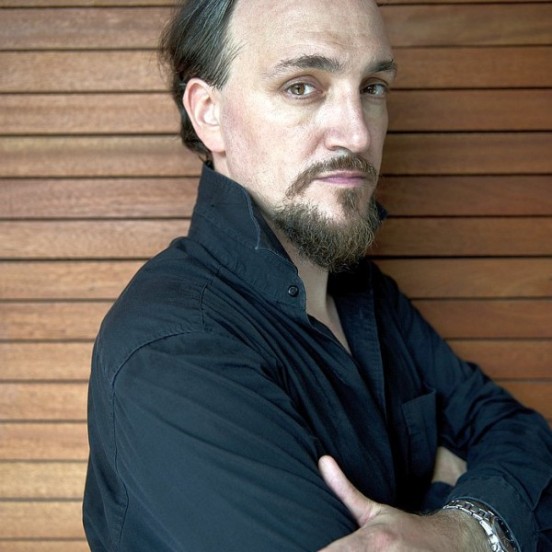
    We Women Warriors director Nicole Karsin


    Vimooz: One of things that I love about We Women Warriors is your incredible dedication to the film and its mission. Can you outline briefly, from start to finish, how you became first involved in the film?


    Nicole Karsin: I lived in Colombia for seven years and shot this film mostly during 2006-2009. Using my hard-earned access as a journalist, I traveled between several villages during three years to chronicle a few exceptional native women using the wisdom of words and the tribal tradition of collective actions to defend themselves amid ongoing combat. Fluent in Spanish, and savvy about traveling in Colombia’s conflict zones, I sometimes became a one-person production team, shooting alone in the Colombian countryside. At other times, I traveled and worked with a small, committed Colombian crew.


    I moved to Los Angeles in 2009 with my film’s first rough-cut in hand. The following three years were dedicated to post production: re-editing, seeking funding and feedback. I participated in fellowships offered by Film Independent and the National Association for Latino Independent Producers, both of which were tremendous sources of support and helped me craft my film to the best of my ability. In May, I completed a successful Kickstarter campaign that raised $50,000 and enabled me to complete the film. From June until present I have been securing archival footage and music rights and undergoing final post.


    Vimooz: Can you tell us a bit of your background? Was it primarily academic, or always film/media-based?


    NK: I never studied film, but I got my Masters in Journalism, which was a great training for reporting and interviewing, very important skills for docs.


    Vimooz: What kept you going back to Colombia? I know you have a few heavy stories to tell! It wasn’t the safest of areas you were shooting in, is that correct?


    NK: I actually lived there for seven years, so it wasn’t a case of returning. Though I did return to do a couple pick up interviews after I returned to LA in 2009. But yes, it was difficult. In a three-month period in 2005, I covered the brutal massacre of someone I knew and respected, as well as intense combat that ravaged northern Cauca forcing entire communities to evacuate. I also was affected at the time by assassination attempts against Colombian journalists, who were colleagues and friends.


    Vimooz: Two part question: What would be the dream result of this film getting distribution in the theatres, or a venue like HBO: For the film’s mission itself, and for your own career as a doc director?


    I’m delighted that my film is participating in DocuWeeks, which I’ve attended over the past couple years. It’s been a showcase of incredible documentaries and a source of inspiration. I did not expect my world premiere to be an Oscar-qualifying screening, but I’m grateful for this opportunity. Currently, I’m focusing on these two weeks of screenings. But the film will screen in Mexico in November, which thrills me because it’s a critical audience to reach.


    Of course I would love to secure distribution in all territories, theatrical releases worldwide and to have HBO pick up my film along with my post tab. But right now the film’s life is just about to begin, and I’m excited to see how it unfolds. We’ll see what the distribution gods have in mind. In terms of my own career – I want to make more documentaries, and I’ll be appreciative to have graduated from the first-time filmmaker status.


    Vimooz: Did you self-fund a majority of the film yourself? Was Kickstarter a huge help?


    NK: I did. I got several grants, a couple large anonymous donations, and did years of funding appeals & events using my fiscal sponsor to offer tax-deductible donations. My Kickstarter campaign was to secure finishing funds and it succeeded.


    Vimooz: For the fledging documentarian, where can they go with the seed of an idea? Should they try getting grants for their project? Or is going through Kickstarter and their friends the best bet?


    NK: They should submit to all grants and funding opportunities, as well as conducting their own fundraising campaign, which includes but should not be limited to Kickstarter. Also, it’s important to actively seek out feedback and support, attend workshops & discussions like those organized by the International Documentary Association and apply for fellowships like those offered by Film Independent and the National Association for Latino Independent Producers, all of which were tremendous sources of support and helped me craft my film to the best of my ability.


    Vimooz: What are some of your favorite docs and directors?


    NK: WHEN THE MOUNTAINS TREMBLE directed by Pamela Yates was the film I most tried to emulate while making my film. I also love Yate’s subsequent GRANITO: HOW TO NAIL A DICTATOR. Other films I love include Jennifer Fox’s REINCARNATION, Bernardo Ruiz’s El REPORTERO, and THE LIGHT IN HER EYES by Julia Meltzer and Laura Nix. Yes, I am citing most of POV’s 25th season because it’s amazing and fresh in my mind. There are so many fabulous films that move and inspire me, perhaps too many to name. Ah, Lucy Walker’s WASTELAND was wonderful, as was CALL ME KUCHU by Katherine Fairfax Write and Malika Zouhali-Worrall.


    Vimooz: Can you tell us about your next, upcoming project? We can’t wait to hear!


    NK: I have another short documentary I shot in Colombia and a short I shot In Chiapas, Mexico, both of which require post funding to complete. I have a strong desire to shoot a documentary in a region other than Latin America. Southeast Asia really enthralls me. For the moment, I am going to enjoy the premiere and life of my first film, deal with distribution and develop the film’s engagement campaign so it can be used as a tool for social change. But I will definitely continue to make films, and I’m happy to keep Vimooz in the loop.


    Thank you so much, Nicole, and great luck with the film!


    You can hear Nicole speak at a Q&A TONIGHT, August 10th,  at the IFC Center in New York after the 9:45 pm showing of We Women Warriors, or please be sure to catch it this weekend and all next week at IFC NYC for Docuweeks.

    Read more


  • VICE’s Eddy Moretti and directors Alexey Fedorchenko and Jan Kwiecinski talk “The Fourth Dimension”

    The Fourth Dimension is a compilation of three short films, produced in association with VICE and Groslch Film Works. Francesca sat down with VICE’s Eddy Moretti, Russian director Alexey Fedorchenko (Silent Souls) Moretti and newbie Polish filmmaker Jan Kwiecinski. Moretti gave the directors a creative “brief,” the first tenant being the film must focus upon the concept of, you guessed it, the “Fourth Dimension.” Harmony Korine, the first director to get onboard, was sadly and understandably jet-lagged, having just finished logging eight weeks of editing hours for his upcoming film starring James Franco, Selena Gomez and Vanessa Hudgens (yep) called Spring Breakers. (He sends his regards though.)

    VIMOOZ: How did you come up with this ‘Creative Brief’?

    Eddy Moretti: It was just a series of emails that Harmony had been exchanging back and forth. I definitely wanted to be really playful with the project, and he started writing some freaky roles, and I kinda went with it. And I kinda encouraged the playfulness. And I wanted to work him. And I said, “You be the first filmmaker on board,” which I knew would already set a tone. And Jan especially Jan (Kwiecinski ) really played with visuals which were influenced by Harmony, I think.

    VIMOOZ: What did you first think when you given the ‘creative brief’ by Eddy Moretti?

    Jan Kwiecinski: That was super crazy! The brief is so extremely strange, and deranged, in a way. You simply have no idea what to start with. Me. Personally, I had to forget everything I knew. Which was actually one of the rules. And slowly getting the form. That’s what I did.

    Alexey Fedorchenko: Actually, I was reading it over many times, and the first thing that struck me, really, was that an insane person must have written this! But then, I was just trying to read them carefully. And you know, each of the guidelines could actually be made into a separate movie.

    VIMOOZ: Alexey, was your story based on the actual man (a mathematician- ) who refused a million dollars in awards money?

    Alexey Fedorchenko: Yes, I did. One of the requirements of the guidelines was that the person has to be sort of marginalized. The main character had to be on the margins of society. The fact was, I didn’t want to make him too marginalized- to a person that was just a bum, or down-in-the-dumps. So I went for the actual character-the Russian mathematician Gregori Perelman, (who turned down two prestigious international prizes).

    VIMOOZ: Did you know who the other filmmakers would be?

    Jan Kwiecinski: Yes, and I was quite honored to be, you know, to be asked to pitch, even. We won a contest in each of our countries. And I had seen Alexey’s Silent Souls, which I really adored. And Harmony is one of the masters of the cinema. I grew up on his movies Gummo and Kids. I was very honored. I am the least experienced director, as well. (He had has made one previous, short film.)

    Alexey Fedorchenko: I knew nothing. I hadn’t seen anyone’s work. But I was very surprised that they decided to go with Russia and Poland and America. I don’t know if they had chosen, say, a director from Africa and the Asian countries- would it had been better, not better? I just don’t know. When I was watching the film in the end, I was really watching it and enjoying it as a viewer, not as a director, picking apart its flaws.

    VIMOOZ: Did everyone have the same budget?

    Jan Kwiecinski: Yes. It was very low! Everyone had the same amount. I shot mine in four days. We were really running. The preparation and post is really the most time-consuming, of course.

    Alexey Fedorchenko: I shot mine in twelve days.

    Jan Kwiecinski: Harmony shot his in two!

    VIMOOZ: What’s next for you both?

    Jan Kwiecinski: I’m working on a feature, based on my short story called The Incydent.

    Alexey Fedorchenko: I’m also working on a bigger feature, and Darya (actress Darya Ekasamova- truly wonderful in his segment of the film “Chronoeye”) will also be in it.

    VIMOOZ: Thank you all, and good luck with The Fourth Dimension!


    Read more


  • Val Kilmer Talks about His Amazing New Role in the film “The Fourth Dimension”

    by Francesca McCaffery

    Francesca McCaffery sat down with the legendary actor Val Kilmer to talk about his new project premiering at the Tribeca Film Festival this year.

    The Fourth Dimension is a triptych of short films, and is the brainchild of VICE and Groslch Film Works, as well as VICE’s Renaissance Madman Eddy Moretti, who gave the directors a creative “brief,” the first tenant being the film must focus upon the concept of, you guessed it,the “Fourth Dimension.”

    Cinematic wunderkind Harmony Korine directed the first short of the three segments, “The Lotus Community Workshop,” which he wrote expressly for Val Kilmer, and it is features agenuine, hilarious and endearing performance by Kilmer.Here, Kilmer talks about his love for working with Harmony and his excitingnew one-man theatrical show about Mark Twain.


    Vimooz: Was it your idea to use your own name as the character in The Fourth Dimension?


    Val Kilmer: No, it was very much Harmony’s idea. It was his insistent idea- “Oh, if it doesn’t work, we’ll change it!” The few times we say my name, we say “Hector,” as well. By the time we got to the night of the first day, and Rachel (Rachel Korine, Harmony’s wife, performing in the film, sporting adorable corn rows) kept saying, “Aw, that’s so great, Val!” I kind of got the idea that they were gonna go with my name.

    Vimooz: Did Harmony write the script with you in mind? Did he write it for you?

    Val Kilmer: I think so. And I don’t know if that’s a compliment or not! I think he was thinking about me- what are the building blocks that incorporate this kind of terrain, what the ideas are, the challenge of it being a short. Although, I happen to know the rules of an Academy Award consideration- and a short may go up to 48 minutes! I think we could get in there!It’s a fun little world, the short film world.

    Vimooz: Was the film really shot in just two days? How was that?


    Val Kilmer: It was very intense! We shot way into the night.

    Vimooz: How was it working with Harmony Korine? I heard you rarely felt so much love on a set before.

    Val Kilmer: I really love him. And I don’t want to insult Francis Coppola- there’s alotta love there, too! But, you know, he’s just impish. I think it kinda surprises some people, because you kind of find out he’s just…a comedian! Because the darker part of his movies sort of stand out, I guess? But, he is so playful…He is just looking to smile, he is looking to be alive about what comedy is- it’s some recognition of reality. Not the normal reality, but, something so extreme, even violent. I mean, why do we think it’s funny when someone falls on their face? See. We’re all smiling now! It’s weird. And I’m proud, too, because, a s far as I know of his movies, and I think I’ve seen everything he’s done- it’s the first really sort ofstraight comedy he’s ever done.

    Vimooz: What’s next for you, Val?

    Well, me and Eddy, and Harmony, we’ve got big ideas. We want to take this self-help program on the road! I just finished on putting on my one-man show about Mark Twain in Hollywood. I really want to get at-risk kids and vets coming back from Afghanistan to come and see. Theatre can be pretty snobby- but there needs to be outreach- it needs to be for everyone. and I’m going to St. Louis, Missourri next week to receive my honorary doctorate from William Woods University. And I am going to do the Twain play there. I’m actually pretty nervous about it.The last artist they had there was Wayne Newton pre-Las Vegas! So they’re pretty excited,but I’m actually pretty nervous. Because I have this theory that Twain made up his dialect, so I don’t really do a Missourri dialect (in the piece.) I hope they don’t mind. That’s a tough community there!

    Vimooz: Thank you so much, Val. It was such a real pleasure.

    The Fourth Dimension plays this week at the Tribceca Film Festival in NY. Check out the listing and times.


    Read more


  • Interview with Cyril Tuschi, Director of the fascinating new documentary “Khordorkovsky”

    [caption id="attachment_2198" align="alignnone"]Cyril Tuschi, director of Khodorkovsky[/caption]
    Written by Francesca McCaffery

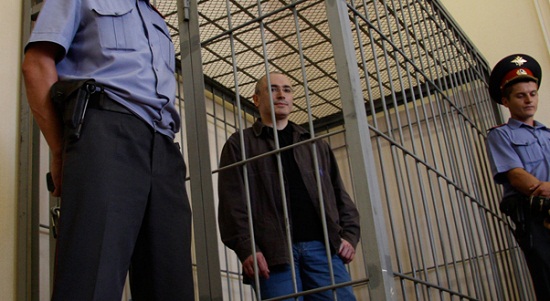
    Cyril Tuschi’s new documentary film, Khordorkovsky, tells the story of oligarch Mikhail Khordorkovsky, then the wealthiest man in Russia before his arrest by Prime Minister Vladimir Putin in 2003.

    Tuschi has directed short films and music videos, and his feature was Slight Changes in Temperature and Mind in 2004. A former night club owner, theater worker, and philosophy student, Tuschi has  the open mind, gentle humor and rigorous intellect needed to become a truly outstanding documentary director. The film is fascinating, and we had the pleasure of speaking with Cyril about his his process, his interest in his subject and the role of politics in movies.

    VIMOOOZ: The film, Cyril, really blew us away. I think it’s so interesting for Americans especially, to see both sides: You could see Putin-is he really trying to hang on to Mother Russia, and moments later you realize, whoa, no, he’s really not- he’s absolutely terrified! The way you displayed that for us was so riveting. Can you tell us how you received access to  court proceedings? Was that very difficult?

    We had tried for years to get access. I think it was a mistake of the judge, actually. I saw the Minister talking to Khordorkovsky through the “cage” in the courtroom (the cell he was held in during the court proceedings) , and after that day in court we asked the judge if we could do the same. I told him we were filmmakers. He told us to fill out a special overnight application, and come back tomorrow. I did so, without even the cameraman, because I didn’t think it was going to work. But then a lawyer came and said, “Okay, you have ten minutes!” I really had to turn on the camera myself. I think the judge was just not briefed correctly.

    How many times did you actually go back and forth to Russia?

    Countless. We had 180 hours of interviews. I stayed three months in Moscow.

    Amazing. Do you see the film as a portrait of the two men in a way? Their egos, a sort of battle of wills? Or a portrait of Old Russia v. New Russia, or both?

    Definitely both. It’s definitely a portrait of Khordorkovsky, but he is also a symbol for the changing Russia. He was a real believer of Soviet Russia in the beginning- he had posters of Lenin in his bedroom. Then he became very strong, new Liberal populist defender, and now he is something like a mystified-hero, social democrat tiger – and this kind of a change in direction, and in ambivalent character, for me as a director, was very fascinating. And of course, we have this open fight of these two men, which was very interesting to me. I also imagine that if Khordorkovsky was a woman, and Putin was a woman, this conflict never would have happened.

    That’s probably very true! Do you think that Khordorkovsky played the game of his rise as a brilliant chess move- in order to eventually secure the Presidency by becoming this political and social martyr? Does he have that kind of will, do you think?

    It’s a daring theory- one that the Swiss former advisor from Geneva expressed in the film. It could be. It could be that he is such a mastermind as to be calculating his prison time- he goes in an oligarch, and comes out to just take over. This could be Putin’s fear too- the Count of Monte Cristo. Of course, this question is unanswerable until he gets out.


    What do you think will happen when he gets out?

    Well, maybe that, but I don’t think so. Maybe he will do a Monte Cristo-type of revenge. But I think that he has so much neglected his family, maybe he will go into therapy, I don’t know- that sounds too modern! But, maybe he will…He will take care of his children. He has to, and he will, get all of his (other associates) out of prison. I think he also wants to start a university. That’s part of his utopian side. He wanted to focus on the Open Russia educational area. But then he got arrested, so he couldn’t achieve any of that.

    I loved the crisp and vibrant black and white animation. Can you tell us how you decided to incorporate it?

    Well, the animation was all we had in the beginning- because I never thought we would meet Khordorkovsky We had to have an image the audience could go on from with. We had a very good German artist. The animation was the largest part of the budget- 20,000 euros.

    Do you have any hopes that releasing the film in the United States will reignite a human rights campaign for Khordorkovsky? What were your hopes on that end?

    I’m not a propagandist, and I don’t start projects like Michael Moore does. I’m not a lawyer, or a proper journalist. He always has the idea of what he wants to convey- and then he executes it. He uses propaganda for the poor, instead of the mighty. That kind of propaganda- I really do like. But I didn’t start like that. For me, it was something new- it developed as we went.

    Your personal belief is that Khordorkovsky is innocent?

    I mean, what is innocent? What does it mean? He is guilty of leaving his family, of acting like a capitalist who buys a company and kicks out thousands of employees to save the company.

    Putin was also terrified that American oil was going to come into Russia.

    Exactly. And you want top say that Putin was right, he wanted to protect Russia from Imperialist America!

    It’s a very valid point! You can a little bit see both sides of that, for sure.

    One thing I’ve learned through making this film, is that it is possible for people to change. It doesn’t matter how little, or how late. Change is possible. I really believe that.

    What’s next?

    I’m trying to get a fiction project going about Julian Assange (of WikiLeaks.) If I could bring it to Hollywood, I would ask Ryan Gosling to do it! That would be really cool. I would also like to go to a great cable network, and make a great dramatic series out of “Khordorkovsky.”

    That all sounds awesome. Good luck, Cyril. You should have absolutely no problem! Thank you for speaking with us.


    Read more


  • Vimooz Speaks With the Director & Producer of “The Interrupters”

    [caption id="attachment_1595" align="alignnone" width="602"]From left to right: violence interrupter Ameena Matthews, Producer/Director Steve James, Producer Alex Kotlowitz, and Co-Producer/Sound Recordist Zak Piper. [Photo: Cinema Guild][/caption]

    Francesca McCaffery had the great pleasure of speaking with Steve James (Director) and Alex Kotlowitz (producer), who are the creative team who put together the riveting new documentary “The Interrupters,” about gang intervention specialists working the Chicago streets with the unique non-profit, CeaseFire.

    CeaseFire was founded by epidermologist Gary Slutkin. Slutkin, who battled the cholera and AIDs epidemic in Africa for years, believes that the spread of violence mimics that of infectious diseases. This innovative approach, combined  with the fact that CeaseFire not only employs former gang members, but gang members with major street credibility, gives CeaseFire the unique opportunity to penetrate into the daily lives of some potential violent perpetrators, illuminating the audience to the great humanity hidden beneath the darkest of disguises.

    Steve James is an icon of documentary filmmaking, directing the astounding “Hoop Dreams” in 1994, “Stevie,” “The War Tapes,” and “At the Death House Door,” among others. Steve became interested in the work of CeaseFire after reading a piece about them in the “NY Times Magazine” article by Alex Kotlowitz, author of the legendary best seller “There Are No Children Here.”

    Together, they set out to document the work of these brave violence “interrupters” over the course of one year in Chicago. Here, they set out to tell us about their journey creating by far one of the most riveting, inspiring documentaries you will see this year, or any:

    VIMOOZ: It is such a pleasure and an honor to meet both of you. I read in the press notes that it took almost four months for you to film an actual violence “interruption.” Can you tell us about that?

    Steve James: We met with the Interrupters before we even tried to do the movie, to see if we could film the mediations. Ameena was one of the people we met with (Ameena Matthews is the highly charismatic daughter of Jeff Fort, one of Chicago’s most infamous gang leaders; she is also a former gang member.) And there was a real feeling that we could get some of these things. Not every one, not every time at all, but some. So, when we got underway, we strategically thought that it would be good to go to those Wednesday meetings (At CeaseFire.) After Wednesday, to just get those meetings around the table, get them familiar with us, and comfortable with us, so we could get a finger on the pulse of what was going on. So, we did quite a bit of “meeting filming” in the beginning. And we had identified this one Interrupter that we thought would be great, and he would have been great, so we started really spending some time with him, filming his back story, aspects of his life, in church, his kids, I mean…We were actually pretty deep into his story, when it started to become to clear to Alex and me that the farther that we went along….He …he just wasn’t going to give us a mediation. He kept saying he was going to…And he was the nicest guy in the world! He couldn’t tell us “no.” But it just wasn’t happening. He just wasn’t picking up the film and calling us when something was going on.

    Alex Kotlowitz: And I think he just felt too uncomfortable with us going out there with him. And he was such a nice guy, he couldn’t bring himself to tell us.

    SJ: We were out with him one night, after he went to the scene of a double murder, you know, over on the west side. And he let us film him trying to sort of sort things out with people. But we had to keep a tremendous distance, we had to have him on a wireless mic and everything…It was just very clear, that, you know, this wasn’t going to work for him.

    The work was the most important thing. And we always tried to keep that very clear with people. With Tio Hardiman (CeaseFire’s Executive Director) he would try to encourage them (The Interrupters) …I mean, encourage them was a nice way to put it…(laughs)

    AK: He would berate them! (laughs) And I think the first interruption we did was really Flamo. (With violence Interrupter Ricardo “Cobe” Williams, who tries to calm “Flamo” down after a rival gang rats out his mother and brother, getting them arrested.)

    SJ: We had filmed two interruptions with Cobe before, but he was the one was really started to make it happen, and kind of led the way in terms of that.

    VIMOOZ: Speaking of the Flamo scene, it was so beautiful to see that what he really wanted was to just go out to lunch with Cobe! It sounds so cliché, but really, he wanted to know and feel that someone really cares. To me, that’s the whole narrative right there.

    SJ: What you don’t see in the film is that Cobe had built up a real relationship with Flamo before hand- calling him, taking him out, checking in.

    AK: Cobe kind of instinctively knows what’s needed. I mean, he’s got this great sixth sense about what’s really needed.

    VIMOOZ: How did you find that these Interrupters would recharge personally?

    Did that ever come up? How draining this type of work really is for them…?

    AK: Yeah, I think it’s incredibly draining. For Ameena, for example, she has her family, And Cobe, as well. I mean, his family really is a source…

    SJ: …A real balance.

    AK: Yes. And Cobe of course lives, you know, and hour, and hour and a half outside of the city. So, he really is able to get away. I think it’s toughest for Eddie. ( Eddie Bocanegra, an Interrupter and former gang member who served time in prison for a murder he committed at age 17.) I mean, he talks about it in the film, where he has to just stay busy. He knows that about himself, that he can’t slow down. Otherwise it’s all going to start bearing down on him. But even he has something…He loves baseball cards! It’s a passion of his. He must have five thousand baseball cards in his basement. But, it’s a concern of his, he really tried to talk about it at he table. The stress of it. Some of the guys actually are runners. So I think everybody sort of finds their own way. But it is very problematic.

    SJ: And it is a burn out kind of job, too. It’s one of those jobs that a lot of people may do for a few years, and then, that’s it. They move on. You know, it’s the nature of the beast.

    AK: Cobe is now a national trainer. He’s now off the streets. And I think that’s a really good move for him.

    VIMOOZ: Alex, how did you come of across the organization CeaseFire for your article?

    AK: I had written that book almost twenty years ago. And I had been wrestling with the violence issue here for many years. I had heard about CeaseFire, and thought they were another gang-intervention program. And we’ve seen plenty of those. And someone urged me to go spend some time there. And I did. And I think what impressed me were two things. One, if gave us this different prism to look at the violence, to think about it as a public health matter. And Gary Slutkin uses this analogy of violence as an infectious disease, which I think it’s really helpful. It has its limitations, but I think it’s really helpful to think about. And to think about treating it like that. But then I began spending time at that Wednesday meeting. They really are heroes out on the street. And I became really intrigued by their work, and by their own personal journeys. And you can look it like they’ve had this transformative moment in their lives. But I think it’s just that they’ve figured out who they really are. I mean, Eddie, Cobe and Ameena are probably not much different from they were when they were younger. It’s just the choices they make now. What they do with all the energy and skills that they have.

    SJ: You look at guy like Eddie, when he was in the streets. And he’s got this posture. And it’s like, when you talk to his mom, or somebody, that’s not the Eddie they remember, right? The Eddie they remember is really the Eddie that you see today. The sensitive soul. It’s hard to imagine having committing that crime. Now, Ameena, on the other hand! (he smiles.) You see who she was back then. And she’s turned all that charisma and power to good! (laughs.)

    VIMOOZ: She must meditate a lot!

    (Laughter.)

    SJ: She’s a very spiritual person, that’s true.

    VIMOOZ: How did you guys find the original funding for “The Interrupters?”

    SJ: You know, every film is different. And they’re usually very surprising. You usually think one film’s going to be easy to fund, and then it’s hard to fund, and then vice-versa, sometimes. In this case, it actually worked out pretty easily, especially in terms of getting a basic amount of money in place to get the movie started. I mean, a substantial amount, actually. We started by filming the meetings and that original guy for a few days, and put together a short demo. Do you know about the pitch forum at IDFA? (International Documentary Film Festival of Amsterdam) They have these everywhere, but they pioneered this. They get a lot of commissioning editors and broadcasters and foundations in there. And they get projects which they think have real merit into pitch these folks. It’s like really getting everybody in a room. We went to pitch this at IDFA, and we were able to attract both ITVS and Frontline coming out of that, as well as a few European broadcasters, like the BBC and a few others. We were on our way. And later on in the project, we were able to get a substantial grant from the MacArthur Foundation, and they kind of helped us get the completion funds that we needed.

    VIMOOZ: Were you guys ever nervous at all? As in the scene with Ameena with the large group of young people?

    AK: We were always with the Interrupters, and they were our entre into this community. We had a clear understanding that. We urged them to call us at all hours of the night…And we agreed that, if once we got out there and it was dangerous, or, they felt that they would compromise themselves, or – the people didn’t want to be filmed, that we would walk away. So they always had that understand. They’re cautious, too. I mean, they’re savvy about where they are, what they do. We were always with them. I think the only moment that we felt even a tinge of nervousness was with Flamo. And not about him, Flamo, but about the fact that he was looking up and down the street. We were thinking that somebody might drive by.

    SJ: I also think that when you’re in the moment, and you’re filming…It’s that idea that once you’re behind the camera, you’re protected, somehow? But you’re not really. But you feel protected. I think when we with these Interrupters that we felt fairly bullet-proof, because they command such respect in the community. It’s a different kind of respect. (Than fear.) It’s like, “I know who she or he used to be, and I respect that.” And I think it bought a lot of tremendous goodwill for us, by being with them.

    VIMOOZ: Do you think the advent of reality has helped your work, in the fact that people may be more amenable to you filming them?

    SJ: I think it’s hurt it. But it’s a mixed bag. On the one hand, yes, people are more familiar with media being around, and all that. And so you could maybe say it has increased the level of comfort? But you know, I actually think that’s not true. I think that what reality television has done has made a place for people who just wanna be famous. So they’re willing to say and do whatever they need to do to make this happen. And I don’t think that’s the motivation in the case of documentary films for people to be involved. With Ameena, we really had to win her over a bit. It took awhile. She wasn’t sure of our motives, even though we explained them pretty thoroughly. And if you go into the west side of Chicago, which was easy to shoot in ten years ago, people will now see the cameras and say “What are you doing?!” You know? They’re much more savvy now.

    AK: And I hear that in my reporting, too! You know, people will say “no comment,” or “off the record.” I also think people are much savvier.

    SJ: And I actually think it’s a very good thing. That’s a good result. I think filmmakers have often gone into neighborhoods, and in that sense sort of stealing people’s images, and not even bother going in, and ask their permission and explain what it is they’re doing. We’ve found that if you really explain to people what you’re doing, it works. We were shooting a lot around the neighborhoods of Chicago where the film takes place., Once we explained, they were like “Sure. Fine!”

    VIMOOZ: The Barbershop scene is really extraordinary.

    AK: When Little Mikey got out, it was clearly one of the first things he wanted to do. (…to apologize to the family whose place of business he had robbed.) who were present at the time of the robbery. They were very reluctant to be filmed, and very suspicious. At one point, Steve and I went there, and told them, “Look. This is very important to Little Mikey. If it’s our presence that bothers you, we’ll stay back, we won’t film.” And I think in some ways, it definitely helped us.

    SJ: It definitely did…

    AK:…Because they trusted our intent. And then they told Cobe that they were going to let Little Mikey visit. We still didn’t know what to expect when we were filming, who was going to be there… We were surprised that the mother was there. And she does not let Little Mikey off the hook. I mean, Little Mikey walks in there, you know, stoic…

    SJ: He’s got a rehearsed speech…How many times had he said that speech to himself before he walked into that barbershop?

    AK: And then this woman just…launches into him. She walks him through, step by step, what he did. Won’t let him off the hook. And then, she’s got it in her to forgive him. It was an amazing moment to be a part of.

    SJ: And the way he took it, too. I mean, he didn’t know what to expect, like Alex says. And I bet, in his imaginings of it, he didn’t expect that. But it was a measure of just how sincere he was about this. He took it. He stood there, totally respectful, and he didn’t get angry, he didn’t get defensive. None of that. He took every bit of it.

    VIMOOZ: How does CeaseFire go about hiring the Interrupters?

    AK: Well, Tio, who founded the Interrupters, he kind of has his ear to the ground about who’s coming out of prison. So…having that said that, being in prison doesn’t give you the bonafides to be sitting around that table. He finds out who’s interested in going back to the streets, and who isn’t, and then the guys around the table get all these referrals. But I mean, they do a pretty rigorous interviewing process. In fact, we filmed some of that. At one point, it didn’t make it into the film…

    SJ: By the end of filming, Little Mikey actually became an Interrupter. He’s working with them right now. So, in a way, we got something much more inspirational.

    Read more


  • Azazel Jacobs Talks About Directing His New Film “Terri” – Opening Today


    Hello! Azazel, you’re in town (in NYC) for the BAM Festival?Yeah! It feels really nice. It’s the best way to kind of kind of home. You know, I live in Los Angeles now- so, to come home to New York, where my folks and friends are, where I was raised, and to have a film that’s being well received, it’s been really important to me. And it’s summer here!

    Everyone is so curious about how you cast Jacob Wysocki (who plays Terri in the film), and how you found him. Was that pretty instantaneous?

    No. We were lucky enough to be able to hire Nicole Arbusto and Joy Dickson before we had any real money for the film. We knew it was going to be a really long search to find the right Terri. So, one of the very things we did was hire the casting directors to start them on our search. I saw SO many talented kids, really, some very, very strong possibilities- for different Terris, different Chads, different Heathers (all lead characters in “Terri.”) But Jacob just brought in a kind of confidence that I thought would be very hard for a director to manifest. I kept calling him back in to read with this Heather, or that Chad, and it became really clear that he was the one.

    He is pretty amazing in the film. Sort of a star turn, similar in a way to what “Rushmore” did for Jason Schwartzman.

    And can you imagine going up against John (John C. Reilly, star of “Terri”) in your first film? I mean, John was the most experienced person on the set, you know- crew included! And then here’s this kid on his first movie, on his day- sitting in a room with John. And I’m watching him, and watching them push each other, in different ways…

    Was Jacob a child actor?

    No! He was a side character in the TV series “Huge,” and this was actually I think his very first audition for a film.

    You originally planned to co-write this with the screenwriter Patrick DeWitt, who is also novelist?

    I planned on co-writing it, but I ended up writing up so much less, I took my name off the credit. He came to me with these pages about a long, eternal monologue of this kid who wears pajamas, and comes to school every day in his pajamas-all these different issues. So, the idea was that we’d turn it, together, into a screenplay. So, he’d send me the first few pages every other day or so, and I was adding series of commas! I was doing nothing! So, I just let him go, and he came up with the script. It was great. (Patrick’s novels include “Ablutions” and “The Brothers Sisters.”)

    Tell us about Creed Bratton, who plays Uncle James in “Terri.”

    Total surprise! He was somebody that I was just so excited to meet, and to just be able to audition! When I saw he was coming in to read for Uncle James, you know, I’m a huge fan of “The Office,” so I was so thrilled. But I didn’t think he’d be our Uncle James right away. But he transformed himself during that audition. This was one of the best auditions I’ve ever seen. It became really clear.

    Azazel, you have quite an interesting background. I know that your father is a pretty famous experimental filmmaker…

    Famous among four people! (laughs.) That’s what he used to say to me and my sister growing up. We’d say: “You seem like people know who you are,” and he’s like,” I’m famous among four people.”

    Was he a pretty profound influence on you growing up, as far as your artistic choices and leanings?

    Yeah, I grew up extremely, extremely wealthy- obviously not money-wise, but just in terms of what my parents have offered me. In terms of telling me that what I thought about things was important, that what you make is important, and it can be. That art itself can be very important.

    That’s pretty lucky…

    I know. It is lucky. It’s a good weight to have. It doesn’t allow me to come up with easy excuses to doing things I don’t believe in, you know? I mean, I’ve obviously had to make a living, and sometimes work on things that I don’t care for as much as my own stuff. But when it comes to my own work, it’s a nice pressure to have.

    That’s fantastic. As a little aside, I read that you were obsessed of Joe Strummer of the Clash?

    I was, and I am! If there’s any way I can steer this conversation to talking about Strummer, I’m all for it.

    Okay, I have an idea. The film is about, in a way, bullying in different forms. I heard you were a bit of a “punk rock bully” in high school. Is that true?

    (Laughs.) You know, well, I was one of those bullies that would hide behind other people, not start trouble or anything. But that really was my way into Terri. Because I know if Terri had gone to my school, I would have been one of those kids who would have just kind of seen him as something to make fun of. It sucks. I was a fucking idiot! But I feel for them (the bullies) as well. During those trying teenage years, you can’t control what’s going on, both internally or externally. It’s not an excuse, but it’s a reality.

    The one scene with Heather and Chad near the end is incredible. It reminds me of something strange that may actually happen to someone in high school, rather than what we normally see on film. Did that come from any direct experience?

    Absolutely! I mean, I felt like if there was anything that I could offer in making a coming-of-age movie, it would be a different depiction than what I’ve seen of those long, (high school era) nights depicted on film. I knew the movie as a whole, but I also know that when we get to that scene- that scene is something different. I thought, if everything that preceded it led me to this place (in the film), than there’s something really valuable here going on here.

    That’s also quite a delicate scene. How was that handled?

    Yeah, I was scared sick about that scene! Because it’s one of those scenes that you do not want to mess up. It’s so impossible to get the most skilled actors to depict being under the influence in any kind of honest way. And then to have these kids, who have all different varying degrees of experience. Bridger Zadina (who plays Chad in “Terri”) had to Google “being drunk” to even play it! He’d never drunk anything before! They were definitely all really stretching- these characters weren’t them at all. But we saved that scene for last. And it kind of gave us the ability to have built up a trust between all of us- with me as director, and each other as actors to director. The producers really gave us enough time. They gave us enough time to go into that shed, and to not emerge until we had that scene.

    Congratulations again on the film. It’s really wonderful.

    Thanks! Wait, did we figure out to get the Clash in?

    Go ahead!

    I’ll tell you this. I went to see him (Joe Strummer of the Clash) when I was nine. I slept overnight to see them in ’82. And it comes in waves (the obsession) . Now that the film is being released, and I need all the strength, and all the courage cause I went this film to go out and do well…. I’ve just been listening non, non-stop to the Clash! It’s been a great comfort.

    You can rest pretty easy, I think! Thank you so much, Azazel. it was a real pleasure.

    {youtube}YLGW6sdHy0g{/youtube}


    Read more