Skip to content
VIMooZ

  • Home
  • Film Festival News
  • VIMooZ Cinema

Interviews


  • Val Kilmer Talks about His Amazing New Role in the film “The Fourth Dimension”

    by Francesca McCaffery

    Francesca McCaffery sat down with the legendary actor Val Kilmer to talk about his new project premiering at the Tribeca Film Festival this year.

    The Fourth Dimension is a triptych of short films, and is the brainchild of VICE and Groslch Film Works, as well as VICE’s Renaissance Madman Eddy Moretti, who gave the directors a creative “brief,” the first tenant being the film must focus upon the concept of, you guessed it,the “Fourth Dimension.”

    Cinematic wunderkind Harmony Korine directed the first short of the three segments, “The Lotus Community Workshop,” which he wrote expressly for Val Kilmer, and it is features agenuine, hilarious and endearing performance by Kilmer.Here, Kilmer talks about his love for working with Harmony and his excitingnew one-man theatrical show about Mark Twain.


    Vimooz: Was it your idea to use your own name as the character in The Fourth Dimension?


    Val Kilmer: No, it was very much Harmony’s idea. It was his insistent idea- “Oh, if it doesn’t work, we’ll change it!” The few times we say my name, we say “Hector,” as well. By the time we got to the night of the first day, and Rachel (Rachel Korine, Harmony’s wife, performing in the film, sporting adorable corn rows) kept saying, “Aw, that’s so great, Val!” I kind of got the idea that they were gonna go with my name.

    Vimooz: Did Harmony write the script with you in mind? Did he write it for you?

    Val Kilmer: I think so. And I don’t know if that’s a compliment or not! I think he was thinking about me- what are the building blocks that incorporate this kind of terrain, what the ideas are, the challenge of it being a short. Although, I happen to know the rules of an Academy Award consideration- and a short may go up to 48 minutes! I think we could get in there!It’s a fun little world, the short film world.

    Vimooz: Was the film really shot in just two days? How was that?


    Val Kilmer: It was very intense! We shot way into the night.

    Vimooz: How was it working with Harmony Korine? I heard you rarely felt so much love on a set before.

    Val Kilmer: I really love him. And I don’t want to insult Francis Coppola- there’s alotta love there, too! But, you know, he’s just impish. I think it kinda surprises some people, because you kind of find out he’s just…a comedian! Because the darker part of his movies sort of stand out, I guess? But, he is so playful…He is just looking to smile, he is looking to be alive about what comedy is- it’s some recognition of reality. Not the normal reality, but, something so extreme, even violent. I mean, why do we think it’s funny when someone falls on their face? See. We’re all smiling now! It’s weird. And I’m proud, too, because, a s far as I know of his movies, and I think I’ve seen everything he’s done- it’s the first really sort ofstraight comedy he’s ever done.

    Vimooz: What’s next for you, Val?

    Well, me and Eddy, and Harmony, we’ve got big ideas. We want to take this self-help program on the road! I just finished on putting on my one-man show about Mark Twain in Hollywood. I really want to get at-risk kids and vets coming back from Afghanistan to come and see. Theatre can be pretty snobby- but there needs to be outreach- it needs to be for everyone. and I’m going to St. Louis, Missourri next week to receive my honorary doctorate from William Woods University. And I am going to do the Twain play there. I’m actually pretty nervous about it.The last artist they had there was Wayne Newton pre-Las Vegas! So they’re pretty excited,but I’m actually pretty nervous. Because I have this theory that Twain made up his dialect, so I don’t really do a Missourri dialect (in the piece.) I hope they don’t mind. That’s a tough community there!

    Vimooz: Thank you so much, Val. It was such a real pleasure.

    The Fourth Dimension plays this week at the Tribceca Film Festival in NY. Check out the listing and times.


    Read more


  • Interview with Cyril Tuschi, Director of the fascinating new documentary “Khordorkovsky”

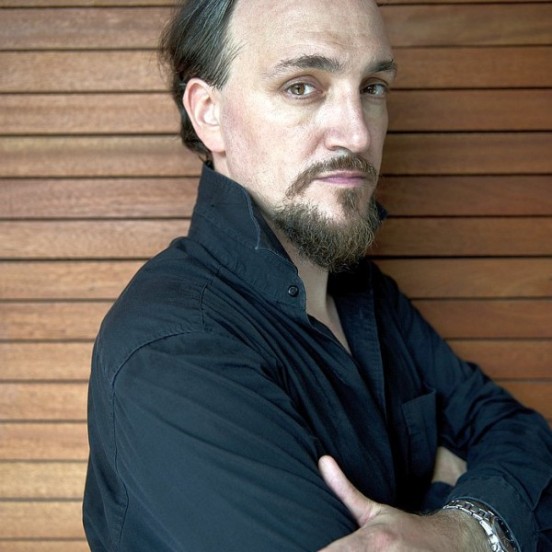
    [caption id="attachment_2198" align="alignnone"]Cyril Tuschi, director of Khodorkovsky[/caption]

    Written by Francesca McCaffery

    Cyril Tuschi’s new documentary film, Khordorkovsky, tells the story of oligarch Mikhail Khordorkovsky, then the wealthiest man in Russia before his arrest by Prime Minister Vladimir Putin in 2003.

    Tuschi has directed short films and music videos, and his feature was Slight Changes in Temperature and Mind in 2004. A former night club owner, theater worker, and philosophy student, Tuschi has  the open mind, gentle humor and rigorous intellect needed to become a truly outstanding documentary director. The film is fascinating, and we had the pleasure of speaking with Cyril about his his process, his interest in his subject and the role of politics in movies.

    VIMOOOZ: The film, Cyril, really blew us away. I think it’s so interesting for Americans especially, to see both sides: You could see Putin-is he really trying to hang on to Mother Russia, and moments later you realize, whoa, no, he’s really not- he’s absolutely terrified! The way you displayed that for us was so riveting. Can you tell us how you received access to  court proceedings? Was that very difficult?

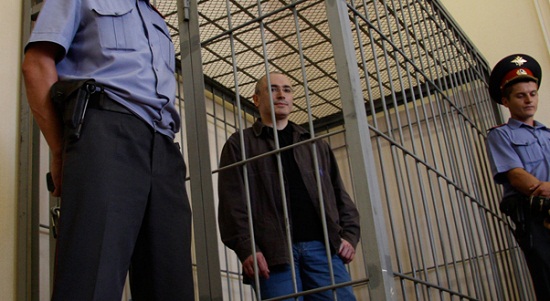
    We had tried for years to get access. I think it was a mistake of the judge, actually. I saw the Minister talking to Khordorkovsky through the “cage” in the courtroom (the cell he was held in during the court proceedings) , and after that day in court we asked the judge if we could do the same. I told him we were filmmakers. He told us to fill out a special overnight application, and come back tomorrow. I did so, without even the cameraman, because I didn’t think it was going to work. But then a lawyer came and said, “Okay, you have ten minutes!” I really had to turn on the camera myself. I think the judge was just not briefed correctly.

    How many times did you actually go back and forth to Russia?

    Countless. We had 180 hours of interviews. I stayed three months in Moscow.

    Amazing. Do you see the film as a portrait of the two men in a way? Their egos, a sort of battle of wills? Or a portrait of Old Russia v. New Russia, or both?

    Definitely both. It’s definitely a portrait of Khordorkovsky, but he is also a symbol for the changing Russia. He was a real believer of Soviet Russia in the beginning- he had posters of Lenin in his bedroom. Then he became very strong, new Liberal populist defender, and now he is something like a mystified-hero, social democrat tiger – and this kind of a change in direction, and in ambivalent character, for me as a director, was very fascinating. And of course, we have this open fight of these two men, which was very interesting to me. I also imagine that if Khordorkovsky was a woman, and Putin was a woman, this conflict never would have happened.

    That’s probably very true! Do you think that Khordorkovsky played the game of his rise as a brilliant chess move- in order to eventually secure the Presidency by becoming this political and social martyr? Does he have that kind of will, do you think?

    It’s a daring theory- one that the Swiss former advisor from Geneva expressed in the film. It could be. It could be that he is such a mastermind as to be calculating his prison time- he goes in an oligarch, and comes out to just take over. This could be Putin’s fear too- the Count of Monte Cristo. Of course, this question is unanswerable until he gets out.


    What do you think will happen when he gets out?

    Well, maybe that, but I don’t think so. Maybe he will do a Monte Cristo-type of revenge. But I think that he has so much neglected his family, maybe he will go into therapy, I don’t know- that sounds too modern! But, maybe he will…He will take care of his children. He has to, and he will, get all of his (other associates) out of prison. I think he also wants to start a university. That’s part of his utopian side. He wanted to focus on the Open Russia educational area. But then he got arrested, so he couldn’t achieve any of that.

    I loved the crisp and vibrant black and white animation. Can you tell us how you decided to incorporate it?

    Well, the animation was all we had in the beginning- because I never thought we would meet Khordorkovsky We had to have an image the audience could go on from with. We had a very good German artist. The animation was the largest part of the budget- 20,000 euros.

    Do you have any hopes that releasing the film in the United States will reignite a human rights campaign for Khordorkovsky? What were your hopes on that end?

    I’m not a propagandist, and I don’t start projects like Michael Moore does. I’m not a lawyer, or a proper journalist. He always has the idea of what he wants to convey- and then he executes it. He uses propaganda for the poor, instead of the mighty. That kind of propaganda- I really do like. But I didn’t start like that. For me, it was something new- it developed as we went.

    Your personal belief is that Khordorkovsky is innocent?

    I mean, what is innocent? What does it mean? He is guilty of leaving his family, of acting like a capitalist who buys a company and kicks out thousands of employees to save the company.

    Putin was also terrified that American oil was going to come into Russia.

    Exactly. And you want top say that Putin was right, he wanted to protect Russia from Imperialist America!

    It’s a very valid point! You can a little bit see both sides of that, for sure.

    One thing I’ve learned through making this film, is that it is possible for people to change. It doesn’t matter how little, or how late. Change is possible. I really believe that.

    What’s next?

    I’m trying to get a fiction project going about Julian Assange (of WikiLeaks.) If I could bring it to Hollywood, I would ask Ryan Gosling to do it! That would be really cool. I would also like to go to a great cable network, and make a great dramatic series out of “Khordorkovsky.”

    That all sounds awesome. Good luck, Cyril. You should have absolutely no problem! Thank you for speaking with us.


    Read more


  • Vimooz Speaks With the Director & Producer of “The Interrupters”

    [caption id="attachment_1595" align="alignnone" width="602"]From left to right: violence interrupter Ameena Matthews, Producer/Director Steve James, Producer Alex Kotlowitz, and Co-Producer/Sound Recordist Zak Piper. [Photo: Cinema Guild][/caption]
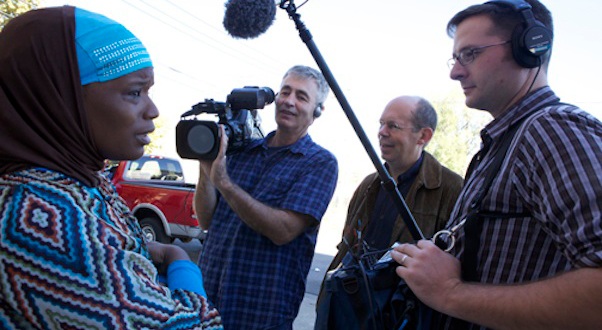
    Francesca McCaffery had the great pleasure of speaking with Steve James (Director) and Alex Kotlowitz (producer), who are the creative team who put together the riveting new documentary “The Interrupters,” about gang intervention specialists working the Chicago streets with the unique non-profit, CeaseFire.

    CeaseFire was founded by epidermologist Gary Slutkin. Slutkin, who battled the cholera and AIDs epidemic in Africa for years, believes that the spread of violence mimics that of infectious diseases. This innovative approach, combined  with the fact that CeaseFire not only employs former gang members, but gang members with major street credibility, gives CeaseFire the unique opportunity to penetrate into the daily lives of some potential violent perpetrators, illuminating the audience to the great humanity hidden beneath the darkest of disguises.

    Steve James is an icon of documentary filmmaking, directing the astounding “Hoop Dreams” in 1994, “Stevie,” “The War Tapes,” and “At the Death House Door,” among others. Steve became interested in the work of CeaseFire after reading a piece about them in the “NY Times Magazine” article by Alex Kotlowitz, author of the legendary best seller “There Are No Children Here.”

    Together, they set out to document the work of these brave violence “interrupters” over the course of one year in Chicago. Here, they set out to tell us about their journey creating by far one of the most riveting, inspiring documentaries you will see this year, or any:

    VIMOOZ: It is such a pleasure and an honor to meet both of you. I read in the press notes that it took almost four months for you to film an actual violence “interruption.” Can you tell us about that?

    Steve James: We met with the Interrupters before we even tried to do the movie, to see if we could film the mediations. Ameena was one of the people we met with (Ameena Matthews is the highly charismatic daughter of Jeff Fort, one of Chicago’s most infamous gang leaders; she is also a former gang member.) And there was a real feeling that we could get some of these things. Not every one, not every time at all, but some. So, when we got underway, we strategically thought that it would be good to go to those Wednesday meetings (At CeaseFire.) After Wednesday, to just get those meetings around the table, get them familiar with us, and comfortable with us, so we could get a finger on the pulse of what was going on. So, we did quite a bit of “meeting filming” in the beginning. And we had identified this one Interrupter that we thought would be great, and he would have been great, so we started really spending some time with him, filming his back story, aspects of his life, in church, his kids, I mean…We were actually pretty deep into his story, when it started to become to clear to Alex and me that the farther that we went along….He …he just wasn’t going to give us a mediation. He kept saying he was going to…And he was the nicest guy in the world! He couldn’t tell us “no.” But it just wasn’t happening. He just wasn’t picking up the film and calling us when something was going on.

    Alex Kotlowitz: And I think he just felt too uncomfortable with us going out there with him. And he was such a nice guy, he couldn’t bring himself to tell us.

    SJ: We were out with him one night, after he went to the scene of a double murder, you know, over on the west side. And he let us film him trying to sort of sort things out with people. But we had to keep a tremendous distance, we had to have him on a wireless mic and everything…It was just very clear, that, you know, this wasn’t going to work for him.

    The work was the most important thing. And we always tried to keep that very clear with people. With Tio Hardiman (CeaseFire’s Executive Director) he would try to encourage them (The Interrupters) …I mean, encourage them was a nice way to put it…(laughs)

    AK: He would berate them! (laughs) And I think the first interruption we did was really Flamo. (With violence Interrupter Ricardo “Cobe” Williams, who tries to calm “Flamo” down after a rival gang rats out his mother and brother, getting them arrested.)

    SJ: We had filmed two interruptions with Cobe before, but he was the one was really started to make it happen, and kind of led the way in terms of that.

    VIMOOZ: Speaking of the Flamo scene, it was so beautiful to see that what he really wanted was to just go out to lunch with Cobe! It sounds so cliché, but really, he wanted to know and feel that someone really cares. To me, that’s the whole narrative right there.

    SJ: What you don’t see in the film is that Cobe had built up a real relationship with Flamo before hand- calling him, taking him out, checking in.

    AK: Cobe kind of instinctively knows what’s needed. I mean, he’s got this great sixth sense about what’s really needed.

    VIMOOZ: How did you find that these Interrupters would recharge personally?

    Did that ever come up? How draining this type of work really is for them…?

    AK: Yeah, I think it’s incredibly draining. For Ameena, for example, she has her family, And Cobe, as well. I mean, his family really is a source…

    SJ: …A real balance.

    AK: Yes. And Cobe of course lives, you know, and hour, and hour and a half outside of the city. So, he really is able to get away. I think it’s toughest for Eddie. ( Eddie Bocanegra, an Interrupter and former gang member who served time in prison for a murder he committed at age 17.) I mean, he talks about it in the film, where he has to just stay busy. He knows that about himself, that he can’t slow down. Otherwise it’s all going to start bearing down on him. But even he has something…He loves baseball cards! It’s a passion of his. He must have five thousand baseball cards in his basement. But, it’s a concern of his, he really tried to talk about it at he table. The stress of it. Some of the guys actually are runners. So I think everybody sort of finds their own way. But it is very problematic.

    SJ: And it is a burn out kind of job, too. It’s one of those jobs that a lot of people may do for a few years, and then, that’s it. They move on. You know, it’s the nature of the beast.

    AK: Cobe is now a national trainer. He’s now off the streets. And I think that’s a really good move for him.

    VIMOOZ: Alex, how did you come of across the organization CeaseFire for your article?

    AK: I had written that book almost twenty years ago. And I had been wrestling with the violence issue here for many years. I had heard about CeaseFire, and thought they were another gang-intervention program. And we’ve seen plenty of those. And someone urged me to go spend some time there. And I did. And I think what impressed me were two things. One, if gave us this different prism to look at the violence, to think about it as a public health matter. And Gary Slutkin uses this analogy of violence as an infectious disease, which I think it’s really helpful. It has its limitations, but I think it’s really helpful to think about. And to think about treating it like that. But then I began spending time at that Wednesday meeting. They really are heroes out on the street. And I became really intrigued by their work, and by their own personal journeys. And you can look it like they’ve had this transformative moment in their lives. But I think it’s just that they’ve figured out who they really are. I mean, Eddie, Cobe and Ameena are probably not much different from they were when they were younger. It’s just the choices they make now. What they do with all the energy and skills that they have.

    SJ: You look at guy like Eddie, when he was in the streets. And he’s got this posture. And it’s like, when you talk to his mom, or somebody, that’s not the Eddie they remember, right? The Eddie they remember is really the Eddie that you see today. The sensitive soul. It’s hard to imagine having committing that crime. Now, Ameena, on the other hand! (he smiles.) You see who she was back then. And she’s turned all that charisma and power to good! (laughs.)

    VIMOOZ: She must meditate a lot!

    (Laughter.)

    SJ: She’s a very spiritual person, that’s true.

    VIMOOZ: How did you guys find the original funding for “The Interrupters?”

    SJ: You know, every film is different. And they’re usually very surprising. You usually think one film’s going to be easy to fund, and then it’s hard to fund, and then vice-versa, sometimes. In this case, it actually worked out pretty easily, especially in terms of getting a basic amount of money in place to get the movie started. I mean, a substantial amount, actually. We started by filming the meetings and that original guy for a few days, and put together a short demo. Do you know about the pitch forum at IDFA? (International Documentary Film Festival of Amsterdam) They have these everywhere, but they pioneered this. They get a lot of commissioning editors and broadcasters and foundations in there. And they get projects which they think have real merit into pitch these folks. It’s like really getting everybody in a room. We went to pitch this at IDFA, and we were able to attract both ITVS and Frontline coming out of that, as well as a few European broadcasters, like the BBC and a few others. We were on our way. And later on in the project, we were able to get a substantial grant from the MacArthur Foundation, and they kind of helped us get the completion funds that we needed.

    VIMOOZ: Were you guys ever nervous at all? As in the scene with Ameena with the large group of young people?

    AK: We were always with the Interrupters, and they were our entre into this community. We had a clear understanding that. We urged them to call us at all hours of the night…And we agreed that, if once we got out there and it was dangerous, or, they felt that they would compromise themselves, or – the people didn’t want to be filmed, that we would walk away. So they always had that understand. They’re cautious, too. I mean, they’re savvy about where they are, what they do. We were always with them. I think the only moment that we felt even a tinge of nervousness was with Flamo. And not about him, Flamo, but about the fact that he was looking up and down the street. We were thinking that somebody might drive by.

    SJ: I also think that when you’re in the moment, and you’re filming…It’s that idea that once you’re behind the camera, you’re protected, somehow? But you’re not really. But you feel protected. I think when we with these Interrupters that we felt fairly bullet-proof, because they command such respect in the community. It’s a different kind of respect. (Than fear.) It’s like, “I know who she or he used to be, and I respect that.” And I think it bought a lot of tremendous goodwill for us, by being with them.

    VIMOOZ: Do you think the advent of reality has helped your work, in the fact that people may be more amenable to you filming them?

    SJ: I think it’s hurt it. But it’s a mixed bag. On the one hand, yes, people are more familiar with media being around, and all that. And so you could maybe say it has increased the level of comfort? But you know, I actually think that’s not true. I think that what reality television has done has made a place for people who just wanna be famous. So they’re willing to say and do whatever they need to do to make this happen. And I don’t think that’s the motivation in the case of documentary films for people to be involved. With Ameena, we really had to win her over a bit. It took awhile. She wasn’t sure of our motives, even though we explained them pretty thoroughly. And if you go into the west side of Chicago, which was easy to shoot in ten years ago, people will now see the cameras and say “What are you doing?!” You know? They’re much more savvy now.

    AK: And I hear that in my reporting, too! You know, people will say “no comment,” or “off the record.” I also think people are much savvier.

    SJ: And I actually think it’s a very good thing. That’s a good result. I think filmmakers have often gone into neighborhoods, and in that sense sort of stealing people’s images, and not even bother going in, and ask their permission and explain what it is they’re doing. We’ve found that if you really explain to people what you’re doing, it works. We were shooting a lot around the neighborhoods of Chicago where the film takes place., Once we explained, they were like “Sure. Fine!”

    VIMOOZ: The Barbershop scene is really extraordinary.

    AK: When Little Mikey got out, it was clearly one of the first things he wanted to do. (…to apologize to the family whose place of business he had robbed.) who were present at the time of the robbery. They were very reluctant to be filmed, and very suspicious. At one point, Steve and I went there, and told them, “Look. This is very important to Little Mikey. If it’s our presence that bothers you, we’ll stay back, we won’t film.” And I think in some ways, it definitely helped us.

    SJ: It definitely did…

    AK:…Because they trusted our intent. And then they told Cobe that they were going to let Little Mikey visit. We still didn’t know what to expect when we were filming, who was going to be there… We were surprised that the mother was there. And she does not let Little Mikey off the hook. I mean, Little Mikey walks in there, you know, stoic…

    SJ: He’s got a rehearsed speech…How many times had he said that speech to himself before he walked into that barbershop?

    AK: And then this woman just…launches into him. She walks him through, step by step, what he did. Won’t let him off the hook. And then, she’s got it in her to forgive him. It was an amazing moment to be a part of.

    SJ: And the way he took it, too. I mean, he didn’t know what to expect, like Alex says. And I bet, in his imaginings of it, he didn’t expect that. But it was a measure of just how sincere he was about this. He took it. He stood there, totally respectful, and he didn’t get angry, he didn’t get defensive. None of that. He took every bit of it.

    VIMOOZ: How does CeaseFire go about hiring the Interrupters?

    AK: Well, Tio, who founded the Interrupters, he kind of has his ear to the ground about who’s coming out of prison. So…having that said that, being in prison doesn’t give you the bonafides to be sitting around that table. He finds out who’s interested in going back to the streets, and who isn’t, and then the guys around the table get all these referrals. But I mean, they do a pretty rigorous interviewing process. In fact, we filmed some of that. At one point, it didn’t make it into the film…

    SJ: By the end of filming, Little Mikey actually became an Interrupter. He’s working with them right now. So, in a way, we got something much more inspirational.

    Read more


  • Azazel Jacobs Talks About Directing His New Film “Terri” – Opening Today


    Hello! Azazel, you’re in town (in NYC) for the BAM Festival?Yeah! It feels really nice. It’s the best way to kind of kind of home. You know, I live in Los Angeles now- so, to come home to New York, where my folks and friends are, where I was raised, and to have a film that’s being well received, it’s been really important to me. And it’s summer here!

    Everyone is so curious about how you cast Jacob Wysocki (who plays Terri in the film), and how you found him. Was that pretty instantaneous?

    No. We were lucky enough to be able to hire Nicole Arbusto and Joy Dickson before we had any real money for the film. We knew it was going to be a really long search to find the right Terri. So, one of the very things we did was hire the casting directors to start them on our search. I saw SO many talented kids, really, some very, very strong possibilities- for different Terris, different Chads, different Heathers (all lead characters in “Terri.”) But Jacob just brought in a kind of confidence that I thought would be very hard for a director to manifest. I kept calling him back in to read with this Heather, or that Chad, and it became really clear that he was the one.

    He is pretty amazing in the film. Sort of a star turn, similar in a way to what “Rushmore” did for Jason Schwartzman.

    And can you imagine going up against John (John C. Reilly, star of “Terri”) in your first film? I mean, John was the most experienced person on the set, you know- crew included! And then here’s this kid on his first movie, on his day- sitting in a room with John. And I’m watching him, and watching them push each other, in different ways…

    Was Jacob a child actor?

    No! He was a side character in the TV series “Huge,” and this was actually I think his very first audition for a film.

    You originally planned to co-write this with the screenwriter Patrick DeWitt, who is also novelist?

    I planned on co-writing it, but I ended up writing up so much less, I took my name off the credit. He came to me with these pages about a long, eternal monologue of this kid who wears pajamas, and comes to school every day in his pajamas-all these different issues. So, the idea was that we’d turn it, together, into a screenplay. So, he’d send me the first few pages every other day or so, and I was adding series of commas! I was doing nothing! So, I just let him go, and he came up with the script. It was great. (Patrick’s novels include “Ablutions” and “The Brothers Sisters.”)

    Tell us about Creed Bratton, who plays Uncle James in “Terri.”

    Total surprise! He was somebody that I was just so excited to meet, and to just be able to audition! When I saw he was coming in to read for Uncle James, you know, I’m a huge fan of “The Office,” so I was so thrilled. But I didn’t think he’d be our Uncle James right away. But he transformed himself during that audition. This was one of the best auditions I’ve ever seen. It became really clear.

    Azazel, you have quite an interesting background. I know that your father is a pretty famous experimental filmmaker…

    Famous among four people! (laughs.) That’s what he used to say to me and my sister growing up. We’d say: “You seem like people know who you are,” and he’s like,” I’m famous among four people.”

    Was he a pretty profound influence on you growing up, as far as your artistic choices and leanings?

    Yeah, I grew up extremely, extremely wealthy- obviously not money-wise, but just in terms of what my parents have offered me. In terms of telling me that what I thought about things was important, that what you make is important, and it can be. That art itself can be very important.

    That’s pretty lucky…

    I know. It is lucky. It’s a good weight to have. It doesn’t allow me to come up with easy excuses to doing things I don’t believe in, you know? I mean, I’ve obviously had to make a living, and sometimes work on things that I don’t care for as much as my own stuff. But when it comes to my own work, it’s a nice pressure to have.

    That’s fantastic. As a little aside, I read that you were obsessed of Joe Strummer of the Clash?

    I was, and I am! If there’s any way I can steer this conversation to talking about Strummer, I’m all for it.

    Okay, I have an idea. The film is about, in a way, bullying in different forms. I heard you were a bit of a “punk rock bully” in high school. Is that true?

    (Laughs.) You know, well, I was one of those bullies that would hide behind other people, not start trouble or anything. But that really was my way into Terri. Because I know if Terri had gone to my school, I would have been one of those kids who would have just kind of seen him as something to make fun of. It sucks. I was a fucking idiot! But I feel for them (the bullies) as well. During those trying teenage years, you can’t control what’s going on, both internally or externally. It’s not an excuse, but it’s a reality.

    The one scene with Heather and Chad near the end is incredible. It reminds me of something strange that may actually happen to someone in high school, rather than what we normally see on film. Did that come from any direct experience?

    Absolutely! I mean, I felt like if there was anything that I could offer in making a coming-of-age movie, it would be a different depiction than what I’ve seen of those long, (high school era) nights depicted on film. I knew the movie as a whole, but I also know that when we get to that scene- that scene is something different. I thought, if everything that preceded it led me to this place (in the film), than there’s something really valuable here going on here.

    That’s also quite a delicate scene. How was that handled?

    Yeah, I was scared sick about that scene! Because it’s one of those scenes that you do not want to mess up. It’s so impossible to get the most skilled actors to depict being under the influence in any kind of honest way. And then to have these kids, who have all different varying degrees of experience. Bridger Zadina (who plays Chad in “Terri”) had to Google “being drunk” to even play it! He’d never drunk anything before! They were definitely all really stretching- these characters weren’t them at all. But we saved that scene for last. And it kind of gave us the ability to have built up a trust between all of us- with me as director, and each other as actors to director. The producers really gave us enough time. They gave us enough time to go into that shed, and to not emerge until we had that scene.

    Congratulations again on the film. It’s really wonderful.

    Thanks! Wait, did we figure out to get the Clash in?

    Go ahead!

    I’ll tell you this. I went to see him (Joe Strummer of the Clash) when I was nine. I slept overnight to see them in ’82. And it comes in waves (the obsession) . Now that the film is being released, and I need all the strength, and all the courage cause I went this film to go out and do well…. I’ve just been listening non, non-stop to the Clash! It’s been a great comfort.

    You can rest pretty easy, I think! Thank you so much, Azazel. it was a real pleasure.

    {youtube}YLGW6sdHy0g{/youtube}


    Read more


←Previous Page
1 … 3 4 5

Film News

Animation | Anime

Documentary

Foreign Language Films

Independent Film

SciFi + Horror

Short Films

Thriller

More Film News

Awards

Film Reviews

Trailers

Interviews

People

Film Release Calendar

Film Festivals

Film Festivals News

Film Festivals (List)

Film Festivals Calendar

Company

Home

About Us

Privacy Policy

Terms Of Use

Contact Us

Internship Program

Cookie Policy (EU)

Opt-out preferences

  • Bluesky
  • YouTube
  • Instagram
  • Facebook
  • Pinterest
  • LinkedIn
  • Threads
  • X

Copyright © 2026 — VIMooZ LLC | Designed by TTHINKS

Manage Cookie Consent
To provide the best experiences, we use technologies like cookies to store and/or access device information. Consenting to these technologies will allow us to process data such as browsing behavior or unique IDs on this site. Not consenting or withdrawing consent, may adversely affect certain features and functions.
Functional Always active
The technical storage or access is strictly necessary for the legitimate purpose of enabling the use of a specific service explicitly requested by the subscriber or user, or for the sole purpose of carrying out the transmission of a communication over an electronic communications network.
Preferences
The technical storage or access is necessary for the legitimate purpose of storing preferences that are not requested by the subscriber or user.
Statistics
The technical storage or access that is used exclusively for statistical purposes. The technical storage or access that is used exclusively for anonymous statistical purposes. Without a subpoena, voluntary compliance on the part of your Internet Service Provider, or additional records from a third party, information stored or retrieved for this purpose alone cannot usually be used to identify you.
Marketing
The technical storage or access is required to create user profiles to send advertising, or to track the user on a website or across several websites for similar marketing purposes.
  • Manage options
  • Manage services
  • Manage {vendor_count} vendors
  • Read more about these purposes
View preferences
  • {title}
  • {title}
  • {title}