News

All the News.

  • Tribeca Film to release Edward Burns ‘Newlyweds’ later this year

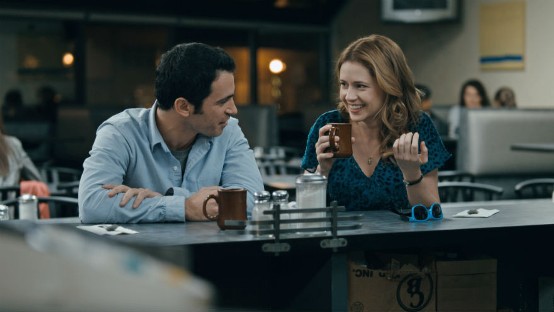
    Tribeca Film has acquired Newlyweds, actor/writer/director Edward Burns’ comedic relationship drama that had its world premiere as the Closing Night selection at the 2011 Tribeca Film Festival, and plans a late 2011 release date.

    Newlyweds is the 10th film written and directed by Burns. Shot in a fast paced 12 days exclusively in New York City’s Tribeca neighborhood, the film is a chronicle of modern marriage complete with the crackling humor and sharp insights into contemporary relationships that Burns fans have come to love.   The film tracks a newly wedded couple whose honeymoon period is upended by the arrival of the husband’s wild-child baby sister and the crumbling marriage of the wife’s meddlesome sister.  A 21st Century Manhattan love story, Newlyweds highlights the unarguable truth that when you get married, you’re not just getting a husband or wife, you’re getting the family, the friends, and even the exes.

    The cast includes Burns, Caitlin FitzGerald (It’s Complicated), Max Baker, Marsha Dietlein Bennett and Kerry Bishé (Nice Guy Johnny, Scrubs). Burns produced Newlyweds with producing partner Aaron Lubin and William Rexer. Mike Harrop served as executive producer.


    Read more


  • Brett Ratner and Don Mischer to Produce 84th Academy Awards

    Director, producer Brett Ratner, (“Horrible Bosses,” currently in release) and Don Mischer will produce the 84th Academy Awards. This will be Ratner’s first involvement with the Oscar show; Mischer will for the second year in a row serve as a producer and as the telecast director.

    “I was so impressed with Brett when I met with him to discuss the Oscar show,” said Academy of Motion Picture Arts and Sciences President Tom Sherak.  “He has an incredible love of film and its history and is a true student of the business of movies.  He’s unbelievably creative and knows how to take risks that are both interesting and inspiring.  Together with Don Mischer – who, by the way, just earned an Emmy nomination for his work on the 83rd Academy Awards – I think these two will give us a fantastic Oscar show that you won’t want to miss.”

    Read more


  • James Earl Jones, Dick Smith and Oprah Winfrey To Receive Honorary Academy Awards

    [caption id="attachment_1603" align="alignnone" width="550"]Oprah Winfrey received her Oscar nomination for her debut film performance in The Color Purple [/caption]

    The  Academy of Motion Picture Arts and Sciences will present Honorary Awards to actor James Earl Jones and makeup artist Dick Smith and the Jean Hersholt Humanitarian Award to philanthropist Oprah Winfrey at the Academy’s 3rd Annual Governors Awards dinner on Saturday, November 12.

    The Honorary Award, an Oscar statuette, is given to an individual for “extraordinary distinction in lifetime achievement, exceptional contributions to the state of motion picture arts and sciences, or for outstanding service to the Academy.”

    The Jean Hersholt Humanitarian Award, an Oscar statuette, is given to an individual in the motion picture industry whose humanitarian efforts have brought credit to the industry.

    Read more


  • Tom Sherak Re-elected President of the Academy of Motion Picture Arts and Sciences

    Tom Sherak was re-elected president of the Academy of Motion Picture Arts and Sciences on August 2.  This will be his third consecutive one-year term in the office.

    Previously, Sherak was a partner at Revolution Studios and prior to joining Revolution, Sherak held various positions at Twentieth Century Fox including senior executive vice president of Fox Filmed Entertainment.  Sherak has been responsible for the launch, distribution and/or post-production of many blockbuster films including “Black Hawk Down,” “Anger Management,” “Rent,” “Across the Universe.” “Mrs. Doubtfire,” “Speed,” “Independence Day,” “Romancing the Stone,” ” Aliens,” “Wall Street,” “Die Hard”  and “Working Girl.”  He began his career in the industry at Paramount Pictures in 1970.


    Read more


  • Argentinian film ‘Puzzle’ opens Friday, September 9 at the San Francisco Film Society’s new theatrical home,| New People Cinema

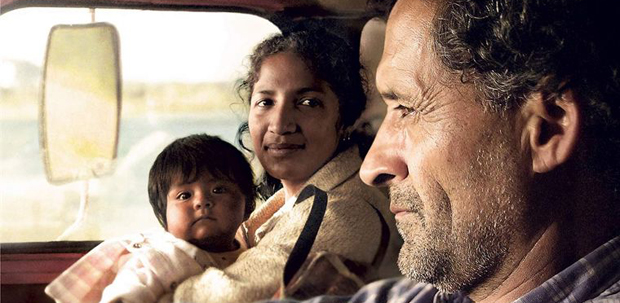
    [caption id="attachment_1599" align="alignnone" width="550"]Maria Onetto stars in the Argentine film PUZZLE, opening at San Francisco Film Society | New People Cinema September 9. [/caption]

    If you live in San Francisco, Puzzle, (Rompecabezas, Argentina/France 2010), Natalia Smirnoff’s delicate first feature which focuses on a marginalized woman in Latin American society, opens Friday, September 9 at the San Francisco Film Society’s new theatrical home, San Francisco Film Society | New People Cinema (1746 Post Street).

    A middle-aged housewife, cherished by her husband and two sons but nevertheless taken for granted, discovers an aptitude for jigsaw puzzles in this beautifully modulated character portrait. After a broken dinner plate leads to an epiphany, María del Carmen (played by María Onetto, star of Lucrecia Martel’s The Headless Woman) begins assembling newly purchased puzzles on a small table. Though her husband wonders what the point is, she perseveres, eventually signing up for a competition with a wealthier, more extroverted man named Roberto as her partner. Much of the film’s delight comes from watching the characters develop-as María finds the missing piece in her life, the members of her family tacitly acknowledge the ways in which they were keeping her from becoming whole.


    {youtube}0Y_4Ggp406s{/youtube}

    Read more


  • Vimooz Speaks With the Director & Producer of “The Interrupters”

    [caption id="attachment_1595" align="alignnone" width="602"]From left to right: violence interrupter Ameena Matthews, Producer/Director Steve James, Producer Alex Kotlowitz, and Co-Producer/Sound Recordist Zak Piper. [Photo: Cinema Guild][/caption]

    Francesca McCaffery had the great pleasure of speaking with Steve James (Director) and Alex Kotlowitz (producer), who are the creative team who put together the riveting new documentary “The Interrupters,” about gang intervention specialists working the Chicago streets with the unique non-profit, CeaseFire.

    CeaseFire was founded by epidermologist Gary Slutkin. Slutkin, who battled the cholera and AIDs epidemic in Africa for years, believes that the spread of violence mimics that of infectious diseases. This innovative approach, combined  with the fact that CeaseFire not only employs former gang members, but gang members with major street credibility, gives CeaseFire the unique opportunity to penetrate into the daily lives of some potential violent perpetrators, illuminating the audience to the great humanity hidden beneath the darkest of disguises.

    Steve James is an icon of documentary filmmaking, directing the astounding “Hoop Dreams” in 1994, “Stevie,” “The War Tapes,” and “At the Death House Door,” among others. Steve became interested in the work of CeaseFire after reading a piece about them in the “NY Times Magazine” article by Alex Kotlowitz, author of the legendary best seller “There Are No Children Here.”

    Together, they set out to document the work of these brave violence “interrupters” over the course of one year in Chicago. Here, they set out to tell us about their journey creating by far one of the most riveting, inspiring documentaries you will see this year, or any:

    VIMOOZ: It is such a pleasure and an honor to meet both of you. I read in the press notes that it took almost four months for you to film an actual violence “interruption.” Can you tell us about that?

    Steve James: We met with the Interrupters before we even tried to do the movie, to see if we could film the mediations. Ameena was one of the people we met with (Ameena Matthews is the highly charismatic daughter of Jeff Fort, one of Chicago’s most infamous gang leaders; she is also a former gang member.) And there was a real feeling that we could get some of these things. Not every one, not every time at all, but some. So, when we got underway, we strategically thought that it would be good to go to those Wednesday meetings (At CeaseFire.) After Wednesday, to just get those meetings around the table, get them familiar with us, and comfortable with us, so we could get a finger on the pulse of what was going on. So, we did quite a bit of “meeting filming” in the beginning. And we had identified this one Interrupter that we thought would be great, and he would have been great, so we started really spending some time with him, filming his back story, aspects of his life, in church, his kids, I mean…We were actually pretty deep into his story, when it started to become to clear to Alex and me that the farther that we went along….He …he just wasn’t going to give us a mediation. He kept saying he was going to…And he was the nicest guy in the world! He couldn’t tell us “no.” But it just wasn’t happening. He just wasn’t picking up the film and calling us when something was going on.

    Alex Kotlowitz: And I think he just felt too uncomfortable with us going out there with him. And he was such a nice guy, he couldn’t bring himself to tell us.

    SJ: We were out with him one night, after he went to the scene of a double murder, you know, over on the west side. And he let us film him trying to sort of sort things out with people. But we had to keep a tremendous distance, we had to have him on a wireless mic and everything…It was just very clear, that, you know, this wasn’t going to work for him.

    The work was the most important thing. And we always tried to keep that very clear with people. With Tio Hardiman (CeaseFire’s Executive Director) he would try to encourage them (The Interrupters) …I mean, encourage them was a nice way to put it…(laughs)

    AK: He would berate them! (laughs) And I think the first interruption we did was really Flamo. (With violence Interrupter Ricardo “Cobe” Williams, who tries to calm “Flamo” down after a rival gang rats out his mother and brother, getting them arrested.)

    SJ: We had filmed two interruptions with Cobe before, but he was the one was really started to make it happen, and kind of led the way in terms of that.

    VIMOOZ: Speaking of the Flamo scene, it was so beautiful to see that what he really wanted was to just go out to lunch with Cobe! It sounds so cliché, but really, he wanted to know and feel that someone really cares. To me, that’s the whole narrative right there.

    SJ: What you don’t see in the film is that Cobe had built up a real relationship with Flamo before hand- calling him, taking him out, checking in.

    AK: Cobe kind of instinctively knows what’s needed. I mean, he’s got this great sixth sense about what’s really needed.

    VIMOOZ: How did you find that these Interrupters would recharge personally?

    Did that ever come up? How draining this type of work really is for them…?

    AK: Yeah, I think it’s incredibly draining. For Ameena, for example, she has her family, And Cobe, as well. I mean, his family really is a source…

    SJ: …A real balance.

    AK: Yes. And Cobe of course lives, you know, and hour, and hour and a half outside of the city. So, he really is able to get away. I think it’s toughest for Eddie. ( Eddie Bocanegra, an Interrupter and former gang member who served time in prison for a murder he committed at age 17.) I mean, he talks about it in the film, where he has to just stay busy. He knows that about himself, that he can’t slow down. Otherwise it’s all going to start bearing down on him. But even he has something…He loves baseball cards! It’s a passion of his. He must have five thousand baseball cards in his basement. But, it’s a concern of his, he really tried to talk about it at he table. The stress of it. Some of the guys actually are runners. So I think everybody sort of finds their own way. But it is very problematic.

    SJ: And it is a burn out kind of job, too. It’s one of those jobs that a lot of people may do for a few years, and then, that’s it. They move on. You know, it’s the nature of the beast.

    AK: Cobe is now a national trainer. He’s now off the streets. And I think that’s a really good move for him.

    VIMOOZ: Alex, how did you come of across the organization CeaseFire for your article?

    AK: I had written that book almost twenty years ago. And I had been wrestling with the violence issue here for many years. I had heard about CeaseFire, and thought they were another gang-intervention program. And we’ve seen plenty of those. And someone urged me to go spend some time there. And I did. And I think what impressed me were two things. One, if gave us this different prism to look at the violence, to think about it as a public health matter. And Gary Slutkin uses this analogy of violence as an infectious disease, which I think it’s really helpful. It has its limitations, but I think it’s really helpful to think about. And to think about treating it like that. But then I began spending time at that Wednesday meeting. They really are heroes out on the street. And I became really intrigued by their work, and by their own personal journeys. And you can look it like they’ve had this transformative moment in their lives. But I think it’s just that they’ve figured out who they really are. I mean, Eddie, Cobe and Ameena are probably not much different from they were when they were younger. It’s just the choices they make now. What they do with all the energy and skills that they have.

    SJ: You look at guy like Eddie, when he was in the streets. And he’s got this posture. And it’s like, when you talk to his mom, or somebody, that’s not the Eddie they remember, right? The Eddie they remember is really the Eddie that you see today. The sensitive soul. It’s hard to imagine having committing that crime. Now, Ameena, on the other hand! (he smiles.) You see who she was back then. And she’s turned all that charisma and power to good! (laughs.)

    VIMOOZ: She must meditate a lot!

    (Laughter.)

    SJ: She’s a very spiritual person, that’s true.

    VIMOOZ: How did you guys find the original funding for “The Interrupters?”

    SJ: You know, every film is different. And they’re usually very surprising. You usually think one film’s going to be easy to fund, and then it’s hard to fund, and then vice-versa, sometimes. In this case, it actually worked out pretty easily, especially in terms of getting a basic amount of money in place to get the movie started. I mean, a substantial amount, actually. We started by filming the meetings and that original guy for a few days, and put together a short demo. Do you know about the pitch forum at IDFA? (International Documentary Film Festival of Amsterdam) They have these everywhere, but they pioneered this. They get a lot of commissioning editors and broadcasters and foundations in there. And they get projects which they think have real merit into pitch these folks. It’s like really getting everybody in a room. We went to pitch this at IDFA, and we were able to attract both ITVS and Frontline coming out of that, as well as a few European broadcasters, like the BBC and a few others. We were on our way. And later on in the project, we were able to get a substantial grant from the MacArthur Foundation, and they kind of helped us get the completion funds that we needed.

    VIMOOZ: Were you guys ever nervous at all? As in the scene with Ameena with the large group of young people?

    AK: We were always with the Interrupters, and they were our entre into this community. We had a clear understanding that. We urged them to call us at all hours of the night…And we agreed that, if once we got out there and it was dangerous, or, they felt that they would compromise themselves, or – the people didn’t want to be filmed, that we would walk away. So they always had that understand. They’re cautious, too. I mean, they’re savvy about where they are, what they do. We were always with them. I think the only moment that we felt even a tinge of nervousness was with Flamo. And not about him, Flamo, but about the fact that he was looking up and down the street. We were thinking that somebody might drive by.

    SJ: I also think that when you’re in the moment, and you’re filming…It’s that idea that once you’re behind the camera, you’re protected, somehow? But you’re not really. But you feel protected. I think when we with these Interrupters that we felt fairly bullet-proof, because they command such respect in the community. It’s a different kind of respect. (Than fear.) It’s like, “I know who she or he used to be, and I respect that.” And I think it bought a lot of tremendous goodwill for us, by being with them.

    VIMOOZ: Do you think the advent of reality has helped your work, in the fact that people may be more amenable to you filming them?

    SJ: I think it’s hurt it. But it’s a mixed bag. On the one hand, yes, people are more familiar with media being around, and all that. And so you could maybe say it has increased the level of comfort? But you know, I actually think that’s not true. I think that what reality television has done has made a place for people who just wanna be famous. So they’re willing to say and do whatever they need to do to make this happen. And I don’t think that’s the motivation in the case of documentary films for people to be involved. With Ameena, we really had to win her over a bit. It took awhile. She wasn’t sure of our motives, even though we explained them pretty thoroughly. And if you go into the west side of Chicago, which was easy to shoot in ten years ago, people will now see the cameras and say “What are you doing?!” You know? They’re much more savvy now.

    AK: And I hear that in my reporting, too! You know, people will say “no comment,” or “off the record.” I also think people are much savvier.

    SJ: And I actually think it’s a very good thing. That’s a good result. I think filmmakers have often gone into neighborhoods, and in that sense sort of stealing people’s images, and not even bother going in, and ask their permission and explain what it is they’re doing. We’ve found that if you really explain to people what you’re doing, it works. We were shooting a lot around the neighborhoods of Chicago where the film takes place., Once we explained, they were like “Sure. Fine!”

    VIMOOZ: The Barbershop scene is really extraordinary.

    AK: When Little Mikey got out, it was clearly one of the first things he wanted to do. (…to apologize to the family whose place of business he had robbed.) who were present at the time of the robbery. They were very reluctant to be filmed, and very suspicious. At one point, Steve and I went there, and told them, “Look. This is very important to Little Mikey. If it’s our presence that bothers you, we’ll stay back, we won’t film.” And I think in some ways, it definitely helped us.

    SJ: It definitely did…

    AK:…Because they trusted our intent. And then they told Cobe that they were going to let Little Mikey visit. We still didn’t know what to expect when we were filming, who was going to be there… We were surprised that the mother was there. And she does not let Little Mikey off the hook. I mean, Little Mikey walks in there, you know, stoic…

    SJ: He’s got a rehearsed speech…How many times had he said that speech to himself before he walked into that barbershop?

    AK: And then this woman just…launches into him. She walks him through, step by step, what he did. Won’t let him off the hook. And then, she’s got it in her to forgive him. It was an amazing moment to be a part of.

    SJ: And the way he took it, too. I mean, he didn’t know what to expect, like Alex says. And I bet, in his imaginings of it, he didn’t expect that. But it was a measure of just how sincere he was about this. He took it. He stood there, totally respectful, and he didn’t get angry, he didn’t get defensive. None of that. He took every bit of it.

    VIMOOZ: How does CeaseFire go about hiring the Interrupters?

    AK: Well, Tio, who founded the Interrupters, he kind of has his ear to the ground about who’s coming out of prison. So…having that said that, being in prison doesn’t give you the bonafides to be sitting around that table. He finds out who’s interested in going back to the streets, and who isn’t, and then the guys around the table get all these referrals. But I mean, they do a pretty rigorous interviewing process. In fact, we filmed some of that. At one point, it didn’t make it into the film…

    SJ: By the end of filming, Little Mikey actually became an Interrupter. He’s working with them right now. So, in a way, we got something much more inspirational.

    Read more


  • REVIEW: Vimooz Has Seen “The Future” & It’s Miranda July

    Miranda July follows up her lovely and deft first-time film (and 2005 Palm D’Or winner at Cannes) “Me, You and Everyone We Know” with “The Future,” opening today in limited release. The film strikingly asks these timeless questions: What happens to your soul if you fail to recognize your deepest longings? Will having a child change our lives/make me old/limit my possibilities forever? Can we live without ever having really lived at all, without truly giving our life a genuine “shot?” And of course, July being July, she uses some wholly original, courageous, and in the end, sweetly child-like and charming ways of getting us to hear them in her new film.

    July gets consistently pegged “The Queen of Quirk” in the mainstream media, which does her an astonishingly huge disservice, I think. As the recent “NY Times Magazine” cover story recently pointed out about her films, stories, online video projects and performance art (July is a bit of a Renaissance Wonder Woman), no one is ever really, well, “cool” in her work. Her “oddball” exteriors are forever pulsing with a heartbeat both very real and very raw and human. But, back to the film.

    “The Future” centers around an adorable, symbiotic, mid-Thirties couple in their thrift-shop chic (and very small) Silverlake apartment. Hamish Linklater plays Jason, the boyfriend, and July herself stars as Sophie, his pale, pretty girl with Manet coloring, enormous eyes and sweetheart wardrobe. They are a protypical, “unrealized” LA creative couple. Jason even goes so far as to lament their deadly age of thirty-five, complaining that everything that happens to them after that is “loose change.”

    The film opens with a talking cat’s voice-over narrative. The voice is July’s, but the narrative belongs solely to Paw-Paw, the sick cat they are heroically rescuing from the pound. The catch is that the poor feline will need their complete and total attention, much like, you guessed it, having one’s first baby would demand. The couple have one month to make their lives and abode ready for Paw Paw, one month, they reason to themselves, to realize their dreams and live up to their fullest, best potential!

    Sophie decides to do a “dance a day,” and put it up daily on YouTube. She quits her job as a dance instructor to three-year olds. Jason ditches his job as an Internet trouble-shooter, and starts fundraising on the streets for a Greenpeace-type of organization.

    In a matter of days, the two lovers are jointly miserable and immobilized- plainly paralyzed by the ominous thought of Paw Paw coming into their lives, and the fact that they do not have a real, concrete blueprint, or even sketchy plan, of which to follow their own dreams. They also are filled with accompanying self-loathing and doubt about their creative and overall human abilities- to the point where Sophie decides to have an affair with a bland but grown-up Marshall, (David Washofsky) who lives in the dreaded Valley with his younger daughter.

    Jason, in utter desperation and completely beside himself with grief at the break-up, decides to “stop time” in a nifty magical realism touch, and Sophie literally watches her life slipping away from her, getting her job back (but only as a receptionist there- watching her students grow up while she’s still there, answering the phones), and watching her soul trail after like a kicked, wounded dog- in the form of an old, frayed, favorite T-shirt.

    It is easy to see, on one level, why critics like Hoberman from “the Village Voice” have such a problem with a July. Her clothes, look and demeanor simply seem too cute, precious and, inaccurately, calculating, to many. But her halo of “quirkiness” is really like strawberry sauce spilled across a telegram announcing some very profound news

    Having seen “Me, You and Everyone We Know” and read her wonderful book of short stories, “No One Belongs Here More Than Me,” as well as loosely following some of her on-line projects, like the endearing, viewer-collaborative “Learning to Love You More,” I truly feel that her art provides what is sourly and desperately missing from our culture in this day and age: A genuine purity of heart. It does not appear to be a shtick with July, or to be a ploy at some form of elitist, backhanded irony. She really does give a shit. If you look past her lustrously indie demeanor, you can feel her own heart beating louder than anything. July wants us all to know that time IS running out. That being scared is understandable, but, not really such an option any longer. That love may fade and things can drastically change, but life will be supportive, if you can find a way to move on and forward with it.

    July is also an artist fortunate enough to have only worked, her entire life at doing the things she truly loves: Making things for others to see and experience. By her own admission, she has never had to have a “real” job. She did not come from money, and most like worked very hard, and privately, to achieve the things that she has. She is only imagining herself, here in “The Future,” as if she had not been so fortunate. Yet, at the very time, the film is a sweet, nurturing call to arms to heed that little (or Big!) voice inside us all- whether it’s whispering at us to “Have that Baby!” or screaming at us to “Write That Book!”

    As “The Future” leaps from a soul that won’t let up until it’s found again, a talking Moon, and poor Paw Paw, conscripted to never find what she really and truly needs, July is daring us to push ourselves to reach a little further- lest we die a pretty banal, boring, and terribly unfulfilled psychic death. Life is Short, “The Future” reminds us. And it will all, sort of, somehow be okay. If we try as hard as we are able to try, at any given moment. The Future Has Been Predicted. Now go out and see the movie!

    {youtube}u2FuwJh8DSs{/youtube}


    Read more


  • ESPN to Air 7 New Documentary Films in the Fall

    ESPN has announced the schedule for a slate of new documentary films that will begin airing Tuesday, Sept. 27, at 8 p.m. ET on ESPN/ESPN HD, and will be aired Tuesday nights throughout the fall. Films include Catching Hell, Renée, The Dotted Line, Unguarded, The Real Rocky, Charismatic and Roll Tide/War Eagle.

    The new slate will air as follows:

    Tuesday, Sept. 27, 8 p.m. – Catching Hell (Alex Gibney/Gary Cohen) *120 minutes
    Tuesday, Oct. 4, 8 p.m. –  Renée (Eric Drath) *90 minutes
    Tuesday, Oct. 11, 8 pm. – The Dotted Line (Morgan Spurlock/Jeremy Chilnick)
    Tuesday, Oct. 18, 8 p.m. – Unguarded (Jonathan Hock/Philip Aromando)
    Tuesday, Oct. 25, 8 p.m. –The Real Rocky (Jeff Feuerzeig/Mike Tollin)
    Tuesday, Nov. 1, 8 p.m. –  Charismatic (Steve Michaels/Jonathan Koch)
    Tuesday, Nov. 8, 8 p.m. – Roll Tide/War Eagle (Martin Khodabakhshian)

    Film summaries:

    Catching Hell (Alex Gibney)

    With five outs remaining in Game 6 of the 2003 NLCS, a foul ball descended from the cold Chicago sky, seemingly destined for the glove of Cubs left fielder Moises Alou. But a flurry of hands reached up and one hand, belonging to Cubs fan Steve Bartman, fatefully tipped the ball away from a frustrated Alou. Most long-suffering Cubs fans, including a chorus of hostile ones in Wrigley Field, quickly became convinced that Bartman had swatted away Chicago’s chance of advancing to the World Series for the first time 58 years. The mild-mannered Bartman released a sincere public apology, but his fate was already sealed by the Cubs fans’ need for a scapegoat to explain a near-century of losing. Oscar-winning documentarian Alex Gibney relates the scapegoat compulsion to his own frustration as a Red Sox fan when Bill Buckner was similarly singled out for letting a fateful ground ball go through his legs in Game 6 of the 1986 World Series. Gibney engages Buckner and his story as a means of exploring what has kept Bartman so silent despite highly lucrative offers to tell his side of the story.

    Renée (Eric Drath)

    The film tells the story of Renée Richard’s battle to enter the 1977 U.S. Open as the first transgender tennis player. Simultaneously, it follows her today as she struggles to cope with a life of contradictions and personal conflict. Through interviews with tennis legends, family, friends and experts from the transgender field; a story of perseverance, breakthrough and hardship unfolds.

    The Dotted Line (Morgan Spurlock)

    The Dotted Line is an in-depth look at what it takes to be a big-time agent in the fiercely competitive world of major league sports. Agents Peter Greenberg and Eugene Lee are profiled along with their clients New York Mets’ pitcher Johan Santana (Greenberg’s) and NFL hopefuls Jacquian Williams and Robert Hughes (Lee’s).

    Unguarded (Jonathan Hock)

    Chris Herren, Fall River, Massachusetts’ high school basketball superstar, played for Boston University, for Jerry Tarkanian’s Fresno State team, bounced around the NBA (once playing for his beloved Celtics) and around the globe. Chris failed drug tests wherever he played. Ultimately, Chris – the youngest and most talented of three generations of local heroes – has found redemption and personal fulfillment through the game, but only after it led him down a path of alcohol and drug addiction that nearly killed him.

    The Real Rocky (Jeff Feuerzeig)

    Chuck Wepner is a liquor salesman from Bayonne, NJ who drives a Cadillac with “Champ” vanity plates. A former New Jersey State Heavyweight Boxing Champion, he took abuse from Sonny Liston, got his nose broken by Muhammad Ali, and inspired Sylvester Stallone to write “Rocky” which won three Academy Awards. Wepner was left out of the “Rocky” glory, and his career took turn after strange turn as he worked to stay in the spotlight: he went on to fight Andre the Giant as “The Assassin” and boxed a 900 pound bear.  Twice.

    Charismatic (Steve Michaels)

    In June of 1999 an unlikely colt named Charismatic, with down and out jockey Chris Antley aboard, headed down the stretch at the Belmont Stakes, just seconds away from becoming the first Triple Crown winner in nearly 21 years. Thoroughbred racing was desperate for this story of deliverance as track attendance was in steep decline. Into this void stepped Charismatic and Antley, both thought to be lost causes. Together, they became the biggest long shots in 59 years to win the Kentucky Derby, and then followed up with another underdog win at the Preakness, before tragedy struck.

    Roll Tide/War Eagle (Martin Khodabakhshian)

    With two Heisman trophies, two national championships and one crazed fan, the biggest rivalry in college sports, Auburn vs. Alabama, has reached new heights in the last two years. This is the story of the history between the two programs, the bad blood between its fans and how this intense rivalry came to a pinnacle, just when they ended up needing each other most.

    ESPN Films’ new slate of documentaries will be available on iTunes and Amazon.com the day after each film’s broadcast premiere and will be available on DVD shortly thereafter at major retailers. A compilation of films from the series will be available in a collectible DVD Gift Set this holiday season.

    Read more


  • Tribeca Film to release The Last Rites of Joe May, starring Dennis Farina

    The Last Rites of Joe May, written and directed by Joe Maggio which had its world premiere in competition at the 2011 Tribeca Film Festival, will be released in October on VOD and theatrically by Tribeca Film.

    In the spirit of classic 1970’s filmmaking, Joe May is the story of a sixty-something Chicagoan named Joe May (Dennis Farina, Get Shorty, Midnight Run, Snatch), a short-money hustler of Rolex knockoffs and bootleg DVDs. Joe returns home from a lengthy hospital stay only to find that his landlord thought he was dead and rented out his apartment to Jenny (Jamie Anne Allman, AMC’s The Killing), a single mom with a young daughter. Begrudgingly, Joe accepts Jenny’s offer to share the apartment. Joe attempts to plot his comeback scheme with help from an old contact (Gary Cole), but instead a domino effect gets everything going against him. With his health failing and resources dwindling, Joe is presented with one last shot at redemption in the eyes of a community that’s all but left him for dead. Farina’s Joe May “is designed in the classic tough-guy mold, but the veteran character-actor’s performance also serves to disassemble it,” observed indieWIRE when the film played TFF.

    “I’m thrilled to have Tribeca handling the release of The Last Rites of Joe May,” said Maggio. “It’s a really personal film and Tribeca was so passionate about it, right from the beginning. I couldn’t have asked for a better fit.”


    Read more


  • Sienna Miller to star in belly dancing indie film

    Sienna Miller is headed to New Mexico to shoot an independent film. According to the AP, the film, Just Like a Woman, will be shot in and around Santa Fe, Lamy, Zia and Nambe pueblos and Jemez Springs.

    The film which also stars Golshifteh Farahani and is directed by Rachid Bouchareb, tells the story of a housewife and her belly dancing instructor who head to Las Vegas to enter a competition.

    Read more


  • RIP: Greek-cypriot film director Michael Cacoyannis

    Greek-cypriot film director Michael Cacoyannis died in Athens on Monday aged 89, his cultural foundation said reports AFP.

    Cacoyannis shot to fame with the triple-Oscar winning “Zorba the Greek” in 1964, an adaptation of the Nikos Kazantzakis-penned novel which starred Anthony Quinn, Alan Bates and Irene Pappas among others. He was also know for his film “Electra”, based on the Euripides tragedy, which received two awards at Cannes in 1962.

    Read more


  • 2011 Filmmaker Magazine “25 New Faces of Independent Film”

    Filmmaker Magazine announced earlier this month announced the 2011 “25 New Faces of Independent Film”. The feature is the 14th edition of the magazine’s annual look at the new, up-and-coming talent, a list that includes includes directors, screenwriters, composers, editors and actors scouted by Filmmaker’s editors over the last 12 months.

    Past 25 Faces include: Sean Durkin (Martha Marcy May Marlene), Lena Dunham (Tiny Furniture), Rashaad Ernesto Green (Gun Hill Road), Derek Cianfrance (Blue Valentine), Danfung Dennis (To Hell and Back Again), Matt Porterfield (Putty Hill), Craig Brewer (Hustle & Flow), Ryan Fleck and Anna Boden (Half Nelson), Barry Jenkins (Medicine for Melancholy), Miranda July (Me and You and Everyone We Know), Joshua Safdie (The Pleasure of Being Robbed) and Peter Sollett and Eva Vives (Raising Victor Vargas). Notable actors include several high profile names in the early stages of their careers such as Rooney Mara, Ryan Gosling, Ellen Page, Peter Sarsgaard and Hilary Swank.

    The 2011 “25 New Faces of Independent Film” are:

    Eddie Alcazar. Former video game designer Eddie Alcazar has lit up the blogosphere with striking early artwork from his first feature, OOOO, currently in post-production. It’s an independently produced, live-action science fiction film about a distraught man attempting to create a new era of human consciousness.

    Andrew S Allen and Jason Sondhi. Andrew S Allen directed and Jason Sondhi produced The Thomas Beale Cipher, an ingenious and beautiful short animation dealing with a true 19th century cryptography mystery. The two are also editors of Short of the Week (shortoftheweek.com), an online curatorial hub for the best short movies on the internet.

    Carlen Altman. Actress and comedienne Carlen Altman made her mark in Ry Russo-Young’s You Wont Miss Me. But with her latest, Alex Ross Perry’s The Color Wheel, she adds “screenwriter” to her resume, collaborating with Perry on this off-kilter tale of sibling love and rivalry.

    Rania Attieh and Daniel Garcia. After a series of acclaimed short films, including one mentored by Abbas Kiarostami, the directing team of Rania Attieh and Daniel Garcia lensed their debut feature, Ok, Enough, Goodbye, in Tripoli, Lebanon. The film, which premiered in Abu Dhabi, is a droll no-budget comedy that is also a portrait of a changing city.

    Brent Bonacorso. Commercials director Brent Bonacorso has made one of the most visually striking short films of the year with West of the Moon, a delirious fantasy inspired by a documentary investigation into children’s dreams. With Jesse Atlas, he is currently co-directing the sequel to the British science fiction feature Monsters.

    Alrick Brown. Shot in Rwanda and exploring the Rwandan genocide, Alrick Brown’s gripping debut feature, Kinyarwanda, won the Audience Award at the Sundance Film Festival. The IFP Narrative Lab film will be released this fall via the African-American Film Festival Releasing Movement.

    Dean Fleischer-Camp and Jenny Slate. Writer/director Dean Fleischer-Camp and writer/actress Jenny Slate created one of the most charmingly original shorts of the year, Marcel the Shell with Shoes On. Appealing to kids as well as their parents, the no-budget YouTube sensation has already garnered the two a book deal, and the character should be crossing over into television soon as well.

    Sheldon Candis. Filmmaker Sheldon Candis calls his first feature, Learning Uncle Vincent, currently in post-production, a “driller,” as in “dramatic thriller.” Taking place during a 24-hour span, the film stars Common and is the tale of a young boy coming of age through the realization of his uncle’s true character.

    Panos Cosmatos. Panos Cosmatos’ debut feature, Beyond the Black Rainbow, is one of the eeriest, trippiest science fiction films you’ll see all year. Set in 1983 — and shot as if it was made in that year too — it’s an original mindbender evoking early David Cronenberg. The film will be released by Magnet Releasing.

    Everynone. This New York-based collective has build up a passionate fan base through a series of short documentary essay films produced for the WNYC radio program, Radiolab. Selected for the Guggenheim’s YouTube Play Biennial, the group is currently putting together their first feature.

    Kirby Ferguson. A documentary teased out in four parts, Kirby Ferguson’s Everything is a Remix is an insightful and entertaining series on not only today’s remix culture but the history of creative invention itself. With its final episode yet to air, the success of the online series has enabled Ferguson to quit his day job and concentrate on the project, and its offshoots, full-time.

    Yance Ford. Series Producer at POV, Yance Ford is also a documentary filmmaker, currently in production on her debut feature, Strong Island, produced by Esther Robinson. The formally compelling film is an investigation into the murder of her brother when she was in college, and it examines the emotional legacy his absence has produced for Ford and her family.

    Alma Har’el. Alma Har’el’s debut documentary Bombay Beach won the Best Documentary Prize at the 2011 Tribeca Film Festival. It is a loving, spirited look at an off-the-map community in the Salton Sea, using the director’s own vivid cinematography and dreamy choreographed moments to create an indelible, magical story about life, play and self-invention.

    Rob Hauer. L.A.-based cinematographer Rob Hauer has shot some of the best shorts of recent memory, including Sara Colangelo’s Little Accidents and Topaz Adizes’ 2011 Cannes selection, Boy. His feature work includes Amy Wendel’s 2011 Sundance feature All She Can and, upcoming, a period Western by first-time director Jared Moshe.

    Brent Hoff. Known to filmmakers for editing the quarterly DVD magazine Wholphin, Brent Hoff has burst on the screenwriting scene with several works, including Dirty White Boy, an account of the last days of rapper Old Dirty Bastard and his unlikely manager, Jarred Weisfeld, and the Tribeca Sloan Prize-winning El Diablo Rojo, about a swarm of killer squid.

    Laura Israel. For years, Laura Israel has been well known in the documentary and music video worlds as an editor, working with artists ranging from Patti Smith to Robert Frank. When a wind energy controversy erupted in the small Catskills community that is her weekend retreat, she decided to make a movie about it. Windfall, her debut doc, won the top prize at Doc NYC and is a complex, eerie investigation into the business realities of alternative energy.

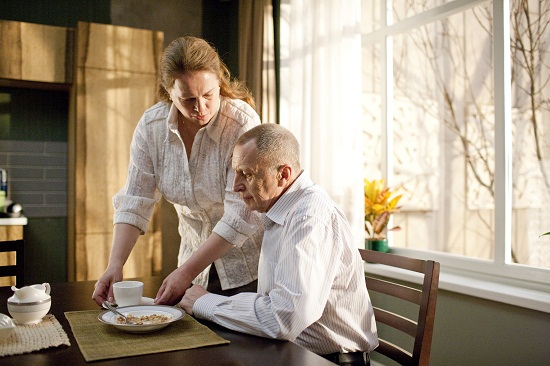
    Mark Jackson. Without, winner of a Special Jury Mention at the 2011 Slamdance Film Festival, is Brooklyn-based filmmaker Mark Jackson’s astonishing debut, a disquieting, beautifully controlled thriller about a young woman taking care of an elderly man while housesitting for a vacationing family. The film is receiving its international premiere at the Locarno Film Festival, and Jackson is already at work on other projects, including a collaboration with writer Mary Gaitskill.

    Alison Klayman. Journalist-turned-documentary filmmaker Alison Klayman is in post on her debut feature, Ai Weiwei: Never Sorry, a portrait of the outspoken Chinese artist. Following Ai during the installation of his large conceptual works while depicting his increasing activism and use of social media, Ai Weiwei: Never Sorry offers an insider’s look at not only a great artist’s creative process but also a changing China.

    David Lowery. Dallas-based writer, director and editor David Lowery followed up his subtle, evocative debut feature St. Nick with Pioneer, which is one of the year’s best shorts. Starring Will Oldham, it’s an emotionally piercing two hander, taking us into a fable-like world where adult wisdom coexists with childhood wonder. Lowery is currently at work on a new feature, which was selected for the Sundance Creative Producing Lab.

    Rola Nashef. Detroit-based Rola Nashef is in post-production on her first feature, the character-based drama Detroit Unleaded. Based on the director’s own short film, this IFP Narrative Lab selection is set within the city’s Arab-American community and features breakout performances from its young cast.

    Joe Nicolosi. Austin-based Joe Nicolosi has had the toughest of filmmaking challenges, tasked with creating short films that are captivating on not just the first viewing but also the second, third and fourth. His imaginative short “bumpers” for the SXSW Film Festival have brought him attention at the festival, among producers and agents, and, upcoming, viewers of YouTube, where he is debuting three new series this August.

    Damon Russell. In a year in which many critics have discussed the porous line between fiction and documentary, Damon Russell’s Atlanta-set feature Snow on Tha Bluff, about a single parent crack dealer, may be the most provocative yet. Along with partner Shawn Christensen, Russell is also a partner in the production company Fuzzy Logic.

    Kitao Sakurai. Cinematographer Kitao Sakurai made his strange and memorable feature debut with Aardvark, a Cleveland-shot drama starring blind actor Larry Lewis, Jr. that premiered in Locarno and is completing an impressive run of foreign festivals.

    Gingger Shankar. Musician and performer Gingger Shankar first ventured into the world of film with her contributions to The Passion of Christ, but she made her solo motion picture scoring debut at this year’s Sundance Film Festival with Maryam Kesharvarz’s Circumstance. Mixing hip hop-tinged electronica with traditional Iranian melodies, Shankar’s work imaginatively encapsulates the movie’s own themes. Her other recent work includes Sean Hackett’s independent feature Homecoming.

    Sophia Takal. Sophia Takal’s Green, which premiered at SXSW, is a sharply observed, incisively directed, and sexually provocative drama about female jealousy. Boasting strong performances by Kate Lyn Sheil, Lawrence Lavine, and Takal herself, the movie is a bold, visually assured feature debut.

    Read more