
The documentary Melania, a high-budget film about First Lady Melania Trump directed by Brett Ratner, released this weekend, has been met with overwhelmingly negative critical reviews.


At the begining of the year, NEON released a number of teasers for a new horror film on their social media accounts. Going full throttle on the digital marketing, with short clips and cryptic messages engaging the internet audience, they eventually revealed the film to be ‘Longlegs’.
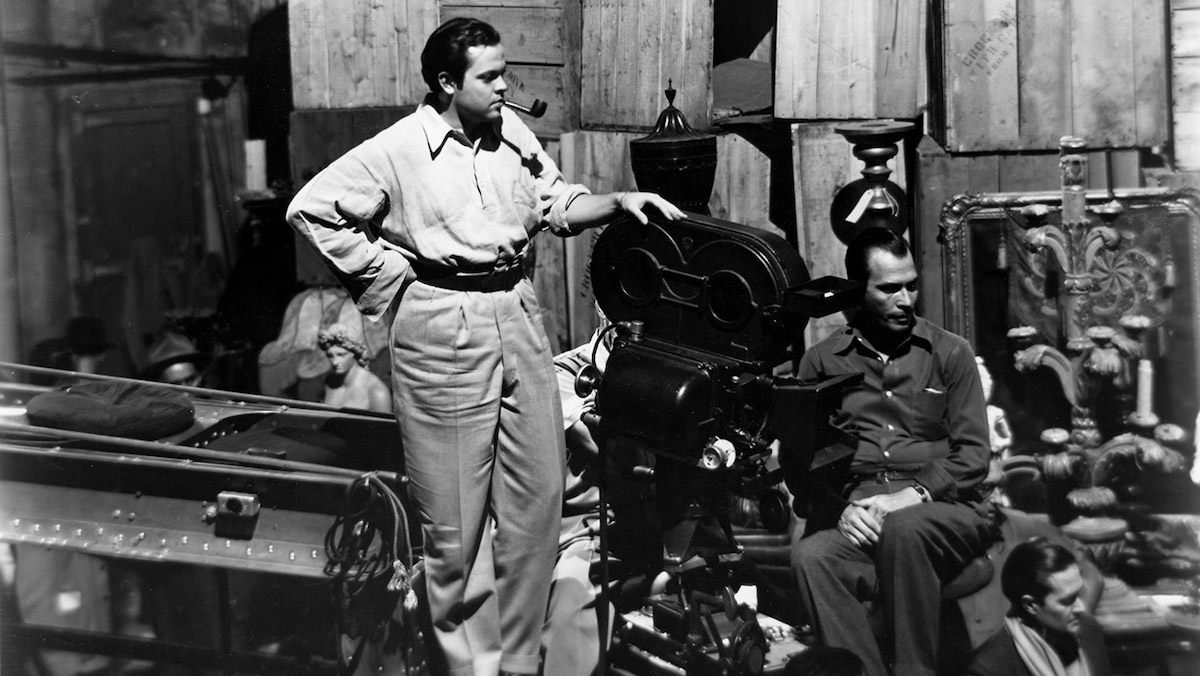 The Eyes of Orson Welles[/caption]
How do you write a letter to someone who has been dead for over 30 years? Mark Cousins’ answer is to look at their sketches that date back from their teenage years all the way their last and create profile through their eyes. The Eyes of Orson Welles has all the potential to be another self aggrandizing portrait of the filmmaker. Diving into the “genius” of the prolific man who has made his name in film, theatre, radio, as well visual art. His legacy could stand alone on having wrote/starred/directed Citizen Kane (1941), noted by many to be the greatest film ever made. However, Mark Cousins, having made a 900-minute comprehensive visual survey of all of cinema up to 2011, has made a film that is not really a film at all.
Orson Welles is dead, he has been since October 10, 1985. But hearing Cousins’ rich cadence describe the Moroccan travels Welles took as a teenager does more than conciliate a certain intimacy in the viewer. There is never a moment that Cousins’ narration addresses anybody that isn’t Welles, the film is literally a letter. This letter structure does more to give a materiality not just in seeing papers that are worn and yellowing but also to make Welles a present kind of living person within the film.
The next question to ask about this film is who is going to see it. Obviously those who are fans of Welles’ or Cousins’ work will get to a screening whenever possible. As Cousins’ opens the box he says “this never before seen” sketches have been dormant for however many years. Perhaps this film can be seen as an unearthing of a past history in a political/social life of filmmaker. Outside of the curiosity to see something new, there is not much for a person outside of niche of film culture. A film for film lovers. That is what I’ll say because The Eyes of Orson Welles says a lot more.
https://www.youtube.com/watch?v=Uh7PqV-259k
The Eyes of Orson Welles[/caption]
How do you write a letter to someone who has been dead for over 30 years? Mark Cousins’ answer is to look at their sketches that date back from their teenage years all the way their last and create profile through their eyes. The Eyes of Orson Welles has all the potential to be another self aggrandizing portrait of the filmmaker. Diving into the “genius” of the prolific man who has made his name in film, theatre, radio, as well visual art. His legacy could stand alone on having wrote/starred/directed Citizen Kane (1941), noted by many to be the greatest film ever made. However, Mark Cousins, having made a 900-minute comprehensive visual survey of all of cinema up to 2011, has made a film that is not really a film at all.
Orson Welles is dead, he has been since October 10, 1985. But hearing Cousins’ rich cadence describe the Moroccan travels Welles took as a teenager does more than conciliate a certain intimacy in the viewer. There is never a moment that Cousins’ narration addresses anybody that isn’t Welles, the film is literally a letter. This letter structure does more to give a materiality not just in seeing papers that are worn and yellowing but also to make Welles a present kind of living person within the film.
The next question to ask about this film is who is going to see it. Obviously those who are fans of Welles’ or Cousins’ work will get to a screening whenever possible. As Cousins’ opens the box he says “this never before seen” sketches have been dormant for however many years. Perhaps this film can be seen as an unearthing of a past history in a political/social life of filmmaker. Outside of the curiosity to see something new, there is not much for a person outside of niche of film culture. A film for film lovers. That is what I’ll say because The Eyes of Orson Welles says a lot more.
https://www.youtube.com/watch?v=Uh7PqV-259k North Pole, NY[/caption]
By the halfway point of North Pole, NY — an hour-long exposé on the history and hardships of the theme park known as ‘Santa’s Workshop’ in upstate New York — one thing is undeniably clear: director Ali Cotterill, who also served as co-writer, editor, and camera operator, has an unyielding affection for her subject matter. And why shouldn’t she? After all, the citizens of Wilmington, New York—a sleepy tourist town snug in the Adirondacks—couldn’t be more endearing in their devotion to Santa’s Workshop, the holiday theme park upon which their idyllic community has grown and, ultimately, come to rely.
It’s not all tinsel, though. The park, founded in the late 1940s by businessman Julian Reiss and later bequeathed to his son Bob, has been on a downward trajectory since the Eisenhower years, when theme parks and car trips were supplanted by the arrival of jet travel which took public interest elsewhere. These days Santa’s Workshop—which receives hundreds of letters to Kris Kringle each year—operates less as a commercial attraction and more as a gauzy piece of post-war nostalgia. See, in one particularly sobering sequence, as long-time park performer and historian Julie “Jingles” Robards drives her ’54 Dodge around Wilmington, pointing out what were once neighboring theme parks like “The Land of Make-Believe” but today resemble the sort of overgrown and decrepit structures you’d forbid your children from playing on.
Cotterill knows better than to wallow. After all, there is plenty of good to focus on here: the jobs for local teenagers, the decades of tradition kept alive by returning visitors, and the overall feeling that yes, magic still exists in the world, even if it doesn’t pay well. Never do the scales tip to full-blown despair. There is a villain, businessman Greg Cunningham, whose brief ownership of the park in the late 1990s turned sour after tales of his past criminal misconduct came to light, but even his story (which takes up less than four minutes of screen time) plays like a curious detour in a bigger tale of indomitable community spirit.
It’s the balance between the magical and melancholy that makes North Pole, NY such a compelling documentary. It operates on a two-fold illusion: the precious and short-lived one kids know as Santa Claus, and the existence of his workshop as a place of perpetual wonder in the face of bankruptcy, disinterest, and gentrification. Watching these awestruck children—whose interviews make up some of the funniest (and weirdest) parts of the film—react to a ‘talking’ tannenbaum or stand giddily in line for their moment with St. Nick, I found myself both moved by their innocence and depressed for the day when they’ll grow up and see behind the curtain.
Ultimately that’s what rounds out North Pole, NY and gives it such an engaging air: the people. Some of them, like Jingles Robards, seem at times almost too sincere to really exist in 2018. Others, like park manager Matt Stanley, are palpable in their believability. As he makes the morning rounds repairing broken games and reading customer complaints his cell phone erupts into a rock rendition of “Carol of the Bells.” It’s a moment that in a fictional film might feel cheap or obvious, but here rings true. Despite the daily grind, this guy really, truly loves Christmas. That’s how, after seven decades, Santa’s Workshop continues to survive: on the selflessness of people who believe in it. The park, just like this splendid little film, is a labor of love.
North Pole, NY premiered in New York on November 9th at IFC Center as part of DOC NYC.
North Pole, NY[/caption]
By the halfway point of North Pole, NY — an hour-long exposé on the history and hardships of the theme park known as ‘Santa’s Workshop’ in upstate New York — one thing is undeniably clear: director Ali Cotterill, who also served as co-writer, editor, and camera operator, has an unyielding affection for her subject matter. And why shouldn’t she? After all, the citizens of Wilmington, New York—a sleepy tourist town snug in the Adirondacks—couldn’t be more endearing in their devotion to Santa’s Workshop, the holiday theme park upon which their idyllic community has grown and, ultimately, come to rely.
It’s not all tinsel, though. The park, founded in the late 1940s by businessman Julian Reiss and later bequeathed to his son Bob, has been on a downward trajectory since the Eisenhower years, when theme parks and car trips were supplanted by the arrival of jet travel which took public interest elsewhere. These days Santa’s Workshop—which receives hundreds of letters to Kris Kringle each year—operates less as a commercial attraction and more as a gauzy piece of post-war nostalgia. See, in one particularly sobering sequence, as long-time park performer and historian Julie “Jingles” Robards drives her ’54 Dodge around Wilmington, pointing out what were once neighboring theme parks like “The Land of Make-Believe” but today resemble the sort of overgrown and decrepit structures you’d forbid your children from playing on.
Cotterill knows better than to wallow. After all, there is plenty of good to focus on here: the jobs for local teenagers, the decades of tradition kept alive by returning visitors, and the overall feeling that yes, magic still exists in the world, even if it doesn’t pay well. Never do the scales tip to full-blown despair. There is a villain, businessman Greg Cunningham, whose brief ownership of the park in the late 1990s turned sour after tales of his past criminal misconduct came to light, but even his story (which takes up less than four minutes of screen time) plays like a curious detour in a bigger tale of indomitable community spirit.
It’s the balance between the magical and melancholy that makes North Pole, NY such a compelling documentary. It operates on a two-fold illusion: the precious and short-lived one kids know as Santa Claus, and the existence of his workshop as a place of perpetual wonder in the face of bankruptcy, disinterest, and gentrification. Watching these awestruck children—whose interviews make up some of the funniest (and weirdest) parts of the film—react to a ‘talking’ tannenbaum or stand giddily in line for their moment with St. Nick, I found myself both moved by their innocence and depressed for the day when they’ll grow up and see behind the curtain.
Ultimately that’s what rounds out North Pole, NY and gives it such an engaging air: the people. Some of them, like Jingles Robards, seem at times almost too sincere to really exist in 2018. Others, like park manager Matt Stanley, are palpable in their believability. As he makes the morning rounds repairing broken games and reading customer complaints his cell phone erupts into a rock rendition of “Carol of the Bells.” It’s a moment that in a fictional film might feel cheap or obvious, but here rings true. Despite the daily grind, this guy really, truly loves Christmas. That’s how, after seven decades, Santa’s Workshop continues to survive: on the selflessness of people who believe in it. The park, just like this splendid little film, is a labor of love.
North Pole, NY premiered in New York on November 9th at IFC Center as part of DOC NYC.
 Elephant Path: Njaia Njoku[/caption]
Todd McGrain knows the importance of conservation. The artist turned filmmaker is best known for his Lost Bird Project, a series of larger-than-life sculptures dedicated to five extinct North American bird species. While this endeavor was chronicled in the 2012 film of the same name by Deborah Dickson, now McGrain himself has stepped behind the camera to bring us the story of another endangered species, one we might actually be able to save: the forest elephants of Bayanga, Central Africa. Elephant Path (or “Njaia Njoku” in the Bayaka language) has a lot going for it: a heart-wrenching story, impressive scope, engaging characters, and above all a sense of showmanship. McGrain’s storytelling approach is stylish and highly cinematic to the point where, by the end of the film’s 79 minute run-time, it’s a shock to realize how little has actually happened.
The story of “Dzanga Bai” (“Elephant Village”) is presented through a quartet of characters. Andrea Turkalo, an American biologist, has spent three decades observing elephants in their natural habitat. Aiding her efforts in Bayanga is local tracker Sessely Bernard, a village elder named for the river from which he first drank. Keeping watch over the elephants is Zephirine Sosso Mbele, one of a handful of “Eco Guards” tasked with warding off poachers. Late in the film, the guards receive additional defense training from Nir Kalron, an Israeli ex-military security contractor with a soft spot for animals.
Why the additional training? Because Bayanga, in fact the entire Central African Republic, is under siege by Séléka rebels and embroiled in a civil war. To the rebels, elephants are prime targets; the sale of ivory from their priceless tusks is how they fund their arsenal. At the start of the film they have not arrived at Dzanga, but from Turkalo’s foreboding narration we quickly gather it’s only a matter of time. Meanwhile, she and Sessely enjoy their work, the bulk of which is done from an observation deck and conducted via sketch pads and telephoto lenses, with minimal conversation. There is a sublime peace to this process.
That peace, of course, does not last. Eventually the Séléka arrive, guns blazing, and the region is plunged into oppression and terror. Turkalo is forced to flee to America while Sessely and the Bayangan community retreat into the forest to avoid persecution. I won’t detail what follows from here on out, sufficeth to say the elephants do not fare well. In one particularly haunting scene set back in America, Turkalo and a colleague review audio recordings of the forest, where distant gunfire produces cries of animal distress. A short while later, rhythmic tapping is heard. “They’re chopping off the tusks,” Turkalo observes coldly.
The human cruelty of Elephant Path is the film’s most striking element, despite the fact that none of it is ever shown happening. Early on, Sessely remarks to Turkalo how the behavior of elephants does not differ so much from that of humans; they flirt and fight, bathe each other, have children, play games. This salient observation returns with a vengeance when, in the aftermath of a Séléka poaching spree, Sessely inspects the demolished corpse of a slain elephant and angrily declares “This elephant was me.”
One of the inherent dangers of documentary filmmaking is arriving at an anticlimax. For a film shot and edited with the gusto of a narrative film, Elephant Path comes to an abrupt, somewhat underwhelming conclusion. Again I won’t spoil, but for all of Nir Kalron’s efforts in training up the Eco Guards to combat the bigger, better-armed Séléka poachers, the resolution of said problem feels like a non-ending, at least to the viewer. Little can be done about this, I know, but McGrain and crew (in particular cinematographer Scott Anger) set up such palpable villains in the occupying rebels that you can’t help but feel a little cheated out of a proper showdown. There is hope at the end of Elephant Path, even if only a modest amount, and that must be our reward. The remaining elephants saunter into Dzanga Bai, as always, and hose themselves down. Life goes on. For the living, anyway.
Elephant Path: Njaia Njoku[/caption]
Todd McGrain knows the importance of conservation. The artist turned filmmaker is best known for his Lost Bird Project, a series of larger-than-life sculptures dedicated to five extinct North American bird species. While this endeavor was chronicled in the 2012 film of the same name by Deborah Dickson, now McGrain himself has stepped behind the camera to bring us the story of another endangered species, one we might actually be able to save: the forest elephants of Bayanga, Central Africa. Elephant Path (or “Njaia Njoku” in the Bayaka language) has a lot going for it: a heart-wrenching story, impressive scope, engaging characters, and above all a sense of showmanship. McGrain’s storytelling approach is stylish and highly cinematic to the point where, by the end of the film’s 79 minute run-time, it’s a shock to realize how little has actually happened.
The story of “Dzanga Bai” (“Elephant Village”) is presented through a quartet of characters. Andrea Turkalo, an American biologist, has spent three decades observing elephants in their natural habitat. Aiding her efforts in Bayanga is local tracker Sessely Bernard, a village elder named for the river from which he first drank. Keeping watch over the elephants is Zephirine Sosso Mbele, one of a handful of “Eco Guards” tasked with warding off poachers. Late in the film, the guards receive additional defense training from Nir Kalron, an Israeli ex-military security contractor with a soft spot for animals.
Why the additional training? Because Bayanga, in fact the entire Central African Republic, is under siege by Séléka rebels and embroiled in a civil war. To the rebels, elephants are prime targets; the sale of ivory from their priceless tusks is how they fund their arsenal. At the start of the film they have not arrived at Dzanga, but from Turkalo’s foreboding narration we quickly gather it’s only a matter of time. Meanwhile, she and Sessely enjoy their work, the bulk of which is done from an observation deck and conducted via sketch pads and telephoto lenses, with minimal conversation. There is a sublime peace to this process.
That peace, of course, does not last. Eventually the Séléka arrive, guns blazing, and the region is plunged into oppression and terror. Turkalo is forced to flee to America while Sessely and the Bayangan community retreat into the forest to avoid persecution. I won’t detail what follows from here on out, sufficeth to say the elephants do not fare well. In one particularly haunting scene set back in America, Turkalo and a colleague review audio recordings of the forest, where distant gunfire produces cries of animal distress. A short while later, rhythmic tapping is heard. “They’re chopping off the tusks,” Turkalo observes coldly.
The human cruelty of Elephant Path is the film’s most striking element, despite the fact that none of it is ever shown happening. Early on, Sessely remarks to Turkalo how the behavior of elephants does not differ so much from that of humans; they flirt and fight, bathe each other, have children, play games. This salient observation returns with a vengeance when, in the aftermath of a Séléka poaching spree, Sessely inspects the demolished corpse of a slain elephant and angrily declares “This elephant was me.”
One of the inherent dangers of documentary filmmaking is arriving at an anticlimax. For a film shot and edited with the gusto of a narrative film, Elephant Path comes to an abrupt, somewhat underwhelming conclusion. Again I won’t spoil, but for all of Nir Kalron’s efforts in training up the Eco Guards to combat the bigger, better-armed Séléka poachers, the resolution of said problem feels like a non-ending, at least to the viewer. Little can be done about this, I know, but McGrain and crew (in particular cinematographer Scott Anger) set up such palpable villains in the occupying rebels that you can’t help but feel a little cheated out of a proper showdown. There is hope at the end of Elephant Path, even if only a modest amount, and that must be our reward. The remaining elephants saunter into Dzanga Bai, as always, and hose themselves down. Life goes on. For the living, anyway.
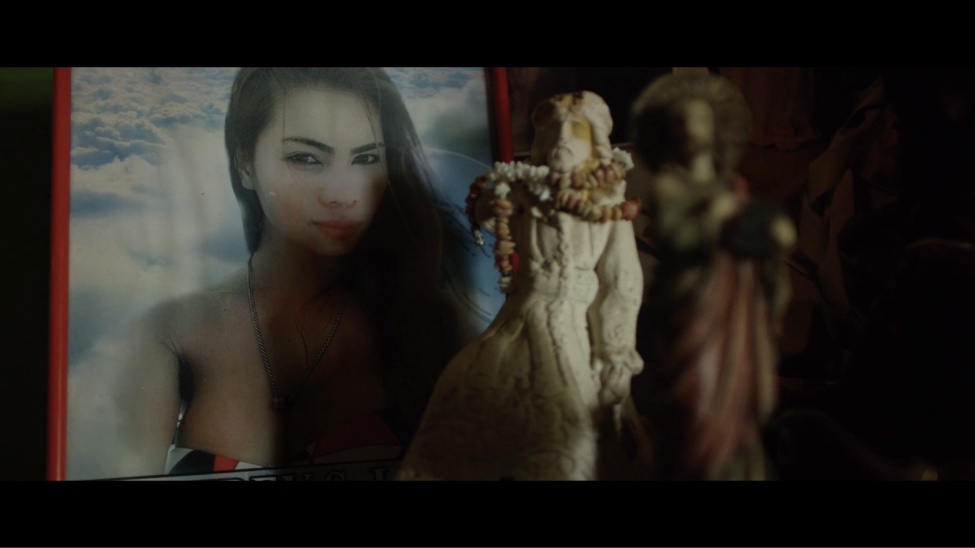 CALL HER GANDA[/caption]
Ganda [gʌn-daː] – meaning “beauty” in Tagalog
On October 11, 2014, Jennifer Laude was last seen with a United States Marine and later found dead in a motel bathroom. This and the identity of the suspect is known to both the Philippines and the United States Government, yet their imperialistic relationship and preponderant transphobia in both countries has rendered the case gridlocked. Filipino-American director PJ Raval seeks justice for trans woman Jeffery “Jennifer” Laude as her homicide evolves far beyond her death and echoes a long-pondered question: what is the United States’ role in the Philippines? Call her Ganda is a poignant exploration of LGBT+ relations in a time of social media saturation and in an environment dominated by lingering post-colonialism. Raval and journalist Meredith Talusan unravels the red herring media coverage and social delusion regarding Laude’s family and the trans community as they struggle for authentic visibility. This documentary intimately examines the resulting Filipino nationalism after Laude’s tragic death as well as the first indictment of a U.S. serviceman on Philippines soil.
Born Jeffery Laude, Jennifer was the breadwinner of her family and provided financial support to her mother. Though her main source of income was promiscuous, the viewer is asked to look beyond her sex-work, identity, and race to ultimately find humanity in someone that is most likely foreign to themselves. The film provides a glimpse into the misunderstood trans-culture of the Philippines and its relation to the nation’s prevailing poverty and corrupt political system. Testimony from her friends and family acquaints us with the bright and benevolent life Laude led while conversely probing us to question the immoral capabilities of United States servicemen. We feel her mother’s struggle for justice, recognize her fiancé’s pain as he tries to make sense of the tragedy, and understand the upheaval of the Filipino people in response U.S.’s intrusion in Filipino law. Raval inquires us to examine the relationship the Philippines has with its Western Subjugator and challenge documents such as the Visiting Forces Agreement (VFA) that allow the U.S. to interfere in Filipino judicial processes under certain circumstances.
Call Her Ganda makes it a point to remind us of media’s involvement in the proceedings following the incident and the interconnective soapbox that is social media. We see how opinions over the internet sustain widespread dogmatism over complex controversies and how media can contort the truth for political interest whenever convenient. Though Laude and Pemberton’s case may seem unambiguous to either side of the aisle due to predispositions of gender, race, and nationality, Talusan explores varying perspectives subsequently highlighting the numerous moral dilemmas that saturate both the events in question and the legal turbulence that follows. The film itself seeks “Justice for Jennifer,” yet rather than completely villainizing a single person or group, Talusan ventures toward understanding Pemberton’s perspective and widespread transphobia ultimately revaluating modern and western education of gender fluidity.
Despite the film’s emphasis on social media’s tendency to polarize opinions, it doesn’t forget to demonstrate its power to bring people together under a meaningful cause. The film itself is a product of social support as it captures the united front that is transgender and Filipino pride. Joseph Scott Pemberton’s actions that night may have pained so many who knew and sympathized with Jennifer Laude, but this documentary makes it known that her death was not in vein. The anger and sadness that stems from mourning is galvanized into a passion for justice and social equality. Laude’s name stands as a reminder that trans people will continue to be marginalized and Filipinos overlooked if these moral dilemmas go unaddressed, unexamined, and uncontested. Call Her Ganda attempts to breed empathy regarding gender identity and race, ultimately breathing new life into Jennifer Laude by recognizing a deep desire shared by all humans: to unapologetically be one’s true self. Laude defined herself by who she knew she was and took pride in her identity making her truly Ganda.
https://www.youtube.com/watch?v=6YwQtgBRhZQ
CALL HER GANDA[/caption]
Ganda [gʌn-daː] – meaning “beauty” in Tagalog
On October 11, 2014, Jennifer Laude was last seen with a United States Marine and later found dead in a motel bathroom. This and the identity of the suspect is known to both the Philippines and the United States Government, yet their imperialistic relationship and preponderant transphobia in both countries has rendered the case gridlocked. Filipino-American director PJ Raval seeks justice for trans woman Jeffery “Jennifer” Laude as her homicide evolves far beyond her death and echoes a long-pondered question: what is the United States’ role in the Philippines? Call her Ganda is a poignant exploration of LGBT+ relations in a time of social media saturation and in an environment dominated by lingering post-colonialism. Raval and journalist Meredith Talusan unravels the red herring media coverage and social delusion regarding Laude’s family and the trans community as they struggle for authentic visibility. This documentary intimately examines the resulting Filipino nationalism after Laude’s tragic death as well as the first indictment of a U.S. serviceman on Philippines soil.
Born Jeffery Laude, Jennifer was the breadwinner of her family and provided financial support to her mother. Though her main source of income was promiscuous, the viewer is asked to look beyond her sex-work, identity, and race to ultimately find humanity in someone that is most likely foreign to themselves. The film provides a glimpse into the misunderstood trans-culture of the Philippines and its relation to the nation’s prevailing poverty and corrupt political system. Testimony from her friends and family acquaints us with the bright and benevolent life Laude led while conversely probing us to question the immoral capabilities of United States servicemen. We feel her mother’s struggle for justice, recognize her fiancé’s pain as he tries to make sense of the tragedy, and understand the upheaval of the Filipino people in response U.S.’s intrusion in Filipino law. Raval inquires us to examine the relationship the Philippines has with its Western Subjugator and challenge documents such as the Visiting Forces Agreement (VFA) that allow the U.S. to interfere in Filipino judicial processes under certain circumstances.
Call Her Ganda makes it a point to remind us of media’s involvement in the proceedings following the incident and the interconnective soapbox that is social media. We see how opinions over the internet sustain widespread dogmatism over complex controversies and how media can contort the truth for political interest whenever convenient. Though Laude and Pemberton’s case may seem unambiguous to either side of the aisle due to predispositions of gender, race, and nationality, Talusan explores varying perspectives subsequently highlighting the numerous moral dilemmas that saturate both the events in question and the legal turbulence that follows. The film itself seeks “Justice for Jennifer,” yet rather than completely villainizing a single person or group, Talusan ventures toward understanding Pemberton’s perspective and widespread transphobia ultimately revaluating modern and western education of gender fluidity.
Despite the film’s emphasis on social media’s tendency to polarize opinions, it doesn’t forget to demonstrate its power to bring people together under a meaningful cause. The film itself is a product of social support as it captures the united front that is transgender and Filipino pride. Joseph Scott Pemberton’s actions that night may have pained so many who knew and sympathized with Jennifer Laude, but this documentary makes it known that her death was not in vein. The anger and sadness that stems from mourning is galvanized into a passion for justice and social equality. Laude’s name stands as a reminder that trans people will continue to be marginalized and Filipinos overlooked if these moral dilemmas go unaddressed, unexamined, and uncontested. Call Her Ganda attempts to breed empathy regarding gender identity and race, ultimately breathing new life into Jennifer Laude by recognizing a deep desire shared by all humans: to unapologetically be one’s true self. Laude defined herself by who she knew she was and took pride in her identity making her truly Ganda.
https://www.youtube.com/watch?v=6YwQtgBRhZQ The woods are scary. This isn’t a concept that’s too difficult to grasp. Nature scares people. The uncontrollable elements scare people. Bears scare people. Witches scare people. All these things are in the woods and, unless I’m with at least three other people who run slower than me, I won’t be. However, if your inclination is to tell me that I’m more afraid of myself than I am the forest, not only would you be correct, you’d be the perfect audience for Lorcan Finnegan’s debut feature, Without Name.
When Eric (Alan McKenna) is contracted to survey a land known as gun ainm (literal translation being, you guessed it, “without name”), he finds himself spending more time investigating the area’s history than the land itself. Leaving behind a wife (Olga Wehrly) and teenaged son (Brandon Maher) but accompanied by his colleague and occasional mistress, Olivia (Niamh Algar), Eric becomes obsessed with the land’s previous owner, William Devoy (Brendan Conroy), who left behind a field guide to the surrounding forests, its plants, and potentially supernatural properties before succumbing to its powers, where he was found catatonic and nearly dead with no concrete explanation.
Undisturbed but morbidly curious, Eric’s grasp on reality grows thin as the mysteries surrounding Devoy’s current mental state and explorations in the forest pose more questions than they answer. Meanwhile, Eric and Olivia become close with a traveling local, Gus (James Browne), who tries to open their minds to the possibilities of nature as sentient beings that communicate with each other in a complicated ecosystem beyond human comprehension.
Bursting with an energy rarely seen outside of a debut feature, Without Name is a challenging, unnerving, and ultimately rewarding film about the relationship between man and the surroundings which he cannot control through distinctly human concepts like infrastructure and property lines. Finnegan, with cinematographer Piers McGrall, uses the camera to breathe a life into these woods that’s rarely seen in the movies. The film’s most visceral moments have a tendency to erase the barrier between viewer and screen, leaving you as disoriented as the characters you’re watching.
While we’re on the topic of character, it took watching this movie to realize how long it’s been since I’ve seen a horror movie with three-dimensional human beings to root for. I can’t emphasize enough how refreshing it was to hear people talking on-screen without desperately wanting one of them to be murdered mid-sentence. By avoiding the “creepy local” trope entirely and allowing the horror to come from within Eric and as a result of his surroundings, Finnegan is able to foster these distinct relationships amongst the characters that imbue his film with a sense of purpose with which the worst horror films don’t even bother.
However, that same energy and attention to detail that characterize the best debut features are occasionally offset by a narrative structure commonly associated with first films on the negative end of that spectrum. For all of its risks, Without Name‘s screenplay sometimes slips into more telegraphed territory, which actively works against the mystery that makes this film a lot of what it is. All the more disappointing because the film’s highs are high. It’s a confident debut that sometimes doesn’t trust itself to go the distance and shed any semblance of the reference points and visual cues that most first-time directors rely on to find an audience.
Similarly, Without Name has a tendency to bare its micro-budget teeth that no amount of editing can hide, including a third act that, while visually stunning and genuinely breathtaking to behold, utilizes overly simplistic (read: cheap) setups to get its point across, including an altercation between two nude men in a forest that’s probably a lot goofier than it was intended to be.
These are all minor gripes, though. The bottom line of Without Name is that it’s daring, it’s unnerving, it’s gorgeously shot, impeccably scored, masterfully edited, and only occasionally clunky. I predict nothing but good things for director Lorcan Finnegan and his writing partner, Garret Shanley, who are well on their way to being the next Adam Wingard/Simon Barrett one-two punch of a writer who understands the genre with a bold vision, and a director who’s able to manifest that vision into something that’s not only watchable, but potentially transcendent. In its closing shot, Finnegan confirms that he already knows the one thing most horror directors tend to avoid: killing your characters isn’t the best or only way to scare your audience, as there are many, many fates worse than death.
Grade: B+
https://www.youtube.com/watch?v=cd4K6qICqC8
The woods are scary. This isn’t a concept that’s too difficult to grasp. Nature scares people. The uncontrollable elements scare people. Bears scare people. Witches scare people. All these things are in the woods and, unless I’m with at least three other people who run slower than me, I won’t be. However, if your inclination is to tell me that I’m more afraid of myself than I am the forest, not only would you be correct, you’d be the perfect audience for Lorcan Finnegan’s debut feature, Without Name.
When Eric (Alan McKenna) is contracted to survey a land known as gun ainm (literal translation being, you guessed it, “without name”), he finds himself spending more time investigating the area’s history than the land itself. Leaving behind a wife (Olga Wehrly) and teenaged son (Brandon Maher) but accompanied by his colleague and occasional mistress, Olivia (Niamh Algar), Eric becomes obsessed with the land’s previous owner, William Devoy (Brendan Conroy), who left behind a field guide to the surrounding forests, its plants, and potentially supernatural properties before succumbing to its powers, where he was found catatonic and nearly dead with no concrete explanation.
Undisturbed but morbidly curious, Eric’s grasp on reality grows thin as the mysteries surrounding Devoy’s current mental state and explorations in the forest pose more questions than they answer. Meanwhile, Eric and Olivia become close with a traveling local, Gus (James Browne), who tries to open their minds to the possibilities of nature as sentient beings that communicate with each other in a complicated ecosystem beyond human comprehension.
Bursting with an energy rarely seen outside of a debut feature, Without Name is a challenging, unnerving, and ultimately rewarding film about the relationship between man and the surroundings which he cannot control through distinctly human concepts like infrastructure and property lines. Finnegan, with cinematographer Piers McGrall, uses the camera to breathe a life into these woods that’s rarely seen in the movies. The film’s most visceral moments have a tendency to erase the barrier between viewer and screen, leaving you as disoriented as the characters you’re watching.
While we’re on the topic of character, it took watching this movie to realize how long it’s been since I’ve seen a horror movie with three-dimensional human beings to root for. I can’t emphasize enough how refreshing it was to hear people talking on-screen without desperately wanting one of them to be murdered mid-sentence. By avoiding the “creepy local” trope entirely and allowing the horror to come from within Eric and as a result of his surroundings, Finnegan is able to foster these distinct relationships amongst the characters that imbue his film with a sense of purpose with which the worst horror films don’t even bother.
However, that same energy and attention to detail that characterize the best debut features are occasionally offset by a narrative structure commonly associated with first films on the negative end of that spectrum. For all of its risks, Without Name‘s screenplay sometimes slips into more telegraphed territory, which actively works against the mystery that makes this film a lot of what it is. All the more disappointing because the film’s highs are high. It’s a confident debut that sometimes doesn’t trust itself to go the distance and shed any semblance of the reference points and visual cues that most first-time directors rely on to find an audience.
Similarly, Without Name has a tendency to bare its micro-budget teeth that no amount of editing can hide, including a third act that, while visually stunning and genuinely breathtaking to behold, utilizes overly simplistic (read: cheap) setups to get its point across, including an altercation between two nude men in a forest that’s probably a lot goofier than it was intended to be.
These are all minor gripes, though. The bottom line of Without Name is that it’s daring, it’s unnerving, it’s gorgeously shot, impeccably scored, masterfully edited, and only occasionally clunky. I predict nothing but good things for director Lorcan Finnegan and his writing partner, Garret Shanley, who are well on their way to being the next Adam Wingard/Simon Barrett one-two punch of a writer who understands the genre with a bold vision, and a director who’s able to manifest that vision into something that’s not only watchable, but potentially transcendent. In its closing shot, Finnegan confirms that he already knows the one thing most horror directors tend to avoid: killing your characters isn’t the best or only way to scare your audience, as there are many, many fates worse than death.
Grade: B+
https://www.youtube.com/watch?v=cd4K6qICqC8 ma ma[/caption]
Ma ma is set in Madrid, Spain, and stars Academy Award®-winning actress Penelope Cruz as Magda, a woman recently diagnosed with breast cancer who’s also going through a separation from her self-centered husband Raul (Alex Brendemuhl), who left her for one of his students.
It’s a few of several devastating hardships Magda endures in Spanish director Julio Medem’s film, written and produced by himself, Cruz and Alvaro Longoria.
After a few months of ignoring a lump on her right breast, Magda decides to get it checked out. Her doctor, Julian (Asier Etxeandia), biopsies the lump for cancer.
Shortly afterwards, much to her dismay, he delivers the terrible news that she indeed has cancer, and will require grueling chemotherapy sessions to shrink the nodules before having a mastectomy.
Each chemo session is accompanied by a glaring white background that distracts the viewer more than adding anything to the scenes. But the wonderful cinematography and camera work pull you back in.
Looking to for a bit of escapism, Magda attends her son Dani’s (Teo Planell) football game, where she meets a man, Arturo (Luis Tosar), a talent scout for the famed football (soccer) team, Real Madrid.
Arturo is interested in recruiting her son, a standout player on his youth squad, in Real Madrid’s junior program, which helps develop young talent into future professionals.
While there, Arturo receives unimaginable news of his own, that there has been a car accident, which has claimed the life of his daughter, and left his wife in a comma.
Magda accompanies Arturo to the hospital, subsequently visiting him while undergoing her own chemo treatments, which she hasn’t divulge to anyone at the time.
However, she eventually tells Arturo, who winds up losing his wife, and the two become each other’s support system. As she recovers from her operation, and is in the clear for the time being, they predictably fall in love, and form the perfect family unit.
But cruel misfortune steps in again on the hard-luck Magda, as Dr. Julian, who belts out beautiful, romantic songs in a bedside attempt to soothed her, informs his patient that the cancer has spread to her other breast, and metastasized to wall of her lungs. Subsequently, the doctor delivers a gut-wrenching prognosis of only six months to live.
What follows is an over-the-top attempt of series of events intent on extracting more tears from movie-goers, with the final scene cumulating in another foreseeable outcome.
Overall, though, ‘Ma ma’ is worth seeing despite its campy, overdramatic feel—which is only exaggerated by a few scenes in which beating hearts are splashed across the screen for shameless, emotional effects—because of its positive message of strength, courage, and hope amidst tragedy.
‘Ma ma’ opens in New York City on May 20th, and in Los Angeles and Miami on May 27th, with national expansion to follow.
https://www.youtube.com/watch?v=RxtB15K-nN4
ma ma[/caption]
Ma ma is set in Madrid, Spain, and stars Academy Award®-winning actress Penelope Cruz as Magda, a woman recently diagnosed with breast cancer who’s also going through a separation from her self-centered husband Raul (Alex Brendemuhl), who left her for one of his students.
It’s a few of several devastating hardships Magda endures in Spanish director Julio Medem’s film, written and produced by himself, Cruz and Alvaro Longoria.
After a few months of ignoring a lump on her right breast, Magda decides to get it checked out. Her doctor, Julian (Asier Etxeandia), biopsies the lump for cancer.
Shortly afterwards, much to her dismay, he delivers the terrible news that she indeed has cancer, and will require grueling chemotherapy sessions to shrink the nodules before having a mastectomy.
Each chemo session is accompanied by a glaring white background that distracts the viewer more than adding anything to the scenes. But the wonderful cinematography and camera work pull you back in.
Looking to for a bit of escapism, Magda attends her son Dani’s (Teo Planell) football game, where she meets a man, Arturo (Luis Tosar), a talent scout for the famed football (soccer) team, Real Madrid.
Arturo is interested in recruiting her son, a standout player on his youth squad, in Real Madrid’s junior program, which helps develop young talent into future professionals.
While there, Arturo receives unimaginable news of his own, that there has been a car accident, which has claimed the life of his daughter, and left his wife in a comma.
Magda accompanies Arturo to the hospital, subsequently visiting him while undergoing her own chemo treatments, which she hasn’t divulge to anyone at the time.
However, she eventually tells Arturo, who winds up losing his wife, and the two become each other’s support system. As she recovers from her operation, and is in the clear for the time being, they predictably fall in love, and form the perfect family unit.
But cruel misfortune steps in again on the hard-luck Magda, as Dr. Julian, who belts out beautiful, romantic songs in a bedside attempt to soothed her, informs his patient that the cancer has spread to her other breast, and metastasized to wall of her lungs. Subsequently, the doctor delivers a gut-wrenching prognosis of only six months to live.
What follows is an over-the-top attempt of series of events intent on extracting more tears from movie-goers, with the final scene cumulating in another foreseeable outcome.
Overall, though, ‘Ma ma’ is worth seeing despite its campy, overdramatic feel—which is only exaggerated by a few scenes in which beating hearts are splashed across the screen for shameless, emotional effects—because of its positive message of strength, courage, and hope amidst tragedy.
‘Ma ma’ opens in New York City on May 20th, and in Los Angeles and Miami on May 27th, with national expansion to follow.
https://www.youtube.com/watch?v=RxtB15K-nN4 Weed, religion & trouble make up the ingredients for the award winning film Dough directed by John Goldschmidt.
Dough stars Jonathan Pryce and Jerome Holder, and is the winner of the Audience Award at Hartford Jewish Film Festival 2016, Green Mountain Film Festival 2016, and New Hampshire Jewish Film Festival 2016.
Weed, religion & trouble make up the ingredients for the award winning film Dough directed by John Goldschmidt.
Dough stars Jonathan Pryce and Jerome Holder, and is the winner of the Audience Award at Hartford Jewish Film Festival 2016, Green Mountain Film Festival 2016, and New Hampshire Jewish Film Festival 2016.
 The film is set in London and tells the story of a Jewish bakery owner (Nat) played by Jonathan Pryce who is in need of a boost to his bakery so he hires a new apprentice Ayyash played by Jerome Holder. While working one day in the bakery Ayyash drops his weed in the bread dough and Nat business started to get a major boost in sales but in the end the shop was turned upside and unlikely friendship was created.
 Dough puts off highly realistic vibes and all the actors worked really well together. I loved the fact “Dough” tackled religion and still had the ability to add comedy and weed in the same film. My only dislike about the film is that at times it got a little too predictable, however, over all I would recommend this film.
 So with that said Dough will be opening this weekend in city near you, Los Angeles, San Francisco, Boston, Philadelphia, DC, and right here in New York City at Village East Cinema so if you have a chance to view this film you should just do it.
https://www.youtube.com/watch?v=WPAcqo7ZzlU
So with that said Dough will be opening this weekend in city near you, Los Angeles, San Francisco, Boston, Philadelphia, DC, and right here in New York City at Village East Cinema so if you have a chance to view this film you should just do it.
https://www.youtube.com/watch?v=WPAcqo7ZzlU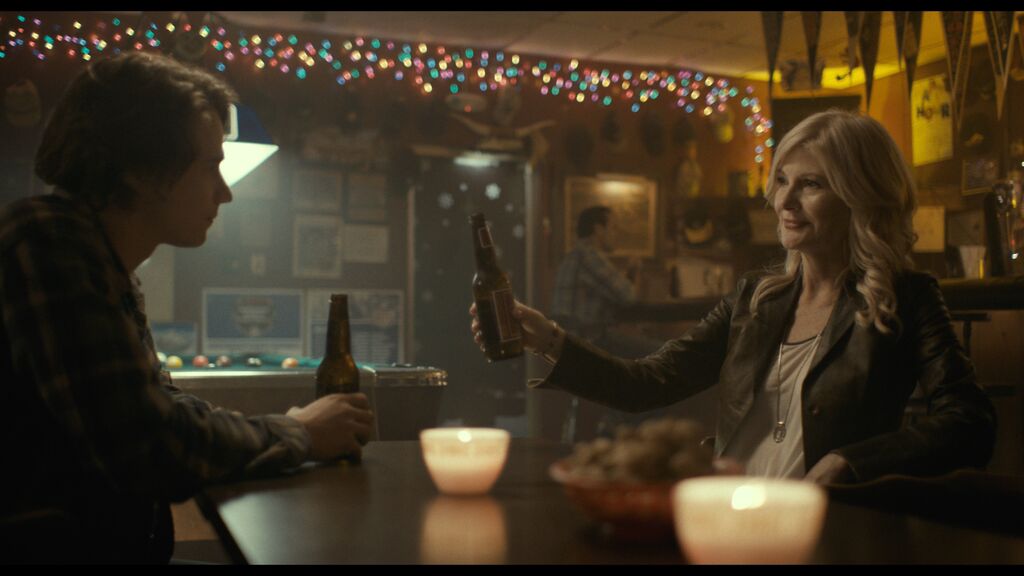 The crime thriller TWO STEP debuted at the 2014 South by Southwest Festival and made the festival rounds throughout 2014.
James (Skyy Moore) is a college dropout who lives with his grandmother. When his grandmother passes away, James is on his own in a town where he doesn’t know anyone else. He meets his grandmother’s neighbor Dot (Beth Broderick), an attractive middle-aged dance instructor, and soon develops an attachment to her. Meanwhile, jailhouse lowlife Webb (James Landry Hébert) spends his time in prison calling random numbers from to scam old people out of money. Webb is released from prison into a desperate situation, and he proves how cerebral and destructive he can be when he and James inadvertently cross paths.
TWO STEP is a thriller that has some very unique elements – for one, much of the violence – and there is plenty – happens off-screen. This isn’t a movie about physical violence, it is about the mental toll that desperation causes. First time feature writer/director Alex R. Johnson structures the film to hide the violence, particularly in the dangerous, slow-spoken way that Webb carries himself. While Webb is obviously distressed, both James and Dot have their own issues within their lives. Both are somewhat lost causes, and it’s fascinating how the film hints at the nature of their friendship.
The final third of TWO STEP almost entirely focuses on Webb, shifting him from the film’s antagonist role to the protagonist’s role. Much of it involves him driving around talking to people and tying up the loose ends in his life, which meanders too much. This pushes both James and Dot’s characters to the fringe of the narrative, and if you are more interested in their predicaments than Webb’s (as I was), you will be disappointed. Because of that, as engaged I was in the setup of the conflict of TWO STEP, I was disappointed in not seeing more of these characters because their personal conflicts remain largely unresolved.
TWO STEP is worth a watch, but the ending holds it back from being a unique crime thriller that would set it apart from the dozens of above average crime films that appear at festivals every year. Johnson definitely shows a talented eye for directing – and Hébert plays a great villain – so I’m looking forward to see if Johnson can grow as a filmmaker with his next feature.
Film Review Rating 3 out of 5 : See it … It’s Good
https://vimeo.com/93220155
TWO STEP
Opens July 31st in NY at the Village East Cinema, and August 7th in LA, will be available across major iVOD/cVOD platforms starting on September 1st.
Written and Directed by Alex R Johnson
Starring Beth Broderick, James Landry Hébert, Skyy Moore, Jason Douglas, Ashley Rae Spillers
Written by Christopher McKittrick
The crime thriller TWO STEP debuted at the 2014 South by Southwest Festival and made the festival rounds throughout 2014.
James (Skyy Moore) is a college dropout who lives with his grandmother. When his grandmother passes away, James is on his own in a town where he doesn’t know anyone else. He meets his grandmother’s neighbor Dot (Beth Broderick), an attractive middle-aged dance instructor, and soon develops an attachment to her. Meanwhile, jailhouse lowlife Webb (James Landry Hébert) spends his time in prison calling random numbers from to scam old people out of money. Webb is released from prison into a desperate situation, and he proves how cerebral and destructive he can be when he and James inadvertently cross paths.
TWO STEP is a thriller that has some very unique elements – for one, much of the violence – and there is plenty – happens off-screen. This isn’t a movie about physical violence, it is about the mental toll that desperation causes. First time feature writer/director Alex R. Johnson structures the film to hide the violence, particularly in the dangerous, slow-spoken way that Webb carries himself. While Webb is obviously distressed, both James and Dot have their own issues within their lives. Both are somewhat lost causes, and it’s fascinating how the film hints at the nature of their friendship.
The final third of TWO STEP almost entirely focuses on Webb, shifting him from the film’s antagonist role to the protagonist’s role. Much of it involves him driving around talking to people and tying up the loose ends in his life, which meanders too much. This pushes both James and Dot’s characters to the fringe of the narrative, and if you are more interested in their predicaments than Webb’s (as I was), you will be disappointed. Because of that, as engaged I was in the setup of the conflict of TWO STEP, I was disappointed in not seeing more of these characters because their personal conflicts remain largely unresolved.
TWO STEP is worth a watch, but the ending holds it back from being a unique crime thriller that would set it apart from the dozens of above average crime films that appear at festivals every year. Johnson definitely shows a talented eye for directing – and Hébert plays a great villain – so I’m looking forward to see if Johnson can grow as a filmmaker with his next feature.
Film Review Rating 3 out of 5 : See it … It’s Good
https://vimeo.com/93220155
TWO STEP
Opens July 31st in NY at the Village East Cinema, and August 7th in LA, will be available across major iVOD/cVOD platforms starting on September 1st.
Written and Directed by Alex R Johnson
Starring Beth Broderick, James Landry Hébert, Skyy Moore, Jason Douglas, Ashley Rae Spillers
Written by Christopher McKittrick 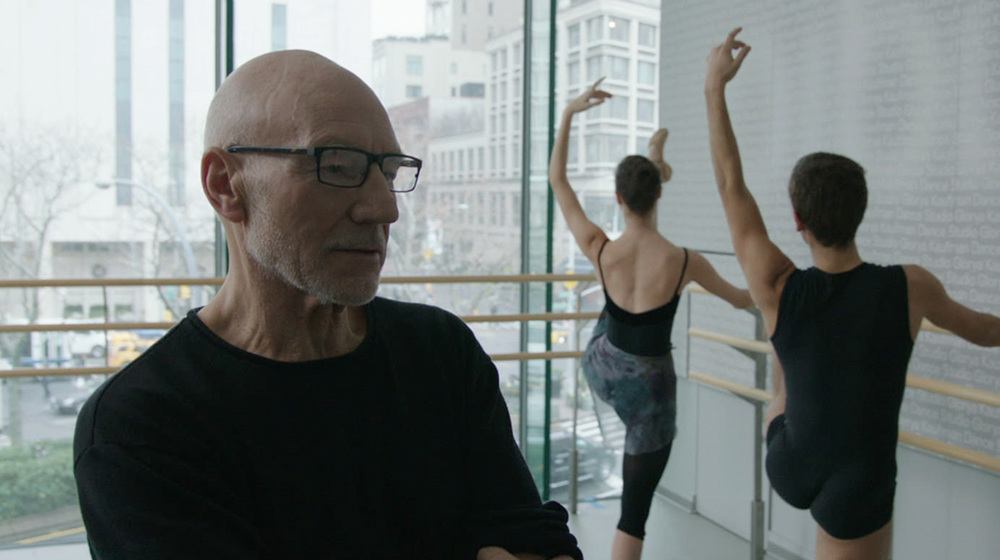
At its very core, MATCH is a mystery.
In its initial minutes, it appears to be a jovial comedy about Tobi (Patrick Stewart), an eccentric Julliard dance instructor and Lisa (Carla Gugino), a woman who comes to interview him for her dissertation on the history of dance while accompanied by her disinterested husband Mike (Matthew Lillard). The fact that Tobi is so quirky and artsy and Mike is a straight-laced police officer who seems uncomfortable with the interview because he assumes Tobi is gay seems like the opening minutes are a setup for a conventional comedy. But writer/director Stephen Belber, who wrote and directed the little-seen 2008 Jennifer Aniston comedy Management, doesn’t settle for a script full of gags about a manly man uncomfortable with another man’s assumed sexual orientation. Instead, MATCH is one of the most startlingly moving dramas of the 2014 festival season and is sure to make an impact upon its general release in 2015.
The interview setup instead leads the trio to Tobi’s Inwood apartment, where he enjoys regaling them with stories of his life’s work. In fact, based on earlier brief glimpses of his rather humdrum life, Tobi just seems overjoyed to have the opportunity to speak to others. But once the group is in Tobi’s apartment, the questions become increasingly personal and it becomes apparent that there is much more to this story than a dissertation. That leads this film down storytelling paths that a viewer would have never expected. Films can often contain so few surprises, and then something like MATCH comes along and virtually brings a twist to every single scene.
Of course, the star here is Patrick Stewart. Stewart has already amassed a body of work that proves that he is one of the great dramatic actors. He has nothing left to prove – in fact, if he spent the rest of his life trading in on his X-Men and Star Trek fame on the convention autograph circuit nobody would blame him – yet it is a testament to his dedication to his craft that he still seeks out opportunities to flex his acting muscles. MATCH is perhaps his finest non-theater performance in over a decade. It’s wonderful to see Stewart in a role that he can sink his teeth into.
Gugino, an actress who has never quite found a role to define her career, has found the ability to match Stewart. The film digs within her character, but in many ways she is the “everywife” who can never find her own life separate from her husband. Her performance is deeply sorrowful, but at the same time full of strength. She has so much more to offer than her small roles in Mr. Popper’s Penguins and Spy Kids, and it is about time that filmmakers have noticed that.
Beleber has not only directed a dramatically intense film, but he has written a script full of both humorous and poignant dialogue. Early in MATCH (when it still appears to be a comedy), Stewart’s character comments on the softness of the jacket belonging to Gugino’s character. He says:
“Oh my God! This is softer than a baby’s ass! Oh, is that inappropriate? I know nothing about baby ass, it just seemed like nice image.”
It’s a hilarious line that indicates that Tobi is a man being complimentary, but also concerned how this interview will portray him. Though not all of the dialogue in MATCH is hilarious, much of it reveals the same truths as this one does.
At only 90 minutes, MATCH is the rare rollercoaster drama that will floor you, yet provide a satisfying story in that timing. It is because of the combination of Beleber’s writing and directing and Stewart and Gugino’s acting that MATCH is a must-see for anyone who appreciates indie dramas.
RATING 5 out of 5: MUST See it …… It’s EXCELLENT
https://www.youtube.com/watch?v=Q15WAor16pE

Plot twists are what make narratives interesting, and audiences love films that surprise them. But not every surprise in a film is necessarily a good one. In LOITERING WITH INTENT, which premiered at the 2014 Tribeca Film Festival, the plot you might think you will see is not exactly the plot you end up seeing.
Dominic (Michael Godere) is a young actor who has little success. He works with an older, close friend Raphael (Ivan Martin) as bartenders. Raphael is also an actor who is only slightly more successful than Dominic (a character asks Raphael about a Woody Allen movie he appeared in – Martin himself had a small role in 2002’s Hollywood Ending). Frustrated by their lack of success, the two take a chance meeting with a producer as an opportunity to tell her about a script they’ve written for themselves to star in… though they haven’t actually written it yet. They have ten days to deliver a script, so they decide to hole up at Dominic’s sister Gigi’s house in the country to avoid distractions.
However, they find themselves faced by even more distractions shortly after they arrive. First, a beautiful gardener named Ava (Isabelle McNally) arrives, and shortly afterwards Gigi (Marisa Tomei) shows up wasted with a life full of problems with her boyfriend Wayne (Sam Rockwell). Raphael decides to have fun with the girls – he has a past with Gigi – but Dominic is intently focused on the script. Wayne himself shows up later with his dimwitted surfer brother Devon (Brian Geraghty). The mix of personalities not only prevents Dominic and Raphael from getting work done, but it dredges up jealousies that turn the creative getaway to a binge of drama.
LOITERING WITH INTENT has one of those plots in which the film’s setup veers into a completely different direction. If you’re expecting to see a film about two actors trying to write a script to save their careers, well, you’ll be disappointed because LOITERING WITH INTENT really has very little do with that after the first ten minutes. Once the ladies are introduced, the script gradually fades from importance in the narrative.
That is the real issue with the film, which actually was written by Godere and Martin in an art imitates life situation. A unique setup quickly turns into an undistinguished drama about a house full of people who barely tolerate each other, let alone trust each other. There are plenty of hurt feelings to go around, but not necessarily the type of drama that is unique enough to engage you. The most interesting thing about the two leads – that they’re actors who try to write a script in a desperate attempt to jumpstart their careers – is quickly forgotten. It doesn’t mean that the other characters aren’t particularly interesting – Tomei’s Gigi and Rockwell’s Wayne have a relationship whose surface is just skimmed and Geraghty’s Devon is very funny when he isn’t being a surfer dude stereotype – but what they bring to the narrative isn’t as interesting as Dominic and Raphael’s relationship and what they are working on.
Director Adam Rapp had a strong feature directorial debut with the 2005 Zooey Deschanel/Will Ferrell dramedy Winter Passing (which Martin also appeared in). He hasn’t done work as impressive as his debut since, and LOITERING WITH INTENT is not a step in the right direction for him.
http://youtu.be/tQiDpAspH6Y
RATING 2 out of 5: See it … At Your Own Risk
LOITERING WITH INTENT opens on VOD on VOD on December 16 and in select theaters on January 16.