
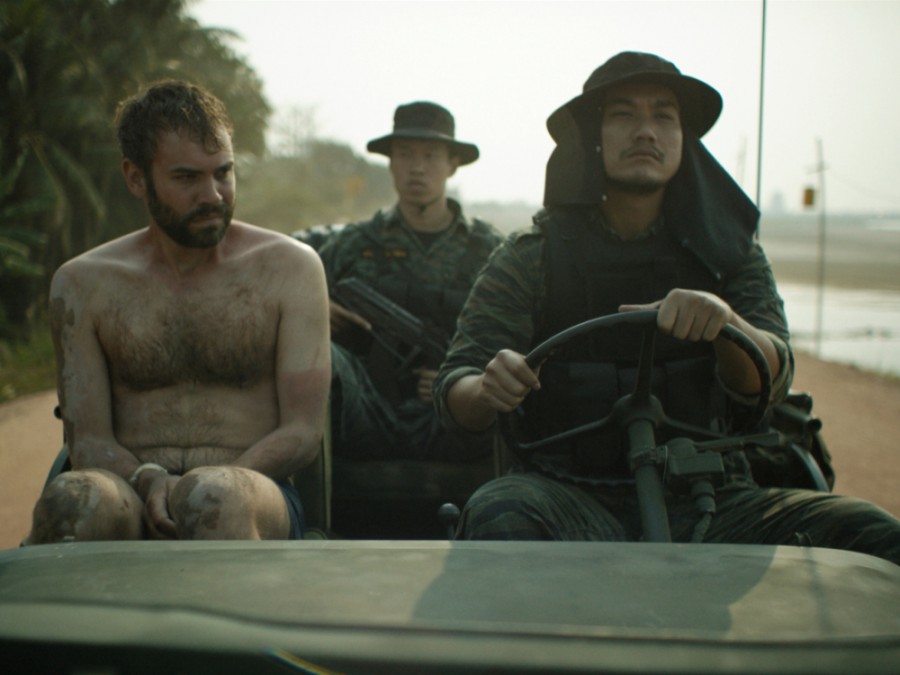
 Film Comment’s annual end-of-the-year survey of film critics, journalists, film-section editors, and past and present contributors is out, and Todd Haynes’s Carol, Hou Hsiao-hsien’s The Assassin (pictured above), and George Miller’s Mad Max: Fury Road take the top spots among films released in 2015. Of the films that made appearances at film festivals or special screenings worldwide but have not received stateside distribution this year, Hong Sangsoo’s Right Now, Wrong Then, Athina Rachel Tsangari’s Chevalier, and Ben Rivers’s The Sky Trembles and the Earth Is Afraid and the Two Eyes Are Not Brothers received the top rankings.
Film Comment 2015 Top 10 Films Released in:
1. Carol Todd Haynes, U.S.
2. The Assassin Hou Hsiao-hsien, Taiwan
3. Mad Max: Fury Road George Miller, U.S.
4. Clouds of Sils Maria Olivier Assayas, France
5. Arabian Nights Miguel Gomes, Portugal
6. Timbuktu Abderrahmane Sissako, Mauritania/France
7. Spotlight Tom McCarthy, U.S.
8. Phoenix Christian Petzold, Germany
9. Inside Out Pete Docter & Ronnie del Carmen, U.S.
10. The Look of Silence Joshua Oppenheimer, Denmark/Indonesia
The rankings of other films making strong showings during the awards season are John Crowley’s Brooklyn (#18), Frederick Wiseman’s In Jackson Heights (#13), and Steven Spielberg’s Bridge of Spies (#20). Hou Hsiao-hsien’s The Assassin (#2) was the cover subject of Film Comment magazine’s September/October issue, and László Nemes’s Son of Saul (#14) was the cover subject of the November/December issue.
Film Comment’s survey also ranks films that have screened and made notable appearances at festivals throughout the year, but remain without U.S. distribution at press time.
Film Comment 2015 Top 10 Unreleased Films:
1. Right Now, Wrong Then Hong Sangsoo, South Korea
2. Chevalier Athina Rachel Tsangari, Greece
3. The Sky Trembles and the Earth Is Afraid and the Two Eyes Are Not Brothers Ben Rivers, U.K.
4. The Academy of Muses José Luis Guerín, Spain
5. Don’t Blink – Robert Frank Laura Israel, U.S.
6. Cosmos Andrzej Zulawski, Poland
7. Journey to the Shore Kiyoshi Kurosawa, Japan
8. Happy Hour Ryusuke Hamaguchi, Japan
9. Lost and Beautiful Pietro Marcello, Italy
10. Minotaur Nicolas Pereda, Mexico
Film Comment editor Gavin Smith said: “The 20 films that critics have voted for can be divided into four categories: mainstream Hollywood critical and box-office hits (3), American art-house-inclined indies (7), foreign-language art movies in a variety of familiar modes (5), and foreign-language movies that challenge viewers to enter cinematic realms they’ve never previously experienced (5). That balance, which happens to be encapsulated in the top five in micro form, feels about right for the agenda of this magazine, which, since the very beginning, has been to champion the best in cinema wherever it hails from, all creatures great and small. Since we managed to run features on 11 of these and sung the praises of another five, it’s a pleasure to close out the year on a high note.”
Film Comment’s annual end-of-the-year survey of film critics, journalists, film-section editors, and past and present contributors is out, and Todd Haynes’s Carol, Hou Hsiao-hsien’s The Assassin (pictured above), and George Miller’s Mad Max: Fury Road take the top spots among films released in 2015. Of the films that made appearances at film festivals or special screenings worldwide but have not received stateside distribution this year, Hong Sangsoo’s Right Now, Wrong Then, Athina Rachel Tsangari’s Chevalier, and Ben Rivers’s The Sky Trembles and the Earth Is Afraid and the Two Eyes Are Not Brothers received the top rankings.
Film Comment 2015 Top 10 Films Released in:
1. Carol Todd Haynes, U.S.
2. The Assassin Hou Hsiao-hsien, Taiwan
3. Mad Max: Fury Road George Miller, U.S.
4. Clouds of Sils Maria Olivier Assayas, France
5. Arabian Nights Miguel Gomes, Portugal
6. Timbuktu Abderrahmane Sissako, Mauritania/France
7. Spotlight Tom McCarthy, U.S.
8. Phoenix Christian Petzold, Germany
9. Inside Out Pete Docter & Ronnie del Carmen, U.S.
10. The Look of Silence Joshua Oppenheimer, Denmark/Indonesia
The rankings of other films making strong showings during the awards season are John Crowley’s Brooklyn (#18), Frederick Wiseman’s In Jackson Heights (#13), and Steven Spielberg’s Bridge of Spies (#20). Hou Hsiao-hsien’s The Assassin (#2) was the cover subject of Film Comment magazine’s September/October issue, and László Nemes’s Son of Saul (#14) was the cover subject of the November/December issue.
Film Comment’s survey also ranks films that have screened and made notable appearances at festivals throughout the year, but remain without U.S. distribution at press time.
Film Comment 2015 Top 10 Unreleased Films:
1. Right Now, Wrong Then Hong Sangsoo, South Korea
2. Chevalier Athina Rachel Tsangari, Greece
3. The Sky Trembles and the Earth Is Afraid and the Two Eyes Are Not Brothers Ben Rivers, U.K.
4. The Academy of Muses José Luis Guerín, Spain
5. Don’t Blink – Robert Frank Laura Israel, U.S.
6. Cosmos Andrzej Zulawski, Poland
7. Journey to the Shore Kiyoshi Kurosawa, Japan
8. Happy Hour Ryusuke Hamaguchi, Japan
9. Lost and Beautiful Pietro Marcello, Italy
10. Minotaur Nicolas Pereda, Mexico
Film Comment editor Gavin Smith said: “The 20 films that critics have voted for can be divided into four categories: mainstream Hollywood critical and box-office hits (3), American art-house-inclined indies (7), foreign-language art movies in a variety of familiar modes (5), and foreign-language movies that challenge viewers to enter cinematic realms they’ve never previously experienced (5). That balance, which happens to be encapsulated in the top five in micro form, feels about right for the agenda of this magazine, which, since the very beginning, has been to champion the best in cinema wherever it hails from, all creatures great and small. Since we managed to run features on 11 of these and sung the praises of another five, it’s a pleasure to close out the year on a high note.”VIMOOZ
-
Carol, The Assassin, Among Films on Film Comment 2015 Best-of-Year Lists
Film Comment’s annual end-of-the-year survey of film critics, journalists, film-section editors, and past and present contributors is out, and Todd Haynes’s Carol, Hou Hsiao-hsien’s The Assassin (pictured above), and George Miller’s Mad Max: Fury Road take the top spots among films released in 2015. Of the films that made appearances at film festivals or special screenings worldwide but have not received stateside distribution this year, Hong Sangsoo’s Right Now, Wrong Then, Athina Rachel Tsangari’s Chevalier, and Ben Rivers’s The Sky Trembles and the Earth Is Afraid and the Two Eyes Are Not Brothers received the top rankings.
Film Comment 2015 Top 10 Films Released in:
1. Carol Todd Haynes, U.S.
2. The Assassin Hou Hsiao-hsien, Taiwan
3. Mad Max: Fury Road George Miller, U.S.
4. Clouds of Sils Maria Olivier Assayas, France
5. Arabian Nights Miguel Gomes, Portugal
6. Timbuktu Abderrahmane Sissako, Mauritania/France
7. Spotlight Tom McCarthy, U.S.
8. Phoenix Christian Petzold, Germany
9. Inside Out Pete Docter & Ronnie del Carmen, U.S.
10. The Look of Silence Joshua Oppenheimer, Denmark/Indonesia
The rankings of other films making strong showings during the awards season are John Crowley’s Brooklyn (#18), Frederick Wiseman’s In Jackson Heights (#13), and Steven Spielberg’s Bridge of Spies (#20). Hou Hsiao-hsien’s The Assassin (#2) was the cover subject of Film Comment magazine’s September/October issue, and László Nemes’s Son of Saul (#14) was the cover subject of the November/December issue.
Film Comment’s survey also ranks films that have screened and made notable appearances at festivals throughout the year, but remain without U.S. distribution at press time.
Film Comment 2015 Top 10 Unreleased Films:
1. Right Now, Wrong Then Hong Sangsoo, South Korea
2. Chevalier Athina Rachel Tsangari, Greece
3. The Sky Trembles and the Earth Is Afraid and the Two Eyes Are Not Brothers Ben Rivers, U.K.
4. The Academy of Muses José Luis Guerín, Spain
5. Don’t Blink – Robert Frank Laura Israel, U.S.
6. Cosmos Andrzej Zulawski, Poland
7. Journey to the Shore Kiyoshi Kurosawa, Japan
8. Happy Hour Ryusuke Hamaguchi, Japan
9. Lost and Beautiful Pietro Marcello, Italy
10. Minotaur Nicolas Pereda, Mexico
Film Comment editor Gavin Smith said: “The 20 films that critics have voted for can be divided into four categories: mainstream Hollywood critical and box-office hits (3), American art-house-inclined indies (7), foreign-language art movies in a variety of familiar modes (5), and foreign-language movies that challenge viewers to enter cinematic realms they’ve never previously experienced (5). That balance, which happens to be encapsulated in the top five in micro form, feels about right for the agenda of this magazine, which, since the very beginning, has been to champion the best in cinema wherever it hails from, all creatures great and small. Since we managed to run features on 11 of these and sung the praises of another five, it’s a pleasure to close out the year on a high note.”
-
‘Carol’ ‘Brooklyn’ ‘The Danish Girl’ ‘Spotlight’ Among 21st Critics’ Choice Awards Nominations
 “Mad Max: Fury Road” leads the nominations for the 21st Critics’ Choice Awards with 13 nominations including Best Picture. “Carol,” impressed with nine nominations including Best Picture, and Best Director. “Spotlight” earned eight nominations, “Brooklyn,” “The Danish Girl,” each garnered five nominations and “Room” earned four.
The winners will be revealed live at the Critics’ Choice Awards gala, which will be broadcast from the Barker Hangar in Santa Monica on A&E, Lifetime and LMN on Sunday, January 17 at 8PM ET/ 5PM PT. Actor and comedian T.J. Miller will serve as the show’s host.
NOMINATIONS FOR THE 21st CRITICS’ CHOICE AWARDS
BEST PICTURE
The Big Short
Bridge of Spies
Brooklyn
Carol
Mad Max: Fury Road
The Martian
The Revenant
Room
Sicario
Spotlight
BEST ACTOR
Bryan Cranston – Trumbo
Matt Damon – The Martian
Johnny Depp – Black Mass
Leonardo DiCaprio – The Revenant
Michael Fassbender – Steve Jobs
Eddie Redmayne – The Danish Girl
BEST ACTRESS
Cate Blanchett – Carol
Brie Larson – Room
Jennifer Lawrence – Joy
Charlotte Rampling – 45 Years
Saoirse Ronan – Brooklyn
Charlize Theron – Mad Max: Fury Road
BEST SUPPORTING ACTOR
Paul Dano – Love & Mercy
Tom Hardy – The Revenant
Mark Ruffalo – Spotlight
Mark Rylance – Bridge of Spies
Michael Shannon – 99 Homes
Sylvester Stallone – Creed
BEST SUPPORTING ACTRESS
Jennifer Jason Leigh – The Hateful Eight
Rooney Mara – Carol
Rachel McAdams – Spotlight
Helen Mirren – Trumbo
Alicia Vikander – The Danish Girl
Kate Winslet – Steve Jobs
BEST YOUNG ACTOR/ACTRESS
Abraham Attah – Beasts of No Nation
RJ Cyler – Me and Earl and the Dying Girl
Shameik Moore – Dope
Milo Parker – Mr. Holmes
Jacob Tremblay – Room
BEST ACTING ENSEMBLE
The Big Short
The Hateful Eight
Spotlight
Straight Outta Compton
Trumbo
BEST DIRECTOR
Todd Haynes – Carol
Alejandro González Iñárritu – The Revenant
Tom McCarthy – Spotlight
George Miller – Mad Max: Fury Road
Ridley Scott – The Martian
Steven Spielberg – Bridge of Spies
BEST ORIGINAL SCREENPLAY
Matt Charman and Ethan Coen & Joel Coen – Bridge of Spies
Alex Garland – Ex Machina
Quentin Tarantino – The Hateful Eight
Pete Docter, Meg LeFauve, Josh Cooley – Inside Out
Josh Singer and Tom McCarthy – Spotlight
BEST ADAPTED SCREENPLAY
Charles Randolph and Adam McKay – The Big Short
Nick Hornby – Brooklyn
Drew Goddard – The Martian
Emma Donoghue – Room
Aaron Sorkin – Steve Jobs
BEST CINEMATOGRAPHY
Carol – Ed Lachman
The Hateful Eight – Robert Richardson
Mad Max: Fury Road – John Seale
The Martian – Dariusz Wolski
The Revenant – Emmanuel Lubezki
Sicario – Roger Deakins
BEST PRODUCTION DESIGN
Bridge of Spies – Adam Stockhausen, Rena DeAngelo
Brooklyn – François Séguin, Jennifer Oman and Louise Tremblay
Carol – Judy Becker, Heather Loeffler
The Danish Girl – Eve Stewart, Michael Standish
Mad Max: Fury Road – Colin Gibson
The Martian – Arthur Max, Celia Bobak
BEST EDITING
The Big Short – Hank Corwin
Mad Max: Fury Road – Margaret Sixel
The Martian – Pietro Scalia
The Revenant – Stephen Mirrione
Spotlight – Tom McArdle
BEST COSTUME DESIGN
Brooklyn – Odile Dicks-Mireaux
Carol – Sandy Powell
Cinderella – Sandy Powell
The Danish Girl – Paco Delgado
Mad Max: Fury Road – Jenny Beavan
BEST HAIR & MAKEUP
Black Mass
Carol
The Danish Girl
The Hateful Eight
Mad Max: Fury Road
The Revenant
BEST VISUAL EFFECTS
Ex Machina
Jurassic World
Mad Max: Fury Road
The Martian
The Revenant
The Walk
BEST ANIMATED FEATURE
Anomalisa
The Good Dinosaur
Inside Out
The Peanuts Movie
Shaun the Sheep Movie
BEST ACTION MOVIE
Furious 7
Jurassic World
Mad Max: Fury Road
Mission Impossible: Rogue Nation
Sicario
BEST ACTOR IN AN ACTION MOVIE
Daniel Craig – Spectre
Tom Cruise – Mission Impossible: Rogue Nation
Tom Hardy – Mad Max: Fury Road
Chris Pratt – Jurassic World
Paul Rudd – Ant-Man
BEST ACTRESS IN AN ACTION MOVIE
Emily Blunt – Sicario
Rebecca Ferguson – Mission Impossible: Rogue Nation
Bryce Dallas Howard – Jurassic World
Jennifer Lawrence – The Hunger Games: Mockingjay – Part 2
Charlize Theron – Mad Max: Fury Road
BEST COMEDY
The Big Short
Inside Out
Joy
Sisters
Spy
Trainwreck
BEST ACTOR IN A COMEDY
Christian Bale – The Big Short
Steve Carell – The Big Short
Robert De Niro – The Intern
Bill Hader – Trainwreck
Jason Statham – Spy
BEST ACTRESS IN A COMEDY
Tina Fey – Sisters
Jennifer Lawrence – Joy
Melissa McCarthy – Spy
Amy Schumer – Trainwreck
Lily Tomlin – Grandma
BEST SCI-FI/HORROR MOVIE
Ex Machina
It Follows
Jurassic World
Mad Max: Fury Road
The Martian
BEST FOREIGN LANGUAGE FILM
The Assassin
Goodnight Mommy
Mustang
The Second Mother
Son of Saul
BEST DOCUMENTARY FEATURE
Amy
Cartel Land
Going Clear: Scientology and the Prison of Belief
He Named Me Malala
The Look of Silence
Where to Invade Next
BEST SONG
Fifty Shades of Grey – Love Me Like You Do
Furious 7 – See You Again
The Hunting Ground – Til It Happens To You
Love & Mercy – One Kind of Love
Spectre – Writing’s on the Wall
Youth – Simple Song #3
BEST SCORE
Carol – Carter Burwell
The Hateful Eight – Ennio Morricone
The Revenant – Ryuichi Sakamoto and Alva Noto
Sicario – Johann Johannsson
Spotlight – Howard Shore
“Mad Max: Fury Road” leads the nominations for the 21st Critics’ Choice Awards with 13 nominations including Best Picture. “Carol,” impressed with nine nominations including Best Picture, and Best Director. “Spotlight” earned eight nominations, “Brooklyn,” “The Danish Girl,” each garnered five nominations and “Room” earned four.
The winners will be revealed live at the Critics’ Choice Awards gala, which will be broadcast from the Barker Hangar in Santa Monica on A&E, Lifetime and LMN on Sunday, January 17 at 8PM ET/ 5PM PT. Actor and comedian T.J. Miller will serve as the show’s host.
NOMINATIONS FOR THE 21st CRITICS’ CHOICE AWARDS
BEST PICTURE
The Big Short
Bridge of Spies
Brooklyn
Carol
Mad Max: Fury Road
The Martian
The Revenant
Room
Sicario
Spotlight
BEST ACTOR
Bryan Cranston – Trumbo
Matt Damon – The Martian
Johnny Depp – Black Mass
Leonardo DiCaprio – The Revenant
Michael Fassbender – Steve Jobs
Eddie Redmayne – The Danish Girl
BEST ACTRESS
Cate Blanchett – Carol
Brie Larson – Room
Jennifer Lawrence – Joy
Charlotte Rampling – 45 Years
Saoirse Ronan – Brooklyn
Charlize Theron – Mad Max: Fury Road
BEST SUPPORTING ACTOR
Paul Dano – Love & Mercy
Tom Hardy – The Revenant
Mark Ruffalo – Spotlight
Mark Rylance – Bridge of Spies
Michael Shannon – 99 Homes
Sylvester Stallone – Creed
BEST SUPPORTING ACTRESS
Jennifer Jason Leigh – The Hateful Eight
Rooney Mara – Carol
Rachel McAdams – Spotlight
Helen Mirren – Trumbo
Alicia Vikander – The Danish Girl
Kate Winslet – Steve Jobs
BEST YOUNG ACTOR/ACTRESS
Abraham Attah – Beasts of No Nation
RJ Cyler – Me and Earl and the Dying Girl
Shameik Moore – Dope
Milo Parker – Mr. Holmes
Jacob Tremblay – Room
BEST ACTING ENSEMBLE
The Big Short
The Hateful Eight
Spotlight
Straight Outta Compton
Trumbo
BEST DIRECTOR
Todd Haynes – Carol
Alejandro González Iñárritu – The Revenant
Tom McCarthy – Spotlight
George Miller – Mad Max: Fury Road
Ridley Scott – The Martian
Steven Spielberg – Bridge of Spies
BEST ORIGINAL SCREENPLAY
Matt Charman and Ethan Coen & Joel Coen – Bridge of Spies
Alex Garland – Ex Machina
Quentin Tarantino – The Hateful Eight
Pete Docter, Meg LeFauve, Josh Cooley – Inside Out
Josh Singer and Tom McCarthy – Spotlight
BEST ADAPTED SCREENPLAY
Charles Randolph and Adam McKay – The Big Short
Nick Hornby – Brooklyn
Drew Goddard – The Martian
Emma Donoghue – Room
Aaron Sorkin – Steve Jobs
BEST CINEMATOGRAPHY
Carol – Ed Lachman
The Hateful Eight – Robert Richardson
Mad Max: Fury Road – John Seale
The Martian – Dariusz Wolski
The Revenant – Emmanuel Lubezki
Sicario – Roger Deakins
BEST PRODUCTION DESIGN
Bridge of Spies – Adam Stockhausen, Rena DeAngelo
Brooklyn – François Séguin, Jennifer Oman and Louise Tremblay
Carol – Judy Becker, Heather Loeffler
The Danish Girl – Eve Stewart, Michael Standish
Mad Max: Fury Road – Colin Gibson
The Martian – Arthur Max, Celia Bobak
BEST EDITING
The Big Short – Hank Corwin
Mad Max: Fury Road – Margaret Sixel
The Martian – Pietro Scalia
The Revenant – Stephen Mirrione
Spotlight – Tom McArdle
BEST COSTUME DESIGN
Brooklyn – Odile Dicks-Mireaux
Carol – Sandy Powell
Cinderella – Sandy Powell
The Danish Girl – Paco Delgado
Mad Max: Fury Road – Jenny Beavan
BEST HAIR & MAKEUP
Black Mass
Carol
The Danish Girl
The Hateful Eight
Mad Max: Fury Road
The Revenant
BEST VISUAL EFFECTS
Ex Machina
Jurassic World
Mad Max: Fury Road
The Martian
The Revenant
The Walk
BEST ANIMATED FEATURE
Anomalisa
The Good Dinosaur
Inside Out
The Peanuts Movie
Shaun the Sheep Movie
BEST ACTION MOVIE
Furious 7
Jurassic World
Mad Max: Fury Road
Mission Impossible: Rogue Nation
Sicario
BEST ACTOR IN AN ACTION MOVIE
Daniel Craig – Spectre
Tom Cruise – Mission Impossible: Rogue Nation
Tom Hardy – Mad Max: Fury Road
Chris Pratt – Jurassic World
Paul Rudd – Ant-Man
BEST ACTRESS IN AN ACTION MOVIE
Emily Blunt – Sicario
Rebecca Ferguson – Mission Impossible: Rogue Nation
Bryce Dallas Howard – Jurassic World
Jennifer Lawrence – The Hunger Games: Mockingjay – Part 2
Charlize Theron – Mad Max: Fury Road
BEST COMEDY
The Big Short
Inside Out
Joy
Sisters
Spy
Trainwreck
BEST ACTOR IN A COMEDY
Christian Bale – The Big Short
Steve Carell – The Big Short
Robert De Niro – The Intern
Bill Hader – Trainwreck
Jason Statham – Spy
BEST ACTRESS IN A COMEDY
Tina Fey – Sisters
Jennifer Lawrence – Joy
Melissa McCarthy – Spy
Amy Schumer – Trainwreck
Lily Tomlin – Grandma
BEST SCI-FI/HORROR MOVIE
Ex Machina
It Follows
Jurassic World
Mad Max: Fury Road
The Martian
BEST FOREIGN LANGUAGE FILM
The Assassin
Goodnight Mommy
Mustang
The Second Mother
Son of Saul
BEST DOCUMENTARY FEATURE
Amy
Cartel Land
Going Clear: Scientology and the Prison of Belief
He Named Me Malala
The Look of Silence
Where to Invade Next
BEST SONG
Fifty Shades of Grey – Love Me Like You Do
Furious 7 – See You Again
The Hunting Ground – Til It Happens To You
Love & Mercy – One Kind of Love
Spectre – Writing’s on the Wall
Youth – Simple Song #3
BEST SCORE
Carol – Carter Burwell
The Hateful Eight – Ennio Morricone
The Revenant – Ryuichi Sakamoto and Alva Noto
Sicario – Johann Johannsson
Spotlight – Howard Shore
-
Jamie M. Dagg’s RIVER Dominates 2015 Whistler Film Festival Awards
 The 15th anniversary celebration of the Whistler Film Festival wrapped, and the romantic drama CAROL, directed by Todd Haynes and starring Cate Blanchett and Rooney Mara, took home the Pandora Audience Award. The WFF Audience Award runner-ups were THE LEGEND OF BARNEY THOMSON, actor Robert Carlyle’s first theatrical feature and directorial debut, which received its North American premiere at the festival, followed by Ricardo Trogi’s mid-life crisis dramedy, Quebec film LE MIRAGE, the highest grossing and most popular Canadian film of the year so far.
Toronto’s first-time feature director Jamie M. Dagg’s RIVER dominated 2015 Whistler Film Festival awards, winning for best Canadian feature, Best Director and Best Screenplay in the Borsos Competition for Best Canadian Feature. The jury also awarded French-Canadian actor Paul Savoie with Best Performance in a Borsos Film for his performance in THE DIARY OF AN OLD MAN, as well as provided honorable mention for Rossif Sutherland’s work in RIVER and Laura Abramsen’s roles in BASIC HUMAN NEEDS and THE SABBATICAL.
Receiving WFF’s Trailblazer Award and Tribute, British-born Canadian actor, film producer, and film director Kiefer Sutherland discussed his extensive acting career spanning film, stage and television, with CTV Film Critic Jim Gordon, followed by the Western Canadian Premiere of his latest film, FORSAKEN. Scottish-born Robert Carlyle, one of the most recognizable actors today, graced the Festival’s red carpet at this year’s Spotlight event as WFF’s Maverick Award honoree and sat down with Jim Gordon to discuss his bold choices that have led to the creation of some of the most dynamic, memorable, and beloved characters of our time before the North American Premiere of his directorial debut, THE LEGEND OF BARNEY THOMSON. One of Canada’s hardest working and most accomplished character actors, Bruce Greenwood was the recipient of WFF’s Career Achievement Award, at the World Premiere of his latest film REHEARSAL, directed by admired WFF Alumni Carl Bessai.
Winners of the 2015 Whistler Film Festival Awards
World Documentary Award
LAST HARVEST
Honorable Mention
AL PURDY WAS HERE
Best Mountain Culture Film
ECLIPSE
Canadian ShortWork Award
WITHHELD
Honorable Mention
MIA by Amanda Strong and Bracken Hanuse Corlett
International ShortWork Award
DISSONANCE
Canadian ShortWork Award for Best Screenplay
THE WOLF WHO CAME TO DINNER
Student ShortWork Awarded
THE BLUE JET
MPPIA Short Film Award
HOODS
AWFJ EDA Best Female-Directed Narrative Feature Award
A LIGHT BENEATH THEIR FEET
AWFJ EDA Best Female-Directed Documentary Award
LAST HARVEST
Honorable Mention
AL PURDY WAS HERE by Brian D. Johnson
AWFJ EDA Best Female-Directed Short Award
SUNDAY LUNCH
AL PURDY WAS HERE receives honorable mention from World Documentary Jury and AWFJ EDA Jury
The 15th anniversary celebration of the Whistler Film Festival wrapped, and the romantic drama CAROL, directed by Todd Haynes and starring Cate Blanchett and Rooney Mara, took home the Pandora Audience Award. The WFF Audience Award runner-ups were THE LEGEND OF BARNEY THOMSON, actor Robert Carlyle’s first theatrical feature and directorial debut, which received its North American premiere at the festival, followed by Ricardo Trogi’s mid-life crisis dramedy, Quebec film LE MIRAGE, the highest grossing and most popular Canadian film of the year so far.
Toronto’s first-time feature director Jamie M. Dagg’s RIVER dominated 2015 Whistler Film Festival awards, winning for best Canadian feature, Best Director and Best Screenplay in the Borsos Competition for Best Canadian Feature. The jury also awarded French-Canadian actor Paul Savoie with Best Performance in a Borsos Film for his performance in THE DIARY OF AN OLD MAN, as well as provided honorable mention for Rossif Sutherland’s work in RIVER and Laura Abramsen’s roles in BASIC HUMAN NEEDS and THE SABBATICAL.
Receiving WFF’s Trailblazer Award and Tribute, British-born Canadian actor, film producer, and film director Kiefer Sutherland discussed his extensive acting career spanning film, stage and television, with CTV Film Critic Jim Gordon, followed by the Western Canadian Premiere of his latest film, FORSAKEN. Scottish-born Robert Carlyle, one of the most recognizable actors today, graced the Festival’s red carpet at this year’s Spotlight event as WFF’s Maverick Award honoree and sat down with Jim Gordon to discuss his bold choices that have led to the creation of some of the most dynamic, memorable, and beloved characters of our time before the North American Premiere of his directorial debut, THE LEGEND OF BARNEY THOMSON. One of Canada’s hardest working and most accomplished character actors, Bruce Greenwood was the recipient of WFF’s Career Achievement Award, at the World Premiere of his latest film REHEARSAL, directed by admired WFF Alumni Carl Bessai.
Winners of the 2015 Whistler Film Festival Awards
World Documentary Award
LAST HARVEST
Honorable Mention
AL PURDY WAS HERE
Best Mountain Culture Film
ECLIPSE
Canadian ShortWork Award
WITHHELD
Honorable Mention
MIA by Amanda Strong and Bracken Hanuse Corlett
International ShortWork Award
DISSONANCE
Canadian ShortWork Award for Best Screenplay
THE WOLF WHO CAME TO DINNER
Student ShortWork Awarded
THE BLUE JET
MPPIA Short Film Award
HOODS
AWFJ EDA Best Female-Directed Narrative Feature Award
A LIGHT BENEATH THEIR FEET
AWFJ EDA Best Female-Directed Documentary Award
LAST HARVEST
Honorable Mention
AL PURDY WAS HERE by Brian D. Johnson
AWFJ EDA Best Female-Directed Short Award
SUNDAY LUNCH
AL PURDY WAS HERE receives honorable mention from World Documentary Jury and AWFJ EDA Jury
-
‘Genius’ ‘Where To Invade Next’ Among First 9 Films Revealed for Berlin International Film Festival
 Joining opening film Hail, Caesar! by Joel and Ethan Coen, the first nine films have been revealed for the 66th Berlin International Film Festival Competition and Berlinale Special program. Films include the European Premiere of Where To Invade Next – documentary by Michael Moore, and The Music of Strangers: Yo-Yo Ma and the Silk Road Ensemble by Morgan Neville; and the World Premiere of Genius (pictured above) by Michael Grandage, starring Colin Firth, Jude Law and Nicole Kidman.
Competition
Boris sans Béatrice (Boris without Béatrice)
Canada
By Denis Côté (Vic+Flo Saw a Bear)
With James Hyndman, Simone-Elise Girard, Denis Lavant, Isolda Dychauk, Dounia Sichov
World premiere
Genius
United Kingdom / USA
By Michael Grandage
With Colin Firth, Jude Law, Nicole Kidman, Laura Linney, Guy Pearce, Dominic West
World premiere – first feature
Alone in Berlin
Germany / France / United Kingdom
By Vincent Perez (The Secret)
With Brendan Gleeson, Emma Thompson, Daniel Brühl, Mikael Persbrandt
World premiere
Midnight Special
USA
By Jeff Nichols (Mud, Take Shelter)
With Michael Shannon, Joel Edgerton, Kirsten Dunst, Adam Driver, Jaedan Lieberher, Sam Shepard
World premiere
Zero Days – documentary
USA
By Alex Gibney (Taxi to the Dark Side)
World premiere
Berlinale Special
The Music of Strangers: Yo-Yo Ma and the Silk Road Ensemble – documentary
USA
By Morgan Neville (Twenty Feet from Stardom)
European premiere
The Seasons in Quincy: Four Portraits of John Berger – documentary
United Kingdom
By Colin MacCabe, Christopher Roth, Bartek Dziadosz, Tilda Swinton
World premiere
Where To Invade Next – documentary
USA
By Michael Moore (Fahrenheit 9/11, Bowling for Columbine)
European premiere
Joining opening film Hail, Caesar! by Joel and Ethan Coen, the first nine films have been revealed for the 66th Berlin International Film Festival Competition and Berlinale Special program. Films include the European Premiere of Where To Invade Next – documentary by Michael Moore, and The Music of Strangers: Yo-Yo Ma and the Silk Road Ensemble by Morgan Neville; and the World Premiere of Genius (pictured above) by Michael Grandage, starring Colin Firth, Jude Law and Nicole Kidman.
Competition
Boris sans Béatrice (Boris without Béatrice)
Canada
By Denis Côté (Vic+Flo Saw a Bear)
With James Hyndman, Simone-Elise Girard, Denis Lavant, Isolda Dychauk, Dounia Sichov
World premiere
Genius
United Kingdom / USA
By Michael Grandage
With Colin Firth, Jude Law, Nicole Kidman, Laura Linney, Guy Pearce, Dominic West
World premiere – first feature
Alone in Berlin
Germany / France / United Kingdom
By Vincent Perez (The Secret)
With Brendan Gleeson, Emma Thompson, Daniel Brühl, Mikael Persbrandt
World premiere
Midnight Special
USA
By Jeff Nichols (Mud, Take Shelter)
With Michael Shannon, Joel Edgerton, Kirsten Dunst, Adam Driver, Jaedan Lieberher, Sam Shepard
World premiere
Zero Days – documentary
USA
By Alex Gibney (Taxi to the Dark Side)
World premiere
Berlinale Special
The Music of Strangers: Yo-Yo Ma and the Silk Road Ensemble – documentary
USA
By Morgan Neville (Twenty Feet from Stardom)
European premiere
The Seasons in Quincy: Four Portraits of John Berger – documentary
United Kingdom
By Colin MacCabe, Christopher Roth, Bartek Dziadosz, Tilda Swinton
World premiere
Where To Invade Next – documentary
USA
By Michael Moore (Fahrenheit 9/11, Bowling for Columbine)
European premiere
-
Film Society of Lincoln Center Announces Lineup for ‘Neighboring Scenes’ Showcasing Contemporary Latin American Film
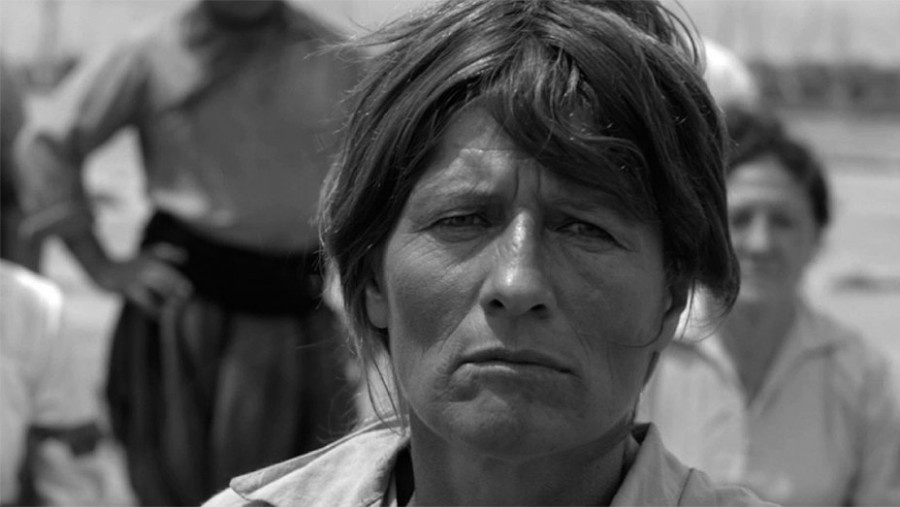 The Film Society of Lincoln Center in New York City announces Neighboring Scenes, a new showcase of contemporary Latin American cinema co-presented with Cinema Tropical. Opening the series is Benjamín Naishtat’s El Movimiento (pictured above), a stark, black-and-white snapshot of anarchy in 19th-century Argentina and follow-up to his acclaimed debut, History of Fear.
Other highlights include the 2015 Cannes Caméra d’Or winner, César Augusto Acevedo’s Land and Shade; the U.S. premiere of Arturo Ripstein’s Bleak Street, which has drawn comparisons to Luis Buñuel’s Mexican period; Rodrigo Plá’s Venice Horizons opener A Monster with a Thousand Heads; Pablo Larraín’s Silver Bear–winning The Club, Chile’s submission for the Best Foreign Language Film Oscar; and more.
“It’s been some years since Latin American cinema ‘reemerged,’” said Programmer at Large Rachael Rakes. “Now, as the output from countries like Mexico, Argentina, and Brazil continues to be some of the most compelling and engaged cinema today, new scenes are establishing themselves all across the map, showcasing fresh talent and ideas, and challenging the notion of an identifiable contemporary Latin American cinema. We’re pleased to highlight a few of the most impressive recent films from the region.”
FILMS & DESCRIPTIONS
Opening Night
El Movimiento
Benjamín Naishtat, Argentina, 2015, DCP, 70m
Spanish with English subtitles
Continuing his preoccupation with violence and Argentina’s past, Benjamín Naishtat (History of Fear, a New Directors/New Films 2014 selection) dramatizes a crucial moment in that nation’s history characterized by political zealotry and terrorism. Pablo Cedrón portrays the fiery, unhinged leader of a mysterious militia (modeled on Confederacy-era dictator Juan Manuel de Rosas’s Mazorca) who wantonly roam the pampas in an effort to “purify” and unite society, killing and plundering settlers along the way. Characters emerge from and disappear into dark expanses—the film is masterfully shot in black and white—heightening its intense, chilling atmosphere. Funded by the Jeonju Digital Project.
https://www.youtube.com/watch?v=c-U8MsPwlPU
Alexfilm
Pablo Chavarria Gutiérrez, Mexico, 2015, DCP, 60m
Spanish with English subtitles
Marked by a light touch and emphasizing openness over conventional, linear narrative, biologist-turned-filmmaker Pablo Chavarria Gutiérrez documents the rhythms of a man awaiting an important event that never comes. As he cooks breakfast, naps, paints, tries on sunglasses, and wanders through different rooms in his home, Chavarria Guitérrez lovingly frames every action in beautiful natural light, allowing each moment to flow to the next while maintaining its own transcendent essence. North American Premiere
Gulliver
María Alché, Argentina, 2015, DCP, 25m
Spanish with English subtitles
Flawlessly transitioning from a highly naturalistic family tale to something overtly surreal and back again, Gulliver captures the circumstances—imagined or not—of one of those evenings when siblings come to a deeper understanding of one another. After hanging out at home with their mom (Martín Rejtman regular Susana Pampin) and older sister Mariela (Agustina Muñoz), Agos and Renzo go to a raging party where Agos ends up drinking too much. Upon stepping outside to recover, the pair wander into a strange but familiar landscape, and begin to ask questions about the world and themselves.
Bleak Street / La calle de la amargura
Arturo Ripstein, Mexico/Spain, 2015, DCP, 99m
Spanish with English subtitles
Based on a true story, the latest feature by Arturo Ripstein is an unflinching look at the mean streets of El Defectuoso. Two prostitutes, Adela (Nora Velázquez) and Dora (Patricia Reyes Spíndola), are burdened by horrible marriages and financial problems stemming from their long-departed youth. In an attempt to make ends meet, they drug and rob dwarf twins (Juan Francisco Longoria and Guillermo López)—who themselves barely scrape by as doubles for professional luchadores. Ripstein masterfully contrasts the grittiness of alleyways and seedy apartments with gliding Steadicam cinematography, siding with neither the victims nor the perpetrators. A Leisure Time Features release. U.S. Premiere
https://www.youtube.com/watch?v=-As8dQh70Xg
The Club / El Club
Pablo Larraín, Chile, 2015, DCP, 98m
Spanish with English subtitles
Pablo Larraín (director of No and Post Mortem) continues to explore the long shadows of Chile’s recent past with this quietly scathing film about the Catholic Church’s concealment of clerical misconduct. Four aging former priests peacefully live out their days together in a dumpy seaside town, focused on training their racing greyhound rather than doing penance for their assorted crimes. Their idyll is shattered when a fifth priest arrives and, confronted by one of his victims, commits suicide. A young priest begins an investigation into the retirees’ pasts, setting off a series of events that call into question faith, piety, and complicity. Winner of the Silver Bear at the 2015 Berlinale and Chile’s Oscar submission. A Music Box Films release.
https://www.youtube.com/watch?v=e8c2DYoF7lA
The Gold Bug, or Victoria’s Revenge / El escarabajo de oro o Victorias Hamnd
Alejo Moguillansky & Fia-Stina Sandlund, Argentina/Denmark/Sweden, 2014, DCP, 102m
Spanish and Swedish with English and Spanish subtitles
Fusing elements of Edgar Allan Poe’s titular short story and Robert Louis Stevenson’s Treasure Island, Alejo Moguillansky and Fia-Stina Sandlund’s meta-film follows an Argentine-Swedish co-production in Buenos Aires shooting a biopic of the 19th-century realist author and proto-feminist Victoria Benedictsson. After a hustling actor finds a treasure map detailing the location of ancient gold hidden near a town in the Misiones province named after the 19th-century politician Leandro N. Alem, he successfully persuades the producers to reframe the project as a portrait of the radical Alem (swapping feminist politics for anti-Eurocentric ones) and move the production there—so he can better search for the treasure. Fast-paced and hilariously self-reflexive, the film takes a playful approach to texts and history that is reminiscent of Borges.
https://www.youtube.com/watch?v=BF_r02gleHU
Hopefuls / Aspirantes
Ives Rosenfeld, Brazil, 2015, DCP, 71m
Portuguese with English subtitles
Focused on the alluring promise of wealth and fame that professional soccer holds for Brazilian youth, Ives Rosenfeld’s directorial debut features a host of excellent performances from its cast. Junior (Ariclenes Barroso) ekes out a living working nights at a warehouse while playing by day in an amateur league with his talented best friend Bento (Sergio Malheiros). When Bento gets signed to a professional team, Junior struggles with his crippling jealousy—which becomes heightened by his pregnant girlfriend and alcoholic uncle. Artfully lensed and deliberately paced, the film silently builds toward a legitimately shocking climax that provides a grim reality check.
https://www.youtube.com/watch?v=kRPKC1yMDq8
It All Started at the End / Todo comenzó por el fin
Luis Ospina, Colombia, 2015, DCP, 208m
Spanish with English subtitles
Luis Ospina (The Vampire of Poverty, Paper Tiger) turns the camera toward his radical roots—and his own intestines—for this documentary about the Cali Group, the Colombian artists’ collective that revolutionized art, cinema, and literature amid drug-related terrorism in the 1970s and ’80s. Boasting a wide array of never-before-seen archival material, Ospina (the group’s only surviving member, who was diagnosed with cancer during the making of the film) focuses on telling the stories of co-founders Andrés Caicedo and Carlos Mayolo. Never maudlin or self-important, this kaleidoscopic inside view of “Caliwood” is essential viewing for anyone looking for darkly comic, anarchic inspiration. U.S. Premiere
https://www.youtube.com/watch?v=YlbAXxKDZ9I
Ixcanul
Jayro Bustamante, Guatemala, 2015, DCP, 93m
Kaqchikel and Spanish with English subtitles
Maria (María Mercedes Coroy) is set to marry a much older foreman at the coffee plantation, but she has a crush on Pepe, who has fanciful dreams of getting rich in the U.S. After consummating their flirtation, Pepe leaves for the States—without Maria, who soon learns she is expecting a baby. A difficult pregnancy assisted only by traditional medicine finally leads her to the hectic big city, but on very grim terms. Shot in collaboration with the Kaqchikel Mayans of Guatemala’s coffee-growing highlands, Jayro Bustamante’s exquisitely shot debut feature (winner of a top prize at the Berlinale and Guatemala’s Oscar submission) explores what tradition and modernity mean for women living in marginalized communities. A Kino Lorber release.
https://www.youtube.com/watch?v=ryOrevgFL2k
Land and Shade / La tierra y la sombra
César Augusto Acevedo, Colombia, 2015, DCP, 94m
Spanish with English subtitles
A poetic and devastating statement on how environmental issues impact every aspect of life, César Augusto Acevedo’s Caméra d’Or–winning directorial debut is not to be missed. The elderly Alfonso (Haimer Leal) returns to the small house in Valle del Cauca he left 17 years earlier in order to care for his bedridden son Geraldo (Edison Raigosa), who suffers from a mysterious ailment related to the harsh farming techniques of the sugar-cane plantations around them. Tensions quietly simmer between Alfonso and his ex-wife (the wonderful Hilda Ruiz), but familial ties and pride keep them tied to the land in Acevedo’s meditative and painterly allegory.
https://www.youtube.com/watch?v=jFrHbi8cHjY
Mar
Dominga Sotomayor, Chile, 2014, DCP, 70m
Spanish with English subtitles
Reminiscent of the films of Josephine Decker and Joe Swanberg, this low-key drama centers on the problems between Martin, aka Mar (Lisandro Rodríguez), and his girlfriend, Eli (Vanina Montes). On vacation in the Argentine resort town of Villa Gesell, conflicts arise concerning expectations and long-term commitments—having a baby, home ownership—but get pushed aside or elided. A visit from Martin’s gregarious, wine-guzzling mother and a random act of God threaten to push the couple to breaking point. Dominga Sotomayor matches her characters’ frustrations with the film’s expert framing, which often obscures faces and bodies, visually emphasizing their mutual misunderstanding.
https://www.youtube.com/watch?v=rqiC4M5nNBk
A Monster with a Thousand Heads / Un monstruo de mil cabezas
Rodrigo Plá, Mexico, 2015, DCP, 74m
Spanish with English subtitles
Developed in tandem with his wife’s novel of the same title, Rodrigo Plá (The Delay, The Zone) crafts another airtight thriller, this time taking on a health-insurance system that prefers profit to adequate medical care. Refused treatment that would alleviate her terminally ill husband’s pain—yet not the frustrations of dealing with maddening bureaucracy—Sonia (Jana Raluy) snaps and, gun in hand, single-mindedly goes up the chain of command with a vengeance. The series of increasingly harrowing provocations are interspersed with moments of dark comedy, and coalesce into a final, shocking climax.
https://www.youtube.com/watch?v=Ug2534juBhA
The Film Society of Lincoln Center in New York City announces Neighboring Scenes, a new showcase of contemporary Latin American cinema co-presented with Cinema Tropical. Opening the series is Benjamín Naishtat’s El Movimiento (pictured above), a stark, black-and-white snapshot of anarchy in 19th-century Argentina and follow-up to his acclaimed debut, History of Fear.
Other highlights include the 2015 Cannes Caméra d’Or winner, César Augusto Acevedo’s Land and Shade; the U.S. premiere of Arturo Ripstein’s Bleak Street, which has drawn comparisons to Luis Buñuel’s Mexican period; Rodrigo Plá’s Venice Horizons opener A Monster with a Thousand Heads; Pablo Larraín’s Silver Bear–winning The Club, Chile’s submission for the Best Foreign Language Film Oscar; and more.
“It’s been some years since Latin American cinema ‘reemerged,’” said Programmer at Large Rachael Rakes. “Now, as the output from countries like Mexico, Argentina, and Brazil continues to be some of the most compelling and engaged cinema today, new scenes are establishing themselves all across the map, showcasing fresh talent and ideas, and challenging the notion of an identifiable contemporary Latin American cinema. We’re pleased to highlight a few of the most impressive recent films from the region.”
FILMS & DESCRIPTIONS
Opening Night
El Movimiento
Benjamín Naishtat, Argentina, 2015, DCP, 70m
Spanish with English subtitles
Continuing his preoccupation with violence and Argentina’s past, Benjamín Naishtat (History of Fear, a New Directors/New Films 2014 selection) dramatizes a crucial moment in that nation’s history characterized by political zealotry and terrorism. Pablo Cedrón portrays the fiery, unhinged leader of a mysterious militia (modeled on Confederacy-era dictator Juan Manuel de Rosas’s Mazorca) who wantonly roam the pampas in an effort to “purify” and unite society, killing and plundering settlers along the way. Characters emerge from and disappear into dark expanses—the film is masterfully shot in black and white—heightening its intense, chilling atmosphere. Funded by the Jeonju Digital Project.
https://www.youtube.com/watch?v=c-U8MsPwlPU
Alexfilm
Pablo Chavarria Gutiérrez, Mexico, 2015, DCP, 60m
Spanish with English subtitles
Marked by a light touch and emphasizing openness over conventional, linear narrative, biologist-turned-filmmaker Pablo Chavarria Gutiérrez documents the rhythms of a man awaiting an important event that never comes. As he cooks breakfast, naps, paints, tries on sunglasses, and wanders through different rooms in his home, Chavarria Guitérrez lovingly frames every action in beautiful natural light, allowing each moment to flow to the next while maintaining its own transcendent essence. North American Premiere
Gulliver
María Alché, Argentina, 2015, DCP, 25m
Spanish with English subtitles
Flawlessly transitioning from a highly naturalistic family tale to something overtly surreal and back again, Gulliver captures the circumstances—imagined or not—of one of those evenings when siblings come to a deeper understanding of one another. After hanging out at home with their mom (Martín Rejtman regular Susana Pampin) and older sister Mariela (Agustina Muñoz), Agos and Renzo go to a raging party where Agos ends up drinking too much. Upon stepping outside to recover, the pair wander into a strange but familiar landscape, and begin to ask questions about the world and themselves.
Bleak Street / La calle de la amargura
Arturo Ripstein, Mexico/Spain, 2015, DCP, 99m
Spanish with English subtitles
Based on a true story, the latest feature by Arturo Ripstein is an unflinching look at the mean streets of El Defectuoso. Two prostitutes, Adela (Nora Velázquez) and Dora (Patricia Reyes Spíndola), are burdened by horrible marriages and financial problems stemming from their long-departed youth. In an attempt to make ends meet, they drug and rob dwarf twins (Juan Francisco Longoria and Guillermo López)—who themselves barely scrape by as doubles for professional luchadores. Ripstein masterfully contrasts the grittiness of alleyways and seedy apartments with gliding Steadicam cinematography, siding with neither the victims nor the perpetrators. A Leisure Time Features release. U.S. Premiere
https://www.youtube.com/watch?v=-As8dQh70Xg
The Club / El Club
Pablo Larraín, Chile, 2015, DCP, 98m
Spanish with English subtitles
Pablo Larraín (director of No and Post Mortem) continues to explore the long shadows of Chile’s recent past with this quietly scathing film about the Catholic Church’s concealment of clerical misconduct. Four aging former priests peacefully live out their days together in a dumpy seaside town, focused on training their racing greyhound rather than doing penance for their assorted crimes. Their idyll is shattered when a fifth priest arrives and, confronted by one of his victims, commits suicide. A young priest begins an investigation into the retirees’ pasts, setting off a series of events that call into question faith, piety, and complicity. Winner of the Silver Bear at the 2015 Berlinale and Chile’s Oscar submission. A Music Box Films release.
https://www.youtube.com/watch?v=e8c2DYoF7lA
The Gold Bug, or Victoria’s Revenge / El escarabajo de oro o Victorias Hamnd
Alejo Moguillansky & Fia-Stina Sandlund, Argentina/Denmark/Sweden, 2014, DCP, 102m
Spanish and Swedish with English and Spanish subtitles
Fusing elements of Edgar Allan Poe’s titular short story and Robert Louis Stevenson’s Treasure Island, Alejo Moguillansky and Fia-Stina Sandlund’s meta-film follows an Argentine-Swedish co-production in Buenos Aires shooting a biopic of the 19th-century realist author and proto-feminist Victoria Benedictsson. After a hustling actor finds a treasure map detailing the location of ancient gold hidden near a town in the Misiones province named after the 19th-century politician Leandro N. Alem, he successfully persuades the producers to reframe the project as a portrait of the radical Alem (swapping feminist politics for anti-Eurocentric ones) and move the production there—so he can better search for the treasure. Fast-paced and hilariously self-reflexive, the film takes a playful approach to texts and history that is reminiscent of Borges.
https://www.youtube.com/watch?v=BF_r02gleHU
Hopefuls / Aspirantes
Ives Rosenfeld, Brazil, 2015, DCP, 71m
Portuguese with English subtitles
Focused on the alluring promise of wealth and fame that professional soccer holds for Brazilian youth, Ives Rosenfeld’s directorial debut features a host of excellent performances from its cast. Junior (Ariclenes Barroso) ekes out a living working nights at a warehouse while playing by day in an amateur league with his talented best friend Bento (Sergio Malheiros). When Bento gets signed to a professional team, Junior struggles with his crippling jealousy—which becomes heightened by his pregnant girlfriend and alcoholic uncle. Artfully lensed and deliberately paced, the film silently builds toward a legitimately shocking climax that provides a grim reality check.
https://www.youtube.com/watch?v=kRPKC1yMDq8
It All Started at the End / Todo comenzó por el fin
Luis Ospina, Colombia, 2015, DCP, 208m
Spanish with English subtitles
Luis Ospina (The Vampire of Poverty, Paper Tiger) turns the camera toward his radical roots—and his own intestines—for this documentary about the Cali Group, the Colombian artists’ collective that revolutionized art, cinema, and literature amid drug-related terrorism in the 1970s and ’80s. Boasting a wide array of never-before-seen archival material, Ospina (the group’s only surviving member, who was diagnosed with cancer during the making of the film) focuses on telling the stories of co-founders Andrés Caicedo and Carlos Mayolo. Never maudlin or self-important, this kaleidoscopic inside view of “Caliwood” is essential viewing for anyone looking for darkly comic, anarchic inspiration. U.S. Premiere
https://www.youtube.com/watch?v=YlbAXxKDZ9I
Ixcanul
Jayro Bustamante, Guatemala, 2015, DCP, 93m
Kaqchikel and Spanish with English subtitles
Maria (María Mercedes Coroy) is set to marry a much older foreman at the coffee plantation, but she has a crush on Pepe, who has fanciful dreams of getting rich in the U.S. After consummating their flirtation, Pepe leaves for the States—without Maria, who soon learns she is expecting a baby. A difficult pregnancy assisted only by traditional medicine finally leads her to the hectic big city, but on very grim terms. Shot in collaboration with the Kaqchikel Mayans of Guatemala’s coffee-growing highlands, Jayro Bustamante’s exquisitely shot debut feature (winner of a top prize at the Berlinale and Guatemala’s Oscar submission) explores what tradition and modernity mean for women living in marginalized communities. A Kino Lorber release.
https://www.youtube.com/watch?v=ryOrevgFL2k
Land and Shade / La tierra y la sombra
César Augusto Acevedo, Colombia, 2015, DCP, 94m
Spanish with English subtitles
A poetic and devastating statement on how environmental issues impact every aspect of life, César Augusto Acevedo’s Caméra d’Or–winning directorial debut is not to be missed. The elderly Alfonso (Haimer Leal) returns to the small house in Valle del Cauca he left 17 years earlier in order to care for his bedridden son Geraldo (Edison Raigosa), who suffers from a mysterious ailment related to the harsh farming techniques of the sugar-cane plantations around them. Tensions quietly simmer between Alfonso and his ex-wife (the wonderful Hilda Ruiz), but familial ties and pride keep them tied to the land in Acevedo’s meditative and painterly allegory.
https://www.youtube.com/watch?v=jFrHbi8cHjY
Mar
Dominga Sotomayor, Chile, 2014, DCP, 70m
Spanish with English subtitles
Reminiscent of the films of Josephine Decker and Joe Swanberg, this low-key drama centers on the problems between Martin, aka Mar (Lisandro Rodríguez), and his girlfriend, Eli (Vanina Montes). On vacation in the Argentine resort town of Villa Gesell, conflicts arise concerning expectations and long-term commitments—having a baby, home ownership—but get pushed aside or elided. A visit from Martin’s gregarious, wine-guzzling mother and a random act of God threaten to push the couple to breaking point. Dominga Sotomayor matches her characters’ frustrations with the film’s expert framing, which often obscures faces and bodies, visually emphasizing their mutual misunderstanding.
https://www.youtube.com/watch?v=rqiC4M5nNBk
A Monster with a Thousand Heads / Un monstruo de mil cabezas
Rodrigo Plá, Mexico, 2015, DCP, 74m
Spanish with English subtitles
Developed in tandem with his wife’s novel of the same title, Rodrigo Plá (The Delay, The Zone) crafts another airtight thriller, this time taking on a health-insurance system that prefers profit to adequate medical care. Refused treatment that would alleviate her terminally ill husband’s pain—yet not the frustrations of dealing with maddening bureaucracy—Sonia (Jana Raluy) snaps and, gun in hand, single-mindedly goes up the chain of command with a vengeance. The series of increasingly harrowing provocations are interspersed with moments of dark comedy, and coalesce into a final, shocking climax.
https://www.youtube.com/watch?v=Ug2534juBhA
-
17 Year Old Harry Comes to Terms With His Sexuality in HENRY GAMBLE’S BIRTHDAY PARTY | TRAILER
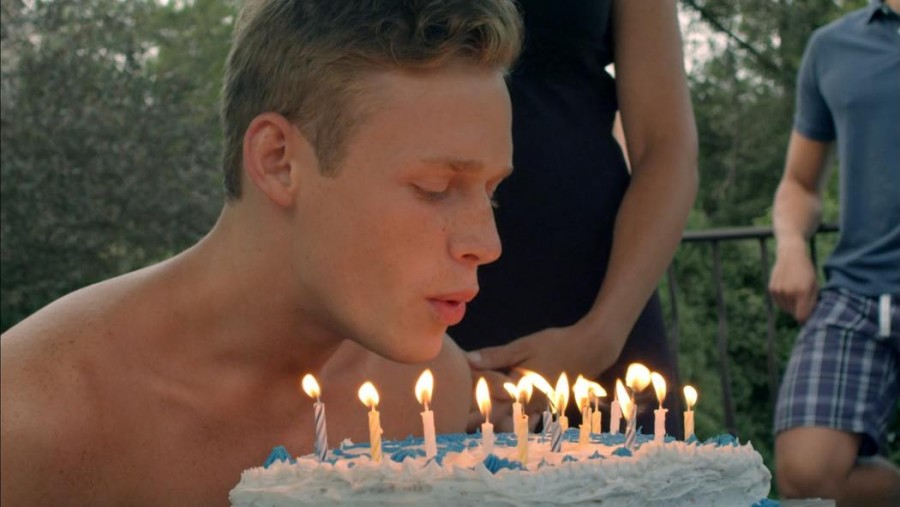 HENRY GAMBLE’S BIRTHDAY PARTY, the new film from writer/director Stephen Cone (The Wise Kids), focuses on a young boy coming to terms with his sexuality during his emotionally charged birthday party. Marking his feature film debut, Cole Doman plays Henry; Henry is turning 17, and Henry might be gay. But he’s not telling his pastor father (Pat Healy, Cheap Thrills, Compliance)—not during his pool party, where school and church collide in a sunny, hormonal afternoon.
The film will open in New York at the IFP’s Made in NY Media Center on January 8th, before expanding to additional markets and VOD platforms.
HENRY GAMBLE’S BIRTHDAY PARTY spans the 24 hours containing the birthday pool party of 17-year-old preacher’s kid Henry Gamble (Cole Doman).
The night before the party, Henry and his friend Gabe (Joe Keery), have a sleepover. Typical teenage boy chat quickly turns sexual, and it’s silently implied that Henry, on a search for identity, has a crush on Gabe.
As dawn arrives on the day of the party, Henry’s mom Kat (Elizabeth Laidlaw) wakes in a state of limbo, middle-aged, with a secret. A little while later, Pastor Bob (Pat Healy) is making breakfast, and they are joined by Henry’s 19-year-old sister Autumn (Nina Ganet), home from college for the party. Later that afternoon, guests begin to arrive – the assistant pastor, youth minister, husbands and wives; sons and daughters trapped between youth and adulthood, as well as Henry’s own teenaged church and “secular” friends, including the closeted young Logan (Daniel Kyri), who has eyes for Henry.
As day turns to night and clothes come off, Henry & Co. carefully navigate the religious strictures and sexual secrets held within the community, all struggling to tread the public and private, and their longing, despite themselves and their faith, for earthly love.
https://www.youtube.com/watch?v=lptlZe5EYDU
HENRY GAMBLE’S BIRTHDAY PARTY, the new film from writer/director Stephen Cone (The Wise Kids), focuses on a young boy coming to terms with his sexuality during his emotionally charged birthday party. Marking his feature film debut, Cole Doman plays Henry; Henry is turning 17, and Henry might be gay. But he’s not telling his pastor father (Pat Healy, Cheap Thrills, Compliance)—not during his pool party, where school and church collide in a sunny, hormonal afternoon.
The film will open in New York at the IFP’s Made in NY Media Center on January 8th, before expanding to additional markets and VOD platforms.
HENRY GAMBLE’S BIRTHDAY PARTY spans the 24 hours containing the birthday pool party of 17-year-old preacher’s kid Henry Gamble (Cole Doman).
The night before the party, Henry and his friend Gabe (Joe Keery), have a sleepover. Typical teenage boy chat quickly turns sexual, and it’s silently implied that Henry, on a search for identity, has a crush on Gabe.
As dawn arrives on the day of the party, Henry’s mom Kat (Elizabeth Laidlaw) wakes in a state of limbo, middle-aged, with a secret. A little while later, Pastor Bob (Pat Healy) is making breakfast, and they are joined by Henry’s 19-year-old sister Autumn (Nina Ganet), home from college for the party. Later that afternoon, guests begin to arrive – the assistant pastor, youth minister, husbands and wives; sons and daughters trapped between youth and adulthood, as well as Henry’s own teenaged church and “secular” friends, including the closeted young Logan (Daniel Kyri), who has eyes for Henry.
As day turns to night and clothes come off, Henry & Co. carefully navigate the religious strictures and sexual secrets held within the community, all struggling to tread the public and private, and their longing, despite themselves and their faith, for earthly love.
https://www.youtube.com/watch?v=lptlZe5EYDU
-
‘Youth’ ‘Mustang’ ‘Amy’ ‘The Lobster’ ‘Marshland’ Win European Film Awards
 ‘Youth’ (‘La Giovinezza’) directed and written by Academy Award-winner Paul Sorrentino, and starring Michal Kane, Harvey Keitel, Rachel Weisz, Paul Dano and Jane Fonda, won the top award, Best European Film of 2015, at the 28th European Film Awards. ‘Youth’ also won the awards for European Director for Paolo Sorrentino; and European Actor for Michael Caine.
‘Youth’ is the story of a retired orchestra conductor, on holiday in the Alps with his daughter and film director/best friend, who unexpectedly receives an invitation from Queen Elizabeth II to perform for Prince Philip’s birthday.
Complete list of winners of 28th European Film Awards
EUROPEAN FILM 2015
YOUTH (LA GIOVINEZZA)
WRITTEN & DIRECTED BY: Paolo Sorrentino
PRODUCED BY: Nicola Giuliano, Francesca Cima & Carlotta Calori
https://www.youtube.com/watch?v=-T7CM4di_0c
EUROPEAN COMEDY 2015
A PIGEON SAT ON A BRANCH REFLECTING ON EXISTENCE (EN DUVA SATT PÅ EN GREN OCH FUNDERADE PÅ TILLVARON) by Roy Andersson
https://www.youtube.com/watch?v=h7pna4laaAk
EUROPEAN DISCOVERY 2015 – Prix FIPRESCI
MUSTANG by Deniz Gamze Ergüven
https://www.youtube.com/watch?v=rU9JAN8LtIk
EUROPEAN DOCUMENTARY 2015
AMY by Asif Kapadia
https://www.youtube.com/watch?v=_2yCIwmNuLE
EUROPEAN ANIMATED FEATURE FILM 2015
SONG OF THE SEA by Tomm Moore
https://www.youtube.com/watch?v=7erpJFZhvTU
EUROPEAN SHORT FILM 2015
PICNIC (PIKNIK) by Jure Pavlović
EUROPEAN DIRECTOR 2015
Paolo Sorrentino for YOUTH (La Giovinezza)
EUROPEAN ACTRESS 2015
Charlotte Rampling in 45 YEARS
https://www.youtube.com/watch?v=Tg5cpiX18TA
EUROPEAN ACTOR 2015
Michael Caine in YOUTH (La Giovinezza)
EUROPEAN SCREENWRITER 2015
Yorgos Lanthimos & Efthimis Filippou for THE LOBSTER
https://www.youtube.com/watch?v=z069ldsumxA
EUROPEAN CINEMATOGRAPHER 2015 – Prix CARLO DI PALMA
Martin Gschlacht for GOODNIGHT MOMMY (Ich Seh Ich Seh)
https://www.youtube.com/watch?v=0kXpUaQpXMA
EUROPEAN EDITOR 2015
Jacek Drosio for BODY (Ciało)
https://www.youtube.com/watch?v=ZZ-3VAxWwnk
EUROPEAN PRODUCTION DESIGNER 2015
Sylvie Olivé for THE BRAND NEW TESTAMENT (Le Tout nouveau testament)
https://www.youtube.com/watch?v=w5QNKcwe_lM
EUROPEAN COSTUME DESIGNER 2015
Sarah Blenkinsop for THE LOBSTER
EUROPEAN COMPOSER 2015
Cat’s Eyes for THE DUKE OF BURGUNDY
https://www.youtube.com/watch?v=P-xIMBnclyA
EUROPEAN SOUND DESIGNER 2015
Vasco Pimentel & Miguel Martins for ARABIAN NIGHTS – VOL. I-III (As Mil e uma noites – Vol. I-III)
https://www.youtube.com/watch?v=yONovEHyvXo
EUROPEAN FILM ACADEMY LIFETIME ACHIEVEMENT AWARD
Charlotte Rampling
EUROPEAN ACHIEVEMENT IN WORLD CINEMA
Christoph Waltz
HONORARY AWARD
Sir Michael Caine
EUROPEAN CO-PRODUCTION AWARD 2015 – Prix EURIMAGES
Andrea Occhipinti
PEOPLE’S CHOICE AWARD 2015 for Best European Film
MARSHLAND (LA ISLA MÍNIMA) by Alberto Rodríguez
https://www.youtube.com/watch?v=8Fpk3Lnc638
‘Youth’ (‘La Giovinezza’) directed and written by Academy Award-winner Paul Sorrentino, and starring Michal Kane, Harvey Keitel, Rachel Weisz, Paul Dano and Jane Fonda, won the top award, Best European Film of 2015, at the 28th European Film Awards. ‘Youth’ also won the awards for European Director for Paolo Sorrentino; and European Actor for Michael Caine.
‘Youth’ is the story of a retired orchestra conductor, on holiday in the Alps with his daughter and film director/best friend, who unexpectedly receives an invitation from Queen Elizabeth II to perform for Prince Philip’s birthday.
Complete list of winners of 28th European Film Awards
EUROPEAN FILM 2015
YOUTH (LA GIOVINEZZA)
WRITTEN & DIRECTED BY: Paolo Sorrentino
PRODUCED BY: Nicola Giuliano, Francesca Cima & Carlotta Calori
https://www.youtube.com/watch?v=-T7CM4di_0c
EUROPEAN COMEDY 2015
A PIGEON SAT ON A BRANCH REFLECTING ON EXISTENCE (EN DUVA SATT PÅ EN GREN OCH FUNDERADE PÅ TILLVARON) by Roy Andersson
https://www.youtube.com/watch?v=h7pna4laaAk
EUROPEAN DISCOVERY 2015 – Prix FIPRESCI
MUSTANG by Deniz Gamze Ergüven
https://www.youtube.com/watch?v=rU9JAN8LtIk
EUROPEAN DOCUMENTARY 2015
AMY by Asif Kapadia
https://www.youtube.com/watch?v=_2yCIwmNuLE
EUROPEAN ANIMATED FEATURE FILM 2015
SONG OF THE SEA by Tomm Moore
https://www.youtube.com/watch?v=7erpJFZhvTU
EUROPEAN SHORT FILM 2015
PICNIC (PIKNIK) by Jure Pavlović
EUROPEAN DIRECTOR 2015
Paolo Sorrentino for YOUTH (La Giovinezza)
EUROPEAN ACTRESS 2015
Charlotte Rampling in 45 YEARS
https://www.youtube.com/watch?v=Tg5cpiX18TA
EUROPEAN ACTOR 2015
Michael Caine in YOUTH (La Giovinezza)
EUROPEAN SCREENWRITER 2015
Yorgos Lanthimos & Efthimis Filippou for THE LOBSTER
https://www.youtube.com/watch?v=z069ldsumxA
EUROPEAN CINEMATOGRAPHER 2015 – Prix CARLO DI PALMA
Martin Gschlacht for GOODNIGHT MOMMY (Ich Seh Ich Seh)
https://www.youtube.com/watch?v=0kXpUaQpXMA
EUROPEAN EDITOR 2015
Jacek Drosio for BODY (Ciało)
https://www.youtube.com/watch?v=ZZ-3VAxWwnk
EUROPEAN PRODUCTION DESIGNER 2015
Sylvie Olivé for THE BRAND NEW TESTAMENT (Le Tout nouveau testament)
https://www.youtube.com/watch?v=w5QNKcwe_lM
EUROPEAN COSTUME DESIGNER 2015
Sarah Blenkinsop for THE LOBSTER
EUROPEAN COMPOSER 2015
Cat’s Eyes for THE DUKE OF BURGUNDY
https://www.youtube.com/watch?v=P-xIMBnclyA
EUROPEAN SOUND DESIGNER 2015
Vasco Pimentel & Miguel Martins for ARABIAN NIGHTS – VOL. I-III (As Mil e uma noites – Vol. I-III)
https://www.youtube.com/watch?v=yONovEHyvXo
EUROPEAN FILM ACADEMY LIFETIME ACHIEVEMENT AWARD
Charlotte Rampling
EUROPEAN ACHIEVEMENT IN WORLD CINEMA
Christoph Waltz
HONORARY AWARD
Sir Michael Caine
EUROPEAN CO-PRODUCTION AWARD 2015 – Prix EURIMAGES
Andrea Occhipinti
PEOPLE’S CHOICE AWARD 2015 for Best European Film
MARSHLAND (LA ISLA MÍNIMA) by Alberto Rodríguez
https://www.youtube.com/watch?v=8Fpk3Lnc638
-
Alicia Vikander ‘The Danish Girl’ To Receive Rising Star Award at Palm Springs International Film Festival
 The 27th Palm Springs International Film Festival (PSIFF) will present Alicia Vikander with the Rising Star Award at its annual Awards Gala. The Festival runs January 1-11.
“In The Danish Girl, Alicia Vikander delivers a superb performance as Gerda Wegener, the wife of transgender pioneer Lili Elbe,” said Film Festival Chairman Harold Matzner. “She projects so much love and pain as she goes on a journey with Lili during an era when there was no precedent for it. Gerda’s own transformation as a character speaks to the story’s themes of courage and self-acceptance. For her astonishing screen presence and masterful performance, we are delighted to present Alicia Vikander with the 2016 Rising Star Award.”
The Danish Girl is the remarkable love story inspired by the lives of Lili Elbe and Gerda Wegener, portrayed in the film respectively by Academy Award winner Eddie Redmayne and Alicia Vikander, directed by Academy Award winner Tom Hooper. The film also stars Ben Whishaw, Sebastian Koch, Amber Heard, and Matthias Schoenaerts. For her role in the film, Vikander received a Breakthrough Performance honor from the New York Film Critics Online.
https://www.youtube.com/watch?v=v3qEphMRGIc
Past recipients of the Rising Star Award include Jessica Biel, Dakota Fanning, Emile Hirsch, Bryce Dallas Howard, Terrence Howard, Anna Kendrick, Jennifer Lawrence, and Scarlett Johansson. In the years they were honored Howard, Kendrick, and Lawrence went on to receive Academy Award nominations.
The 27th Palm Springs International Film Festival (PSIFF) will present Alicia Vikander with the Rising Star Award at its annual Awards Gala. The Festival runs January 1-11.
“In The Danish Girl, Alicia Vikander delivers a superb performance as Gerda Wegener, the wife of transgender pioneer Lili Elbe,” said Film Festival Chairman Harold Matzner. “She projects so much love and pain as she goes on a journey with Lili during an era when there was no precedent for it. Gerda’s own transformation as a character speaks to the story’s themes of courage and self-acceptance. For her astonishing screen presence and masterful performance, we are delighted to present Alicia Vikander with the 2016 Rising Star Award.”
The Danish Girl is the remarkable love story inspired by the lives of Lili Elbe and Gerda Wegener, portrayed in the film respectively by Academy Award winner Eddie Redmayne and Alicia Vikander, directed by Academy Award winner Tom Hooper. The film also stars Ben Whishaw, Sebastian Koch, Amber Heard, and Matthias Schoenaerts. For her role in the film, Vikander received a Breakthrough Performance honor from the New York Film Critics Online.
https://www.youtube.com/watch?v=v3qEphMRGIc
Past recipients of the Rising Star Award include Jessica Biel, Dakota Fanning, Emile Hirsch, Bryce Dallas Howard, Terrence Howard, Anna Kendrick, Jennifer Lawrence, and Scarlett Johansson. In the years they were honored Howard, Kendrick, and Lawrence went on to receive Academy Award nominations.
-
13 Filmmakers Win 2015 Rooftop Filmmakers Fund Grant
 Rooftop Films has awarded thirteen cash and service grants to alumni filmmakers, including The Rooftop Filmmakers’ Fund Garbo NYC Feature Film Grants, which were awarded to directors Kitty Green and Sebastian Silva. Green will receive a monetary grant of $15,000 to help finish her new film, Casting JonBenet, and Silva will receive a $10,000 grant to support his film, Demon Me.
“Kitty Green’s film Casting JonBenet represents the type of daring and meaningful cinema that Rooftop Films wants to support,” said Rooftop’s Founder and Artistic Director Mark Elijah Rosenberg. Green’s film is a sly and stylized documentary about the infamous murder of child model JonBenet Ramsey, using casting tapes and recreations by people from the community to create an emotional investigation of the case and its ramifications. “Like all our filmmakers, Green is working outside the mainstream, approaching a complex situation with narrative nuance and filmic innovation. We’re confident that all the films we’re supporting, from serious documentaries to outlandish fairy tales, are going to have a substantial impact.”
Kitty Green’s previous films include Ukraine is Not a Brothel, which won the 2015 AACTA Award for Best Feature Length Documentary, and “The Face of Ukraine: Casting Oksana Baiul,” which won the Jury Award for best non-fiction short documentary at the 2015 Sundance Film Festival. Sebastian Silva’s work includes The Maid, Nasty Baby, and Crystal Fairy, all of which have won numerous awards around the world.
COMPLETE LIST OF 2015 ROOFTOP FILMMAKERS FUND GRANTS
Rooftop Films / GarboNYC $15,000 Feature Film Grant:
Kitty Green, Casting JonBenet
Rooftop Films / GarboNYC $10,000 Feature Film Grant:
Sebastian Silva, Demon Me
Rooftop Films / Brigade Festival Publicity Grant:
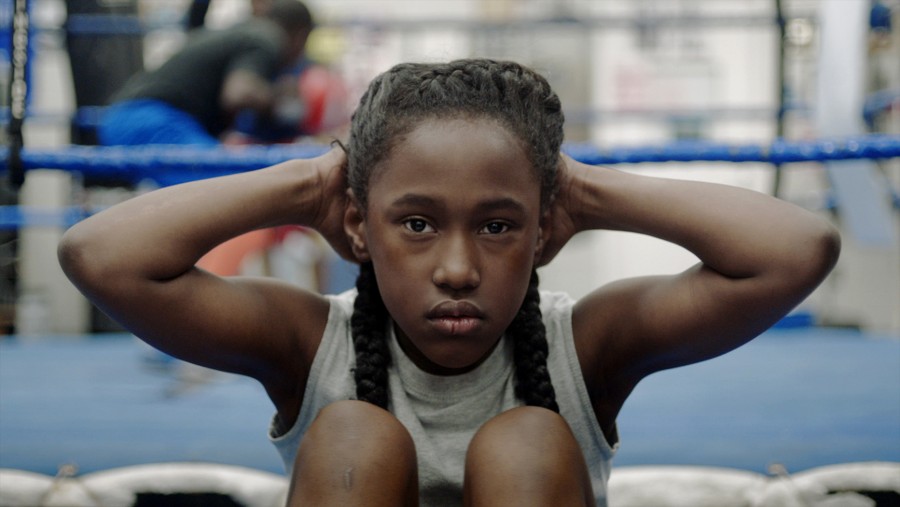
Anna Rose Holmer, The Fits (pictured above)
Rooftop Films / Technological Cinevideo Services Camera Grant:
Khalik Allah, Jamaica
Rooftop Films / Eastern Effects Equipment Grant:
Lauren Wolkstein & Chris Radcliff, The Strange Ones
Rooftop Films / Edgeworx Post-Production Grant:
Anja Marquardt, Wolf
Rooftop Films / DCTV Color Correction Feature Film Grant:
Sarah J. Christman, Swarm Season
Rooftop Films / DCTV Equipment and Services Short Film Grant:
Ryan Mauskopf, Sloof’s Supershop
Rooftop Films / DCTV Equipment and Services Short Film Grant:
Nathan Kensinger, Managed Retreat
Rooftop Films / Adrienne Shelly Foundation Short Film Grant For Women:
Jennifer Reeder, All Small Bodies
In addition to the above grants, Rooftop Films helped negotiate post-production services at Metropolis Films for alumni filmmaker Robert Greene.
Robert Greene, Kate Plays Christine
Rooftop Filmmakers’ Fund Short Film Grant:
Christopher K. Walker & Michael Beach Nichols, Beast of Man
Niki Lindroth von Bahr, Market Place
Nathan Kensinger, Managed Retreat
This year’s grantees join the ranks of past Rooftop Filmmakers Fund grantees, an illustrious group that includes Ana Lily Amirpour’s soon to be completed The Bad Batch, Gillian Robespierre with her indie hit Obvious Child, Jonas Carpignano’s recent Gotham award-winner Mediterranea, Lucy Walker with her Academy Award-nominated short documentary “The Tsunami and the Cherry Blossom,” Jeremy Saulnier’s FIPRESCI Critics’ award-winner, Blue Ruin, Keith Miller’s critically acclaimed and Tribeca Film Festival award-winning Five Star, and Benh Zeitlin’s Academy Award-nominated Beasts of the Southern Wild.
Rooftop Films has awarded thirteen cash and service grants to alumni filmmakers, including The Rooftop Filmmakers’ Fund Garbo NYC Feature Film Grants, which were awarded to directors Kitty Green and Sebastian Silva. Green will receive a monetary grant of $15,000 to help finish her new film, Casting JonBenet, and Silva will receive a $10,000 grant to support his film, Demon Me.
“Kitty Green’s film Casting JonBenet represents the type of daring and meaningful cinema that Rooftop Films wants to support,” said Rooftop’s Founder and Artistic Director Mark Elijah Rosenberg. Green’s film is a sly and stylized documentary about the infamous murder of child model JonBenet Ramsey, using casting tapes and recreations by people from the community to create an emotional investigation of the case and its ramifications. “Like all our filmmakers, Green is working outside the mainstream, approaching a complex situation with narrative nuance and filmic innovation. We’re confident that all the films we’re supporting, from serious documentaries to outlandish fairy tales, are going to have a substantial impact.”
Kitty Green’s previous films include Ukraine is Not a Brothel, which won the 2015 AACTA Award for Best Feature Length Documentary, and “The Face of Ukraine: Casting Oksana Baiul,” which won the Jury Award for best non-fiction short documentary at the 2015 Sundance Film Festival. Sebastian Silva’s work includes The Maid, Nasty Baby, and Crystal Fairy, all of which have won numerous awards around the world.
COMPLETE LIST OF 2015 ROOFTOP FILMMAKERS FUND GRANTS
Rooftop Films / GarboNYC $15,000 Feature Film Grant:
Kitty Green, Casting JonBenet
Rooftop Films / GarboNYC $10,000 Feature Film Grant:
Sebastian Silva, Demon Me
Rooftop Films / Brigade Festival Publicity Grant:
Anna Rose Holmer, The Fits (pictured above)
Rooftop Films / Technological Cinevideo Services Camera Grant:
Khalik Allah, Jamaica
Rooftop Films / Eastern Effects Equipment Grant:
Lauren Wolkstein & Chris Radcliff, The Strange Ones
Rooftop Films / Edgeworx Post-Production Grant:
Anja Marquardt, Wolf
Rooftop Films / DCTV Color Correction Feature Film Grant:
Sarah J. Christman, Swarm Season
Rooftop Films / DCTV Equipment and Services Short Film Grant:
Ryan Mauskopf, Sloof’s Supershop
Rooftop Films / DCTV Equipment and Services Short Film Grant:
Nathan Kensinger, Managed Retreat
Rooftop Films / Adrienne Shelly Foundation Short Film Grant For Women:
Jennifer Reeder, All Small Bodies
In addition to the above grants, Rooftop Films helped negotiate post-production services at Metropolis Films for alumni filmmaker Robert Greene.
Robert Greene, Kate Plays Christine
Rooftop Filmmakers’ Fund Short Film Grant:
Christopher K. Walker & Michael Beach Nichols, Beast of Man
Niki Lindroth von Bahr, Market Place
Nathan Kensinger, Managed Retreat
This year’s grantees join the ranks of past Rooftop Filmmakers Fund grantees, an illustrious group that includes Ana Lily Amirpour’s soon to be completed The Bad Batch, Gillian Robespierre with her indie hit Obvious Child, Jonas Carpignano’s recent Gotham award-winner Mediterranea, Lucy Walker with her Academy Award-nominated short documentary “The Tsunami and the Cherry Blossom,” Jeremy Saulnier’s FIPRESCI Critics’ award-winner, Blue Ruin, Keith Miller’s critically acclaimed and Tribeca Film Festival award-winning Five Star, and Benh Zeitlin’s Academy Award-nominated Beasts of the Southern Wild.
-
Complete List of 74 Original Songs Eligible for 2015 Oscar
 The Academy of Motion Picture Arts and Sciences announced that 74 songs from eligible feature-length motion pictures released in 2015 are in contention for nominations in the Original Song category for the 88th Academy Awards®.
The original songs, along with the motion picture in which each song is featured, are listed below in alphabetical order by film title and song title:
“Happy” from “Altered Minds”
“Home” from “Alvin and the Chipmunks: The Road Chip”
“None Of Them Are You” from “Anomalisa”
“Stem To The Rose” from “Becoming Bulletproof”
“The Mystery Of Your Gift” from “Boychoir”
“I Run” from “Chi-Raq”
“Pray 4 My City” from “Chi-Raq”
“Sit Down For This” from “Chi-Raq”
“Strong” from “Cinderella”
“So Long” from “Concussion”
“Fighting Stronger” from “Creed”
“Grip” from “Creed”
“Waiting For My Moment” from “Creed”
“Don’t Look Down” from “Danny Collins”
“Hey Baby Doll” from “Danny Collins”
“Dreamsong” from “The Diary of a Teenage Girl” (pictured above)
“It’s My Turn Now” from “Dope”
“Ya Rahem, Maula Maula” from “Dukhtar”
“Earned It” from “Fifty Shades of Grey”
“Love Me Like You Do” from “Fifty Shades of Grey”
“Salted Wound” from “Fifty Shades of Grey”
“Hands Of Love” from “Freeheld”
“See You Again” from “Furious Seven”
“Brother” from “Godspeed: The Story of Page Jones”
“As Real As You And Me” from “Home”
“Dancing In The Dark” from “Home”
“Feel The Light” from “Home”
“Red Balloon” from “Home”
“Two Of A Crime” from “Hot Pursuit”
“Til It Happens To You” from “The Hunting Ground”
“I’ll See You In My Dreams” from “I’ll See You in My Dreams”
“The Movie About Us” from “Ingrid Bergman – In Her Own Words”
“Bhoomiyilenghanumundo” from “Jalam”
“Koodu Vaykkan” from “Jalam”
“Pakalppaathi Chaari” from “Jalam”
“Yaathra Manoradhamerum” from “Jalam”
“Lost In Love” from “Jenny’s Wedding”
“True Love Avenue” from “Jenny’s Wedding”
“Hypnosis” from “Kahlil Gibran’s The Prophet”
“Juntos (Together)” from “McFarland, USA”
“The Light That Never Fails” from “Meru”
“The Crazy Ones” from “Miss You Already”
“There’s A Place” from “Miss You Already”
“Johanna” from “Mortdecai”
“Little Soldier” from “Pan”
“Something’s Not Right” from “Pan”
“Paranoid Girl” from “Paranoid Girls”
“Better When I’m Dancin'” from “The Peanuts Movie”
“Pink & Blue” from “Pink & Blue: Colors of Hereditary Cancer”
“Flashlight” from “Pitch Perfect 2”
“Birds Of A Feather” from “Poached”
“Still Breathing” from “Point Break”
“Manta Ray” from “Racing Extinction”
“Cold One” from “Ricki and the Flash”
“Torch” from “Rock the Kasbah”
“Someone Like You” from “The Rumperbutts”
“Aankhon Me Samaye Dil” from “Salt Bridge”
“Bachpana Thaa” from “Salt Bridge”
“Kanpne Lage Tum” from “Salt Bridge”
“Kyaa Bataaun Tujhe” from “Salt Bridge”
“Le Jaaye Jo Door Tumse” from “Salt Bridge”
“Na Jaane Kitni Door” from “Salt Bridge”
“Sookha Hi Rang Daalo” from “Salt Bridge”
“Feels Like Summer” from “Shaun the Sheep Movie”
“Phenomenal” from “Southpaw”
“Writing’s On The Wall” from “Spectre”
“Squeeze Me” from “The SpongeBob Movie: Sponge out of Water”
“Teamwork” from “The SpongeBob Movie: Sponge out of Water”
“Who Can You Trust” from “Spy”
“Came To Win” from “Sweet Micky for President”
“Mean Ol’ Moon” from “Ted 2”
“Love Was My Alibi” from “The Water Diviner”
“Fine On The Outside” from “When Marnie Was There”
“Simple Song #3” from “Youth”
During the nominations process, all voting members of the Music Branch will receive a Reminder List of works submitted in the category and a DVD copy of the song clips. Members will be asked to watch the clips and then vote in the order of their preference for not more than five achievements in the category. The five achievements receiving the highest number of votes will become the nominations for final voting for the award. A maximum of two songs may be nominated from any one film.
To be eligible, a song must consist of words and music, both of which are original and written specifically for the film. A clearly audible, intelligible, substantive rendition of both lyric and melody must be used in the body of the film or as the first music cue in the end credits.
The 88th Academy Awards nominations will be announced live on Thursday, January 14, 2016, at 5:30 a.m. PT at the Academy’s Samuel Goldwyn Theater in Beverly Hills.
The 88th Oscars® will be held on Sunday, February 28, 2016, at the Dolby Theatre® at Hollywood & Highland Center® in Hollywood, and will be televised live by the ABC Television Network at 7 p.m. ET/4 p.m. PT. The Oscar presentation also will be televised live in more than 225 countries and territories worldwide.
The Academy of Motion Picture Arts and Sciences announced that 74 songs from eligible feature-length motion pictures released in 2015 are in contention for nominations in the Original Song category for the 88th Academy Awards®.
The original songs, along with the motion picture in which each song is featured, are listed below in alphabetical order by film title and song title:
“Happy” from “Altered Minds”
“Home” from “Alvin and the Chipmunks: The Road Chip”
“None Of Them Are You” from “Anomalisa”
“Stem To The Rose” from “Becoming Bulletproof”
“The Mystery Of Your Gift” from “Boychoir”
“I Run” from “Chi-Raq”
“Pray 4 My City” from “Chi-Raq”
“Sit Down For This” from “Chi-Raq”
“Strong” from “Cinderella”
“So Long” from “Concussion”
“Fighting Stronger” from “Creed”
“Grip” from “Creed”
“Waiting For My Moment” from “Creed”
“Don’t Look Down” from “Danny Collins”
“Hey Baby Doll” from “Danny Collins”
“Dreamsong” from “The Diary of a Teenage Girl” (pictured above)
“It’s My Turn Now” from “Dope”
“Ya Rahem, Maula Maula” from “Dukhtar”
“Earned It” from “Fifty Shades of Grey”
“Love Me Like You Do” from “Fifty Shades of Grey”
“Salted Wound” from “Fifty Shades of Grey”
“Hands Of Love” from “Freeheld”
“See You Again” from “Furious Seven”
“Brother” from “Godspeed: The Story of Page Jones”
“As Real As You And Me” from “Home”
“Dancing In The Dark” from “Home”
“Feel The Light” from “Home”
“Red Balloon” from “Home”
“Two Of A Crime” from “Hot Pursuit”
“Til It Happens To You” from “The Hunting Ground”
“I’ll See You In My Dreams” from “I’ll See You in My Dreams”
“The Movie About Us” from “Ingrid Bergman – In Her Own Words”
“Bhoomiyilenghanumundo” from “Jalam”
“Koodu Vaykkan” from “Jalam”
“Pakalppaathi Chaari” from “Jalam”
“Yaathra Manoradhamerum” from “Jalam”
“Lost In Love” from “Jenny’s Wedding”
“True Love Avenue” from “Jenny’s Wedding”
“Hypnosis” from “Kahlil Gibran’s The Prophet”
“Juntos (Together)” from “McFarland, USA”
“The Light That Never Fails” from “Meru”
“The Crazy Ones” from “Miss You Already”
“There’s A Place” from “Miss You Already”
“Johanna” from “Mortdecai”
“Little Soldier” from “Pan”
“Something’s Not Right” from “Pan”
“Paranoid Girl” from “Paranoid Girls”
“Better When I’m Dancin'” from “The Peanuts Movie”
“Pink & Blue” from “Pink & Blue: Colors of Hereditary Cancer”
“Flashlight” from “Pitch Perfect 2”
“Birds Of A Feather” from “Poached”
“Still Breathing” from “Point Break”
“Manta Ray” from “Racing Extinction”
“Cold One” from “Ricki and the Flash”
“Torch” from “Rock the Kasbah”
“Someone Like You” from “The Rumperbutts”
“Aankhon Me Samaye Dil” from “Salt Bridge”
“Bachpana Thaa” from “Salt Bridge”
“Kanpne Lage Tum” from “Salt Bridge”
“Kyaa Bataaun Tujhe” from “Salt Bridge”
“Le Jaaye Jo Door Tumse” from “Salt Bridge”
“Na Jaane Kitni Door” from “Salt Bridge”
“Sookha Hi Rang Daalo” from “Salt Bridge”
“Feels Like Summer” from “Shaun the Sheep Movie”
“Phenomenal” from “Southpaw”
“Writing’s On The Wall” from “Spectre”
“Squeeze Me” from “The SpongeBob Movie: Sponge out of Water”
“Teamwork” from “The SpongeBob Movie: Sponge out of Water”
“Who Can You Trust” from “Spy”
“Came To Win” from “Sweet Micky for President”
“Mean Ol’ Moon” from “Ted 2”
“Love Was My Alibi” from “The Water Diviner”
“Fine On The Outside” from “When Marnie Was There”
“Simple Song #3” from “Youth”
During the nominations process, all voting members of the Music Branch will receive a Reminder List of works submitted in the category and a DVD copy of the song clips. Members will be asked to watch the clips and then vote in the order of their preference for not more than five achievements in the category. The five achievements receiving the highest number of votes will become the nominations for final voting for the award. A maximum of two songs may be nominated from any one film.
To be eligible, a song must consist of words and music, both of which are original and written specifically for the film. A clearly audible, intelligible, substantive rendition of both lyric and melody must be used in the body of the film or as the first music cue in the end credits.
The 88th Academy Awards nominations will be announced live on Thursday, January 14, 2016, at 5:30 a.m. PT at the Academy’s Samuel Goldwyn Theater in Beverly Hills.
The 88th Oscars® will be held on Sunday, February 28, 2016, at the Dolby Theatre® at Hollywood & Highland Center® in Hollywood, and will be televised live by the ABC Television Network at 7 p.m. ET/4 p.m. PT. The Oscar presentation also will be televised live in more than 225 countries and territories worldwide.
-
‘Carol’ Leads Nominations for 73rd Golden Globe Awards
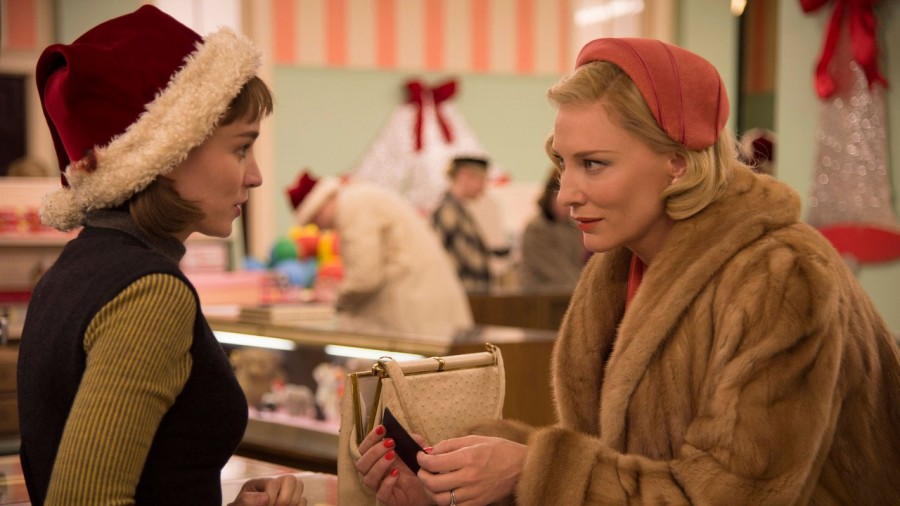 ‘Carol’ led the nominations for the 73rd Golden Globe Awards, with five nominations – best motion picture, drama; best performance by an actress, drama for both Cate Blanchett and Rooney Mara; best director, Todd Haynes; and best original score, Carter Burwell.
Film festival hits The Danish Girl, Room and Spotlight were right behind with 3 nominations each.
In the foreign film category Europe took the lead with nominations for France (Mustang), Hungary (Son of Saul), Finland/Germany/Estonia (The Fencer) and Belgium/France/Luxembourg (The Brand New Testament). Latin America rounded up the nominations with Chile’s The Club.
The Golden Globes will be presented on January 10 and broadcast live by NBC.
The complete list of nominations for 73rd Golden Globe Awards.
BEST MOTION PICTURE – DRAMA
CAROL
Number 9 Films; The Weinstein Company
MAD MAX: FURY ROAD
Warner Bros. Pictures / Village Roadshow Pictures / Kennedy Miller Mitchell; Warner Bros. Pictures
THE REVENANT
Regency Enterprises; Twentieth Century Fox
ROOM
Element Pictures / No Trace Camping; A24
SPOTLIGHT
Anonymous Content / Participant Media / First Look; Open Road Films
BEST PERFORMANCE BY AN ACTRESS IN A MOTION PICTURE – DRAMA
CATE BLANCHETT
CAROL
BRIE LARSON
ROOM
ROONEY MARA
CAROL
SAOIRSE RONAN
BROOKLYN
ALICIA VIKANDER
THE DANISH GIRL
BEST PERFORMANCE BY AN ACTOR IN A MOTION PICTURE – DRAMA
BRYAN CRANSTON
TRUMBO
LEONARDO DICAPRIO
THE REVENANT
MICHAEL FASSBENDER
STEVE JOBS
EDDIE REDMAYNE
THE DANISH GIRL
WILL SMITH
CONCUSSION
BEST MOTION PICTURE – MUSICAL OR COMEDY
THE BIG SHORT
Paramount Pictures / Regency Enterprises; Paramount Pictures
JOY
Fox 2000 Pictures; Twentieth Century Fox
THE MARTIAN
Twentieth Century Fox; Twentieth Century Fox
SPY
Twentieth Century Fox; Twentieth Century Fox
TRAINWRECK
Universal Pictures / Apatow Productions; Universal Pictures
BEST PERFORMANCE BY AN ACTRESS IN A MOTION PICTURE – MUSICAL OR COMEDY
JENNIFER LAWRENCE
JOY
MELISSA MCCARTHY
SPY
AMY SCHUMER
TRAINWRECK
MAGGIE SMITH
THE LADY IN THE VAN
LILY TOMLIN
GRANDMA
BEST PERFORMANCE BY AN ACTOR IN A MOTION PICTURE – MUSICAL OR COMEDY
CHRISTIAN BALE
THE BIG SHORT
STEVE CARELL
THE BIG SHORT
MATT DAMON
THE MARTIAN
AL PACINO
DANNY COLLINS
MARK RUFFALO
INFINITELY POLAR BEAR
BEST MOTION PICTURE – ANIMATED
ANOMALISA
Starburns Industries; Paramount Pictures
THE GOOD DINOSAUR
Pixar Animation Studios; Walt Disney Studios Motion Pictures
INSIDE OUT
Pixar Animation Studios; Walt Disney Studios Motion Pictures
THE PEANUTS MOVIE
Blue Sky Studios; Twentieth Century Fox
SHAUN THE SHEEP MOVIE
Aardman; Lionsgate / Studiocanal
BEST MOTION PICTURE – FOREIGN LANGUAGE
THE BRAND NEW TESTAMENT
(BELGIUM / FRANCE / LUXEMBOURG)
Terra Incognita / Climax Films / Après le Déluge / Juliette Films / Caviar; Belga Films / Le Pacte
THE CLUB
(CHILE)
Fabula; Music Box Films
THE FENCER
(FINLAND / GERMANY / ESTONIA)
Making Movies / Kick Film GmbH / Allfilm; Oy Nordisk Film Ab
MUSTANG
(FRANCE)
CG Cinéma / Vistamar Flimproduktion; Cohen Media Group
SON OF SAUL
(HUNGARY)
Laokoon Filmgroup; Sony Pictures Classics
BEST PERFORMANCE BY AN ACTRESS IN A SUPPORTING ROLE IN ANY MOTION PICTURE
JANE FONDA
YOUTH
JENNIFER JASON LEIGH
THE HATEFUL EIGHT
HELEN MIRREN
TRUMBO
ALICIA VIKANDER
EX MACHINA
KATE WINSLET
STEVE JOBS
BEST PERFORMANCE BY AN ACTOR IN A SUPPORTING ROLE IN ANY MOTION PICTURE
PAUL DANO
LOVE & MERCY
IDRIS ELBA
BEASTS OF NO NATION
MARK RYLANCE
BRIDGE OF SPIES
MICHAEL SHANNON
99 HOMES
SYLVESTER STALLONE
CREED
BEST DIRECTOR – MOTION PICTURE
TODD HAYNES
CAROL
ALEJANDRO G. IÑÁRRITU
THE REVENANT
TOM MCCARTHY
SPOTLIGHT
GEORGE MILLER
MAD MAX: FURY ROAD
RIDLEY SCOTT
THE MARTIAN
BEST SCREENPLAY – MOTION PICTURE
EMMA DONOGHUE
ROOM
TOM MCCARTHY, JOSH SINGER
SPOTLIGHT
CHARLES RANDOLPH, ADAM MCKAY
THE BIG SHORT
AARON SORKIN
STEVE JOBS
QUENTIN TARANTINO
THE HATEFUL EIGHT
BEST ORIGINAL SCORE – MOTION PICTURE
CARTER BURWELL
CAROL
ALEXANDRE DESPLAT
THE DANISH GIRL
ENNIO MORRICONE
THE HATEFUL EIGHT
DANIEL PEMBERTON
STEVE JOBS
RYUICHI SAKAMOTO, ALVA NOTO
THE REVENANT
BEST ORIGINAL SONG – MOTION PICTURE
“LOVE ME LIKE YOU DO” — FIFTY SHADES OF GREY
Music by:
Max Martin, Savan Kotecha, Ali Payami, Ilya Salmanzadeh
Lyrics by:
Max Martin, Savan Kotecha, Ali Payami, Ilya Salmanzadeh
“ONE KIND OF LOVE” — LOVE & MERCY
Music by:
Brian Wilson, Scott Bennett
Lyrics by:
Brian Wilson, Scott Bennett
“SEE YOU AGAIN” — FURIOUS 7
Music by:
Justin Franks, Andrew Cedar, Charlie Puth, Cameron Thomaz
Lyrics by:
Justin Franks, Andrew Cedar, Charlie Puth, Cameron Thomaz
“SIMPLE SONG #3” — YOUTH
Music by:
David Lang
Lyrics by:
David Lang
“WRITING’S ON THE WALL” — SPECTRE
Music by:
Sam Smith, Jimmy Napes
Lyrics by:
Sam Smith, Jimmy Napes
BEST TELEVISION SERIES – DRAMA
EMPIRE
FOX
20th Century Fox Television / Imagine Television
GAME OF THRONES
HBO
HBO Entertainment in association with Bighead, Littlehead; Television 360 and Startling Television
MR. ROBOT
USA NETWORK
Universal Cable Productions
NARCOS
NETFLIX
Gaumont International Television for Netflix
OUTLANDER
STARZ
Sony Pictures Television
BEST PERFORMANCE BY AN ACTRESS IN A TELEVISION SERIES – DRAMA
CAITRIONA BALFE
OUTLANDER
VIOLA DAVIS
HOW TO GET AWAY WITH MURDER
EVA GREEN
PENNY DREADFUL
TARAJI P. HENSON
EMPIRE
ROBIN WRIGHT
HOUSE OF CARDS
BEST PERFORMANCE BY AN ACTOR IN A TELEVISION SERIES – DRAMA
JON HAMM
MAD MEN
RAMI MALEK
MR. ROBOT
WAGNER MOURA
NARCOS
BOB ODENKIRK
BETTER CALL SAUL
LIEV SCHREIBER
RAY DONOVAN
BEST TELEVISION SERIES – MUSICAL OR COMEDY
CASUAL
HULU
Lionsgate TV / Right of Way
MOZART IN THE JUNGLE
AMAZON VIDEO
Amazon Studios
ORANGE IS THE NEW BLACK
NETFLIX
Lionsgate Television for Netflix
SILICON VALLEY
HBO
HBO Entertainment in association with Judgemental Films, Alec Berg, Altschuler Krinsky Works, and 3 Arts Entertainment
TRANSPARENT
AMAZON VIDEO
Amazon Studios
VEEP
HBO
HBO Entertainment in association with Dundee Productions
BEST PERFORMANCE BY AN ACTRESS IN A TELEVISION SERIES – MUSICAL OR COMEDY
RACHEL BLOOM
CRAZY EX-GIRLFRIEND
JAMIE LEE CURTIS
SCREAM QUEENS
JULIA LOUIS-DREYFUS
VEEP
GINA RODRIGUEZ
JANE THE VIRGIN
LILY TOMLIN
GRACE AND FRANKIE
BEST PERFORMANCE BY AN ACTOR IN A TELEVISION SERIES – MUSICAL OR COMEDY
AZIZ ANSARI
MASTER OF NONE
GAEL GARCÍA BERNAL
MOZART IN THE JUNGLE
ROB LOWE
THE GRINDER
PATRICK STEWART
BLUNT TALK
JEFFREY TAMBOR
TRANSPARENT
BEST TELEVISION LIMITED SERIES OR MOTION PICTURE MADE FOR TELEVISION
American Crime
ABC
ABC Studios
American Horror Story: Hotel
FX
20th Century Fox Television
Fargo
FX
MGM Television Studios / FX Productions
Flesh & Bone
Starz
Starz
Wolf Hall
PBS
A Playground Entertainment and Company Pictures production for BBC and MASTERPIECE in association with BBC Worldwide, Atlus Media and Prescience
BEST PERFORMANCE BY AN ACTRESS IN A LIMITED SERIES OR MOTION PICTURE MADE FOR TELEVISION
KIRSTEN DUNST
FARGO
LADY GAGA
AMERICAN HORROR STORY: HOTEL
SARAH HAY
FLESH & BONE
FELICITY HUFFMAN
AMERICAN CRIME
QUEEN LATIFAH
BESSIE
BEST PERFORMANCE BY AN ACTOR IN A LIMITED SERIES OR MOTION PICTURE MADE FOR TELEVISION
IDRIS ELBA
LUTHER
OSCAR ISAAC
SHOW ME A HERO
DAVID OYELOWO
NIGHTINGALE
MARK RYLANCE
WOLF HALL
PATRICK WILSON
FARGO
BEST PERFORMANCE BY AN ACTRESS IN A SUPPORTING ROLE IN A SERIES, LIMITED SERIES OR MOTION PICTURE MADE FOR TELEVISION
UZO ADUBA
ORANGE IS THE NEW BLACK
JOANNE FROGGATT
DOWNTON ABBEY
REGINA KING
AMERICAN CRIME
JUDITH LIGHT
TRANSPARENT
MAURA TIERNEY
THE AFFAIR
BEST PERFORMANCE BY AN ACTOR IN A SUPPORTING ROLE IN A SERIES, LIMITED SERIES OR MOTION PICTURE MADE FOR TELEVISION
ALAN CUMMING
THE GOOD WIFE
DAMIAN LEWIS
WOLF HALL
BEN MENDELSOHN
BLOODLINE
TOBIAS MENZIES
OUTLANDER
CHRISTIAN SLATER
MR. ROBOT
‘Carol’ led the nominations for the 73rd Golden Globe Awards, with five nominations – best motion picture, drama; best performance by an actress, drama for both Cate Blanchett and Rooney Mara; best director, Todd Haynes; and best original score, Carter Burwell.
Film festival hits The Danish Girl, Room and Spotlight were right behind with 3 nominations each.
In the foreign film category Europe took the lead with nominations for France (Mustang), Hungary (Son of Saul), Finland/Germany/Estonia (The Fencer) and Belgium/France/Luxembourg (The Brand New Testament). Latin America rounded up the nominations with Chile’s The Club.
The Golden Globes will be presented on January 10 and broadcast live by NBC.
The complete list of nominations for 73rd Golden Globe Awards.
BEST MOTION PICTURE – DRAMA
CAROL
Number 9 Films; The Weinstein Company
MAD MAX: FURY ROAD
Warner Bros. Pictures / Village Roadshow Pictures / Kennedy Miller Mitchell; Warner Bros. Pictures
THE REVENANT
Regency Enterprises; Twentieth Century Fox
ROOM
Element Pictures / No Trace Camping; A24
SPOTLIGHT
Anonymous Content / Participant Media / First Look; Open Road Films
BEST PERFORMANCE BY AN ACTRESS IN A MOTION PICTURE – DRAMA
CATE BLANCHETT
CAROL
BRIE LARSON
ROOM
ROONEY MARA
CAROL
SAOIRSE RONAN
BROOKLYN
ALICIA VIKANDER
THE DANISH GIRL
BEST PERFORMANCE BY AN ACTOR IN A MOTION PICTURE – DRAMA
BRYAN CRANSTON
TRUMBO
LEONARDO DICAPRIO
THE REVENANT
MICHAEL FASSBENDER
STEVE JOBS
EDDIE REDMAYNE
THE DANISH GIRL
WILL SMITH
CONCUSSION
BEST MOTION PICTURE – MUSICAL OR COMEDY
THE BIG SHORT
Paramount Pictures / Regency Enterprises; Paramount Pictures
JOY
Fox 2000 Pictures; Twentieth Century Fox
THE MARTIAN
Twentieth Century Fox; Twentieth Century Fox
SPY
Twentieth Century Fox; Twentieth Century Fox
TRAINWRECK
Universal Pictures / Apatow Productions; Universal Pictures
BEST PERFORMANCE BY AN ACTRESS IN A MOTION PICTURE – MUSICAL OR COMEDY
JENNIFER LAWRENCE
JOY
MELISSA MCCARTHY
SPY
AMY SCHUMER
TRAINWRECK
MAGGIE SMITH
THE LADY IN THE VAN
LILY TOMLIN
GRANDMA
BEST PERFORMANCE BY AN ACTOR IN A MOTION PICTURE – MUSICAL OR COMEDY
CHRISTIAN BALE
THE BIG SHORT
STEVE CARELL
THE BIG SHORT
MATT DAMON
THE MARTIAN
AL PACINO
DANNY COLLINS
MARK RUFFALO
INFINITELY POLAR BEAR
BEST MOTION PICTURE – ANIMATED
ANOMALISA
Starburns Industries; Paramount Pictures
THE GOOD DINOSAUR
Pixar Animation Studios; Walt Disney Studios Motion Pictures
INSIDE OUT
Pixar Animation Studios; Walt Disney Studios Motion Pictures
THE PEANUTS MOVIE
Blue Sky Studios; Twentieth Century Fox
SHAUN THE SHEEP MOVIE
Aardman; Lionsgate / Studiocanal
BEST MOTION PICTURE – FOREIGN LANGUAGE
THE BRAND NEW TESTAMENT
(BELGIUM / FRANCE / LUXEMBOURG)
Terra Incognita / Climax Films / Après le Déluge / Juliette Films / Caviar; Belga Films / Le Pacte
THE CLUB
(CHILE)
Fabula; Music Box Films
THE FENCER
(FINLAND / GERMANY / ESTONIA)
Making Movies / Kick Film GmbH / Allfilm; Oy Nordisk Film Ab
MUSTANG
(FRANCE)
CG Cinéma / Vistamar Flimproduktion; Cohen Media Group
SON OF SAUL
(HUNGARY)
Laokoon Filmgroup; Sony Pictures Classics
BEST PERFORMANCE BY AN ACTRESS IN A SUPPORTING ROLE IN ANY MOTION PICTURE
JANE FONDA
YOUTH
JENNIFER JASON LEIGH
THE HATEFUL EIGHT
HELEN MIRREN
TRUMBO
ALICIA VIKANDER
EX MACHINA
KATE WINSLET
STEVE JOBS
BEST PERFORMANCE BY AN ACTOR IN A SUPPORTING ROLE IN ANY MOTION PICTURE
PAUL DANO
LOVE & MERCY
IDRIS ELBA
BEASTS OF NO NATION
MARK RYLANCE
BRIDGE OF SPIES
MICHAEL SHANNON
99 HOMES
SYLVESTER STALLONE
CREED
BEST DIRECTOR – MOTION PICTURE
TODD HAYNES
CAROL
ALEJANDRO G. IÑÁRRITU
THE REVENANT
TOM MCCARTHY
SPOTLIGHT
GEORGE MILLER
MAD MAX: FURY ROAD
RIDLEY SCOTT
THE MARTIAN
BEST SCREENPLAY – MOTION PICTURE
EMMA DONOGHUE
ROOM
TOM MCCARTHY, JOSH SINGER
SPOTLIGHT
CHARLES RANDOLPH, ADAM MCKAY
THE BIG SHORT
AARON SORKIN
STEVE JOBS
QUENTIN TARANTINO
THE HATEFUL EIGHT
BEST ORIGINAL SCORE – MOTION PICTURE
CARTER BURWELL
CAROL
ALEXANDRE DESPLAT
THE DANISH GIRL
ENNIO MORRICONE
THE HATEFUL EIGHT
DANIEL PEMBERTON
STEVE JOBS
RYUICHI SAKAMOTO, ALVA NOTO
THE REVENANT
BEST ORIGINAL SONG – MOTION PICTURE
“LOVE ME LIKE YOU DO” — FIFTY SHADES OF GREY
Music by:
Max Martin, Savan Kotecha, Ali Payami, Ilya Salmanzadeh
Lyrics by:
Max Martin, Savan Kotecha, Ali Payami, Ilya Salmanzadeh
“ONE KIND OF LOVE” — LOVE & MERCY
Music by:
Brian Wilson, Scott Bennett
Lyrics by:
Brian Wilson, Scott Bennett
“SEE YOU AGAIN” — FURIOUS 7
Music by:
Justin Franks, Andrew Cedar, Charlie Puth, Cameron Thomaz
Lyrics by:
Justin Franks, Andrew Cedar, Charlie Puth, Cameron Thomaz
“SIMPLE SONG #3” — YOUTH
Music by:
David Lang
Lyrics by:
David Lang
“WRITING’S ON THE WALL” — SPECTRE
Music by:
Sam Smith, Jimmy Napes
Lyrics by:
Sam Smith, Jimmy Napes
BEST TELEVISION SERIES – DRAMA
EMPIRE
FOX
20th Century Fox Television / Imagine Television
GAME OF THRONES
HBO
HBO Entertainment in association with Bighead, Littlehead; Television 360 and Startling Television
MR. ROBOT
USA NETWORK
Universal Cable Productions
NARCOS
NETFLIX
Gaumont International Television for Netflix
OUTLANDER
STARZ
Sony Pictures Television
BEST PERFORMANCE BY AN ACTRESS IN A TELEVISION SERIES – DRAMA
CAITRIONA BALFE
OUTLANDER
VIOLA DAVIS
HOW TO GET AWAY WITH MURDER
EVA GREEN
PENNY DREADFUL
TARAJI P. HENSON
EMPIRE
ROBIN WRIGHT
HOUSE OF CARDS
BEST PERFORMANCE BY AN ACTOR IN A TELEVISION SERIES – DRAMA
JON HAMM
MAD MEN
RAMI MALEK
MR. ROBOT
WAGNER MOURA
NARCOS
BOB ODENKIRK
BETTER CALL SAUL
LIEV SCHREIBER
RAY DONOVAN
BEST TELEVISION SERIES – MUSICAL OR COMEDY
CASUAL
HULU
Lionsgate TV / Right of Way
MOZART IN THE JUNGLE
AMAZON VIDEO
Amazon Studios
ORANGE IS THE NEW BLACK
NETFLIX
Lionsgate Television for Netflix
SILICON VALLEY
HBO
HBO Entertainment in association with Judgemental Films, Alec Berg, Altschuler Krinsky Works, and 3 Arts Entertainment
TRANSPARENT
AMAZON VIDEO
Amazon Studios
VEEP
HBO
HBO Entertainment in association with Dundee Productions
BEST PERFORMANCE BY AN ACTRESS IN A TELEVISION SERIES – MUSICAL OR COMEDY
RACHEL BLOOM
CRAZY EX-GIRLFRIEND
JAMIE LEE CURTIS
SCREAM QUEENS
JULIA LOUIS-DREYFUS
VEEP
GINA RODRIGUEZ
JANE THE VIRGIN
LILY TOMLIN
GRACE AND FRANKIE
BEST PERFORMANCE BY AN ACTOR IN A TELEVISION SERIES – MUSICAL OR COMEDY
AZIZ ANSARI
MASTER OF NONE
GAEL GARCÍA BERNAL
MOZART IN THE JUNGLE
ROB LOWE
THE GRINDER
PATRICK STEWART
BLUNT TALK
JEFFREY TAMBOR
TRANSPARENT
BEST TELEVISION LIMITED SERIES OR MOTION PICTURE MADE FOR TELEVISION
American Crime
ABC
ABC Studios
American Horror Story: Hotel
FX
20th Century Fox Television
Fargo
FX
MGM Television Studios / FX Productions
Flesh & Bone
Starz
Starz
Wolf Hall
PBS
A Playground Entertainment and Company Pictures production for BBC and MASTERPIECE in association with BBC Worldwide, Atlus Media and Prescience
BEST PERFORMANCE BY AN ACTRESS IN A LIMITED SERIES OR MOTION PICTURE MADE FOR TELEVISION
KIRSTEN DUNST
FARGO
LADY GAGA
AMERICAN HORROR STORY: HOTEL
SARAH HAY
FLESH & BONE
FELICITY HUFFMAN
AMERICAN CRIME
QUEEN LATIFAH
BESSIE
BEST PERFORMANCE BY AN ACTOR IN A LIMITED SERIES OR MOTION PICTURE MADE FOR TELEVISION
IDRIS ELBA
LUTHER
OSCAR ISAAC
SHOW ME A HERO
DAVID OYELOWO
NIGHTINGALE
MARK RYLANCE
WOLF HALL
PATRICK WILSON
FARGO
BEST PERFORMANCE BY AN ACTRESS IN A SUPPORTING ROLE IN A SERIES, LIMITED SERIES OR MOTION PICTURE MADE FOR TELEVISION
UZO ADUBA
ORANGE IS THE NEW BLACK
JOANNE FROGGATT
DOWNTON ABBEY
REGINA KING
AMERICAN CRIME
JUDITH LIGHT
TRANSPARENT
MAURA TIERNEY
THE AFFAIR
BEST PERFORMANCE BY AN ACTOR IN A SUPPORTING ROLE IN A SERIES, LIMITED SERIES OR MOTION PICTURE MADE FOR TELEVISION
ALAN CUMMING
THE GOOD WIFE
DAMIAN LEWIS
WOLF HALL
BEN MENDELSOHN
BLOODLINE
TOBIAS MENZIES
OUTLANDER
CHRISTIAN SLATER
MR. ROBOT
-
‘Chi-Raq’ ‘A Ballerina’s Tale’ Among 2015 African-American Film Critics Award Winners
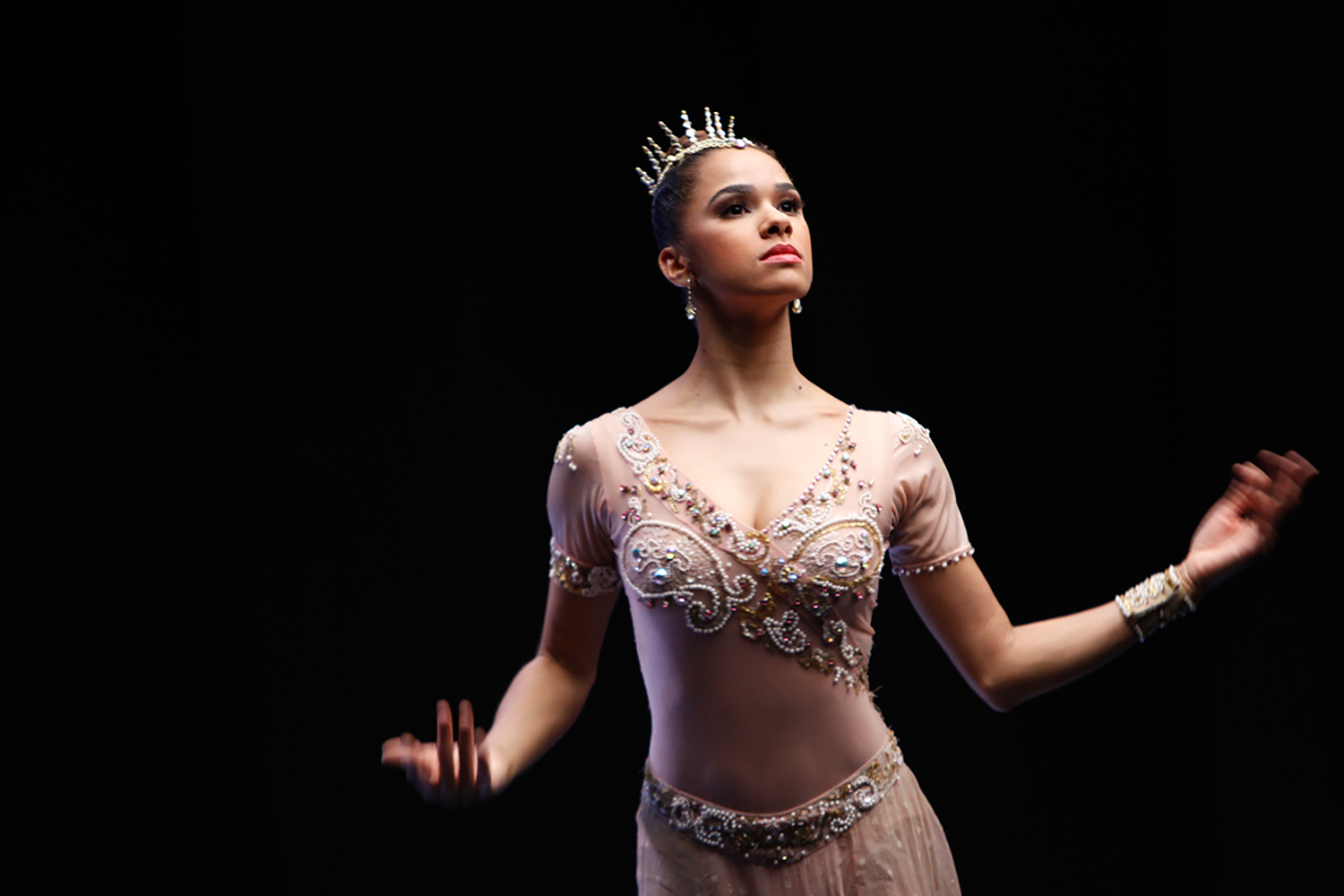 Straight Outta Compton, the surprise summer box office hit centered on the 90’s rap group N.W.A., captured an overwhelming majority of the votes cast by members of the African-American Film Critics Association (AAFCA) for the 7th AAFCA Awards, including Best Picture. Best Independent Film went to Spike Lee’s “Chi-Raq”, and Best Documentary went to “A Ballerina’s Tale,” (pictured above) the feature documentary about ballerina Misty Copeland.
“Our members found an interesting theme in many of the films released this year, giving a voice to communities who have generally been underserved and marginalized in society,” says AAFCA president Gil Robertson. “With movies like Straight Outta Compton, Chi-Raq, 3 1/2 Minutes and Dope, filmmakers brought to life many storylines that are a reflection of what’s happening in our world today, including the #BlackLivesMatter movement. Pictures like Carol and The Danish Girl, give voice to another community that is too often ridiculed and ignored by the status-quo. With Creed, the members of AAFCA found an opportunity to celebrate a film with “a” universal message of hope, honor and perseverance – something that everyone can embrace. Overall, it was a transformative year in cinema.”
AAFCA will hold its 7th annual awards ceremony on Wednesday, February 10, 2016 at the Taglyan Complex in Hollywood, CA.
The following is a complete list of 2015 AAFCA Awards winners.
Best Picture: “Straight Outta Compton” (Universal Pictures)
Best Director: Ryan Coogler –“Creed” (Warner Bros.)
Best Ensemble: “Straight Outta Compton” (Universal Pictures)
Best Actor: Will Smith “Concussion” (Sony)
Best Actress: Teyonah Parris “Chi-Raq” (Roadside Attractions)
Best Supporting Actor: Jason Mitchell “Straight Outta Compton” (Universal Pictures)
Best Supporting Actress: Tessa Thompson “Creed” (Warner Bros.)
Best Independent Film: “Chi-Raq” (Roadside Attractions)
Best Screenplay: Rick Famuyiwa, “Dope” (Open Road Films)
Breakout Performance: Michael B. Jordan “Creed” (Warner Bros.)
Best Animation: “The Peanuts Movie” (20th Century Fox)
Best Documentary: “A Ballerina’s Tale” (Sundance Selects)
Best Song: “See You Again” Furious 7 (Atlantic Records)
Best TV Comedy: “Black-ish” (ABC)
Best TV Drama: “How to Get Away with Murder” (ABC)
Best Cable/New Media TV Show: “Survivor’s Remorse” (Starz)
AAFCA Top Ten Films of 2015 are as follows in order of distinction:
1. Straight Outta Compton (Universal Pictures)
2. Creed (Warner Bros.)
3. Mad Max: Fury Road (Warner Bros.)
4. Beasts of No Nation (Netflix)
5. The Martian (20th Century Fox)
6. 3-1/2 Minutes/Dope (HBO/Open Road Films)
7. Chi-Raq (Roadside Attractions)
8. Carol (Weinstein Co.)
9. The Big Short (Paramount Pictures)
10. The Danish Girl (Focus Features)
AAFCA’s Special Achievement honors will be awarded to Codeblack Entertainment CEO, Jeff Clanagan; director John Singleton; Maverick Carter and LeBron James’ SpringHill Entertainment. New York Times film critic, Manohla Dargis will receive the organization’s Roger Ebert Award and HBO will receive the group’s Cinema Vanguard Award.
Straight Outta Compton, the surprise summer box office hit centered on the 90’s rap group N.W.A., captured an overwhelming majority of the votes cast by members of the African-American Film Critics Association (AAFCA) for the 7th AAFCA Awards, including Best Picture. Best Independent Film went to Spike Lee’s “Chi-Raq”, and Best Documentary went to “A Ballerina’s Tale,” (pictured above) the feature documentary about ballerina Misty Copeland.
“Our members found an interesting theme in many of the films released this year, giving a voice to communities who have generally been underserved and marginalized in society,” says AAFCA president Gil Robertson. “With movies like Straight Outta Compton, Chi-Raq, 3 1/2 Minutes and Dope, filmmakers brought to life many storylines that are a reflection of what’s happening in our world today, including the #BlackLivesMatter movement. Pictures like Carol and The Danish Girl, give voice to another community that is too often ridiculed and ignored by the status-quo. With Creed, the members of AAFCA found an opportunity to celebrate a film with “a” universal message of hope, honor and perseverance – something that everyone can embrace. Overall, it was a transformative year in cinema.”
AAFCA will hold its 7th annual awards ceremony on Wednesday, February 10, 2016 at the Taglyan Complex in Hollywood, CA.
The following is a complete list of 2015 AAFCA Awards winners.
Best Picture: “Straight Outta Compton” (Universal Pictures)
Best Director: Ryan Coogler –“Creed” (Warner Bros.)
Best Ensemble: “Straight Outta Compton” (Universal Pictures)
Best Actor: Will Smith “Concussion” (Sony)
Best Actress: Teyonah Parris “Chi-Raq” (Roadside Attractions)
Best Supporting Actor: Jason Mitchell “Straight Outta Compton” (Universal Pictures)
Best Supporting Actress: Tessa Thompson “Creed” (Warner Bros.)
Best Independent Film: “Chi-Raq” (Roadside Attractions)
Best Screenplay: Rick Famuyiwa, “Dope” (Open Road Films)
Breakout Performance: Michael B. Jordan “Creed” (Warner Bros.)
Best Animation: “The Peanuts Movie” (20th Century Fox)
Best Documentary: “A Ballerina’s Tale” (Sundance Selects)
Best Song: “See You Again” Furious 7 (Atlantic Records)
Best TV Comedy: “Black-ish” (ABC)
Best TV Drama: “How to Get Away with Murder” (ABC)
Best Cable/New Media TV Show: “Survivor’s Remorse” (Starz)
AAFCA Top Ten Films of 2015 are as follows in order of distinction:
1. Straight Outta Compton (Universal Pictures)
2. Creed (Warner Bros.)
3. Mad Max: Fury Road (Warner Bros.)
4. Beasts of No Nation (Netflix)
5. The Martian (20th Century Fox)
6. 3-1/2 Minutes/Dope (HBO/Open Road Films)
7. Chi-Raq (Roadside Attractions)
8. Carol (Weinstein Co.)
9. The Big Short (Paramount Pictures)
10. The Danish Girl (Focus Features)
AAFCA’s Special Achievement honors will be awarded to Codeblack Entertainment CEO, Jeff Clanagan; director John Singleton; Maverick Carter and LeBron James’ SpringHill Entertainment. New York Times film critic, Manohla Dargis will receive the organization’s Roger Ebert Award and HBO will receive the group’s Cinema Vanguard Award.