• Val Kilmer Talks about His Amazing New Role in the film “The Fourth Dimension”

    by Francesca McCaffery

    Francesca McCaffery sat down with the legendary actor Val Kilmer to talk about his new project premiering at the Tribeca Film Festival this year.

    The Fourth Dimension is a triptych of short films, and is the brainchild of VICE and Groslch Film Works, as well as VICE’s Renaissance Madman Eddy Moretti, who gave the directors a creative “brief,” the first tenant being the film must focus upon the concept of, you guessed it,the “Fourth Dimension.”

    Cinematic wunderkind Harmony Korine directed the first short of the three segments, “The Lotus Community Workshop,” which he wrote expressly for Val Kilmer, and it is features agenuine, hilarious and endearing performance by Kilmer.Here, Kilmer talks about his love for working with Harmony and his excitingnew one-man theatrical show about Mark Twain.


    Vimooz: Was it your idea to use your own name as the character in The Fourth Dimension?


    Val Kilmer: No, it was very much Harmony’s idea. It was his insistent idea- “Oh, if it doesn’t work, we’ll change it!” The few times we say my name, we say “Hector,” as well. By the time we got to the night of the first day, and Rachel (Rachel Korine, Harmony’s wife, performing in the film, sporting adorable corn rows) kept saying, “Aw, that’s so great, Val!” I kind of got the idea that they were gonna go with my name.

    Vimooz: Did Harmony write the script with you in mind? Did he write it for you?

    Val Kilmer: I think so. And I don’t know if that’s a compliment or not! I think he was thinking about me- what are the building blocks that incorporate this kind of terrain, what the ideas are, the challenge of it being a short. Although, I happen to know the rules of an Academy Award consideration- and a short may go up to 48 minutes! I think we could get in there!It’s a fun little world, the short film world.

    Vimooz: Was the film really shot in just two days? How was that?


    Val Kilmer: It was very intense! We shot way into the night.

    Vimooz: How was it working with Harmony Korine? I heard you rarely felt so much love on a set before.

    Val Kilmer: I really love him. And I don’t want to insult Francis Coppola- there’s alotta love there, too! But, you know, he’s just impish. I think it kinda surprises some people, because you kind of find out he’s just…a comedian! Because the darker part of his movies sort of stand out, I guess? But, he is so playful…He is just looking to smile, he is looking to be alive about what comedy is- it’s some recognition of reality. Not the normal reality, but, something so extreme, even violent. I mean, why do we think it’s funny when someone falls on their face? See. We’re all smiling now! It’s weird. And I’m proud, too, because, a s far as I know of his movies, and I think I’ve seen everything he’s done- it’s the first really sort ofstraight comedy he’s ever done.

    Vimooz: What’s next for you, Val?

    Well, me and Eddy, and Harmony, we’ve got big ideas. We want to take this self-help program on the road! I just finished on putting on my one-man show about Mark Twain in Hollywood. I really want to get at-risk kids and vets coming back from Afghanistan to come and see. Theatre can be pretty snobby- but there needs to be outreach- it needs to be for everyone. and I’m going to St. Louis, Missourri next week to receive my honorary doctorate from William Woods University. And I am going to do the Twain play there. I’m actually pretty nervous about it.The last artist they had there was Wayne Newton pre-Las Vegas! So they’re pretty excited,but I’m actually pretty nervous. Because I have this theory that Twain made up his dialect, so I don’t really do a Missourri dialect (in the piece.) I hope they don’t mind. That’s a tough community there!

    Vimooz: Thank you so much, Val. It was such a real pleasure.

    The Fourth Dimension plays this week at the Tribceca Film Festival in NY. Check out the listing and times.


    Read more


  • DARK HORSE Starring Selma Blair and Christopher Walken to Close 2012 Maryland Film Festival

    [caption id="attachment_2786" align="alignnone" width="550"]DARK HORSE[/caption]

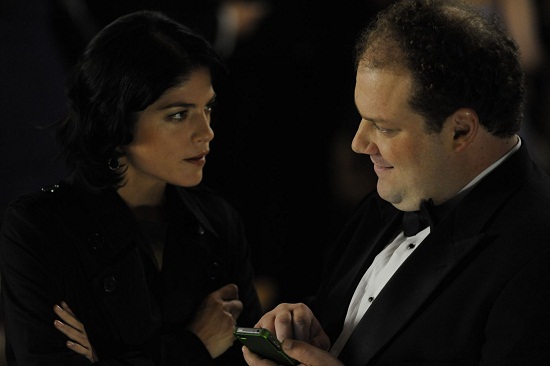
    DARK HORSE, described as the latest “sad comedy” by filmmaker Todd Solondz,has been selected as the Closing Night film of the 2012 Maryland Film Festival scheduled to run May 3-6 in downtown Baltimore. The film, starring Jordan Gelber and co-starring Selma Blair, Justin Bartha, Mia Farrow, and Christopher Walken,will be screened on the evening of Sunday, May 6th in the historic Charles Theater, with Solondz and members of his cast presenting.

    Abe (Jordan Gelber), is an overgrown and selfish man-child who, firmly on the far side of 30, still lives at home, working for his father and collecting toys. Deeply lonely yet full of blustery delusions of grandeur, Abe aggressively pursues troubled beauty Miranda (Selma Blair). In a moment of weakness, she goes along with his advances, built around his grandiose vision of a life together in his room full of collectibles. This stroke of good fortune surprises no one more than Abe’s long-suffering parents (a note-perfect pairing of Mia Farrow and Christopher Walken)—until, that is, things begin to unravel. [via MFF]

    The Opening Night program, which each year since 2004 the festival has dedicated to a program of short films, will take place the evening of Thursday, May 3rd in the Maryland Institute College of Art’s Brown Center, with each film presented by its director.


    The MFF 2012 Opening Night Shorts are:

    I Am John Wayne (Christina Choe)
    The Kook (Nat Livingston Johnson and Gregory Mitnick)
    Modern Man (Kerri Lendo and John Merriman)
    Cork’s Cattlebaron (Eric Steele)
    Fishing Without Nets (Cutter Hodierne)

    Read more


  • Tribeca Film Institute Announces 2012 Award Winners For TFI Latin America Media Arts Fund And First-Ever Heineken Voces Grants

    City of the Caesars (Chile), Cuando los Muertos Estan Mas Secos/When the Dead Are Drier (Bolivia), Elena (Brazil), The Shark’s Eye (Argentina), were announced as the award winners for the Tribeca Film Institute Latin America Media Arts Fund; and Las Marthas and Feriado (Holiday) the winners of the first-ever Heineken VOCES grant at a celebration over the weekend for Latin American filmmakers during the Tribeca Film Festival. The funds, totaling $60,000, support innovative Latin American film and video artists to help them explore stories reflecting diverse cultures and gain exposure in the film industry.

    The TFI Latin America Media Arts Fund awards $10,000 grants to animation, documentary, or hybrid feature-length films in advanced development, production or post-production from filmmakers living and working in the Caribbean, Mexico, Central and South America. Grantees also receive exclusive guidance from TFI to ensure that each film reaches completion and enters the U.S. marketplace from the best possible vantage point.  The Fund is sponsored by Moviecity and CANACINE.

    The following four films are winners of this year’s TFI Latin America Media Arts Fund:

    City of the Caesars (Chile), Directed & Produced by Francisco Hervé, Edited by Andrea Chignoli — Two conspiracy theories. Two ordinary men. Wisdom, immortality and natural resources are at stake in a mythical place somewhere in Patagonia.

    Cuando los Muertos Estan Mas Secos/When the Dead Are Drier (Bolivia), Directed & Produced by Claudio Araya Silva and Produced by Yara Morales Rivera — In the eighties, more than 50 women committed suicide in a small peasant community. Hermenegildo and Pedro return to their community, attempting to retrace the paths of memory regarding the deaths of their wives. The trip aims to unravel the mystery surrounding the life and death of these women.

    Elena (Brazil), Directed & Produced by Ana Petra Costa – The film recounts the journey of Petra, a young Brazilian woman who dreams of becoming an actress but is warned not to do so by her mother. Against these admonitions, Petra moves to New York City where the reasons why she was advised against this path begin to unfold.

    The Shark’s Eye (Argentina), Directed by Alejo Hoijman and Produced by Gema Juarez Allen — Summer is coming to Nicaragua and Maycol and Bryan will start to learn their families’ trade, shark hunting. In a place where traditional trades disappear in favor of drug trafficking, these two boys choose their future. A coming of age film set in the forgotten Caribbean coast of Nicaragua.

    The winners of the first-ever Heineken VOCES grants include:

    Heineken VOCES Award for Documentary
    Las Marthas
    A documentary about an extraordinary rite of passage in Laredo, Texas where Mexican-American debutantes are presented at a grand Colonial ball dressed as American revolutionaries – a border tradition that’s 114 years old.

    Directed & Produced by Cristina Ibarra and Produced by Erin Ploss-Campoamor

    Heineken VOCES Award for Narrative
    Feriado (Holiday)

    The sheltered life of Juan Pablo is turned upside down when he must spend the carnival holiday with his wealthy family at their hacienda in the Ecuadorian Andes and meets Juano, a self-assured black metal fan from the nearby pueblo.
    Written & Directed by Diego Araujo

    Produced by Hanne-Lovise Skartveit, Juan Sebastián Jácome & Andrés Longares
    Executive Produced by Frida Torresblanco
    Cinematography by Bradford Young

    Read more


  • Elena and Big Boys Gone Bananas Among Wiinners of 2012 Sarasota Film Festival

    [caption id="attachment_2639" align="alignnone"]Elena[/caption]

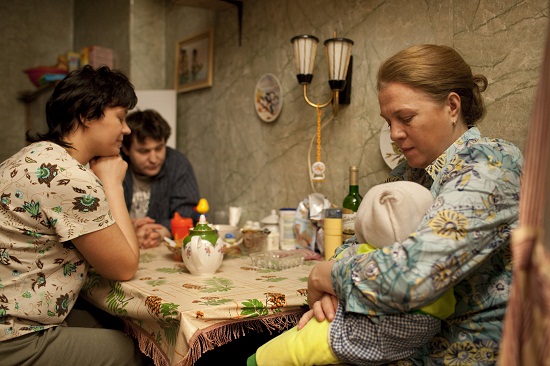
    Elena directed by Andrei Zvyagintsev took home this year’s Narrative Feature Jury prize, and Big Boys Gone Bananas!* by director Fredrik Gertten was the Documentary Jury Prize winner at the 2012 Sarasota Film Festival.  Two special jury prizes were awarded; in the Narrative category Alps directed by Giorgos Lanthimos took home a Special Jury Prize and for documentary Feature Competition special jury prize for Radio Unnameable directed by Paul Lovelace.

    The festival’s juried award for Independent Vision went to The Unspeakable Act, directed by Dan Sallitt.  Two special jury prizes were awarded, one to Richard’s Wedding director Onur Tukel for screenplay and a performance award to Shanon Harper and Welcome to Pine Hill.

    This year’s Audience Award for Best Narrative Feature was Missed Connections by Director, Martin Snyder.

    The Audience Award for Best Documentary was presented to Ethel directed by Rory Kennedy.

    The Best In World Cinema Audience Award went to Polisse – Director, Maiwenn and Best Short Film went to Tick Tock Time Emporium – Director, Morgan Faust.

    The winners of the 2012 Sarasota Film Festival Awards:

    Narrative Feature Competition Winner

    Elena
    Director, Andrei Zvyagintsev

    Narrative Feature Competition

    Special Jury Prize for Creative Achievement

    Alps
    Director, Giorgos Lanthimos

    Documentary Feature Competition

    Big Boys Gone Bananas!*
    Director, Fredrik Gertten

    Documentary Feature Competition

    Special Jury Prize

    Radio Unnameable
    Director, Paul Lovelace

    Audience Awards

    Best Documentary Feature

    Ethel
    Directors, Rory Kennedy

    Audience Award

    Best Short Film

    Tick Tock Time Emporium
    Director, Morgan Faust

    Audience Award

    Best Narrative Feature

    Missed Connections
    Director, Martin Snyder

    Audience Award

    Best In World Cinema

    Polisse
    Director, Maiwenn

    Independent Vision Prize Winners

    Independent Vision Prize

    The Unspeakable Act
    Director, Dan Sallitt

    Special Jury Prize for Screenplay

    Richard’s Wedding
    Onur Tukel

    Special Jury Prize for Performance

    Welcome to Pine Hill – Shanon Harper

    youthFEST Junior Jury Award Best Family Short Film

    Private Eyes
    Director, Nicoles Lemay

    YouthFEST Best Family Short Film Audience Award

    Pizzangrillo
    Director, Marco Gianfreda

    youthFEST Young Filmmakers Digital Showcase

    CHIPS
    Director, Gabriela Capestany.

    Read more


  • FAITH, LOVE & WHISKEY and TCHOUPITOULAS Win Top Film Awards at 2012 Dallas Film Festival

    [caption id="attachment_2779" align="alignnone" width="550"]FAITH, LOVE & WHISKEY[/caption]

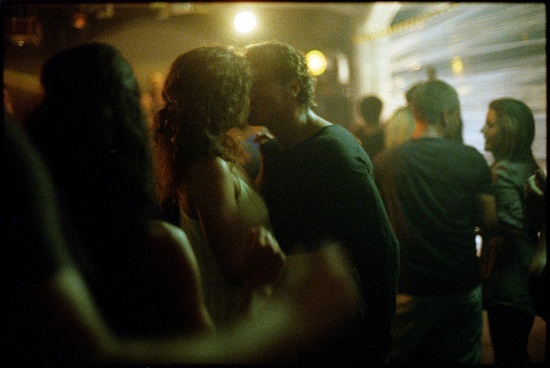
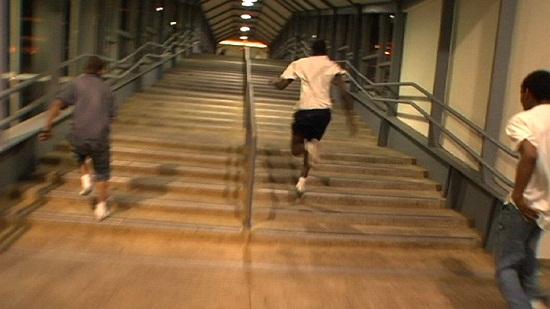
    Kristina Nikolova’s Bulgarian film FAITH, LOVE & WHISKEY won the narrative category and Bill and Turner Ross’s TCHOUPITOULAS for documentary at the 2012 Dallas International Film Festival.

    [caption id="attachment_2780" align="alignnone" width="550"]TCHOUPITOULAS [/caption]

    The Narrative competition jury also gave a Special Mention for Breakout Performance to Michael Rainey Jr. for LUV and a Special Mention for Acting for Kim Kold in TEDDY BEAR.


    [caption id="attachment_2781" align="alignnone" width="550"]WOLF [/caption]

    Ya’ke Smith’s directorial debut WOLF was awarded the winner of the Texas Competition, with a Special Mention to David Zellner’s KID-THING.

    Two years to the day since Deepwater Horizon exploded and oil poured into the Gulf, Bryan D. Hopkins accepted the Environmental Visions Grand Jury Prize for his documentary DIRTY ENERGY, a personal look into the trials of the citizens directly affected by this disaster.  With only $200 in his bank account and on food stamps, Hopkins travelled to Louisiana to highlight these ongoing personal struggles that have since been forgotten in the mainstream news cycle.

    JURY AWARDS:

    Narrative Feature: FAITH, LOVE AND WHISKEY
    Dir:  Kristina Nikolova

    Special Mention, Breakout Performance: LUV, Michael Rainey Jr.

    Special Mention, Acting: TEDDY BEAR, Kim Kold

    Documentary Feature: TCHOUPITOULAS
    Dirs: Bill Ross, Turner Ross

    PANAVISION Texas Filmmaker Award: WOLF
    Dir: Ya’Ke Smith

    Special Mention: KID-THING
    Dir:  David Zellner

    Silver Heart Award: THE INVISIBLE WAR
    Dir:  Kirby Dick

    Environmental Visons Grand Jury Prize: DIRTY ENERGY
    Dir: Bryan D. Hopkins

    Grand Jury Prize Short: AARON BURR, PART 2
    Dir: Dana O’Keefe

    Special Mention Short: THE LOVE COMPETITION
    Dir:  Brent Hoff

    Grand Jury Prize for Student Short: NANI
    Dir: Justin Tipping

    Special Mention Student Short, Unique Storytelling: GRANDMOTHERS
    Dir:  Afarin Eghbal

    Grand Jury Prize, Animated Short: A MORNING STROLL
    Dir: Grant Orchard

    AUDIENCE AWARDS

    [caption id="attachment_2552" align="alignnone"]MY WAY[/caption]

    NARRATIVE: MY WAY
    DIR: Kang Je Kyu
    Cast:  Jang Dong-gun, Joe Odagiri, Fan Bing-bing, Kim In-kwon, Do Ji-han, Han Seung-hyun

    [caption id="attachment_2782" align="alignnone" width="550"]First Position[/caption]

    DOCUMENTARY: FIRST POSITION
    DIR: Bess Kargman

    SHORT: NANI
    DIR: Justin Tipping

    TXU ENERGY “Light Up the Red Carpet” VIDEO CONTEST WINNERS FOR HIGH SCHOOLS:
    $7,500 prize winner – NO BLACKOUT
    DIR: Abelardo Gonzalez
    $5,000 prize winner – A SPARK
    DIR: Christian Vasquez
    $2,500 prize winner – THE ENERGY POLICE
    DIR: Carolina Trevino

    TXU ENERGY “Light Up the Red Carpet” VIDEO CONTEST WINNERS FOR COLLEGES:
    $7,500 prize winner – ZAP!
    DIR: Dillon White
    $5,000 prize winner – DOMI CILE
    DIR: Edgar Cortes
    $2,500 prize winner – MAN POWER
    DIR: Wojciech Stypko

    Read more


  • San Francisco International Film Festival to honor Director Benh Zeitlin

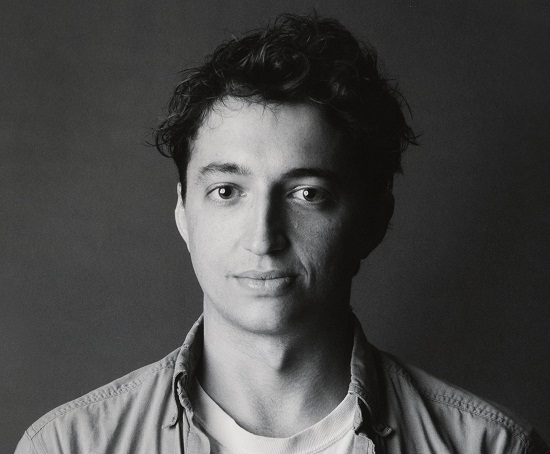
    [caption id="attachment_2777" align="alignnone" width="550"]Filmmaker Benh Zeitlin, recipient of the inaugural Graham Leggat Award at the 55th San Francisco International Film Festival, April 19 – May 3, 2012. [/caption]

    Benh Zeitlin, director of “the highly imaginative and much acclaimed independent narrative feature” Beasts of the Southern Wild, will be the recipient of the inaugural Graham Leggat Award at the 55th San Francisco International Film Festival (April 19 – May 3).

    Zeitlin is a director, animator, composer and a founding member of Court 13. He lives in New Orleans where dogs, cats, ducks, chickens and a 350-pound swine run wild in his home. Director of award-winning shorts Egg, Origins of Electricity, I Get Wet and Glory at Sea, he was named by Filmmaker Magazine as one of the “25 New Faces of Independent Film.” Zeitlin participated in Sundance Labs and won the NHK International Filmmakers Award at the 2010 Sundance Film Festival with his film Beasts of the Southern Wild, and in 2010 and 2011 he was awarded SFFS/Kenneth Rainin Foundation Filmmaking Grants for postproduction.


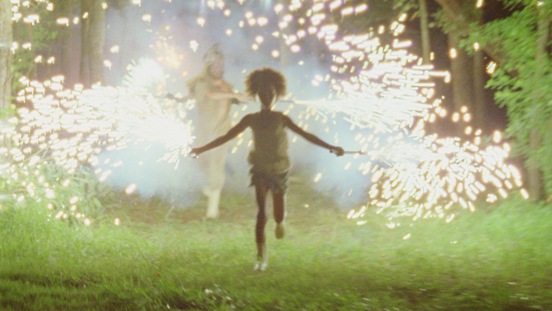
    [caption id="attachment_2324" align="alignnone"]Beasts of the Southern Wild[/caption]

    Beasts of the Southern Wild won the Grand Jury Prize for U.S. Dramatic Competition at Sundance 2012 and will be released June 27 by Fox Searchlight Pictures. The film centers upon a forgotten but defiant bayou community cut off from the rest of the world by a sprawling levee where a six-year-old girl exists on the brink of orphanhood. Buoyed by her childish optimism and extraordinary imagination, she believes that the natural world is in balance with the universe until a fierce storm changes her reality. Desperate to repair the structure of her world in order to save her ailing father and sinking home, this tiny hero must learn to survive unstoppable catastrophes of epic proportions.

    Beasts of the Southern Wild will make its international debut next month at the 2012 Cannes International Film Festival in the Un Certain Regard section.

    Read more


  • Award Winning French director Claude Miller Passed Away at 70

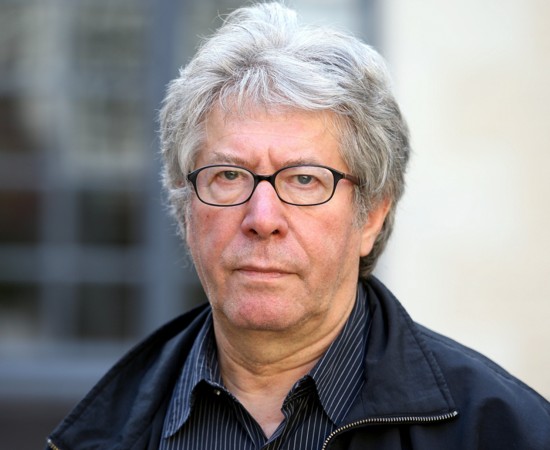
    French director, Claude Miller, whose films won many awards, including the jury prize at the Cannes Film Festival and the French version of the Oscar, the César, died on April 4 in Paris. He was 70.

    Miller wrote and directed, “The Little Thief” about a troubled family and its offspring, other films include “Class Trip,” “A Secret,” “I’m Glad My Mother Is Alive,” and “Alias Betty.”

    His last film, “Thérèse Desqueyroux,” which was just selected as the closing film for this year’s Cannes Film Festival, is the story of a restless woman who tries to poison her husband, then is punished by him with solitary confinement in her own home.

    Source: NYTIMES


    Read more


  • Award Winning French Director Dies at 70

    French director, Claude Miller, whose films won many awards, including the jury prize at the Cannes Film Festival and the French version of the Oscar, the César, died on April 4 in Paris. He was 70.

    Miller wrote and directed, “The Little Thief” about a troubled family and its offspring, other films include “Class Trip,” “A Secret,” “I’m Glad My Mother Is Alive,” and “Alias Betty.”

    His last film, “Thérèse Desqueyroux,” which was just selected as the closing film for this year’s Cannes Film Festival, is the story of a restless woman who tries to poison her husband, then is punished by him with solitary confinement in her own home.

    Source: NYTIMES


    Read more


  • Oscilloscope to Release The Apple Pushers Documentary Narrated by Ed Norton

    Oscilloscope Laboratories has picked up Mary Mazzio’s documentary The Apple Pushers for distribution in the US. Narrated by Academy Award® nominee Edward Norton, The Apple Pushers follows immigrant street vendors who are rolling fresh fruits and vegetables into poor neighborhoods of New York City, where finding a fresh red ripe apple can be a serious challenge. These pushcart vendors, who have immigrated from all parts of the world and have sacrificed so much to come to the United States, are now part of an experiment in New York to help solve the food desert crisis and skyrocketing obesity rates in urban communities.

    The film premiered to critical acclaim at The Hamptons International Film Festival 2011 and has been screened at Lincoln Center in New York City, and other major festivals, universities, and government showings. It will next be seen as part of The Whole Foods DoSomethingReel Film Festival, which will host screenings of the film in 5 major cities around the country on April 22–Earth Day. Oscilloscope will make the film available on VOD nationwide following the festival, and will continue to book special screenings and engagements across the country. The Apple Pushers will also be broadcast on public television’s WORLD channel in May and June.

    The film is written and directed by Mary Mazzio, and produced by Mazzio, Tom Scott, and Christine Vachon.

    Read more


  • Mia Hansen-Love’s Gorgeous “Goodbye, First Love”

    by Francesca McCaffery

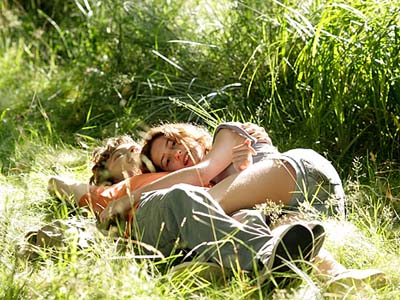
    Goodbye, First Love, the beautiful, new film by Mia Hansen-Love (Father of My Children) tells the tale of two young lovers, Camille (Lola Creton) and Sullivan (Sebastian Urzendowsky), and their hard serious and young, first romance. Sullivan is a charismatic, sweet and sensual free spirit, darting in and out of Camille’s life, although he appears to completely adore her when they are together. Camille is very earnest and quite dramatic about her intense, romantic feelings towards him. The film then explores how Camille manages to get over this great young love, truly find herself, and create a definitive, singular life for herself. The film is so simple, so dazzling in this observation, that you feel almost anyone could relate to the blistering feeling of first love. It feels like one’s very own memory of relationships past writ large onscreen. The director captures this feeling of living memory with superb brilliance and care- the painstaking bittersweet feeling of knowing these moments will not last forever, but having the knowledge you will never, ever forget them. She manages to infuse the two young actor’s performances with both innocence and a passion that seems perfectly true and heart-breaking. When Sullivan goes off traveling to South America, feeling a bit smothered by the weight of Camille’s great love for him, Creton, with her sensually blank face filled with despair and longing both, makes us feel every second of this separation.

    And, as first loves often drag out, in consciousness or real life, Hansen-Love jumps to Camille in architecture school years later as a young student, still not connecting with a new love, still pretty sad and longing for Sullivan.

    The filmmaker somehow conveys Camille in the process of showing up for hew own life, without those cloying “blossoming” scenes of harried montage seen in so many lesser films, but through the character’s own effort, will and the passage of time. Camille does, in fact, begin to heal, and starts an affair with sexy, older professor Lorenz (cool guy Magne- Håvard Brekkeand) Camille also starts building a genuine, solid life for herself. Her new love interest helps ease this transition- but Camille is the one living through and getting past it. On her own.

    Especially as a woman, I simply have to say, I really loved this film. One’s interior life is filled with these moments all the time- longing and fulfillment, frustration and fascination. Hanson-Love weaves these often painful moments together, which quickly turn into years, (as in life) in a way that is truly cinematic, in the best sense. Threads of memory, an old hat a lover gave you, the light glancing off a river where you once swam with him…Yes, we can survive anything, Hansen-Love seems to be telling us. Even the end of love.


    Read more


  • Tribeca Film Festival 2012 Spotlight on Tribeca Film Festival’s “Caroline and Jackie”and the filmmaker Adam Christian Clark

    Filmmaker Adam Christian Clark with Caroline and Jackie actresses Bitsie Tulloch (left) and Marguerite Moreau (right)

    by Francesca McCaffery

    One of the best narrative films I’ve seen screening at the 2012 Tribeca Film Festival so far is the extraordinary debut feature written and directed by Adam Christian Clark- Carloline and Jackie.

    The film centers around two sisters with an unexplained but hinted to have been very tough shared childhood. As Caroline (the wonderful Marguerite Moreau) flies in to see her younger sister Jackie (an amazing Bitsie Tulloch), we see her glancing at an “Anorexics Anonymous” brochure.Jackie has cooked a huge, thoughtful meal, (“Nana’s pot roast!”)and she and her new boyfriend Ryan (David Giuntoli- nicely understated) show Caroline their beautifully appointed, new craftsman home. Jackie is a designer, and it’s clear she has worked quite hard to achieve this still modest, but still, quite lovely lifestyle.

    Caroline flippantly tells her sister that she has arranged to celebrate Jackie’s birthday with a few friends at a nearby restaurant, even though it is in fact Caroline’s birthday, and Jackie’s own birthday is literally months away. A bit upset (“I spent thirty-two hours cooking!” she sadly laments to her boyfriend), but putting on a sweet, big-girl face, they literally skip off to the pre-arranged fete.

    At the restaurant, they are greeted by three of Jackie’s friends, and Jackie is curious as to why any of Caroline’s own friends aren’t present. It soon becomes quite obvious, especially as Caroline assembles everyone in Jackie’s living room, that another plan entirely is being put into play. James (Jason Gray-Stanford) is a musician who has abruptly cut his tour short to be there for Jackie’s birthday, and seemingly bestie Michelle (Valerie Azlynn) has brought new 22-year old, youngin boyfriend Charlie (David Fuitt) along for the ride.The tone changes almost minute by minute, as hints of realization dance across Jackie’s face, and the audience is quite uncertain as to who is telling the real truth, until there is no denying it

    This film, especially for a director’s debut, is an absolute knockout. The camera work (by director-turned-first-time cinematographer Christian Swegal) is warm, non-intrusive and sumptuous, and the audience feels somehow placed in the room or setting in each and every frame.And the performances by Moreau and especially Tulloch are beyond standout, they are some of the realest, most down-to-earth and intelligent performances you will see all year. A film about family, the oh-so-complex ties that both bind and nurture, and laying witness to how mental illness can erupt and change the course of an evening and an entire lifetime, the movie explores the concept of love between two sisters that is simultaneously life-sustaining and in reality, both destructive and crucial. This great little film better get distribution, and fast!

    Francesca McCaffery sat down with Caroline and Jackie’s  filmmaker Adam Christian Clark, and spoke with him about his roots, why he loves the work of Harmony Korine, and how being employed in reality television gave him the discipline and chops to work with his actors on-set today.

    Vimooz: The two performances of the two lead women were really extraordinary.

    ACC: Thank you! I had some really great casting directors- Angela Demo and Barbara McCarthy. They did a really great job, because they completely stood up for what they believed the characters were. What I imagined didn’t really exist! In pushing these certain actors, they became real to me as characters even more. We actually cast Bitsie first. And the additional challenge was that- the actresses really had to really look like sisters.

    Vimooz: It’s kind of incredible how much the actresses actually do look alike!

    ACC: They really do. We got very lucky. I actually know both Bitsie’s and Marguerite’s actual sisters, and the two actresses certainly look way more alike! It is a little more than that, too- because when they very first met and started working together, they got so into character, that they began to mirror each other’s mannerisms. I think it was that, more than anything. They kind of, like, were synced up to each other.

    Vimooz: How did you start out?

    ACC: I was really fortunate when I was in college (Clark went to USC), and started working in reality TV, which always shot in the summers. This was in 1999, and I started working as a PA. I came into it during the time of Survivor, and I ended up directing episodes of Big Brother. About three or four years ago, I decided that I really wanted to focus on making art-house films, so I cut myself from reality TV, and started directing music videos and commercials. Directing is a weird thing, because I wonder how people like Harmony Korine are able to do it! I’ve been fortunate to find other things- like editing reality TV, as opposed to directing it, which can be pretty draining. Editing is not that emotional draining, there’s no taking it home with you. I’ve also sold quite a few scripts. But they aren’t going to get made! I feel like a lot of good producers have my scripts as like, decorations, in their office! They’ll never be movies. But I’ve been doing this for years.

    The thing about Harmony Korine is, all I ever wanted to do from the time I was eighteen was to make like a John Cassavetes movie, or a Jim Jarmusch movie, or a Harmony Korine movie, right? Harmony Korine has been somebody that I really, just, admire. You make a movie, and you don’t know if you’ll ever be in that realm. That’s why it’s so great to be in the Tribeca Film Festival’s Viewpoint section this year, because The Fourth Dimension is also in there. He has always been a hero of mine. When Gummo came out, that imagery and style he created is everywhere now. It pre-dated everything. He is such an artist.

    Vimooz: What did you shoot Caroline and Jackie on?

    ACC: It was shot on the Red MX camera. We also had great color conversion and correction.My best friend was actually the DP. Adam Hendricks, the producer, and Christian Swegal, the DP, we all went to film school together. Christian is actually not a DP (by trade.) He is a director, too. Going into this film, myself having only directed one short film before, I knew that I really had to go in with a lot of support. I just knew he would do a great job. He has a gift for that I don’t possess. But he had no experience doing this before. I had been on his sets so many times, I just knew he could do it well.

    Vimooz: He definitely did! Tell us about directing your wonderful actors.

    ACC: I take it really to an extreme. When we shoot scenes, I block everything with stand-ins, do all the blocking with them, and then pull everyone off set, and do just separate blocking with me, the camera operators, and the actors. Then the actors go into complete isolation, separately, I don’t want them together when we’re not filming. Then we roll camera and sound, the crew is pulled out again (except for the camera and departments) so the actors just enter the scene like they’re already really in it. If there’s any direction to give, everybody (the skeleton crew)leaves, then everybody comes back in. I had failed pretty big with the actors in my first film, a short called Goodbye, Shanghai, which was visually very strong, shot on 35mm, very formal. So I remembered back in the very first days of reality TV, it used to be shot by documentary filmmakers. The way they work is that they don’t intercut with the subjects, you’re a fly on the wall. I knew as a camera assistant not to even shake their hands. And I really remembered that, and thought, “I’m gonna try this with acting. I’m gonna try this with acting, and see if it gives them a greater tool, and be easier for them to be in that world. “ And they also don’t hang out with each other offset. The actors actually loved it. In theory, I mean, they loved it! There was a little bit of like, ‘Oh!’ in the beginning, when they realized how intense and serious I was about it. It may have happened slightly less (the isolation) than I thought, but I think it worked! We shot it in fifteen days, there was no off-camera time. But I did rehearse the actors for almost a month, and we would then rehearse every day on the set, during set-ups, about three hours a day.

    Vimooz: I really loved Caroline and Jackie, Adam. Thank you so much for talking with me, and good luck with the film!

    ACC: Thank you, Francesca!

    Go see Caroline and Jackie– which screens this week of April 23rd, 2012 at the Tribeca Film Festival. 

    Read more


  • “Elles” Review

    by Francesca McCaffery

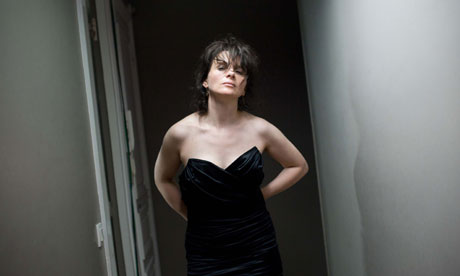
    Juliette Binoche stars in Elles, a film that is strangely more sensual than sexual, considering one of its serious subject matters: Student prostitution in Paris. In Elles, (directed by Małgorzata Szumowska) Binoche plays an extraordinarily well-heeled journalist (one of her subjects even asks if her gorgeous shoes are “expensive”) for Elle Magazine. She is interviewing young female college students who become escorts to pay for their tuition and rent. Binoche’s character Anne is the married mother of two- one elegantly scruffy teenage boy, and a younger one of about nine. Her husband seems caring yet distracted, loving and slightly mystified, as does she, as they go through their lives, figuring out what to purchase next, dealing with their pot-smoking son, and trying to keep things running as smoothly as possible.

    As she goes over her notes and recordings for the article, which is due on deadline the  next day, we see her move through her scheduled day, visiting her sick father, grocery shopping, and preparing a dinner for her husband’s boss and wife for that same evening. These scenes are intercut with the recounting of the increasingly sexual and sometimes disturbing images of the two different young women with their various johns, and the relationships she develops with each of them as she is interviewing them. Alicja (Polish actress Joanna Kulig in a searing performance) and Charlotte (the lovely Anaïs Demoustier) also seem strangely detached from what they are doing- until for Charlotte their actions finally become (very) painfully obvious. Binoche has a similar realization, yet the film physically carries us through this day with such sensual ease, such a pleasure in the unfolding, that is a visual joy to watch. The camerawork recalls early Adrian Lynne films, who shot interiors of Manhattan apartments- whether in Soho or the Upper West side, with a similar, gliding, lovingly observed sort of ease. Binoche, as usual, is perfect to watch, as well.

    Yet, obviously, the film has nothing really to do or say about student prostitution- most of these girl’s “affairs” seem more like daring sexual adventures than actual tricks. But it’s interesting to see just how much it takes to sometimes jar Anne’s middle-class, pseudo “feminist” sensibility. The defining point this film has is the manner in which it conveys Anne’s dissatisfaction as something that is simply a part of one’s life to move through, rather than a point of no return, which is a refreshing take. But still, in the end, the film itself is too wan in parts to solidly build the idea around to make us really feel for, or care very deeply for Anne’s “plight.”


    Read more