
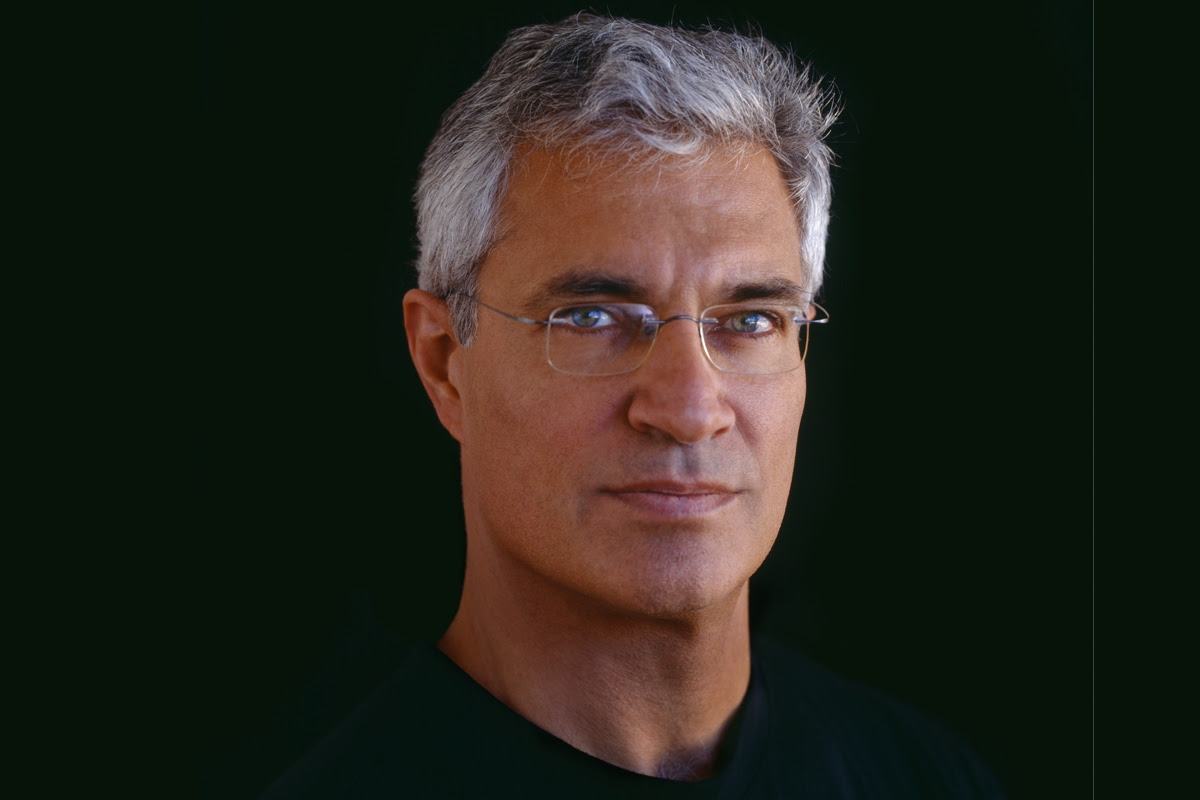
 Iconic photographer and award-winning filmmaker Louie Psihoyos will be honored with the inaugural DocLands Honors Award at the 2018 DocLands Documentary Film Festival, on Friday, May 4, 2018, 6:30 PM in Mill Valley.
The DocLands Honors Award is presented to a filmmaker in recognition of exceptional storytelling within the documentary genre, an artist whose films resonate universally, emphasizing our common humanity – no matter the subject.
The inaugural DocLands Honors Award is presented to director Louie Psihoyos (The Cove, Racing Extinction, The Game Changers) for his dogged determination and tenacity in exposing wrongs and expanding awareness. We also show our appreciation for his astounding efforts in outreach, bringing some of our most pressing environmental and social issues to a worldwide audience.
Recognized as one of the top photographers in the world, Louie Psihoyos was hired directly out of college, where he won an unprecedented first place in every category of the prestigious College Photographer of the Year award, to shoot for National Geographic. He worked for the magazine for 18 years, establishing himself as one of the medium’s most prolific and profound visionaries and social observers. His ability to bring humanity and wit to complicated stories carries over to his filmmaking. His first documentary film, The Cove, won over 75 awards around the world including the 2010 Academy Award® for Best Documentary. His second feature, Racing Extinction, premiered on Discovery in over 200 countries and territories on the same day, was nominated for an Emmy (Exceptional Merit in Documentary Filmmaking) and an Academy Award® (Best Song). The film also sparked the #StartWith1Thing movement. Most recently Psihoyos finished directing The Game Changers, executive produced by James Cameron, which debuted at the 2018 Sundance Film Festival.
Iconic photographer and award-winning filmmaker Louie Psihoyos will be honored with the inaugural DocLands Honors Award at the 2018 DocLands Documentary Film Festival, on Friday, May 4, 2018, 6:30 PM in Mill Valley.
The DocLands Honors Award is presented to a filmmaker in recognition of exceptional storytelling within the documentary genre, an artist whose films resonate universally, emphasizing our common humanity – no matter the subject.
The inaugural DocLands Honors Award is presented to director Louie Psihoyos (The Cove, Racing Extinction, The Game Changers) for his dogged determination and tenacity in exposing wrongs and expanding awareness. We also show our appreciation for his astounding efforts in outreach, bringing some of our most pressing environmental and social issues to a worldwide audience.
Recognized as one of the top photographers in the world, Louie Psihoyos was hired directly out of college, where he won an unprecedented first place in every category of the prestigious College Photographer of the Year award, to shoot for National Geographic. He worked for the magazine for 18 years, establishing himself as one of the medium’s most prolific and profound visionaries and social observers. His ability to bring humanity and wit to complicated stories carries over to his filmmaking. His first documentary film, The Cove, won over 75 awards around the world including the 2010 Academy Award® for Best Documentary. His second feature, Racing Extinction, premiered on Discovery in over 200 countries and territories on the same day, was nominated for an Emmy (Exceptional Merit in Documentary Filmmaking) and an Academy Award® (Best Song). The film also sparked the #StartWith1Thing movement. Most recently Psihoyos finished directing The Game Changers, executive produced by James Cameron, which debuted at the 2018 Sundance Film Festival.-
Documentary Filmmaker Louie Psihoyos to Receive Inaugural DocLands Honors Award
Iconic photographer and award-winning filmmaker Louie Psihoyos will be honored with the inaugural DocLands Honors Award at the 2018 DocLands Documentary Film Festival, on Friday, May 4, 2018, 6:30 PM in Mill Valley.
The DocLands Honors Award is presented to a filmmaker in recognition of exceptional storytelling within the documentary genre, an artist whose films resonate universally, emphasizing our common humanity – no matter the subject.
The inaugural DocLands Honors Award is presented to director Louie Psihoyos (The Cove, Racing Extinction, The Game Changers) for his dogged determination and tenacity in exposing wrongs and expanding awareness. We also show our appreciation for his astounding efforts in outreach, bringing some of our most pressing environmental and social issues to a worldwide audience.
Recognized as one of the top photographers in the world, Louie Psihoyos was hired directly out of college, where he won an unprecedented first place in every category of the prestigious College Photographer of the Year award, to shoot for National Geographic. He worked for the magazine for 18 years, establishing himself as one of the medium’s most prolific and profound visionaries and social observers. His ability to bring humanity and wit to complicated stories carries over to his filmmaking. His first documentary film, The Cove, won over 75 awards around the world including the 2010 Academy Award® for Best Documentary. His second feature, Racing Extinction, premiered on Discovery in over 200 countries and territories on the same day, was nominated for an Emmy (Exceptional Merit in Documentary Filmmaking) and an Academy Award® (Best Song). The film also sparked the #StartWith1Thing movement. Most recently Psihoyos finished directing The Game Changers, executive produced by James Cameron, which debuted at the 2018 Sundance Film Festival.
-
‘Damsel’ and ‘This One’s For the Ladies’ Added to the 2018 San Francisco International Film Festival
[caption id="attachment_27826" align="aligncenter" width="1123"] Damsel[/caption]
Two new films – David Zellner and Nathan Zellner’s Damsel (USA 2018) and Gene Graham’s This One’s For the Ladies (USA 2018) have been added to the schedule for the 2018 San Francisco International Film Festival taking place April 4 to 17, 2018.
“I’m goin’ West, of course!” exclaims Samuel (Robert Pattinson, a hoot), who has enlisted the help of Parson Henry (David Zellner) to save his beloved Penelope (Mia Wasikowska) so that he may propose to her, in David and Nathan Zellner’s (Kumiko, the Treasure Hunter, Festival 2014) upended Western. The journey is made, things go awry, and they encounter a slew of interesting characters—including a miniature horse named Butterscotch—but in the hands of the Zellner brothers, nothing is as it seems. Damsel screens Saturday, April 14, 8:00 pm at the Victoria Theatre. Both directors are expected to attend. Magnolia Pictures will release Damsel in theaters this summer.
[caption id="attachment_27827" align="aligncenter" width="1200"]
Damsel[/caption]
Two new films – David Zellner and Nathan Zellner’s Damsel (USA 2018) and Gene Graham’s This One’s For the Ladies (USA 2018) have been added to the schedule for the 2018 San Francisco International Film Festival taking place April 4 to 17, 2018.
“I’m goin’ West, of course!” exclaims Samuel (Robert Pattinson, a hoot), who has enlisted the help of Parson Henry (David Zellner) to save his beloved Penelope (Mia Wasikowska) so that he may propose to her, in David and Nathan Zellner’s (Kumiko, the Treasure Hunter, Festival 2014) upended Western. The journey is made, things go awry, and they encounter a slew of interesting characters—including a miniature horse named Butterscotch—but in the hands of the Zellner brothers, nothing is as it seems. Damsel screens Saturday, April 14, 8:00 pm at the Victoria Theatre. Both directors are expected to attend. Magnolia Pictures will release Damsel in theaters this summer.
[caption id="attachment_27827" align="aligncenter" width="1200"] This One’s For the Ladies[/caption]
On Thursday evenings, a children’s karate school transforms into a male strip joint. Hundreds of women convene for a potluck fundraiser and the opportunity to throw singles at the hot New Jersey Nasty Boyz. This One’s For the Ladies isn’t just about the tips or the dancing. It’s a heartwarming story about friendship, community, these incredible women, and the resilience they show toward whatever comes their way. Winner, Special Jury Recognition for Best Cast Award, SXSW. This One’s For the Ladies screens Sunday, April 15, 8:00 pm at the Victoria Theatre. NEON will open the film theatrically later this year.
This One’s For the Ladies[/caption]
On Thursday evenings, a children’s karate school transforms into a male strip joint. Hundreds of women convene for a potluck fundraiser and the opportunity to throw singles at the hot New Jersey Nasty Boyz. This One’s For the Ladies isn’t just about the tips or the dancing. It’s a heartwarming story about friendship, community, these incredible women, and the resilience they show toward whatever comes their way. Winner, Special Jury Recognition for Best Cast Award, SXSW. This One’s For the Ladies screens Sunday, April 15, 8:00 pm at the Victoria Theatre. NEON will open the film theatrically later this year.
-
Cannes Classics to Celebrate 50th Anniversary of Stanley Kubrick’s ‘2001: A Space Odyssey’
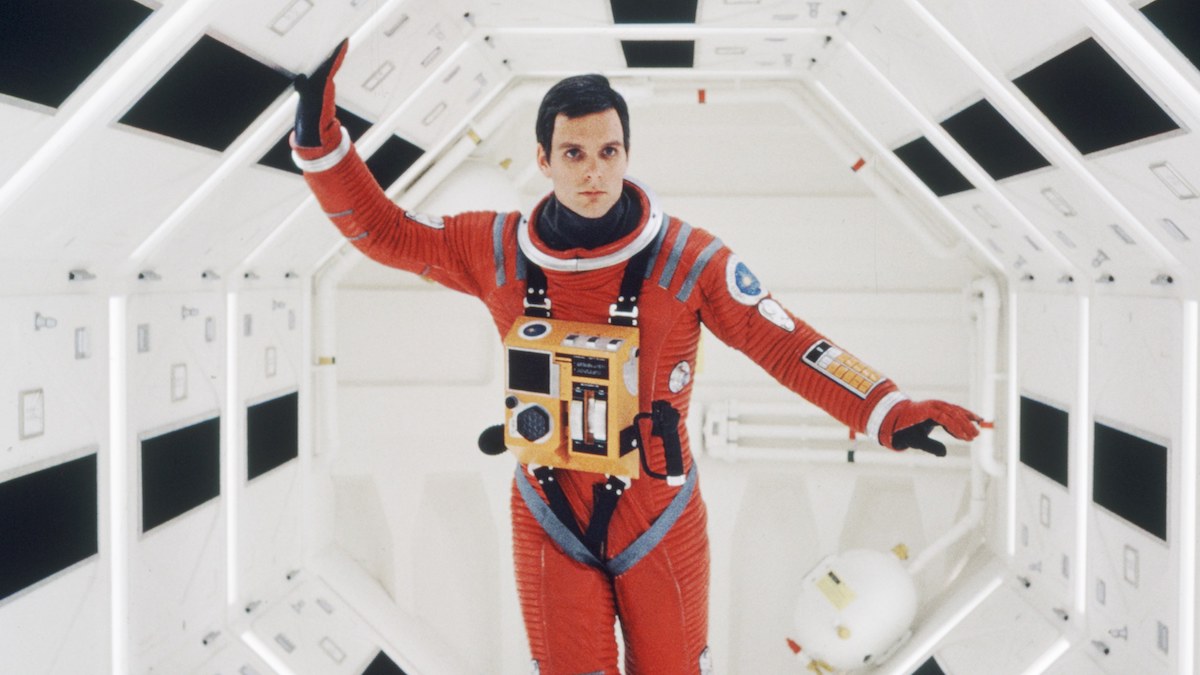 Cannes Classics at the upcoming 2018 Cannes Film Festival will celebrate the 50th anniversary of Stanley Kubrick’s 2001: A Space Odyssey, with world premiere of a 70mm print of the director’s 1968 masterpiece, introduced by filmmaker Christopher Nolan.
Set for Saturday, May 12, 2018, the screening will be introduced by filmmaker Christopher Nolan, who will be attending the Festival de Cannes for the first time. The screening will also be attended by members of Stanley Kubrick’s family including his daughter Katharina Kubrick and Stanley’s long time producing partner and brother-in-law Jan Harlan.
Nolan will also participate in a Cannes Masterclass, set for Sunday, May 13, during which he will discuss his award-winning filmography and also share his passion for the singular work of Stanley Kubrick.
For the first time since the original release, this 70mm print was struck from new printing elements made from the original camera negative. This is a true photochemical film recreation. There are no digital tricks, remastered effects, or revisionist edits. The original version will be presented to recreate the cinematic event audiences experienced 50 years ago. A longtime admirer of the late American auteur, Nolan worked closely with the team at Warner Bros. Pictures throughout the mastering process.
With 2001: A Space Odyssey, director Stanley Kubrick redefined the limits of filmmaking and cemented his legacy as one of the most revolutionary and influential film directors of all time. Originally released in 70mm Cinerama roadshow format on April 3, 1968, the film ignited the imaginations of critics and audiences alike and its impact continues to resonate to this day.
Christiane Kubrick said, “I’m delighted that Cannes has chosen to honour 2001: A Space Odyssey. If Stanley were alive today, we know he would be in admiration of the films of Christopher Nolan. And so, on behalf of Stanley’s family, I would personally like to thank Christopher for agreeing to introduce this very special screening.”
Nolan said, “One of my earliest memories of cinema is seeing Stanley Kubrick’s 2001: A Space Odyssey, in 70mm, at the Leicester Square Theatre in London with my father. The opportunity to be involved in recreating that experience for a new generation, and of introducing our new unrestored 70mm print of Kubrick’s masterpiece in all its analogue glory at the Festival de Cannes is an honour and a privilege.”
Thierry Frémaux said, “Stanley Kubrick in the Official Selection! It is a great honour for the Festival de Cannes to host the 50th anniversary celebration of one of the most extraordinary films in the history of cinema. And to welcome to the Festival for the first time Christopher Nolan, whose presence creates a precious bond between past and present, without which cinema would have no history.”
2001: A Space Odyssey will return to select U.S. theatres in 70mm beginning May 18, 2018.
Cannes Classics at the upcoming 2018 Cannes Film Festival will celebrate the 50th anniversary of Stanley Kubrick’s 2001: A Space Odyssey, with world premiere of a 70mm print of the director’s 1968 masterpiece, introduced by filmmaker Christopher Nolan.
Set for Saturday, May 12, 2018, the screening will be introduced by filmmaker Christopher Nolan, who will be attending the Festival de Cannes for the first time. The screening will also be attended by members of Stanley Kubrick’s family including his daughter Katharina Kubrick and Stanley’s long time producing partner and brother-in-law Jan Harlan.
Nolan will also participate in a Cannes Masterclass, set for Sunday, May 13, during which he will discuss his award-winning filmography and also share his passion for the singular work of Stanley Kubrick.
For the first time since the original release, this 70mm print was struck from new printing elements made from the original camera negative. This is a true photochemical film recreation. There are no digital tricks, remastered effects, or revisionist edits. The original version will be presented to recreate the cinematic event audiences experienced 50 years ago. A longtime admirer of the late American auteur, Nolan worked closely with the team at Warner Bros. Pictures throughout the mastering process.
With 2001: A Space Odyssey, director Stanley Kubrick redefined the limits of filmmaking and cemented his legacy as one of the most revolutionary and influential film directors of all time. Originally released in 70mm Cinerama roadshow format on April 3, 1968, the film ignited the imaginations of critics and audiences alike and its impact continues to resonate to this day.
Christiane Kubrick said, “I’m delighted that Cannes has chosen to honour 2001: A Space Odyssey. If Stanley were alive today, we know he would be in admiration of the films of Christopher Nolan. And so, on behalf of Stanley’s family, I would personally like to thank Christopher for agreeing to introduce this very special screening.”
Nolan said, “One of my earliest memories of cinema is seeing Stanley Kubrick’s 2001: A Space Odyssey, in 70mm, at the Leicester Square Theatre in London with my father. The opportunity to be involved in recreating that experience for a new generation, and of introducing our new unrestored 70mm print of Kubrick’s masterpiece in all its analogue glory at the Festival de Cannes is an honour and a privilege.”
Thierry Frémaux said, “Stanley Kubrick in the Official Selection! It is a great honour for the Festival de Cannes to host the 50th anniversary celebration of one of the most extraordinary films in the history of cinema. And to welcome to the Festival for the first time Christopher Nolan, whose presence creates a precious bond between past and present, without which cinema would have no history.”
2001: A Space Odyssey will return to select U.S. theatres in 70mm beginning May 18, 2018.
-
‘IN THE ORCHARD’ ‘SALYUT-7’ ‘THE NEED TO GROW’ Win at 21st Sonoma International Film Festival
[caption id="attachment_27812" align="aligncenter" width="1200"]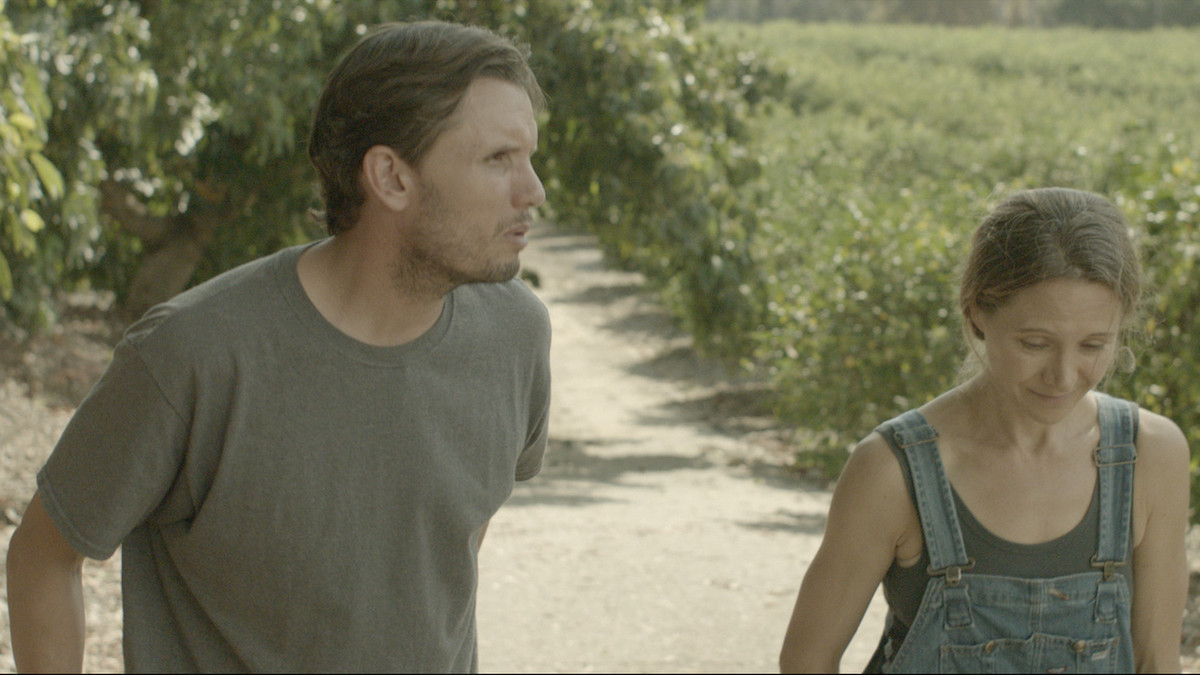 IN THE ORCHARD[/caption]
The 21st annual Sonoma International Film Festival came to a close over the weekend with the awards ceremony, and IN THE ORCHARD directed by Christopher Knoblock won the prize for Best American Independent Feature. In the film a grief-stricken woman befriends a Marine Veteran with PTSD, and the two begin a relationship which may lead them towards tragic consequences.
https://www.youtube.com/watch?v=lv3eTd7rEYU
Other winners include SALYUT-7 directed by Klim Shipenko snagging the prize for Best World Feature; and THE NEED TO GROW directed by Rob Herring & Ryan Wirick won for Best Documentary Feature.
In SALYUT-7, Astronauts are sent to the rescue of Salyut 7, an unresponsive Soviet space station in what will become one of the most complicated mission in the history of space navigation. The documentary THE NEED TO GROW follows the personal journeys of solution innovators as they fight to localize sustainable food systems and regenerate Earth’s dying soils.
The SIFF 2018 winners are:
IN THE ORCHARD[/caption]
The 21st annual Sonoma International Film Festival came to a close over the weekend with the awards ceremony, and IN THE ORCHARD directed by Christopher Knoblock won the prize for Best American Independent Feature. In the film a grief-stricken woman befriends a Marine Veteran with PTSD, and the two begin a relationship which may lead them towards tragic consequences.
https://www.youtube.com/watch?v=lv3eTd7rEYU
Other winners include SALYUT-7 directed by Klim Shipenko snagging the prize for Best World Feature; and THE NEED TO GROW directed by Rob Herring & Ryan Wirick won for Best Documentary Feature.
In SALYUT-7, Astronauts are sent to the rescue of Salyut 7, an unresponsive Soviet space station in what will become one of the most complicated mission in the history of space navigation. The documentary THE NEED TO GROW follows the personal journeys of solution innovators as they fight to localize sustainable food systems and regenerate Earth’s dying soils.
The SIFF 2018 winners are:
SIFF JURIED AWARDS
Best American Independent Feature: IN THE ORCHARD / Directed by Christopher Knoblock Best World Feature: SALYUT-7 / Directed by Klim Shipenko Best Documentary Feature: THE NEED TO GROW / Directed by Rob Herring & Ryan Wirick Best Animated Short: TWO BALLOONS / Directed by Mark C. Smith Best Comedy Short: SAM DID IT / Directed by Dominic Burgess Best Dramatic Short: WOODMAN / Directed by Mike Jackson Best World Short: INTO THE BLUE / Directed by Antoneta Alamat KusijanovicSIFF AUDIENCE AWARDS
The A3 Audience Award: Best Documentary: THE PUSH / Directed by Grant Korgan & Brian Niles (co-directors Geoff Callan) The Stolman Audience Award for Best American Indie: FUNNY STORY / Directed by Michael Gallagher SIFF Award for Best World Cinema: TULIPANI / Directed by Mike van DiemAUDIENCE SHORTS AWARDS
Best Animated: THE DRIVER IS RED / Directed by Randall Christopher Best Comedy: GRAHAM’S MATE/ Directed by Andy Hill Best Dramatic: WOODMAN / Directed by Mike Jackson Best Documentary: EMPIRE ON MAIN STREET / Directed by Jessica Congdon Best World Cimena: CROSSING FENCES / Directed by Annika Pampel Best Delicious: SAFRON / Directed by Andreas Ewels
-
Brooklyn Film Festival Gets Ready for 2018 Edition: THRESHOLD
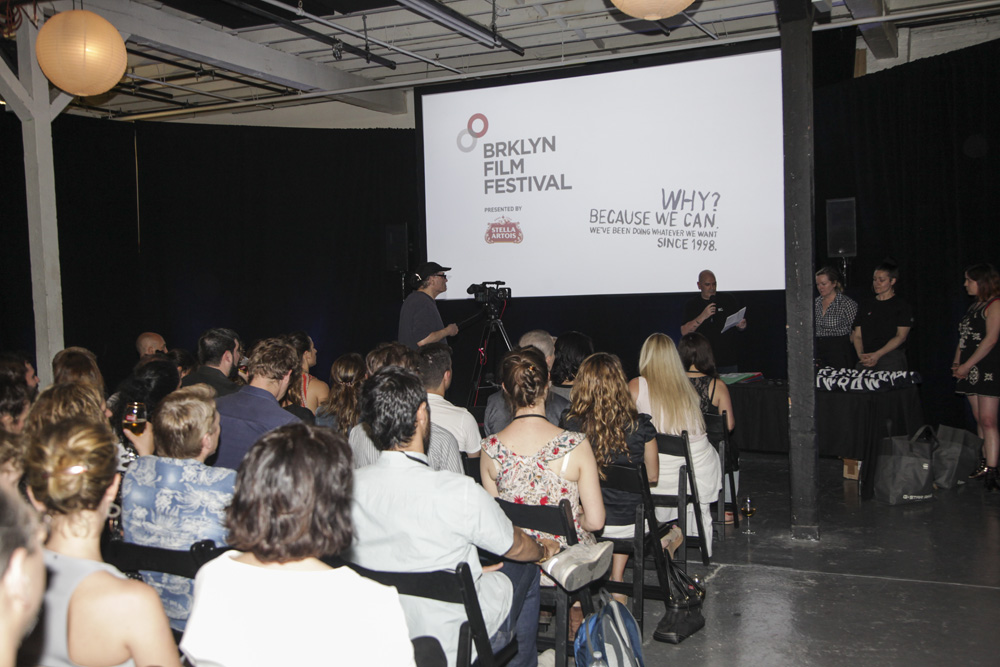 Brooklyn Film Festival has officially closed submissions for its 2018 edition: THRESHOLD. The 2018 festival will run from June 1 through June 10, 2018, at two main venues: Wythe Hotel in Williamsburg and Windmill Studios in Greenpoint.
In addition to the two main venues, additional programming will be presented on June 5 at Syndicated in Bushwick and on June 8 at UnionDocs in Williamsburg. On June 6 and 9, BFF will present a total of five shows at Made in NY Media Center by IFP in Dumbo, where it will also present the 14th annual kidsfilmfest on June 2. On June 9, the 7th annual BFF Exchange program will be hosted by Kickstarter in Greenpoint and on June 4, BFF will be hosted by Alamo Drafthouse in Downtown Brooklyn. Additional programming and networking events will be announced at a later date.
BFF Executive Director Marco Ursino said of the 2018 edition, “This will be a special year: we are finally 21! We start seeing things for what they really are, although it doesn’t take a genius to see that we are living in pretty challenging times! Division, bigotry, the wall, Trump…but luckily, some great things usually come from bad times. For example, the Spanish Civil War gave us the Guernica; the NYC defaults in the 70’s gave us the best graffiti in the world. Even the Great Depression gave us swing dancing. It doesn’t matter how bad it looks, art always wins. And this year’s festival is not going to be the exception. In the middle of this undeniably appalling time in American history, directors, actors, producers and the festival want their voices heard. Bad times make great art. And if so, this year’s Brooklyn Film Festival should be amazing.”
BFF received a total of 2,584 films from 120 countries and will select roughly 130 film premieres to be announced in May. The films are divided in six categories: Feature Narrative, Feature Doc, Short Narrative, Short Doc, Experimental and Animation.
In each of the six film categories, BFF’s judges will select Best Film, Spirit Award and Audience Award winners. From all the six categories combined, BFF will award one of each of the following: Best Actor, Best Actress, Best Composer, Best Editor, Best Cinematographer, Best Screenplay Writer, Best Producer, Best New Director and Best Brooklyn Project. BFF will assign to the winning filmmakers over $50,000 in prizes (products, services and cash).
Brooklyn Film Festival has officially closed submissions for its 2018 edition: THRESHOLD. The 2018 festival will run from June 1 through June 10, 2018, at two main venues: Wythe Hotel in Williamsburg and Windmill Studios in Greenpoint.
In addition to the two main venues, additional programming will be presented on June 5 at Syndicated in Bushwick and on June 8 at UnionDocs in Williamsburg. On June 6 and 9, BFF will present a total of five shows at Made in NY Media Center by IFP in Dumbo, where it will also present the 14th annual kidsfilmfest on June 2. On June 9, the 7th annual BFF Exchange program will be hosted by Kickstarter in Greenpoint and on June 4, BFF will be hosted by Alamo Drafthouse in Downtown Brooklyn. Additional programming and networking events will be announced at a later date.
BFF Executive Director Marco Ursino said of the 2018 edition, “This will be a special year: we are finally 21! We start seeing things for what they really are, although it doesn’t take a genius to see that we are living in pretty challenging times! Division, bigotry, the wall, Trump…but luckily, some great things usually come from bad times. For example, the Spanish Civil War gave us the Guernica; the NYC defaults in the 70’s gave us the best graffiti in the world. Even the Great Depression gave us swing dancing. It doesn’t matter how bad it looks, art always wins. And this year’s festival is not going to be the exception. In the middle of this undeniably appalling time in American history, directors, actors, producers and the festival want their voices heard. Bad times make great art. And if so, this year’s Brooklyn Film Festival should be amazing.”
BFF received a total of 2,584 films from 120 countries and will select roughly 130 film premieres to be announced in May. The films are divided in six categories: Feature Narrative, Feature Doc, Short Narrative, Short Doc, Experimental and Animation.
In each of the six film categories, BFF’s judges will select Best Film, Spirit Award and Audience Award winners. From all the six categories combined, BFF will award one of each of the following: Best Actor, Best Actress, Best Composer, Best Editor, Best Cinematographer, Best Screenplay Writer, Best Producer, Best New Director and Best Brooklyn Project. BFF will assign to the winning filmmakers over $50,000 in prizes (products, services and cash).
-
THE FEELING OF BEING WATCHED, Assia Boundaoui’s Personal Story of FBI Surveillance, to World Premiere at Tribeca Film Festival
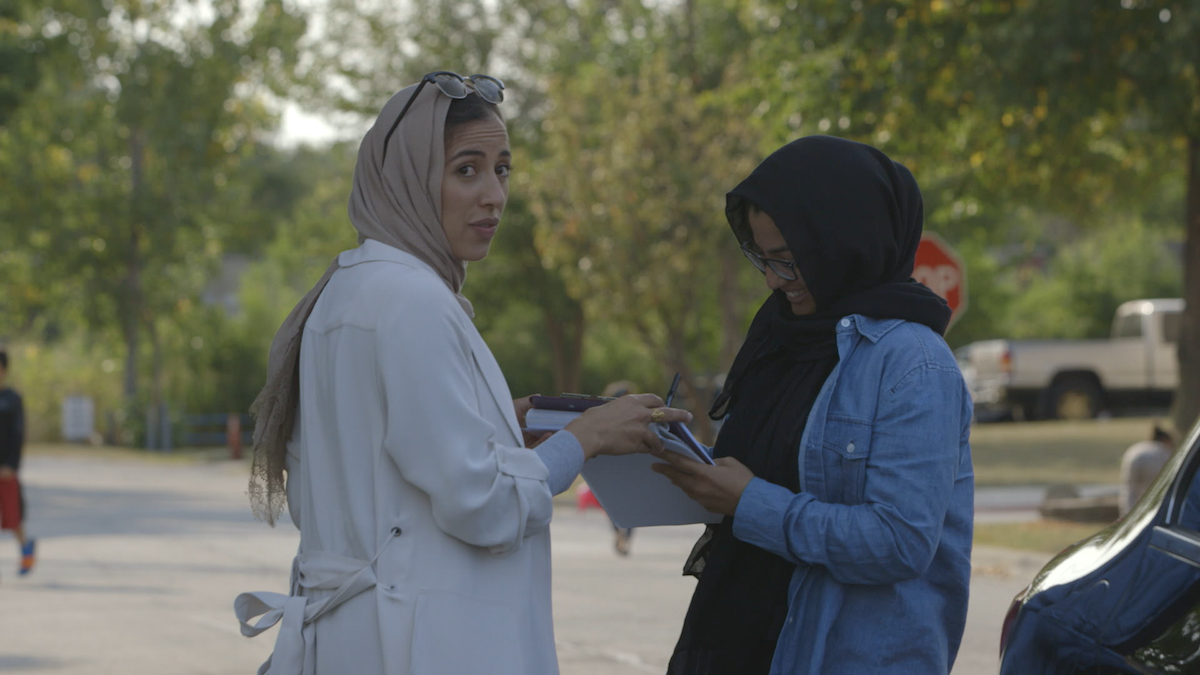 A personal journey that unfolds like a thriller, The Feeling of Being Watched charts journalist Assia Boundaoui’s investigation into a secret FBI counterterrorism probe of her Arab-American neighborhood outside of Chicago – code-named “Operation Vulgar Betrayal”- and its enduring impact on her family and community. The Feeling of Being Watched will World Premiere at the 2018 Tribeca Film Festival, running April 18 to 29, 2018.
In the village of Bridgeview, Illinois, where director Assia Boundaoui grew up, most of her Muslim-American neighbors think they have been under surveillance for over a decade. While investigating their experiences, Assia uncovers hundreds of pages of declassified FBI documents that prove her hometown was the subject of one of the largest counterterrorism investigations ever conducted in the U.S. before 9/11.
[caption id="attachment_23721" align="aligncenter" width="1200"]
A personal journey that unfolds like a thriller, The Feeling of Being Watched charts journalist Assia Boundaoui’s investigation into a secret FBI counterterrorism probe of her Arab-American neighborhood outside of Chicago – code-named “Operation Vulgar Betrayal”- and its enduring impact on her family and community. The Feeling of Being Watched will World Premiere at the 2018 Tribeca Film Festival, running April 18 to 29, 2018.
In the village of Bridgeview, Illinois, where director Assia Boundaoui grew up, most of her Muslim-American neighbors think they have been under surveillance for over a decade. While investigating their experiences, Assia uncovers hundreds of pages of declassified FBI documents that prove her hometown was the subject of one of the largest counterterrorism investigations ever conducted in the U.S. before 9/11.
[caption id="attachment_23721" align="aligncenter" width="1200"]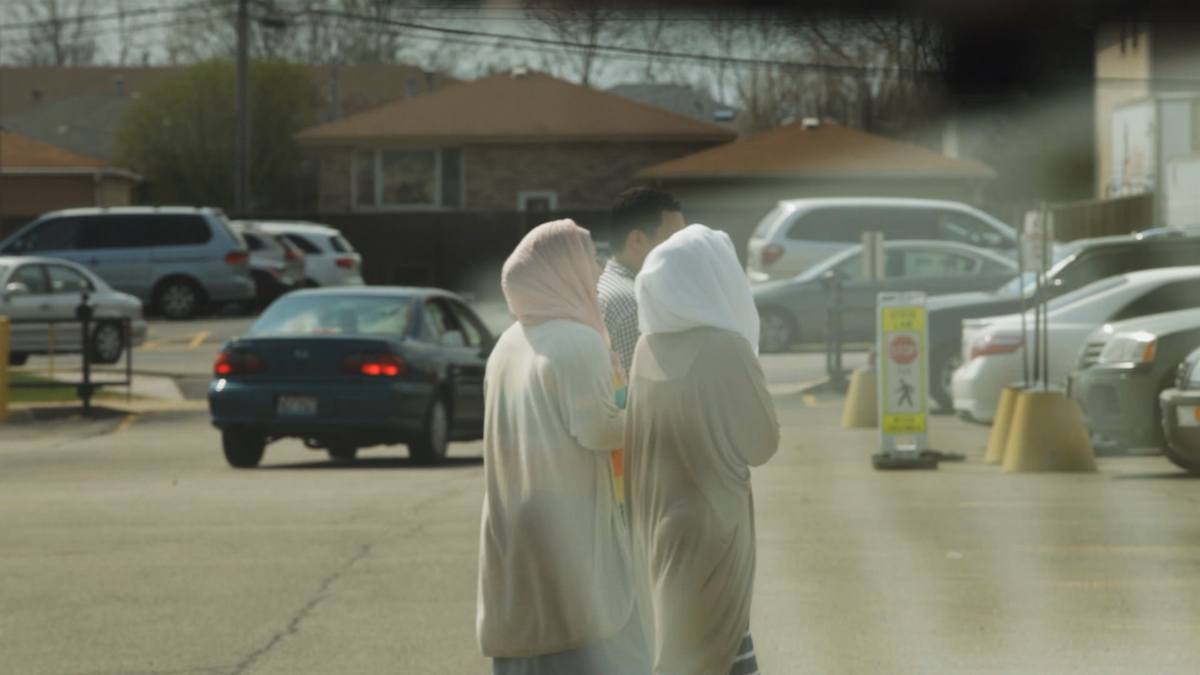 The Feeling of Being Watched[/caption]
With unprecedented access, The Feeling of Being Watched weaves the personal and the political as it follows the filmmaker’s examination of why her community—including her own family—fell under blanket government surveillance. Assia struggles to disrupt the government secrecy shrouding what happened and takes the FBI to federal court to compel them to make the records they collected about her community public. In the process, she confronts long-hidden truths about the FBI’s relationship to her community. The Feeling of Being Watched follows Assia as she pieces together this secret FBI operation, while grappling with the effects of a lifetime of surveillance on herself and her family.
The Feeling of Being Watched was written and directed by Assia Boundaoui and produced by Boundaoui and Jessica Devaney. Director of photography was Shuling Yong and the film was edited by Rabab Haj Yahya with illustrations by Molly Crabapple and original music by Angélica Negrón. Executive producers are Jim Butterworth, Daniel J. Chalfen, Dan Cogan, Jenny Raskin, Geralyn White Dreyfous, Debra Mcleod, Jay K. Sears, Bill Harnisch, Ruth Ann Harnisch, Alexa Poletto, Michael D. Mann, Barry W. Rashkover, and Vijay Dewan.
Assia Boundaoui is an Algerian-American journalist who has reported for the BBC, NPR, Al Jazeera, VICE, and CNN. Her debut short, a film about hijabi hair salons for the HBO Lenny documentary series, premiered at Sundance in 2018, and she has worked in an editorial capacity on the production of a number of documentaries, including HBO’s Emmy Award-winning Manhunt (2013). Assia has a Master’s degree in journalism from New York University and is fluent in Arabic. The Feeling of Being Watched is her feature debut.
The Feeling of Being Watched[/caption]
With unprecedented access, The Feeling of Being Watched weaves the personal and the political as it follows the filmmaker’s examination of why her community—including her own family—fell under blanket government surveillance. Assia struggles to disrupt the government secrecy shrouding what happened and takes the FBI to federal court to compel them to make the records they collected about her community public. In the process, she confronts long-hidden truths about the FBI’s relationship to her community. The Feeling of Being Watched follows Assia as she pieces together this secret FBI operation, while grappling with the effects of a lifetime of surveillance on herself and her family.
The Feeling of Being Watched was written and directed by Assia Boundaoui and produced by Boundaoui and Jessica Devaney. Director of photography was Shuling Yong and the film was edited by Rabab Haj Yahya with illustrations by Molly Crabapple and original music by Angélica Negrón. Executive producers are Jim Butterworth, Daniel J. Chalfen, Dan Cogan, Jenny Raskin, Geralyn White Dreyfous, Debra Mcleod, Jay K. Sears, Bill Harnisch, Ruth Ann Harnisch, Alexa Poletto, Michael D. Mann, Barry W. Rashkover, and Vijay Dewan.
Assia Boundaoui is an Algerian-American journalist who has reported for the BBC, NPR, Al Jazeera, VICE, and CNN. Her debut short, a film about hijabi hair salons for the HBO Lenny documentary series, premiered at Sundance in 2018, and she has worked in an editorial capacity on the production of a number of documentaries, including HBO’s Emmy Award-winning Manhunt (2013). Assia has a Master’s degree in journalism from New York University and is fluent in Arabic. The Feeling of Being Watched is her feature debut.
Tribeca Film Festival Screenings
Saturday, April 21, 6:45 pm Cinepolis Chelsea 2, 260 W. 23rd St. (at 8th Ave.) Sunday, April 22, 7:30 pm Cinepolis Chelsea 3, 260 W. 23rd St. (at 8th Ave.) *A special extended Q&A panel discussion will follow the screening Wednesday, April 25, 5:45 pm Regal Battery Park 3, 102 North End Ave. (at Murray St.) Thursday, April 26, 5:00 pm Cinepolis Chelsea 6, 260 W. 23rd St. (at 8th Ave.)
-
Swiss Filmmaker Ursula Meier to Preside over Caméra d’or Jury of Cannes Film Festival
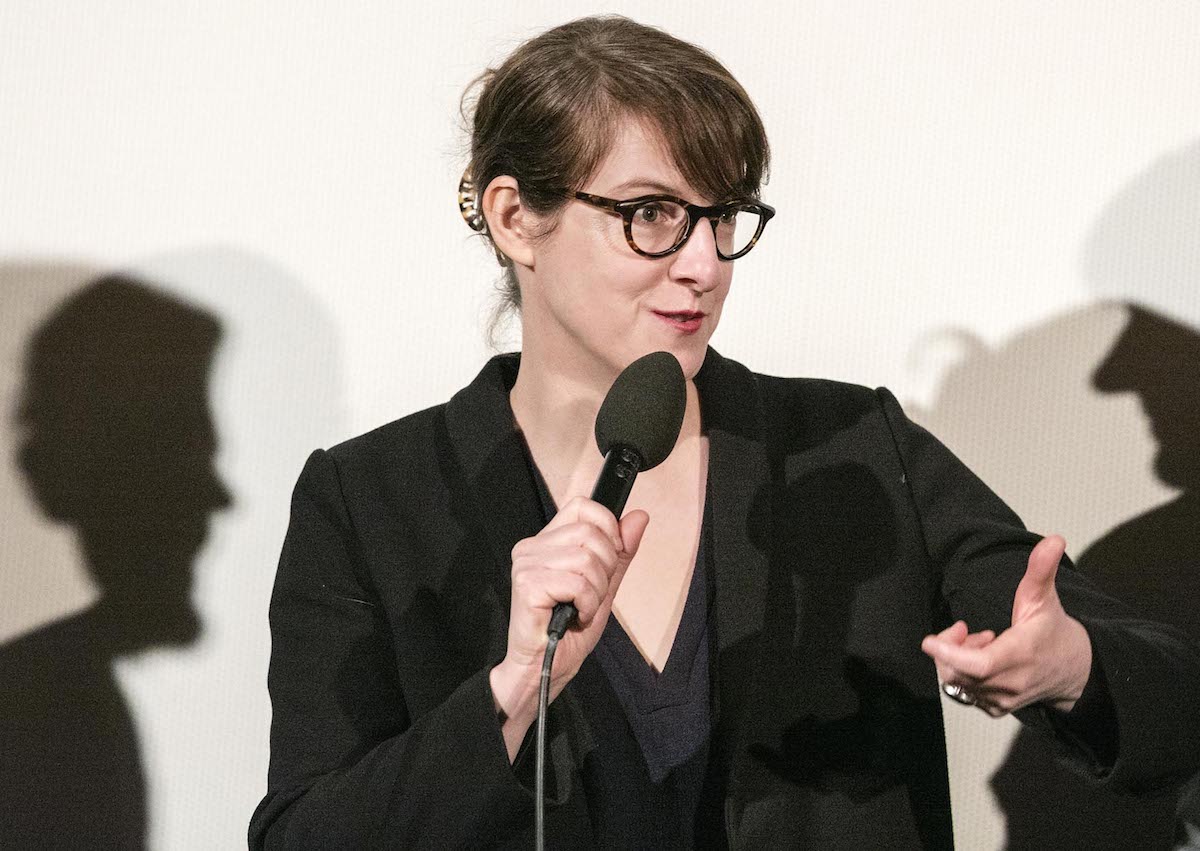 Swiss filmmaker Ursula Meier will head this year’s Caméra d’or Jury of the 2018 Cannes Film Festival, and along with six fellow-professionals, will select the best first film presented in the Official Selection, the Semaine de la Critique and the Directors’ Fortnight.
Ursula Meier is a filmmaker who questions the very need to film. This undoubtedly explains her compact and exciting filmography, which includes 5 short films, 2 works for television, 2 documentaries and 2 feature films for cinema. Inventive strokes of brilliance, each of them has been upsetting the apple cart with a fresh take and establishing her definitively on the European scene. Since 1994, Ursula Meier has compiled a bold cinematography that emphasises the complexity of the world.
An unconditional admirer of Wanda (Barbara Loden) and Sweetie (Jane Campion), Meier decided to take up directing after discovering Money (Robert Bresson). She then became assistant director to a major figure in Swiss cinema, Alain Tanner, with Fourbi (1996). She who claims to be fascinated by the notion of no man’s land has built her imagination there, and manages to reach out to buried areas of human nature, filming with tenderness, without pathos or judgment, characters who are guided by a powerful survival instinct. In 2014, she participated in the film Bridges of Sarajevo, a collective work by 13 European filmmakers, presented at Cannes in the Official Selection.
Her films for cinema – Home (2008) and Sister (2012, winner of the Silver Bear at the Berlinale) – are internationally acclaimed for their original angle and writing. Radical and poetic, the first is a fable shot with pale light and warm photography. The second is a modern tale in the form of a sober and poignant family chronicle.
“A first film,” says the newly appointed President, “is the place of all possibilities, of all audacity, of all risk-taking, of all madness. It is often said that you should not put everything into a first film but the opposite is true, you should put in exactly that – everything – just as you should put everything into every film while always preserving deep within yourself that original, vital, brutal, wild desire of the first time. What immense excitement and joy to discover all these films!”
Swiss filmmaker Ursula Meier will head this year’s Caméra d’or Jury of the 2018 Cannes Film Festival, and along with six fellow-professionals, will select the best first film presented in the Official Selection, the Semaine de la Critique and the Directors’ Fortnight.
Ursula Meier is a filmmaker who questions the very need to film. This undoubtedly explains her compact and exciting filmography, which includes 5 short films, 2 works for television, 2 documentaries and 2 feature films for cinema. Inventive strokes of brilliance, each of them has been upsetting the apple cart with a fresh take and establishing her definitively on the European scene. Since 1994, Ursula Meier has compiled a bold cinematography that emphasises the complexity of the world.
An unconditional admirer of Wanda (Barbara Loden) and Sweetie (Jane Campion), Meier decided to take up directing after discovering Money (Robert Bresson). She then became assistant director to a major figure in Swiss cinema, Alain Tanner, with Fourbi (1996). She who claims to be fascinated by the notion of no man’s land has built her imagination there, and manages to reach out to buried areas of human nature, filming with tenderness, without pathos or judgment, characters who are guided by a powerful survival instinct. In 2014, she participated in the film Bridges of Sarajevo, a collective work by 13 European filmmakers, presented at Cannes in the Official Selection.
Her films for cinema – Home (2008) and Sister (2012, winner of the Silver Bear at the Berlinale) – are internationally acclaimed for their original angle and writing. Radical and poetic, the first is a fable shot with pale light and warm photography. The second is a modern tale in the form of a sober and poignant family chronicle.
“A first film,” says the newly appointed President, “is the place of all possibilities, of all audacity, of all risk-taking, of all madness. It is often said that you should not put everything into a first film but the opposite is true, you should put in exactly that – everything – just as you should put everything into every film while always preserving deep within yourself that original, vital, brutal, wild desire of the first time. What immense excitement and joy to discover all these films!”
-
BEING SERENA, Intimate Documentary Series on Tennis Superstar Serena Williams, Debuts May 2 on HBO | trailer
 HBO Sports is teaming up agin with IMG’s Original Content group for a five-part documentary series chronicling tennis icon Serena Williams at a pivotal moment in her personal and professional life. Being Serena debuts Wednesday, May 2 (10:00-10:30 p.m. ET/PT), exclusively on HBO, followed by other new episodes subsequent Wednesdays at the same time.
Being Serena will give viewers unprecedented access to Williams during her pregnancy, new motherhood and marriage, while documenting her journey back to supremacy on the court. Viewers will experience her life from every angle as the intimate first-person show delves into her landmark career, family life and expanding role as a businesswoman and investor in the worlds of tech, fashion, fitness and philanthropy.
“HBO is honored to work with Serena Williams on such a personal project,” says Peter Nelson, executive vice president, HBO Sports. “Even though she has been in the spotlight since her teenage years, Serena continues to capture the imagination. With our partners at IMG, we look forward to giving viewers a revealing, behind-the-scenes portrait of her life on and off the court.”
“Serena Williams is a force unlike any other,” says Mark Shapiro, co-president of WME and IMG. “Her entire life is one of the hero’s journey, and it has been a privilege to work with her as she enters this next phase. HBO was an incredible partner in developing a unique look into Serena’s world, and we look forward to sharing this all-access story with the world in May.”
Serena Williams, 36, is one of the most dominant forces tennis has ever seen, with 39 Grand Slam titles, four Olympic Gold Medals and the most women’s singles match victories in Grand Slam history. Her supremacy on the court earned her Sports Illustrated’s Sportsperson of the Year honors in 2015 and made her a four-time winner of the Associated Press Female Athlete of the Year, first in 2002 and most recently in 2015.
In Jan. 2017, Williams bested her sister Venus in the final match of the Australian Open, marking her seventh time winning that singles event. Four months after her historic victory, Williams revealed that she and her fiancé, Alexis Ohanian, were expecting their first child, confirming that she was eight weeks pregnant when she won her 23rd Grand Slam singles title. On Sept. 1, Williams gave birth to her daughter, Alexis Olympia Ohanian Jr. Williams and Ohanian wed soon after in a stunning ceremony before family and friends in New Orleans on Nov. 16.
Williams will return to the tennis circuit this spring to compete in her first Grand Slam event of the year at the French Open in late May.
For more than a decade, HBO Sports has been responsible for some of the most compelling unscripted sports programming, with a stylish and contemporary approach marked by unrestricted access. “Hard Knocks,” launched in 2001 in partnership with NFL Films, has won 15 Sports Emmy(R) Awards, and the groundbreaking all-access reality franchise “24/7” has earned 18 Sports Emmy(R) Awards.
Being Serena marks the third collaborative docu-series for HBO Sports and IMG. The first was 2016’s “Gonzaga: The March to Madness,” chronicling the Gonzaga men’s basketball team’s march to its 18th consecutive NCAA men’s basketball tournament berth, followed by 2017’s Primetime Emmy(R) nominee “UConn: The March to Madness,” spotlighting the powerhouse University of Connecticut’s women’s basketball team as it sought a fifth consecutive national championship.
https://www.youtube.com/watch?v=udW7HcmDMJY
HBO Sports is teaming up agin with IMG’s Original Content group for a five-part documentary series chronicling tennis icon Serena Williams at a pivotal moment in her personal and professional life. Being Serena debuts Wednesday, May 2 (10:00-10:30 p.m. ET/PT), exclusively on HBO, followed by other new episodes subsequent Wednesdays at the same time.
Being Serena will give viewers unprecedented access to Williams during her pregnancy, new motherhood and marriage, while documenting her journey back to supremacy on the court. Viewers will experience her life from every angle as the intimate first-person show delves into her landmark career, family life and expanding role as a businesswoman and investor in the worlds of tech, fashion, fitness and philanthropy.
“HBO is honored to work with Serena Williams on such a personal project,” says Peter Nelson, executive vice president, HBO Sports. “Even though she has been in the spotlight since her teenage years, Serena continues to capture the imagination. With our partners at IMG, we look forward to giving viewers a revealing, behind-the-scenes portrait of her life on and off the court.”
“Serena Williams is a force unlike any other,” says Mark Shapiro, co-president of WME and IMG. “Her entire life is one of the hero’s journey, and it has been a privilege to work with her as she enters this next phase. HBO was an incredible partner in developing a unique look into Serena’s world, and we look forward to sharing this all-access story with the world in May.”
Serena Williams, 36, is one of the most dominant forces tennis has ever seen, with 39 Grand Slam titles, four Olympic Gold Medals and the most women’s singles match victories in Grand Slam history. Her supremacy on the court earned her Sports Illustrated’s Sportsperson of the Year honors in 2015 and made her a four-time winner of the Associated Press Female Athlete of the Year, first in 2002 and most recently in 2015.
In Jan. 2017, Williams bested her sister Venus in the final match of the Australian Open, marking her seventh time winning that singles event. Four months after her historic victory, Williams revealed that she and her fiancé, Alexis Ohanian, were expecting their first child, confirming that she was eight weeks pregnant when she won her 23rd Grand Slam singles title. On Sept. 1, Williams gave birth to her daughter, Alexis Olympia Ohanian Jr. Williams and Ohanian wed soon after in a stunning ceremony before family and friends in New Orleans on Nov. 16.
Williams will return to the tennis circuit this spring to compete in her first Grand Slam event of the year at the French Open in late May.
For more than a decade, HBO Sports has been responsible for some of the most compelling unscripted sports programming, with a stylish and contemporary approach marked by unrestricted access. “Hard Knocks,” launched in 2001 in partnership with NFL Films, has won 15 Sports Emmy(R) Awards, and the groundbreaking all-access reality franchise “24/7” has earned 18 Sports Emmy(R) Awards.
Being Serena marks the third collaborative docu-series for HBO Sports and IMG. The first was 2016’s “Gonzaga: The March to Madness,” chronicling the Gonzaga men’s basketball team’s march to its 18th consecutive NCAA men’s basketball tournament berth, followed by 2017’s Primetime Emmy(R) nominee “UConn: The March to Madness,” spotlighting the powerhouse University of Connecticut’s women’s basketball team as it sought a fifth consecutive national championship.
https://www.youtube.com/watch?v=udW7HcmDMJY
-
Documentary I AM EVIDENCE on Shocking Number of Untested Rape Kits in America, Sets HBO Premiere Date | Trailer
[caption id="attachment_27791" align="aligncenter" width="1200"]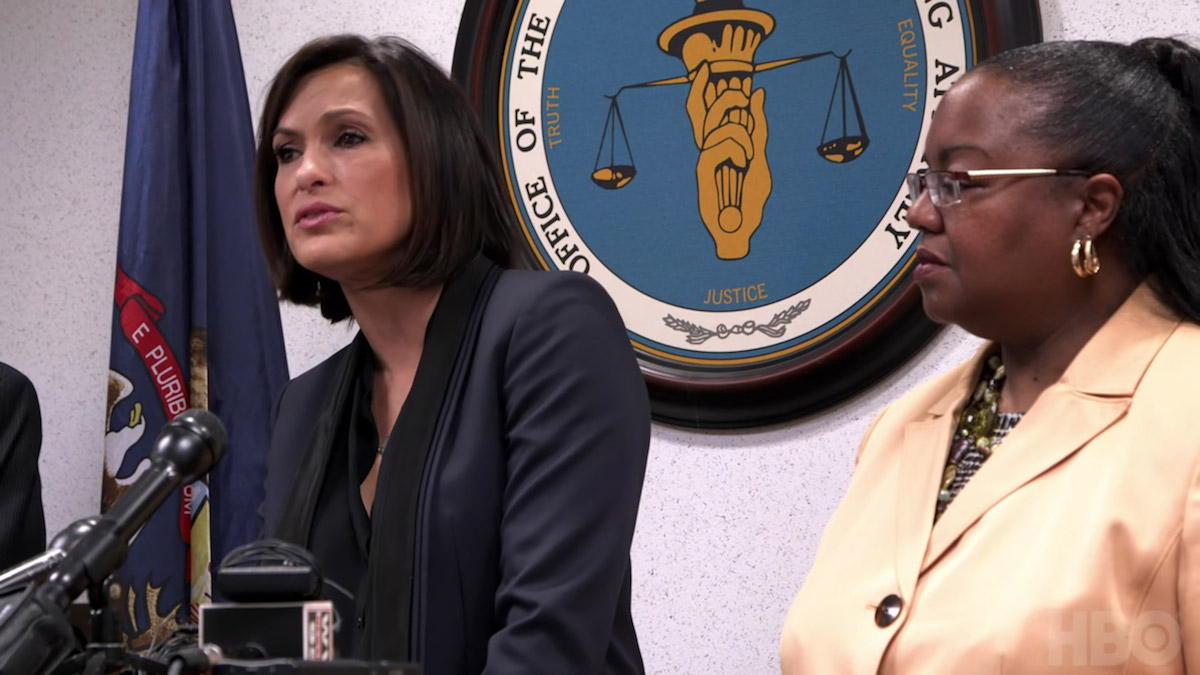 I Am Evidence[/caption]
Produced by Mariska Hargitay, star of “Law & Order: Special Victims Unit” and directed by Trish Adlesic and Geeta Gandbhir, I Am Evidence exposes the alarming trend of unsolved rape cases. The eye-opening documentary debuts Monday, April 16 (8:00-9:30 p.m. ET/PT), on HBO.
Despite the power of DNA to solve crimes, hundreds of thousands of rape kits, containing crucial DNA evidence, are currently languishing untested in police-evidence storage rooms across the country. Behind each one of these kits is a sexual-assault survivor waiting for justice to be served, and a perpetrator potentially evading prosecution.
I Am Evidence exposes the alarming trend of unsolved rape cases, revealing how a flawed system has historically mistreated sexual assault survivors and showing how victims, advocates and some forward-thinking law enforcement officials are challenging the status quo.
Spotlighting four resilient women in the Detroit, Cleveland and Los Angeles areas as they trace the fates of their kits and re-engage in the criminal justice process, this powerful film also follows survivors, advocates, prosecutors and police officials who are leading the charge to work through the backlog and hold perpetrators accountable. Putting a human face on this deplorable injustice and neglected issue, I Am Evidence is a timely call to action, asserting that survivors matter.
In 2009, Wayne County, Mich. Prosecutor Kym Worthy was shocked to uncover over 11,000 untested rape kits in a run-down police annex warehouse. Though the backlog was partially due to a lack of finances, reports showed that officers often didn’t believe the overwhelmingly black and poor victims. “They were violated in the most intimate of ways and nobody gave a damn,” laments Worthy.
Mariska Hargitay, a longtime advocate for survivors of sexual assault and domestic violence, offered her support to Worthy in her efforts to end the rape kit backlog in Detroit and the state of Michigan and bring justice to survivors. Hargitay’s role as Lieutenant Olivia Benson on “Law and Order: Special Victims Unit” had opened her eyes to these issues and inspired her to found the Joyful Heart Foundation in 2004.
“I Am Evidence, literally. My name is on a box, on a shelf that’s never been tested,” says Ericka, one of thousands of women across the U.S. whose rape kits, containing DNA evidence that could identify their attackers, have never been opened. Ericka reported that she was raped on her 21st birthday, and after going through the arduous process of getting a rape kit done at a local hospital, she remembers going with her father to speak to a detective. The detective told Ericka and her father that nothing would happen with her kit, offering to show them thousands of untested kits waiting to be processed before hers.
Cleveland began the long and daunting process of working up cases on its backlogged kits in 2013. As Tim McGinty, former Cuyahoga County prosecutor in Cleveland says, “These rape kits are the best bargain in the history of law enforcement. Four hundred dollars a rape kit, and one in four results in an indictment. One in four of the four is a serial rapist. I’ve never seen an opportunity like this in law enforcement.”
Out of more than 5,000 tested, there have already been 1,935 DNA matches in CODIS, the national criminal database, but the challenge lies in prioritizing cases by urgency. Investigator Nicole DiSanto’s latest assignment is tracking an alleged three-time offender. (Serial rapists have made up one-third of the cases from the city’s backlogged kits.) DiSanto visits Danielle, a 1997 victim, who is easily able to identify her attacker in a photo lineup. DiSanto eventually finds the man in North Carolina, and news of his arrest gives Danielle closure. I Am Evidence reveals that he was convicted of her rape and kidnapping more than 20 years after the crime.
In Los Angeles, 12,000 untested kits were unearthed (and even more destroyed, due to the LAPD’s misjudgment of the statute of limitations). Among the kits opened was Helena’s, who was abducted at a car wash and raped at age 17 in 1996. Helena spent years trying to learn what happened to her rape kit, and eventually discovered, with the help of an ex-DA, that the DNA matched Charles Courtney, a long-distance truck driver who targeted women along his route. One of his other victims, Amberly, was abducted and raped in 1998 in Fairfield, Ohio.
In 2001, funding allowed police to test Amberly’s kit, which also identified Courtney, who was already in CODIS for a sex offense against his wife. He took a plea deal for 30 years in prison. Despite information provided by Fairfield police, however, Helena’s case fell through the cracks in LA and the statute of limitations expired. She was only able to obtain justice after the DA used a loophole to charge Courtney for money he’d taken from her.
Police are often woefully underprepared to deal with sexual assault victims, but even when perpetrators are arrested, many prosecutors don’t aggressively pursue these cases, which Worthy admits are some of the hardest to prosecute due to “victim blaming.” Now a mother of adopted daughters, Worthy was assaulted herself when she was in law school and wants the system to be better for her children.
So far, the results of Detroit’s testing have been far-reaching, linking to CODIS hits in 39 states and garnering nationwide attention. Still, it’s estimated that hundreds of thousands of untested kits remain nationally. Ericka assumed her case would never be addressed? – ?until she met Worthy. Now Ericka says she feels “very free,” and urges women in her position to “press forward because I feel strong, stronger than I’ve ever known I could feel.”
I Am Evidence had its world premiere at the 2017 Tribeca Film Festival and has since screened at AFI Docs Film Festival, the Hamptons International Film Festival and many other festivals. It won the Audience Award for Best Documentary Film at both the Provincetown and Traverse City festivals.
Producer Mariska Hargitay, who appears in the film, won an Emmy(R) and Golden Globe for “Law & Order: Special Victims Unit”; she also serves as an executive producer on the show and has directed episodes. After receiving numerous letters from survivors, she founded the Joyful Heart Foundation in 2004. Its mission is to transform society’s response to sexual assault, domestic violence and child abuse and its initiative, End the Backlog, aims to eliminate the backlog of hundreds of thousands of untested rape kits in the U.S.
https://www.youtube.com/watch?v=7_b1SbbSu6Y
I Am Evidence[/caption]
Produced by Mariska Hargitay, star of “Law & Order: Special Victims Unit” and directed by Trish Adlesic and Geeta Gandbhir, I Am Evidence exposes the alarming trend of unsolved rape cases. The eye-opening documentary debuts Monday, April 16 (8:00-9:30 p.m. ET/PT), on HBO.
Despite the power of DNA to solve crimes, hundreds of thousands of rape kits, containing crucial DNA evidence, are currently languishing untested in police-evidence storage rooms across the country. Behind each one of these kits is a sexual-assault survivor waiting for justice to be served, and a perpetrator potentially evading prosecution.
I Am Evidence exposes the alarming trend of unsolved rape cases, revealing how a flawed system has historically mistreated sexual assault survivors and showing how victims, advocates and some forward-thinking law enforcement officials are challenging the status quo.
Spotlighting four resilient women in the Detroit, Cleveland and Los Angeles areas as they trace the fates of their kits and re-engage in the criminal justice process, this powerful film also follows survivors, advocates, prosecutors and police officials who are leading the charge to work through the backlog and hold perpetrators accountable. Putting a human face on this deplorable injustice and neglected issue, I Am Evidence is a timely call to action, asserting that survivors matter.
In 2009, Wayne County, Mich. Prosecutor Kym Worthy was shocked to uncover over 11,000 untested rape kits in a run-down police annex warehouse. Though the backlog was partially due to a lack of finances, reports showed that officers often didn’t believe the overwhelmingly black and poor victims. “They were violated in the most intimate of ways and nobody gave a damn,” laments Worthy.
Mariska Hargitay, a longtime advocate for survivors of sexual assault and domestic violence, offered her support to Worthy in her efforts to end the rape kit backlog in Detroit and the state of Michigan and bring justice to survivors. Hargitay’s role as Lieutenant Olivia Benson on “Law and Order: Special Victims Unit” had opened her eyes to these issues and inspired her to found the Joyful Heart Foundation in 2004.
“I Am Evidence, literally. My name is on a box, on a shelf that’s never been tested,” says Ericka, one of thousands of women across the U.S. whose rape kits, containing DNA evidence that could identify their attackers, have never been opened. Ericka reported that she was raped on her 21st birthday, and after going through the arduous process of getting a rape kit done at a local hospital, she remembers going with her father to speak to a detective. The detective told Ericka and her father that nothing would happen with her kit, offering to show them thousands of untested kits waiting to be processed before hers.
Cleveland began the long and daunting process of working up cases on its backlogged kits in 2013. As Tim McGinty, former Cuyahoga County prosecutor in Cleveland says, “These rape kits are the best bargain in the history of law enforcement. Four hundred dollars a rape kit, and one in four results in an indictment. One in four of the four is a serial rapist. I’ve never seen an opportunity like this in law enforcement.”
Out of more than 5,000 tested, there have already been 1,935 DNA matches in CODIS, the national criminal database, but the challenge lies in prioritizing cases by urgency. Investigator Nicole DiSanto’s latest assignment is tracking an alleged three-time offender. (Serial rapists have made up one-third of the cases from the city’s backlogged kits.) DiSanto visits Danielle, a 1997 victim, who is easily able to identify her attacker in a photo lineup. DiSanto eventually finds the man in North Carolina, and news of his arrest gives Danielle closure. I Am Evidence reveals that he was convicted of her rape and kidnapping more than 20 years after the crime.
In Los Angeles, 12,000 untested kits were unearthed (and even more destroyed, due to the LAPD’s misjudgment of the statute of limitations). Among the kits opened was Helena’s, who was abducted at a car wash and raped at age 17 in 1996. Helena spent years trying to learn what happened to her rape kit, and eventually discovered, with the help of an ex-DA, that the DNA matched Charles Courtney, a long-distance truck driver who targeted women along his route. One of his other victims, Amberly, was abducted and raped in 1998 in Fairfield, Ohio.
In 2001, funding allowed police to test Amberly’s kit, which also identified Courtney, who was already in CODIS for a sex offense against his wife. He took a plea deal for 30 years in prison. Despite information provided by Fairfield police, however, Helena’s case fell through the cracks in LA and the statute of limitations expired. She was only able to obtain justice after the DA used a loophole to charge Courtney for money he’d taken from her.
Police are often woefully underprepared to deal with sexual assault victims, but even when perpetrators are arrested, many prosecutors don’t aggressively pursue these cases, which Worthy admits are some of the hardest to prosecute due to “victim blaming.” Now a mother of adopted daughters, Worthy was assaulted herself when she was in law school and wants the system to be better for her children.
So far, the results of Detroit’s testing have been far-reaching, linking to CODIS hits in 39 states and garnering nationwide attention. Still, it’s estimated that hundreds of thousands of untested kits remain nationally. Ericka assumed her case would never be addressed? – ?until she met Worthy. Now Ericka says she feels “very free,” and urges women in her position to “press forward because I feel strong, stronger than I’ve ever known I could feel.”
I Am Evidence had its world premiere at the 2017 Tribeca Film Festival and has since screened at AFI Docs Film Festival, the Hamptons International Film Festival and many other festivals. It won the Audience Award for Best Documentary Film at both the Provincetown and Traverse City festivals.
Producer Mariska Hargitay, who appears in the film, won an Emmy(R) and Golden Globe for “Law & Order: Special Victims Unit”; she also serves as an executive producer on the show and has directed episodes. After receiving numerous letters from survivors, she founded the Joyful Heart Foundation in 2004. Its mission is to transform society’s response to sexual assault, domestic violence and child abuse and its initiative, End the Backlog, aims to eliminate the backlog of hundreds of thousands of untested rape kits in the U.S.
https://www.youtube.com/watch?v=7_b1SbbSu6Y
-
‘Lou Andreas-Salomé’ ‘Hot Country Cold Winter’ ‘Hotel Everest’ Win Top Awards at Socially Relevant Film Festival 2018
[caption id="attachment_27788" align="aligncenter" width="1200"]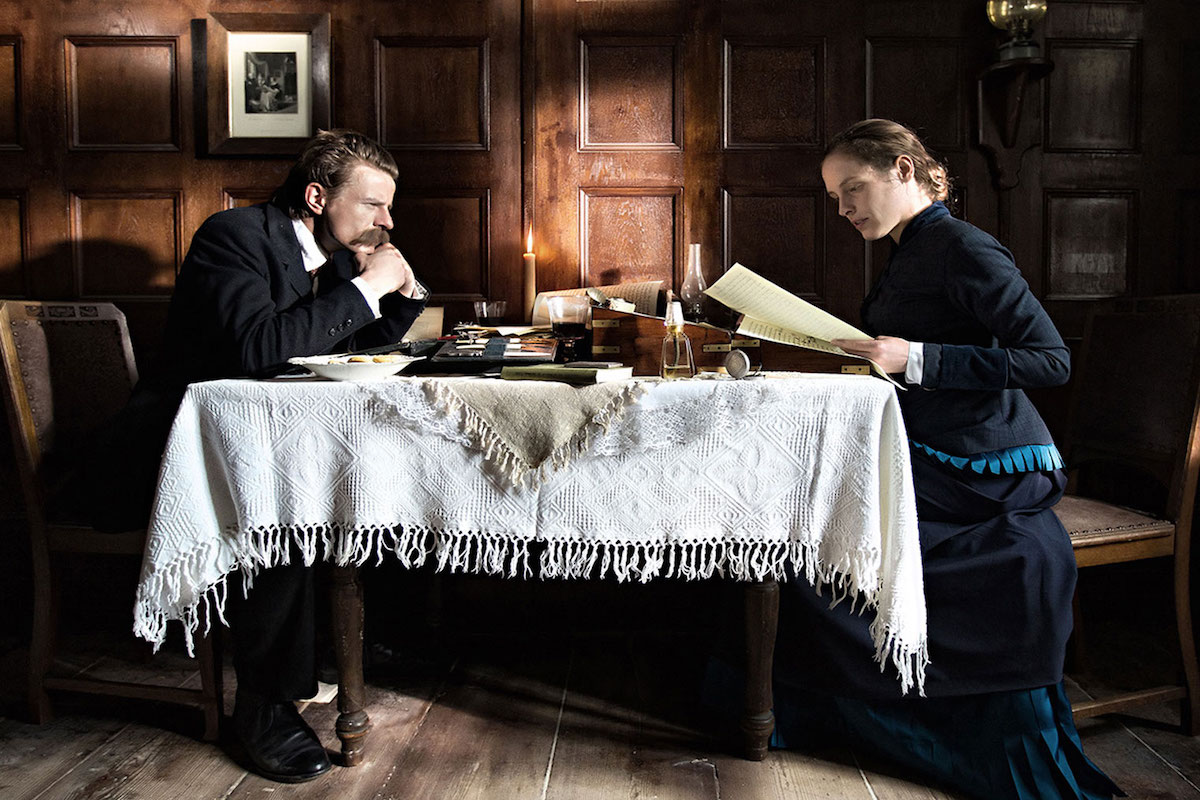 Lou Andreas-Salomé: The Audacity to be Free[/caption]
SR Socially Relevant™ Film Festival 2018 (SRFF 2018) wrapped up its Fifth Edition at Cinema Village in NYC on March 22, 2018, revealing the winners. Stand-out awards were the Empowering Women and Girls Award, given to Dr. Ruchira Gupta of Apne Aap, and the tie for Grand Prize Narrative Feature presented to ‘Lou Andreas-Salomé: The Audacity to be Free’ and ‘Hot Country Cold Winter’.
The awards are: Vanya Exerjian – Empowering Women and Girls Award, Grand Prize Narrative Feature, Grand Prize Documentary, Best Narrative Short, Best Documentary Short, Women Film Critics Circle (WFCC) Award, Best Ensemble Work, Best Actor in a Feature Film, Best Actress in a Feature Film, Best Actor in a Short Film, Best Actress in a Short Film, Immigrant Filmmaker Award, and three winning scripts from the script-writing competition.
“On our fifth year, SRFF is thrilled to continue its quest to spotlight the most impactful stories from around the world,” said Nora Armani, Founding Artistic Director of SR Socially Relevant™ Film Festival. “Our goal is to highlight films and filmmakers who choose to tell socially relevant stories oft not given a commercial platform. These films have a strong impact on people’s lives.”
The 2018 Fifth Edition of SRFF screened 70 films from 35 countries in the narrative feature, documentary feature, short film, and immersive VR/360º categories, along with finalists in script-writing. The winners are selected by a hand-picked international jury of industry veterans.
SRFF’s original trophies are the Molten Bowl, designed and donated by Michael Aram and a wine by City Winery bearing the specially designed 5th-anniversary label of SR Film Festival. In-kind awards include Inclusion in InkTip, download certificates by Final Draft, consultation services by Cinema Libre Studio and Candy Factory Films, distribution on IndiePix, stock footage by Pond5 and more.
Lou Andreas-Salomé: The Audacity to be Free[/caption]
SR Socially Relevant™ Film Festival 2018 (SRFF 2018) wrapped up its Fifth Edition at Cinema Village in NYC on March 22, 2018, revealing the winners. Stand-out awards were the Empowering Women and Girls Award, given to Dr. Ruchira Gupta of Apne Aap, and the tie for Grand Prize Narrative Feature presented to ‘Lou Andreas-Salomé: The Audacity to be Free’ and ‘Hot Country Cold Winter’.
The awards are: Vanya Exerjian – Empowering Women and Girls Award, Grand Prize Narrative Feature, Grand Prize Documentary, Best Narrative Short, Best Documentary Short, Women Film Critics Circle (WFCC) Award, Best Ensemble Work, Best Actor in a Feature Film, Best Actress in a Feature Film, Best Actor in a Short Film, Best Actress in a Short Film, Immigrant Filmmaker Award, and three winning scripts from the script-writing competition.
“On our fifth year, SRFF is thrilled to continue its quest to spotlight the most impactful stories from around the world,” said Nora Armani, Founding Artistic Director of SR Socially Relevant™ Film Festival. “Our goal is to highlight films and filmmakers who choose to tell socially relevant stories oft not given a commercial platform. These films have a strong impact on people’s lives.”
The 2018 Fifth Edition of SRFF screened 70 films from 35 countries in the narrative feature, documentary feature, short film, and immersive VR/360º categories, along with finalists in script-writing. The winners are selected by a hand-picked international jury of industry veterans.
SRFF’s original trophies are the Molten Bowl, designed and donated by Michael Aram and a wine by City Winery bearing the specially designed 5th-anniversary label of SR Film Festival. In-kind awards include Inclusion in InkTip, download certificates by Final Draft, consultation services by Cinema Libre Studio and Candy Factory Films, distribution on IndiePix, stock footage by Pond5 and more.
GRAND PRIZE NARRATIVE FEATURE:
The jurors: Nicole Ansari-Cox, Najla Said, Valerio Caruso, and Andre Degas. Awardees in ex aequo: Lou Andreas-Salomé: The Audacity to be Free | Cordula Kablitz-Post | Germany | 2016 | 113 min German, Italian, Russian w/English subtitles Lou Andreas-Salomé, the woman who enraptured 19th century Europe’s greatest minds, recounts her life to Ernst Pfeiffer in this German film directed by Cordula Kablitz-Post. Salomé became the first female psychoanalyst under the tutelage of Sigmund Freud. https://www.youtube.com/watch?v=e722D0mnxnw Hot Country, Cold Winter | David Safarian | Armenia, The Netherlands, Germany | 2016 | 104 min Armenian, Russian with English subtitles A tale of a man and a woman suffering near-absurd circumstances during a total energy crisis right after the breakdown of the Soviet Union. Their narratives, recollections, imagination, and dreams are depicted in this powerful narrative feature film dealing with a period of recent modern history. https://www.youtube.com/watch?v=NvvkddsPRa8GRAND PRIZE DOCUMENTARY FILM:
The jurors: Claus Mueller, Morgan Jenness, Dirk Robertson, and Edie Nugent. Hotel Everest | Claudia Sobral | USA | 2017 | 39 min Filmed over a tumultuous two-year period, the film follows the efforts and relationship between two unlikely peace activists: Eden Fuchs, a retired Israeli army colonel, and Ibrahim Issa, a Palestinian born in a refugee camp, are joined by the Idahoan founders of the Centre for Emerging Futures, Whit and Paula Jones at the Hotel Everest. Grand Prize Narrative Feature (ex-aequo): Lou Andreas-Salomé: The Audacity to be Free by Cordula Kablitz-Post, and, Hot Country Cold Winter by David Safarian The Vanya Exerjian Empowering Women & Girls Award: Ruchira Gupta – Apne Aap Grand Prize Documentary: Hotel Everest by Claudia Sobral Best Ensemble Work in a Feature: Darcy by Heidi Philipsen-Meisner & Jon Russell Cring Best Narrative Short: Malik and the Turtle by Adnane Tragha Best Documentary Short: The Hammamis by Molly Bareiss Best Actor in a Feature Film: Johnathan Tchaikovsky in Darcy Best Actress in a Feature Film: Yana Druz in Hot Country Cold Winter Best Actor in a Short Film: Azhar N’Dahoma in Malik and the Turtle Best Actress in a Short Film: Jasmin Riggins in Free Period VR/360º Award: My Beautiful Home by Romain Vakilitabar The Women Film Critics Circle Award: I Seek Asylum by Anna Southgate The Immigrant Filmmaker Award: Robert Tutak for Ellis Island Finalist Script 1st place/Winner: Riding on Duke’s Train by Ken Kimmelman Finalist Script 2nd place: Shepherding Cassie by Mike Oborn Finalist Script 3rd Place: American Snake Pit by Dan Tomasulo
-
Daniel Roebuck’s Critically Acclaimed Family Film GETTING GRACE Now Playing in Theaters | Trailer
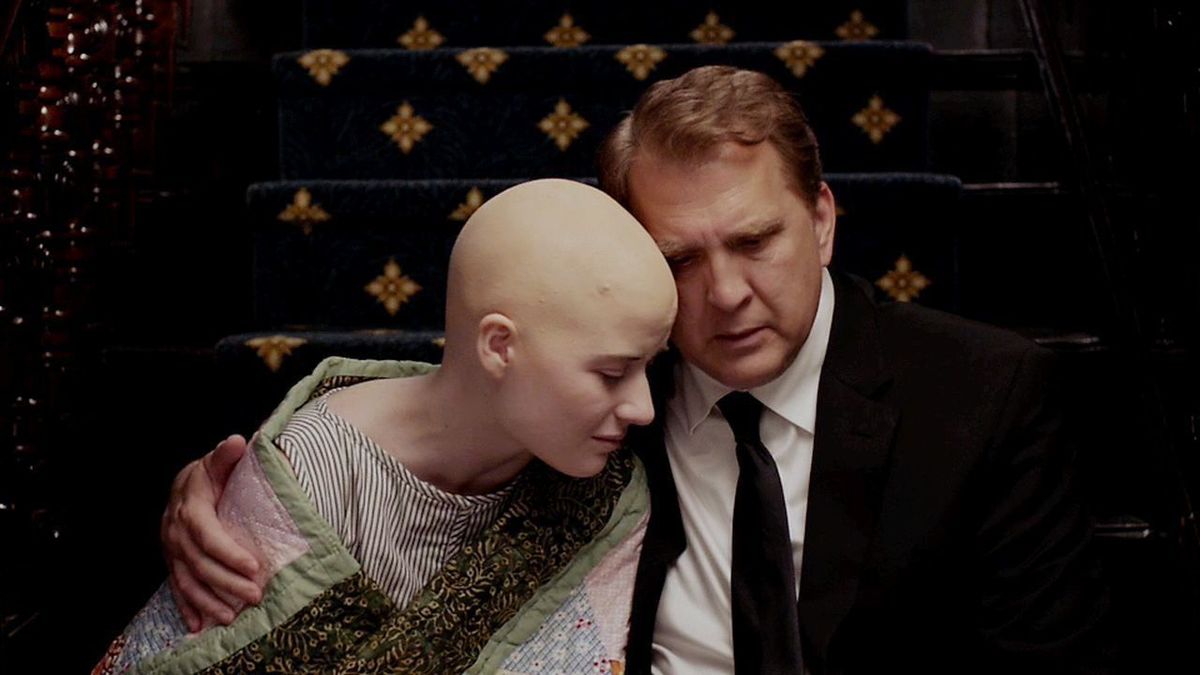 “Getting Grace,” is all about a spunky teenaged girl with terminal cancer who decides to make her own funeral arrangements, and sets in motion a plan that affects all of those around her. The critically-praised family film from director and star Daniel Roebuck, opened in theaters across the USA on Friday, March 23; and is now playing at fifty-nine locations across the country, with another fifty locations planned for expansion over the next three weeks.
Daniel Roebuck is a widely recognized star from over one-hundred feature film roles (including “The Fugitive”, “U.S. Marshalls” and the current Christian theatrical hit “Let There Be Light“) as well as from the enormously successful TV series recurring roles in “LOST” and 8-seasons of “Matlock” with Andy Griffith. During the recently completed, multi-city Bus Tour, Roebuck was joined in different cities by other cast members, including newcomer Madelyn Dundon in the title role and film veteran Marsha Dietlein. “Getting Grace” tells the story of a teenaged girl’s unusual response to a terminal cancer diagnosis. Other stars include Dana Ashbrook, Timothy Goodwin and Duane Whitaker. The film is rated PG-13 and has already won the best picture accolade at two, major film festivals.
Audiences would be hard-pressed to find a more likable protagonist in any film. GRACE, the title character, is funny, sarcastic, empathetic and riveting. But, unfortunately, she is going to die.
Although Grace’s time is short, her positive impact on the world around her is monumental. The story is about a young girl who knows that she is dying. Grace goes into a funeral home to learn about death and ends up teaching the disenfranchised funeral director, BILL, about life.
We soon learn that while trying to “hedge the bet” about her afterlife possibilities she is also trying her best to prepare her mother, VENUS, for a future without her only child. Venus, we learn, is not dealing with the sad imminent truth well and is reverting to her old ways of drinking and “drugging.” Simultaneously, Grace humorously hijacks an ironically named “EMBRACE LIFE” class offered by her hospital for children dealing with their own fatal diseases and moves it to the funeral home. Not only does she do her best to teach the adults in her life to live their lives to the fullest, she has the same effect on her peers. And she discovers love, herself.
Grace is also desperately searching for someone to take care of her mother. Will it be Bill, REVEREND OSBURN (the hospital’s chaplain) or RON, the charismatic and successful author of a book about the afterlife. Once those around her actually “GET” Grace (meaning they finally understand her), every one of them is able to transition to their own new life.
“Getting Grace” is an extraordinary story with a lead character who affects a chain of positive events in the lives of all she comes in contact with…be they doctors or morticians or her own mother. Through Grace, her loved ones learn that life need not be lived long to be lived fully.
https://www.youtube.com/watch?v=N5j28U_ocVU
GETTING GRACE – March 23 Theatres
Alabama
Regal Mobile Stadium, Mobile, AL
Arizona
Harkins Arizona Mills 25, Tempe, AZ
Harkins Superstition Springs, Mesa, AZ
California
Laemmle Monica Film Center, Santa Monica, CA
Edwards Fairfield Stadium, Fairfield, CA
Regal Fresno 22, Fresno, CA
Regal Merced 13, Merced, CA
Ontario Palace Stadium 22, Ontario, CA
Regal Long Beach Stadium 26, Long Beach, CA
Conneticut
AMC Plainville Stadium, Plainville, CT
Florida
Regal Citrus Park Stadium, Tampa, FL
Cypress Creek Station, Fort Lauderdale, FL
Oveido Mall Stadium, Oveido, FL
Pointe Orlando Stadium, Orlando, FL
Regal Sawgrass Stadium, Sunrise, FL
South Beach Stadiu, Miami Beach, FL
Park Place Stadium 16, Pinellas Park, FL
Belltower Stadium 20, Fort Myers, FL
Regal Beach Blvd. Stadium, Jacksonville, FL
Georgia
Hollywood24 @ I-85, Chamblee, GA
Austell Stadium, Austell, GA
Hawaii / Pacifica
Regal Dole Cannery 18, Honolulu, HI
Guam Megaplex Stadium, Guam
Illinois
Round Lake Beach Stadium, Round Lake Beach, IL
GQT Willow Knolls 14, Peoria, IL
Indiana
New Albany Stadium 16, New Albany, IN
Village Park Stadium 17, Carmel, IN
Kansas
B&B Overland Park 16, Overland Park, KS
Kentucky
Regal Bowling Green 12, Bowling Green, KY
Minnesota
Marcus Shakopee Cinema, Shakopee, MN
Marcus Hastings Cinema, Hastings, MN
Marcus Elk River Cinema, Elk River, MN
Regal Eagan Stadium, Eagan, MN
Missouri
St. Louis Stadium, Hazelwood, MO
New York
Elmwood Center 16, Buffalo, NY
Henrietta Stadium 18. Rochester, NY
North Carolina
Stonecrest at Piper Glenn, Charlotte, NC
Crossroads Stadium 20, Cary, NC
Greensboro Grand 16, Greensboro NC
Greenville Grand Stadium, Greenville, NC
Ohio
Chakeres Springfield 10, Springfield, OH
Oklahoma
Spotlight 14, Norman, OK
Promenade Palace 12, Tulsa, OK
Oregon
Movies on TV Stadium, Hillsboro, OR
Pennsylvania
U.E.C. College 9, State College, PA
Regal Riverview Plaza, Philadelphia, PA
Regal Cinema Oaks 24, Oaks, PA
Harrisburg Stadium 14, Harrisburg, PA
AMC Allentown 16, Allentown, PA
AMC Center Valley 16, Center Valley, PA
Tennessee
Regal Opry Mills Stadium, Nashville, TN
Streets of Indian Lake Stadium, Hendersonville, TN
Pinnacle Stadium, 18, Knoxville, TN
Texas
Edwards Marq’E Stadium, Houston, TX
Regal West Oaks Mall 14, Houston, TX
Regal Metropolitan Cinemas, Austin, TX
Regal Fiesta Stadium, San Antonio, TX
Washington
Parkway Plaza Stadium, Tukwila, WA
West Virginia
Morgantown Stadium 12, Morgantown, WV
“Getting Grace,” is all about a spunky teenaged girl with terminal cancer who decides to make her own funeral arrangements, and sets in motion a plan that affects all of those around her. The critically-praised family film from director and star Daniel Roebuck, opened in theaters across the USA on Friday, March 23; and is now playing at fifty-nine locations across the country, with another fifty locations planned for expansion over the next three weeks.
Daniel Roebuck is a widely recognized star from over one-hundred feature film roles (including “The Fugitive”, “U.S. Marshalls” and the current Christian theatrical hit “Let There Be Light“) as well as from the enormously successful TV series recurring roles in “LOST” and 8-seasons of “Matlock” with Andy Griffith. During the recently completed, multi-city Bus Tour, Roebuck was joined in different cities by other cast members, including newcomer Madelyn Dundon in the title role and film veteran Marsha Dietlein. “Getting Grace” tells the story of a teenaged girl’s unusual response to a terminal cancer diagnosis. Other stars include Dana Ashbrook, Timothy Goodwin and Duane Whitaker. The film is rated PG-13 and has already won the best picture accolade at two, major film festivals.
Audiences would be hard-pressed to find a more likable protagonist in any film. GRACE, the title character, is funny, sarcastic, empathetic and riveting. But, unfortunately, she is going to die.
Although Grace’s time is short, her positive impact on the world around her is monumental. The story is about a young girl who knows that she is dying. Grace goes into a funeral home to learn about death and ends up teaching the disenfranchised funeral director, BILL, about life.
We soon learn that while trying to “hedge the bet” about her afterlife possibilities she is also trying her best to prepare her mother, VENUS, for a future without her only child. Venus, we learn, is not dealing with the sad imminent truth well and is reverting to her old ways of drinking and “drugging.” Simultaneously, Grace humorously hijacks an ironically named “EMBRACE LIFE” class offered by her hospital for children dealing with their own fatal diseases and moves it to the funeral home. Not only does she do her best to teach the adults in her life to live their lives to the fullest, she has the same effect on her peers. And she discovers love, herself.
Grace is also desperately searching for someone to take care of her mother. Will it be Bill, REVEREND OSBURN (the hospital’s chaplain) or RON, the charismatic and successful author of a book about the afterlife. Once those around her actually “GET” Grace (meaning they finally understand her), every one of them is able to transition to their own new life.
“Getting Grace” is an extraordinary story with a lead character who affects a chain of positive events in the lives of all she comes in contact with…be they doctors or morticians or her own mother. Through Grace, her loved ones learn that life need not be lived long to be lived fully.
https://www.youtube.com/watch?v=N5j28U_ocVU
GETTING GRACE – March 23 Theatres
Alabama
Regal Mobile Stadium, Mobile, AL
Arizona
Harkins Arizona Mills 25, Tempe, AZ
Harkins Superstition Springs, Mesa, AZ
California
Laemmle Monica Film Center, Santa Monica, CA
Edwards Fairfield Stadium, Fairfield, CA
Regal Fresno 22, Fresno, CA
Regal Merced 13, Merced, CA
Ontario Palace Stadium 22, Ontario, CA
Regal Long Beach Stadium 26, Long Beach, CA
Conneticut
AMC Plainville Stadium, Plainville, CT
Florida
Regal Citrus Park Stadium, Tampa, FL
Cypress Creek Station, Fort Lauderdale, FL
Oveido Mall Stadium, Oveido, FL
Pointe Orlando Stadium, Orlando, FL
Regal Sawgrass Stadium, Sunrise, FL
South Beach Stadiu, Miami Beach, FL
Park Place Stadium 16, Pinellas Park, FL
Belltower Stadium 20, Fort Myers, FL
Regal Beach Blvd. Stadium, Jacksonville, FL
Georgia
Hollywood24 @ I-85, Chamblee, GA
Austell Stadium, Austell, GA
Hawaii / Pacifica
Regal Dole Cannery 18, Honolulu, HI
Guam Megaplex Stadium, Guam
Illinois
Round Lake Beach Stadium, Round Lake Beach, IL
GQT Willow Knolls 14, Peoria, IL
Indiana
New Albany Stadium 16, New Albany, IN
Village Park Stadium 17, Carmel, IN
Kansas
B&B Overland Park 16, Overland Park, KS
Kentucky
Regal Bowling Green 12, Bowling Green, KY
Minnesota
Marcus Shakopee Cinema, Shakopee, MN
Marcus Hastings Cinema, Hastings, MN
Marcus Elk River Cinema, Elk River, MN
Regal Eagan Stadium, Eagan, MN
Missouri
St. Louis Stadium, Hazelwood, MO
New York
Elmwood Center 16, Buffalo, NY
Henrietta Stadium 18. Rochester, NY
North Carolina
Stonecrest at Piper Glenn, Charlotte, NC
Crossroads Stadium 20, Cary, NC
Greensboro Grand 16, Greensboro NC
Greenville Grand Stadium, Greenville, NC
Ohio
Chakeres Springfield 10, Springfield, OH
Oklahoma
Spotlight 14, Norman, OK
Promenade Palace 12, Tulsa, OK
Oregon
Movies on TV Stadium, Hillsboro, OR
Pennsylvania
U.E.C. College 9, State College, PA
Regal Riverview Plaza, Philadelphia, PA
Regal Cinema Oaks 24, Oaks, PA
Harrisburg Stadium 14, Harrisburg, PA
AMC Allentown 16, Allentown, PA
AMC Center Valley 16, Center Valley, PA
Tennessee
Regal Opry Mills Stadium, Nashville, TN
Streets of Indian Lake Stadium, Hendersonville, TN
Pinnacle Stadium, 18, Knoxville, TN
Texas
Edwards Marq’E Stadium, Houston, TX
Regal West Oaks Mall 14, Houston, TX
Regal Metropolitan Cinemas, Austin, TX
Regal Fiesta Stadium, San Antonio, TX
Washington
Parkway Plaza Stadium, Tukwila, WA
West Virginia
Morgantown Stadium 12, Morgantown, WV
-
‘The Raft’ ‘Laila at the Bridge’ ‘Beautiful Things’ and More Win at CPH:DOX 2018
[caption id="attachment_27775" align="aligncenter" width="960"] 2018 CPH-DOX Awards. The winner of DOX:Award: The Raft[/caption]
‘The Raft’ by the Swedish director Marcus Lindeen, which tells the story of one of the strangest social experiments of all times ,and told by those who took part in it, took the top prize – the Dox:Award 2018 at the 15th edition of CPH:DOX – Copenhagen International Documentary Film Festival. The film held its world premiere at as CPH:DOX.
In 1973, five men and six women sailed across the Atlantic on a raft. A social experiment and a scientific study of violence, aggression, sex and group behaviour, conducted by a radical Mexican anthropologist. Everything was filmed and documented in a diary. But theory is one thing, practice is another. And without wanting to reveal too much, the experiment didn’t exactly work out as planned. Over 40 years later, Swedish artist and filmmaker Marcus Lindeen brings the crew together again for the first time since the experiment, on a faithful copy of the raft in a film studio, to look back at the three intense months they spent together, isolated and without privacy, on ‘The Sex Raft’, as the press called it.
https://www.youtube.com/watch?v=x-diO4_Y0i8
The jury gave a Special Mention to ‘América’, a charming, Mexican adventure about three mismatched brothers and their 93-year-old grandmother in a film about family ties.
‘Laila at the Bridge’ by Elizabeth Mirzaei and Gulistan Mirzaei, which had its world premiere at CPH:DOX won the F:ACT Award – dedicated to auteur filmmaking in the field between research-based, investigative journalism, activism and documentary cinema.
A powerful film about a woman who is willpower in its purest form. Day after day, the charismatic and strong-willed woman puts on her small ballerina shoes and colourful scarves and heads under the bridge to take them to her private rehab centre, where the aim is to get them out of their addiction with ice-cold baths, communal prayers and motherly reprimands. It is not a miracle factory. Many experience a relapse, and Laila has to struggle with constant financial problems. When the Taliban’s arrival in the city scares customers away from the restaurant she is running to finance her centres, things start looking bleak. But Laila threatens corrupt ministers in their marble offices, shoots mafia thugs in her bedroom with a shotgun and with equal measures of care and indignation has a serious word with the opium-addled men under the bridge.
The winner of the New:Vision Award is the film ‘Wild Relatives’ by Jumana Manna. Jumana Manna’s original and politically sensitive new work draws lines between three distant spots on the world map: Syria, Lebanon and Svalbard. The lines chart a route and a complex network of relationships. ‘Wild Relatives’ exposes the exchange of ecological currency between two of the world’s grain banks, which are the archives of the smallest basic ingredient of agriculture: Seeds. Biodiversity, conflicts and international politics are parts of a game with perspectives reaching far out into the most distant future, and form the the basis for a humorous and thought-provoking conversation between a priest and a scientist far out in the middle of nowhere.
The jury gave a Special Mention to ‘Translations’ by Tinne Zenner, a critical and graceful 16mm film in which the vistas of Greenland create a space for free thinking.
The winner of the Nordic:Dox Award – recognizing the best and brightest in cinema from the Nordic countries – is the film ‘Lykkelænder’ by the Danish director Lasse Lau. The film held its world premiere at the festival.
The relationship between Greenland and Denmark is full of fantasy and myths. And these are exactly what Danish artist Lasse Lau reflects upon – and in turn documents – in his first feature-length film. But how do you give a form to the Greenlandic experience when you are an outsider yourself? Lau has created a sensitive film about authenticity and recreation by letting both elements become a part of the work, together with his performers.
The jury gave a Special Mention to the Norwegian film ‘The Night’ by Steffan Strandberg, a beautifully animated and bittersweet film about two brothers and their upbringing with an alcoholic mother and musician father.
The winner of the Next:Wave Award given to emerging filmmakers, is the film ‘Beautiful Things’ by the Italian directors Giorgio Ferrero & Federico Biasin. If documentary science fiction was a genre – and it is now! – then ‘Beautiful Things’ is the film that locates the future in the midst of our present age. A machine engineer on a supertanker and a scientist specialising in mathematics and audio studies are two of the human cogs in a bulimic cycle of (over)production and (over)consumption of the material objects that surround us – a cycle we never even think about. A chain with many segments, which the filmmaker duo of Giorgio Ferrero and Federico Biasin brings together in an accomplished audiovisual study of our times, but with room for the human quirks that constitute the grit in the machinery.
The jury gave a Special Mention to Minding the Gap (Bing Liu, United States), where three young friends grow up, become young men and make life choices in front of rolling cameras, and Conventional Sins (Anat Yuta Zuria & Shira-Clara Winther, Israel), a Docu-noir about sexual abuse in the ultra-orthodox environment in Jerusalem.
The winner of the Politiken Audience Award is ‘False Confessions’ by the director Katrine Philp, a legal thriller about a pro-bono idealist’s work for justice in a cynical justice system. The film held its world premiere at the festival.
During an interrogation in the United States, it is both legal and commonplace to use special psychological techniques to make the suspect confess. In a closed room, coached interrogators can not only get anyone to confess to anything – they can also make innocent people believe that they have actually committed crimes such as murder and child assault. In New York, the Danish-born defence attorney Jane Fisher-Byrialsen is working to prevent false confessions, so that less people end up in prison for crimes they have not committed.
image via Facebook – The winner of DOX:Award: “The Raft” Photo by Inger Rønnenfelt
2018 CPH-DOX Awards. The winner of DOX:Award: The Raft[/caption]
‘The Raft’ by the Swedish director Marcus Lindeen, which tells the story of one of the strangest social experiments of all times ,and told by those who took part in it, took the top prize – the Dox:Award 2018 at the 15th edition of CPH:DOX – Copenhagen International Documentary Film Festival. The film held its world premiere at as CPH:DOX.
In 1973, five men and six women sailed across the Atlantic on a raft. A social experiment and a scientific study of violence, aggression, sex and group behaviour, conducted by a radical Mexican anthropologist. Everything was filmed and documented in a diary. But theory is one thing, practice is another. And without wanting to reveal too much, the experiment didn’t exactly work out as planned. Over 40 years later, Swedish artist and filmmaker Marcus Lindeen brings the crew together again for the first time since the experiment, on a faithful copy of the raft in a film studio, to look back at the three intense months they spent together, isolated and without privacy, on ‘The Sex Raft’, as the press called it.
https://www.youtube.com/watch?v=x-diO4_Y0i8
The jury gave a Special Mention to ‘América’, a charming, Mexican adventure about three mismatched brothers and their 93-year-old grandmother in a film about family ties.
‘Laila at the Bridge’ by Elizabeth Mirzaei and Gulistan Mirzaei, which had its world premiere at CPH:DOX won the F:ACT Award – dedicated to auteur filmmaking in the field between research-based, investigative journalism, activism and documentary cinema.
A powerful film about a woman who is willpower in its purest form. Day after day, the charismatic and strong-willed woman puts on her small ballerina shoes and colourful scarves and heads under the bridge to take them to her private rehab centre, where the aim is to get them out of their addiction with ice-cold baths, communal prayers and motherly reprimands. It is not a miracle factory. Many experience a relapse, and Laila has to struggle with constant financial problems. When the Taliban’s arrival in the city scares customers away from the restaurant she is running to finance her centres, things start looking bleak. But Laila threatens corrupt ministers in their marble offices, shoots mafia thugs in her bedroom with a shotgun and with equal measures of care and indignation has a serious word with the opium-addled men under the bridge.
The winner of the New:Vision Award is the film ‘Wild Relatives’ by Jumana Manna. Jumana Manna’s original and politically sensitive new work draws lines between three distant spots on the world map: Syria, Lebanon and Svalbard. The lines chart a route and a complex network of relationships. ‘Wild Relatives’ exposes the exchange of ecological currency between two of the world’s grain banks, which are the archives of the smallest basic ingredient of agriculture: Seeds. Biodiversity, conflicts and international politics are parts of a game with perspectives reaching far out into the most distant future, and form the the basis for a humorous and thought-provoking conversation between a priest and a scientist far out in the middle of nowhere.
The jury gave a Special Mention to ‘Translations’ by Tinne Zenner, a critical and graceful 16mm film in which the vistas of Greenland create a space for free thinking.
The winner of the Nordic:Dox Award – recognizing the best and brightest in cinema from the Nordic countries – is the film ‘Lykkelænder’ by the Danish director Lasse Lau. The film held its world premiere at the festival.
The relationship between Greenland and Denmark is full of fantasy and myths. And these are exactly what Danish artist Lasse Lau reflects upon – and in turn documents – in his first feature-length film. But how do you give a form to the Greenlandic experience when you are an outsider yourself? Lau has created a sensitive film about authenticity and recreation by letting both elements become a part of the work, together with his performers.
The jury gave a Special Mention to the Norwegian film ‘The Night’ by Steffan Strandberg, a beautifully animated and bittersweet film about two brothers and their upbringing with an alcoholic mother and musician father.
The winner of the Next:Wave Award given to emerging filmmakers, is the film ‘Beautiful Things’ by the Italian directors Giorgio Ferrero & Federico Biasin. If documentary science fiction was a genre – and it is now! – then ‘Beautiful Things’ is the film that locates the future in the midst of our present age. A machine engineer on a supertanker and a scientist specialising in mathematics and audio studies are two of the human cogs in a bulimic cycle of (over)production and (over)consumption of the material objects that surround us – a cycle we never even think about. A chain with many segments, which the filmmaker duo of Giorgio Ferrero and Federico Biasin brings together in an accomplished audiovisual study of our times, but with room for the human quirks that constitute the grit in the machinery.
The jury gave a Special Mention to Minding the Gap (Bing Liu, United States), where three young friends grow up, become young men and make life choices in front of rolling cameras, and Conventional Sins (Anat Yuta Zuria & Shira-Clara Winther, Israel), a Docu-noir about sexual abuse in the ultra-orthodox environment in Jerusalem.
The winner of the Politiken Audience Award is ‘False Confessions’ by the director Katrine Philp, a legal thriller about a pro-bono idealist’s work for justice in a cynical justice system. The film held its world premiere at the festival.
During an interrogation in the United States, it is both legal and commonplace to use special psychological techniques to make the suspect confess. In a closed room, coached interrogators can not only get anyone to confess to anything – they can also make innocent people believe that they have actually committed crimes such as murder and child assault. In New York, the Danish-born defence attorney Jane Fisher-Byrialsen is working to prevent false confessions, so that less people end up in prison for crimes they have not committed.
image via Facebook – The winner of DOX:Award: “The Raft” Photo by Inger Rønnenfelt