
The National Society of Film Critics which is made up of 60 of the country’s most prominent movie critics, held its 53rd annual awards voting on Saturday, January 5th, 2019, and chose THE RIDER as Best Picture of the Year 2018.

The National Society of Film Critics which is made up of 60 of the country’s most prominent movie critics, held its 53rd annual awards voting on Saturday, January 5th, 2019, and chose THE RIDER as Best Picture of the Year 2018.

Lucrecia Martel’s Zama, Lee Chang-dong’s Burning, and Paul Schrader’s First Reformed took the top spots among films released in 2018 on Film Comment’s annual end-of-year survey. Of the films that screened at festivals worldwide but have not announced stateside distribution, Roberto Minervini’s What You Gonna Do When the World’s on Fire?, Mariano Llinás’s La Flor, and Khalik Allah’s Black Mother received the top rankings.
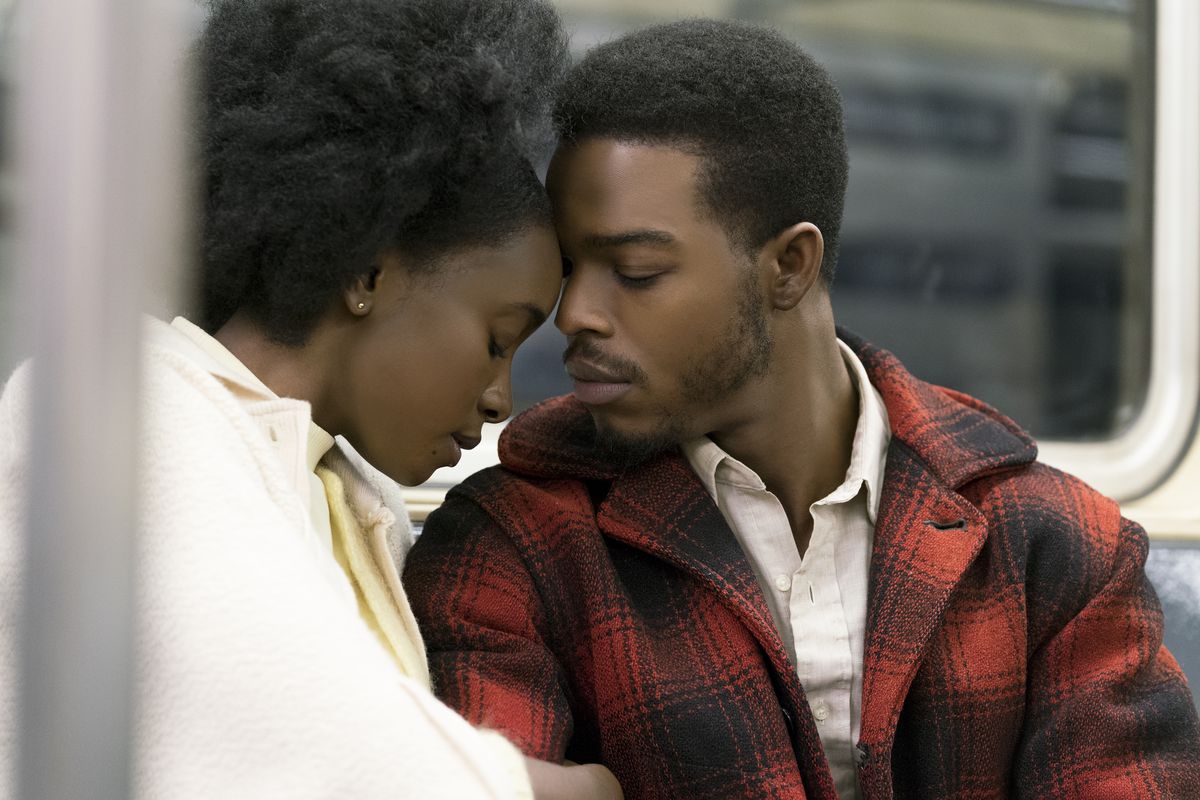 If Beale Street Could Talk[/caption]
The Film Society of Lincoln Center today announced the 30 films for the Main Slate of the 56th New York Film Festival taking place September 28 to October 14, 2018.
This year’s Main Slate showcases films from 22 different countries, including new titles from celebrated auteurs, extraordinary work from directors making their first NYFF bows, and captivating features that wowed audiences at international festivals. Five films in the festival were honored at Cannes, including Hirokazu Kore-eda’s Palme d’Or–winner Shoplifters; Jean-Luc Godard’s The Image Book, awarded a Special Palme d’Or; Cold War, which took home the Best Director prize for Paweł Pawlikowski; and Alice Rohrwacher’s Happy as Lazzaro and Jafar Panahi’s 3 Faces, which shared the Best Screenplay award. Returning to the festival for the third consecutive year is Hong Sangsoo with two new films, joined by his fellow NYFF54 filmmakers Olivier Assayas and Barry Jenkins. Frederick Wiseman makes his 10th appearance at the festival, while other returning filmmakers include Joel & Ethan Coen, Alex Ross Perry, Claire Denis, Ulrich Köhler, Lee Chang-dong, Jia Zhangke, and Christian Petzold. Making both their directorial and NYFF debuts are Paul Dano and Richard Billingham, and Louis Garrel makes his first NYFF showing as a director. Other filmmakers new to the festival include Dominga Sotomayor, Christophe Honoré, Tamara Jenkins, Mariano Llinás, and Ying Liang, as well as Bi Gan and Ryûsuke Hamaguchi, both alumni of New Directors/New Films 2016.
The NYFF56 Opening Night is Yorgos Lanthimos’s The Favourite, Alfonso Cuarón’s ROMA is Centerpiece, and Julian Schnabel’s At Eternity’s Gate will close the festival.
NYFF Director and Selection Committee Chair Kent Jones said, “Francis Ford Coppola said that the cinema would become a real art form only when the tools of moviemaking became as inexpensive as paints, brushes, and canvases. That has come to pass, but at the same time it’s become increasingly tough to do serious work that is beholden to nothing but the filmmaker’s need to express these emotions in this form in moving images and sound. So if I were pressed to choose one word to describe the films in this year’s Main Slate, it would be: bravery. These films were made all over the globe, by young filmmakers like Dominga Sotomayor and masters like Fred Wiseman, by artists of vastly different sensibilities from Claire Denis to the Coen Brothers, Jafar Panahi to Jean-Luc Godard. And the unifying thread is their bravery, the bravery needed to fight past the urge to commercialized smoothness and mediocrity that is always assuming new forms. That’s what makes every single title in this year’s Main Slate so precious, and so vital.”
The 56th New York Film Festival Main Slate
Opening Night
The Favourite
Dir. Yorgos Lanthimos, Ireland/UK/USA, 2018, 121m
In Yorgos Lanthimos’s wildly intricate and very darkly funny new film, Sarah Churchill, the Duchess of Marlborough (Rachel Weisz), and her servant Abigail Hill (Emma Stone) engage in a sexually charged fight to the death for the body and soul of Queen Anne (Olivia Colman) at the height of the War of the Spanish Succession. This trio of truly brilliant performances is the dynamo that powers Lanthimos’s top-to-bottom reimagining of the costume epic, in which the visual pageantry of court life in 18th-century England becomes not just a lushly appointed backdrop but an ironically heightened counterpoint to the primal conflict unreeling behind closed doors. A Fox Searchlight Pictures release.
Centerpiece
ROMA
Dir. Alfonso Cuarón, Mexico/USA, 2018, 135m
In Alfonso Cuarón’s autobiographically inspired film, set in Mexico City in the early ’70s, we are placed within the physical and emotional terrain of a middle-class family whose center is quietly and unassumingly held by its beloved live-in nanny and housekeeper (Yalitza Aparicio). The cast is uniformly magnificent, but the real star of ROMA is the world itself, fully present and vibrantly alive, from sudden life-changing events to the slightest shifts in mood and atmosphere. Cuarón tells us an epic story of everyday life while also gently sweeping us into a vast cinematic experience, in which time and space breathe and majestically unfold. Shot in breathtaking black and white and featuring a sound design that represents something new in the medium, ROMA is a truly visionary work. A Netflix release.
Closing Night
At Eternity’s Gate
Dir. Julian Schnabel, USA/France, 2018, 106m
North American Premiere
Julian Schnabel’s ravishingly tactile and luminous new film takes a fresh look at the last days of Vincent van Gogh, and in the process revivifies our sense of the artist as a living, feeling human being. Schnabel; his co-writers Jean-Claude Carrière and Louise Kugelberg, also the film’s editor; and cinematographer Benoît Delhomme strip everything down to essentials, fusing the sensual, the emotional, and the spiritual. And the pulsing heart of At Eternity’s Gate is Willem Dafoe’s shattering performance: his Vincent is at once lucid, mad, brilliant, helpless, defeated, and, finally, triumphant. With Oscar Isaac as Gauguin, Rupert Friend as Theo, Mathieu Amalric as Dr. Gachet, Emmanuelle Seigner as Madame Ginoux, and Mads Mikkelsen as The Priest. A CBS Films release.
3 Faces
Dir. Jafar Panahi, Iran, 2018, 100m
U.S. Premiere
Iranian director Jafar Panahi’s fourth completed feature since he was officially banned from filmmaking is one of his very best. Panahi begins with a smartphone video shot by a young woman (Marziyeh Rezaei) who announces to the camera that her parents have forbidden her from realizing her dream of acting and then, by all appearances, takes her own life. The recipient of the video, Behnaz Jafari, as herself, asks Panahi, as himself, to drive her to the woman’s tiny home village near the Turkish border to investigate. From there, 3 Faces builds in narrative, thematic, and visual intricacy to put forth a grand expression of community and solidarity under the eye of oppression.
Asako I & II
Dir. Ryûsuke Hamaguchi, Japan/France, 2018, 119m
U.S. Premiere
A truly original Vertigo riff, based on a novel by Tomoka Shibasaki, Asako I & II is an enchanting, unnerving paean to the notion of love as a trance state. Asako (Erika Karata) and Baku (Masahiro Higashide) share an intense, all-consuming romance—but one day the moody Baku ups and vanishes. Two years later, having moved from Osaka to Tokyo, Asako meets Baku’s exact double. Ryûsuke Hamaguchi, who gained plenty of attention for 2015’s five-hour-plus Happy Hour, has returned with a beguiling and mysterious film that traces the trajectory of a love—or, to be accurate, two loves—found, lost, displaced, and regained. A Grasshopper Film release.
Ash Is Purest White
Dir. Jia Zhangke, China, 2018, 142m
U.S. Premiere
Jia Zhangke’s extraordinary body of work has doubled as a record of 21st-century China and its warp-speed transformations. A tragicomedy in the fullest sense, Ash Is Purest White is at once his funniest and saddest film, portraying the passage of time through narrative ellipses and, like his Mountains May Depart (NYFF53), a three-part structure. Despite its jianghu—criminal underworld—setting, Ash is less a gangster movie than a melodrama, beginning by following Qiao and her mobster boyfriend Bin as they stake out their turf against rivals and upstarts in 2001 postindustrial Datong before expanding out into an epic narrative of how abstract forces shape individual lives. As the formidable, quick-witted Qiao, a never better Zhao Tao has fashioned a heroine for the ages. A Cohen Media Group release.
The Ballad of Buster Scruggs
Dir. Joel Coen & Ethan Coen, USA, 2018, 128m
North American Premiere
Here’s something new from the Coen Brothers—an anthology of short films based on a fictional book of “western tales,” featuring Tim Blake Nelson as a murderous, white-hatted singing cowboy; James Franco as a bad luck bank-robber; Liam Neeson as the impresario of a traveling medicine show with increasingly diminishing returns; Tom Waits as a die-hard gold prospector; Zoe Kazan and Bill Heck as two shy people who almost come together on the wagon trail; and Tyne Daly, Saul Rubinek, Brendan Gleeson, Chelcie Ross, and Jonjo O’Neill as a motley crew on a stagecoach to nowhere. Each story is distinct, but unified by the thematic thread of mortality. As a whole movie experience, Buster Scruggs is wildly entertaining, and, like all Coen films, endlessly surprising. An Annapurna Production and Netflix release.
Burning
Dir. Lee Chang-dong, South Korea, 2018, 148m
Expanded from Haruki Murakami’s short story “Barn Burning,” the sixth feature from Korean master Lee Chang-dong, known best in the U.S. for such searing, emotional dramas as Secret Sunshine (NYFF45) and Poetry (NYFF48), begins by tracing a romantic triangle of sorts: Jongsu (Yoo Ah-in), an aspiring writer, becomes involved with a woman he knew from childhood, Haemi (Jun Jong-seo), who is about to embark on a trip to Africa. She returns some weeks later with a fellow Korean, the Gatsby-esque Ben (Steven Yeun), who has a mysterious source of income and a very unusual hobby. A tense, haunting multiple-character study, the film accumulates a series of unanswered questions and unspoken motivations to conjure a totalizing mood of uncertainty and quietly bends the contours of the thriller genre to brilliant effect. A Well Go USA release.
Cold War
Dir. Paweł Pawlikowski, Poland, 2018, 90m
Academy Award–winner Paweł Pawlikowski follows up his box-office sensation Ida with this bittersweet, exquisitely crafted tale of an impossible love. Set between the late 1940s and early 1960s, Cold War is, as the title implies, a Soviet-era drama, but it stringently and inventively avoids the clichés of many a classical-minded World War II art film, tracking the tempestuous love between pianist (Tomasz Kot) and singer (Joanna Kulig) as they navigate the realities of living in both Poland and Paris, in and outside of the Iron Curtain. Shot in crisp black-and-white and set to a bewitching jazzy score, Pawlikowski’s evocative film consummately depicts an uncompromising passion caught up in the gears of history. An Amazon Studios release.
A Faithful Man / L’Homme fidèle
Dir. Louis Garrel, France, 2018, 75m
U.S. Premiere
Nine years after she left him for his best friend, journalist Abel (Louis Garrel) gets back together with his recently widowed old flame Marianne (Laetitia Casta). It seems to be a beautiful new beginning, but soon the hapless Abel finds himself embroiled in all sorts of dramas: the come-ons of a wily jeune femme (Lily-Rose Depp), the machinations of Marianne’s morbid young son, and some unsavory questions about what exactly happened to his girlfriend’s first husband. Shifting points of view as nimbly as its players switch partners, the sophomore feature from actor/director Louis Garrel—co-written with the legendary Jean-Claude Carrière—is at once a beguiling bedroom farce and a slippery inquiry into truth, subjectivity, and the elusive nature of romantic attraction.
A Family Tour
Dir. Ying Liang, Taiwan/Hong Kong/Singapore/Malaysia, 2018, 107m
U.S. Premiere
Since his 2012 feature When Night Falls, a stinging critique of state power that the Chinese authorities attempted to suppress, the director Ying Liang has been forced to live in exile in Hong Kong. His return to feature filmmaking is a characteristically precise and powerful work, and, as inspired by his own precarious situation and based on a reunion with his in-laws, an autobiographical one. The film follows a Hong Kong–exiled director (Gong Zhe) as she travels to a film festival in Taiwan with her husband and toddler, while her ailing mother (Nai An) vacations there separately with a tour group. To avoid attracting attention, the family shadows the tour’s sightseeing itinerary, visiting each other during photo stops and mealtimes. An empathetic snapshot of a mother-daughter relationship, this brave, poised film is also a deeply moving testament to the inseparability of the personal and the political.
La Flor
Dir. Mariano Llinás, Argentina, 2018, 807m
North American Premiere
A decade in the making, Mariano Llinás’s follow-up to his 2008 cult classic Extraordinary Stories is an unrepeatable labor of love and madness that redefines the concept of binge viewing. The director himself appears at the start to preview the six disparate episodes that await, each starring the same four remarkable actresses: Elisa Carricajo, Valeria Correa, Pilar Gamboa, and Laura Paredes. Overflowing with nested subplots and whiplash digressions, La Flor shape-shifts from a B-movie to a musical to a spy thriller to a category-defying metafiction—all of them without endings—to a remake of a very well-known French classic and, finally, to an enigmatic period piece that lacks a beginning (granted, all notions of beginnings and endings become fuzzy after 14 hours). An adventure in scale and duration, La Flor is a marvelously entertaining exploration of the possibilities of fiction that lands somewhere close to its outer limits.
Grass
Dir. Hong Sangsoo, South Korea, 2018, 66m
U.S. Premiere
Sitting in a café, typing on a laptop, Areum (Kim Min-hee) eavesdrops on three dramatic situations unfolding in her general vicinity: a young woman bound for Europe and a male friend who erupt in vitriolic accusations, a washed-up actor trying to sweet-talk his way into staying with an old friend, and a narcissistic actor-director (Jung Jin-young) trying to rope a young writer into his next project. Playing out largely in long-take two-shots, these conversations create a kind of never-ending theatrical performance, with Areum as the anchor. With its raw emotions and seeming formal simplicity masking a complex episodic approach, Grass finds Korean master Hong Sangsoo setting up a fascinating narrative problem for himself and solving it as only he can. A Cinema Guild release.
Happy as Lazzaro / Lazzaro felice
Dir. Alice Rohrwacher, Italy, 2018, 128m
North American Premiere
In the transfiguring and transfixing third feature from Alice Rohrwacher (The Wonders, NYFF52), we find ourselves amid a throng of tobacco farmers living in a state of extreme deprivation on an estate known as Inviolata, with wide-eyed teenager Lazzaro (nonprofessional discovery Adriano Tardiolo) emerging as a focal point. Although this all seems to be taking place in the past (as implied by the warm grain of Hélène Louvart’s 16mm cinematography), a stunning mid-movie leap vaults the narrative squarely into the present day and into the realm of parable. In a fable touching on perennial class struggle with Christian overtones, Rohrwacher summons the spirit of Pasolini, while also nodding to Ermanno Olmi and Visconti. A Netflix release.
Her Smell
Dir. Alex Ross Perry, USA, 2018, 134m
U.S. Premiere
The latest from Alex Ross Perry (Listen Up Philip, NYFF52) traces the psychology of an unforgettable woman under the influence. Becky Something (Elisabeth Moss, in a powerhouse performance), the influential lead singer of a popular ’90s alt-rock outfit, struggles with her demons as friends, family, and bandmates alike behold her unraveling through a prism of horror, empathy, and resentment. Perry tracks Becky’s self-destruction—and potential creative redemption—through snaking long takes (arguably some of DP Sean Price Williams’s finest work) in claustrophobic backstage hallways, garishly lit dressing rooms, and recording studios, and the film’s ensemble cast (including Cara Delevingne, Ashley Benson, Amber Heard, Virginia Madsen, Dan Stevens, and Eric Stoltz) is impeccable in support of Moss’s rattling trip to the brink.
High Life
Dir. Claire Denis, Germany/France/USA/UK/Poland, 2018, 110m
U.S. Premiere
Claire Denis’s latest film is set aboard a spacecraft piloted by death row prisoners on a decades-long suicide mission to enter and harness the power of a black hole. But as is always the case with this filmmaker, the actual structure seems to evolve organically through moods and uncanny spells, and the closest juxtapositions of violence and intimacy. High Life features some of the most unsettling passages Denis has ever filmed, as well as moments of the greatest delicacy and tenderness. With Robert Pattinson, Juliette Binoche, André Benjamin, and Mia Goth.
Hotel by the River
Dir. Hong Sangsoo, South Korea, 2018, 96m
U.S. Premiere
Two tales intersect at a riverside hotel: an elderly poet (Ki Joo-bong), invited to stay there for free by the owner, summons his two estranged sons, sensing his life drawing to a close; and a young woman (Kim Min-hee) nursing a recently broken heart is visited by a friend who tries to console her. At times these threads overlap, at others they run tantalizingly close to each other. Using a stark black-and-white palette and handheld cinematography (with frequent DP Kim Hyung-ku), Hong crafts an affecting examination of family, mortality, and the ways in which we attempt to heal wounds old and fresh.
If Beale Street Could Talk
Dir. Barry Jenkins, USA, 2018
U.S. Premiere
Barry Jenkins’s follow-up to his Oscar-winning Moonlight is a carefully wrought adaptation of James Baldwin’s penultimate novel, set in Harlem in the early 1970s. Fonny (Stephan James) and Tish (KiKi Layne) are childhood friends who fall in love as young adults. Tish becomes pregnant, and Fonny suffers a fate tragically common to young African-American men: he is arrested and convicted for a crime he didn’t commit. Jenkins’s deeply soulful film stays focused on the emotional currents between parents and children, couples and friends, all of whom spend their lives repairing and reinforcing the precious but fraying bonds of family and community in an unforgiving racist world. With Regina King, Colman Domingo, Teyonah Parris, Aunjanue Ellis, and Michael Beach. An Annapurna Pictures release.
The Image Book / Le Livre d’image
Dir. Jean-Luc Godard, Switzerland, 2018, 90m
U.S. Premiere
Jean-Luc Godard’s “late period” probably began with 2001’s In Praise of Love, and since then he has been formulating and enacting a path toward an ending: the ending of individual films, the ending of engagement with cinema, and, now that he’s 87, the possible ending of his own existence. With The Image Book all barriers between the artist, his art, and his audience have dissolved. The film is structured in chapters and predominantly comprised of pre-existing images, many of which will be familiar from Godard’s previous work. The relationship between image and sound is, as always, intensely physical and sometimes jaw-dropping. And…isn’t it enough to say, simply, that this is the work of a master? And that you have to see it? A Kino Lorber release.
In My Room
Dir. Ulrich Köhler, Germany, 2018, 119m
U.S. Premiere
The fourth feature from German director Ulrich Köhler (Sleeping Sickness, NYFF49) takes a disarmingly realistic and restrained approach to a fantastical premise: the eternally popular fantasy of the last man on earth. Sad-sack, 40ish TV cameraman Armin (Hans Löw) has been summoned home by his father to help tend to his terminally ill grandmother, but awakens one morning to find the world around him entirely depopulated. Eventually, the film introduces a fellow survivor, an Eve (Elena Radonicich) to complicate the apparent contentment of its Adam. In My Room is a film of meticulous details and sly, subtle ironies, crafted by the skills, temperament, and philosophical inquiry of an emerging master. A Grasshopper Film release.
Long Day’s Journey Into Night
Dir. Bi Gan, China/France, 2018, 133m
U.S. Premiere
As proven by his knockout debut, Kaili Blues, Bi Gan is preoccupied with film’s potential to both materialize mental space and convey physical sensation. His cinematic ambitions are further crystallized, to say the least, in Long Day’s Journey Into Night, a noir-tinged film about a solitary man (Huang Jue) haunted by loss and regret, told in two parts: the first an achronological mosaic, the second a nocturnal dream. Again centering around his native province of Guizhou in southwest China, the director has created a film like nothing you’ve seen before, especially in the second half’s hour-long, gravity-defying 3D sequence shot, which plunges its protagonist—and us—through a labyrinthine cityscape.
Monrovia, Indiana
Dir. Frederick Wiseman, USA, 2018, 143m
U.S. Premiere
Every new film from Frederick Wiseman, now 88 years old, seems more vigorous and acute than the last. His subject here is Monrovia, Indiana; population 1063, as of 2017; located deep in the American heartland. Wiseman alights on key activities: talk among friends over coffee at the diner, packaging meat at the supermarket, trucks loading with corn, expansion debates at town planning commission meetings, and, most intriguingly, a funeral. Monrovia, Indiana is a tough, piercing look at the rhythm and texture of life as it is lived in a wide swathe of this country. A Zipporah Films release.
Non-Fiction / Doubles vies
Dir. Olivier Assayas, France, 2018, 106m
Set within the world of publishing, Olivier Assayas’s new film finds two hopelessly intertwined couples—Guillaume Canet’s troubled book executive and Juliette Binoche’s weary actress; Vincent Macaigne’s boorish novelist and Nora Hamzawi’s straight-and-balanced political operative—obsessed with the state of things, and how (or when) it will (or might) change. Is print dying? Has blogging replaced writing? Is fiction over? But the divide between what these characters—and their friends, and their enemies, and everyone in between—talk about and what is actually happening between them, moment by moment, is what gives Non-Fiction its very particular charm, humor, and lifelike stabs of emotion. A Sundance Selects release.
Private Life
Dir. Tamara Jenkins, USA, 2017, 123m
In Tamara Jenkins’s first film in ten years, Kathryn Hahn and Paul Giamatti are achingly real as Rachel and Richard, a middle-aged New York couple caught in the desperation, frustration, and exhaustion of trying to have a child, whether by fertility treatments or adoption or surrogate motherhood. They find a willing partner in Sadie (the formidable Kayli Carter), Richard’s niece by marriage, who happily agrees to donate her eggs, and the three of them build their own little outcast family in the process. Private Life is a wonder, by turns hilarious and harrowing (sometimes at once), and a very carefully observed portrait of middle-class Bohemian Manhattanites. With John Carroll Lynch and Molly Shannon. A Netflix release.
RAY & LIZ
Dir. Richard Billingham, UK, 2018, 107m
U.S. Premiere
English photographer and visual artist Richard Billingham’s first feature is grounded in the visual and emotional textures of his family portraits, particularly those of his deeply dysfunctional parents, whose names give the film its title. Billingham builds astonishing and unflinching scenes with his principal actors—Ella Smith as Liz, Justin Salinger as Ray, Patrick Romer as the older Ray, Tony Way and Sam Gittins as neighbors, and Joshua Millard-Lloyd as the youngest child—that play out second by second as if by some new form of direct transmission from the artist’s memory bank. There is not a single second of this electrifying debut that doesn’t feel 100% rooted in personal experience.
Shoplifters
Dir. Hirokazu Kore-eda, Japan, 2018, 121m
Hirokazu Kore-eda’s Cannes Palme d’Or winner is a heartrending glimpse into an often invisible segment of Japanese society: those struggling to stay afloat in the face of crushing poverty. On the the margins of Tokyo, a most unusual “family”—a collection of societal castoffs united by their shared outsiderhood and fierce loyalty to one another—survives by petty stealing and grifting. When they welcome into their fold a young girl who’s been abused by her parents, they risk exposing themselves to the authorities and upending their tenuous, below-the-radar existence. The director’s latest masterful, richly observed human drama makes the quietly radical case that it is love—not blood—that defines a family. A Magnolia Pictures release.
Sorry Angel
Dir. Christophe Honoré, France, 2018, 132m
North American Premiere
The ever-unpredictable Christophe Honoré (Love Songs) returns with perhaps his most personal, emotionally rich work yet. At once an intimate chronicle of a romance and a sprawling portrait of gay life in early 1990s France, Sorry Angel follows the intertwining journeys of Jacques (Pierre Deladonchamps), a worldly, HIV-positive Parisian writer confronting his own mortality, and Arthur (Vincent Lacoste), a curious, carefree university student just beginning to live. Brought together by chance, the men find themselves navigating a casual fling that gradually deepens into a tender, transformative bond. Graced with vivid, complex characters and inspired flights of cinematic imagination, this is a vibrant, life-affirming celebration of love, friendship, and human connection. Released by Strand Releasing.
Too Late to Die Young
Dir. Dominga Sotomayor, Chile/Brazil/Argentina/
If Beale Street Could Talk[/caption]
The Film Society of Lincoln Center today announced the 30 films for the Main Slate of the 56th New York Film Festival taking place September 28 to October 14, 2018.
This year’s Main Slate showcases films from 22 different countries, including new titles from celebrated auteurs, extraordinary work from directors making their first NYFF bows, and captivating features that wowed audiences at international festivals. Five films in the festival were honored at Cannes, including Hirokazu Kore-eda’s Palme d’Or–winner Shoplifters; Jean-Luc Godard’s The Image Book, awarded a Special Palme d’Or; Cold War, which took home the Best Director prize for Paweł Pawlikowski; and Alice Rohrwacher’s Happy as Lazzaro and Jafar Panahi’s 3 Faces, which shared the Best Screenplay award. Returning to the festival for the third consecutive year is Hong Sangsoo with two new films, joined by his fellow NYFF54 filmmakers Olivier Assayas and Barry Jenkins. Frederick Wiseman makes his 10th appearance at the festival, while other returning filmmakers include Joel & Ethan Coen, Alex Ross Perry, Claire Denis, Ulrich Köhler, Lee Chang-dong, Jia Zhangke, and Christian Petzold. Making both their directorial and NYFF debuts are Paul Dano and Richard Billingham, and Louis Garrel makes his first NYFF showing as a director. Other filmmakers new to the festival include Dominga Sotomayor, Christophe Honoré, Tamara Jenkins, Mariano Llinás, and Ying Liang, as well as Bi Gan and Ryûsuke Hamaguchi, both alumni of New Directors/New Films 2016.
The NYFF56 Opening Night is Yorgos Lanthimos’s The Favourite, Alfonso Cuarón’s ROMA is Centerpiece, and Julian Schnabel’s At Eternity’s Gate will close the festival.
NYFF Director and Selection Committee Chair Kent Jones said, “Francis Ford Coppola said that the cinema would become a real art form only when the tools of moviemaking became as inexpensive as paints, brushes, and canvases. That has come to pass, but at the same time it’s become increasingly tough to do serious work that is beholden to nothing but the filmmaker’s need to express these emotions in this form in moving images and sound. So if I were pressed to choose one word to describe the films in this year’s Main Slate, it would be: bravery. These films were made all over the globe, by young filmmakers like Dominga Sotomayor and masters like Fred Wiseman, by artists of vastly different sensibilities from Claire Denis to the Coen Brothers, Jafar Panahi to Jean-Luc Godard. And the unifying thread is their bravery, the bravery needed to fight past the urge to commercialized smoothness and mediocrity that is always assuming new forms. That’s what makes every single title in this year’s Main Slate so precious, and so vital.”
The 56th New York Film Festival Main Slate
Opening Night
The Favourite
Dir. Yorgos Lanthimos, Ireland/UK/USA, 2018, 121m
In Yorgos Lanthimos’s wildly intricate and very darkly funny new film, Sarah Churchill, the Duchess of Marlborough (Rachel Weisz), and her servant Abigail Hill (Emma Stone) engage in a sexually charged fight to the death for the body and soul of Queen Anne (Olivia Colman) at the height of the War of the Spanish Succession. This trio of truly brilliant performances is the dynamo that powers Lanthimos’s top-to-bottom reimagining of the costume epic, in which the visual pageantry of court life in 18th-century England becomes not just a lushly appointed backdrop but an ironically heightened counterpoint to the primal conflict unreeling behind closed doors. A Fox Searchlight Pictures release.
Centerpiece
ROMA
Dir. Alfonso Cuarón, Mexico/USA, 2018, 135m
In Alfonso Cuarón’s autobiographically inspired film, set in Mexico City in the early ’70s, we are placed within the physical and emotional terrain of a middle-class family whose center is quietly and unassumingly held by its beloved live-in nanny and housekeeper (Yalitza Aparicio). The cast is uniformly magnificent, but the real star of ROMA is the world itself, fully present and vibrantly alive, from sudden life-changing events to the slightest shifts in mood and atmosphere. Cuarón tells us an epic story of everyday life while also gently sweeping us into a vast cinematic experience, in which time and space breathe and majestically unfold. Shot in breathtaking black and white and featuring a sound design that represents something new in the medium, ROMA is a truly visionary work. A Netflix release.
Closing Night
At Eternity’s Gate
Dir. Julian Schnabel, USA/France, 2018, 106m
North American Premiere
Julian Schnabel’s ravishingly tactile and luminous new film takes a fresh look at the last days of Vincent van Gogh, and in the process revivifies our sense of the artist as a living, feeling human being. Schnabel; his co-writers Jean-Claude Carrière and Louise Kugelberg, also the film’s editor; and cinematographer Benoît Delhomme strip everything down to essentials, fusing the sensual, the emotional, and the spiritual. And the pulsing heart of At Eternity’s Gate is Willem Dafoe’s shattering performance: his Vincent is at once lucid, mad, brilliant, helpless, defeated, and, finally, triumphant. With Oscar Isaac as Gauguin, Rupert Friend as Theo, Mathieu Amalric as Dr. Gachet, Emmanuelle Seigner as Madame Ginoux, and Mads Mikkelsen as The Priest. A CBS Films release.
3 Faces
Dir. Jafar Panahi, Iran, 2018, 100m
U.S. Premiere
Iranian director Jafar Panahi’s fourth completed feature since he was officially banned from filmmaking is one of his very best. Panahi begins with a smartphone video shot by a young woman (Marziyeh Rezaei) who announces to the camera that her parents have forbidden her from realizing her dream of acting and then, by all appearances, takes her own life. The recipient of the video, Behnaz Jafari, as herself, asks Panahi, as himself, to drive her to the woman’s tiny home village near the Turkish border to investigate. From there, 3 Faces builds in narrative, thematic, and visual intricacy to put forth a grand expression of community and solidarity under the eye of oppression.
Asako I & II
Dir. Ryûsuke Hamaguchi, Japan/France, 2018, 119m
U.S. Premiere
A truly original Vertigo riff, based on a novel by Tomoka Shibasaki, Asako I & II is an enchanting, unnerving paean to the notion of love as a trance state. Asako (Erika Karata) and Baku (Masahiro Higashide) share an intense, all-consuming romance—but one day the moody Baku ups and vanishes. Two years later, having moved from Osaka to Tokyo, Asako meets Baku’s exact double. Ryûsuke Hamaguchi, who gained plenty of attention for 2015’s five-hour-plus Happy Hour, has returned with a beguiling and mysterious film that traces the trajectory of a love—or, to be accurate, two loves—found, lost, displaced, and regained. A Grasshopper Film release.
Ash Is Purest White
Dir. Jia Zhangke, China, 2018, 142m
U.S. Premiere
Jia Zhangke’s extraordinary body of work has doubled as a record of 21st-century China and its warp-speed transformations. A tragicomedy in the fullest sense, Ash Is Purest White is at once his funniest and saddest film, portraying the passage of time through narrative ellipses and, like his Mountains May Depart (NYFF53), a three-part structure. Despite its jianghu—criminal underworld—setting, Ash is less a gangster movie than a melodrama, beginning by following Qiao and her mobster boyfriend Bin as they stake out their turf against rivals and upstarts in 2001 postindustrial Datong before expanding out into an epic narrative of how abstract forces shape individual lives. As the formidable, quick-witted Qiao, a never better Zhao Tao has fashioned a heroine for the ages. A Cohen Media Group release.
The Ballad of Buster Scruggs
Dir. Joel Coen & Ethan Coen, USA, 2018, 128m
North American Premiere
Here’s something new from the Coen Brothers—an anthology of short films based on a fictional book of “western tales,” featuring Tim Blake Nelson as a murderous, white-hatted singing cowboy; James Franco as a bad luck bank-robber; Liam Neeson as the impresario of a traveling medicine show with increasingly diminishing returns; Tom Waits as a die-hard gold prospector; Zoe Kazan and Bill Heck as two shy people who almost come together on the wagon trail; and Tyne Daly, Saul Rubinek, Brendan Gleeson, Chelcie Ross, and Jonjo O’Neill as a motley crew on a stagecoach to nowhere. Each story is distinct, but unified by the thematic thread of mortality. As a whole movie experience, Buster Scruggs is wildly entertaining, and, like all Coen films, endlessly surprising. An Annapurna Production and Netflix release.
Burning
Dir. Lee Chang-dong, South Korea, 2018, 148m
Expanded from Haruki Murakami’s short story “Barn Burning,” the sixth feature from Korean master Lee Chang-dong, known best in the U.S. for such searing, emotional dramas as Secret Sunshine (NYFF45) and Poetry (NYFF48), begins by tracing a romantic triangle of sorts: Jongsu (Yoo Ah-in), an aspiring writer, becomes involved with a woman he knew from childhood, Haemi (Jun Jong-seo), who is about to embark on a trip to Africa. She returns some weeks later with a fellow Korean, the Gatsby-esque Ben (Steven Yeun), who has a mysterious source of income and a very unusual hobby. A tense, haunting multiple-character study, the film accumulates a series of unanswered questions and unspoken motivations to conjure a totalizing mood of uncertainty and quietly bends the contours of the thriller genre to brilliant effect. A Well Go USA release.
Cold War
Dir. Paweł Pawlikowski, Poland, 2018, 90m
Academy Award–winner Paweł Pawlikowski follows up his box-office sensation Ida with this bittersweet, exquisitely crafted tale of an impossible love. Set between the late 1940s and early 1960s, Cold War is, as the title implies, a Soviet-era drama, but it stringently and inventively avoids the clichés of many a classical-minded World War II art film, tracking the tempestuous love between pianist (Tomasz Kot) and singer (Joanna Kulig) as they navigate the realities of living in both Poland and Paris, in and outside of the Iron Curtain. Shot in crisp black-and-white and set to a bewitching jazzy score, Pawlikowski’s evocative film consummately depicts an uncompromising passion caught up in the gears of history. An Amazon Studios release.
A Faithful Man / L’Homme fidèle
Dir. Louis Garrel, France, 2018, 75m
U.S. Premiere
Nine years after she left him for his best friend, journalist Abel (Louis Garrel) gets back together with his recently widowed old flame Marianne (Laetitia Casta). It seems to be a beautiful new beginning, but soon the hapless Abel finds himself embroiled in all sorts of dramas: the come-ons of a wily jeune femme (Lily-Rose Depp), the machinations of Marianne’s morbid young son, and some unsavory questions about what exactly happened to his girlfriend’s first husband. Shifting points of view as nimbly as its players switch partners, the sophomore feature from actor/director Louis Garrel—co-written with the legendary Jean-Claude Carrière—is at once a beguiling bedroom farce and a slippery inquiry into truth, subjectivity, and the elusive nature of romantic attraction.
A Family Tour
Dir. Ying Liang, Taiwan/Hong Kong/Singapore/Malaysia, 2018, 107m
U.S. Premiere
Since his 2012 feature When Night Falls, a stinging critique of state power that the Chinese authorities attempted to suppress, the director Ying Liang has been forced to live in exile in Hong Kong. His return to feature filmmaking is a characteristically precise and powerful work, and, as inspired by his own precarious situation and based on a reunion with his in-laws, an autobiographical one. The film follows a Hong Kong–exiled director (Gong Zhe) as she travels to a film festival in Taiwan with her husband and toddler, while her ailing mother (Nai An) vacations there separately with a tour group. To avoid attracting attention, the family shadows the tour’s sightseeing itinerary, visiting each other during photo stops and mealtimes. An empathetic snapshot of a mother-daughter relationship, this brave, poised film is also a deeply moving testament to the inseparability of the personal and the political.
La Flor
Dir. Mariano Llinás, Argentina, 2018, 807m
North American Premiere
A decade in the making, Mariano Llinás’s follow-up to his 2008 cult classic Extraordinary Stories is an unrepeatable labor of love and madness that redefines the concept of binge viewing. The director himself appears at the start to preview the six disparate episodes that await, each starring the same four remarkable actresses: Elisa Carricajo, Valeria Correa, Pilar Gamboa, and Laura Paredes. Overflowing with nested subplots and whiplash digressions, La Flor shape-shifts from a B-movie to a musical to a spy thriller to a category-defying metafiction—all of them without endings—to a remake of a very well-known French classic and, finally, to an enigmatic period piece that lacks a beginning (granted, all notions of beginnings and endings become fuzzy after 14 hours). An adventure in scale and duration, La Flor is a marvelously entertaining exploration of the possibilities of fiction that lands somewhere close to its outer limits.
Grass
Dir. Hong Sangsoo, South Korea, 2018, 66m
U.S. Premiere
Sitting in a café, typing on a laptop, Areum (Kim Min-hee) eavesdrops on three dramatic situations unfolding in her general vicinity: a young woman bound for Europe and a male friend who erupt in vitriolic accusations, a washed-up actor trying to sweet-talk his way into staying with an old friend, and a narcissistic actor-director (Jung Jin-young) trying to rope a young writer into his next project. Playing out largely in long-take two-shots, these conversations create a kind of never-ending theatrical performance, with Areum as the anchor. With its raw emotions and seeming formal simplicity masking a complex episodic approach, Grass finds Korean master Hong Sangsoo setting up a fascinating narrative problem for himself and solving it as only he can. A Cinema Guild release.
Happy as Lazzaro / Lazzaro felice
Dir. Alice Rohrwacher, Italy, 2018, 128m
North American Premiere
In the transfiguring and transfixing third feature from Alice Rohrwacher (The Wonders, NYFF52), we find ourselves amid a throng of tobacco farmers living in a state of extreme deprivation on an estate known as Inviolata, with wide-eyed teenager Lazzaro (nonprofessional discovery Adriano Tardiolo) emerging as a focal point. Although this all seems to be taking place in the past (as implied by the warm grain of Hélène Louvart’s 16mm cinematography), a stunning mid-movie leap vaults the narrative squarely into the present day and into the realm of parable. In a fable touching on perennial class struggle with Christian overtones, Rohrwacher summons the spirit of Pasolini, while also nodding to Ermanno Olmi and Visconti. A Netflix release.
Her Smell
Dir. Alex Ross Perry, USA, 2018, 134m
U.S. Premiere
The latest from Alex Ross Perry (Listen Up Philip, NYFF52) traces the psychology of an unforgettable woman under the influence. Becky Something (Elisabeth Moss, in a powerhouse performance), the influential lead singer of a popular ’90s alt-rock outfit, struggles with her demons as friends, family, and bandmates alike behold her unraveling through a prism of horror, empathy, and resentment. Perry tracks Becky’s self-destruction—and potential creative redemption—through snaking long takes (arguably some of DP Sean Price Williams’s finest work) in claustrophobic backstage hallways, garishly lit dressing rooms, and recording studios, and the film’s ensemble cast (including Cara Delevingne, Ashley Benson, Amber Heard, Virginia Madsen, Dan Stevens, and Eric Stoltz) is impeccable in support of Moss’s rattling trip to the brink.
High Life
Dir. Claire Denis, Germany/France/USA/UK/Poland, 2018, 110m
U.S. Premiere
Claire Denis’s latest film is set aboard a spacecraft piloted by death row prisoners on a decades-long suicide mission to enter and harness the power of a black hole. But as is always the case with this filmmaker, the actual structure seems to evolve organically through moods and uncanny spells, and the closest juxtapositions of violence and intimacy. High Life features some of the most unsettling passages Denis has ever filmed, as well as moments of the greatest delicacy and tenderness. With Robert Pattinson, Juliette Binoche, André Benjamin, and Mia Goth.
Hotel by the River
Dir. Hong Sangsoo, South Korea, 2018, 96m
U.S. Premiere
Two tales intersect at a riverside hotel: an elderly poet (Ki Joo-bong), invited to stay there for free by the owner, summons his two estranged sons, sensing his life drawing to a close; and a young woman (Kim Min-hee) nursing a recently broken heart is visited by a friend who tries to console her. At times these threads overlap, at others they run tantalizingly close to each other. Using a stark black-and-white palette and handheld cinematography (with frequent DP Kim Hyung-ku), Hong crafts an affecting examination of family, mortality, and the ways in which we attempt to heal wounds old and fresh.
If Beale Street Could Talk
Dir. Barry Jenkins, USA, 2018
U.S. Premiere
Barry Jenkins’s follow-up to his Oscar-winning Moonlight is a carefully wrought adaptation of James Baldwin’s penultimate novel, set in Harlem in the early 1970s. Fonny (Stephan James) and Tish (KiKi Layne) are childhood friends who fall in love as young adults. Tish becomes pregnant, and Fonny suffers a fate tragically common to young African-American men: he is arrested and convicted for a crime he didn’t commit. Jenkins’s deeply soulful film stays focused on the emotional currents between parents and children, couples and friends, all of whom spend their lives repairing and reinforcing the precious but fraying bonds of family and community in an unforgiving racist world. With Regina King, Colman Domingo, Teyonah Parris, Aunjanue Ellis, and Michael Beach. An Annapurna Pictures release.
The Image Book / Le Livre d’image
Dir. Jean-Luc Godard, Switzerland, 2018, 90m
U.S. Premiere
Jean-Luc Godard’s “late period” probably began with 2001’s In Praise of Love, and since then he has been formulating and enacting a path toward an ending: the ending of individual films, the ending of engagement with cinema, and, now that he’s 87, the possible ending of his own existence. With The Image Book all barriers between the artist, his art, and his audience have dissolved. The film is structured in chapters and predominantly comprised of pre-existing images, many of which will be familiar from Godard’s previous work. The relationship between image and sound is, as always, intensely physical and sometimes jaw-dropping. And…isn’t it enough to say, simply, that this is the work of a master? And that you have to see it? A Kino Lorber release.
In My Room
Dir. Ulrich Köhler, Germany, 2018, 119m
U.S. Premiere
The fourth feature from German director Ulrich Köhler (Sleeping Sickness, NYFF49) takes a disarmingly realistic and restrained approach to a fantastical premise: the eternally popular fantasy of the last man on earth. Sad-sack, 40ish TV cameraman Armin (Hans Löw) has been summoned home by his father to help tend to his terminally ill grandmother, but awakens one morning to find the world around him entirely depopulated. Eventually, the film introduces a fellow survivor, an Eve (Elena Radonicich) to complicate the apparent contentment of its Adam. In My Room is a film of meticulous details and sly, subtle ironies, crafted by the skills, temperament, and philosophical inquiry of an emerging master. A Grasshopper Film release.
Long Day’s Journey Into Night
Dir. Bi Gan, China/France, 2018, 133m
U.S. Premiere
As proven by his knockout debut, Kaili Blues, Bi Gan is preoccupied with film’s potential to both materialize mental space and convey physical sensation. His cinematic ambitions are further crystallized, to say the least, in Long Day’s Journey Into Night, a noir-tinged film about a solitary man (Huang Jue) haunted by loss and regret, told in two parts: the first an achronological mosaic, the second a nocturnal dream. Again centering around his native province of Guizhou in southwest China, the director has created a film like nothing you’ve seen before, especially in the second half’s hour-long, gravity-defying 3D sequence shot, which plunges its protagonist—and us—through a labyrinthine cityscape.
Monrovia, Indiana
Dir. Frederick Wiseman, USA, 2018, 143m
U.S. Premiere
Every new film from Frederick Wiseman, now 88 years old, seems more vigorous and acute than the last. His subject here is Monrovia, Indiana; population 1063, as of 2017; located deep in the American heartland. Wiseman alights on key activities: talk among friends over coffee at the diner, packaging meat at the supermarket, trucks loading with corn, expansion debates at town planning commission meetings, and, most intriguingly, a funeral. Monrovia, Indiana is a tough, piercing look at the rhythm and texture of life as it is lived in a wide swathe of this country. A Zipporah Films release.
Non-Fiction / Doubles vies
Dir. Olivier Assayas, France, 2018, 106m
Set within the world of publishing, Olivier Assayas’s new film finds two hopelessly intertwined couples—Guillaume Canet’s troubled book executive and Juliette Binoche’s weary actress; Vincent Macaigne’s boorish novelist and Nora Hamzawi’s straight-and-balanced political operative—obsessed with the state of things, and how (or when) it will (or might) change. Is print dying? Has blogging replaced writing? Is fiction over? But the divide between what these characters—and their friends, and their enemies, and everyone in between—talk about and what is actually happening between them, moment by moment, is what gives Non-Fiction its very particular charm, humor, and lifelike stabs of emotion. A Sundance Selects release.
Private Life
Dir. Tamara Jenkins, USA, 2017, 123m
In Tamara Jenkins’s first film in ten years, Kathryn Hahn and Paul Giamatti are achingly real as Rachel and Richard, a middle-aged New York couple caught in the desperation, frustration, and exhaustion of trying to have a child, whether by fertility treatments or adoption or surrogate motherhood. They find a willing partner in Sadie (the formidable Kayli Carter), Richard’s niece by marriage, who happily agrees to donate her eggs, and the three of them build their own little outcast family in the process. Private Life is a wonder, by turns hilarious and harrowing (sometimes at once), and a very carefully observed portrait of middle-class Bohemian Manhattanites. With John Carroll Lynch and Molly Shannon. A Netflix release.
RAY & LIZ
Dir. Richard Billingham, UK, 2018, 107m
U.S. Premiere
English photographer and visual artist Richard Billingham’s first feature is grounded in the visual and emotional textures of his family portraits, particularly those of his deeply dysfunctional parents, whose names give the film its title. Billingham builds astonishing and unflinching scenes with his principal actors—Ella Smith as Liz, Justin Salinger as Ray, Patrick Romer as the older Ray, Tony Way and Sam Gittins as neighbors, and Joshua Millard-Lloyd as the youngest child—that play out second by second as if by some new form of direct transmission from the artist’s memory bank. There is not a single second of this electrifying debut that doesn’t feel 100% rooted in personal experience.
Shoplifters
Dir. Hirokazu Kore-eda, Japan, 2018, 121m
Hirokazu Kore-eda’s Cannes Palme d’Or winner is a heartrending glimpse into an often invisible segment of Japanese society: those struggling to stay afloat in the face of crushing poverty. On the the margins of Tokyo, a most unusual “family”—a collection of societal castoffs united by their shared outsiderhood and fierce loyalty to one another—survives by petty stealing and grifting. When they welcome into their fold a young girl who’s been abused by her parents, they risk exposing themselves to the authorities and upending their tenuous, below-the-radar existence. The director’s latest masterful, richly observed human drama makes the quietly radical case that it is love—not blood—that defines a family. A Magnolia Pictures release.
Sorry Angel
Dir. Christophe Honoré, France, 2018, 132m
North American Premiere
The ever-unpredictable Christophe Honoré (Love Songs) returns with perhaps his most personal, emotionally rich work yet. At once an intimate chronicle of a romance and a sprawling portrait of gay life in early 1990s France, Sorry Angel follows the intertwining journeys of Jacques (Pierre Deladonchamps), a worldly, HIV-positive Parisian writer confronting his own mortality, and Arthur (Vincent Lacoste), a curious, carefree university student just beginning to live. Brought together by chance, the men find themselves navigating a casual fling that gradually deepens into a tender, transformative bond. Graced with vivid, complex characters and inspired flights of cinematic imagination, this is a vibrant, life-affirming celebration of love, friendship, and human connection. Released by Strand Releasing.
Too Late to Die Young
Dir. Dominga Sotomayor, Chile/Brazil/Argentina/ I FEEL GOOD by Benoît Delépine, Gustave Kervern[/caption]
The official program of the 71st edition of the Locarno Festival was announced at a press conference today, Wednesday July 11, 2018. The line-up for the official juries was also announced as were tributes to Wolf-Eckart Bühler, Pierre Rissient, Francis Reusser and Claude Lanzmann. The 71st Locarno Festival will take place from August 1 to 11, 2018.
In the program introduction, Carlo Chatrian, Artistic director, notes “This year’s program also includes films that, instead of portraying the conflicts raging around the world, concentrate on private stories, while allowing the present to resonate like the echoes of a thunderstorm. Examples are Yara by Abbas Fahdel, who following his epic Homeland (Iraq Year Zero) has left the war zone to plunge into the Lebanese countryside; or the portrait which Ethan Hawke – Excellence Award 2018 – dedicates in the eponymous film to the musician BLAZE, conflicted but charming hero, a rebel against the system and a profoundly free spirit, fated for a tragic end. These are just two films that create a bond between the self and the world, between the details of an individual life and the universal truths revealed by their story. Another of their common traits is also found in many other titles: the courage shown by their protagonists when faced with an insurmountable obstacle. Perhaps that’s why these and so many other films this year simply take a name for their title (Diane, Alice T., M., Menocchio, Sibel, Ray & Liz, Siyabonga). It may well be a sign of renewed trust in film as an art form capable of telling the stories of men and women without filtering them through symbolism, proof that the human face may be back as the be-all and end-all of a film. If so, I should like to present this year’s program as a single, magnificent and very long portrait gallery of unique faces, disarming even when well aware of the artfulness of their fiction. From Stan Laurel to the young Israeli Menahem and his disturbing statements in M.; from Mae West’s opulence to the sublime beauty of Julio Bressane’s muse in Sedução da Carne; from the discreet charm of Ingrid Bergman to the appeal of Noée Abita in Genèse; from the madcap elegance of Irene Dunne to the disenchanted appeal of Mary Kay Place in Diane.”
I FEEL GOOD by Benoît Delépine, Gustave Kervern[/caption]
The official program of the 71st edition of the Locarno Festival was announced at a press conference today, Wednesday July 11, 2018. The line-up for the official juries was also announced as were tributes to Wolf-Eckart Bühler, Pierre Rissient, Francis Reusser and Claude Lanzmann. The 71st Locarno Festival will take place from August 1 to 11, 2018.
In the program introduction, Carlo Chatrian, Artistic director, notes “This year’s program also includes films that, instead of portraying the conflicts raging around the world, concentrate on private stories, while allowing the present to resonate like the echoes of a thunderstorm. Examples are Yara by Abbas Fahdel, who following his epic Homeland (Iraq Year Zero) has left the war zone to plunge into the Lebanese countryside; or the portrait which Ethan Hawke – Excellence Award 2018 – dedicates in the eponymous film to the musician BLAZE, conflicted but charming hero, a rebel against the system and a profoundly free spirit, fated for a tragic end. These are just two films that create a bond between the self and the world, between the details of an individual life and the universal truths revealed by their story. Another of their common traits is also found in many other titles: the courage shown by their protagonists when faced with an insurmountable obstacle. Perhaps that’s why these and so many other films this year simply take a name for their title (Diane, Alice T., M., Menocchio, Sibel, Ray & Liz, Siyabonga). It may well be a sign of renewed trust in film as an art form capable of telling the stories of men and women without filtering them through symbolism, proof that the human face may be back as the be-all and end-all of a film. If so, I should like to present this year’s program as a single, magnificent and very long portrait gallery of unique faces, disarming even when well aware of the artfulness of their fiction. From Stan Laurel to the young Israeli Menahem and his disturbing statements in M.; from Mae West’s opulence to the sublime beauty of Julio Bressane’s muse in Sedução da Carne; from the discreet charm of Ingrid Bergman to the appeal of Noée Abita in Genèse; from the madcap elegance of Irene Dunne to the disenchanted appeal of Mary Kay Place in Diane.”