
 The 2015 Anchorage International Film Festival revealed the lineup of independent films from around the world to screen December 4-13, 2015 at the BearTooth Theatrepub, Alaska Experience Theater, Anchorage Museum and the Snow Goose Performing Arts Theatre.
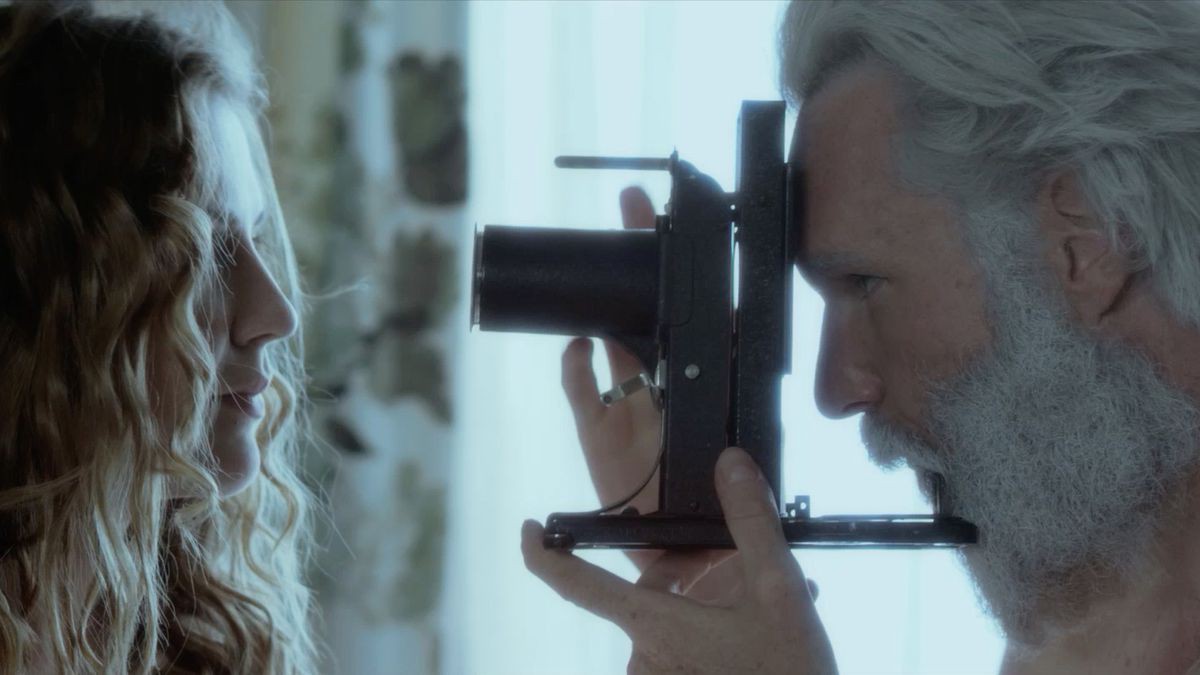
The festival will begin with the Opening Night screening of “Eadweard,” at the BearTooth Theatrepub, 8 PM on Friday, Dec. 4. Eadweard is the story of a world-famous, turn-of-the-century photographer, Eadweard Muybridge, later to be known as the “Godfather of Cinema.” This psychological thriller follows Muybridge from his work in Alaska shortly after its purchase from Russia. The story portrays an unconventional photographer as he seeks to capture life in “motion,” developing the first body of stop-motion photography–over 100,000 images depicting animals and humans in motion, and nude and deformed subjects. Director Kyle Rideout will be in attendance for the Opening Night screening.
https://www.youtube.com/watch?v=7VAds0GH_8E
Among the many cinematic highlights anticipated for this festival are some collaborative screenings including the Alaska Moving Image Preservation Association (AMIPA) debut of a rare, thought-to-be-lost, early Sci-Fi film from 1929 called “High Treason,” which has been in the restoration process for ten years, from Alaska to the Library of Congress. Also on the docket is an Indie Lens Pop-up series documentary from Alaska Public Media, “Autism in Love”, screening at Anchorage Museum, directly after the annual “Family Day” program, offered for free to the public.
2015 FILM SELECTIONS:
Narrative Feature Selections at AIFF 2015 are:
And The Circus Leaves Town (d. Mete Sozer, Turkey)
Creditors (d. Ben Cura, United Kingdom)
Death on a Rock (d. Scott Ballard, United States)
Diablo (d. Lawrence Roeck, Canada)
Eadweard (d. Kyle Rideout, Canada)
Jasmine (d. Dax Phelan, Hong Kong)
Living With the Dead (d. Rebekah Nelson, United States)
Magic Utopia ( d. Shoji Toyama, Shuichi Tan, Japan)
Midori in Hawaii (d. John Hill, United States)
Orphans & Kingdoms (d. Paolo Rotondo, New Zealand)
Status:single (d. Pavel Ruminov, Russian Federation)
The David Dance (d. Aprill Winney, United States)
The Descendants (d. Yaser Talebi, Islamic Republic of Iran)
The Incredible Adventures of Jojo (and his annoying little sister Avila) (d. Ann-Marie Schmidt, Brian Schmidt, United States
They Look Like People (d. Perry Blackshear, United States)
Under Construction (d. Rubaiyat Hossain, Bangladesh)
When the Ocean Met the Sky (d. Phillip Thomas, Canada)
Documentary selections at AIFF 2015 are:
A Courtship (d. Amy Kohn, United States)
A Journey to Namie (d. Sulfikar Amir, Singapore)
Above & Below (d. Nicolas Steiner, Switzerland)
Bihttoš (d. Elle-Máijá Tailfeathers, Canada)
Children of the Arctic (d. Nick Brandestini, Switzerland)
Circus Without Borders (d. Susan Gray, Linda Matchan, United States)
Code: Debugging the Gender Gap (d. Robin Hauser Reynolds, United States)
Dance of the People (d. Marc Menish, United States)
Free Custom Poetry (d. Cory Wilson, United States)
From This Day Forward (d. Sharon Shattuck, United States)
Harry & Snowman (d. Ron Davis, United States)
Janey Makes a Play (d. Jared Callahan, United States)
Keeping Country (d. Andrew Quinn, Australia)
Knit Me Some Happiness (d. Sofia Olins, United Kingdom)
Lost & Found (d. Nicolina Lanni, Canada)
Love Between the Covers (d. Laurie Kahn, Australia, United States)
Madina’s Dream (d. Andrew Berends, United States)
Man in the Can (d. Noessa Higa, United States)
No Greater Love (d. Justin Roberts, United States)
Riding My Way Back (d. Robin Fryday, Peter Rosenbaum, United States)
Right Footed (d. Nick Spark, United States)
Stink! (d. Jon J. Whelan, United States)
Superjednostka (d. Teresa Czepiec, Poland)
The Brainwashing of My Dad (Work in Progress screening)(d. Jen Senko, United States)
The House is Innocent (d. Nicholas Coles, United States)
To Scale (d. Alex Gorosh, United States)
Vanishing Sail (d.Alexis Andrews, Antigua & Barbuda)
Very Semi-Serious (d. Leah Wolchok, United States)
War of Lies (d. Matthias Bittner, Germany)
Short Film Selections at AIFF 2015 are:
20 Meters of Love in Montmartre (d. Pierre Gaffié, France)
Adolescence (d. Daniel Milan, Mexico)
Birthday (d. Chris King, United States)
Hirsit (d. Selcen Yilamzoglu, Turkey)
Joe Will Die (d. David Janove, United States)
Merry X-mas (d. Boman Modine, United States)
Mike (d. Petros Silvestros, United Kingdom)
Moving On (d. Mike Spear, Marcia Fields, United States)
My Heart (d. Yser Talebi, Islamic Republic of Iran)
Nkosi Coiffure (d. Frederike Migom, Belgium)
One-Minute Time Machine (d. Devon Avery, United States)
Scary Larry (d. Greg Ivan Smith, United States)
The Bravest, The Boldest (d. Moon Molson, United States)
The Call (d. Zamo Mkhwanazi, South Africa)
The Poem of a Memory (d. Christhian Andrews, United States)
The Red Thunder (d. Alvaro Ron, United States)
The Story of a Rainy Night (d. Mehdi Fard Ghaderi, Iran)
Unleaded (d. Luke Davies, United Kingdom)
Winter (d. Lina Roessler, Canada)
Zawadi (d. Richard Card, Kenya)
Animation
Chhaya (d. Debanjan Nandy, United Kingdom)
Golden Shot (d. Gokalp Gonen, Turkey)
In the forest (d. Li Xia, United States)
Mr. McBob (d. Pierre Schantz, United States)
Olilo (d. Ao Li, United States)
Ripple (d. Conner Griffith, United States)
Rosso Papavero (d. Martin Smetana, Slovakia)
Scaredy Bat (d. Greg Perkins, United States)
Sleepy Steve (d. Meghann Artes, United States)
Switch Man (d. Hsun-Chun Chuang , Shao-Kuei Tong, Taiwan)
The Apple Tree (d. Scott Storm, United States)
The Looking Planet (d. Eric Law Anderson, United States)
The Present (d. Jacob Frey, Germany)
Untitled (d. Sean McCarthy, United States)
wHole (d. Verena Klinger, Robert Banning, Germany)
Made In Alaska
3022 Ft. (d. Max Romey, United States)
Degrees North (Switzerland) 52 min.
Easy Money (d. Zayn Roohi, United States)
Heart of Alaska (d. Bjørn Olson, United States)
Hunting in Wartime (d. Samantha Farinella, United States)
I Follow Rivers (d. Ellie Schmidt, United States)
Pushing Out Daisy (d. Allison Week, United States)
Seahorse (d. Kamell Allaway, United States)
Storis: The Galloping Ghost of the Alaska Coast (d. Damon Stuebner, United States)
The Muse (d. Christopher Gage Tucker, United States)
The Ruthless Rhymer (d. Quinton Oliver Smith, United States)
Through the Wires (d. Greg Chaney, United States)
We Are All Related Here (d. Brian McDermott, United States)
The 2015 Anchorage International Film Festival revealed the lineup of independent films from around the world to screen December 4-13, 2015 at the BearTooth Theatrepub, Alaska Experience Theater, Anchorage Museum and the Snow Goose Performing Arts Theatre.
The festival will begin with the Opening Night screening of “Eadweard,” at the BearTooth Theatrepub, 8 PM on Friday, Dec. 4. Eadweard is the story of a world-famous, turn-of-the-century photographer, Eadweard Muybridge, later to be known as the “Godfather of Cinema.” This psychological thriller follows Muybridge from his work in Alaska shortly after its purchase from Russia. The story portrays an unconventional photographer as he seeks to capture life in “motion,” developing the first body of stop-motion photography–over 100,000 images depicting animals and humans in motion, and nude and deformed subjects. Director Kyle Rideout will be in attendance for the Opening Night screening.
https://www.youtube.com/watch?v=7VAds0GH_8E
Among the many cinematic highlights anticipated for this festival are some collaborative screenings including the Alaska Moving Image Preservation Association (AMIPA) debut of a rare, thought-to-be-lost, early Sci-Fi film from 1929 called “High Treason,” which has been in the restoration process for ten years, from Alaska to the Library of Congress. Also on the docket is an Indie Lens Pop-up series documentary from Alaska Public Media, “Autism in Love”, screening at Anchorage Museum, directly after the annual “Family Day” program, offered for free to the public.
2015 FILM SELECTIONS:
Narrative Feature Selections at AIFF 2015 are:
And The Circus Leaves Town (d. Mete Sozer, Turkey)
Creditors (d. Ben Cura, United Kingdom)
Death on a Rock (d. Scott Ballard, United States)
Diablo (d. Lawrence Roeck, Canada)
Eadweard (d. Kyle Rideout, Canada)
Jasmine (d. Dax Phelan, Hong Kong)
Living With the Dead (d. Rebekah Nelson, United States)
Magic Utopia ( d. Shoji Toyama, Shuichi Tan, Japan)
Midori in Hawaii (d. John Hill, United States)
Orphans & Kingdoms (d. Paolo Rotondo, New Zealand)
Status:single (d. Pavel Ruminov, Russian Federation)
The David Dance (d. Aprill Winney, United States)
The Descendants (d. Yaser Talebi, Islamic Republic of Iran)
The Incredible Adventures of Jojo (and his annoying little sister Avila) (d. Ann-Marie Schmidt, Brian Schmidt, United States
They Look Like People (d. Perry Blackshear, United States)
Under Construction (d. Rubaiyat Hossain, Bangladesh)
When the Ocean Met the Sky (d. Phillip Thomas, Canada)
Documentary selections at AIFF 2015 are:
A Courtship (d. Amy Kohn, United States)
A Journey to Namie (d. Sulfikar Amir, Singapore)
Above & Below (d. Nicolas Steiner, Switzerland)
Bihttoš (d. Elle-Máijá Tailfeathers, Canada)
Children of the Arctic (d. Nick Brandestini, Switzerland)
Circus Without Borders (d. Susan Gray, Linda Matchan, United States)
Code: Debugging the Gender Gap (d. Robin Hauser Reynolds, United States)
Dance of the People (d. Marc Menish, United States)
Free Custom Poetry (d. Cory Wilson, United States)
From This Day Forward (d. Sharon Shattuck, United States)
Harry & Snowman (d. Ron Davis, United States)
Janey Makes a Play (d. Jared Callahan, United States)
Keeping Country (d. Andrew Quinn, Australia)
Knit Me Some Happiness (d. Sofia Olins, United Kingdom)
Lost & Found (d. Nicolina Lanni, Canada)
Love Between the Covers (d. Laurie Kahn, Australia, United States)
Madina’s Dream (d. Andrew Berends, United States)
Man in the Can (d. Noessa Higa, United States)
No Greater Love (d. Justin Roberts, United States)
Riding My Way Back (d. Robin Fryday, Peter Rosenbaum, United States)
Right Footed (d. Nick Spark, United States)
Stink! (d. Jon J. Whelan, United States)
Superjednostka (d. Teresa Czepiec, Poland)
The Brainwashing of My Dad (Work in Progress screening)(d. Jen Senko, United States)
The House is Innocent (d. Nicholas Coles, United States)
To Scale (d. Alex Gorosh, United States)
Vanishing Sail (d.Alexis Andrews, Antigua & Barbuda)
Very Semi-Serious (d. Leah Wolchok, United States)
War of Lies (d. Matthias Bittner, Germany)
Short Film Selections at AIFF 2015 are:
20 Meters of Love in Montmartre (d. Pierre Gaffié, France)
Adolescence (d. Daniel Milan, Mexico)
Birthday (d. Chris King, United States)
Hirsit (d. Selcen Yilamzoglu, Turkey)
Joe Will Die (d. David Janove, United States)
Merry X-mas (d. Boman Modine, United States)
Mike (d. Petros Silvestros, United Kingdom)
Moving On (d. Mike Spear, Marcia Fields, United States)
My Heart (d. Yser Talebi, Islamic Republic of Iran)
Nkosi Coiffure (d. Frederike Migom, Belgium)
One-Minute Time Machine (d. Devon Avery, United States)
Scary Larry (d. Greg Ivan Smith, United States)
The Bravest, The Boldest (d. Moon Molson, United States)
The Call (d. Zamo Mkhwanazi, South Africa)
The Poem of a Memory (d. Christhian Andrews, United States)
The Red Thunder (d. Alvaro Ron, United States)
The Story of a Rainy Night (d. Mehdi Fard Ghaderi, Iran)
Unleaded (d. Luke Davies, United Kingdom)
Winter (d. Lina Roessler, Canada)
Zawadi (d. Richard Card, Kenya)
Animation
Chhaya (d. Debanjan Nandy, United Kingdom)
Golden Shot (d. Gokalp Gonen, Turkey)
In the forest (d. Li Xia, United States)
Mr. McBob (d. Pierre Schantz, United States)
Olilo (d. Ao Li, United States)
Ripple (d. Conner Griffith, United States)
Rosso Papavero (d. Martin Smetana, Slovakia)
Scaredy Bat (d. Greg Perkins, United States)
Sleepy Steve (d. Meghann Artes, United States)
Switch Man (d. Hsun-Chun Chuang , Shao-Kuei Tong, Taiwan)
The Apple Tree (d. Scott Storm, United States)
The Looking Planet (d. Eric Law Anderson, United States)
The Present (d. Jacob Frey, Germany)
Untitled (d. Sean McCarthy, United States)
wHole (d. Verena Klinger, Robert Banning, Germany)
Made In Alaska
3022 Ft. (d. Max Romey, United States)
Degrees North (Switzerland) 52 min.
Easy Money (d. Zayn Roohi, United States)
Heart of Alaska (d. Bjørn Olson, United States)
Hunting in Wartime (d. Samantha Farinella, United States)
I Follow Rivers (d. Ellie Schmidt, United States)
Pushing Out Daisy (d. Allison Week, United States)
Seahorse (d. Kamell Allaway, United States)
Storis: The Galloping Ghost of the Alaska Coast (d. Damon Stuebner, United States)
The Muse (d. Christopher Gage Tucker, United States)
The Ruthless Rhymer (d. Quinton Oliver Smith, United States)
Through the Wires (d. Greg Chaney, United States)
We Are All Related Here (d. Brian McDermott, United States)Above and Below
Swiss Filmmaker Nicolas Steiner documents the exploits of three homeless people living in a maze of underground Las Vegas storm sewers; a man who lives in a military bunker in the California desert and a woman at a Utah research station that simulates life on Mars. Through the hustle, the pain and the laughs, we are whisked away to an unfamiliar world, yet quickly discover the souls we encounter are perhaps not that different from our own.
Directed by Nicolas Steiner
Genre(s) Documentary Film
-
2015 Anchorage International Film Festival Lineup; Opens with “Eadweard”
The 2015 Anchorage International Film Festival revealed the lineup of independent films from around the world to screen December 4-13, 2015 at the BearTooth Theatrepub, Alaska Experience Theater, Anchorage Museum and the Snow Goose Performing Arts Theatre.
The festival will begin with the Opening Night screening of “Eadweard,” at the BearTooth Theatrepub, 8 PM on Friday, Dec. 4. Eadweard is the story of a world-famous, turn-of-the-century photographer, Eadweard Muybridge, later to be known as the “Godfather of Cinema.” This psychological thriller follows Muybridge from his work in Alaska shortly after its purchase from Russia. The story portrays an unconventional photographer as he seeks to capture life in “motion,” developing the first body of stop-motion photography–over 100,000 images depicting animals and humans in motion, and nude and deformed subjects. Director Kyle Rideout will be in attendance for the Opening Night screening.
https://www.youtube.com/watch?v=7VAds0GH_8E
Among the many cinematic highlights anticipated for this festival are some collaborative screenings including the Alaska Moving Image Preservation Association (AMIPA) debut of a rare, thought-to-be-lost, early Sci-Fi film from 1929 called “High Treason,” which has been in the restoration process for ten years, from Alaska to the Library of Congress. Also on the docket is an Indie Lens Pop-up series documentary from Alaska Public Media, “Autism in Love”, screening at Anchorage Museum, directly after the annual “Family Day” program, offered for free to the public.
2015 FILM SELECTIONS:
Narrative Feature Selections at AIFF 2015 are:
And The Circus Leaves Town (d. Mete Sozer, Turkey)
Creditors (d. Ben Cura, United Kingdom)
Death on a Rock (d. Scott Ballard, United States)
Diablo (d. Lawrence Roeck, Canada)
Eadweard (d. Kyle Rideout, Canada)
Jasmine (d. Dax Phelan, Hong Kong)
Living With the Dead (d. Rebekah Nelson, United States)
Magic Utopia ( d. Shoji Toyama, Shuichi Tan, Japan)
Midori in Hawaii (d. John Hill, United States)
Orphans & Kingdoms (d. Paolo Rotondo, New Zealand)
Status:single (d. Pavel Ruminov, Russian Federation)
The David Dance (d. Aprill Winney, United States)
The Descendants (d. Yaser Talebi, Islamic Republic of Iran)
The Incredible Adventures of Jojo (and his annoying little sister Avila) (d. Ann-Marie Schmidt, Brian Schmidt, United States
They Look Like People (d. Perry Blackshear, United States)
Under Construction (d. Rubaiyat Hossain, Bangladesh)
When the Ocean Met the Sky (d. Phillip Thomas, Canada)
Documentary selections at AIFF 2015 are:
A Courtship (d. Amy Kohn, United States)
A Journey to Namie (d. Sulfikar Amir, Singapore)
Above & Below (d. Nicolas Steiner, Switzerland)
Bihttoš (d. Elle-Máijá Tailfeathers, Canada)
Children of the Arctic (d. Nick Brandestini, Switzerland)
Circus Without Borders (d. Susan Gray, Linda Matchan, United States)
Code: Debugging the Gender Gap (d. Robin Hauser Reynolds, United States)
Dance of the People (d. Marc Menish, United States)
Free Custom Poetry (d. Cory Wilson, United States)
From This Day Forward (d. Sharon Shattuck, United States)
Harry & Snowman (d. Ron Davis, United States)
Janey Makes a Play (d. Jared Callahan, United States)
Keeping Country (d. Andrew Quinn, Australia)
Knit Me Some Happiness (d. Sofia Olins, United Kingdom)
Lost & Found (d. Nicolina Lanni, Canada)
Love Between the Covers (d. Laurie Kahn, Australia, United States)
Madina’s Dream (d. Andrew Berends, United States)
Man in the Can (d. Noessa Higa, United States)
No Greater Love (d. Justin Roberts, United States)
Riding My Way Back (d. Robin Fryday, Peter Rosenbaum, United States)
Right Footed (d. Nick Spark, United States)
Stink! (d. Jon J. Whelan, United States)
Superjednostka (d. Teresa Czepiec, Poland)
The Brainwashing of My Dad (Work in Progress screening)(d. Jen Senko, United States)
The House is Innocent (d. Nicholas Coles, United States)
To Scale (d. Alex Gorosh, United States)
Vanishing Sail (d.Alexis Andrews, Antigua & Barbuda)
Very Semi-Serious (d. Leah Wolchok, United States)
War of Lies (d. Matthias Bittner, Germany)
Short Film Selections at AIFF 2015 are:
20 Meters of Love in Montmartre (d. Pierre Gaffié, France)
Adolescence (d. Daniel Milan, Mexico)
Birthday (d. Chris King, United States)
Hirsit (d. Selcen Yilamzoglu, Turkey)
Joe Will Die (d. David Janove, United States)
Merry X-mas (d. Boman Modine, United States)
Mike (d. Petros Silvestros, United Kingdom)
Moving On (d. Mike Spear, Marcia Fields, United States)
My Heart (d. Yser Talebi, Islamic Republic of Iran)
Nkosi Coiffure (d. Frederike Migom, Belgium)
One-Minute Time Machine (d. Devon Avery, United States)
Scary Larry (d. Greg Ivan Smith, United States)
The Bravest, The Boldest (d. Moon Molson, United States)
The Call (d. Zamo Mkhwanazi, South Africa)
The Poem of a Memory (d. Christhian Andrews, United States)
The Red Thunder (d. Alvaro Ron, United States)
The Story of a Rainy Night (d. Mehdi Fard Ghaderi, Iran)
Unleaded (d. Luke Davies, United Kingdom)
Winter (d. Lina Roessler, Canada)
Zawadi (d. Richard Card, Kenya)
Animation
Chhaya (d. Debanjan Nandy, United Kingdom)
Golden Shot (d. Gokalp Gonen, Turkey)
In the forest (d. Li Xia, United States)
Mr. McBob (d. Pierre Schantz, United States)
Olilo (d. Ao Li, United States)
Ripple (d. Conner Griffith, United States)
Rosso Papavero (d. Martin Smetana, Slovakia)
Scaredy Bat (d. Greg Perkins, United States)
Sleepy Steve (d. Meghann Artes, United States)
Switch Man (d. Hsun-Chun Chuang , Shao-Kuei Tong, Taiwan)
The Apple Tree (d. Scott Storm, United States)
The Looking Planet (d. Eric Law Anderson, United States)
The Present (d. Jacob Frey, Germany)
Untitled (d. Sean McCarthy, United States)
wHole (d. Verena Klinger, Robert Banning, Germany)
Made In Alaska
3022 Ft. (d. Max Romey, United States)
Degrees North (Switzerland) 52 min.
Easy Money (d. Zayn Roohi, United States)
Heart of Alaska (d. Bjørn Olson, United States)
Hunting in Wartime (d. Samantha Farinella, United States)
I Follow Rivers (d. Ellie Schmidt, United States)
Pushing Out Daisy (d. Allison Week, United States)
Seahorse (d. Kamell Allaway, United States)
Storis: The Galloping Ghost of the Alaska Coast (d. Damon Stuebner, United States)
The Muse (d. Christopher Gage Tucker, United States)
The Ruthless Rhymer (d. Quinton Oliver Smith, United States)
Through the Wires (d. Greg Chaney, United States)
We Are All Related Here (d. Brian McDermott, United States)
-
2015 DOC NYC Complete Lineup; Secretary Hillary Clinton to Attend Closing Night World Premiere of ONCE AND FOR ALL
 The 2015 DOC NYC documentary festival, running November 12 to 19, will include over 200 films and events. Secretary Hillary Rodham Clinton will be in attendance for the Closing Night world premiere of AOL’s MAKERS’ Once and For All, directed by Michael Epstein and Dyllan McGee, about the 1995 Beijing Women’s Conference where then-First Lady Clinton gave a historic address on women’s rights.
Director Amy Berg will present her Janis Joplin portrait, Janis: Little Girl Blue, for the festival’s Centerpiece on November 15.
These two gala screenings join the previously announced Opening Night film Miss Sharon Jones!, directed by Academy Award-winning filmmaker Barbara Kopple.
27 films world premiering at the festival include The Anthropologist, profiling Margaret Mead and Susie Crate; Bluespace, an exploration of water on Earth and Mars; The Sunshine Makers, on psychedelic drug makers; Thank You For Your Service, on veterans coping with PTSD; and the first two episodes of Making a Murderer, a 10-part Netflix series about a high-stakes criminal case in America’s heartland.
Among the 15 U.S. premieres are The Fear of 13, on a prisoner’s gripping story; Frackman, on an Australian activist; Lucha Mexico, on Mexican wrestlers; Noma: My Perfect Storm, on the acclaimed Nordic restaurant; and Speed Sisters, on Arab women race car drivers.
DOC NYC will welcome over 200 filmmakers and special guests in attendance for Q&As after most screenings. Among the notable visitors expected to appear in person are filmmaker Martin Scorsese for Hitchcock/Truffaut; comedian Gilbert Gottfried for Can We Take a Joke?; poet Sonia Sanchez for BaddDDD Sonia Sanchez; actress Mary Louise Wilson for She’s the Best Thing In It; actor Omar Epps for Daddy Don’t Go; former NSA technical director Bill Binney for A Good American; avant-garde filmmaker and choreographer Yvonne Rainer for Feelings Are Facts: The Life of Yvonne Rainer; and renowned chefs Georges Perrier and Nicholas Elmi for King Georges.
The following is a breakdown of programming by section:
GALAS
Opening Night – MISS SHARON JONES!
Dir: Barbara Kopple, US Premiere
Two-time Oscar winner Barbara Kopple follows soul queen Sharon Jones in a year of adversity. In person: Barbara Kopple, subjects Sharon Jones and The Dap-Kings
Centerpiece – JANIS: LITTLE GIRL BLUE
Dir: Amy Berg, NYC Premiere
Academy Award-nominated filmmaker Amy Berg (Deliver Us from Evil) profiles the rock legend Janis Joplin. FilmRise. In person: Amy Berg
Closing Night – ONCE AND FOR ALL
Dirs: Michael Epstein, Dyllan McGee, World Premiere
The story of the 1995 Beijing Women’s Conference, a watershed event in the global struggle for women’s rights. AOL’s MAKERS. In person: Michael Epstein, Dyllan McGee, subject Secretary Hillary Rodham Clinton
SPECIAL EVENTS
AN ART THAT NATURE MAKES: THE WORK OF ROSAMOND PURCELL
Dir: Molly Bernstein, World Premiere
Photographer Rosamond Purcell finds unexpected beauty in the overlooked, discarded and decayed. In person: Molly Bernstein, subject Rosamond Purcell. (Preceded by the short film A PASSION OF GOLD AND FIRE, dir: Sebastien Pins, on the retiring head of an apiary school.)
HITCHCOCK/TRUFFAUT
Dir: Kent Jones
Martin Scorsese, David Fincher and others discuss the influence of Hitchcock and Truffaut’s famous book. Cohen Media Group. In person: Kent Jones, subject Martin Scorsese
KEYNOTE: A CONVERSATION WITH JON ALPERT & SHEILA NEVINS
Filmmaker Jon Alpert and HBO Documentary Films head Sheila Nevins give a keynote conversation in conjunction with the world premiere of Alpert’s short film MARIELA CASTRO’S MARCH: CUBA’S LGBT REVOLUTION profiling the Cuban Congresswoman who is a tireless champion of LGBT rights in Cuba. HBO Documentary Films.
MAKING A MURDERER
Dirs: Laura Ricciardi, Moira Demos, World Premiere
A sneak peek at the first two episodes of a riveting ten-part true crime docu-series. Netflix. In person: Laura Ricciardi, Moira Demos
TROUBLEMAKERS: THE STORY OF LAND ART
Dir: James Crump
A group of NYC-based artists abandoned gallery spaces to embrace the expanse of the American Southwest. First Run Features. In person: James Crump, MOCA Director Philippe Vergne
+ A SURPRISE SCREENING OF A SOON-TO-BE-ANNOUNCED WORLD PREMIERE
VIEWFINDERS COMPETITION (distinct directorial visions)
THE ANTHROPOLOGIST
Dirs: Seth Kramer, Daniel A. Miller, Jeremy Newberger, World Premiere
Parallel stories of two female anthropologists: trailblazer Margaret Mead and contemporary Susie Crate. In person: Seth Kramer, Daniel A. Miller, Jeremy Newberger, subjects Mary Catherine Bateson, Susie Crate, Katie Yegorov-Crate
BARGE
Dir: Ben Powell, NYC Premiere
A portrait of characters working on a Mississippi barge headed to New Orleans. In person: Ben Powell
BLUESPACE
Dir: Ian Cheney, World Premiere
An expedition to two planets: Earth, with its rising seas, and Mars, with the promise of colonization. In person: Ian Cheney
A GOOD AMERICAN
Dir: Friedrich Moser, North American Premiere
A profile of Bill Binney, who went from a NSA insider to a critic of government surveillance. In person: Friedrich Moser, subjects Bill Binney, Kirk Wiebe, Tom Drake
I AM SUN MU
Dir: Adam Sjöberg, US Premiere
After defecting from North Korea, a former propaganda artist applies his craft to satirical political pop art. In person: Adam Sjöberg
A JOURNEY OF A THOUSAND MILES: PEACEKEEPERS
Dirs: Sharmeen Obaid-Chinoy, Geeta Gandbhir, US Premiere
Three Bangladeshi policewomen serve with the UN peacekeeping mission in post-earthquake Haiti. In person: Geeta Gandbhir
MOTLEY’S LAW
Dir: Nicole Horanyi, NYC Premiere
The only Western lawyer licensed to work in Afghanistan’s courts, Kimberley Motley finds herself at a crossroads. In person: Nicole Horanyi, subject Kimberley Motley
NEWMAN
Dir: Jon Fox, NYC Premiere
A maverick inventor battles against the scientific establishment over a miraculous energy-producing machine. In person: Jon Fox
P.S. JERUSALEM
Dir: Danae Elon, US Premiere
Chronicling three years in Jerusalem with her family, Danae Elon uncovers the city’s tensions. In person: Danae Elon
THE SUNSHINE MAKERS
Dir: Cosmo Feilding-Mellen, World Premiere
A real-life Breaking Bad for the psychedelic set about the unlikely duo at the heart of 1960s drug counterculture. In person: Cosmo Feilding Mellen
METROPOLIS COMPETITION (NYC stories)
CLASS DIVIDE
Dir: Marc Levin, NYC Premiere
A look at NYC’s gentrification and growing inequality at the Chelsea intersection of 10th Avenue and 26th Street. HBO Documentary Films. In person: Marc Levin
DADDY DON’T GO
Dir: Emily Abt, World Premiere
Four diverse, disadvantaged NYC fathers struggle to beat the odds and defy the deadbeat dad stereotype. In person: Emily Abt, all subjects
THE JAZZ LOFT ACCORDING TO W. EUGENE SMITH
Dir: Sara Fishko, NYC Premiere
In 1957-65, a former LIFE Magazine photojournalist captured legendary jazz musicians in a Sixth Avenue loft. In person: Sara Fishko
LEFT ON PURPOSE
Dir: Justin Schein, Co-Dir David Mehlman, NYC Premiere
What begins as a portrait of the life of an antiwar radical instead threatens to become an account of his suicide. In person: Justin Schein, David Mehlman
THE LOST ARCADE
Dir: Kurt Vincent, World Premiere
Gentrification threatens the last arcade in NYC, as well as the diverse community that calls it a second home. In person: Kurt Vincent
MIRIAM: HOME DELIVERY
Dir: Juliet Jordan, World Premiere
A profile of a NYC homebirth midwife and her diverse clientele. In person: Juliet Jordan, subject Miriam Schwarzschild
MISSING PEOPLE
Dir: David Shapiro, NYC Premiere
A NYC gallerist, haunted by the unsolved murder of her brother, becomes obsessed with a New Orleans painter. In person: David Shapiro
OXD: ONE EXTRAORDINARY DAY
Dir: Craig Lowy, World Premiere
Elizabeth Streb’s Brooklyn-based Extreme Action Company trains for a breathtaking spectacle in London. In person: Craig Lowy, subject Elizabeth Streb, dancers from the Streb Extreme Action Company
TESTED
Dir: Curtis Chin, World Premiere
Attending NYC’s elite public schools can set students up for the future, but first they have to get in. In person: Curtis Chin. (Preceded by the short film WHY WE STAY, dir: Crystal Kayiza, co-dirs: Pete Quandt, Leroy Farrell, on a South Bronx community fighting gentrification.)
TREE MAN
Dirs: Jon Reiner, Brad Rothschild, NYC Premiere
A Quebecois family man spends five weeks on the streets of NYC selling Christmas trees. In person: Jon Reiner, Brad Rothschild
AMERICAN PERSPECTIVES (a spectrum of domestic topics)
ABOVE AND BELOW
Dir: Nicolas Steiner, NYC Premiere
An exploration of outsiders who live in abandoned military bunkers and storm drains in the American West. Oscilloscope Laboratories. In person: Nicolas Steiner
AN AUTOBIOGRAPHY OF MICHELLE MAREN
Dirs: Michel Negroponte, Michelle Maren, US Premiere
An acclaimed filmmaker and his troubled subject craft a captivating portrait of a woman enslaved by past traumas. In person: Michel Negroponte, Michelle Maren
DEEP RUN
Dir: Hillevi Loven, NYC Premiere
Can an affable young transgender man live openly with his true love in the Bible Belt?
In person: Hillevi Loven, subject Cole Ray Davis
THE FEAR OF 13
Dir: David Sington, North American Premiere
A death row prisoner behind bars for more then 20 years reveals the shocking truth behind his case. In person: David Sington
LOVE BETWEEN THE COVERS
Dir: Laurie Kahn, NYC Premiere
A look at the vast community around romance fiction, demonstrating why love stories are no trivial matter. In person: Laurie Kahn
A NEW HIGH
Dirs: Samuel Miron, Stephen Scott Scarpulla, NYC Premiere
A group of Seattle addicts attempt to climb Mount Rainier to conquer their demons. In person: Samuel Miron, Stephen Scott Scarpulla
SKY LINE
Dirs: Miguel Drake-McLaughlin, Jonny Leahan, World Premiere
Egos collide as a group of scientists and entrepreneurs attempt to realize a science-fiction fantasy. FilmBuff. In person: Miguel Drake-McLaughlin, Jonny Leahan
THANK YOU FOR YOUR SERVICE
Dir: Tom Donahue, World Premiere
The stories of several struggling veterans reveal the mental health crisis in the military. In person: Tom Donahue, subjects Kenneth Toone, Dr. Mark Russell, William Rodriguez, Phil Straub, General Loree Sutton, Jake Clark
WILHEMINA’S WAR
Dir: June Cross, World Premiere
An African-American grandmother in the deep South cares for her HIV+ family members. In person: June Cross. (Preceded by the short film OPEN YOUR EYES, dir: Irene Taylor Brodsky, on a blind elderly couple in Nepal.)
INTERNATIONAL PERSPECTIVES (a spectrum of global topics)
ALL RISE
Dirs: Jay Shapiro, Jeffrey Saunders, World Premiere
International law students face off in the world’s most prestigious simulated court competition, the Jessup. In person: Jay Shapiro, Jeffrey Saunders, subjects Areej Alragabi, Tomer Tregor
THE BABUSHKAS OF CHERNOBYL
Dirs: Holly Morris, Anne Bogart, NYC Premiere
A profile of elderly women who subsist on their beloved but toxic land in Chernobyl’s radioactive exclusion zone. In person: Holly Morris
BOLSHOI BABYLON
Dirs: Nick Read, co-dir. Mark Franchetti, NYC Premiere
Russia’s Bolshoi Ballet weathers the fallout from the notorious 2013 acid attack on the company’s director Sergei Filin. HBO Documentary Films. In person: Nick Read, Mark Franchetti
KINGDOM OF SHADOWS
Dir: Bernardo Ruiz
A compelling investigation into the human costs of the Mexican drug war on both sides of the border. Participant Media. In person: Bernardo Ruiz
ON THE RIM OF THE SKY
Dir: Hongjie Xu, US Premiere
An isolated Chinese village school becomes a battleground between generations, ideologies and egos.
TOCANDO LA LUZ
Dir: Jennifer Redfearn, NYC Premiere
Three women, united by blindness and a desire for independence, pursue their dreams in modern Cuba. In person: Jennifer Redfearn. (Preceded by the short film THE 100 YEARS SHOW, dir: Alison Klayman, on Cuban-born NYC artist Carmen Herrera.)
BEHIND THE SCENES (on films and filmmaking)
CLAUDE LANZMANN: SPECTRES OF THE SHOAH
Dir: Adam Benzine, NYC Premiere
For the first time on camera, the 89-year-old auteur behind Shoah reflects on the challenges he faced to realize his vision. HBO Documentary Films. In person: Adam Benzine, subjects Richard Brody, Stuart Liebman. (Preceded by the short film DREAMING AGAINST THE WORLD, dirs: Timothy Sternberg, Francisco Bello, on Chinese artist Mu Xin.)
THE DYING OF THE LIGHT
Dir: Peter Flynn, World Premiere
A bittersweet ode to the vanishing craft of film projection and a celebration of the men and women in the booth. In person: Peter Flynn
HAROLD AND LILLIAN: A HOLLYWOOD LOVE STORY
Dir: Daniel Raim, North American Premiere
A love story and tribute to the unsung talents behind a staggering number of cinema classics. In person: Daniel Raim
RAIDERS!: THE STORY OF THE GREATEST FAN FILM EVER MADE
Dirs: Jeremy Coon, Tim Skousen, NYC Premiere
Three pre-teens set out to pay tribute to their favorite film; it become an obsession lasting three decades. Drafthouse Films. In person: Jeremy Coon,Tim Skousen
REEL IN THE CLOSET
Dir: Stu Maddux, NYC Premiere
An excavation of the hidden history of LGBT lives through a treasure trove of rare home movies. In person: Stu Maddux. (Preceded by the short film ED & PAULINE, dirs: Christian Bruno, Natalija Vekic, on Pauline Kael and Ed Landberg’s art house cinema.)
WOMEN HE’S UNDRESSED
Dir: Gillian Armstrong, NYC Premiere
In Hollywood’s golden age, costume designer Orry-Kelly thrived, but also kept secrets as a gay man. In person: subject Ann Roth
CENTERSTAGE (on performers)
CAN WE TAKE A JOKE?
Dir: Ted Balaker, World Premiere
A thought-provoking exploration of outrage culture through the lens of stand-up comedy.
In person: Ted Balaker, subjects Greg Lukianoff, Karith Foster, Gilbert Gottfried
FEELINGS ARE FACTS: THE LIFE OF YVONNE RAINER
Dir: Jack Walsh, NYC Premiere
A long-overdue portrait of iconoclast dancer, choreographer and filmmaker Yvonne Rainer. In person: Jack Walsh, subject Yvonne Rainer
THE RED UMBRELLA DIARIES
Dir: David Kornfield, NYC Premiere
Seven diverse sex workers tell their tales at NYC’s Joe’s Pub. In person: producer Audacia Ray
SHE’S THE BEST THING IN IT
Dir: Ron Nyswaner, NYC Premiere
Tony-winning character actor Mary Louise Wilson finds few opportunities on the stage, so turns to teaching. In person: Ron Nyswaner, subject Mary Louise Wilson
DOC EAT DOC (on food)
CITY OF GOLD
Dir: Laura Gabbert, NYC Premiere
This portrait of Pulitzer Prize-winning food critic Jonathan Gold reveals hidden culinary gems of Los Angeles. Sundance Selects. In person: Laura Gabbert, subject Jonathan Gold
FOR GRACE
Dirs: Kevin Pang, Mark Helenowski, NYC Premiere
Recognized with two Michelin stars, chef Curtis Duffy sets grand plans for his new Chicago restaurant, Grace. FilmBuff. In person: Kevin Pang
KING GEORGES
Dir: Erika Frankel
At Philadelphia’s famed French restaurant Le Bec Fin, chef Georges Perrier struggles to stay in business. In person: Erika Frankel, subjects Georges Perrier, Nicholas Elmi
THE MISSING INGREDIENT
Dir: Michael Sparaga, World Premiere
A portrait of two NY restaurants, exploring what it means to be an institution. In person: Michael Sparaga, subjects Charles Devigne, Michael Miele, Salvatore Doria
NOMA: MY PERFECT STORM
Dir: Pierre Deschamps, North American Premiere
When the Nordic restaurant Noma loses the title of the world’s best restaurant, its talented chef seeks redemption. Magnolia Pictures.
DOCS REDUX (a showcase of classic revivals)
GIMME SHELTER (1970)
Dirs: Albert Maysles, David Maysles, Charlotte Zwerin
45th anniversary screening, in memory of Al Maysles. A portrait of the Rolling Stones becomes a disturbing record of a notorious concert.
HIGH ON CRACK STREET: LOST LIVES IN LOWELL (1995)
Dirs: Jon Alpert, Maryann DeLeo, Richard Farrell
20th anniversary screening. The documentary that inspired The Fighter focuses on three addicts. In person: Jon Alpert
SISTERS IN LAW (2005)
Dir: Kim Longinotto
10th anniversary screening. Two fierce and feisty women challenge tradition in Cameroon through their legal work. In person: Kim Longinotto
FIGHT THE POWER (on activists)
BADDDDD SONIA SANCHEZ
Dirs: Barbara Attie, Janet Goldwater, Sabrina Schmidt Gordon, NYC Premiere
A crucial figure in the Black Arts Movement harnesses her gift for words to fuse art and activism over six decades. California Newsreel. In person: Barbara Attie, Janet Goldwater, Sabrina Schmidt Gordon, subject Sonia Sanchez
THE C WORD
Dir: Meghan O’Hara, NYC Premiere
Oscar-nominated producer Megan O’Hara (Sicko) questions the establishment wisdom around cancer. In person: Meghan O’Hara
CIRCLE OF POISON
Dirs: Evan Mascagni, Shannon Post, World Premiere
A pointed exposé on the global trade in banned pesticides and their impact on health. In person: Evan Mascagni, Shannon Post
FRACKMAN
Dir: Richard Todd, Co-Dir Jonathon Stack, US Premiere
Funny and outspoken Aussie everyman Dayne Pratzky becomes an accidental activist against fracking. In person: Richard Todd, Jonathon Stack, subject Dayne Pratzky
THE INVADERS
Dir: Prichard Smith, World Premiere
Filling in a lost chapter of civil rights history, a look at the generation of radicals that emerged in Memphis in 1967. In person: Prichard Smith (Preceded by the short film EMORY DOUGLAS: THE ART OF THE BLACK PANTHERS, dirs: Dan Covert, Andre Andreev aka “Dress Code,” on art used as a revolutionary weapon.)
NO MÁS BÉBES
Dir: Renee Tajima-Peña, NYC Premiere
A young lawyer fights the medical establishment on behalf of Latina immigrants sterilized without their consent. In person: Renee Tajima-Peña
JOCK DOCS (on sports)
BOUNCE: HOW THE BALL TAUGHT THE WORLD TO PLAY
Dir: Jerome Thelia, NYC Premiere
A far-ranging exploration of the universal appeal of play as realized in the ubiquity and versatility of the ball. In person: Jerome Thélia. (Preceded by the short film THE BAD BOY OF BOWLING, dir: Bryan Storkel, on bowling sensation Peter Weber.)
GAME FACE
Dir: Michiel Thomas, NYC Premiere
A transgender Mixed Martial Artist and a gay college basketball player struggle with living openly in the public eye. In person: Michiel Thomas
THE GREAT ALONE
Dir: Greg Kohs, NYC Premiere
Lance Mackey braves the Arctic wilderness for another chance at glory through the Iditarod Trail Sled Dog Race. In person: Greg Kohs, subjects Lance Mackey, sled dog Amp
THE LEGEND OF SWEE’ PEA
Dir: Benjamin May, World Premiere
NYC playground basketball legend Lloyd “Swee’ Pea” Daniels was a top college recruit until a drug bust. In person: Benjamin May
LUCHA MEXICO
Dirs: Alex Hammond, Ian Markiewicz, US Premiere
An entertaining look at Mexico’s Lucha Libre, where masked wrestlers wage a battle between good and evil. In person: Alex Hammond, Ian Markiewicz, subjects Shocker, Jon Strongman
SPEED SISTERS
Dir: Amber Fares, US Premiere
The Middle East’s first all-female Arab race car team overcomes checkpoints and expectations to become role models. In person: Amber Fares, subject Noor Daoud
MODERN FAMILY (on diverse relations)
ALWAYS TOGETHER
Dir: Eva Tomanová, US Premiere
A former computer scientist raises his family in the Czech countryside with no modern conveniences or schooling.
FROM THIS DAY FORWARD
Dir: Sharon Shattuck, NYC Premiere
The filmmaker seeks to understand how her parents remained together after her father transitioned to a woman. In person: Sharon Shattuck
GAYBY BABY
Dir: Maya Newell, NYC Premiere
This touching film reveals both the challenges of same-sex parenting and its commonalities with every family. In person: producer Charlotte Mars
THE MELTING FAMILY
Dir: Nicole Groton, World Premiere
This candidly personal film chronicles how one nuclear family grew through seven divorces and remarriages. In person: Nicole Groton
OLD FRIENDS
Dir: Peter Odabashian, World Premiere
An intimate reflection on friendship demonstrates the power of an intentional community. In person: Peter Odabashian, subjects Esther Cohen, Bruce Kitzmeyer, Anne Newman Bacal, Betty Odabashian
WITH OR WITHOUT YOU
Dir: Hyuckjee Park, North American Premiere
Long-widowed from the husband they shared, two women continue to live together decades later.
SONIC CINEMA (on music)
13 MILLION VOICES
Dir: Janelle Gueits, NYC Premiere
Young Cubans and Cuban Americans forge ties against backdrop of Havana’s Peace Without Borders concert. In person: Janelle Gueits
HUSTLERS CONVENTION
Dir: Mike Todd
A rap cousin of Searching for Sugar Man, the film seeks the artist behind the 1973 album Hustlers Convention. In person: Mike Todd
I GO BACK HOME – JIMMY SCOTT
Dir: Yoon-ha Chang, World Premiere
The angelic-voiced jazz singer Jimmy Scott lived in obscurity for decades before making a comeback. In person: Yoon-ha Chang, subject Ralf Kemper
MAD TIGER
Dirs: Jonathan Yi, Michael Haertlein, World Premiere
Meet Peelander-Z and you might just start to believe the Japanese art-punk band’s claims of interstellar origins. In person: Jonathan Yi, Michael Haertlein, subjects Kengo Hioki (Yellow), Kotaro Tsukada (Red)
SYL JOHNSON: ANY WAY THE WIND BLOWS
Dir: Rob Hatch-Miller, NYC Premiere
Soul singer Syl Johnson never achieved the success he longed for until hip hop opened up new opportunities. In person: Rob Hatch-Miller
THEORY OF OBSCURITY: A FILM ABOUT THE RESIDENTS
Dir: Don Hardy, NYC Premiere
A profile of the band the Residents, who have maintained anonymity for 40 years behind giant eyeball masks. Film Movement. In person: Don Hardy
THE WILD LIFE (on animals)
THE CHAMPIONS
Dir: Darcy Dennett, NYC Premiere
An inspiring chronicle of the efforts to rescue and rehabilitate Michael Vick’s pit bulls. In person: Darcy Dennett
HARRY & SNOWMAN
Dir: Ron Davis, NYC Premiere
Dutch immigrant Harry deLeyer saves a horse from the glue factory and finds a show-jumping champion. In person: Ron Davis
HUNTWATCH
Dir: Brant Backlund, World Premiere
An activist crusades against the cruelty of seal hunting while bringing us closer to the delightful creatures. In person: Brant Backlund
TIGER TIGER
Dir: George Butler, NYC Premiere
One of the world’s top big cat biologists tracks tigers on the dangerous border of India and Bangladesh. In person: George Butler
SHORTS PROGRAMS (thematic collections of short documentaries)
SHORTS: CONCRETE KINGDOM
City life. Lenny and the Rat (dir: Jason Hutt); S – The Musical Shuttle (dirs: Alina Abouelenin, Benjamin Bergmann); Man Under (dir: Paul Stone); Mac Premo – stuffmaker (dir: Bas Berkhout); Super-Unit(s) (dir: Teresa Czepiec). In person: Paul Stone, Jason Hutt, Bas Berkhout, Alina Abouelenin, Benjamin Bergmann
SHORTS: EXPRESSIONS
Artists and their art. Sideshow of the Absurd (dirs: Tina DiFeliciantonio, Jane C. Wagner); Cindy Sherman: “Untitled Film Stills” (dir: Douglas Sloan); Colors of Life (dir: Goro Ushijima); Artspeak (dir: Bill Claps); Bernice (dir: Kristina Sorge). In person: Tina DiFeliciantonio, Jane C. Wagner, Douglas Sloan, Bill Claps
SHORTS: A FEW OF MY FAVORITE THINGS
Stories for the whole family. Cone Phones (dir: Heidi Gelover); Little Hero (dirs: Marcus McDougald, Jennifer Medvin); Made of Clay (dir: Fayssal Bin Sahli); AlieNation (dir: Laura Lehmus); Curt (dir: Brendan Hearne); Teen Press (dir: T.C. Johnstone). In person: Heidi Gelover, Jennifer Medvin, Brendan Hearne, T.C. Johnstone
SHORTS: FROM THERE TO HERE
Experiences in the melting pot. Satellite Baby (dir: Jenny Schweitzer); Resident
Alien (dir: Naiara Eizaguirre-Paulos); The Absentees (dir: Tanya Daud); Not So Namaste (dirs: Rita Baghdadi, Jeremiah Hammerling); Marathon (dirs: Theo Rigby, Kate McLean); Going Back Home (dir: Tim O’Donnell); Looking at Time (dir: Brandon Lavoie). In person: Jenny Schweitzer, Rita Baghdadi, Jeremiah Hammerling, Theo Rigby, Kate McLean, Tim O’Donnell, Brandon Lavoie
SHORTS: LARGER THAN LIFE
Portraits of everyday characters. Tiger Hood (dir: Christopher André Marks); Pink Boy (dir: Eric Rockey); The Reinvention of Normal (dir: Liam Saint-Pierre); Dunk Tank Clowns (dir: Daniel McGuire); Rothman (dir: Nader Sadre); Heavy Fog Tonight (dir: Nathan Reich). In person: Christopher André Marks, Eric Rockey, Liam Saint-Pierre, Daniel McGuire, Nader Sadre, Nathan Reich
SHORTS: PASSPORT
Take a trip around the world. Boxeadora (dir: Meg Smaker); Worlds on Edge (dirs: Thiago B. Mendonça, Renata Jardim); End of the World (dir: Monika Pawluczuk); Hyena Boys (dir: Tarryn Crossman). In person: Meg Smaker, Thiago B. Mendonça, Monika Pawluczuk, Tarryn Crossman
SHORTS: POINTS OF VIEW
Tales of yesterday, today and tomorrow. The Clock of the Long Now (dirs: Jimmy Goldblum, Adam Weber); The Typist (dir: Kristine Stolakis); German Shepherd (dir: Nils Bergendal); The 414s (dir: Michael T. Vollmann); Back (dirs: Jenna Belhumeur,
Elena Boffetta); I Was Here First (dirs: Katherin Machalek, Adam Golub); The Surrender (dir: Stephen Maing). In person: Jimmy Goldblum, Adam Weber, Kristine Stolakis, Jenna Belhumeur, Elena Boffetta, Katherin Machalek, Adam Golub, Stephen Maing
SHORT: PUSHING THE BOUNDS
True innovation. What Lies Beneath the Sky (dir: Vladimir de Fontenay); Morgan Green Shaves Her Head Backwards (dir: Morgan Green); María 95 (dir: Josh Polon); Zone Blanche (dir: Gaëlle Cintré); Confessions (dir: Paul Erskine); Le Mur et l’Eau (dir: Alice Fargier). In person: Vladimir de Fontenay, Morgan Green, Josh Polon, Gaëlle Cintré, Paul Erskine
The 2015 DOC NYC documentary festival, running November 12 to 19, will include over 200 films and events. Secretary Hillary Rodham Clinton will be in attendance for the Closing Night world premiere of AOL’s MAKERS’ Once and For All, directed by Michael Epstein and Dyllan McGee, about the 1995 Beijing Women’s Conference where then-First Lady Clinton gave a historic address on women’s rights.
Director Amy Berg will present her Janis Joplin portrait, Janis: Little Girl Blue, for the festival’s Centerpiece on November 15.
These two gala screenings join the previously announced Opening Night film Miss Sharon Jones!, directed by Academy Award-winning filmmaker Barbara Kopple.
27 films world premiering at the festival include The Anthropologist, profiling Margaret Mead and Susie Crate; Bluespace, an exploration of water on Earth and Mars; The Sunshine Makers, on psychedelic drug makers; Thank You For Your Service, on veterans coping with PTSD; and the first two episodes of Making a Murderer, a 10-part Netflix series about a high-stakes criminal case in America’s heartland.
Among the 15 U.S. premieres are The Fear of 13, on a prisoner’s gripping story; Frackman, on an Australian activist; Lucha Mexico, on Mexican wrestlers; Noma: My Perfect Storm, on the acclaimed Nordic restaurant; and Speed Sisters, on Arab women race car drivers.
DOC NYC will welcome over 200 filmmakers and special guests in attendance for Q&As after most screenings. Among the notable visitors expected to appear in person are filmmaker Martin Scorsese for Hitchcock/Truffaut; comedian Gilbert Gottfried for Can We Take a Joke?; poet Sonia Sanchez for BaddDDD Sonia Sanchez; actress Mary Louise Wilson for She’s the Best Thing In It; actor Omar Epps for Daddy Don’t Go; former NSA technical director Bill Binney for A Good American; avant-garde filmmaker and choreographer Yvonne Rainer for Feelings Are Facts: The Life of Yvonne Rainer; and renowned chefs Georges Perrier and Nicholas Elmi for King Georges.
The following is a breakdown of programming by section:
GALAS
Opening Night – MISS SHARON JONES!
Dir: Barbara Kopple, US Premiere
Two-time Oscar winner Barbara Kopple follows soul queen Sharon Jones in a year of adversity. In person: Barbara Kopple, subjects Sharon Jones and The Dap-Kings
Centerpiece – JANIS: LITTLE GIRL BLUE
Dir: Amy Berg, NYC Premiere
Academy Award-nominated filmmaker Amy Berg (Deliver Us from Evil) profiles the rock legend Janis Joplin. FilmRise. In person: Amy Berg
Closing Night – ONCE AND FOR ALL
Dirs: Michael Epstein, Dyllan McGee, World Premiere
The story of the 1995 Beijing Women’s Conference, a watershed event in the global struggle for women’s rights. AOL’s MAKERS. In person: Michael Epstein, Dyllan McGee, subject Secretary Hillary Rodham Clinton
SPECIAL EVENTS
AN ART THAT NATURE MAKES: THE WORK OF ROSAMOND PURCELL
Dir: Molly Bernstein, World Premiere
Photographer Rosamond Purcell finds unexpected beauty in the overlooked, discarded and decayed. In person: Molly Bernstein, subject Rosamond Purcell. (Preceded by the short film A PASSION OF GOLD AND FIRE, dir: Sebastien Pins, on the retiring head of an apiary school.)
HITCHCOCK/TRUFFAUT
Dir: Kent Jones
Martin Scorsese, David Fincher and others discuss the influence of Hitchcock and Truffaut’s famous book. Cohen Media Group. In person: Kent Jones, subject Martin Scorsese
KEYNOTE: A CONVERSATION WITH JON ALPERT & SHEILA NEVINS
Filmmaker Jon Alpert and HBO Documentary Films head Sheila Nevins give a keynote conversation in conjunction with the world premiere of Alpert’s short film MARIELA CASTRO’S MARCH: CUBA’S LGBT REVOLUTION profiling the Cuban Congresswoman who is a tireless champion of LGBT rights in Cuba. HBO Documentary Films.
MAKING A MURDERER
Dirs: Laura Ricciardi, Moira Demos, World Premiere
A sneak peek at the first two episodes of a riveting ten-part true crime docu-series. Netflix. In person: Laura Ricciardi, Moira Demos
TROUBLEMAKERS: THE STORY OF LAND ART
Dir: James Crump
A group of NYC-based artists abandoned gallery spaces to embrace the expanse of the American Southwest. First Run Features. In person: James Crump, MOCA Director Philippe Vergne
+ A SURPRISE SCREENING OF A SOON-TO-BE-ANNOUNCED WORLD PREMIERE
VIEWFINDERS COMPETITION (distinct directorial visions)
THE ANTHROPOLOGIST
Dirs: Seth Kramer, Daniel A. Miller, Jeremy Newberger, World Premiere
Parallel stories of two female anthropologists: trailblazer Margaret Mead and contemporary Susie Crate. In person: Seth Kramer, Daniel A. Miller, Jeremy Newberger, subjects Mary Catherine Bateson, Susie Crate, Katie Yegorov-Crate
BARGE
Dir: Ben Powell, NYC Premiere
A portrait of characters working on a Mississippi barge headed to New Orleans. In person: Ben Powell
BLUESPACE
Dir: Ian Cheney, World Premiere
An expedition to two planets: Earth, with its rising seas, and Mars, with the promise of colonization. In person: Ian Cheney
A GOOD AMERICAN
Dir: Friedrich Moser, North American Premiere
A profile of Bill Binney, who went from a NSA insider to a critic of government surveillance. In person: Friedrich Moser, subjects Bill Binney, Kirk Wiebe, Tom Drake
I AM SUN MU
Dir: Adam Sjöberg, US Premiere
After defecting from North Korea, a former propaganda artist applies his craft to satirical political pop art. In person: Adam Sjöberg
A JOURNEY OF A THOUSAND MILES: PEACEKEEPERS
Dirs: Sharmeen Obaid-Chinoy, Geeta Gandbhir, US Premiere
Three Bangladeshi policewomen serve with the UN peacekeeping mission in post-earthquake Haiti. In person: Geeta Gandbhir
MOTLEY’S LAW
Dir: Nicole Horanyi, NYC Premiere
The only Western lawyer licensed to work in Afghanistan’s courts, Kimberley Motley finds herself at a crossroads. In person: Nicole Horanyi, subject Kimberley Motley
NEWMAN
Dir: Jon Fox, NYC Premiere
A maverick inventor battles against the scientific establishment over a miraculous energy-producing machine. In person: Jon Fox
P.S. JERUSALEM
Dir: Danae Elon, US Premiere
Chronicling three years in Jerusalem with her family, Danae Elon uncovers the city’s tensions. In person: Danae Elon
THE SUNSHINE MAKERS
Dir: Cosmo Feilding-Mellen, World Premiere
A real-life Breaking Bad for the psychedelic set about the unlikely duo at the heart of 1960s drug counterculture. In person: Cosmo Feilding Mellen
METROPOLIS COMPETITION (NYC stories)
CLASS DIVIDE
Dir: Marc Levin, NYC Premiere
A look at NYC’s gentrification and growing inequality at the Chelsea intersection of 10th Avenue and 26th Street. HBO Documentary Films. In person: Marc Levin
DADDY DON’T GO
Dir: Emily Abt, World Premiere
Four diverse, disadvantaged NYC fathers struggle to beat the odds and defy the deadbeat dad stereotype. In person: Emily Abt, all subjects
THE JAZZ LOFT ACCORDING TO W. EUGENE SMITH
Dir: Sara Fishko, NYC Premiere
In 1957-65, a former LIFE Magazine photojournalist captured legendary jazz musicians in a Sixth Avenue loft. In person: Sara Fishko
LEFT ON PURPOSE
Dir: Justin Schein, Co-Dir David Mehlman, NYC Premiere
What begins as a portrait of the life of an antiwar radical instead threatens to become an account of his suicide. In person: Justin Schein, David Mehlman
THE LOST ARCADE
Dir: Kurt Vincent, World Premiere
Gentrification threatens the last arcade in NYC, as well as the diverse community that calls it a second home. In person: Kurt Vincent
MIRIAM: HOME DELIVERY
Dir: Juliet Jordan, World Premiere
A profile of a NYC homebirth midwife and her diverse clientele. In person: Juliet Jordan, subject Miriam Schwarzschild
MISSING PEOPLE
Dir: David Shapiro, NYC Premiere
A NYC gallerist, haunted by the unsolved murder of her brother, becomes obsessed with a New Orleans painter. In person: David Shapiro
OXD: ONE EXTRAORDINARY DAY
Dir: Craig Lowy, World Premiere
Elizabeth Streb’s Brooklyn-based Extreme Action Company trains for a breathtaking spectacle in London. In person: Craig Lowy, subject Elizabeth Streb, dancers from the Streb Extreme Action Company
TESTED
Dir: Curtis Chin, World Premiere
Attending NYC’s elite public schools can set students up for the future, but first they have to get in. In person: Curtis Chin. (Preceded by the short film WHY WE STAY, dir: Crystal Kayiza, co-dirs: Pete Quandt, Leroy Farrell, on a South Bronx community fighting gentrification.)
TREE MAN
Dirs: Jon Reiner, Brad Rothschild, NYC Premiere
A Quebecois family man spends five weeks on the streets of NYC selling Christmas trees. In person: Jon Reiner, Brad Rothschild
AMERICAN PERSPECTIVES (a spectrum of domestic topics)
ABOVE AND BELOW
Dir: Nicolas Steiner, NYC Premiere
An exploration of outsiders who live in abandoned military bunkers and storm drains in the American West. Oscilloscope Laboratories. In person: Nicolas Steiner
AN AUTOBIOGRAPHY OF MICHELLE MAREN
Dirs: Michel Negroponte, Michelle Maren, US Premiere
An acclaimed filmmaker and his troubled subject craft a captivating portrait of a woman enslaved by past traumas. In person: Michel Negroponte, Michelle Maren
DEEP RUN
Dir: Hillevi Loven, NYC Premiere
Can an affable young transgender man live openly with his true love in the Bible Belt?
In person: Hillevi Loven, subject Cole Ray Davis
THE FEAR OF 13
Dir: David Sington, North American Premiere
A death row prisoner behind bars for more then 20 years reveals the shocking truth behind his case. In person: David Sington
LOVE BETWEEN THE COVERS
Dir: Laurie Kahn, NYC Premiere
A look at the vast community around romance fiction, demonstrating why love stories are no trivial matter. In person: Laurie Kahn
A NEW HIGH
Dirs: Samuel Miron, Stephen Scott Scarpulla, NYC Premiere
A group of Seattle addicts attempt to climb Mount Rainier to conquer their demons. In person: Samuel Miron, Stephen Scott Scarpulla
SKY LINE
Dirs: Miguel Drake-McLaughlin, Jonny Leahan, World Premiere
Egos collide as a group of scientists and entrepreneurs attempt to realize a science-fiction fantasy. FilmBuff. In person: Miguel Drake-McLaughlin, Jonny Leahan
THANK YOU FOR YOUR SERVICE
Dir: Tom Donahue, World Premiere
The stories of several struggling veterans reveal the mental health crisis in the military. In person: Tom Donahue, subjects Kenneth Toone, Dr. Mark Russell, William Rodriguez, Phil Straub, General Loree Sutton, Jake Clark
WILHEMINA’S WAR
Dir: June Cross, World Premiere
An African-American grandmother in the deep South cares for her HIV+ family members. In person: June Cross. (Preceded by the short film OPEN YOUR EYES, dir: Irene Taylor Brodsky, on a blind elderly couple in Nepal.)
INTERNATIONAL PERSPECTIVES (a spectrum of global topics)
ALL RISE
Dirs: Jay Shapiro, Jeffrey Saunders, World Premiere
International law students face off in the world’s most prestigious simulated court competition, the Jessup. In person: Jay Shapiro, Jeffrey Saunders, subjects Areej Alragabi, Tomer Tregor
THE BABUSHKAS OF CHERNOBYL
Dirs: Holly Morris, Anne Bogart, NYC Premiere
A profile of elderly women who subsist on their beloved but toxic land in Chernobyl’s radioactive exclusion zone. In person: Holly Morris
BOLSHOI BABYLON
Dirs: Nick Read, co-dir. Mark Franchetti, NYC Premiere
Russia’s Bolshoi Ballet weathers the fallout from the notorious 2013 acid attack on the company’s director Sergei Filin. HBO Documentary Films. In person: Nick Read, Mark Franchetti
KINGDOM OF SHADOWS
Dir: Bernardo Ruiz
A compelling investigation into the human costs of the Mexican drug war on both sides of the border. Participant Media. In person: Bernardo Ruiz
ON THE RIM OF THE SKY
Dir: Hongjie Xu, US Premiere
An isolated Chinese village school becomes a battleground between generations, ideologies and egos.
TOCANDO LA LUZ
Dir: Jennifer Redfearn, NYC Premiere
Three women, united by blindness and a desire for independence, pursue their dreams in modern Cuba. In person: Jennifer Redfearn. (Preceded by the short film THE 100 YEARS SHOW, dir: Alison Klayman, on Cuban-born NYC artist Carmen Herrera.)
BEHIND THE SCENES (on films and filmmaking)
CLAUDE LANZMANN: SPECTRES OF THE SHOAH
Dir: Adam Benzine, NYC Premiere
For the first time on camera, the 89-year-old auteur behind Shoah reflects on the challenges he faced to realize his vision. HBO Documentary Films. In person: Adam Benzine, subjects Richard Brody, Stuart Liebman. (Preceded by the short film DREAMING AGAINST THE WORLD, dirs: Timothy Sternberg, Francisco Bello, on Chinese artist Mu Xin.)
THE DYING OF THE LIGHT
Dir: Peter Flynn, World Premiere
A bittersweet ode to the vanishing craft of film projection and a celebration of the men and women in the booth. In person: Peter Flynn
HAROLD AND LILLIAN: A HOLLYWOOD LOVE STORY
Dir: Daniel Raim, North American Premiere
A love story and tribute to the unsung talents behind a staggering number of cinema classics. In person: Daniel Raim
RAIDERS!: THE STORY OF THE GREATEST FAN FILM EVER MADE
Dirs: Jeremy Coon, Tim Skousen, NYC Premiere
Three pre-teens set out to pay tribute to their favorite film; it become an obsession lasting three decades. Drafthouse Films. In person: Jeremy Coon,Tim Skousen
REEL IN THE CLOSET
Dir: Stu Maddux, NYC Premiere
An excavation of the hidden history of LGBT lives through a treasure trove of rare home movies. In person: Stu Maddux. (Preceded by the short film ED & PAULINE, dirs: Christian Bruno, Natalija Vekic, on Pauline Kael and Ed Landberg’s art house cinema.)
WOMEN HE’S UNDRESSED
Dir: Gillian Armstrong, NYC Premiere
In Hollywood’s golden age, costume designer Orry-Kelly thrived, but also kept secrets as a gay man. In person: subject Ann Roth
CENTERSTAGE (on performers)
CAN WE TAKE A JOKE?
Dir: Ted Balaker, World Premiere
A thought-provoking exploration of outrage culture through the lens of stand-up comedy.
In person: Ted Balaker, subjects Greg Lukianoff, Karith Foster, Gilbert Gottfried
FEELINGS ARE FACTS: THE LIFE OF YVONNE RAINER
Dir: Jack Walsh, NYC Premiere
A long-overdue portrait of iconoclast dancer, choreographer and filmmaker Yvonne Rainer. In person: Jack Walsh, subject Yvonne Rainer
THE RED UMBRELLA DIARIES
Dir: David Kornfield, NYC Premiere
Seven diverse sex workers tell their tales at NYC’s Joe’s Pub. In person: producer Audacia Ray
SHE’S THE BEST THING IN IT
Dir: Ron Nyswaner, NYC Premiere
Tony-winning character actor Mary Louise Wilson finds few opportunities on the stage, so turns to teaching. In person: Ron Nyswaner, subject Mary Louise Wilson
DOC EAT DOC (on food)
CITY OF GOLD
Dir: Laura Gabbert, NYC Premiere
This portrait of Pulitzer Prize-winning food critic Jonathan Gold reveals hidden culinary gems of Los Angeles. Sundance Selects. In person: Laura Gabbert, subject Jonathan Gold
FOR GRACE
Dirs: Kevin Pang, Mark Helenowski, NYC Premiere
Recognized with two Michelin stars, chef Curtis Duffy sets grand plans for his new Chicago restaurant, Grace. FilmBuff. In person: Kevin Pang
KING GEORGES
Dir: Erika Frankel
At Philadelphia’s famed French restaurant Le Bec Fin, chef Georges Perrier struggles to stay in business. In person: Erika Frankel, subjects Georges Perrier, Nicholas Elmi
THE MISSING INGREDIENT
Dir: Michael Sparaga, World Premiere
A portrait of two NY restaurants, exploring what it means to be an institution. In person: Michael Sparaga, subjects Charles Devigne, Michael Miele, Salvatore Doria
NOMA: MY PERFECT STORM
Dir: Pierre Deschamps, North American Premiere
When the Nordic restaurant Noma loses the title of the world’s best restaurant, its talented chef seeks redemption. Magnolia Pictures.
DOCS REDUX (a showcase of classic revivals)
GIMME SHELTER (1970)
Dirs: Albert Maysles, David Maysles, Charlotte Zwerin
45th anniversary screening, in memory of Al Maysles. A portrait of the Rolling Stones becomes a disturbing record of a notorious concert.
HIGH ON CRACK STREET: LOST LIVES IN LOWELL (1995)
Dirs: Jon Alpert, Maryann DeLeo, Richard Farrell
20th anniversary screening. The documentary that inspired The Fighter focuses on three addicts. In person: Jon Alpert
SISTERS IN LAW (2005)
Dir: Kim Longinotto
10th anniversary screening. Two fierce and feisty women challenge tradition in Cameroon through their legal work. In person: Kim Longinotto
FIGHT THE POWER (on activists)
BADDDDD SONIA SANCHEZ
Dirs: Barbara Attie, Janet Goldwater, Sabrina Schmidt Gordon, NYC Premiere
A crucial figure in the Black Arts Movement harnesses her gift for words to fuse art and activism over six decades. California Newsreel. In person: Barbara Attie, Janet Goldwater, Sabrina Schmidt Gordon, subject Sonia Sanchez
THE C WORD
Dir: Meghan O’Hara, NYC Premiere
Oscar-nominated producer Megan O’Hara (Sicko) questions the establishment wisdom around cancer. In person: Meghan O’Hara
CIRCLE OF POISON
Dirs: Evan Mascagni, Shannon Post, World Premiere
A pointed exposé on the global trade in banned pesticides and their impact on health. In person: Evan Mascagni, Shannon Post
FRACKMAN
Dir: Richard Todd, Co-Dir Jonathon Stack, US Premiere
Funny and outspoken Aussie everyman Dayne Pratzky becomes an accidental activist against fracking. In person: Richard Todd, Jonathon Stack, subject Dayne Pratzky
THE INVADERS
Dir: Prichard Smith, World Premiere
Filling in a lost chapter of civil rights history, a look at the generation of radicals that emerged in Memphis in 1967. In person: Prichard Smith (Preceded by the short film EMORY DOUGLAS: THE ART OF THE BLACK PANTHERS, dirs: Dan Covert, Andre Andreev aka “Dress Code,” on art used as a revolutionary weapon.)
NO MÁS BÉBES
Dir: Renee Tajima-Peña, NYC Premiere
A young lawyer fights the medical establishment on behalf of Latina immigrants sterilized without their consent. In person: Renee Tajima-Peña
JOCK DOCS (on sports)
BOUNCE: HOW THE BALL TAUGHT THE WORLD TO PLAY
Dir: Jerome Thelia, NYC Premiere
A far-ranging exploration of the universal appeal of play as realized in the ubiquity and versatility of the ball. In person: Jerome Thélia. (Preceded by the short film THE BAD BOY OF BOWLING, dir: Bryan Storkel, on bowling sensation Peter Weber.)
GAME FACE
Dir: Michiel Thomas, NYC Premiere
A transgender Mixed Martial Artist and a gay college basketball player struggle with living openly in the public eye. In person: Michiel Thomas
THE GREAT ALONE
Dir: Greg Kohs, NYC Premiere
Lance Mackey braves the Arctic wilderness for another chance at glory through the Iditarod Trail Sled Dog Race. In person: Greg Kohs, subjects Lance Mackey, sled dog Amp
THE LEGEND OF SWEE’ PEA
Dir: Benjamin May, World Premiere
NYC playground basketball legend Lloyd “Swee’ Pea” Daniels was a top college recruit until a drug bust. In person: Benjamin May
LUCHA MEXICO
Dirs: Alex Hammond, Ian Markiewicz, US Premiere
An entertaining look at Mexico’s Lucha Libre, where masked wrestlers wage a battle between good and evil. In person: Alex Hammond, Ian Markiewicz, subjects Shocker, Jon Strongman
SPEED SISTERS
Dir: Amber Fares, US Premiere
The Middle East’s first all-female Arab race car team overcomes checkpoints and expectations to become role models. In person: Amber Fares, subject Noor Daoud
MODERN FAMILY (on diverse relations)
ALWAYS TOGETHER
Dir: Eva Tomanová, US Premiere
A former computer scientist raises his family in the Czech countryside with no modern conveniences or schooling.
FROM THIS DAY FORWARD
Dir: Sharon Shattuck, NYC Premiere
The filmmaker seeks to understand how her parents remained together after her father transitioned to a woman. In person: Sharon Shattuck
GAYBY BABY
Dir: Maya Newell, NYC Premiere
This touching film reveals both the challenges of same-sex parenting and its commonalities with every family. In person: producer Charlotte Mars
THE MELTING FAMILY
Dir: Nicole Groton, World Premiere
This candidly personal film chronicles how one nuclear family grew through seven divorces and remarriages. In person: Nicole Groton
OLD FRIENDS
Dir: Peter Odabashian, World Premiere
An intimate reflection on friendship demonstrates the power of an intentional community. In person: Peter Odabashian, subjects Esther Cohen, Bruce Kitzmeyer, Anne Newman Bacal, Betty Odabashian
WITH OR WITHOUT YOU
Dir: Hyuckjee Park, North American Premiere
Long-widowed from the husband they shared, two women continue to live together decades later.
SONIC CINEMA (on music)
13 MILLION VOICES
Dir: Janelle Gueits, NYC Premiere
Young Cubans and Cuban Americans forge ties against backdrop of Havana’s Peace Without Borders concert. In person: Janelle Gueits
HUSTLERS CONVENTION
Dir: Mike Todd
A rap cousin of Searching for Sugar Man, the film seeks the artist behind the 1973 album Hustlers Convention. In person: Mike Todd
I GO BACK HOME – JIMMY SCOTT
Dir: Yoon-ha Chang, World Premiere
The angelic-voiced jazz singer Jimmy Scott lived in obscurity for decades before making a comeback. In person: Yoon-ha Chang, subject Ralf Kemper
MAD TIGER
Dirs: Jonathan Yi, Michael Haertlein, World Premiere
Meet Peelander-Z and you might just start to believe the Japanese art-punk band’s claims of interstellar origins. In person: Jonathan Yi, Michael Haertlein, subjects Kengo Hioki (Yellow), Kotaro Tsukada (Red)
SYL JOHNSON: ANY WAY THE WIND BLOWS
Dir: Rob Hatch-Miller, NYC Premiere
Soul singer Syl Johnson never achieved the success he longed for until hip hop opened up new opportunities. In person: Rob Hatch-Miller
THEORY OF OBSCURITY: A FILM ABOUT THE RESIDENTS
Dir: Don Hardy, NYC Premiere
A profile of the band the Residents, who have maintained anonymity for 40 years behind giant eyeball masks. Film Movement. In person: Don Hardy
THE WILD LIFE (on animals)
THE CHAMPIONS
Dir: Darcy Dennett, NYC Premiere
An inspiring chronicle of the efforts to rescue and rehabilitate Michael Vick’s pit bulls. In person: Darcy Dennett
HARRY & SNOWMAN
Dir: Ron Davis, NYC Premiere
Dutch immigrant Harry deLeyer saves a horse from the glue factory and finds a show-jumping champion. In person: Ron Davis
HUNTWATCH
Dir: Brant Backlund, World Premiere
An activist crusades against the cruelty of seal hunting while bringing us closer to the delightful creatures. In person: Brant Backlund
TIGER TIGER
Dir: George Butler, NYC Premiere
One of the world’s top big cat biologists tracks tigers on the dangerous border of India and Bangladesh. In person: George Butler
SHORTS PROGRAMS (thematic collections of short documentaries)
SHORTS: CONCRETE KINGDOM
City life. Lenny and the Rat (dir: Jason Hutt); S – The Musical Shuttle (dirs: Alina Abouelenin, Benjamin Bergmann); Man Under (dir: Paul Stone); Mac Premo – stuffmaker (dir: Bas Berkhout); Super-Unit(s) (dir: Teresa Czepiec). In person: Paul Stone, Jason Hutt, Bas Berkhout, Alina Abouelenin, Benjamin Bergmann
SHORTS: EXPRESSIONS
Artists and their art. Sideshow of the Absurd (dirs: Tina DiFeliciantonio, Jane C. Wagner); Cindy Sherman: “Untitled Film Stills” (dir: Douglas Sloan); Colors of Life (dir: Goro Ushijima); Artspeak (dir: Bill Claps); Bernice (dir: Kristina Sorge). In person: Tina DiFeliciantonio, Jane C. Wagner, Douglas Sloan, Bill Claps
SHORTS: A FEW OF MY FAVORITE THINGS
Stories for the whole family. Cone Phones (dir: Heidi Gelover); Little Hero (dirs: Marcus McDougald, Jennifer Medvin); Made of Clay (dir: Fayssal Bin Sahli); AlieNation (dir: Laura Lehmus); Curt (dir: Brendan Hearne); Teen Press (dir: T.C. Johnstone). In person: Heidi Gelover, Jennifer Medvin, Brendan Hearne, T.C. Johnstone
SHORTS: FROM THERE TO HERE
Experiences in the melting pot. Satellite Baby (dir: Jenny Schweitzer); Resident
Alien (dir: Naiara Eizaguirre-Paulos); The Absentees (dir: Tanya Daud); Not So Namaste (dirs: Rita Baghdadi, Jeremiah Hammerling); Marathon (dirs: Theo Rigby, Kate McLean); Going Back Home (dir: Tim O’Donnell); Looking at Time (dir: Brandon Lavoie). In person: Jenny Schweitzer, Rita Baghdadi, Jeremiah Hammerling, Theo Rigby, Kate McLean, Tim O’Donnell, Brandon Lavoie
SHORTS: LARGER THAN LIFE
Portraits of everyday characters. Tiger Hood (dir: Christopher André Marks); Pink Boy (dir: Eric Rockey); The Reinvention of Normal (dir: Liam Saint-Pierre); Dunk Tank Clowns (dir: Daniel McGuire); Rothman (dir: Nader Sadre); Heavy Fog Tonight (dir: Nathan Reich). In person: Christopher André Marks, Eric Rockey, Liam Saint-Pierre, Daniel McGuire, Nader Sadre, Nathan Reich
SHORTS: PASSPORT
Take a trip around the world. Boxeadora (dir: Meg Smaker); Worlds on Edge (dirs: Thiago B. Mendonça, Renata Jardim); End of the World (dir: Monika Pawluczuk); Hyena Boys (dir: Tarryn Crossman). In person: Meg Smaker, Thiago B. Mendonça, Monika Pawluczuk, Tarryn Crossman
SHORTS: POINTS OF VIEW
Tales of yesterday, today and tomorrow. The Clock of the Long Now (dirs: Jimmy Goldblum, Adam Weber); The Typist (dir: Kristine Stolakis); German Shepherd (dir: Nils Bergendal); The 414s (dir: Michael T. Vollmann); Back (dirs: Jenna Belhumeur,
Elena Boffetta); I Was Here First (dirs: Katherin Machalek, Adam Golub); The Surrender (dir: Stephen Maing). In person: Jimmy Goldblum, Adam Weber, Kristine Stolakis, Jenna Belhumeur, Elena Boffetta, Katherin Machalek, Adam Golub, Stephen Maing
SHORT: PUSHING THE BOUNDS
True innovation. What Lies Beneath the Sky (dir: Vladimir de Fontenay); Morgan Green Shaves Her Head Backwards (dir: Morgan Green); María 95 (dir: Josh Polon); Zone Blanche (dir: Gaëlle Cintré); Confessions (dir: Paul Erskine); Le Mur et l’Eau (dir: Alice Fargier). In person: Vladimir de Fontenay, Morgan Green, Josh Polon, Gaëlle Cintré, Paul Erskine
-
2015 Camden International Film Festival Reveals Slate of Feature and Short Films
 The 2015 Camden International Film Festival (CIFF) announced the slate of feature and short films for its 11th edition, which will take place September 17-20, 2015 throughout Camden, Rockport and Rockland, Maine. CIFF will present over 60 features and short films from across the globe, the country and the state, with filmmakers attending nearly every screening.
Highlights of this year’s program include Locarno titles Machine Gun or Typewriter, The Ground We Won and Locarno winner Olmo and the Seagull (pictured above), fresh from TIFF: climate change doc This Changes Everything; and Points North alums Containment and Drawing the Tiger. In addition to the titles below, CIFF will screen a sidebar program of historic ethnographic films with support from the Academy of Motion Picture Arts and Sciences, a program celebrating the home movie archives of Charles Norman Shay in collaboration with Northeast Historic Film, and the Cinema Eye Honors for Nonfiction Filmmaking Shorts List, whose titles will be announced at the festival next month.
The Camden International Film Festival will announce their Points North Documentary Forum lineup of films, speakers and panels on Thursday, August 27.
2015 CAMDEN INTERNATIONAL FILM FESTIVAL FEATURES
ABOVE AND BELOW
Nicolas Steiner | Switzerland, Germany | 2015
ALL THINGS ABLAZE
Oleksandr Technyski, Aleksey Solodunov, Dmitry Stoykov | Ukraine | 2014
ALMOST THERE
Aaron Wickenden, Dan Rybicky | United States | 2014
BEST OF ENEMIES
Morgan Neville, Robert Gordon | United States | 2014
BREAKING A MONSTER
Luke Meyer | United States | 2015
Filmmaker in attendance!
CONTAINMENT
Peter Galison, Robb Moss | United States | 2015
Filmmakers in attendance! Points North Alum!
DEMOCRATS
Camila Nielsson| Denmark | 2014
DRAWING THE TIGER
Amy Benson, Ramyata Limbu, Scott Squire | United States | 2015
Filmmakers in attendance! Points North Alum!
ELEPHANT’S DREAM
Kristof Bilsen | Belgium | 2014
Filmmaker in attendance!
FRAME BY FRAME
Alexandria Bombach, Mo Scarpelli | United States | 2015
Filmmakers in attendance!
FROM THIS DAY FORWARD
Sharon Shattuck | United States | 2015
Filmmaker in attendance!
GOING CLEAR: SCIENTOLOGY AND THE PRISON OF BELIEF
Alex Gibney | United States | 2015
Filmmaker in attendance!
THE GROUND WE WON
Christopher Pryor | New Zealand | 2015
HOW TO CHANGE THE WORLD
Jerry Rothwell | United Kingdom, Canada | 2015
I AM THE PEOPLE (JE SUIS LE PEUPLE)
Anna Roussillon | France | 2014
IN TRANSIT
Albert Maysles, Lynn True, Nelson Walker, Ben Wu, David Usui | United States | 2015
Filmmakers in attendance!
KINGS OF NOWHERE
Betzabé García | Mexico | 2015
Filmmaker in attendance!
MACHINE GUN OR TYPEWRITER
Travis Wilkerson | United States | 2015
MERU
Jimmy Chin, Elizabeth Chai Vasarhelyi | United States | 2015
OF THE NORTH
Dominic Gagnon | Canada | 2015
Filmmaker in attendance!
OLMO AND THE SEAGULL
Petra Costa, Lea Glob | Denmark, Brazil, Portugal, France | 2015
Producer in attendance!
PEACE OFFICER
Scott Christopherson, Brad Barber | United States | 2015
Filmmaker in attendance!
THE RUSSIAN WOODPECKER
Chad Gracia | Ukraine, United Kingdom, United States | 2015
SAILING A SINK SEA
Olivia Wyatt | United States | 2015
Filmmakmer in attendance!
TELL SPRING NOT TO COME THIS YEAR
Saeed Taji Farouky, Michael McEvoy | United Kingdom | 2015
(T)ERROR
Lyric R. Cabral, David Felix Sutcliffe | United States | 2015
Filmmaker in attendance!
THANK YOU FOR PLAYING
David Osit, Malika Zouhali-Worrall | United States | 2015
Filmmakers in attendance!
THIS CHANGES EVERYTHING
Avi Lewis | Canada, United States | 2015
THOSE WHO FEEL THE FIRE BURNING
Morgan Knibbe | Netherlands | 2014
TOTO AND HIS SISTERS
Alexander Nanau | Romania, Hungary, Germany | 2014
T-REX
Drea Cooper, Zackary Canepari | United States | 2015
Filmmaker in attendance!
UNCERTAIN
Anna Sandilands, Ewan McNicol | United States | 2015
Filmmakers in attendance!
UNTITLED Work-in-Progress Screening
Ian Cheney | United States | 2015
Filmmaker in attendance!
WESTERN
Bill Ross, Turner Ross | United States | 2015
Filmmaker in attendance!
2015 CAMDEN INTERNATIONAL FILM FESTIVAL SHORT FILMS
70-SOME YEARS
Riley Hooper | United States | 2015
AMERICAN RENAISSANCE
Jarred Alterman, Ryan Scafuro | United States | 2015
BODY TEAM 12
David Darg | United States | 2015
CLAUDE LANZMANN: SPECTRES OF THE SHOAH
Adam Benzine | United Kingdom | 2015
CHOP MY MONEY
Theo Anthony | United States | 2014
DENALI
Ben Knight | United States | 2015
DIVER
Christoph Gelfand, Caroline Losneck | United States | 2015
Dirigo Short! Made in Maine!
ERIC, WINTER TO SPRING
Danya Abt | United States | 2014
THE FACE OF UKRAINE: CASTING OSKANA BAIUL
Kitty Green | Australia | 2015
FARM
Christoph Gelfand | United States | 2015
Dirigo Short! Made in Maine!
HERETIX: UP AND RUNNING
Francis Decky | United States | 2015
Dirigo Short! Made in Maine!
HOTEL 22
Elizabeth Lo | United States | 2014
THE LAND
Erin Davis | United States | 2015
THE LAST BARN DANCE
Ted Richardson, Jason Arthurs | United States | 2015
LAST PYRAMID
Dave Schachter | United States | 2015
Dirigo Short! Made in Maine!
LETTER TO SUBI
Genevieve Carmel | United States | 2015
LUCHADORA
River Finlay | United States, Mexico | 2014
THE MANY SAD FATES OF MR. TOLEDANO
Joshua Seftel | United States | 2015
MY GAL, ROSEMARIE
Jason Tippet | United States | 2015
NEW MISSION
Christopher Giamo | United States | 2014
OBJECT
Paulina Skibinska | Poland | 2015
OF THE UNKNOWN
Eva Weber | United Kingdom | 2014
PINK BOY
Eric Rockey | United States | 2015
THE REAGAN SHORTS
Pacho Velez | United States | 2015
Points North Alum!
SEEDING FEAR
Craig Jackson | Canada | 2015
SPEARHUNTER
Luke Poling, Adam Roffman | United States | 2014
TERRITORY
Eleanor Mortimer | United Kingdom | 2015
THINGS
Ben Rivers | United Kingdom | 2015
The 2015 Camden International Film Festival (CIFF) announced the slate of feature and short films for its 11th edition, which will take place September 17-20, 2015 throughout Camden, Rockport and Rockland, Maine. CIFF will present over 60 features and short films from across the globe, the country and the state, with filmmakers attending nearly every screening.
Highlights of this year’s program include Locarno titles Machine Gun or Typewriter, The Ground We Won and Locarno winner Olmo and the Seagull (pictured above), fresh from TIFF: climate change doc This Changes Everything; and Points North alums Containment and Drawing the Tiger. In addition to the titles below, CIFF will screen a sidebar program of historic ethnographic films with support from the Academy of Motion Picture Arts and Sciences, a program celebrating the home movie archives of Charles Norman Shay in collaboration with Northeast Historic Film, and the Cinema Eye Honors for Nonfiction Filmmaking Shorts List, whose titles will be announced at the festival next month.
The Camden International Film Festival will announce their Points North Documentary Forum lineup of films, speakers and panels on Thursday, August 27.
2015 CAMDEN INTERNATIONAL FILM FESTIVAL FEATURES
ABOVE AND BELOW
Nicolas Steiner | Switzerland, Germany | 2015
ALL THINGS ABLAZE
Oleksandr Technyski, Aleksey Solodunov, Dmitry Stoykov | Ukraine | 2014
ALMOST THERE
Aaron Wickenden, Dan Rybicky | United States | 2014
BEST OF ENEMIES
Morgan Neville, Robert Gordon | United States | 2014
BREAKING A MONSTER
Luke Meyer | United States | 2015
Filmmaker in attendance!
CONTAINMENT
Peter Galison, Robb Moss | United States | 2015
Filmmakers in attendance! Points North Alum!
DEMOCRATS
Camila Nielsson| Denmark | 2014
DRAWING THE TIGER
Amy Benson, Ramyata Limbu, Scott Squire | United States | 2015
Filmmakers in attendance! Points North Alum!
ELEPHANT’S DREAM
Kristof Bilsen | Belgium | 2014
Filmmaker in attendance!
FRAME BY FRAME
Alexandria Bombach, Mo Scarpelli | United States | 2015
Filmmakers in attendance!
FROM THIS DAY FORWARD
Sharon Shattuck | United States | 2015
Filmmaker in attendance!
GOING CLEAR: SCIENTOLOGY AND THE PRISON OF BELIEF
Alex Gibney | United States | 2015
Filmmaker in attendance!
THE GROUND WE WON
Christopher Pryor | New Zealand | 2015
HOW TO CHANGE THE WORLD
Jerry Rothwell | United Kingdom, Canada | 2015
I AM THE PEOPLE (JE SUIS LE PEUPLE)
Anna Roussillon | France | 2014
IN TRANSIT
Albert Maysles, Lynn True, Nelson Walker, Ben Wu, David Usui | United States | 2015
Filmmakers in attendance!
KINGS OF NOWHERE
Betzabé García | Mexico | 2015
Filmmaker in attendance!
MACHINE GUN OR TYPEWRITER
Travis Wilkerson | United States | 2015
MERU
Jimmy Chin, Elizabeth Chai Vasarhelyi | United States | 2015
OF THE NORTH
Dominic Gagnon | Canada | 2015
Filmmaker in attendance!
OLMO AND THE SEAGULL
Petra Costa, Lea Glob | Denmark, Brazil, Portugal, France | 2015
Producer in attendance!
PEACE OFFICER
Scott Christopherson, Brad Barber | United States | 2015
Filmmaker in attendance!
THE RUSSIAN WOODPECKER
Chad Gracia | Ukraine, United Kingdom, United States | 2015
SAILING A SINK SEA
Olivia Wyatt | United States | 2015
Filmmakmer in attendance!
TELL SPRING NOT TO COME THIS YEAR
Saeed Taji Farouky, Michael McEvoy | United Kingdom | 2015
(T)ERROR
Lyric R. Cabral, David Felix Sutcliffe | United States | 2015
Filmmaker in attendance!
THANK YOU FOR PLAYING
David Osit, Malika Zouhali-Worrall | United States | 2015
Filmmakers in attendance!
THIS CHANGES EVERYTHING
Avi Lewis | Canada, United States | 2015
THOSE WHO FEEL THE FIRE BURNING
Morgan Knibbe | Netherlands | 2014
TOTO AND HIS SISTERS
Alexander Nanau | Romania, Hungary, Germany | 2014
T-REX
Drea Cooper, Zackary Canepari | United States | 2015
Filmmaker in attendance!
UNCERTAIN
Anna Sandilands, Ewan McNicol | United States | 2015
Filmmakers in attendance!
UNTITLED Work-in-Progress Screening
Ian Cheney | United States | 2015
Filmmaker in attendance!
WESTERN
Bill Ross, Turner Ross | United States | 2015
Filmmaker in attendance!
2015 CAMDEN INTERNATIONAL FILM FESTIVAL SHORT FILMS
70-SOME YEARS
Riley Hooper | United States | 2015
AMERICAN RENAISSANCE
Jarred Alterman, Ryan Scafuro | United States | 2015
BODY TEAM 12
David Darg | United States | 2015
CLAUDE LANZMANN: SPECTRES OF THE SHOAH
Adam Benzine | United Kingdom | 2015
CHOP MY MONEY
Theo Anthony | United States | 2014
DENALI
Ben Knight | United States | 2015
DIVER
Christoph Gelfand, Caroline Losneck | United States | 2015
Dirigo Short! Made in Maine!
ERIC, WINTER TO SPRING
Danya Abt | United States | 2014
THE FACE OF UKRAINE: CASTING OSKANA BAIUL
Kitty Green | Australia | 2015
FARM
Christoph Gelfand | United States | 2015
Dirigo Short! Made in Maine!
HERETIX: UP AND RUNNING
Francis Decky | United States | 2015
Dirigo Short! Made in Maine!
HOTEL 22
Elizabeth Lo | United States | 2014
THE LAND
Erin Davis | United States | 2015
THE LAST BARN DANCE
Ted Richardson, Jason Arthurs | United States | 2015
LAST PYRAMID
Dave Schachter | United States | 2015
Dirigo Short! Made in Maine!
LETTER TO SUBI
Genevieve Carmel | United States | 2015
LUCHADORA
River Finlay | United States, Mexico | 2014
THE MANY SAD FATES OF MR. TOLEDANO
Joshua Seftel | United States | 2015
MY GAL, ROSEMARIE
Jason Tippet | United States | 2015
NEW MISSION
Christopher Giamo | United States | 2014
OBJECT
Paulina Skibinska | Poland | 2015
OF THE UNKNOWN
Eva Weber | United Kingdom | 2014
PINK BOY
Eric Rockey | United States | 2015
THE REAGAN SHORTS
Pacho Velez | United States | 2015
Points North Alum!
SEEDING FEAR
Craig Jackson | Canada | 2015
SPEARHUNTER
Luke Poling, Adam Roffman | United States | 2014
TERRITORY
Eleanor Mortimer | United Kingdom | 2015
THINGS
Ben Rivers | United Kingdom | 2015
-
Nicolas Steiner’s Documentary ABOVE AND BELOW To be Released in US | TRAILER
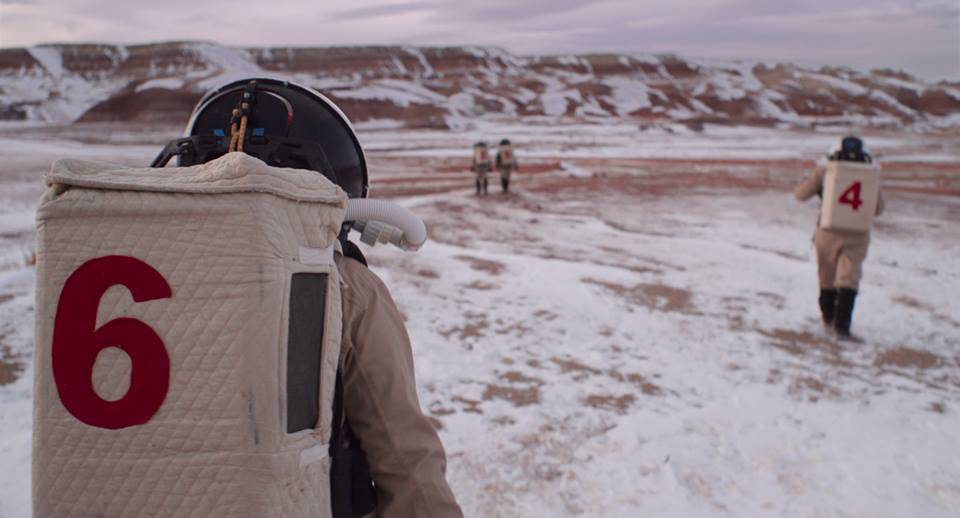 The documentary “Above and Below,” the debut film from Swiss director Nicolas Steiner will reportedly be released in the US via Oscilloscope Laboratories.
Above and Below is a rough and rhythmic roller coaster ride seating five survivors in their daily hustle through an apocalyptic world.
Far, far away and out of sight, that’s where April, Dave, Cindy, Rick and the Godfather are creating life on their own terms. From the depths of the flood channels under Sin City, to a reclaimed military bunker in the middle of the dusty, heated Californian nowhere land to beyond the stratosphere where Mars now lives on earth. Each individual has been flung into periling circumstances on this rollercoaster ride called life. Through the hustle, pain, and laughter, we are whisked away to an unfamiliar world where we discover its inhabitants to be souls not unlike our very own.
Oscilloscope plans to release the film theatrically followed by a release on digital and other ancillary platforms.
Interview with director Nicolas Steiner via official film site
The documentary “Above and Below,” the debut film from Swiss director Nicolas Steiner will reportedly be released in the US via Oscilloscope Laboratories.
Above and Below is a rough and rhythmic roller coaster ride seating five survivors in their daily hustle through an apocalyptic world.
Far, far away and out of sight, that’s where April, Dave, Cindy, Rick and the Godfather are creating life on their own terms. From the depths of the flood channels under Sin City, to a reclaimed military bunker in the middle of the dusty, heated Californian nowhere land to beyond the stratosphere where Mars now lives on earth. Each individual has been flung into periling circumstances on this rollercoaster ride called life. Through the hustle, pain, and laughter, we are whisked away to an unfamiliar world where we discover its inhabitants to be souls not unlike our very own.
Oscilloscope plans to release the film theatrically followed by a release on digital and other ancillary platforms.
Interview with director Nicolas Steiner via official film site
“Above and Below” combines Mars, Earth and the subterranean. How did you come up with this unusual idea? I’m principally inspired by pictures. My imagination functions better that way, rather than when I take my lead from formulated premises. In this case it was above all pictures by Joel Sternfeld; photographs of deserts and water parks taken in massive long shots yet with an air of the unnatural to them. They contain an element of the absurd. I also studied for a year at San Francisco Art Institute as[NS3] a Fulbright scholarship holder, where I gave much attention to ghost towns. This was during the same period when the earthquake hit Japan. While surfing in Santa Cruz a presumably contaminated streetlight bearing Japanese characters floated towards us. This experience was decisive for the broader context of “Above and Below” In what way? As a director I consider myself something of a hunter-gatherer. My concepts and ideas initially overflow. Then I set about filtering them. I search for contexts that are only visible at second glance. At the same time, simple processes fascinate me. The more archaic the better. It was from such jigsaw pieces that the journey in the film, one from Mars to Earth and beneath its surface, finally emerged. The so-called tunnel-people play a central role in the film. How did you hear of them? I often made trips from San Francisco to the surrounding areas. I wanted to leave the city for a few days and visited Las Vegas. I had meant to relax, but the stay made me feel as if I were on steroids. It was all a garish sensual-overload. I walked numbly through the streets and saw in a water tunnel a guy in a nightgown with a chessboard. The idea for the film immediately became more tangible. How did you come across your tunnel-people? I made a five-week research trip to Las Vegas. I was initially with a journalist who had written about the tunnel-dwellers. I also studied old city plans of the tunnels and went off on my own to look for possible protagonists. How dangerous was that? Let’s put it this way, I wouldn’t necessarily rush off to do it again. Inflamed by my idea I recklessly entered situations that might have turned out differently. Lots of the tunnel-people are very nice but also heavily addicted to crystal meth, which makes them unpredictable. I met my protagonist Lalo, for example, in one of the tunnels in which neither the journalist nor a city social worker had entered. I could hear Lalo growling “Who is it?” in the distance. Later, when filming, he told me that he was a former electrician and cage-fighter who was responsible for the death of two people “because of a stupid accident”. My cameraman and I had a €80,000 camera with us. So of course there was a certain uneasiness, particularly when Lalo wanted to know how expensive such a device might be. I think, however, that this recklessness was taken as bravery and won us respect. The research phase and shooting were intense. I hope this is apparent in the film. It’s important for me to share experiences so viewers feel they experienced them, too. Did the police always just let you be? We were arrested once. Of course the possibility had crossed my mind, since during research and filming I was perpetually entering fenced-off territory. And I was aware, too, that trespassing is a serious offence in America. How did this come about? We parked our transporter next to a tunnel and lugged a camera crane in black bags down into it. Somebody observed us and assumed that we were smuggling dynamite and weapons since under the tunnel there was a second one running between two banks. The police, once summoned, pushed us up against a wall and searched us. The interesting thing was the police officer shouted at me irritatedly, why don’t you shoot your film in Berlin? There are homeless there, too! Fortunately the officers were informed at that very moment of an ongoing armed robbery and headed out. That was more important than our case. How important then is the topic of homelessness in the film? Of course “Above and Below” does deal with poverty and homelessness. If my last film, “Battle of the Queens”, can be seen as a film about the homeland, then I have now made a film about “not having a home”. But nothing could be further from my actual aim than explaining America and its society to Americans. I didn’t approach the film thematically, but rather conceptually, although the focus is definitely on individuals. To me it was about cowboys, ghosts and aliens. The idea was to make a film leading viewers from Mars down to Earth, and thence into its bowels. The film might equally have played out in the desert of Dubai. Or in China. But try telling that to a furious police officer! Could the film have been shot in Switzerland, too? Was that ever considered? No, the film could not have been made in Switzerland. There is always something adventuresome about filmmaking. And I shot my last two films in my homeland, Valais in the Southern alps of Switzerland[NS6] . It was time to move on and leave my garden behind me. Furthermore there is a keyword for this film, an important one: DESERT. Aridity. The visual beauty of death and destruction. I found optimal conditions in America to deal with the themes, circumstances and socio-political views that interest me. After all, the film lives from these people and their bleak biographies, and these led me through its making. How are your protagonists now? I intend to show them the film at the given locations. I’m still in contact with Rick and Cindy, they are both clean now. Among the Mars-crew I’m most frequently in contact with April. She finished her geology studies and is continuing in research. Dave vanished a year ago but I’m still in contact with his daughter. He once called me after having swapped his[NS7] old camper for a mobile phone. I’ll find him again. Things aren’t looking so good with Lalo. I don’t know if he’s still alive, he had potentially fatal abscesses back then and was in beaten-up shape. How did you come upon the peculiar Mars-Society? At San Francisco Art Institute I saw a picture in a magazine of a lonely astronaut in a red desert. I was confused since I knew that no one could be there. When I looked more closely I saw a garden hose, and that was how I met the Mars-Society, a non-profit organisation working towards exploring and colonising the red planet. Scientists, fans of space travel, James Cameron and a couple of millionaires founded the society in the 90s. I was interested by the science behind it, but the real attraction was the trashy-cum-absurd look of the Mars people and their equipment. And at the same time the terrain on which they simulate Mars expeditions is of a poetically wistful abandonment. You rejected the classic talking-heads structure in your documentary. Why? My intention and aim was to keep my protagonists un-coerced and at their ease in conversation. I don’t like classical interviews or Q and As. I prefer conversations. Which doesn’t mean I don’t appreciate well-lit faces and spaces, but I try not to employ them at any cost. I tell my team approximately where I want to arrive, but spontaneity and flexibility are important for me, too. I think talking-heads are a matter of taste and don’t suit every content. In “Above and Below” the audiovisual level was more important to me than just precise statements. The film uses a conspicuously large amount of music There are almost 50 minutes of composed music in total. The soundtrack leads the way through the film. It was created in part before shooting, using photos that I brought back from my research-trips. This meant that we could already use music while shooting. It was apparent to me during research that music plays a very important role, since some of the protagonists do play instruments – Dave, say, with his drum set in the middle of the desert wastes. Lots of people know your abundantly prize-doted short, “It’s me.. Helmut”. What parallels, if any, do you see to “Above and Below”? The short was a twelve-minute fictional project and “Above and Below” a two-hour cinema documentary. But both films are about life and death and transience. Everything is beautiful yet, equally, destroyed. Both films feel a little tragicomic and play by-and-large outside, in nature. In the one, it’s the mountains, in the other, the desert. And in both films I attempted to use sound and image to make cinema into adventure. In “Helmut” the backdrop vanishes, with “Above and Below” it’s swept away. “Above and Below” is your film school graduation film. Will you remain faithful to documentary-making? I very much enjoy documentary-making. It broadens the horizons. And the extremely intensive research periods are something I don’t want to do without. But as for fiction, I’m certainly not excluding it. Because at a formal level, feature films generally inspire me more than documentaries. And theoretically I’m now geared up to make a great thriller or drama about the tunnel-people. Particularly since the series “True Detective”, which features existential themes in a bare landscape and pleased me well.
https://www.youtube.com/watch?v=omnPDGcGXJ8