[caption id="attachment_30145" align="aligncenter" width="1200"]

Ramen Shop[/caption]
JAPAN CUTS: Festival of New Japanese Film returns for the 12th edition at NYC’s Japan Society from July 19 through July 29; and will feature 28 feature-length films and 9 short films across the Feature Slate, Classics: Rediscoveries and Restorations, Documentary Focus, and Experimental Spotlight sections.
For its tentpole Opening Film selection, JAPAN CUTS hosts the North American Premiere of Ramen Shop, a moving Japan/Singapore/France co-produced drama directed by Eric Khoo in which secret family recipes help bridge generations and cultures. Khoo and the film’s star Takumi Saitoh appear in-person for the July 19 screening, which is followed by an opening night party. The Centerpiece Presentation is the North American Premiere of Shuichi Okita’s Mori, The Artist’s Habitat, a fictionalized biopic centered on a single day in the life of reclusive Tokyo artist Morikazu Kumagai and his wife Hideko. The screening is preceded by the CUT ABOVE Award ceremony and is followed by a Q&A with star Kirin Kiki and post-screening party. Finally, the Closing Film is the epic Hanagatami, a meditation on youth and love amidst the backdrop of war, directed by pioneering filmmaker Nobuhiko Obayashi, best-known for his cult classic House (1977). A Q&A with star Shunsuke Kubozuka follows the U.S. Premiere screening.
The festival will honor the beloved actress Kirin Kiki with this year’s CUT ABOVE Award for Outstanding Performance in Film. An industry veteran with over 50 years of screen credits behind her, Kiki is recognized today as one of her generation’s leading talents. She is best known internationally as a frequent collaborator of renowned auteur Hirokazu Kore-eda (After the Storm), with whom she worked this year on the Cannes Film Festival Palme d’Or-winning Shoplifters (alongside actors Sakura Ando and Lily Franky, two previous recipients of the CUT ABOVE Award). In addition to the Centerpiece Presentation title Mori, The Artist’s Habitat, Kiki is featured in this year’s JAPAN CUTS with a 10th Anniversary 35mm screening of Kore-eda’s landmark family drama Still Walking.
JAPAN CUTS 2018 FULL LINEUP
All films screen at NYC’s Japan Society (333 E. 47th St., New York, NY 10017) and
are presented in Japanese with English subtitles, unless otherwise noted.
Opening Film
Ramen Shop (North American Premiere)
Dir. Eric Khoo. With Takumi Saitoh, Seiko Matsuda, Mark Lee, Jeanette Aw.
2018, 89 min., Drama. In English, Japanese, Mandarin, and Cantonese with English subtitles.
Masato (Takumi Saitoh) helps run a ramen shop in Takasaki, Japan with his emotionally distant father. Upon his father’s sudden death, a suitcase of old family photographs and journals that belonged to his long-deceased Singaporean mother motivates Takumi to learn about his roots and the mystery of his parents’ relationship in Singapore. With the help of a Japanese expat food blogger (pop idol Seiko Matsuda) and his maternal uncle (comedian Mark Lee), Masato undergoes a journey of discovery that unlocks secret family recipes, reveals painful pasts and begins a process of reconciliation that bridges national histories and generations. Filled with delectable scenes featuring Singaporean cuisine, this moving drama by Singapore’s leading auteur Eric Khoo celebrates the power of love, family and good food. Intro and Q&A with director Eric Khoo and star Takumi Saitoh. Followed by the Opening Night Party.
Centerpiece Presentation
Mori, The Artist’s Habitat (North American Premiere)
Dir. Shuichi Okita. With Tsutomu Yamazaki, Kirin Kiki, Ryo Kase, Ken Mitsuishi.
2018, 99 min., Comedy.
In the last 30 years of of his long life, reclusive artist Morikazu Kumagai (1880-1977), aka Mori, almost never left his Ikebukuro home. Instead, he took pleasure in a daily routine of observing the cats, fish, birds and insects living in his luxuriant garden for hours, eventually rendering them into his distinct paintings. Featuring a colorful cast headlined by screen legends Tsutomu Yamazaki (Tampopo) and Kirin Kiki (Still Walking), this delightful, offbeat comedy directed by Shuichi Okita (Mohican Comes Home) imagines a day in the life of Mori and Hideko, his wife of over 50 years, as they entertain a throng of welcome and unwelcome visitors, including a pair of condo developers whose encroaching presence signals the end of an era. Intro and Q&A with star Kirin Kiki, with CUT ABOVE Award ceremony. Followed by the Centerpiece Party.
Closing Film
Hanagatami (U.S. Premiere)
Dir. Nobuhiko Obayashi. With Shunsuke Kubozuka, Takako Tokiwa, Mugi Kadowaki, Shinnosuke Mitsushima.
2017, 169 min., Drama.
A passion project that was in gestation even before his legendary debut House (1977), veteran director Nobuhiko Obayashi’s follow-up to Seven Weeks (JAPAN CUTS 2015) is an adaptation of Kazuo Dan’s 1937 novella about a group of teenagers living in the coastal town of Karatsu as the Pacific War creeps ever closer. An ensemble cast of Japanese cinema’s rising stars plays out Obayashi’s fever dream of youth, desire and romance within an extravagantly stylized cinematic hyperreality full of his signature green screen composites, elaborate lighting and dizzying editing. With the horror of war in view, the doomed characters burn with desire to live their lives to the fullest, suggesting both a warning and a call for compassion and peace from the 80-year-old director. Intro and Q&A with star Shunsuke Kubozuka.
Preceded by Short Film:
“
How Can You Know Where to Go If You Do Not Know Where You Have Been”
Dir. Mizuki Toriya, 2018, 6 min, Animation/Documentary.
In this tender and inspired short, the director sets delicate sand imagery to a conversation with her grandmother who experienced WWII in Kobe.
Feature Slate
In Alphabetical Order
Amiko (U.S. Premiere)
Dir. Yoko Yamanaka. With Aira Sunohara, Hiroto Oshita, Maiko Mineo, Ayu Hasegawa.
2017, 66 min., Drama/Comedy.
16-year-old Amiko is bored by her mundane life as a high schooler in Nagano until she meets Aomi, a classmate on the soccer team who shares her cynical point of view (and love of Radiohead), and develops a major crush. Though she doesn’t speak to him for months, when Aomi suddenly drops out of school and moves to Tokyo with a former student who represents everything she loathes, Amiko takes off after him to make sense of the betrayal. Shot and edited with a bold, unpredictable style that matches its title character’s rebellious playfulness, this invigorating micro-budget debut by 20-year-old director Yoko Yamanaka successfully avoids coming-of-age clichés to offer a wholly original take on the messy contradictions and yearnings of youth. Intro and Q&A with director Yoko Yamanaka.
Preceded by Short Film:
“
NAGISA” (New York Premiere)
Dir. Takeshi Kogahara, 2017, 18 min, Drama.
A single poolside conversation with a classmate lingers on in the memory of a high school boy.
blank 13 (New York Premiere)
Dir. Takumi Saitoh. With Issei Takahashi, Mayu Matsuoka, Takumi Saitoh, Lily Franky.
2018, 70 min., Drama.
Thirteen years after abandoning his wife and two sons by stepping out for a pack of cigarettes and never returning, deadbeat gambler Masato (Lily Franky) dies of stomach cancer. At his funeral, a motley crew of fellow mahjong players, pachinko parlor employees and former drinking buddies gather to pay their respects and tell stories, revealing aspects of Masato’s life that complicate his sons’ resentment towards him. Based on the childhood experiences of screenwriter Koji Hashimoto, this directorial debut by popular actor Takumi Saitoh takes a unique approach to the dysfunctional family drama and funeral comedy, effectively utilizing flashbacks and unexpected shifts in tone to explore what it means to be part of someone’s life, for better or worse. Intro and Q&A with director/star Takumi Saitoh.
BLEACH (U.S. Premiere)
Dir. Shinsuke Sato. With Sota Fukushi, Hana Sugisaki, Ryo Yoshizawa, Taichi Saotome, MIYAVI.
2018, 108 min., Action.
The highly anticipated live-action adaptation of the mega popular Tite Kubo manga and anime series about the adventures of supernaturally gifted, orange-haired teenager Ichigo Kurosaki (Sota Fukushi). Capable of seeing spirits, Ichigo meets a “Soul Reaper” (shinigami) by the name of Rukia Kuchiki (Hana Sugisaki), who transfers her powers to him after being injured by an evil spirit known as a “Hollow.” Under Rukia’s guidance, Ichigo trains to harness his newfound Soul Reaper abilities in the battle against Hollows while Rukia does her best to fit in as a human high school girl. Skillfully directed by Shinsuke Sato (I Am a Hero, Gantz) with state-of-the-art CGI and a stellar cast, BLEACH raises the bar high for live-action manga adaptations. Co-presented with AnimeNYC. Intro and Q&A with director Shinsuke Sato.
Born Bone Born (North American Premiere)
Dir. Toshiyuki Teruya. With Ayame Misaki, Eiji Okuda, Michitaka Tsutsui, Yoko Oshima.
2018, 111 min., Comedy.
This second feature by Okinawan comedian Toshiyuki Teruya, a.k.a. Gori (one half of the popular comedy duo Garage Sale) is a sunny, humanistic comedy set in Aguni, a remote island of Okinawa. A visibly pregnant Yuko (Ayame Misaki, Radiance) returns home to find her family still grappling with the recent passing of her mother, Emiko, while her father (Eiji Okuda) becomes increasingly withdrawn and her older brother (Michitaka Tsutsui) hopelessly combative. When neighbors start to gossip about Yuko’s fatherless unborn child, the local matriarch comes to her defense alongside a childhood friend. Soon, it will be a year since Emiko’s passing, and time to exhume her and wash her bones as dictated by the island’s Senkotsu ritual.
Call Boy (North American Premiere)
Dir. Daisuke Miura. With Tori Matsuzaka, Sei Matobu, Ami Tomite, Yuki Sakurai, Kenta Izuka.
2018, 119 min., Erotic Drama.
A bored university student (Tori Matsuzaka) with a penchant for Greek philosophy moonlighting as a Shimokitazawa bartender is picked up by a mysterious woman (Sei Matobu) who invites him to join her male escort service, launching a journey of self-discovery through the sexual satisfaction of a range of wealthy middle-aged clients. With nods to American Gigolo’s critical vision of ‘80s flash, director and playwright Daisuke Miura (Love’s Whirlpool) unabashedly embraces awkward erotic excess to reveal social fault lines through the subculture of sex work. The film’s ceaseless parade of customers’ kinks eventually flattens the shock of explicit onscreen acts, taking the intimate lives of its characters out from under the neon to the bright light of day. This film is unrated, but is not recommended for persons younger than 18 years of age due to strong sexual content.
Dear Etranger (New York Premiere)
Dir. Yukiko Mishima. With Tadanobu Asano, Rena Tanaka, Kankuro Kudo, Shinobu Terajima.
2017, 127 min., Drama.
Career-oriented forty-something divorcees Makoto (Tadanobu Asano) and Yuka (Shinobu Terajima) have each remarried, Makoto living with the younger Nanae (Rena Tanaka) and her two daughters from a previous marriage, and Yuka with her second husband and Makoto’s daughter. When Nanae becomes pregnant and Yuka’s husband ill, each family member is forced to reconsider the bonds of family beyond bloodlines and normative tradition. Yukiko Mishima’s (A Stitch of Life) contemporary realization of Kiyoshi Shigematsu’s 1996 novel (with a screenplay adapted by Haruhiko Arai) is a moving new entry in Japan’s family drama genre. Giving each character complex weaknesses and desires, Mishima brings extraordinary performances from veteran cast and young newcomers Raiju Kamata and Sara Minami.
Dream of Illumination (International Premiere)
Dir. Thunder Sawada. With Sara Shida, Yuya Takagawa, Maho Yamada, Akira Hamada.
2017, 91 min., Drama.
After moving place to place due to her divorcé father Ueda’s (Yuya Takagawa) work as a real estate agent, high school senior Nana (Sara Shida) has spent the most time in the small town of Rokujo. Facilitating the purchase of low-value land by foreign buyers for development, Ueda is the scorn of the dwindling population of farmers stuck in debt and harboring provincial attitudes toward outsiders. As Nana considers her next step, her father reveals the secret trauma linking him to this land and its people. Writer/director Thunder Sawada’s critical examination of the precarity of rural life and inevitability of change boasts a warmly authentic cast, gorgeous B&W cinematography by Mizuki Nishida, and a trembling, moody score by Kenji Kariu. Intro and Q&A with director Thunder Sawada, star Yuya Takagawa, and producer Kazuyuki Kitaki.
KUSHINA, what will you be (International Premiere)
Dir. Moët Hayami. With Miyuki Ono, Tomona Hirota, Yayoi Inamoto, Ikumi Satake.
2018, 68 min., Drama.
A meditation on youth, separatist politics and the rejection of patriarchy, Moët Hayami’s remarkable debut feature tells the story of Onikuma (Miyuki Ono, Evil Dead Trap, Black Rain), who founds an independent community of women in the mountain woods. Her daughter Kagu (Tomona Hirota, “YEAH”) was 14-years-old and pregnant with child when they first escaped modern society. Now that daughter, Kushina (Ikumi Satake), is reaching the same age and wondering about the world beyond the mountain. When a well-meaning anthropologist (Yayoi Inamoto) and her male assistant (Suguru Onuma) enter this precarious utopia, Onikuma is prepared to take all necessary steps to protect it, even if it means threatening the future Kushina might imagine for herself. Intro and Q&A with director Moët Hayami and star Tomona Hirota.
Last Winter, We Parted (North American Premiere)
Dir. Tomoyuki Takimoto. With Takanori Iwata, Takumi Saitoh, Mizuki Yamamoto, Kazuki Kitamura, Reina Asami.
2018, 118 min., Mystery/Suspense.
An ambitious, young freelance journalist (Takanori Iwata) takes on the closed case of a famous fine arts photographer (Takumi Saitoh) whose beautiful female subject died on set in a gruesome fire. As details of the artist’s eery fascinations with physical mortality emerge, the writer pitches the increasingly salacious story to a skeptical editor (Kazuki Kitamura) just as it takes a dangerous turn. Directed by Tomoyuki Takimoto (Brain Candy), this exceptional mystery/thriller features a top-notch cast, skillfully employing noir genre conventions as alternating protagonists adopt the film’s investigation. With shades of Blow Up, thematic focus on visual control and manipulation causes the lurid narrative of erotic obsession to turn in on itself, even as the plot twists toward its conclusion. Based on the novel by award-winning author Fuminori Nakamura.
Night is Short, Walk On Girl (East Coast Premiere)
Dir. Masaaki Yuasa. With Gen Hoshino, Kana Hanazawa, Hiroshi Kamiya, Ryuji Akiyama.
2017, 93 min., Animation.
Spunky college student Otome embarks on a booze-soaked romp through Kyoto in search of a book from her childhood. As the night stretches on for what seems like years, her quest takes on epic, hallucinatory proportions–starring a fanged god of used books, a guerilla theater troupe, a committee of crab-dancing philosophers, and love-inducing carp that fall from the sky. Meanwhile, an upperclassman at her university (voiced by pop star Gen Hoshino) undergoes a series of equally improbable misadventures in his attempts to win her heart. Adapted from the award-winning novel by Tomihiko Morimi, acclaimed animation director Masaaki Yuasa’s first feature in a decade is a delightful trip down the rabbit hole into questions of fate and interconnectedness, rendered in an astounding visual style.
Preceded by Short Film:
“
DREAMLAND” (New York Premiere)
Dir. Mirai Mizue, 2018, 5 min, Animation.
Simple rectilinear figures assemble into surprisingly complex “cities” that pulse along to Scarlatti Goes Electro’s hyperkinetic score.
Outrage Coda (New York Premiere)
Dir. Takeshi Kitano. With “Beat” Takeshi Kitano, Toshiyuki Nishida, Ren Osugi, Tatsuo Nadaka, Ken Mitsuishi.
2017, 104 min., Action.
The third entry in the Outrage yakuza series finds Takeshi Kitano’s Otomo on South Korea’s idyllic Jeju island running enforcement for Chang (Tokio Kaneda) in regional organized crime. The heap of bodies Otomo left on mainland Japan created an opening for the Hanabishi clan to preside over an uneasy union of yakuza syndicates, led by ex-stock trader Nomura (Ren Osugi), now purging old school gangsterism for slick corporate corruption. Interrupting Otomo’s semi-retirement, Hanabishi-kai lieutenant Hanada (Pierre Taki) makes a stir at a Jeju resort, causing Otomo to seek Chang’s retribution and settle his own score. Kitano relishes knotting crime world bureaucracy into a ball of double-crosses with stylish momentum, displaying the absurdity of toxic masculinity and emptiness of violence. This film is unrated, but is not recommended for persons younger than 18 years of age due to excessive violence.
Passage of Life (North American Premiere)
Dir. Akio Fujimoto. With Issace, Htet Myat Naing, Niina Kuromiya, Kaung Myat Thu.
2017, 99 min., Drama.
Years after fleeing Myanmar and settling in Japan, an undocumented Burmese family faces an uncertain future as their application for political refugee status gets rejected. Khine and her husband Issace debate the dangers of going back to their home country while their Japan-raised sons, 7-year-old Kaung and 5-year-old Htet, struggle to connect with their Burmese identity despite Khine’s attempts to keep them linked through language lessons. Working with a cast of mostly non-actors, whose real-life experiences inform the narrative, first time director Akio Fujimoto constructs a remarkably affecting social realist drama that conveys the emotional stresses and socioeconomic struggles of life as a refugee in Japan with sensitivity, empathy and a documentary-like sense of immediacy. Intro and Q&A with director Akio Fujimoto.
Radiance (New York Premiere)
Dir. Naomi Kawase. With Masatoshi Nagase, Ayame Misaki, Chihiro Ohtsuka, Noémie Nakai.
2017, 101 min., Drama.
Misako Ozaki (Ayame Misaki, Born Bone Born) is enthusiastically learning the craft of creating audio descriptions at a company producing soundtracks for visually impaired cinemagoers. Collaborating with a group of consultants with limited eyesight, she struggles to balance accuracy with space for visual imagination, clashing with Masaya Nakamori (Masatoshi Nagase, Electric Dragon 80.000 V, Mystery Train), a celebrated photographer with deteriorating vision. Together they learn to open their senses to the world around them. Approaching her subject with characteristic sincerity and sensuality, Naomi Kawase (Sweet Bean, The Mourning Forest) harnesses playful metafilmic devices from documentary style to a film-within-a-film featuring Tatsuya Fuji and Misuzu Kanno. Lensed by photographer Arata Dodo and featuring a vibrant score by Ibrahim Maalouf.
Preceded by Short Film:
“
Across the water” (World Premiere)
Dir. Nao Yoshigai, 2018, 9 min, Avant-Garde/Performance.
A misty body of water holds the moving human form, flesh, glass, and fabric placed in iridescent relation.
Side Job. (U.S. Premiere)
Dir. Ryuichi Hiroki. With Kumi Takiuchi, Ken Mitsuishi, Kengo Kora, Tokio Emoto, Atsushi Shinohara.
2017, 119 min., Drama.
Living in temporary housing following the earthquake, tsunami, and nuclear catastrophe of March 11, 2011, Miyuki (Kumi Takiuchi, Greatful Dead) works as a clerk for Iwaki city. Her father (Ken Mitsuishi, Outrage Coda) lost his wife as well as his livelihood of farming in the disaster, and spends his days in pachinko parlors slipping further into depressive alcoholism. On weekends, under the pretense of English courses, she takes the express bus to forgetful Tokyo and adopts her alter ego as a hotel call girl. Fukushima native Ryuichi Hiroki, known for gritty romantic indies (Vibrator) and studio genre crowd pleasers (Her Granddaughter), adapts his own novel in one of the most earnest and poignant dramatic treatments of the long aftermath of 3/11. This film is unrated, but is not recommended for persons younger than 18 years of age due to strong sexual content.
Thicker Than Water (North American Premiere)
Dir. Keisuke Yoshida. With Masataka Kubota, Hirofumi Arai, Keiko Enoue, Miwako Kakei.
2018, 103 min., Drama/Comedy.
Hard-working Yuria (Keiko Enoue) runs a small printing company. Despite her best efforts, she can’t seem to attract the attention of Kazunari (Masataka Kubota), a polite yet aloof client who is more interested in flirting with Mako (Miwako Kakei), Yuria’s ditzy younger sister and employee. Meanwhile, Kazunari has his hands full with Takuji (Hirofumi Arai), his rough-hewn brother who was recently released from prison and is crashing at his apartment. With perceptive insight, director Keisuke Yoshida (Himeanole, My Little Sweet Pea) highlights the comedic heights and dramatic lows of these impossibly mismatched but mutually dependent sibling pairs as they deal with familial duties, business dealings and matters of the heart. Featuring a stellar breakout performance by manzai comic Keiko Enoue. Intro and Q&A with director Keisuke Yoshida.
TOURISM (International Premiere)
Dir. Daisuke Miyazaki. With Nina Endo, Sumire, Takayuki Yanagi.
2018, 77 min., Drama. In Japanese, English, and Malay with English subtitles.
When Nina (Nina Endo) wins free airline tickets, she leaves her dingy apartment and part-time factory job in Yamato City, Japan for Singapore with her friend Su (Sumire). Wandering aimlessly through the tourist district, they are underwhelmed by national monuments and return to the familiarity of giant shopping malls, selfie stick in hand. But when Nina loses track of both Su and her smartphone, she stumbles into a more unmediated experience with Singapore’s streets, food and people. Director Daisuke Miyazaki’s follow-up to Yamato (California) (JAPAN CUTS 2017) is a pleasantly lowkey riff on alienation and materialism within a globalizing society shot in pseudo-documentary style, replete with quirky dance sequences, Snapchat filters, ghosts and a mysterious child narrator.
Tremble All You Want (U.S. Premiere)
Dir. Akiko Ohku. With Mayu Matsuoka, Daichi Watanabe, Anna Ishibashi, Takumi Kitamura.
2017, 117 min., Romantic Comedy.
Yoshika (Mayu Matsuoka) has had a crush on Ichimiya (Takumi Kitamura), whom she calls “Ichi” (One), since she was in middle school. Now a 24-year-old salarywoman, her all-consuming fixation has prevented her from even considering another candidate for boyfriend until an office colleague, whom she dubs “Ni” (Two), asks her out. As she sorts out her Ichi vs. Ni predicament through mile-a-minute monologues spoken to a cast of regular characters and aloud to herself, Yoshika gradually reveals the depths of her obsessions, which become increasingly troubling as her fantasy life and reality start to collapse into each other. Adapted from the novel by award-winning author Risa Wataya, director Akiko Ohku’s delightfully off-kilter romcom offers a refreshing twist on a familiar genre.
Violence Voyager (U.S. Premiere)
Dir. Ujicha. With Aoi Yuki, Naoki Tanaka, Shigeo Takahashi, Tomorowo Taguchi.
2018, 84 min., Animation.
An American boy named Bobby and his friend Akkun set out for the mountains to build a secret hideout. On their way, they stumble upon a mysterious amusement park called “Violence Voyager.” It doesn’t take long for things to get weird as the boys discover a group of scared children who can’t seem to escape and soon find themselves under attack by robot-like humanoids. For his three years in the making follow-up to The Burning Buddha Man (2013) director Ujicha again employs a blend of animation and manga called “geki-mation,” creating grotesque body horror nightmare imagery from painstakingly detailed, hand-painted paper cutouts. Chock-full of B-horror, sci-fi and kaiju film references, this blood-soaked late-night flick is not for the kiddies. This film is unrated, but is not recommended for persons younger than 18 years of age due to disturbing content.
We Make Antiques! (East Coast Premiere)
Dir. Masaharu Take. With Kiichi Nakai, Kuranosuke Sasaki, Tomochika, Aoi Morikawa.
2018, 110 min., Comedy.
A whip smart, laugh out loud buddy comedy that gently satirizes the antiques trade, directed by Masaharu Take (100 Yen Love). Toshio (Kiichi Nakai), a smooth-talking antiques dealer with a keen eye but perpetual bad luck, finally strikes gold when he finds a tea bowl with a letter written by 16th century tea master Sen no Rikyu. Or at least he thinks he does. When it’s revealed that he was actually sold immaculate fakes made by a group of conmen led by disgraced potter Sasuke (Kuranosuke Sasaki), Toshio sees another opportunity and decides to go in with them to pull off an elaborate heist. Their plan: create a priceless Rikyu bowl and reap the massive rewards.
Yocho (Foreboding) (U.S. Premiere)
Dir. Kiyoshi Kurosawa. With Kaho, Shota Sometani, Masahiro Higashide, Ren Osugi.
2017, 140 min., Sci-Fi.
When people around her start going mad, Etsuko (Kaho, Our Little Sister) finds the cause of their affliction in the hospital where her husband Tatsuo (Shota Sometani, Himizu) works with the mysterious Dr. Makabe (Masahiro Higashide, Asako I & II). What she discovers are extraterrestrials in human form that are capable of removing “concepts” from people with the touch of a hand and are prepping for an invasion. Etsuko, however, also finds she is immune to their powers. Featuring his flair for depicting modern alienation while utilizing ingenious scene set ups and subtle humor, Kiyoshi Kurosawa (Journey to the Shore, Cure) returns with this lo-fi sci-fi steeped in the body snatcher genre that expands on the world of Before We Vanish (2017).
Classics: Rediscoveries and Restorations
In Alphabetical Order
Abnormal Family (North American Premiere)
Dir. Masayuki Suo. With Kaoru Kaze, Miki Yamaji, Usagi Aso, Ren Osugi.
1984, 63 min., Softcore “Pink Film.”
Before going on to win Japan Academy Prizes for Sumo Do, Sumo Don’t (1992) and his international hit comedy Shall We Dance? (1996), director Masayuki Suo began his filmmaking career in the softcore pink film genre with this playful, erotic homage and parody of Yasujiro Ozu’s family dramas. Utilizing a Tokyo Story-like premise about a buxom daughter-in-law’s relationship with her husband’s nuclear family and a father’s feeling of isolation from his children, Abnormal Family is full of nods to Ozu’s cinematic universe that will delight (or deeply offend) fans of the Japanese cinema master—including tatami-level medium close-ups, stilted dialogue, and an uncanny Chishu Ryu impression by Ren Osugi—while also fulfilling the requisite number of sex scenes. New 4K restoration by Rapid Eye Lab. This film is unrated, but is not recommended for persons younger than 18 years of age due to strong sexual content.
Still Walking (10th Anniversary Screening)
Dir. Hirokazu Kore-eda. With Hiroshi Abe, Yui Natsukawa, You, Kirin Kiki.
2008, 114 min., Drama.
The Yokoyama family gathers for an annual commemoration of the eldest son Junpei, who drowned fifteen years ago while saving someone’s life. Over the course of the day, suppressed tensions and resentments are gradually revealed amidst forced pleasantries and shared meals as second son Ryo (Hiroshi Abe) endures feelings of inferiority in front of his curmudgeon father (Yoshio Harada) and passively judgmental mother (Kirin Kiki), both of whom disapprove of his recent marriage to a widow (Yui Natsukawa) with a 10-year-old son. Dedicated to his late mother, Hirokazu Kore-eda’s 2008 drama is among his most personal films—a masterfully directed, emotionally nuanced expression of the love, heartbreak and comfort within family relationships—and a modern classic of Japanese cinema.
Documentary Focus
In Alphabetical Order
Of Love & Law (East Coast Premiere)
Dir. Hikaru Toda. With Kazuyuki Minami, Masafumi Yoshida, Yae Minami, Kazuma Tsujitani.
2017, 94 min., Documentary/LGBT.
An artist named Rokudenashiko charged with violating Japan’s obscenity law through her vagina-themed artworks. A teacher fired for not singing the national anthem at graduation. People denied legal status due to being born outside the rigid family registration structure. These are some of the cases taken up by Japan’s first law firm founded by an openly gay couple, Masafumi Yoshida and Kazuyuki Minami. Hikaru Toda’s rousing and urgent crowdsource-funded documentary captures Fumi and Kazu’s professional and personal lives at their Osaka-based office representing marginalized individuals who challenge the status quo of a nation projecting homogeneity, while they themselves reflect on their desire to be parents, and love and care for each other amidst their dedicated work. Intro and Q&A with director Hikaru Toda.
Sennan Asbestos Disaster (North American Premiere)
Dir. Kazuo Hara. With Yoko Okada, Kazuyoshi Yuoka, Kazuko Minami, Miyoko Sato, Chiuko Ishikawa.
2017, 215 min., Documentary/Environmental.
Beginning in the 1970s Kazuo Hara (The Emperor’s Naked Army Marches On) developed the iconoclastic “action documentary” style breaking ethical norms of nonfiction filmmaking to follow a protagonist collapsing personal boundaries in pursuit of political truths in disability rights, queer self-determination, or wartime atrocity. Ten years in the making, the epic Sennan Asbestos Disaster builds on this method, joining citizens of Sennan, Osaka seeking legal reparations from the government for exposing their working class community to asbestos factories’ deadly toxins. A powerful ensemble piece gaining strength from the warmth of everyday people standing up to the state for their rights, this radical film analyzes collective action and its limits, locating poisonous threats in self-regulating social mores as much as environmental pollution. Intro and Q&A with director Kazuo Hara, producer Sachiko Kobayashi, and film participants.
Toward a Common Tenderness (North American Premiere)
Dir. Kaori Oda.
2017, 63 min., Documentary/Political/LGBT. In Japanese and Bosnian with English subtitles.
Produced between Japan and Bosnia-Herzegovina, this entrancing essay film contends with the essential questions of documentary cinema: representing an other with their own emotions and inner life, whether a family member or a person from another culture. Kaori Oda (Aragane) knits together unused personal footage from her experiences home in Japan and studies with Béla Tarr at his Film Factory in Sarajevo from 2013-2016. Becoming a masterclass in the art and ethics of filmmaking, the film powerfully engages questions of queer identity, cross-cultural communication, representing poverty and labor, and the power of the camera. A poetic wonder, effortlessly lifting up epiphanies coalesced in images of the everyday. Intro and Q&A with director Kaori Oda.
Experimental Spotlight
In Screening Order
Empty Orchestras and the Speed of Your Voice
The human voice exhibits new texture when housed in the audiovisual containers of cinema. These works let the oral utterance sail while the image plays along, whether sounding out non-verbal affect, revealing the architecture of breath, reciting historical fantasy, or following a whistle into the sky, and scream through the night. Total running time is approximately 87 minutes. Intro and Q&A with director Nao Yoshigai, director Yohei Suzuki and actress Elisa Yanagi.
Films:
“
WAAAH” (New York Premiere)
Dir. Sawako Kabuki, 2018, 1 min.
A baby’s wail reverberates through life and its wrenching physical sensations.
“
Breathing House” (World Premiere)
Dir. Nao Yoshigai, 2017, 12 min.
Last gasps of the Seiza-sha house in Kyoto devoted to Torajiro Okada’s still-sitting meditation method from the late-Meiji era’s intercultural ferment.
“
Bivalvia: Act I” (U.S. Premiere)
Dir. Yu Araki, 2017, 20 min.
Songs reverberate between mollusc shells, karaoke lyrics guiding a history of seaborn tragic lovers from different shores.
“
Stories floating on the wind” (World Premiere)
Dir. Nao Yoshigai, 2018, 9 min.
Along with vegetable and sea life, the camera is but one element of a sensual ride along a coastal road and playground in this masterful short.
“
YEAH” (North American Premiere)
Dir. Yohei Suzuki, 2018, 45 min.
From the director of OW (2015), “YEAH” finds a young woman (Elisa Yanagi) investigating the sonic properties of its titular exclamation and enigmatic qualities of artificial light.
Read more

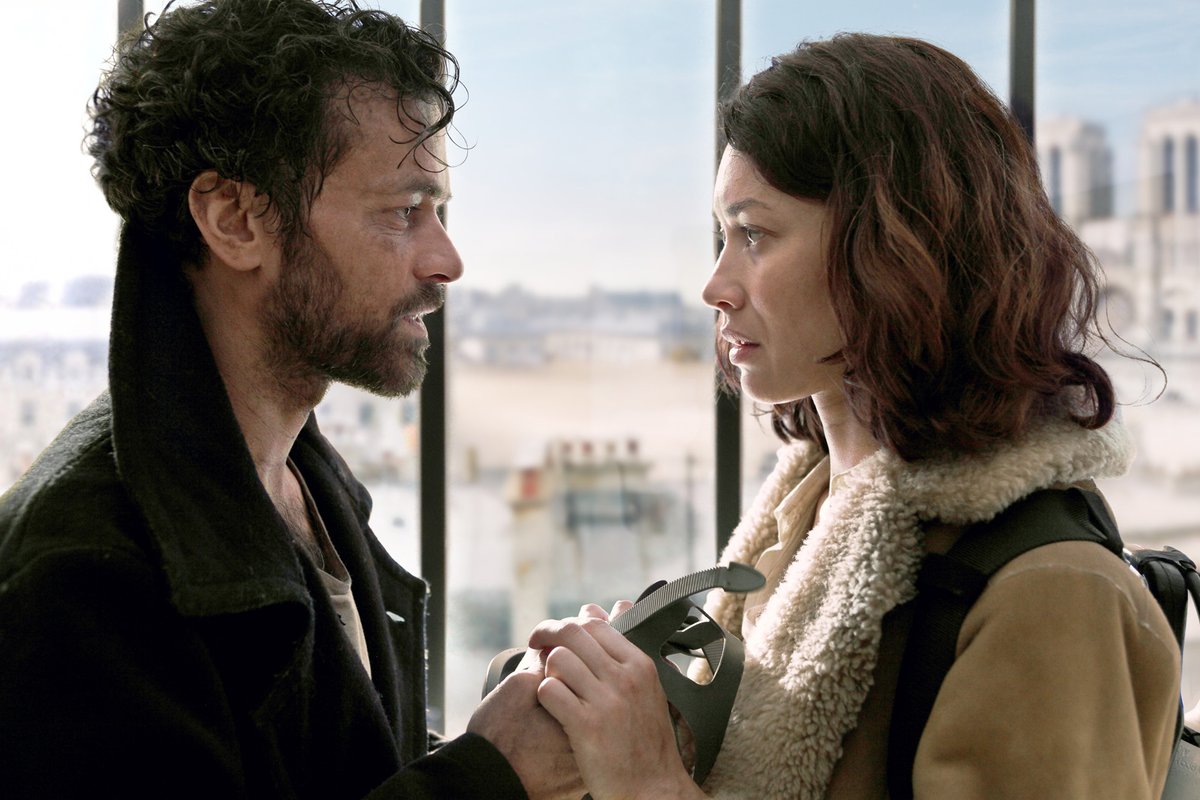 Just a Breath Away (Dans la brume)[/caption]
The Fantasia International Film Festival announced the award winners of the juried sections of its 22nd edition, with the festival’s Best Film Award going to Daniel Roby’s Paris-set science fiction adventure Just a Breath Away (Dans la brume), which opened Fantasia 2018 to massive acclaim and adoration. The epic apocalyptic thriller, which stars Romain Duris and Olga Kurylenko, sees The City of Lights covered in a deadly white fog that threatens the very existence of humanity.
Just a Breath Away (Dans la brume)[/caption]
The Fantasia International Film Festival announced the award winners of the juried sections of its 22nd edition, with the festival’s Best Film Award going to Daniel Roby’s Paris-set science fiction adventure Just a Breath Away (Dans la brume), which opened Fantasia 2018 to massive acclaim and adoration. The epic apocalyptic thriller, which stars Romain Duris and Olga Kurylenko, sees The City of Lights covered in a deadly white fog that threatens the very existence of humanity.
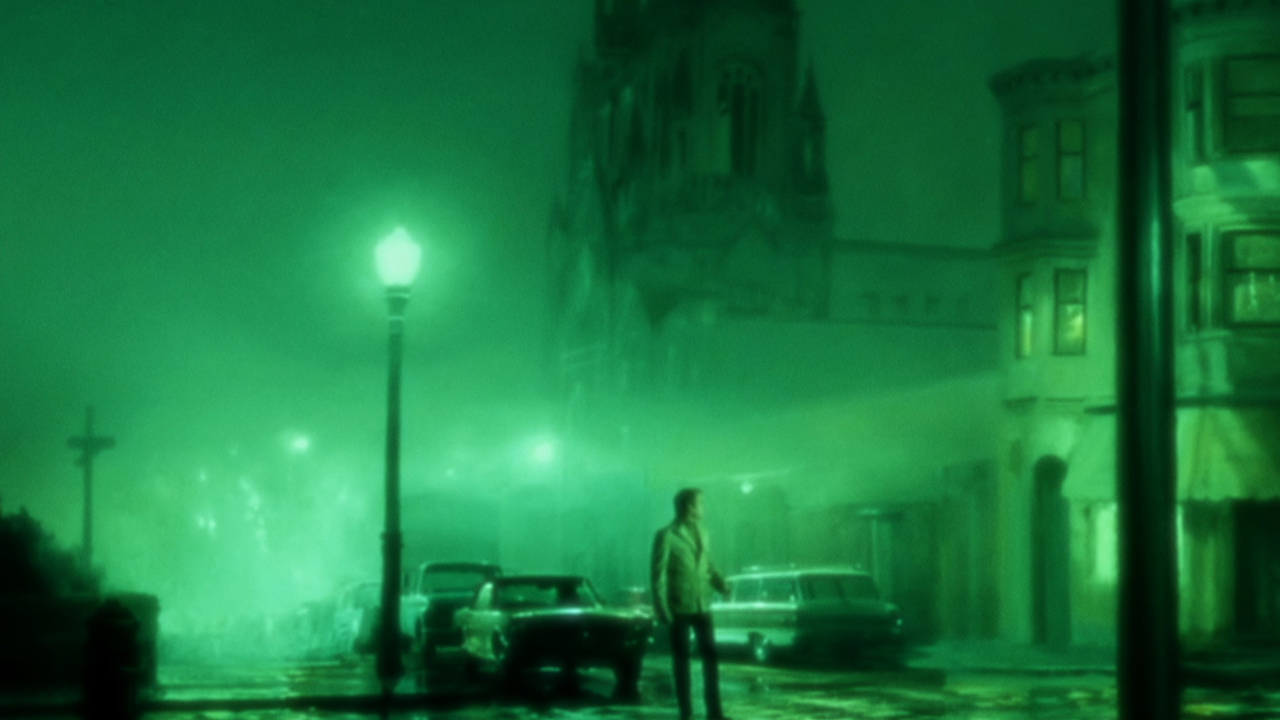 The Green Fog. Regie/directors: Guy Maddin, Evan Johnson, Galen Johnson[/caption]
The Forum program of the 2018 Berlin International Film Festival will feature 44 films, 35 of which world premieres. This year, Arsenal – Institute for Film and Video Art is putting on the Forum as part of the Berlinale for the 48th time.
21 years after his directorial debut The Day a Pig Fell into the Well, Korean director Hong Sangsoo makes a more auspicious return to the Forum. Grass is another cheerfully melancholy story about the guests at a small café whose owner loves classical music. Kim Minhee, who won the Silver Bear for Best Actress in 2017, plays a café regular who always seems to be at the table in the corner writing on her laptop. She repeatedly draws inspiration from what’s happening around her, picking up the threads of the dialogue and spinning them further and sometimes even actively intervening in conversations. Is she perhaps the author of these relationship dramas in miniature, whose stores and themes mirror one another?
French director Claire Simon is equally willing to try out new experiments in her documentary works. In her new film Premières solitudes (Young Solitude), she creates a cinematographic space for open, intimate discussion together with pupils from a school in the Paris suburbs. As they talk together about their backgrounds, parents, first loves, longings and fears for the future, ten ordinary teenagers forge ever closer bonds. It’s good to realise you’re not alone.
For his part, Ukrainian director Sergei Loznitsa is showing a film at the Berlinale for the very first time. In Den’ Pobedy (Victory Day), he observes the huge crowds that gather each year at the Soviet War Memorial in Berlin-Treptow on May 9th and records the hustle and bustle with quiet precision, as different moods come to the fore: pride, contemplation, patriotism, curiosity, the desire for recognition.
Two films from this year’s program draw on video material shot by their directors in periods of political upheaval and imbue it with new significance. At the end of the 1980s, Kristina Konrad collected opinions on the streets of Uruguay in relation to a referendum to be held on a law granting impunity to those responsible for the military dictatorship. Unas preguntas (One or Two Questions) takes a magnifying glass to the democratic process.
Around the same time, the scandal surrounding the Nazi past of former UN General Secretary and Austrian president Kurt Waldheim was making headlines worldwide. Edited together entirely from archive footage, Ruth Beckermann’s Waldheims Walzer (The Waldheim Waltz) is a documentary essay of frightening topicality.
Julien Faraut also works with material largely shot in the 80s in L’empire de la perfection (In the Realm of Perfection). Back then, tennis-obsessed director Gil de Kermadec attempted to use film as means of analysing the game. His meticulously shot footage of John McEnroe matches during the French Open forms the starting point for an ironic look at the parallels between film and the sporting world: cinema lies, sport does not.
Corneliu Porumboiu’s Fotbal Infinit (Infinite Football) takes an equally peculiar look at the world of sport, this time in provincial Romania, following a local official’s attempts to bequeath the world an improved version of the beautiful game. But does everything here really just revolve around football?
Two features from the US shine a light on intellectual escapism. Ted Fendt’s second feature Classical Period is once again shot in Philadelphia on 16mm and tells a drolly melancholy story about intellectualism and loneliness. The members of a reading group exchange cultural and literary references with such vigour that there’s little room for anything else: an attempt to leave the modern world behind or merely their own solitary existences?
Ricky D’Ambrose’s debut Notes On an Appearance may be set in Brooklyn, but unfolds in a similar milieu. Before the backdrop of the disquiet spread by the followers of a controversial philosopher, the film uses both real-life documents and smartly falsified writings to tell the story of a young man who one day disappears without warning. An eerie look at modern life with shades of dystopia.
Josephine Decker’s Madeline’s Madeline on the other hand plunges into the analogies of creativity and insanity. The young titular heroine doesn’t like spending time with her mother, played by actress Miranda July, and feels far freer when with her theatre group. But where does the border lie between personality and role?
Two features from Morocco explore gender relations. Jahilya by Hicham Lasri (the title alludes to the pre-Islamic “time of ignorance”) is a furious condemnation of the misogyny of Moroccan society and all its attendant malice.
Narjiss Nejjar’s Apatride (Stateless) gives an account of a historical event from a female perspective, an event that still dictates the relationship between Morocco and Algeria to this day. Full of beguiling images, her feature shows how a gentle, yet determined woman attempts to prevail over the border between the two countries.
It would be more than appropriate to refer to the electrifying directorial debut An Elephant Sitting Still as a new hope for Chinese cinema. But its 29-year-old director Ho Bu, who had previously made a name for himself with two novels, took his own life soon after the film was completed. This visually stunning work links together the biographies of a range of different protagonists in virtuoso fashion, narrating the course of one single, tension-filled day from dawn until dusk, painting a portrait of a society marked by selfishness in the process.
The Green Fog. Regie/directors: Guy Maddin, Evan Johnson, Galen Johnson[/caption]
The Forum program of the 2018 Berlin International Film Festival will feature 44 films, 35 of which world premieres. This year, Arsenal – Institute for Film and Video Art is putting on the Forum as part of the Berlinale for the 48th time.
21 years after his directorial debut The Day a Pig Fell into the Well, Korean director Hong Sangsoo makes a more auspicious return to the Forum. Grass is another cheerfully melancholy story about the guests at a small café whose owner loves classical music. Kim Minhee, who won the Silver Bear for Best Actress in 2017, plays a café regular who always seems to be at the table in the corner writing on her laptop. She repeatedly draws inspiration from what’s happening around her, picking up the threads of the dialogue and spinning them further and sometimes even actively intervening in conversations. Is she perhaps the author of these relationship dramas in miniature, whose stores and themes mirror one another?
French director Claire Simon is equally willing to try out new experiments in her documentary works. In her new film Premières solitudes (Young Solitude), she creates a cinematographic space for open, intimate discussion together with pupils from a school in the Paris suburbs. As they talk together about their backgrounds, parents, first loves, longings and fears for the future, ten ordinary teenagers forge ever closer bonds. It’s good to realise you’re not alone.
For his part, Ukrainian director Sergei Loznitsa is showing a film at the Berlinale for the very first time. In Den’ Pobedy (Victory Day), he observes the huge crowds that gather each year at the Soviet War Memorial in Berlin-Treptow on May 9th and records the hustle and bustle with quiet precision, as different moods come to the fore: pride, contemplation, patriotism, curiosity, the desire for recognition.
Two films from this year’s program draw on video material shot by their directors in periods of political upheaval and imbue it with new significance. At the end of the 1980s, Kristina Konrad collected opinions on the streets of Uruguay in relation to a referendum to be held on a law granting impunity to those responsible for the military dictatorship. Unas preguntas (One or Two Questions) takes a magnifying glass to the democratic process.
Around the same time, the scandal surrounding the Nazi past of former UN General Secretary and Austrian president Kurt Waldheim was making headlines worldwide. Edited together entirely from archive footage, Ruth Beckermann’s Waldheims Walzer (The Waldheim Waltz) is a documentary essay of frightening topicality.
Julien Faraut also works with material largely shot in the 80s in L’empire de la perfection (In the Realm of Perfection). Back then, tennis-obsessed director Gil de Kermadec attempted to use film as means of analysing the game. His meticulously shot footage of John McEnroe matches during the French Open forms the starting point for an ironic look at the parallels between film and the sporting world: cinema lies, sport does not.
Corneliu Porumboiu’s Fotbal Infinit (Infinite Football) takes an equally peculiar look at the world of sport, this time in provincial Romania, following a local official’s attempts to bequeath the world an improved version of the beautiful game. But does everything here really just revolve around football?
Two features from the US shine a light on intellectual escapism. Ted Fendt’s second feature Classical Period is once again shot in Philadelphia on 16mm and tells a drolly melancholy story about intellectualism and loneliness. The members of a reading group exchange cultural and literary references with such vigour that there’s little room for anything else: an attempt to leave the modern world behind or merely their own solitary existences?
Ricky D’Ambrose’s debut Notes On an Appearance may be set in Brooklyn, but unfolds in a similar milieu. Before the backdrop of the disquiet spread by the followers of a controversial philosopher, the film uses both real-life documents and smartly falsified writings to tell the story of a young man who one day disappears without warning. An eerie look at modern life with shades of dystopia.
Josephine Decker’s Madeline’s Madeline on the other hand plunges into the analogies of creativity and insanity. The young titular heroine doesn’t like spending time with her mother, played by actress Miranda July, and feels far freer when with her theatre group. But where does the border lie between personality and role?
Two features from Morocco explore gender relations. Jahilya by Hicham Lasri (the title alludes to the pre-Islamic “time of ignorance”) is a furious condemnation of the misogyny of Moroccan society and all its attendant malice.
Narjiss Nejjar’s Apatride (Stateless) gives an account of a historical event from a female perspective, an event that still dictates the relationship between Morocco and Algeria to this day. Full of beguiling images, her feature shows how a gentle, yet determined woman attempts to prevail over the border between the two countries.
It would be more than appropriate to refer to the electrifying directorial debut An Elephant Sitting Still as a new hope for Chinese cinema. But its 29-year-old director Ho Bu, who had previously made a name for himself with two novels, took his own life soon after the film was completed. This visually stunning work links together the biographies of a range of different protagonists in virtuoso fashion, narrating the course of one single, tension-filled day from dawn until dusk, painting a portrait of a society marked by selfishness in the process.