[caption id="attachment_11872" align="aligncenter" width="1100"]
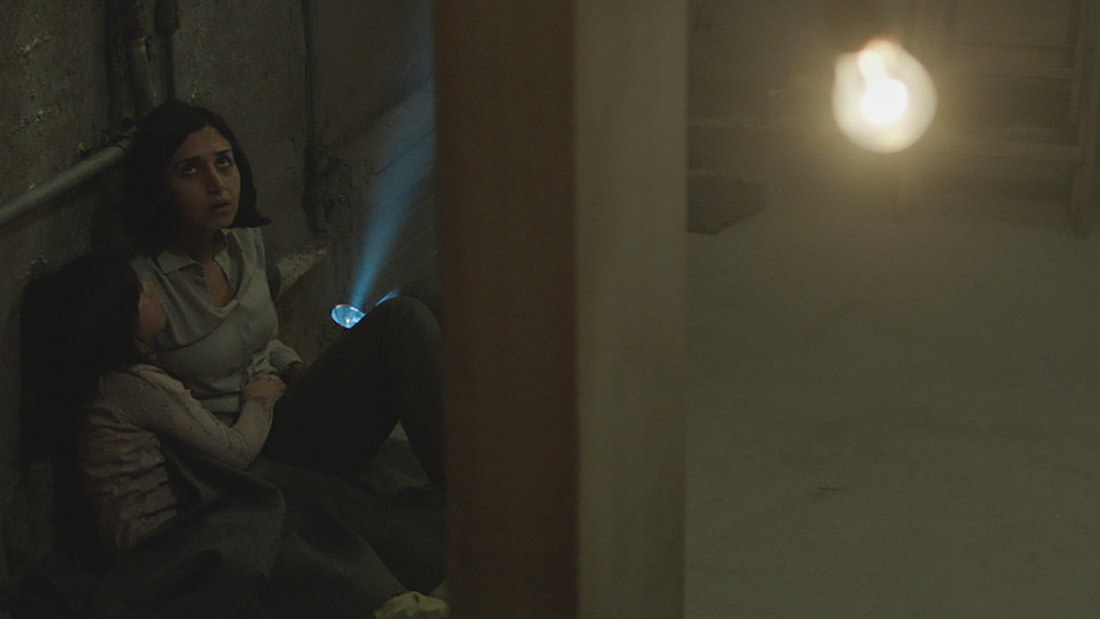
Under the Shadow[/caption]
The
Film Society of Lincoln Center and The
Museum of Modern Art have announced the complete lineup for the 2016 New Directors / New Films (ND/NF), taking place March 16 to 27 in New York City.
Opening the festival is Babak Anvari’s debut feature Under the Shadow, about a mother and daughter haunted by a sinister, largely unseen presence during the Iran-Iraq War. Brimming with a mounting sense of dread until its ominous finish, this expertly crafted, politically charged thriller was a breakout hit at Sundance..
The Closing Night selection is Kirsten Johnson’s Cameraperson, a remarkable chronicle of the cinematographer-turned-director’s life through her collaborations with documentary icons Laura Poitras, Michael Moore, and others. A self-described memoir, Johnson’s first solo directorial effort examines the delicate, complex relationship between filmmaker and subject and is one of nine festival features and four shorts directed by women.
This year’s slate includes a number of films that have won major awards on the festival circuit, including Josh Kriegman and Elyse Sternberg’s Sundance Grand Jury Prizewinner Weiner; Ryusuke Hamaguchi’s Happy Hour, for which the main cast shared Locarno’s Best Actress award; Avishai Sivan’s Tikkun and Pascale Breton’s Suite Armoricaine, winners of the Locarno Special Jury and critics’ prizes, respectively; and Bi Gan’s Kaili Blues, which took home both the Golden Horse Award for Best New Director and Locarno’s honors for Emerging Artist and Best First Feature.
Among the feature debuts are Zhang Hanyi’s Life After Life, executive-produced by Chinese master Jia Zhangke; Anita Rocha da Silveira’s psychosexual coming-of-age story Kill Me Please; Tamer El Said’s Cairo-set film within a film In the Last Days of the City; and Ted Fendt’s Short Stay, the only film in the festival to screen on 35mm.
FILMS & DESCRIPTIONS
Opening Night
Under the Shadow
Babak Anvari, UK/Jordan/Qatar, 2016, 84m
Farsi with English subtitles
It’s eight years into the Iran-Iraq War, but the troubles of wife and mother in Tehran have only just begun. Shideh (Narges Rashidi) is thwarted in her attempts to return to medical school because of past political activities. And as Iraqi bombs close in, her husband is sent off to serve in the military, neighbors begin to flee, and she is left alone with her young daughter, Dorsa, who refuses to be separated from her favorite doll. At first, Dorsa’s tantrums seem to simply be the complaints of a cranky child. But soon she’s in conversation with an invisible woman—no imaginary friend, this one—and the cracks in the walls and ceilings of their apartment could just be the result of something more than air raids. And what is that she sees down the hall, from the corner of her eye? Though Shideh is a woman of science, she begins to suspect that a malevolent spirit, a djinn, is stalking them. A political horror story that rises up from the rubble of war, Babak Anvari’s feature debut boasts a terrific performance by Rashidi as a woman with more than one war going on in her home and in her head, who must save her daughter from dangers both physical and supernatural.
Closing Night
Cameraperson
Kirsten Johnson, USA, 2015, 102m
How much of one’s self can be captured in the images shot of and for others? Kirsten Johnson may be a first-time (solo) feature-film director, but her work as a director of photography and camera operator has helped earn her documentary collaborators (Laura Poitras, Michael Moore, Kirby Dick, Barbara Kopple) nearly every accolade and award possible. Recontextualizing the stunning images inside, around, and beyond the works she has shot, Johnson constructs a visceral and vibrant self-portrait of an artist who has traveled the globe, venturing into landscapes and lives that bear the scars of trauma both active and historic. Rigorous yet nimble in its ability to move from heartache to humor, Cameraperson provides an essential lens on the things that make us human.
The Apostate / El apóstata
Federico Veiroj, Spain/France/Uruguay, 2015, 80m
Spanish with English subtitles
With wry humor and deep conviction, Uruguayan filmmaker Federico Veiroj (A Useful Life, ND/NF 2010) observes a young Spaniard’s maddening efforts to abandon the Catholic Church. Petitioning the local bishop in Madrid to hand over his baptismal records, the philosophy student is soon confronted with a stubborn bureaucracy and comically agonized tests of his fidelity and patience. Scenes of pithy theological discussion (performed by the film’s excellent ensemble cast) are interspersed with oneiric flights of imagination, cohering to produce a work that is by turns seriously philosophical and irreverently funny. While Veiroj’s tone may be more gently ironic than that of Luis Buñuel (his spiritual forebear), The Apostate nonetheless traces in bracing fashion the competing forces of conformity and rebellion, spiritual yearning and carnal desire, at war within us all.
Screening with:
Concerning the Bodyguard
Kasra Farahani, USA, 2015, 10m
This stylish adaptation of Donald Barthelme’s story, narrated by Salman Rushdie, takes on the power structures of a dictatorship with brio.
Behemoth / Beixi moshuo
Zhao Liang, China/France, 2015, 91m
Mandarin with English subtitles
Political documentarian Zhao Liang draws inspiration from The Divine Comedy for this simultaneously intoxicating and terrifying glimpse at the ravages wrought upon Inner Mongolia by its coal and iron industries. A poetic voiceover speaks of the insatiability of desire on top of stunning images of landscapes (and their decimation), machines (and their spectacular functions), and people (and the toll of their labor). Interspersed are sublime tableaux of a prone nude body—asleep? just born? dead?—posed against a refracted horizon. A wholly absorbing guided tour of exploding hillsides, dank mine shafts, cacophonous factories, and vacant cities, Behemoth builds upon Zhao’s previous exposés (2009’s Petition, 2007’s Crime and Punishment) by combining his muckraking streak with a painterly vision of a social and ecological nightmare otherwise unfolding out of sight, out of mind. Winner of the environmental Green Drop Award at the Venice Film Festival. North American Premiere
Demon
Marcin Wrona, Poland/Israel, 2015, 94m
English, Polish, and Yiddish with English subtitles
Newly arrived from England to marry his fiancée Zaneta, Peter has been given a gift of her family’s ramshackle country house in rural Poland. It’s a total fixer-upper, and while inspecting the premises on the eve of the wedding, he falls into a pile of human remains. The ceremony proceeds, but strange things begin to happen… During the wild reception, Peter begins to come undone, and a dybbuk, that iconic ancient figure from Jewish folklore, takes a toehold in this present-day celebration—for a very particular reason, as it turns out. The final work by Marcin Wrona, who died just as Demon was set to premiere in Poland, is an eerie, richly atmospheric film—part absurdist comedy, part love story—that scares, amuses, and charms in equal measure. Winner of Best Horror Feature at Fantastic Fest. An Orchard release.
Donald Cried
Kris Avedisian, USA, 2016, 85m
Trust me, you can’t go home again. Kris Avedisian’s unhinged first feature is a brilliant twist on the family-reunion melodrama and the classic buddy comedy. Returning after 20 years to Warwick, Rhode Island, for his grandmother’s funeral, Peter Latang (Jesse Wakeman), now a slick city financier, has to endure a blast from the past and relive some very cringeworthy moments when hanging out with his former high-school bestie, the obnoxious Donald Treebeck (Avedisian). By turns depressing and funny while subtly shifting our sympathies thanks to sharp dialogue and extremely well-written characters, Donald Cried can perhaps best be summed up as The Color Wheel meets Planes, Trains and Automobiles.
Eldorado XXI
Salomé Lamas, Portugal/France, 2016, 125m
Spanish, Quechua, and Aymara with English subtitles
Salomé Lamas’s Eldorado XXI immerses the viewer in the breathtaking views and extreme conditions of La Rinconada in the Peruvian Andes, the highest-elevation permanent human settlement in the world. Here, some 17,000 feet above sea level, miners face misery and lawlessness in the hopes of striking gold, chewing coca leaves to stave off exhaustion. They toil for weeks without pay under the inhumane lottery system known as cachorreo, gambling on an eventual fortune if they can survive the despoiled landscape long enough. Life in this remotest outpost of civilization seems to unfold in the grip of an illusion, and the film itself frequently resembles a hallucination, not least in an extended tour-de-force shot that reveals an endless stream of miners trekking up and down the mountain as we hear radio reports and stories of their daily lives. Full of unforgettable images and sounds, Eldorado XXI is a transporting, fundamentally mysterious experience that renews the possibilities of the ethnographic film. North American Premiere
Evolution / Évolution
Lucile Hadžihalilović, France, 2015, 81m
French with English subtitles
On a remote island, populated solely by women and young boys, 10-year-old Nicolas plays with other children, but not in a carefree manner. And while the women may have maternal instincts, something is awry: they gather on the beach at night for a strange ritual that Nicolas struggles to understand, and the boys are taken to a hospital regularly for mysterious treatments. And water is everywhere. This is the stuff nightmares are made of, and Nicolas appears to be living out one of his own. In the follow-up to her directorial debut, Innocence, Lucile Hadžihalilović continues her exploration of growing up—where we’re going and what we’re leaving behind. As Nicolas discovers more, feelings of fear, melancholy, and also eroticism bubble to the surface. Hadžihalilović has created a dark fantasy that we are invited to explore and make our own discoveries, however macabre they may be. An Alchemy release.
The Fits
Anna Rose Holmer, USA, 2015, 72m
The transition from girlhood to young womanhood is one that’s nearly invisible in cinema. Enter Anna Rose Holmer, whose complex and absorbing narrative feature debut elegantly depicts a captivating 11-year-old’s journey of discovery. Toni (played by the majestically named Royalty Hightower) is a budding boxer drawn to a group of dancers training at the same rec center in Cincinnati. She begins aligning herself with one of the two troupes, the Lionesses, becoming immersed in their world, which Holmer conveys with a hypnotic sense of rhythm and a rare gift for rendering physicality—evident most of all when a mysterious, convulsive condition begins to afflict a number of girls. Set entirely within the intimate confines of a few familiar settings (public school, the gym), and pulsating with bodies in motion, The Fits encourages us to recall the confused magic of entering the second decade of life. An Oscilloscope release.
Happy Hour
Ryusuke Hamaguchi, Japan, 2015, 317m
Japanese with English subtitles
Four thirtysomething female friends in the misty seaside city of Kobe navigate the unsteady currents of their work, domestic, and romantic lives. They speak solace in one another’s company, but a sudden revelation creates a rift, and rouses each woman to take stock. Ryusuke Hamaguchi’s wise, precisely observed, compulsively watchable drama of friendship and midlife awakening runs over five hours, yet the leisurely duration is not an indulgence but a careful strategy—to show what other films leave out, to create a space for everyday moments that is nonetheless charged with possibility, and to yield an emotional density rarely available to a feature-length movie. Developed through workshops with a cast of mostly newcomers (the extraordinary lead quartet shared the Best Actress award at the Locarno Film Festival), and filled with absorbing sequences that flow almost in real time, Happy Hour has a novelistic depth and texture. But it’s also the kind of immersive, intensely moving experience that remains unique to cinema.
In the Last Days of the City / Akher Ayam El Madina
Tamer El Said, Egypt/Germany/Great Britain/United Arab Emirates, 2016, 118m
Arabic with English subtitles
This film within a film is a haunting yet lyric chronicle of recent years in the Arab world, where revolutions seemed to spark hope for change and yield further instability in one stroke. The more things change, the more they stay the same. Khalid Abdalla (The Kite Runner, The Square) plays the protagonist of Tamer El Said’s ambitious feature debut, a filmmaker in Cairo attempting to capture the zeitgeist of his city as the world changes around him—from personal love and loss to the fall of the Mubarak regime. Throughout, friends send footage and stories from Berlin, Baghdad, and Beirut, creating a powerful, multilayered meditation on togetherness, the tactile hold of cities, and the meaning of homeland. Shot in 2008 and completed this year, the film explores the weight of cinematic images as record and storytelling in an ongoing time of change. North American Premiere
I Promise You Anarchy / Te prometo anarquía
Julio Hernández Cordón, Mexico/Germany, 2015, 100m
Spanish with English subtitles
Miguel (Diego Calva) and Johnny (Eduardo Eliseo Martinez) are in deep. Badass skater-bros, crazy-in-love blood hustlers, they’re flowing inevitably toward a sea swimming with narco-sharks. This is Mexico City today, and for two boys from different worlds but the same house—Johnny is the son of Miguel’s family maid—there is no future. On the days they do have at their disposal, they will live as hard as they can, even if it means total destruction for everyone around them. A harrowing vision of the 21st century replete with garishly lit sex scenes, inebriated slow motion, and an exhilarating, eclectic pop soundtrack, and winner of numerous prizes at festivals in Latin America, Julio Hernández Cordón’s film is exploding with beats, sweat, and pain—an ecstatic and anguished portrait of youth teetering on the brink of nihilism. U.S. Premiere
Kaili Blues / Lu bian ye can
Bi Gan, China, 2015, 113m
Mandarin with English subtitles
A multiple prizewinner at the Locarno Film Festival and one of the most audacious and innovative debuts of recent years, Bi Gan’s endlessly surprising shape-shifter comes to assume the uncanny quality of a waking dream as it poetically and mysteriously interweaves the past, present, and future. Chen Sheng, a country doctor in the Guizhou province who has served time in prison, is concerned for the well-being of his nephew, Weiwei, whom he believes his thug brother Crazy Face intends to sell. Weiwei soon vanishes, and Chen sets out to find him, embarking on a mystical quest that takes him to the riverside city of Kaili and the town of Dang Mai. Through a remarkable arsenal of stylistic techniques, the film develops into a one-of-a-kind road movie, at once magical and materialist, traversing both space and time. U.S. Premiere
Kill Me Please / Mate-me por favor
Anita Rocha da Silveira, Brazil/Argentina, 2015, 101m
Portuguese with English subtitles
Anita Rocha da Silveira’s vibrantly morbid debut feature is a coming-of-age story in which passive aggression on the handball court, jealousy among friends, and teenage angst unfold in the foreground of a slasher flick. In Rio de Janeiro’s Barra da Tijuca—a newly formed upper-middle-class neighborhood of car-lined thoroughfares, gigantic malls, and monolithic white condos—a clique of teenage girls become fearfully captivated by a string of gruesome murders. The most fascinated is Bia (Valentina Herszage), whose own sexual discoveries evolve alongside the mounting deaths in this skewed world of wild colors and transformative desires. With nods to Brian De Palma’s Carrie, Jacques Tourneur’s Cat People, and the atmospheres of David Lynch, Rocha da Silveira’s contribution to the genre is nonetheless entirely her own.
Life After Life / Zhi fan ye mao
Zhang Hanyi, China, 2016, 80m
Mandarin with English subtitles
Zhang Hanyi’s exquisitely restrained ghost story combines the gentle supernaturalism of Apichatpong Weerasethakul with the clear-eyed social realism of Jia Zhangke (one of the film’s executive producers). A young boy, Leilei, becomes possessed by his late mother, Xiuying, whose spirit has wandered the Shanxi Province’s disintegrating cave homes for years. With the help of Leilei’s father (who receives his late wife’s return with matter-of-fact equanimity), they set out to move a tree from her family’s courtyard before she departs again. In ethereal, beautifully composed sequences of a barren rural-industrial village on the edge of collapse, itself a kind of purgatorial space, Zhang captures the spectral gap between life and oblivion. North American Premiere
Lost and Beautiful / Bella e perduta
Pietro Marcello, Italy/France, 2015, 87m
Italian with English subtitles
Pietro Marcello continues his intrepid work along the borderline of fiction and documentary with this beautiful and beguiling film, by turns neorealist and fabulist, worthy of Pasolini in its matter-of-fact lyricism and political conviction. Shot on expired 16mm film stock and freely incorporating archival footage and folkloric tropes, it begins as a portrait of the shepherd Tommaso, a local hero in the Campania region of southern Italy, who volunteered to look after the abandoned Bourbon palace of Carditello despite the state’s apathy and threats from the Mafia. Tommaso suffers a fatal heart attack in the course of shooting, and Marcello’s bold and generous response is to grant his subject’s dying wish: for a Pulcinella straight out of the commedia dell’arte to appear on the scene and rescue a buffalo calf from the palace. With Lost and Beautiful, a documentary that soars into the realm of myth, Marcello has crafted a uniquely multifaceted and enormously moving work of political cine-poetry. Winner of two awards at the Locarno Film Festival. U.S. Premiere
Mountain / Ha’har
Yaelle Kayam, Denmark/Israel, 2015, 83m
Hebrew with English subtitles
Atop Jerusalem’s Mount of Olives, Zvia, a Jewish Orthodox woman, lives surrounded by an ancient cemetery with her four children and husband, a Yeshiva teacher who pays scant attention to her. Yaelle Kayam’s feature debut moves beyond the symbolic landscape of a woman’s isolation to offer a subtle and finely paced entryway into the character’s surprising inner life. On a nighttime walk through the tombstones, Zvia encounters a group of prostitutes and their handlers and gradually becomes an unlikely bystander to their after-hours activities, trading home-cooked meals for companionship—an usual sort, perhaps, but one that upends her existence as a mother and wife. Shani Klein’s arresting lead performance challenges clichés of female subjectivity in the filmmaker’s own society, culminating in Zvia’s dramatic attempt to bring change to her life; throughout, keenly observed frames, by turn luminous and moody, asserts the heroine’s volition with intention and finesse.
Nakom
T.W. Pittman & Kelly Daniela Norris, Ghana/USA, 2016, 90m
Kusaal with English subtitles
When his father dies suddenly, medical-student Iddrisu (Jacob Ayanaba) leaves the good life in the city and returns home to Nakom, a remote farming village. He’s now the head of the family, and he finds he must repay a debt that could destroy them all. Over the course of a growing season, Iddrisu confronts both the tragedy and the beauty of village life and must choose between a future for himself in the city or one for his family and the entire village. Filming in the village of Nakom in northern Ghana, directors T.W. Pittman and Kelly Daniela Norris capture in exquisite detail the lives of people steeped in rural tradition but who yearn to be a part of a new world. Along with writer Isaac Adakudugu and a nonprofessional cast—many of whom are revelations—they have created in Nakom an intimate yet universal story about the search for independence while feeling the pull of tradition. North American Premiere
Neon Bull / Boi neon
Gabriel Mascaro, Brazil/Uruguay/Netherlands, 2015, 101m
Portuguese with English subtitles
A rodeo movie unlike any other, Gabriel Mascaro’s Venice and Toronto prize-winning follow-up to his 2014 fiction debut August Winds tracks handsome cowboy Iremar (Juliano Cazarré) as he travels around to work at vaquejada rodeos, a Brazilian variation on the sport in which two men on horseback attempt to bring a bull down by its tail. Iremar dreams of becoming a fashion designer, creating flamboyant outfits for his co-worker, single mother Galega (Maeve Jinkings). Along with Galega’s daughter Cacá and a bullpen worker named Zé, these complex characters, drawn with tremendous compassion and not an ounce of condescension, make up an unorthodox family, on the move across the northeast Brazilian countryside. Sensitive to matters of gender and class, and culminating in one of the most audacious and memorable sex scenes in recent memory, Neon Bull is a quietly affirming exploration of desire and labor, a humane and sensual study of bodies at work and at play. A Kino Lorber release.
Peter and the Farm
Tony Stone, USA, 2016, 92m
Peter Dunning is a rugged individualist in the extreme, a hard-drinking loner and former artist who has burned bridges with his wives and children and whose only company, even on harsh winter nights, are the sheep, cows, and pigs he tends on his Vermont farm. Peter is also one of the most complicated, sympathetic documentary subjects to come along in some time, a product of the 1960s counterculture whose poetic idealism has since soured. For all his candor, he slips into drunken self-destructive habits, cursing the splendors of a pastoral landscape that he has spent decades nurturing. Imbued with an aching tenderness, Tony Stone’s documentary is both haunting and heartbreaking, a mosaic of its singular subject’s transitory memories and reflections—however funny, tragic, or angry they may be.
Remainder
Omer Fast, UK/Germany, 2015, 97m
The feature debut by celebrated video artist Omer Fast is a striking, stylish adaptation of English novelist Tom McCarthy’s landmark 2005 novel. Set in London, the narrative kicks off when the anonymous protagonist (Tom Sturridge) is struck by a large object plummeting from the sky. When he comes to, he has no recollection of what happened, and a reparations settlement nets him millions of pounds. The man channels these resources toward creating preposterously ambitious reconstructions of his own dim memories, in the process raising a host of questions about the relationship between reality and simulation, the minute details essential to our perception of places and events, and the limits of artistic monomania. Fast, who has explored similar themes in his own work, adapts McCarthy’s idea-packed novel with lucidity and wit, and Sturridge is mesmerizing as an existential hero searching the void for a trace of meaning. North American Premiere
Short Stay
Ted Fendt, USA, 2016, 35mm, 61m
Multi-hyphenate Ted Fendt delivers on the promise of his acclaimed short films without sacrificing an ounce of his singular charm and rigor. Shooting on 16mm (blown up to 35mm), the writer-director-editor here focuses on Mike (Mike MacCherone), an ambitionless resident of Haddonfield, New Jersey, who finds himself subletting a friend’s room in Philadelphia and (ineptly) covering his shifts at a by-donation walking-tour company. Mike floats, as if in a trance, from one low-key comic folly to another, each one a strange and subtle moral tale. Fendt’s economy of expression, expert handling of his nonprofessional cast, and incomparable nose for the tragicomic dimension of the everyday distinguishes Short Stay as a truly anomalous work in contemporary American cinema: a film made entirely on its maker’s terms. North American Premiere
Suite Armoricaine
Pascale Breton, France, 2015, 148m
French with English subtitles
In her first feature since her distinctive 2004 debut, Illumination, Pascale Breton returns to her native region of Brittany for this rapturous ensemble film about the persistence of the past in the present. Françoise (Valérie Dréville), an accomplished art historian, leaves Paris to teach at her alma mater in Rennes. Most of her former schoolmates never left town, it turns out, and are curiously eyeing her return. Meanwhile, Ion (Kaou Langoët), a sensitive geography student, falls in love with the blind Lydie (Manon Evenat), and clashes with his estranged, now-homeless mother, Moon (Elina Löwensohn), one of Françoise’s closest friends from the old punk-rock days… As these idiosyncratic, richly drawn characters intersect, their points of view overlap and the tricks of time and memory become apparent. Bursting with ideas and emotion, Suite Armoricaine is a work of symphonic scope and grand themes (love and death, art and beauty, language and music) that finds deep wells of meaning in the smallest and most surprising details and gestures. North American Premiere
Thithi
Raam Reddy, India/USA, 2015, 120m
Hindi with English subtitles
Raam Reddy’s bold, vibrant first feature is closer to Émile Zola than it is to Bollywood. Filmed in India’s southern Karnataka state with all nonprofessional actors, the sprawling narrative follows three generations of sons following the death of the family’s patriarch, their 101-year-old grandfather known as “Century Gowda.” The men’s respective vices—ranging from greed to womanizing to cut-and-dry escapism—bring deliciously comedic misadventures to their village in the days leading up to the thithi, a funeral celebration traditionally held 11 days after a death. This incisive portrait of a community in a time of radical change (while some are looking after their sheep, others are lost in their cell phones) yields exemplary humanist comedy. Winner of two awards at the Locarno Film Festival, the film equally affirms the advent of a new realism within Indian cinema, as well as an engaging new voice in contemporary world cinema.
Tikkun
Avishai Sivan, Israel, 2015, 120m
Hebrew and Yiddish with English subtitles
In Avishai Sivan’s intense and provocative Tikkun, a prizewinner at the Jerusalem and Locarno Film Festivals, an ultra-Orthodox Yeshiva student experiences a crisis of faith—and visions of earthly delights—when his father brings him back from the brink of death. Was the young man’s improbable survival a violation of God’s will, or was it “tikkun,” a way toward enlightenment and redemption? Sivan imbues the narrative with an indeterminate, hypnotic blend of black comedy and alienated modernism, effecting a singularly uncanny atmosphere. Nonprofessional actor Aharon Traitel, himself a former Hasidic Jew, gives a nuanced, knowing performance as the anguished prodigy, and the black-and-white chiaroscuro photography casts the devoutly private, regimented Hasidic community of old Jerusalem’s Mea Shearim in a morally shaded light. A Kino Lorber release.
The Wakhan Front / Ni le ciel ni la terre
Clément Cogitore, France/Belgium, 2015, 100m
French and Persian with English subtitles
The ingenious conceit of The Wakhan Front, a critical success at Cannes, is to transform the Afghan battlefield—dust and boredom and jolts of explosive violence—into the backdrop for a metaphysical thriller. Jérémie Renier stars as a French army commander who begins to lose the loyalty of his company, as well as his sanity, when soldiers start mysteriously disappearing one by one. Rarely is the madness of war conveyed on screen with such simmering tension and existential fear. Rarely, too, is the ignorance and mistrust between cultures—are the shepherd villagers innocent civilians or Taliban spies?—limned with such poetic insight. U.S. Premiere
Weiner
Josh Kriegman & Elyse Steinberg, USA, 2016, 100m
Truly compelling vérité filmmaking requires several key factors to coalesce: intimate access, cinematographic acumen, genuine inquisitiveness, and fascinating subjects. Directors Josh Kriegman and Elyse Steinberg brilliantly meld these elements to create one of the most engaging and entertaining works of nonfiction film in recent years. A truly 21st-century hybrid of classic documentary techniques and reality-based dramatic storytelling, Weiner follows the mayoral election bid of former New York Congressman Anthony Weiner in 2013, an attempted comeback that, as we all know now, was doomed to failure. By turns Shakespearean in its tragedy (it’s clear that Weiner and his inner circle have real political talent) and Christopher Guest-ian in its comedic portrayal of what devolves into a Waiting for Guffman–esque campaign, this is the perfect political film for our time. A Sundance Selects release.
SHORTS PROGRAMS
Shorts Program One
Under the Sun / Ri Guang Zhi Xia
Yang Qiu, China, 2015, 19m
Chinese with English subtitles
An incident of random nature entangles two families and brings their plights into sharp focus.
Dirt
Darius Clark Monroe, USA, 2014, 7m
With an unsettling lyricism all his own, Darius Clark Monroe traces an evocative and elliptical portrait of a dirty deed.
Totem
Marte Vold, Norway, 2015, 20m
Norwegian with English subtitles
In seemingly idyllic Oslo, a couple demonstrates the discontents of intimacy with wit and biting honesty. U.S. Premiere
Reluctantly Queer
Akosua Adoma Owusu, Ghana/USA, 2016, 8m
In a letter home to his beloved mother, a young Ghanaian man attempts to unpack his queerness in light of her love. North American Premiere
Isabella Morra
Isabel Pagliai, France, 2015, 22m
French with English subtitles
The courtyards of a housing project become a de facto stage on which unsupervised children perform, spreading rumors and shouting insults in an imitation of adulthood. North American Premiere
Shorts Program Two
The Digger
Ali Cherri, Lebanon/France/UAE, 2015, 24m
Arabic and Pashto with English subtitles
With ritualistic serenity, a lone caretaker maintains ancient graves in the Sharjah Desert long after the bodies are gone. North American Premiere
We All Love the Seashore / Tout le Monde Aime le Bord de la Mer
Keina Espiñeira, Spain, 2016, 16m
French and Pulaar with English subtitles
A poetic distillation of the liminal space of refugees and migrants, developed collaboratively through encounters on the African coast of the Mediterranean. North American Premiere
Of a Few Days
Timothy Fryett, USA, 2016, 14m
On the South Side of Chicago, final touches on one’s journey on Earth are meticulously made in a decades-old community funeral home. North American Premiere
The Park / Le Park
Randa Maroufi, France, 2015, 14m
French and Arabic with English subtitles
A series of tableaux vivants mesmerizingly locate the intersection of public space, inner lives, and social media within an abandoned Casablanca amusement park. U.S. Premiere
Read more

 Octavio Is Dead![/caption]
The 10th DTLA Film Festival, taking place October 17 to 21, announced today the 11 documentary and 17 narrative feature-length movies in the 2018 line-up, under the of women’s empowerment, a nod to the #metoo and #timesup movements. In keeping with the theme, 18 of the 27 (65%) of the new feature films screening at the festival are by women directors.
In separate ceremonies, Rosanna Arquette and Malcolm McDowell are to be honored with the festival’s Independent Film Pioneer Award for their body of work in independent cinema. Arquette appears in two films in competition at the festival. She stars in Amanda Sthers’ “Holy Lands” as a matriarch attempting to hold her family together even as she must confront her own mortality. The film, co-starring James Caan, Tom Hollander and Jonathan Rhys Meyers, will screen as the festival Centerpiece presentation. Arquette also co-stars in Sook-Yin Lee’s “Octavio Is Dead!” a contemporary ghost story. In a career spanning four decades, Arquette has appeared in many signature roles, including “Desperately Seeking Susan” (1985), for which she earned a Best Actress Golden Globe Nomination, “Pulp Fiction” (1994), “After Hours” (1985) and “The Whole Nine Yards” (2000). Over the past year, she has become a public face of the #metoo movement.
McDowell stars in the festival’s Los Angeles premiere screening of director Kayla Tabish’s “Culture of Fear,”a dystopian suspense thriller. Forever known for his iconic starring role as Alex in Stanley Kubrick’s “Clockwork Orange” (1971), he would go onto star in “O Lucky Man” (1973), based on his concept and the script that he co-wrote, Paul Schrader’s “Cat People” (1982), “The Caller” (1987) “Gangster No. 1” (2000), Robert Altman’s “The Company (2003), “The Employer” (2013) and literally dozens of other independent and studios releases spanning six decades.
In the festival’s tradition of presenting an archival movie to conclude the festival, this year’s Closing Night Film will be a special 20th anniversary screening of director Kevin Rodney Sullivan’s “How Stella Got Her Groove Back”(1998) with appearances by the cast and crew.
In “A Tuba To Cuba” filmmaker T.G. Herrington profiles a cultural institution, The Preservation Hall Jazz Band of New Orleans, as they journey to Cuba in search of musical camaraderie and historical root. In “Underdogs,”first-time director Téo Frank also is in search of musical origins but with the focus on hip-hop, as he travels from his native Paris to New York. Hip hop plays another leading role in Sam Bathrick’s “16 Bars,”the third documentary in the festival’s music series. The film follows three inmates as they collaborate with Grammy -Award-winning artist Speech of Arrested Development, discovering painful elements of their past in the process.
Three inmates are also the subject of Tamara Perkins’ inspirational documentary “Life After Life”as they set out to prove their success on the other side. The theme of overcoming challenges permeates two films about veterans. In “Surviving Home,” co-directors Jillian Moul and Matthew Moul document the lives of four generations of warriors after returning from war. In Anita Sugimura Holsapple’s “Battlefield Home – Breaking The Silence,”a Vietnam era military child exposes the unflinching impact of war on family dynamics.
A battle of another kind is the subject of filmmakers Tricia Russo’s and Craig E. Shapiro’s “Love Always, Mom,”an inspirational documentary about a stage-4 cancer survivor’s journey to build a family after diagnosis. Family is also the focus of Ensar Altay “Guardian of the Angels,”a documentary profile of a widower who continues to find his wife’s love in his care of their child with special needs. In co-directors Liza Meak’s and Kathryn Basiji’s documentary “The Edge of Success,”it’s youth who take matters into their own hands when their high school is plagued by suicide clusters.
Social justice is manifested in myriad ways in fiction and nonfiction films screening at the festival. In Sally Colón-Petree’s documentary “Women Like Us,”three American women are inspired by the powerful women they encounter in Kenya, who against all odds are successfully confronting a host of social injustices from female genital mutilation to child prostitution. In “Give Us This Day”co-directors Michael Zimbalist and Jeff Zimbalist track a year in East St. Louis, the city with the highest homicide rate in the United States. Told from the perspectives of both police officers and residents, a community plagued by gun violence experiences complex challenges, heartbreak and hope.
Also screening at the festival are two dramas that tackle social injustice. In Laura Somers’ “Rich Kids,”economic class divide is the backdrop as a group of teens from a low-income community break into a mansion to enjoy the good life if only for a day. Class divides also figures into the theme of Collin Schiffli’s dramatic feature “All Creatures Here Below,”about a destitute couple struggling to find refuge for themselves and a stolen infant.”
The impact of crime is explored in Wes Miller’s “River Runs Red,”about a hardened detective (John Cusack) and a grieving father (George Lopez) who take the law into their own hands when police violence spirals out of control. Taye Diggs co-stars. Jay Francisco Lopez’s “Love, Cecy”is based on a true crime story of a promising high school student whose brutal murder was chronicled by the media nationwide. In Richard Levien’s “Collisions,”a 12-year-old must turn detective when she returns home with her younger brother to find their house ransacked and their immigrant mother missing.
Searching for a lost loved one is also the theme of Ilana Rein’s suspenseful “Perception,” the story of a successful businessman who comes to believe that a small-time psychic has the power to reconnect with his dead wife. Psychological thrills freefall in Angela Matemotja’s “Elevate,” a set of intertwining stories about people trapped in elevators who must face their greatest fears. In Amanda Kramer’s “Paris Window,” adult siblings Julian and Sunny are caught in a trap of their own making as they maneuver hallucinatory paranoia and sinister conspiracies in their otherwise lovely pied-à-terre.
Comedy and drama blur in several films screening at the festival. Director Sean McGinly uses a light touch to explore profound questions about life, love, friendship and family in “Silver Lake.”Wendy McColm’s “Birds Without Feathers”also navigates the shoals of human connections in her black comedy about six broken individuals on their quest for love. Nancy Goodman’s rom-com “Surprise Me”is a seemingly light-hearted story of an event planner but with a darker undercurrent about eating disorders. Jean Lee throws cautionto the wind in her absurdist comedy “Original Sin,”which follows the consequences to the marriage of a respectable couple when an enfant terrible artist pays a visit.
Lines blur as well in Joy Shannon’s genre-bending “My Dead Selfie,”a ghostly horror story that tackles head-on issues of racism and racial identity in America. In Anne-Sophie’s “Ballet Blanc,” the innocence of childhood reveals itself as a bloody terror in a unsuspecting small town.
Octavio Is Dead![/caption]
The 10th DTLA Film Festival, taking place October 17 to 21, announced today the 11 documentary and 17 narrative feature-length movies in the 2018 line-up, under the of women’s empowerment, a nod to the #metoo and #timesup movements. In keeping with the theme, 18 of the 27 (65%) of the new feature films screening at the festival are by women directors.
In separate ceremonies, Rosanna Arquette and Malcolm McDowell are to be honored with the festival’s Independent Film Pioneer Award for their body of work in independent cinema. Arquette appears in two films in competition at the festival. She stars in Amanda Sthers’ “Holy Lands” as a matriarch attempting to hold her family together even as she must confront her own mortality. The film, co-starring James Caan, Tom Hollander and Jonathan Rhys Meyers, will screen as the festival Centerpiece presentation. Arquette also co-stars in Sook-Yin Lee’s “Octavio Is Dead!” a contemporary ghost story. In a career spanning four decades, Arquette has appeared in many signature roles, including “Desperately Seeking Susan” (1985), for which she earned a Best Actress Golden Globe Nomination, “Pulp Fiction” (1994), “After Hours” (1985) and “The Whole Nine Yards” (2000). Over the past year, she has become a public face of the #metoo movement.
McDowell stars in the festival’s Los Angeles premiere screening of director Kayla Tabish’s “Culture of Fear,”a dystopian suspense thriller. Forever known for his iconic starring role as Alex in Stanley Kubrick’s “Clockwork Orange” (1971), he would go onto star in “O Lucky Man” (1973), based on his concept and the script that he co-wrote, Paul Schrader’s “Cat People” (1982), “The Caller” (1987) “Gangster No. 1” (2000), Robert Altman’s “The Company (2003), “The Employer” (2013) and literally dozens of other independent and studios releases spanning six decades.
In the festival’s tradition of presenting an archival movie to conclude the festival, this year’s Closing Night Film will be a special 20th anniversary screening of director Kevin Rodney Sullivan’s “How Stella Got Her Groove Back”(1998) with appearances by the cast and crew.
In “A Tuba To Cuba” filmmaker T.G. Herrington profiles a cultural institution, The Preservation Hall Jazz Band of New Orleans, as they journey to Cuba in search of musical camaraderie and historical root. In “Underdogs,”first-time director Téo Frank also is in search of musical origins but with the focus on hip-hop, as he travels from his native Paris to New York. Hip hop plays another leading role in Sam Bathrick’s “16 Bars,”the third documentary in the festival’s music series. The film follows three inmates as they collaborate with Grammy -Award-winning artist Speech of Arrested Development, discovering painful elements of their past in the process.
Three inmates are also the subject of Tamara Perkins’ inspirational documentary “Life After Life”as they set out to prove their success on the other side. The theme of overcoming challenges permeates two films about veterans. In “Surviving Home,” co-directors Jillian Moul and Matthew Moul document the lives of four generations of warriors after returning from war. In Anita Sugimura Holsapple’s “Battlefield Home – Breaking The Silence,”a Vietnam era military child exposes the unflinching impact of war on family dynamics.
A battle of another kind is the subject of filmmakers Tricia Russo’s and Craig E. Shapiro’s “Love Always, Mom,”an inspirational documentary about a stage-4 cancer survivor’s journey to build a family after diagnosis. Family is also the focus of Ensar Altay “Guardian of the Angels,”a documentary profile of a widower who continues to find his wife’s love in his care of their child with special needs. In co-directors Liza Meak’s and Kathryn Basiji’s documentary “The Edge of Success,”it’s youth who take matters into their own hands when their high school is plagued by suicide clusters.
Social justice is manifested in myriad ways in fiction and nonfiction films screening at the festival. In Sally Colón-Petree’s documentary “Women Like Us,”three American women are inspired by the powerful women they encounter in Kenya, who against all odds are successfully confronting a host of social injustices from female genital mutilation to child prostitution. In “Give Us This Day”co-directors Michael Zimbalist and Jeff Zimbalist track a year in East St. Louis, the city with the highest homicide rate in the United States. Told from the perspectives of both police officers and residents, a community plagued by gun violence experiences complex challenges, heartbreak and hope.
Also screening at the festival are two dramas that tackle social injustice. In Laura Somers’ “Rich Kids,”economic class divide is the backdrop as a group of teens from a low-income community break into a mansion to enjoy the good life if only for a day. Class divides also figures into the theme of Collin Schiffli’s dramatic feature “All Creatures Here Below,”about a destitute couple struggling to find refuge for themselves and a stolen infant.”
The impact of crime is explored in Wes Miller’s “River Runs Red,”about a hardened detective (John Cusack) and a grieving father (George Lopez) who take the law into their own hands when police violence spirals out of control. Taye Diggs co-stars. Jay Francisco Lopez’s “Love, Cecy”is based on a true crime story of a promising high school student whose brutal murder was chronicled by the media nationwide. In Richard Levien’s “Collisions,”a 12-year-old must turn detective when she returns home with her younger brother to find their house ransacked and their immigrant mother missing.
Searching for a lost loved one is also the theme of Ilana Rein’s suspenseful “Perception,” the story of a successful businessman who comes to believe that a small-time psychic has the power to reconnect with his dead wife. Psychological thrills freefall in Angela Matemotja’s “Elevate,” a set of intertwining stories about people trapped in elevators who must face their greatest fears. In Amanda Kramer’s “Paris Window,” adult siblings Julian and Sunny are caught in a trap of their own making as they maneuver hallucinatory paranoia and sinister conspiracies in their otherwise lovely pied-à-terre.
Comedy and drama blur in several films screening at the festival. Director Sean McGinly uses a light touch to explore profound questions about life, love, friendship and family in “Silver Lake.”Wendy McColm’s “Birds Without Feathers”also navigates the shoals of human connections in her black comedy about six broken individuals on their quest for love. Nancy Goodman’s rom-com “Surprise Me”is a seemingly light-hearted story of an event planner but with a darker undercurrent about eating disorders. Jean Lee throws cautionto the wind in her absurdist comedy “Original Sin,”which follows the consequences to the marriage of a respectable couple when an enfant terrible artist pays a visit.
Lines blur as well in Joy Shannon’s genre-bending “My Dead Selfie,”a ghostly horror story that tackles head-on issues of racism and racial identity in America. In Anne-Sophie’s “Ballet Blanc,” the innocence of childhood reveals itself as a bloody terror in a unsuspecting small town. A film still from In Loco Parentis by Neasa Ní Chianáin and David Rane[/caption]
10 narrative feature films and 10 documentary feature films will compete for the Golden Gate Awards (GGAs), and nearly $40,000 in total prizes at this year’s 2017 San Francisco International Film Festival taking place April 5 to 19.
“The SF Film Society has been a champion of emerging and international filmmakers since its first edition 60 years ago,“ said Rachel Rosen, SF Film Society Director of Programming. “We continue to believe that festivals are in a unique position to advocate for films from a variety of cultures and viewpoints, often in languages other than our own. The Golden Gate Awards provide an opportunity to bring additional exposure and awareness to these artists and their work.”
The GGA New Directors Prize winner will receive a cash prize of $10,000, the GGA McBaine Documentary Feature winner will receive $10,000 and the GGA McBaine Bay Area Documentary Feature winner will receive $5,000.
A film still from In Loco Parentis by Neasa Ní Chianáin and David Rane[/caption]
10 narrative feature films and 10 documentary feature films will compete for the Golden Gate Awards (GGAs), and nearly $40,000 in total prizes at this year’s 2017 San Francisco International Film Festival taking place April 5 to 19.
“The SF Film Society has been a champion of emerging and international filmmakers since its first edition 60 years ago,“ said Rachel Rosen, SF Film Society Director of Programming. “We continue to believe that festivals are in a unique position to advocate for films from a variety of cultures and viewpoints, often in languages other than our own. The Golden Gate Awards provide an opportunity to bring additional exposure and awareness to these artists and their work.”
The GGA New Directors Prize winner will receive a cash prize of $10,000, the GGA McBaine Documentary Feature winner will receive $10,000 and the GGA McBaine Bay Area Documentary Feature winner will receive $5,000.