[caption id="attachment_18528" align="aligncenter" width="1200"]

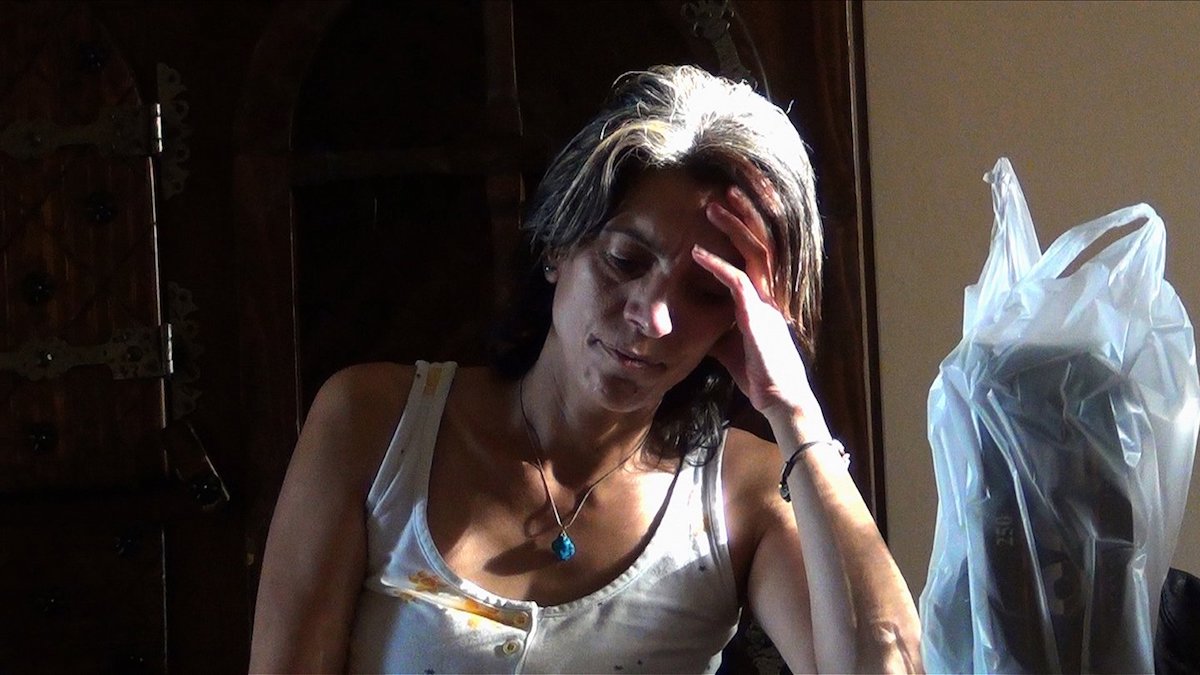
Nowhere to Hide by Zaradasht Ahmed[/caption]
The Human Rights Watch Film Festival returns to New York City June 9 to 18, 2017 with 21 topical and provocative feature documentaries and panel discussions that showcase courageous resilience in challenging times.
Now in its 28th edition, the Human Rights Watch Film Festival is co-presented by the Film Society of Lincoln Center and IFC Center.
Three films address the urgent and evolving issues of the refugee crisis and migration affecting millions of people around the world. The winner of the festival’s 2017 Nestor Almendros Award for courage in filmmaking and the Opening Night film, Zaradasht Ahmed’s
Nowhere to Hide, follows an Iraqi nurse and his family whose lives are suddenly turned upside down as war once again tears apart their country.
Lost in Lebanon, by British sisters Sophia and Georgia Scott, takes a close look at the reaction of a country of four million inhabitants to the arrival of a million refugees. Tonislav Hristov’s
The Good Postman follows a postman’s mayoral run on a platform of welcoming Syrian families into his tiny Bulgarian town.
The pressing need for systemic change in US police and justice institutions is another focus of this year’s selections. Erik Ljung’s
The Blood Is at the Doorstep follows Dontre Hamilton’s family’s demand for justice following his fatal shooting by police in Milwaukee, Wisconsin. Peter Nicks’
The Force, based on unprecedented access to the Oakland Police Department, exposes layers of corruption and problems resulting from inadequate officer training. The grave mishandling of domestic violence cases, causing a grief-stricken mother to take up the fight for legal change, is profiled in April Hayes’ and Katia Maguire’s Home Truth. In Lindy Lou, Juror Number 2, by the French filmmaker Florent Vassault, a juror crosses political and religious divides in the Deep South to explore the personal impact on fellow jurors of sentencing a man to death.
Holding governments and powerful forces to account is as important as ever, both at home and abroad. Matthew Heineman’s Sundance standout City of Ghosts follows a team of Syrian “citizen journalists” risking their lives to expose atrocities in the ISIS-occupied town of Raqqa. Global digital activists from North America to Brazil and Tibet covertly counter governments’ expanding invasions of privacy in Nicholas de Pencier’s Black Code. In the special event discussion panel, From Audience to Activist, filmmakers, journalists and activists will discuss the power of citizen-produced media and security challenges faced by those bringing truth to light. The festival’s Closing Night selection, Brian Knappenberger’s Nobody Speak: Trials of the Free Press, unpacks the Hulk Hogan vs. Gawker case and the sale of a Las Vegas newspaper to expose the threat to independent journalism from billionaires with a political agenda.
The Resistance Saga, a film festival special event, is an epic trilogy of documentaries by Pamela Yates on the saga of the Mayan people of Guatemala, including When the Mountains Tremble (1984), Granito: How to Nail a Dictator (2001), and the latest installment, 500 Years: Life in Resistance (2017), which documents the first trial in the history of the Americas to prosecute the genocide of an indigenous people. This day-long gathering will include the screening of all three films followed by a discussion on long-term movement building with the Mayan women protagonists, and a reception and concert by a Mayan singer, Sara Curruchich.
Ordinary citizens who take up causes of injustice are the subjects of two films from Asia. The Chinese-Canadian filmmaker Tiffany Hsiung’s The Apology profiles three elderly “comfort women”—from Korea, China and the Philippines—who continue to demand accountability for their sexual exploitation by the Japanese army during World War II. Heather White’s and Lynn Zhang’s Complicit follows factory workers harmed by exposure to chemicals in their work as they fight the Chinese electronics giant Foxconn, manufacturer for such brands as Apple and Samsung.
Five more outstanding documentaries round out this year’s screening program. Rina Castelnuovo-Hollander’s and Tamir Elterman’s Muhi – Generally Temporary follows a Palestinian toddler suffering from a life-threatening illness and his doting grandfather, who have been stuck in limbo in an Israeli hospital for years. In The Grown-Ups, the Chilean filmmaker Maite Alberdi paints a warm portrait of a group of middle-aged adults with Down syndrome who have attended the same school for 40 years, and now long for a more independent future. Adam Sobel’s The Workers Cup takes viewers inside the controversial labor camps of Qatar, where migrant workers building the facilities for the 2022 World Cup compete in a soccer tournament of their own. Cristina Herrera Bórquez’s No Dress Code Required follows a same-sex couple, Víctor and Fernando, as they fight for the right to be married in their hometown of Mexicali, Mexico. In David Alvarado’s and Jason Sussberg’s Bill Nye: Science Guy, the famed television personality takes on climate change deniers and creationists as part of his mission to advocate for science.
Film Lineup
Opening Night Film
Nowhere to Hide
Zaradasht Ahmed, 2016, 86m, Arabic
Nowhere to Hide is an immersive and uncompromising first-hand reflection of the resilience and fortitude of a male nurse working and raising his children in Jalawla, Iraq, an increasingly dangerous and inaccessible part of the world. After US troops left Iraq in 2011, director Zaradasht Ahmed gave Nori Sharif a camera and taught him how to use it, asking him to capture the reality of life in his community and the hospital where he worked. Over the next few years Sharif filmed his patients, but the population—including most of the hospital staff—flees when the Iraqi army pulls out in 2013. Sharif is one of the few who remain. When the Islamic State advances on Jalawla in 2014 and finally takes over the city, Sharif continues to film. However, he now faces a vital decision: stay and dedicate himself to treating those he vowed to help, or leave and protect his family—in the process becoming one of thousands of internally displaced people in Iraq. New York Premiere
2016 IDFA Winner for Best Feature-Length Documentary
The Festival will present filmmaker Zaradasht Ahmed and Nori Sharif with its 2017 Nestor Almendros Award for courage in filmmaking.
Closing Night Film
Nobody Speak: Trials of the Free Press
Brian Knappenberger, 2017, 95m
When online tabloid Gawker posted a sex tape of former professional wrestler Hulk Hogan, a high-stakes legal battle pitting privacy rights against the First Amendment ensued. The staggering settlement Hogan ultimately received not only bankrupted Gawker, but also exposed a controversial, behind-the-scenes drama. Nobody Speak uses this case and others to illustrate a growing, sinister trend at odds with the concept of a free press: billionaires and politicians tipping the balance against the public’s access to information, posing threats to our relationship to the truth. New York Premiere
Special Event – Discussion Panel
From Audience to Activist
Today, people have the tools to hold power structures to account. Cellphone videos and live distribution channels are being used as evidence for advocacy in cases of police and military accountability, protests, and hate crimes. But, in a troubling trend, those involved in capturing and distributing the footage face serious repercussions. Join us for a discussion exploring how publicly sourced media is being utilized for impact, and the issues that civilians encounter when recording and distributing information, as our panel of filmmakers, journalists and activists share best practices on how to hold powerful institutions accountable safely and effectively. (90 min. program)
Special Event
The Resistance Saga
The Resistance Saga is a cinematic project designed to galvanize audiences to fight back when society is faced with authoritarianism and demagogues, and celebrate the role that the arts can play in creating, strengthening, and communicating narratives of nonviolent resistance. In so many ways, indigenous peoples throughout the Americas have set the example of long-term courageous and strategic resistance against daunting odds, with a powerful example being the saga of the Mayan people as depicted in director Pamela Yates’ films When the Mountains Tremble, Granito: How to Nail a Dictator and the latest installment, 500 Years: Life in Resistance.
All three films of the Guatemalan trilogy have premiered at the Sundance Film Festival during the past 35 years. When the Mountains Tremble (1984) introduced indigenous rights leader Rigoberta Menchú as the storyteller in her role to expose repression during Guatemala’s brutal armed conflict. Winner of the Special Jury Award at Sundance, the film was seen worldwide and translated into 10 languages. It helped put Menchú on the world stage and 10 years later she was awarded the Nobel Peace Prize. Yates’ sequel, Granito: How to Nail a Dictator (2011) is a political thriller detailing international efforts to build a genocide case against Guatemalan General Efraín Ríos Montt. The case included outtakes from When the Mountains Tremble as forensic evidence in the prosecution of Montt. The third film, 500 Years: Life in Resistance (2017), picks up where Granito leaves off, providing inside access to the first trial in the history of the Americas to prosecute the genocide of indigenous people. Driven by universal themes of justice, power, and corruption, the film provides a platform for the majority indigenous Mayan population, which is now poised to reimagine their society.
When the Mountains Tremble
Pamela Yates and Thomas Newton Sigel, 1984, 83m, Spanish
Granito: How to Nail a Dictator
Pamela Yates, 2011, 104m, Spanish
500 Years: Life in Resistance
Pamela Yates, 2017, 108m
English, Spanish, Mayan languages. New York Premiere
(Q&A with director Pamela Yates)
The Resistance Saga is a day-long immersive gathering that includes the screening of all three films and will take place at the Walter Reade Theater, Film Society of Lincoln Center on Sunday, June 11 beginning at 1:30pm. There will be 15 min. intermissions after the first and second films, and a discussion after the third film on long-term movement building with the Mayan women protagonists.
The Apology
Tiffany Hsiung, 2016, 104m, Bisaya, Mandarin, English, Japanese, Korean
Grandma Gil in South Korea, Grandma Cao in China, and Grandma Adela in the Philippines were amongst thousands of girls and young women who were sexually exploited by the Imperial Japanese Army during World War II, many through kidnapping, coercion and sexual slavery. Some 70 years after their imprisonment, and after decades living in silence and shame about their past, the wounds are still fresh for these three former, now elderly, “comfort women.” Despite multiple formal apologies from the Japanese government issued since the early 1990s, there has been little justice; the courageous resolve of these women moves them to fight and seize their last chance to share first-hand accounts of the truth with their families and the world to ensure this horrific chapter of history is neither repeated nor forgotten. US Premiere
Bill Nye: Science Guy
David Alvarado and Jason Sussberg, 2017, 101m
A famous television personality struggles to restore science to its rightful place in a world hostile to evidence and reason. Bill Nye is retiring his kid show act in a bid to become more like his late professor, astronomer Carl Sagan. Sagan dreamed of launching a spacecraft that could change interplanetary exploration. Bill sets out to accomplish Sagan’s space mission, but he is pulled away when challenged by evolution and climate change deniers to defend scientific evidence. As climate change becomes a growing factor in global disasters of displacement, resource shortages and war, it is clear this debate is taking a major human toll. With the increased push to dismantle environmental protections in the United States, Bill Nye takes a stand to show the world why science matters in a political culture increasingly indifferent to evidence. New York Premiere
Black Code
Nicholas de Pencier, 2016, 88 min.
Nicholas de Pencier’s gripping Black Code follows “internet sleuths”—or cyber stewards—from the Toronto-based group Citizen Lab, who travel the world to expose unprecedented levels of global digital espionage. Based on Ronald Deibert’s book of the same name, the film reveals exiled Tibetan monks attempting to circumvent China’s surveillance apparatus; Syrian citizens tortured for Facebook posts; Brazilian activists who use social media to livestream police abuses; and Pakistani opponents of online violence campaigns against women. As this battle for control of cyberspace is waged, our ideas of citizenship, privacy, and democracy are challenged to the very core. New York Premiere
The Blood is At the Doorstep
Erik Ljung, 2017, 90m
On April 30, 2014, Dontre Hamilton, a 31-year-old unarmed black man diagnosed with schizophrenia, was shot 14 times and killed by a Milwaukee police officer in a popular downtown park. His death sparked months of unrest and galvanized his family to activism. Filmed over three years in the direct aftermath of Dontre’s death, this intimate verité documentary follows his family as they struggle to find answers and challenge a criminal justice system stacked against them. With Dontre’s mother, Maria, and brother, Nate, as our guides, we take a painful look inside a movement born of personal tragedy and injustice. This explosive documentary takes a behind the scenes look at one of America’s most pressing human rights struggles, and asks the audience: what would you do, if this violence found its way to your doorstep? New York Premiere
City of Ghosts
Matthew Heineman, 2017, 91m, Arabic, English
With deeply personal access, this is the untold story of a brave group of citizen journalists forced to live undercover, on the run, and in exile—risking their lives to stand up against one of the most violent movements in the world today. City of Ghosts follows the efforts of anonymous activists in Syria who banded together to form a group named “Raqqa Is Being Slaughtered Silently” (RBSS) after their homeland was taken over by the Islamic State (ISIS) in 2014. Finding safety is no easy task either, as growing anti-refugee sentiment in Europe greets them with anger and rejection and ISIS pledges to target them wherever they go. Terror, trauma, and guilt similarly follow the men at the center of the film, having left loved ones behind to expose the horrors happening in their town. The strength and brotherhood that bonds the men is clear: the film is full of affecting intimacy and humanity in a situation where little else can be found.
Complicit
Heather White and Lynn Zhang, 2016, 90m, Mandarin
Shot under-the-radar, Complicit follows the journey of Chinese Foxconn factory migrant worker-turned-activist Yi Yeting, who takes his fight against the global smartphone industry from his hospital bed to the international stage. While struggling to survive his own work-induced leukemia, Yi Yeting teaches himself labor law in order to prepare a legal challenge against his former employers. But the struggle to defend the lives of millions of Chinese people from becoming terminally ill due to working conditions necessitates confrontation with some of the world’s largest brands, including Apple and Samsung. Unfortunately, neither powerful businesses nor the government are willing to have such scandals exposed. US Premiere
The Force
Peter Nicks, 2017, 93m
The Force presents a deep look inside the long-troubled Oakland Police Department in California as it struggles to confront federal demands for reform, civil unrest in the wake of the murder of Michael Brown in Ferguson, Missouri, and layers of inefficiency and corruption. A young police chief, hailed as a reformer, is brought in to complete the turnaround at the very moment the #BlackLivesMatter movement emerges to demand police accountability and racial justice in Oakland and across the nation. Despite growing public distrust, the Oakland Police Department is garnering national attention as a model of police reform. But just as the department is on the verge of a breakthrough, the man charged with turning the department around faces the greatest challenge of his career—one that could not only threaten progress already made, but the very authority of the institution itself. 2017 Sundance Winner of US Documentary Directing Award.
The Good Postman
Tonislav Hristov, 2016, 80m, Bulgarian
A quiet Bulgarian community on the Turkish border finds itself in the middle of a European crisis. This otherwise unremarkable village has become an important loophole for asylum seekers making their way through Europe. But Ivan, the local postman, has a vision. He decides to run for mayor and campaigns to bring life to the aging and increasingly deserted village by welcoming the refugees and their families. While some of his neighbors support the idea, it meets with resistance from others, who want to make sure the border stays shut. With surprising warmth, humor, and humanity, The Good Postman provides valuable insight into the root of this timely and internationally relevant discussion. New York Premiere
The Grown-Ups
Maite Alberdi, 2016, 82m, Spanish
For almost their entire lives a group of forty-something classmates have grown up together and are reaching the age of 50 with varying degrees of frustration. Anita, Rita, Ricardo and Andrés feel that the school they attend for people with Down syndrome is confining; they long for new challenges, greater independence, and more personal space. Director Maite Alberdi’s observational approach is warm and compassionate, allowing the characters to voice their innermost longings and aspirations. It also perfectly captures the tragic state of limbo in which they are stuck: mature enough to want the pressures and privileges of independent adulthood, yet emotionally and financially ill-equipped to pursue them alone—and ultimately failed by a system that treats them as homogeneously disabled rather than as individuals. Their engaging story is a mixture of heartache and humor, and hope for greater understanding of people with Down syndrome, or anyone whose perceptions and abilities are different from “the norm.” New York Premiere
Home Truth
April Hayes and Katia Maguire, 2017, 70m
Shot over the course of nine years, Home Truth chronicles one family’s incredible pursuit of justice, shedding light on how our society responds to domestic violence and how the trauma from domestic violence can linger through generations. In 1999, Colorado mother Jessica Gonzales experienced every parent’s worst nightmare when her three young daughters were killed after being abducted by their father in violation of a domestic violence restraining order. Devastated, Jessica sued her local police department for failing to adequately enforce her restraining order despite her repeated calls for help that night. Determined to make sure her daughters did not die in vain, Jessica pursues her case to the US Supreme Court and an international human rights tribunal, seeking to strengthen legal rights for domestic violence victims. Meanwhile, her relationship with her one surviving child, her son Jessie, suffers, as he struggles with the tragedy in his own way. World Premiere
Lindy Lou, Juror Number 2
Florent Vassault, 2017, 85m
For 20 years, Lindy has lived with an unbearable feeling of guilt. Committed to fulfilling her civic duty, Lindy sat on a jury with 11 other jurors that handed down the death penalty to a Mississippi man convicted in a double homicide. When Bobby Wilcher was executed in 2006, Lindy had been his only visitor in 15 years. Determined to understand the overwhelming regret that she has been grappling with for years, Lindy takes off on a road trip across Mississippi to track down and learn more about her fellow jurors tasked with deciding the fate of a man’s life all those years earlier. Lindy, a conservative, religious woman from the South manages to tackle this oft-politicized topic with humor, an open mind and sincere curiosity. New York Premiere
Lost in Lebanon
Sophia and Georgia Scott, 2016, 80m, Arabic, English
As the Syrian war continues to leave entire generations without education, health care, or a state, Lost in Lebanon closely follows four Syrians during their relocation process. The resilience of this Syrian community, which currently makes up one fifth of the population in Lebanon, is astoundingly clear as its members work hard to collaborate, share resources, and advocate for themselves in a new land. With the Syrian conflict continuing to push across borders, lives are becoming increasingly desperate due to the devastating consequences of new visa laws that the Lebanese government has implemented, leaving families at risk of arrest, detention, and deportation. Despite these obstacles, the film encourages us to look beyond the staggering statistics of displaced refugees and focus on the individuals themselves. US Premiere
Muhi – Generally Temporary
Rina Castelnuovo-Hollander and Tamir Elterman, 2017, 87m, Arabic, Hebrew
For the past seven years Muhi, a young boy from Gaza, has been trapped in an Israeli hospital. Rushed there in his infancy with a life-threatening immune disorder, he and his doting grandfather, Abu Naim, wound up caught in an immigration limbo that made it impossible for them to leave. With Muhi’s citizenship unclear, and Abu Naim denied a work permit or visa, the pair resides solely within the constraints of the hospital walls. Caught between two states in perpetual war, Muhi is being cared for by the very same people whose government forbids his family to visit, and for him or his grandfather to travel back. Made by two filmmakers from Jerusalem, this documentary lays out the Israeli-Palestinian conflict in human terms, documenting the impact these paradoxical circumstances have on individual lives. New York Premiere
No Dress Code Required
Cristina Herrera Bórquez, 2016, 91m, Spanish
Víctor and Fernando, a devoted, unassuming couple from Mexicali, Mexico, find themselves in the center of a legal firestorm over their desire to get married. Weighing all their options, the pair opts to stay in their hometown of Mexicali and fight for their legal rights. With the help of two committed attorneys, Víctor and Fernando withstand a seemingly interminable series of bizarre hurdles and bureaucratic nitpicking with grace and dignity. No Dress Code Required is a rallying cry for equality, a testament to the power of ordinary people to become agents of change, and above all, an unforgettable love story that touches the heart and stirs the conscience. New York Premiere
The Workers Cup
Adam Sobel, 2017, 89m, English, Hindi, Gha, Tui, Nepali, Malayalam, Arabic
In 2022, Qatar will host the world’s biggest sporting event, the FIFA World Cup. This documentary gives voice to one group from the 1.6 million migrant workers laboring to build sport’s grandest stage as they compete in a football tournament of their own: The Workers Cup. With unprecedented access to the most controversial construction site, this film follows the men in their enthusiastic preparation for the games, while exposing their long work hours for scant salaries, limited freedom of movement, and harsh living conditions in isolated labor camps. The Workers Cup explores universal themes of ambition, aspiration, and masculinity, as we see our protagonists wrangle hope, meaning, and opportunity out of extremely difficult circumstances. New York Premiere
Read more

 Black Beach/White Beach: A Tale of Two Beaches[/caption]
The 23rd Cucalorus Festival takes over downtown Wilmington, North Carolina, from November 8 to 12 and will feature more than 70 documentaries, including the world premiere of Ricky and Cherie Kelly’s racially-charged motorcycle doc “Black Beach/White Beach: A Tale of Two Beaches” and the international premiere of Shawn Hitchins’ fiery, flamboyant stage show-doc “Ginger Nation.”
One of many films crossing the divide between Cucalorus Film and Cucalorus Connect is Thomas Lennon’s “Knife Skills,” about a French restaurant staffed entirely by men and women just out of prison. Lennon shared, “I knew Cucalorus was a creative festival. What I didn’t know is how deep its roots run in its community, its passion to connect each film to an audience in a way that packs the biggest possible punch. They really go the extra mile, which makes the festival even more exciting for us.”
Other documentary debuts include the U.S. premiere of “Forbidden Games: The Justin Fashanu Story” by Jon Carey and Adam Darke, chronicling the complex and troubled story of a talented (and openly gay) British soccer player. “The Power of Glove,” from Andrew Austin and Adam Ward, presenting the legacy of the notoriously “bad” Nintendo Power Glove, and “True Conviction” from Jamie Meltzer, depicting a detective agency run by exonerated men to free innocent people, both make their southeast U.S. premieres. “ACORN and the Firestorm,” directed by Reuben Atlas and Sam Pollard, will have it’s North Carolina premiere and documents the amateur journalists who posed as a pimp and prostitute hoping to expose America’s largest grassroots community organizing group via hidden-camera.
Cucalorus also includes 55 short documentaries, including the world premiere of Joanne Hock’s “Martin Hill: Camera Man,” honoring a curator of cameras that shot some of the most iconic films in Hollywood’s past. Other key short docs include “Water Warriors” by Michael Premo, “Under the Mask” by Alex Hoelscher, and “Lonnie Holley: The Truth of Dirt” by Marco Williams.
Black Beach/White Beach: A Tale of Two Beaches[/caption]
The 23rd Cucalorus Festival takes over downtown Wilmington, North Carolina, from November 8 to 12 and will feature more than 70 documentaries, including the world premiere of Ricky and Cherie Kelly’s racially-charged motorcycle doc “Black Beach/White Beach: A Tale of Two Beaches” and the international premiere of Shawn Hitchins’ fiery, flamboyant stage show-doc “Ginger Nation.”
One of many films crossing the divide between Cucalorus Film and Cucalorus Connect is Thomas Lennon’s “Knife Skills,” about a French restaurant staffed entirely by men and women just out of prison. Lennon shared, “I knew Cucalorus was a creative festival. What I didn’t know is how deep its roots run in its community, its passion to connect each film to an audience in a way that packs the biggest possible punch. They really go the extra mile, which makes the festival even more exciting for us.”
Other documentary debuts include the U.S. premiere of “Forbidden Games: The Justin Fashanu Story” by Jon Carey and Adam Darke, chronicling the complex and troubled story of a talented (and openly gay) British soccer player. “The Power of Glove,” from Andrew Austin and Adam Ward, presenting the legacy of the notoriously “bad” Nintendo Power Glove, and “True Conviction” from Jamie Meltzer, depicting a detective agency run by exonerated men to free innocent people, both make their southeast U.S. premieres. “ACORN and the Firestorm,” directed by Reuben Atlas and Sam Pollard, will have it’s North Carolina premiere and documents the amateur journalists who posed as a pimp and prostitute hoping to expose America’s largest grassroots community organizing group via hidden-camera.
Cucalorus also includes 55 short documentaries, including the world premiere of Joanne Hock’s “Martin Hill: Camera Man,” honoring a curator of cameras that shot some of the most iconic films in Hollywood’s past. Other key short docs include “Water Warriors” by Michael Premo, “Under the Mask” by Alex Hoelscher, and “Lonnie Holley: The Truth of Dirt” by Marco Williams.
 A Syrian Love Story[/caption]
Toronto’s 14th annual Human Rights Watch Film Festival, presented by TIFF and Human Rights Watch, will feature an eight-film lineup that galvanizes an impassioned call for social change through extraordinary stories of struggle, survival and hope. Showcasing brave cinematic works at the forefront of the human rights movement, the festival presents documentary feature films from Afghanistan, Canada, China, Egypt, France, the United States, Hong Kong, Lebanon, Syria, Mexico, Netherlands, Norway, Sweden, and the United Kingdom.
Running from March 29 to April 6 at TIFF Bell Lightbox, the festival kicks off with an opening night fundraising reception followed by a screening of A Syrian Love Story — a documentary that dives into the refugee experience through the telling of a love story between a Palestinian freedom fighter and a Syrian revolutionary who met as political prisoners — and closes with Nick de Pencier’s Black Code, which follows cyber stewards who travel the world to expose unprecedented levels of global digital espionage. Additional highlights include the Toronto premiere of Tickling Giants, which follows a popular television show host who has been dubbed “The Egyptian Jon Stewart,” and Alanis Obomsawin’s We Can’t Make the Same Mistake Twice, an epic documentary chronicle of a legal battle waged against the injustices inflicted on Indigenous children in Canada.
Complete film lineup
Opening Night Film.
A Syrian Love Story
dir. Sean McAllister | UK/France/Lebanon/Syria 2015 | 76 min. | 14A
International Documentary Film Festival Amsterdam 2015
Comrades and lovers Amer and Raghda met in a Syrian prison cell 15 years ago. When director Sean McAllister first meets their family in 2009, Raghda is back in prison, leaving Amer to look after their four boys alone; but as the Arab Spring sweeps the region, the family’s fate shifts irrevocably. Filmed over five years, the film charts their incredible odyssey to political freedom. For Raghda and Amer, it is a journey of hope, dreams and despair: for the revolution, their homeland and each other.
Wednesday, March 29 at 8 p.m.
Complicit
dirs. Heather White and Lynn Zhang
China/Hong Kong/USA/Netherlands 2017 | 88 min. | PG | North American Premiere
A courageous factory worker struggling with leukemia helps a group of young Chinese workers who have also been poisoned while making our favourite cell phones and electronic gadgets. Filmed over four years, this lushly photographed film takes the audience on an 8,000-mile journey to the world’s electronics factory floors and the neighbourhoods and hospitals surrounding the world’s largest electronics supplier, Foxconn. Complicit reveals the human costs of global outsourcing while highlighting the choices made by a group of inspired activists seeking change. Thursday, March 30 at 6:30 p.m.
Nowhere to Hide
dir. Zaradasht Ahmed | Norway/Sweden 2016 | 86 min. | 14A | Canadian Premiere
International Documentary Film Festival Amsterdam 2016
Nowhere to Hide follows male nurse Nori Sharif through five years of dramatic change, providing unique access into one of the world’s most dangerous and inaccessible areas: the “triangle of death” in central Iraq. Initially filming stories of survivors as American and Coalition troops retreat from Iraq in 2011, conflicts continue with Iraqi militias, and the population flees accompanied by most of the hospital staff; Nori is one of the few who remains. When ISIS advances on Jalawla in 2014 and takes over the city, he too must flee with his family at a moment’s notice, and turns the camera on himself.
PRECEDED BY:
Fantassút / Rain on the Borders
dir. Federica Foglia | Canada 2016 | 16 min. | 14A
Over 11,000 refugees from Syria, Iran, Iraq, Pakistan, Afghanistan and other countries lived for months in dismal conditions hoping for the borders to open, and to continue their journey through the Balkan route. Friday, March 31 at 6:30 p.m.
Tickling Giants
dir. Sara Tacksler | Egypt 2016 | 111 min. | 14A | Toronto Premiere
In the midst of the Egyptian Arab Spring, Bassem Youssef makes a decision that’s every mother’s worst nightmare: he leaves his job as a heart surgeon to become a full-time comedian. Dubbed “The Egyptian Jon Stewart,” Bassem creates the most-viewed television program in the Middle East: he has 30 million viewers per episode, compared to The Daily Show with Jon Stewart’s 2 million. In a country where free speech is not settled law, Bassem comes up with creative ways to non-violently challenge abuses of power. He endures physical threats, protests and legal action, all because of jokes. No unicorns or falafel were harmed in the making of this film. Saturday, April 1 at 6:30 p.m.
Introduction and Q&A by filmmaker Sara Tacksler.
We Can’t Make the Same Mistake Twice
dir. Alanis Obomsawin | Canada 2016 | 163 min. | PG
Toronto International Film Festival 2016
In 2007, the Child and Family Caring Society of Canada and the Assembly of First Nations filed a landmark discrimination complaint against Indian Affairs and Northern Development Canada. They argued that child and family welfare services provided to First Nations children on reserves and in Yukon were underfunded and inferior to services offered to other Canadian children. Veteran director Alanis Obomsawin’s We Can’t Make the Same Mistake Twice documents this epic court challenge, giving voice to the tenacious childcare workers at its epicenter. Sunday, April 2 at 2 p.m.
Introduction and Q&A by filmmaker Alanis Obomsawin.
Girl Unbound: The War to be Her
dir. Erin Heidenreich | Afghanistan 2016 | 80 min. | PG
Toronto International Film Festival 2016
In Waziristan, “one of the most dangerous places on earth,” Maria Toorpakai defies the Taliban by disguising herself as a boy so she can play sports freely. But when she becomes a rising star, her true identity is revealed, bringing death threats on her and her family. Undeterred, they continue to fight for their freedom. Tuesday, April 4 at 6:30 p.m.
No Dress Code Required
dir. Cristina Herrera Borquez | Mexico 2016 | 92 min. | PG | Canadian Premiere
International Documentary Film Festival Amsterdam 2016
Victor and Fernando are stylists in Mexicali, Mexico who are the go-to professionals for the city’s socialites. To their customers, they were a lovely couple — until they decided to legally marry. Losing the support of customers and friends and confronting a backlash of criticism, through their fight they woke up members of Mexicali’s society to fight homophobia and inequality. Wednesday, April 5 at 6 p.m.
Introduction by Kyle Knight, Researcher, Lesbian, Gay, Bisexual, and Transgender Rights Program, Human Rights Watch.
Closing Night Film.
Black Code
dir. Nick de Pencier | Canada 2015 | 90 min.
Toronto International Film Festival 2016
Based on the book by Prof. Ron Deibert, Black Code is the story of how the internet is being controlled and manipulated by governments in order to censor and monitor their citizens. As they battle for control of cyberspace, ideas of citizenship, privacy and democracy are challenged to the core. Thursday, April 6 at 6:30 p.m.
Introduction and Q&A by filmmaker Nicholas De Pencier, with guest speaker Prof. Ron Deibert.
A Syrian Love Story[/caption]
Toronto’s 14th annual Human Rights Watch Film Festival, presented by TIFF and Human Rights Watch, will feature an eight-film lineup that galvanizes an impassioned call for social change through extraordinary stories of struggle, survival and hope. Showcasing brave cinematic works at the forefront of the human rights movement, the festival presents documentary feature films from Afghanistan, Canada, China, Egypt, France, the United States, Hong Kong, Lebanon, Syria, Mexico, Netherlands, Norway, Sweden, and the United Kingdom.
Running from March 29 to April 6 at TIFF Bell Lightbox, the festival kicks off with an opening night fundraising reception followed by a screening of A Syrian Love Story — a documentary that dives into the refugee experience through the telling of a love story between a Palestinian freedom fighter and a Syrian revolutionary who met as political prisoners — and closes with Nick de Pencier’s Black Code, which follows cyber stewards who travel the world to expose unprecedented levels of global digital espionage. Additional highlights include the Toronto premiere of Tickling Giants, which follows a popular television show host who has been dubbed “The Egyptian Jon Stewart,” and Alanis Obomsawin’s We Can’t Make the Same Mistake Twice, an epic documentary chronicle of a legal battle waged against the injustices inflicted on Indigenous children in Canada.
Complete film lineup
Opening Night Film.
A Syrian Love Story
dir. Sean McAllister | UK/France/Lebanon/Syria 2015 | 76 min. | 14A
International Documentary Film Festival Amsterdam 2015
Comrades and lovers Amer and Raghda met in a Syrian prison cell 15 years ago. When director Sean McAllister first meets their family in 2009, Raghda is back in prison, leaving Amer to look after their four boys alone; but as the Arab Spring sweeps the region, the family’s fate shifts irrevocably. Filmed over five years, the film charts their incredible odyssey to political freedom. For Raghda and Amer, it is a journey of hope, dreams and despair: for the revolution, their homeland and each other.
Wednesday, March 29 at 8 p.m.
Complicit
dirs. Heather White and Lynn Zhang
China/Hong Kong/USA/Netherlands 2017 | 88 min. | PG | North American Premiere
A courageous factory worker struggling with leukemia helps a group of young Chinese workers who have also been poisoned while making our favourite cell phones and electronic gadgets. Filmed over four years, this lushly photographed film takes the audience on an 8,000-mile journey to the world’s electronics factory floors and the neighbourhoods and hospitals surrounding the world’s largest electronics supplier, Foxconn. Complicit reveals the human costs of global outsourcing while highlighting the choices made by a group of inspired activists seeking change. Thursday, March 30 at 6:30 p.m.
Nowhere to Hide
dir. Zaradasht Ahmed | Norway/Sweden 2016 | 86 min. | 14A | Canadian Premiere
International Documentary Film Festival Amsterdam 2016
Nowhere to Hide follows male nurse Nori Sharif through five years of dramatic change, providing unique access into one of the world’s most dangerous and inaccessible areas: the “triangle of death” in central Iraq. Initially filming stories of survivors as American and Coalition troops retreat from Iraq in 2011, conflicts continue with Iraqi militias, and the population flees accompanied by most of the hospital staff; Nori is one of the few who remains. When ISIS advances on Jalawla in 2014 and takes over the city, he too must flee with his family at a moment’s notice, and turns the camera on himself.
PRECEDED BY:
Fantassút / Rain on the Borders
dir. Federica Foglia | Canada 2016 | 16 min. | 14A
Over 11,000 refugees from Syria, Iran, Iraq, Pakistan, Afghanistan and other countries lived for months in dismal conditions hoping for the borders to open, and to continue their journey through the Balkan route. Friday, March 31 at 6:30 p.m.
Tickling Giants
dir. Sara Tacksler | Egypt 2016 | 111 min. | 14A | Toronto Premiere
In the midst of the Egyptian Arab Spring, Bassem Youssef makes a decision that’s every mother’s worst nightmare: he leaves his job as a heart surgeon to become a full-time comedian. Dubbed “The Egyptian Jon Stewart,” Bassem creates the most-viewed television program in the Middle East: he has 30 million viewers per episode, compared to The Daily Show with Jon Stewart’s 2 million. In a country where free speech is not settled law, Bassem comes up with creative ways to non-violently challenge abuses of power. He endures physical threats, protests and legal action, all because of jokes. No unicorns or falafel were harmed in the making of this film. Saturday, April 1 at 6:30 p.m.
Introduction and Q&A by filmmaker Sara Tacksler.
We Can’t Make the Same Mistake Twice
dir. Alanis Obomsawin | Canada 2016 | 163 min. | PG
Toronto International Film Festival 2016
In 2007, the Child and Family Caring Society of Canada and the Assembly of First Nations filed a landmark discrimination complaint against Indian Affairs and Northern Development Canada. They argued that child and family welfare services provided to First Nations children on reserves and in Yukon were underfunded and inferior to services offered to other Canadian children. Veteran director Alanis Obomsawin’s We Can’t Make the Same Mistake Twice documents this epic court challenge, giving voice to the tenacious childcare workers at its epicenter. Sunday, April 2 at 2 p.m.
Introduction and Q&A by filmmaker Alanis Obomsawin.
Girl Unbound: The War to be Her
dir. Erin Heidenreich | Afghanistan 2016 | 80 min. | PG
Toronto International Film Festival 2016
In Waziristan, “one of the most dangerous places on earth,” Maria Toorpakai defies the Taliban by disguising herself as a boy so she can play sports freely. But when she becomes a rising star, her true identity is revealed, bringing death threats on her and her family. Undeterred, they continue to fight for their freedom. Tuesday, April 4 at 6:30 p.m.
No Dress Code Required
dir. Cristina Herrera Borquez | Mexico 2016 | 92 min. | PG | Canadian Premiere
International Documentary Film Festival Amsterdam 2016
Victor and Fernando are stylists in Mexicali, Mexico who are the go-to professionals for the city’s socialites. To their customers, they were a lovely couple — until they decided to legally marry. Losing the support of customers and friends and confronting a backlash of criticism, through their fight they woke up members of Mexicali’s society to fight homophobia and inequality. Wednesday, April 5 at 6 p.m.
Introduction by Kyle Knight, Researcher, Lesbian, Gay, Bisexual, and Transgender Rights Program, Human Rights Watch.
Closing Night Film.
Black Code
dir. Nick de Pencier | Canada 2015 | 90 min.
Toronto International Film Festival 2016
Based on the book by Prof. Ron Deibert, Black Code is the story of how the internet is being controlled and manipulated by governments in order to censor and monitor their citizens. As they battle for control of cyberspace, ideas of citizenship, privacy and democracy are challenged to the core. Thursday, April 6 at 6:30 p.m.
Introduction and Q&A by filmmaker Nicholas De Pencier, with guest speaker Prof. Ron Deibert.