[caption id="attachment_31508" align="aligncenter" width="1200"]

Searching for Ingmar Bergman[/caption]
The Film Society of Lincoln Center announced the Revivals sections for the 56th New York Film Festival along with this year’s three-part Retrospective section paying tribute to late film industry luminaries Dan Talbot and Pierre Rissient, and spotlights three documentary odes to cinema.
NYFF Director and Selection Committee Chair Kent Jones said, “For Pierre and Dan, two genuine heroes, everything to do with cinema was urgent. This year’s retrospective section pays tribute to both men, who passed away within six months of each other.”
Founder of New Yorker Films and longtime director of Lincoln Plaza Cinemas, beloved exhibitor and distributor Dan Talbot championed countless foreign and independent art-house titles throughout his career. He introduced films such as Bernardo Bertolucci’s Before the Revolution to U.S. audiences and supported the work of notable auteurs Straub-Huillet, Nagisa Oshima, Jean-Luc Godard, Rainer Werner Fassbinder, and more stateside.
Producer, publicist, distributor, curator, and cinema polymath Pierre Rissient was known for his unparalleled taste and industry wisdom. He has been credited with shaping the careers of filmmakers from Clint Eastwood to Joseph Losey to King Hu, and counted Raoul Walsh and Fritz Lang among his personal favorites.
The Retrospective section also includes three special and very different documentaries about the movies: a lament for Viennese film critic and festival director Hans Hurch, a portrait of the great cinema pioneer Alice Guy-Blaché, and a tribute to Ingmar Bergman.
The Revivals section showcases important works from renowned filmmakers that have been digitally remastered, restored, and preserved with the assistance of generous partners. Highlights this year include Edgar G. Ulmer’s noir road movie Detour, which gleams anew in this gorgeous restoration; Djibril Diop Mambéty’s neocolonialist satire Hyenas, the Senegalese auteur’s adaptation of Friedrich Dürrenmatt’s play The Visit; a 20th anniversary restoration of Alexei Guerman’s Khrustalyov, My Car!, a nightmarish portrait of Stalin-era paranoia; and J.L. Anderson’s American independent curio Spring Night, Summer Night, which was disinvited from the 5th New York Film Festival but returns for its due just over 50 years later.
REVIVALS
Detour
Dir. Edgar G. Ulmer, USA, 1945, 68m
Edgar G. Ulmer’s 1945 classic, made at the Poverty Row production company PRC somewhere between 14 and 18 shooting days for $100,000, has come to be regarded, justifiably, as the essence of
film noir. Ulmer and his team turned the very cheapness of the enterprise into an aesthetic asset and created a film experience that reeks of sweat, rust, and mildew. For years,
Detour was only available in dupey, substandard prints, which seemed appropriate. In the ’90s, a photochemical restoration improved matters, but the quality was far from optimal. Now we have a restoration of a different order, made from vastly superior elements. “To be able to see so much detail in the frame, in the settings and in the faces of the actors,” says Martin Scorsese, “is truly startling, and it makes for a far richer and deeper experience.”
Restored by the Academy Film Archive and The Film Foundation, in collaboration with the Cinémathèque Royale de Belgique, The Museum of Modern Art, and the Cinémathèque Française, with funding from the George Lucas Family Foundation.
Enamorada
Dir. Emilo Fernández, Mexico, 1946, 99m
This wildly passionate and visually beautiful love story from director Emilio Fernandéz and cinematographer Gabriel Figueroa, a follow-up to their wildly successful
Maria Candelaria, remains one of the most popular Mexican films ever made. As Farran Smith Nehme has written, it was “one of the biggest hits of Fernández’s career and a high-water mark for nearly everyone involved.” The romance between between a revolutionary General (Pedro Armendariz) and the daughter of a nobleman (Maria Félix) set during the Mexican revolution (in which Fernandéz himself fought) was inspired by
The Taming of the Shrew and, for the finale, by the end of Sternberg’s
Morocco.
Restoration led by UCLA Film & Television Archive and The Film Foundation’s World Cinema Project in collaboration with Fundacion Televisa AC and the UNAM Filmoteca, funded by Material World Charitable Foundation.
Hyenas / Ramatou
Dir. Djibril Diop Mambéty, Senegal/Switzerland/France, 1992, 110m
“When a story ends—or ‘falls into the ocean,’ as we say—it creates dreams,” said the great Senegalese director Djibril Diop Mambéty in an interview after the completion of his second film,
Hyenas, a wildly freeform adaptation of Friedrich Dürrenmatt’s
The Visit. A wealthy woman (Ami Diakhate) returns to her—and Mambéty’s—home village, and offers the inhabitants a vast sum in exchange for the murder of the local man who seduced and abandoned her when she was young. “I do not refuse the word didactic,” said Mambéty of his very special body of work, and of the particular plight of African cinema. “My task was to identify the enemy of humankind: money, the International Monetary Fund, and the World Bank. I think my target is clear.” A Thelma Film AG release.
Restored over the course of 2017 by Eclair Digital in Vanves, France. Restoration was taken on by Thelma Film AG (Switzerland).
I Am Cuba
Dir. Mikhail Kalatozov, Cuba/USSR, 1964, 108m
Mikhail Kalatozov’s wildly mobile, hallucinatory film was initially rejected by both Cuban and Soviet officials for excessive naiveté and an insufficiently revolutionary spirit, and went largely disregarded and almost unknown for nearly 30 years. That all changed in the early nineties—a remarkable era in film culture, chock full of rediscoveries—when G. Cabrera Infante programmed it at the Telluride Film Festival, and Martin Scorsese and Francis Ford Coppola co-presented a Milestone Films release.
I Am Cuba is a one-of-a-kind film experience, a visually mind-bending bolt from the historical blue.
Milestone Film & Video’s 4K restoration from the original Gosfilmofond 35mm interpositive and mag tracks was done at Metropolis Post with Jason Crump (colorist) and Ian Bostick (restoration artist). 4K scan by Colorlab, Rockville, MD.
Khrustalyov, My Car! / Khrustalyov, mashinu!
Dir. Alexei Guerman, USSR/France, 1998, 150m
The time is 1953, the place is Moscow; the Jewish purges are still on, and Stalin is on his deathbed. When General Yuri Glinsky, a military surgeon, tries to escape, he is abducted, taken to the lowest rungs of hell, and deposited at the heart of the enigma. Alexei Guerman’s deeply personal penultimate film is a work of solid and constant disorientation, masterfully orchestrated. Enigmatic phrases, sounds, gestures, and micro-events pass before our eyes and ears before we or the alternately jumpy and exhausted characters can make sense of them. Guerman’s lustrous black and white images and meticulously constructed soundscape are permeated with the
feel of life in a totalitarian society, where something monumental is underway but no one knows precisely what or when or how it will break.
The original 35mm fine grain positive was scanned in 2K resolution on an Arriscan at Eclair, Paris. The film was graded and restored at Dragon DI, Wales. Restoration supervised by James White, Arrow Films; restoration produced by Daniel Bird.
Neapolitan Carousel
Dir. Ettore Giannini, Italy, 1954, 129m
One of the first color films made in Italy, Ettore Giannini’s 1954 film version of his stage musical begins in the present day, with sheet music hanging on a barrel organ blown through the streets of Naples: every individual song tells a story of the history of the city, from the Moorish invasion in the 14th century through the arrival of the Americans at the end of WWII. Giannini assembled an amazing roster of talent for his film, including one-time Ballets Russes principal dancer and Powell-Pressburger mainstay Léonide Massine (who also choreographed), the great comic actor Paolo Stoppa, and a young Sophia Loren.
Restored by the Cineteca di Bologna at L’Immagine Ritrovata laboratory and The Film Foundation with funding provided by the Hollywood Foreign Press Association.
None Shall Escape
Dir. André de Toth, USA, 1944, 85m
The Hungarian emigré André de Toth directed this unflinching look at the rise of Nazism right before the end of the war, the first Hollywood film to address Nazi genocide. Written by Lester Cole, soon to become a member of the Hollywood Ten,
None Shall Escapeis structured as a series of flashbacks that dramatize the testimony of witnesses in a near-future postwar tribunal. Alexander Knox is the German everyman, a WWI vet who slowly, gradually accepts National Socialism and becomes a mass murderer. With Marsha Hunt—her career and Knox’s would both be affected by the Red Scare. A Sony Pictures Repertory release.
4K digital restoration from original nitrate negative and original nitrate track negative.
The Red House
Dir. Delmer Daves, USA, 1947, 100m
This moody, visually potent film, directed by Delmer Daves and independently produced by star Edward G. Robinson with Sol Lesser, is something of an anomaly in late ’40s moviemaking, a piece of contemporary gothic Americana. Robinson plays Pete, a farmer who shares his home with his sister (Judith Anderson) and his adopted niece Meg (Allene Roberts). Meg becomes increasingly attached to a sweet local boy (Lon McAllister), and together they venture into the woods in search of a red house that Pete has forbidden them to enter. The emotional heart of
The Red House can be found in the extraordinary close-ups of Roberts and McAllister, shot by the great DP (and frequent John Ford collaborator) Bert Glennon.
Restored by the UCLA Film & Television Archive and The Film Foundation, with funding provided by the George Lucas Family Foundation.
Spring Night, Summer Night
Dir. J.L. Anderson, USA, 1967, 82m
J.L. Anderson’s haunted Appalachian romance occupies a proud place alongside such similarly hand-crafted, off-the-grid American independent films as
Carnival of Souls, The Exiles, Night of the Living Dead, and
Wanda. Made in coal-mining country in northeastern Ohio with local amateur actors, the film is carefully observed (Anderson and his producer Franklin Miller spent two years scouting locations becoming familiar with the place and the people) and beautifully and lovingly realized.
Spring Night, Summer Night has had an extremely checkered history, including a release in a version crudely recut for the exploitation market with the title
Miss Jessica Is Pregnant. It was invited to the 1968 New York Film Festival, only to be unceremoniously bumped to make way for John Cassavetes’s
Faces. Fifty years later, we’re re-extending the invitation and promising that it’s solid.
A Restoration and Reconstruction Project of Cinema Preservation Alliance by Peter Conheim and Ross Lipman. Produced by Nicolas Winding Refn.
Tunes of Glory
Dir. Ronald Neame, UK, 1960, 106m
Ronald Neame’s adaptation of James Kennaway’s novel is a spare, dramatically potent war of nerves, about the power struggle between a tough lower-middle-class Scottish Major due to be replaced as Battalion commander of a Highland regiment and an aristocratic Colonel traumatized by captivity during the war. At its center are two breathtaking performances: John Mills as the Colonel and Alec Guinness, in a genuine tour de force, as the Major (apparently, after they had read the script, each actor had originally wanted to play the other’s role). With Dennis Price, Kay Walsh, Susannah York, and Gordon Jackson.
Restored by the Academy Film Archive and The Film Foundation in collaboration with Janus Films and The Museum of Modern Art. Restoration funding provided by the George Lucas Family Foundation.
The War at Home
Dir. Glenn Silber and Barry Alexander Brown, USA, 1979, 100m
This meticulously constructed 1979 film recounts the development of the movement against the American war in Vietnam on the Madison campus of the University of Wisconsin, from 1963 to 1970. Using carefully assembled archival and news footage and thoughtful interviews with many of the participants, it culminates in the 1967 Dow Chemical sit-in and the bombing of the Army Math Research Center three years later. One of the great works of American documentary moviemaking,
The War at Home has also become a time capsule of the moment of its own making, a welcome emanation from the era of analog editing, and a reminder of how much power people have when they take to the streets in protest. A Catalyst Media Productions release.
New 4K restoration by IndieCollect.
RETROSPECTIVE
Tribute to Dan Talbot
Before the Revolution
Dir. Bernardo Bertolucci, Italy, 1964, 105m
Dan Talbot began as an exhibitor, and he started his distribution company, New Yorker Films, for the best possible reason: he saw a film that he loved and he wanted to share it with as many people as possible. The film was Bernardo Bertolucci’s masterful second feature, a deeply personal portrait of a generation gripped by political uncertainty. Set in the director’s hometown of Parma, it follows the travails of a young student struggling to reconcile his militant views with his bourgeois lifestyle (and his fiancée), who drifts into a passionate affair with his radical aunt. One of the key films of the ’60s,
Before the Revolution set many aspiring filmmakers on their own autobiographical courses. 35mm print from Istituto Luce Cinecittà.
Straub-Huillet Program:
Machorka-Muff
Dir. Jean-Marie Straub, Danièle Huillet; West Germany; 1963; 18m
The Bridegroom, the Comedienne and the Pimp
Dir. Jean-Marie Straub, Danièle Huillet; West Germany; 1968; 23m
Not Reconciled
Dir. Jean-Marie Straub, Danièle Huillet; West Germany; 1965; 55m
In 1966, Dan and Toby Talbot went to a party thrown by Bertolucci and his friend and co-writer Gianni Amico in Rome. Suddenly, the bell rang. “Shh-sh,” said Bertolucci. “Get rid of the pot! Put the drinks away. The Straubs are here!” That someone would pick up any single film directed by Jean-Marie Straub and Danièle Huillet is utterly unthinkable in the context of the present moment, but for decades New Yorker Films handled all of them. These three films, often shown together, are among their very best: an idiosyncratic adaptation of Heinrich Böll’s short story “Bonn Diary,” about a former Nazi colonel cynically reflecting on the sheer stupidity of the bourgeoisie; a three-part short comprised of a nocturnal tour of Munich, a high-speed stage production of Bruckner’s
Sickness of Youth, and the marriage of James and Lilith, who guns down her pimp (played by Rainer Werner Fassbinder); and their stunning, thrillingly compressed adaptation of Böll’s novel
Billiards at Half-Past. A Grasshopper Film release.
The Ceremony
Dir. Nagisa Oshima, Japan, 1971, 123m
New Yorker developed a close relationship with the filmmaker once known as “the Japanese Godard,” Nagisa Oshima, and they programmed a groundbreaking retrospective of his early films during their brief tenure at the Metro on 100th Street. This disarmingly atmospheric portrait of a family’s collective psychopathology recounts the saga of the Sakurada clan, whose decline plays out over the course of 25 years and multiple funerals and weddings. Operating at the height of his iconoclastic powers, Oshima renders the family’s unraveling with an arresting sense of foreboding and an air of gothic fatalism, enriched by Tôru Takemitsu’s quintessentially modernist score.
Every Man for Himself / Sauve qui peut (la vie)
Dir. Jean-Luc Godard, France/Austria/West Germany/Switzerland, 1980, 87m
“Dan jumped straight to the point,” wrote Toby in her book
The New Yorker Theater and Other Scenes from a Life at the Movies. “‘I love your work and would like to distribute anything you make.’” Over the years, New Yorker handled many of Godard’s films, including his return to 35mm character-based storytelling after a decade of experimentation in video. What Godard called his “second first film” is a moving portrait of restless, intertwining lives, and the myriad forms of self-debasement and survival in a capitalist state, with Jacques Dutronc (as “Paul Godard”), Nathalie Baye, Isabelle Huppert, and, in an unforgettable anti-cameo, the voice of Marguerite Duras. An NYFF18 selection.
The American Friend
Dir. Wim Wenders, West Germany/France, 1977, 125m
Dan Talbot and New Yorker Films put the New German Cinema of the 1970s on the map in this country, and one of their key titles was Wim Wenders’s spellbinding adaptation of Patricia Highsmith’s
Ripley’s Game (and a little bit of
Ripley Underground)
. Dennis Hopper is the sociopathic charmer Tom Ripley, transformed by Wenders into an urban cowboy peddler of forged paintings who ensnares Bruno Ganz’s gravely ill Swiss-born art framer into a plot to assassinate a Mafioso. Shot in multiple New York and European locations in low-lit, cool blue and gold tones by the great Robby Müller, this brooding, dreamlike thriller conjures a world ruled by chaos and indiscriminate American dominance. It also features a stunning array of performances and guest appearances by filmmakers, including Nick Ray, Gérard Blain, Sam Fuller, Jean Eustache, Daniel Schmid, and Peter Lilienthal. An NYFF15 selection.
The Marriage of Maria Braun
Dir. Rainer Werner Fassbinder, West Germany, 1979, 120m
“I bought 11 Fassbinders in one shot, like rugs,” Dan told Anthony Kaufman in a 2009 interview. As was the case with every New Yorker acquisition, the motive was not financial. So one can imagine the surprise at their offices when this 1979 film about a poor German soldier’s wife (Hanna Schygulla) who uses her wiles and savvy to rise as a businesswoman and take part in the “wirtschaftwunder” or postwar economic miracle, became an arthouse hit—per François Truffaut, this was the movie that broke Fassbinder “out of the ivory tower of the cinephiles” and earned him the acclaim he had always sought.
The Marriage of Maria Braun was also the Closing Night selection of the 17th New York Film Festival.
My Dinner with André
Dir. Louis Malle, USA, 1981, 110m
When Dan read Wallace Shawn and André Gregory’s script for
My Dinner with André, he was so excited that he helped Louis Malle procure production funding from Gaumont. The film, an encounter between the two writers playing themselves discussing mortality, money, despair, and love over a meal at an upper west side restaurant (according to Gregory, Malle’s one direction was “Talk faster”), becoming a sensation at the art house, playing to packed houses for a solid year, and a favorite on the brand-new home video circuit.
My Dinner with André is entertaining, confessional, funny, moving, and suffused with melancholy and joy…like life.
Tribute to Pierre Rissient
Manila in the Claws of Light / Maynila: Sa mga kuko ng liwanag
Dir. Lino Brocka, Philippines, 1975, 124m
Pierre Rissient championed the work of countless filmmakers—as a programmer of the MacMahon Theatre in Paris, as a publicist in partnership with his lifelong friend Bertrand Tavernier, as a scout for Cannes, as a distributor and producer, and always as a lover of cinema with an avid desire to always learn and see more. As Todd McCarthy wrote, it was Pierre who “single-handedly brought the work of the late Filipino director Lino Brocka to the world’s attention.” This searing melodrama, with Bembel Roco and Hilda Koronel as doomed lovers, is one of Brocka’s greatest. “Lino knew all the arteries of this swarming city,” wrote Pierre, “and he penetrated them just as he penetrated the veins of the outcasts in his films. Sometimes a vein would crack open and bleed. And that blood oozed onto the screen.”
A Touch of Zen
Dir. King Hu, Hong Kong, 1971/1975, 200m
Pierre developed a special love for Asia and its many cinemas, and he was the one who properly introduced the great
wuxia master King Hu to the west, bringing the uncut version of his masterpiece,
A Touch of Zen, to the 1975 Cannes Film Festival. Supreme fantasist, Ming dynasty scholar, and incomparable artist, Hu elevated the martial-arts genre to unparalleled heights. Three years in the making and his greatest film,
A Touch of Zen was released in truncated form in Hong Kong in 1971 and yanked from theaters after a week. Four years later, after Rissient saved the film from oblivion and it won a grand prize for technical achievement, the unthinkable occurred: King Hu received an apology from his studio heads.
Time Without Pity
Dir. Joseph Losey, UK, 1957, 85m
Pierre was close to many of the American writers and directors who had been through the blacklist, including Jules Dassin, Abraham Polonsky, John Berry, and Cy Endfield, and he was a great admirer of the films of Joseph Losey (his feelings about the man himself were another matter). Rissient was crucial in bringing attention to this consummately tense noir, one of Losey’s greatest films. The narrative, unfurling at a breakneck pace, chronicles the plight of a recovering alcoholic (Michael Redgrave) with a mere 24 hours to prove the innocence of his son, accused of murdering his girlfriend. The first film that Losey signed with his own name after his flight to Europe in the early ’50s,
Time Without Pity established him as an essential auteur in the eyes of French cinephiles.
Play Misty for Me
Dir. Clint Eastwood, USA, 1971, 102m
When Clint Eastwood won his first Oscar, in 1992 for
Unforgiven, he thanked “the French” for their support. But it was one French citizen in particular who was there from the start of his career as a filmmaker. Eastwood’s first film, about a casual romantic encounter between a Northern California DJ (played by the director) and a woman named Evelyn (Jessica Walter) that turns harrowingly obsessive, is an essential film from an essential moment in cinema known as Hollywood in the ’70s. While the film was well-received, it was Pierre who recognized that
Play Misty for Me marked the debut of a truly distinctive talent. From there, a close and abiding friendship bloomed.
Mother India
Dir. Mehboob Khan, India, 1957, 172m
When we gave this film a run at the Walter Reade Theater in 2002, Pierre was only too happy to provide a simple but eloquent quote: “Air…space…light—that’s
Mother India.” This seminal Bollywood film, a remake of Khan’s earlier
Aurat (1940), is about the trials and tribulations of Radha (Nargis), a poor villager caught in the historic whirlwind of the struggles endured in her country after gaining its independence from Britain. Striving to raise her sons and make ends meet in the face of poverty and natural disasters alike, Radha endures through the strength of her convictions and her unflappable sense of morality.
Mother India is a powerful experience, for both its place in film history and its incarnation of human resilience.
House by the River
Dir. Fritz Lang, USA, 1950, 89m
There were few filmmakers whose work Pierre revered more than Fritz Lang, whom he counted among his friends. When Lang came to the Cinémathèque Française for a retrospective of his work in the late 1950s, Pierre and Claude Chabrol asked him about this wild gothic period melodrama, made at Republic Pictures, starring Louis Hayward and Jane Wyatt, a print of which could not be found and which was still unseen in France. Lang, said Pierre, “could describe shot by shot the first ten, twelve minutes of the film. It was almost as if we were seeing the film.” Pierre not only found a way of seeing
House by the River, he acquired the rights and distributed the film himself.
The Man I Love
Dir. Raoul Walsh, USA, 1947, 96m
Raoul Walsh was another honored figure in Pierre’s pantheon. On one occasion, when the subject of one of Walsh’s films came up, Pierre simply whistled in admiration. This 1947 film, somewhere between noir, musical, and melodrama, is one of Walsh’s least recognized and most moving, rich in the “daily human pathetique” that Manny Farber identified as the director’s richest vein. Ida Lupino is the Manhattan lounge singer who heads to Los Angeles to live with her family and start a new life. Bruce Bennett is the musician she falls for, and Robert Alda is the brash club owner who won’t take no for an answer. If one were pressed for a single word to describe this movie, it would be “soulful.”
Three Documentaries on Cinema
In this year’s retrospective section, we also include three special and very different documentaries about the movies: a lament for Viennese film critic and festival director Hans Hurch, a portrait of the great cinema pioneer Alice Guy-Blaché, and a tribute to Ingmar Bergman.
Be Natural: The Untold Story of Alice Guy-Blaché
Dir. Pamela B. Green, USA, 2018, 103m
Alice Guy-Blaché was a true pioneer who got into the movie business at the very beginning—in 1894, at the age of 21. Two years later, she was made head of production at Gaumont and started directing films. She and her husband moved to the United States, and she founded her own company, Solax, in 1910—they started in Flushing and moved to a bigger facility in Fort Lee, New Jersey. But by 1919, Guy-Blaché’s career came to an abrupt end, and she and the 1000 films that bore her name were largely forgotten. Pamela B. Green’s energetic film is both a tribute and a detective story, tracing the circumstances by which this extraordinary artist faded from memory and the path toward her reclamation. Narration by Jodie Foster.
Preceded by:
Falling Leaves (1912)
One of Alice Guy-Blaché’s most beautiful films, this two-reeler concerns a girl who tries to keep her consumptive sister alive by magical means.
Music composed and performed by Makia Matsumura. A collaborative restoration for the Alice Guy-Blaché retrospective at the Whitney Museum of American Art. Mastered from a 2K scan of a surviving nitrate print received by the Library of Congress in 1983 from the Public Archives of Canada/Jerome House Collection. 2018 Digital restoration produced by Bret Wood for Kino Lorber, Inc.
Introduzione all’Oscuro
Dir. Gastón Solnicki, Argentina/Austria, 2018, 71m
North American Premiere
The new film from Gastón Solnicki (
Kékszakállú, NYFF54) is a tribute to his great friend Hans Hurch, one-time film critic and assistant to Jean-Marie Straub and Danièle Huillet, and director of the Vienna International Film Festival from 1997 to his unexpected death from a heart attack last July at the age of 64. Solnicki pays tribute to Hurch by creating a cinematic form for his own mourning. He doesn’t simply visit his friend’s old haunts, he responds rhythmically, in images and sounds, to Hurch’s recorded voice delivering admonitions and gentle warnings during the editing of an earlier film.
Introduzione all’Oscuro is truly a work
of the cinema, and a moving communion with a friend whose presence is felt in the memory of the places, the people, the coffee, and the films he loved.
Searching for Ingmar Bergman
Dir. Margarethe von Trotta, Germany/France, 2018, 99m
U.S. Premiere
On the occasion of Ingmar Bergman’s centenary comes this lovely, personal film from one of his greatest admirers, Margarethe von Trotta. This is a tribute from an artist with a such a deep affinity for the subject that it opens to genuine and sometimes disquieting inquiry. In his writings and in his films, Bergman himself strove for an honest accounting and true self-revelation, but it is fascinating to hear and see the observations of loved ones and collaborators (often one and the same), particularly his son Daniel, whose relationship with his father was multi-layered. A rich and quietly absorbing portrait of an immense artist. An Oscilloscope Laboratories release.
https://www.youtube.com/watch?v=CGeHGcKh1KM
Read more

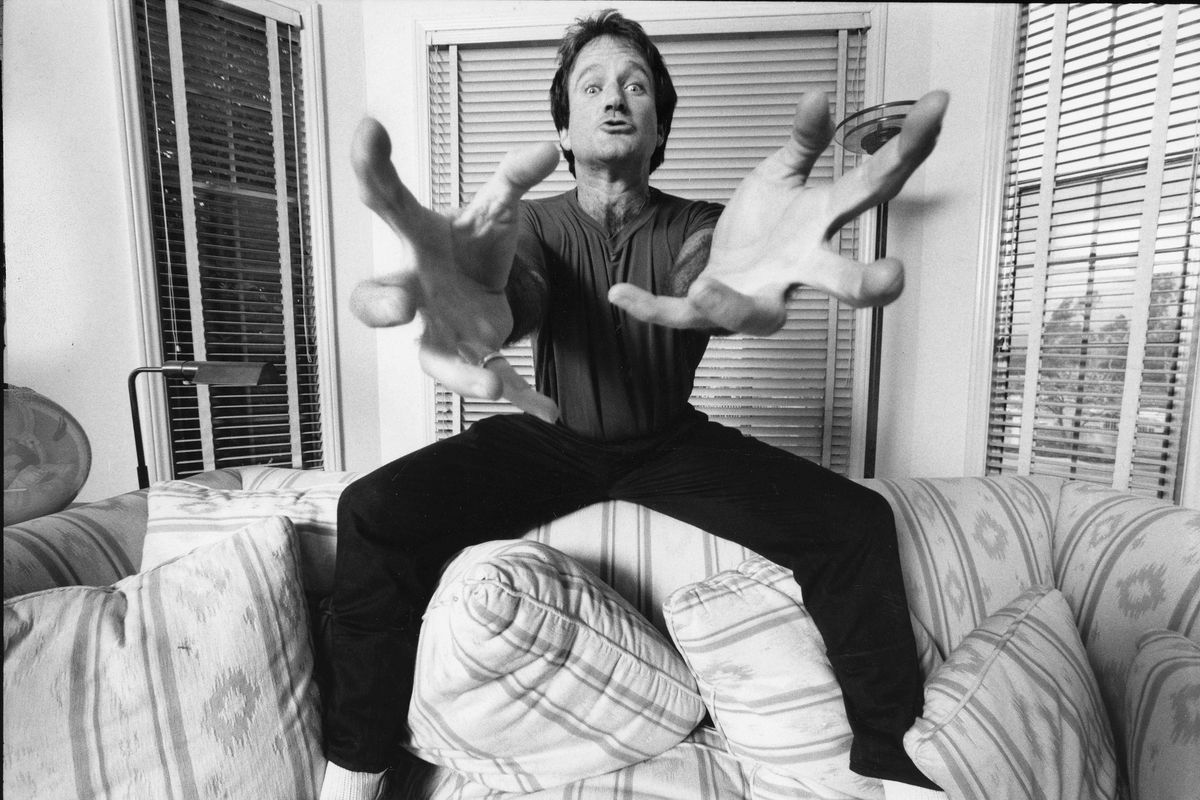 Robin Williams: Come Inside My Mind[/caption]
One hundred sixty-six features have been submitted for consideration in the Documentary Feature category for the 91st Academy Awards®. Several of the films have not yet had their required Los Angeles and New York qualifying releases. Submitted features must fulfill the theatrical release requirements and comply with all of the category’s other qualifying rules in order to advance in the voting process. This year, for the first time, films that have won a qualifying award at a competitive film festival or have been submitted in the Foreign Language Film category as their country’s official selection, are also eligible in the category. A shortlist of 15 films will be announced on December 17.
Films submitted in the Documentary Feature category may also qualify for Academy Awards in other categories, including Best Picture.
Nominations for the 91st Academy Awards will be announced on Tuesday, January 22, 2019.
The 91st Oscars® will be held on Sunday, February 24, 2019, at the Dolby Theatre® at Hollywood & Highland Center® in Hollywood, and will be televised live on the ABC Television Network. The Oscars also will be televised live in more than 225 countries and territories worldwide.
The submitted features, listed in alphabetical order, are:
“Above and Beyond: NASA’S Journey to Tomorrow”
“Active Measures”
“Amazing Grace”
“American Chaos”
“Andy Irons: Kissed by God”
[caption id="attachment_25696" align="aligncenter" width="1200"]
Robin Williams: Come Inside My Mind[/caption]
One hundred sixty-six features have been submitted for consideration in the Documentary Feature category for the 91st Academy Awards®. Several of the films have not yet had their required Los Angeles and New York qualifying releases. Submitted features must fulfill the theatrical release requirements and comply with all of the category’s other qualifying rules in order to advance in the voting process. This year, for the first time, films that have won a qualifying award at a competitive film festival or have been submitted in the Foreign Language Film category as their country’s official selection, are also eligible in the category. A shortlist of 15 films will be announced on December 17.
Films submitted in the Documentary Feature category may also qualify for Academy Awards in other categories, including Best Picture.
Nominations for the 91st Academy Awards will be announced on Tuesday, January 22, 2019.
The 91st Oscars® will be held on Sunday, February 24, 2019, at the Dolby Theatre® at Hollywood & Highland Center® in Hollywood, and will be televised live on the ABC Television Network. The Oscars also will be televised live in more than 225 countries and territories worldwide.
The submitted features, listed in alphabetical order, are:
“Above and Beyond: NASA’S Journey to Tomorrow”
“Active Measures”
“Amazing Grace”
“American Chaos”
“Andy Irons: Kissed by God”
[caption id="attachment_25696" align="aligncenter" width="1200"]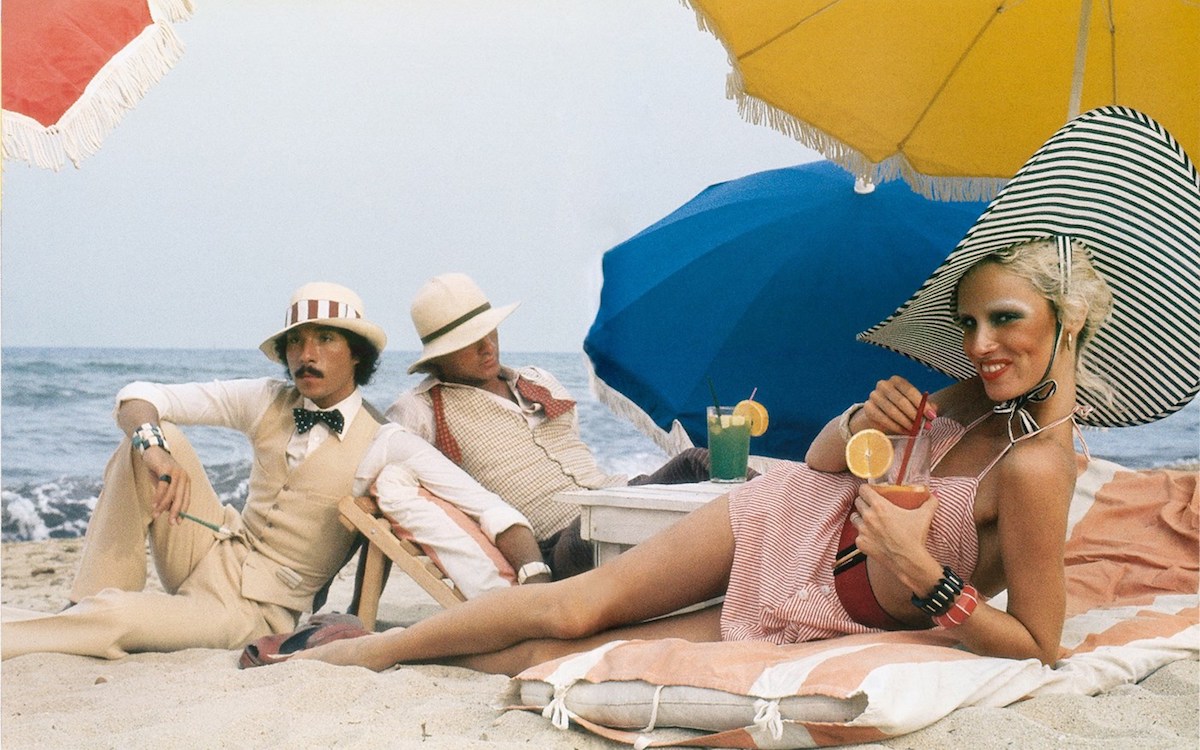 Antonio Lopez 1970: Sex Fashion & Disco[/caption]
“Antonio Lopez 1970: Sex Fashion & Disco”
“Avicii: True Stories”
“Bali: Beats of Paradise”
“Bathtubs over Broadway”
“Be Natural: The Untold Story of Alice Guy-Blaché”
“Believer”
“Better Angels”
“Bill Coors: The Will to Live”
“Bisbee ’17”
“The Bleeding Edge”
“Boom for Real: The Late Teenage Years of Jean-Michel Basquiat”
“Breaking Point: The War for Democracy in Ukraine”
“Call Her Ganda”
“Charm City”
“Chef Flynn”
“The China Hustle”
“Christian Audigier The Vif”
“The Cleaners”
“Communion”
“Crime + Punishment”
“Dark Money”
“Daughters of the Sexual Revolution: The Untold Story of the Dallas Cowboys Cheerleaders”
“The Dawn Wall”
“The Distant Barking of Dogs”
“Divide and Conquer: The Story of Roger Ailes”
“Drug$”
“Eating Animals”
“Eldorado”
“Fahrenheit 11/9”
“Fail State”
“Family in Transition”
“Far from the Tree”
“Filmworker”
“The First Patient”
“Foreign Land”
“40 Years in the Making: The Magic Music Movie”
“Free Solo”
“Garry Winogrand: All Things Are Photographable”
“Generation Wealth”
“Ghost Hunting”
“Ghosthunter”
“The Gilligan Manifesto”
“The Gospel According to André”
“Grace Jones: Bloodlight and Bami”
“Graves without a Name”
“The Great Buster: A Celebration”
“Hal”
“Hale County This Morning, This Evening”
“Half the Picture”
“The Heart of Nuba”
“Hillbilly”
“The Homeless Chorus Speaks”
“Hondros”
“Howard”
“In Search of Greatness”
“In the Land of Pomegranates”
“Inventing Tomorrow”
“Invisible Hands”
“Itzhak”
“Jane Fonda in Five Acts”
“John McEnroe: In the Realm of Perfection”
“The Judge”
“Kangaroo: A Love Hate Story”
“Killer Bees”
“The King”
“King in the Wilderness”
“Kusama – Infinity”
“The Last Race”
“Leaning into the Wind: Andy Goldsworthy”
“Letter from Masanjia”
“Licu, a Romanian Story”
“Living in the Future’s Past”
“Liyana”
“Lots of Kids, a Monkey and a Castle”
“Love & Bananas: An Elephant Story”
“Love, Cecil”
“Love, Gilda”
“Love Is Tolerance – Tolerance Is Love – Make Tolerance Great Again!”
“Making The Five Heartbeats”
“Maria by Callas”
“Matangi / Maya / M.I.A.”
“McQueen”
“Minding the Gap”
“Monrovia, Indiana”
“The Most Unknown”
“New Moon”
“93Queen”
“Nossa Chape”
“Of Fathers and Sons”
“Of Love & Law”
“On Her Shoulders”
“Opera about Poland”
“The Opera House”
“The Oslo Diaries”
“The Other Side of Everything”
“The Panama Papers”
“Path of Blood”
“People’s Republic of Desire”
“Philosopher King – Lee Teng-hui’s Dialogue”
“Pick of the Litter”
“Piripkura”
“Police Killing”
“Pope Francis – A Man of His Word”
“The Price of Everything”
“The Price of Free”
“Qiu (Inmates)”
“Quincy”
“RBG”
“The Rachel Divide”
“The Raft”
“Recovery Boys”
“Restoring Tomorrow”
“Reversing Roe”
“The Road Movie”
“Robin Williams: Come inside My Mind”
“Ruben Blades Is Not My Name”
“Samouni Road”
“Saving Brinton”
“Say Her Name: The Life and Death of Sandra Bland”
“Science Fair”
“Scotty and the Secret History of Hollywood”
“Searching for Ingmar Bergman”
“Seeing Allred”
“The Sentence”
“Shirkers”
“Shot in the Dark”
“The Silence of Others”
“Sisters of the Wilderness”
“A Son of Man”
“Songwriter”
“Stan”
“Studio 54”
“Summer in the Forest”
“Tea with the Dames”
“That Summer”
“That Way Madness Lies…”
“They Fight”
“They’ll Love Me When I’m Dead”
“This Is Congo”
“This Is Home: A Refugee Story”
“Three Identical Strangers”
“To Be Continued”
“Transformer”
“Travel Ban”
“The Trial”
“Triumph: The Untold Story of Perry Wallace”
“Trust Machine”
“Under the Wire”
“United Skates”
“Unknown Distance”
“Up Down and Sideways”
“The Waldheim Waltz”
“We Could Be Heroes”
“Weed the People”
“What Haunts Us”
“What Lies Upstream”
“Whitney”
“Wonderful Losers: A Different World”
“Won’t You Be My Neighbor?”
“Yellow Is Forbidden”
“Yellowing”
Antonio Lopez 1970: Sex Fashion & Disco[/caption]
“Antonio Lopez 1970: Sex Fashion & Disco”
“Avicii: True Stories”
“Bali: Beats of Paradise”
“Bathtubs over Broadway”
“Be Natural: The Untold Story of Alice Guy-Blaché”
“Believer”
“Better Angels”
“Bill Coors: The Will to Live”
“Bisbee ’17”
“The Bleeding Edge”
“Boom for Real: The Late Teenage Years of Jean-Michel Basquiat”
“Breaking Point: The War for Democracy in Ukraine”
“Call Her Ganda”
“Charm City”
“Chef Flynn”
“The China Hustle”
“Christian Audigier The Vif”
“The Cleaners”
“Communion”
“Crime + Punishment”
“Dark Money”
“Daughters of the Sexual Revolution: The Untold Story of the Dallas Cowboys Cheerleaders”
“The Dawn Wall”
“The Distant Barking of Dogs”
“Divide and Conquer: The Story of Roger Ailes”
“Drug$”
“Eating Animals”
“Eldorado”
“Fahrenheit 11/9”
“Fail State”
“Family in Transition”
“Far from the Tree”
“Filmworker”
“The First Patient”
“Foreign Land”
“40 Years in the Making: The Magic Music Movie”
“Free Solo”
“Garry Winogrand: All Things Are Photographable”
“Generation Wealth”
“Ghost Hunting”
“Ghosthunter”
“The Gilligan Manifesto”
“The Gospel According to André”
“Grace Jones: Bloodlight and Bami”
“Graves without a Name”
“The Great Buster: A Celebration”
“Hal”
“Hale County This Morning, This Evening”
“Half the Picture”
“The Heart of Nuba”
“Hillbilly”
“The Homeless Chorus Speaks”
“Hondros”
“Howard”
“In Search of Greatness”
“In the Land of Pomegranates”
“Inventing Tomorrow”
“Invisible Hands”
“Itzhak”
“Jane Fonda in Five Acts”
“John McEnroe: In the Realm of Perfection”
“The Judge”
“Kangaroo: A Love Hate Story”
“Killer Bees”
“The King”
“King in the Wilderness”
“Kusama – Infinity”
“The Last Race”
“Leaning into the Wind: Andy Goldsworthy”
“Letter from Masanjia”
“Licu, a Romanian Story”
“Living in the Future’s Past”
“Liyana”
“Lots of Kids, a Monkey and a Castle”
“Love & Bananas: An Elephant Story”
“Love, Cecil”
“Love, Gilda”
“Love Is Tolerance – Tolerance Is Love – Make Tolerance Great Again!”
“Making The Five Heartbeats”
“Maria by Callas”
“Matangi / Maya / M.I.A.”
“McQueen”
“Minding the Gap”
“Monrovia, Indiana”
“The Most Unknown”
“New Moon”
“93Queen”
“Nossa Chape”
“Of Fathers and Sons”
“Of Love & Law”
“On Her Shoulders”
“Opera about Poland”
“The Opera House”
“The Oslo Diaries”
“The Other Side of Everything”
“The Panama Papers”
“Path of Blood”
“People’s Republic of Desire”
“Philosopher King – Lee Teng-hui’s Dialogue”
“Pick of the Litter”
“Piripkura”
“Police Killing”
“Pope Francis – A Man of His Word”
“The Price of Everything”
“The Price of Free”
“Qiu (Inmates)”
“Quincy”
“RBG”
“The Rachel Divide”
“The Raft”
“Recovery Boys”
“Restoring Tomorrow”
“Reversing Roe”
“The Road Movie”
“Robin Williams: Come inside My Mind”
“Ruben Blades Is Not My Name”
“Samouni Road”
“Saving Brinton”
“Say Her Name: The Life and Death of Sandra Bland”
“Science Fair”
“Scotty and the Secret History of Hollywood”
“Searching for Ingmar Bergman”
“Seeing Allred”
“The Sentence”
“Shirkers”
“Shot in the Dark”
“The Silence of Others”
“Sisters of the Wilderness”
“A Son of Man”
“Songwriter”
“Stan”
“Studio 54”
“Summer in the Forest”
“Tea with the Dames”
“That Summer”
“That Way Madness Lies…”
“They Fight”
“They’ll Love Me When I’m Dead”
“This Is Congo”
“This Is Home: A Refugee Story”
“Three Identical Strangers”
“To Be Continued”
“Transformer”
“Travel Ban”
“The Trial”
“Triumph: The Untold Story of Perry Wallace”
“Trust Machine”
“Under the Wire”
“United Skates”
“Unknown Distance”
“Up Down and Sideways”
“The Waldheim Waltz”
“We Could Be Heroes”
“Weed the People”
“What Haunts Us”
“What Lies Upstream”
“Whitney”
“Wonderful Losers: A Different World”
“Won’t You Be My Neighbor?”
“Yellow Is Forbidden”
“Yellowing” Michael Moore’s Fahrenheit 11/9[/caption]
The World Premiere of Michael Moore’s Fahrenheit 11/9 , a radical and humorous look at the United States under Donald Trump, will open the Toronto International Film Festival 2018 documentary program. The Festival will screen 27 feature-length non-fiction films, representing 19 countries in the 2018 documentary program.
Other World Premieres include Rashida Jones and Alan Hicks’ Quincy, profiling musical icon Quincy Jones; Victoria Stone and Mark Deeble’s The Elephant Queen, narrated by Chiwetel Ejiofor, tracing the epic journey of an elephant herd; Billy Corben’s Screwball, a true-crime comedy on doping in Major League Baseball; and Maxim Pozdorovkin’s The Truth About Killer Robots, investigating the lethal consequences of automation.
One-third of this year’s doc features are directed or co-directed by female filmmakers including TIFF Docs closing film, Margarethe von Trotta’s Searching for Ingmar Bergman, which offers a multi-faceted look at the Swedish auteur’s life 100 years after his birth. Women creators, trailblazers, and the #MeToo movement are also examined within the lineup: Naziha Arebi’s Freedom Fields, about a Libyan women’s football team; Alex Holmes’ Maiden recounts the story of the first all-women sailing crew in the Whitbread Round the World Race (now the Volvo Ocean Race), skippered by Tracy Edwards; and Tom Volf’s Maria by Callas, narrated by Joyce DiDonato, profiles one of the major icons of the 20th century. More highlights include Alexis Bloom’s Divide and Conquer: The Story of Roger Ailes, covering the Fox News creator who was ousted for allegations of sexual harassment; and Tom Donahue’s This Changes Everything, an examination of gender dynamics in Hollywood, executive produced by Geena Davis. Mark Cousins’ Women Make Film: A New Road Movie Through Cinema , narrated by Tilda Swinton, explores international cinema through the lens of women directors.
Global politics and leaders of modern society are put under the microscope with films such as Werner Herzog and André Singer’s Meeting Gorbachev, on the former Soviet leader; Vitaly Mansky’s Putin’s Witnesses, focusing on Russia’s president; and Errol Morris’ American Dharma , looking at controversial Trump strategist Steve Bannon.
Grand adventures are at the heart of several docs in the selection. E. Chai Vasarhelyi and Jimmy Chin’s Free Solo captures Alex Honnold’s unprecedented climb of El Capitan without safety ropes; Andrey Paounov’s Walking on Water documents the artist Christo’s project The Floating Piers; John Chester’s The Biggest Little Farm chronicles an eight-year struggle to run a family farm; and Shannon Service and Jeffrey Waldron’s Ghost Fleet captures a nail-biting rescue of fishermen enslaved at sea.
After directing last year’s Festival opener Borg vs McEnroe, Janus Metz teams with Sine Plambech for the World Premiere of Heartbound, a longitudinal study 10 years in the making about the trend of Thai women marrying Danish men. And several documentaries represent eclectic perspectives told from around the world, including: Rithy Panh’s Graves Without a Name, on the legacy of Cambodia’s genocide; Jawad Rhalib’s When Arabs Danced, on Muslim performers pushing boundaries; James Longley’s Angels Are Made Of Light, about a group of Afghan children and their teachers; and Frederick Wiseman’s Monrovia, Indiana , about a small town in America’s Midwest.
The 43rd Toronto International Film Festival runs from September 6 to 16, 2018.
Michael Moore’s Fahrenheit 11/9[/caption]
The World Premiere of Michael Moore’s Fahrenheit 11/9 , a radical and humorous look at the United States under Donald Trump, will open the Toronto International Film Festival 2018 documentary program. The Festival will screen 27 feature-length non-fiction films, representing 19 countries in the 2018 documentary program.
Other World Premieres include Rashida Jones and Alan Hicks’ Quincy, profiling musical icon Quincy Jones; Victoria Stone and Mark Deeble’s The Elephant Queen, narrated by Chiwetel Ejiofor, tracing the epic journey of an elephant herd; Billy Corben’s Screwball, a true-crime comedy on doping in Major League Baseball; and Maxim Pozdorovkin’s The Truth About Killer Robots, investigating the lethal consequences of automation.
One-third of this year’s doc features are directed or co-directed by female filmmakers including TIFF Docs closing film, Margarethe von Trotta’s Searching for Ingmar Bergman, which offers a multi-faceted look at the Swedish auteur’s life 100 years after his birth. Women creators, trailblazers, and the #MeToo movement are also examined within the lineup: Naziha Arebi’s Freedom Fields, about a Libyan women’s football team; Alex Holmes’ Maiden recounts the story of the first all-women sailing crew in the Whitbread Round the World Race (now the Volvo Ocean Race), skippered by Tracy Edwards; and Tom Volf’s Maria by Callas, narrated by Joyce DiDonato, profiles one of the major icons of the 20th century. More highlights include Alexis Bloom’s Divide and Conquer: The Story of Roger Ailes, covering the Fox News creator who was ousted for allegations of sexual harassment; and Tom Donahue’s This Changes Everything, an examination of gender dynamics in Hollywood, executive produced by Geena Davis. Mark Cousins’ Women Make Film: A New Road Movie Through Cinema , narrated by Tilda Swinton, explores international cinema through the lens of women directors.
Global politics and leaders of modern society are put under the microscope with films such as Werner Herzog and André Singer’s Meeting Gorbachev, on the former Soviet leader; Vitaly Mansky’s Putin’s Witnesses, focusing on Russia’s president; and Errol Morris’ American Dharma , looking at controversial Trump strategist Steve Bannon.
Grand adventures are at the heart of several docs in the selection. E. Chai Vasarhelyi and Jimmy Chin’s Free Solo captures Alex Honnold’s unprecedented climb of El Capitan without safety ropes; Andrey Paounov’s Walking on Water documents the artist Christo’s project The Floating Piers; John Chester’s The Biggest Little Farm chronicles an eight-year struggle to run a family farm; and Shannon Service and Jeffrey Waldron’s Ghost Fleet captures a nail-biting rescue of fishermen enslaved at sea.
After directing last year’s Festival opener Borg vs McEnroe, Janus Metz teams with Sine Plambech for the World Premiere of Heartbound, a longitudinal study 10 years in the making about the trend of Thai women marrying Danish men. And several documentaries represent eclectic perspectives told from around the world, including: Rithy Panh’s Graves Without a Name, on the legacy of Cambodia’s genocide; Jawad Rhalib’s When Arabs Danced, on Muslim performers pushing boundaries; James Longley’s Angels Are Made Of Light, about a group of Afghan children and their teachers; and Frederick Wiseman’s Monrovia, Indiana , about a small town in America’s Midwest.
The 43rd Toronto International Film Festival runs from September 6 to 16, 2018.