
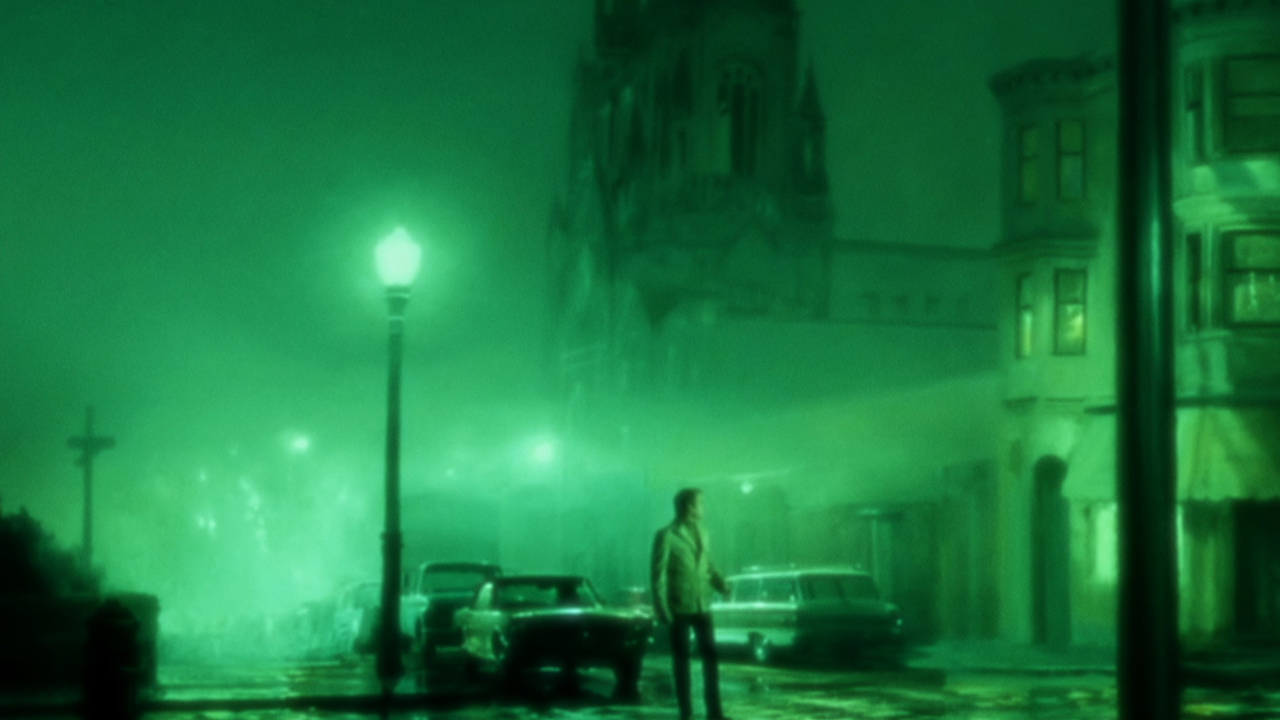
 The Green Fog. Regie/directors: Guy Maddin, Evan Johnson, Galen Johnson[/caption]
The Forum program of the 2018 Berlin International Film Festival will feature 44 films, 35 of which world premieres. This year, Arsenal – Institute for Film and Video Art is putting on the Forum as part of the Berlinale for the 48th time.
21 years after his directorial debut The Day a Pig Fell into the Well, Korean director Hong Sangsoo makes a more auspicious return to the Forum. Grass is another cheerfully melancholy story about the guests at a small café whose owner loves classical music. Kim Minhee, who won the Silver Bear for Best Actress in 2017, plays a café regular who always seems to be at the table in the corner writing on her laptop. She repeatedly draws inspiration from what’s happening around her, picking up the threads of the dialogue and spinning them further and sometimes even actively intervening in conversations. Is she perhaps the author of these relationship dramas in miniature, whose stores and themes mirror one another?
French director Claire Simon is equally willing to try out new experiments in her documentary works. In her new film Premières solitudes (Young Solitude), she creates a cinematographic space for open, intimate discussion together with pupils from a school in the Paris suburbs. As they talk together about their backgrounds, parents, first loves, longings and fears for the future, ten ordinary teenagers forge ever closer bonds. It’s good to realise you’re not alone.
For his part, Ukrainian director Sergei Loznitsa is showing a film at the Berlinale for the very first time. In Den’ Pobedy (Victory Day), he observes the huge crowds that gather each year at the Soviet War Memorial in Berlin-Treptow on May 9th and records the hustle and bustle with quiet precision, as different moods come to the fore: pride, contemplation, patriotism, curiosity, the desire for recognition.
Two films from this year’s program draw on video material shot by their directors in periods of political upheaval and imbue it with new significance. At the end of the 1980s, Kristina Konrad collected opinions on the streets of Uruguay in relation to a referendum to be held on a law granting impunity to those responsible for the military dictatorship. Unas preguntas (One or Two Questions) takes a magnifying glass to the democratic process.
Around the same time, the scandal surrounding the Nazi past of former UN General Secretary and Austrian president Kurt Waldheim was making headlines worldwide. Edited together entirely from archive footage, Ruth Beckermann’s Waldheims Walzer (The Waldheim Waltz) is a documentary essay of frightening topicality.
Julien Faraut also works with material largely shot in the 80s in L’empire de la perfection (In the Realm of Perfection). Back then, tennis-obsessed director Gil de Kermadec attempted to use film as means of analysing the game. His meticulously shot footage of John McEnroe matches during the French Open forms the starting point for an ironic look at the parallels between film and the sporting world: cinema lies, sport does not.
Corneliu Porumboiu’s Fotbal Infinit (Infinite Football) takes an equally peculiar look at the world of sport, this time in provincial Romania, following a local official’s attempts to bequeath the world an improved version of the beautiful game. But does everything here really just revolve around football?
Two features from the US shine a light on intellectual escapism. Ted Fendt’s second feature Classical Period is once again shot in Philadelphia on 16mm and tells a drolly melancholy story about intellectualism and loneliness. The members of a reading group exchange cultural and literary references with such vigour that there’s little room for anything else: an attempt to leave the modern world behind or merely their own solitary existences?
Ricky D’Ambrose’s debut Notes On an Appearance may be set in Brooklyn, but unfolds in a similar milieu. Before the backdrop of the disquiet spread by the followers of a controversial philosopher, the film uses both real-life documents and smartly falsified writings to tell the story of a young man who one day disappears without warning. An eerie look at modern life with shades of dystopia.
Josephine Decker’s Madeline’s Madeline on the other hand plunges into the analogies of creativity and insanity. The young titular heroine doesn’t like spending time with her mother, played by actress Miranda July, and feels far freer when with her theatre group. But where does the border lie between personality and role?
Two features from Morocco explore gender relations. Jahilya by Hicham Lasri (the title alludes to the pre-Islamic “time of ignorance”) is a furious condemnation of the misogyny of Moroccan society and all its attendant malice.
Narjiss Nejjar’s Apatride (Stateless) gives an account of a historical event from a female perspective, an event that still dictates the relationship between Morocco and Algeria to this day. Full of beguiling images, her feature shows how a gentle, yet determined woman attempts to prevail over the border between the two countries.
It would be more than appropriate to refer to the electrifying directorial debut An Elephant Sitting Still as a new hope for Chinese cinema. But its 29-year-old director Ho Bu, who had previously made a name for himself with two novels, took his own life soon after the film was completed. This visually stunning work links together the biographies of a range of different protagonists in virtuoso fashion, narrating the course of one single, tension-filled day from dawn until dusk, painting a portrait of a society marked by selfishness in the process.
The Green Fog. Regie/directors: Guy Maddin, Evan Johnson, Galen Johnson[/caption]
The Forum program of the 2018 Berlin International Film Festival will feature 44 films, 35 of which world premieres. This year, Arsenal – Institute for Film and Video Art is putting on the Forum as part of the Berlinale for the 48th time.
21 years after his directorial debut The Day a Pig Fell into the Well, Korean director Hong Sangsoo makes a more auspicious return to the Forum. Grass is another cheerfully melancholy story about the guests at a small café whose owner loves classical music. Kim Minhee, who won the Silver Bear for Best Actress in 2017, plays a café regular who always seems to be at the table in the corner writing on her laptop. She repeatedly draws inspiration from what’s happening around her, picking up the threads of the dialogue and spinning them further and sometimes even actively intervening in conversations. Is she perhaps the author of these relationship dramas in miniature, whose stores and themes mirror one another?
French director Claire Simon is equally willing to try out new experiments in her documentary works. In her new film Premières solitudes (Young Solitude), she creates a cinematographic space for open, intimate discussion together with pupils from a school in the Paris suburbs. As they talk together about their backgrounds, parents, first loves, longings and fears for the future, ten ordinary teenagers forge ever closer bonds. It’s good to realise you’re not alone.
For his part, Ukrainian director Sergei Loznitsa is showing a film at the Berlinale for the very first time. In Den’ Pobedy (Victory Day), he observes the huge crowds that gather each year at the Soviet War Memorial in Berlin-Treptow on May 9th and records the hustle and bustle with quiet precision, as different moods come to the fore: pride, contemplation, patriotism, curiosity, the desire for recognition.
Two films from this year’s program draw on video material shot by their directors in periods of political upheaval and imbue it with new significance. At the end of the 1980s, Kristina Konrad collected opinions on the streets of Uruguay in relation to a referendum to be held on a law granting impunity to those responsible for the military dictatorship. Unas preguntas (One or Two Questions) takes a magnifying glass to the democratic process.
Around the same time, the scandal surrounding the Nazi past of former UN General Secretary and Austrian president Kurt Waldheim was making headlines worldwide. Edited together entirely from archive footage, Ruth Beckermann’s Waldheims Walzer (The Waldheim Waltz) is a documentary essay of frightening topicality.
Julien Faraut also works with material largely shot in the 80s in L’empire de la perfection (In the Realm of Perfection). Back then, tennis-obsessed director Gil de Kermadec attempted to use film as means of analysing the game. His meticulously shot footage of John McEnroe matches during the French Open forms the starting point for an ironic look at the parallels between film and the sporting world: cinema lies, sport does not.
Corneliu Porumboiu’s Fotbal Infinit (Infinite Football) takes an equally peculiar look at the world of sport, this time in provincial Romania, following a local official’s attempts to bequeath the world an improved version of the beautiful game. But does everything here really just revolve around football?
Two features from the US shine a light on intellectual escapism. Ted Fendt’s second feature Classical Period is once again shot in Philadelphia on 16mm and tells a drolly melancholy story about intellectualism and loneliness. The members of a reading group exchange cultural and literary references with such vigour that there’s little room for anything else: an attempt to leave the modern world behind or merely their own solitary existences?
Ricky D’Ambrose’s debut Notes On an Appearance may be set in Brooklyn, but unfolds in a similar milieu. Before the backdrop of the disquiet spread by the followers of a controversial philosopher, the film uses both real-life documents and smartly falsified writings to tell the story of a young man who one day disappears without warning. An eerie look at modern life with shades of dystopia.
Josephine Decker’s Madeline’s Madeline on the other hand plunges into the analogies of creativity and insanity. The young titular heroine doesn’t like spending time with her mother, played by actress Miranda July, and feels far freer when with her theatre group. But where does the border lie between personality and role?
Two features from Morocco explore gender relations. Jahilya by Hicham Lasri (the title alludes to the pre-Islamic “time of ignorance”) is a furious condemnation of the misogyny of Moroccan society and all its attendant malice.
Narjiss Nejjar’s Apatride (Stateless) gives an account of a historical event from a female perspective, an event that still dictates the relationship between Morocco and Algeria to this day. Full of beguiling images, her feature shows how a gentle, yet determined woman attempts to prevail over the border between the two countries.
It would be more than appropriate to refer to the electrifying directorial debut An Elephant Sitting Still as a new hope for Chinese cinema. But its 29-year-old director Ho Bu, who had previously made a name for himself with two novels, took his own life soon after the film was completed. This visually stunning work links together the biographies of a range of different protagonists in virtuoso fashion, narrating the course of one single, tension-filled day from dawn until dusk, painting a portrait of a society marked by selfishness in the process.
The Tree (Drevo)(2014)
-
Berlinale 2018: Guy Maddin’s “The Green Fog” Among 44 Films Featured in Forum 2018 Lineup
[caption id="attachment_26603" align="aligncenter" width="1280"] The Green Fog. Regie/directors: Guy Maddin, Evan Johnson, Galen Johnson[/caption]
The Forum program of the 2018 Berlin International Film Festival will feature 44 films, 35 of which world premieres. This year, Arsenal – Institute for Film and Video Art is putting on the Forum as part of the Berlinale for the 48th time.
21 years after his directorial debut The Day a Pig Fell into the Well, Korean director Hong Sangsoo makes a more auspicious return to the Forum. Grass is another cheerfully melancholy story about the guests at a small café whose owner loves classical music. Kim Minhee, who won the Silver Bear for Best Actress in 2017, plays a café regular who always seems to be at the table in the corner writing on her laptop. She repeatedly draws inspiration from what’s happening around her, picking up the threads of the dialogue and spinning them further and sometimes even actively intervening in conversations. Is she perhaps the author of these relationship dramas in miniature, whose stores and themes mirror one another?
French director Claire Simon is equally willing to try out new experiments in her documentary works. In her new film Premières solitudes (Young Solitude), she creates a cinematographic space for open, intimate discussion together with pupils from a school in the Paris suburbs. As they talk together about their backgrounds, parents, first loves, longings and fears for the future, ten ordinary teenagers forge ever closer bonds. It’s good to realise you’re not alone.
For his part, Ukrainian director Sergei Loznitsa is showing a film at the Berlinale for the very first time. In Den’ Pobedy (Victory Day), he observes the huge crowds that gather each year at the Soviet War Memorial in Berlin-Treptow on May 9th and records the hustle and bustle with quiet precision, as different moods come to the fore: pride, contemplation, patriotism, curiosity, the desire for recognition.
Two films from this year’s program draw on video material shot by their directors in periods of political upheaval and imbue it with new significance. At the end of the 1980s, Kristina Konrad collected opinions on the streets of Uruguay in relation to a referendum to be held on a law granting impunity to those responsible for the military dictatorship. Unas preguntas (One or Two Questions) takes a magnifying glass to the democratic process.
Around the same time, the scandal surrounding the Nazi past of former UN General Secretary and Austrian president Kurt Waldheim was making headlines worldwide. Edited together entirely from archive footage, Ruth Beckermann’s Waldheims Walzer (The Waldheim Waltz) is a documentary essay of frightening topicality.
Julien Faraut also works with material largely shot in the 80s in L’empire de la perfection (In the Realm of Perfection). Back then, tennis-obsessed director Gil de Kermadec attempted to use film as means of analysing the game. His meticulously shot footage of John McEnroe matches during the French Open forms the starting point for an ironic look at the parallels between film and the sporting world: cinema lies, sport does not.
Corneliu Porumboiu’s Fotbal Infinit (Infinite Football) takes an equally peculiar look at the world of sport, this time in provincial Romania, following a local official’s attempts to bequeath the world an improved version of the beautiful game. But does everything here really just revolve around football?
Two features from the US shine a light on intellectual escapism. Ted Fendt’s second feature Classical Period is once again shot in Philadelphia on 16mm and tells a drolly melancholy story about intellectualism and loneliness. The members of a reading group exchange cultural and literary references with such vigour that there’s little room for anything else: an attempt to leave the modern world behind or merely their own solitary existences?
Ricky D’Ambrose’s debut Notes On an Appearance may be set in Brooklyn, but unfolds in a similar milieu. Before the backdrop of the disquiet spread by the followers of a controversial philosopher, the film uses both real-life documents and smartly falsified writings to tell the story of a young man who one day disappears without warning. An eerie look at modern life with shades of dystopia.
Josephine Decker’s Madeline’s Madeline on the other hand plunges into the analogies of creativity and insanity. The young titular heroine doesn’t like spending time with her mother, played by actress Miranda July, and feels far freer when with her theatre group. But where does the border lie between personality and role?
Two features from Morocco explore gender relations. Jahilya by Hicham Lasri (the title alludes to the pre-Islamic “time of ignorance”) is a furious condemnation of the misogyny of Moroccan society and all its attendant malice.
Narjiss Nejjar’s Apatride (Stateless) gives an account of a historical event from a female perspective, an event that still dictates the relationship between Morocco and Algeria to this day. Full of beguiling images, her feature shows how a gentle, yet determined woman attempts to prevail over the border between the two countries.
It would be more than appropriate to refer to the electrifying directorial debut An Elephant Sitting Still as a new hope for Chinese cinema. But its 29-year-old director Ho Bu, who had previously made a name for himself with two novels, took his own life soon after the film was completed. This visually stunning work links together the biographies of a range of different protagonists in virtuoso fashion, narrating the course of one single, tension-filled day from dawn until dusk, painting a portrait of a society marked by selfishness in the process.
-
2015 AFI European Union Film Showcase Announces Complete Lineup; Opens with A PERFECT DAY, Closes with THE TREASURE
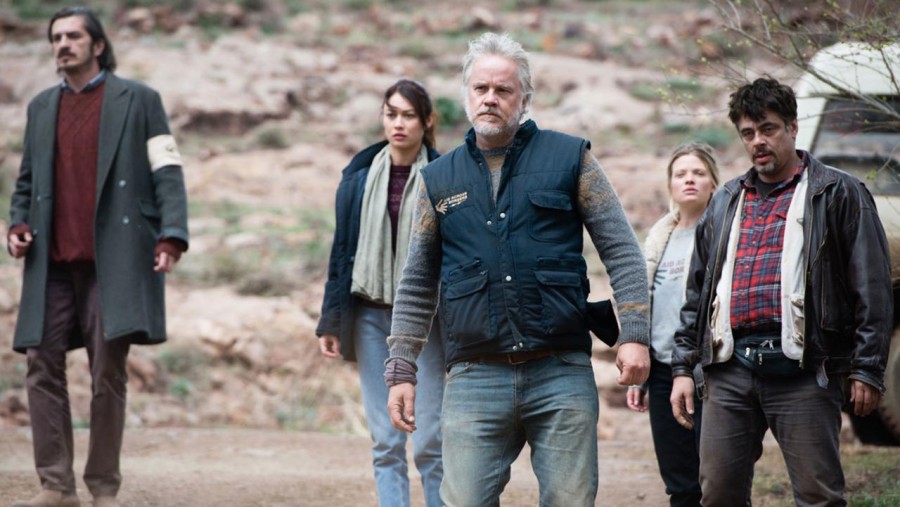 The American Film Institute (AFI) announced the complete slate of films for the 2015 AFI European Union Film Showcase, taking place December 1–20 at the AFI Silver Theatre and Cultural Center in Silver Spring, Maryland. This year’s AFI European Union Film Showcase will open December 1 with Fernando León de Aranoa’s A PERFECT DAY (Spain), a darkly comedic portrait of aid workers attempting to provide clean water during the aftermath of the Balkan War, starring Oscar® winners Benicio Del Toro (TRAFFIC, SICARIO) and Tim Robbins (MYSTIC RIVER, THE SHAWSHANK REDEMPTION) alongside Olga Kurylenko (QUANTUM OF SOLACE, OBLIVION) and Mélanie Thierry (THE ZERO THEOREM).
https://www.youtube.com/watch?v=eQfqygkNMqE
The Closing Night film, THE TREASURE (Romania), directed by Corneliu Porumboiu (POLICE, ADJECTIVE; 12:08 EAST OF BUCHAREST), is a deadpan comedy of manners that premiered at the Cannes Film Festival, where it won the Prix Un Certain Talent.
https://www.youtube.com/watch?v=d56mX1P6p2U
The Showcase’s Special Presentations section includes Paolo Sorrentino’s YOUTH (Italy) starring Michael Caine, Harvey Keitel, Jane Fonda, Paul Dano and Rachel Weisz; THE LADY IN THE VAN (United Kingdom) starring Maggie Smith; Jacques Audiard’s Cannes Palme d’Or winner DHEEPAN (France); BODY (Poland) directed by Malgorzata Szumowska, winner of the Best Director prize at the 2015 Berlin International Film Festival; 45 YEARS (United Kingdom) starring Charlotte Rampling and Tom Courtenay, winners of Best Actress and Actor at Berlin; Cannes Grand Prix Winner SON OF SAUL (Hungary); Berlin Silver Bear prize winner AFERIM! (Romania); festival favorite MY GOLDEN DAYS (France) directed by Arnaud Desplechin; Venice Film Festival premiere A WAR (Denmark) directed by Tobias Lindholm (A HIJACKING); and A ROYAL NIGHT OUT (United Kingdom) starring Sarah Gadon, Bel Powley, Emily Watson and Rupert Everett.
Other highlights include the U.S. premiere of MA MA (Spain) starring Penélope Cruz; DISORDER (France) starring Matthias Schoenaerts and Diane Kruger; THE WAIT (Italy) starring Juliette Binoche; SECOND COMING (United Kingdom) starring Idris Elba; Matteo Garrone’s TALE OF TALES (Italy) starring Salma Hayek, John C. Reilly and Vincent Cassel; KILL YOUR FRIENDS (United Kingdom) starring Nicholas Hoult, James Corden and Rosanna Arquette; and Nanni Moretti’s MIA MADRE starring John Turturro.
Among the films featured are a number of 2015 Oscar® submissions for Best Foreign Language Film, including THE HIGH SUN (Croatia); A WAR (Denmark); 1944 (Estonia); THE FENCER (Finland); SON OF SAUL (Hungary); THE SUMMER OF SANGAILE (Lithuania); BABY(A)LONE (Luxembourg); AFERIM! (Romania); and THE TREE (Slovenia). 2014 Oscar® submissions include SIMSHAR (Malta).
Complete list of U.S. premieres:
MA MA (Spain)
EVA NOVÁ (Slovakia)
THE SNAKE BROTHERS (Czech Republic)
THE MAGIC MOUNTAIN (France)
BABY(A)LONE (Luxembourg)
IMPRESSIONS OF A DROWNED MAN (Cyprus)
Complete list of East Coast premieres:
A WAR (Denmark)
THE WAIT (Italy)
YOU’RE UGLY TOO (Ireland)
(BE)LONGING (Portugal)
THE TREE (Slovenia)
SIMSHAR (Malta)
The American Film Institute (AFI) announced the complete slate of films for the 2015 AFI European Union Film Showcase, taking place December 1–20 at the AFI Silver Theatre and Cultural Center in Silver Spring, Maryland. This year’s AFI European Union Film Showcase will open December 1 with Fernando León de Aranoa’s A PERFECT DAY (Spain), a darkly comedic portrait of aid workers attempting to provide clean water during the aftermath of the Balkan War, starring Oscar® winners Benicio Del Toro (TRAFFIC, SICARIO) and Tim Robbins (MYSTIC RIVER, THE SHAWSHANK REDEMPTION) alongside Olga Kurylenko (QUANTUM OF SOLACE, OBLIVION) and Mélanie Thierry (THE ZERO THEOREM).
https://www.youtube.com/watch?v=eQfqygkNMqE
The Closing Night film, THE TREASURE (Romania), directed by Corneliu Porumboiu (POLICE, ADJECTIVE; 12:08 EAST OF BUCHAREST), is a deadpan comedy of manners that premiered at the Cannes Film Festival, where it won the Prix Un Certain Talent.
https://www.youtube.com/watch?v=d56mX1P6p2U
The Showcase’s Special Presentations section includes Paolo Sorrentino’s YOUTH (Italy) starring Michael Caine, Harvey Keitel, Jane Fonda, Paul Dano and Rachel Weisz; THE LADY IN THE VAN (United Kingdom) starring Maggie Smith; Jacques Audiard’s Cannes Palme d’Or winner DHEEPAN (France); BODY (Poland) directed by Malgorzata Szumowska, winner of the Best Director prize at the 2015 Berlin International Film Festival; 45 YEARS (United Kingdom) starring Charlotte Rampling and Tom Courtenay, winners of Best Actress and Actor at Berlin; Cannes Grand Prix Winner SON OF SAUL (Hungary); Berlin Silver Bear prize winner AFERIM! (Romania); festival favorite MY GOLDEN DAYS (France) directed by Arnaud Desplechin; Venice Film Festival premiere A WAR (Denmark) directed by Tobias Lindholm (A HIJACKING); and A ROYAL NIGHT OUT (United Kingdom) starring Sarah Gadon, Bel Powley, Emily Watson and Rupert Everett.
Other highlights include the U.S. premiere of MA MA (Spain) starring Penélope Cruz; DISORDER (France) starring Matthias Schoenaerts and Diane Kruger; THE WAIT (Italy) starring Juliette Binoche; SECOND COMING (United Kingdom) starring Idris Elba; Matteo Garrone’s TALE OF TALES (Italy) starring Salma Hayek, John C. Reilly and Vincent Cassel; KILL YOUR FRIENDS (United Kingdom) starring Nicholas Hoult, James Corden and Rosanna Arquette; and Nanni Moretti’s MIA MADRE starring John Turturro.
Among the films featured are a number of 2015 Oscar® submissions for Best Foreign Language Film, including THE HIGH SUN (Croatia); A WAR (Denmark); 1944 (Estonia); THE FENCER (Finland); SON OF SAUL (Hungary); THE SUMMER OF SANGAILE (Lithuania); BABY(A)LONE (Luxembourg); AFERIM! (Romania); and THE TREE (Slovenia). 2014 Oscar® submissions include SIMSHAR (Malta).
Complete list of U.S. premieres:
MA MA (Spain)
EVA NOVÁ (Slovakia)
THE SNAKE BROTHERS (Czech Republic)
THE MAGIC MOUNTAIN (France)
BABY(A)LONE (Luxembourg)
IMPRESSIONS OF A DROWNED MAN (Cyprus)
Complete list of East Coast premieres:
A WAR (Denmark)
THE WAIT (Italy)
YOU’RE UGLY TOO (Ireland)
(BE)LONGING (Portugal)
THE TREE (Slovenia)
SIMSHAR (Malta)
-
Complete List of Films + Trailers for 81 Countries in Competition for 2015 Foreign Language Film Oscar
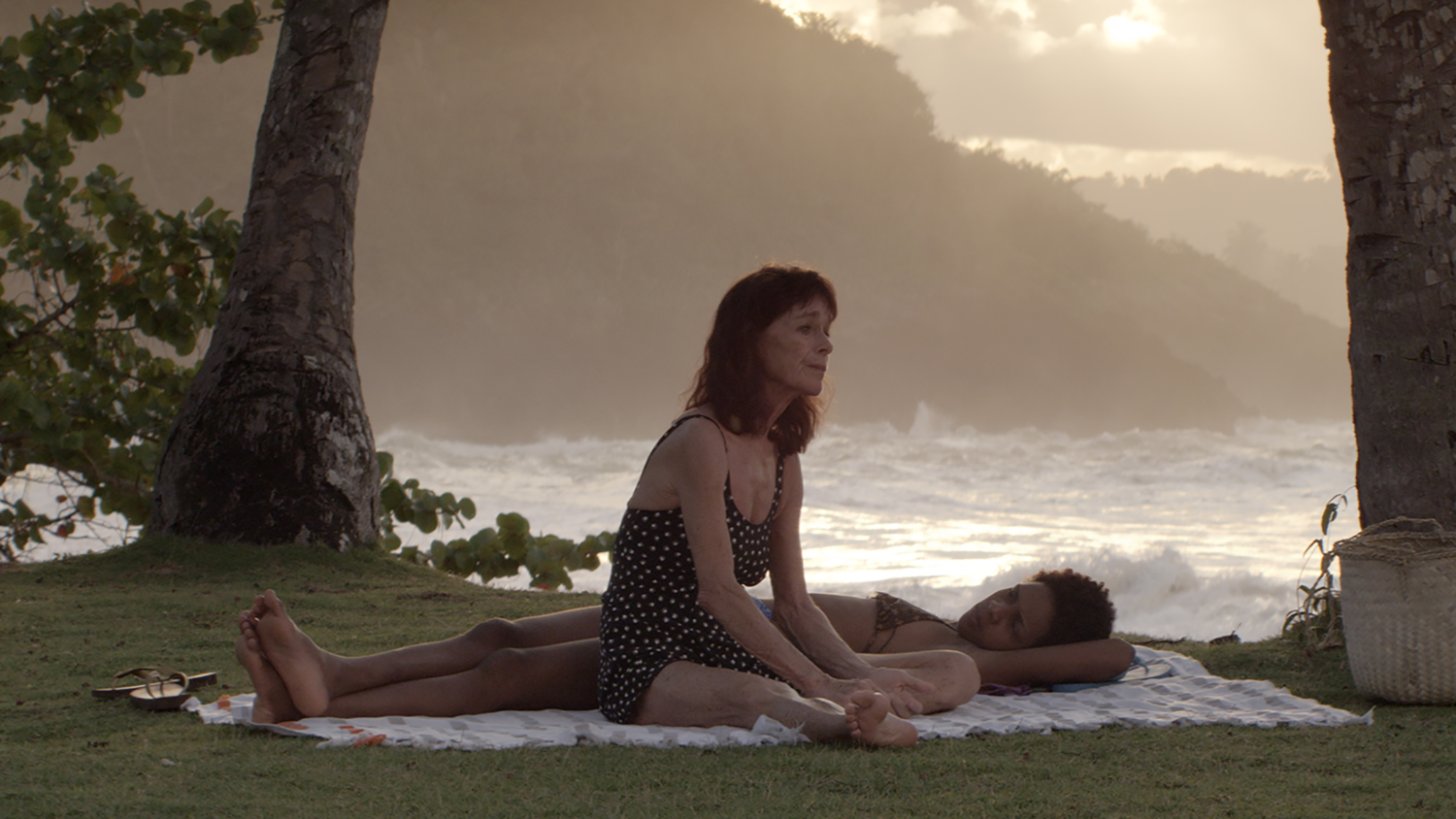
Eighty-one countries have submitted films for consideration in the 2015 Foreign Language Film Oscar category for the 88th Academy Awards.