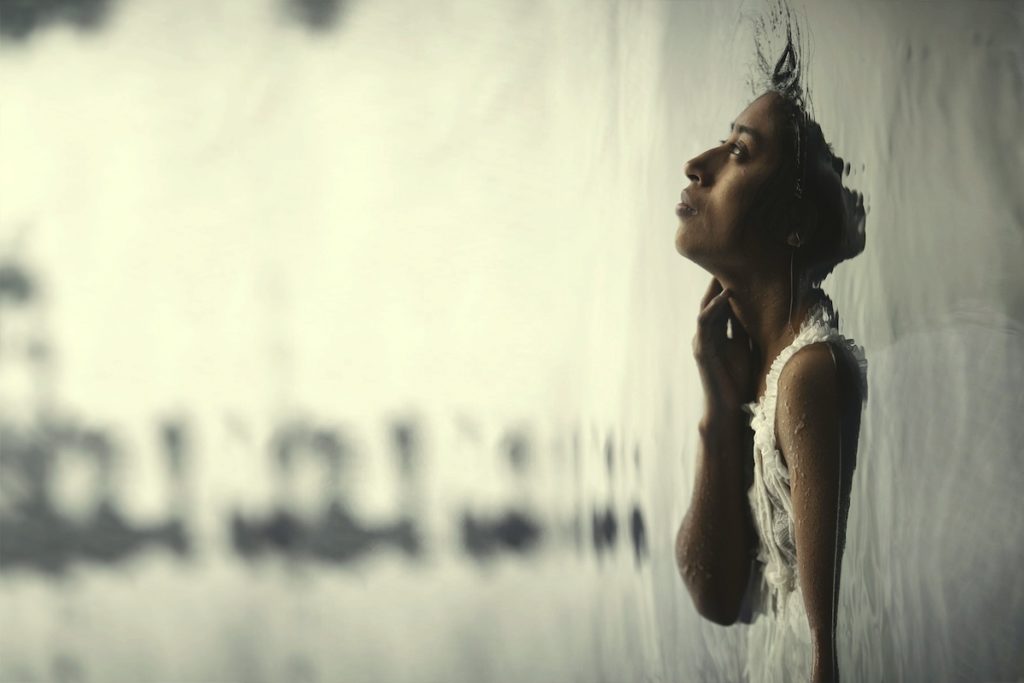
The Latino Entertainment Journalists Association (LEJA) announced the film nominees for the third annual Latino Entertainment Film Awards.

Evoking Colonia Dignidad, an infamous torture colony operating during the Pinochet regime, The Wolf House is an animated film unlike any other, an exquisitely handcrafted surrealist docu-horror-fairy tale about one of Chile’s darkest periods. It begins with Mary, a young girl who hides in a mysterious house in southern Chile after escaping from a sect of German religious fanatics. Using stop-motion techniques and combining elements of various fables, photography, drawing, sculpture, and stage performance, Joaquín Cociña and Cristóbal León have created a nightmarish shapeshifter of a film.
Directed by Joaquín Cociña and Cristóbal León
Starring Amalia Kassai, Rainer Krause
Genre(s) Animation Film
The Latino Entertainment Journalists Association (LEJA) announced the film nominees for the third annual Latino Entertainment Film Awards.
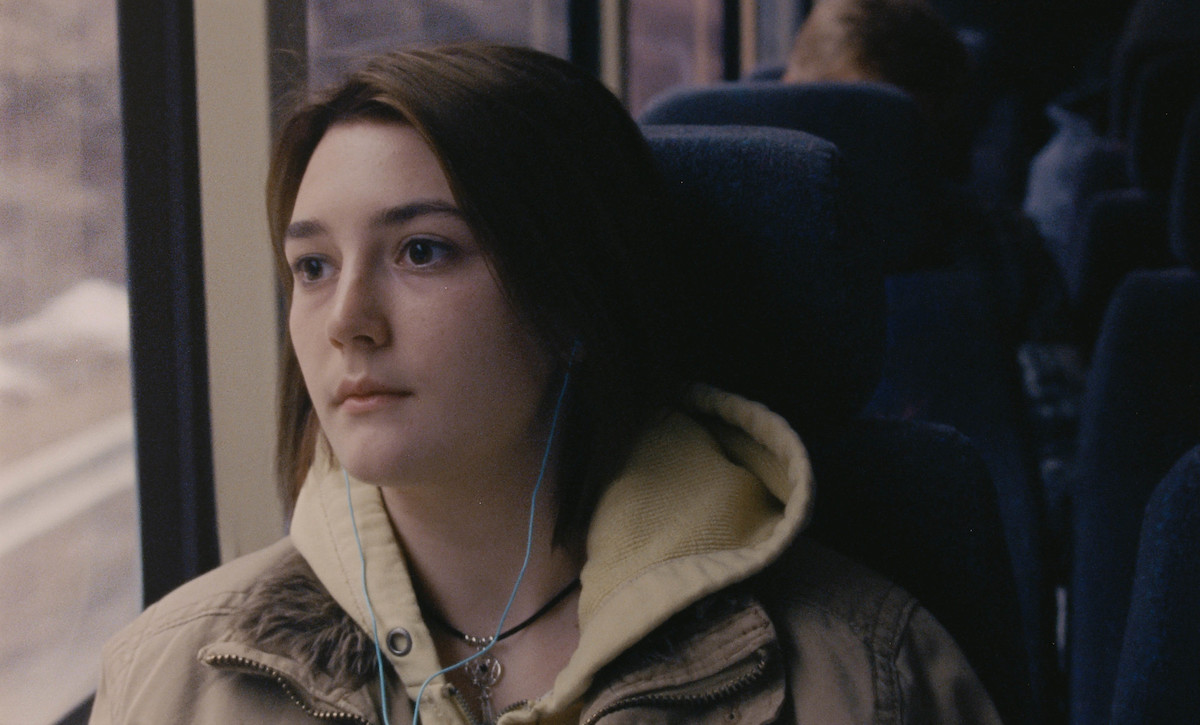
The Online Film Critics Society (OFCS) announced the nominees for its 24th annual film awards. Films nominated for Best Picture include First Cow, I’m Thinking of Ending Things, Minari, Never Rarely Sometimes Always, Nomadland, Promising Young Woman and Sound of Metal.

The Greater Western New York Film Critics Association’s announced the nominations for the third annual end-of-year Film Awards. Leading the 2020 nominations are Sound of Metal (8 nominations), Nomadland (6 nominations), and Mank, Minari, Never Rarely Sometimes Always, and The Father (5 nominations each).
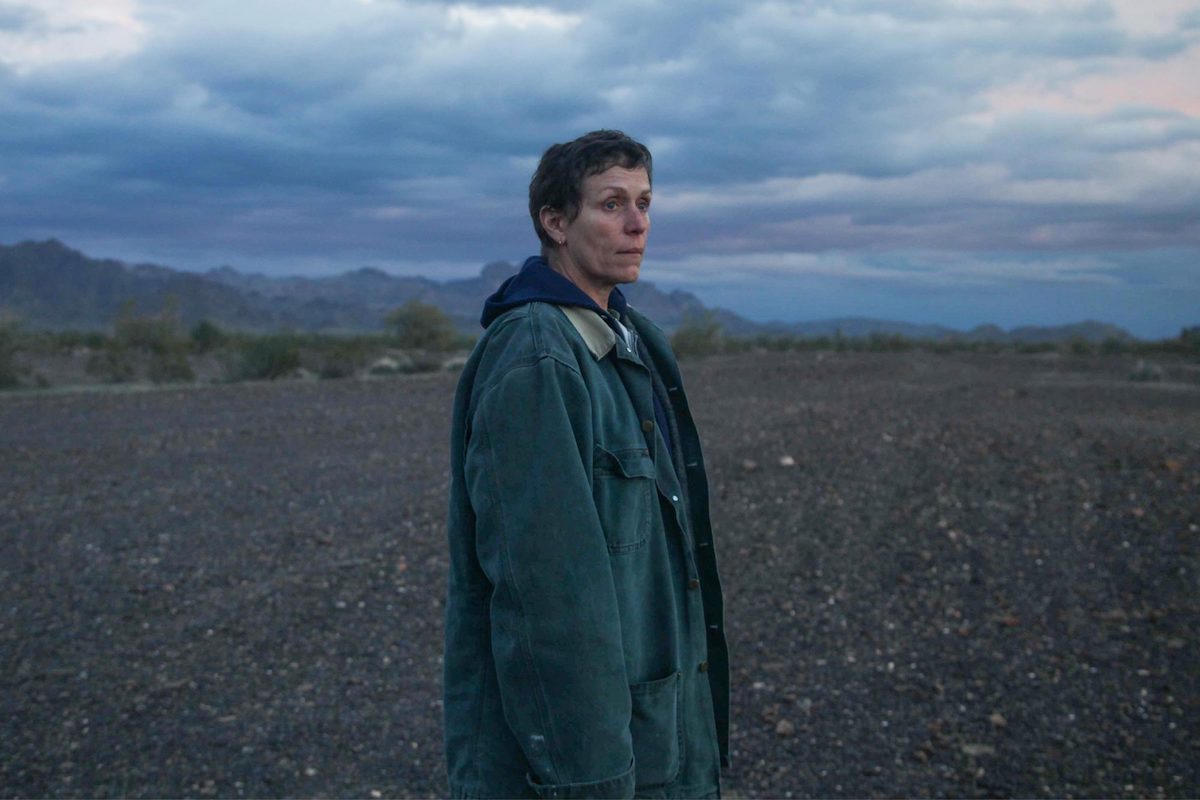
The Boston Society of Film Critics picked Nomadland as the best film of 2020, along with Best Director for Chloe Zhao and Best Cinematography for Joshua James Richards. Other 2020 awards went to the Collective for Best Documentary and La Llorona for Best Non-English Language Film.
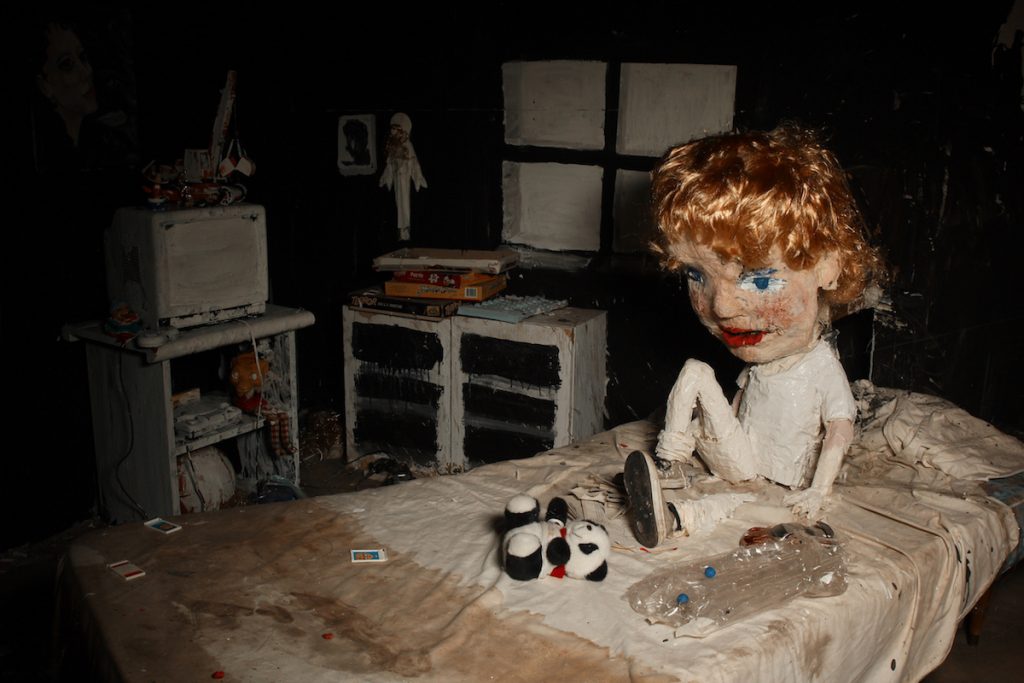
The Chilean film The Wolf House (La casa lobo) by Cristóbal León and Joaquín Cociña, winner of the Jury Prize at the Annecy International Animated Film Festival and the Cinema Tropical Award for Best First Film, opens on Friday, March 20 at Anthology Film Archives in New York City and on Friday, March 27 at the Laemmle Glendale in Los Angeles.

Throughout the 42nd Portland International Film Festival, attendees were given the opportunity to register their opinions on each of the 90 features and 55 shorts. Earning top audience accolades for Best Narrative Feature is Woman at War (Iceland/France/Ukraine) by director Benedikt Erlingsson. Our Bodies Our Doctors (United States) by director Jan Haaken took the Best Documentary Feature award. Director Lila Avilés is the winner of this year’s Best New Director award for her debut feature, The Chambermaid (Mexico). The Wolf House (Chile/Germany) director Joaquín Cociña & Christóbal León takes home the Audience Award for Best Animated Feature. Fish Out of Water (United States) by director Josh Brine is the recipient of the Best Oregon Short Film Award.

Neighboring Scenes, the annual festival of contemporary Latin American cinema organized by the Film Society of Lincoln Center and Cinema Tropical, returns for the 4th edition in New York City with 13 features and 10 shorts with seven filmmakers in person, from February 22 to 26.
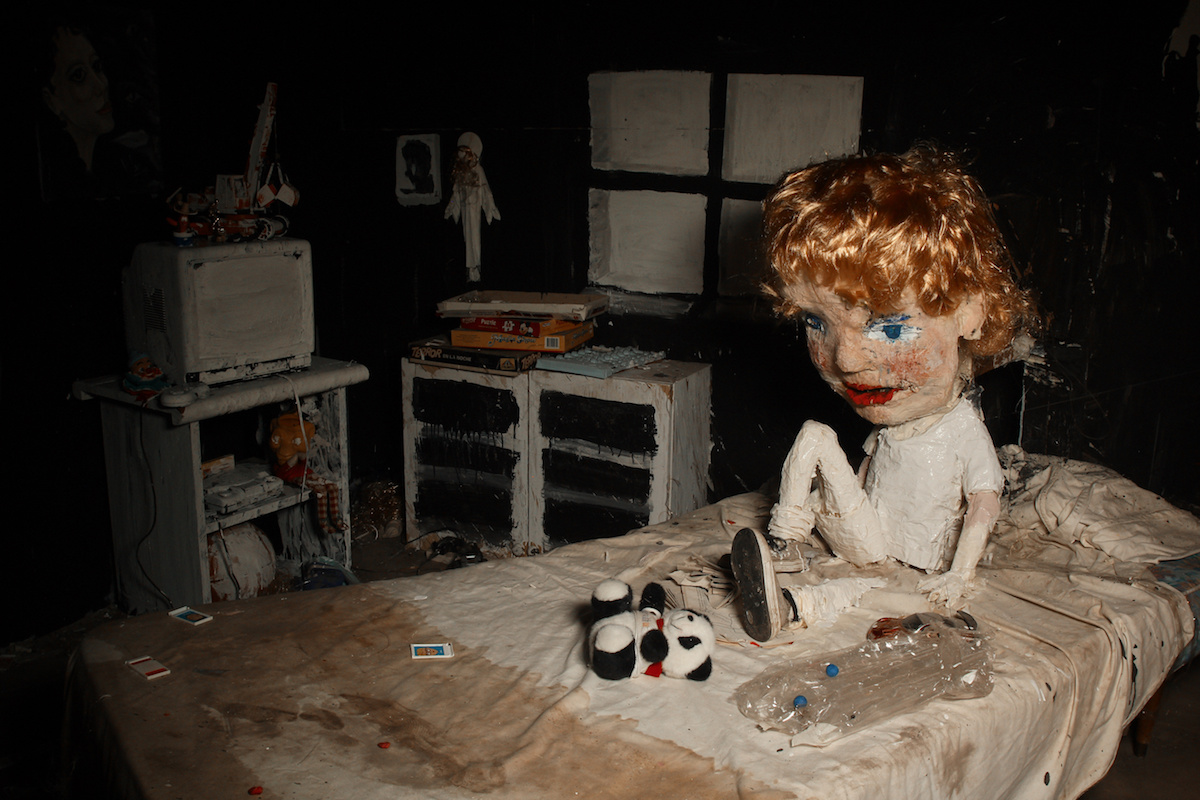 La casa lobo (The Wolf House)[/caption]
Nine new films join the Zabaltegi-Tabakalera competition at the 66th San Sebastian Film Festival’s most open competitive section bringing the number of films competing for the Zabaltegi-Tabakalera Award to 18.
Zabaltegi-Tabakalera will include the presentation of Kraben Rahu / Manta Ray, following its showing at Venice and Toronto. The first work by Phuttiphong Aroonpheng (Bangkok, 1976) brings the story of a fisherman who rescues a wounded, unconscious man from the forest and develops an unspoken connection with him.
The second feature film Di qiu zui hou de ye wan / Long Day’s Journey into Night, by Bi Gan (Kaili, China, 1989), after his award-winning debut, Kaili Blues, premiered in Un Certain Regard. The film narrates a man’s return to the town of his birth in search of a woman.
The animated stop-motion feature film La casa lobo (The Wolf House), by Cristobal León (Santiago de Chile, 1980) and Joaquín Cociña (Concepción, Chile, 1980), has been selected for international festivals including the Berlinale and Annecy, and has received several mentions and distinctions. The debut from León and Cociña tells the tale of a young girl who takes refuge in a house in Southern Chile on escaping from a Germany colony.
Sophia Antipolis, second feature from the director of Mercuriales, Virgil Vernier (Paris, 1976) premiered at Locarno in the Cineasti del Presente section. The French actor and filmmaker analyses a community in a strange territory between the Mediterranean, the forest and the mountain.
Joining the already-announced Los que desean (Those Who Desire, Elena López Riera) and 592 metroz goiti (Above 592 metres, Maddi Barber), are the short films De Natura, by Lucile Hadzihalilovic (Lyon, 1961), winner in 2004 of the New Directors award for her first film, Innocence, and who returned to San Sebastian’s Official Selection in 2015 with her second film, Evolution, winner of the Jury Special Prize; The Men Behind the Wall, by Inés Moldavsky (Buenos Aires, 1987), premiered at Berlin, about a woman living in Israel and the men she contacts in the West Bank using Tinder; and Sobre cosas que me han pasado, by José Luis Torres Leiva (Chile, 1975), his third participation in the section following El viento sabe que vuelvo a casa (The Winds Know that I’m Coming Back Home, 2016) and El sueño de Ana (2017). The short film Song for the Jungle by Jean-Gabriel Périot, shot in Calais, where thousands of migrants wait to go to England will also be screened. The first feature by Périot (Bellac, France, 1974), Una jeunesse allemande / A German Youth, opened the Panorama section of the Berlinale and was selected for Zabaltegi, and the second, Natsu no hikari – Lumières d’été / Summer Lights, competed in the New Directors section in 2016.
These additions bring the number of films competing for the Zabaltegi-Tabakalera Award to 18, including the productions Coincoin et les z’Inhumains / Coincoin and the Extra-humans (Bruno Dumont), Las hijas del fuego (The Daughters of Fire, Albertina Carri), Le livre d’image / The Image Book (Jean-Luc Godard), Da xiang xi di er zuo / An Elephant Sitting Still (Hu Bo), Belmonte (Federico Veiroj), Trote (Trot, Xacio Baño) and Teatro de guerra (Theatre of War, Lola Arias).
BERGMAN — ETT AR, ETT LIV / BERGMAN – A YEAR IN A LIFE
JANE MAGNUSSON (SWEDEN)
A documentary about Ingmar Bergman focussing on a hugely important year in his career, 1957, when he directed the masterpieces Det sjunde inseglet (The Seventh Seal) and Smultronstället (Wild Strawberries). However, more than simply looking at Bergman’s artistic facet, it addresses his private life like never before, particularly his stormy sentimental relationship with women, including several of the actresses he worked with.
DE NATURA
Short film
LUCILE HADZIHALILOVIC (ROMANIA)
Cast: Mihaela Manta, Maria Manta
De Natura is an improvised poem, a peaceful and cheerful walk of two little girls in the middle of the nature, away from the eyes of grown-ups. But then, the joy starts disappearing gradually, the reverie becomes nostalgia, while at the edge of the road, among the summer’s putrescence fruits, some faint faces appear. The cycle of life does not lessen the magic of the world, whether it is lit by the moon or by the sun.
DI QIU ZUI HOU DE YE WAN / LONG DAY’S JOURNEY INTO NIGHT
BI GAN (CHINA)
Cast: Sylvia Chang, Yongzhong Chen, Jue Huang
Luo Hongwu returns to Kaili, the city of his birth, from which he fled years back. He sets out to find the woman he loved, and has never been able to forget. She told him her name was Wan Quiwen…
KRABEN RAHU / MANTA RAY
PHUTTIPHONG AROONPHENG (THAILAND – FRANCE)
Cast: Wanlop Rungkamjad, Aphisit Hama, Rasmee Wayrana
Near a coastal village of Thailand, by the sea where thousands of Rohingya refugees have drowned, a local fisherman finds an injured man lying unconscious in the forest. He rescues the stranger, who doesn’t speak a word, offers him his friendship and names him Thongchai. But when the fisherman suddenly disappears at sea, Thongchai slowly begins to take over his friend’s life – his house, his job and his ex-wife…
LA CASA LOBO (THE WOLF HOUSE)
CRISTÓBAL LEÓN, JOAQUÍN COCIÑA (CHILE)
Young Maria seeks shelter in a big house after escaping from a sect of religious fanatics in Chile. There she is taken in by two pigs, its only inhabitants. Like in a dream, the universe of the house reacts to Maria’s feelings. The animals slowly morph into humans and the house into a nightmarish world. Inspired in the Colonia Dignidad case, La casa lobo (The Wolf House) seems to be an animated fairy tale produced by the sect leader to indoctrinate his followers.
THE MEN BEHIND THE WALL
Short film
INÉS MOLDAVSKY (ISRAEL)
Tinder. Woman seeks men. Man seeks women. Everything would be so simple if she weren’t in Israel and the guys nearby weren’t in the West Bank. Israeli filmmaker Ines Moldavsky sets out to meet up with the men that she is forbidden by law to see. She crosses the border into the West Bank to experience the personally unfamiliar physical space. The conversations revolve around virtual phone calls and physical encounters. Violence resonates in the search for a violation of boundaries.
SOBRE COSAS QUE ME HAN PASADO
Short film
JOSÉ LUIS TORRES LEIVA (CHILE)
Cast: Claudio Riveros
Sobre cosas que me han pasado is based on the book by author Marcelo Matthey, narrating his own life in a style reminiscent of school compositions. His constant strolls through streets, houses and beaches are recorded in notes of what he saw, felt or thought during these wanderings or moments, but almost only recalling the processes, the timeline in which things occur and come to mind, the trail of associations coming one after the other, like the steps of a person walking along a street. Immediate impressions, fleeting moments normally lost in time and which are captured in the images and sounds of this short film.
SONG FOR THE JUNGLE
Short film
JEAN-GABRIEL PÉRIOT (FRANCE)
Calais a few weeks before its clearing: The Jungle is a place where thousands of migrants live and wait to go to England, or just for somebody to take care of them. They wander in this abandoned place, hoping to survive our indifference.
SOPHIA ANTIPOLIS
VIRGIL VERNIER (FRANCE)
Cast: Dewi Kunetz, Sandra Poitoux, Hugues Njiba-Mukuna, Bruck, Lilith Grasmug
Sophia Antipolis: a technopole on the French Riviera, a place where dreams should come true. But fear and despair lurk beneath the surface. Under a deceitful sun, five lives map out the haunting story of a young woman: Sophia.
La casa lobo (The Wolf House)[/caption]
Nine new films join the Zabaltegi-Tabakalera competition at the 66th San Sebastian Film Festival’s most open competitive section bringing the number of films competing for the Zabaltegi-Tabakalera Award to 18.
Zabaltegi-Tabakalera will include the presentation of Kraben Rahu / Manta Ray, following its showing at Venice and Toronto. The first work by Phuttiphong Aroonpheng (Bangkok, 1976) brings the story of a fisherman who rescues a wounded, unconscious man from the forest and develops an unspoken connection with him.
The second feature film Di qiu zui hou de ye wan / Long Day’s Journey into Night, by Bi Gan (Kaili, China, 1989), after his award-winning debut, Kaili Blues, premiered in Un Certain Regard. The film narrates a man’s return to the town of his birth in search of a woman.
The animated stop-motion feature film La casa lobo (The Wolf House), by Cristobal León (Santiago de Chile, 1980) and Joaquín Cociña (Concepción, Chile, 1980), has been selected for international festivals including the Berlinale and Annecy, and has received several mentions and distinctions. The debut from León and Cociña tells the tale of a young girl who takes refuge in a house in Southern Chile on escaping from a Germany colony.
Sophia Antipolis, second feature from the director of Mercuriales, Virgil Vernier (Paris, 1976) premiered at Locarno in the Cineasti del Presente section. The French actor and filmmaker analyses a community in a strange territory between the Mediterranean, the forest and the mountain.
Joining the already-announced Los que desean (Those Who Desire, Elena López Riera) and 592 metroz goiti (Above 592 metres, Maddi Barber), are the short films De Natura, by Lucile Hadzihalilovic (Lyon, 1961), winner in 2004 of the New Directors award for her first film, Innocence, and who returned to San Sebastian’s Official Selection in 2015 with her second film, Evolution, winner of the Jury Special Prize; The Men Behind the Wall, by Inés Moldavsky (Buenos Aires, 1987), premiered at Berlin, about a woman living in Israel and the men she contacts in the West Bank using Tinder; and Sobre cosas que me han pasado, by José Luis Torres Leiva (Chile, 1975), his third participation in the section following El viento sabe que vuelvo a casa (The Winds Know that I’m Coming Back Home, 2016) and El sueño de Ana (2017). The short film Song for the Jungle by Jean-Gabriel Périot, shot in Calais, where thousands of migrants wait to go to England will also be screened. The first feature by Périot (Bellac, France, 1974), Una jeunesse allemande / A German Youth, opened the Panorama section of the Berlinale and was selected for Zabaltegi, and the second, Natsu no hikari – Lumières d’été / Summer Lights, competed in the New Directors section in 2016.
These additions bring the number of films competing for the Zabaltegi-Tabakalera Award to 18, including the productions Coincoin et les z’Inhumains / Coincoin and the Extra-humans (Bruno Dumont), Las hijas del fuego (The Daughters of Fire, Albertina Carri), Le livre d’image / The Image Book (Jean-Luc Godard), Da xiang xi di er zuo / An Elephant Sitting Still (Hu Bo), Belmonte (Federico Veiroj), Trote (Trot, Xacio Baño) and Teatro de guerra (Theatre of War, Lola Arias).
BERGMAN — ETT AR, ETT LIV / BERGMAN – A YEAR IN A LIFE
JANE MAGNUSSON (SWEDEN)
A documentary about Ingmar Bergman focussing on a hugely important year in his career, 1957, when he directed the masterpieces Det sjunde inseglet (The Seventh Seal) and Smultronstället (Wild Strawberries). However, more than simply looking at Bergman’s artistic facet, it addresses his private life like never before, particularly his stormy sentimental relationship with women, including several of the actresses he worked with.
DE NATURA
Short film
LUCILE HADZIHALILOVIC (ROMANIA)
Cast: Mihaela Manta, Maria Manta
De Natura is an improvised poem, a peaceful and cheerful walk of two little girls in the middle of the nature, away from the eyes of grown-ups. But then, the joy starts disappearing gradually, the reverie becomes nostalgia, while at the edge of the road, among the summer’s putrescence fruits, some faint faces appear. The cycle of life does not lessen the magic of the world, whether it is lit by the moon or by the sun.
DI QIU ZUI HOU DE YE WAN / LONG DAY’S JOURNEY INTO NIGHT
BI GAN (CHINA)
Cast: Sylvia Chang, Yongzhong Chen, Jue Huang
Luo Hongwu returns to Kaili, the city of his birth, from which he fled years back. He sets out to find the woman he loved, and has never been able to forget. She told him her name was Wan Quiwen…
KRABEN RAHU / MANTA RAY
PHUTTIPHONG AROONPHENG (THAILAND – FRANCE)
Cast: Wanlop Rungkamjad, Aphisit Hama, Rasmee Wayrana
Near a coastal village of Thailand, by the sea where thousands of Rohingya refugees have drowned, a local fisherman finds an injured man lying unconscious in the forest. He rescues the stranger, who doesn’t speak a word, offers him his friendship and names him Thongchai. But when the fisherman suddenly disappears at sea, Thongchai slowly begins to take over his friend’s life – his house, his job and his ex-wife…
LA CASA LOBO (THE WOLF HOUSE)
CRISTÓBAL LEÓN, JOAQUÍN COCIÑA (CHILE)
Young Maria seeks shelter in a big house after escaping from a sect of religious fanatics in Chile. There she is taken in by two pigs, its only inhabitants. Like in a dream, the universe of the house reacts to Maria’s feelings. The animals slowly morph into humans and the house into a nightmarish world. Inspired in the Colonia Dignidad case, La casa lobo (The Wolf House) seems to be an animated fairy tale produced by the sect leader to indoctrinate his followers.
THE MEN BEHIND THE WALL
Short film
INÉS MOLDAVSKY (ISRAEL)
Tinder. Woman seeks men. Man seeks women. Everything would be so simple if she weren’t in Israel and the guys nearby weren’t in the West Bank. Israeli filmmaker Ines Moldavsky sets out to meet up with the men that she is forbidden by law to see. She crosses the border into the West Bank to experience the personally unfamiliar physical space. The conversations revolve around virtual phone calls and physical encounters. Violence resonates in the search for a violation of boundaries.
SOBRE COSAS QUE ME HAN PASADO
Short film
JOSÉ LUIS TORRES LEIVA (CHILE)
Cast: Claudio Riveros
Sobre cosas que me han pasado is based on the book by author Marcelo Matthey, narrating his own life in a style reminiscent of school compositions. His constant strolls through streets, houses and beaches are recorded in notes of what he saw, felt or thought during these wanderings or moments, but almost only recalling the processes, the timeline in which things occur and come to mind, the trail of associations coming one after the other, like the steps of a person walking along a street. Immediate impressions, fleeting moments normally lost in time and which are captured in the images and sounds of this short film.
SONG FOR THE JUNGLE
Short film
JEAN-GABRIEL PÉRIOT (FRANCE)
Calais a few weeks before its clearing: The Jungle is a place where thousands of migrants live and wait to go to England, or just for somebody to take care of them. They wander in this abandoned place, hoping to survive our indifference.
SOPHIA ANTIPOLIS
VIRGIL VERNIER (FRANCE)
Cast: Dewi Kunetz, Sandra Poitoux, Hugues Njiba-Mukuna, Bruck, Lilith Grasmug
Sophia Antipolis: a technopole on the French Riviera, a place where dreams should come true. But fear and despair lurk beneath the surface. Under a deceitful sun, five lives map out the haunting story of a young woman: Sophia. OVERLORD[/caption]
Fantastic Fest returns for its 14th year with more offbeat and brilliant cinema and revealed the first waves of films featured at the upcoming festival. Fantastic Fest will present the World Premiere of the bone-chilling World War II horror-thriller OVERLORD, produced by J.J. Abrams’ Bad Robot, with director Julius Avery and stars Jovan Adepo, Wyatt Russell, Pilou Asbaek, John Magaro and Mathilde Ollivier in attendance. This exhilarating, nerve-shredding ride tells the story of American paratroopers dropped into occupied France on the eve of D-Day who discover a secret Nazi lab carrying out terrifying and bizarre supernatural experiments.
Fantastic Fest alumni return to the festival in a dual threat that promises to shock, awe and conquer audiences. First up APOSTLE sees Gareth Evans’ (THE RAID) take on the folk horror genre with Dan Stevens as a mysterious man infiltrating a sinister cult headed by Michael Sheen to rescue his sister with eye-gouging results. Then, Timo Tjahjanto pits Joe Taslim against Iko Uwais (THE RAID) in THE NIGHT COMES FOR US, an action thriller where the body count breaks new records in bone-crunching fights, venomous violence and dynamic destruction!
Fantastic Fest’s mission to bring the best of genre continues to flourish with a worldwide group of films headed to Austin for a celebration unlike any other. Leading the pack is returning comedic genius Quentin Dupieux (RUBBER) with his unexpected tale of a police interrogation during a murder investigation over the course of one night in the North American Premiere of KEEP AN EYE OUT. Director Alejandro Fadel’s cerebral Cannes shocker MURDER ME, MONSTER will also have its North American Premiere at the festival. Sensational shot-on-16mm psychotropic horror LUZ will be in Austin for its U.S. Premiere, and the thrilling Swedish independent blockbuster THE UNTHINKABLE will blast the audience with its European take on a nation-under-siege big-budget spectacle at its World Premiere.
Other Fantastic Fest highlights include a focus on global female genre filmmakers who are blasting through the silver screen with distinctive and brilliant features. From Ukraine, Marysia Nikitiuk explores the clash between old world values and young love in a visually charged fusion of genres in WHEN THE TREES FALL. Spain’s Sonia Escolano turns up the tension in her mesmerising treatise on religion, faith and belief in HOUSE OF SWEAT AND TEARS. Isabella Eklof brings her Sundance critical hit HOLIDAY to the fest all the way from Denmark. And finally, alumna Amanda Kramer makes an unforgettable mark with her distinctive debut LADYWORLD, a post-apocalyptic, daring probe into the darkest reaches of the teenage female mind.
Fantastic Fest turns its eye to South Korea and explores the Korean Quota Quickies, a period in the 1970s which saw filmmaking flourish despite stifling ideological censorship thanks to a quota system which required a strict number of local productions be made for each of the foreign films imported. Although most of these were rushed productions, clever directors used the system to their advantage to sneak strange and daring content past producers, directors and censors. Fantastic Fest is going to present two very rarely seen films from the period: BANGREUMYEON from director Kim Ki-Young, one of Park Chan-Wook’s directing idols, and QUIT YOUR LIFE from director Park Nou-Sik, who provided the literal roadmap for all Korean revenge movies to come.“To be able to highlight a period of Korean cinema that is largely unknown in North America is a brilliant opportunity to not only re-discover what shaped the modern Korean cinema we all know and love, but also a great way to tap into the sheer electric creative force running through the films as shaped by the strict authoritarian environment they were created in,” says FF Creative Director Evrim Ersoy. The festival will also bring the best of modern Korean cinema to the festival including Lee Chang-dong’s critical Cannes hit BURNING.
AGFA (the American Genre Film Archive) triumphantly returns to the festival with a trio of restorations all receiving the World Premiere treatment. ‘80s shot-on-video epic BLOOD LAKE is restored from the 1” master tapes and arrives alongside a double bill of I WAS A TEENAGE SERIAL KILLER and MARY JANE’S NOT A VIRGIN ANYMORE, celebrating the punk riot grrrl feminist cinema of Sarah Jacobson, both in brand new 2K preservations. Plus the highly-anticipated World Premiere of MANIAC, restored lovingly from the once-thought-lost 16mm negatives into 4K; with director William Lusting in attendance!
A bizarre trio of animation from across the world arrives at the festival to showcase the most daring, dangerous and unique styles. From Japan and the demented mind of Ujicha comes VIOLENCE VOYAGER, a stop-motion cornucopia of mesmerising madness. From Chile, directing duo Cristóbal León and Joaquín Cociña’s breathtaking WOLF HOUSE, featuring perhaps the most inherently sinister and chilling story in any film this year. And finally, from Czech Republic and building on the great Czech puppet animation tradition arrives Aurel Klimt’s delightfully untrue but entertaining story of the first dog in space, LAIKA.
OVERLORD[/caption]
Fantastic Fest returns for its 14th year with more offbeat and brilliant cinema and revealed the first waves of films featured at the upcoming festival. Fantastic Fest will present the World Premiere of the bone-chilling World War II horror-thriller OVERLORD, produced by J.J. Abrams’ Bad Robot, with director Julius Avery and stars Jovan Adepo, Wyatt Russell, Pilou Asbaek, John Magaro and Mathilde Ollivier in attendance. This exhilarating, nerve-shredding ride tells the story of American paratroopers dropped into occupied France on the eve of D-Day who discover a secret Nazi lab carrying out terrifying and bizarre supernatural experiments.
Fantastic Fest alumni return to the festival in a dual threat that promises to shock, awe and conquer audiences. First up APOSTLE sees Gareth Evans’ (THE RAID) take on the folk horror genre with Dan Stevens as a mysterious man infiltrating a sinister cult headed by Michael Sheen to rescue his sister with eye-gouging results. Then, Timo Tjahjanto pits Joe Taslim against Iko Uwais (THE RAID) in THE NIGHT COMES FOR US, an action thriller where the body count breaks new records in bone-crunching fights, venomous violence and dynamic destruction!
Fantastic Fest’s mission to bring the best of genre continues to flourish with a worldwide group of films headed to Austin for a celebration unlike any other. Leading the pack is returning comedic genius Quentin Dupieux (RUBBER) with his unexpected tale of a police interrogation during a murder investigation over the course of one night in the North American Premiere of KEEP AN EYE OUT. Director Alejandro Fadel’s cerebral Cannes shocker MURDER ME, MONSTER will also have its North American Premiere at the festival. Sensational shot-on-16mm psychotropic horror LUZ will be in Austin for its U.S. Premiere, and the thrilling Swedish independent blockbuster THE UNTHINKABLE will blast the audience with its European take on a nation-under-siege big-budget spectacle at its World Premiere.
Other Fantastic Fest highlights include a focus on global female genre filmmakers who are blasting through the silver screen with distinctive and brilliant features. From Ukraine, Marysia Nikitiuk explores the clash between old world values and young love in a visually charged fusion of genres in WHEN THE TREES FALL. Spain’s Sonia Escolano turns up the tension in her mesmerising treatise on religion, faith and belief in HOUSE OF SWEAT AND TEARS. Isabella Eklof brings her Sundance critical hit HOLIDAY to the fest all the way from Denmark. And finally, alumna Amanda Kramer makes an unforgettable mark with her distinctive debut LADYWORLD, a post-apocalyptic, daring probe into the darkest reaches of the teenage female mind.
Fantastic Fest turns its eye to South Korea and explores the Korean Quota Quickies, a period in the 1970s which saw filmmaking flourish despite stifling ideological censorship thanks to a quota system which required a strict number of local productions be made for each of the foreign films imported. Although most of these were rushed productions, clever directors used the system to their advantage to sneak strange and daring content past producers, directors and censors. Fantastic Fest is going to present two very rarely seen films from the period: BANGREUMYEON from director Kim Ki-Young, one of Park Chan-Wook’s directing idols, and QUIT YOUR LIFE from director Park Nou-Sik, who provided the literal roadmap for all Korean revenge movies to come.“To be able to highlight a period of Korean cinema that is largely unknown in North America is a brilliant opportunity to not only re-discover what shaped the modern Korean cinema we all know and love, but also a great way to tap into the sheer electric creative force running through the films as shaped by the strict authoritarian environment they were created in,” says FF Creative Director Evrim Ersoy. The festival will also bring the best of modern Korean cinema to the festival including Lee Chang-dong’s critical Cannes hit BURNING.
AGFA (the American Genre Film Archive) triumphantly returns to the festival with a trio of restorations all receiving the World Premiere treatment. ‘80s shot-on-video epic BLOOD LAKE is restored from the 1” master tapes and arrives alongside a double bill of I WAS A TEENAGE SERIAL KILLER and MARY JANE’S NOT A VIRGIN ANYMORE, celebrating the punk riot grrrl feminist cinema of Sarah Jacobson, both in brand new 2K preservations. Plus the highly-anticipated World Premiere of MANIAC, restored lovingly from the once-thought-lost 16mm negatives into 4K; with director William Lusting in attendance!
A bizarre trio of animation from across the world arrives at the festival to showcase the most daring, dangerous and unique styles. From Japan and the demented mind of Ujicha comes VIOLENCE VOYAGER, a stop-motion cornucopia of mesmerising madness. From Chile, directing duo Cristóbal León and Joaquín Cociña’s breathtaking WOLF HOUSE, featuring perhaps the most inherently sinister and chilling story in any film this year. And finally, from Czech Republic and building on the great Czech puppet animation tradition arrives Aurel Klimt’s delightfully untrue but entertaining story of the first dog in space, LAIKA.
 Touch Me Not by Adina Pintilie[/caption]
It’s awards time at the 68th Berlin International Film Festival, and Touch Me Not by Romanian artist and director, Adina Pintilie, won the top prize, the Golden Bear for Best Film. Touch Me Not follows a filmmaker and her protagonists in a personal research project on intimacy. The film takes us on a journey of discovery through the emotional worlds of Laura, Tómas and Christian, blurring the boundaries between fiction and reality, and providing profoundly insightful insights into their lives.
Touch Me Not by Adina Pintilie[/caption]
It’s awards time at the 68th Berlin International Film Festival, and Touch Me Not by Romanian artist and director, Adina Pintilie, won the top prize, the Golden Bear for Best Film. Touch Me Not follows a filmmaker and her protagonists in a personal research project on intimacy. The film takes us on a journey of discovery through the emotional worlds of Laura, Tómas and Christian, blurring the boundaries between fiction and reality, and providing profoundly insightful insights into their lives.
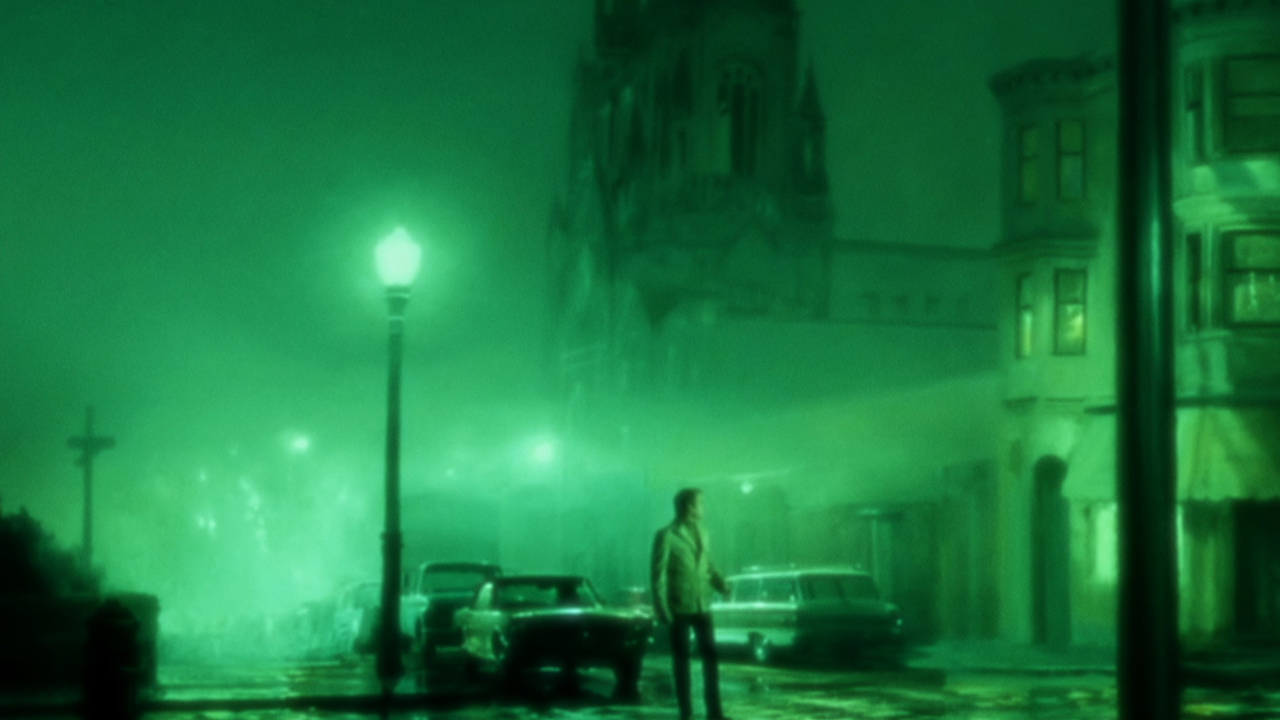 The Green Fog. Regie/directors: Guy Maddin, Evan Johnson, Galen Johnson[/caption]
The Forum program of the 2018 Berlin International Film Festival will feature 44 films, 35 of which world premieres. This year, Arsenal – Institute for Film and Video Art is putting on the Forum as part of the Berlinale for the 48th time.
21 years after his directorial debut The Day a Pig Fell into the Well, Korean director Hong Sangsoo makes a more auspicious return to the Forum. Grass is another cheerfully melancholy story about the guests at a small café whose owner loves classical music. Kim Minhee, who won the Silver Bear for Best Actress in 2017, plays a café regular who always seems to be at the table in the corner writing on her laptop. She repeatedly draws inspiration from what’s happening around her, picking up the threads of the dialogue and spinning them further and sometimes even actively intervening in conversations. Is she perhaps the author of these relationship dramas in miniature, whose stores and themes mirror one another?
French director Claire Simon is equally willing to try out new experiments in her documentary works. In her new film Premières solitudes (Young Solitude), she creates a cinematographic space for open, intimate discussion together with pupils from a school in the Paris suburbs. As they talk together about their backgrounds, parents, first loves, longings and fears for the future, ten ordinary teenagers forge ever closer bonds. It’s good to realise you’re not alone.
For his part, Ukrainian director Sergei Loznitsa is showing a film at the Berlinale for the very first time. In Den’ Pobedy (Victory Day), he observes the huge crowds that gather each year at the Soviet War Memorial in Berlin-Treptow on May 9th and records the hustle and bustle with quiet precision, as different moods come to the fore: pride, contemplation, patriotism, curiosity, the desire for recognition.
Two films from this year’s program draw on video material shot by their directors in periods of political upheaval and imbue it with new significance. At the end of the 1980s, Kristina Konrad collected opinions on the streets of Uruguay in relation to a referendum to be held on a law granting impunity to those responsible for the military dictatorship. Unas preguntas (One or Two Questions) takes a magnifying glass to the democratic process.
Around the same time, the scandal surrounding the Nazi past of former UN General Secretary and Austrian president Kurt Waldheim was making headlines worldwide. Edited together entirely from archive footage, Ruth Beckermann’s Waldheims Walzer (The Waldheim Waltz) is a documentary essay of frightening topicality.
Julien Faraut also works with material largely shot in the 80s in L’empire de la perfection (In the Realm of Perfection). Back then, tennis-obsessed director Gil de Kermadec attempted to use film as means of analysing the game. His meticulously shot footage of John McEnroe matches during the French Open forms the starting point for an ironic look at the parallels between film and the sporting world: cinema lies, sport does not.
Corneliu Porumboiu’s Fotbal Infinit (Infinite Football) takes an equally peculiar look at the world of sport, this time in provincial Romania, following a local official’s attempts to bequeath the world an improved version of the beautiful game. But does everything here really just revolve around football?
Two features from the US shine a light on intellectual escapism. Ted Fendt’s second feature Classical Period is once again shot in Philadelphia on 16mm and tells a drolly melancholy story about intellectualism and loneliness. The members of a reading group exchange cultural and literary references with such vigour that there’s little room for anything else: an attempt to leave the modern world behind or merely their own solitary existences?
Ricky D’Ambrose’s debut Notes On an Appearance may be set in Brooklyn, but unfolds in a similar milieu. Before the backdrop of the disquiet spread by the followers of a controversial philosopher, the film uses both real-life documents and smartly falsified writings to tell the story of a young man who one day disappears without warning. An eerie look at modern life with shades of dystopia.
Josephine Decker’s Madeline’s Madeline on the other hand plunges into the analogies of creativity and insanity. The young titular heroine doesn’t like spending time with her mother, played by actress Miranda July, and feels far freer when with her theatre group. But where does the border lie between personality and role?
Two features from Morocco explore gender relations. Jahilya by Hicham Lasri (the title alludes to the pre-Islamic “time of ignorance”) is a furious condemnation of the misogyny of Moroccan society and all its attendant malice.
Narjiss Nejjar’s Apatride (Stateless) gives an account of a historical event from a female perspective, an event that still dictates the relationship between Morocco and Algeria to this day. Full of beguiling images, her feature shows how a gentle, yet determined woman attempts to prevail over the border between the two countries.
It would be more than appropriate to refer to the electrifying directorial debut An Elephant Sitting Still as a new hope for Chinese cinema. But its 29-year-old director Ho Bu, who had previously made a name for himself with two novels, took his own life soon after the film was completed. This visually stunning work links together the biographies of a range of different protagonists in virtuoso fashion, narrating the course of one single, tension-filled day from dawn until dusk, painting a portrait of a society marked by selfishness in the process.
The Green Fog. Regie/directors: Guy Maddin, Evan Johnson, Galen Johnson[/caption]
The Forum program of the 2018 Berlin International Film Festival will feature 44 films, 35 of which world premieres. This year, Arsenal – Institute for Film and Video Art is putting on the Forum as part of the Berlinale for the 48th time.
21 years after his directorial debut The Day a Pig Fell into the Well, Korean director Hong Sangsoo makes a more auspicious return to the Forum. Grass is another cheerfully melancholy story about the guests at a small café whose owner loves classical music. Kim Minhee, who won the Silver Bear for Best Actress in 2017, plays a café regular who always seems to be at the table in the corner writing on her laptop. She repeatedly draws inspiration from what’s happening around her, picking up the threads of the dialogue and spinning them further and sometimes even actively intervening in conversations. Is she perhaps the author of these relationship dramas in miniature, whose stores and themes mirror one another?
French director Claire Simon is equally willing to try out new experiments in her documentary works. In her new film Premières solitudes (Young Solitude), she creates a cinematographic space for open, intimate discussion together with pupils from a school in the Paris suburbs. As they talk together about their backgrounds, parents, first loves, longings and fears for the future, ten ordinary teenagers forge ever closer bonds. It’s good to realise you’re not alone.
For his part, Ukrainian director Sergei Loznitsa is showing a film at the Berlinale for the very first time. In Den’ Pobedy (Victory Day), he observes the huge crowds that gather each year at the Soviet War Memorial in Berlin-Treptow on May 9th and records the hustle and bustle with quiet precision, as different moods come to the fore: pride, contemplation, patriotism, curiosity, the desire for recognition.
Two films from this year’s program draw on video material shot by their directors in periods of political upheaval and imbue it with new significance. At the end of the 1980s, Kristina Konrad collected opinions on the streets of Uruguay in relation to a referendum to be held on a law granting impunity to those responsible for the military dictatorship. Unas preguntas (One or Two Questions) takes a magnifying glass to the democratic process.
Around the same time, the scandal surrounding the Nazi past of former UN General Secretary and Austrian president Kurt Waldheim was making headlines worldwide. Edited together entirely from archive footage, Ruth Beckermann’s Waldheims Walzer (The Waldheim Waltz) is a documentary essay of frightening topicality.
Julien Faraut also works with material largely shot in the 80s in L’empire de la perfection (In the Realm of Perfection). Back then, tennis-obsessed director Gil de Kermadec attempted to use film as means of analysing the game. His meticulously shot footage of John McEnroe matches during the French Open forms the starting point for an ironic look at the parallels between film and the sporting world: cinema lies, sport does not.
Corneliu Porumboiu’s Fotbal Infinit (Infinite Football) takes an equally peculiar look at the world of sport, this time in provincial Romania, following a local official’s attempts to bequeath the world an improved version of the beautiful game. But does everything here really just revolve around football?
Two features from the US shine a light on intellectual escapism. Ted Fendt’s second feature Classical Period is once again shot in Philadelphia on 16mm and tells a drolly melancholy story about intellectualism and loneliness. The members of a reading group exchange cultural and literary references with such vigour that there’s little room for anything else: an attempt to leave the modern world behind or merely their own solitary existences?
Ricky D’Ambrose’s debut Notes On an Appearance may be set in Brooklyn, but unfolds in a similar milieu. Before the backdrop of the disquiet spread by the followers of a controversial philosopher, the film uses both real-life documents and smartly falsified writings to tell the story of a young man who one day disappears without warning. An eerie look at modern life with shades of dystopia.
Josephine Decker’s Madeline’s Madeline on the other hand plunges into the analogies of creativity and insanity. The young titular heroine doesn’t like spending time with her mother, played by actress Miranda July, and feels far freer when with her theatre group. But where does the border lie between personality and role?
Two features from Morocco explore gender relations. Jahilya by Hicham Lasri (the title alludes to the pre-Islamic “time of ignorance”) is a furious condemnation of the misogyny of Moroccan society and all its attendant malice.
Narjiss Nejjar’s Apatride (Stateless) gives an account of a historical event from a female perspective, an event that still dictates the relationship between Morocco and Algeria to this day. Full of beguiling images, her feature shows how a gentle, yet determined woman attempts to prevail over the border between the two countries.
It would be more than appropriate to refer to the electrifying directorial debut An Elephant Sitting Still as a new hope for Chinese cinema. But its 29-year-old director Ho Bu, who had previously made a name for himself with two novels, took his own life soon after the film was completed. This visually stunning work links together the biographies of a range of different protagonists in virtuoso fashion, narrating the course of one single, tension-filled day from dawn until dusk, painting a portrait of a society marked by selfishness in the process.