
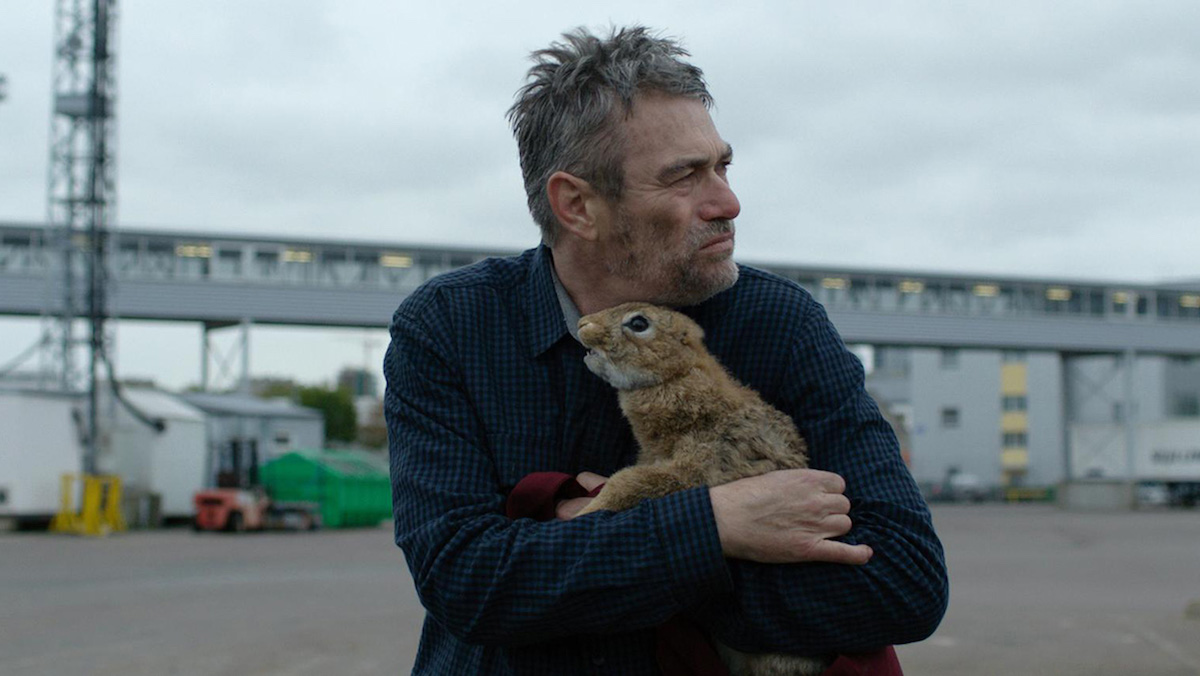
 The Zurich Film Festival will spotlight Hungary’s cinema, featuring 18 films made by a thriving new generation of Hungarian filmmakers.
Hungarian cinema has a long history of creating great masters. During the 1970s, a period of cultural thaw in the then socialist state, Hungary was regarded as one of the most important film producing countries in the world. Miklós Jancsó, Márta Mészáros and István Szabó astonished both Soviet and western audiences alike with their extraordinary political candour and their spectacular, cutting-edge film language.
Despite the efforts of some of its leading exponents, namely Bela Tarr and János Szász, the collapse of the Soviet Union signalled a downturn in the popularity of auteur film, and the country’s homegrown productions, which looked to the American model for inspiration, fell on blind eyes.
During a time in an ever more authoritarian country when democratic institutions, such as schools and universities, are closing and press freedom is becoming increasingly less free, a pleasing image is developing: filmmakers are clearly defying the situation – Hungarian cinema is back – and it’s thematically diverse, artistically radical, bursting with international esprit and enjoying remarkable success at the domestic box-office.
One of this cinema’s most striking thematic interests is the outsider, characters who are forced to assert themselves in a world where they feel alone. They do this in a whole variety of contexts, but always with resolute commitment and often with a huge pinch of humour, which can quite easily drift into the dark and absurd.
Hungary’s filmmakers are already at the highest international level when it comes to practising their craft. The renowned Budapest University of Drama and Film, and the countless international large-scale productions made in the capital, form two of Hungary’s most important talent forges. Here, they not only shape great directors, but also form their befitting cinematographers and technicians.
After celebrating success on the film world’s greatest stages, three filmmakers have become synonymous with the latest upturn in Hungarian cinema: director Kornél Mundruczó, an equally well-known force in the theatre world, astounded at Cannes in 2014 with his spectacularly directed, highly metaphoric film WHITE GOD (Un Certain Regard Award).
László Nemes’ debut-of-the-century, the Holocaust drama SON OF SAUL (2015), not only won the Jury Prize at Cannes and the Academy Award for Best Foreign Language Film, but also proved an astronomical success with Hungarian audiences after clocking up an almost unheard of 270’000 cinema entries in a country where 50’000 entries is already considered a hit. And finally, Ildikó Enyedi, whose breakthrough came in the 1990s, returned after an 18-year respite with her sensual and insidious romantic drama ON BODY AND SOUL (2017) to win a Golden Bear at the Berlinale and captivate the hearts of the Hungarian public.
These three great names of Hungarian cinema are far from standing alone: Hungary has been the recipient of many awards in recent years at the Karlovy Vary Film Festival, Central and Eastern Europe’s most important platform, including for Lili Horváth’s coming-of ager THE WEDNESDAY CHILD (2015) and Szabolcs Hajdu’s dark-humored family drama IT’S NOT THE TIME OF MY LIFE (2016), who, in a true Budapest spirit, shot the film in his own apartment with his own family members.
International multi award winning debuts such as Virág Zomborácz’s tragicomedy AFTERLIFE (2014), Gábor Reisz’s pioneering underground comedy FOR SOME INEXPLICABLE REASON (2014) and Attila Till’s black comedy KILLS ON WHEELS (2016) complete this new and remarkable image of a thriving filmmaking country.
This year’s most riveting Hungarian films further enhance the section’s program: Roland Vranik’s naturalization drama THE CITIZEN, György Kristof’s Cannes premiered debut OUT and the Berlin Panorama section’s audience favorite 1945 by Ferenc Török will screen alongside the award-winning documentary films JUDGMENT IN HUNGARY by Eszter Hajdú and DRIFTER by Gábor Hörcher. For the tenth time this year, the International Short Film Festival Winterthur has put together a comprehensive short film block comprising five films to round off the New World View section.
The Zurich Film Festival will spotlight Hungary’s cinema, featuring 18 films made by a thriving new generation of Hungarian filmmakers.
Hungarian cinema has a long history of creating great masters. During the 1970s, a period of cultural thaw in the then socialist state, Hungary was regarded as one of the most important film producing countries in the world. Miklós Jancsó, Márta Mészáros and István Szabó astonished both Soviet and western audiences alike with their extraordinary political candour and their spectacular, cutting-edge film language.
Despite the efforts of some of its leading exponents, namely Bela Tarr and János Szász, the collapse of the Soviet Union signalled a downturn in the popularity of auteur film, and the country’s homegrown productions, which looked to the American model for inspiration, fell on blind eyes.
During a time in an ever more authoritarian country when democratic institutions, such as schools and universities, are closing and press freedom is becoming increasingly less free, a pleasing image is developing: filmmakers are clearly defying the situation – Hungarian cinema is back – and it’s thematically diverse, artistically radical, bursting with international esprit and enjoying remarkable success at the domestic box-office.
One of this cinema’s most striking thematic interests is the outsider, characters who are forced to assert themselves in a world where they feel alone. They do this in a whole variety of contexts, but always with resolute commitment and often with a huge pinch of humour, which can quite easily drift into the dark and absurd.
Hungary’s filmmakers are already at the highest international level when it comes to practising their craft. The renowned Budapest University of Drama and Film, and the countless international large-scale productions made in the capital, form two of Hungary’s most important talent forges. Here, they not only shape great directors, but also form their befitting cinematographers and technicians.
After celebrating success on the film world’s greatest stages, three filmmakers have become synonymous with the latest upturn in Hungarian cinema: director Kornél Mundruczó, an equally well-known force in the theatre world, astounded at Cannes in 2014 with his spectacularly directed, highly metaphoric film WHITE GOD (Un Certain Regard Award).
László Nemes’ debut-of-the-century, the Holocaust drama SON OF SAUL (2015), not only won the Jury Prize at Cannes and the Academy Award for Best Foreign Language Film, but also proved an astronomical success with Hungarian audiences after clocking up an almost unheard of 270’000 cinema entries in a country where 50’000 entries is already considered a hit. And finally, Ildikó Enyedi, whose breakthrough came in the 1990s, returned after an 18-year respite with her sensual and insidious romantic drama ON BODY AND SOUL (2017) to win a Golden Bear at the Berlinale and captivate the hearts of the Hungarian public.
These three great names of Hungarian cinema are far from standing alone: Hungary has been the recipient of many awards in recent years at the Karlovy Vary Film Festival, Central and Eastern Europe’s most important platform, including for Lili Horváth’s coming-of ager THE WEDNESDAY CHILD (2015) and Szabolcs Hajdu’s dark-humored family drama IT’S NOT THE TIME OF MY LIFE (2016), who, in a true Budapest spirit, shot the film in his own apartment with his own family members.
International multi award winning debuts such as Virág Zomborácz’s tragicomedy AFTERLIFE (2014), Gábor Reisz’s pioneering underground comedy FOR SOME INEXPLICABLE REASON (2014) and Attila Till’s black comedy KILLS ON WHEELS (2016) complete this new and remarkable image of a thriving filmmaking country.
This year’s most riveting Hungarian films further enhance the section’s program: Roland Vranik’s naturalization drama THE CITIZEN, György Kristof’s Cannes premiered debut OUT and the Berlin Panorama section’s audience favorite 1945 by Ferenc Török will screen alongside the award-winning documentary films JUDGMENT IN HUNGARY by Eszter Hajdú and DRIFTER by Gábor Hörcher. For the tenth time this year, the International Short Film Festival Winterthur has put together a comprehensive short film block comprising five films to round off the New World View section.
White God
Visually-striking film follows a mixed-breed dog named Hagen who organizes an uprising against the government that has created a “mongrel” tax.
Directed by Kornél Mundruczó
Starring Zsófia Psotta, Sándor Zsótér, Lili Horváth, Szabolcs Thuróczy, Lili Monori, Gergely Bánki, Tamás Polgár, Károly Ascher
Genre(s) Foreign Film
-
Zurich Film Festival to Spotlight New Hungarian Cinema
The Zurich Film Festival will spotlight Hungary’s cinema, featuring 18 films made by a thriving new generation of Hungarian filmmakers.
Hungarian cinema has a long history of creating great masters. During the 1970s, a period of cultural thaw in the then socialist state, Hungary was regarded as one of the most important film producing countries in the world. Miklós Jancsó, Márta Mészáros and István Szabó astonished both Soviet and western audiences alike with their extraordinary political candour and their spectacular, cutting-edge film language.
Despite the efforts of some of its leading exponents, namely Bela Tarr and János Szász, the collapse of the Soviet Union signalled a downturn in the popularity of auteur film, and the country’s homegrown productions, which looked to the American model for inspiration, fell on blind eyes.
During a time in an ever more authoritarian country when democratic institutions, such as schools and universities, are closing and press freedom is becoming increasingly less free, a pleasing image is developing: filmmakers are clearly defying the situation – Hungarian cinema is back – and it’s thematically diverse, artistically radical, bursting with international esprit and enjoying remarkable success at the domestic box-office.
One of this cinema’s most striking thematic interests is the outsider, characters who are forced to assert themselves in a world where they feel alone. They do this in a whole variety of contexts, but always with resolute commitment and often with a huge pinch of humour, which can quite easily drift into the dark and absurd.
Hungary’s filmmakers are already at the highest international level when it comes to practising their craft. The renowned Budapest University of Drama and Film, and the countless international large-scale productions made in the capital, form two of Hungary’s most important talent forges. Here, they not only shape great directors, but also form their befitting cinematographers and technicians.
After celebrating success on the film world’s greatest stages, three filmmakers have become synonymous with the latest upturn in Hungarian cinema: director Kornél Mundruczó, an equally well-known force in the theatre world, astounded at Cannes in 2014 with his spectacularly directed, highly metaphoric film WHITE GOD (Un Certain Regard Award).
László Nemes’ debut-of-the-century, the Holocaust drama SON OF SAUL (2015), not only won the Jury Prize at Cannes and the Academy Award for Best Foreign Language Film, but also proved an astronomical success with Hungarian audiences after clocking up an almost unheard of 270’000 cinema entries in a country where 50’000 entries is already considered a hit. And finally, Ildikó Enyedi, whose breakthrough came in the 1990s, returned after an 18-year respite with her sensual and insidious romantic drama ON BODY AND SOUL (2017) to win a Golden Bear at the Berlinale and captivate the hearts of the Hungarian public.
These three great names of Hungarian cinema are far from standing alone: Hungary has been the recipient of many awards in recent years at the Karlovy Vary Film Festival, Central and Eastern Europe’s most important platform, including for Lili Horváth’s coming-of ager THE WEDNESDAY CHILD (2015) and Szabolcs Hajdu’s dark-humored family drama IT’S NOT THE TIME OF MY LIFE (2016), who, in a true Budapest spirit, shot the film in his own apartment with his own family members.
International multi award winning debuts such as Virág Zomborácz’s tragicomedy AFTERLIFE (2014), Gábor Reisz’s pioneering underground comedy FOR SOME INEXPLICABLE REASON (2014) and Attila Till’s black comedy KILLS ON WHEELS (2016) complete this new and remarkable image of a thriving filmmaking country.
This year’s most riveting Hungarian films further enhance the section’s program: Roland Vranik’s naturalization drama THE CITIZEN, György Kristof’s Cannes premiered debut OUT and the Berlin Panorama section’s audience favorite 1945 by Ferenc Török will screen alongside the award-winning documentary films JUDGMENT IN HUNGARY by Eszter Hajdú and DRIFTER by Gábor Hörcher. For the tenth time this year, the International Short Film Festival Winterthur has put together a comprehensive short film block comprising five films to round off the New World View section.
-
WHITE GOD and WALKING UNDER WATER Win Top Awards at 2015 Sarasota Film Festival
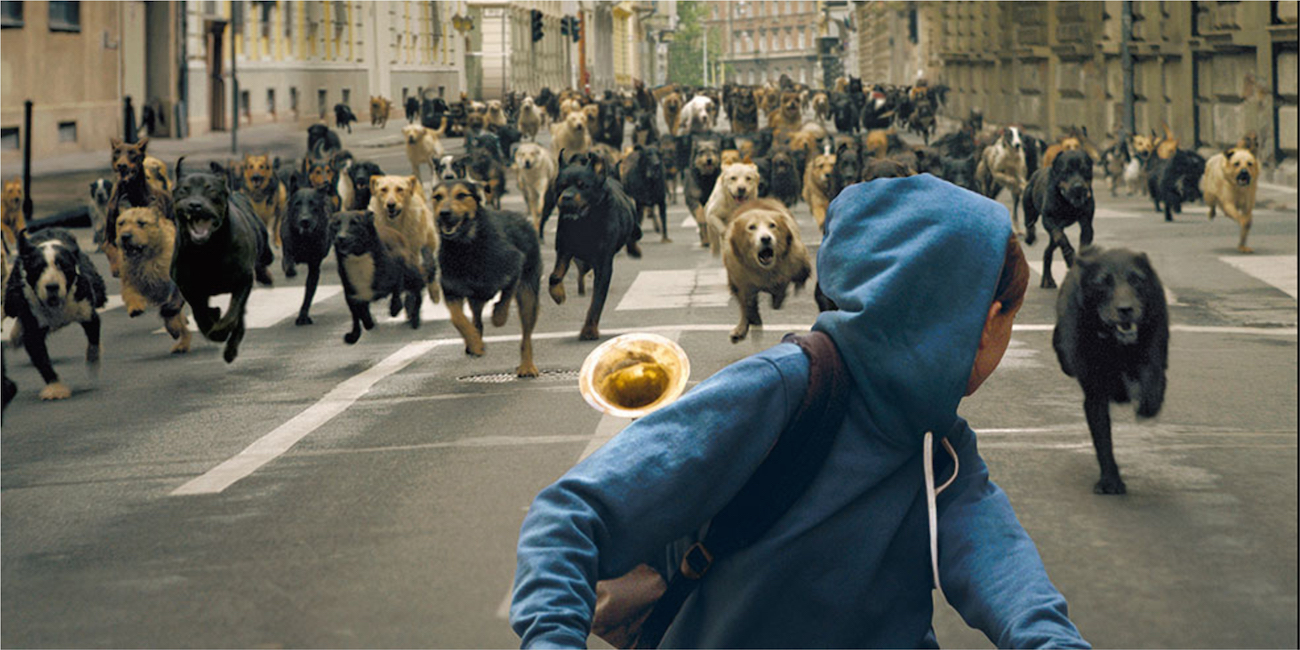
Kornel Mundruczo’s Cannes award-winning White God (pictured above) took home the Narrative Feature Jury prize at the 2015 Sarasota Film Festival.
-
Complete Film Lineup Announced for 2015 Sarasota Film Festival
The Sarasota Film Festival announced its full line-up, including its Narrative Feature Competition, Independent Visions Competition, Documentary Feature Competition, its Sundance/Gate Foundation Shorts, its Centerpiece and Spotlight films, and its Best of the Web Program for the 2015 Festival taking place April 10th Through April 19th, 2015.
-
First 9 Films Announced for 2015 New Directors/New Films
 Goodnight Mommy
 The first nine official selections are announced for the 44th New Directors/New Films (ND/NF), taking place March 18 to 29, 2015 in New York City.
Representing 11 countries from around the world, the initial nine selections are Charles Poekel’s Christmas, Again (USA), Chaitanya Tamhane’s Court (India), Rick Alverson’s Entertainment (USA), Severin Fiala and Veronika Franz’s Goodnight Mommy (Austria), Sarah Leonor’s The Great Man (France), Nadav Lapid’s The Kindergarten Teacher (Israel/France), Naji Abu Nowar’s Theeb (Jordan/Qatar/United Arab Emirates/UK), Myroslav Slaboshpytskiy’s The Tribe (Ukraine), and Kornél Mundruczó’s White God (Hungary).
Four of the first nine titles announced will screen at the Sundance Film Festival including two feature-film directorial debuts: Charles Poekel’s Christmas, Again about a heartbroken Christmas tree salesman, and Myroslav Slaboshpytskiy’s winner of the Critics’ Week grand prize at Cannes, The Tribe, which is set in a school for deaf and mute coeds, and is communicated entirely in sign language—with no subtitles. Rick Alverson’s Entertainment, a follow-up to The Comedy, follows a broken-down comedian playing a string of stand-up gigs across the Mojave Desert. Kornél Mundruczó’s White God, which won the Un Certain Regard prize in Cannes, follows the brutal struggle a little girl’s dog must go through to find his way back to her after he is abandoned in the city.
Winner of numerous prizes at film festivals, including the Luigi De Laurentiis Award and the Venice Horizons Award at the Venice Film Festival, Chaitanya Tamhane’s Court is a devastating exploration of a kangaroo court process railroading an aging folk singer. Another multiple prizewinner is Naji Abu Nowar’s Theeb. Winner of the Jury Prize for Best Cinematography and Art Direction at the Cairo International Film Festival, Best Directorial Debut at Camerimage, and the Venice Horizons Award for Best Director at the Venice Film Festival, the film is a coming-of-age story of a young Bedouin boy as he guides a British officer through harsh territory.
Nadav Lapid follows his impressive first feature, Policeman (which was a New York Film festival selection and subsequently screened at FSLC’s Film Center), with The Kindergarten Teacher. A winner at the Jerusalem Film Festival and Seville European Film Festival, the film is about a teacher who becomes overly protective of a young prodigy in her class. And Sarah Leonor follows her award-winning feature debut, A Real Life, with The Great Man, about an immigrant in the French Legionnaire’s whose actions lead to an ambush on his unit. Severin Fiala and Veronika Franz’s Goodnight Mommy won the FIPRESCI Prize at the Thessaloniki Film Festival. The thriller focuses on a pair of 9-year-old twins who believe their mother, recently returned from facial reconstruction surgery, is actually a stranger.
The nine official selections include:
Christmas, Again
Charles Poekel, USA, 2014, 79m
A forlorn Noel (Kentucker Audley) pulls long, cold nights as a Christmas-tree vendor in Greenpoint, Brooklyn. As obnoxious, indifferent, or downright bizarre customers come and go, doing little to restore Noel’s faith in humanity, only the flirtatious innuendos of one woman and the drunken pleas of another seem to lift him out of his funk. Writer-director Charles Poekel has transformed three years of “fieldwork” peddling evergreens on the streets of New York into a sharply observed and wistfully comic portrait of urban loneliness and companionship. While Christmas, Again heralds a promising newcomer in Poekel, it also confirms several great young talents of American indie cinema: actors Audley and Hannah Gross, editor Robert Greene, and cinematographer Sean Price Williams.Court
Chaitanya Tamhane, India, 2014, 116m
Marathi, Gujarati, and Hindi with English subtitles
Winner of top prizes at the Venice and Mumbai Film Festivals, Chaitanya Tamhane’s Court is a quietly devastating, absurdist portrait of injustice, caste prejudice, and venal politics in contemporary India. An elderly folk singer and grassroots organizer, dubbed the “people’s poet,” is arrested on a trumped-up charge of inciting a sewage worker to commit suicide. His trial is a ridiculous and harrowing display of institutional incompetence, with endless procedural delays, coached witnesses for the prosecution, and obsessive privileging of arcane colonial law over reason and mercy. What truly distinguishes Court, however, is Tamhane’s brilliant ensemble cast of professional and nonprofessional actors; his affecting mixture of comedy and tragedy; and his naturalist approach to his characters and to Indian society as a whole, rich with complexity and contradiction.Entertainment
Rick Alverson, USA, 2015, 110m
Following up his 2013 breakthrough, The Comedy, director Rick Alverson reteams with that film’s star, Tim Heidecker (here serving as co-writer), for a hallucinatory journey to the end of the night. Or is it the end of comedy? Cult anti-comedian Gregg Turkington (better known as Neil Hamburger) stars as a washed-up comic on tour with a teenage mime (Tye Sheridan), working his way across the Mojave Desert to a possible reconciliation with the estranged daughter who never returns his interminable voicemails. Our sort-of hero’s stand-up set is an abrasive assault on audiences, so radically tone-deaf as to be mesmerizing. Alverson uses a slew of surrealist flourishes and poetic non- sequiturs to fashion a one-of-a-kind odyssey that is by turns mortifying and beautiful, bewildering and absorbing. John C. Reilly, Michael Cera, Amy Seimetz, Dean Stockwell, and Heidecker are among the performers who so memorably populate the strange world of Entertainment, a film that utterly scrambles our sense of what is funny—and not funny.Goodnight Mommy
Severin Fiala & Veronika Franz, Austria, 2014, 100m
German with English subtitles
The dread of parental abandonment is trumped by the terror of menacing spawn in Severin Fiala and Veronika Franz’s exquisite, cerebral horror-thriller. Lukas and Elias are 9-year-old twins, alone with their fantastical playtime adventure-worlds in a countryside home, until their mother comes home from facial-reconstructive surgery. Or is she their mother? Her head entirely bandaged, and her personality radically changed, the boys begin to wonder what this stranger has done to their “real” mother. They set out to uncover the truth, by any means their childish minds can conjure. As with most fairy tales, it turns out that children can imagine and endure things that cause more mature minds and bodies to wither from fear. Produced by renowned auteur, and frequent script collaborator with Franz, Ulrich Seidl, Goodnight Mommy is an intelligent and engaging step forward for Austrian cinema. Fans of Michael Haneke’s work will find much to appreciate as well. Ultimately, this is a heartbreaking tale of love and loss wrapped in one of the scariest films of the year. A RADiUS-TWC release.The Great Man
Sarah Leonor, France, 2014, 107m
French with English subtitles
When we first meet Markov (Surho Sugaipov), he and fellow French Legionnaire Hamilton (Jérémie Renier) are tracking a wild leopard in a desert war zone, at the end of their posting in Afghanistan. An ambush results in an abdication of duty—despite it stemming from an act of fidelity. We learn that Markov had joined the Legion as a foreign refugee, hoping to gain his French citizenship and provide a better life for his young son. Ultimately, the complications of immigration and legal status seem petty when compared with the primal urge to do right by those who have committed their lives to saving others’. The intrinsic struggle between paternal/fraternal responsibility and unfettered mobility takes on a deeply moving dimension in Sarah Leonor’s alternately heartbreaking and empowering sophomore feature.The Kindergarten Teacher
Nadav Lapid, Israel/France, 2014, 119m
Hebrew with English subtitles
Nadav Lapid’s follow-up to his explosive debut, Policeman, is a brilliant, shape-shifting provocation and a coolly ambiguous film of ideas. Nira (Sarit Larry), a fortysomething wife, mother, and teacher in Tel Aviv, becomes obsessed with one of her charges, Yoav (Avi Shnaidman), a 5-year-old with a knack for declaiming perfectly formed verses on love and loss that would seem far beyond his scope. The impassive prodigy’s inexplicable bursts of poetry—Lapid’s own childhood compositions—awaken in Nira a protective impulse, but as her actions grow more extreme, the question of what exactly she’s protecting remains very much open. The Kindergarten Teacher shares the despair of its heroine, all too aware that she lives in an age and culture that has little use for poetry. But there is something perversely romantic in the film’s underlying conviction: in an ugly world, beauty still has the power to drive us mad.Theeb
Naji Abu Nowar, Jordan/Qatar/United Arab Emirates/UK, 2014, 100m
Arabic with English subtitles
A quietly gripping adventure tale that’s perhaps intended as a corrective to the romantic grandeur of Lawrence of Arabia, Naji Abu Nowar’s Theeb is classic storytelling at its finest. The year is 1916, the setting is a desert province on the edge of the Ottoman Empire, and it’s a time of war. Seeking help, a British Army officer and his translator arrive at an encampment of Bedouins, who, according to their traditions, provide hospitality and assistance in the form of a guide. The guide’s younger brother Theeb (Jacir Eid) follows and then tags along with the three grown-ups, who soon find themselves threatened by hostiles. As a boy who learns how to survive and become a man amidst the violent and mysterious agendas of adults, Eid carries this concise and unsentimental film on his young shoulders with amazing assurance.The Tribe
Myroslav Slaboshpytskiy, Ukraine, 2014, 132m
A silent film with a difference, this entirely unprecedented tour de force was one of the must-see flash points at last year’s Cannes Film Festival. Why? Because its entire cast is deaf and mute and the “dialogue” is strictly sign language—without subtitles. Set at a spartan boarding school for deaf and mute coeds, The Tribe follows new arrival Sergey (Grigory Fesenko), who’s immediately initiated into the institution’s hard-as-nails culture with a beating before ascending the food chain from put-upon outsider to foot soldier in a criminal gang that deals drugs and pimps out their fellow students. With his implacable camerawork and stark, single-minded approach (worthy of influential English director Alan Clarke), first-time feature director Myroslav Slaboshpytskiy overcomes what may sound like impossible obstacles to tell a grim but uncannily immersive story of exploitation and brutality in a dog-eat-dog world, delivering a high-school movie you won’t forget. A Drafthouse Films release.White God
Kornél Mundruczó, Hungary, 2014, 119m
Hungarian with English subtitles
Thirteen-year old Lili and her mixed-breed dog Hagen are inseparable. When officials attempt to tax the mutt (a law that didn’t pass in Hungary, but was actually attempted), Lili’s father dumps Hagen on the street. While Lili tries in vain to find her dog, he goes through numerous trials and tribulations, along with other cast-off pets that wander alleyways looking for food and avoiding the pound. Hagen is taken in by some no-goods and trained to be a fighter, losing his domestic instincts in the process. When Hagen finally escapes with an army of canines in tow, they set out to take their revenge on the humans who wronged them, taking no prisoners. Kornél Mundruczó’s shocking fable, which won the Un Certain Regard prize in Cannes, captivatingly weaves together elements of melodrama, adventure, and a bit of horror in order to pose fundamental questions of equality, class, and humanity. A Magnolia Pictures release.https://www.youtube.com/watch?v=aGFyFvrPVlU