
 2018 CPH-DOX Awards. The winner of DOX:Award: The Raft[/caption]
‘The Raft’ by the Swedish director Marcus Lindeen, which tells the story of one of the strangest social experiments of all times ,and told by those who took part in it, took the top prize – the Dox:Award 2018 at the 15th edition of CPH:DOX – Copenhagen International Documentary Film Festival. The film held its world premiere at as CPH:DOX.
In 1973, five men and six women sailed across the Atlantic on a raft. A social experiment and a scientific study of violence, aggression, sex and group behaviour, conducted by a radical Mexican anthropologist. Everything was filmed and documented in a diary. But theory is one thing, practice is another. And without wanting to reveal too much, the experiment didn’t exactly work out as planned. Over 40 years later, Swedish artist and filmmaker Marcus Lindeen brings the crew together again for the first time since the experiment, on a faithful copy of the raft in a film studio, to look back at the three intense months they spent together, isolated and without privacy, on ‘The Sex Raft’, as the press called it.
https://www.youtube.com/watch?v=x-diO4_Y0i8
The jury gave a Special Mention to ‘América’, a charming, Mexican adventure about three mismatched brothers and their 93-year-old grandmother in a film about family ties.
‘Laila at the Bridge’ by Elizabeth Mirzaei and Gulistan Mirzaei, which had its world premiere at CPH:DOX won the F:ACT Award – dedicated to auteur filmmaking in the field between research-based, investigative journalism, activism and documentary cinema.
A powerful film about a woman who is willpower in its purest form. Day after day, the charismatic and strong-willed woman puts on her small ballerina shoes and colourful scarves and heads under the bridge to take them to her private rehab centre, where the aim is to get them out of their addiction with ice-cold baths, communal prayers and motherly reprimands. It is not a miracle factory. Many experience a relapse, and Laila has to struggle with constant financial problems. When the Taliban’s arrival in the city scares customers away from the restaurant she is running to finance her centres, things start looking bleak. But Laila threatens corrupt ministers in their marble offices, shoots mafia thugs in her bedroom with a shotgun and with equal measures of care and indignation has a serious word with the opium-addled men under the bridge.
The winner of the New:Vision Award is the film ‘Wild Relatives’ by Jumana Manna. Jumana Manna’s original and politically sensitive new work draws lines between three distant spots on the world map: Syria, Lebanon and Svalbard. The lines chart a route and a complex network of relationships. ‘Wild Relatives’ exposes the exchange of ecological currency between two of the world’s grain banks, which are the archives of the smallest basic ingredient of agriculture: Seeds. Biodiversity, conflicts and international politics are parts of a game with perspectives reaching far out into the most distant future, and form the the basis for a humorous and thought-provoking conversation between a priest and a scientist far out in the middle of nowhere.
The jury gave a Special Mention to ‘Translations’ by Tinne Zenner, a critical and graceful 16mm film in which the vistas of Greenland create a space for free thinking.
The winner of the Nordic:Dox Award – recognizing the best and brightest in cinema from the Nordic countries – is the film ‘Lykkelænder’ by the Danish director Lasse Lau. The film held its world premiere at the festival.
The relationship between Greenland and Denmark is full of fantasy and myths. And these are exactly what Danish artist Lasse Lau reflects upon – and in turn documents – in his first feature-length film. But how do you give a form to the Greenlandic experience when you are an outsider yourself? Lau has created a sensitive film about authenticity and recreation by letting both elements become a part of the work, together with his performers.
The jury gave a Special Mention to the Norwegian film ‘The Night’ by Steffan Strandberg, a beautifully animated and bittersweet film about two brothers and their upbringing with an alcoholic mother and musician father.
The winner of the Next:Wave Award given to emerging filmmakers, is the film ‘Beautiful Things’ by the Italian directors Giorgio Ferrero & Federico Biasin. If documentary science fiction was a genre – and it is now! – then ‘Beautiful Things’ is the film that locates the future in the midst of our present age. A machine engineer on a supertanker and a scientist specialising in mathematics and audio studies are two of the human cogs in a bulimic cycle of (over)production and (over)consumption of the material objects that surround us – a cycle we never even think about. A chain with many segments, which the filmmaker duo of Giorgio Ferrero and Federico Biasin brings together in an accomplished audiovisual study of our times, but with room for the human quirks that constitute the grit in the machinery.
The jury gave a Special Mention to Minding the Gap (Bing Liu, United States), where three young friends grow up, become young men and make life choices in front of rolling cameras, and Conventional Sins (Anat Yuta Zuria & Shira-Clara Winther, Israel), a Docu-noir about sexual abuse in the ultra-orthodox environment in Jerusalem.
The winner of the Politiken Audience Award is ‘False Confessions’ by the director Katrine Philp, a legal thriller about a pro-bono idealist’s work for justice in a cynical justice system. The film held its world premiere at the festival.
During an interrogation in the United States, it is both legal and commonplace to use special psychological techniques to make the suspect confess. In a closed room, coached interrogators can not only get anyone to confess to anything – they can also make innocent people believe that they have actually committed crimes such as murder and child assault. In New York, the Danish-born defence attorney Jane Fisher-Byrialsen is working to prevent false confessions, so that less people end up in prison for crimes they have not committed.
image via Facebook – The winner of DOX:Award: “The Raft” Photo by Inger Rønnenfelt
2018 CPH-DOX Awards. The winner of DOX:Award: The Raft[/caption]
‘The Raft’ by the Swedish director Marcus Lindeen, which tells the story of one of the strangest social experiments of all times ,and told by those who took part in it, took the top prize – the Dox:Award 2018 at the 15th edition of CPH:DOX – Copenhagen International Documentary Film Festival. The film held its world premiere at as CPH:DOX.
In 1973, five men and six women sailed across the Atlantic on a raft. A social experiment and a scientific study of violence, aggression, sex and group behaviour, conducted by a radical Mexican anthropologist. Everything was filmed and documented in a diary. But theory is one thing, practice is another. And without wanting to reveal too much, the experiment didn’t exactly work out as planned. Over 40 years later, Swedish artist and filmmaker Marcus Lindeen brings the crew together again for the first time since the experiment, on a faithful copy of the raft in a film studio, to look back at the three intense months they spent together, isolated and without privacy, on ‘The Sex Raft’, as the press called it.
https://www.youtube.com/watch?v=x-diO4_Y0i8
The jury gave a Special Mention to ‘América’, a charming, Mexican adventure about three mismatched brothers and their 93-year-old grandmother in a film about family ties.
‘Laila at the Bridge’ by Elizabeth Mirzaei and Gulistan Mirzaei, which had its world premiere at CPH:DOX won the F:ACT Award – dedicated to auteur filmmaking in the field between research-based, investigative journalism, activism and documentary cinema.
A powerful film about a woman who is willpower in its purest form. Day after day, the charismatic and strong-willed woman puts on her small ballerina shoes and colourful scarves and heads under the bridge to take them to her private rehab centre, where the aim is to get them out of their addiction with ice-cold baths, communal prayers and motherly reprimands. It is not a miracle factory. Many experience a relapse, and Laila has to struggle with constant financial problems. When the Taliban’s arrival in the city scares customers away from the restaurant she is running to finance her centres, things start looking bleak. But Laila threatens corrupt ministers in their marble offices, shoots mafia thugs in her bedroom with a shotgun and with equal measures of care and indignation has a serious word with the opium-addled men under the bridge.
The winner of the New:Vision Award is the film ‘Wild Relatives’ by Jumana Manna. Jumana Manna’s original and politically sensitive new work draws lines between three distant spots on the world map: Syria, Lebanon and Svalbard. The lines chart a route and a complex network of relationships. ‘Wild Relatives’ exposes the exchange of ecological currency between two of the world’s grain banks, which are the archives of the smallest basic ingredient of agriculture: Seeds. Biodiversity, conflicts and international politics are parts of a game with perspectives reaching far out into the most distant future, and form the the basis for a humorous and thought-provoking conversation between a priest and a scientist far out in the middle of nowhere.
The jury gave a Special Mention to ‘Translations’ by Tinne Zenner, a critical and graceful 16mm film in which the vistas of Greenland create a space for free thinking.
The winner of the Nordic:Dox Award – recognizing the best and brightest in cinema from the Nordic countries – is the film ‘Lykkelænder’ by the Danish director Lasse Lau. The film held its world premiere at the festival.
The relationship between Greenland and Denmark is full of fantasy and myths. And these are exactly what Danish artist Lasse Lau reflects upon – and in turn documents – in his first feature-length film. But how do you give a form to the Greenlandic experience when you are an outsider yourself? Lau has created a sensitive film about authenticity and recreation by letting both elements become a part of the work, together with his performers.
The jury gave a Special Mention to the Norwegian film ‘The Night’ by Steffan Strandberg, a beautifully animated and bittersweet film about two brothers and their upbringing with an alcoholic mother and musician father.
The winner of the Next:Wave Award given to emerging filmmakers, is the film ‘Beautiful Things’ by the Italian directors Giorgio Ferrero & Federico Biasin. If documentary science fiction was a genre – and it is now! – then ‘Beautiful Things’ is the film that locates the future in the midst of our present age. A machine engineer on a supertanker and a scientist specialising in mathematics and audio studies are two of the human cogs in a bulimic cycle of (over)production and (over)consumption of the material objects that surround us – a cycle we never even think about. A chain with many segments, which the filmmaker duo of Giorgio Ferrero and Federico Biasin brings together in an accomplished audiovisual study of our times, but with room for the human quirks that constitute the grit in the machinery.
The jury gave a Special Mention to Minding the Gap (Bing Liu, United States), where three young friends grow up, become young men and make life choices in front of rolling cameras, and Conventional Sins (Anat Yuta Zuria & Shira-Clara Winther, Israel), a Docu-noir about sexual abuse in the ultra-orthodox environment in Jerusalem.
The winner of the Politiken Audience Award is ‘False Confessions’ by the director Katrine Philp, a legal thriller about a pro-bono idealist’s work for justice in a cynical justice system. The film held its world premiere at the festival.
During an interrogation in the United States, it is both legal and commonplace to use special psychological techniques to make the suspect confess. In a closed room, coached interrogators can not only get anyone to confess to anything – they can also make innocent people believe that they have actually committed crimes such as murder and child assault. In New York, the Danish-born defence attorney Jane Fisher-Byrialsen is working to prevent false confessions, so that less people end up in prison for crimes they have not committed.
image via Facebook – The winner of DOX:Award: “The Raft” Photo by Inger RønnenfeltWild Relatives
-
‘The Raft’ ‘Laila at the Bridge’ ‘Beautiful Things’ and More Win at CPH:DOX 2018
[caption id="attachment_27775" align="aligncenter" width="960"] 2018 CPH-DOX Awards. The winner of DOX:Award: The Raft[/caption]
‘The Raft’ by the Swedish director Marcus Lindeen, which tells the story of one of the strangest social experiments of all times ,and told by those who took part in it, took the top prize – the Dox:Award 2018 at the 15th edition of CPH:DOX – Copenhagen International Documentary Film Festival. The film held its world premiere at as CPH:DOX.
In 1973, five men and six women sailed across the Atlantic on a raft. A social experiment and a scientific study of violence, aggression, sex and group behaviour, conducted by a radical Mexican anthropologist. Everything was filmed and documented in a diary. But theory is one thing, practice is another. And without wanting to reveal too much, the experiment didn’t exactly work out as planned. Over 40 years later, Swedish artist and filmmaker Marcus Lindeen brings the crew together again for the first time since the experiment, on a faithful copy of the raft in a film studio, to look back at the three intense months they spent together, isolated and without privacy, on ‘The Sex Raft’, as the press called it.
https://www.youtube.com/watch?v=x-diO4_Y0i8
The jury gave a Special Mention to ‘América’, a charming, Mexican adventure about three mismatched brothers and their 93-year-old grandmother in a film about family ties.
‘Laila at the Bridge’ by Elizabeth Mirzaei and Gulistan Mirzaei, which had its world premiere at CPH:DOX won the F:ACT Award – dedicated to auteur filmmaking in the field between research-based, investigative journalism, activism and documentary cinema.
A powerful film about a woman who is willpower in its purest form. Day after day, the charismatic and strong-willed woman puts on her small ballerina shoes and colourful scarves and heads under the bridge to take them to her private rehab centre, where the aim is to get them out of their addiction with ice-cold baths, communal prayers and motherly reprimands. It is not a miracle factory. Many experience a relapse, and Laila has to struggle with constant financial problems. When the Taliban’s arrival in the city scares customers away from the restaurant she is running to finance her centres, things start looking bleak. But Laila threatens corrupt ministers in their marble offices, shoots mafia thugs in her bedroom with a shotgun and with equal measures of care and indignation has a serious word with the opium-addled men under the bridge.
The winner of the New:Vision Award is the film ‘Wild Relatives’ by Jumana Manna. Jumana Manna’s original and politically sensitive new work draws lines between three distant spots on the world map: Syria, Lebanon and Svalbard. The lines chart a route and a complex network of relationships. ‘Wild Relatives’ exposes the exchange of ecological currency between two of the world’s grain banks, which are the archives of the smallest basic ingredient of agriculture: Seeds. Biodiversity, conflicts and international politics are parts of a game with perspectives reaching far out into the most distant future, and form the the basis for a humorous and thought-provoking conversation between a priest and a scientist far out in the middle of nowhere.
The jury gave a Special Mention to ‘Translations’ by Tinne Zenner, a critical and graceful 16mm film in which the vistas of Greenland create a space for free thinking.
The winner of the Nordic:Dox Award – recognizing the best and brightest in cinema from the Nordic countries – is the film ‘Lykkelænder’ by the Danish director Lasse Lau. The film held its world premiere at the festival.
The relationship between Greenland and Denmark is full of fantasy and myths. And these are exactly what Danish artist Lasse Lau reflects upon – and in turn documents – in his first feature-length film. But how do you give a form to the Greenlandic experience when you are an outsider yourself? Lau has created a sensitive film about authenticity and recreation by letting both elements become a part of the work, together with his performers.
The jury gave a Special Mention to the Norwegian film ‘The Night’ by Steffan Strandberg, a beautifully animated and bittersweet film about two brothers and their upbringing with an alcoholic mother and musician father.
The winner of the Next:Wave Award given to emerging filmmakers, is the film ‘Beautiful Things’ by the Italian directors Giorgio Ferrero & Federico Biasin. If documentary science fiction was a genre – and it is now! – then ‘Beautiful Things’ is the film that locates the future in the midst of our present age. A machine engineer on a supertanker and a scientist specialising in mathematics and audio studies are two of the human cogs in a bulimic cycle of (over)production and (over)consumption of the material objects that surround us – a cycle we never even think about. A chain with many segments, which the filmmaker duo of Giorgio Ferrero and Federico Biasin brings together in an accomplished audiovisual study of our times, but with room for the human quirks that constitute the grit in the machinery.
The jury gave a Special Mention to Minding the Gap (Bing Liu, United States), where three young friends grow up, become young men and make life choices in front of rolling cameras, and Conventional Sins (Anat Yuta Zuria & Shira-Clara Winther, Israel), a Docu-noir about sexual abuse in the ultra-orthodox environment in Jerusalem.
The winner of the Politiken Audience Award is ‘False Confessions’ by the director Katrine Philp, a legal thriller about a pro-bono idealist’s work for justice in a cynical justice system. The film held its world premiere at the festival.
During an interrogation in the United States, it is both legal and commonplace to use special psychological techniques to make the suspect confess. In a closed room, coached interrogators can not only get anyone to confess to anything – they can also make innocent people believe that they have actually committed crimes such as murder and child assault. In New York, the Danish-born defence attorney Jane Fisher-Byrialsen is working to prevent false confessions, so that less people end up in prison for crimes they have not committed.
image via Facebook – The winner of DOX:Award: “The Raft” Photo by Inger Rønnenfelt
-
FSLC Announces 5th Art of the Real Lineup, Opens with Premiere of ‘John McEnroe: In the Realm of Perfection’

John McEnroe: In the Realm of Perfection The Film Society of Lincoln Center today announced the fifth edition of Art of the Real, an essential showcase for the most vital and innovative voices in nonfiction and hybrid filmmaking, taking place April 26 to May 6. The 2018 lineup features a host of brilliant new works and exciting artist spotlights, including one world premiere, eight North American premieres, and seven U.S. premieres, with many of the filmmakers in person.
-
Berlinale 2018: Guy Maddin’s “The Green Fog” Among 44 Films Featured in Forum 2018 Lineup
[caption id="attachment_26603" align="aligncenter" width="1280"]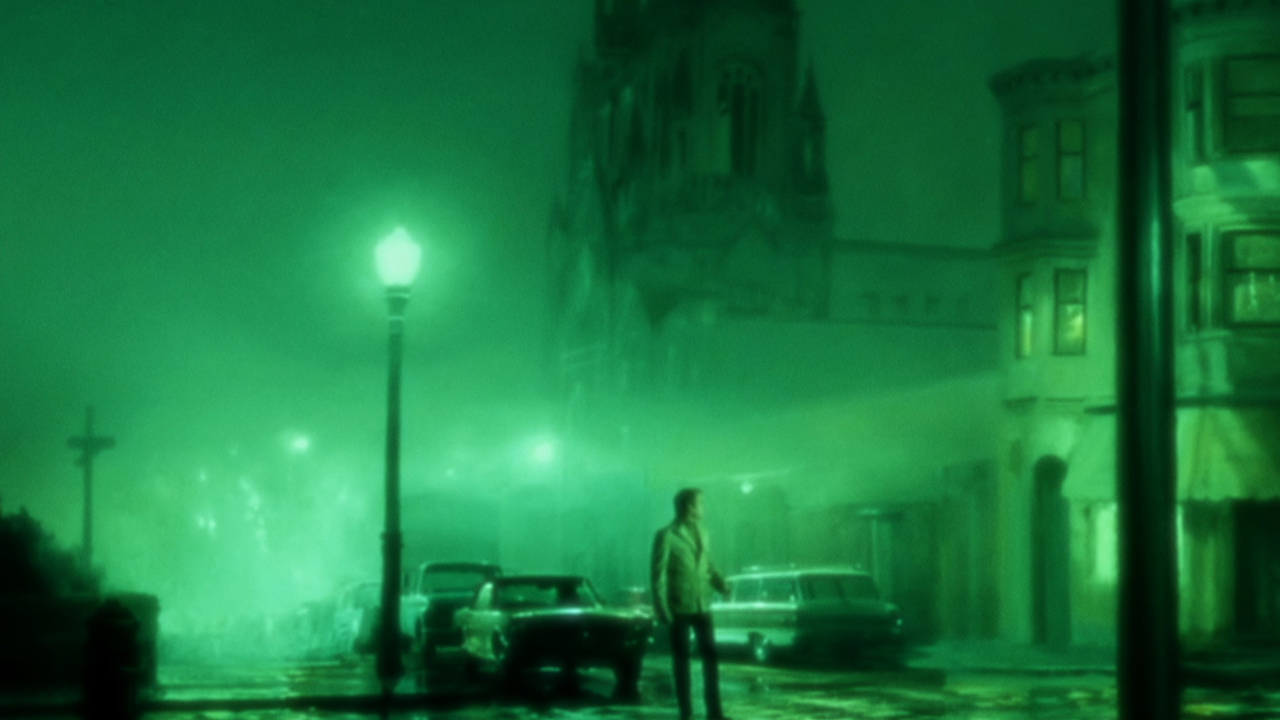 The Green Fog. Regie/directors: Guy Maddin, Evan Johnson, Galen Johnson[/caption]
The Forum program of the 2018 Berlin International Film Festival will feature 44 films, 35 of which world premieres. This year, Arsenal – Institute for Film and Video Art is putting on the Forum as part of the Berlinale for the 48th time.
21 years after his directorial debut The Day a Pig Fell into the Well, Korean director Hong Sangsoo makes a more auspicious return to the Forum. Grass is another cheerfully melancholy story about the guests at a small café whose owner loves classical music. Kim Minhee, who won the Silver Bear for Best Actress in 2017, plays a café regular who always seems to be at the table in the corner writing on her laptop. She repeatedly draws inspiration from what’s happening around her, picking up the threads of the dialogue and spinning them further and sometimes even actively intervening in conversations. Is she perhaps the author of these relationship dramas in miniature, whose stores and themes mirror one another?
French director Claire Simon is equally willing to try out new experiments in her documentary works. In her new film Premières solitudes (Young Solitude), she creates a cinematographic space for open, intimate discussion together with pupils from a school in the Paris suburbs. As they talk together about their backgrounds, parents, first loves, longings and fears for the future, ten ordinary teenagers forge ever closer bonds. It’s good to realise you’re not alone.
For his part, Ukrainian director Sergei Loznitsa is showing a film at the Berlinale for the very first time. In Den’ Pobedy (Victory Day), he observes the huge crowds that gather each year at the Soviet War Memorial in Berlin-Treptow on May 9th and records the hustle and bustle with quiet precision, as different moods come to the fore: pride, contemplation, patriotism, curiosity, the desire for recognition.
Two films from this year’s program draw on video material shot by their directors in periods of political upheaval and imbue it with new significance. At the end of the 1980s, Kristina Konrad collected opinions on the streets of Uruguay in relation to a referendum to be held on a law granting impunity to those responsible for the military dictatorship. Unas preguntas (One or Two Questions) takes a magnifying glass to the democratic process.
Around the same time, the scandal surrounding the Nazi past of former UN General Secretary and Austrian president Kurt Waldheim was making headlines worldwide. Edited together entirely from archive footage, Ruth Beckermann’s Waldheims Walzer (The Waldheim Waltz) is a documentary essay of frightening topicality.
Julien Faraut also works with material largely shot in the 80s in L’empire de la perfection (In the Realm of Perfection). Back then, tennis-obsessed director Gil de Kermadec attempted to use film as means of analysing the game. His meticulously shot footage of John McEnroe matches during the French Open forms the starting point for an ironic look at the parallels between film and the sporting world: cinema lies, sport does not.
Corneliu Porumboiu’s Fotbal Infinit (Infinite Football) takes an equally peculiar look at the world of sport, this time in provincial Romania, following a local official’s attempts to bequeath the world an improved version of the beautiful game. But does everything here really just revolve around football?
Two features from the US shine a light on intellectual escapism. Ted Fendt’s second feature Classical Period is once again shot in Philadelphia on 16mm and tells a drolly melancholy story about intellectualism and loneliness. The members of a reading group exchange cultural and literary references with such vigour that there’s little room for anything else: an attempt to leave the modern world behind or merely their own solitary existences?
Ricky D’Ambrose’s debut Notes On an Appearance may be set in Brooklyn, but unfolds in a similar milieu. Before the backdrop of the disquiet spread by the followers of a controversial philosopher, the film uses both real-life documents and smartly falsified writings to tell the story of a young man who one day disappears without warning. An eerie look at modern life with shades of dystopia.
Josephine Decker’s Madeline’s Madeline on the other hand plunges into the analogies of creativity and insanity. The young titular heroine doesn’t like spending time with her mother, played by actress Miranda July, and feels far freer when with her theatre group. But where does the border lie between personality and role?
Two features from Morocco explore gender relations. Jahilya by Hicham Lasri (the title alludes to the pre-Islamic “time of ignorance”) is a furious condemnation of the misogyny of Moroccan society and all its attendant malice.
Narjiss Nejjar’s Apatride (Stateless) gives an account of a historical event from a female perspective, an event that still dictates the relationship between Morocco and Algeria to this day. Full of beguiling images, her feature shows how a gentle, yet determined woman attempts to prevail over the border between the two countries.
It would be more than appropriate to refer to the electrifying directorial debut An Elephant Sitting Still as a new hope for Chinese cinema. But its 29-year-old director Ho Bu, who had previously made a name for himself with two novels, took his own life soon after the film was completed. This visually stunning work links together the biographies of a range of different protagonists in virtuoso fashion, narrating the course of one single, tension-filled day from dawn until dusk, painting a portrait of a society marked by selfishness in the process.
The Green Fog. Regie/directors: Guy Maddin, Evan Johnson, Galen Johnson[/caption]
The Forum program of the 2018 Berlin International Film Festival will feature 44 films, 35 of which world premieres. This year, Arsenal – Institute for Film and Video Art is putting on the Forum as part of the Berlinale for the 48th time.
21 years after his directorial debut The Day a Pig Fell into the Well, Korean director Hong Sangsoo makes a more auspicious return to the Forum. Grass is another cheerfully melancholy story about the guests at a small café whose owner loves classical music. Kim Minhee, who won the Silver Bear for Best Actress in 2017, plays a café regular who always seems to be at the table in the corner writing on her laptop. She repeatedly draws inspiration from what’s happening around her, picking up the threads of the dialogue and spinning them further and sometimes even actively intervening in conversations. Is she perhaps the author of these relationship dramas in miniature, whose stores and themes mirror one another?
French director Claire Simon is equally willing to try out new experiments in her documentary works. In her new film Premières solitudes (Young Solitude), she creates a cinematographic space for open, intimate discussion together with pupils from a school in the Paris suburbs. As they talk together about their backgrounds, parents, first loves, longings and fears for the future, ten ordinary teenagers forge ever closer bonds. It’s good to realise you’re not alone.
For his part, Ukrainian director Sergei Loznitsa is showing a film at the Berlinale for the very first time. In Den’ Pobedy (Victory Day), he observes the huge crowds that gather each year at the Soviet War Memorial in Berlin-Treptow on May 9th and records the hustle and bustle with quiet precision, as different moods come to the fore: pride, contemplation, patriotism, curiosity, the desire for recognition.
Two films from this year’s program draw on video material shot by their directors in periods of political upheaval and imbue it with new significance. At the end of the 1980s, Kristina Konrad collected opinions on the streets of Uruguay in relation to a referendum to be held on a law granting impunity to those responsible for the military dictatorship. Unas preguntas (One or Two Questions) takes a magnifying glass to the democratic process.
Around the same time, the scandal surrounding the Nazi past of former UN General Secretary and Austrian president Kurt Waldheim was making headlines worldwide. Edited together entirely from archive footage, Ruth Beckermann’s Waldheims Walzer (The Waldheim Waltz) is a documentary essay of frightening topicality.
Julien Faraut also works with material largely shot in the 80s in L’empire de la perfection (In the Realm of Perfection). Back then, tennis-obsessed director Gil de Kermadec attempted to use film as means of analysing the game. His meticulously shot footage of John McEnroe matches during the French Open forms the starting point for an ironic look at the parallels between film and the sporting world: cinema lies, sport does not.
Corneliu Porumboiu’s Fotbal Infinit (Infinite Football) takes an equally peculiar look at the world of sport, this time in provincial Romania, following a local official’s attempts to bequeath the world an improved version of the beautiful game. But does everything here really just revolve around football?
Two features from the US shine a light on intellectual escapism. Ted Fendt’s second feature Classical Period is once again shot in Philadelphia on 16mm and tells a drolly melancholy story about intellectualism and loneliness. The members of a reading group exchange cultural and literary references with such vigour that there’s little room for anything else: an attempt to leave the modern world behind or merely their own solitary existences?
Ricky D’Ambrose’s debut Notes On an Appearance may be set in Brooklyn, but unfolds in a similar milieu. Before the backdrop of the disquiet spread by the followers of a controversial philosopher, the film uses both real-life documents and smartly falsified writings to tell the story of a young man who one day disappears without warning. An eerie look at modern life with shades of dystopia.
Josephine Decker’s Madeline’s Madeline on the other hand plunges into the analogies of creativity and insanity. The young titular heroine doesn’t like spending time with her mother, played by actress Miranda July, and feels far freer when with her theatre group. But where does the border lie between personality and role?
Two features from Morocco explore gender relations. Jahilya by Hicham Lasri (the title alludes to the pre-Islamic “time of ignorance”) is a furious condemnation of the misogyny of Moroccan society and all its attendant malice.
Narjiss Nejjar’s Apatride (Stateless) gives an account of a historical event from a female perspective, an event that still dictates the relationship between Morocco and Algeria to this day. Full of beguiling images, her feature shows how a gentle, yet determined woman attempts to prevail over the border between the two countries.
It would be more than appropriate to refer to the electrifying directorial debut An Elephant Sitting Still as a new hope for Chinese cinema. But its 29-year-old director Ho Bu, who had previously made a name for himself with two novels, took his own life soon after the film was completed. This visually stunning work links together the biographies of a range of different protagonists in virtuoso fashion, narrating the course of one single, tension-filled day from dawn until dusk, painting a portrait of a society marked by selfishness in the process.
The films of the 48th Forum:
14 Apples von Midi Z, Taiwan / Myanmar – WP Afrique, la pensée en mouvement Part I by Jean-Pierre Bekolo, Senegal – IP Aggregat (Aggregate) by Marie Wilke, Germany – WP Amiko by Yoko Yamanaka, Japan – IP Apatride (Stateless) by Narjiss Nejjar, Morocco – WP Aufbruch (Departure) by Ludwig Wüst, Austria – WP La cama (The Bed) by Mónica Lairana, Argentina / Germany / Netherlands / Brazil – WP La casa lobo (The Wolf House) by Joaquín Cociña, Cristóbal León, Chile – WP Casanovagen (Casanova Gene) by Luise Donschen, Germany – WP Classical Period by Ted Fendt, USA – WP Con el viento (Facing the Wind) by Meritxell Colell Aparicio, Spain / France / Argentina – WP Los débiles (The Weak Ones) by Raúl Rico, Eduardo Giralt Brun, Mexico – WP Den’ Pobedy (Victory Day) by Sergei Loznitsa, Germany – WP Die Tomorrow by Nawapol Thamrongrattanarit, Thailand – IP Djamilia (Jamila) by Aminatou Echard, France – WP Drvo (The Tree) by André Gil Mata, Portugal / Bosnia and Herzegovina – WP L’empire de la perfection (In the Realm of Perfection) by Julien Faraut, France – WP An Elephant Sitting Still by Hu Bo, People’s Republic of China – WP Fotbal Infinit (Infinite Football) by Corneliu Porumboiu, Romania – WP Grass by Hong Sangsoo, Republic of Korea – WP The Green Fog by Guy Maddin, Evan Johnson, Galen Johnson, USA / Canada + Accidence by Guy Maddin, Evan Johnson, Galen Johnson, Canada – WP Interchange by Brian M. Cassidy, Melanie Shatzky, Canada – WP Jahilya by Hicham Lasri, Morocco – WP Kaotični život Nade Kadić (The Chaotic Life of Nada Kadić) by Marta Hernaiz, Mexico / Bosnia and Herzegovina – WP Last Child by Shin Dong-seok, Republic of Korea – IP Madeline’s Madeline by Josephine Decker, USA – IP Maki’la by Machérie Ekwa Bahango, Democratic Republic of the Congo / France – WP Mariphasa by Sandro Aguilar, Portugal – WP Minatomachi (Inland Sea) by Kazuhiro Soda, Japan/USA – WP Notes On an Appearance by Ricky D’Ambrose, USA – WP Old Love by Park Kiyong, Republic of Korea – IP Our House by Yui Kiyohara, Japan – IP Our Madness by João Viana, Mozambique / Guinea-Bissau / Qatar / Portugal / France – WP Premières armes (First Stripes) by Jean-François Caissy, Canada – WP Premières solitudes (Young Solitude) by Claire Simon, France – WP SPK Komplex (SPK Complex) by Gerd Kroske, Germany – WP Syn (The Son) by Alexander Abaturov, France / Russian Federation – WP Teatro de guerra (Theatre of War) by Lola Arias, Argentinia / Spain – WP Tuzdan Kaide (The Pillar of Salt) by Burak Çevik, Turkey – WP Unas preguntas (One or Two Questions) by Kristina Konrad, Germany / Uruguay – WP Waldheims Walzer (The Waldheim Waltz) by Ruth Beckermann, Austria – WP Wieża. Jasny dzień. (Tower. A Bright Day.) by Jagoda Szelc, Poland – IP Wild Relatives by Jumana Manna, Germany / Lebanon / Norway – WP Yours in Sisterhood by Irene Lusztig, USA – WP