
 25 films have been selected for this year’s addition to the 2015 National Film Registry of the Library of Congress. The documentaries and shorts named to the 2015 registry include “Portrait of Jason,” (pictured above) an exploration of a gay hustler’s life in his own words; Su Friedrich’s 1990 autobiographical tale about the schism between a daughter and her father, “Sink or Swim”; and “The Story of Menstruation,” a 1946 Disney-produced film seen by nearly 93 million women and girls over two decades.
Under the terms of the National Film Preservation Act, each year the Librarian of Congress names to the National Film Registry 25 motion pictures that are “culturally, historically or aesthetically” significant. The films must be at least 10 years old.
Spanning the period 1894-1997, the films named to the registry include Hollywood blockbusters, documentaries, silent movies, animation, shorts, independent and experimental motion pictures. This year’s selections bring the number of films in the registry to 675, which is a small fraction of the Library’s vast moving-image collection of 1.3 million items.
On the list of significant films is one of the earliest film recordings and the oldest surviving copyrighted motion picture, which was produced by Thomas Edison’s team of inventors. Recorded in 1894, “The Sneeze” became synonymous with the invention of movies.
2015 National Film Registry
Being There (1979)
Chance, a simple-minded gardener (Peter Sellers) whose only contact with the outside world is through television, becomes the toast of the town following a series of misunderstandings. Forced outside his protected environment by the death of his wealthy boss, Chance subsumes his late employer’s persona, including the man’s cultured walk, talk and even his expensive clothes, and is mistaken as “Chauncey Gardner,” whose simple adages are interpreted as profound insights. He becomes the confidant of a dying billionaire industrialist (Melvyn Douglas, in an Academy Award-winning performance) who happens to be a close adviser to the U.S. president (Jack Warden). Chance’s gardening advice is interpreted as metaphors for political policy and life in general. Jerzy Kosinski, assisted by award-winning screenwriter Robert C. Jones, adapted his 1971 novel for the screenplay which Hal Ashby directed with an understatement to match the subtlety and precision of Sellers’ Academy Award-nominated performance. Shirley MacLaine also stars as Douglas’s wife, then widow, who sees Chauncey as a romantic prospect. Film critic Robert Ebert said he admired the film for “having the guts to take this totally weird conceit and push it to its ultimate comic conclusion.” That conclusion is a philosophically complex film that has remained fresh and relevant.
Black and Tan (1929)
In one of the first short musical films to showcase African-American jazz musicians, Duke Ellington portrays a struggling musician whose dancer wife (Fredi Washington in her film debut) secures him a gig for his orchestra at the famous Cotton Club where she’s been hired to perform, at a risk to her health. Directed by Dudley Murphy, who earned his reputation with “Ballet mécanique,” which is considered a masterpiece of early experimental filmmaking, the film reflects the cultural, social and artistic explosion of the 1920s that became known as the Harlem Renaissance. Ellington and Washington personify that movement, and Murphy—who also directed registry titles “St. Louis Blues” (1929), another musical short, and the feature “The Emperor Jones” (1933) starring Paul Robeson—cements it in celluloid to inspire future generations. Washington, who appeared with Robeson in “Emperor Jones,” is best known as “Peola” in the 1934 version of “Imitation of Life.”
Dracula (Spanish language version) (1931)
Before the advent of sound, the only significant difference between films seen by domestic audiences and foreign ones was the language of the subtitles, which could be adapted for each market. When talkies arrived, American studios began shooting foreign-language versions for international and non-English-speaking domestic markets, generally at the same time they filmed the English versions. In one of the most famous examples of this practice, a second crew—including a different director and stars—shot at night on the same sets used during the day for the English version of the Bram Stoker classic starring Bela Lugosi and directed by Tod Browning. In recent years, the Spanish version of the film, which is 20 minutes longer, has been lauded as superior in many ways to the English one, some theorizing that the Spanish-language crew had the advantage of watching the English dailies and improving on camera angles and making more effective use of lighting. Directed by George Melford (best known for the Valentino sensation “The Sheik”), the Spanish version starred Carlos Villarías (billed as Carlos Villar) as Conde Drácula, Lupita Tovar as Eva Seward, Barry Norton as Juan Harker and Pablo Alvarez Rubio as Renfield.
Dream of a Rarebit Fiend (1906)
Based on noted illustrator Winsor McCay’s popular comic strip that ran in the New York Evening Telegram from 1904 to 1914, this short fantasy comedy by film pioneer Edwin S. Porter employed groundbreaking trick photography, including some of the earliest uses of double exposure in American cinema. Porter used camera sleight-of-hand to create the hallucinatory dreams of a top-hatted swell (Jack Brawn) who, after gorging himself on Welsh rarebit, is beset by dancing, spinning furniture and mischievous imps. To create the dream effects, he used a spinning camera and moveable set pieces, along with multiple exposures. Stop-motion and matte paintings added to the film’s whimsical appeal. Porter, who joined Thomas Edison’s company in 1899 and advanced the special effects pioneered by Georges Méliès, completed the seven-minute film in nine days at a cost of $350, which is about $10,000 today. The Museum of Modern Art Department of Film has preserved the film.
Eadweard Muybridge, Zoopraxographer (1975)
Created over the course of a decade by Thom Andersen, a onetime UCLA film student, this documentary delves into the work of the man whose pioneering studies and concept of persistence of vision led to the development of motion pictures. The film looks at Eadweard Muybridge’s personal and professional struggles, and examines the philosophical implications of his sequential photographs, or zoopraxographs, as he called his studies of animal locomotion. Andersen re-animates the images Muybridge originally presented on a zoopraxoscope, a predecessor of the projector. The documentary features cinematography by Morgan Fisher, a script by Fay Andersen, music by Mike Cohen, biographical research by Robert Bartlett Haas and narration by Dean Stockwell. When the PBS affiliate set to broadcast the film declined the completed piece, Andersen ultimately sold his work to New Yorker Films, which recognized Andersen’s unique voice as a cultural commentator and helped launch his career. In the Chicago Reader, Jonathan Rosenbaum described the production as “One of the best essay films ever made on a cinematic subject.” The UCLA Film & Television Archive, in consultation with Thom Andersen, did the preservation work on the film.
Edison Kinetoscopic Record of a Sneeze (1894)
One of the earliest film recordings and the oldest surviving copyrighted motion picture, Edison Kinetoscopic Record of a Sneeze (Jan. 7, 1894) is commonly known as “Fred Ott’s Sneeze” or simply “The Sneeze.” W.K.L. Dickson, who led Thomas Edison’s team of inventors, took the images of fellow engineer Ott enacting a snuff-induced sneeze. In March 1894, Harper’s Weekly magazine, which requested the pictures, published a sequence of still images taken from the film. “The Sneeze” became synonymous with the invention of movies although it was not seen as a moving picture until 1953 when 45 frames were re-animated on 16 mm film. The full 81 frames published in Harper’s Weekly were never seen as a movie until 2013 when the Library of Congress made a 35 mm film version. In this new complete version, Fred Ott sneezes twice.
A Fool There Was (1915)
The phenomenal success of “A Fool There Was”—based on a Rudyard Kipling poem and a subsequent play—set off a publicity campaign unparalleled at the time centering on its star, an unknown actress bearing the exotic name of Theda Bara. Bara was promoted as “the woman with the most beautifully wicked face in the world” and became filmdom’s quintessential “vamp,” enticing male pillars of society to relinquish family, career, respectable society, and even life itself, while yearning to remain under her entrancing spell. With such ego-shattering commands as “Kiss me, my fool,” Bara’s destructive powers appealed to women as well as men. “Women are my greatest fans,” Bara stated, “because they see in my vampire the impersonal vengeance of all their unavenged wrongs.” Bara retired from the screen four years later after starring in some 40 films, establishing a new genre, and helping Fox studios become an industry leader. Only one other film from her heyday is known to exist as well as two she made during an attempted comeback in the mid-1920s. The film has been preserved by Museum of Modern Art Department of Film.
Ghostbusters (1984)
One of the most popular, quotable films from the past three decades and a touchstone of cultural reference, “Ghostbusters” can also easily be seen as a loving homage to those earlier wacky horror comedies from Abbott and Costello, Bob Hope and others. Three lapsed science academics (Bill Murray, Dan Aykroyd and Harold Ramis) set up shop to handle the underappreciated (and never-ending) task of ferreting out ghosts, and will not rest until the paranormal becomes New York normal once more. These days, the trio would find a home in reality TV, but, given the era, they must prove their bona fides through clever publicity and satisfied customer word-of-mouth. Leading this Gotham firm in the fight against ever-present slime, is sleazy, yet charming, Bill Murray who brings a breezy air of can-do insouciance to the job of dealing with a rogues gallery of malevolence, including puffed-up existential threats such as the Marshmallow Man. Murray takes regular time outs from spirit-chasing to romance brainy cellist Dana Barrett (Sigourney Weaver), who becomes a channeler of the demon Zuul. The infectious insanity of “Ghostbusters” makes it a favorite film of the ‘80s.
Hail the Conquering Hero (1944)
Writer-director Preston Sturges probably was the only filmmaker in Hollywood in the 1940s who could satirize the worship of war heroes and mothers during wartime. Bosley Crowther of The New York Times credited the success of this film to its “sharpness of verbal wit and the vigor of visual expression” and the ability of Sturges to temper “irony with pity.” Nominated for an Academy Award for the best original screenplay category, “Hail the Conquering Hero” follows the foibles of a would-be war hero dismissed from active duty because of chronic hay fever and enlisted by a group of Marines to return home as the war hero that he has pretended to be in letters to his mother. The lightning-paced plot that develops upon his return offers Sturges—a budding “Hollywood Voltaire” in Crowther’s eyes—myriad opportunities to spoof corruption in small town politics as well as the propensity to idolize the military. The great French critic André Bazin called this film “a work that restores to American film a sense of social satire that I find equaled only … in Chaplin’s films.”
Humoresque (1920)
Based on a story by Fannie Hurst, “Humoresque” presented to mainstream American audiences a sympathetic portrayal of immigrant Jewish life through its vivid details of street life and rituals, and a riveting performance by Yiddish Theatre actress Vera Gordon, “seemingly a character from life, living,” rather than acting, as a New York Times reviewer observed. Although it was not the first film to dramatize the acculturation experiences of recent Jewish refugees from Russian massacres, “Humoresque” became a great screen success, inspiring Hollywood to produce many other films set in the Lower East Side’s tenements during the ensuing decade. In this, his first hit film, director Frank Borzage sympathetically treated faith and love—in this case “mother love”—with the utmost solemnity, in a manner that admirer Martin Scorsese has commented “makes him so unfashionable now.” Having solidly established its setting and characters through its many poignant and atmospheric touches, the film “touches the deep places of the heart,” as one Variety reviewer wrote, and makes its audience believe that prayers are answered and that love can restore health.
Imitation of Life (1959)
Film melodrama comes in many variations, but director Douglas Sirk’s style of domestic melodrama is marked by stylized interiors and use of mirrors, where the role of photography is crucial, with exquisite use of primary colors and camera angles to convey emotion and mood. During the 1950s, the Universal team of Sirk, producers Ross Hunter and Albert Zugsmith, cinematographer Russell Metty and composer Frank Skinner, released a series of glossy, often deliriously flamboyant “women’s picture” melodramas, including “All That Heaven Allows,” “Magnificent Obsession,” “Written on the Wind” and “Imitation of Life.” The often-lurid plots in these films may have seemed laughable and unrealistic, but the emotional impact on audiences packed a wallop that led to major box-office bonanzas for Universal. Sirk’s last American film, “Imitation of Life,” is based on the Fannie Hurst novel about two mothers (one white and one African-American) and their daughters (one white and one who wishes to pass for white). Sirk’s 1959 version (with Lana Turner and Juanita Moore as the mothers) offers a telling contrast to the more restrained melodramatic style used by John Stahl in the 1934 version (previously selected for the registry), starring Claudette Colbert and Louise Beavers. One can also spot in Sirk’s film fascinating glimpses at the evolving social standards and mores the country had undergone in the 25 years that elapsed between the two films, particularly in the characters of Moore and her daughter Susan Kohner. However, New York Times reviewers did not note much difference in the two versions. The paper’s 1934 reviewer called the film “the most shameless tearjerker of the fall” while Bosley Crowther’s 1959 review proved little different: “It is the most shameless tearjerker in a couple of years.” Sirk’s version ends with Mahalia Jackson singing “Trouble of the World” during the penultimate funeral scene and daughter Susan Kohner begging forgiveness while hugging her dead mother’s casket.
The Inner World of Aphasia (1968)
This empathic and often poetic medical-training film features a powerful performance by co-director Naomi Feil as a nurse who learns to cope with aphasia, the inability to speak as a result of a brain injury. Feil, a social worker whose career has focused on communicating with language-impaired patients, produced this film and dozens more with her husband Edward Feil. In the film, the patient’s inner thoughts are heard through voice-over as she struggles in frustration to overcome her disability and to connect with her caregivers. The Council on International Non-theatrical Events (CINE) awarded “Inner World” its top honor, the Golden Eagle. More than 47 years later, the film is still being screened by media artists and independent filmmakers who appreciate its innovative artistic qualities.
John Henry and the Inky-Poo (1946)
The African-American folk hero John Henry was probably based on an actual person who worked on the railroads around the 1870s. The legend began to appear in print in the early 20th century, but emerged early on as a popular folk song. Akin to other such rugged folk heroes as Paul Bunyan, John Henry is said to have worked as a “steel-driving man,” hammering a steel drill into rock and earth to build tunnels and lay track. According to legend, his prowess was measured in a competition against a steam-powered hammer. John Henry won the race against “Inky-Poo,” only to collapse and die, hammer in hand. Stop-motion animation pioneer George Pal created this short film after the NAACP and Ebony magazine criticized his offensively stereotyped Jasper series of cartoons. The magazine later praised “John Henry” as the first Hollywood film to feature African-American folklore in a positive light and to treat its characters with “dignity, imagination, poetry, and love.” Highly popular during its time, the film was nominated for an Academy Award. It has been preserved by the UCLA Film & Television Archive.
L.A. Confidential (1997)
This well-crafted and suspenseful story, directed by Curtis Hanson, teams a trio of incompatible cops who ultimately bring down a corrupt police department and political machine. Hanson and Brian Helgeland adapted the James Ellroy novel and together they successfully interpret film noir’s dark and seamy allure for new audiences. Detective Jack Vincennes (Kevin Spacey) an in-it-for-himself type, Officer Bud White (Russell Crowe), who believes in bending the law to enforce it, and Detective Ed Exley (Guy Pearce), a straight arrow whose self-righteousness alienates him from his colleagues, all possess some deep-rooted sense of honor that draws them together to untangle the film’s web of corruption that climaxes in its virtuoso choreographed shootout. The cast is rounded out by Danny DeVito as the film’s occasional narrator and reporter for “Hush-Hush” magazine, Kim Basinger as a Veronica Lake look-alike call girl, and James Cromwell as the duplicitous chief of police. Cinematographer Dante Spinotti infuses this homage with a Technicolor richness seldom seen in noirs of the 40s and 50s.
The Mark of Zorro (1920)
Douglas Fairbanks was gifted not only with a winning smile and athletic prowess, but also with keen insight. Aware that post-World War I audiences had grown weary of the romantic comedies that had made him a star, Fairbanks adapted his persona to create a daring hero and established himself as an icon of American culture. Under the name Elton Thomas, Fairbanks penned the screenplay for his first swashbuckler, portraying Don Diego Vega who has recently returned to California from Spain. Upon finding a despotic governor (George Periolat) persecuting the local inhabitants, he first poses as a preening fop to divert suspicion, then dons a cape and mask to defend the downtrodden armed with a razor-sharp sword and leaving behind his signature “Z” to taunt the evil Captain Ramon (Robert McKim) and his henchmen. The film, directed by Fred Niblo, also stars Marguerite De La Motte and Noah Beery. The Museum of Modern Art Department of Film has preserved the film.
The Old Mill (1937)
This cartoon, produced by the Walt Disney Company as one of its Silly Symphony entries, depicts a community of animals—mice, doves, bats, bluebirds and an expressive owl—battling a severe thunderstorm that nearly destroys their home in an abandoned windmill. Directed by Wilfred Jackson, the film acted as a testing ground for audience interest in longer form animation as well as for advanced technologies, including the first use of the multiplane camera, which added three-dimensional depth. It also featured more complex lighting and realistic depictions of animal behavior that would be perfected in “Snow White,” “Fantasia” and “Bambi.” The dazzling imagery was complemented by Leigh Harline’s compelling orchestral scoring inspired by a Strauss operetta. In “The 50 Greatest Cartoons Selected by 1,000 Animation Professionals,” edited by historian Jerry Beck, Disney animators Frank Thomas and Ollie Johnston recalled, “Our eyes popped when we saw all of The Old Mill’s magnificent innovations—things we had not even dreamed of and did not understand.” The film won an Academy Award for best animated short in 1937, and the studio won an Oscar for its revolutionary camera.
Our Daily Bread (1934)
During the heart of the Great Depression, as the nation’s capital experimented with New Deal programs to solve the nation’s ills, most Hollywood productions remained escapist. A radical exception to the rule, King Vidor’s “Our Daily Bread,” faced the problem of unemployment head-on by dramatizing an experiment in cooperative farming that proposed pooling resources collectively as an alternative to individualistic competition for jobs. After all the studios passed on his idea, Vidor financed the film himself with borrowed funds. Criticized for its purportedly socialist ideas and also for its seemingly fascistic traits, “Our Daily Bread” remains a document that embodied political contradictions that marked widely divergent contemporary assessments of the New Deal itself. In its widely acclaimed climactic ditch-digging sequence, the film presents images celebrated muscular working-class manhood that also marked public art of the period, which addressed anxieties about the masculinity during times of economic crisis.
Portrait of Jason (1967)
In one of the first LGBT films widely accepted by general audiences, Shirley Clarke explored the blurred lines between fact and fiction, allowing her subject, Jason Holliday (né Aaron Payne), a gay hustler and nightclub entertainer, to talk about his life with candor, pathos and humor in one 12-hour shoot. Clarke originally envisioned Jason as the only character, but she subsequently revealed: “When I saw the rushes I knew the real story of what happened that night in my living room had to include all of us [the off-screen voices. her crew and herself], and so our question-reaction probes, our irritations and angers, as well as our laughter remain part of the film.” Bosley Crowther of “The New York Times” described it as a “curious and fascinating example of cinéma vérité, all the ramifications of which cannot be immediately known.” Legendary filmmaker Ingmar Bergman called it “the most extraordinary film I’ve seen in my life.” Thought to have been lost, a 16 mm print of the film was discovered at the Wisconsin Center for Film and Theater Research in 2013 and has since been restored by the Academy Film Archive, Milestone Films and Modern Videofilm.
Seconds (1966)
Two staples of 1960s cinema—evil organizations and the wasteland of suburbia—combine to drive this sinister tale about the perils of seeking a second chance, a life do-over. Bored with his banal marriage and unexciting daily grind, banker John Randolph meets the representative for a mysterious company offering the “too-good-to-be-true” opportunity to erase his current Scarsdale existence for a makeover in the guise of Malibu painter Rock Hudson. Headed by grandfatherly scion Will Geer and master-of-the-hard-sell executive Jeff Corey, “The Company” takes care of everything surrounding Randolph (in his new Hudsonesque persona) with business reps and human “seconds,” in order to smooth his transition to a new life and keep him from spilling the lucrative-but-dark corporate secret. His new identify seems idyllic, but Randolph chafes with unease and demands a return to his now fondly remembered past average life. With no intention of imperiling its advertising message and humming assembly-line template for reborn humans, the company has a “third chance” plan in mind for Randolph: he learns “you can’t go home again,” in the wry words of a New York Times reviewer quoting Thomas Wolfe. Director John Frankenheimer crafts a memorably creepy sense of foreboding in “Seconds,” aided immensely by the black-and-white cinematography, disorienting camera angles and lenses of cameraman James Wong Howe, as well as Jerry Goldsmith’s eerie score. Critic David Sterritt lauds “Seconds” as “the third and crowning chapter of what’s now known as Frankenheimer’s paranoia trilogy” following “The Manchurian Candidate” and “Seven Days in May.”
The Shawshank Redemption (1994)
From a modest start as a critical success, but something of a commercial bust upon initial release, “The Shawshank Redemption” now often rates as the top film in Internet Movie Database polling. Like many Stephen King novels and stories, it was adapted to film, but, as some critics have noted, the best movies have arguably resulted from the non-horror part of King’s literary output (such as the novellas “Stand by Me” and “Rita Hayworth and Shawshank Redemption”). Banker Tim Robbins is wrongly convicted of the double murder of his wife and her lover. However, he spends much of his prison sentence beset by guilt over whether he contributed to her infidelity and consumed by the knowledge that he had seriously contemplated murdering her. Eventually, Robbins decides he must “get busy living or get busy dying” and plots a meticulous, long-term plan for escape. Critics have struggled at times to explain the immense public affection for “Shawshank,” but perhaps it’s due to the poignant Thomas Newman score and most importantly the moving character portrayals and deep friendship between inmates Robbins and Morgan Freeman, highlighting the abiding resilience of the human spirit.
Sink or Swim (1990)
In this autobiographical tale told in voice-over by a teenage girl (Jessica Lynn), Su Friedrich relates a series of 26 short vignettes that reveal a subtext of a father preoccupied by his career and of a daughter emotionally scarred by his behavior. Black-and-white film clips of ordinary daily activities illustrate Friedrich’s poetically powerful text to create a complex and intense film. Of this work, which garnered numerous festival awards, Friedrich wrote, “The issue for me is to be more direct, or honest, about my experiences, but also to be analytical. ‘Sink or Swim’ is personal, but it’s also very analytical, or rigorously formal.” Friedrich’s films and videos have been featured in retrospectives at major museums and festivals, and she has received both Guggenheim and Rockefeller Foundation Fellowships. Michael Zyrd wrote in Senses of Cinema: “The textures, cinematic and emotional, of Friedrich’s work are both private and highly mediated, embodying an aesthetic style and range of concerns that make her one of the most innovative and accessible artists currently working in the dynamic tradition of the modernist American Avant-Garde.”
The Story of Menstruation (1946)
Sponsored by Kimberly-Clark, the makers of Kotex, this title was produced by the Walt Disney Company through its Educational and Industrial Film Division. Distributed free to schools and girls’ clubs with an accompanying pamphlet titled “Very Personally Yours,” the film used friendly Disney-style characters and gentle narration to “encourage a healthy, normal attitude” toward menstruation. Although a few such educational filmstrips were available before World War II, this version was seen as more progressive than previous offerings and, according to advertisements in “The Educational Screen,” it replaced superstitions with “scientific facts” and dispelled “embarrassment.” Some contemporary scholars, however, take issue with the approach. Sean Griffin of Southern Methodist University’s Division of Film and Media Arts and author of “Tinker Belles and Evil Queens: The Walt Disney Company from the Inside Out” suggests that Disney’s abstract representation of the body “‘bleaches’ the more ‘unsavory’ parts of the lesson, such as making the menstrual flow white instead of red.” According to Joan Jacobs Brumberg, author of “The Body Project: An Intimate History of American Girls,” approximately 93 million American women, mostly teenagers, viewed this film between 1946 through the late 1960s.
Symbiopsychotaxiplasm: Take One (1968)
William Greaves worked at the intersection of many cultural focal points, including as an original co-host and producer of the landmark “Black Journal” public television series. He, however, is perhaps best known for his prolific work as a documentary film director and producer. He was associated with more than 200 productions during his career. His best-known film, “Symbiopsychotaxiplasm: Take One,” faced a strange, lengthy road to recognition. As recounted by Richard Brody in The New Yorker, Greaves shot the film in 1968 and completed production in 1971 in hopes of a debut at the Cannes Film Festival, but was turned down. The film then spent two decades unseen before being rediscovered by a Brooklyn Museum curator who premiered it at a retrospective of Greaves’ voluminous work in cinema. Its acclaim grew and caught the attention of a later champion, actor/director Steve Buscemi. The film is a unique 1960s’ time capsule, a telling look at the myriad tensions involved in film creation—a film on the making of a film—with three camera crews recording different parts of the process and personalities involved (director, actors, crew, bystanders). Though Greaves is undoubtedly the film’s visionary auteur—notable for an African-American filmmaker in the 1960s—it is truly a film made collectively by Greaves and his multi-racial crew, whose staging of an on-set rebellion becomes the film’s drama and its platform for sociopolitical critique and revolutionary philosophy. Filmed entirely on location in New York City’s Central Park, with a score by Miles Davis, Greaves’ film serves as a vivid tabloid of this heady historical era and a memorable document of this creatively prosperous period of American independent filmmaking. The New York Times’ critic A.O. Scott lauded the film’s creativity and imagination: “It is one of the great New York films, one of the great experimental films, one of the great ’60s films, one of the great black films—just one of the great films, period, largely because it remains so fresh, so radical and so hard to assimilate more than 45 years after it was made.”
Top Gun (1986)
Though a wag might be tempted to call this Tony Scott film “The Testosterone Chronicles,” the Don Simpson/Jerry Bruckheimer production actually comprises a deft portrait of mid-1980s America, when politicians promised “Morning in America Again,” and singers crooned “God Bless the U.S.A.” The U.S. Navy, for one, did not complain: applications to naval aviation schools soared in part as a result of this relentless, pulsating film famed for its vertiginous fighter-plane sequences. Scott, always most at home when crafting slick, visually arresting action-set pieces with distinctive flair, delivers on all fronts. Among others, director Christopher Nolan has highlighted “Top Gun” for the clear influence of the film’s celebrated visual style on future filmmakers. Tom Cruise here graduated to the top echelon of in-demand actors, aided by his good looks, cocky attitude, omnipresent smile, and brazen attempts to woo and secure steamy personal time with (at first amused and later swooning) civilian instructor Kelly McGillis.
Winchester ’73 (1950)
Actor Jimmy Stewart collaborated with director Anthony Mann on eight films during the 1950s. Most renowned was an influential series of five taut, psychological Westerns from 1950-55 revolving around themes of hidden secrets, vengeance, shifting personal morals and concepts of heroism. The movie “Winchester ’73” launched their partnership. Film historian Scott Simmon calls “Winchester ‘73” “the La Ronde of Death, as opposed to the love that keeps the Schnitzler play in motion,” and “the film where a gun is more of an object of worship than in any other American film.” Ironically, in light of current debates about gun-carry rights, it’s fascinating that even in this most gun-obsessed of movies, nobody is allowed to carry a gun in town. But for a man caught out in the desert without ammo, he has not “felt so naked since the last time I took a bath.” Stewart’s obsessive quests are to avenge the death of his father and pursue a Winchester rifle as it moves from one owner to the next, changing everyone into whose hands the gun briefly passes, and culminating in a justly-famous shootout amidst steep, rocky terrain.
Films Selected for the 2015 National Film Registry
Being There (1979)
Black and Tan (1929)
Dracula (Spanish language version) (1931)
Dream of a Rarebit Fiend (1906)
Eadweard Muybridge, Zoopraxographer (1975)
Edison Kinetoscopic Record of a Sneeze (1894)
A Fool There Was (1915)
Ghostbusters (1984)
Hail the Conquering Hero (1944)
Humoresque (1920)
Imitation of Life (1959)
The Inner World of Aphasia (1968)
John Henry and the Inky-Poo (1946)
L.A. Confidential (1997)
The Mark of Zorro (1920)
The Old Mill (1937)
Our Daily Bread (1934)
Portrait of Jason (1967)
Seconds (1966)
The Shawshank Redemption (1994)
Sink or Swim (1990)
The Story of Menstruation (1946)
Symbiopsychotaxiplasm: Take One (1968)
Top Gun (1986)
Winchester ’73 (1950)
25 films have been selected for this year’s addition to the 2015 National Film Registry of the Library of Congress. The documentaries and shorts named to the 2015 registry include “Portrait of Jason,” (pictured above) an exploration of a gay hustler’s life in his own words; Su Friedrich’s 1990 autobiographical tale about the schism between a daughter and her father, “Sink or Swim”; and “The Story of Menstruation,” a 1946 Disney-produced film seen by nearly 93 million women and girls over two decades.
Under the terms of the National Film Preservation Act, each year the Librarian of Congress names to the National Film Registry 25 motion pictures that are “culturally, historically or aesthetically” significant. The films must be at least 10 years old.
Spanning the period 1894-1997, the films named to the registry include Hollywood blockbusters, documentaries, silent movies, animation, shorts, independent and experimental motion pictures. This year’s selections bring the number of films in the registry to 675, which is a small fraction of the Library’s vast moving-image collection of 1.3 million items.
On the list of significant films is one of the earliest film recordings and the oldest surviving copyrighted motion picture, which was produced by Thomas Edison’s team of inventors. Recorded in 1894, “The Sneeze” became synonymous with the invention of movies.
2015 National Film Registry
Being There (1979)
Chance, a simple-minded gardener (Peter Sellers) whose only contact with the outside world is through television, becomes the toast of the town following a series of misunderstandings. Forced outside his protected environment by the death of his wealthy boss, Chance subsumes his late employer’s persona, including the man’s cultured walk, talk and even his expensive clothes, and is mistaken as “Chauncey Gardner,” whose simple adages are interpreted as profound insights. He becomes the confidant of a dying billionaire industrialist (Melvyn Douglas, in an Academy Award-winning performance) who happens to be a close adviser to the U.S. president (Jack Warden). Chance’s gardening advice is interpreted as metaphors for political policy and life in general. Jerzy Kosinski, assisted by award-winning screenwriter Robert C. Jones, adapted his 1971 novel for the screenplay which Hal Ashby directed with an understatement to match the subtlety and precision of Sellers’ Academy Award-nominated performance. Shirley MacLaine also stars as Douglas’s wife, then widow, who sees Chauncey as a romantic prospect. Film critic Robert Ebert said he admired the film for “having the guts to take this totally weird conceit and push it to its ultimate comic conclusion.” That conclusion is a philosophically complex film that has remained fresh and relevant.
Black and Tan (1929)
In one of the first short musical films to showcase African-American jazz musicians, Duke Ellington portrays a struggling musician whose dancer wife (Fredi Washington in her film debut) secures him a gig for his orchestra at the famous Cotton Club where she’s been hired to perform, at a risk to her health. Directed by Dudley Murphy, who earned his reputation with “Ballet mécanique,” which is considered a masterpiece of early experimental filmmaking, the film reflects the cultural, social and artistic explosion of the 1920s that became known as the Harlem Renaissance. Ellington and Washington personify that movement, and Murphy—who also directed registry titles “St. Louis Blues” (1929), another musical short, and the feature “The Emperor Jones” (1933) starring Paul Robeson—cements it in celluloid to inspire future generations. Washington, who appeared with Robeson in “Emperor Jones,” is best known as “Peola” in the 1934 version of “Imitation of Life.”
Dracula (Spanish language version) (1931)
Before the advent of sound, the only significant difference between films seen by domestic audiences and foreign ones was the language of the subtitles, which could be adapted for each market. When talkies arrived, American studios began shooting foreign-language versions for international and non-English-speaking domestic markets, generally at the same time they filmed the English versions. In one of the most famous examples of this practice, a second crew—including a different director and stars—shot at night on the same sets used during the day for the English version of the Bram Stoker classic starring Bela Lugosi and directed by Tod Browning. In recent years, the Spanish version of the film, which is 20 minutes longer, has been lauded as superior in many ways to the English one, some theorizing that the Spanish-language crew had the advantage of watching the English dailies and improving on camera angles and making more effective use of lighting. Directed by George Melford (best known for the Valentino sensation “The Sheik”), the Spanish version starred Carlos Villarías (billed as Carlos Villar) as Conde Drácula, Lupita Tovar as Eva Seward, Barry Norton as Juan Harker and Pablo Alvarez Rubio as Renfield.
Dream of a Rarebit Fiend (1906)
Based on noted illustrator Winsor McCay’s popular comic strip that ran in the New York Evening Telegram from 1904 to 1914, this short fantasy comedy by film pioneer Edwin S. Porter employed groundbreaking trick photography, including some of the earliest uses of double exposure in American cinema. Porter used camera sleight-of-hand to create the hallucinatory dreams of a top-hatted swell (Jack Brawn) who, after gorging himself on Welsh rarebit, is beset by dancing, spinning furniture and mischievous imps. To create the dream effects, he used a spinning camera and moveable set pieces, along with multiple exposures. Stop-motion and matte paintings added to the film’s whimsical appeal. Porter, who joined Thomas Edison’s company in 1899 and advanced the special effects pioneered by Georges Méliès, completed the seven-minute film in nine days at a cost of $350, which is about $10,000 today. The Museum of Modern Art Department of Film has preserved the film.
Eadweard Muybridge, Zoopraxographer (1975)
Created over the course of a decade by Thom Andersen, a onetime UCLA film student, this documentary delves into the work of the man whose pioneering studies and concept of persistence of vision led to the development of motion pictures. The film looks at Eadweard Muybridge’s personal and professional struggles, and examines the philosophical implications of his sequential photographs, or zoopraxographs, as he called his studies of animal locomotion. Andersen re-animates the images Muybridge originally presented on a zoopraxoscope, a predecessor of the projector. The documentary features cinematography by Morgan Fisher, a script by Fay Andersen, music by Mike Cohen, biographical research by Robert Bartlett Haas and narration by Dean Stockwell. When the PBS affiliate set to broadcast the film declined the completed piece, Andersen ultimately sold his work to New Yorker Films, which recognized Andersen’s unique voice as a cultural commentator and helped launch his career. In the Chicago Reader, Jonathan Rosenbaum described the production as “One of the best essay films ever made on a cinematic subject.” The UCLA Film & Television Archive, in consultation with Thom Andersen, did the preservation work on the film.
Edison Kinetoscopic Record of a Sneeze (1894)
One of the earliest film recordings and the oldest surviving copyrighted motion picture, Edison Kinetoscopic Record of a Sneeze (Jan. 7, 1894) is commonly known as “Fred Ott’s Sneeze” or simply “The Sneeze.” W.K.L. Dickson, who led Thomas Edison’s team of inventors, took the images of fellow engineer Ott enacting a snuff-induced sneeze. In March 1894, Harper’s Weekly magazine, which requested the pictures, published a sequence of still images taken from the film. “The Sneeze” became synonymous with the invention of movies although it was not seen as a moving picture until 1953 when 45 frames were re-animated on 16 mm film. The full 81 frames published in Harper’s Weekly were never seen as a movie until 2013 when the Library of Congress made a 35 mm film version. In this new complete version, Fred Ott sneezes twice.
A Fool There Was (1915)
The phenomenal success of “A Fool There Was”—based on a Rudyard Kipling poem and a subsequent play—set off a publicity campaign unparalleled at the time centering on its star, an unknown actress bearing the exotic name of Theda Bara. Bara was promoted as “the woman with the most beautifully wicked face in the world” and became filmdom’s quintessential “vamp,” enticing male pillars of society to relinquish family, career, respectable society, and even life itself, while yearning to remain under her entrancing spell. With such ego-shattering commands as “Kiss me, my fool,” Bara’s destructive powers appealed to women as well as men. “Women are my greatest fans,” Bara stated, “because they see in my vampire the impersonal vengeance of all their unavenged wrongs.” Bara retired from the screen four years later after starring in some 40 films, establishing a new genre, and helping Fox studios become an industry leader. Only one other film from her heyday is known to exist as well as two she made during an attempted comeback in the mid-1920s. The film has been preserved by Museum of Modern Art Department of Film.
Ghostbusters (1984)
One of the most popular, quotable films from the past three decades and a touchstone of cultural reference, “Ghostbusters” can also easily be seen as a loving homage to those earlier wacky horror comedies from Abbott and Costello, Bob Hope and others. Three lapsed science academics (Bill Murray, Dan Aykroyd and Harold Ramis) set up shop to handle the underappreciated (and never-ending) task of ferreting out ghosts, and will not rest until the paranormal becomes New York normal once more. These days, the trio would find a home in reality TV, but, given the era, they must prove their bona fides through clever publicity and satisfied customer word-of-mouth. Leading this Gotham firm in the fight against ever-present slime, is sleazy, yet charming, Bill Murray who brings a breezy air of can-do insouciance to the job of dealing with a rogues gallery of malevolence, including puffed-up existential threats such as the Marshmallow Man. Murray takes regular time outs from spirit-chasing to romance brainy cellist Dana Barrett (Sigourney Weaver), who becomes a channeler of the demon Zuul. The infectious insanity of “Ghostbusters” makes it a favorite film of the ‘80s.
Hail the Conquering Hero (1944)
Writer-director Preston Sturges probably was the only filmmaker in Hollywood in the 1940s who could satirize the worship of war heroes and mothers during wartime. Bosley Crowther of The New York Times credited the success of this film to its “sharpness of verbal wit and the vigor of visual expression” and the ability of Sturges to temper “irony with pity.” Nominated for an Academy Award for the best original screenplay category, “Hail the Conquering Hero” follows the foibles of a would-be war hero dismissed from active duty because of chronic hay fever and enlisted by a group of Marines to return home as the war hero that he has pretended to be in letters to his mother. The lightning-paced plot that develops upon his return offers Sturges—a budding “Hollywood Voltaire” in Crowther’s eyes—myriad opportunities to spoof corruption in small town politics as well as the propensity to idolize the military. The great French critic André Bazin called this film “a work that restores to American film a sense of social satire that I find equaled only … in Chaplin’s films.”
Humoresque (1920)
Based on a story by Fannie Hurst, “Humoresque” presented to mainstream American audiences a sympathetic portrayal of immigrant Jewish life through its vivid details of street life and rituals, and a riveting performance by Yiddish Theatre actress Vera Gordon, “seemingly a character from life, living,” rather than acting, as a New York Times reviewer observed. Although it was not the first film to dramatize the acculturation experiences of recent Jewish refugees from Russian massacres, “Humoresque” became a great screen success, inspiring Hollywood to produce many other films set in the Lower East Side’s tenements during the ensuing decade. In this, his first hit film, director Frank Borzage sympathetically treated faith and love—in this case “mother love”—with the utmost solemnity, in a manner that admirer Martin Scorsese has commented “makes him so unfashionable now.” Having solidly established its setting and characters through its many poignant and atmospheric touches, the film “touches the deep places of the heart,” as one Variety reviewer wrote, and makes its audience believe that prayers are answered and that love can restore health.
Imitation of Life (1959)
Film melodrama comes in many variations, but director Douglas Sirk’s style of domestic melodrama is marked by stylized interiors and use of mirrors, where the role of photography is crucial, with exquisite use of primary colors and camera angles to convey emotion and mood. During the 1950s, the Universal team of Sirk, producers Ross Hunter and Albert Zugsmith, cinematographer Russell Metty and composer Frank Skinner, released a series of glossy, often deliriously flamboyant “women’s picture” melodramas, including “All That Heaven Allows,” “Magnificent Obsession,” “Written on the Wind” and “Imitation of Life.” The often-lurid plots in these films may have seemed laughable and unrealistic, but the emotional impact on audiences packed a wallop that led to major box-office bonanzas for Universal. Sirk’s last American film, “Imitation of Life,” is based on the Fannie Hurst novel about two mothers (one white and one African-American) and their daughters (one white and one who wishes to pass for white). Sirk’s 1959 version (with Lana Turner and Juanita Moore as the mothers) offers a telling contrast to the more restrained melodramatic style used by John Stahl in the 1934 version (previously selected for the registry), starring Claudette Colbert and Louise Beavers. One can also spot in Sirk’s film fascinating glimpses at the evolving social standards and mores the country had undergone in the 25 years that elapsed between the two films, particularly in the characters of Moore and her daughter Susan Kohner. However, New York Times reviewers did not note much difference in the two versions. The paper’s 1934 reviewer called the film “the most shameless tearjerker of the fall” while Bosley Crowther’s 1959 review proved little different: “It is the most shameless tearjerker in a couple of years.” Sirk’s version ends with Mahalia Jackson singing “Trouble of the World” during the penultimate funeral scene and daughter Susan Kohner begging forgiveness while hugging her dead mother’s casket.
The Inner World of Aphasia (1968)
This empathic and often poetic medical-training film features a powerful performance by co-director Naomi Feil as a nurse who learns to cope with aphasia, the inability to speak as a result of a brain injury. Feil, a social worker whose career has focused on communicating with language-impaired patients, produced this film and dozens more with her husband Edward Feil. In the film, the patient’s inner thoughts are heard through voice-over as she struggles in frustration to overcome her disability and to connect with her caregivers. The Council on International Non-theatrical Events (CINE) awarded “Inner World” its top honor, the Golden Eagle. More than 47 years later, the film is still being screened by media artists and independent filmmakers who appreciate its innovative artistic qualities.
John Henry and the Inky-Poo (1946)
The African-American folk hero John Henry was probably based on an actual person who worked on the railroads around the 1870s. The legend began to appear in print in the early 20th century, but emerged early on as a popular folk song. Akin to other such rugged folk heroes as Paul Bunyan, John Henry is said to have worked as a “steel-driving man,” hammering a steel drill into rock and earth to build tunnels and lay track. According to legend, his prowess was measured in a competition against a steam-powered hammer. John Henry won the race against “Inky-Poo,” only to collapse and die, hammer in hand. Stop-motion animation pioneer George Pal created this short film after the NAACP and Ebony magazine criticized his offensively stereotyped Jasper series of cartoons. The magazine later praised “John Henry” as the first Hollywood film to feature African-American folklore in a positive light and to treat its characters with “dignity, imagination, poetry, and love.” Highly popular during its time, the film was nominated for an Academy Award. It has been preserved by the UCLA Film & Television Archive.
L.A. Confidential (1997)
This well-crafted and suspenseful story, directed by Curtis Hanson, teams a trio of incompatible cops who ultimately bring down a corrupt police department and political machine. Hanson and Brian Helgeland adapted the James Ellroy novel and together they successfully interpret film noir’s dark and seamy allure for new audiences. Detective Jack Vincennes (Kevin Spacey) an in-it-for-himself type, Officer Bud White (Russell Crowe), who believes in bending the law to enforce it, and Detective Ed Exley (Guy Pearce), a straight arrow whose self-righteousness alienates him from his colleagues, all possess some deep-rooted sense of honor that draws them together to untangle the film’s web of corruption that climaxes in its virtuoso choreographed shootout. The cast is rounded out by Danny DeVito as the film’s occasional narrator and reporter for “Hush-Hush” magazine, Kim Basinger as a Veronica Lake look-alike call girl, and James Cromwell as the duplicitous chief of police. Cinematographer Dante Spinotti infuses this homage with a Technicolor richness seldom seen in noirs of the 40s and 50s.
The Mark of Zorro (1920)
Douglas Fairbanks was gifted not only with a winning smile and athletic prowess, but also with keen insight. Aware that post-World War I audiences had grown weary of the romantic comedies that had made him a star, Fairbanks adapted his persona to create a daring hero and established himself as an icon of American culture. Under the name Elton Thomas, Fairbanks penned the screenplay for his first swashbuckler, portraying Don Diego Vega who has recently returned to California from Spain. Upon finding a despotic governor (George Periolat) persecuting the local inhabitants, he first poses as a preening fop to divert suspicion, then dons a cape and mask to defend the downtrodden armed with a razor-sharp sword and leaving behind his signature “Z” to taunt the evil Captain Ramon (Robert McKim) and his henchmen. The film, directed by Fred Niblo, also stars Marguerite De La Motte and Noah Beery. The Museum of Modern Art Department of Film has preserved the film.
The Old Mill (1937)
This cartoon, produced by the Walt Disney Company as one of its Silly Symphony entries, depicts a community of animals—mice, doves, bats, bluebirds and an expressive owl—battling a severe thunderstorm that nearly destroys their home in an abandoned windmill. Directed by Wilfred Jackson, the film acted as a testing ground for audience interest in longer form animation as well as for advanced technologies, including the first use of the multiplane camera, which added three-dimensional depth. It also featured more complex lighting and realistic depictions of animal behavior that would be perfected in “Snow White,” “Fantasia” and “Bambi.” The dazzling imagery was complemented by Leigh Harline’s compelling orchestral scoring inspired by a Strauss operetta. In “The 50 Greatest Cartoons Selected by 1,000 Animation Professionals,” edited by historian Jerry Beck, Disney animators Frank Thomas and Ollie Johnston recalled, “Our eyes popped when we saw all of The Old Mill’s magnificent innovations—things we had not even dreamed of and did not understand.” The film won an Academy Award for best animated short in 1937, and the studio won an Oscar for its revolutionary camera.
Our Daily Bread (1934)
During the heart of the Great Depression, as the nation’s capital experimented with New Deal programs to solve the nation’s ills, most Hollywood productions remained escapist. A radical exception to the rule, King Vidor’s “Our Daily Bread,” faced the problem of unemployment head-on by dramatizing an experiment in cooperative farming that proposed pooling resources collectively as an alternative to individualistic competition for jobs. After all the studios passed on his idea, Vidor financed the film himself with borrowed funds. Criticized for its purportedly socialist ideas and also for its seemingly fascistic traits, “Our Daily Bread” remains a document that embodied political contradictions that marked widely divergent contemporary assessments of the New Deal itself. In its widely acclaimed climactic ditch-digging sequence, the film presents images celebrated muscular working-class manhood that also marked public art of the period, which addressed anxieties about the masculinity during times of economic crisis.
Portrait of Jason (1967)
In one of the first LGBT films widely accepted by general audiences, Shirley Clarke explored the blurred lines between fact and fiction, allowing her subject, Jason Holliday (né Aaron Payne), a gay hustler and nightclub entertainer, to talk about his life with candor, pathos and humor in one 12-hour shoot. Clarke originally envisioned Jason as the only character, but she subsequently revealed: “When I saw the rushes I knew the real story of what happened that night in my living room had to include all of us [the off-screen voices. her crew and herself], and so our question-reaction probes, our irritations and angers, as well as our laughter remain part of the film.” Bosley Crowther of “The New York Times” described it as a “curious and fascinating example of cinéma vérité, all the ramifications of which cannot be immediately known.” Legendary filmmaker Ingmar Bergman called it “the most extraordinary film I’ve seen in my life.” Thought to have been lost, a 16 mm print of the film was discovered at the Wisconsin Center for Film and Theater Research in 2013 and has since been restored by the Academy Film Archive, Milestone Films and Modern Videofilm.
Seconds (1966)
Two staples of 1960s cinema—evil organizations and the wasteland of suburbia—combine to drive this sinister tale about the perils of seeking a second chance, a life do-over. Bored with his banal marriage and unexciting daily grind, banker John Randolph meets the representative for a mysterious company offering the “too-good-to-be-true” opportunity to erase his current Scarsdale existence for a makeover in the guise of Malibu painter Rock Hudson. Headed by grandfatherly scion Will Geer and master-of-the-hard-sell executive Jeff Corey, “The Company” takes care of everything surrounding Randolph (in his new Hudsonesque persona) with business reps and human “seconds,” in order to smooth his transition to a new life and keep him from spilling the lucrative-but-dark corporate secret. His new identify seems idyllic, but Randolph chafes with unease and demands a return to his now fondly remembered past average life. With no intention of imperiling its advertising message and humming assembly-line template for reborn humans, the company has a “third chance” plan in mind for Randolph: he learns “you can’t go home again,” in the wry words of a New York Times reviewer quoting Thomas Wolfe. Director John Frankenheimer crafts a memorably creepy sense of foreboding in “Seconds,” aided immensely by the black-and-white cinematography, disorienting camera angles and lenses of cameraman James Wong Howe, as well as Jerry Goldsmith’s eerie score. Critic David Sterritt lauds “Seconds” as “the third and crowning chapter of what’s now known as Frankenheimer’s paranoia trilogy” following “The Manchurian Candidate” and “Seven Days in May.”
The Shawshank Redemption (1994)
From a modest start as a critical success, but something of a commercial bust upon initial release, “The Shawshank Redemption” now often rates as the top film in Internet Movie Database polling. Like many Stephen King novels and stories, it was adapted to film, but, as some critics have noted, the best movies have arguably resulted from the non-horror part of King’s literary output (such as the novellas “Stand by Me” and “Rita Hayworth and Shawshank Redemption”). Banker Tim Robbins is wrongly convicted of the double murder of his wife and her lover. However, he spends much of his prison sentence beset by guilt over whether he contributed to her infidelity and consumed by the knowledge that he had seriously contemplated murdering her. Eventually, Robbins decides he must “get busy living or get busy dying” and plots a meticulous, long-term plan for escape. Critics have struggled at times to explain the immense public affection for “Shawshank,” but perhaps it’s due to the poignant Thomas Newman score and most importantly the moving character portrayals and deep friendship between inmates Robbins and Morgan Freeman, highlighting the abiding resilience of the human spirit.
Sink or Swim (1990)
In this autobiographical tale told in voice-over by a teenage girl (Jessica Lynn), Su Friedrich relates a series of 26 short vignettes that reveal a subtext of a father preoccupied by his career and of a daughter emotionally scarred by his behavior. Black-and-white film clips of ordinary daily activities illustrate Friedrich’s poetically powerful text to create a complex and intense film. Of this work, which garnered numerous festival awards, Friedrich wrote, “The issue for me is to be more direct, or honest, about my experiences, but also to be analytical. ‘Sink or Swim’ is personal, but it’s also very analytical, or rigorously formal.” Friedrich’s films and videos have been featured in retrospectives at major museums and festivals, and she has received both Guggenheim and Rockefeller Foundation Fellowships. Michael Zyrd wrote in Senses of Cinema: “The textures, cinematic and emotional, of Friedrich’s work are both private and highly mediated, embodying an aesthetic style and range of concerns that make her one of the most innovative and accessible artists currently working in the dynamic tradition of the modernist American Avant-Garde.”
The Story of Menstruation (1946)
Sponsored by Kimberly-Clark, the makers of Kotex, this title was produced by the Walt Disney Company through its Educational and Industrial Film Division. Distributed free to schools and girls’ clubs with an accompanying pamphlet titled “Very Personally Yours,” the film used friendly Disney-style characters and gentle narration to “encourage a healthy, normal attitude” toward menstruation. Although a few such educational filmstrips were available before World War II, this version was seen as more progressive than previous offerings and, according to advertisements in “The Educational Screen,” it replaced superstitions with “scientific facts” and dispelled “embarrassment.” Some contemporary scholars, however, take issue with the approach. Sean Griffin of Southern Methodist University’s Division of Film and Media Arts and author of “Tinker Belles and Evil Queens: The Walt Disney Company from the Inside Out” suggests that Disney’s abstract representation of the body “‘bleaches’ the more ‘unsavory’ parts of the lesson, such as making the menstrual flow white instead of red.” According to Joan Jacobs Brumberg, author of “The Body Project: An Intimate History of American Girls,” approximately 93 million American women, mostly teenagers, viewed this film between 1946 through the late 1960s.
Symbiopsychotaxiplasm: Take One (1968)
William Greaves worked at the intersection of many cultural focal points, including as an original co-host and producer of the landmark “Black Journal” public television series. He, however, is perhaps best known for his prolific work as a documentary film director and producer. He was associated with more than 200 productions during his career. His best-known film, “Symbiopsychotaxiplasm: Take One,” faced a strange, lengthy road to recognition. As recounted by Richard Brody in The New Yorker, Greaves shot the film in 1968 and completed production in 1971 in hopes of a debut at the Cannes Film Festival, but was turned down. The film then spent two decades unseen before being rediscovered by a Brooklyn Museum curator who premiered it at a retrospective of Greaves’ voluminous work in cinema. Its acclaim grew and caught the attention of a later champion, actor/director Steve Buscemi. The film is a unique 1960s’ time capsule, a telling look at the myriad tensions involved in film creation—a film on the making of a film—with three camera crews recording different parts of the process and personalities involved (director, actors, crew, bystanders). Though Greaves is undoubtedly the film’s visionary auteur—notable for an African-American filmmaker in the 1960s—it is truly a film made collectively by Greaves and his multi-racial crew, whose staging of an on-set rebellion becomes the film’s drama and its platform for sociopolitical critique and revolutionary philosophy. Filmed entirely on location in New York City’s Central Park, with a score by Miles Davis, Greaves’ film serves as a vivid tabloid of this heady historical era and a memorable document of this creatively prosperous period of American independent filmmaking. The New York Times’ critic A.O. Scott lauded the film’s creativity and imagination: “It is one of the great New York films, one of the great experimental films, one of the great ’60s films, one of the great black films—just one of the great films, period, largely because it remains so fresh, so radical and so hard to assimilate more than 45 years after it was made.”
Top Gun (1986)
Though a wag might be tempted to call this Tony Scott film “The Testosterone Chronicles,” the Don Simpson/Jerry Bruckheimer production actually comprises a deft portrait of mid-1980s America, when politicians promised “Morning in America Again,” and singers crooned “God Bless the U.S.A.” The U.S. Navy, for one, did not complain: applications to naval aviation schools soared in part as a result of this relentless, pulsating film famed for its vertiginous fighter-plane sequences. Scott, always most at home when crafting slick, visually arresting action-set pieces with distinctive flair, delivers on all fronts. Among others, director Christopher Nolan has highlighted “Top Gun” for the clear influence of the film’s celebrated visual style on future filmmakers. Tom Cruise here graduated to the top echelon of in-demand actors, aided by his good looks, cocky attitude, omnipresent smile, and brazen attempts to woo and secure steamy personal time with (at first amused and later swooning) civilian instructor Kelly McGillis.
Winchester ’73 (1950)
Actor Jimmy Stewart collaborated with director Anthony Mann on eight films during the 1950s. Most renowned was an influential series of five taut, psychological Westerns from 1950-55 revolving around themes of hidden secrets, vengeance, shifting personal morals and concepts of heroism. The movie “Winchester ’73” launched their partnership. Film historian Scott Simmon calls “Winchester ‘73” “the La Ronde of Death, as opposed to the love that keeps the Schnitzler play in motion,” and “the film where a gun is more of an object of worship than in any other American film.” Ironically, in light of current debates about gun-carry rights, it’s fascinating that even in this most gun-obsessed of movies, nobody is allowed to carry a gun in town. But for a man caught out in the desert without ammo, he has not “felt so naked since the last time I took a bath.” Stewart’s obsessive quests are to avenge the death of his father and pursue a Winchester rifle as it moves from one owner to the next, changing everyone into whose hands the gun briefly passes, and culminating in a justly-famous shootout amidst steep, rocky terrain.
Films Selected for the 2015 National Film Registry
Being There (1979)
Black and Tan (1929)
Dracula (Spanish language version) (1931)
Dream of a Rarebit Fiend (1906)
Eadweard Muybridge, Zoopraxographer (1975)
Edison Kinetoscopic Record of a Sneeze (1894)
A Fool There Was (1915)
Ghostbusters (1984)
Hail the Conquering Hero (1944)
Humoresque (1920)
Imitation of Life (1959)
The Inner World of Aphasia (1968)
John Henry and the Inky-Poo (1946)
L.A. Confidential (1997)
The Mark of Zorro (1920)
The Old Mill (1937)
Our Daily Bread (1934)
Portrait of Jason (1967)
Seconds (1966)
The Shawshank Redemption (1994)
Sink or Swim (1990)
The Story of Menstruation (1946)
Symbiopsychotaxiplasm: Take One (1968)
Top Gun (1986)
Winchester ’73 (1950)-
25 Films, Documentaries and Shorts Added to National Film Registry of the Library of Congress
25 films have been selected for this year’s addition to the 2015 National Film Registry of the Library of Congress. The documentaries and shorts named to the 2015 registry include “Portrait of Jason,” (pictured above) an exploration of a gay hustler’s life in his own words; Su Friedrich’s 1990 autobiographical tale about the schism between a daughter and her father, “Sink or Swim”; and “The Story of Menstruation,” a 1946 Disney-produced film seen by nearly 93 million women and girls over two decades.
Under the terms of the National Film Preservation Act, each year the Librarian of Congress names to the National Film Registry 25 motion pictures that are “culturally, historically or aesthetically” significant. The films must be at least 10 years old.
Spanning the period 1894-1997, the films named to the registry include Hollywood blockbusters, documentaries, silent movies, animation, shorts, independent and experimental motion pictures. This year’s selections bring the number of films in the registry to 675, which is a small fraction of the Library’s vast moving-image collection of 1.3 million items.
On the list of significant films is one of the earliest film recordings and the oldest surviving copyrighted motion picture, which was produced by Thomas Edison’s team of inventors. Recorded in 1894, “The Sneeze” became synonymous with the invention of movies.
2015 National Film Registry
Being There (1979)
Chance, a simple-minded gardener (Peter Sellers) whose only contact with the outside world is through television, becomes the toast of the town following a series of misunderstandings. Forced outside his protected environment by the death of his wealthy boss, Chance subsumes his late employer’s persona, including the man’s cultured walk, talk and even his expensive clothes, and is mistaken as “Chauncey Gardner,” whose simple adages are interpreted as profound insights. He becomes the confidant of a dying billionaire industrialist (Melvyn Douglas, in an Academy Award-winning performance) who happens to be a close adviser to the U.S. president (Jack Warden). Chance’s gardening advice is interpreted as metaphors for political policy and life in general. Jerzy Kosinski, assisted by award-winning screenwriter Robert C. Jones, adapted his 1971 novel for the screenplay which Hal Ashby directed with an understatement to match the subtlety and precision of Sellers’ Academy Award-nominated performance. Shirley MacLaine also stars as Douglas’s wife, then widow, who sees Chauncey as a romantic prospect. Film critic Robert Ebert said he admired the film for “having the guts to take this totally weird conceit and push it to its ultimate comic conclusion.” That conclusion is a philosophically complex film that has remained fresh and relevant.
Black and Tan (1929)
In one of the first short musical films to showcase African-American jazz musicians, Duke Ellington portrays a struggling musician whose dancer wife (Fredi Washington in her film debut) secures him a gig for his orchestra at the famous Cotton Club where she’s been hired to perform, at a risk to her health. Directed by Dudley Murphy, who earned his reputation with “Ballet mécanique,” which is considered a masterpiece of early experimental filmmaking, the film reflects the cultural, social and artistic explosion of the 1920s that became known as the Harlem Renaissance. Ellington and Washington personify that movement, and Murphy—who also directed registry titles “St. Louis Blues” (1929), another musical short, and the feature “The Emperor Jones” (1933) starring Paul Robeson—cements it in celluloid to inspire future generations. Washington, who appeared with Robeson in “Emperor Jones,” is best known as “Peola” in the 1934 version of “Imitation of Life.”
Dracula (Spanish language version) (1931)
Before the advent of sound, the only significant difference between films seen by domestic audiences and foreign ones was the language of the subtitles, which could be adapted for each market. When talkies arrived, American studios began shooting foreign-language versions for international and non-English-speaking domestic markets, generally at the same time they filmed the English versions. In one of the most famous examples of this practice, a second crew—including a different director and stars—shot at night on the same sets used during the day for the English version of the Bram Stoker classic starring Bela Lugosi and directed by Tod Browning. In recent years, the Spanish version of the film, which is 20 minutes longer, has been lauded as superior in many ways to the English one, some theorizing that the Spanish-language crew had the advantage of watching the English dailies and improving on camera angles and making more effective use of lighting. Directed by George Melford (best known for the Valentino sensation “The Sheik”), the Spanish version starred Carlos Villarías (billed as Carlos Villar) as Conde Drácula, Lupita Tovar as Eva Seward, Barry Norton as Juan Harker and Pablo Alvarez Rubio as Renfield.
Dream of a Rarebit Fiend (1906)
Based on noted illustrator Winsor McCay’s popular comic strip that ran in the New York Evening Telegram from 1904 to 1914, this short fantasy comedy by film pioneer Edwin S. Porter employed groundbreaking trick photography, including some of the earliest uses of double exposure in American cinema. Porter used camera sleight-of-hand to create the hallucinatory dreams of a top-hatted swell (Jack Brawn) who, after gorging himself on Welsh rarebit, is beset by dancing, spinning furniture and mischievous imps. To create the dream effects, he used a spinning camera and moveable set pieces, along with multiple exposures. Stop-motion and matte paintings added to the film’s whimsical appeal. Porter, who joined Thomas Edison’s company in 1899 and advanced the special effects pioneered by Georges Méliès, completed the seven-minute film in nine days at a cost of $350, which is about $10,000 today. The Museum of Modern Art Department of Film has preserved the film.
Eadweard Muybridge, Zoopraxographer (1975)
Created over the course of a decade by Thom Andersen, a onetime UCLA film student, this documentary delves into the work of the man whose pioneering studies and concept of persistence of vision led to the development of motion pictures. The film looks at Eadweard Muybridge’s personal and professional struggles, and examines the philosophical implications of his sequential photographs, or zoopraxographs, as he called his studies of animal locomotion. Andersen re-animates the images Muybridge originally presented on a zoopraxoscope, a predecessor of the projector. The documentary features cinematography by Morgan Fisher, a script by Fay Andersen, music by Mike Cohen, biographical research by Robert Bartlett Haas and narration by Dean Stockwell. When the PBS affiliate set to broadcast the film declined the completed piece, Andersen ultimately sold his work to New Yorker Films, which recognized Andersen’s unique voice as a cultural commentator and helped launch his career. In the Chicago Reader, Jonathan Rosenbaum described the production as “One of the best essay films ever made on a cinematic subject.” The UCLA Film & Television Archive, in consultation with Thom Andersen, did the preservation work on the film.
Edison Kinetoscopic Record of a Sneeze (1894)
One of the earliest film recordings and the oldest surviving copyrighted motion picture, Edison Kinetoscopic Record of a Sneeze (Jan. 7, 1894) is commonly known as “Fred Ott’s Sneeze” or simply “The Sneeze.” W.K.L. Dickson, who led Thomas Edison’s team of inventors, took the images of fellow engineer Ott enacting a snuff-induced sneeze. In March 1894, Harper’s Weekly magazine, which requested the pictures, published a sequence of still images taken from the film. “The Sneeze” became synonymous with the invention of movies although it was not seen as a moving picture until 1953 when 45 frames were re-animated on 16 mm film. The full 81 frames published in Harper’s Weekly were never seen as a movie until 2013 when the Library of Congress made a 35 mm film version. In this new complete version, Fred Ott sneezes twice.
A Fool There Was (1915)
The phenomenal success of “A Fool There Was”—based on a Rudyard Kipling poem and a subsequent play—set off a publicity campaign unparalleled at the time centering on its star, an unknown actress bearing the exotic name of Theda Bara. Bara was promoted as “the woman with the most beautifully wicked face in the world” and became filmdom’s quintessential “vamp,” enticing male pillars of society to relinquish family, career, respectable society, and even life itself, while yearning to remain under her entrancing spell. With such ego-shattering commands as “Kiss me, my fool,” Bara’s destructive powers appealed to women as well as men. “Women are my greatest fans,” Bara stated, “because they see in my vampire the impersonal vengeance of all their unavenged wrongs.” Bara retired from the screen four years later after starring in some 40 films, establishing a new genre, and helping Fox studios become an industry leader. Only one other film from her heyday is known to exist as well as two she made during an attempted comeback in the mid-1920s. The film has been preserved by Museum of Modern Art Department of Film.
Ghostbusters (1984)
One of the most popular, quotable films from the past three decades and a touchstone of cultural reference, “Ghostbusters” can also easily be seen as a loving homage to those earlier wacky horror comedies from Abbott and Costello, Bob Hope and others. Three lapsed science academics (Bill Murray, Dan Aykroyd and Harold Ramis) set up shop to handle the underappreciated (and never-ending) task of ferreting out ghosts, and will not rest until the paranormal becomes New York normal once more. These days, the trio would find a home in reality TV, but, given the era, they must prove their bona fides through clever publicity and satisfied customer word-of-mouth. Leading this Gotham firm in the fight against ever-present slime, is sleazy, yet charming, Bill Murray who brings a breezy air of can-do insouciance to the job of dealing with a rogues gallery of malevolence, including puffed-up existential threats such as the Marshmallow Man. Murray takes regular time outs from spirit-chasing to romance brainy cellist Dana Barrett (Sigourney Weaver), who becomes a channeler of the demon Zuul. The infectious insanity of “Ghostbusters” makes it a favorite film of the ‘80s.
Hail the Conquering Hero (1944)
Writer-director Preston Sturges probably was the only filmmaker in Hollywood in the 1940s who could satirize the worship of war heroes and mothers during wartime. Bosley Crowther of The New York Times credited the success of this film to its “sharpness of verbal wit and the vigor of visual expression” and the ability of Sturges to temper “irony with pity.” Nominated for an Academy Award for the best original screenplay category, “Hail the Conquering Hero” follows the foibles of a would-be war hero dismissed from active duty because of chronic hay fever and enlisted by a group of Marines to return home as the war hero that he has pretended to be in letters to his mother. The lightning-paced plot that develops upon his return offers Sturges—a budding “Hollywood Voltaire” in Crowther’s eyes—myriad opportunities to spoof corruption in small town politics as well as the propensity to idolize the military. The great French critic André Bazin called this film “a work that restores to American film a sense of social satire that I find equaled only … in Chaplin’s films.”
Humoresque (1920)
Based on a story by Fannie Hurst, “Humoresque” presented to mainstream American audiences a sympathetic portrayal of immigrant Jewish life through its vivid details of street life and rituals, and a riveting performance by Yiddish Theatre actress Vera Gordon, “seemingly a character from life, living,” rather than acting, as a New York Times reviewer observed. Although it was not the first film to dramatize the acculturation experiences of recent Jewish refugees from Russian massacres, “Humoresque” became a great screen success, inspiring Hollywood to produce many other films set in the Lower East Side’s tenements during the ensuing decade. In this, his first hit film, director Frank Borzage sympathetically treated faith and love—in this case “mother love”—with the utmost solemnity, in a manner that admirer Martin Scorsese has commented “makes him so unfashionable now.” Having solidly established its setting and characters through its many poignant and atmospheric touches, the film “touches the deep places of the heart,” as one Variety reviewer wrote, and makes its audience believe that prayers are answered and that love can restore health.
Imitation of Life (1959)
Film melodrama comes in many variations, but director Douglas Sirk’s style of domestic melodrama is marked by stylized interiors and use of mirrors, where the role of photography is crucial, with exquisite use of primary colors and camera angles to convey emotion and mood. During the 1950s, the Universal team of Sirk, producers Ross Hunter and Albert Zugsmith, cinematographer Russell Metty and composer Frank Skinner, released a series of glossy, often deliriously flamboyant “women’s picture” melodramas, including “All That Heaven Allows,” “Magnificent Obsession,” “Written on the Wind” and “Imitation of Life.” The often-lurid plots in these films may have seemed laughable and unrealistic, but the emotional impact on audiences packed a wallop that led to major box-office bonanzas for Universal. Sirk’s last American film, “Imitation of Life,” is based on the Fannie Hurst novel about two mothers (one white and one African-American) and their daughters (one white and one who wishes to pass for white). Sirk’s 1959 version (with Lana Turner and Juanita Moore as the mothers) offers a telling contrast to the more restrained melodramatic style used by John Stahl in the 1934 version (previously selected for the registry), starring Claudette Colbert and Louise Beavers. One can also spot in Sirk’s film fascinating glimpses at the evolving social standards and mores the country had undergone in the 25 years that elapsed between the two films, particularly in the characters of Moore and her daughter Susan Kohner. However, New York Times reviewers did not note much difference in the two versions. The paper’s 1934 reviewer called the film “the most shameless tearjerker of the fall” while Bosley Crowther’s 1959 review proved little different: “It is the most shameless tearjerker in a couple of years.” Sirk’s version ends with Mahalia Jackson singing “Trouble of the World” during the penultimate funeral scene and daughter Susan Kohner begging forgiveness while hugging her dead mother’s casket.
The Inner World of Aphasia (1968)
This empathic and often poetic medical-training film features a powerful performance by co-director Naomi Feil as a nurse who learns to cope with aphasia, the inability to speak as a result of a brain injury. Feil, a social worker whose career has focused on communicating with language-impaired patients, produced this film and dozens more with her husband Edward Feil. In the film, the patient’s inner thoughts are heard through voice-over as she struggles in frustration to overcome her disability and to connect with her caregivers. The Council on International Non-theatrical Events (CINE) awarded “Inner World” its top honor, the Golden Eagle. More than 47 years later, the film is still being screened by media artists and independent filmmakers who appreciate its innovative artistic qualities.
John Henry and the Inky-Poo (1946)
The African-American folk hero John Henry was probably based on an actual person who worked on the railroads around the 1870s. The legend began to appear in print in the early 20th century, but emerged early on as a popular folk song. Akin to other such rugged folk heroes as Paul Bunyan, John Henry is said to have worked as a “steel-driving man,” hammering a steel drill into rock and earth to build tunnels and lay track. According to legend, his prowess was measured in a competition against a steam-powered hammer. John Henry won the race against “Inky-Poo,” only to collapse and die, hammer in hand. Stop-motion animation pioneer George Pal created this short film after the NAACP and Ebony magazine criticized his offensively stereotyped Jasper series of cartoons. The magazine later praised “John Henry” as the first Hollywood film to feature African-American folklore in a positive light and to treat its characters with “dignity, imagination, poetry, and love.” Highly popular during its time, the film was nominated for an Academy Award. It has been preserved by the UCLA Film & Television Archive.
L.A. Confidential (1997)
This well-crafted and suspenseful story, directed by Curtis Hanson, teams a trio of incompatible cops who ultimately bring down a corrupt police department and political machine. Hanson and Brian Helgeland adapted the James Ellroy novel and together they successfully interpret film noir’s dark and seamy allure for new audiences. Detective Jack Vincennes (Kevin Spacey) an in-it-for-himself type, Officer Bud White (Russell Crowe), who believes in bending the law to enforce it, and Detective Ed Exley (Guy Pearce), a straight arrow whose self-righteousness alienates him from his colleagues, all possess some deep-rooted sense of honor that draws them together to untangle the film’s web of corruption that climaxes in its virtuoso choreographed shootout. The cast is rounded out by Danny DeVito as the film’s occasional narrator and reporter for “Hush-Hush” magazine, Kim Basinger as a Veronica Lake look-alike call girl, and James Cromwell as the duplicitous chief of police. Cinematographer Dante Spinotti infuses this homage with a Technicolor richness seldom seen in noirs of the 40s and 50s.
The Mark of Zorro (1920)
Douglas Fairbanks was gifted not only with a winning smile and athletic prowess, but also with keen insight. Aware that post-World War I audiences had grown weary of the romantic comedies that had made him a star, Fairbanks adapted his persona to create a daring hero and established himself as an icon of American culture. Under the name Elton Thomas, Fairbanks penned the screenplay for his first swashbuckler, portraying Don Diego Vega who has recently returned to California from Spain. Upon finding a despotic governor (George Periolat) persecuting the local inhabitants, he first poses as a preening fop to divert suspicion, then dons a cape and mask to defend the downtrodden armed with a razor-sharp sword and leaving behind his signature “Z” to taunt the evil Captain Ramon (Robert McKim) and his henchmen. The film, directed by Fred Niblo, also stars Marguerite De La Motte and Noah Beery. The Museum of Modern Art Department of Film has preserved the film.
The Old Mill (1937)
This cartoon, produced by the Walt Disney Company as one of its Silly Symphony entries, depicts a community of animals—mice, doves, bats, bluebirds and an expressive owl—battling a severe thunderstorm that nearly destroys their home in an abandoned windmill. Directed by Wilfred Jackson, the film acted as a testing ground for audience interest in longer form animation as well as for advanced technologies, including the first use of the multiplane camera, which added three-dimensional depth. It also featured more complex lighting and realistic depictions of animal behavior that would be perfected in “Snow White,” “Fantasia” and “Bambi.” The dazzling imagery was complemented by Leigh Harline’s compelling orchestral scoring inspired by a Strauss operetta. In “The 50 Greatest Cartoons Selected by 1,000 Animation Professionals,” edited by historian Jerry Beck, Disney animators Frank Thomas and Ollie Johnston recalled, “Our eyes popped when we saw all of The Old Mill’s magnificent innovations—things we had not even dreamed of and did not understand.” The film won an Academy Award for best animated short in 1937, and the studio won an Oscar for its revolutionary camera.
Our Daily Bread (1934)
During the heart of the Great Depression, as the nation’s capital experimented with New Deal programs to solve the nation’s ills, most Hollywood productions remained escapist. A radical exception to the rule, King Vidor’s “Our Daily Bread,” faced the problem of unemployment head-on by dramatizing an experiment in cooperative farming that proposed pooling resources collectively as an alternative to individualistic competition for jobs. After all the studios passed on his idea, Vidor financed the film himself with borrowed funds. Criticized for its purportedly socialist ideas and also for its seemingly fascistic traits, “Our Daily Bread” remains a document that embodied political contradictions that marked widely divergent contemporary assessments of the New Deal itself. In its widely acclaimed climactic ditch-digging sequence, the film presents images celebrated muscular working-class manhood that also marked public art of the period, which addressed anxieties about the masculinity during times of economic crisis.
Portrait of Jason (1967)
In one of the first LGBT films widely accepted by general audiences, Shirley Clarke explored the blurred lines between fact and fiction, allowing her subject, Jason Holliday (né Aaron Payne), a gay hustler and nightclub entertainer, to talk about his life with candor, pathos and humor in one 12-hour shoot. Clarke originally envisioned Jason as the only character, but she subsequently revealed: “When I saw the rushes I knew the real story of what happened that night in my living room had to include all of us [the off-screen voices. her crew and herself], and so our question-reaction probes, our irritations and angers, as well as our laughter remain part of the film.” Bosley Crowther of “The New York Times” described it as a “curious and fascinating example of cinéma vérité, all the ramifications of which cannot be immediately known.” Legendary filmmaker Ingmar Bergman called it “the most extraordinary film I’ve seen in my life.” Thought to have been lost, a 16 mm print of the film was discovered at the Wisconsin Center for Film and Theater Research in 2013 and has since been restored by the Academy Film Archive, Milestone Films and Modern Videofilm.
Seconds (1966)
Two staples of 1960s cinema—evil organizations and the wasteland of suburbia—combine to drive this sinister tale about the perils of seeking a second chance, a life do-over. Bored with his banal marriage and unexciting daily grind, banker John Randolph meets the representative for a mysterious company offering the “too-good-to-be-true” opportunity to erase his current Scarsdale existence for a makeover in the guise of Malibu painter Rock Hudson. Headed by grandfatherly scion Will Geer and master-of-the-hard-sell executive Jeff Corey, “The Company” takes care of everything surrounding Randolph (in his new Hudsonesque persona) with business reps and human “seconds,” in order to smooth his transition to a new life and keep him from spilling the lucrative-but-dark corporate secret. His new identify seems idyllic, but Randolph chafes with unease and demands a return to his now fondly remembered past average life. With no intention of imperiling its advertising message and humming assembly-line template for reborn humans, the company has a “third chance” plan in mind for Randolph: he learns “you can’t go home again,” in the wry words of a New York Times reviewer quoting Thomas Wolfe. Director John Frankenheimer crafts a memorably creepy sense of foreboding in “Seconds,” aided immensely by the black-and-white cinematography, disorienting camera angles and lenses of cameraman James Wong Howe, as well as Jerry Goldsmith’s eerie score. Critic David Sterritt lauds “Seconds” as “the third and crowning chapter of what’s now known as Frankenheimer’s paranoia trilogy” following “The Manchurian Candidate” and “Seven Days in May.”
The Shawshank Redemption (1994)
From a modest start as a critical success, but something of a commercial bust upon initial release, “The Shawshank Redemption” now often rates as the top film in Internet Movie Database polling. Like many Stephen King novels and stories, it was adapted to film, but, as some critics have noted, the best movies have arguably resulted from the non-horror part of King’s literary output (such as the novellas “Stand by Me” and “Rita Hayworth and Shawshank Redemption”). Banker Tim Robbins is wrongly convicted of the double murder of his wife and her lover. However, he spends much of his prison sentence beset by guilt over whether he contributed to her infidelity and consumed by the knowledge that he had seriously contemplated murdering her. Eventually, Robbins decides he must “get busy living or get busy dying” and plots a meticulous, long-term plan for escape. Critics have struggled at times to explain the immense public affection for “Shawshank,” but perhaps it’s due to the poignant Thomas Newman score and most importantly the moving character portrayals and deep friendship between inmates Robbins and Morgan Freeman, highlighting the abiding resilience of the human spirit.
Sink or Swim (1990)
In this autobiographical tale told in voice-over by a teenage girl (Jessica Lynn), Su Friedrich relates a series of 26 short vignettes that reveal a subtext of a father preoccupied by his career and of a daughter emotionally scarred by his behavior. Black-and-white film clips of ordinary daily activities illustrate Friedrich’s poetically powerful text to create a complex and intense film. Of this work, which garnered numerous festival awards, Friedrich wrote, “The issue for me is to be more direct, or honest, about my experiences, but also to be analytical. ‘Sink or Swim’ is personal, but it’s also very analytical, or rigorously formal.” Friedrich’s films and videos have been featured in retrospectives at major museums and festivals, and she has received both Guggenheim and Rockefeller Foundation Fellowships. Michael Zyrd wrote in Senses of Cinema: “The textures, cinematic and emotional, of Friedrich’s work are both private and highly mediated, embodying an aesthetic style and range of concerns that make her one of the most innovative and accessible artists currently working in the dynamic tradition of the modernist American Avant-Garde.”
The Story of Menstruation (1946)
Sponsored by Kimberly-Clark, the makers of Kotex, this title was produced by the Walt Disney Company through its Educational and Industrial Film Division. Distributed free to schools and girls’ clubs with an accompanying pamphlet titled “Very Personally Yours,” the film used friendly Disney-style characters and gentle narration to “encourage a healthy, normal attitude” toward menstruation. Although a few such educational filmstrips were available before World War II, this version was seen as more progressive than previous offerings and, according to advertisements in “The Educational Screen,” it replaced superstitions with “scientific facts” and dispelled “embarrassment.” Some contemporary scholars, however, take issue with the approach. Sean Griffin of Southern Methodist University’s Division of Film and Media Arts and author of “Tinker Belles and Evil Queens: The Walt Disney Company from the Inside Out” suggests that Disney’s abstract representation of the body “‘bleaches’ the more ‘unsavory’ parts of the lesson, such as making the menstrual flow white instead of red.” According to Joan Jacobs Brumberg, author of “The Body Project: An Intimate History of American Girls,” approximately 93 million American women, mostly teenagers, viewed this film between 1946 through the late 1960s.
Symbiopsychotaxiplasm: Take One (1968)
William Greaves worked at the intersection of many cultural focal points, including as an original co-host and producer of the landmark “Black Journal” public television series. He, however, is perhaps best known for his prolific work as a documentary film director and producer. He was associated with more than 200 productions during his career. His best-known film, “Symbiopsychotaxiplasm: Take One,” faced a strange, lengthy road to recognition. As recounted by Richard Brody in The New Yorker, Greaves shot the film in 1968 and completed production in 1971 in hopes of a debut at the Cannes Film Festival, but was turned down. The film then spent two decades unseen before being rediscovered by a Brooklyn Museum curator who premiered it at a retrospective of Greaves’ voluminous work in cinema. Its acclaim grew and caught the attention of a later champion, actor/director Steve Buscemi. The film is a unique 1960s’ time capsule, a telling look at the myriad tensions involved in film creation—a film on the making of a film—with three camera crews recording different parts of the process and personalities involved (director, actors, crew, bystanders). Though Greaves is undoubtedly the film’s visionary auteur—notable for an African-American filmmaker in the 1960s—it is truly a film made collectively by Greaves and his multi-racial crew, whose staging of an on-set rebellion becomes the film’s drama and its platform for sociopolitical critique and revolutionary philosophy. Filmed entirely on location in New York City’s Central Park, with a score by Miles Davis, Greaves’ film serves as a vivid tabloid of this heady historical era and a memorable document of this creatively prosperous period of American independent filmmaking. The New York Times’ critic A.O. Scott lauded the film’s creativity and imagination: “It is one of the great New York films, one of the great experimental films, one of the great ’60s films, one of the great black films—just one of the great films, period, largely because it remains so fresh, so radical and so hard to assimilate more than 45 years after it was made.”
Top Gun (1986)
Though a wag might be tempted to call this Tony Scott film “The Testosterone Chronicles,” the Don Simpson/Jerry Bruckheimer production actually comprises a deft portrait of mid-1980s America, when politicians promised “Morning in America Again,” and singers crooned “God Bless the U.S.A.” The U.S. Navy, for one, did not complain: applications to naval aviation schools soared in part as a result of this relentless, pulsating film famed for its vertiginous fighter-plane sequences. Scott, always most at home when crafting slick, visually arresting action-set pieces with distinctive flair, delivers on all fronts. Among others, director Christopher Nolan has highlighted “Top Gun” for the clear influence of the film’s celebrated visual style on future filmmakers. Tom Cruise here graduated to the top echelon of in-demand actors, aided by his good looks, cocky attitude, omnipresent smile, and brazen attempts to woo and secure steamy personal time with (at first amused and later swooning) civilian instructor Kelly McGillis.
Winchester ’73 (1950)
Actor Jimmy Stewart collaborated with director Anthony Mann on eight films during the 1950s. Most renowned was an influential series of five taut, psychological Westerns from 1950-55 revolving around themes of hidden secrets, vengeance, shifting personal morals and concepts of heroism. The movie “Winchester ’73” launched their partnership. Film historian Scott Simmon calls “Winchester ‘73” “the La Ronde of Death, as opposed to the love that keeps the Schnitzler play in motion,” and “the film where a gun is more of an object of worship than in any other American film.” Ironically, in light of current debates about gun-carry rights, it’s fascinating that even in this most gun-obsessed of movies, nobody is allowed to carry a gun in town. But for a man caught out in the desert without ammo, he has not “felt so naked since the last time I took a bath.” Stewart’s obsessive quests are to avenge the death of his father and pursue a Winchester rifle as it moves from one owner to the next, changing everyone into whose hands the gun briefly passes, and culminating in a justly-famous shootout amidst steep, rocky terrain.
Films Selected for the 2015 National Film Registry
Being There (1979)
Black and Tan (1929)
Dracula (Spanish language version) (1931)
Dream of a Rarebit Fiend (1906)
Eadweard Muybridge, Zoopraxographer (1975)
Edison Kinetoscopic Record of a Sneeze (1894)
A Fool There Was (1915)
Ghostbusters (1984)
Hail the Conquering Hero (1944)
Humoresque (1920)
Imitation of Life (1959)
The Inner World of Aphasia (1968)
John Henry and the Inky-Poo (1946)
L.A. Confidential (1997)
The Mark of Zorro (1920)
The Old Mill (1937)
Our Daily Bread (1934)
Portrait of Jason (1967)
Seconds (1966)
The Shawshank Redemption (1994)
Sink or Swim (1990)
The Story of Menstruation (1946)
Symbiopsychotaxiplasm: Take One (1968)
Top Gun (1986)
Winchester ’73 (1950)
-
‘Carol’ ’45 Years’ Lead Nominations for London Critics’ Circle Film Awards
 Todd Haynes’ romantic drama Carol lead the 36th London Critics’ Circle Film Awards with seven nominations including Film of the Year and both Cate Blanchett and Rooney Mara competing for Actress of the Year. Close behind in the race for the awards, which are voted on by 140 members of The Critics‘ Circle Film Section, is Andrew Haigh’s marital study 45 Years, with six nominations.
Unusually, two films received three nominations each: Asif Kapadia’s Amy is nominated for Film, Documentary and British Film, while Joshua Oppenheimer’s The Look of Silence is up for Film, Documentary and Foreign-Language Film.
The full list of nominees for the 36th London Critics’ Circle Film Awards:
FILM OF THE YEAR
45 Years
Amy
Carol
Inside Out
The Look of Silence
Mad Max: Fury Road
The Martian
The Revenant
Room
Spotlight
BRITISH/IRISH FILM OF THE YEAR
45 Years
Amy
Brooklyn
The Lobster
London Road
FOREIGN-LANGUAGE FILM OF THE YEAR
Eden
Hard to Be a God
The Look of Silence
The Tale of the Princess Kaguya
The Tribe
DOCUMENTARY OF THE YEAR
Amy
Going Clear: Scientology and the Prison of Belief
The Look of Silence
Palio
A Syrian Love Story
ACTOR OF THE YEAR
Tom Courtenay – 45 Years
Paul Dano – Love & Mercy
Leonardo DiCaprio – The Revenant
Michael Fassbender – Steve Jobs
Tom Hardy – Legend
ACTRESS OF THE YEAR
Cate Blanchett – Carol
Brie Larson – Room
Rooney Mara – Carol
Charlotte Rampling – 45 Years
Saoirse Ronan – Brooklyn
SUPPORTING ACTOR OF THE YEAR
Benicio Del Toro – Sicario
Tom Hardy – The Revenant
Oscar Isaac – Ex Machina
Michael Keaton – Spotlight
Mark Rylance – Bridge of Spies
SUPPORTING ACTRESS OF THE YEAR
Olivia Colman – The Lobster
Kristen Stewart – Clouds of Sils Maria
Tilda Swinton – Trainwreck
Alicia Vikander – Ex Machina
Kate Winslet – Steve Jobs
DIRECTOR OF THE YEAR
Andrew Haigh – 45 Years
Todd Haynes – Carol
Alejandro G Iñárritu – The Revenant
George Miller – Mad Max: Fury Road
Ridley Scott – The Martian
SCREENWRITER OF THE YEAR
Emma Donoghue – Room
Nick Hornby – Brooklyn
Phyllis Nagy – Carol
Josh Singer & Tom McCarthy – Spotlight
Aaron Sorkin – Steve Jobs
BRITISH/IRISH ACTOR OF THE YEAR
Michael Caine – Kingsman: The Secret Service, Youth
Idris Elba – Beasts of No Nation, Second Coming
Colin Farrell – The Lobster, Miss Julie
Michael Fassbender – Macbeth Slow West, Steve Jobs,
Tom Hardy – Legend, London Roa, Mad Max: Fury Road, The Revenantd
BRITISH/IRISH ACTRESS OF THE YEAR
Emily Blunt – Sicario
Carey Mulligan – Far From the Madding Crowd, Suffragette
Charlotte Rampling – 45 Years, The Forbidden Room
Saoirse Ronan – Brooklyn, Lost River
Kate Winslet – The Dressmaker, A Little Chaos, Steve Jobs
YOUNG BRITISH/IRISH PERFORMER
Asa Butterfield – X + Y
Milo Parker – Mr Holmes, Robot Overlords
Florence Pugh – The Falling
Liam Walpole – The Goob
Maisie Williams – The Falling
BREAKTHROUGH BRITISH/IRISH FILMMAKER
Tom Browne – Radiator
Mark Burton & Richard Starzak – Shaun the Sheep Movie
Emma Donoghue – Room
Alex Garland – Ex Machina
John Maclean – Slow West
BRITISH/IRISH SHORT FILM
Directed by Tweedie – dir Duncan Cowles
Leidi – dir Simon Mesa Soto
Over – dir Jorn Threlfall
Rate Me – dir Fyzal Boulifa
Stutterer – dir Benjamin Cleary
TECHNICAL ACHIEVEMENT AWARD
Carter Burwell, music – Carol
Wade Eastwood, stunts – Mission: Impossible – Rogue Nation
Colin Gibson, production design – Mad Max: Fury Road
Elliott Graham, editing – Steve Jobs
Edward Lachman, cinematography – Carol
Tom Ozanich, sound design – Sicario
Sandy Powell, costumes – Cinderella
John Seale, cinematography – Mad Max: Fury Road
Alistair Sirkett and Markus Stemler, sound design – Macbeth
Andrew Whitehurst, visual effects – Ex Machina
Todd Haynes’ romantic drama Carol lead the 36th London Critics’ Circle Film Awards with seven nominations including Film of the Year and both Cate Blanchett and Rooney Mara competing for Actress of the Year. Close behind in the race for the awards, which are voted on by 140 members of The Critics‘ Circle Film Section, is Andrew Haigh’s marital study 45 Years, with six nominations.
Unusually, two films received three nominations each: Asif Kapadia’s Amy is nominated for Film, Documentary and British Film, while Joshua Oppenheimer’s The Look of Silence is up for Film, Documentary and Foreign-Language Film.
The full list of nominees for the 36th London Critics’ Circle Film Awards:
FILM OF THE YEAR
45 Years
Amy
Carol
Inside Out
The Look of Silence
Mad Max: Fury Road
The Martian
The Revenant
Room
Spotlight
BRITISH/IRISH FILM OF THE YEAR
45 Years
Amy
Brooklyn
The Lobster
London Road
FOREIGN-LANGUAGE FILM OF THE YEAR
Eden
Hard to Be a God
The Look of Silence
The Tale of the Princess Kaguya
The Tribe
DOCUMENTARY OF THE YEAR
Amy
Going Clear: Scientology and the Prison of Belief
The Look of Silence
Palio
A Syrian Love Story
ACTOR OF THE YEAR
Tom Courtenay – 45 Years
Paul Dano – Love & Mercy
Leonardo DiCaprio – The Revenant
Michael Fassbender – Steve Jobs
Tom Hardy – Legend
ACTRESS OF THE YEAR
Cate Blanchett – Carol
Brie Larson – Room
Rooney Mara – Carol
Charlotte Rampling – 45 Years
Saoirse Ronan – Brooklyn
SUPPORTING ACTOR OF THE YEAR
Benicio Del Toro – Sicario
Tom Hardy – The Revenant
Oscar Isaac – Ex Machina
Michael Keaton – Spotlight
Mark Rylance – Bridge of Spies
SUPPORTING ACTRESS OF THE YEAR
Olivia Colman – The Lobster
Kristen Stewart – Clouds of Sils Maria
Tilda Swinton – Trainwreck
Alicia Vikander – Ex Machina
Kate Winslet – Steve Jobs
DIRECTOR OF THE YEAR
Andrew Haigh – 45 Years
Todd Haynes – Carol
Alejandro G Iñárritu – The Revenant
George Miller – Mad Max: Fury Road
Ridley Scott – The Martian
SCREENWRITER OF THE YEAR
Emma Donoghue – Room
Nick Hornby – Brooklyn
Phyllis Nagy – Carol
Josh Singer & Tom McCarthy – Spotlight
Aaron Sorkin – Steve Jobs
BRITISH/IRISH ACTOR OF THE YEAR
Michael Caine – Kingsman: The Secret Service, Youth
Idris Elba – Beasts of No Nation, Second Coming
Colin Farrell – The Lobster, Miss Julie
Michael Fassbender – Macbeth Slow West, Steve Jobs,
Tom Hardy – Legend, London Roa, Mad Max: Fury Road, The Revenantd
BRITISH/IRISH ACTRESS OF THE YEAR
Emily Blunt – Sicario
Carey Mulligan – Far From the Madding Crowd, Suffragette
Charlotte Rampling – 45 Years, The Forbidden Room
Saoirse Ronan – Brooklyn, Lost River
Kate Winslet – The Dressmaker, A Little Chaos, Steve Jobs
YOUNG BRITISH/IRISH PERFORMER
Asa Butterfield – X + Y
Milo Parker – Mr Holmes, Robot Overlords
Florence Pugh – The Falling
Liam Walpole – The Goob
Maisie Williams – The Falling
BREAKTHROUGH BRITISH/IRISH FILMMAKER
Tom Browne – Radiator
Mark Burton & Richard Starzak – Shaun the Sheep Movie
Emma Donoghue – Room
Alex Garland – Ex Machina
John Maclean – Slow West
BRITISH/IRISH SHORT FILM
Directed by Tweedie – dir Duncan Cowles
Leidi – dir Simon Mesa Soto
Over – dir Jorn Threlfall
Rate Me – dir Fyzal Boulifa
Stutterer – dir Benjamin Cleary
TECHNICAL ACHIEVEMENT AWARD
Carter Burwell, music – Carol
Wade Eastwood, stunts – Mission: Impossible – Rogue Nation
Colin Gibson, production design – Mad Max: Fury Road
Elliott Graham, editing – Steve Jobs
Edward Lachman, cinematography – Carol
Tom Ozanich, sound design – Sicario
Sandy Powell, costumes – Cinderella
John Seale, cinematography – Mad Max: Fury Road
Alistair Sirkett and Markus Stemler, sound design – Macbeth
Andrew Whitehurst, visual effects – Ex Machina
-
Toronto Film Critics Association names ‘Carol’ the Best Film of the Year
 Todd Haynes’ 1950s melodrama ‘Carol’, the swooning tale of a life-changing love affair, won two top prizes at the 2015 awards of the Toronto Film Critics Association, including Best Picture, and Haynes named Best Director. The film’s stars, Cate Blanchett and Rooney Mara, were runners-up for this year’s Best Actress and Best Supporting Actress prizes, respectively.
Joshua Oppenheimer, who won the Allan King Documentary Award in 2013 for The Act of Killing, won the 2015 prize for its companion piece, The Look of Silence, which revisits the Indonesian genocide from the perspective of an optometrist confronting his brother’s murderers.
The membership also chose the three finalists for the Rogers Best Canadian Film Award: The Forbidden Room, directed by Guy Maddin and Evan Johnson; My Internship In Canada, directed by Philippe Falardeau, and Sleeping Giant, directed by Andrew Cividino. The winner will be named at the TFCA’s awards gala, to be held January 5, 2016.
Other winners include, Nina Hoss was named Best Actress for her performance as a woman forced to assume her own identity in post-war German in Christian Petzold’s Phoenix, which also won Best Foreign-Language Film.
Alicia Vikander won Best Supporting Actress for her work as the calculating android Ava in Alex Garland’s near-future drama Ex Machina, which was named the year’s Best First Feature.
The full list of Toronto Film Critics Association Awards winners and runners-up:
BEST PICTURE
“Carol” (Entertainment One)
Runners-up
“Mad Max: Fury Road” (Warner Bros.)
“Spotlight” (Entertainment One)
BEST ACTOR
Tom Hardy, “Legend”
Runners-up
Leonardo DiCaprio, “The Revenant”
Michael Fassbender, “Steve Jobs”
BEST ACTRESS
Nina Hoss, “Phoenix”
Runners-up
Cate Blanchett, “Carol”
Brie Larson, “Room”
BEST SUPPORTING ACTOR
Mark Rylance, “Bridge of Spies”
Runners-up
Benicio Del Toro, “Sicario”
Michael Shannon, “99 Homes”
BEST SUPPORTING ACTRESS
Alicia Vikander, “Ex Machina”
Runners-up
Rooney Mara, “Carol”
Kristen Stewart, “Clouds of Sils Maria”
BEST DIRECTOR
Todd Haynes, “Carol”
Runners-up
Tom McCarthy, “Spotlight”
George Miller, “Mad Max: Fury Road”
Denis Villeneuve, “Sicario”
BEST SCREENPLAY, ADAPTED OR ORIGINAL
“The Big Short”, Charles Randolph and Adam McKay; based upon the book by Michael Lewis
Runners-up
“Anomalisa,” Charlie Kaufman; based on his stage play
“Carol,” by Phyllis Nagy; based on the novel “The Price of Salt” by Patricia Highsmith
“Spotlight,” by Josh Singer & Tom McCarthy
BEST FIRST FEATURE
“Ex Machina,” directed by Alex Garland
Runners-up
“Sleeping Giant,” directed by Andrew Cividino
“Son of Saul,” directed by Lázsló Nemes
BEST ANIMATED FEATURE
“Shaun the Sheep Movie” (Elevation Pictures)
Runners-up
“Anomalisa” (Paramount Pictures)
“Inside Out” (Disney*Pixar)
BEST FOREIGN-LANGUAGE FILM
“Phoenix” (Films We Like)
Runners-up
“The Assassin” (Amplify Releasing)
“Son of Saul” (Mongrel Media)
ALLAN KING DOCUMENTARY AWARD
“The Look of Silence” (Blue Ice Docs)
Runners-up
“Amy” (Mongrel Media)
“Listen To Me Marlon” ( distributor unknown )
ROGERS BEST CANADIAN FILM AWARD FINALISTS
“The Forbidden Room,” directed by Guy Maddin and Evan Johnson
“My Internship in Canada,” directed by Philippe Falardeau
“Sleeping Giant,” directed by Andrew Cividino
Todd Haynes’ 1950s melodrama ‘Carol’, the swooning tale of a life-changing love affair, won two top prizes at the 2015 awards of the Toronto Film Critics Association, including Best Picture, and Haynes named Best Director. The film’s stars, Cate Blanchett and Rooney Mara, were runners-up for this year’s Best Actress and Best Supporting Actress prizes, respectively.
Joshua Oppenheimer, who won the Allan King Documentary Award in 2013 for The Act of Killing, won the 2015 prize for its companion piece, The Look of Silence, which revisits the Indonesian genocide from the perspective of an optometrist confronting his brother’s murderers.
The membership also chose the three finalists for the Rogers Best Canadian Film Award: The Forbidden Room, directed by Guy Maddin and Evan Johnson; My Internship In Canada, directed by Philippe Falardeau, and Sleeping Giant, directed by Andrew Cividino. The winner will be named at the TFCA’s awards gala, to be held January 5, 2016.
Other winners include, Nina Hoss was named Best Actress for her performance as a woman forced to assume her own identity in post-war German in Christian Petzold’s Phoenix, which also won Best Foreign-Language Film.
Alicia Vikander won Best Supporting Actress for her work as the calculating android Ava in Alex Garland’s near-future drama Ex Machina, which was named the year’s Best First Feature.
The full list of Toronto Film Critics Association Awards winners and runners-up:
BEST PICTURE
“Carol” (Entertainment One)
Runners-up
“Mad Max: Fury Road” (Warner Bros.)
“Spotlight” (Entertainment One)
BEST ACTOR
Tom Hardy, “Legend”
Runners-up
Leonardo DiCaprio, “The Revenant”
Michael Fassbender, “Steve Jobs”
BEST ACTRESS
Nina Hoss, “Phoenix”
Runners-up
Cate Blanchett, “Carol”
Brie Larson, “Room”
BEST SUPPORTING ACTOR
Mark Rylance, “Bridge of Spies”
Runners-up
Benicio Del Toro, “Sicario”
Michael Shannon, “99 Homes”
BEST SUPPORTING ACTRESS
Alicia Vikander, “Ex Machina”
Runners-up
Rooney Mara, “Carol”
Kristen Stewart, “Clouds of Sils Maria”
BEST DIRECTOR
Todd Haynes, “Carol”
Runners-up
Tom McCarthy, “Spotlight”
George Miller, “Mad Max: Fury Road”
Denis Villeneuve, “Sicario”
BEST SCREENPLAY, ADAPTED OR ORIGINAL
“The Big Short”, Charles Randolph and Adam McKay; based upon the book by Michael Lewis
Runners-up
“Anomalisa,” Charlie Kaufman; based on his stage play
“Carol,” by Phyllis Nagy; based on the novel “The Price of Salt” by Patricia Highsmith
“Spotlight,” by Josh Singer & Tom McCarthy
BEST FIRST FEATURE
“Ex Machina,” directed by Alex Garland
Runners-up
“Sleeping Giant,” directed by Andrew Cividino
“Son of Saul,” directed by Lázsló Nemes
BEST ANIMATED FEATURE
“Shaun the Sheep Movie” (Elevation Pictures)
Runners-up
“Anomalisa” (Paramount Pictures)
“Inside Out” (Disney*Pixar)
BEST FOREIGN-LANGUAGE FILM
“Phoenix” (Films We Like)
Runners-up
“The Assassin” (Amplify Releasing)
“Son of Saul” (Mongrel Media)
ALLAN KING DOCUMENTARY AWARD
“The Look of Silence” (Blue Ice Docs)
Runners-up
“Amy” (Mongrel Media)
“Listen To Me Marlon” ( distributor unknown )
ROGERS BEST CANADIAN FILM AWARD FINALISTS
“The Forbidden Room,” directed by Guy Maddin and Evan Johnson
“My Internship in Canada,” directed by Philippe Falardeau
“Sleeping Giant,” directed by Andrew Cividino
-
Vancouver Film Critics Circle Reveals 2016 Nominations, ‘Room’ Leads Canadian Nominations
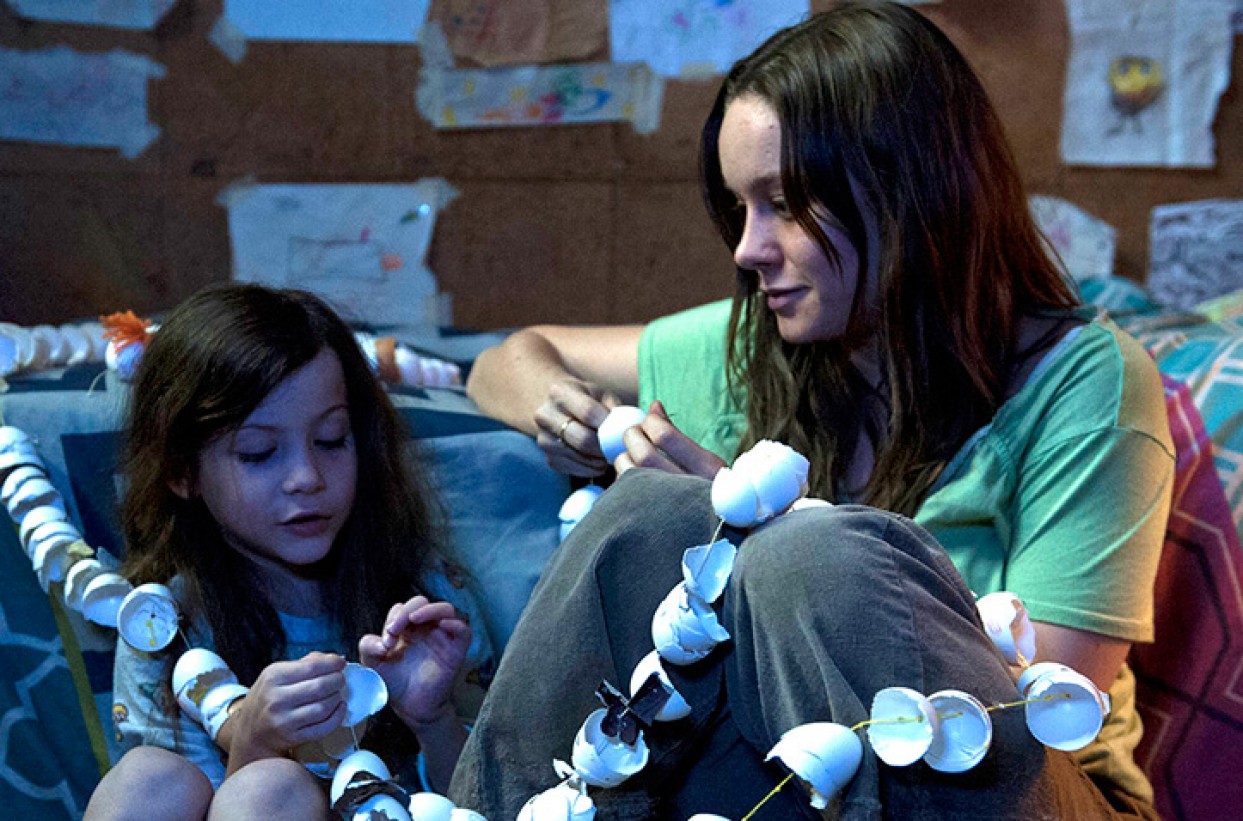 Alejandro González Iñárritu’s The Revenant leads all films in the 2016 Vancouver Film Critics Circle International section with three nominations.
The nominees for Best Documentary are Amy, Cartel Land and Going Clear: Scientology and the Prison of Belief, while The Assassin, Goodnight Mommy and Son of Saul are up for Best Foreign Language Film.
A riveting and uplifting tale of a mother and son escaping confinement, the Canadian-Irish co-production Room has earned six VFCC nominations in the Canadian categories, including one for Best Canadian Film, and director Lenny Abrahamson is nominated for Best Director of a Canadian Film,
Room (pictured above) will face off against Guy Maddin and co-director Evan Johnson’s The Forbidden Room and Andrew Cividino’s Sleeping Giant for Best Canadian Film.
Haida Gwaii: On the Edge of the World will also compete with Jerry Rothwell’s How to Change the World, Alan Zweig’s Hurt and Damien Gillis & Fiona Rayher’s Fractured Land for Best Canadian Documentary.
The full list of 2016 Vancouver Film Critics Circle International nominees.
BEST FILM
Mad Max: Fury Road
The Revenant
Spotlight
BEST ACTOR
Leonardo DiCaprio, The Revenant
Michal Fassbender, Steve Jobs
Eddie Redmayne, The Danish Girl
BEST ACTRESS
Cate Blanchett, Carol
Brie Larson, Room
Saoirse Ronan, Brooklyn
BEST SUPPORTING ACTOR
Mark Rylance, Bridge of Spies
Michael Shannon, 99 Homes
Sylvester Stallone, Creed
BEST SUPPORTING ACTRESS
Jennifer Jason Leigh, The Hateful Eight
Alicia Vikander, The Danish Girl
Alicia Vikander, Ex Machina
BEST DIRECTOR
Todd Haynes, Carol
Alejandro González Iñárritu, The Revenant
George Miller, Mad Max: Fury Road
BEST SCREENPLAY
Emma Donoghue, Room
Charlie Kaufman, Anomalisa
Josh Singer & Tom McCarthy, Spotlight
BEST FOREIGN LANGUAGE FILM
The Assassin
Goodnight Mommy
Son of Saul
BEST DOCUMENTARY
Amy
Cartel Land
Going Clear: Scientology and the Prison of Belief
The full list of nominees in the 2016 Vancouver Film Critics Circle Canadian categories.
BEST CANADIAN FILM
The Forbidden Room
Room
Sleeping Giant
BEST ACTOR IN A CANADIAN FILM
Michael Eklund, Eadweard
Christopher Plummer, Remember
Jacob Tremblay, Room
BEST ACTRESS IN A CANADIAN FILM
Marie Brassard, Sabali
Brie Larson, Room
Julia Sarah Stone, Wet Bum
BEST SUPPORTING ACTOR IN A CANADIAN FILM
Patrick Huard, My Internship in Canada
Reece Moffett, Sleeping Giant
Nick Serino, Sleeping Giant
BEST SUPPORTING ACTRESS IN A CANADIAN FILM
Joan Allen, Room
Suzanne Clement, My Internship in Canada
Tara Pratt, No Men Beyond This Point
BEST SCREENPLAY FOR A CANADIAN FILM
Benjamin August, Remember
Andrew Cividino, Blain Watters & Aaron Yeger, Sleeping Giant
Emma Donoghue, Room
BEST DIRECTOR OF A CANADIAN FILM
Lenny Abrahamson, Room
Andrew Cividino, Sleeping Giant
Atom Egoyan, Remember
BEST CANADIAN DOCUMENTARY
Haida Gwaii: On the Edge of the World
Fractured Land
How to Change the World
Hurt
BEST FIRST FILM BY A CANADIAN DIRECTOR
Hit 2 Pass, Kurt Walker
Sleeping Giant, Andrew Cividino
Wet Bum, Lindsay Mackay
BEST BRITISH COLUMBIA FILM
Eadweard
Haida Gwaii: On the Edge of the World
No Men Beyond This Point
Alejandro González Iñárritu’s The Revenant leads all films in the 2016 Vancouver Film Critics Circle International section with three nominations.
The nominees for Best Documentary are Amy, Cartel Land and Going Clear: Scientology and the Prison of Belief, while The Assassin, Goodnight Mommy and Son of Saul are up for Best Foreign Language Film.
A riveting and uplifting tale of a mother and son escaping confinement, the Canadian-Irish co-production Room has earned six VFCC nominations in the Canadian categories, including one for Best Canadian Film, and director Lenny Abrahamson is nominated for Best Director of a Canadian Film,
Room (pictured above) will face off against Guy Maddin and co-director Evan Johnson’s The Forbidden Room and Andrew Cividino’s Sleeping Giant for Best Canadian Film.
Haida Gwaii: On the Edge of the World will also compete with Jerry Rothwell’s How to Change the World, Alan Zweig’s Hurt and Damien Gillis & Fiona Rayher’s Fractured Land for Best Canadian Documentary.
The full list of 2016 Vancouver Film Critics Circle International nominees.
BEST FILM
Mad Max: Fury Road
The Revenant
Spotlight
BEST ACTOR
Leonardo DiCaprio, The Revenant
Michal Fassbender, Steve Jobs
Eddie Redmayne, The Danish Girl
BEST ACTRESS
Cate Blanchett, Carol
Brie Larson, Room
Saoirse Ronan, Brooklyn
BEST SUPPORTING ACTOR
Mark Rylance, Bridge of Spies
Michael Shannon, 99 Homes
Sylvester Stallone, Creed
BEST SUPPORTING ACTRESS
Jennifer Jason Leigh, The Hateful Eight
Alicia Vikander, The Danish Girl
Alicia Vikander, Ex Machina
BEST DIRECTOR
Todd Haynes, Carol
Alejandro González Iñárritu, The Revenant
George Miller, Mad Max: Fury Road
BEST SCREENPLAY
Emma Donoghue, Room
Charlie Kaufman, Anomalisa
Josh Singer & Tom McCarthy, Spotlight
BEST FOREIGN LANGUAGE FILM
The Assassin
Goodnight Mommy
Son of Saul
BEST DOCUMENTARY
Amy
Cartel Land
Going Clear: Scientology and the Prison of Belief
The full list of nominees in the 2016 Vancouver Film Critics Circle Canadian categories.
BEST CANADIAN FILM
The Forbidden Room
Room
Sleeping Giant
BEST ACTOR IN A CANADIAN FILM
Michael Eklund, Eadweard
Christopher Plummer, Remember
Jacob Tremblay, Room
BEST ACTRESS IN A CANADIAN FILM
Marie Brassard, Sabali
Brie Larson, Room
Julia Sarah Stone, Wet Bum
BEST SUPPORTING ACTOR IN A CANADIAN FILM
Patrick Huard, My Internship in Canada
Reece Moffett, Sleeping Giant
Nick Serino, Sleeping Giant
BEST SUPPORTING ACTRESS IN A CANADIAN FILM
Joan Allen, Room
Suzanne Clement, My Internship in Canada
Tara Pratt, No Men Beyond This Point
BEST SCREENPLAY FOR A CANADIAN FILM
Benjamin August, Remember
Andrew Cividino, Blain Watters & Aaron Yeger, Sleeping Giant
Emma Donoghue, Room
BEST DIRECTOR OF A CANADIAN FILM
Lenny Abrahamson, Room
Andrew Cividino, Sleeping Giant
Atom Egoyan, Remember
BEST CANADIAN DOCUMENTARY
Haida Gwaii: On the Edge of the World
Fractured Land
How to Change the World
Hurt
BEST FIRST FILM BY A CANADIAN DIRECTOR
Hit 2 Pass, Kurt Walker
Sleeping Giant, Andrew Cividino
Wet Bum, Lindsay Mackay
BEST BRITISH COLUMBIA FILM
Eadweard
Haida Gwaii: On the Edge of the World
No Men Beyond This Point
-
Dallas-Fort Worth Film Critics Association Picks SPOTLIGHT as 2015 Best Film; TANGERINE Wins Best Indie Film
 The Dallas-Fort Worth Film Critics Association voted the newsroom drama SPOTLIGHT as the best film of 2015, according to the results of its 22nd annual critics’ poll. This year’s awards are presented in memory of Philip Wuntch, the longtime Dallas Morning News film critic who passed away in October.
Rounding out the composite list of the top 10 films of the year were THE REVENANT (2), CAROL (3), SICARIO (4), MAD MAX: FURY ROAD (5), THE BIG SHORT (6), THE MARTIAN (7), ROOM (8), THE DANISH GIRL (9) and BROOKLYN (10).
The association voted SON OF SAUL as the best foreign language film of the year. Runners-up included THE ASSASSIN (2), THE SECOND MOTHER (3), MUSTANG (4) and GOODNIGHT MOMMY (5).
AMY won for Best Documentary over THE LOOK OF SILENCE (2), THE WOLFPACK (3), GOING CLEAR: SCIENTOLOGY AND THE PRISON OF BELIEF (4) and THE HUNTING GROUND (5).
The association voted TANGERINE as the winner of the Russell Smith Award, named for the late Dallas Morning News film critic. The honor is given annually to the best low-budget or cutting-edge independent film.
The 2015 Dallas-Fort Worth Film Critics Association award winners.
Best Picture:
Spotlight (director — Tom McCarthy)
Best Animated Feature:
Inside Out (director — Pete Docter)
Best Foreign Language Film:
Son of Saul (Hungary)
Best Documentary:
Amy
Best Director:
Alejandro Gonzalez Inarritu (The Revenant)
Best Actor:
Leonardo DiCaprio (The Revenant)
Best Actress:
Brie Larson (Room)
Best Supporting Actor:
Paul Dano (Love and Mercy)
Best Supporting Actress:
Rooney Mara (Carol)
Best Screenplay:
Spotlight (Josh Singer, TomMcCarthy)
Best Cinematography:
Emmanuel Lubezki (The Revenant)
Best Musical Score:
The Revenant (Bryce Dessner, Carsten Nicolai and Ryûichi Sakamoto)
Russell Smith Award (named for the late Dallas Morning News film critic. The honor is given annually to the best low-budget or cutting-edge independent film.)
Tangerine (director — Sean Baker)
The Dallas-Fort Worth Film Critics Association voted the newsroom drama SPOTLIGHT as the best film of 2015, according to the results of its 22nd annual critics’ poll. This year’s awards are presented in memory of Philip Wuntch, the longtime Dallas Morning News film critic who passed away in October.
Rounding out the composite list of the top 10 films of the year were THE REVENANT (2), CAROL (3), SICARIO (4), MAD MAX: FURY ROAD (5), THE BIG SHORT (6), THE MARTIAN (7), ROOM (8), THE DANISH GIRL (9) and BROOKLYN (10).
The association voted SON OF SAUL as the best foreign language film of the year. Runners-up included THE ASSASSIN (2), THE SECOND MOTHER (3), MUSTANG (4) and GOODNIGHT MOMMY (5).
AMY won for Best Documentary over THE LOOK OF SILENCE (2), THE WOLFPACK (3), GOING CLEAR: SCIENTOLOGY AND THE PRISON OF BELIEF (4) and THE HUNTING GROUND (5).
The association voted TANGERINE as the winner of the Russell Smith Award, named for the late Dallas Morning News film critic. The honor is given annually to the best low-budget or cutting-edge independent film.
The 2015 Dallas-Fort Worth Film Critics Association award winners.
Best Picture:
Spotlight (director — Tom McCarthy)
Best Animated Feature:
Inside Out (director — Pete Docter)
Best Foreign Language Film:
Son of Saul (Hungary)
Best Documentary:
Amy
Best Director:
Alejandro Gonzalez Inarritu (The Revenant)
Best Actor:
Leonardo DiCaprio (The Revenant)
Best Actress:
Brie Larson (Room)
Best Supporting Actor:
Paul Dano (Love and Mercy)
Best Supporting Actress:
Rooney Mara (Carol)
Best Screenplay:
Spotlight (Josh Singer, TomMcCarthy)
Best Cinematography:
Emmanuel Lubezki (The Revenant)
Best Musical Score:
The Revenant (Bryce Dessner, Carsten Nicolai and Ryûichi Sakamoto)
Russell Smith Award (named for the late Dallas Morning News film critic. The honor is given annually to the best low-budget or cutting-edge independent film.)
Tangerine (director — Sean Baker)
-
San Francisco Film Critics Circle Picks SPOTLIGHT as Best Picture of 2015; Guy Maddin’s THE FORBIDDEN ROOM Wins For ‘Underappreciated Independent Film’
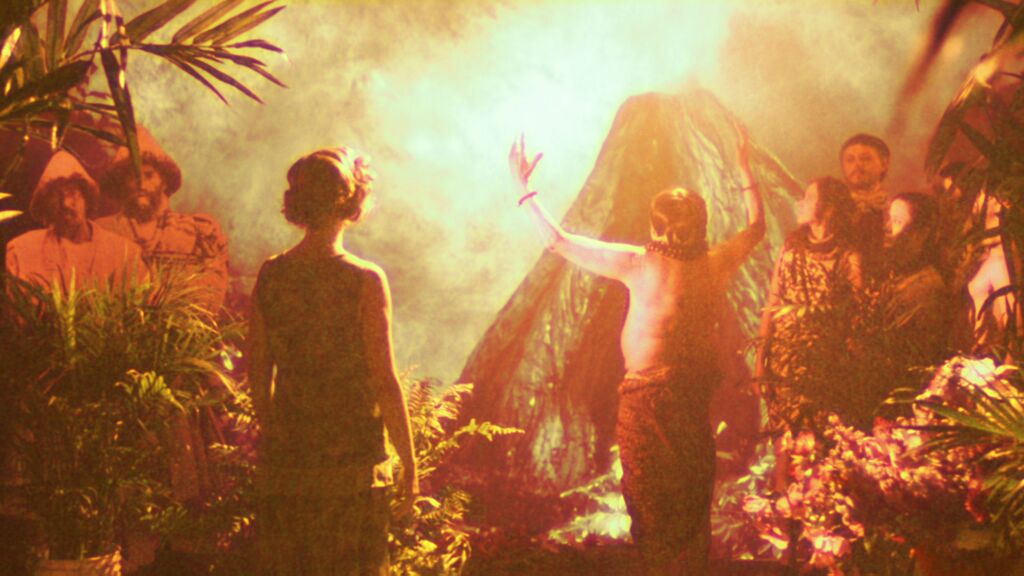 The San Francisco Film Critics Circle picked SPOTLIGHT as the Best Picture of 2015, and gave three awards to MAD MAX: FURY ROAD, two to BROOKLYN and two to LOVE & MERCY.
Paul Dano and Saoirse Ronan collected Best Actor and Best Actress, the former for his portrayal of Brian Wilson’s youthful but troubled musical genius in LOVE & MERCY and the latter for essaying delicate, nuanced emotional detail as a young immigrant woman coming of age and facing the choice of her life in BROOKLYN. The same films were also recognized for their screenwriters: Oren Moverman and Michael Alan Lerner for the thoughtfully structured biopic LOVE & MERCY and Nick Hornby for locating the emotion and internal struggle of an immigrant experience in his screen adaptation of the novel BROOKLYN.
Best Supporting Actor and Best Supporting Actress honors went, respectively, to Michael Shannon for his utterly credible work as a fiery real-estate exploiter in 99 HOMES and Mya Taylor for powerfully grounding, with heart and humor, TANGERINE, a tale of transgender sex workers navigating a nighttime odyssey on the streets of L.A.
The SFFCC recognized SON OF SAUL as Best Foreign Language Film, ANOMALISA as Best Animated Feature, and LISTEN TO ME MARLON as Best Documentary. Finally, the SFFCC’s annual Special Citation Award for an underappreciated independent film went to Guy Maddin’s THE FORBIDDEN ROOM (pictured above).
Best Picture
WINNER – SPOTLIGHT
BROOKLYN
CAROL
LOVE & MERCY
MAD MAX: FURY ROAD
Best Director
WINNER – George Miller, MAD MAX: FURY ROAD
John Crowley, BROOKLYN
Todd Haynes, CAROL
Alejandro González Iñárritu, THE REVENANT
Tom McCarthy, SPOTLIGHT
Best Actor
WINNER – Paul Dano, LOVE & MERCY
Bryan Cranston, TRUMBO
Leonardo DiCaprio, THE REVENANT
Michael Fassbender, STEVE JOBS
Ian McKellen, MR. HOLMES
Best Actress
WINNER – Saoirse Ronan, BROOKLYN
Cate Blanchett, CAROL
Brie Larson, ROOM
Rooney Mara, CAROL
Charlotte Rampling, 45 YEARS
Best Supporting Actor
WINNER – Michael Shannon, 99 HOMES
Paul Dano, LOVE & MERCY
Benicio Del Toro, SICARIO
Mark Rylance, BRIDGE OF SPIES
Sylvester Stallone, CREED
Best Supporting Actress
WINNER – Mya Taylor, TANGERINE
Elizabeth Banks, LOVE & MERCY
Helen Mirren, TRUMBO
Alicia Vikander, THE DANISH GIRL
Alicia Vikander, EX MACHINA
Best Screenplay, Original
WINNER – LOVE & MERCY, Oren Moverman; Michael Alan Lerner
EX MACHINA, Alex Garland
SICARIO, Taylor Sheridan
SPOTLIGHT, Tom McCarthy; Josh Singer
TANGERINE, Sean Baker; Chris Bergoch
Best Screenplay, Adapted
WINNER – BROOKLYN, Nick Hornby
CAROL, Phyllis Nagy
DIARY OF A TEENAGE GIRL, Marielle Heller
45 YEARS, Andrew Haigh
THE MARTIAN, Drew Goddard
ROOM, Emma Donahue
Best Cinematography
WINNER – MAD MAX: FURY ROAD, John Seale
THE ASSASSIN, Ping Bing Lee
CAROL, Edward Lachmann
THE REVENANT, Emmanuel Lubezki
SICARIO, Roger Deakins
Best Production Design
WINNER – CAROL, Judy Becker; Heather Loeffler
BRIDGE OF SPIES, Adam Stockhausen; Rena DeAngelo; Bernard Henrich
BROOKLYN, François Séguin; Suzanne Cloutier
MAD MAX: FURY ROAD, Colin Gibson; Katie Sherrock; Lisa Thompson
THE REVENANT, Jack Fisk; Hamish Purdy
Best Film Editing
WINNER – MAD MAX: FURY ROAD, Margaret Sixel
THE BIG SHORT, Hank Corwin
LOVE & MERCY, Dino Jonsater
THE REVENANT, Stephen Mirrione
SICARIO, Joe Walker
Best Animated Feature
WINNER – ANOMALISA
BOY AND THE WORLD
INSIDE OUT
THE PEANUTS MOVIE
SHAUN THE SHEEP
Best Foreign Language Picture
WINNER – SON OF SAUL
THE ASSASSIN
GOODNIGHT MOMMY
A PIGEON SAT ON A BRANCH REFLECTING ON EXISTENCE
TIMBUKTU
Best Documentary
WINNER – LISTEN TO ME MARLON
AMY
BEST OF ENEMIES
THE LOOK OF SILENCE
MERU
Marlon Riggs Award for courage & vision in the Bay Area film community
Frank Lee For his lifelong dedication to film culture in San Francisco—in particular his twenty-plus-year film stewardship of the 4 Star Theatre in the tradition of the family-run independent art house and his attention to Hong Kong film, both marked by his astute taste and knowledge.
Special Citation for under-appreciated independent cinema
THE FORBIDDEN ROOM Guy Maddin’s haunted scream, full of artfully recreated, vinegar-eaten celluloid, is a rat’s nest of affairs too strange to recall and too troubling to forget
The San Francisco Film Critics Circle picked SPOTLIGHT as the Best Picture of 2015, and gave three awards to MAD MAX: FURY ROAD, two to BROOKLYN and two to LOVE & MERCY.
Paul Dano and Saoirse Ronan collected Best Actor and Best Actress, the former for his portrayal of Brian Wilson’s youthful but troubled musical genius in LOVE & MERCY and the latter for essaying delicate, nuanced emotional detail as a young immigrant woman coming of age and facing the choice of her life in BROOKLYN. The same films were also recognized for their screenwriters: Oren Moverman and Michael Alan Lerner for the thoughtfully structured biopic LOVE & MERCY and Nick Hornby for locating the emotion and internal struggle of an immigrant experience in his screen adaptation of the novel BROOKLYN.
Best Supporting Actor and Best Supporting Actress honors went, respectively, to Michael Shannon for his utterly credible work as a fiery real-estate exploiter in 99 HOMES and Mya Taylor for powerfully grounding, with heart and humor, TANGERINE, a tale of transgender sex workers navigating a nighttime odyssey on the streets of L.A.
The SFFCC recognized SON OF SAUL as Best Foreign Language Film, ANOMALISA as Best Animated Feature, and LISTEN TO ME MARLON as Best Documentary. Finally, the SFFCC’s annual Special Citation Award for an underappreciated independent film went to Guy Maddin’s THE FORBIDDEN ROOM (pictured above).
Best Picture
WINNER – SPOTLIGHT
BROOKLYN
CAROL
LOVE & MERCY
MAD MAX: FURY ROAD
Best Director
WINNER – George Miller, MAD MAX: FURY ROAD
John Crowley, BROOKLYN
Todd Haynes, CAROL
Alejandro González Iñárritu, THE REVENANT
Tom McCarthy, SPOTLIGHT
Best Actor
WINNER – Paul Dano, LOVE & MERCY
Bryan Cranston, TRUMBO
Leonardo DiCaprio, THE REVENANT
Michael Fassbender, STEVE JOBS
Ian McKellen, MR. HOLMES
Best Actress
WINNER – Saoirse Ronan, BROOKLYN
Cate Blanchett, CAROL
Brie Larson, ROOM
Rooney Mara, CAROL
Charlotte Rampling, 45 YEARS
Best Supporting Actor
WINNER – Michael Shannon, 99 HOMES
Paul Dano, LOVE & MERCY
Benicio Del Toro, SICARIO
Mark Rylance, BRIDGE OF SPIES
Sylvester Stallone, CREED
Best Supporting Actress
WINNER – Mya Taylor, TANGERINE
Elizabeth Banks, LOVE & MERCY
Helen Mirren, TRUMBO
Alicia Vikander, THE DANISH GIRL
Alicia Vikander, EX MACHINA
Best Screenplay, Original
WINNER – LOVE & MERCY, Oren Moverman; Michael Alan Lerner
EX MACHINA, Alex Garland
SICARIO, Taylor Sheridan
SPOTLIGHT, Tom McCarthy; Josh Singer
TANGERINE, Sean Baker; Chris Bergoch
Best Screenplay, Adapted
WINNER – BROOKLYN, Nick Hornby
CAROL, Phyllis Nagy
DIARY OF A TEENAGE GIRL, Marielle Heller
45 YEARS, Andrew Haigh
THE MARTIAN, Drew Goddard
ROOM, Emma Donahue
Best Cinematography
WINNER – MAD MAX: FURY ROAD, John Seale
THE ASSASSIN, Ping Bing Lee
CAROL, Edward Lachmann
THE REVENANT, Emmanuel Lubezki
SICARIO, Roger Deakins
Best Production Design
WINNER – CAROL, Judy Becker; Heather Loeffler
BRIDGE OF SPIES, Adam Stockhausen; Rena DeAngelo; Bernard Henrich
BROOKLYN, François Séguin; Suzanne Cloutier
MAD MAX: FURY ROAD, Colin Gibson; Katie Sherrock; Lisa Thompson
THE REVENANT, Jack Fisk; Hamish Purdy
Best Film Editing
WINNER – MAD MAX: FURY ROAD, Margaret Sixel
THE BIG SHORT, Hank Corwin
LOVE & MERCY, Dino Jonsater
THE REVENANT, Stephen Mirrione
SICARIO, Joe Walker
Best Animated Feature
WINNER – ANOMALISA
BOY AND THE WORLD
INSIDE OUT
THE PEANUTS MOVIE
SHAUN THE SHEEP
Best Foreign Language Picture
WINNER – SON OF SAUL
THE ASSASSIN
GOODNIGHT MOMMY
A PIGEON SAT ON A BRANCH REFLECTING ON EXISTENCE
TIMBUKTU
Best Documentary
WINNER – LISTEN TO ME MARLON
AMY
BEST OF ENEMIES
THE LOOK OF SILENCE
MERU
Marlon Riggs Award for courage & vision in the Bay Area film community
Frank Lee For his lifelong dedication to film culture in San Francisco—in particular his twenty-plus-year film stewardship of the 4 Star Theatre in the tradition of the family-run independent art house and his attention to Hong Kong film, both marked by his astute taste and knowledge.
Special Citation for under-appreciated independent cinema
THE FORBIDDEN ROOM Guy Maddin’s haunted scream, full of artfully recreated, vinegar-eaten celluloid, is a rat’s nest of affairs too strange to recall and too troubling to forget
-
Carol, The Assassin, Among Films on Film Comment 2015 Best-of-Year Lists
 Film Comment’s annual end-of-the-year survey of film critics, journalists, film-section editors, and past and present contributors is out, and Todd Haynes’s Carol, Hou Hsiao-hsien’s The Assassin (pictured above), and George Miller’s Mad Max: Fury Road take the top spots among films released in 2015. Of the films that made appearances at film festivals or special screenings worldwide but have not received stateside distribution this year, Hong Sangsoo’s Right Now, Wrong Then, Athina Rachel Tsangari’s Chevalier, and Ben Rivers’s The Sky Trembles and the Earth Is Afraid and the Two Eyes Are Not Brothers received the top rankings.
Film Comment 2015 Top 10 Films Released in:
1. Carol Todd Haynes, U.S.
2. The Assassin Hou Hsiao-hsien, Taiwan
3. Mad Max: Fury Road George Miller, U.S.
4. Clouds of Sils Maria Olivier Assayas, France
5. Arabian Nights Miguel Gomes, Portugal
6. Timbuktu Abderrahmane Sissako, Mauritania/France
7. Spotlight Tom McCarthy, U.S.
8. Phoenix Christian Petzold, Germany
9. Inside Out Pete Docter & Ronnie del Carmen, U.S.
10. The Look of Silence Joshua Oppenheimer, Denmark/Indonesia
The rankings of other films making strong showings during the awards season are John Crowley’s Brooklyn (#18), Frederick Wiseman’s In Jackson Heights (#13), and Steven Spielberg’s Bridge of Spies (#20). Hou Hsiao-hsien’s The Assassin (#2) was the cover subject of Film Comment magazine’s September/October issue, and László Nemes’s Son of Saul (#14) was the cover subject of the November/December issue.
Film Comment’s survey also ranks films that have screened and made notable appearances at festivals throughout the year, but remain without U.S. distribution at press time.
Film Comment 2015 Top 10 Unreleased Films:
1. Right Now, Wrong Then Hong Sangsoo, South Korea
2. Chevalier Athina Rachel Tsangari, Greece
3. The Sky Trembles and the Earth Is Afraid and the Two Eyes Are Not Brothers Ben Rivers, U.K.
4. The Academy of Muses José Luis Guerín, Spain
5. Don’t Blink – Robert Frank Laura Israel, U.S.
6. Cosmos Andrzej Zulawski, Poland
7. Journey to the Shore Kiyoshi Kurosawa, Japan
8. Happy Hour Ryusuke Hamaguchi, Japan
9. Lost and Beautiful Pietro Marcello, Italy
10. Minotaur Nicolas Pereda, Mexico
Film Comment editor Gavin Smith said: “The 20 films that critics have voted for can be divided into four categories: mainstream Hollywood critical and box-office hits (3), American art-house-inclined indies (7), foreign-language art movies in a variety of familiar modes (5), and foreign-language movies that challenge viewers to enter cinematic realms they’ve never previously experienced (5). That balance, which happens to be encapsulated in the top five in micro form, feels about right for the agenda of this magazine, which, since the very beginning, has been to champion the best in cinema wherever it hails from, all creatures great and small. Since we managed to run features on 11 of these and sung the praises of another five, it’s a pleasure to close out the year on a high note.”
Film Comment’s annual end-of-the-year survey of film critics, journalists, film-section editors, and past and present contributors is out, and Todd Haynes’s Carol, Hou Hsiao-hsien’s The Assassin (pictured above), and George Miller’s Mad Max: Fury Road take the top spots among films released in 2015. Of the films that made appearances at film festivals or special screenings worldwide but have not received stateside distribution this year, Hong Sangsoo’s Right Now, Wrong Then, Athina Rachel Tsangari’s Chevalier, and Ben Rivers’s The Sky Trembles and the Earth Is Afraid and the Two Eyes Are Not Brothers received the top rankings.
Film Comment 2015 Top 10 Films Released in:
1. Carol Todd Haynes, U.S.
2. The Assassin Hou Hsiao-hsien, Taiwan
3. Mad Max: Fury Road George Miller, U.S.
4. Clouds of Sils Maria Olivier Assayas, France
5. Arabian Nights Miguel Gomes, Portugal
6. Timbuktu Abderrahmane Sissako, Mauritania/France
7. Spotlight Tom McCarthy, U.S.
8. Phoenix Christian Petzold, Germany
9. Inside Out Pete Docter & Ronnie del Carmen, U.S.
10. The Look of Silence Joshua Oppenheimer, Denmark/Indonesia
The rankings of other films making strong showings during the awards season are John Crowley’s Brooklyn (#18), Frederick Wiseman’s In Jackson Heights (#13), and Steven Spielberg’s Bridge of Spies (#20). Hou Hsiao-hsien’s The Assassin (#2) was the cover subject of Film Comment magazine’s September/October issue, and László Nemes’s Son of Saul (#14) was the cover subject of the November/December issue.
Film Comment’s survey also ranks films that have screened and made notable appearances at festivals throughout the year, but remain without U.S. distribution at press time.
Film Comment 2015 Top 10 Unreleased Films:
1. Right Now, Wrong Then Hong Sangsoo, South Korea
2. Chevalier Athina Rachel Tsangari, Greece
3. The Sky Trembles and the Earth Is Afraid and the Two Eyes Are Not Brothers Ben Rivers, U.K.
4. The Academy of Muses José Luis Guerín, Spain
5. Don’t Blink – Robert Frank Laura Israel, U.S.
6. Cosmos Andrzej Zulawski, Poland
7. Journey to the Shore Kiyoshi Kurosawa, Japan
8. Happy Hour Ryusuke Hamaguchi, Japan
9. Lost and Beautiful Pietro Marcello, Italy
10. Minotaur Nicolas Pereda, Mexico
Film Comment editor Gavin Smith said: “The 20 films that critics have voted for can be divided into four categories: mainstream Hollywood critical and box-office hits (3), American art-house-inclined indies (7), foreign-language art movies in a variety of familiar modes (5), and foreign-language movies that challenge viewers to enter cinematic realms they’ve never previously experienced (5). That balance, which happens to be encapsulated in the top five in micro form, feels about right for the agenda of this magazine, which, since the very beginning, has been to champion the best in cinema wherever it hails from, all creatures great and small. Since we managed to run features on 11 of these and sung the praises of another five, it’s a pleasure to close out the year on a high note.”
-
‘Carol’ ‘Brooklyn’ ‘The Danish Girl’ ‘Spotlight’ Among 21st Critics’ Choice Awards Nominations
 “Mad Max: Fury Road” leads the nominations for the 21st Critics’ Choice Awards with 13 nominations including Best Picture. “Carol,” impressed with nine nominations including Best Picture, and Best Director. “Spotlight” earned eight nominations, “Brooklyn,” “The Danish Girl,” each garnered five nominations and “Room” earned four.
The winners will be revealed live at the Critics’ Choice Awards gala, which will be broadcast from the Barker Hangar in Santa Monica on A&E, Lifetime and LMN on Sunday, January 17 at 8PM ET/ 5PM PT. Actor and comedian T.J. Miller will serve as the show’s host.
NOMINATIONS FOR THE 21st CRITICS’ CHOICE AWARDS
BEST PICTURE
The Big Short
Bridge of Spies
Brooklyn
Carol
Mad Max: Fury Road
The Martian
The Revenant
Room
Sicario
Spotlight
BEST ACTOR
Bryan Cranston – Trumbo
Matt Damon – The Martian
Johnny Depp – Black Mass
Leonardo DiCaprio – The Revenant
Michael Fassbender – Steve Jobs
Eddie Redmayne – The Danish Girl
BEST ACTRESS
Cate Blanchett – Carol
Brie Larson – Room
Jennifer Lawrence – Joy
Charlotte Rampling – 45 Years
Saoirse Ronan – Brooklyn
Charlize Theron – Mad Max: Fury Road
BEST SUPPORTING ACTOR
Paul Dano – Love & Mercy
Tom Hardy – The Revenant
Mark Ruffalo – Spotlight
Mark Rylance – Bridge of Spies
Michael Shannon – 99 Homes
Sylvester Stallone – Creed
BEST SUPPORTING ACTRESS
Jennifer Jason Leigh – The Hateful Eight
Rooney Mara – Carol
Rachel McAdams – Spotlight
Helen Mirren – Trumbo
Alicia Vikander – The Danish Girl
Kate Winslet – Steve Jobs
BEST YOUNG ACTOR/ACTRESS
Abraham Attah – Beasts of No Nation
RJ Cyler – Me and Earl and the Dying Girl
Shameik Moore – Dope
Milo Parker – Mr. Holmes
Jacob Tremblay – Room
BEST ACTING ENSEMBLE
The Big Short
The Hateful Eight
Spotlight
Straight Outta Compton
Trumbo
BEST DIRECTOR
Todd Haynes – Carol
Alejandro González Iñárritu – The Revenant
Tom McCarthy – Spotlight
George Miller – Mad Max: Fury Road
Ridley Scott – The Martian
Steven Spielberg – Bridge of Spies
BEST ORIGINAL SCREENPLAY
Matt Charman and Ethan Coen & Joel Coen – Bridge of Spies
Alex Garland – Ex Machina
Quentin Tarantino – The Hateful Eight
Pete Docter, Meg LeFauve, Josh Cooley – Inside Out
Josh Singer and Tom McCarthy – Spotlight
BEST ADAPTED SCREENPLAY
Charles Randolph and Adam McKay – The Big Short
Nick Hornby – Brooklyn
Drew Goddard – The Martian
Emma Donoghue – Room
Aaron Sorkin – Steve Jobs
BEST CINEMATOGRAPHY
Carol – Ed Lachman
The Hateful Eight – Robert Richardson
Mad Max: Fury Road – John Seale
The Martian – Dariusz Wolski
The Revenant – Emmanuel Lubezki
Sicario – Roger Deakins
BEST PRODUCTION DESIGN
Bridge of Spies – Adam Stockhausen, Rena DeAngelo
Brooklyn – François Séguin, Jennifer Oman and Louise Tremblay
Carol – Judy Becker, Heather Loeffler
The Danish Girl – Eve Stewart, Michael Standish
Mad Max: Fury Road – Colin Gibson
The Martian – Arthur Max, Celia Bobak
BEST EDITING
The Big Short – Hank Corwin
Mad Max: Fury Road – Margaret Sixel
The Martian – Pietro Scalia
The Revenant – Stephen Mirrione
Spotlight – Tom McArdle
BEST COSTUME DESIGN
Brooklyn – Odile Dicks-Mireaux
Carol – Sandy Powell
Cinderella – Sandy Powell
The Danish Girl – Paco Delgado
Mad Max: Fury Road – Jenny Beavan
BEST HAIR & MAKEUP
Black Mass
Carol
The Danish Girl
The Hateful Eight
Mad Max: Fury Road
The Revenant
BEST VISUAL EFFECTS
Ex Machina
Jurassic World
Mad Max: Fury Road
The Martian
The Revenant
The Walk
BEST ANIMATED FEATURE
Anomalisa
The Good Dinosaur
Inside Out
The Peanuts Movie
Shaun the Sheep Movie
BEST ACTION MOVIE
Furious 7
Jurassic World
Mad Max: Fury Road
Mission Impossible: Rogue Nation
Sicario
BEST ACTOR IN AN ACTION MOVIE
Daniel Craig – Spectre
Tom Cruise – Mission Impossible: Rogue Nation
Tom Hardy – Mad Max: Fury Road
Chris Pratt – Jurassic World
Paul Rudd – Ant-Man
BEST ACTRESS IN AN ACTION MOVIE
Emily Blunt – Sicario
Rebecca Ferguson – Mission Impossible: Rogue Nation
Bryce Dallas Howard – Jurassic World
Jennifer Lawrence – The Hunger Games: Mockingjay – Part 2
Charlize Theron – Mad Max: Fury Road
BEST COMEDY
The Big Short
Inside Out
Joy
Sisters
Spy
Trainwreck
BEST ACTOR IN A COMEDY
Christian Bale – The Big Short
Steve Carell – The Big Short
Robert De Niro – The Intern
Bill Hader – Trainwreck
Jason Statham – Spy
BEST ACTRESS IN A COMEDY
Tina Fey – Sisters
Jennifer Lawrence – Joy
Melissa McCarthy – Spy
Amy Schumer – Trainwreck
Lily Tomlin – Grandma
BEST SCI-FI/HORROR MOVIE
Ex Machina
It Follows
Jurassic World
Mad Max: Fury Road
The Martian
BEST FOREIGN LANGUAGE FILM
The Assassin
Goodnight Mommy
Mustang
The Second Mother
Son of Saul
BEST DOCUMENTARY FEATURE
Amy
Cartel Land
Going Clear: Scientology and the Prison of Belief
He Named Me Malala
The Look of Silence
Where to Invade Next
BEST SONG
Fifty Shades of Grey – Love Me Like You Do
Furious 7 – See You Again
The Hunting Ground – Til It Happens To You
Love & Mercy – One Kind of Love
Spectre – Writing’s on the Wall
Youth – Simple Song #3
BEST SCORE
Carol – Carter Burwell
The Hateful Eight – Ennio Morricone
The Revenant – Ryuichi Sakamoto and Alva Noto
Sicario – Johann Johannsson
Spotlight – Howard Shore
“Mad Max: Fury Road” leads the nominations for the 21st Critics’ Choice Awards with 13 nominations including Best Picture. “Carol,” impressed with nine nominations including Best Picture, and Best Director. “Spotlight” earned eight nominations, “Brooklyn,” “The Danish Girl,” each garnered five nominations and “Room” earned four.
The winners will be revealed live at the Critics’ Choice Awards gala, which will be broadcast from the Barker Hangar in Santa Monica on A&E, Lifetime and LMN on Sunday, January 17 at 8PM ET/ 5PM PT. Actor and comedian T.J. Miller will serve as the show’s host.
NOMINATIONS FOR THE 21st CRITICS’ CHOICE AWARDS
BEST PICTURE
The Big Short
Bridge of Spies
Brooklyn
Carol
Mad Max: Fury Road
The Martian
The Revenant
Room
Sicario
Spotlight
BEST ACTOR
Bryan Cranston – Trumbo
Matt Damon – The Martian
Johnny Depp – Black Mass
Leonardo DiCaprio – The Revenant
Michael Fassbender – Steve Jobs
Eddie Redmayne – The Danish Girl
BEST ACTRESS
Cate Blanchett – Carol
Brie Larson – Room
Jennifer Lawrence – Joy
Charlotte Rampling – 45 Years
Saoirse Ronan – Brooklyn
Charlize Theron – Mad Max: Fury Road
BEST SUPPORTING ACTOR
Paul Dano – Love & Mercy
Tom Hardy – The Revenant
Mark Ruffalo – Spotlight
Mark Rylance – Bridge of Spies
Michael Shannon – 99 Homes
Sylvester Stallone – Creed
BEST SUPPORTING ACTRESS
Jennifer Jason Leigh – The Hateful Eight
Rooney Mara – Carol
Rachel McAdams – Spotlight
Helen Mirren – Trumbo
Alicia Vikander – The Danish Girl
Kate Winslet – Steve Jobs
BEST YOUNG ACTOR/ACTRESS
Abraham Attah – Beasts of No Nation
RJ Cyler – Me and Earl and the Dying Girl
Shameik Moore – Dope
Milo Parker – Mr. Holmes
Jacob Tremblay – Room
BEST ACTING ENSEMBLE
The Big Short
The Hateful Eight
Spotlight
Straight Outta Compton
Trumbo
BEST DIRECTOR
Todd Haynes – Carol
Alejandro González Iñárritu – The Revenant
Tom McCarthy – Spotlight
George Miller – Mad Max: Fury Road
Ridley Scott – The Martian
Steven Spielberg – Bridge of Spies
BEST ORIGINAL SCREENPLAY
Matt Charman and Ethan Coen & Joel Coen – Bridge of Spies
Alex Garland – Ex Machina
Quentin Tarantino – The Hateful Eight
Pete Docter, Meg LeFauve, Josh Cooley – Inside Out
Josh Singer and Tom McCarthy – Spotlight
BEST ADAPTED SCREENPLAY
Charles Randolph and Adam McKay – The Big Short
Nick Hornby – Brooklyn
Drew Goddard – The Martian
Emma Donoghue – Room
Aaron Sorkin – Steve Jobs
BEST CINEMATOGRAPHY
Carol – Ed Lachman
The Hateful Eight – Robert Richardson
Mad Max: Fury Road – John Seale
The Martian – Dariusz Wolski
The Revenant – Emmanuel Lubezki
Sicario – Roger Deakins
BEST PRODUCTION DESIGN
Bridge of Spies – Adam Stockhausen, Rena DeAngelo
Brooklyn – François Séguin, Jennifer Oman and Louise Tremblay
Carol – Judy Becker, Heather Loeffler
The Danish Girl – Eve Stewart, Michael Standish
Mad Max: Fury Road – Colin Gibson
The Martian – Arthur Max, Celia Bobak
BEST EDITING
The Big Short – Hank Corwin
Mad Max: Fury Road – Margaret Sixel
The Martian – Pietro Scalia
The Revenant – Stephen Mirrione
Spotlight – Tom McArdle
BEST COSTUME DESIGN
Brooklyn – Odile Dicks-Mireaux
Carol – Sandy Powell
Cinderella – Sandy Powell
The Danish Girl – Paco Delgado
Mad Max: Fury Road – Jenny Beavan
BEST HAIR & MAKEUP
Black Mass
Carol
The Danish Girl
The Hateful Eight
Mad Max: Fury Road
The Revenant
BEST VISUAL EFFECTS
Ex Machina
Jurassic World
Mad Max: Fury Road
The Martian
The Revenant
The Walk
BEST ANIMATED FEATURE
Anomalisa
The Good Dinosaur
Inside Out
The Peanuts Movie
Shaun the Sheep Movie
BEST ACTION MOVIE
Furious 7
Jurassic World
Mad Max: Fury Road
Mission Impossible: Rogue Nation
Sicario
BEST ACTOR IN AN ACTION MOVIE
Daniel Craig – Spectre
Tom Cruise – Mission Impossible: Rogue Nation
Tom Hardy – Mad Max: Fury Road
Chris Pratt – Jurassic World
Paul Rudd – Ant-Man
BEST ACTRESS IN AN ACTION MOVIE
Emily Blunt – Sicario
Rebecca Ferguson – Mission Impossible: Rogue Nation
Bryce Dallas Howard – Jurassic World
Jennifer Lawrence – The Hunger Games: Mockingjay – Part 2
Charlize Theron – Mad Max: Fury Road
BEST COMEDY
The Big Short
Inside Out
Joy
Sisters
Spy
Trainwreck
BEST ACTOR IN A COMEDY
Christian Bale – The Big Short
Steve Carell – The Big Short
Robert De Niro – The Intern
Bill Hader – Trainwreck
Jason Statham – Spy
BEST ACTRESS IN A COMEDY
Tina Fey – Sisters
Jennifer Lawrence – Joy
Melissa McCarthy – Spy
Amy Schumer – Trainwreck
Lily Tomlin – Grandma
BEST SCI-FI/HORROR MOVIE
Ex Machina
It Follows
Jurassic World
Mad Max: Fury Road
The Martian
BEST FOREIGN LANGUAGE FILM
The Assassin
Goodnight Mommy
Mustang
The Second Mother
Son of Saul
BEST DOCUMENTARY FEATURE
Amy
Cartel Land
Going Clear: Scientology and the Prison of Belief
He Named Me Malala
The Look of Silence
Where to Invade Next
BEST SONG
Fifty Shades of Grey – Love Me Like You Do
Furious 7 – See You Again
The Hunting Ground – Til It Happens To You
Love & Mercy – One Kind of Love
Spectre – Writing’s on the Wall
Youth – Simple Song #3
BEST SCORE
Carol – Carter Burwell
The Hateful Eight – Ennio Morricone
The Revenant – Ryuichi Sakamoto and Alva Noto
Sicario – Johann Johannsson
Spotlight – Howard Shore
-
Jamie M. Dagg’s RIVER Dominates 2015 Whistler Film Festival Awards
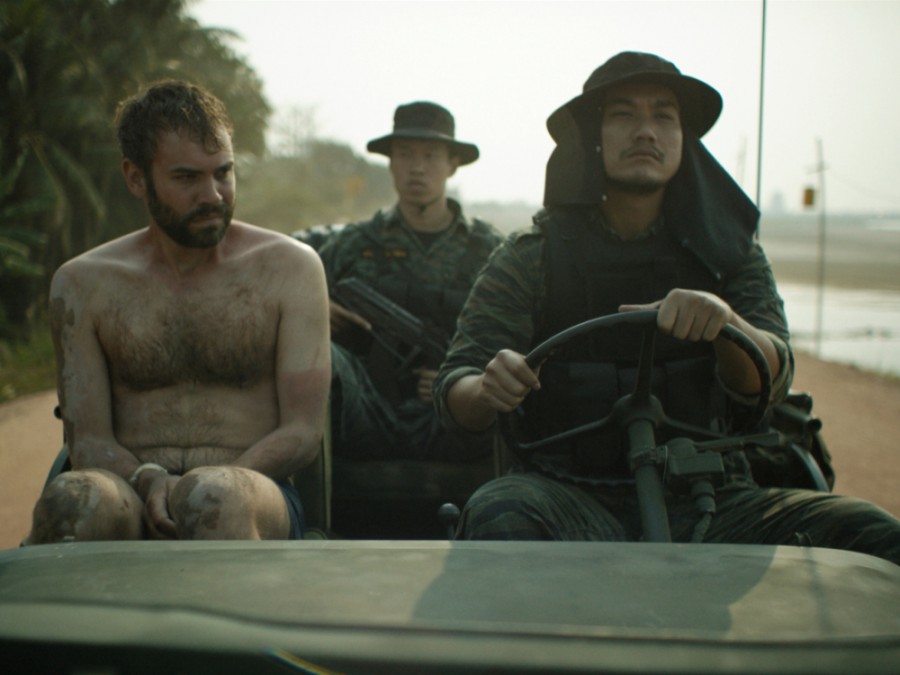 The 15th anniversary celebration of the Whistler Film Festival wrapped, and the romantic drama CAROL, directed by Todd Haynes and starring Cate Blanchett and Rooney Mara, took home the Pandora Audience Award. The WFF Audience Award runner-ups were THE LEGEND OF BARNEY THOMSON, actor Robert Carlyle’s first theatrical feature and directorial debut, which received its North American premiere at the festival, followed by Ricardo Trogi’s mid-life crisis dramedy, Quebec film LE MIRAGE, the highest grossing and most popular Canadian film of the year so far.
Toronto’s first-time feature director Jamie M. Dagg’s RIVER dominated 2015 Whistler Film Festival awards, winning for best Canadian feature, Best Director and Best Screenplay in the Borsos Competition for Best Canadian Feature. The jury also awarded French-Canadian actor Paul Savoie with Best Performance in a Borsos Film for his performance in THE DIARY OF AN OLD MAN, as well as provided honorable mention for Rossif Sutherland’s work in RIVER and Laura Abramsen’s roles in BASIC HUMAN NEEDS and THE SABBATICAL.
Receiving WFF’s Trailblazer Award and Tribute, British-born Canadian actor, film producer, and film director Kiefer Sutherland discussed his extensive acting career spanning film, stage and television, with CTV Film Critic Jim Gordon, followed by the Western Canadian Premiere of his latest film, FORSAKEN. Scottish-born Robert Carlyle, one of the most recognizable actors today, graced the Festival’s red carpet at this year’s Spotlight event as WFF’s Maverick Award honoree and sat down with Jim Gordon to discuss his bold choices that have led to the creation of some of the most dynamic, memorable, and beloved characters of our time before the North American Premiere of his directorial debut, THE LEGEND OF BARNEY THOMSON. One of Canada’s hardest working and most accomplished character actors, Bruce Greenwood was the recipient of WFF’s Career Achievement Award, at the World Premiere of his latest film REHEARSAL, directed by admired WFF Alumni Carl Bessai.
Winners of the 2015 Whistler Film Festival Awards
World Documentary Award
LAST HARVEST
Honorable Mention
AL PURDY WAS HERE
Best Mountain Culture Film
ECLIPSE
Canadian ShortWork Award
WITHHELD
Honorable Mention
MIA by Amanda Strong and Bracken Hanuse Corlett
International ShortWork Award
DISSONANCE
Canadian ShortWork Award for Best Screenplay
THE WOLF WHO CAME TO DINNER
Student ShortWork Awarded
THE BLUE JET
MPPIA Short Film Award
HOODS
AWFJ EDA Best Female-Directed Narrative Feature Award
A LIGHT BENEATH THEIR FEET
AWFJ EDA Best Female-Directed Documentary Award
LAST HARVEST
Honorable Mention
AL PURDY WAS HERE by Brian D. Johnson
AWFJ EDA Best Female-Directed Short Award
SUNDAY LUNCH
AL PURDY WAS HERE receives honorable mention from World Documentary Jury and AWFJ EDA Jury
The 15th anniversary celebration of the Whistler Film Festival wrapped, and the romantic drama CAROL, directed by Todd Haynes and starring Cate Blanchett and Rooney Mara, took home the Pandora Audience Award. The WFF Audience Award runner-ups were THE LEGEND OF BARNEY THOMSON, actor Robert Carlyle’s first theatrical feature and directorial debut, which received its North American premiere at the festival, followed by Ricardo Trogi’s mid-life crisis dramedy, Quebec film LE MIRAGE, the highest grossing and most popular Canadian film of the year so far.
Toronto’s first-time feature director Jamie M. Dagg’s RIVER dominated 2015 Whistler Film Festival awards, winning for best Canadian feature, Best Director and Best Screenplay in the Borsos Competition for Best Canadian Feature. The jury also awarded French-Canadian actor Paul Savoie with Best Performance in a Borsos Film for his performance in THE DIARY OF AN OLD MAN, as well as provided honorable mention for Rossif Sutherland’s work in RIVER and Laura Abramsen’s roles in BASIC HUMAN NEEDS and THE SABBATICAL.
Receiving WFF’s Trailblazer Award and Tribute, British-born Canadian actor, film producer, and film director Kiefer Sutherland discussed his extensive acting career spanning film, stage and television, with CTV Film Critic Jim Gordon, followed by the Western Canadian Premiere of his latest film, FORSAKEN. Scottish-born Robert Carlyle, one of the most recognizable actors today, graced the Festival’s red carpet at this year’s Spotlight event as WFF’s Maverick Award honoree and sat down with Jim Gordon to discuss his bold choices that have led to the creation of some of the most dynamic, memorable, and beloved characters of our time before the North American Premiere of his directorial debut, THE LEGEND OF BARNEY THOMSON. One of Canada’s hardest working and most accomplished character actors, Bruce Greenwood was the recipient of WFF’s Career Achievement Award, at the World Premiere of his latest film REHEARSAL, directed by admired WFF Alumni Carl Bessai.
Winners of the 2015 Whistler Film Festival Awards
World Documentary Award
LAST HARVEST
Honorable Mention
AL PURDY WAS HERE
Best Mountain Culture Film
ECLIPSE
Canadian ShortWork Award
WITHHELD
Honorable Mention
MIA by Amanda Strong and Bracken Hanuse Corlett
International ShortWork Award
DISSONANCE
Canadian ShortWork Award for Best Screenplay
THE WOLF WHO CAME TO DINNER
Student ShortWork Awarded
THE BLUE JET
MPPIA Short Film Award
HOODS
AWFJ EDA Best Female-Directed Narrative Feature Award
A LIGHT BENEATH THEIR FEET
AWFJ EDA Best Female-Directed Documentary Award
LAST HARVEST
Honorable Mention
AL PURDY WAS HERE by Brian D. Johnson
AWFJ EDA Best Female-Directed Short Award
SUNDAY LUNCH
AL PURDY WAS HERE receives honorable mention from World Documentary Jury and AWFJ EDA Jury
-
‘Genius’ ‘Where To Invade Next’ Among First 9 Films Revealed for Berlin International Film Festival
 Joining opening film Hail, Caesar! by Joel and Ethan Coen, the first nine films have been revealed for the 66th Berlin International Film Festival Competition and Berlinale Special program. Films include the European Premiere of Where To Invade Next – documentary by Michael Moore, and The Music of Strangers: Yo-Yo Ma and the Silk Road Ensemble by Morgan Neville; and the World Premiere of Genius (pictured above) by Michael Grandage, starring Colin Firth, Jude Law and Nicole Kidman.
Competition
Boris sans Béatrice (Boris without Béatrice)
Canada
By Denis Côté (Vic+Flo Saw a Bear)
With James Hyndman, Simone-Elise Girard, Denis Lavant, Isolda Dychauk, Dounia Sichov
World premiere
Genius
United Kingdom / USA
By Michael Grandage
With Colin Firth, Jude Law, Nicole Kidman, Laura Linney, Guy Pearce, Dominic West
World premiere – first feature
Alone in Berlin
Germany / France / United Kingdom
By Vincent Perez (The Secret)
With Brendan Gleeson, Emma Thompson, Daniel Brühl, Mikael Persbrandt
World premiere
Midnight Special
USA
By Jeff Nichols (Mud, Take Shelter)
With Michael Shannon, Joel Edgerton, Kirsten Dunst, Adam Driver, Jaedan Lieberher, Sam Shepard
World premiere
Zero Days – documentary
USA
By Alex Gibney (Taxi to the Dark Side)
World premiere
Berlinale Special
The Music of Strangers: Yo-Yo Ma and the Silk Road Ensemble – documentary
USA
By Morgan Neville (Twenty Feet from Stardom)
European premiere
The Seasons in Quincy: Four Portraits of John Berger – documentary
United Kingdom
By Colin MacCabe, Christopher Roth, Bartek Dziadosz, Tilda Swinton
World premiere
Where To Invade Next – documentary
USA
By Michael Moore (Fahrenheit 9/11, Bowling for Columbine)
European premiere
Joining opening film Hail, Caesar! by Joel and Ethan Coen, the first nine films have been revealed for the 66th Berlin International Film Festival Competition and Berlinale Special program. Films include the European Premiere of Where To Invade Next – documentary by Michael Moore, and The Music of Strangers: Yo-Yo Ma and the Silk Road Ensemble by Morgan Neville; and the World Premiere of Genius (pictured above) by Michael Grandage, starring Colin Firth, Jude Law and Nicole Kidman.
Competition
Boris sans Béatrice (Boris without Béatrice)
Canada
By Denis Côté (Vic+Flo Saw a Bear)
With James Hyndman, Simone-Elise Girard, Denis Lavant, Isolda Dychauk, Dounia Sichov
World premiere
Genius
United Kingdom / USA
By Michael Grandage
With Colin Firth, Jude Law, Nicole Kidman, Laura Linney, Guy Pearce, Dominic West
World premiere – first feature
Alone in Berlin
Germany / France / United Kingdom
By Vincent Perez (The Secret)
With Brendan Gleeson, Emma Thompson, Daniel Brühl, Mikael Persbrandt
World premiere
Midnight Special
USA
By Jeff Nichols (Mud, Take Shelter)
With Michael Shannon, Joel Edgerton, Kirsten Dunst, Adam Driver, Jaedan Lieberher, Sam Shepard
World premiere
Zero Days – documentary
USA
By Alex Gibney (Taxi to the Dark Side)
World premiere
Berlinale Special
The Music of Strangers: Yo-Yo Ma and the Silk Road Ensemble – documentary
USA
By Morgan Neville (Twenty Feet from Stardom)
European premiere
The Seasons in Quincy: Four Portraits of John Berger – documentary
United Kingdom
By Colin MacCabe, Christopher Roth, Bartek Dziadosz, Tilda Swinton
World premiere
Where To Invade Next – documentary
USA
By Michael Moore (Fahrenheit 9/11, Bowling for Columbine)
European premiere
-
Film Society of Lincoln Center Announces Lineup for ‘Neighboring Scenes’ Showcasing Contemporary Latin American Film
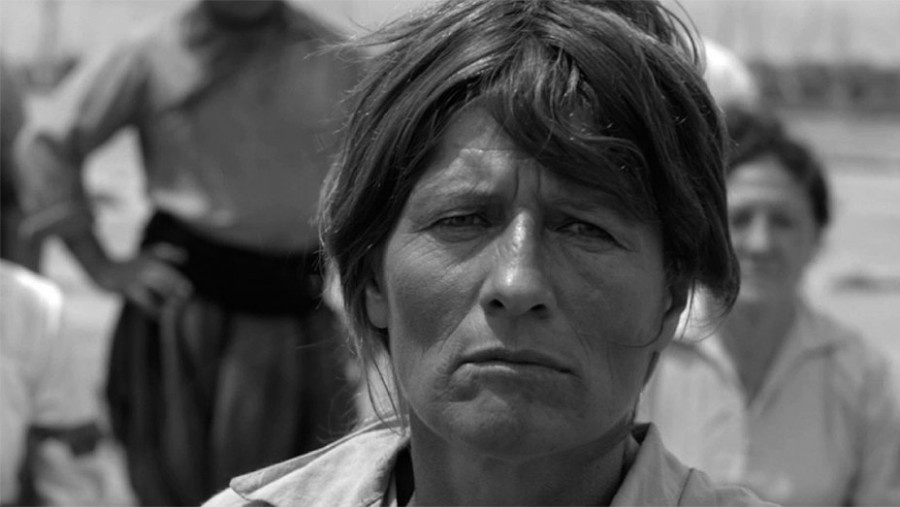 The Film Society of Lincoln Center in New York City announces Neighboring Scenes, a new showcase of contemporary Latin American cinema co-presented with Cinema Tropical. Opening the series is Benjamín Naishtat’s El Movimiento (pictured above), a stark, black-and-white snapshot of anarchy in 19th-century Argentina and follow-up to his acclaimed debut, History of Fear.
Other highlights include the 2015 Cannes Caméra d’Or winner, César Augusto Acevedo’s Land and Shade; the U.S. premiere of Arturo Ripstein’s Bleak Street, which has drawn comparisons to Luis Buñuel’s Mexican period; Rodrigo Plá’s Venice Horizons opener A Monster with a Thousand Heads; Pablo Larraín’s Silver Bear–winning The Club, Chile’s submission for the Best Foreign Language Film Oscar; and more.
“It’s been some years since Latin American cinema ‘reemerged,’” said Programmer at Large Rachael Rakes. “Now, as the output from countries like Mexico, Argentina, and Brazil continues to be some of the most compelling and engaged cinema today, new scenes are establishing themselves all across the map, showcasing fresh talent and ideas, and challenging the notion of an identifiable contemporary Latin American cinema. We’re pleased to highlight a few of the most impressive recent films from the region.”
FILMS & DESCRIPTIONS
Opening Night
El Movimiento
Benjamín Naishtat, Argentina, 2015, DCP, 70m
Spanish with English subtitles
Continuing his preoccupation with violence and Argentina’s past, Benjamín Naishtat (History of Fear, a New Directors/New Films 2014 selection) dramatizes a crucial moment in that nation’s history characterized by political zealotry and terrorism. Pablo Cedrón portrays the fiery, unhinged leader of a mysterious militia (modeled on Confederacy-era dictator Juan Manuel de Rosas’s Mazorca) who wantonly roam the pampas in an effort to “purify” and unite society, killing and plundering settlers along the way. Characters emerge from and disappear into dark expanses—the film is masterfully shot in black and white—heightening its intense, chilling atmosphere. Funded by the Jeonju Digital Project.
https://www.youtube.com/watch?v=c-U8MsPwlPU
Alexfilm
Pablo Chavarria Gutiérrez, Mexico, 2015, DCP, 60m
Spanish with English subtitles
Marked by a light touch and emphasizing openness over conventional, linear narrative, biologist-turned-filmmaker Pablo Chavarria Gutiérrez documents the rhythms of a man awaiting an important event that never comes. As he cooks breakfast, naps, paints, tries on sunglasses, and wanders through different rooms in his home, Chavarria Guitérrez lovingly frames every action in beautiful natural light, allowing each moment to flow to the next while maintaining its own transcendent essence. North American Premiere
Gulliver
María Alché, Argentina, 2015, DCP, 25m
Spanish with English subtitles
Flawlessly transitioning from a highly naturalistic family tale to something overtly surreal and back again, Gulliver captures the circumstances—imagined or not—of one of those evenings when siblings come to a deeper understanding of one another. After hanging out at home with their mom (Martín Rejtman regular Susana Pampin) and older sister Mariela (Agustina Muñoz), Agos and Renzo go to a raging party where Agos ends up drinking too much. Upon stepping outside to recover, the pair wander into a strange but familiar landscape, and begin to ask questions about the world and themselves.
Bleak Street / La calle de la amargura
Arturo Ripstein, Mexico/Spain, 2015, DCP, 99m
Spanish with English subtitles
Based on a true story, the latest feature by Arturo Ripstein is an unflinching look at the mean streets of El Defectuoso. Two prostitutes, Adela (Nora Velázquez) and Dora (Patricia Reyes Spíndola), are burdened by horrible marriages and financial problems stemming from their long-departed youth. In an attempt to make ends meet, they drug and rob dwarf twins (Juan Francisco Longoria and Guillermo López)—who themselves barely scrape by as doubles for professional luchadores. Ripstein masterfully contrasts the grittiness of alleyways and seedy apartments with gliding Steadicam cinematography, siding with neither the victims nor the perpetrators. A Leisure Time Features release. U.S. Premiere
https://www.youtube.com/watch?v=-As8dQh70Xg
The Club / El Club
Pablo Larraín, Chile, 2015, DCP, 98m
Spanish with English subtitles
Pablo Larraín (director of No and Post Mortem) continues to explore the long shadows of Chile’s recent past with this quietly scathing film about the Catholic Church’s concealment of clerical misconduct. Four aging former priests peacefully live out their days together in a dumpy seaside town, focused on training their racing greyhound rather than doing penance for their assorted crimes. Their idyll is shattered when a fifth priest arrives and, confronted by one of his victims, commits suicide. A young priest begins an investigation into the retirees’ pasts, setting off a series of events that call into question faith, piety, and complicity. Winner of the Silver Bear at the 2015 Berlinale and Chile’s Oscar submission. A Music Box Films release.
https://www.youtube.com/watch?v=e8c2DYoF7lA
The Gold Bug, or Victoria’s Revenge / El escarabajo de oro o Victorias Hamnd
Alejo Moguillansky & Fia-Stina Sandlund, Argentina/Denmark/Sweden, 2014, DCP, 102m
Spanish and Swedish with English and Spanish subtitles
Fusing elements of Edgar Allan Poe’s titular short story and Robert Louis Stevenson’s Treasure Island, Alejo Moguillansky and Fia-Stina Sandlund’s meta-film follows an Argentine-Swedish co-production in Buenos Aires shooting a biopic of the 19th-century realist author and proto-feminist Victoria Benedictsson. After a hustling actor finds a treasure map detailing the location of ancient gold hidden near a town in the Misiones province named after the 19th-century politician Leandro N. Alem, he successfully persuades the producers to reframe the project as a portrait of the radical Alem (swapping feminist politics for anti-Eurocentric ones) and move the production there—so he can better search for the treasure. Fast-paced and hilariously self-reflexive, the film takes a playful approach to texts and history that is reminiscent of Borges.
https://www.youtube.com/watch?v=BF_r02gleHU
Hopefuls / Aspirantes
Ives Rosenfeld, Brazil, 2015, DCP, 71m
Portuguese with English subtitles
Focused on the alluring promise of wealth and fame that professional soccer holds for Brazilian youth, Ives Rosenfeld’s directorial debut features a host of excellent performances from its cast. Junior (Ariclenes Barroso) ekes out a living working nights at a warehouse while playing by day in an amateur league with his talented best friend Bento (Sergio Malheiros). When Bento gets signed to a professional team, Junior struggles with his crippling jealousy—which becomes heightened by his pregnant girlfriend and alcoholic uncle. Artfully lensed and deliberately paced, the film silently builds toward a legitimately shocking climax that provides a grim reality check.
https://www.youtube.com/watch?v=kRPKC1yMDq8
It All Started at the End / Todo comenzó por el fin
Luis Ospina, Colombia, 2015, DCP, 208m
Spanish with English subtitles
Luis Ospina (The Vampire of Poverty, Paper Tiger) turns the camera toward his radical roots—and his own intestines—for this documentary about the Cali Group, the Colombian artists’ collective that revolutionized art, cinema, and literature amid drug-related terrorism in the 1970s and ’80s. Boasting a wide array of never-before-seen archival material, Ospina (the group’s only surviving member, who was diagnosed with cancer during the making of the film) focuses on telling the stories of co-founders Andrés Caicedo and Carlos Mayolo. Never maudlin or self-important, this kaleidoscopic inside view of “Caliwood” is essential viewing for anyone looking for darkly comic, anarchic inspiration. U.S. Premiere
https://www.youtube.com/watch?v=YlbAXxKDZ9I
Ixcanul
Jayro Bustamante, Guatemala, 2015, DCP, 93m
Kaqchikel and Spanish with English subtitles
Maria (María Mercedes Coroy) is set to marry a much older foreman at the coffee plantation, but she has a crush on Pepe, who has fanciful dreams of getting rich in the U.S. After consummating their flirtation, Pepe leaves for the States—without Maria, who soon learns she is expecting a baby. A difficult pregnancy assisted only by traditional medicine finally leads her to the hectic big city, but on very grim terms. Shot in collaboration with the Kaqchikel Mayans of Guatemala’s coffee-growing highlands, Jayro Bustamante’s exquisitely shot debut feature (winner of a top prize at the Berlinale and Guatemala’s Oscar submission) explores what tradition and modernity mean for women living in marginalized communities. A Kino Lorber release.
https://www.youtube.com/watch?v=ryOrevgFL2k
Land and Shade / La tierra y la sombra
César Augusto Acevedo, Colombia, 2015, DCP, 94m
Spanish with English subtitles
A poetic and devastating statement on how environmental issues impact every aspect of life, César Augusto Acevedo’s Caméra d’Or–winning directorial debut is not to be missed. The elderly Alfonso (Haimer Leal) returns to the small house in Valle del Cauca he left 17 years earlier in order to care for his bedridden son Geraldo (Edison Raigosa), who suffers from a mysterious ailment related to the harsh farming techniques of the sugar-cane plantations around them. Tensions quietly simmer between Alfonso and his ex-wife (the wonderful Hilda Ruiz), but familial ties and pride keep them tied to the land in Acevedo’s meditative and painterly allegory.
https://www.youtube.com/watch?v=jFrHbi8cHjY
Mar
Dominga Sotomayor, Chile, 2014, DCP, 70m
Spanish with English subtitles
Reminiscent of the films of Josephine Decker and Joe Swanberg, this low-key drama centers on the problems between Martin, aka Mar (Lisandro Rodríguez), and his girlfriend, Eli (Vanina Montes). On vacation in the Argentine resort town of Villa Gesell, conflicts arise concerning expectations and long-term commitments—having a baby, home ownership—but get pushed aside or elided. A visit from Martin’s gregarious, wine-guzzling mother and a random act of God threaten to push the couple to breaking point. Dominga Sotomayor matches her characters’ frustrations with the film’s expert framing, which often obscures faces and bodies, visually emphasizing their mutual misunderstanding.
https://www.youtube.com/watch?v=rqiC4M5nNBk
A Monster with a Thousand Heads / Un monstruo de mil cabezas
Rodrigo Plá, Mexico, 2015, DCP, 74m
Spanish with English subtitles
Developed in tandem with his wife’s novel of the same title, Rodrigo Plá (The Delay, The Zone) crafts another airtight thriller, this time taking on a health-insurance system that prefers profit to adequate medical care. Refused treatment that would alleviate her terminally ill husband’s pain—yet not the frustrations of dealing with maddening bureaucracy—Sonia (Jana Raluy) snaps and, gun in hand, single-mindedly goes up the chain of command with a vengeance. The series of increasingly harrowing provocations are interspersed with moments of dark comedy, and coalesce into a final, shocking climax.
https://www.youtube.com/watch?v=Ug2534juBhA
The Film Society of Lincoln Center in New York City announces Neighboring Scenes, a new showcase of contemporary Latin American cinema co-presented with Cinema Tropical. Opening the series is Benjamín Naishtat’s El Movimiento (pictured above), a stark, black-and-white snapshot of anarchy in 19th-century Argentina and follow-up to his acclaimed debut, History of Fear.
Other highlights include the 2015 Cannes Caméra d’Or winner, César Augusto Acevedo’s Land and Shade; the U.S. premiere of Arturo Ripstein’s Bleak Street, which has drawn comparisons to Luis Buñuel’s Mexican period; Rodrigo Plá’s Venice Horizons opener A Monster with a Thousand Heads; Pablo Larraín’s Silver Bear–winning The Club, Chile’s submission for the Best Foreign Language Film Oscar; and more.
“It’s been some years since Latin American cinema ‘reemerged,’” said Programmer at Large Rachael Rakes. “Now, as the output from countries like Mexico, Argentina, and Brazil continues to be some of the most compelling and engaged cinema today, new scenes are establishing themselves all across the map, showcasing fresh talent and ideas, and challenging the notion of an identifiable contemporary Latin American cinema. We’re pleased to highlight a few of the most impressive recent films from the region.”
FILMS & DESCRIPTIONS
Opening Night
El Movimiento
Benjamín Naishtat, Argentina, 2015, DCP, 70m
Spanish with English subtitles
Continuing his preoccupation with violence and Argentina’s past, Benjamín Naishtat (History of Fear, a New Directors/New Films 2014 selection) dramatizes a crucial moment in that nation’s history characterized by political zealotry and terrorism. Pablo Cedrón portrays the fiery, unhinged leader of a mysterious militia (modeled on Confederacy-era dictator Juan Manuel de Rosas’s Mazorca) who wantonly roam the pampas in an effort to “purify” and unite society, killing and plundering settlers along the way. Characters emerge from and disappear into dark expanses—the film is masterfully shot in black and white—heightening its intense, chilling atmosphere. Funded by the Jeonju Digital Project.
https://www.youtube.com/watch?v=c-U8MsPwlPU
Alexfilm
Pablo Chavarria Gutiérrez, Mexico, 2015, DCP, 60m
Spanish with English subtitles
Marked by a light touch and emphasizing openness over conventional, linear narrative, biologist-turned-filmmaker Pablo Chavarria Gutiérrez documents the rhythms of a man awaiting an important event that never comes. As he cooks breakfast, naps, paints, tries on sunglasses, and wanders through different rooms in his home, Chavarria Guitérrez lovingly frames every action in beautiful natural light, allowing each moment to flow to the next while maintaining its own transcendent essence. North American Premiere
Gulliver
María Alché, Argentina, 2015, DCP, 25m
Spanish with English subtitles
Flawlessly transitioning from a highly naturalistic family tale to something overtly surreal and back again, Gulliver captures the circumstances—imagined or not—of one of those evenings when siblings come to a deeper understanding of one another. After hanging out at home with their mom (Martín Rejtman regular Susana Pampin) and older sister Mariela (Agustina Muñoz), Agos and Renzo go to a raging party where Agos ends up drinking too much. Upon stepping outside to recover, the pair wander into a strange but familiar landscape, and begin to ask questions about the world and themselves.
Bleak Street / La calle de la amargura
Arturo Ripstein, Mexico/Spain, 2015, DCP, 99m
Spanish with English subtitles
Based on a true story, the latest feature by Arturo Ripstein is an unflinching look at the mean streets of El Defectuoso. Two prostitutes, Adela (Nora Velázquez) and Dora (Patricia Reyes Spíndola), are burdened by horrible marriages and financial problems stemming from their long-departed youth. In an attempt to make ends meet, they drug and rob dwarf twins (Juan Francisco Longoria and Guillermo López)—who themselves barely scrape by as doubles for professional luchadores. Ripstein masterfully contrasts the grittiness of alleyways and seedy apartments with gliding Steadicam cinematography, siding with neither the victims nor the perpetrators. A Leisure Time Features release. U.S. Premiere
https://www.youtube.com/watch?v=-As8dQh70Xg
The Club / El Club
Pablo Larraín, Chile, 2015, DCP, 98m
Spanish with English subtitles
Pablo Larraín (director of No and Post Mortem) continues to explore the long shadows of Chile’s recent past with this quietly scathing film about the Catholic Church’s concealment of clerical misconduct. Four aging former priests peacefully live out their days together in a dumpy seaside town, focused on training their racing greyhound rather than doing penance for their assorted crimes. Their idyll is shattered when a fifth priest arrives and, confronted by one of his victims, commits suicide. A young priest begins an investigation into the retirees’ pasts, setting off a series of events that call into question faith, piety, and complicity. Winner of the Silver Bear at the 2015 Berlinale and Chile’s Oscar submission. A Music Box Films release.
https://www.youtube.com/watch?v=e8c2DYoF7lA
The Gold Bug, or Victoria’s Revenge / El escarabajo de oro o Victorias Hamnd
Alejo Moguillansky & Fia-Stina Sandlund, Argentina/Denmark/Sweden, 2014, DCP, 102m
Spanish and Swedish with English and Spanish subtitles
Fusing elements of Edgar Allan Poe’s titular short story and Robert Louis Stevenson’s Treasure Island, Alejo Moguillansky and Fia-Stina Sandlund’s meta-film follows an Argentine-Swedish co-production in Buenos Aires shooting a biopic of the 19th-century realist author and proto-feminist Victoria Benedictsson. After a hustling actor finds a treasure map detailing the location of ancient gold hidden near a town in the Misiones province named after the 19th-century politician Leandro N. Alem, he successfully persuades the producers to reframe the project as a portrait of the radical Alem (swapping feminist politics for anti-Eurocentric ones) and move the production there—so he can better search for the treasure. Fast-paced and hilariously self-reflexive, the film takes a playful approach to texts and history that is reminiscent of Borges.
https://www.youtube.com/watch?v=BF_r02gleHU
Hopefuls / Aspirantes
Ives Rosenfeld, Brazil, 2015, DCP, 71m
Portuguese with English subtitles
Focused on the alluring promise of wealth and fame that professional soccer holds for Brazilian youth, Ives Rosenfeld’s directorial debut features a host of excellent performances from its cast. Junior (Ariclenes Barroso) ekes out a living working nights at a warehouse while playing by day in an amateur league with his talented best friend Bento (Sergio Malheiros). When Bento gets signed to a professional team, Junior struggles with his crippling jealousy—which becomes heightened by his pregnant girlfriend and alcoholic uncle. Artfully lensed and deliberately paced, the film silently builds toward a legitimately shocking climax that provides a grim reality check.
https://www.youtube.com/watch?v=kRPKC1yMDq8
It All Started at the End / Todo comenzó por el fin
Luis Ospina, Colombia, 2015, DCP, 208m
Spanish with English subtitles
Luis Ospina (The Vampire of Poverty, Paper Tiger) turns the camera toward his radical roots—and his own intestines—for this documentary about the Cali Group, the Colombian artists’ collective that revolutionized art, cinema, and literature amid drug-related terrorism in the 1970s and ’80s. Boasting a wide array of never-before-seen archival material, Ospina (the group’s only surviving member, who was diagnosed with cancer during the making of the film) focuses on telling the stories of co-founders Andrés Caicedo and Carlos Mayolo. Never maudlin or self-important, this kaleidoscopic inside view of “Caliwood” is essential viewing for anyone looking for darkly comic, anarchic inspiration. U.S. Premiere
https://www.youtube.com/watch?v=YlbAXxKDZ9I
Ixcanul
Jayro Bustamante, Guatemala, 2015, DCP, 93m
Kaqchikel and Spanish with English subtitles
Maria (María Mercedes Coroy) is set to marry a much older foreman at the coffee plantation, but she has a crush on Pepe, who has fanciful dreams of getting rich in the U.S. After consummating their flirtation, Pepe leaves for the States—without Maria, who soon learns she is expecting a baby. A difficult pregnancy assisted only by traditional medicine finally leads her to the hectic big city, but on very grim terms. Shot in collaboration with the Kaqchikel Mayans of Guatemala’s coffee-growing highlands, Jayro Bustamante’s exquisitely shot debut feature (winner of a top prize at the Berlinale and Guatemala’s Oscar submission) explores what tradition and modernity mean for women living in marginalized communities. A Kino Lorber release.
https://www.youtube.com/watch?v=ryOrevgFL2k
Land and Shade / La tierra y la sombra
César Augusto Acevedo, Colombia, 2015, DCP, 94m
Spanish with English subtitles
A poetic and devastating statement on how environmental issues impact every aspect of life, César Augusto Acevedo’s Caméra d’Or–winning directorial debut is not to be missed. The elderly Alfonso (Haimer Leal) returns to the small house in Valle del Cauca he left 17 years earlier in order to care for his bedridden son Geraldo (Edison Raigosa), who suffers from a mysterious ailment related to the harsh farming techniques of the sugar-cane plantations around them. Tensions quietly simmer between Alfonso and his ex-wife (the wonderful Hilda Ruiz), but familial ties and pride keep them tied to the land in Acevedo’s meditative and painterly allegory.
https://www.youtube.com/watch?v=jFrHbi8cHjY
Mar
Dominga Sotomayor, Chile, 2014, DCP, 70m
Spanish with English subtitles
Reminiscent of the films of Josephine Decker and Joe Swanberg, this low-key drama centers on the problems between Martin, aka Mar (Lisandro Rodríguez), and his girlfriend, Eli (Vanina Montes). On vacation in the Argentine resort town of Villa Gesell, conflicts arise concerning expectations and long-term commitments—having a baby, home ownership—but get pushed aside or elided. A visit from Martin’s gregarious, wine-guzzling mother and a random act of God threaten to push the couple to breaking point. Dominga Sotomayor matches her characters’ frustrations with the film’s expert framing, which often obscures faces and bodies, visually emphasizing their mutual misunderstanding.
https://www.youtube.com/watch?v=rqiC4M5nNBk
A Monster with a Thousand Heads / Un monstruo de mil cabezas
Rodrigo Plá, Mexico, 2015, DCP, 74m
Spanish with English subtitles
Developed in tandem with his wife’s novel of the same title, Rodrigo Plá (The Delay, The Zone) crafts another airtight thriller, this time taking on a health-insurance system that prefers profit to adequate medical care. Refused treatment that would alleviate her terminally ill husband’s pain—yet not the frustrations of dealing with maddening bureaucracy—Sonia (Jana Raluy) snaps and, gun in hand, single-mindedly goes up the chain of command with a vengeance. The series of increasingly harrowing provocations are interspersed with moments of dark comedy, and coalesce into a final, shocking climax.
https://www.youtube.com/watch?v=Ug2534juBhA
-
New York Jewish Film Festival Reveals Special Programs Incl. 20th Anniversary Screening of ‘Welcome to the Dollhouse’
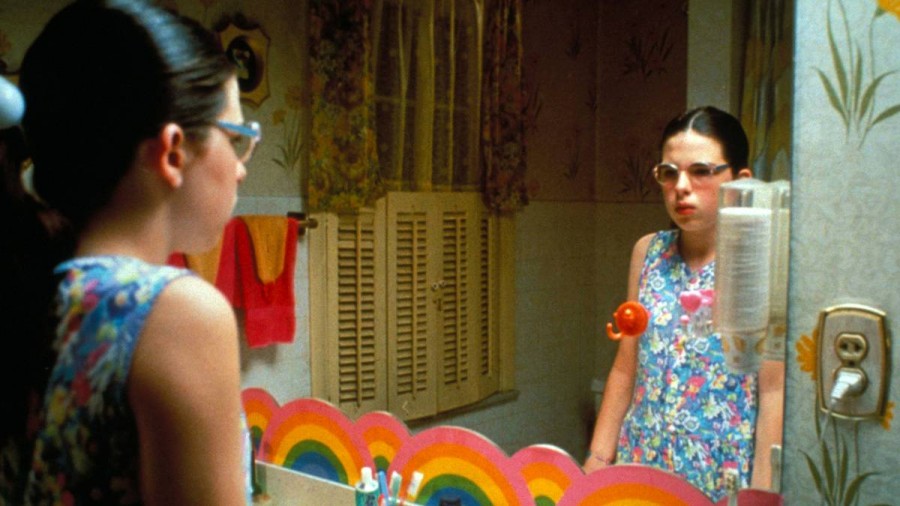 The 2016 New York Jewish Film Festival (NYJFF) presented by the Film Society of Lincoln Center and the Jewish Museum will take place January 13 to 26, 2016 at the Film Society’s Walter Reade Theater and Elinor Bunin Munroe Film Center.
This year’s 25th-anniversary edition will include a number of special programs, including a retrospective of film highlights from past festivals; an exhibition of posters from previous festival selections; a panel discussion bringing together some of New York’s finest film curators and programmers; a 20th-anniversary screening of Todd Solondz’s Welcome to the Dollhouse (pictured above) accompanied by the classic documentary Night and Fog, selected by Solondz; a Master Class on filmmaking by director Alan Berliner; continuous screenings of pivotal moments from 10 films seen in previous editions of the New York Jewish Film Festival; an evening of five shorts featuring such talents as Robert De Niro and Richard Kind; and an online anniversary publication looking back over the first 25 years of the festival.
SPECIAL PRESENTATIONS
NYJFF at 25: A Retrospective
This series of 10 films from previous editions of the New York Jewish Film Festival marks the silver anniversary of the festival, ranging from the silent film Benya Krik to works from such acclaimed directors as Amos Gitai and the late Chantal Akerman.
Benya Krik
Vladimir Vilner, USSR, 1926, 35mm, 90m
Silent with English intertitles and live musical accompaniment by Peter Freisinger
Vladimir Vilner’s classic film is set in the Jewish area of Moldavanka in Odessa, where the local gangster king Benya Krik rules with an iron fist. Based on the real-life gangster Mishka “Mike the Jap” Vinnitsky, Krik revels in murder and leverages his power into tremendous profit. When the Russian Revolution begins, the local commissioner attempts to put Krik’s gang to work as a revolutionary regiment, complete with tattooed red stars. Ultimately, Krik finds himself ensnared in a Bolshevik trap—and mystery and intrigue ensue. Restoration and English intertitles by the National Center for Jewish Film. This special event is presented in conjunction with the exhibition The Power of Pictures: Early Soviet Photography, Early Soviet Film, on view through February 7 at the Jewish Museum.
The Castle
Michael Haneke, Austria/Germany, 1997, DCP, 123m
German with English subtitles
The Castle is the unfinished, final novel by Franz Kafka, arguably the 20th century’s most influential Jewish writer. With extraordinary fidelity to Kafka’s original language and tone, Austrian director Michael Haneke has adapted the work for the big screen, complete with a star-studded cast made up of Haneke regulars. A land surveyor known only as K is summoned to a remote mountain village by the local government. Upon arrival, he is denied entrance and faces an increasingly obstructive provincial bureaucracy. Haneke masterfully evokes Kafka’s vision of a dystopian society hobbled by paperwork and bled dry by conformism and convolution.
Holy Week
Andrzej Wajda, Poland/Germany/France, 1995, 35mm, 97m
Polish with English subtitles
As the Warsaw Ghetto burns, a Jewish woman seeks sanctuary with a former boyfriend on the Christian side of the city. Andrzej Wajda’s adaptation of Jerzy Andrzejewski’s short story Holy Week is an inquiry into the relationship between Polish Christians and Polish Jews during World War II. If Jan hides Irena in his home, he will be committing a crime for which the sentence in Nazi-occupied Poland is death for the perpetrator and his family. His humanitarian nature still shines through, and the two forge a tense but caring new chapter in their deeply rooted relationship.
Left Luggage
Jeroen Krabbé, USA/Netherlands/Belgium, 1998, 35mm, 100m
English, Hebrew, and Yiddish with English subtitles
Set in 1970s Belgium, Left Luggage tells the story of Chaya (Laura Fraser), the 20-year-old daughter of Holocaust survivors who studies philosophy and lives a bohemian existence in Antwerp. When Chaya takes a job as a nanny for a Hasidic family, her developing friendship with the devout mother forces her to reevaluate the Jewish faith. This clear-eyed look at Hasidism and its relationship with Judaism as a whole also stars Isabella Rossellini, actor-director Jeroen Krabbé, and Topol, and was the winner of three awards at the Berlin International Film Festival.
Lost Embrace
Daniel Burman, Argentina/France/Italy, 2004, 35mm, 99m
Spanish, Korean, Yiddish, and Russian with English subtitles
Argentinean director Daniel Burman’s coming-of-age ensemble film is a warm and amusing story of self-actualization and familial ties. Ariel Makaroff, a Jewish twentysomething in Buenos Aires, has left his architectural studies, unmotivated to do anything but wander through a rundown shopping mall. Ever since his father went missing, his mother and brother have worked in a lingerie shop. In hopes of a fresh start, Ariel decides he wants to move to Poland, and asks his grandmother, ex-girlfriend, and rabbi for help. Winner of two Silver Bear awards at the 2004 Berlin Film Festival.
Mahler on the Couch
Percy Adlon & Felix O. Adlon, Austria/Germany, 2010, DCP, 98m
German with English subtitles
Percy Adlon, the acclaimed director of Bagdad Cafe, teamed up with his son Felix for this portrait of the great composer Gustav Mahler and his tempestuous relationship with his wife, Alma. Chafing under an agreement to give up her own musical ambitions, Alma begins an affair with the young architect Walter Gropius, as Mahler consults with Sigmund Freud on matters of creativity and passion. Moving, funny, and filled with Mahler’s sublime music (conducted by Esa-Pekka Salonen), Mahler on the Couch is a sensory feast based on actual encounters between Mahler and Freud.
News from House / News from Home
Amos Gitai, Israel/France/Belgium, 2006, DCP, 97m
English, Arabic, Hebrew, and French with English subtitles
A house in West Jerusalem was for decades a microcosm of a city in conflict: abandoned by its Palestinian owner in the 1948 war; then requisitioned by the Israeli government as vacant; rented to Jewish Algerian immigrants in 1956; and, finally, purchased by a university professor who undertook its transformation into a three-story house in 1980. While its inhabitants have now dispersed and the common space has disintegrated, the structure remains both an emotional and a physical center at the heart of the Israeli-Palestinian situation. Here, renowned filmmaker Amos Gitai uncovers the multilayered human history of this remarkable place.
Nobody’s Business
Alan Berliner, USA, 1996, Digital projection, 60m
Acclaimed New York filmmaker Alan Berliner took on his reclusive father as the reluctant subject of this poignant documentary, and what emerged was this cinematic biography that finds both humor and pathos in the swirl of conflicts and affections that bind father and son. Berliner weaves together archival footage and interviews with relatives in his quest to understand this complex and troubled character. Ultimately, Nobody’s Business serves as a meeting of the minds, where generations collide and the boundaries of family relationships are pushed to the brink.
Intimate Stranger
Alan Berliner, USA, 1991, Digital projection, 60m
Alan Berliner’s maternal grandfather is the subject of his remarkable documentary from 1991. Joseph Cassuto was a Palestinian Jew, born in 1905 and raised in Egypt. After World War II, his fascination with Japanese culture blossomed into a lifelong love affair with the country, and he abandoned his family to live there and pursue miscellaneous business interests. Equal parts romantic adventurer and coldhearted shirker of familial responsibility, Cassuto is a riveting protagonist in this poetic and emotional jigsaw puzzle of family history.
Tomorrow We Move
Chantal Akerman, France/Belgium, 2004, 35mm, 110m
French with English subtitles
The late Belgian filmmaker Chantal Akerman brings us an intellectual comedy about a mother and daughter who find themselves living together for the first time in decades. Charlotte, a freelance writer, invites her recently widowed mother, Catherine, to live in her apartment, and the ensuing clutter becomes a source of irritation and strife. When Catherine decides to revitalize her career as a piano teacher, the claustrophobia reaches new and absurd levels. Charlotte continues to pursue her desperate quest for peace as Tomorrow We Move develops into a slyly Jewish tale of rootlessness and familial burdens.
NYJFF Shorts Program (TRT: 75m):
Five concise stories come together in this program of short films. Dear God (Guy Nattiv & Erez Tadmor, Israel, 2014, 13m), whose co-director Nattiv also directed the 2012 NYJFF opening-night film Mabul, depicts a romantic Jerusalem through the eyes of Aaron, a simple man who guards the historic Western Wall. In Gloomy Sabbath (Amit Epstein, Germany, 2013, 15m), an ailing woman leads her grandson on a lively and colorful dance into the past to reveal a dark family secret. The Notebook (Zach Clark, USA, 2014, 15m) takes place in a video store, where a woman makes a sad, strange request. In What Cheer? (Michael Slavens, USA, 2014, 18m), starring Richard Kind, a man grappling with the sudden passing of his wife encounters a 20-piece punk marching band. Ellis (JR, USA, 2015, 14m) stars Robert De Niro as an immigrant whose pursuit of a new life expired at Ellis Island. Dear God, Gloomy Sabbath, and The Notebook are receiving their New York premieres.
Guest Selects: Todd Solondz:
20th Anniversary Screening
Welcome to the Dollhouse
Todd Solondz, USA, 1995, 35mm, 88m
Eleven-year-old Dawn “Weinerdog” Wiener is a junior-high geek who just wants to be popular. Teased by her classmates and tormented by the school bully, she develops an improbable plan to seduce the star of a high-school garage band. Todd Solondz’s celebrated black comedy follows Dawn through the many dark corners of suburban youth. Bitterly funny and true to life, the film launched Solondz’s career, won the Grand Jury Prize at the Sundance Film Festival, and is now hailed as a classic of modern independent cinema.
Night and Fog
Alain Resnais, France, 1955, 35mm, 32m
French with English subtitles
Ten years after the liberation of the Nazi concentration camps, French filmmaker Alain Resnais documented the abandoned grounds of Auschwitz in his harrowing documentary. One of the first cinematic reflections on the horrors of the Holocaust, Night and Fog contrasts the stillness of the abandoned camps’ quiet, empty buildings with wartime footage. Using a combination of archival materials from past and present, in color and black and white, Resnais investigates the cyclical nature of humanity’s violence and presents the unsettling suggestion that such atrocities could happen again. On selecting Night and Fog, Todd Solondz writes: “I saw Night and Fog in college and it stuck with me as a touchstone for speaking of the unspeakable, evoking the unevocable, memorializing without pomp. I can’t say it ‘inspired’ me, but it’s always stood as a kind of monument: What is worth our time and attention? What matters? Who are we?”
Talking Movies:
Panel Discussion: Curating Film (90m)
A collection of New York’s finest film curators and programmers come together to jump-start a discussion about engaging film audiences in the 21st century. With festivals, museums, galleries, and online platforms all presenting film in new and different ways, the medium finds itself at an exciting crossroads.
Panelists: Thomas Beard is the Founder and Director of Light Industry, a venue for film and electronic arts in Brooklyn, and Programmer at Large at the Film Society of Lincoln Center. He has organized screenings for Artists Space, the Centre Pompidou, the Museum of Modern Art, and Tate Modern, and he co-curated the cinema for Greater New York 2010 at MoMA PS1 and the film program for the 2012 Whitney Biennial. Stuart Comer is Chief Curator of Media and Performance Art at the Museum of Modern Art. He was a co-curator of the 2014 Whitney Biennial and was previously the founding curator of film at Tate Modern, London. Chrissie Iles is the Anne and Joel Ehrenkranz Curator at the Whitney Museum of American Art where one of her specializations is film and video.
Moderator: Jens Hoffmann is Deputy Director, Exhibitions and Public Programs, the Jewish Museum and Curator for Special Programs, New York Jewish Film Festival. He has curated more than 50 exhibitions internationally since the late 1990s, including the 2nd San Juan Triennial (2009), the 12th Istanbul Biennial (2011), and the 9th Shanghai Biennale (2012-13).
Master Class with Alan Berliner (90m):
Alan Berliner’s ability to combine experimental cinema and artistic purpose has made him one of the most acclaimed independent filmmakers in the United States. In this unique master class, Berliner will discuss his use of sound and image metaphors in Intimate Stranger (1991) and Nobody’s Business (1996), both of which are screening in the festival. The lecture will include a presentation of clips from each film.
Happy Ends (TRT: 20m; running on loop):
Spoiler alert! Pivotal moments from 10 films presented at previous editions of the New York Jewish Film Festival highlight a wide array of themes and life lessons with fluctuating degrees of fate, heroism, and self-determination. This 20-minute compilation will run on a continuous loop in the amphitheater of the Elinor Bunin Munroe Film Center during the festival. Films include The Jewish Cardinal (2013), Daas (2011), The Strange Case of Wilhelm Reich (2012), Protektor (2009), Emotional Arithmetic (2007), Mahler on the Couch (2010), A Bottle in the Gaza Sea (2011), Nina’s Tragedies (2003), Gloomy Sunday (1999), and Live and Become (2005).
Celluloid on Paper: Poster Exhibition
Posters that highlight works from the festival’s quarter-century history will be on view in the Furman Gallery at the Walter Reade Theater, ranging in style from the Soviet constructivist–inspired design for Sonia, to a more minimalist film still of a woman contemplating the nature of evil, or a man gazing into the horizon, perhaps looking ahead to the next 25 years of the festival. Highlights include posters for Anatomy of a Murder (1959), Ida (2013), Lost Embrace (2004), Sonia (2007), and The Castle (1997), among others.
The 2016 New York Jewish Film Festival (NYJFF) presented by the Film Society of Lincoln Center and the Jewish Museum will take place January 13 to 26, 2016 at the Film Society’s Walter Reade Theater and Elinor Bunin Munroe Film Center.
This year’s 25th-anniversary edition will include a number of special programs, including a retrospective of film highlights from past festivals; an exhibition of posters from previous festival selections; a panel discussion bringing together some of New York’s finest film curators and programmers; a 20th-anniversary screening of Todd Solondz’s Welcome to the Dollhouse (pictured above) accompanied by the classic documentary Night and Fog, selected by Solondz; a Master Class on filmmaking by director Alan Berliner; continuous screenings of pivotal moments from 10 films seen in previous editions of the New York Jewish Film Festival; an evening of five shorts featuring such talents as Robert De Niro and Richard Kind; and an online anniversary publication looking back over the first 25 years of the festival.
SPECIAL PRESENTATIONS
NYJFF at 25: A Retrospective
This series of 10 films from previous editions of the New York Jewish Film Festival marks the silver anniversary of the festival, ranging from the silent film Benya Krik to works from such acclaimed directors as Amos Gitai and the late Chantal Akerman.
Benya Krik
Vladimir Vilner, USSR, 1926, 35mm, 90m
Silent with English intertitles and live musical accompaniment by Peter Freisinger
Vladimir Vilner’s classic film is set in the Jewish area of Moldavanka in Odessa, where the local gangster king Benya Krik rules with an iron fist. Based on the real-life gangster Mishka “Mike the Jap” Vinnitsky, Krik revels in murder and leverages his power into tremendous profit. When the Russian Revolution begins, the local commissioner attempts to put Krik’s gang to work as a revolutionary regiment, complete with tattooed red stars. Ultimately, Krik finds himself ensnared in a Bolshevik trap—and mystery and intrigue ensue. Restoration and English intertitles by the National Center for Jewish Film. This special event is presented in conjunction with the exhibition The Power of Pictures: Early Soviet Photography, Early Soviet Film, on view through February 7 at the Jewish Museum.
The Castle
Michael Haneke, Austria/Germany, 1997, DCP, 123m
German with English subtitles
The Castle is the unfinished, final novel by Franz Kafka, arguably the 20th century’s most influential Jewish writer. With extraordinary fidelity to Kafka’s original language and tone, Austrian director Michael Haneke has adapted the work for the big screen, complete with a star-studded cast made up of Haneke regulars. A land surveyor known only as K is summoned to a remote mountain village by the local government. Upon arrival, he is denied entrance and faces an increasingly obstructive provincial bureaucracy. Haneke masterfully evokes Kafka’s vision of a dystopian society hobbled by paperwork and bled dry by conformism and convolution.
Holy Week
Andrzej Wajda, Poland/Germany/France, 1995, 35mm, 97m
Polish with English subtitles
As the Warsaw Ghetto burns, a Jewish woman seeks sanctuary with a former boyfriend on the Christian side of the city. Andrzej Wajda’s adaptation of Jerzy Andrzejewski’s short story Holy Week is an inquiry into the relationship between Polish Christians and Polish Jews during World War II. If Jan hides Irena in his home, he will be committing a crime for which the sentence in Nazi-occupied Poland is death for the perpetrator and his family. His humanitarian nature still shines through, and the two forge a tense but caring new chapter in their deeply rooted relationship.
Left Luggage
Jeroen Krabbé, USA/Netherlands/Belgium, 1998, 35mm, 100m
English, Hebrew, and Yiddish with English subtitles
Set in 1970s Belgium, Left Luggage tells the story of Chaya (Laura Fraser), the 20-year-old daughter of Holocaust survivors who studies philosophy and lives a bohemian existence in Antwerp. When Chaya takes a job as a nanny for a Hasidic family, her developing friendship with the devout mother forces her to reevaluate the Jewish faith. This clear-eyed look at Hasidism and its relationship with Judaism as a whole also stars Isabella Rossellini, actor-director Jeroen Krabbé, and Topol, and was the winner of three awards at the Berlin International Film Festival.
Lost Embrace
Daniel Burman, Argentina/France/Italy, 2004, 35mm, 99m
Spanish, Korean, Yiddish, and Russian with English subtitles
Argentinean director Daniel Burman’s coming-of-age ensemble film is a warm and amusing story of self-actualization and familial ties. Ariel Makaroff, a Jewish twentysomething in Buenos Aires, has left his architectural studies, unmotivated to do anything but wander through a rundown shopping mall. Ever since his father went missing, his mother and brother have worked in a lingerie shop. In hopes of a fresh start, Ariel decides he wants to move to Poland, and asks his grandmother, ex-girlfriend, and rabbi for help. Winner of two Silver Bear awards at the 2004 Berlin Film Festival.
Mahler on the Couch
Percy Adlon & Felix O. Adlon, Austria/Germany, 2010, DCP, 98m
German with English subtitles
Percy Adlon, the acclaimed director of Bagdad Cafe, teamed up with his son Felix for this portrait of the great composer Gustav Mahler and his tempestuous relationship with his wife, Alma. Chafing under an agreement to give up her own musical ambitions, Alma begins an affair with the young architect Walter Gropius, as Mahler consults with Sigmund Freud on matters of creativity and passion. Moving, funny, and filled with Mahler’s sublime music (conducted by Esa-Pekka Salonen), Mahler on the Couch is a sensory feast based on actual encounters between Mahler and Freud.
News from House / News from Home
Amos Gitai, Israel/France/Belgium, 2006, DCP, 97m
English, Arabic, Hebrew, and French with English subtitles
A house in West Jerusalem was for decades a microcosm of a city in conflict: abandoned by its Palestinian owner in the 1948 war; then requisitioned by the Israeli government as vacant; rented to Jewish Algerian immigrants in 1956; and, finally, purchased by a university professor who undertook its transformation into a three-story house in 1980. While its inhabitants have now dispersed and the common space has disintegrated, the structure remains both an emotional and a physical center at the heart of the Israeli-Palestinian situation. Here, renowned filmmaker Amos Gitai uncovers the multilayered human history of this remarkable place.
Nobody’s Business
Alan Berliner, USA, 1996, Digital projection, 60m
Acclaimed New York filmmaker Alan Berliner took on his reclusive father as the reluctant subject of this poignant documentary, and what emerged was this cinematic biography that finds both humor and pathos in the swirl of conflicts and affections that bind father and son. Berliner weaves together archival footage and interviews with relatives in his quest to understand this complex and troubled character. Ultimately, Nobody’s Business serves as a meeting of the minds, where generations collide and the boundaries of family relationships are pushed to the brink.
Intimate Stranger
Alan Berliner, USA, 1991, Digital projection, 60m
Alan Berliner’s maternal grandfather is the subject of his remarkable documentary from 1991. Joseph Cassuto was a Palestinian Jew, born in 1905 and raised in Egypt. After World War II, his fascination with Japanese culture blossomed into a lifelong love affair with the country, and he abandoned his family to live there and pursue miscellaneous business interests. Equal parts romantic adventurer and coldhearted shirker of familial responsibility, Cassuto is a riveting protagonist in this poetic and emotional jigsaw puzzle of family history.
Tomorrow We Move
Chantal Akerman, France/Belgium, 2004, 35mm, 110m
French with English subtitles
The late Belgian filmmaker Chantal Akerman brings us an intellectual comedy about a mother and daughter who find themselves living together for the first time in decades. Charlotte, a freelance writer, invites her recently widowed mother, Catherine, to live in her apartment, and the ensuing clutter becomes a source of irritation and strife. When Catherine decides to revitalize her career as a piano teacher, the claustrophobia reaches new and absurd levels. Charlotte continues to pursue her desperate quest for peace as Tomorrow We Move develops into a slyly Jewish tale of rootlessness and familial burdens.
NYJFF Shorts Program (TRT: 75m):
Five concise stories come together in this program of short films. Dear God (Guy Nattiv & Erez Tadmor, Israel, 2014, 13m), whose co-director Nattiv also directed the 2012 NYJFF opening-night film Mabul, depicts a romantic Jerusalem through the eyes of Aaron, a simple man who guards the historic Western Wall. In Gloomy Sabbath (Amit Epstein, Germany, 2013, 15m), an ailing woman leads her grandson on a lively and colorful dance into the past to reveal a dark family secret. The Notebook (Zach Clark, USA, 2014, 15m) takes place in a video store, where a woman makes a sad, strange request. In What Cheer? (Michael Slavens, USA, 2014, 18m), starring Richard Kind, a man grappling with the sudden passing of his wife encounters a 20-piece punk marching band. Ellis (JR, USA, 2015, 14m) stars Robert De Niro as an immigrant whose pursuit of a new life expired at Ellis Island. Dear God, Gloomy Sabbath, and The Notebook are receiving their New York premieres.
Guest Selects: Todd Solondz:
20th Anniversary Screening
Welcome to the Dollhouse
Todd Solondz, USA, 1995, 35mm, 88m
Eleven-year-old Dawn “Weinerdog” Wiener is a junior-high geek who just wants to be popular. Teased by her classmates and tormented by the school bully, she develops an improbable plan to seduce the star of a high-school garage band. Todd Solondz’s celebrated black comedy follows Dawn through the many dark corners of suburban youth. Bitterly funny and true to life, the film launched Solondz’s career, won the Grand Jury Prize at the Sundance Film Festival, and is now hailed as a classic of modern independent cinema.
Night and Fog
Alain Resnais, France, 1955, 35mm, 32m
French with English subtitles
Ten years after the liberation of the Nazi concentration camps, French filmmaker Alain Resnais documented the abandoned grounds of Auschwitz in his harrowing documentary. One of the first cinematic reflections on the horrors of the Holocaust, Night and Fog contrasts the stillness of the abandoned camps’ quiet, empty buildings with wartime footage. Using a combination of archival materials from past and present, in color and black and white, Resnais investigates the cyclical nature of humanity’s violence and presents the unsettling suggestion that such atrocities could happen again. On selecting Night and Fog, Todd Solondz writes: “I saw Night and Fog in college and it stuck with me as a touchstone for speaking of the unspeakable, evoking the unevocable, memorializing without pomp. I can’t say it ‘inspired’ me, but it’s always stood as a kind of monument: What is worth our time and attention? What matters? Who are we?”
Talking Movies:
Panel Discussion: Curating Film (90m)
A collection of New York’s finest film curators and programmers come together to jump-start a discussion about engaging film audiences in the 21st century. With festivals, museums, galleries, and online platforms all presenting film in new and different ways, the medium finds itself at an exciting crossroads.
Panelists: Thomas Beard is the Founder and Director of Light Industry, a venue for film and electronic arts in Brooklyn, and Programmer at Large at the Film Society of Lincoln Center. He has organized screenings for Artists Space, the Centre Pompidou, the Museum of Modern Art, and Tate Modern, and he co-curated the cinema for Greater New York 2010 at MoMA PS1 and the film program for the 2012 Whitney Biennial. Stuart Comer is Chief Curator of Media and Performance Art at the Museum of Modern Art. He was a co-curator of the 2014 Whitney Biennial and was previously the founding curator of film at Tate Modern, London. Chrissie Iles is the Anne and Joel Ehrenkranz Curator at the Whitney Museum of American Art where one of her specializations is film and video.
Moderator: Jens Hoffmann is Deputy Director, Exhibitions and Public Programs, the Jewish Museum and Curator for Special Programs, New York Jewish Film Festival. He has curated more than 50 exhibitions internationally since the late 1990s, including the 2nd San Juan Triennial (2009), the 12th Istanbul Biennial (2011), and the 9th Shanghai Biennale (2012-13).
Master Class with Alan Berliner (90m):
Alan Berliner’s ability to combine experimental cinema and artistic purpose has made him one of the most acclaimed independent filmmakers in the United States. In this unique master class, Berliner will discuss his use of sound and image metaphors in Intimate Stranger (1991) and Nobody’s Business (1996), both of which are screening in the festival. The lecture will include a presentation of clips from each film.
Happy Ends (TRT: 20m; running on loop):
Spoiler alert! Pivotal moments from 10 films presented at previous editions of the New York Jewish Film Festival highlight a wide array of themes and life lessons with fluctuating degrees of fate, heroism, and self-determination. This 20-minute compilation will run on a continuous loop in the amphitheater of the Elinor Bunin Munroe Film Center during the festival. Films include The Jewish Cardinal (2013), Daas (2011), The Strange Case of Wilhelm Reich (2012), Protektor (2009), Emotional Arithmetic (2007), Mahler on the Couch (2010), A Bottle in the Gaza Sea (2011), Nina’s Tragedies (2003), Gloomy Sunday (1999), and Live and Become (2005).
Celluloid on Paper: Poster Exhibition
Posters that highlight works from the festival’s quarter-century history will be on view in the Furman Gallery at the Walter Reade Theater, ranging in style from the Soviet constructivist–inspired design for Sonia, to a more minimalist film still of a woman contemplating the nature of evil, or a man gazing into the horizon, perhaps looking ahead to the next 25 years of the festival. Highlights include posters for Anatomy of a Murder (1959), Ida (2013), Lost Embrace (2004), Sonia (2007), and The Castle (1997), among others.