
 THE OATH[/caption]
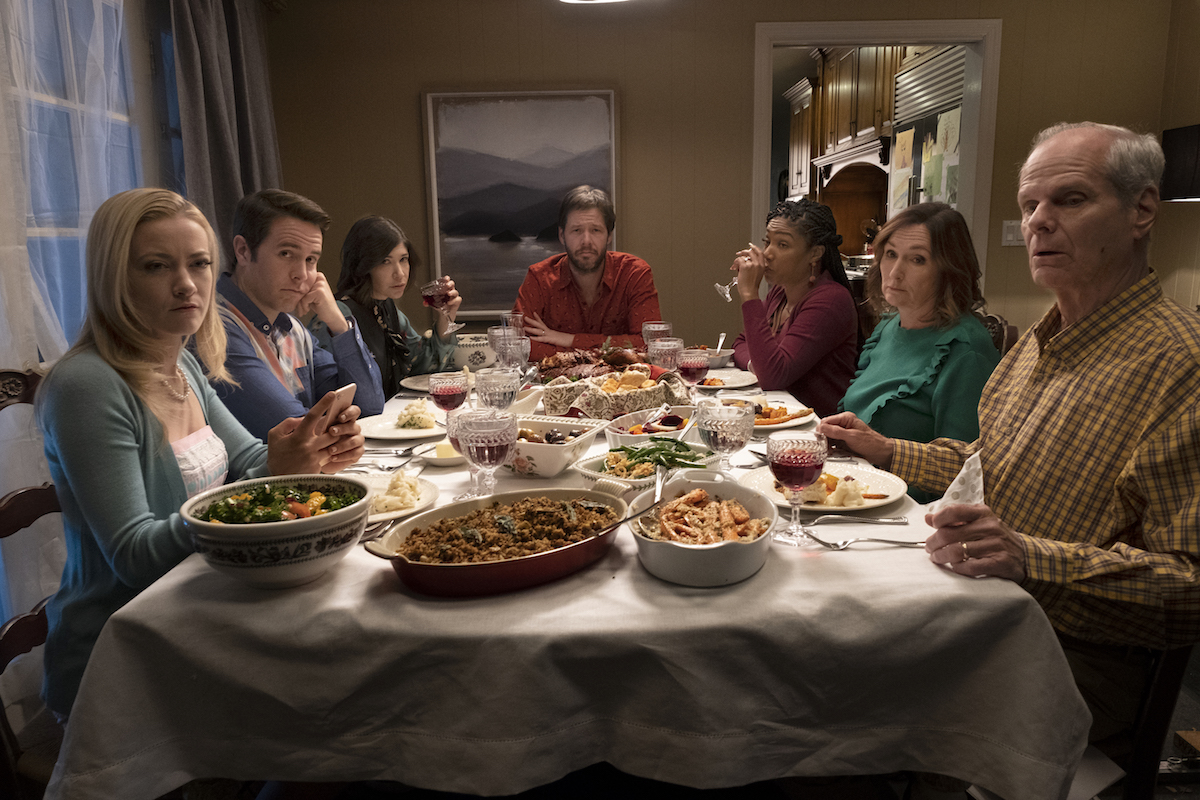
The LA Film Festival today announced Gala Screenings at the 2018 Festival including Ike Barinholtz’s directorial debut The Oath starring Ike Barinholtz, Tiffany Haddish, John Cho, Carrie Brownstein, Billy Magnussen, Nora Dunn, Chris Ellis, Jon Barinholtz, Meredith Hagner; Elizabeth Chai Vasarhelyi and Jimmy Chin’s documentary Free Solo featuring Alex Honnold; Rupert Everett’s The Happy Prince, starring Rupert Everett, Colin Firth, Colin Morgan, Edwin Thomas and Emily Watson; Eva Vives’ All About Nina, starring Mary Elizabeth Winstead, Common, Chace Crawford, Clea DuVall, Kate del Castillo, Beau Bridges and Camryn Manheim.
There will also be a Special Screening of Tom Volf’s documentary Maria by Callas; a Series program that includes; the first episode of the Into the Dark series, “The Body” staring Tom Bateman and Rebecca Rittenhouse, directed by Paul Davis; and America to Me a multipart unscripted documentary series from filmmaker Steve James. In addition 12 films in the Buzz Section and 3 podcasts in the Podcast Section have been unveiled. The LA Film Festival runs September 20-28.
“My aim with LA Film Festival is to celebrate and acknowledge storytelling in all its myriad of forms,” said LA Film Festival Director Jennifer Cochis. “Bringing forth part of our Series programming, launching our Podcast section, and shining a spotlight on this year’s Galas is all in effort to honor these creative teams, processes and stories.”
THE OATH[/caption]
The LA Film Festival today announced Gala Screenings at the 2018 Festival including Ike Barinholtz’s directorial debut The Oath starring Ike Barinholtz, Tiffany Haddish, John Cho, Carrie Brownstein, Billy Magnussen, Nora Dunn, Chris Ellis, Jon Barinholtz, Meredith Hagner; Elizabeth Chai Vasarhelyi and Jimmy Chin’s documentary Free Solo featuring Alex Honnold; Rupert Everett’s The Happy Prince, starring Rupert Everett, Colin Firth, Colin Morgan, Edwin Thomas and Emily Watson; Eva Vives’ All About Nina, starring Mary Elizabeth Winstead, Common, Chace Crawford, Clea DuVall, Kate del Castillo, Beau Bridges and Camryn Manheim.
There will also be a Special Screening of Tom Volf’s documentary Maria by Callas; a Series program that includes; the first episode of the Into the Dark series, “The Body” staring Tom Bateman and Rebecca Rittenhouse, directed by Paul Davis; and America to Me a multipart unscripted documentary series from filmmaker Steve James. In addition 12 films in the Buzz Section and 3 podcasts in the Podcast Section have been unveiled. The LA Film Festival runs September 20-28.
“My aim with LA Film Festival is to celebrate and acknowledge storytelling in all its myriad of forms,” said LA Film Festival Director Jennifer Cochis. “Bringing forth part of our Series programming, launching our Podcast section, and shining a spotlight on this year’s Galas is all in effort to honor these creative teams, processes and stories.”
-
LA Film Festival Announces Gala Sreenings of THE OATH, THE HAPPY PRINCE, FREE SOLO, ALL ABOUT NINA
[caption id="attachment_31520" align="aligncenter" width="1200"] THE OATH[/caption]
The LA Film Festival today announced Gala Screenings at the 2018 Festival including Ike Barinholtz’s directorial debut The Oath starring Ike Barinholtz, Tiffany Haddish, John Cho, Carrie Brownstein, Billy Magnussen, Nora Dunn, Chris Ellis, Jon Barinholtz, Meredith Hagner; Elizabeth Chai Vasarhelyi and Jimmy Chin’s documentary Free Solo featuring Alex Honnold; Rupert Everett’s The Happy Prince, starring Rupert Everett, Colin Firth, Colin Morgan, Edwin Thomas and Emily Watson; Eva Vives’ All About Nina, starring Mary Elizabeth Winstead, Common, Chace Crawford, Clea DuVall, Kate del Castillo, Beau Bridges and Camryn Manheim.
There will also be a Special Screening of Tom Volf’s documentary Maria by Callas; a Series program that includes; the first episode of the Into the Dark series, “The Body” staring Tom Bateman and Rebecca Rittenhouse, directed by Paul Davis; and America to Me a multipart unscripted documentary series from filmmaker Steve James. In addition 12 films in the Buzz Section and 3 podcasts in the Podcast Section have been unveiled. The LA Film Festival runs September 20-28.
“My aim with LA Film Festival is to celebrate and acknowledge storytelling in all its myriad of forms,” said LA Film Festival Director Jennifer Cochis. “Bringing forth part of our Series programming, launching our Podcast section, and shining a spotlight on this year’s Galas is all in effort to honor these creative teams, processes and stories.”
-
Toronto International Film Festival to Celebrate 25th Anniversary of THE JOY LUCK CLUB
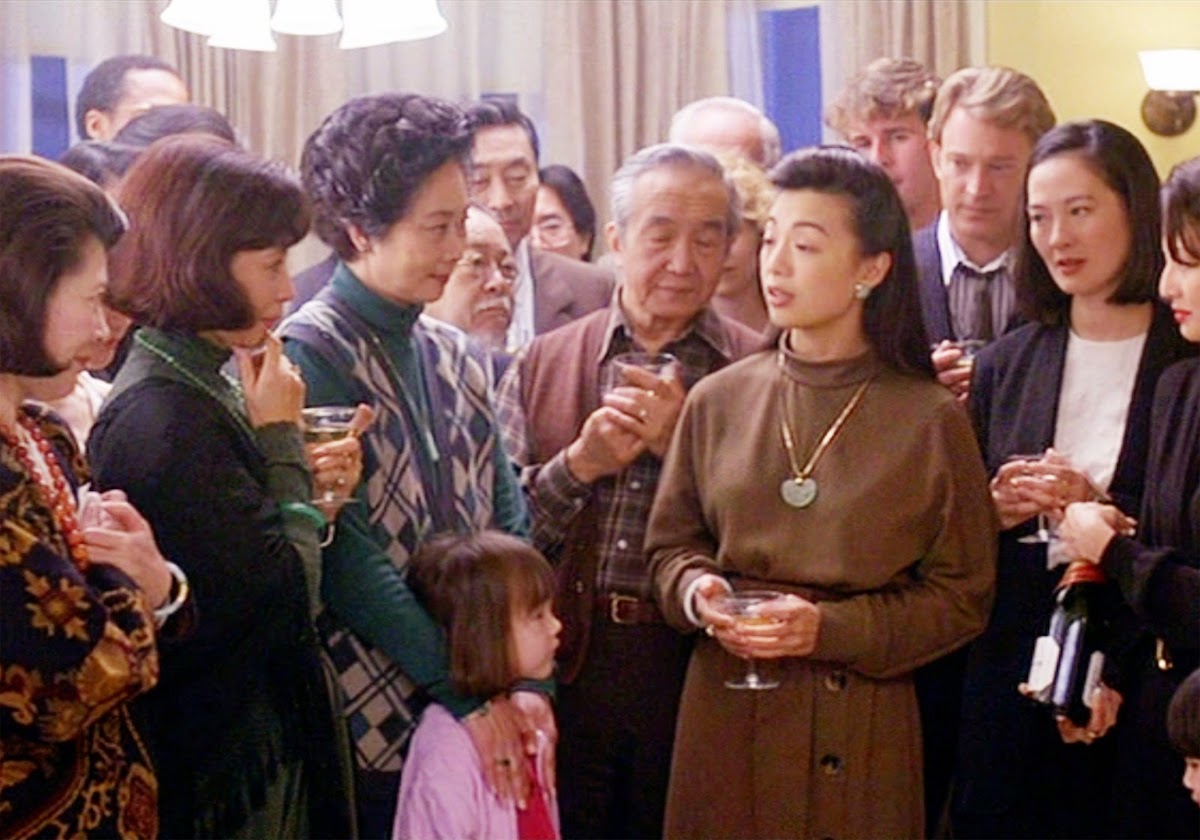 The Toronto International Film Festival will celebrate the 25th anniversary of Wayne Wang’s The Joy Luck Club with a special event screening on Thursday, September 13 at the Elgin Theatre – exactly 25 years after its original Canadian premiere was held at the same venue.
Recapturing the magic of its original debut, The Joy Luck Club returns with appearances from the cast and crew, led by director and co-producer Wayne Wang and the film’s original stars, including Kieu Chinh and Tamlyn Tomita.
Based on Amy Tan’s bestselling novel, The Joy Luck Club follows three generations of Chinese women in San Francisco, whose lives are interwoven through this story of mothers and daughters attempting to break through the social and generational differences that both jeopardize and strengthen the loving bonds between them.
“For its 25th anniversary, I’m so happy to be able present a newly refined digital version of The Joy Luck Club at the Toronto International Film Festival,” said director Wayne Wang. “It’s going to be so special to look back on the film with the cast and original fans and to introduce the film to a new generation.”
Following the screening, Lainey Lui, co-host of CTV’s The Social, etalk Senior Correspondent and founder and editor of LaineyGossip.com, will join Wayne Wang and the cast onstage for a conversation, unpacking the film’s enduring legacy and the impact it has had on Hollywood cinema.
The 43rd Toronto International Film Festival runs from September 6 to 16, 2018.
https://www.youtube.com/watch?v=0nYDMp1LdT8
The Toronto International Film Festival will celebrate the 25th anniversary of Wayne Wang’s The Joy Luck Club with a special event screening on Thursday, September 13 at the Elgin Theatre – exactly 25 years after its original Canadian premiere was held at the same venue.
Recapturing the magic of its original debut, The Joy Luck Club returns with appearances from the cast and crew, led by director and co-producer Wayne Wang and the film’s original stars, including Kieu Chinh and Tamlyn Tomita.
Based on Amy Tan’s bestselling novel, The Joy Luck Club follows three generations of Chinese women in San Francisco, whose lives are interwoven through this story of mothers and daughters attempting to break through the social and generational differences that both jeopardize and strengthen the loving bonds between them.
“For its 25th anniversary, I’m so happy to be able present a newly refined digital version of The Joy Luck Club at the Toronto International Film Festival,” said director Wayne Wang. “It’s going to be so special to look back on the film with the cast and original fans and to introduce the film to a new generation.”
Following the screening, Lainey Lui, co-host of CTV’s The Social, etalk Senior Correspondent and founder and editor of LaineyGossip.com, will join Wayne Wang and the cast onstage for a conversation, unpacking the film’s enduring legacy and the impact it has had on Hollywood cinema.
The 43rd Toronto International Film Festival runs from September 6 to 16, 2018.
https://www.youtube.com/watch?v=0nYDMp1LdT8
-
46 Breakout Films Selected for 2018 Toronto International Film Festival Discovery Program
[caption id="attachment_31512" align="aligncenter" width="1200"] Screwdriver[/caption]
The Toronto International Film Festival revealed the 46 breakout films from 50 international storytellers that will screen in its 2018 Discovery lineup, marking a record year for the program. Hailing from 37 different countries, these promising new filmmakers present works that explore identity, complex portraits of women, and youth as they struggle to navigate a fragile world. Twenty-nine of the films will make their World Premieres at the Festival. The lineup stands out for the impressive number of Asian and Eastern European films — accounting for 26% of the Discovery program — and the number of films directed by women.
Opening this year’s Discovery program will be Bai Xue’s The Crossing, a captivating Chinese film following the journey of an ordinary teenage girl who becomes entangled in illicit activities.
https://www.youtube.com/watch?v=GVd56lm-8Cs
The program’s highlights include: Adina Pintilie’s innovative Touch Me Not, winner of the Golden Bear and Best First Feature in Berlin; Syrian director Soudade Kaadan’s The Day I Lost My Shadow, a bewitching film on the Syrian conflict; Nino Zhvania’s Parade, the only Georgian feature in the selection; Lithuanian director Marija Kavtaradze’s touching Summer Survivors; Han Ka-ram’s charming Our Body; and renowned Nigerian actor Genevieve Nnaji’s exciting directorial debut, Lionheart.
This year’s lineup also stands out for the strong portrayals of sensitive and witty women within it. Among them are Arturo Infante’s sci-fi comedy The Extraordinary Journey of Celeste García , starring popular actor María Isabel Díaz; Mexican director Lila Avilés’ The Chambermaid; Arash Lahooti’s Orange Days; Nikos Labôt’s Her Job; and Woman at War by Icelandic director Benedikt Erlingsson, which has already earned critical praise.
Putting the struggles of young characters front and centre, the Discovery program includes UK actor-director Adewale Akinnuoye-Agbaje’s Farming, which tells the story of a Nigerian immigrant facing a racist skinhead gang in 1980s England; Carmel Winters’ beautiful Float Like a Butterfly; Lukas Dhont’s Girl; Daniel Sawka’s Icebox; Rosanne Pel’s Light as Feathers; Darko Štante’s Consequences; Ash Mayfair’s The Third Wife; Imogen Thomas’ poetic Emu Runner; Ethiopian–Israeli filmmaker Aäläm-Wärqe Davidian’s Fig Tree; and Joël Karekezi’s The Mercy of the Jungle, showcasing the breakthrough performance of TIFF International Rising Star Stéphane Bak.
Risk-takers and daring artists also stand out in this year’s slate, as in Wanuri Kahiu’s Rafiki, an electric female LGBTQ+ love story set in Kenya, where homosexuality is illegal; Sameh Zoabi’s border-crossing dark comedy Tel Aviv on Fire; Ognjen Glavonić’s The Load; and Irish brothers Andy and Ryan Tohill’s suspenseful thriller The Dig. Bold Australian filmmaker Benjamin Gilmour will present the groundbreaking Jirga .
To close this bright selection, Palestinian director Bassam Jarbawi will introduce North American audiences to his exceptional first feature film, Screwdriver, a gripping drama that examines the psychological impact of the Palestinian–Israeli conflict.
The 43rd Toronto International Film Festival runs from September 6 to 16, 2018
Screwdriver[/caption]
The Toronto International Film Festival revealed the 46 breakout films from 50 international storytellers that will screen in its 2018 Discovery lineup, marking a record year for the program. Hailing from 37 different countries, these promising new filmmakers present works that explore identity, complex portraits of women, and youth as they struggle to navigate a fragile world. Twenty-nine of the films will make their World Premieres at the Festival. The lineup stands out for the impressive number of Asian and Eastern European films — accounting for 26% of the Discovery program — and the number of films directed by women.
Opening this year’s Discovery program will be Bai Xue’s The Crossing, a captivating Chinese film following the journey of an ordinary teenage girl who becomes entangled in illicit activities.
https://www.youtube.com/watch?v=GVd56lm-8Cs
The program’s highlights include: Adina Pintilie’s innovative Touch Me Not, winner of the Golden Bear and Best First Feature in Berlin; Syrian director Soudade Kaadan’s The Day I Lost My Shadow, a bewitching film on the Syrian conflict; Nino Zhvania’s Parade, the only Georgian feature in the selection; Lithuanian director Marija Kavtaradze’s touching Summer Survivors; Han Ka-ram’s charming Our Body; and renowned Nigerian actor Genevieve Nnaji’s exciting directorial debut, Lionheart.
This year’s lineup also stands out for the strong portrayals of sensitive and witty women within it. Among them are Arturo Infante’s sci-fi comedy The Extraordinary Journey of Celeste García , starring popular actor María Isabel Díaz; Mexican director Lila Avilés’ The Chambermaid; Arash Lahooti’s Orange Days; Nikos Labôt’s Her Job; and Woman at War by Icelandic director Benedikt Erlingsson, which has already earned critical praise.
Putting the struggles of young characters front and centre, the Discovery program includes UK actor-director Adewale Akinnuoye-Agbaje’s Farming, which tells the story of a Nigerian immigrant facing a racist skinhead gang in 1980s England; Carmel Winters’ beautiful Float Like a Butterfly; Lukas Dhont’s Girl; Daniel Sawka’s Icebox; Rosanne Pel’s Light as Feathers; Darko Štante’s Consequences; Ash Mayfair’s The Third Wife; Imogen Thomas’ poetic Emu Runner; Ethiopian–Israeli filmmaker Aäläm-Wärqe Davidian’s Fig Tree; and Joël Karekezi’s The Mercy of the Jungle, showcasing the breakthrough performance of TIFF International Rising Star Stéphane Bak.
Risk-takers and daring artists also stand out in this year’s slate, as in Wanuri Kahiu’s Rafiki, an electric female LGBTQ+ love story set in Kenya, where homosexuality is illegal; Sameh Zoabi’s border-crossing dark comedy Tel Aviv on Fire; Ognjen Glavonić’s The Load; and Irish brothers Andy and Ryan Tohill’s suspenseful thriller The Dig. Bold Australian filmmaker Benjamin Gilmour will present the groundbreaking Jirga .
To close this bright selection, Palestinian director Bassam Jarbawi will introduce North American audiences to his exceptional first feature film, Screwdriver, a gripping drama that examines the psychological impact of the Palestinian–Israeli conflict.
The 43rd Toronto International Film Festival runs from September 6 to 16, 2018
2018 Toronto International Film Festival Discovery Program
aKasha hajooj kuka | Sudan/South Africa/Qatar/Germany North American Premiere ANIARA Pella Kågerman, Hugo Lilja | Sweden World Premiere Blind Spot (Blindsone) Tuva Novotny | Norway International Premiere The Chambermaid (La Camarista) Lila Avilés | Mexico World Premiere Complicity (Kazenoki Wa Koto No Youni) Kei Chikaura | Japan/China World Premiere Consequences (Posledice) Darko Štante | Slovenia/Austria World Premiere Discovery Opening Film The Crossing (Guo Chun Tian) Bai Xue | China World Premiere The Day I Lost My Shadow (Yom Adaatou Zouli) Soudade Kaadan | Syria/France/Qatar/Lebanon North American Premiere The Dig Andy Tohill, Ryan Tohill | United Kingdom North American Premiere An Elephant Sitting Still (Da Xiang Xi Di Er Zuo) Hu Bo | China Canadian Premiere Emu Runner Imogen Thomas | Australia World Premiere ENDZEIT – EVER AFTER (ENDZEIT) Carolina Hellsgård | Germany World Premiere The Extraordinary Journey of Celeste García (El Viaje Extraordinario de Celeste García) Arturo Infante | Cuba/Germany World Premiere Farming Adewale Akinnuoye-Agbaje | United Kingdom World Premiere Fig Tree Aäläm-Wärqe Davidian | Israel/Germany/France/Ethiopia World Premiere Float Like a Butterfly Carmel Winters | Ireland World Premiere Girl Lukas Dhont | Belgium Canadian Premiere Gwen William McGregor | United Kingdom World Premiere Helmet Heads (Cascos Indomables) Neto Villalobos | Costa Rica/Chile World Premiere Her Job Nikos Labôt | Greece/France/Serbia World Premiere Icebox Daniel Sawka | USA World Premiere Jirga Benjamin Gilmour | Australia North American Premiere Light as Feathers Rosanne Pel | Netherlands World Premiere Lionheart Genevieve Nnaji | Nigeria World Premiere The Load (Teret) Ognjen Glavonic | Serbia/France/Croatia/Iran/Qatar North American Premiere Manta Ray (Kraben Rahu) Phuttiphong Aroonpheng | Thailand/France/China North American Premiere The Mercy of the Jungle Joël Karekezi | Belgium/France/Germany North American Premiere Orange Days (Rooz-haye Narenji) Arash Lahooti | Iran World Premiere Our Body (A-wol Ba-di) Han Ka-ram | South Korea World Premiere Parade (Aglumi) Nino Zhvania | Georgia/Russia World Premiere Phoenix (Føniks) Camilla Strøm Henriksen | Norway/Sweden World Premiere Rafiki Wanuri Kahiu | Kenya/South Africa/France/Lebanon/Norway/Netherlands/Germany/USA North American Premiere Saf Ali Vatansever | Turkey/Germany/Romania World Premiere Discovery Closing Film Screwdriver (Mafak) Bassam Jarbawi | Palestine/USA/Qatar North American Premiere Summer Survivors Marija Kavtaradze | Lithuania World Premiere Tel Aviv on Fire Sameh Zoabi | Luxembourg/France/Israel/Belgium North American Premiere The Third Wife Ash Mayfair | Vietnam World Premiere Tito and the Birds (Tito e os Pássaros) Gustavo Steinberg, Gabriel Bitar, André Catoto | Brazil North American Premiere Too Late to Die Young (Tarde para morir joven) Dominga Sotomayor | Chile/Brazil/Argentina/Netherlands/Qatar North American Premiere Touch Me Not Adina Pintilie | Romania/Germany/Czech Republic/Bulgaria/France North American Premiere Twin Flower (Fiore Gemello) Laura Luchetti | Italy World Premiere Woman at War (Kona fer í stríð) Benedikt Erlingsson | Iceland/France/Ukraine North American Premiere Previously announced Canadian titles in the Discovery programme include Akash Sherman’s Clara , Gwaai Edenshaw and Helen Haig-Brown’s Edge of the Knife, Jasmin Mozaffari’s Firecrackers, and Zach Lipovsky and Adam Stein’s Freaks.TIFF DOCS
Reason (Vivek) Anand Patwardhan | India World Premiere
-
2018 New York Film Festival Reveals Revivals Lineup + Dan Talbot and Pierre Rissient Retrospective
[caption id="attachment_31508" align="aligncenter" width="1200"] Searching for Ingmar Bergman[/caption]
The Film Society of Lincoln Center announced the Revivals sections for the 56th New York Film Festival along with this year’s three-part Retrospective section paying tribute to late film industry luminaries Dan Talbot and Pierre Rissient, and spotlights three documentary odes to cinema.
NYFF Director and Selection Committee Chair Kent Jones said, “For Pierre and Dan, two genuine heroes, everything to do with cinema was urgent. This year’s retrospective section pays tribute to both men, who passed away within six months of each other.”
Founder of New Yorker Films and longtime director of Lincoln Plaza Cinemas, beloved exhibitor and distributor Dan Talbot championed countless foreign and independent art-house titles throughout his career. He introduced films such as Bernardo Bertolucci’s Before the Revolution to U.S. audiences and supported the work of notable auteurs Straub-Huillet, Nagisa Oshima, Jean-Luc Godard, Rainer Werner Fassbinder, and more stateside.
Producer, publicist, distributor, curator, and cinema polymath Pierre Rissient was known for his unparalleled taste and industry wisdom. He has been credited with shaping the careers of filmmakers from Clint Eastwood to Joseph Losey to King Hu, and counted Raoul Walsh and Fritz Lang among his personal favorites.
The Retrospective section also includes three special and very different documentaries about the movies: a lament for Viennese film critic and festival director Hans Hurch, a portrait of the great cinema pioneer Alice Guy-Blaché, and a tribute to Ingmar Bergman.
The Revivals section showcases important works from renowned filmmakers that have been digitally remastered, restored, and preserved with the assistance of generous partners. Highlights this year include Edgar G. Ulmer’s noir road movie Detour, which gleams anew in this gorgeous restoration; Djibril Diop Mambéty’s neocolonialist satire Hyenas, the Senegalese auteur’s adaptation of Friedrich Dürrenmatt’s play The Visit; a 20th anniversary restoration of Alexei Guerman’s Khrustalyov, My Car!, a nightmarish portrait of Stalin-era paranoia; and J.L. Anderson’s American independent curio Spring Night, Summer Night, which was disinvited from the 5th New York Film Festival but returns for its due just over 50 years later.
Searching for Ingmar Bergman[/caption]
The Film Society of Lincoln Center announced the Revivals sections for the 56th New York Film Festival along with this year’s three-part Retrospective section paying tribute to late film industry luminaries Dan Talbot and Pierre Rissient, and spotlights three documentary odes to cinema.
NYFF Director and Selection Committee Chair Kent Jones said, “For Pierre and Dan, two genuine heroes, everything to do with cinema was urgent. This year’s retrospective section pays tribute to both men, who passed away within six months of each other.”
Founder of New Yorker Films and longtime director of Lincoln Plaza Cinemas, beloved exhibitor and distributor Dan Talbot championed countless foreign and independent art-house titles throughout his career. He introduced films such as Bernardo Bertolucci’s Before the Revolution to U.S. audiences and supported the work of notable auteurs Straub-Huillet, Nagisa Oshima, Jean-Luc Godard, Rainer Werner Fassbinder, and more stateside.
Producer, publicist, distributor, curator, and cinema polymath Pierre Rissient was known for his unparalleled taste and industry wisdom. He has been credited with shaping the careers of filmmakers from Clint Eastwood to Joseph Losey to King Hu, and counted Raoul Walsh and Fritz Lang among his personal favorites.
The Retrospective section also includes three special and very different documentaries about the movies: a lament for Viennese film critic and festival director Hans Hurch, a portrait of the great cinema pioneer Alice Guy-Blaché, and a tribute to Ingmar Bergman.
The Revivals section showcases important works from renowned filmmakers that have been digitally remastered, restored, and preserved with the assistance of generous partners. Highlights this year include Edgar G. Ulmer’s noir road movie Detour, which gleams anew in this gorgeous restoration; Djibril Diop Mambéty’s neocolonialist satire Hyenas, the Senegalese auteur’s adaptation of Friedrich Dürrenmatt’s play The Visit; a 20th anniversary restoration of Alexei Guerman’s Khrustalyov, My Car!, a nightmarish portrait of Stalin-era paranoia; and J.L. Anderson’s American independent curio Spring Night, Summer Night, which was disinvited from the 5th New York Film Festival but returns for its due just over 50 years later.
REVIVALS
Detour Dir. Edgar G. Ulmer, USA, 1945, 68m Edgar G. Ulmer’s 1945 classic, made at the Poverty Row production company PRC somewhere between 14 and 18 shooting days for $100,000, has come to be regarded, justifiably, as the essence of film noir. Ulmer and his team turned the very cheapness of the enterprise into an aesthetic asset and created a film experience that reeks of sweat, rust, and mildew. For years, Detour was only available in dupey, substandard prints, which seemed appropriate. In the ’90s, a photochemical restoration improved matters, but the quality was far from optimal. Now we have a restoration of a different order, made from vastly superior elements. “To be able to see so much detail in the frame, in the settings and in the faces of the actors,” says Martin Scorsese, “is truly startling, and it makes for a far richer and deeper experience.” Restored by the Academy Film Archive and The Film Foundation, in collaboration with the Cinémathèque Royale de Belgique, The Museum of Modern Art, and the Cinémathèque Française, with funding from the George Lucas Family Foundation. Enamorada Dir. Emilo Fernández, Mexico, 1946, 99m This wildly passionate and visually beautiful love story from director Emilio Fernandéz and cinematographer Gabriel Figueroa, a follow-up to their wildly successful Maria Candelaria, remains one of the most popular Mexican films ever made. As Farran Smith Nehme has written, it was “one of the biggest hits of Fernández’s career and a high-water mark for nearly everyone involved.” The romance between between a revolutionary General (Pedro Armendariz) and the daughter of a nobleman (Maria Félix) set during the Mexican revolution (in which Fernandéz himself fought) was inspired by The Taming of the Shrew and, for the finale, by the end of Sternberg’s Morocco. Restoration led by UCLA Film & Television Archive and The Film Foundation’s World Cinema Project in collaboration with Fundacion Televisa AC and the UNAM Filmoteca, funded by Material World Charitable Foundation. Hyenas / Ramatou Dir. Djibril Diop Mambéty, Senegal/Switzerland/France, 1992, 110m “When a story ends—or ‘falls into the ocean,’ as we say—it creates dreams,” said the great Senegalese director Djibril Diop Mambéty in an interview after the completion of his second film, Hyenas, a wildly freeform adaptation of Friedrich Dürrenmatt’s The Visit. A wealthy woman (Ami Diakhate) returns to her—and Mambéty’s—home village, and offers the inhabitants a vast sum in exchange for the murder of the local man who seduced and abandoned her when she was young. “I do not refuse the word didactic,” said Mambéty of his very special body of work, and of the particular plight of African cinema. “My task was to identify the enemy of humankind: money, the International Monetary Fund, and the World Bank. I think my target is clear.” A Thelma Film AG release. Restored over the course of 2017 by Eclair Digital in Vanves, France. Restoration was taken on by Thelma Film AG (Switzerland). I Am Cuba Dir. Mikhail Kalatozov, Cuba/USSR, 1964, 108m Mikhail Kalatozov’s wildly mobile, hallucinatory film was initially rejected by both Cuban and Soviet officials for excessive naiveté and an insufficiently revolutionary spirit, and went largely disregarded and almost unknown for nearly 30 years. That all changed in the early nineties—a remarkable era in film culture, chock full of rediscoveries—when G. Cabrera Infante programmed it at the Telluride Film Festival, and Martin Scorsese and Francis Ford Coppola co-presented a Milestone Films release. I Am Cuba is a one-of-a-kind film experience, a visually mind-bending bolt from the historical blue. Milestone Film & Video’s 4K restoration from the original Gosfilmofond 35mm interpositive and mag tracks was done at Metropolis Post with Jason Crump (colorist) and Ian Bostick (restoration artist). 4K scan by Colorlab, Rockville, MD. Khrustalyov, My Car! / Khrustalyov, mashinu! Dir. Alexei Guerman, USSR/France, 1998, 150m The time is 1953, the place is Moscow; the Jewish purges are still on, and Stalin is on his deathbed. When General Yuri Glinsky, a military surgeon, tries to escape, he is abducted, taken to the lowest rungs of hell, and deposited at the heart of the enigma. Alexei Guerman’s deeply personal penultimate film is a work of solid and constant disorientation, masterfully orchestrated. Enigmatic phrases, sounds, gestures, and micro-events pass before our eyes and ears before we or the alternately jumpy and exhausted characters can make sense of them. Guerman’s lustrous black and white images and meticulously constructed soundscape are permeated with the feel of life in a totalitarian society, where something monumental is underway but no one knows precisely what or when or how it will break. The original 35mm fine grain positive was scanned in 2K resolution on an Arriscan at Eclair, Paris. The film was graded and restored at Dragon DI, Wales. Restoration supervised by James White, Arrow Films; restoration produced by Daniel Bird. Neapolitan Carousel Dir. Ettore Giannini, Italy, 1954, 129m One of the first color films made in Italy, Ettore Giannini’s 1954 film version of his stage musical begins in the present day, with sheet music hanging on a barrel organ blown through the streets of Naples: every individual song tells a story of the history of the city, from the Moorish invasion in the 14th century through the arrival of the Americans at the end of WWII. Giannini assembled an amazing roster of talent for his film, including one-time Ballets Russes principal dancer and Powell-Pressburger mainstay Léonide Massine (who also choreographed), the great comic actor Paolo Stoppa, and a young Sophia Loren. Restored by the Cineteca di Bologna at L’Immagine Ritrovata laboratory and The Film Foundation with funding provided by the Hollywood Foreign Press Association. None Shall Escape Dir. André de Toth, USA, 1944, 85m The Hungarian emigré André de Toth directed this unflinching look at the rise of Nazism right before the end of the war, the first Hollywood film to address Nazi genocide. Written by Lester Cole, soon to become a member of the Hollywood Ten, None Shall Escapeis structured as a series of flashbacks that dramatize the testimony of witnesses in a near-future postwar tribunal. Alexander Knox is the German everyman, a WWI vet who slowly, gradually accepts National Socialism and becomes a mass murderer. With Marsha Hunt—her career and Knox’s would both be affected by the Red Scare. A Sony Pictures Repertory release. 4K digital restoration from original nitrate negative and original nitrate track negative. The Red House Dir. Delmer Daves, USA, 1947, 100m This moody, visually potent film, directed by Delmer Daves and independently produced by star Edward G. Robinson with Sol Lesser, is something of an anomaly in late ’40s moviemaking, a piece of contemporary gothic Americana. Robinson plays Pete, a farmer who shares his home with his sister (Judith Anderson) and his adopted niece Meg (Allene Roberts). Meg becomes increasingly attached to a sweet local boy (Lon McAllister), and together they venture into the woods in search of a red house that Pete has forbidden them to enter. The emotional heart of The Red House can be found in the extraordinary close-ups of Roberts and McAllister, shot by the great DP (and frequent John Ford collaborator) Bert Glennon. Restored by the UCLA Film & Television Archive and The Film Foundation, with funding provided by the George Lucas Family Foundation. Spring Night, Summer Night Dir. J.L. Anderson, USA, 1967, 82m J.L. Anderson’s haunted Appalachian romance occupies a proud place alongside such similarly hand-crafted, off-the-grid American independent films as Carnival of Souls, The Exiles, Night of the Living Dead, and Wanda. Made in coal-mining country in northeastern Ohio with local amateur actors, the film is carefully observed (Anderson and his producer Franklin Miller spent two years scouting locations becoming familiar with the place and the people) and beautifully and lovingly realized. Spring Night, Summer Night has had an extremely checkered history, including a release in a version crudely recut for the exploitation market with the title Miss Jessica Is Pregnant. It was invited to the 1968 New York Film Festival, only to be unceremoniously bumped to make way for John Cassavetes’s Faces. Fifty years later, we’re re-extending the invitation and promising that it’s solid. A Restoration and Reconstruction Project of Cinema Preservation Alliance by Peter Conheim and Ross Lipman. Produced by Nicolas Winding Refn. Tunes of Glory Dir. Ronald Neame, UK, 1960, 106m Ronald Neame’s adaptation of James Kennaway’s novel is a spare, dramatically potent war of nerves, about the power struggle between a tough lower-middle-class Scottish Major due to be replaced as Battalion commander of a Highland regiment and an aristocratic Colonel traumatized by captivity during the war. At its center are two breathtaking performances: John Mills as the Colonel and Alec Guinness, in a genuine tour de force, as the Major (apparently, after they had read the script, each actor had originally wanted to play the other’s role). With Dennis Price, Kay Walsh, Susannah York, and Gordon Jackson. Restored by the Academy Film Archive and The Film Foundation in collaboration with Janus Films and The Museum of Modern Art. Restoration funding provided by the George Lucas Family Foundation. The War at Home Dir. Glenn Silber and Barry Alexander Brown, USA, 1979, 100m This meticulously constructed 1979 film recounts the development of the movement against the American war in Vietnam on the Madison campus of the University of Wisconsin, from 1963 to 1970. Using carefully assembled archival and news footage and thoughtful interviews with many of the participants, it culminates in the 1967 Dow Chemical sit-in and the bombing of the Army Math Research Center three years later. One of the great works of American documentary moviemaking, The War at Home has also become a time capsule of the moment of its own making, a welcome emanation from the era of analog editing, and a reminder of how much power people have when they take to the streets in protest. A Catalyst Media Productions release. New 4K restoration by IndieCollect.RETROSPECTIVE
Tribute to Dan Talbot Before the Revolution Dir. Bernardo Bertolucci, Italy, 1964, 105m Dan Talbot began as an exhibitor, and he started his distribution company, New Yorker Films, for the best possible reason: he saw a film that he loved and he wanted to share it with as many people as possible. The film was Bernardo Bertolucci’s masterful second feature, a deeply personal portrait of a generation gripped by political uncertainty. Set in the director’s hometown of Parma, it follows the travails of a young student struggling to reconcile his militant views with his bourgeois lifestyle (and his fiancée), who drifts into a passionate affair with his radical aunt. One of the key films of the ’60s, Before the Revolution set many aspiring filmmakers on their own autobiographical courses. 35mm print from Istituto Luce Cinecittà. Straub-Huillet Program: Machorka-Muff Dir. Jean-Marie Straub, Danièle Huillet; West Germany; 1963; 18m The Bridegroom, the Comedienne and the Pimp Dir. Jean-Marie Straub, Danièle Huillet; West Germany; 1968; 23m Not Reconciled Dir. Jean-Marie Straub, Danièle Huillet; West Germany; 1965; 55m In 1966, Dan and Toby Talbot went to a party thrown by Bertolucci and his friend and co-writer Gianni Amico in Rome. Suddenly, the bell rang. “Shh-sh,” said Bertolucci. “Get rid of the pot! Put the drinks away. The Straubs are here!” That someone would pick up any single film directed by Jean-Marie Straub and Danièle Huillet is utterly unthinkable in the context of the present moment, but for decades New Yorker Films handled all of them. These three films, often shown together, are among their very best: an idiosyncratic adaptation of Heinrich Böll’s short story “Bonn Diary,” about a former Nazi colonel cynically reflecting on the sheer stupidity of the bourgeoisie; a three-part short comprised of a nocturnal tour of Munich, a high-speed stage production of Bruckner’s Sickness of Youth, and the marriage of James and Lilith, who guns down her pimp (played by Rainer Werner Fassbinder); and their stunning, thrillingly compressed adaptation of Böll’s novel Billiards at Half-Past. A Grasshopper Film release. The Ceremony Dir. Nagisa Oshima, Japan, 1971, 123m New Yorker developed a close relationship with the filmmaker once known as “the Japanese Godard,” Nagisa Oshima, and they programmed a groundbreaking retrospective of his early films during their brief tenure at the Metro on 100th Street. This disarmingly atmospheric portrait of a family’s collective psychopathology recounts the saga of the Sakurada clan, whose decline plays out over the course of 25 years and multiple funerals and weddings. Operating at the height of his iconoclastic powers, Oshima renders the family’s unraveling with an arresting sense of foreboding and an air of gothic fatalism, enriched by Tôru Takemitsu’s quintessentially modernist score. Every Man for Himself / Sauve qui peut (la vie) Dir. Jean-Luc Godard, France/Austria/West Germany/Switzerland, 1980, 87m “Dan jumped straight to the point,” wrote Toby in her book The New Yorker Theater and Other Scenes from a Life at the Movies. “‘I love your work and would like to distribute anything you make.’” Over the years, New Yorker handled many of Godard’s films, including his return to 35mm character-based storytelling after a decade of experimentation in video. What Godard called his “second first film” is a moving portrait of restless, intertwining lives, and the myriad forms of self-debasement and survival in a capitalist state, with Jacques Dutronc (as “Paul Godard”), Nathalie Baye, Isabelle Huppert, and, in an unforgettable anti-cameo, the voice of Marguerite Duras. An NYFF18 selection. The American Friend Dir. Wim Wenders, West Germany/France, 1977, 125m Dan Talbot and New Yorker Films put the New German Cinema of the 1970s on the map in this country, and one of their key titles was Wim Wenders’s spellbinding adaptation of Patricia Highsmith’s Ripley’s Game (and a little bit of Ripley Underground). Dennis Hopper is the sociopathic charmer Tom Ripley, transformed by Wenders into an urban cowboy peddler of forged paintings who ensnares Bruno Ganz’s gravely ill Swiss-born art framer into a plot to assassinate a Mafioso. Shot in multiple New York and European locations in low-lit, cool blue and gold tones by the great Robby Müller, this brooding, dreamlike thriller conjures a world ruled by chaos and indiscriminate American dominance. It also features a stunning array of performances and guest appearances by filmmakers, including Nick Ray, Gérard Blain, Sam Fuller, Jean Eustache, Daniel Schmid, and Peter Lilienthal. An NYFF15 selection. The Marriage of Maria Braun Dir. Rainer Werner Fassbinder, West Germany, 1979, 120m “I bought 11 Fassbinders in one shot, like rugs,” Dan told Anthony Kaufman in a 2009 interview. As was the case with every New Yorker acquisition, the motive was not financial. So one can imagine the surprise at their offices when this 1979 film about a poor German soldier’s wife (Hanna Schygulla) who uses her wiles and savvy to rise as a businesswoman and take part in the “wirtschaftwunder” or postwar economic miracle, became an arthouse hit—per François Truffaut, this was the movie that broke Fassbinder “out of the ivory tower of the cinephiles” and earned him the acclaim he had always sought. The Marriage of Maria Braun was also the Closing Night selection of the 17th New York Film Festival. My Dinner with André Dir. Louis Malle, USA, 1981, 110m When Dan read Wallace Shawn and André Gregory’s script for My Dinner with André, he was so excited that he helped Louis Malle procure production funding from Gaumont. The film, an encounter between the two writers playing themselves discussing mortality, money, despair, and love over a meal at an upper west side restaurant (according to Gregory, Malle’s one direction was “Talk faster”), becoming a sensation at the art house, playing to packed houses for a solid year, and a favorite on the brand-new home video circuit. My Dinner with André is entertaining, confessional, funny, moving, and suffused with melancholy and joy…like life.Tribute to Pierre Rissient
Manila in the Claws of Light / Maynila: Sa mga kuko ng liwanag Dir. Lino Brocka, Philippines, 1975, 124m Pierre Rissient championed the work of countless filmmakers—as a programmer of the MacMahon Theatre in Paris, as a publicist in partnership with his lifelong friend Bertrand Tavernier, as a scout for Cannes, as a distributor and producer, and always as a lover of cinema with an avid desire to always learn and see more. As Todd McCarthy wrote, it was Pierre who “single-handedly brought the work of the late Filipino director Lino Brocka to the world’s attention.” This searing melodrama, with Bembel Roco and Hilda Koronel as doomed lovers, is one of Brocka’s greatest. “Lino knew all the arteries of this swarming city,” wrote Pierre, “and he penetrated them just as he penetrated the veins of the outcasts in his films. Sometimes a vein would crack open and bleed. And that blood oozed onto the screen.” A Touch of Zen Dir. King Hu, Hong Kong, 1971/1975, 200m Pierre developed a special love for Asia and its many cinemas, and he was the one who properly introduced the great wuxia master King Hu to the west, bringing the uncut version of his masterpiece, A Touch of Zen, to the 1975 Cannes Film Festival. Supreme fantasist, Ming dynasty scholar, and incomparable artist, Hu elevated the martial-arts genre to unparalleled heights. Three years in the making and his greatest film, A Touch of Zen was released in truncated form in Hong Kong in 1971 and yanked from theaters after a week. Four years later, after Rissient saved the film from oblivion and it won a grand prize for technical achievement, the unthinkable occurred: King Hu received an apology from his studio heads. Time Without Pity Dir. Joseph Losey, UK, 1957, 85m Pierre was close to many of the American writers and directors who had been through the blacklist, including Jules Dassin, Abraham Polonsky, John Berry, and Cy Endfield, and he was a great admirer of the films of Joseph Losey (his feelings about the man himself were another matter). Rissient was crucial in bringing attention to this consummately tense noir, one of Losey’s greatest films. The narrative, unfurling at a breakneck pace, chronicles the plight of a recovering alcoholic (Michael Redgrave) with a mere 24 hours to prove the innocence of his son, accused of murdering his girlfriend. The first film that Losey signed with his own name after his flight to Europe in the early ’50s, Time Without Pity established him as an essential auteur in the eyes of French cinephiles. Play Misty for Me Dir. Clint Eastwood, USA, 1971, 102m When Clint Eastwood won his first Oscar, in 1992 for Unforgiven, he thanked “the French” for their support. But it was one French citizen in particular who was there from the start of his career as a filmmaker. Eastwood’s first film, about a casual romantic encounter between a Northern California DJ (played by the director) and a woman named Evelyn (Jessica Walter) that turns harrowingly obsessive, is an essential film from an essential moment in cinema known as Hollywood in the ’70s. While the film was well-received, it was Pierre who recognized that Play Misty for Me marked the debut of a truly distinctive talent. From there, a close and abiding friendship bloomed. Mother India Dir. Mehboob Khan, India, 1957, 172m When we gave this film a run at the Walter Reade Theater in 2002, Pierre was only too happy to provide a simple but eloquent quote: “Air…space…light—that’s Mother India.” This seminal Bollywood film, a remake of Khan’s earlier Aurat (1940), is about the trials and tribulations of Radha (Nargis), a poor villager caught in the historic whirlwind of the struggles endured in her country after gaining its independence from Britain. Striving to raise her sons and make ends meet in the face of poverty and natural disasters alike, Radha endures through the strength of her convictions and her unflappable sense of morality. Mother India is a powerful experience, for both its place in film history and its incarnation of human resilience. House by the River Dir. Fritz Lang, USA, 1950, 89m There were few filmmakers whose work Pierre revered more than Fritz Lang, whom he counted among his friends. When Lang came to the Cinémathèque Française for a retrospective of his work in the late 1950s, Pierre and Claude Chabrol asked him about this wild gothic period melodrama, made at Republic Pictures, starring Louis Hayward and Jane Wyatt, a print of which could not be found and which was still unseen in France. Lang, said Pierre, “could describe shot by shot the first ten, twelve minutes of the film. It was almost as if we were seeing the film.” Pierre not only found a way of seeing House by the River, he acquired the rights and distributed the film himself. The Man I Love Dir. Raoul Walsh, USA, 1947, 96m Raoul Walsh was another honored figure in Pierre’s pantheon. On one occasion, when the subject of one of Walsh’s films came up, Pierre simply whistled in admiration. This 1947 film, somewhere between noir, musical, and melodrama, is one of Walsh’s least recognized and most moving, rich in the “daily human pathetique” that Manny Farber identified as the director’s richest vein. Ida Lupino is the Manhattan lounge singer who heads to Los Angeles to live with her family and start a new life. Bruce Bennett is the musician she falls for, and Robert Alda is the brash club owner who won’t take no for an answer. If one were pressed for a single word to describe this movie, it would be “soulful.”Three Documentaries on Cinema
In this year’s retrospective section, we also include three special and very different documentaries about the movies: a lament for Viennese film critic and festival director Hans Hurch, a portrait of the great cinema pioneer Alice Guy-Blaché, and a tribute to Ingmar Bergman. Be Natural: The Untold Story of Alice Guy-Blaché Dir. Pamela B. Green, USA, 2018, 103m Alice Guy-Blaché was a true pioneer who got into the movie business at the very beginning—in 1894, at the age of 21. Two years later, she was made head of production at Gaumont and started directing films. She and her husband moved to the United States, and she founded her own company, Solax, in 1910—they started in Flushing and moved to a bigger facility in Fort Lee, New Jersey. But by 1919, Guy-Blaché’s career came to an abrupt end, and she and the 1000 films that bore her name were largely forgotten. Pamela B. Green’s energetic film is both a tribute and a detective story, tracing the circumstances by which this extraordinary artist faded from memory and the path toward her reclamation. Narration by Jodie Foster. Preceded by: Falling Leaves (1912) One of Alice Guy-Blaché’s most beautiful films, this two-reeler concerns a girl who tries to keep her consumptive sister alive by magical means. Music composed and performed by Makia Matsumura. A collaborative restoration for the Alice Guy-Blaché retrospective at the Whitney Museum of American Art. Mastered from a 2K scan of a surviving nitrate print received by the Library of Congress in 1983 from the Public Archives of Canada/Jerome House Collection. 2018 Digital restoration produced by Bret Wood for Kino Lorber, Inc. Introduzione all’Oscuro Dir. Gastón Solnicki, Argentina/Austria, 2018, 71m North American Premiere The new film from Gastón Solnicki (Kékszakállú, NYFF54) is a tribute to his great friend Hans Hurch, one-time film critic and assistant to Jean-Marie Straub and Danièle Huillet, and director of the Vienna International Film Festival from 1997 to his unexpected death from a heart attack last July at the age of 64. Solnicki pays tribute to Hurch by creating a cinematic form for his own mourning. He doesn’t simply visit his friend’s old haunts, he responds rhythmically, in images and sounds, to Hurch’s recorded voice delivering admonitions and gentle warnings during the editing of an earlier film. Introduzione all’Oscuro is truly a work of the cinema, and a moving communion with a friend whose presence is felt in the memory of the places, the people, the coffee, and the films he loved. Searching for Ingmar Bergman Dir. Margarethe von Trotta, Germany/France, 2018, 99m U.S. Premiere On the occasion of Ingmar Bergman’s centenary comes this lovely, personal film from one of his greatest admirers, Margarethe von Trotta. This is a tribute from an artist with a such a deep affinity for the subject that it opens to genuine and sometimes disquieting inquiry. In his writings and in his films, Bergman himself strove for an honest accounting and true self-revelation, but it is fascinating to hear and see the observations of loved ones and collaborators (often one and the same), particularly his son Daniel, whose relationship with his father was multi-layered. A rich and quietly absorbing portrait of an immense artist. An Oscilloscope Laboratories release. https://www.youtube.com/watch?v=CGeHGcKh1KM
-
THE WOLF HOUSE Among 9 New Films Added to Zabaltegi-Tabakalera Lineup of 2018 San Sebastian Film Festival
[caption id="attachment_31504" align="aligncenter" width="1200"]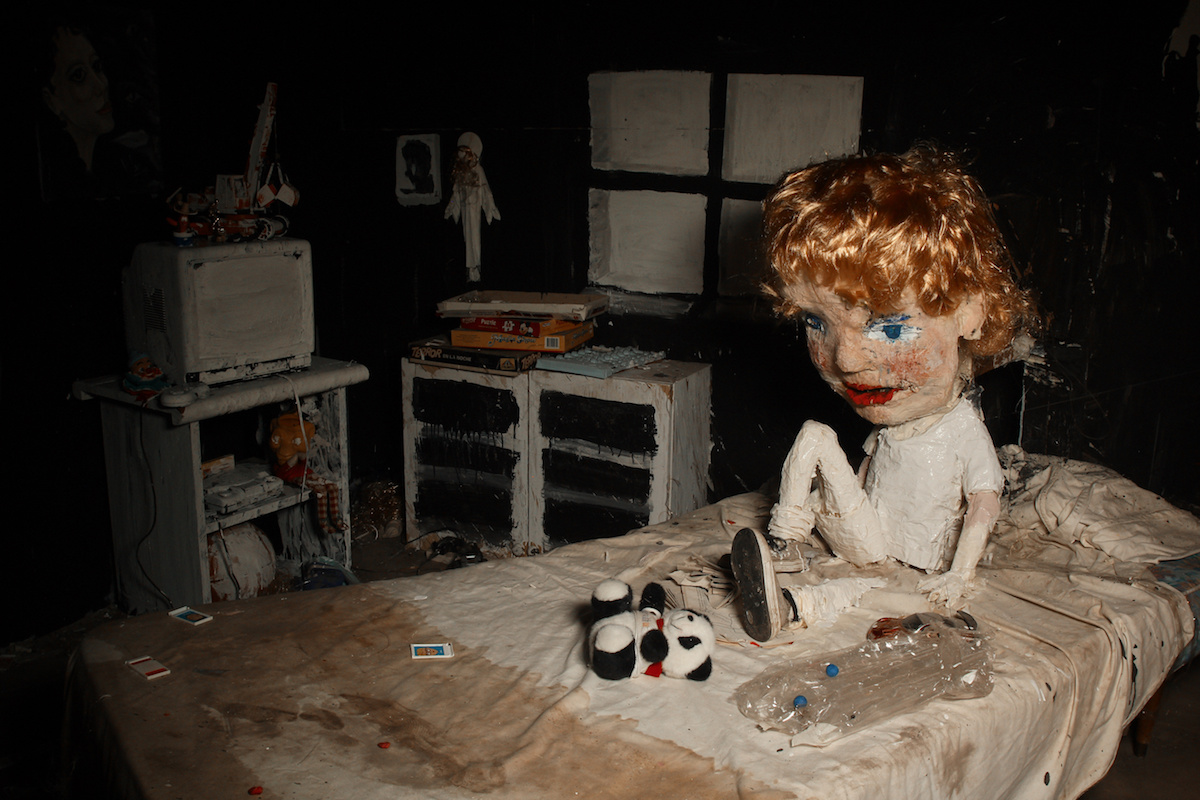 La casa lobo (The Wolf House)[/caption]
Nine new films join the Zabaltegi-Tabakalera competition at the 66th San Sebastian Film Festival’s most open competitive section bringing the number of films competing for the Zabaltegi-Tabakalera Award to 18.
Zabaltegi-Tabakalera will include the presentation of Kraben Rahu / Manta Ray, following its showing at Venice and Toronto. The first work by Phuttiphong Aroonpheng (Bangkok, 1976) brings the story of a fisherman who rescues a wounded, unconscious man from the forest and develops an unspoken connection with him.
The second feature film Di qiu zui hou de ye wan / Long Day’s Journey into Night, by Bi Gan (Kaili, China, 1989), after his award-winning debut, Kaili Blues, premiered in Un Certain Regard. The film narrates a man’s return to the town of his birth in search of a woman.
The animated stop-motion feature film La casa lobo (The Wolf House), by Cristobal León (Santiago de Chile, 1980) and Joaquín Cociña (Concepción, Chile, 1980), has been selected for international festivals including the Berlinale and Annecy, and has received several mentions and distinctions. The debut from León and Cociña tells the tale of a young girl who takes refuge in a house in Southern Chile on escaping from a Germany colony.
Sophia Antipolis, second feature from the director of Mercuriales, Virgil Vernier (Paris, 1976) premiered at Locarno in the Cineasti del Presente section. The French actor and filmmaker analyses a community in a strange territory between the Mediterranean, the forest and the mountain.
Joining the already-announced Los que desean (Those Who Desire, Elena López Riera) and 592 metroz goiti (Above 592 metres, Maddi Barber), are the short films De Natura, by Lucile Hadzihalilovic (Lyon, 1961), winner in 2004 of the New Directors award for her first film, Innocence, and who returned to San Sebastian’s Official Selection in 2015 with her second film, Evolution, winner of the Jury Special Prize; The Men Behind the Wall, by Inés Moldavsky (Buenos Aires, 1987), premiered at Berlin, about a woman living in Israel and the men she contacts in the West Bank using Tinder; and Sobre cosas que me han pasado, by José Luis Torres Leiva (Chile, 1975), his third participation in the section following El viento sabe que vuelvo a casa (The Winds Know that I’m Coming Back Home, 2016) and El sueño de Ana (2017). The short film Song for the Jungle by Jean-Gabriel Périot, shot in Calais, where thousands of migrants wait to go to England will also be screened. The first feature by Périot (Bellac, France, 1974), Una jeunesse allemande / A German Youth, opened the Panorama section of the Berlinale and was selected for Zabaltegi, and the second, Natsu no hikari – Lumières d’été / Summer Lights, competed in the New Directors section in 2016.
These additions bring the number of films competing for the Zabaltegi-Tabakalera Award to 18, including the productions Coincoin et les z’Inhumains / Coincoin and the Extra-humans (Bruno Dumont), Las hijas del fuego (The Daughters of Fire, Albertina Carri), Le livre d’image / The Image Book (Jean-Luc Godard), Da xiang xi di er zuo / An Elephant Sitting Still (Hu Bo), Belmonte (Federico Veiroj), Trote (Trot, Xacio Baño) and Teatro de guerra (Theatre of War, Lola Arias).
BERGMAN — ETT AR, ETT LIV / BERGMAN – A YEAR IN A LIFE
JANE MAGNUSSON (SWEDEN)
A documentary about Ingmar Bergman focussing on a hugely important year in his career, 1957, when he directed the masterpieces Det sjunde inseglet (The Seventh Seal) and Smultronstället (Wild Strawberries). However, more than simply looking at Bergman’s artistic facet, it addresses his private life like never before, particularly his stormy sentimental relationship with women, including several of the actresses he worked with.
DE NATURA
Short film
LUCILE HADZIHALILOVIC (ROMANIA)
Cast: Mihaela Manta, Maria Manta
De Natura is an improvised poem, a peaceful and cheerful walk of two little girls in the middle of the nature, away from the eyes of grown-ups. But then, the joy starts disappearing gradually, the reverie becomes nostalgia, while at the edge of the road, among the summer’s putrescence fruits, some faint faces appear. The cycle of life does not lessen the magic of the world, whether it is lit by the moon or by the sun.
DI QIU ZUI HOU DE YE WAN / LONG DAY’S JOURNEY INTO NIGHT
BI GAN (CHINA)
Cast: Sylvia Chang, Yongzhong Chen, Jue Huang
Luo Hongwu returns to Kaili, the city of his birth, from which he fled years back. He sets out to find the woman he loved, and has never been able to forget. She told him her name was Wan Quiwen…
KRABEN RAHU / MANTA RAY
PHUTTIPHONG AROONPHENG (THAILAND – FRANCE)
Cast: Wanlop Rungkamjad, Aphisit Hama, Rasmee Wayrana
Near a coastal village of Thailand, by the sea where thousands of Rohingya refugees have drowned, a local fisherman finds an injured man lying unconscious in the forest. He rescues the stranger, who doesn’t speak a word, offers him his friendship and names him Thongchai. But when the fisherman suddenly disappears at sea, Thongchai slowly begins to take over his friend’s life – his house, his job and his ex-wife…
LA CASA LOBO (THE WOLF HOUSE)
CRISTÓBAL LEÓN, JOAQUÍN COCIÑA (CHILE)
Young Maria seeks shelter in a big house after escaping from a sect of religious fanatics in Chile. There she is taken in by two pigs, its only inhabitants. Like in a dream, the universe of the house reacts to Maria’s feelings. The animals slowly morph into humans and the house into a nightmarish world. Inspired in the Colonia Dignidad case, La casa lobo (The Wolf House) seems to be an animated fairy tale produced by the sect leader to indoctrinate his followers.
THE MEN BEHIND THE WALL
Short film
INÉS MOLDAVSKY (ISRAEL)
Tinder. Woman seeks men. Man seeks women. Everything would be so simple if she weren’t in Israel and the guys nearby weren’t in the West Bank. Israeli filmmaker Ines Moldavsky sets out to meet up with the men that she is forbidden by law to see. She crosses the border into the West Bank to experience the personally unfamiliar physical space. The conversations revolve around virtual phone calls and physical encounters. Violence resonates in the search for a violation of boundaries.
SOBRE COSAS QUE ME HAN PASADO
Short film
JOSÉ LUIS TORRES LEIVA (CHILE)
Cast: Claudio Riveros
Sobre cosas que me han pasado is based on the book by author Marcelo Matthey, narrating his own life in a style reminiscent of school compositions. His constant strolls through streets, houses and beaches are recorded in notes of what he saw, felt or thought during these wanderings or moments, but almost only recalling the processes, the timeline in which things occur and come to mind, the trail of associations coming one after the other, like the steps of a person walking along a street. Immediate impressions, fleeting moments normally lost in time and which are captured in the images and sounds of this short film.
SONG FOR THE JUNGLE
Short film
JEAN-GABRIEL PÉRIOT (FRANCE)
Calais a few weeks before its clearing: The Jungle is a place where thousands of migrants live and wait to go to England, or just for somebody to take care of them. They wander in this abandoned place, hoping to survive our indifference.
SOPHIA ANTIPOLIS
VIRGIL VERNIER (FRANCE)
Cast: Dewi Kunetz, Sandra Poitoux, Hugues Njiba-Mukuna, Bruck, Lilith Grasmug
Sophia Antipolis: a technopole on the French Riviera, a place where dreams should come true. But fear and despair lurk beneath the surface. Under a deceitful sun, five lives map out the haunting story of a young woman: Sophia.
La casa lobo (The Wolf House)[/caption]
Nine new films join the Zabaltegi-Tabakalera competition at the 66th San Sebastian Film Festival’s most open competitive section bringing the number of films competing for the Zabaltegi-Tabakalera Award to 18.
Zabaltegi-Tabakalera will include the presentation of Kraben Rahu / Manta Ray, following its showing at Venice and Toronto. The first work by Phuttiphong Aroonpheng (Bangkok, 1976) brings the story of a fisherman who rescues a wounded, unconscious man from the forest and develops an unspoken connection with him.
The second feature film Di qiu zui hou de ye wan / Long Day’s Journey into Night, by Bi Gan (Kaili, China, 1989), after his award-winning debut, Kaili Blues, premiered in Un Certain Regard. The film narrates a man’s return to the town of his birth in search of a woman.
The animated stop-motion feature film La casa lobo (The Wolf House), by Cristobal León (Santiago de Chile, 1980) and Joaquín Cociña (Concepción, Chile, 1980), has been selected for international festivals including the Berlinale and Annecy, and has received several mentions and distinctions. The debut from León and Cociña tells the tale of a young girl who takes refuge in a house in Southern Chile on escaping from a Germany colony.
Sophia Antipolis, second feature from the director of Mercuriales, Virgil Vernier (Paris, 1976) premiered at Locarno in the Cineasti del Presente section. The French actor and filmmaker analyses a community in a strange territory between the Mediterranean, the forest and the mountain.
Joining the already-announced Los que desean (Those Who Desire, Elena López Riera) and 592 metroz goiti (Above 592 metres, Maddi Barber), are the short films De Natura, by Lucile Hadzihalilovic (Lyon, 1961), winner in 2004 of the New Directors award for her first film, Innocence, and who returned to San Sebastian’s Official Selection in 2015 with her second film, Evolution, winner of the Jury Special Prize; The Men Behind the Wall, by Inés Moldavsky (Buenos Aires, 1987), premiered at Berlin, about a woman living in Israel and the men she contacts in the West Bank using Tinder; and Sobre cosas que me han pasado, by José Luis Torres Leiva (Chile, 1975), his third participation in the section following El viento sabe que vuelvo a casa (The Winds Know that I’m Coming Back Home, 2016) and El sueño de Ana (2017). The short film Song for the Jungle by Jean-Gabriel Périot, shot in Calais, where thousands of migrants wait to go to England will also be screened. The first feature by Périot (Bellac, France, 1974), Una jeunesse allemande / A German Youth, opened the Panorama section of the Berlinale and was selected for Zabaltegi, and the second, Natsu no hikari – Lumières d’été / Summer Lights, competed in the New Directors section in 2016.
These additions bring the number of films competing for the Zabaltegi-Tabakalera Award to 18, including the productions Coincoin et les z’Inhumains / Coincoin and the Extra-humans (Bruno Dumont), Las hijas del fuego (The Daughters of Fire, Albertina Carri), Le livre d’image / The Image Book (Jean-Luc Godard), Da xiang xi di er zuo / An Elephant Sitting Still (Hu Bo), Belmonte (Federico Veiroj), Trote (Trot, Xacio Baño) and Teatro de guerra (Theatre of War, Lola Arias).
BERGMAN — ETT AR, ETT LIV / BERGMAN – A YEAR IN A LIFE
JANE MAGNUSSON (SWEDEN)
A documentary about Ingmar Bergman focussing on a hugely important year in his career, 1957, when he directed the masterpieces Det sjunde inseglet (The Seventh Seal) and Smultronstället (Wild Strawberries). However, more than simply looking at Bergman’s artistic facet, it addresses his private life like never before, particularly his stormy sentimental relationship with women, including several of the actresses he worked with.
DE NATURA
Short film
LUCILE HADZIHALILOVIC (ROMANIA)
Cast: Mihaela Manta, Maria Manta
De Natura is an improvised poem, a peaceful and cheerful walk of two little girls in the middle of the nature, away from the eyes of grown-ups. But then, the joy starts disappearing gradually, the reverie becomes nostalgia, while at the edge of the road, among the summer’s putrescence fruits, some faint faces appear. The cycle of life does not lessen the magic of the world, whether it is lit by the moon or by the sun.
DI QIU ZUI HOU DE YE WAN / LONG DAY’S JOURNEY INTO NIGHT
BI GAN (CHINA)
Cast: Sylvia Chang, Yongzhong Chen, Jue Huang
Luo Hongwu returns to Kaili, the city of his birth, from which he fled years back. He sets out to find the woman he loved, and has never been able to forget. She told him her name was Wan Quiwen…
KRABEN RAHU / MANTA RAY
PHUTTIPHONG AROONPHENG (THAILAND – FRANCE)
Cast: Wanlop Rungkamjad, Aphisit Hama, Rasmee Wayrana
Near a coastal village of Thailand, by the sea where thousands of Rohingya refugees have drowned, a local fisherman finds an injured man lying unconscious in the forest. He rescues the stranger, who doesn’t speak a word, offers him his friendship and names him Thongchai. But when the fisherman suddenly disappears at sea, Thongchai slowly begins to take over his friend’s life – his house, his job and his ex-wife…
LA CASA LOBO (THE WOLF HOUSE)
CRISTÓBAL LEÓN, JOAQUÍN COCIÑA (CHILE)
Young Maria seeks shelter in a big house after escaping from a sect of religious fanatics in Chile. There she is taken in by two pigs, its only inhabitants. Like in a dream, the universe of the house reacts to Maria’s feelings. The animals slowly morph into humans and the house into a nightmarish world. Inspired in the Colonia Dignidad case, La casa lobo (The Wolf House) seems to be an animated fairy tale produced by the sect leader to indoctrinate his followers.
THE MEN BEHIND THE WALL
Short film
INÉS MOLDAVSKY (ISRAEL)
Tinder. Woman seeks men. Man seeks women. Everything would be so simple if she weren’t in Israel and the guys nearby weren’t in the West Bank. Israeli filmmaker Ines Moldavsky sets out to meet up with the men that she is forbidden by law to see. She crosses the border into the West Bank to experience the personally unfamiliar physical space. The conversations revolve around virtual phone calls and physical encounters. Violence resonates in the search for a violation of boundaries.
SOBRE COSAS QUE ME HAN PASADO
Short film
JOSÉ LUIS TORRES LEIVA (CHILE)
Cast: Claudio Riveros
Sobre cosas que me han pasado is based on the book by author Marcelo Matthey, narrating his own life in a style reminiscent of school compositions. His constant strolls through streets, houses and beaches are recorded in notes of what he saw, felt or thought during these wanderings or moments, but almost only recalling the processes, the timeline in which things occur and come to mind, the trail of associations coming one after the other, like the steps of a person walking along a street. Immediate impressions, fleeting moments normally lost in time and which are captured in the images and sounds of this short film.
SONG FOR THE JUNGLE
Short film
JEAN-GABRIEL PÉRIOT (FRANCE)
Calais a few weeks before its clearing: The Jungle is a place where thousands of migrants live and wait to go to England, or just for somebody to take care of them. They wander in this abandoned place, hoping to survive our indifference.
SOPHIA ANTIPOLIS
VIRGIL VERNIER (FRANCE)
Cast: Dewi Kunetz, Sandra Poitoux, Hugues Njiba-Mukuna, Bruck, Lilith Grasmug
Sophia Antipolis: a technopole on the French Riviera, a place where dreams should come true. But fear and despair lurk beneath the surface. Under a deceitful sun, five lives map out the haunting story of a young woman: Sophia.
-
AN L.A. MINUTE Starring Gabriel Bryne Opens in Theaters on Friday [Trailer]
 An L.A. Minute, starring Gabriel Byrne as a mega-rich, mega-famous, Pulitzer Prize-winning novelist and blockbuster movie producer, opens August 24 in Los Angeles and New York, with a national rollout to follow.
Gabriel Byrne stars as the successful Ted Gould, problem is, overwhelming success has turned him into a mega-hack, and he knows it. His misery and self-loathing makes him treat everyone in his life with disrespect, and when Ted meets performance artist Velocity (Kiersey Clemons), she rocks his 1% world. An L.A. Minute is a satirical look at fame, success, the star-making machinery and the karma that attaches itself to all those who worship at the altar of celebrity. But, as is often the case in real life, what you see is not exactly what you get.
n L.A. Minute was directed by Daniel Adams and co-written by Adams and former editor of National Lampoon Magazine, Larry ‘Ratso’ Sloman. Sloman is best known for his collaboration with radio personality Howard Stern’s two best-selling books, Private Parts and Miss America. Daniel Adams is an award-winning American feature film director best known for directing and writing the popular films “The Lightkeepers,” starring Richard Dreyfuss and Blythe Danner, and “The Golden Boys,” starring David Carradine, Bruce Dern, Rip Torn, Charles Durning, and Mariel Hemingway.
An L.A. Minute, starring Gabriel Byrne as a mega-rich, mega-famous, Pulitzer Prize-winning novelist and blockbuster movie producer, opens August 24 in Los Angeles and New York, with a national rollout to follow.
Gabriel Byrne stars as the successful Ted Gould, problem is, overwhelming success has turned him into a mega-hack, and he knows it. His misery and self-loathing makes him treat everyone in his life with disrespect, and when Ted meets performance artist Velocity (Kiersey Clemons), she rocks his 1% world. An L.A. Minute is a satirical look at fame, success, the star-making machinery and the karma that attaches itself to all those who worship at the altar of celebrity. But, as is often the case in real life, what you see is not exactly what you get.
n L.A. Minute was directed by Daniel Adams and co-written by Adams and former editor of National Lampoon Magazine, Larry ‘Ratso’ Sloman. Sloman is best known for his collaboration with radio personality Howard Stern’s two best-selling books, Private Parts and Miss America. Daniel Adams is an award-winning American feature film director best known for directing and writing the popular films “The Lightkeepers,” starring Richard Dreyfuss and Blythe Danner, and “The Golden Boys,” starring David Carradine, Bruce Dern, Rip Torn, Charles Durning, and Mariel Hemingway.
-
VOX LUX and World Premiere of GRETA Added to 2018 Toronto International Film Festival
[caption id="attachment_31494" align="aligncenter" width="1200"] Greta[/caption]
Two new films – Vox Lux and Greta will premiere as part of the Special Presentations program in September at the 2018 Toronto International Film Festival. The World Premiere of Neil Jordan’s Greta and the North American Premiere of Brady Corbet’s Vox Lux will cap off the Festival’s Special Presentations and bring the total for the program up to 24 titles.
Neil Jordan’s Greta tells the story of a young New York woman named Frances (Chloë Grace Moretz) who strikes up an unlikely friendship with an enigmatic widow named Greta (Isabelle Huppert). The older woman’s motives are gradually revealed to be sinister and the film quickly descends into an exploration of loneliness, obsession, and manipulation. Greta, co-written by Jordan and Ray Wright, also stars Colm Feore, Maika Monroe, and Stephen Rea.
[caption id="attachment_31495" align="aligncenter" width="1200"]
Greta[/caption]
Two new films – Vox Lux and Greta will premiere as part of the Special Presentations program in September at the 2018 Toronto International Film Festival. The World Premiere of Neil Jordan’s Greta and the North American Premiere of Brady Corbet’s Vox Lux will cap off the Festival’s Special Presentations and bring the total for the program up to 24 titles.
Neil Jordan’s Greta tells the story of a young New York woman named Frances (Chloë Grace Moretz) who strikes up an unlikely friendship with an enigmatic widow named Greta (Isabelle Huppert). The older woman’s motives are gradually revealed to be sinister and the film quickly descends into an exploration of loneliness, obsession, and manipulation. Greta, co-written by Jordan and Ray Wright, also stars Colm Feore, Maika Monroe, and Stephen Rea.
[caption id="attachment_31495" align="aligncenter" width="1200"] Vox Lux[/caption]
In musical drama Vox Lux, Brady Corbet’s second feature as writer-director tracks its heroine’s path from childhood tragedy to a life of fame and fortune. Starring Natalie Portman and Jude Law, the film begins with teenage sisters Celeste (Raffey Cassidy) and Eleanor (Stacy Martin) who survive a violent incident that changes their lives. The film is both a riveting character study and a perceptive survey of the cultural shifts that have shaped a generation.
The 43rd Toronto International Film Festival runs from September 6 to 16, 2018
Vox Lux[/caption]
In musical drama Vox Lux, Brady Corbet’s second feature as writer-director tracks its heroine’s path from childhood tragedy to a life of fame and fortune. Starring Natalie Portman and Jude Law, the film begins with teenage sisters Celeste (Raffey Cassidy) and Eleanor (Stacy Martin) who survive a violent incident that changes their lives. The film is both a riveting character study and a perceptive survey of the cultural shifts that have shaped a generation.
The 43rd Toronto International Film Festival runs from September 6 to 16, 2018
-
Music Documentary A TUBA TO CUBA to Close 2018 New Orleans Film Festival
[caption id="attachment_31491" align="aligncenter" width="1200"] A Tuba to Cuba[/caption]
The documentary A Tuba to Cuba which follows New Orleans’ famed Preservation Hall Jazz Band as they retrace their musical roots to the shores of Cuba will be the Closing Night film of the 29th New Orleans Film Festival. The film underscores the festival’s programmatic focus on films from and about the Caribbean and the Caribbean diaspora, particularly those that speak to the historical and cultural ties between New Orleans and the Caribbean.
This year the feature competition lineup includes ten narrative feature films, eight documentary feature films, and eight feature films made in Louisiana. The 2018 Festival which will take place from October 17th through October 25th boasts the most diverse line-up in the festival’s history – with 60% of films by female directors and 54% by directors of color, and 80% from either a female director or director of color.
The New Orleans Film Society will warm up for the 29th New Orleans Film Festival with a special preview of the feature film BLAZE, directed by Ethan Hawke, on Tuesday, August 29th at the Orpheum Theater!
BLAZE is a biopic of Texas outlaw music’s unsung legend Blaze Foley, written by Ethan Hawke and Blaze Foley’s former sweetheart, Sybil Rosen. Rosen will attend the screening at the Orpheum Theater for a Q&A session on the 29th. Hawke approached Rosen about the project after reading her own telling of Foley’s story in the book “Living in the Woods in a Tree.” The lead role of Foley is played by newcomer Ben Dickey (a musician by trade), and fans of Netflix’s Arrested Development will spot Alia Shawkat as the female lead (Sybil Rosen). Rosen plays her own mother in the film. Blaze was filmed in Baton Rouge, Louisiana and opened at Sundance Film Festival 2018.
A Tuba to Cuba[/caption]
The documentary A Tuba to Cuba which follows New Orleans’ famed Preservation Hall Jazz Band as they retrace their musical roots to the shores of Cuba will be the Closing Night film of the 29th New Orleans Film Festival. The film underscores the festival’s programmatic focus on films from and about the Caribbean and the Caribbean diaspora, particularly those that speak to the historical and cultural ties between New Orleans and the Caribbean.
This year the feature competition lineup includes ten narrative feature films, eight documentary feature films, and eight feature films made in Louisiana. The 2018 Festival which will take place from October 17th through October 25th boasts the most diverse line-up in the festival’s history – with 60% of films by female directors and 54% by directors of color, and 80% from either a female director or director of color.
The New Orleans Film Society will warm up for the 29th New Orleans Film Festival with a special preview of the feature film BLAZE, directed by Ethan Hawke, on Tuesday, August 29th at the Orpheum Theater!
BLAZE is a biopic of Texas outlaw music’s unsung legend Blaze Foley, written by Ethan Hawke and Blaze Foley’s former sweetheart, Sybil Rosen. Rosen will attend the screening at the Orpheum Theater for a Q&A session on the 29th. Hawke approached Rosen about the project after reading her own telling of Foley’s story in the book “Living in the Woods in a Tree.” The lead role of Foley is played by newcomer Ben Dickey (a musician by trade), and fans of Netflix’s Arrested Development will spot Alia Shawkat as the female lead (Sybil Rosen). Rosen plays her own mother in the film. Blaze was filmed in Baton Rouge, Louisiana and opened at Sundance Film Festival 2018.
CLOSING NIGHT SELECTION
A Tuba to Cuba | dir. T.G. Herrington, Danny Clinch | USA A TUBA TO CUBA follows New Orleans’ famed Preservation Hall Jazz Band as they retrace their musical roots from the storied city of jazz to the shores of Cuba and in turn discover a connection that runs much deeper than could have been imagined.NARRATIVE FEATURES COMPETITION
Chained for Life | dir. Aaron Schimberg | USA A beautiful actress struggles to connect with her disfigured co-star on the crowded set of a European auteur’s English-language debut. Empty Metal | dir. Adam Khalil, Bayley Sweitzer | USA SOUTHERN U.S. PREMIERE. A trio of aimless musicians are caught up in a shadow revolution governed by psychic native separatists, sovereign citizens, survivalist preppers, and steered by a dreadlocked rasta. Family First | dir. Sophie Dupuis | Canada Constantly walking a tightrope, JP tries to maintain a proper balance between the numerous needs of his family, his job with his brother, and his involvements in his uncle’s drug cartel. Fort Maria | dir. S. Cagney Gentry, Thomas Southerland | USA Four women in the South are connected by the death of a dog. A Haunting Hitchhike | dir. Heejae Jeong | South Korea NORTH AMERICAN PREMIERE. 16-year-old girl Jeong-ae is on her way to find her long-lost mother, believing that she’s the only hope left to her. Jules of Light and Dark | dir. Daniel Laabs | USA WORLD PREMIERE. Two young lovers, Maya and Jules, are found wrecked on the side of the road in North Texas by a loner roughneck, Freddy. As her relationship crumbles, Maya forms a friendship with Freddy, whose past mistakes and experiences offer her insights on her life. Life is Fare | dir. Sephora Woldu | Eritrea, USA Sephora, an idealistic young Eritrean American, pitches a well-meaning but ludicrous film about identity, memory, and homesickness to her traditional mother. Pig Film | dir. Josh Gibson | USA NORTH AMERICAN PREMIERE. In an empty world, a solitary female mechanically follows the protocols of a factory hog farm. Her labors are sporadically punctuated by musical rhapsodies as she moves toward the impending end. Solace | dir. Tchaiko Omawale | USA SOUTHERN U.S. PREMIERE. A 17-year-old orphan is shipped off to her estranged grandmother. She plots her escape while navigating a foreign environment, new friendships and a hidden eating disorder. Waru | dir. Briar Grace-Smith, Casey Kaa, Ainsley Gardiner, Katie Wolfe, Chelsea Winstanley, Renae Maihi, Paula Whetu Jones | New Zealand Following the death of a child, eight Māori women are confronted by guilt, pride and defeat but will ultimately risk everything for the greater good of their community.DOCUMENTARY FEATURES COMPETITION
América | dir. Erick Stoll, Chase Whiteside | Mexico América is a story of brothers confronting the chasm between adolescent yearning and adult realities when brought together to care for their ailing ninety-three year old grandmother. For the Birds | dir. Richard Miron | USA A woman’s love for her pet ducks, chickens, geese, and turkeys—all 200 of them—ignites a battle with local animal rescuers and puts her marriage in jeopardy. Gimme A Faith | dir. Hao Zhang | China, USA WORLD PREMIERE. Two evangelical Christians in the Bible Belt of the United States are devoted to converting newly arrived Chinese international students. Jaddoland | dir. Nadia Shihab | Kuwait, USA WORLD PREMIERE. A visit to her mother’s home art studio in Texas prompts the filmmaker to explore the meaning of home and the search for belonging across three generations of her Iraqi family. Man Made | dir. T Cooper | USA Traces the paths of four transgender male bodybuilders as they prepare to step on stage at the only all-trans bodybuilding competition in the world. The Unafraid | dir. Heather Courtney, Anayansi Prado | USA A look at the personal lives of three DACA students in Georgia, a state that has banned them from attending their top state universities and disqualifies them from receiving in-state tuition at any other public college. While I Breathe, I Hope | dir. Emily Harrold | USA WORLD PREMIERE. This film explores what it means to be young, Black, and a Democrat through the experiences of South Carolina politician Bakari Sellers. Wrestle | dir. Suzannah Herbert, Lauren Belfer | USA The wrestling team at JO Johnson High School in Huntsville, which has been on Alabama’s failing schools list for many years, fights their way towards the State Championship and the doors they hope it will open.LOUISIANA FEATURES COMPETITION
Bending Lines: The Sculpture of Robert Wiggs | dir. Allison Bohl DeHart, Peter DeHart | USA Obsessed with the repeating geometry of nature, a sculptor works in the space between art and science. Buckjumping | dir. Lily Keber | USA WORLD PREMIERE. Buckjumping takes the pulse of present-day New Orleans by turning to its dancers, the men and women who embody the rhythm of the city and prove it on the streets every chance they get. Mississippi Madam: The Life of Nellie Jackson | dir. Timothy Givens, Mark K. Brockway | USA In 1902 Nellie Jackson, an African-American woman born into poverty in Possum Corner, Mississippi, traveled north to Natchez and opened “Nellie’s”, a brothel she ran for more than sixty years. Same God | dir. Linda Midgett | USA The first African American woman to gain tenure at “the evangelical Harvard” faces a life-altering backlash to her public show of solidarity with American Muslims. The True Don Quixote | dir. Chris Poché | USA WORLD PREMIERE. Danny Kehoe lives an ordinary life that leaves him bored nearly to death. His only escape is in his collection of books and comics, all recounting, with great inaccuracy, the romantic tales of the chivalrous Knights Errant. When those books are taken away, he goes mad. In his desperation, he re-christens himself as the last and greatest knight of all, Don Quixote. This Little Light | dir. Ada McMahon, Wendi Moore-O’Neal | USA When Black feminist freedom singer Wendi Moore-O’Neal married her now wife, Mandisa, she was fired from her job as a community organizer. This is a self-determined portrait about the Black Southern Freedom movement. This Taco Truck Kills Fascists | dir. Rodrigo Dorfman | USA WORLD PREMIERE. Jose Torres-Tama is on a mission: to create a revolutionary Taco Truck Theatre with a simple message: “No guacamole for immigrant haters”. Tomorrow Never Knows | dir. Adam Sekuler | USA The uncomfortable reality of death is faced by Shar and Cynthia who, upon Shar’s diagnosis with early-onset Alzheimer’s, make a brave and difficult decision.
-
Ryuichi Sakamoto to Receive Asian Filmmaker of the Year Award at Busan International Film Festival
 Musician Ryuichi Sakamoto, the first Asian to win the Academy Award for Best Original Score for The Last Emperor (1986), will receive the Asian Filmmaker of the Year Award at the 23rd Busan International Film Festival. The Asian Filmmaker of the Year Award is granted to a notable figure or organization with outstanding achievements in improving and developing the Asian Film industry and facilitating cultural development.
Debuting in 1978 with YMO (Yellow Magic Orchestra), Ryuichi Sakamoto pioneered electronic music and electro hop. Ryuichi has continuously expanded his musical boundaries from classical music into rock and opera. He also entered the world of film music with Merry Christmas, Mr. Lawrence (1983) by director Nagisa Oshima. Ryuichi was the first Asian to win the Academy Award for Best Original Score for The Last Emperor (1986), and accordingly won the Golden Globe Awards and the British Academy Film Awards for The Sheltering Sky (1990) and Little Buddha (1993) to become and remain the master of film music. Ryuichi has constantly composed film music such as The Fortress (2017) and My TYRANO: Together, Forever (2019) followed by his triumphant musical return after a diagnosis of throat cancer in 2014 – The Revenant (2015), which was nominated for the Golden Globe Awards and Grammy Awards. The score will further establish his prominence in contemporary film music.
Ryuichi Sakamoto, celebrating his 40th anniversary of music involvement, is deeply admired and loved by the public as an artist who remains a prominent musician in the history of world cinema and contributes his voice to various social issues and causes. In response to his sheer amount of time, effort, and passion, the 23rd Busan International Film Festival announces Ryuichi Sakamoto as the winner of the Asian Filmmaker of the Year Award in recognition of his music and life.
The opening ceremony of the 23rd Busan International Film Festival at the BIFF Theater of Busan Cinema Center on October 4 will host Ryuichi Sakamoto’s opening performance to commemorate the 40th anniversary of his musical debut.
Musician Ryuichi Sakamoto, the first Asian to win the Academy Award for Best Original Score for The Last Emperor (1986), will receive the Asian Filmmaker of the Year Award at the 23rd Busan International Film Festival. The Asian Filmmaker of the Year Award is granted to a notable figure or organization with outstanding achievements in improving and developing the Asian Film industry and facilitating cultural development.
Debuting in 1978 with YMO (Yellow Magic Orchestra), Ryuichi Sakamoto pioneered electronic music and electro hop. Ryuichi has continuously expanded his musical boundaries from classical music into rock and opera. He also entered the world of film music with Merry Christmas, Mr. Lawrence (1983) by director Nagisa Oshima. Ryuichi was the first Asian to win the Academy Award for Best Original Score for The Last Emperor (1986), and accordingly won the Golden Globe Awards and the British Academy Film Awards for The Sheltering Sky (1990) and Little Buddha (1993) to become and remain the master of film music. Ryuichi has constantly composed film music such as The Fortress (2017) and My TYRANO: Together, Forever (2019) followed by his triumphant musical return after a diagnosis of throat cancer in 2014 – The Revenant (2015), which was nominated for the Golden Globe Awards and Grammy Awards. The score will further establish his prominence in contemporary film music.
Ryuichi Sakamoto, celebrating his 40th anniversary of music involvement, is deeply admired and loved by the public as an artist who remains a prominent musician in the history of world cinema and contributes his voice to various social issues and causes. In response to his sheer amount of time, effort, and passion, the 23rd Busan International Film Festival announces Ryuichi Sakamoto as the winner of the Asian Filmmaker of the Year Award in recognition of his music and life.
The opening ceremony of the 23rd Busan International Film Festival at the BIFF Theater of Busan Cinema Center on October 4 will host Ryuichi Sakamoto’s opening performance to commemorate the 40th anniversary of his musical debut.
Ryuichi Sakamoto
Ryuichi as a musician, artist, producer, as well as a progressive anti-war, peace, and environmental activist had initially stepped into the world of film music by playing Oshima Nagisa’s Merry Christmas, Mr. Lawrence in 1983. He was in charge of composing the film’s musical score and won the British Academy Film Awards. He gained extensive reputation as a film score composer on the strength of winning majority of awards such as the Academy Award for Best Original Score and Grammy Awards as the first Asian in 1987 thanks to The Last Emperor (1986) by director Bernardo Bertolucci and receiving the second Golden Globe Awards for The Sheltering Sky (1990). Going through a year of medical treatment after the announcement of throat cancer in 2014, Ryuichi Sakamoto returned to the composer’s chair with The Revenant (2015) by Alejandro González Iñárritu and maintained musical reign by being selected for the Golden Globe Awards and the Grammy Awards Nominee. Ryuichi Sakamoto has been recently presenting beautiful music through more than 40 films including Fortress (2017) by director Hwang Dong-hyuk and animated cartoon My TYRANO: Together, Forever (2019) that resonates with the film and fascinates all with its delicate melody with a long-lasting message.
-
WATCH Chance the Rapper in Horror Film SLICE Trailer
 Chance the Rapper makes his big-screen debut in the horror film Slice, the story of a ghost, a werewolf, and a pretty shitty pizza place. The film from director Austin Vesely, co-stars Zazie Beets, Paul Scheer, Rae Gray, and Joe Keery.
In a spooky small town, when a slew of pizza delivery boys are slain on the job, two daring survivors (Atlanta’s Zazie Beetz and Chance the Rapper in a wild film debut) set out to catch the culprits behind the cryptic crime spree. Slice is Director Austin Vesely’s first feature film after helming music videos for Chance’s “Sunday Candy” and “Angels.”
https://www.youtube.com/watch?v=i5LUKX97bNA
Chance the Rapper makes his big-screen debut in the horror film Slice, the story of a ghost, a werewolf, and a pretty shitty pizza place. The film from director Austin Vesely, co-stars Zazie Beets, Paul Scheer, Rae Gray, and Joe Keery.
In a spooky small town, when a slew of pizza delivery boys are slain on the job, two daring survivors (Atlanta’s Zazie Beetz and Chance the Rapper in a wild film debut) set out to catch the culprits behind the cryptic crime spree. Slice is Director Austin Vesely’s first feature film after helming music videos for Chance’s “Sunday Candy” and “Angels.”
https://www.youtube.com/watch?v=i5LUKX97bNA
-
Danny DeVito to Receive Award at San Sebastian Film Festival
 Danny DeVito will be presented with a Donostia Award at the 66th San Sebastian Festival on Saturday September 22, and the following day, he will present his latest film Smallfoot at the Festival.
The award recognises a career of almost five decades related to acting in theatre, film and television, telling stories as an actor, producer and director. The Golden Globe and Emmy Award winner is known for his roles in television series Taxi and It’s Always Sunny in Philadelphia, and movies such as One Flew Over The Cuckoo’s Nest, Terms of Endearment, Romancing The Stone, Twins, Ruthless People, and Tin Men.
A well-known face to the public for roles including the charismatic Penguin in Batman, or Schwarzenegger’s twin brother, he has led a versatile career during which he has worked under the orders of directors like Milos Forman, Brian de Palma, Robert Zemeckis, Barry Levinson, Tim Burton, Francis Ford Coppola, Sofia Coppola and Todd Solondz.
He has also directed – and starred in – hugely emblematic films including The War of the Roses (1989), Hoffa (1992), Death to Smoochy (2002), Throw Momma from the Train (1987), Curmudgeons (2016), Duplex (2003), The Ratings Game (1984),and The World’s Greatest Lover (1977) as well as producing films by Quentin Tarantino, Steven Soderbergh and the self-same Forman. He produced, directed and acted for Matilda (1996), Hoffa (1992) and Curmudgeons (2016).
A principal of Jersey Film’s 2nd Avenue, successor company of Jersey Films which produced Erin Brockovich (2000) which received an Academy Award nomination for Best Picture, Pulp Fiction (1994), Out of Sight (1998), Freedom Writers (2007), Garden State (2004), Along Came Polly (2004), Living Out Loud (1998) and others. DeVito served as a producer and co-starred in Get Shorty (1995) Man on the Moon (1999), Be Cool (2005), Even Money (2006) and Drowning Mona (2000).
One of his first roles in the seventh art was One Flew Over the Cuckoo’s Nest (1975). He earned fame for his part in the TV series Taxi (1978-1983), he was nominated for both a Golden Globe and an Emmy every year the show was on and took home one of each. Featured in the cast of films such as the Oscar-winning Terms of Endearment (James L. Brooks, 1983), Romancing the Stone (Robert Zemeckis, 1984) or Ruthless People (1986), he directed his first film for the big screen, the Academy Award and Golden Globe nominated Throw Momma from the Train (1987).
Next, he helmed and starred in The War of the Roses (1989) and Hoffa (1992), both selected for the Berlin Festival’s official competition, and Matilda (1996) based on the book by Roald Dahl. His career as a filmmaker coexisted with his parts in films like Wise Guys (Brian de Palma, 1986), Tin Men (Barry Levinson, 1987), Twins (Ivan Reitman, 1988), Other People’s Money (Norman Jewison, 1991), Batman Returns (Tim Burton, 1992), The Rainmaker (Francis Ford Coppola), L.A. Confidential (Curtis Hanson, 1997), The Virgin Suicides (Sofia Coppola, 1999), Big Fish (2003), again with Tim Burton, or, more recently, The Comedian (Taylor Hackford, 2016) and Weiner-Dog (Todd Solondz, 2016). Next year he will premiere the eagerly-awaited version of Dumbo, in which he will once again embody a circus director, as he did in Big Fish; it will be his third collaboration with Burton.
Since the 90s, he has also been involved as a producer for films including Pulp Fiction (Quentin Tarantino, 1994), Get Shorty (Barry Sonnenfeld, 1995), Gattaca (Andrew Niccol, 1997), Man on the Moon (Milos Forman, 1999), Erin Brockovich (Steven Soderbergh, 2000), Oscar nominee for Best Film, Garden State (Zach Braff, 2004) and Freedom Writers (Richard LaGravenese, 2007).
DeVito has also put his voice to animated films including Space Jam (1996), Hercules (1997), The Lorax (2012) and his new film he will bring to San Sebastian for the first time, Smallfoot, to be screened in the Velodrome.
https://www.youtube.com/watch?v=_r9GPgvN8As
Image: Actor Danny DeVito on the It’s Always Sunny in Philadelphia panel at the 2010 San Diego Comic Con in San Diego, California. / Gage Skidmore
Danny DeVito will be presented with a Donostia Award at the 66th San Sebastian Festival on Saturday September 22, and the following day, he will present his latest film Smallfoot at the Festival.
The award recognises a career of almost five decades related to acting in theatre, film and television, telling stories as an actor, producer and director. The Golden Globe and Emmy Award winner is known for his roles in television series Taxi and It’s Always Sunny in Philadelphia, and movies such as One Flew Over The Cuckoo’s Nest, Terms of Endearment, Romancing The Stone, Twins, Ruthless People, and Tin Men.
A well-known face to the public for roles including the charismatic Penguin in Batman, or Schwarzenegger’s twin brother, he has led a versatile career during which he has worked under the orders of directors like Milos Forman, Brian de Palma, Robert Zemeckis, Barry Levinson, Tim Burton, Francis Ford Coppola, Sofia Coppola and Todd Solondz.
He has also directed – and starred in – hugely emblematic films including The War of the Roses (1989), Hoffa (1992), Death to Smoochy (2002), Throw Momma from the Train (1987), Curmudgeons (2016), Duplex (2003), The Ratings Game (1984),and The World’s Greatest Lover (1977) as well as producing films by Quentin Tarantino, Steven Soderbergh and the self-same Forman. He produced, directed and acted for Matilda (1996), Hoffa (1992) and Curmudgeons (2016).
A principal of Jersey Film’s 2nd Avenue, successor company of Jersey Films which produced Erin Brockovich (2000) which received an Academy Award nomination for Best Picture, Pulp Fiction (1994), Out of Sight (1998), Freedom Writers (2007), Garden State (2004), Along Came Polly (2004), Living Out Loud (1998) and others. DeVito served as a producer and co-starred in Get Shorty (1995) Man on the Moon (1999), Be Cool (2005), Even Money (2006) and Drowning Mona (2000).
One of his first roles in the seventh art was One Flew Over the Cuckoo’s Nest (1975). He earned fame for his part in the TV series Taxi (1978-1983), he was nominated for both a Golden Globe and an Emmy every year the show was on and took home one of each. Featured in the cast of films such as the Oscar-winning Terms of Endearment (James L. Brooks, 1983), Romancing the Stone (Robert Zemeckis, 1984) or Ruthless People (1986), he directed his first film for the big screen, the Academy Award and Golden Globe nominated Throw Momma from the Train (1987).
Next, he helmed and starred in The War of the Roses (1989) and Hoffa (1992), both selected for the Berlin Festival’s official competition, and Matilda (1996) based on the book by Roald Dahl. His career as a filmmaker coexisted with his parts in films like Wise Guys (Brian de Palma, 1986), Tin Men (Barry Levinson, 1987), Twins (Ivan Reitman, 1988), Other People’s Money (Norman Jewison, 1991), Batman Returns (Tim Burton, 1992), The Rainmaker (Francis Ford Coppola), L.A. Confidential (Curtis Hanson, 1997), The Virgin Suicides (Sofia Coppola, 1999), Big Fish (2003), again with Tim Burton, or, more recently, The Comedian (Taylor Hackford, 2016) and Weiner-Dog (Todd Solondz, 2016). Next year he will premiere the eagerly-awaited version of Dumbo, in which he will once again embody a circus director, as he did in Big Fish; it will be his third collaboration with Burton.
Since the 90s, he has also been involved as a producer for films including Pulp Fiction (Quentin Tarantino, 1994), Get Shorty (Barry Sonnenfeld, 1995), Gattaca (Andrew Niccol, 1997), Man on the Moon (Milos Forman, 1999), Erin Brockovich (Steven Soderbergh, 2000), Oscar nominee for Best Film, Garden State (Zach Braff, 2004) and Freedom Writers (Richard LaGravenese, 2007).
DeVito has also put his voice to animated films including Space Jam (1996), Hercules (1997), The Lorax (2012) and his new film he will bring to San Sebastian for the first time, Smallfoot, to be screened in the Velodrome.
https://www.youtube.com/watch?v=_r9GPgvN8As
Image: Actor Danny DeVito on the It’s Always Sunny in Philadelphia panel at the 2010 San Diego Comic Con in San Diego, California. / Gage Skidmore
-
2018 HollyShorts Film Festival Awards – Guy Nattiv’s SKIN Wins Best Short Film
 Skin Directed by Guy Nattiv took the top prize for Best Short Film at the 14th edition of the Oscar Qualifying HollyShorts Film Festival Awards Ceremony last night hosted by Gabrielle Loren. Grand Jury Prize went to Souls of Totality Directed by Richard Raymond. Best Director went to Randall Christopher for The Driver Is Red. Best Short Shot on Film went to Trapeze USA by Mark Anthony Green. The Panavision Future Filmmaker Award went to Daniel Drummond for A Foreman. The HollyShorts 2018 Screenplay Competition Winner Presented by Seattle Film Summit went to Best Seller by Nora Kirkpatrick.
The 15th Anniversary of HollyShorts will take place on August 8-17, 2019 at the TCL Chinese 6 Theaters. The festival begins taking early bird submissions for next year’s festival on September 23, 2018.
Skin Directed by Guy Nattiv took the top prize for Best Short Film at the 14th edition of the Oscar Qualifying HollyShorts Film Festival Awards Ceremony last night hosted by Gabrielle Loren. Grand Jury Prize went to Souls of Totality Directed by Richard Raymond. Best Director went to Randall Christopher for The Driver Is Red. Best Short Shot on Film went to Trapeze USA by Mark Anthony Green. The Panavision Future Filmmaker Award went to Daniel Drummond for A Foreman. The HollyShorts 2018 Screenplay Competition Winner Presented by Seattle Film Summit went to Best Seller by Nora Kirkpatrick.
The 15th Anniversary of HollyShorts will take place on August 8-17, 2019 at the TCL Chinese 6 Theaters. The festival begins taking early bird submissions for next year’s festival on September 23, 2018.
HollyShorts Awards 2018 Full Winners List
Best Action Mascarpone Jonas Riemer Best Animation The Driver Is Red Randall Christopher Best Cinematographer The Other End Of The Earth Aaron Grasso Best Comedy Must Kill Karl Joe Kicak Best Coming Of Age Melody Bernard Kordieh Best Diversity Diwa Aina Dumlao, Bru Muller Best Documentary Hula Girl Amy Hill, Chris Riess Best Drama Phone Duty Lenar Kamalov Best Editing The Sermon Paco Sweetman Best Female Director Magic ’85 Annika Kurnick Best Horror Bite Size Horror Andrew Laurich, Anthony Melton, Ben Franklin, Chris Leone, Jack Bishop, Jerome Sable, John Ross, Justin Nijm, Michael Thelin, Rob Savage, Toby Meakins Best International Matria Alvaro Gago Diaz Best LGBT Pop Rox Nate Trinrud Best Music Video Sea Thor Brenne Best Narrative A Drowning Man Mahdi Fleifel Best Period Piece Cypher Lawrence Le Lam Best Produced Deer Boy Paweł Kosuń, Agnieszka Janowska Best Romance Fill Your Heart With French Fries Tamar Glezerman Best Sci-Fi Paleonaut Eric McEver Best Screenplay 1. Best Seller – Nora Kirkpatrick 2. Melville – Jeremy Storey 3. Conviction – Nino Mancuso Best Student Falling Ewen Wright Best Thriller Baghead Alberto Corredor Best TV Pickup Jeremiah Kipp Best VFX UI Soon We Will All Be One Johannes Mücke, Patrick Sturm Best VR A Yosemite Welcome… Kevin Pontuti Best Web Series Little Italy, LA Adriano Valentini Honorable Mention Magic Alps Andrea Brusa, Marco Scotu Kodak Honorable Mention Always Remember Me Nell Teare Best Panavision Future Filmmaker Award A Foreman Daniel Drummond Best Director The Driver Is Red Randall Christopher Best Grand Jury Souls Of Totality Richard Raymond Best Short Film Prize Skin Guy Nattiv