
The 65th edition of Cannes Critics Week (La Semaine de la Critique), set to take place May 13th to 21st, 2026, today unveiled the official selection of 11 feature films.
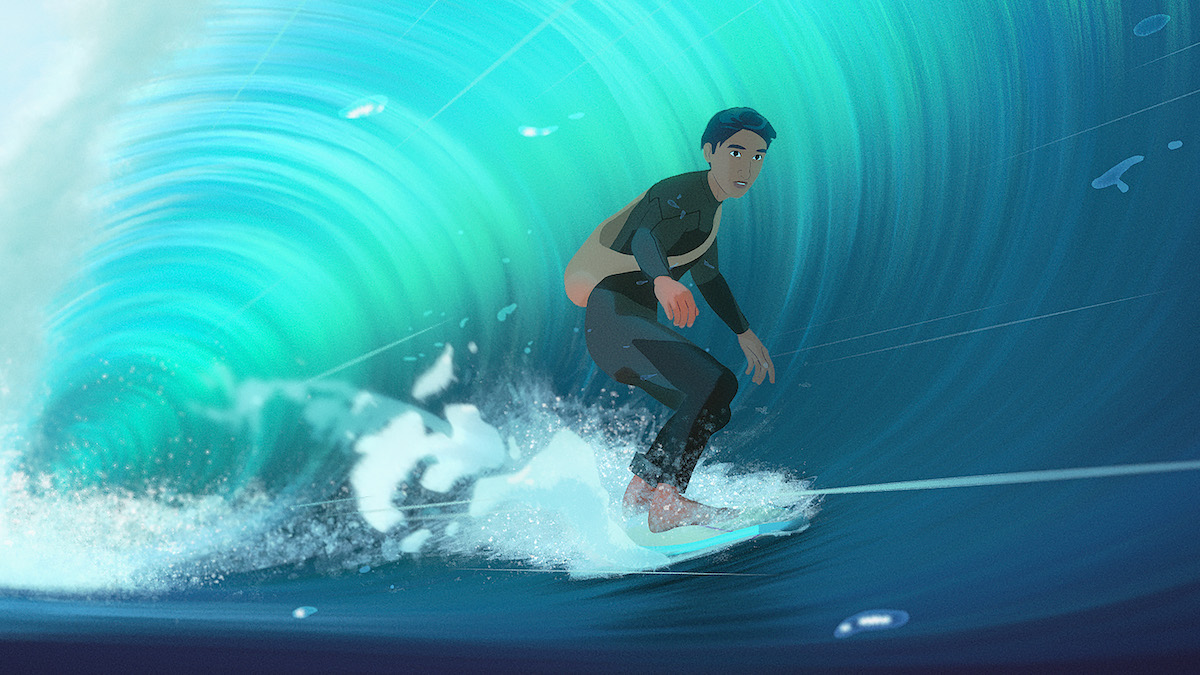
For the first time, Cannes Critics Week will open with an animated film, In Waves, French-Vietnamese director Phuong Mai Nguyen’s first feature film, an adaptation of AJ Dungo’s graphic novel. In Waves is described as a love story between a young male skater and a young female surfer as illness puts them to the test. Hand in hand, with their friends’ support, they face adversity and never give in to the tide of sorrow. French voices by Lyna Khoudri, Rio Vega, Paul Kircher, and Birane Ba. English voices by Will Sharpe and Stephanie Hsu.
Closing the festival is Adieu monde cruel, French director Félix de Givry’s first feature film, telling the tale of 14-year-old Otto, who is ashamed to have failed his suicide attempt, which he had announced in a letter to his family and classmates, and ends up going into hiding. At nightfall, he roams the streets of his village until a girl from high school recognises him. Starring in the film are Milo Machado-Graner, Jane Beever, and Françoise Lebrun’s voice as the narrator.
Also premiering as special screenings are Julien Gaspar-Oliveri’s Stonewall, and Pierre Le Gall’s Flesh and Fuel.
Stonewall, Julien Gaspar-Oliveri’s first feature film, is an intimate drama about a brother and sister left to fend for themselves. When their father is released from prison, traumas and secrets suddenly resurface, shattering the sibling dynamics. The frame tightens, the breath shortens, and the heart clenches. The mise-en-scène conveys the anxiety triggered by the father’s return. Starring in the film are Bastien Bouillon, Diego Murgia, and Romane Fringeli.
Flesh and Fuel, Pierre Le Gall’s first feature film, is the irresistible love story between two lorry drivers who meet randomly one night and fall head over heels in love. Putting up with impossible working hours and long stretches on the road, Etienne and Bartosz look for ways to keep the spark of this fresh relationship alive despite the distance. Starring in the film are Alexis Manenti and Julian Świeżewski.
The 7 feature films in competition include 5 first feature films and 2 second feature films. 13 short films have also been selected – to be announced later in the week.
A Girl Unknown, Chinese director Zou Jing’s first feature film, is a young Chinese woman’s searing quest for identity, split between childhood and adolescence and between three families. This intimate story immerses us in the plight of abandoned young girls in China between the years 1980s and 2000s. The film delicately explores the stigma of such trauma through three defining chapters in the life of its heroine.
The Station, Yemeni-Scottish director Sara Ishaq’s first narrative feature film, is set in a nameless village torn apart by civil war. The only place where women can gather in peace is the petrol station run by Layal. A sisterhood where they smoke hookah in secret and where the only man allowed is the boss’s younger brother.
Dua, Kosovar director Blerta Basholli’s second feature film, is named after its heroine. A 13-year-old girl’s routine and family life are upended as the conflict between Kosovo and Serbia intensifies. The film deftly shifts from a coming-of-age story to a drama, and subtly portrays the repercussions of war on the formation of the self, especially during adolescence.
Seis meses en el edificio rosa con azul is Mexican director Bruno Santamaría Razo’s first narrative feature. In this novelistic family drama, the hero summons his childhood memories as he faces the mystery of his father’s illness. The director takes us back to the 90s, a time when HIV awareness was still fragile, and prejudice persisted.
La Gradiva, the first film by French director Marine Atlan, starring Antonia Buresi, follows a group of high school students on a trip to Pompeii with their Latin teacher. In this city steeped in myths and sulfur, teenagers and adults succumb to their emotions and desires until they spill over. Breathtakingly beautiful, this ensemble piece accurately captures the beliefs and uncertainties of a highly sensitive generation. .
Tin Castle, French-Irish director Alexander Murphy’s second documentary feature, portrays a large family living in a battered trailer by the roadside. Life unfolds with the seasons, between the wild freedom of the surrounding fields where the children play and the pressures of normative society that creeps up on the older children.
Viva, Spanish director Aina Clotet’s first feature film (in which she also stars), is a bittersweet comedy set in a Catalonia suffocating under extreme drought. Nora has just recovered from breast cancer and begins to rethink her personal and professional life in light of this rebirth and the perspectives it opens up. A fiercely endearing character, she grapples with her dilemmas and aspirations as the heatwave brings on hallucinations.
In competition
Al Mahattah (The Station)
Yemen, Jordan, France, Germany, the Netherlands, Norway, Qatar | 1h52
Sara Ishaq
Dua
Kosovo, Switzerland, France | 1h40
Blerta Basholli
La Gradiva
France, Italy | 2h25
Marine Atlan
Wu ming nü hai (A Girl Unknown)
China, France | 2h05
ZOU Jing
Seis meses en el edificio rosa con azul
Mexico, Denmark, Brazil | 1h44
Bruno Santamaría Razo
Tin Castle
Ireland, France | 1h45
Alexander Murphy
Viva (Alive)
Spain | 1h52
Aina Clotet
Special Screenings
Opening Film
In Waves
France, Belgium | 1h31
Phuong Mai Nguyen
Special Screenings
La Frappe (Stonewall)
France | 1h44
Julien Gaspar-Oliveri
Du Fioul dans les artères
(Flesh and Fuel)
France, Poland | 1h30
Pierre Le Gall
Closing Film
Adieu monde cruel
France, Belgium | 1h33
Félix de Givry
Leave a Reply
You must be logged in to post a comment.