
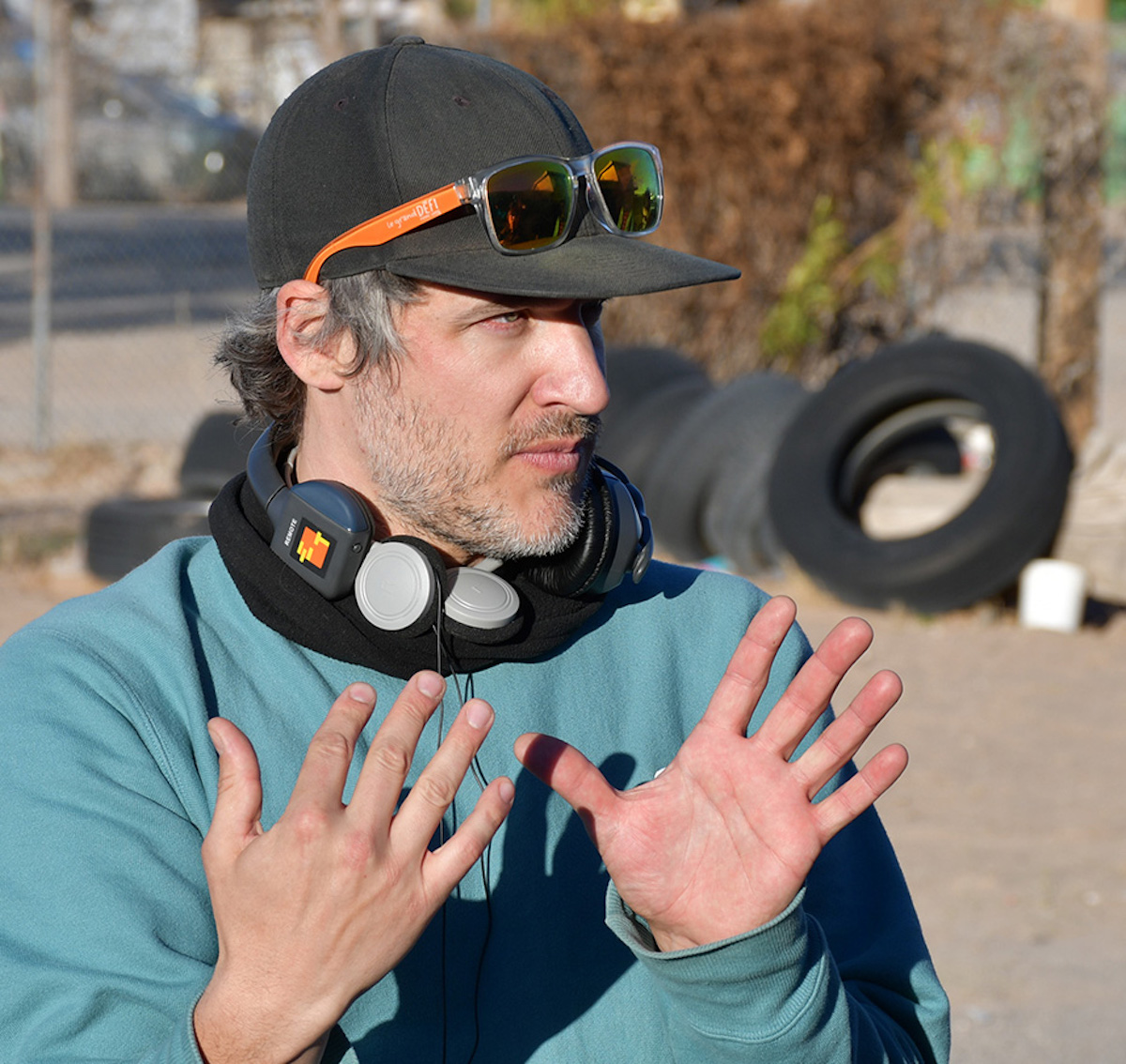
Hubert Caron-Guay, a visual artist, director, scriptwriter, and producer, is known for creating intimate stories that explore the complexities of the human condition. Through close relationships with his characters, his work often examines personal struggles while questioning the social and political systems that shape everyday life.
His latest film, The Mechanics of Border (La Mécanique des frontières), follows Mathieu, a 19-year-old who divides his time between working in a slaughterhouse and pursuing casual relationships. His routine is disrupted when his sister Heidi asks him to help bring her back from the United States. As the siblings reunite, they are forced to confront painful memories and unresolved tensions from their family’s past. Blending a personal family story with broader themes of identity, migration, and belonging, the film explores the emotional and physical borders that influence people’s lives.
I spoke with Caron-Guay at the East Coast premiere of The Mechanics of Borders at the 2026 Brooklyn Film Festival about the inspiration behind the project, his creative approach, and the themes at the heart of the film.
KAYLA BARNES: What inspired you to tell this story, and what first drew you to the subject matter?
HUBERT CARON-GUAY: For many years, I have worked closely with people living on the street, sex workers, people struggling with addiction in the Centre-Sud neighborhood of Montreal, and more recently, migrants and asylum seekers.
Across all the people I have filmed over the years, from the street, from migration, from displacement, one thread keeps emerging: the need for shelter. Not only a physical one, but an emotional one. A place where you are allowed to simply exist. To feel free in the act of living.
That became the architecture of the film, and we made sure that every character, Mathieu and Heidi encountered along the way, carried some version of that same search.
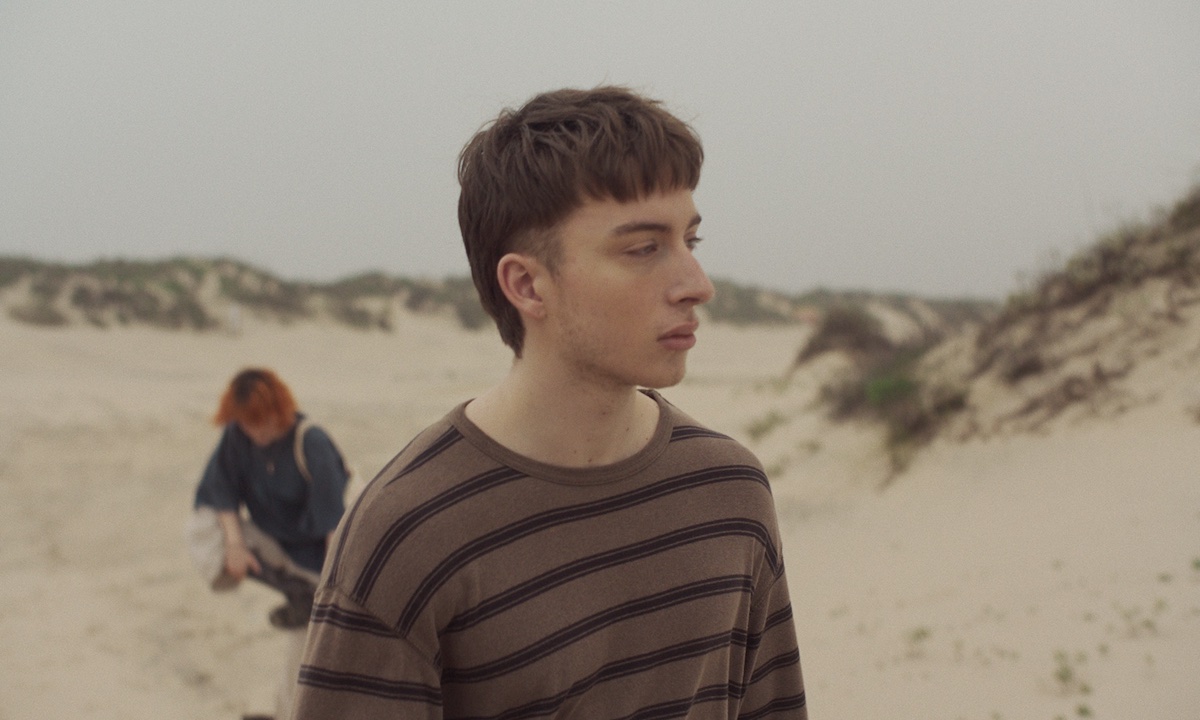
KAYLA BARNES: How would you describe The Mechanics of Borders and its central themes to audiences who may not be familiar with it?
HUBERT CARON-GUAY: The title: The Mechanics of Borders is perhaps already its own answer. A border is not simply a line on a map; it’s a system with its own logic and its own weight or pressure. What interested me was not the border itself, but the way that mechanics impact inside a person, inside a body.
The borders in this film are not only geographical. They are tied to the border of the institutions within which Mathieu and Heidi have been shaped. Here in Quebec, a foster child can be put in a foster family until they’re 18. After that, they have to leave, cause others are waiting. But are they ready to be pushed out, with the autonomy needed for life survival? And, if so, what about emotional? Without their consent, we asked them to leave, to find their own place, regardless of what they’re built from. The borders concept is also linked to and foremost from the emotional perspective: the ones that exist between Heidi and Mathieu, but also between all the people orbiting their lives. A push and pull. A negotiation. A kind of dance where each one observes where the other ends, testing where they might be allowed to belong inside each other’s limits.
KAYLA BARNES: As the director, what was your creative vision for the film from the beginning?
HUBERT CARON-GUAY: Through my documentary films, I’ve come to realize that I have long been filming people who have perfected the art of disappearing. I find myself drawn to these same people once again in The Mechanics of Borders. This is a film that perhaps asks less to be understood than to be observed. Observing how the body responds to what it cannot say. This film does not always recount what is felt. In fact, it shows why it cannot show it.
This feature does not try to force open the door of emotion. It moves along the walls of a refuge and observes the contours of its characters, the way one traces the outline of a border without ever crossing it. I chose this approach because it has always seemed to me the only honest way to film beings who have built themselves in order not to be seen.
KAYLA BARNES: Was there a personal connection or experience that influenced your approach to directing this film?
HUBERT CARON-GUAY: I am, first and foremost, a documentary filmmaker. My stylistic approach developed through documentary practice, and it led me toward a way of telling stories through bodies and an immersive approach.
KAYLA BARNES: Were there any particular visual or stylistic choices you used to help communicate the film’s message?
HUBERT CARON-GUAY: The main goal was authenticity. It’s a word I returned to constantly, at every stage of making this film. I wanted The Mechanics of Borders to be as authentic as it could be, and for me, that has always meant finding a way inside the character’s inner experience. That is what I do, whether I’m making a documentary or a fiction film. The distinction matters less to me than the question: can I feel the essence of who this person is, moving through their body, through their silence, through the way they occupy space?
For Mathieu and Heidi, the struggle was the emptiness, the uncertainty, the inability to speak their own needs. And if I asked the camera to go there with them, I had to accept the consequences for the viewer.
Most of the time, we watch films expecting to be validated, to have our reading of what we’re witnessing confirmed, reflected back at us. This film resists that. Because I was committed to staying as close as possible to the inner experience of the protagonists, and they themselves could not be validated in that way. If they couldn’t be given that comfort, why should you?
My approach to this film is about immersion by placing the viewer as close as possible to the interior state of the characters they are following. That is not a comfortable position to occupy, and I won’t pretend otherwise. But I believe it is the most honest form of generosity I can offer when trying to convey the emotional life of people who have learned to live without visible emotion.
KAYLA BARNES: What was the most challenging aspect of directing this project, and how did you navigate it?
HUBERT CARON-GUAY: I deliberately put myself in a difficult position with this film. I chose to work with everything most producers prefer to avoid: animals, old vehicles, non-professional actors, and locations far removed from any familiar or controlled environment. These are not the conditions that make a production easy, but they are the conditions that make it honest.
What saved us was the partnership with Maxime Bernard at Secteur Film. He is someone who doesn’t cut corners, and that commitment meant we never had to bend the script to accommodate the constraints of production. We made the film we set out to make, and not a negotiated version of it.
Another deeper challenge was at the writing stage. The real question I kept returning to was this: how do you represent something without stating it, and remain faithful to the inner experience and the weight of trauma carried by the people you are trying to portray? How do you write silence? How do you script the body of someone who has never had language for what they carry? I knew answers had to exist, but still…
That demanded actors with a very specific kind of intelligence. No need for technical performance, but something more interior. Like a body memory. An affective proximity to the kind of experience we were trying to inhabit on screen. People who didn’t need to be told what it feels like to not belong, because somewhere in their own history, they already knew.
We needed to find them. And somehow, I’m still not entirely sure how we did. Or perhaps more accurately, they found us.
KAYLA BARNES: Is there a specific scene or moment in the film that holds special significance for you? Why?
HUBERT CARON-GUAY: There isn’t one single scene. It’s more of a current that runs through the entire film. A feeling I keep returning to, which is probably the culpability of not knowing where you belong.
That weight never lifts for these characters. It doesn’t arrive in one moment and resolve in another. It moves through the film the way uncertainty moves through a person, constantly, quietly, without resolution. And I think that is what makes it so hard to watch, and so necessary (for me at least).
What I find myself most attached to is something more like a gesture than a scene. The act of placing yourself in a situation that might validate your existence. The way certain people, such as Mathieu and Heidi, will position themselves, physically, emotionally, and relationally, in spaces where they hope to be confirmed. Where they hope someone or something will reflect to them: you are here, you are real, you matter. That search is difficult to witness, because it is never quite answered. So where does it leave them?
KAYLA BARNES: What conversations do you hope audiences will have after watching The Mechanics of Border?
HUBERT CARON-GUAY: Good question! I’m not sure that I hope for a single conversation. I think I hope for a particular state… the kind that follows you out of the theatre and into the parking lot, and doesn’t let go on the drive home and with luck through the next days…
Some people will leave frustrated. Maybe even angry. And I respect that completely, because that frustration is a form of contact with what these characters live every day. That feeling of reaching for something that won’t quite give itself to you.
But for those who stay with it, who keep turning the experience over, I hope what lingers is not a question about the film, but a question about the world it came from. About the reality of people who cannot speak their own pain. Not because they refuse to, but because the tools were never given to them. They have what they have. And what they have is rarely enough, and almost never visible.
If that reality stays with some, if it makes them sit differently with the people in their own lives who go quiet when they are struggling, then the film has done what it needed it to. Personally, I’m looking for the willingness to stay with the questions raised from the movie, and even longer than would be comfortable.
KAYLA BARNES: Looking ahead, are there any upcoming projects or stories you’re excited to explore next?
HUBERT CARON-GUAY: Still working on it! I can’t answer that question for the moment. Documentary and narrative films keep me working, and I’m blessed for that.
This interview has been edited for length, clarity, and formatting. Some responses may have been condensed or lightly modified to improve readability while maintaining the original intent.
Leave a Reply
You must be logged in to post a comment.