
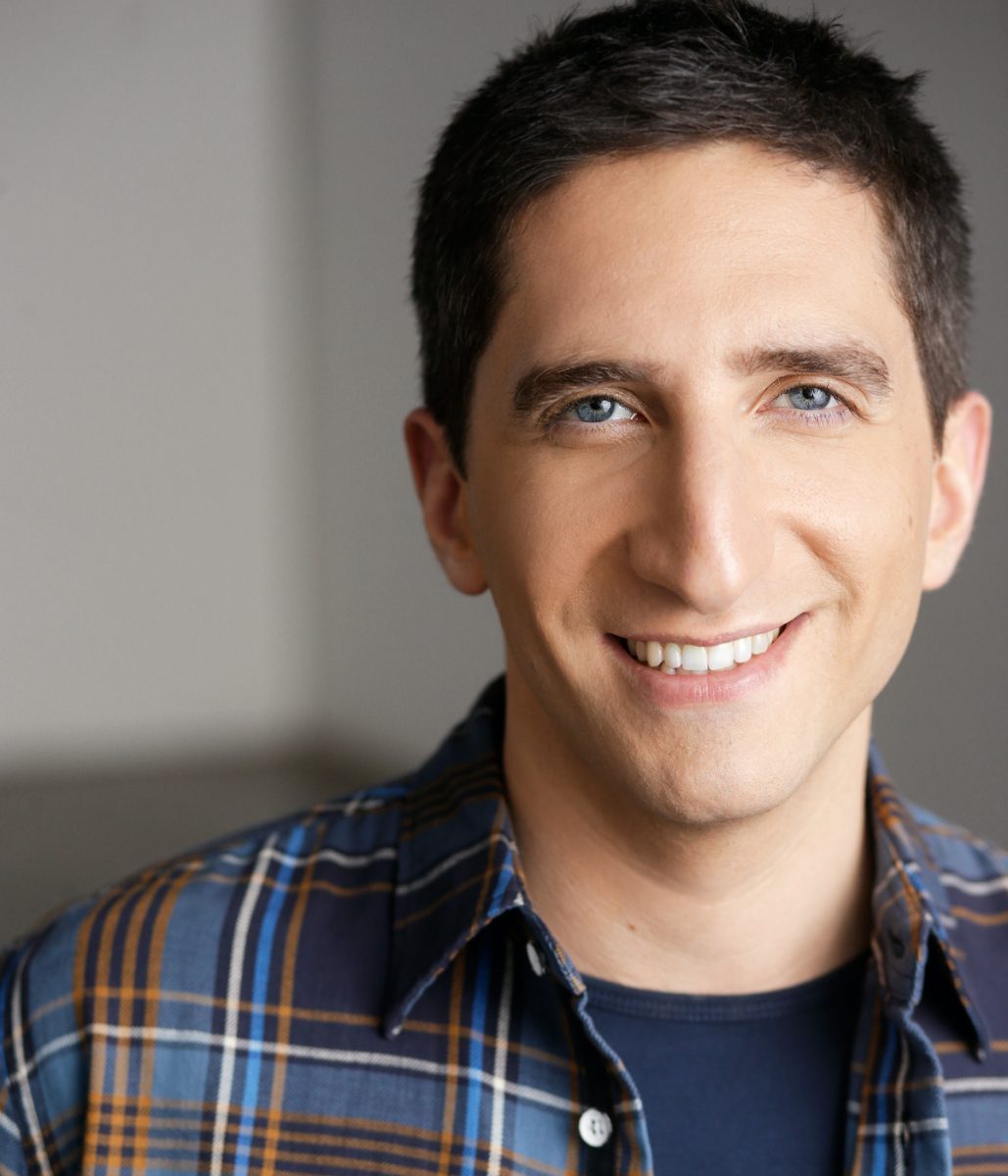
Directed by Aaron Fisher, the horror-dark comedy Corporate Retreat tells the story of a group of ambitious young executives sent to a luxury team-building retreat that is unexpectedly hijacked by their former CEO and turned into a bloody battle for survival.
Starring in the film are Alan Ruck, Odeya Rush, Rosanna Arquette, Ashton Sanders, Benjamin Norris, Kirby Johnson, Sasha Lane, Elias Kacavas, Tyler Alvarez, Ellen Toland and Zión Moreno.
In the horror film, a group of ambitious tech corporate executives heads to a luxury team-building retreat set at a remote desert estate. What should have been a weekend of leadership and team-bonding workshops quickly takes a sinister turn. Chaos ensues as participants are thrown into a sadistic survival game where only the ruthless can survive. As the stakes rise, office politics are replaced by primal instinct in a narrative designed to critique the dehumanizing nature of corporate culture.
VIMooZ met with director Aaron Fisher to discuss Corporate Retreat, his inspiration, approach to directing, and journey into horror filmmaking.
Addison Hammond: Tell us about yourself. Where are you from, and how did you get into filmmaking?
Aaron Fisher: I’m from Brooklyn, New York, born and raised. After I saw 2001: A Space Odyssey for the first time, when I was 11 or 12, I wanted to direct movies. I begged my parents for a miniDV camera, and I just started making a ton of videos and editing them, just really silly, random things.
In film school, I made a ton of short films, and then I made my first feature film, Inside the Rain, which is loosely autobiographical. I wrote it, directed it, edited it, and played the lead. That film felt really important for me to make.
AH: Was acting something you also knew you wanted to pursue, or did you feel like you were the only person who could bring the story to life in that way?
AF: The reason I played the lead in Inside the Rain was that I felt like I was the only person who could really understand the part, but growing up, I never wanted to act at all. In fact, when we had to do plays at summer camp, I would refuse to be in them because I was so against acting. It’s kind of funny because then I ended up acting in my own feature film.
I’m first and foremost a director, but I love acting, and I love directing actors. Over the years, I’ve taken a bunch of acting classes and acted in my own student films, and I just kind of got sucked into it.
AH: How do you think acting has changed your approach to directing?
AF: Learning how to act and working with teachers and an acting coach, Bob McAndrew, in New York, I learned a lot. I had taken classes in college that were just about directing actors, but all those teachers said in those classes that if you have acting experience yourself, it really helps a lot, too.
Two big things I took away from learning how to act myself have informed my directing of other actors. One is emotional preparation. Before I took acting coaching with Bob McAndrew, I didn’t even know what emotional preparation meant. Once I realized that emotional preparation could take hours, it could take half an hour, it could take days, it could take a few minutes, but whatever it is, the emotional preparation needed to meet the demands of a scene, now I know to let actors. I can vibe off of them and see if they are doing emotional preparation. Usually, that means leave them alone, like don’t talk to them, let them just go off, and do their own thing. Sometimes it means engaging with them, because they want to get feedback. However, the emotional preparation works, so I just feel that out with the actors, like whether I should be talking to them or not talking to them, so that they can prepare for the scene.
Another thing I learned is that, in film school, when you’re directing actors in student films, you try to think of the coolest directions possible, like, “Imagine you’re on Mars, and you’re playing golf, and you hit the ball, and it just goes for 20 miles.” You think it’s really cool because it’s out there, and you think that’ll inspire the actors. But I learned not to try to make the best directions possible, but actually to make the best directions possible for the actor. Sometimes it’s literally just stating the obvious, like, “In this scene, you are trying to seduce so-and-so. I need to see that.” Sometimes it’s very simple. Sometimes, very simple is better than having a very complicated direction. The only times that I go into more complex directions, where they don’t necessarily fit into the story of the movie, is when things are not working.
AH: What part of the filmmaking process do you find the most rewarding, and what continues to challenge you?
AF: Most rewarding is definitely directing on set, working with the actors. To me, that’s the most fun part, working with the actors, working with the crew, it’s like a big party, it’s like a social occasion, so that’s the most rewarding for me. The least rewarding is writing, because I’m not working with people, just staring at a screen. I love editing, and I’ve always loved editing. I love acting too, but I believe what Judith Weston said in her book, if you’re directing a film, you should not act in your own film unless you believe you’re the only person in the world who can play that part, because otherwise you’re putting yourself at a disadvantage, because it’s harder to direct other actors if you’re acting yourself. In fact, it’s sort of impossible, kind of.
AH: What specifically has drawn you to horror as a genre?
AF: I have eclectic taste. I love all kinds of genres, and there are a lot of horror films that I love. I want to emulate those films. Also, I feel like horror is having a moment right now. My theory is that it’s because of what’s going on in the world. Politically, with AI technology and all these things, people are scared. For some reason, I think that’s why horror films are doing as well as they are right now, because it’s somehow cathartic to watch something horrifying on screen. People need some kind of escape, but in a horrific way.
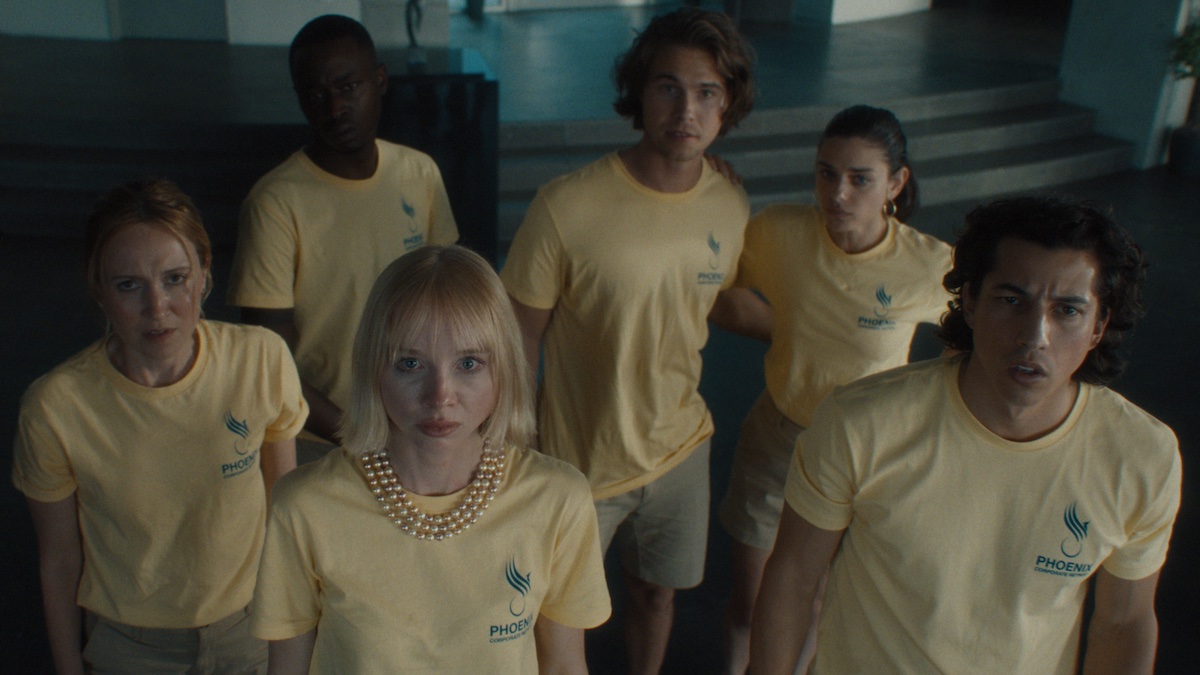
AH: Could you tell us a little bit about Corporate Retreat and what it’s about?
AF: Corporate Retreat is about this corporate retreat gone horribly wrong. This CEO, who was ousted from his company, wants to get revenge on his former colleagues, so he sets up a fake corporate retreat for his old colleagues to go on, and then he traps them in a house and tries to torture them to death. It’s a dark comedy and horror.
AH: Although you talked about writing being challenging, you did co-write this film. How did the idea come about, and what was your inspiration?
AF: My father went through financial ruin around 2008. He lost all of his money, and he was ousted from the company that he had built and was the CEO of. I started riffing on ideas, like, what if my father had secretly been a psycho killer and wanted to get revenge on his old colleagues? How would he set it up? That’s where I came up with the corporate retreat idea.
By the way, my dad’s a very nice guy, and my family’s very close. It’s just like an alternate universe—my dad is not psycho like that.
I also wanted to make a film on an independent budget, and I thought to myself, What could be the cheapest way to do that? I thought, if we set the film mostly in one room—one big room—we could cut back on company moves, where the crew and cast have to move all the equipment to a different location. That costs a lot of money, so I figured that if we stayed mostly in one location for the whole film, it would cut down on costs. In that way, they say necessity is the mother of invention.
AH: You also have a very talented and impressive cast. How did you go about selecting the cast of the film?
AF: It started with working with my producer, Uri Singer. We discussed who we saw in the parts. Uri was a big help landing parts, and then we also worked with a casting director.
AH: How do you think your cast would describe your directing style?
AF: I don’t want to sound pretentious or arrogant, but I think actors like working with me because I’m very respectful and collaborative. I’ve done my homework on how to direct actors versus the wrong ways to direct actors, like using a bunch of result directions, emotional mapping, and things like that. I’ve also made a bunch of student films where I made mistakes directing actors, and I learned from those mistakes. Now I know how to direct them better.
A direction is only good if it works for that actor. You could come up with the most brilliant direction in the world, but if it doesn’t work for that particular actor, it’s not a good direction.
So, yeah, I think actors enjoy working with me. I love working with them, and I have so much respect for them. Not all directors are like that. Some directors view actors as props in their movies. I’ve also become good friends with some of the actors I’ve worked with. I love collaborating with actors.
AH: What reaction are you hoping to see from audiences watching Corporate Retreat?
AF: I hope they’re entertained. I hope they love the story. The best thing I can do is make them laugh.
AH: What do you think makes a story worth telling?
AF: I feel like it’s a really big question. It’s one of the hardest things to answer is what makes a story worth telling. I don’t know. I once spoke to a novelist who told me you should write a story if you think that you need to tell it.
AH: Do you see a through line or commonality in your films, even though they’re drastically different genres?
AF: Even though my first film is a dramedy, and it’s loosely autobiographical, about the growing pains of bipolar disorder, it’s so different from Corporate Retreat. Still, I feel like the main characters in both Inside the Rain and Corporate Retreat are outsiders. That’s how I viewed myself growing up. In Inside the Rain, my character has been kicked out of college and is trying to get back in. In Corporate Retreat, the main CEO, played by Alan Ruck, has been kicked out of his own company. Then there’s Ginger, the lead actress, who wasn’t supposed to be at the corporate retreat at all because she thought she was going on a regular vacation, so in that way, I felt like they’re all outsiders
AH: If someone watches one of your films for the first time, what do you hope they come away understanding about you as a filmmaker?
AF: The best thing I could possibly do is to make them feel inspired. I would say that’s probably the best compliment I could get.
AH: After Corporate Retreat, what excites you most creatively? Are there any specific genres or stories that you’re looking to tackle next?
AF: Yeah, I’m actually starting to work with a writer based on some ideas I had; it’s also a horror film. I kind of don’t want to say what it’s about, because it’s too early in the process. I’m still working with the writer, so I kind of want to keep it on the DL for now.
AH: If you were to give advice to a filmmaker who’s just starting out or maybe someone who’s still in school, what would you tell them?
AF: I would give the same advice that I heard in your interview with what’s his name, who made Obsession—Curry Barker. I agree with him. He said, don’t write a script with car explosions and things like that, and then spend years trying to make it because you don’t have the money. Instead, try to write something that you can actually make on a low budget. I agree with that. I think that’s the smartest approach.
I would also say that, even before making your first feature, just experiment with filming things and editing them together. Literally just do anything. That’s how I started. Like I said, when I was 11 or 12, I just started making one silly movie after the next. That’s really where I got my start.
This interview has been edited for length, clarity, and formatting. Some responses may have been condensed or lightly modified to improve readability while maintaining the original intent.
Leave a Reply
You must be logged in to post a comment.