
 They Shall Not Grow Old[/caption]
Peter Jackson’s First World War film They Shall Not Grow Old, will be given its World Premiere as the Documentary Special Presentation at the 62nd BFI London Film Festival on October 16th. The film will be simultaneously screened, in 2D and 3D to cinemas and special venues across the UK by Trafalgar Releasing and BFI LFF.
Co-commissioned by 14-18 NOW, the UK’s arts program for the First World War centenary, and Imperial War Museums, They Shall Not Grow Old has been created exclusively with original footage from Imperial War Museums’ film archive and audio from BBC archives. Presenting his new work to mark the centenary of the First World War, the internationally renowned director Peter Jackson (The Hobbit, The Lord of the Rings) combined his personal fascination with the period and his Academy Award winning directorial skills to bring the First World War to life in a way never seen before. They Shall Not Grow Old uses the voices of the veterans combined with original archival footage to bring to life the reality of war on the front line for a whole new generation. Footage has been colorised, converted to 3D and transformed with modern production techniques to present never before seen detail.
Peter Jackson, Director of They Shall Not Grow Old comments: “I wanted to reach through the fog of time and pull these men into the modern world, so they can regain their humanity once more – rather than be seen only as Charlie Chaplin-type figures in the vintage archive film. By using our computing power to erase the technical limitations of 100 year cinema, we can see and hear the Great War as they experienced it.”
They Shall Not Grow Old[/caption]
Peter Jackson’s First World War film They Shall Not Grow Old, will be given its World Premiere as the Documentary Special Presentation at the 62nd BFI London Film Festival on October 16th. The film will be simultaneously screened, in 2D and 3D to cinemas and special venues across the UK by Trafalgar Releasing and BFI LFF.
Co-commissioned by 14-18 NOW, the UK’s arts program for the First World War centenary, and Imperial War Museums, They Shall Not Grow Old has been created exclusively with original footage from Imperial War Museums’ film archive and audio from BBC archives. Presenting his new work to mark the centenary of the First World War, the internationally renowned director Peter Jackson (The Hobbit, The Lord of the Rings) combined his personal fascination with the period and his Academy Award winning directorial skills to bring the First World War to life in a way never seen before. They Shall Not Grow Old uses the voices of the veterans combined with original archival footage to bring to life the reality of war on the front line for a whole new generation. Footage has been colorised, converted to 3D and transformed with modern production techniques to present never before seen detail.
Peter Jackson, Director of They Shall Not Grow Old comments: “I wanted to reach through the fog of time and pull these men into the modern world, so they can regain their humanity once more – rather than be seen only as Charlie Chaplin-type figures in the vintage archive film. By using our computing power to erase the technical limitations of 100 year cinema, we can see and hear the Great War as they experienced it.”Terry P.
VIMOOZ is for lovers of independent films + foreign film + documentary + film festivals. We love championing the little films.
-
Peter Jackson’s WWI Documentary THEY SHALL NOT GROW OLD to World Premiere at London Film Festival
[caption id="attachment_31536" align="aligncenter" width="1000"] They Shall Not Grow Old[/caption]
Peter Jackson’s First World War film They Shall Not Grow Old, will be given its World Premiere as the Documentary Special Presentation at the 62nd BFI London Film Festival on October 16th. The film will be simultaneously screened, in 2D and 3D to cinemas and special venues across the UK by Trafalgar Releasing and BFI LFF.
Co-commissioned by 14-18 NOW, the UK’s arts program for the First World War centenary, and Imperial War Museums, They Shall Not Grow Old has been created exclusively with original footage from Imperial War Museums’ film archive and audio from BBC archives. Presenting his new work to mark the centenary of the First World War, the internationally renowned director Peter Jackson (The Hobbit, The Lord of the Rings) combined his personal fascination with the period and his Academy Award winning directorial skills to bring the First World War to life in a way never seen before. They Shall Not Grow Old uses the voices of the veterans combined with original archival footage to bring to life the reality of war on the front line for a whole new generation. Footage has been colorised, converted to 3D and transformed with modern production techniques to present never before seen detail.
Peter Jackson, Director of They Shall Not Grow Old comments: “I wanted to reach through the fog of time and pull these men into the modern world, so they can regain their humanity once more – rather than be seen only as Charlie Chaplin-type figures in the vintage archive film. By using our computing power to erase the technical limitations of 100 year cinema, we can see and hear the Great War as they experienced it.”
-
2018 Chicago International Film Festival Announces First Films – Boy Erased, Mr. Soul!, Shoplifters
[caption id="attachment_31533" align="aligncenter" width="1200"]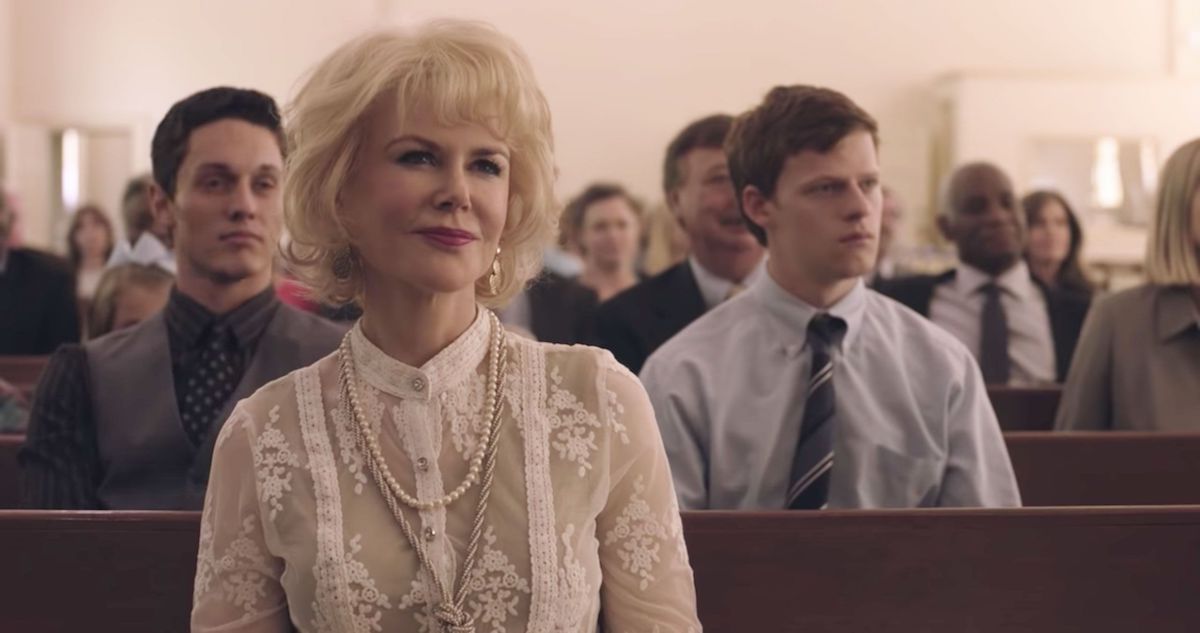 Boy Erased[/caption]
The Chicago International Film Festival announced the first 25 films that will be shown at the 54th edition running October 10 to 21, 2018. The Festival will feature more than 150 films from across the globe and bring legendary actors, master filmmakers, and exciting, emerging talents from around the world to Chicago.
Initial lineup includes highly anticipated titles including Joel Edgerton’s Boy Erased starring Nicole Kidman and Russell Crowe; Elizabeth Chomko’s Chicago set feature debut What They Had starring Michael Shannon and Hilary Swank; Mike Leigh’s epic drama Peterloo and Hirokazu Kore-eda’s Cannes Palme d’Or winner Shoplifters.
“We are very excited to be showcasing new films from some of the most impressive directors in the world, whether returning veterans, such as past Gold Hugo-winners Mike Leigh and Hirokazu Kore-eda, or up-and-coming filmmakers with distinctive visions,” said Plauché. “For the last several years, the Festival has been proud to present Best Picture winners The Shape of Water (2017), Moonlight (2016), and Spotlight (2015), and we look forward to sharing this year’s incredible slate of movies with our audiences.”
Birds of Passage
Pájaros de verano
Directors: Cristina Gallego and Ciro Guerra
Colombia, Mexico, Denmark
A Colombian Mean Streets, this gripping drama chronicles the rise of the drug trade and its cataclysmic impact on the local indigenous community. The Wayuu people had long held tight onto their traditions, living in close-knit tribes. When two friends begin selling marijuana to visiting Americans, however, their actions set in motion a series of events that pit factions against each other, inciting a cycle of avarice-inspired vengeance. Wayuunaiki, Spanish, and English with subtitles.
Border
Gräns
Director: Ali Abbasi
Sweden
Fantastic in every sense of the word, this idiosyncratic thriller centers on a Swedish customs officer with a special talent for detecting contraband who must ultimately choose between good and evil. This exciting, intelligent mix of romance, Nordic noir, social realism, and supernatural horror defies and subverts genre conventions and is destined to be a cult classic. Winner, Un Certain Regard, Cannes Film Festival. Swedish with subtitles.
Boy Erased
Director: Joel Edgerton
U.S.
Boy Erased tells the story of Jared (Lucas Hedges), the son of a Baptist pastor in a small American town, who is outed to his parents (Nicole Kidman and Russell Crowe) at age 19. Jared is faced with an ultimatum: attend a conversion therapy program—or be permanently exiled and shunned by his family, friends, and faith. Boy Erased is the true story of one young man’s struggle to find himself while being forced to question every aspect of his identity.
Cold War
Zimna wojna
Director: Pawel Pawlikowski
Poland
A passionate love story between two people of different backgrounds and temperaments, who are fatefully mismatched and yet condemned to each other. Set against the background of the Cold War in the 1950s in Poland, Berlin, Yugoslavia and Paris, the film depicts an impossible love story in impossible times. Polish with subtitles.
Dogman
Director: Matteo Garrone
Italy
In a run-down Italian coastal town, Marcello, a gentle dog groomer, sees his life turned upside down when Simone, a brutish former boxer and ex-con, bullies him into becoming his criminal accomplice. But for how long can the “dogman” be subservient to his master before he bites back? From the acclaimed director of Gomorrah comes another unflinching urban western treading the fine line between civility and savagery. Italian with subtitles.
Friedkin Uncut
Director: Francesco Zippel
Italy
Oscar®-winning, Chicago-born director William Friedkin achieved fame with his 1973 horror blockbuster The Exorcist. But this illuminating documentary shows the director’s unwavering commitment to rawness and realism across his entire career, from The French Connection (1972) to Killer Joe (2011). Featuring interviews with Ellen Burstyn, Willem Dafoe, and Quentin Tarantino, among others, Friedkin Uncut reveals a savvy craftsman who is unapologetic about his no-nonsense approach to moviemaking.
Jumpman
Podbrosy
Director: Ivan I. Tverdovskiy
Russia, Ireland, Lithuania, France
An abandoned infant grows into a likeable lad with a rare disorder—he can feel no physical pain. When he becomes a teen, his feckless mother returns to his life to exploit his condition by enlisting him in an insurance fraud scam. A taut thriller, Jumpman puts an outsider at the center of a harsh indictment of corruption and hypocrisy in contemporary Russia. Russian with subtitles.
Mr. Soul!
Director: Melissa Haizlip
U.S.
The brainchild of pioneering producer Ellis Haizlip, SOUL! was the first ever national TV series made by and for African-Americans. The groundbreaking program aired from 1968 to 1973 and featured a dazzling array of guests from Stevie Wonder to Maya Angelou. Mr. Soul! takes viewers behind the scenes of the show, chronicling its inception and its struggles to stay on the air. It turns out the revolution really was televised.
Olympia
Director: Gregory Dixon
U.S.
Chicago writer-actor McKenzie Chinn stars as a struggling artist, navigating work and romance in the Windy City. When her boyfriend asks her to drop everything and move cross-country, she soon discovers that she might be the biggest obstacle to her own happiness. Featuring quirky animation and a revelatory central performance, Olympia is a sensitive and humorous look at the challenges of embracing adulthood.
The Other Story
Director: Avi Nesher
Israel
Family disputes and conspiracies take center stage in this lively drama, which even-handedly explores the divide between Israel’s secular Jews and the ultra-Orthodox from director Avi Nesher (The Matchmaker). Sasson Gabai (The Band’s Visit) plays a renowned psychologist and rationalist who falls out with his strong-willed granddaughter when she enters a Haredi community and plans to marry a musician previously known for his wild ways. Hebrew with subtitles.
Peterloo
Director: Mike Leigh
U.K.
An epic portrayal of the events surrounding the infamous 1819 Peterloo Massacre, which saw British forces charge into a crowd of over 60,000 that had gathered to protest rising levels of poverty and demand reform. Many were killed and hundreds more injured, sparking a nationwide outcry but also further government suppression. A defining moment in British democracy, the massacre also played a significant role in the founding of The Guardian newspaper.
Piercing
Director: Nicolas Pesce
U.S.
Pesce’s gleefully wicked S&M black comedy centers on Reed (Christopher Abbot), a new fatherlooking to channel his homicidal impulses away from his infant daughter. He heads to a hotel, hires an escort (Mia Wasikowska), then begins to rehearse her murder. But once she arrives, the balance of power shifts. Based on the novel by Ryu Murukami, Piercing’s incredibly dark premise constantly surprises—it might just be taken for a wildly subversive love story.
A Private War
Director: Matthew Heineman
U.S.
In a world where journalism is under attack, Marie Colvin (Academy Award®-nominee Rosamund Pike) is one of the most celebrated war correspondents of our time. Her mission to show the true cost of conflict leads her—along with renowned photographer Paul Conroy (Jamie Dornan)—to embark on the most dangerous assignment of their lives in the besieged Syrian city of Homs.
Rafiki
Director: Wanuri Kahiu
Kenya
A tender tale of forbidden first love told in an electric, colorful Afropop style, Rafiki tells the story of the tender but illegal and taboo romance between Kena, a skateboarding tomboy blessed with great grades and soccer skills, and Ziki, the charismatic daughter of a conservative local politician. When rumors begin to swirl about the nature of their relationship, the young lovers find themselves in great jeopardy. Swahili, English with subtitles.
Ruben Brandt, Collector
Ruben Brandt, a gyüjtö
Director: Milorad Krstic
Hungary
“Possess your problems to conquer them,” is the credo that psychotherapist Ruben Brandt preaches to his criminally-inclined clients in this stylish, animated thriller for adults. But when Brandt’s patients help him to apply his own advice, he becomes “Ruben Brandt, Collector,” ringleader of a gang responsible for the theft of 13 of the world’s most famous paintings. This entertaining romp literally puts the “art” into “arthouse.”
Shoplifters
Manbiki kazoku
Director: Hirokazu Kore-eda
Japan
The winner of Cannes’ top prize, the Palme d’Or, centers on an eccentric troupe of miscreants who take in a neglected five-year-old. Despite their strained circumstances, the tight-knit unit of petty thieves and social outcasts comes together to raise the girl. But how long can this unconventional family survive against the normalizing forces around them? From the Japanese master of humanism comes another affecting and astute film about people living on the margins. Japanese with subtitles.
Sorry Angel
Plaire, aimer et courir vite
Director: Christophe Honoré
France
It’s 1993. Jacques is a successful, novelist from Paris living with what was still a terminal diagnosis of HIV positive. Arthur is an open-minded student ready to embrace life. They meet in Rennes and fall in love, but navigating an intergenerational romance has its challenges. Honoré (Love Songs) chronicles their lives, together and apart, with nuance and subtlety, allowing their love story to unfold in patient, novelistic fashion. French with subtitles.
Transit
Director: Christian Petzold
Germany
In this Kafkaesque cinematic puzzle, a man is trapped in limbo as he tries to flee fascistoccupied France. Hoping to escape to Mexico, Georg poses as a dead author but becomes stuck in Marseilles. There, he encounters a woman searching for her missing husband—the
man whose identity he has assumed. Petzold’s surreal film merges past, present and future in its trenchant exploration of the plight of refugees. German with subtitles.
United Skates
Directors: Dyana Winkler and Tina Brown
U.S.
A rousing chronicle of roller-skating’s pivotal role in African-American communities, United Skates careens around the country, offering an intimate look at a lively subculture that’s under threat. Facing discriminatory policies and building closures, committed skaters from around the country—including Chicago’s own Buddy Love—fight to preserve a space for people to come together and express themselves in sliding, bouncing, snapping glory.
What They Had
Director: Elizabeth Chomko
U.S.
From first-time writer/director Elizabeth Chomko, What They Had centers on a family in crisis. Bridget (Hilary Swank) returns home to Chicago at her brother’s (Michael Shannon) urging to deal with her ailing mother (Blythe Danner) and her father’s (Robert Forster) reluctance to let go of their life together.
Boy Erased[/caption]
The Chicago International Film Festival announced the first 25 films that will be shown at the 54th edition running October 10 to 21, 2018. The Festival will feature more than 150 films from across the globe and bring legendary actors, master filmmakers, and exciting, emerging talents from around the world to Chicago.
Initial lineup includes highly anticipated titles including Joel Edgerton’s Boy Erased starring Nicole Kidman and Russell Crowe; Elizabeth Chomko’s Chicago set feature debut What They Had starring Michael Shannon and Hilary Swank; Mike Leigh’s epic drama Peterloo and Hirokazu Kore-eda’s Cannes Palme d’Or winner Shoplifters.
“We are very excited to be showcasing new films from some of the most impressive directors in the world, whether returning veterans, such as past Gold Hugo-winners Mike Leigh and Hirokazu Kore-eda, or up-and-coming filmmakers with distinctive visions,” said Plauché. “For the last several years, the Festival has been proud to present Best Picture winners The Shape of Water (2017), Moonlight (2016), and Spotlight (2015), and we look forward to sharing this year’s incredible slate of movies with our audiences.”
Birds of Passage
Pájaros de verano
Directors: Cristina Gallego and Ciro Guerra
Colombia, Mexico, Denmark
A Colombian Mean Streets, this gripping drama chronicles the rise of the drug trade and its cataclysmic impact on the local indigenous community. The Wayuu people had long held tight onto their traditions, living in close-knit tribes. When two friends begin selling marijuana to visiting Americans, however, their actions set in motion a series of events that pit factions against each other, inciting a cycle of avarice-inspired vengeance. Wayuunaiki, Spanish, and English with subtitles.
Border
Gräns
Director: Ali Abbasi
Sweden
Fantastic in every sense of the word, this idiosyncratic thriller centers on a Swedish customs officer with a special talent for detecting contraband who must ultimately choose between good and evil. This exciting, intelligent mix of romance, Nordic noir, social realism, and supernatural horror defies and subverts genre conventions and is destined to be a cult classic. Winner, Un Certain Regard, Cannes Film Festival. Swedish with subtitles.
Boy Erased
Director: Joel Edgerton
U.S.
Boy Erased tells the story of Jared (Lucas Hedges), the son of a Baptist pastor in a small American town, who is outed to his parents (Nicole Kidman and Russell Crowe) at age 19. Jared is faced with an ultimatum: attend a conversion therapy program—or be permanently exiled and shunned by his family, friends, and faith. Boy Erased is the true story of one young man’s struggle to find himself while being forced to question every aspect of his identity.
Cold War
Zimna wojna
Director: Pawel Pawlikowski
Poland
A passionate love story between two people of different backgrounds and temperaments, who are fatefully mismatched and yet condemned to each other. Set against the background of the Cold War in the 1950s in Poland, Berlin, Yugoslavia and Paris, the film depicts an impossible love story in impossible times. Polish with subtitles.
Dogman
Director: Matteo Garrone
Italy
In a run-down Italian coastal town, Marcello, a gentle dog groomer, sees his life turned upside down when Simone, a brutish former boxer and ex-con, bullies him into becoming his criminal accomplice. But for how long can the “dogman” be subservient to his master before he bites back? From the acclaimed director of Gomorrah comes another unflinching urban western treading the fine line between civility and savagery. Italian with subtitles.
Friedkin Uncut
Director: Francesco Zippel
Italy
Oscar®-winning, Chicago-born director William Friedkin achieved fame with his 1973 horror blockbuster The Exorcist. But this illuminating documentary shows the director’s unwavering commitment to rawness and realism across his entire career, from The French Connection (1972) to Killer Joe (2011). Featuring interviews with Ellen Burstyn, Willem Dafoe, and Quentin Tarantino, among others, Friedkin Uncut reveals a savvy craftsman who is unapologetic about his no-nonsense approach to moviemaking.
Jumpman
Podbrosy
Director: Ivan I. Tverdovskiy
Russia, Ireland, Lithuania, France
An abandoned infant grows into a likeable lad with a rare disorder—he can feel no physical pain. When he becomes a teen, his feckless mother returns to his life to exploit his condition by enlisting him in an insurance fraud scam. A taut thriller, Jumpman puts an outsider at the center of a harsh indictment of corruption and hypocrisy in contemporary Russia. Russian with subtitles.
Mr. Soul!
Director: Melissa Haizlip
U.S.
The brainchild of pioneering producer Ellis Haizlip, SOUL! was the first ever national TV series made by and for African-Americans. The groundbreaking program aired from 1968 to 1973 and featured a dazzling array of guests from Stevie Wonder to Maya Angelou. Mr. Soul! takes viewers behind the scenes of the show, chronicling its inception and its struggles to stay on the air. It turns out the revolution really was televised.
Olympia
Director: Gregory Dixon
U.S.
Chicago writer-actor McKenzie Chinn stars as a struggling artist, navigating work and romance in the Windy City. When her boyfriend asks her to drop everything and move cross-country, she soon discovers that she might be the biggest obstacle to her own happiness. Featuring quirky animation and a revelatory central performance, Olympia is a sensitive and humorous look at the challenges of embracing adulthood.
The Other Story
Director: Avi Nesher
Israel
Family disputes and conspiracies take center stage in this lively drama, which even-handedly explores the divide between Israel’s secular Jews and the ultra-Orthodox from director Avi Nesher (The Matchmaker). Sasson Gabai (The Band’s Visit) plays a renowned psychologist and rationalist who falls out with his strong-willed granddaughter when she enters a Haredi community and plans to marry a musician previously known for his wild ways. Hebrew with subtitles.
Peterloo
Director: Mike Leigh
U.K.
An epic portrayal of the events surrounding the infamous 1819 Peterloo Massacre, which saw British forces charge into a crowd of over 60,000 that had gathered to protest rising levels of poverty and demand reform. Many were killed and hundreds more injured, sparking a nationwide outcry but also further government suppression. A defining moment in British democracy, the massacre also played a significant role in the founding of The Guardian newspaper.
Piercing
Director: Nicolas Pesce
U.S.
Pesce’s gleefully wicked S&M black comedy centers on Reed (Christopher Abbot), a new fatherlooking to channel his homicidal impulses away from his infant daughter. He heads to a hotel, hires an escort (Mia Wasikowska), then begins to rehearse her murder. But once she arrives, the balance of power shifts. Based on the novel by Ryu Murukami, Piercing’s incredibly dark premise constantly surprises—it might just be taken for a wildly subversive love story.
A Private War
Director: Matthew Heineman
U.S.
In a world where journalism is under attack, Marie Colvin (Academy Award®-nominee Rosamund Pike) is one of the most celebrated war correspondents of our time. Her mission to show the true cost of conflict leads her—along with renowned photographer Paul Conroy (Jamie Dornan)—to embark on the most dangerous assignment of their lives in the besieged Syrian city of Homs.
Rafiki
Director: Wanuri Kahiu
Kenya
A tender tale of forbidden first love told in an electric, colorful Afropop style, Rafiki tells the story of the tender but illegal and taboo romance between Kena, a skateboarding tomboy blessed with great grades and soccer skills, and Ziki, the charismatic daughter of a conservative local politician. When rumors begin to swirl about the nature of their relationship, the young lovers find themselves in great jeopardy. Swahili, English with subtitles.
Ruben Brandt, Collector
Ruben Brandt, a gyüjtö
Director: Milorad Krstic
Hungary
“Possess your problems to conquer them,” is the credo that psychotherapist Ruben Brandt preaches to his criminally-inclined clients in this stylish, animated thriller for adults. But when Brandt’s patients help him to apply his own advice, he becomes “Ruben Brandt, Collector,” ringleader of a gang responsible for the theft of 13 of the world’s most famous paintings. This entertaining romp literally puts the “art” into “arthouse.”
Shoplifters
Manbiki kazoku
Director: Hirokazu Kore-eda
Japan
The winner of Cannes’ top prize, the Palme d’Or, centers on an eccentric troupe of miscreants who take in a neglected five-year-old. Despite their strained circumstances, the tight-knit unit of petty thieves and social outcasts comes together to raise the girl. But how long can this unconventional family survive against the normalizing forces around them? From the Japanese master of humanism comes another affecting and astute film about people living on the margins. Japanese with subtitles.
Sorry Angel
Plaire, aimer et courir vite
Director: Christophe Honoré
France
It’s 1993. Jacques is a successful, novelist from Paris living with what was still a terminal diagnosis of HIV positive. Arthur is an open-minded student ready to embrace life. They meet in Rennes and fall in love, but navigating an intergenerational romance has its challenges. Honoré (Love Songs) chronicles their lives, together and apart, with nuance and subtlety, allowing their love story to unfold in patient, novelistic fashion. French with subtitles.
Transit
Director: Christian Petzold
Germany
In this Kafkaesque cinematic puzzle, a man is trapped in limbo as he tries to flee fascistoccupied France. Hoping to escape to Mexico, Georg poses as a dead author but becomes stuck in Marseilles. There, he encounters a woman searching for her missing husband—the
man whose identity he has assumed. Petzold’s surreal film merges past, present and future in its trenchant exploration of the plight of refugees. German with subtitles.
United Skates
Directors: Dyana Winkler and Tina Brown
U.S.
A rousing chronicle of roller-skating’s pivotal role in African-American communities, United Skates careens around the country, offering an intimate look at a lively subculture that’s under threat. Facing discriminatory policies and building closures, committed skaters from around the country—including Chicago’s own Buddy Love—fight to preserve a space for people to come together and express themselves in sliding, bouncing, snapping glory.
What They Had
Director: Elizabeth Chomko
U.S.
From first-time writer/director Elizabeth Chomko, What They Had centers on a family in crisis. Bridget (Hilary Swank) returns home to Chicago at her brother’s (Michael Shannon) urging to deal with her ailing mother (Blythe Danner) and her father’s (Robert Forster) reluctance to let go of their life together.
SHORTS
Accidence Directors: Guy Maddin, Evan Johnson, Galen Johnson Canada A grisly murder on an apartment balcony becomes a small piece in a frenzied puzzle of strange occurrences. Accident, MD Director: Dan Rybicky U.S. A survey of attitudes about America’s healthcare crisis filmed in the small town of Accident, Maryland. Optimism Director: Deborah Stratman U.S. A portrait of Dawson City Canada’s far North that reveals a rich history of a town looking for gold while enveloped in shadow. Solar Walk Director: Réka Bucsi Denmark A sumptuously animated cosmic journey through space, time, and creation. Tourneur Director: Yalda Afsah Germany A foam-filled ring in the south of France becomes the site of an absurd spectacle as young men face off against a bull.
-
Keira Knightley’s COLLETTE, Hilary Swank’s WHAT THEY HAD Added to Calgary International Film Festival
[caption id="attachment_30826" align="aligncenter" width="1100"]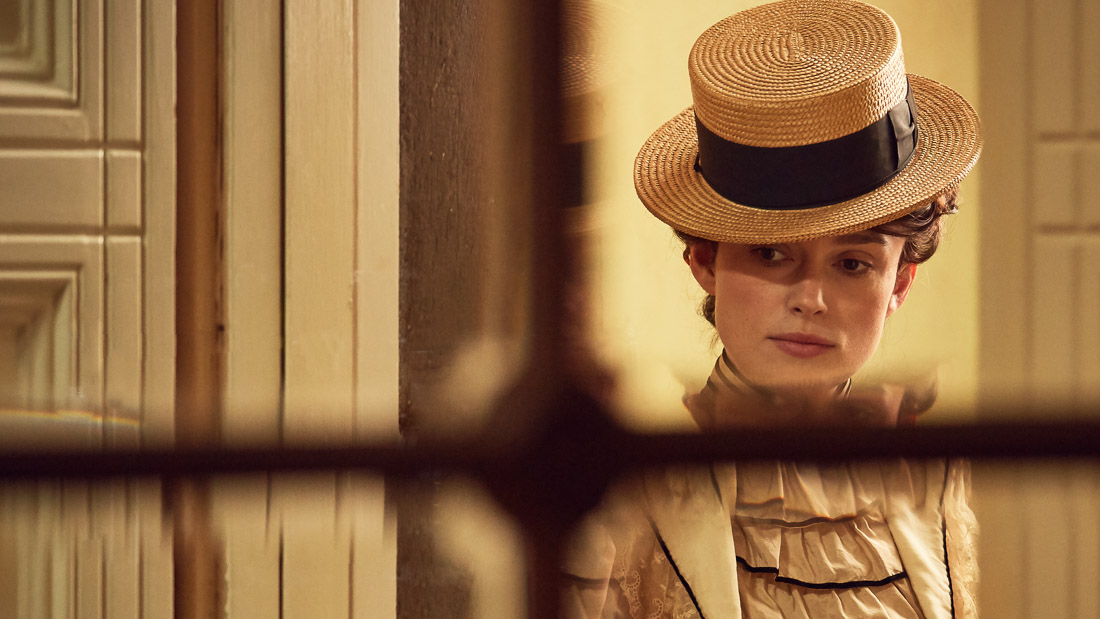 Colette[/caption]
Fourteen more films, including Keira Knightley in COLETTE, Salma Hayek in THE HUMMINGBIRD PROJECT, and Hilary Swank in WHAT THEY HAD, have added to this year’s Calgary International Film Festival.
The Festival also announced Alberta Music Seen for this year’s Showcase Alberta, a celebration of the power of the music video as an art form featuring 10 music videos produced in Alberta, screening at Studio Bell, Home of the National Music Centre on September 26, followed by more music at the King Eddy. Showcase Alberta is a three-year tradition at the festival. Past screening events have included HEARTLAND and WYNONNA EARP.
3 FACES directed by Jafar Panahi
A popular Iranian actress Behnaz Jafari (playing herself) is upset when she sees a video made by a provincial girl asking for her help. In the video, the young girl claims her family is not letting her pursue an acting dream. She’s distraught that Jafari has ignored her previous pleas. Jafari asks director Jafar Panahi (playing himself as well) to accompany her to the girl’s village. The two take a road journey to a northwestern part of Iran and encounter some surprises along the way.
ALL THESE CREATURES directed by Charles Williams
An adolescent boy attempts to untangle his memories of a mysterious infestation, the unravelling of his father, and the little creatures inside us all. A short from Australia.
ASH IS THE PUREST WHITE directed by Jia Zhang-Ke
Qiao (an outstanding Zhao Tao) and her gangster boyfriend Bin (Liao Fan) are a formidable duo who oversee the local criminal network in Datong. When a fight with a rival gang places Bin in danger, Qiao fires a gun to protect him resulting in five years of prison time. After she is released, Qiao goes to look for Bin hoping to continue their relationship. A perceptive depiction of the Chinese landscape, both social and economical, over the course of two decades.
CLIMAX directed by Gaspar Noé
A troupe of young dancers gathers in a remote and empty school building to rehearse. Shot by Noé himself, the troupe begins an all-night celebration that turns nightmarish as the dancers discover they’ve been pounding cups of sangria laced with potent LSD. Tracking their journey from jubilation to chaos and full-fledged anarchy, Noé observes crushes, rivalries, and violence amid a collective psychedelic meltdown. Starring Sofia Boutella (ATOMIC BLONDE) and a cast of professional dancers, CLIMAX is Noé’s most brazen and visionary statement yet.
COLLETTE directed by Wash Westmoreland
Based on the real life story about the famous French writer Sidonie-Gabrielle Colette, the film depicts her bold attempt to get her voice heard. Colette (Keira Knightley) is transported from the French countryside to Paris after she marries Willy (Dominic West), a successful Parisian writer. Colette quickly finds her footing while Willy is losing his. When Willy is struggling to pay his bills, he convinces Colette to ghostwrite a novel for him. Her novel about a country girl named Claudine becomes an instant hit, resulting in multiple subsequent Claudine novels. Willy gets all the acclaim yet the real author Colette remains in the shadows, forcing her to fight for creative ownership of her works.
THE DRIVER IS RED directed by Randall Christopher
Set in Argentina 1960, this true crime documentary follows the story of secret agent Zvi Aharoni as he hunted down one of the highest-ranking Nazi war criminals on the run. This will be the Canadian Premiere for this American short film.
THE HUMMINGBIRD PROJECT directed by Kim Nguyen
In this epic tale of humanity versus corporate greed, director of Academy Award nominated WAR WITCH, Kim Nguyen exposes the ruthless edge of our increasingly digital world. Cousins from New York, Vincent (Jesse Eisenberg) and Anton (Alexander Skarsgård) are players in the high- stakes game of High Frequency Trading, where winning is measured in milliseconds. Their dream? To build a bre-optic cable in a straight line between Kansas and New Jersey, making them millions. But nothing is straightforward for this awed pair, and together they push each other and everyone around them to the breaking point on their quixotic adventure.
SHARKWATER: EXTINCTION directed by Rob Stewart
Director Rob Stewart was dedicated to sharing his love and admiration for a misunderstood animal, and died in a scuba incident while filming. Criss-crossing the oceans, his third and final film is a thrilling expose of a multi-billion dollar industry tied to black markets and criminal activity. This inspiring posthumous follow-up to the award-winning SHARKWATER is a passionate plea about the dire need to address our relationship with nature and change our consumer habits before it’s too late.
SHOPLIFTERS directed by Hirokazu Kore-Eda
Winner of this year’s prestigious Palme d’Or at Cannes. During one of their shoplifting sessions, Osamu and his son come across a young girl Yuri freezing in the cold. Although Osamu’s wife Nobuyo is reluctant to add another member to a struggling household, she agrees after learning of Yuri’s hardships. When Yuri’s family report her as missing, Osamu and his family’s bonds are tested.
THROUGH BLACK SPRUCE directed by Don McKellar
The disappearance of a young Cree woman named Suzanne Bird triggers events in two worlds: the remote Northern Ontario town she fled years ago, and the big city where she became a successful model. Up north, her uncle Will clashes with a local drug dealer who’s looking for Suzanne, and believes Will knows her whereabouts. Meanwhile, her fiercely independent twin sister Annie travels to Toronto to retrace her sibling’s footsteps… and finds herself drawn into the seductively glamorous life Suzanne left behind. Starring Tantoo Cardinal, Brandon Oakes, Graham Greene and Tanaya Beatty, THROUGH BLACK SPRUCE is the story of a family fractured by tragedy, and held together by love.
TRANSIT directed by Christian Petzold
Georg, a German refugee, evades the German troops in Paris and escapes to Marseille. At the port city, he awaits to secure a life saving spot on a ship to North America. Georg doesn’t have a visa, but through a case of mistaken identity he can leave for Mexico by using papers belonging to a writer named Weidel. Things get complicated when Weidel’s mysterious wife Marie shows up. Georg falls for Marie and is forced to make a tough decision.
UNDER THE SILVER LAKE directed by David Robert Mitchell
Sam (Andrew Garfield) finds a mysterious woman swimming in his apartment’s pool one night. The next morning, she disappears. Sam sets off across LA to find her, and along the way he uncovers a conspiracy far more bizarre. A dream cast populates this dream-like thriller, including Andrew Garfield (THE AMAZING SPIDER-MAN, THE SOCIAL NETWORK), Topher Grace (BLACKKKLANSMAN, “That 70’s Show”), Sydney Sweeney (“The Handmaid’s Tale,” “Sharp Objects”), Jimmi Simpson (“Westworld,” “Black Mirror”) and Riley Keough (LOGAN LUCKY, IT COMES AT NIGHT).
WHAT THEY HAD directed by Elizabeth Chomko
When her Alzheimer’s-suffering mother, Ruth, wanders into a blizzard on Christmas Eve, Bridget Ertz travels back to her hometown to help her brother convince their father to put Ruth in a nursing home and face the end of their life-long love affair. Starring Hilary Swank, Michael Shannon, Robert Forster, Blythe Danner, Taissa Farmiga and Josh Lucas.
THE WILD PEAR TREE directed by Nuri Bilge Ceylan
After completing university, Sinan needs to write an additional exam to become a teacher like his father Idris, but Sinan’s dream is to publish his novel. It doesn’t take long for him to have some run-ins with locals who want their debts paid, a by-product of his father’s gambling habits that almost sank the family. The irony is that Sinan may have to take on a debt himself in order to get his novel published.
Colette[/caption]
Fourteen more films, including Keira Knightley in COLETTE, Salma Hayek in THE HUMMINGBIRD PROJECT, and Hilary Swank in WHAT THEY HAD, have added to this year’s Calgary International Film Festival.
The Festival also announced Alberta Music Seen for this year’s Showcase Alberta, a celebration of the power of the music video as an art form featuring 10 music videos produced in Alberta, screening at Studio Bell, Home of the National Music Centre on September 26, followed by more music at the King Eddy. Showcase Alberta is a three-year tradition at the festival. Past screening events have included HEARTLAND and WYNONNA EARP.
3 FACES directed by Jafar Panahi
A popular Iranian actress Behnaz Jafari (playing herself) is upset when she sees a video made by a provincial girl asking for her help. In the video, the young girl claims her family is not letting her pursue an acting dream. She’s distraught that Jafari has ignored her previous pleas. Jafari asks director Jafar Panahi (playing himself as well) to accompany her to the girl’s village. The two take a road journey to a northwestern part of Iran and encounter some surprises along the way.
ALL THESE CREATURES directed by Charles Williams
An adolescent boy attempts to untangle his memories of a mysterious infestation, the unravelling of his father, and the little creatures inside us all. A short from Australia.
ASH IS THE PUREST WHITE directed by Jia Zhang-Ke
Qiao (an outstanding Zhao Tao) and her gangster boyfriend Bin (Liao Fan) are a formidable duo who oversee the local criminal network in Datong. When a fight with a rival gang places Bin in danger, Qiao fires a gun to protect him resulting in five years of prison time. After she is released, Qiao goes to look for Bin hoping to continue their relationship. A perceptive depiction of the Chinese landscape, both social and economical, over the course of two decades.
CLIMAX directed by Gaspar Noé
A troupe of young dancers gathers in a remote and empty school building to rehearse. Shot by Noé himself, the troupe begins an all-night celebration that turns nightmarish as the dancers discover they’ve been pounding cups of sangria laced with potent LSD. Tracking their journey from jubilation to chaos and full-fledged anarchy, Noé observes crushes, rivalries, and violence amid a collective psychedelic meltdown. Starring Sofia Boutella (ATOMIC BLONDE) and a cast of professional dancers, CLIMAX is Noé’s most brazen and visionary statement yet.
COLLETTE directed by Wash Westmoreland
Based on the real life story about the famous French writer Sidonie-Gabrielle Colette, the film depicts her bold attempt to get her voice heard. Colette (Keira Knightley) is transported from the French countryside to Paris after she marries Willy (Dominic West), a successful Parisian writer. Colette quickly finds her footing while Willy is losing his. When Willy is struggling to pay his bills, he convinces Colette to ghostwrite a novel for him. Her novel about a country girl named Claudine becomes an instant hit, resulting in multiple subsequent Claudine novels. Willy gets all the acclaim yet the real author Colette remains in the shadows, forcing her to fight for creative ownership of her works.
THE DRIVER IS RED directed by Randall Christopher
Set in Argentina 1960, this true crime documentary follows the story of secret agent Zvi Aharoni as he hunted down one of the highest-ranking Nazi war criminals on the run. This will be the Canadian Premiere for this American short film.
THE HUMMINGBIRD PROJECT directed by Kim Nguyen
In this epic tale of humanity versus corporate greed, director of Academy Award nominated WAR WITCH, Kim Nguyen exposes the ruthless edge of our increasingly digital world. Cousins from New York, Vincent (Jesse Eisenberg) and Anton (Alexander Skarsgård) are players in the high- stakes game of High Frequency Trading, where winning is measured in milliseconds. Their dream? To build a bre-optic cable in a straight line between Kansas and New Jersey, making them millions. But nothing is straightforward for this awed pair, and together they push each other and everyone around them to the breaking point on their quixotic adventure.
SHARKWATER: EXTINCTION directed by Rob Stewart
Director Rob Stewart was dedicated to sharing his love and admiration for a misunderstood animal, and died in a scuba incident while filming. Criss-crossing the oceans, his third and final film is a thrilling expose of a multi-billion dollar industry tied to black markets and criminal activity. This inspiring posthumous follow-up to the award-winning SHARKWATER is a passionate plea about the dire need to address our relationship with nature and change our consumer habits before it’s too late.
SHOPLIFTERS directed by Hirokazu Kore-Eda
Winner of this year’s prestigious Palme d’Or at Cannes. During one of their shoplifting sessions, Osamu and his son come across a young girl Yuri freezing in the cold. Although Osamu’s wife Nobuyo is reluctant to add another member to a struggling household, she agrees after learning of Yuri’s hardships. When Yuri’s family report her as missing, Osamu and his family’s bonds are tested.
THROUGH BLACK SPRUCE directed by Don McKellar
The disappearance of a young Cree woman named Suzanne Bird triggers events in two worlds: the remote Northern Ontario town she fled years ago, and the big city where she became a successful model. Up north, her uncle Will clashes with a local drug dealer who’s looking for Suzanne, and believes Will knows her whereabouts. Meanwhile, her fiercely independent twin sister Annie travels to Toronto to retrace her sibling’s footsteps… and finds herself drawn into the seductively glamorous life Suzanne left behind. Starring Tantoo Cardinal, Brandon Oakes, Graham Greene and Tanaya Beatty, THROUGH BLACK SPRUCE is the story of a family fractured by tragedy, and held together by love.
TRANSIT directed by Christian Petzold
Georg, a German refugee, evades the German troops in Paris and escapes to Marseille. At the port city, he awaits to secure a life saving spot on a ship to North America. Georg doesn’t have a visa, but through a case of mistaken identity he can leave for Mexico by using papers belonging to a writer named Weidel. Things get complicated when Weidel’s mysterious wife Marie shows up. Georg falls for Marie and is forced to make a tough decision.
UNDER THE SILVER LAKE directed by David Robert Mitchell
Sam (Andrew Garfield) finds a mysterious woman swimming in his apartment’s pool one night. The next morning, she disappears. Sam sets off across LA to find her, and along the way he uncovers a conspiracy far more bizarre. A dream cast populates this dream-like thriller, including Andrew Garfield (THE AMAZING SPIDER-MAN, THE SOCIAL NETWORK), Topher Grace (BLACKKKLANSMAN, “That 70’s Show”), Sydney Sweeney (“The Handmaid’s Tale,” “Sharp Objects”), Jimmi Simpson (“Westworld,” “Black Mirror”) and Riley Keough (LOGAN LUCKY, IT COMES AT NIGHT).
WHAT THEY HAD directed by Elizabeth Chomko
When her Alzheimer’s-suffering mother, Ruth, wanders into a blizzard on Christmas Eve, Bridget Ertz travels back to her hometown to help her brother convince their father to put Ruth in a nursing home and face the end of their life-long love affair. Starring Hilary Swank, Michael Shannon, Robert Forster, Blythe Danner, Taissa Farmiga and Josh Lucas.
THE WILD PEAR TREE directed by Nuri Bilge Ceylan
After completing university, Sinan needs to write an additional exam to become a teacher like his father Idris, but Sinan’s dream is to publish his novel. It doesn’t take long for him to have some run-ins with locals who want their debts paid, a by-product of his father’s gambling habits that almost sank the family. The irony is that Sinan may have to take on a debt himself in order to get his novel published.
-
Patrick Wang’s A BREAD FACTORY (Part One & Part Two) Starring Tyne Daly and Elisabeth Henry, Sets October Release Date
 A Bread Factory (Part One & Part Two), an ambitious project comprising two feature films written and directed by Patrick Wang. Starring Tyne Daly and Elisabeth Henry as a couple who are fighting to keep their local arts center open, the film will open at Village East Cinema in New York and at the Laemmle Monica Film Center in Los Angeles on October 26. Other cities will follow. After a successful release in France, Patrick Wang’s second film, The Grief of Others, will be released in New York and Los Angeles on November 2.
After his critically acclaimed films In the Family (Independent Spirit Award nominee) and The Grief of Others (presented at SXSW, Cannes), A Bread Factory sees an expansion in form to two feature films, to a cast of over 100, and to include the genres of drama, comedy and musical. This diversity is found in the cast, which ranges from comedienne Janeane Garofalo to opera star Martina Arroyo. The film features the luminous final performance of the late theater legend Brian Murray. “All the other films were practice to be able to pull this off,” say director Patrick Wang of A Bread Factory. Music for the film was composed by Wang alongside four other composers, including the legendary Chip Taylor (Songwriters Hall of Fame, Wild Thing, Angel of the Morning). An album of Chip Taylor’s songs based on the movie will also be released October 26.
A Bread Factory, Part One: For the Sake of Gold (122 min) – Forty years ago, Dorothea (Tyne Daly) and Greta (Elisabeth Henry) moved to the town of Checkford and bought an abandoned bread factory that they transformed into an arts space. Here they host movies, plays, dance, exhibits and artists. It’s where civic groups and immigrant communities can meet, where there are after school programs for children. Now a celebrity couple—performance artists from China—have come to Checkford. They’ve constructed a huge building, the FEEL Institute, down the street. It is a strange sight for a small town. Dorothea and Greta learn about a new proposal to give all the funding from the school system for their children’s arts programs to the FEEL Institute. Without this funding, the Bread Factory would not survive. They quickly rally the community to save their space. The commercial forces behind the FEEL Institute fight also, bringing a young movie star to town to help make their case. The school board meeting turns into a circus where the fate of the Bread Factory hangs in the balance.
A Bread Factory, Part Two: Walk with Me a While (120 min) – Checkford hasn’t been the same since the school board meeting. Mysteriously, the reporter who runs the local newspaper disappears. Bizarre tourists start to show up, then come mysterious tech start-up workers. With all the new people, real estate is booming. Amidst all these distractions, Dorothea and Greta try to continue their work. They are rehearsing a production of HECUBA by Euripides. On the day they open the play, Dorothea gets the news that the Bread Factory will lose an essential piece of their funding. The beautiful opening night performance of HECUBA plays to a tiny audience. Brokenhearted, Dorothea and Greta must decide whether to give up their work at the Bread Factory because their community and support has disappeared, or to continue in their struggle to build community through art.
A Bread Factory (Part One & Part Two), an ambitious project comprising two feature films written and directed by Patrick Wang. Starring Tyne Daly and Elisabeth Henry as a couple who are fighting to keep their local arts center open, the film will open at Village East Cinema in New York and at the Laemmle Monica Film Center in Los Angeles on October 26. Other cities will follow. After a successful release in France, Patrick Wang’s second film, The Grief of Others, will be released in New York and Los Angeles on November 2.
After his critically acclaimed films In the Family (Independent Spirit Award nominee) and The Grief of Others (presented at SXSW, Cannes), A Bread Factory sees an expansion in form to two feature films, to a cast of over 100, and to include the genres of drama, comedy and musical. This diversity is found in the cast, which ranges from comedienne Janeane Garofalo to opera star Martina Arroyo. The film features the luminous final performance of the late theater legend Brian Murray. “All the other films were practice to be able to pull this off,” say director Patrick Wang of A Bread Factory. Music for the film was composed by Wang alongside four other composers, including the legendary Chip Taylor (Songwriters Hall of Fame, Wild Thing, Angel of the Morning). An album of Chip Taylor’s songs based on the movie will also be released October 26.
A Bread Factory, Part One: For the Sake of Gold (122 min) – Forty years ago, Dorothea (Tyne Daly) and Greta (Elisabeth Henry) moved to the town of Checkford and bought an abandoned bread factory that they transformed into an arts space. Here they host movies, plays, dance, exhibits and artists. It’s where civic groups and immigrant communities can meet, where there are after school programs for children. Now a celebrity couple—performance artists from China—have come to Checkford. They’ve constructed a huge building, the FEEL Institute, down the street. It is a strange sight for a small town. Dorothea and Greta learn about a new proposal to give all the funding from the school system for their children’s arts programs to the FEEL Institute. Without this funding, the Bread Factory would not survive. They quickly rally the community to save their space. The commercial forces behind the FEEL Institute fight also, bringing a young movie star to town to help make their case. The school board meeting turns into a circus where the fate of the Bread Factory hangs in the balance.
A Bread Factory, Part Two: Walk with Me a While (120 min) – Checkford hasn’t been the same since the school board meeting. Mysteriously, the reporter who runs the local newspaper disappears. Bizarre tourists start to show up, then come mysterious tech start-up workers. With all the new people, real estate is booming. Amidst all these distractions, Dorothea and Greta try to continue their work. They are rehearsing a production of HECUBA by Euripides. On the day they open the play, Dorothea gets the news that the Bread Factory will lose an essential piece of their funding. The beautiful opening night performance of HECUBA plays to a tiny audience. Brokenhearted, Dorothea and Greta must decide whether to give up their work at the Bread Factory because their community and support has disappeared, or to continue in their struggle to build community through art.
-
Documentaries with Roger Ailes, Maria Callas and Bill Cunningham in NY Film Festival Spotlight on Documentary
[caption id="attachment_31523" align="aligncenter" width="1200"] Divide and Conquer: The Story of Roger Ailes[/caption]
This year’s lineup for the Spotlight on Documentary section of the 56th New York Film Festival features intimate portraits of artists, depictions of the quest for political and social justice, and much more. Selections include three documentaries spotlighting controversial political figures, including former FOX News chairman Roger Ailes in Divide and Conquer: The Story of Roger Ailes, directed by Alexis Bloom (Bright Lights, NYFF54); The Waldheim Waltz, in which director Ruth Beckermann employs archival footage to examine the media’s role in the political ascension of former UN Secretary-General and Austrian president Kurt Waldheim; and returning NYFF filmmaker Errol Morris’s American Dharma, an unflinching, unnerving interrogation of former Trump strategist Steve Bannon. Other notable documentary subjects include Maria Callas, the legendary soprano whose rise to stardom, tumultuous public life, and vocal decline are vividly portrayed in Tom Volf’s Maria by Callas, and iconic New York street photographer Bill Cunningham, whose ruminations on his life and career are depicted in new archival footage in Mark Bozek’s lovely and invigorating The Times of Bill Cunningham.
In a double feature presentation, Ron Mann’s Carmine Street Guitars and returning NYFF director Manfred Kirchheimer’s Dream of a City portray uniquely New York stories: Mann’s film is centered on Rick Kelly, luthier of the eponymous music shop, as he builds new guitars with repurposed timber from storied New York spots like the Hotel Chelsea and McSorley’s, while the astonishing Dream of a City captures old New York firsthand, featuring stunning black and white 16mm images of city life shot by Kirchheimer and Walter Hess from 1958 to 1960. The documentary lineup also features stories of war past and present, showcasing perspectives from both the front lines and the home front. In a new restoration, William Wyler’s essential 1944 WWII combat documentary The Memphis Belle: A Story of a Flying Fortress will screen as a companion piece to Erik Nelson’s The Cold Blue, which combines the remaining unused 16mm footage from Wyler’s film with the spoken recollections of nine of the last surviving World War II veterans to craft an experience of a different kind. Capturing the devastating effects of the ongoing war in the Middle East, James Longley’s Angels Are Made of Light follows schoolchildren as they come of age alongside the adults preparing them for an unstable future in the shattered, wartorn city of Kabul, Afghanistan.
Other highlights of the Spotlight on Documentary section include the World Premiere of Tom Surgal’s Fire Music, a fittingly wild and freeform tribute to the sights and sounds of the free jazz movement; John Bruce & NYFF alum Paweł Wojtasik’s End of Life, a supremely composed meditation on the act of dying; What You Gonna Do When the World’s on Fire?, Roberto Minervini’s urgent, lyrical portrait of African-Americans in New Orleans struggling to find social justice while maintaining their cultural identity; and Watergate, in which director Charles Ferguson (Inside Job, NYFF48) reopens the infamous investigation to create a real-life political suspense story built from archival footage, drawing disquieting parallels with the current presidency and criminal investigation.
American Dharma
Dir. Errol Morris, USA/UK, 2018, 100m
U.S. Premiere
Errol Morris’s productively unnerving new film is an encounter with none other than Steve Bannon—former Goldman Sachs partner and movie executive, self-proclaimed “populist” warrior, and long-time cinephile. Morris faces off with his subject in a Quonset hut set modeled on a Bannon favorite, Twelve O’Clock High, and questions him about the most disturbing and divisive milestones in his career as a media-savvy libertarian/anarchist/
Divide and Conquer: The Story of Roger Ailes[/caption]
This year’s lineup for the Spotlight on Documentary section of the 56th New York Film Festival features intimate portraits of artists, depictions of the quest for political and social justice, and much more. Selections include three documentaries spotlighting controversial political figures, including former FOX News chairman Roger Ailes in Divide and Conquer: The Story of Roger Ailes, directed by Alexis Bloom (Bright Lights, NYFF54); The Waldheim Waltz, in which director Ruth Beckermann employs archival footage to examine the media’s role in the political ascension of former UN Secretary-General and Austrian president Kurt Waldheim; and returning NYFF filmmaker Errol Morris’s American Dharma, an unflinching, unnerving interrogation of former Trump strategist Steve Bannon. Other notable documentary subjects include Maria Callas, the legendary soprano whose rise to stardom, tumultuous public life, and vocal decline are vividly portrayed in Tom Volf’s Maria by Callas, and iconic New York street photographer Bill Cunningham, whose ruminations on his life and career are depicted in new archival footage in Mark Bozek’s lovely and invigorating The Times of Bill Cunningham.
In a double feature presentation, Ron Mann’s Carmine Street Guitars and returning NYFF director Manfred Kirchheimer’s Dream of a City portray uniquely New York stories: Mann’s film is centered on Rick Kelly, luthier of the eponymous music shop, as he builds new guitars with repurposed timber from storied New York spots like the Hotel Chelsea and McSorley’s, while the astonishing Dream of a City captures old New York firsthand, featuring stunning black and white 16mm images of city life shot by Kirchheimer and Walter Hess from 1958 to 1960. The documentary lineup also features stories of war past and present, showcasing perspectives from both the front lines and the home front. In a new restoration, William Wyler’s essential 1944 WWII combat documentary The Memphis Belle: A Story of a Flying Fortress will screen as a companion piece to Erik Nelson’s The Cold Blue, which combines the remaining unused 16mm footage from Wyler’s film with the spoken recollections of nine of the last surviving World War II veterans to craft an experience of a different kind. Capturing the devastating effects of the ongoing war in the Middle East, James Longley’s Angels Are Made of Light follows schoolchildren as they come of age alongside the adults preparing them for an unstable future in the shattered, wartorn city of Kabul, Afghanistan.
Other highlights of the Spotlight on Documentary section include the World Premiere of Tom Surgal’s Fire Music, a fittingly wild and freeform tribute to the sights and sounds of the free jazz movement; John Bruce & NYFF alum Paweł Wojtasik’s End of Life, a supremely composed meditation on the act of dying; What You Gonna Do When the World’s on Fire?, Roberto Minervini’s urgent, lyrical portrait of African-Americans in New Orleans struggling to find social justice while maintaining their cultural identity; and Watergate, in which director Charles Ferguson (Inside Job, NYFF48) reopens the infamous investigation to create a real-life political suspense story built from archival footage, drawing disquieting parallels with the current presidency and criminal investigation.
American Dharma
Dir. Errol Morris, USA/UK, 2018, 100m
U.S. Premiere
Errol Morris’s productively unnerving new film is an encounter with none other than Steve Bannon—former Goldman Sachs partner and movie executive, self-proclaimed “populist” warrior, and long-time cinephile. Morris faces off with his subject in a Quonset hut set modeled on a Bannon favorite, Twelve O’Clock High, and questions him about the most disturbing and divisive milestones in his career as a media-savvy libertarian/anarchist/activist, from Breitbart News’ takedown of Anthony Weiner to Bannon’s incendiary alliance with our current president to the tragic milestone of Charlottesville. American Dharma is an unflinching film, and a deeply disturbing experience. To quote William Carlos Williams, “The pure products of America go crazy…” Angels Are Made of Light Dir. James Longley, USA/Denmark/Norway, 2018, 117m In the new film from James Longley (Iraq in Fragments), made over a period of several years, school children grow up before our eyes into young adults in the shattered city of Kabul in the country of Afghanistan. Longley meticulously constructs a framework—at once humanist, historical and poetic—for the trajectories of his young subjects and the adults doing their best to nurture them and prepare them for an unstable and unpredictable future. Angels Are Made of Light is a film of wonders great and small, some terrifying and some deeply moving, made by a truly ethical and attentive artist. Carmine Street Guitars Dir. Ron Mann, Canada, 2018, 80m U.S. Premiere The vibe is always deep and the groove is always sweet in Ron Mann’s lovely portrait of a week in the life of luthier Rick Kelly’s eponymous ground floor shop. Here, with help from his 93-year-old mother (and bookkeeper) and young apprentice Cindy Hulej, Kelly builds new guitars out of “the bones of old New York,” i.e. timber discarded from storied spots like the Hotel Chelsea and McSorley’s. A few regular customers—including Lenny Kaye, Bill Frisell, Charlie Sexton, Marc Ribot, and the film’s “instigator,” Jim Jarmusch—drop in along the way for repairs or test runs of Rick’s newest models. Or just to hang out and be with the music. Preceded by: Dream of a City Dir. Manfred Kirchheimer, USA, 2018, 39m World Premiere The 87-year old Manny Kirchheimer, a filmmaker’s filmmaker, has spent decades quietly documenting the life of our city, where he has resided since fleeing Nazi Germany with his family in 1936. Kirchheimer’s films can be placed in the proud tradition of New York–based “impressionistic” nonfiction films like Jay Leyda’s A Bronx Morning and D.A. Pennebaker’s Daybreak Express, but they have a meditative power, tending to the surreal, that is absolutely unique. This astonishing new film, comprised of stunning black and white 16mm images of construction sites and street life and harbor traffic shot by Kirchheimer and his old friend Walter Hess from 1958 to 1960, and set to Shostakovich and Debussy, is like a precious, wayward signal received 60 years after transmission. A Grasshopper Film / Cinema Conservancy Release. The Cold Blue Dir. Erik Nelson, USA, 2018, 73m Erik Nelson’s new film is built primarily from color 16mm images shot in the spring of 1943 by director William Wyler and his crew on 8th Air Force bombing raids over Germany and strategic locations in occupied France. Wyler shot over 15 hours of footage on a series of raids with the 91st bomber group, from which he crafted his 1943 film The Memphis Belle. From the remaining raw footage, Nelson has crafted an experience of a different kind, filtered through the spoken recollections of nine veterans, among the last survivors of the War in Europe. Divide and Conquer: The Story of Roger Ailes Dir. Alexis Bloom, USA, 2018, 107m This is the epic tale of Roger Ailes, the hemophiliac boy from Warren, Ohio, who worked his way up from television production, to the Nixon White House, to George H.W. Bush’s successful 1988 presidential campaign, to the stewardship of Rupert Murdoch’s Fox News, which he built into a full-fledged right-wing propaganda machine disguised as a news organization that played a starring role in the 2016 presidential election. In the bargain, Ailes and his cohorts created a host environment for an exceptionally pure strain of power-wielding misogyny that proved to be his undoing. Director Alexis Bloom goes about her task methodically, establishes her facts scrupulously, and finishes things off with an appropriately ironic edge. An A&E IndieFilms release. End of Life Dir. John Bruce & Paweł Wojtasik, USA/Greece, 2017, 91m U.S. Premiere John Bruce and Paweł Wojtasik’s radiant film takes a respectful and serenely composed look at the very activity, the actual work, of dying for five individuals: Sarah Grossman, the spiritual teacher Ram Dass, Carol Verostek, Doris Johnson, and the artist, writer, and performer Matt Freedman. This is not a film of rhetoric but of concentrated and sustained attention to an area of experience at which we all arrive but from which the living flinch. Bruce and Wojtasik are tuned to a very special and extraordinarily delicate wavelength as artists, and they create a rare form from the silences, the incantatory repetitions, the mysterious repeated gestures, and the communions with the mystery of being enacted by the dying. A Grasshopper Film release. Fire Music Dir. Tom Surgal, USA, 2018, 90m World Premiere Tom Surgal’s film looks at the astonishing sounds (and sights) of that combustible and wildly diverse moment in music known as free jazz, which more or less began with Ornette Coleman, whose tone clusters and abandonment of strict rhythms opened the floor from under modern jazz. Surgal pays close attention to the Art Ensemble of Chicago, Albert Ayler, Eric Dolphy, Sam Rivers, Sun Ra & His Arkestra, and, of course, the recently deceased piano genius Cecil Taylor. Filled with priceless archival footage and photographs, Fire Music is a fittingly wild and freeform tribute to music that makes your hair stand on end. Maria by Callas Dir. Tom Volf, USA, 2018, 113m The legendary soprano Maria Callas—American-born, ethnically Greek, and a true citizen of the world—was one of the supreme artists and cultural stars of the mid-20th century, and she became almost synonymous with the art form to which she devoted her life—Leonard Bernstein once called Callas “the Bible of opera.” Tom Volf’s film, comprised of archival photographs, newsreels, interviews, precious performance footage, and selections from her diary, takes us through Callas’s life: from her childhood, early training, and rise to stardom, through her tumultuous public life and vocal decline, and to her death from a heart attack at the age of 53. This is a cinematic love note to a great artist, and a vivid audiovisual document of mid-century western culture. A Sony Pictures Classics release. The Memphis Belle: A Story of a Flying Fortress Dir. William Wyler, USA, 1944, 45m In February of 1943, Major William Wyler went up in a B-17, 16mm camera in hand, on his first combat mission over Bremen with the Ninety-First Bomber Group. On this and the missions that followed, the Hollywood master, then at the height of his career, braved freezing and perilous conditions to get the images he needed, saw his sound man perish on a return trip from a raid over Brest, and refused an order to stop flying combat missions issued by his superiors, worried that he would be taken prisoner in Germany and identified as the Jewish director of Mrs. Miniver. The final result was Memphis Belle, one of the greatest of the WWII combat documentaries, and it has now been meticulously and painstakingly restored. The Times of Bill Cunningham Dir. Mark Bozek, USA, 2018, 71m World Premiere Mark Bozek began work on this lovely and invigorating film about the now legendary street photographer on the day of Cunningham’s death in 2016 at the age of 87. Bozek is working with precious material, including a lengthy 1994 filmed interview with Cunningham (shot when he received a Media Award from the Council of Fashion Designers of America) and his subject’s earliest pre-New York Times photographs, long unseen. In his customarily cheerful and plainspoken manner, Cunningham takes us through his Irish Catholic upbringing in Boston, his army stint, his move to New York in 1948 (which was controversial for his straitlaced family), his days as a milliner, his close friendships with Nona Park and Sophie Shonnard of Chez Ninon, his beginnings as a photographer, and his liberated and wholly democratic view of fashion. Narrated by Sarah Jessica Parker. The Waldheim Waltz / Waldheims Walzer Dir. Ruth Beckermann, Austria, 2018, 93m Kurt Waldheim was an Austrian diplomat and politician who served as Secretary-General of the United Nations from 1972 to 1982. In 1986, his nation elected him as president despite a controversy over his previously undisclosed role in the Nazi regime during World War II. Using archival footage, Ruth Beckermann (The Dreamed Ones, Art of the Real 2016) studies how various media reported Waldheim’s accession and, more broadly, the influence of false naïveté and political pressure by those in positions of power. The Waldheim Waltz is an intelligent, timely work of activist filmmaking—one whose questions about collective complicity, memory, and historical responsibility are as important to ask today as they were more than 30 years ago. A Menemsha Films release. Watergate Dir. Charles Ferguson, USA, 2018, 240m Charles Ferguson reopens the case of Watergate, from the 1972 break-in to Nixon’s 1974 resignation and beyond, and gives it a new and bracing life. The filmmaker creates a real-life political suspense story, one remarkable detail at a time, built from archival footage; interviews with surviving members of the Nixon White House (including Pat Buchanan and John Dean), reporters (Lesley Stahl, Dan Rather and, of course, Bob Woodward and Carl Bernstein), special prosecutors (Richard Ben-Veniste, Jill Wine-Banks); the Senate Watergate Committee (Lowell Weicker), members of the House Judiciary Committee who debated Nixon’s impeachment (Elizabeth Holtzman), modern commentators, and historians; and carefully executed recreations based on the Oval Office recordings. Ferguson also accomplishes the difficult and immediately relevant task of drawing extremely disquieting fact-based parallels with another presidency and criminal investigation, still underway. An A&E release. What You Gonna Do When the World’s on Fire? Dir. Roberto Minervini, Italy/USA/France, 2018, 123m U.S. Premiere Italian-born, American South–based filmmaker Roberto Minervini’s follow-up to his Texas Trilogy is a portrait of African-Americans in New Orleans struggling to maintain their unique cultural identity and to find social justice. Shot in very sharp black and white, the film is focused on Judy, trying to keep her family afloat and save her bar before it’s snapped up by speculators; Ronoldo and Titus, two brothers growing up surrounded by violence and with a father in jail; Kevin, trying to keep the glorious local traditions of the Mardi Gras Indians alive; and the local Black Panthers, trying to stand up against a new, deadly wave of racism. This is a passionately urgent and strangely lyrical film experience.
-
LA Film Festival Announces Gala Sreenings of THE OATH, THE HAPPY PRINCE, FREE SOLO, ALL ABOUT NINA
[caption id="attachment_31520" align="aligncenter" width="1200"]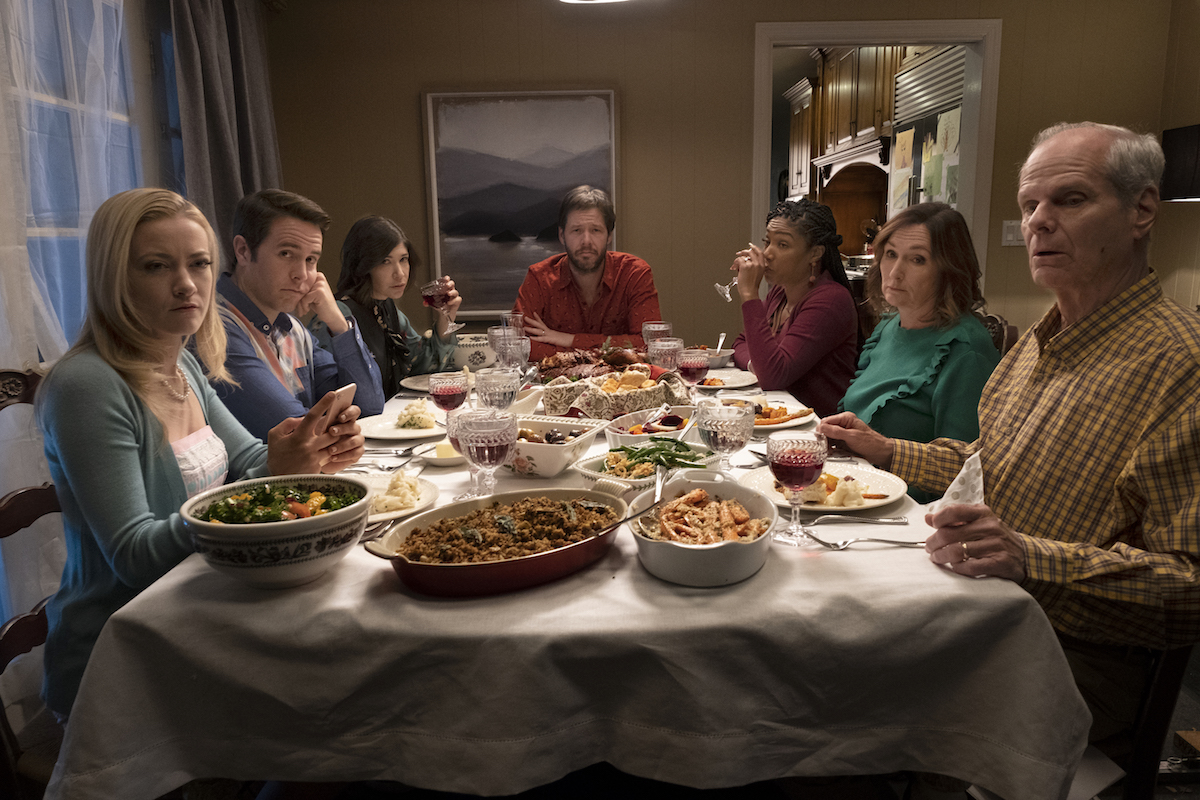 THE OATH[/caption]
The LA Film Festival today announced Gala Screenings at the 2018 Festival including Ike Barinholtz’s directorial debut The Oath starring Ike Barinholtz, Tiffany Haddish, John Cho, Carrie Brownstein, Billy Magnussen, Nora Dunn, Chris Ellis, Jon Barinholtz, Meredith Hagner; Elizabeth Chai Vasarhelyi and Jimmy Chin’s documentary Free Solo featuring Alex Honnold; Rupert Everett’s The Happy Prince, starring Rupert Everett, Colin Firth, Colin Morgan, Edwin Thomas and Emily Watson; Eva Vives’ All About Nina, starring Mary Elizabeth Winstead, Common, Chace Crawford, Clea DuVall, Kate del Castillo, Beau Bridges and Camryn Manheim.
There will also be a Special Screening of Tom Volf’s documentary Maria by Callas; a Series program that includes; the first episode of the Into the Dark series, “The Body” staring Tom Bateman and Rebecca Rittenhouse, directed by Paul Davis; and America to Me a multipart unscripted documentary series from filmmaker Steve James. In addition 12 films in the Buzz Section and 3 podcasts in the Podcast Section have been unveiled. The LA Film Festival runs September 20-28.
“My aim with LA Film Festival is to celebrate and acknowledge storytelling in all its myriad of forms,” said LA Film Festival Director Jennifer Cochis. “Bringing forth part of our Series programming, launching our Podcast section, and shining a spotlight on this year’s Galas is all in effort to honor these creative teams, processes and stories.”
THE OATH[/caption]
The LA Film Festival today announced Gala Screenings at the 2018 Festival including Ike Barinholtz’s directorial debut The Oath starring Ike Barinholtz, Tiffany Haddish, John Cho, Carrie Brownstein, Billy Magnussen, Nora Dunn, Chris Ellis, Jon Barinholtz, Meredith Hagner; Elizabeth Chai Vasarhelyi and Jimmy Chin’s documentary Free Solo featuring Alex Honnold; Rupert Everett’s The Happy Prince, starring Rupert Everett, Colin Firth, Colin Morgan, Edwin Thomas and Emily Watson; Eva Vives’ All About Nina, starring Mary Elizabeth Winstead, Common, Chace Crawford, Clea DuVall, Kate del Castillo, Beau Bridges and Camryn Manheim.
There will also be a Special Screening of Tom Volf’s documentary Maria by Callas; a Series program that includes; the first episode of the Into the Dark series, “The Body” staring Tom Bateman and Rebecca Rittenhouse, directed by Paul Davis; and America to Me a multipart unscripted documentary series from filmmaker Steve James. In addition 12 films in the Buzz Section and 3 podcasts in the Podcast Section have been unveiled. The LA Film Festival runs September 20-28.
“My aim with LA Film Festival is to celebrate and acknowledge storytelling in all its myriad of forms,” said LA Film Festival Director Jennifer Cochis. “Bringing forth part of our Series programming, launching our Podcast section, and shining a spotlight on this year’s Galas is all in effort to honor these creative teams, processes and stories.”
Galas
All About Nina, dir. Eva Vives, West Coast Premiere Just as Nina Geld’s brilliant and angry stand-up kicks her career into high gear, her romantic life gets complicated, forcing her to reckon with what it means to be creative, authentic, and a woman in today’s culture. All About Nina is distributed by The Orchard and will be in theatres on September 28th. The Happy Prince, dir. Rupert Everett, United Kingdom, Los Angeles Premiere The last days of Oscar Wilde — and the ghosts that haunted them — are vividly evoked in Rupert Everett’s directorial debut. As the film travels through Wilde’s final act and journeys through England, France and Italy, desire and loyalty face off, the transience of lust is laid bare, and the true riches of love are revealed. The Happy Prince is being distributed by Sony Pictures Classics and will open in LA & NY October 10th. The Oath, dir. Ike Barinholtz, USA, World Premiere A controversial White House policy turns family member against family member in The Oath, a savagely funny dark comedy about surviving life and Thanksgiving in the age of political tribalism. The Oath is Ike Barinholtz’s directorial debut and is being distributed by Topic Studios and Roadside Attractions, opening on October 12th. Free Solo, dirs. Elizabeth Chai Vasarhelyi and Jimmy Chin, USA, Los Angeles Premiere Free Solo is a stunning, intimate and unflinching portrait of free soloist climber Alex Honnold, as he prepares to achieve his lifelong dream: climbing the face of the world’s most famous rock…the 3,200ft El Capitan in Yosemite National Park…without a rope. Free Solo is being distributed by National Geographic Documentary Films.Special Screening
Maria By Callas, dir. Tom Volf, France, Los Angeles Special Screening From first time director Tom Volf, Maria By Callas is the definitive documentary on the life and work of the Greek-American opera singer. Volf has spent nearly five years working on the film, which features never before seen or heard footage and performances of Callas. Maria By Callas is being distributed by Sony Pictures Classics and will open in LA & NY November 2nd.Podcasts
Don’t @ Me with Justin Simien – USA (CREATOR/HOST Justin Simien PRODUCER Gina Delvac) Beyond the knee-jerk reactions and Twitter hot takes, Justin Simien and his guests get real about a variety of topics. Don’t like what you hear? Don’t @ Me. Hollywood & Crime – USA (CREATOR/HOST Tracy Pattin HOST Larry Brand) A look inside the most infamous murders in Hollywood history. Welcome to L.A. – USA (CREATOR/HOST David Weinberg) – David Weinberg explores a few of the many L.A.s that exist between the Pacific and the Mojave, introducing us to a lot of fascinating characters along the way.Series
Into the Dark, “The Body”, dir. Paul Davis, USA, World Premiere The first episode of the Into the Dark series – “The Body” – is a story about a sophisticated hitman with a cynical view on modern society who finds his work made more difficult when he has to transport a body on Halloween night, but everyone is enamored by what they think is his killer costume. “The Body” stars Tom Bateman and Rebecca Rittenhouse, written by Paul Fischer and Paul Davis and is directed by Paul Davis. Into The Dark is a first of its kind year-round horror event series from prolific, award-winning producer, Jason Blum’s independent TV studio Blumhouse Television. The Hulu Original Series includes 12 self-contained episodes, with a new episode premiering each month. The Body premieres exclusively on Hulu, October 5th, 2018. America To Me, “I Don’t Have to Think About Being White”, dir. Steve James, USA Poignant and funny, epic and intimate, America to Me spends an academic year at Chicagoland’s elite Oak Park and River Forest High School (OPRF), allowing its students, families, faculty and administration to tell stories of the pressures and challenges teens face today in their own words. The fifth episode of the epic 10-part docu-series from Starz and Kartemquin looks closely at decades-long racial and educational inequities – in addition to the challenges that today’s teenagers face. America To Me will premiere on Starz this Sunday, August 26 at 10pm PT/ET.Buzz Section
Non-competitive showcase of curated favorites from other film festivals. Bethany Hamilton: Unstoppable – dir. Aaron Lieber, USA, West Coast Premiere Galveston – dir. Mélanie Laurent, USA, West Coast Premiere The Great Buster: A Celebration – dir. Peter Bogdanovich, USA, North American Premiere Jonathan – dir. Bill Oliver, USA, West Coast Premiere Little Woods – dir. Nia DaCosta, USA, West Coast Premiere Mr. Soul! – dirs. Melissa Haizlip, Samuel Pollard, USA, West Coast Premiere Museo – dir. Alonso Ruizpalacios, Mexico, North American Premiere The New Romantic – dir. Carly Stone, USA, West Coast Premiere Sadie – dir. Megan Griffiths, USA, California Premiere Song of Back and Neck – dir. Paul Lieberstein, USA, West Coast Premiere Unlovable – dir. Suzi Yoonessi, USA, West Coast Premiere You Can Choose Your Family – dir. Miranda Bailey, USA, West Coast Premiere
-
46 Breakout Films Selected for 2018 Toronto International Film Festival Discovery Program
[caption id="attachment_31512" align="aligncenter" width="1200"] Screwdriver[/caption]
The Toronto International Film Festival revealed the 46 breakout films from 50 international storytellers that will screen in its 2018 Discovery lineup, marking a record year for the program. Hailing from 37 different countries, these promising new filmmakers present works that explore identity, complex portraits of women, and youth as they struggle to navigate a fragile world. Twenty-nine of the films will make their World Premieres at the Festival. The lineup stands out for the impressive number of Asian and Eastern European films — accounting for 26% of the Discovery program — and the number of films directed by women.
Opening this year’s Discovery program will be Bai Xue’s The Crossing, a captivating Chinese film following the journey of an ordinary teenage girl who becomes entangled in illicit activities.
https://www.youtube.com/watch?v=GVd56lm-8Cs
The program’s highlights include: Adina Pintilie’s innovative Touch Me Not, winner of the Golden Bear and Best First Feature in Berlin; Syrian director Soudade Kaadan’s The Day I Lost My Shadow, a bewitching film on the Syrian conflict; Nino Zhvania’s Parade, the only Georgian feature in the selection; Lithuanian director Marija Kavtaradze’s touching Summer Survivors; Han Ka-ram’s charming Our Body; and renowned Nigerian actor Genevieve Nnaji’s exciting directorial debut, Lionheart.
This year’s lineup also stands out for the strong portrayals of sensitive and witty women within it. Among them are Arturo Infante’s sci-fi comedy The Extraordinary Journey of Celeste García , starring popular actor María Isabel Díaz; Mexican director Lila Avilés’ The Chambermaid; Arash Lahooti’s Orange Days; Nikos Labôt’s Her Job; and Woman at War by Icelandic director Benedikt Erlingsson, which has already earned critical praise.
Putting the struggles of young characters front and centre, the Discovery program includes UK actor-director Adewale Akinnuoye-Agbaje’s Farming, which tells the story of a Nigerian immigrant facing a racist skinhead gang in 1980s England; Carmel Winters’ beautiful Float Like a Butterfly; Lukas Dhont’s Girl; Daniel Sawka’s Icebox; Rosanne Pel’s Light as Feathers; Darko Štante’s Consequences; Ash Mayfair’s The Third Wife; Imogen Thomas’ poetic Emu Runner; Ethiopian–Israeli filmmaker Aäläm-Wärqe Davidian’s Fig Tree; and Joël Karekezi’s The Mercy of the Jungle, showcasing the breakthrough performance of TIFF International Rising Star Stéphane Bak.
Risk-takers and daring artists also stand out in this year’s slate, as in Wanuri Kahiu’s Rafiki, an electric female LGBTQ+ love story set in Kenya, where homosexuality is illegal; Sameh Zoabi’s border-crossing dark comedy Tel Aviv on Fire; Ognjen Glavonić’s The Load; and Irish brothers Andy and Ryan Tohill’s suspenseful thriller The Dig. Bold Australian filmmaker Benjamin Gilmour will present the groundbreaking Jirga .
To close this bright selection, Palestinian director Bassam Jarbawi will introduce North American audiences to his exceptional first feature film, Screwdriver, a gripping drama that examines the psychological impact of the Palestinian–Israeli conflict.
The 43rd Toronto International Film Festival runs from September 6 to 16, 2018
Screwdriver[/caption]
The Toronto International Film Festival revealed the 46 breakout films from 50 international storytellers that will screen in its 2018 Discovery lineup, marking a record year for the program. Hailing from 37 different countries, these promising new filmmakers present works that explore identity, complex portraits of women, and youth as they struggle to navigate a fragile world. Twenty-nine of the films will make their World Premieres at the Festival. The lineup stands out for the impressive number of Asian and Eastern European films — accounting for 26% of the Discovery program — and the number of films directed by women.
Opening this year’s Discovery program will be Bai Xue’s The Crossing, a captivating Chinese film following the journey of an ordinary teenage girl who becomes entangled in illicit activities.
https://www.youtube.com/watch?v=GVd56lm-8Cs
The program’s highlights include: Adina Pintilie’s innovative Touch Me Not, winner of the Golden Bear and Best First Feature in Berlin; Syrian director Soudade Kaadan’s The Day I Lost My Shadow, a bewitching film on the Syrian conflict; Nino Zhvania’s Parade, the only Georgian feature in the selection; Lithuanian director Marija Kavtaradze’s touching Summer Survivors; Han Ka-ram’s charming Our Body; and renowned Nigerian actor Genevieve Nnaji’s exciting directorial debut, Lionheart.
This year’s lineup also stands out for the strong portrayals of sensitive and witty women within it. Among them are Arturo Infante’s sci-fi comedy The Extraordinary Journey of Celeste García , starring popular actor María Isabel Díaz; Mexican director Lila Avilés’ The Chambermaid; Arash Lahooti’s Orange Days; Nikos Labôt’s Her Job; and Woman at War by Icelandic director Benedikt Erlingsson, which has already earned critical praise.
Putting the struggles of young characters front and centre, the Discovery program includes UK actor-director Adewale Akinnuoye-Agbaje’s Farming, which tells the story of a Nigerian immigrant facing a racist skinhead gang in 1980s England; Carmel Winters’ beautiful Float Like a Butterfly; Lukas Dhont’s Girl; Daniel Sawka’s Icebox; Rosanne Pel’s Light as Feathers; Darko Štante’s Consequences; Ash Mayfair’s The Third Wife; Imogen Thomas’ poetic Emu Runner; Ethiopian–Israeli filmmaker Aäläm-Wärqe Davidian’s Fig Tree; and Joël Karekezi’s The Mercy of the Jungle, showcasing the breakthrough performance of TIFF International Rising Star Stéphane Bak.
Risk-takers and daring artists also stand out in this year’s slate, as in Wanuri Kahiu’s Rafiki, an electric female LGBTQ+ love story set in Kenya, where homosexuality is illegal; Sameh Zoabi’s border-crossing dark comedy Tel Aviv on Fire; Ognjen Glavonić’s The Load; and Irish brothers Andy and Ryan Tohill’s suspenseful thriller The Dig. Bold Australian filmmaker Benjamin Gilmour will present the groundbreaking Jirga .
To close this bright selection, Palestinian director Bassam Jarbawi will introduce North American audiences to his exceptional first feature film, Screwdriver, a gripping drama that examines the psychological impact of the Palestinian–Israeli conflict.
The 43rd Toronto International Film Festival runs from September 6 to 16, 2018
2018 Toronto International Film Festival Discovery Program
aKasha hajooj kuka | Sudan/South Africa/Qatar/Germany North American Premiere ANIARA Pella Kågerman, Hugo Lilja | Sweden World Premiere Blind Spot (Blindsone) Tuva Novotny | Norway International Premiere The Chambermaid (La Camarista) Lila Avilés | Mexico World Premiere Complicity (Kazenoki Wa Koto No Youni) Kei Chikaura | Japan/China World Premiere Consequences (Posledice) Darko Štante | Slovenia/Austria World Premiere Discovery Opening Film The Crossing (Guo Chun Tian) Bai Xue | China World Premiere The Day I Lost My Shadow (Yom Adaatou Zouli) Soudade Kaadan | Syria/France/Qatar/Lebanon North American Premiere The Dig Andy Tohill, Ryan Tohill | United Kingdom North American Premiere An Elephant Sitting Still (Da Xiang Xi Di Er Zuo) Hu Bo | China Canadian Premiere Emu Runner Imogen Thomas | Australia World Premiere ENDZEIT – EVER AFTER (ENDZEIT) Carolina Hellsgård | Germany World Premiere The Extraordinary Journey of Celeste García (El Viaje Extraordinario de Celeste García) Arturo Infante | Cuba/Germany World Premiere Farming Adewale Akinnuoye-Agbaje | United Kingdom World Premiere Fig Tree Aäläm-Wärqe Davidian | Israel/Germany/France/Ethiopia World Premiere Float Like a Butterfly Carmel Winters | Ireland World Premiere Girl Lukas Dhont | Belgium Canadian Premiere Gwen William McGregor | United Kingdom World Premiere Helmet Heads (Cascos Indomables) Neto Villalobos | Costa Rica/Chile World Premiere Her Job Nikos Labôt | Greece/France/Serbia World Premiere Icebox Daniel Sawka | USA World Premiere Jirga Benjamin Gilmour | Australia North American Premiere Light as Feathers Rosanne Pel | Netherlands World Premiere Lionheart Genevieve Nnaji | Nigeria World Premiere The Load (Teret) Ognjen Glavonic | Serbia/France/Croatia/Iran/Qatar North American Premiere Manta Ray (Kraben Rahu) Phuttiphong Aroonpheng | Thailand/France/China North American Premiere The Mercy of the Jungle Joël Karekezi | Belgium/France/Germany North American Premiere Orange Days (Rooz-haye Narenji) Arash Lahooti | Iran World Premiere Our Body (A-wol Ba-di) Han Ka-ram | South Korea World Premiere Parade (Aglumi) Nino Zhvania | Georgia/Russia World Premiere Phoenix (Føniks) Camilla Strøm Henriksen | Norway/Sweden World Premiere Rafiki Wanuri Kahiu | Kenya/South Africa/France/Lebanon/Norway/Netherlands/Germany/USA North American Premiere Saf Ali Vatansever | Turkey/Germany/Romania World Premiere Discovery Closing Film Screwdriver (Mafak) Bassam Jarbawi | Palestine/USA/Qatar North American Premiere Summer Survivors Marija Kavtaradze | Lithuania World Premiere Tel Aviv on Fire Sameh Zoabi | Luxembourg/France/Israel/Belgium North American Premiere The Third Wife Ash Mayfair | Vietnam World Premiere Tito and the Birds (Tito e os Pássaros) Gustavo Steinberg, Gabriel Bitar, André Catoto | Brazil North American Premiere Too Late to Die Young (Tarde para morir joven) Dominga Sotomayor | Chile/Brazil/Argentina/Netherlands/Qatar North American Premiere Touch Me Not Adina Pintilie | Romania/Germany/Czech Republic/Bulgaria/France North American Premiere Twin Flower (Fiore Gemello) Laura Luchetti | Italy World Premiere Woman at War (Kona fer í stríð) Benedikt Erlingsson | Iceland/France/Ukraine North American Premiere Previously announced Canadian titles in the Discovery programme include Akash Sherman’s Clara , Gwaai Edenshaw and Helen Haig-Brown’s Edge of the Knife, Jasmin Mozaffari’s Firecrackers, and Zach Lipovsky and Adam Stein’s Freaks.TIFF DOCS
Reason (Vivek) Anand Patwardhan | India World Premiere
-
2018 New York Film Festival Reveals Revivals Lineup + Dan Talbot and Pierre Rissient Retrospective
[caption id="attachment_31508" align="aligncenter" width="1200"] Searching for Ingmar Bergman[/caption]
The Film Society of Lincoln Center announced the Revivals sections for the 56th New York Film Festival along with this year’s three-part Retrospective section paying tribute to late film industry luminaries Dan Talbot and Pierre Rissient, and spotlights three documentary odes to cinema.
NYFF Director and Selection Committee Chair Kent Jones said, “For Pierre and Dan, two genuine heroes, everything to do with cinema was urgent. This year’s retrospective section pays tribute to both men, who passed away within six months of each other.”
Founder of New Yorker Films and longtime director of Lincoln Plaza Cinemas, beloved exhibitor and distributor Dan Talbot championed countless foreign and independent art-house titles throughout his career. He introduced films such as Bernardo Bertolucci’s Before the Revolution to U.S. audiences and supported the work of notable auteurs Straub-Huillet, Nagisa Oshima, Jean-Luc Godard, Rainer Werner Fassbinder, and more stateside.
Producer, publicist, distributor, curator, and cinema polymath Pierre Rissient was known for his unparalleled taste and industry wisdom. He has been credited with shaping the careers of filmmakers from Clint Eastwood to Joseph Losey to King Hu, and counted Raoul Walsh and Fritz Lang among his personal favorites.
The Retrospective section also includes three special and very different documentaries about the movies: a lament for Viennese film critic and festival director Hans Hurch, a portrait of the great cinema pioneer Alice Guy-Blaché, and a tribute to Ingmar Bergman.
The Revivals section showcases important works from renowned filmmakers that have been digitally remastered, restored, and preserved with the assistance of generous partners. Highlights this year include Edgar G. Ulmer’s noir road movie Detour, which gleams anew in this gorgeous restoration; Djibril Diop Mambéty’s neocolonialist satire Hyenas, the Senegalese auteur’s adaptation of Friedrich Dürrenmatt’s play The Visit; a 20th anniversary restoration of Alexei Guerman’s Khrustalyov, My Car!, a nightmarish portrait of Stalin-era paranoia; and J.L. Anderson’s American independent curio Spring Night, Summer Night, which was disinvited from the 5th New York Film Festival but returns for its due just over 50 years later.
Searching for Ingmar Bergman[/caption]
The Film Society of Lincoln Center announced the Revivals sections for the 56th New York Film Festival along with this year’s three-part Retrospective section paying tribute to late film industry luminaries Dan Talbot and Pierre Rissient, and spotlights three documentary odes to cinema.
NYFF Director and Selection Committee Chair Kent Jones said, “For Pierre and Dan, two genuine heroes, everything to do with cinema was urgent. This year’s retrospective section pays tribute to both men, who passed away within six months of each other.”
Founder of New Yorker Films and longtime director of Lincoln Plaza Cinemas, beloved exhibitor and distributor Dan Talbot championed countless foreign and independent art-house titles throughout his career. He introduced films such as Bernardo Bertolucci’s Before the Revolution to U.S. audiences and supported the work of notable auteurs Straub-Huillet, Nagisa Oshima, Jean-Luc Godard, Rainer Werner Fassbinder, and more stateside.
Producer, publicist, distributor, curator, and cinema polymath Pierre Rissient was known for his unparalleled taste and industry wisdom. He has been credited with shaping the careers of filmmakers from Clint Eastwood to Joseph Losey to King Hu, and counted Raoul Walsh and Fritz Lang among his personal favorites.
The Retrospective section also includes three special and very different documentaries about the movies: a lament for Viennese film critic and festival director Hans Hurch, a portrait of the great cinema pioneer Alice Guy-Blaché, and a tribute to Ingmar Bergman.
The Revivals section showcases important works from renowned filmmakers that have been digitally remastered, restored, and preserved with the assistance of generous partners. Highlights this year include Edgar G. Ulmer’s noir road movie Detour, which gleams anew in this gorgeous restoration; Djibril Diop Mambéty’s neocolonialist satire Hyenas, the Senegalese auteur’s adaptation of Friedrich Dürrenmatt’s play The Visit; a 20th anniversary restoration of Alexei Guerman’s Khrustalyov, My Car!, a nightmarish portrait of Stalin-era paranoia; and J.L. Anderson’s American independent curio Spring Night, Summer Night, which was disinvited from the 5th New York Film Festival but returns for its due just over 50 years later.
REVIVALS
Detour Dir. Edgar G. Ulmer, USA, 1945, 68m Edgar G. Ulmer’s 1945 classic, made at the Poverty Row production company PRC somewhere between 14 and 18 shooting days for $100,000, has come to be regarded, justifiably, as the essence of film noir. Ulmer and his team turned the very cheapness of the enterprise into an aesthetic asset and created a film experience that reeks of sweat, rust, and mildew. For years, Detour was only available in dupey, substandard prints, which seemed appropriate. In the ’90s, a photochemical restoration improved matters, but the quality was far from optimal. Now we have a restoration of a different order, made from vastly superior elements. “To be able to see so much detail in the frame, in the settings and in the faces of the actors,” says Martin Scorsese, “is truly startling, and it makes for a far richer and deeper experience.” Restored by the Academy Film Archive and The Film Foundation, in collaboration with the Cinémathèque Royale de Belgique, The Museum of Modern Art, and the Cinémathèque Française, with funding from the George Lucas Family Foundation. Enamorada Dir. Emilo Fernández, Mexico, 1946, 99m This wildly passionate and visually beautiful love story from director Emilio Fernandéz and cinematographer Gabriel Figueroa, a follow-up to their wildly successful Maria Candelaria, remains one of the most popular Mexican films ever made. As Farran Smith Nehme has written, it was “one of the biggest hits of Fernández’s career and a high-water mark for nearly everyone involved.” The romance between between a revolutionary General (Pedro Armendariz) and the daughter of a nobleman (Maria Félix) set during the Mexican revolution (in which Fernandéz himself fought) was inspired by The Taming of the Shrew and, for the finale, by the end of Sternberg’s Morocco. Restoration led by UCLA Film & Television Archive and The Film Foundation’s World Cinema Project in collaboration with Fundacion Televisa AC and the UNAM Filmoteca, funded by Material World Charitable Foundation. Hyenas / Ramatou Dir. Djibril Diop Mambéty, Senegal/Switzerland/France, 1992, 110m “When a story ends—or ‘falls into the ocean,’ as we say—it creates dreams,” said the great Senegalese director Djibril Diop Mambéty in an interview after the completion of his second film, Hyenas, a wildly freeform adaptation of Friedrich Dürrenmatt’s The Visit. A wealthy woman (Ami Diakhate) returns to her—and Mambéty’s—home village, and offers the inhabitants a vast sum in exchange for the murder of the local man who seduced and abandoned her when she was young. “I do not refuse the word didactic,” said Mambéty of his very special body of work, and of the particular plight of African cinema. “My task was to identify the enemy of humankind: money, the International Monetary Fund, and the World Bank. I think my target is clear.” A Thelma Film AG release. Restored over the course of 2017 by Eclair Digital in Vanves, France. Restoration was taken on by Thelma Film AG (Switzerland). I Am Cuba Dir. Mikhail Kalatozov, Cuba/USSR, 1964, 108m Mikhail Kalatozov’s wildly mobile, hallucinatory film was initially rejected by both Cuban and Soviet officials for excessive naiveté and an insufficiently revolutionary spirit, and went largely disregarded and almost unknown for nearly 30 years. That all changed in the early nineties—a remarkable era in film culture, chock full of rediscoveries—when G. Cabrera Infante programmed it at the Telluride Film Festival, and Martin Scorsese and Francis Ford Coppola co-presented a Milestone Films release. I Am Cuba is a one-of-a-kind film experience, a visually mind-bending bolt from the historical blue. Milestone Film & Video’s 4K restoration from the original Gosfilmofond 35mm interpositive and mag tracks was done at Metropolis Post with Jason Crump (colorist) and Ian Bostick (restoration artist). 4K scan by Colorlab, Rockville, MD. Khrustalyov, My Car! / Khrustalyov, mashinu! Dir. Alexei Guerman, USSR/France, 1998, 150m The time is 1953, the place is Moscow; the Jewish purges are still on, and Stalin is on his deathbed. When General Yuri Glinsky, a military surgeon, tries to escape, he is abducted, taken to the lowest rungs of hell, and deposited at the heart of the enigma. Alexei Guerman’s deeply personal penultimate film is a work of solid and constant disorientation, masterfully orchestrated. Enigmatic phrases, sounds, gestures, and micro-events pass before our eyes and ears before we or the alternately jumpy and exhausted characters can make sense of them. Guerman’s lustrous black and white images and meticulously constructed soundscape are permeated with the feel of life in a totalitarian society, where something monumental is underway but no one knows precisely what or when or how it will break. The original 35mm fine grain positive was scanned in 2K resolution on an Arriscan at Eclair, Paris. The film was graded and restored at Dragon DI, Wales. Restoration supervised by James White, Arrow Films; restoration produced by Daniel Bird. Neapolitan Carousel Dir. Ettore Giannini, Italy, 1954, 129m One of the first color films made in Italy, Ettore Giannini’s 1954 film version of his stage musical begins in the present day, with sheet music hanging on a barrel organ blown through the streets of Naples: every individual song tells a story of the history of the city, from the Moorish invasion in the 14th century through the arrival of the Americans at the end of WWII. Giannini assembled an amazing roster of talent for his film, including one-time Ballets Russes principal dancer and Powell-Pressburger mainstay Léonide Massine (who also choreographed), the great comic actor Paolo Stoppa, and a young Sophia Loren. Restored by the Cineteca di Bologna at L’Immagine Ritrovata laboratory and The Film Foundation with funding provided by the Hollywood Foreign Press Association. None Shall Escape Dir. André de Toth, USA, 1944, 85m The Hungarian emigré André de Toth directed this unflinching look at the rise of Nazism right before the end of the war, the first Hollywood film to address Nazi genocide. Written by Lester Cole, soon to become a member of the Hollywood Ten, None Shall Escapeis structured as a series of flashbacks that dramatize the testimony of witnesses in a near-future postwar tribunal. Alexander Knox is the German everyman, a WWI vet who slowly, gradually accepts National Socialism and becomes a mass murderer. With Marsha Hunt—her career and Knox’s would both be affected by the Red Scare. A Sony Pictures Repertory release. 4K digital restoration from original nitrate negative and original nitrate track negative. The Red House Dir. Delmer Daves, USA, 1947, 100m This moody, visually potent film, directed by Delmer Daves and independently produced by star Edward G. Robinson with Sol Lesser, is something of an anomaly in late ’40s moviemaking, a piece of contemporary gothic Americana. Robinson plays Pete, a farmer who shares his home with his sister (Judith Anderson) and his adopted niece Meg (Allene Roberts). Meg becomes increasingly attached to a sweet local boy (Lon McAllister), and together they venture into the woods in search of a red house that Pete has forbidden them to enter. The emotional heart of The Red House can be found in the extraordinary close-ups of Roberts and McAllister, shot by the great DP (and frequent John Ford collaborator) Bert Glennon. Restored by the UCLA Film & Television Archive and The Film Foundation, with funding provided by the George Lucas Family Foundation. Spring Night, Summer Night Dir. J.L. Anderson, USA, 1967, 82m J.L. Anderson’s haunted Appalachian romance occupies a proud place alongside such similarly hand-crafted, off-the-grid American independent films as Carnival of Souls, The Exiles, Night of the Living Dead, and Wanda. Made in coal-mining country in northeastern Ohio with local amateur actors, the film is carefully observed (Anderson and his producer Franklin Miller spent two years scouting locations becoming familiar with the place and the people) and beautifully and lovingly realized. Spring Night, Summer Night has had an extremely checkered history, including a release in a version crudely recut for the exploitation market with the title Miss Jessica Is Pregnant. It was invited to the 1968 New York Film Festival, only to be unceremoniously bumped to make way for John Cassavetes’s Faces. Fifty years later, we’re re-extending the invitation and promising that it’s solid. A Restoration and Reconstruction Project of Cinema Preservation Alliance by Peter Conheim and Ross Lipman. Produced by Nicolas Winding Refn. Tunes of Glory Dir. Ronald Neame, UK, 1960, 106m Ronald Neame’s adaptation of James Kennaway’s novel is a spare, dramatically potent war of nerves, about the power struggle between a tough lower-middle-class Scottish Major due to be replaced as Battalion commander of a Highland regiment and an aristocratic Colonel traumatized by captivity during the war. At its center are two breathtaking performances: John Mills as the Colonel and Alec Guinness, in a genuine tour de force, as the Major (apparently, after they had read the script, each actor had originally wanted to play the other’s role). With Dennis Price, Kay Walsh, Susannah York, and Gordon Jackson. Restored by the Academy Film Archive and The Film Foundation in collaboration with Janus Films and The Museum of Modern Art. Restoration funding provided by the George Lucas Family Foundation. The War at Home Dir. Glenn Silber and Barry Alexander Brown, USA, 1979, 100m This meticulously constructed 1979 film recounts the development of the movement against the American war in Vietnam on the Madison campus of the University of Wisconsin, from 1963 to 1970. Using carefully assembled archival and news footage and thoughtful interviews with many of the participants, it culminates in the 1967 Dow Chemical sit-in and the bombing of the Army Math Research Center three years later. One of the great works of American documentary moviemaking, The War at Home has also become a time capsule of the moment of its own making, a welcome emanation from the era of analog editing, and a reminder of how much power people have when they take to the streets in protest. A Catalyst Media Productions release. New 4K restoration by IndieCollect.RETROSPECTIVE
Tribute to Dan Talbot Before the Revolution Dir. Bernardo Bertolucci, Italy, 1964, 105m Dan Talbot began as an exhibitor, and he started his distribution company, New Yorker Films, for the best possible reason: he saw a film that he loved and he wanted to share it with as many people as possible. The film was Bernardo Bertolucci’s masterful second feature, a deeply personal portrait of a generation gripped by political uncertainty. Set in the director’s hometown of Parma, it follows the travails of a young student struggling to reconcile his militant views with his bourgeois lifestyle (and his fiancée), who drifts into a passionate affair with his radical aunt. One of the key films of the ’60s, Before the Revolution set many aspiring filmmakers on their own autobiographical courses. 35mm print from Istituto Luce Cinecittà. Straub-Huillet Program: Machorka-Muff Dir. Jean-Marie Straub, Danièle Huillet; West Germany; 1963; 18m The Bridegroom, the Comedienne and the Pimp Dir. Jean-Marie Straub, Danièle Huillet; West Germany; 1968; 23m Not Reconciled Dir. Jean-Marie Straub, Danièle Huillet; West Germany; 1965; 55m In 1966, Dan and Toby Talbot went to a party thrown by Bertolucci and his friend and co-writer Gianni Amico in Rome. Suddenly, the bell rang. “Shh-sh,” said Bertolucci. “Get rid of the pot! Put the drinks away. The Straubs are here!” That someone would pick up any single film directed by Jean-Marie Straub and Danièle Huillet is utterly unthinkable in the context of the present moment, but for decades New Yorker Films handled all of them. These three films, often shown together, are among their very best: an idiosyncratic adaptation of Heinrich Böll’s short story “Bonn Diary,” about a former Nazi colonel cynically reflecting on the sheer stupidity of the bourgeoisie; a three-part short comprised of a nocturnal tour of Munich, a high-speed stage production of Bruckner’s Sickness of Youth, and the marriage of James and Lilith, who guns down her pimp (played by Rainer Werner Fassbinder); and their stunning, thrillingly compressed adaptation of Böll’s novel Billiards at Half-Past. A Grasshopper Film release. The Ceremony Dir. Nagisa Oshima, Japan, 1971, 123m New Yorker developed a close relationship with the filmmaker once known as “the Japanese Godard,” Nagisa Oshima, and they programmed a groundbreaking retrospective of his early films during their brief tenure at the Metro on 100th Street. This disarmingly atmospheric portrait of a family’s collective psychopathology recounts the saga of the Sakurada clan, whose decline plays out over the course of 25 years and multiple funerals and weddings. Operating at the height of his iconoclastic powers, Oshima renders the family’s unraveling with an arresting sense of foreboding and an air of gothic fatalism, enriched by Tôru Takemitsu’s quintessentially modernist score. Every Man for Himself / Sauve qui peut (la vie) Dir. Jean-Luc Godard, France/Austria/West Germany/Switzerland, 1980, 87m “Dan jumped straight to the point,” wrote Toby in her book The New Yorker Theater and Other Scenes from a Life at the Movies. “‘I love your work and would like to distribute anything you make.’” Over the years, New Yorker handled many of Godard’s films, including his return to 35mm character-based storytelling after a decade of experimentation in video. What Godard called his “second first film” is a moving portrait of restless, intertwining lives, and the myriad forms of self-debasement and survival in a capitalist state, with Jacques Dutronc (as “Paul Godard”), Nathalie Baye, Isabelle Huppert, and, in an unforgettable anti-cameo, the voice of Marguerite Duras. An NYFF18 selection. The American Friend Dir. Wim Wenders, West Germany/France, 1977, 125m Dan Talbot and New Yorker Films put the New German Cinema of the 1970s on the map in this country, and one of their key titles was Wim Wenders’s spellbinding adaptation of Patricia Highsmith’s Ripley’s Game (and a little bit of Ripley Underground). Dennis Hopper is the sociopathic charmer Tom Ripley, transformed by Wenders into an urban cowboy peddler of forged paintings who ensnares Bruno Ganz’s gravely ill Swiss-born art framer into a plot to assassinate a Mafioso. Shot in multiple New York and European locations in low-lit, cool blue and gold tones by the great Robby Müller, this brooding, dreamlike thriller conjures a world ruled by chaos and indiscriminate American dominance. It also features a stunning array of performances and guest appearances by filmmakers, including Nick Ray, Gérard Blain, Sam Fuller, Jean Eustache, Daniel Schmid, and Peter Lilienthal. An NYFF15 selection. The Marriage of Maria Braun Dir. Rainer Werner Fassbinder, West Germany, 1979, 120m “I bought 11 Fassbinders in one shot, like rugs,” Dan told Anthony Kaufman in a 2009 interview. As was the case with every New Yorker acquisition, the motive was not financial. So one can imagine the surprise at their offices when this 1979 film about a poor German soldier’s wife (Hanna Schygulla) who uses her wiles and savvy to rise as a businesswoman and take part in the “wirtschaftwunder” or postwar economic miracle, became an arthouse hit—per François Truffaut, this was the movie that broke Fassbinder “out of the ivory tower of the cinephiles” and earned him the acclaim he had always sought. The Marriage of Maria Braun was also the Closing Night selection of the 17th New York Film Festival. My Dinner with André Dir. Louis Malle, USA, 1981, 110m When Dan read Wallace Shawn and André Gregory’s script for My Dinner with André, he was so excited that he helped Louis Malle procure production funding from Gaumont. The film, an encounter between the two writers playing themselves discussing mortality, money, despair, and love over a meal at an upper west side restaurant (according to Gregory, Malle’s one direction was “Talk faster”), becoming a sensation at the art house, playing to packed houses for a solid year, and a favorite on the brand-new home video circuit. My Dinner with André is entertaining, confessional, funny, moving, and suffused with melancholy and joy…like life.Tribute to Pierre Rissient
Manila in the Claws of Light / Maynila: Sa mga kuko ng liwanag Dir. Lino Brocka, Philippines, 1975, 124m Pierre Rissient championed the work of countless filmmakers—as a programmer of the MacMahon Theatre in Paris, as a publicist in partnership with his lifelong friend Bertrand Tavernier, as a scout for Cannes, as a distributor and producer, and always as a lover of cinema with an avid desire to always learn and see more. As Todd McCarthy wrote, it was Pierre who “single-handedly brought the work of the late Filipino director Lino Brocka to the world’s attention.” This searing melodrama, with Bembel Roco and Hilda Koronel as doomed lovers, is one of Brocka’s greatest. “Lino knew all the arteries of this swarming city,” wrote Pierre, “and he penetrated them just as he penetrated the veins of the outcasts in his films. Sometimes a vein would crack open and bleed. And that blood oozed onto the screen.” A Touch of Zen Dir. King Hu, Hong Kong, 1971/1975, 200m Pierre developed a special love for Asia and its many cinemas, and he was the one who properly introduced the great wuxia master King Hu to the west, bringing the uncut version of his masterpiece, A Touch of Zen, to the 1975 Cannes Film Festival. Supreme fantasist, Ming dynasty scholar, and incomparable artist, Hu elevated the martial-arts genre to unparalleled heights. Three years in the making and his greatest film, A Touch of Zen was released in truncated form in Hong Kong in 1971 and yanked from theaters after a week. Four years later, after Rissient saved the film from oblivion and it won a grand prize for technical achievement, the unthinkable occurred: King Hu received an apology from his studio heads. Time Without Pity Dir. Joseph Losey, UK, 1957, 85m Pierre was close to many of the American writers and directors who had been through the blacklist, including Jules Dassin, Abraham Polonsky, John Berry, and Cy Endfield, and he was a great admirer of the films of Joseph Losey (his feelings about the man himself were another matter). Rissient was crucial in bringing attention to this consummately tense noir, one of Losey’s greatest films. The narrative, unfurling at a breakneck pace, chronicles the plight of a recovering alcoholic (Michael Redgrave) with a mere 24 hours to prove the innocence of his son, accused of murdering his girlfriend. The first film that Losey signed with his own name after his flight to Europe in the early ’50s, Time Without Pity established him as an essential auteur in the eyes of French cinephiles. Play Misty for Me Dir. Clint Eastwood, USA, 1971, 102m When Clint Eastwood won his first Oscar, in 1992 for Unforgiven, he thanked “the French” for their support. But it was one French citizen in particular who was there from the start of his career as a filmmaker. Eastwood’s first film, about a casual romantic encounter between a Northern California DJ (played by the director) and a woman named Evelyn (Jessica Walter) that turns harrowingly obsessive, is an essential film from an essential moment in cinema known as Hollywood in the ’70s. While the film was well-received, it was Pierre who recognized that Play Misty for Me marked the debut of a truly distinctive talent. From there, a close and abiding friendship bloomed. Mother India Dir. Mehboob Khan, India, 1957, 172m When we gave this film a run at the Walter Reade Theater in 2002, Pierre was only too happy to provide a simple but eloquent quote: “Air…space…light—that’s Mother India.” This seminal Bollywood film, a remake of Khan’s earlier Aurat (1940), is about the trials and tribulations of Radha (Nargis), a poor villager caught in the historic whirlwind of the struggles endured in her country after gaining its independence from Britain. Striving to raise her sons and make ends meet in the face of poverty and natural disasters alike, Radha endures through the strength of her convictions and her unflappable sense of morality. Mother India is a powerful experience, for both its place in film history and its incarnation of human resilience. House by the River Dir. Fritz Lang, USA, 1950, 89m There were few filmmakers whose work Pierre revered more than Fritz Lang, whom he counted among his friends. When Lang came to the Cinémathèque Française for a retrospective of his work in the late 1950s, Pierre and Claude Chabrol asked him about this wild gothic period melodrama, made at Republic Pictures, starring Louis Hayward and Jane Wyatt, a print of which could not be found and which was still unseen in France. Lang, said Pierre, “could describe shot by shot the first ten, twelve minutes of the film. It was almost as if we were seeing the film.” Pierre not only found a way of seeing House by the River, he acquired the rights and distributed the film himself. The Man I Love Dir. Raoul Walsh, USA, 1947, 96m Raoul Walsh was another honored figure in Pierre’s pantheon. On one occasion, when the subject of one of Walsh’s films came up, Pierre simply whistled in admiration. This 1947 film, somewhere between noir, musical, and melodrama, is one of Walsh’s least recognized and most moving, rich in the “daily human pathetique” that Manny Farber identified as the director’s richest vein. Ida Lupino is the Manhattan lounge singer who heads to Los Angeles to live with her family and start a new life. Bruce Bennett is the musician she falls for, and Robert Alda is the brash club owner who won’t take no for an answer. If one were pressed for a single word to describe this movie, it would be “soulful.”Three Documentaries on Cinema
In this year’s retrospective section, we also include three special and very different documentaries about the movies: a lament for Viennese film critic and festival director Hans Hurch, a portrait of the great cinema pioneer Alice Guy-Blaché, and a tribute to Ingmar Bergman. Be Natural: The Untold Story of Alice Guy-Blaché Dir. Pamela B. Green, USA, 2018, 103m Alice Guy-Blaché was a true pioneer who got into the movie business at the very beginning—in 1894, at the age of 21. Two years later, she was made head of production at Gaumont and started directing films. She and her husband moved to the United States, and she founded her own company, Solax, in 1910—they started in Flushing and moved to a bigger facility in Fort Lee, New Jersey. But by 1919, Guy-Blaché’s career came to an abrupt end, and she and the 1000 films that bore her name were largely forgotten. Pamela B. Green’s energetic film is both a tribute and a detective story, tracing the circumstances by which this extraordinary artist faded from memory and the path toward her reclamation. Narration by Jodie Foster. Preceded by: Falling Leaves (1912) One of Alice Guy-Blaché’s most beautiful films, this two-reeler concerns a girl who tries to keep her consumptive sister alive by magical means. Music composed and performed by Makia Matsumura. A collaborative restoration for the Alice Guy-Blaché retrospective at the Whitney Museum of American Art. Mastered from a 2K scan of a surviving nitrate print received by the Library of Congress in 1983 from the Public Archives of Canada/Jerome House Collection. 2018 Digital restoration produced by Bret Wood for Kino Lorber, Inc. Introduzione all’Oscuro Dir. Gastón Solnicki, Argentina/Austria, 2018, 71m North American Premiere The new film from Gastón Solnicki (Kékszakállú, NYFF54) is a tribute to his great friend Hans Hurch, one-time film critic and assistant to Jean-Marie Straub and Danièle Huillet, and director of the Vienna International Film Festival from 1997 to his unexpected death from a heart attack last July at the age of 64. Solnicki pays tribute to Hurch by creating a cinematic form for his own mourning. He doesn’t simply visit his friend’s old haunts, he responds rhythmically, in images and sounds, to Hurch’s recorded voice delivering admonitions and gentle warnings during the editing of an earlier film. Introduzione all’Oscuro is truly a work of the cinema, and a moving communion with a friend whose presence is felt in the memory of the places, the people, the coffee, and the films he loved. Searching for Ingmar Bergman Dir. Margarethe von Trotta, Germany/France, 2018, 99m U.S. Premiere On the occasion of Ingmar Bergman’s centenary comes this lovely, personal film from one of his greatest admirers, Margarethe von Trotta. This is a tribute from an artist with a such a deep affinity for the subject that it opens to genuine and sometimes disquieting inquiry. In his writings and in his films, Bergman himself strove for an honest accounting and true self-revelation, but it is fascinating to hear and see the observations of loved ones and collaborators (often one and the same), particularly his son Daniel, whose relationship with his father was multi-layered. A rich and quietly absorbing portrait of an immense artist. An Oscilloscope Laboratories release. https://www.youtube.com/watch?v=CGeHGcKh1KM
-
THE WOLF HOUSE Among 9 New Films Added to Zabaltegi-Tabakalera Lineup of 2018 San Sebastian Film Festival
[caption id="attachment_31504" align="aligncenter" width="1200"] La casa lobo (The Wolf House)[/caption]
Nine new films join the Zabaltegi-Tabakalera competition at the 66th San Sebastian Film Festival’s most open competitive section bringing the number of films competing for the Zabaltegi-Tabakalera Award to 18.
Zabaltegi-Tabakalera will include the presentation of Kraben Rahu / Manta Ray, following its showing at Venice and Toronto. The first work by Phuttiphong Aroonpheng (Bangkok, 1976) brings the story of a fisherman who rescues a wounded, unconscious man from the forest and develops an unspoken connection with him.
The second feature film Di qiu zui hou de ye wan / Long Day’s Journey into Night, by Bi Gan (Kaili, China, 1989), after his award-winning debut, Kaili Blues, premiered in Un Certain Regard. The film narrates a man’s return to the town of his birth in search of a woman.
The animated stop-motion feature film La casa lobo (The Wolf House), by Cristobal León (Santiago de Chile, 1980) and Joaquín Cociña (Concepción, Chile, 1980), has been selected for international festivals including the Berlinale and Annecy, and has received several mentions and distinctions. The debut from León and Cociña tells the tale of a young girl who takes refuge in a house in Southern Chile on escaping from a Germany colony.
Sophia Antipolis, second feature from the director of Mercuriales, Virgil Vernier (Paris, 1976) premiered at Locarno in the Cineasti del Presente section. The French actor and filmmaker analyses a community in a strange territory between the Mediterranean, the forest and the mountain.
Joining the already-announced Los que desean (Those Who Desire, Elena López Riera) and 592 metroz goiti (Above 592 metres, Maddi Barber), are the short films De Natura, by Lucile Hadzihalilovic (Lyon, 1961), winner in 2004 of the New Directors award for her first film, Innocence, and who returned to San Sebastian’s Official Selection in 2015 with her second film, Evolution, winner of the Jury Special Prize; The Men Behind the Wall, by Inés Moldavsky (Buenos Aires, 1987), premiered at Berlin, about a woman living in Israel and the men she contacts in the West Bank using Tinder; and Sobre cosas que me han pasado, by José Luis Torres Leiva (Chile, 1975), his third participation in the section following El viento sabe que vuelvo a casa (The Winds Know that I’m Coming Back Home, 2016) and El sueño de Ana (2017). The short film Song for the Jungle by Jean-Gabriel Périot, shot in Calais, where thousands of migrants wait to go to England will also be screened. The first feature by Périot (Bellac, France, 1974), Una jeunesse allemande / A German Youth, opened the Panorama section of the Berlinale and was selected for Zabaltegi, and the second, Natsu no hikari – Lumières d’été / Summer Lights, competed in the New Directors section in 2016.
These additions bring the number of films competing for the Zabaltegi-Tabakalera Award to 18, including the productions Coincoin et les z’Inhumains / Coincoin and the Extra-humans (Bruno Dumont), Las hijas del fuego (The Daughters of Fire, Albertina Carri), Le livre d’image / The Image Book (Jean-Luc Godard), Da xiang xi di er zuo / An Elephant Sitting Still (Hu Bo), Belmonte (Federico Veiroj), Trote (Trot, Xacio Baño) and Teatro de guerra (Theatre of War, Lola Arias).
BERGMAN — ETT AR, ETT LIV / BERGMAN – A YEAR IN A LIFE
JANE MAGNUSSON (SWEDEN)
A documentary about Ingmar Bergman focussing on a hugely important year in his career, 1957, when he directed the masterpieces Det sjunde inseglet (The Seventh Seal) and Smultronstället (Wild Strawberries). However, more than simply looking at Bergman’s artistic facet, it addresses his private life like never before, particularly his stormy sentimental relationship with women, including several of the actresses he worked with.
DE NATURA
Short film
LUCILE HADZIHALILOVIC (ROMANIA)
Cast: Mihaela Manta, Maria Manta
De Natura is an improvised poem, a peaceful and cheerful walk of two little girls in the middle of the nature, away from the eyes of grown-ups. But then, the joy starts disappearing gradually, the reverie becomes nostalgia, while at the edge of the road, among the summer’s putrescence fruits, some faint faces appear. The cycle of life does not lessen the magic of the world, whether it is lit by the moon or by the sun.
DI QIU ZUI HOU DE YE WAN / LONG DAY’S JOURNEY INTO NIGHT
BI GAN (CHINA)
Cast: Sylvia Chang, Yongzhong Chen, Jue Huang
Luo Hongwu returns to Kaili, the city of his birth, from which he fled years back. He sets out to find the woman he loved, and has never been able to forget. She told him her name was Wan Quiwen…
KRABEN RAHU / MANTA RAY
PHUTTIPHONG AROONPHENG (THAILAND – FRANCE)
Cast: Wanlop Rungkamjad, Aphisit Hama, Rasmee Wayrana
Near a coastal village of Thailand, by the sea where thousands of Rohingya refugees have drowned, a local fisherman finds an injured man lying unconscious in the forest. He rescues the stranger, who doesn’t speak a word, offers him his friendship and names him Thongchai. But when the fisherman suddenly disappears at sea, Thongchai slowly begins to take over his friend’s life – his house, his job and his ex-wife…
LA CASA LOBO (THE WOLF HOUSE)
CRISTÓBAL LEÓN, JOAQUÍN COCIÑA (CHILE)
Young Maria seeks shelter in a big house after escaping from a sect of religious fanatics in Chile. There she is taken in by two pigs, its only inhabitants. Like in a dream, the universe of the house reacts to Maria’s feelings. The animals slowly morph into humans and the house into a nightmarish world. Inspired in the Colonia Dignidad case, La casa lobo (The Wolf House) seems to be an animated fairy tale produced by the sect leader to indoctrinate his followers.
THE MEN BEHIND THE WALL
Short film
INÉS MOLDAVSKY (ISRAEL)
Tinder. Woman seeks men. Man seeks women. Everything would be so simple if she weren’t in Israel and the guys nearby weren’t in the West Bank. Israeli filmmaker Ines Moldavsky sets out to meet up with the men that she is forbidden by law to see. She crosses the border into the West Bank to experience the personally unfamiliar physical space. The conversations revolve around virtual phone calls and physical encounters. Violence resonates in the search for a violation of boundaries.
SOBRE COSAS QUE ME HAN PASADO
Short film
JOSÉ LUIS TORRES LEIVA (CHILE)
Cast: Claudio Riveros
Sobre cosas que me han pasado is based on the book by author Marcelo Matthey, narrating his own life in a style reminiscent of school compositions. His constant strolls through streets, houses and beaches are recorded in notes of what he saw, felt or thought during these wanderings or moments, but almost only recalling the processes, the timeline in which things occur and come to mind, the trail of associations coming one after the other, like the steps of a person walking along a street. Immediate impressions, fleeting moments normally lost in time and which are captured in the images and sounds of this short film.
SONG FOR THE JUNGLE
Short film
JEAN-GABRIEL PÉRIOT (FRANCE)
Calais a few weeks before its clearing: The Jungle is a place where thousands of migrants live and wait to go to England, or just for somebody to take care of them. They wander in this abandoned place, hoping to survive our indifference.
SOPHIA ANTIPOLIS
VIRGIL VERNIER (FRANCE)
Cast: Dewi Kunetz, Sandra Poitoux, Hugues Njiba-Mukuna, Bruck, Lilith Grasmug
Sophia Antipolis: a technopole on the French Riviera, a place where dreams should come true. But fear and despair lurk beneath the surface. Under a deceitful sun, five lives map out the haunting story of a young woman: Sophia.
La casa lobo (The Wolf House)[/caption]
Nine new films join the Zabaltegi-Tabakalera competition at the 66th San Sebastian Film Festival’s most open competitive section bringing the number of films competing for the Zabaltegi-Tabakalera Award to 18.
Zabaltegi-Tabakalera will include the presentation of Kraben Rahu / Manta Ray, following its showing at Venice and Toronto. The first work by Phuttiphong Aroonpheng (Bangkok, 1976) brings the story of a fisherman who rescues a wounded, unconscious man from the forest and develops an unspoken connection with him.
The second feature film Di qiu zui hou de ye wan / Long Day’s Journey into Night, by Bi Gan (Kaili, China, 1989), after his award-winning debut, Kaili Blues, premiered in Un Certain Regard. The film narrates a man’s return to the town of his birth in search of a woman.
The animated stop-motion feature film La casa lobo (The Wolf House), by Cristobal León (Santiago de Chile, 1980) and Joaquín Cociña (Concepción, Chile, 1980), has been selected for international festivals including the Berlinale and Annecy, and has received several mentions and distinctions. The debut from León and Cociña tells the tale of a young girl who takes refuge in a house in Southern Chile on escaping from a Germany colony.
Sophia Antipolis, second feature from the director of Mercuriales, Virgil Vernier (Paris, 1976) premiered at Locarno in the Cineasti del Presente section. The French actor and filmmaker analyses a community in a strange territory between the Mediterranean, the forest and the mountain.
Joining the already-announced Los que desean (Those Who Desire, Elena López Riera) and 592 metroz goiti (Above 592 metres, Maddi Barber), are the short films De Natura, by Lucile Hadzihalilovic (Lyon, 1961), winner in 2004 of the New Directors award for her first film, Innocence, and who returned to San Sebastian’s Official Selection in 2015 with her second film, Evolution, winner of the Jury Special Prize; The Men Behind the Wall, by Inés Moldavsky (Buenos Aires, 1987), premiered at Berlin, about a woman living in Israel and the men she contacts in the West Bank using Tinder; and Sobre cosas que me han pasado, by José Luis Torres Leiva (Chile, 1975), his third participation in the section following El viento sabe que vuelvo a casa (The Winds Know that I’m Coming Back Home, 2016) and El sueño de Ana (2017). The short film Song for the Jungle by Jean-Gabriel Périot, shot in Calais, where thousands of migrants wait to go to England will also be screened. The first feature by Périot (Bellac, France, 1974), Una jeunesse allemande / A German Youth, opened the Panorama section of the Berlinale and was selected for Zabaltegi, and the second, Natsu no hikari – Lumières d’été / Summer Lights, competed in the New Directors section in 2016.
These additions bring the number of films competing for the Zabaltegi-Tabakalera Award to 18, including the productions Coincoin et les z’Inhumains / Coincoin and the Extra-humans (Bruno Dumont), Las hijas del fuego (The Daughters of Fire, Albertina Carri), Le livre d’image / The Image Book (Jean-Luc Godard), Da xiang xi di er zuo / An Elephant Sitting Still (Hu Bo), Belmonte (Federico Veiroj), Trote (Trot, Xacio Baño) and Teatro de guerra (Theatre of War, Lola Arias).
BERGMAN — ETT AR, ETT LIV / BERGMAN – A YEAR IN A LIFE
JANE MAGNUSSON (SWEDEN)
A documentary about Ingmar Bergman focussing on a hugely important year in his career, 1957, when he directed the masterpieces Det sjunde inseglet (The Seventh Seal) and Smultronstället (Wild Strawberries). However, more than simply looking at Bergman’s artistic facet, it addresses his private life like never before, particularly his stormy sentimental relationship with women, including several of the actresses he worked with.
DE NATURA
Short film
LUCILE HADZIHALILOVIC (ROMANIA)
Cast: Mihaela Manta, Maria Manta
De Natura is an improvised poem, a peaceful and cheerful walk of two little girls in the middle of the nature, away from the eyes of grown-ups. But then, the joy starts disappearing gradually, the reverie becomes nostalgia, while at the edge of the road, among the summer’s putrescence fruits, some faint faces appear. The cycle of life does not lessen the magic of the world, whether it is lit by the moon or by the sun.
DI QIU ZUI HOU DE YE WAN / LONG DAY’S JOURNEY INTO NIGHT
BI GAN (CHINA)
Cast: Sylvia Chang, Yongzhong Chen, Jue Huang
Luo Hongwu returns to Kaili, the city of his birth, from which he fled years back. He sets out to find the woman he loved, and has never been able to forget. She told him her name was Wan Quiwen…
KRABEN RAHU / MANTA RAY
PHUTTIPHONG AROONPHENG (THAILAND – FRANCE)
Cast: Wanlop Rungkamjad, Aphisit Hama, Rasmee Wayrana
Near a coastal village of Thailand, by the sea where thousands of Rohingya refugees have drowned, a local fisherman finds an injured man lying unconscious in the forest. He rescues the stranger, who doesn’t speak a word, offers him his friendship and names him Thongchai. But when the fisherman suddenly disappears at sea, Thongchai slowly begins to take over his friend’s life – his house, his job and his ex-wife…
LA CASA LOBO (THE WOLF HOUSE)
CRISTÓBAL LEÓN, JOAQUÍN COCIÑA (CHILE)
Young Maria seeks shelter in a big house after escaping from a sect of religious fanatics in Chile. There she is taken in by two pigs, its only inhabitants. Like in a dream, the universe of the house reacts to Maria’s feelings. The animals slowly morph into humans and the house into a nightmarish world. Inspired in the Colonia Dignidad case, La casa lobo (The Wolf House) seems to be an animated fairy tale produced by the sect leader to indoctrinate his followers.
THE MEN BEHIND THE WALL
Short film
INÉS MOLDAVSKY (ISRAEL)
Tinder. Woman seeks men. Man seeks women. Everything would be so simple if she weren’t in Israel and the guys nearby weren’t in the West Bank. Israeli filmmaker Ines Moldavsky sets out to meet up with the men that she is forbidden by law to see. She crosses the border into the West Bank to experience the personally unfamiliar physical space. The conversations revolve around virtual phone calls and physical encounters. Violence resonates in the search for a violation of boundaries.
SOBRE COSAS QUE ME HAN PASADO
Short film
JOSÉ LUIS TORRES LEIVA (CHILE)
Cast: Claudio Riveros
Sobre cosas que me han pasado is based on the book by author Marcelo Matthey, narrating his own life in a style reminiscent of school compositions. His constant strolls through streets, houses and beaches are recorded in notes of what he saw, felt or thought during these wanderings or moments, but almost only recalling the processes, the timeline in which things occur and come to mind, the trail of associations coming one after the other, like the steps of a person walking along a street. Immediate impressions, fleeting moments normally lost in time and which are captured in the images and sounds of this short film.
SONG FOR THE JUNGLE
Short film
JEAN-GABRIEL PÉRIOT (FRANCE)
Calais a few weeks before its clearing: The Jungle is a place where thousands of migrants live and wait to go to England, or just for somebody to take care of them. They wander in this abandoned place, hoping to survive our indifference.
SOPHIA ANTIPOLIS
VIRGIL VERNIER (FRANCE)
Cast: Dewi Kunetz, Sandra Poitoux, Hugues Njiba-Mukuna, Bruck, Lilith Grasmug
Sophia Antipolis: a technopole on the French Riviera, a place where dreams should come true. But fear and despair lurk beneath the surface. Under a deceitful sun, five lives map out the haunting story of a young woman: Sophia.
-
AN L.A. MINUTE Starring Gabriel Bryne Opens in Theaters on Friday [Trailer]
 An L.A. Minute, starring Gabriel Byrne as a mega-rich, mega-famous, Pulitzer Prize-winning novelist and blockbuster movie producer, opens August 24 in Los Angeles and New York, with a national rollout to follow.
Gabriel Byrne stars as the successful Ted Gould, problem is, overwhelming success has turned him into a mega-hack, and he knows it. His misery and self-loathing makes him treat everyone in his life with disrespect, and when Ted meets performance artist Velocity (Kiersey Clemons), she rocks his 1% world. An L.A. Minute is a satirical look at fame, success, the star-making machinery and the karma that attaches itself to all those who worship at the altar of celebrity. But, as is often the case in real life, what you see is not exactly what you get.
n L.A. Minute was directed by Daniel Adams and co-written by Adams and former editor of National Lampoon Magazine, Larry ‘Ratso’ Sloman. Sloman is best known for his collaboration with radio personality Howard Stern’s two best-selling books, Private Parts and Miss America. Daniel Adams is an award-winning American feature film director best known for directing and writing the popular films “The Lightkeepers,” starring Richard Dreyfuss and Blythe Danner, and “The Golden Boys,” starring David Carradine, Bruce Dern, Rip Torn, Charles Durning, and Mariel Hemingway.
An L.A. Minute, starring Gabriel Byrne as a mega-rich, mega-famous, Pulitzer Prize-winning novelist and blockbuster movie producer, opens August 24 in Los Angeles and New York, with a national rollout to follow.
Gabriel Byrne stars as the successful Ted Gould, problem is, overwhelming success has turned him into a mega-hack, and he knows it. His misery and self-loathing makes him treat everyone in his life with disrespect, and when Ted meets performance artist Velocity (Kiersey Clemons), she rocks his 1% world. An L.A. Minute is a satirical look at fame, success, the star-making machinery and the karma that attaches itself to all those who worship at the altar of celebrity. But, as is often the case in real life, what you see is not exactly what you get.
n L.A. Minute was directed by Daniel Adams and co-written by Adams and former editor of National Lampoon Magazine, Larry ‘Ratso’ Sloman. Sloman is best known for his collaboration with radio personality Howard Stern’s two best-selling books, Private Parts and Miss America. Daniel Adams is an award-winning American feature film director best known for directing and writing the popular films “The Lightkeepers,” starring Richard Dreyfuss and Blythe Danner, and “The Golden Boys,” starring David Carradine, Bruce Dern, Rip Torn, Charles Durning, and Mariel Hemingway.
-
VOX LUX and World Premiere of GRETA Added to 2018 Toronto International Film Festival
[caption id="attachment_31494" align="aligncenter" width="1200"] Greta[/caption]
Two new films – Vox Lux and Greta will premiere as part of the Special Presentations program in September at the 2018 Toronto International Film Festival. The World Premiere of Neil Jordan’s Greta and the North American Premiere of Brady Corbet’s Vox Lux will cap off the Festival’s Special Presentations and bring the total for the program up to 24 titles.
Neil Jordan’s Greta tells the story of a young New York woman named Frances (Chloë Grace Moretz) who strikes up an unlikely friendship with an enigmatic widow named Greta (Isabelle Huppert). The older woman’s motives are gradually revealed to be sinister and the film quickly descends into an exploration of loneliness, obsession, and manipulation. Greta, co-written by Jordan and Ray Wright, also stars Colm Feore, Maika Monroe, and Stephen Rea.
[caption id="attachment_31495" align="aligncenter" width="1200"]
Greta[/caption]
Two new films – Vox Lux and Greta will premiere as part of the Special Presentations program in September at the 2018 Toronto International Film Festival. The World Premiere of Neil Jordan’s Greta and the North American Premiere of Brady Corbet’s Vox Lux will cap off the Festival’s Special Presentations and bring the total for the program up to 24 titles.
Neil Jordan’s Greta tells the story of a young New York woman named Frances (Chloë Grace Moretz) who strikes up an unlikely friendship with an enigmatic widow named Greta (Isabelle Huppert). The older woman’s motives are gradually revealed to be sinister and the film quickly descends into an exploration of loneliness, obsession, and manipulation. Greta, co-written by Jordan and Ray Wright, also stars Colm Feore, Maika Monroe, and Stephen Rea.
[caption id="attachment_31495" align="aligncenter" width="1200"] Vox Lux[/caption]
In musical drama Vox Lux, Brady Corbet’s second feature as writer-director tracks its heroine’s path from childhood tragedy to a life of fame and fortune. Starring Natalie Portman and Jude Law, the film begins with teenage sisters Celeste (Raffey Cassidy) and Eleanor (Stacy Martin) who survive a violent incident that changes their lives. The film is both a riveting character study and a perceptive survey of the cultural shifts that have shaped a generation.
The 43rd Toronto International Film Festival runs from September 6 to 16, 2018
Vox Lux[/caption]
In musical drama Vox Lux, Brady Corbet’s second feature as writer-director tracks its heroine’s path from childhood tragedy to a life of fame and fortune. Starring Natalie Portman and Jude Law, the film begins with teenage sisters Celeste (Raffey Cassidy) and Eleanor (Stacy Martin) who survive a violent incident that changes their lives. The film is both a riveting character study and a perceptive survey of the cultural shifts that have shaped a generation.
The 43rd Toronto International Film Festival runs from September 6 to 16, 2018
-
Music Documentary A TUBA TO CUBA to Close 2018 New Orleans Film Festival
[caption id="attachment_31491" align="aligncenter" width="1200"] A Tuba to Cuba[/caption]
The documentary A Tuba to Cuba which follows New Orleans’ famed Preservation Hall Jazz Band as they retrace their musical roots to the shores of Cuba will be the Closing Night film of the 29th New Orleans Film Festival. The film underscores the festival’s programmatic focus on films from and about the Caribbean and the Caribbean diaspora, particularly those that speak to the historical and cultural ties between New Orleans and the Caribbean.
This year the feature competition lineup includes ten narrative feature films, eight documentary feature films, and eight feature films made in Louisiana. The 2018 Festival which will take place from October 17th through October 25th boasts the most diverse line-up in the festival’s history – with 60% of films by female directors and 54% by directors of color, and 80% from either a female director or director of color.
The New Orleans Film Society will warm up for the 29th New Orleans Film Festival with a special preview of the feature film BLAZE, directed by Ethan Hawke, on Tuesday, August 29th at the Orpheum Theater!
BLAZE is a biopic of Texas outlaw music’s unsung legend Blaze Foley, written by Ethan Hawke and Blaze Foley’s former sweetheart, Sybil Rosen. Rosen will attend the screening at the Orpheum Theater for a Q&A session on the 29th. Hawke approached Rosen about the project after reading her own telling of Foley’s story in the book “Living in the Woods in a Tree.” The lead role of Foley is played by newcomer Ben Dickey (a musician by trade), and fans of Netflix’s Arrested Development will spot Alia Shawkat as the female lead (Sybil Rosen). Rosen plays her own mother in the film. Blaze was filmed in Baton Rouge, Louisiana and opened at Sundance Film Festival 2018.
A Tuba to Cuba[/caption]
The documentary A Tuba to Cuba which follows New Orleans’ famed Preservation Hall Jazz Band as they retrace their musical roots to the shores of Cuba will be the Closing Night film of the 29th New Orleans Film Festival. The film underscores the festival’s programmatic focus on films from and about the Caribbean and the Caribbean diaspora, particularly those that speak to the historical and cultural ties between New Orleans and the Caribbean.
This year the feature competition lineup includes ten narrative feature films, eight documentary feature films, and eight feature films made in Louisiana. The 2018 Festival which will take place from October 17th through October 25th boasts the most diverse line-up in the festival’s history – with 60% of films by female directors and 54% by directors of color, and 80% from either a female director or director of color.
The New Orleans Film Society will warm up for the 29th New Orleans Film Festival with a special preview of the feature film BLAZE, directed by Ethan Hawke, on Tuesday, August 29th at the Orpheum Theater!
BLAZE is a biopic of Texas outlaw music’s unsung legend Blaze Foley, written by Ethan Hawke and Blaze Foley’s former sweetheart, Sybil Rosen. Rosen will attend the screening at the Orpheum Theater for a Q&A session on the 29th. Hawke approached Rosen about the project after reading her own telling of Foley’s story in the book “Living in the Woods in a Tree.” The lead role of Foley is played by newcomer Ben Dickey (a musician by trade), and fans of Netflix’s Arrested Development will spot Alia Shawkat as the female lead (Sybil Rosen). Rosen plays her own mother in the film. Blaze was filmed in Baton Rouge, Louisiana and opened at Sundance Film Festival 2018.
CLOSING NIGHT SELECTION
A Tuba to Cuba | dir. T.G. Herrington, Danny Clinch | USA A TUBA TO CUBA follows New Orleans’ famed Preservation Hall Jazz Band as they retrace their musical roots from the storied city of jazz to the shores of Cuba and in turn discover a connection that runs much deeper than could have been imagined.NARRATIVE FEATURES COMPETITION
Chained for Life | dir. Aaron Schimberg | USA A beautiful actress struggles to connect with her disfigured co-star on the crowded set of a European auteur’s English-language debut. Empty Metal | dir. Adam Khalil, Bayley Sweitzer | USA SOUTHERN U.S. PREMIERE. A trio of aimless musicians are caught up in a shadow revolution governed by psychic native separatists, sovereign citizens, survivalist preppers, and steered by a dreadlocked rasta. Family First | dir. Sophie Dupuis | Canada Constantly walking a tightrope, JP tries to maintain a proper balance between the numerous needs of his family, his job with his brother, and his involvements in his uncle’s drug cartel. Fort Maria | dir. S. Cagney Gentry, Thomas Southerland | USA Four women in the South are connected by the death of a dog. A Haunting Hitchhike | dir. Heejae Jeong | South Korea NORTH AMERICAN PREMIERE. 16-year-old girl Jeong-ae is on her way to find her long-lost mother, believing that she’s the only hope left to her. Jules of Light and Dark | dir. Daniel Laabs | USA WORLD PREMIERE. Two young lovers, Maya and Jules, are found wrecked on the side of the road in North Texas by a loner roughneck, Freddy. As her relationship crumbles, Maya forms a friendship with Freddy, whose past mistakes and experiences offer her insights on her life. Life is Fare | dir. Sephora Woldu | Eritrea, USA Sephora, an idealistic young Eritrean American, pitches a well-meaning but ludicrous film about identity, memory, and homesickness to her traditional mother. Pig Film | dir. Josh Gibson | USA NORTH AMERICAN PREMIERE. In an empty world, a solitary female mechanically follows the protocols of a factory hog farm. Her labors are sporadically punctuated by musical rhapsodies as she moves toward the impending end. Solace | dir. Tchaiko Omawale | USA SOUTHERN U.S. PREMIERE. A 17-year-old orphan is shipped off to her estranged grandmother. She plots her escape while navigating a foreign environment, new friendships and a hidden eating disorder. Waru | dir. Briar Grace-Smith, Casey Kaa, Ainsley Gardiner, Katie Wolfe, Chelsea Winstanley, Renae Maihi, Paula Whetu Jones | New Zealand Following the death of a child, eight Māori women are confronted by guilt, pride and defeat but will ultimately risk everything for the greater good of their community.DOCUMENTARY FEATURES COMPETITION
América | dir. Erick Stoll, Chase Whiteside | Mexico América is a story of brothers confronting the chasm between adolescent yearning and adult realities when brought together to care for their ailing ninety-three year old grandmother. For the Birds | dir. Richard Miron | USA A woman’s love for her pet ducks, chickens, geese, and turkeys—all 200 of them—ignites a battle with local animal rescuers and puts her marriage in jeopardy. Gimme A Faith | dir. Hao Zhang | China, USA WORLD PREMIERE. Two evangelical Christians in the Bible Belt of the United States are devoted to converting newly arrived Chinese international students. Jaddoland | dir. Nadia Shihab | Kuwait, USA WORLD PREMIERE. A visit to her mother’s home art studio in Texas prompts the filmmaker to explore the meaning of home and the search for belonging across three generations of her Iraqi family. Man Made | dir. T Cooper | USA Traces the paths of four transgender male bodybuilders as they prepare to step on stage at the only all-trans bodybuilding competition in the world. The Unafraid | dir. Heather Courtney, Anayansi Prado | USA A look at the personal lives of three DACA students in Georgia, a state that has banned them from attending their top state universities and disqualifies them from receiving in-state tuition at any other public college. While I Breathe, I Hope | dir. Emily Harrold | USA WORLD PREMIERE. This film explores what it means to be young, Black, and a Democrat through the experiences of South Carolina politician Bakari Sellers. Wrestle | dir. Suzannah Herbert, Lauren Belfer | USA The wrestling team at JO Johnson High School in Huntsville, which has been on Alabama’s failing schools list for many years, fights their way towards the State Championship and the doors they hope it will open.LOUISIANA FEATURES COMPETITION
Bending Lines: The Sculpture of Robert Wiggs | dir. Allison Bohl DeHart, Peter DeHart | USA Obsessed with the repeating geometry of nature, a sculptor works in the space between art and science. Buckjumping | dir. Lily Keber | USA WORLD PREMIERE. Buckjumping takes the pulse of present-day New Orleans by turning to its dancers, the men and women who embody the rhythm of the city and prove it on the streets every chance they get. Mississippi Madam: The Life of Nellie Jackson | dir. Timothy Givens, Mark K. Brockway | USA In 1902 Nellie Jackson, an African-American woman born into poverty in Possum Corner, Mississippi, traveled north to Natchez and opened “Nellie’s”, a brothel she ran for more than sixty years. Same God | dir. Linda Midgett | USA The first African American woman to gain tenure at “the evangelical Harvard” faces a life-altering backlash to her public show of solidarity with American Muslims. The True Don Quixote | dir. Chris Poché | USA WORLD PREMIERE. Danny Kehoe lives an ordinary life that leaves him bored nearly to death. His only escape is in his collection of books and comics, all recounting, with great inaccuracy, the romantic tales of the chivalrous Knights Errant. When those books are taken away, he goes mad. In his desperation, he re-christens himself as the last and greatest knight of all, Don Quixote. This Little Light | dir. Ada McMahon, Wendi Moore-O’Neal | USA When Black feminist freedom singer Wendi Moore-O’Neal married her now wife, Mandisa, she was fired from her job as a community organizer. This is a self-determined portrait about the Black Southern Freedom movement. This Taco Truck Kills Fascists | dir. Rodrigo Dorfman | USA WORLD PREMIERE. Jose Torres-Tama is on a mission: to create a revolutionary Taco Truck Theatre with a simple message: “No guacamole for immigrant haters”. Tomorrow Never Knows | dir. Adam Sekuler | USA The uncomfortable reality of death is faced by Shar and Cynthia who, upon Shar’s diagnosis with early-onset Alzheimer’s, make a brave and difficult decision.