
 HBO Sports is teaming up agin with IMG’s Original Content group for a five-part documentary series chronicling tennis icon Serena Williams at a pivotal moment in her personal and professional life. Being Serena debuts Wednesday, May 2 (10:00-10:30 p.m. ET/PT), exclusively on HBO, followed by other new episodes subsequent Wednesdays at the same time.
Being Serena will give viewers unprecedented access to Williams during her pregnancy, new motherhood and marriage, while documenting her journey back to supremacy on the court. Viewers will experience her life from every angle as the intimate first-person show delves into her landmark career, family life and expanding role as a businesswoman and investor in the worlds of tech, fashion, fitness and philanthropy.
“HBO is honored to work with Serena Williams on such a personal project,” says Peter Nelson, executive vice president, HBO Sports. “Even though she has been in the spotlight since her teenage years, Serena continues to capture the imagination. With our partners at IMG, we look forward to giving viewers a revealing, behind-the-scenes portrait of her life on and off the court.”
“Serena Williams is a force unlike any other,” says Mark Shapiro, co-president of WME and IMG. “Her entire life is one of the hero’s journey, and it has been a privilege to work with her as she enters this next phase. HBO was an incredible partner in developing a unique look into Serena’s world, and we look forward to sharing this all-access story with the world in May.”
Serena Williams, 36, is one of the most dominant forces tennis has ever seen, with 39 Grand Slam titles, four Olympic Gold Medals and the most women’s singles match victories in Grand Slam history. Her supremacy on the court earned her Sports Illustrated’s Sportsperson of the Year honors in 2015 and made her a four-time winner of the Associated Press Female Athlete of the Year, first in 2002 and most recently in 2015.
In Jan. 2017, Williams bested her sister Venus in the final match of the Australian Open, marking her seventh time winning that singles event. Four months after her historic victory, Williams revealed that she and her fiancé, Alexis Ohanian, were expecting their first child, confirming that she was eight weeks pregnant when she won her 23rd Grand Slam singles title. On Sept. 1, Williams gave birth to her daughter, Alexis Olympia Ohanian Jr. Williams and Ohanian wed soon after in a stunning ceremony before family and friends in New Orleans on Nov. 16.
Williams will return to the tennis circuit this spring to compete in her first Grand Slam event of the year at the French Open in late May.
For more than a decade, HBO Sports has been responsible for some of the most compelling unscripted sports programming, with a stylish and contemporary approach marked by unrestricted access. “Hard Knocks,” launched in 2001 in partnership with NFL Films, has won 15 Sports Emmy(R) Awards, and the groundbreaking all-access reality franchise “24/7” has earned 18 Sports Emmy(R) Awards.
Being Serena marks the third collaborative docu-series for HBO Sports and IMG. The first was 2016’s “Gonzaga: The March to Madness,” chronicling the Gonzaga men’s basketball team’s march to its 18th consecutive NCAA men’s basketball tournament berth, followed by 2017’s Primetime Emmy(R) nominee “UConn: The March to Madness,” spotlighting the powerhouse University of Connecticut’s women’s basketball team as it sought a fifth consecutive national championship.
https://www.youtube.com/watch?v=udW7HcmDMJY
HBO Sports is teaming up agin with IMG’s Original Content group for a five-part documentary series chronicling tennis icon Serena Williams at a pivotal moment in her personal and professional life. Being Serena debuts Wednesday, May 2 (10:00-10:30 p.m. ET/PT), exclusively on HBO, followed by other new episodes subsequent Wednesdays at the same time.
Being Serena will give viewers unprecedented access to Williams during her pregnancy, new motherhood and marriage, while documenting her journey back to supremacy on the court. Viewers will experience her life from every angle as the intimate first-person show delves into her landmark career, family life and expanding role as a businesswoman and investor in the worlds of tech, fashion, fitness and philanthropy.
“HBO is honored to work with Serena Williams on such a personal project,” says Peter Nelson, executive vice president, HBO Sports. “Even though she has been in the spotlight since her teenage years, Serena continues to capture the imagination. With our partners at IMG, we look forward to giving viewers a revealing, behind-the-scenes portrait of her life on and off the court.”
“Serena Williams is a force unlike any other,” says Mark Shapiro, co-president of WME and IMG. “Her entire life is one of the hero’s journey, and it has been a privilege to work with her as she enters this next phase. HBO was an incredible partner in developing a unique look into Serena’s world, and we look forward to sharing this all-access story with the world in May.”
Serena Williams, 36, is one of the most dominant forces tennis has ever seen, with 39 Grand Slam titles, four Olympic Gold Medals and the most women’s singles match victories in Grand Slam history. Her supremacy on the court earned her Sports Illustrated’s Sportsperson of the Year honors in 2015 and made her a four-time winner of the Associated Press Female Athlete of the Year, first in 2002 and most recently in 2015.
In Jan. 2017, Williams bested her sister Venus in the final match of the Australian Open, marking her seventh time winning that singles event. Four months after her historic victory, Williams revealed that she and her fiancé, Alexis Ohanian, were expecting their first child, confirming that she was eight weeks pregnant when she won her 23rd Grand Slam singles title. On Sept. 1, Williams gave birth to her daughter, Alexis Olympia Ohanian Jr. Williams and Ohanian wed soon after in a stunning ceremony before family and friends in New Orleans on Nov. 16.
Williams will return to the tennis circuit this spring to compete in her first Grand Slam event of the year at the French Open in late May.
For more than a decade, HBO Sports has been responsible for some of the most compelling unscripted sports programming, with a stylish and contemporary approach marked by unrestricted access. “Hard Knocks,” launched in 2001 in partnership with NFL Films, has won 15 Sports Emmy(R) Awards, and the groundbreaking all-access reality franchise “24/7” has earned 18 Sports Emmy(R) Awards.
Being Serena marks the third collaborative docu-series for HBO Sports and IMG. The first was 2016’s “Gonzaga: The March to Madness,” chronicling the Gonzaga men’s basketball team’s march to its 18th consecutive NCAA men’s basketball tournament berth, followed by 2017’s Primetime Emmy(R) nominee “UConn: The March to Madness,” spotlighting the powerhouse University of Connecticut’s women’s basketball team as it sought a fifth consecutive national championship.
https://www.youtube.com/watch?v=udW7HcmDMJY
Terry P.
VIMOOZ is for lovers of independent films + foreign film + documentary + film festivals. We love championing the little films.
-
BEING SERENA, Intimate Documentary Series on Tennis Superstar Serena Williams, Debuts May 2 on HBO | trailer
HBO Sports is teaming up agin with IMG’s Original Content group for a five-part documentary series chronicling tennis icon Serena Williams at a pivotal moment in her personal and professional life. Being Serena debuts Wednesday, May 2 (10:00-10:30 p.m. ET/PT), exclusively on HBO, followed by other new episodes subsequent Wednesdays at the same time.
Being Serena will give viewers unprecedented access to Williams during her pregnancy, new motherhood and marriage, while documenting her journey back to supremacy on the court. Viewers will experience her life from every angle as the intimate first-person show delves into her landmark career, family life and expanding role as a businesswoman and investor in the worlds of tech, fashion, fitness and philanthropy.
“HBO is honored to work with Serena Williams on such a personal project,” says Peter Nelson, executive vice president, HBO Sports. “Even though she has been in the spotlight since her teenage years, Serena continues to capture the imagination. With our partners at IMG, we look forward to giving viewers a revealing, behind-the-scenes portrait of her life on and off the court.”
“Serena Williams is a force unlike any other,” says Mark Shapiro, co-president of WME and IMG. “Her entire life is one of the hero’s journey, and it has been a privilege to work with her as she enters this next phase. HBO was an incredible partner in developing a unique look into Serena’s world, and we look forward to sharing this all-access story with the world in May.”
Serena Williams, 36, is one of the most dominant forces tennis has ever seen, with 39 Grand Slam titles, four Olympic Gold Medals and the most women’s singles match victories in Grand Slam history. Her supremacy on the court earned her Sports Illustrated’s Sportsperson of the Year honors in 2015 and made her a four-time winner of the Associated Press Female Athlete of the Year, first in 2002 and most recently in 2015.
In Jan. 2017, Williams bested her sister Venus in the final match of the Australian Open, marking her seventh time winning that singles event. Four months after her historic victory, Williams revealed that she and her fiancé, Alexis Ohanian, were expecting their first child, confirming that she was eight weeks pregnant when she won her 23rd Grand Slam singles title. On Sept. 1, Williams gave birth to her daughter, Alexis Olympia Ohanian Jr. Williams and Ohanian wed soon after in a stunning ceremony before family and friends in New Orleans on Nov. 16.
Williams will return to the tennis circuit this spring to compete in her first Grand Slam event of the year at the French Open in late May.
For more than a decade, HBO Sports has been responsible for some of the most compelling unscripted sports programming, with a stylish and contemporary approach marked by unrestricted access. “Hard Knocks,” launched in 2001 in partnership with NFL Films, has won 15 Sports Emmy(R) Awards, and the groundbreaking all-access reality franchise “24/7” has earned 18 Sports Emmy(R) Awards.
Being Serena marks the third collaborative docu-series for HBO Sports and IMG. The first was 2016’s “Gonzaga: The March to Madness,” chronicling the Gonzaga men’s basketball team’s march to its 18th consecutive NCAA men’s basketball tournament berth, followed by 2017’s Primetime Emmy(R) nominee “UConn: The March to Madness,” spotlighting the powerhouse University of Connecticut’s women’s basketball team as it sought a fifth consecutive national championship.
https://www.youtube.com/watch?v=udW7HcmDMJY
-
Documentary I AM EVIDENCE on Shocking Number of Untested Rape Kits in America, Sets HBO Premiere Date | Trailer
[caption id="attachment_27791" align="aligncenter" width="1200"]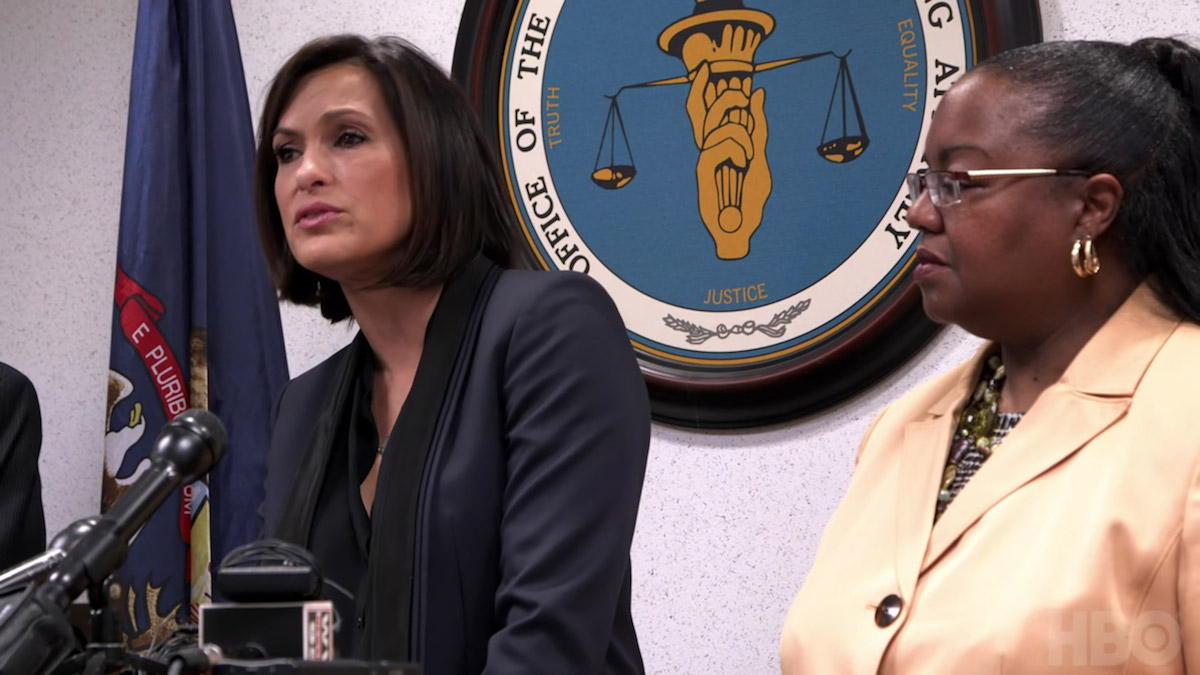 I Am Evidence[/caption]
Produced by Mariska Hargitay, star of “Law & Order: Special Victims Unit” and directed by Trish Adlesic and Geeta Gandbhir, I Am Evidence exposes the alarming trend of unsolved rape cases. The eye-opening documentary debuts Monday, April 16 (8:00-9:30 p.m. ET/PT), on HBO.
Despite the power of DNA to solve crimes, hundreds of thousands of rape kits, containing crucial DNA evidence, are currently languishing untested in police-evidence storage rooms across the country. Behind each one of these kits is a sexual-assault survivor waiting for justice to be served, and a perpetrator potentially evading prosecution.
I Am Evidence exposes the alarming trend of unsolved rape cases, revealing how a flawed system has historically mistreated sexual assault survivors and showing how victims, advocates and some forward-thinking law enforcement officials are challenging the status quo.
Spotlighting four resilient women in the Detroit, Cleveland and Los Angeles areas as they trace the fates of their kits and re-engage in the criminal justice process, this powerful film also follows survivors, advocates, prosecutors and police officials who are leading the charge to work through the backlog and hold perpetrators accountable. Putting a human face on this deplorable injustice and neglected issue, I Am Evidence is a timely call to action, asserting that survivors matter.
In 2009, Wayne County, Mich. Prosecutor Kym Worthy was shocked to uncover over 11,000 untested rape kits in a run-down police annex warehouse. Though the backlog was partially due to a lack of finances, reports showed that officers often didn’t believe the overwhelmingly black and poor victims. “They were violated in the most intimate of ways and nobody gave a damn,” laments Worthy.
Mariska Hargitay, a longtime advocate for survivors of sexual assault and domestic violence, offered her support to Worthy in her efforts to end the rape kit backlog in Detroit and the state of Michigan and bring justice to survivors. Hargitay’s role as Lieutenant Olivia Benson on “Law and Order: Special Victims Unit” had opened her eyes to these issues and inspired her to found the Joyful Heart Foundation in 2004.
“I Am Evidence, literally. My name is on a box, on a shelf that’s never been tested,” says Ericka, one of thousands of women across the U.S. whose rape kits, containing DNA evidence that could identify their attackers, have never been opened. Ericka reported that she was raped on her 21st birthday, and after going through the arduous process of getting a rape kit done at a local hospital, she remembers going with her father to speak to a detective. The detective told Ericka and her father that nothing would happen with her kit, offering to show them thousands of untested kits waiting to be processed before hers.
Cleveland began the long and daunting process of working up cases on its backlogged kits in 2013. As Tim McGinty, former Cuyahoga County prosecutor in Cleveland says, “These rape kits are the best bargain in the history of law enforcement. Four hundred dollars a rape kit, and one in four results in an indictment. One in four of the four is a serial rapist. I’ve never seen an opportunity like this in law enforcement.”
Out of more than 5,000 tested, there have already been 1,935 DNA matches in CODIS, the national criminal database, but the challenge lies in prioritizing cases by urgency. Investigator Nicole DiSanto’s latest assignment is tracking an alleged three-time offender. (Serial rapists have made up one-third of the cases from the city’s backlogged kits.) DiSanto visits Danielle, a 1997 victim, who is easily able to identify her attacker in a photo lineup. DiSanto eventually finds the man in North Carolina, and news of his arrest gives Danielle closure. I Am Evidence reveals that he was convicted of her rape and kidnapping more than 20 years after the crime.
In Los Angeles, 12,000 untested kits were unearthed (and even more destroyed, due to the LAPD’s misjudgment of the statute of limitations). Among the kits opened was Helena’s, who was abducted at a car wash and raped at age 17 in 1996. Helena spent years trying to learn what happened to her rape kit, and eventually discovered, with the help of an ex-DA, that the DNA matched Charles Courtney, a long-distance truck driver who targeted women along his route. One of his other victims, Amberly, was abducted and raped in 1998 in Fairfield, Ohio.
In 2001, funding allowed police to test Amberly’s kit, which also identified Courtney, who was already in CODIS for a sex offense against his wife. He took a plea deal for 30 years in prison. Despite information provided by Fairfield police, however, Helena’s case fell through the cracks in LA and the statute of limitations expired. She was only able to obtain justice after the DA used a loophole to charge Courtney for money he’d taken from her.
Police are often woefully underprepared to deal with sexual assault victims, but even when perpetrators are arrested, many prosecutors don’t aggressively pursue these cases, which Worthy admits are some of the hardest to prosecute due to “victim blaming.” Now a mother of adopted daughters, Worthy was assaulted herself when she was in law school and wants the system to be better for her children.
So far, the results of Detroit’s testing have been far-reaching, linking to CODIS hits in 39 states and garnering nationwide attention. Still, it’s estimated that hundreds of thousands of untested kits remain nationally. Ericka assumed her case would never be addressed? – ?until she met Worthy. Now Ericka says she feels “very free,” and urges women in her position to “press forward because I feel strong, stronger than I’ve ever known I could feel.”
I Am Evidence had its world premiere at the 2017 Tribeca Film Festival and has since screened at AFI Docs Film Festival, the Hamptons International Film Festival and many other festivals. It won the Audience Award for Best Documentary Film at both the Provincetown and Traverse City festivals.
Producer Mariska Hargitay, who appears in the film, won an Emmy(R) and Golden Globe for “Law & Order: Special Victims Unit”; she also serves as an executive producer on the show and has directed episodes. After receiving numerous letters from survivors, she founded the Joyful Heart Foundation in 2004. Its mission is to transform society’s response to sexual assault, domestic violence and child abuse and its initiative, End the Backlog, aims to eliminate the backlog of hundreds of thousands of untested rape kits in the U.S.
https://www.youtube.com/watch?v=7_b1SbbSu6Y
I Am Evidence[/caption]
Produced by Mariska Hargitay, star of “Law & Order: Special Victims Unit” and directed by Trish Adlesic and Geeta Gandbhir, I Am Evidence exposes the alarming trend of unsolved rape cases. The eye-opening documentary debuts Monday, April 16 (8:00-9:30 p.m. ET/PT), on HBO.
Despite the power of DNA to solve crimes, hundreds of thousands of rape kits, containing crucial DNA evidence, are currently languishing untested in police-evidence storage rooms across the country. Behind each one of these kits is a sexual-assault survivor waiting for justice to be served, and a perpetrator potentially evading prosecution.
I Am Evidence exposes the alarming trend of unsolved rape cases, revealing how a flawed system has historically mistreated sexual assault survivors and showing how victims, advocates and some forward-thinking law enforcement officials are challenging the status quo.
Spotlighting four resilient women in the Detroit, Cleveland and Los Angeles areas as they trace the fates of their kits and re-engage in the criminal justice process, this powerful film also follows survivors, advocates, prosecutors and police officials who are leading the charge to work through the backlog and hold perpetrators accountable. Putting a human face on this deplorable injustice and neglected issue, I Am Evidence is a timely call to action, asserting that survivors matter.
In 2009, Wayne County, Mich. Prosecutor Kym Worthy was shocked to uncover over 11,000 untested rape kits in a run-down police annex warehouse. Though the backlog was partially due to a lack of finances, reports showed that officers often didn’t believe the overwhelmingly black and poor victims. “They were violated in the most intimate of ways and nobody gave a damn,” laments Worthy.
Mariska Hargitay, a longtime advocate for survivors of sexual assault and domestic violence, offered her support to Worthy in her efforts to end the rape kit backlog in Detroit and the state of Michigan and bring justice to survivors. Hargitay’s role as Lieutenant Olivia Benson on “Law and Order: Special Victims Unit” had opened her eyes to these issues and inspired her to found the Joyful Heart Foundation in 2004.
“I Am Evidence, literally. My name is on a box, on a shelf that’s never been tested,” says Ericka, one of thousands of women across the U.S. whose rape kits, containing DNA evidence that could identify their attackers, have never been opened. Ericka reported that she was raped on her 21st birthday, and after going through the arduous process of getting a rape kit done at a local hospital, she remembers going with her father to speak to a detective. The detective told Ericka and her father that nothing would happen with her kit, offering to show them thousands of untested kits waiting to be processed before hers.
Cleveland began the long and daunting process of working up cases on its backlogged kits in 2013. As Tim McGinty, former Cuyahoga County prosecutor in Cleveland says, “These rape kits are the best bargain in the history of law enforcement. Four hundred dollars a rape kit, and one in four results in an indictment. One in four of the four is a serial rapist. I’ve never seen an opportunity like this in law enforcement.”
Out of more than 5,000 tested, there have already been 1,935 DNA matches in CODIS, the national criminal database, but the challenge lies in prioritizing cases by urgency. Investigator Nicole DiSanto’s latest assignment is tracking an alleged three-time offender. (Serial rapists have made up one-third of the cases from the city’s backlogged kits.) DiSanto visits Danielle, a 1997 victim, who is easily able to identify her attacker in a photo lineup. DiSanto eventually finds the man in North Carolina, and news of his arrest gives Danielle closure. I Am Evidence reveals that he was convicted of her rape and kidnapping more than 20 years after the crime.
In Los Angeles, 12,000 untested kits were unearthed (and even more destroyed, due to the LAPD’s misjudgment of the statute of limitations). Among the kits opened was Helena’s, who was abducted at a car wash and raped at age 17 in 1996. Helena spent years trying to learn what happened to her rape kit, and eventually discovered, with the help of an ex-DA, that the DNA matched Charles Courtney, a long-distance truck driver who targeted women along his route. One of his other victims, Amberly, was abducted and raped in 1998 in Fairfield, Ohio.
In 2001, funding allowed police to test Amberly’s kit, which also identified Courtney, who was already in CODIS for a sex offense against his wife. He took a plea deal for 30 years in prison. Despite information provided by Fairfield police, however, Helena’s case fell through the cracks in LA and the statute of limitations expired. She was only able to obtain justice after the DA used a loophole to charge Courtney for money he’d taken from her.
Police are often woefully underprepared to deal with sexual assault victims, but even when perpetrators are arrested, many prosecutors don’t aggressively pursue these cases, which Worthy admits are some of the hardest to prosecute due to “victim blaming.” Now a mother of adopted daughters, Worthy was assaulted herself when she was in law school and wants the system to be better for her children.
So far, the results of Detroit’s testing have been far-reaching, linking to CODIS hits in 39 states and garnering nationwide attention. Still, it’s estimated that hundreds of thousands of untested kits remain nationally. Ericka assumed her case would never be addressed? – ?until she met Worthy. Now Ericka says she feels “very free,” and urges women in her position to “press forward because I feel strong, stronger than I’ve ever known I could feel.”
I Am Evidence had its world premiere at the 2017 Tribeca Film Festival and has since screened at AFI Docs Film Festival, the Hamptons International Film Festival and many other festivals. It won the Audience Award for Best Documentary Film at both the Provincetown and Traverse City festivals.
Producer Mariska Hargitay, who appears in the film, won an Emmy(R) and Golden Globe for “Law & Order: Special Victims Unit”; she also serves as an executive producer on the show and has directed episodes. After receiving numerous letters from survivors, she founded the Joyful Heart Foundation in 2004. Its mission is to transform society’s response to sexual assault, domestic violence and child abuse and its initiative, End the Backlog, aims to eliminate the backlog of hundreds of thousands of untested rape kits in the U.S.
https://www.youtube.com/watch?v=7_b1SbbSu6Y
-
‘Lou Andreas-Salomé’ ‘Hot Country Cold Winter’ ‘Hotel Everest’ Win Top Awards at Socially Relevant Film Festival 2018
[caption id="attachment_27788" align="aligncenter" width="1200"]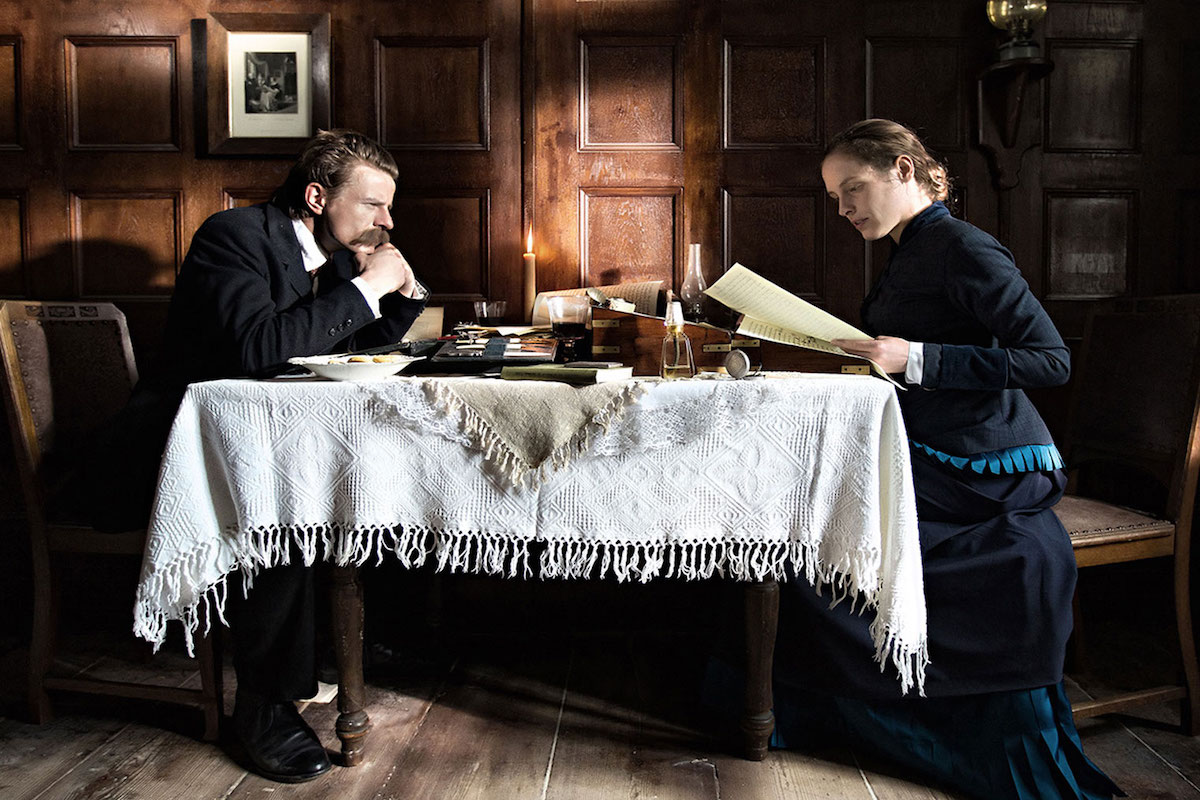 Lou Andreas-Salomé: The Audacity to be Free[/caption]
SR Socially Relevant™ Film Festival 2018 (SRFF 2018) wrapped up its Fifth Edition at Cinema Village in NYC on March 22, 2018, revealing the winners. Stand-out awards were the Empowering Women and Girls Award, given to Dr. Ruchira Gupta of Apne Aap, and the tie for Grand Prize Narrative Feature presented to ‘Lou Andreas-Salomé: The Audacity to be Free’ and ‘Hot Country Cold Winter’.
The awards are: Vanya Exerjian – Empowering Women and Girls Award, Grand Prize Narrative Feature, Grand Prize Documentary, Best Narrative Short, Best Documentary Short, Women Film Critics Circle (WFCC) Award, Best Ensemble Work, Best Actor in a Feature Film, Best Actress in a Feature Film, Best Actor in a Short Film, Best Actress in a Short Film, Immigrant Filmmaker Award, and three winning scripts from the script-writing competition.
“On our fifth year, SRFF is thrilled to continue its quest to spotlight the most impactful stories from around the world,” said Nora Armani, Founding Artistic Director of SR Socially Relevant™ Film Festival. “Our goal is to highlight films and filmmakers who choose to tell socially relevant stories oft not given a commercial platform. These films have a strong impact on people’s lives.”
The 2018 Fifth Edition of SRFF screened 70 films from 35 countries in the narrative feature, documentary feature, short film, and immersive VR/360º categories, along with finalists in script-writing. The winners are selected by a hand-picked international jury of industry veterans.
SRFF’s original trophies are the Molten Bowl, designed and donated by Michael Aram and a wine by City Winery bearing the specially designed 5th-anniversary label of SR Film Festival. In-kind awards include Inclusion in InkTip, download certificates by Final Draft, consultation services by Cinema Libre Studio and Candy Factory Films, distribution on IndiePix, stock footage by Pond5 and more.
Lou Andreas-Salomé: The Audacity to be Free[/caption]
SR Socially Relevant™ Film Festival 2018 (SRFF 2018) wrapped up its Fifth Edition at Cinema Village in NYC on March 22, 2018, revealing the winners. Stand-out awards were the Empowering Women and Girls Award, given to Dr. Ruchira Gupta of Apne Aap, and the tie for Grand Prize Narrative Feature presented to ‘Lou Andreas-Salomé: The Audacity to be Free’ and ‘Hot Country Cold Winter’.
The awards are: Vanya Exerjian – Empowering Women and Girls Award, Grand Prize Narrative Feature, Grand Prize Documentary, Best Narrative Short, Best Documentary Short, Women Film Critics Circle (WFCC) Award, Best Ensemble Work, Best Actor in a Feature Film, Best Actress in a Feature Film, Best Actor in a Short Film, Best Actress in a Short Film, Immigrant Filmmaker Award, and three winning scripts from the script-writing competition.
“On our fifth year, SRFF is thrilled to continue its quest to spotlight the most impactful stories from around the world,” said Nora Armani, Founding Artistic Director of SR Socially Relevant™ Film Festival. “Our goal is to highlight films and filmmakers who choose to tell socially relevant stories oft not given a commercial platform. These films have a strong impact on people’s lives.”
The 2018 Fifth Edition of SRFF screened 70 films from 35 countries in the narrative feature, documentary feature, short film, and immersive VR/360º categories, along with finalists in script-writing. The winners are selected by a hand-picked international jury of industry veterans.
SRFF’s original trophies are the Molten Bowl, designed and donated by Michael Aram and a wine by City Winery bearing the specially designed 5th-anniversary label of SR Film Festival. In-kind awards include Inclusion in InkTip, download certificates by Final Draft, consultation services by Cinema Libre Studio and Candy Factory Films, distribution on IndiePix, stock footage by Pond5 and more.
GRAND PRIZE NARRATIVE FEATURE:
The jurors: Nicole Ansari-Cox, Najla Said, Valerio Caruso, and Andre Degas. Awardees in ex aequo: Lou Andreas-Salomé: The Audacity to be Free | Cordula Kablitz-Post | Germany | 2016 | 113 min German, Italian, Russian w/English subtitles Lou Andreas-Salomé, the woman who enraptured 19th century Europe’s greatest minds, recounts her life to Ernst Pfeiffer in this German film directed by Cordula Kablitz-Post. Salomé became the first female psychoanalyst under the tutelage of Sigmund Freud. https://www.youtube.com/watch?v=e722D0mnxnw Hot Country, Cold Winter | David Safarian | Armenia, The Netherlands, Germany | 2016 | 104 min Armenian, Russian with English subtitles A tale of a man and a woman suffering near-absurd circumstances during a total energy crisis right after the breakdown of the Soviet Union. Their narratives, recollections, imagination, and dreams are depicted in this powerful narrative feature film dealing with a period of recent modern history. https://www.youtube.com/watch?v=NvvkddsPRa8GRAND PRIZE DOCUMENTARY FILM:
The jurors: Claus Mueller, Morgan Jenness, Dirk Robertson, and Edie Nugent. Hotel Everest | Claudia Sobral | USA | 2017 | 39 min Filmed over a tumultuous two-year period, the film follows the efforts and relationship between two unlikely peace activists: Eden Fuchs, a retired Israeli army colonel, and Ibrahim Issa, a Palestinian born in a refugee camp, are joined by the Idahoan founders of the Centre for Emerging Futures, Whit and Paula Jones at the Hotel Everest. Grand Prize Narrative Feature (ex-aequo): Lou Andreas-Salomé: The Audacity to be Free by Cordula Kablitz-Post, and, Hot Country Cold Winter by David Safarian The Vanya Exerjian Empowering Women & Girls Award: Ruchira Gupta – Apne Aap Grand Prize Documentary: Hotel Everest by Claudia Sobral Best Ensemble Work in a Feature: Darcy by Heidi Philipsen-Meisner & Jon Russell Cring Best Narrative Short: Malik and the Turtle by Adnane Tragha Best Documentary Short: The Hammamis by Molly Bareiss Best Actor in a Feature Film: Johnathan Tchaikovsky in Darcy Best Actress in a Feature Film: Yana Druz in Hot Country Cold Winter Best Actor in a Short Film: Azhar N’Dahoma in Malik and the Turtle Best Actress in a Short Film: Jasmin Riggins in Free Period VR/360º Award: My Beautiful Home by Romain Vakilitabar The Women Film Critics Circle Award: I Seek Asylum by Anna Southgate The Immigrant Filmmaker Award: Robert Tutak for Ellis Island Finalist Script 1st place/Winner: Riding on Duke’s Train by Ken Kimmelman Finalist Script 2nd place: Shepherding Cassie by Mike Oborn Finalist Script 3rd Place: American Snake Pit by Dan Tomasulo
-
Daniel Roebuck’s Critically Acclaimed Family Film GETTING GRACE Now Playing in Theaters | Trailer
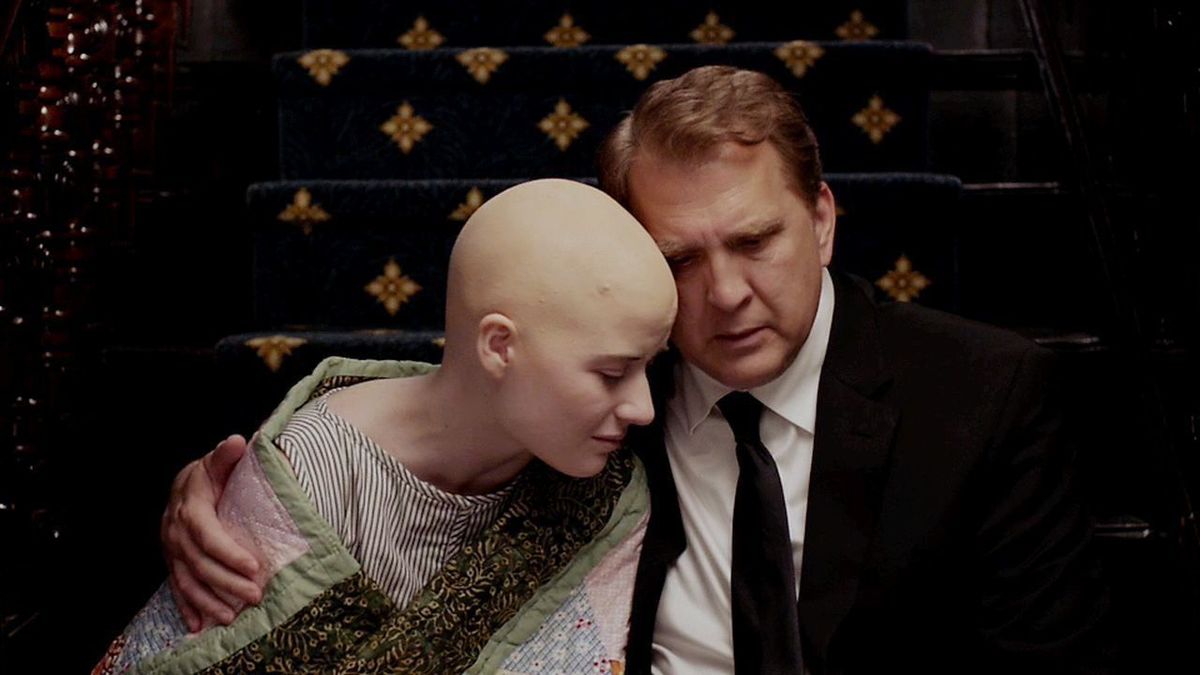 “Getting Grace,” is all about a spunky teenaged girl with terminal cancer who decides to make her own funeral arrangements, and sets in motion a plan that affects all of those around her. The critically-praised family film from director and star Daniel Roebuck, opened in theaters across the USA on Friday, March 23; and is now playing at fifty-nine locations across the country, with another fifty locations planned for expansion over the next three weeks.
Daniel Roebuck is a widely recognized star from over one-hundred feature film roles (including “The Fugitive”, “U.S. Marshalls” and the current Christian theatrical hit “Let There Be Light“) as well as from the enormously successful TV series recurring roles in “LOST” and 8-seasons of “Matlock” with Andy Griffith. During the recently completed, multi-city Bus Tour, Roebuck was joined in different cities by other cast members, including newcomer Madelyn Dundon in the title role and film veteran Marsha Dietlein. “Getting Grace” tells the story of a teenaged girl’s unusual response to a terminal cancer diagnosis. Other stars include Dana Ashbrook, Timothy Goodwin and Duane Whitaker. The film is rated PG-13 and has already won the best picture accolade at two, major film festivals.
Audiences would be hard-pressed to find a more likable protagonist in any film. GRACE, the title character, is funny, sarcastic, empathetic and riveting. But, unfortunately, she is going to die.
Although Grace’s time is short, her positive impact on the world around her is monumental. The story is about a young girl who knows that she is dying. Grace goes into a funeral home to learn about death and ends up teaching the disenfranchised funeral director, BILL, about life.
We soon learn that while trying to “hedge the bet” about her afterlife possibilities she is also trying her best to prepare her mother, VENUS, for a future without her only child. Venus, we learn, is not dealing with the sad imminent truth well and is reverting to her old ways of drinking and “drugging.” Simultaneously, Grace humorously hijacks an ironically named “EMBRACE LIFE” class offered by her hospital for children dealing with their own fatal diseases and moves it to the funeral home. Not only does she do her best to teach the adults in her life to live their lives to the fullest, she has the same effect on her peers. And she discovers love, herself.
Grace is also desperately searching for someone to take care of her mother. Will it be Bill, REVEREND OSBURN (the hospital’s chaplain) or RON, the charismatic and successful author of a book about the afterlife. Once those around her actually “GET” Grace (meaning they finally understand her), every one of them is able to transition to their own new life.
“Getting Grace” is an extraordinary story with a lead character who affects a chain of positive events in the lives of all she comes in contact with…be they doctors or morticians or her own mother. Through Grace, her loved ones learn that life need not be lived long to be lived fully.
https://www.youtube.com/watch?v=N5j28U_ocVU
GETTING GRACE – March 23 Theatres
Alabama
Regal Mobile Stadium, Mobile, AL
Arizona
Harkins Arizona Mills 25, Tempe, AZ
Harkins Superstition Springs, Mesa, AZ
California
Laemmle Monica Film Center, Santa Monica, CA
Edwards Fairfield Stadium, Fairfield, CA
Regal Fresno 22, Fresno, CA
Regal Merced 13, Merced, CA
Ontario Palace Stadium 22, Ontario, CA
Regal Long Beach Stadium 26, Long Beach, CA
Conneticut
AMC Plainville Stadium, Plainville, CT
Florida
Regal Citrus Park Stadium, Tampa, FL
Cypress Creek Station, Fort Lauderdale, FL
Oveido Mall Stadium, Oveido, FL
Pointe Orlando Stadium, Orlando, FL
Regal Sawgrass Stadium, Sunrise, FL
South Beach Stadiu, Miami Beach, FL
Park Place Stadium 16, Pinellas Park, FL
Belltower Stadium 20, Fort Myers, FL
Regal Beach Blvd. Stadium, Jacksonville, FL
Georgia
Hollywood24 @ I-85, Chamblee, GA
Austell Stadium, Austell, GA
Hawaii / Pacifica
Regal Dole Cannery 18, Honolulu, HI
Guam Megaplex Stadium, Guam
Illinois
Round Lake Beach Stadium, Round Lake Beach, IL
GQT Willow Knolls 14, Peoria, IL
Indiana
New Albany Stadium 16, New Albany, IN
Village Park Stadium 17, Carmel, IN
Kansas
B&B Overland Park 16, Overland Park, KS
Kentucky
Regal Bowling Green 12, Bowling Green, KY
Minnesota
Marcus Shakopee Cinema, Shakopee, MN
Marcus Hastings Cinema, Hastings, MN
Marcus Elk River Cinema, Elk River, MN
Regal Eagan Stadium, Eagan, MN
Missouri
St. Louis Stadium, Hazelwood, MO
New York
Elmwood Center 16, Buffalo, NY
Henrietta Stadium 18. Rochester, NY
North Carolina
Stonecrest at Piper Glenn, Charlotte, NC
Crossroads Stadium 20, Cary, NC
Greensboro Grand 16, Greensboro NC
Greenville Grand Stadium, Greenville, NC
Ohio
Chakeres Springfield 10, Springfield, OH
Oklahoma
Spotlight 14, Norman, OK
Promenade Palace 12, Tulsa, OK
Oregon
Movies on TV Stadium, Hillsboro, OR
Pennsylvania
U.E.C. College 9, State College, PA
Regal Riverview Plaza, Philadelphia, PA
Regal Cinema Oaks 24, Oaks, PA
Harrisburg Stadium 14, Harrisburg, PA
AMC Allentown 16, Allentown, PA
AMC Center Valley 16, Center Valley, PA
Tennessee
Regal Opry Mills Stadium, Nashville, TN
Streets of Indian Lake Stadium, Hendersonville, TN
Pinnacle Stadium, 18, Knoxville, TN
Texas
Edwards Marq’E Stadium, Houston, TX
Regal West Oaks Mall 14, Houston, TX
Regal Metropolitan Cinemas, Austin, TX
Regal Fiesta Stadium, San Antonio, TX
Washington
Parkway Plaza Stadium, Tukwila, WA
West Virginia
Morgantown Stadium 12, Morgantown, WV
“Getting Grace,” is all about a spunky teenaged girl with terminal cancer who decides to make her own funeral arrangements, and sets in motion a plan that affects all of those around her. The critically-praised family film from director and star Daniel Roebuck, opened in theaters across the USA on Friday, March 23; and is now playing at fifty-nine locations across the country, with another fifty locations planned for expansion over the next three weeks.
Daniel Roebuck is a widely recognized star from over one-hundred feature film roles (including “The Fugitive”, “U.S. Marshalls” and the current Christian theatrical hit “Let There Be Light“) as well as from the enormously successful TV series recurring roles in “LOST” and 8-seasons of “Matlock” with Andy Griffith. During the recently completed, multi-city Bus Tour, Roebuck was joined in different cities by other cast members, including newcomer Madelyn Dundon in the title role and film veteran Marsha Dietlein. “Getting Grace” tells the story of a teenaged girl’s unusual response to a terminal cancer diagnosis. Other stars include Dana Ashbrook, Timothy Goodwin and Duane Whitaker. The film is rated PG-13 and has already won the best picture accolade at two, major film festivals.
Audiences would be hard-pressed to find a more likable protagonist in any film. GRACE, the title character, is funny, sarcastic, empathetic and riveting. But, unfortunately, she is going to die.
Although Grace’s time is short, her positive impact on the world around her is monumental. The story is about a young girl who knows that she is dying. Grace goes into a funeral home to learn about death and ends up teaching the disenfranchised funeral director, BILL, about life.
We soon learn that while trying to “hedge the bet” about her afterlife possibilities she is also trying her best to prepare her mother, VENUS, for a future without her only child. Venus, we learn, is not dealing with the sad imminent truth well and is reverting to her old ways of drinking and “drugging.” Simultaneously, Grace humorously hijacks an ironically named “EMBRACE LIFE” class offered by her hospital for children dealing with their own fatal diseases and moves it to the funeral home. Not only does she do her best to teach the adults in her life to live their lives to the fullest, she has the same effect on her peers. And she discovers love, herself.
Grace is also desperately searching for someone to take care of her mother. Will it be Bill, REVEREND OSBURN (the hospital’s chaplain) or RON, the charismatic and successful author of a book about the afterlife. Once those around her actually “GET” Grace (meaning they finally understand her), every one of them is able to transition to their own new life.
“Getting Grace” is an extraordinary story with a lead character who affects a chain of positive events in the lives of all she comes in contact with…be they doctors or morticians or her own mother. Through Grace, her loved ones learn that life need not be lived long to be lived fully.
https://www.youtube.com/watch?v=N5j28U_ocVU
GETTING GRACE – March 23 Theatres
Alabama
Regal Mobile Stadium, Mobile, AL
Arizona
Harkins Arizona Mills 25, Tempe, AZ
Harkins Superstition Springs, Mesa, AZ
California
Laemmle Monica Film Center, Santa Monica, CA
Edwards Fairfield Stadium, Fairfield, CA
Regal Fresno 22, Fresno, CA
Regal Merced 13, Merced, CA
Ontario Palace Stadium 22, Ontario, CA
Regal Long Beach Stadium 26, Long Beach, CA
Conneticut
AMC Plainville Stadium, Plainville, CT
Florida
Regal Citrus Park Stadium, Tampa, FL
Cypress Creek Station, Fort Lauderdale, FL
Oveido Mall Stadium, Oveido, FL
Pointe Orlando Stadium, Orlando, FL
Regal Sawgrass Stadium, Sunrise, FL
South Beach Stadiu, Miami Beach, FL
Park Place Stadium 16, Pinellas Park, FL
Belltower Stadium 20, Fort Myers, FL
Regal Beach Blvd. Stadium, Jacksonville, FL
Georgia
Hollywood24 @ I-85, Chamblee, GA
Austell Stadium, Austell, GA
Hawaii / Pacifica
Regal Dole Cannery 18, Honolulu, HI
Guam Megaplex Stadium, Guam
Illinois
Round Lake Beach Stadium, Round Lake Beach, IL
GQT Willow Knolls 14, Peoria, IL
Indiana
New Albany Stadium 16, New Albany, IN
Village Park Stadium 17, Carmel, IN
Kansas
B&B Overland Park 16, Overland Park, KS
Kentucky
Regal Bowling Green 12, Bowling Green, KY
Minnesota
Marcus Shakopee Cinema, Shakopee, MN
Marcus Hastings Cinema, Hastings, MN
Marcus Elk River Cinema, Elk River, MN
Regal Eagan Stadium, Eagan, MN
Missouri
St. Louis Stadium, Hazelwood, MO
New York
Elmwood Center 16, Buffalo, NY
Henrietta Stadium 18. Rochester, NY
North Carolina
Stonecrest at Piper Glenn, Charlotte, NC
Crossroads Stadium 20, Cary, NC
Greensboro Grand 16, Greensboro NC
Greenville Grand Stadium, Greenville, NC
Ohio
Chakeres Springfield 10, Springfield, OH
Oklahoma
Spotlight 14, Norman, OK
Promenade Palace 12, Tulsa, OK
Oregon
Movies on TV Stadium, Hillsboro, OR
Pennsylvania
U.E.C. College 9, State College, PA
Regal Riverview Plaza, Philadelphia, PA
Regal Cinema Oaks 24, Oaks, PA
Harrisburg Stadium 14, Harrisburg, PA
AMC Allentown 16, Allentown, PA
AMC Center Valley 16, Center Valley, PA
Tennessee
Regal Opry Mills Stadium, Nashville, TN
Streets of Indian Lake Stadium, Hendersonville, TN
Pinnacle Stadium, 18, Knoxville, TN
Texas
Edwards Marq’E Stadium, Houston, TX
Regal West Oaks Mall 14, Houston, TX
Regal Metropolitan Cinemas, Austin, TX
Regal Fiesta Stadium, San Antonio, TX
Washington
Parkway Plaza Stadium, Tukwila, WA
West Virginia
Morgantown Stadium 12, Morgantown, WV
-
‘The Raft’ ‘Laila at the Bridge’ ‘Beautiful Things’ and More Win at CPH:DOX 2018
[caption id="attachment_27775" align="aligncenter" width="960"] 2018 CPH-DOX Awards. The winner of DOX:Award: The Raft[/caption]
‘The Raft’ by the Swedish director Marcus Lindeen, which tells the story of one of the strangest social experiments of all times ,and told by those who took part in it, took the top prize – the Dox:Award 2018 at the 15th edition of CPH:DOX – Copenhagen International Documentary Film Festival. The film held its world premiere at as CPH:DOX.
In 1973, five men and six women sailed across the Atlantic on a raft. A social experiment and a scientific study of violence, aggression, sex and group behaviour, conducted by a radical Mexican anthropologist. Everything was filmed and documented in a diary. But theory is one thing, practice is another. And without wanting to reveal too much, the experiment didn’t exactly work out as planned. Over 40 years later, Swedish artist and filmmaker Marcus Lindeen brings the crew together again for the first time since the experiment, on a faithful copy of the raft in a film studio, to look back at the three intense months they spent together, isolated and without privacy, on ‘The Sex Raft’, as the press called it.
https://www.youtube.com/watch?v=x-diO4_Y0i8
The jury gave a Special Mention to ‘América’, a charming, Mexican adventure about three mismatched brothers and their 93-year-old grandmother in a film about family ties.
‘Laila at the Bridge’ by Elizabeth Mirzaei and Gulistan Mirzaei, which had its world premiere at CPH:DOX won the F:ACT Award – dedicated to auteur filmmaking in the field between research-based, investigative journalism, activism and documentary cinema.
A powerful film about a woman who is willpower in its purest form. Day after day, the charismatic and strong-willed woman puts on her small ballerina shoes and colourful scarves and heads under the bridge to take them to her private rehab centre, where the aim is to get them out of their addiction with ice-cold baths, communal prayers and motherly reprimands. It is not a miracle factory. Many experience a relapse, and Laila has to struggle with constant financial problems. When the Taliban’s arrival in the city scares customers away from the restaurant she is running to finance her centres, things start looking bleak. But Laila threatens corrupt ministers in their marble offices, shoots mafia thugs in her bedroom with a shotgun and with equal measures of care and indignation has a serious word with the opium-addled men under the bridge.
The winner of the New:Vision Award is the film ‘Wild Relatives’ by Jumana Manna. Jumana Manna’s original and politically sensitive new work draws lines between three distant spots on the world map: Syria, Lebanon and Svalbard. The lines chart a route and a complex network of relationships. ‘Wild Relatives’ exposes the exchange of ecological currency between two of the world’s grain banks, which are the archives of the smallest basic ingredient of agriculture: Seeds. Biodiversity, conflicts and international politics are parts of a game with perspectives reaching far out into the most distant future, and form the the basis for a humorous and thought-provoking conversation between a priest and a scientist far out in the middle of nowhere.
The jury gave a Special Mention to ‘Translations’ by Tinne Zenner, a critical and graceful 16mm film in which the vistas of Greenland create a space for free thinking.
The winner of the Nordic:Dox Award – recognizing the best and brightest in cinema from the Nordic countries – is the film ‘Lykkelænder’ by the Danish director Lasse Lau. The film held its world premiere at the festival.
The relationship between Greenland and Denmark is full of fantasy and myths. And these are exactly what Danish artist Lasse Lau reflects upon – and in turn documents – in his first feature-length film. But how do you give a form to the Greenlandic experience when you are an outsider yourself? Lau has created a sensitive film about authenticity and recreation by letting both elements become a part of the work, together with his performers.
The jury gave a Special Mention to the Norwegian film ‘The Night’ by Steffan Strandberg, a beautifully animated and bittersweet film about two brothers and their upbringing with an alcoholic mother and musician father.
The winner of the Next:Wave Award given to emerging filmmakers, is the film ‘Beautiful Things’ by the Italian directors Giorgio Ferrero & Federico Biasin. If documentary science fiction was a genre – and it is now! – then ‘Beautiful Things’ is the film that locates the future in the midst of our present age. A machine engineer on a supertanker and a scientist specialising in mathematics and audio studies are two of the human cogs in a bulimic cycle of (over)production and (over)consumption of the material objects that surround us – a cycle we never even think about. A chain with many segments, which the filmmaker duo of Giorgio Ferrero and Federico Biasin brings together in an accomplished audiovisual study of our times, but with room for the human quirks that constitute the grit in the machinery.
The jury gave a Special Mention to Minding the Gap (Bing Liu, United States), where three young friends grow up, become young men and make life choices in front of rolling cameras, and Conventional Sins (Anat Yuta Zuria & Shira-Clara Winther, Israel), a Docu-noir about sexual abuse in the ultra-orthodox environment in Jerusalem.
The winner of the Politiken Audience Award is ‘False Confessions’ by the director Katrine Philp, a legal thriller about a pro-bono idealist’s work for justice in a cynical justice system. The film held its world premiere at the festival.
During an interrogation in the United States, it is both legal and commonplace to use special psychological techniques to make the suspect confess. In a closed room, coached interrogators can not only get anyone to confess to anything – they can also make innocent people believe that they have actually committed crimes such as murder and child assault. In New York, the Danish-born defence attorney Jane Fisher-Byrialsen is working to prevent false confessions, so that less people end up in prison for crimes they have not committed.
image via Facebook – The winner of DOX:Award: “The Raft” Photo by Inger Rønnenfelt
2018 CPH-DOX Awards. The winner of DOX:Award: The Raft[/caption]
‘The Raft’ by the Swedish director Marcus Lindeen, which tells the story of one of the strangest social experiments of all times ,and told by those who took part in it, took the top prize – the Dox:Award 2018 at the 15th edition of CPH:DOX – Copenhagen International Documentary Film Festival. The film held its world premiere at as CPH:DOX.
In 1973, five men and six women sailed across the Atlantic on a raft. A social experiment and a scientific study of violence, aggression, sex and group behaviour, conducted by a radical Mexican anthropologist. Everything was filmed and documented in a diary. But theory is one thing, practice is another. And without wanting to reveal too much, the experiment didn’t exactly work out as planned. Over 40 years later, Swedish artist and filmmaker Marcus Lindeen brings the crew together again for the first time since the experiment, on a faithful copy of the raft in a film studio, to look back at the three intense months they spent together, isolated and without privacy, on ‘The Sex Raft’, as the press called it.
https://www.youtube.com/watch?v=x-diO4_Y0i8
The jury gave a Special Mention to ‘América’, a charming, Mexican adventure about three mismatched brothers and their 93-year-old grandmother in a film about family ties.
‘Laila at the Bridge’ by Elizabeth Mirzaei and Gulistan Mirzaei, which had its world premiere at CPH:DOX won the F:ACT Award – dedicated to auteur filmmaking in the field between research-based, investigative journalism, activism and documentary cinema.
A powerful film about a woman who is willpower in its purest form. Day after day, the charismatic and strong-willed woman puts on her small ballerina shoes and colourful scarves and heads under the bridge to take them to her private rehab centre, where the aim is to get them out of their addiction with ice-cold baths, communal prayers and motherly reprimands. It is not a miracle factory. Many experience a relapse, and Laila has to struggle with constant financial problems. When the Taliban’s arrival in the city scares customers away from the restaurant she is running to finance her centres, things start looking bleak. But Laila threatens corrupt ministers in their marble offices, shoots mafia thugs in her bedroom with a shotgun and with equal measures of care and indignation has a serious word with the opium-addled men under the bridge.
The winner of the New:Vision Award is the film ‘Wild Relatives’ by Jumana Manna. Jumana Manna’s original and politically sensitive new work draws lines between three distant spots on the world map: Syria, Lebanon and Svalbard. The lines chart a route and a complex network of relationships. ‘Wild Relatives’ exposes the exchange of ecological currency between two of the world’s grain banks, which are the archives of the smallest basic ingredient of agriculture: Seeds. Biodiversity, conflicts and international politics are parts of a game with perspectives reaching far out into the most distant future, and form the the basis for a humorous and thought-provoking conversation between a priest and a scientist far out in the middle of nowhere.
The jury gave a Special Mention to ‘Translations’ by Tinne Zenner, a critical and graceful 16mm film in which the vistas of Greenland create a space for free thinking.
The winner of the Nordic:Dox Award – recognizing the best and brightest in cinema from the Nordic countries – is the film ‘Lykkelænder’ by the Danish director Lasse Lau. The film held its world premiere at the festival.
The relationship between Greenland and Denmark is full of fantasy and myths. And these are exactly what Danish artist Lasse Lau reflects upon – and in turn documents – in his first feature-length film. But how do you give a form to the Greenlandic experience when you are an outsider yourself? Lau has created a sensitive film about authenticity and recreation by letting both elements become a part of the work, together with his performers.
The jury gave a Special Mention to the Norwegian film ‘The Night’ by Steffan Strandberg, a beautifully animated and bittersweet film about two brothers and their upbringing with an alcoholic mother and musician father.
The winner of the Next:Wave Award given to emerging filmmakers, is the film ‘Beautiful Things’ by the Italian directors Giorgio Ferrero & Federico Biasin. If documentary science fiction was a genre – and it is now! – then ‘Beautiful Things’ is the film that locates the future in the midst of our present age. A machine engineer on a supertanker and a scientist specialising in mathematics and audio studies are two of the human cogs in a bulimic cycle of (over)production and (over)consumption of the material objects that surround us – a cycle we never even think about. A chain with many segments, which the filmmaker duo of Giorgio Ferrero and Federico Biasin brings together in an accomplished audiovisual study of our times, but with room for the human quirks that constitute the grit in the machinery.
The jury gave a Special Mention to Minding the Gap (Bing Liu, United States), where three young friends grow up, become young men and make life choices in front of rolling cameras, and Conventional Sins (Anat Yuta Zuria & Shira-Clara Winther, Israel), a Docu-noir about sexual abuse in the ultra-orthodox environment in Jerusalem.
The winner of the Politiken Audience Award is ‘False Confessions’ by the director Katrine Philp, a legal thriller about a pro-bono idealist’s work for justice in a cynical justice system. The film held its world premiere at the festival.
During an interrogation in the United States, it is both legal and commonplace to use special psychological techniques to make the suspect confess. In a closed room, coached interrogators can not only get anyone to confess to anything – they can also make innocent people believe that they have actually committed crimes such as murder and child assault. In New York, the Danish-born defence attorney Jane Fisher-Byrialsen is working to prevent false confessions, so that less people end up in prison for crimes they have not committed.
image via Facebook – The winner of DOX:Award: “The Raft” Photo by Inger Rønnenfelt
-
Air Jordan 1 Shoe Documentary ‘Unbanned: The Legend of AJ1’ to Premiere at Tribeca Film Festival | Trailer
[caption id="attachment_27765" align="aligncenter" width="1200"] UNBANNED: THE LEGEND OF AJ1[/caption]
Unbanned: The Legend of AJ1, the documentary that tells the origin story of the Air Jordan 1 shoe, will premiere as a Special Screening at the 17th annual Tribeca Film Festival. Directed and written by Dexton Deboree, the film follows the iconic shoe from its unlikely beginnings to its role in disrupting long-established rules of the NBA, changing the game of basketball, birthing sneaker culture and influencing a social and cultural revolution.
“We are honored to premiere our film at the Tribeca Film Festival for so many reasons. Los York, many of our film’s cast members and much of the story itself, are rooted in the culture of NYC and we are proud to introduce the true story of AJ1 to one of our hometowns,” Deboree exclaims. “The film captures the raw, rebellious, eclectic and diverse spirit of culture in and around basketball and beyond, something our film has very much in common with New York City. Nothing is more fitting than to premiere with Tribeca at the historic Beacon Theatre especially, this year where the lineup celebrates American diversity,” he adds.
The first feature documentary from Los York Entertainment, Unbanned: The Legend of AJ1 is the true story about the shoe that changed the world. Through interviews with Spike Lee, Chuck D, Anthony Anderson, Michael B. Jordan, Lena Waithe, Kenya Barris, DJ Khaled, Aleali May and many more including Michael Jordan himself, this film explores the power of the AJ1 across social and political spectrums and how it has broken barriers between female and male fashion, self-expression, identity, empowerment and more.
Tribeca Film Festival has been the launching pad for many groundbreaking films including Can’t Stop, Won’t Stop: A Bad Boy Story, Nas: Time is Illmatic and most recently, Kobe Bryant’s Oscar®-Winning Animated Short Dear Basketball from acclaimed director Glen Keane.
“At Tribeca we are always looking for documentaries that shift our perspectives to tell us stories in new and exciting ways,” said Cara Cusumano, Director of Programming, Tribeca Film Festival. “The enduring cultural impact of the AJ1 is an entertaining, thrilling, surprising ride, and one that we can’t wait to share with audiences at the Beacon on April 27th.”
https://www.youtube.com/watch?v=p79nXVeyj4s
UNBANNED: THE LEGEND OF AJ1[/caption]
Unbanned: The Legend of AJ1, the documentary that tells the origin story of the Air Jordan 1 shoe, will premiere as a Special Screening at the 17th annual Tribeca Film Festival. Directed and written by Dexton Deboree, the film follows the iconic shoe from its unlikely beginnings to its role in disrupting long-established rules of the NBA, changing the game of basketball, birthing sneaker culture and influencing a social and cultural revolution.
“We are honored to premiere our film at the Tribeca Film Festival for so many reasons. Los York, many of our film’s cast members and much of the story itself, are rooted in the culture of NYC and we are proud to introduce the true story of AJ1 to one of our hometowns,” Deboree exclaims. “The film captures the raw, rebellious, eclectic and diverse spirit of culture in and around basketball and beyond, something our film has very much in common with New York City. Nothing is more fitting than to premiere with Tribeca at the historic Beacon Theatre especially, this year where the lineup celebrates American diversity,” he adds.
The first feature documentary from Los York Entertainment, Unbanned: The Legend of AJ1 is the true story about the shoe that changed the world. Through interviews with Spike Lee, Chuck D, Anthony Anderson, Michael B. Jordan, Lena Waithe, Kenya Barris, DJ Khaled, Aleali May and many more including Michael Jordan himself, this film explores the power of the AJ1 across social and political spectrums and how it has broken barriers between female and male fashion, self-expression, identity, empowerment and more.
Tribeca Film Festival has been the launching pad for many groundbreaking films including Can’t Stop, Won’t Stop: A Bad Boy Story, Nas: Time is Illmatic and most recently, Kobe Bryant’s Oscar®-Winning Animated Short Dear Basketball from acclaimed director Glen Keane.
“At Tribeca we are always looking for documentaries that shift our perspectives to tell us stories in new and exciting ways,” said Cara Cusumano, Director of Programming, Tribeca Film Festival. “The enduring cultural impact of the AJ1 is an entertaining, thrilling, surprising ride, and one that we can’t wait to share with audiences at the Beacon on April 27th.”
https://www.youtube.com/watch?v=p79nXVeyj4s
-
42nd Atlanta Film Festival to Feature Lineup of Record +200 Films, ‘EIGHTH GRADE’ ‘BLINDSPOTTING’ ‘TULLY’ and More
[caption id="attachment_27761" align="aligncenter" width="1200"]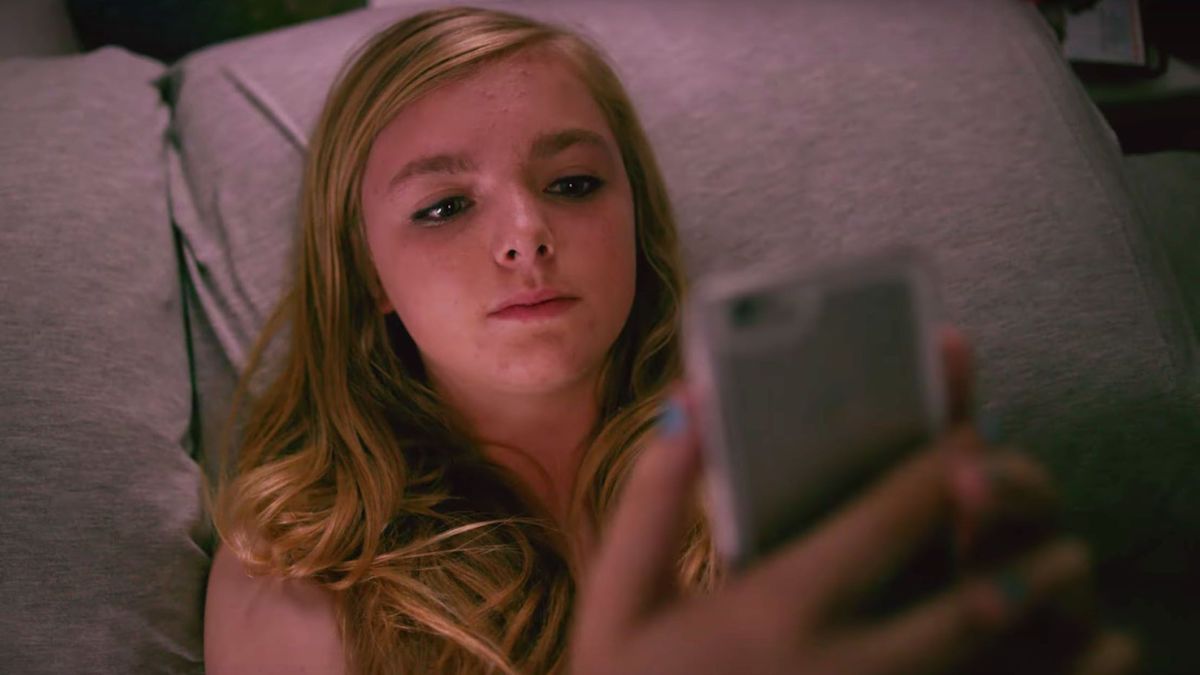 Eighth Grade[/caption]
The 42nd Annual Atlanta Film Festival (ATLFF), less than a month away, announced the full lineup of films includes 58 feature length films and 150 short films from 56 countries, along with special programming, that will take place from April 12 to April 22, 2018.
Director Bo Burnham, the comedian known for his popular stand-up routines and YouTube career, will attend the Closing Night presentation of his new film EIGHTH GRADE at the Plaza Theatre on Saturday, April 21. EIGHTH GRADE joins ATLFF’s previously announced Opening Night and Marquee presentations, including BLINDSPOTTING from ‘Hamilton’ actor and Tony Award-winner Daveed Diggs and TULLY from the Academy Award® -nominated director Jason Reitman.
“The growth of the Atlanta Film Festival reflects the rising importance of Georgia’s film industry, and we’re proud to showcase that connection by hosting a record 49 films with Georgia ties,” ATLFF Executive Director Christopher Escobar said. “We are 100 percent committed to providing a unique festival experience that honors our roots and creates a diverse opportunity for filmmakers of all levels, while also displaying an important role that our city represents in the film and television community.”
The Atlanta Film Festival is pleased to showcase diverse feature and short films that connect audiences to filmmakers from around the world. This year, ATLFF will host the world premiere of seven feature-length films and more than 50 short films during the 2018 festival. In addition, 68 percent of this year’s selected submissions were directed by either a woman or filmmaker of color.
Eighth Grade[/caption]
The 42nd Annual Atlanta Film Festival (ATLFF), less than a month away, announced the full lineup of films includes 58 feature length films and 150 short films from 56 countries, along with special programming, that will take place from April 12 to April 22, 2018.
Director Bo Burnham, the comedian known for his popular stand-up routines and YouTube career, will attend the Closing Night presentation of his new film EIGHTH GRADE at the Plaza Theatre on Saturday, April 21. EIGHTH GRADE joins ATLFF’s previously announced Opening Night and Marquee presentations, including BLINDSPOTTING from ‘Hamilton’ actor and Tony Award-winner Daveed Diggs and TULLY from the Academy Award® -nominated director Jason Reitman.
“The growth of the Atlanta Film Festival reflects the rising importance of Georgia’s film industry, and we’re proud to showcase that connection by hosting a record 49 films with Georgia ties,” ATLFF Executive Director Christopher Escobar said. “We are 100 percent committed to providing a unique festival experience that honors our roots and creates a diverse opportunity for filmmakers of all levels, while also displaying an important role that our city represents in the film and television community.”
The Atlanta Film Festival is pleased to showcase diverse feature and short films that connect audiences to filmmakers from around the world. This year, ATLFF will host the world premiere of seven feature-length films and more than 50 short films during the 2018 festival. In addition, 68 percent of this year’s selected submissions were directed by either a woman or filmmaker of color.
OPENING NIGHT PRESENTATION
BLINDSPOTTING Directed by Carlos López Estrada USA, 2018, English, 95 minutes Collin (Daveed Diggs) must make it through his final three days of probation for a chance at a new beginning. He and his troublemaking childhood best friend, Miles (Rafael Casal), work as movers and are forced to watch their old neighborhood become a trendy spot in the rapidly gentrifying Bay Area. When a life-altering event causes Collin to miss his mandatory curfew, the two men struggle to maintain their friendship as the changing social landscape exposes their differences. Lifelong friends Daveed Diggs and Rafael Casal co-wrote and star in this timely and wildly entertaining story about friendship and the intersection of race and class set against the backdrop of Oakland. Bursting with energy, style and humor, “Blindspotting,” boldly directed by Carlos López Estrada in his feature film debut, is a provocative hometown love letter that glistens with humanity. Actors/Writers/Producers Daveed Diggs & Rafael Casal are scheduled to attend. Prior to the film, Daveed Diggs will be presented with the ATLFF Innovator Award.CLOSING NIGHT PRESENTATION
EIGHTH GRADE Directed by Bo Burnham USA, 2018, English, 94 minutes Thirteen-year-old Kayla endures the tidal wave of contemporary suburban adolescence as she makes her way through the last week of middle school—the end of her thus far disastrous eighth grade year—before she begins high school.MARQUEE FILMS
AMERICAN ANIMALS Directed by Bart Layton USA, 2018, English, 117 minutes The unbelievable but true story of four young men who mistake their lives for a movie and attempt one of the most audacious art heists in US history. #Marquee HEARTS BEAT LOUD Directed by Brett Haley USA, 2018, English, 97 minutes Frank (Nick Offerman) and his daughter Sam (Kiersey Clemons) form a songwriting duo shortly before she leaves for college. As they grow closer through their music, Frank must come to terms with letting go of his daughter. Toni Collette, Ted Danson, Sasha Lane and Blythe Danner also star. #Marquee LEAN ON PETE Directed by Andrew Haigh UK/USA, 2017, English, 121 minutes Fifteen-year-old Charley Thompson (Charlie Plummer) arrives in Portland, Oregon with his single father Ray (Travis Fimmel), both of them eager for a fresh start after a series of hard knocks. While Ray descends into personal turmoil, Charley finds acceptance and camaraderie at a local racetrack where he lands a job caring for an aging Quarter Horse named Lean On Pete. The horse’s gruff owner Del Montgomery (Steve Buscemi) and his seasoned jockey Bonnie (Chloë Sevigny) help Charley fill the void of his father’s absence—until he discovers that Pete is bound for slaughter, prompting him to take extreme measures to spare his new friend’s life. Charley and Pete head out into the great unknown, embarking on an odyssey across the new American frontier in search of a loving aunt Charley hasn’t seen in years. They experience adventure and heartbreak in equal measure, but never lose their irrepressible hope and resiliency as they pursue their dream of finding a place they can call home. #Marquee LEAVE NO TRACE Directed by Debra Granik USA, 2018, English, 108 minutes Will (Ben Foster) and his teenage daughter, Tom (Harcourt McKenzie), have lived off the grid for years in the forests of Portland, Oregon. When their idyllic life is shattered, both are put into social services. After clashing with their new surroundings, Will and Tom set off on a harrowing journey back to their wild homeland. #NewMavericks, #Marquee A PRAYER BEFORE DAWN Directed by Jean-Stéphane Sauvaire France/Thailand/UK, 2017, English/Thai, 116 minutes “A Prayer Before Dawn” is the remarkable true story of Billy Moore, a young English boxer incarcerated in two of Thailand’s most notorious prisons. He is quickly thrown into a terrifying world of drugs and gang violence, but when the prison authorities allow him to take part in the Muay Thai boxing tournaments, he realizes this might be his chance to get out. Billy embarks on a relentless, action-packed journey from one savage fight to the next, stopping at nothing to do whatever he must to preserve his life and regain his freedom. Shot in a an actual Thai prison with a cast of primarily real inmates, “A Prayer Before Dawn” is a visceral, thrilling journey through an unforgettable hell on earth. #Marquee RBG Directed by Betsy West, Julie Cohen USA, 2018, English, 97 minutes U.S. Supreme Court Justice Ginsburg has created a breathtaking legal legacy for women’s rights while becoming an unexpected pop culture icon. The personal journey of this diminutive, quiet warrior’s rise to the nation’s highest court during a hostile time for women, is revealed in this inspiring and multidimensional portrait. Now 84, Ginsburg refuses to relinquish her passionate duty, continues to have vigorous dissenting opinions and her exercise workouts. #NewMavericks, #Marquee SUMMER 03 Directed by Becca Gleason USA, 2018, English, 96 minutes Inspired by true events, “Summer 03” centers on Jamie, a 16-year-old girl (Joey King) and her extended family who are left reeling after her calculating grandmother (June Squibb) unveils an array of family secrets on her deathbed. Jamie is left to navigate her nascent love life and maintain her closest friendships in the midst of this family crisis. #Georgia, #NewMavericks, #Marquee TULLY Directed by Jason Reitman USA, 2018, English, 94 minutes A new comedy from Academy Award-nominated director Jason Reitman (“Up in the Air”) and Academy Award-winning screenwriter Diablo Cody (“Juno”). Marlo (Academy Award-winner Charlize Theron), a mother of three including a newborn, is gifted a night nanny by her brother (Mark Duplass). Hesitant to the extravagance at first, Marlo comes to form a unique bond with the thoughtful, surprising, and sometimes challenging young nanny named Tully (Mackenzie Davis). #Marquee WON’T YOU BE MY NEIGHBOR? Directed by Morgan Neville USA, 2018, English, 94 minutes Academy Award®-winning filmmaker Morgan Neville’s latest documentary takes an intimate look at America’s favorite neighbor: Mister Fred Rogers. A portrait of a man whom we all think we know, this documentary is an emotional and moving film that takes you beyond zip-up cardigans and the land of make-believe, and into the heart of a creative genius, who inspired generations of children with compassion and limitless imagination. #FamilyFriendly, #Marquee YOU WERE NEVER REALLY HERE Directed by Lynne Ramsay UK/France/USA, 2017, English, 85 minutes A traumatized veteran, unafraid of violence, tracks down missing girls for a living. When a job spins out of control, Joe’s nightmares overtake him as a conspiracy is uncovered leading to what may be his death trip or his awakening. #MarqueeNARRATIVE FEATURES
LOS AÑOS AZULES (THE BLUE YEARS) Directed by Sofía Gómez-Córdova Mexico, 2017, Spanish, 103 minutes Four young adults as different as the four seasons have managed to craft a home for themselves in the shattered relic of a once beautiful house. When a new tenant throws a wrench into their precariously balanced dynamic, the group will both grow closer and drift apart as they journey into adulthood. #CineMás I’M HERE Directed by Noor Gharzeddine USA/Lebanon, 2018, Arabic/English, 83 minutes Kirsten, brazen American post-grad, befriends her next-door neighbor, Nadine, an intelligent mother relegated to full-time Beirut housewife. The greater the unlikely friendship grows, the harder it becomes for the women to dismiss the obvious abuse and neglect of Nadine’s husband. As the final days of Kirsten’s life in Beirut draw to a close, Nadine must face her husband and settle things once and for all. #NewMavericks, #WorldPremiere CABEZA MADRE (MOTHER’S HEAD) Directed by Edouard Salier Cuba/France, 2017, Spanish, 89 minutes John, a first-generation American, travels to visit his estranged mother in her home country of Cuba for the first time in years. Upon his arrival John is shocked to learn that not only was his mother mixed up with a checkered group of criminals, but she has died in incredibly extreme circumstances. Desperately seeking answers, John will be forced to reckon with the realities of his mother’s life and answer to his own responsibility in her fate. #CineMás CARDINALS Directed by Grayson Moore, Aidan Shipley Valerie has just returned home from a prison sentence served for a drunk driving accident that cost her neighbor his life. All Valerie wants is to return to a normal life with her husband and two daughters, but when her victim’s son shows up at her door it becomes clear that the past is not behind her. His lingering suspicions cast doubt on her motivations – was his father’s death an accident after all? #Competition CLARA’S GHOST Directed by Bridey Elliott USA, 2018, English, 93 minutes Clara Reynolds is the under-appreciated matriarch of a family in the spotlight. Her husband is an aging comedian that is beginning to recognize his career may be behind him and her daughters are a pair of former child stars attempting to claim a place in the industry as adults. When the family reunites at their home in rural New England, Clara’s long tradition of being relegated to the sidelines drives her to a breaking point. Desperate for connection, Clara finally finds it with the ghost of a woman who only has eyes for her. #NewMavericks DEAD PIGS Directed by Cathy Yan China, 2017, Chinese/English, 132 minutes A Chinese farmer loses his livelihood when pigs mysteriously die across the country. An eccentric woman fights to save her family home from encroaching gentrification, as an American expat architect spearheads the same project in order to make a name for himself in a new land. A young man scraping by as a busboy in a glitzy Shanghai restaurant enters a complicated relationship with a young socialite seeking something outside of her privileged upbringing. As the government struggles to explain the dead pig crisis, each of these stories interconnects in surprising ways as our motley cast of characters searches for a meaningful life. #Competition DISAPPEARANCE Directed by Ali Asgari Iran/Qatar, 2017, Persian, 88 minutes When a young virgin decides to sleep with her boyfriend, she finds herself under threat from her conservative society. Desperate for a solution, the couple travels from hospital to hospital searching for help and finds their relationship tested in the face of the consequences of their actions. #Competition FACADES Directed by Nathalie Basteyns, Kaat Beels Belgium, 2017, Dutch/French, 91 minutes Alex’s world is turned upside down when her mother abruptly abandons her dementing father. But when Alex moves home to care from him, she finds herself forced to confront a traumatic incident from her childhood and the things she should not have seen. The journey to reckon with her past will find Alex addressing the ways her parents’ marriage has shaped her own relationships, most importantly with her adulterous husband. In order to move forward, Alex must confront the reality of her past. #Competition, #NewMavericks FAT TUESDAY Directed by Jorge Torres-Torres USA, 2017, English, 80 minutes Caught up in the glitz and pageantry of Mardi Gras, a group of friends find themselves enamored with the infamous city of New Orleans. However, as their celebratory night draws to a close, a sinister presence begins to prey upon the unsuspecting tourists. IN THE SHADOWS Directed by Dipesh Jain UK/India, 2017, Hindi, 117 minutes A reclusive shopkeeper spends his life isolated from the outside world, interacting with his home of Old Delhi solely through hidden closed-circuit cameras. Meanwhile, a boy struggles to protect his mother and younger brother from the harsh sting of his father’s hands. When the shopkeeper overhears this abuse he must break free from his self-imposed prison in order to help the boy, discovering a shocking truth along the way. IT’S A PARTY Directed by Weldon Wong Powers USA, 2018, English, 78 minutes Successful Atlanta rap artist Cory Masters is late for his own surprise birthday party. While his friends anxiously await his arrival, each one individually addresses their own existential crisis. As the night drags on, hilarity ensues amongst the party-goers as they ponder life, careers, and relationships with Cory. Get yo’ a** to the party. #Georgia LAMP LIGHT Directed by Mason Rey USA, 2018, English, 90 minutes Crippled by insecurity and doubt, Don Gos struggles with a stilted career and dating life. As he contemplates his failures while driving home one evening, a tunnel collapses on top of him. Buried alive with no hope of rescue, he is unsure of whether or not he will survive and he ceremoniously bids adieu to the rest of his life. #Georgia, #WorldPremiere MELOCOTONES (PEACHES) Directed by Hector Valdez Dominican Republic/UK, 2017, Spanish/English, 80 minutes In the retrofuture, Diego attempts to salvage his relationship with girlfriend Laura by taking her to the hotel where they once vacationed as a happy couple. But when they arrive, the hotel is no longer in business and Laura’s ex-boyfriend shows up, demanding to have her back. In an attempt to rectify the situation, Diego accidentally traps himself and Laura in a continuous time loop. #CineMás NEVER STEADY, NEVER STILL Directed by Kathleen Hepburn Canada, 2017, English, 111 minutes Living in a remote part of Canada, Judy battles daily with the pain and inconvenience of Parkinson’s Disease. After her husband dies suddenly, Judy’s world is turned upside down, leaving her with the daunting task of caring for herself. Judy’s son Jamie has recently left home at his father’s insistence to find work on the harsh Canadian oil fields. In the face of his mother’s illness, Jamie will grapple with balance between his responsibility to her and his mother’s desire to see him forge his own life. #NewMavericks POOR JANE Directed by Katie Orr USA, 2017, English, 89 minutes Jane is a stay at home mom who has just realized she doesn’t love her husband anymore. She decides to bid her family adieu for the holidays and spends her time reconnecting with herself by dating other men, reconnecting with old flames, and writing poetry. When the holidays are over, Jane must choose between her new life or the one she left behind. #Georgia, #NewMavericks PRISON LOGIC Directed by Romany Malco USA, 2018, English, 93 minutes Two college students film a documentary on larger-than-life, chain-smoking inmate Tijuana Jackson, who is currently serving time in prison. After he is released, Tijuana arrives back home where he is met with the demands of both his family and his parole officer. He leaves home and embarks on a road trip to follow his dreams of becoming a life coach and motivational speaker, but is met with some surprises along the way. RESTOS DE VIENTO (WIND TRACES) Directed by Jimena Montemayor Loyo Mexico, 2017, Spanish, 93 minutes In the wake of losing their father and patriarch, a family drifts aimlessly through life. The mother, Carmen, struggles with depression and the task of caring for her children in the wake of her abandonment. Disappointed by the adults in her life, oldest daughter Ana shuts down while her brother opens himself up to the mysterious otherworldly figure that has suddenly appeared in his life. Together, the family will have to grow and let go of their fears in order to survive. #Competition, #CineMás, #NewMavericks SAVAGE YOUTH Directed by Michael Curtis Johnson USA, 2018, English, 97 minutes Elena, an aspiring young artist, meets and falls in love with Jason, a horrorcore rapper. Suddenly engrossed in his world, Elena finds herself binging drugs and alcohol as her young love quickly fizzles. Driven into a friendship with drug dealer Gabe, Elena tries to find herself within this new world. But when a robbery in the midst of a house party goes terribly wrong, Elena will be thrust into a much more violent and dangerous confrontation. STILL Directed by Takashi Doscher USA, 2018, English, 88 minutes When Lily (Madeline Brewer) loses her way on a hike through the Appalachian wilderness, she finds rescue in the form of a peculiar married couple, Ella (Lydia Wilson) and Adam (Nick Blood), who have completely isolated themselves from the outside world. As the couple nurses Lily back to health, she begins to discover evidence of a dark and dangerous secret a century in the making. As Ella and Nick’s mystery begins to unravel, Lily comes to understand the couple’s desperation to keep themselves hidden from the world. #Georgia, #WorldPremiere STRANGE COLOURS Directed by Alena Lodkina Australia, 2017, English, 85 minutes When Milena learns her estranged father has fallen ill, she travels to the remote opal mining community he calls home. Crossing paths with many of the fellow male miners, Milena discovers the opals themselves are not nearly the most colorful facet of this freedom oasis. As the bond between father and daughter strives to mend, Milena discovers that the “here and now” may be far more valuable than any unearthed gem. #Competition, #NewMavericks T-JUNCTION Directed by Amil Shivji Tanzania, 2017, Swahili, 106 minutes When her estranged father suddenly passes, Fatima finds herself struggling to mourn a person to which she had no connection. As she helps her grieving mother collect records from the nearby hospital, she meets Maria, a patient with a complex past and mysterious injuries. Maria begins to tell Fatima a story of her home, T-Junction, and the family that she found amongst its colorful residents. As the two women bond, Fatima begins to come to terms with the complexity of her own home, family, and life. TELL ME YOUR NAME Directed by Jason DeVan USA, 2018, English, 89 minutes Abused by her father and abandoned by her mother as a young child, Ashley is sent to live with her estranged Aunt Tanya. During her stay, she becomes obsessed with investigating the disappearance of her mother and she calls upon the spirit world to answer her questions. In her quest, she is ensnared by a powerful demon who refuses to leave its host. #Georgia THY KINGDOM COME Directed by Eugene Richards USA, 2018, English, 42 minutes A priest visits the residents of a small town and demonstrates the healing power of listening. From prisons to living rooms, the priest compassionately listens to people from all walks of life openly reveal their deepest secrets, hopes and dreams as they struggle to reconcile their past with their present. #Competition TIGRE Directed by Silvina Schnicer, Ulises Porra Guardiola Argentina, 2017, Spanish, 92 minutes Sixty-five year old Rina visits her home in the Tigre Delta accompanied by her forty-something friend Elena. They await the arrival of their estranged children, hoping that the island sanctuary will create a space for reconnection. Instead, they find that the home is threatened by encroaching industrialization and their children feel more distant than ever. The two women struggle to hold onto a way of life that may be already out of reach. #Competition, #CineMás, #NewMavericks VENUS Directed by Eisha Marjara Canada, 2017, English, 95 minutes Having recently embraced her own identity, Sid, a transgender woman, finds herself tangled in a complex web of expectations and aspirations when she discovers she has a 14-year-old son. With new relationships adding to the struggle of culture, religion, and romance in Sid’s journey to acceptance, everyone’s in for a wild ride. #PinkPeach WHEN SHE RUNS Directed by Robert Machoian, Rodrigo Ojeda-Beck USA/Denmark, 2018, English, 71 minutes Kirstin, a young wife and mother, competes for a spot in the the Olympic trials. In her quest to win, she sacrifices it all as she moves out of her house and leaves behind her husband and young son. While her marriage and finances suffer, she trains obsessively, embarking on a strict diet, exercise and motivational plan she hopes will bring her to Olympic gold. YAMASONG: MARCH OF THE HOLLOWS Directed by Sam Koji Hale USA, 2017, English, 95 minutes In a futuristic world filled with fantastical, mechanized creatures, one automaton girl joins forces with a tortoise warrior and a band of outlaws to defeat a sinister army bent on world domination. Their only hope? A perilous journey to find a legendary relic with the power to save them all. Starring Nathan Fillion, Abigail Breslin, Whoopi Goldberg, Malcolm McDowell, Bruce Davison, Freida Pinto, George Takei, Peter Weller and Ed Asner, “Yamasong: March of the Hollows” is the first feature length non-muppet puppetry film in over a decade. #FamilyFriendly, #WorldPremiereDOCUMENTARY FEATURES
ABU Directed by Arshad Khan Canada/Pakistan, 2017, English/Urdu/Hindi, 80 minutes Using home videos and classic Bollywood films, a filmmaker crafts an intimate portrait of his Pakistani-Muslim family grappling with the realities of having a gay son in a modern world. Torn between sexuality and religion, tradition and migration, a gay son and his father test the boundaries of love, home, and the meaning of family. #PinkPeach ARMED WITH FAITH Directed by Geeta Gandbhir, Asad Faruqi USA/ Pakistan, 2017, Pashto/Urdu, 74 minutes Hidden within the mountainous border of Pakistan and Afghanistan are some of the most violent homegrown terrorist groups. For years, Al-Qaeda and the Taliban have attacked local Pakistani residents with improvised explosive devices in a bid to control the region. Operating on a low budget and scarce resources, the Khyber Pakhtunkhwa Bomb Disposal Unit risk their lives daily to counter this terrorism and safeguard their neighbors with their unparalleled faith and courage. BLACK MEMORABILIA Directed by Chico Colvard USA/China, 2018, English/Chinese, 64 minutes In the history of racism in the United States, one major physical manifestation of oppression has survived into the present, wrapped in the protective embrace of antiquity and historical preservation—black memorabilia. What was once a brand of trinket that played on racial stereotypes for the delight of white buyers, finds itself suspended in a limbo of race and time. As different forces in the United States fight to preserve, consume, and reclaim black memorabilia, the journey to address present day racism is only further complicated by industrialization in China and a desire to save cultural context for future generations. #Competition COCAINE PRISON Directed by Violeta Ayala Bolivia/Australia/France/USA, 2017, Spanish, 77 minutes In a world dominated by drug trade and ineffectual police forces, it is often the lowest, replaceable workers in the hierarchy who find themselves imprisoned. Enter the claustrophobic world of Bolivia’s infamous San Sebastian prison. This detailed look at a broken system of arrests and jail time follows the story of one young cocaine mule, Hernan, as he suffers the same fate a countless other disposable workers. At the same time, his sister, Deisy, treds a careful line between freeing her brother and avoiding entanglement in the same cocaine trade that destroyed his life. #CineMás FREEDOM FOR THE WOLF Directed by Rupert Russell Hong Kong/Tunisia/India/USA/Germany, 2018, English/Mandarin/Arabic/Hindi, 89 minutes What is a democracy? Across the globe, this heralded form of government is under attack by the very leaders it elected. In this groundbreaking documentary, we follow the crisis of faith in five different countries. From Hong Kong, to Tunisia, to India, to Japan, and even to the so called birthplace of democracy—the United States of America—what was once believed to be the pinnacle of human society is being torn at by hungry wolves seeking power and status for themselves. In the face of threats that come in the guise of friendly leaders, what can the people do to save their democratic freedoms? Can the tides be turned back, or is “freedom for the wolf” destined to bring “death for the sheep?” #Competition INGRID Directed by Morrisa Maltz USA, 2018, English, 52 minutes Ingrid, a successful fashion designer and mother, dropped everything to create a new life for herself in the middle of the woods. Since then, she has carved out an isolated existence, surviving off her own wit and labor while creating art from the land she now calls home. But as Ingrid’s past is uncovered in this meditative documentary, the question of what drives someone to leave a life of ordinary comforts to pursue a life spent in solitude comes to light. #Competition, #NewMavericks ISLAND SOLDIER Directed by Nathan Fitch USA/Federated States of Micronesia/Afghanistan, 2017 English/Kosraean, 85 minutes Every year, young Micronesian citizens leave their families and island homes on military deployment—as United States soldiers fighting for the American dream. Torn between the failing economics of their native country and a complicated historical relationship with the United States, these young islanders become the pieces is larger puzzle that pits jobs and security against the reality of fighting for a country you neither belong to nor have any rights in. #Georgia LIYANA Directed by Aaron Kopp, Amanda Kopp USA/Swaziland, 2017, English/siSwati, 77 minutes Five orphaned children living in Swaziland collectively weave a cathartic tale of love, hope, and bravery through a fictional character they create named Liyana. When Liyana’s parents die and her brothers are kidnapped, she embarks on a perilous journey to face her darkest fears and reclaim her family’s future. While the children immerse themselves in the imaginary, the viewer catches an intimate glimpse of a truer paralleled reality and the childlike wonder that persist through it all. #Georgia, #FamilyFriendly MAN MADE Directed by T Cooper USA, 2018, English, 93 minutes At the world’s only all-transgender bodybuilding competition, four male bodybuilders take the stage. What precedes this triumphant moment are a set of personal and diverse journeys taken on the path to self-identity and empowerment. Told through the intimate and honest lens of a trans filmmaker, this documentary intertwines the nuances of manhood, the drive for social justice, and the competitive desire to forge our own paths and be our personal best. #Competition, #Georgia, #PinkPeach, #WorldPremiere MAN ON FIRE Directed by Joel Fendelman USA, 2017, English, 54 minutes Grand Saline seemed like your average small town in Texas until the day when Charles Moore, an elderly white preacher, publicly set himself on fire to protest the town’s long history of racism. Catapulted to the spotlight by this powerful act of self-harm, the ordinary small town of Grand Saline was asked to address its storied past. What was recorded instead is a town’s deeply rooted internal divisions and an overwhelming attempt to ignore and vehemently deny any wrongdoing by many members of Grand Saline’s mostly white population. MAYNARD Directed by Sam Pollard USA, 2017, English, 99 minutes In 1970, Maynard Jackson Jr. was elected as mayor of the city of Atlanta, sparking a revolution in the black community. As the first black mayor elected in a major Southern city, his campaign ignited African American voter turnout and his service in office paved the way for the creation of diversity and inclusion norms, still practiced and revered in present day. #Georgia MERMAIDS Directed by Ali Weinstein USA/Canada, 2017, English, 76 minutes All throughout the United States, there exists a vibrant and mythical subculture dedicated to the existence of real life mermaids. In the exploration of the history and present of this peculiar passion, Mermaids takes us on a journey into the lives of five incredible women who spend their free time, and sometime work hours, donning full-size tails at pools, beaches, and bars. In watching them transform into the sea-creatures of their dreams, we gain beautiful insight into the complicated lives of women who differ in every way but are drawn to the same ideal of unearthly beauty and freedom. #NewMavericks, #PinkPeach NOS LLAMAN GUERRERAS (THEY CALL US WARRIORS) Directed by Jennifer Socorro, Edwin Corona Ramos, David Alonso Venezuela/USA/Mexico/Jordan, 2018, Spanish/English, 81 minutes In a country torn apart by political and economic upheaval, a team of young women finds refuge in a sport that rises above their personal poverty and gendered social status. But when this new soccer team goes undefeated in all of South America, these women find themselves in the position to win Venezuela’s first World Cup and gain a new acceptance and voice in their home country. #Competition, #CineMás, #WorldPremiere NOTHING WITHOUT US: THE WOMEN WHO WILL END AIDS Directed by Harriet Hirshorn Burundi/France/Spain/Nigeria/USA, 2017, English/French, 67 minutes For the past 30 years, women around the world have been on the move to tear down the forces that would silence them. Forgotten and overlooked in the global fight against HIV/AIDS, these women, particularly women of color, are fighting to destroy the myths and stigmas that surround this disease. Following the lives of present day activists around the world, this documentary charts the fight of women living with HIV/AIDS while also exploring the historical blind eye turned toward women during this long epidemic. Through education, medical and emotional support, and government action, these women will not stop until their voices are heard and HIV/AIDS is eradicated. #Georgia, #NewMavericks ONIBO Directed by Julien Mauranne, Victor Guillon France/Peru, 2017, Spanish/Shipibo, 60 minutes Curious about urban life outside of their rural Peruvian village, two teenage brothers of the Amazonian Shipibo Indians leave for Lima to chase their dreams. Aware of the sage advice and dutiful hesitation of their parents, the boys arrive only to discover that dark realities are hiding inside a booming metropolis. Together, they’ll have to make their own way and reconcile their desire for modernity with an ancestral knowledge that is soon to be theirs. #Competition, #CineMás SILAS Directed by Anajli Nayar, Hawa Essuman Canada/South Africa/Kenya/Liberia, 2017, English, 80 minutes Faced with environmental destruction and governmental corruption, Liberian activist Silas Siakor is fighting back to save the country he loves. In this stunning ode to grassroots resistance, Silas highlights how the power of an individual and the use of modern technology empowers local communities to rise up and lead the environmental struggle on a global scale. #Competition TAKE LIGHT Directed by Shasha Nakhai Nigeria/Canada, 2018, Pidgin English, 78 minutes When it comes to power and electricity, Nigeria is a country in crisis. Torn between its desire to enter the global stage and its inability to provide one of the major first world utilities, the country lives in limbo. Through the door to door travellings of an optimistic electrician and a hesitant power company representative, the complicated dynamics of a country’s ineffectual energy structure and the havoc it wreaks begins to unfold. 306 HOLLYWOOD Directed by Elan Bogarín, Jonathan Bogarín USA/Italy/Hungary, 2018, English/Italian, 94 minutes After the loss of their grandmother, a brother and sister foray into the depths of magical realism to excavate and appreciate the home she left behind. Their journey examines an individual’s microcosmic universe and the physical and emotional weight that indelibly carries on after a life ends. In this documentary, the ordinary becomes the extraordinary and a New Jersey home becomes a classical ruin to be revered by archaeologists, archivists and scientists alike. #Competition WAITING FOR DAVID Directed by Emelie Svensson, Karin Oleander USA/Sweden, 2018, English, 41 minutes April 19, 1993. After a grueling 51-day standoff between the FBI and the Branch Davidian cult in Waco, Texas, over 70 members of the cult perished when their compound went up in flames. Now 25 years later, survivor Clive Doyle is still waiting for cult leader and messiah David Koresh to resurrect alongside Clive’s own deceased daughter. #WorldPremiereSHORT FILMS
CARBON COPY Filaments of connection floating in projector light. Documentary, 95 minutes The Last Tape | directed by Cyprien Clément-Delmas & Igor Kosenko, Ukraine/Germany, 12:12 A young man and a veteran meet for the last time before the Ukraine war separates them. Charming Strangers | directed by Weichao Xu, USA, 22:24 Through the lens of a vintage film camera, a Chinese photographer and his 8-year-old students rediscover their experience as immigrants in the United States. #Competition Dengê min Hilgirt (Carry My Voice) | directed by Hasan Demirtas, USA/Turkey, 19:02 A personal story of love and separation against the backdrop of an episode of Kurdish history with profound consequences to this day. Hallo Salaam (Hello Salaam)| directed by Kim Brand, The Netherlands/Greece, 15:07 Two young boys visit a refugee camp on the Greek island of Lesbos. First encounters of handing out food and careful greetings soon become playful gatherings and good conversations. All The Leaves Are Brown | directed by Daniel Robin, USA, 11:00 A short film about memory, loss, family, and a sugar maple tree. #Competition, #Georgia Oma | directed by Bill Kirstein, USA, 15:24 A rich discovery in a dusty attic raises long forgotten questions for a centenarian facing the loss of her short-term memory. An exploration of memory, secrets and living to be 100. HARD WORLD FOR SMALL THINGS Portraits of young minds and steel spines. Narrative, 102 minutes Chandler | directed by Julia Kennelly, USA, 9:14 Feeling ignored on an important day, a 12-year-old girl seeks attention from an unexpected source. #NewMavericks وقت نهار (Lunch Time) | directed by Alireza Ghasemi, Iran, 15:57 A 16 year old girl goes to the hospital to identify the body of her mother. But age, bureaucracy, and culture might prevent her from seeing her mother one last time. Varg (Wolf) | directed by Frida Kempff & Erik Andersson, Sweden, 11:41 In the shadow of a violent threat, a young woman must decide whether or not to take action to save her family’s way of life. Marlon | directed by Jessica Palud, France, 19:50 Marlon, 14 years old, is visiting her mother in jail for the first time since her imprisonment. Protected by her family, she stubbornly believes that her mother is still her childhood heroine… #NewMavericks 茧 (Cocoon) | directed by Mei Liying, China, 25:41 When Qingqing questions her mom’s odd relationship with a female friend, she discovers a secret that will unravel her peaceful family life and her burgeoning conceptions of love, sex, and female desire. #NewMavericks, #PinkPeach San Miguel | directed by Cris Gris, Mexico/USA, 19:30 In order to help heal her grieving mother, Ana, a devout 9 year old girl, pushes her faith to its limit in hopes of divine intervention. #Competition, #CineMás, #NewMavericks IMAGINARY FLYING MACHINES Renderings of an animated technicolor world. Animation, 102 minutes Tête à Tête | directed by Natasha Tonkin, United Kingdom, 7:41 One family’s search for connection in a digital world. #Competition, #NewMavericks Negative Space | directed by Max Porter & Ru Kuwahata, France, 5:30 My dad taught me how to pack. Tokri (The Basket) | directed by Suresh Eriyat, India, 14:22 Two insignificant lives lost and found in time. Two Balloons | directed by Mark C. Smith, USA, 9:08 Two travelers return to a place crossed by stars and clouds where love is at the beginning of everything. #Competition Heaven | directed by Miguel Anaya, Mexico, 11:19 In the late 40’s, a pilot, who visits isolated communities to bring them food and rescue the sick, loses his brother who wanted to be like him. #Competition, #CineMás Railment | directed by Shunsaku Hayashi, Japan, 9:40 In a continuous scenery, his physical movement stays in the same position. #Competition Ming | directed by Danski Tang, USA, 3:07 A Chinese woman’s experience as a live figure model while abroad. #Competition, #NewMavericks 10 | directed by Yu-Ting Cheng, USA, 3:38 An autistic 5-year-old with leukemia suffering both physically and mentally in the darkness of pain. INN | directed by Zion Chen, USA, 4:26 A strange girl draws a young man’s attention in the inn. And the Moon Stands Still | directed by Yulia Ruditskaya, Belarus/Germany/USA, 10:47 The presence of the moon affects all under its glow. The film explores the lunar cycle and the energies invoked by its radiance. #Competition SOG | directed by Jonatan Schwenk, Germany, 10:14 A people of humanlike creatures lash out viciously against a shoal of fish that had unintentionally entered their desolate land. #Competition The Box | directed by Dušan Kastelic, Slovenia, 12:12 The Box is full of miserable creatures. One of them doesn’t belong there. He’s thinking outside the box… #Competition KABOOM Unicorns, Rasputin, Sharknado – oh my! Puppets and clay that will blow your mind. Puppetry & Stop Motion Animation, 64 minutes You Can’t Play With Us | directed by Jason Rhein & Serene Bacigalupi, USA, 15:44 When an inquisitive dinosaur happens upon some musical unicorns at Marshmallow Mountain, they aren’t as friendly as he expects. TubeHeads – Haie im Weltraum (TubeHeads – Sharks in Space) | directed by Henning Ricke & Daniel Raboldt, Germany, 5:18 A puppet sketch comedy for the generation Y, ‘TubeHeads’ is a wired and wonderful joyride through pop- and high culture with nerdy humor and general mischief. Quarters | directed by FIG House, Canada, 5:00 A flippantly animated portrait of typical flat denizens who live together, yet apart. To Be | directed by Farzaneh Omidvarnia, Iran/Denmark, 6:01 Seeking refuge, a group of migrants must brave unknown perils and one unfriendly climate after the next. #NewMavericks Nevada | directed by Emily Ann Hoffman, USA, 12:07 A young couple’s romantic weekend getaway is interrupted by a birth control mishap in this stop-motion animated comedy. #Competition, #NewMavericks The Legend of Rasputin | directed by Jamie Shannon, Canada, 12:40 A dark historical comedy about the first tabloid star Grigori Rasputin, presenting a chapter in his life through puppets. Don’t Think of a Pink Elephant | directed by Suraya Raja, United Kingdom, 7:20 A teenage girl fights her intrusive thoughts. #NewMavericks LAST LIFE IN THE UNIVERSE Glimpses beyond the veil of time and space. Narrative, 110 minutes Arlo Alone | directed by Nicole Dorsey, Canada, 16:28 A futuristic drama that follows a young woman as she comes to terms with her own loneliness in a world where in-person contact has become a rarity. #Competition, #NewMavericks Expire (Exhale) | directed by Magali Magistry, France, 13:12 In a world blanketed by toxic fog, one young woman, alone in the world, tries to connect despite the inherent danger in stepping outside. #NewMavericks Low Tide | directed by Joseph Sackett, USA, 10:05 A queer supernatural break-up album about a woman who falls in love with an angel. #PinkPeach Paleonaut | directed by Eric McEver, China/Japan/USA/Singapore, 15:51 A scientist studying the first human time traveller falls in love with her subject. But if her research succeeds they will become separated by eons of history… The Emissary | directed by Bryan Tan, USA, 21:17 Liv Laika embarks on a solitary mission to a distant planet in search of her ancestors who fled the earth nearly a century prior. #Georgia After Her | directed by Aly Migliori, USA, 14:39 A wayward teenage girl goes missing and her friend is haunted by her disappearance. An atmospheric sci-fi about first love and the lost girl. Souls of Totality | directed by Richard Raymond, USA, 18:44 A relationship story about the sacrifices we make, the things we don’t say, and love’s seemingly supernatural ability to conquer all. LAUGHTER Humorous collisions of circumstance and character. Narrative, 77 minutes Sticky | directed by Richard Turley, United Kingdom, 13:06 A suburban tale of lust, chewing gum and first class stamps. My Lethal Weapon | directed by Hope Leigh, USA, 9:24 A young blonde must navigate treacherous power dynamics when she’s pulled over late at night by a “friendly” cop. #Georgia, #NewMavericks The Homestay | directed by Priyanka Mattoo, USA, 11:48 A sheltered Indian couple visits their son in the U.S. for the first time and bungles their apartment rental, ending up in close quarters with their hosts, a gay couple and their dogs. #PinkPeach Offstage | directed by Andrei Huțuleac, Romania, 25:15 A famous Romanian actor is kidnapped by the obsessed mother of his biggest fan. Hail Mary Country | directed by Tannaz Hazemi, USA, 18:09 Macho Grandmother Irene Dandy has to defend her family of football fanatics when they are robbed by Nora, a cocky thief with an all male posse. #NewMavericks MADEINUSA Broad stripes and bright stars, the American ethos. Documentary, 99 minutes Footprint | directed by Sara Newens, USA, 17:05 A purely observational meditation on how different people engage with the World Trade Center Memorial, exploring the ways we choose to commemorate tragedy in the age of technology, social media, and changing attitudes toward patriotism. #Competition Shot. | directed by Aemilia Scott, USA, 9:30 Footage from every police shooting over the last two years, taken unedited, and aligned ⎯⎯⎯ synchronised to the moment of the first gunshot. #Competition Nuuca | directed by Michelle Latimer, USA/Canada, 12:58 The oil boom in North Dakota has brought tens of thousands of new people to the region and with that has come an influx of drugs, crime and sex trafficking. #Competition, #NewMavericks Socks on Fire: Uncle John and the Copper Headed Water Rattlers | directed by Bo McGuire, USA, 15:05 A failed poet takes up cinematic arms when he returns home to Hokes Bluff, Alabama to discover his homophobic aunt has locked his drag queen uncle out of the family home. #Competition, #PinkPeach The Fourth Kingdom | directed by Adan Aliaga & Alex Lora, Spain/USA, 14:21 The kingdom of plastics, a redemption center in NY for immigrants and underdogs where the American Dream becomes possible indeed. Brooklynn | directed by Charlie Mysak, USA, 12:14 A deeply personal look into how gun violence impacts a family long after the media spotlight fades away. Towards the North | directed by Jessica Chermayeff & Joshua Bennett, Mexico/USA, 17:48 With their sights set on the U.S., mother and daughter cover the length of Mexico, facing immigration officials and taking selfies along the way – only to arrive in Tijuana where the US border suddenly becomes a dark reality. #CineMás NOBODY’S WOMAN Painstaking accounts of lives led, loved, and lost. Narrative, 103 minutes Pas Papa (Not Daddy) | directed by Tamara Vittoz, France, 24:24 Anna doesn’t feel like an ordinary girl. Her violent father has gone for what seems like forever, and her mom keeps pushing her to forget he exists. Still, she dreams of meeting him. #NewMavericks, #PinkPeach Ράγες (Tracks) | directed by Elina Fessa, Greece, 12:08 A student on her way to class. A mother trying to cope. One accident where they’ll learn what they’re made of. #NewMavericks Nevada | directed by Emily Ann Hoffman, USA, 12:07 A young couple’s romantic weekend getaway is interrupted by a birth control mishap in this stop-motion animated comedy. #Competition, #NewMavericks هایلایت (Highlight) | directed by Shahrzad Dadgar, Iran, 23:42 The reflection of sexual issues such as virginity, abortion and sex reassignment surgery in lives of three women spending an afternoon in a beauty salon in Tehran, Iran. #NewMavericks, #PinkPeach Counterfeit Kunkoo | directed by Reema Sengupta, India, 15:00 In a city that houses millions, Smita finds herself fighting beasts of a different kind as she discovers a strange prerequisite to renting a house in middle-class Mumbai. #Competition, #NewMavericks Ming Wang Shin Tu (To Pluto) | directed by Yen-Ju Lee, Taiwan/United Kingdom, 15:58 A nurse who finds herself stuck in her current job and a dying long-distance relationship meets a cancer patient who is trying to find the family he abandoned before it is too late. #NewMavericks OF ONE BLOOD Family ghosts of the past, present, and future. Narrative, 99 minutes Pantheon | directed by Ange-Régis Hounkpatin, France, 24:35 Cut off from his family roots, Solomon is about to donate his deceased father’s Voodoo costume to a museum when a young street-dancer reminds him that the ancestral soul still remains. #Competition Forgive Me | directed by Besim Ugzmajli, Kosovo, 15:00 Manipulated into joining a terrorist group, Bujar tries to convince his brother Agron to help his wife Mimosa join him in Syria. Upset Body | directed by Delphine Le Courtois, Canada, 20:30 Gabrielle, a young independent woman, must face difficult questions when unexpected news comes hurtling into her life. #NewMavericks Ke | directed by Jun Chong, Singapore, 13:05 An elderly Taiwanese lady goes to Singapore’s only Hakka cemetery to try and find her late grandfather’s grave before the cemetery is relocated. Një Muaj (A Month) | directed by Zgjim Terziqi, Kosovo, 26:19 The real life story of a blind woman with no home and her four sisters’ pact to keep her at their respective residences for a month each. THE PLACE PROMISED IN OUR EARLY DAYS Meditations on weathered hands and patient hearts. Narrative, 104 minutes For Nonna Anna | directed by is Luis De Filippis, Canada, 13:17 A trans girl cares for her Italian grandmother. She assumes that her Nonna disapproves of her – but instead discovers a tender bond in their shared vulnerability. #Competition, #PinkPeach Saturday Night Special | directed by Esteban Garcia Vernaza, USA, 12:00 In a fit of anger, young Wesley embarks on a journey through the dangerous streets in search of some food for his baby sister. Khane Sefid (White House) | directed by Madeh Arastoo Mafakheri, Iran, 20:00 A brand new religious leader, searching for identity, finds himself in over his head and isolated during his first rural village assignment. Emergency | directed by Carey Williams, USA, 11:40 Faced with an emergency situation, a group of young Black and Latino friends carefully weigh the pros and cons of calling the police. Altmuligmand (Odd Job Man) | directed by Marianne Blicher, Denmark, 22:00 An old man struggling with life gets the chance to pursue a dusty dream. #PinkPeach Magic ‘85 | directed by Annika Kurnick, USA, 25:00 During the height of the AIDS epidemic in LA, Gabriel, a lonely hospice worker, helps lead his patients to a conscious death. #Competition, #PinkPeach REBELS OF THE NEON GOD Turbulent intersections of love and tech. Narrative, 96 minutes Wyrm | directed by Christopher Winterbauer, USA, 19:45 Wyrm has two days to complete his Level 1 Sexuality Requirement, typically osculation (aka kissing), or he’ll be held back as part of the school district’s No Child Left Alone program and forced to wear his My.E.Q. Electronic Monitoring Collar through high school. #Competition They Wait For Us | directed by Lukas Schrank & George Thomson, United Kingdom, 21:48 In a near-future end-of-life care facility, a reclusive hospital worker starts to believe a coma patient is secretly communicating with him. 基石 (Fundamental) | directed by ShihChieh Chiu, Taiwan, 7:10 A story of a teenager who discovers the strange and terrifying reality behind fundamentalism. #Competition STHLM HUNTERS | directed by Tor Helmstein, Sweden, 17:11 Amateur vigilantes Bibi and Kenneth must prove that the man they’ve taken hostage really is the internet pedophile they’re looking for. Long Bueno | directed by Abílio Dias, Brazil, 29:57 Mauro runs and runs, but Long Bueno remains far far away. #CineMás SPRING IN MY HOMETOWN Films and filmmakers grown in Georgia clay. Narrative (Local), 85 minutes M.A.F.I.A. | directed by Frances Chang, USA, 4:45 Discouraged by online dating, these women have turned to a new app, M.A.F.I.A., to find love. #Georgia Something Bigger | directed by Chris Anthony Hamilton, USA, 8:57 Teea confides in her best friend about her existential crisis when an ominous visitor interrupts their moment of connection. #Georgia Jukebox Girl | directed by Alex Richard Thomas, USA, 9:32 The mayor’s daughter, Brenda moonlights as a criminal stuck between putting her delinquent days behind her or succumbing to a life of crime. #Georgia Beeda After the Wake | directed by Nina Marinov, USA, 10:04 In a southern magical realism story of loss, an observant five year old girl is left on her own to navigate death and grief. #Georgia, #NewMavericks Pupae | directed by Ryan Hope Travis, USA, 8:32 Compelled to confront his past, Moses returns home after living in a swamp for 7 years. #Georgia Cells | directed by Raymond Wood, USA, 12:00 A doctor is held captive by a group of masked intruders who force him to answer why billions of dollars go wasted each year in the name of medical research. #Georgia Jookuhdo | directed by Crystal Jin Kim, USA, 12:30 An antique shopkeeper is floored when her long-lost, yakuza-involved love suddenly reappears four years after his supposed death and is dying to find if this can be true. #Georgia, #NewMavericks On the Fence | directed by Cassidy Detmer & Jared Callahan, USA, 8:00 Pete attempts to reconnect with his family after escaping from a drug recovery center. #Georgia Snapshot | directed by Brett Bagwell, USA, 9:59 Expressed through the memories and dreams of a 12-year old boy, a mother and son struggle to cope with the absence of the father. #Georgia STUD LIFE What makes a man? Narrative & Documentary, 104 minutes Gutten er Sulten (The Hunger) | directed by Kenneth Karlstad, Norway, 20:59 A sixteen year old boy with an intense desire for recognition seeks out a vicious criminal to prove his boundless grit. Street Racers | directed by Aurélien Heilbronn, Dominican Republic/USA/France, 9:09 Deep in the Dominican Republic’s illegal motorbiking culture, a tight-knit community of teens risk their lives to entertain themselves, blocking off motorways and hitting high speeds on small custom bikes. #Competition Rice Ball | directed by Yusuke Oishi, Japan, 15:00 In the wake of a matriarch’s death, a father and son grapple with their grief and the sudden realization that nothing, not even food, will ever be the same. ZION | directed by Floyd Russ, USA, 10:25 A portrait of Zion Clark, a young wrestler who was born without legs and grew up in foster care. #Competition The Things You Think I’m Thinking | directed by Sherren Lee, Canada, 14:17 A black male burn-survivor and amputee goes on a date with a regularly-abled man. #PinkPeach Make Them Believe | directed by Taimi Arvidson, USA/Russia, 13:59 A Russian wrestler enchanted by the United States plays the ultimate villain as the stars and stripes-clad character “American Hope” in Moscow’s underground wrestling ring. Men Don’t Whisper | directed by Jordan Firstman, USA, 22:00 After being emasculated at a sales conference, gay couple Reese and Peyton set out to do the most masculine thing they can think of – sleep with some women. #Competition, #PinkPeach THOSE WHO MAKE TOMORROW Exceptional avant-garde works that transform through beauty, wit and wonder. Experimental, 83 minutes Civilized Landscapes | directed by Taryn Ward, USA, 1:04 The evolution of corporation culture and its overwhelming presence on contemporary life. Dream Phone | directed by Kendra Lohr, USA, 3:43 Who — who — who’s got a crush on you! Was it all a dream? #NewMavericks Royal Jelly | directed by Stephanie Burbano, Canada, 9:53 A vivid exploration of drag brought about by experimentation and a unique insight into life. #PinkPeach 165708 | directed by Josephine Massarella, Canada, 6:37 A woman looks out from the shoreline, acting as a point of departure to disparate yet interconnected sequences, prompting the viewer to engage in a structurally unique mode of inquiry and experience. #NewMavericks Blot | directed by Benjamin Rouse, USA, 2:15 A film about loss. #Georgia Because I Love You | directed by Yu-Ting Cheng, USA, 4:01 Nothing else matters other than love. #NewMavericks, #PinkPeach Farewell Transmission | directed by Mike Rollo, Canada, 14:05 Equal parts indexical record of the demolition of the Canadian Broadcasting Corporation’s CBK Transmitter Station in 2015 and subjective response to the residual media documenting the event. 601 Revir Drive | directed by Josh Weissbach, USA, 8:40 An animal carefully guards an outlined space as a river runs backwards. gutterball | directed by Sam Gurry, USA, 1:07 I was in a bowling league in third grade where I routinely rolled my ball into the next lane and ate a lot of cheese fries. #NewMavericks Down Escalation | directed by Shunsaku Hayashi, Japan, 7:20 Falling down, it feels ecdysone is filling up its body. Delving into the deeper layers of itself, the flesh is melted down in the shell until the form is no longer. SDtoHDuprezMaxV2_009.mp4 | directed by Anna Spence, USA, 4:10 Booted from the limelight, Max Headroom now roves the video signal on the search for his life’s meaning. #Georgia Edge of Alchemy | directed by Stacey Steers, USA, 19:00 Mary Pickford and Janet Gaynor, delicately lifted from their early silent films, are cast into a surreal epic with an upending of the Frankenstein story amid a contemporary undercurrent of hive collapse. #NewMavericks UNDER THE SAME MOON Blueprints of borders fabricated internally and externally. Narrative & Documentary, 107 minutes Eighth Continent | directed by Yorgos Zois, Greece, 11:00 On Lesvos Island, an old abandoned dump lies within two big craters, overflowing with thousands of life jackets from the refugee waves. #Competition Abu Adnan (Adnan’s Father) | directed by Sylvia Le Fanu, Denmark, 25:13 Sayid wants to keep his status as a father and the family patriarch in a new linguistic and cultural setting, despite his sons progress in assimilating to the Danish language culture. #Competition I Have a Message for You | directed by Matan Rochlitz, Israel/United Kingdom/Belgium, 12:45 To save her life, a woman left her father to die. Decades later, she got a message from him. The Driver is Red | directed by Randall Christopher, USA, 14:37 Set in Argentina 1960, this true crime documentary follows the story of secret agent Zvi Aharoni as he hunted down one of the highest ranking Nazi war criminals on the run. EUNA | directed by Seung-Hyun Chong, Korea/Germany, 18:45 A young factory worker tries to come to grips with her life as an outsider. Sin Cielo (Without Heaven) | directed by J.S. Maarten, USA, 24:59 Delia and Memo are like most teenagers; defiant, hormonal, always on their phones; except they live in one of the most dangerous neighborhoods bordering Northern Mexico – where Dollars rule and missing girls’ bodies turn up mysteriously in the river or never at all. #CineMás WALKING DISTANCE Snapshots of peach state roots. Documentary (Local), 61 minutes The Last Man You Meet | directed by Chris Bone, USA, 5:00 Take an exclusive look inside the gritty business of death as a third-generation funeral director reflects on his life. #Georgia Archive | directed by Adam Forrester, USA, 2:00 Filmed in a single-take, this experimental documentation of the demise of the iconic Georgia Archives Building in Atlanta, Georgia, explores our desire to preserve the past, our appetite to make way for the future, and the complex intersection of those urges. #Georgia The Whole Speaks | directed by Caroline Rumley, USA, 2:15 In two minutes we follow Nelms Creekmur through the process of creating a bottle opener out of a discarded railway tie. But it’s more than that. It’s a two minute manifesto on the creative process as a whole, applicable to any medium. #Georgia AWARE | directed by Jeremy Cournyea, USA, 7:08 The AWARE Wildlife Center is a non-profit that cares for injured and orphaned Georgia wildlife and promotes peaceful coexistence with our animal neighbors. #Georgia Magic is Everywhere | directed by Jordan Noel, USA, 14:48 A short documentary following the final few shows of Wil Wright, AKA Lil Iffy, who borrows characters, language and situations from the Harry Potter books to tell his own version of typical hip hop stories and themes. #Georgia Walls of Hope | directed by Elisabeth Pritchett, USA, 8:16 A short documentary about the Walls of Hope project in Savannah, Georgia and its creative and inspiring impact on the community. #Georgia American Dreaming | directed by Matthew Hashiguchi, USA, 10:56 With no guarantees of employment or opportunity, undocumented immigrants strive to obtain a college degree in the state of Georgia, where they are barred from enrolling in its most selected colleges and universities. #Georgia Atlanta From the Ashes | directed by Andrew Litten, USA, 10:07 An exploration of Atlanta’s resiliency, and how the youth of Atlanta can look to the past for leadership and perseverance to move forward. #Georgia WHAT WE DO IN THE SHADOWS A weird and wacky balm for the soul. Narrative, Animation, & Documentary, 68 minutes ME OLEMME UNESSA (WE ARE IN A DREAM) | directed by Henna Välkky & Eesu Lehtola, Finland, 6:15 Based on personal recordings of people narrating their recurring dreams and nightmares, we race through their unconscious desires and fears. Miedo De Monos (Fear of Monkeys) | directed by Michael Arcos, USA, 5:35 My father told me a story about why he is afraid of monkeys. His fear dates back to 1958 in Ecuador. This is what happened… #CineMás Ceviche | directed by Doménica García, USA, 9:37 Six women from different generations reveal the hidden emotions behind the preparation of Ceviche. #NewMavericks, #CineMás Stay Ups | directed by Joanna Rytel, Sweden, 11:00 A middle-aged woman is about to get nightly visits from a young man. Her child is, as usual, in the way. #Competition, #NewMavericks Sinformist | directed by Jade Yuchun Chao, USA, 2:08 Each person is accompanied by a demon that represents his/her biggest faults. Namoro à Distância (Long Distance Relationship) | directed by Carolina Markowicz, Brazil, 4:48 A brief story about a gentleman who’s obsessed about having sex with ETs. #CineMás Raisin | directed by Danny Hunt, USA, 13:05 Two young sisters are abducted by strange creatures that pretend to be their parents. AI ZAI SHI JIE MO RI (Love After Time) | directed by Tsai Tsung-han, Taiwan, 15:24 After a nuclear explosion, two mutant humans fall in love. YEAR OF THE CARNIVORE Tales of breaking points, cruelty, and carnage. Narrative, 108 minutes Krista | directed by Danny Madden, USA, 9:24 In her high school theater class, Krista uses her scene study as catharsis. #Competition Kudzu | directed by Connor Simpson, USA, 14:50 During a scorching summer in rural Alabama, a young boy wrestles with a deepening sense of remorse after the disappearance of his friend. Runner | directed by Clare Cooney, USA, 12:40 A woman goes for a jog and witnesses something she can’t run away from. #NewMavericks Retouch | directed by Kaveh Mazaheri, Iran, 19:37 While bearing witness to a serious accident, Maryam must decide whether to act or live with the consequences. U Plavetnilo (Into the Blue) | directed by Antoneta Alamat Kusijanovic, Croatia/Slovenia/Sweden, 22:08 An abused teenage girl thirsts for love, but her best friend’s cruelty awakens in her the violence she’s been desperately trying to escape. #NewMavericks TV in the Fishtail | directed by Iesh Thapar, USA/India/United Kingdom, 13:20 As electricity is introduced to a remote Trans-Himalayan village, an adolescent boy struggles to reconcile his excitement with the abjection that surrounds him. Home Shopper | directed by Dev Patel, USA, 16:32 In a loveless marriage, Penny finds solace in the hypnotic escape of the home shopping channel. When things take an unexpected turn, the channel proves to be her saving grace … or perhaps it was the origin of the problem all along. YOUNG AND WILD Fables for kids who still believe in magic. Animation & Puppetry (Family Friendly), 49 minutes Undiscovered | directed by Sara Litzenberger, USA, 2:49 Sasquatch has always remained elusive in photos–but not for the reasons we think. 那個午後的冒險 (The Adventure of the Afternoon) | directed by Vance Yang & Stella Huang, Taiwan, 7:45 The tale of a boy who meets an unexpected friend on a beautiful afternoon. They start an adventure journey to discover the world. The Puppy Trials | directed by Thomas Nicol & Becky Nicol, USA, 4:02 An older dog teaches puppies how to behave. Goodbye Sam | directed by Theo Taplitz, USA, 4:59 A boy and his posse say goodbye to a beloved friend. Voyagers | directed by Gauthier Ammeux, Valentine Baillon, Benjamin Chaumény, Alexandre Dumez, Léa Finucci, & Marina Roger, France, 7:33 A tiger, escaping his hunter, ends up in a space station occupied by an astronaut and his goldfish… Babushka | directed by Sabrina Brady, USA, 4:01 A young girl’s day spirals out of control after she meddles with her grandmother’s potion and sets off an unwanted explosion. #NewMavericks You Can’t Play With Us | directed by Jason Rhein & Serene Bacigalupi, USA, 15:44 When an inquisitive dinosaur happens upon some musical unicorns at Marshmallow Mountain, they aren’t as friendly as he expects. SHORT FILMS ATTACHED TO FEATURES Ablution | directed by Omar Al Dakheel, USA, 15:00 The bond between a disabled Muslim father and his son is tested when love is pitted against religion. #PinkPeach Absent | directed by Sudarshan Suresh, USA/India, 16:15 Resigned to a mundane life of caring for a mother with dementia, Zola sees a fleeting chance at escape when she runs into an old crush. Broke | directed by Asad Farooqui, USA, 12:46 A struggling Muslim couple attends their first therapy session to save their marriage, but things don’t go as planned. #Georgia Color Blind | directed by Daniel Oramas, USA, 4:47 A rookie cop and his senior partner find themselves at odds over the current political climate during a long night on the job in this charged satire. #Georgia Doug | directed by Daniel Oramas, USA, 8:02 A night home alone gets weird when Rebecca and her brother Kevin hear a knock at the door. #Georgia The Last Honey Hunter | directed by Ben Knight, Nepal/USA, 35:50 In the mist-shrouded mountains of Nepal’s Hongu River valley, you will find a wiry and unassuming man named Mauli Dhan Rai, who is believed to be chosen by the gods for the perilous rite of honey harvesting. #Competition Laws of the Game | directed by Aegina Brahim, United Kingdom/ Suriname, 18:00 A fierce Surinamese female referee fights for her place in the world of men’s football. #Competition, #NewMavericks, #CineMás Los Comandos | directed by Joshua Bennett & Juliana Schatz-Preston, El Salvador/USA, 29:32 Sixteen-year-old Mimi, a dedicated medical emergency volunteer, lives in the cross hairs of gang violence. When her fellow Comando, 14-year-old Erick, is gunned down while serving, she faces pressure to flee El Salvador and head north. #CineMás Mi Tesoro (My Treasure) | directed by Michael Flores, El Salvador, 22:35 A cleaning woman steals a Salvadoran Civil War map and hunts for a treasure in the hopes of reuniting with her son. #CineMás Pink Dolphin | directed by Tuo Kan, USA, 4:11 A story about the one and only Pink Dolphin living in the ocean looking for his companions and trying to survive from the assaults and taunts of other sea creatures. #PinkPeach Saltwater Baptism | directed by Jared Callahan & Russell Sheaffer, USA, 17:22 Santiago Gonzalez IV, a first generation Mexican-American, struggles with the tensions between his sexuality, nationality, and religion as he prepares for his college graduation. #PinkPeach The Shadow | directed by Isaac Switzer, USA, 2:27 A girl faces a looming darkness. Towards the Sun | directed by Monica Santis, USA/United Kingdom, 20:00 Under the looming threat of deportation, an unaccompanied minor at an immigrant children’s shelter in Texas embarks on a healing journey and learns to express herself through the power of art. #CineMás, #NewMavericks Umbrella | directed by Rhys Ernst, USA, 15:50 Against the backdrop of rising anti-trans legislation, Umbrella chronicles the stories of four transgender individuals across America united in their passion to create change. #PinkPeach #Georgia The Wolf Guru | directed by Mian Qin, USA/China, 4:50 A man is attacked by a group of wolves and their monster leader. When he finally makes it to safety, however, he must face one more challenge in the form of the monster’s real identity. #CompetitionVIRTUAL REALITY
Deerbrook Directed by Grayson Moore, Aidan Shipley, Jon Riera, Connor Illsley Canada, 2017, English, 14:34 Two strangers show up at a family’s cottage claiming to have spent their childhood summers there, but their behaviour seems to be driven by something more sinister than nostalgia. Lá Camila Directed by Jak Wilmot USA, 2018, English, 20:00 When the storms of nature threaten her very existence, the viewer must help a young shepherd girl take on the responsibilities of her deceased papá. #Georgia Hoodoo Directed by Catherine Salkeld UK, 2017, English, 6:30 A short adventure where we follow the adventures of Claw a simple cat exploring a mysterious fragment of a forgotten world. Reading Room Directed by Alexander Sandy White USA, 2017, English, 5:09 Driven to protect his identity, an introspective bookkeeper explores the power of thought and memory within a broken world of book burning and censorship. Micro Giants Directed by Yifu Zhou China, 2017, English, 6:00 “Micro Giants” tells the story of insects and plants in the microecosystem with vivid detail and elaborate design. Ready to Learn, Ready to Live Directed by Thomas Nybo USA/Afghanistan, 2017, English, 5:30 In remote Afghanistan, an illiterate girl takes you on her journey to learn how to read and write. #Georgia Step to the Line Directed by Ricardo Laganaro USA/Brazil, 2017, English, 11:43 Step to the Line takes you inside maximum-security prisons in the US and provides a new perspective on prisoners, the system, and yourself. #Georgia Submerged Directed by Nishtha Jain India, 2016, Hindi/English, 8:10 An immersive experience about how climate change and defective government policies are precipitating one of the largest exoduses of migrant labour in the world. Naive New Beaters ‘Heal Tomorrow’ Directed by Romain Chassaing France, 2016, English, 3:48 Follow the story of Naive New Beaters’ singer through his spectacular rise and unfortunate demise in a series of events during a live performance. Anicca Directed by Cecilia Sweet-Coll USA, 2016, No Dialogue, 6:06 An exploration of impermanence through visual music in virtual reality.EPISODIC SHOWCASE
The Midnight Service – Home Invasion Directed by Brett Potter, Dean Colin Marcial | USA, 2017, English, 7:13 A broke Miami comedian’s retreat into the Everglades is interrupted by an uninvited visitor. The Rick and Stanley Show Directed by Mike Lars White | USA, 2017, English, 7:00 Two men in a beat-up car discuss love, sex, Kenny G, and potato guns. Hug It Out Directed by Jason Eksuzian | USA, 2017, English, 7:17 Gwen, recently-divorced with longstanding intimacy issues, becomes a professional snuggler in L.A. to make ends meet. Limits Directed by Kevon Pryce | USA, 2017, English, 17:40 How not to maintain a relationship in the social media era. #Georgia 2 Kawaii 4 Comfort Directed by Luke Palmer, John Bickerstaff | USA, 2017, English, 23:17 5 emotionally stunted anime fans are forced to confront everything they are hiding from at the one convention where they go to escape reality Manic Directed by Kate Marks | USA, 2017, English, 17:02 An Ivy-league bound, overachieving teen is derailed after a manic episode lands her in a school for kids with mental illness.MUSIC VIDEOS
Don Broco: “Technology” Directed by Benjamin Roberds | USA, 2017, English, 3:51 #Georgia Apoc’s: “Hurricane Goddamn!” Directed by Scott Upshur | USA, 2017, English, 6:00 Original Swimming Party: “Biggest Curse” Directed by Amy Allais | South Africa, 2017, English, 5:04 Surfer Blood: “Taking Care of Eddy” Directed by Sachio Cook, Niko Guardia | English, 2017, USA, 3:29 Strangers (Feat. “Pressure” by Milk & Bone) Directed by Eve Duhamel, Julien Vallee | Canada, 2017, English, 3:16 Casey Benjamin: “Dig” Directed by Video Rahim | USA, 2017, English, 4:01 #Georgia K.R.U.S.H.: “No Fucks Given” Directed by Brit Wigintton | USA, 2017, English, 3:25 #Georgia The Invisible Man: “Let Me Ride” Directed by Francesca Mirabella | USA, 2017, English, 4:48 Meinschaft: “The Midday Sun At Midnight” Directed by Haoyan of America | USA, 2017, English, 6:15 Dizzee Rascal: “Bop N Keep It Dippin” Directed by Romain Chassaing | UK/France, 2017, English, 6:13 DEDSA: “Annihilation” Directed by Robbie Ward | USA, 2017, English, 6:17 Ben Burden: “White Lighters” Directed by Zelda June | USA, 2017, English, 2:00 LUNICE: “Distrust” feat. Denzel Curry, J.K. the Reaper and Nell Directed by Sam Rolfes | USA, 2017, English, 3:04 Tom Rosenthal: “Oh No Pedro” Directed by Annlin Chao | UK, 2017, English, 3:26 #PinkPeach Porter: “La China” Directed by Jorge G. Camarena | Mexico, 2016, Spanish, 5:11 #CineMás Ty Segall: “Break a Guitar” Directed by Matt Yoka | USA, 2017, English, 4:27SPECIAL PRESENTATIONS
ATLFF Screenplay Competition: Script Read Join us for a script read of selections from each of the three 2018 Atlanta Film Festival Feature Screenplay Competition winners, featuring local SAG-AFTRA actors. #Georgia re:imagine/ATL Presents: CURRENTS on Tour – Teen Takeover Film festivals have long been an anchor for allowing a platform for stories surrounding cultural influences to be brought to light—now it’s time to listen to youth voices. This screening will be featuring content conceived of and produced by Atlanta teens. Join us opening night of the Atlanta Film Festival for a showcase of content based around teen social commentary, followed by a panel discussion from the teen storytellers themselves. #Georgia, #FamilyFriendly The Rocky Horror Picture Show It’s a Plaza Theatre institution! Lips Down On Dixie performs the interactive version of “The Rocky Horror Picture Show” at Midnight each Friday. YOU42 Presents: “Dead By Midnight/11 PM Central” Directed by Torey Haas, Tony Reames, Eric Davis, Jay Holloway, Anissa Matlock USA, 2018, English, 88 minutes It’s Halloween at WKIZ when the malicious Mistress of Midnight (Erin Brown) arrives to host her annual horror movie marathon ‘Dead by Midnight.’ When the WKIZ staff begins disappearing only to turn up in the increasingly darker films, it’s up to line producer Candice Spelling (Hannah Fierman) to stop the Mistress of Midnight before her final and most diabolical film goes to air. #Georgia The Art Institute of Atlanta Presents: Senior Film Screening A showcase of short films created by senior level students from The Art Institute of Atlanta. #Georgia Dad’s TV The film/video side of Dad’s Garage Theatre returns with a collection of projects from the past year. Watch the first public screening of a new television pilot, “Weird City,” which is an offbeat travel show. Laugh along with a new short film by DGTV produced in collaboration with Jerry’s Habima Theatre (a nonprofit working with special needs actors) that has lots of heart and some awesome floor hockey. Finally, the screening will give a sneak peak at a new web series set behind the scenes of the theatre itself, “The Garage.” #Georgia The Florida State University College Of Motion Picture Arts Presents: Selected Keylight Films The FSU College of Motion Pictures Arts presents a showcase of eight short student films followed by a panel discussion with representatives from the College. Ranked by The Hollywood Reporter as one of the top 25 film schools in the country, FSU College of Motion Picture Arts produces student films that regularly win prestigious awards like the Student Emmys and Oscars. Join us for an evening of cinematic entertainment as we showcase this year’s selected Keylight Films. Miss Richfield 1989 “Born Again” Logo Founder Matt Farber presents Miss Richfield 1981 “Born Again” at Plaza Theatre. In her all-new show, Miss Richfield 1981 is “Born Again” finding new religion to bring our divided world together. With all new songs, videos, and unique audience activities, Miss R brings all faiths together in 2018. Atheists welcome! #PinkPeach PLAZADROME: “The Astrologer” Directed by Craig Denney USA, 1976, English, 96 minutes Videodrome and The Plaza Theatre’s cult film series continues with Craig Denney’s “The Astrologer.” Alexander is running a con game at a circus as a psychic. When he finds that he actually does possess psychic powers, he uses them for his own ends.
-
2018 Sarasota Film Festival Announces Lineup, ‘1985’ EIGHTH GRADE’ ‘THE RIDER’ and More…
[caption id="attachment_27753" align="aligncenter" width="1200"]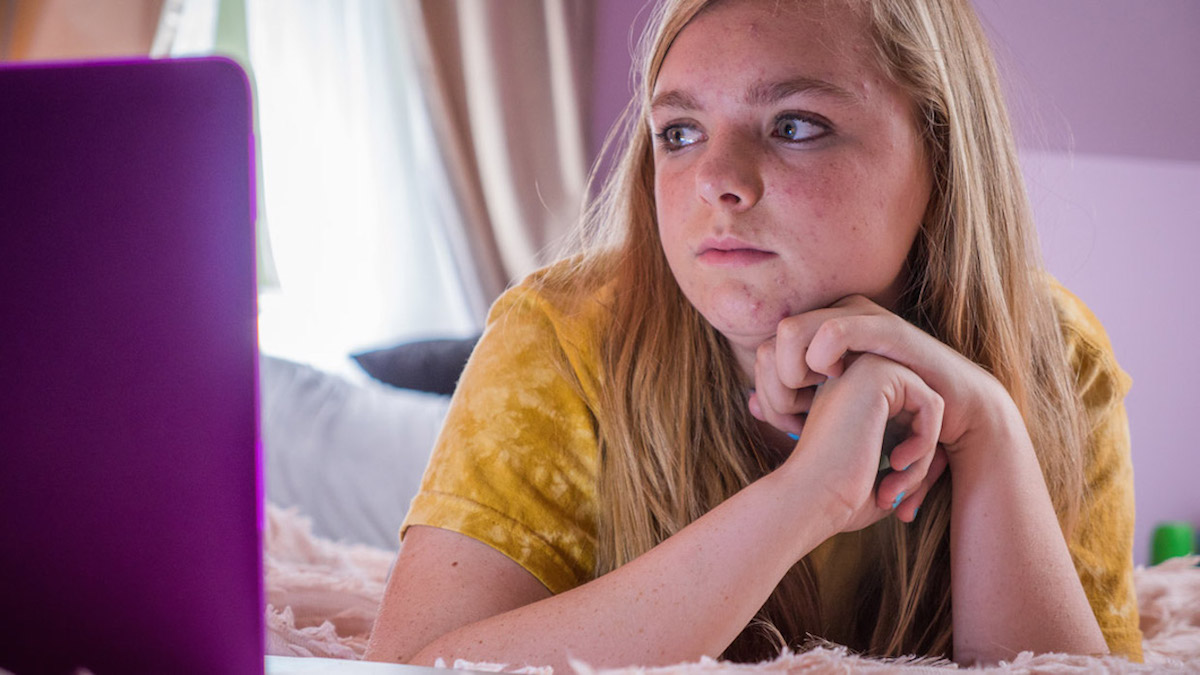 EIGHTH GRADE[/caption]
The 2018 Sarasota Film Festival (SFF) announced its full line-up, including its Centerpiece, Spotlight, Narrative Feature Competition, Independent Visions Competition, Documentary Feature Competition, Narrative, Documentary, and Short Films. The Festival also announced its five SFF Focus Panels – Sports in Cinema, Environment, Science, and Sustainability, Women’s Comedic Voices, Redefining Manhood, and Musings on Musicians.
“In honor of our 20th anniversary, we have programmed a lineup that celebrates the past, present, and future of the Sarasota Film Festival that is sure to delight our dedicated and passionate audiences,” said Mark Famiglio, Chairman and President of the Sarasota Film Festival. “The selection includes a diverse group of narratives and voices that will create engaging conversations about today’s most important topics.”
In the Festival’s Centerpiece section is 1985, about a closeted gay man, unable to come out to his friends and family during the beginning of the AIDS crisis, staring Academy Award®-nominated actress Virginia Madsen, who will be attendance at the Festival. Also a Centerpiece selection is Bo Burnham’s feature film directorial debut, EIGHTH GRADE, a portrait of young teenagers discovering their identities online and in reality. Bo will be in attendance for a Q&A following the film’s screening during the Festival.
The Spotlight section will include narrative films Brett Haley’s HEARTS BEAT LOUD, Silas Howard’s A KID LIKE JAKE, Andrew Haigh’s LEAN ON PETE, Hannah Fidell’s THE LONG DUMB ROAD, Dominic Cooke’s ON CHESIL BEACH, Chloé Zhao’s THE RIDER, and Madeline Olnek’s WILD NIGHTS WITH EMILY, and documentary films Eugene Jarecki’s THE KING, Ali Weinstein’s MERMAIDS, Barbara Kopple’s A MURDER IN MANSFIELD, and Morgan Neville’s WON’T YOU BE MY NEIGHBOR?
Each year the Sarasota Film Festival focuses on social issues to highlight throughout its program. The Sports in Cinema Focus returns this year, welcoming Ben and Orson Cummings and their film KILLER BEES, produced by Shaquille O’Neill. Other films in this focus include the Closing Day Film, Jason Kohn’s LOVE MEANS ZERO and Dana Adam Shapiro’s DAUGHTERS OF THE SEXUAL REVOLUTION: THE UNTOLD STORY OF THE DALLAS COWBOY CHEERLEADERS.
In consideration of sustainability of communities and the planet, films in the SFF Environment, Science, and Sustainability Focus include Susan Kucera’s LIVING IN THE FUTURE’S PAST, Chad Freidrichs’ EXPERIMENTAL CITY, Quinn Costello, Chris Metzler, and Jeff Springer’s RODENTS OF UNUSUAL SIZE, and Rory Kennedy’s ABOVE AND BEYOND: NASA’S JOURNEY TO TOMORROW.
In a groundbreaking year for women, the festival presents SFF Focus: Women’s Comedic Voices, a lineup featuring all female directors. Films in the category include Wendy McColm’s BIRDS WITHOUT FEATHERS, Bridey Elliott’s CLARA’S GHOST, Caroline Golum’s A FEAST OF MAN as well as LONG DUMB ROAD and WILD NIGHTS WITH EMILY.
The films in the SFF Focus: Redefining Manhood, provide a glimpse at the questions regarding masculine identities, include Bing Liu’s MINDING THE GAP, as well as 1985, THE RIDER, and WON’T YOU BE MY NEIGHBOR?
The final SFF Focus: Musings on Musicians, presents an array of films exploring the relationships between music and film. Films in the category include Laura Parnes’ TOUR WITHOUT END, T.G. Herrington and Danny Clinch’s A TUBA TO CUBA, Derek Ahonen’s THE TRANSCENDENTS, Sophie Fiennes’ GRACE JONES: BLOODLIGHT AND BAMI, Jake Meginsky and Neil Young’s MILFORD GRAVES FULL MANTIS, Scott Smith’s CHASING THE BLUES, Stephen Loveridge’s MATANGI / MAYA / M.I.A, as well as THE KING and HEARTS BEAT LOUD.
The Narrative Feature Competition will showcase DON’T LEAVE HOME directed by Michael Tully, I AM NOT A WITCH, directed by Rungano Nyoni, MADELINE’S MADELINE, directed by Josephine Decker, THE QUEEN OF FEAR directed by Valeria Bertuccelli and Fabiana Tiscornia, THE SEEN AND THE UNSEEN directed by Kamila Andini, SUPPORT THE GIRLS directed by Andrew Bujalski as well as CLARA’S GHOST.
The Documentary Feature Competition will include GENERATION WEALTH directed by Lauren Greenfield, GENESIS 2.0 directed by Christian Frei and Maxim Arbugaev, HALE COUNTY THIS MORNING, THIS EVENING directed by RaMell Ross, OF FATHERS AND SONS directed by Talal Derki, THE SENTENCE directed by Rudy Valdez, as well as DAUGHTERS OF THE SEXUAL REVOLUTION: THE UNTOLD STORY OF THE DALLAS COWBOY CHEERLEADERS and MINDING THE GAP.
The Independent Visions Competition will feature BLACK MOTHER directed by Khalik Allah, LIFE AND NOTHING MORE directed by Antonio Méndez Esparza, MAISON DU BONHEUR directed by Sofia Bohdanowicz, NOTES ON APPEARANCE directed by Ricky D’Ambrose, as well as BIRDS WITHOUT FEATHERS, A FEAST OF MAN, MILFORD GRAVES FULL MANTIS, and TOUR WITHOUT END.
The jury for the competition films will consist of the following individuals: producer Autumn Bailey-Ford, Emmy®-nominated writer and producer Mark Bailey, documentary filmmaker Orson Cummings, New York Magazine film critic David Edelstein, Factory 25 film distributor Matt Grady, Academy of Motion Picture Arts and Sciences Director – New York Programs and Membership Patrick Harrison, film professor Del Jacobs, Academy Award®-nominated filmmaker Penny Lane, actress Penelope Ann Miller, The Hollywood Reporter film writer Tatiana Siegel, founder and publisher of Women and Hollywood Melissa Silverstein, and Sarasota County Circuit court judge and filmmaker Charles Williams.
Narrative films include: ALL YOU CAN EAT BUDDHA directed by Ian Lagarde, AMERICAN ANIMALS directed by Bart Layton, AUGUST IN BERLIN directed by Becky Smith, BIKINI MOON directed by Milcho Manchevski, BLACK KITE directed by Tarique Qayumi, CAN HITLER HAPPEN HERE? directed by Saskia Rifkin, COLD SKIN directed by Xavier Gens, COME SUNDAY directed by Joshua Marston, DELENDA directed by Ralph Moffettone, DIMINUENDO directed by Adrian Stewart, EN EL SÉPTIMO DÍA directed by Jim McKay, FIRST REFORMED directed by Paul Schrader, A FRENCHMAN IN FLORIDA directed by Dante Rhev, HOLIDAY directed by Isabella Eklof, LET THE SUNSHINE IN directed by Claire Denis, MAKTUB directed by Oded Raz, SANTA INOCENCIA directed by Maritxell Campos Olivé, SHELTER directed by Eran Riklis, TATTERDEMALION directed by Ramaa Mosley, TINKER directed by Sonny Mahrler, VIRGINIA, MINNESOTA directed by Daniel Stine, VIRUS TROPICAL directed by Santiago Caicedo, WE THE ANIMALS directed by Jeremiah Zagar, WHITE RABBIT directed by Daryl Wein, ZAMA directed by Lucrecia Martel, as well as CHASING THE BLUES and THE TRANSCENDENTS.
Documentary films include: 306 HOLLYWOOD directed by Elan Bogarin and Jonathan Bogarin, ANTONIO LOPEZ 1970: SEX FASHION & DISCO directed by James Crump, ASK THE SEXPERT directed by Vaishali Sinha, BISBEE ’17 directed by Robert Greene, CHEF FLYNN directed by Cameron Yates, CRACKING ACES: A WOMAN’S PLACE AT THE TABLE directed by H. James Gilmore, CRIME + PUNISHMENT directed by Stephen Maing, DISTANT CONSTELLATION directed by Shevaun Mizrahi, FATHER’S KINGDOM directed by Lenny Feinberg, FREEDOM FOR THE WOLF directed by Rupert Russell, THE GREAT FLIP-OFF directed by Dafna Yachin, HALF THE PICTURE directed by Amy Adrion, LA FLOR DE LA VIDA directed by Adriana Leoff and Claudia Abend, LOTS OF KIDS, A MONKEY AND A CASTLE directed by Gustavo Salmerón, MAYNARD directed by Sam Pollard, OLD DOG directed by Sally Rowe, ON HER SHOULDERS directed by Alexandria Bombach, THE PAIN OF OTHERS directed by Penny Lane, RBG directed by Betsy West and Julie Cohen, SISTERS directed by Justyna Tafel, THAT SUMMER directed by Göran Hugo Olsson, THREE IDENTICAL STRANGERS directed by Tim Wardle as well as THE EXPERIMENTAL CITY, GRACE JONES: BLOODLIGHT AND BAMI, KILLER BEES, LIVING IN THE FUTURE’S PAST, MATANGI / MAYA / M.I.A., RODENTS OF UNUSUAL SIZE, and A TUBA TO CUBA.
As previously announced Golden Globe®-nominated and Independent Spirit Award®-nominated Eric Stoltz’s coming-of-age comedy CLASS RANK will be the Festival’s Opening Night film and Academy Award®-nominated and Emmy®-winning Rory Kennedy’s ABOVE AND BEYOND: NASA’S JOURNEY TO TOMORROW will serve as Closing Night film. The Festival will also be honoring renowned actor Steve Guttenberg and Academy Award®-nominated actress Virginia Madsen with Career Achievement Awards during the closing weekend.
EIGHTH GRADE[/caption]
The 2018 Sarasota Film Festival (SFF) announced its full line-up, including its Centerpiece, Spotlight, Narrative Feature Competition, Independent Visions Competition, Documentary Feature Competition, Narrative, Documentary, and Short Films. The Festival also announced its five SFF Focus Panels – Sports in Cinema, Environment, Science, and Sustainability, Women’s Comedic Voices, Redefining Manhood, and Musings on Musicians.
“In honor of our 20th anniversary, we have programmed a lineup that celebrates the past, present, and future of the Sarasota Film Festival that is sure to delight our dedicated and passionate audiences,” said Mark Famiglio, Chairman and President of the Sarasota Film Festival. “The selection includes a diverse group of narratives and voices that will create engaging conversations about today’s most important topics.”
In the Festival’s Centerpiece section is 1985, about a closeted gay man, unable to come out to his friends and family during the beginning of the AIDS crisis, staring Academy Award®-nominated actress Virginia Madsen, who will be attendance at the Festival. Also a Centerpiece selection is Bo Burnham’s feature film directorial debut, EIGHTH GRADE, a portrait of young teenagers discovering their identities online and in reality. Bo will be in attendance for a Q&A following the film’s screening during the Festival.
The Spotlight section will include narrative films Brett Haley’s HEARTS BEAT LOUD, Silas Howard’s A KID LIKE JAKE, Andrew Haigh’s LEAN ON PETE, Hannah Fidell’s THE LONG DUMB ROAD, Dominic Cooke’s ON CHESIL BEACH, Chloé Zhao’s THE RIDER, and Madeline Olnek’s WILD NIGHTS WITH EMILY, and documentary films Eugene Jarecki’s THE KING, Ali Weinstein’s MERMAIDS, Barbara Kopple’s A MURDER IN MANSFIELD, and Morgan Neville’s WON’T YOU BE MY NEIGHBOR?
Each year the Sarasota Film Festival focuses on social issues to highlight throughout its program. The Sports in Cinema Focus returns this year, welcoming Ben and Orson Cummings and their film KILLER BEES, produced by Shaquille O’Neill. Other films in this focus include the Closing Day Film, Jason Kohn’s LOVE MEANS ZERO and Dana Adam Shapiro’s DAUGHTERS OF THE SEXUAL REVOLUTION: THE UNTOLD STORY OF THE DALLAS COWBOY CHEERLEADERS.
In consideration of sustainability of communities and the planet, films in the SFF Environment, Science, and Sustainability Focus include Susan Kucera’s LIVING IN THE FUTURE’S PAST, Chad Freidrichs’ EXPERIMENTAL CITY, Quinn Costello, Chris Metzler, and Jeff Springer’s RODENTS OF UNUSUAL SIZE, and Rory Kennedy’s ABOVE AND BEYOND: NASA’S JOURNEY TO TOMORROW.
In a groundbreaking year for women, the festival presents SFF Focus: Women’s Comedic Voices, a lineup featuring all female directors. Films in the category include Wendy McColm’s BIRDS WITHOUT FEATHERS, Bridey Elliott’s CLARA’S GHOST, Caroline Golum’s A FEAST OF MAN as well as LONG DUMB ROAD and WILD NIGHTS WITH EMILY.
The films in the SFF Focus: Redefining Manhood, provide a glimpse at the questions regarding masculine identities, include Bing Liu’s MINDING THE GAP, as well as 1985, THE RIDER, and WON’T YOU BE MY NEIGHBOR?
The final SFF Focus: Musings on Musicians, presents an array of films exploring the relationships between music and film. Films in the category include Laura Parnes’ TOUR WITHOUT END, T.G. Herrington and Danny Clinch’s A TUBA TO CUBA, Derek Ahonen’s THE TRANSCENDENTS, Sophie Fiennes’ GRACE JONES: BLOODLIGHT AND BAMI, Jake Meginsky and Neil Young’s MILFORD GRAVES FULL MANTIS, Scott Smith’s CHASING THE BLUES, Stephen Loveridge’s MATANGI / MAYA / M.I.A, as well as THE KING and HEARTS BEAT LOUD.
The Narrative Feature Competition will showcase DON’T LEAVE HOME directed by Michael Tully, I AM NOT A WITCH, directed by Rungano Nyoni, MADELINE’S MADELINE, directed by Josephine Decker, THE QUEEN OF FEAR directed by Valeria Bertuccelli and Fabiana Tiscornia, THE SEEN AND THE UNSEEN directed by Kamila Andini, SUPPORT THE GIRLS directed by Andrew Bujalski as well as CLARA’S GHOST.
The Documentary Feature Competition will include GENERATION WEALTH directed by Lauren Greenfield, GENESIS 2.0 directed by Christian Frei and Maxim Arbugaev, HALE COUNTY THIS MORNING, THIS EVENING directed by RaMell Ross, OF FATHERS AND SONS directed by Talal Derki, THE SENTENCE directed by Rudy Valdez, as well as DAUGHTERS OF THE SEXUAL REVOLUTION: THE UNTOLD STORY OF THE DALLAS COWBOY CHEERLEADERS and MINDING THE GAP.
The Independent Visions Competition will feature BLACK MOTHER directed by Khalik Allah, LIFE AND NOTHING MORE directed by Antonio Méndez Esparza, MAISON DU BONHEUR directed by Sofia Bohdanowicz, NOTES ON APPEARANCE directed by Ricky D’Ambrose, as well as BIRDS WITHOUT FEATHERS, A FEAST OF MAN, MILFORD GRAVES FULL MANTIS, and TOUR WITHOUT END.
The jury for the competition films will consist of the following individuals: producer Autumn Bailey-Ford, Emmy®-nominated writer and producer Mark Bailey, documentary filmmaker Orson Cummings, New York Magazine film critic David Edelstein, Factory 25 film distributor Matt Grady, Academy of Motion Picture Arts and Sciences Director – New York Programs and Membership Patrick Harrison, film professor Del Jacobs, Academy Award®-nominated filmmaker Penny Lane, actress Penelope Ann Miller, The Hollywood Reporter film writer Tatiana Siegel, founder and publisher of Women and Hollywood Melissa Silverstein, and Sarasota County Circuit court judge and filmmaker Charles Williams.
Narrative films include: ALL YOU CAN EAT BUDDHA directed by Ian Lagarde, AMERICAN ANIMALS directed by Bart Layton, AUGUST IN BERLIN directed by Becky Smith, BIKINI MOON directed by Milcho Manchevski, BLACK KITE directed by Tarique Qayumi, CAN HITLER HAPPEN HERE? directed by Saskia Rifkin, COLD SKIN directed by Xavier Gens, COME SUNDAY directed by Joshua Marston, DELENDA directed by Ralph Moffettone, DIMINUENDO directed by Adrian Stewart, EN EL SÉPTIMO DÍA directed by Jim McKay, FIRST REFORMED directed by Paul Schrader, A FRENCHMAN IN FLORIDA directed by Dante Rhev, HOLIDAY directed by Isabella Eklof, LET THE SUNSHINE IN directed by Claire Denis, MAKTUB directed by Oded Raz, SANTA INOCENCIA directed by Maritxell Campos Olivé, SHELTER directed by Eran Riklis, TATTERDEMALION directed by Ramaa Mosley, TINKER directed by Sonny Mahrler, VIRGINIA, MINNESOTA directed by Daniel Stine, VIRUS TROPICAL directed by Santiago Caicedo, WE THE ANIMALS directed by Jeremiah Zagar, WHITE RABBIT directed by Daryl Wein, ZAMA directed by Lucrecia Martel, as well as CHASING THE BLUES and THE TRANSCENDENTS.
Documentary films include: 306 HOLLYWOOD directed by Elan Bogarin and Jonathan Bogarin, ANTONIO LOPEZ 1970: SEX FASHION & DISCO directed by James Crump, ASK THE SEXPERT directed by Vaishali Sinha, BISBEE ’17 directed by Robert Greene, CHEF FLYNN directed by Cameron Yates, CRACKING ACES: A WOMAN’S PLACE AT THE TABLE directed by H. James Gilmore, CRIME + PUNISHMENT directed by Stephen Maing, DISTANT CONSTELLATION directed by Shevaun Mizrahi, FATHER’S KINGDOM directed by Lenny Feinberg, FREEDOM FOR THE WOLF directed by Rupert Russell, THE GREAT FLIP-OFF directed by Dafna Yachin, HALF THE PICTURE directed by Amy Adrion, LA FLOR DE LA VIDA directed by Adriana Leoff and Claudia Abend, LOTS OF KIDS, A MONKEY AND A CASTLE directed by Gustavo Salmerón, MAYNARD directed by Sam Pollard, OLD DOG directed by Sally Rowe, ON HER SHOULDERS directed by Alexandria Bombach, THE PAIN OF OTHERS directed by Penny Lane, RBG directed by Betsy West and Julie Cohen, SISTERS directed by Justyna Tafel, THAT SUMMER directed by Göran Hugo Olsson, THREE IDENTICAL STRANGERS directed by Tim Wardle as well as THE EXPERIMENTAL CITY, GRACE JONES: BLOODLIGHT AND BAMI, KILLER BEES, LIVING IN THE FUTURE’S PAST, MATANGI / MAYA / M.I.A., RODENTS OF UNUSUAL SIZE, and A TUBA TO CUBA.
As previously announced Golden Globe®-nominated and Independent Spirit Award®-nominated Eric Stoltz’s coming-of-age comedy CLASS RANK will be the Festival’s Opening Night film and Academy Award®-nominated and Emmy®-winning Rory Kennedy’s ABOVE AND BEYOND: NASA’S JOURNEY TO TOMORROW will serve as Closing Night film. The Festival will also be honoring renowned actor Steve Guttenberg and Academy Award®-nominated actress Virginia Madsen with Career Achievement Awards during the closing weekend.
-
International Film Festival Rotterdam Audience Award Winner THE GUILTY to Kick Off 7th Edition Curaçao IFFR
[caption id="attachment_27745" align="aligncenter" width="1200"]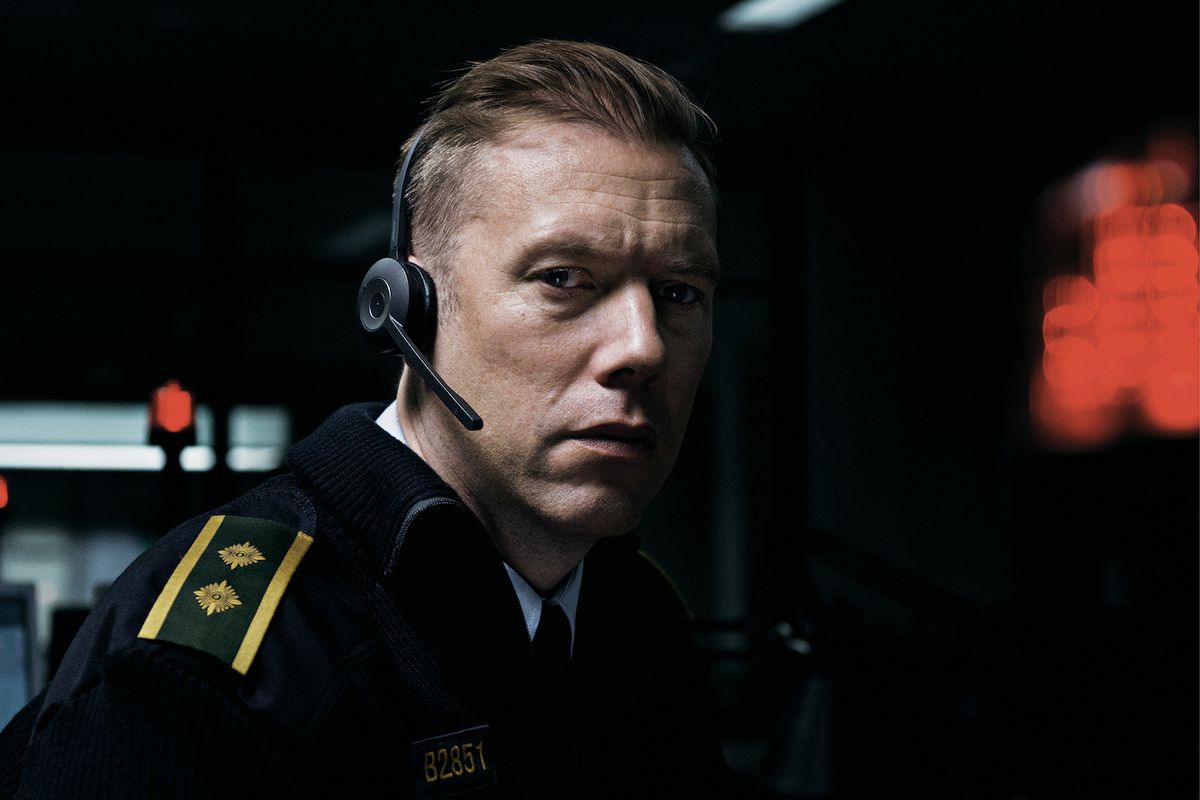 The Guilty[/caption]
For the seventh time, Willemstad will host Curaçao International Film Festival Rotterdam (CIFFR), from Wednesday April 11 through Sunday April 15, 2018. CIFFR presents the highlights of the most recent edition of IFFR, gripping new titles from other film festivals, and promising new work by filmmakers from the region, most importantly in its Yellow Robin Award Competition and the Caribbean Shorts Competition.
This year’s edition opens with Gustav Möller’s thrilling debut The Guilty, which won the Audience Award at IFFR 2018, and closes with Film Stars Don’t Die in Liverpool by Paul McGuigan (Lucky Number Slevin) with a wonderful role played by Annette Bening.
The Guilty[/caption]
For the seventh time, Willemstad will host Curaçao International Film Festival Rotterdam (CIFFR), from Wednesday April 11 through Sunday April 15, 2018. CIFFR presents the highlights of the most recent edition of IFFR, gripping new titles from other film festivals, and promising new work by filmmakers from the region, most importantly in its Yellow Robin Award Competition and the Caribbean Shorts Competition.
This year’s edition opens with Gustav Möller’s thrilling debut The Guilty, which won the Audience Award at IFFR 2018, and closes with Film Stars Don’t Die in Liverpool by Paul McGuigan (Lucky Number Slevin) with a wonderful role played by Annette Bening.
Yellow Robin Award Competition
For the sixth time, CIFFR presents the Yellow Robin Award Competition, in which five films by emerging filmmakers from the Caribbean and Latin America compete for the Yellow Robin Award. This year’s selections are Khalik Allah’s Black Mother (Jamaica, USA), Gustavo Ramos Perales’s El chata (Puerto Rico), Luis and Andrés Rodríguez’s Hijos de la sal (Venezuela), Vashti Anderson’s Moko Jumbie (Trinidad and Tobago, USA) and Álvaro Aponte-Centeno’s El silencio del viento (Puerto Rico, Dominican Republic, France). An international jury picks the winning film, which is guaranteed a spot in IFFR 2019’s Bright Future program and will also screen at Morelia International Film Festival in Mexico later in the year. The winning filmmaker receives a cash prize of $2,500 as well as $7,500 worth of training in the context of talent development in programs such as BoostNL or CineMart. The five nominees for the 6th Yellow Robin Award are: [caption id="attachment_27747" align="aligncenter" width="1200"]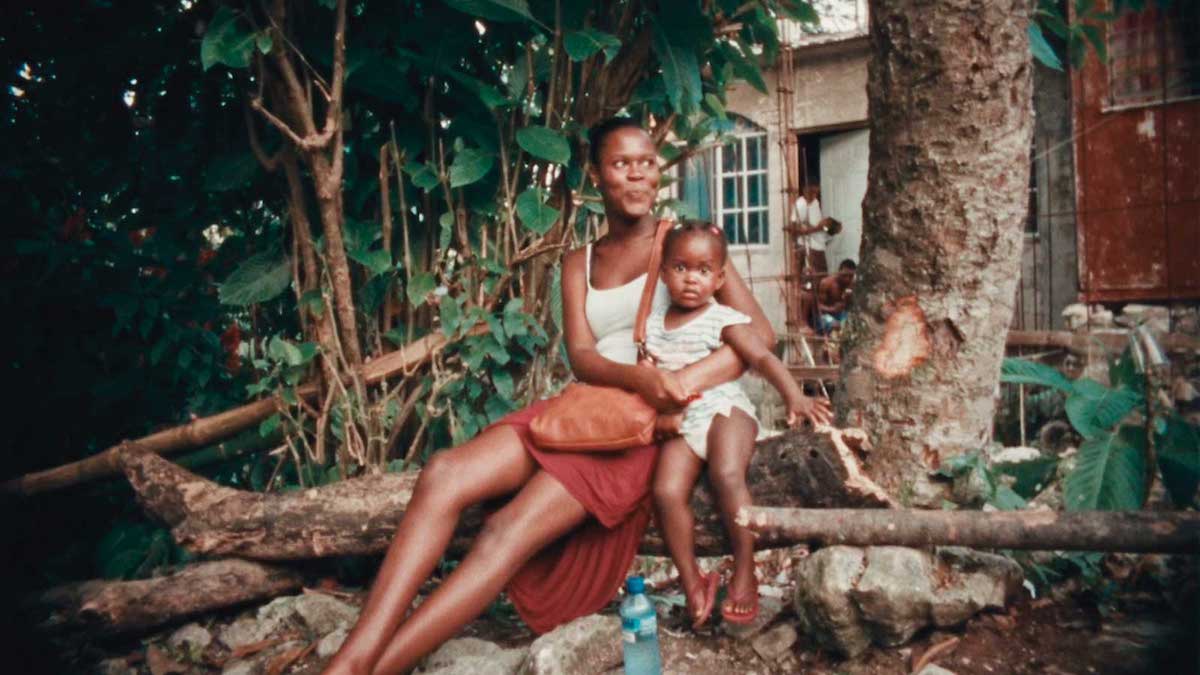 BLACK MOTHER[/caption]
BLACK MOTHER
Khalik ALLAH | Jamaica, USA | 2018 | English | n.s.
In his artistic documentary, filmmaker/photographer Khalik Allah (1985, US) gives Jamaicans the opportunity to share their dreams and wisdom, but also to talk about the harsh everyday reality. The self-taught photographer and filmmaker portrays contemporary Jamaicans in a particularly honest fashion. From young streetwalkers and streetwise rappers to Rastafarians, mothers, agricultural laborers and devout church girls.
EL CHATA (The Sparring Partner)
Gustavo RAMOS PERALES | Puerto Rico | 2018 | Spanish | e.s.
Director Ramos Perales (1980, Puerto Rico) took the scintillating boxing scene of Puerto Rico as the point of departure for his debut drama The Sparring Partner about second chances and perseverance. Convincing acting and action-packed fight scenes reveal that boxing seems to promise a better life for many Puerto Ricans, but even with great ambition and talent, there’s a constant pull to abandon the straight and narrow.
HIJOS DE LA SAL (Children of the Salt)
Luis and Andrés RODRÍGUEZ | Venezuela | 2018 | Spanish | e.s.
Hijos de la sal is the second feature film by brothers Luis and Andrés Rodríquez (1974, Venezuela). This luxuriant, absorbing family drama is set in the salt pans of Cumaragues, Venezuela where, after the death of their father, Evaristo, the lives of Enrique (13) and Maria (16) get a lot harder. Sound plays a major role in the film; the almost tangible presence of the wind, waves and music lend it a magic-realist edge.
MOKO JUMBIE
Vashti ANDERSON | 2017 | Trinidad & Tobago, USA | English | n.s.
A romantic drama about roots and tolerance by Trinidadian-American filmmaker Vashti Anderson. While visiting her aunt in Trinidad, young Englishwoman Asha meets mysterious neighbour Roger. This starts a romantic, magical search for identity and love. Intense debut film that delicately navigates taboos, superstition and spirituality.
EL SILENCIO DEL VIENTO (Silence of the Wind)
Álvaro APONTE-CENTENO | Puerto Rico, Dom. Republic, France | 2017 | Spanish | e.s.
In his debut film, Silence of the Wind, Álvaro Aponte-Centeno (1979, Puerto Rico) depicts a humane, yet no less dramatic side of the global immigration crisis. Together with his sister Carmen, Rafael is part of a human trafficking network that helps move fortune seekers to Puerto Rico. The country’s beautiful landscapes contrast markedly with the tragedies of human trafficking victims.
BLACK MOTHER[/caption]
BLACK MOTHER
Khalik ALLAH | Jamaica, USA | 2018 | English | n.s.
In his artistic documentary, filmmaker/photographer Khalik Allah (1985, US) gives Jamaicans the opportunity to share their dreams and wisdom, but also to talk about the harsh everyday reality. The self-taught photographer and filmmaker portrays contemporary Jamaicans in a particularly honest fashion. From young streetwalkers and streetwise rappers to Rastafarians, mothers, agricultural laborers and devout church girls.
EL CHATA (The Sparring Partner)
Gustavo RAMOS PERALES | Puerto Rico | 2018 | Spanish | e.s.
Director Ramos Perales (1980, Puerto Rico) took the scintillating boxing scene of Puerto Rico as the point of departure for his debut drama The Sparring Partner about second chances and perseverance. Convincing acting and action-packed fight scenes reveal that boxing seems to promise a better life for many Puerto Ricans, but even with great ambition and talent, there’s a constant pull to abandon the straight and narrow.
HIJOS DE LA SAL (Children of the Salt)
Luis and Andrés RODRÍGUEZ | Venezuela | 2018 | Spanish | e.s.
Hijos de la sal is the second feature film by brothers Luis and Andrés Rodríquez (1974, Venezuela). This luxuriant, absorbing family drama is set in the salt pans of Cumaragues, Venezuela where, after the death of their father, Evaristo, the lives of Enrique (13) and Maria (16) get a lot harder. Sound plays a major role in the film; the almost tangible presence of the wind, waves and music lend it a magic-realist edge.
MOKO JUMBIE
Vashti ANDERSON | 2017 | Trinidad & Tobago, USA | English | n.s.
A romantic drama about roots and tolerance by Trinidadian-American filmmaker Vashti Anderson. While visiting her aunt in Trinidad, young Englishwoman Asha meets mysterious neighbour Roger. This starts a romantic, magical search for identity and love. Intense debut film that delicately navigates taboos, superstition and spirituality.
EL SILENCIO DEL VIENTO (Silence of the Wind)
Álvaro APONTE-CENTENO | Puerto Rico, Dom. Republic, France | 2017 | Spanish | e.s.
In his debut film, Silence of the Wind, Álvaro Aponte-Centeno (1979, Puerto Rico) depicts a humane, yet no less dramatic side of the global immigration crisis. Together with his sister Carmen, Rafael is part of a human trafficking network that helps move fortune seekers to Puerto Rico. The country’s beautiful landscapes contrast markedly with the tragedies of human trafficking victims.
CIFFR
CIFFR launched in 2012 as a collaboration between the Curaçao-based Fundashon Bon Intenshon and International Film Festival Rotterdam (IFFR). Since then, the festival has served as a platform for young local film talent and has brought feature films, documentaries and short films from all over the world together in Curaçao. Festival Director Bero Beyer: “CIFFR offers a wonderful treat: five days of celebrating independent cinema on a beautiful island which has always been a meeting point for many different cultures. The voices represented at the festival range from those of internationally renowned filmmakers to those of emerging local artists, which results in a unique mix of different perspectives and tones. The selection for this seventh edition is as lively and diverse as ever and is sure to open up a world of daring and beautiful film to a wide audience.”Caribbean Shorts Competition
Last year CIFFR introduced the Caribbean Shorts Competition, which returns for its second installment this year. The program is the result of a region-wide collaboration. Six film festivals – in Cuba, the Dominican Republic, Martinique, Mexico, Trinidad and Tobago and CIFFR itself – submitted a short film to enter the Caribbean Shorts Competition. The winning film will later screen at all these festivals.Program
Besides the competitions, the seventh edition of CIFFR presents a special program entitled Scenes of Senses that investigates the way film stimulates not just the eye, but our other senses too. There is also an extensive educational program as well as the recurring Music Call program featuring music documentaries. Among the twenty or so highlights from IFFR 2018 shown in Curaçao are The Insult by Ziad Doueiri, The Florida Project by Sean Baker and three films that competed in the Hivos Tiger Competition, including the Special Jury Award and HBF Audience Award winner The Reports on Sarah and Saleem by Muayad Alayan.
-
FSLC Announces 5th Art of the Real Lineup, Opens with Premiere of ‘John McEnroe: In the Realm of Perfection’

John McEnroe: In the Realm of Perfection The Film Society of Lincoln Center today announced the fifth edition of Art of the Real, an essential showcase for the most vital and innovative voices in nonfiction and hybrid filmmaking, taking place April 26 to May 6. The 2018 lineup features a host of brilliant new works and exciting artist spotlights, including one world premiere, eight North American premieres, and seven U.S. premieres, with many of the filmmakers in person.
-
Watch Chiwetel Ejiofor as Pastor Carlton Pearson in COME SUNDAY Trailer
 Netflix has released the Trailer for Come Sunday, starring Chiwetel Ejiofor, that premiered earlier this year at the 2018 Sundance Film Festival. The film is directed by Joshua Marston whose first film, Maria Full of Grace, won an Audience Award at the 2004 Sundance Film Festival. Come Sunday, also starring Martin Sheen, Jason Segel, Condola Rashad, Lakeith Stanfield and Danny Glover will launch on Netflix on April 13, 2018.
In the film, internationally-renowned pastor Carlton Pearson, played by Chiwetel Ejiofor – experiencing a crisis of faith – risks his church, family and future when he questions church doctrine and finds himself branded a modern-day heretic. Based on actual events.
Every Sunday, Bishop Carlton Pearson—evangelical megastar, brilliant orator, and television host with millions of followers—preaches the fundamentalist gospel to six thousand supplicants at his Higher Dimensions Church. He’s the pride and joy of his spiritual father, Oral Roberts, and the toast of Tulsa. One day, rattled by an uncle’s suicide and distraught by reports of the Rwandan Genocide, Pearson receives an epiphany. Suddenly it’s crystal clear—God loves all humankind; everyone is already saved, whether Christian or not; and there is no hell. But these ideas are heretical, violating sacrosanct doctrines.
The next Sunday, when Pearson unveils this theology of inclusion to his flock, shock waves sweep the enormous hall. Church leaders and members begin to defect in droves, and his empire topples. Based on the true story of a controversial and courageous man of God, Come Sunday elegantly and respectfully captures the authentic texture and tone of Pearson’s devout world, never resorting to hyperbole. Chiwetel Ejiofor’s tour-de-force performance embodies the effusive charisma and grounded humility of a character with everything to lose, yet even more to gain by heeding his convictions. Sundance
https://www.youtube.com/watch?v=pVQFWvm_fbU
Netflix has released the Trailer for Come Sunday, starring Chiwetel Ejiofor, that premiered earlier this year at the 2018 Sundance Film Festival. The film is directed by Joshua Marston whose first film, Maria Full of Grace, won an Audience Award at the 2004 Sundance Film Festival. Come Sunday, also starring Martin Sheen, Jason Segel, Condola Rashad, Lakeith Stanfield and Danny Glover will launch on Netflix on April 13, 2018.
In the film, internationally-renowned pastor Carlton Pearson, played by Chiwetel Ejiofor – experiencing a crisis of faith – risks his church, family and future when he questions church doctrine and finds himself branded a modern-day heretic. Based on actual events.
Every Sunday, Bishop Carlton Pearson—evangelical megastar, brilliant orator, and television host with millions of followers—preaches the fundamentalist gospel to six thousand supplicants at his Higher Dimensions Church. He’s the pride and joy of his spiritual father, Oral Roberts, and the toast of Tulsa. One day, rattled by an uncle’s suicide and distraught by reports of the Rwandan Genocide, Pearson receives an epiphany. Suddenly it’s crystal clear—God loves all humankind; everyone is already saved, whether Christian or not; and there is no hell. But these ideas are heretical, violating sacrosanct doctrines.
The next Sunday, when Pearson unveils this theology of inclusion to his flock, shock waves sweep the enormous hall. Church leaders and members begin to defect in droves, and his empire topples. Based on the true story of a controversial and courageous man of God, Come Sunday elegantly and respectfully captures the authentic texture and tone of Pearson’s devout world, never resorting to hyperbole. Chiwetel Ejiofor’s tour-de-force performance embodies the effusive charisma and grounded humility of a character with everything to lose, yet even more to gain by heeding his convictions. Sundance
https://www.youtube.com/watch?v=pVQFWvm_fbU
-
2018 Calgary Underground Film Festival to Open with AN EVENING WITH BEVERLY LUFF LINN + Announces 15th Anniversary Lineup
[caption id="attachment_27733" align="aligncenter" width="1201"]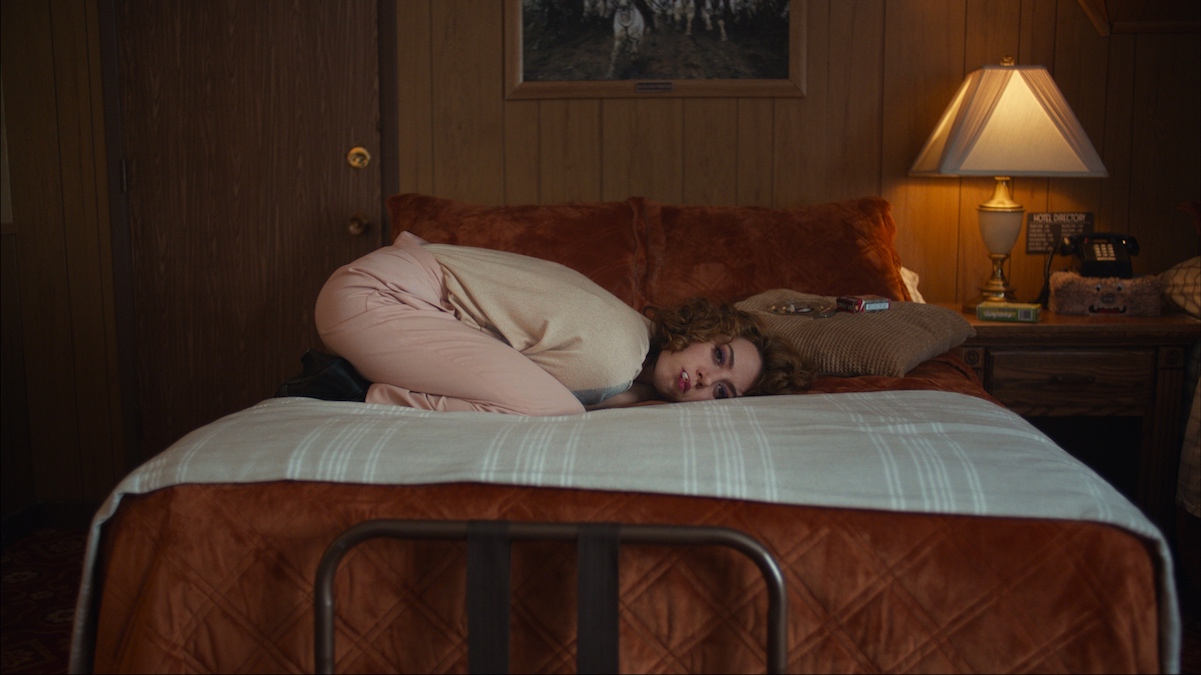 AN EVENING WITH BEVERLY LUFF LINN[/caption]
Western Canada’s biggest genre festival, Calgary Underground Film Festival (CUFF) returns for it’s 15th anniversary with its boldest and most eclectic lineup yet, with 43% of the festival’s feature films by female filmmakers. AN EVENING WITH BEVERLY LUFF LINN starring Aubrey Plaza, Jemaine Clement, Emile Hirsch and Craig Robinson will open the festival on Monday, April 16. Director Jim Hosking in attendance.
“I remember the day we started this festival and our vision was to grow within our means, screen provocative, boundary-pushing independent film, build a solid community, and to really make sure we were creating a festival as fans, for fans,” said Co-Founder & Festival Director Brenda Lieberman.
With humble beginnings using fold-out chairs at The Venue (now called HiFi Club) attended by a few hundred fans over three-days; today, CUFF is a seven-day internationally-recognized festival presenting 55 films to nearly 7,000 attendees.
“I’m excited we’ve reached 15 years, continually growing, and achieving what we set out to do! I love this festival, and what we’ve become so far!”
The Calgary Underground Film Festival runs April 16 to 22, 2018 at Globe Cinema; and highlights of this year’s festival include:
The psychological thriller KNUCKLEBALL from local director Mike Peterson, and the international premiere of FREAKS & GEEKS: THE DOCUMENTARY from Alberta filmmaker Brent Hodge, just days after it premieres at the Tribeca Film Festival.
Three more world premieres including THE SECRET POPO from CUFF alumnus Sean Pierce (MEATHEAD GOES HOGWILD); PAPER YEAR, the feature directorial debut from Canadian Rebecca Addelman, a prominent Hollywood screenwriter of the hit TV shows NEW GIRL and LOVE; and SLAVE TO THE GRIND, a documentary about grindcore from DIY filmmaker Doug Brown featuring the local band Wake.
The return of the FOUND FOOTAGE FESTIVAL: VOLUME 8, a one-of-a-kind CUFF-favorite event that showcases footage from videos that were found at garage sales and thrift stores and in warehouses and dumpsters across the country. Curators Nick and Joe will be back at CUFF for the first time in four years.
Big hits fresh off their premieres on the film festival circuit including the French-thriller REVENGE (Dir. Coralie Fargeat), a documentary about the history of roller-dancing in Venice Beach ROLLER DREAMS (Dir. Kate Hickey), and Lynne Ramsay’s latest YOU WERE NEVER REALLY HERE will be presented alongside a retrospective of her past work.
AN EVENING WITH BEVERLY LUFF LINN[/caption]
Western Canada’s biggest genre festival, Calgary Underground Film Festival (CUFF) returns for it’s 15th anniversary with its boldest and most eclectic lineup yet, with 43% of the festival’s feature films by female filmmakers. AN EVENING WITH BEVERLY LUFF LINN starring Aubrey Plaza, Jemaine Clement, Emile Hirsch and Craig Robinson will open the festival on Monday, April 16. Director Jim Hosking in attendance.
“I remember the day we started this festival and our vision was to grow within our means, screen provocative, boundary-pushing independent film, build a solid community, and to really make sure we were creating a festival as fans, for fans,” said Co-Founder & Festival Director Brenda Lieberman.
With humble beginnings using fold-out chairs at The Venue (now called HiFi Club) attended by a few hundred fans over three-days; today, CUFF is a seven-day internationally-recognized festival presenting 55 films to nearly 7,000 attendees.
“I’m excited we’ve reached 15 years, continually growing, and achieving what we set out to do! I love this festival, and what we’ve become so far!”
The Calgary Underground Film Festival runs April 16 to 22, 2018 at Globe Cinema; and highlights of this year’s festival include:
The psychological thriller KNUCKLEBALL from local director Mike Peterson, and the international premiere of FREAKS & GEEKS: THE DOCUMENTARY from Alberta filmmaker Brent Hodge, just days after it premieres at the Tribeca Film Festival.
Three more world premieres including THE SECRET POPO from CUFF alumnus Sean Pierce (MEATHEAD GOES HOGWILD); PAPER YEAR, the feature directorial debut from Canadian Rebecca Addelman, a prominent Hollywood screenwriter of the hit TV shows NEW GIRL and LOVE; and SLAVE TO THE GRIND, a documentary about grindcore from DIY filmmaker Doug Brown featuring the local band Wake.
The return of the FOUND FOOTAGE FESTIVAL: VOLUME 8, a one-of-a-kind CUFF-favorite event that showcases footage from videos that were found at garage sales and thrift stores and in warehouses and dumpsters across the country. Curators Nick and Joe will be back at CUFF for the first time in four years.
Big hits fresh off their premieres on the film festival circuit including the French-thriller REVENGE (Dir. Coralie Fargeat), a documentary about the history of roller-dancing in Venice Beach ROLLER DREAMS (Dir. Kate Hickey), and Lynne Ramsay’s latest YOU WERE NEVER REALLY HERE will be presented alongside a retrospective of her past work.