
 Nazif Mujic in “An Episode in the Life of an Iron Picker”[/caption]
Bosnian actor Nazif Mujic, winner of the Silver Bear for Best Actor at 2013 Berlin International Film Festival, for his performance in “An Episode in the Life of an Iron Picker” passed away on February 18, 2018. He was 48.
The Berlin International Film Festival issued a statement:
Berlinale Mourns the Loss of Nazif Mujić
The Berlin International Film Festival was deeply saddened to hear of the death of Nazif Mujić, who passed away on February 18, 2018.
In 2013, Nazif Mujić was a guest of the Berlinale Competition with Danis Tanović’s documentary drama An Episode in the Life of an Iron Picker, in which he re-enacts an episode from his own life as scrap collector in Bosnia and Herzegovina together with his family. Nazif Mujić was awarded the Silver Bear for Best Actor for his performance.
https://www.youtube.com/watch?v=dtFrHUktgP8
Nazif Mujic in “An Episode in the Life of an Iron Picker”[/caption]
Bosnian actor Nazif Mujic, winner of the Silver Bear for Best Actor at 2013 Berlin International Film Festival, for his performance in “An Episode in the Life of an Iron Picker” passed away on February 18, 2018. He was 48.
The Berlin International Film Festival issued a statement:
Berlinale Mourns the Loss of Nazif Mujić
The Berlin International Film Festival was deeply saddened to hear of the death of Nazif Mujić, who passed away on February 18, 2018.
In 2013, Nazif Mujić was a guest of the Berlinale Competition with Danis Tanović’s documentary drama An Episode in the Life of an Iron Picker, in which he re-enacts an episode from his own life as scrap collector in Bosnia and Herzegovina together with his family. Nazif Mujić was awarded the Silver Bear for Best Actor for his performance.
https://www.youtube.com/watch?v=dtFrHUktgP8Berlin International Film Festival
The Berlinale is a unique place of artistic exploration and entertainment. It is one of the largest public film festivals in the world, attracting tens of thousands of visitors from around the globe each year. For the film industry and the media, the eleven days in February are also one of the most important events in the annual calendar and an indispensable trading forum.
The Berlin International Film Festival enjoys an eventful history. The festival was created for the Berlin public in 1951, at the beginning of the Cold War, as a “showcase of the free world”. Shaped by the turbulent post-war period and the unique situation of a divided city, the Berlinale has developed into a place of intercultural exchange and a platform for the critical cinematic exploration of social issues. To this day it is considered the most political of all the major film festivals.
Berlin International Film Festival started in 1951 and takes place in Berlin, Germany, Europe
-
RIP: Berlinale Mourns the Loss of Silver Bear Award-Winning Bosnian Actor Nazif Mujic
[caption id="attachment_27121" align="aligncenter" width="1200"] Nazif Mujic in “An Episode in the Life of an Iron Picker”[/caption]
Bosnian actor Nazif Mujic, winner of the Silver Bear for Best Actor at 2013 Berlin International Film Festival, for his performance in “An Episode in the Life of an Iron Picker” passed away on February 18, 2018. He was 48.
The Berlin International Film Festival issued a statement:
Berlinale Mourns the Loss of Nazif Mujić
The Berlin International Film Festival was deeply saddened to hear of the death of Nazif Mujić, who passed away on February 18, 2018.
In 2013, Nazif Mujić was a guest of the Berlinale Competition with Danis Tanović’s documentary drama An Episode in the Life of an Iron Picker, in which he re-enacts an episode from his own life as scrap collector in Bosnia and Herzegovina together with his family. Nazif Mujić was awarded the Silver Bear for Best Actor for his performance.
https://www.youtube.com/watch?v=dtFrHUktgP8
-
“The War Has Ended” and “Tropical Memories” Win Prizes at the 2018 Berlinale Co-Production Market
 Three monetary prizes were awarded to selected narrative film projects at the Berlinale Co-Production Market which was held from February 17 to 21, 2018.
The Eurimages Co-Production Development Award, endowed with 20,000 euros, was presented on Sunday to the project The War Has Ended, represented by the producers from Madants, Poland, Match Factory Productions, Germany and Transfax Film Productions, Israel. The prize money is intended as a project development grant from the European film subsidy organization Eurimages. The first Eurimages Co-Production Development Award in Berlin in 2015 went to the project 3 Tage in Quiberon (3 Days in Quiberon), directed by Emily Atef, and the resulting completed film is celebrating its premiere at this year’s festival in Competition.
The VFF – (Film and Television Producers Rights Association) from Munich awarded its VFF Talent Highlight Award, endowed with 10,000 euros, to the project Tropical Memories (dir: Shipei Wen), presented at the Co-Production Market by producer Jing Wang from the People’s Republic of China. Each year since 2004, the VFF has honored a promising project by up-and-coming filmmakers from the “Talent Project Market”, organised by the Berlinale Co-Production Market in cooperation with Berlinale Talents. This year, producers Maya Fischer from Israel, and Charlotte de La Gournerie from Denmark were also nominated. They pitched their projects to participants of the Berlinale Co-Production Market and each received a nomination prize of 1,000 euros.
The ARTE International Prize this year also goes to the project The War Has Ended by director Hagar Ben Asher. ARTE bestows the 6,000 euro prize on an artistically outstanding project drawn from the selection of the Berlinale Co-Production Market.
At the 15th Berlinale Co-Production Market, the producers of the 36 selected narrative film projects also meet potential co-producers and financiers. The more than 1,300 one-on-one meetings with potentially matching partners among the total of 600 participants are meticulously planned ahead of time. Books for possible screen adaptations and series projects are also presented. They are the focus of “Books at Berlinale” and “CoPro Series” respectively. The team received more than 2,100 requests for meetings this year. More than 270 films that came to the market looking for partners have since become completed films. Five of those are screening this year at the Berlinale.
Image: Eurimages Co-Production Development Award 2018 – front row: Marek Rozenbaum (Transfax), Beata Rzeźniczek (Madants), Klaudia Smieja (Madants), Catherine Trautmann (Eurimages), Hagar Ben Asher (Director), Doreen Boonekamp (Eurimages Award Jury); back row: Martina Bleis (Berlinale Co-Production Market), Roberto Olla (Eurimages), Francine Raveney (Eurimages), Csaba Bereczki (Eurimages Award Jury) © Lydia Hesse / EFM 2018
Three monetary prizes were awarded to selected narrative film projects at the Berlinale Co-Production Market which was held from February 17 to 21, 2018.
The Eurimages Co-Production Development Award, endowed with 20,000 euros, was presented on Sunday to the project The War Has Ended, represented by the producers from Madants, Poland, Match Factory Productions, Germany and Transfax Film Productions, Israel. The prize money is intended as a project development grant from the European film subsidy organization Eurimages. The first Eurimages Co-Production Development Award in Berlin in 2015 went to the project 3 Tage in Quiberon (3 Days in Quiberon), directed by Emily Atef, and the resulting completed film is celebrating its premiere at this year’s festival in Competition.
The VFF – (Film and Television Producers Rights Association) from Munich awarded its VFF Talent Highlight Award, endowed with 10,000 euros, to the project Tropical Memories (dir: Shipei Wen), presented at the Co-Production Market by producer Jing Wang from the People’s Republic of China. Each year since 2004, the VFF has honored a promising project by up-and-coming filmmakers from the “Talent Project Market”, organised by the Berlinale Co-Production Market in cooperation with Berlinale Talents. This year, producers Maya Fischer from Israel, and Charlotte de La Gournerie from Denmark were also nominated. They pitched their projects to participants of the Berlinale Co-Production Market and each received a nomination prize of 1,000 euros.
The ARTE International Prize this year also goes to the project The War Has Ended by director Hagar Ben Asher. ARTE bestows the 6,000 euro prize on an artistically outstanding project drawn from the selection of the Berlinale Co-Production Market.
At the 15th Berlinale Co-Production Market, the producers of the 36 selected narrative film projects also meet potential co-producers and financiers. The more than 1,300 one-on-one meetings with potentially matching partners among the total of 600 participants are meticulously planned ahead of time. Books for possible screen adaptations and series projects are also presented. They are the focus of “Books at Berlinale” and “CoPro Series” respectively. The team received more than 2,100 requests for meetings this year. More than 270 films that came to the market looking for partners have since become completed films. Five of those are screening this year at the Berlinale.
Image: Eurimages Co-Production Development Award 2018 – front row: Marek Rozenbaum (Transfax), Beata Rzeźniczek (Madants), Klaudia Smieja (Madants), Catherine Trautmann (Eurimages), Hagar Ben Asher (Director), Doreen Boonekamp (Eurimages Award Jury); back row: Martina Bleis (Berlinale Co-Production Market), Roberto Olla (Eurimages), Francine Raveney (Eurimages), Csaba Bereczki (Eurimages Award Jury) © Lydia Hesse / EFM 2018
-
Guy Maddin, Evan & Galen Johnson’s New One-Take Short ACCIDENCE Premieres at 68th Berlin International Film Festival | Trailer
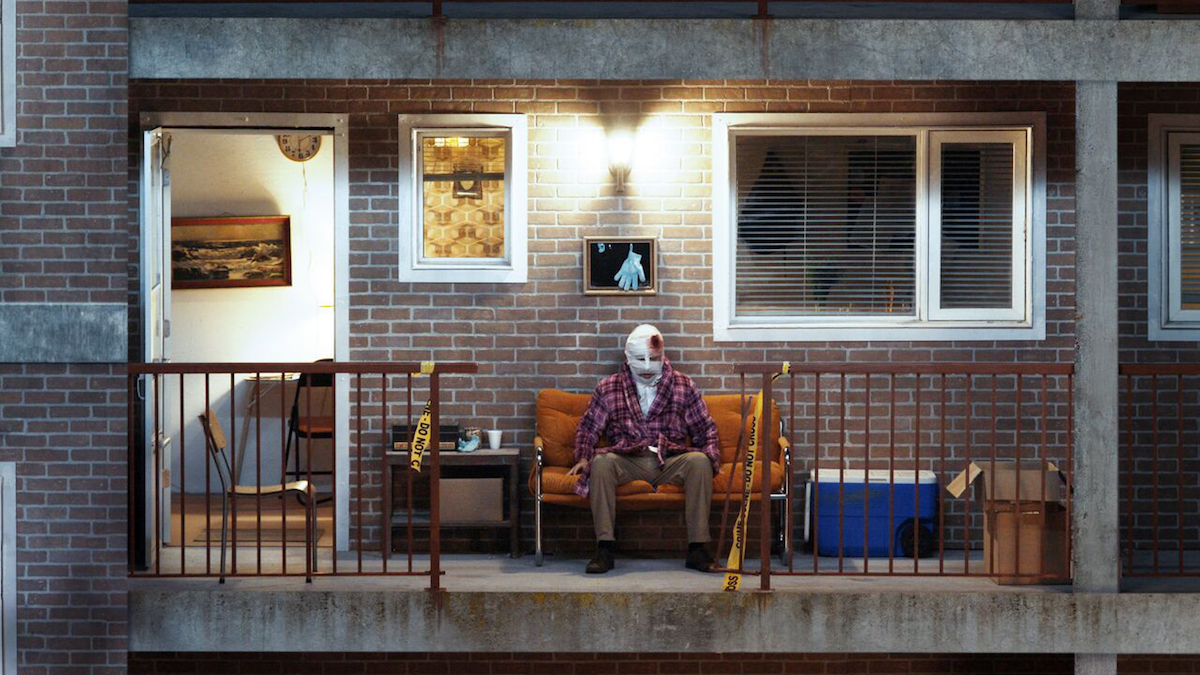 The new one-take short Accidence from Guy Maddin, Evan Johnson and Galen Johnson, will receive its world premiere on Tuesday 20th February, 2018 at the 68th Berlin International Film Festival.
Accidence is based on music composed by Ensign Broderick, an enigmatic experimental songwriter from Toronto, Canada. The song, officially titled “Accidence PSA,” is found on his forthcoming album Feast of Panthers, to be released on March 9, 2018. To illuminate his unique creative process, Ensign Broderick recently shared two alternate versions of the song as an accompanying Triptych.
In a deadly and maddeningly endless loop of crime and punishment, Accidence explores the narrative potential of the mundane architectural projection. In Maddin’s words, “Every balcony is a poem, a chant — a muscle! But whoever lives with that extra blueprint luxury of a balcony lives on the wrong side of a cross-section, on the busy, narrative-addled side of something like an ant-farm window, a brazen architectural arrangement selling cheap peeks into the naked sideshows of the quotidian — even the grisly. Step right up! Behold! A ten story wall of solid twitching muscle!”
Based on the metaphor that we are each our own victims, each of us the worst perpetrators of our own worst traumas, and each the most tireless prosecutors of the crimes we commit against ourselves, Accidence follows the nightmarish cycle of a man who hurls to his death a doppelganger of himself from an apartment balcony, and is then pursued by a detective who is yet another doppelganger. The perpetrator is pursued from apartment to apartment, to the homes of his parents, and of his girlfriend, flats where he seeks sanctuary from persecution. By the end of the film, the perpetrator joins his victim in death as he is hurled from the balcony by his lookalike pursuer of justice, who promptly considers himself a perp, and who is promptly dogged by yet another lookalike agent of justice. And endless loop of crime and punishment is thus established. Everyone else living in the apartment block, at least those visible out on their balconies, is also caught in their own personal loops of varying activities. We all live in loops, each of us condemned to repeat ourselves in essential ways.
https://www.youtube.com/watch?v=xV0pK6BerHw
The new one-take short Accidence from Guy Maddin, Evan Johnson and Galen Johnson, will receive its world premiere on Tuesday 20th February, 2018 at the 68th Berlin International Film Festival.
Accidence is based on music composed by Ensign Broderick, an enigmatic experimental songwriter from Toronto, Canada. The song, officially titled “Accidence PSA,” is found on his forthcoming album Feast of Panthers, to be released on March 9, 2018. To illuminate his unique creative process, Ensign Broderick recently shared two alternate versions of the song as an accompanying Triptych.
In a deadly and maddeningly endless loop of crime and punishment, Accidence explores the narrative potential of the mundane architectural projection. In Maddin’s words, “Every balcony is a poem, a chant — a muscle! But whoever lives with that extra blueprint luxury of a balcony lives on the wrong side of a cross-section, on the busy, narrative-addled side of something like an ant-farm window, a brazen architectural arrangement selling cheap peeks into the naked sideshows of the quotidian — even the grisly. Step right up! Behold! A ten story wall of solid twitching muscle!”
Based on the metaphor that we are each our own victims, each of us the worst perpetrators of our own worst traumas, and each the most tireless prosecutors of the crimes we commit against ourselves, Accidence follows the nightmarish cycle of a man who hurls to his death a doppelganger of himself from an apartment balcony, and is then pursued by a detective who is yet another doppelganger. The perpetrator is pursued from apartment to apartment, to the homes of his parents, and of his girlfriend, flats where he seeks sanctuary from persecution. By the end of the film, the perpetrator joins his victim in death as he is hurled from the balcony by his lookalike pursuer of justice, who promptly considers himself a perp, and who is promptly dogged by yet another lookalike agent of justice. And endless loop of crime and punishment is thus established. Everyone else living in the apartment block, at least those visible out on their balconies, is also caught in their own personal loops of varying activities. We all live in loops, each of us condemned to repeat ourselves in essential ways.
https://www.youtube.com/watch?v=xV0pK6BerHw
-
Berlinale 2018: “U – July 22” and Ed Sheeran Documentary “Songwriter” Finalize Competition and Berlinale Special Lineups
[caption id="attachment_26891" align="aligncenter" width="1200"] Ed Sheeran in “Songwriter”[/caption]
The addition of two new films Utøya 22. juli (U – July 22) by Erik Poppe, and Songwriter by Murray Cummings complete the lineups of the Competition and Berlinale Special programs of the 68th Berlin International Film Festival.
The Norwegian film Utøya 22. juli (U – July 22) by Erik Poppe completes the Competition program, which features 24 films, 19 of which will be competing for the Golden Bear and the Silver Bears. The documentary Songwriter by Murray Cummings completes the Berlinale Special program. The film follows British singer-songwriter Ed Sheeran as he creates his latest album and provides an intimate look at the musician’s work.
Ed Sheeran in “Songwriter”[/caption]
The addition of two new films Utøya 22. juli (U – July 22) by Erik Poppe, and Songwriter by Murray Cummings complete the lineups of the Competition and Berlinale Special programs of the 68th Berlin International Film Festival.
The Norwegian film Utøya 22. juli (U – July 22) by Erik Poppe completes the Competition program, which features 24 films, 19 of which will be competing for the Golden Bear and the Silver Bears. The documentary Songwriter by Murray Cummings completes the Berlinale Special program. The film follows British singer-songwriter Ed Sheeran as he creates his latest album and provides an intimate look at the musician’s work.
Competition
Utøya 22. juli (U – July 22) Norway by Erik Poppe with Andrea Berntzen, Aleksander Holmen, Brede Fristad, Elli Rhiannon Müller Osbourne, Solveig Koløen Birkeland, Sorosh Sadat, Ada Eide World premiereBerlinale Special Gala at the Friedrichstadt-Palast
Songwriter – Documentary United Kingdom by Murray Cummings World premiereCompetition films:
3 Tage in Quiberon (3 Days in Quiberon) by Emily Atef (Germany / Austria / France) 7 Days in Entebbe by José Padilha (USA / United Kingdom) – Out of competition Ága by Milko Lazarov (Bulgaria / Germany / France) – Out of competition Ang Panahon ng Halimaw (Season of the Devil) by Lav Diaz (Philippines) Black 47 by Lance Daly (Ireland / Luxembourg) – Out of competition Damsel by David Zellner and Nathan Zellner (USA) Don’t Worry, He Won’t Get Far on Foot by Gus Van Sant (USA) Dovlatov by Alexey German Jr. (Russian Federation / Poland / Serbia) Eldorado by Markus Imhoof (Switzerland / Germany) – Documentary, out of competition Eva by Benoit Jacquot (France / Belgium) Figlia mia (Daughter of Mine) by Laura Bispuri (Italy / Germany / Switzerland) Las herederas (The Heiresses) by Marcelo Martinessi (Paraguay / Uruguay / Germany / Brazil / Norway / France) – First Feature In den Gängen (In the Aisles) by Thomas Stuber (Germany) Isle of Dogs by Wes Anderson (United Kingdom / Germany) – Animation Khook (Pig) by Mani Haghighi (Iran) Mein Bruder heißt Robert und ist ein Idiot (My Brother’s Name is Robert and He is an Idiot) by Philip Gröning (Germany / France / Switzerland) Museo (Museum) by Alonso Ruizpalacios (Mexico) La prière (The Prayer) by Cédric Kahn (France) Toppen av ingenting (The Real Estate) by Måns Månsson and Axel Petersén (Sweden / United Kingdom) Touch Me Not by Adina Pintilie (Romania / Germany / Czech Republic / Bulgaria / France) – First Feature Transit by Christian Petzold (Germany / France) Twarz (Mug) by Małgorzata Szumowska (Poland) Unsane by Steven Soderbergh (USA) – Out of competition Utøya 22. juli (U – July 22) by Erik Poppe (Norway)Berlinale Special films:
AMERICA Land of the FreeKS by Ulli Lommel (Germany / USA) – Documentary Form The Bookshop by Isabel Coixet (Spain / United Kingdom / Germany) Gurrumul by Paul Williams (Australia) – Documentary, debut film The Happy Prince by Rupert Everett (Germany / Belgium / Italy) The Interpreter by Martin Šulík (Slovak Republic / Czech Republic / Austria) Monster Hunt 2 by Raman Hui (People’s Republic of China / Hong Kong, China) RYŪICHI SAKAMOTO: async AT THE PARK AVENUE ARMORY by Stephen Nomura Schible (USA / Japan) – Documentary Das schweigende Klassenzimmer (The Silent Revolution) by Lars Kraume (Germany) Songwriter by Murray Cummings (United Kingdom) – Documentary Unga Astrid (Becoming Astrid) by Pernille Fischer Christensen (Sweden / Germany / Denmark) Usedom – Der freie Blick aufs Meer by Heinz Brinkmann (Germany) – Documentary Viaje a los Pueblos Fumigados (A Journey to the Fumigated Towns) by Fernando Solanas (Argentina) – DocumentaryBerlinale Special – Berlinale Series:
Bad Banks – Director: Christian Schwochow – Head writer: Oliver Kienle, based on a concept by Lisa Blumenberg (Germany / Luxembourg) Heimebane (Home Ground) – Creator: Johan Fasting – Director: Arild Andresen (Norway) Liberty – Creator: Asger Leth – Director: Mikael Marcimain (Denmark) The Looming Tower – Creators: Dan Futterman, Alex Gibney, Lawrence Wright – Director: Alex Gibney – Written by Dan Futterman, based on the book by Lawrence Wright (USA) Picnic at Hanging Rock – Director: Larysa Kondracki (episodes 1-3) – Written by Beatrix Christian, Alice Addison (Australia) Sleeping Bears – Creator and director: Keren Margalit (Israel) The Terror – Showrunners: David Kajganich and Soo Hugh – Director: Edward Berger (episodes 1-3), (USA)
-
Actor Willem Dafoe to Receive Homage and Honorary Golden Bear at 2018 Berlin International Film Festival
[caption id="attachment_26885" align="aligncenter" width="1200"] Actor Willem Dafoe – Opening of the 64th Berlin International Film Festival at the Berlinale Palast[/caption]
The Berlin International Film Festival is dedicating this year’s 2018 Homage to American film and theatre actor Willem Dafoe and presenting him with an Honorary Golden Bear in recognition of his life’s work. To accompany the awarding of the Honorary Golden Bear, a screening of Daniel Nettheim’s film The Hunter (Australia 2011) will take place following the official presentation at Berlinale Palast on Tuesday, February 20, 2018. The film program for the Homage is curated by Deutsche Kinemathek.
“Willem Dafoe is a close friend of the festival and has often been a guest at the Berlinale in the past in the scope of film screenings and even as a member of the International Jury in 2007,” comments Festival Director Dieter Kosslick. “I am really looking forward now to welcoming him to the 2018 edition of the festival as a guest of honor and recognizing his lifetime achievement with the Honorary Golden Bear.”
Willem Dafoe began studying theatre formally at the age of 17. In 1977, he was one of the founding members of the renowned New York theatre ensemble “The Wooster Group”, where he remained a member for several decades. In addition to his activities on stage, Dafoe increasingly began to turn his attention to film work starting in the early 1980s. He first gained exposure through his appearance in Kathryn Bigelow’s debut film The Loveless (1981) and in Streets of Fire (1984) by Walter Hill. In William Friedkin’s police thriller To Live and Die in L.A. (1985) he played ruthless counterfeiter Eric “Ric” Masters, a villain who will stop at nothing in order to neutralise his adversaries.
In 1986, Dafoe’s portrayal of Sergeant Elias Grodin in Oliver Stone’s anti-war drama Platoon would expose him to a wider audience. He received his first Academy Award nomination for his performance in the break-through film. Two years later, Martin Scorsese successfully recruited him to fill the leading role as Jesus Christ in his hotly debated literary adaptation The Last Temptation of Christ (1988). Still in the same year, Dafoe co-starred alongside Gene Hackman in director Alan Parker’s civil-rights-era drama Mississippi Burning (1988). In the film, Dafoe plays a young FBI agent fighting against racism and the Ku Klux Klan.
Many multifaceted roles would follow, in films such as Born on the Fourth of July (1989), Wim Wenders’ In weiter Ferne, so nah! (Faraway, So Close! 1993) and The English Patient (1996). In the year 2000, Dafoe shined as Max Schreck in the horror film Shadow of the Vampire by director E. Elias Merhige. His brilliant turn as a member of the undead earned him his second Academy Award nomination.
In 2002 Dafoe appeared under the direction of Paul Schrader in the biopic Auto Focus. In 2004 Dafoe collaborated with director Wes Anderson on the latter’s The Life Aquatic With Steve Zissou. Parallel to these appearances, he slipped into the role of Norman Osborn, aka the villainous “Green Goblin”, three times for the Spider-Man movie franchise (in 2002, 2004 and 2007).
In 2009 Danish director Lars von Trier cast him as the male lead alongside Charlotte Gainsbourg in his psycho-thriller Antichrist — the film became the subject of controversy due to scenes featuring graphic sex and violence. In 2011 Dafoe put on an extraordinary acting performance once again as a lonely hunter in Daniel Nettheim’s thriller The Hunter. Three years later, in Abel Ferrara’s biopic Pasolini Dafoe portrayed the Italian filmmaker in the final period of his life, shortly before his murder.
Last year Dafoe has appeared in Kenneth Branagh’s feature Murder on the Orient Express (2017). The German-American joint effort The Sleeping Shepherd (directed by Frank Hudec) is currently in pre-production. He has also finished filming under the direction of Julian Schnabel for At Eternity’s Gate, in which he plays Vincent van Gogh. From March 2018 onwards, German cinema audiences will be able to see Willem Dafoe in the much feted feature The Florida Project (directed by Sean Baker). Dafoe’s role in The Florida Project earned him both a nomination for the British BAFTA Awards and recently his third nomination for an Academy Award, in the category of Best Supporting Actor.
The ten films of the Homage:
Antichrist (Denmark / Germany / France / Sweden / Italy / Poland 2009, Director: Lars von Trier)
Auto Focus (USA 2002, Director: Paul Schrader)
The Hunter (Australia 2011, Director: Daniel Nettheim)
The Last Temptation of Christ (USA / Canada 1988, Director: Martin Scorsese)
The Life Aquatic With Steve Zissou (USA 2004, Director: Wes Anderson)
Mississippi Burning (USA 1988, Director: Alan Parker)
Pasolini (France / Italy / Belgium 2014, Director: Abel Ferrara)
Platoon (USA 1986, Director: Oliver Stone)
Shadow of the Vampire (USA / United Kingdom / Luxembourg 2000, Director: E. Elias Merhige)
To Live and Die in L.A. (USA 1985, Director: William Friedkin)
Actor Willem Dafoe – Opening of the 64th Berlin International Film Festival at the Berlinale Palast[/caption]
The Berlin International Film Festival is dedicating this year’s 2018 Homage to American film and theatre actor Willem Dafoe and presenting him with an Honorary Golden Bear in recognition of his life’s work. To accompany the awarding of the Honorary Golden Bear, a screening of Daniel Nettheim’s film The Hunter (Australia 2011) will take place following the official presentation at Berlinale Palast on Tuesday, February 20, 2018. The film program for the Homage is curated by Deutsche Kinemathek.
“Willem Dafoe is a close friend of the festival and has often been a guest at the Berlinale in the past in the scope of film screenings and even as a member of the International Jury in 2007,” comments Festival Director Dieter Kosslick. “I am really looking forward now to welcoming him to the 2018 edition of the festival as a guest of honor and recognizing his lifetime achievement with the Honorary Golden Bear.”
Willem Dafoe began studying theatre formally at the age of 17. In 1977, he was one of the founding members of the renowned New York theatre ensemble “The Wooster Group”, where he remained a member for several decades. In addition to his activities on stage, Dafoe increasingly began to turn his attention to film work starting in the early 1980s. He first gained exposure through his appearance in Kathryn Bigelow’s debut film The Loveless (1981) and in Streets of Fire (1984) by Walter Hill. In William Friedkin’s police thriller To Live and Die in L.A. (1985) he played ruthless counterfeiter Eric “Ric” Masters, a villain who will stop at nothing in order to neutralise his adversaries.
In 1986, Dafoe’s portrayal of Sergeant Elias Grodin in Oliver Stone’s anti-war drama Platoon would expose him to a wider audience. He received his first Academy Award nomination for his performance in the break-through film. Two years later, Martin Scorsese successfully recruited him to fill the leading role as Jesus Christ in his hotly debated literary adaptation The Last Temptation of Christ (1988). Still in the same year, Dafoe co-starred alongside Gene Hackman in director Alan Parker’s civil-rights-era drama Mississippi Burning (1988). In the film, Dafoe plays a young FBI agent fighting against racism and the Ku Klux Klan.
Many multifaceted roles would follow, in films such as Born on the Fourth of July (1989), Wim Wenders’ In weiter Ferne, so nah! (Faraway, So Close! 1993) and The English Patient (1996). In the year 2000, Dafoe shined as Max Schreck in the horror film Shadow of the Vampire by director E. Elias Merhige. His brilliant turn as a member of the undead earned him his second Academy Award nomination.
In 2002 Dafoe appeared under the direction of Paul Schrader in the biopic Auto Focus. In 2004 Dafoe collaborated with director Wes Anderson on the latter’s The Life Aquatic With Steve Zissou. Parallel to these appearances, he slipped into the role of Norman Osborn, aka the villainous “Green Goblin”, three times for the Spider-Man movie franchise (in 2002, 2004 and 2007).
In 2009 Danish director Lars von Trier cast him as the male lead alongside Charlotte Gainsbourg in his psycho-thriller Antichrist — the film became the subject of controversy due to scenes featuring graphic sex and violence. In 2011 Dafoe put on an extraordinary acting performance once again as a lonely hunter in Daniel Nettheim’s thriller The Hunter. Three years later, in Abel Ferrara’s biopic Pasolini Dafoe portrayed the Italian filmmaker in the final period of his life, shortly before his murder.
Last year Dafoe has appeared in Kenneth Branagh’s feature Murder on the Orient Express (2017). The German-American joint effort The Sleeping Shepherd (directed by Frank Hudec) is currently in pre-production. He has also finished filming under the direction of Julian Schnabel for At Eternity’s Gate, in which he plays Vincent van Gogh. From March 2018 onwards, German cinema audiences will be able to see Willem Dafoe in the much feted feature The Florida Project (directed by Sean Baker). Dafoe’s role in The Florida Project earned him both a nomination for the British BAFTA Awards and recently his third nomination for an Academy Award, in the category of Best Supporting Actor.
The ten films of the Homage:
Antichrist (Denmark / Germany / France / Sweden / Italy / Poland 2009, Director: Lars von Trier)
Auto Focus (USA 2002, Director: Paul Schrader)
The Hunter (Australia 2011, Director: Daniel Nettheim)
The Last Temptation of Christ (USA / Canada 1988, Director: Martin Scorsese)
The Life Aquatic With Steve Zissou (USA 2004, Director: Wes Anderson)
Mississippi Burning (USA 1988, Director: Alan Parker)
Pasolini (France / Italy / Belgium 2014, Director: Abel Ferrara)
Platoon (USA 1986, Director: Oliver Stone)
Shadow of the Vampire (USA / United Kingdom / Luxembourg 2000, Director: E. Elias Merhige)
To Live and Die in L.A. (USA 1985, Director: William Friedkin)
-
Berlinale 2018: 18 Documentary Films Nominated for Glashütte Original – Documentary Award
[caption id="attachment_26756" align="aligncenter" width="1000"]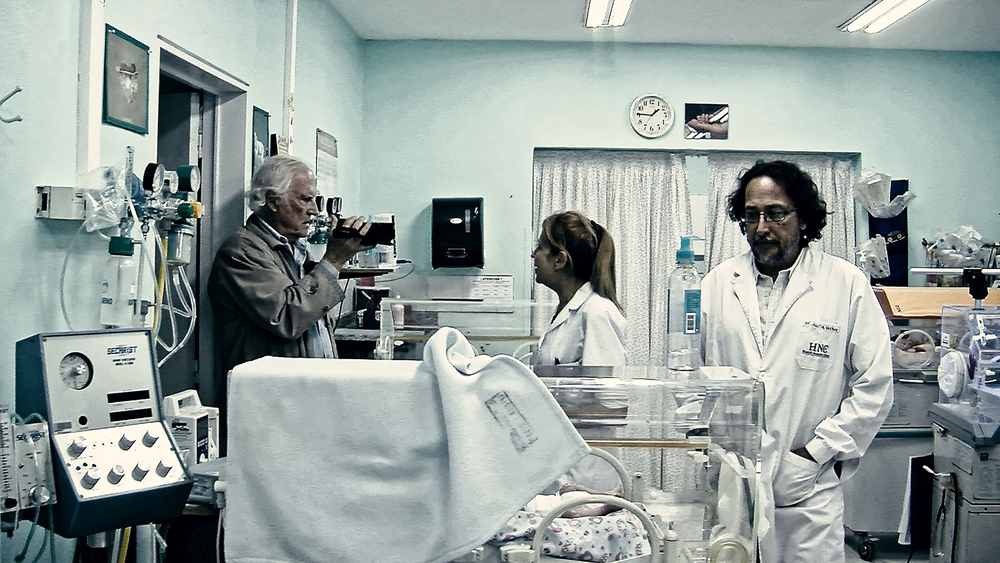 Viaje a los Pueblos Fumigados (A Journey to the Fumigated Towns)[/caption]
This year, for the second time ever, the 2018 Berlin International Film Festival will present the Glashütte Original – Documentary Award. A total of 18 documentary films from the current program of the Competition, Berlinale Special, Panorama, Forum, Generation and Perspektive Deutsches Kino sections and the special presentation Culinary Cinema are nominated for the Glashütte Original – Documentary Award. All nominated films will celebrate their world premiere at the Berlinale 2018.
The Glashütte Original – Documentary Award is endowed with € 50,000, and trophy funded by Glashütte Original. The prize money will be split between the film’s director and producer. The prize will be presented during the official Award Ceremony in the Berlinale Palast on February 24.
A three-member jury will pick the winner: Cíntia Gil (Portugal) – co-director of the Doclisboa, documentary film festival in Portugal ; Ulrike Ottinger (Germany) -director; and Eric Schlosser – (USA)investigative journalist, playwright, screenwriter, and filmmaker.
The following films are nominated for the Glashütte Original – Documentary Award:
Viaje a los Pueblos Fumigados (A Journey to the Fumigated Towns)[/caption]
This year, for the second time ever, the 2018 Berlin International Film Festival will present the Glashütte Original – Documentary Award. A total of 18 documentary films from the current program of the Competition, Berlinale Special, Panorama, Forum, Generation and Perspektive Deutsches Kino sections and the special presentation Culinary Cinema are nominated for the Glashütte Original – Documentary Award. All nominated films will celebrate their world premiere at the Berlinale 2018.
The Glashütte Original – Documentary Award is endowed with € 50,000, and trophy funded by Glashütte Original. The prize money will be split between the film’s director and producer. The prize will be presented during the official Award Ceremony in the Berlinale Palast on February 24.
A three-member jury will pick the winner: Cíntia Gil (Portugal) – co-director of the Doclisboa, documentary film festival in Portugal ; Ulrike Ottinger (Germany) -director; and Eric Schlosser – (USA)investigative journalist, playwright, screenwriter, and filmmaker.
The following films are nominated for the Glashütte Original – Documentary Award:
Competition – Out of competition
Eldorado Switzerland / Germany By Markus ImhoofBerlinale Special
Viaje a los Pueblos Fumigados (A Journey to the Fumigated Towns) Argentina By Fernando SolanasPanorama
Al Gami’ya (What Comes Around) Lebanon / Egypt / Greece / Qatar / Slovenia By Reem Saleh Až přijde válka (When the War Comes) Czech Republic / Croatia By Jan Gebert Ex Pajé (Ex Shaman) Brazil By Luiz Bolognesi Game Girls France / Germany By Alina Skrzeszewska Obscuro Barocco France / Greece By Evangelia Kranioti Zentralflughafen THF (Central Airport THF) Germany / France / Brazil By Karim AïnouzForum
Den’ Pobedy (Victory Day) Germany By Sergei Loznitsa L’empire de la perfection (In the Realm of Perfection) France By Julien Faraut Minatomachi (Inland Sea) Japan / USA By Kazuhiro Soda Premières solitudes (Young Solitude) France By Claire Simon Waldheims Walzer Austria By Ruth BeckermannGeneration
Ceres Belgium / Netherlands By Janet van den Brand What Walaa Wants Canada / Denmark By Christy GarlandPerspektive Deutsches Kino
The Best Thing You Can Do With Your Life Germany / Mexico By Zita Erffa draußen Germany By Johanna Sunder-Plassmann, Tama Tobias-MachtCulinary Cinema
The Green Lie Austria By Werner Boote
-
2018 Berlin Film Festival Unveils Full Panorama Lineup, Opens with Wolfgang Fischer’s STYX
[caption id="attachment_26726" align="aligncenter" width="960"] Styx[/caption]
The 2018 Berlin International Film Festival has revealed the full lineup of the Panorama program, which will feature a total of 47 films from 40 countries, with 37 world premieres and 16 directorial debuts. 20 films will be screened in the scope of Panorama Dokumente , while 27 fiction features are shown in Panorama Special as well as the main program.
The section takes a look at Wolfgang Fischer’s Styx , which will open Panorama Special on February 16 at Zoo Palace. Nearly dialogue-free, the film tells the story of a female doctor on a sailing vacation.
A Czech production opens Panorama Dokumente. Jan Gebert’s Až přijde válka ( When the War Comes ) is the global trend of a socially acceptable form of nationalism using the example of the Slovak Slovenski Branci Slovak paramilitary organization. Árpád Bogdán’s feature film Genezis ( Genesis ) takes place on the series of attacks on Roma in Hungary in 2008/2009, exposing their effects on the victimized families and the community as well as casting light on the failures of the Hungarian judicial system pursuit of those guilty of crimes perpetrated under the dictatorial Franco regime is depicted in The Silence of Others, produced by Pedro Almodóvar. Former Brazilian president Dilma Roussef’s impeachment can be witnessed firsthand in O processo ( The Trial ).
In Generation Wealth , Lauren Greenfield raises awareness for the self-indulgent quest for luxury and the total surrender to vanity leading to a sort of “ultra-decadence,” while in Lemonade , produced by Cristian Mungiu, the American Dream remains tauntingly out of reach for those who can not afford to buy a piece of it. In the French-German production Game Girls , two women try to escape life on Skid Row, the USA’s “Capital City of the Homeless”. Shakedown immerses the viewer in the Afro-American queer strip club scene of Los Angeles 1990s, relating its protagonists’ search for freedom and self-determination to great immediacy. In the Italian production country, Iranian director Babak Jalali who is defending their cultural identity with dignity.
Family dynamics under the microscope: In Al Gami’ya ( What Comes Around ), the residents of one of Cairo’s poorest districts have developed a bank-free financing system for themselves. Two intimate portraits of rural conflict, set in Central China’s Henan province and the German state of Saxony-Anhalt respectively, are drawn in Jordan Schiele’s The Silk and the Flame and Rosa Hannah Ziegler’s family life ( Family Life ). Yang Mingming’s debut film Rou Qing Shi ( Girls Always Happy ) showcases the verbal duels of an odd mother-daughter duo looking for happiness in style or daydreams of getting rich quick. In La enfermedad del domingo ( Sunday’s Illness ), a mother and her daughter return to one another following years of estrangement. In Jibril , her final work for the Babelsberg University of Applied Sciences KONRAD WOLF, Henrika Kull depicts the isolation and love in the interaction between a single mom and a prison inmate.
The Argentinian production Marilyn and the Brazilian film Tinta Bruta ( Hard Paint ) both show the isolation and the inherent in their protagonists’ search for their place in the world. In the mafia tale La terra dell ‘abbastanza ( Boys Cry ), two young men discover an ostensibly simple way out of a sticky situation. A complex web of responsibilities is included in the two instalments of the miniseries Ondes de choc ( Shock Waves ), directed by Lionel Baier and Ursula Meier.
Three further films serve as reflections on cinema itself: Mes provinciales ( A Paris Education ), which is set in a Parisian millennial student milieu; Depending vois rouge ( I See Red People ), In Which Bojina Payanotova Confronts her parents With Their possible connections to the Bulgarian secret police; and Hotel Jugoslavija , in which director Nicolas Wagnières elevates at abandoned Grand Hotel to the status of contemporary witness to history, acting on his principle of “filming to retain and regain”.
Fluid boundaries between reality and fiction are especially present in four productions. Xiao Mei investigates the enigma surrounding the disappearance of a young woman while the dark fairy tale Koly padayut pereva ( When the Trees Fall ) includes the frightening and enchanting experiences of three generations of women. In a hybrid form between fiction and documentary film, Trinta Lumes ( Thirty Souls ) reimagines the Galician backcountry as a mythical place populated by both the living and the dead. Finally, in the deceptively calm flow of horizon ‘s ( Horizon ) images, a man is at risk of losing his footing in life after a separation.
The hard reality reflected in two productions from India and the Democratic Republic of the Congo was in stark contrast in this context. In Garbage , a young woman’s endures a nightmare of male violence. Kinshasa Makambo on the other hand provides insight into the brutal everyday existence of Congolese resistance fighters.
In addition to their appearance in Yocho , cinematic dystopias and allegories of reality are featured in Kim Ki-duk’s Inkan, gongkan, sikan grigo inkan ( Human, Space, Time and Human ) , in which of the widely differing backgrounds assembled on a warship develop a bestial need for patriarchal domination. From Iran comes the film Hojoom (Invasion ), which adeptly establishes an oppressive mood with its post-apocalyptic science-fiction world devoid of sunlight.
Partisan takes a look back at Frank Castorf’s twenty-five year legacy at Berlin’s Volksbühne theater. Chilly Gonzales, self-proclaimed president of the Berlin Underground, is the subject of Shut Up and Play the Piano . MATANGI / MAYA / MIA The Sri Lankan Resistance artist portrays the controversial star between the labels attached to the music and media industries. In Idris Elba’s directorial debut, Yardie , the score by Dickon Hinchcliffe (“Tindersticks”) accentuates the journey of a young man from Kingston to London .
Al Gami’ya ( What Comes Around ) – Lebanon / Egypt / Greece / Qatar / Slovenia
By Reem Saleh
Documentary
World Premiere
Až přijde válka ( When the War Comes ) – Czech Republic / Croatia
By Jan Gebert
Documentary
World Premiere
La enfermedad del domingo ( Sunday’s Illness ) – Spain
By Ramón Salazar
With Bárbara Lennie, Susi Sánchez, Greta Fernández, Miguel Ángel Solá, Richard Bohringer
World premiere
Familienleben ( Family Life ) – Germany
By Rosa Hannah Ziegler
Documentary
World Premiere
Game Girls – France / Germany
By Alina Skrzeszewska
Documentary
World Premiere
Garbage – India
By Q
With Tanmay Dhanania, Trimala Adhikari, Satarupa The
World Premiere
Generation Wealth – USA
By Lauren Greenfield
Documentary
International Premiere
Genezis ( Genesis ) – Hungary
By Árpád Bogdán
With Anna Marie Cseh, Enikő Anna Illési, Milán Csordá’s
World Premiere
Hojoom ( Invasion ) – Iran
By Shahram Mokri
With Abed Abest, Elaheh Bakhshi, Babak Karimi, Pedram Sharifi, Mehdi Etemad Saied
International Premiere
Horizonti ( Horizon ) – Georgia / Sweden
By Tinatin Kajrishvili
With George Bochorishvili, Ia Sukhitashvili, Jano Izoria, Soso Gogichaishvili
World Premiere
Hotel Jugoslavija – Switzerland
By Nicolas Wagnières
Documentary
European Premiere
Inkan, gongkan, sikan grigo inkan ( Human, Space, Time and Human ) – Republic of Korea
By Kim Ki-dukWith Mina Fujii, Jang Keun-suk, Ahn Sung-ki, Lee Sung-jae, Ryoo Seung-bum, Sung Ki-youn, Joe Odagiri
World premiere
Je vois rouge ( I See Red People ) – France / Bulgaria
By Bojina Panayotova
Documentary
World Premiere
Jibril – Germany
By Henrika Kull
With Susana Abdulmajid, Malik Adan, Doua Rahal, Emna El-Aouni
World Premiere
Kinshasa Makambo – Democratic Republic of the Congo / France / Switzerland / Germany / Qatar / Norway
By Dieudo Hamadi
Documentary
World Premiere
Koly padayut dereva ( When the Trees Fall ) – Ukraine / Poland / Macedonia
By Marysia Nikitiuk
With Anastasiia Pustovit, Sofia Halaimova, Maksym Samchyk, Mariya Svizhynska, Alla Samoilenko
World Premiere
Country – Italy / France / Netherlands / Mexico
By Babak Jalali
With Rod Rondeaux, Florence Klein, James Coleman, Wilma Pelly
World Premiere
Lemonade – Romania / Germany / Canada / Sweden
By Ioana Uricaru
With Mina Manovici, Steve Bacic, Dylan Scott Smith, Milan Hurduc, Ruxandra Maniu
World Premiere
Marilyn – Argentina / Chile
By Martín Rodríguez Redondo
With Walter Rodriguez, Catalina Saavedra, Germán de Silva, Ignacio Giménez, Rodolfo Garcia Werner
World Premiere
MATANGI / MAYA / MIA – USA / United Kingdom / Sri Lanka
By Steve Loveridge
With Maya Arulpragasam
Documentary
International Premiere
Mes provinciales ( A Paris Education ) – France
By Jean Paul Civeyrac
With Andranic Manet, Corentin Fila, Gonzague Van Bervesselès, Diane Rouxel, Jenna Thiam, Sophie Verbeeck
World Premiere
O processo ( The Trial ) – Brazil / Germany / Netherlands
By Maria Ramos
Documentary
World Premiere
Ondes de choc – Journal de ma tête ( Shock Waves – Diary of My Mind ) – Switzerland
By Ursula Meier
With Fanny Ardant, Kacey Mottet-Klein, Jean-Philippe Ecoffey, Carlo Brandt, Stéphanie Blanchoud, Jean-Quentin Châtelain
International Premiere
Ondes de choc – Prénom: Mathieu ( Shock Waves – First Name: Mathieu ) – Switzerland
By Lionel Baier
With Maxime Gorbatchevsky, Michel Vuillermoz, Ursina Lardi, Mickael Amman, Adrien Barazzone, Piere-Isaïe Duc, Nastassja Tanner
International Premiere
Partisan – Germany
By Lutz Pehnert, Matthias Ehlert, Adama Ulrich
With Frank Castorf, Sophie Rois, Kathrin Angerer, Herbert Fritsch, Henry Hübchen, Alexander Scheer
Documentary
World Premiere
Rou qing shi ( Girls Always Happy ) – People’s Republic of China
Yang Mingming
With Nai An, Yang Mingming, Zhang Xianmin, Li Qinqin, Huang Wei, Yuan Li
World Premiere
Shakedown – USA
By Leilah Weinraub
Documentary
World Premiere
Shut Up and Play the Piano – Germany / France / United Kingdom
By Philip Jedicke
With Chilly Gonzales, Peaches, Feist, Sibylle Berg, Jarvis Cocker
Documentary
World Premiere
La terra dell’abbastanza ( Boys Cry ) – Italy
By Damiano D’Innocenzo, Fabio D’Innocenzo
With Matteo Olivetti, Andrea Carpenzano, Milena Mancini, Max Tortora, Luca Zingaretti
World Premiere
The Silence of Others – USA / Spain
By Almudena Carracedo, Robert Bahar
Documentary
World Premiere
The Silk and the Flame – United States
By Jordan Schiele
Documentary
World Premiere
Styx – Germany / Austria
By Wolfgang Fischer
With Susanne Wolff, Gedion Oduor
World Premiere
Tinta bruta ( Hard Paint )- BrazilBy Marcio Reolon, Filipe Matzembacher
With Shico Menegat, Bruno Fernandes, Guega Peixoto, Sandra Dani, Frederico Vasque’s
World Premiere
Trinta Lumes ( Thirty Souls )- SpainBy Diana Toucedo
With Alba Arias, Samuel Vilariño’s
World Premiere
Xiao Mei – Taiwan
By Maren Hwang
With Chen Yi-Wen, Liu Kuan-Ting, Na Dow, Wu Chien-Ho, Yin Shin, Laurence Chiu, Chang Shao-Huai, Samantha Ko, Wu Kang-jen, Jao Cincin
World Premiere
Yardie – United Kingdom
By Idris Elba
With Aml Ameen, Shantol Jackson, Stephen Graham, Fraser James, Sheldon Shepherd, Everaldo Creary
European Premiere
Already featured films:
L’Animale – Austria by Katharina Mückstein
Bixa Travesty ( Tranny Fag ) – Brazil by Claudia Priscilla, Kiko Goifman
Ex Pajé ( Ex Shaman ) – Brazil by Luiz Bolognesi
Malambo, el hombre bueno (Malambo, the Good Man) – Argentina by Santiago Loza
Obscuro Barroco – France / Greece by Evangelia Kranioti
La omisión ( The Omission ) – Argentina / Netherlands / Switzerland by Sebastián Schjaer
River’s Edge – Japan by Isao Yukisada
Profiles – USA / UK / Cyprus by Timur Bekmambetov
That Summer – Sweden / Denmark, USA by Göran Hugo Olsson
Yocho (Foreboding) – Japan by Kiyoshi Kurosawa
Central Airport THF ( Central Airport THF ) – Germany / France / Brazil by Karim Aïnouz
Styx[/caption]
The 2018 Berlin International Film Festival has revealed the full lineup of the Panorama program, which will feature a total of 47 films from 40 countries, with 37 world premieres and 16 directorial debuts. 20 films will be screened in the scope of Panorama Dokumente , while 27 fiction features are shown in Panorama Special as well as the main program.
The section takes a look at Wolfgang Fischer’s Styx , which will open Panorama Special on February 16 at Zoo Palace. Nearly dialogue-free, the film tells the story of a female doctor on a sailing vacation.
A Czech production opens Panorama Dokumente. Jan Gebert’s Až přijde válka ( When the War Comes ) is the global trend of a socially acceptable form of nationalism using the example of the Slovak Slovenski Branci Slovak paramilitary organization. Árpád Bogdán’s feature film Genezis ( Genesis ) takes place on the series of attacks on Roma in Hungary in 2008/2009, exposing their effects on the victimized families and the community as well as casting light on the failures of the Hungarian judicial system pursuit of those guilty of crimes perpetrated under the dictatorial Franco regime is depicted in The Silence of Others, produced by Pedro Almodóvar. Former Brazilian president Dilma Roussef’s impeachment can be witnessed firsthand in O processo ( The Trial ).
In Generation Wealth , Lauren Greenfield raises awareness for the self-indulgent quest for luxury and the total surrender to vanity leading to a sort of “ultra-decadence,” while in Lemonade , produced by Cristian Mungiu, the American Dream remains tauntingly out of reach for those who can not afford to buy a piece of it. In the French-German production Game Girls , two women try to escape life on Skid Row, the USA’s “Capital City of the Homeless”. Shakedown immerses the viewer in the Afro-American queer strip club scene of Los Angeles 1990s, relating its protagonists’ search for freedom and self-determination to great immediacy. In the Italian production country, Iranian director Babak Jalali who is defending their cultural identity with dignity.
Family dynamics under the microscope: In Al Gami’ya ( What Comes Around ), the residents of one of Cairo’s poorest districts have developed a bank-free financing system for themselves. Two intimate portraits of rural conflict, set in Central China’s Henan province and the German state of Saxony-Anhalt respectively, are drawn in Jordan Schiele’s The Silk and the Flame and Rosa Hannah Ziegler’s family life ( Family Life ). Yang Mingming’s debut film Rou Qing Shi ( Girls Always Happy ) showcases the verbal duels of an odd mother-daughter duo looking for happiness in style or daydreams of getting rich quick. In La enfermedad del domingo ( Sunday’s Illness ), a mother and her daughter return to one another following years of estrangement. In Jibril , her final work for the Babelsberg University of Applied Sciences KONRAD WOLF, Henrika Kull depicts the isolation and love in the interaction between a single mom and a prison inmate.
The Argentinian production Marilyn and the Brazilian film Tinta Bruta ( Hard Paint ) both show the isolation and the inherent in their protagonists’ search for their place in the world. In the mafia tale La terra dell ‘abbastanza ( Boys Cry ), two young men discover an ostensibly simple way out of a sticky situation. A complex web of responsibilities is included in the two instalments of the miniseries Ondes de choc ( Shock Waves ), directed by Lionel Baier and Ursula Meier.
Three further films serve as reflections on cinema itself: Mes provinciales ( A Paris Education ), which is set in a Parisian millennial student milieu; Depending vois rouge ( I See Red People ), In Which Bojina Payanotova Confronts her parents With Their possible connections to the Bulgarian secret police; and Hotel Jugoslavija , in which director Nicolas Wagnières elevates at abandoned Grand Hotel to the status of contemporary witness to history, acting on his principle of “filming to retain and regain”.
Fluid boundaries between reality and fiction are especially present in four productions. Xiao Mei investigates the enigma surrounding the disappearance of a young woman while the dark fairy tale Koly padayut pereva ( When the Trees Fall ) includes the frightening and enchanting experiences of three generations of women. In a hybrid form between fiction and documentary film, Trinta Lumes ( Thirty Souls ) reimagines the Galician backcountry as a mythical place populated by both the living and the dead. Finally, in the deceptively calm flow of horizon ‘s ( Horizon ) images, a man is at risk of losing his footing in life after a separation.
The hard reality reflected in two productions from India and the Democratic Republic of the Congo was in stark contrast in this context. In Garbage , a young woman’s endures a nightmare of male violence. Kinshasa Makambo on the other hand provides insight into the brutal everyday existence of Congolese resistance fighters.
In addition to their appearance in Yocho , cinematic dystopias and allegories of reality are featured in Kim Ki-duk’s Inkan, gongkan, sikan grigo inkan ( Human, Space, Time and Human ) , in which of the widely differing backgrounds assembled on a warship develop a bestial need for patriarchal domination. From Iran comes the film Hojoom (Invasion ), which adeptly establishes an oppressive mood with its post-apocalyptic science-fiction world devoid of sunlight.
Partisan takes a look back at Frank Castorf’s twenty-five year legacy at Berlin’s Volksbühne theater. Chilly Gonzales, self-proclaimed president of the Berlin Underground, is the subject of Shut Up and Play the Piano . MATANGI / MAYA / MIA The Sri Lankan Resistance artist portrays the controversial star between the labels attached to the music and media industries. In Idris Elba’s directorial debut, Yardie , the score by Dickon Hinchcliffe (“Tindersticks”) accentuates the journey of a young man from Kingston to London .
Al Gami’ya ( What Comes Around ) – Lebanon / Egypt / Greece / Qatar / Slovenia
By Reem Saleh
Documentary
World Premiere
Až přijde válka ( When the War Comes ) – Czech Republic / Croatia
By Jan Gebert
Documentary
World Premiere
La enfermedad del domingo ( Sunday’s Illness ) – Spain
By Ramón Salazar
With Bárbara Lennie, Susi Sánchez, Greta Fernández, Miguel Ángel Solá, Richard Bohringer
World premiere
Familienleben ( Family Life ) – Germany
By Rosa Hannah Ziegler
Documentary
World Premiere
Game Girls – France / Germany
By Alina Skrzeszewska
Documentary
World Premiere
Garbage – India
By Q
With Tanmay Dhanania, Trimala Adhikari, Satarupa The
World Premiere
Generation Wealth – USA
By Lauren Greenfield
Documentary
International Premiere
Genezis ( Genesis ) – Hungary
By Árpád Bogdán
With Anna Marie Cseh, Enikő Anna Illési, Milán Csordá’s
World Premiere
Hojoom ( Invasion ) – Iran
By Shahram Mokri
With Abed Abest, Elaheh Bakhshi, Babak Karimi, Pedram Sharifi, Mehdi Etemad Saied
International Premiere
Horizonti ( Horizon ) – Georgia / Sweden
By Tinatin Kajrishvili
With George Bochorishvili, Ia Sukhitashvili, Jano Izoria, Soso Gogichaishvili
World Premiere
Hotel Jugoslavija – Switzerland
By Nicolas Wagnières
Documentary
European Premiere
Inkan, gongkan, sikan grigo inkan ( Human, Space, Time and Human ) – Republic of Korea
By Kim Ki-dukWith Mina Fujii, Jang Keun-suk, Ahn Sung-ki, Lee Sung-jae, Ryoo Seung-bum, Sung Ki-youn, Joe Odagiri
World premiere
Je vois rouge ( I See Red People ) – France / Bulgaria
By Bojina Panayotova
Documentary
World Premiere
Jibril – Germany
By Henrika Kull
With Susana Abdulmajid, Malik Adan, Doua Rahal, Emna El-Aouni
World Premiere
Kinshasa Makambo – Democratic Republic of the Congo / France / Switzerland / Germany / Qatar / Norway
By Dieudo Hamadi
Documentary
World Premiere
Koly padayut dereva ( When the Trees Fall ) – Ukraine / Poland / Macedonia
By Marysia Nikitiuk
With Anastasiia Pustovit, Sofia Halaimova, Maksym Samchyk, Mariya Svizhynska, Alla Samoilenko
World Premiere
Country – Italy / France / Netherlands / Mexico
By Babak Jalali
With Rod Rondeaux, Florence Klein, James Coleman, Wilma Pelly
World Premiere
Lemonade – Romania / Germany / Canada / Sweden
By Ioana Uricaru
With Mina Manovici, Steve Bacic, Dylan Scott Smith, Milan Hurduc, Ruxandra Maniu
World Premiere
Marilyn – Argentina / Chile
By Martín Rodríguez Redondo
With Walter Rodriguez, Catalina Saavedra, Germán de Silva, Ignacio Giménez, Rodolfo Garcia Werner
World Premiere
MATANGI / MAYA / MIA – USA / United Kingdom / Sri Lanka
By Steve Loveridge
With Maya Arulpragasam
Documentary
International Premiere
Mes provinciales ( A Paris Education ) – France
By Jean Paul Civeyrac
With Andranic Manet, Corentin Fila, Gonzague Van Bervesselès, Diane Rouxel, Jenna Thiam, Sophie Verbeeck
World Premiere
O processo ( The Trial ) – Brazil / Germany / Netherlands
By Maria Ramos
Documentary
World Premiere
Ondes de choc – Journal de ma tête ( Shock Waves – Diary of My Mind ) – Switzerland
By Ursula Meier
With Fanny Ardant, Kacey Mottet-Klein, Jean-Philippe Ecoffey, Carlo Brandt, Stéphanie Blanchoud, Jean-Quentin Châtelain
International Premiere
Ondes de choc – Prénom: Mathieu ( Shock Waves – First Name: Mathieu ) – Switzerland
By Lionel Baier
With Maxime Gorbatchevsky, Michel Vuillermoz, Ursina Lardi, Mickael Amman, Adrien Barazzone, Piere-Isaïe Duc, Nastassja Tanner
International Premiere
Partisan – Germany
By Lutz Pehnert, Matthias Ehlert, Adama Ulrich
With Frank Castorf, Sophie Rois, Kathrin Angerer, Herbert Fritsch, Henry Hübchen, Alexander Scheer
Documentary
World Premiere
Rou qing shi ( Girls Always Happy ) – People’s Republic of China
Yang Mingming
With Nai An, Yang Mingming, Zhang Xianmin, Li Qinqin, Huang Wei, Yuan Li
World Premiere
Shakedown – USA
By Leilah Weinraub
Documentary
World Premiere
Shut Up and Play the Piano – Germany / France / United Kingdom
By Philip Jedicke
With Chilly Gonzales, Peaches, Feist, Sibylle Berg, Jarvis Cocker
Documentary
World Premiere
La terra dell’abbastanza ( Boys Cry ) – Italy
By Damiano D’Innocenzo, Fabio D’Innocenzo
With Matteo Olivetti, Andrea Carpenzano, Milena Mancini, Max Tortora, Luca Zingaretti
World Premiere
The Silence of Others – USA / Spain
By Almudena Carracedo, Robert Bahar
Documentary
World Premiere
The Silk and the Flame – United States
By Jordan Schiele
Documentary
World Premiere
Styx – Germany / Austria
By Wolfgang Fischer
With Susanne Wolff, Gedion Oduor
World Premiere
Tinta bruta ( Hard Paint )- BrazilBy Marcio Reolon, Filipe Matzembacher
With Shico Menegat, Bruno Fernandes, Guega Peixoto, Sandra Dani, Frederico Vasque’s
World Premiere
Trinta Lumes ( Thirty Souls )- SpainBy Diana Toucedo
With Alba Arias, Samuel Vilariño’s
World Premiere
Xiao Mei – Taiwan
By Maren Hwang
With Chen Yi-Wen, Liu Kuan-Ting, Na Dow, Wu Chien-Ho, Yin Shin, Laurence Chiu, Chang Shao-Huai, Samantha Ko, Wu Kang-jen, Jao Cincin
World Premiere
Yardie – United Kingdom
By Idris Elba
With Aml Ameen, Shantol Jackson, Stephen Graham, Fraser James, Sheldon Shepherd, Everaldo Creary
European Premiere
Already featured films:
L’Animale – Austria by Katharina Mückstein
Bixa Travesty ( Tranny Fag ) – Brazil by Claudia Priscilla, Kiko Goifman
Ex Pajé ( Ex Shaman ) – Brazil by Luiz Bolognesi
Malambo, el hombre bueno (Malambo, the Good Man) – Argentina by Santiago Loza
Obscuro Barroco – France / Greece by Evangelia Kranioti
La omisión ( The Omission ) – Argentina / Netherlands / Switzerland by Sebastián Schjaer
River’s Edge – Japan by Isao Yukisada
Profiles – USA / UK / Cyprus by Timur Bekmambetov
That Summer – Sweden / Denmark, USA by Göran Hugo Olsson
Yocho (Foreboding) – Japan by Kiyoshi Kurosawa
Central Airport THF ( Central Airport THF ) – Germany / France / Brazil by Karim Aïnouz
-
Berlin Film Festival Completes Forum 2018 Program with Special Screenings + Concert
[caption id="attachment_26709" align="aligncenter" width="1200"]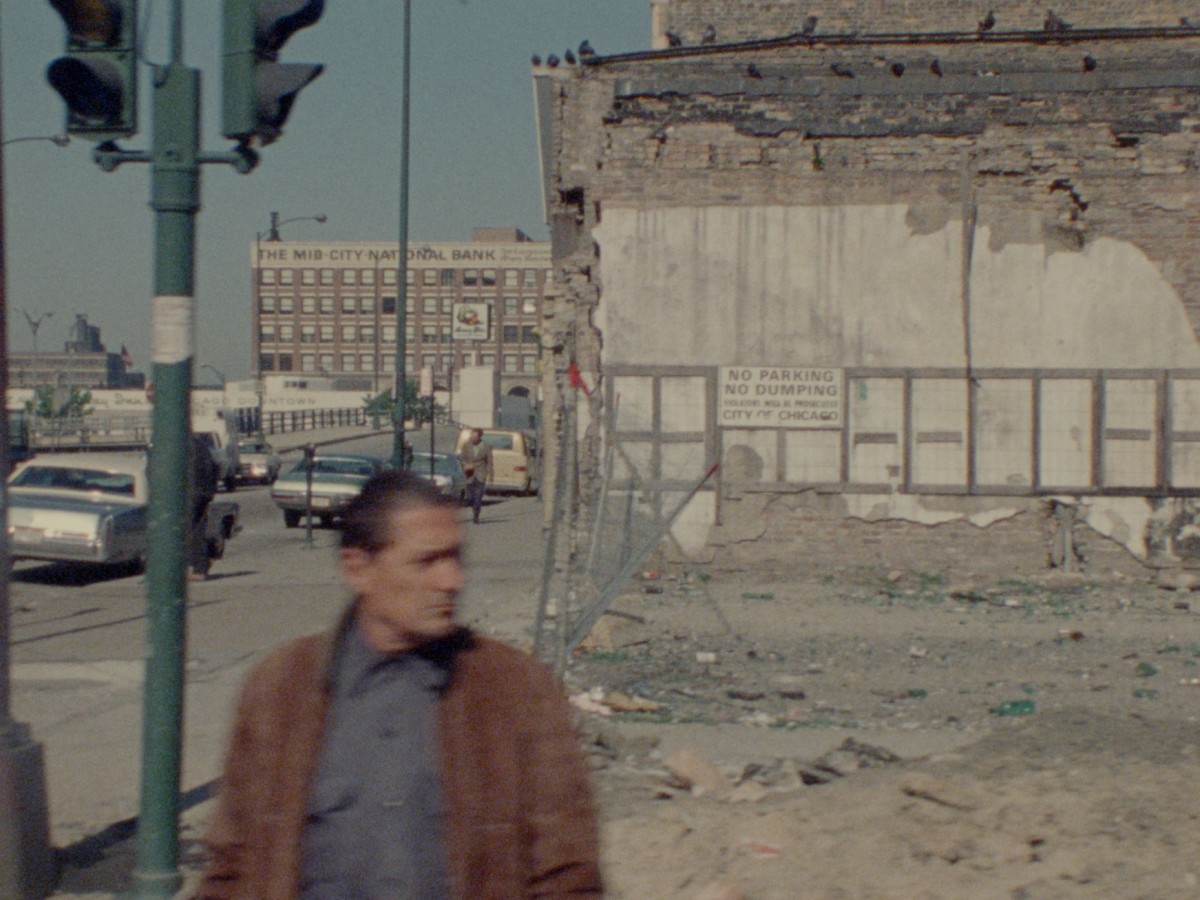 11 x 14. by James Benning[/caption]
A series of Special Screenings committed to an alternative view of film historiography has now completed the The Forum program lineup of the 2018 Berlin International Film Festival.
Since its foundation in 1971, the Forum has always shone a spotlight on historical films too, shaking the foundations of a cinematic canon whose main interest lies in feature films from Western Europe and North America. This year’s programme once again stands in opposition to such views and is dedicated to cinema from Africa, documentary and experimental film, “anti-cinema” films and salacious b-movies and “dirty” films.
Before becoming Nigerian prime minister, writer Abubakar Tafawa Balewa landed a bestseller with his biographical novella “Shaihu Umar”. In 1976, Adamu Halilu adapted the material into a film, which is set in the late 19th century and revolves around an Islamic cleric telling his life story, which bears the marks of slavery. Long thought lost, the film rolls for several prints were rediscovered in 2016 in the archive of the Nigerian Film Corporation and restored by Arsenal – Institute for Film and Video Art with the support of the German Federal Foreign Office. The splendid new digital version of Shaihu Umar now receives its first screening at the Forum.
The Geschichten vom Kübelkind (Stories of the Dumpster Kid) were shown at the very first International Forum of New Cinema in 1971 and have now been digitally restored. The series revolves around a rebellious “Dumpster Kid” played by Kristine de Loup, who always appears in a red dress and has various anarchic struggles with society. Ula Stöckl and Edgar Reitz shot Geschichten vom Kübelkind in 1969 with only their friends. Their series of 25 16mm short films of different lengths was a way of positioning themselves outside of the standard cinema system, with guests at a sort of pub-cum-cinema in Munich able to “order” individual episodes from a menu. Together with the documentary Der Film verlässt das Kino: Vom Kübelkind-Experiment und anderen Utopien (Film Beyond Cinema: The Dumpster Kid Experiment and Other Utopias) by Robert Fischer, a selection of the unique films is now to be screened again. A “pub cinema” much the same as the original screening set-up will also be installed at silent green Kulturquartier in Wedding on February 19, with these Special Screenings attended by Stöckl and Reitz.
Put together over five decades, the Arsenal and Forum archive still forms an important part of the institution’s work. This work involves a large amount of international exchange, which forms the subject of a public panel discussion on February 22 as part of Forum Expanded’s “Think Film No. 6 – Archival Constellations”. One of the participants is Viviana García Besné, who attends as a representative of the Permanencia Voluntaria film archive in Mexico, which was heavily damaged during the earthquake in September 2017. The archive’s treasures include many of the popular films built around the character of luchador Rodolfo Guzmán Huerta alias El Santo, a wrestling superstar and actor who always appeared in his iconic silver mask. He plays the role of “El Enmascarado” in his first film Santo contra Cerebro del mal (Santo vs. Evil Brain), which was shot in Cuba in 1961 by Joselito Rodríguez. A restored version has now been created in collaboration with the Academy Film Archive, which allows an important piece of Mexican popular culture to make its way back into cinemas.
11 x 14, the first feature-length film by James Benning, is film theory in images. It is composed of single shots, each of which individually narrate something and hold the film together via recurring elements. What is narrated is pure form. 11 x 14 was originally shown at the Forum in 1977. It has now been restored by the Austrian Film Museum in collaboration with Arsenal – Institute for Film and Video Art and returns to the Forum once again as a 35mm print. As the smallest unit of a festival, a film can also become its narrative.
In their 1985 documentary Yama–Attack to Attack, which is hardly known outside of Japan, Japanese directors Mitsuo Sato and Kyoichi Yamaoka created a portrait of the Tokyo district of Sanya, where day workers lived in wretched conditions and were exploited by Yakuza gangs in full view of the police and the Japanese elite. For documenting the excesses of a capitalism with fascist undertones, the two directors paid the price with their lives, as both were murdered by Yakuza henchmen. This underrated milestone in political documentary filmmaking will be screened at the Forum on a 16mm print with English subtitles.
Mohamed Zinet’s film Tahia ya Didou was shot in 1971 as a commission for the city of Algiers and blends documentary and fictional elements into a poetic, biting, passionate portrait of the director’s home city. Shelved by its original commissioners, it developed into a cult film following repeated screenings at the Cinémathèque d’Alger. A digital restoration of this imaginative work now receives its premiere at the Forum.
Kad budem mrtav i beo (When I Am Dead and Pale) by Živojin Pavlović is regarded as a key work of the Yugoslavian “Black Wave”. Shot in 1967, it tells the story of the irreverent Jimmy, who wants nothing more than to make it as a singer, regardless of his lack of talent. This punk film bursting with music also explores the bustling outskirts of Belgrade, which back then were still a work in progress. Following a digital restoration by the Jugoslovenska Kinoteka, this new version is screening for the first time at the Forum.
The Japanese “pink eiga” films form perhaps one of the most idiosyncratic phenomena in the whole of international cinema. Conceived to entice male audiences with erotic content, the genre also attracted numerous young directors who bent it to their will and created some of the most radical, avant-garde works in Japanese film. A considerable number of the Japanese directors most well-known today took their first steps with “pink film.” What’s less well-known is that one of the driving forces behind the “pinku eiga” genre is actually a woman, who was concealed behind the male pseudonym Daisuke Asakura. With its “Pink Tribute to Keiko Sato”, the Forum is showing three of the producer’s most original films. Atsushi Yamatoya wrote his absurdly titled 1967 film Inflatable Sex Doll of the Wastelands in parallel to his script for Seijun Suzuki’s classic Branded to Kill, to which the former work undoubtedly forms a twin of sorts. For Masao Adachi, 1971’s Gushing Prayer was one last attempt to couch social critique in sexually provocative form, before he turned his attention to political activism. Finally, the most recent work in the series is the debut film by Masayuki Suo, who later landed one of the biggest hits in Japanese film history with Shall We Dance. Abnormal Family from 1984 is his tribute to Yasujiro Ozu, who for all the stylistic similarities would hardly have been pleased by the degree of sexual permissiveness.
This year’s Forum program is to be opened with a concert by a group of Arab avant-garde musicians who will each provide a solo accompaniment to seven short films by Georges Méliès from 1899 to 1907. Supported by the Arab Fund for Arts and Culture (AFAC), Sharif Sehnaoui (electric guitar), Khyam Allami (synthesizer, oud, drums), Magda Mayas (piano), Tony Elieh (electric bass, electronics) and Abed Kobeissy (buzuk, electronics) will be giving their “Georges Méliès “Solitudes” Cine-concert” at the Delphi Filmpalast on February 16.
11 x 14. by James Benning[/caption]
A series of Special Screenings committed to an alternative view of film historiography has now completed the The Forum program lineup of the 2018 Berlin International Film Festival.
Since its foundation in 1971, the Forum has always shone a spotlight on historical films too, shaking the foundations of a cinematic canon whose main interest lies in feature films from Western Europe and North America. This year’s programme once again stands in opposition to such views and is dedicated to cinema from Africa, documentary and experimental film, “anti-cinema” films and salacious b-movies and “dirty” films.
Before becoming Nigerian prime minister, writer Abubakar Tafawa Balewa landed a bestseller with his biographical novella “Shaihu Umar”. In 1976, Adamu Halilu adapted the material into a film, which is set in the late 19th century and revolves around an Islamic cleric telling his life story, which bears the marks of slavery. Long thought lost, the film rolls for several prints were rediscovered in 2016 in the archive of the Nigerian Film Corporation and restored by Arsenal – Institute for Film and Video Art with the support of the German Federal Foreign Office. The splendid new digital version of Shaihu Umar now receives its first screening at the Forum.
The Geschichten vom Kübelkind (Stories of the Dumpster Kid) were shown at the very first International Forum of New Cinema in 1971 and have now been digitally restored. The series revolves around a rebellious “Dumpster Kid” played by Kristine de Loup, who always appears in a red dress and has various anarchic struggles with society. Ula Stöckl and Edgar Reitz shot Geschichten vom Kübelkind in 1969 with only their friends. Their series of 25 16mm short films of different lengths was a way of positioning themselves outside of the standard cinema system, with guests at a sort of pub-cum-cinema in Munich able to “order” individual episodes from a menu. Together with the documentary Der Film verlässt das Kino: Vom Kübelkind-Experiment und anderen Utopien (Film Beyond Cinema: The Dumpster Kid Experiment and Other Utopias) by Robert Fischer, a selection of the unique films is now to be screened again. A “pub cinema” much the same as the original screening set-up will also be installed at silent green Kulturquartier in Wedding on February 19, with these Special Screenings attended by Stöckl and Reitz.
Put together over five decades, the Arsenal and Forum archive still forms an important part of the institution’s work. This work involves a large amount of international exchange, which forms the subject of a public panel discussion on February 22 as part of Forum Expanded’s “Think Film No. 6 – Archival Constellations”. One of the participants is Viviana García Besné, who attends as a representative of the Permanencia Voluntaria film archive in Mexico, which was heavily damaged during the earthquake in September 2017. The archive’s treasures include many of the popular films built around the character of luchador Rodolfo Guzmán Huerta alias El Santo, a wrestling superstar and actor who always appeared in his iconic silver mask. He plays the role of “El Enmascarado” in his first film Santo contra Cerebro del mal (Santo vs. Evil Brain), which was shot in Cuba in 1961 by Joselito Rodríguez. A restored version has now been created in collaboration with the Academy Film Archive, which allows an important piece of Mexican popular culture to make its way back into cinemas.
11 x 14, the first feature-length film by James Benning, is film theory in images. It is composed of single shots, each of which individually narrate something and hold the film together via recurring elements. What is narrated is pure form. 11 x 14 was originally shown at the Forum in 1977. It has now been restored by the Austrian Film Museum in collaboration with Arsenal – Institute for Film and Video Art and returns to the Forum once again as a 35mm print. As the smallest unit of a festival, a film can also become its narrative.
In their 1985 documentary Yama–Attack to Attack, which is hardly known outside of Japan, Japanese directors Mitsuo Sato and Kyoichi Yamaoka created a portrait of the Tokyo district of Sanya, where day workers lived in wretched conditions and were exploited by Yakuza gangs in full view of the police and the Japanese elite. For documenting the excesses of a capitalism with fascist undertones, the two directors paid the price with their lives, as both were murdered by Yakuza henchmen. This underrated milestone in political documentary filmmaking will be screened at the Forum on a 16mm print with English subtitles.
Mohamed Zinet’s film Tahia ya Didou was shot in 1971 as a commission for the city of Algiers and blends documentary and fictional elements into a poetic, biting, passionate portrait of the director’s home city. Shelved by its original commissioners, it developed into a cult film following repeated screenings at the Cinémathèque d’Alger. A digital restoration of this imaginative work now receives its premiere at the Forum.
Kad budem mrtav i beo (When I Am Dead and Pale) by Živojin Pavlović is regarded as a key work of the Yugoslavian “Black Wave”. Shot in 1967, it tells the story of the irreverent Jimmy, who wants nothing more than to make it as a singer, regardless of his lack of talent. This punk film bursting with music also explores the bustling outskirts of Belgrade, which back then were still a work in progress. Following a digital restoration by the Jugoslovenska Kinoteka, this new version is screening for the first time at the Forum.
The Japanese “pink eiga” films form perhaps one of the most idiosyncratic phenomena in the whole of international cinema. Conceived to entice male audiences with erotic content, the genre also attracted numerous young directors who bent it to their will and created some of the most radical, avant-garde works in Japanese film. A considerable number of the Japanese directors most well-known today took their first steps with “pink film.” What’s less well-known is that one of the driving forces behind the “pinku eiga” genre is actually a woman, who was concealed behind the male pseudonym Daisuke Asakura. With its “Pink Tribute to Keiko Sato”, the Forum is showing three of the producer’s most original films. Atsushi Yamatoya wrote his absurdly titled 1967 film Inflatable Sex Doll of the Wastelands in parallel to his script for Seijun Suzuki’s classic Branded to Kill, to which the former work undoubtedly forms a twin of sorts. For Masao Adachi, 1971’s Gushing Prayer was one last attempt to couch social critique in sexually provocative form, before he turned his attention to political activism. Finally, the most recent work in the series is the debut film by Masayuki Suo, who later landed one of the biggest hits in Japanese film history with Shall We Dance. Abnormal Family from 1984 is his tribute to Yasujiro Ozu, who for all the stylistic similarities would hardly have been pleased by the degree of sexual permissiveness.
This year’s Forum program is to be opened with a concert by a group of Arab avant-garde musicians who will each provide a solo accompaniment to seven short films by Georges Méliès from 1899 to 1907. Supported by the Arab Fund for Arts and Culture (AFAC), Sharif Sehnaoui (electric guitar), Khyam Allami (synthesizer, oud, drums), Magda Mayas (piano), Tony Elieh (electric bass, electronics) and Abed Kobeissy (buzuk, electronics) will be giving their “Georges Méliès “Solitudes” Cine-concert” at the Delphi Filmpalast on February 16.
Concert:
“Georges Méliès „Solitudes“ Cine-concert” with Sharif Sehnaoui, Khyam Allami, Magda Mayas, Tony Elieh and Abed KobeissyThe 2018 Forum Special Screenings:
11 x 14 by James Benning, USA 1976 Der Film verlässt das Kino: Vom Kübelkind-Experiment und anderen Utopien (Film Beyond Cinema: The Dumpster Kid Experiment and Other Utopias) by Robert Fischer, Germany – WP Geschichten vom Kübelkind (Stories of the Dumpster Kid) by Ula Stöckl, Edgar Reitz, Germany 1970 Kad budem mrtav i beo (When I Am Dead and Pale) by Živojin Pavlović, Yugoslavia 1967 Santo contra Cerebro del mal (Santo vs. Evil Brain) by Joselito Rodríguez, Mexico 1961 Shaiu Umar by Adamu Halilu, Nigeria 1976 Tahia ya Didou by Mohamed Zinet, Algeria 1971 Yama–Attack to Attack by Mitsuo Sato, Kyoichi Yamaoka, Japan 1985“A Pink Tribute to Keiko Sato”:
Inflatable Sex Doll of the Wastelands by Atsushi Yamatoya, Japan 1967 Gushing Prayerby Masao Adachi, Japan 1971 Abnormal Family by Masayuki Suo, Japan 1984
-
Berlinale 2018: “NATIVe − A Journey into Indigenous Cinema” Spotlights Films from Pacific Ocean Region
[caption id="attachment_26701" align="aligncenter" width="1200"] MA’OHI NUI, au cœur de l’océan mon pays (MA’OHI NUI, in the heart of the ocean my country lies)[/caption]
This year, the 2018 Berlin International Film Festival will focus on Indigenous film-making in the countries and islands bound together by the Pacific Ocean, in the special program NATIVe − A Journey into Indigenous Cinema.
Climate change is the most obvious link between the two seemingly very different regions: Melting ice masses are among the leading causes of the rising sea level, which threatens the whole Pacific region, including the island nations and regions of Polynesia, Melanesia/New Guinea and Micronesia, along with their primarily Indigenous populations. But climate change is not the only regional commonality. Industrialization, the repression of Indigenous languages and cultures, forced relocations and other long-term effects of colonizing practices still have consequences for both the peoples of the Arctic regions and the cultural areas in and around the Pacific.
The documentary film MA’OHI NUI, au cœur de l’océan mon pays (MA’OHI NUI, in the heart of the ocean my country lies) clearly outlines one form of colonial aggression specific to the Pacific region: From 1966 to 1996, France ran an intensive nuclear testing program across French Polynesia. The film shows the catastrophic effects on the region’s environment and on the health and social structures of the Ma’ohi people. NATIVe will celebrate the documentary’s world premiere.
The destructive effects of centuries of colonial repression are also illustrated in Anastasia Lapsui’s and Markku Lehmuskallio’s poetic, activist film Fata Morgana, and in the short film Three Thousand by Asinnajaq. In one striking scene in Fata Morgana, the children of the Chukchi explain how they must choose new Russian names for themselves at school so that their Russian teacher can pronounce them better. And the narrator in Three Thousand, an evocative tapestry of animated images and archival material, comments: “My father was born in a spring igloo − half snow, half skin. I was born in a hospital, with jaundice and two teeth.”
As in previous years, there will be a number of talks and special presentations around the core film-program.
The panel discussion “Establishing Indigenous Cinema” will continue NATIVe’s long-standing and successful collaboration with the Embassy of Canada. The industry talk, in which film professionals will discuss the role of Indigenous cinema within the global film scene, will be followed by a screening of the short film programme Reel Kanata VI.
For the second time, NATIVe will be hosting an event together with the Helmholtz Climate Initiative Regional Climate Change (REKLIM) at the Alfred Wegener Institute, Helmholtz Centre for Polar and Marine Research and the DEKRA University of Applied Sciences Berlin. At “Indigenous Life and Global Climate Change − From Polar Regions to Pacific Islands. From Melting Sea Ice to Sea Level Rise” scientists and film-makers will take a closer look at the dramatic consequences of global warming and its regional effects in scientific talks, film screenings, and panel discussions.
Furthermore, Berlinale Special will present the international premiere of the Australian documentary film Gurrumul. The screening will take place at Haus der Berliner Festspiele in cooperation with NATIVe. Gurrumul is an intimate portrait of the life and musical career of the late Geoffrey Gurrumul Yunupingu, the internationally celebrated blind Aboriginal singer who masterfully combined rhythms and melodies of his people, the Yolngu, with contemporary western music.
Film program:
MA’OHI NUI, au cœur de l’océan mon pays (MA’OHI NUI, in the heart of the ocean my country lies)[/caption]
This year, the 2018 Berlin International Film Festival will focus on Indigenous film-making in the countries and islands bound together by the Pacific Ocean, in the special program NATIVe − A Journey into Indigenous Cinema.
Climate change is the most obvious link between the two seemingly very different regions: Melting ice masses are among the leading causes of the rising sea level, which threatens the whole Pacific region, including the island nations and regions of Polynesia, Melanesia/New Guinea and Micronesia, along with their primarily Indigenous populations. But climate change is not the only regional commonality. Industrialization, the repression of Indigenous languages and cultures, forced relocations and other long-term effects of colonizing practices still have consequences for both the peoples of the Arctic regions and the cultural areas in and around the Pacific.
The documentary film MA’OHI NUI, au cœur de l’océan mon pays (MA’OHI NUI, in the heart of the ocean my country lies) clearly outlines one form of colonial aggression specific to the Pacific region: From 1966 to 1996, France ran an intensive nuclear testing program across French Polynesia. The film shows the catastrophic effects on the region’s environment and on the health and social structures of the Ma’ohi people. NATIVe will celebrate the documentary’s world premiere.
The destructive effects of centuries of colonial repression are also illustrated in Anastasia Lapsui’s and Markku Lehmuskallio’s poetic, activist film Fata Morgana, and in the short film Three Thousand by Asinnajaq. In one striking scene in Fata Morgana, the children of the Chukchi explain how they must choose new Russian names for themselves at school so that their Russian teacher can pronounce them better. And the narrator in Three Thousand, an evocative tapestry of animated images and archival material, comments: “My father was born in a spring igloo − half snow, half skin. I was born in a hospital, with jaundice and two teeth.”
As in previous years, there will be a number of talks and special presentations around the core film-program.
The panel discussion “Establishing Indigenous Cinema” will continue NATIVe’s long-standing and successful collaboration with the Embassy of Canada. The industry talk, in which film professionals will discuss the role of Indigenous cinema within the global film scene, will be followed by a screening of the short film programme Reel Kanata VI.
For the second time, NATIVe will be hosting an event together with the Helmholtz Climate Initiative Regional Climate Change (REKLIM) at the Alfred Wegener Institute, Helmholtz Centre for Polar and Marine Research and the DEKRA University of Applied Sciences Berlin. At “Indigenous Life and Global Climate Change − From Polar Regions to Pacific Islands. From Melting Sea Ice to Sea Level Rise” scientists and film-makers will take a closer look at the dramatic consequences of global warming and its regional effects in scientific talks, film screenings, and panel discussions.
Furthermore, Berlinale Special will present the international premiere of the Australian documentary film Gurrumul. The screening will take place at Haus der Berliner Festspiele in cooperation with NATIVe. Gurrumul is an intimate portrait of the life and musical career of the late Geoffrey Gurrumul Yunupingu, the internationally celebrated blind Aboriginal singer who masterfully combined rhythms and melodies of his people, the Yolngu, with contemporary western music.
Film program:
Feature-length Films at NATIVe:
Fata Morgana By Anastasia Lapsui, Markku Lehmuskallio, Finland 2005 Through a mesmerizing mix of filmic and storytelling styles, legendary film-making team Anastasia Lapsui and Markku Lehmuskallio recount thousands of years of history of the Chukchi people, from their mythology to the Russian colonisation and the modern-day survival of this culture. MA’OHI NUI, au cœur de l’océan mon pays (MA’OHI NUI, in the heart of the ocean my country lies) By Annick Ghijzelings, Belgium 2018 Documentary World premiere A poetic testimony on the adversities the Ma’ohi have undergone in times of contemporary colonization, portraying the aftermath of nuclear testing in French Polynesia, and the desire of a people to re-claim their identity.Short Film at NATIVe:
Three Thousand By Asinnajaq, Canada 2017 Documentary By combining historic footage with original animation in a poetic tapestry, Asinnajaq explores her Inuit heritage throughout its entire audio-visual history and beyond, projecting a hopeful future.
-
Berlinale 2018: 12th Culinary Cinema to Feature 10 Films Focusing on Food, Culture and Politics, Opens with “Chef Flynn”
[caption id="attachment_26690" align="aligncenter" width="1200"] Flynn McGarry appears in Chef Flynn by Cameron Yates[/caption]
Nine documentaries and a fictional film focussing on the relationship between food, culture, and politics are being presented this year in the 12th Culinary Cinema at the 2018 Berlin International Film Festival, held under the motto “Life Is Delicate” from February 18 to 23, 2018.
“When it comes to cultural and political matters, sensitive decisions have to be made all the time. It’s like in a kitchen, where it’s also tricky to make, at the very least, something edible and, at the very best, something delicate,” Festival Director Dieter Kosslick says in explaining the motto.
The main program of Culinary Cinema will present three world premieres, as well as an international and a German premiere. Following these screenings, top chefs Thomas Bühner, Sonja Frühsammer, Michael Kempf, Flynn McGarry, and The Duc Ngo will take turns serving menus inspired by the films in the Gropius Mirror Restaurant.
Chef Flynn, a US documentary by Cameron Yates, will open the program. The film’s protagonist, Flynn McGarry, was born in 1998 and is already a famous chef. In the film we see how at the early age of ten, he transforms his parents’ living room in Los Angeles into a pop-up restaurant called Eureka and serves multi-course menus. Culinary superstars are impressed by his dishes. The New York press celebrates him as a ‘culinary prodigy’. In addition, on February 22, 2018, during “Youth Food Cinema” Day, Flynn McGarry will cook together with school kids. Afterwards he will talk with experts about how to prepare tasty food with good, clean and fair products, and the positive impact using them has on living conditions, the climate and sustainable development worldwide.
In La quête d’Alain Ducasse (The Quest of Alain Ducasse) by Gilles de Maistre, culinary visionary Ducasse defines his task: “We create memories that last.” To accomplish it he tirelessly travels the world, inspects his 23 restaurants on three continents and maintains his 18 Michelin stars.
Vines have been cultivated in Georgia for around 8,000 years. But during the Soviet regime, ancient methods of vinification were almost lost. In Our Blood Is Wine by Emily Railsback we experience how the tradition is being revived. Michael Kempf (two Michelin stars, “Facil”, Berlin) will be interpreting Georgia’s gastronomic heritage.
In Cuba, culinary traditions were also being neglected for a long time. But now they say that “the taste is back” on the island. The road movie Cuban Food Stories by Asori Soto takes us to remote places where delicacies are prepared al fresco. Sonja Frühsammer (two Michelin stars, “Frühsammers Restaurant”, Berlin) will be paying culinary homage to Cuba.
After participating in 2016, director Eric Khoo will be returning to Culinary Cinema with his new fictional film, Ramen Teh, set in the multi-ethnic city state and nation of Singapore. Here food serves as a means not only to preserve painful memories, but also to achieve reconciliation.
The late-night screenings (where no meals are served afterwards) explore many aspects of the culinary cosmos. The Green Lie by Werner Boote unmasks the sometimes subtle, often crass methods of ‘greenwashing’ with which companies deceive consumers. In The Game Changers by Oscar-winner Louie Psihoyos, outstanding athletes show how they maintain a healthy weight and stay in form without eating meat. Patrimonio by Lisa F. Jackson and Sarah Teale is also encouraging: in this film, Mexicans manage to protect their village from takeover by a US construction company. How a group of women in a Lebanese refugee camp succeeds in organising a food truck and getting out of the camp is recounted in Soufra by Thomas Morgan. In Tuscany, the views of the landscape are magnificent but there is no future in sight for the peasant farmers in Lorello e Brunello by Jacopo Quadri.
Flynn McGarry appears in Chef Flynn by Cameron Yates[/caption]
Nine documentaries and a fictional film focussing on the relationship between food, culture, and politics are being presented this year in the 12th Culinary Cinema at the 2018 Berlin International Film Festival, held under the motto “Life Is Delicate” from February 18 to 23, 2018.
“When it comes to cultural and political matters, sensitive decisions have to be made all the time. It’s like in a kitchen, where it’s also tricky to make, at the very least, something edible and, at the very best, something delicate,” Festival Director Dieter Kosslick says in explaining the motto.
The main program of Culinary Cinema will present three world premieres, as well as an international and a German premiere. Following these screenings, top chefs Thomas Bühner, Sonja Frühsammer, Michael Kempf, Flynn McGarry, and The Duc Ngo will take turns serving menus inspired by the films in the Gropius Mirror Restaurant.
Chef Flynn, a US documentary by Cameron Yates, will open the program. The film’s protagonist, Flynn McGarry, was born in 1998 and is already a famous chef. In the film we see how at the early age of ten, he transforms his parents’ living room in Los Angeles into a pop-up restaurant called Eureka and serves multi-course menus. Culinary superstars are impressed by his dishes. The New York press celebrates him as a ‘culinary prodigy’. In addition, on February 22, 2018, during “Youth Food Cinema” Day, Flynn McGarry will cook together with school kids. Afterwards he will talk with experts about how to prepare tasty food with good, clean and fair products, and the positive impact using them has on living conditions, the climate and sustainable development worldwide.
In La quête d’Alain Ducasse (The Quest of Alain Ducasse) by Gilles de Maistre, culinary visionary Ducasse defines his task: “We create memories that last.” To accomplish it he tirelessly travels the world, inspects his 23 restaurants on three continents and maintains his 18 Michelin stars.
Vines have been cultivated in Georgia for around 8,000 years. But during the Soviet regime, ancient methods of vinification were almost lost. In Our Blood Is Wine by Emily Railsback we experience how the tradition is being revived. Michael Kempf (two Michelin stars, “Facil”, Berlin) will be interpreting Georgia’s gastronomic heritage.
In Cuba, culinary traditions were also being neglected for a long time. But now they say that “the taste is back” on the island. The road movie Cuban Food Stories by Asori Soto takes us to remote places where delicacies are prepared al fresco. Sonja Frühsammer (two Michelin stars, “Frühsammers Restaurant”, Berlin) will be paying culinary homage to Cuba.
After participating in 2016, director Eric Khoo will be returning to Culinary Cinema with his new fictional film, Ramen Teh, set in the multi-ethnic city state and nation of Singapore. Here food serves as a means not only to preserve painful memories, but also to achieve reconciliation.
The late-night screenings (where no meals are served afterwards) explore many aspects of the culinary cosmos. The Green Lie by Werner Boote unmasks the sometimes subtle, often crass methods of ‘greenwashing’ with which companies deceive consumers. In The Game Changers by Oscar-winner Louie Psihoyos, outstanding athletes show how they maintain a healthy weight and stay in form without eating meat. Patrimonio by Lisa F. Jackson and Sarah Teale is also encouraging: in this film, Mexicans manage to protect their village from takeover by a US construction company. How a group of women in a Lebanese refugee camp succeeds in organising a food truck and getting out of the camp is recounted in Soufra by Thomas Morgan. In Tuscany, the views of the landscape are magnificent but there is no future in sight for the peasant farmers in Lorello e Brunello by Jacopo Quadri.
Culinary Cinema Program 2018 Films
Chef Flynn USA By Cameron Yates Documentary International premiere Cuban Food Stories USA / Cuba By Asori Soto Documentary World premiere The Game Changers USA By Louie Psihoyos Documentary International premiere The Green Lie Austria By Werner Boote Documentary World premiere La quête d’Alain Ducasse (The Quest of Alain Ducasse) France By Gilles de Maistre Documentary German premiere Lorello e Brunello Italy By Jacopo Quadri Documentary German premiere Our Blood Is Wine USA By Emily Railsback Documentary World premiere Patrimonio USA By Lisa F. Jackson, Sarah Teale Documentary World premiere Ramen Teh Singapore / Japan / France By Eric Khoo World premiere Soufra USA By Thomas Morgan Documentary European premiere
-
Berlinale 2018: More Films Added to Competition and Berlinale Special Lineup
[caption id="attachment_26657" align="aligncenter" width="1200"] Museum[/caption]
Another five films, including Steven Soderberg’s Unsane, and Gael García Bernal in Alonso Ruizpalacios’ Museum, have been added to the Competition lineup of the 68th Berlin International Film Festival; and a further six films have been invited to participate in the Berlinale Special Program.
The 68th Berlin International Film Festival will take place from February 15 to 25, 2018. The complete program will be presented on February 6, 2018.
Museum[/caption]
Another five films, including Steven Soderberg’s Unsane, and Gael García Bernal in Alonso Ruizpalacios’ Museum, have been added to the Competition lineup of the 68th Berlin International Film Festival; and a further six films have been invited to participate in the Berlinale Special Program.
The 68th Berlin International Film Festival will take place from February 15 to 25, 2018. The complete program will be presented on February 6, 2018.
Competition
7 days in Entebbe USA / United Kingdom By José Padilha ( The Elite Squad, Garapa ) With Rosamund Pike, Daniel Brühl, Eddie Marsan, Lior Ashkenazi, Denis Menochet, Ben Schnetzer, Angel Bonanni, Juan Pablo Raba, Nonso Anozie World Premiere – Out of competition Ága Bulgaria / Germany / France By Milko Lazarov ( Otchuzhdenie ) With Mikhail Aprosimov, Feodosia Ivanova, Galina Tikhonova, Sergey Egorov, Afanasiy Kylaev World premiere – Out of competition Season of the Devil (Ang panahon ng halimaw) Philippines By Lav Diaz ( A Lullaby to the Sorrowful Mystery ) with Piolo Pascual, Shaina Magdayao, Pinky Amador, Bituin Escalante, Hazel Orencio, Joel Saracho, Bart Guingona, Angel Aquino, Lilit Reyes, Don Melvin Boongaling World premiere Museum (Museo) Mexico By Alonso Ruizpalacios ( Güeros ) With Gael Garcia Bernal, Leonardo Ortizgris, Alfredo Castro, Simon Russell Beale, Bernardo Velasco, Leticia Breedy, Ilse Salas, Lisa Owen World premiere Unsane USA By Steven Soderbergh ( Traffic, The Good German ) With Claire Foy, Joshua Leonard, Jay Pharoah, Juno Temple, Aimee Mullins, Amy Irving World premiere – Out of competitionBerlinale Special
Berlinale Special Gala at the Friedrichstadt-Palast The Happy Prince Germany / Belgium / Italy By Rupert Everett With Colin Firth, Emily Watson, Colin Morgan, Edwin Thomas, Rupert Everett’s European Premiere – First Feature Becoming Astrid (Unga Astrid) Sweden / Germany / Denmark By Pernille Fischer Christensen ( A Soap, A Family, Someones You Love ) With Alba August, Trine Dyrholm, Magnus Krepper, Maria Bonnevie, Henrik Rafaelsen World premiereBerlinale Special at the Haus der Berliner Festspiele
AMERICA Land of the Freeks – Documentary Form Germany By Ulli Lommel ( Tenderness of the Wolves, The Boogey Man, Absolute Evil ) With Ulli Lommel, Tanner King Barklow, Nola Roeper, Gil Kofman, Chris Kriesa, Lilith Stangenberg, Tatjana Lommel, Max Brauer World Premiere Tribute to Ulli Lommel RYŪICHI SAKAMOTO: async AT THE PARK AVENUE ARMORY – Documentary USA / Japan By Stephen Nomura Schible ( Ryūichi Sakamoto: Coda ) International premiereBerlinale Special at Kino International
The Interpreter Slovak Republic / Czech Republic / Austria By Martin Šulík ( The Garden , Landscape , Gypsy ) With Peter Simonischek, Jiří Menzel, Zuzana Mauréry, Attila Mokos and Anna Rakovská World premiere Usedom – The Sea View – Documentary Germany By Heinz Brinkmann ( The Carbide Factory, Come Into The Garden, The Boehme Case – The Wondrous Life Of A Left-Handed Man )Competition
3 Days in Quiberon ( 3 Tage in Quiberon ) by Emily Atef (Germany / Austria / France) 7 Days in Entebbe by José Padilha (USA / United Kingdom) – Out of competition AGA by Milko Lazarov (Bulgaria / Germany / France) – Out of competition Season of the Devil (Ang panahon ng halimaw) by Lav Diaz (Philippines) Black 47 by Lance Daly (Ireland / Luxembourg) – Out of competition Damsel by David Zellner and Nathan Zellner (USA) Do not Worry, He Will not Get Far on Foot by Gus Van Sant (USA) Dovlatov by Alexey German Jr. (Russian Federation / Poland / Serbia) Eldorado by Markus Imhoof (Switzerland / Germany) – Documentary, out of competition Eva by Benoit Jacquot (France) Figlia mia ( Daughter of Mine ) by Laura Bispuri (Italy / Germany / Switzerland) The Heiresses (Las herederas) by Marcelo Nessi Marti (Paraguay / Germany / Uruguay / Norway / Brazil / France) – First Feature In the Aisles (In den Gängen) by Thomas Stuber (Germany) Isle of Dogs by Wes Anderson ( United Kingdom / Germany) – Entertainment Pig (Khook) by Mani Haghighi (Iran) My brother’s name is Robert, and He is an Idiot (Mein Bruder heißt Robert und ist ein Idiot ) by Philip Gröning (Germany / France / Switzerland) Museo ( Museum ) by Alonso Ruizpalacios (Mexico) La prière ( The Prayer ) by Cédric Kahn (France) The Real Estate (Toppen av ingenting) by Måns Månsson and Axel Petersén (Sweden / United Kingdom) Touch Me Not by Adina Pintilie (Romania / Germany / Czech Republic / Bulgaria / France) – First Feature Transit by Christian Petzold (Germany / France) Mug (Twarz) by Małgorzata Szumowska (Poland) Unsane by Steven Soderbergh (USA) – Out of competitionBerlinale Special
AMERICA Land of the Freeks by Ulli Lommel (Germany) – The Bookshop by Isabel Coixet ( Spain / United Kingdom / Germany) The Happy Prince by Rupert Everett (Germany / Belgium / Italy) Gurrumul by Paul Williams (Australia) – Documentary, debut movie The Interpreter by Martin Šulík ( Slovak Republic / Czech Republic / Austria ) Monster Hunt 2 by Raman Hui (People’s Republic of China / Hong Kong, China) RYŪICHI SAKAMOTO: async AT THE PARK AVENUE ARMORY by Stephen Nomura Schible (USA / Japan) – Documentary The Silent Revolution (Das schweigende Klassenzimmer) by Lars Kraume (Germany) Becoming Astrid (Unga Astrid) by Pernille Fischer Christensen (Sweden / Germany / Denmark) Usedom – The clear sea view by Heinz Brinkmann (Germany) – Documentary A Journey to the Fumigated Towns (Viaje a los Pueblos Fumigados) by Fernando Solanas (Argentina) – DocumentaryBerlinale Special – Berlinale Series
Bad Banks – Director: Christian Schwochow – Head writer: Oliver Kienle, based on a concept by Lisa Blumenberg (Germany / Luxembourg) Home Ground (Heimebane) – Creator: Johan Fasting – Director: Arild Andresen (Norway) Liberty – Creator: Asger Leth – Director: Mikael Marcimain (Denmark) The Looming Tower – Creators: Dan Futterman, Alex Gibney, Lawrence Wright – Director: Alex Gibney – Written by Dan Futterman, based on the book by Lawrence Wright (USA) Picnic at Hanging Rock – Director: Larysa Kondracki (episodes 1-3) – Written by Beatrix Christian, Alice Addison (Australia) Sleeping Bears – Creator and director: Keren Margalit (Israel) The Terror – Showrunners: David Kajganich and Soo Hugh – Director: Edward Berger (episodes 1-3), (USA)
-
Berlinale 2018: Guy Maddin’s “The Green Fog” Among 44 Films Featured in Forum 2018 Lineup
[caption id="attachment_26603" align="aligncenter" width="1280"]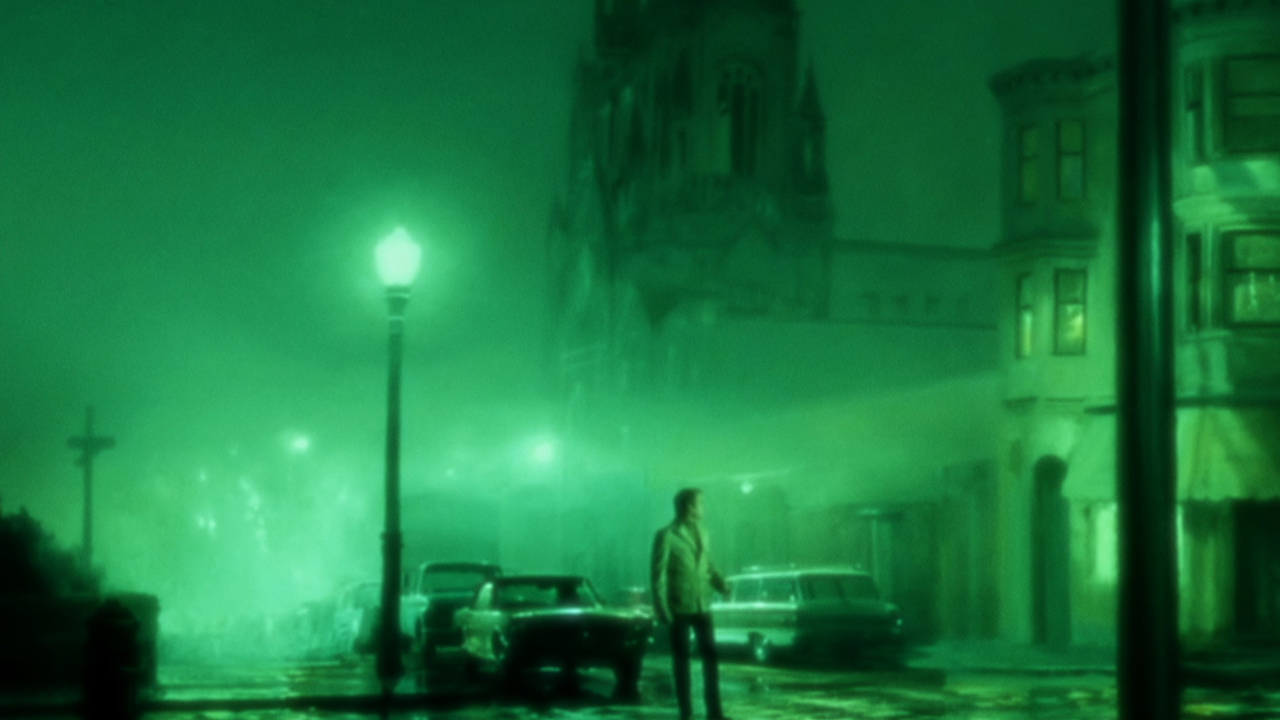 The Green Fog. Regie/directors: Guy Maddin, Evan Johnson, Galen Johnson[/caption]
The Forum program of the 2018 Berlin International Film Festival will feature 44 films, 35 of which world premieres. This year, Arsenal – Institute for Film and Video Art is putting on the Forum as part of the Berlinale for the 48th time.
21 years after his directorial debut The Day a Pig Fell into the Well, Korean director Hong Sangsoo makes a more auspicious return to the Forum. Grass is another cheerfully melancholy story about the guests at a small café whose owner loves classical music. Kim Minhee, who won the Silver Bear for Best Actress in 2017, plays a café regular who always seems to be at the table in the corner writing on her laptop. She repeatedly draws inspiration from what’s happening around her, picking up the threads of the dialogue and spinning them further and sometimes even actively intervening in conversations. Is she perhaps the author of these relationship dramas in miniature, whose stores and themes mirror one another?
French director Claire Simon is equally willing to try out new experiments in her documentary works. In her new film Premières solitudes (Young Solitude), she creates a cinematographic space for open, intimate discussion together with pupils from a school in the Paris suburbs. As they talk together about their backgrounds, parents, first loves, longings and fears for the future, ten ordinary teenagers forge ever closer bonds. It’s good to realise you’re not alone.
For his part, Ukrainian director Sergei Loznitsa is showing a film at the Berlinale for the very first time. In Den’ Pobedy (Victory Day), he observes the huge crowds that gather each year at the Soviet War Memorial in Berlin-Treptow on May 9th and records the hustle and bustle with quiet precision, as different moods come to the fore: pride, contemplation, patriotism, curiosity, the desire for recognition.
Two films from this year’s program draw on video material shot by their directors in periods of political upheaval and imbue it with new significance. At the end of the 1980s, Kristina Konrad collected opinions on the streets of Uruguay in relation to a referendum to be held on a law granting impunity to those responsible for the military dictatorship. Unas preguntas (One or Two Questions) takes a magnifying glass to the democratic process.
Around the same time, the scandal surrounding the Nazi past of former UN General Secretary and Austrian president Kurt Waldheim was making headlines worldwide. Edited together entirely from archive footage, Ruth Beckermann’s Waldheims Walzer (The Waldheim Waltz) is a documentary essay of frightening topicality.
Julien Faraut also works with material largely shot in the 80s in L’empire de la perfection (In the Realm of Perfection). Back then, tennis-obsessed director Gil de Kermadec attempted to use film as means of analysing the game. His meticulously shot footage of John McEnroe matches during the French Open forms the starting point for an ironic look at the parallels between film and the sporting world: cinema lies, sport does not.
Corneliu Porumboiu’s Fotbal Infinit (Infinite Football) takes an equally peculiar look at the world of sport, this time in provincial Romania, following a local official’s attempts to bequeath the world an improved version of the beautiful game. But does everything here really just revolve around football?
Two features from the US shine a light on intellectual escapism. Ted Fendt’s second feature Classical Period is once again shot in Philadelphia on 16mm and tells a drolly melancholy story about intellectualism and loneliness. The members of a reading group exchange cultural and literary references with such vigour that there’s little room for anything else: an attempt to leave the modern world behind or merely their own solitary existences?
Ricky D’Ambrose’s debut Notes On an Appearance may be set in Brooklyn, but unfolds in a similar milieu. Before the backdrop of the disquiet spread by the followers of a controversial philosopher, the film uses both real-life documents and smartly falsified writings to tell the story of a young man who one day disappears without warning. An eerie look at modern life with shades of dystopia.
Josephine Decker’s Madeline’s Madeline on the other hand plunges into the analogies of creativity and insanity. The young titular heroine doesn’t like spending time with her mother, played by actress Miranda July, and feels far freer when with her theatre group. But where does the border lie between personality and role?
Two features from Morocco explore gender relations. Jahilya by Hicham Lasri (the title alludes to the pre-Islamic “time of ignorance”) is a furious condemnation of the misogyny of Moroccan society and all its attendant malice.
Narjiss Nejjar’s Apatride (Stateless) gives an account of a historical event from a female perspective, an event that still dictates the relationship between Morocco and Algeria to this day. Full of beguiling images, her feature shows how a gentle, yet determined woman attempts to prevail over the border between the two countries.
It would be more than appropriate to refer to the electrifying directorial debut An Elephant Sitting Still as a new hope for Chinese cinema. But its 29-year-old director Ho Bu, who had previously made a name for himself with two novels, took his own life soon after the film was completed. This visually stunning work links together the biographies of a range of different protagonists in virtuoso fashion, narrating the course of one single, tension-filled day from dawn until dusk, painting a portrait of a society marked by selfishness in the process.
The Green Fog. Regie/directors: Guy Maddin, Evan Johnson, Galen Johnson[/caption]
The Forum program of the 2018 Berlin International Film Festival will feature 44 films, 35 of which world premieres. This year, Arsenal – Institute for Film and Video Art is putting on the Forum as part of the Berlinale for the 48th time.
21 years after his directorial debut The Day a Pig Fell into the Well, Korean director Hong Sangsoo makes a more auspicious return to the Forum. Grass is another cheerfully melancholy story about the guests at a small café whose owner loves classical music. Kim Minhee, who won the Silver Bear for Best Actress in 2017, plays a café regular who always seems to be at the table in the corner writing on her laptop. She repeatedly draws inspiration from what’s happening around her, picking up the threads of the dialogue and spinning them further and sometimes even actively intervening in conversations. Is she perhaps the author of these relationship dramas in miniature, whose stores and themes mirror one another?
French director Claire Simon is equally willing to try out new experiments in her documentary works. In her new film Premières solitudes (Young Solitude), she creates a cinematographic space for open, intimate discussion together with pupils from a school in the Paris suburbs. As they talk together about their backgrounds, parents, first loves, longings and fears for the future, ten ordinary teenagers forge ever closer bonds. It’s good to realise you’re not alone.
For his part, Ukrainian director Sergei Loznitsa is showing a film at the Berlinale for the very first time. In Den’ Pobedy (Victory Day), he observes the huge crowds that gather each year at the Soviet War Memorial in Berlin-Treptow on May 9th and records the hustle and bustle with quiet precision, as different moods come to the fore: pride, contemplation, patriotism, curiosity, the desire for recognition.
Two films from this year’s program draw on video material shot by their directors in periods of political upheaval and imbue it with new significance. At the end of the 1980s, Kristina Konrad collected opinions on the streets of Uruguay in relation to a referendum to be held on a law granting impunity to those responsible for the military dictatorship. Unas preguntas (One or Two Questions) takes a magnifying glass to the democratic process.
Around the same time, the scandal surrounding the Nazi past of former UN General Secretary and Austrian president Kurt Waldheim was making headlines worldwide. Edited together entirely from archive footage, Ruth Beckermann’s Waldheims Walzer (The Waldheim Waltz) is a documentary essay of frightening topicality.
Julien Faraut also works with material largely shot in the 80s in L’empire de la perfection (In the Realm of Perfection). Back then, tennis-obsessed director Gil de Kermadec attempted to use film as means of analysing the game. His meticulously shot footage of John McEnroe matches during the French Open forms the starting point for an ironic look at the parallels between film and the sporting world: cinema lies, sport does not.
Corneliu Porumboiu’s Fotbal Infinit (Infinite Football) takes an equally peculiar look at the world of sport, this time in provincial Romania, following a local official’s attempts to bequeath the world an improved version of the beautiful game. But does everything here really just revolve around football?
Two features from the US shine a light on intellectual escapism. Ted Fendt’s second feature Classical Period is once again shot in Philadelphia on 16mm and tells a drolly melancholy story about intellectualism and loneliness. The members of a reading group exchange cultural and literary references with such vigour that there’s little room for anything else: an attempt to leave the modern world behind or merely their own solitary existences?
Ricky D’Ambrose’s debut Notes On an Appearance may be set in Brooklyn, but unfolds in a similar milieu. Before the backdrop of the disquiet spread by the followers of a controversial philosopher, the film uses both real-life documents and smartly falsified writings to tell the story of a young man who one day disappears without warning. An eerie look at modern life with shades of dystopia.
Josephine Decker’s Madeline’s Madeline on the other hand plunges into the analogies of creativity and insanity. The young titular heroine doesn’t like spending time with her mother, played by actress Miranda July, and feels far freer when with her theatre group. But where does the border lie between personality and role?
Two features from Morocco explore gender relations. Jahilya by Hicham Lasri (the title alludes to the pre-Islamic “time of ignorance”) is a furious condemnation of the misogyny of Moroccan society and all its attendant malice.
Narjiss Nejjar’s Apatride (Stateless) gives an account of a historical event from a female perspective, an event that still dictates the relationship between Morocco and Algeria to this day. Full of beguiling images, her feature shows how a gentle, yet determined woman attempts to prevail over the border between the two countries.
It would be more than appropriate to refer to the electrifying directorial debut An Elephant Sitting Still as a new hope for Chinese cinema. But its 29-year-old director Ho Bu, who had previously made a name for himself with two novels, took his own life soon after the film was completed. This visually stunning work links together the biographies of a range of different protagonists in virtuoso fashion, narrating the course of one single, tension-filled day from dawn until dusk, painting a portrait of a society marked by selfishness in the process.
The films of the 48th Forum:
14 Apples von Midi Z, Taiwan / Myanmar – WP Afrique, la pensée en mouvement Part I by Jean-Pierre Bekolo, Senegal – IP Aggregat (Aggregate) by Marie Wilke, Germany – WP Amiko by Yoko Yamanaka, Japan – IP Apatride (Stateless) by Narjiss Nejjar, Morocco – WP Aufbruch (Departure) by Ludwig Wüst, Austria – WP La cama (The Bed) by Mónica Lairana, Argentina / Germany / Netherlands / Brazil – WP La casa lobo (The Wolf House) by Joaquín Cociña, Cristóbal León, Chile – WP Casanovagen (Casanova Gene) by Luise Donschen, Germany – WP Classical Period by Ted Fendt, USA – WP Con el viento (Facing the Wind) by Meritxell Colell Aparicio, Spain / France / Argentina – WP Los débiles (The Weak Ones) by Raúl Rico, Eduardo Giralt Brun, Mexico – WP Den’ Pobedy (Victory Day) by Sergei Loznitsa, Germany – WP Die Tomorrow by Nawapol Thamrongrattanarit, Thailand – IP Djamilia (Jamila) by Aminatou Echard, France – WP Drvo (The Tree) by André Gil Mata, Portugal / Bosnia and Herzegovina – WP L’empire de la perfection (In the Realm of Perfection) by Julien Faraut, France – WP An Elephant Sitting Still by Hu Bo, People’s Republic of China – WP Fotbal Infinit (Infinite Football) by Corneliu Porumboiu, Romania – WP Grass by Hong Sangsoo, Republic of Korea – WP The Green Fog by Guy Maddin, Evan Johnson, Galen Johnson, USA / Canada + Accidence by Guy Maddin, Evan Johnson, Galen Johnson, Canada – WP Interchange by Brian M. Cassidy, Melanie Shatzky, Canada – WP Jahilya by Hicham Lasri, Morocco – WP Kaotični život Nade Kadić (The Chaotic Life of Nada Kadić) by Marta Hernaiz, Mexico / Bosnia and Herzegovina – WP Last Child by Shin Dong-seok, Republic of Korea – IP Madeline’s Madeline by Josephine Decker, USA – IP Maki’la by Machérie Ekwa Bahango, Democratic Republic of the Congo / France – WP Mariphasa by Sandro Aguilar, Portugal – WP Minatomachi (Inland Sea) by Kazuhiro Soda, Japan/USA – WP Notes On an Appearance by Ricky D’Ambrose, USA – WP Old Love by Park Kiyong, Republic of Korea – IP Our House by Yui Kiyohara, Japan – IP Our Madness by João Viana, Mozambique / Guinea-Bissau / Qatar / Portugal / France – WP Premières armes (First Stripes) by Jean-François Caissy, Canada – WP Premières solitudes (Young Solitude) by Claire Simon, France – WP SPK Komplex (SPK Complex) by Gerd Kroske, Germany – WP Syn (The Son) by Alexander Abaturov, France / Russian Federation – WP Teatro de guerra (Theatre of War) by Lola Arias, Argentinia / Spain – WP Tuzdan Kaide (The Pillar of Salt) by Burak Çevik, Turkey – WP Unas preguntas (One or Two Questions) by Kristina Konrad, Germany / Uruguay – WP Waldheims Walzer (The Waldheim Waltz) by Ruth Beckermann, Austria – WP Wieża. Jasny dzień. (Tower. A Bright Day.) by Jagoda Szelc, Poland – IP Wild Relatives by Jumana Manna, Germany / Lebanon / Norway – WP Yours in Sisterhood by Irene Lusztig, USA – WP