Human Rights Watch Film Festival

  • Human Rights Watch Film Festival 30th Anniversary to Showcase 13 Timely and Provocative Films

    Advocate by Rachel Leah Jones, Philippe Bellaiche
    Advocate by Rachel Leah Jones, Philippe Bellaiche

    The 30 Anniversary of the Human Rights Watch Film Festival in New York City will showcase 13 timely and provocative films, from June 13 to 20, 2019. As racism and xenophobia continue to rise within the highest echelons of power, this year’s festival presents cinematic works that expose and humanize cases of legalized and legitimized oppression of the disenfranchised that demand the world’s attention.

    Read more


  • THE SILENCE OF OTHERS To Have NY Premiere At Human Rights Watch Film Festival

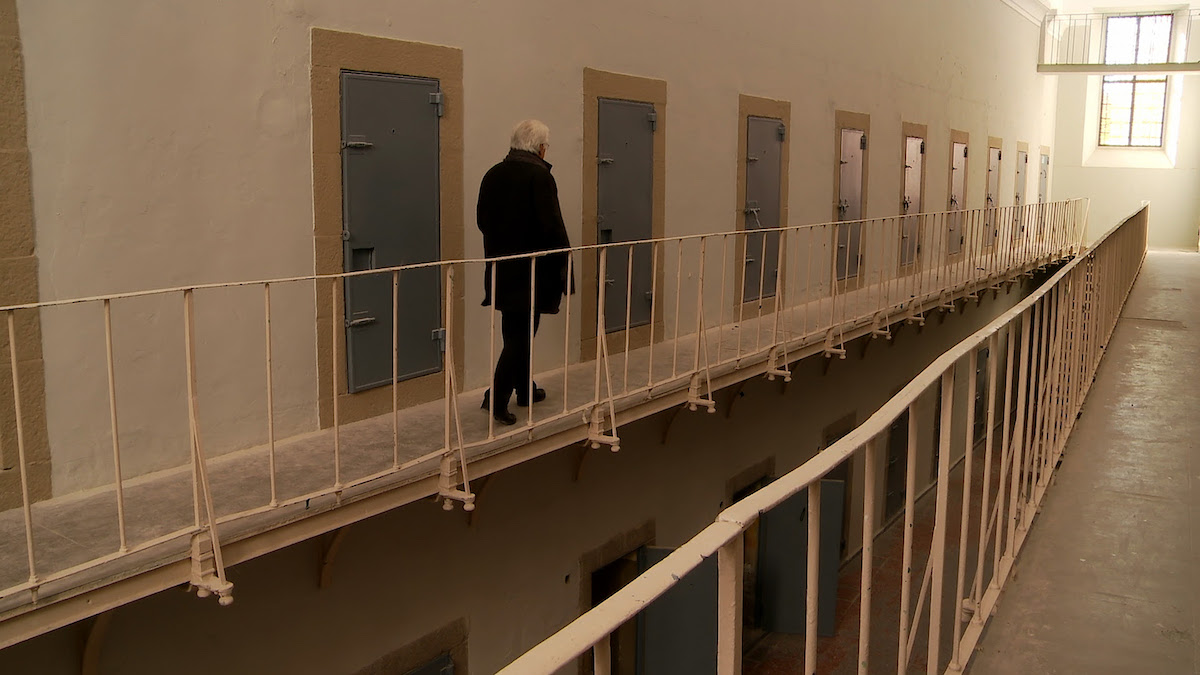
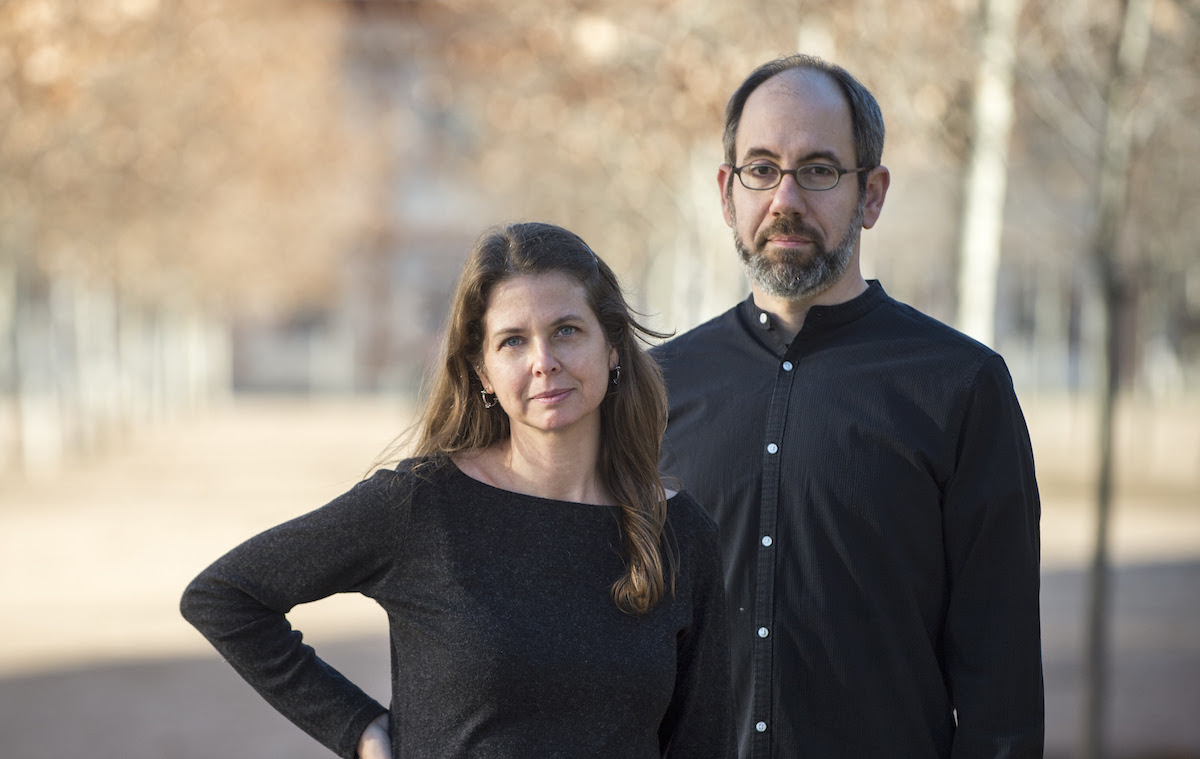
    The Silence of Others The award-winning documentary The Silence of Others is a beautiful, cinematic, and poetic film about the  people who are fighting for justice and a reckoning in Spain on crimes committed by the Franco regime during its brutal 40 year rule.  It won the two prizes – Audience Award (Panorama) and Peace Prize at the Berlinale – 2018 Berlin International Film Festival. The Silence of Others will have its NY premiere at the 2018 Human Rights Watch Film Festival in New York City this month The Silence of Others reveals the epic struggle of victims of Spain’s 40-year dictatorship under General Franco, who continue to seek justice to this day. Filmed over six years, the film follows victims and survivors as they organize the groundbreaking “Argentine Lawsuit” and fight a state-imposed amnesia of crimes against humanity, in a country still divided four decades into democracy. Synopsis: The Silence of Others offers a cinematic portrait of the first attempt in history to prosecute crimes of Franco’s 40-year dictatorship in Spain (1939-1975), whose perpetrators have enjoyed impunity for decades due to a 1977 amnesty law. It brings to light a painful past that Spain is reluctant to face, even today, decades after the dictator’s death. Filmed with intimate access over six years, the story unfolds on two continents: in Spain, where survivors and human rights lawyers are building a case that Spanish courts refuse to admit, and in Argentina, where a judge has taken it on using the principle of universal jurisdiction, which allows foreign courts to investigate crimes against humanity if the country where they occurred refuses to do so. The implications of the case are global, as Spain’s transition from dictatorship to democracy continues to be hailed as a model to this day. The case also marks an astonishing reversal, for it was Spain that pioneered universal jurisdiction to bring down former Chilean dictator Augusto Pinochet, and yet now it is an Argentine judge who must bring Spain’s own past to light. The Silence of Others tells the story of this groundbreaking international lawsuit through the voices of five survivors who have broken Spain’s “pact of silence” and become plaintiffs in the case, including victims of torture, parents of stolen children, and family members who are fighting to recover loved ones’ bodies from mass graves across Spain. Guiding this monumental effort are Carlos Slepoy, the human rights lawyer who co-led the case against Pinochet, and Ana Messuti, a philosopher of law. The case is making history: what started as a small, grassroots effort has yielded the first-ever arrest warrants for perpetrators, including torturers, cabinet ministers, and doctors implicated in cases of stolen children. It has brought the nearly forgotten case to the front page of The New York Times and has stirred a flurry of international attention. Through this dramatic, contemporary story, The Silence of Others speaks to universal questions of how societies transition from dictatorship to democracy and how individuals confront silence and fight for justice. What happens when a country is forced to reckon with its past after so many years of silence? Can justice be done after so long? [caption id="" align="alignnone" width="1200"]Almudena Carracedo and Robert Bahar The Silence of Others Almudena Carracedo and Robert Bahar[/caption] Directors’ Statement: In 2010, the story of Spain’s “stolen children” began to come out. The story of these crimes, with roots in the early days of Franco’s rule, led us to explore the marginalization and silencing of victims of many Franco-era crimes, ranging from extrajudicial killings at the end of the Spanish Civil War to torture that took place as recently as 1975. As we began to learn more, we were baffled by basic questions: how could it be that Spain, unlike other countries emerging from repressive regimes, had had no Nuremberg Trials, no Truth and Reconciliation Commission, no national reckoning? Why, instead, was a “pact of forgetting” forged in Spain? And what were the consequences of that pact, 40 years into democracy, for the still-living victims of Franco’s dictatorship? When we began filming the process of the “Argentine lawsuit” in 2012, which challenged this status quo, few thought that it would amount to much. But as we filmed those early meetings, we could see that the lawsuit was stirring up something vital, transforming victims and survivors into organizers and plaintiffs and bringing out dozens, and then hundreds, of testimonies from all over Spain. As the number of testimonies snowballed, the case was building into a persuasive argument about crimes against humanity that demanded international justice. We thus discovered that The Silence of Others was going to be a story about possibilities, about trying to breach a wall, and that, rather than focusing on what had happened in the past, it would be all about what would happen in the future. We also saw that the film would embody great passion and urgency because, for many of the plaintiffs, this case would offer the last opportunity in their lifetimes to be heard. Even so, as we set out filming those early meetings, we could scarcely have imagined that we would follow this story for six years and film over 450 hours of footage. Screenings at HRWFF-NY Tuesday, June 19, 2018 at 6:30 PM Film Society of Lincoln Center Elinor Bunin Munroe Film Center Wednesday, June 20, 2018 at 9:00 PM IFC Center

    Read more


  • 2018 Human Rights Watch Film Festival to Showcase 15 Films – 12 Directed by Women, Opens with ON HER SHOULDERS

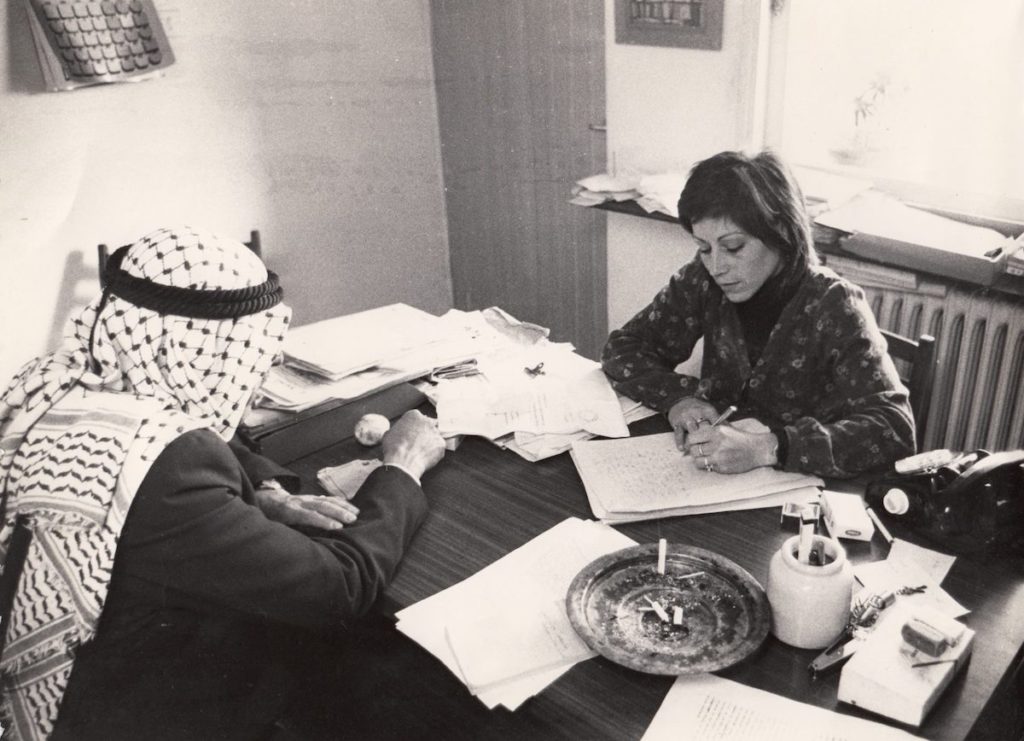
    [caption id="attachment_29010" align="aligncenter" width="1200"]Nadia Murad and Murad Ismael appear in On Her Shoulders by Alexandria Bombach. Nadia Murad and Murad Ismael appear in On Her Shoulders by Alexandria Bombach.[/caption] This year’s Human Rights Watch Film Festival will showcase 15 timely and provocative documentary and narrative works, screening June 14 to 21, 2018 in New York City. In a year when women collectively raised their voices against discrimination and abuse, Human Rights Watch will present films offering incisive perspectives and critical insights on human rights issues impacting people around the world. Twelve of the 15 films are directed or co-directed by women. Now in its 29th edition, the Human Rights Watch Film Festival is co-presented by the Film Society of Lincoln Center and IFC Center. All screenings will be followed by in-depth Q&A sessions with filmmakers, film subjects, Human Rights Watch researchers, and special guests. “This year’s festival focuses on strong women who take great risks to push back against powerful forces within their respective societies. And, at a time when the use of personal data by institutions is front-page news, this year’s program explores governmental and corporate regulation of information, and how, by burying the truth and creating their own narratives, these gatekeepers are uniquely positioned to abuse their power and control the populace. ” “In a year when women have spoken out against abuse, harassment and oppression, the festival highlights the outstanding work of women filmmakers telling epic stories of women fighting injustice with resilience and courage.” said John Biaggi, the Human Rights Watch Film Festival creative director. “The festival will also probe the headline-breaking questions of corporate and government control of information at a time when the use of personal data has outrun the limits of the law and ethics.” The Opening Night documentary On Her Shoulders introduces Nadia Murad, a 23-year-old Yazidi survivor of atrocities by ISIS who makes it her life’s mission to fight for justice and freedom for her people. Two documentaries highlight women’s rights in Afghanistan. A Thousand Girls Like Me follows a young mother seeking justice from a legal system designed to criminalize sexual abuse survivors like her. Facing the Dragon (winner of the festival’s Nestor Almendros Award) profiles two intrepid Afghan women — a member of parliament and a journalist — who risk the safety of their families to bring change and accountability to their country. Naila and the Uprising features courageous Palestinian women activists who played a pivotal role in the First Intifada, and in Women of the Venezuelan Chaos, five resilient women find creative ways to defend their fellow citizens, their families, and their own lives amid the national crisis that has enveloped their country. In the profoundly moving and poetic Angkar, a filmmaker traces her father’s journey home to Cambodia to seek out his Khmer Rouge persecutors while confronting his country’s collective amnesia regarding their horrifying past. In The Silence of Others, survivors of the Franco dictatorship’s crimes against humanity refuse to relent in their pursuit of justice, despite Spain’s “pact of forgetting,” which has denied Franco’s victims legal recourse. The Cleaners reveals a murky world of digital “cleaning,” in which giant social media companies employ workers to delete Internet content deemed inappropriate, raising essential questions over Internet control and the life-threatening impact of erasing entire resistance movements from the world’s gaze. As always, the festival features critical human rights issues in the U.S., this year with three timely films. Charm City moves between community members, police and local officials during a period of heightened violence in Baltimore, exposing layers of disconnect and distrust that need to be addressed to move their city forward. TransMilitary focuses on the largest employer of transgender people in the country – the U.S. military – and the efforts of four brave people as they come forward to demand much-needed change. The Closing Night film, The Unafraid, introduces three high school students in Georgia, banned by the state from attending top state universities due to their unauthorized immigration status, and their passionate fight to pursue their dreams of higher education.

    2018 Human Rights Watch Film Festival Film Lineup

    Opening Night Film and Reception* On Her Shoulders Alexandria Bombach, 2018, 94 min., Arabic, English, Kurdish Nadia Murad is a 23-year-old lifeline to the Yezidi community. A survivor of the 2014 atrocities against the Yezidi in northern Iraq, Nadia escaped sexual slavery at the hands of the Islamic State (also known as ISIS) and witnessed the murder of those closest to her. With the love of her people propelling her forward, Nadia is determined to turn her pain into international action. She now shoulders immense burdens as a key public figure whose supporters are pushing her further into the spotlight – from testifying at the United Nations Security Council and having endless meetings with government officials to giving soul-baring media interviews and emotionally draining speeches. On Her Shoulders tells the story of a multi-layered and selfless activist who once dreamed of opening a beauty salon in her village as she becomes an essential voice in the fight to bring ISIS to justice and save her people from extinction. New York Premiere “This moving film highlights the journey for justice, and how elusive it has been and continues to be for Yezidis, despite the world acknowledging their suffering.” – Rothna Begum, Researcher, Women’s Rights Division, Human Rights Watch US Documentary Directing Award, Sundance Film Festival 2018. Opening in theaters this October from Oscilloscope Laboratories. Closing Night Film The Unafraid Anayansi Prado and Heather Courtney, 2018, 85 min., English, Spanish “We have years of activism under our belts. Now we just fight harder, we fight smarter, and we fight as one.” – Alejandro, film subject, The Unafraid High School seniors Alejandro, Silvia and Aldo, like most of their friends, are eager to go to college and pursue their education. However, their home state of Georgia not only bans them from attending the top five public universities, but also deems them ineligible for in-state tuition at public colleges due to their immigration status as DACA (Deferred Action for Childhood Arrivals) recipients. In response, these three ambitious and dream-filled students divert their passions toward the fight for education in the undocumented community. As President Donald Trump’s campaign rhetoric against immigrants gains momentum, and with the three students under constant threat of losing their DACA status and being deported, The Unafraid follows these inspirational members of the generation of “undocumented, unapologetic and unafraid” young people who are determined to overcome and dismantle oppressive policies and mindsets. New York Premiere A Thousand Girls Like Me Sahra Mani, 2018, 76 min., Farsi “Every woman in this country has a hundred owners. Fathers, brothers, uncles, neighbors: They all believe they have the right to speak on our behalf and make decisions for us. That’s why our stories are never heard, but buried with us.” – Sahra Mani, director, A Thousand Girls Like Me When Khatera, a 23-year-old Afghan woman, forces her father to stand trial after a lifetime of sexual abuse, she risks her family, freedom and personal safety to expose a judicial system that incriminates the very women who seek protection. In a country where the systematic abuse of girls is rarely discussed, Afghan filmmaker Sahra Mani presents an awe-inspiring story of one woman’s battle against cultural, familial and legal pressures as she embarks on a mission to set a positive example for her daughter and other girls like her. U.S. Premiere Angkar Neary Adeline Hay, 2018, 71 min., French, Khmer “We called it the Angkar, ‘The Organization’ in Khmer. The nebulous wielder of power. Something shapeless, without a head, without a face. Angkar made the rules. Angkar had eyes everywhere.” – Khonsaly Hay, film subject, Angkar Khonsaly Hay returns to his lush, serene village in Cambodia after over 40 years living in France and comes face-to-face with his former Khmer Rouge persecutors. Pol Pot’s regime of extreme violence and torture between 1975-1979 turned neighbor against neighbor and resulted in the deaths of nearly 2 million people. Decades later, survivors find themselves living next door to the very people responsible for their suffering. In this beautifully personal and artfully crafted testimony of survival, Khonsaly travels the country, confronting his past and seeking what remains of the family and friends he was forced to leave behind. Directed by Khonsaly’s daughter, Neary Adeline Hay, this deeply immersive film juxtaposes past and present to tenderly reveal unreconciled traumas haunting Cambodians today. New York Premiere Anote’s Ark Matthieu Rytz, 2018, 77 min., English, Kiribati “I want to emphasize that climate change is not a political issue. It’s not entirely an economic issue. It’s an issue of survival. Maybe today for countries like mine. But in the future, for the planet as a whole.” – Anote Tong, film subject, Anote’s Ark What if your country was swallowed by the sea? The idyllic Pacific nation of Kiribati will be submerged within decades due to climate change. As President Anote Tong passionately embarks upon a race against time to save his people and 4,000 years of Kiribati culture, islanders are already feeling the pressure to relocate. Sermary, a young mother of six, must decide whether to use a sought-after lottery visa and leave her children behind to build a future for her family overseas. Set against the backdrop of international climate negotiations and the fight to recognize climate displacement as an urgent human rights issue, Anote’s Ark presents personal stories that serve as cautionary tales for the entire world. New York Premiere Official Selection, Sundance Film Festival 2018 Charm City Marilyn Ness, 2018, 106 min., English During three years of unparalleled violence in Baltimore, Maryland, award-winning filmmaker Marilyn Ness takes viewers beyond the headlines and into the lives of community members, police and government officials as they attempt to reclaim the future of their city. A young City Councilman, Brandon Scott, calls for diverting funds from policing to programs that build opportunities and combat poverty. A Senior community leader, “Mr. C,” and his colleague Alex Long spend their days in the streets working with youth to provide a positive environment and safety. Charm City speaks to a nationwide crisis, where the grit and compassion of citizens offer humanity as a way forward. “This film is extremely well made. It asks, rather than answers, questions, and doesn’t tell the viewer how to think.” – John Raphling, Senior Researcher, U.S. Program, Human Rights Watch The Cleaners Hans Block and Moritz Riesewiek, 2018, 88 min., English, Tagalog “The companies have more and more power … They take advantage of our desire for ease, our resistance to effort, our resistance to challenge, and I think, over time, if we’re not already there, it will interfere with our ability to have critical thinking.” – David Kaye, UN Special Rapporteur on Freedom of Expression, film subject, The Cleaners Who controls what you see on the internet? Welcome to a hidden industry of digital cleaning where content determined as inappropriate is deleted from the internet. This fascinating documentary follows five “cleaners” in the Philippines whom social media giants, including Facebook and Twitter, hire to undertake the highly sensitive work of viewing and removing millions of images and videos from online platforms every day. Exposing the extreme and often life-threatening impact of censorship capable of disappearing entire conversations, perspectives and events from world view, The Cleaners expertly reveals the impact on critics of the U.S. president, activists in Turkey and the Rohingya in Myanmar from Silicon Valley’s control over free speech. New York Premiere Please be advised this film contains material that may be disturbing to some viewers. Official Selection, Sundance Film Festival 2018 The Distant Barking of Dogs Simon Lereng Wilmont, 2017, 90 min., Ukrainian This film is fully subtitled and ASL interpretation will be provided for the Q&A. “We have days of silence. But they are so deadly – even worse than explosions. It’s the lull before the storm.” – Grandmother Alexandra, film subject, The Distant Barking of Dogs The life of a 10-year-old child includes a healthy dose of curiosity and adventure. But the days of Oleg, who lives in the Donetsk region of eastern Ukraine – just minutes from where Ukrainian and pro-Russian forces are at war – are often interrupted by echoes of anti-aircraft fire and missile strikes. Oleg and his cousin Yarik are young boys whose play fights and restlessness often lead them toward dangerous discoveries. But, as this touching and intimate film evolves, it bears witness to the unique pressures that come with living adjacent to a war zone, and the gradual erosion of innocence under intense psychological burdens. As the world shakes around Oleg and Yarik, the beauty of childhood friendship becomes ever more important for survival. New York Premiere First Appearance Award, International Documentary Festival Amsterdam (IDFA) 2017 Facing the Dragon Sedika Mojadidi, 2018, 80 min., Dari “We have a responsibility to speak on behalf of every woman, from the remote mountains of Pamir to Nuristan. Advocating for women’s rights should not be a political game.” – Dr. Nilofar Ibrahimi, film subject, Facing the Dragon As the U.S. withdraws forces and aid from Afghanistan, the Taliban are regaining their hold and the stability of the country’s fragile democracy is unclear. Afghan-American filmmaker Sedika Mojadidi joins two awe-inspiring women on the front lines: Nilofar, a successful doctor-turned-member of parliament, driven in her mission to secure peace and well-being for women; and Shakila, a top investigative journalist committed to exposing the truth about what is happening in her troubled country. Under increasing threats of violence, these two women are soon forced to choose between their sense of duty and love for Afghanistan, and the safety of their families. New York Premiere Winner of the 2018 Human Rights Watch Film Festival Nestor Almendros award for courage in filmmaking. Naila and the Uprising Julia Bacha, 2017, 76 min., Arabic, English, Hebrew, French “We can’t be free as women unless we’re in a free country. And even if we are free of the occupation, we can’t know freedom as long as we are subjugated in our own society.” – Sama Aweidah, film subject, Naila and the Uprising When an uprising breaks out in the Occupied Palestinian Territories in 1987, a young woman in Gaza must make a choice between love and family and freedom. Naila and the Uprising chronicles the remarkable real-life journey of Naila Ayesh, a key figure in the First Intifada, which forced the world to recognize the Palestinian right to self-determination. Using evocative animation, intimate interviews, and exclusive archival footage, this film tells the story the mainstream media missed: of a courageous women’s movement at the head of Palestinians’ struggle for freedom, bringing out of anonymity the bold women activists whose contributions and sacrifices changed history, but whose stories have remained untold until now. The Silence of Others Almudena Carracedo and Robert Bahar, 2018, 96 min., Spanish A 1977 amnesty law in Spain known as “the pact of forgetting” prohibits legal action related to the oppression, torture and murder of an estimated 100,000 people during Franco’s 40-year dictatorship. But for much of the population – including the survivor who passes his torturer’s home every day on the way to market, the children of forcibly disappeared parents found buried in mass graves, and parents still searching for their children seized at birth and handed to Franco’s allies – there is no peace in silence. Taking strength and inspiration from justice-seekers in Chile and Guatemala, the characters in The Silence of Others fight an urgent battle to get recognition and admissions of guilt against state-imposed amnesia. From award-winning directors and Executive Producer Pedro Almodovar comes a powerful film about a country still divided four decades into democracy. New York Premiere “The film shows why victims need justice, even decades after the crimes, and why forgetting simply isn’t an option.” – Param-Preet Singh, Associate Director, International Justice Program, Human Rights Watch Panorama Audience Award for Best Documentary and Peace Film Prize winner, Berlin International Film Festival 2018 TransMilitary Gabriel Silverman and Co-director Fiona Dawson, 2018, 92 min., English “It is our time now to step forward and say, ‘OK, it’s not about what gender I am, it’s about if I can get the job done. And we for years have shown that, so why not acknowledge us?’” – Laila Villanueva, film subject, TransMilitary The military is the largest employer of transgender people in the United States. Amid rapidly changing policies that technically bans them from serving, 15,500 troops identify as transgender. TransMilitary documents four brave men and women who risk their families’ livelihoods by coming out to the Pentagon’s top brass in the hope of attaining the equal right to serve. With a new commander-in-chief at the helm, they must traverse a series of successes and defeats, as their careers hang in the balance. New York Premiere Audience Award for Documentary, South by Southwest Film Festival 2018 Voices of the Sea Kim Hopkins, 2018, 99 min., Spanish “‘For the humble, by the humble.’ … That was the goal. But the humble don’t have access to anything that other people have. It will improve for those on top. And for us down here it will be the same or worse.” – Mariela Mora Quintana, film subject, Voices of the Sea In this tiny, remote Cuban fishing village, Mariela, a mother of four young children, longs for a better life. The families in her village are utterly dependent on the day’s catch, which changes with the tide. The shops are empty, school is repeatedly shut down due to a lack of resources, and basic transportation is non-existent. With the relationship between the U.S. and Cuba in flux, Mariela, like many Cubans, is afraid that her only chance to escape to the U.S. will soon close. Her husband, Pita, loves his community, cherishes his friendships, and is loyal to his craft as a fisherman. The tension between husband and wife — one desperate to leave, the other content to stay — increases after her brother and neighbors flee the country, risking their lives to chase the American Dream. New York Premiere What Will People Say? Iram Haq, 2017, 106 min., Norwegian, Urdu Sixteen-year-old Nisha lives a double life. At home with her conservative Pakistani family, she is the perfect, compliant daughter. But when out with her friends, she is a typical Norwegian teenager – partying and exploring relationships. When her father discovers her deception, Nisha’s two worlds brutally collide. Trapped between countries and perceptions of honor, Nisha is forced to find her own way in life. This gripping and powerfully acted drama from Norwegian-Pakistani filmmaker Iram Haq untangles the complex relationship between a father and daughter and presents an empathetic perspective on family, community and culture. New York Premiere “This film powerfully highlights some of the abuses Pakistani women and girls face, which include forced marriage, barriers to education, and violence, including in the name of family ‘honor,’ which all too frequently goes unpunished.” – Heather Barr, Senior Researcher, Women’s Rights Division, Human Rights Watch Official Selection, Toronto International Film Festival 2017 Women of the Venezuelan Chaos Margarita Cadenas, 2017, 83 min., Spanish This film is fully subtitled and ASL interpretation will be provided for the Q&A Embodying strength and stoicism, five Venezuelan women from diverse backgrounds each draw a portrait of their country as it suffers under the worst crisis in its history amid extreme food and medicine shortages, a broken justice system, and widespread fear. The women share what life is really like for them and their families while the government repeatedly denies the country’s difficulties. Featuring stunning visuals and creative soundscapes, Women of the Venezuelan Chaos presents a uniquely beautiful country and people, who remain resilient and resourceful despite the immense challenges they face. New York Premiere “This is one of the best films I have seen on Venezuela. It is extraordinary, very accurate, very balanced, moving, powerful. It delves into all the issues Human Rights Watch covers in Venezuela: the humanitarian crisis, lack of medicines and food, exile, police abuses, lack of justice, impunity, abuse of power, violence.” – José Miguel Vivanco, Executive Director, Americas Division, Human Rights Watch

    Read more


  • Human Rights Watch Film Festival, London Will Feature 14 Award Winning Films, Opens with “Naila and the Uprising” | Trailers

    [caption id="attachment_25154" align="aligncenter" width="1024"]Naila And The Uprising Naila and the Uprising[/caption] The Human Rights Watch Film Festival in London from March 8 to 16, 2018, will feature 14 award-winning international documentary and feature films, half of them directed by women. The films offer fresh perspectives and critical insights on human rights concerns impacting people around the world today. The festival will open at the Barbican on March 8, International Women’s Day, with Naila and the Uprising directed by Julia Bacha, which celebrates the courageous Palestinian women activists who played a pivotal role in the first Intifada, 30 years ago. “In a year in which women have collectively raised their voices against discrimination and abuse, the 22nd edition of the festival spotlights strong women who push back against formidable forces within their respective societies,” said John Biaggi, creative director of the Human Rights Watch Film festival. “We are thrilled to open with the powerful Naila and the Uprising, which showcases women change-makers, and we look forward to welcoming the director Julia Bacha and film subjects Naila Ayesh and Zahira Kamal”. When a nationwide uprising breaks out in 1987, Naila Ayesh must make a choice between love, family and freedom. Undaunted, she embraces all three, joining a clandestine network of women in a movement that forces the world to recognize the Palestinian right to self-determination for the first time. “I call on women all over the world, I call on Israeli mothers: double your efforts to lift the injustices from my people, so my son, and your son, and all children can live side by side,” said Ayesh, who will attend opening night. In the closing night film Silas, directed by Anjali Nayar and Hawa Essuman, the activist Silas Siakor and a network of dedicated citizen reporters respond with swift action when the rights to one-third of Liberia’s land are illegally signed away to multinational companies. “When they tear down the trees and strip the land, they tear down our people and strip away their lives,” Siakor said. “Silas compellingly demonstrates how dedicated individuals can lead and create change,” Biaggi said. “We look forward to welcoming Silas Siakor and the director Anjali Nayar to London.” The themes of female defiance, activists and resistance, environmental plunder and closed worlds are seen throughout the festival. In The Poetess, directors Stefanie Brockhaus and Andreas Wolff introduce Hissa Hilal, who through her poetry performances challenges the repressive patriarchy ruling Saudi Arabia. In Margarita Cadenas’ Women of the Venezuelan Chaos, five resilient women creatively defend their fellow citizens, their families, and their very survival amid the national crisis that has enveloped their country. Sadaf Foroughi’s timely coming-of-age drama, Ava, portrays a strong and complex teenager who is pushed to the limits as she fights to find her voice, despite the constraints of her conservative, patriarchal community in Tehran. The closing night theme of resistance and environmental plunder continues in Chris Kelly’s A Cambodian Spring, in which a fearless Buddhist monk and bold female leaders rally neighbors to oppose land-grabbing politicians and businesses, but at considerable cost to their personal lives and friendships. Directed by Sabaah Folayan and Damon Davis, Whose Streets? takes an unflinching look at the Ferguson uprising in the US, told by the activists and leaders who live and breathe this movement for justice. “We are raising activists, we have to create a generation of activists if there’s gonna be any change”, said Aurellia Davis-Whitt, activist and film subject. The festival will screen three films that expose viewers to worlds usually closed from the public eye: Mohammed Naqvi’s Insha’Allah Democracy shows a surprisingly intimate side of the former military dictator General Pervez Musharraf of Pakistan; Peter Nicks’ The Force brings us inside the Oakland Police Force in the USA, which is struggling to make change amidst serious corruption and misconduct, and Adam Sobel’s The Workers Cup presents an exposé on working conditions that migrant workers face in building the 2022 World Cup site in Qatar, following a group of young laborers hoping to become footballers themselves. Three compelling cinema-verité-style documentaries reveal how war and bureaucracy can force institutions of care and shelter to become places of imprisonment and containment. Set in France where each year 92,000 people are placed under psychiatric care without their consent, Raymond Depardon’s 12 Days captures the raw and vulnerable interactions at the border of justice and psychiatry, humanity and bureaucracy when a crucial decision must be made: will a patient be forced to stay in a hospital or granted freedom. In Rina Castelnuovo-Hollander and Tamir Elterman’s Muhi – Generally Temporary, a young boy from Gaza has been trapped in an Israeli hospital for over eight years. Rushed there in his infancy with a life-threatening immune disorder, Muhi, and his doting grandfather, Abu Naim, are caught in an immigration limbo and only permitted to reside within the constraints of the hospital walls. And in The Long Season, the award-winning filmmaker Leonard Retel Helmrich (Position Among the Stars) spent a year-and-a-half in the Majdal Anjar refugee camp in Lebanon capturing the intimate daily lives of Syrians whose futures are postponed by war. This year’s benefit gala on March 7 at RIBA features Daniel McCabe’s This Is Congo, an immersive and unfiltered look at this lush, mineral-rich country, from the rise of Rwandan and Ugandan-backed M23 rebels in the North Kivu region of the Democratic Republic of Congo in 2012 to the present day, via four profoundly resilient characters. Described by Timo Meuller, researcher in the Africa Division of Human Rights Watch as, “the best documentary I’ve seen on the Democratic Republic of Congo. McCabe cares deeply about the country and does a great job walking the audience through the complicated historical trajectory of the Congo.” This is Congo will also screen within the festival program. 12 Days Filmmaker(s):Raymond Depardon https://www.youtube.com/watch?v=Mn6CbSBi3ho A Cambodian Spring Filmmaker(s):Chris Kelly https://vimeo.com/209625471 Ava Filmmaker(s):Sadaf Foroughi https://www.youtube.com/watch?v=rF9pDPmF3is Insha’allah Democracy Filmmaker(s):Mohammed Naqvi https://vimeo.com/237785739 Muhi – Generally Temporary Filmmaker(s):Rina Castelnuovo-Hollander and Tamir Elterman https://www.youtube.com/watch?v=z1Ej_v-_IwQ Naila and the Uprising Filmmaker(s):Julia Bacha https://vimeo.com/242161763 Silas Filmmaker(s):Anjali Nayar and Hawa Essuman The Force Filmmaker(s):Peter Nicks https://www.youtube.com/watch?v=xrS5Okom6ow The Long Season Filmmaker(s):Leonard Retel Helmrich https://vimeo.com/248278067 The Poetess Filmmaker(s):Stefanie Brockhaus and Andreas Wolff https://vimeo.com/241193553 The Workers Cup Filmmaker(s):Adam Sobel https://vimeo.com/218488667 This Is Congo Filmmaker(s):Daniel McCabe https://www.youtube.com/watch?v=4WfWODjDYAk Whose Streets? Filmmaker(s):Sabaah Folayan and Damon Davis https://www.youtube.com/watch?v=upiJnjJSerw Women of the Venezuelan Chaos Filmmaker(s):Margarita Cadenas https://vimeo.com/227763820

    Read more


  • 2017 Human Rights Watch Film Festival Announces Lineup of 21 Films, Opens with NOWHERE TO HIDE

    [caption id="attachment_18528" align="aligncenter" width="1200"]Nowhere to Hide by Zaradasht Ahmed Nowhere to Hide by Zaradasht Ahmed[/caption] The Human Rights Watch Film Festival returns to New York City June 9 to 18, 2017 with 21 topical and provocative feature documentaries and panel discussions that showcase courageous resilience in challenging times. Now in its 28th edition, the Human Rights Watch Film Festival is co-presented by the Film Society of Lincoln Center and IFC Center. Three films address the urgent and evolving issues of the refugee crisis and migration affecting millions of people around the world. The winner of the festival’s 2017 Nestor Almendros Award for courage in filmmaking and the Opening Night film, Zaradasht Ahmed’s Nowhere to Hide, follows an Iraqi nurse and his family whose lives are suddenly turned upside down as war once again tears apart their country. Lost in Lebanon, by British sisters Sophia and Georgia Scott, takes a close look at the reaction of a country of four million inhabitants to the arrival of a million refugees. Tonislav Hristov’s The Good Postman follows a postman’s mayoral run on a platform of welcoming Syrian families into his tiny Bulgarian town. The pressing need for systemic change in US police and justice institutions is another focus of this year’s selections. Erik Ljung’s The Blood Is at the Doorstep follows Dontre Hamilton’s family’s demand for justice following his fatal shooting by police in Milwaukee, Wisconsin. Peter Nicks’ The Force, based on unprecedented access to the Oakland Police Department, exposes layers of corruption and problems resulting from inadequate officer training. The grave mishandling of domestic violence cases, causing a grief-stricken mother to take up the fight for legal change, is profiled in April Hayes’ and Katia Maguire’s Home Truth. In Lindy Lou, Juror Number 2, by the French filmmaker Florent Vassault, a juror crosses political and religious divides in the Deep South to explore the personal impact on fellow jurors of sentencing a man to death. Holding governments and powerful forces to account is as important as ever, both at home and abroad. Matthew Heineman’s Sundance standout City of Ghosts follows a team of Syrian “citizen journalists” risking their lives to expose atrocities in the ISIS-occupied town of Raqqa. Global digital activists from North America to Brazil and Tibet covertly counter governments’ expanding invasions of privacy in Nicholas de Pencier’s Black Code. In the special event discussion panel, From Audience to Activist, filmmakers, journalists and activists will discuss the power of citizen-produced media and security challenges faced by those bringing truth to light. The festival’s Closing Night selection, Brian Knappenberger’s Nobody Speak: Trials of the Free Press, unpacks the Hulk Hogan vs. Gawker case and the sale of a Las Vegas newspaper to expose the threat to independent journalism from billionaires with a political agenda. The Resistance Saga, a film festival special event, is an epic trilogy of documentaries by Pamela Yates on the saga of the Mayan people of Guatemala, including When the Mountains Tremble (1984), Granito: How to Nail a Dictator (2001), and the latest installment, 500 Years: Life in Resistance (2017), which documents the first trial in the history of the Americas to prosecute the genocide of an indigenous people. This day-long gathering will include the screening of all three films followed by a discussion on long-term movement building with the Mayan women protagonists, and a reception and concert by a Mayan singer, Sara Curruchich. Ordinary citizens who take up causes of injustice are the subjects of two films from Asia. The Chinese-Canadian filmmaker Tiffany Hsiung’s The Apology profiles three elderly “comfort women”—from Korea, China and the Philippines—who continue to demand accountability for their sexual exploitation by the Japanese army during World War II. Heather White’s and Lynn Zhang’s Complicit follows factory workers harmed by exposure to chemicals in their work as they fight the Chinese electronics giant Foxconn, manufacturer for such brands as Apple and Samsung. Five more outstanding documentaries round out this year’s screening program. Rina Castelnuovo-Hollander’s and Tamir Elterman’s Muhi – Generally Temporary follows a Palestinian toddler suffering from a life-threatening illness and his doting grandfather, who have been stuck in limbo in an Israeli hospital for years. In The Grown-Ups, the Chilean filmmaker Maite Alberdi paints a warm portrait of a group of middle-aged adults with Down syndrome who have attended the same school for 40 years, and now long for a more independent future. Adam Sobel’s The Workers Cup takes viewers inside the controversial labor camps of Qatar, where migrant workers building the facilities for the 2022 World Cup compete in a soccer tournament of their own. Cristina Herrera Bórquez’s No Dress Code Required follows a same-sex couple, Víctor and Fernando, as they fight for the right to be married in their hometown of Mexicali, Mexico. In David Alvarado’s and Jason Sussberg’s Bill Nye: Science Guy, the famed television personality takes on climate change deniers and creationists as part of his mission to advocate for science.
    Film Lineup

    Opening Night Film Nowhere to Hide Zaradasht Ahmed, 2016, 86m, Arabic Nowhere to Hide is an immersive and uncompromising first-hand reflection of the resilience and fortitude of a male nurse working and raising his children in Jalawla, Iraq, an increasingly dangerous and inaccessible part of the world. After US troops left Iraq in 2011, director Zaradasht Ahmed gave Nori Sharif a camera and taught him how to use it, asking him to capture the reality of life in his community and the hospital where he worked. Over the next few years Sharif filmed his patients, but the population—including most of the hospital staff—flees when the Iraqi army pulls out in 2013. Sharif is one of the few who remain. When the Islamic State advances on Jalawla in 2014 and finally takes over the city, Sharif continues to film. However, he now faces a vital decision: stay and dedicate himself to treating those he vowed to help, or leave and protect his family—in the process becoming one of thousands of internally displaced people in Iraq. New York Premiere 2016 IDFA Winner for Best Feature-Length Documentary The Festival will present filmmaker Zaradasht Ahmed and Nori Sharif with its 2017 Nestor Almendros Award for courage in filmmaking. Closing Night Film Nobody Speak: Trials of the Free Press Brian Knappenberger, 2017, 95m When online tabloid Gawker posted a sex tape of former professional wrestler Hulk Hogan, a high-stakes legal battle pitting privacy rights against the First Amendment ensued. The staggering settlement Hogan ultimately received not only bankrupted Gawker, but also exposed a controversial, behind-the-scenes drama. Nobody Speak uses this case and others to illustrate a growing, sinister trend at odds with the concept of a free press: billionaires and politicians tipping the balance against the public’s access to information, posing threats to our relationship to the truth. New York Premiere Special Event – Discussion Panel From Audience to Activist Today, people have the tools to hold power structures to account. Cellphone videos and live distribution channels are being used as evidence for advocacy in cases of police and military accountability, protests, and hate crimes. But, in a troubling trend, those involved in capturing and distributing the footage face serious repercussions. Join us for a discussion exploring how publicly sourced media is being utilized for impact, and the issues that civilians encounter when recording and distributing information, as our panel of filmmakers, journalists and activists share best practices on how to hold powerful institutions accountable safely and effectively. (90 min. program) Special Event The Resistance Saga The Resistance Saga is a cinematic project designed to galvanize audiences to fight back when society is faced with authoritarianism and demagogues, and celebrate the role that the arts can play in creating, strengthening, and communicating narratives of nonviolent resistance. In so many ways, indigenous peoples throughout the Americas have set the example of long-term courageous and strategic resistance against daunting odds, with a powerful example being the saga of the Mayan people as depicted in director Pamela Yates’ films When the Mountains Tremble, Granito: How to Nail a Dictator and the latest installment, 500 Years: Life in Resistance. All three films of the Guatemalan trilogy have premiered at the Sundance Film Festival during the past 35 years. When the Mountains Tremble (1984) introduced indigenous rights leader Rigoberta Menchú as the storyteller in her role to expose repression during Guatemala’s brutal armed conflict. Winner of the Special Jury Award at Sundance, the film was seen worldwide and translated into 10 languages. It helped put Menchú on the world stage and 10 years later she was awarded the Nobel Peace Prize. Yates’ sequel, Granito: How to Nail a Dictator (2011) is a political thriller detailing international efforts to build a genocide case against Guatemalan General Efraín Ríos Montt. The case included outtakes from When the Mountains Tremble as forensic evidence in the prosecution of Montt. The third film, 500 Years: Life in Resistance (2017), picks up where Granito leaves off, providing inside access to the first trial in the history of the Americas to prosecute the genocide of indigenous people. Driven by universal themes of justice, power, and corruption, the film provides a platform for the majority indigenous Mayan population, which is now poised to reimagine their society. When the Mountains Tremble Pamela Yates and Thomas Newton Sigel, 1984, 83m, Spanish Granito: How to Nail a Dictator Pamela Yates, 2011, 104m, Spanish 500 Years: Life in Resistance Pamela Yates, 2017, 108m English, Spanish, Mayan languages. New York Premiere (Q&A with director Pamela Yates) The Resistance Saga is a day-long immersive gathering that includes the screening of all three films and will take place at the Walter Reade Theater, Film Society of Lincoln Center on Sunday, June 11 beginning at 1:30pm. There will be 15 min. intermissions after the first and second films, and a discussion after the third film on long-term movement building with the Mayan women protagonists. The Apology Tiffany Hsiung, 2016, 104m, Bisaya, Mandarin, English, Japanese, Korean Grandma Gil in South Korea, Grandma Cao in China, and Grandma Adela in the Philippines were amongst thousands of girls and young women who were sexually exploited by the Imperial Japanese Army during World War II, many through kidnapping, coercion and sexual slavery. Some 70 years after their imprisonment, and after decades living in silence and shame about their past, the wounds are still fresh for these three former, now elderly, “comfort women.” Despite multiple formal apologies from the Japanese government issued since the early 1990s, there has been little justice; the courageous resolve of these women moves them to fight and seize their last chance to share first-hand accounts of the truth with their families and the world to ensure this horrific chapter of history is neither repeated nor forgotten. US Premiere Bill Nye: Science Guy David Alvarado and Jason Sussberg, 2017, 101m A famous television personality struggles to restore science to its rightful place in a world hostile to evidence and reason. Bill Nye is retiring his kid show act in a bid to become more like his late professor, astronomer Carl Sagan. Sagan dreamed of launching a spacecraft that could change interplanetary exploration. Bill sets out to accomplish Sagan’s space mission, but he is pulled away when challenged by evolution and climate change deniers to defend scientific evidence. As climate change becomes a growing factor in global disasters of displacement, resource shortages and war, it is clear this debate is taking a major human toll. With the increased push to dismantle environmental protections in the United States, Bill Nye takes a stand to show the world why science matters in a political culture increasingly indifferent to evidence. New York Premiere Black Code Nicholas de Pencier, 2016, 88 min. Nicholas de Pencier’s gripping Black Code follows “internet sleuths”—or cyber stewards—from the Toronto-based group Citizen Lab, who travel the world to expose unprecedented levels of global digital espionage. Based on Ronald Deibert’s book of the same name, the film reveals exiled Tibetan monks attempting to circumvent China’s surveillance apparatus; Syrian citizens tortured for Facebook posts; Brazilian activists who use social media to livestream police abuses; and Pakistani opponents of online violence campaigns against women. As this battle for control of cyberspace is waged, our ideas of citizenship, privacy, and democracy are challenged to the very core. New York Premiere The Blood is At the Doorstep Erik Ljung, 2017, 90m On April 30, 2014, Dontre Hamilton, a 31-year-old unarmed black man diagnosed with schizophrenia, was shot 14 times and killed by a Milwaukee police officer in a popular downtown park. His death sparked months of unrest and galvanized his family to activism. Filmed over three years in the direct aftermath of Dontre’s death, this intimate verité documentary follows his family as they struggle to find answers and challenge a criminal justice system stacked against them. With Dontre’s mother, Maria, and brother, Nate, as our guides, we take a painful look inside a movement born of personal tragedy and injustice. This explosive documentary takes a behind the scenes look at one of America’s most pressing human rights struggles, and asks the audience: what would you do, if this violence found its way to your doorstep? New York Premiere City of Ghosts Matthew Heineman, 2017, 91m, Arabic, English With deeply personal access, this is the untold story of a brave group of citizen journalists forced to live undercover, on the run, and in exile—risking their lives to stand up against one of the most violent movements in the world today. City of Ghosts follows the efforts of anonymous activists in Syria who banded together to form a group named “Raqqa Is Being Slaughtered Silently” (RBSS) after their homeland was taken over by the Islamic State (ISIS) in 2014. Finding safety is no easy task either, as growing anti-refugee sentiment in Europe greets them with anger and rejection and ISIS pledges to target them wherever they go. Terror, trauma, and guilt similarly follow the men at the center of the film, having left loved ones behind to expose the horrors happening in their town. The strength and brotherhood that bonds the men is clear: the film is full of affecting intimacy and humanity in a situation where little else can be found. Complicit Heather White and Lynn Zhang, 2016, 90m, Mandarin Shot under-the-radar, Complicit follows the journey of Chinese Foxconn factory migrant worker-turned-activist Yi Yeting, who takes his fight against the global smartphone industry from his hospital bed to the international stage. While struggling to survive his own work-induced leukemia, Yi Yeting teaches himself labor law in order to prepare a legal challenge against his former employers. But the struggle to defend the lives of millions of Chinese people from becoming terminally ill due to working conditions necessitates confrontation with some of the world’s largest brands, including Apple and Samsung. Unfortunately, neither powerful businesses nor the government are willing to have such scandals exposed. US Premiere The Force Peter Nicks, 2017, 93m The Force presents a deep look inside the long-troubled Oakland Police Department in California as it struggles to confront federal demands for reform, civil unrest in the wake of the murder of Michael Brown in Ferguson, Missouri, and layers of inefficiency and corruption. A young police chief, hailed as a reformer, is brought in to complete the turnaround at the very moment the #BlackLivesMatter movement emerges to demand police accountability and racial justice in Oakland and across the nation. Despite growing public distrust, the Oakland Police Department is garnering national attention as a model of police reform. But just as the department is on the verge of a breakthrough, the man charged with turning the department around faces the greatest challenge of his career—one that could not only threaten progress already made, but the very authority of the institution itself. 2017 Sundance Winner of US Documentary Directing Award. The Good Postman Tonislav Hristov, 2016, 80m, Bulgarian A quiet Bulgarian community on the Turkish border finds itself in the middle of a European crisis. This otherwise unremarkable village has become an important loophole for asylum seekers making their way through Europe. But Ivan, the local postman, has a vision. He decides to run for mayor and campaigns to bring life to the aging and increasingly deserted village by welcoming the refugees and their families. While some of his neighbors support the idea, it meets with resistance from others, who want to make sure the border stays shut. With surprising warmth, humor, and humanity, The Good Postman provides valuable insight into the root of this timely and internationally relevant discussion. New York Premiere The Grown-Ups Maite Alberdi, 2016, 82m, Spanish For almost their entire lives a group of forty-something classmates have grown up together and are reaching the age of 50 with varying degrees of frustration. Anita, Rita, Ricardo and Andrés feel that the school they attend for people with Down syndrome is confining; they long for new challenges, greater independence, and more personal space. Director Maite Alberdi’s observational approach is warm and compassionate, allowing the characters to voice their innermost longings and aspirations. It also perfectly captures the tragic state of limbo in which they are stuck: mature enough to want the pressures and privileges of independent adulthood, yet emotionally and financially ill-equipped to pursue them alone—and ultimately failed by a system that treats them as homogeneously disabled rather than as individuals. Their engaging story is a mixture of heartache and humor, and hope for greater understanding of people with Down syndrome, or anyone whose perceptions and abilities are different from “the norm.” New York Premiere Home Truth April Hayes and Katia Maguire, 2017, 70m Shot over the course of nine years, Home Truth chronicles one family’s incredible pursuit of justice, shedding light on how our society responds to domestic violence and how the trauma from domestic violence can linger through generations. In 1999, Colorado mother Jessica Gonzales experienced every parent’s worst nightmare when her three young daughters were killed after being abducted by their father in violation of a domestic violence restraining order. Devastated, Jessica sued her local police department for failing to adequately enforce her restraining order despite her repeated calls for help that night. Determined to make sure her daughters did not die in vain, Jessica pursues her case to the US Supreme Court and an international human rights tribunal, seeking to strengthen legal rights for domestic violence victims. Meanwhile, her relationship with her one surviving child, her son Jessie, suffers, as he struggles with the tragedy in his own way. World Premiere Lindy Lou, Juror Number 2 Florent Vassault, 2017, 85m For 20 years, Lindy has lived with an unbearable feeling of guilt. Committed to fulfilling her civic duty, Lindy sat on a jury with 11 other jurors that handed down the death penalty to a Mississippi man convicted in a double homicide. When Bobby Wilcher was executed in 2006, Lindy had been his only visitor in 15 years. Determined to understand the overwhelming regret that she has been grappling with for years, Lindy takes off on a road trip across Mississippi to track down and learn more about her fellow jurors tasked with deciding the fate of a man’s life all those years earlier. Lindy, a conservative, religious woman from the South manages to tackle this oft-politicized topic with humor, an open mind and sincere curiosity. New York Premiere Lost in Lebanon Sophia and Georgia Scott, 2016, 80m, Arabic, English As the Syrian war continues to leave entire generations without education, health care, or a state, Lost in Lebanon closely follows four Syrians during their relocation process. The resilience of this Syrian community, which currently makes up one fifth of the population in Lebanon, is astoundingly clear as its members work hard to collaborate, share resources, and advocate for themselves in a new land. With the Syrian conflict continuing to push across borders, lives are becoming increasingly desperate due to the devastating consequences of new visa laws that the Lebanese government has implemented, leaving families at risk of arrest, detention, and deportation. Despite these obstacles, the film encourages us to look beyond the staggering statistics of displaced refugees and focus on the individuals themselves. US Premiere Muhi – Generally Temporary Rina Castelnuovo-Hollander and Tamir Elterman, 2017, 87m, Arabic, Hebrew For the past seven years Muhi, a young boy from Gaza, has been trapped in an Israeli hospital. Rushed there in his infancy with a life-threatening immune disorder, he and his doting grandfather, Abu Naim, wound up caught in an immigration limbo that made it impossible for them to leave. With Muhi’s citizenship unclear, and Abu Naim denied a work permit or visa, the pair resides solely within the constraints of the hospital walls. Caught between two states in perpetual war, Muhi is being cared for by the very same people whose government forbids his family to visit, and for him or his grandfather to travel back. Made by two filmmakers from Jerusalem, this documentary lays out the Israeli-Palestinian conflict in human terms, documenting the impact these paradoxical circumstances have on individual lives. New York Premiere No Dress Code Required Cristina Herrera Bórquez, 2016, 91m, Spanish Víctor and Fernando, a devoted, unassuming couple from Mexicali, Mexico, find themselves in the center of a legal firestorm over their desire to get married. Weighing all their options, the pair opts to stay in their hometown of Mexicali and fight for their legal rights. With the help of two committed attorneys, Víctor and Fernando withstand a seemingly interminable series of bizarre hurdles and bureaucratic nitpicking with grace and dignity. No Dress Code Required is a rallying cry for equality, a testament to the power of ordinary people to become agents of change, and above all, an unforgettable love story that touches the heart and stirs the conscience. New York Premiere The Workers Cup Adam Sobel, 2017, 89m, English, Hindi, Gha, Tui, Nepali, Malayalam, Arabic In 2022, Qatar will host the world’s biggest sporting event, the FIFA World Cup. This documentary gives voice to one group from the 1.6 million migrant workers laboring to build sport’s grandest stage as they compete in a football tournament of their own: The Workers Cup. With unprecedented access to the most controversial construction site, this film follows the men in their enthusiastic preparation for the games, while exposing their long work hours for scant salaries, limited freedom of movement, and harsh living conditions in isolated labor camps. The Workers Cup explores universal themes of ambition, aspiration, and masculinity, as we see our protagonists wrangle hope, meaning, and opportunity out of extremely difficult circumstances. New York Premiere

    Read more


  • Toronto’s 14th Human Rights Watch Film Festival Unveils Lineup, Opening with A SYRIAN LOVE STORY

    [caption id="attachment_21041" align="aligncenter" width="1200"]A Syrian Love Story A Syrian Love Story[/caption] Toronto’s 14th annual Human Rights Watch Film Festival, presented by TIFF and Human Rights Watch, will feature an eight-film lineup that galvanizes an impassioned call for social change through extraordinary stories of struggle, survival and hope.  Showcasing brave cinematic works at the forefront of the human rights movement, the festival presents documentary feature films from Afghanistan, Canada, China, Egypt, France, the United States, Hong Kong, Lebanon, Syria, Mexico, Netherlands, Norway, Sweden, and the United Kingdom. Running from March 29 to April 6 at TIFF Bell Lightbox, the festival kicks off with an opening night fundraising reception followed by a screening of A Syrian Love Story — a documentary that dives into the refugee experience through the telling of a love story between a Palestinian freedom fighter and a Syrian revolutionary who met as political prisoners — and closes with Nick de Pencier’s Black Code, which follows cyber stewards who travel the world to expose unprecedented levels of global digital espionage. Additional highlights include the Toronto premiere of Tickling Giants, which follows a popular television show host who has been dubbed “The Egyptian Jon Stewart,” and Alanis Obomsawin’s We Can’t Make the Same Mistake Twice, an epic documentary chronicle of a legal battle waged against the injustices inflicted on Indigenous children in Canada. Complete film lineup Opening Night Film. A Syrian Love Story dir. Sean McAllister | UK/France/Lebanon/Syria 2015 | 76 min. | 14A International Documentary Film Festival Amsterdam 2015 Comrades and lovers Amer and Raghda met in a Syrian prison cell 15 years ago. When director Sean McAllister first meets their family in 2009, Raghda is back in prison, leaving Amer to look after their four boys alone; but as the Arab Spring sweeps the region, the family’s fate shifts irrevocably. Filmed over five years, the film charts their incredible odyssey to political freedom. For Raghda and Amer, it is a journey of hope, dreams and despair: for the revolution, their homeland and each other. Wednesday, March 29 at 8 p.m. Complicit dirs. Heather White and Lynn Zhang China/Hong Kong/USA/Netherlands 2017 | 88 min. | PG | North American Premiere A courageous factory worker struggling with leukemia helps a group of young Chinese workers who have also been poisoned while making our favourite cell phones and electronic gadgets. Filmed over four years, this lushly photographed film takes the audience on an 8,000-mile journey to the world’s electronics factory floors and the neighbourhoods and hospitals surrounding the world’s largest electronics supplier, Foxconn. Complicit reveals the human costs of global outsourcing while highlighting the choices made by a group of inspired activists seeking change. Thursday, March 30 at 6:30 p.m. Nowhere to Hide dir. Zaradasht Ahmed | Norway/Sweden 2016 | 86 min. | 14A | Canadian Premiere International Documentary Film Festival Amsterdam 2016 Nowhere to Hide follows male nurse Nori Sharif through five years of dramatic change, providing unique access into one of the world’s most dangerous and inaccessible areas: the “triangle of death” in central Iraq. Initially filming stories of survivors as American and Coalition troops retreat from Iraq in 2011, conflicts continue with Iraqi militias, and the population flees accompanied by most of the hospital staff; Nori is one of the few who remains. When ISIS advances on Jalawla in 2014 and takes over the city, he too must flee with his family at a moment’s notice, and turns the camera on himself. PRECEDED BY: Fantassút / Rain on the Borders dir. Federica Foglia | Canada 2016 | 16 min. | 14A Over 11,000 refugees from Syria, Iran, Iraq, Pakistan, Afghanistan and other countries lived for months in dismal conditions hoping for the borders to open, and to continue their journey through the Balkan route. Friday, March 31 at 6:30 p.m. Tickling Giants dir. Sara Tacksler | Egypt 2016 | 111 min. | 14A | Toronto Premiere In the midst of the Egyptian Arab Spring, Bassem Youssef makes a decision that’s every mother’s worst nightmare: he leaves his job as a heart surgeon to become a full-time comedian. Dubbed “The Egyptian Jon Stewart,” Bassem creates the most-viewed television program in the Middle East: he has 30 million viewers per episode, compared to The Daily Show with Jon Stewart’s 2 million. In a country where free speech is not settled law, Bassem comes up with creative ways to non-violently challenge abuses of power. He endures physical threats, protests and legal action, all because of jokes. No unicorns or falafel were harmed in the making of this film. Saturday, April 1 at 6:30 p.m. Introduction and Q&A by filmmaker Sara Tacksler. We Can’t Make the Same Mistake Twice dir. Alanis Obomsawin | Canada 2016 | 163 min. | PG Toronto International Film Festival 2016 In 2007, the Child and Family Caring Society of Canada and the Assembly of First Nations filed a landmark discrimination complaint against Indian Affairs and Northern Development Canada. They argued that child and family welfare services provided to First Nations children on reserves and in Yukon were underfunded and inferior to services offered to other Canadian children. Veteran director Alanis Obomsawin’s We Can’t Make the Same Mistake Twice documents this epic court challenge, giving voice to the tenacious childcare workers at its epicenter. Sunday, April 2 at 2 p.m. Introduction and Q&A by filmmaker Alanis Obomsawin. Girl Unbound: The War to be Her dir. Erin Heidenreich | Afghanistan 2016 | 80 min. | PG Toronto International Film Festival 2016 In Waziristan, “one of the most dangerous places on earth,” Maria Toorpakai defies the Taliban by disguising herself as a boy so she can play sports freely. But when she becomes a rising star, her true identity is revealed, bringing death threats on her and her family. Undeterred, they continue to fight for their freedom. Tuesday, April 4 at 6:30 p.m. No Dress Code Required dir. Cristina Herrera Borquez | Mexico 2016 | 92 min. | PG | Canadian Premiere International Documentary Film Festival Amsterdam 2016 Victor and Fernando are stylists in Mexicali, Mexico who are the go-to professionals for the city’s socialites. To their customers, they were a lovely couple — until they decided to legally marry. Losing the support of customers and friends and confronting a backlash of criticism, through their fight they woke up members of Mexicali’s society to fight homophobia and inequality. Wednesday, April 5 at 6 p.m. Introduction by Kyle Knight, Researcher, Lesbian, Gay, Bisexual, and Transgender Rights Program, Human Rights Watch. Closing Night Film. Black Code dir. Nick de Pencier | Canada 2015 | 90 min. Toronto International Film Festival 2016 Based on the book by Prof. Ron Deibert, Black Code is the story of how the internet is being controlled and manipulated by governments in order to censor and monitor their citizens. As they battle for control of cyberspace, ideas of citizenship, privacy and democracy are challenged to the core. Thursday, April 6 at 6:30 p.m. Introduction and Q&A by filmmaker Nicholas De Pencier, with guest speaker Prof. Ron Deibert.

    Read more


  • Docs on the Arab Spring, LGBT Issues, Women’s Rights and More Among 22 Films Featured in NYC’s Human Rights Watch Film Festival

    Private ViolencePrivate Violence The 25th edition of the Human Rights Watch Film Festival will run from June 12 to 22, 2014 with a program of 22 films that bring human rights struggles to life through storytelling, and remind us that film can be a powerful source of change and inspiration. The festival is co-presented by the Film Society of Lincoln Center and IFC Center. Twenty documentaries and two fiction films will be featured, including 19 New York premieres and an unprecedented 16 features by women. The Human Rights Watch Film Festival is especially proud to be celebrating its 25th anniversary. What began as a series of films shown on a modest-sized television in a small New York City theater is now experienced on the big screen by over 100,000 passionate audience members in more than 20 cities worldwide. “Twenty-five years is quite a milestone and we would like to acknowledge the enthusiastic support of our audience, which has allowed the festival to grow into what it is today,” said John Biaggi, festival director at Human Rights Watch. “This anniversary is also an opportunity to reflect on the fact that human rights concerns have only increased. One look at the breadth of this year’s program confirms that the festival is even more crucial today.” This year’s program is organized around five themes: Armed Conflict and the Arab Spring; Human Rights Defenders, Icons and Villains; Lesbian, Gay, Bisexual, and Transgender (LGBT) Rights; Migrants’ Rights; and Women’s Rights and Children’s Rights. E-TEAME-TEAM The festival will launch on June 12 with a fundraising Benefit Night for Human Rights Watch featuring Katy Chevigny and Ross Kauffman’s Sundance award-winner E-TEAM, which follows four intrepid activists from Human Rights Watch’s Emergencies Team as they investigate and document war crimes on the front lines of Syria and Libya. Director Cynthia Hill and executive producer Gloria Steinem will be present on June 13 for the Opening Night screening of the HBO documentary Private Violence. Exploring the fact that the most dangerous place for a woman is her home, the film tells the stories of Deanna Walters, a woman who seeks justice after being kidnapped and brutalized by her estranged husband, and Kit Gruelle, a domestic violence survivor who now helps women find justice for themselves. Scheherazade’s DiaryScheherazade’s Diary The Closing Night screening on June 22 will be Scheherazade’s Diary, a tragicomic documentary that follows women inmates through a 10-month drama therapy/theater project set up by director Zeina Daccache at the Baabda Prison in Lebanon. Through “Scheherazade in Baabda,” these “murderers of husbands, adulterers and drug felons” reveal their stories—tales of domestic violence, traumatic childhoods, failed marriages, and forlorn romances. Armed Conflict and the Arab Spring A number of timely films in this year’s program unfold against the backdrop of pro-democracy movements across the Arab world. Abounaddara Collective Shorts from Syria are films created by Abounaddara, a collective of self-taught Syrian filmmakers whose short documentaries exploring the reality of life in their war-torn country have been posted online every week since the 2011 uprising began. The Mulberry HouseThe Mulberry House In Rachel Beth Anderson and Tim Grucza’s First to Fall, two students in Canada abandon their peaceful lives to return to their home country of Libya to join the fight to overthrow Muammar Gaddafi. Scottish-Yemeni director Sara Ishaq’s The Mulberry House follows a journey by the filmmaker back to her father’s home in Yemen after a decade-long absence. Return to HomsReturn to Homs The Sundance World Documentary Grand Prize-winner Return to Homs takes viewers to the front lines of the Syrian conflict as two young men who are determined to defend their city abandon peaceful resistance and take up arms. The festival is pleased to present the film’s director, Talal Derki, and producer, Orwa Nyrabia, both Syrians, with its 2014 Nestor Almendros Award for courage in filmmaking. Human Rights Defenders, Icons and Villains Dangerous Acts Starring the Unstable Elements of BelarusDangerous Acts Starring the Unstable Elements of Belarus In addition to the Benefit Night film E-TEAM, four documentaries explore the lives of compelling figures on both sides of the human rights spectrum. Consisting of smuggled footage and uncensored interviews, Madeleine Sackler’s HBO documentary Dangerous Acts Starring the Unstable Elements of Belarus follows the courageous actors of the Belarus Free Theatre, an acclaimed troupe that defies Europe’s last remaining dictatorship. The Green PrinceThe Green Prince Nadav Schirman’s Sundance Audience Award-winner The Green Prince is a real-life thriller about the complex relationship between a Palestinian informant and his Israeli Shin Bet handler. A top prize-winner at the International Documentary Film Festival Amsterdam, Nelson Mandela: The Myth and Me, by the South African filmmaker Khalo Matabane, uses conversations with politicians, activists, intellectuals, and artists to question the meaning of freedom and reconciliation, and challenges Mandela’s legacy in today’s world. Watchers of the SkyWatchers of the Sky Edet Belzberg’s Sundance double award-winner Watchers of the Sky, inspired by Samantha Power’s Pulitzer Prize-winning book “A Problem From Hell,” interweaves the stories of four extraordinary humanitarians whose lives and work embody the vision of Rafael Lemkin, the Polish lawyer who created international law on stopping genocide and holding leaders accountable. Lesbian, Gay, Bisexual, and Transgender (LGBT) Rights Lady Valor: The Kristin Beck StoryPrivate Violence Three documentaries highlight LGBT issues in the United States. Sandrine Orabona and Mark Herzog’s Lady Valor: The Kristin Beck Story focuses on former Navy SEAL Chris Beck who, after decades of fighting for American ideals, discovers a new appreciation of liberty and happiness as he embarks on his most challenging mission: transitioning to Kristin and beginning life as a transgender woman.  To Be Takei To Be Takei Out in the Night is blair dorosh-walther’s story of four African-American friends, who, out for a night in Greenwich Village in 2006, became known in the media as a “Gang of Killer Lesbians” when they defended themselves from the sexual threats of an older man. In Jennifer Kroot’s To Be Takei, Star Trek’s inter-galactic helmsman George Takei explores his private and public personas—from being William Shatner’s nemesis to becoming a gay activist—as he prepares his dream project: a musical based on his childhood inside a Japanese-American internment camp. Migrants’ Rights  Evaporating Borders Evaporating Borders A visual essay in five parts, Iva Radivojevic’s Evaporating Borders examines how tolerance, identity and nationalism collide over migration issues on the island of Cyprus, one of the easiest entry points to Europe. Mano Khalil’s The Beekeeper relates the touching story of Ibrahim Gezer, a displaced Kurdish beekeeper from southeast Turkey, and his integration into Switzerland. Women’s Rights and Children’s Rights The HomestretchThe Homestretch Eight films—including festival opener Private Violence and closing night’s Scheherazade’s Diary—look at the rights of women and children across the globe. Jasmila Zbanić’s drama For Those Who Can Tell No Tales tells the story of an Australian tourist whose summer holiday in Bosnia-Herzegovina leads her to discover the silent legacy of wartime atrocities in a seemingly idyllic town on the border of Bosnia and Serbia. Anne de Mare and Kirsten Kelly’s The Homestretch follows three homeless but ambitious teens in Chicago as they fight to stay in school, graduate, and build a future. Sepideh – Reaching For the StarsSepideh – Reaching For the Stars Centered in a public hospital in Nicaragua, Alessandra Zeka and Holen Sabrina Kahn’s A Quiet Inquisition looks at Dr. Carla Cerrato, an Ob/Gyn who struggles with her conscience as she is forced to navigate between a new law that bans all abortions and her training in medical protocols that enable her to save lives. Berit Madsen’s Sepideh – Reaching For the Stars introduces viewers to a young Iranian woman who follows her passion for astronomy and dares to dream of a future as an astronaut. The Supreme PriceThe Supreme Price The Indo-Canadian filmmaker Richie Mehta’s stirring drama Siddharth is the tale of a father’s journey across India in search of the young son he sent away to work in a factory but fears has been taken by child traffickers. Joanna Lipper’s The Supreme Price charts the perilous evolution of the pro-democracy movement in Nigeria, focusing on Hafsat Abiola, an activist who returns to her embattled home to fight for democracy and women’s rights. In conjunction with this year’s film program, the festival will present the exhibit The Unraveling: Journey Through the Central African Republic Crisis, a photographic investigation by Marcus Bleasdale that exposes a massive human rights crisis unfolding in a country that few people even knew existed. It will be featured in the Frieda and Roy Furman Gallery at the Film Society of Lincoln Center’s Walter Reade Theater for the duration of the festival.  

    Read more


  • London’s Human Rights Watch Film Festival Unveils 2014 Film Lineup

    DANGEROUS ACTS STARRING THE UNSTABLE ELEMENTS OF BELARUS DANGEROUS ACTS STARRING THE UNSTABLE ELEMENTS OF BELARUS

     The 18th edition of the Human Rights Watch Film Festival in London will run  from March 18 to 28, 2014 with a lineup of 20 award-winning documentary and feature films. The festival will take place at the Curzon Mayfair, Curzon Soho, Ritzy Brixton and for the first time at the Barbican. This year’s program is organized around five themes: Armed Conflict and the Arab Spring; Human Rights Defenders, Icons and Villains; Lesbian, Gay, Bisexual and Transgender (LGBT) Rights; Migrants’ Rights and Women’s Rights and Children’s Rights.

    The festival opens on March 20th at the Curzon Soho with the UK premiere of DANGEROUS ACTS STARRING THE UNSTABLE ELEMENTS OF BELARUS attended by the director Madeleine Sackler, the director. The Belarus Free Theatre is an acclaimed troupe that defies Europe’s last remaining dictatorship. With smuggled footage and uncensored interviews, Sackler’s film conveys not only the group’s great emotional, financial, and artistic risks but also their risk of censorship, imprisonment, and exile. 

    The festival will close on March 28th at the Ritzy with the UK premiere of RETURN TO HOMS, winner of the World Cinema Jury Prize, Documentary, Sundance Film Festival 2014. Tamara Alrifai, Middle East/North Africa advocacy and communications director at Human Rights Watch, will discuss the film with a special guest.

    This year’s centrepiece event is a special preview of Ross Kauffman and Katy Chevigny’s E-TEAM, winner of the Excellence in Cinematography Award, Documentary, Sundance Film Festival 2014. When atrocities are committed in countries held hostage by ruthless dictators, Human Rights Watch sends in the E-Team (Emergencies Team), a collection of fiercely intelligent individuals who document war crimes and report them to the world.

    Other titles within Armed Conflict and the Arab Spring include Rachel Beth Anderson & Tim Grucza’s First to Fall, a story of friendship, sacrifice, and the madness of war. Hamid and Tarek leave their lives as students in Canada and travel to Libya, their homeland, to join the fight to overthrow Muammar Gaddafi although neither of them has ever picked up a weapon. A second-hand video camera becomes Hamid’s ticket to the front, where he documents battles to liberate the city of Misrata. He eventually earns a gun and becomes a fully-fledged soldier with an AK-47 in one hand and his video camera in the other. Meanwhile Tarek joins a training camp and eventually a katiba  — a freedom fighter battalion — in Misrata. In a battle to liberate Zawya, his hometown, Tarek’s life will change forever.  Rachel Beth Anderson & Tim Grucaz will attend festival screenings. 

    Sara Ishaq, filmmaker of The Mulberry House, (UK premiere) is Yemeni-Scottish. In 2011, after 10 years away, she travels back to Yemen and takes her camera along. She hopes to feel at home in the place that was once so close to her heart, but the complications soon become clear. Outside the gates of her family home, people are protesting President Ali Abdullah Saleh’s authoritarian rule, and Ishaq and her family quickly become caught up in the movement. Ishaq contributes by acting as a local correspondent, sharing news with the international press. In this personal film, Ishaq captures events in her own home throughout this tumultuous period, when multiple changes are afoot. Sarah Ishaq will attend the festival screenings.

    In addition to E Team, three other titles play within Human Rights Defenders, Icons and VillainsWatchers of the SkyNelson Mandela: The Myth and Me and Big Men.

    Inspired by Samantha Power’s Pulitzer Prize-winning book ‘A Problem From Hell’, Watchers of the Sky  (UK premiere) (winner of the Documentary Editing Award / US Documentary Special Jury Award for Use of Animation, Sundance Film Festival 2014), is the latest documentary by the award-winning filmmaker Edet Belzberg. In her characteristic cinéma vérité style, Belzberg interweaves the stories of five exceptional humanitarians  — Benjamin Ferencz, Raphael Lemkin, Luis Moreno-Ocampo, Samantha Power, and Emmanuel Uwurukundo — whose lives and work are linked together by the on-going crisis in Darfur. Through the stories of these contemporary characters, the film uncovers the forgotten history of the Genocide Convention and its founder Raphael Lemkin, the international lawyer who dedicated his life to preventing genocide.

    In Nelson Mandela: The Myth and Me, (UK premiere) (winner of the Special Jury Award, IDFA 2013), the filmmaker Khalo Matabane uses conversations with politicians, activists, intellectuals, and artists to question the meaning of freedom, reconciliation and forgiveness—and challenges Mandela’s legacy in today’s world of conflict and inequality. The film juxtaposes Matabane’s inner quest for coherence with the opinions both of people who knew Mandela and of those whose political perspectives were shaped by him. Matabane weighs equally the words of his subjects, leading viewers to question these concepts as well. Khalo Matabane will attend the festival screenings.

    A cautionary tale about the toll of American oil investment in West Africa, Big Men reveals the secretive worlds of both corporations and local communities in Nigeria and Ghana. The director, Rachel Boynton, gained unprecedented access to Africa’s oil companies and has created an account of the ambition, corruption, and greed that epitomize Africa’s ‘resource curse.’ The film uncovers the human impact of oil drilling and contains footage of militants operating in the Niger Delta.  Rachel Boynton will attend festival screenings.

    Lesbian, Gay, Bisexual and Transgender Rights:

    Cameroon has more arrests for homosexuality than any other country in the world. For Born This Way (UK premiere) the filmmakers Shaun Kadlec and Deb Tullmann gained intimate access to the lives of four young gay Cameroonians, to offer a portrait of day-to-day life in modern Africa. This is a story of what is possible in the global fight for equality. Shaun Kadlec will attend festival screenings.

    Can Candan’s My Child introduces a courageous group of mothers and fathers in Turkey, who are parents of LGBT individuals. They have not only gone through the process of accepting their children for who they are personally, but have taken the next step: to share their experiences with other LGBT families and the public. Seven parents intimately share their experiences as they redefine what it means to be parents and activists in a homophobic and transphobic society. Two of the film’s subjects and two producers will attend festival screenings.

    Migrants Rights:

    Mano Khalil’s The Beekeeper (UK premiere) relates the story of Ibrahim Gezer, a displaced Kurdish beekeeper from southeast Turkey, and his experience of integration into Switzerland. The turmoil of the decades-long conflict between the Turkish state and the armed Kurdish guerrilla movement, the Kurdistan Workers’ Party (PKK), robbed Gezer of everything he had: his wife, two of his children, his country, and over 500 bee colonies—his means of making a living. He has been left only with his love for bees and his unshakeable faith in humanity. 

    A visual essay in five parts, Evaporating Borders, looks at what it means to be displaced and examines the idea of belonging and notions of diaspora, exile, and migration. Filmed on the island of Cyprus, one of the easiest points of entry into Europe, the film explores the lives of asylum seekers and political refugees. Through the microcosm of the current situation on the island, the filmmaker Iva Radivojevic explores tolerance and immigration practices throughout Europe and the Western world—where migrating populations have become subject to a variety of human rights abuses.  Iva Radivojevic will attend the exclusive preview screenings.

    Women’s Rights & Children’s Rights:

    Scheherazade’s Diary (UK premiere) is a tragicomic documentary that follows women inmates through a 10-month drama therapy/theatre project set up in 2012 by the director Zeina Daccache, at the Baabda Prison in Lebanon. Through ‘Scheherazade in Baabda’, these ‘murderers of husbands, adulterers and drug felons’ reveal their stories—tales of domestic violence, traumatic childhoods, failed marriages, forlorn romances, and deprivation of motherhood. In sharing their stories, the women of Baabda Prison hold up a mirror to Lebanese society and all societies that repress women.  Zeina Daccache will attend the festival screenings.

    Berit Madsen’s Sepideh – Reaching for the Stars, introduces viewers to a young Iranian woman who dares to dream of a future as an astronaut. At night, she stares up at the universe. At home, full of hope and longing, she watches recordings of the first female Iranian in space, Anousheh Ansari. When her father died suddenly six years earlier, Sepideh discovered that she could feel closer to him by watching the stars. And so her dream was born. But not everyone appreciates her boundless ambition. As we follow Sepideh, it becomes clear just how much at odds her dreams are with her current reality and the expectations of those around her.  

    Jasmila Zbanic’s drama For Those Who Can Tell No Tales (UK premiere) is inspired by the play ‘Seven Kilometers North-East’ written by Kym Vercoe who plays herself in the film. A summer holiday in Bosnia-Herzegovina leads Vercoe, an Australian tourist, to discover the silent legacy of wartime atrocities in a seemingly idyllic town on the border of Bosnia and Serbia. An overnight stay at the Viilina Vlas hotel in Visegrad inexplicably gives way to anxiety and sleepless nights. Back in Australia, she finds out that the hotel was used as a rape camp during the war. Questions around the region’s atrocities begin to haunt her, as does the question of why the guidebook, or the town itself, made no mention of the event. The testimonies she later finds online compel her to return to Visegrad and investigate this hidden history for herself.

    Richie Mehta’s drama Siddharth is set in New Delhi. Twelve-year-old Siddharth is sent away by his father, Mahendra, to work in a trolley factory to help support their family. When he fails to return for the Diwali festival, his distraught father begins a desperate search to find his missing son. The authorities believe that Siddharth may have been abducted and trafficked.  Mehta brings to life Mahendra’s moving, tangled, and often futile-seeming journey with a touch that transforms it into both a commentary on modern India and a portrait of one family within that society.

    An Episode in the Life of an Iron Picker, from the acclaimed Bosnian director Danis Tanovic, enlists a cast of non-professionals to reconstruct a harrowing personal ordeal that became a national scandal. Struggling to make ends meet as a scrap-metal forager in the remote Roma community of Poljice, Nazif Maujic has a routine that becomes a desperate fight for survival when his partner, Senada, suffers a miscarriage. Without medical insurance or the means to pay the couple are denied admittance to the local hospital. So begins a hellish 10-day odyssey pitting the couple against social prejudice and a callous bureaucracy, exposing the institutional discrimination faced by Bosnia-Herzegovina’s Roma minority.

    In Hisham Zaman’s Before Snowfall (UK premiere) Siyar, the oldest son in his household, confronts the question of family honour after his older sister, Nermin, flees an arranged marriage.  The film is a look at killing in the name of honour, at the intricate web of connections that sustain the brutal tradition, and the unbelievable lengths to which some will go to see it through.

    Read more


  • Human Rights Watch Film Festival Heads to Toronto; Opens with THE SQUARE on Feb 27, Closes on March 6 with HIGHWAY OF TEARS

    Matthew Smiley's hard-hitting documentary HIGHWAY OF TEARS Matthew Smiley’s hard-hitting documentary HIGHWAY OF TEARS

    The Human Rights Watch Film Festival returns for its 11th year in Toronto with eight films that the festival describes as bravely bearing witness to human rights violations in Canada and around the globe, and make an impassioned call for social change through their empowering stories of perseverance, resilience and hope. The Human Rights Watch Film Festival opens at Toronto International Film Festival TIFF Bell Lightbox on February 27 with THE SQUARE (2013), director Jehane Noujaim’s (Control Room) thrilling documentary chronicle of activism, unrest and revolution in Cairo’s Tahrir Square, and closes on March 6 with the world premiere of Canadian director Matthew Smiley’s hard-hitting documentary HIGHWAY OF TEARS (2013).

    Narrated by Nathan Fillion (Castle), HIGHWAY OF TEARS chronicles the notorious, decades-long string of murders and disappearances of young Indigenous women along British Columbia’s Highway 16. Addressing similar issues to Those Who Take Us Away, the 2013 report released by Human Rights Watch, the film explores how this systemic violence is linked to the effects of generational poverty, residential schools, and high unemployment rates on First Nations reserves. TIFF and Human Rights Watch welcome the film’s director Matthew Smiley and producer Carly Pope alongside Human Rights Watch researchers in the Women’s Rights Division, Samer Muscati and Meghan Rhoad for a special introduction to the screening. Meghan Rhoad is also the author of Those Who Take Us Away.

    Other highlights include Harry Freeland’s IN THE SHADOW OF THE SUN (2012), an intimate and emotional documentary that follows two Tanzanian men afflicted with albinism — a condition viewed with superstitious fear and murderous hatred in their country — as they pursue their dreams in the face of virulent prejudice; Rithy Panh’s 2013 Un Certain Regard prize-winner, THE MISSING PICTURE (2013), which uses handmade clay figurines and detailed dioramas to recount the suffering of Panh’s family at the hands of the Khmer Rouge regime following the communist victory in Cambodia in 1975; and director Yuval Adler’s first feature BETHLEHEM (2013), about a young Palestinian man who is recruited as an informant by the Israeli secret service Shin Bet, and finds himself caught between two very different kinds of loyalty when he discovers that his employers are plotting to assassinate his radical brother.

    This year’s lineup also includes first-time feature filmmaker Marta Cunningham’s VALENTINE ROAD (2013), which investigates the 2008 murder of openly gay California teenager Larry King by his school crush Brandon McInerney and paints a shocking portrait of the homophobia, sexism, racism and classism that inform the lives of America’s youth; Daniel Junge and Sharmeen Obaid-Chinoy’s Academy Award–winning SAVING FACE (2012), which addresses one of Pakistan’s most unique, and horrific, social problems — the alarmingly frequent acid attacks on women, many of them perpetrated by spouses or other close family members — through the stories of two survivors attempting to bring their assailants to justice and move on with their lives; and a startling look at global capitalism in action with award-winning documentarian Rachel Boynton’s BIG MEN (2013), which takes audiences inside the rapacious world of the global energy industry.

    Read more


  • Human Rights Watch Film Festival Returns to NYC, Opens with Documentary on Tim Hetherington on June 13

    Which Way Is the Front Line From Here? The Life and Time of Tim Hetherington

    The Human Rights Watch Film Festival returns to New York from June 13 to 23, 2013 at the Film Society of Lincoln Center and the IFC Center. Eighteen documentaries and two fiction films will be featured, including 15 New York premieres.  The festival kicks off on June 13 with the HBO documentary Which Way Is the Front Line From Here? The Life and Time of Tim Hetherington.

    Traditional values and human rights is one of four themes for this year’s festival — incorporating women’s rights, disability rights and lesbian, gay, bisexual, and transgender (LGBT) rights. The other themes are crises and migration; a focus on Asia; and human rights in the United States.

    The festival will launch on June 13 with a fundraising Benefit Night for Human Rights Watch featuring the HBO documentary Which Way Is the Front Line From Here? The Life and Time of Tim Hetherington. The film is Sebastian Junger’s moving tribute to his lost friend and Restrepo co-director, the photojournalist and filmmaker Tim Hetherington, who was killed while covering the Libyan civil war in 2011. The main program will kick off onJune 14 with the Opening Night presentation of Oscar-winning filmmaker Freida Mock’sANITA, in which Anita Hill looks back at the powerful testimony she gave against Supreme Court nominee Clarence Thomas and its impact on the broader discussion of gender inequality in America. The Closing Night screening on June 23 will be Jeremy Teicher’s award-winning drama Tall As the Baobab Tree, the touching story of a teenage girl who tries to rescue her younger sister from an arranged marriage in rural Senegal.

    Traditional Values and Human Rights: Women’s Rights
    Traditional values are often cited as an excuse to undermine human rights. In addition toTall As the Baobab Tree, five documentaries in this year’s festival consider the impact on women. Veteran documentarian Kim Longinotto’s Salma is the remarkable story of a South Indian Muslim woman who endured a 25-year confinement and forced marriage by her own family before achieving national renown as the most famous female poet in the Tamil language. Jehane Noujaim and Mona Eldaief’s Rafea: Solar Mama profiles an illiterate Bedouin woman from Jordan who gets the chance to be educated in solar engineering but has to overcome her husband’s resistance. In Karima Zoubir’s intimately observed Camera/Woman, a Moroccan divorcée supports her family by documenting wedding parties while navigating her own series of heartaches. It will be shown with Rokhsareh Ghaem Maghami’s Going Up the Stairs, a charming portrait of a traditional Iranian grandmother who discovers her love of painting late in life and is invited to exhibit her work in Paris. Mike Lerner and Maxim Pozdorovkin’s candid HBO documentary Pussy Riot – A Punk Prayer centers on the women of the radical-feminist punk group, two of whom are currently serving time in a Russian prison for their acts of defiance against the government.

    Traditional Values and Human Rights: Lesbian, Gay, Bisexual, and Transgender (LGBT) Rights
    Three films in the program remind viewers that, despite recent strides toward equality, LGBT communities around the world still struggle for acceptance. Shaun Kadlec and Deb Tullmann’s Born This Way is an intimate look at the lives of four young gay men and lesbians in Cameroon, where there are more arrests for homosexuality than in any other country in the world. Yoruba Richen’s The New Black uncovers the complicated and often combative intersection of the African-American and LGBT civil rights movements, with a particular focus on homophobia in the black church. In Srdjan Dragojevic’s drama The Parade, a fight by activists to stage a Gay Pride parade in Belgrade leads to an unlikely alliance in a black-humored look at contemporary Serbia.

    Traditional Values and Human Rights: Disability Rights
    Harry Freeland’s In the Shadow of the Sun is an unforgettable study in courage, telling the story of two albino men who attempt to follow their dreams in the face of prejudice and fear in Tanzania.

    Crises and Migration
    Three documentaries highlight the issues of humanitarian aid, conflict and migration. In the Festival Centerpiece, Fatal Assistance, the acclaimed director Raoul Peck, Haiti’s former culture minister, takes us on a two-year journey following the 2010 earthquake and looks at the damage done by international aid agencies whose well-meaning but ignorant assumptions turned a nightmare into an unsolvable tragedy. Danish journalist Nagieb Khaja’s My Afghanistan – Life in the Forbidden Zone shows ordinary Afghans in war-torn Helmand who were provided with hi-res camera phones to record their daily lives, giving a voice to those frequently ignored by the Western media. Marco Williams’ The Undocumented is an unvarnished account of the thousands of Mexican migrants who have died in recent years while trying to cross Arizona’s unforgiving Sonora Desert in search of a better life in the United States.

    Focus on Asia
    The festival will screen two important documentaries from Asia. In Joshua Oppenheimer’s chilling and inventive The Act of Killing, the unrepentant former members of Indonesian death squads are challenged to reenact some of their many murders in the style of the American movies they love. Marc Wiese’s Camp 14 – Total Control Zone tells the powerful story of Shin Dong-Huyk, who spent the first two decades of his life behind the barbed wire of a North Korean labor camp before his dramatic escape led him into an outside world he had never known. Wiese is the recipient of the festival’s annual Nestor Almendros Awardfor courage in filmmaking for his film.

    Human Rights in the United States
    Four American documentaries — including festival opener ANITA — highlight human rights issues in our own back yard. 99% – The Occupy Wall Street Collaborative Filmgoes behind the scenes of the 2011 movement, digging into big-picture issues as organizers, participants and critics reveal what happened and why. Al Reinert’s An Unreal Dream: The Michael Morton Story tells the story of a Texas man who was wrongfully convicted of his wife’s murder and was exonerated by new DNA evidence after nearly 25 years behind bars. Lisa Biagiotti’s deepsouth is an evocative exploration of the rise in HIV in the rural American south, a region where poverty, a broken health system and a culture of denial force those affected to create their own solutions to survive.

    Read more


  • Human Rights Watch Film Festival Returns to Toronto, Opens on February 26 with Putin’s Kiss

    [caption id="attachment_3124" align="alignnone" width="550"]Putin’s Kiss[/caption]

    The 10th Human Rights Watch Film Festival with a 10-film lineup of “politically charged, inspiring and empowering stories covering themes of oppression, struggle and resilience” opens on February 26, 2013 at TIFF Bell Lightbox with Lise Birk Pedersen’s Putin’s Kiss (2012), a documentary/coming-of-age story about life in contemporary Russia as experienced by Masha Drokova, a middle-class youth activist and member of the anti-fascist group Nashi. The festival runs until March 7. 

    Highlights include a focus on women’s issues with Jeremy Teicher’s Tall as the Baobab Tree (2012), set in a rural African village poised at the outer edge of the modern world where a girl hatches a secret plan to rescue her 11-year-old sister from an arranged marriage, and Atiq Rahimi’s The Patience Stone (2012), a gripping film about a woman in an unnamed, war-torn Middle Eastern country who delivers an engrossing, liberating monologue to her comatose husband.

    The full lineup of films:

    *OPENING NIGHT*
    Putin’s Kiss, dir. Lise Birk Pedersen
    Denmark | 2012 | 85 min. | PG

    Meet Masha, a 19-year-old who grew up in the Putin era, on her journey through the Kremlin-created Nashi youth movement. This coming-of-age tale focuses on Masha’s personal political struggle and paints a grim picture of the Russian political climate. Many see Putin as the one leading Russia back to being a global superpower. Masha grows up with this belief, wholeheartedly supporting Putin’s policies and seeking to rid Russia of what Nashi believes are Russia’s “enemies”—the political opposition, investigative journalists, and human rights defenders. But when Masha, a journalist, starts socialising with colleagues in the circle of her friend, investigative journalist OIeg Kashin, she also begins to question Nashi and its leaders. Soon Masha finds herself closer with this circle of friends than her Nashi comrades. And ultimately, she faces a choice between the two groups. A shocking event pushes Masha to take a decision in the end, highlighting the costs of her internal struggle as well as the ever-increasing political stakes in Russia today.

    Camp 14 – Total Control Zone, dir. Marc Wiese
    Germany | 2012 | 104 min. | 14A

    Camp 14 – Total Control Zone is a fascinating portrait of a young man who grew up imprisoned by dehumanizing violence yet still found the will to escape. Born inside a North Korean prison camp as the child of political prisoners, Shin Dong-hyuk was raised in a world where all he knew was punishment, torture, and abuse. Filmmaker Marc Wiese crafts his documentary by quietly drawing details from Shin in a series of interviews in which Shin’s silence says as much as his words. Weaving anecdotes from a former camp guard and a member of the secret police with powerful animated scenes capturing key moments in Shin’s life, Wiese pulls audiences into Shin’s world. Shin escapes and becomes a human rights ‘celebrity,’ but as we see, his life outside the camp is often just as challenging as it was inside it.

    The People of the Kattawapiskak River, dir. Alanis Obomsawin
    Canada | 2012 | 78 min.

    Chief Theresa Spence’s decision to go on a hunger strike was propelled by a long history of struggles for Canadian aboriginal peoples, and in very recent history was preceded by her declaration of state of emergency in the community of the Attawapiskat First Nation in northern Ontario. The shocking housing conditions combined with the Canadian government’s gross mismanagement of the situation and the presence of a lucrative diamond mine operating on the land, has led iconic filmmaker Alanis Obomsawin to investigate the stories and the slow court cases behind the media-storm. In The People of the Kattawapiskak River, we meet the mothers, fathers, children who live in conditions worse than had been imagined. We see toddlers crawling in houses that are falling apart, parents who can’t afford the few groceries available at an exorbitant cost, and the residents’ challenges to find clean, drinkable water. Ultimately, we are exposed to a resilient community holding on to its life and future. A crucial film to see in the midst of a media-heavy public dialogue that often leaves the affected people in isolating shadows, it is at once a radical exposé of an ongoing issue plaguing Canada as a nation, and a major call to action.

    No, dir. Pablo Larraín
    Chile/USA | 2011 | 117 min. | 14A
    2013 Academy Award
    ® Nominee Best Foreign Language Film

    In 1988, succumbing to international pressure, General Augusto Pinochet’s regime in Chile called for a national referendum on the proposal to extend the dictator’s presidency a further eight years. The ballot presented two choices: Yes (extend Pinochet’s rule) or No (no more Pinochet). Much of the population believed that the referendum would be rigged, and was merely a front to placate the international community. There was also the problem for many that participating in the referendum would legitimize it. Recruited by the “No” side to design their campaign strategy and make use of their designated fifteen minutes per day of airtime, savvy adman René Saavedra (Gael García Bernal) realizes that not only do they have to convince voters to vote “No” — they also have to convince the disparate, isolated segments of the population to go to the polls in the first place. As their campaign begins to gain ground, the tension begins to mount between the men as Saavedra and those in the opposition begin to receive death threats. With No, director Pablo Larraín chronicles the fall of the dictatorship, toppled by its own cynical democratic farce that unwittingly released the real democratic yearnings it had managed to suppress for so many years. Engaging, suspenseful and breathlessly paced, No is both a tense political thriller with a profound message, and a vibrant document of Chile’s triumphal return to democracy.

    The Act of Killing, dirs. Joshua Oppenheimer, Christine Cynn
    Denmark/Norway/UK | 2012 | 116 min. | 14A

    A true cinematic experiment, The Act of Killing explores a chapter of Indonesia’s history in a way bound to stir debate — by enlisting a group of former killers, including Indonesian paramilitary leader Anwar Congo, to re-enact their lives in the style of the films they love.

    When the government of President Sukarno was overthrown by the military in 1965, Anwar and his cohorts joined in the mass murder of more than one million alleged communists, ethnic Chinese, and intellectuals. Now, Anwar and his team perform detailed reenactments of their crimes with pride, holding numerous discussions about sets, costumes, and pyrotechnics. Their fixation on style rather than substance — despite the ghastly nature of the scenes — makes them mesmerising to watch. But as movie violence and real-life violence begin to overlap, Anwar’s pride gradually gives way to regret. And we see a man overwhelmed by the horrific acts he has chosen to share with the world.

    No Place on Earth, dir. Janet Tobias
    USA/UK/Germany | 2012 | 81 min | PG

    No Place on Earth brings to light an extraordinary true tale of survival that remained untold for decades. In 1993, Chris Nicola, an American cave enthusiast, was exploring the Ukraine’s “gypsum giants,” some of the longest horizontal caves in the world. Within this labyrinth, he came across signs of former human habitation: buttons, an old house key, a woman’s dress shoe. Locals told him that during World War II, there were rumours of Jewish families hiding from the Nazis in the caves. No one knew what happened to them; over 95 per cent of the Jews in this region of Ukraine perished in the Holocaust. It took Nicola nine years to uncover the secret that the cave survivors had kept to themselves after emigrating to Canada and the United States. Now, they were ready to tell their story. Built upon interviews with five former cave inhabitants, No Place on Earth is a testament to ingenuity, willpower and endurance against all odds. In total, 38 people of all ages wound up living in the caves for nearly 18 months, until the region was liberated by Soviet Army —the longest underground survival in recorded human history. The survivors recount their harrowing experiences in this harsh environment as they learned to find food, water and supplies and built secret escape routes to evade capture or being buried alive. 

    Director Janet Tobias brings their memories to life with artful re-enactments that vividly recreate this unimaginable existence beneath the earth.

    A World Not Ours, dir. Mahdi Fleifel
    UK/Lebanon/Denmark | 2012 | 93 min. | PG

    A World Not Ours hits notes on a wide emotional scale, from tears to laughter, as filmmaker Mahdi Fleifel makes us feel for his family, friends, and home as strongly as if they were our own. His themes are universal, yet they are also rooted in a specific place: the Palestinian refugee camp of Ain el-Helweh in Lebanon. The camp’s name translates as “Sweet Spring”—a place hastily built in 1948 that now houses 70,000 refugees in one square kilometre. Fleifel spent his formative years in the camp in the 1980s before his family settled in Denmark. For years, he’s been returning and keeping a video diary. At the heart of the film is Fleifel’s relationship with his friend Abu Eyad. They share an obsession with World Cup football and Palestinian politics, but Fleifel comes and goes while Abu Eyad stays in the camp. As we eavesdrop on Fleifel’s conversations with the camp residents, we hear an unfiltered take on life there and their grievances with their own political leaders, Lebanon, and Israel.

    The Parade, dir. Srdjan Dragojevic
    Serbia/Croatia/Macedonia/Slovenia | 2011 | 111 min. | 14A

    Srdjan Dragojevic’s The Parade takes a comedic look at Serbia through the lens of one group’s fight to hold a Gay Pride parade in Belgrade. When a bulldog is shot, an improbable alliance develops. We meet Pearl and Mickey, a couple about to be married, and Mirko and Radmilo, a couple involved in the gay pride parade. Mirko happens to be Pearl’s wedding planner and Radmilo, his partner, turns out to be the veterinarian who saved Mickey’s dog’s life. After a lover’s quarrel, Mickey — who is less than accepting of gay pride— makes a deal to protect the participants in the parade in order to win Pearl back. Mickey and Radmilo embark on a road trip across Croatia, Bosnia and Herzegovina, and Kosovo as Mickey attempts to assemble a fearsome security team for the parade. As they gather Mickey’s old friends from the war, it becomes clear to all that so-called enemies are often your greatest allies.

    Tall as the Baobab Tree, dir. Jeremy Teicher
    Senegal | 2012 | 82 min | PG

    Tall as the Baobab Tree poignantly depicts a family struggling to find its footing on the edge of the modern world fraught with tensions between tradition and modernity. Coumba and her little sister Debo are the first to leave their family’s remote African village, where meals are prepared over open fires and water is drawn from wells, to attend school in the bustling city. But when an accident suddenly threatens their family’s survival, their father decides to sell 11-year-old Debo into an arranged marriage. Torn between loyalty to her elders and her dreams for the future, Coumba hatches a secret plan to rescue her younger sister from a future she did not choose.

    *CLOSING NIGHT*
    The Patience Stone, dir. Atiq RahimiFrance/Germany/Afghanistan | 2012 | 98 min. | 14A

    What does it mean to be a woman in a world ruled by religion and violence? A poetic and politically charged allegory, The Patience Stone focuses on the plight of women ruled by archaic laws and traditions. In a war-torn neighbourhood in Afghanistan, a woman cares for her husband, who has been in a coma for over two weeks. Sitting in silence hour after hour, the woman takes the advice of her aunt and begins a one-sided conversation with her comatose husband. For the first time in her life, she feels he is listening to her. And she begins to reflect on her life. Slowly but surely, the reflections become confessions. And we learn to what lengths a woman will go to avoid abandonment and rejection. Based on his 2008 novel of the same name, Atiq Rahimi’s The Patience Stone reveals the complicated inner workings of one woman’s mind and her secret life in a world circumscribed by patriarchy and custom.

    Read more


  • Special Flight Among Lineup for 9th Human Rights Watch Film Festival in Toronto

    [caption id="attachment_2165" align="alignnone"]Special Flight[/caption]

    The 9th Human Rights Watch Film Festival opens on February 29, 2012 in Toronto Canada at TIFF Bell Lightbox with Fernand Melgar’s documentary Special Flight, a portrait of the legal limbo that faces thousands of detainees in Switzerland’s Frambois detention centre as refugees anxiously await confirmation of their requests for asylum. The festival is a co-presentation between TIFF and Human Rights Watch, and will run until March 9.

    Festival highlights include Jon Shenk’s The Island President (2011), winner of the Cadillac People’s Choice Documentary Award at the Toronto International Film Festival 2011, which follows Maldives President Mohamed Nasheed as he tries to save his country from being inundated by rising sea levels – the result of global warming; Pamela Yates’ Granito: How to Nail a Dictator (2011), a haunting tale of genocide and delayed justice that spans four decades, two films, and director Yates’ own career; Mimi Chakarova’s The Price of Sex (2011), a startling exposé of sex trafficking in Europe and the Middle East; and Sundance and Emmy Award-winning director Lee Hirsch’s The Bully Project (2011), which acts as a catalyst for change by confronting the prejudices which spark bullying and giving voice to those who work tirelessly to protect the vulnerable.

    “The lineup of timely films in this festival inform and remind audiences of human rights issues being faced around the world,” said Helga Stephenson, chairperson of the festival. “The themes that emerge this year – the plight of refugees, the trafficking of young women, bullying among teens – are extremely relevant. We hope the films will provide a springboard for discussion and increase awareness of human rights issues – both locally and globally.”

    The full line-up of films follows.


    Special Flight (Vol spécial)   Dir: Fernand Melgar

    Wednesday, February 29 at 8pm  *OPENING NIGHT*

    In Switzerland’s Frambois detention centre, refugees anxiously await confirmation of their requests for asylum while living in fear of the “special flights” that face those who are rejected, returning them to their countries of origin and crushing their dreams of a new life. Fernand Melgar’s film is a deeply affecting portrait of the legal limbo that faces thousands of detainees every year. Melgar evocatively captures the atmosphere of agonizing tedium and sudden, shocking rupture that characterizes these institutions: deportation notices arrive swiftly, with no option for appeal, and the physical removals from the centre are even more harrowing as the wardens often develop deep connections with the detainees.


    Habibi   Dir: Susan Youssef

    Thursday, March 1 at 8pm

    While shooting her documentary Forbidden to Wander, Susan Youssef travelled the Gaza Strip and observed how restricted access impeded development and stability, deepened poverty and radicalized the political conflict, with the resulting violence and despair permeating communities and individual psyches alike. This experience informed the making of Habibi, a tragic romance about Layla (Maisa Abd Elhadi) and Qays (Kais Nashef), university students whose blossoming passion is interrupted when they are forced to
    return home to their families, their student visas having been revoked during the latest wave of restrictions. The young lovers find themselves trapped between the physical barriers of political oppression and the restrictive, patriarchal ideology of the oppressed.


    The Bully Project   Dir: Lee Hirsch

    Friday, March 2 at 8pm

    News stories across North America attest to the destructive impact of bullying, as dozens of teens every year commit suicide following histories of emotional and physical violence from their peers that went unchecked and unchanged. Sundance and Emmy-award winning director Lee Hirsch spent a year documenting the lives of tormented teens and their families, exposing shocking scenes of verbal and physical abuse and vividly depicting bureaucratic indifference or impotence, parents who are powerless to help, and innocent kids on the cusp of adulthood who desperately cling to the slim hope that “things will get better.” The Bully Project acts as a catalyst for change by confronting the prejudices which spark bullying and giving voice to those who work tirelessly to protect the vulnerable.


    Color of the Ocean (Die Farbe des Ozeans)   Dir: Maggie Peren

    Saturday, March 3 at 8pm

    Located off the coast of northwest Africa, the Canary Islands are both a tourist paradise and a purgatory for refugees. Border guard José (Alex González) is cynical about his work, but his weary attitude is put to the test when he encounters Nathalie (Sabine Timoteo), a German tourist assisting a boatload of refugees she discovered landing on the coast. When one of the refugees, a Congolese man named Zola (Hubert Koundé), is placed in an internment camp with his son, Nathalie determines to help them escape – but the two soon find themselves in yet another precarious situation, in which they are dependent on nefarious smugglers.


    Burma Soldier   Dirs: Nic Dunlop, Annie Sundberg & Ricki Stern

    Sunday, March 4 at 8pm

    Myo Myint’s decision to enlist in the Burmese army at the age of seventeen was not motivated by ideology, but simply because it was the only path to employment, respect and security. In this capacity he supported the brutal military junta that dominated the nation for nearly half a century until he lost a limb to a mortar explosion, and emerged from this trauma as an activist determined to bring democracy to his country. Speaking from the Umpeim Mai refugee camp in northern Thailand as he awaits refugee status, Myint gives a sobering record of his experiences and his suffering at the hands of the military regime he once served, including over a decade in solitary confinement for voicing his disapproval of the junta. Myint’s story, illustrated by archival footage smuggled out of Burma, is a vivid account of an individual’s sacrifice to help change the lives of millions.


    This Is My Land… Hebron   Dirs: Giulia Amati & Stephen Natanson

    Monday, March 5 at 8pm

    The largest city in the occupied West Bank and the site of one of the first Israeli settlements there, Hebron is populated by 160,000 Palestinians and 600 Israeli settlers who require a garrison of 2,000 Israeli soldiers for protection. For these unwilling neighbours, conflict has become a way of life, and directors Giulia Amati and Stephen Natanson capture this charged situation through the multiple, interweaving narratives of residents and observers. Featuring interviews with ordinary Israelis and Palestinians living in the city, activists on both sides, prominent Ha’aretz journalists and members of the Israeli parliament, This Is My Land… Hebron is a vivid portrait of a chasm between cultures.


    The Price of Sex   Dir: Mimi Chakarova

    Tuesday, March 6 at 8pm

    Award-winning photojournalist Mimi Chakarova delves into the world of international sex trafficking in this startling exposé, revealing the cruel conditions that have forced thousands of women into a life defined by fear, shame and violence. With brutal honesty and courageous perseverance, these young women relate how they were bought, sold, and taken far from home to toil in brothels across Eastern and Western Europe and the Middle East. The culmination of an eight-year investigative journalism project that took Chakarova through Moldova, Bulgaria, Turkey, Greece and Dubai, The Price of Sex boldly brings this ever more pressing issue into stark relief, and was awarded Human Rights Watch International’s 2011 Nestor Almendros Award for Courage in Filmmaking.


    Granito: How to Nail a Dictator   Dir: Pamela Yates

    Thursday, March 8 at 8pm

    Part political thriller, part memoir, Granito takes us through a haunting tale of genocide and delayed justice that spans four decades, two films, and director Pamela Yates’ own career. While filming in Guatemala, then under the harsh military dictatorship of General Efraín Ríos Montt, to make her 1982 documentary When the Mountains Tremble, Yates managed to capture the only known footage of the Guatemalan army as it carried out its genocidal campaign against the indigenous Mayan population. Twenty-five years later, this footage becomes evidence in an international war crimes case against the very army commander who permitted Yates to film. Conducting new interviews with activists, witnesses and forensic experts, Yates herself joins this disparate movement of truth-seekers, each of them contributing their own granito, or grain of sand, to the reconstruction of collective memory and the pursuit of justice.


    The Island President    Dir: Jon Shenk

    Friday, March 9 at 8pm  *CLOSING NIGHT*

    Cadillac People’s Choice Documentary Award, Toronto International Film Festival 2011

    Mohamed Nasheed spent two decades leading a pro-democracy movement against a cruel dictatorship in the Maldives, suffering imprisonments and torture until groundswell support elected him president at age 41. Suddenly he found himself facing a new crisis: the possible extinction of his own country. If ocean levels continue to rise at their current rate, over a thousand coral islands of the Maldives will be submerged like a modern Atlantis. Obtaining remarkable access to Nasheed during his first year in office, director Jon Shenk offers both an inspiring personal story and an insider’s look at the dirty business of political deal-making during the 2009 climate change summit at Copenhagen. Featuring stunning cinematography and a haunting score by Radiohead, The Island President is one of the year’s most essential documentaries.

    Read more