
 Ahead of its world premiere tonight at this year’s New York Film Festival, Netflix has released the trailer for the documentary Joan Didion: The Center Will Not Hold.
The documentary launches globally on Netflix on October 27.
Across more than 50 years of essays, novels, screenplays, and criticism, Joan Didion has been our premier chronicler of the ebb and flow of America’s cultural and political tides with observations on her personal – and our own – upheavals, downturns, life changes, and states of mind.
In the intimate, extraordinary documentary Joan Didion: The Center Will Not Hold, actor and director Griffin Dunne unearths a treasure trove of archival footage and talks at length to his “Aunt Joan” about the eras she covered and the eventful life she’s lived, including partying with Janis Joplin in a house full of L.A. rockers; hanging in a recording studio with Jim Morrison; and cooking dinner for one of Charles Manson’s women for a magazine story. Didion guides us through the sleek literati scene of New York in the 1950s and early ’60s, when she wrote for Vogue; her return to her home state of California for two turbulent decades; the writing of her seminal books, including Slouching Towards Bethlehem, Play It as It Lays, A Book of Common Prayer, and The White Album; her film scripts, including The Panic in Needle Park; her view of 1980s and ’90s political personalities; and the meeting of minds that was her long marriage to writer John Gregory Dunne. She reflects on writing about her reckoning with grief after Dunne’s death, in The Year of Magical Thinking (winner of the National Book Award for Nonfiction), and the death of their daughter Quintana Roo, in Blue Nights.
With commentary from friends and collaborators including Vanessa Redgrave, Harrison Ford, Anna Wintour, David Hare, Calvin Trillin, Hilton Als, and Susanna Moore, the most crucial voice belongs to Didion, one of the most influential American writers alive today.
https://www.youtube.com/watch?v=99NaRJQzXiM
Ahead of its world premiere tonight at this year’s New York Film Festival, Netflix has released the trailer for the documentary Joan Didion: The Center Will Not Hold.
The documentary launches globally on Netflix on October 27.
Across more than 50 years of essays, novels, screenplays, and criticism, Joan Didion has been our premier chronicler of the ebb and flow of America’s cultural and political tides with observations on her personal – and our own – upheavals, downturns, life changes, and states of mind.
In the intimate, extraordinary documentary Joan Didion: The Center Will Not Hold, actor and director Griffin Dunne unearths a treasure trove of archival footage and talks at length to his “Aunt Joan” about the eras she covered and the eventful life she’s lived, including partying with Janis Joplin in a house full of L.A. rockers; hanging in a recording studio with Jim Morrison; and cooking dinner for one of Charles Manson’s women for a magazine story. Didion guides us through the sleek literati scene of New York in the 1950s and early ’60s, when she wrote for Vogue; her return to her home state of California for two turbulent decades; the writing of her seminal books, including Slouching Towards Bethlehem, Play It as It Lays, A Book of Common Prayer, and The White Album; her film scripts, including The Panic in Needle Park; her view of 1980s and ’90s political personalities; and the meeting of minds that was her long marriage to writer John Gregory Dunne. She reflects on writing about her reckoning with grief after Dunne’s death, in The Year of Magical Thinking (winner of the National Book Award for Nonfiction), and the death of their daughter Quintana Roo, in Blue Nights.
With commentary from friends and collaborators including Vanessa Redgrave, Harrison Ford, Anna Wintour, David Hare, Calvin Trillin, Hilton Als, and Susanna Moore, the most crucial voice belongs to Didion, one of the most influential American writers alive today.
https://www.youtube.com/watch?v=99NaRJQzXiM
New York Film Festival
Since 1963, the New York Film Festival has brought new and important cinematic works from around the world to Lincoln Center. In addition to the Main Slate official selections, the festival includes newly restored classics, special events, filmmaker talks, panel discussions, an Avant-Garde showcase, and much more. The New York Film Festival highlights the best in world cinema, featuring top films from celebrated filmmakers as well as fresh new talent.
New York Film Festival started in 1963 and takes place in New York, New York, U.S.
-
Watch Trailer for Netflix Documentary JOAN DIDION: THE CENTER WILL NOT HOLD Premiering at NY Film Fest
Ahead of its world premiere tonight at this year’s New York Film Festival, Netflix has released the trailer for the documentary Joan Didion: The Center Will Not Hold.
The documentary launches globally on Netflix on October 27.
Across more than 50 years of essays, novels, screenplays, and criticism, Joan Didion has been our premier chronicler of the ebb and flow of America’s cultural and political tides with observations on her personal – and our own – upheavals, downturns, life changes, and states of mind.
In the intimate, extraordinary documentary Joan Didion: The Center Will Not Hold, actor and director Griffin Dunne unearths a treasure trove of archival footage and talks at length to his “Aunt Joan” about the eras she covered and the eventful life she’s lived, including partying with Janis Joplin in a house full of L.A. rockers; hanging in a recording studio with Jim Morrison; and cooking dinner for one of Charles Manson’s women for a magazine story. Didion guides us through the sleek literati scene of New York in the 1950s and early ’60s, when she wrote for Vogue; her return to her home state of California for two turbulent decades; the writing of her seminal books, including Slouching Towards Bethlehem, Play It as It Lays, A Book of Common Prayer, and The White Album; her film scripts, including The Panic in Needle Park; her view of 1980s and ’90s political personalities; and the meeting of minds that was her long marriage to writer John Gregory Dunne. She reflects on writing about her reckoning with grief after Dunne’s death, in The Year of Magical Thinking (winner of the National Book Award for Nonfiction), and the death of their daughter Quintana Roo, in Blue Nights.
With commentary from friends and collaborators including Vanessa Redgrave, Harrison Ford, Anna Wintour, David Hare, Calvin Trillin, Hilton Als, and Susanna Moore, the most crucial voice belongs to Didion, one of the most influential American writers alive today.
https://www.youtube.com/watch?v=99NaRJQzXiM
-
Director Brett Morgen and Jane Goodall Attend NYFF Premiere of JANE
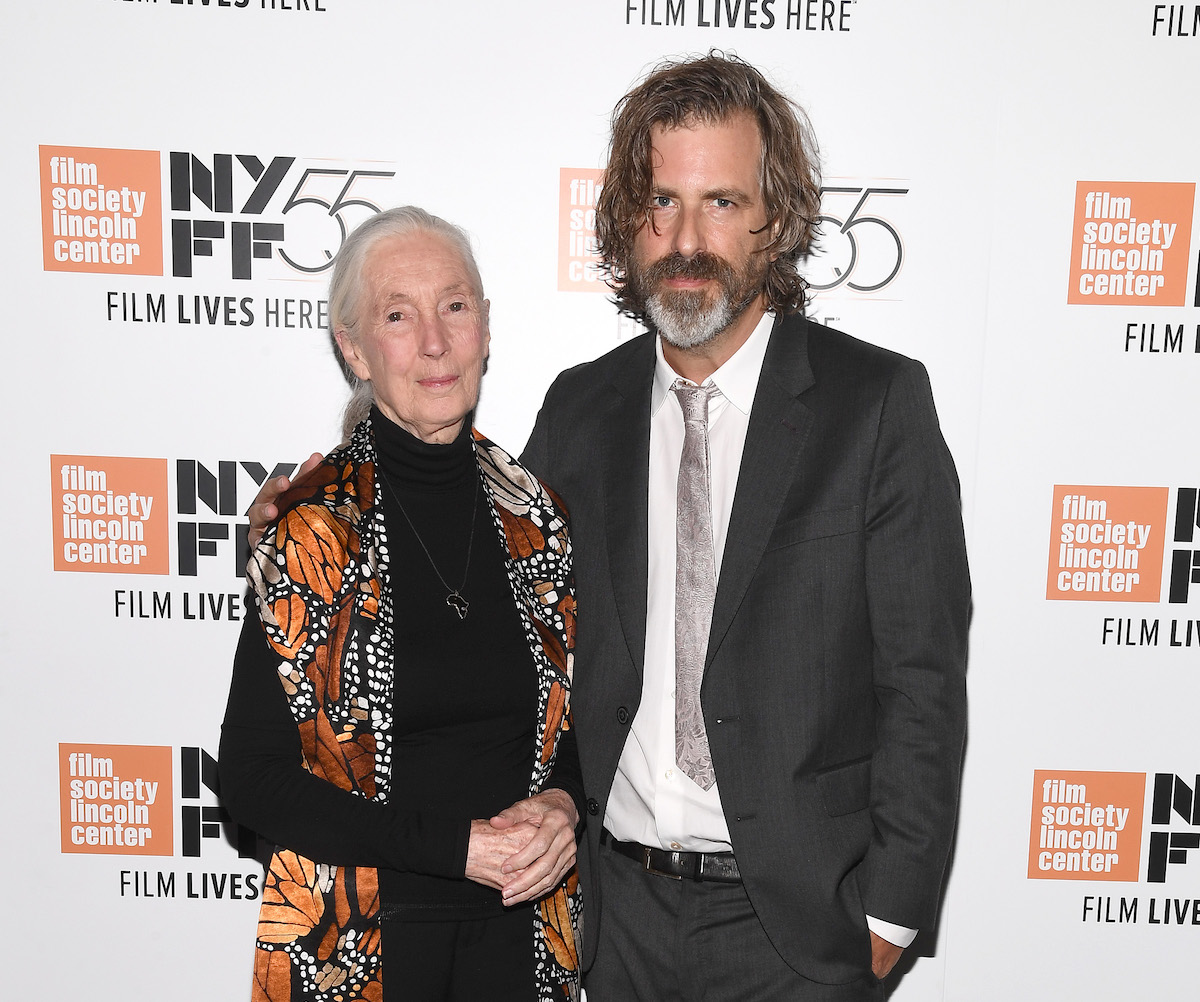 Director Brett Morgen and subject Jane Goodall were in attendance to introduce the stunning documentary, National Geographic’s JANE at the 2017 New York Film Festival.
[caption id="attachment_24059" align="aligncenter" width="1200"]
Director Brett Morgen and subject Jane Goodall were in attendance to introduce the stunning documentary, National Geographic’s JANE at the 2017 New York Film Festival.
[caption id="attachment_24059" align="aligncenter" width="1200"] Jane[/caption]
JANE is the story of how Jane Goodall became Jane Goodall – using footage shot by future husband Hugo van Lawick of her first experiences in Gombe, Tanzinia in the 1960’s. Previously thought to be lost forever, the footage was only recently discovered in a storage unit, and has been now masterfully intercut with interviews of present day Jane Goodall to provide an in-depth portrait of her life.
JANE will be released in select theaters starting October 20.
https://www.youtube.com/watch?v=FRlUJrEUn0Y&feature=youtu.be
Image: NEW YORK – OCTOBER 5: (L-R) Jane Goodall and Director Brett Morgen attend the NY Film Festival screening of National Geographic’s documentary ‘Jane’ at the Walter Reade Theater on October 5, 2017 in New York City. (Photo by Anthony Behar/NatGeo/PictureGroup)
Jane[/caption]
JANE is the story of how Jane Goodall became Jane Goodall – using footage shot by future husband Hugo van Lawick of her first experiences in Gombe, Tanzinia in the 1960’s. Previously thought to be lost forever, the footage was only recently discovered in a storage unit, and has been now masterfully intercut with interviews of present day Jane Goodall to provide an in-depth portrait of her life.
JANE will be released in select theaters starting October 20.
https://www.youtube.com/watch?v=FRlUJrEUn0Y&feature=youtu.be
Image: NEW YORK – OCTOBER 5: (L-R) Jane Goodall and Director Brett Morgen attend the NY Film Festival screening of National Geographic’s documentary ‘Jane’ at the Walter Reade Theater on October 5, 2017 in New York City. (Photo by Anthony Behar/NatGeo/PictureGroup)
-
Free NYFF Live will Feature Richard Linklater, Sean Baker, Vanessa Redgrave and More
[caption id="attachment_24811" align="aligncenter" width="1200"] Richard Linklater[/caption]
The sixth edition of free talk series NYFF Live during the 2017 New York Film Festival will feature actors, directors, writers, critics, and other industry insiders participating in daily evening discussions in the Amphitheater at the Elinor Bunin Munroe Film Center.
NYFF55 Directors Dialogues include conversations with Main Slate filmmakers Lucrecia Martel, Agnès Varda & JR, Hong Sang-soo, and Philippe Garrel. This year’s On Cinema features Opening Night filmmaker Richard Linklater (Last Flag Flying) in an in-depth discussion with NYFF Director Kent Jones about films that have influenced and inspired him, illustrated with film clips.
NYFF Live features panels on The Square, The Meyerowitz Stories (New and Selected), The Florida Project, and other films from NYFF55, as well as discussions with festival talent including Vanessa Redgrave, Luca Guadagnino, and Claire Denis.
Richard Linklater[/caption]
The sixth edition of free talk series NYFF Live during the 2017 New York Film Festival will feature actors, directors, writers, critics, and other industry insiders participating in daily evening discussions in the Amphitheater at the Elinor Bunin Munroe Film Center.
NYFF55 Directors Dialogues include conversations with Main Slate filmmakers Lucrecia Martel, Agnès Varda & JR, Hong Sang-soo, and Philippe Garrel. This year’s On Cinema features Opening Night filmmaker Richard Linklater (Last Flag Flying) in an in-depth discussion with NYFF Director Kent Jones about films that have influenced and inspired him, illustrated with film clips.
NYFF Live features panels on The Square, The Meyerowitz Stories (New and Selected), The Florida Project, and other films from NYFF55, as well as discussions with festival talent including Vanessa Redgrave, Luca Guadagnino, and Claire Denis.
NYFF Live and Directors Dialogues
Ruben Östlund, The Square Swedish filmmaker Ruben Östlund’s The Square won the coveted Palme d’Or at Cannes this year. The satirical drama, starring Claes Bang and Elisabeth Moss, follows a well-heeled contemporary art curator at a Stockholm museum who falls prey to a pickpocketing scam, triggering an overzealous response and then a crisis of conscience. Östlund, whose features also include Play and Force Majeure, will talk about writing and directing The Square, which plays at this year’s NYFF. VR and the Future of Virtual Production by Lucasfilm Demo and Talk with Rachel Rose, Jose Perez, and Nick Rasmussen From the depths of earth’s oceans to galaxies far, far away, VR allows us to be anyone, go anywhere, and see anything. Lucasfilm and its visual effects division, Industrial Light & Magic, have harnessed the power of this medium to create a new Virtual Production toolset, allowing filmmakers to build and scout a virtual set, manipulate props, puppeteer characters and vehicles, even compose shots to create virtual storyboards. It’s a game-changing application that is easy to learn, allowing storytellers to focus on the elements that blend together to form great stories. The creators of the toolset will participate in a conversation about the development of the platform and its potential to impact the filmmaking process, followed on Saturday by a public demonstration that will allow audiences to experience the system first hand. On Cinema: Richard Linklater In this annual special event, NYFF Director Kent Jones sits down with world-renowned filmmakers for an in-depth talk about films that have influenced and inspired them, illustrated with film clips. This year, Jones will talk with Richard Linklater, whose intensely emotional comic drama Last Flag Flying is this year’s opening night selection, and whose many superb films (Slacker, Dazed and Confused, Waking Life, and Boyhood, to name just a few) have been genuine gifts to modern American cinema. Gamescape: The Revenge of Full Motion Video It’s 1983. You find yourself in an arcade in the ’burbs. Among the future classics—Galaga, Space Invaders, Donkey Kong—you find something different: Sega’s Astron Belt or Cinematronics’ Dragon’s Lair, games that eschewed pixelated sprites for video and vivid animation. Full Motion Video games were movies you could play—to a point: the technical execution left something to be desired. Games were unreliable, systems crashed, and FMV all but disappeared. But FMV is making a comeback as creators breathe new life into this 35-year-old form. The 2017 edition of Gamescape celebrates some of the best new FMV work and looks back on titles both famous and infamous from the golden age of the arcade. GameScape is co-curated by Clara Fernandez-Vara, of the NYU Game Center. IndieWire Screen Talk LIVE podcast with Eric Kohn & Anne Thompson Take a seat to watch IndieWire’s Chief Film Critic Eric Kohn and Editor at Large Anne Thompson engage in film debate and banter as they record the next episode of their popular podcast, Screen Talk. Kohn and Thompson will give their takes on the first weekend of the New York Film Festival, and talk about how awards season is shaping up. HBO Directors Dialogues: Lucrecia Martel A singular artist working in cinema today, Argentinean director Lucrecia Martel makes films that are unlike any others. This year, Zama, showcased in the Main Slate, marks Martel’s fourth feature and fourth New York Film Festival appearance, following La Cienaga (2001), The Holy Girl (2004), and The Headless Woman (2009). Join Martel for a discussion of her films and her remarkable latest, an adaptation of a classic Argentinean novel, set in the late 18th century. Film Comment: The Cinema of Experience At this year’s NYFF, filmmakers are rising to the challenge of representing race and immigration at a pivotal time in our nation’s history. Our guests will discuss how cinematic technique is used to reflect such experiences and what is different about the latest generation of storytelling. Moderated by Film Comment Editor-in-Chief Nicolas Rapold, and featuring critic Teo Bugbee, writer-programmer Ashley Clark, and writer-filmmaker Farihah Zaman. Serge Bozon & Isabelle Huppert, Mrs. Hyde Academy Award nominee Isabelle Huppert headlines Serge Bozon’s eccentric comedic thriller loosely based on Robert Louis Stevenson’s The Strange Case of Dr. Jekyll and Mr. Hyde. Huppert plays a timid physics professor at a suburban high school constantly mocked by colleagues and students. During a stormy night, she is struck by lightning, and wakes up as the newly powerful Madame Hyde. Meet Huppert as she talks about transforming into this character, and her career in movies and television; and Bozon, who will share his experiences making the movie. HBO Directors Dialogues: Agnès Varda & JR At age 89, legendary French filmmaker Agnès Varda has collaborated with 34-year-old visual artist JR on a remarkable new film, titled Faces Places. In it, the two of them journey from one rural French village to another, meeting people, taking their photographs, and printing large-scale versions of them, placed grandly within the environments. The two artist friends will discuss their unique project and the wise and wonderful film that came out of it. Noah Baumbach, The Meyerowitz Stories (New and Selected) No stranger to the New York Film Festival, Noah Baumbach has presented The Squid and the Whale (2005), Margot at the Wedding (2007), and Frances Ha (2012) here. Baumbach returns this year with the comedic drama The Meyerowitz Stories (New and Selected), starring Dustin Hoffman, Adam Sandler, Ben Stiller, and Emma Thompson. The film harkens back to the themes of family vanities and warring attachments he has explored in previous movies. Baumbach will talk about writing the film, and working with a cast that includes screen legend Hoffman. NYFF Shorts Filmmakers For the past three years, the New York Film Festival has celebrated short form filmmakers living and working in the city. Meet the directors with films in the festival’s “New York Stories” program: Jason Giampietro (Unpresidented), Adinah Dancyger (Cheer Up Baby), Ashley Connor and Joe Stankus (The Layover), Kevin Wilson, Jr. (My Nephew Emmett), John Wilson (The Road to Magnasanti) and Pacho Velez & Yoni Brook (Mr. Yellow Sweatshirt). Making The Florida Project: Sean Baker & Chris Bergoch Sean Baker (writer-director-producer-editor) and Chris Bergoch (writer-producer) collaborated on The Florida Project, which is having its U.S. premiere at the New York Film Festival. In this discussion, they’ll delve into the particulars of how The Florida Project was conceived and executed through its various stages in development. Set over one summer, the film follows precocious six-year-old Moonee as she courts mischief and adventure with her ragtag playmates and bonds with her rebellious but caring mother, all while living in the shadow of nearby Disney World. Making Call Me by Your Name: Luca Guadagnino, Armie Hammer, and Michael Stuhlbarg Luca Guadagnino’s film has already caused a sensation at the Sundance, Berlin, and Toronto film festivals. Based on the book by André Aciman and from a screenplay by James Ivory, Call Me by Your Name centers on the son of an American professor who falls for the graduate student who comes to study and live with his family in their northern Italian home during the summer. Join Guadagnino and actors Armie Hammer and Michael Stuhlbarg as they talk about what is sure to be one of the most debated films of the fall. Spotlight on Documentary Filmmakers The amount of nonfiction films has skyrocketed since the turn of the century. Festivals around the world have celebrated the form, while critics and filmgoers have increasingly included docs on their roster of films to see. The group of filmmakers showing at this year’s NYFF—including Alison McAlpine (Cielo), Nancy Buirski (The Rape of Recy Taylor), Ena and Ines Talakic (Hall of Mirrors), among others—represent a cross-section of some of the most compelling documentarians working today. Documenting Creativity: Griffin Dunne, Rebecca Miller, Susan Lacy, Josh Koury & Myles Kane Many documentaries showing at this year’s NYFF focus on the lives and work of major writers and artists. At this talk, the directors behind four of these films will speak about their processes in representing creative people onscreen: Griffin Dunne, on creating a portrait of his aunt in Joan Didion: The Center Will Not Hold; Rebecca Miller, on the long road to constructing a documentary on her father in Arthur Miller: Writer; Susan Lacy, who traces the private, public, and artistic development of one of cinema’s true giants in Spielberg; and Josh Koury & Myles Kane on Voyeur, which closely followed Gay Talese as he worked on his controversial book The Voyeur’s Motel. Film Comment: Filmmakers Chat For the second year, Film Comment gives you the rare chance to see some of today’s most important filmmakers in dialogue with each other. A selection of NYFF directors past and present will talk together about their influences and inspirations in a discussion moderated by the magazine’s editor-in-chief Nicolas Rapold, with filmmakers Claire Denis (Let the Sun Shine In) and Joachim Trier (Thelma). Vanessa Redgrave, Sea Sorrow Her career as an actor has spanned six decades, but Academy Award winner Vanessa Redgrave has now become a documentary director with Sea Sorrow, a timely examination of the world’s urgent migrant crisis. Redgrave will be joined by producer Carlo Gabriel Nero to discuss what moved her to take on the project and how she set out to accomplish her filmmaking goals. Greta Gerwig, Lady Bird Greta Gerwig is a familiar presence at the New York Film Festival, seen in films such as Frances Ha (2012), Eden (2014), and 20th Century Women (2016). Gerwig has returned to the festival this year as a filmmaker, presenting her directorial debut, Lady Bird, starring Saoirse Ronan as an artistically inclined young woman trying to define herself in the shadow of her mother (Laurie Metcalf) and searching for an escape route from her hometown of Sacramento. Join Gerwig as she talks about segueing to behind the camera and telling a story that comes from a very personal place. HBO Directors Dialogues: Hong Sang-soo Beyond prolific, South Korean director Hong Sang-soo has presented new films in NYFF’s Main Slate for five years in a row. And this year, he has two new movies: The Day After, a black-and-white tale of mistaken identity, déja vu, and adultery; and On the Beach at Night Alone, an achingly personal response to public scandals surrounding his romantic life, starring Kim Min-hee (The Handmaiden). Hong will be on-hand to discuss these intimate, dialogue-driven, comic-tinged dramas. Field of Vision Presents Since its launch in 2013, Field of Vision has been a trailblazer in producing and championing short-form documentaries about developing and ongoing stories from around the world. This evening will spotlight three current films, featuring clips and discussions with their filmmakers. These include Marshall Curry’s A Night at the Garden, about a chilling rally held in New York nearly 80 years ago and which has resonance today; Josh Begley’s Best of Luck with the Wall, which gives perhaps the first true look at the consequences of Trump’s proposed wall between the U.S. and Mexico; and a sneak from Farihah Zaman and Jeff Reichert’s latest project, American Carnage, about the films and politics of Breitbart News chief and former Trump adviser Steve Bannon. HBO Directors Dialogues: Philippe Garrel French master Philippe Garrel represents a strain of modernist cinema that stretches from the post–New Wave era to today, as evidenced by three of his films showing during NYFF this year. We’re pleased to present his newest film, the penetrating meditation on relationships and fidelity Lover for a Day, showing in the Main Slate, as well as restorations of his La Révélateur, made while the events of May ’68 were unfolding, and his devastatingly personal 1979 film L’Enfant secret. And we’re thrilled to have Garrel at this rare public appearance. Keeping Cultural Borders Open: Laurie Anderson and special guests This year at the New York Film Festival, hundreds of artists and activists will band together to launch The Federation. Formed by Laurie Anderson, Laura Michalchyshyn, and Tanya Selvaratnam in response to the increased xenophobia and closing of physical borders, The Federation is a coalition of individuals and organizations committed to keeping cultural borders open and recognizing how essential artistic experiences are to fostering compassion, critical thinking, and joy. Join Anderson, Selvaratnam, Sara Driver, Barbet Schroeder, and other special guests for a discussion about the aims of the initiative and the role artists play in combatting cultural barriers. Presented with The Federation Real Characters: Writing Biopics and Origin Stories One of the deepest connections we can have to a movie is through fully conceptualized, credible characters. Without them, even the most engrossing plot may not resonate. The Writers Guild of America, East brings together the creators behind some unforgettable recent movie characters to tell us how they made them intriguing and believable. Presented with WGA East Film Comment: Festival Wrap In what is becoming an annual tradition, Film Comment contributing critics and editors gather for the festival’s last weekend and talk about the films they’ve seen, discussing—or arguing about—the selections in the lineup, from Main Slate and beyond. Access New Audiences: Wonderstruck & The Blind Boys of Alabama Join Michele Spitz (Woman of Her Word) and Jo-Ann Dean (SIGNmation) for a discussion on how filmmakers and distributors can increase audience outreach and box-office by incorporating accessible language components for both Deaf and Blind communities. Participating are Deaf actors Lauren Ridloff, Anthony Natale, and John McGinty, featured in NYFF Centerpiece Wonderstruck; Leslie McCleave, producer-director of How Sweet the Sound: The Blind Boys of Alabama; and award-winning audio producer, director, and engineer Cliff Hahn. The panelists will provide insight on budgeting, grant opportunities, and how American Sign Language (ASL), Audio Description (AD) and Open/Closed Captioning (OC/CC) are inclusive assets. ASL Interpretation Provided. Presented with NYWIFT
-
2017 New York Film Festival Announces Special Events, Docs on Steven Spielberg, Bob Dylan + Shorts
[caption id="attachment_24179" align="aligncenter" width="1200"] A Gentle Creature (Sergei Loznitsa)[/caption]
The 55th New York Film Festival taking place September 28 – October 15, today added a new Retrospective title and announced the Special Events section and Main Slate shorts.
Special Events will feature the world premieres of three major documentaries: Susan Lacy’s Spielberg, which chronicles the cinema titan’s remarkable career and screens with the director and subject in person; Jennifer Lebeau’s Trouble No More, a concert film that punctuates rare, recently rediscovered footage from Bob Dylan’s ’79-’80 tour with a beautiful performance by Michael Shannon; and Susan Froemke’s The Opera House, a history of the Metropolitan Opera and a love letter to the art form that will have a special screening in the Metropolitan Opera House at Lincoln Center. Claude Lanzmann returns to NYFF with the World Premiere of his four-film series Four Sisters, created from interviews conducted in the 1970s with four Eastern European women who impossibly survived the Holocaust.
Additional highlights include a new restoration of G.W. Pabst’s silent magnum opus Pandora’s Box, screening with the world premiere of a new orchestral score by Jonathan Ragonese performed live; Rory Kennedy’s Without a Net, an examination of the many technologically underserved schools across the country; and two talks with luminaries from this year’s festival—a far-ranging conversation with Kate Winslet about her career and her unforgettable performance in this year’s Closing Night selection, Woody Allen’s Wonder Wheel, and a Master Class with Vittorio Storaro and Ed Lachman, the brilliant cinematographers behind the Closing and Centerpiece films.
The fifth annual Film Comment Presents selection is the U.S. premiere of 2017 Cannes competition selection A Gentle Creature, an incisive, tragicomic vision of today’s Russia directed by Sergei Loznitsa and inspired by a Dostoevsky short story. In previous years, Film Comment has championed films such as Terence Davies’s A Quiet Passion, Steve McQueen’s 12 Years a Slave, and László Nemes’s Son of Saul. The magazine will also host three live events: a roundtable discussion with festival filmmakers about their experiences as movie lovers and creators, a dialogue on the representation of race and immigration in cinema history, and a critical wrap report of the festival’s highs and lows. All three will also be recorded for the weekly Film Comment Podcast.
The festival also showcases 24 short films across four programs as part of the NYFF Main Slate. Highlights include Qiu Yang’s A Gentle Night, winner of the Short Film Palme d’Or at Cannes this year; new work by returning filmmakers Jason Giampietro, John Wilson, Riccardo Giacconi, and Pacho Velez; and world premieres of Ashley Connor & Joe Stankus’s The Layover, Adinah Dancyger’s Cheer Up Baby, Gabriel de Urioste’s Program, Damien Power’s Hitchhiker, and Wilson’s The Road to Magnasanti.
Finally, the New York Film Festival announced a late addition to the Retrospective honoring Robert Mitchum’s centenary: Bruce Weber’s Nice Girls Don’t Stay for Breakfast, a work-in-progress portrait of Mitchum the man, a flawed soul and true artist, which Weber began shooting more than twenty years ago.
A Gentle Creature (Sergei Loznitsa)[/caption]
The 55th New York Film Festival taking place September 28 – October 15, today added a new Retrospective title and announced the Special Events section and Main Slate shorts.
Special Events will feature the world premieres of three major documentaries: Susan Lacy’s Spielberg, which chronicles the cinema titan’s remarkable career and screens with the director and subject in person; Jennifer Lebeau’s Trouble No More, a concert film that punctuates rare, recently rediscovered footage from Bob Dylan’s ’79-’80 tour with a beautiful performance by Michael Shannon; and Susan Froemke’s The Opera House, a history of the Metropolitan Opera and a love letter to the art form that will have a special screening in the Metropolitan Opera House at Lincoln Center. Claude Lanzmann returns to NYFF with the World Premiere of his four-film series Four Sisters, created from interviews conducted in the 1970s with four Eastern European women who impossibly survived the Holocaust.
Additional highlights include a new restoration of G.W. Pabst’s silent magnum opus Pandora’s Box, screening with the world premiere of a new orchestral score by Jonathan Ragonese performed live; Rory Kennedy’s Without a Net, an examination of the many technologically underserved schools across the country; and two talks with luminaries from this year’s festival—a far-ranging conversation with Kate Winslet about her career and her unforgettable performance in this year’s Closing Night selection, Woody Allen’s Wonder Wheel, and a Master Class with Vittorio Storaro and Ed Lachman, the brilliant cinematographers behind the Closing and Centerpiece films.
The fifth annual Film Comment Presents selection is the U.S. premiere of 2017 Cannes competition selection A Gentle Creature, an incisive, tragicomic vision of today’s Russia directed by Sergei Loznitsa and inspired by a Dostoevsky short story. In previous years, Film Comment has championed films such as Terence Davies’s A Quiet Passion, Steve McQueen’s 12 Years a Slave, and László Nemes’s Son of Saul. The magazine will also host three live events: a roundtable discussion with festival filmmakers about their experiences as movie lovers and creators, a dialogue on the representation of race and immigration in cinema history, and a critical wrap report of the festival’s highs and lows. All three will also be recorded for the weekly Film Comment Podcast.
The festival also showcases 24 short films across four programs as part of the NYFF Main Slate. Highlights include Qiu Yang’s A Gentle Night, winner of the Short Film Palme d’Or at Cannes this year; new work by returning filmmakers Jason Giampietro, John Wilson, Riccardo Giacconi, and Pacho Velez; and world premieres of Ashley Connor & Joe Stankus’s The Layover, Adinah Dancyger’s Cheer Up Baby, Gabriel de Urioste’s Program, Damien Power’s Hitchhiker, and Wilson’s The Road to Magnasanti.
Finally, the New York Film Festival announced a late addition to the Retrospective honoring Robert Mitchum’s centenary: Bruce Weber’s Nice Girls Don’t Stay for Breakfast, a work-in-progress portrait of Mitchum the man, a flawed soul and true artist, which Weber began shooting more than twenty years ago.
FILMS & DESCRIPTIONS
A Conversation with Kate Winslet For more than twenty years, Kate Winslet has proven herself one of the most expressive actors in movies, from her astonishing breakouts in Heavenly Creatures (1994), Sense and Sensibility (1995), and Titanic (1997), to the increasingly internalized characterizations of Eternal Sunshine of the Spotless Mind (2004), Revolutionary Road (2008), The Reader (2008), for which she won an Oscar, and Steve Jobs(2015), a NYFF centerpiece. This year, Winslet stars in the NYFF festival closer, Wonder Wheel, directed by Woody Allen, and her blistering, unpredictable, vanity-free performance is destined to be remembered as one of her greatest. Join Kate Winslet in a special live onstage event in which she talks about this latest role, and her career in general. Claude Lanzmann’s Four Sisters The Hippocratic Oath (France, 2017, 89m) Baluty (France, 2017, 64m) The Merry Flea (France, 2017, 52m) Noah’s Ark (France, 2017, 68m) World Premiere Since 1999, Claude Lanzmann has made several films that could be considered satellites of Shoah, comprised of interviews conducted in the 1970s that didn’t make it into the final, monumental work. He has just completed a series of four new films, built around four women from four different areas of Eastern Europe with four different destinies, each finding herself unexpectedly and improbably alive after war’s end: Ruth Elias from Ostravia, Czechoslovakia; Paula Biren from Lodz, Poland; Ada Lichtman from further south in Krakow; and Hannah Marton from Cluj, or Kolozsvár, in Transylvania. “What they have in common,” wrote Lanzmann, “apart from the specific horrors each one of them was subjected to, is their intelligence, an incisive, sharp and carnal intelligence that rejects all pretence and false reasons—in a word—idealism.” What is so remarkable about Lanzmann’s films is the way that they stay within the immediate present tense, where the absolute horror of the shoah is always happening. The Opera House Dir. Susan Froemke, USA, 2017, 108m World Premiere Renowned documentarian Susan Froemke takes viewers through the history of the Metropolitan Opera via priceless archival stills, footage, and interviews (with, among many others, the great soprano Leontyne Price). The film follows the development of the glorious institution from its beginnings at the old opera house on 39th Street to the storied reign of Rudolph Bing to the long-gestating move to Lincoln Center, the construction of which traces a fascinating byway through the era of urban renewal and Robert Moses’s transformation of New York. Most of all, though, this is a film about the love for and devotion to the preservation of an art form, and the upkeep of a home where it can live and thrive. This screening will take place at the Metropolitan Opera House at Lincoln Center. Pandora’s Box Dir. G.W. Pabst, Germany, 1929, 143m Pabst’s immortal film version of the Frank Wedekind play gave us one of the most enduring presences in cinema. “Is the movie’s resident Pandora, Louise Brooks, inside the character of Lulu or is Lulu inside her?” wrote J. Hoberman in The Village Voice. As Brooks herself put it to Kenneth Tynan, “It was clever of Pabst to know even before he met me that I possessed the tramp essence of Lulu.” Lulu, in Hoberman’s words, was a “new kind of femme fatale—generous, manipulative, heedless, blank, democratic in her affections, ambiguous in her sexuality.” She has inspired countless helmet-haired imitators, but she still reigns supreme. Featuring the world premiere of a new orchestral score composed and conducted by Jonathan Ragonese. A Janus Films release. DCP courtesy of the Deutsche Kinemathek from the restoration based on elements contributed by the Cinémathèque Française, Gosfilmofond and the Národní Filmový Archiv in Prague undertaken at Cineteca di Bologna. The work was helmed by the George Eastman House and Big Sound with funding provided by Hugh M. Hefner. This evening is generously supported by Ira Resnick. Spielberg Dir. Susan Lacy, USA, 2017, 147m World Premiere Susan Lacy’s new film traces the private, public, and artistic development of one of cinema’s true giants, from his early love of moviemaking as a kid growing up in all-American suburbia, through his sudden rise to superstardom with Jaws, to his establishment of a film-and-TV empire with DreamWorks and beyond. All along the way, Spielberg has approached every new film as if it were his first. Featuring interviews with friends and contemporaries in the “New Hollywood” (Francis Coppola, Brian De Palma, George Lucas, Martin Scorsese); key artistic collaborators (including Tom Hanks, John Williams, longtime DP Janusz Kamiński); and, the film’s most touching presences, Spielberg’s beloved sisters and parents, Arnold and Leah. An HBO Documentary Film. Trouble No More Dir. Jennifer Lebeau, USA, 2017, 59m World Premiere Like every other episode in the life of Bob Dylan, the “born again” period that supposedly began with the release of Slow Train Coming (1979) and supposedly ended with Shot of Love (1981) has been endlessly scrutinized in the press. Less attention has been paid to the magnificent music he made. This very special film consists of truly electrifying video footage, much of it thought to have been lost for years and all newly restored, shot at shows in Toronto and Buffalo on the last leg of the ’79-’80 tour (with an amazing band: Muscle Shoals veteran Spooner Oldham and Terry Young on keyboards, Little Feat’s Fred Tackett on guitar, Tim Drummond on bass, the legendary Jim Keltner on drums and Clydie King, Gwen Evans, Mona Lisa Young, Regina McCrary and Mary Elizabeth Bridges on vocals) interspersed with sermons written by Luc Sante and beautifully delivered by Michael Shannon. More than just a record of some concerts, Trouble No More is a total experience. Master Class: Vittorio Storaro and Ed Lachman The cinematographers behind two of this year’s true visual wonders—titled, appropriately, Wonderstruck and Wonder Wheel—sit down with NYFF Director Kent Jones for a conversation about the craft of cinematography and their own astonishing careers in particular. Vittorio Storaro, who has had lengthy creative partnerships with Bernardo Bertolucci, Francis Coppola, and Carlos Saura, has now worked with Woody Allen to create one of his greatest aesthetic achievements; Ed Lachman, who has worked extensively with many filmmakers from Wim Wenders to Steven Soderbergh, is now perhaps best known for his collaboration with Todd Haynes, with whom he has created a remarkable movie set in two wholly distinct lost worlds: New York in the twenties and the seventies. Without a Net Dir. Rory Kennedy, USA, 2017, 56m Many of us assume that the world, or at least the country, is now fully connected, but throughout American classrooms there exists a digital divide. In a shockingly large number of schools, access to technology, connectivity, and teacher-training is nonexistent. Many of those underserved schools are located just a few miles from fully equipped schools with technologically adept teachers in better funded districts. This new film from Rory Kennedy, in which we see the situation through the eyes of students, educators, policy experts, and advocates across the country, clearly lays out the steps we must take a to bring our public education system into the 21st century. Verizon, a producer of the film, has over the last five years, committed more than $160 million to help close the digital divide. FILM COMMENT AT NYFF EVENTS Film Comment Presents: A Gentle Creature Dir. Sergei Loznitsa, France/Germany/Lithuania/The Netherlands, 2017, 143m North American Premiere This tragicomic pageant by Sergei Loznitsa (My Joy, NYFF48) brings a roiling energy and a lunatic sense of desperation to its larger-than-life vision of today’s Russia. Inspired by a Dostoevsky short story, A Gentle Creature follows an unnamed woman (Vasilina Makovtseva) moving through a prison town underworld after attempting to visit her incarcerated husband. Loznitsa uses the town as a microcosm for a country where corruption and authority are so intertwined as to be indistinguishable. A Gentle Creature brings its own genius to a Russian tradition of social panoramas, and as the film takes a turn into the carnivalesque and the infernal, it gets at the deeply troubled slumber of a beleaguered country. Film Comment Live: The Cinema of Experience At this year’s NYFF, filmmakers are rising to the challenge of representing race and immigration at a pivotal time in our nation’s history. Our guests will discuss how cinematic technique is used to reflect such experiences and what is different about the latest generation of storytelling. Filmmakers Chat For the second year, Film Comment gives you the rare chance to see some of today’s most important filmmakers in dialogue with each other. A selection of directors whose films are screening at this edition of NYFF will talk together in a discussion moderated by Film Comment editor-in-chief Nicolas Rapold. Festival Wrap In what is becoming an annual tradition, Film Comment contributing critics and editors gather for the festival’s last weekend and talk about the films they’ve seen, discussing—or arguing about—the selections in the lineup, from Main Slate and beyond. RETROSPECTIVE – JUST ADDED Nice Girls Don’t Stay for Breakfast Bruce Weber, 2017, USA In the late 1990s, the great photographer and filmmaker Bruce Weber managed to convince Robert Mitchum to appear before his camera for a filmed portrait. Weber shot Mitchum in 35mm black and white, hanging with friends and cronies in restaurants and hotel rooms and singing before a microphone in a studio recording standards for a projected album. When Mitchum passed away in 1997, Weber parked his beloved project and it was some time before he went back into his footage. Nice Girls Don’t Stay for Breakfast (a great title, from a Julie London song), still a work in progress, is a beautifully textured full-throttle portrait of a man who came from—and for many was the very embodiment of—a bygone era, speaking and enacting its prejudices, its longings, and its charms. He was also a great artist with the sensibility of a poet, as you’ll see.SHORTS
Shorts Program 1: Narrative Showcasing both established and emerging filmmakers, this program features six unique films from around the world. TRT: 84m Programmed by Gabi Madsen Hedgehog’s Home Eva Cvijanović, Canada/Croatia, 2017, 10m In this stop-motion tale, a hedgehog’s love of his humble abode perplexes his predators, who deliver their dialogue in rhyming couplets. New York Premiere All Over the Place Mariana Sanguinetti, Argentina, 2017, 10m While moving out of the apartment she shared with her ex-boyfriend, Jimena reflects on closure and the future in a stream-of-consciousness message on his answering machine. North American Premiere A Gentle Night Qiu Yang, China, 2017, 15m When their 13-year-old daughter disappears on her way home from school, a couple’s feelings of helplessness conflict with their desire to act. New York Premiere Douggy Matvey Fiks, USA/Russia, 2017, 19m Tow-truck driver Douggy’s mind is on a series of unanswered phone calls as he goes through the motions of his last two night shifts. Fiks renders his routine’s quietude and rusty infrastructure in warm 16mm grain. North American Premiere Scaffold Kazik Radwanski, Canada, 2017, 15m Filmed in fragmentary close-up, Scaffold stitches together the conversations, interactions, and people-watching that make up the daily grind for two Bosnian-Canadian construction workers. U.S. Premiere Bonboné Rakan Mayasi, Palestine/Lebanon, 2017, 15m A Palestinian man serves time in an Israeli jail, but he and his wife still hope to conceive a child. With the help of a bonbon wrapper, the couple overcomes physical obstacles in a race against the clock. U.S. Premiere Shorts Program 2: Genre Stories This is the third annual edition of a program focusing on the best in new horror, thriller, sci-fi, pitch-black comedy, twisted noir, and fantasy shorts from around the world. TRT: 92m Programmed by Laura Kern Creswick Natalie James, Australia, 2016, 10m As a woman helps her dad pack up his home, it becomes apparent that it may be inhabited by more than just memories. New York Premiere The Last Light Angelita Mendoza, USA/Mexico, 2017, 11m Spanish with English subtitles The innocence and the developing evils of youth collide when two children’s paths cross in an abandoned house. New York Premiere Birthday Alberto Viavattene, Italy, 2017, 15m A corrupt young nurse messes with the wrong patient on the day she turns 100. U.S. Premiere Program Gabriel de Urioste, USA, 2017, 8m In the Digital Age, finding real love is more challenging—and glitchier—than ever. World Premiere Hombre Juan Pablo Arias Muñoz, Chile, 2017, 21m Spanish with English subtitles While on a hunting trip with his father, a teenage boy must contend with multiple monsters. North American Premiere Drip Drop Jonna Nilsson, Sweden, 2016, 7m Alone one night, a woman is terrorized by water that manifests itself in unusual ways. New York Premiere Hitchhiker Damien Power, Australia, 2015, 20m Right before brilliantly deconstructing camping films in Killing Ground, its director made this noirish homage to road movies. World Premiere Shorts Program 3: New York Stories This program, now in its third year, showcases work from some of the most exciting filmmakers living and working in New York today, including established names and ones to watch. TRT: 79m Programmed by Dan Sullivan Unpresidented Jason Giampietro, USA, 2017, 14m Giampietro confronts our uncertain political moment head-on with this dark comedy, in which a man attempts to justify his having bet on Trump to win the 2016 presidential election. New York Premiere Cheer Up Baby Adinah Dancyger, USA, 2017, 12m The experience of a young woman (India Menuez) who has been sexually assaulted by a stranger on the subway is rendered with psychological menace and sensory dislocation in Dancyger’s elliptical tale. World Premiere The Layover Ashley Connor & Joe Stankus, USA, 2017, 10m This subtle, funny miniature offers a tender glimpse at the shared life of two flight attendants as they observe the one-year anniversary of their beloved dog’s passing. World Premiere My Nephew Emmett Kevin Wilson, Jr., USA, 2017, 19m This visually ravishing and thought-provoking work portrays one of the USA’s great shames—the 1955 murder of 14-year-old Emmett Till by two white men in Mississippi—and movingly reminds us of this dark episode’s enduring relevance. New York Premiere The Road to Magnasanti John Wilson, USA, 2017, 15m Wilson welcomes us to the terrordome with his latest, in which he hilariously and chillingly illustrates NYC’s not-so-gradual transformation into a late-capitalist paradise-cum-dystopia. World Premiere Mr. Yellow Sweatshirt Pacho Velez & Yoni Brook, USA, 2017, 9m A man’s inability to get a subway turnstile to accept his Metrocard encapsulates NYC’s ongoing public transit crisis in Velez and Brook’s elegant and formally audacious documentary. New York Premiere Shorts Program 4: Documentary For its second year, NYFF showcases films from around the world that capture the versatility and depth of short nonfiction. TRT: 90mProgrammed by Tyler Wilson Cucli Xavier Marrades, Spain, 2017, 17m A widowed truck driver considers the nature of his companionship with a dove in this ethereal, moving work about loss and renewal. New York Premiere The Brick House Eliane Esther Bots, Netherlands, 2016, 16m With meticulous detail, Bots sensuously captures the placid movements and sounds of two friends inside a Dutch apartment as they share memories—both pleasant and harrowing—of their childhood in Tanzania. North American Premiere The True Tales / Les histoires vraies Lucien Monot, Switzerland, 2017, 22m Shooting on 16mm, Monot constructs a buoyant ode to his father, who wanders in and out of scripted scenarios that deconstruct his personal history while refracting his family’s unspoken loss. U.S. Premiere Two / Due Riccardo Giacconi, France/Italy, 2017, 16m Giacconi’s schematic, almost surreal essay film maps the development of a utopian residential neighborhood planned by Silvio Berlusconi in the seventies, and offers a representation of the not-yet prime minister’s lasting impact on Italian culture. North American Premiere The Disinherited / Los Desheredados Laura Ferrés, Spain, 2017, 19m In this funny and tender portrait that deftly blurs documentary and fiction, Ferrés’s father reluctantly endures the demise of his family business while trying to retain his dignity. North American Premiere
-
Films by Abel Ferrara, Alex Gibney, Vanessa Redgrave and More on 2017 New York Film Festival Spotlight on Documentary Lineup
[caption id="attachment_24059" align="aligncenter" width="1200"] Jane[/caption]
The Spotlight on Documentary lineup for this year’s 2017 New York Film Festival features new films by Abel Ferrara, Alex Gibney, Vanessa Redgrave’s directorial debut, and more
Selections include three documentaries spotlighting acclaimed writers, including the World Premiere of Griffin Dunne’s Joan Didion: The Center Will Not Hold; returning NYFF filmmaker Rebecca Miller’s tender portrait of her father, Arthur Miller: Writer; and the World Premiere of Myles Kane and Josh Koury’s Voyeur, capturing the investigations explored in Gay Talese’s book The Voyeur’s Motel. Other notable documentary subjects include Jean-Michel Basquiat, who commands the downtown NYC scene of the late ’70s and early ’80s in Sara Driver’s BOOM FOR REAL The Late Teenage Years of Jean-Michel Basquiat; and Jane Goodall, whose original expedition to contact a chimpanzee population is brought back to life via 50-year-old National Geographic footage in Brett Morgen’s Jane.
Additional selections by NYFF alums are Travis Wilkerson’s Did You Wonder Who Fired the Gun?, in which Wilkerson confronts his family’s white supremacist roots; the North American Premiere of The Rape of Recy Taylor, Nancy Buirski’s passionate film about the 1944 case of a black woman who was raped by several white men; Joshua Bonnetta & J.P. Sniadecki’s El mar la mar, a 16mm meditation on the dangerous trek from Mexico to the U.S. through the Sonoran Desert; the North American premiere of Abel Ferrara’s Piazza Vittorio, a charming snapshot of Rome’s largest public square; and three music films by Mathieu Amalric: C’est presque au bout du monde, Zorn, and Music Is Music.
Other highlights of this year’s Spotlight on Documentary section include Vanessa Redgrave’s directorial debut, Sea Sorrow, an expertly crafted call for Western aid to the global refugee crisis; Barbet Schroeder’s The Venerable W., which confronts an Islamophobic Burmese Buddhist monk; and Alex Gibney’s No Stone Unturned, a critical investigation into the 1994 Loughinisland massacre in Ireland.
2017 New York Film Festival Spotlight on Documentary
Arthur Miller: Writer Dir. Rebecca Miller, USA, 2017, 98m Rebecca Miller’s film is a portrait of her father, his times and insights, built around impromptu interviews shot over many years in the family home. This celebration of the great American playwright is quite different from what the public has ever seen. It is a close consideration of a singular life shadowed by the tragedies of the Red Scare and the death of Marilyn Monroe; a bracing look at success and failure in the public eye; an honest accounting of human frailty; a tribute to one artist by another. Arthur Miller: Writer invites you to see how one of America’s sharpest social commentators formed his ideologies, how his life reflected his work, and, even in some small part, shaped the culture of our country in the twentieth century. An HBO Documentary Films release. BOOM FOR REAL The Late Teenage Years of Jean-Michel Basquiat Dir. Sara Driver, USA, 2017, 79m U.S. Premiere Sara Driver’s documentary is both a celebration of and elegy for the downtown New York art/music/film/performance world of the late 1970s and early ’80s, through which Jean-Michel Basquiat shot like a rocket. Weaving Basquiat’s life and artistic progress in and out of her rich, living tapestry of this endlessly cross-fertilizing scene, Driver has created an urgent recollection of freedom and the aesthetic of poverty. Graffiti meets gestural painting, hip hop infects rock and roll and visa versa, heroin comes and never quite goes, night swallows day, and everybody looms as large as they feel like looming on the crumbling streets of the Lower East Side. Cielo Dir. Alison McAlpine, Canada/Chile, 2017, 74m World Premiere The first feature from Alison McAlpine, director of the beautiful 2008 “nonfiction ghost story” short Second Sight, is a dialogue with the heavens—in this case, the heavens above the Andes and the Atacama Desert in northern Chile, where the sky “is more urgent than the land.” McAlpine keeps the vast galaxies above and beyond in a delicate balance with the earthbound world of people, gently alighting on the desert- and mountain-dwelling astronomers, fishermen, miners, and cowboys who live their lives with reverence and awe for the skies. Cielo itself is an act of reverence and awe, and its sense of wonder ranges from the intimate and human to the vast and inhuman. Did You Wonder Who Fired the Gun? Dir. Travis Wilkerson, USA, 2017, 90m How is it that some people escape the racism and misogyny in which they are raised, and some cling to it as their reason to exist? For 20 years, Travis Wilkerson has been making films that interrogate the malevolent effects of capitalism on the American Dream. Here he turns his sights on his own family and the small town of Dothan, Alabama, where his white supremacist great-great grandfather S.E. Branch once shot and killed Bill Spann, an African-American man. Branch was arrested but never charged with the crime. The life of his victim has been all but obliterated from memory and public record. “This isn’t a white savior story. This is a white nightmare story,” says the filmmaker, who refuses to let himself or anyone else off the hook. El mar la mar Dir. Joshua Bonnetta & J.P. Sniadecki, USA, 2017, 94m The first collaboration between film and sound artist Bonnetta and filmmaker/anthropologist Sniadecki (The Iron Ministry, NYFF52) is a lyrical and highly topical film in which the Sonoran Desert, among the deadliest routes taken by those crossing from Mexico to the United States, is depicted a place of dramatic beauty and merciless danger. Haunting 16mm images of the unforgiving landscape and the human traces within it are supplemented with an intricate soundtrack of interwoven sounds and oral testimonies. Urgent yet never didactic, El mar la mar allows this symbolically fraught terrain to take shape in vivid sensory detail, and in so doing, suggests new possibilities for the political documentary. A Cinema Guild release. Filmworker Dir. Tony Zierra, USA, 2017, 94m Leon Vitali was a name in English television and movies when Stanley Kubrick cast him as Lord Bullingdon in Barry Lyndon, but after his acclaimed performance the young actor surrendered his career in the spotlight to become Kubrick’s loyal right-hand man. For the next two decades, Vitali was Kubrick’s factotum, never not on call, for whom no task was too small. Along the way, Vitali’s personal life suffered, he drifted from his children, and his health deteriorated as he gave everything to his work. Filmworker is of obvious interest to anyone who cares about Kubrick, but it is also a fascinating portrait of awe-inspired devotion burning all the way down to the wick. Hall of Mirrors Dir. Ena Talakic and Ines Talakic, USA, 2017, 87m World Premiere In this lively documentary portrait, the great nonpartisan investigative reporter Edward Jay Epstein, still going strong at 81, takes us through his most notable articles and books, including close looks at the findings of the Warren Commission, the structure of the diamond industry, the strange career of Armand Hammer, and the inner workings of big-time journalism itself. These are interwoven with an in-progress investigation into the circumstances around Edward Snowden’s 2013 leak of classified documents, resulting in Epstein’s recently published, controversial book How America Lost Its Secrets: Edward Snowden, the Man and the Theft. One of the last of his generation of journalists, the energetic, articulate, and boyish Epstein is a truly fascinating character. Jane Dir. Brett Morgen, USA, 2017, 90m U.S. Premiere In 1960, Dr. Louis Leakey arranged for a young English woman with a deep love of animals to go to Gombe Stream National Park near Lake Tangyanika. The Dutch photographer and filmmaker Hugo van Lawick was sent to document Jane Goodall’s first establishment of contact with the chimpanzee population, resulting in the enormously popular Miss Goodall and the Wild Chimpanzees, the second film ever produced by National Geographic. One hundred hours of Lawick’s original footage was rediscovered in 2014. From that material, Brett Morgen (Kurt Cobain: Montage of Heck) has created a vibrant film experience, giving new life to the experiences of this remarkable woman and the wild in which she found a home. A National Geographic Documentary Films release. Joan Didion: The Center Will Not Hold Dir. Griffin Dunne, USA, 2017, 92m World Premiere Griffin Dunne’s years-in-the-making documentary portrait of his aunt Joan Didion moves with the spirit of her uncannily lucid writing: the film simultaneously expands and zeroes in, covering a vast stretch of turbulent cultural history with elegance and candor, and grounded in the illuminating presence and words of Didion herself. This is most certainly a film about loss—the loss of a solid American center, the personal losses of a husband and a child—but Didion describes everything she sees and experiences so attentively, so fully, and so bravely that she transforms the very worst of life into occasions for understanding. A Netflix release. No Stone Unturned Dir. Alex Gibney, Northern Ireland/USA, 2017, 111m World Premiere Investigative documentary filmmaker Alex Gibney—best known for 2008’s Oscar-winning Taxi to the Dark Side, Enron: The Smartest Guys in the Room, and at least a dozen others—turns his sights on the 1994 Loughinisland massacre, a cold case that remains an open wound in the Irish peace process. The families of the victims—who were murdered while watching the World Cup in their local pub—were promised justice, but 20 years later they still didn’t know who killed their loved ones. Gibney uncovers a web of secrecy, lies, and corruption that so often results when the powerful insist they are acting for the greater good. Piazza Vittorio Dir. Abel Ferrara, Italy/USA 2017, 69m North American Premiere Abel Ferrara’s new documentary is a vivid mosaic/portrait of Rome’s biggest public square, Piazza Vittorio, built in the 19th century around the ruins of the 3rd century Trofei di Mario. The Piazza is now truly a crossroad of the modern world: it offers a perfect microcosm of the changes in the west brought by immigration and forced displacement. Ferrara, now a resident of Rome himself, talks with African musicians and restaurant workers, Chinese barkeeps and relocated eastern Europeans, homeless men and women, artists, members of the right wing movement CasaPound Italia, filmmaker Matteo Garrone, actor Willem Dafoe, and others, all with varying opinions about the vast changes they’re seeing in their neighborhood and world. The Rape of Recy Taylor Dir. Nancy Buirski, USA, 2017, 90m North American Premiere On the night of September 3, 1944, a young African-American mother from Abbeville, Alabama, named Recy Taylor was walking home from church with two friends when she was abducted by seven white men, driven away and dragged into the woods, raped by six of the men, and left to make her way home. Against formidable odds and endless threats to her life andthe lives of her family members, Taylor bravely spoke up and pressed charges. Nancy Buirski’s passionate documentary shines a light on a case that became a turning point in the early Civil Rights Movement, and on the many formidable women—including Rosa Parks—who brought the movement to life. Sea Sorrow Dir. Vanessa Redgrave, UK, 2017, 72m Vanessa Redgrave’s debut as a documentary filmmaker is a plea for a compassionate western response to the refugee crisis and a condemnation of the vitriolic inhumanity of current right wing and conservative politicians. Redgrave juxtaposes our horrifying present of inadequate refugee quotas and humanitarian disasters (like last year’s clearing of the Calais migrant camp) with the refugee crises of WWII and its aftermath, recalled with archival footage, contemporary news reports and personal testimony—including an interview with the eloquent Labor politician Lord Dubs, who was one of the children rescued by the Kindertransport. Sea Sorrow reaches further back in time to Shakespeare, not only for its title but also to further remind us that we are once more repeating the history that we have yet to learn. A Skin So Soft Denis Côté, Canada/Switzerland/France, 2017, 94m U.S. Premiere Studiously observing the world of male bodybuilding, Denis Côté’s A Skin So Soft (Ta peau si lisse) crafts a multifaceted portrait of six latter-day Adonises through the lens of their everyday lives: extreme diets, training regimens, family relationships, and friendships within the community. Capturing the physical brawn and emotional complexity of its subjects with wit and tenderness, this companion piece to Cote’s singular animal study Bestiaire (2012) is a self-reflexive rumination on the long tradition of filming the human body that also advances a fascinating perspective on contemporary masculinity. Speak Up Dir. Stéphane de Freitas, co-directed by Ladj Ly, France, 2017, 99m North American Premiere Each year at the University of Saint-Denis in the suburbs of Paris, the Eloquentia competition takes place to determine the best orator in the class. Speak Up (À voix haute – La Force de la Parole) follows the students, who come from a variety of family backgrounds and academic disciplines, as they prepare for the competition while coached by public-speaking professionals like lawyers and slam poets. Through the subtle and intriguing mechanics of rhetoric, these young people both reveal and discover themselves, and it is impossible not to be moved by the personal stories that surface in their verbal jousts, from the death of a Syrian nightingale to a father’s Chuck Norris–inspired approach to his battle with cancer. Without sentimentality, Speak Up proves how the art of speech is key to universal understanding, social ascension, and personal revelation. The Venerable W. Dir. Barbet Schroeder, France/Switzerland, 2017, 100m The Islamophobic Burmese monk known as The Venerable Wirathu has led hundreds of thousands of his Buddhist followers in a hate-fueled, violent campaign of ethnic cleansing, in which the country’s tiny minority of Muslims were driven from their homes and businesses and penned in refugee camps on the Myanmar border. Barbet Schroder’s portrait of this man again proves, along with his General Idi Amin Dada (1974) and Terror’s Advocate (2007), that the director is a brilliant interviewer, allowing power-hungry fascists to damn themselves with their own testimony. His confrontation with Wirathu—a figure whose existence contradicts the popular belief that Buddhism is the most peaceful and tolerant major religion—is revelatory and horrifying. A release from Les Films du Losange. Preceded by: What Are You Up to, Barbet Schroeder? (2017, 13m), in which the director traces the path that led him to Myanmar, a center of Theravada Buddhism, where racial hatred was mutating into genocide. Voyeur Myles Kane and Josh Koury, USA, 2017, 96m World Premiere Gerald Foos bought a motel in Colorado in the 1960s, furnished the room with louvered vents that allowed him to spy on his guests, and kept a journal of their sexual encounters…among other things. As writer Gay Talese, who had known Foos for more than three decades, came close to the publication of his book The Voyeur’s Motel (preceded by an excerpt in The New Yorker), factual discrepancies in Foos’s account emerged, and documentarians Kane and Koury were on hand to record some wild encounters between the veteran New York journalist and his enigmatic subject. A Netflix release. Three Music Films by Mathieu Amalric C’est presque au bout du monde (France, 2015, 16m) Zorn (2010-2017) (France, 2017, 54m) Music Is Music (France, 2017, 21m) These three movies from Mathieu Amalric are musicals, from the inside out: they move with the mental and physical energies of John Zorn, the wildly prolific and protean composer/performer/bandleader/record label founder/club owner and all-around grand spirit of New York downtown music; and via the great Canadian-born soprano/conductor/champion of modern classical music Barbara Hannigan. Amalric’s Zorn film began as a European TV commission that was quickly abandoned in favor of something more intimate: an ongoing dialogue between two friends that will always be a work-in-progress. The two shorter pieces that bracket the Zorn feature Hannigan nurturing music into being with breath, sound, and spirit. Taken together, the three films make for one thrilling, intimate musical-gestural-cinematic ride.
-
Restorations of Andrei Tarkovsky’s The Sacrifice, and More Among 2017 New York Film Festival Revivals Lineup
[caption id="attachment_23957" align="aligncenter" width="1200"] Andrei Tarkovsky’s The Sacrifice[/caption]
New restorations of Andrei Tarkovsky’s The Sacrifice, Jean Vigo’s L’Atalante, Kenji Mizoguchi’s Sansho the Bailiff and A Story from Chikamatsu, Humberto Solás’s Lucía, are among the 2017 New York Film Festival Revivals lineup.The Revivals section showcases important works from renowned filmmakers that have been digitally remastered, restored, and preserved with the assistance of generous partners.
Two venerated filmmakers from the festival’s 2017 Main Slate lineup also have works featured in this year’s Revivals section. Agnès Varda, who is returning to the festival alongside co-director JR with their new film Faces Places, will present her 1977 feminist musical One Sings, the Other Doesn’t, which was the Opening Night selection of the fifteenth edition of NYFF forty years ago. And two works by Philippe Garrel—1968’s black-and-white, silent film Le Révélateur and 1979’s devastatingly personal L’Enfant secret—accompany his Main Slate selection Lover for a Day.
Other works making their return in brilliant new restorations are Hou Hsiao-hsien’s often overlooked Daughter of the Nile (NYFF26), on its 30th anniversary, Andrei Tarkovsky’s Bergman-influenced final work, The Sacrifice (NYFF24), and Adolfas Mekas’s Hallelujah the Hills, which premiered in the first New York Film Festival in 1963.
The Revivals section also celebrates Jean Vigo’s legendary last film, L’Atalante, which was originally released just before the young filmmaker’s death in a cruelly edited, 65-minute version. Reconstituted painstakingly over time, the film is now is the closest we may ever come to Vigo’s original cut. Completing the lineup are two masterworks by Kenji Mizoguchi, both released in the same year—Sansho the Bailiff and A Story from Chikamatsu; long-thought-lost gothic tale The Old Dark House, by James Whale; Humberto Solás’s vivid first feature Lucía, a key work of Cuban cinema; Jean-Luc Godard’s made-for-TV chase movie Grandeur and Decadence, starring Jean-Pierre Léaud; Pedro Costa’s rarely seen second feature, Casa de Lava; Jean Renoir’s beautiful The Crime of Monsieur Lange; and Hallelujah the Hills, Adolf Mekas’s landmark work of New American Cinema.
Andrei Tarkovsky’s The Sacrifice[/caption]
New restorations of Andrei Tarkovsky’s The Sacrifice, Jean Vigo’s L’Atalante, Kenji Mizoguchi’s Sansho the Bailiff and A Story from Chikamatsu, Humberto Solás’s Lucía, are among the 2017 New York Film Festival Revivals lineup.The Revivals section showcases important works from renowned filmmakers that have been digitally remastered, restored, and preserved with the assistance of generous partners.
Two venerated filmmakers from the festival’s 2017 Main Slate lineup also have works featured in this year’s Revivals section. Agnès Varda, who is returning to the festival alongside co-director JR with their new film Faces Places, will present her 1977 feminist musical One Sings, the Other Doesn’t, which was the Opening Night selection of the fifteenth edition of NYFF forty years ago. And two works by Philippe Garrel—1968’s black-and-white, silent film Le Révélateur and 1979’s devastatingly personal L’Enfant secret—accompany his Main Slate selection Lover for a Day.
Other works making their return in brilliant new restorations are Hou Hsiao-hsien’s often overlooked Daughter of the Nile (NYFF26), on its 30th anniversary, Andrei Tarkovsky’s Bergman-influenced final work, The Sacrifice (NYFF24), and Adolfas Mekas’s Hallelujah the Hills, which premiered in the first New York Film Festival in 1963.
The Revivals section also celebrates Jean Vigo’s legendary last film, L’Atalante, which was originally released just before the young filmmaker’s death in a cruelly edited, 65-minute version. Reconstituted painstakingly over time, the film is now is the closest we may ever come to Vigo’s original cut. Completing the lineup are two masterworks by Kenji Mizoguchi, both released in the same year—Sansho the Bailiff and A Story from Chikamatsu; long-thought-lost gothic tale The Old Dark House, by James Whale; Humberto Solás’s vivid first feature Lucía, a key work of Cuban cinema; Jean-Luc Godard’s made-for-TV chase movie Grandeur and Decadence, starring Jean-Pierre Léaud; Pedro Costa’s rarely seen second feature, Casa de Lava; Jean Renoir’s beautiful The Crime of Monsieur Lange; and Hallelujah the Hills, Adolf Mekas’s landmark work of New American Cinema.
2017 New York Film Festival Revivals Lineup
L’Atalante Dir. Jean Vigo, France, 1934, 89m Jean Vigo’s legendary last film, about a barge captain (Jean Dasté) and his new bride (Dita Parlo), who begin their turbulent marriage aboard his riverboat accompanied by an eccentric first mate (Michel Simon), was filmed in the winter of 1933 while the director was suffering from tuberculosis. Gaumont started hacking away at Vigo’s cut and released a 65-minute version to poor reviews. One month later, Vigo died at age 29. Since then, the film has not only been seen and loved but painstakingly reconstituted over time to be as close as we will ever come to Vigo’s original cut. A Janus Films release. Restored by Gaumont in association with The Film Foundation and La Cinémathèque française with the support of Centre National de la Cinématographie. Restoration performed at L’Immagine Ritrovata in Bologna and Paris. Bob le flambeur Dir. Jean-Pierre Melville, France, 1956, 102m The 1981 screening of Bob le flambeur at the 19th New York Film Festival marked many American filmgoers’ first exposure to Jean-Pierre Melville. His fourth feature, starring Roger Duchesne as a thief with a code of honor who envisions and executes a perfect plan to rob the casino in Deauville, marks the real beginning of what we have now come to think of as Melville’s world: a drily elegant network of interlocking movements and gestures between laconic gangsters, at once powered and haunted by American cinema. A Rialto Pictures release. 4K restoration from the interpositive, under the supervision of Studiocanal, with the support of the CNC. Casa de Lava Dir. Pedro Costa, Portugal, 1994, 105m The colonial histories and displaced emigrants of Cape Verde have taken a central role in many of Costa’s films, but his rarely seen second feature is the only one of his movies thus far to have actually been shot on the archipelago. Leão (Isaach de Bankolé), the comatose laborer whose removal to his home at Fogo jump-starts the film, is a clear precursor to Costa’s now iconic character Ventura, with whom he shares a profession and a past. But the amount of fierce, unblinking attention the film gives to the colonists themselves is the real revelation: Edith Scob as an aging Portuguese woman who has made the island her ill-fitting home; Pedro Hestnes as her son; and Inês de Medeiros as the Lisbon nurse who accompanies Leão with a mixture of brashness and fear. Casa de Lava, inspired by Tourneur’s I Walked with a Zombie, is one of the director’s most direct reckonings with Portugal’s colonial legacy. A Grasshopper Film release. The Crime of Monsieur Lange Dir. Jean Renoir, France, 1936, 77m A publishing company’s members form a collective after its charming and thoroughly evil owner (Jules Berry) disappears in the dead of night in Jean Renoir and writer Jacques Prévert’s beautiful film, made under the sign of Prévert’s socialist theater collective, Le Groupe Octobre. “Of all Renoir’s films,” wrote François Truffaut, “M. Lange is the most spontaneous, the richest in miracles of camerawork, the most full of pure beauty and truth. In short, it is a film touched by divine grace.” With René Lefèvre as the guileless dreamer M. Lange and singer and actress Florelle as his beloved. A Rialto Pictures release. 4K restoration from nitrate and safety elements, the internegative and a 35mm print, under the supervision of Studiocanal, with the support of the CNC. Daughter of the Nile Dir. Hou Hsiao-hsien, Taiwan, 1987, 91m Often overlooked, Hou Hsiao-hsien’s Daughter of the Nile (Ni luo he nu er), a fascinating attempt to portray the anomie felt by Taiwanese youth of the mid-1980s (based in part on incidents in the life of screenwriter Chu T’ien-wen), came between the period pieces that established the director on his home ground and around the world. Even Hou himself has been hard on the film and its main actress, pop star Yang Lin, in the role of a teenager trying to make a living, care for her volatile older brother (Jack Kao), find love, and define herself all at once. Nevertheless, Daughter of the Nile is a rich experience from a formidable filmmaker. A Cohen Media Group release. L’Enfant secret Dir. Philippe Garrel, France, 1979, 92m After the generational upheaval of May ’68 and its aftermath, and the personal upheavals of drug addiction, depression, and shock therapy, Garrel made the conscious decision to turn away from the increasingly private poetry of his earlier work, at the center of which was his great love Nico. He turned to the great screenwriter Annette Wadamant, who helped him to organize his thoughts into a narrative of “things that happened to me,” and the result was this spare, elemental, devastating film about two damaged souls (Henri de Maublanc and Anne Wiazemsky) trying to build a life together as her child (Xuan Lindenmeyer) is taken away. As Serge Daney wrote, “It’s as if this autobiographical film has succeeded in holding its bearings without forgetting the trace of each stage of the journey it’s passed through.” Grandeur and Decadence/Grandeur et Décadence Dir. Jean-Luc Godard, France, 1986, 91m Godard took a French network television commission to create a TV movie for the Série noire TV anthology based on James Hadley Chase’s 1964 novel The Soft Centre, and turned in this funny, melancholy video piece about a director (Jean-Pierre Léaud) and producer (comic filmmaker Jean-Pierre Mocky) who are trying to make a movie out of the Chase novel—sort of—in the old style: on the run, with a low budget, and with an eye toward sublimity. A Capricci Films release. Hallelujah the Hills Dir. Adolfas Mekas, USA, 1963 Inspired as much by Hollywood comedies and romances of the silent era as by the French New Wave, Adolfas Mekas’s debut feature remains, 54 years after its American premiere in the first New York Film Festival, an irreverent delight, a semi-slapstick vision of true love, and a valentine to cinema itself. Two madly impulsive young men are in love with the same woman, who happens to be played by two different actresses. The snow-covered fields and trees of Vermont still gleam as beautifully in this new digital restoration as in the original 35mm. Lucía Dir. Humberto Solás, Cuba, 1968, 160m A key work of Cuban cinema, the first feature from director Humberto Solás is a trio of stories about women named Lucía, each in a different register: “Lucía 1895” (featuring Raquel Revuelta, the “Voice of Cuba” in I Am Cuba) is inspired by Visconti’s Senso; “Lucía 1933” (with Eslinda Núñez, from Memories of Underdevelopment) is closer to Hollywood melodrama of the forties; and “Lucía 196_”, made in the spirit of the revolutionary moment, is a broadly drawn tale of a woman (Adela Legrá) under the thumb of her domineering husband. “One of the few films, Left or Right, to deal with women on the same plane and in the same breath as major historical events,” wrote Molly Haskell in 1974. Lucía is also a vivid visual experience, shot in glorious black and white by Jorge Herrero. Restored by Cineteca di Bologna at L’Immagine Ritrovata laboratory in association with Instituto Cubano del Arte e Industria Cinematográficos (ICAIC). Restoration funded by Turner Classic Movies and The Foundation’s World Cinema Project. The Old Dark House Dir. James Whale, USA, 1932, 71m Cast from the mold of Edgar Allan Poe’s “The Fall of the House of Usher” and the many gothic tales in its wake, J. B. Priestley’s 1927 novel Benighted was one of the most popular among the dozens of stories of the late 1920s and early 1930s for the page, stage, and screen about stranded travelers wandering through gloomy, secluded mansions at night. In their film adaptation, James Whale and his writers Benn Levy and R. C. Sherriff gave the novel a comic spin, bringing the film closer in spirit to the director’s later Bride of Frankenstein. The Old Dark House was thought to be lost in the years after Universal lost the rights, and it was filmmaker Curtis Harrington who rescued it from oblivion. A Cohen Media Group release. One Sings, the Other Doesn’t Dir. Agnès Varda, France, 1977, 107m The opening night selection of the 1977 New York Film Festival, Agnès Varda’s singular One Sings, the Other Doesn’t (L’une chante, l’autre pas) is a feminist musical—with lyrics by the director—about the bond of sisterhood felt by Pomme (Valérie Mairesse) and Suzanne (Thérèse Liotard) throughout years of changes and fraught relationships with men. “If I put myself on the screen—very natural and feminist—maybe I’d get ten people in the audience,” Varda explained to Gerald Peary at the time of the film’s release. “Instead, I put two nice young females on the screen, and not too much of my own leftist conscience. By not being too radical but truly feminist, my film has been seen by 350,000 people in France.” A Janus Films release. Le Révélateur Dir. Philippe Garrel, France, 1968, 67m This astonishingly beautiful black-and-white silent film was shot in the Black Forest of Germany with a cast of three (Bernadette Lafont, Laurent Zerzieff, and Stanlislas Robiolle), and is a primal response to the events of May ’68 as they were still unfolding. Lafont synopsized the film perfectly: “A couple and their child flee in the face of an unknown but still considerable menace… In a desolate landscape, full of humidity and humiliation, we see the weakest of beings stage his revolt: a child.” According to the cinematographer Michel Fournier, Garrel allowed him “the greatest liberty to improvise and to invent, with voluntarily minimal lighting in order to stimulate our imagination, and an extremely sensitive film stock in order to capture the faintest glimmers or the strongest apparitions.” The Sacrifice Dir. Andrei Tarkovsky, Sweden, 1986, 142m The sacrifice in Andrei Tarkovsky’s final film, completed only months before his death from cancer at the age of 54, is performed by Alexander, an aging professor who strikes a deal with God in order to avert humankind’s self-obliteration after the sudden outbreak of World War III. The Sacrifice is a work made under the sign of one of Tarkovsky’s masters, Ingmar Bergman: the film was shot in Swedish with several of Bergman’s principal actors, including Erland Josephson in the lead, and his DP Sven Nykvist. It is, most certainly, a final testament. But it is also, like every Tarkovsky film, a plunge into the uncanny and the uncharted. A Kino Lorber release. Sansho the Bailiff Dir. Kenji Mizoguchi, Japan, 1954, 124m One of the greatest of Kenji Mizoguchi’s films, Sansho the Bailiff (Sanshô Dayû) is also one of the greatest works of the cinema. The story of a family’s quiet endurance as it is split up and its members are sold into slavery and prostitution in 11th-century Japan is very delicately balanced between tenderness and remove. Sansho the Bailiff “moves from easy poetry to difficult poetry,” wrote Roger Greenspun when the film had its belated New York premiere in 1969. “Its impulses, which are profound but not transcendental, follow an aesthetic program that is also a moral progression, and that emerges, with superb lucidity, only from the greatest art.” A Janus Films release. Restored by KADOKAWA Corporation and The Film Foundation at Cineric, Inc. in New York with sound by Audio Mechanics, with the cooperation of The Japan Foundation. Special thanks to Masahiro Miyajima and Martin Scorsese for their consultation. A Story from Chikamatsu Dir. Kenji Mizoguchi, Japan, 1954, 102m Kenji Mizoguchi’s adaptation of Chikamatsu Monzaemon’s 17th-century jōruri play about an apprentice scroll-maker (Kazuo Hasegawa) who runs away with his master’s young wife (Kyōko Kagawa) is, like Sansho the Bailiff (released earlier in the same year) and Ugetsu before them, a film of extraordinary beauty and force. Per Akira Kurosawa, A Story from Chikamatsu (Chikamatsu monogatari) is “a great masterpiece that could only have been made by Mizoguchi.” Screenwriter Yoshikata Yoda remembered the director giving him the following instructions: “Be stronger, dig more deeply. You have to seize man, not in some of his superficial aspects, but in his totality.” In other words, a quest, and one that was at the heart of Mizoguchi’s greatest works. A Janus Films release. Restored by KADOKAWA Corporation and The Film Foundation at Cineric, Inc. in New York with sound by Audio Mechanics, with the cooperation of The Japan Foundation. Special thanks to Masahiro Miyajima and Martin Scorsese for their consultation.
-
New York Film Festival Unveils Projections Lineup of Daring and Experimental Films
[caption id="attachment_23872" align="aligncenter" width="1201"] Good Luck[/caption]
This year’s lineup for the Projections section of the 55th New York Film Festival features 51 films, including eight features and eight programs of shorts, with eight world premieres, eight North American premieres, and 15 U.S. premieres. Among the highlights are the U.S. premiere of Caniba by Véréna Paravel and Lucien Castaing-Taylor, whose feature Leviathan was presented in the Main Slate of NYFF50; Good Luck by Projections regular Ben Russell; and the North American premieres of two films by Kevin Jerome Everson, feature Tonsler Park and short IFO. The lineup also features the NYFF debuts of several acclaimed visual artists, including Xu Bing’s Dragonfly Eyes, winner of the International Critics Prize at the recent Locarno Film Festival; Neïl Beloufa’s Occidental; and mid-length works Rubber Coated Steel by Lawrence Abu Hamdan and The Welfare of Tomás Ó Hallissy by Duncan Campbell; the North American premiere of Zhou Tao’s The Worldly Cave, which was included in this year’s Venice Biennial; and the world premiere of Jaakko Pallasvuo’s Filter. Visual artists returning to Projections include Luke Fowler, whose Electro-Pythagoras (a Portrait of Martin Bartlett) screens in its U.S. premiere, and Rosalind Nashashibi, whose Vivian’s Garden is one of several works in this year’s lineup first presented at documenta 14 and will screen in its North American premiere.
Eighteen works will screen on 16mm, including all 13 of this year’s repertory selections, which showcase the work of experimental cinema pioneers Barbara Hammer and Mike Henderson, preserved by the Academy Film Archive.
Projections also showcases returning filmmakers Ephraim Asili (Fluid Frontiers), Sky Hopinka (Dislocation Blues), Sara Magenheimer (Art and Theft), Jodie Mack (Wasteland No. 1: Ardent, Verdant), Takashi Makino (On Generation and Corruption), Steve Reinke (Semen Is the Piss of Dreams), Fern Silva (Ride Like Lightning, Crash Like Thunder), and 2012 Kazuko Trust Award winner Michael Robinson (Onward Lossless Follows). NYFF debut artists also include Pia Borg (Silica), Jorge Jácome (Flores), Peter Burr (Pattern Language), Nazli Dinçel (Shape of a Surface), Charlotte Prodger (BRIDGIT), Ayo Akingbade (Tower XYZ), Marta Mateus (Barbs, Wastelands), and a few Film Society of Lincoln Center alums—Benjamin Crotty (Division Movement to Vungtau), who was in New Directors/New Films in 2015, and Narimane Mari (Le fort des fous), whose work has screened in the Film Society’s Art of the Real festival.
FILMS & DESCRIPTIONS Caniba Véréna Paravel and Lucien Castaing-Taylor, France, 2017, 90m U.S. Premiere The latest by the makers of Leviathan (NYFF50) is a harrowing engagement with the sheer presence of a man who did the unthinkable: Issei Sagawa, who became a tabloid magnet after killing and cannibalizing a woman in Paris in 1981. Caniba moves past sensationalism to immerse viewers in an unnervingly intimate encounter with Sagawa, who has since lived off his notoriety (as a sexploitation star and manga author), and his brother and primary caretaker. The filmmakers use this modern-day instance of cannibalism, long a subject of anthropological study, to raise questions about repulsion, desire, madness, and more. Audacious and unflinching, Caniba compels us to reckon with the most extreme limits of human behavior.Dragonfly Eyes Xu Bing, China, 2017, 81m U.S. Premiere Chinese visual artist Xu Bing’s ambitious debut feature follows an ill-fated romance through a frightening and faceless urban environment, using only closed-circuit surveillance footage. Constructing a fictitious narrative from real-world encounters and frequently spectacular images, Xu turns the story of a young man attempting to relocate his object of desire into a cogent analysis of postmodern identity and digitally mediated communication.
Electro-Pythagoras (a Portrait of Martin Bartlett) Luke Fowler, U.K./Canada, 2017, 45m U.S. Premiere The life and work of highly influential, yet little known, Canadian composer and microcomputer pioneer Martin Bartlett is resurrected in this lovingly constructed biographical essay. Archival footage finds Bartlett at home, at work, and onstage, while voiceover readings of the proudly out artist’s reflections on his place in the era’s gay community convey a sense of intimate, holistic personal history. Preceded by: Vivian’s Garden Rosalind Nashashibi, U.K., 2017, 30m North American Premiere Deep in the Guatemalan Highlands, Swiss-Austrian artists Vivian Suter and Elisabeth Wild live in a garden villa. Nashashibi captures the complexity of their unorthodox microcosm, which is dominated by their curiously intimate mother-daughter dynamic as well as the keen sense of dependency seen in their relationship with the Mayan domestic workers.
Le fort des fous Narimane Mari, France/Algeria/Greece/Germany/
Qatar, 2017, 140m In this shape-shifting hybrid feature, Algerian citizens’ memories of their country’s occupation are brought to life via resurrected military reports and re-enactments of France’s decades-long colonial project. As the film moves into a more dramatic mode, two characters from the first act join up with a small community that has sought refuge along the coast. But utopia proves fleeting, and the film, seeming to sense their fate, reinvents itself yet again as documentary. Good Luck Ben Russell, France/Germany, 2017, 143m U.S. Premiere In his first solo feature in eight years, Ben Russell takes us deep into the unforgiving copper mines of Serbia. When we emerge, we’re thousands of miles away, amongst an illegal band of gold miners in the Suriname jungle. The physical demands of labor, as well as the transformative power of music, connect these communities, each equally fortified by the realities of capital and a spirit of masculine camaraderie.
Occidental Neïl Beloufa, France, 2017, 74m U.S. Premiere In a boho Parisian hotel, two sexually and politically ambiguous Italians romp through a succession of blatantly artificial, anachronistically decorated set pieces, stoking the prejudices of staff members and fellow guests. Outside, riots rage and protesters march, threatening to spill into the increasingly feverish atmosphere gathering indoors. French-Algerian artist Neïl Beloufa’s second feature—reminiscent of films by Bertrand Bonello and the stage-derived works of Alain Resnais—confirms the arrival of a uniquely provocative, socially attuned filmmaker.
Tonsler Park Kevin Jerome Everson, USA, 2017, 80m North American Premiere Election Day, 2016. Kevin Jerome Everson and his 16mm camera quietly observe a community of mostly African-American voters and volunteers at a local polling precinct in Charlottesville, Virginia. Emerson’s film captures everyday faces and the general optimistic atmosphere with a casual formal elegance.
The Worldly Cave Zhou Tao, China, 2017, 48m North American Premiere Anonymous figures are diminished against unforgiving environs, both natural and manmade, in Zhou’s expansive cross-continental diary, featuring monumental views of the Incheon Sea, the Balearic island of Menorca, and the Sonoran Desert that serve to visualize the infinitesimal stature of the human race.
Barbara Hammer Program TRT: 82m A pioneer of experimental cinema, Barbara Hammer has spent much of her five-decade career deconstructing gender and sexuality through material examinations of the celluloid image and representations of the female body onscreen. This program of 16mm films combines her surreal, sexualized 1970s fantasias with the forays into poetic nonfiction and the trailblazing experiments with optically printed visuals she helped popularize throughout the 1980s. Program includes Psychosynthesis, Women I Love, and Audience, preserved by Electronic Arts Intermix and the Academy Film Archive through the National Film Preservation Foundation’s Avant-Garde Masters Grant program and The Film Foundation. Funding provided by the George Lucas Family Foundation; and Still Point and No No Nooky T.V., preserved by the Academy Film Archive.
Mike Henderson Program TRT: 75m A singular cinematic figure, San Francisco’s Mike Henderson became one of the first independent African-American artists to make inroads into experimental filmmaking in the 1960s. Henderson’s work throughout the 1970s and 1980s, from which this program of 16mm films is culled, thrums with a sociopolitical, humorous sensibility that lends his small-scale, often musically kissed portraits (which he later dubbed “blues cinema”) a personal, artisanal quality. Program includes MONEY, Dufus (aka Art), The Shape of Things, The Last Supper, When & Where, Down Hear, Mother’s Day, and Pitchfork and the Devil. All films preserved by the Academy Film Archive.
Program 1: SPECULATIVE SPACES TRT: 76m
Division Movement to Vungtau Benjamin Crotty and Bertrand Dezoteux, France, 2016, 4m U.S. Premiere In Crotty and Dezoteux’s cheeky and damning political patchwork, a quartet of dancing, computer-animated fruits infiltrate amateur footage shot by soldiers during the Vietnam War.
Wherever You Go, There We Are Jesse McLean, USA, 2017, 12m North American Premiere Assisted by a buoyant electro-acoustic soundtrack, McLean maps an evocative cross-country travelogue through elegantly illustrated postcards and the strangely intoxicating language of junk emails.
IFO Kevin Jerome Everson, USA, 2017, 10m North American Premiere In Everson’s hometown of Mansfield, Ohio, multiple UFO sightings yield both passionate firsthand accounts and detailed reflections; meanwhile, suburban youths raise their arms toward the heavens in becalmed surrender.
Silica Pia Borg, Australia/U.K., 2017, 23m North American Premiere An unseen location scout explores an opal mining town in South Australia in Pia Borg’s sci-fi-laced essay film, which finds in this semi-deserted region both the traces of indigenous culture and remnants of cinema history.
Flores Jorge Jácome, Portugal, 2017, 26m U.S. Premiere Island life, love, and labor are captured in vivid detail in this speculative fiction, in which two soldiers speak in voiceover about the over-proliferation of hydrangea flowers on their isolated Portuguese island in the Azores.
Program 2: PRESENT TENSE TRT: 76m
Pattern Language Peter Burr, USA, 2017, 10m Architect Christopher Alexander’s design theories are applied towards a generative video game labyrinth, resulting in this rhythmic animation made of rippling, skipping, and strobing arrays of light infused with programmatic digital pixelation.
.TV G. Anthony Svatek, USA/Tuvalu/New Zealand/France, 2017, 22m World Premiere The much sought-after, two-letter web domain suffix of the title is examined as both a form of capital and an emblem of a country on the brink of a climate-induced catastrophe in this simultaneously humorous and illuminating essay film centered on the environmentally contentious Pacific Islands of Tuvalu.
disruption Belit Sağ, Netherlands, 2016, 5m World Premiere In the span of a short walk, images and information flow ceaselessly into view as our increasingly digitized lives absorb disparate movie and media moments, from the warmly humorous to the coldly clinical.
Dislocation Blues Sky Hopinka, USA, 2017, 17m The Standing Rock protests are the starting point for Ho-Chunk artist Sky Hopinka’s inquiry into identity, community, and mass media. Against twilit images of the Dakota landscape, the film frames present-day traumas through distinct first-person perspectives and reflects on the threatened environment and the complex social realities of the resistance camps.
Rubber Coated Steel Lawrence Abu Hamdan, 2016, 21m North American Premiere Abu Hamdan, an artist and Forensic Architecture researcher, made an audio analysis to ascertain whether Israeli soldiers used rubber or live bullets in the murder of two Palestinian teens. Through the frame of a speculative court proceeding, the video acts as a tribunal for the case, which includes audio testimony and onscreen forensic animations.
Program 3: THE SHAPES OF THINGS TRT: 78m
The Crack-Up Jonathan Schwartz, USA, 2017, 16mm, 18m World Premiere Schwartz’s poetic 16mm work meditates on the sights and sounds of slowly crumbling glaciers, charting an interior dance between desperation and hope. The carefully deployed superimpositions, strident soundtrack, and contrasting tones of intensity and tranquility suggest the unpredictable rhythms of metaphysical transformation.
Saint Bathans Repetitions Alexandre Larose, Canada, 2016, 16mm, 20m U.S. Premiere A series of cinematic portraits shot in domestic spaces in a former gold mining town in New Zealand expand into a tapestry of glistening natural light and vaporous movement, created via a painstaking process of in-camera layering effects.
Shape of a Surface Nazli Dinçel, Turkey, 2017, 16mm, 9m Shooting on 16mm amidst the Aphrodisias ruins in western Turkey, Dinçel refracts multiple epochs of religious history with mirrors and occluded space, finding figural as well as metaphorical power in the human body’s place within the landscape.
Wasteland No. 1: Ardent, Verdant Jodie Mack, USA, 2017, 16mm, 5m U.S. Premiere Jodie Mack’s bracing 16mm montage film juxtaposes gleaming close-ups of electrical circuit boards with hyper-saturated images of a flower-littered landscape. In its rapid-fire presentation, the film offers a swift metaphorical representation of technology’s inexorable march.
On Generation and Corruption Takashi Makino, Japan, 2017, 26m In this Aristotle-inspired audiovisual panorama, a fathomless void slowly accumulates rippling digital textures, and waves of watercolor pastels wash atop barely perceptible images of natural phenomena. When the darkness returns, only the droning soundscape is left to point the way forward.
Program 4: FIRST PERSON TRT: 76m
Art and Theft Sara Magenheimer, USA, 2017, 7m World Premiere Magenheimer’s video explores the bounds of narrative and the illusion of received wisdom in the seven minutes and twenty-two seconds it takes to rob a house. Here, images of medieval art, popular cinema, and “live” news reportage speak candidly to the constructedness of all storytelling traditions.
Filter Jaakko Pallasvuo, Finland/USA/Germany, 2017, 25m World Premiere Mixing crude animation, 3D modeling, and faux filmic textures in a self-reflexive essay on digitally abetted nostalgia, this playful work of fair use pastiche refracts all manner of postmodern touchstones (David Foster Wallace, Talking Heads, Reality Bites) into an aesthetic interrogation of its own methodology, resulting in, to paraphrase one onscreen subject, a critique of a critique of a critique.
Semen Is the Piss of Dreams Steve Reinke, USA/Canada, 2016, 7m In Reinke’s latest provocation, the words of author Hervé Guibert are made flesh through a montage of “human events” that work to collapse the boundaries between the private and public, the perverse and the prosaic.
Year Wojciech Bąkowski, Poland, 2017, 6m World Premiere Bąkowski’s strangely personal, nostalgia-laced video combines the Polish animator’s love of everyday domestic objects and geometric aesthetics with a flickering synth score out of an eighties urban crime film.
BRIDGIT Charlotte Prodger, U.K., 2016, 32m Prodger examines issues of gender, sexuality, and creativity in this first-person essay film, shot in and around the Scottish Highlands and named for the Neolithic goddess of springtime.
Program 5: URBAN RHAPSODIES TRT: 75m
Tower XYZ Ayo Akingbade, U.K., 2016, 3m U.S. Premiere A visual guide to the under-acknowledged multiethnicity of the London borough Hackney, Tower XYZ skips to the beat of the city’s vibrant youth culture and communal spirit, offering up a rebel cry for a new generation: “Let’s get rid of the ghetto!”
Ride Like Lightning, Crash Like Thunder Fern Silva, USA, 2017, 16mm, 9m North American Premiere Through softly textured 16mm photography and regional iconography, Silva offers a modernist reflection on two of upstate New York’s most storied 19th century touchstones—the landscape painters of the Hudson River School and the legend of Rip Van Winkle—nodding to a few musical heroes along the way.
Fluid Frontiers Ephraim Asili, USA, 2017, 23m U.S. Premiere Visually tracing the 19th-century Windsor-Detroit slave pass, with on-site readings of notable texts by many of Motor City’s most storied African-American poets, Asili deftly captures the city not simply as a repository of memory but as a landscape of living history.
Onward Lossless Follows Michael Robinson, USA, 2017, 17m U.S. Premiere Robinson’s latest work of cinematic excavation uncovers the darkness inherent even in life’s most banal images and encounters. It’s an unsettling study in duality—between the earthbound and the cosmic, the found and forgotten, the rural and domestic, the verbal and written.
Aliens Luis López Carrasco, Spain, 2017, 23m U.S. Premiere In this short nonfiction portrait, Tesa Arranz, one-time leader of pioneering Spanish new wave band Zombies, reminisces about her sexual and political conquests, while dozens of her recent paintings are examined by Carrasco’s inquisitive camera.
Program 6: THE FORGOTTEN TRT: 77m
Barbs, Wastelands Marta Mateus, Portugal, 2017, 25m North American Premiere In this accomplished debut, peasants of the Alentejo region of Portugal stand in stylized tableaux and speak to local youths of the Carnation Revolution, the postwar agrarian reform movement, and the ghosts of a postcolonial struggle that haunt the landscape to this day.
Fantasy Sentences Dane Komljen, Germany/Denmark, 2017, 17m U.S. Premiere In a serene meditation on image-making and the slippery nature of storytelling, Komljen ominously mingles anonymous home video footage with images of contemporary Ukraine’s desolate landscapes.
Missing In-Between the Physical Proper Olivia Ciummo, USA, 2017, 6m World Premiere A prismatic collection of re-photographed images––of deserts and oceans, plants and animals––are disrupted and transformed by an array of color filters, soft synth accompaniment, and familiarly boorish messages lifted from the online world.
The Welfare of Tomás Ó Hallissy Duncan Campbell, U.K./Ireland, 2016, 31m U.S. Premiere Campbell’s fictional narrative, concerning a pair of American anthropologists en route to the Irish village of Dún Chaoin, expands into a reflective investigation of filmmaking ethics and a portrait of a small community forced to confront the changing tides of traditions.
-
25 Films Selected for Main Slate of 55th New York Film Festival
[caption id="attachment_23541" align="aligncenter" width="1200"]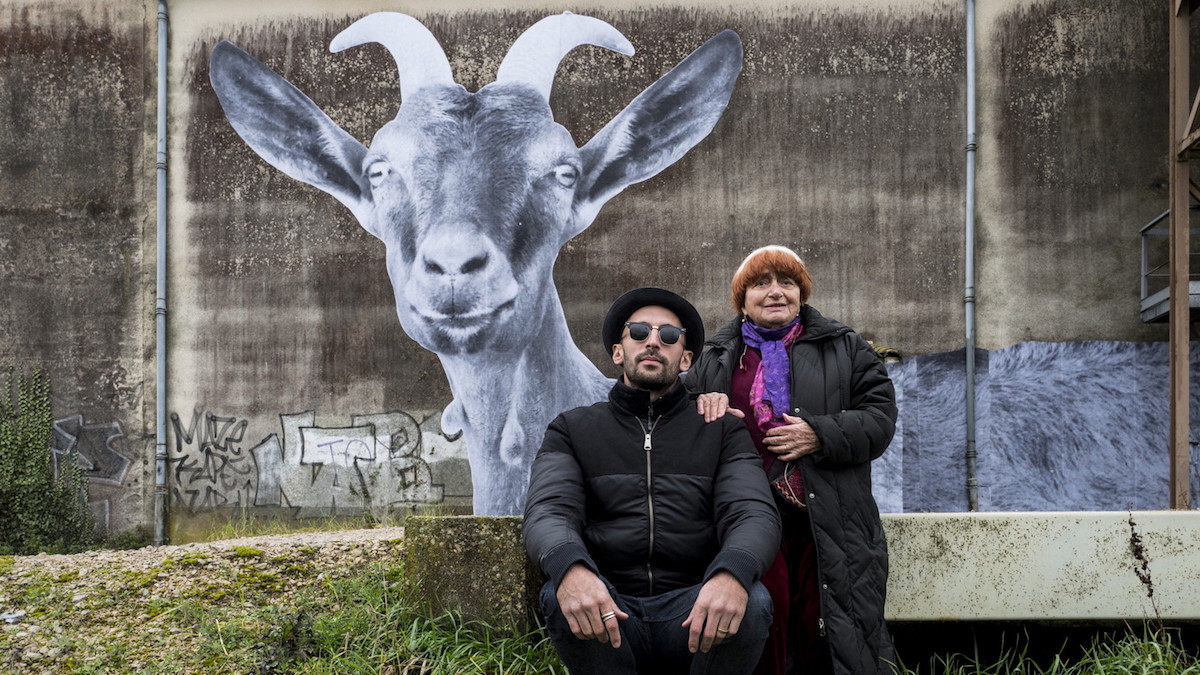 Faces Places[/caption]
The Film Society of Lincoln Center announced the 25 films for the Main Slate of the 55th New York Film Festival (NYFF), taking place September 28 to October 15, 2017.
This year’s Main Slate showcases films honored at Cannes including Ruben Östlund’s Palme d’Or–winner The Square; Robin Campillo’s BPM, awarded the Cannes Critics’ Prize; and Agnès Varda & JR’s Faces Places, which took home the Golden Eye. From Berlin, Aki Kaurismäki’s Silver Bear–winner The Other Side of Hope and Agnieszka Holland’s Alfred Bauer Prize–winner Spoor mark the returns of two New York Film Festival veterans, while Luca Guadagnino’s acclaimed Call Me by Your Name will be his NYFF debut. Also returning are Arnaud Desplechin, Noah Baumbach, Kiyoshi Kurosawa, Claire Denis, Philippe Garrel, Lucrecia Martel, and Hong Sang-soo, who has two features in the lineup this year, while filmmakers new to the festival include Sean Baker, Greta Gerwig, Serge Bozon, Dee Rees, Chloé Zhao, Joachim Trier, Alain Gomis, and Valeska Grisebach.
NYFF Director and Selection Committee Chair Kent Jones said, “Every year, I’m asked about the themes in our Main Slate line-up, and every year I say the same thing: we choose the best films we see, and the common themes and preoccupations arise only after the fact. As I look at this slate of beautiful work, I could just make a series of simple observations: that these films come from all over the globe; that there is a nice balance of filmmakers known and unknown to many here in New York; that the overall balance between frankness and artistry holds me in awe; that there are two gala selections with the word ‘wonder’ in their titles; and that eight of the 25 films were directed by women.”
As previously announced, the NYFF55 Opening Night is Richard Linklater’s Last Flag Flying, Todd Haynes’s Wonderstruck is Centerpiece, and Woody Allen’s Wonder Wheel will close the festival.
Faces Places[/caption]
The Film Society of Lincoln Center announced the 25 films for the Main Slate of the 55th New York Film Festival (NYFF), taking place September 28 to October 15, 2017.
This year’s Main Slate showcases films honored at Cannes including Ruben Östlund’s Palme d’Or–winner The Square; Robin Campillo’s BPM, awarded the Cannes Critics’ Prize; and Agnès Varda & JR’s Faces Places, which took home the Golden Eye. From Berlin, Aki Kaurismäki’s Silver Bear–winner The Other Side of Hope and Agnieszka Holland’s Alfred Bauer Prize–winner Spoor mark the returns of two New York Film Festival veterans, while Luca Guadagnino’s acclaimed Call Me by Your Name will be his NYFF debut. Also returning are Arnaud Desplechin, Noah Baumbach, Kiyoshi Kurosawa, Claire Denis, Philippe Garrel, Lucrecia Martel, and Hong Sang-soo, who has two features in the lineup this year, while filmmakers new to the festival include Sean Baker, Greta Gerwig, Serge Bozon, Dee Rees, Chloé Zhao, Joachim Trier, Alain Gomis, and Valeska Grisebach.
NYFF Director and Selection Committee Chair Kent Jones said, “Every year, I’m asked about the themes in our Main Slate line-up, and every year I say the same thing: we choose the best films we see, and the common themes and preoccupations arise only after the fact. As I look at this slate of beautiful work, I could just make a series of simple observations: that these films come from all over the globe; that there is a nice balance of filmmakers known and unknown to many here in New York; that the overall balance between frankness and artistry holds me in awe; that there are two gala selections with the word ‘wonder’ in their titles; and that eight of the 25 films were directed by women.”
As previously announced, the NYFF55 Opening Night is Richard Linklater’s Last Flag Flying, Todd Haynes’s Wonderstruck is Centerpiece, and Woody Allen’s Wonder Wheel will close the festival.
55th NEW YORK FILM FESTIVAL
Films & Descriptions Opening Night Last Flag Flying Dir. Richard Linklater, USA, 2017, 119m World Premiere In Richard Linklater’s lyrical road movie, as funny as it is heartbreaking, three aging Vietnam-era Navy vets—soft-spoken Doc (Steve Carell), unhinged and unfiltered Sal (Bryan Cranston), and quietly measured Mueller (Laurence Fishburne)—reunite to perform a sacred task: the proper burial of Doc’s only child, who has been killed in the early days of the Iraq invasion. As this trio of old friends makes its way up the Eastern seaboard, Linklater gives us a rich rendering of friendship, a grand mosaic of common life in the USA during the Bush era, and a striking meditation on the passage of time and the nature of truth. To put it simply, Last Flag Flying is a great movie from one of America’s finest filmmakers. An Amazon Studios release. Centerpiece Wonderstruck Dir. Todd Haynes, USA, 2017, 117m In 1977, following the death of his single mother, Ben (Oakes Fegley) loses his hearing in a freak accident and makes his way from Minnesota to New York, hoping to learn about the father he has never met. A half-century earlier, another deaf 12-year-old, Rose (Millicent Simmonds), flees her restrictive Hoboken home, captivated by the bustle and romance of the nearby big city. Each of these parallel adventures, unfolding largely without dialogue, is an exuberant love letter to a different bygone era of New York. The mystery of how they ultimately converge, which involves Julianne Moore in a lovely dual role, provides the film’s emotional core. Adapted from a young-adult novel by Hugo author Brian Selznick, Wonderstruck is an all-ages enchantment, entirely true to director Todd Haynes’s sensibility: an intelligent, deeply personal, and lovingly intricate tribute to the power of obsession. An Amazon Studios release. Closing Night Wonder Wheel Dir. Woody Allen, USA, 2017 World Premiere In a career spanning 50 years and almost as many features, Woody Allen has periodically refined, reinvented, and redefined the terms of his art, and that’s exactly what he does with his daring new film. We’re in Coney Island in the 1950s. A lifeguard (Justin Timberlake) tells us a story that just might be filtered through his vivid imagination: a middle-aged carousel operator (Jim Belushi) and his beleaguered wife (Kate Winslet), who eke out a living on the boardwalk, are visited by his estranged daughter (Juno Temple)—a situation from which layer upon layer of all-too-human complications develop. Allen and his cinematographer, the great Vittorio Storaro, working with a remarkable cast led by Winslet in a startlingly brave, powerhouse performance, have created a bracing and truly surprising movie experience. An Amazon Studios release. Before We Vanish Dir. Kiyoshi Kurosawa, Japan, 2017, 129m The latest from master of art-horror Kiyoshi Kurosawa is perhaps his most mainstream film yet, a throwback to 1980s sci-fi. An advance crew of three aliens journey to Earth in preparation for a complete takeover of the planet. They snatch not only bodies but memories, beliefs, values—everything that defines their conquests as human—leaving only hollow shells, which are all but unrecognizable to their loved ones. This disturbing parable for our present moment, replete with stunning images—including a drone attack and a bit of Clockwork Orange–style murder and mayhem—is also a profoundly mystical affirmation of love as the only form of resistance and salvation. A Neon release. BPM (Beats Per Minute)/120 battements par minute Dir. Robin Campillo, France, 2017, 144m U.S. Premiere In the early 1990s, ACT UP—in France, as in the U.S.—was on the front lines of AIDS activism. Its members, mostly gay, HIV-positive men, stormed drug company and government offices in “Silence=Death” T-shirts, facing down complacent suits with the urgency of their struggle for life. Robin Campillo (Eastern Boys) depicts their comradeship and tenacity in waking up the world to the disease that was killing them and movingly dramatizes the persistence of passionate love affairs even in dire circumstances. All the actors, many of them unknown, are splendid in this film, which not only celebrates the courage of ACT UP but also tacitly provides a model of resistance to the forces of destruction running rampant today. A release of The Orchard. Bright Sunshine In/Un beau soleil intérieur Dir. Claire Denis, France, 2017, 95m North American Premiere Juliette Binoche is both incandescent and emotionally raw in Claire Denis’s extraordinary new film as Isabelle, a middle-aged Parisian artist in search of definitive love. The film moves elliptically, as though set to some mysterious bio-rhythm, from one romantic/emotional attachment to another: from the boorish married lover (Xavier Beauvois); to the subtly histrionic actor (Nicolas Duvauchelle), also married; to the dreamboat hairdresser (Paul Blain); to the gentle man (Alex Descas) not quite ready for commitment to . . . a mysterious fortune-teller. Appropriately enough, Bright Sunshine In (very loosely inspired by Roland Barthes’s A Lover’s Discourse) feels like it’s been lit from within; it was lit from without by Denis’s longtime cinematographer Agnès Godard. It is also very funny. A Sundance Selects release. Call Me by Your Name Dir. Luca Guadagnino, Italy/France, 2017, 132m A story of summer love unlike any other, the sensual new film from the director of I Am Love, set in 1983, charts the slowly ripening romance between Elio (Timothée Chalamet), an American teen on the verge of discovering himself, and Oliver (Armie Hammer), the handsome older grad student whom his professor father (Michael Stuhlbarg) has invited to their vacation home in Northern Italy. Adapted from the wistful novel by André Aciman, Call Me by Your Name is Guadagnino’s most exquisitely rendered, visually restrained film, capturing with eloquence the confusion and longing of youth, anchored by a remarkable, star-making performance by Chalamet, always a nervy bundle of swagger and insecurity, contrasting with Hammer’s stoicism. A Sony Pictures Classics release. The Day After Dir. Hong Sang-soo, South Korea, 2017, 92m U.S. Premiere Hong continues in the openly emotional register of his On the Beach at Night Alone, also showing in this year’s Main Slate. Shot in moody black and white, The Day After opens with book publisher Bongwan (Kwon Hae-hyo) fending off his wife’s heated accusations of infidelity. At the office, it’s the first day for his new assistant, Areum (Kim Min-hee), whose predecessor was Bongwan’s lover. Mistaken identity, repetition compulsion, and déjà vu figure into the narrative as the film entangles its characters across multiple timelines through an intricate geometry of desire, suspicion, and betrayal. The end result is one of Hong’s most plaintive and philosophical works. Faces Places/Visages villages Dir. Agnès Varda & JR, France, 2016, 89m The 88-year-old Agnès Varda teamed up with the 33-year-old visual artist JR for this tour of rural France that follows in the footsteps of Varda’s groundbreaking documentary The Gleaners and I (NYFF 2000) in its celebration of artisanal production, workers’ solidarity, and the photographic arts in the face of mortality. Varda and JR wielded cameras themselves, but they were also documented in their travels by multiple image and sound recordists. Out of this often spontaneous jumble, Varda and her editor Maxime Pozzi-Garcia created an unassuming masterpiece (the winner of this year’s L’Oeil d’or at Cannes) that is vivid, lyrical, and inspiringly humanistic. A Cohen Media Group release. Félicité Dir. Alain Gomis, France/Senegal/Belgium/Germany/Lebanon, 2017, 124m U.S. Premiere The new film from Alain Gomis, a French director of Guinea-Bissauan and Senegalese descent, is largely set in the roughest areas of the rough city of Kinshasa in the Democratic Republic of the Congo. Here, a woman named Félicité (Véro Tshanda Beya Mputu) scrapes together a living as a singer in a makeshift bar (her accompanists are played by members of the Kasai Allstars band). When her son is seriously injured in an accident, she goes in search of money for his medical care and embarks on a double journey: through the punishing outer world of the city and the inner world of the soul. Félicité is tough, tender, lyrical, mysterious, funny, and terrifying, both responsive to the moment and fixed on its heroine’s spiritual progress. A Strand Releasing release. The Florida Project Dir. Sean Baker, USA, 2017, 105m U.S. Premiere A six-year-old girl (the remarkable Brooklynn Prince) and her two best friends run wild on the grounds of a week-by-week motel complex on the edge of Orlando’s Disney World. Meanwhile, her mother (talented novice Bria Vinaite) desperately tries to cajole the motel manager (an ever-surprising Willem Dafoe) to turn a blind eye to the way she pays the rent. A film about but not for kids, Baker’s depiction of childhood on the margins has fierce energy, tenderness, and great beauty. After the ingenuity of his iPhone-shot 2015 breakout Tangerine, Baker reasserts his commitment to 35mm film with sun-blasted images that evoke a young girl’s vision of adventure and endurance beyond heartbreak. An A24 release. Ismael’s Ghosts/Les fantômes d’Ismaël Dir. Arnaud Desplechin, France, 2017, 132m North American Premiere Phantoms swirl around Ismael (Mathieu Amalric), a filmmaker in the throes of writing a spy thriller based on the unlikely escapades of his brother, Ivan Dedalus (Louis Garrel). His only true source of stability, his relationship with Sylvia (Charlotte Gainsbourg), is upended, as is the life of his Jewish documentarian mentor and father-in-law (László Szabó), when Ismael’s wife Carlotta (Marion Cotillard), who disappeared twenty years earlier, returns, and, like one of Hitchcock’s fragile, delusional femmes fatales, expects that her husband and father are still in thrall to her. A brilliant shape-shifter—part farce, part melodrama—Ismael’s Ghosts is finally about the process of creating a work of art and all the madness required. A Magnolia Pictures release. Lady Bird Dir. Greta Gerwig, USA, 2017, 93m Greta Gerwig’s directorial debut is a portrait of an artistically inclined young woman (Saoirse Ronan) trying to define herself in the shadow of her mother (Laurie Metcalf) and searching for an escape route from her hometown of Sacramento. Moods are layered upon moods at the furious pace of late adolescence in this lovely and loving film, which shifts deftly from one emotional and comic register to the next. Lady Bird is rich in invention and incident, and it is powered by Ronan, one of the finest actors in movies. With Lucas Hedges and Timothée Chalamet as the men in Lady Bird’s life, Beanie Feldstein as her best friend, and Tracy Letts as her dad. An A24 release. Lover for a Day/L’Amant d’un jour Dir. Philippe Garrel, France, 2017, 76m North American Premiere Lover for a Day is an exquisite meditation on love and fidelity that recalls Garrel’s previous NYFF selections Jealousy (NYFF 2013) and In the Shadow of Women (NYFF 2015). After a painful breakup, heartbroken Jeanne (Esther Garrel) moves back in with her university professor father, Gilles (Eric Caravaca), to discover that he is living with optimistic, life-loving student Ariane (newcomer Louise Chevillotte), who is the same age as Jeanne. An unusual triangular relationship emerges as both girls seek the favor of Gilles, as daughter or lover, while developing their own friendship, finding common ground despite their differences. Gorgeously shot in grainy black and white by Renato Berta (Au revoir les enfants), Lover for a Day perfectly illustrates Garrel’s poetic exploration of relationships and desire. A MUBI release. The Meyerowitz Stories (New and Selected) Dir. Noah Baumbach, USA, 2017, 110m North American Premiere Noah Baumbach revisits the terrain of family vanities and warring attachments that he began exploring with The Squid and the Whale in this intricately plotted story of three middle-aged siblings (Adam Sandler, Ben Stiller, and Elizabeth Marvel) coping with their strong-willed father (Dustin Hoffman) and the flightiness of his wife (Emma Thompson). Baumbach’s film never stops deftly changing gears, from surges of pathos to painful comedy and back again. Needless to say, this lyrical quicksilver comedy is very much a New York experience. A Netflix release. Mrs. Hyde/Madame Hyde Dir. Serge Bozon, France, 2017, 95m North American Premiere Serge Bozon’s eccentric comedic thriller is loosely based on Robert Louis Stevenson’s The Strange Case of Dr. Jekyll and Mr. Hyde, with many a twist. Mrs. Géquil (Isabelle Huppert), a timid and rather peculiar physics professor, teaches in a suburban technical high school. Apart from her quiet married life with her gentle stay-at-home husband, she is mocked and despised on a daily basis by pretty much everyone around her—headmaster, colleagues, students. During a dark, stormy night, she is struck by lightning and wakes up a decidedly different person, a newly powerful Mrs. Hyde with mysterious energy and uncontrollable powers. Highlighted by Bozon’s brilliant mise en scène, Isabelle Huppert hypnotizes us again, securing her place as the ultimate queen of the screen. Mudbound Dir. Dee Rees, USA, 2017, 134m Writer/director Dee Rees’s historical epic details daily life and social dynamics in the failing economy of Mississippi during the World War II era. Two families, one white (the landlords) and one black (the sharecroppers), work the same miserable piece of farmland. Out of need and empathy, the mothers of the two families bond as their younger male relatives go off to war and learn that there is a world beyond racial hatred and fear. The flawless ensemble cast includes Carey Mulligan, Mary J. Blige, Garrett Hedlund, Jason Mitchell, Jason Clarke, Rob Morgan, and Jonathan Banks. A Netflix release. On the Beach at Night Alone Dir. Hong Sang-soo, South Korea, 2017, 101m Hong Sang-soo’s movies have always invited autobiographical readings, and his 19th feature is perhaps his most achingly personal film yet, a steel-nerved, clear-eyed response to the tabloid frenzy that erupted in South Korea over his relationship with actress Kim Min-hee. The film begins in Hamburg, where actress Young-hee (played by Kim herself, who won the Best Actress prize at Berlin for this role) is hiding out after the revelation of her affair with a married filmmaker. Back in Korea, a series of encounters shed light on Young-hee’s volatile state, as she slips in and out of melancholic reflection and dreams. Centered on Kim’s astonishingly layered performance, On the Beach at Night Alone is the work of a master mining new emotional depths. A Cinema Guild release. The Other Side of Hope/Toivon tuolla puolen Dir. Aki Kaurismäki, Finland, 2017, 98m Leave it to Aki Kaurismäki (Le Havre, NYFF 2011), peerless master of humanist tragicomedy, to make the first great fiction film about the 21st century migrant crisis. Having escaped bombed-out Aleppo, Syrian refugee Khlaed (Sherwan Haji) seeks asylum in Finland, only to get lost in a maze of functionaries and bureaucracies. Meanwhile, shirt salesman Wikström (Sakari Kuosmanen) leaves his wife, wins big in a poker game, and takes over a restaurant whose deadpan staff he also inherits. These parallel stories dovetail to gently comic and enormously moving effect in Kaurismäki’s politically urgent fable, an object lesson on the value of compassion and hope that remains grounded in a tangible social reality. A Janus Films release. The Rider Dir. Chloé Zhao, USA, 2017, 104m The hardscrabble economy of America’s rodeo country, where, for some, riding and winning is the only source of pleasure and income, is depicted with exceptional compassion and truth by a filmmaker who is in no way an insider: Zhao was born in Beijing and educated at Mount Holyoke and NYU. Set on the Pine Ridge Reservation in South Dakota, The Rider is a fiction film that calls on nonprofessional actors to play characters similar to themselves, incorporating their skill sets and experiences. Brady Jandreau is extraordinary as a badly injured former champion rider and horse trainer forced to give up the life he knows and loves. A Sony Pictures Classics release. Spoor/Pokot Dir. Agnieszka Holland, in cooperation with Kasia Adamik, Poland/Germany/Czech Republic, 2017, 128m U.S. Premiere Janina Duszejko (Agnieszka Mandat) is a vigorous former engineer, part-time teacher, and animal activist, living in a near wilderness on the Polish-Czech border, where hunting is the favored year-round sport of the corrupt men who rule the region. When a series of hunters die mysteriously, Janina wonders if the animals are taking revenge, which doesn’t stop the police from coming after her. A brilliant, passionate director, Agnieszka Holland—who like Janina comes from a generation that learned to fight authoritarianism by any means necessary—forges a sprawling, wildly beautiful, emotionally enveloping film that earns its vision of utopia. It’s at once a phantasmagorical murder mystery, a tender, late-blooming love story, and a resistance and rescue thriller. The Square Dir. Ruben Östlund, Sweden, 2017, 150m A precisely observed, thoroughly modern comedy of manners, Ruben Östlund’s Palme d’Or–winner revolves around Christian (Claes Bang), a well-heeled contemporary art curator at a Stockholm museum. While preparing his new exhibit—a four-by-four-meter zone designated as a “sanctuary of trust and caring”—Christian falls prey to a pickpocketing scam, which triggers an overzealous response and then a crisis of conscience. Featuring several instant-classic scenes and a vivid supporting cast (Elisabeth Moss, Dominic West, and noted motion-capture actor Terry Notary), The Square is the most ambitious film yet by one of contemporary cinema’s most incisive social satirists, the rare movie to have as many laughs as ideas. A Magnolia Pictures release. Thelma Dir. Joachim Trier, Norway/Sweden/France, 2017, 116m In the new film from Joachim Trier (Reprise), an adolescent country girl (Eili Harboe) has just moved to the city to begin her university studies, with the internalized religious severity of her quietly domineering mother and father (Ellen Dorrit Petersen and Henrik Rafaelsen) always in mind. When she realizes that she is developing an attraction to her new friend Anja (Okay Kaya), she begins to manifest a terrifying and uncontrollable power that her parents have long feared. To reveal more would be a crime; let’s just say that this fluid, sharply observant, and continually surprising film begins in the key of horror and ends somewhere completely different. A release of The Orchard. Western Dir. Valeska Grisebach, Germany and Bulgaria, 2017, 119m U.S. Premiere As its title suggests, German director Valeska Grisebach’s first feature in a decade is a supremely intelligent genre update that recognizes the Western as a template on which to draw out eternal human conflicts. In remote rural Bulgaria, a group of German workers are building a water facility. Meinhard (Meinhard Neumann), the reserved newbie in this all-male company, immediately draws the ire of the boorish team leader, not least for his willingness to mingle with the wary locals. Cast with utterly convincing nonprofessional actors, Western is a gripping culture-clash drama, attuned both to old codes of masculinity and new forms of colonialism. A Cinema Guild release. Zama Dir. Lucrecia Martel, Argentina/Brazil/Spain, 2017, 115m U.S. Premiere The great Lucrecia Martel ventures into the realm of historical fiction and makes the genre entirely her own in this adaptation of Antonio di Benedetto’s 1956 classic of Argentinean literature. In the late 18th century, in a far-flung corner of what seems to be Paraguay, the title character, an officer of the Spanish crown (Daniel Giménez Cacho) born in the Americas, waits in vain for a transfer to a more prestigious location. Martel renders Zama’s world—his daily regimen of small humiliations and petty politicking—as both absurd and mysterious, and as he increasingly succumbs to lust and paranoia, subject to a creeping disorientation. Precise yet dreamlike, and thick with atmosphere, Zama is a singular and intoxicating experience, a welcome return from one of contemporary cinema’s truly brilliant minds.
-
World Premiere of Woody Allen’s WONDER WHEEL to Close New York Film Festival
 Woody Allen’s Wonder Wheel will make its World Premiere as the Closing Night film of the 55th New York Film Festival on Saturday, October 14. Amazon Studios will release Wonder Wheel on December 1, 2017.
In a career spanning 50 years and almost as many features, Woody Allen has periodically refined, reinvented, and redefined the terms of his art, and that’s exactly what he does with his daring new film. We’re in Coney Island in the 1950s. A lifeguard (Justin Timberlake) tells us a story that just might be filtered through his vivid imagination: a middle-aged carousel operator (James Belushi) and his beleaguered wife (Kate Winslet), who eke out a living on the boardwalk, are visited by his estranged daughter (Juno Temple)—a situation from which layer upon layer of all-too-human complications develop. Allen and his cinematographer, the great Vittorio Storaro, working with a remarkable cast led by Winslet in a startlingly brave, powerhouse performance, have created a bracing and truly surprising movie experience.
New York Film Festival Director and Selection Committee Chair Kent Jones said, “I’m not quite sure what I expected when I sat down to watch Wonder Wheel, but when the lights came up I was speechless. There are elements in the film that will certainly be familiar to anyone who knows Woody Allen’s work, but here he holds them up to a completely new light. I mean that literally and figuratively, because Allen and Vittorio Storaro use light and color in a way that is stunning in and of itself but also integral to the mounting emotional power of the film. And at the center of it all is Kate Winslet’s absolutely remarkable performance—precious few actors are that talented, or fearless.”
The New York Film Festival has showcased Allen’s work on two other occasions: Bullets Over Broadway was Centerpiece of NYFF32 in 1994 and Celebrity was Opening Night of NYFF36 in 1998.
The New York Film Festival taking place September 28 to October 15, 2017, highlights the best in world cinema, featuring works from celebrated filmmakers as well as fresh new talent.
Earlier this summer, NYFF announced Richard Linklater’s Last Flag Flying as Opening Night and Todd Haynes’s Wonderstruck as the Centerpiece selection. The retrospective section honors Robert Mitchum’s centenary.
Woody Allen’s Wonder Wheel will make its World Premiere as the Closing Night film of the 55th New York Film Festival on Saturday, October 14. Amazon Studios will release Wonder Wheel on December 1, 2017.
In a career spanning 50 years and almost as many features, Woody Allen has periodically refined, reinvented, and redefined the terms of his art, and that’s exactly what he does with his daring new film. We’re in Coney Island in the 1950s. A lifeguard (Justin Timberlake) tells us a story that just might be filtered through his vivid imagination: a middle-aged carousel operator (James Belushi) and his beleaguered wife (Kate Winslet), who eke out a living on the boardwalk, are visited by his estranged daughter (Juno Temple)—a situation from which layer upon layer of all-too-human complications develop. Allen and his cinematographer, the great Vittorio Storaro, working with a remarkable cast led by Winslet in a startlingly brave, powerhouse performance, have created a bracing and truly surprising movie experience.
New York Film Festival Director and Selection Committee Chair Kent Jones said, “I’m not quite sure what I expected when I sat down to watch Wonder Wheel, but when the lights came up I was speechless. There are elements in the film that will certainly be familiar to anyone who knows Woody Allen’s work, but here he holds them up to a completely new light. I mean that literally and figuratively, because Allen and Vittorio Storaro use light and color in a way that is stunning in and of itself but also integral to the mounting emotional power of the film. And at the center of it all is Kate Winslet’s absolutely remarkable performance—precious few actors are that talented, or fearless.”
The New York Film Festival has showcased Allen’s work on two other occasions: Bullets Over Broadway was Centerpiece of NYFF32 in 1994 and Celebrity was Opening Night of NYFF36 in 1998.
The New York Film Festival taking place September 28 to October 15, 2017, highlights the best in world cinema, featuring works from celebrated filmmakers as well as fresh new talent.
Earlier this summer, NYFF announced Richard Linklater’s Last Flag Flying as Opening Night and Todd Haynes’s Wonderstruck as the Centerpiece selection. The retrospective section honors Robert Mitchum’s centenary.
-
Todd Haynes’s WONDERSTRUCK to NY Premiere as Centerpiece Selection of 55th New York Film Festival | Trailer
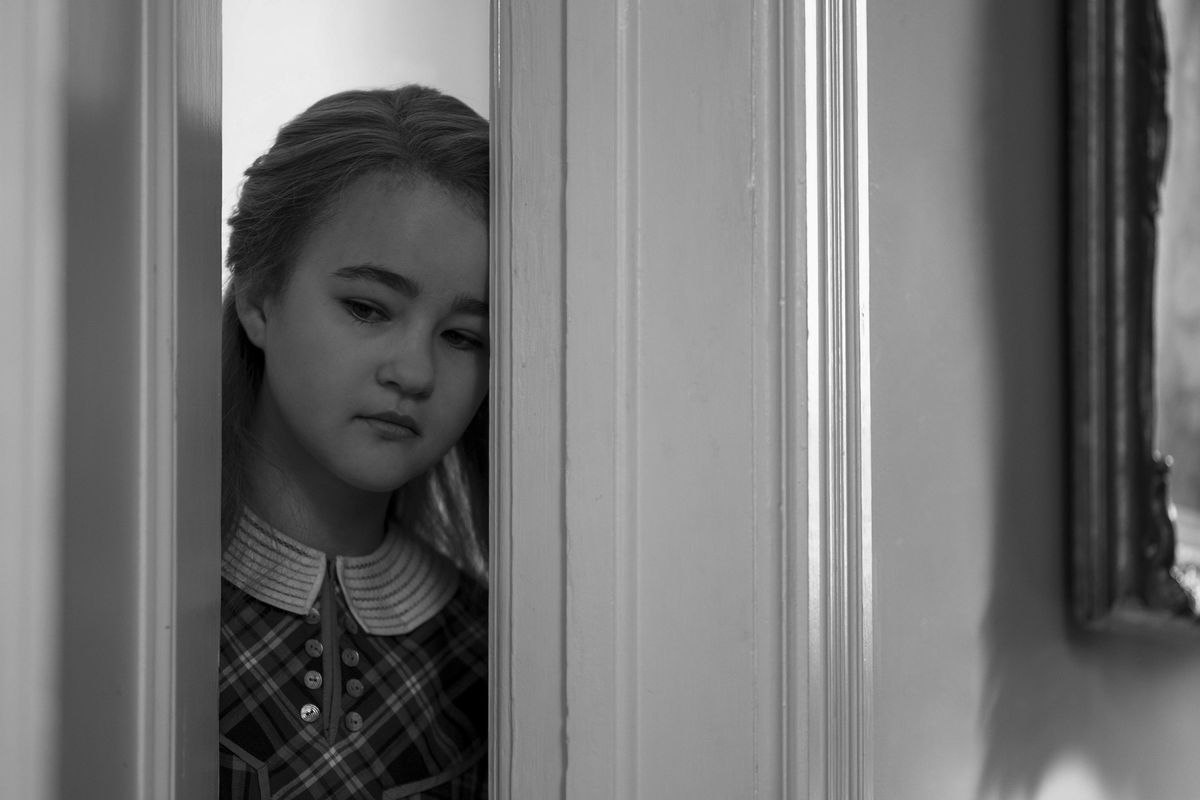 Todd Haynes’s Wonderstruck will make its New York Premiere as the Centerpiece selection of the 55th New York Film Festival on Saturday, October 7. The film will be released theatrically by Amazon Studios and Roadside Attractions on October 20, 2017.
In 1977, following the death of his single mother, Ben (Oakes Fegley) loses his hearing in a freak accident and makes his way from Minnesota to New York, hoping to learn about the father he has never met. A half-century earlier, another deaf 12-year-old, Rose (Millicent Simmonds), flees her restrictive Hoboken home, captivated by the bustle and romance of the nearby big city. Each of these parallel adventures, unfolding largely without dialogue, is an exuberant love letter to a bygone era of New York. The mystery of how they ultimately converge, which involves Julianne Moore in a lovely dual role, provides the film’s emotional core. Adapted from a young-adult novel by The Invention of Hugo Cabret author Brian Selznick, Wonderstruck is an all-ages enchantment, entirely true to director Todd Haynes’s sensibility: an intelligent, deeply personal, and lovingly intricate tribute to the power of obsession.
New York Film Festival Director and Selection Committee Chair Kent Jones said, “Todd Haynes and Brian Selznick have pulled off something truly remarkable here—a powerful evocation of childhood, with all of its mysteries and terrors and flights of imagination and longings; richly textured re-creations of Manhattan in the ’20s and the ’70s; and a magical and intricately plotted quest story that builds to a beautiful climax. Wonderstruck is fun, emotionally potent, and . . . it’s a great New York movie.”
“We’re so pleased and proud that Wonderstruck has been selected for the Centerpiece slot at this year’s New York Film Festival,” said Haynes. “There’s no more meaningful place or audience with which to share our film that is a tribute both to the history of New York City and to cinema.”
The New York Film Festival has showcased Haynes’s work on three other occasions: Velvet Goldmine in 1998, I’m Not There in 2007, and, most recently, Carol in 2015.
The 18-day New York Film Festival taking place September 28 to October 15, 2017, highlights the best in world cinema, featuring works from celebrated filmmakers as well as fresh new talent. Earlier this summer, NYFF announced Richard Linklater’s Last Flag Flying as the Opening Night selection.
https://www.youtube.com/watch?v=hMljHyrfXQ4
Todd Haynes’s Wonderstruck will make its New York Premiere as the Centerpiece selection of the 55th New York Film Festival on Saturday, October 7. The film will be released theatrically by Amazon Studios and Roadside Attractions on October 20, 2017.
In 1977, following the death of his single mother, Ben (Oakes Fegley) loses his hearing in a freak accident and makes his way from Minnesota to New York, hoping to learn about the father he has never met. A half-century earlier, another deaf 12-year-old, Rose (Millicent Simmonds), flees her restrictive Hoboken home, captivated by the bustle and romance of the nearby big city. Each of these parallel adventures, unfolding largely without dialogue, is an exuberant love letter to a bygone era of New York. The mystery of how they ultimately converge, which involves Julianne Moore in a lovely dual role, provides the film’s emotional core. Adapted from a young-adult novel by The Invention of Hugo Cabret author Brian Selznick, Wonderstruck is an all-ages enchantment, entirely true to director Todd Haynes’s sensibility: an intelligent, deeply personal, and lovingly intricate tribute to the power of obsession.
New York Film Festival Director and Selection Committee Chair Kent Jones said, “Todd Haynes and Brian Selznick have pulled off something truly remarkable here—a powerful evocation of childhood, with all of its mysteries and terrors and flights of imagination and longings; richly textured re-creations of Manhattan in the ’20s and the ’70s; and a magical and intricately plotted quest story that builds to a beautiful climax. Wonderstruck is fun, emotionally potent, and . . . it’s a great New York movie.”
“We’re so pleased and proud that Wonderstruck has been selected for the Centerpiece slot at this year’s New York Film Festival,” said Haynes. “There’s no more meaningful place or audience with which to share our film that is a tribute both to the history of New York City and to cinema.”
The New York Film Festival has showcased Haynes’s work on three other occasions: Velvet Goldmine in 1998, I’m Not There in 2007, and, most recently, Carol in 2015.
The 18-day New York Film Festival taking place September 28 to October 15, 2017, highlights the best in world cinema, featuring works from celebrated filmmakers as well as fresh new talent. Earlier this summer, NYFF announced Richard Linklater’s Last Flag Flying as the Opening Night selection.
https://www.youtube.com/watch?v=hMljHyrfXQ4
-
New York Film Festival Unveiled 2017 Official Poster Designed by Richard Serra
 The Film Society of Lincoln Center unveiled today the poster for the 55th New York Film Festival taking place September 28 to October 15, 2017, designed by sculptor, filmmaker, and video artist Richard Serra.
NYFF posters are a yearly artistic signature of the film festival, and Serra joins a stellar lineup of artists whose work has been commissioned for the festival, including Andy Warhol, Roy Lichtenstein, David Hockney, Julian Schnabel, Cindy Sherman, and last year’s artist, Apichatpong Weerasethakul. can be found below.
“Richard Serra’s work has never stopped growing in my mind and memory,” said New York Film Festival Director Kent Jones. “During every one of my many visits to MoMA’s 2007 retrospective and to the permanent installations in Dia:Beacon, alone or with loved ones, I could feel everyone’s sense of the possible opening a couple of clicks wider. I was excited that he agreed to design this year’s NYFF poster, but when I saw the design I was taken aback—so wondrously elemental, and in such absolute harmony with the art of cinema.”
Serra says his design for this year’s poster effectively reflects and references the camera eye, explaining, “The image I selected for the poster is the interior of an 80’ tower sculpture in Qatar which functions as an aperture and seemed to me to make sense.”
One of the preeminent artists of the 20th century, Richard Serra has long been acclaimed for his challenging and innovative work, which emphasizes materiality and a unique engagement with the viewer. His most well-known works are large-scale steel sculptures, placed creatively in space to invite a dynamic, interactive experience. Serra has been a consistent participant in documenta, the Venice Biennale, and the Whitney Museum of American Art’s Annual and Biennial over the last 30+ years. He has had solo exhibitions across the globe, in cities including Rio de Janeiro, Rome, Doha, Amsterdam, Paris, Munich, Madrid, and Naples. In 2005, eight large-scale works by Serra were installed permanently at the Guggenheim Museum Bilbao, and in 2007 The Museum of Modern Art, New York presented a major retrospective of the artist’s work.
Serra has been awarded numerous prizes and awards, including a Fulbright Grant; National Endowment for the Arts Fellowship; The Carnegie Prize; Praemium Imperiale, Japan Arts Association; Leone d’Oro; Premios Principas de Asturias and Chevelier of the French Legion of Honor; among others. An overview of the artist’s work in film and video will be on view at the Kunstmuseum Basel from May to October 2017; and the artist’s recent drawings will be featured in a solo exhibition at the Museum Boijmans van Beuningen, Rotterdam from June to September 2017.
The complete list of NYFF poster artists:
Larry Rivers, 1963
Saul Bass, 1964
Bruce Conner, 1965
Roy Lichtenstein, 1966
Andy Warhol, 1967
Henry Pearson, 1968
Marisol (Escobar), 1969
James Rosenquist, 1970
Frank Stella, 1971
Josef Albers, 1972
Niki de Saint Phalle, 1973
Jean Tinguely, 1974
Carol Summers, 1975
Allan D’Arcangelo, 1976
Jim Dine, 1977
Richard Avedon, 1978
Michelangelo Pistoletto, 1979
Les Levine, 1980
David Hockney, 1981
Robert Rauschenberg, 1982
Jack Youngerman, 1983
Robert Breer, 1984
Tom Wesselmann, 1985
Elinor Bunin, 1986
Sol Lewitt, 1987
Milton Glaser, 1988
Jennifer Bartlett, 1989
Eric Fischl, 1990
Philip Pearlstein, 1991
William Wegman, 1992
Sheila Metzner, 1993
William Copley, 1994
Diane Arbus, 1995
Juan Gatti, 1996
Larry Rivers, 1997
Martin Scorsese, 1998
Ivan Chermayeff, 1999
Tamar Hirschl, 2000
Manny Farber, 2001
Julian Schnabel, 2002
Junichi Taki, 2003
Jeff Bridges, 2004
Maurice Pialat, 2005
Mary Ellen Mark, 2006
agnès b., 2007
Robert Cottingham, 2008
Gregory Crewdson, 2009
John Baldessari, 2010
Lorna Simpson, 2011
Cindy Sherman, 2012
Tacita Dean, 2013
Laurie Simmons, 2014
Laurie Anderson, 2015
Apichatpong Weerasethakul, 2016
The Film Society of Lincoln Center unveiled today the poster for the 55th New York Film Festival taking place September 28 to October 15, 2017, designed by sculptor, filmmaker, and video artist Richard Serra.
NYFF posters are a yearly artistic signature of the film festival, and Serra joins a stellar lineup of artists whose work has been commissioned for the festival, including Andy Warhol, Roy Lichtenstein, David Hockney, Julian Schnabel, Cindy Sherman, and last year’s artist, Apichatpong Weerasethakul. can be found below.
“Richard Serra’s work has never stopped growing in my mind and memory,” said New York Film Festival Director Kent Jones. “During every one of my many visits to MoMA’s 2007 retrospective and to the permanent installations in Dia:Beacon, alone or with loved ones, I could feel everyone’s sense of the possible opening a couple of clicks wider. I was excited that he agreed to design this year’s NYFF poster, but when I saw the design I was taken aback—so wondrously elemental, and in such absolute harmony with the art of cinema.”
Serra says his design for this year’s poster effectively reflects and references the camera eye, explaining, “The image I selected for the poster is the interior of an 80’ tower sculpture in Qatar which functions as an aperture and seemed to me to make sense.”
One of the preeminent artists of the 20th century, Richard Serra has long been acclaimed for his challenging and innovative work, which emphasizes materiality and a unique engagement with the viewer. His most well-known works are large-scale steel sculptures, placed creatively in space to invite a dynamic, interactive experience. Serra has been a consistent participant in documenta, the Venice Biennale, and the Whitney Museum of American Art’s Annual and Biennial over the last 30+ years. He has had solo exhibitions across the globe, in cities including Rio de Janeiro, Rome, Doha, Amsterdam, Paris, Munich, Madrid, and Naples. In 2005, eight large-scale works by Serra were installed permanently at the Guggenheim Museum Bilbao, and in 2007 The Museum of Modern Art, New York presented a major retrospective of the artist’s work.
Serra has been awarded numerous prizes and awards, including a Fulbright Grant; National Endowment for the Arts Fellowship; The Carnegie Prize; Praemium Imperiale, Japan Arts Association; Leone d’Oro; Premios Principas de Asturias and Chevelier of the French Legion of Honor; among others. An overview of the artist’s work in film and video will be on view at the Kunstmuseum Basel from May to October 2017; and the artist’s recent drawings will be featured in a solo exhibition at the Museum Boijmans van Beuningen, Rotterdam from June to September 2017.
The complete list of NYFF poster artists:
Larry Rivers, 1963
Saul Bass, 1964
Bruce Conner, 1965
Roy Lichtenstein, 1966
Andy Warhol, 1967
Henry Pearson, 1968
Marisol (Escobar), 1969
James Rosenquist, 1970
Frank Stella, 1971
Josef Albers, 1972
Niki de Saint Phalle, 1973
Jean Tinguely, 1974
Carol Summers, 1975
Allan D’Arcangelo, 1976
Jim Dine, 1977
Richard Avedon, 1978
Michelangelo Pistoletto, 1979
Les Levine, 1980
David Hockney, 1981
Robert Rauschenberg, 1982
Jack Youngerman, 1983
Robert Breer, 1984
Tom Wesselmann, 1985
Elinor Bunin, 1986
Sol Lewitt, 1987
Milton Glaser, 1988
Jennifer Bartlett, 1989
Eric Fischl, 1990
Philip Pearlstein, 1991
William Wegman, 1992
Sheila Metzner, 1993
William Copley, 1994
Diane Arbus, 1995
Juan Gatti, 1996
Larry Rivers, 1997
Martin Scorsese, 1998
Ivan Chermayeff, 1999
Tamar Hirschl, 2000
Manny Farber, 2001
Julian Schnabel, 2002
Junichi Taki, 2003
Jeff Bridges, 2004
Maurice Pialat, 2005
Mary Ellen Mark, 2006
agnès b., 2007
Robert Cottingham, 2008
Gregory Crewdson, 2009
John Baldessari, 2010
Lorna Simpson, 2011
Cindy Sherman, 2012
Tacita Dean, 2013
Laurie Simmons, 2014
Laurie Anderson, 2015
Apichatpong Weerasethakul, 2016
-
World Premiere of Richard Linklater’s LAST FLAG FLYING to Open 55th New York Film Festival
 Richard Linklater’s Last Flag Flying will World Premiere as the opening film of the 55th New York Film Festival on Thursday, September 28. The film will open theatrically on November 17, 2017 from Amazon Studios.
In Richard Linklater’s lyrical road movie, as funny as it is heartbreaking, three aging Vietnam-era Navy vets—soft-spoken Doc (Steve Carell), unhinged and unfiltered Sal (Bryan Cranston), and quietly measured Mueller (Laurence Fishburne)—reunite to perform a sacred task: the proper burial of Doc’s only child, who has been killed in the early days of the Iraqi Invasion. As this trio of old friends makes its way up the Eastern seaboard, Linklater gives us a rich rendering of friendship, a grand mosaic of common life in the USA during the Bush era, and a striking meditation on the passage of time and the nature of truth. To put it simply, Last Flag Flying is a great movie from one of America’s finest filmmakers.
New York Film Festival Director and Selection Committee Chair Kent Jones said, “Last Flag Flying is many things at once—infectiously funny, quietly shattering, celebratory, mournful, meditative, intimate, expansive, vastly entertaining, and all-American in the very best sense. But to isolate its individual qualities is to set aside the most important and precious fact about this movie: that it all flows like a river. That’s only possible with remarkable artists like Steve Carell, Laurence Fishburne, and Bryan Cranston, and a master like Richard Linklater behind the camera.”
“It’s always special to be at the New York Film Festival, but to be premiering our movie on opening night, when you look at the half century of films that have occupied that slot, is a wonderful honor,” says Linklater.
The 18-day New York Film Festival, (September 28 – October 15), highlights the best in world cinema, featuring works from celebrated filmmakers as well as fresh new talent.
Richard Linklater’s Last Flag Flying will World Premiere as the opening film of the 55th New York Film Festival on Thursday, September 28. The film will open theatrically on November 17, 2017 from Amazon Studios.
In Richard Linklater’s lyrical road movie, as funny as it is heartbreaking, three aging Vietnam-era Navy vets—soft-spoken Doc (Steve Carell), unhinged and unfiltered Sal (Bryan Cranston), and quietly measured Mueller (Laurence Fishburne)—reunite to perform a sacred task: the proper burial of Doc’s only child, who has been killed in the early days of the Iraqi Invasion. As this trio of old friends makes its way up the Eastern seaboard, Linklater gives us a rich rendering of friendship, a grand mosaic of common life in the USA during the Bush era, and a striking meditation on the passage of time and the nature of truth. To put it simply, Last Flag Flying is a great movie from one of America’s finest filmmakers.
New York Film Festival Director and Selection Committee Chair Kent Jones said, “Last Flag Flying is many things at once—infectiously funny, quietly shattering, celebratory, mournful, meditative, intimate, expansive, vastly entertaining, and all-American in the very best sense. But to isolate its individual qualities is to set aside the most important and precious fact about this movie: that it all flows like a river. That’s only possible with remarkable artists like Steve Carell, Laurence Fishburne, and Bryan Cranston, and a master like Richard Linklater behind the camera.”
“It’s always special to be at the New York Film Festival, but to be premiering our movie on opening night, when you look at the half century of films that have occupied that slot, is a wonderful honor,” says Linklater.
The 18-day New York Film Festival, (September 28 – October 15), highlights the best in world cinema, featuring works from celebrated filmmakers as well as fresh new talent.
New York Film Festival Opening Night Films
2016 13TH (Ava DuVernay, US) 2015 The Walk (Robert Zemeckis, US) 2014 Gone Girl (David Fincher, US) 2013 Captain Phillips (Paul Greengrass, US) 2012 Life of Pi (Ang Lee, US) 2011 Carnage (Roman Polanski, France/Poland) 2010 The Social Network (David Fincher, US) 2009 Wild Grass (Alain Resnais, France) 2008 The Class (Laurent Cantet, France) 2007 The Darjeeling Limited (Wes Anderson, US) 2006 The Queen (Stephen Frears, UK) 2005 Good Night, and Good Luck. (George Clooney, US) 2004 Look at Me (Agnès Jaoui, France) 2003 Mystic River (Clint Eastwood, US) 2002 About Schmidt (Alexander Payne, US) 2001 Va savoir (Jacques Rivette, France) 2000 Dancer in the Dark (Lars von Trier, Denmark) 1999 All About My Mother (Pedro Almodóvar, Spain) 1998 Celebrity (Woody Allen, US) 1997 The Ice Storm (Ang Lee, US) 1996 Secrets & Lies (Mike Leigh, UK) 1995 Shanghai Triad (Zhang Yimou, China) 1994 Pulp Fiction (Quentin Tarantino, US) 1993 Short Cuts (Robert Altman, US) 1992 Olivier Olivier (Agnieszka Holland, France) 1991 The Double Life of Veronique (Krzysztof Kieslowski, Poland/France) 1990 Miller’s Crossing (Joel Coen, US) 1989 Too Beautiful for You (Bertrand Blier, France) 1988 Women on the Verge of a Nervous Breakdown (Pedro Almodóvar, Spain) 1987 Dark Eyes (Nikita Mikhalkov, Soviet Union) 1986 Down by Law (Jim Jarmusch, US) 1985 Ran (Akira Kurosawa, Japan) 1984 Country (Richard Pearce, US) 1983 The Big Chill (Lawrence Kasdan, US) 1982 Veronika Voss (Rainer Werner Fassbinder, West Germany) 1981 Chariots of Fire (Hugh Hudson, UK) 1980 Melvin and Howard (Jonathan Demme, US) 1979 Luna (Bernardo Bertolucci, Italy/US) 1978 A Wedding (Robert Altman, US) 1977 One Sings, the Other Doesn’t (Agnès Varda, France) 1976 Small Change (François Truffaut, France) 1975 Conversation Piece (Luchino Visconti, Italy) 1974 Don’t Cry with Your Mouth Full (Pascal Thomas, France) 1973 Day for Night (François Truffaut, France) 1972 Chloe in the Afternoon (Eric Rohmer, France) 1971 The Debut (Gleb Panfilov, Soviet Union) 1970 The Wild Child (François Truffaut, France) 1969 Bob & Carol & Ted & Alice (Paul Mazursky, US) 1968 Capricious Summer (Jiri Menzel, Czechoslovakia) 1967 The Battle of Algiers (Gillo Pontecorvo, Italy/Algeria) 1966 Loves of a Blonde (Milos Forman, Czechoslovakia) 1965 Alphaville (Jean-Luc Godard, France) 1964 Hamlet (Grigori Kozintsev, USSR) 1963 The Exterminating Angel (Luis Buñuel, Mexico)