
New York Jewish Film Festival returns for its 35th edition to Film at Lincoln Center’s Walter Reade Theater from January 14 through January 28, 2026, showcasing nearly 30 features, documentaries, and shorts.

New York Jewish Film Festival returns for its 35th edition to Film at Lincoln Center’s Walter Reade Theater from January 14 through January 28, 2026, showcasing nearly 30 features, documentaries, and shorts.

New York Jewish Film Festival (NYJFF) returns for its 34th edition at Film at Lincoln Center’s Walter Reade Theater from January 15 through January 29, 2025.

One Life directed by James Hawes opens the 33rd New York Jewish Film Festival (NYJFF) taking place January 10 through 24, 2024 presenting the finest documentary, narrative, and short films from around the world that explore the Jewish experience.

The Jewish Museum and Film at Lincoln Center will present the 31st annual New York Jewish Film Festival (NYJFF) in person and virtually from January 12 through 25, 2022. The NYJFF lineup showcases 33 wide-ranging and exciting features and shorts (24 features and nine shorts), including the latest works by dynamic voices in international cinema, as well as the world premiere of a new 4K restoration of the 1984 film Kaddish by Steve Brand.

The Jewish Museum and Film at Lincoln Center will present the virtual 2021 New York Jewish Film Festival (NYJFF) virtually from January 13 through 26 showcasing 17 features and seven shorts.

The Jewish Museum and Film at Lincoln Center will present the 29th annual New York Jewish Film Festival (NYJFF), January 15 to 28, 2020.
Among the oldest and most influential Jewish film festivals worldwide, the 28th annual New York Jewish Film Festival (NYJFF) will take place January 9 to 22, 2019. Featuring new work as well as restored classics, the festival’s 2019 lineup includes 32 wide-ranging and exciting features and shorts from the iconic to the iconoclastic. Screenings are held at the Walter Reade Theater, 165 West 65th Street, NYC.
The NYJFF opens on Wednesday, January 9, with the New York premiere of Eric Barbier’s epic drama Promise at Dawn, starring Charlotte Gainsbourg and Pierre Niney. This riveting memoir chronicles the colorful life of infamous French author Romain Gary, from his childhood conning Polish high society with his mother to his years as a pilot in the Free French Air Forces.
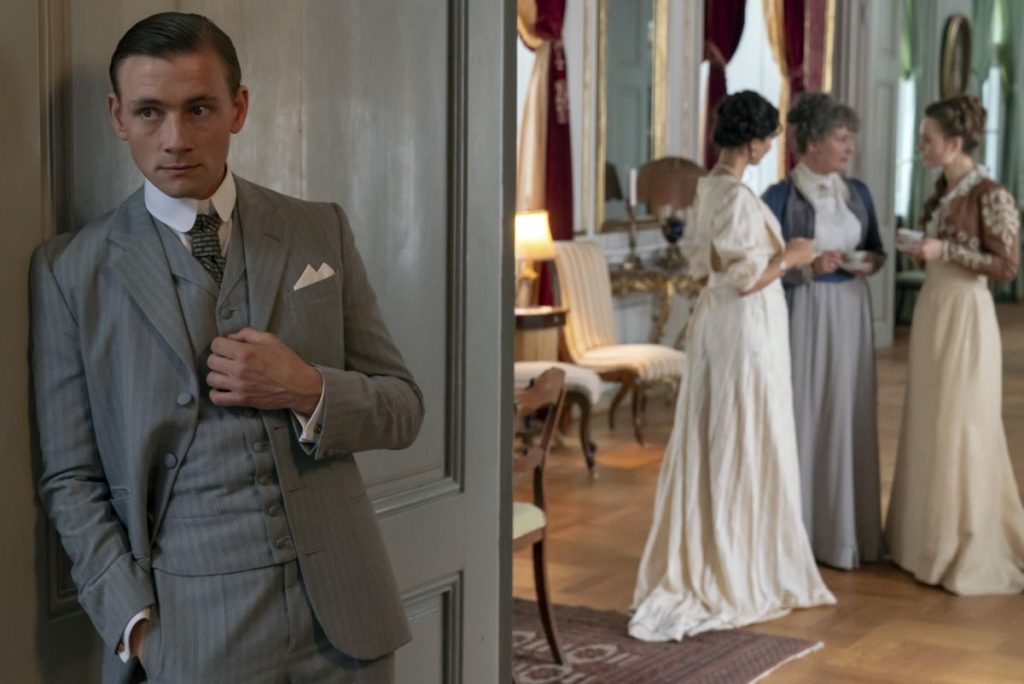
The Closing Night film is the New York premiere of A Fortunate Man, directed by Academy Award–winner Bille August (Pelle the Conqueror). In it, a gifted but self-destructive young man leaves his suffocating Lutheran upbringing for metropolitan 1880s Copenhagen, where he’s welcomed into a wealthy Jewish family and strives to realize his grand ambitions.
The Centerpiece selection represents the first time an Israeli television series has been presented at the NYJFF with the three-and-a-half-hour miniseries Autonomies, to be presented all at once, binge-style, with a 20-minute intermission. Directed by Yehonatan Indursky, the dystopian drama is set in an alternate reality of present-day Israel, a nation divided by a wall into the secular “State of Israel,” with Tel Aviv as its capital, and the “Haredi Autonomy” in Jerusalem, run by an ultra-Orthodox Jewish group. A globally relevant tale of identity, religion, politics, personal freedom, and love, this gripping story follows a custody battle that upends the fragile peace of the country, pushing it to the brink of civil war. Indursky will present a master class in conjunction with the screening of Autonomies.
New to the NYJFF this year is an annual initiative that highlights a film made by a woman filmmaker that deserves broader American recognition. Maria Victoria Menis’s Camera Obscura (2008) tells the story of an immigrant woman whose encounter with an itinerant photographer reveals a sense of self she never knew. The film was shot in the lush forests and lagoons of Buenos Aires province in a mélange of visual styles, including elements of hand-drawn animation, World War I archival footage, and early surrealist black-and-white films.
Filmmaker Amos Gitai returns to the 2019 NYJFF with the U.S. premiere of his thought-provoking new drama, A Tramway in Jerusalem. Gitai uses the tramway that runs through Jerusalem to connect a series of short vignettes, forming a mosaic of Jewish and Arab stories embodying life in the city.
The NYJFF will also present the U.S. premiere of Fig Tree by first-time director Aäläm-Wärqe Davidian. Set in Addis Ababa during the Ethiopian Civil War, the film concerns a young woman who plans to flee to Israel with her brother to reunite with their mother. But she is unwilling to leave her Christian boyfriend behind and hatches a scheme to save him from being drafted.
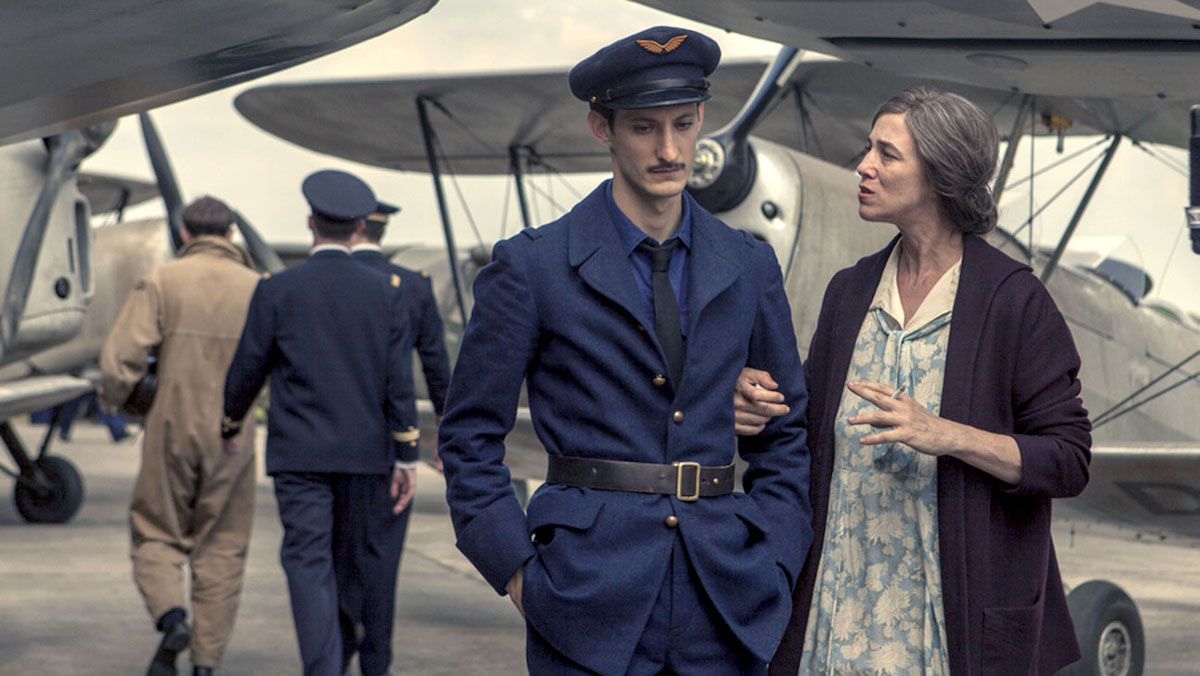 ‘Promise at Dawn’ (‘La Promesse de l’aube’)[/caption]
The New York premiere of Eric Barbier’s epic drama Promise at Dawn, starring Charlotte Gainsbourg and Pierre Niney will open the 2019 New York Jewish Film Festival one of the oldest and most influential Jewish film festivals worldwide. The 28th edition will run January 9 to 22, 2019.
This riveting memoir chronicles the colorful life of infamous French author Romain Gary, from his childhood conning Polish high society with his mother to his years as a pilot in the Free French Air Forces. The Centerpiece selection represents the first time Israeli TV has been presented at the NYJFF with the 3½ hour miniseries Autonomies. Directed by Yehonatan Indursky, the dystopian drama is set in an alternate reality of present-day Israel, a nation divided by a wall into the secular “State of Israel,” with Tel Aviv as its capital, and the “Haredi Autonomy” in Jerusalem, run by an ultra-Orthodox religious group. A globally relevant tale of identity, religion, politics, personal freedom, and love, this gripping story follows a custody battle that upends the fragile peace of the country, pushing it to the brink of civil war.
https://www.youtube.com/watch?v=3M45iQnJUm0
Filmmaker Amos Gitai returns to the 2019 NYJFF with the U.S. premiere of his thought-provoking new drama, A Tramway in Jerusalem. Gitai uses the tramway that runs through Jerusalem to connect a series of short vignettes, forming a mosaic of Jewish and Arab stories embodying life in the city.
The NYJFF will also present the U.S. premiere of Fig Tree by first-time director Aäläm-Wärqe Davidian. Set in Addis Ababa during the Ethiopian Civil War, the film concerns a young woman who plans to flee to Israel with her brother and grandmother to reunite with her mother. But she is unwilling to leave her Christian boyfriend behind and hatches a scheme to save him from being drafted.
This year’s festival features an array of enlightening and gripping documentaries. Highlights include the New York premiere of Roberta Grossman’s Who Will Write Our History, which uses painstakingly compiled archival materials unearthed after World War II to tell the story of a resistance group in the Warsaw Ghetto during the Nazi occupation and the reality of Jewish life in occupied Warsaw; and Rubi Gat’s Dear Fredy, focusing on Fredy Hirsch, a proud and openly gay Jew in Nazi Germany and, later, Theresienstadt and Auschwitz, who oversaw and protected hundreds of children in the camps by setting up a day care center.
NYJFF special programs include the New York City premiere of the new digital restoration of Ewald Andrew Dupont’s 1923 silent masterpiece, The Ancient Law, featuring a new score and live accompaniment by pianist Donald Sosin and klezmer violinist Alicia Svigals. In this classic drama the son of an orthodox rabbi leaves home, against his father’s wishes, to join a traveling theater troupe.
‘Promise at Dawn’ (‘La Promesse de l’aube’)[/caption]
The New York premiere of Eric Barbier’s epic drama Promise at Dawn, starring Charlotte Gainsbourg and Pierre Niney will open the 2019 New York Jewish Film Festival one of the oldest and most influential Jewish film festivals worldwide. The 28th edition will run January 9 to 22, 2019.
This riveting memoir chronicles the colorful life of infamous French author Romain Gary, from his childhood conning Polish high society with his mother to his years as a pilot in the Free French Air Forces. The Centerpiece selection represents the first time Israeli TV has been presented at the NYJFF with the 3½ hour miniseries Autonomies. Directed by Yehonatan Indursky, the dystopian drama is set in an alternate reality of present-day Israel, a nation divided by a wall into the secular “State of Israel,” with Tel Aviv as its capital, and the “Haredi Autonomy” in Jerusalem, run by an ultra-Orthodox religious group. A globally relevant tale of identity, religion, politics, personal freedom, and love, this gripping story follows a custody battle that upends the fragile peace of the country, pushing it to the brink of civil war.
https://www.youtube.com/watch?v=3M45iQnJUm0
Filmmaker Amos Gitai returns to the 2019 NYJFF with the U.S. premiere of his thought-provoking new drama, A Tramway in Jerusalem. Gitai uses the tramway that runs through Jerusalem to connect a series of short vignettes, forming a mosaic of Jewish and Arab stories embodying life in the city.
The NYJFF will also present the U.S. premiere of Fig Tree by first-time director Aäläm-Wärqe Davidian. Set in Addis Ababa during the Ethiopian Civil War, the film concerns a young woman who plans to flee to Israel with her brother and grandmother to reunite with her mother. But she is unwilling to leave her Christian boyfriend behind and hatches a scheme to save him from being drafted.
This year’s festival features an array of enlightening and gripping documentaries. Highlights include the New York premiere of Roberta Grossman’s Who Will Write Our History, which uses painstakingly compiled archival materials unearthed after World War II to tell the story of a resistance group in the Warsaw Ghetto during the Nazi occupation and the reality of Jewish life in occupied Warsaw; and Rubi Gat’s Dear Fredy, focusing on Fredy Hirsch, a proud and openly gay Jew in Nazi Germany and, later, Theresienstadt and Auschwitz, who oversaw and protected hundreds of children in the camps by setting up a day care center.
NYJFF special programs include the New York City premiere of the new digital restoration of Ewald Andrew Dupont’s 1923 silent masterpiece, The Ancient Law, featuring a new score and live accompaniment by pianist Donald Sosin and klezmer violinist Alicia Svigals. In this classic drama the son of an orthodox rabbi leaves home, against his father’s wishes, to join a traveling theater troupe. Razzia[/caption]
The 27th annual New York Jewish Film Festival (NYJFF) returns January 10 to 23, 2018 featuring the finest documentary, narrative, and short films from around the world that explore the diverse Jewish experience. The festival’s 2018 lineup includes 37 wide-ranging and exciting features and shorts from the iconic to the iconoclastic, of which 25 are screening in their world, U.S., and New York premieres.
The NYJFF opens on Wednesday, January 10, with the U.S. premiere of Nabil Ayouch’s mesmerizing Razzia, which follows five Moroccans pushed to the fringes in Casablanca by their extremist government. Closing Night is the U.S. premiere of Amos Gitai’s latest documentary, West of the Jordan River, a powerful look at West Bank citizens, both Israeli and Palestinian, who have risen to act in the name of civic consciousness and peace. The Centerpiece selection is Ofir Raul Graizer’s tender debut feature The Cakemaker, about the relationship that forms between a gay German baker and the Israeli widow of the man whom they both loved.
This year’s edition of the festival features an array of enlightening and challenging documentaries, including Sammy Davis, Jr.: I’ve Gotta Be Me, Sam Pollard’s exhilarating tribute to the legendary entertainer; the U.S. premiere of Chen Shelach’s Praise the Lard, an exploration of the Israeli pork industry; NYJFF alum Radu Jude’s haunting The Dead Nation, which consists entirely of photographs from Romanian photographer Costica Acsinte and audio of diary excerpts from Jewish doctor Emil Dorian, which both span the period from 1937 to 1944; the U.S. premiere of Daniel Najenson’s The Impure, which investigates institutionalization of Jewish prostitution in Argentina in the early 20th century. The festival also includes fiction works like Tzahi Grad’s morally complex, darkly comic The Cousin, about a progressive Israeli actor who comes to the defense of his Palestinian handyman when he’s accused of assault; and Francesco Amato’s comedy Let Yourself Go, about a detached psychoanalyst who finds his life recharged by the presence of a young, attractive, and undisciplined personal trainer.
NYJFF special programs include the world premiere of a new restoration of Alexander Rodnyanskiy’s The Mission of Raoul Wallenberg, 27 years after it premiered in the first NYJFF; a tribute screening of Amos Gitai’s One Day You’ll Understand in memory of Jeanne Moreau; Drawing the Iron Curtain, a special program of Soviet animated shorts, followed by a conversation with author/professor Maya Balakirsky Katz and film critic J. Hoberman; the U.S. premieres of restorations of Renen Schorr’s Late Summer Blues and Gilbert Tofano’s Siege; and a brand new world premiere restoration of Michał Waszyński’s 1937 classic The Dybbuk, one of the finest films ever produced in the Yiddish language, presented in conjunction with the U.S. premiere of main slate title The Prince and the Dybbuk, a documentary about Waszyński’s life.
Razzia[/caption]
The 27th annual New York Jewish Film Festival (NYJFF) returns January 10 to 23, 2018 featuring the finest documentary, narrative, and short films from around the world that explore the diverse Jewish experience. The festival’s 2018 lineup includes 37 wide-ranging and exciting features and shorts from the iconic to the iconoclastic, of which 25 are screening in their world, U.S., and New York premieres.
The NYJFF opens on Wednesday, January 10, with the U.S. premiere of Nabil Ayouch’s mesmerizing Razzia, which follows five Moroccans pushed to the fringes in Casablanca by their extremist government. Closing Night is the U.S. premiere of Amos Gitai’s latest documentary, West of the Jordan River, a powerful look at West Bank citizens, both Israeli and Palestinian, who have risen to act in the name of civic consciousness and peace. The Centerpiece selection is Ofir Raul Graizer’s tender debut feature The Cakemaker, about the relationship that forms between a gay German baker and the Israeli widow of the man whom they both loved.
This year’s edition of the festival features an array of enlightening and challenging documentaries, including Sammy Davis, Jr.: I’ve Gotta Be Me, Sam Pollard’s exhilarating tribute to the legendary entertainer; the U.S. premiere of Chen Shelach’s Praise the Lard, an exploration of the Israeli pork industry; NYJFF alum Radu Jude’s haunting The Dead Nation, which consists entirely of photographs from Romanian photographer Costica Acsinte and audio of diary excerpts from Jewish doctor Emil Dorian, which both span the period from 1937 to 1944; the U.S. premiere of Daniel Najenson’s The Impure, which investigates institutionalization of Jewish prostitution in Argentina in the early 20th century. The festival also includes fiction works like Tzahi Grad’s morally complex, darkly comic The Cousin, about a progressive Israeli actor who comes to the defense of his Palestinian handyman when he’s accused of assault; and Francesco Amato’s comedy Let Yourself Go, about a detached psychoanalyst who finds his life recharged by the presence of a young, attractive, and undisciplined personal trainer.
NYJFF special programs include the world premiere of a new restoration of Alexander Rodnyanskiy’s The Mission of Raoul Wallenberg, 27 years after it premiered in the first NYJFF; a tribute screening of Amos Gitai’s One Day You’ll Understand in memory of Jeanne Moreau; Drawing the Iron Curtain, a special program of Soviet animated shorts, followed by a conversation with author/professor Maya Balakirsky Katz and film critic J. Hoberman; the U.S. premieres of restorations of Renen Schorr’s Late Summer Blues and Gilbert Tofano’s Siege; and a brand new world premiere restoration of Michał Waszyński’s 1937 classic The Dybbuk, one of the finest films ever produced in the Yiddish language, presented in conjunction with the U.S. premiere of main slate title The Prince and the Dybbuk, a documentary about Waszyński’s life.
 The 2016 New York Jewish Film Festival (NYJFF) presented by the Film Society of Lincoln Center and the Jewish Museum will take place January 13 to 26, 2016 at the Film Society’s Walter Reade Theater and Elinor Bunin Munroe Film Center.
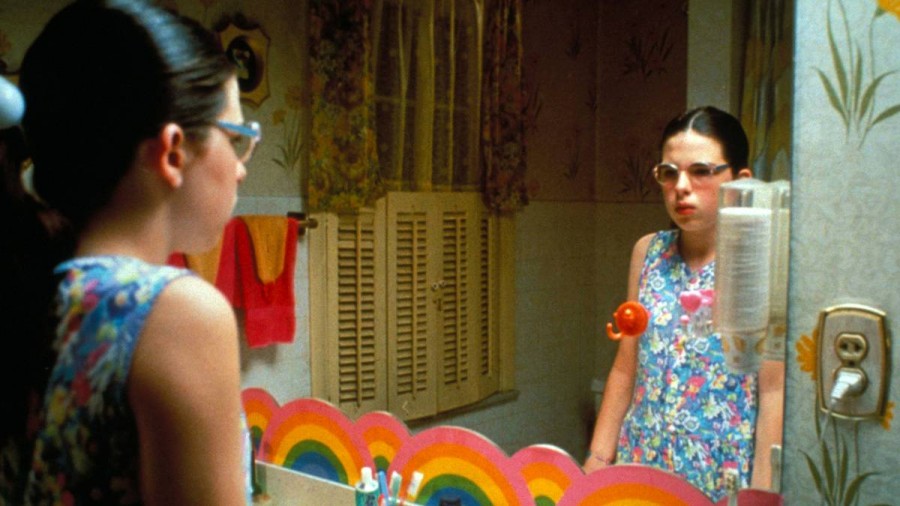
This year’s 25th-anniversary edition will include a number of special programs, including a retrospective of film highlights from past festivals; an exhibition of posters from previous festival selections; a panel discussion bringing together some of New York’s finest film curators and programmers; a 20th-anniversary screening of Todd Solondz’s Welcome to the Dollhouse (pictured above) accompanied by the classic documentary Night and Fog, selected by Solondz; a Master Class on filmmaking by director Alan Berliner; continuous screenings of pivotal moments from 10 films seen in previous editions of the New York Jewish Film Festival; an evening of five shorts featuring such talents as Robert De Niro and Richard Kind; and an online anniversary publication looking back over the first 25 years of the festival.
SPECIAL PRESENTATIONS
NYJFF at 25: A Retrospective
This series of 10 films from previous editions of the New York Jewish Film Festival marks the silver anniversary of the festival, ranging from the silent film Benya Krik to works from such acclaimed directors as Amos Gitai and the late Chantal Akerman.
Benya Krik
Vladimir Vilner, USSR, 1926, 35mm, 90m
Silent with English intertitles and live musical accompaniment by Peter Freisinger
Vladimir Vilner’s classic film is set in the Jewish area of Moldavanka in Odessa, where the local gangster king Benya Krik rules with an iron fist. Based on the real-life gangster Mishka “Mike the Jap” Vinnitsky, Krik revels in murder and leverages his power into tremendous profit. When the Russian Revolution begins, the local commissioner attempts to put Krik’s gang to work as a revolutionary regiment, complete with tattooed red stars. Ultimately, Krik finds himself ensnared in a Bolshevik trap—and mystery and intrigue ensue. Restoration and English intertitles by the National Center for Jewish Film. This special event is presented in conjunction with the exhibition The Power of Pictures: Early Soviet Photography, Early Soviet Film, on view through February 7 at the Jewish Museum.
The Castle
Michael Haneke, Austria/Germany, 1997, DCP, 123m
German with English subtitles
The Castle is the unfinished, final novel by Franz Kafka, arguably the 20th century’s most influential Jewish writer. With extraordinary fidelity to Kafka’s original language and tone, Austrian director Michael Haneke has adapted the work for the big screen, complete with a star-studded cast made up of Haneke regulars. A land surveyor known only as K is summoned to a remote mountain village by the local government. Upon arrival, he is denied entrance and faces an increasingly obstructive provincial bureaucracy. Haneke masterfully evokes Kafka’s vision of a dystopian society hobbled by paperwork and bled dry by conformism and convolution.
Holy Week
Andrzej Wajda, Poland/Germany/France, 1995, 35mm, 97m
Polish with English subtitles
As the Warsaw Ghetto burns, a Jewish woman seeks sanctuary with a former boyfriend on the Christian side of the city. Andrzej Wajda’s adaptation of Jerzy Andrzejewski’s short story Holy Week is an inquiry into the relationship between Polish Christians and Polish Jews during World War II. If Jan hides Irena in his home, he will be committing a crime for which the sentence in Nazi-occupied Poland is death for the perpetrator and his family. His humanitarian nature still shines through, and the two forge a tense but caring new chapter in their deeply rooted relationship.
Left Luggage
Jeroen Krabbé, USA/Netherlands/Belgium, 1998, 35mm, 100m
English, Hebrew, and Yiddish with English subtitles
Set in 1970s Belgium, Left Luggage tells the story of Chaya (Laura Fraser), the 20-year-old daughter of Holocaust survivors who studies philosophy and lives a bohemian existence in Antwerp. When Chaya takes a job as a nanny for a Hasidic family, her developing friendship with the devout mother forces her to reevaluate the Jewish faith. This clear-eyed look at Hasidism and its relationship with Judaism as a whole also stars Isabella Rossellini, actor-director Jeroen Krabbé, and Topol, and was the winner of three awards at the Berlin International Film Festival.
Lost Embrace
Daniel Burman, Argentina/France/Italy, 2004, 35mm, 99m
Spanish, Korean, Yiddish, and Russian with English subtitles
Argentinean director Daniel Burman’s coming-of-age ensemble film is a warm and amusing story of self-actualization and familial ties. Ariel Makaroff, a Jewish twentysomething in Buenos Aires, has left his architectural studies, unmotivated to do anything but wander through a rundown shopping mall. Ever since his father went missing, his mother and brother have worked in a lingerie shop. In hopes of a fresh start, Ariel decides he wants to move to Poland, and asks his grandmother, ex-girlfriend, and rabbi for help. Winner of two Silver Bear awards at the 2004 Berlin Film Festival.
Mahler on the Couch
Percy Adlon & Felix O. Adlon, Austria/Germany, 2010, DCP, 98m
German with English subtitles
Percy Adlon, the acclaimed director of Bagdad Cafe, teamed up with his son Felix for this portrait of the great composer Gustav Mahler and his tempestuous relationship with his wife, Alma. Chafing under an agreement to give up her own musical ambitions, Alma begins an affair with the young architect Walter Gropius, as Mahler consults with Sigmund Freud on matters of creativity and passion. Moving, funny, and filled with Mahler’s sublime music (conducted by Esa-Pekka Salonen), Mahler on the Couch is a sensory feast based on actual encounters between Mahler and Freud.
News from House / News from Home
Amos Gitai, Israel/France/Belgium, 2006, DCP, 97m
English, Arabic, Hebrew, and French with English subtitles
A house in West Jerusalem was for decades a microcosm of a city in conflict: abandoned by its Palestinian owner in the 1948 war; then requisitioned by the Israeli government as vacant; rented to Jewish Algerian immigrants in 1956; and, finally, purchased by a university professor who undertook its transformation into a three-story house in 1980. While its inhabitants have now dispersed and the common space has disintegrated, the structure remains both an emotional and a physical center at the heart of the Israeli-Palestinian situation. Here, renowned filmmaker Amos Gitai uncovers the multilayered human history of this remarkable place.
Nobody’s Business
Alan Berliner, USA, 1996, Digital projection, 60m
Acclaimed New York filmmaker Alan Berliner took on his reclusive father as the reluctant subject of this poignant documentary, and what emerged was this cinematic biography that finds both humor and pathos in the swirl of conflicts and affections that bind father and son. Berliner weaves together archival footage and interviews with relatives in his quest to understand this complex and troubled character. Ultimately, Nobody’s Business serves as a meeting of the minds, where generations collide and the boundaries of family relationships are pushed to the brink.
Intimate Stranger
Alan Berliner, USA, 1991, Digital projection, 60m
Alan Berliner’s maternal grandfather is the subject of his remarkable documentary from 1991. Joseph Cassuto was a Palestinian Jew, born in 1905 and raised in Egypt. After World War II, his fascination with Japanese culture blossomed into a lifelong love affair with the country, and he abandoned his family to live there and pursue miscellaneous business interests. Equal parts romantic adventurer and coldhearted shirker of familial responsibility, Cassuto is a riveting protagonist in this poetic and emotional jigsaw puzzle of family history.
Tomorrow We Move
Chantal Akerman, France/Belgium, 2004, 35mm, 110m
French with English subtitles
The late Belgian filmmaker Chantal Akerman brings us an intellectual comedy about a mother and daughter who find themselves living together for the first time in decades. Charlotte, a freelance writer, invites her recently widowed mother, Catherine, to live in her apartment, and the ensuing clutter becomes a source of irritation and strife. When Catherine decides to revitalize her career as a piano teacher, the claustrophobia reaches new and absurd levels. Charlotte continues to pursue her desperate quest for peace as Tomorrow We Move develops into a slyly Jewish tale of rootlessness and familial burdens.
NYJFF Shorts Program (TRT: 75m):
Five concise stories come together in this program of short films. Dear God (Guy Nattiv & Erez Tadmor, Israel, 2014, 13m), whose co-director Nattiv also directed the 2012 NYJFF opening-night film Mabul, depicts a romantic Jerusalem through the eyes of Aaron, a simple man who guards the historic Western Wall. In Gloomy Sabbath (Amit Epstein, Germany, 2013, 15m), an ailing woman leads her grandson on a lively and colorful dance into the past to reveal a dark family secret. The Notebook (Zach Clark, USA, 2014, 15m) takes place in a video store, where a woman makes a sad, strange request. In What Cheer? (Michael Slavens, USA, 2014, 18m), starring Richard Kind, a man grappling with the sudden passing of his wife encounters a 20-piece punk marching band. Ellis (JR, USA, 2015, 14m) stars Robert De Niro as an immigrant whose pursuit of a new life expired at Ellis Island. Dear God, Gloomy Sabbath, and The Notebook are receiving their New York premieres.
Guest Selects: Todd Solondz:
20th Anniversary Screening
Welcome to the Dollhouse
Todd Solondz, USA, 1995, 35mm, 88m
Eleven-year-old Dawn “Weinerdog” Wiener is a junior-high geek who just wants to be popular. Teased by her classmates and tormented by the school bully, she develops an improbable plan to seduce the star of a high-school garage band. Todd Solondz’s celebrated black comedy follows Dawn through the many dark corners of suburban youth. Bitterly funny and true to life, the film launched Solondz’s career, won the Grand Jury Prize at the Sundance Film Festival, and is now hailed as a classic of modern independent cinema.
Night and Fog
Alain Resnais, France, 1955, 35mm, 32m
French with English subtitles
Ten years after the liberation of the Nazi concentration camps, French filmmaker Alain Resnais documented the abandoned grounds of Auschwitz in his harrowing documentary. One of the first cinematic reflections on the horrors of the Holocaust, Night and Fog contrasts the stillness of the abandoned camps’ quiet, empty buildings with wartime footage. Using a combination of archival materials from past and present, in color and black and white, Resnais investigates the cyclical nature of humanity’s violence and presents the unsettling suggestion that such atrocities could happen again. On selecting Night and Fog, Todd Solondz writes: “I saw Night and Fog in college and it stuck with me as a touchstone for speaking of the unspeakable, evoking the unevocable, memorializing without pomp. I can’t say it ‘inspired’ me, but it’s always stood as a kind of monument: What is worth our time and attention? What matters? Who are we?”
Talking Movies:
Panel Discussion: Curating Film (90m)
A collection of New York’s finest film curators and programmers come together to jump-start a discussion about engaging film audiences in the 21st century. With festivals, museums, galleries, and online platforms all presenting film in new and different ways, the medium finds itself at an exciting crossroads.
Panelists: Thomas Beard is the Founder and Director of Light Industry, a venue for film and electronic arts in Brooklyn, and Programmer at Large at the Film Society of Lincoln Center. He has organized screenings for Artists Space, the Centre Pompidou, the Museum of Modern Art, and Tate Modern, and he co-curated the cinema for Greater New York 2010 at MoMA PS1 and the film program for the 2012 Whitney Biennial. Stuart Comer is Chief Curator of Media and Performance Art at the Museum of Modern Art. He was a co-curator of the 2014 Whitney Biennial and was previously the founding curator of film at Tate Modern, London. Chrissie Iles is the Anne and Joel Ehrenkranz Curator at the Whitney Museum of American Art where one of her specializations is film and video.
Moderator: Jens Hoffmann is Deputy Director, Exhibitions and Public Programs, the Jewish Museum and Curator for Special Programs, New York Jewish Film Festival. He has curated more than 50 exhibitions internationally since the late 1990s, including the 2nd San Juan Triennial (2009), the 12th Istanbul Biennial (2011), and the 9th Shanghai Biennale (2012-13).
Master Class with Alan Berliner (90m):
Alan Berliner’s ability to combine experimental cinema and artistic purpose has made him one of the most acclaimed independent filmmakers in the United States. In this unique master class, Berliner will discuss his use of sound and image metaphors in Intimate Stranger (1991) and Nobody’s Business (1996), both of which are screening in the festival. The lecture will include a presentation of clips from each film.
Happy Ends (TRT: 20m; running on loop):
Spoiler alert! Pivotal moments from 10 films presented at previous editions of the New York Jewish Film Festival highlight a wide array of themes and life lessons with fluctuating degrees of fate, heroism, and self-determination. This 20-minute compilation will run on a continuous loop in the amphitheater of the Elinor Bunin Munroe Film Center during the festival. Films include The Jewish Cardinal (2013), Daas (2011), The Strange Case of Wilhelm Reich (2012), Protektor (2009), Emotional Arithmetic (2007), Mahler on the Couch (2010), A Bottle in the Gaza Sea (2011), Nina’s Tragedies (2003), Gloomy Sunday (1999), and Live and Become (2005).
Celluloid on Paper: Poster Exhibition
Posters that highlight works from the festival’s quarter-century history will be on view in the Furman Gallery at the Walter Reade Theater, ranging in style from the Soviet constructivist–inspired design for Sonia, to a more minimalist film still of a woman contemplating the nature of evil, or a man gazing into the horizon, perhaps looking ahead to the next 25 years of the festival. Highlights include posters for Anatomy of a Murder (1959), Ida (2013), Lost Embrace (2004), Sonia (2007), and The Castle (1997), among others.
The 2016 New York Jewish Film Festival (NYJFF) presented by the Film Society of Lincoln Center and the Jewish Museum will take place January 13 to 26, 2016 at the Film Society’s Walter Reade Theater and Elinor Bunin Munroe Film Center.
This year’s 25th-anniversary edition will include a number of special programs, including a retrospective of film highlights from past festivals; an exhibition of posters from previous festival selections; a panel discussion bringing together some of New York’s finest film curators and programmers; a 20th-anniversary screening of Todd Solondz’s Welcome to the Dollhouse (pictured above) accompanied by the classic documentary Night and Fog, selected by Solondz; a Master Class on filmmaking by director Alan Berliner; continuous screenings of pivotal moments from 10 films seen in previous editions of the New York Jewish Film Festival; an evening of five shorts featuring such talents as Robert De Niro and Richard Kind; and an online anniversary publication looking back over the first 25 years of the festival.
SPECIAL PRESENTATIONS
NYJFF at 25: A Retrospective
This series of 10 films from previous editions of the New York Jewish Film Festival marks the silver anniversary of the festival, ranging from the silent film Benya Krik to works from such acclaimed directors as Amos Gitai and the late Chantal Akerman.
Benya Krik
Vladimir Vilner, USSR, 1926, 35mm, 90m
Silent with English intertitles and live musical accompaniment by Peter Freisinger
Vladimir Vilner’s classic film is set in the Jewish area of Moldavanka in Odessa, where the local gangster king Benya Krik rules with an iron fist. Based on the real-life gangster Mishka “Mike the Jap” Vinnitsky, Krik revels in murder and leverages his power into tremendous profit. When the Russian Revolution begins, the local commissioner attempts to put Krik’s gang to work as a revolutionary regiment, complete with tattooed red stars. Ultimately, Krik finds himself ensnared in a Bolshevik trap—and mystery and intrigue ensue. Restoration and English intertitles by the National Center for Jewish Film. This special event is presented in conjunction with the exhibition The Power of Pictures: Early Soviet Photography, Early Soviet Film, on view through February 7 at the Jewish Museum.
The Castle
Michael Haneke, Austria/Germany, 1997, DCP, 123m
German with English subtitles
The Castle is the unfinished, final novel by Franz Kafka, arguably the 20th century’s most influential Jewish writer. With extraordinary fidelity to Kafka’s original language and tone, Austrian director Michael Haneke has adapted the work for the big screen, complete with a star-studded cast made up of Haneke regulars. A land surveyor known only as K is summoned to a remote mountain village by the local government. Upon arrival, he is denied entrance and faces an increasingly obstructive provincial bureaucracy. Haneke masterfully evokes Kafka’s vision of a dystopian society hobbled by paperwork and bled dry by conformism and convolution.
Holy Week
Andrzej Wajda, Poland/Germany/France, 1995, 35mm, 97m
Polish with English subtitles
As the Warsaw Ghetto burns, a Jewish woman seeks sanctuary with a former boyfriend on the Christian side of the city. Andrzej Wajda’s adaptation of Jerzy Andrzejewski’s short story Holy Week is an inquiry into the relationship between Polish Christians and Polish Jews during World War II. If Jan hides Irena in his home, he will be committing a crime for which the sentence in Nazi-occupied Poland is death for the perpetrator and his family. His humanitarian nature still shines through, and the two forge a tense but caring new chapter in their deeply rooted relationship.
Left Luggage
Jeroen Krabbé, USA/Netherlands/Belgium, 1998, 35mm, 100m
English, Hebrew, and Yiddish with English subtitles
Set in 1970s Belgium, Left Luggage tells the story of Chaya (Laura Fraser), the 20-year-old daughter of Holocaust survivors who studies philosophy and lives a bohemian existence in Antwerp. When Chaya takes a job as a nanny for a Hasidic family, her developing friendship with the devout mother forces her to reevaluate the Jewish faith. This clear-eyed look at Hasidism and its relationship with Judaism as a whole also stars Isabella Rossellini, actor-director Jeroen Krabbé, and Topol, and was the winner of three awards at the Berlin International Film Festival.
Lost Embrace
Daniel Burman, Argentina/France/Italy, 2004, 35mm, 99m
Spanish, Korean, Yiddish, and Russian with English subtitles
Argentinean director Daniel Burman’s coming-of-age ensemble film is a warm and amusing story of self-actualization and familial ties. Ariel Makaroff, a Jewish twentysomething in Buenos Aires, has left his architectural studies, unmotivated to do anything but wander through a rundown shopping mall. Ever since his father went missing, his mother and brother have worked in a lingerie shop. In hopes of a fresh start, Ariel decides he wants to move to Poland, and asks his grandmother, ex-girlfriend, and rabbi for help. Winner of two Silver Bear awards at the 2004 Berlin Film Festival.
Mahler on the Couch
Percy Adlon & Felix O. Adlon, Austria/Germany, 2010, DCP, 98m
German with English subtitles
Percy Adlon, the acclaimed director of Bagdad Cafe, teamed up with his son Felix for this portrait of the great composer Gustav Mahler and his tempestuous relationship with his wife, Alma. Chafing under an agreement to give up her own musical ambitions, Alma begins an affair with the young architect Walter Gropius, as Mahler consults with Sigmund Freud on matters of creativity and passion. Moving, funny, and filled with Mahler’s sublime music (conducted by Esa-Pekka Salonen), Mahler on the Couch is a sensory feast based on actual encounters between Mahler and Freud.
News from House / News from Home
Amos Gitai, Israel/France/Belgium, 2006, DCP, 97m
English, Arabic, Hebrew, and French with English subtitles
A house in West Jerusalem was for decades a microcosm of a city in conflict: abandoned by its Palestinian owner in the 1948 war; then requisitioned by the Israeli government as vacant; rented to Jewish Algerian immigrants in 1956; and, finally, purchased by a university professor who undertook its transformation into a three-story house in 1980. While its inhabitants have now dispersed and the common space has disintegrated, the structure remains both an emotional and a physical center at the heart of the Israeli-Palestinian situation. Here, renowned filmmaker Amos Gitai uncovers the multilayered human history of this remarkable place.
Nobody’s Business
Alan Berliner, USA, 1996, Digital projection, 60m
Acclaimed New York filmmaker Alan Berliner took on his reclusive father as the reluctant subject of this poignant documentary, and what emerged was this cinematic biography that finds both humor and pathos in the swirl of conflicts and affections that bind father and son. Berliner weaves together archival footage and interviews with relatives in his quest to understand this complex and troubled character. Ultimately, Nobody’s Business serves as a meeting of the minds, where generations collide and the boundaries of family relationships are pushed to the brink.
Intimate Stranger
Alan Berliner, USA, 1991, Digital projection, 60m
Alan Berliner’s maternal grandfather is the subject of his remarkable documentary from 1991. Joseph Cassuto was a Palestinian Jew, born in 1905 and raised in Egypt. After World War II, his fascination with Japanese culture blossomed into a lifelong love affair with the country, and he abandoned his family to live there and pursue miscellaneous business interests. Equal parts romantic adventurer and coldhearted shirker of familial responsibility, Cassuto is a riveting protagonist in this poetic and emotional jigsaw puzzle of family history.
Tomorrow We Move
Chantal Akerman, France/Belgium, 2004, 35mm, 110m
French with English subtitles
The late Belgian filmmaker Chantal Akerman brings us an intellectual comedy about a mother and daughter who find themselves living together for the first time in decades. Charlotte, a freelance writer, invites her recently widowed mother, Catherine, to live in her apartment, and the ensuing clutter becomes a source of irritation and strife. When Catherine decides to revitalize her career as a piano teacher, the claustrophobia reaches new and absurd levels. Charlotte continues to pursue her desperate quest for peace as Tomorrow We Move develops into a slyly Jewish tale of rootlessness and familial burdens.
NYJFF Shorts Program (TRT: 75m):
Five concise stories come together in this program of short films. Dear God (Guy Nattiv & Erez Tadmor, Israel, 2014, 13m), whose co-director Nattiv also directed the 2012 NYJFF opening-night film Mabul, depicts a romantic Jerusalem through the eyes of Aaron, a simple man who guards the historic Western Wall. In Gloomy Sabbath (Amit Epstein, Germany, 2013, 15m), an ailing woman leads her grandson on a lively and colorful dance into the past to reveal a dark family secret. The Notebook (Zach Clark, USA, 2014, 15m) takes place in a video store, where a woman makes a sad, strange request. In What Cheer? (Michael Slavens, USA, 2014, 18m), starring Richard Kind, a man grappling with the sudden passing of his wife encounters a 20-piece punk marching band. Ellis (JR, USA, 2015, 14m) stars Robert De Niro as an immigrant whose pursuit of a new life expired at Ellis Island. Dear God, Gloomy Sabbath, and The Notebook are receiving their New York premieres.
Guest Selects: Todd Solondz:
20th Anniversary Screening
Welcome to the Dollhouse
Todd Solondz, USA, 1995, 35mm, 88m
Eleven-year-old Dawn “Weinerdog” Wiener is a junior-high geek who just wants to be popular. Teased by her classmates and tormented by the school bully, she develops an improbable plan to seduce the star of a high-school garage band. Todd Solondz’s celebrated black comedy follows Dawn through the many dark corners of suburban youth. Bitterly funny and true to life, the film launched Solondz’s career, won the Grand Jury Prize at the Sundance Film Festival, and is now hailed as a classic of modern independent cinema.
Night and Fog
Alain Resnais, France, 1955, 35mm, 32m
French with English subtitles
Ten years after the liberation of the Nazi concentration camps, French filmmaker Alain Resnais documented the abandoned grounds of Auschwitz in his harrowing documentary. One of the first cinematic reflections on the horrors of the Holocaust, Night and Fog contrasts the stillness of the abandoned camps’ quiet, empty buildings with wartime footage. Using a combination of archival materials from past and present, in color and black and white, Resnais investigates the cyclical nature of humanity’s violence and presents the unsettling suggestion that such atrocities could happen again. On selecting Night and Fog, Todd Solondz writes: “I saw Night and Fog in college and it stuck with me as a touchstone for speaking of the unspeakable, evoking the unevocable, memorializing without pomp. I can’t say it ‘inspired’ me, but it’s always stood as a kind of monument: What is worth our time and attention? What matters? Who are we?”
Talking Movies:
Panel Discussion: Curating Film (90m)
A collection of New York’s finest film curators and programmers come together to jump-start a discussion about engaging film audiences in the 21st century. With festivals, museums, galleries, and online platforms all presenting film in new and different ways, the medium finds itself at an exciting crossroads.
Panelists: Thomas Beard is the Founder and Director of Light Industry, a venue for film and electronic arts in Brooklyn, and Programmer at Large at the Film Society of Lincoln Center. He has organized screenings for Artists Space, the Centre Pompidou, the Museum of Modern Art, and Tate Modern, and he co-curated the cinema for Greater New York 2010 at MoMA PS1 and the film program for the 2012 Whitney Biennial. Stuart Comer is Chief Curator of Media and Performance Art at the Museum of Modern Art. He was a co-curator of the 2014 Whitney Biennial and was previously the founding curator of film at Tate Modern, London. Chrissie Iles is the Anne and Joel Ehrenkranz Curator at the Whitney Museum of American Art where one of her specializations is film and video.
Moderator: Jens Hoffmann is Deputy Director, Exhibitions and Public Programs, the Jewish Museum and Curator for Special Programs, New York Jewish Film Festival. He has curated more than 50 exhibitions internationally since the late 1990s, including the 2nd San Juan Triennial (2009), the 12th Istanbul Biennial (2011), and the 9th Shanghai Biennale (2012-13).
Master Class with Alan Berliner (90m):
Alan Berliner’s ability to combine experimental cinema and artistic purpose has made him one of the most acclaimed independent filmmakers in the United States. In this unique master class, Berliner will discuss his use of sound and image metaphors in Intimate Stranger (1991) and Nobody’s Business (1996), both of which are screening in the festival. The lecture will include a presentation of clips from each film.
Happy Ends (TRT: 20m; running on loop):
Spoiler alert! Pivotal moments from 10 films presented at previous editions of the New York Jewish Film Festival highlight a wide array of themes and life lessons with fluctuating degrees of fate, heroism, and self-determination. This 20-minute compilation will run on a continuous loop in the amphitheater of the Elinor Bunin Munroe Film Center during the festival. Films include The Jewish Cardinal (2013), Daas (2011), The Strange Case of Wilhelm Reich (2012), Protektor (2009), Emotional Arithmetic (2007), Mahler on the Couch (2010), A Bottle in the Gaza Sea (2011), Nina’s Tragedies (2003), Gloomy Sunday (1999), and Live and Become (2005).
Celluloid on Paper: Poster Exhibition
Posters that highlight works from the festival’s quarter-century history will be on view in the Furman Gallery at the Walter Reade Theater, ranging in style from the Soviet constructivist–inspired design for Sonia, to a more minimalist film still of a woman contemplating the nature of evil, or a man gazing into the horizon, perhaps looking ahead to the next 25 years of the festival. Highlights include posters for Anatomy of a Murder (1959), Ida (2013), Lost Embrace (2004), Sonia (2007), and The Castle (1997), among others.
