
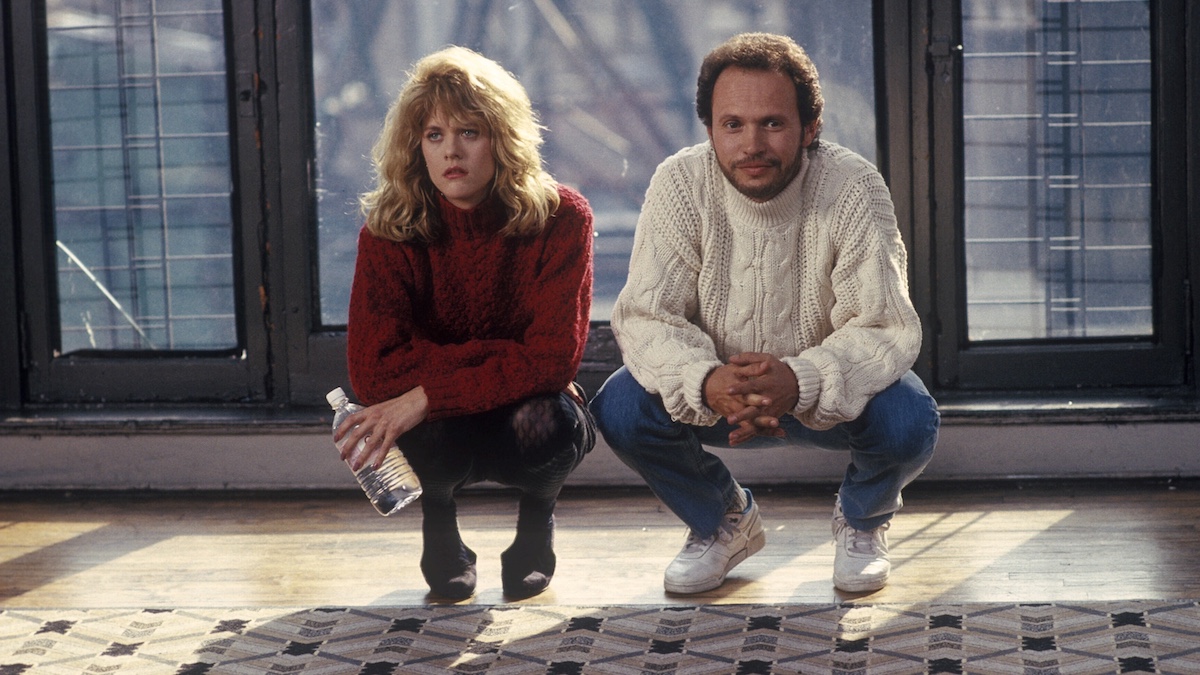
 WHEN HARRY MET SALLY[/caption]
Who would believe it’s 30 years already – the 30th anniversary screening of the seminal romantic comedy When HARRY Met Sally… with stars Billy Crystal and Meg Ryan and director/producer Rob Reiner in attendance, will kick off the 10th annual TCM Classic Film Festival on Thursday, April 11th
Celebrated director Rob Reiner had no idea he would strike such a chord with audiences by posing the simple question: “can men and women really be friends?” The charming and TIMELESS film explores this idea by following the characters of HARRY (Billy Crystal) and Sally (Meg Ryan) over the course of twelve years through a series of chance encounters. When HARRY Met Sally… was an instant hit with audiences and critics alike: the film grossed more than $90 million at the box office and Nora Ephron’s taut, hilarious script garnered an Oscar nomination for Best Orginal Screenplay. Billy Crystal and Meg Ryan were also both nominated for Golden Globes for their performances, along with director Rob Reiner.
“There are romantic comedies – and then there’s When HARRY Met Sally…” said Ben Mankiewicz, TCM primetime anchor and official host of the TCM Classic Film Festival. “The chemistry between Billy Crystal and Meg Ryan makes them part of a legacy that includes the greats of classic movies: Spencer Tracy and Katherine Hepburn; Cary Grant and Rosalind Russell; and Jack Lemmon and Shirley MacLaine. And Rob Reiner – utilizing Nora Ephron’s word-perfect screenplay – follows in the rarefied air of the filmmaking giants who made those earlier pictures.”
The 2019 TCM Classic Film Festival, held in the heart of Hollywood Thursday, April 11 – Sunday, April 14, 2019, marks the 10th annual celebration of classic films on the big screen from TCM. The TCM network will also celebrate its 25th anniversary on closing night of the festival.
TCM Primetime host Ben Mankiewicz will serve as official host of the TCM Classic Film Festival. The festival’s official hotel and central gathering point for the tenth consecutive year will be The Hollywood Roosevelt Hotel, which has a longstanding role in movie history and was the site of the first Academy Awards® ceremony. The Hollywood Roosevelt Hotel will also offer special rates for festival attendees. Screenings and events during the festival will be held at the TCL Chinese Theatre IMAX, the TCL Chinese 6 Theatres and the Egyptian Theatre, as well as other Hollywood venues.
WHEN HARRY MET SALLY[/caption]
Who would believe it’s 30 years already – the 30th anniversary screening of the seminal romantic comedy When HARRY Met Sally… with stars Billy Crystal and Meg Ryan and director/producer Rob Reiner in attendance, will kick off the 10th annual TCM Classic Film Festival on Thursday, April 11th
Celebrated director Rob Reiner had no idea he would strike such a chord with audiences by posing the simple question: “can men and women really be friends?” The charming and TIMELESS film explores this idea by following the characters of HARRY (Billy Crystal) and Sally (Meg Ryan) over the course of twelve years through a series of chance encounters. When HARRY Met Sally… was an instant hit with audiences and critics alike: the film grossed more than $90 million at the box office and Nora Ephron’s taut, hilarious script garnered an Oscar nomination for Best Orginal Screenplay. Billy Crystal and Meg Ryan were also both nominated for Golden Globes for their performances, along with director Rob Reiner.
“There are romantic comedies – and then there’s When HARRY Met Sally…” said Ben Mankiewicz, TCM primetime anchor and official host of the TCM Classic Film Festival. “The chemistry between Billy Crystal and Meg Ryan makes them part of a legacy that includes the greats of classic movies: Spencer Tracy and Katherine Hepburn; Cary Grant and Rosalind Russell; and Jack Lemmon and Shirley MacLaine. And Rob Reiner – utilizing Nora Ephron’s word-perfect screenplay – follows in the rarefied air of the filmmaking giants who made those earlier pictures.”
The 2019 TCM Classic Film Festival, held in the heart of Hollywood Thursday, April 11 – Sunday, April 14, 2019, marks the 10th annual celebration of classic films on the big screen from TCM. The TCM network will also celebrate its 25th anniversary on closing night of the festival.
TCM Primetime host Ben Mankiewicz will serve as official host of the TCM Classic Film Festival. The festival’s official hotel and central gathering point for the tenth consecutive year will be The Hollywood Roosevelt Hotel, which has a longstanding role in movie history and was the site of the first Academy Awards® ceremony. The Hollywood Roosevelt Hotel will also offer special rates for festival attendees. Screenings and events during the festival will be held at the TCL Chinese Theatre IMAX, the TCL Chinese 6 Theatres and the Egyptian Theatre, as well as other Hollywood venues.Classics
-
30th Anniversary Screening of WHEN HARRY MET SALLY to Kick Off 10th TCM Classic Film Festival
[caption id="attachment_32960" align="aligncenter" width="1200"] WHEN HARRY MET SALLY[/caption]
Who would believe it’s 30 years already – the 30th anniversary screening of the seminal romantic comedy When HARRY Met Sally… with stars Billy Crystal and Meg Ryan and director/producer Rob Reiner in attendance, will kick off the 10th annual TCM Classic Film Festival on Thursday, April 11th
Celebrated director Rob Reiner had no idea he would strike such a chord with audiences by posing the simple question: “can men and women really be friends?” The charming and TIMELESS film explores this idea by following the characters of HARRY (Billy Crystal) and Sally (Meg Ryan) over the course of twelve years through a series of chance encounters. When HARRY Met Sally… was an instant hit with audiences and critics alike: the film grossed more than $90 million at the box office and Nora Ephron’s taut, hilarious script garnered an Oscar nomination for Best Orginal Screenplay. Billy Crystal and Meg Ryan were also both nominated for Golden Globes for their performances, along with director Rob Reiner.
“There are romantic comedies – and then there’s When HARRY Met Sally…” said Ben Mankiewicz, TCM primetime anchor and official host of the TCM Classic Film Festival. “The chemistry between Billy Crystal and Meg Ryan makes them part of a legacy that includes the greats of classic movies: Spencer Tracy and Katherine Hepburn; Cary Grant and Rosalind Russell; and Jack Lemmon and Shirley MacLaine. And Rob Reiner – utilizing Nora Ephron’s word-perfect screenplay – follows in the rarefied air of the filmmaking giants who made those earlier pictures.”
The 2019 TCM Classic Film Festival, held in the heart of Hollywood Thursday, April 11 – Sunday, April 14, 2019, marks the 10th annual celebration of classic films on the big screen from TCM. The TCM network will also celebrate its 25th anniversary on closing night of the festival.
TCM Primetime host Ben Mankiewicz will serve as official host of the TCM Classic Film Festival. The festival’s official hotel and central gathering point for the tenth consecutive year will be The Hollywood Roosevelt Hotel, which has a longstanding role in movie history and was the site of the first Academy Awards® ceremony. The Hollywood Roosevelt Hotel will also offer special rates for festival attendees. Screenings and events during the festival will be held at the TCL Chinese Theatre IMAX, the TCL Chinese 6 Theatres and the Egyptian Theatre, as well as other Hollywood venues.
-
BICYCLE THIEVES (1948) to Open Klasikoa, Restored Classic Program at San Sebastian Film Festival
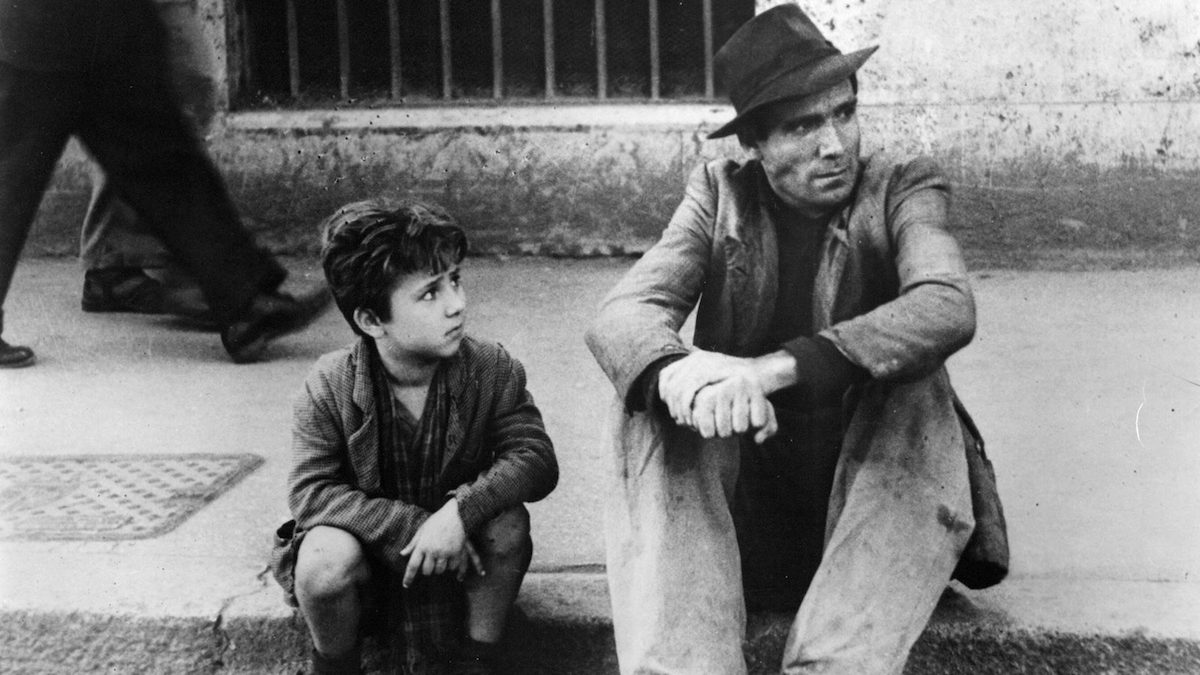 Bicycle Thieves (Ladri di biciclette) (1948), by Vittorio De Sica, an emblematic film of Italian neorrealism and considered one of the best movies in the history of cinema, will open Klasikoa, a yearly rendezvous with a restored classic at the San Sebastian Film Festival.
The film, considered one of the best movies in the history of cinema, winner of an Academy Award for Best Foreign Language Film in 1949, chronicles the misfortunes of a man on his first day at work whose essential element for keeping his job is stolen: his bicycle. André Bazin, in his famous analysis of the film, in his work What is Cinema?, describes it as cinema in its pure state and concludes on the subject of the plot: “in the world in which this workman lives, the poor must steal from each other in order to survive.”
The film has been restored by the L’imagine Ritrovata laboratory, part of Italy’s Fondazione Cineteca di Bologna, a global benchmark in film research, conservation and restoration. The restored copy was presented in the Cannes Classics section at the last Cannes Festival, followed shortly afterwards by its screening at Bologna’s Il Cinema Ritrovato Festival, as part of its Ritrovati e Restaurati 2018 / Recovered & Restored 2018 section.
BICYCLE THIEVES (LADRI DI BICICLETTE)
VITTORIO DE SICA (ITALY)
Cast: Lamberto Maggiorani, Enzo Staiola, Lianella Carell, Elena Altieri, Gino Saltamerenda
In post-war Rome, Antonio, an unemployed worker, lands a simple job putting up posters on the condition that he has a bicycle. With great difficulty, he manages to buy one, only to have it stolen on his first day of work. This is the start of an adventure whereby Antonio will try to recover his bicycle, with his son Bruno, while his wife Maria waits at home with their other child. Desperate, Antonio tries to steal a bike, but is arrested by the police.
Bicycle Thieves (Ladri di biciclette) (1948), by Vittorio De Sica, an emblematic film of Italian neorrealism and considered one of the best movies in the history of cinema, will open Klasikoa, a yearly rendezvous with a restored classic at the San Sebastian Film Festival.
The film, considered one of the best movies in the history of cinema, winner of an Academy Award for Best Foreign Language Film in 1949, chronicles the misfortunes of a man on his first day at work whose essential element for keeping his job is stolen: his bicycle. André Bazin, in his famous analysis of the film, in his work What is Cinema?, describes it as cinema in its pure state and concludes on the subject of the plot: “in the world in which this workman lives, the poor must steal from each other in order to survive.”
The film has been restored by the L’imagine Ritrovata laboratory, part of Italy’s Fondazione Cineteca di Bologna, a global benchmark in film research, conservation and restoration. The restored copy was presented in the Cannes Classics section at the last Cannes Festival, followed shortly afterwards by its screening at Bologna’s Il Cinema Ritrovato Festival, as part of its Ritrovati e Restaurati 2018 / Recovered & Restored 2018 section.
BICYCLE THIEVES (LADRI DI BICICLETTE)
VITTORIO DE SICA (ITALY)
Cast: Lamberto Maggiorani, Enzo Staiola, Lianella Carell, Elena Altieri, Gino Saltamerenda
In post-war Rome, Antonio, an unemployed worker, lands a simple job putting up posters on the condition that he has a bicycle. With great difficulty, he manages to buy one, only to have it stolen on his first day of work. This is the start of an adventure whereby Antonio will try to recover his bicycle, with his son Bruno, while his wife Maria waits at home with their other child. Desperate, Antonio tries to steal a bike, but is arrested by the police.
-
Classic Silent Film THE GOLEM (1920) for Pre-Opening of Venice International Film Festival
 The silent film classic The Golem – How He Came Into The World (Der Golem – Wie er in die Welt kam, 1920), written and directed by Paul Wegener, is the film chosen for the Pre-opening event of the 75th Venice International Film Festival of the Biennale di Venezia, to be shown in the Sala Darsena (Palazzo del Cinema) on the Lido on Tuesday August 28th.
The Golem – How He Came Into The World will be screened from a new digital copy made from the original negative that was thought to have been lost, restored in 4K and supervised by the Friedrich-Wilhelm-Murnau-Stiftung in Wiesbaden (Germany) and by the Cinémathèque Royale de Belgique (Cinematek) in Brussels, to be shown in its world premiere screening. The digital restoration was done by Immagine ritrovata in Bologna.
The screening of The Golem – How He Came Into The World will be scored with original music by maestro Admir Shkurtaj, commissioned by La Biennale di Venezia, and performed live by the Mesimèr Ensemble wth members: Hersjana Matmuja (soprano), Giorgio Distante (Bb trumpet, midi trumpet), Pino Basile (cupafon – a set of friction drums, percussions, ocarina), Vanessa Sotgiù (synthesizer, piano), Iacopo Conoci (cello), Admir Shkurtaj (conductor, electronics, accordion, piano).
The 75th Venice International Film Festival will be held on the Lido from August 29th to September 8th 2018, directed by Alberto Barbera and organized by La Biennale chaired by Paolo Baratta.
The silent film classic The Golem – How He Came Into The World (Der Golem – Wie er in die Welt kam, 1920), written and directed by Paul Wegener, is the film chosen for the Pre-opening event of the 75th Venice International Film Festival of the Biennale di Venezia, to be shown in the Sala Darsena (Palazzo del Cinema) on the Lido on Tuesday August 28th.
The Golem – How He Came Into The World will be screened from a new digital copy made from the original negative that was thought to have been lost, restored in 4K and supervised by the Friedrich-Wilhelm-Murnau-Stiftung in Wiesbaden (Germany) and by the Cinémathèque Royale de Belgique (Cinematek) in Brussels, to be shown in its world premiere screening. The digital restoration was done by Immagine ritrovata in Bologna.
The screening of The Golem – How He Came Into The World will be scored with original music by maestro Admir Shkurtaj, commissioned by La Biennale di Venezia, and performed live by the Mesimèr Ensemble wth members: Hersjana Matmuja (soprano), Giorgio Distante (Bb trumpet, midi trumpet), Pino Basile (cupafon – a set of friction drums, percussions, ocarina), Vanessa Sotgiù (synthesizer, piano), Iacopo Conoci (cello), Admir Shkurtaj (conductor, electronics, accordion, piano).
The 75th Venice International Film Festival will be held on the Lido from August 29th to September 8th 2018, directed by Alberto Barbera and organized by La Biennale chaired by Paolo Baratta.
The Golem – How He Came Into The World by Paul Wegener
Set in ancient Prague of the 16th century Der Golem – Wie er in die Welt kam (1920) recounts the Jewish tale of the clay-made creature brought to life by a rabbi’s occult ritual. Foreseeing the upcoming expulsion of the Jews from the city, Rabbi Löw (Albert Steinrück) creates and awakes the mythical Golem in order to protect his people. Through a turn of events the Golem saves the emperor’s (Otto Gebühr) life, convincing him to lift the ban. But due to a jealous servant (Ernst Deutsch) and his selfish plans the Golem runs out of control and turns against his creator… Director Paul Wegener, who also performs the Golem, already adapted the story twice before, once in 1914 and again in 1917. But only his third attempt, driven by great artistic ambition, earned him broader appreciation. Its outstanding mise-en-scène with architecture by Hans Poelzig and cinematography by Karl Freund made Der Golem – Wie er in die Welt kam one of the most recognized and widely-cited films of Weimar Cinema. The film turned out to be a great international success for the German silent film industry with sold out screenings for months – even in the US and China. Its emblematic expressionist style influenced Hollywood’s classical horror movies as well as popular culture up to this day.Notes of Restoration
No German version has survived of the silent classic Der Golem – Wie er in die Welt kam. A photochemical restoration from the 1990s bases on export versions. The discovery of an original negative at the Cinematek (Royal Film Archive of Belgium) gave cause for a new digital 4K restoration of the lost German version by the Friedrich-Wilhelm-Murnau-Stiftung and the Cinematek (Royal Film Archive of Belgium). This negative is edited of different takes than the export version. The takes for two negatives were filmed with two cameras in parallel. The Cinematek`s negative is superior with respect to camera angle and montage. A duplicate negative from the US release version at the George Eastman House proofs that at some point this negative was used for the US market. It is likely that it was originally the negative for German release. As a result of cuts for the US release, several shots were abridged. Today the original negative lacks few scenes. Some of them have survived in the material of the George Eastman House. Another source for completion will be a black-and-white print of the Cinémathèque française made from the export negative. The original negative contains many intertitles in the original Expressionist font that had not been accessible for the previous restoration. Together with the titles that the Filmmuseum München obtained from the Gosfilmofond of Russia, the new restoration will present almost all titles in the famous original font. Digital restoration of the image includes removal of excessive white dirt, defects of the negative that were created by wear and tear, and adjustment of the completing sources as close as possible to the original negative. The digitale restoration is carried out by L`Immagine Ritrovata. Reference for colours and grading is the only known vintage print of this film, an Italian release version from the Fondazione Cineteca Italiana to restore the original gray scale and typical colour effect of the original tinting.The Music
With regard to the original music which will accompany The Golem – How He Came Into The World on the evening of August 28th, maestro Admir Shkurtaj has written: “Scoring Wegener’s film engaged the composer, for the many latent or hidden metaphors that he feels driven to identify and to develop in his own language. And so just as the wise man-wizard Löw uses his own hands to shape out of clay the instrument destined to save the community he feels responsible for, the ensemble of instruments selected for this work was asked to make, by hand, the instruments that would be needed to perform it. The Cupafon used by the percussionist is an original instrument arising from his own research into the stick friction idiophone, an instrument popular in the regions of Puglia and Basilicata; moreover, playing it requires constantly dipping the hands in water, exactly like you would to shape clay. The midi trumpet is also the result of a handcrafting process, even if to make it requires applying electronic circuits onto the instrument. Here the role of water in shaping the sound as the musician plays the Cupafon is again an artisanal process of the electronics. And so on for the rest of the musicians who were asked to make constant reference to the modus operandi of the maker who does not intend to passively follow academic and canonical performing methods. The entire work is based on a non-homogeneous musical vocabulary, which reflects the fleeting nature of form which is inherent to clay; a blend in which one can recognize elements of jazz, of contemporary music, of melodic and rhythmic modules typical of the Eastern European musical tradition and of electronic music. Geometry and the material impression of the buildings in which the scenes are set are mirrored by the concrete sounds recorded in the real environment and played through the synthesizer. The use of electronics, which initially appear unsuited to the scoring of a 1920s silent film, is justified by analogy with the unpredictable nature of the fate of every human creation: once technique has left the hands of its maker, it is destined to live a life of its own. Just as the Golem intends to do. Along with the score and as a complement to it, the performers must follow the photograms of the film to underscore, as if they were additional dynamic markings, its emotional developments. Another analogy that more specifically involves the composer of contemporary music in this scoring effort, is his spasmodic search, just like Rabbi Löw, to give life to an inanimate material which for one is the clay, for the other the sounds. Both must also make an effort to avoid incurring the disapproval of the social context for which, all things told, they both work. The Golem is taunted and feared when he is presented to the public, just like a sound production that seeks to break through established conventions and canons. If the rabbi had used his clay to make vases or pots he would undoubtedly have earned more immediate approval, but he would not have convinced the emperor to save his people. His attempt to overstep the boundaries and to attempt the impossible, is identical in nature to the attempt that a manipulator of sound materials makes in his own field when he tries new combinations and new alchemies in the language of sounds”.Admir Shkurtaj
Admir Shkurtaj (Tirana, 3 December 1969) began his musical studies in 1984-88 at the arts and music high school “Jordan Misja” in Tirana, in Accordion playing. In 1989 he began his studies in composition at the Conservatory, and pursued them in Italy in 1991 at the Conservatorio statale “Tito Schipa” in Lecce, from which he graduated in 1999. He continued his studies with Sandro Gorli (1994 -1996) and then with Alessandro Solbiati (1999-2002), in courses that would be important for his training as a composer. He earned a diploma in Electronic Music in 2009 and works as a composer, instrumentalist and improviser. He writes music for chamber and full orchestras, theatre and film.
-
Billy Wilder’s SOME LIKE IT HOT and More in Venezia Classici Lineup of 75th Venice International Film Festival
[caption id="attachment_30765" align="aligncenter" width="1200"] SOME LIKE IT HOT[/caption]
Since 2012, the Venezia Classici of the Venice International Film Festival has been presenting the world premieres of a selection of the best restorations of classic films conducted over the previous year by film libraries, cultural institutions and productions all over the world. Curated by Alberto Barbera in collaboration with Stefano Francia di Celle, Venezia Classici also presents a selection of documentaries about cinema and its filmmakers. The Jury, chaired by Italian director Salvatore Mereu (Three Steps Dancing, Pretty Butterflies), is composed of 26 cinema history students – nominated by their professors – from Italian universities, DAMS performing arts courses, and Ca’ Foscari University of Venice, and will award the VENEZIA CLASSICI AWARD for the BEST RESTORED FILM and the BEST DOCUMENTARY ON CINEMA.
The numerous restored masterpieces in the Venezia Classici section of the 75th Venice International Film Festival include: The Night of the Shooting Stars (1982) by Paolo and Vittorio Taviani, Il posto (1961) by Ermanno Olmi, The Ascent (1976) by Larisa Shepitko, The Place Without Limits (1977) by Arturo Ripstein, The Brick and the Mirror (1964) by Ebrahim Golestan, Adieu Philippine (1962) by Jacques Roziers, Last Year in Marienbad (1961, Golden Lion at the Venice International Film Festival) by Alain Resnais, Some Like It Hot (1959) by Billy Wilder, Street of Shame (1956, Special Mention at the Venice International Film Festival) by Kenji Mizoguchi, The Night Porter (1974) by Liliana Cavani and Love, Thy Name Be Sorrow (1962) by Tomu Uchida.
The 75th Venice International Film Festival will be held at the Lido from August 29 to September 8, 2018; it is directed by Alberto Barbera and organized by the Biennale chaired by Paolo Baratta.
The list of the films selected for the Venezia Classici section of the 75th Festival:
SOME LIKE IT HOT[/caption]
Since 2012, the Venezia Classici of the Venice International Film Festival has been presenting the world premieres of a selection of the best restorations of classic films conducted over the previous year by film libraries, cultural institutions and productions all over the world. Curated by Alberto Barbera in collaboration with Stefano Francia di Celle, Venezia Classici also presents a selection of documentaries about cinema and its filmmakers. The Jury, chaired by Italian director Salvatore Mereu (Three Steps Dancing, Pretty Butterflies), is composed of 26 cinema history students – nominated by their professors – from Italian universities, DAMS performing arts courses, and Ca’ Foscari University of Venice, and will award the VENEZIA CLASSICI AWARD for the BEST RESTORED FILM and the BEST DOCUMENTARY ON CINEMA.
The numerous restored masterpieces in the Venezia Classici section of the 75th Venice International Film Festival include: The Night of the Shooting Stars (1982) by Paolo and Vittorio Taviani, Il posto (1961) by Ermanno Olmi, The Ascent (1976) by Larisa Shepitko, The Place Without Limits (1977) by Arturo Ripstein, The Brick and the Mirror (1964) by Ebrahim Golestan, Adieu Philippine (1962) by Jacques Roziers, Last Year in Marienbad (1961, Golden Lion at the Venice International Film Festival) by Alain Resnais, Some Like It Hot (1959) by Billy Wilder, Street of Shame (1956, Special Mention at the Venice International Film Festival) by Kenji Mizoguchi, The Night Porter (1974) by Liliana Cavani and Love, Thy Name Be Sorrow (1962) by Tomu Uchida.
The 75th Venice International Film Festival will be held at the Lido from August 29 to September 8, 2018; it is directed by Alberto Barbera and organized by the Biennale chaired by Paolo Baratta.
The list of the films selected for the Venezia Classici section of the 75th Festival:
VENEZIA CLASSICI
THEY LIVE [ESSI VIVONO] by JOHN CARPENTER (USA, 1988, 94’, COL.) restoration: Studiocanal IL PORTIERE DI NOTTE (THE NIGHT PORTER) by LILIANA CAVANI (Italy, 1974, 120’, COL.) restoration: CSC-Cineteca Nazionale and Istituto Luce – Cinecittà THE NAKED CITY [LA CITTÀ NUDA] by JULES DASSIN (USA, 1948, 96’, B/W) restoration: Brook Productions and Master Licensing KHESHT O AYENEH (THE BRICK AND THE MIRROR) by EBRAHIM GOLESTAN (Iran, 1964, 130’, B/W) restoration: Ecran Noir production (Mitra Farahani) and Ebrahim Golestan in collaboration with Cineteca di Bologna AKASEN CHITAI (STREET OF SHAME) [LA STRADA DELLA VERGOGNA] by KENJI MIZOGUCHI (Japan, 1956, 86’, B/W) restoration: Kadokawa Corporation IL POSTO by ERMANNO OLMI (Italy, 1961, 95’, B/W) restoration: Cineteca di Bologna and Titanus L’ANNÉE DERNIÈRE À MARIENBAD (LAST YEAR IN MARIENBAD) [L’ANNO SCORSO A MARIENBAD] by ALAIN RESNAIS (France, Italy, 1961, 94’, B/W) restoration: Studiocanal with the support of Centre National du Cinéma et de l’image animée and Chanel EL LUGAR SIN LÍMITES (THE PLACE WITHOUT LIMITS) [IL LUOGO SENZA LIMITI] by ARTURO RIPSTEIN (Mexico, 1977, 110’, COL.) restoration: Cineteca Nacional México and Imcine ADIEU PHILIPPINE [DESIDERI NEL SOLE] by JACQUES ROZIERS (France, Italy, 1962, 103’, B/W) restoration: Cinémathèque française and A17 with the support of Centre national du cinéma et de l’image animée. In collaboration with Les Archives audiovisuelles de Monaco, La Cinémathèque suisse and Extérieur Nuit. VOSKHOZHDENIYE (THE ASCENT) [L’ASCESA] by LARISA SHEPITKO (Russia, 1976, 110’, B/W) restoration: Mosfilm (producer of the restoration Karen Shakhnazarov) THE KILLERS [CONTRATTO PER UCCIDERE] by DON SIEGEL (USA, 1964, 102’, COL.) restoration: Universal Pictures THE KILLERS [I GANGSTERS] by ROBERT SIODMAK (USA, 1946, 95’, B/W) restoration: Universal Pictures LA NOTTE DI SAN LORENZO (THE NIGHT OF THE SHOOTING STARS) by PAOLO E VITTORIO TAVIANI (Italy, 1982, 107’, COL.) restoration: CSC-Cineteca Nazionale and Istituto Luce – Cinecittà KOI YA KOI NASUNA KOI (LOVE, THY NAME BE SORROW aka THE MAD FOX) [LA VOLPE FOLLE] by TOMU UCHIDA (Japan, 1962, 109’, COL.) restoration: Toei Company, Ltd. MORTE A VENEZIA (DEATH IN VENICE) by LUCHINO VISCONTI (Italy, France, USA, 1971, 130’, COL.) restoration: Cineteca di Bologna and Istituto Luce – Cinecittà in collaboration with Warner Bros. and The Criterion Collection NOTHING SACRED [NULLA SUL SERIO] by WILLIAM A. WELLMAN (USA, 1937, 74’, COL.) restoration: The Museum of Modern Art SOME LIKE IT HOT [A QUALCUNO PIACE CALDO] by BILLY WILDER (USA, 1959, 121′, B/W) restoration: Park Circus in collaboration with Metro Goldwyn Mayer and The Criterion Collection The Venezia Classici section will also feature the presentation of a selection of documentaries about cinema and its filmmakers. The complete list of the section will be announced during the press conference presenting the program of the Venice Film Festival, on Wednesday, July 25th at 11 a.m. in Rome (Cinema Moderno). Salvatore Mereu – Biography Salvatore Mereu was born in Dorgali in 1965. After graduating in film directing from the Centro Sperimentale di Cinematografia in Rome, he made several short films including Notte rumena (1996), Miguel (1999), Il mare (2004). Starting with his first feature-length film, Ballo a tre passi (Three Steps Dancing, 2003), distinguished by its particular four-part structure, each corresponding to one season of the year, he explores the relationship between tradition and modernity in his native land, Sardinia. For Ballo a tre passi, Mereu won the Settimana della Critica award in Venice in 2003, as well as the David di Donatello and the Ciak d’Oro as best emerging director. He was also nominated for three Nastro d’argento awards including Best Screenplay. His second film, Sonetàula (2008), was presented at the Berlin Film Festival in the Panorama section, and was awarded the Globo d’oro of the Foreign Press, as well as the FIPA d’Or at the Biarritz Film Festival for Best Screenplay. He returned to the Venice Film Festival in 2010 with Tajabone, set among the young students of the middle schools on the outskirts of Cagliari, and in 2012 participated in the Orizzonti section with Bellas mariposas (Pretty Butterflies), from the eponymous book by Sergio Atzeni, the story of two adolescent girls who live in a working-class neighbourhood in Cagliari. The film won him the Schermi di Qualità award at the Venice Film Festival, the Big Screen Award at the Rotterdam Festival. For the same film, he won the Premio Suso Cecchi D’Amico for Best Screenplay and the Premio Tonino Guerra for Best Screenplay at the Bif&st. In 2013, again for the Venice Film Festival, he made the collective film Venezia 70 – Future Reloaded along with 70 directors from around the world, to celebrate the Festival’s 70th edition. For years he has alternated his work as a director with his teaching of image education. He has taught film in various schools around the island, producing several short films with his students (Il mare, La vita adesso, Scegliere per crescere, Futuro prossimo), selected for the most important Italian and international film festivals. In recent years, in collaboration with CELCAM, he has taught a course in film direction and screenwriting at the Department of Humanities and Philosophy at the University of Cagliari. Since 2004, he has been a member of the Accademia del Cinema Italiano.
-
Film Society of Lincoln Center to Spotlight Female Cinematographers in ‘The Female Gaze’
[caption id="attachment_26747" align="aligncenter" width="1200"]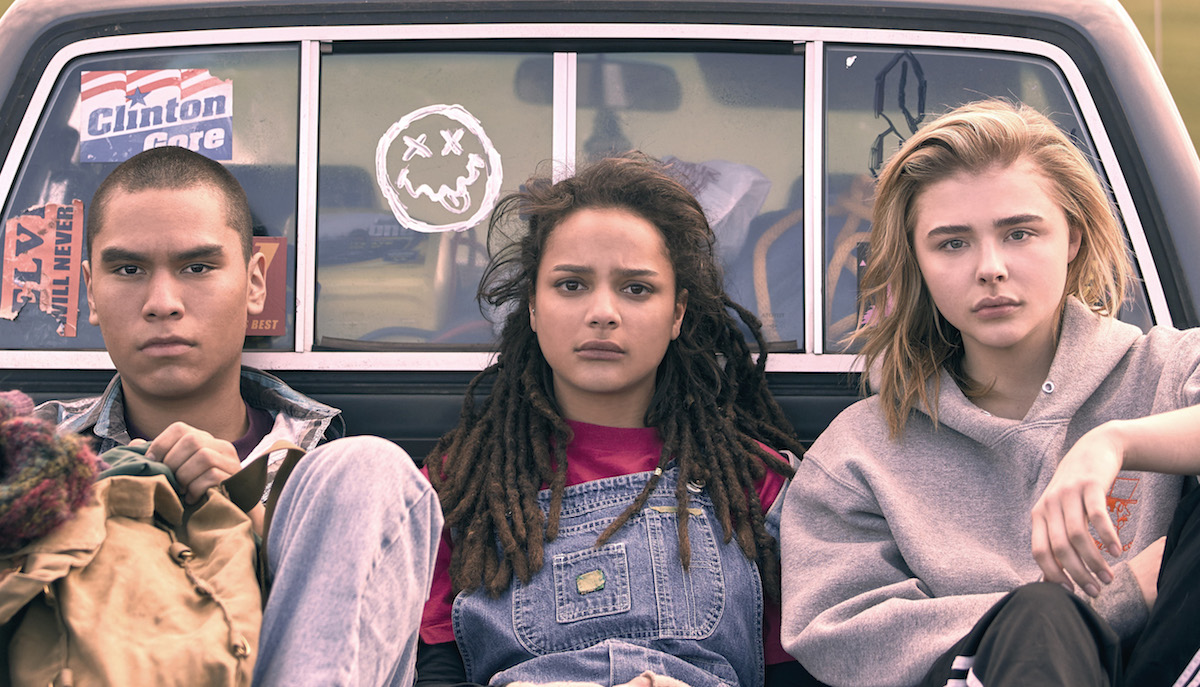 Forrest Goodluck, Sasha Lane and Chloë Grace Moretz appear in The Miseducation of Cameron Post by Desiree Akhavan.
Courtesy of Sundance Institute | photo by Jeong Park.[/caption] The Film Society of Lincoln Center will host The Female Gaze (July 26 – August 9), spotlighting the amazing work of such accomplished international female cinematographers as Agnès Godard, Natasha Braier, Kirsten Johnson, Joan Churchill, Maryse Alberti, Ellen Kuras, Babette Mangolte, and Rachel Morrison. Laura Mulvey’s landmark 1975 essay “Visual Pleasure and Narrative Cinema” suggested an imbalance of power in film dominated by the male gaze and heterosexual male pleasure; this series poses the question: is there such a thing as the “Female Gaze”? This year, Morrison made history as the first woman nominated for the Best Cinematography Oscar for Mudbound, a triumph that also underscored the troubling issue of gender inequality in the film industry. Few jobs on a movie set have been as historically closed to women as that of cinematographer—the persistence of the term “cameraman” says it all. Despite this lack of representation, trailblazing women have left their mark on the field through extraordinary artistry and profound vision. As seen through their eyes, films by directors like Claire Denis, Jacques Rivette, Chantal Akerman, Ryan Coogler, and Lucrecia Martel are immeasurably richer, deeper, and more wondrous. The Female Gaze opens with a double feature of unforgettable collaborations between Agnès Godard and Claire Denis—from the sensual gaze on male bodies in Beau travail to that of familial love in 35 Shots of Rum—launching the series’ central dialogue with Godard in person. Then on July 28, cinematographers Natasha Braier, Ashley Connor, Agnès Godard, and Joan Churchill join Film Society audiences to discuss their careers, experiences in the film industry, and their interpretations of the Female Gaze in a free talk, sponsored by HBO®. “We’re showcasing amazing cinematography in a variety of styles, from women who have worked with directors of all genders, and contemplating what a female gaze might mean,” said Florence Almozini, FSLC Associate Director of Programming. “Some have built long careers with their directors, such as Godard with Denis, while others like Alberti or Louvart have worked with a range of filmmakers from around the world. There’s also a distinctive emerging class of female DPs innovating in the field, and our series reveals how this ‘gaze’ evolves with each new partnership and generation.” Featuring 36 films shot by 23 women, the program includes blockbusters (Creed), independent American fare (Swoon, Eternal Sunshine of the Spotless Mind), selections from the canon (Jeanne Dielman…), contemporary international arthouse titles (Tokyo Sonata, The Headless Woman, Holy Motors), rarities ripe for rediscovery (La Captive), and two sneak previews: The Miseducation of Cameron Post and I Think We’re Alone Now, both prizewinners at this year’s Sundance Film Festival. The complete lineup is below, arranged by DP. FILMS AND DESCRIPTIONS All screenings held at the Walter Reade Theater (165 West 65th Street) unless otherwise noted.Maryse Alberti
Creed Ryan Coogler, USA, 2015, 133m The legend of Rocky lives on as Michael B. Jordan’s gutsy Adonis Johnson—son of Apollo Creed—sets out to prove he’s got what it takes to be the next champ, leaving his luxe L.A. life behind to train in the hard-knock gyms of Philadelphia with the Italian Stallion himself. After the breakout success of Fruitvale Station, director Ryan Coogler shows his facility for major budget spectacle, balancing a rousing underdog sports story with a poignant portrait of intergenerational friendship. The virtuoso lensing of Maryse Alberti astonishes in a dazzling four-and-a-half minute fight sequence that unfolds in one bruising, breathless take. Velvet Goldmine Todd Haynes, UK/USA, 1998, 35mm, 124m The birth of Oscar Wilde; the staged death of a flamboyant rock star modeled closely after David Bowie; the delirious inebriation of London at the height of the glam era: Haynes’s discourse on celebrity culture is as sprawling and multi-tracked as his previous film, Safe, had been clinically restrained. Much of Velvet Goldmine, the story of a journalist who tries to reconstruct the sordid life story of the failed glam rock star he’d idolized as a young man, was shot in London, and the move gave Haynes a chance to abandon the cloister-like suburbs of his earlier films for a much more colorful, Dionysian milieu. Haynes and cinematographer Maryse Alberti crafted one of the most visually thrilling music movies of the 1990s. An NYFF36 Selection.Barbara Alvarez
The Headless Woman / La mujer sin cabeza Lucrecia Martel, Argentina/France/Italy/Spain, 2008, 35mm, 87m Spanish with English subtitles DP Barbara Alvarez imparts a restrained—and very strange—spatial texture to Lucrecia Martel’s excitingly splintered third feature, about a woman (a stunning María Onetto) in a state of phenomenological distress following a mysterious road accident. Martel’s rare gift for building social melodrama from sonic and spatial textures, behavioral nuances, and an unerringly brilliant sense of the joys, tensions, and endless reserves of suppressed emotion lurking within the familial structure is here pushed to another level of creative daring. An NYFF46 selection. 35mm print courtesy of UCLA Film & Television Archive.Akiko Ashizawa
Tokyo Sonata Kiyoshi Kurosawa, Japan, 2008, 120m Japanese with English subtitles What strange deceptions lurk beneath the placid veneer of the average Japanese family? Horror maestro Kiyoshi Kurosawa’s unexpected—but wholly rewarding—foray into family melodrama-cum-black comedy quivers with an undercurrent of dread as salaryman dad (Teruyuki Kagawa) loses his job and desperately attempts to maintain the illusion that he’s still employed; his grade-school son (Kai Inowaki) rebels by secretly taking (gasp!) piano lessons; and mom (Kyōko Koizumi) finds what she’s been looking for with her own kidnapper. The elegant long shots of Akiko Ashizawa toy with the meticulous framings of Ozu as Kurosawa guides the film through a series of increasingly audacious tonal shifts. An NYFF46 selection.Diane Baratier
The Romance of Astrea and Celadon / Les amours d’Astrée et de Céladon Éric Rohmer, France, 2007, 35mm, 109m At the age of 88, Éric Rohmer bid adieu to cinema with this enchanting mythological idyll, which brims with all the vitality and freshness of youth. Frequent Rohmer cinematographer Diane Baratier conjures a sun-dappled bucolic dream vision of fifth-century Gaul, where a beguiling fable of romantic misunderstanding plays out when a band of druids and nymphs intervene in the lovers’ quarrel between androgynously beautiful shepherd Celadon (Andy Gillet) and his jealous paramour Astrea (Stéphanie Crayencour). Introducing hitherto untapped themes of gender and sexual fluidity into his work, Rohmer crafts an exalted paean to love both spiritual and carnal. An NYFF45 selection.Céline Bozon
La France Serge Bozon, France, 2007, 35mm, 102m French with English subtitles In the fall of 1917, as World War I rages, a lovelorn soldier’s wife (Sylvie Testud) disguises herself as a man and sets off for the front in search of her missing husband. Along the way, she meets up with a company of soldiers under the command of a gruff lieutenant (Pascal Greggory), who reluctantly allows Camille to join their ranks. From time to time, these surprisingly sensitive, introspective men break out an assortment of homemade instruments and perform original songs written for the film by Benjamin Esdraffo and the artist known as Fugu, styled after the American “sunshine pop” of The Beach Boys and The Mamas and the Papas. Exquisitely shot by Céline Bozon (the director’s sister), this unclassifiable hybrid of war movie and movie musical is truly unlike anything you’ve ever seen before. Print courtesy of the Institut Français.Natasha Braier
The Milk of Sorrow / La teta asustada Claudia Llosa, Spain/Peru, 2009, 35mm, 94m Spanish and Quechua with English subtitles Fausta, the only daughter of an aged indigenous Peruvian mother, is said to have been nursed on “the milk of sorrow.” This accursed designation is bestowed on the children of victims of the former terrorist regime. Fausta has learned of her mother’s past and her own presupposed fate through invented song, which is both an art form and oral history tradition. Upon her mother’s death, she must venture beyond the safety of her uncle’s home and choose whether or not to lend her gift of song so that she can pay for a proper burial. Llosa and DP Natasha Braier capture the striking beauty of Lima’s outskirts, as well as a revelatory performance by Magaly Solier, with dignity and grace. Winner of the Golden Bear at the 2009 Berlin Film Festival. A New Directors/New Films 2009 selection. The Neon Demon Nicolas Winding Refn, Denmark/France/USA/UK, 2016, 118m Like a 21st-century Showgirls meets Suspiria, Nicolas Winding Refn’s delirious plunge into the fake plastic horror of the image-obsessed fashion industry trafficks in both high-camp excess and kaleidoscopically stylized splatter. Elle Fanning is the guileless recent L.A. transplant whose fresh-faced youth and beauty almost instantly land her a high-profile modeling contract. Whatever “it” is, she has it. And a coterie of monstrously jealous, flavor-of-last-month Hollyweird burnouts will stop at nothing to get it. Working in a supersaturated, electric day-glo palette, DP Natasha Braier fashions a sleek, freaky-seductive vision of L.A.’s dark side.Caroline Champetier
The Gang of Four / La bande des quatre Jacques Rivette, France/Switzerland, 1989, 160m French and Portuguese with English subtitles Four women, a shadowy conspiracy, and a whole lot of acting exercises: we’re firmly in Rivette territory in one of the director’s most spellbinding explorations of the sometimes terrifyingly thin line between everyday life and the strangeness beneath it. A quartet of aspiring actresses live together while studying with a demanding coach (Bulle Ogier). As they rehearse Pierre Marivaux’s La Double inconstance, offstage drama creeps into their lives in the form of a menacing mystery man (Benoît Régent) with a sinister story to tell. Caroline Champetier’s moody lensing—muted reds, golds, and browns—creates the feeling of an all-enveloping universe operating according to its own paranoid logic.Holy Motors
Leos Carax, France, 2012, 116m French and English with English subtitles Cinematographers Caroline Champetier and Yves Cape both lensed this unclassifiable, expansive movie from Leos Carax about a man named Oscar (longtime collaborator Denis Lavant) who inhabits 11 different characters over the course of a single day. This shape-shifter is shuttled from appointment to appointment in Paris in a white-stretch limo driven by the soignée Edith Scob (Eyes Without a Face); not on the itinerary is an unplanned reunion with Kylie Minogue. To summarize the film any further would be to take away some of its magic; the most accurate précis comes from its own creator, who aptly described Holy Motors after its world premiere in Cannes as “a film about a man and the experience of being alive.” An NYFF50 selection. Le Pont du Nord Jacques Rivette, France, 1982, 129m French with English subtitles Paris becomes a labyrinthine life-size game board in one of the most elaborate of Jacques Rivette’s sprawling, down-the-rabbit-hole cine-puzzles. Bulle Ogier and her daughter Pascale star, respectively, as a hitchhiking ex-con and a leather-clad tough girl who meet by chance on the city streets, come into possession of a curious map, and find themselves caught in a sinister cobweb of underworld conspiracy. Shooting seemingly on the fly, almost documentary-style on the streets of Paris, cinematographers Caroline Champetier and William Lubtchansky telegraph a freewheeling, anything-goes sense of play, as well as a creeping surveillance paranoia. An NYFF19 selection. 4K restoration from the 16mm negative, supervised by Véronique Rivette and Caroline Champetier at Digimage Classic, with the help of the CNC.Joan Churchill
Aileen: Life and Death of a Serial Killer Nick Broomfield & Joan Churchill, UK/USA, 2004, 93m Just months after Monster made Aileen Wuornos a household name—and Charlize Theron an Oscar darling—documentarian Nick Broomfield and co-director/cinematographer Joan Churchill unleashed this riveting portrait of the real-life serial killer. Of the two films, it remains the more chilling experience, an unflinching face-to-face encounter with a deeply damaged soul who, as she prepares for her imminent execution, is at once eager to set the record straight, angrily defiant, and increasingly delusional. Daring to find the humanity in one of the most vilified criminals of the century, Broomfield and Churchill—whose camera remains ever-alert and skillfully unobtrusive—craft a haunting, complex look at a life gone wrong.Ashley Connor
Sneak Preview! The Miseducation of Cameron Post Desiree Akhavan, USA, 2018, 90m Based on the celebrated novel by Emily M. Danforth, Desiree Akhavan’s second feature follows the titular character (Chloë Grace Moretz) in 1993 as she is sent to a gay conversion therapy center after getting caught with another girl on prom night. In the face of intolerance and denial, Cameron meets a group of fellow sinners, including amputee stoner Jane (Sasha Lane) and her friend Adam (Forrest Goodluck), a Lakota Two-Spirit. Together, this group forms an unlikely family with a will to fight. Akhavan and DP Ashley Connor evoke the emotional layers of Danforth’s novel with an effortless yet considered attention to the spirit of the ’90s and the audacious, moving performances of the ensemble cast. A FilmRise release.Josée Deshaies
House of Tolerance / L’Apollonide: Souvenirs de la maison close Bertrand Bonello, France, 2011, 35mm, 122m French with English subtitles “I could sleep for a thousand years,” drawls a 19th-century prostitute—paraphrasing Lou Reed—at the start of Bonello’s hushed, opium-soaked fever dream of life in a Parisian brothel at the turn of the century. House of Tolerance is, among other things, Bonello’s most gorgeous and complete application of musical techniques to film grammar, his most rigorous attempt to sculpt cinematic space, his most probing reflection on the origins of capitalist society, and his most sophisticated study of the movement of bodies under immense constraint. A shocking mutilation, a funeral staged to The Moody Blues’ “Nights in White Satin,” a progression of ritualized, drugged assignations and encounters: Bonello and frequent collaborator Josée Deshaies capture it all with a mixture of casual detachment and needlepoint precision.Crystel Fournier
Tomboy Céline Sciamma, France, 2011, 35mm, 82m French with English subtitles A sensitive, heartrending portrait of what it feels like to grow up different, Céline Sciamma’s beautifully observed coming-of-age tale aches tenderly with the tangled confusion of childhood. When ten-year-old Laure’s family moves to a new neighborhood during the summer, the gender-nonconforming preteen (played by the impressively naturalistic Zoé Héran) takes the opportunity to present as Mickäel to the neighborhood kids—testing the waters of a new identity that neither friends nor family quite understand. Sciamma’s warmly empathetic tone is perfectly complemented by the soft-lit impressionism of Crystel Fournier’s glowing cinematography. Print courtesy of the Institut Français.Agnès Godard
Beau Travail Claire Denis, France, 1999, 35mm, 92m French, Italian, and Russian with English subtitles Denis’s loose retelling of Billy Budd, set among a troop of Foreign Legionnaires stationed in the Gulf of Djibouti, is one of her finest films, an elemental story of misplaced longing and frustrated desire. Beneath a scorching sun, shirtless young men exercise to the strains of Benjamin Britten, under the watchful eye of Denis Lavant’s stone-faced officer Galoup, their obsessively ritualized movements simmering with barely suppressed violence. When a handsome recruit wins the favor of the regiment’s commander, cracks start to appear in Galoup’s fragile composure. In the tense, tightly disciplined atmosphere of military life, Denis found an ideal outlet for two career-long concerns: the quiet agony of repressing one’s emotions and the terror of finally letting loose. An NYFF37 selection. Print courtesy of the Institut Français. 35 Shots of Rum / 35 rhums Claire Denis, France/Germany, 2008, 35mm, 100m French and German with English subtitles When is a rice cooker more than just a rice cooker? When it’s in the masterful hands of Claire Denis, who somehow transforms it into a moving metaphor for the evolving relationship between a Parisian train conductor (Alex Descas) and his devoted twenty-something daughter (Mati Diop) as he gently nudges her out of the nest and each tests the waters of new relationships. Warmed by the ember-glow of Agnès Godard’s beautifully burnished cinematography, Denis’s delicately bittersweet take on the Ozu-style family drama conveys worlds of meaning and emotion—attraction, heartache, loss, hope—in a mere glance, a gesture, and, yes, a kitchen appliance. The Intruder / L’intrus Claire Denis, France, 2005, 35mm, 130m French, English, Korean, Russian, and Polynesian with English subtitles Rich, strange, and tantalizingly enigmatic, Denis’s crypto-odyssey is a mesmeric sensory experience that haunts like a half-remembered dream. Inspired by a book by philosopher Jean-Luc Nancy, The Intruder skips across time and continents—from the Alpine wilds to a neon-lit Korea to a tropical Tahiti suffused with languorous melancholy—as it traces the journey of an inscrutable, ailing loner (Michel Subor) seeking a black market heart transplant and his long-lost son. An impressionist wash of hallucinations, memories, and dreams are borne along on the lush textures of Agnès Godard’s shimmering cinematography. Print courtesy of the Institut Français.Kristen Johnson
Cameraperson Kirsten Johnson, USA, 2016, 102m How much of one’s self can be captured in the images shot of and for others? Kirsten Johnson’s work as a director of photography and camera operator has helped earn her documentary collaborators (Laura Poitras, Michael Moore, Kirby Dick, Barbara Kopple) nearly every accolade and award possible. Recontextualizing the stunning images inside, around, and beyond the works she has shot, Johnson constructs a visceral and vibrant self-portrait of an artist who has traveled the globe, venturing into landscapes and lives that bear the scars of trauma both active and historic. Rigorous yet nimble in its ability to move from heartache to humor, Cameraperson provides an essential lens on the things that make us human. A 2016 New Directors/New Films selection. Derrida Kirby Dick & Amy Ziering, USA, 2002, 35mm, 84m Postmodern intellectual rockstar Jacques Derrida receives an appropriately self-reflexive portrait in this playful, probing documentary. Framed by the French philosopher’s statements about the inherent unreliability of biography, it finds co-director Amy Ziering attempting to tease out the links between Derrida’s radically influential thinking (he expounds on everything from forgiveness to Seinfeld) and his own life. Even as the alternately witty and reflective Derrida remains cagey about personal matters, Kirsten Johnson’s attentive camera captures revealing flashes of the man behind the ideas. What emerges is a fascinating interrogation of filmic truth: a documentary that relentlessly deconstructs itself.Ellen Kuras
Eternal Sunshine of the Spotless Mind Michel Gondry, USA, 2004, 35mm, 108m The feverish imaginations of DIY surrealist Michel Gondry and screenwriter Charlie Kaufman kick into overdrive for the great gonzo sci-fi romance of the early 2000s. When nice guy dweeb Joel (Jim Carrey) encounters blue-haired spitfire Clementine (Kate Winslet) on the LIRR, there’s a spark of attraction, but also something familiar—almost as if they’ve met before… Cue a ping-ponging, time- and space-collapsing journey through memory and a star-crossed love gone sour. The high-contrast handheld camerawork of Ellen Kuras enhances the whiplash sense of disorientation in what is, ultimately, a heart-wounding parable about the ways in which we inevitably hurt those we love most. Swoon Tom Kalin, USA, 1992, 35mm, 93m One of the most daring works to emerge from the New Queer Cinema movement of the early 1990s, Swoon offers a radical, revisionist perspective on the infamous Leopold and Loeb murder case. Channeling the spirits of Dreyer, Bresson, and Jean Genet, director Tom Kalin challenges viewers to identify with two of the most notorious killers of the 20th century, their crime—the Nietzsche-influenced thrill killing of a schoolboy in 1920s Chicago—and punishment recounted in ghostly black and white by Ellen Kuras. Throughout, Kalin cannily deconstructs the ways in which Leopold and Loeb’s homosexuality has been historically sensationalized and demonized—a provocative analogy for queer persecution in the AIDS era.Sabine Lancelin
La captive Chantal Akerman, France/Belgium, 2000, 35mm, 118m French with English subtitles Chantal Akerman’s hypnotic exploration of erotic obsession plays like Vertigo filtered through the director’s visionary feminist formalism. Loosely inspired by the fifth volume of Proust’s In Search of Lost Time, it circles around the very-strange-indeed relationship between the seemingly pliant Ariane (Sylvie Testud) and the disturbingly jealous Simon (Stanislas Merhar), whose need to possess her completely in turn renders him hostage to his own destructive desires. The coolly contemplative camera style of Sabine Lancelin imparts an unbroken, trance-like tension, which finds release only in the thunderous roil of the operatic score. Print courtesy of Cinémathèque Royale de Belgique. The Strange Case of Angelica / O Estranho Caso de Angélica Manoel de Oliveira, Portugal, 2010, 35mm, 97m Manoel de Oliveira’s sly, metaphysical romance—made when the famously resilient director was a mere 102 years old—is a mesmerizing, beyond-the-grave rumination on love, mortality, and the power of images. On a rain-slicked night, village photographer Isaac (Ricardo Trêpa) is summoned by a wealthy family to take a picture of their beautiful, recently deceased daughter Angelica (Pilar López de Ayala). What ensues is a ghostly tale of romantic obsession as Isaac finds his dreams—and his photographs—haunted by the spirit of the bewitching young woman. The crisp chiaroscuro compositions of cinematographer Sabine Lancelin enhance the film’s otherworldly, unstuck-in-time aura. An NYFF48 selection. Eastern Boys Robin Campillo, France, 2013, 128m French with English subtitles Jeanne Lapoirie’s surveillance-style camera, looking from above, masterfully follows the men who loiter around the Gare du Nord train station in Paris as they scrape by however they can, forming gangs for support and protection, ever fearful of being caught by the police and deported. When the middle-aged, bourgeois Daniel (Olivier Rabourdin) approaches a boyishly handsome Ukrainian who calls himself Marek for a date, he learns the young man is willing to do anything for some cash. What Daniel intends only as sex-for-hire begets a home invasion and then an unexpectedly profound relationship. The drastically different circumstances of the two men’s lives reveal hidden facets of the city they share. Presented in four parts, this absorbing, continually surprising film by Robin Campillo (BPM: Beats Per Minute) is centered around relationships that defy easy categorization, in which motivations and desires are poorly understood even by those to whom they belong.Rain Li
Paranoid Park Gus Van Sant, USA, 2007, 35mm, 85m At once a dreamlike portrait of teen alienation and a boldly experimental work of film narrative, Paranoid Park finds Gus Van Sant at the height of his powers. A withdrawn high-school skateboarder (Gabe Nevins) struggles to make sense of his involvement in an accidental death. He recalls past events across tides of memory, and expresses his feelings in a diary—which is, in effect, the movie we are watching. The extraordinary skating scenes, filmed by cinematographers Rain Li and Christopher Doyle in a lyrical mixture of Super 8 and 35mm, depict their subjects soaring in space, momentarily free of the earthly troubles of adolescence. An NYFF45 selection.Hélène Louvart
Beach Rats Eliza Hittman, USA, 2017, 95m Hittman follows up her acclaimed debut, It Felt Like Love, with this sensitive chronicle of sexual becoming. Frankie (a breakout Harris Dickinson), a bored teenager living in South Brooklyn, regularly haunts the Coney Island boardwalk with his boys—trying to score weed, flirting with girls, killing time. But he spends his late nights dipping his toes into the world of online cruising, connecting with older men and exploring the desires he harbors but doesn’t yet fully understand. Sensuously lensed on 16mm by cinematographer Hélène Louvart, Beach Rats presents a colorful and textured world roiling with secret appetites and youthful self-discovery. A 2017 New Directors/New Films selection. A Neon release. Pina [in 3D] Wim Wenders, Germany/France, 2011, 106m German, English, and French with English subtitles Wim Wenders began planning this project with legendary choreographer Pina Bausch in the months before her untimely death, selecting the pieces to be filmed and discussing the filmmaking strategy. Impressed by recent innovations in 3D, Wenders decided to experiment with the format for this tribute to Bausch and her Tanztheater Wuppertal; the result sets the standard against which all future uses of 3D to record performance will be measured. Not only are the beauty and sheer exhilaration of the dance s and dancers powerfully rendered by Hélène Louvart and Jörg Widmer’s lensing, but the film also captures the sense of the world that Bausch so brilliantly expressed in all her pieces. Longtime members of the Tanztheater recreate many of their original roles in such seminal works as “Café Müller,” “Le Sacre du Printemps,” and “Kontakthof.” An NYFF49 selection. The Wonders Alice Rohrwacher, Italy/Switzerland/Germany, 2014, 110m French with English subtitles Winner of the Grand Prix at the Cannes Film Festival, Alice Rohrwacher’s vivid story of teenage yearning and confusion revolves around a beekeeping family in rural central Italy: German-speaking father, Italian mother, four girls. Two unexpected arrivals prove disruptive, especially for the pensive oldest daughter, Gelsomina. The father takes in a troubled teenage boy as part of a welfare program, and a television crew shows up to enlist local farmers in a kitschy celebration of Etruscan culinary traditions (a slyly self-mocking Monica Bellucci plays the bewigged host). Hélène Louvart’s lensing combines a documentary attention to daily ritual with an evocative atmosphere of mystery to conjure a richly concrete world that is subject to the magical thinking of adolescence. An NYFF52 selection.Irina Lubtchansky
Around a Small Mountain / 36 vues du Pic Saint Loup Jacques Rivette, France/Italy, 2009, 35mm, 84m French with English subtitles The final film from arch gamesman Jacques Rivette is a captivating variation on one of the themes that most obsessed him: the ineffable interplay between life and performance. Luminously photographed by Irina Lubtchansky in the open-air splendor of the south of France, it revolves around an Italian flaneur (Sergio Castellitto) who finds himself drawn into the world of a humble traveling circus led by the elusive Kate (Jane Birkin), whose enigmatic past becomes a tantalizing mystery he is determined to solve. In a career studded with sprawling shaggy dog epics, Rivette’s swan song is a deceptively slight grace note that contains multitudes. An NYFF47 selection. Preceded by: Sarah Winchester, Ghost Opera / Sarah Winchester, Opera Fantôme Bertrand Bonello, France, 2016, 24m North American Premiere A film to stand in for an opera unmade: Bonello’s moody, baroque meditation on the heiress to the Winchester rifle fortune plays like a ballet-cum-horror film, an ornate tapestry of enigmatic images, chilling synths, and traces of a tragic and eccentric life. An NYFF54 selection. A Grasshopper Film release.Babette Mangolte
The Camera: Je or La Camera: I Babette Mangolte, USA, 1977, 88m Though perhaps best known as the cinematographer for Chantal Akerman’s groundbreaking 1970s work—as well as for her collaborations with avant-garde icons like Yvonne Rainer, Trisha Brown, and Marina Abramović—Babette Mangolte is a singular cinematic visionary in her own right. In this structuralist auto-portrait, Mangolte allows viewers to peer through the lens of her camera as she produces a series of still photographs, first of models, then of the streetscapes of downtown Manhattan. As we experience the act of image-making through her eyes, what emerges is a heady consideration of the art and act of seeing and of the complex relationship between photographer, subject, and viewer. Jeanne Dielman, 23, quai du Commerce, 1080 Bruxelles Chantal Akerman, Belgium/France, 1976, 35mm, 201m French with English subtitles A landmark of feminist art, Chantal Akerman’s minimalist masterpiece is both a monumental and microscopic view of three days in the life of a fastidious Belgian single mother (a sphinx-like Delphine Seyrig) as she goes about her housework, peeling potatoes and washing dishes with the same clinical detachment with which she makes love to the occasional john. And then slowly, almost imperceptibly, things begin to go awry… The rigorous, relentlessly impassive gaze of Babette Mangolte’s camera is transfixing but, in the words of the director, “never voyeuristic”; it’s a uniquely feminine way of seeing made manifest by one of the most sui generis filmmaker-cinematographer partnerships in history.Claire Mathon
Stranger by the Lake / L’inconnu du lac Alain Guiraudie, France, 2013, 97m French with English subtitles Alain Guiraudie’s Cannes-awarded exploration of death and desire unfolds entirely in the vicinity of a gay cruising ground that becomes a crime scene. Franck (Pierre Deladonchamps) is a regular at a lakeside pickup spot, where he finds companionship both platonic and carnal. But his new paramour Michel (Christophe Paou) turns out to be a love-’em-and-leave-’em type, in the deadliest sense… Guiraudie has long been a singular voice in French cinema: anti-bourgeois, at ease in nature, a true regionalist and outsider. Here he and DP Claire Mathon capture naked bodies and hardcore sex with the same matter-of-fact sensuousness they bring to ripples on the water and the fading light of dusk. An NYFF51 selection.Reed Morano
Sneak Preview! I Think We’re Alone Now Reed Morano, USA, 2018, 93m Pulling double duty as director and cinematographer, Reed Morano finds the melancholic beauty in the end of the world with this gorgeous and strange drama starring Peter Dinklage and Elle Fanning as the last people on Earth. When the film opens in a desolate upstate New York, the misanthropic Del (Dinklage) is performing rote, custodial tasks to clean up the chaos left around his hometown—and relishing his newfound solitude—until another, sprightly survivor (Fanning) arrives. Winner of the Special Jury Prize for Excellence in Filmmaking at the 2018 Sundance Film Festival, I Think We’re Alone Now is a visually audacious entry in the postapocalyptic genre and an idiosyncratic take on loneliness and grief.Rachel Morrison
Fruitvale Station Ryan Coogler, USA, 2013, 85m Coogler’s remarkable debut feature explores the life and harrowing death of Oscar Grant (played by Michael B. Jordan), a 22-year-old African-American man killed by police in the early hours of January 1, 2009. Six months after sweeping both the Grand Jury Prize and the Audience Award at the Sundance Film Festival, Fruitvale Station opened on the same weekend that jurors in Florida acquitted George Zimmerman in the death of Trayvon Martin. Rachel Morrison’s gripping, exploratory Super 16 on-location camerawork dramatizes the unseen complexities and personal relationships of Grant’s inner circle with a startling sense of urgency, emotion, and the unflagging awareness of a preventable tragedy too often seen in the news cycle. Sunday, August 5, 7:00pm Free Talk: The Female Gaze Join us for an hour-long conversation with cinematographers Natasha Braier, Ashley Connor, Agnès Godard, and Joan Churchill as they discuss the series and reflect on their careers and influences, and how they approach their craft. Sponsored by HBO®. Saturday, July 28, 6:30pm* Elinor Bunin Munroe Film Center, Amphitheater, 144 W 65th Street
-
Cannes Film Festival Unveils 2018 Cannes Classis Lineup Featuring ‘2001: A Space Odyssey’ Turning 50
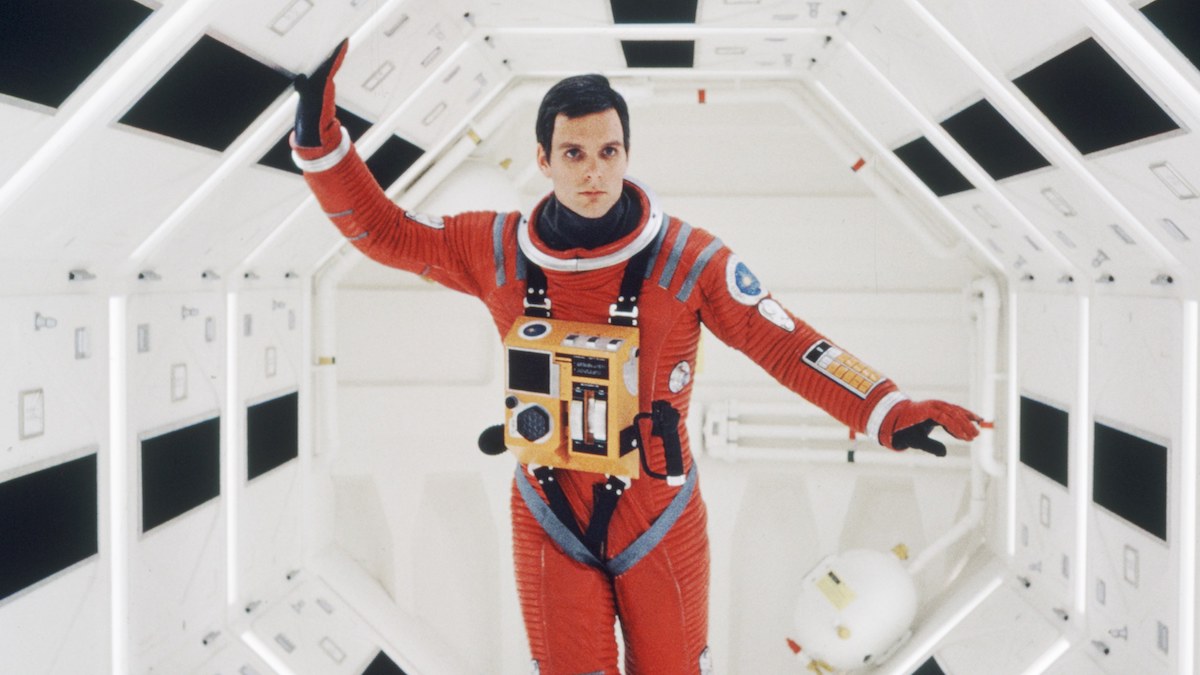
2001: A Space Odyssey 2001: A Space Odyssey turning 50 as seen by Christopher Nolan, an essay by Mark Cousins about Orson Welles, Margarethe von Trotta’s tribute to Bergman, Fernando Solanas and The Hour of the Furnaces, Five and the Skin by Pierre Rissient are among the lineup for the Cannes Classics 2018
-
Cannes Classics to Celebrate 50th Anniversary of Stanley Kubrick’s ‘2001: A Space Odyssey’
Cannes Classics at the upcoming 2018 Cannes Film Festival will celebrate the 50th anniversary of Stanley Kubrick’s 2001: A Space Odyssey, with world premiere of a 70mm print of the director’s 1968 masterpiece, introduced by filmmaker Christopher Nolan.
Set for Saturday, May 12, 2018, the screening will be introduced by filmmaker Christopher Nolan, who will be attending the Festival de Cannes for the first time. The screening will also be attended by members of Stanley Kubrick’s family including his daughter Katharina Kubrick and Stanley’s long time producing partner and brother-in-law Jan Harlan.
Nolan will also participate in a Cannes Masterclass, set for Sunday, May 13, during which he will discuss his award-winning filmography and also share his passion for the singular work of Stanley Kubrick.
For the first time since the original release, this 70mm print was struck from new printing elements made from the original camera negative. This is a true photochemical film recreation. There are no digital tricks, remastered effects, or revisionist edits. The original version will be presented to recreate the cinematic event audiences experienced 50 years ago. A longtime admirer of the late American auteur, Nolan worked closely with the team at Warner Bros. Pictures throughout the mastering process.
With 2001: A Space Odyssey, director Stanley Kubrick redefined the limits of filmmaking and cemented his legacy as one of the most revolutionary and influential film directors of all time. Originally released in 70mm Cinerama roadshow format on April 3, 1968, the film ignited the imaginations of critics and audiences alike and its impact continues to resonate to this day.
Christiane Kubrick said, “I’m delighted that Cannes has chosen to honour 2001: A Space Odyssey. If Stanley were alive today, we know he would be in admiration of the films of Christopher Nolan. And so, on behalf of Stanley’s family, I would personally like to thank Christopher for agreeing to introduce this very special screening.”
Nolan said, “One of my earliest memories of cinema is seeing Stanley Kubrick’s 2001: A Space Odyssey, in 70mm, at the Leicester Square Theatre in London with my father. The opportunity to be involved in recreating that experience for a new generation, and of introducing our new unrestored 70mm print of Kubrick’s masterpiece in all its analogue glory at the Festival de Cannes is an honour and a privilege.”
Thierry Frémaux said, “Stanley Kubrick in the Official Selection! It is a great honour for the Festival de Cannes to host the 50th anniversary celebration of one of the most extraordinary films in the history of cinema. And to welcome to the Festival for the first time Christopher Nolan, whose presence creates a precious bond between past and present, without which cinema would have no history.”
2001: A Space Odyssey will return to select U.S. theatres in 70mm beginning May 18, 2018.
-
SXSW 2018: Kino Lorber to Release New 4K Restoration of “The Atomic Cafe”
 The new 4K IndieCollect restoration of The Atomic Cafe, supervised by filmmakers Kevin Rafferty, Jayne Loader and Pierce Rafferty that is set to premiere at the 2018 SXSW Film Festival in Austin, TX, on Saturday, March 10, 2018, has been acquired by Kino Lorber Repertory for release in the U.S. The newly-restored The Atomic Cafe will open in theaters nationwide during the summer––and receive a home media release during fall 2018.
Composed entirely of civil defense and propaganda films created by the U.S. military and other agencies, The Atomic Cafe exploded myths about nuclear weapons and landed the filmmakers on Late Night with David Letterman: see video below.
It created a sensation when it opened at the Film Forum in March 1982 and played around the country to capacity audiences, garnering extraordinary reviews, including from the New York Times, whose critic Vincent Canby called it “A stunner! Has one howling with laughter, horror and disbelief.”
With the White House hurling threats to use nuclear weapons, The Atomic Cafe is the perfect movie for our time––a darkly funny meditation on Armageddon. Using our government’s own films, it pulls back the curtain to expose how Americans were taught to “stop worrying and love the bomb.” A cute cartoon assures children that ducking under their desks will protect them from radiation. A U.S. Army officer asserts the atomic bomb is a beautiful sight “when viewed at a safe distance,” as we watch young soldiers running towards a mushroom cloud. With Cold War memes re-emerging in our public discourse, audiences will weep with laughter and pained recognition as they contemplate the deployment of “alternate facts,” then and now, to achieve a desired end.
“Kevin Rafferty, Jayne Loader and Pierce Rafferty have made a landmark film about the nuclear age that remains just as relevant and darkly comical today as it’s ever been,” wrote Kino Lorber CEO Richard Lorber. “We wish times were different. But at least we have The Atomic Cafe to expose the horrific prospect of the Armageddon with humor, style and historical perspective.”
“We’re delighted to be rereleasing the 4K digital restoration of The Atomic Cafe with Kino Lorber,” said filmmakers Kevin Rafferty, Jayne Loader and Pierce Rafferty. “Kino Lorber did an outstanding job distributing Kevin’s film Harvard Beats Yale 29 – 29 and we’re all looking forward to working with their dynamic team.”
The Atomic Cafe was deemed of such historic importance that it was named to the National Film Registry of the Library of Congress in 2016. This 4K digital restoration was created by IndieCollect, a New York-based non-profit organization that saves and restores American independent films so that they can be seen in state-of-the-art digital formats. Funding was provided by the National Film Preservation Board of the Library of Congress, administered through a grant from the Council on Library and Information Resources (CLIR).
The new 4K IndieCollect restoration of The Atomic Cafe, supervised by filmmakers Kevin Rafferty, Jayne Loader and Pierce Rafferty that is set to premiere at the 2018 SXSW Film Festival in Austin, TX, on Saturday, March 10, 2018, has been acquired by Kino Lorber Repertory for release in the U.S. The newly-restored The Atomic Cafe will open in theaters nationwide during the summer––and receive a home media release during fall 2018.
Composed entirely of civil defense and propaganda films created by the U.S. military and other agencies, The Atomic Cafe exploded myths about nuclear weapons and landed the filmmakers on Late Night with David Letterman: see video below.
It created a sensation when it opened at the Film Forum in March 1982 and played around the country to capacity audiences, garnering extraordinary reviews, including from the New York Times, whose critic Vincent Canby called it “A stunner! Has one howling with laughter, horror and disbelief.”
With the White House hurling threats to use nuclear weapons, The Atomic Cafe is the perfect movie for our time––a darkly funny meditation on Armageddon. Using our government’s own films, it pulls back the curtain to expose how Americans were taught to “stop worrying and love the bomb.” A cute cartoon assures children that ducking under their desks will protect them from radiation. A U.S. Army officer asserts the atomic bomb is a beautiful sight “when viewed at a safe distance,” as we watch young soldiers running towards a mushroom cloud. With Cold War memes re-emerging in our public discourse, audiences will weep with laughter and pained recognition as they contemplate the deployment of “alternate facts,” then and now, to achieve a desired end.
“Kevin Rafferty, Jayne Loader and Pierce Rafferty have made a landmark film about the nuclear age that remains just as relevant and darkly comical today as it’s ever been,” wrote Kino Lorber CEO Richard Lorber. “We wish times were different. But at least we have The Atomic Cafe to expose the horrific prospect of the Armageddon with humor, style and historical perspective.”
“We’re delighted to be rereleasing the 4K digital restoration of The Atomic Cafe with Kino Lorber,” said filmmakers Kevin Rafferty, Jayne Loader and Pierce Rafferty. “Kino Lorber did an outstanding job distributing Kevin’s film Harvard Beats Yale 29 – 29 and we’re all looking forward to working with their dynamic team.”
The Atomic Cafe was deemed of such historic importance that it was named to the National Film Registry of the Library of Congress in 2016. This 4K digital restoration was created by IndieCollect, a New York-based non-profit organization that saves and restores American independent films so that they can be seen in state-of-the-art digital formats. Funding was provided by the National Film Preservation Board of the Library of Congress, administered through a grant from the Council on Library and Information Resources (CLIR).
About the filmmakers:
Kevin Rafferty: Kevin Rafferty began making movies as an undergraduate at Harvard in the late 1960s. His feature documentaries include Hurry Tomorrow, The Atomic Cafe, Blood in the Face, Feed, The Last Cigarette and Harvard Beats Yale 29-29. He has done commissioned films for television and contributed his camera work to such filmmakers as Michael Moore (Roger and Me) and Chris Hegedus and D.A. Pennebaker (The War Room). He wrote a book for Overlook Press based on his movie also entitled “Harvard Beats Yale 29-29.” Jayne Loader: Jayne Loader is the author of the novel “Between Pictures” and the short story collection “Wild America,” both published by Grove Press. She created the CD-ROM and website Public Shelter and WWWench, one of the first blogs, in 1995. In the 2000s, she and her husband, the astronomer Robert Kirshner, were the Masters of Quincy House at Harvard College. She lives in Portola Valley, California and Friendship, Maine. Pierce Rafferty: Following the release of The Atomic Cafe in 1982, Pierce Rafferty co-founded Petrified Films, an independent stock footage library located in the Meat Market District, New York City. From 1984 to 1994, Petrified’s holdings grew exponentially to include the stock footage libraries of Warner Bros. (pre-1951) and Columbia Pictures (pre-1965). In 1994, Petrified Films sold its collection of archival stock footage to Image Bank, a company later purchased by Getty Images. In 2002, Pierce moved to Fishers Island, NY, where he works as the director of the Henry L. Ferguson Museum.
-
2018 Noir City Film Festival Returns to Seattle, Unveils Lineup + Opens with “The Maltese Falcon”
[caption id="attachment_26573" align="aligncenter" width="1200"] The Maltese Falcon[/caption]
The Film Noir festival, Noir City, returns to the legendary Egyptian theater in Seattle for the 2018 edition from February 16 through 22, with exceptional films from the most “noir” of decades, 1941 to 1951. The festival presents 18 classic films as they were experienced on their original releases, pairing a top-tier studio “A” with a shorter, low-budget second feature, or “B” film. All but two of the films will be presented in glorious 35mm.
The host of Noir City, Czar of Noir Eddie Muller, will also be back to delight audiences with twisted tales and anecdotes about each film. If you’ve seen his show “Noir Alley” on Turner Classic Movies, then you know what an incomparable master of the darkest corners of human motivation he is. Eddie is available for interviews via phone or SKYPE.
Opening Night the Egyptian will be transformed into a haven for gangsters, molls, vixens, and villains, with Noir-themed wine and a shadowy cityscape photo booth to capture patrons at their sinister best. Presented in 35mm, the Opening Night film, The Maltese Falcon (1941), John Huston’s remarkable directorial debut, sets the tone for this year’s stellar line-up. The As include The Blue Dahlia (1946), starring Alan Ladd and Veronica Lake, which incredibly is making its first appearance in Noir City, and Flesh and Fantasy (1943), by renowned French director Julien Divivier and featuring a dazzling cast including Barbara Stanwyck, Charles Boyer, Edward G. Robinson, and Robert Cummings.
The Bs include Quiet Please, Murder (1942), a surprisingly racy film starring George Sanders as a cunning forger that must match wits with an equally cunning femme fatale (Gail Patrick), and Bodyguard (1948), a film that ironically stars real-life lawbreaker Lawrence Tierney as a lawman framed for a murder in a meat-packing plant. This breakneck-paced thriller is also distinguished by the co-writer, Robert Altman.
On closing night, the Film Noir Foundation’s latest restoration, an independently made noir crowd pleaser The Man Who Cheated Himself (1950), will have its Seattle premiere (the world premiere is only a couple of weeks earlier at the San Francisco Noir City). Thanks to the generosity of FNF donors, the Foundation was able to fully fund the restoration of this film. Starring Lee J. Cobb, this James M. Cain-style thriller gets maximum impact from its San Francisco locations, including a memorable climax at Fort Point.
“We are excited for this year’s Noir City to return,” says SIFF Artistic Director Beth Barrett. “The 1915 Masonic Temple building that houses the Egyptian has some dark shadows of its own. There’s definitely no better or more atmospheric movie palace to host Noir City in Seattle, one of the greatest movie-going cities in the nation.”
The Maltese Falcon[/caption]
The Film Noir festival, Noir City, returns to the legendary Egyptian theater in Seattle for the 2018 edition from February 16 through 22, with exceptional films from the most “noir” of decades, 1941 to 1951. The festival presents 18 classic films as they were experienced on their original releases, pairing a top-tier studio “A” with a shorter, low-budget second feature, or “B” film. All but two of the films will be presented in glorious 35mm.
The host of Noir City, Czar of Noir Eddie Muller, will also be back to delight audiences with twisted tales and anecdotes about each film. If you’ve seen his show “Noir Alley” on Turner Classic Movies, then you know what an incomparable master of the darkest corners of human motivation he is. Eddie is available for interviews via phone or SKYPE.
Opening Night the Egyptian will be transformed into a haven for gangsters, molls, vixens, and villains, with Noir-themed wine and a shadowy cityscape photo booth to capture patrons at their sinister best. Presented in 35mm, the Opening Night film, The Maltese Falcon (1941), John Huston’s remarkable directorial debut, sets the tone for this year’s stellar line-up. The As include The Blue Dahlia (1946), starring Alan Ladd and Veronica Lake, which incredibly is making its first appearance in Noir City, and Flesh and Fantasy (1943), by renowned French director Julien Divivier and featuring a dazzling cast including Barbara Stanwyck, Charles Boyer, Edward G. Robinson, and Robert Cummings.
The Bs include Quiet Please, Murder (1942), a surprisingly racy film starring George Sanders as a cunning forger that must match wits with an equally cunning femme fatale (Gail Patrick), and Bodyguard (1948), a film that ironically stars real-life lawbreaker Lawrence Tierney as a lawman framed for a murder in a meat-packing plant. This breakneck-paced thriller is also distinguished by the co-writer, Robert Altman.
On closing night, the Film Noir Foundation’s latest restoration, an independently made noir crowd pleaser The Man Who Cheated Himself (1950), will have its Seattle premiere (the world premiere is only a couple of weeks earlier at the San Francisco Noir City). Thanks to the generosity of FNF donors, the Foundation was able to fully fund the restoration of this film. Starring Lee J. Cobb, this James M. Cain-style thriller gets maximum impact from its San Francisco locations, including a memorable climax at Fort Point.
“We are excited for this year’s Noir City to return,” says SIFF Artistic Director Beth Barrett. “The 1915 Masonic Temple building that houses the Egyptian has some dark shadows of its own. There’s definitely no better or more atmospheric movie palace to host Noir City in Seattle, one of the greatest movie-going cities in the nation.”
NOIR CITY 2018 LINEUP
The Maltese Falcon (35mm) Sam Spade (Humphrey Bogart), a cynical, tough-talking private eye, becomes ensnared in a web of deceit when a simple missing persons case becomes a deadly hunt for a missing statuette.(d: John Huston c: Humphrey Bogart, Mary Astor, Sidney Greenstreet, Peter Lorre, 1941 101 min) Quiet Please, Murder (35mm) A book thief/forger sells a fake book to a Nazi through a female agent. A detective tries to uncover who the forger is and gets in the middle of a three way struggle for rare books and revenge in a public library. (d: John Larkin c: George Sanders, Gail Patrick, Richard Denning, 1942, 70 min) Shadow of a Doubt (35mm) In Alfred Hitchcock’s glimpse into the dark side of suburbia, a young woman discovers her visiting uncle may not be the man he seems to be. (d: Alfred Hitchcock c: Joseph Cotton, Teresa Wright, Hume Cronyn, 1943, 108 min) Address Unknown (35mm) The film tells the story of two families caught up in the rise of Nazism in Germany prior to the start of World War II. (d: William Cameron Menzies c: Paul Lukas, Peter van Eyck, Carl Esmond, 1944, 75 min) Flesh and Fantasy (35mm) Two members of a gentlemen’s club tell three tales of the supernatural in this atmospheric pre-cursor to “The Twilight Zone.” (d: Julien Divivier c: Barbara Stanwyck, Charles Boyer, Edward G. Robinson, Robert Cummings, 1943, 94 min) Destiny (35mm) Originally conceived as a fourth “episode” in Flesh and Fantasy, this expanded story is about a cynical ex-con and the blind girl that may be the key to his redemption. (d: Reginald Le Borg c: Alan Curtis, Gloria Jean, Frank Craven,1944, 65 min) Mildred Pierce (35mm) Joan Crawford delivers a ferocious, Oscar®-winning performance as a hard-working housewife who struggles to provide the best life for her little girl Veda, only to find herself trapped in a dark world of thwarted desires. (d: Michael Curtiz c: Joan Crawford, Zachary Scott, Ann Blyth, Eve Arden, Bruce Bennett, 1945, 111 min) Jealousy (35mm) A successful alcoholic writer is murdered and his wife is accused. (d: Gustav Machatý c: Jane Randolph, John Loder, Karen Morley, Nils Asther, 1945, 71 min) The Blue Dahlia (35mm) Writer Raymond Chandler’s only original screenplay is a classic about a returning vet being framed for his unfaithful wife’s murder. (d: George Marshall c: Alan Ladd, Veronica Lake, Doris Dowling, William Bendix, 1946, 96 min) The Big Sleep (35mm) Private detective Philip Marlowe is hired by a rich family. Before the complex case is over, he’s seen murder, blackmail, and what might be love. (d: Howard Hawks c: Humphrey Bogart, Lauren Bacall, Martha Vickers, Dorothy Malone, Elisha Cook Jr., 1946, 114 min) Kiss of Death (Digital) With his law-breaking lifestyle in the past, an ex-con, along with his family, attempt to start a new life, knowing a betrayed someone from the past is bound to see otherwise. (d: Henry Hathaway c: Victor Mature, Richard Widmark, Coleen Gray, Karl Malden, 1947, 99 min) Blind Spot (35mm) Veteran Columbia star Chester Morris delivers a terrific performance as a hard-drinking, hard-luck writer who pitches his skeptical publisher an ingenious “locked room” mystery . . . only to have the crime come true. (d: Robert Gordon c: Chester Morris, William Forrest, Constance Dowling, 1947, 73 min) I Walk Alone (Digital) An ex-convict leaves prison expecting his equal share from his ex-partner. But his partner has no intention of sharing. (d: Byron Haskin c: Burt Lancaster, Kirk Douglas, Lizabeth Scott, Marc Lawrence, Wendell Corey, 1948, 97 min) Bodyguard (35mm) An ousted Los Angeles homicide detective goes to work for a widow and is framed for murder. (d: Richard Fleischer c: Lawrence Tierney, Priscilla Lane, Phillip Reed, Steve Brodie,1948, 62 min) The Accused (35mm) When a college student grows inappropriately fond of his psychology professor and tries to rape her, she fights back. But as she defends herself, she accidentally kills her attacker. (d: William Dieterle c: Loretta Young, Robert Cummings, Wendell Corey, Douglas Dick, 1949, 101 min) The Threat (35mm) Murderer Arnold “Red” Kluger has a score to settle: When he was convicted, he promised revenge on the people who put him in prison. (d: Felix E. Feist c: Charles McGraw, Virginia Grey, Michael O’Shea, Anthony Caruso, 1949, 66 min) The Man Who Cheated Himself A woman in the process of divorce shoots her husband and gets her police lieutenant boyfriend to help hide the body. (d: Felix E. Feist c: Lee J. Cobb, Jane Wyatt, John Dall, Harlan Warde,1950, 81 min) Roadblock An honest LA insurance detective becomes corrupt and turns to crime after falling in love with a gold-digger model. (d: Harold Daniels c: Charles McGraw, Joan Dixon, Lowell Gilmore, 1951, 73 min)
-
Seven Restorations to Celebrate Their World Premieres in Berlinale Classics 2018 at Berlin International Film Festival
[caption id="attachment_26567" align="aligncenter" width="1200"] Letyat Zhuravli (The Cranes are Flying)[/caption]
The Berlinale Classics section of the 68th Berlin International Film Festival will present the world premieres of a total of seven films in digitally restored versions.
Wim Wenders’ prize-winning classic Der Himmel über Berlin (Wings of Desire, Federal Republic of Germany / France 1987) returns to the screen in a new, digitally restored 4K DCP version. Two guardian angels keep watch over Berlin, until one of them falls in love with a mortal woman. He chooses to become human, giving up his immortality, and an entirely new world is revealed to him. The film was shot on both black-and-white and colour stock. At the time, that required several additional steps in the lab in order to produce a final colour negative, which was several generations removed from the camera negatives. This version, restored by the Wim Wenders Foundation, is based on the original negatives; STUDIOCANAL will be releasing it in German cinemas in the near future.
Az én XX. századom (My 20th Century, Hungary / Federal Republic of Germany 1989), the feature debut of the winner of the 2017 Golden Bear, Ildikó Enyedi, is a complex, poetic fairy tale, and an homage to silent movies. Shot in black-and-white, the film follows the very different live of identical twins in Old Europe at the dawn of the 20th century. Using the original camera negative and the magnetic sound track, the film was digitally restored in 4K by the Hungarian National Film Fund – Hungarian National Film Archive, working with Hungarian Filmlab. Cinematographer Tibor Máthé (HSC – Hungarian Society of Cinematographers) supervised the digital grading.
Sidney Lumet’s thriller Fail Safe (USA 1964) is an impressive critique of the Cold War military doctrine. When an errant U.S. bomber threatens to destroy Moscow, the president calls the Soviet premier on the red phone to try to prevent a retaliatory nuclear strike. The film was restored in 4K under the aegis of Sony Pictures Entertainment and its head of restoration, Grover Crisp. The incomplete camera negative was supplemented with the use of a duplicate negative. Conforming the various different source materials presented a special challenge to the restoration team.
Letyat Zhuravli (The Cranes Are Flying, USSR 1957) by Mikhail Kalatozov was Soviet cinema’s first international hit after World War II. Made during the period of liberalisation that followed Joseph Stalin’s death, this unusual black-and-white film’s expressionist images tell the tragic story of two lovers after Germany’s invasion of the Soviet Union. The film brought international fame to Mikhail Kalatozov and his lead actress, Tatiana Samoilova. Letyat Zhuravli was restored by Mosfilm under the leadership of general director Karen Shakhnazarov. The ditigal 2K restoration, on the basis of the original negative, was supervised by the head of restoration Igor Bogdasarov.
Director Assi Dayan was lauded by the International Jury of the Berlinale in 1993 for the courage and honesty of his HaChayim Al-Pi Agfa (Life According to Agfa, Israel 1992). The film revolves around a Tel Aviv bar, where a world of bohemians, business people, junkies, tourists, pimps, and soldiers all meet. The events of a single night, captured in black-and-white photos, are a microcosm of a society that considers itself liberal and tolerant, but in which seemingly trivial actions can become explosive. The 4K restoration was produced by the Jerusalem Cinematheque – Israel Film Archive, where the negative was scanned. It was supervised by cinematographer Yoav Kosh and supported by the Israel Film Fund.
With Tokyo Boshoku (Tokyo Twilight, Japan 1957), Berlinale Classics will provide a rare opportunity to see a largely unknown and seldom shown work by Yasujiro Ozu. The theme of the end of a family living together is one that Japanese directing maestro Yasujiro Ozu often reworks, and here he has given it a dramatic twist. In wintery Tokyo, a family’s silence leads to its breakdown. Tokyo Boshoku, considered Ozu’s most sombre post-war film, was digitally restored in 4K on the basis of the 35mm duplicate negative provided by the Japanese production company Shochiku, managed by Shochiku MediaWorX Inc. Colour correction was led by Ozu’s former assistant cameraman Takashi Kawamata and cinematographer Masashi Chikamori.
The Berlinale Classics section will open on February 16, 2018, at 5 pm in the Friedrichstadt-Palast with the premiere of the Deutsche Kinemathek’s digital restoration of the 1923 silent film classic Das alte Gesetz (The Ancient Law) directed by E.A. Dupont (see press release of December 5, 2017). ZDF/ARTE commissioned French composer Philippe Schoeller to create new music for this version, which will be presented by the Orchester Jakobsplatz München with Daniel Grossmann at the podium.
The full programme of the Berlinale Classics section:
Das alte Gesetz (The Ancient Law)
Dir: Ewald André Dupont, Germany, 1923
World premiere of the digitally restored version
in 2K DCP
Az én XX. századom (My 20th Century)
Dir: Ildikó Enyedi, Hungary / Federal Republic of Germany, 1989
Presented by Ildikó Enyedi and Tibor Máthé
World premiere of the digitally restored version
in 4K DCP
Fail Safe
Dir: Sidney Lumet, USA, 1964
World premiere of the digitally restored version
in 4K DCP
HaChayim Al-Pi Agfa (Life According To Agfa)
Dir: Assi Dayan, Israel, 1992
World premiere of the digitally restored version
in 4K DCP
Der Himmel über Berlin (Wings of Desire)
Dir: Wim Wenders, Germany / France, 1987
Presented by Wim Wenders
World premiere of the digitally restored version
in 4K DCP
Letyat Zhuravli (The Cranes are Flying)
Dir: Mikhail Kalatozov, USSR, 1957
World premiere of the digitally restored version
in 2K DCP
Tokyo Boshoku (Tokyo Twilight)
Dir: Yasujiro Ozu, Japan, 1957a
Presented by Wim Wenders
World premiere of the digitally restored version
in 4K DCP
Letyat Zhuravli (The Cranes are Flying)[/caption]
The Berlinale Classics section of the 68th Berlin International Film Festival will present the world premieres of a total of seven films in digitally restored versions.
Wim Wenders’ prize-winning classic Der Himmel über Berlin (Wings of Desire, Federal Republic of Germany / France 1987) returns to the screen in a new, digitally restored 4K DCP version. Two guardian angels keep watch over Berlin, until one of them falls in love with a mortal woman. He chooses to become human, giving up his immortality, and an entirely new world is revealed to him. The film was shot on both black-and-white and colour stock. At the time, that required several additional steps in the lab in order to produce a final colour negative, which was several generations removed from the camera negatives. This version, restored by the Wim Wenders Foundation, is based on the original negatives; STUDIOCANAL will be releasing it in German cinemas in the near future.
Az én XX. századom (My 20th Century, Hungary / Federal Republic of Germany 1989), the feature debut of the winner of the 2017 Golden Bear, Ildikó Enyedi, is a complex, poetic fairy tale, and an homage to silent movies. Shot in black-and-white, the film follows the very different live of identical twins in Old Europe at the dawn of the 20th century. Using the original camera negative and the magnetic sound track, the film was digitally restored in 4K by the Hungarian National Film Fund – Hungarian National Film Archive, working with Hungarian Filmlab. Cinematographer Tibor Máthé (HSC – Hungarian Society of Cinematographers) supervised the digital grading.
Sidney Lumet’s thriller Fail Safe (USA 1964) is an impressive critique of the Cold War military doctrine. When an errant U.S. bomber threatens to destroy Moscow, the president calls the Soviet premier on the red phone to try to prevent a retaliatory nuclear strike. The film was restored in 4K under the aegis of Sony Pictures Entertainment and its head of restoration, Grover Crisp. The incomplete camera negative was supplemented with the use of a duplicate negative. Conforming the various different source materials presented a special challenge to the restoration team.
Letyat Zhuravli (The Cranes Are Flying, USSR 1957) by Mikhail Kalatozov was Soviet cinema’s first international hit after World War II. Made during the period of liberalisation that followed Joseph Stalin’s death, this unusual black-and-white film’s expressionist images tell the tragic story of two lovers after Germany’s invasion of the Soviet Union. The film brought international fame to Mikhail Kalatozov and his lead actress, Tatiana Samoilova. Letyat Zhuravli was restored by Mosfilm under the leadership of general director Karen Shakhnazarov. The ditigal 2K restoration, on the basis of the original negative, was supervised by the head of restoration Igor Bogdasarov.
Director Assi Dayan was lauded by the International Jury of the Berlinale in 1993 for the courage and honesty of his HaChayim Al-Pi Agfa (Life According to Agfa, Israel 1992). The film revolves around a Tel Aviv bar, where a world of bohemians, business people, junkies, tourists, pimps, and soldiers all meet. The events of a single night, captured in black-and-white photos, are a microcosm of a society that considers itself liberal and tolerant, but in which seemingly trivial actions can become explosive. The 4K restoration was produced by the Jerusalem Cinematheque – Israel Film Archive, where the negative was scanned. It was supervised by cinematographer Yoav Kosh and supported by the Israel Film Fund.
With Tokyo Boshoku (Tokyo Twilight, Japan 1957), Berlinale Classics will provide a rare opportunity to see a largely unknown and seldom shown work by Yasujiro Ozu. The theme of the end of a family living together is one that Japanese directing maestro Yasujiro Ozu often reworks, and here he has given it a dramatic twist. In wintery Tokyo, a family’s silence leads to its breakdown. Tokyo Boshoku, considered Ozu’s most sombre post-war film, was digitally restored in 4K on the basis of the 35mm duplicate negative provided by the Japanese production company Shochiku, managed by Shochiku MediaWorX Inc. Colour correction was led by Ozu’s former assistant cameraman Takashi Kawamata and cinematographer Masashi Chikamori.
The Berlinale Classics section will open on February 16, 2018, at 5 pm in the Friedrichstadt-Palast with the premiere of the Deutsche Kinemathek’s digital restoration of the 1923 silent film classic Das alte Gesetz (The Ancient Law) directed by E.A. Dupont (see press release of December 5, 2017). ZDF/ARTE commissioned French composer Philippe Schoeller to create new music for this version, which will be presented by the Orchester Jakobsplatz München with Daniel Grossmann at the podium.
The full programme of the Berlinale Classics section:
Das alte Gesetz (The Ancient Law)
Dir: Ewald André Dupont, Germany, 1923
World premiere of the digitally restored version
in 2K DCP
Az én XX. századom (My 20th Century)
Dir: Ildikó Enyedi, Hungary / Federal Republic of Germany, 1989
Presented by Ildikó Enyedi and Tibor Máthé
World premiere of the digitally restored version
in 4K DCP
Fail Safe
Dir: Sidney Lumet, USA, 1964
World premiere of the digitally restored version
in 4K DCP
HaChayim Al-Pi Agfa (Life According To Agfa)
Dir: Assi Dayan, Israel, 1992
World premiere of the digitally restored version
in 4K DCP
Der Himmel über Berlin (Wings of Desire)
Dir: Wim Wenders, Germany / France, 1987
Presented by Wim Wenders
World premiere of the digitally restored version
in 4K DCP
Letyat Zhuravli (The Cranes are Flying)
Dir: Mikhail Kalatozov, USSR, 1957
World premiere of the digitally restored version
in 2K DCP
Tokyo Boshoku (Tokyo Twilight)
Dir: Yasujiro Ozu, Japan, 1957a
Presented by Wim Wenders
World premiere of the digitally restored version
in 4K DCP
-
25 Films including “4 Little Girls” “Boulevard Nights” Among National Film Registry 2017 Selections
[caption id="attachment_25948" align="aligncenter" width="1200"] 4 Little Girls[/caption]
25 motion pictures including an early film of the New York subway in 1905, and Spike Lee’s documentary “4 Little Girls,” are among the 2017 selections to the National Film Registry of the Library of Congress.
Spanning the period 1905 to 2000, the films named to this year’s registry include Hollywood blockbusters, documentaries, silent movies, animation, shorts and independent and home movies. The 2017 selections bring the number of films in the registry to 725, which is a small fraction of the Library’s vast moving-image collection of 1.3 million items.
Several films on the registry showcased the ethnic diversity of American cinema. The 1979 documentary-styled “Boulevard Nights” depicts the struggles facing Chicano youth in Los Angeles, and the 1987 musical biopic “La Bamba” told the story of rock’s first Mexican-American superstar, Ritchie Valens.
African-American director Charles Burnett’s “To Sleep with Anger” (1990) examines cultural and generational conflicts within a black family. “I can’t imagine being in the mix with such great films and directors,” Burnett said about the film’s inclusion in the registry. “I’m so happy for the people who believed in the film. I’m thankful that the film reached so many people in a good way. I hope this means that people will be able to see the film for a long time to come and will still be meaningful.”
The documentaries and shorts named to the registry include “4 Little Girls,” Spike Lee’s sensitive account of the deaths of four young children in the 1963 church firebombing in Alabama; “Thelonious Monk: Straight, No Chaser,” an insightful 1988 film about the famed jazz pianist-composer, directed by Charlotte Zwerin; “With the Abraham Lincoln Brigade in Spain” (1937-1938), an advocacy documentary shot during the Spanish Civil War; and “Time and Dreams” (1976), a student film by Mort Jordan, who documents the two racially divided societies in his Alabama hometown.
Other selections include “Wanda” (1971), a character study about loneliness and personal isolation written and directed by actress Barbara Loden, and a collection of home movies of the Fuentes family in the 1920s and 1930s in Corpus Christi. These films are among the earliest visual records of the Mexican-American community in Texas.
Two animated films that made the list are “Dumbo,” Disney’s 1941 timeless tale about a little imperfect elephant, and “The Sinking of the Lusitania,” a 1918 propaganda short combining animation, editorial cartoon and live-action documentary techniques.
Silent motion pictures include an actuality film of the interior of the New York subway, documenting the transportation marvel in 1905—less than seven months after its opening—and the 1924 landmark drama “He Who Gets Slapped,” starring Lon Chaney in one of the earliest “creepy clown” movies.
Under the terms of the National Film Preservation Act, each year the Librarian of Congress names to the National Film Registry 25 motion pictures that are “culturally, historically or aesthetically” significant. The films must be at least 10 years old.
4 Little Girls[/caption]
25 motion pictures including an early film of the New York subway in 1905, and Spike Lee’s documentary “4 Little Girls,” are among the 2017 selections to the National Film Registry of the Library of Congress.
Spanning the period 1905 to 2000, the films named to this year’s registry include Hollywood blockbusters, documentaries, silent movies, animation, shorts and independent and home movies. The 2017 selections bring the number of films in the registry to 725, which is a small fraction of the Library’s vast moving-image collection of 1.3 million items.
Several films on the registry showcased the ethnic diversity of American cinema. The 1979 documentary-styled “Boulevard Nights” depicts the struggles facing Chicano youth in Los Angeles, and the 1987 musical biopic “La Bamba” told the story of rock’s first Mexican-American superstar, Ritchie Valens.
African-American director Charles Burnett’s “To Sleep with Anger” (1990) examines cultural and generational conflicts within a black family. “I can’t imagine being in the mix with such great films and directors,” Burnett said about the film’s inclusion in the registry. “I’m so happy for the people who believed in the film. I’m thankful that the film reached so many people in a good way. I hope this means that people will be able to see the film for a long time to come and will still be meaningful.”
The documentaries and shorts named to the registry include “4 Little Girls,” Spike Lee’s sensitive account of the deaths of four young children in the 1963 church firebombing in Alabama; “Thelonious Monk: Straight, No Chaser,” an insightful 1988 film about the famed jazz pianist-composer, directed by Charlotte Zwerin; “With the Abraham Lincoln Brigade in Spain” (1937-1938), an advocacy documentary shot during the Spanish Civil War; and “Time and Dreams” (1976), a student film by Mort Jordan, who documents the two racially divided societies in his Alabama hometown.
Other selections include “Wanda” (1971), a character study about loneliness and personal isolation written and directed by actress Barbara Loden, and a collection of home movies of the Fuentes family in the 1920s and 1930s in Corpus Christi. These films are among the earliest visual records of the Mexican-American community in Texas.
Two animated films that made the list are “Dumbo,” Disney’s 1941 timeless tale about a little imperfect elephant, and “The Sinking of the Lusitania,” a 1918 propaganda short combining animation, editorial cartoon and live-action documentary techniques.
Silent motion pictures include an actuality film of the interior of the New York subway, documenting the transportation marvel in 1905—less than seven months after its opening—and the 1924 landmark drama “He Who Gets Slapped,” starring Lon Chaney in one of the earliest “creepy clown” movies.
Under the terms of the National Film Preservation Act, each year the Librarian of Congress names to the National Film Registry 25 motion pictures that are “culturally, historically or aesthetically” significant. The films must be at least 10 years old.
Films Selected for the 2017 National Film Registry
(alphabetical order) Ace in the Hole (aka Big Carnival) (1951) Boulevard Nights (1979) Die Hard (1988) Dumbo (1941) Field of Dreams (1989) 4 Little Girls (1997) Fuentes Family Home Movies Collection (1920s and 1930s) Gentleman’s Agreement (1947) The Goonies (1985) Guess Who’s Coming to Dinner (1967) He Who Gets Slapped (1924) Interior New York Subway, 14th Street to 42nd Street (1905) La Bamba (1987) Lives of Performers (1972) Memento (2000) Only Angels Have Wings (1939) The Sinking of the Lusitania (1918) Spartacus (1960) Superman (1978) Thelonious Monk: Straight, No Chaser (1988) Time and Dreams (1976) Titanic (1997) To Sleep with Anger (1990) Wanda (1971) With the Abraham Lincoln Brigade in Spain (1937-1938)2017 National Film Registry
(alphabetical order) Ace in the Hole (aka Big Carnival) (1951) Based on the infamous 1925 case of Kentucky cave explorer Floyd Collins, who became trapped underground and whose gripping saga created a national sensation lasting two weeks before Collins died. A deeply cynical look at journalism, “Ace in the Hole” features Kirk Douglas as a once-famous New York reporter, now a down-and-out has-been in Albuquerque. Douglas plots a return to national prominence by milking the story of a man trapped in a Native American cave dwelling as a riveting human-interest story, complete with a tourist-laden, carnival atmosphere outside the rescue scene. The callously indifferent wife of the stricken miner is no more sympathetic: “I don’t go to church. Kneeling bags my nylons.” Providing a rare moral contrast is Porter Hall, who plays Douglas’ ethical editor appalled at his reporter’s actions. Such a scathing tale of media manipulation might have helped turn this brilliant film into a critical and commercial failure, which later led Paramount to reissue the film under a new title, “The Big Carnival.” Boulevard Nights (1979) “Boulevard Nights” had its genesis in a screenplay by UCLA student Desmond Nakano about Mexican-American youth and the lowrider culture. Director Michael Pressman and cinematographer John Bailey shot the film in the barrios of East Los Angeles with the active participation of the local community (including car clubs and gang members). This street-level strategy using mostly non-professional actors produced a documentary-style depiction of the tough choices faced by Chicano youth as they come of age and try to escape or navigate gang life (“Two brothers…the street was their playground and their battleground”). In addition to “Boulevard Nights,” this era featured several films chronicling youth gangs and rebellion — “The Warriors” (1979), “Over the Edge” (1979), “Walk Proud” (1979) and “The Outsiders” (1983). The film faced protests and criticism from some Latinos who saw outsider filmmakers, albeit well-intentioned, adopting an anthropological perspective with an excessive focus on gangs and violent neighborhoods. Nevertheless, “Boulevard Nights” stands out as a pioneering snapshot of East L.A. and enjoys semi-cult status in the lowrider community. Die Hard (1988) In this now-classic slam-bang thriller, Bruce Willis stars as a New York cop who faces off, alone, against a team of terrorists inside a high-tech, high-rise Los Angeles office tower. Gripping action sequences and well-crafted humor made this film a huge hit and launched Willis as a major box-office star. Alan Rickman, as witty insouciant terrorist and “exceptional thief” Hans Gruber, serves as Willis’ memorable foe. Because the film is set during the Christmas season, many people now consider “Die Hard” a necessary part of their annual holiday viewing, a counterpoint to other holiday staples such as “It’s a Wonderful Life.” Dumbo (1941) Disney’s charming, trademark animation finds a perfect subject in this timeless tale of a little elephant with oversize ears who lacks a certain confidence until he learns — with the help of a friendly mouse — that his giant lobes enable him to fly. Disney’s fourth feature film gained immediate classic status thanks to its lovely drawing, original score (which would go on to win the Oscar that year) and enduring message of always believing in yourself. Field of Dreams (1989) Iowa farmer Kevin Costner one day hears a voice telling him to turn a small corner of his land into a baseball diamond: “If you build it, they will come.” “They” are the 1919 Black Sox team led by the legendary Shoeless Joe Jackson. Although ostensibly about the great American pastime, baseball here serves as a metaphor for more profound issues. Leonard Maltin lauded “Field of Dreams” as “a story of redemption and faith, in the tradition of the best Hollywood fantasies with moments of pure magic.” 4 Little Girls (1997) An important documentary concerning America’s civil rights struggle, “4 Little Girls” revisits the horrific story of the young children who died in the 1963 firebombing of the 16th Street Baptist Church in Birmingham, Alabama. Director Spike Lee first became interested in the story as a student at NYU when he read a 1983 New York Times Magazine article by Howell Raines. Lee combines his experience in fiction filmmaking with documentary techniques, sensitively rendered interviews, photos and home movies to tell the story. The timing of this production was important due to the ages of the key witnesses and relatives and the need to refresh viewers’ memories regarding a dark period in U.S. history. Fuentes Family Home Movies Collection (1920s-1930s) Longtime Corpus Christi, Texas, residents Antonio Rodríguez Fuentes (1895-1988) and Josefina Barrera Fuentes (1898-1993) were very active in their local Mexican-American community. Their collection of home movies — mostly from the 1920s and shot on 9.5 mm amateur film format — are among the earliest visual records of the Mexican-American community in Texas and among the first recorded by Mexican-American filmmakers. As with the best home movies, the images provide a priceless snapshot of time and place, including parades, holidays, fashions and the rituals of daily life. The beautiful images also reflect the traditionally fluid nature of the U.S.-Mexico border. The collection is a joint project between the Texas Archive of the Moving Image and Texas A&M University-Corpus Christi. Gentleman’s Agreement (1947) Winning the 1947 Academy Award for best picture and considered daring at the time, “Gentleman’s Agreement” was one of the first films to directly explore the still-timely topic of religious-based discrimination. Philip Green (Gregory Peck), a Gentile, is a renowned magazine writer. In order to obtain firsthand knowledge of anti-Semitism, he decides to pose as a Jew. What he discovers about society, and even his own friends and colleagues, radically alters his perspective and throws his own life into turmoil. Director Elia Kazan masterfully crafts scenes that reveal bigotry both overt and often insidiously subtle. The film was based on a book by Laura Z. Hobson. The Goonies (1985) The fingerprints of executive producer Steven Spielberg visibly mark every second of “The Goonies,” with the plot sporting a narrative structure and many themes characteristic of his work. Spielberg penned the original story, hand-selected director Richard Donner and hired Chris Columbus (who had written the 1983 “Gremlins”) to do the offbeat screenplay. With its keen focus on kids of agency and adventure, “The Goonies” protagonists are Tom Sawyeresque outsiders on a magical treasure hunt, and the story lands in the continuum between where “Our Gang” quests leave off and the darker spaces of Netflix’s recent “Stranger Things” pick up. Guess Who’s Coming to Dinner (1967) Though it would be Spencer Tracy’s last film and the second film for which Katharine Hepburn would win an Academy Award for best actress, even these movie milestones are somewhat overshadowed by the then-novel plot of the 1967 “Guess Who’s Coming to Dinner.” Hepburn and Tracy play an older married couple whose progressiveness is challenged when their daughter (Katharine Houghton, Hepburn’s real-life niece) brings home a new fiancé, who happens to be black. Celebrated actor Sidney Poitier plays the young man with his customary on-screen charisma, fire and grace. He Who Gets Slapped (1924) One of the earliest “creepy clown” movies, “He Who Gets Slapped” was the first film produced completely by the MGM studio, though not the first released. The film features Lon Chaney in a memorable role as a scientist who is humiliated when a rival and his wife steal his ideas just as he is to present them to the Academy of Sciences. He then becomes a masochistic circus clown where the highlight of his act is being repeatedly slapped. One of many stand-out scenes occurs during a circus performance where Chaney spots those who betrayed him and tries to call them out, but his fellow clowns are doing their normal crowd-pleasing routine of slapping him in the face. Filled with nightmarish vignettes, this landmark film from the silent era was directed by Victor Sjöström (newly arrived from Sweden and using an anglicized last name of Seastrom) and also features Norma Shearer and John Gilbert, each on the cusp of stardom. Interior New York Subway, 14th Street to 42nd Street (1905) This early actuality film documents New York City’s newest marvel, the subway, less than seven months after its opening. However, the film is not as simple as it first appears. It required coordinating three trains: the one we watch, the one carrying the camera and a third (glimpsed on the parallel track) to carry a bank of lights. The artistic flair is the vision of legendary cameraman G.W. “Billy” Bitzer. La Bamba (1987) “La Bamba” is a biopic of the life of rock star Ritchie Valens, rock’s first Mexican-American superstar. Directed by Luis Valdez, “La Bamba” (the film draws its name from Valens’ signature song) charts Valens’ meteoric rise as a musician and his tragic death at age 17 in a 1959 plane crash, along with Buddy Holly and The Big Bopper. Lou Diamond Phillips stars as the late Valens. The film’s success not only reinvigorated interest in Valens’ brief but notable musical legacy, it also brought the title tune back to the charts (in a cover version by Los Lobos) 28 years after its first appearance. Lives of Performers (1972) Yvonne Rainer was born in San Francisco in 1934. At a very young age, Rainer’s father introduced her to films and her mother introduced her to ballet. She moved to New York in 1956, where she studied dance at the Martha Graham School while also learning ballet at Ballet Arts. Much like other choreographers of her era, Rainer sought to blur the stark line separating dancers from non-dancers. Her work has been described as “foundational across multiple disciplines and movements: dance, cinema, feminism, minimalism, conceptual art and postmodernism.” “Lives of Performers” has been characterize as “a stark and revealing examination of romantic alliances … the dilemma of a man who can’t choose between two women and makes them both suffer.” Memento (2000) This innovative detective-murder, psychological puzzle (and director Christopher Nolan’s breakthrough film) tells its story in non-linear stops and starts in order to put the audience in a position approximating the hero’s short-term amnesia. Guy Pearce tries to avenge his wife’s murder but his anterograde amnesia forces him to rely on sticky notes, tattoos and Polaroids. Nolan recounts, “My solution to telling the story subjectively was to deny the audience the same information that the protagonist is denied, and my approach to doing that was to effectively tell the story backwards … so the story is told as a series of flashbacks which go further and further back in time.” According to Nolan, he frequently intercut between the black-and-white “objective” sequences and “subjective” sequences in color. The goal was to show the conflict between how humans see and experience objective versus subjective and the complex relationship between imagination and memory. Only Angels Have Wings (1939) Considered the “quintessential” Howard Hawks male melodrama by many, “Only Angels Have Wings” stars Cary Grant as the tough-talking head of a cut-rate air freight company in the Andes. Grant has a dangerous business to run and spurns romantic entanglements, fearing women blanch at the inherent danger. Displaced showgirl Jean Arthur arrives and tries to prove him wrong. Along with sparkling dialogue from Grant, Arthur and renowned character actor Thomas Mitchell, “Only Angels Have Wings” captivates with dazzling air sequences featuring landings on canyon rims, vertiginous ups and downs and perilous flights through foggy mountain passes. The Sinking of the Lusitania (1918) Having virtually established animation as a viable medium through films such as “Little Nemo” (1911) and “Gertie the Dinosaur” (1914), newspaper cartoonist Winsor McCay produced this propaganda short (combining animation, editorial cartoon and live-action documentary techniques) to stir Americans into action after a German submarine sank the British liner RMS Lusitania in 1915, killing 1,198 passengers and crew, including 128 Americans. McCay was upset with the isolationist sentiment present in the country and at his employer, the Hearst newspapers chain. It took McCay nearly two years working on his own to produce the film, debuting a year after America entered the war. Nevertheless, this is a significant film historically and a notable early example of animation being used for a purpose other than comedy. In his seminal “American Silent Film,” William K. Everson called the film “a wartime film that was both anti-German propaganda and an attempt to provide a documentary reconstruction of a major news event not covered by regular newsreel cameramen. The incredibly detailed drawings of the Lusitania, intercut with inserts of newspaper headlines relative to the notable victims, and strongly-worded editorializing sub-titles concerning the bestiality of the Hun, make this a fascinating and seldom-repeated experiment.” Spartacus (1960) Even among the mega epics being produced by Hollywood at the time (such as “The Ten Commandments” and “Cleopatra”), “Spartacus” stands out for its sheer grandeur and remarkable cast (Kirk Douglas, Laurence Olivier, Jean Simmons, Charles Laughton, Peter Ustinov), as well as for Stanley Kubrick’s masterful direction. The film is also credited with helping to end the notorious Hollywood blacklist of the 1950s – its producer, Douglas, hired then-blacklisted writer Dalton Trumbo to author the script, which was based on a book by another blacklisted author, Howard Fast. Superman (1978) Director Richard Donner’s treatment of the famous superhero was not the first time the character had been on the big screen. Kirk Alyn played the role back in a 1948 serial and George Reeves appeared in both theatrical and TV versions in the 1950s. However, for many, Christopher Reeve remains the definitive Man of Steel. This film, an “origins” story, recounts Superman’s journey to Earth as a boy, his move from Smallville to Metropolis and his emergence as a true American hero. Beautiful in its sweep, score and special effects, which create a sense of awe and wonder, “Superman” — as the tag line reads — makes you “believe a man can fly.” Thelonious Monk: Straight, No Chaser (1988) Charlotte Zwerin’s insightful documentary of the jazz pianist-composer Thelonious Monk blends together excellent interviews with those who knew him best and riveting concert performances, many shot in the 1960s by Christian Blackwood. Reviewing the film in The New York Times, Stephen Holden noted, “Charlotte Zwerin’s remarkable documentary … reminds us again and again that Monk was as important a jazz composer as he was a pianist.” Time and Dreams (1976) Created in 1976 by Mort Jordan, a student at Temple University, “Time and Dreams” is a unique and personal elegiac approach to the civil rights movement. The filmmaker has described “Time and Dreams” as a personal journey back to his Alabama home, where he contrasts two societies: the nostalgia some residents have for past values versus the deferred dreams of those who are well past waiting for their time to fully participate in the promise of their own dreams. Through vignettes and personal testimonies, the film portrays Greene County, Alabama, as its people move toward understanding and cooperation in a time of social change. Titanic (1997) James Cameron’s epic retold the story of the great maritime disaster and made mega-stars of both its leads, Leonardo DiCaprio and Kate Winslet. Their upstairs-downstairs romance transported the audience to another world and time via spectacular sweeping scenes in the bow of the ship and beyond. The film cost $200 million to produce, leading many to predict a historic box office disaster, but “Titanic” became one of the top-grossing films of all-time and a cultural touchstone of the era. Newsweek’s David Ansen spoke of how Cameron managed to fulfill expectations for the film: “When Cameron’s camera pulls back from a closeup of the exuberant DiCaprio at the bow of the ship and lifts to peer down from the sky at the Titanic passing majestically underneath, you feel the kind of jaw-dropping delight you felt as a child overwhelmed by the sheer size of Hollywood’s dreams. ‘Titanic’ is big, bold, touchingly uncynical filmmaking.” To Sleep with Anger (1990) Beginning with his UCLA student film, the austere neo-realistic “Killer of Sheep,” director Charles Burnett has carved out a distinctive and exalted niche in American independent cinema. Burnett often sets his films on a small scale but deftly explores universal themes, including the power to endure and the rewards and burdens of family. Critic Leonard Maltin called “To Sleep with Anger” an “evocative domestic drama about the effect storyteller/trickster (Danny) Glover has on the various members of a black family. More than just a portrait of contemporary black society, it’s a story of cultural differences between parents and children of how individuals learn (or don’t learn) from experience, and of how there should be no place for those who cause violence and strife.” Wanda (1971) Film and TV actress Barbara Loden wrote and directed this affecting and insightful character study about an uneducated, passive woman from the coal-mining region of Pennsylvania, where the cinema verite-like film was shot. The title character possesses critically low self-esteem, leaves her kids and husband and then drifts aimlessly into a series of one-night stands and a dangerous relationship with a bank robber. Today, many consider this low-budget study of loneliness and personal isolation one of the finest works of independent cinema during the 1970s. With the Abraham Lincoln Brigade in Spain (1937-1938) This advocacy documentary about the Lincoln Brigade was shot during the Spanish Civil War to raise funds for bringing wounded American volunteers home. Some 2,800 Americans enlisted in the International Brigades to fight against fascism in defense of the Spanish Republic. The film was directed by Henri Cartier-Bresson with Herbert Kline and additional photography was provided by Jacques Lemare and Robert Capa. This film is held at New York University’s Tamiment Library and is part of a vast collection of materials in the Abraham Lincoln Brigades Archive.
-
Digitally Restored Version of THE ANCIENT LAW to World Premiere at 2018 Berlin International Film Festival
 As part of the Berlinale Classics program, the 68th Berlin International Film Festival will be presenting Ewald André Dupont’s silent Das alte Gesetz (The Ancient Law, Germany, 1923) as a special screening with live music. The film, digitally restored under the auspices of the Deutsche Kinemathek, and accompanied by new music by French composer Philippe Schoeller, will have its world premiere on February 16, 2018 in the Friedrichstadt-Palast.
Das alte Gesetz (The Ancient Law) is an important piece of German-Jewish cinematic history; it contrasts the closed world of an Eastern European shtetl with the liberal mores of 1860s Vienna, and tackles the issue of the assimilation of Jews in 19th century Europe.
The Deutsche Kinemathek undertook the first efforts at reconstructing the film in 1984, trying to get as close to the original version as possible, as far as the sources available at the time allowed. When the original censor’s certificate was later uncovered, containing the text of the title cards, it would eventually provide the impetus for renewed research efforts world-wide and finally for a new, digital restoration.
“With its authentic set design and an excellent ensemble of actors, all captured magnificently by cinematographer Theodor Sparkuhl, The Ancient Law is an outstanding example of the creativity of Jewish filmmakers in 1920s Germany”, says Rainer Rother, head of the Retrospective section and artistic director of the Deutsche Kinemathek – Museum für Film und Fernsehen.
The new music by Philippe Schoeller was commissioned by the broadcasters ZDF/ARTE. Schoeller gets to the heart of the film with meticulously composed ensemble music that employs all the techniques of a modern soundtrack. It consciously establishes some historical distance to the film itself and uses a tapestry of translucid sounds to emphasise the visual excellence of the silent classic. The composition will be performed by the Orchester Jakobsplatz München, with Daniel Grossmann at the podium. The orchestra, founded in 2005, focuses on the work of Jewish composers, as well as 20th and 21st century music, making an important contribution to contemporary German-Jewish culture. Its most recent guest appearance at the Berlinale was in 2013.
The new restoration drew upon nitrate prints in five different languages found in archives in Europe and the US. The text of the original German title cards was long thought lost. It was not until the censor’s certificate listing the intertitles was unearthed that the restoration team from the Deutsche Kinemathek could accurately reconstruct them, as well as correcting and finalising the editing. The colour concept was based primarily on two found prints nearly identical in their colourisation. So this is the first time that a version corresponding to the 1920s German theatrical release will be shown, both in its original length, and with the colourisation digitally restored.
The Berlinale screening marks the start of the film’s tour to several cities, mainly in Eastern Europe, that were once hubs of Jewish life, including Vilnius, Budapest, Warsaw, and Vienna. It will also be shown at the Silent Film Festival in San Francisco.
As part of the Berlinale Classics program, the 68th Berlin International Film Festival will be presenting Ewald André Dupont’s silent Das alte Gesetz (The Ancient Law, Germany, 1923) as a special screening with live music. The film, digitally restored under the auspices of the Deutsche Kinemathek, and accompanied by new music by French composer Philippe Schoeller, will have its world premiere on February 16, 2018 in the Friedrichstadt-Palast.
Das alte Gesetz (The Ancient Law) is an important piece of German-Jewish cinematic history; it contrasts the closed world of an Eastern European shtetl with the liberal mores of 1860s Vienna, and tackles the issue of the assimilation of Jews in 19th century Europe.
The Deutsche Kinemathek undertook the first efforts at reconstructing the film in 1984, trying to get as close to the original version as possible, as far as the sources available at the time allowed. When the original censor’s certificate was later uncovered, containing the text of the title cards, it would eventually provide the impetus for renewed research efforts world-wide and finally for a new, digital restoration.
“With its authentic set design and an excellent ensemble of actors, all captured magnificently by cinematographer Theodor Sparkuhl, The Ancient Law is an outstanding example of the creativity of Jewish filmmakers in 1920s Germany”, says Rainer Rother, head of the Retrospective section and artistic director of the Deutsche Kinemathek – Museum für Film und Fernsehen.
The new music by Philippe Schoeller was commissioned by the broadcasters ZDF/ARTE. Schoeller gets to the heart of the film with meticulously composed ensemble music that employs all the techniques of a modern soundtrack. It consciously establishes some historical distance to the film itself and uses a tapestry of translucid sounds to emphasise the visual excellence of the silent classic. The composition will be performed by the Orchester Jakobsplatz München, with Daniel Grossmann at the podium. The orchestra, founded in 2005, focuses on the work of Jewish composers, as well as 20th and 21st century music, making an important contribution to contemporary German-Jewish culture. Its most recent guest appearance at the Berlinale was in 2013.
The new restoration drew upon nitrate prints in five different languages found in archives in Europe and the US. The text of the original German title cards was long thought lost. It was not until the censor’s certificate listing the intertitles was unearthed that the restoration team from the Deutsche Kinemathek could accurately reconstruct them, as well as correcting and finalising the editing. The colour concept was based primarily on two found prints nearly identical in their colourisation. So this is the first time that a version corresponding to the 1920s German theatrical release will be shown, both in its original length, and with the colourisation digitally restored.
The Berlinale screening marks the start of the film’s tour to several cities, mainly in Eastern Europe, that were once hubs of Jewish life, including Vilnius, Budapest, Warsaw, and Vienna. It will also be shown at the Silent Film Festival in San Francisco.