VIMooZ

  • Home
  • Film Festival News
  • VIMooZ Cinema

Documentary


  • PBS Independent Lens Winter/Spring 2019 Season to Feature RUMBLE, THE KING, CHARM CITY

    [caption id="attachment_20521" align="aligncenter" width="1200"]Rumble: The Indians Who Rocked the World Rumble: The Indians Who Rocked the World[/caption] From renowned film veterans including Eugene Jarecki (The King) to first-time filmmakers Anna Moot-Levin and Laura Green (The Providers), Denali Tiller (Tre Maison Dasan) and Ciara Lacey (Out of State), the award-winning PBS series Independent Lens Winter and Spring 2019 lineup of documentary films takes viewers on a cross-country journey through modern America. “This season of Independent Lens is a road trip across America, visiting people and places rarely explored on film,” said Lois Vossen, Independent Lens executive producer. “From a family fighting to preserve their way of life in rural North Dakota to a high school wrestling team in Alabama, from an Arizona prison to a health clinic in northern New Mexico, this season’s filmmakers expand our perspectives and shed light on communities large and small, offering an insightful and timely cinematic state of the union.”

    PBS series Independent Lens Winter and Spring 2019 lineup

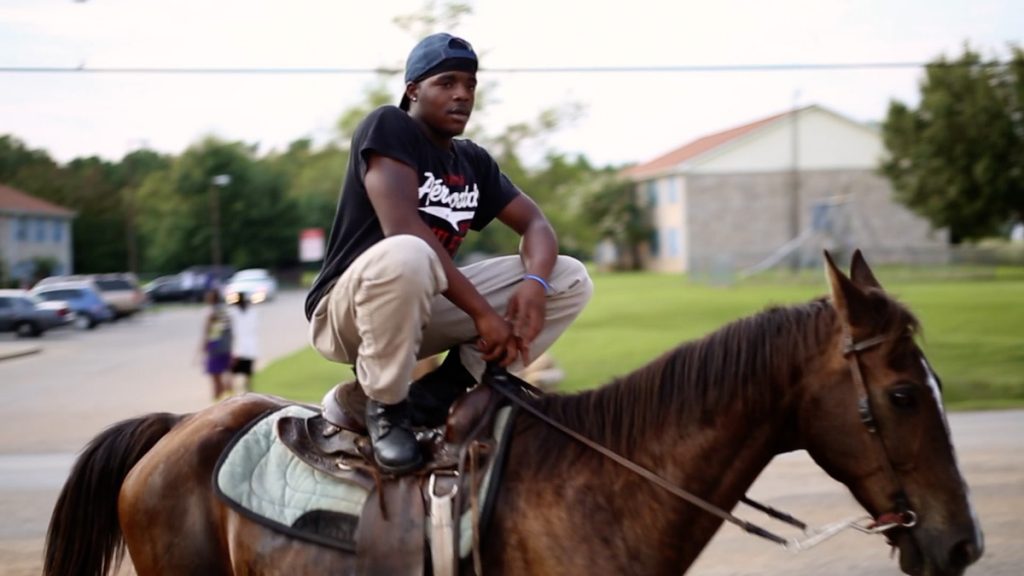
    (dates are subject to change) My Country No More by Jeremiah Hammerling and Rita Baghdadi (Monday, January 7) Between 2011 and 2014, oil drilling in rural North Dakota reached a historical peak, setting off a modern-day gold rush of Wild West proportions. Explore the human cost of the boom through the intimate lens of one family fighting for their agricultural way of life, a fight which puts them at odds with family members and neighbors determined to sell. Rodents of Unusual Size by Christopher Metzler, Jeff Springer and Quinn Costello (Monday, January 14) Go deep into the bayous with Louisiana fisherman Thomas Gonzales, who has lived through hurricanes and oil spills but now faces an even more insidious threat: an invasive species of monstrous 20-pound “swamp rats” which, with their orange teeth and voracious appetites, are eating up coastal wetlands. But Thomas and a pack of lively bounty hunters are hell-bent on saving Louisiana before it dissolves beneath their feet. It’s man vs. rodent. May the best mammal win. RUMBLE: The Indians Who Rocked the World by Catherine Bainbridge and Alfonso Maiorana (Monday, January 21) The acclaimed documentary explores how Native American musicians transformed American blues, jazz and rock – despite frequent attempts to ban, censor, and erase Indigenous culture. This eye-opening musical celebration tells the story of ground-breaking performers including Charley Patton, Mildred Bailey, Link Wray, Jimi Hendrix, and Jesse Ed Davis, and features Robbie Robertson, Taj Mahal, George Clinton, Martin Scorsese, Slash, Jackson Browne, Taboo, Buffy Sainte-Marie, Steve Van Zandt, Quincy Jones, Tony Bennett, Iggy Pop, Steven Tyler, and many more. The King by Eugene Jarecki (Monday, January 28) Forty years after the death of Elvis Presley, filmmaker Eugene Jarecki takes the King’s 1963 Rolls-Royce on a musical road trip across America. From Memphis to New York, Las Vegas, and beyond, the journey traces the rise and fall of Elvis as a metaphor for the country he left behind. A diverse cast of Americans joins the journey including Alec Baldwin, Rosanne Cash, Chuck D, Emmylou Harris, Ethan Hawke, Van Jones, Mike Myers, and Dan Rather, among many others. Black Memorabilia by Chico Colvard (Monday, February 4) At the intersection of racial identity, historical narrative, and international commerce, this film follows the propagation of demeaning representations of African Americans – black memorabilia. The story goes around the world to meet the people who reproduce, consume and reclaim these racially-charged objects. Hale County This Morning, This Evening by RaMell Ross (Monday, February 11) Visit the world of Hale County, Alabama. Composed of intimate and unencumbered moments in the lives of people in the community, the film offers a richly detailed glimpse at life in America’s Black Belt, simultaneously celebrating its beauty and bearing witness to the consequences of the social construction of race. [caption id="attachment_28168" align="aligncenter" width="1180"]People’s Republic of Desire People’s Republic of Desire[/caption] People’s Republic of Desire by Hao Wu (Monday, February 25) In China, a generation of young people has come of age on social media, where virtual relationships are replacing real-life connections. Both the wealthy and the poor gather in online showrooms, finding entertainment and a way to feel connected. Although these groups never cross paths in real life, in the digital universe they band together to worship idols who earn as much as $130,000 a month singing karaoke or hosting interactive talk shows. Tre Maison Dasan by Denali Tiller (Monday, April 1) An estimated one in 14 American children has a parent in prison. Tre Maison Dasan tells the story of three of these children – Tre, Maison and Dasan – each from the small state of Rhode Island. An emotional exploration of relationships tested by separation and the challenges of growing up with a parent behind bars, the film gives voice to the youngest victims of America’s epidemic of incarceration. The Providers by Anna Moot-Levin and Laura Green (Monday, April 8) Set against the backdrop of the physician shortage and opioid epidemic in rural America, The Providers follows three “country doctors” in northern New Mexico at clinics that offer care to all who walk through the doors, regardless of ability to pay. With personal struggles that at times reflect those of their patients, the journeys of the providers unfold as they work to reach Americans who would otherwise be left without healthcare. Marcos Doesn’t Live Here Anymore by David Sutherland an Independent Lens, Frontline and VOCES co-presentation (Monday, April 15) From acclaimed director David Sutherland (Kind-Hearted Woman, Country Boys, The Farmer’s Wife) comes this unique look at the immigration issue. The film follows the efforts of Elizabeth Perez, a decorated United States Marine veteran, to reunite her family after the deportation of her husband, an undocumented worker from Mexico. Her struggle begins to challenge her assumptions about justice and fairness in the nation she fought for. Charm City by Marilyn Ness (Monday, April 22) Filmed during three years of unparalleled violence in Baltimore, Charm City delivers a powerfully candid portrait of those on the frontlines. With grit, fury and compassion, a group of police, citizens, community leaders and government officials grapple with the consequences of violence and try to reclaim their city’s future. Out of State by Ciara Lacy (Monday, May 6) Shipped thousands of miles away from Hawaii to a private prison in the Arizona desert, two native Hawaiians, David and Hale, discover their indigenous traditions from a fellow inmate serving a life sentence. When they finish their terms and return to Hawaii, eager to prove to themselves and their families that the experience has changed them forever, they struggle with the hurdles of life as formerly incarcerated men, asking the question: can you really go home again? Harvest Season by Bernardo Ruiz (Monday, May 13) California’s Napa Valley is one of the premier wine growing regions in the world, celebrated as an idyllic and luxurious destination. Yet, many of the vineyard workers and the small producers with roots in the fields are rarely credited for the valley’s famed bounty. Filmed over the course of one agricultural year, Harvest Season takes an “other side of the valley” approach, giving a unique view of the dramatic process that goes into making some of the world’s most celebrated wines. [caption id="attachment_29609" align="aligncenter" width="1200"]Wrestle, Courtesy of Sinisa Kukic Wrestle[/caption] Wrestle by Suzannah Herbert and Lauren Belfer (Monday, May 20) As they fight their way towards the state championship, four high school wrestlers from Alabama face injustices and challenges on and off the mat. Together with their coach, they grapple with obstacles that jeopardize their success and, despite the odds, pursue their goals with humor and courage.

    Read more


  • Astra Taylor’s Timely Documentary WHAT IS DEMOCRACY? Explores Meaning of ‘Democracy’

    [caption id="attachment_32760" align="aligncenter" width="1200"]What Is Democracy? What Is Democracy?[/caption] Coming at a moment of profound political and social crisis, What Is Democracy? is director Astra Taylor’s philosophical essay finding meaning in the word ‘democracy’ we too often take for granted. Astra Taylor’s (Zizek! and Examined Life) idiosyncratic, philosophical journey spans millennia and continents: from ancient Athens’ groundbreaking experiment in self-government to capitalism’s roots in medieval Italy; from modern-day Greece grappling with financial collapse and a mounting refugee crisis to the United States reckoning with its racist past and the growing gap between rich and poor. The acclaimed documentary, which made its North American premiere at the 2018 Toronto International Film Festival, will enjoy a theatrical release via Zeitgeist Films in association with Kino Lorber starting Jan. 16, 2019, at IFC Center in New York followed by theatrical engagements nationwide. Featuring a diverse cast—including celebrated theorists, trauma surgeons, activists, factory workers, asylum seekers, and former prime ministers—this urgent film connects the past and the present, the emotional and the intellectual, the personal and the political, in order to provoke and inspire. If we want to live in democracy, we must first ask what the word even means. “More than anything else, What Is Democracy? is an invitation to think,” said Taylor. “We live in overwhelming, confounding times and are bombarded by information and bad news. My hope is that this film opens a contemplative space, allowing the viewer to consider the challenge of ruling ourselves from a variety of angles.” [caption id="attachment_32761" align="aligncenter" width="1200"]Cornel West in What is Democracy? Cornel West in What is Democracy?[/caption] Appearing in the film are: Cornel West, a prominent and provocative democratic intellectual and Professor of the Practice of Public Philosophy at Harvard University; Angela Davis a political activist and professor emeritus at the Department of History of Consciousness at the University of California, Santa Cruz, regarded as one of the foremost figures in the struggle for human rights and against racial discrimination; Professor Wendy Brown (University of California, Berkeley), whose fields of interest include the history of political theory, 19th- and 20th- century Continental theory, critical theory and theories of contemporary capitalism; Silvia Federici, a researcher, activist, and educator and Emerita Professor at Hofstra University; Zoe Konstantopoulou, the leader of the Course to Freedom political party and a former President of the Greek Parliament, who is also a lawyer specializing in national, European and international criminal law, public international law and human rights; Henry M. “Mickey” Michaux, Jr., who in 1972 became Durham County’s first black representative in the North Carolina state legislature, and is also the longest-serving member of the North Carolina House of Representatives. ASTRA TAYLOR (Director) is a filmmaker writer, and political organizer. She is the director of the philosophical documentaries What Is Democracy? (TIFF 2018), Examined Life (TIFF 2008), and Zizek! (TIFF 2005); the author of the American Book Award winner The People’s Platform: Taking Back Power and Culture in the Digital Age; and a co-founder of the Debt Collective. She has written for The New York Times, The London Review of Books, The Guardian, The Walrus, The Baffler, n+1 and many other outlets. She is a Shuttleworth Foundation Fellow and a former touring member of the band Neutral Milk Hotel. Her new book, Democracy May Not Exist, but We’ll Miss It When It’s Gone, will be out from Metropolitan Books in early 2019. https://www.youtube.com/watch?v=OHxRj9JWQMs

    Read more


  • FILM REVIEW: THE EYES OF ORSON WELLES – intimate conversation from the past

    [caption id="attachment_32736" align="aligncenter" width="1200"]The Eyes of Orson Welles The Eyes of Orson Welles[/caption] How do you write a letter to someone who has been dead for over 30 years?  Mark Cousins’ answer is to look at their sketches that date back from their teenage years all the way their last and create profile through their eyes.  The Eyes of Orson Welles has all the potential to be another self aggrandizing portrait of the filmmaker.  Diving into the “genius” of the prolific man who has made his name in film, theatre, radio, as well visual art.  His legacy could stand alone on having wrote/starred/directed Citizen Kane (1941), noted by many to be the greatest film ever made.  However, Mark Cousins, having made a 900-minute comprehensive visual survey of all of cinema up to 2011, has made a film that is not really a film at all. Orson Welles is dead, he has been since October 10, 1985.  But hearing Cousins’ rich cadence describe the Moroccan travels Welles took as a teenager does more than conciliate a certain intimacy in the viewer.  There is never a moment that Cousins’ narration addresses anybody that isn’t Welles, the film is literally a letter. This letter structure does more to give a materiality not just in seeing papers that are worn and yellowing but also to make Welles a present kind of living person within the film. The next question to ask about this film is who is going to see it.  Obviously those who are fans of Welles’ or Cousins’ work will get to a screening whenever possible.  As Cousins’ opens the box he says “this never before seen” sketches have been dormant for however many years.  Perhaps this film can be seen as an unearthing of a past history in a political/social life of filmmaker. Outside of the curiosity to see something new, there is not much for a person outside of niche of film culture.  A film for film lovers. That is what I’ll say because The Eyes of Orson Welles says a lot more. https://www.youtube.com/watch?v=Uh7PqV-259k

    Read more


  • Jewish Documentary WHO WILL WRITE OUR HISTORY in U.S. Theaters in January 2019

    [caption id="attachment_32724" align="aligncenter" width="1200"]Who Will Write Our History Who Will Write Our History[/caption] Award-winning director Roberta Grossman’s latest film Who Will Write Our History is a remarkable new documentary that tells the story of a clandestine group of journalists, scholars, and community leaders in the Warsaw Ghetto, led by historian Emanuel Ringelblum  and known by the code name Oyneg Shabes, who vowed to defeat Nazi lies and propaganda not with guns or fists but with pen and paper. Who Will Write Our History written, produced and directed by Roberta Grossman; executive produced by Nancy Spielberg, and featuring the voices of three-time Academy Award nominee Joan Allen and Academy Award winner Adrian Brody will open in New York on Friday, January 18, 2019 at Quad Cinema – New York and in Los Angeles on Friday, February 1, 2019 at Laemmle’s Music Hall – Beverly Hills. In November 1940, days after the Nazis sealed 450,000 Jews in the Warsaw Ghetto, a secret band of journalists, scholars and community leaders decided to fight back. Led by historian Emanuel Ringelblum and known by the code name Oyneg Shabes, this clandestine group vowed to defeat Nazi lies and propaganda not with guns or fists but with pen and paper. They detailed life in the Ghetto from the Jewish perspective. They commissioned diaries, essays, jokes, poems and songs.They documented Nazi atrocities with eyewitness accounts. They sent reports of mass murder to London via the Polish underground. Then, as trains deported them to the gas chambers of Treblinka and the Ghetto burned to the ground, they buried 60,000 pages of documentation in the hopes that the archive would survive the war, even if they did not. Now, for the first time, the story of Emanuel Ringelblum and the Oyneg Shabes archive is told as a feature documentary. Written, produced and directed by Roberta Grossman and executive produced by Nancy Spielberg, Who Will Write Our History mixes the writings of the archive with new interviews, rarely seen footage and stunning dramatizations to transport us inside the Ghetto and the lives of these courageous resistance fighters. Featuring the voices of three-time Academy Award nominee Joan Allen and Academy Award winner Adrian Brody, the film honors the Oyneg Shabes members’ determination in creating the most important cache of eyewitness accounts to survive the war. It follows their moments of hope, as well as their despair, desperation and anger, sometimes at their fellow Jews as much as their Nazi captors. It captures their humor, longing, hunger and their determination to retain their humanity in the face of unspeakable hardships. And ultimately, through their voices, actions and real-time experiences, Who Will Write Our History vanquishes those who distort and dehumanize the “Other” in favor of those who stand up, fight back and, as one Oyneg Shabes member writes,“scream the truth to the world.”

    Read more


  • Award-Winning Documentary HILLBILLY Explores Urban and Rural America Stereotypes

    [caption id="attachment_32720" align="aligncenter" width="1024"]hillbilly hillbilly[/caption] The award winning documentary hillbilly directed by Sally Ruben and Ashley York is a timely and urgent exploration of how we see and think about poverty and rural identity in contemporary America, offering a call for dialogue during this divisive time in U.S. history.   The filmmakers go on a personal and political journey into the heart of the Appalachian coalfields, exploring the role of media representation in the creation of the iconic American “hillbilly,” and examining the social, cultural, and political underpinnings of this infamous stereotype. hillbilly won Best Documentary Feature at the 2018 Los Angeles Film Festival and recently made its New York Premiere at DOC NYC. The film opens in NYC November 23rd at the Cinema Village. Appalachia is no stranger to the complexity of media representation. Since our country’s inception, there has been a palpable divide between Urban and Rural America. Within this great divide, certain regions are viewed as “other,” and blamed for America’s social ills. Since the presidential election, the cultural divide in America has expanded. Stereotyping and slurs are rampant, finger-pointing and name-calling abound. hillbilly goes on a personal and political journey into the heart of the Appalachian coalfields, exploring the role of media representation in the creation of the iconic American “hillbilly,” and examining the social, cultural, and political underpinnings of this infamous stereotype. Filmed in Georgia, Kentucky, Ohio, Tennessee, Virginia, and West Virginia, hillbilly uncovers an unexpected set of artists, poets, activists, queer musicians, “Affrilachian” poets, and intersectional feminists — all unexpected voices emerging from this historically misunderstood region. hillbilly is a timely and urgent exploration of how we see and think about poverty and rural identity in contemporary America, offering a call for dialogue during this divisive time in U.S. history. ” I’m happy to see somebody trying to cover us as we really are and not what some people think we are. It’s wonderful the attention you’ve paid to so many areas that are so important to all of us. I’m proud to have been mentioned in the film a time or two. ” – Dolly Parton on hillbilly

    Read more


  • FILM REVIEW: NORTH POLE, NY: A Fantasy Powered By Belief

    [caption id="attachment_32505" align="aligncenter" width="1200"]North Pole, NY North Pole, NY[/caption] By the halfway point of North Pole, NY — an hour-long exposé on the history and hardships of the theme park known as ‘Santa’s Workshop’ in upstate New York — one thing is undeniably clear: director Ali Cotterill, who also served as co-writer, editor, and camera operator, has an unyielding affection for her subject matter. And why shouldn’t she? After all, the citizens of Wilmington, New York—a sleepy tourist town snug in the Adirondacks—couldn’t be more endearing in their devotion to Santa’s Workshop, the holiday theme park upon which their idyllic community has grown and, ultimately, come to rely. It’s not all tinsel, though. The park, founded in the late 1940s by businessman Julian Reiss and later bequeathed to his son Bob, has been on a downward trajectory since the Eisenhower years, when theme parks and car trips were supplanted by the arrival of jet travel which took public interest elsewhere. These days Santa’s Workshop—which receives hundreds of letters to Kris Kringle each year—operates less as a commercial attraction and more as a gauzy piece of post-war nostalgia. See, in one particularly sobering sequence, as long-time park performer and historian Julie “Jingles” Robards drives her ’54 Dodge around Wilmington, pointing out what were once neighboring theme parks like “The Land of Make-Believe” but today resemble the sort of overgrown and decrepit structures you’d forbid your children from playing on. Cotterill knows better than to wallow. After all, there is plenty of good to focus on here: the jobs for local teenagers, the decades of tradition kept alive by returning visitors, and the overall feeling that yes, magic still exists in the world, even if it doesn’t pay well. Never do the scales tip to full-blown despair. There is a villain, businessman Greg Cunningham, whose brief ownership of the park in the late 1990s turned sour after tales of his past criminal misconduct came to light, but even his story (which takes up less than four minutes of screen time) plays like a curious detour in a bigger tale of indomitable community spirit. It’s the balance between the magical and melancholy that makes North Pole, NY such a compelling documentary. It operates on a two-fold illusion: the precious and short-lived one kids know as Santa Claus, and the existence of his workshop as a place of perpetual wonder in the face of bankruptcy, disinterest, and gentrification. Watching these awestruck children—whose interviews make up some of the funniest (and weirdest) parts of the film—react to a ‘talking’ tannenbaum or stand giddily in line for their moment with St. Nick, I found myself both moved by their innocence and depressed for the day when they’ll grow up and see behind the curtain. Ultimately that’s what rounds out North Pole, NY and gives it such an engaging air: the people. Some of them, like Jingles Robards, seem at times almost too sincere to really exist in 2018. Others, like park manager Matt Stanley, are palpable in their believability. As he makes the morning rounds repairing broken games and reading customer complaints his cell phone erupts into a rock rendition of “Carol of the Bells.” It’s a moment that in a fictional film might feel cheap or obvious, but here rings true. Despite the daily grind, this guy really, truly loves Christmas. That’s how, after seven decades, Santa’s Workshop continues to survive: on the selflessness of people who believe in it. The park, just like this splendid little film, is a labor of love. North Pole, NY premiered in New York on November 9th at IFC Center as part of DOC NYC.

    Read more


  • FILM REVIEW: Heart-Wrenching Story “ELEPHANT PATH/NJAIA NJOKU”

    [caption id="attachment_32709" align="aligncenter" width="1200"]Elephant Path: Njaia Njoku Elephant Path: Njaia Njoku[/caption] Todd McGrain knows the importance of conservation. The artist turned filmmaker is best known for his Lost Bird Project, a series of larger-than-life sculptures dedicated to five extinct North American bird species. While this endeavor was chronicled in the 2012 film of the same name by Deborah Dickson, now McGrain himself has stepped behind the camera to bring us the story of another endangered species, one we might actually be able to save: the forest elephants of Bayanga, Central Africa. Elephant Path (or “Njaia Njoku” in the Bayaka language) has a lot going for it: a heart-wrenching story, impressive scope, engaging characters, and above all a sense of showmanship. McGrain’s storytelling approach is stylish and highly cinematic to the point where, by the end of the film’s 79 minute run-time, it’s a shock to realize how little has actually happened. The story of “Dzanga Bai” (“Elephant Village”) is presented through a quartet of characters. Andrea Turkalo, an American biologist, has spent three decades observing elephants in their natural habitat. Aiding her efforts in Bayanga is local tracker Sessely Bernard, a village elder named for the river from which he first drank. Keeping watch over the elephants is Zephirine Sosso Mbele, one of a handful of “Eco Guards” tasked with warding off poachers. Late in the film, the guards receive additional defense training from Nir Kalron, an Israeli ex-military security contractor with a soft spot for animals. Why the additional training? Because Bayanga, in fact the entire Central African Republic, is under siege by Séléka rebels and embroiled in a civil war. To the rebels, elephants are prime targets; the sale of ivory from their priceless tusks is how they fund their arsenal. At the start of the film they have not arrived at Dzanga, but from Turkalo’s foreboding narration we quickly gather it’s only a matter of time. Meanwhile, she and Sessely enjoy their work, the bulk of which is done from an observation deck and conducted via sketch pads and telephoto lenses, with minimal conversation. There is a sublime peace to this process. That peace, of course, does not last. Eventually the Séléka arrive, guns blazing, and the region is plunged into oppression and terror. Turkalo is forced to flee to America while Sessely and the Bayangan community retreat into the forest to avoid persecution. I won’t detail what follows from here on out, sufficeth to say the elephants do not fare well. In one particularly haunting scene set back in America, Turkalo and a colleague review audio recordings of the forest, where distant gunfire produces cries of animal distress. A short while later, rhythmic tapping is heard. “They’re chopping off the tusks,” Turkalo observes coldly. The human cruelty of Elephant Path is the film’s most striking element, despite the fact that none of it is ever shown happening. Early on, Sessely remarks to Turkalo how the behavior of elephants does not differ so much from that of humans; they flirt and fight, bathe each other, have children, play games. This salient observation returns with a vengeance when, in the aftermath of a Séléka poaching spree, Sessely inspects the demolished corpse of a slain elephant and angrily declares “This elephant was me.” One of the inherent dangers of documentary filmmaking is arriving at an anticlimax. For a film shot and edited with the gusto of a narrative film, Elephant Path comes to an abrupt, somewhat underwhelming conclusion. Again I won’t spoil, but for all of Nir Kalron’s efforts in training up the Eco Guards to combat the bigger, better-armed Séléka poachers, the resolution of said problem  feels like a non-ending, at least to the viewer. Little can be done about this, I know, but McGrain and crew (in particular cinematographer Scott Anger) set up such palpable villains in the occupying rebels that you can’t help but feel a little cheated out of a proper showdown. There is hope at the end of Elephant Path, even if only a modest amount, and that must be our reward. The remaining elephants saunter into Dzanga Bai, as always, and hose themselves down. Life goes on. For the living, anyway.

    Read more


  • Child Labor Documentary INVISIBLE HANDS Opens in Theaters on Black Friday

    Invisible Hands Invisible Hands is a new documentary that exposes child labor and child trafficking; and offers a harrowing account of children as young as five years old making the products we buy and consume every day.  The film appropriately will open in New York on Black Friday November 23, and one week later in Los Angeles on November 30. Invisible Hands, directed by Shraysi Tandon, exposes child labor and child trafficking within the supply chains of the world’s biggest corporations, which produce some of our most loved items. The film offers a harrowing account of children as young as five years old making the products we buy and consume every day. Chilling undercover footage shows children being sold like animals to the highest bidder and others being abused by this pervasive slave labor. Invisible Hands digs deep into a modern slavery system quietly supported by some of the world’s largest companies, demanding to know why top stakeholders continue to engage in this unlawful practice. https://www.youtube.com/watch?v=k_hvZ1xafgU

    Read more


  • Documentary SAY HER NAME: THE LIFE AND DEATH OF SANDRA BLAND to Debut on HBO on December 3rd

    [caption id="attachment_28284" align="aligncenter" width="1200"]Sandra Bland in SAY HER NAME: THE LIFE AND DEATH OF SANDRA BLAND. Sandra Bland in Say Her Name: The Life and Death of Sandra Bland.[/caption] On July 10, 2015, Sandra Bland, a politically engaged and vibrant 28-year-old African American from Chicago, was arrested for a traffic violation in a small Texas town. After three days in custody, she was found hanging from a noose in her jail cell. Bland’s death was quickly ruled a suicide, sparking allegations of a racially motivated police murder and cover-up, and turning her case and name into a rallying cry nationwide. From the Oscar(R)-nominated, Emmy(R)- and Peabody Award-winning team of directors/producers Kate Davis and David Heilbroner (HBO’s “Traffic Stop,” “Southern Comfort,” “The Cheshire Murders” and “Jockey”), Say Her Name: The Life and Death of Sandra Bland examines this story in depth, revealing previously unknown details when it debuts Monday, December 3 (10:00-11:45 p.m. ET/PT), exclusively on HBO. Both a legal thriller and a parable about race in America, Say Her Name: The Life and Death of Sandra Bland follows the Bland family and legal team from the first weeks after her death as they try to find out of what really happened in that jail cell in Hempstead, Texas. Embedded with the family and their lawyers, the filmmakers tracked the story for two years, drawing on key documents, jail footage and interviews with those closest to the events. While the Texas authorities ruled Bland’s death a suicide, providing photos of a noose made out of a garbage-can liner as evidence of the cause of death, questions were raised about why she was held alone in a cell without surveillance cameras, whether cell checks by law enforcement had been fabricated and why Bland’s body had been severely bruised. Attorneys in the film examine the disturbing police dashcam video of Trooper Brian Encina’s aggressive treatment of Bland after pulling her over for failing to use a turn signal. Fearing that she had been murdered, her mother and sisters filed a suit against local law enforcement and the Waller County jail as protests amplified across the country. Say Her Name is punctuated with footage from Bland’s passionate “Sandy Speaks” video blogs that bring her voice to life. Through the videos, as well as voicemail messages and insights from close friends, she emerges a central figure in the narrative, an engaging and enlightened woman whose sharp, humorous remarks address subjects from black history to police brutality to natural hair. To those who knew Sandra Bland best, suicide seemed unimaginable. Following a contentious legal battle, the family settled with authorities, giving rise to the Sandra Bland Act, which is now law in Texas. The Act mandates a host of prison reforms aimed at preventing inmate suicide, and a street in Hempstead, Texas has been named in Sandra Bland’s honor. Interviewees in the film include: Geneva Reed-Veal, her mother; sisters Shante Needham, Shavon Bland and Sharon Cooper; Sheriff Glenn Smith, head of the Waller County PD; Elton Mathis, DA, Hempstead, Texas; Trey Duhon, county judge, Hempstead, Texas; Hannah Bonner, activist and Waller County minister; and family attorney Cannon Lambert. Say Her Name will have a limited theatrical run prior to its HBO debut. The documentary made its world premiere at the 2018 Tribeca Film Festival. It won Best of Fest at the Ridgefield Film Festival, and was nominated for awards at the Traverse City Film Festival, Chicago Film Festival, the St. Louis Film Festival and Nashville Film Festival, among many others. https://www.youtube.com/watch?v=pybBqJNg5ds https://www.youtube.com/watch?v=8j0zqjsP39Q

    Read more


  • Documentary THE INSUFFERABLE GROO Starring Jack Black Sets December Release Date

    The Insufferable Groo The documentary The Insufferable Groo by Scott Christopherson, follows a prolific low budget indie-filmmaker who sets off to cast Jack Black in his newest feature film, an elf/human love story.  The Insufferable Groo will be released in select theaters in December and on demand December 14th by Gravitas Ventures. The Insufferable Groo received critical praise and audience attention at its World Premiere at The Sheffield Film Festival earlier this year and had its North American Premiere on November 14th at DOC NYC in New York. “Jack Black and Stephen Groo make for a hilarious documentary experience” says Christopherson. “Groo’s huge body of work should be recognized and celebrated and we are excited to have Gravitas share his story with the world.” The Insufferable Groo follows Utah based filmmaker Stephen Groo, age 41, a self-proclaimed auteur, narrowing in on his 200th film in 20 years. His oeuvre of outlandishly awful genre films has managed to attract admirers like Napoleon Dynamite’s Jared Hess and Jack Black, but the Utah-based director has never made a dime off of his work, leaving his wife to provide for their family of four small boys. As Groo attempts to make his latest opus, an elf/human love story, his narcissism threatens to prove his undoing in this entertaining look at low-budget guerrilla filmmaking. Scott Christopherson was one of ten documentary filmmakers featured in Variety Magazine’s “Docu-makers to Watch” list in 2015. Scott’s debut feature film, Peace Officer, won both the Grand Jury and Audience Awards for best documentary at the SXSW Film Festival. Scott’s films have played at Hot Docs, Full Frame, Sheffield, DOC NYC, Montclair, Camden, Traverse City, New Zealand International, Melbourne International, and Taiwan film festivals. https://www.youtube.com/watch?v=9kwwSwbwltI

    Read more


  • Aretha Franklin Documentary AMAZING GRACE Added to AFI FEST 2018

    Amazing Grace A Special Screening of Amazing Grace, the long-awaited documentary featuring Aretha Franklin’s renowned performances at New Temple Missionary Baptist Church in Los Angeles, has been added to AFI FEST 2018 presented by Audi. Marking the film’s West Coast premiere, the Special Screening will take place Thursday, November 15, 8:00 p.m. at the TCL Chinese 6 Theatres. The live performances, ranked among Ms. Franklin’s finest, were originally recorded and filmed during a church service in Watts on January 13 and 14, 1972. Warner Bros. Pictures captured the footage for a companion documentary to the double live album “Amazing Grace.” “Amazing Grace” would go on to be the biggest selling album of Aretha Franklin’s career, and the best-selling gospel album of all time. Mired in technical issues, the film was never released to the public. Producer Alan Elliott acquired the film rights in 2007 and worked with a team of producers including Joe Boyd, Robert Johnson, Chiemi Karasawa, Sabrina Owens, Jerry Wexler, Tirrell D. Whittley and Joseph Woolf, to bring the feature-length documentary to light. The film was edited by Jeff Buchanan and its music was mixed by Jimmy Douglass. The documentary is a labor of love and a timely tribute to the music icon who passed away in August 2018. The film is now ready for release with the complete support and blessing from The Aretha Franklin Estate. After decades of waiting, fans of the Queen of Soul can view her iconic performance at the AFI FEST 2018. The film features Ms. Franklin’s legendary gospel hits, performed in front of a distinguished audience that includes her father, the famed Reverend C.L. Franklin, Gospel legends Clara Ward and Mother Ward of the Ward Family Singers along with Mick Jagger and Charlie Watts of the Rolling Stones (who were in Los Angeles recording “Exile on Main Street”).

    Read more


  • Watch an EXCLUSIVE Clip from CHINA LOVE on Chinese Ritual of Pre-Wedding Photography

    [caption id="attachment_32605" align="aligncenter" width="1200"]China Love China Love. At Only Photo Studio just out of Shanghai. This is a “go-to” pre wedding photography studio with 3 floors of ‘old world’ romantic and fantasy sets. July 2015[/caption] Just for you our readers, an exclusive clip from China Love directed by Olivia Martin-McGuire premiering in the U.S. on November 9, 2018 at 2018 DOC NYC. China Love Poster China Love takes us on a billion-dollar ride of fantasy exploring contemporary China through the window of the pre-wedding photography industry. The film is a feature length observational documentary which follows Chinese and Australian participants as they navigate love, weddings and family in the lead up to the most important ritual of Chinese society – getting married. China Love is directed and produced by Olivia Martin-McGuire, produced by Rebecca Barry and Madeleine Hetherton, and features documentary subject Allen Shi the owner of the Jihao Group.

    Read more


←Previous Page
1 … 190 191 192 193 194 … 255
Next Page→

Film News

Animation | Anime

Documentary

Foreign Language Films

Independent Film

SciFi + Horror

Short Films

Thriller

More Film News

Awards

Film Reviews

Trailers

Interviews

People

Film Release Calendar

Film Festivals

Film Festivals News

Film Festivals (List)

Film Festivals Calendar

Company

Home

About Us

Privacy Policy

Terms Of Use

Contact Us

Internship Program

Cookie Policy (EU)

Opt-out preferences

  • Bluesky
  • YouTube
  • Instagram
  • Facebook
  • Pinterest
  • LinkedIn
  • Threads
  • X

Copyright © 2026 — VIMooZ LLC | Designed by TTHINKS

Manage Cookie Consent
To provide the best experiences, we use technologies like cookies to store and/or access device information. Consenting to these technologies will allow us to process data such as browsing behavior or unique IDs on this site. Not consenting or withdrawing consent, may adversely affect certain features and functions.
Functional Always active
The technical storage or access is strictly necessary for the legitimate purpose of enabling the use of a specific service explicitly requested by the subscriber or user, or for the sole purpose of carrying out the transmission of a communication over an electronic communications network.
Preferences
The technical storage or access is necessary for the legitimate purpose of storing preferences that are not requested by the subscriber or user.
Statistics
The technical storage or access that is used exclusively for statistical purposes. The technical storage or access that is used exclusively for anonymous statistical purposes. Without a subpoena, voluntary compliance on the part of your Internet Service Provider, or additional records from a third party, information stored or retrieved for this purpose alone cannot usually be used to identify you.
Marketing
The technical storage or access is required to create user profiles to send advertising, or to track the user on a website or across several websites for similar marketing purposes.
  • Manage options
  • Manage services
  • Manage {vendor_count} vendors
  • Read more about these purposes
View preferences
  • {title}
  • {title}
  • {title}