Film Reviews

  • Cook County, Impressive Debut Film from Director David Pomes

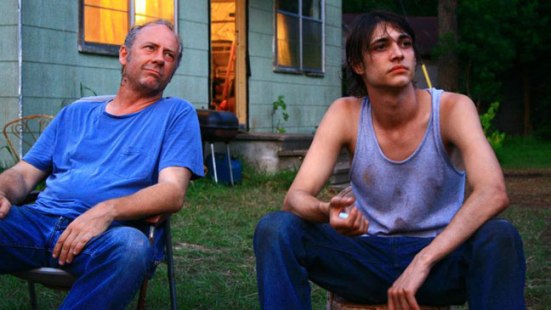
    Cook County is a new independent film from first time writer/director David Pomes exploring a specific family and community in rural east Texas, reflecting an entire culture and drug world in America. The film presents the narrative through the eyes of Abe (Ryan Donowho), a teenager living with his meth-cooking and smoking uncle, Bump (Anson Mount). Abe goes day to day simply surviving with his dangerous caretaker, and  trying to protect his young cousin Deandra (Makenna Fitzsimmons) from a drug-addicted future. When Abe’s father, Sonny (Xander Berkeley), shows up after a stint in jail, he promises Abe that he’ll make their lives better. What begins as a promising plan to try to expose Bump and his dealers to the police, becomes more complicated, and more dangerous for Abe and Deandra as Bump spirals further out of control, haunted by paranoia and consumed by his addiction.

    David Pomes has made a film exploring a very real problem in much of America, and chose the location of Texas because he heralds from there. The cast and crew filmed in a rural town not far from Houston, and met real people who resembled the characters being portrayed. The film is sparsely made, with just a few main locations and simple yet affective camerawork. The focus is on the characters, and the harsh lives they lead. It is safe to say that Anson Mount steals many scenes (from the stirring opening to the disturbing climax) with his extremely physical and intense performance. As terrifying a person as Bump is, he is also fascinating, and it’s hard to take your eyes off of him.

    The film was shelved for the past two years, unable to find a distributor, and Mount’s rise in stardom, due to his role in the television show “Hell on Wheels,” helped it get the support and funds that was needed. It then won awards at South by Southwest, Dallas International Film Festival, and Nashville Film Festival. From these successes, Cook County is finally seeing distribution, and truly deserves it, as it is an impressive first feature, and a moving, as well as distressing, independent film.

    by Aria Chiodo

    {youtube}7SvMf2GsM_Q{/youtube}

    Read more


  • Go See “Khodorkovsky” in Theaters this weekend

    by Francesca Mccaffery

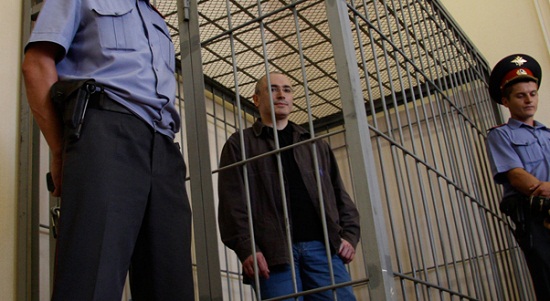
    Cyril Tuschi’s riveting new documentary “Khodorkovsky” focuses on the 2003 imprisonment of Russian oligarch, the billionaire, Mikhail Khodorkovsky, who at the time of his arrest at forty-two years old was the richest man in Russia.

    Brought to “court” on charges clearly trumped up and false (tax embezzlement and fraud), in a case that had the world watching and the proceedings of which even had then President George Bush deem wrongful and misguided, Khodorkovsky remains in prison in Siberia to this day. This documentary is the story rife with the country’s entire key political, economic and industry players, and it is a dense, richly woven web of intrigue, politics and clashing male egos.

    Mikhail Khodorkovsky was a rather mild-mannered science and engineering student with an “aura” about him, as fellow students and friends describe him. An avowed socialist, his attentions and ambition soon turn to capitalism when the Cold War began to melt down the country’s communist infra-structure, the U.S.S.R. was becoming Russia again, and soon became very interested in acting and behaving like a proper Western democracy.

    As Russian state assets were sold off, the then government, trying to keep the land, assets and industry primarily “Russian,” were forced to sell to the lowest Russian bidder, as funds were simply not accessible, impossible to find on any sort of reasonable scale, inside of mother Russia itself. Khodorkovsky and his friends had cleverly started a bank during this time. In 1995, they acquired the main Russian oil company, later to become Yukos, for the paltry sum of $330 million. The government, again, felt obliged to sell, at an auction, it was noted later, which had very little competition. With part of their original company’s manifesto stating, “Let capitalism be our compass,” Khodorkovsky and his team soon became major global players- meeting with heads of state, zipping around in private jets, and Khodorkovsky himself consulting the Russian government itself about how to form its newly democratic judicial system.

    The documentary is really quite fascinating, as it is at once dissecting a current event in Russia’s ever-changing economic-political history, and how it will establish itself in the global economy, as well as examining the will that comes to blows of two very different types of men: Russian Prime Minister Vladimir Putin and Mikhail Khodorkovsky himself.

    When the government learns that Yukos may soon be going partially public, could be bought and owned by outside investors, (read- the US! Exxon! Mobile!) Putin and his cabinet are clearly hysterically nervous about this: What would a westernized Russia look like? What would it mean? Most importantly, would they have the same control? As we stare at Putin’s face in the footage and photos, we wonder: Does he care about saving Russia, or simply his place in the world, his career, and place in society?

    It is due to Tuschi’s film, which is five years in the making, that we get the complete picture. As his interviews with young, hip Russians illustrate, the party line in Russia is still that Khodorkovsky stole from his own government, and is, basically, a pretty evil guy. But as Putin’s actions escalate, we can see it truly is not Russia or her people he is worried about. He is pissed off, and it we see it devolving into a strange, globally witnessed “mano-a-mano” confrontation.

    Tuschi actually became pen-pals of sorts with Khodorkovsky, and in voice-over the audience learns what a thoughtful, ambitious, and critical thinker Khodorkovsky is. He also seems steadfast in his views today, and Tuschi even gets the chance to interview him after he stand son trial for another bogus charge of stealing “350 million barrels of oil” from his own company. “You would have to circle the earth three times with a freight train to transport that much oil. Where would we have hidden it?” Khodorkovsky says, exasperated and almost cheerfully. “These charges are absurd.

    Weaving these moments in with a stark, black and white animation to highlight specific flash-backs, it is absolutely fascinating to ponder his refusal to leave Russia as a genius mastermind chess move by Khodorkovsky. He has the will to not have only become the richest man in the world under forty at one time, certainly. But-by showing Russia itself and the rest of the world how corrupt their current Russian government really is, could he really get out of jail and end up running the country? We see a capitalist who is now a major human rights case, a man who is at first incensed by Putin’s smallness. Then, like the entrepreneur that he surely is, the viewer could also surmise that this man with the iron will to succeed could very well turn his catastrophe into a truly grand political opportunity.

    “It is difficult for a small-minded man to get over a slight.” to paraphrase Khodorkovsky in writing to Tuschi about Putin. This is a truly a wonderful documentary- expansive, glowing, exhausting, heart-rending and informative- and, like an animated political discussion in an your favorite coffee shop with new friends- it completely stays with you. Playing at the Film Forum in NYC until December 13th.

    {youtube}Ohl6ryB213A{/youtube}


    Read more


  • Bollywood actor, filmmaker, and activist Puneet Issar Tackles Discrimination in I Am Singh

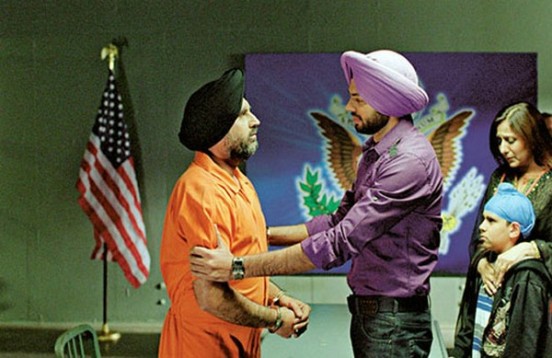
    I Am Singh, a new film directed by a veteran Bollywood actor, Puneet Issar, opens today in 50 theaters across North America. It explores the untold story of Sikhs in the post-9/11 U.S. who were subject to discrimination and violence, and targeted as possible terrorists. It is Issar’s second film as director, and he also acts in it. The film does not have a Bollywood star-studded cast, like his first film had. The actor/director told glamsham.com that he wanted his subject to be the star of the film.

    I Am Singh focuses on a young Sikh named Ranveer Singh (Gulzar Chahal) who lives in India. His brothers are citizens of the U.S., and when he learns that one of them has suddenly died, the other gone missing, and his father seriously injured, he takes a journey to find what the cause was. He is met with elusive answers and frustrating excuses from authorities and governmental officials. Without any help from local authorities, he teams up with a Pakistani, Rizwan Haider (Rizwan Hyder), who is an American citizen, as well as Fateh Singh (Puneet Issar) a LAPD police officer. He also eventually finds two American attorneys, Amy Washington (Amy Rasimas), a Senior Attorney, and Amelia White (Brooke Johnston), a human rights activist, to fight for his case. With the help of this diverse group of citizens, Ranveer Singh battles injustice while still having faith in the American judicial system to help his family and his people who have been wronged by a country paranoid with fear of outsiders.

    This is an important and intriguing new Bollywood film, exploring the ignored story of Sikhs living in post 9/11 America, told from their own point of view.

    by Aria Chiodo

    {youtube}mSbasOYMOsY{/youtube}

    Read more


  • Go See the Indie Comedy “Rid of Me”

    by Francesca McCaffery

    RID OF ME, James Westby’s latest black comedy that follows Meris, (an awesome Katy O’Grady!) an awkward young woman trying too hard to perfect her marriage, amongst a new group of friends. RID OF ME follows Meris’ rejection from the cool crowd down a path towards truth and salvation which includes a job at a local candy shop, a group of punk friends, community gardening and a newfound love for Cambodian rock music! (Yes!)

    I think this was one of the hidden gems of the Tribeca Film Festival, and it is opening at Cinema Village West Theater tomorrow in New York City, November 18th- RUN OUT TO SEE IT ASAP THIS WEEKEND! We LOVED it, and so will you.  Let’s make this small wonder a huge hit! Check out the awesome reviews below:

    “Bracingly original, alarming and droll! The domestic meller and the horror movie have met, wed, and proven fruitful.” –John Anderson, VARIETY

    MEAN GIRLS for adults! Few recent movies are as darkly funny.” –Steven Zeitchik, LA TIMES

    “RID OF ME, if there’s any justice, should make actress Katie O’Grady a star.” –S.T. VanAirsdale, MOVIELINE

    “RID OF ME is cheerfully obscene, hip, and wickedly funny! Director James Westby is a talent on the march.” –Erica Abeel, HUFFINGTON POST

    RID OF ME was officially selected to play in the Tribeca Film Festival, Michael Moore’s Traverse City Film Festival, San Diego Film Festival, and Bend Film Festival. Winner of Best US Narrative at the Traverse City Film Festival

    {youtube}WkmHawHIpMg{/youtube}

    Read more


  • REVIEW: Le Havre

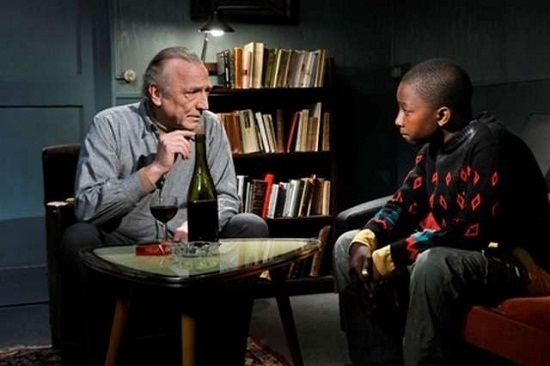
    Shot in the picturesque French port city of the same name, “Le Havre,” directed by Aki Kaurismaki, looks like it truly could have been created forty-five years ago. It’s an amazing and lovely film about community and solidarity, without any maudlin nostalgia to muck it up in the middle. It’s truly an original, and already feels like a dyed-in-the-wool classic. 

    A shoe-shine man (the glorious Marcel Max), making a meager living and relying on the unconditional adoration of his wide Arletty, (the sad-eyed Kati Outinen) one afternoon spots a young black African boy (Blondin Miguel), who has come here illegally in a freight container with his extended family. The boy has escaped police after temporary capture, and is hiding out in chest-deep seawater underneath a dock, where Andre has been lunching. After his wife must go to the hospital and stay there for treatment, Andre brings the boy into his home, hiding him away from the kind but thorough police captain ( an implacable Jean-Pierre Darroussin), who may or may not have some history with Andre. The entire neighborhood then becomes deftly enlisted in helping Andre with is new mission- getting the boy to London- where his family awaits him.

    This film is built so solidly on these beautiful performances, and bears the stamp of a director who knows how to disappear into the ether- making a truly charming, enriching tale of love and community. This is how they used to make ‘em, and it’s amazing that the marriage of all these nameless elements comes together to bring us a tale that is both timeless as well as genuinely topical. The way the director and production designer, (Wouter Zoon) with the obvious help of a genius DP (Timo Salminen), have merged to make a film that seems simultaneously so anchored in time as well as feeling absolutely timeless. (When we see the word “Alchieda” in a newspaper headline, it’s almost jolting) The era or time simply do not matter here. It’s the story that, finally, truly counts.

    In the director’s statement, Kaurismaki explains that this is a film about the plight of refugees, in all nations. If this is going to be the shape of politically driven narrative film, this is certainly one way to do it- with an almost unparalleled sense of grand confidence and a purely “cinematic” sense. “Le Havre” will leave you feeling warm inside without the fuzzy, and good without the heinous “feel good” feeling. It’s impossible, in the end, to explain the truly unique charm and beauty of this film: You will just have to go out and see it for yourself…

    by Francesca McCaffery


    Read more


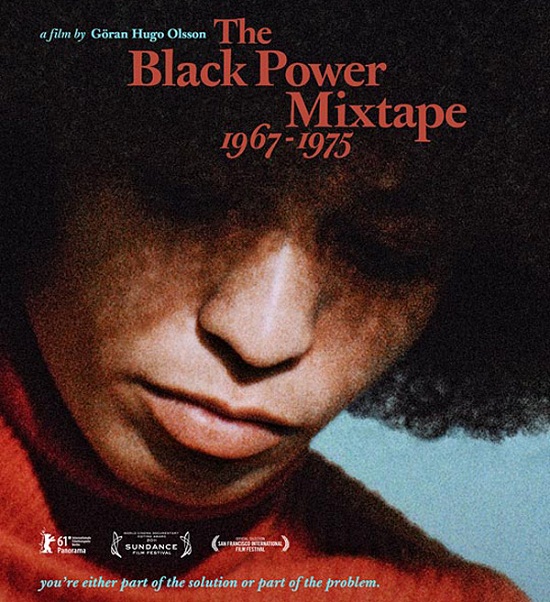
  • The Black Power Mixtape-1967-1975- A Must-See Documentary

    Late ‘60s America was so multi-dimensional, so rife with various and extensive cultural and political facets, it’s difficult to get a true hold on what was really accomplished in that era, since the Civil Rights Movement of the early to mid 1960s. But a LOT surely was accomplished, just as much as so much was left bitterly undone. The “Black Power Movement” of that era, spearheaded by a young, brilliant freedom-rider named Stokley Carmichael, has its roots in the soil sown of decades upon decades of poverty, slavery, abuse of all kinds, and political injustice towards African-Americans in the United States.

    Read more


  • REVIEW: Vimooz Has Seen “The Future” & It’s Miranda July

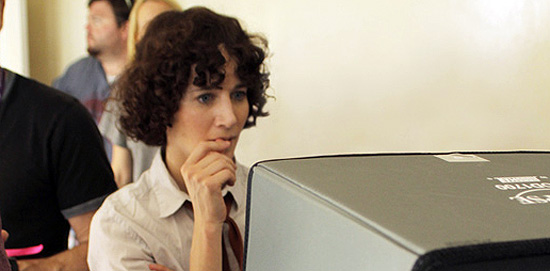
    Miranda July follows up her lovely and deft first-time film (and 2005 Palm D’Or winner at Cannes) “Me, You and Everyone We Know” with “The Future,” opening today in limited release. The film strikingly asks these timeless questions: What happens to your soul if you fail to recognize your deepest longings? Will having a child change our lives/make me old/limit my possibilities forever? Can we live without ever having really lived at all, without truly giving our life a genuine “shot?” And of course, July being July, she uses some wholly original, courageous, and in the end, sweetly child-like and charming ways of getting us to hear them in her new film.

    July gets consistently pegged “The Queen of Quirk” in the mainstream media, which does her an astonishingly huge disservice, I think. As the recent “NY Times Magazine” cover story recently pointed out about her films, stories, online video projects and performance art (July is a bit of a Renaissance Wonder Woman), no one is ever really, well, “cool” in her work. Her “oddball” exteriors are forever pulsing with a heartbeat both very real and very raw and human. But, back to the film.

    “The Future” centers around an adorable, symbiotic, mid-Thirties couple in their thrift-shop chic (and very small) Silverlake apartment. Hamish Linklater plays Jason, the boyfriend, and July herself stars as Sophie, his pale, pretty girl with Manet coloring, enormous eyes and sweetheart wardrobe. They are a protypical, “unrealized” LA creative couple. Jason even goes so far as to lament their deadly age of thirty-five, complaining that everything that happens to them after that is “loose change.”

    The film opens with a talking cat’s voice-over narrative. The voice is July’s, but the narrative belongs solely to Paw-Paw, the sick cat they are heroically rescuing from the pound. The catch is that the poor feline will need their complete and total attention, much like, you guessed it, having one’s first baby would demand. The couple have one month to make their lives and abode ready for Paw Paw, one month, they reason to themselves, to realize their dreams and live up to their fullest, best potential!

    Sophie decides to do a “dance a day,” and put it up daily on YouTube. She quits her job as a dance instructor to three-year olds. Jason ditches his job as an Internet trouble-shooter, and starts fundraising on the streets for a Greenpeace-type of organization.

    In a matter of days, the two lovers are jointly miserable and immobilized- plainly paralyzed by the ominous thought of Paw Paw coming into their lives, and the fact that they do not have a real, concrete blueprint, or even sketchy plan, of which to follow their own dreams. They also are filled with accompanying self-loathing and doubt about their creative and overall human abilities- to the point where Sophie decides to have an affair with a bland but grown-up Marshall, (David Washofsky) who lives in the dreaded Valley with his younger daughter.

    Jason, in utter desperation and completely beside himself with grief at the break-up, decides to “stop time” in a nifty magical realism touch, and Sophie literally watches her life slipping away from her, getting her job back (but only as a receptionist there- watching her students grow up while she’s still there, answering the phones), and watching her soul trail after like a kicked, wounded dog- in the form of an old, frayed, favorite T-shirt.

    It is easy to see, on one level, why critics like Hoberman from “the Village Voice” have such a problem with a July. Her clothes, look and demeanor simply seem too cute, precious and, inaccurately, calculating, to many. But her halo of “quirkiness” is really like strawberry sauce spilled across a telegram announcing some very profound news

    Having seen “Me, You and Everyone We Know” and read her wonderful book of short stories, “No One Belongs Here More Than Me,” as well as loosely following some of her on-line projects, like the endearing, viewer-collaborative “Learning to Love You More,” I truly feel that her art provides what is sourly and desperately missing from our culture in this day and age: A genuine purity of heart. It does not appear to be a shtick with July, or to be a ploy at some form of elitist, backhanded irony. She really does give a shit. If you look past her lustrously indie demeanor, you can feel her own heart beating louder than anything. July wants us all to know that time IS running out. That being scared is understandable, but, not really such an option any longer. That love may fade and things can drastically change, but life will be supportive, if you can find a way to move on and forward with it.

    July is also an artist fortunate enough to have only worked, her entire life at doing the things she truly loves: Making things for others to see and experience. By her own admission, she has never had to have a “real” job. She did not come from money, and most like worked very hard, and privately, to achieve the things that she has. She is only imagining herself, here in “The Future,” as if she had not been so fortunate. Yet, at the very time, the film is a sweet, nurturing call to arms to heed that little (or Big!) voice inside us all- whether it’s whispering at us to “Have that Baby!” or screaming at us to “Write That Book!”

    As “The Future” leaps from a soul that won’t let up until it’s found again, a talking Moon, and poor Paw Paw, conscripted to never find what she really and truly needs, July is daring us to push ourselves to reach a little further- lest we die a pretty banal, boring, and terribly unfulfilled psychic death. Life is Short, “The Future” reminds us. And it will all, sort of, somehow be okay. If we try as hard as we are able to try, at any given moment. The Future Has Been Predicted. Now go out and see the movie!

    {youtube}u2FuwJh8DSs{/youtube}


    Read more


  • REVIEW: “Another Earth” Is Otherworldly, Low-Key Perfection

    Actress-producer-co-writer of “Another Earth” Brit Marling lights up the screen in this truly wonderful, low-key “sci-fi romance,” which she co-wrote with director Mike Cahill. The film was one of the toasts of Sundance, and is an extremely low-budget mediation on destiny and the concept of “what if there were another YOU out there?”

    Marling plays Rhoda Williams, a bright, pretty seventeen-year old about to graduate high school, happily celebrating her acceptance into MIT’s astrophysics program. Driving home tipsy from the party, she learns via radio broadcast that “another earth” has just been discovered, an exact replica of our planet called “Earth 2.” As Rhoda looks up to dreamily gaze at the wondrous new planet, her world literally collides with a famous composer (William Mapother) and his family.

    Directed by Mike Cahill, this film, shot on such a small budget they actually had to steal one of the locations outside of a jail, is pretty remarkable in its originality and absolute clarity of vision. Marling is also tough and luminous, and William Mapother has that crinkly-eyed charm reminiscent of Dermot Mulroney (whom he resembles.) What Cahill manages to do with very limited (and inexpensive) visual effects, pitch perfect control on the film’s tone, and the actor’s performances is pretty extraordinary. He is certainly a director to watch. Vimooz recommends that you check out this film, which opened June 22nd. We loved it, and so will you…!

    {youtube}N8hEwMMDtFY{/youtube}


    Read more


  • Great Date Movie! Delhi Belly-opening today

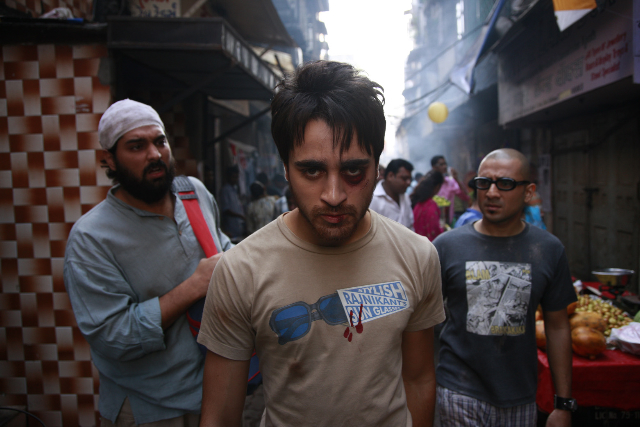
    “Delhi Belly” is the hilarious, raunchy and new Bollywood Movie from director Abhinay Deo, starring international dream guy Imran Khan, along with Vir Das and Kunaal Roy Kapur playing his hapless yet sweet roommates.

    In an almost old Hollywood twist of mistaken identity, and strange, missing bag of something mysterious (Drugs? Money? What?), “Delhi Belly” is really so much fun, like a sweeter, more Eastern version of a deft Judd Apatow film. This is also Bollywood-lite, low on the dance numbers and empty calories, and a great Western intro to the genre. Go, go, go! You and your Saturday night date will adore it. It has something for the girls and the guys, although it does get a bit audibly raunchy (the title is international slang for food poisoning.) Enjoy!

    Tashi, Arup and Nitin – flatmates, buddies and partners in crime. Tashi is to get married in a month but still doesn’t know if his fiancé is THE ONE! Arup can’t make up his mind who he wants to kill first – his girlfriend who has just dumped him or his stupid, annoying boss whose idea of creativity is sketching a smiling banana! And Nitin is about to discover that eating delicious tandoori chicken off a street vendor is going to give him the worst case of Delhi Belly he’s ever known! Three regular blokes, living the regular life EXCEPT for one small detail – they are on the hit list of one of the world’s deadliest crime syndicates. Will they be able to get away before the ‘s#!t hits the roof’ and it comes crashing down?

    {youtube}YC1I9R5fV50{/youtube}

    Read more


  • Azazel Jacobs’ New Film “Terri” Will Win Your Heart

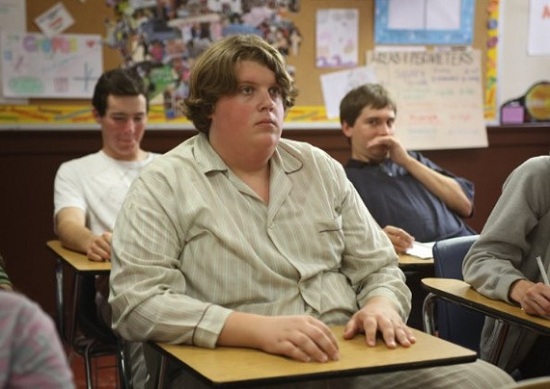
    “Terri,” the new film by Azazel Jacobs (“Momma’s Man”) starring John C. Reilly and newcomer Jacob Wysocki, is a wholly new and refreshing coming-of-age film.

    Wysocki plays the lead character Terri Thompson in “Terri” ( a pretty astonishing star turn), an overweight high school student who is abandoned by his parents to his mentally flagging Uncle James (Creed Bratton of “The Office,” doing a complete and memorable 180 from anything we’ve seen him in) in a small, wooded Midwestern town. Like a blown-out breeze of a kid, Terry shlumps into class wearing only his pajamas, and can barely muster up the effort to care about the itinerant teasing and badgering gently yet deftly inflicted upon him by his classmates. The weight on his shoulders seems undefined yet pretty dense. Wysocki’s performance defines the film as a new type of teen movie- a mainstream film with actual teenagers in it- not at one extreme of the adorable, sassy extreme, or the wicked-slash-drug-doing-slash classic indie film-versionized other. Wysocki’s “fat kid” portrayal here is neither jolly or wisecracking nor self-loathing and hell-bent on destruction. He appears to be, quite simply, tired and bored- like most teenagers historically represent themselves. He is deadpan funny and gracefully enlightening in this exacting, momentous performance.

    Jacobs has a keen way of filling us in on the details without telling us much- which is, quite happily for the audience, how one’s high school experience probably was for most of us. It works so very well here, his way of letting the film breathe, and just as we are getting a feeling of the movie’s off-kilter atmosphere, in strides John C. Reilly.

    Who doesn’t love him, first of all? He can do no wrong, it seems, and casting Reilly, as Vice Principal “Mr. Fitzgerald,” was the perfect complement to a cast of characters that is rounded out only by their own sense of feeling terribly lost. Mr. Fitzgerald is someone who wants to make a difference, and does this by befriending and trying to become a defacto mentor to all of the misfits in the school. Soon, Fitzgerald is inviting Terri into his office for malted milk balls and guy talk. What happens may sound predictable, but in the hands of Reilly and Wysocki, something truly beautiful develops: A real friendship, with genuine give and take, and the realization that everyone, always, is forever growing up.

    Bridger Zadina plays Chad- truly one of the sweetest, funniest and most oddball high school outcasts in recent cinematic history, and Olivia Crocicchia plays Heather, the object of first systematic lust, then derision, by the entire high school student body. Heather first comes across as every high school girl termed “slut” always does- oddly powerful and simultaneously powerless. The scene in the shed will leave many recalling how an innocent night can turn somehow oddly dangerous right after one hits puberty, and the turn the film takes is quickly brought back to life, just as soon as the characters sober up themselves. The film seems to have the steady heart of an actual life rhythm, and really is one of those films that leaves you guessing – is it Jacobs, the actors, the writing, or all three that pumps the life blood through it? Novelist Patrick DeWitt (author of “Ablutions” and “My Brothers Sisters”) turned in an amazing freshman effort here, and Jacobs himself told me that they were in constant communication as DeWitt turned in first pages. It all works perfectly well.

    Not formally perfect, stylized or over-produced in the least, Terri is a movie to watch, enjoy and revel in. We will hopefully be seeing much more of Azazel Jacobs work in the future. Go and see this film this weekend. Vimooz highly recommends it…

    Review by Francesca McCaffery

    {youtube}YLGW6sdHy0g{/youtube}


    Read more


  • REVIEW: Steve Coogan Surprises and Delights in “The Trip”


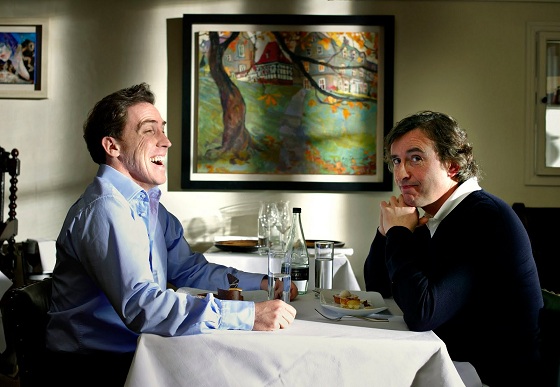
    Conceptualized at first as a six-part television series for British television, director Michael Winterbottom’s “The Trip,” starring English comics Steve Coogan and Rob Brydon, is a strange, delightfully bittersweet mid-life crisis film of sorts, which leaves you somehow feeling as if you’ve witnessed an actual epiphany happening as it is unfolding.

    Coogan plays himself, ostensibly, and the premise is that he is invited to do a driving restaurant tour of the gorgeous Northern English countryside to sample complicated haute cuisine for an upcoming article for the Observer. He invites along (rather grudgingly) his old friend Rob Brydon, after his girlfriend gets cold feet, and cancels. The two friends, again, playing “themselves,” and using their real names, argue, do countless, hilarious imitations of celebrities (trying to one up the other on who does the best, most pitch-perfect Michael Caine), and, generally, begin to rub each other gently, ever so slightly- the wrong way. Which is to say, Brydon’s simpler lifestyle and solid, sweet marriage start to make Coogan dwell upon his own, immediate life choices. Coogan’s interior ramblings become more vocal and rise to the surface, and Brydon’s contrasting satisfyingly placid private life begins to figure more prominently as the road trip wares on.

    As the mild-mannered and dry-witted Brydon witnesses Coogan chatting with his American girlfriend on the phone moment (they are taking a “break,” she in the U.S., he in England) then bedding down a sensual concierge the next, he chides him gently, while never for a moment becoming envious of Coogan’s far flashier life career and romantic life. Well, not really. Coogan, on the other hand, pines for some sort of more relevant stability- with his girlfriend and with his children-all who currently live apart from him, and within his own legit acting career.

    It is interesting to see such an accomplished, genuinely charismatic performer actually suffering over a dearth of opportunities to really sink his teeth into artistically. Yes, he makes fun of costume drama, but there is an intriguing, authentic feeling of longing experienced, the raw wish to experience genuine greatness, which is rarely glimpsed in our fame-obsessed, reality-TV based culture. This is really what “The Trip” is all about: Realizing what’s important to you, versus your life’s circumstances at the very moment. Cogan’s choice at the end is poignant and feels quite “real.” As he is shot behind the craggy, rolling hills of the sumptuous Yorkshire countryside, which appear to have been CGI-ed right in from “Wuthering Heights,” Coogan, quoting Keats and Shakespeare as if in a dream state, would make for a truly intense, romantic presence on-screen in a juicy period piece himself. Steve Coogan, get thee-self into a Merchant Ivory film! Vimooz says go see “The Trip.” Especially if you are on a staycation this season-this is a great, sweet, summer weekend matinee movie, one that will have you both laughing and thinking about how good or crappy you really have it- or both.

    {youtube}Xxq-I_e_KXg{/youtube}

    Read more


  • REVIEWS: One Lucky Elephant and Queen of the Sun:What are the Bees Telling Us– Two essential new docs

    This week two documentaries open in New York that examine relationships between humans and animals. Though two very different kinds of animals are presented in these two films, and their stories told in very different styles, the overall ideas explored in both films, about humans and animals coexisting, are quite similar.

    A realistic examination of wild animals living in captivity through the unique story of an elephant and a circus director, One Lucky Elephant is an intimate documentary about a cross-species relationship. Director Lisa Leeman has said that she wanted her film to be character-driven, and she succeeded—the film revolves around the characters David Balding and his elephant that he raised and founded his circus around, Flora. David gives personal accounts of his close relationship to Flora—she is like a daughter to him—and the camera follows him through his struggle to find her a new home, as she has grown out of circus performing. The film crew followed the story for ten years, beginning in 2000, when the idea came up to send her back to Africa to give safari rides; when that fell through the crew stuck with David and Flora as they considered different possible residences for her, from zoos to an elephant refuge in Tennessee. The dramatic pull comes from the question of whether, once Flora is placed somewhere new, it may be time for her to remain independent from David forever.

    Leeman focuses much of the time on David but is careful to get every viewpoint of Flora’s situation. One can see from the intimate footage of Flora what a wonderful and smart elephant she is, but to give the audience more of an understanding of the complex inner minds of elephants, and the specific experiences of elephants taken from the wild and put into circuses or zoos, other elephant experts (the co-founder of the Tennessee refuge, and a Miami Zoo elephant keeper) are also interviewed and give their own account of the situation. There is no direct statement against having these animals in captivity—most of the main people interviewed worked in the circus and got their experience with elephants there—but the film presents all the information at hand about how captivity affects elephants’ physical, emotional and psychological well-being. The audience is at once moved by the relationship between David and Flora, but, as the film progresses, unsure if they would wish the fate of being brought up in a circus on any other elephant, no matter how loving the trainer. The technique of initially “breaking” elephants is revealed late in the film as still being less than humane, and other factors of being in captivity are weighed in, but through most of the film, Leeman focuses on this specific elephant’s experiences, and the importance of her bond with a human. In the end, the bond might be greater for David, but the effect his love has had on Flora is also undeniable. Their unique relationship is captured in a bittersweet film that honestly depicts both the positive and negative aspects of a wild animal being raised by a human.

    Opens June 8th in NYC

    {youtube}pOIDq5mcX6I{/youtube}

    —————————————–


    Queen of the Sun: What are the Bees Telling Us? is a refreshing new documentary by Taggart Siegel, exploring the very serious subject of the disappearance of honeybees across North America and Europe. The film is straightforward in some ways; Siegel interviews a host of people around the world about bees, and covers many aspects of the scientific phenomenon, presenting an abundance of relevant information. But this is done with a unique style—the shots meditate on nature, on beehives, or beekeepers as they muse about their love for these essential insects. The opening of the film, for example, gives us the odd image of a woman covered from chin to waist in bees, moving in a slow dance. This is never explained, it is simply a strong image, both beautiful and unsettling, and Siegel presents it to the audience to let them make of it what they will.

    The film is not always surreal, however. The focused subject is the major problem of Colony Collapse Disorder, in which a beehive is suddenly deserted—the honey is there, but the bees have vanished. There are many discussions presented in the film on this subject, but the main argument is an environmental one: the use of pesticides are affecting the bees’ nervous system, making them forget where their hive is, and monocultures of crops are removing the plants that bees depend on to survive. The disappearance of bees (which is rapidly happening; five million colonies have already been lost in North America alone) is extremely significant. Not only do bees make honey, they also pollinate forty percent of our food; there are no plants without their pollinators.

    The film presents all of these facts and many more to give a broad understanding of the situation that honeybees are in, but it also does more than that. It gives a historical context of the importance of bees throughout human culture, and most of all, presents a variety of colorful characters who passionately express their love for bees, not just because of their practical uses, but because they are extraordinary creatures. Gunther Hauk, a biodynamic beekeeper and farmer who owns a bee sanctuary, is a main focus of the film for his knowledge of the bees’ situation, as is Michael Pollan, the bestselling author of multiple books exploring our modern relationship to food, but many other individuals are presented to give their own insight into the importance of bees. Some of the beekeepers interviewed include an eccentric French yogi in Grenoble; a boy in London who started beekeeping with his dad when he was only nine, and has named each of their queen bees after a queen of England; and a woman fighting to legalize beekeeping in Manhattan so that she can continue keeping them on her Harlem rooftop.These characters’ meditations on bees may at times alienate viewers who are not fond of hippie-ish sensibilities, but hopefully they will serve to intrigue rather than repel.

    Siegel includes philosophical meditations about bees and hives, animation sequences, and lovely cinematography of bees in the process of pollinating or building a hive, as well as the aforementioned moments of surrealism, to tell the story of the honeybees’ plight, and simply to illustrate the impact bees have on the world, and on people. The relationship between humans and bees is now more significant than ever, since we have the responsibility of making sure they survive.

    Opens June 10th in NYC

    {youtube}ekoeQodrVoM{/youtube}

    Read more