
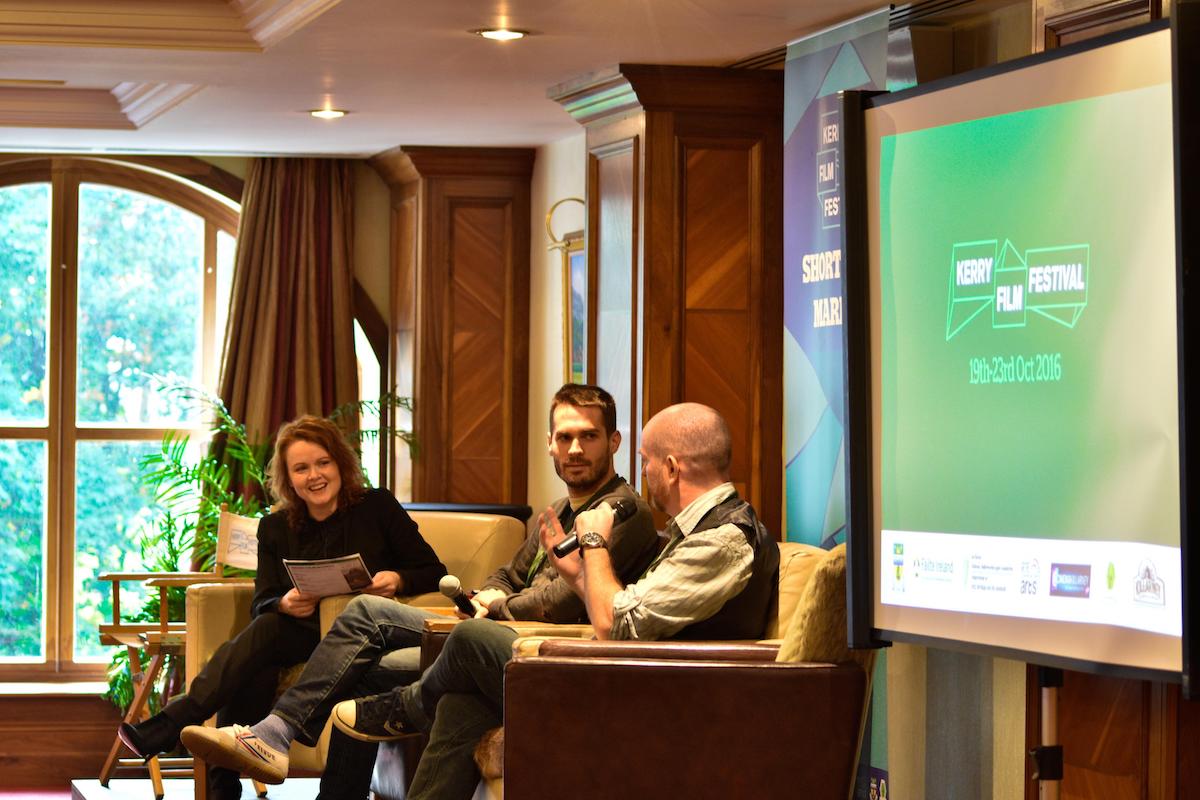
 Maeve McGrath at Kerry Film Festival with Sundance winner, Jim Cummings and Oscar nominated Michael Creagh[/caption]
The 18th Kerry Film Festival will take place from October 19th to 22nd, 2017, and is now inviting filmmaker entries for short films in categories such as Best Irish Narrative, Best International Narrative, Best Original Score, Best Documentary, Best Student, Best Animated Film and Best Kerry Connection. For the first time, the Kerry Film Festival is accepting submissions for Feature Films to screen at the festival in 2017.
KFF has previously featured successful shorts such as the Oscar® short-listed “Head over Heels” and Oscar® winner “Mr Hublot” and 2016 Oscar® winner “STUTTERER”. Four short films that screened at KFF in 2016 were nominated for the IFTA awards in 2017.
Filmmakers will have the chance for their work to be seen by a prestigious panel of adjudicators which has in recent years included Academy Award winner Benjamin Cleary, Directors Lenny Abrahamson and Paul Greengrass and Producer Finola Dwyer.
KFF 2016 saw the introduction of the Short Film Market in Killarney which brought industry speakers and guests including Sundance Grand Jury prize winner, Jim Cummings to the festival.
Closing date for submissions to the 2017 competition is July 14th 2017.
Artistic Director of the Kerry Film Festival, Maeve McGrath said, “We are now accepting short film submissions under 20 minutes long and for the first time, KFF are accepting feature film submissions. The festival has recognized the increased production of feature films by national and international independent filmmakers and we are keen to provide a platform for screening these films”
Maeve McGrath at Kerry Film Festival with Sundance winner, Jim Cummings and Oscar nominated Michael Creagh[/caption]
The 18th Kerry Film Festival will take place from October 19th to 22nd, 2017, and is now inviting filmmaker entries for short films in categories such as Best Irish Narrative, Best International Narrative, Best Original Score, Best Documentary, Best Student, Best Animated Film and Best Kerry Connection. For the first time, the Kerry Film Festival is accepting submissions for Feature Films to screen at the festival in 2017.
KFF has previously featured successful shorts such as the Oscar® short-listed “Head over Heels” and Oscar® winner “Mr Hublot” and 2016 Oscar® winner “STUTTERER”. Four short films that screened at KFF in 2016 were nominated for the IFTA awards in 2017.
Filmmakers will have the chance for their work to be seen by a prestigious panel of adjudicators which has in recent years included Academy Award winner Benjamin Cleary, Directors Lenny Abrahamson and Paul Greengrass and Producer Finola Dwyer.
KFF 2016 saw the introduction of the Short Film Market in Killarney which brought industry speakers and guests including Sundance Grand Jury prize winner, Jim Cummings to the festival.
Closing date for submissions to the 2017 competition is July 14th 2017.
Artistic Director of the Kerry Film Festival, Maeve McGrath said, “We are now accepting short film submissions under 20 minutes long and for the first time, KFF are accepting feature film submissions. The festival has recognized the increased production of feature films by national and international independent filmmakers and we are keen to provide a platform for screening these films”-
Kerry Film Festival Announces 2017 Dates, Now Accepting Filmmaker Submissions
[caption id="attachment_22513" align="aligncenter" width="1200"] Maeve McGrath at Kerry Film Festival with Sundance winner, Jim Cummings and Oscar nominated Michael Creagh[/caption]
The 18th Kerry Film Festival will take place from October 19th to 22nd, 2017, and is now inviting filmmaker entries for short films in categories such as Best Irish Narrative, Best International Narrative, Best Original Score, Best Documentary, Best Student, Best Animated Film and Best Kerry Connection. For the first time, the Kerry Film Festival is accepting submissions for Feature Films to screen at the festival in 2017.
KFF has previously featured successful shorts such as the Oscar® short-listed “Head over Heels” and Oscar® winner “Mr Hublot” and 2016 Oscar® winner “STUTTERER”. Four short films that screened at KFF in 2016 were nominated for the IFTA awards in 2017.
Filmmakers will have the chance for their work to be seen by a prestigious panel of adjudicators which has in recent years included Academy Award winner Benjamin Cleary, Directors Lenny Abrahamson and Paul Greengrass and Producer Finola Dwyer.
KFF 2016 saw the introduction of the Short Film Market in Killarney which brought industry speakers and guests including Sundance Grand Jury prize winner, Jim Cummings to the festival.
Closing date for submissions to the 2017 competition is July 14th 2017.
Artistic Director of the Kerry Film Festival, Maeve McGrath said, “We are now accepting short film submissions under 20 minutes long and for the first time, KFF are accepting feature film submissions. The festival has recognized the increased production of feature films by national and international independent filmmakers and we are keen to provide a platform for screening these films”
-
Award-winning LGBT Documentary POLITICAL ANIMALS will be Released on DVD and VOD on June 6th | Trailer
[caption id="attachment_14305" align="aligncenter" width="1200"] Political Animals[/caption]
The award-winning LGBT documentary Political Animals, directed by Jonah Markowitz (Shelter), and co-directed by Tracy Wares (DP: Bomb It, Gay Republicans), will be released on DVD and VOD on June 6th in the U.S. and Canada via Gravitas Ventures.
Documentary Political Animals is an inspiring portrait of four defiant California politicians – all out women – who bravely fought hatred and homophobia through pioneering legislative efforts in California to make political history, paving the way for success in the fight for Equality, and to create lasting and significant social change.
Political Animals celebrates the legendary civil rights victories of the first four openly gay elected California state politicians – who were all women: Carole Migden, Sheila Kuehl, Jackie Goldberg, and Christine Kehoe. An inspiring portrait of four defiant politicians who refused to let hatred and homophobia stop them from making history and achieving legal recognition for LGBT people throughout California and the United States.
Political Animals documents the tough struggles they endured together, and celebrates their pioneering success in the fight for Equality and the sweet victories these unforgettable women created to pave the way for lasting and significant social change.
https://www.youtube.com/watch?v=cZ9jikA5Ip4
Political Animals[/caption]
The award-winning LGBT documentary Political Animals, directed by Jonah Markowitz (Shelter), and co-directed by Tracy Wares (DP: Bomb It, Gay Republicans), will be released on DVD and VOD on June 6th in the U.S. and Canada via Gravitas Ventures.
Documentary Political Animals is an inspiring portrait of four defiant California politicians – all out women – who bravely fought hatred and homophobia through pioneering legislative efforts in California to make political history, paving the way for success in the fight for Equality, and to create lasting and significant social change.
Political Animals celebrates the legendary civil rights victories of the first four openly gay elected California state politicians – who were all women: Carole Migden, Sheila Kuehl, Jackie Goldberg, and Christine Kehoe. An inspiring portrait of four defiant politicians who refused to let hatred and homophobia stop them from making history and achieving legal recognition for LGBT people throughout California and the United States.
Political Animals documents the tough struggles they endured together, and celebrates their pioneering success in the fight for Equality and the sweet victories these unforgettable women created to pave the way for lasting and significant social change.
https://www.youtube.com/watch?v=cZ9jikA5Ip4
-
Watch the Green Band ‘Clean’ Trailer for THE LITTLE HOURS
[caption id="attachment_19933" align="aligncenter" width="1200"]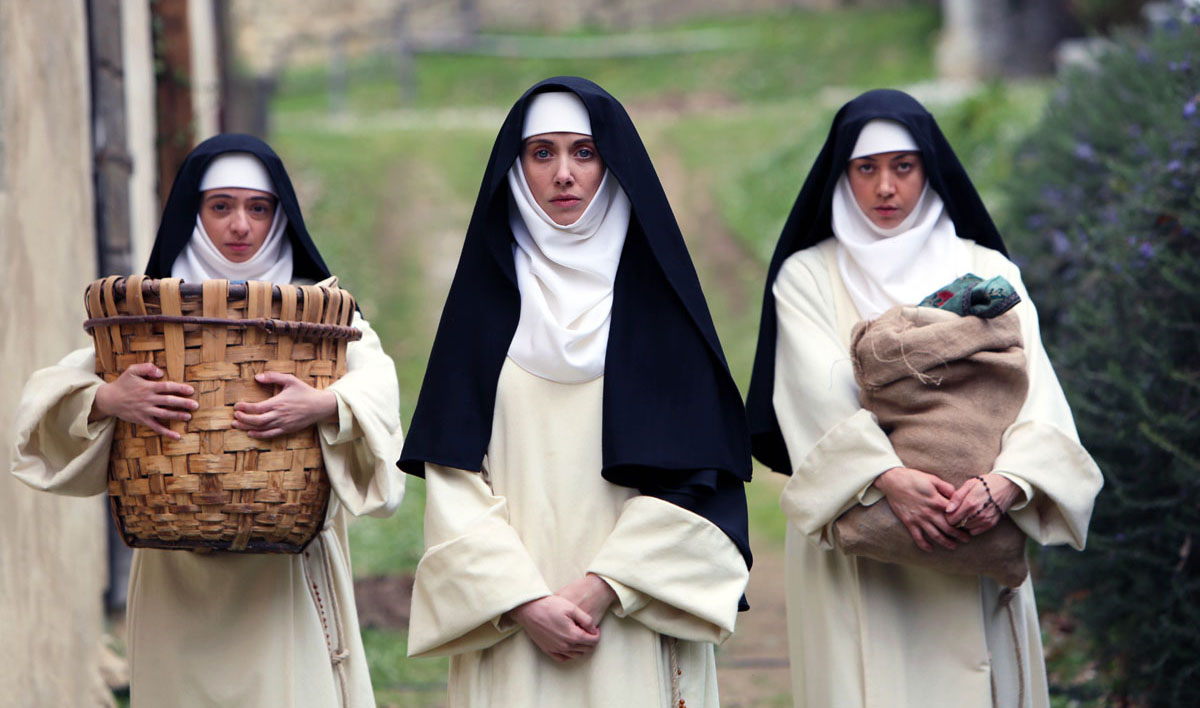 Alison Brie, Kate Micucci and Aubrey Plaza appear in The Little Hours by Jeff Baena.[/caption]
The Little Hours directed by Jeff Baena which debuted at the 2017 Sundance Film Festival, has released the new green band trailer.
The film starring Alison Brie, Dave Franco, Kate Mucucci, Aubrey Plaza, John C. Reilly, Molly Shannon, Fred Armisen, Jemima Kirke, Nick Offerman, Adam Pally, Jon Gabrus, Lauren Weedman will open in New York and Los Angeles on June 30th.
Medieval nuns Alessandra (Alison Brie), Fernanda (Aubrey Plaza), and Ginevra (Kate Micucci) lead a simple life in their convent. Their days are spent chafing at monastic routine, spying on one another, and berating the estate’s day laborer. After a particularly vicious insult session drives the peasant away, Father Tommasso (John C. Reilly) brings on new hired hand Massetto (Dave Franco), a virile young servant forced into hiding by his angry lord. Introduced to the sisters as a deaf-mute to discourage temptation, Massetto struggles to maintain his cover as the repressed nunnery erupts in a whirlwind of pansexual horniness, substance abuse, and wicked revelry.
Alison Brie, Kate Micucci and Aubrey Plaza appear in The Little Hours by Jeff Baena.[/caption]
The Little Hours directed by Jeff Baena which debuted at the 2017 Sundance Film Festival, has released the new green band trailer.
The film starring Alison Brie, Dave Franco, Kate Mucucci, Aubrey Plaza, John C. Reilly, Molly Shannon, Fred Armisen, Jemima Kirke, Nick Offerman, Adam Pally, Jon Gabrus, Lauren Weedman will open in New York and Los Angeles on June 30th.
Medieval nuns Alessandra (Alison Brie), Fernanda (Aubrey Plaza), and Ginevra (Kate Micucci) lead a simple life in their convent. Their days are spent chafing at monastic routine, spying on one another, and berating the estate’s day laborer. After a particularly vicious insult session drives the peasant away, Father Tommasso (John C. Reilly) brings on new hired hand Massetto (Dave Franco), a virile young servant forced into hiding by his angry lord. Introduced to the sisters as a deaf-mute to discourage temptation, Massetto struggles to maintain his cover as the repressed nunnery erupts in a whirlwind of pansexual horniness, substance abuse, and wicked revelry.
-
FilmRise to Release Ramona S. Diaz’s Sundance Winning Documentary MOTHERLAND | Trailer
[caption id="attachment_22502" align="aligncenter" width="1200"] Motherland[/caption]
Ramona S. Diaz’s documentary Motherland which world premiered earlier this year at the 2017 Sundance Film Festival, will be released in the Summer by FilmRise.
Motherland, which won the World Cinema Documentary Special Jury Award for Commanding Vision at the 2017 Sundance Film Festival, takes us into the heart of the planet’s busiest maternity hospital in one of the world’s poorest and most populous countries: the Philippines. The film’s viewer, like an unseen outsider dropped unobtrusively into the hospital’s stream of activity, passes through hallways, enters rooms and listens in on conversations. At first, the surrounding people are strangers. But as the film continues, it’s absorbingly intimate, rendering the women at the heart of the story increasingly familiar. Three women—Lea, Aira and Lerma—emerge to share their stories with other mothers, their families, doctors and social workers. While each of them faces daunting odds at home, their optimism, honesty and humor suggest a strength that they will certainly have to summon in the years ahead.
Diaz said: “I’m very much looking forward to partnering with FilmRise on the release of our film after successful premieres at festivals both in the U.S. and abroad. We feel strongly that the film will strike a chord with viewers, all the more so in today’s political and cultural climate.”
Motherland[/caption]
Ramona S. Diaz’s documentary Motherland which world premiered earlier this year at the 2017 Sundance Film Festival, will be released in the Summer by FilmRise.
Motherland, which won the World Cinema Documentary Special Jury Award for Commanding Vision at the 2017 Sundance Film Festival, takes us into the heart of the planet’s busiest maternity hospital in one of the world’s poorest and most populous countries: the Philippines. The film’s viewer, like an unseen outsider dropped unobtrusively into the hospital’s stream of activity, passes through hallways, enters rooms and listens in on conversations. At first, the surrounding people are strangers. But as the film continues, it’s absorbingly intimate, rendering the women at the heart of the story increasingly familiar. Three women—Lea, Aira and Lerma—emerge to share their stories with other mothers, their families, doctors and social workers. While each of them faces daunting odds at home, their optimism, honesty and humor suggest a strength that they will certainly have to summon in the years ahead.
Diaz said: “I’m very much looking forward to partnering with FilmRise on the release of our film after successful premieres at festivals both in the U.S. and abroad. We feel strongly that the film will strike a chord with viewers, all the more so in today’s political and cultural climate.”
-
AMERIKA SQUARE to Open, SON OF SOFIA to Close 2017 Los Angeles Greek Film Festival
[caption id="attachment_17461" align="aligncenter" width="1200"] Amerika Square[/caption]
The West coast premiere of Yannis Sakaridis’ award-winning Amerika Square (Plateia Amerikis) will open the 11th Annual Los Angeles Greek Film Festival on Wednesday, June 7. Nakos, a banal racist, had enough of the thousands of refugees in his neighborhood, Amerika Square in the center of Athens. Tarek, a Syrian ex-Military doctor, is looking for a deal to smuggle out of Greece with his daughter. Billy, a tattoo artist, falls in love with Tereza, an African singer who is also looking for an escape by the sea. The three stories merge, while time is running out for everyone. Amerika Square took the FIPRESCI award at the 2016 Thessaloniki Film Festival.
Thursday, June 8, has several films and documentaries including the world premiere of Anastasios Papapostolou’s short documentary The Greek that follows the story of one-armed Greek boxer Vaggelis ‘Cobra’ Chatzis.
Nikos Koundouros’ The Ogre of Athens (Oh Drakos) also screens on Thursday. The film, marked a departure role for comic actor Dinos Iliopoulos. Iliopoulos plays a mousy, timid man who, due to mistaken identity, becomes embroiled in a high crime life and death situation. THE OGRE OF ATHENS has been consistently voted the number one Greek film of all time by the Hellenic Film Critics’ Association. The screening is LAGFF’s homage to the director and his works following his passing this February at age 90. This screening is free to the public to attend.
Late night spot on Thursday belongs to the west coast premiere of Petros Charalambous’ Boy On The Bridge (To Agori Sti Gefyra”). The drama is based on a novel by the British-Cypriot Eve Makis who penned the script with Stavros Pamballis. The film is the true story of a boy whose idyllic life in a Mediterranean village is disturbed by a crime that claims his innocence.
Friday’s schedule includes the screening of – Michele Poulos’ documentary and Los Angeles premiere A Late Style Of Fire: Larry Levis, American Poet which chronicles the writer’s childhood, three marriages, friendships with other famous poets and self-destructive behavior.
Babis Tsokas’ documentary and west coast premiere Our Own Maria Callas, a voyage into the mythical world of the famous soprano, will also be shown, in a tribute to Callas’ passing away 40 years ago. Our Own Maria Callas is free and open to the public.
Saturday’s program includes a screening and Los Angeles premiere of writer-director Clio Fanouraki’s uplifting first feature Xamou. This second coming of age story finds Georges Corraface (A Touch Of Spice) an aging hotel promoter recently out of work and job prospects, fighting depression until his wife lures him outside of his self-imposed exile. He discovers a renewed life and career as his family and neighbors reintroduce him to the wonders and beauty of his home island of Crete. This spectacularly visual film is edited by Yorgos Mavropsaridis (The Lobster, Dogtooth).
Swing Away John O’Hurley, Shannon Elizabeth star in Michael A. Nickles drama about a professional golfer who travels to her grandparents in Greece to avoid the harsh spotlight and Sofia Exarchou’s new Greek Cinema feature PARK about Athens Olympic Village, ten years after the Games, where wilding youths, injured retired athletes and stray dogs roam among ruins and decaying sports venues.
Before each feature and throughout the festival is an array of short narratives and documentaries from up and coming as well as established filmmakers.
Shorts include Daphne Matziaraki’s Academy Award ® nominated 4.1 Miles which will play before Amerika Square opening night. Friday Giannis Ziogkase’s Ethnophobia will play with Boy On The Bridge. The west coast premiere of Phedon Papamichael’s dramatic short A Beautiful Day, written by Angeliki Giannakopoulos and starring James Brolin and Francis Fisher will screen with the U.S. premiere of Sotiris Tsafoulias’ feature crime thriller The Other Me.
Sunday ushers in a new documentary slot from 12:00 – 4:00 P.M. including well known sports filmmaker Constantine Papanicolaou’s U.S. premiere of Frozen Ambrosia about his skiing adventure on Greece’s Mount Olympus and about the little-known winter tourism in Greece and the world premiere of George Lagdaris’ With The Hoes And The Terrarium Forks chronicling evolution of the village of Zagora which developed cooperatively over the last 100 years and passes on this tradition from generation to generation.
[caption id="attachment_21925" align="aligncenter" width="1200"]
Amerika Square[/caption]
The West coast premiere of Yannis Sakaridis’ award-winning Amerika Square (Plateia Amerikis) will open the 11th Annual Los Angeles Greek Film Festival on Wednesday, June 7. Nakos, a banal racist, had enough of the thousands of refugees in his neighborhood, Amerika Square in the center of Athens. Tarek, a Syrian ex-Military doctor, is looking for a deal to smuggle out of Greece with his daughter. Billy, a tattoo artist, falls in love with Tereza, an African singer who is also looking for an escape by the sea. The three stories merge, while time is running out for everyone. Amerika Square took the FIPRESCI award at the 2016 Thessaloniki Film Festival.
Thursday, June 8, has several films and documentaries including the world premiere of Anastasios Papapostolou’s short documentary The Greek that follows the story of one-armed Greek boxer Vaggelis ‘Cobra’ Chatzis.
Nikos Koundouros’ The Ogre of Athens (Oh Drakos) also screens on Thursday. The film, marked a departure role for comic actor Dinos Iliopoulos. Iliopoulos plays a mousy, timid man who, due to mistaken identity, becomes embroiled in a high crime life and death situation. THE OGRE OF ATHENS has been consistently voted the number one Greek film of all time by the Hellenic Film Critics’ Association. The screening is LAGFF’s homage to the director and his works following his passing this February at age 90. This screening is free to the public to attend.
Late night spot on Thursday belongs to the west coast premiere of Petros Charalambous’ Boy On The Bridge (To Agori Sti Gefyra”). The drama is based on a novel by the British-Cypriot Eve Makis who penned the script with Stavros Pamballis. The film is the true story of a boy whose idyllic life in a Mediterranean village is disturbed by a crime that claims his innocence.
Friday’s schedule includes the screening of – Michele Poulos’ documentary and Los Angeles premiere A Late Style Of Fire: Larry Levis, American Poet which chronicles the writer’s childhood, three marriages, friendships with other famous poets and self-destructive behavior.
Babis Tsokas’ documentary and west coast premiere Our Own Maria Callas, a voyage into the mythical world of the famous soprano, will also be shown, in a tribute to Callas’ passing away 40 years ago. Our Own Maria Callas is free and open to the public.
Saturday’s program includes a screening and Los Angeles premiere of writer-director Clio Fanouraki’s uplifting first feature Xamou. This second coming of age story finds Georges Corraface (A Touch Of Spice) an aging hotel promoter recently out of work and job prospects, fighting depression until his wife lures him outside of his self-imposed exile. He discovers a renewed life and career as his family and neighbors reintroduce him to the wonders and beauty of his home island of Crete. This spectacularly visual film is edited by Yorgos Mavropsaridis (The Lobster, Dogtooth).
Swing Away John O’Hurley, Shannon Elizabeth star in Michael A. Nickles drama about a professional golfer who travels to her grandparents in Greece to avoid the harsh spotlight and Sofia Exarchou’s new Greek Cinema feature PARK about Athens Olympic Village, ten years after the Games, where wilding youths, injured retired athletes and stray dogs roam among ruins and decaying sports venues.
Before each feature and throughout the festival is an array of short narratives and documentaries from up and coming as well as established filmmakers.
Shorts include Daphne Matziaraki’s Academy Award ® nominated 4.1 Miles which will play before Amerika Square opening night. Friday Giannis Ziogkase’s Ethnophobia will play with Boy On The Bridge. The west coast premiere of Phedon Papamichael’s dramatic short A Beautiful Day, written by Angeliki Giannakopoulos and starring James Brolin and Francis Fisher will screen with the U.S. premiere of Sotiris Tsafoulias’ feature crime thriller The Other Me.
Sunday ushers in a new documentary slot from 12:00 – 4:00 P.M. including well known sports filmmaker Constantine Papanicolaou’s U.S. premiere of Frozen Ambrosia about his skiing adventure on Greece’s Mount Olympus and about the little-known winter tourism in Greece and the world premiere of George Lagdaris’ With The Hoes And The Terrarium Forks chronicling evolution of the village of Zagora which developed cooperatively over the last 100 years and passes on this tradition from generation to generation.
[caption id="attachment_21925" align="aligncenter" width="1200"]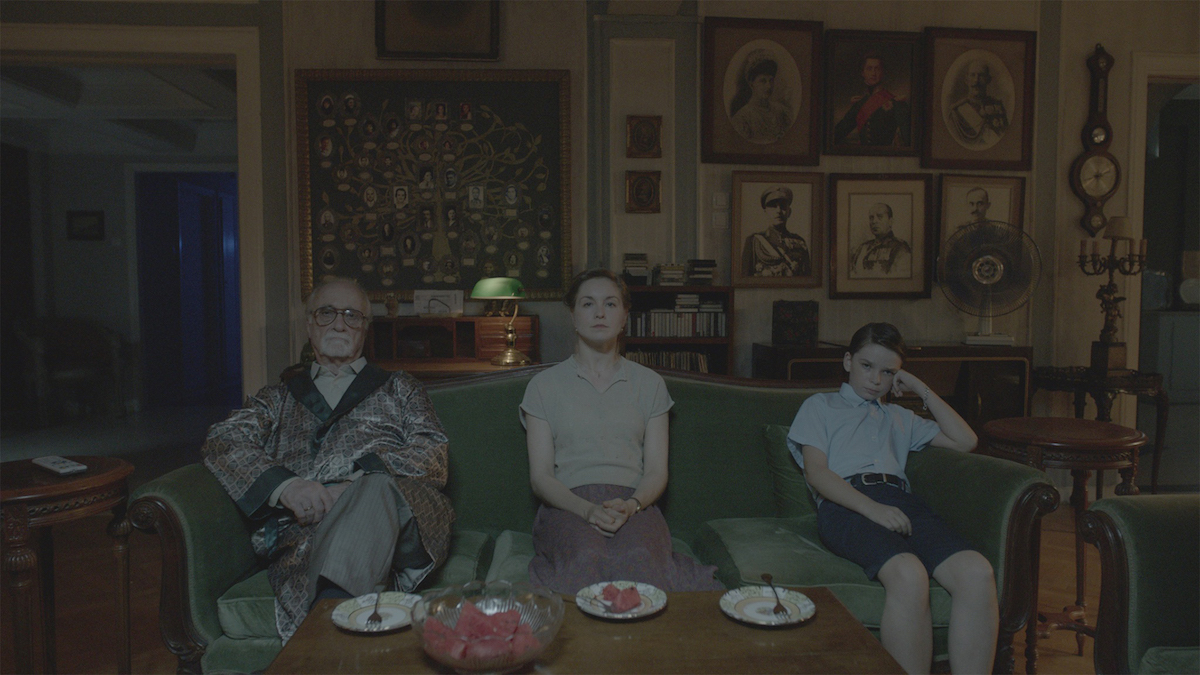 The family (Thanasis Papageorgiou, Valery Tscheplanow, Victor Khomut) watches TV in SON OF SOFIA. Photo credit: Dionysis Eftimiopoulos.[/caption]
Closing the Festival is the west coast premiere of Elina Psykou’s drama Son Of Sofia. In April, the film took Best Picture in the International Narrative Feature Competition at the Tribeca Film Festival. Psykou, known for The Eternal Return of Antonis Paraskevas, has created a dark fairy tale featuring 11-year-old Misha, a young Russian boy who is brought to Athens by his mother to live and is surprised to learn she has remarried. Misha’s imagination soon takes over to protect him from his new life, and he creates a journey that puts make believe against stark reality.
The festival will finally wrap with the Orpheus Awards that honor the best of the Festival’s feature, short and documentary films as voted by the 2017 Jury with one film receiving the Orpheus Audience Award honor. Also, the festival selects one filmmaker or actor whose contributions to the entertainment industry have exceeded those of their peers. This year, the festival honoree is Oscar-winning writer/producer/director Alexander Payne. Payne will receive the Orpheus for his contributions to worldwide entertainment and the preservation of film itself.
The family (Thanasis Papageorgiou, Valery Tscheplanow, Victor Khomut) watches TV in SON OF SOFIA. Photo credit: Dionysis Eftimiopoulos.[/caption]
Closing the Festival is the west coast premiere of Elina Psykou’s drama Son Of Sofia. In April, the film took Best Picture in the International Narrative Feature Competition at the Tribeca Film Festival. Psykou, known for The Eternal Return of Antonis Paraskevas, has created a dark fairy tale featuring 11-year-old Misha, a young Russian boy who is brought to Athens by his mother to live and is surprised to learn she has remarried. Misha’s imagination soon takes over to protect him from his new life, and he creates a journey that puts make believe against stark reality.
The festival will finally wrap with the Orpheus Awards that honor the best of the Festival’s feature, short and documentary films as voted by the 2017 Jury with one film receiving the Orpheus Audience Award honor. Also, the festival selects one filmmaker or actor whose contributions to the entertainment industry have exceeded those of their peers. This year, the festival honoree is Oscar-winning writer/producer/director Alexander Payne. Payne will receive the Orpheus for his contributions to worldwide entertainment and the preservation of film itself.
-
Karlovy Vary International Film Festival Announces 2017 Competition Lineup
[caption id="attachment_22496" align="aligncenter" width="1200"]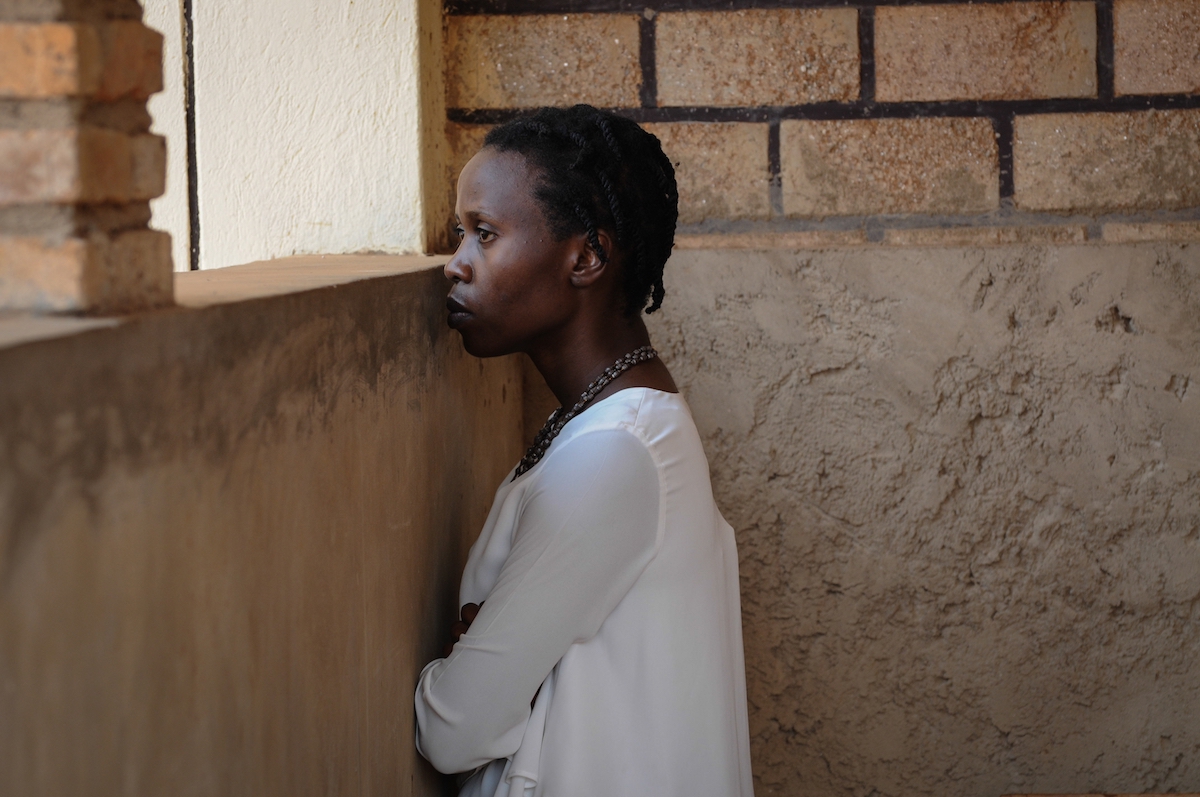 Birds Are Singing in Kigali[/caption]
The 52nd Karlovy Vary International Film Festival today announced the lineup for the competition sections: Official Selection – Competition, East of the West – Competition and Documentary Films – Competition.
The films in the festival’s main section will include Birds Are Singing in Kigali. The last film of the deceased Krzysztof Krauze is depicting painful consequences of the Rwandan genocide and was completed by his co-director and wife Joanna Kos-Krauze. Three years after receiving the KVIFF‘s Crystal Globe for Corn Island George Ovashvili is returning to Karlovy Vary with no less unmistakably directed Khibula, an archetypal story inspired by journey of the newly independent Georgia’s first president. Competition will also present Boris Khlebnikov’s new drama Arrhythmia, Václav Kadrnka’s medieval cinematic pilgrimage Little Crusader, Peter Bebjak’s criminal thriller The Line, American unconventional romantic comedy about (ab)normality in love Keep the Change, remarkable debuts Ralang Road from India and Israeli-German Cakemaker, and More, the first directorial attempt by Turkish actor Onur Saylak.
This year, the East of the West – Competition will open with remarkable Azerbaijani drama Pomegranate Orchard by Ilgar Najaf. Eight of the dozen of premieres are debut films, including two strong films by female directors – Marina Stepanska will bring to Karlovy Vary Falling, fragile love story and a strong statement of the current young Ukrainian generation, while Mariam Khatchvani in Dede will take the audience to the rough Svanetia, region from which she comes from. Juraj Lehotský will return to KV after successful fiction debut Miracle with Slovak-Czech intimate drama Nina.
Three World premieres – The White World According to Daliborek by Vít Klusák, Lots of Kids, a Monkey and a Castle by Gustavo Salmerón and Another News Story by Orban Wallace – will be presented to Karlovy Vary audience in the Documentary Films – Competition. Tarzan’s Testicles, a Romanian essay about a decrepit institute in Abchazia is also included among eleven selected films.
Birds Are Singing in Kigali[/caption]
The 52nd Karlovy Vary International Film Festival today announced the lineup for the competition sections: Official Selection – Competition, East of the West – Competition and Documentary Films – Competition.
The films in the festival’s main section will include Birds Are Singing in Kigali. The last film of the deceased Krzysztof Krauze is depicting painful consequences of the Rwandan genocide and was completed by his co-director and wife Joanna Kos-Krauze. Three years after receiving the KVIFF‘s Crystal Globe for Corn Island George Ovashvili is returning to Karlovy Vary with no less unmistakably directed Khibula, an archetypal story inspired by journey of the newly independent Georgia’s first president. Competition will also present Boris Khlebnikov’s new drama Arrhythmia, Václav Kadrnka’s medieval cinematic pilgrimage Little Crusader, Peter Bebjak’s criminal thriller The Line, American unconventional romantic comedy about (ab)normality in love Keep the Change, remarkable debuts Ralang Road from India and Israeli-German Cakemaker, and More, the first directorial attempt by Turkish actor Onur Saylak.
This year, the East of the West – Competition will open with remarkable Azerbaijani drama Pomegranate Orchard by Ilgar Najaf. Eight of the dozen of premieres are debut films, including two strong films by female directors – Marina Stepanska will bring to Karlovy Vary Falling, fragile love story and a strong statement of the current young Ukrainian generation, while Mariam Khatchvani in Dede will take the audience to the rough Svanetia, region from which she comes from. Juraj Lehotský will return to KV after successful fiction debut Miracle with Slovak-Czech intimate drama Nina.
Three World premieres – The White World According to Daliborek by Vít Klusák, Lots of Kids, a Monkey and a Castle by Gustavo Salmerón and Another News Story by Orban Wallace – will be presented to Karlovy Vary audience in the Documentary Films – Competition. Tarzan’s Testicles, a Romanian essay about a decrepit institute in Abchazia is also included among eleven selected films.
Official Selection – Competition
Arrhythmia / Arrhythmia / Arytmie Director: Boris Khlebnikov Russia, Finland, Germany, 2017, 90 min, International premiere Oleg is heading for his thirties. He works as a paramedic and, after a hard shift, he likes to take a few swigs. His wife Katya is also a doctor, working in the hospital’s emergency department. But her patience with Oleg is running thin, so she announces one day that she wants a divorce… One of the most intriguing filmmakers on the Russian scene today, Boris Khlebnikov returns to the big screen with a meticulous piece of direction. Along with precise performances from the cast, the film examines a relationship experiencing an arrhythmia similar to that affecting the hearts of the patients Oleg treats in his job as a paramedic. Breaking News / Breaking News / Breaking News Director: Iulia Rugină Romania, 2017, 81 min, International premiere A difficult assignment awaits TV reporter Alex. He must film a memorial portrait for a coworker who died in a tragic accident they both experienced but that only he survived. His colleague’s daughter becomes his guide, although her relationship to her father was more than complicated. Alex becomes an involuntary witness to the girl’s handling of her father’s death, and he also comes to believe that chronicling a person’s life involves more than just a short news report… The Cakemaker / The Cakemaker / Cukrář Director: Ofir Raul Graizer Israel, Germany, 2017, 104 min, World premiere After the death of his lover, Thomas heads to Israel – the birthplace of the man he adored. Despite prejudice at his German origins he becomes the pastry chef at a local café owned by the widow of the deceased Oran. Yet she hardly suspects that the unnamed sorrow that connects her to the stranger is for one and the same man. Čiara / The Line / Čára Director: Peter Bebjak Slovak Republic, Ukraine, 2017, 108 min, World premiere Adam Krajňák is head of the family and also boss of a gang of criminals smuggling cigarettes across the Slovak-Ukrainian border. The failure of one of the transports triggers an avalanche of consequences that compels him to question his own boundaries, none of which he had planned on crossing until now. Corporate / Corporate / Korporace Director: Nicolas Silhol France, 2016, 95 min, International premiere The life of an uncompromising HR manager named Emilie changes the instant she witnesses the suicide of one of the staff. The investigation of the case becomes a moral test for a woman whose actions, although motivated by her unlimited devotion to work, have caused grief for many an employee. Daha / More / Ještě víc Director: Onur Saylak Turkey, 2017, 115 min, World premiere Fourteen-year-old Gaza lives with his father Ahad on the shores of the Aegean Sea. The intelligent kid would like to continue his studies, but Ahad sees his son’s future differently. He gets Gaza to help with his side business – smuggling refugees from the Mideast. A directing tour de force, this disturbing psychological study of an adolescent boy’s transformation under the influence of those around him bears dark tidings about the contemporary world. Keep The Change / Keep The Change / Drobné si nechte Director: Rachel Israel USA, 2017, 94 min, International premiere Stylish but apathetic, David meets bundle of energy Sarah at a support group. While he’s just fulfilling a court-ordered obligation, she is thrilled to be there. But as they move past their initial conflicts, they become participants in an uncommon romance that won’t yield to convention. Keep the Change is a different kind of romantic comedy about people who are not the same – like most of us. Khibula / Khibula / Chibula Director: George Ovashvili Georgia, Germany, France, 2017, 98 min, World premiere Shortly after the first democratically elected president of Georgia came to power he was ousted in a military coup. He sets out for the mountains with a group of loyalists to regroup with his supporters. Set against an imposing Caucasus backdrop, we witness a man fighting for power while waging an internal struggle as he heads to meet his fate. The winner of KVIFF 2014 returns with an archetypal story told with light melancholy and an unmistakable visual poetic. Křižáček / Little Crusader / Křižáček Director: Václav Kadrnka Czech Republic, Slovak Republic, Italy, 2017, 90 min, World premiere Little Jan, the only descendant of the knight Bořek (Karel Roden), has run away from home. His anxious father sets out to find him but his despair at the fruitless search gradually starts to overpower him. Václav Kadrnka has turned out a stylistically well-contoured adaptation of the poem by Jaroslav Vrchlický, where he employs a taciturn film form in order to encourage our imagination to engage in a poetic, cinematic pilgrimage. Muškarci ne plaču / Men Don’t Cry / Chlapi nepláčou Director: Alen Drljević Bosnia and Herzegovina, Slovenia, Croatia, Germany, 2017, 98 min, World premiere When a diverse group of veterans gathers at a remote mountain hotel to undergo days of therapy less than two decades since the war ended in Yugoslavia, it’s hard to expect absolute harmony. This brilliantly directed drama, about the ability to forgive others only after we have forgiven ourselves, presents the pinnacle of the Balkan male acting scene. Ptaki śpiewają w Kigali / Birds Are Singing in Kigali / Ptáci zpívaji v Kigali Director: Joanna Kos-Krauze, Krzysztof Krauze Poland, 2017, 120 min, World premiere We meet ornithologist Anne in 1994 just as genocide is raging in Rwanda, perpetrated by the majority Hutus against the Tutsis. Anne manages to save the daughter of a colleague whose family has been murdered, and she takes her to Poland. But the woman returns to Rwanda to visit the graves of her loved ones. The director originally worked on the movie with her husband Krzysztof Krauze (My Nikifor – Crystal Globe, KVIFF 2004), but after his death in 2014 she eventually finished this challenging picture alone. Ralang Road / Ralang Road / Cesta do Ralangu Director: Karma Takapa India, 2017, 112 min, World premiere The stories of four individuals intertwine in a maze of Himalayan countryside, village buildings, and the local social microcosm. With a captivating internal rhythm and the stylistic elements taken firmly in hand, the film presents a narratively courageous look at the region’s social web and the influence of cultural immigration on local life.East of the West – Competition
Absence blízkosti / Absence of Closeness / Absence blízkosti Director: Josef Tuka Czech Republic, 2017, 65 min, World premiere After another failed relationship Hedvika takes her three-month-old daughter Adélka and her dog to stay with her mother and her mum’s boyfriend. Hedvika doesn’t get on all that well with her mother, nor are her feelings towards Adélka as maternal as they could be. One day she finds some diaries that her late father left behind… This small-scale psychological drama by debutant Josef Tuka is shored up by its realistic characters, an understated performance from Jana Plodková, and perceptive, discreet lensing. Blue Silence / Blue Silence / Modré ticho Director: Bülent Öztürk Turkey, Belgium, 2017, 93 min, International premiere After his release from the military hospital where he was receiving treatment for a past trauma, Hakan tries to resume a normal life and form a proper relationship with his daughter. Excelling for its mature performances and its stylisation of image and sound, the film foregrounds Hakan’s wounded soul and underlines his vehement efforts to break free from his own private prison. Dede / Dede / Dede Director: Mariam Khatchvani Georgia, United Kingdom, 2017, 97 min, World premiere It’s 1992. Young Dina lives in a remote mountain village where life is strictly governed by centuries of tradition. Is it possible to defy the firmly established order? And, if it is, what price must a person pay for doing so? Debut director Mariam Khatchvani set her first film in Svaneti, the stark mountainous region in northwestern Georgia where she herself was born, and she presents us with an authentic portrayal of a number of customs and traditions associated with this province. Kak Vitka Chesnok vez Lecha Shtyrya v dom invalidov / How Viktor “the Garlic” took Alexey “the Stud” to the Nursing Home / Jak Víťa Česnek vezl Ljochu Vrtáka do důchoďáku Director: Alexander Hant Russia, 2017, 90 min, World premiere This inventive road movie about a son and father finding their way to one another has none of the sentiment normally associated with this kind of subject matter. The film introduces an ensemble of wild characters from the lowest social strata, viewed through a lens that finds a balance between the work’s profoundly human dimension and its stylishly ironic commentary on contemporary society. Keti lõpp / The End of The Chain / Konec řetězce Director: Priit Pääsuke Estonia, 2017, 81 min, World premiere Have you ever had a bad day? Well, it would be difficult to top the catastrophe facing a waitress at a fast-food outlet, where people come not for a quick meal but simply to have a good cry. This high-spirited comedy, about the worst that can happen when you’re slaving from dawn to dusk, also examines existential dilemmas, unconcealed selfishness, and the essential desire for compassion. Mariţa / Mariţa / Mariţa Director: Cristi Iftime Romania, 2017, 100 min, World premiere Thirty-year-old Costi decides to spend a few days with his family. His parents have long since divorced, but Costi thinks it would be a great idea to arrange a surprise reunion, and he persuades his father to travel with him to meet up with his mother and siblings. Taking the old family car, affectionately known as Mariţa, they head out on a journey that will ultimately help to heal past wounds and allow Costi to finally understand not only his parents, but also himself. Minu näoga onu / The Man Who Looks Like Me / Muž, který vypadá jako já Director: Katrin Maimik, Andres Maimik Estonia, 2017, 100 min, World premiere Music critic Hugo is going through a post-divorce crisis and just wants some peace to finish writing his book. When his bohemian father suddenly appears on his doorstep, it becomes clear that the new life he has chosen for himself is about to go in quite a different direction. A tragicomic tale about parents and children and their shared mistakes and complexes. Nar baği / Pomegranate Orchard / Sad granátovníků Director: Ilgar Najaf Azerbaijan, 2017, 90 min, World premiere Gabil returns home to the humble family farmstead, surrounded by an orchard of venerable pomegranate trees; since his sudden departure twelve years ago he was never once in contact. However, the deep emotional scars he left behind cannot be erased from one day to the next. A private drama set in a picturesque landscape which tells of wrongdoings simmering below the surface of seeming innocence. Nina / Nina / Nina Director: Juraj Lehotský Slovak Republic, Czech Republic, 2017, 86 min, World premiere Nina is twelve years old and her world has just been shattered to smithereens: Her parents’ marriage has broken down and they are getting a divorce. After his internationally successful debut Miracle Juraj Lehotský now brings us an intimate drama in which the viewer looks upon the world and the selfish, visionless behaviour of adults through the eyes of a 12-year-old girl. A girl who is resilient and belligerent, but also vulnerable and just as fragile as the miniature world she creates for herself in the garden shed. Strimholov / Falling / Střemhlav Director: Marina Stepanska Ukraine, 2017, 105 min, World premiere Anton and Katia happen upon one another in night-time Kiev. Both are trying to find their bearings in life, and their encounter changes everything… This psychological drama by debuting Marina Stepanska offers up both a fragile love story and a strong statement on the current young generation as it searches for its place in post-revolutionary Ukraine. T’padashtun / Unwanted / Nechtění Director: Edon Rizvanolli Kosovo, Netherlands, 2017, 85 min, World premiere Teenager Alban lives in Amsterdam with his mother Zana, who left Kosovo during the war in the Balkans. When he starts going out with the sensitive Ana, neither of them has any idea that unresolved injustices and shadows from the past will make their way to the surface. This insightful, mature debut by a Kosovan director reminds us how difficult forgiveness and reconciliation can be. Taş / The Stone / Kámen Director: Orhan Eskiköy Turkey, 2017, 96 min, International premiere Emete would swear that the young man seeking refuge in her home is the son she lost long ago. But in her isolated, wasteland village it’s almost impossible to differentiate real hope from self-delusion. Especially since the only way to survive is to throw in with the collective myths and seek comfort in cold stone.DOCUMENTARY FILMS – COMPETITION
Another News Story / Another News Story / Další čerstvá zpráva Director: Orban Wallace United Kingdom, 2017, 90 min, World premiere In today’s chaotic era, what is the “who, how, and why” of news spewed forth on world conflicts and crises? A young British director turns his camera lens on the journalists sent by their employers to the Mediterranean to cover the unfolding humanitarian tragedy. When faced with immeasurable suffering, do they maintain a fundamental sensitivity or do they fall back on sensationalized treatments of human misfortune? Atelier de conversation / Atelier de conversation / Lekce francouzské konverzace Director: Bernhard Braunstein Austria, France, Lichtenstein, 2017, 72 min, International premiere One room, twelve red chairs, and a common language. Foreigners from all corners of the world meet each week for free lessons to hone their French. This formally minimalist documentary captures the fleeting moments in which grammatical fumblings or the painstaking search for the right word inadvertently open a window into the human soul. Avant la fin de l’été / Before Summer Ends / Než skončí léto Director: Maryam Goormaghtigh Switzerland, France, 2017, 80 min, International premiere Even after studying in France for five years, Arash hasn’t completely gotten used to the place, so he decides to return home to Iran. But friends Hossein and Ashkan are determined not to accept the loss of their closest pal. This documentary comedy, about a goodbye road trip across France, boasts beer chugging and French girls, but it’s also about cultural differences and the natural need to find and hold onto kindred spirits when living in a foreign land. A Campaign of Their Own / A Campaign of Their Own / Kampaň Director: Lionel Rupp Switzerland, 2017, 74 min, International premiere Partaking of the Direct Cinema documentary style, A Campaign of Their Own tells the story of the loyal supporters of democratic socialist Bernie Sanders, who lost to Clinton in the Democratic primaries. Subtly engagé and skillfully incorporated into a stylistic frame, the film lifts the lid on a newly-inflamed radical skepticism towards political representation in the United States and the general frustration at the breakdown of representative democracy itself. Land of the Free / Land of the Free / Země svobodných Director: Camilla Magid Denmark, Finland, 2017, 95 min, International premiere In the economically depressed neighborhoods of South Central Los Angeles it’s far too easy to get on the wrong side of the law. One fateful day 42-year-old Brian, who has just been released from serving a long prison sentence, experiences it firsthand. The vicious cycle of social determination, however, also begins to effect the lives of teenager Juan and seven-year-old Gianni. The debuting director immerses herself in the depths of human vulnerability in order to draw out fragments of hope. A Memory in Khaki / A Memory in Khaki / Vzpomínky v barvě khaki Director: Alfoz Tanjour Qatar, 2016, 108 min, European premiere A Syrian director dusts off memories of the past, when people were persecuted for their political beliefs. A poetic portrait of people whose homes have been turned to rubble, and a story that tells us that a free life can never be monochromatic, let alone khaki. Moj život bez zraka / My Life without Air / Život bez vzduchu Director: Bojana Burnać Croatia, 2017, 72 min, European premiere The most important moments in the life of Goran, a Croatian free diving record-holder, take place exclusively underwater. This portrait of an extreme athlete features intentional dramatic minimalism in order to guide the viewer toward a shared physical experience of performances that push the boundaries of what is humanly possible. Between each inhalation and exhalation we experience an endless emotional fall into the depths of the deep blue sea. Muchos hijos, un mono y un castillo / Lots of Kids, a Monkey and a Castle / Spousta dětí, opice a zámek Director: Gustavo Salmerón Spain, 2017, 90 min, World premiere Julita always wanted lots of kids, a monkey, and a castle. After finally realizing these wishes, however, her family loses their property in the economic crisis. But they have not lost the disarming ease and kindheartedness that mark their domestic squabbling. A film chronicle with elements of absurd humor that serves as a madcap allegory for the contemporary situation in Spain. Ouăle lui Tarzan / Tarzan’s Testicles / Tarzanova varlata Director: Alexandru Solomon Romania, France, 2017, 105 min, International premiere A research center in Sukhumi, the capital of today’s Abkhazia. Legend has it that it was built at the end of the 1920s to create a hybrid between man and monkey. The hypothetical creature never saw the light of day, but people and primates, like sad relics of the past, live together in the derelict wings of the medical institute to this very day. Richard Müller: Nespoznaný / Richard Müller: Unknown / Richard Müller: Nepoznaný Director: Miro Remo Slovak Republic, Czech Republic, 2016, 90 min, International premiere This uncompromising, sometimes painfully revealing but always deeply insightful portrait presents the life of Richard Müller from a fresh perspective. We get to know the famous Slovak singer as a still uncommonly charismatic man who has become exhausted by his struggles with addiction, mental illness, and the demands of show business. Svět podle Daliborka / The White World According to Daliborek / Svět podle Daliborka Director: Vít Klusák Czech Republic, Poland, Slovak Republic, United Kingdom, 2017, 105 min, World premiere A stylized portrait of an authentic Czech neo-Nazi, who hates his life but doesn’t know what to change. Corrosively absurd and starkly chilling in equal measure, this tragicomedy investigates the radical worldview of “decent, ordinary people.” And just when it seems that its message can’t get any more urgent, the film culminates in a totally uncompromising way.
-
Award-winning Documentary, A CAMBODIAN SPRING to US Premiere at Brooklyn Film Festival | Trailer
[caption id="attachment_22492" align="aligncenter" width="1200"] A Cambodian Spring[/caption]
The award-winning documentary, A Cambodian Spring, from UK video journalist/filmmaker Chris Kelly, will have its US premiere at the Brooklyn Film Festival.
The film won the Special Jury Prize earlier this year at 2017 Hot Docs in Toronto.
A Cambodian Spring is an intimate and unique portrait of three people caught up in the chaotic and often violent development that is shaping modern-day Cambodia. Spending 9 years on the film (shooting for 6 of those years) the film charts the growing wave of land-rights protests that led to the ‘Cambodian Spring’ and the tragic events that followed. This film is about the complexities – both political and personal, of fighting for what you believe in.
“A Cambodian Spring is for me a deeply personal film, which took 9 years to complete,” says director Chris Kelly. “It is an exploration of what motivates us, what gives our lives meaning, and what happens when our personal desires colour and shape our actions. It is an unapologetically subjective portrait of my time in Cambodia, of the people who shared their lives with me and of the shifting landscapes, both physical and emotional, that I found there.”
The film also includes a riveting original soundtrack by the UK’s best known electronic music artist James Holden.
2017 Brooklyn Film Festival Screening Time and Location
showtime: 7:30 pm | Wednesday June 7 | Wythe Hotel
showtime: 8:30 pm | Sunday June 11 | Wythe Hotel
A Cambodian Spring[/caption]
The award-winning documentary, A Cambodian Spring, from UK video journalist/filmmaker Chris Kelly, will have its US premiere at the Brooklyn Film Festival.
The film won the Special Jury Prize earlier this year at 2017 Hot Docs in Toronto.
A Cambodian Spring is an intimate and unique portrait of three people caught up in the chaotic and often violent development that is shaping modern-day Cambodia. Spending 9 years on the film (shooting for 6 of those years) the film charts the growing wave of land-rights protests that led to the ‘Cambodian Spring’ and the tragic events that followed. This film is about the complexities – both political and personal, of fighting for what you believe in.
“A Cambodian Spring is for me a deeply personal film, which took 9 years to complete,” says director Chris Kelly. “It is an exploration of what motivates us, what gives our lives meaning, and what happens when our personal desires colour and shape our actions. It is an unapologetically subjective portrait of my time in Cambodia, of the people who shared their lives with me and of the shifting landscapes, both physical and emotional, that I found there.”
The film also includes a riveting original soundtrack by the UK’s best known electronic music artist James Holden.
2017 Brooklyn Film Festival Screening Time and Location
showtime: 7:30 pm | Wednesday June 7 | Wythe Hotel
showtime: 8:30 pm | Sunday June 11 | Wythe Hotel
-
Award-Winning Argentinian Film PAULINA Will Open in NY on June 23 | Trailer
[caption id="attachment_22486" align="aligncenter" width="1200"]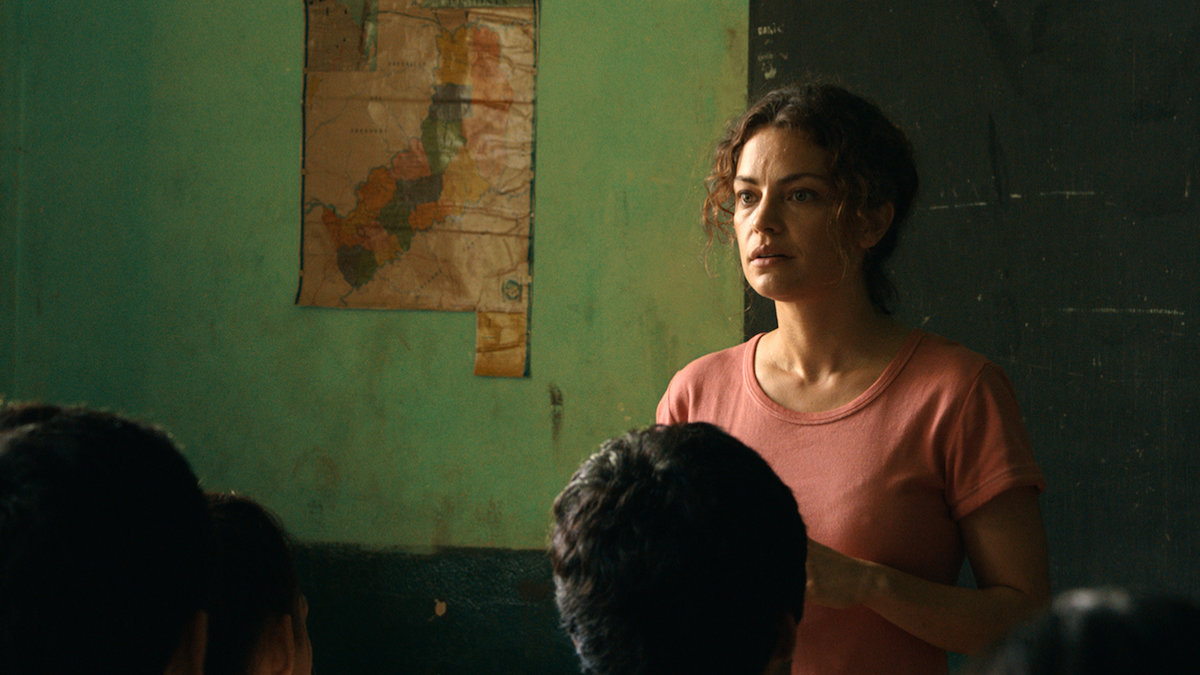 Paulina[/caption]
Santiago Mitre’s award winning film Paulina will open Friday, June 23, 2017, at New York’s Spectacle Theater (located on 124 S 3rd St, Brooklyn, NY), before a national expansion during summer 2017.
Santiago Mitre’s (El Estudiante) Paulina is the winner of the Nespresso Grand Prix Award and the Fipresci Award at Cannes (Critics’ Week) – as well as eight Best Actress awards given to Dolores Fonzi (Truman, The Aura, Plata Quemada).
Both a remake and a “potent update” (Eye for Film) of Daniel Tinayre’s La Patota (1960), Paulina is a complex exploration of the ethics of political action and a provocative character study of a social justice activist – and her unsettling choices in the face of violence and social discrimination. Set in a racially and politically marginalized community in Argentina’s Northeast, the film tackles the moral ambiguities of those who seek to aid and ally themselves with the disadvantaged from their positions of privilege.
When the film begins, Paulina (Dolores Fonzi, in a searing performance) leaves a promising legal career in the shadow of her politically-powerful father to work as a school-teacher in a rural village, on the border with Paraguay and Brazil. Paulina speaks no Guaraní and her teenage students artfully parry her attempts to lift them into political consciousness.
These uneasy encounters, and subtly observed civics lessons, echo disturbingly in the aftermath of a violent sexual assault by a group of young men. Paulina’s decisions in its wake, portrayed without judgment by Fonzi, mercilessly test her relationships and core beliefs.
https://www.youtube.com/watch?v=ws2bP9IWB1E
Awards
Grand Prize, Cannes Film Festival (Critics’ Week – 2015)
FIPRESCI Prize, Cannes Film Festival (Critics’ Week – 2015)
Horizons Award, San Sebastián Int’l Film Festival
Grand Jury Prize, Miami International Film Festival
Torino FIlm Festival – Special Jury Award
Best Actress Winner
– Dolores Fonzi –
Premio Fenix (Mexico’s Academy Awards)
Beijing International Film Festival
Premio ACE 2017
Biarritz International Festival of Latin American Cinema
Platino Ibero-American Film Award
Argentinean Film Critics Association
Academy of Motion Picture Arts and Sciences of Argentina
Torino Film Festival
Paulina[/caption]
Santiago Mitre’s award winning film Paulina will open Friday, June 23, 2017, at New York’s Spectacle Theater (located on 124 S 3rd St, Brooklyn, NY), before a national expansion during summer 2017.
Santiago Mitre’s (El Estudiante) Paulina is the winner of the Nespresso Grand Prix Award and the Fipresci Award at Cannes (Critics’ Week) – as well as eight Best Actress awards given to Dolores Fonzi (Truman, The Aura, Plata Quemada).
Both a remake and a “potent update” (Eye for Film) of Daniel Tinayre’s La Patota (1960), Paulina is a complex exploration of the ethics of political action and a provocative character study of a social justice activist – and her unsettling choices in the face of violence and social discrimination. Set in a racially and politically marginalized community in Argentina’s Northeast, the film tackles the moral ambiguities of those who seek to aid and ally themselves with the disadvantaged from their positions of privilege.
When the film begins, Paulina (Dolores Fonzi, in a searing performance) leaves a promising legal career in the shadow of her politically-powerful father to work as a school-teacher in a rural village, on the border with Paraguay and Brazil. Paulina speaks no Guaraní and her teenage students artfully parry her attempts to lift them into political consciousness.
These uneasy encounters, and subtly observed civics lessons, echo disturbingly in the aftermath of a violent sexual assault by a group of young men. Paulina’s decisions in its wake, portrayed without judgment by Fonzi, mercilessly test her relationships and core beliefs.
https://www.youtube.com/watch?v=ws2bP9IWB1E
Awards
Grand Prize, Cannes Film Festival (Critics’ Week – 2015)
FIPRESCI Prize, Cannes Film Festival (Critics’ Week – 2015)
Horizons Award, San Sebastián Int’l Film Festival
Grand Jury Prize, Miami International Film Festival
Torino FIlm Festival – Special Jury Award
Best Actress Winner
– Dolores Fonzi –
Premio Fenix (Mexico’s Academy Awards)
Beijing International Film Festival
Premio ACE 2017
Biarritz International Festival of Latin American Cinema
Platino Ibero-American Film Award
Argentinean Film Critics Association
Academy of Motion Picture Arts and Sciences of Argentina
Torino Film Festival
-
Bill Morrison Unearths a Treasure Trove of Silent-Era Cinema in DAWSON CITY: FROZEN TIME | Trailer
[caption id="attachment_22483" align="aligncenter" width="1024"]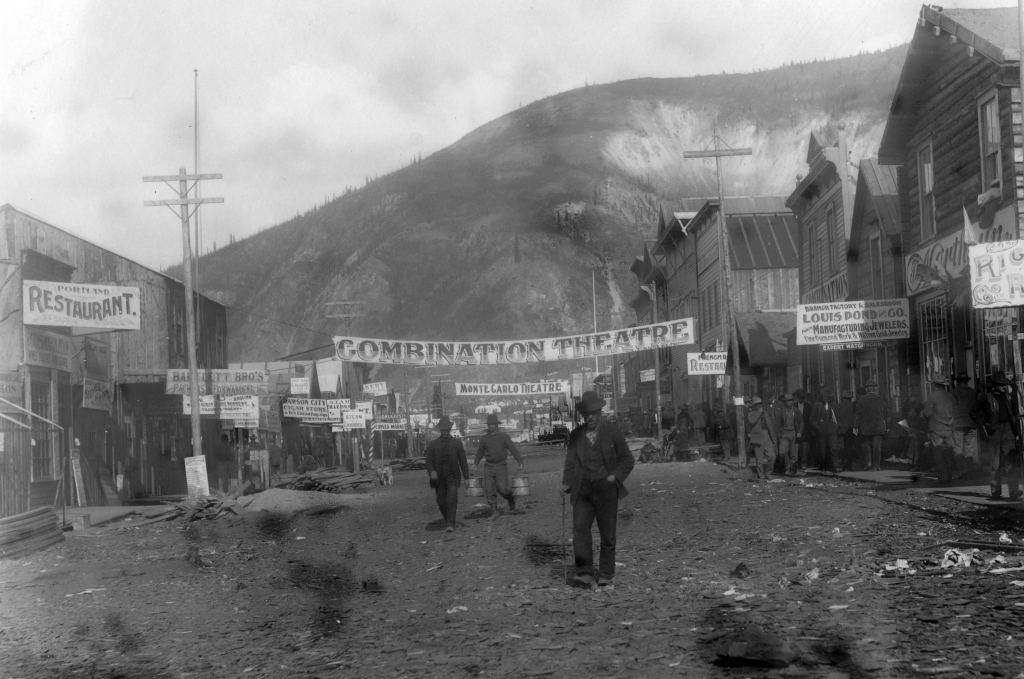 First Avenue in Dawson City, 1898. – DAWSON CITY: FROZEN TIME[/caption]
Bill Morrison’s mesmerizing new film, Dawson City: Frozen Time will open in New York on Friday, June 9 at the IFC Center with a national rollout to follow.
Dawson City: Frozen Time pieces together the bizarre true history of a collection of over 500 nitrate film prints from the 1910s and 1920s, which were lost for decades until being discovered buried under a hockey rink in a former Klondike gold rush town. Using these rare silent movies and a rich sampling of newsreels and historical photographs, fused with an enigmatic score by Sigur Rós collaborator Alex Somers (Captain Fantastic), this haunting cinematic mosaic depicts the unique history of Dawson City by chronicling the life cycle of a singular film collection through its exile, burial, rediscovery, and salvation. In telling this story of “one of the most astonishing and unexpected bonanzas in cinematic history” (Lawrence Weschler, Vanity Fair), director Bill Morrison conjures the forgotten ties between the fledgling movie industry and Manifest Destiny in North America.
The films of Bill Morrison combine a documentarian’s thirst for uncovering hidden histories with an archivist’s obsession for recovering lost cinematic treasures. Morrison’s Decasia (2002) was heralded by Errol Morris as “the best film ever made” and critic J. Hoberman called it “the most widely acclaimed American avant-garde film of the fin de siècle.” His other notable films include The Miners’ Hymns (2011), a document of the early 20th-century coal mines of northern England, and The Great Flood (2013), a collaboration with Bill Frisell inspired by the Mississippi River Flood of 1927.
https://www.youtube.com/watch?v=stxrwpvQZIs
First Avenue in Dawson City, 1898. – DAWSON CITY: FROZEN TIME[/caption]
Bill Morrison’s mesmerizing new film, Dawson City: Frozen Time will open in New York on Friday, June 9 at the IFC Center with a national rollout to follow.
Dawson City: Frozen Time pieces together the bizarre true history of a collection of over 500 nitrate film prints from the 1910s and 1920s, which were lost for decades until being discovered buried under a hockey rink in a former Klondike gold rush town. Using these rare silent movies and a rich sampling of newsreels and historical photographs, fused with an enigmatic score by Sigur Rós collaborator Alex Somers (Captain Fantastic), this haunting cinematic mosaic depicts the unique history of Dawson City by chronicling the life cycle of a singular film collection through its exile, burial, rediscovery, and salvation. In telling this story of “one of the most astonishing and unexpected bonanzas in cinematic history” (Lawrence Weschler, Vanity Fair), director Bill Morrison conjures the forgotten ties between the fledgling movie industry and Manifest Destiny in North America.
The films of Bill Morrison combine a documentarian’s thirst for uncovering hidden histories with an archivist’s obsession for recovering lost cinematic treasures. Morrison’s Decasia (2002) was heralded by Errol Morris as “the best film ever made” and critic J. Hoberman called it “the most widely acclaimed American avant-garde film of the fin de siècle.” His other notable films include The Miners’ Hymns (2011), a document of the early 20th-century coal mines of northern England, and The Great Flood (2013), a collaboration with Bill Frisell inspired by the Mississippi River Flood of 1927.
https://www.youtube.com/watch?v=stxrwpvQZIs
-
MENASHE, THE SETTLERS Among 18 Films on Lineup for 25th Portland Jewish Film Festival | Trailers
[caption id="attachment_20067" align="aligncenter" width="1200"] Menashe[/caption]
The 25th annual Portland Jewish Film Festival, produced by the Northwest Film Center and co-presented with the Institute for Judaic Studies, will feature 18 films that celebrate the diversity of Jewish history, culture, identity, and filmmaking. The festival will take place June 11 to 25, 2017 at the Northwest Film Center in Portland, Oregon.
Complete Film listings:
June 11 – Sunday 7 p.m.
MENASHE
Directed by Joshua Z. Weinstein
United States/Israel, 2017
Deep in the heart of New York’s ultra-orthodox Hasidic Jewish community, Menashe—a kind, hapless grocery store clerk—struggles to make ends meet and responsibly parent his young son, Rieven, following his wife Leah’s death. Tradition prohibits Menashe from raising his son alone, so Rieven’s strict uncle adopts him, leaving Menashe heartbroken. When his rabbi grants him one special week with Rieven before Leah’s memorial, he has a chance to prove himself a suitable man of faith and fatherhood, and restore respect among his doubters. Weinstein’s film is a poignant and funny parable about the tension between best intentions and the effort to uphold them. In Yiddish with English subtitles. (82 mins., DCP)
https://www.youtube.com/watch?v=83UoZcdX__Y
June 11 – Monday 7 p.m.
THE SETTLERS
Directed by Shimon Dotan
France/Germany/Israel, 2016
The Settlers traces the history of Israeli settlements in the West Bank since the 1967 Six-Day War. While government leaders and the Israeli public initially saw the military victory as an opportunity for a negotiated peace, many religious conservatives saw it as a calling from God to redeem the Biblical land of Israel. Through the voices of the pioneers of the movement and a diverse range of modern-day settlers—religious and secular, radical and idealist—Dotan weaves a comprehensive, provocative, and often troubling exploration of the controversial communities that continue to influence the sociopolitical destinies of Israel and Palestine. Nominated for the Israeli Academy Award for Best Documentary. In Hebrew, Arabic, and English with English subtitles. (107 mins., DCP)
https://www.youtube.com/watch?v=gO2LRxXeBr0
June 14 – Wednesday 7 p.m.
THE WOMEN’S BALCONY
Directed by Emil Ben Shimon
Israel, 2016
Emil Ben Shimon’s feature debut is a comical feminist narrative about finding the right path to happiness and the subjectivity of righteousness. When the women’s balcony of the synagogue collapses in the middle of a bar mitzvah, nobody assumes that the cause was anything more than bad architecture— that is, until Rabbi David announces that it was actually a message from God. The charismatic young rabbi warns that the men of the Sephardic congregation haven’t done enough to ensure the modesty of their women, creating a rift between the community’s men and women that puts faith, friendships, and traditions to the test. Hebrew with English subtitles. (96 mins., DCP)
https://www.youtube.com/watch?v=ZfMlI97DHbo
June 15 – Thursday 7 p.m.
1945
Directed by Ferenc Török
Hungary, 2016
When two Orthodox Jews arrive at the train station of a small, rural community in 1945, the villagers must face the consequences of “ill-gotten gains” from the Second World War. Fears that the men may be heirs of the village’s deported Jews and that more survivors will come pose a threat to the property and possessions they have claimed as their own. Based on the acclaimed short story “Homecoming” by Gábor T. Szánt. (91 mins., DCP)
https://www.youtube.com/watch?v=ZbeYA8A03Sw
June 17 – Saturday 6:30 p.m.
PAST LIFE
Directed by Avi Nesher
Israel/Poland, 2016
Nesher’s (The Matchmaker, The Wonders) moving film confronts a trauma and burden of history that is still part of the Israeli present and deeply rooted in the collective subconscious. In ’70s Jerusalem, two daughters of Holocaust survivors investigate a taboo topic: their difficult father’s experiences in Poland during World War II. As they undertake a trans-European journey to try to unravel the mystery that has shadowed their whole lives, they confront tragic questions and the realization that freedom from the past requires painful sacrifices, as does the struggle to discover one’s own unique voice. (109 mins., DCP)
https://www.youtube.com/watch?v=08Yv95dAGOo
June 17 – Saturday 9 p.m.
IN BETWEEN
Directed by Maysaloun Hamoud
Israel/France, 2016
Maysaloun Hamoud’s striking feature debut chronicles the lives of three Palestinian-Israeli women sharing an apartment in the vibrant heart of Tel Aviv. Modern-minded lawyer Layla, activist Salma, and more conservative Nour find themselves in a complicated balancing act between tradition and modernity, citizenship and culture, fealty and freedom as they navigate men, family, drugs, work, school, and their futures. Living in a country that considers them not Israeli enough and not Palestinian enough, they face choices between contemporary and traditional values. Adult audiences. Best Film Prize, San Sebastian Film Festival. (102 mins., DCP)
https://www.youtube.com/watch?v=fPiVZj8Mm7o
June 17 – Saturday 4 p.m.
June 18 – Sunday 8 p.m.
FANNY’S JOURNEY
Directed by Lola Doillon
France/Belgium, 2016
Based on an autobiographical novel by Fanny Ben-Ami, Fanny’s Journey tells the story of a heroic young girl in World War II France. Following the arrest of their father in Paris, Fanny and her younger sisters are sent to a boarding school in France’s neutral zone. They are whisked away to another institution, where Jewish children come under the care of the tough but tender Madame Forman. As danger advances yet again, the students’ fate is entrusted to 13-year-old Fanny, who fearlessly treks through the countryside with the children on a perilous mission to reach the Swiss border with only wits and solidarity to guide her. All ages. (94 mins., DCP)
https://www.youtube.com/watch?v=ZBa2SXXSXvo
June 18 – Sunday 4:30 p.m.
BODY AND SOUL: AN AMERICAN BRIDGE
Directed by Robert Philipson
United States, 2016
The story of Body and Soul, one of the most recorded songs in the Great American Songbook and a jazz standard, illustrates the complex musical interplay between Jewish and African American cultures. Written by Jewish songwriter Johnny Green and introduced on Broadway by Jewish torch singer Libby Holman in 1930, it was first recorded as a jazz piece by Louis Armstrong. Philipson examines the song’s timelessness, its role at the heart of both black and Jewish music, and cultural links both complementary and contentious. Interviews with experts and historians combine with rare archival footage and diverse performances to celebrate an ageless classic. (60 mins., DCP)
screens with
STRANGE FRUIT
Directed by Joel Katz
United States, 2002
While many people assume Strange Fruit was written by Billie Holiday, it actually began as a poem by a Jewish schoolteacher and union activist from the Bronx, who later set it to music. Disturbed by a photograph of a lynching, Abel Meeropol wrote the stark verse and brooding melody about the horror of lynching under the pseudonym Lewis Allan in 1938. It was brought to the attention of the manager of a popular Greenwich Village nightclub, who introduced Billy Holiday to the writer. Meeropol, who also wrote such classics as Frank Sinatra’s The House I Live In, later adopted the sons of “atom bomb spies” Julius and Ethel Rosenberg after their 1953 execution. (56 mins., Blu-Ray)
June 19 – Monday 7 p.m.
MOOS
Directed by Job Gosschalk
Netherlands, 2016
Set in a tight-knit Jewish community in Amsterdam, Moos is an endearing comedy about following your far-fetched dreams. 20-something Moos takes care of her dad and hangs around the family fabric store singing tunes to her steam iron. Her dream is to be an actress, but going for it seems to be on the back burner until her childhood friend, home from a stint in the Israeli army, reminds her of her past full of passion and ambition. Love, laughter, friendship, and complications take center stage in a film about finding out what’s important and finding your voice. (91 mins., DCP)
https://www.youtube.com/watch?v=-0GwlwUTLik
June 20 – Tuesday 7 p.m.
BIG SONIA
Directed by Leah Warshawski
United States, 2016
Big Sonia explores what it means to be a survivor and how this affects families and generations. One of the few remaining survivors of Auschwitz and Bergen-Belsen, 91-year-old Sonia Warshawski, the filmmaker’s grandmother, has shared her inspirational story for years. The colorful 91-year-old “diva,” known for wearing leopard print and high heels, has spent decades running her late husband’s tailoring business, the last shop in a dying mall in Kansas City. When she is evicted, Sonia must face another of life’s challenges: her fear of retirement. Winner of numerous audience awards at film festivals throughout the country, Sonia’s inspiring story reveals that it’s up to you to choose your future. (93 mins., Blu-Ray)
https://www.youtube.com/watch?v=NZOySpVL8_E
June 21 – Wednesday 7 p.m.
A GRAIN OF TRUTH
Directed by Borys Lankosz
Poland, 2015
Once the star of the Warsaw prosecutor’s office, Teodor Szacki, has retired to a small town to start a new life after his divorce. But he is called upon to help solve a grisly local case: a woman, a prominent social activist, has been brutally murdered outside a synagogue, and a knife used for kosher slaughter of animals is found nearby. More violent murders provoke a wave of anti-Semitism, and Szacki must not only solve the crimes, but also face public hysteria and the simmering history of Polish-Jewish relations. Based on the best-selling novel by Polish author Zygmunt Miłoszewsk, Lankosz’s tense detective thriller explores contemporary xenophobia and the power of centuries of superstition. (110 mins., DCP)
https://www.youtube.com/watch?v=DMBnMrHrGsQ
June 22 – Thursday 7 p.m.
NATASHA
Directed by David Bezmozgis
Canada, 2016
Sixteen-year-old slacker Mark is the son of Russian-Jewish immigrants in the suburbs of Toronto. When his uncle enters into an arranged marriage with a woman from Moscow, she arrives with her troubled 14-year old daughter, Natasha. A secret and forbidden romance begins between the two of them that has bizarre and tragic consequences for everyone involved. Natasha is adapted from Bezmozgis’s collection of short stories, “Natasha and Other Stories,” which was named a New York Times Notable Book and has been translated into 15 languages. (97 mins., DCP)
https://www.youtube.com/watch?v=NYSXVX_Xxts
June 24 – Saturday 4 p.m.
June 26 – Monday 7 p.m.
TO BE OR NOT TO BE
Directed by Ernst Lubitsch
United States, 1942
Like Chaplin’s The Great Dictator, Lubitsch’s film was widely criticized upon release for trying to find laughs in Hitler’s assault on civilization and, in this case, the desperate and tragic situation in Poland. But on its 75th anniversary, it remains a black-humored classic and one of the most profound comedies ever made. Jack Benny and Carole Lombard star in this story about a Polish theater company mixed up in espionage in Gestapo-ruled Warsaw. A send-up of Nazi mystique and manners, it also endures as a prime example of the famed “Lubitsch touch”—witty, stylish, and broadly satiric. (99 mins., DCP)
https://www.youtube.com/watch?v=7W_B10VbYjI
June 24 – Saturday 6:30 p.m.
HARMONIA
Directed by Ori Sivan
Israel, 2016
A contemporary adaptation of the biblical tale of Abraham, Sarah, and Hagar, Harmonia presents a poignant metaphor for the contemporary challenges facing Israel’s sibling religions. Sarah, a harpist in the Jerusalem Philharmonic Orchestra, is married to Abraham, its charismatic conductor, and they have no children. When Hagar, a young Arab horn player, joins the orchestra, a unique friendship evolves between the two women. Hagar, feeling Sarah’s pain from not having children, offers to have a baby for Sarah. Ismail, born to Hagar and Abraham, is a wild and gifted pianist whom Sarah raises as her own. But when Ismail discovers the true identity of his mother, his world—and that of those around him—falls apart. (98 mins., DCP)
https://www.youtube.com/watch?v=ABwGpET-RdM
June 24 – Saturday 8:45 p.m.
BEYOND THE MOUNTAINS AND HILLS
Directed by Eran Kolirin
Israel, 2016
Nominated for six Israeli Academy awards, including Best Picture, this film by writer-director Eran Kolirin (The Band’s Visit) weaves several narratives into a moving portrait of a family and a society at a crossroads. Facing a difficult transition after 27 years of military service, Lieutenant-Colonel David Greenbaum takes a dispiriting job as a salesman, while the rest of his increasingly alienated family struggle with their own issues. His wife, a high school teacher, begins an affair; his activist teenage daughter forms a troubling bond with Arab neighbors; and his son observes the simmering tensions from afar. As David’s household unravels, blind frustration leads to an impulsive act, triggering a cascade of events that corrupt everyone’s innocence. “Like an Israeli American Beauty… a poignant and political family drama.”—The Hollywood Reporter. (92 mins., DCP)
https://www.youtube.com/watch?v=zJxlkZfjmvk
June 25 – Sunday 7 p.m.
MOON IN THE 12TH HOUSE
Directed by Dorit Hakim
Israel, 2016
Sisters Mira and Lenny, separated at youth by traumatic circumstances, are young women when they meet again. The older and wilder Mira, who works in a hip Tel Aviv nightclub, unexpectedly returns to their childhood home, where the dutiful Lenny has stayed to care for their father. This reunion leads them on an emotional journey of healing and reconciliation. Commanding performances and hypnotic cinematography elevate this moving meditation on family ties and lost youth. Opening Night, New York Jewish Film Festival. (109 mins., DCP)
https://www.youtube.com/watch?v=9eKc_Nb9FIM
June 25 – Sunday 4:30 p.m.
AIDA’S SECRETS
Directed by Alon Schwarz, Shaul Schwarz
Israel/United States/Germany, 2016
In this sweeping international story that begins in World War II and concludes in an emotional family reunion seven decades later, layers of family history and untold secrets surface. Izak Szewelewicz was born inside the Bergen-Belsen Displaced Persons camp in 1945 and put up for adoption in Israel. Secret details of his birth mother, an unknown brother in Canada, and his father’s true identity slowly emerge in a heartfelt story that raises poignant questions of identity, resilience, compassion, and the plight of displaced persons. Closure comes when brothers Izak and Shep meet in Canada and travel to Quebec to meet Aida, their mysterious elderly mother. Winner of the Audience Award at 2016 Docaviv International Film Festival. (90 mins., DCP)
https://www.youtube.com/watch?v=Tdb_Tp47hIM
Menashe[/caption]
The 25th annual Portland Jewish Film Festival, produced by the Northwest Film Center and co-presented with the Institute for Judaic Studies, will feature 18 films that celebrate the diversity of Jewish history, culture, identity, and filmmaking. The festival will take place June 11 to 25, 2017 at the Northwest Film Center in Portland, Oregon.
Complete Film listings:
June 11 – Sunday 7 p.m.
MENASHE
Directed by Joshua Z. Weinstein
United States/Israel, 2017
Deep in the heart of New York’s ultra-orthodox Hasidic Jewish community, Menashe—a kind, hapless grocery store clerk—struggles to make ends meet and responsibly parent his young son, Rieven, following his wife Leah’s death. Tradition prohibits Menashe from raising his son alone, so Rieven’s strict uncle adopts him, leaving Menashe heartbroken. When his rabbi grants him one special week with Rieven before Leah’s memorial, he has a chance to prove himself a suitable man of faith and fatherhood, and restore respect among his doubters. Weinstein’s film is a poignant and funny parable about the tension between best intentions and the effort to uphold them. In Yiddish with English subtitles. (82 mins., DCP)
https://www.youtube.com/watch?v=83UoZcdX__Y
June 11 – Monday 7 p.m.
THE SETTLERS
Directed by Shimon Dotan
France/Germany/Israel, 2016
The Settlers traces the history of Israeli settlements in the West Bank since the 1967 Six-Day War. While government leaders and the Israeli public initially saw the military victory as an opportunity for a negotiated peace, many religious conservatives saw it as a calling from God to redeem the Biblical land of Israel. Through the voices of the pioneers of the movement and a diverse range of modern-day settlers—religious and secular, radical and idealist—Dotan weaves a comprehensive, provocative, and often troubling exploration of the controversial communities that continue to influence the sociopolitical destinies of Israel and Palestine. Nominated for the Israeli Academy Award for Best Documentary. In Hebrew, Arabic, and English with English subtitles. (107 mins., DCP)
https://www.youtube.com/watch?v=gO2LRxXeBr0
June 14 – Wednesday 7 p.m.
THE WOMEN’S BALCONY
Directed by Emil Ben Shimon
Israel, 2016
Emil Ben Shimon’s feature debut is a comical feminist narrative about finding the right path to happiness and the subjectivity of righteousness. When the women’s balcony of the synagogue collapses in the middle of a bar mitzvah, nobody assumes that the cause was anything more than bad architecture— that is, until Rabbi David announces that it was actually a message from God. The charismatic young rabbi warns that the men of the Sephardic congregation haven’t done enough to ensure the modesty of their women, creating a rift between the community’s men and women that puts faith, friendships, and traditions to the test. Hebrew with English subtitles. (96 mins., DCP)
https://www.youtube.com/watch?v=ZfMlI97DHbo
June 15 – Thursday 7 p.m.
1945
Directed by Ferenc Török
Hungary, 2016
When two Orthodox Jews arrive at the train station of a small, rural community in 1945, the villagers must face the consequences of “ill-gotten gains” from the Second World War. Fears that the men may be heirs of the village’s deported Jews and that more survivors will come pose a threat to the property and possessions they have claimed as their own. Based on the acclaimed short story “Homecoming” by Gábor T. Szánt. (91 mins., DCP)
https://www.youtube.com/watch?v=ZbeYA8A03Sw
June 17 – Saturday 6:30 p.m.
PAST LIFE
Directed by Avi Nesher
Israel/Poland, 2016
Nesher’s (The Matchmaker, The Wonders) moving film confronts a trauma and burden of history that is still part of the Israeli present and deeply rooted in the collective subconscious. In ’70s Jerusalem, two daughters of Holocaust survivors investigate a taboo topic: their difficult father’s experiences in Poland during World War II. As they undertake a trans-European journey to try to unravel the mystery that has shadowed their whole lives, they confront tragic questions and the realization that freedom from the past requires painful sacrifices, as does the struggle to discover one’s own unique voice. (109 mins., DCP)
https://www.youtube.com/watch?v=08Yv95dAGOo
June 17 – Saturday 9 p.m.
IN BETWEEN
Directed by Maysaloun Hamoud
Israel/France, 2016
Maysaloun Hamoud’s striking feature debut chronicles the lives of three Palestinian-Israeli women sharing an apartment in the vibrant heart of Tel Aviv. Modern-minded lawyer Layla, activist Salma, and more conservative Nour find themselves in a complicated balancing act between tradition and modernity, citizenship and culture, fealty and freedom as they navigate men, family, drugs, work, school, and their futures. Living in a country that considers them not Israeli enough and not Palestinian enough, they face choices between contemporary and traditional values. Adult audiences. Best Film Prize, San Sebastian Film Festival. (102 mins., DCP)
https://www.youtube.com/watch?v=fPiVZj8Mm7o
June 17 – Saturday 4 p.m.
June 18 – Sunday 8 p.m.
FANNY’S JOURNEY
Directed by Lola Doillon
France/Belgium, 2016
Based on an autobiographical novel by Fanny Ben-Ami, Fanny’s Journey tells the story of a heroic young girl in World War II France. Following the arrest of their father in Paris, Fanny and her younger sisters are sent to a boarding school in France’s neutral zone. They are whisked away to another institution, where Jewish children come under the care of the tough but tender Madame Forman. As danger advances yet again, the students’ fate is entrusted to 13-year-old Fanny, who fearlessly treks through the countryside with the children on a perilous mission to reach the Swiss border with only wits and solidarity to guide her. All ages. (94 mins., DCP)
https://www.youtube.com/watch?v=ZBa2SXXSXvo
June 18 – Sunday 4:30 p.m.
BODY AND SOUL: AN AMERICAN BRIDGE
Directed by Robert Philipson
United States, 2016
The story of Body and Soul, one of the most recorded songs in the Great American Songbook and a jazz standard, illustrates the complex musical interplay between Jewish and African American cultures. Written by Jewish songwriter Johnny Green and introduced on Broadway by Jewish torch singer Libby Holman in 1930, it was first recorded as a jazz piece by Louis Armstrong. Philipson examines the song’s timelessness, its role at the heart of both black and Jewish music, and cultural links both complementary and contentious. Interviews with experts and historians combine with rare archival footage and diverse performances to celebrate an ageless classic. (60 mins., DCP)
screens with
STRANGE FRUIT
Directed by Joel Katz
United States, 2002
While many people assume Strange Fruit was written by Billie Holiday, it actually began as a poem by a Jewish schoolteacher and union activist from the Bronx, who later set it to music. Disturbed by a photograph of a lynching, Abel Meeropol wrote the stark verse and brooding melody about the horror of lynching under the pseudonym Lewis Allan in 1938. It was brought to the attention of the manager of a popular Greenwich Village nightclub, who introduced Billy Holiday to the writer. Meeropol, who also wrote such classics as Frank Sinatra’s The House I Live In, later adopted the sons of “atom bomb spies” Julius and Ethel Rosenberg after their 1953 execution. (56 mins., Blu-Ray)
June 19 – Monday 7 p.m.
MOOS
Directed by Job Gosschalk
Netherlands, 2016
Set in a tight-knit Jewish community in Amsterdam, Moos is an endearing comedy about following your far-fetched dreams. 20-something Moos takes care of her dad and hangs around the family fabric store singing tunes to her steam iron. Her dream is to be an actress, but going for it seems to be on the back burner until her childhood friend, home from a stint in the Israeli army, reminds her of her past full of passion and ambition. Love, laughter, friendship, and complications take center stage in a film about finding out what’s important and finding your voice. (91 mins., DCP)
https://www.youtube.com/watch?v=-0GwlwUTLik
June 20 – Tuesday 7 p.m.
BIG SONIA
Directed by Leah Warshawski
United States, 2016
Big Sonia explores what it means to be a survivor and how this affects families and generations. One of the few remaining survivors of Auschwitz and Bergen-Belsen, 91-year-old Sonia Warshawski, the filmmaker’s grandmother, has shared her inspirational story for years. The colorful 91-year-old “diva,” known for wearing leopard print and high heels, has spent decades running her late husband’s tailoring business, the last shop in a dying mall in Kansas City. When she is evicted, Sonia must face another of life’s challenges: her fear of retirement. Winner of numerous audience awards at film festivals throughout the country, Sonia’s inspiring story reveals that it’s up to you to choose your future. (93 mins., Blu-Ray)
https://www.youtube.com/watch?v=NZOySpVL8_E
June 21 – Wednesday 7 p.m.
A GRAIN OF TRUTH
Directed by Borys Lankosz
Poland, 2015
Once the star of the Warsaw prosecutor’s office, Teodor Szacki, has retired to a small town to start a new life after his divorce. But he is called upon to help solve a grisly local case: a woman, a prominent social activist, has been brutally murdered outside a synagogue, and a knife used for kosher slaughter of animals is found nearby. More violent murders provoke a wave of anti-Semitism, and Szacki must not only solve the crimes, but also face public hysteria and the simmering history of Polish-Jewish relations. Based on the best-selling novel by Polish author Zygmunt Miłoszewsk, Lankosz’s tense detective thriller explores contemporary xenophobia and the power of centuries of superstition. (110 mins., DCP)
https://www.youtube.com/watch?v=DMBnMrHrGsQ
June 22 – Thursday 7 p.m.
NATASHA
Directed by David Bezmozgis
Canada, 2016
Sixteen-year-old slacker Mark is the son of Russian-Jewish immigrants in the suburbs of Toronto. When his uncle enters into an arranged marriage with a woman from Moscow, she arrives with her troubled 14-year old daughter, Natasha. A secret and forbidden romance begins between the two of them that has bizarre and tragic consequences for everyone involved. Natasha is adapted from Bezmozgis’s collection of short stories, “Natasha and Other Stories,” which was named a New York Times Notable Book and has been translated into 15 languages. (97 mins., DCP)
https://www.youtube.com/watch?v=NYSXVX_Xxts
June 24 – Saturday 4 p.m.
June 26 – Monday 7 p.m.
TO BE OR NOT TO BE
Directed by Ernst Lubitsch
United States, 1942
Like Chaplin’s The Great Dictator, Lubitsch’s film was widely criticized upon release for trying to find laughs in Hitler’s assault on civilization and, in this case, the desperate and tragic situation in Poland. But on its 75th anniversary, it remains a black-humored classic and one of the most profound comedies ever made. Jack Benny and Carole Lombard star in this story about a Polish theater company mixed up in espionage in Gestapo-ruled Warsaw. A send-up of Nazi mystique and manners, it also endures as a prime example of the famed “Lubitsch touch”—witty, stylish, and broadly satiric. (99 mins., DCP)
https://www.youtube.com/watch?v=7W_B10VbYjI
June 24 – Saturday 6:30 p.m.
HARMONIA
Directed by Ori Sivan
Israel, 2016
A contemporary adaptation of the biblical tale of Abraham, Sarah, and Hagar, Harmonia presents a poignant metaphor for the contemporary challenges facing Israel’s sibling religions. Sarah, a harpist in the Jerusalem Philharmonic Orchestra, is married to Abraham, its charismatic conductor, and they have no children. When Hagar, a young Arab horn player, joins the orchestra, a unique friendship evolves between the two women. Hagar, feeling Sarah’s pain from not having children, offers to have a baby for Sarah. Ismail, born to Hagar and Abraham, is a wild and gifted pianist whom Sarah raises as her own. But when Ismail discovers the true identity of his mother, his world—and that of those around him—falls apart. (98 mins., DCP)
https://www.youtube.com/watch?v=ABwGpET-RdM
June 24 – Saturday 8:45 p.m.
BEYOND THE MOUNTAINS AND HILLS
Directed by Eran Kolirin
Israel, 2016
Nominated for six Israeli Academy awards, including Best Picture, this film by writer-director Eran Kolirin (The Band’s Visit) weaves several narratives into a moving portrait of a family and a society at a crossroads. Facing a difficult transition after 27 years of military service, Lieutenant-Colonel David Greenbaum takes a dispiriting job as a salesman, while the rest of his increasingly alienated family struggle with their own issues. His wife, a high school teacher, begins an affair; his activist teenage daughter forms a troubling bond with Arab neighbors; and his son observes the simmering tensions from afar. As David’s household unravels, blind frustration leads to an impulsive act, triggering a cascade of events that corrupt everyone’s innocence. “Like an Israeli American Beauty… a poignant and political family drama.”—The Hollywood Reporter. (92 mins., DCP)
https://www.youtube.com/watch?v=zJxlkZfjmvk
June 25 – Sunday 7 p.m.
MOON IN THE 12TH HOUSE
Directed by Dorit Hakim
Israel, 2016
Sisters Mira and Lenny, separated at youth by traumatic circumstances, are young women when they meet again. The older and wilder Mira, who works in a hip Tel Aviv nightclub, unexpectedly returns to their childhood home, where the dutiful Lenny has stayed to care for their father. This reunion leads them on an emotional journey of healing and reconciliation. Commanding performances and hypnotic cinematography elevate this moving meditation on family ties and lost youth. Opening Night, New York Jewish Film Festival. (109 mins., DCP)
https://www.youtube.com/watch?v=9eKc_Nb9FIM
June 25 – Sunday 4:30 p.m.
AIDA’S SECRETS
Directed by Alon Schwarz, Shaul Schwarz
Israel/United States/Germany, 2016
In this sweeping international story that begins in World War II and concludes in an emotional family reunion seven decades later, layers of family history and untold secrets surface. Izak Szewelewicz was born inside the Bergen-Belsen Displaced Persons camp in 1945 and put up for adoption in Israel. Secret details of his birth mother, an unknown brother in Canada, and his father’s true identity slowly emerge in a heartfelt story that raises poignant questions of identity, resilience, compassion, and the plight of displaced persons. Closure comes when brothers Izak and Shep meet in Canada and travel to Quebec to meet Aida, their mysterious elderly mother. Winner of the Audience Award at 2016 Docaviv International Film Festival. (90 mins., DCP)
https://www.youtube.com/watch?v=Tdb_Tp47hIM
-
Catherine Eaton’s THE SOUNDING to East Coast Premiere at Brooklyn Film Festival | Trailer
[caption id="attachment_22477" align="aligncenter" width="1200"]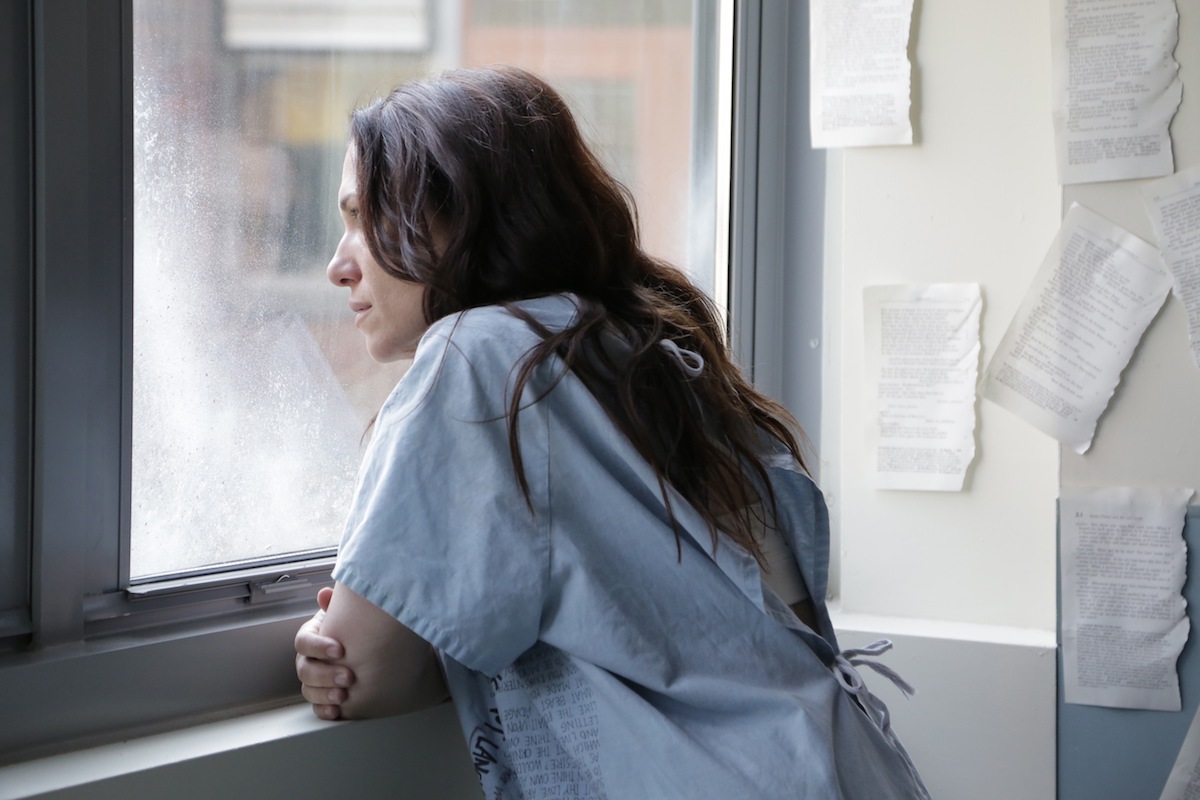 Catherine Eaton in The Sounding[/caption]
The Sounding, an award winning film by filmmaker Catherine Eaton, will East Coast premiere at the upcoming 2017 Brooklyn Film Festival.
The film – winner of AZIFF’s Festival Grand Prize, two Best Feature Awards at Minneapolis St. Paul International Film Festival and Palm Beach International Film Festival, and a New American Visions Audience Choice Award – follows Liv, who after years of silence, begins to weave a language out of Shakespeare’s words as she fights for her voice and her freedom.
The Sounding, written and directed by Catherine Eaton, also stars Catherine Eaton along with Teddy Sears, Erin Darke, Harris Yulin, Frankie Faison, Lucy Owen, Danny Burstein, and David Furr.
Raised on a remote island off the coast of Maine by her grandfather Lionel, Liv has never spoken. When Lionel (Harris Yulin) discovers he’s dying, he calls the son of his best friend and a neurologist, Michael (Teddy Sears), to the island and asks him to protect Liv’s independence. That night, as Lionel is reading to Liv, his voice fails him. Liv picks up the book of Shakespeare and begins: first reading, then weaving a language from Shakespeare’s words. Michael discovers her speaking and commits her to a psychiatric hospital. Incensed, Lionel’s attorney (Frankie Faison) blocks Michael from treating Liv. She becomes a full-blown rebel in the hospital; her increasing violence threatens to keep her locked up for life. Michael gains illegal entry, and in a final showdown, he wields Shakespeare’s language on her terms. At a tipping point for otherness in our current climate,The Sounding champions it.
https://vimeo.com/205987166
UPCOMING SCREENINGS:
BROOKLYN FILM FESTIVAL – EAST COAST PREMIERE
Sunday, June 4th – 4:00pm*
Windmill Studio (300 Kingsland Ave, Brooklyn, NY 11222)
Friday, June 9th – 7:30pm*
Wythe hotel (80 Wythe Avenue, Brooklyn, NY 11249)
*(Q&A w/Dir. Catherine Eaton & Cast & Crew following both screenings)
Catherine Eaton in The Sounding[/caption]
The Sounding, an award winning film by filmmaker Catherine Eaton, will East Coast premiere at the upcoming 2017 Brooklyn Film Festival.
The film – winner of AZIFF’s Festival Grand Prize, two Best Feature Awards at Minneapolis St. Paul International Film Festival and Palm Beach International Film Festival, and a New American Visions Audience Choice Award – follows Liv, who after years of silence, begins to weave a language out of Shakespeare’s words as she fights for her voice and her freedom.
The Sounding, written and directed by Catherine Eaton, also stars Catherine Eaton along with Teddy Sears, Erin Darke, Harris Yulin, Frankie Faison, Lucy Owen, Danny Burstein, and David Furr.
Raised on a remote island off the coast of Maine by her grandfather Lionel, Liv has never spoken. When Lionel (Harris Yulin) discovers he’s dying, he calls the son of his best friend and a neurologist, Michael (Teddy Sears), to the island and asks him to protect Liv’s independence. That night, as Lionel is reading to Liv, his voice fails him. Liv picks up the book of Shakespeare and begins: first reading, then weaving a language from Shakespeare’s words. Michael discovers her speaking and commits her to a psychiatric hospital. Incensed, Lionel’s attorney (Frankie Faison) blocks Michael from treating Liv. She becomes a full-blown rebel in the hospital; her increasing violence threatens to keep her locked up for life. Michael gains illegal entry, and in a final showdown, he wields Shakespeare’s language on her terms. At a tipping point for otherness in our current climate,The Sounding champions it.
https://vimeo.com/205987166
UPCOMING SCREENINGS:
BROOKLYN FILM FESTIVAL – EAST COAST PREMIERE
Sunday, June 4th – 4:00pm*
Windmill Studio (300 Kingsland Ave, Brooklyn, NY 11222)
Friday, June 9th – 7:30pm*
Wythe hotel (80 Wythe Avenue, Brooklyn, NY 11249)
*(Q&A w/Dir. Catherine Eaton & Cast & Crew following both screenings)
-
87 Films on Lineup for 8th New Media Film Festival
[caption id="attachment_22472" align="aligncenter" width="1200"] Non-Transferable[/caption]
The 8th New Media Film Festival will take place June 6, 7, 8, 2017 at The Landmark Theater, in Los Angeles, California and features 29 World Premieres, 11 US Premieres and 21 L.A. Premieres. There will be (87) new media films and content from 34 countries and outer space will be shown.
World Premiere and features movies on the lineup include:
Non-Transferable (Wed, June 7th)
Director: Brendan Bradley
Cast Members:
Ashley Clements (The Lizzie Bennet Diaries, Poe Party)
Shanna Malcolm (HeyYoShanna, Bob Thunder)
Katie Wee (Return Of the Mac, 2 Broke Girls)
Matthew Scott Montgomery (So Random!, Jane The Virgin)
Amin Joseph (Baywatch, Call Me King)
Sara Fletcher (Frankenstein MD, Days of our Lives)
Daniel Vincent Gordh (The Lizzie Bennet Diaries, Hollywood Acting Studio)
Joey Richter (Starkid, I Ship It)
Shira Lazar (What’s Trending)
A feature full-length film with Q&A.
Flatline (Thurs, June 8th)
Director: Jon Schnitzer
Experience the other side. The only place in the world to experience Flatline is at New Media Film Festival June 8th during festival hours in the main hall of The Landmark. Free with Festival Badge and any Thursday screening ticket. This VR film was pitched and funded at New Media Film Festival 2016. Julian McCrea of Portal Experiences was a speaker on our Tech Panel. Not in competition.
You Are Nothing (Tues, June 6th)
Directors: Mike Stivala, Mark Travis
A web series disguised as a self-help video tutorial – or perhaps, a parody of one – that uses the crumbing life of Mitch Repter as a teaching tool for a bizarre philosophy of life.
Love Song to the Earth ~ Special Presentation Video (during awards ceremony Thurs, June 8th)
Featuring Paul McCartney, Sean Paul, Colbie Callait, Natasha Bedingfield, Q’orianka Kilcher and others. Directed by Trey Fanjoy, Produced by Jeffy Cope. All proceeds from the Love Song project benefit Friends of the Earth and the United Nations Foundation. Premiered with Ban Ki-mon in Paris at UNFCCC COP 21.
Riley the Web Series (Wed, June 7th)
Director: Jeffrey Scott Basham
Riley is an original comedy series about a former teen pop star. Now in her thirties, she’s struggling to overcome a publicly humiliating downfall and subsequent nervous breakdown. But, it’s the power of friendship and the quirky characters she meets along the way that just might get her through…
Emmy® Award Winner Joe Hernandez-Kolski as Gavin and filmmakers are scheduled to attend.
SGCH – Morgan’s Story (Tues, June 6th)
Director: Stefan Wernik
This film features the true story of Morgan, who with the help of SGCH rose above a troubled upbringing.
Natasha BeaumontI Inception | All Saints | Little Fish is scheduled to attend.
Say Hello (Wed, June 7th)
Director: Brooke Elliott
Say Hello is a comedic reunion of two childhood acquaintances whose lives become entangled.
Sidetracked (Tues, June 6th)
Director: E.D. Brown
Follows the tribulations of a group of thirty something, whose lives are not going to plan.
Adrienne Wilkinson Yes Raze | Star Trek: Renegades| Star Wars: The Force Unleashed is scheduled to attend.
Dream Big: Engineering Our World (Tues, June 6th)
Director: Greg MacGillivray
Dream Big: Engineering Our World is narrated by Academy Award® winner Jeff Bridges, and is a first film of its kind for IMAX® and giant screen theatres that will transform how we think about engineering.
Non-Transferable[/caption]
The 8th New Media Film Festival will take place June 6, 7, 8, 2017 at The Landmark Theater, in Los Angeles, California and features 29 World Premieres, 11 US Premieres and 21 L.A. Premieres. There will be (87) new media films and content from 34 countries and outer space will be shown.
World Premiere and features movies on the lineup include:
Non-Transferable (Wed, June 7th)
Director: Brendan Bradley
Cast Members:
Ashley Clements (The Lizzie Bennet Diaries, Poe Party)
Shanna Malcolm (HeyYoShanna, Bob Thunder)
Katie Wee (Return Of the Mac, 2 Broke Girls)
Matthew Scott Montgomery (So Random!, Jane The Virgin)
Amin Joseph (Baywatch, Call Me King)
Sara Fletcher (Frankenstein MD, Days of our Lives)
Daniel Vincent Gordh (The Lizzie Bennet Diaries, Hollywood Acting Studio)
Joey Richter (Starkid, I Ship It)
Shira Lazar (What’s Trending)
A feature full-length film with Q&A.
Flatline (Thurs, June 8th)
Director: Jon Schnitzer
Experience the other side. The only place in the world to experience Flatline is at New Media Film Festival June 8th during festival hours in the main hall of The Landmark. Free with Festival Badge and any Thursday screening ticket. This VR film was pitched and funded at New Media Film Festival 2016. Julian McCrea of Portal Experiences was a speaker on our Tech Panel. Not in competition.
You Are Nothing (Tues, June 6th)
Directors: Mike Stivala, Mark Travis
A web series disguised as a self-help video tutorial – or perhaps, a parody of one – that uses the crumbing life of Mitch Repter as a teaching tool for a bizarre philosophy of life.
Love Song to the Earth ~ Special Presentation Video (during awards ceremony Thurs, June 8th)
Featuring Paul McCartney, Sean Paul, Colbie Callait, Natasha Bedingfield, Q’orianka Kilcher and others. Directed by Trey Fanjoy, Produced by Jeffy Cope. All proceeds from the Love Song project benefit Friends of the Earth and the United Nations Foundation. Premiered with Ban Ki-mon in Paris at UNFCCC COP 21.
Riley the Web Series (Wed, June 7th)
Director: Jeffrey Scott Basham
Riley is an original comedy series about a former teen pop star. Now in her thirties, she’s struggling to overcome a publicly humiliating downfall and subsequent nervous breakdown. But, it’s the power of friendship and the quirky characters she meets along the way that just might get her through…
Emmy® Award Winner Joe Hernandez-Kolski as Gavin and filmmakers are scheduled to attend.
SGCH – Morgan’s Story (Tues, June 6th)
Director: Stefan Wernik
This film features the true story of Morgan, who with the help of SGCH rose above a troubled upbringing.
Natasha BeaumontI Inception | All Saints | Little Fish is scheduled to attend.
Say Hello (Wed, June 7th)
Director: Brooke Elliott
Say Hello is a comedic reunion of two childhood acquaintances whose lives become entangled.
Sidetracked (Tues, June 6th)
Director: E.D. Brown
Follows the tribulations of a group of thirty something, whose lives are not going to plan.
Adrienne Wilkinson Yes Raze | Star Trek: Renegades| Star Wars: The Force Unleashed is scheduled to attend.
Dream Big: Engineering Our World (Tues, June 6th)
Director: Greg MacGillivray
Dream Big: Engineering Our World is narrated by Academy Award® winner Jeff Bridges, and is a first film of its kind for IMAX® and giant screen theatres that will transform how we think about engineering.