
 VITA ACTIVA: THE SPIRIT OF HANNAH ARENDT[/caption]
VITA ACTIVA: THE SPIRIT OF HANNAH ARENDT, directed by Ada Ushpiz will be released in the U.S. by Zeitgeist Films.
Official selection at Jerusalem and Munich film festivals, as well as at IDFA, and winner – Best Documentary – at the Santa Barbara Film Festival, VITA ACTIVA will open at Film Forum in NYC on April 6 and at the Laemmle Monica Film Center in LA on April 29. A national release will follow.
The German-Jewish philosopher Hannah Arendt caused an uproar in the 1960s by coining the subversive concept of the “Banality of Evil” when referring to the trial of Adolph Eichmann, which she covered for the New Yorker magazine. Her private life was no less controversial thanks to her early love affair with the renowned German philosopher and Nazi supporter Martin Heidegger. This thought provoking and spirited documentary, with its abundance of archival materials, offers an intimate portrait of the whole of Arendt’s life, traveling to places where she lived, worked, loved, and was betrayed, as she wrote about the open wounds of modern times. Through her books, which are still widely read and the recent release of Margarethe von Trotta’s biopic HANNAH ARENDT (also a Zeitgeist Films release) there is renewed interest in Arendt throughout the world, especially among young people who find her insights into the nature of evil, totalitarianism, ideologies, and the perils faced by refugees, more relevant than ever.
https://www.youtube.com/watch?v=_J6YWRTrnf4
Filmmaker Ada Ushpiz is a renowned Israeli film producer and director. She has a B.A. in philosophy and M.A. in history from Tel Aviv University and a significant journalistic experience in political-social writing for the prestigious Ha’aretz newspaper. She directed a number of remarkable documentaries in recent years – Detained(2001), Bloody Engagement (2004), Desert Brides (2008) and Good Garbage (2012) – which have been awarded numerous awards in Israel and around the world.
VITA ACTIVA: THE SPIRIT OF HANNAH ARENDT[/caption]
VITA ACTIVA: THE SPIRIT OF HANNAH ARENDT, directed by Ada Ushpiz will be released in the U.S. by Zeitgeist Films.
Official selection at Jerusalem and Munich film festivals, as well as at IDFA, and winner – Best Documentary – at the Santa Barbara Film Festival, VITA ACTIVA will open at Film Forum in NYC on April 6 and at the Laemmle Monica Film Center in LA on April 29. A national release will follow.
The German-Jewish philosopher Hannah Arendt caused an uproar in the 1960s by coining the subversive concept of the “Banality of Evil” when referring to the trial of Adolph Eichmann, which she covered for the New Yorker magazine. Her private life was no less controversial thanks to her early love affair with the renowned German philosopher and Nazi supporter Martin Heidegger. This thought provoking and spirited documentary, with its abundance of archival materials, offers an intimate portrait of the whole of Arendt’s life, traveling to places where she lived, worked, loved, and was betrayed, as she wrote about the open wounds of modern times. Through her books, which are still widely read and the recent release of Margarethe von Trotta’s biopic HANNAH ARENDT (also a Zeitgeist Films release) there is renewed interest in Arendt throughout the world, especially among young people who find her insights into the nature of evil, totalitarianism, ideologies, and the perils faced by refugees, more relevant than ever.
https://www.youtube.com/watch?v=_J6YWRTrnf4
Filmmaker Ada Ushpiz is a renowned Israeli film producer and director. She has a B.A. in philosophy and M.A. in history from Tel Aviv University and a significant journalistic experience in political-social writing for the prestigious Ha’aretz newspaper. She directed a number of remarkable documentaries in recent years – Detained(2001), Bloody Engagement (2004), Desert Brides (2008) and Good Garbage (2012) – which have been awarded numerous awards in Israel and around the world.-
Israeli Film VITA ACTIVA: THE SPIRIT OF HANNAH ARENDT to be Released in the U.S. | TRAILER
[caption id="attachment_11824" align="aligncenter" width="1200"] VITA ACTIVA: THE SPIRIT OF HANNAH ARENDT[/caption]
VITA ACTIVA: THE SPIRIT OF HANNAH ARENDT, directed by Ada Ushpiz will be released in the U.S. by Zeitgeist Films.
Official selection at Jerusalem and Munich film festivals, as well as at IDFA, and winner – Best Documentary – at the Santa Barbara Film Festival, VITA ACTIVA will open at Film Forum in NYC on April 6 and at the Laemmle Monica Film Center in LA on April 29. A national release will follow.
The German-Jewish philosopher Hannah Arendt caused an uproar in the 1960s by coining the subversive concept of the “Banality of Evil” when referring to the trial of Adolph Eichmann, which she covered for the New Yorker magazine. Her private life was no less controversial thanks to her early love affair with the renowned German philosopher and Nazi supporter Martin Heidegger. This thought provoking and spirited documentary, with its abundance of archival materials, offers an intimate portrait of the whole of Arendt’s life, traveling to places where she lived, worked, loved, and was betrayed, as she wrote about the open wounds of modern times. Through her books, which are still widely read and the recent release of Margarethe von Trotta’s biopic HANNAH ARENDT (also a Zeitgeist Films release) there is renewed interest in Arendt throughout the world, especially among young people who find her insights into the nature of evil, totalitarianism, ideologies, and the perils faced by refugees, more relevant than ever.
https://www.youtube.com/watch?v=_J6YWRTrnf4
Filmmaker Ada Ushpiz is a renowned Israeli film producer and director. She has a B.A. in philosophy and M.A. in history from Tel Aviv University and a significant journalistic experience in political-social writing for the prestigious Ha’aretz newspaper. She directed a number of remarkable documentaries in recent years – Detained(2001), Bloody Engagement (2004), Desert Brides (2008) and Good Garbage (2012) – which have been awarded numerous awards in Israel and around the world.
-
Political Documentary THE BRAINWASHING OF MY DAD Sets March 18 Release Date | TRAILER
[caption id="attachment_11820" align="aligncenter" width="1200"]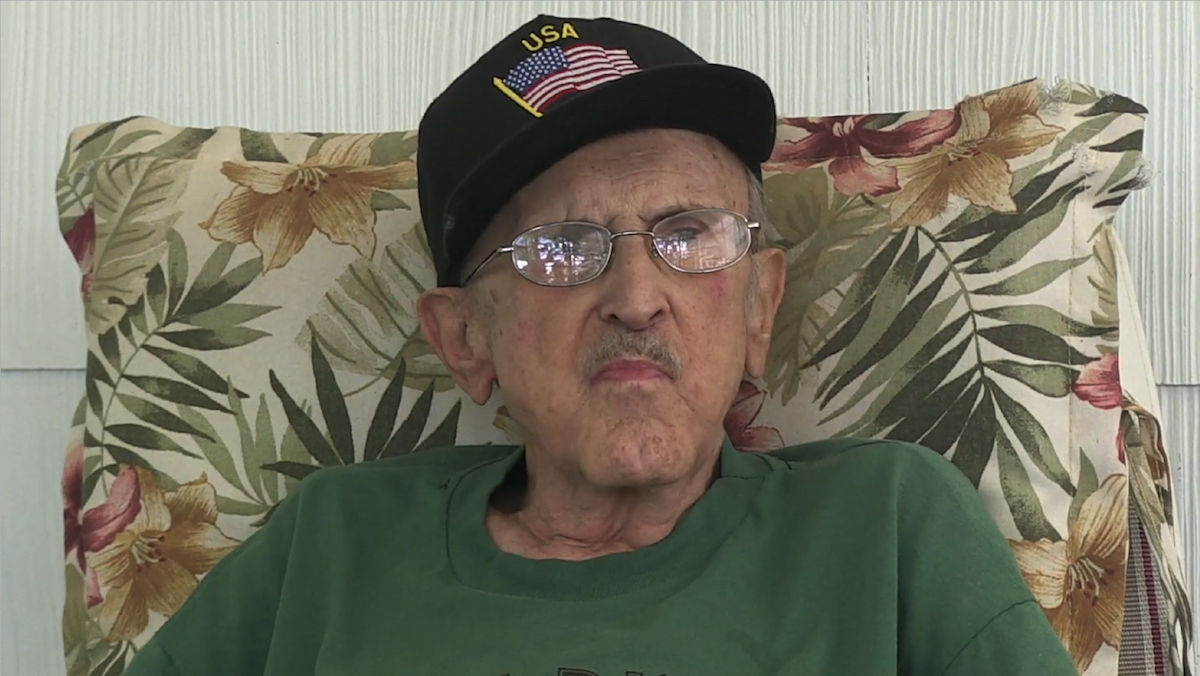 THE BRAINWASHING OF MY DAD, by JEN SENKO[/caption]
THE BRAINWASHING OF MY DAD, directed by JEN SENKO (The Vanishing City), and an Official Selection of the Traverse City Film Festival 2015, and Cinequest Film Festival 2016, will opening theatrically in New York (Cinema Village) and Los Angeles (Laemmle Music Hall) on Friday, March 18.
As filmmaker, Jen Senko, tries to understand the transformation of her father from a non political, life-long Democrat to an angry, Right-Wing fanatic, she uncovers the forces behind the media that changed him completely: a plan by Roger Ailes under Nixon for a media takeover by the GOP, The Powell Memo urging business leaders to influence institutions of public opinion, especially the universities, the media and the courts, and under Reagan, the dismantling of the Fairness Doctrine.
As her journey continues, we discover that her father is part of a much broader demographic, and that the story is one that affects us all.
Through interviews with media luminaries, cognitive linguists, grassroots activist groups such as: Noam Chomsky, Steve Rendall, Jeff Cohen, Eric Boehlert, George Lakoff, STOP RUSH, HearYourselfThink, Claire Conner and others, “Brainwashing” unravels the plan to shift the country to the Right over the last 30 years, largely through media manipulation. The result has lead to fewer voices, less diversity of opinion, massive intentional misinformation and greater division of our country.
This documentary will shine a light on how it happened (and is still happening) and lead to questions about who owns the airwaves, what rights we have as listeners/watchers and what responsibility does our government have to keep the airwaves truly fair, accurate and accountable to the truth.
https://www.youtube.com/watch?v=Qh3TeTxgNVo
THE BRAINWASHING OF MY DAD, by JEN SENKO[/caption]
THE BRAINWASHING OF MY DAD, directed by JEN SENKO (The Vanishing City), and an Official Selection of the Traverse City Film Festival 2015, and Cinequest Film Festival 2016, will opening theatrically in New York (Cinema Village) and Los Angeles (Laemmle Music Hall) on Friday, March 18.
As filmmaker, Jen Senko, tries to understand the transformation of her father from a non political, life-long Democrat to an angry, Right-Wing fanatic, she uncovers the forces behind the media that changed him completely: a plan by Roger Ailes under Nixon for a media takeover by the GOP, The Powell Memo urging business leaders to influence institutions of public opinion, especially the universities, the media and the courts, and under Reagan, the dismantling of the Fairness Doctrine.
As her journey continues, we discover that her father is part of a much broader demographic, and that the story is one that affects us all.
Through interviews with media luminaries, cognitive linguists, grassroots activist groups such as: Noam Chomsky, Steve Rendall, Jeff Cohen, Eric Boehlert, George Lakoff, STOP RUSH, HearYourselfThink, Claire Conner and others, “Brainwashing” unravels the plan to shift the country to the Right over the last 30 years, largely through media manipulation. The result has lead to fewer voices, less diversity of opinion, massive intentional misinformation and greater division of our country.
This documentary will shine a light on how it happened (and is still happening) and lead to questions about who owns the airwaves, what rights we have as listeners/watchers and what responsibility does our government have to keep the airwaves truly fair, accurate and accountable to the truth.
https://www.youtube.com/watch?v=Qh3TeTxgNVo
-
Sundance Film Fest Documentary HOLY HELL Sets May 20th Release Date
[caption id="attachment_11817" align="aligncenter" width="1088"]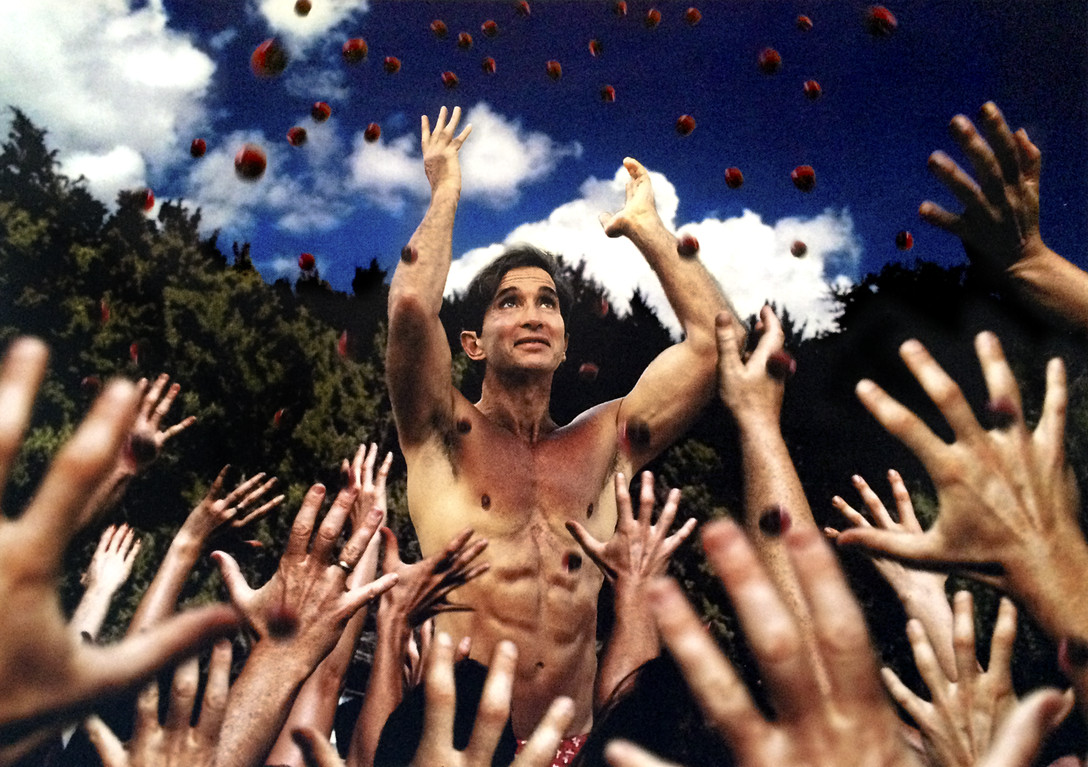 Holy Hell[/caption]
The documentary, Holy Hell, which premiered at the 2016 Sundance Film Festival will be released in the U.S. by FilmRise. Holy Hell will be released theatrically on May 20, 2016.
The film is an inside look at a secretive, spiritual cult formed in 1980s West Hollywood. Director Will Allen joined the group just after graduating from film school and as he became more deeply involved, he began filming his experiences as the group’s unofficial videographer. It wasn’t until after Allen left the cult that he understood the film he’d been making for over twenty years. Working with producers Alexandra Johnes and ex-cult member Tracey Harnish, Allen decided to use his footage to take others on his journey. Holy Hell is executive produced by Michael C. Donaldson, Cheryl Sanders, Julian Goldstein and Academy Award®-winner Jared Leto, who describes the film as “relentless, haunting and unforgettable.”
“Following its headline-making run at Sundance, we are elated to be bringing this gripping film to audiences come spring,” said Danny Fisher, CEO of FilmRise. “Ultimately this is a remarkable film about the human condition, and I am confident that audiences will be engrossed by this captivating story, told by those who lived it.”
“I am so happy that FilmRise will be releasing Holy Hell in theaters for communities to experience together,” said filmmaker Will Allen. “This story is very personal but also universal, because it could have happened to anyone. And seeing how broadly it resonated at Sundance makes me excited to share it with the rest of the world.”
Holy Hell[/caption]
The documentary, Holy Hell, which premiered at the 2016 Sundance Film Festival will be released in the U.S. by FilmRise. Holy Hell will be released theatrically on May 20, 2016.
The film is an inside look at a secretive, spiritual cult formed in 1980s West Hollywood. Director Will Allen joined the group just after graduating from film school and as he became more deeply involved, he began filming his experiences as the group’s unofficial videographer. It wasn’t until after Allen left the cult that he understood the film he’d been making for over twenty years. Working with producers Alexandra Johnes and ex-cult member Tracey Harnish, Allen decided to use his footage to take others on his journey. Holy Hell is executive produced by Michael C. Donaldson, Cheryl Sanders, Julian Goldstein and Academy Award®-winner Jared Leto, who describes the film as “relentless, haunting and unforgettable.”
“Following its headline-making run at Sundance, we are elated to be bringing this gripping film to audiences come spring,” said Danny Fisher, CEO of FilmRise. “Ultimately this is a remarkable film about the human condition, and I am confident that audiences will be engrossed by this captivating story, told by those who lived it.”
“I am so happy that FilmRise will be releasing Holy Hell in theaters for communities to experience together,” said filmmaker Will Allen. “This story is very personal but also universal, because it could have happened to anyone. And seeing how broadly it resonated at Sundance makes me excited to share it with the rest of the world.”
-
Experimental Animators, Laura Heit and Jeremy Rourke to Perform Live at Ashland Independent Film Festival
[caption id="attachment_11813" align="aligncenter" width="1280"]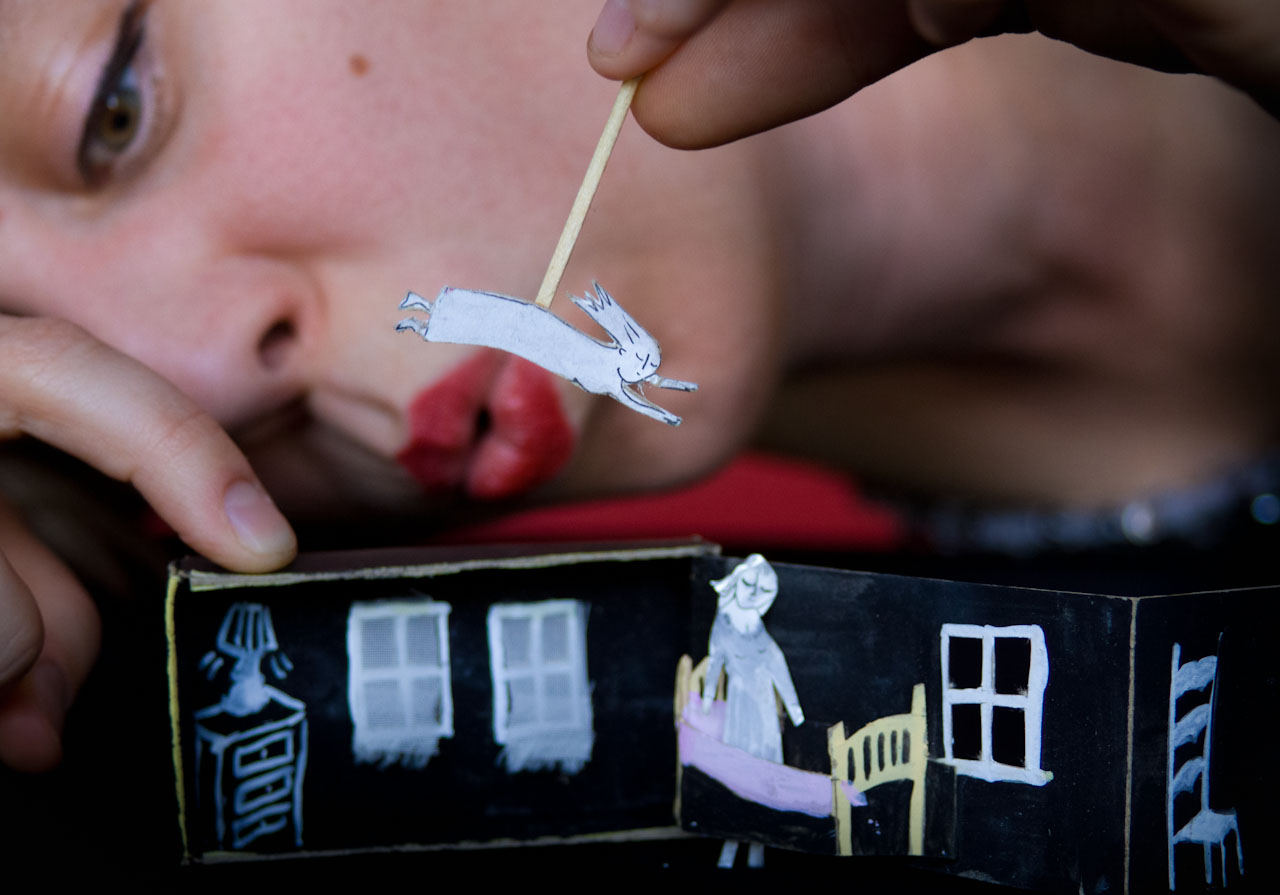 Matchbox Show, Laura Heit[/caption]
Two experimental animators, Laura Heit and Jeremy Rourke, will perform live with their films at this year’s Ashland Independent Film Festival, April 7 to 11, 2016.
Animation and performance artist Laura Heit, whose work has been shown at MOMA and the Guggenheim, will perform her Matchbox Show on April 8 at 6:45p.m. at ScienceWorks Hands-On Museum, where one of her interactive media installations, Hypothetical Star, will be on view April 7-10. Heit’s second installation, Two Ways Down, along with a selection of her animated films, will be featured in the In Scene exhibition at the Schneider Museum of Art, April 6 – June 11. Also at ScienceWorks, Jeremy Rourke, a San Francisco-based animator and musician, will give two presentations of Stopping the Motion: An Expanded Cinema Performance on Saturday, April 9; one for families at 1p.m., and one for adults at 7 p.m.
Heit’s and Rourke’s work exemplifies the festival’s new interest in blending film with music, visual art, and performance. “Laura Heit and Jeremy Rourke are producing wonderful examples of ‘expanded cinema,’ ” said Richard Herskowitz, the festival’s director of programming. “They are allowing us to extend our film festival beyond movie theaters and into gallery and concert venues. I think audiences will be charmed, entertained, and challenged by their works. In our 15th year, we are excited to bring these new explorations to Southern Oregon.”
Heit, based in Portland, OR, works in animated art and performance and employs stop-motion, live-action puppetry, hand-drawing, and computer animation in her short films. Her work is screened extensively at museums, film festivals, and mass media around the world, including the London International Film Festivals and on PBS. She earned her MFA at the Royal College of Art in London and she was previously the co-director of the Experimental Animation Project at Cal Arts. She was the subject of an Oct. 8, 2015 Oregon Art Beat TV show, in which she explains how her art has developed to encompass film, art installation and performance.
Heit’s Two Ways Down at the Schneider Museum of Art is a hand-drawn animated, sculptural installation and film that takes inspiration from the Hieronymus Bosch work: Garden of Heavenly Delights. It is part of In Scene, a group exhibition of eight artists who work in a variety of mediums such as video, installation, sculpture, and photograms in order to explore the state of the natural world in modern times. Hypothetical Star, at ScienceWorks, invites viewers to imagine a star system too deep inside or too far away to see. Heit animates images photographed through a digital microscope overlaid with raw footage taken form the Apollo 12 mission. Her piece uses thrown shadows from tabletop dioramas and reflected and refracted animated projections to create a universe of hypothetical stars, moons, and planets.
Heit’s performance at ScienceWorks, titled Traveling Light: Animation, and her Matchbox Show will feature a selection of animated films curated by Heit, including some of her own films. Heit comments, “The films I’ve chosen to show are by filmmakers, cartoonists, and animators who have also found themselves creating work on paper, or on film, or in clay – using their hands as the translators and meaning makers of a deep and innate sense of the world.” Heit will end the evening with a 25-minute live performance in which she performs a variety of puppet shows within matchboxes. The performance is projected behind her on a big screen. Heit has toured her Matchbox Show for the past 15 years to locations as diverse as The Netherlands and the Walt Disney Concert Hall.
Jeremy Rourke, a San Francisco artist who works with film, collage, animation, and music, will also perform at ScienceWorks Hands-On Museum in Ashland, OR. Rourke’s Stopping the Motion, an Expanded Cinema Performance, will feature, according to the artist, “stop motion animation, time lapse video, sound samples, audio loops, quotes, songs, singing bowls, and experimental interactions between myself and my media.” Rourke was selected as San Francisco Weekly’s Best New Animator/Musician of the Year in 2011, and he has performed at the S.F. Exploratorium, among many other venues.
https://vimeo.com/110378394
Matchbox Show, Laura Heit[/caption]
Two experimental animators, Laura Heit and Jeremy Rourke, will perform live with their films at this year’s Ashland Independent Film Festival, April 7 to 11, 2016.
Animation and performance artist Laura Heit, whose work has been shown at MOMA and the Guggenheim, will perform her Matchbox Show on April 8 at 6:45p.m. at ScienceWorks Hands-On Museum, where one of her interactive media installations, Hypothetical Star, will be on view April 7-10. Heit’s second installation, Two Ways Down, along with a selection of her animated films, will be featured in the In Scene exhibition at the Schneider Museum of Art, April 6 – June 11. Also at ScienceWorks, Jeremy Rourke, a San Francisco-based animator and musician, will give two presentations of Stopping the Motion: An Expanded Cinema Performance on Saturday, April 9; one for families at 1p.m., and one for adults at 7 p.m.
Heit’s and Rourke’s work exemplifies the festival’s new interest in blending film with music, visual art, and performance. “Laura Heit and Jeremy Rourke are producing wonderful examples of ‘expanded cinema,’ ” said Richard Herskowitz, the festival’s director of programming. “They are allowing us to extend our film festival beyond movie theaters and into gallery and concert venues. I think audiences will be charmed, entertained, and challenged by their works. In our 15th year, we are excited to bring these new explorations to Southern Oregon.”
Heit, based in Portland, OR, works in animated art and performance and employs stop-motion, live-action puppetry, hand-drawing, and computer animation in her short films. Her work is screened extensively at museums, film festivals, and mass media around the world, including the London International Film Festivals and on PBS. She earned her MFA at the Royal College of Art in London and she was previously the co-director of the Experimental Animation Project at Cal Arts. She was the subject of an Oct. 8, 2015 Oregon Art Beat TV show, in which she explains how her art has developed to encompass film, art installation and performance.
Heit’s Two Ways Down at the Schneider Museum of Art is a hand-drawn animated, sculptural installation and film that takes inspiration from the Hieronymus Bosch work: Garden of Heavenly Delights. It is part of In Scene, a group exhibition of eight artists who work in a variety of mediums such as video, installation, sculpture, and photograms in order to explore the state of the natural world in modern times. Hypothetical Star, at ScienceWorks, invites viewers to imagine a star system too deep inside or too far away to see. Heit animates images photographed through a digital microscope overlaid with raw footage taken form the Apollo 12 mission. Her piece uses thrown shadows from tabletop dioramas and reflected and refracted animated projections to create a universe of hypothetical stars, moons, and planets.
Heit’s performance at ScienceWorks, titled Traveling Light: Animation, and her Matchbox Show will feature a selection of animated films curated by Heit, including some of her own films. Heit comments, “The films I’ve chosen to show are by filmmakers, cartoonists, and animators who have also found themselves creating work on paper, or on film, or in clay – using their hands as the translators and meaning makers of a deep and innate sense of the world.” Heit will end the evening with a 25-minute live performance in which she performs a variety of puppet shows within matchboxes. The performance is projected behind her on a big screen. Heit has toured her Matchbox Show for the past 15 years to locations as diverse as The Netherlands and the Walt Disney Concert Hall.
Jeremy Rourke, a San Francisco artist who works with film, collage, animation, and music, will also perform at ScienceWorks Hands-On Museum in Ashland, OR. Rourke’s Stopping the Motion, an Expanded Cinema Performance, will feature, according to the artist, “stop motion animation, time lapse video, sound samples, audio loops, quotes, songs, singing bowls, and experimental interactions between myself and my media.” Rourke was selected as San Francisco Weekly’s Best New Animator/Musician of the Year in 2011, and he has performed at the S.F. Exploratorium, among many other venues.
https://vimeo.com/110378394
-
Design 2016 Chicago Film Festival Poster Competition, Win $2,500.
 Artists from around the world are invited to design the unique poster which will promote the 52nd Chicago International Film Festival, running Oct 13-27, 2016.
The winner of the 2016 Chicago Film Festival Poster Competition will receive a $2,500 prize. The submission deadline is April 22, 2016 at 11:59PM CST.
Submissions should convey the theme “BECAUSE EVERYBODY LOVES MOVIES!” and must incorporate the Festival logo, the words 52nd Chicago International Film Festival, the Festival dates (October 13-27, 2016), and the Festival website . Submissions must also include the $25/entry fee. Posters will be evaluated on their general appeal, theme-inclusion, content, and marketability. All design and submission requirements.
Last year, the Poster Competition received more than 275 entries from 41 different countries. Similar to last year’s competition, the winning poster becomes the face of the upcoming Festival. All forms of artwork are encouraged – from photography to paint to graphic design. The poster image is used for a variety of Festival purposes including souvenir programs, postcards, advertisements, and t-shirts. The winner’s name will be clearly stated on all materials, and a separate press release will be issued with the winner’s name and background.
Update: The deadline for the Chicago International Film Festival’s Poster Competition will be extended to April 22.
Artists from around the world are invited to design the unique poster which will promote the 52nd Chicago International Film Festival, running Oct 13-27, 2016.
The winner of the 2016 Chicago Film Festival Poster Competition will receive a $2,500 prize. The submission deadline is April 22, 2016 at 11:59PM CST.
Submissions should convey the theme “BECAUSE EVERYBODY LOVES MOVIES!” and must incorporate the Festival logo, the words 52nd Chicago International Film Festival, the Festival dates (October 13-27, 2016), and the Festival website . Submissions must also include the $25/entry fee. Posters will be evaluated on their general appeal, theme-inclusion, content, and marketability. All design and submission requirements.
Last year, the Poster Competition received more than 275 entries from 41 different countries. Similar to last year’s competition, the winning poster becomes the face of the upcoming Festival. All forms of artwork are encouraged – from photography to paint to graphic design. The poster image is used for a variety of Festival purposes including souvenir programs, postcards, advertisements, and t-shirts. The winner’s name will be clearly stated on all materials, and a separate press release will be issued with the winner’s name and background.
Update: The deadline for the Chicago International Film Festival’s Poster Competition will be extended to April 22.
-
Lineup Revealed for Film Society of Lincoln Center’s Art of the Real Film Festival
[caption id="attachment_11802" align="aligncenter" width="1024"] The Other Side, Roberto Minervini[/caption]
The 2016 Art of the Real, an essential showcase for boundary-pushing nonfiction film, will run April 8 to 21, 2016, in New York City, presented by the Film Society of Lincoln Center.
Founded on the most expansive possible view of documentary film, the series features an eclectic, globe-spanning host of discoveries by artists who are reenvisioning the relationship between cinema and reality, with one World Premiere, eight North American Premieres, and seven U.S. premieres, and many of the filmmakers in person.
“This is perhaps our strongest and most diverse edition yet, and one that truly affirms the impulse behind Art of the Real: the most exciting and essential films being made today are precisely those that defy genres and confound expectations, and that find bold new ways of reimagining cinema’s relationship with the real,” said Director of Programming Dennis Lim, who organized the festival with Programmer at Large Rachael Rakes.
The two Opening Night selections are the World Premiere of Ben Rivers’s What Means Something, an intimate portrait of painter Rose Wylie at work, and ND/NF alum Roberto Minervini’s The Other Side, an indelible, surprising, and often unnerving portrait of Louisianan junkies that was a highlight of Cannes’ Un Certain Regard section.
[caption id="attachment_11805" align="aligncenter" width="1200"]
The Other Side, Roberto Minervini[/caption]
The 2016 Art of the Real, an essential showcase for boundary-pushing nonfiction film, will run April 8 to 21, 2016, in New York City, presented by the Film Society of Lincoln Center.
Founded on the most expansive possible view of documentary film, the series features an eclectic, globe-spanning host of discoveries by artists who are reenvisioning the relationship between cinema and reality, with one World Premiere, eight North American Premieres, and seven U.S. premieres, and many of the filmmakers in person.
“This is perhaps our strongest and most diverse edition yet, and one that truly affirms the impulse behind Art of the Real: the most exciting and essential films being made today are precisely those that defy genres and confound expectations, and that find bold new ways of reimagining cinema’s relationship with the real,” said Director of Programming Dennis Lim, who organized the festival with Programmer at Large Rachael Rakes.
The two Opening Night selections are the World Premiere of Ben Rivers’s What Means Something, an intimate portrait of painter Rose Wylie at work, and ND/NF alum Roberto Minervini’s The Other Side, an indelible, surprising, and often unnerving portrait of Louisianan junkies that was a highlight of Cannes’ Un Certain Regard section.
[caption id="attachment_11805" align="aligncenter" width="1200"] A Magical Substance Flows Into Me, Jumana Manna[/caption]
Closing the festival is the North American premiere of Jumana Manna’s A Magical Substance Flows Into Me, in which the Palestinian artist brings German-Jewish ethnomusicologist Robert Lachmann’s recordings from 1930s Palestine to modern-day Israeli and Palestinian territories, re-creating the songs across communities and cultures.
In addition to Rivers and Manna’s films, a number of selections in this year’s lineup marry nonfiction cinema and the arts: José Luis Guerín’s The Academy of the Muses is a meditation on film, art, and gender via a simulated college seminar about the role of woman-as-muse in art, attended entirely by actresses; Ruth Beckermann’s minimalist The Dreamed Ones, in which a pair of actors bring to life the tragic love story of two mid-century poets by reading their letters aloud before the camera; and Thom Andersen’s The Thoughts That Once We Had, a film inspired by French philosopher Gilles Deleuze’s writings on cinema.
New works by familiar names include Jean-Gabriel Periot’s A German Youth, which charts the evolution of the Red Army Faction using only archival footage; Andrea Bussmann and Nicolás Pereda’s Tales of Two Who Dreamt, a black-and-white look at a Roma family seeking asylum in Toronto; and Kazuhiro Soda’s latest verité opus Oyster Factory, a fly-on-the-wall chronicle of a struggling Japanese fishery.
Many films in the 2016 edition have garnered acclaim at festivals and exhibitions around the globe, including three highlights from the Venice Biennale: Im Heung-soon’s Silver Lion–winner Factory Complex, and the shorts One.Two.Three by Vincent Meessen and Sea State Six by Charles Lim, where the two artists represented the Belgian and Singapore Pavilions, respectively; Andrés Duque’s Oleg and the Rare Arts, a freeform portrait of Russian pianist Oleg Nikolaevitch Karavaychuk that won the top prize at Punto de Vista’s documentary festival; Ju Anqi’s bawdy, absurdist Poet on a Business Trip, which won the Grand Prize of the 2015 Jeonju International Film Festival; Alessio Rigo de Righi and Matteo Zoppis’s Il Solengo, winner of DocLisboa’s 2015 Best International Film Award; and Mauro Herce’s exquisitely shot Dead Slow Ahead, winner of the Special Jury prize at Locarno 2015, a surreal look at the journey of a freighter from Ukraine to New Orleans.
This year’s festival also features a retrospective of the legendary Bruce Baillie, whose lyrical films defy traditional form and genre. From autobiographical documentary to cosmic mythology, the retrospective pays homage to Baillie’s work as an artist, and also recognizes his legacy as a distributor and promoter of avant-garde filmmakers. Consisting of five programs of short films, including his social documentaries, his collaborations with the Canyon Cinema Community, which he founded, and an exploration of the connection his films have to those of his longtime friend Stan Brakhage, All My Life: The Films of Bruce Baillie examines his far-reaching influence on experimental and nonfiction cinema. After Art of the Real, the retrospective, organized by curator Garbiñe Ortega, will travel around the country and internationally; more details will be announced later.
In addition to the repertory offerings in the retrospective, a revival of Philip Trevelyan’s 1971 The Moon and the Sledgehammer, a portrait of an eccentric family living off the grid outside of London, will screen in a new print. Following the film, Trevelyan will appear in person for a conversation moderated by our Opening Night filmmaker Ben Rivers.
FILMS & DESCRIPTIONS
Opening Night
The Other Side
Roberto Minervini, France/Italy, 2015, 92m
Roberto Minervini’s follow-up to his acclaimed “Texas Trilogy” (including Stop the Pounding Heart, New Directors/New Films 2014) is an indelible, surprising, and often unnerving portrait of bayou nihilism. Focusing primarily on Louisianian junkies Mark Kelley and Lisa Allen, Minervini immerses us in their daily routines—shooting up, shooting their mouths off, and just plain shooting—with an eye and ear for unexpected poetry and comedy, as well as for the political ramifications of their downtrodden, hedonistic libertarianism. Minervini tactfully presents his subjects in all their contradictions, permitting them a freedom that contrasts with the liberties they paranoiacally intend to protect from the federal government. In light of the Ammon Bundy militia, and in an election year of inflammatory rhetoric, it’s hard to imagine a more topical or more essential film. A Film Movement release.
Opening Night
What Means Something
Ben Rivers, UK, 2015, 67m
In the spirit of his previous explorations of solitude (including Two Years at Sea and A Spell to Ward Off the Darkness), Ben Rivers shows painter Rose Wylie at work—in real time—inside her home. Neither passive nor overly styled, this intimate portrait of an artist truly illuminates her singular creative process. In lone sections of the film that acknowledge the camera’s presence, Wylie speaks about her past work while thumbing through a sketchbook and reads an extensive passage from an essay titled “What Are Masterpieces?” A treat for both fans of the artist and the director. World Premiere
Closing Night
A Magical Substance Flows Into Me
Jumana Manna, Palestine/Germany/UK, 2015, 68m
English, Arabic, and Hebrew with English subtitles
Artist Jumana Manna picks up the torch of musicologist Robert Lachmann, a Palestinian analogue to Alan Lomax. Lachmann moved from Berlin to Jerusalem in 1935 to found a department of “Oriental” music at Hebrew University, and hosted a radio program on Palestine Broadcasting Service that featured pieces from the country’s ethnic and religious groups. Manna includes snippets of the broadcasts, and returns to record captivating performances from contemporary musicians in these communities. Unpretentious in its approach and beautifully photographed, this infectious film proves Manna a master of conveying both the quotidian and the staged. North American Premiere
The Academy of the Muses / La academia de las musas
José Luis Guerín, Spain, 2015, 92m
Italian and Spanish with English subtitles
The director of In the City of Sylvia returns with a thought-provoking meditation on film form, art, love, and gender. University of Barcelona philology professor Raffaele Pinto leads a simulated college seminar on women’s roles in inspiring art and historical literary muses, attended entirely by actresses. Their objections to his arguments are sharp and profound—as are the professor’s post-class discussions with his wise wife. The film also incorporates moments of the women in and around Barcelona, relating both mythological parables and deeply personal stories about their relationships. A favorite at the Locarno Film Festival and Film Comment’s fourth best undistributed film of 2015. U.S. Premiere
Dead Slow Ahead
Mauro Herce, Spain, 2014, 74m
English, Spanish, French, and Tagalog with English subtitles
Winner of the Special Jury prize at Locarno 2015, Mauro Herce’s slow epic transforms a commercial freighter and the landscapes it traverses into a truly surreal experience. Tracing the ship’s journey from Ukraine and New Orleans, time eventually decelerates to the point of abstraction, the sound of its machinery creating an otherworldly atmosphere. The immaculate, solitary visuals—which have the power to distort sights as familiar as a sunrise—demand to be seen inside a theater. More incredibly still, Herce manages to deliver slices of the Filipino crew’s lives—and then effortlessly transition back to the alien.
The Dreamed Ones / Die Geträumten
Ruth Beckermann, Austria, 2016, 89m
German with English subtitles
Ruth Beckermann’s unconventional record of a tragic love story surveys its prospects and impossibilities in the wake of World War II. Ingeborg Bachmann and Paul Celan, two key German-language poets, exchanged letters from 1948 to 1967, and Beckermann presents this remarkable correspondence before the camera with two young, attractive actors (Anja Plaschg and Laurence Rupp) reading them at a studio in Vienna’s Funkhaus. Plaschg and Rupp expose the complexities and emotions beneath the lovers’ words through their speech and expressions, both in and out of character, as Beckermann captures them on cigarette breaks, commenting on the text, peering in on orchestral rehearsals, or listening to music on an iPhone. As much a retelling of a doomed romance as an exploration of the reverberating effects of a global tragedy, The Dreamed Ones is a minimalist tour de force, as emotionally wrenching as it is elegantly precise. Director’s appearance made possible with the generous support from the Austrian Cultural Forum New York. North American Premiere
Fragment 53
Federico Lodoli & Carlo Gabriele Tribbioli, Italy/Switzerland/Liberia, 2015, 71m
English, Italian, and Mande with English subtitles
Comprising interviews with seven different men of varying rank about atrocities they committed (or ordered) during the First Liberian Civil War, this frank and frequently disturbing documentary examines the nature of modern violence and an essentialist concept of warfare. Their testimony, interspersed with snapshots of Liberia’s streets and mangrove trees as they currently exist, along with some terrifying video footage from the era, illustrate the ravages—and the inevitability—of humanity’s basest desire for conflict. Without falling into the sensationalist or simplistic, Lodoli and Tribbioli’s film is crucial viewing for our current age of extremism.
Screening with:
Impression of a War / La impresion de una guerra
Camilo Restrepo, Colombia, 2015, 26m
Spanish with English subtitles
Reminiscent of the Dziga Vertov Group’s essay films, this poetic and painful meditation on Colombia’s 70-year civil war employs a variety of techniques—found footage, stop-motion animation, commercial design, paintings, and original 16mm recordings of present-day cities—to confront the violence that has shaped the everyday lives of Colombians.
A German Youth / Une jeunesse allemande
Jean-Gabriel Périot, France/Switzerland/Germany, 2015, 93m
German and French with English subtitles
Using only archival footage, Jean-Gabriel Périot charts the evolution of the Red Army Faction members from impassioned intellectuals to urban guerrillas. The range of materials—which include student agitprop films, glib French and German news panel shows, and Fassbinder’s semi-fictional chat with his mother about democracy in Germany in Autumn—underscore the generational and ideological disconnect that (in part) led to the group’s decision to turn to violence and criminal acts. Nimbly constructed, the film’s analytical patterns are less concerned with pathologizing Baader-Meinhof than showing police coercion and how easily the word “terrorist” can be employed for political gain.
Factory Complex
Im Heung-soon, South Korea, 2014, 92m
Khmer and Korean with English subtitles
Without a trace of sentimentality typical of such exposés, Im Heung-soon’s powerful film outlines the abusive, dangerous, grueling, and humiliating conditions under which “unskilled” female laborers in South Korea have worked for years. Talking-head interviews with women from a variety of low-paying professions (many of whom have organized strikes for better treatment) are interspersed with painterly compositions of their work environments or public spaces, artfully expressing the degradation and inequality they’ve suffered. These struggles are ultimately connected with female textile workers in neighboring Cambodia, with rare footage of how violently their protests were shut down by armed forces. Winner of the Silver Lion at the 2015 Venice Biennale. U.S. Premiere
Il Solengo
Alessio Rigo de Righi & Matteo Zoppis, Italy, 2015, 66m
Italian with English subtitles
Winner of DocLisboa’s 2015 Best International Film Award, Alessio Rigo de Righi and Matteo Zoppis’s documentary explores the life of Mario de Marcella, a man who lived alone in a cave for over 60 years, nicknamed “Il Solengo” (the lone boar that’s been cut off from his pack). No one knows for certain why he decided to become a hermit. Still, hunters from his home village (who would occasionally encounter him in the wilderness) offer conflicting reasons about his solitude through elaborate stories. The negative space created by his absence is filled with gorgeous imagery of the Italian countryside. North American Premiere
The Moon and the Sledgehammer
Philip Trevelyan, UK, 1971, 35mm, 65m
Philip Trevelyan’s 1971 portrait of a family residing on the outskirts of the 20th century depicts a lifestyle rich in eccentricities, wit, and independence. The Page family lives a simple but self-sufficient existence in their ramshackle house, tucked away within a six-acre woodland property 20 miles south of London. Cut off from society and its influences, the women embroider and garden while the men (wearing suits caked with dirt and grease) tinker, hammer, and braze machines that range from steam engines to a submarine-type boat. This freedom to obsess—over such machines, the moon, or any of their philosophical musings that Trevelyan captures through magnified close-ups—suggests this is a family in control of their lives in more ways than the commuters’ just outside the backcountry.
The Monument Hunter / Rastreador de estatuas
Jerónimo Rodríguez, Chile, 2015, 71m
Spanish with English subtitles
A droll yet profound exploration of memory, history, forgetting, and, of course, Raúl Ruiz. After seeing a documentary about Portuguese neurologist Egas Moniz while low on sleep, Jorge, a Chilean filmmaker living in Greenpoint, Brooklyn, suddenly remembers visiting a statue of Moniz in a park somewhere in Santiago with his father—who also happens to be a neurosurgeon. Jorge goes on a lengthy exploration of the city of his birth and all the way to Patagonia looking for the statue, all the while pondering memories of his dad and the imaginary territories between his homeland and New York. North American Premiere
On Football / O Futebol
Sergio Oksman, Brazil/Spain, 2015, 70m
Portuguese with English subtitles
An unassuming and bitterly poignant portrayal of a father-son relationship that speaks volumes between the lines. After reconnecting in 2013 (breaking 20 years of silence), director Sergio Oksman decided to see every game of the 2014 World Cup with his father, Simão. Without falling into the realm of the therapeutic, the film shows their interactions while driving to and watching the games, bearing witness to their silences and unconscious symmetries. In addition to the odd male bonding engendered by watching sports, the film’s exquisite cinematography also offers a key to a city under soccer’s spell.
Oleg and the Rare Arts / Oleg y las raras artes
Andrés Duque, Spain, 2016, 66m
Russian with English subtitles
Defying musical classification, pianist Oleg Nikolaevitch Karavaychuk is an icon in his native Russia but relatively unknown elsewhere. Largely banned from performing in public during the Soviet era, Karavaychuk instead made a career composing music for filmmakers like Sergei Parajanov, Vasily Shukshin, and Kira Muratova, and has recently expanded into multimedia performance. A hit at the recent Rotterdam Film Festival and the top prizewinner at Punto de Vista’s documentary festival, Andrés Duque’s affectionate, free-form portrait features the androgynous virtuoso wandering through the halls of the Hermitage while speaking about how he arrived at the museum that day, the art on the walls, and eventually his own life. In the spaces between, he performs his music with electric intensity. North American Premiere
Oyster Factory / Kaki Kouba
Kazuhiro Soda, Japan/USA, 2015, 145m
Japanese with English subtitles
Documenting a struggling fishery in Ushimado, Japan, Kazuhiro Soda’s latest verité opus speaks volumes about the state of that nation with an economy of words. Shot over the course of three months, the film slowly reveals the simmering xenophobia of the company’s owners—enflamed by the influx of unskilled Chinese laborers in their employ (who are scooping up the low-wage jobs the Japanese refuse to take). This messiness is matched by the camera, which, while maintaining a cool, observational distance, often gets splashed by sand and sea muck from unloading nets and oysters being shucked.
Poet on a Business Trip
Ju Anqi, China, 2015, 103m
Mandarin and Uyghur with English subtitles
Originally shot back in September of 2002, this lo-fi, black-and-white adventure across China’s remote Xinjiang Uygur Autonomous Region is both bawdy and astute. First seen mid-coitus in Beijing, the titular scribe Shu decides to go on a “business trip”—which consists of drinking, eating, and chewing the fat with truck drivers and fellow bus passengers in seedy barbecue joints and hotels. Against inhospitable, scarcely populated plateaus and bumpy roads, his experiences yield 16 poems that sardonically capture his journey. Grand Prize winner of the 2015 Jeonju International Film Festival. U.S. Premiere
The Prison in Twelve Landscapes
Brett Story, USA/Canada, 2016, 90m
The United States has the highest incarceration rate in the world, with many prisoners living in facilities operated by private, for-profit companies. Brett Story’s deftly photographed and elegantly structured The Prison in Twelve Landscapes shows how this new reality is shaping all facets of life by filming not prisons but the areas and people all around them, connected by proximity, money, family, and work. Through interviews with prisoners performing cheap (or dangerous) labor, people paying exorbitant fines for minor offenses, loan officers, and others profiting (or hoping to profit) off the system across the country, Story weaves together a captivating essayistic depiction of our quotidian carceral nation.
A Roundabout in My Head / Dans ma tête un Rond-Point
Hassen Ferhani, Algeria/France/Qatar/Lebanon/Netherlands, 2015, 100m
Arabic with English subtitles
A quietly profound slice of workers’ lives in and around an Algiers slaughterhouse, this documentary illuminates the entire region. Through gorgeously shot verité footage and (increasingly in the second half) one-on-one interviews, Hassen Ferhani offers fascinating interactions between people and the spaces they happen to occupy. With humor and candor, his subjects address what are often generationally specific issues: the plight of the Kabyle people (an ethnic minority in Algeria), the Arab Spring, migration to Europe… or how know you’re in love with a girl. Save for one scene, the film is safe for those made squeamish by animal death.
Tales of Two Who Dreamt
Andrea Bussmann & Nicolás Pereda, Canada/Mexico, 2016, 87m
Hungarian with English subtitles
Photographed in austere black and white, Andrea Bussmann and Nicolás Pereda’s film spins mythic tales around an actual Roma family living inside a Toronto housing block for asylum seekers. As the family awaits their day in court, the kids try to stave off boredom by goofing around (often playing solo games of soccer in the halls) while the adults repeat and refine stories about their past, some real and some fictional. Observational but never cold, this hybrid work offers a look into how a marginalized people construct fiction and their own identities. U.S. Premiere
The Thoughts That Once We Had
Thom Andersen, USA, 2015, 108m
Inspired by Gilles Deleuze’s writing on cinema, and filtered through the filmmaker’s own boundless cinematic expertise, Thom Andersen’s feature traverses history through film, hopping through genres and eras. Celluloid references and allusions abound (the title is from a Christina Rossetti poem quoted in Kiss Me Deadly). The Thoughts That Once We Had poetically associates clips from one to the next—surprising, enlightening, charming, and bewildering in their juxtapositions—to reflect a vision deeply linked to the moments and visions that have sculpted a singular perspective. Griffith, von Stroheim and von Sternberg, Laurel and Hardy, Godard, and Costa—among many others—all share space in Andersen’s latest.
The Woods Dreams Are Made Of / Le bois dont les rêves sont faits
Claire Simon, France/Switzerland, 2015, 144m
French with English subtitles
Existing somewhere between ecology and ethnography, Claire Simon’s gorgeous documentary explores the many different people who pass through or take up residence in Paris’s Le Bois de Vincennes, a massive public park that puts those in most American cities to shame. We meet migrants seeking a quick respite from urban noise and bustle, hermits living off the land, artists seeking inspiration, and prostitutes doing business. This exquisitely shot study of an urban Eden manages to convey the highly specific culture(s) within Les Bois de Vincennes as well as the universal need for nature. U.S. Premiere
Shorts Program 1 (TRT: 83m)
One.Two.Three
Vincent Meessen, Belgium, 2015, 36m
French and Kikongo with English subtitles
A highlight from last year’s Venice Biennale, Vincent Meessen’s gorgeous and haunting split-screen film weaves together intersecting histories of art, music, and political activism through the eponymous protest song, written by a Congolese member of the Situationist International, Joseph M’Belolo Ya M’Piku, in May 1968. The three channels of One.Two.Three play off each other like the beautiful melody it gradually revives, culminating in a highly listenable performance inside a fiery rumba club. North American Premiere
Sea State Six
Charles Lim, Singapore, 2016, 11m
Charles Lim dives deep below sea level into a labor environment out of sight and earshot—where thunderous subterranean explosions hardly turn a stone above ground. Debuting at the Singapore Pavilion of the Venice Biennale, Lim’s work explores the physical expansion of the state, and changing state of the sea via the enormous, recently launched Jurong Rock Caverns in Singapore, a massive underground infrastructure for oil and fuel storage. U.S. Premiere
Lampedusa
Philip Cartelli & Mariangela Ciccarello, Italy/France/USA, 2015, 14m
English, Italian, and French with English subtitles
Interlacing its multilingual narrative with high-definition panoramas and black-and-white Super 8 footage, Lampedusa revisits the 1831 volcanic eruption off the coast of Sicily, which created a short-lived landmass that provoked multiple European nations to claim it as their own.
All Still Orbit
Dane Komljen & James Lattimer, Croatia/Serbia/Germany/Brazil, 2015, 22m
Portuguese with English subtitles
A philosophical-historical investigation of Brasília, the planned city capital of Brazil that was built over 41 months in the late ’50s and early ’60s, and the small, impoverished town just outside its limits that (literally) sank after its founding. Tracing its origins from Saint Don Bosco’s (possibly apocryphal) dream in 1883, the filmmakers use a lyrical voiceover and hyper-tinted digital images of the city and its environs to question the idealism of the city’s international style. North American Premiere
Shorts Program 2 (TRT: 69m)
Toré
João Vieira Torres, Brazil, 2015, 16m
Portuguese with English subtitles
An ethnographic film that doesn’t place the lives of “the other” into a vacuum. Firmly committed to capturing a sense of place, this verité film documents a Xucuru-Kariri tribe ritual that’s permitted to be witnessed by outsiders. João Vieira Torres juxtaposes the surrounding jungle and the transformative nature of the ceremony with a young native boy watching Disney’s Fantasia. U.S. Premiere
The Mesh and the Circle / A Trama e o Círculo
Mariana Caló & Francisco Queimadela, Portugal/Italy, 2014, 34m
Portuguese with English subtitles
Using a restaged version of Diary of a Country Priest’s opening shot as a recurring framing device, Mariana Caló and Francisco Queimadela depict, deconstruct, and show the movement-based connections between obscure rituals and daily domestic activities from across Portugal. These actions exist simultaneously as symbol and document of the quotidian, a fascinating, accessible experimental and anthropological study. North American Premiere
Engram of Returning
Daïchi Saïto, Canada, 2015, 35mm, 19m
Featuring a driving minimalist score by improvisational musician Jason Sharp, the latest film by Daïchi Saïto (Trees of Syntax, Leaves of Axis) literalizes the Scientology concept of an engram (a mental image that contains pain and a threat to survival) using only darkness and distorted landscapes shot on 16mm. Eerie and intense, Engram of Returning is an apt metaphor for the cinematic experience as well as a singular one of its own.
All My Life: The Films of Bruce Baillie
Bruce Baillie’s lyrical and keenly observational work evades genre and explores narratives in nontraditional forms—from short films to feature-length explorations. His film Castro Street (1966) was selected for preservation in 1992 by the United States National Film Registry. His work has been inexpressibly influential to the world of avant-garde cinema, and his role as founding member of both Canyon Cinema and the San Francisco Cinematheque speaks to his importance in creating spaces and systems of support and distribution for experimental filmmakers. But the nonfictional dimension of Baillie’s work remains underemphasized: the documentary aspects of such masterpieces as Castro Street and Quick Billy (1970) are both salient and integral to his career-spanning fusion of the mystical and the mundane, the cosmic and the personal, mythology and autobiography. The selection of Baillie’s films in this year’s Art of the Real pays homage to his body of work, and recognizes his legacy as an artist as well as his outstanding work as a distributor and promoter of avant-garde filmmakers. Organized by Garbiñe Ortega.
“There were ages of faith, when men made natural connections between themselves and the place in which they lived, the plants they cultivated, the fuel they used for warmth, their beasts, and their ancestors. My work will be discovering in American life those natural and ancient contacts through the art of cinema!” – Bruce Baillie
The following notes are a collage of Bruce Baillie’s statements about his films edited by Garbiñe Ortega. The sources are from the personal archives of the artist, “Bruce Baillie Papers l,” in the Special Collection Library, Stanford University; audio recordings from the James Stanley (“Stan”) Brakhage Collection, Special Collections and Archives, University of Colorado Boulder Library; Garbiñe Ortega’s interviews with the author; the Film-makers’ Cooperative Catalogues, the Canyon Cinema News, and MoMA film notes.
Program 1: Why Take Up the Camera (TRT: 54m)
This program compiles a number of Bruce Baillie’s poetic and social documentaries created for Canyon Cinema venues, entitled The News. These little films provided a format for creating low-budget, urgent, and politically motivated works. They also demonstrated possibilities for a more immediate transition from production to exhibition.
Mr. Hayashi
Bruce Baillie, USA, 1961, 16mm, 3m
A very brief lyrical portrait of the eponymous Japanese gardener at work.
“A living saint projected onto the silver screen. Why did I make this film? I wanted to help my friend find a job in Berkeley. It was one of my first attempts to create film as both utilitarian and Art. Cinema must be meaningful and wonderful in a single stroke of camera and mind. Mr. Hayashi was my own, simple example, derived from an experience in a Zagreb city well, where water and daily gossip flowed freely.” – B.B.
Mass for the Dakota Sioux
Bruce Baillie, USA, 1964, 16mm, 21m
“For it isn’t man but the world that has become abnormal.” – Antonin Artaud
“No chance for me to live, Mother, you might as well mourn.” – Sitting Bull, Hunkpapa Sioux Chief
“Behold, a good nation walking in a sacred manner in a good land.” – Black Elk
A film mass, for the Dakota Sioux. The Ordinary Mass is traditionally a celebration of Life; thus perhaps there is a contradiction between the form of the Mass and the theme of death in any Requiem Mass (Mozart, etc.). The dedication is to the (religious) nation destroyed by a civilization that evolved from the Mass. Created during the winter of 1963-64, between Berkeley and Mendocino, after a trip into North and South Dakota, down through the junction of New Mexico, Colorado, Utah, and Arizona, and back to the West Coast. The heroic aspect of this work is part of a personal chain of discovery for the author, including To Parsifal, Quixote, and Quick Billy.
Valentin de las Sierras
Bruce Baillie, USA, 1967, 16mm, 10m
“Filmed in Chapala, Jalisco, Mexico. Titles in Spanish. Skin, eyes, knees, horses, hair, sun, earth. Old song of a Mexican hero, Valentin, sung by the blind Jose Santollo Nacido en Santa Cruz de la Soledad… The film emerges from the always painful, continuing impossibility of recording one’s own life! I remember that the strength of my daily impressions there was so severe that I really thought I couldn’t live through it… It led me… into an essential question about recording, filming itself. Whether it’s a distinct action from those actions you make according to just being, and not being a recorder of being, or the concern with creating another being. That is, I am talking about being an artist, a vehicle through which something flows: And all the particular pain from that flow was really at a peak when I was in Mexico… So, in Mexico, I began to shoot, using an extension tube with my Bolex and the three-inch lens—skin, the vibrations in the wooden paving bricks, and the ground, the sun coming up through the road, and the blood flowing down there in the earth. And the sun was so intense I would have thought that the images would be more overexposed. They were so heavy. I deliberately purchased Kodachrome reversal stock down there—contrasty and saturated…I kind of liked Valentin. I named my horse after that film, and I’m still stuck with a kind of primitive view of terrestrial-temporal existence—like horse, home, woman, man.” – B.B.
Here I Am
Bruce Baillie, USA, 1962, 16mm, 11m
“A film for the East Bay Activity Center in Oakland, a school for mentally disturbed children.” – B.B.
Little Girl
Bruce Baillie, USA, 1966, 16mm, 9m
“Filmed with a Nikon 100mm telephoto/Bolex, while living under canvas tarp in the woods of the Morning Star Commune north of San Francisco—where this young girl so delicately waved the passing cars by her home. There were also the spring plum blossoms of Sebastopol and the beautiful water bugs in a nearby creek. For years I had tried to attach the lovely Trois Gymnopédies by Erik Satie to the footage, but was only successful recently.” – B.B.
Saturday, April 9, 2:00pm
Program 2: American Inner Landscape (TRT: 70m)
This program features three works surveying America’s (inner) landscape: Quick Billy, Baillie’s most personal piece; along with Pastorale D’Ete by Will Hindle, one of Baillie’s beloved filmmaker friends, and the astonishing Starlight by Robert Fulton.
Starlight
Robert Fulton, USA, 1970, 16mm, 5m
A Tibetan Lama. His disciple. The disciple’s wife, young boy, and terrier. An old tugboat crossing the Mississippi River. A man in his seventh month of solitude, and the hermitage built by his own hands. The man’s bloodhound; his cat. Clouds crossing the Continental Divide. A mountain stream. A girl. The sun.
Pastorale D’Ete
Will Hindle, USA, 1958, 16mm, 9m
Joining the lyrical images of a singular high summer’s day, Hindle’s debut film is also one of the nation’s first works from the Personal Film movement.
Quick Billy
Bruce Baillie, USA, 1971, 16mm, 56m
Baillie’s tour de force. “The essential experience of transformation, between Life and Death, death and birth, or rebirth, in four reels. The first three are adapted from The Tibetan Book of the Dead; the fourth reel in the form of a black-and-white one-reeler Western (conceived by Paul Tulley, Charlotte Todd, and myself, with Debby Porter, Bob Treadwell, and Jiro Tulley; music by John Adams; titles by Bob Ross), summarizing the material of the first reels, which are color and abstract… The work incorporates a large body of material: dream, the daily recording roll-by-roll of that extraordinary period of the filmmaker’s life — ‘the moment-by-moment confrontation with Reality’ (Carl Jung). Each phase of the work was given its own time to develop, stretching over a period of three-and-a-half years… All of the film was recorded next to the Pacific Ocean in Fort Bragg, California… the Sea is the main force though the film. ‘Prentice to the Sea!’ was something I wrote to myself in those days… The film was conceived for viewing with a single projector, allowing the natural pauses between reels.” – B.B.
Saturday, April 9, 4:00pm
Program 3: Searching for Heroes (TRT: 61m)
“I start out on a quest. Thus, again I am speaking of a man in the past, a hero-maker, a storyteller, an image-maker, with whom I was vitally concerned—gradually; I didn’t know any initial point I was concerned with in general, but I was concerned with heroes. Just like a warrior, this poet would start when it was time to start, not knowing really particularly where. And then where he found himself—places that began to tell him where he was bound—he then, of course, began to know about where he was after all.” – B.B.
This program presents two films—Quixote and To Parsifal—that explore the imagistic heroic with which Baillie identified during his quest period with many idols.
Quixote
Bruce Baillie, USA, 1965, 16mm, 45m
Originally intended for two simultaneous screens and encapsulating the filmmaker’s first period of work, Quixote is a kind of summary and conclusion of a number of themes, especially that of the hero… depicting Western orientation as essentially one of conquest. The film is conceived in a number of different styles and on a number of simultaneous levels. Taken during a trip across the country from September 1964 through March 1965, and edited through the subsequent summer and fall… the exposed rolls of film were mailed en route to Baillie’s parents’ home, where they remained undeveloped for some time due to lack of funds. It is the last group of films in which the filmmaker was not only learning technique, but discovering himself… often by way of these heroic forms (Mass, To Parsifal, Quixote). Quixote is founded on the original literary figure created by Cervantes… Quixote as the knight errant (self-portraiture), literally embarking on a Quixotic adventure as a 20th-century American poet.
“The Vietnam War was an essential expression of our American (Occidental, Christian) way of comprehending the world, ourselves, history; that is a reason for its thematic appearance in Quixote. The presentiment at the end of the film is of the end we have created for ourselves.” – B.B.
To Parsifal
Bruce Baillie, USA, 1963, 16mm, 16m
“Still one of my best. Tribute to the hero, Parsifal… the European legend as basic structure, as well as the hero… ‘He who becomes slowly wise.’ (Wagner, Parsifal) Promised land, I suppose… ‘Parsifal, Bleibe! (Stay!)’ (Kundry)… the last temptation… time, flesh, etc.… Off the coast, at sea, the mountains and the… slow freight trains through the passes; the Wagnerian spirit, ancient Christian legend. Compassion for nature, pursuit (of Eternal Life) through the heroic form.” – B.B.
Sunday, April 10, 3:00pm
Program 4: Correspondence – Bruce Baillie/Stan Brakhage (TRT: 68m)
“Mid June, 1968.
Dear Bruce,
You brought me, via your tape, enough joy and thought provocation in Kalamazoo to keep me going all-of-a-piece thru the second very terribly difficult day there. (…) As for your films—ah well… what sheer loveliness as, in the later work, extended with exactitude AND mystery into the film form it engenders for itself—exactly mysterious would be the simplest expletive I could applaud it with… and that’s just a tongue-clap in lieu of saying, more simply, ‘BRAVO!’” (Stan Brakhage to Bruce Baillie)
For more than five decades, Bruce Baillie corresponded with Stan Brakhage. They shared fascinating letters, films, and even audiotapes recorded from a van on the road. This program shows some possible connections and affinities between these two friends’ film universes.
Roslyn Romance (Is It Really True?)
Bruce Baillie, USA, 1977, 16mm, 17m
“When I was filming while living in the small Washington mountain town, Roslyn, I noticed it was to be a romance, in the sense of narrative, as well as a question: ‘Is it really true?’ (i.e., what my neighbors held to be reality?) I began my inquiry in this locus, this film with a ‘postcard form’—I would share, mail, exhibit the reels of film during and after as if they were ‘correspondence with a dear friend’… The work seems to be a sort of manual, concerning all the stuff of the cycle of life, from the most detailed mundanery to … God knows”. – B.B.
The Machine of Eden
Stan Brakhage, USA, 1970, 16mm, 14m
Brakhage’s dreamy vision of pastoral America uses the mechanics and artifacts of a 16mm film camera to reimagine landscapes.
Castro Street
Bruce Baillie, USA, 1966, 16mm, 10m
“Inspired by a lesson from Erik Satie: a film in the form of a street—Castro Street—running by the Standard Oil Refinery in Richmond, California… switch engines on one side, and colorful Standard Oil refinery tanks, smoke stacks, and buildings on the other—the street and film, ending at a lumber company, colored red. All visual and sound elements are from the street, progressing from the beginning to the end of the street, black and white on one side (secondary), and the other in color (primary). Editing/composing occurred while listening to an Indian raga based on similar apparent opposition.” – B.B.
The emergence of a long-switch engineer shot (in black and white) is to the filmmaker, the essential image of consciousness. Baillie worked with outdated Anscochrome T100 and high-contrast Eastman negative copy film in March of that year, and editing the film—using two projectors—at Morning Star Ranch during April and May; the soundtrack was originally two-track stereo but, of necessity, is monaural on the film print; the sound, like the picture, is from the street itself—many sounds are altered by octave via playback speed. Technically, this kind of film begins stretching the limitations of conventional cinema (single screen; conventional recording devices, separate picture and sound; ‘given’ photographed frame; established printing methods).
The Wonder Ring
Stan Brakhage, USA, 1955, 16mm, 6m
Commissioned by Joseph Cornell, The Wonder Ring is Brakhage’s record of New York City’s now-terminated Third Avenue elevated railway.
Tung
Bruce Baillie, USA, 1966, 16mm, 5m
“Portrait of a friend named Tung, deriving directly from a momentary image on waking… ‘Seeing / her bright shadow / she was someone / I / you / we / had known.’” – B.B.
Stellar
Stan Brakhage, USA, 1993, 16mm, 3m
One of the collaborations between Brakhage and optical printer Sam Bush — a short that hurdles through its kaleidoscopic images.
Still Life
Bruce Baillie, USA, 1966, 16mm, 3m
“One continuous, intimate shot from within the commune. Morning Star, north of San Francisco, where I made Castro Street and where I lived among friends for a time while sleeping in the woods under a special tree with my dog, Mama, under an old tarp. The film manages, I think, to suggest how light itself is movement, how color is movement, and how the combined play of light and color reveal that this tableau represents not only a single reality but 24 realities per second. Being is seen as transitory; everything is in the infinite process of becoming.” – B.B.
I… Dreaming
Stan Brakhage, USA, 1988, 16mm, 7m
With music by Joel Haertling and Stephen Foster, I… Dreaming envisions melancholia and love through home video footage and words etched across the film’s frames.
All My Life
Bruce Baillie, USA, 1966, 16mm, 3m
“A modern favorite! The film is very brief: it uses the soundtrack of a scratched, old Ella Fitzgerald vinyl recording with the foregoing title, and lasts only as long as it takes to play the record. A mere written description of the work might appear banal: a picket fence paralleling an ancient wooden sewage pipe among cascading, wild red roses—and finally a few telephone wires against the sky. Yet the result is to take an aspect of reality, sift it through the creative Mind, and produce a singular, joyous event!” – B.B.
Tuesday, April 12, 8:30pm
Program 5: Let’s Not Be So Serious About Art – Canyon Cinema Community (TRT: 76m)
Bruce Baillie and Chick Strand founded Canyon Cinema in 1961. The original purpose of Canyon Cinema was to bring people together, to establish a connection “between the people and what was happening.” (Baillie) They organized screenings of experimental, documentary, and narrative films in East Bay backyards and community centers. Acting in response to a lack of public venues for independent movies, they were part of a wider explosion in American avant-garde film. The era was one of social idealism and communal energy, and the films they showcased boldly embraced purely cinematic visual expression and cultural critique. This program shows some films of the filmmakers that belong to that community and who were influenced by its spirit.
“One of our ‘devices,’ as P.T. and Chicky Strand would have it, for keeping the audience honest—that is, not too serious about ‘Art.’ Years of fun, work, and thoughtful exchange, covering perhaps everything under the sun! Our Chair in the Sun, we called it.” – B.B.
The Bed
James Broughton, USA, 1968, 16mm, 20m
A lyrical film that celebrates the vast possibilities of what can (and can’t) happen in bed.
The Off-Handed Jape… & How to Pull It Off
Robert Nelson & William Wiley, USA, 1967, 16mm, 9m
Robert Nelson and his artist friend William Wiley playfully act and pose in front of the camera, and then provide a commentary to play over their own japery.
Have You Thought of Talking to the Director?
Bruce Baillie, USA, 1962, 16mm, 15m
“Under the first impression of Mendocino, up the coast north of San Francisco, and of my friend Paul Tulley… combining spontaneity and preconception in a film that is essentially a short lesson in feature form—i.e., somewhat toward a narrative film style.” – B.B.
Angel Blue Sweet Wings
Chick Strand, USA, 1966, 16mm, 3m
Combining live action, animation, montage, and found footage, Chick Strand’s experimental film poem is a celebration of life and visions.
L.A. Carwash
Janis Crystal Lipzin, USA, 1975, 16mm, 9m
Janis Crystal Lipzin’s film experiments with the qualities of light and sound at the Village Carwash in Los Angeles.
Big Sur: The Ladies
Lawrence Jordan, USA, 1966, 16mm, 3m
Lawrence Jordan’s partly pixelated diary film moves exuberantly through its brief running time with images of the Big Sur—the water, the sun against the landscape—as well as the “ladies” who run freely.
In Marin County
Peter Hutton, USA, 1970, 16mm, 10m
In Marin County is an important document on ecology that depicts the odd joy Americans take in destroying things, filtered through Peter Hutton’s bizarre and comic vision.
Riverbody
Anne Severson, USA, 1970, 16mm, 7m
A continuous dissolve of 87 male and female nudes.
Saturday, April 16, 4:30pm
A Magical Substance Flows Into Me, Jumana Manna[/caption]
Closing the festival is the North American premiere of Jumana Manna’s A Magical Substance Flows Into Me, in which the Palestinian artist brings German-Jewish ethnomusicologist Robert Lachmann’s recordings from 1930s Palestine to modern-day Israeli and Palestinian territories, re-creating the songs across communities and cultures.
In addition to Rivers and Manna’s films, a number of selections in this year’s lineup marry nonfiction cinema and the arts: José Luis Guerín’s The Academy of the Muses is a meditation on film, art, and gender via a simulated college seminar about the role of woman-as-muse in art, attended entirely by actresses; Ruth Beckermann’s minimalist The Dreamed Ones, in which a pair of actors bring to life the tragic love story of two mid-century poets by reading their letters aloud before the camera; and Thom Andersen’s The Thoughts That Once We Had, a film inspired by French philosopher Gilles Deleuze’s writings on cinema.
New works by familiar names include Jean-Gabriel Periot’s A German Youth, which charts the evolution of the Red Army Faction using only archival footage; Andrea Bussmann and Nicolás Pereda’s Tales of Two Who Dreamt, a black-and-white look at a Roma family seeking asylum in Toronto; and Kazuhiro Soda’s latest verité opus Oyster Factory, a fly-on-the-wall chronicle of a struggling Japanese fishery.
Many films in the 2016 edition have garnered acclaim at festivals and exhibitions around the globe, including three highlights from the Venice Biennale: Im Heung-soon’s Silver Lion–winner Factory Complex, and the shorts One.Two.Three by Vincent Meessen and Sea State Six by Charles Lim, where the two artists represented the Belgian and Singapore Pavilions, respectively; Andrés Duque’s Oleg and the Rare Arts, a freeform portrait of Russian pianist Oleg Nikolaevitch Karavaychuk that won the top prize at Punto de Vista’s documentary festival; Ju Anqi’s bawdy, absurdist Poet on a Business Trip, which won the Grand Prize of the 2015 Jeonju International Film Festival; Alessio Rigo de Righi and Matteo Zoppis’s Il Solengo, winner of DocLisboa’s 2015 Best International Film Award; and Mauro Herce’s exquisitely shot Dead Slow Ahead, winner of the Special Jury prize at Locarno 2015, a surreal look at the journey of a freighter from Ukraine to New Orleans.
This year’s festival also features a retrospective of the legendary Bruce Baillie, whose lyrical films defy traditional form and genre. From autobiographical documentary to cosmic mythology, the retrospective pays homage to Baillie’s work as an artist, and also recognizes his legacy as a distributor and promoter of avant-garde filmmakers. Consisting of five programs of short films, including his social documentaries, his collaborations with the Canyon Cinema Community, which he founded, and an exploration of the connection his films have to those of his longtime friend Stan Brakhage, All My Life: The Films of Bruce Baillie examines his far-reaching influence on experimental and nonfiction cinema. After Art of the Real, the retrospective, organized by curator Garbiñe Ortega, will travel around the country and internationally; more details will be announced later.
In addition to the repertory offerings in the retrospective, a revival of Philip Trevelyan’s 1971 The Moon and the Sledgehammer, a portrait of an eccentric family living off the grid outside of London, will screen in a new print. Following the film, Trevelyan will appear in person for a conversation moderated by our Opening Night filmmaker Ben Rivers.
FILMS & DESCRIPTIONS
Opening Night
The Other Side
Roberto Minervini, France/Italy, 2015, 92m
Roberto Minervini’s follow-up to his acclaimed “Texas Trilogy” (including Stop the Pounding Heart, New Directors/New Films 2014) is an indelible, surprising, and often unnerving portrait of bayou nihilism. Focusing primarily on Louisianian junkies Mark Kelley and Lisa Allen, Minervini immerses us in their daily routines—shooting up, shooting their mouths off, and just plain shooting—with an eye and ear for unexpected poetry and comedy, as well as for the political ramifications of their downtrodden, hedonistic libertarianism. Minervini tactfully presents his subjects in all their contradictions, permitting them a freedom that contrasts with the liberties they paranoiacally intend to protect from the federal government. In light of the Ammon Bundy militia, and in an election year of inflammatory rhetoric, it’s hard to imagine a more topical or more essential film. A Film Movement release.
Opening Night
What Means Something
Ben Rivers, UK, 2015, 67m
In the spirit of his previous explorations of solitude (including Two Years at Sea and A Spell to Ward Off the Darkness), Ben Rivers shows painter Rose Wylie at work—in real time—inside her home. Neither passive nor overly styled, this intimate portrait of an artist truly illuminates her singular creative process. In lone sections of the film that acknowledge the camera’s presence, Wylie speaks about her past work while thumbing through a sketchbook and reads an extensive passage from an essay titled “What Are Masterpieces?” A treat for both fans of the artist and the director. World Premiere
Closing Night
A Magical Substance Flows Into Me
Jumana Manna, Palestine/Germany/UK, 2015, 68m
English, Arabic, and Hebrew with English subtitles
Artist Jumana Manna picks up the torch of musicologist Robert Lachmann, a Palestinian analogue to Alan Lomax. Lachmann moved from Berlin to Jerusalem in 1935 to found a department of “Oriental” music at Hebrew University, and hosted a radio program on Palestine Broadcasting Service that featured pieces from the country’s ethnic and religious groups. Manna includes snippets of the broadcasts, and returns to record captivating performances from contemporary musicians in these communities. Unpretentious in its approach and beautifully photographed, this infectious film proves Manna a master of conveying both the quotidian and the staged. North American Premiere
The Academy of the Muses / La academia de las musas
José Luis Guerín, Spain, 2015, 92m
Italian and Spanish with English subtitles
The director of In the City of Sylvia returns with a thought-provoking meditation on film form, art, love, and gender. University of Barcelona philology professor Raffaele Pinto leads a simulated college seminar on women’s roles in inspiring art and historical literary muses, attended entirely by actresses. Their objections to his arguments are sharp and profound—as are the professor’s post-class discussions with his wise wife. The film also incorporates moments of the women in and around Barcelona, relating both mythological parables and deeply personal stories about their relationships. A favorite at the Locarno Film Festival and Film Comment’s fourth best undistributed film of 2015. U.S. Premiere
Dead Slow Ahead
Mauro Herce, Spain, 2014, 74m
English, Spanish, French, and Tagalog with English subtitles
Winner of the Special Jury prize at Locarno 2015, Mauro Herce’s slow epic transforms a commercial freighter and the landscapes it traverses into a truly surreal experience. Tracing the ship’s journey from Ukraine and New Orleans, time eventually decelerates to the point of abstraction, the sound of its machinery creating an otherworldly atmosphere. The immaculate, solitary visuals—which have the power to distort sights as familiar as a sunrise—demand to be seen inside a theater. More incredibly still, Herce manages to deliver slices of the Filipino crew’s lives—and then effortlessly transition back to the alien.
The Dreamed Ones / Die Geträumten
Ruth Beckermann, Austria, 2016, 89m
German with English subtitles
Ruth Beckermann’s unconventional record of a tragic love story surveys its prospects and impossibilities in the wake of World War II. Ingeborg Bachmann and Paul Celan, two key German-language poets, exchanged letters from 1948 to 1967, and Beckermann presents this remarkable correspondence before the camera with two young, attractive actors (Anja Plaschg and Laurence Rupp) reading them at a studio in Vienna’s Funkhaus. Plaschg and Rupp expose the complexities and emotions beneath the lovers’ words through their speech and expressions, both in and out of character, as Beckermann captures them on cigarette breaks, commenting on the text, peering in on orchestral rehearsals, or listening to music on an iPhone. As much a retelling of a doomed romance as an exploration of the reverberating effects of a global tragedy, The Dreamed Ones is a minimalist tour de force, as emotionally wrenching as it is elegantly precise. Director’s appearance made possible with the generous support from the Austrian Cultural Forum New York. North American Premiere
Fragment 53
Federico Lodoli & Carlo Gabriele Tribbioli, Italy/Switzerland/Liberia, 2015, 71m
English, Italian, and Mande with English subtitles
Comprising interviews with seven different men of varying rank about atrocities they committed (or ordered) during the First Liberian Civil War, this frank and frequently disturbing documentary examines the nature of modern violence and an essentialist concept of warfare. Their testimony, interspersed with snapshots of Liberia’s streets and mangrove trees as they currently exist, along with some terrifying video footage from the era, illustrate the ravages—and the inevitability—of humanity’s basest desire for conflict. Without falling into the sensationalist or simplistic, Lodoli and Tribbioli’s film is crucial viewing for our current age of extremism.
Screening with:
Impression of a War / La impresion de una guerra
Camilo Restrepo, Colombia, 2015, 26m
Spanish with English subtitles
Reminiscent of the Dziga Vertov Group’s essay films, this poetic and painful meditation on Colombia’s 70-year civil war employs a variety of techniques—found footage, stop-motion animation, commercial design, paintings, and original 16mm recordings of present-day cities—to confront the violence that has shaped the everyday lives of Colombians.
A German Youth / Une jeunesse allemande
Jean-Gabriel Périot, France/Switzerland/Germany, 2015, 93m
German and French with English subtitles
Using only archival footage, Jean-Gabriel Périot charts the evolution of the Red Army Faction members from impassioned intellectuals to urban guerrillas. The range of materials—which include student agitprop films, glib French and German news panel shows, and Fassbinder’s semi-fictional chat with his mother about democracy in Germany in Autumn—underscore the generational and ideological disconnect that (in part) led to the group’s decision to turn to violence and criminal acts. Nimbly constructed, the film’s analytical patterns are less concerned with pathologizing Baader-Meinhof than showing police coercion and how easily the word “terrorist” can be employed for political gain.
Factory Complex
Im Heung-soon, South Korea, 2014, 92m
Khmer and Korean with English subtitles
Without a trace of sentimentality typical of such exposés, Im Heung-soon’s powerful film outlines the abusive, dangerous, grueling, and humiliating conditions under which “unskilled” female laborers in South Korea have worked for years. Talking-head interviews with women from a variety of low-paying professions (many of whom have organized strikes for better treatment) are interspersed with painterly compositions of their work environments or public spaces, artfully expressing the degradation and inequality they’ve suffered. These struggles are ultimately connected with female textile workers in neighboring Cambodia, with rare footage of how violently their protests were shut down by armed forces. Winner of the Silver Lion at the 2015 Venice Biennale. U.S. Premiere
Il Solengo
Alessio Rigo de Righi & Matteo Zoppis, Italy, 2015, 66m
Italian with English subtitles
Winner of DocLisboa’s 2015 Best International Film Award, Alessio Rigo de Righi and Matteo Zoppis’s documentary explores the life of Mario de Marcella, a man who lived alone in a cave for over 60 years, nicknamed “Il Solengo” (the lone boar that’s been cut off from his pack). No one knows for certain why he decided to become a hermit. Still, hunters from his home village (who would occasionally encounter him in the wilderness) offer conflicting reasons about his solitude through elaborate stories. The negative space created by his absence is filled with gorgeous imagery of the Italian countryside. North American Premiere
The Moon and the Sledgehammer
Philip Trevelyan, UK, 1971, 35mm, 65m
Philip Trevelyan’s 1971 portrait of a family residing on the outskirts of the 20th century depicts a lifestyle rich in eccentricities, wit, and independence. The Page family lives a simple but self-sufficient existence in their ramshackle house, tucked away within a six-acre woodland property 20 miles south of London. Cut off from society and its influences, the women embroider and garden while the men (wearing suits caked with dirt and grease) tinker, hammer, and braze machines that range from steam engines to a submarine-type boat. This freedom to obsess—over such machines, the moon, or any of their philosophical musings that Trevelyan captures through magnified close-ups—suggests this is a family in control of their lives in more ways than the commuters’ just outside the backcountry.
The Monument Hunter / Rastreador de estatuas
Jerónimo Rodríguez, Chile, 2015, 71m
Spanish with English subtitles
A droll yet profound exploration of memory, history, forgetting, and, of course, Raúl Ruiz. After seeing a documentary about Portuguese neurologist Egas Moniz while low on sleep, Jorge, a Chilean filmmaker living in Greenpoint, Brooklyn, suddenly remembers visiting a statue of Moniz in a park somewhere in Santiago with his father—who also happens to be a neurosurgeon. Jorge goes on a lengthy exploration of the city of his birth and all the way to Patagonia looking for the statue, all the while pondering memories of his dad and the imaginary territories between his homeland and New York. North American Premiere
On Football / O Futebol
Sergio Oksman, Brazil/Spain, 2015, 70m
Portuguese with English subtitles
An unassuming and bitterly poignant portrayal of a father-son relationship that speaks volumes between the lines. After reconnecting in 2013 (breaking 20 years of silence), director Sergio Oksman decided to see every game of the 2014 World Cup with his father, Simão. Without falling into the realm of the therapeutic, the film shows their interactions while driving to and watching the games, bearing witness to their silences and unconscious symmetries. In addition to the odd male bonding engendered by watching sports, the film’s exquisite cinematography also offers a key to a city under soccer’s spell.
Oleg and the Rare Arts / Oleg y las raras artes
Andrés Duque, Spain, 2016, 66m
Russian with English subtitles
Defying musical classification, pianist Oleg Nikolaevitch Karavaychuk is an icon in his native Russia but relatively unknown elsewhere. Largely banned from performing in public during the Soviet era, Karavaychuk instead made a career composing music for filmmakers like Sergei Parajanov, Vasily Shukshin, and Kira Muratova, and has recently expanded into multimedia performance. A hit at the recent Rotterdam Film Festival and the top prizewinner at Punto de Vista’s documentary festival, Andrés Duque’s affectionate, free-form portrait features the androgynous virtuoso wandering through the halls of the Hermitage while speaking about how he arrived at the museum that day, the art on the walls, and eventually his own life. In the spaces between, he performs his music with electric intensity. North American Premiere
Oyster Factory / Kaki Kouba
Kazuhiro Soda, Japan/USA, 2015, 145m
Japanese with English subtitles
Documenting a struggling fishery in Ushimado, Japan, Kazuhiro Soda’s latest verité opus speaks volumes about the state of that nation with an economy of words. Shot over the course of three months, the film slowly reveals the simmering xenophobia of the company’s owners—enflamed by the influx of unskilled Chinese laborers in their employ (who are scooping up the low-wage jobs the Japanese refuse to take). This messiness is matched by the camera, which, while maintaining a cool, observational distance, often gets splashed by sand and sea muck from unloading nets and oysters being shucked.
Poet on a Business Trip
Ju Anqi, China, 2015, 103m
Mandarin and Uyghur with English subtitles
Originally shot back in September of 2002, this lo-fi, black-and-white adventure across China’s remote Xinjiang Uygur Autonomous Region is both bawdy and astute. First seen mid-coitus in Beijing, the titular scribe Shu decides to go on a “business trip”—which consists of drinking, eating, and chewing the fat with truck drivers and fellow bus passengers in seedy barbecue joints and hotels. Against inhospitable, scarcely populated plateaus and bumpy roads, his experiences yield 16 poems that sardonically capture his journey. Grand Prize winner of the 2015 Jeonju International Film Festival. U.S. Premiere
The Prison in Twelve Landscapes
Brett Story, USA/Canada, 2016, 90m
The United States has the highest incarceration rate in the world, with many prisoners living in facilities operated by private, for-profit companies. Brett Story’s deftly photographed and elegantly structured The Prison in Twelve Landscapes shows how this new reality is shaping all facets of life by filming not prisons but the areas and people all around them, connected by proximity, money, family, and work. Through interviews with prisoners performing cheap (or dangerous) labor, people paying exorbitant fines for minor offenses, loan officers, and others profiting (or hoping to profit) off the system across the country, Story weaves together a captivating essayistic depiction of our quotidian carceral nation.
A Roundabout in My Head / Dans ma tête un Rond-Point
Hassen Ferhani, Algeria/France/Qatar/Lebanon/Netherlands, 2015, 100m
Arabic with English subtitles
A quietly profound slice of workers’ lives in and around an Algiers slaughterhouse, this documentary illuminates the entire region. Through gorgeously shot verité footage and (increasingly in the second half) one-on-one interviews, Hassen Ferhani offers fascinating interactions between people and the spaces they happen to occupy. With humor and candor, his subjects address what are often generationally specific issues: the plight of the Kabyle people (an ethnic minority in Algeria), the Arab Spring, migration to Europe… or how know you’re in love with a girl. Save for one scene, the film is safe for those made squeamish by animal death.
Tales of Two Who Dreamt
Andrea Bussmann & Nicolás Pereda, Canada/Mexico, 2016, 87m
Hungarian with English subtitles
Photographed in austere black and white, Andrea Bussmann and Nicolás Pereda’s film spins mythic tales around an actual Roma family living inside a Toronto housing block for asylum seekers. As the family awaits their day in court, the kids try to stave off boredom by goofing around (often playing solo games of soccer in the halls) while the adults repeat and refine stories about their past, some real and some fictional. Observational but never cold, this hybrid work offers a look into how a marginalized people construct fiction and their own identities. U.S. Premiere
The Thoughts That Once We Had
Thom Andersen, USA, 2015, 108m
Inspired by Gilles Deleuze’s writing on cinema, and filtered through the filmmaker’s own boundless cinematic expertise, Thom Andersen’s feature traverses history through film, hopping through genres and eras. Celluloid references and allusions abound (the title is from a Christina Rossetti poem quoted in Kiss Me Deadly). The Thoughts That Once We Had poetically associates clips from one to the next—surprising, enlightening, charming, and bewildering in their juxtapositions—to reflect a vision deeply linked to the moments and visions that have sculpted a singular perspective. Griffith, von Stroheim and von Sternberg, Laurel and Hardy, Godard, and Costa—among many others—all share space in Andersen’s latest.
The Woods Dreams Are Made Of / Le bois dont les rêves sont faits
Claire Simon, France/Switzerland, 2015, 144m
French with English subtitles
Existing somewhere between ecology and ethnography, Claire Simon’s gorgeous documentary explores the many different people who pass through or take up residence in Paris’s Le Bois de Vincennes, a massive public park that puts those in most American cities to shame. We meet migrants seeking a quick respite from urban noise and bustle, hermits living off the land, artists seeking inspiration, and prostitutes doing business. This exquisitely shot study of an urban Eden manages to convey the highly specific culture(s) within Les Bois de Vincennes as well as the universal need for nature. U.S. Premiere
Shorts Program 1 (TRT: 83m)
One.Two.Three
Vincent Meessen, Belgium, 2015, 36m
French and Kikongo with English subtitles
A highlight from last year’s Venice Biennale, Vincent Meessen’s gorgeous and haunting split-screen film weaves together intersecting histories of art, music, and political activism through the eponymous protest song, written by a Congolese member of the Situationist International, Joseph M’Belolo Ya M’Piku, in May 1968. The three channels of One.Two.Three play off each other like the beautiful melody it gradually revives, culminating in a highly listenable performance inside a fiery rumba club. North American Premiere
Sea State Six
Charles Lim, Singapore, 2016, 11m
Charles Lim dives deep below sea level into a labor environment out of sight and earshot—where thunderous subterranean explosions hardly turn a stone above ground. Debuting at the Singapore Pavilion of the Venice Biennale, Lim’s work explores the physical expansion of the state, and changing state of the sea via the enormous, recently launched Jurong Rock Caverns in Singapore, a massive underground infrastructure for oil and fuel storage. U.S. Premiere
Lampedusa
Philip Cartelli & Mariangela Ciccarello, Italy/France/USA, 2015, 14m
English, Italian, and French with English subtitles
Interlacing its multilingual narrative with high-definition panoramas and black-and-white Super 8 footage, Lampedusa revisits the 1831 volcanic eruption off the coast of Sicily, which created a short-lived landmass that provoked multiple European nations to claim it as their own.
All Still Orbit
Dane Komljen & James Lattimer, Croatia/Serbia/Germany/Brazil, 2015, 22m
Portuguese with English subtitles
A philosophical-historical investigation of Brasília, the planned city capital of Brazil that was built over 41 months in the late ’50s and early ’60s, and the small, impoverished town just outside its limits that (literally) sank after its founding. Tracing its origins from Saint Don Bosco’s (possibly apocryphal) dream in 1883, the filmmakers use a lyrical voiceover and hyper-tinted digital images of the city and its environs to question the idealism of the city’s international style. North American Premiere
Shorts Program 2 (TRT: 69m)
Toré
João Vieira Torres, Brazil, 2015, 16m
Portuguese with English subtitles
An ethnographic film that doesn’t place the lives of “the other” into a vacuum. Firmly committed to capturing a sense of place, this verité film documents a Xucuru-Kariri tribe ritual that’s permitted to be witnessed by outsiders. João Vieira Torres juxtaposes the surrounding jungle and the transformative nature of the ceremony with a young native boy watching Disney’s Fantasia. U.S. Premiere
The Mesh and the Circle / A Trama e o Círculo
Mariana Caló & Francisco Queimadela, Portugal/Italy, 2014, 34m
Portuguese with English subtitles
Using a restaged version of Diary of a Country Priest’s opening shot as a recurring framing device, Mariana Caló and Francisco Queimadela depict, deconstruct, and show the movement-based connections between obscure rituals and daily domestic activities from across Portugal. These actions exist simultaneously as symbol and document of the quotidian, a fascinating, accessible experimental and anthropological study. North American Premiere
Engram of Returning
Daïchi Saïto, Canada, 2015, 35mm, 19m
Featuring a driving minimalist score by improvisational musician Jason Sharp, the latest film by Daïchi Saïto (Trees of Syntax, Leaves of Axis) literalizes the Scientology concept of an engram (a mental image that contains pain and a threat to survival) using only darkness and distorted landscapes shot on 16mm. Eerie and intense, Engram of Returning is an apt metaphor for the cinematic experience as well as a singular one of its own.
All My Life: The Films of Bruce Baillie
Bruce Baillie’s lyrical and keenly observational work evades genre and explores narratives in nontraditional forms—from short films to feature-length explorations. His film Castro Street (1966) was selected for preservation in 1992 by the United States National Film Registry. His work has been inexpressibly influential to the world of avant-garde cinema, and his role as founding member of both Canyon Cinema and the San Francisco Cinematheque speaks to his importance in creating spaces and systems of support and distribution for experimental filmmakers. But the nonfictional dimension of Baillie’s work remains underemphasized: the documentary aspects of such masterpieces as Castro Street and Quick Billy (1970) are both salient and integral to his career-spanning fusion of the mystical and the mundane, the cosmic and the personal, mythology and autobiography. The selection of Baillie’s films in this year’s Art of the Real pays homage to his body of work, and recognizes his legacy as an artist as well as his outstanding work as a distributor and promoter of avant-garde filmmakers. Organized by Garbiñe Ortega.
“There were ages of faith, when men made natural connections between themselves and the place in which they lived, the plants they cultivated, the fuel they used for warmth, their beasts, and their ancestors. My work will be discovering in American life those natural and ancient contacts through the art of cinema!” – Bruce Baillie
The following notes are a collage of Bruce Baillie’s statements about his films edited by Garbiñe Ortega. The sources are from the personal archives of the artist, “Bruce Baillie Papers l,” in the Special Collection Library, Stanford University; audio recordings from the James Stanley (“Stan”) Brakhage Collection, Special Collections and Archives, University of Colorado Boulder Library; Garbiñe Ortega’s interviews with the author; the Film-makers’ Cooperative Catalogues, the Canyon Cinema News, and MoMA film notes.
Program 1: Why Take Up the Camera (TRT: 54m)
This program compiles a number of Bruce Baillie’s poetic and social documentaries created for Canyon Cinema venues, entitled The News. These little films provided a format for creating low-budget, urgent, and politically motivated works. They also demonstrated possibilities for a more immediate transition from production to exhibition.
Mr. Hayashi
Bruce Baillie, USA, 1961, 16mm, 3m
A very brief lyrical portrait of the eponymous Japanese gardener at work.
“A living saint projected onto the silver screen. Why did I make this film? I wanted to help my friend find a job in Berkeley. It was one of my first attempts to create film as both utilitarian and Art. Cinema must be meaningful and wonderful in a single stroke of camera and mind. Mr. Hayashi was my own, simple example, derived from an experience in a Zagreb city well, where water and daily gossip flowed freely.” – B.B.
Mass for the Dakota Sioux
Bruce Baillie, USA, 1964, 16mm, 21m
“For it isn’t man but the world that has become abnormal.” – Antonin Artaud
“No chance for me to live, Mother, you might as well mourn.” – Sitting Bull, Hunkpapa Sioux Chief
“Behold, a good nation walking in a sacred manner in a good land.” – Black Elk
A film mass, for the Dakota Sioux. The Ordinary Mass is traditionally a celebration of Life; thus perhaps there is a contradiction between the form of the Mass and the theme of death in any Requiem Mass (Mozart, etc.). The dedication is to the (religious) nation destroyed by a civilization that evolved from the Mass. Created during the winter of 1963-64, between Berkeley and Mendocino, after a trip into North and South Dakota, down through the junction of New Mexico, Colorado, Utah, and Arizona, and back to the West Coast. The heroic aspect of this work is part of a personal chain of discovery for the author, including To Parsifal, Quixote, and Quick Billy.
Valentin de las Sierras
Bruce Baillie, USA, 1967, 16mm, 10m
“Filmed in Chapala, Jalisco, Mexico. Titles in Spanish. Skin, eyes, knees, horses, hair, sun, earth. Old song of a Mexican hero, Valentin, sung by the blind Jose Santollo Nacido en Santa Cruz de la Soledad… The film emerges from the always painful, continuing impossibility of recording one’s own life! I remember that the strength of my daily impressions there was so severe that I really thought I couldn’t live through it… It led me… into an essential question about recording, filming itself. Whether it’s a distinct action from those actions you make according to just being, and not being a recorder of being, or the concern with creating another being. That is, I am talking about being an artist, a vehicle through which something flows: And all the particular pain from that flow was really at a peak when I was in Mexico… So, in Mexico, I began to shoot, using an extension tube with my Bolex and the three-inch lens—skin, the vibrations in the wooden paving bricks, and the ground, the sun coming up through the road, and the blood flowing down there in the earth. And the sun was so intense I would have thought that the images would be more overexposed. They were so heavy. I deliberately purchased Kodachrome reversal stock down there—contrasty and saturated…I kind of liked Valentin. I named my horse after that film, and I’m still stuck with a kind of primitive view of terrestrial-temporal existence—like horse, home, woman, man.” – B.B.
Here I Am
Bruce Baillie, USA, 1962, 16mm, 11m
“A film for the East Bay Activity Center in Oakland, a school for mentally disturbed children.” – B.B.
Little Girl
Bruce Baillie, USA, 1966, 16mm, 9m
“Filmed with a Nikon 100mm telephoto/Bolex, while living under canvas tarp in the woods of the Morning Star Commune north of San Francisco—where this young girl so delicately waved the passing cars by her home. There were also the spring plum blossoms of Sebastopol and the beautiful water bugs in a nearby creek. For years I had tried to attach the lovely Trois Gymnopédies by Erik Satie to the footage, but was only successful recently.” – B.B.
Saturday, April 9, 2:00pm
Program 2: American Inner Landscape (TRT: 70m)
This program features three works surveying America’s (inner) landscape: Quick Billy, Baillie’s most personal piece; along with Pastorale D’Ete by Will Hindle, one of Baillie’s beloved filmmaker friends, and the astonishing Starlight by Robert Fulton.
Starlight
Robert Fulton, USA, 1970, 16mm, 5m
A Tibetan Lama. His disciple. The disciple’s wife, young boy, and terrier. An old tugboat crossing the Mississippi River. A man in his seventh month of solitude, and the hermitage built by his own hands. The man’s bloodhound; his cat. Clouds crossing the Continental Divide. A mountain stream. A girl. The sun.
Pastorale D’Ete
Will Hindle, USA, 1958, 16mm, 9m
Joining the lyrical images of a singular high summer’s day, Hindle’s debut film is also one of the nation’s first works from the Personal Film movement.
Quick Billy
Bruce Baillie, USA, 1971, 16mm, 56m
Baillie’s tour de force. “The essential experience of transformation, between Life and Death, death and birth, or rebirth, in four reels. The first three are adapted from The Tibetan Book of the Dead; the fourth reel in the form of a black-and-white one-reeler Western (conceived by Paul Tulley, Charlotte Todd, and myself, with Debby Porter, Bob Treadwell, and Jiro Tulley; music by John Adams; titles by Bob Ross), summarizing the material of the first reels, which are color and abstract… The work incorporates a large body of material: dream, the daily recording roll-by-roll of that extraordinary period of the filmmaker’s life — ‘the moment-by-moment confrontation with Reality’ (Carl Jung). Each phase of the work was given its own time to develop, stretching over a period of three-and-a-half years… All of the film was recorded next to the Pacific Ocean in Fort Bragg, California… the Sea is the main force though the film. ‘Prentice to the Sea!’ was something I wrote to myself in those days… The film was conceived for viewing with a single projector, allowing the natural pauses between reels.” – B.B.
Saturday, April 9, 4:00pm
Program 3: Searching for Heroes (TRT: 61m)
“I start out on a quest. Thus, again I am speaking of a man in the past, a hero-maker, a storyteller, an image-maker, with whom I was vitally concerned—gradually; I didn’t know any initial point I was concerned with in general, but I was concerned with heroes. Just like a warrior, this poet would start when it was time to start, not knowing really particularly where. And then where he found himself—places that began to tell him where he was bound—he then, of course, began to know about where he was after all.” – B.B.
This program presents two films—Quixote and To Parsifal—that explore the imagistic heroic with which Baillie identified during his quest period with many idols.
Quixote
Bruce Baillie, USA, 1965, 16mm, 45m
Originally intended for two simultaneous screens and encapsulating the filmmaker’s first period of work, Quixote is a kind of summary and conclusion of a number of themes, especially that of the hero… depicting Western orientation as essentially one of conquest. The film is conceived in a number of different styles and on a number of simultaneous levels. Taken during a trip across the country from September 1964 through March 1965, and edited through the subsequent summer and fall… the exposed rolls of film were mailed en route to Baillie’s parents’ home, where they remained undeveloped for some time due to lack of funds. It is the last group of films in which the filmmaker was not only learning technique, but discovering himself… often by way of these heroic forms (Mass, To Parsifal, Quixote). Quixote is founded on the original literary figure created by Cervantes… Quixote as the knight errant (self-portraiture), literally embarking on a Quixotic adventure as a 20th-century American poet.
“The Vietnam War was an essential expression of our American (Occidental, Christian) way of comprehending the world, ourselves, history; that is a reason for its thematic appearance in Quixote. The presentiment at the end of the film is of the end we have created for ourselves.” – B.B.
To Parsifal
Bruce Baillie, USA, 1963, 16mm, 16m
“Still one of my best. Tribute to the hero, Parsifal… the European legend as basic structure, as well as the hero… ‘He who becomes slowly wise.’ (Wagner, Parsifal) Promised land, I suppose… ‘Parsifal, Bleibe! (Stay!)’ (Kundry)… the last temptation… time, flesh, etc.… Off the coast, at sea, the mountains and the… slow freight trains through the passes; the Wagnerian spirit, ancient Christian legend. Compassion for nature, pursuit (of Eternal Life) through the heroic form.” – B.B.
Sunday, April 10, 3:00pm
Program 4: Correspondence – Bruce Baillie/Stan Brakhage (TRT: 68m)
“Mid June, 1968.
Dear Bruce,
You brought me, via your tape, enough joy and thought provocation in Kalamazoo to keep me going all-of-a-piece thru the second very terribly difficult day there. (…) As for your films—ah well… what sheer loveliness as, in the later work, extended with exactitude AND mystery into the film form it engenders for itself—exactly mysterious would be the simplest expletive I could applaud it with… and that’s just a tongue-clap in lieu of saying, more simply, ‘BRAVO!’” (Stan Brakhage to Bruce Baillie)
For more than five decades, Bruce Baillie corresponded with Stan Brakhage. They shared fascinating letters, films, and even audiotapes recorded from a van on the road. This program shows some possible connections and affinities between these two friends’ film universes.
Roslyn Romance (Is It Really True?)
Bruce Baillie, USA, 1977, 16mm, 17m
“When I was filming while living in the small Washington mountain town, Roslyn, I noticed it was to be a romance, in the sense of narrative, as well as a question: ‘Is it really true?’ (i.e., what my neighbors held to be reality?) I began my inquiry in this locus, this film with a ‘postcard form’—I would share, mail, exhibit the reels of film during and after as if they were ‘correspondence with a dear friend’… The work seems to be a sort of manual, concerning all the stuff of the cycle of life, from the most detailed mundanery to … God knows”. – B.B.
The Machine of Eden
Stan Brakhage, USA, 1970, 16mm, 14m
Brakhage’s dreamy vision of pastoral America uses the mechanics and artifacts of a 16mm film camera to reimagine landscapes.
Castro Street
Bruce Baillie, USA, 1966, 16mm, 10m
“Inspired by a lesson from Erik Satie: a film in the form of a street—Castro Street—running by the Standard Oil Refinery in Richmond, California… switch engines on one side, and colorful Standard Oil refinery tanks, smoke stacks, and buildings on the other—the street and film, ending at a lumber company, colored red. All visual and sound elements are from the street, progressing from the beginning to the end of the street, black and white on one side (secondary), and the other in color (primary). Editing/composing occurred while listening to an Indian raga based on similar apparent opposition.” – B.B.
The emergence of a long-switch engineer shot (in black and white) is to the filmmaker, the essential image of consciousness. Baillie worked with outdated Anscochrome T100 and high-contrast Eastman negative copy film in March of that year, and editing the film—using two projectors—at Morning Star Ranch during April and May; the soundtrack was originally two-track stereo but, of necessity, is monaural on the film print; the sound, like the picture, is from the street itself—many sounds are altered by octave via playback speed. Technically, this kind of film begins stretching the limitations of conventional cinema (single screen; conventional recording devices, separate picture and sound; ‘given’ photographed frame; established printing methods).
The Wonder Ring
Stan Brakhage, USA, 1955, 16mm, 6m
Commissioned by Joseph Cornell, The Wonder Ring is Brakhage’s record of New York City’s now-terminated Third Avenue elevated railway.
Tung
Bruce Baillie, USA, 1966, 16mm, 5m
“Portrait of a friend named Tung, deriving directly from a momentary image on waking… ‘Seeing / her bright shadow / she was someone / I / you / we / had known.’” – B.B.
Stellar
Stan Brakhage, USA, 1993, 16mm, 3m
One of the collaborations between Brakhage and optical printer Sam Bush — a short that hurdles through its kaleidoscopic images.
Still Life
Bruce Baillie, USA, 1966, 16mm, 3m
“One continuous, intimate shot from within the commune. Morning Star, north of San Francisco, where I made Castro Street and where I lived among friends for a time while sleeping in the woods under a special tree with my dog, Mama, under an old tarp. The film manages, I think, to suggest how light itself is movement, how color is movement, and how the combined play of light and color reveal that this tableau represents not only a single reality but 24 realities per second. Being is seen as transitory; everything is in the infinite process of becoming.” – B.B.
I… Dreaming
Stan Brakhage, USA, 1988, 16mm, 7m
With music by Joel Haertling and Stephen Foster, I… Dreaming envisions melancholia and love through home video footage and words etched across the film’s frames.
All My Life
Bruce Baillie, USA, 1966, 16mm, 3m
“A modern favorite! The film is very brief: it uses the soundtrack of a scratched, old Ella Fitzgerald vinyl recording with the foregoing title, and lasts only as long as it takes to play the record. A mere written description of the work might appear banal: a picket fence paralleling an ancient wooden sewage pipe among cascading, wild red roses—and finally a few telephone wires against the sky. Yet the result is to take an aspect of reality, sift it through the creative Mind, and produce a singular, joyous event!” – B.B.
Tuesday, April 12, 8:30pm
Program 5: Let’s Not Be So Serious About Art – Canyon Cinema Community (TRT: 76m)
Bruce Baillie and Chick Strand founded Canyon Cinema in 1961. The original purpose of Canyon Cinema was to bring people together, to establish a connection “between the people and what was happening.” (Baillie) They organized screenings of experimental, documentary, and narrative films in East Bay backyards and community centers. Acting in response to a lack of public venues for independent movies, they were part of a wider explosion in American avant-garde film. The era was one of social idealism and communal energy, and the films they showcased boldly embraced purely cinematic visual expression and cultural critique. This program shows some films of the filmmakers that belong to that community and who were influenced by its spirit.
“One of our ‘devices,’ as P.T. and Chicky Strand would have it, for keeping the audience honest—that is, not too serious about ‘Art.’ Years of fun, work, and thoughtful exchange, covering perhaps everything under the sun! Our Chair in the Sun, we called it.” – B.B.
The Bed
James Broughton, USA, 1968, 16mm, 20m
A lyrical film that celebrates the vast possibilities of what can (and can’t) happen in bed.
The Off-Handed Jape… & How to Pull It Off
Robert Nelson & William Wiley, USA, 1967, 16mm, 9m
Robert Nelson and his artist friend William Wiley playfully act and pose in front of the camera, and then provide a commentary to play over their own japery.
Have You Thought of Talking to the Director?
Bruce Baillie, USA, 1962, 16mm, 15m
“Under the first impression of Mendocino, up the coast north of San Francisco, and of my friend Paul Tulley… combining spontaneity and preconception in a film that is essentially a short lesson in feature form—i.e., somewhat toward a narrative film style.” – B.B.
Angel Blue Sweet Wings
Chick Strand, USA, 1966, 16mm, 3m
Combining live action, animation, montage, and found footage, Chick Strand’s experimental film poem is a celebration of life and visions.
L.A. Carwash
Janis Crystal Lipzin, USA, 1975, 16mm, 9m
Janis Crystal Lipzin’s film experiments with the qualities of light and sound at the Village Carwash in Los Angeles.
Big Sur: The Ladies
Lawrence Jordan, USA, 1966, 16mm, 3m
Lawrence Jordan’s partly pixelated diary film moves exuberantly through its brief running time with images of the Big Sur—the water, the sun against the landscape—as well as the “ladies” who run freely.
In Marin County
Peter Hutton, USA, 1970, 16mm, 10m
In Marin County is an important document on ecology that depicts the odd joy Americans take in destroying things, filtered through Peter Hutton’s bizarre and comic vision.
Riverbody
Anne Severson, USA, 1970, 16mm, 7m
A continuous dissolve of 87 male and female nudes.
Saturday, April 16, 4:30pm
-
Mark Ruffalo to Open ReelAbilities Film Festival
 Oscar-nominated actor and activist Mark Ruffalo will kick off this year’s 2016 ReelAbilities Film Festival in New York, offering opening remarks and an introduction to opening-night film Margarita, With a Straw on Thursday, March 10.
Dedicated to presenting films made by and about people with disabilities, this year’s 8th Annual ReelAbilities Film Festival will take place in over 40 accessible venues across New York including JCC Manhattan, Lincoln Center, Whitney Museum of American Art and the Museum of the Moving Image, marking the largest edition of the festival to date.
A nationwide tour of the festival will follow the New York festival which runs March 10-16. Beyond the first rate film lineup, all screenings are followed by engaging conversations with filmmakers and other guests, as well as accompanied by dance, music, theater, author talks, and art exhibits that enhance the inclusive mission and message of the festival.
Oscar-nominated actor and activist Mark Ruffalo will kick off this year’s 2016 ReelAbilities Film Festival in New York, offering opening remarks and an introduction to opening-night film Margarita, With a Straw on Thursday, March 10.
Dedicated to presenting films made by and about people with disabilities, this year’s 8th Annual ReelAbilities Film Festival will take place in over 40 accessible venues across New York including JCC Manhattan, Lincoln Center, Whitney Museum of American Art and the Museum of the Moving Image, marking the largest edition of the festival to date.
A nationwide tour of the festival will follow the New York festival which runs March 10-16. Beyond the first rate film lineup, all screenings are followed by engaging conversations with filmmakers and other guests, as well as accompanied by dance, music, theater, author talks, and art exhibits that enhance the inclusive mission and message of the festival.
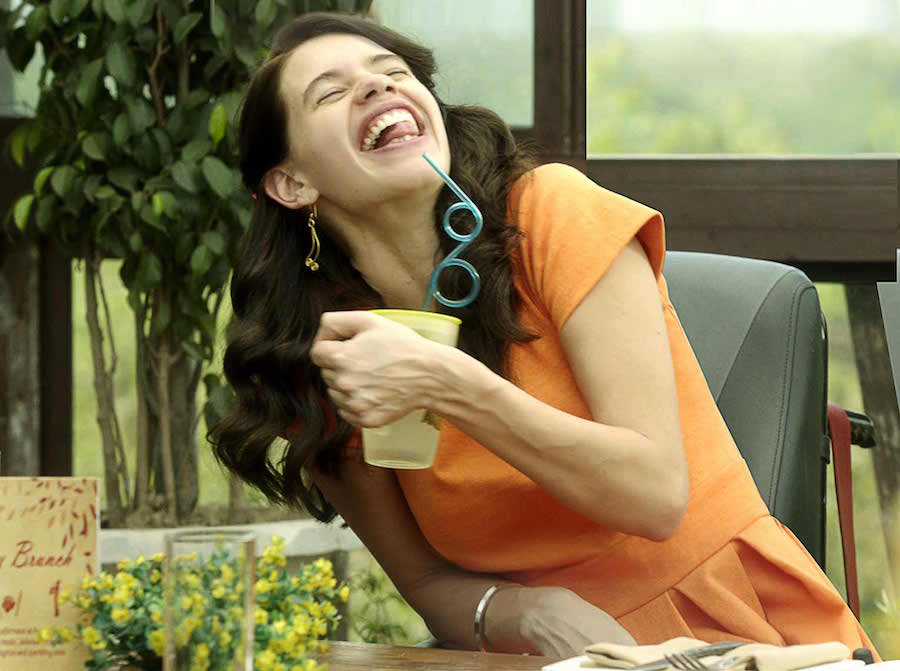 The Red Carpet Opening night on Thursday, March 10, will feature welcoming remarks from the 3-time Academy Award nominated actor and activist Mark Ruffalo, followed by the NY premiere of the award-winning feature Margarita, With A Straw, (pictured above) followed by a conversation with director Shonali Bose and an opening night reception. Based on a true story, the film is a funky, stereotype-busting coming-of-age tale about a Punjabi teenage girl with cerebral palsy who comes to New York to pursue her dreams of writing and is opened to the world of possibilities that the city has to offer.
Opening night will also include a special performance by Robert Ariza and other cast members from Broadway’s latest Deaf West Theatre’s revival of the hit musical: Spring Awakening. This show was groundbreaking for Broadway and paved the way for inclusion and accessibility in professional theater.
On Friday, March 11, JCC Manhattan will host “REELationships” – a Friday Night Dinner featuring riveting conversations about life, love and relationships centered around screenings of acclaimed short films including: Good Beer, Jesse, The Mobile Stripper, Perfect, Take Me, Bumblebees and Birthday.
Saturday, March 12, features “ReelAbilities R&R” – an afternoon of free films and activities including Soliloquy: film and dance by Heidi Latsky Dance, Family-Friendly Short Films, ActionPlay Theater Workshop for teens and young adults on the Autism spectrum, Screen-printing workshop by Gowanus Print Lab, and more. The evening will be highlighted by a free screening of director Michael Gitlin’s That Which is Possible, a feature documentaryexploring the artists working at the Living Museum, an art-space on the grounds of the Creedmoor psychiatric facility in Queens.
Actor Danny Woodburn, best known for his role on Seinfeld, will be part of the “Beyond Hollywood: Authenticity and Opportunity” panel discussion on Sunday, March 13. Inclusion in Hollywood was the theme of this year’s Academy Awards program, yet the conversation excluded America’s largest and most underrepresented minority: people with disabilities. This constructive conversation will feature filmmakers and actors with disabilities discussing their own career paths and the tensions between authentic and artistic license, and accuracy and appropriation. Woodburn will be joined by a variety of filmmakers including: Emmy award winner Jason DaSilva, Rich Hinz, Maleni Chaitoo and more. The event is co-presented by SAG-AFTRA, NYC Mayor’s Office for Media and Entertainment, Inclusion in the Arts, and NY Women in Film and Television. To register for free, please visit: http://newyork.reelabilities.org/films-and-events/#3
The festival closes on Wednesday, March 16, with a special premiere screening of In Harmony. Directed by Denis Dercourt, the feature narrative film follows Marc, an equestrian stuntman recovering from a traumatic injury and his relationship with Florence, the insurance company worker in charge of his case. The screening will be followed by a conversation with Bernard Sachsé, the inspiration for the film and the author of the book on which the film was based. A conversation will be followed by a closing night reception.
As part of the mission of ReelAbilities to use film to create social change, all films are followed by conversation in all locations by filmmakers, experts and protagonists. Among the dozens of guests, the festival includes Actress Regina Saldivar who is the producer of the feature documentary Do You Dream in Color, and renowned screenwriter Thomas Ropelewski who Directed 2E: Twice Exceptional.
The Red Carpet Opening night on Thursday, March 10, will feature welcoming remarks from the 3-time Academy Award nominated actor and activist Mark Ruffalo, followed by the NY premiere of the award-winning feature Margarita, With A Straw, (pictured above) followed by a conversation with director Shonali Bose and an opening night reception. Based on a true story, the film is a funky, stereotype-busting coming-of-age tale about a Punjabi teenage girl with cerebral palsy who comes to New York to pursue her dreams of writing and is opened to the world of possibilities that the city has to offer.
Opening night will also include a special performance by Robert Ariza and other cast members from Broadway’s latest Deaf West Theatre’s revival of the hit musical: Spring Awakening. This show was groundbreaking for Broadway and paved the way for inclusion and accessibility in professional theater.
On Friday, March 11, JCC Manhattan will host “REELationships” – a Friday Night Dinner featuring riveting conversations about life, love and relationships centered around screenings of acclaimed short films including: Good Beer, Jesse, The Mobile Stripper, Perfect, Take Me, Bumblebees and Birthday.
Saturday, March 12, features “ReelAbilities R&R” – an afternoon of free films and activities including Soliloquy: film and dance by Heidi Latsky Dance, Family-Friendly Short Films, ActionPlay Theater Workshop for teens and young adults on the Autism spectrum, Screen-printing workshop by Gowanus Print Lab, and more. The evening will be highlighted by a free screening of director Michael Gitlin’s That Which is Possible, a feature documentaryexploring the artists working at the Living Museum, an art-space on the grounds of the Creedmoor psychiatric facility in Queens.
Actor Danny Woodburn, best known for his role on Seinfeld, will be part of the “Beyond Hollywood: Authenticity and Opportunity” panel discussion on Sunday, March 13. Inclusion in Hollywood was the theme of this year’s Academy Awards program, yet the conversation excluded America’s largest and most underrepresented minority: people with disabilities. This constructive conversation will feature filmmakers and actors with disabilities discussing their own career paths and the tensions between authentic and artistic license, and accuracy and appropriation. Woodburn will be joined by a variety of filmmakers including: Emmy award winner Jason DaSilva, Rich Hinz, Maleni Chaitoo and more. The event is co-presented by SAG-AFTRA, NYC Mayor’s Office for Media and Entertainment, Inclusion in the Arts, and NY Women in Film and Television. To register for free, please visit: http://newyork.reelabilities.org/films-and-events/#3
The festival closes on Wednesday, March 16, with a special premiere screening of In Harmony. Directed by Denis Dercourt, the feature narrative film follows Marc, an equestrian stuntman recovering from a traumatic injury and his relationship with Florence, the insurance company worker in charge of his case. The screening will be followed by a conversation with Bernard Sachsé, the inspiration for the film and the author of the book on which the film was based. A conversation will be followed by a closing night reception.
As part of the mission of ReelAbilities to use film to create social change, all films are followed by conversation in all locations by filmmakers, experts and protagonists. Among the dozens of guests, the festival includes Actress Regina Saldivar who is the producer of the feature documentary Do You Dream in Color, and renowned screenwriter Thomas Ropelewski who Directed 2E: Twice Exceptional.
-
A WAR, LANDFILL HARMONIC, SONITA Voted Audience Award Winners at Portland International Film Festival
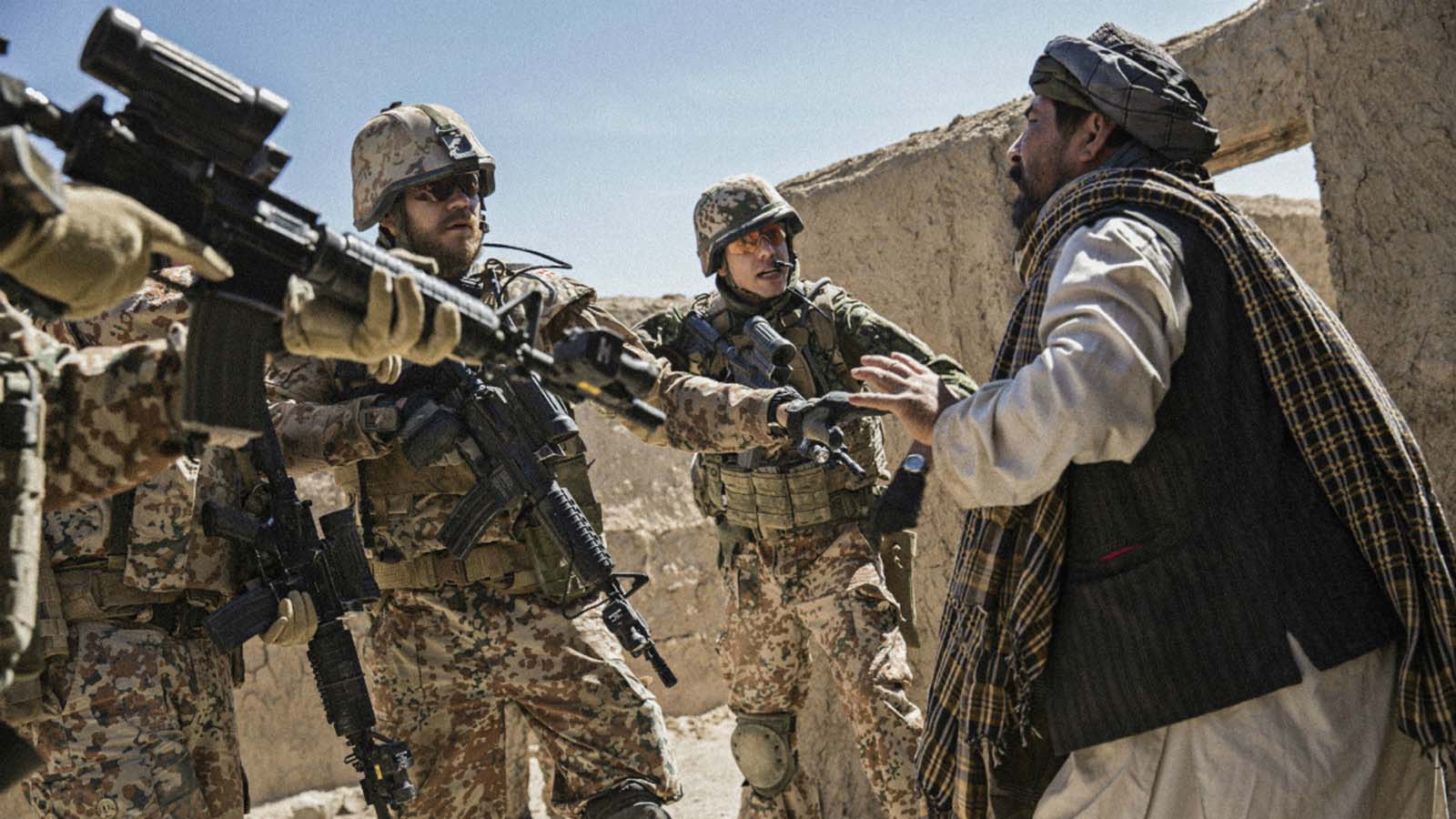 The Audience Award winners have been revealed for the 2016 Portland International Film Festival. Earning top audience accolades for Best Narrative Feature is A WAR (Denmark) directed by Tobias Lindholm. (pictured above)
SONITA (Iran) directed by Rokhsareh Ghaem Maghami and LANDFILL HARMONIC (United States) directed by Brad Allgood and Graham Townsley tied for the Best Documentary Feature award.
The Audience Award winners have been revealed for the 2016 Portland International Film Festival. Earning top audience accolades for Best Narrative Feature is A WAR (Denmark) directed by Tobias Lindholm. (pictured above)
SONITA (Iran) directed by Rokhsareh Ghaem Maghami and LANDFILL HARMONIC (United States) directed by Brad Allgood and Graham Townsley tied for the Best Documentary Feature award.
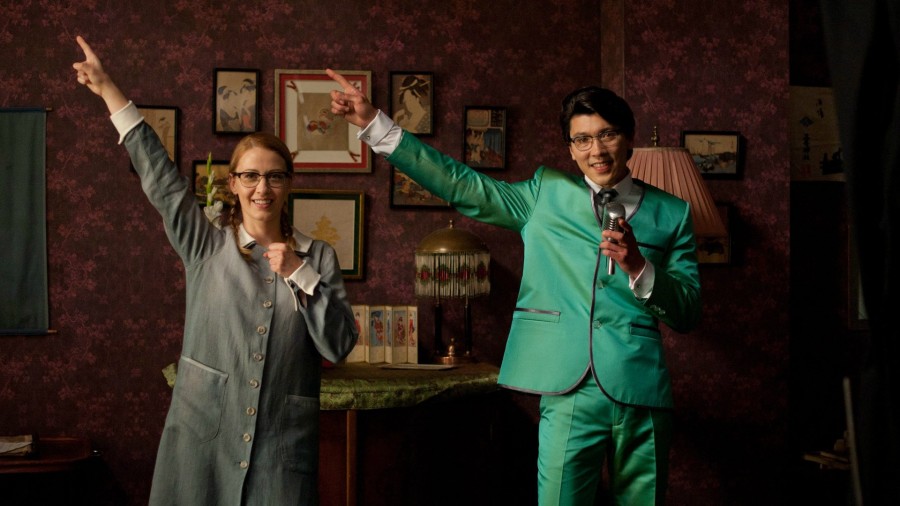 LIZA THE FOX-FAIRY (Hungary) director Károly Ujj Mészáros takes home the audience award for Best New Director Award. (pictured above)
This year’s Best Short Film Award goes to director Dawn Jones Redstone for her film SISTA IN THE BROTHERHOOD (Portland). Redstone’s film is also the recipient of the Oregon Short Film Award.
Narrative Features
1. A WAR / Denmark / Tobias Lindholm *best narrative feature
2. THE FENCER / Finland / Klaus Härö
3. LIZA THE FOX-FAIRY / Hungary / Károly Ujj Mészáros
4. RAMS / Iceland / Grímur Hákonarson
5. THE JUDGMENT / Bulgaria / Stephan Komandorev
6. LET THEM COME / Algeria / Salem Brahimi
7. LAST CAB TO DARWIN / Australia / Jeremy Sims
8. THE THIN YELLOW LINE / Mexico / Celso García
9. DHEEPAN / France / Jacques Audiard
10. MARSHLAND / Spain / Alberto Rodríguez
Documentary Features
1. SONITA / Iran / Rokhsareh Ghaem Maghami
(tied with) LANDFILL HARMONIC / United States / Brad Allgood and Graham Townsley *best documentary feature
2. A GOOD AMERICAN / Austria, US / Friedrich Moser
2. OPEN YOUR EYES / Portland / Irene Taylor Brodsky
4. ROBERT BLY: A THOUSAND YEARS OF JOY / US / Haydn Reiss
5. 50 FEET FROM SYRIA / Portland / Skye Fitzgerald
6. FOR GRACE / US / Kevin Pang and Mark Helenowski
7. THE PEARL BUTTON / Chile / Patricio Guzmán
8. IRAQI ODYSSEY / Switzerland / Samir
9. THRU YOU PRINCESS / Israel / Ido Haar
Best New Directors
1. LIZA THE FOX-FAIRY / Hungary / Károly Ujj Mészáros *best new director
2. THE THIN YELLOW LINE / Mexico / Celso García
3. FOR GRACE / US / Kevin Pang and Mark Helenowski
Shorts
1. SISTA IN THE BROTHERHOOD / Portland / Dawn Jones Redstone *best short film
2. HOW I DIDN’T BECOME A PIANO PLAYER / UK / Tommaso Pitta
3. ROAD TRIP / Germany / Xaver Xylophon
Oregon Shorts
1. SISTA IN THE BROTHERHOOD / Portland / Dawn Jones Redstone *best Oregon short film
2. ONE WEEK / Portland / Rollyn Stafford
3. PEACE IN THE VALLEY / Portland / Donal Mosher and Michael Palmieri
LIZA THE FOX-FAIRY (Hungary) director Károly Ujj Mészáros takes home the audience award for Best New Director Award. (pictured above)
This year’s Best Short Film Award goes to director Dawn Jones Redstone for her film SISTA IN THE BROTHERHOOD (Portland). Redstone’s film is also the recipient of the Oregon Short Film Award.
Narrative Features
1. A WAR / Denmark / Tobias Lindholm *best narrative feature
2. THE FENCER / Finland / Klaus Härö
3. LIZA THE FOX-FAIRY / Hungary / Károly Ujj Mészáros
4. RAMS / Iceland / Grímur Hákonarson
5. THE JUDGMENT / Bulgaria / Stephan Komandorev
6. LET THEM COME / Algeria / Salem Brahimi
7. LAST CAB TO DARWIN / Australia / Jeremy Sims
8. THE THIN YELLOW LINE / Mexico / Celso García
9. DHEEPAN / France / Jacques Audiard
10. MARSHLAND / Spain / Alberto Rodríguez
Documentary Features
1. SONITA / Iran / Rokhsareh Ghaem Maghami
(tied with) LANDFILL HARMONIC / United States / Brad Allgood and Graham Townsley *best documentary feature
2. A GOOD AMERICAN / Austria, US / Friedrich Moser
2. OPEN YOUR EYES / Portland / Irene Taylor Brodsky
4. ROBERT BLY: A THOUSAND YEARS OF JOY / US / Haydn Reiss
5. 50 FEET FROM SYRIA / Portland / Skye Fitzgerald
6. FOR GRACE / US / Kevin Pang and Mark Helenowski
7. THE PEARL BUTTON / Chile / Patricio Guzmán
8. IRAQI ODYSSEY / Switzerland / Samir
9. THRU YOU PRINCESS / Israel / Ido Haar
Best New Directors
1. LIZA THE FOX-FAIRY / Hungary / Károly Ujj Mészáros *best new director
2. THE THIN YELLOW LINE / Mexico / Celso García
3. FOR GRACE / US / Kevin Pang and Mark Helenowski
Shorts
1. SISTA IN THE BROTHERHOOD / Portland / Dawn Jones Redstone *best short film
2. HOW I DIDN’T BECOME A PIANO PLAYER / UK / Tommaso Pitta
3. ROAD TRIP / Germany / Xaver Xylophon
Oregon Shorts
1. SISTA IN THE BROTHERHOOD / Portland / Dawn Jones Redstone *best Oregon short film
2. ONE WEEK / Portland / Rollyn Stafford
3. PEACE IN THE VALLEY / Portland / Donal Mosher and Michael Palmieri
-
‘The Birth of a Nation’ ‘Sonita’ Win Top Sundance Film Festival Awards
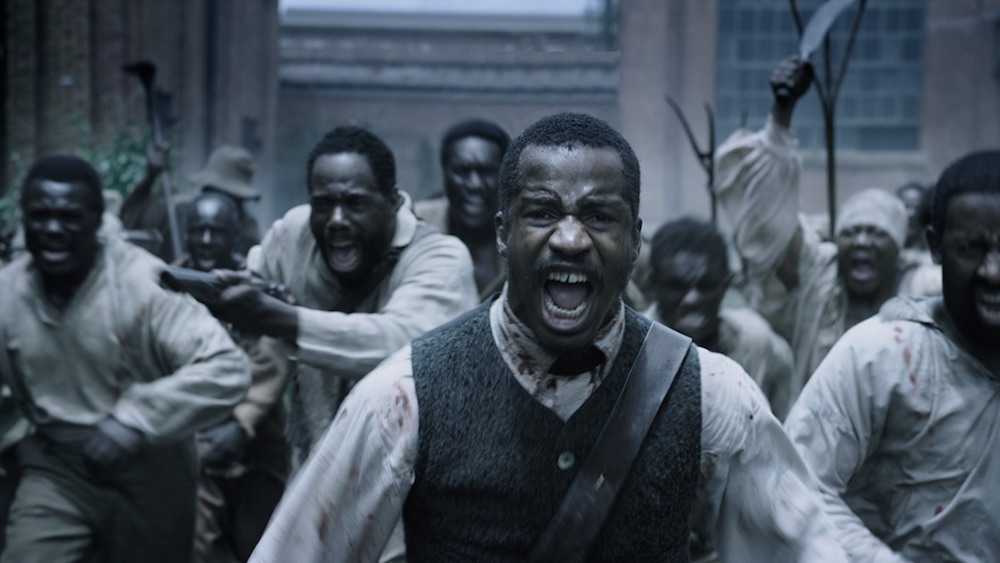 The 2016 Sundance Film Festival announced the winners of the feature filmmaking awards , with top honors going to Between Sea and Land, The Birth of a Nation (pictured above), First Girl I Loved, Jim: The James Foley Story, Sand Storm, Sonita and Weiner. The Birth of a Nation and Sonita won both the Grand Jury Prize and Audience Award for their respective sections, marking the third time in Festival history two films have done this in the same year, and continuing a four-year streak of at least one film winning both awards for its section.
2016 SUNDANCE FILM FESTIVAL AWARDS
The U.S. Grand Jury Prize: Documentary was presented by Louis Psihoyos to: Weiner / U.S.A. (Directors: Josh Kriegman, Elyse Steinberg) — With unrestricted access to Anthony Weiner’s New York City mayoral campaign, this film reveals the human story behind the scenes of a high-profile political scandal as it unfolds, and offers an unfiltered look at how much today’s politics is driven by an appetite for spectacle.
The U.S. Grand Jury Prize: Dramatic was presented by Franklin Leonard to: The Birth of a Nation / U.S.A. (Director and screenwriter: Nate Parker) — Set against the antebellum South, this story follows Nat Turner, a literate slave and preacher whose financially strained owner, Samuel Turner, accepts an offer to use Nat’s preaching to subdue unruly slaves. After witnessing countless atrocities against fellow slaves, Nat devises a plan to lead his people to freedom. Cast: Nate Parker, Armie Hammer, Aja Naomi King, Jackie Earle Haley, Gabrielle Union, Mark Boone Jr.
The World Cinema Grand Jury Prize: Documentary was presented by Asif Kapadia to: Sonita / Germany, Iran, Switzerland (Director: Rokhsareh Ghaem Maghami) — If 18-year-old Sonita had a say, Michael Jackson and Rihanna would be her parents and she’d be a rapper who tells the story of Afghan women and their fate as child brides. She finds out that her family plans to sell her to an unknown husband for $9,000.
The World Cinema Grand Jury Prize: Dramatic was presented by Apichatpong Weerasethakul to: Sand Storm / Israel (Director and screenwriter: Elite Zexer) — When their entire lives are shattered, two Bedouin women struggle to change the unchangeable rules, each in her own individual way. Cast: Lamis Ammar, Ruba Blal-Asfour, Hitham Omari, Khadija Alakel, Jalal Masrwa.
The Audience Award: U.S. Documentary, Presented by Acura was presented by Matt Ross to: Jim: The James Foley Story / U.S.A. (Director: Brian Oakes) — The public execution of American conflict journalist James Foley captured the world’s attention, but he was more than just a man in an orange jumpsuit. Seen through the lens of his close childhood friend, Jim: The James Foley Story moves from adrenaline-fueled front lines and devastated neighborhoods of Syria into the hands of ISIS.
The Audience Award: U.S. Dramatic, Presented by Acura was presented by Matt Ross to: The Birth of a Nation / U.S.A. (Director and screenwriter: Nate Parker) — Set against the antebellum South, this story follows Nat Turner, a literate slave and preacher whose financially strained owner, Samuel Turner, accepts an offer to use Nat’s preaching to subdue unruly slaves. After witnessing countless atrocities against fellow slaves, Nat devises a plan to lead his people to freedom. Cast: Nate Parker, Armie Hammer, Aja Naomi King, Jackie Earle Haley, Gabrielle Union, Mark Boone Jr.
The Audience Award: World Cinema Documentary was presented by Rose McGowan to:Sonita / Germany, Iran, Switzerland (Director: Rokhsareh Ghaem Maghami) — If 18-year-old Sonita had a say, Michael Jackson and Rihanna would be her parents and she’d be a rapper who tells the story of Afghan women and their fate as child brides. She finds out that her family plans to sell her to an unknown husband for $9,000.
The Audience Award: World Cinema Dramatic was presented by Rose McGowan to: Between Sea and Land / Colombia (Director: Carlos del Castillo, Screenwriter: Manolo Cruz) — Alberto, who suffers from an illness that binds him into a body that doesn’t obey him, lives with his loving mom, who dedicates her life to him. His sickness impedes him from achieving his greatest dream of knowing the sea, despite one being located just across the street. Cast: Manolo Cruz, Vicky Hernandéz, Viviana Serna, Jorge Cao, Mile Vergara, Javier Sáenz.
The Audience Award: NEXT, Presented by Adobe was presented by Taika Waititi to: First Girl I Loved / U.S.A. (Director and screenwriter: Kerem Sanga) — Seventeen-year-old Anne just fell in love with Sasha, the most popular girl at her L.A. public high school. But when Anne tells her best friend, Clifton—who has always harbored a secret crush on her—he does his best to get in the way. Cast: Dylan Gelula, Brianna Hildebrand, Mateo Arias, Jennifer Prediger, Tim Heidecker, Pamela Adlon.
The Directing Award: U.S. Documentary was presented by Amy Ziering to: Roger Ross Williams for his film Life, Animated/ U.S.A. (Director: Roger Ross Williams) — Owen Suskind, an autistic boy who could not speak for years, slowly emerged from his isolation by immersing himself in Disney animated movies. Using these films as a roadmap, he reconnects with his loving family and the wider world in this emotional coming-of-age story.
The Directing Award: U.S. Dramatic was presented by Mark Adams to: Daniel Scheinert and Daniel Kwan for their film Swiss Army Man / U.S.A. (Directors and screenwriters: Daniel Scheinert, Daniel Kwan) — Hank, a hopeless man stranded in the wild, discovers a mysterious dead body. Together the two embark on an epic journey to get home. As Hank realizes the body is the key to his survival, this once-suicidal man is forced to convince a dead body that life is worth living. Cast: Paul Dano, Daniel Radcliffe, Mary Elizabeth Winstead.
The Directing Award: World Cinema Documentary was presented by Mila Aung Thwain to: Michal Marczak for his film All These Sleepless Nights / Poland (Director: Michal Marczak) — What does it mean to be awake in a world that seems satisfied to be asleep? Kris and Michal push their experiences of life and love to a breaking point as they restlessly roam the city streets in search of answers, adrift in the euphoria and uncertainty of youth.
The Directing Award: World Cinema Dramatic was presented by Randall Poster to: Belgica / Belgium, France, Netherlands (Director: Felix van Groeningen, Screenwriters: Felix van Groeningen, Arne Sierens) — In the midst of Belgium’s nightlife scene, two brothers start a bar and get swept up in its success. Cast: Stef Aerts, Tom Vermeir, Charlotte Vandermeersch, Hélène De Vos.
The Waldo Salt Screenwriting Award: U.S. Dramatic was presented by Lena Dunham to: Chad Hartigan for Morris from America / U.S.A., Germany (Director and screenwriter: Chad Hartigan) — Thirteen-year-old Morris, a hip-hop loving American, moves to Heidelberg, Germany, with his father. In this completely foreign land, he falls in love with a local girl, befriends his German tutor-turned-confidant, and attempts to navigate the unique trials and tribulations of adolescence. Cast: Markees Christmas, Craig Robinson, Carla Juri, Lina Keller, Jakub Gierszał, Levin Henning.
A U.S. Documentary Special Jury Award for Editing was presented by Jill Lepore to: Penny Lane and Thom Stylinski for NUTS! / U.S.A. (Director: Penny Lane) — The mostly true story of Dr. John Romulus Brinkley, an eccentric genius who built an empire with his goat-testicle impotence cure and a million-watt radio station. Animated reenactments, interviews, archival footage, and one seriously unreliable narrator trace his rise from poverty to celebrity and influence in 1920s America.
A U.S. Documentary Special Jury Award for For Social Impact Filmmaking was presented by Simon Kilmurry to:
Trapped/U.S.A. (Director: Dawn Porter) — American abortion clinics are in a fight for survival. Targeted Regulation of Abortion Providers (TRAP) laws are increasingly being passed by states that maintain they ensure women’s safety and health, but as clinics continue to shut their doors, opponents believe the real purpose of these laws is to outlaw abortion.
A U.S. Documentary Special Jury Award for Writing was presented by Shola Lynch to: Kate Plays Christine / U.S.A. (Director: Robert Greene) — This psychological thriller follows actor Kate Lyn Sheil as she prepares to play the role of Christine Chubbuck, a Florida television host who committed suicide on air in 1974. Christine’s tragic death was the inspiration for Network, and the mysteries surrounding her final act haunt Kate and the production.
A U.S. Documentary Special Jury Award for Vérité Filmmaking was presented by Shola Lynch to: The Bad Kids / U.S.A. (Directors: Keith Fulton, Lou Pepe) — At a remote Mojave Desert high school, extraordinary educators believe that empathy and life skills, more than academics, give at-risk students command of their own futures. This coming-of-age story watches education combat the crippling effects of poverty in the lives of these so-called “bad kids.”
A U.S. Dramatic Special Jury Award was presented by Lena Dunham to: As You Are / U.S.A. (Director: Miles Joris-Peyrafitte, Screenwriters: Miles Joris-Peyrafitte, Madison Harrison) — As You Are is the telling and retelling of a relationship between three teenagers as it traces the course of their friendship through a construction of disparate memories prompted by a police investigation. Cast: Owen Campbell, Charlie Heaton, Amandla Stenberg, John Scurti, Scott Cohen, Mary Stuart Masterson.
A U.S. Dramatic Special Jury Award for Breakthrough Performance was presented by Avy Kaufman to: Joe Seo for Spa Night/U.S.A. (Director and screenwriter: Andrew Ahn) — Los Angeles’s Korean spas serve not only as meeting places but also as a bridge between past and future for generations of immigrant families. Spa Night explores one Korean American family’s dreams and realities as each member struggles with the overlap of personal desire, disillusionment, and sense of tradition. Cast: Joe Seo, Haerry Kim, Youn Ho Cho, Tae Song, Ho Young Chung, Linda Han.
A U.S. Dramatic Special Jury Award for Individual Performance was presented by Jon Hamm to: Melanie Lynskey in The Intervention / U.S.A. (Director and screenwriter: Clea DuVall) — A weekend getaway for four couples takes a sharp turn when one of the couples discovers the entire trip was orchestrated to host an intervention on their marriage. Cast: Melanie Lynskey, Cobie Smulders, Alia Shawkat, Clea DuVall, Natasha Lyonne, Ben Schwartz.
A U.S. Dramatic Special Jury Award for Individual Performance was presented by Jon Hamm to: Craig Robinson in Morris from America / U.S.A., Germany (Director and screenwriter: Chad Hartigan) — Thirteen-year-old Morris, a hip-hop loving American, moves to Heidelberg, Germany, with his father. In this completely foreign land, he falls in love with a local girl, befriends his German tutor-turned-confidant, and attempts to navigate the unique trials and tribulations of adolescence. Cast: Markees Christmas, Craig Robinson, Carla Juri, Lina Keller, Jakub Gierszał, Levin Henning.
A World Cinema Documentary Special Jury Award for Debut Feature was presented by Asif Kapadia to: Heidi Brandenburg and Mathew Orzel for their film When Two Worlds Collide / Peru (Directors: Heidi Brandenburg, Mathew Orzel) — An indigenous leader resists the environmental ruin of Amazonian lands by big business. As he is forced into exile and faces 20 years in prison, his quest reveals conflicting visions that shape the fate of the Amazon and the climate future of our world.
A World Cinema Documentary Special Jury Award for Cinematography was presented by Mila Aung Thwain to: Director and cinematographer Pieter-Jan De Pue for his film The Land of the Enlightened / Belgium (Director: Pieter-Jan De Pue) — A group of Kuchi children in Afghanistan dig out old Soviet mines and sell the explosives to child workers in a lapis lazuli mine. When not dreaming of an Afghanistan after the American withdrawal, Gholam Nasir and his gang control the mountains where caravans are smuggling the blue gemstones.
A World Cinema Documentary Special Jury Award for Editing was presented by Asif Kapadia to: Mako Kamitsuna and John Maringouin for We Are X / United Kingdom, U.S.A., Japan (Director: Stephen Kijak) — As glam rock’s most flamboyant survivors, X Japan ignited a musical revolution in Japan during the late ’80s with their melodic metal. Twenty years after their tragic dissolution, X Japan’s leader, Yoshiki, battles with physical and spiritual demons alongside prejudices of the West to bring their music to the world.
A World Cinema Dramatic Special Jury Award for Acting was presented by Fernanda Solórzano to: Vicky Hernandéz and Manolo Cruz in Between Sea and Land / Colombia (Director: Carlos del Castillo, Screenwriter: Manolo Cruz) — Alberto, who suffers from an illness that binds him into a body that doesn’t obey him, lives with his loving mom, who dedicates her life to him. His sickness impedes him from achieving his greatest dream of knowing the sea, despite one being located just across the street. Cast: Manolo Cruz, Vicky Hernandéz, Viviana Serna, Jorge Cao, Mile Vergara, Javier Sáenz.
A World Cinema Dramatic Special Jury Award for Screenwriting was presented by Randall Poster to: Ana Katz and Inés Bortagaray in Mi Amiga del Parque / Argentina, Uruguay (Director: Ana Katz, Screenwriters: Ana Katz, Inés Bortagaray) — Running away from a bar without paying the bill is just the first adventure for Liz (mother to newborn Nicanor) and Rosa (supposed mother to newborn Clarisa). This budding friendship between nursing mothers starts with the promise of liberation but soon ends up being a dangerous business. Cast: Julieta Zylberberg, Ana Katz, Maricel Álvarez, Mirella Pascual, Malena Figó, Daniel Hendler.
A World Cinema Dramatic Special Jury Award for Unique Vision and Design was presented by Fernanda Solórzano to: Agnieszka Smoczyńska for The Lure / Poland (Director: Agnieszka Smoczynska, Screenwriter: Robert Bolesto) — Two mermaid sisters, who end up performing at a nightclub, face cruel and bloody choices when one of them falls in love with a beautiful young man. Cast: Marta Mazurek, Michalina Olszanska, Jakub Gierszal, Kinga Preis, Andrzej Konopka, Zygmunt Malanowicz.
The 2016 Sundance Film Festival announced the winners of the feature filmmaking awards , with top honors going to Between Sea and Land, The Birth of a Nation (pictured above), First Girl I Loved, Jim: The James Foley Story, Sand Storm, Sonita and Weiner. The Birth of a Nation and Sonita won both the Grand Jury Prize and Audience Award for their respective sections, marking the third time in Festival history two films have done this in the same year, and continuing a four-year streak of at least one film winning both awards for its section.
2016 SUNDANCE FILM FESTIVAL AWARDS
The U.S. Grand Jury Prize: Documentary was presented by Louis Psihoyos to: Weiner / U.S.A. (Directors: Josh Kriegman, Elyse Steinberg) — With unrestricted access to Anthony Weiner’s New York City mayoral campaign, this film reveals the human story behind the scenes of a high-profile political scandal as it unfolds, and offers an unfiltered look at how much today’s politics is driven by an appetite for spectacle.
The U.S. Grand Jury Prize: Dramatic was presented by Franklin Leonard to: The Birth of a Nation / U.S.A. (Director and screenwriter: Nate Parker) — Set against the antebellum South, this story follows Nat Turner, a literate slave and preacher whose financially strained owner, Samuel Turner, accepts an offer to use Nat’s preaching to subdue unruly slaves. After witnessing countless atrocities against fellow slaves, Nat devises a plan to lead his people to freedom. Cast: Nate Parker, Armie Hammer, Aja Naomi King, Jackie Earle Haley, Gabrielle Union, Mark Boone Jr.
The World Cinema Grand Jury Prize: Documentary was presented by Asif Kapadia to: Sonita / Germany, Iran, Switzerland (Director: Rokhsareh Ghaem Maghami) — If 18-year-old Sonita had a say, Michael Jackson and Rihanna would be her parents and she’d be a rapper who tells the story of Afghan women and their fate as child brides. She finds out that her family plans to sell her to an unknown husband for $9,000.
The World Cinema Grand Jury Prize: Dramatic was presented by Apichatpong Weerasethakul to: Sand Storm / Israel (Director and screenwriter: Elite Zexer) — When their entire lives are shattered, two Bedouin women struggle to change the unchangeable rules, each in her own individual way. Cast: Lamis Ammar, Ruba Blal-Asfour, Hitham Omari, Khadija Alakel, Jalal Masrwa.
The Audience Award: U.S. Documentary, Presented by Acura was presented by Matt Ross to: Jim: The James Foley Story / U.S.A. (Director: Brian Oakes) — The public execution of American conflict journalist James Foley captured the world’s attention, but he was more than just a man in an orange jumpsuit. Seen through the lens of his close childhood friend, Jim: The James Foley Story moves from adrenaline-fueled front lines and devastated neighborhoods of Syria into the hands of ISIS.
The Audience Award: U.S. Dramatic, Presented by Acura was presented by Matt Ross to: The Birth of a Nation / U.S.A. (Director and screenwriter: Nate Parker) — Set against the antebellum South, this story follows Nat Turner, a literate slave and preacher whose financially strained owner, Samuel Turner, accepts an offer to use Nat’s preaching to subdue unruly slaves. After witnessing countless atrocities against fellow slaves, Nat devises a plan to lead his people to freedom. Cast: Nate Parker, Armie Hammer, Aja Naomi King, Jackie Earle Haley, Gabrielle Union, Mark Boone Jr.
The Audience Award: World Cinema Documentary was presented by Rose McGowan to:Sonita / Germany, Iran, Switzerland (Director: Rokhsareh Ghaem Maghami) — If 18-year-old Sonita had a say, Michael Jackson and Rihanna would be her parents and she’d be a rapper who tells the story of Afghan women and their fate as child brides. She finds out that her family plans to sell her to an unknown husband for $9,000.
The Audience Award: World Cinema Dramatic was presented by Rose McGowan to: Between Sea and Land / Colombia (Director: Carlos del Castillo, Screenwriter: Manolo Cruz) — Alberto, who suffers from an illness that binds him into a body that doesn’t obey him, lives with his loving mom, who dedicates her life to him. His sickness impedes him from achieving his greatest dream of knowing the sea, despite one being located just across the street. Cast: Manolo Cruz, Vicky Hernandéz, Viviana Serna, Jorge Cao, Mile Vergara, Javier Sáenz.
The Audience Award: NEXT, Presented by Adobe was presented by Taika Waititi to: First Girl I Loved / U.S.A. (Director and screenwriter: Kerem Sanga) — Seventeen-year-old Anne just fell in love with Sasha, the most popular girl at her L.A. public high school. But when Anne tells her best friend, Clifton—who has always harbored a secret crush on her—he does his best to get in the way. Cast: Dylan Gelula, Brianna Hildebrand, Mateo Arias, Jennifer Prediger, Tim Heidecker, Pamela Adlon.
The Directing Award: U.S. Documentary was presented by Amy Ziering to: Roger Ross Williams for his film Life, Animated/ U.S.A. (Director: Roger Ross Williams) — Owen Suskind, an autistic boy who could not speak for years, slowly emerged from his isolation by immersing himself in Disney animated movies. Using these films as a roadmap, he reconnects with his loving family and the wider world in this emotional coming-of-age story.
The Directing Award: U.S. Dramatic was presented by Mark Adams to: Daniel Scheinert and Daniel Kwan for their film Swiss Army Man / U.S.A. (Directors and screenwriters: Daniel Scheinert, Daniel Kwan) — Hank, a hopeless man stranded in the wild, discovers a mysterious dead body. Together the two embark on an epic journey to get home. As Hank realizes the body is the key to his survival, this once-suicidal man is forced to convince a dead body that life is worth living. Cast: Paul Dano, Daniel Radcliffe, Mary Elizabeth Winstead.
The Directing Award: World Cinema Documentary was presented by Mila Aung Thwain to: Michal Marczak for his film All These Sleepless Nights / Poland (Director: Michal Marczak) — What does it mean to be awake in a world that seems satisfied to be asleep? Kris and Michal push their experiences of life and love to a breaking point as they restlessly roam the city streets in search of answers, adrift in the euphoria and uncertainty of youth.
The Directing Award: World Cinema Dramatic was presented by Randall Poster to: Belgica / Belgium, France, Netherlands (Director: Felix van Groeningen, Screenwriters: Felix van Groeningen, Arne Sierens) — In the midst of Belgium’s nightlife scene, two brothers start a bar and get swept up in its success. Cast: Stef Aerts, Tom Vermeir, Charlotte Vandermeersch, Hélène De Vos.
The Waldo Salt Screenwriting Award: U.S. Dramatic was presented by Lena Dunham to: Chad Hartigan for Morris from America / U.S.A., Germany (Director and screenwriter: Chad Hartigan) — Thirteen-year-old Morris, a hip-hop loving American, moves to Heidelberg, Germany, with his father. In this completely foreign land, he falls in love with a local girl, befriends his German tutor-turned-confidant, and attempts to navigate the unique trials and tribulations of adolescence. Cast: Markees Christmas, Craig Robinson, Carla Juri, Lina Keller, Jakub Gierszał, Levin Henning.
A U.S. Documentary Special Jury Award for Editing was presented by Jill Lepore to: Penny Lane and Thom Stylinski for NUTS! / U.S.A. (Director: Penny Lane) — The mostly true story of Dr. John Romulus Brinkley, an eccentric genius who built an empire with his goat-testicle impotence cure and a million-watt radio station. Animated reenactments, interviews, archival footage, and one seriously unreliable narrator trace his rise from poverty to celebrity and influence in 1920s America.
A U.S. Documentary Special Jury Award for For Social Impact Filmmaking was presented by Simon Kilmurry to:
Trapped/U.S.A. (Director: Dawn Porter) — American abortion clinics are in a fight for survival. Targeted Regulation of Abortion Providers (TRAP) laws are increasingly being passed by states that maintain they ensure women’s safety and health, but as clinics continue to shut their doors, opponents believe the real purpose of these laws is to outlaw abortion.
A U.S. Documentary Special Jury Award for Writing was presented by Shola Lynch to: Kate Plays Christine / U.S.A. (Director: Robert Greene) — This psychological thriller follows actor Kate Lyn Sheil as she prepares to play the role of Christine Chubbuck, a Florida television host who committed suicide on air in 1974. Christine’s tragic death was the inspiration for Network, and the mysteries surrounding her final act haunt Kate and the production.
A U.S. Documentary Special Jury Award for Vérité Filmmaking was presented by Shola Lynch to: The Bad Kids / U.S.A. (Directors: Keith Fulton, Lou Pepe) — At a remote Mojave Desert high school, extraordinary educators believe that empathy and life skills, more than academics, give at-risk students command of their own futures. This coming-of-age story watches education combat the crippling effects of poverty in the lives of these so-called “bad kids.”
A U.S. Dramatic Special Jury Award was presented by Lena Dunham to: As You Are / U.S.A. (Director: Miles Joris-Peyrafitte, Screenwriters: Miles Joris-Peyrafitte, Madison Harrison) — As You Are is the telling and retelling of a relationship between three teenagers as it traces the course of their friendship through a construction of disparate memories prompted by a police investigation. Cast: Owen Campbell, Charlie Heaton, Amandla Stenberg, John Scurti, Scott Cohen, Mary Stuart Masterson.
A U.S. Dramatic Special Jury Award for Breakthrough Performance was presented by Avy Kaufman to: Joe Seo for Spa Night/U.S.A. (Director and screenwriter: Andrew Ahn) — Los Angeles’s Korean spas serve not only as meeting places but also as a bridge between past and future for generations of immigrant families. Spa Night explores one Korean American family’s dreams and realities as each member struggles with the overlap of personal desire, disillusionment, and sense of tradition. Cast: Joe Seo, Haerry Kim, Youn Ho Cho, Tae Song, Ho Young Chung, Linda Han.
A U.S. Dramatic Special Jury Award for Individual Performance was presented by Jon Hamm to: Melanie Lynskey in The Intervention / U.S.A. (Director and screenwriter: Clea DuVall) — A weekend getaway for four couples takes a sharp turn when one of the couples discovers the entire trip was orchestrated to host an intervention on their marriage. Cast: Melanie Lynskey, Cobie Smulders, Alia Shawkat, Clea DuVall, Natasha Lyonne, Ben Schwartz.
A U.S. Dramatic Special Jury Award for Individual Performance was presented by Jon Hamm to: Craig Robinson in Morris from America / U.S.A., Germany (Director and screenwriter: Chad Hartigan) — Thirteen-year-old Morris, a hip-hop loving American, moves to Heidelberg, Germany, with his father. In this completely foreign land, he falls in love with a local girl, befriends his German tutor-turned-confidant, and attempts to navigate the unique trials and tribulations of adolescence. Cast: Markees Christmas, Craig Robinson, Carla Juri, Lina Keller, Jakub Gierszał, Levin Henning.
A World Cinema Documentary Special Jury Award for Debut Feature was presented by Asif Kapadia to: Heidi Brandenburg and Mathew Orzel for their film When Two Worlds Collide / Peru (Directors: Heidi Brandenburg, Mathew Orzel) — An indigenous leader resists the environmental ruin of Amazonian lands by big business. As he is forced into exile and faces 20 years in prison, his quest reveals conflicting visions that shape the fate of the Amazon and the climate future of our world.
A World Cinema Documentary Special Jury Award for Cinematography was presented by Mila Aung Thwain to: Director and cinematographer Pieter-Jan De Pue for his film The Land of the Enlightened / Belgium (Director: Pieter-Jan De Pue) — A group of Kuchi children in Afghanistan dig out old Soviet mines and sell the explosives to child workers in a lapis lazuli mine. When not dreaming of an Afghanistan after the American withdrawal, Gholam Nasir and his gang control the mountains where caravans are smuggling the blue gemstones.
A World Cinema Documentary Special Jury Award for Editing was presented by Asif Kapadia to: Mako Kamitsuna and John Maringouin for We Are X / United Kingdom, U.S.A., Japan (Director: Stephen Kijak) — As glam rock’s most flamboyant survivors, X Japan ignited a musical revolution in Japan during the late ’80s with their melodic metal. Twenty years after their tragic dissolution, X Japan’s leader, Yoshiki, battles with physical and spiritual demons alongside prejudices of the West to bring their music to the world.
A World Cinema Dramatic Special Jury Award for Acting was presented by Fernanda Solórzano to: Vicky Hernandéz and Manolo Cruz in Between Sea and Land / Colombia (Director: Carlos del Castillo, Screenwriter: Manolo Cruz) — Alberto, who suffers from an illness that binds him into a body that doesn’t obey him, lives with his loving mom, who dedicates her life to him. His sickness impedes him from achieving his greatest dream of knowing the sea, despite one being located just across the street. Cast: Manolo Cruz, Vicky Hernandéz, Viviana Serna, Jorge Cao, Mile Vergara, Javier Sáenz.
A World Cinema Dramatic Special Jury Award for Screenwriting was presented by Randall Poster to: Ana Katz and Inés Bortagaray in Mi Amiga del Parque / Argentina, Uruguay (Director: Ana Katz, Screenwriters: Ana Katz, Inés Bortagaray) — Running away from a bar without paying the bill is just the first adventure for Liz (mother to newborn Nicanor) and Rosa (supposed mother to newborn Clarisa). This budding friendship between nursing mothers starts with the promise of liberation but soon ends up being a dangerous business. Cast: Julieta Zylberberg, Ana Katz, Maricel Álvarez, Mirella Pascual, Malena Figó, Daniel Hendler.
A World Cinema Dramatic Special Jury Award for Unique Vision and Design was presented by Fernanda Solórzano to: Agnieszka Smoczyńska for The Lure / Poland (Director: Agnieszka Smoczynska, Screenwriter: Robert Bolesto) — Two mermaid sisters, who end up performing at a nightclub, face cruel and bloody choices when one of them falls in love with a beautiful young man. Cast: Marta Mazurek, Michalina Olszanska, Jakub Gierszal, Kinga Preis, Andrzej Konopka, Zygmunt Malanowicz.
-
Brie Larson, Alicia Vikander, Cast of Spotlight Win SAG Awards
 The Screen Actors Guild Awards presented its coveted Actor statuettes for the outstanding motion picture and primetime television performances of 2015 at the 22nd Screen Actors Guild Awards held Saturday, January 30 at the Los Angeles Shrine Exposition Center. Honored with awards were the cast of Spotlight, along with Brie Larson and Alicia Vikander for performances in motion pictures.
The complete list of recipients for the 22nd Annual Screen Actors Guild Awards follows:
22nd SCREEN ACTORS GUILD AWARDS Winners
THEATRICAL MOTION PICTURES
Outstanding Performance by a Male Actor in a Leading Role
LEONARDO DiCAPRIO / Hugh Glass – “THE REVENANT” (20th Century Fox)
Outstanding Performance by a Female Actor in a Leading Role
BRIE LARSON / Ma – “ROOM” (A24)
Outstanding Performance by a Male Actor in a Supporting Role
IDRIS ELBA / Commandant – “BEASTS OF NO NATION” (Netflix)
Outstanding Performance by a Female Actor in a Supporting Role
ALICIA VIKANDER / Gerda Wegener – “THE DANISH GIRL” (Focus Features)
Outstanding Performance by a Cast in a Motion Picture
SPOTLIGHT (Open Road Films)
TELEVISION PROGRAMS
Outstanding Performance by a Male Actor in a Television Movie or Miniseries
IDRIS ELBA / DCI John Luther – “LUTHER” (BBC America)
Outstanding Performance by a Female Actor in a Television Movie or Miniseries
QUEEN LATIFAH / Bessie Smith – “BESSIE” (HBO)
Outstanding Performance by a Male Actor in a Drama Series
KEVIN SPACEY / Francis Underwood – “HOUSE OF CARDS” (Netflix)
Outstanding Performance by a Female Actor in a Drama Series
VIOLA DAVIS / Annalise Keating – “HOW TO GET AWAY WITH MURDER” (ABC)
Outstanding Performance by a Male Actor in a Comedy Series
JEFFREY TAMBOR / Maura Pfefferman – “TRANSPARENT” (Amazon)
Outstanding Performance by a Female Actor in a Comedy Series
UZO ADUBA / Suzanne “Crazy Eyes” Warren – “ORANGE IS THE NEW BLACK” (Netflix)
Outstanding Performance by an Ensemble in a Drama Series
DOWNTON ABBEY (Masterpiece/PBS)
Outstanding Performance by an Ensemble in a Comedy Series
ORANGE IS THE NEW BLACK (Netflix)
Outstanding Action Performance by a Stunt Ensemble in a Motion Picture
“MAD MAX: FURY ROAD” (Warner Bros. Pictures)
Outstanding Action Performance by a Stunt Ensemble in a Comedy or Drama Series
“GAME OF THRONES” (HBO)
LIFE ACHIEVEMENT AWARD
52nd Annual Life Achievement Award
CAROL BURNETT
The Screen Actors Guild Awards presented its coveted Actor statuettes for the outstanding motion picture and primetime television performances of 2015 at the 22nd Screen Actors Guild Awards held Saturday, January 30 at the Los Angeles Shrine Exposition Center. Honored with awards were the cast of Spotlight, along with Brie Larson and Alicia Vikander for performances in motion pictures.
The complete list of recipients for the 22nd Annual Screen Actors Guild Awards follows:
22nd SCREEN ACTORS GUILD AWARDS Winners
THEATRICAL MOTION PICTURES
Outstanding Performance by a Male Actor in a Leading Role
LEONARDO DiCAPRIO / Hugh Glass – “THE REVENANT” (20th Century Fox)
Outstanding Performance by a Female Actor in a Leading Role
BRIE LARSON / Ma – “ROOM” (A24)
Outstanding Performance by a Male Actor in a Supporting Role
IDRIS ELBA / Commandant – “BEASTS OF NO NATION” (Netflix)
Outstanding Performance by a Female Actor in a Supporting Role
ALICIA VIKANDER / Gerda Wegener – “THE DANISH GIRL” (Focus Features)
Outstanding Performance by a Cast in a Motion Picture
SPOTLIGHT (Open Road Films)
TELEVISION PROGRAMS
Outstanding Performance by a Male Actor in a Television Movie or Miniseries
IDRIS ELBA / DCI John Luther – “LUTHER” (BBC America)
Outstanding Performance by a Female Actor in a Television Movie or Miniseries
QUEEN LATIFAH / Bessie Smith – “BESSIE” (HBO)
Outstanding Performance by a Male Actor in a Drama Series
KEVIN SPACEY / Francis Underwood – “HOUSE OF CARDS” (Netflix)
Outstanding Performance by a Female Actor in a Drama Series
VIOLA DAVIS / Annalise Keating – “HOW TO GET AWAY WITH MURDER” (ABC)
Outstanding Performance by a Male Actor in a Comedy Series
JEFFREY TAMBOR / Maura Pfefferman – “TRANSPARENT” (Amazon)
Outstanding Performance by a Female Actor in a Comedy Series
UZO ADUBA / Suzanne “Crazy Eyes” Warren – “ORANGE IS THE NEW BLACK” (Netflix)
Outstanding Performance by an Ensemble in a Drama Series
DOWNTON ABBEY (Masterpiece/PBS)
Outstanding Performance by an Ensemble in a Comedy Series
ORANGE IS THE NEW BLACK (Netflix)
Outstanding Action Performance by a Stunt Ensemble in a Motion Picture
“MAD MAX: FURY ROAD” (Warner Bros. Pictures)
Outstanding Action Performance by a Stunt Ensemble in a Comedy or Drama Series
“GAME OF THRONES” (HBO)
LIFE ACHIEVEMENT AWARD
52nd Annual Life Achievement Award
CAROL BURNETT
-
‘HONEY BUDDIES’ ‘THE MILLION DOLLAR DUCK’ ‘DRIFTWOOD’ Win Top Awards at Slamdance Film Festival
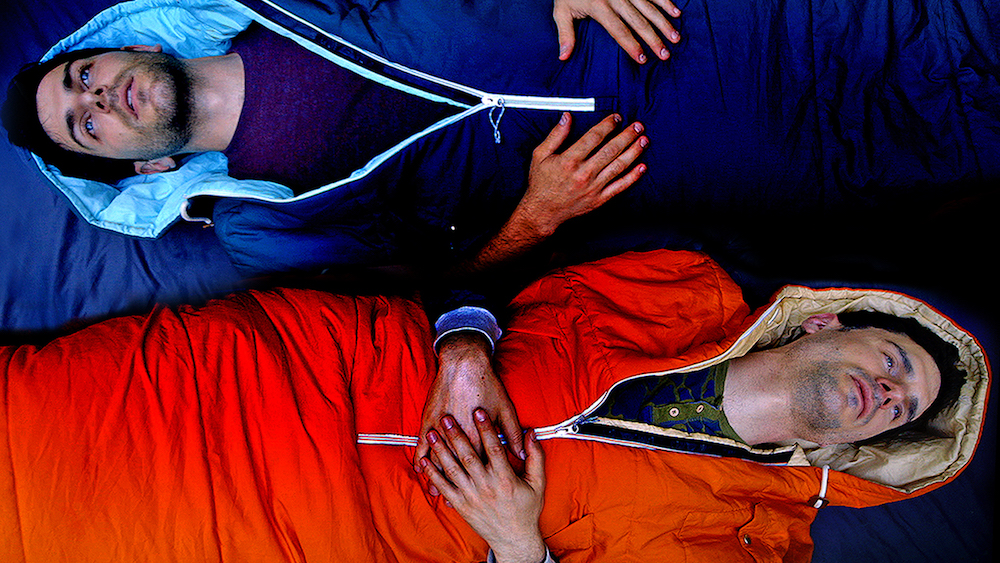 The 22nd Slamdance Film Festival announced the feature and short film recipients of this year’s Sparky awards in the Audience, Jury, and Sponsored Categories. The Audience Award for Narrative Feature went to HONEY BUDDIES by Alex Simmons (pictured), and the Audience Award for Documentary Feature went to THE MILLION DOLLAR DUCK by Brian Golden David. THE MILLION DOLLAR DUCK by Brian Golden David also won the Jury Award for Documentary Feature, and DRIFTWOOD by Paul Taylor is the winner of the Jury Award for Narrative Feature.
“Congratulations to all of the filmmakers this year. Outside of winning a Sparky, as a collective they showed us the power of real independent film and how much it enriches our lives,” stated Peter Baxter, Slamdance President and Co-founder.
AUDIENCE AWARDS
Audience Award for Narrative Feature:
HONEY BUDDIES dir. by Alex Simmons
When David is dumped just days before his wedding, Flula, his upbeat and very German best man, convinces him to go on David’s honeymoon together: a seven-day backpacking trip through the Oregon wilderness. On the trail, the two friends meet a conspiracy theorist, a friendly backpacker, and a bloodthirsty predator, on an unrelenting trek that tests their friendship and their lives.
Audience Award for Documentary Feature:
THE MILLION DOLLAR DUCK dir. by Brian Golden David
The Million Dollar Duck dives into the wonderfully eccentric world of the Federal Duck Stamp Contest, the only juried art competition run by the U.S. government. The Duck Stamp is among the most successful conservation tools ever created, spawning a uniquely American subculture brimming with talent, big money, and migratory birds. The film follows the artists who competitively paint waterfowl in their obsessive quests to win the “Olympics of wildlife art.”
JURY AWARDS – NARRATIVE
This year’s Slamdance Narrative Jury Prizes were selected by the esteemed panel of industry members Julie La’Bassiere, Erik Jambor, & Damon Russell.
Jury Award for Narrative Feature:
DRIFTWOOD dir. by Paul Taylor
“A thoroughly original outsider voice that leaves us eager to see what the filmmaker creates next.”
The award winner was granted $3,500 in legal services from Pierce Law Group.
Jury Honorable Mention for Acting-Narrative Feature:
HUNKY DORY dir. by Michael Curtis Johnson, starring Tomas Pais and Edouard Holdener
“Two breakout performances; a heartfelt story about love and families, both biological and chosen.”
JURY AWARDS – DOCUMENTARY
This year’s Slamdance Documentary Jury Prizes were selected by the esteemed panel of industry members Skizz Cyzyk, Vanessa Hope, & Steve Yu.
Jury Award for Documentary Feature:
THE MILLION DOLLAR DUCK, dir. by Brian Golden Davis
“With humor and empathy, The Million Dollar Duck looks into the little-known world of avid, nature-loving duck painters who seek to win the glory and financial dividend of being on a federal stamp. Artfully shot and edited, with a colorful cast of characters, the film weaves these human stories into the larger picture of how the annual competition has served to create and protect America’s many wildlife refuges. It’s about more than the duck.”
The award winner was granted $3,500 in legal services from Pierce Law Group.
Jury Honorable Mention for Documentary Feature:
ART OF THE PRANK, dir. by Andrea Marini
“Shining a spotlight on an interesting person whose mission isn’t likely to get exposure from the media, since the media is his deserving victim. Told with a mischievous glee, the artfulness of this film mirrors its content.”
Jury Award for Documentary Short:
IF MAMA AIN’T HAPPY, NOBODY’S HAPPY, dir. by Mea de Jong
“Multi-generational traditions examined from two very different perspectives within a family. Charming sweetness and comedic sadness, all rolled into one thought-provoking short film. A film that makes clear the power of women who go it alone and take charge of their lives when men disappoint.”
The award winner qualifies for the Annual Academy Awards®.
Jury Honorable Mention for Cinematography- Documentary Short:
THE BULLET, dir. by Jordan Bahat, cinematography by Mike Gioulakis
“Beautiful cinematography offering a peek into a profession most of us would never consider. And who doesn’t love the circus?”
JURY AWARDS – SHORT FILMS
The below Short Film Jury Prizes were selected by the esteemed panel of industry members Steve Montal, Ina Pira, and Mark Shapiro.
Jury Award for Narrative Short:
WINTER HYMNS, dir. by Dusty Mancinelli
“A story where innocence, mischief and brazen confidence abruptly meet at a tragic crossroads. There is beauty and sadness here, and the director handles both with natural, unpretentious skill.”
The award winner qualifies for the Annual Academy Awards®.
Jury Honorable Mention for Narrative Short:
THE BEAST, dir. by Daina Oniunas Pusic
“The Beast, produced in Croatia, portrays the strained and codependent relationship of two aging women. It is a sophisticated and elegant portrayal of anger and despair.”
Jury Award for Animation Short:
MY DAD, dir. by Marcus Armitage
“My Dad expresses compelling universal themes — the director’s powerful, heartbreaking message and the film’s bold, colorful palette are perfectly suited to his experimental animation format.”
The award winner qualifies for the Annual Academy Awards®.
Jury Honorable Mention for Animation Short:
FLAWS, dir. by Josh Shaffner
“Flaws brilliantly portrays the trajectory of life and death within a world of helplessness. It beautifully interlaces images, icons, words and music to deliver a powerful piece of thought-provoking cinema in under three minutes.”
The below Short Film Jury Prizes were selected by esteemed industry members Wally Chung, Dekker Dreyer, & Jack Sargeant.
Jury Award for Experimental Short:
INFRASTRUCTURES, dir. by Aurèle Ferrier
“A pensive and serene vision that challenges the audience to consider and reevaluate not just the structure of film, but also the world in which we live.”
Jury Honorable Mention for Experimental Short:
CUP OF STARS, dir. by Ryan Betschart, Tyler Betschart
“The beauty of the mutable universe and the individual; finding the transcendent in the everyday.”
Jury Award for Anarchy Short:
DISCO INFERNO, dir. by Alice Waddington
“An emerging voice with a powerful aesthetic that pays homage to classic cinema while simultaneously affirming a future for visionary film.”
Jury Honorable Mention for Anarchy Short:
GWILLIAM, dir. by Brian Lonano
“Fucking visceral. A fresh take on goblin fun.”
Jury Honorable Mention for Anarchy Short:
HI HOW ARE YOU DANIEL JOHNSTON? dir. by Gabriel Sunday
“A dream meditation on music creativity, mental health, and lost love. A poignant journey into the psyche of the creative mind.”
SPECIAL AWARDS
Spirit of Slamdance Award:
Cast and crew of FURSONAS, dir. by Dominic Rodriguez
The Spirit of Slamdance is awarded by the filmmakers of Slamdance 2016. It goes to the filmmaker who best embodies the spirit of the festival, creatively promoting their film, joyfully participating in screenings and events, and generally putting good energy into the festival.
The Digital Bolex Fearless Filmmaking awards were selected by the esteemed panel of industry members Jeremy Osbern, Misti Boland, Lindsey Haun, Michael Dunaway, Ben Kasulke, Leah Shore & Tina Mabry.
Digital Bolex Fearless Filmmaking Grand Prize:
SMALL TALK dir. by Hilary Campbell
Digital Bolex Fearless Filmmaking Honorable Mention:
YOU WILL FIND A WAY dir. by A.J. Molle
Digital Bolex Fearless Filmmaking Honorable Mention:
EYES OF THE CITY, dir. by Luke Randall
The 22nd Slamdance Film Festival announced the feature and short film recipients of this year’s Sparky awards in the Audience, Jury, and Sponsored Categories. The Audience Award for Narrative Feature went to HONEY BUDDIES by Alex Simmons (pictured), and the Audience Award for Documentary Feature went to THE MILLION DOLLAR DUCK by Brian Golden David. THE MILLION DOLLAR DUCK by Brian Golden David also won the Jury Award for Documentary Feature, and DRIFTWOOD by Paul Taylor is the winner of the Jury Award for Narrative Feature.
“Congratulations to all of the filmmakers this year. Outside of winning a Sparky, as a collective they showed us the power of real independent film and how much it enriches our lives,” stated Peter Baxter, Slamdance President and Co-founder.
AUDIENCE AWARDS
Audience Award for Narrative Feature:
HONEY BUDDIES dir. by Alex Simmons
When David is dumped just days before his wedding, Flula, his upbeat and very German best man, convinces him to go on David’s honeymoon together: a seven-day backpacking trip through the Oregon wilderness. On the trail, the two friends meet a conspiracy theorist, a friendly backpacker, and a bloodthirsty predator, on an unrelenting trek that tests their friendship and their lives.
Audience Award for Documentary Feature:
THE MILLION DOLLAR DUCK dir. by Brian Golden David
The Million Dollar Duck dives into the wonderfully eccentric world of the Federal Duck Stamp Contest, the only juried art competition run by the U.S. government. The Duck Stamp is among the most successful conservation tools ever created, spawning a uniquely American subculture brimming with talent, big money, and migratory birds. The film follows the artists who competitively paint waterfowl in their obsessive quests to win the “Olympics of wildlife art.”
JURY AWARDS – NARRATIVE
This year’s Slamdance Narrative Jury Prizes were selected by the esteemed panel of industry members Julie La’Bassiere, Erik Jambor, & Damon Russell.
Jury Award for Narrative Feature:
DRIFTWOOD dir. by Paul Taylor
“A thoroughly original outsider voice that leaves us eager to see what the filmmaker creates next.”
The award winner was granted $3,500 in legal services from Pierce Law Group.
Jury Honorable Mention for Acting-Narrative Feature:
HUNKY DORY dir. by Michael Curtis Johnson, starring Tomas Pais and Edouard Holdener
“Two breakout performances; a heartfelt story about love and families, both biological and chosen.”
JURY AWARDS – DOCUMENTARY
This year’s Slamdance Documentary Jury Prizes were selected by the esteemed panel of industry members Skizz Cyzyk, Vanessa Hope, & Steve Yu.
Jury Award for Documentary Feature:
THE MILLION DOLLAR DUCK, dir. by Brian Golden Davis
“With humor and empathy, The Million Dollar Duck looks into the little-known world of avid, nature-loving duck painters who seek to win the glory and financial dividend of being on a federal stamp. Artfully shot and edited, with a colorful cast of characters, the film weaves these human stories into the larger picture of how the annual competition has served to create and protect America’s many wildlife refuges. It’s about more than the duck.”
The award winner was granted $3,500 in legal services from Pierce Law Group.
Jury Honorable Mention for Documentary Feature:
ART OF THE PRANK, dir. by Andrea Marini
“Shining a spotlight on an interesting person whose mission isn’t likely to get exposure from the media, since the media is his deserving victim. Told with a mischievous glee, the artfulness of this film mirrors its content.”
Jury Award for Documentary Short:
IF MAMA AIN’T HAPPY, NOBODY’S HAPPY, dir. by Mea de Jong
“Multi-generational traditions examined from two very different perspectives within a family. Charming sweetness and comedic sadness, all rolled into one thought-provoking short film. A film that makes clear the power of women who go it alone and take charge of their lives when men disappoint.”
The award winner qualifies for the Annual Academy Awards®.
Jury Honorable Mention for Cinematography- Documentary Short:
THE BULLET, dir. by Jordan Bahat, cinematography by Mike Gioulakis
“Beautiful cinematography offering a peek into a profession most of us would never consider. And who doesn’t love the circus?”
JURY AWARDS – SHORT FILMS
The below Short Film Jury Prizes were selected by the esteemed panel of industry members Steve Montal, Ina Pira, and Mark Shapiro.
Jury Award for Narrative Short:
WINTER HYMNS, dir. by Dusty Mancinelli
“A story where innocence, mischief and brazen confidence abruptly meet at a tragic crossroads. There is beauty and sadness here, and the director handles both with natural, unpretentious skill.”
The award winner qualifies for the Annual Academy Awards®.
Jury Honorable Mention for Narrative Short:
THE BEAST, dir. by Daina Oniunas Pusic
“The Beast, produced in Croatia, portrays the strained and codependent relationship of two aging women. It is a sophisticated and elegant portrayal of anger and despair.”
Jury Award for Animation Short:
MY DAD, dir. by Marcus Armitage
“My Dad expresses compelling universal themes — the director’s powerful, heartbreaking message and the film’s bold, colorful palette are perfectly suited to his experimental animation format.”
The award winner qualifies for the Annual Academy Awards®.
Jury Honorable Mention for Animation Short:
FLAWS, dir. by Josh Shaffner
“Flaws brilliantly portrays the trajectory of life and death within a world of helplessness. It beautifully interlaces images, icons, words and music to deliver a powerful piece of thought-provoking cinema in under three minutes.”
The below Short Film Jury Prizes were selected by esteemed industry members Wally Chung, Dekker Dreyer, & Jack Sargeant.
Jury Award for Experimental Short:
INFRASTRUCTURES, dir. by Aurèle Ferrier
“A pensive and serene vision that challenges the audience to consider and reevaluate not just the structure of film, but also the world in which we live.”
Jury Honorable Mention for Experimental Short:
CUP OF STARS, dir. by Ryan Betschart, Tyler Betschart
“The beauty of the mutable universe and the individual; finding the transcendent in the everyday.”
Jury Award for Anarchy Short:
DISCO INFERNO, dir. by Alice Waddington
“An emerging voice with a powerful aesthetic that pays homage to classic cinema while simultaneously affirming a future for visionary film.”
Jury Honorable Mention for Anarchy Short:
GWILLIAM, dir. by Brian Lonano
“Fucking visceral. A fresh take on goblin fun.”
Jury Honorable Mention for Anarchy Short:
HI HOW ARE YOU DANIEL JOHNSTON? dir. by Gabriel Sunday
“A dream meditation on music creativity, mental health, and lost love. A poignant journey into the psyche of the creative mind.”
SPECIAL AWARDS
Spirit of Slamdance Award:
Cast and crew of FURSONAS, dir. by Dominic Rodriguez
The Spirit of Slamdance is awarded by the filmmakers of Slamdance 2016. It goes to the filmmaker who best embodies the spirit of the festival, creatively promoting their film, joyfully participating in screenings and events, and generally putting good energy into the festival.
The Digital Bolex Fearless Filmmaking awards were selected by the esteemed panel of industry members Jeremy Osbern, Misti Boland, Lindsey Haun, Michael Dunaway, Ben Kasulke, Leah Shore & Tina Mabry.
Digital Bolex Fearless Filmmaking Grand Prize:
SMALL TALK dir. by Hilary Campbell
Digital Bolex Fearless Filmmaking Honorable Mention:
YOU WILL FIND A WAY dir. by A.J. Molle
Digital Bolex Fearless Filmmaking Honorable Mention:
EYES OF THE CITY, dir. by Luke Randall
-
Thunder Road Wins Best Short Film at Sundance Film Festival
 The 2016 Sundance Film Festival announced the winners of the jury prizes in short filmmaking, with the Short Film Grand Jury Prize going to Thunder Road by director and screenwriter Jim Cummings.
This year’s Short Film jurors are: star and co-creator of Comedy Central’s Key & Peele, Keegan-Michael Key; development executive at Amazon Studios, Gina Kwon; and chief film critic for MTV, Amy Nicholson.
2016 Sundance Film Festival Short Film Jury Awards:
The Short Film Grand Jury Prize was awarded to: Thunder Road / U.S.A. (Director and screenwriter: Jim Cummings) — Officer Arnaud loved his mom.
The Short Film Jury Award: U.S. Fiction was presented to: The Procedure / U.S.A. (Director and screenwriter: Calvin Lee Reeder) — A man is captured and forced to endure a strange experiment.
The Short Film Jury Award: International Fiction was presented to: Maman(s) / France (Director and screenwriter: Maïmouna Doucouré ) — Life is disrupted for eight-year-old Aida when her father returns with a young Senegalese woman, Rama, whom he introduces as his second wife. Sensitive to her mother’s distress, Aida decides to get rid of the new visitor.
The Short Film Jury Award: Non-fiction was presented to: Bacon & God’s Wrath / Canada (Director: Sol Friedman) — A 90-year-old Jewish woman reflects on her life experiences as she prepares to try bacon for the first time.
The Short Film Jury Award: Animation was presented to: Edmond / United Kingdom (Director and screenwriter: Nina Gantz) — Edmond’s impulse to love and be close to others is strong—maybe too strong. As he stands by a lake contemplating his options, he reflects on his defining moments in search of the origin of his desires.
A Short Film Special Jury Award for Outstanding Performance was presented to: Grace Glowicki for her performance in Her Friend Adam.
A Short Film Special Jury Award for Best Direction was presented to: Peacock / Czech Republic (Director: Ondřej Hudeček, Screenwriters: Jan Smutny, Ondřej Hudeček) — A twisted queer romance set in picturesque 19th-century Bohemia tells the true story of the birth of one of the nation’s most influential writers, with suspense, laughter, violence, hope, nudity, sex, and a happy ending—mostly a happy ending.
The 2016 Sundance Film Festival announced the winners of the jury prizes in short filmmaking, with the Short Film Grand Jury Prize going to Thunder Road by director and screenwriter Jim Cummings.
This year’s Short Film jurors are: star and co-creator of Comedy Central’s Key & Peele, Keegan-Michael Key; development executive at Amazon Studios, Gina Kwon; and chief film critic for MTV, Amy Nicholson.
2016 Sundance Film Festival Short Film Jury Awards:
The Short Film Grand Jury Prize was awarded to: Thunder Road / U.S.A. (Director and screenwriter: Jim Cummings) — Officer Arnaud loved his mom.
The Short Film Jury Award: U.S. Fiction was presented to: The Procedure / U.S.A. (Director and screenwriter: Calvin Lee Reeder) — A man is captured and forced to endure a strange experiment.
The Short Film Jury Award: International Fiction was presented to: Maman(s) / France (Director and screenwriter: Maïmouna Doucouré ) — Life is disrupted for eight-year-old Aida when her father returns with a young Senegalese woman, Rama, whom he introduces as his second wife. Sensitive to her mother’s distress, Aida decides to get rid of the new visitor.
The Short Film Jury Award: Non-fiction was presented to: Bacon & God’s Wrath / Canada (Director: Sol Friedman) — A 90-year-old Jewish woman reflects on her life experiences as she prepares to try bacon for the first time.
The Short Film Jury Award: Animation was presented to: Edmond / United Kingdom (Director and screenwriter: Nina Gantz) — Edmond’s impulse to love and be close to others is strong—maybe too strong. As he stands by a lake contemplating his options, he reflects on his defining moments in search of the origin of his desires.
A Short Film Special Jury Award for Outstanding Performance was presented to: Grace Glowicki for her performance in Her Friend Adam.
A Short Film Special Jury Award for Best Direction was presented to: Peacock / Czech Republic (Director: Ondřej Hudeček, Screenwriters: Jan Smutny, Ondřej Hudeček) — A twisted queer romance set in picturesque 19th-century Bohemia tells the true story of the birth of one of the nation’s most influential writers, with suspense, laughter, violence, hope, nudity, sex, and a happy ending—mostly a happy ending.