
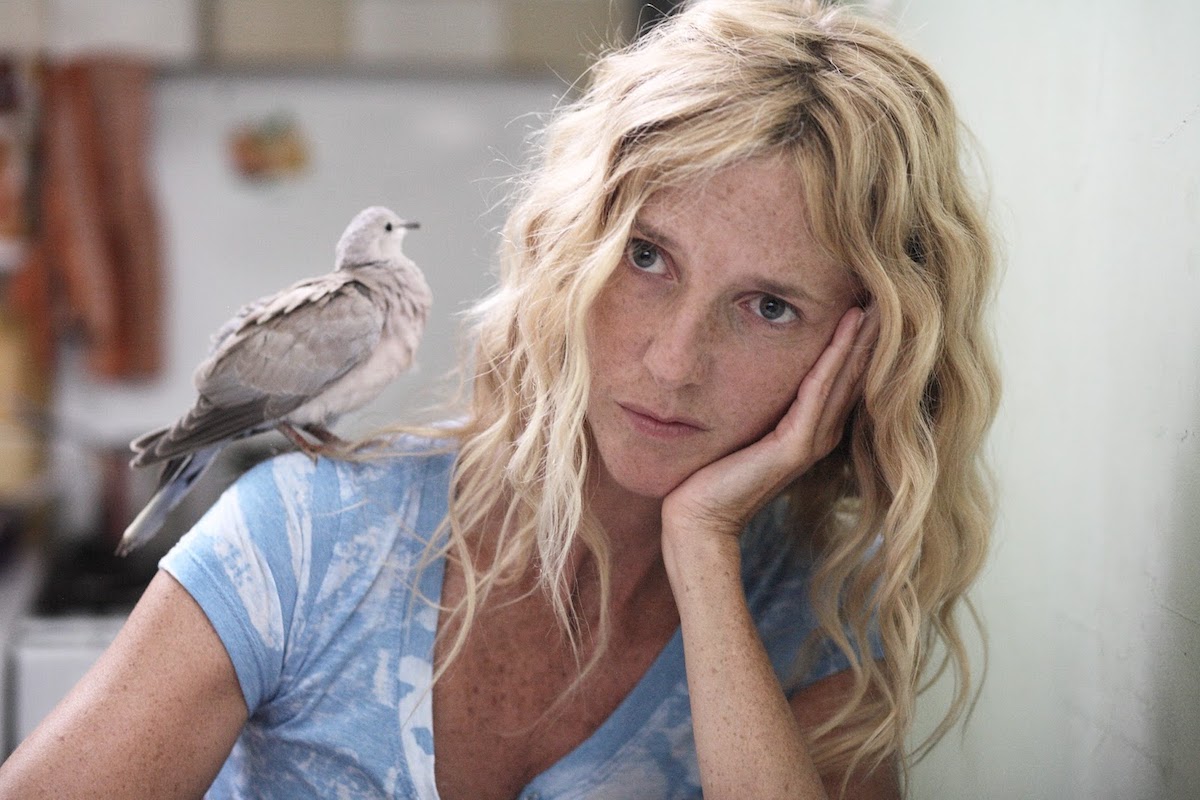
 Actress Sandrine Kiberlain will preside over the Jury for this year’s Caméra d’or at the 70th Cannes Film Festival. Accompanied by her jury of industry professionals, the French actress will award a prize to a director’s first work from the Official Selection, the Directors’ Fortnight or the Semaine de la Critique.
In a career spanning 25 years and boasting around 40 films, the actress has made a simple and subtle but undeniable impression on the French filmmaking scene. She first shot to prominence in The Patriots by Éric Rochant (winner of the Romy-Schneider prize) then confirmed those first impressions with En avoir (ou pas) by Laetitia Masson (César for Most Promising Actress). Since then, she has continued to make an impact far and wide, taking risks in her stride and turning her hand with ease to dramas (Mademoiselle Chambon), quirky comedies (9 Month Stretch, César for Best Actress), arthouse films (False Servant) and mass-market films (Little Nicolas).
As the young director of an acclaimed short film in 2016, Bonne Figure, she has worked under greats such as Benoît Jacquot (Seventh Heaven), Claude Miller (Alias Betty), Nicole Garcia (A view of Love), Alain Resnais (Life of Riley) and André Téchiné (Being 17).
Kiberlain was a member of the feature film jury at the 2001 Festival de Cannes, and has accompanied A Self-made Hero (1996) and Polisse (2011) in Competition, as well as For Sale (1998) as part of Un Certain Regard.
Following on from Wim Wenders, Tim Roth, Abbas Kiarostami and more recently Agnès Varda and Sabine Azéma, Sandrine Kiberlain and her jury members will award the Caméra d’or prize at the Closing Ceremony of the Festival de Cannes on Sunday 28 May. Since 1978 the award has gone to Stranger than Paradise by Jim Jarmusch (1984), Suzaku by Naomi Kawase (1997), The White Balloon by Jafar Panahi (1995), Hunger by Steve McQueen (2008) and Beasts of the Southern Wild by Benh Zeitlin (2012). Last year, Houda Benyamina won the Caméra d’or for her film Divines screened in the Directors’ Fortnight.
Actress Sandrine Kiberlain will preside over the Jury for this year’s Caméra d’or at the 70th Cannes Film Festival. Accompanied by her jury of industry professionals, the French actress will award a prize to a director’s first work from the Official Selection, the Directors’ Fortnight or the Semaine de la Critique.
In a career spanning 25 years and boasting around 40 films, the actress has made a simple and subtle but undeniable impression on the French filmmaking scene. She first shot to prominence in The Patriots by Éric Rochant (winner of the Romy-Schneider prize) then confirmed those first impressions with En avoir (ou pas) by Laetitia Masson (César for Most Promising Actress). Since then, she has continued to make an impact far and wide, taking risks in her stride and turning her hand with ease to dramas (Mademoiselle Chambon), quirky comedies (9 Month Stretch, César for Best Actress), arthouse films (False Servant) and mass-market films (Little Nicolas).
As the young director of an acclaimed short film in 2016, Bonne Figure, she has worked under greats such as Benoît Jacquot (Seventh Heaven), Claude Miller (Alias Betty), Nicole Garcia (A view of Love), Alain Resnais (Life of Riley) and André Téchiné (Being 17).
Kiberlain was a member of the feature film jury at the 2001 Festival de Cannes, and has accompanied A Self-made Hero (1996) and Polisse (2011) in Competition, as well as For Sale (1998) as part of Un Certain Regard.
Following on from Wim Wenders, Tim Roth, Abbas Kiarostami and more recently Agnès Varda and Sabine Azéma, Sandrine Kiberlain and her jury members will award the Caméra d’or prize at the Closing Ceremony of the Festival de Cannes on Sunday 28 May. Since 1978 the award has gone to Stranger than Paradise by Jim Jarmusch (1984), Suzaku by Naomi Kawase (1997), The White Balloon by Jafar Panahi (1995), Hunger by Steve McQueen (2008) and Beasts of the Southern Wild by Benh Zeitlin (2012). Last year, Houda Benyamina won the Caméra d’or for her film Divines screened in the Directors’ Fortnight.-
Actress Sandrine Kiberlain to Preside Over Caméra d’or Jury at Cannes Film Festival
Actress Sandrine Kiberlain will preside over the Jury for this year’s Caméra d’or at the 70th Cannes Film Festival. Accompanied by her jury of industry professionals, the French actress will award a prize to a director’s first work from the Official Selection, the Directors’ Fortnight or the Semaine de la Critique.
In a career spanning 25 years and boasting around 40 films, the actress has made a simple and subtle but undeniable impression on the French filmmaking scene. She first shot to prominence in The Patriots by Éric Rochant (winner of the Romy-Schneider prize) then confirmed those first impressions with En avoir (ou pas) by Laetitia Masson (César for Most Promising Actress). Since then, she has continued to make an impact far and wide, taking risks in her stride and turning her hand with ease to dramas (Mademoiselle Chambon), quirky comedies (9 Month Stretch, César for Best Actress), arthouse films (False Servant) and mass-market films (Little Nicolas).
As the young director of an acclaimed short film in 2016, Bonne Figure, she has worked under greats such as Benoît Jacquot (Seventh Heaven), Claude Miller (Alias Betty), Nicole Garcia (A view of Love), Alain Resnais (Life of Riley) and André Téchiné (Being 17).
Kiberlain was a member of the feature film jury at the 2001 Festival de Cannes, and has accompanied A Self-made Hero (1996) and Polisse (2011) in Competition, as well as For Sale (1998) as part of Un Certain Regard.
Following on from Wim Wenders, Tim Roth, Abbas Kiarostami and more recently Agnès Varda and Sabine Azéma, Sandrine Kiberlain and her jury members will award the Caméra d’or prize at the Closing Ceremony of the Festival de Cannes on Sunday 28 May. Since 1978 the award has gone to Stranger than Paradise by Jim Jarmusch (1984), Suzaku by Naomi Kawase (1997), The White Balloon by Jafar Panahi (1995), Hunger by Steve McQueen (2008) and Beasts of the Southern Wild by Benh Zeitlin (2012). Last year, Houda Benyamina won the Caméra d’or for her film Divines screened in the Directors’ Fortnight.
-
AT&T to Award $1 Million Grant to Underrepresented Filmmaker at 2017 Tribeca Film Festival
[caption id="attachment_21867" align="aligncenter" width="1200"] Nigerian Prince[/caption]
AT&T and Tribeca are teaming up to launch a new film initiative, AT&T Presents: Untold Stories. An Inclusive Film Program in Collaboration with Tribeca. AT&T will provide funding of up to $1 million for 1 talented filmmaker to create his or her film, and Tribeca will provide mentorship from seasoned industry professionals. AT&T plans to distribute the winning film across several of its video platforms, including DIRECTV NOW, AT&T’s streaming over-the-top service.
The new film initiative is a multi-year, multi-tier alliance between AT&T and Tribeca along with the year-round nonprofit Tribeca Film Institute. It will debut at the 2017 Tribeca Film Festival, which begins on April 19 in New York City. AT&T will serve as the presenting sponsor of the Festival for the fourth straight year.
“AT&T Presents: Untold Stories is about pushing the boundaries of storytelling, connecting our customers to new and exclusive content and celebrating diversity,” said Fiona Carter, AT&T Chief Brand Officer. “At AT&T, we’re passionate about innovation, culture and community – the same values that drive the Tribeca Film Festival. By launching this program with Tribeca, we are helping to give underrepresented filmmakers in the industry opportunities they have not had before.”
“As a champion of supporting underrepresented filmmakers for over a decade, Tribeca Film Festival and Tribeca Film Institute are proud to collaborate with AT&T on AT&T Presents: Untold Stories, a significant and essential program that goes beyond the generous funding,” said Jane Rosenthal, co-founder and Executive Chair of the Tribeca Film Festival and co-founder and co-chair of the Tribeca Film Institute. “To be able to say to a filmmaker that we are not only going to help get your important story made, but we will provide the mentoring, guidance and guaranteed distribution so it will get seen, is an incredible feeling.”
“We are excited to collaborate with AT&T on this timely and critical new initiative, AT&T Presents: Untold Stories,” said Amy Hobby, Executive Director of Tribeca Film Institute. “This program fits squarely within our year-round work at TFI – to bring stories from underrepresented filmmakers to audiences around the world – and we look forward to providing guidance to all of the talented pitch participants to help fully realize these amazing projects.”
AT&T Presents: Untold Stories kicks off April 18 with a live pitch event in New York City. Five talented and diverse filmmakers (listed below), curated by Tribeca Film Institute, will present their story ideas, budgets and film scripts to a Greenlight committee, including Fiona Carter (AT&T Chief Brand Officer), Jeffrey Wright (Actor), Anthony Mackie (Actor), Josh Deutsch (Chairman and CEO, Downtown Records), Lee Daniels (Film Producer), Len Amato (President, HBO Films) and Frida Torresblanco (Film Producer).
Tribeca will livestream the pitch event on its Facebook page for fans to follow along. The Greenlight committee will then narrow the selection to 1 filmmaker who will receive the $1 million grant. The chosen filmmaker will be announced later that day at a luncheon that celebrates inclusivity in storytelling.
The winning filmmaker will then create his or her film project, using the $1 million grant to help produce the film. In addition to the $1 million, AT&T and Tribeca will help with awards submissions, qualifying screenings, advertisements and promotion of the film. The finished film will premiere at the 2018 Tribeca Film Festival and will run across several of AT&T’s video platforms, including DIRECTV NOW. AT&T will provide to the other 4 participating filmmakers a grant of $10,000 each to help achieve their respective film goals.
AT&T will host several events at this year’s Festival:
April 19 – AT&T Presents TFI Network: a part of the Tribeca Film Festival and the AT&T Untold Stories Program. Day 1 of this three-day networking event for Tribeca Film Institute grantees and other selected filmmakers will include various panels and presentations from some of the industry’s most iconic filmmakers and experts.
AT&T Presents: Untold Stories will be the focus of 1 of the panel discussions. The $1 million grant recipient will sit on the panel, along with AT&T Chief Brand Officer Fiona Carter.
April 26 – AT&T’s DIRECTV Premiere of the film, The Exception, will begin with a red carpet event. Directly following the premiere, attendees will be joined by the film’s cast at an after party.
The Exception, directed by David Leveaux, is a World War II drama about a German officer who begins a dangerous affair with a young Dutch-Jewish woman.
April 28 – AT&T’s Free Film Friday awards fans the opportunity to see exclusive film screenings for free.
Additionally, AT&T Presents: Untold Stories is the focus of this year’s official Tribeca Film Festival trailer that will be shown before every film during the Festival.
https://www.youtube.com/watch?v=j1VKNgFuBoE
Nigerian Prince[/caption]
AT&T and Tribeca are teaming up to launch a new film initiative, AT&T Presents: Untold Stories. An Inclusive Film Program in Collaboration with Tribeca. AT&T will provide funding of up to $1 million for 1 talented filmmaker to create his or her film, and Tribeca will provide mentorship from seasoned industry professionals. AT&T plans to distribute the winning film across several of its video platforms, including DIRECTV NOW, AT&T’s streaming over-the-top service.
The new film initiative is a multi-year, multi-tier alliance between AT&T and Tribeca along with the year-round nonprofit Tribeca Film Institute. It will debut at the 2017 Tribeca Film Festival, which begins on April 19 in New York City. AT&T will serve as the presenting sponsor of the Festival for the fourth straight year.
“AT&T Presents: Untold Stories is about pushing the boundaries of storytelling, connecting our customers to new and exclusive content and celebrating diversity,” said Fiona Carter, AT&T Chief Brand Officer. “At AT&T, we’re passionate about innovation, culture and community – the same values that drive the Tribeca Film Festival. By launching this program with Tribeca, we are helping to give underrepresented filmmakers in the industry opportunities they have not had before.”
“As a champion of supporting underrepresented filmmakers for over a decade, Tribeca Film Festival and Tribeca Film Institute are proud to collaborate with AT&T on AT&T Presents: Untold Stories, a significant and essential program that goes beyond the generous funding,” said Jane Rosenthal, co-founder and Executive Chair of the Tribeca Film Festival and co-founder and co-chair of the Tribeca Film Institute. “To be able to say to a filmmaker that we are not only going to help get your important story made, but we will provide the mentoring, guidance and guaranteed distribution so it will get seen, is an incredible feeling.”
“We are excited to collaborate with AT&T on this timely and critical new initiative, AT&T Presents: Untold Stories,” said Amy Hobby, Executive Director of Tribeca Film Institute. “This program fits squarely within our year-round work at TFI – to bring stories from underrepresented filmmakers to audiences around the world – and we look forward to providing guidance to all of the talented pitch participants to help fully realize these amazing projects.”
AT&T Presents: Untold Stories kicks off April 18 with a live pitch event in New York City. Five talented and diverse filmmakers (listed below), curated by Tribeca Film Institute, will present their story ideas, budgets and film scripts to a Greenlight committee, including Fiona Carter (AT&T Chief Brand Officer), Jeffrey Wright (Actor), Anthony Mackie (Actor), Josh Deutsch (Chairman and CEO, Downtown Records), Lee Daniels (Film Producer), Len Amato (President, HBO Films) and Frida Torresblanco (Film Producer).
Tribeca will livestream the pitch event on its Facebook page for fans to follow along. The Greenlight committee will then narrow the selection to 1 filmmaker who will receive the $1 million grant. The chosen filmmaker will be announced later that day at a luncheon that celebrates inclusivity in storytelling.
The winning filmmaker will then create his or her film project, using the $1 million grant to help produce the film. In addition to the $1 million, AT&T and Tribeca will help with awards submissions, qualifying screenings, advertisements and promotion of the film. The finished film will premiere at the 2018 Tribeca Film Festival and will run across several of AT&T’s video platforms, including DIRECTV NOW. AT&T will provide to the other 4 participating filmmakers a grant of $10,000 each to help achieve their respective film goals.
AT&T will host several events at this year’s Festival:
April 19 – AT&T Presents TFI Network: a part of the Tribeca Film Festival and the AT&T Untold Stories Program. Day 1 of this three-day networking event for Tribeca Film Institute grantees and other selected filmmakers will include various panels and presentations from some of the industry’s most iconic filmmakers and experts.
AT&T Presents: Untold Stories will be the focus of 1 of the panel discussions. The $1 million grant recipient will sit on the panel, along with AT&T Chief Brand Officer Fiona Carter.
April 26 – AT&T’s DIRECTV Premiere of the film, The Exception, will begin with a red carpet event. Directly following the premiere, attendees will be joined by the film’s cast at an after party.
The Exception, directed by David Leveaux, is a World War II drama about a German officer who begins a dangerous affair with a young Dutch-Jewish woman.
April 28 – AT&T’s Free Film Friday awards fans the opportunity to see exclusive film screenings for free.
Additionally, AT&T Presents: Untold Stories is the focus of this year’s official Tribeca Film Festival trailer that will be shown before every film during the Festival.
https://www.youtube.com/watch?v=j1VKNgFuBoE
AT&T Presents: Untold Stories’ Selected Projects and Filmmakers
Forever Even Longer. Written and Directed by Andrew Perez Duarte, Produced by Navid Khonsari and Vassiliki Khonsari Film Summary: After the death of his estranged gay son, an elderly, small-town Mexican man must travel to the U.S. to meet his heartbroken granddaughter and his resentful son-in-law and confront his own prejudice. In this authentic drama that celebrates the laugh-at-life moments, Forever, Even Longer tells the universal story of intolerance and forgiveness—even after it seems too late. Bio: Perez-Duarte is a director, writer and creative producer – at iNK Stories his work includes the highly acclaimed 1979 Revolution (Sundance, SXSW, BAFTA), award-winning short Galeana No. 8, and upcoming VR experiences Blindfold, and The Helmets. Raised in Mexico, Perez-Duarte graduated from SCAD Film and contributes as a Ghetto Film School Mentor. The Hand of God. Written and Directed by Lissette Feliciano, Produced by Pricilla Anany Film Summary: Elon Edson is the greatest footballer in the world. On the eve of receiving a lifetime achievement award, he recounts belief in miracles which carried him from his mother’s death at the hands of terrorism through his perilous escape from Nigeria to Europe. Bio: Lissette Feliciano is a writer, director and a graduate of NYU’s Tisch School of the Arts. She is a member of the Alliance of Women Directors and has a penchant for social impact narratives. Her work often includes magical realism, the moniker of idols Gael Garcia Marquez and Isabel Allende. Her most recent short film With Children premiered at Cinequest 2017 and depicts a single mother’s struggle with wage inequality in the 1970’s. I’m Not Down. Written and Directed by A. Sayeeda Moreno, Produced by Derek Nguyen and Monique Gabriela Curnen Film Summary: When a middle-aged, black punk rock single dad is served an eviction notice by the greedy new landlord of his New York City tenement building, he has to fight for his way of life and save the livelihood of his family, the building’s tenants, and the character of a neighborhood that’s being threatened to vanish forever. Bio: A. Sayeeda Moreno is a proud native New Yorker. Her Futurestates.tv short, White, premiered at SXSW and screened at Tribeca and BAMcinemaFest. The feature-length script won the San Francisco Film Society Hearst Screenwriting Award. Her short, Sin Salida, aired on HBO. She earned her MFA in Film from NYU. Nigerian Prince. Written and Directed by Faraday Okoro, Produced by Biyi Bandele and Oscar Hernandez-Topete Film Summary: After being sent to Nigeria against his will, a stubborn Nigerian-American teenager joins forces with an internet scammer, in order to return to the United States. Bio: Faraday is a New York City based Nigerian-American filmmaker. He attended Howard University and NYU Graduate Film School. Faraday’s films have screened in numerous film festivals worldwide, including Tribeca, LA Film Festival, and the Palm Springs International Shortsfest. In 2016, Faraday was included in MovieMaker Magazine’s 25 Screenwriters to Watch. The Short History of the Long Road. Written and Directed by Ani Simon-Kennedy, Produced by Darren Dean and Kishori Rajan Film Summary: Teenage Nola grew up living out of a van with her charismatic father, Clint—two nomads against the world. When Clint suddenly dies, Nola must confront the reality of life on the road alone. She’ll need to take the wheel for the first time – learning to own her grief, her past and her new destination. Bio: Ani Simon-Kennedy is a New York-based filmmaker from Paris. Through her production company Bicephaly Pictures (co-founded with cinematographer Cailin Yatsko), she’s directed videos for Condé Nast, Vice and Intel. An alum of Film Independent, IFP Film Week and Through Her Lens, she wrote and directed her first feature film Days of Gray in Iceland.AT&T Presents: Untold Stories’ Greenlight Committee
Fiona Carter is Chief Brand Officer for AT&T, a global leader in the rapidly converging telecommunications, media and technology (TMT) space. She oversees global brand marketing, advertising, media and sponsorships, as well as the integration of brand leadership into the company’s business strategies. She’s also a passionate advocate for female equality and strives to make a difference for women not only in the workplace, but all aspects of life. Anthony Mackie is currently one of Hollywood’s most in-demand actors, known for his roles in Oscar-winning films The Hurt Locker and Million Dollar Baby, as well as recurring character ‘The Falcon’ in the Marvel universe films. Lee Daniels is an Academy Award-nominated filmmaker who is best known for directing the feature films Lee Daniels’ The Butler, Precious: Based on the Novel by Sapphire, and The Paperboy, in addition to producing Monster’s Ball. In 2015, Daniels expanded his influence into the world of television by co-creating the Fox network’s mega hit series Empire and is currently working on his latest series, STAR, which was recently picked up by Fox for a second season. Josh Deutsch is the Chairman and CEO of Downtown Records, Immortal Music Publishing, and Downtown Events. As CEO, Deutsch oversees the operations and creative direction of all three companies and plays an active role in the recorded music, music publishing, and live events businesses. Prior to his current position, Deutsch founded Downtown Music LLC in 2006 and acted as its Chairman and CEO, overseeing the company’s recorded music, publishing, licensing, online and studio business units. Len Amato is President of HBO Films, responsible for all original movies made for the network. He started his career in New York at Tribeca Productions and was President of Spring Creek Productions prior to coming to HBO. Frida Torresblanco is the award winning producer of Pan’s Labyrinth, directed by Guillermo del Toro and the winner of three Oscars, Magic, and the upcoming Disobedience, starring Rachel Weisz, Rachel McAdams and Alessandro Nivola, directed by Sebastian Lelio, and produced through her new film production company Braven Films. Jeffrey Wright is a Tony, Emmy, AFI and Golden Globe Award-winning actor. He has enjoyed an illustrious career that has spanned the worlds of theatre, film and television. Wright can be seen playing Bernard Lowe, in HBO’s Westworld. Wright has also recently played Harvard Law professor, Charles Ogletree in HBO’s Confirmation, as well as Dr. Valentin Narcisse in HBO’s critically acclaimed series Boardwalk Empire.
-
Thessaloniki Takes 5 Greek “Works In Progress” Films to Marché du Film of Cannes Film Festival
[caption id="attachment_21864" align="aligncenter" width="1200"] VIRUS – Angelos Frantzis)[/caption]
5 Greek “works in progress” films have been selected by the Thessaloniki International Film Festival to participate in the “Thessaloniki Goes to Cannes” event which will take place on Tuesday, May 23rd, during the Marché du Film of the 70th Cannes Film Festival (May 17 – 28, 2017).
The participation of the Thessaloniki International Film Festival’s Agora Industry in the “Goes to Cannes” of this year’s edition of Cannes’ Marché du Film, one of the world’s largest film markets discovering up-and-coming directors from all over the world, is collaboration between the TIFF and the Greek Film Centre with the Festival de Cannes. Greece is the only country in Southeastern Europe and the Balkans that participates in the event.
The 5 Works in Progress (both fiction and documentary) that will be presented to the sales agents, distributors and programmers who attend this year’s Cannes’ Marché du Film are the following:
1. HAPPY BIRTHDAY (Fiction, 85’, 2017 – Greece, France, Cyprus, Germany)
Director-Writer: Christos Georgiou
Production Company: View Master Films, Twenty Twenty Vision Filmproduktion GmbH, Manny Films, Lychnari Productions Limited, Pallas Film, Producer: Costas Lambropoulos, Thanassis Karathanos, Co-producers: Birgit Kemner, Christos Georgiou, Martin Hampel, Language: Greek, Key partners: Greek Film Center, Centre National du Cinéma et de l’Image Animeé, Cultural Services – Ministry of Education and Culture of Cyprus (Advisory Film Committee), Mitteldeutsche Medienförderung, FFA – German Federal Film Board, ERT and Eurimages – Council of Europe
Stage: Almost completed
Looking for: Sales agent, distributors, festivals
Synopsis: When George runs out of the police riot bus and sees his daughter among the demonstrators facing him, he and his wife decide that father and daughter should go to their country home for a few days, to keep her safe and see if they can salvage their relationship.
2. POLYXENI (Fiction, 100’, 2017 – Greece)
Director-Writer: Dora Masklavanou
Production Company: Blonde S.A., Producer: Fenia Cossovitsa, Languages: Greek, Turkish, Key partners: Greek Film Centre, ERT S.A., Nova
Stage: Post-production
Looking for: Sales agent, festivals
Synopsis: In 1955 a couple of prominent Greek Istanbulites adopt an orphan Greek girl from the town of their origin. They offer her a powerful family name and ensure her devotion. Twelve-year-old Polyxeni is separated from her younger brother. She embarks on a new life and a future that looks bright. She receives an education, comes of age and falls in love. She has a lust for life, while unsuspicious of the devious plan of annihilation that others are weaving behind her back, targeting her large inheritance.
3. VIRUS (Fiction, 120’, 2017 – Greece, France, Latvia)
Director: Angelos Frantzis, Writers: Angelos Frantzis, Spyros Krimbalis
The film won the 2|35 award for post-production services at the Agora Industry’s Crossroads
Co-production Forum of the 52nd Thessaloniki IFF.
Production Company: Heretic, Producers: Giorgos Karnavas, Konstantinos Kontovrakis, Co-producer: Mathieu Bompoint (Mezzanine Films), Languages: Greek, English, Russian, Key partners: Greek Film Centre, ERT S.A., CNC, Latvian National Film Centre, Blonde S.A., Alatas Films, 235
Stage: Post-production
Looking for: Gap financing, sales agent, distributors, festivals
Synopsis: Anna and Petros are a young Greek couple that moved recently to a remote Siberian town for Petros’ new job. Their lives are disrupted by Anna’s pregnancy that seems to have no explanation, as they haven’t had sex since they moved to Russia. The questions raised by the mysterious event are relentless; was she cheating? Is she the victim of a conspiracy? Or maybe a Saint? As Petros is desperately looking for a rational answer and Anna resorts to religion to make sense of her situation, two opposing worlds, faith and reason, come to a violent clash.
4. DOLPHIN MAN (Documentary, 87’, 2017 – Greece, France, Canada, Japan, Italy)
Director: Lefteris Charitos, Writers: Yuri Averof, Lefteris Charitos
Production Company: Anemon Productions, Les Films Du Balibari, Storyline Entertainment, Impleo, Producers: Rea Apostolides, Yuri Averof, Estelle Robin, Ed Barreveld, Seiko Kato, Languages: English, Greek, French, Japanese, Italian, Key partners: Arte, CNC, Greek Film Centre, WOWOW, ERT, Knowledge, TVO, Canal Z, SVT, Region Pays de la Loire, World Sales: Films Transit
Stage: Post-production
Looking for: Final funding, theatrical distribution partners
Synopsis: Dolphin Man tells the life story of Jacques Mayol, the greatest free-diver in recorded history, whose life became the inspiration for Luc Besson’s cult-movie Le Grand Bleu. It draws us into Mayol’s world, capturing his compelling journey from Japan to Europe, North America and India, while immersing viewers into the sensory and transformative experience of free-diving. Mayol was the first diver to reach 100 meters below the sea and revolutionized free-diving by introducing yoga and Zen techniques. He traveled across the world, promoting an urgent vision of our need to reconnect with nature. The film weaves together stunning contemporary underwater photography of the world’s leading free-divers with intimate testimonies of Mayol’s closest friends and family and rare film archive.
5. LP (ΛΠ) (Documentary, 70’, 2017 – Greece)
Director-Writer: Cristo Petrou
Production Company: Heretic, Producer: Giorgos Karnavas, Languages: Greek, English, Key partners: Greek Film Center, ERT S.A., World Sales: Heretic Outreach
Stage: Editing
Looking for: Finishing funding, festival premiere
Synopsis: ΛΠ is a documentary about Lena Platonos, one of Greece’s most idiosyncratic musicians and one of the world’s forerunners in electronic music. Born on 10.21.1951 under the sign of Libra, she was trained as a classical pianist in Vienna and Berlin but eventually got involved with electronic music when synthesizers became accessible to musicians. However, Lena didn’t receive the international recognition she deserved. 30 years later, the release of her works by the American label Dark Entries in 2015 under critical acclaim gave us the perfect excuse to ask musicians from a wide range of contemporary music to experiment with her music, while interviewing her and all the people who were involved in the making of her records in the ’80s.
VIRUS – Angelos Frantzis)[/caption]
5 Greek “works in progress” films have been selected by the Thessaloniki International Film Festival to participate in the “Thessaloniki Goes to Cannes” event which will take place on Tuesday, May 23rd, during the Marché du Film of the 70th Cannes Film Festival (May 17 – 28, 2017).
The participation of the Thessaloniki International Film Festival’s Agora Industry in the “Goes to Cannes” of this year’s edition of Cannes’ Marché du Film, one of the world’s largest film markets discovering up-and-coming directors from all over the world, is collaboration between the TIFF and the Greek Film Centre with the Festival de Cannes. Greece is the only country in Southeastern Europe and the Balkans that participates in the event.
The 5 Works in Progress (both fiction and documentary) that will be presented to the sales agents, distributors and programmers who attend this year’s Cannes’ Marché du Film are the following:
1. HAPPY BIRTHDAY (Fiction, 85’, 2017 – Greece, France, Cyprus, Germany)
Director-Writer: Christos Georgiou
Production Company: View Master Films, Twenty Twenty Vision Filmproduktion GmbH, Manny Films, Lychnari Productions Limited, Pallas Film, Producer: Costas Lambropoulos, Thanassis Karathanos, Co-producers: Birgit Kemner, Christos Georgiou, Martin Hampel, Language: Greek, Key partners: Greek Film Center, Centre National du Cinéma et de l’Image Animeé, Cultural Services – Ministry of Education and Culture of Cyprus (Advisory Film Committee), Mitteldeutsche Medienförderung, FFA – German Federal Film Board, ERT and Eurimages – Council of Europe
Stage: Almost completed
Looking for: Sales agent, distributors, festivals
Synopsis: When George runs out of the police riot bus and sees his daughter among the demonstrators facing him, he and his wife decide that father and daughter should go to their country home for a few days, to keep her safe and see if they can salvage their relationship.
2. POLYXENI (Fiction, 100’, 2017 – Greece)
Director-Writer: Dora Masklavanou
Production Company: Blonde S.A., Producer: Fenia Cossovitsa, Languages: Greek, Turkish, Key partners: Greek Film Centre, ERT S.A., Nova
Stage: Post-production
Looking for: Sales agent, festivals
Synopsis: In 1955 a couple of prominent Greek Istanbulites adopt an orphan Greek girl from the town of their origin. They offer her a powerful family name and ensure her devotion. Twelve-year-old Polyxeni is separated from her younger brother. She embarks on a new life and a future that looks bright. She receives an education, comes of age and falls in love. She has a lust for life, while unsuspicious of the devious plan of annihilation that others are weaving behind her back, targeting her large inheritance.
3. VIRUS (Fiction, 120’, 2017 – Greece, France, Latvia)
Director: Angelos Frantzis, Writers: Angelos Frantzis, Spyros Krimbalis
The film won the 2|35 award for post-production services at the Agora Industry’s Crossroads
Co-production Forum of the 52nd Thessaloniki IFF.
Production Company: Heretic, Producers: Giorgos Karnavas, Konstantinos Kontovrakis, Co-producer: Mathieu Bompoint (Mezzanine Films), Languages: Greek, English, Russian, Key partners: Greek Film Centre, ERT S.A., CNC, Latvian National Film Centre, Blonde S.A., Alatas Films, 235
Stage: Post-production
Looking for: Gap financing, sales agent, distributors, festivals
Synopsis: Anna and Petros are a young Greek couple that moved recently to a remote Siberian town for Petros’ new job. Their lives are disrupted by Anna’s pregnancy that seems to have no explanation, as they haven’t had sex since they moved to Russia. The questions raised by the mysterious event are relentless; was she cheating? Is she the victim of a conspiracy? Or maybe a Saint? As Petros is desperately looking for a rational answer and Anna resorts to religion to make sense of her situation, two opposing worlds, faith and reason, come to a violent clash.
4. DOLPHIN MAN (Documentary, 87’, 2017 – Greece, France, Canada, Japan, Italy)
Director: Lefteris Charitos, Writers: Yuri Averof, Lefteris Charitos
Production Company: Anemon Productions, Les Films Du Balibari, Storyline Entertainment, Impleo, Producers: Rea Apostolides, Yuri Averof, Estelle Robin, Ed Barreveld, Seiko Kato, Languages: English, Greek, French, Japanese, Italian, Key partners: Arte, CNC, Greek Film Centre, WOWOW, ERT, Knowledge, TVO, Canal Z, SVT, Region Pays de la Loire, World Sales: Films Transit
Stage: Post-production
Looking for: Final funding, theatrical distribution partners
Synopsis: Dolphin Man tells the life story of Jacques Mayol, the greatest free-diver in recorded history, whose life became the inspiration for Luc Besson’s cult-movie Le Grand Bleu. It draws us into Mayol’s world, capturing his compelling journey from Japan to Europe, North America and India, while immersing viewers into the sensory and transformative experience of free-diving. Mayol was the first diver to reach 100 meters below the sea and revolutionized free-diving by introducing yoga and Zen techniques. He traveled across the world, promoting an urgent vision of our need to reconnect with nature. The film weaves together stunning contemporary underwater photography of the world’s leading free-divers with intimate testimonies of Mayol’s closest friends and family and rare film archive.
5. LP (ΛΠ) (Documentary, 70’, 2017 – Greece)
Director-Writer: Cristo Petrou
Production Company: Heretic, Producer: Giorgos Karnavas, Languages: Greek, English, Key partners: Greek Film Center, ERT S.A., World Sales: Heretic Outreach
Stage: Editing
Looking for: Finishing funding, festival premiere
Synopsis: ΛΠ is a documentary about Lena Platonos, one of Greece’s most idiosyncratic musicians and one of the world’s forerunners in electronic music. Born on 10.21.1951 under the sign of Libra, she was trained as a classical pianist in Vienna and Berlin but eventually got involved with electronic music when synthesizers became accessible to musicians. However, Lena didn’t receive the international recognition she deserved. 30 years later, the release of her works by the American label Dark Entries in 2015 under critical acclaim gave us the perfect excuse to ask musicians from a wide range of contemporary music to experiment with her music, while interviewing her and all the people who were involved in the making of her records in the ’80s.
-
Watch Trailer for RISK, Laura Poitras Newest Documentary on Julian Assange and Wikileaks
[caption id="attachment_12437" align="aligncenter" width="1200"] Julian Assange in a scene from Laura Poitras’ Risk,[/caption]
RISK, the latest documentary from Academy Award winner Laura Poitras (CITIZENFOUR) on the controversial Julian Assange and the Wikileaks organization, premiered last night on Showtime during the season finale of Homeland. The documentary, filmed over six years including through the 2016 presidential election and up to the present moment, takes viewers closer than they have ever been before to Julian Assange and those who surround him.
With unprecedented access, Poitras give us the WikiLeaks story from the inside, allowing viewers to understand our current era of massive leaks, headline-grabbing news, and the revolutionary impact of the internet on global politics. RISK is a portrait of power, principles, betrayal, and sacrifice when the stakes could not be any higher. It is a first-person geopolitical thriller told from the perspective of a filmmaker immersed in the worlds of state surveillance and the cypherpunk movement. RISK confirms Poitras’ directorial ability to record history as it unfolds on camera, and craft narratives at the highest level.
Showtime Networks has partnered with NEON to release RISK theatrically nationwide, with a television premiere on SHOWTIME this summer.
https://www.youtube.com/watch?v=Zx6l4gPVeNE
Julian Assange in a scene from Laura Poitras’ Risk,[/caption]
RISK, the latest documentary from Academy Award winner Laura Poitras (CITIZENFOUR) on the controversial Julian Assange and the Wikileaks organization, premiered last night on Showtime during the season finale of Homeland. The documentary, filmed over six years including through the 2016 presidential election and up to the present moment, takes viewers closer than they have ever been before to Julian Assange and those who surround him.
With unprecedented access, Poitras give us the WikiLeaks story from the inside, allowing viewers to understand our current era of massive leaks, headline-grabbing news, and the revolutionary impact of the internet on global politics. RISK is a portrait of power, principles, betrayal, and sacrifice when the stakes could not be any higher. It is a first-person geopolitical thriller told from the perspective of a filmmaker immersed in the worlds of state surveillance and the cypherpunk movement. RISK confirms Poitras’ directorial ability to record history as it unfolds on camera, and craft narratives at the highest level.
Showtime Networks has partnered with NEON to release RISK theatrically nationwide, with a television premiere on SHOWTIME this summer.
https://www.youtube.com/watch?v=Zx6l4gPVeNE
-
VIDEO: Watch 4 New Clips from Environmental Documentary TOMORROW by Mélanie Laurent and Cyril Dion
 Watch four new clips from the environmental documentary TOMORROW co-directed by Mélanie Laurent (Inglorious Basterds) and activist Cyril Dion.
The clips represent 4 chapters in the film including AGRICULTURE, ECONOMY, DEMOCRACY and EDUCATION. TOMORROW opens in theaters on April 21 in NYC, LA, and major cities.
Popular French actress Mélanie Laurent (Inglorious Basterds) and activist Cyril Dion’s César Award-winning environmentally-themed documentary Tomorrow (Demain) will open theatrically in San Francisco on April 14 and then in New York, Los Angeles and other markets on April 21 – to coincide with Earth Day celebrations on April 22.
In 2012, “Nature” published a study led by more than 20 researchers from the top scientific institutions in the world predicting that humankind could disappear between 2040 and 2100. It also said that it could be avoided by drastically changing our way of life and take appropriate measures.
Shortly after giving birth to her first child, French actress and director Mélanie Laurent became increasingly aware of the dangers and the state of urgency that her son will face in the future. Along with friend and activist Cyril Dion and their crew, she decided to travel the world in search of solutions that can help save the next generations. The result is Tomorrow, an inspiring documentary that presents concrete solutions implemented throughout the world by hundred of communities.
From the US to the UK and through Finland and India, together they traveled to 10 countries to visit permaculture farms, urban agriculture projects and community-owned renewable initiatives to highlight people making a difference in the fields of food, energy, finance, democracy, and education. Their common ideas and examples make Tomorrow one of the most essential and unexpectedly inspirational viewing experiences of our time.
AGRICULTURE
Watch four new clips from the environmental documentary TOMORROW co-directed by Mélanie Laurent (Inglorious Basterds) and activist Cyril Dion.
The clips represent 4 chapters in the film including AGRICULTURE, ECONOMY, DEMOCRACY and EDUCATION. TOMORROW opens in theaters on April 21 in NYC, LA, and major cities.
Popular French actress Mélanie Laurent (Inglorious Basterds) and activist Cyril Dion’s César Award-winning environmentally-themed documentary Tomorrow (Demain) will open theatrically in San Francisco on April 14 and then in New York, Los Angeles and other markets on April 21 – to coincide with Earth Day celebrations on April 22.
In 2012, “Nature” published a study led by more than 20 researchers from the top scientific institutions in the world predicting that humankind could disappear between 2040 and 2100. It also said that it could be avoided by drastically changing our way of life and take appropriate measures.
Shortly after giving birth to her first child, French actress and director Mélanie Laurent became increasingly aware of the dangers and the state of urgency that her son will face in the future. Along with friend and activist Cyril Dion and their crew, she decided to travel the world in search of solutions that can help save the next generations. The result is Tomorrow, an inspiring documentary that presents concrete solutions implemented throughout the world by hundred of communities.
From the US to the UK and through Finland and India, together they traveled to 10 countries to visit permaculture farms, urban agriculture projects and community-owned renewable initiatives to highlight people making a difference in the fields of food, energy, finance, democracy, and education. Their common ideas and examples make Tomorrow one of the most essential and unexpectedly inspirational viewing experiences of our time.
AGRICULTURE
ECONOMY DEMOCRACY EDUCATION
-
Watch the Final Trailer + New Poster for BUSTER’S MAL HEART Starring Rami Malek
 Buster’s Mal Heart, directed by Sarah Adina Smith and starring Rami Malek of the USA Network television series Mr. Robot, has released the final trailer and new poster. Buster’s Mal Heart opens theatrically in New York and LA on April 28th.
In this bold thriller peppered with dark humor and interlocking mystery, an eccentric mountain man is on the run from the authorities, surviving the winter by breaking into empty vacation homes in a remote community. Regularly calling into radio talk shows — where he has acquired the nickname “Buster” — to rant about the impending Inversion at the turn of the millennium, he is haunted by visions of being lost at sea, and memories of his former life as a family man.
Buster (Rami Malek) was once Jonah, a hard-working husband and father whose job as the night-shift concierge at a hotel took its toll on his psyche and, consequently, his marriage to the sensitive Marty (Kate Lyn Sheil) — until a chance encounter with a conspiracy-obsessed drifter (DJ Qualls) changed the course of their lives forever. As the solitary present-day Buster drifts from house to house, eluding the local sheriff at every turn, we gradually piece together the events that fractured his life and left him alone on top of a snowy mountain, or perhaps in a small rowboat in the middle of a vast ocean — or both, in this visceral mind bender that will provoke discussion long after it turns your world upside-down.
https://www.youtube.com/watch?v=nxKOMAfZjgM
Buster’s Mal Heart, directed by Sarah Adina Smith and starring Rami Malek of the USA Network television series Mr. Robot, has released the final trailer and new poster. Buster’s Mal Heart opens theatrically in New York and LA on April 28th.
In this bold thriller peppered with dark humor and interlocking mystery, an eccentric mountain man is on the run from the authorities, surviving the winter by breaking into empty vacation homes in a remote community. Regularly calling into radio talk shows — where he has acquired the nickname “Buster” — to rant about the impending Inversion at the turn of the millennium, he is haunted by visions of being lost at sea, and memories of his former life as a family man.
Buster (Rami Malek) was once Jonah, a hard-working husband and father whose job as the night-shift concierge at a hotel took its toll on his psyche and, consequently, his marriage to the sensitive Marty (Kate Lyn Sheil) — until a chance encounter with a conspiracy-obsessed drifter (DJ Qualls) changed the course of their lives forever. As the solitary present-day Buster drifts from house to house, eluding the local sheriff at every turn, we gradually piece together the events that fractured his life and left him alone on top of a snowy mountain, or perhaps in a small rowboat in the middle of a vast ocean — or both, in this visceral mind bender that will provoke discussion long after it turns your world upside-down.
https://www.youtube.com/watch?v=nxKOMAfZjgM
-
Tribeca 2017: Watch Trailer for TAKE ME Starring Taylor Schilling and Pat Healy
[caption id="attachment_21342" align="aligncenter" width="1200"]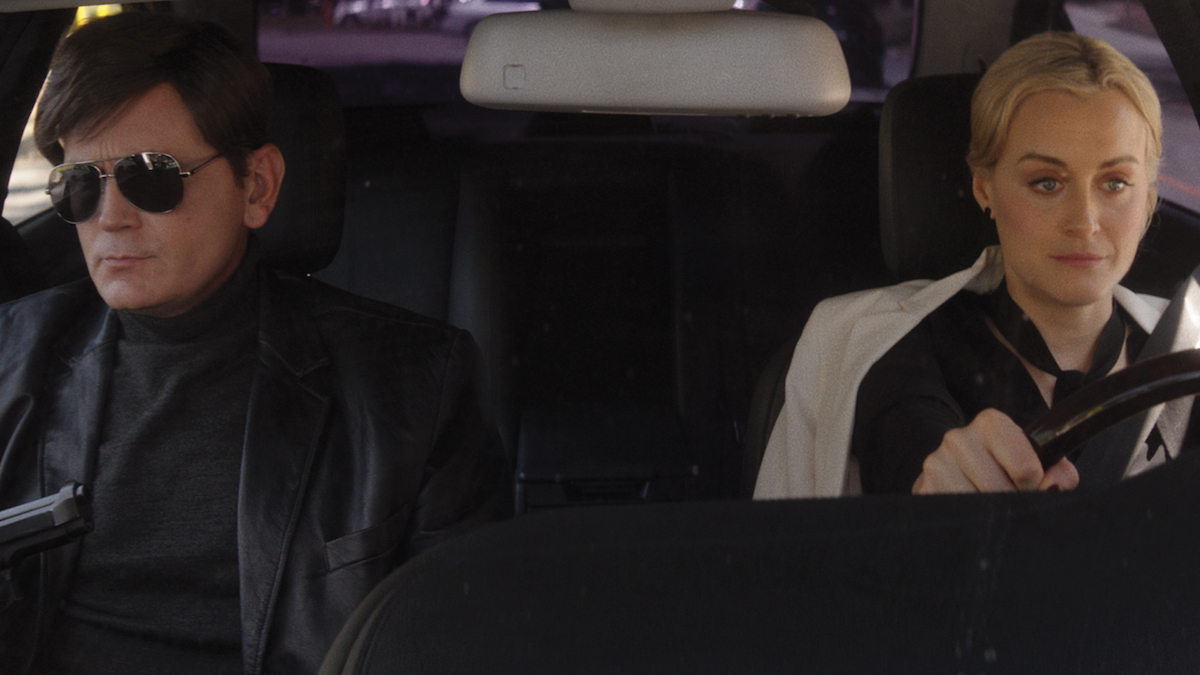 Pat Healy as Ray Moody and Taylor Schilling as Anna St. Blair in TAKE ME. Photographer: Nathan M. Miller.[/caption]
Take Me directed by Pat Healy, and an official selection of the 2017 Tribeca Film Festival has released the official trailer.
The film starring Taylor Schilling and Pat Healy will world premiere at the festival on Tuesday, April 25, 2017; and will be released in theaters on May 5th in NY/LA and on digital platforms nationwide.
Ray Moody (Pat Healy) is a fledgling entrepreneur, trying to get his company off the ground in Los Angeles. His business: the niche Kidnap Solutions, LLC, specializing in abductions that provide alternative therapy for his clients. When a mysterious call contracts him for a weekend kidnapping with a handsome payday at the end, Ray jumps at the opportunity. But the job, and his target – business consultant Anna St. Blair (Orange Is the New Black’s Taylor Schilling) – may not be all that they seem.
TAKE ME, which threads the needle between crime thriller and slapstick farce, is the feature directorial debut of Healy, who’s appeared in more than 40 films including Compliance, Cheap Thrills, The Assassination of Jesse James by the Coward Robert Ford and Magnolia.
Pat Healy as Ray Moody and Taylor Schilling as Anna St. Blair in TAKE ME. Photographer: Nathan M. Miller.[/caption]
Take Me directed by Pat Healy, and an official selection of the 2017 Tribeca Film Festival has released the official trailer.
The film starring Taylor Schilling and Pat Healy will world premiere at the festival on Tuesday, April 25, 2017; and will be released in theaters on May 5th in NY/LA and on digital platforms nationwide.
Ray Moody (Pat Healy) is a fledgling entrepreneur, trying to get his company off the ground in Los Angeles. His business: the niche Kidnap Solutions, LLC, specializing in abductions that provide alternative therapy for his clients. When a mysterious call contracts him for a weekend kidnapping with a handsome payday at the end, Ray jumps at the opportunity. But the job, and his target – business consultant Anna St. Blair (Orange Is the New Black’s Taylor Schilling) – may not be all that they seem.
TAKE ME, which threads the needle between crime thriller and slapstick farce, is the feature directorial debut of Healy, who’s appeared in more than 40 films including Compliance, Cheap Thrills, The Assassination of Jesse James by the Coward Robert Ford and Magnolia.
-
PBS To Release DOLORES – Sundance 2017 Documentary on Labor Activist Dolores Huerta
[caption id="attachment_19947" align="aligncenter" width="1200"] Dolores Huerta appears in Dolores by Peter Bratt[/caption]
The documentary Dolores sheds light on an enigmatic, intensely private woman who is among the most important yet little-known workers’ rights activists in American history – Dolores Huerta. “Dolores,” premiered at the 2017 Sundance Film Festival earlier this year in the US Documentary Competition category, and will be released in theaters in the Fall and make its broadcast premiere on PBS in 2018.
In the copious volumes written about Cesar Chavez and how he formed the first farm workers’ union in America, there’s little mention of Dolores Huerta, although she was his equal partner and co-founder of the union. With unprecedented access to Dolores and her children, the film reveals the raw, personal stories behind the public figure. It portrays a woman both heroic and flawed, working tirelessly for social change even as her 11 children longed to have her at home.
“Dolores” was written, produced and directed by Peter Bratt, produced by Brian Benson, and executive produced by Carlos Santana, Regina K. Scully, and Janet MacGillivray Wallace. Benjamin Bratt served as consulting producer. This is the second film for 5 Stick Films Inc, the Bratts’ production company with partner Alpita Patel.
“In the 1970s, the national grape boycott Dolores Huerta helped organize played out in the small rural Minnesota farming community where I grew up—supported by our Catholic Church, along with tens of thousands of religious organizations across the country,” said Lois Vossen, INDEPENDENT LENS executive producer. “More than 40 years later, Dolores is still an indefatigable architect for social change on behalf of poor, under-represented people, urging them to seek self-determination with her refrain ‘Si Se Puede’ (‘Yes We Can’).”
“We are thrilled and inspired to be partnered with PBS and INDEPENDENT LENS for the release of our film ‘Dolores’,” said Peter Bratt. “Part of our mandate at 5 Stick Films is to create socially relevant content which not only entertains, but also provides an alternative point of view for what it means to be mainstream. This is exactly the kind of work that PBS has been focused on since its inception: opening up new worlds to its viewers, using media to educate and captivate people with an immense diversity of perspectives. As longtime champions of arts education and public access for all, they are the perfect partners to illuminate and share Dolores Huerta’s compelling story and important work with the rest of the world.”
Dolores Huerta appears in Dolores by Peter Bratt[/caption]
The documentary Dolores sheds light on an enigmatic, intensely private woman who is among the most important yet little-known workers’ rights activists in American history – Dolores Huerta. “Dolores,” premiered at the 2017 Sundance Film Festival earlier this year in the US Documentary Competition category, and will be released in theaters in the Fall and make its broadcast premiere on PBS in 2018.
In the copious volumes written about Cesar Chavez and how he formed the first farm workers’ union in America, there’s little mention of Dolores Huerta, although she was his equal partner and co-founder of the union. With unprecedented access to Dolores and her children, the film reveals the raw, personal stories behind the public figure. It portrays a woman both heroic and flawed, working tirelessly for social change even as her 11 children longed to have her at home.
“Dolores” was written, produced and directed by Peter Bratt, produced by Brian Benson, and executive produced by Carlos Santana, Regina K. Scully, and Janet MacGillivray Wallace. Benjamin Bratt served as consulting producer. This is the second film for 5 Stick Films Inc, the Bratts’ production company with partner Alpita Patel.
“In the 1970s, the national grape boycott Dolores Huerta helped organize played out in the small rural Minnesota farming community where I grew up—supported by our Catholic Church, along with tens of thousands of religious organizations across the country,” said Lois Vossen, INDEPENDENT LENS executive producer. “More than 40 years later, Dolores is still an indefatigable architect for social change on behalf of poor, under-represented people, urging them to seek self-determination with her refrain ‘Si Se Puede’ (‘Yes We Can’).”
“We are thrilled and inspired to be partnered with PBS and INDEPENDENT LENS for the release of our film ‘Dolores’,” said Peter Bratt. “Part of our mandate at 5 Stick Films is to create socially relevant content which not only entertains, but also provides an alternative point of view for what it means to be mainstream. This is exactly the kind of work that PBS has been focused on since its inception: opening up new worlds to its viewers, using media to educate and captivate people with an immense diversity of perspectives. As longtime champions of arts education and public access for all, they are the perfect partners to illuminate and share Dolores Huerta’s compelling story and important work with the rest of the world.”
-
SXSW Award Winning Documentary THE WORK to Be Released in The Fall
 Jairus McLeary and Blanketfort Media’s The Work, winner of the 2017 SXSW Film Festival’s Grand Jury Prize for Best Documentary will be released in Fall 2017 by The Orchard.
Co-directed by Gethin Aldous, The Work is an immersive film shot entirely inside Folsom Prison where convicts and civilian volunteers run a one a kind social justice program. Offering a powerful and rare look past the cinder block walls, steel doors and dehumanizing tropes in our culture, The Work reveals a movement of change and redemption that transcends what we think of as rehabilitation.
Producers are Alice Henty, Jairus McLeary, Eon McLeary, Miles McLeary and Angela Sostre and executive producers are James McLeary, Rob Allbee and Aldous.
Jairus McLeary is a court videographer and filmmaker. The Work is his first documentary. He spent several years gaining the trust of the convicts and prison administration in order to film. Gethin Aldous directs motion capture for a major video gaming company. After his own experience at Folsom he joined forces with Jairus. This is his second documentary feature.
Jairus McLeary and Blanketfort Media’s The Work, winner of the 2017 SXSW Film Festival’s Grand Jury Prize for Best Documentary will be released in Fall 2017 by The Orchard.
Co-directed by Gethin Aldous, The Work is an immersive film shot entirely inside Folsom Prison where convicts and civilian volunteers run a one a kind social justice program. Offering a powerful and rare look past the cinder block walls, steel doors and dehumanizing tropes in our culture, The Work reveals a movement of change and redemption that transcends what we think of as rehabilitation.
Producers are Alice Henty, Jairus McLeary, Eon McLeary, Miles McLeary and Angela Sostre and executive producers are James McLeary, Rob Allbee and Aldous.
Jairus McLeary is a court videographer and filmmaker. The Work is his first documentary. He spent several years gaining the trust of the convicts and prison administration in order to film. Gethin Aldous directs motion capture for a major video gaming company. After his own experience at Folsom he joined forces with Jairus. This is his second documentary feature.
-
Australian Horror Film RED CHRISTMAS to Be Released in The US | Trailer
[caption id="attachment_21842" align="aligncenter" width="1200"] Red Christmas[/caption]
The Australian horror film Red Christmas directed by veteran television director/producer Craig Anderson has been acquired by Artsploitation Films for release in the US.
The dark, violent and sickly twisted tale had its World Premiere at the Sydney Film Festival, its North American Premiere at Fantasia Festival and its European Premiere at London’s Frightfest.
The film stars (and was co-produced by) horror film acting legend, Dee Wallace (The Hills Have Eyes, The Howling, E.T., Cujo, Critters, Halloween,The Lords of Salem) as the mother of a squabbling family, gathered together in a remote Outback estate on Christmas Eve. When a mysterious, deformed young man named Cletus appears at their door, things soon go from petty insults to bloody, imaginatively orchestrated violence as Wallace attempts to protect her family from the vengeful intruder. The film deliriously infuses comedy, dark family secrets with outlandish gore and adds the always controversial subject of abortion in its blood-stained mix.
The US premiere of the film and the initial festival run will be announced in the coming weeks while the limited theatrical run is scheduled for August and DVD/Blu-ray and VOD scheduled for October.
https://www.youtube.com/watch?v=nzgvI_mrH-M
Red Christmas[/caption]
The Australian horror film Red Christmas directed by veteran television director/producer Craig Anderson has been acquired by Artsploitation Films for release in the US.
The dark, violent and sickly twisted tale had its World Premiere at the Sydney Film Festival, its North American Premiere at Fantasia Festival and its European Premiere at London’s Frightfest.
The film stars (and was co-produced by) horror film acting legend, Dee Wallace (The Hills Have Eyes, The Howling, E.T., Cujo, Critters, Halloween,The Lords of Salem) as the mother of a squabbling family, gathered together in a remote Outback estate on Christmas Eve. When a mysterious, deformed young man named Cletus appears at their door, things soon go from petty insults to bloody, imaginatively orchestrated violence as Wallace attempts to protect her family from the vengeful intruder. The film deliriously infuses comedy, dark family secrets with outlandish gore and adds the always controversial subject of abortion in its blood-stained mix.
The US premiere of the film and the initial festival run will be announced in the coming weeks while the limited theatrical run is scheduled for August and DVD/Blu-ray and VOD scheduled for October.
https://www.youtube.com/watch?v=nzgvI_mrH-M
-
Animated Polish Film PUSSY Wins Golden Horseman at Filmfest Dresden
[caption id="attachment_21838" align="aligncenter" width="1200"] “Cipka” (“Pussy”) from Renata Gąsiorowska[/caption]
The Polish director Renata Gąsiorowska scooped up several awards with her courageous and original animated film Pussy “Cipka” at the 29th Filmfest Dresden. A total of nine Golden Horsemen and four special prizes were awarded by the juries.
And here are the Prize-Winners of the 29th Filmfest Dresden 2017.
“Cipka” (“Pussy”) from Renata Gąsiorowska[/caption]
The Polish director Renata Gąsiorowska scooped up several awards with her courageous and original animated film Pussy “Cipka” at the 29th Filmfest Dresden. A total of nine Golden Horsemen and four special prizes were awarded by the juries.
And here are the Prize-Winners of the 29th Filmfest Dresden 2017.
International Competition
Golden Horseman Best Animation Film International Competition “Cipka” (“Pussy”) from Renata Gąsiorowska Social taboos should be discussed and confronted with a laugh. The jury had a lot of fun watching this peaceful connection between a woman and her body. For its original graphic style and its fluid animation technique. Golden Horseman Best Short Fiction International Competition “Painting with History in a Room Filled with People with Funny Names 3” from Korakrit Arunanondchai The jury was struck by the generous and chaotic power of a total work of art; or what we like to call “expanded cinema”. It is made by a fearless artist who has no time to waste on labels and other conventions. He has created an anarchic love poem in which he looks at all sides and elements of a complex society. Golden Horseman of the Audience International Competition “Home” from Daniel Mulloy (Kosovo/United Kingdom, 2016) Golden Horseman of the Youth Jury International Competition “Planemo” (Croatia 2016) from Veljka Popovic Unique images and powerful metaphors permit the audience to immerse themselves in the extraordinary situation of the protagonist. A key event leads to some grave changes in his relationship with his surroundings. This situation is filmically adapted through the atmospheric composition of innovative 3D animations and real footage.National Competition
Golden Horseman Best Animation Film National Competition “Ein Aus Weg” from Hannah Stragholz and Simon Steinhorst A colorful, expressive world of animation encounters a sound track from a unique everyday life. The combination of animation and documentary reportage develops into a form full of expression, which is both close and faraway to us at one and the same time. And equally moving. Golden Horseman Best Short Fiction National Competition “Ela – Szkice na pozegnanie” (“Ela – Sketches on a Departure”) from Oliver Adam Kusio This is the story of separation as a new beginning. A film about the desire to get away and the duty to remain. With the camera seeking answers just like the protagonists. Tender and haunting, existential in both large and small. It is a profound look into the future of a generation. A moving film full of meaning without being intrusive. Golden Horseman of the Audience National Competition “Gabi” from Michael Fetter Nathansky Golden Horseman of the Youth Jury National Competition “Un Etat D´Urgence” (“State of Emergency”) from Tarek Roehlinger (2016) With its gloomy and tense atmosphere, the film draws us into a world in which everyday actions have become and remain suspicious. Thanks to its topicality and the danger it engenders, it seems as though reality and fiction have become indistinguishable. A conflict arises among the characters between living freedom and defending freedom. Marked by tension, mistrust and skepticism, the film radiates an intensity for the audience that captures them and creates an unforgettable experience. Minister of Fine Arts Promotion Prize “Prima Noapte” (“First Night”) from Andrei Tănase A special moment in the life of a young man. Which he imagined would be different. And he overreacts in his helplessness. The director sensitively reveals the fragility of the male identity during the process of maturing, and casually casts a glance at a specific social milieu. A film authentic in the moment. A film that stays in mind. DEFA Promotion Prize Animation “zu zahm!” from Rebecca Blöcher Trapped in their roles. With expectations and stereotypes newly shuffled and exposed. The film leaves space for discovery.National and International Competition
Golden Horseman Best Sound Design “Eine Villa mit Pinien” Music: Ralf Hildenbeutel Sound: Michał Krajczok The impressionistic images in the film are complemented with a completely unique tonal language. With aural worlds created in a constant interplay doing so, that add a threatening dimension to the exuberant filmic canvas. The music plays a fundamental role, comparable to a protagonist, reaching into the story and advancing it structurally. Working on the utmost level and with extraordinary ingenuity, the composer and the sound designer of this film manage to build bridges between the various plot levels through the sound. ARTE Short Film Prize “Cipka” (“Pussy”) from Renata Gąsiorowska This creative and clever animated film, which focuses on first sexual desires in a courageous and nimble way, sweeps us away on a surprising journey of discovery to the deepest moments of intimacy. The confronting of one’s own gender here is characterized by so much humor and charm, that the film becomes irresistible. We congratulate the director and are looking forward to more creative pieces by him. Audience Award Regional Film Night “No one misses me!” from Erik LemkeSPECIAL MENTIONS
Special Mention Best Animation Film International Competition “A nyalintás nesze“ (“The Noise of Licking”) from Nadja Andrasev For its imaginative and original story, elegant style and careful pacing. Special Mention Animation Film in National Competition “Wegzaubern” from Betina Kuntzsch Special Mention Youth Jury International Competition “Empire of Evil” from Harald Hund The mockumentary “Empire of Evil” deals with the subject of one-sided Western reporting in a very authentic and humorous manner. With us asking ourselves at times what constitutes the truth. The everyday film footage is skillfully transformed with creative image editing and absurd ideas about the “threat to the West”. In this way, an entertaining, media-critical parody has resulted about our opinion of the Middle East. Special Mention Sound Design “Cipka” (“Pussy”) from Renata Gąsiorowska The timing in this story is excellent in terms of both the moving images and the music. Skillfully linked with gentle humor, this thoughtful film was worthy of a special mention from us. It is borne by the various equivocal sound levels, which never slip into the obscene. In this way, Volodymyr Antonic, Ewa Bogusz and Wiesław Nowak have provided a humorous and uninhibited sound track.
-
2017 Full Frame Documentary Film Festival Award Winners, QUEST Wins Grand Jury Award
[caption id="attachment_19922" align="aligncenter" width="1200"] Quest[/caption]
The 2017 Full Frame Documentary Film Festival Award Winners were announced this afternoon at the festival’s annual Awards Barbecue, and QUEST, directed by Jonathan Olshefski was awarded the Grand Jury Award.
Quest[/caption]
The 2017 Full Frame Documentary Film Festival Award Winners were announced this afternoon at the festival’s annual Awards Barbecue, and QUEST, directed by Jonathan Olshefski was awarded the Grand Jury Award.
2017 Full Frame Documentary Film Festival Award Winners
The Reva and David Logan Grand Jury Award The Reva and David Logan Grand Jury Award was presented to QUEST, directed by Jonathan Olshefski. The jury gave an honorable mention to Last Men in Aleppo, directed by Feras Fayyad. The jurors, Chris Clements, Penelope Falk, and Yoruba Richen, stated, “We would like to recognize a film that documents the commitment of a heroic group of men who refuse to abandon their humanity even while living in dire circumstances. We are proud to award an Honorable Mention to Last Men in Aleppo. For the Grand Jury Prize, we chose a film that is a poignant character study that gave insight into the society we live in and the one we would like to work toward – the Grand Jury Prize goes to the beautifully edited, emotionally complex film, QUEST.” Full Frame Jury Award for Best Short The Full Frame Jury Award for Best Short was given to Heaven Is a Traffic Jam on the 405, directed by Frank Stiefel. The Full Frame jury gave an honorable mention to The Great Theater by Sławomir Batyra. Full Frame is a qualifying event for nominations for the Academy Award® for Best Documentary Short Subject and The Producers Guild of America Awards. The jurors, Claire Aguilar, Whitney Dow, and Aaron Schock, stated, “We awarded Honorable Mention to a beautifully rendered visual journey into the inner workings of the Grand Theatre. This film reminded us that sometimes the most effective, and affecting, storytelling requires no words at all. We are presenting the Jury Award for Best Short to Heaven Is a Traffic Jam on the 405, a film for its incredibly intimate access to a remarkable subject and its ability to allow the viewer to profoundly enter into her world. The jury came to not only love the subject but the film’s ability to creatively marry her story to her art.” Full Frame Audience Award – Feature The Full Frame Audience Award – Feature was presented to Anatomy of a Male Ballet Dancer, directed by David Barba and James Pellerito. Full Frame Audience Award – Short The Full Frame Audience Award – Short was presented to Heaven Is a Traffic Jam on the 405, directed by Frank Stiefel. Center for Documentary Studies Filmmaker Award The Center for Documentary Studies Filmmaker Award was presented to Strong Island, directed by Yance Ford. Representatives from the Center for Documentary Studies juried the prize: Randolph Benson, Wesley Hogan, Katie Hyde, Caitlin Johnson, Lynn McKnight, Dan Partridge, Rahima Rahi, Elena Rue, April Walton. Charles E. Guggenheim Emerging Artist Award The Charles E. Guggenheim Emerging Artist Award was presented to Strong Island, directed by Yance Ford. Provided by the Charles E. Guggenheim family, this prize honors a first-time documentary feature director. Patricia Benabe, Lyric R. Cabral, and Cynthia Hill participated on the jury. Full Frame Environmental Award The Full Frame Environmental Award was presented to Samuel in the Clouds, directed by Pieter Van Eecke. The jury gave an honorable mention to Plastic China, directed by Jiu-liang Wang. Full Frame Inspiration Award The Full Frame Inspiration Award was presented to Last Men in Aleppo, directed by Feras Fayyad. This award is presented to the film that best exemplifies the value and relevance of world religions and spirituality. Brad Barber, Jan Krawitz, and Sarah Masters participated on the jury. Full Frame President’s Award The Full Frame President’s Award was presented to The Earth Did Not Speak, directed by Javier Briones. Representatives on behalf of the President’s Office of Duke University juried the prize, awarded to the best student film. Kathleen Bryan Edwards Award for Human Rights The Kathleen Bryan Edwards Award for Human Rights was presented to QUEST, directed by Jonathan Olshefski. Provided by the Julian Price Family Foundation, this award is presented to a film that addresses a significant human rights issue in the United States. Representatives from the Kathleen Bryan Edwards family juried the prize: Anne Arwood, Laura Edwards, Clay Farland, Margaret Griffin, Pricey Harrison.