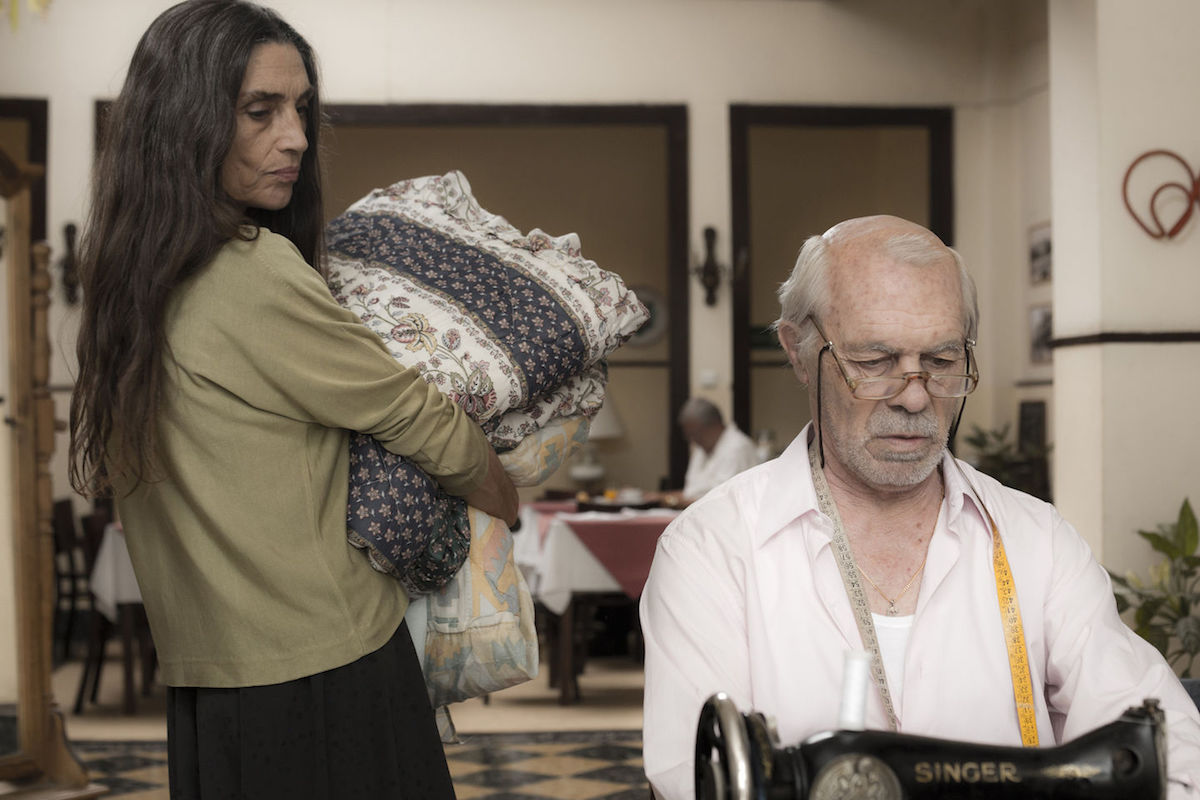
This year’s twenty-first Cine Las Americas International Film Festival (CLAIFF21) will kick off on Wednesday, May 2nd, with the drama/comedy EL ÚLTIMO TRAJE (THE LAST SUIT), directed by Pablo Solarz and starring Miguel Ángel Solá.

A domineering mother suddenly arrives to assist with her teenage daughter’s pregnancy. But her true motives will soon emerge.
Directed by Michel Franco
Starring Emma Suárez, Ana Valeria Becerril, Enrique Arrizon, Joanna Larequi, Hernán Mendoza. Mexico
Genre(s) Foreign Film
This year’s twenty-first Cine Las Americas International Film Festival (CLAIFF21) will kick off on Wednesday, May 2nd, with the drama/comedy EL ÚLTIMO TRAJE (THE LAST SUIT), directed by Pablo Solarz and starring Miguel Ángel Solá.
 TULLY[/caption]
Jason Reitman latest film Tully, written by Diablo Cody and starring Charlize Theron, will premiere as the Opening Night film of the 35th edition of Miami Film Festival, on Friday, March 9th at the Olympia Theater.
“Charlize Theron’s fearless performance as a struggling suburban mother on the brink of losing mental control is made possible by another brilliant collaboration by the creators of Juno and Young Adult,” said Festival director Jaie Laplante. “Tully is both a parable and a salve for our stressed-out times – it reminds us all of who we are, and there is no more beautiful way to open our 35th edition than with this film.”
https://www.youtube.com/watch?v=QRtBP07gIHY
The Festival will give its Precious Gem – Icon Award to the great French actress Isabelle Huppert, recent Oscar nominee for Elle and the most nominated actress in César Award history – a total of 16 nominations from France’s Academy – winning twice. She has also twice won the Best Actress award at the Cannes Film Festival, in a career that has seen her work with some of the greatest directors of contemporary times. Huppert will be honored on Friday, March 16th at the Olympia Theater.
“Isabelle Huppert has made profound contributions to cinema over the course of her illustrious career,” Laplante said. “With her recent performances in Things to Come and Elle, as well as Souvenir and Claire’s Camera, both of which we will be screening in conjunction with her Festival appearance, Ms. Huppert reaches ever-new pinnacles that continually astonish us, and add to her iconic status.”
The Festival will give its Precious Gem – Master Award to Spain’s greatest living filmmaker, Carlos Saura, on the occasion of a new documentary about the master’s career and family life, Félix Viscarret’s Goya-lauded Saura(s), on Sunday, March 11th at the Olympia Theater.
“Carlos Saura returns to Miami after receiving the Festival’s Career Achievement Tribute Award at our 20th edition in 2003,” said Laplante. “At that time, he was 71. Now, he’s 86 and has made eight more brilliant films since his last visit to Miami – but with Saura(s), we see him in a new light, as both a filmmaker and a family-maker. He is a peerless master, and we celebrate the life that continues to nourish his art.”
In all, the Festival will present 148 feature narratives, documentaries and short films of all genres, from 50 different countries, including three countries being represented in the Festival’s Official Selection for the first time– Benin, Georgia and Swaziland. The 35th edition of the Festival runs March 9th – 18th. Thirty-eight of the films are directed or co-directed by women filmmakers. The Festival will wrap up with an Awards Night Gala screening at Olympia Theater of the International premiere of Curro Velázquez’s smash hit Spanish comedy Holy Goalie (Que baje Dios y lo vea), with star Alain Hernández in attendance. All Olympia Theater screenings are part of the Festival’s CINEDWNTWN GALA series, sponsored by Miami Downtown Development Authority. A KORBEL Awards Night Party at The Historic Alfred I. Dupont Building will follow the Awards Night ceremony and screening.
Academy Award winning filmmaker Michel Hazanavicius (The Artist) and revered American screenwriter and director Paul Schrader (Taxi Driver, Mishima: A Life in Four Chapters, Affliction) will attend the Festival for Marquee presentations of their newest films. The Festival’s Marquee series features screenings accompanied by on-stage conversations with major film personalities of the moment, discussing their career and sharing an exciting new work. Hazanavicius will present Godard Mon Amour, his serio-comic look at Jean-Luc Godard’s love affair with the actress Anne Wiazemsky during the shooting of his classic films La Chinoise and Weekend. Schrader will present First Reformed, a dramatic thriller starring Ethan Hawke, Amanda Seyfried and Cedric The Entertainer. They join (previously announced) Mateo Gil and Jean-Marc Barr in the Marquee section.
Ten finalists were selected for the Festival’s signature $40,000 Knight Competition, open to feature films directed by filmmakers who have presented at least one feature in a previous edition of the Festival. Three of these films will also screen as CINEDWNTWN GALAS at the Olympia Theater.
The finalists are:
Another Story of the World (Uruguay, directed by Guillermo Casanova).
April’s Daughter (Mexico, directed by Michel Franco).
In Love & In Hate (Argentina, directed by Alejandro Maci). *CINEDWNTWN GALA
The Laws of Thermodynamics (Spain, directed by Mateo Gil). *WORLD PREMIERE
My Love or My Passion (Argentina, directed by Marcos Carnevale). *CINEDWNTWN GALA
Sergio and Sergei (Cuba/Spain, directed by Ernesto Daranás).
A Sort of Family (Argentina, directed by Diego Lerman).
The Summit (Argentina/Spain, directed by Santiago Mitre). *CINEDWNTWN GALA
Time Share (Mexico, directed by Sebastián Hofmann).
The Warning (Spain, directed by Daniel Calparsoro).
Eleven finalists were selected for the Festival’s inaugural $10,000 Knight Made in MIA Competition, which is open to any film – short or feature, documentary or narrative – in the Festival’s Official Selection that features a qualitatively/quantitatively substantial portion of its content (story, setting and actual filming location) in South Florida, from West Palm Beach to the Florida Keys, and that most universally demonstrates a common ground of pride, emotion, and faith for the South Florida community. The new award was inspired by the international success and 2017 Best Picture Oscar win by the Miami-set Moonlight, directed by former Miami resident Barry Jenkins and co-written by Tarell McCraney. The finalists are:
“#THECONNECTEDMAN”, directed by Fabián Cárdenas.
“Ayita’s Dream”, directed by Isis Masoud, Roger Ingraham.
“Fight Like a Girl”, directed by Agustín Gonzalez, Nicole Wulf.
Gladesmen: The Last of The Sawgrass Cowboys, directed by David Abel.
Latinegras: The Journey of Self-Love Through An Afrolatina Lens, directed by Omilani Alarcón. *WORLD PREMIERE
Love in Youth, directed by Quincy Perkins. *WORLD PREMIERE
Make Love Great Again, directed by Aaron Agrasanchez.
“Noa”, directed by Angel Barrota. *WORLD PREMIERE
Operation Odessa, directed by Tiller Russell.
“Roadside Attraction”, directed by Ivette Lucas, Patrick Bresnan.
“Supermarket”, directed by Rhonda Mitrani. *WORLD PREMIERE
Two significant Soiree nights will pair a major film event with one of Miami Film Festival’s world-famous parties. An Evening with Tim Clancy, the showrunner of HBO’s acclaimed Vice series through six seasons, will present a big-screen return look at three significant Vice episodes, followed by an in-depth, on-stage conversation about Vice’s Emmy Award-winning approach, philosophies and techniques. “HBO NIGHT” continues with a party at downtown Miami’s newest hotspot, The Wharf. Greg Berlanti’s Love, Simon will have its Festival premiere at the Regal Cinemas South Beach and continue with a Light Box Love Story soiree at Miami Light Project’s Goldman Warehouse in Wynwood.
The fiercely-contested, audience-voted $10,000 Knight Documentary Achievement Award, sponsored by Knight Foundation, returns with 24 finalists, including 4 world premieres, and new films from Oscar winner Morgan Neville (20 Feet From Stardom), Oscar nominee Djimon Hounsou (Blood Diamond, In America), Goya winners Félix Viscarret and Gustavo Salmerón, Emmy winner Rene Balcer (Law & Order), Sundance 2018 prize winners Tim Wardle and Maxim Pozdorovkin, Pulitzer Prize winning journalist David Abel and the late Oscar winner Jonathan Demme, as executive producer on The Foreigner’s Home. Subjects featured in the films include Ruth Bader Ginsburg, Edwidge Danticat, Toni Morrison, Mr. Rogers, Andre Agassi, Imagine Dragons’ Dan Reynolds in the Live Nation production Believer, Cuban-America playwright María Irene Fornés and Miami’s Rene Lecour. The finalists are:
6 Weeks To Mother’s Day (USA, directed by Marvin Blunte).
Above The Drowning Sea (Canada, directed by Rene Balcer, Nicola Zavaglia).
Amigo Skate, Cuba (USA, directed by Vanesa Wilkey-Escobar). *WORLD PREMIERE
Believer (USA, directed by Don Argott).
Cuban Food Stories (USA, directed by Asori Soto).
Dolphin Man (Greece/Canada/France/Japan, directed by Lefteris Charitos).
Foreign Land (Israel, directed by Shlomi Eldar).
The Foreigner’s Home (USA/France, directed by Rian Brown, Geoff Pingree).
Gladesmen: The Last of The Sawgrass Cowboys (USA, directed by David Abel).
In Search of Voodoo: Roots To Heaven (USA/Benin, directed by Djimon Hounsou). *WORLD PREMIERE
Liyana (USA/Qatar/Swaziland, directed by Aaron Kopp, Amanda Kopp).
Lots of Kids, A Monkey and a Castle (Spain, directed by Gustavo Salmerón).
Love Means Zero (USA, directed by Jason Kohn).
The Music of the Spheres (Cuba/USA, directed by Marcel Beltrán). *WORLD PREMIERE
Nuyorican Basquet (Puerto Rico, directed by Julio César Torres, Ricardo Olivero Lora).
The Oldies (Cuba/USA/Venezuela, directed by Rosana Matecki).
Operation Odessa (USA, directed by Tiller Russell).
Our New President (USA, directed by Maxim Pozdorovkin).
RBG (USA, directed by Betsy West, Julie Cohen).
The Rest I Make Up (USA, directed by Michelle Memran).
Saura(s) (Spain, directed by Félix Viscarret).
Three Identical Strangers (USA, directed by Tim Wardle).
When The Beat Drops (USA, directed by Jamal Sims). *WORLD PREMIERE
Won’t You Be My Neighbor? (USA, directed by Morgan Neville).
HBO returns as sponsor of the Festival’s $10,000 Ibero-American Feature Film Competition, this year featuring 25 finalists, including three world premieres. Three of the films in this section star Argentine actress Dolores Fonzi, prompting Festival organizers to declare Monday, March 12th “DOLORES FONZI DAY” at Miami Film Festival. The finalists are:
Al Berto (Portugal, directed by Vicente Alves do Ó).
Another Story of the World (Uruguay, directed by Guillermo Casanova).
April’s Daughter (Mexico, directed by Michel Franco).
Ashes (Ecuador/Uruguay, directed by Juan Sebastián Jácome). *WORLD PREMIERE
Bingo: The King of the Mornings (Brazil, directed by Daniel Rezende).
Candelaria (Colombia/Cuba/Argentina/Germany/Norway, directed by Jhonny Hendrix-Hinestroza).
Cocote (Dominican Republic, directed by Nelson Carlo de Los Santos Arias).
The Eternal Feminine (Mexico, directed by Natalia Beristáin).
The Future Ahead (Argentina, directed by Constanza Novick). *DOLORES FONZI DAY Film
Hunting Season (Argentina/USA/Germany/France, directed by Natalia Garagiola).
In Love & In Hate (Argentina, directed by Alejandro Maci). *CINEDWNTWN GALA
Killing Jesus (Colombia/Argentina, directed by Laura Mora).
La Familia (Venezuela/Chile/Norway, directed by Gustavo Rondón Córdova).
The Last Suit (Argentina/Spain, directed by Pablo Solarz).
The Laws of Thermodynamics (Spain, directed by Mateo Gil). *WORLD PREMIERE
On The Seventh Day (USA, directed by Jim McKay).
The River (Bolivia/Ecuador, directed by Juan Pablo Richter). *WORLD PREMIERE
Sergio and Sergei (Cuba/Spain, directed by Ernesto Daranás).
The Skin of the Wolf (Spain, directed by Samu Fuentes).
A Sort of Family (Argentina, directed by Diego Lerman).
The Summit (Argentina/Spain, directed by Santiago Mitre). *CINEDWNTWN GALA
Tigre (Argentina, directed by Silvina Schnicer, Ulises Porra Guardiola).
Time Share (Mexico, directed by Sebastián Hofmann).
The Warning (Spain, directed by Daniel Calparsoro).
Wind Traces (Mexico, directed by Jimena Montemayor Loyo). *DOLORES FONZI DAY Film
The highly sought-after $10,000 Jordan Ressler Screenwriting Award, won in recent years by Oscar nominated Theeb, Venice Golden Lion winner From Afar and Chilean world premiere launch Little White Lie, has 20 diverse and intriguing first-produced screenplays in competition. All but two of the finalists also directed his or her screenplay. The finalists are:
Michael Pearce for Beast (UK).
Cory Bowles for Black Cop (Canada).
Taylor Allen, Andrew Logan for Chappaquiddick (USA).
Nelson Carlo de Los Santos Arias for Cocote (Dominican Republic).
Xavier Legrand for Custody (France).
Feifei Wang for From Where We’ve Fallen (China).
Constanza Novick for The Future Ahead (Argentina).
Sonja Maria Kröner for The Garden (Germany).
Lucien Bourjeily for Heaven Without People (Lebanon).
Natalia Garagiola for Hunting Season (Argentina).
Christian Papierniak for Izzy Gets the F*ck Across Town (USA).
Blake Jenner for Juvenile (USA).
Quincy Perkins for Love in Youth (USA). *WORLD PREMIERE
Molly McGlynn for Mary Goes Round (Canada).
Ziyang Zhou for Old Beast (China).
Juan Pablo Richter for The River (Bolivia/Ecuador). *WORLD PREMIERE
Ana Urushadze for Scary Mother (Georgia).
Samu Fuentes for The Skin of the Wolf (Spain).
Silvina Schnicer for Tigre (Argentina).
Hlynur Palmason for Winter Brothers (Denmark).
Films showing out of competition include selections by Oscar-nominee Michaël R. Roskam (Bullhead), Oscar-nominee and Emmy-winner Armando Iannucci (In the Loop, HBO’s Veep), and a US premiere starring retired NFL veteran and South Florida resident, actor/producer Thomas Q. Jones (A Violent Man). The films are:
Ali’s Wedding (Australia, directed by Jeffrey Walker).
Darling (Denmark, directed by Birgitte Stærmose).
The Death of Stalin (UK, directed by Armando Iannucci).
“The Driver is Red” (USA, directed by Randall Christopher).
Grace and Splendor (Panama/Dominican Republic, directed by Arturo Montenegro).
The Journey (Iran/UK/France/Qatar/The Netherlands, directed by Mohamed Jabarah Al-Daradji).
Kiss Me Not (Egypt, directed by Ahmed Amer).
Life is a Bitch (Brazil, directed by Julia Rezende).
Racer and the Jailbird (Belgium/France, directed by Michaël R. Roskam).
Sollers Point (USA, directed by Matthew Porterfield).
Three Peaks (Germany/Italy, directed by Jan Zabeil).
Under The Tree (Iceland/Denmark/Poland/Germany, directed by Hafsteinn Gummar).
A Violent Man (USA, directed by Matthew Berkowitz).
Wajib (Palestine/France/Germany/Colombia/Norway/Qatar, directed by Annemarie Jacir).
The Festival takes a special look at the Chinese film market this year in Cinema & China. This section features the Florida premiere of the Cannes Film Festival 2017’s Palme d’Or winner for Best Short Film, “A Gentle Night”, directed by Yang Qui, and the documentary Above the Drowning Sea, a historical look at an amazing story of European Jews being safeguarded by Shanghai and Chinese diplomats during World War II. A day-long symposium on the trends and markets will be held, in conjunction with the Festival screening of four Chinese-produced features:
From Where We’ve Fallen, directed by Feifei Wang.
Love Education, directed by Sylvia Chang.
Old Beast, directed by Ziyang Zhou. *KEYNOTE FILM
Walking Past The Future, directed by Li Ruijun.
The Festival’s exceedingly popular Reel Music section returns with five outstanding selections, including a world premiere from Panama and a feature about famed flamenco star Diego “El Cigala” as he explores the world of salsa in Cuba and beyond:
Guaco: Semblanza (Venezuela, directed by Alberto Arvelo).
I Tita, A Life of Tango (Argentina, directed by Teresa Constantini).
Indestructible: The Soul of Salsa (Spain, directed by David Pareja).
Me, My Father and the Cariocas: 70 Years of Music in Brazil (Brazil, directed by Lucia Verissimo).
A Night of Calypso (Panama, directed by Fernando Muñoz). *WORLD PREMIERE
MIFFecito, the beloved Films for Families section, returns with four new feature films for film fans of all ages. This section includes Fishtronaut The Movie (Brazil), Home Team (Uruguay/Brazil/Argentina), Lila’s Book (Colombia/Uruguay) and Zombillenium (France/Belgium). An animated short film winner from MDC’s Miami Animation and Gaming International Complex 2017 MIA Animation Conference & Festival will also be shown in this section.
South Florida’s college film students will again battle it out in Cinemaslam 2018. The nine finalists include films from Center of Cinematography, Arts & Television’s Lidia Rosa Hernandez; Miami Dade College’s Armando Stephano Rivero, Robert Requejo Ramos, Christopher Foode and Fernando Dumas; and University of Miami’s Chantal Gabriel, Jorge Martinez and Vasisth Sukul.
The Festival’s parallel industry activities include a French film market sponsored by Unifrance, and a Producing in South Florida panel moderated by Kevin Sharpley.
The Festival will co-present three special events during this year’s event. A “From The Vault” of Todd Haynes’ classic Velvet Goldmine will be held on Sunday, March 11th in partnership with Flaming Classics. On Friday, March 16th, in partnership with The Black Lounge Series, a screening of In The Morning with filmmaker Nefertiti Nguvu in person. In celebration of the Festival’s Tribute to Carlos Saura, one of Saura’s greatest classics, Cría cuervos, will screen on Sunday, March 18th at Miami Beach Cinematheque.
TULLY[/caption]
Jason Reitman latest film Tully, written by Diablo Cody and starring Charlize Theron, will premiere as the Opening Night film of the 35th edition of Miami Film Festival, on Friday, March 9th at the Olympia Theater.
“Charlize Theron’s fearless performance as a struggling suburban mother on the brink of losing mental control is made possible by another brilliant collaboration by the creators of Juno and Young Adult,” said Festival director Jaie Laplante. “Tully is both a parable and a salve for our stressed-out times – it reminds us all of who we are, and there is no more beautiful way to open our 35th edition than with this film.”
https://www.youtube.com/watch?v=QRtBP07gIHY
The Festival will give its Precious Gem – Icon Award to the great French actress Isabelle Huppert, recent Oscar nominee for Elle and the most nominated actress in César Award history – a total of 16 nominations from France’s Academy – winning twice. She has also twice won the Best Actress award at the Cannes Film Festival, in a career that has seen her work with some of the greatest directors of contemporary times. Huppert will be honored on Friday, March 16th at the Olympia Theater.
“Isabelle Huppert has made profound contributions to cinema over the course of her illustrious career,” Laplante said. “With her recent performances in Things to Come and Elle, as well as Souvenir and Claire’s Camera, both of which we will be screening in conjunction with her Festival appearance, Ms. Huppert reaches ever-new pinnacles that continually astonish us, and add to her iconic status.”
The Festival will give its Precious Gem – Master Award to Spain’s greatest living filmmaker, Carlos Saura, on the occasion of a new documentary about the master’s career and family life, Félix Viscarret’s Goya-lauded Saura(s), on Sunday, March 11th at the Olympia Theater.
“Carlos Saura returns to Miami after receiving the Festival’s Career Achievement Tribute Award at our 20th edition in 2003,” said Laplante. “At that time, he was 71. Now, he’s 86 and has made eight more brilliant films since his last visit to Miami – but with Saura(s), we see him in a new light, as both a filmmaker and a family-maker. He is a peerless master, and we celebrate the life that continues to nourish his art.”
In all, the Festival will present 148 feature narratives, documentaries and short films of all genres, from 50 different countries, including three countries being represented in the Festival’s Official Selection for the first time– Benin, Georgia and Swaziland. The 35th edition of the Festival runs March 9th – 18th. Thirty-eight of the films are directed or co-directed by women filmmakers. The Festival will wrap up with an Awards Night Gala screening at Olympia Theater of the International premiere of Curro Velázquez’s smash hit Spanish comedy Holy Goalie (Que baje Dios y lo vea), with star Alain Hernández in attendance. All Olympia Theater screenings are part of the Festival’s CINEDWNTWN GALA series, sponsored by Miami Downtown Development Authority. A KORBEL Awards Night Party at The Historic Alfred I. Dupont Building will follow the Awards Night ceremony and screening.
Academy Award winning filmmaker Michel Hazanavicius (The Artist) and revered American screenwriter and director Paul Schrader (Taxi Driver, Mishima: A Life in Four Chapters, Affliction) will attend the Festival for Marquee presentations of their newest films. The Festival’s Marquee series features screenings accompanied by on-stage conversations with major film personalities of the moment, discussing their career and sharing an exciting new work. Hazanavicius will present Godard Mon Amour, his serio-comic look at Jean-Luc Godard’s love affair with the actress Anne Wiazemsky during the shooting of his classic films La Chinoise and Weekend. Schrader will present First Reformed, a dramatic thriller starring Ethan Hawke, Amanda Seyfried and Cedric The Entertainer. They join (previously announced) Mateo Gil and Jean-Marc Barr in the Marquee section.
Ten finalists were selected for the Festival’s signature $40,000 Knight Competition, open to feature films directed by filmmakers who have presented at least one feature in a previous edition of the Festival. Three of these films will also screen as CINEDWNTWN GALAS at the Olympia Theater.
The finalists are:
Another Story of the World (Uruguay, directed by Guillermo Casanova).
April’s Daughter (Mexico, directed by Michel Franco).
In Love & In Hate (Argentina, directed by Alejandro Maci). *CINEDWNTWN GALA
The Laws of Thermodynamics (Spain, directed by Mateo Gil). *WORLD PREMIERE
My Love or My Passion (Argentina, directed by Marcos Carnevale). *CINEDWNTWN GALA
Sergio and Sergei (Cuba/Spain, directed by Ernesto Daranás).
A Sort of Family (Argentina, directed by Diego Lerman).
The Summit (Argentina/Spain, directed by Santiago Mitre). *CINEDWNTWN GALA
Time Share (Mexico, directed by Sebastián Hofmann).
The Warning (Spain, directed by Daniel Calparsoro).
Eleven finalists were selected for the Festival’s inaugural $10,000 Knight Made in MIA Competition, which is open to any film – short or feature, documentary or narrative – in the Festival’s Official Selection that features a qualitatively/quantitatively substantial portion of its content (story, setting and actual filming location) in South Florida, from West Palm Beach to the Florida Keys, and that most universally demonstrates a common ground of pride, emotion, and faith for the South Florida community. The new award was inspired by the international success and 2017 Best Picture Oscar win by the Miami-set Moonlight, directed by former Miami resident Barry Jenkins and co-written by Tarell McCraney. The finalists are:
“#THECONNECTEDMAN”, directed by Fabián Cárdenas.
“Ayita’s Dream”, directed by Isis Masoud, Roger Ingraham.
“Fight Like a Girl”, directed by Agustín Gonzalez, Nicole Wulf.
Gladesmen: The Last of The Sawgrass Cowboys, directed by David Abel.
Latinegras: The Journey of Self-Love Through An Afrolatina Lens, directed by Omilani Alarcón. *WORLD PREMIERE
Love in Youth, directed by Quincy Perkins. *WORLD PREMIERE
Make Love Great Again, directed by Aaron Agrasanchez.
“Noa”, directed by Angel Barrota. *WORLD PREMIERE
Operation Odessa, directed by Tiller Russell.
“Roadside Attraction”, directed by Ivette Lucas, Patrick Bresnan.
“Supermarket”, directed by Rhonda Mitrani. *WORLD PREMIERE
Two significant Soiree nights will pair a major film event with one of Miami Film Festival’s world-famous parties. An Evening with Tim Clancy, the showrunner of HBO’s acclaimed Vice series through six seasons, will present a big-screen return look at three significant Vice episodes, followed by an in-depth, on-stage conversation about Vice’s Emmy Award-winning approach, philosophies and techniques. “HBO NIGHT” continues with a party at downtown Miami’s newest hotspot, The Wharf. Greg Berlanti’s Love, Simon will have its Festival premiere at the Regal Cinemas South Beach and continue with a Light Box Love Story soiree at Miami Light Project’s Goldman Warehouse in Wynwood.
The fiercely-contested, audience-voted $10,000 Knight Documentary Achievement Award, sponsored by Knight Foundation, returns with 24 finalists, including 4 world premieres, and new films from Oscar winner Morgan Neville (20 Feet From Stardom), Oscar nominee Djimon Hounsou (Blood Diamond, In America), Goya winners Félix Viscarret and Gustavo Salmerón, Emmy winner Rene Balcer (Law & Order), Sundance 2018 prize winners Tim Wardle and Maxim Pozdorovkin, Pulitzer Prize winning journalist David Abel and the late Oscar winner Jonathan Demme, as executive producer on The Foreigner’s Home. Subjects featured in the films include Ruth Bader Ginsburg, Edwidge Danticat, Toni Morrison, Mr. Rogers, Andre Agassi, Imagine Dragons’ Dan Reynolds in the Live Nation production Believer, Cuban-America playwright María Irene Fornés and Miami’s Rene Lecour. The finalists are:
6 Weeks To Mother’s Day (USA, directed by Marvin Blunte).
Above The Drowning Sea (Canada, directed by Rene Balcer, Nicola Zavaglia).
Amigo Skate, Cuba (USA, directed by Vanesa Wilkey-Escobar). *WORLD PREMIERE
Believer (USA, directed by Don Argott).
Cuban Food Stories (USA, directed by Asori Soto).
Dolphin Man (Greece/Canada/France/Japan, directed by Lefteris Charitos).
Foreign Land (Israel, directed by Shlomi Eldar).
The Foreigner’s Home (USA/France, directed by Rian Brown, Geoff Pingree).
Gladesmen: The Last of The Sawgrass Cowboys (USA, directed by David Abel).
In Search of Voodoo: Roots To Heaven (USA/Benin, directed by Djimon Hounsou). *WORLD PREMIERE
Liyana (USA/Qatar/Swaziland, directed by Aaron Kopp, Amanda Kopp).
Lots of Kids, A Monkey and a Castle (Spain, directed by Gustavo Salmerón).
Love Means Zero (USA, directed by Jason Kohn).
The Music of the Spheres (Cuba/USA, directed by Marcel Beltrán). *WORLD PREMIERE
Nuyorican Basquet (Puerto Rico, directed by Julio César Torres, Ricardo Olivero Lora).
The Oldies (Cuba/USA/Venezuela, directed by Rosana Matecki).
Operation Odessa (USA, directed by Tiller Russell).
Our New President (USA, directed by Maxim Pozdorovkin).
RBG (USA, directed by Betsy West, Julie Cohen).
The Rest I Make Up (USA, directed by Michelle Memran).
Saura(s) (Spain, directed by Félix Viscarret).
Three Identical Strangers (USA, directed by Tim Wardle).
When The Beat Drops (USA, directed by Jamal Sims). *WORLD PREMIERE
Won’t You Be My Neighbor? (USA, directed by Morgan Neville).
HBO returns as sponsor of the Festival’s $10,000 Ibero-American Feature Film Competition, this year featuring 25 finalists, including three world premieres. Three of the films in this section star Argentine actress Dolores Fonzi, prompting Festival organizers to declare Monday, March 12th “DOLORES FONZI DAY” at Miami Film Festival. The finalists are:
Al Berto (Portugal, directed by Vicente Alves do Ó).
Another Story of the World (Uruguay, directed by Guillermo Casanova).
April’s Daughter (Mexico, directed by Michel Franco).
Ashes (Ecuador/Uruguay, directed by Juan Sebastián Jácome). *WORLD PREMIERE
Bingo: The King of the Mornings (Brazil, directed by Daniel Rezende).
Candelaria (Colombia/Cuba/Argentina/Germany/Norway, directed by Jhonny Hendrix-Hinestroza).
Cocote (Dominican Republic, directed by Nelson Carlo de Los Santos Arias).
The Eternal Feminine (Mexico, directed by Natalia Beristáin).
The Future Ahead (Argentina, directed by Constanza Novick). *DOLORES FONZI DAY Film
Hunting Season (Argentina/USA/Germany/France, directed by Natalia Garagiola).
In Love & In Hate (Argentina, directed by Alejandro Maci). *CINEDWNTWN GALA
Killing Jesus (Colombia/Argentina, directed by Laura Mora).
La Familia (Venezuela/Chile/Norway, directed by Gustavo Rondón Córdova).
The Last Suit (Argentina/Spain, directed by Pablo Solarz).
The Laws of Thermodynamics (Spain, directed by Mateo Gil). *WORLD PREMIERE
On The Seventh Day (USA, directed by Jim McKay).
The River (Bolivia/Ecuador, directed by Juan Pablo Richter). *WORLD PREMIERE
Sergio and Sergei (Cuba/Spain, directed by Ernesto Daranás).
The Skin of the Wolf (Spain, directed by Samu Fuentes).
A Sort of Family (Argentina, directed by Diego Lerman).
The Summit (Argentina/Spain, directed by Santiago Mitre). *CINEDWNTWN GALA
Tigre (Argentina, directed by Silvina Schnicer, Ulises Porra Guardiola).
Time Share (Mexico, directed by Sebastián Hofmann).
The Warning (Spain, directed by Daniel Calparsoro).
Wind Traces (Mexico, directed by Jimena Montemayor Loyo). *DOLORES FONZI DAY Film
The highly sought-after $10,000 Jordan Ressler Screenwriting Award, won in recent years by Oscar nominated Theeb, Venice Golden Lion winner From Afar and Chilean world premiere launch Little White Lie, has 20 diverse and intriguing first-produced screenplays in competition. All but two of the finalists also directed his or her screenplay. The finalists are:
Michael Pearce for Beast (UK).
Cory Bowles for Black Cop (Canada).
Taylor Allen, Andrew Logan for Chappaquiddick (USA).
Nelson Carlo de Los Santos Arias for Cocote (Dominican Republic).
Xavier Legrand for Custody (France).
Feifei Wang for From Where We’ve Fallen (China).
Constanza Novick for The Future Ahead (Argentina).
Sonja Maria Kröner for The Garden (Germany).
Lucien Bourjeily for Heaven Without People (Lebanon).
Natalia Garagiola for Hunting Season (Argentina).
Christian Papierniak for Izzy Gets the F*ck Across Town (USA).
Blake Jenner for Juvenile (USA).
Quincy Perkins for Love in Youth (USA). *WORLD PREMIERE
Molly McGlynn for Mary Goes Round (Canada).
Ziyang Zhou for Old Beast (China).
Juan Pablo Richter for The River (Bolivia/Ecuador). *WORLD PREMIERE
Ana Urushadze for Scary Mother (Georgia).
Samu Fuentes for The Skin of the Wolf (Spain).
Silvina Schnicer for Tigre (Argentina).
Hlynur Palmason for Winter Brothers (Denmark).
Films showing out of competition include selections by Oscar-nominee Michaël R. Roskam (Bullhead), Oscar-nominee and Emmy-winner Armando Iannucci (In the Loop, HBO’s Veep), and a US premiere starring retired NFL veteran and South Florida resident, actor/producer Thomas Q. Jones (A Violent Man). The films are:
Ali’s Wedding (Australia, directed by Jeffrey Walker).
Darling (Denmark, directed by Birgitte Stærmose).
The Death of Stalin (UK, directed by Armando Iannucci).
“The Driver is Red” (USA, directed by Randall Christopher).
Grace and Splendor (Panama/Dominican Republic, directed by Arturo Montenegro).
The Journey (Iran/UK/France/Qatar/The Netherlands, directed by Mohamed Jabarah Al-Daradji).
Kiss Me Not (Egypt, directed by Ahmed Amer).
Life is a Bitch (Brazil, directed by Julia Rezende).
Racer and the Jailbird (Belgium/France, directed by Michaël R. Roskam).
Sollers Point (USA, directed by Matthew Porterfield).
Three Peaks (Germany/Italy, directed by Jan Zabeil).
Under The Tree (Iceland/Denmark/Poland/Germany, directed by Hafsteinn Gummar).
A Violent Man (USA, directed by Matthew Berkowitz).
Wajib (Palestine/France/Germany/Colombia/Norway/Qatar, directed by Annemarie Jacir).
The Festival takes a special look at the Chinese film market this year in Cinema & China. This section features the Florida premiere of the Cannes Film Festival 2017’s Palme d’Or winner for Best Short Film, “A Gentle Night”, directed by Yang Qui, and the documentary Above the Drowning Sea, a historical look at an amazing story of European Jews being safeguarded by Shanghai and Chinese diplomats during World War II. A day-long symposium on the trends and markets will be held, in conjunction with the Festival screening of four Chinese-produced features:
From Where We’ve Fallen, directed by Feifei Wang.
Love Education, directed by Sylvia Chang.
Old Beast, directed by Ziyang Zhou. *KEYNOTE FILM
Walking Past The Future, directed by Li Ruijun.
The Festival’s exceedingly popular Reel Music section returns with five outstanding selections, including a world premiere from Panama and a feature about famed flamenco star Diego “El Cigala” as he explores the world of salsa in Cuba and beyond:
Guaco: Semblanza (Venezuela, directed by Alberto Arvelo).
I Tita, A Life of Tango (Argentina, directed by Teresa Constantini).
Indestructible: The Soul of Salsa (Spain, directed by David Pareja).
Me, My Father and the Cariocas: 70 Years of Music in Brazil (Brazil, directed by Lucia Verissimo).
A Night of Calypso (Panama, directed by Fernando Muñoz). *WORLD PREMIERE
MIFFecito, the beloved Films for Families section, returns with four new feature films for film fans of all ages. This section includes Fishtronaut The Movie (Brazil), Home Team (Uruguay/Brazil/Argentina), Lila’s Book (Colombia/Uruguay) and Zombillenium (France/Belgium). An animated short film winner from MDC’s Miami Animation and Gaming International Complex 2017 MIA Animation Conference & Festival will also be shown in this section.
South Florida’s college film students will again battle it out in Cinemaslam 2018. The nine finalists include films from Center of Cinematography, Arts & Television’s Lidia Rosa Hernandez; Miami Dade College’s Armando Stephano Rivero, Robert Requejo Ramos, Christopher Foode and Fernando Dumas; and University of Miami’s Chantal Gabriel, Jorge Martinez and Vasisth Sukul.
The Festival’s parallel industry activities include a French film market sponsored by Unifrance, and a Producing in South Florida panel moderated by Kevin Sharpley.
The Festival will co-present three special events during this year’s event. A “From The Vault” of Todd Haynes’ classic Velvet Goldmine will be held on Sunday, March 11th in partnership with Flaming Classics. On Friday, March 16th, in partnership with The Black Lounge Series, a screening of In The Morning with filmmaker Nefertiti Nguvu in person. In celebration of the Festival’s Tribute to Carlos Saura, one of Saura’s greatest classics, Cría cuervos, will screen on Sunday, March 18th at Miami Beach Cinematheque.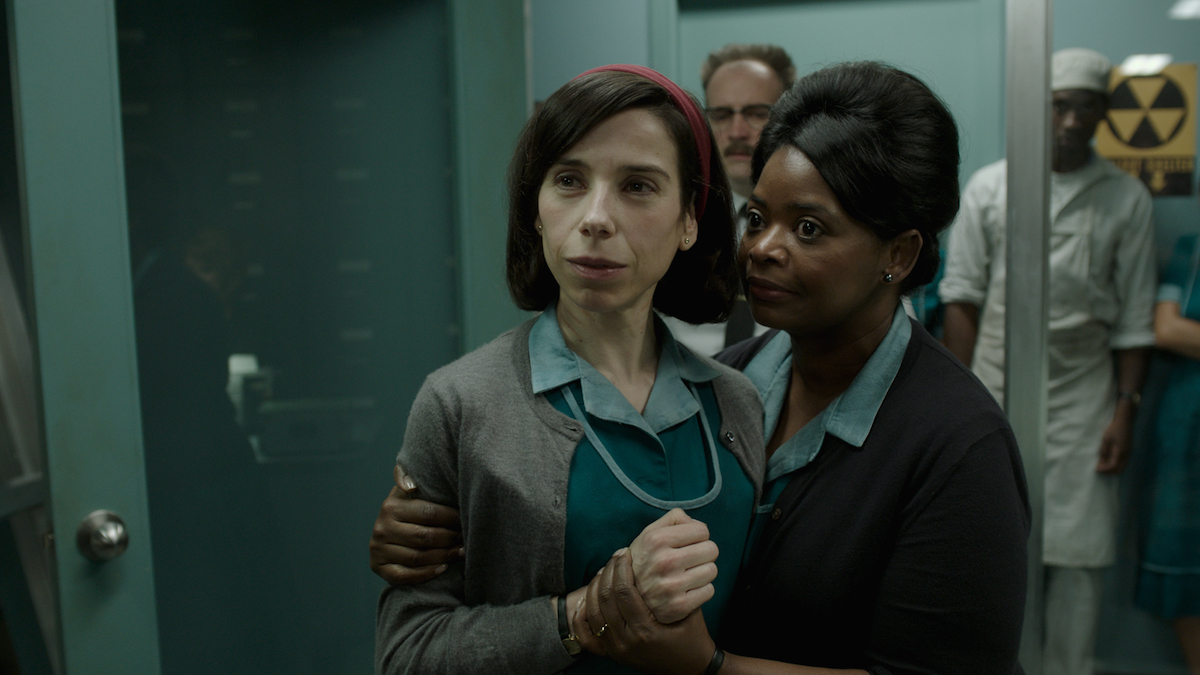 Sally Hawkins and Octavia Spencer in the film THE SHAPE OF WATER.[/caption]
150 films from 60 different countries have been selected to be screened at the 28th Stockholm International Film Festival that takes place from the November 8th to the 19th.
A third of the films in this year’s festival program are directed by first-time filmmakers, the festival is also joined by legends such as this year’s Lifetime Achievement Award-winner Vanessa Redgrave.
After a long and successful Hollywood-career 80 year old Vanessa Redgrave makes her debut as a director with the documentary Sea Sorrow. The film focuses on the global refugee crisis and is a part of this years Spotlight – Change.
This years Visionary Award recipient is the director Pablo Larraín. Larraín is the director behind the Academy Award-nominated Jackie (2016); he is now attending the Stockholm Film festival with his latest film Neruda.
The premiere movie of this year’s film festival is the critically acclaimed film The Shape Of Water by the director behind the Academy Award-winning Pan’s Labyrinth Guillermo del Toro. Del Toro also won the Gold Lion at the Venice Film Festival earlier this year.
A selection of other films that will be screened are: Thelma by Joachim Trier, Call Me By Your Name by Luca Guadagnino, The Party by Sally Porter, Three Billboards Outside Ebbing, Missouri by Martin McDonagh and last but not least Downsizing by Alexander Payne.
Sally Hawkins and Octavia Spencer in the film THE SHAPE OF WATER.[/caption]
150 films from 60 different countries have been selected to be screened at the 28th Stockholm International Film Festival that takes place from the November 8th to the 19th.
A third of the films in this year’s festival program are directed by first-time filmmakers, the festival is also joined by legends such as this year’s Lifetime Achievement Award-winner Vanessa Redgrave.
After a long and successful Hollywood-career 80 year old Vanessa Redgrave makes her debut as a director with the documentary Sea Sorrow. The film focuses on the global refugee crisis and is a part of this years Spotlight – Change.
This years Visionary Award recipient is the director Pablo Larraín. Larraín is the director behind the Academy Award-nominated Jackie (2016); he is now attending the Stockholm Film festival with his latest film Neruda.
The premiere movie of this year’s film festival is the critically acclaimed film The Shape Of Water by the director behind the Academy Award-winning Pan’s Labyrinth Guillermo del Toro. Del Toro also won the Gold Lion at the Venice Film Festival earlier this year.
A selection of other films that will be screened are: Thelma by Joachim Trier, Call Me By Your Name by Luca Guadagnino, The Party by Sally Porter, Three Billboards Outside Ebbing, Missouri by Martin McDonagh and last but not least Downsizing by Alexander Payne.
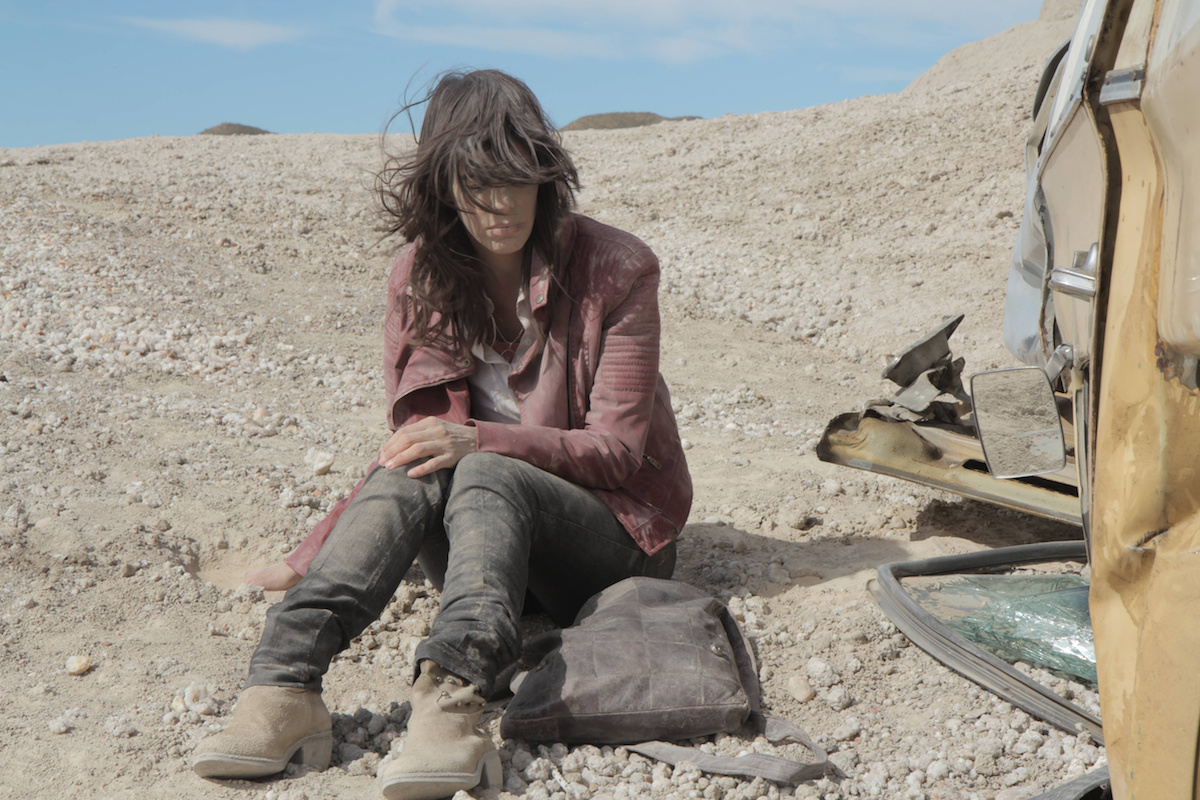 TO THE DESERT[/caption]
Twelve films produced in Argentina, Brazil, Chile, Costa Rica, the Dominican Republic, Mexico, Uruguay and Venezuela, make up the Horizontes Latinos section of the 2017 San Sebastian International Film Festival.
The Horizontes Latinos section is a selection of feature films not yet screened in Spain, produced totally or partially in Latin America, directed by filmmakers of Latin origin or which have as their setting or subject matter Latino communities in the rest of the world. Half of the titles in the section are first or second works.
Among the films is premiere of the winner of the two Films in Progress 30 awards in San Sebastian, La educación del Rey (Rey’s Education), first feature film from Santiago Esteves (Mendoza, Argentina, 1983), who has written and directed short films including Los crímenes (Best Iberoamerican Short Film and Critics’ Award at Huesca 2011) and has worked as an editor for Pablo Trapero, Mariano Llinás or Juan Villegas.
Another of the selected first films is La novia del desierto (The Desert Bride) by directors Cecilia Atán (Buenos Aires, 1978) and Valeria Pivato (Buenos Aires, 1973), which, having landed the Films in Progress Toulouse Award, was premiered in Un Certain Regard at the Cannes Festival and has just won the Jury Award for Best Debut Feature at the Lima Film Festival. The documentary by Atán, Madres de Plaza de Mayo, la historia (2016), was nominated for the Emmy Awards, and Pivato, who has worked with directors including Juan José Campanella, Walter Salles or Pablo Trapero, won the Patagonik International Screenwriters Competition with his Project Antes y después… y después otra vez.
Temporada de caza (Hunting Season, Films in Progress 31) is the first feature film by Natalia Garagiola (Buenos Aires, 1982), who will compete in Venice at the International Critics’ Week, an independent section organised by the Italian Union of Film Critics. One of Garagiola’s shorts, Yeguas y Cotorras (2012), was selected for the Critic’s Week at Cannes.
Gustavo Rondón (Caracas, 1977) has written, helmed and produced numerous shorts later screened at festivals such as Tribeca, Biarritz, Toulouse and Havana. The most recent, Nostalgia (2012) was selected to compete in Berlin. La familia (Films in Progress 30), which was screened at the Cannes Critics’ Week and has just won Jury Award for Best Film at Lima Film Festival, brings his feature directorial debut.
The filmography of Alexandra Latishev (San José, Costa Rica) contains the prizewinning short Irene (2014) and the documentary Los volátiles, winner of the Best Documentary Feature Film and Audience Awards at the Costa Rica Festival. Medea (Films in Progress 30), which competed at the BAFICI (Buenos Aires International Independent Film Festival), marks her debut in feature films.
After numerous experiences in the non-fictional field, in 2013 Marcela Said (Santiago de Chile, 1972) directed her first feature-length fiction, El verano de los peces voladores, Films in Progress Toulouse Award in 2013 which had its premiere at the Cannes Directors’ Fortnight. Horizontes Latinos will see the screening of her second film, Los perros (Films in Progress 31), after its presentation at the Cannes Critics’ Week.
Las olas (The Waves, Films in Progress, 30) is the third feature film from the director, screenwriter, actor and singer Adrián Biniez (Remedios de Escalada, Argentina, 1974), whose debut, Gigante (2009) won the Grand Jury Prize, the Alfred Bauer Award – in recognition of a film that “opens new perspectives on cinematic art” – and the Best First Feature Award at the Berlinale, as well as the Horizontes Award in San Sebastian.
Michel Franco (Mexico City, 1979) landed a special mention in San Sebastian with Después de Lucía (After Lucía, 2012), Best Feature Film in Un Certain Regard at Cannes. As a moviemaker he also won the Best Screenplay Award at Cannes for Chronic (2015). He also has a long and outstanding background as a producer: in 2015 he won the Best First Feature Award in Berlin for 600 millas (600 Miles,Gabriel Ripstein) plus the Golden Lion in Venice and a Special Mention in San Sebastian for Desde allá (From Afar, Lorenzo Vigas), both selected for Horizontes Latinos. Now he returns to the Festival as a director with Las hijas de Abril (April’s Daughters), having won the Jury Prize at Un Certain Regard.
Sebastián Lelio (Mendoza, Argentina, 1974) has a trajectory closely related to San Sebastian. His first film, La Sagrada Familia, competed in Horizontes Latinos in 2005 after its screening in Films in Progress. His fourth feature, Gloria, won the Films in Progress Award in San Sebastian in 2012. His latest film, Una mujer fantástica (A Fantastic Woman), Silver Bear for Best Screenplay at the Berlinale, will open the section.
Affonso Uchôa (Contagem, Brazil) and João Dumans (Belo Horizonte, Brazil) jointly wrote A vizinhança do tigre / The Hidden Tiger (2014). Here they repeat their collaboration as the directors of Arábia /Araby, selected for the Rotterdam Festival official competition and winner of a special mention at the BAFICI. Uchôa is the director of Mulher à tarde / Afternoon Woman (2010) and wrote with Marília Rocha A cidade onde envelheço / Where I Grow Old (2016), selected for Films in Progress Toulouse in 2015 and for Zabaltegi-Tabakalera last year.
Al desierto (To the Desert) is the new feature film by Ulises Rosell (Buenos Aires, 1970), after the award-winning Sofacama / Sofabed (2006) and El etnógrafo / The Ethnographer (2012). Rosell wrote and directed this story of a kidnapping and hike across the Patagonia desert to premier in San Sebastian.
Lastly, Cocote, which has just won the Signs of Life section Award at the Locarno Festival, is the third film from the Dominican director Nelson Carlo de los Santos Arias (Santo Domingo, 1985), who in 2015 shot Santa Teresa y otras historias,a radical adaptation of Roberto Bolaño’s novel 2666, screened in Toronto and winner of awards in Marseille and Mar del Plata.
All twelve feature films compete for the Horizontes Award and its 35,000 euros. The six first and second films in the selection (La educación de Rey, La familia, Medea, Arábia, La novia del desierto and Temporada de caza) are also contenders for the EROSKI Youth Award.
TO THE DESERT[/caption]
Twelve films produced in Argentina, Brazil, Chile, Costa Rica, the Dominican Republic, Mexico, Uruguay and Venezuela, make up the Horizontes Latinos section of the 2017 San Sebastian International Film Festival.
The Horizontes Latinos section is a selection of feature films not yet screened in Spain, produced totally or partially in Latin America, directed by filmmakers of Latin origin or which have as their setting or subject matter Latino communities in the rest of the world. Half of the titles in the section are first or second works.
Among the films is premiere of the winner of the two Films in Progress 30 awards in San Sebastian, La educación del Rey (Rey’s Education), first feature film from Santiago Esteves (Mendoza, Argentina, 1983), who has written and directed short films including Los crímenes (Best Iberoamerican Short Film and Critics’ Award at Huesca 2011) and has worked as an editor for Pablo Trapero, Mariano Llinás or Juan Villegas.
Another of the selected first films is La novia del desierto (The Desert Bride) by directors Cecilia Atán (Buenos Aires, 1978) and Valeria Pivato (Buenos Aires, 1973), which, having landed the Films in Progress Toulouse Award, was premiered in Un Certain Regard at the Cannes Festival and has just won the Jury Award for Best Debut Feature at the Lima Film Festival. The documentary by Atán, Madres de Plaza de Mayo, la historia (2016), was nominated for the Emmy Awards, and Pivato, who has worked with directors including Juan José Campanella, Walter Salles or Pablo Trapero, won the Patagonik International Screenwriters Competition with his Project Antes y después… y después otra vez.
Temporada de caza (Hunting Season, Films in Progress 31) is the first feature film by Natalia Garagiola (Buenos Aires, 1982), who will compete in Venice at the International Critics’ Week, an independent section organised by the Italian Union of Film Critics. One of Garagiola’s shorts, Yeguas y Cotorras (2012), was selected for the Critic’s Week at Cannes.
Gustavo Rondón (Caracas, 1977) has written, helmed and produced numerous shorts later screened at festivals such as Tribeca, Biarritz, Toulouse and Havana. The most recent, Nostalgia (2012) was selected to compete in Berlin. La familia (Films in Progress 30), which was screened at the Cannes Critics’ Week and has just won Jury Award for Best Film at Lima Film Festival, brings his feature directorial debut.
The filmography of Alexandra Latishev (San José, Costa Rica) contains the prizewinning short Irene (2014) and the documentary Los volátiles, winner of the Best Documentary Feature Film and Audience Awards at the Costa Rica Festival. Medea (Films in Progress 30), which competed at the BAFICI (Buenos Aires International Independent Film Festival), marks her debut in feature films.
After numerous experiences in the non-fictional field, in 2013 Marcela Said (Santiago de Chile, 1972) directed her first feature-length fiction, El verano de los peces voladores, Films in Progress Toulouse Award in 2013 which had its premiere at the Cannes Directors’ Fortnight. Horizontes Latinos will see the screening of her second film, Los perros (Films in Progress 31), after its presentation at the Cannes Critics’ Week.
Las olas (The Waves, Films in Progress, 30) is the third feature film from the director, screenwriter, actor and singer Adrián Biniez (Remedios de Escalada, Argentina, 1974), whose debut, Gigante (2009) won the Grand Jury Prize, the Alfred Bauer Award – in recognition of a film that “opens new perspectives on cinematic art” – and the Best First Feature Award at the Berlinale, as well as the Horizontes Award in San Sebastian.
Michel Franco (Mexico City, 1979) landed a special mention in San Sebastian with Después de Lucía (After Lucía, 2012), Best Feature Film in Un Certain Regard at Cannes. As a moviemaker he also won the Best Screenplay Award at Cannes for Chronic (2015). He also has a long and outstanding background as a producer: in 2015 he won the Best First Feature Award in Berlin for 600 millas (600 Miles,Gabriel Ripstein) plus the Golden Lion in Venice and a Special Mention in San Sebastian for Desde allá (From Afar, Lorenzo Vigas), both selected for Horizontes Latinos. Now he returns to the Festival as a director with Las hijas de Abril (April’s Daughters), having won the Jury Prize at Un Certain Regard.
Sebastián Lelio (Mendoza, Argentina, 1974) has a trajectory closely related to San Sebastian. His first film, La Sagrada Familia, competed in Horizontes Latinos in 2005 after its screening in Films in Progress. His fourth feature, Gloria, won the Films in Progress Award in San Sebastian in 2012. His latest film, Una mujer fantástica (A Fantastic Woman), Silver Bear for Best Screenplay at the Berlinale, will open the section.
Affonso Uchôa (Contagem, Brazil) and João Dumans (Belo Horizonte, Brazil) jointly wrote A vizinhança do tigre / The Hidden Tiger (2014). Here they repeat their collaboration as the directors of Arábia /Araby, selected for the Rotterdam Festival official competition and winner of a special mention at the BAFICI. Uchôa is the director of Mulher à tarde / Afternoon Woman (2010) and wrote with Marília Rocha A cidade onde envelheço / Where I Grow Old (2016), selected for Films in Progress Toulouse in 2015 and for Zabaltegi-Tabakalera last year.
Al desierto (To the Desert) is the new feature film by Ulises Rosell (Buenos Aires, 1970), after the award-winning Sofacama / Sofabed (2006) and El etnógrafo / The Ethnographer (2012). Rosell wrote and directed this story of a kidnapping and hike across the Patagonia desert to premier in San Sebastian.
Lastly, Cocote, which has just won the Signs of Life section Award at the Locarno Festival, is the third film from the Dominican director Nelson Carlo de los Santos Arias (Santo Domingo, 1985), who in 2015 shot Santa Teresa y otras historias,a radical adaptation of Roberto Bolaño’s novel 2666, screened in Toronto and winner of awards in Marseille and Mar del Plata.
All twelve feature films compete for the Horizontes Award and its 35,000 euros. The six first and second films in the selection (La educación de Rey, La familia, Medea, Arábia, La novia del desierto and Temporada de caza) are also contenders for the EROSKI Youth Award.
 Marlina the Murderer in Four Acts (Marlina si Pembunuh dalam Empat Babak)[/caption]
The Contemporary World Cinema slate of the 2017 Toronto International Film Festival will feature 48 titles from international filmmakers, that covers disparate regions of the world with a strong presence from Latin America, Scandinavia, and Central Europe.
“Each film in Contemporary World Cinema offers a much-needed look at another part of the world through the eyes of a storyteller embedded in that culture,” said Cameron Bailey, Artistic Director of TIFF. “Taken together, these four dozen films invite us all to expand and deepen our picture of the world.”
The Contemporary World Cinema program is being bolstered with a series of 23 World Premieres, among them Argentinian filmmaker Diego Lerman’s A Sort of Family, South African Khalo Matabane’s The Number, Iraqi Mohamed Jabarah Al-daradji’s The Journey, Finnish Teemu Nikki’s Euthanizer and Australian actor Simon Baker’s directorial debut, Breath. The program also highlights an impressive selection of films that have captivated audiences worldwide, including Félicité by Alain Gomis and the animated film The Big Bad Fox & Other Tales by Benjamin Renner and Patrick Imbert.
Marlina the Murderer in Four Acts (Marlina si Pembunuh dalam Empat Babak)[/caption]
The Contemporary World Cinema slate of the 2017 Toronto International Film Festival will feature 48 titles from international filmmakers, that covers disparate regions of the world with a strong presence from Latin America, Scandinavia, and Central Europe.
“Each film in Contemporary World Cinema offers a much-needed look at another part of the world through the eyes of a storyteller embedded in that culture,” said Cameron Bailey, Artistic Director of TIFF. “Taken together, these four dozen films invite us all to expand and deepen our picture of the world.”
The Contemporary World Cinema program is being bolstered with a series of 23 World Premieres, among them Argentinian filmmaker Diego Lerman’s A Sort of Family, South African Khalo Matabane’s The Number, Iraqi Mohamed Jabarah Al-daradji’s The Journey, Finnish Teemu Nikki’s Euthanizer and Australian actor Simon Baker’s directorial debut, Breath. The program also highlights an impressive selection of films that have captivated audiences worldwide, including Félicité by Alain Gomis and the animated film The Big Bad Fox & Other Tales by Benjamin Renner and Patrick Imbert.
 The Square[/caption]
The Melbourne International Film Festival (MIFF) will present big award winners from this year’s Cannes Film Festival, including the 2017 Palme d’Or winning The Square, a deliriously strange detonation of art and imagination from Swedish director Ruben Öslund (Force Majeure, MIFF 14), featuring a riveting performance from Danish actor Claes Bang and scene stealing performances from Elizabeth Moss (also appearing in Top of the Lake: China Girl, MIFF 17) and Dominic West. Other films include Loveless, the must-see winner of the Jury Prize at this year’s Cannes – a razor-sharp portrayal of a marriage in the state of collapse from one of the greatest Russian filmmakers working today, Andrey Zvyagintsev (Leviathan, Elena, MIFF 11); and BPM, from French director Robin Campillo, (Eastern Boys, MIFF 14; They Came Back, MIFF 05) winner of this year’s Cannes Grand Jury Prize and Queer Palm winner, which dives headfirst into the passions, protests and politics of ‘90s AIDS activism.
International purveyor of the bizarre and MIFF favourite Yorgos Lanthimos is back with regular co-writer Efthymis Filippou (The Lobster, MIFF 15; Alps MIFF 12) for The Killing of a Sacred Deer – bringing Colin Farrell and Nicole Kidman together in a darkly comic modern rendering of an ancient Greek morality play; and Julianne Moore reunites with Todd Haynes for the enchanting Wonderstruck, an intoxicating, visually ravishing adaptation of Brian Selznick’s (writer of Hugo) illustrated tale of two deaf runaways and the glimmering, redemptive magic of cinema.
Thrillers that packed a punch include Good Time, where Robert Pattinson electrifies in the pulse-quickening heist thriller from American indie stars Josh and Benny Safdie who were subjects of a MIFF focus in 2015, with an electronic score by Oneohtrix Point End; and In the Fade, from Germany’s Faith Akin where Diane Kruger delivers her Best Actress-winning performance as a mother dealing with the aftermath of her Kurdish husband and young son’s death in a neo-Nazi hate crime.
Films from European directors that set Cannes ablaze include master auteur Michael Haneke’s (Amour, MIFF 12, The White Ribbon, MIFF 09) Happy End, which sees the director reunite with the great Isabelle Huppert and Jean-Louis Trintignant in a cutting portrait of bourgeois European Life; Let the Sunshine In, the Directors’ Fortnight award-winning new film from iconic French director Claire Denis (Bastards, MIFF 13), with Juliette Binoche delivering a shining performance in the starring role; and veteran French director Philippe Garrel’s (In the Shadow of Women, MIFF 15) Lover for a Day, shot in lyrical monochrome and starring his daughter Esther in her first major role, which once again brings a poetic touch to his perennial themes of fidelity and sexual freedom.
Also from France, the grande dame of the French New Wave Agnès Varda revives the spirit of The Gleaners and I (MIFF 01) with Faces Places, a picaresque romp through rural France, where she is joined in her travel by the artist JR; and The Venerable W, which sees Barbet Schroeder complete his “trilogy of evil” with a stunning portrayal of xenophobic demagogy in an unexpected quarter: Buddhist monks in the Republic of Myanmar.
Films exploring corruption and injustice include the winner of the prestigious Un Certain Regard prize A Man of Integrity, from acclaimed Iranian writer/director Mohammed Rasoulof (Manuscripts Don’t Burn, MIFF 13; Iron Island, MIFF 05), which is a potent thriller that captures one man’s desperate battle to stand up to a corrupt system; and Tehran Taboo, the boundary-pushing new animation from Iranian-born first-time feature director Ali Soozandeh, which tackles the sexual taboos of Islamic society and reveals a world of hypocrisy and political corruption.
Works of distinct individuality from exciting new voices in the cinematic landscape include the satirical and witty I Am Not a Witch, inspired by real-life rural witch camps in Africa and directed by first-time feature director Ryngano Nyoni, with cinematography by David Gallego (Embrace of the Serpent); Marlina the Murderer in Four Acts, a “feminist Indonesian Spaghetti Western” (The Irish Times) directed by a shining star of the blossoming Indonesian film industry, Mouly Surya; and Michael Franco’s (Chronic, MIFF 15) Un Certain Regard Jury Prize winner April’s Daughter, a gripping depiction of maternal devotion gone wrong, with Emma Suárez (Pedro Almodóvar’s Julieta, MIFF 16) mesmerising as the ruthlessly calculating mother.
Continuing to uncover and capture the bizarre and bold, the festival is proud to present Nothingwood, first-time documentarian Sonia Krunlund’s rousing portrait of Afghani writer/actor/director Salim Shaheen that captures the auteur using the resources available to him to make cheap, fast, out-of-nothing films starring himself, his friends and his family, which bring hope to his adoring fans in Afghanistan’s climate of violence; co-produced by Toni’s Erdmann’s Maren Ade, Western is the acclaimed Cannes hit from German writer/director Valeska Grisebach (Longing, MIFF 05) that uses non-actors in a European standoff to evoke the spirit of the titular American genre; starring and co-written by Saturday Night Live’s Kyle Mooney, helmed by frequent collaborator Dave McCary and produced by Andy Samberg, Brigsby Bear is the latest thigh-slapping comedic effort to double as an SNL “Where Are They Now?” reunion special; and hope springs from Josh Hartnett, a blonde wig and a Tokyo-to-California jaunt in Oh Lucy!, Atsuko Hirayangi’s affectionate expansion of her MIFF 2014 short of the same name.
[caption id="attachment_19920" align="aligncenter" width="1200"]
The Square[/caption]
The Melbourne International Film Festival (MIFF) will present big award winners from this year’s Cannes Film Festival, including the 2017 Palme d’Or winning The Square, a deliriously strange detonation of art and imagination from Swedish director Ruben Öslund (Force Majeure, MIFF 14), featuring a riveting performance from Danish actor Claes Bang and scene stealing performances from Elizabeth Moss (also appearing in Top of the Lake: China Girl, MIFF 17) and Dominic West. Other films include Loveless, the must-see winner of the Jury Prize at this year’s Cannes – a razor-sharp portrayal of a marriage in the state of collapse from one of the greatest Russian filmmakers working today, Andrey Zvyagintsev (Leviathan, Elena, MIFF 11); and BPM, from French director Robin Campillo, (Eastern Boys, MIFF 14; They Came Back, MIFF 05) winner of this year’s Cannes Grand Jury Prize and Queer Palm winner, which dives headfirst into the passions, protests and politics of ‘90s AIDS activism.
International purveyor of the bizarre and MIFF favourite Yorgos Lanthimos is back with regular co-writer Efthymis Filippou (The Lobster, MIFF 15; Alps MIFF 12) for The Killing of a Sacred Deer – bringing Colin Farrell and Nicole Kidman together in a darkly comic modern rendering of an ancient Greek morality play; and Julianne Moore reunites with Todd Haynes for the enchanting Wonderstruck, an intoxicating, visually ravishing adaptation of Brian Selznick’s (writer of Hugo) illustrated tale of two deaf runaways and the glimmering, redemptive magic of cinema.
Thrillers that packed a punch include Good Time, where Robert Pattinson electrifies in the pulse-quickening heist thriller from American indie stars Josh and Benny Safdie who were subjects of a MIFF focus in 2015, with an electronic score by Oneohtrix Point End; and In the Fade, from Germany’s Faith Akin where Diane Kruger delivers her Best Actress-winning performance as a mother dealing with the aftermath of her Kurdish husband and young son’s death in a neo-Nazi hate crime.
Films from European directors that set Cannes ablaze include master auteur Michael Haneke’s (Amour, MIFF 12, The White Ribbon, MIFF 09) Happy End, which sees the director reunite with the great Isabelle Huppert and Jean-Louis Trintignant in a cutting portrait of bourgeois European Life; Let the Sunshine In, the Directors’ Fortnight award-winning new film from iconic French director Claire Denis (Bastards, MIFF 13), with Juliette Binoche delivering a shining performance in the starring role; and veteran French director Philippe Garrel’s (In the Shadow of Women, MIFF 15) Lover for a Day, shot in lyrical monochrome and starring his daughter Esther in her first major role, which once again brings a poetic touch to his perennial themes of fidelity and sexual freedom.
Also from France, the grande dame of the French New Wave Agnès Varda revives the spirit of The Gleaners and I (MIFF 01) with Faces Places, a picaresque romp through rural France, where she is joined in her travel by the artist JR; and The Venerable W, which sees Barbet Schroeder complete his “trilogy of evil” with a stunning portrayal of xenophobic demagogy in an unexpected quarter: Buddhist monks in the Republic of Myanmar.
Films exploring corruption and injustice include the winner of the prestigious Un Certain Regard prize A Man of Integrity, from acclaimed Iranian writer/director Mohammed Rasoulof (Manuscripts Don’t Burn, MIFF 13; Iron Island, MIFF 05), which is a potent thriller that captures one man’s desperate battle to stand up to a corrupt system; and Tehran Taboo, the boundary-pushing new animation from Iranian-born first-time feature director Ali Soozandeh, which tackles the sexual taboos of Islamic society and reveals a world of hypocrisy and political corruption.
Works of distinct individuality from exciting new voices in the cinematic landscape include the satirical and witty I Am Not a Witch, inspired by real-life rural witch camps in Africa and directed by first-time feature director Ryngano Nyoni, with cinematography by David Gallego (Embrace of the Serpent); Marlina the Murderer in Four Acts, a “feminist Indonesian Spaghetti Western” (The Irish Times) directed by a shining star of the blossoming Indonesian film industry, Mouly Surya; and Michael Franco’s (Chronic, MIFF 15) Un Certain Regard Jury Prize winner April’s Daughter, a gripping depiction of maternal devotion gone wrong, with Emma Suárez (Pedro Almodóvar’s Julieta, MIFF 16) mesmerising as the ruthlessly calculating mother.
Continuing to uncover and capture the bizarre and bold, the festival is proud to present Nothingwood, first-time documentarian Sonia Krunlund’s rousing portrait of Afghani writer/actor/director Salim Shaheen that captures the auteur using the resources available to him to make cheap, fast, out-of-nothing films starring himself, his friends and his family, which bring hope to his adoring fans in Afghanistan’s climate of violence; co-produced by Toni’s Erdmann’s Maren Ade, Western is the acclaimed Cannes hit from German writer/director Valeska Grisebach (Longing, MIFF 05) that uses non-actors in a European standoff to evoke the spirit of the titular American genre; starring and co-written by Saturday Night Live’s Kyle Mooney, helmed by frequent collaborator Dave McCary and produced by Andy Samberg, Brigsby Bear is the latest thigh-slapping comedic effort to double as an SNL “Where Are They Now?” reunion special; and hope springs from Josh Hartnett, a blonde wig and a Tokyo-to-California jaunt in Oh Lucy!, Atsuko Hirayangi’s affectionate expansion of her MIFF 2014 short of the same name.
[caption id="attachment_19920" align="aligncenter" width="1200"]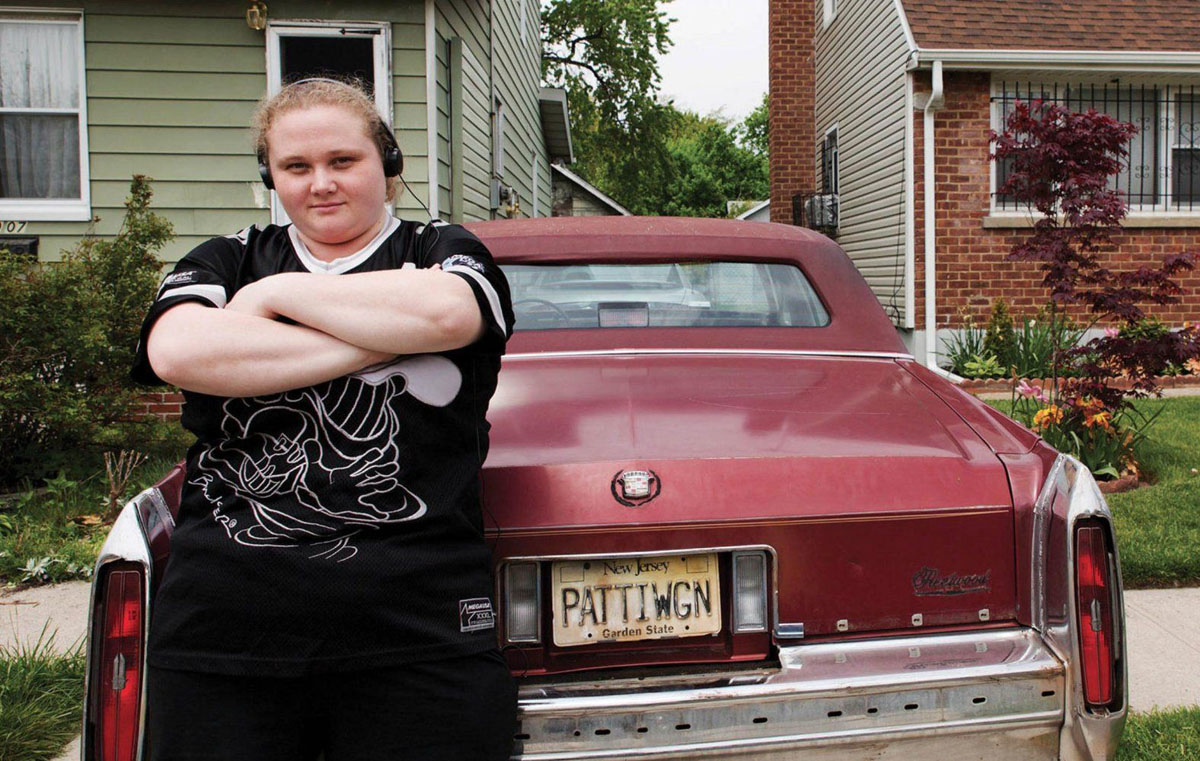 Patti Cake$[/caption]
The festival will feature the Australian premiere of the entire second season of Top of the Lake: China Girl, directed by Jane Campion and MIFF Accelerator alumnus Ariel Kleiman, and offering a unique opportunity to see the series before its television premiere on BBC First on Foxtel; and Patti Cake$, music video director Jeremy Gasper’s feature debut about an aspiring rapper, starring Australian actress Danielle McDonald in her sensational breakout performance.
Slower, more meditative works centered around image, exploration and self-reflexivity include Claire’s Camera, in which Isabelle Huppert reunites with director Hong Sang-soo to present an uncomplicated and refreshing meditation on the joy of chance encounters and the power of art; 24 Frames, a minimalist hymn to the capturing of images and the final work by the late Iranian master Abbas Kiarostami; and Naomi Kawase’s (Still the Water, MIFF 14) Radiance, which explores the complexity of cinematic images through description alone, as protagonist Misako writes voiceovers for vision impaired film viewers.
Scoring an award at the Cannes Directors’ Fortnight, Jonas Carpignano’s (Mediterranea, MIFF 15) latest, A Ciambra, explores the European refugee crisis in a heart-wrenching, ultra-realist tour of the outcast and refugee communities of Italy’s south; and in Hungarian phenomenon Kornél Mundruczó’s (White God, MIFF 14) Jupiter’s Moon, the superhero genre collides with the rolling tragedy of that same crisis in an action-packed assault on tribalism, human indecency of the basic laws of gravity.
Set to screen at MIFF as part of Night Shift, A Prayer Before Dawn is a claustrophobic, face-pulping mash of growling sound, kinetic editing and so-real-you-have-to-flinch fight scenes from French provocateur Jean-Stéphane Sauvaire (Johnny Mad Dog, MIFF 08); and Blade of the Immortal is samurai, swords and Takashi Miike – celebrating his 100th feature with the tale of an immortal swordsman looking to reclaim his soul.
Hot from the Un Certain Regard section, Closeness explores family relations intermingled with ethnic tensions in a stunning, disturbing debut from young Russian filmmaker Kantemir Balagov; shot in nine parts, each in sweeping unbroken takes, Beauty and the Dogs is based on a real incident of a young Tunisian student plunged into an infuriating and intimidating bureaucratic nightmare; and Until the Birds Return, a film of three stunningly rendered dispatches from the still-scarred people and landscapes of modern Algeria, by young gun of North African cinema Karim Moussaoui.
And finally, Chilean filmmaker Marcela Said’s sophomore feature Los Perros explodes class privilege when a wealthy woman – the dynamite Antonia Zeger – falls for her older riding instructor, a man accused of war crimes; and A Gentle Creature, the latest film by Sergei Loznitsa (The Event MIFF 16; In the Fog, MIFF 12) that shifts from rusted realism to dreamy fantasy as it follows a woman (Vasilina Makovtseva) on a voyage through multiple layers of violence, indignity and human cruelty.
Patti Cake$[/caption]
The festival will feature the Australian premiere of the entire second season of Top of the Lake: China Girl, directed by Jane Campion and MIFF Accelerator alumnus Ariel Kleiman, and offering a unique opportunity to see the series before its television premiere on BBC First on Foxtel; and Patti Cake$, music video director Jeremy Gasper’s feature debut about an aspiring rapper, starring Australian actress Danielle McDonald in her sensational breakout performance.
Slower, more meditative works centered around image, exploration and self-reflexivity include Claire’s Camera, in which Isabelle Huppert reunites with director Hong Sang-soo to present an uncomplicated and refreshing meditation on the joy of chance encounters and the power of art; 24 Frames, a minimalist hymn to the capturing of images and the final work by the late Iranian master Abbas Kiarostami; and Naomi Kawase’s (Still the Water, MIFF 14) Radiance, which explores the complexity of cinematic images through description alone, as protagonist Misako writes voiceovers for vision impaired film viewers.
Scoring an award at the Cannes Directors’ Fortnight, Jonas Carpignano’s (Mediterranea, MIFF 15) latest, A Ciambra, explores the European refugee crisis in a heart-wrenching, ultra-realist tour of the outcast and refugee communities of Italy’s south; and in Hungarian phenomenon Kornél Mundruczó’s (White God, MIFF 14) Jupiter’s Moon, the superhero genre collides with the rolling tragedy of that same crisis in an action-packed assault on tribalism, human indecency of the basic laws of gravity.
Set to screen at MIFF as part of Night Shift, A Prayer Before Dawn is a claustrophobic, face-pulping mash of growling sound, kinetic editing and so-real-you-have-to-flinch fight scenes from French provocateur Jean-Stéphane Sauvaire (Johnny Mad Dog, MIFF 08); and Blade of the Immortal is samurai, swords and Takashi Miike – celebrating his 100th feature with the tale of an immortal swordsman looking to reclaim his soul.
Hot from the Un Certain Regard section, Closeness explores family relations intermingled with ethnic tensions in a stunning, disturbing debut from young Russian filmmaker Kantemir Balagov; shot in nine parts, each in sweeping unbroken takes, Beauty and the Dogs is based on a real incident of a young Tunisian student plunged into an infuriating and intimidating bureaucratic nightmare; and Until the Birds Return, a film of three stunningly rendered dispatches from the still-scarred people and landscapes of modern Algeria, by young gun of North African cinema Karim Moussaoui.
And finally, Chilean filmmaker Marcela Said’s sophomore feature Los Perros explodes class privilege when a wealthy woman – the dynamite Antonia Zeger – falls for her older riding instructor, a man accused of war crimes; and A Gentle Creature, the latest film by Sergei Loznitsa (The Event MIFF 16; In the Fog, MIFF 12) that shifts from rusted realism to dreamy fantasy as it follows a woman (Vasilina Makovtseva) on a voyage through multiple layers of violence, indignity and human cruelty.