
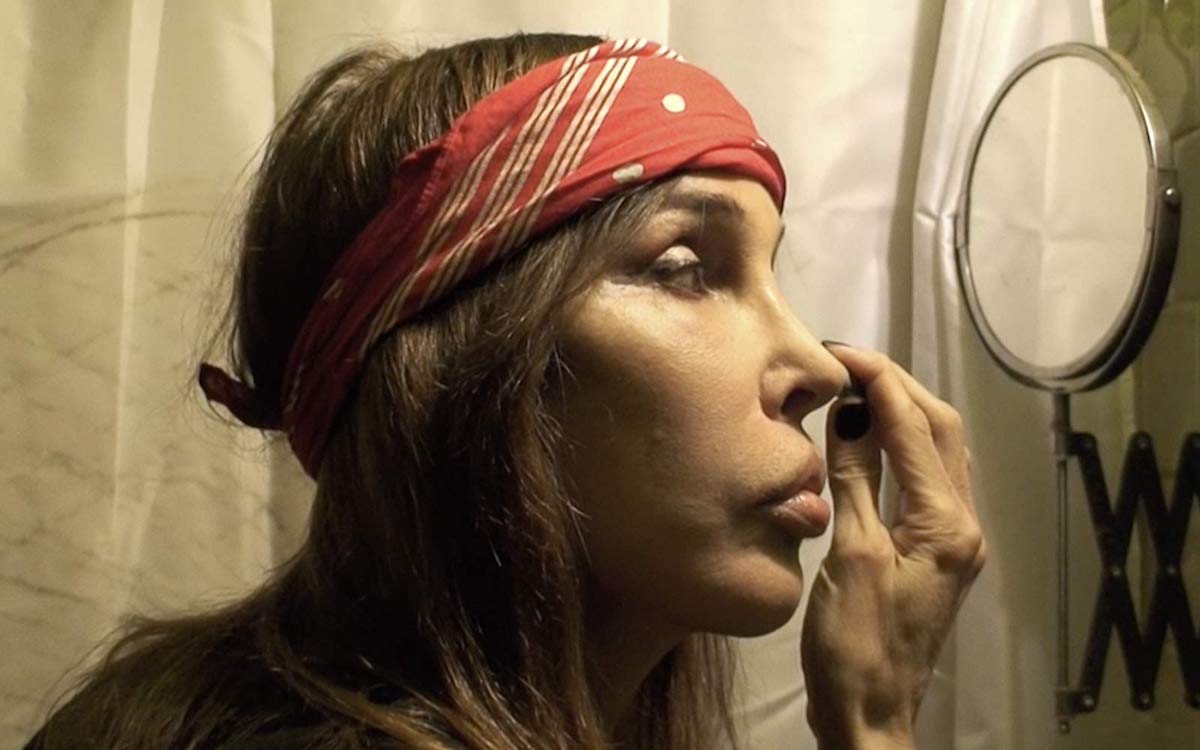
 Sophia Lamar in I Hate New York[/caption]
Made in Spain, the showcase of the Spanish films at the 2018 San Sebastian International Film Festival will spotlight eleven productions, including films by directors Daniel Calparsoro, Isabel Coixet, Álex de la Iglesia, Ramón Salazar and David Trueba. The Festival will also serve as the framework for presentation of the documentary Querido Fotogramas, directed by the Brazilian filmmaker Sergio Oksman.
Among the first works are Mi querida cofradía, by Marta Díaz de Lope Díaz (Ronda, Málaga, 1988), winner at the Malaga Festival of both the Silver Biznaga for Best Supporting Actress (Carmen Flores) and the Audience Award; and I Hate New York, by the journalist and filmmaker Gustavo Sánchez (Úbeda, Jaén, 1978), produced by the Bayona brothers.
Also part of the selection are Diana Toucedo (Pontevedra, 1982) who, having worked on sixteen feature films as an editor and having directed the non-fiction feature En todas as mans, debuted in feature films with Trinta lumes / Thirty Souls, premiered in the Panorama section of the Berlinale; and Les distàncies (Distances) by Elena Trapé (Barcelona, 1976), recipient of the Golden Biznaga for Best Spanish Film and of the Silver Biznagas for Best Director and Best Actress (Alexandra Jiménez) in Malaga. Trapé’s first film, Blog, was selected for Zabaltegi-New Directors eight years ago at the Festival, landing a special mention from the RTVE-Otra Mirada Award.
Having worked on eight feature films as an editor, works which have coexisted with her involvement in the film pedagogy project Cinema en curs – which has its corresponding event in San Sebastian through Tabakalera and the Elías Querejeta Zine Eskola (Zinema (h)abian) – Meritxell Colell (Barcelona, 1983) has now directed her first feature film, Con el viento / Amb el vent. Having been selected as a project by the Cinéfondation, the work premiered in the Forum section of the Berlinale. Colell will participate with her second feature film project, Dúo, in the Festival’s Europe-Latin America Co-Production Forum.
Among the films by long-standing directors are El aviso (The Warning), the latest work from Daniel Calparsoro (Barcelona, 1968), whose films have been presented in Cannes, Berlin and Venice, as well as at the Festival; The Bookshop, by Isabel Coixet (Barcelona, 1960), winner this year of the Goyas for Best Film, Director and Adapted Screenplay; Perfectos desconocidos (Perfect Strangers), latest proposal from the filmmaker Álex de la Iglesia (Bilbao, 1965), a frequent participant in San Sebastian Festival’s Official Selection with several films including La comunidad (Common Wealth, Silver Shell for Carmen Maura), Las brujas de Zugarramurdi (Witching & Bitching) and Mi gran noche (My Big Night); La enfermedad del domingo (Sunday’s Illness) by Ramón Salazar (Málaga, 1973), participant in the Panorama section of the Berlinale; and Casi 40 (Almost 40) by David Trueba (Madrid, 1969), the sequel of his first work, La buena vida (The Good Life), winner of the Jury Special Prize in Malaga. Trueba’s previous feature, Vivir con los ojos cerrados (Living is Easy with Eyes Closed), competed in San Sebastian’s Official Selection and won six Goya awards, including Best Film.
CASI 40 (ALMOST FORTY)
DAVID TRUEBA (SPAIN)
Lucía was a successful singer until separation of the duo that had made her a sensation and earned her fame drove her to a somewhat marginal position in the industry. Now she lives a more stable life, married and with two children, retired from the world of show business. But the plans of an old boyfriend from the days of her youth to make a small concert tour of several Spanish cities give her the excuse to get back onto the road. About to turn 40, the two will have to bear the intimate price of giving up on their life ideals.
CON EL VIENTO – AMB EL VENT (FACING THE WIND)
MERITXELL COLELL (SPAIN – ARGENTINA – FRANCE)
Mónica, a 47 year-old dancer, receives a phone call from Spain: her father is seriously ill. Twenty years down the line, she must return to the remote Burgos town of her birth. By the time she gets there, her father is dead. Her mother, to whom she has hardly spoken in all these years, asks her for help to sell the family house. Winter arrives. The perpetual silence, the extreme cold, and having to deal with her family will be harsh trials for Mónica, who will take refuge in the place she knows best: dancing. The film combines dance, documentary and independent film to construct a singular tale of family ties and relations in a universe of women.
EL AVISO (THE WARNING)
DANIEL CALPARSORO (SPAIN)
We are in 2008. Young Jon is a mathematical whiz kid obsessed with numerical reasoning. He’s a genius whose schizophrenia has deprived him of a promising scientific career, so that he has to make do with a job in a photocopying shop. One night like many others, on leaving work, Jon and his best friend, David, head for a petrol station to buy drinks for a dinner with Andrea, a childhood friend of both and the girlfriend David is about to propose to. David goes into the shop while Jon waits for him in the car. Just then there is a robbery and David is hit by a bullet that leaves him in an irreversible coma. From then on Jon will stop taking his medication and, crippled by guilt, start looking for meaning in his friend’s murder. He investigates past robberies until finally finding a common mathematical pattern to them. Continuing with this logic, he comes to the conclusion that Nico, a 10 year-old boy, will be murdered in the same place.
I HATE NEW YORK
GUSTAVO SÁNCHEZ (SPAIN)
New York, 2007-2017. Over a decade, and filming only with a home video camera and no script, the director delves into the private world of Amanda Lepore, Chloe Dzubilo, Sophia Lamar and T De Long; four artists and transgender activists from the city’s underground scene. Little by little, their testimonies reveal fragments of a past –sometimes dramatic, always fascinating and simply extraordinary– that formed their identities and transformed their lives. Their words, fears and hopes take the audience from an outsider’s point of view to being emotionally invested in their destiny.
LA ENFERMEDAD DEL DOMINGO (SUNDAY’S ILLNESS)
RAMÓN SALAZAR (SPAIN)
Driven by her husband’s diplomatic career, Anabel dedicates her life to philanthropy. Her selfless devotion to helping others has increased her popularity, and she is the go-to person in her exclusive circle when it comes to obtaining donations for humanitarian organisations. It is precisely at one of these charity dinners that she runs back into her past on recognising one of the waitresses providing the catering service as being her daughter Chiara, the girl she had abandoned at the age of eight and whom she hasn’t seen for thirty-five years. It’s no chance she’s there; Chiara has been looking for her. Mother and daughter embark on a journey into the past, alone, with a hard road before them in the attempt to recover thirty-five years in barely ten days. Or that’s what Anabel believes. The thing is that this journey has a hidden purpose for Chiara. And when Anabel discovers it she will have to make the most difficult decision of her life, after which she will never be the same again.
LES DISTÀNCIES (DISTANCES)
ELENA TRAPÉ (SPAIN)
Olivia, Eloy, Guille and Anna travel to Berlin to surprise their friend Comas with a visit for his 35th birthday. He doesn’t give them the welcome they expected and during the weekend their contradictions grow and their friendship is put to the test. Together they will discover that time and distance can change everything.
MI QUERIDA COFRADÍA (HOPELESSLY DEVOUT)
MARTA DÍAZ DE LOPE DÍAZ (SPAIN)
Carmen, a middle-aged woman from Malaga, Catholic and apostolic, is about to see her lifelong dream come true: to be president of her brotherhood. It will be the first time that a woman will have achieved such an honour. But finally her fellow members decide to choose her biggest rival, a man named Ignacio. Everything becomes even more complicated for Carmen on the day of the Easter procession, when she is involved in a situation she can only get out of with the help of the women around her.
PERFECTOS DESCONOCIDOS (PERFECT STRANGERS)
ÁLEX DE LA IGLESIA (SPAIN)
Four couples meet for dinner on the night of a lunar eclipse. A night of friendship and laughs, until suddenly the idea emerges: Why not do something different? What would happen if we left the mobile phones on the table within reach of everybody? Entire lives shared by everyone as they happen… An innocent game or a dangerous suggestion? Will the group of friends be able to withstand such a degree of sincerity, even if it is only for a time?
QUERIDO FOTOGRAMAS
SERGIO OKSMAN (SPAIN)
The 70th anniversary of the Fotogramas magazine comes in the shape of a sentimental voyage through the history of Spanish cinema thanks to a mosaic of voices represented by people who make films, those who write them and those who consume them. The documentary pays tribute to the readers of Fotogramas helped by the leading figures of Spanish cinema, who will read to the camera the most representative letters received at its offices in the history of the magazine.
THE BOOKSHOP
ISABEL COIXET (SPAIN – UK)
In the late ‘50s, Florence Green decides to make one of her greatest dreams come true: to leave London and open a small bookshop on the British coast. But to her surprise, the decision will trigger all sorts of reactions among the locals.
TRINTA LUMES / THIRTY SOULS
DIANA TOUCEDO (SPAIN)
Alba is 12 years old and eager to discover the unknown, mysterious and fascinating side of death. With her best friend Samuel they enter abandoned houses, wander around rundown villages and make their way into the mountains with their hidden parallel world. A voyage starting from innocence to discover the mystery of the struggle between life and death.
Sophia Lamar in I Hate New York[/caption]
Made in Spain, the showcase of the Spanish films at the 2018 San Sebastian International Film Festival will spotlight eleven productions, including films by directors Daniel Calparsoro, Isabel Coixet, Álex de la Iglesia, Ramón Salazar and David Trueba. The Festival will also serve as the framework for presentation of the documentary Querido Fotogramas, directed by the Brazilian filmmaker Sergio Oksman.
Among the first works are Mi querida cofradía, by Marta Díaz de Lope Díaz (Ronda, Málaga, 1988), winner at the Malaga Festival of both the Silver Biznaga for Best Supporting Actress (Carmen Flores) and the Audience Award; and I Hate New York, by the journalist and filmmaker Gustavo Sánchez (Úbeda, Jaén, 1978), produced by the Bayona brothers.
Also part of the selection are Diana Toucedo (Pontevedra, 1982) who, having worked on sixteen feature films as an editor and having directed the non-fiction feature En todas as mans, debuted in feature films with Trinta lumes / Thirty Souls, premiered in the Panorama section of the Berlinale; and Les distàncies (Distances) by Elena Trapé (Barcelona, 1976), recipient of the Golden Biznaga for Best Spanish Film and of the Silver Biznagas for Best Director and Best Actress (Alexandra Jiménez) in Malaga. Trapé’s first film, Blog, was selected for Zabaltegi-New Directors eight years ago at the Festival, landing a special mention from the RTVE-Otra Mirada Award.
Having worked on eight feature films as an editor, works which have coexisted with her involvement in the film pedagogy project Cinema en curs – which has its corresponding event in San Sebastian through Tabakalera and the Elías Querejeta Zine Eskola (Zinema (h)abian) – Meritxell Colell (Barcelona, 1983) has now directed her first feature film, Con el viento / Amb el vent. Having been selected as a project by the Cinéfondation, the work premiered in the Forum section of the Berlinale. Colell will participate with her second feature film project, Dúo, in the Festival’s Europe-Latin America Co-Production Forum.
Among the films by long-standing directors are El aviso (The Warning), the latest work from Daniel Calparsoro (Barcelona, 1968), whose films have been presented in Cannes, Berlin and Venice, as well as at the Festival; The Bookshop, by Isabel Coixet (Barcelona, 1960), winner this year of the Goyas for Best Film, Director and Adapted Screenplay; Perfectos desconocidos (Perfect Strangers), latest proposal from the filmmaker Álex de la Iglesia (Bilbao, 1965), a frequent participant in San Sebastian Festival’s Official Selection with several films including La comunidad (Common Wealth, Silver Shell for Carmen Maura), Las brujas de Zugarramurdi (Witching & Bitching) and Mi gran noche (My Big Night); La enfermedad del domingo (Sunday’s Illness) by Ramón Salazar (Málaga, 1973), participant in the Panorama section of the Berlinale; and Casi 40 (Almost 40) by David Trueba (Madrid, 1969), the sequel of his first work, La buena vida (The Good Life), winner of the Jury Special Prize in Malaga. Trueba’s previous feature, Vivir con los ojos cerrados (Living is Easy with Eyes Closed), competed in San Sebastian’s Official Selection and won six Goya awards, including Best Film.
CASI 40 (ALMOST FORTY)
DAVID TRUEBA (SPAIN)
Lucía was a successful singer until separation of the duo that had made her a sensation and earned her fame drove her to a somewhat marginal position in the industry. Now she lives a more stable life, married and with two children, retired from the world of show business. But the plans of an old boyfriend from the days of her youth to make a small concert tour of several Spanish cities give her the excuse to get back onto the road. About to turn 40, the two will have to bear the intimate price of giving up on their life ideals.
CON EL VIENTO – AMB EL VENT (FACING THE WIND)
MERITXELL COLELL (SPAIN – ARGENTINA – FRANCE)
Mónica, a 47 year-old dancer, receives a phone call from Spain: her father is seriously ill. Twenty years down the line, she must return to the remote Burgos town of her birth. By the time she gets there, her father is dead. Her mother, to whom she has hardly spoken in all these years, asks her for help to sell the family house. Winter arrives. The perpetual silence, the extreme cold, and having to deal with her family will be harsh trials for Mónica, who will take refuge in the place she knows best: dancing. The film combines dance, documentary and independent film to construct a singular tale of family ties and relations in a universe of women.
EL AVISO (THE WARNING)
DANIEL CALPARSORO (SPAIN)
We are in 2008. Young Jon is a mathematical whiz kid obsessed with numerical reasoning. He’s a genius whose schizophrenia has deprived him of a promising scientific career, so that he has to make do with a job in a photocopying shop. One night like many others, on leaving work, Jon and his best friend, David, head for a petrol station to buy drinks for a dinner with Andrea, a childhood friend of both and the girlfriend David is about to propose to. David goes into the shop while Jon waits for him in the car. Just then there is a robbery and David is hit by a bullet that leaves him in an irreversible coma. From then on Jon will stop taking his medication and, crippled by guilt, start looking for meaning in his friend’s murder. He investigates past robberies until finally finding a common mathematical pattern to them. Continuing with this logic, he comes to the conclusion that Nico, a 10 year-old boy, will be murdered in the same place.
I HATE NEW YORK
GUSTAVO SÁNCHEZ (SPAIN)
New York, 2007-2017. Over a decade, and filming only with a home video camera and no script, the director delves into the private world of Amanda Lepore, Chloe Dzubilo, Sophia Lamar and T De Long; four artists and transgender activists from the city’s underground scene. Little by little, their testimonies reveal fragments of a past –sometimes dramatic, always fascinating and simply extraordinary– that formed their identities and transformed their lives. Their words, fears and hopes take the audience from an outsider’s point of view to being emotionally invested in their destiny.
LA ENFERMEDAD DEL DOMINGO (SUNDAY’S ILLNESS)
RAMÓN SALAZAR (SPAIN)
Driven by her husband’s diplomatic career, Anabel dedicates her life to philanthropy. Her selfless devotion to helping others has increased her popularity, and she is the go-to person in her exclusive circle when it comes to obtaining donations for humanitarian organisations. It is precisely at one of these charity dinners that she runs back into her past on recognising one of the waitresses providing the catering service as being her daughter Chiara, the girl she had abandoned at the age of eight and whom she hasn’t seen for thirty-five years. It’s no chance she’s there; Chiara has been looking for her. Mother and daughter embark on a journey into the past, alone, with a hard road before them in the attempt to recover thirty-five years in barely ten days. Or that’s what Anabel believes. The thing is that this journey has a hidden purpose for Chiara. And when Anabel discovers it she will have to make the most difficult decision of her life, after which she will never be the same again.
LES DISTÀNCIES (DISTANCES)
ELENA TRAPÉ (SPAIN)
Olivia, Eloy, Guille and Anna travel to Berlin to surprise their friend Comas with a visit for his 35th birthday. He doesn’t give them the welcome they expected and during the weekend their contradictions grow and their friendship is put to the test. Together they will discover that time and distance can change everything.
MI QUERIDA COFRADÍA (HOPELESSLY DEVOUT)
MARTA DÍAZ DE LOPE DÍAZ (SPAIN)
Carmen, a middle-aged woman from Malaga, Catholic and apostolic, is about to see her lifelong dream come true: to be president of her brotherhood. It will be the first time that a woman will have achieved such an honour. But finally her fellow members decide to choose her biggest rival, a man named Ignacio. Everything becomes even more complicated for Carmen on the day of the Easter procession, when she is involved in a situation she can only get out of with the help of the women around her.
PERFECTOS DESCONOCIDOS (PERFECT STRANGERS)
ÁLEX DE LA IGLESIA (SPAIN)
Four couples meet for dinner on the night of a lunar eclipse. A night of friendship and laughs, until suddenly the idea emerges: Why not do something different? What would happen if we left the mobile phones on the table within reach of everybody? Entire lives shared by everyone as they happen… An innocent game or a dangerous suggestion? Will the group of friends be able to withstand such a degree of sincerity, even if it is only for a time?
QUERIDO FOTOGRAMAS
SERGIO OKSMAN (SPAIN)
The 70th anniversary of the Fotogramas magazine comes in the shape of a sentimental voyage through the history of Spanish cinema thanks to a mosaic of voices represented by people who make films, those who write them and those who consume them. The documentary pays tribute to the readers of Fotogramas helped by the leading figures of Spanish cinema, who will read to the camera the most representative letters received at its offices in the history of the magazine.
THE BOOKSHOP
ISABEL COIXET (SPAIN – UK)
In the late ‘50s, Florence Green decides to make one of her greatest dreams come true: to leave London and open a small bookshop on the British coast. But to her surprise, the decision will trigger all sorts of reactions among the locals.
TRINTA LUMES / THIRTY SOULS
DIANA TOUCEDO (SPAIN)
Alba is 12 years old and eager to discover the unknown, mysterious and fascinating side of death. With her best friend Samuel they enter abandoned houses, wander around rundown villages and make their way into the mountains with their hidden parallel world. A voyage starting from innocence to discover the mystery of the struggle between life and death.Facing the Wind (Con el viento)(2018)
-
ALMOST FORTY, I HATE NEW YORK Among Made in Spain Showcase at 2018 San Sebastian International Film Festival
[caption id="attachment_31594" align="aligncenter" width="1200"] Sophia Lamar in I Hate New York[/caption]
Made in Spain, the showcase of the Spanish films at the 2018 San Sebastian International Film Festival will spotlight eleven productions, including films by directors Daniel Calparsoro, Isabel Coixet, Álex de la Iglesia, Ramón Salazar and David Trueba. The Festival will also serve as the framework for presentation of the documentary Querido Fotogramas, directed by the Brazilian filmmaker Sergio Oksman.
Among the first works are Mi querida cofradía, by Marta Díaz de Lope Díaz (Ronda, Málaga, 1988), winner at the Malaga Festival of both the Silver Biznaga for Best Supporting Actress (Carmen Flores) and the Audience Award; and I Hate New York, by the journalist and filmmaker Gustavo Sánchez (Úbeda, Jaén, 1978), produced by the Bayona brothers.
Also part of the selection are Diana Toucedo (Pontevedra, 1982) who, having worked on sixteen feature films as an editor and having directed the non-fiction feature En todas as mans, debuted in feature films with Trinta lumes / Thirty Souls, premiered in the Panorama section of the Berlinale; and Les distàncies (Distances) by Elena Trapé (Barcelona, 1976), recipient of the Golden Biznaga for Best Spanish Film and of the Silver Biznagas for Best Director and Best Actress (Alexandra Jiménez) in Malaga. Trapé’s first film, Blog, was selected for Zabaltegi-New Directors eight years ago at the Festival, landing a special mention from the RTVE-Otra Mirada Award.
Having worked on eight feature films as an editor, works which have coexisted with her involvement in the film pedagogy project Cinema en curs – which has its corresponding event in San Sebastian through Tabakalera and the Elías Querejeta Zine Eskola (Zinema (h)abian) – Meritxell Colell (Barcelona, 1983) has now directed her first feature film, Con el viento / Amb el vent. Having been selected as a project by the Cinéfondation, the work premiered in the Forum section of the Berlinale. Colell will participate with her second feature film project, Dúo, in the Festival’s Europe-Latin America Co-Production Forum.
Among the films by long-standing directors are El aviso (The Warning), the latest work from Daniel Calparsoro (Barcelona, 1968), whose films have been presented in Cannes, Berlin and Venice, as well as at the Festival; The Bookshop, by Isabel Coixet (Barcelona, 1960), winner this year of the Goyas for Best Film, Director and Adapted Screenplay; Perfectos desconocidos (Perfect Strangers), latest proposal from the filmmaker Álex de la Iglesia (Bilbao, 1965), a frequent participant in San Sebastian Festival’s Official Selection with several films including La comunidad (Common Wealth, Silver Shell for Carmen Maura), Las brujas de Zugarramurdi (Witching & Bitching) and Mi gran noche (My Big Night); La enfermedad del domingo (Sunday’s Illness) by Ramón Salazar (Málaga, 1973), participant in the Panorama section of the Berlinale; and Casi 40 (Almost 40) by David Trueba (Madrid, 1969), the sequel of his first work, La buena vida (The Good Life), winner of the Jury Special Prize in Malaga. Trueba’s previous feature, Vivir con los ojos cerrados (Living is Easy with Eyes Closed), competed in San Sebastian’s Official Selection and won six Goya awards, including Best Film.
CASI 40 (ALMOST FORTY)
DAVID TRUEBA (SPAIN)
Lucía was a successful singer until separation of the duo that had made her a sensation and earned her fame drove her to a somewhat marginal position in the industry. Now she lives a more stable life, married and with two children, retired from the world of show business. But the plans of an old boyfriend from the days of her youth to make a small concert tour of several Spanish cities give her the excuse to get back onto the road. About to turn 40, the two will have to bear the intimate price of giving up on their life ideals.
CON EL VIENTO – AMB EL VENT (FACING THE WIND)
MERITXELL COLELL (SPAIN – ARGENTINA – FRANCE)
Mónica, a 47 year-old dancer, receives a phone call from Spain: her father is seriously ill. Twenty years down the line, she must return to the remote Burgos town of her birth. By the time she gets there, her father is dead. Her mother, to whom she has hardly spoken in all these years, asks her for help to sell the family house. Winter arrives. The perpetual silence, the extreme cold, and having to deal with her family will be harsh trials for Mónica, who will take refuge in the place she knows best: dancing. The film combines dance, documentary and independent film to construct a singular tale of family ties and relations in a universe of women.
EL AVISO (THE WARNING)
DANIEL CALPARSORO (SPAIN)
We are in 2008. Young Jon is a mathematical whiz kid obsessed with numerical reasoning. He’s a genius whose schizophrenia has deprived him of a promising scientific career, so that he has to make do with a job in a photocopying shop. One night like many others, on leaving work, Jon and his best friend, David, head for a petrol station to buy drinks for a dinner with Andrea, a childhood friend of both and the girlfriend David is about to propose to. David goes into the shop while Jon waits for him in the car. Just then there is a robbery and David is hit by a bullet that leaves him in an irreversible coma. From then on Jon will stop taking his medication and, crippled by guilt, start looking for meaning in his friend’s murder. He investigates past robberies until finally finding a common mathematical pattern to them. Continuing with this logic, he comes to the conclusion that Nico, a 10 year-old boy, will be murdered in the same place.
I HATE NEW YORK
GUSTAVO SÁNCHEZ (SPAIN)
New York, 2007-2017. Over a decade, and filming only with a home video camera and no script, the director delves into the private world of Amanda Lepore, Chloe Dzubilo, Sophia Lamar and T De Long; four artists and transgender activists from the city’s underground scene. Little by little, their testimonies reveal fragments of a past –sometimes dramatic, always fascinating and simply extraordinary– that formed their identities and transformed their lives. Their words, fears and hopes take the audience from an outsider’s point of view to being emotionally invested in their destiny.
LA ENFERMEDAD DEL DOMINGO (SUNDAY’S ILLNESS)
RAMÓN SALAZAR (SPAIN)
Driven by her husband’s diplomatic career, Anabel dedicates her life to philanthropy. Her selfless devotion to helping others has increased her popularity, and she is the go-to person in her exclusive circle when it comes to obtaining donations for humanitarian organisations. It is precisely at one of these charity dinners that she runs back into her past on recognising one of the waitresses providing the catering service as being her daughter Chiara, the girl she had abandoned at the age of eight and whom she hasn’t seen for thirty-five years. It’s no chance she’s there; Chiara has been looking for her. Mother and daughter embark on a journey into the past, alone, with a hard road before them in the attempt to recover thirty-five years in barely ten days. Or that’s what Anabel believes. The thing is that this journey has a hidden purpose for Chiara. And when Anabel discovers it she will have to make the most difficult decision of her life, after which she will never be the same again.
LES DISTÀNCIES (DISTANCES)
ELENA TRAPÉ (SPAIN)
Olivia, Eloy, Guille and Anna travel to Berlin to surprise their friend Comas with a visit for his 35th birthday. He doesn’t give them the welcome they expected and during the weekend their contradictions grow and their friendship is put to the test. Together they will discover that time and distance can change everything.
MI QUERIDA COFRADÍA (HOPELESSLY DEVOUT)
MARTA DÍAZ DE LOPE DÍAZ (SPAIN)
Carmen, a middle-aged woman from Malaga, Catholic and apostolic, is about to see her lifelong dream come true: to be president of her brotherhood. It will be the first time that a woman will have achieved such an honour. But finally her fellow members decide to choose her biggest rival, a man named Ignacio. Everything becomes even more complicated for Carmen on the day of the Easter procession, when she is involved in a situation she can only get out of with the help of the women around her.
PERFECTOS DESCONOCIDOS (PERFECT STRANGERS)
ÁLEX DE LA IGLESIA (SPAIN)
Four couples meet for dinner on the night of a lunar eclipse. A night of friendship and laughs, until suddenly the idea emerges: Why not do something different? What would happen if we left the mobile phones on the table within reach of everybody? Entire lives shared by everyone as they happen… An innocent game or a dangerous suggestion? Will the group of friends be able to withstand such a degree of sincerity, even if it is only for a time?
QUERIDO FOTOGRAMAS
SERGIO OKSMAN (SPAIN)
The 70th anniversary of the Fotogramas magazine comes in the shape of a sentimental voyage through the history of Spanish cinema thanks to a mosaic of voices represented by people who make films, those who write them and those who consume them. The documentary pays tribute to the readers of Fotogramas helped by the leading figures of Spanish cinema, who will read to the camera the most representative letters received at its offices in the history of the magazine.
THE BOOKSHOP
ISABEL COIXET (SPAIN – UK)
In the late ‘50s, Florence Green decides to make one of her greatest dreams come true: to leave London and open a small bookshop on the British coast. But to her surprise, the decision will trigger all sorts of reactions among the locals.
TRINTA LUMES / THIRTY SOULS
DIANA TOUCEDO (SPAIN)
Alba is 12 years old and eager to discover the unknown, mysterious and fascinating side of death. With her best friend Samuel they enter abandoned houses, wander around rundown villages and make their way into the mountains with their hidden parallel world. A voyage starting from innocence to discover the mystery of the struggle between life and death.
-
Berlinale 2018: Guy Maddin’s “The Green Fog” Among 44 Films Featured in Forum 2018 Lineup
[caption id="attachment_26603" align="aligncenter" width="1280"]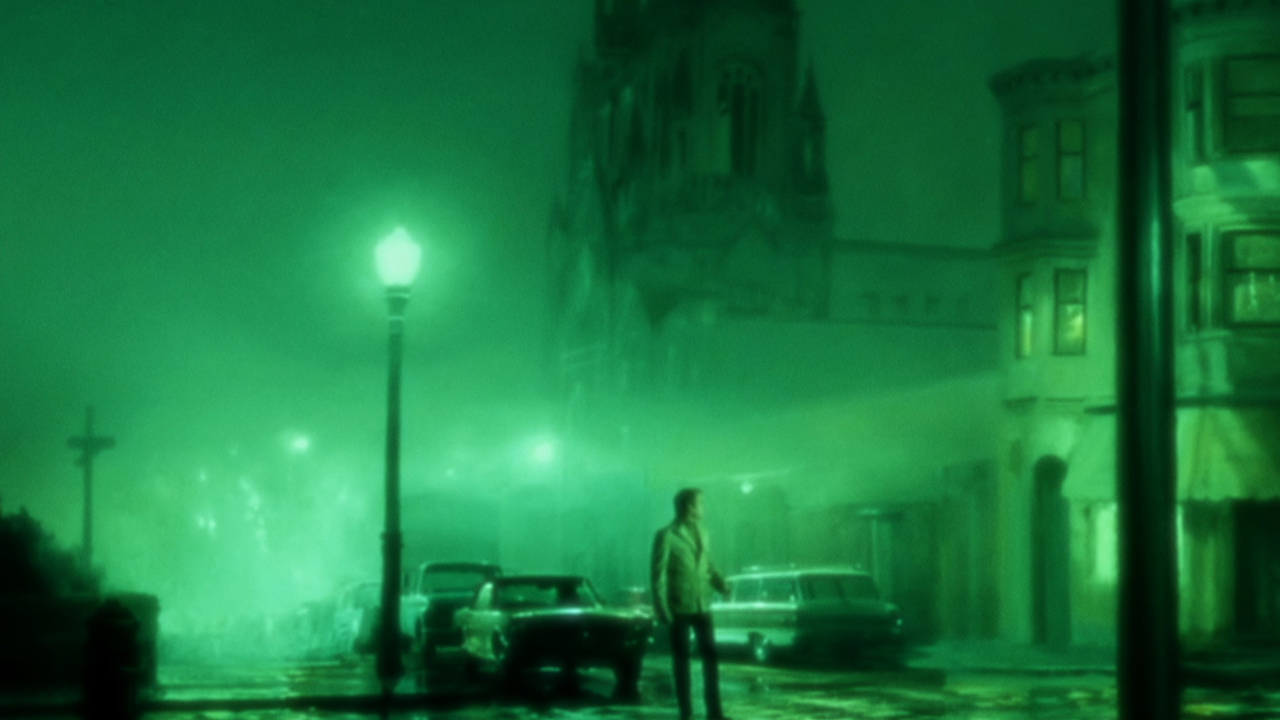 The Green Fog. Regie/directors: Guy Maddin, Evan Johnson, Galen Johnson[/caption]
The Forum program of the 2018 Berlin International Film Festival will feature 44 films, 35 of which world premieres. This year, Arsenal – Institute for Film and Video Art is putting on the Forum as part of the Berlinale for the 48th time.
21 years after his directorial debut The Day a Pig Fell into the Well, Korean director Hong Sangsoo makes a more auspicious return to the Forum. Grass is another cheerfully melancholy story about the guests at a small café whose owner loves classical music. Kim Minhee, who won the Silver Bear for Best Actress in 2017, plays a café regular who always seems to be at the table in the corner writing on her laptop. She repeatedly draws inspiration from what’s happening around her, picking up the threads of the dialogue and spinning them further and sometimes even actively intervening in conversations. Is she perhaps the author of these relationship dramas in miniature, whose stores and themes mirror one another?
French director Claire Simon is equally willing to try out new experiments in her documentary works. In her new film Premières solitudes (Young Solitude), she creates a cinematographic space for open, intimate discussion together with pupils from a school in the Paris suburbs. As they talk together about their backgrounds, parents, first loves, longings and fears for the future, ten ordinary teenagers forge ever closer bonds. It’s good to realise you’re not alone.
For his part, Ukrainian director Sergei Loznitsa is showing a film at the Berlinale for the very first time. In Den’ Pobedy (Victory Day), he observes the huge crowds that gather each year at the Soviet War Memorial in Berlin-Treptow on May 9th and records the hustle and bustle with quiet precision, as different moods come to the fore: pride, contemplation, patriotism, curiosity, the desire for recognition.
Two films from this year’s program draw on video material shot by their directors in periods of political upheaval and imbue it with new significance. At the end of the 1980s, Kristina Konrad collected opinions on the streets of Uruguay in relation to a referendum to be held on a law granting impunity to those responsible for the military dictatorship. Unas preguntas (One or Two Questions) takes a magnifying glass to the democratic process.
Around the same time, the scandal surrounding the Nazi past of former UN General Secretary and Austrian president Kurt Waldheim was making headlines worldwide. Edited together entirely from archive footage, Ruth Beckermann’s Waldheims Walzer (The Waldheim Waltz) is a documentary essay of frightening topicality.
Julien Faraut also works with material largely shot in the 80s in L’empire de la perfection (In the Realm of Perfection). Back then, tennis-obsessed director Gil de Kermadec attempted to use film as means of analysing the game. His meticulously shot footage of John McEnroe matches during the French Open forms the starting point for an ironic look at the parallels between film and the sporting world: cinema lies, sport does not.
Corneliu Porumboiu’s Fotbal Infinit (Infinite Football) takes an equally peculiar look at the world of sport, this time in provincial Romania, following a local official’s attempts to bequeath the world an improved version of the beautiful game. But does everything here really just revolve around football?
Two features from the US shine a light on intellectual escapism. Ted Fendt’s second feature Classical Period is once again shot in Philadelphia on 16mm and tells a drolly melancholy story about intellectualism and loneliness. The members of a reading group exchange cultural and literary references with such vigour that there’s little room for anything else: an attempt to leave the modern world behind or merely their own solitary existences?
Ricky D’Ambrose’s debut Notes On an Appearance may be set in Brooklyn, but unfolds in a similar milieu. Before the backdrop of the disquiet spread by the followers of a controversial philosopher, the film uses both real-life documents and smartly falsified writings to tell the story of a young man who one day disappears without warning. An eerie look at modern life with shades of dystopia.
Josephine Decker’s Madeline’s Madeline on the other hand plunges into the analogies of creativity and insanity. The young titular heroine doesn’t like spending time with her mother, played by actress Miranda July, and feels far freer when with her theatre group. But where does the border lie between personality and role?
Two features from Morocco explore gender relations. Jahilya by Hicham Lasri (the title alludes to the pre-Islamic “time of ignorance”) is a furious condemnation of the misogyny of Moroccan society and all its attendant malice.
Narjiss Nejjar’s Apatride (Stateless) gives an account of a historical event from a female perspective, an event that still dictates the relationship between Morocco and Algeria to this day. Full of beguiling images, her feature shows how a gentle, yet determined woman attempts to prevail over the border between the two countries.
It would be more than appropriate to refer to the electrifying directorial debut An Elephant Sitting Still as a new hope for Chinese cinema. But its 29-year-old director Ho Bu, who had previously made a name for himself with two novels, took his own life soon after the film was completed. This visually stunning work links together the biographies of a range of different protagonists in virtuoso fashion, narrating the course of one single, tension-filled day from dawn until dusk, painting a portrait of a society marked by selfishness in the process.
The Green Fog. Regie/directors: Guy Maddin, Evan Johnson, Galen Johnson[/caption]
The Forum program of the 2018 Berlin International Film Festival will feature 44 films, 35 of which world premieres. This year, Arsenal – Institute for Film and Video Art is putting on the Forum as part of the Berlinale for the 48th time.
21 years after his directorial debut The Day a Pig Fell into the Well, Korean director Hong Sangsoo makes a more auspicious return to the Forum. Grass is another cheerfully melancholy story about the guests at a small café whose owner loves classical music. Kim Minhee, who won the Silver Bear for Best Actress in 2017, plays a café regular who always seems to be at the table in the corner writing on her laptop. She repeatedly draws inspiration from what’s happening around her, picking up the threads of the dialogue and spinning them further and sometimes even actively intervening in conversations. Is she perhaps the author of these relationship dramas in miniature, whose stores and themes mirror one another?
French director Claire Simon is equally willing to try out new experiments in her documentary works. In her new film Premières solitudes (Young Solitude), she creates a cinematographic space for open, intimate discussion together with pupils from a school in the Paris suburbs. As they talk together about their backgrounds, parents, first loves, longings and fears for the future, ten ordinary teenagers forge ever closer bonds. It’s good to realise you’re not alone.
For his part, Ukrainian director Sergei Loznitsa is showing a film at the Berlinale for the very first time. In Den’ Pobedy (Victory Day), he observes the huge crowds that gather each year at the Soviet War Memorial in Berlin-Treptow on May 9th and records the hustle and bustle with quiet precision, as different moods come to the fore: pride, contemplation, patriotism, curiosity, the desire for recognition.
Two films from this year’s program draw on video material shot by their directors in periods of political upheaval and imbue it with new significance. At the end of the 1980s, Kristina Konrad collected opinions on the streets of Uruguay in relation to a referendum to be held on a law granting impunity to those responsible for the military dictatorship. Unas preguntas (One or Two Questions) takes a magnifying glass to the democratic process.
Around the same time, the scandal surrounding the Nazi past of former UN General Secretary and Austrian president Kurt Waldheim was making headlines worldwide. Edited together entirely from archive footage, Ruth Beckermann’s Waldheims Walzer (The Waldheim Waltz) is a documentary essay of frightening topicality.
Julien Faraut also works with material largely shot in the 80s in L’empire de la perfection (In the Realm of Perfection). Back then, tennis-obsessed director Gil de Kermadec attempted to use film as means of analysing the game. His meticulously shot footage of John McEnroe matches during the French Open forms the starting point for an ironic look at the parallels between film and the sporting world: cinema lies, sport does not.
Corneliu Porumboiu’s Fotbal Infinit (Infinite Football) takes an equally peculiar look at the world of sport, this time in provincial Romania, following a local official’s attempts to bequeath the world an improved version of the beautiful game. But does everything here really just revolve around football?
Two features from the US shine a light on intellectual escapism. Ted Fendt’s second feature Classical Period is once again shot in Philadelphia on 16mm and tells a drolly melancholy story about intellectualism and loneliness. The members of a reading group exchange cultural and literary references with such vigour that there’s little room for anything else: an attempt to leave the modern world behind or merely their own solitary existences?
Ricky D’Ambrose’s debut Notes On an Appearance may be set in Brooklyn, but unfolds in a similar milieu. Before the backdrop of the disquiet spread by the followers of a controversial philosopher, the film uses both real-life documents and smartly falsified writings to tell the story of a young man who one day disappears without warning. An eerie look at modern life with shades of dystopia.
Josephine Decker’s Madeline’s Madeline on the other hand plunges into the analogies of creativity and insanity. The young titular heroine doesn’t like spending time with her mother, played by actress Miranda July, and feels far freer when with her theatre group. But where does the border lie between personality and role?
Two features from Morocco explore gender relations. Jahilya by Hicham Lasri (the title alludes to the pre-Islamic “time of ignorance”) is a furious condemnation of the misogyny of Moroccan society and all its attendant malice.
Narjiss Nejjar’s Apatride (Stateless) gives an account of a historical event from a female perspective, an event that still dictates the relationship between Morocco and Algeria to this day. Full of beguiling images, her feature shows how a gentle, yet determined woman attempts to prevail over the border between the two countries.
It would be more than appropriate to refer to the electrifying directorial debut An Elephant Sitting Still as a new hope for Chinese cinema. But its 29-year-old director Ho Bu, who had previously made a name for himself with two novels, took his own life soon after the film was completed. This visually stunning work links together the biographies of a range of different protagonists in virtuoso fashion, narrating the course of one single, tension-filled day from dawn until dusk, painting a portrait of a society marked by selfishness in the process.
The films of the 48th Forum:
14 Apples von Midi Z, Taiwan / Myanmar – WP Afrique, la pensée en mouvement Part I by Jean-Pierre Bekolo, Senegal – IP Aggregat (Aggregate) by Marie Wilke, Germany – WP Amiko by Yoko Yamanaka, Japan – IP Apatride (Stateless) by Narjiss Nejjar, Morocco – WP Aufbruch (Departure) by Ludwig Wüst, Austria – WP La cama (The Bed) by Mónica Lairana, Argentina / Germany / Netherlands / Brazil – WP La casa lobo (The Wolf House) by Joaquín Cociña, Cristóbal León, Chile – WP Casanovagen (Casanova Gene) by Luise Donschen, Germany – WP Classical Period by Ted Fendt, USA – WP Con el viento (Facing the Wind) by Meritxell Colell Aparicio, Spain / France / Argentina – WP Los débiles (The Weak Ones) by Raúl Rico, Eduardo Giralt Brun, Mexico – WP Den’ Pobedy (Victory Day) by Sergei Loznitsa, Germany – WP Die Tomorrow by Nawapol Thamrongrattanarit, Thailand – IP Djamilia (Jamila) by Aminatou Echard, France – WP Drvo (The Tree) by André Gil Mata, Portugal / Bosnia and Herzegovina – WP L’empire de la perfection (In the Realm of Perfection) by Julien Faraut, France – WP An Elephant Sitting Still by Hu Bo, People’s Republic of China – WP Fotbal Infinit (Infinite Football) by Corneliu Porumboiu, Romania – WP Grass by Hong Sangsoo, Republic of Korea – WP The Green Fog by Guy Maddin, Evan Johnson, Galen Johnson, USA / Canada + Accidence by Guy Maddin, Evan Johnson, Galen Johnson, Canada – WP Interchange by Brian M. Cassidy, Melanie Shatzky, Canada – WP Jahilya by Hicham Lasri, Morocco – WP Kaotični život Nade Kadić (The Chaotic Life of Nada Kadić) by Marta Hernaiz, Mexico / Bosnia and Herzegovina – WP Last Child by Shin Dong-seok, Republic of Korea – IP Madeline’s Madeline by Josephine Decker, USA – IP Maki’la by Machérie Ekwa Bahango, Democratic Republic of the Congo / France – WP Mariphasa by Sandro Aguilar, Portugal – WP Minatomachi (Inland Sea) by Kazuhiro Soda, Japan/USA – WP Notes On an Appearance by Ricky D’Ambrose, USA – WP Old Love by Park Kiyong, Republic of Korea – IP Our House by Yui Kiyohara, Japan – IP Our Madness by João Viana, Mozambique / Guinea-Bissau / Qatar / Portugal / France – WP Premières armes (First Stripes) by Jean-François Caissy, Canada – WP Premières solitudes (Young Solitude) by Claire Simon, France – WP SPK Komplex (SPK Complex) by Gerd Kroske, Germany – WP Syn (The Son) by Alexander Abaturov, France / Russian Federation – WP Teatro de guerra (Theatre of War) by Lola Arias, Argentinia / Spain – WP Tuzdan Kaide (The Pillar of Salt) by Burak Çevik, Turkey – WP Unas preguntas (One or Two Questions) by Kristina Konrad, Germany / Uruguay – WP Waldheims Walzer (The Waldheim Waltz) by Ruth Beckermann, Austria – WP Wieża. Jasny dzień. (Tower. A Bright Day.) by Jagoda Szelc, Poland – IP Wild Relatives by Jumana Manna, Germany / Lebanon / Norway – WP Yours in Sisterhood by Irene Lusztig, USA – WP