
 El Angel directed by Luis Ortega[/caption]
Eighty-seven countries have submitted films for consideration in the Foreign Language Film category for the 91st Academy Awards. Malawi and Niger are first-time entrants.
Nominations for the 91st Academy Awards will be announced on Tuesday, January 22, 2019.
The 91st Oscars will be held on Sunday, February 24, 2019, at the Dolby Theatre® at Hollywood & Highland Center in Hollywood, and will be televised live by the ABC Television Network. The Oscars also will be televised live in more than 225 countries and territories worldwide.
The 2018 submissions are:
Afghanistan, “Rona Azim’s Mother,” Jamshid Mahmoudi, director;
Algeria, “Until the End of Time,” Yasmine Chouikh, director;
Argentina, “El Ángel,” Luis Ortega, director;
Armenia, “Spitak,” Alexander Kott, director;
Australia, “Jirga,” Benjamin Gilmour, director;
Austria, “The Waldheim Waltz,” Ruth Beckermann, director;
Bangladesh, “No Bed of Roses,” Mostofa Sarwar Farooki, director;
Belarus, “Crystal Swan,” Darya Zhuk, director;
Belgium, “Girl,” Lukas Dhont, director;
Bolivia, “The Goalkeeper,” Rodrigo “Gory” Patiño, director;
Bosnia and Herzegovina, “Never Leave Me,” Aida Begić, director;
Brazil, “The Great Mystical Circus,” Carlos Diegues, director;
Bulgaria, “Omnipresent,” Ilian Djevelekov, director;
Cambodia, “Graves without a Name,” Rithy Panh, director;
Canada, “Family Ties,” Sophie Dupuis, director;
Chile, “…And Suddenly the Dawn,” Silvio Caiozzi, director;
China, “Hidden Man,” Jiang Wen, director;
Colombia, “Birds of Passage,” Cristina Gallego, Ciro Guerra, directors;
Costa Rica, “Medea,” Alexandra Latishev, director;
Croatia, “The Eighth Commissioner,” Ivan Salaj, director;
Czech Republic, “Winter Flies,” Olmo Omerzu, director;
Denmark, “The Guilty,” Gustav Möller, director;
Dominican Republic, “Cocote,” Nelson Carlo De Los Santos Arias, director;
Ecuador, “A Son of Man,” Jamaicanoproblem, director;
Egypt, “Yomeddine,” A.B. Shawky, director;
Estonia, “Take It or Leave It,” Liina Trishkina-Vanhatalo, director;
Finland, “Euthanizer,” Teemu Nikki, director;
France, “Memoir of War,” Emmanuel Finkiel, director;
Georgia, “Namme,” Zaza Khalvashi, director;
Germany, “Never Look Away,” Florian Henckel von Donnersmarck, director;
Greece, “Polyxeni,” Dora Masklavanou, director;
Hong Kong, “Operation Red Sea,” Dante Lam, director;
Hungary, “Sunset,” László Nemes, director;
Iceland, “Woman at War,” Benedikt Erlingsson, director;
India, “Village Rockstars,” Rima Das, director;
Indonesia, “Marlina the Murderer in Four Acts,” Mouly Surya, director;
Iran, “No Date, No Signature,” Vahid Jalilvand, director;
Iraq, “The Journey,” Mohamed Jabarah Al-Daradji, director;
Israel, “The Cakemaker,” Ofir Raul Graizer, director;
Italy, “Dogman,” Matteo Garrone, director;
Japan, “Shoplifters,” Hirokazu Kore-eda, director;
Kazakhstan, “Ayka,” Sergey Dvortsevoy, director;
Kenya, “Supa Modo,” Likarion Wainaina, director;
Kosovo, “The Marriage,” Blerta Zeqiri, director;
Latvia, “To Be Continued,” Ivars Seleckis, director;
Lebanon, “Capernaum,” Nadine Labaki, director;
Lithuania, “Wonderful Losers: A Different World,” Arunas Matelis, director;
Luxembourg, “Gutland,” Govinda Van Maele, director;
Macedonia, “Secret Ingredient,” Gjorce Stavreski, director;
Malawi, “The Road to Sunrise,” Shemu Joyah, director;
Mexico, “Roma,” Alfonso Cuarón, director;
Montenegro, “Iskra,” Gojko Berkuljan, director;
Morocco, “Burnout,” Nour-Eddine Lakhmari, director;
Nepal, “Panchayat,” Shivam Adhikari, director;
Netherlands, “The Resistance Banker,” Joram Lürsen, director;
New Zealand, “Yellow Is Forbidden,” Pietra Brettkelly, director;
Niger, “The Wedding Ring,” Rahmatou Keïta, director;
Norway, “What Will People Say,” Iram Haq, director;
Pakistan, “Cake,” Asim Abbasi, director;
Palestine, “Ghost Hunting,” Raed Andoni, director;
Panama, “Ruben Blades Is Not My Name,” Abner Benaim, director;
Paraguay, “The Heiresses,” Marcelo Martinessi, director;
Peru, “Eternity,” Oscar Catacora, director;
Philippines, “Signal Rock,” Chito S. Roño, director;
Poland, “Cold War,” Pawel Pawlikowski, director;
Portugal, “Pilgrimage,” João Botelho, director;
Romania, “I Do Not Care If We Go Down in History as Barbarians,” Radu Jude, director;
Russia, “Sobibor,” Konstantin Khabensky, director;
Serbia, “Offenders,” Dejan Zecevic, director;
Singapore, “Buffalo Boys,” Mike Wiluan, director;
Slovakia, “The Interpreter,” Martin Šulík, director;
Slovenia, “Ivan,” Janez Burger, director;
South Africa, “Sew the Winter to My Skin,” Jahmil X.T. Qubeka, director;
South Korea, “Burning,” Lee Chang-dong, director;
Spain, “Champions,” Javier Fesser, director;
Sweden, “Border,” Ali Abbasi, director;
Switzerland, “Eldorado,” Markus Imhoof, director;
Taiwan, “The Great Buddha+,” Hsin-Yao Huang, director;
Thailand, “Malila The Farewell Flower,” Anucha Boonyawatana, director;
Tunisia, “Beauty and the Dogs,” Kaouther Ben Hania, director;
Turkey, “The Wild Pear Tree,” Nuri Bilge Ceylan, director;
Ukraine, “Donbass,” Sergei Loznitsa, director;
United Kingdom, “I Am Not a Witch,” Rungano Nyoni, director;
Uruguay, “Twelve-Year Night,” Álvaro Brechner, director;
Venezuela, “The Family,” Gustavo Rondón Córdova, director;
Vietnam, “The Tailor,” Buu Loc Tran, Kay Nguyen, directors;
Yemen, “10 Days before the Wedding,” Amr Gamal, director.
El Angel directed by Luis Ortega[/caption]
Eighty-seven countries have submitted films for consideration in the Foreign Language Film category for the 91st Academy Awards. Malawi and Niger are first-time entrants.
Nominations for the 91st Academy Awards will be announced on Tuesday, January 22, 2019.
The 91st Oscars will be held on Sunday, February 24, 2019, at the Dolby Theatre® at Hollywood & Highland Center in Hollywood, and will be televised live by the ABC Television Network. The Oscars also will be televised live in more than 225 countries and territories worldwide.
The 2018 submissions are:
Afghanistan, “Rona Azim’s Mother,” Jamshid Mahmoudi, director;
Algeria, “Until the End of Time,” Yasmine Chouikh, director;
Argentina, “El Ángel,” Luis Ortega, director;
Armenia, “Spitak,” Alexander Kott, director;
Australia, “Jirga,” Benjamin Gilmour, director;
Austria, “The Waldheim Waltz,” Ruth Beckermann, director;
Bangladesh, “No Bed of Roses,” Mostofa Sarwar Farooki, director;
Belarus, “Crystal Swan,” Darya Zhuk, director;
Belgium, “Girl,” Lukas Dhont, director;
Bolivia, “The Goalkeeper,” Rodrigo “Gory” Patiño, director;
Bosnia and Herzegovina, “Never Leave Me,” Aida Begić, director;
Brazil, “The Great Mystical Circus,” Carlos Diegues, director;
Bulgaria, “Omnipresent,” Ilian Djevelekov, director;
Cambodia, “Graves without a Name,” Rithy Panh, director;
Canada, “Family Ties,” Sophie Dupuis, director;
Chile, “…And Suddenly the Dawn,” Silvio Caiozzi, director;
China, “Hidden Man,” Jiang Wen, director;
Colombia, “Birds of Passage,” Cristina Gallego, Ciro Guerra, directors;
Costa Rica, “Medea,” Alexandra Latishev, director;
Croatia, “The Eighth Commissioner,” Ivan Salaj, director;
Czech Republic, “Winter Flies,” Olmo Omerzu, director;
Denmark, “The Guilty,” Gustav Möller, director;
Dominican Republic, “Cocote,” Nelson Carlo De Los Santos Arias, director;
Ecuador, “A Son of Man,” Jamaicanoproblem, director;
Egypt, “Yomeddine,” A.B. Shawky, director;
Estonia, “Take It or Leave It,” Liina Trishkina-Vanhatalo, director;
Finland, “Euthanizer,” Teemu Nikki, director;
France, “Memoir of War,” Emmanuel Finkiel, director;
Georgia, “Namme,” Zaza Khalvashi, director;
Germany, “Never Look Away,” Florian Henckel von Donnersmarck, director;
Greece, “Polyxeni,” Dora Masklavanou, director;
Hong Kong, “Operation Red Sea,” Dante Lam, director;
Hungary, “Sunset,” László Nemes, director;
Iceland, “Woman at War,” Benedikt Erlingsson, director;
India, “Village Rockstars,” Rima Das, director;
Indonesia, “Marlina the Murderer in Four Acts,” Mouly Surya, director;
Iran, “No Date, No Signature,” Vahid Jalilvand, director;
Iraq, “The Journey,” Mohamed Jabarah Al-Daradji, director;
Israel, “The Cakemaker,” Ofir Raul Graizer, director;
Italy, “Dogman,” Matteo Garrone, director;
Japan, “Shoplifters,” Hirokazu Kore-eda, director;
Kazakhstan, “Ayka,” Sergey Dvortsevoy, director;
Kenya, “Supa Modo,” Likarion Wainaina, director;
Kosovo, “The Marriage,” Blerta Zeqiri, director;
Latvia, “To Be Continued,” Ivars Seleckis, director;
Lebanon, “Capernaum,” Nadine Labaki, director;
Lithuania, “Wonderful Losers: A Different World,” Arunas Matelis, director;
Luxembourg, “Gutland,” Govinda Van Maele, director;
Macedonia, “Secret Ingredient,” Gjorce Stavreski, director;
Malawi, “The Road to Sunrise,” Shemu Joyah, director;
Mexico, “Roma,” Alfonso Cuarón, director;
Montenegro, “Iskra,” Gojko Berkuljan, director;
Morocco, “Burnout,” Nour-Eddine Lakhmari, director;
Nepal, “Panchayat,” Shivam Adhikari, director;
Netherlands, “The Resistance Banker,” Joram Lürsen, director;
New Zealand, “Yellow Is Forbidden,” Pietra Brettkelly, director;
Niger, “The Wedding Ring,” Rahmatou Keïta, director;
Norway, “What Will People Say,” Iram Haq, director;
Pakistan, “Cake,” Asim Abbasi, director;
Palestine, “Ghost Hunting,” Raed Andoni, director;
Panama, “Ruben Blades Is Not My Name,” Abner Benaim, director;
Paraguay, “The Heiresses,” Marcelo Martinessi, director;
Peru, “Eternity,” Oscar Catacora, director;
Philippines, “Signal Rock,” Chito S. Roño, director;
Poland, “Cold War,” Pawel Pawlikowski, director;
Portugal, “Pilgrimage,” João Botelho, director;
Romania, “I Do Not Care If We Go Down in History as Barbarians,” Radu Jude, director;
Russia, “Sobibor,” Konstantin Khabensky, director;
Serbia, “Offenders,” Dejan Zecevic, director;
Singapore, “Buffalo Boys,” Mike Wiluan, director;
Slovakia, “The Interpreter,” Martin Šulík, director;
Slovenia, “Ivan,” Janez Burger, director;
South Africa, “Sew the Winter to My Skin,” Jahmil X.T. Qubeka, director;
South Korea, “Burning,” Lee Chang-dong, director;
Spain, “Champions,” Javier Fesser, director;
Sweden, “Border,” Ali Abbasi, director;
Switzerland, “Eldorado,” Markus Imhoof, director;
Taiwan, “The Great Buddha+,” Hsin-Yao Huang, director;
Thailand, “Malila The Farewell Flower,” Anucha Boonyawatana, director;
Tunisia, “Beauty and the Dogs,” Kaouther Ben Hania, director;
Turkey, “The Wild Pear Tree,” Nuri Bilge Ceylan, director;
Ukraine, “Donbass,” Sergei Loznitsa, director;
United Kingdom, “I Am Not a Witch,” Rungano Nyoni, director;
Uruguay, “Twelve-Year Night,” Álvaro Brechner, director;
Venezuela, “The Family,” Gustavo Rondón Córdova, director;
Vietnam, “The Tailor,” Buu Loc Tran, Kay Nguyen, directors;
Yemen, “10 Days before the Wedding,” Amr Gamal, director.The Family (La Familia)(2017)
-
87 Countries Submit Films in 2018 Oscar Foreign Language Competition
[caption id="attachment_31248" align="aligncenter" width="1200"] El Angel directed by Luis Ortega[/caption]
Eighty-seven countries have submitted films for consideration in the Foreign Language Film category for the 91st Academy Awards. Malawi and Niger are first-time entrants.
Nominations for the 91st Academy Awards will be announced on Tuesday, January 22, 2019.
The 91st Oscars will be held on Sunday, February 24, 2019, at the Dolby Theatre® at Hollywood & Highland Center in Hollywood, and will be televised live by the ABC Television Network. The Oscars also will be televised live in more than 225 countries and territories worldwide.
The 2018 submissions are:
Afghanistan, “Rona Azim’s Mother,” Jamshid Mahmoudi, director;
Algeria, “Until the End of Time,” Yasmine Chouikh, director;
Argentina, “El Ángel,” Luis Ortega, director;
Armenia, “Spitak,” Alexander Kott, director;
Australia, “Jirga,” Benjamin Gilmour, director;
Austria, “The Waldheim Waltz,” Ruth Beckermann, director;
Bangladesh, “No Bed of Roses,” Mostofa Sarwar Farooki, director;
Belarus, “Crystal Swan,” Darya Zhuk, director;
Belgium, “Girl,” Lukas Dhont, director;
Bolivia, “The Goalkeeper,” Rodrigo “Gory” Patiño, director;
Bosnia and Herzegovina, “Never Leave Me,” Aida Begić, director;
Brazil, “The Great Mystical Circus,” Carlos Diegues, director;
Bulgaria, “Omnipresent,” Ilian Djevelekov, director;
Cambodia, “Graves without a Name,” Rithy Panh, director;
Canada, “Family Ties,” Sophie Dupuis, director;
Chile, “…And Suddenly the Dawn,” Silvio Caiozzi, director;
China, “Hidden Man,” Jiang Wen, director;
Colombia, “Birds of Passage,” Cristina Gallego, Ciro Guerra, directors;
Costa Rica, “Medea,” Alexandra Latishev, director;
Croatia, “The Eighth Commissioner,” Ivan Salaj, director;
Czech Republic, “Winter Flies,” Olmo Omerzu, director;
Denmark, “The Guilty,” Gustav Möller, director;
Dominican Republic, “Cocote,” Nelson Carlo De Los Santos Arias, director;
Ecuador, “A Son of Man,” Jamaicanoproblem, director;
Egypt, “Yomeddine,” A.B. Shawky, director;
Estonia, “Take It or Leave It,” Liina Trishkina-Vanhatalo, director;
Finland, “Euthanizer,” Teemu Nikki, director;
France, “Memoir of War,” Emmanuel Finkiel, director;
Georgia, “Namme,” Zaza Khalvashi, director;
Germany, “Never Look Away,” Florian Henckel von Donnersmarck, director;
Greece, “Polyxeni,” Dora Masklavanou, director;
Hong Kong, “Operation Red Sea,” Dante Lam, director;
Hungary, “Sunset,” László Nemes, director;
Iceland, “Woman at War,” Benedikt Erlingsson, director;
India, “Village Rockstars,” Rima Das, director;
Indonesia, “Marlina the Murderer in Four Acts,” Mouly Surya, director;
Iran, “No Date, No Signature,” Vahid Jalilvand, director;
Iraq, “The Journey,” Mohamed Jabarah Al-Daradji, director;
Israel, “The Cakemaker,” Ofir Raul Graizer, director;
Italy, “Dogman,” Matteo Garrone, director;
Japan, “Shoplifters,” Hirokazu Kore-eda, director;
Kazakhstan, “Ayka,” Sergey Dvortsevoy, director;
Kenya, “Supa Modo,” Likarion Wainaina, director;
Kosovo, “The Marriage,” Blerta Zeqiri, director;
Latvia, “To Be Continued,” Ivars Seleckis, director;
Lebanon, “Capernaum,” Nadine Labaki, director;
Lithuania, “Wonderful Losers: A Different World,” Arunas Matelis, director;
Luxembourg, “Gutland,” Govinda Van Maele, director;
Macedonia, “Secret Ingredient,” Gjorce Stavreski, director;
Malawi, “The Road to Sunrise,” Shemu Joyah, director;
Mexico, “Roma,” Alfonso Cuarón, director;
Montenegro, “Iskra,” Gojko Berkuljan, director;
Morocco, “Burnout,” Nour-Eddine Lakhmari, director;
Nepal, “Panchayat,” Shivam Adhikari, director;
Netherlands, “The Resistance Banker,” Joram Lürsen, director;
New Zealand, “Yellow Is Forbidden,” Pietra Brettkelly, director;
Niger, “The Wedding Ring,” Rahmatou Keïta, director;
Norway, “What Will People Say,” Iram Haq, director;
Pakistan, “Cake,” Asim Abbasi, director;
Palestine, “Ghost Hunting,” Raed Andoni, director;
Panama, “Ruben Blades Is Not My Name,” Abner Benaim, director;
Paraguay, “The Heiresses,” Marcelo Martinessi, director;
Peru, “Eternity,” Oscar Catacora, director;
Philippines, “Signal Rock,” Chito S. Roño, director;
Poland, “Cold War,” Pawel Pawlikowski, director;
Portugal, “Pilgrimage,” João Botelho, director;
Romania, “I Do Not Care If We Go Down in History as Barbarians,” Radu Jude, director;
Russia, “Sobibor,” Konstantin Khabensky, director;
Serbia, “Offenders,” Dejan Zecevic, director;
Singapore, “Buffalo Boys,” Mike Wiluan, director;
Slovakia, “The Interpreter,” Martin Šulík, director;
Slovenia, “Ivan,” Janez Burger, director;
South Africa, “Sew the Winter to My Skin,” Jahmil X.T. Qubeka, director;
South Korea, “Burning,” Lee Chang-dong, director;
Spain, “Champions,” Javier Fesser, director;
Sweden, “Border,” Ali Abbasi, director;
Switzerland, “Eldorado,” Markus Imhoof, director;
Taiwan, “The Great Buddha+,” Hsin-Yao Huang, director;
Thailand, “Malila The Farewell Flower,” Anucha Boonyawatana, director;
Tunisia, “Beauty and the Dogs,” Kaouther Ben Hania, director;
Turkey, “The Wild Pear Tree,” Nuri Bilge Ceylan, director;
Ukraine, “Donbass,” Sergei Loznitsa, director;
United Kingdom, “I Am Not a Witch,” Rungano Nyoni, director;
Uruguay, “Twelve-Year Night,” Álvaro Brechner, director;
Venezuela, “The Family,” Gustavo Rondón Córdova, director;
Vietnam, “The Tailor,” Buu Loc Tran, Kay Nguyen, directors;
Yemen, “10 Days before the Wedding,” Amr Gamal, director.
-
2018 Miami Film Festival Award Winners – A SORT OF FAMILY Wins Best Film | Complete List
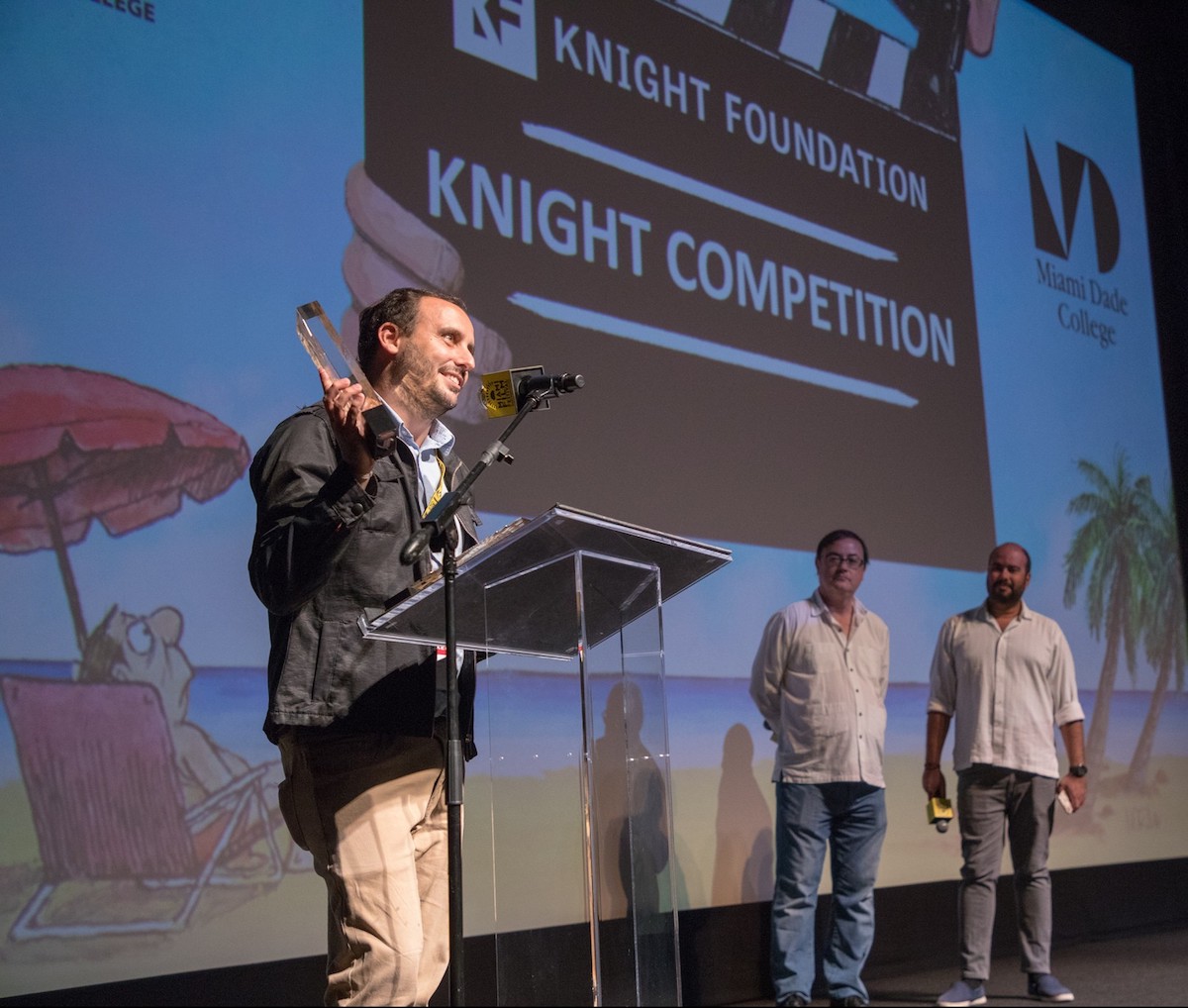 Miami Dade College’s Miami Film Festival unveiled award winners this past weekend and Argentine Diego Lerman’s drama A Sort of Family (Una especie de familia) won the top award – the Grand Jury Prize for Best Film. The film is currently nominated for 8 Argentinian Academy Awards (Premios Sur), including Best Picture and Best Director.
The Festival’s Audience Award for Best Feature went to the Argentina-Spain co-production The Last Suit (El último traje), written and directed by Argentine Pablo Solarz. The film is being released theatrically in the US by Outsider Pictures on March 23rd. “The Driver is Red”, a true crime documentary set in Argentina in 1960, directed by American filmmaker Randall Christopher, won the Audience Award for Best Short Film.
The $10,000 Knight Documentary Achievement Award, voted on by the public, was split equally between three US films in a race that Festival Director Jaie Laplante said was simply “too close to call”. The winning films included two films that world premiered at the Festival: When The Beat Drops, directed by celebrity choreographer and first time filmmaker Jamal Sims; and Amigo Skate, Cuba, directed by first-time feature director Vanesa Wilkey-Escobar. The films share the cash award and title with a third film, Liyana (a co-production with Swaziland), directed by Aaron Kopp and Amanda Kopp.
Mateo Gil won the Knight Competition Best Director award and $5,000 cash for The Laws of Thermodynamics (Las leyes de la termodinámica), which world premiered at the Festival on the same day Netflix announced that it had acquired worldwide SVOD rights to the title. Rodrigo Sorogoyen, recent winner of Spain’s Goya (Academy Award) for Best Short Film with “Mother” (“Madre”), repeated that feat at Miami Film Festival as Grand Jury Winner of the IMDbPro Short Film Competition.
The acclaimed Venezuelan feature La familia written and directed by Gustavo Rondón Córdova, won two awards: the $10,000 HBO Ibero-American Feature Film Award, and the Rene Rodriguez Critics Award.
The $10,000 Jordan Ressler Screenwriting Award for best first-produced screenplay in the Festival went to France’s Xavier Legrand, for the film Custody (Jusqu’à la garde). The film will be released theatrically in the US by Kino Lorber. The $5,000 Knight Competition Best Performance Award went to Cesar Troncoso from Uruguay’s Another Story of the World (Otra historia del mundo).
The Festival’s inaugural $10,000 Knight Made in MIA Competition, sponsored by the John S. and James L. Knight Foundation, open to any film – short or feature, documentary or narrative – in the Festival’s Official Selection that features a qualitatively/quantitatively substantial portion of its content (story, setting and actual filming location) in South Florida, from West Palm Beach to the Florida Keys, and that most universally demonstrates a common ground of pride, emotion, and faith for the South Florida community, went to David Abel’s Gladesmen: The Last of the Sawgrass Cowboys.
The $5,000 Zeno Mountain Award is a $5,000 cash prize established at Miami Film Festival’s 2017 edition and funded by Miami-based Fringe Partners, seeking to reward a film of any length or genre in the Festival’s Official Selection which helps break down barriers to our understanding of people living with disabilities, went to the short documentary about the legacy of a Miami Beach high school educator whose incredible achievements were undaunted by his affliction with multiple sclerosis: “Carry That Weight: A Rockumentary” by Brian J. Leitten.
The Jordan Ressler Screenwriting Award, sponsored by the family of the late Jordan Alexander Ressler, an aspiring screenwriter and Cornell film studies graduate who died in a tragic hiking accident at the age of 23, before realizing his dream, was presented by Ressler family member Gary Ressler, after the winner was unveiled by jury members, filmmaker Matthew Porterfield (Sollers Point), international programmer Jane Schoettle, and Miami-based writer, actor and storyteller Rudi Goblen. The Jordan Ressler jury also elected to give an Honorable Mention for Audacity of Vision to Georgian screenwriter and filmmaker Ana Urushadze for her debut Scary Mother.
Earlier in the week, the Festival’s CinemaSlam competition for work of undergraduate and graduate students in Miami/South Florida film schools was unveiled by jury members, artist Omilani Alarcón and filmmaker Michael Arcos, speaking on behalf of fellow jury member and filmmaker Jessica Kavana Dornbusch. This year’s winning film was “Rene de Dios and the South Beach Shark Club” by Miami Dade College student Robert Requejo Ramos.
Miami Dade College’s Miami Film Festival unveiled award winners this past weekend and Argentine Diego Lerman’s drama A Sort of Family (Una especie de familia) won the top award – the Grand Jury Prize for Best Film. The film is currently nominated for 8 Argentinian Academy Awards (Premios Sur), including Best Picture and Best Director.
The Festival’s Audience Award for Best Feature went to the Argentina-Spain co-production The Last Suit (El último traje), written and directed by Argentine Pablo Solarz. The film is being released theatrically in the US by Outsider Pictures on March 23rd. “The Driver is Red”, a true crime documentary set in Argentina in 1960, directed by American filmmaker Randall Christopher, won the Audience Award for Best Short Film.
The $10,000 Knight Documentary Achievement Award, voted on by the public, was split equally between three US films in a race that Festival Director Jaie Laplante said was simply “too close to call”. The winning films included two films that world premiered at the Festival: When The Beat Drops, directed by celebrity choreographer and first time filmmaker Jamal Sims; and Amigo Skate, Cuba, directed by first-time feature director Vanesa Wilkey-Escobar. The films share the cash award and title with a third film, Liyana (a co-production with Swaziland), directed by Aaron Kopp and Amanda Kopp.
Mateo Gil won the Knight Competition Best Director award and $5,000 cash for The Laws of Thermodynamics (Las leyes de la termodinámica), which world premiered at the Festival on the same day Netflix announced that it had acquired worldwide SVOD rights to the title. Rodrigo Sorogoyen, recent winner of Spain’s Goya (Academy Award) for Best Short Film with “Mother” (“Madre”), repeated that feat at Miami Film Festival as Grand Jury Winner of the IMDbPro Short Film Competition.
The acclaimed Venezuelan feature La familia written and directed by Gustavo Rondón Córdova, won two awards: the $10,000 HBO Ibero-American Feature Film Award, and the Rene Rodriguez Critics Award.
The $10,000 Jordan Ressler Screenwriting Award for best first-produced screenplay in the Festival went to France’s Xavier Legrand, for the film Custody (Jusqu’à la garde). The film will be released theatrically in the US by Kino Lorber. The $5,000 Knight Competition Best Performance Award went to Cesar Troncoso from Uruguay’s Another Story of the World (Otra historia del mundo).
The Festival’s inaugural $10,000 Knight Made in MIA Competition, sponsored by the John S. and James L. Knight Foundation, open to any film – short or feature, documentary or narrative – in the Festival’s Official Selection that features a qualitatively/quantitatively substantial portion of its content (story, setting and actual filming location) in South Florida, from West Palm Beach to the Florida Keys, and that most universally demonstrates a common ground of pride, emotion, and faith for the South Florida community, went to David Abel’s Gladesmen: The Last of the Sawgrass Cowboys.
The $5,000 Zeno Mountain Award is a $5,000 cash prize established at Miami Film Festival’s 2017 edition and funded by Miami-based Fringe Partners, seeking to reward a film of any length or genre in the Festival’s Official Selection which helps break down barriers to our understanding of people living with disabilities, went to the short documentary about the legacy of a Miami Beach high school educator whose incredible achievements were undaunted by his affliction with multiple sclerosis: “Carry That Weight: A Rockumentary” by Brian J. Leitten.
The Jordan Ressler Screenwriting Award, sponsored by the family of the late Jordan Alexander Ressler, an aspiring screenwriter and Cornell film studies graduate who died in a tragic hiking accident at the age of 23, before realizing his dream, was presented by Ressler family member Gary Ressler, after the winner was unveiled by jury members, filmmaker Matthew Porterfield (Sollers Point), international programmer Jane Schoettle, and Miami-based writer, actor and storyteller Rudi Goblen. The Jordan Ressler jury also elected to give an Honorable Mention for Audacity of Vision to Georgian screenwriter and filmmaker Ana Urushadze for her debut Scary Mother.
Earlier in the week, the Festival’s CinemaSlam competition for work of undergraduate and graduate students in Miami/South Florida film schools was unveiled by jury members, artist Omilani Alarcón and filmmaker Michael Arcos, speaking on behalf of fellow jury member and filmmaker Jessica Kavana Dornbusch. This year’s winning film was “Rene de Dios and the South Beach Shark Club” by Miami Dade College student Robert Requejo Ramos.
2018 Miami Film Festival Award Winners
KNIGHT COMPETITION
BEST FILM: $30,000 GRAND PRIZE – A Sort of Family (Una especie de familia) (ARGENTINA, Campo Cine – Directed by Diego Lerman) BEST DIRECTOR: $5,000 PRIZE– MATEO GIL for The Laws of Thermodynamics (Las leyes de la termodinámica) (SPAIN) BEST PERFORMANCE: $5,000 PRIZE – Cesar Troncoso for Another Story of the World (Otra historia del mundo) (URUGUAY)KNIGHT MADE IN MIA AWARD
BEST FILM: $10,000 PRIZE – Gladesmen: The Last of the Sawgrass Cowboys (USA, directed by David Abel)HBO IBERO-AMERICAN FEATURE FILM COMPETITION
BEST FILM: $10,000 PRIZE – La familia (VENEZUELA/CHILE/NORWAY, La Pandilla Producciones, directed by Gustavo Rondón Córdova) JORDAN RESSLER SCREENWRITING COMPETITION
BEST SCREENPLAY: $10,000 PRIZE – XAVIER LEGRAND for Custody (FRANCE) Honorable Mention: Ana Urushadze for Scary Mother (GEORGIA/ESTONIA)KNIGHT DOCUMENTARY ACHIEVEMENT AWARD
BEST FILM: $10,000 PRIZE (3-WAY TIE):- When The Beat Drops (USA), directed by Jamal Sims
- Amigo Skate, Cuba (USA) directed by Vanesa Wilkey-Escobar
- Liyana (USA/Swaziland/Qatar), directed by Aaron Kopp and Amanda Kopp
ZENO MOUNTAIN AWARD:
$5,000 Prize – “Carry That Weight: A Rockumentary” (USA), directed by Brian J. LeittenAUDIENCE AWARD (FEATURE FILM):
THE LAST SUIT (ARGENTINA/SPAIN), directed by Pablo SolarzIMDB PRO SHORT FILM AWARD:
BEST FILM: $2,500 PRIZE – MOTHER (SPAIN), directed by Rodrigo SorogoyenAUDIENCE AWARD (SHORT FILM):
THE DRIVER IS RED (USA) directed by Randall ChristopherRENE RODRIGUEZ CRITICS AWARD:
BEST FILM: La familia (VENEZUELA/CHILE/NORWAY, La Pandilla Producciones, directed by Gustavo Rondón Córdova) CINEMASLAM
CINEMASLAM CHAMPION –RENE DE DIOS AND THE SOUTH BEACH SHARK CLUB (Miami Dade College) Best Narrative Film: P.R.A. NATION – Jorge L. Martinez F. (University of Miami) Best Director: Robert Ramos – RENE DE DIOS AND THE SOUTH BEACH SHARK CLUB (Miami Dade College) Best Writing: Robert Ramos – RENE DE DIOS AND THE SOUTH BEACH SHARK CLUB (Miami Dade College) Best Actor: Jaydev Hemrajani – ZINDAGI (University of Miami) Best Actress: Samantha Miller – CHERRY (University of Miami) Best Technical Achievement: RENE DE DIOS AND THE SOUTH BEACH SHARK CLUB (Miami Dade College) Cinemaslam Audience Award – Opposite Sex by Lidia Rosa Hernandez from Center of Cinematography, Arts, and Television
-
Jason Reitman’s TULLY Starring Charlize Theron to Open 35th Miami Film Festival | Trailier
[caption id="attachment_26870" align="aligncenter" width="1200"] TULLY[/caption]
Jason Reitman latest film Tully, written by Diablo Cody and starring Charlize Theron, will premiere as the Opening Night film of the 35th edition of Miami Film Festival, on Friday, March 9th at the Olympia Theater.
“Charlize Theron’s fearless performance as a struggling suburban mother on the brink of losing mental control is made possible by another brilliant collaboration by the creators of Juno and Young Adult,” said Festival director Jaie Laplante. “Tully is both a parable and a salve for our stressed-out times – it reminds us all of who we are, and there is no more beautiful way to open our 35th edition than with this film.”
https://www.youtube.com/watch?v=QRtBP07gIHY
The Festival will give its Precious Gem – Icon Award to the great French actress Isabelle Huppert, recent Oscar nominee for Elle and the most nominated actress in César Award history – a total of 16 nominations from France’s Academy – winning twice. She has also twice won the Best Actress award at the Cannes Film Festival, in a career that has seen her work with some of the greatest directors of contemporary times. Huppert will be honored on Friday, March 16th at the Olympia Theater.
“Isabelle Huppert has made profound contributions to cinema over the course of her illustrious career,” Laplante said. “With her recent performances in Things to Come and Elle, as well as Souvenir and Claire’s Camera, both of which we will be screening in conjunction with her Festival appearance, Ms. Huppert reaches ever-new pinnacles that continually astonish us, and add to her iconic status.”
The Festival will give its Precious Gem – Master Award to Spain’s greatest living filmmaker, Carlos Saura, on the occasion of a new documentary about the master’s career and family life, Félix Viscarret’s Goya-lauded Saura(s), on Sunday, March 11th at the Olympia Theater.
“Carlos Saura returns to Miami after receiving the Festival’s Career Achievement Tribute Award at our 20th edition in 2003,” said Laplante. “At that time, he was 71. Now, he’s 86 and has made eight more brilliant films since his last visit to Miami – but with Saura(s), we see him in a new light, as both a filmmaker and a family-maker. He is a peerless master, and we celebrate the life that continues to nourish his art.”
In all, the Festival will present 148 feature narratives, documentaries and short films of all genres, from 50 different countries, including three countries being represented in the Festival’s Official Selection for the first time– Benin, Georgia and Swaziland. The 35th edition of the Festival runs March 9th – 18th. Thirty-eight of the films are directed or co-directed by women filmmakers. The Festival will wrap up with an Awards Night Gala screening at Olympia Theater of the International premiere of Curro Velázquez’s smash hit Spanish comedy Holy Goalie (Que baje Dios y lo vea), with star Alain Hernández in attendance. All Olympia Theater screenings are part of the Festival’s CINEDWNTWN GALA series, sponsored by Miami Downtown Development Authority. A KORBEL Awards Night Party at The Historic Alfred I. Dupont Building will follow the Awards Night ceremony and screening.
Academy Award winning filmmaker Michel Hazanavicius (The Artist) and revered American screenwriter and director Paul Schrader (Taxi Driver, Mishima: A Life in Four Chapters, Affliction) will attend the Festival for Marquee presentations of their newest films. The Festival’s Marquee series features screenings accompanied by on-stage conversations with major film personalities of the moment, discussing their career and sharing an exciting new work. Hazanavicius will present Godard Mon Amour, his serio-comic look at Jean-Luc Godard’s love affair with the actress Anne Wiazemsky during the shooting of his classic films La Chinoise and Weekend. Schrader will present First Reformed, a dramatic thriller starring Ethan Hawke, Amanda Seyfried and Cedric The Entertainer. They join (previously announced) Mateo Gil and Jean-Marc Barr in the Marquee section.
Ten finalists were selected for the Festival’s signature $40,000 Knight Competition, open to feature films directed by filmmakers who have presented at least one feature in a previous edition of the Festival. Three of these films will also screen as CINEDWNTWN GALAS at the Olympia Theater.
The finalists are:
Another Story of the World (Uruguay, directed by Guillermo Casanova).
April’s Daughter (Mexico, directed by Michel Franco).
In Love & In Hate (Argentina, directed by Alejandro Maci). *CINEDWNTWN GALA
The Laws of Thermodynamics (Spain, directed by Mateo Gil). *WORLD PREMIERE
My Love or My Passion (Argentina, directed by Marcos Carnevale). *CINEDWNTWN GALA
Sergio and Sergei (Cuba/Spain, directed by Ernesto Daranás).
A Sort of Family (Argentina, directed by Diego Lerman).
The Summit (Argentina/Spain, directed by Santiago Mitre). *CINEDWNTWN GALA
Time Share (Mexico, directed by Sebastián Hofmann).
The Warning (Spain, directed by Daniel Calparsoro).
Eleven finalists were selected for the Festival’s inaugural $10,000 Knight Made in MIA Competition, which is open to any film – short or feature, documentary or narrative – in the Festival’s Official Selection that features a qualitatively/quantitatively substantial portion of its content (story, setting and actual filming location) in South Florida, from West Palm Beach to the Florida Keys, and that most universally demonstrates a common ground of pride, emotion, and faith for the South Florida community. The new award was inspired by the international success and 2017 Best Picture Oscar win by the Miami-set Moonlight, directed by former Miami resident Barry Jenkins and co-written by Tarell McCraney. The finalists are:
“#THECONNECTEDMAN”, directed by Fabián Cárdenas.
“Ayita’s Dream”, directed by Isis Masoud, Roger Ingraham.
“Fight Like a Girl”, directed by Agustín Gonzalez, Nicole Wulf.
Gladesmen: The Last of The Sawgrass Cowboys, directed by David Abel.
Latinegras: The Journey of Self-Love Through An Afrolatina Lens, directed by Omilani Alarcón. *WORLD PREMIERE
Love in Youth, directed by Quincy Perkins. *WORLD PREMIERE
Make Love Great Again, directed by Aaron Agrasanchez.
“Noa”, directed by Angel Barrota. *WORLD PREMIERE
Operation Odessa, directed by Tiller Russell.
“Roadside Attraction”, directed by Ivette Lucas, Patrick Bresnan.
“Supermarket”, directed by Rhonda Mitrani. *WORLD PREMIERE
Two significant Soiree nights will pair a major film event with one of Miami Film Festival’s world-famous parties. An Evening with Tim Clancy, the showrunner of HBO’s acclaimed Vice series through six seasons, will present a big-screen return look at three significant Vice episodes, followed by an in-depth, on-stage conversation about Vice’s Emmy Award-winning approach, philosophies and techniques. “HBO NIGHT” continues with a party at downtown Miami’s newest hotspot, The Wharf. Greg Berlanti’s Love, Simon will have its Festival premiere at the Regal Cinemas South Beach and continue with a Light Box Love Story soiree at Miami Light Project’s Goldman Warehouse in Wynwood.
The fiercely-contested, audience-voted $10,000 Knight Documentary Achievement Award, sponsored by Knight Foundation, returns with 24 finalists, including 4 world premieres, and new films from Oscar winner Morgan Neville (20 Feet From Stardom), Oscar nominee Djimon Hounsou (Blood Diamond, In America), Goya winners Félix Viscarret and Gustavo Salmerón, Emmy winner Rene Balcer (Law & Order), Sundance 2018 prize winners Tim Wardle and Maxim Pozdorovkin, Pulitzer Prize winning journalist David Abel and the late Oscar winner Jonathan Demme, as executive producer on The Foreigner’s Home. Subjects featured in the films include Ruth Bader Ginsburg, Edwidge Danticat, Toni Morrison, Mr. Rogers, Andre Agassi, Imagine Dragons’ Dan Reynolds in the Live Nation production Believer, Cuban-America playwright María Irene Fornés and Miami’s Rene Lecour. The finalists are:
6 Weeks To Mother’s Day (USA, directed by Marvin Blunte).
Above The Drowning Sea (Canada, directed by Rene Balcer, Nicola Zavaglia).
Amigo Skate, Cuba (USA, directed by Vanesa Wilkey-Escobar). *WORLD PREMIERE
Believer (USA, directed by Don Argott).
Cuban Food Stories (USA, directed by Asori Soto).
Dolphin Man (Greece/Canada/France/Japan, directed by Lefteris Charitos).
Foreign Land (Israel, directed by Shlomi Eldar).
The Foreigner’s Home (USA/France, directed by Rian Brown, Geoff Pingree).
Gladesmen: The Last of The Sawgrass Cowboys (USA, directed by David Abel).
In Search of Voodoo: Roots To Heaven (USA/Benin, directed by Djimon Hounsou). *WORLD PREMIERE
Liyana (USA/Qatar/Swaziland, directed by Aaron Kopp, Amanda Kopp).
Lots of Kids, A Monkey and a Castle (Spain, directed by Gustavo Salmerón).
Love Means Zero (USA, directed by Jason Kohn).
The Music of the Spheres (Cuba/USA, directed by Marcel Beltrán). *WORLD PREMIERE
Nuyorican Basquet (Puerto Rico, directed by Julio César Torres, Ricardo Olivero Lora).
The Oldies (Cuba/USA/Venezuela, directed by Rosana Matecki).
Operation Odessa (USA, directed by Tiller Russell).
Our New President (USA, directed by Maxim Pozdorovkin).
RBG (USA, directed by Betsy West, Julie Cohen).
The Rest I Make Up (USA, directed by Michelle Memran).
Saura(s) (Spain, directed by Félix Viscarret).
Three Identical Strangers (USA, directed by Tim Wardle).
When The Beat Drops (USA, directed by Jamal Sims). *WORLD PREMIERE
Won’t You Be My Neighbor? (USA, directed by Morgan Neville).
HBO returns as sponsor of the Festival’s $10,000 Ibero-American Feature Film Competition, this year featuring 25 finalists, including three world premieres. Three of the films in this section star Argentine actress Dolores Fonzi, prompting Festival organizers to declare Monday, March 12th “DOLORES FONZI DAY” at Miami Film Festival. The finalists are:
Al Berto (Portugal, directed by Vicente Alves do Ó).
Another Story of the World (Uruguay, directed by Guillermo Casanova).
April’s Daughter (Mexico, directed by Michel Franco).
Ashes (Ecuador/Uruguay, directed by Juan Sebastián Jácome). *WORLD PREMIERE
Bingo: The King of the Mornings (Brazil, directed by Daniel Rezende).
Candelaria (Colombia/Cuba/Argentina/Germany/Norway, directed by Jhonny Hendrix-Hinestroza).
Cocote (Dominican Republic, directed by Nelson Carlo de Los Santos Arias).
The Eternal Feminine (Mexico, directed by Natalia Beristáin).
The Future Ahead (Argentina, directed by Constanza Novick). *DOLORES FONZI DAY Film
Hunting Season (Argentina/USA/Germany/France, directed by Natalia Garagiola).
In Love & In Hate (Argentina, directed by Alejandro Maci). *CINEDWNTWN GALA
Killing Jesus (Colombia/Argentina, directed by Laura Mora).
La Familia (Venezuela/Chile/Norway, directed by Gustavo Rondón Córdova).
The Last Suit (Argentina/Spain, directed by Pablo Solarz).
The Laws of Thermodynamics (Spain, directed by Mateo Gil). *WORLD PREMIERE
On The Seventh Day (USA, directed by Jim McKay).
The River (Bolivia/Ecuador, directed by Juan Pablo Richter). *WORLD PREMIERE
Sergio and Sergei (Cuba/Spain, directed by Ernesto Daranás).
The Skin of the Wolf (Spain, directed by Samu Fuentes).
A Sort of Family (Argentina, directed by Diego Lerman).
The Summit (Argentina/Spain, directed by Santiago Mitre). *CINEDWNTWN GALA
Tigre (Argentina, directed by Silvina Schnicer, Ulises Porra Guardiola).
Time Share (Mexico, directed by Sebastián Hofmann).
The Warning (Spain, directed by Daniel Calparsoro).
Wind Traces (Mexico, directed by Jimena Montemayor Loyo). *DOLORES FONZI DAY Film
The highly sought-after $10,000 Jordan Ressler Screenwriting Award, won in recent years by Oscar nominated Theeb, Venice Golden Lion winner From Afar and Chilean world premiere launch Little White Lie, has 20 diverse and intriguing first-produced screenplays in competition. All but two of the finalists also directed his or her screenplay. The finalists are:
Michael Pearce for Beast (UK).
Cory Bowles for Black Cop (Canada).
Taylor Allen, Andrew Logan for Chappaquiddick (USA).
Nelson Carlo de Los Santos Arias for Cocote (Dominican Republic).
Xavier Legrand for Custody (France).
Feifei Wang for From Where We’ve Fallen (China).
Constanza Novick for The Future Ahead (Argentina).
Sonja Maria Kröner for The Garden (Germany).
Lucien Bourjeily for Heaven Without People (Lebanon).
Natalia Garagiola for Hunting Season (Argentina).
Christian Papierniak for Izzy Gets the F*ck Across Town (USA).
Blake Jenner for Juvenile (USA).
Quincy Perkins for Love in Youth (USA). *WORLD PREMIERE
Molly McGlynn for Mary Goes Round (Canada).
Ziyang Zhou for Old Beast (China).
Juan Pablo Richter for The River (Bolivia/Ecuador). *WORLD PREMIERE
Ana Urushadze for Scary Mother (Georgia).
Samu Fuentes for The Skin of the Wolf (Spain).
Silvina Schnicer for Tigre (Argentina).
Hlynur Palmason for Winter Brothers (Denmark).
Films showing out of competition include selections by Oscar-nominee Michaël R. Roskam (Bullhead), Oscar-nominee and Emmy-winner Armando Iannucci (In the Loop, HBO’s Veep), and a US premiere starring retired NFL veteran and South Florida resident, actor/producer Thomas Q. Jones (A Violent Man). The films are:
Ali’s Wedding (Australia, directed by Jeffrey Walker).
Darling (Denmark, directed by Birgitte Stærmose).
The Death of Stalin (UK, directed by Armando Iannucci).
“The Driver is Red” (USA, directed by Randall Christopher).
Grace and Splendor (Panama/Dominican Republic, directed by Arturo Montenegro).
The Journey (Iran/UK/France/Qatar/The Netherlands, directed by Mohamed Jabarah Al-Daradji).
Kiss Me Not (Egypt, directed by Ahmed Amer).
Life is a Bitch (Brazil, directed by Julia Rezende).
Racer and the Jailbird (Belgium/France, directed by Michaël R. Roskam).
Sollers Point (USA, directed by Matthew Porterfield).
Three Peaks (Germany/Italy, directed by Jan Zabeil).
Under The Tree (Iceland/Denmark/Poland/Germany, directed by Hafsteinn Gummar).
A Violent Man (USA, directed by Matthew Berkowitz).
Wajib (Palestine/France/Germany/Colombia/Norway/Qatar, directed by Annemarie Jacir).
The Festival takes a special look at the Chinese film market this year in Cinema & China. This section features the Florida premiere of the Cannes Film Festival 2017’s Palme d’Or winner for Best Short Film, “A Gentle Night”, directed by Yang Qui, and the documentary Above the Drowning Sea, a historical look at an amazing story of European Jews being safeguarded by Shanghai and Chinese diplomats during World War II. A day-long symposium on the trends and markets will be held, in conjunction with the Festival screening of four Chinese-produced features:
From Where We’ve Fallen, directed by Feifei Wang.
Love Education, directed by Sylvia Chang.
Old Beast, directed by Ziyang Zhou. *KEYNOTE FILM
Walking Past The Future, directed by Li Ruijun.
The Festival’s exceedingly popular Reel Music section returns with five outstanding selections, including a world premiere from Panama and a feature about famed flamenco star Diego “El Cigala” as he explores the world of salsa in Cuba and beyond:
Guaco: Semblanza (Venezuela, directed by Alberto Arvelo).
I Tita, A Life of Tango (Argentina, directed by Teresa Constantini).
Indestructible: The Soul of Salsa (Spain, directed by David Pareja).
Me, My Father and the Cariocas: 70 Years of Music in Brazil (Brazil, directed by Lucia Verissimo).
A Night of Calypso (Panama, directed by Fernando Muñoz). *WORLD PREMIERE
MIFFecito, the beloved Films for Families section, returns with four new feature films for film fans of all ages. This section includes Fishtronaut The Movie (Brazil), Home Team (Uruguay/Brazil/Argentina), Lila’s Book (Colombia/Uruguay) and Zombillenium (France/Belgium). An animated short film winner from MDC’s Miami Animation and Gaming International Complex 2017 MIA Animation Conference & Festival will also be shown in this section.
South Florida’s college film students will again battle it out in Cinemaslam 2018. The nine finalists include films from Center of Cinematography, Arts & Television’s Lidia Rosa Hernandez; Miami Dade College’s Armando Stephano Rivero, Robert Requejo Ramos, Christopher Foode and Fernando Dumas; and University of Miami’s Chantal Gabriel, Jorge Martinez and Vasisth Sukul.
The Festival’s parallel industry activities include a French film market sponsored by Unifrance, and a Producing in South Florida panel moderated by Kevin Sharpley.
The Festival will co-present three special events during this year’s event. A “From The Vault” of Todd Haynes’ classic Velvet Goldmine will be held on Sunday, March 11th in partnership with Flaming Classics. On Friday, March 16th, in partnership with The Black Lounge Series, a screening of In The Morning with filmmaker Nefertiti Nguvu in person. In celebration of the Festival’s Tribute to Carlos Saura, one of Saura’s greatest classics, Cría cuervos, will screen on Sunday, March 18th at Miami Beach Cinematheque.
TULLY[/caption]
Jason Reitman latest film Tully, written by Diablo Cody and starring Charlize Theron, will premiere as the Opening Night film of the 35th edition of Miami Film Festival, on Friday, March 9th at the Olympia Theater.
“Charlize Theron’s fearless performance as a struggling suburban mother on the brink of losing mental control is made possible by another brilliant collaboration by the creators of Juno and Young Adult,” said Festival director Jaie Laplante. “Tully is both a parable and a salve for our stressed-out times – it reminds us all of who we are, and there is no more beautiful way to open our 35th edition than with this film.”
https://www.youtube.com/watch?v=QRtBP07gIHY
The Festival will give its Precious Gem – Icon Award to the great French actress Isabelle Huppert, recent Oscar nominee for Elle and the most nominated actress in César Award history – a total of 16 nominations from France’s Academy – winning twice. She has also twice won the Best Actress award at the Cannes Film Festival, in a career that has seen her work with some of the greatest directors of contemporary times. Huppert will be honored on Friday, March 16th at the Olympia Theater.
“Isabelle Huppert has made profound contributions to cinema over the course of her illustrious career,” Laplante said. “With her recent performances in Things to Come and Elle, as well as Souvenir and Claire’s Camera, both of which we will be screening in conjunction with her Festival appearance, Ms. Huppert reaches ever-new pinnacles that continually astonish us, and add to her iconic status.”
The Festival will give its Precious Gem – Master Award to Spain’s greatest living filmmaker, Carlos Saura, on the occasion of a new documentary about the master’s career and family life, Félix Viscarret’s Goya-lauded Saura(s), on Sunday, March 11th at the Olympia Theater.
“Carlos Saura returns to Miami after receiving the Festival’s Career Achievement Tribute Award at our 20th edition in 2003,” said Laplante. “At that time, he was 71. Now, he’s 86 and has made eight more brilliant films since his last visit to Miami – but with Saura(s), we see him in a new light, as both a filmmaker and a family-maker. He is a peerless master, and we celebrate the life that continues to nourish his art.”
In all, the Festival will present 148 feature narratives, documentaries and short films of all genres, from 50 different countries, including three countries being represented in the Festival’s Official Selection for the first time– Benin, Georgia and Swaziland. The 35th edition of the Festival runs March 9th – 18th. Thirty-eight of the films are directed or co-directed by women filmmakers. The Festival will wrap up with an Awards Night Gala screening at Olympia Theater of the International premiere of Curro Velázquez’s smash hit Spanish comedy Holy Goalie (Que baje Dios y lo vea), with star Alain Hernández in attendance. All Olympia Theater screenings are part of the Festival’s CINEDWNTWN GALA series, sponsored by Miami Downtown Development Authority. A KORBEL Awards Night Party at The Historic Alfred I. Dupont Building will follow the Awards Night ceremony and screening.
Academy Award winning filmmaker Michel Hazanavicius (The Artist) and revered American screenwriter and director Paul Schrader (Taxi Driver, Mishima: A Life in Four Chapters, Affliction) will attend the Festival for Marquee presentations of their newest films. The Festival’s Marquee series features screenings accompanied by on-stage conversations with major film personalities of the moment, discussing their career and sharing an exciting new work. Hazanavicius will present Godard Mon Amour, his serio-comic look at Jean-Luc Godard’s love affair with the actress Anne Wiazemsky during the shooting of his classic films La Chinoise and Weekend. Schrader will present First Reformed, a dramatic thriller starring Ethan Hawke, Amanda Seyfried and Cedric The Entertainer. They join (previously announced) Mateo Gil and Jean-Marc Barr in the Marquee section.
Ten finalists were selected for the Festival’s signature $40,000 Knight Competition, open to feature films directed by filmmakers who have presented at least one feature in a previous edition of the Festival. Three of these films will also screen as CINEDWNTWN GALAS at the Olympia Theater.
The finalists are:
Another Story of the World (Uruguay, directed by Guillermo Casanova).
April’s Daughter (Mexico, directed by Michel Franco).
In Love & In Hate (Argentina, directed by Alejandro Maci). *CINEDWNTWN GALA
The Laws of Thermodynamics (Spain, directed by Mateo Gil). *WORLD PREMIERE
My Love or My Passion (Argentina, directed by Marcos Carnevale). *CINEDWNTWN GALA
Sergio and Sergei (Cuba/Spain, directed by Ernesto Daranás).
A Sort of Family (Argentina, directed by Diego Lerman).
The Summit (Argentina/Spain, directed by Santiago Mitre). *CINEDWNTWN GALA
Time Share (Mexico, directed by Sebastián Hofmann).
The Warning (Spain, directed by Daniel Calparsoro).
Eleven finalists were selected for the Festival’s inaugural $10,000 Knight Made in MIA Competition, which is open to any film – short or feature, documentary or narrative – in the Festival’s Official Selection that features a qualitatively/quantitatively substantial portion of its content (story, setting and actual filming location) in South Florida, from West Palm Beach to the Florida Keys, and that most universally demonstrates a common ground of pride, emotion, and faith for the South Florida community. The new award was inspired by the international success and 2017 Best Picture Oscar win by the Miami-set Moonlight, directed by former Miami resident Barry Jenkins and co-written by Tarell McCraney. The finalists are:
“#THECONNECTEDMAN”, directed by Fabián Cárdenas.
“Ayita’s Dream”, directed by Isis Masoud, Roger Ingraham.
“Fight Like a Girl”, directed by Agustín Gonzalez, Nicole Wulf.
Gladesmen: The Last of The Sawgrass Cowboys, directed by David Abel.
Latinegras: The Journey of Self-Love Through An Afrolatina Lens, directed by Omilani Alarcón. *WORLD PREMIERE
Love in Youth, directed by Quincy Perkins. *WORLD PREMIERE
Make Love Great Again, directed by Aaron Agrasanchez.
“Noa”, directed by Angel Barrota. *WORLD PREMIERE
Operation Odessa, directed by Tiller Russell.
“Roadside Attraction”, directed by Ivette Lucas, Patrick Bresnan.
“Supermarket”, directed by Rhonda Mitrani. *WORLD PREMIERE
Two significant Soiree nights will pair a major film event with one of Miami Film Festival’s world-famous parties. An Evening with Tim Clancy, the showrunner of HBO’s acclaimed Vice series through six seasons, will present a big-screen return look at three significant Vice episodes, followed by an in-depth, on-stage conversation about Vice’s Emmy Award-winning approach, philosophies and techniques. “HBO NIGHT” continues with a party at downtown Miami’s newest hotspot, The Wharf. Greg Berlanti’s Love, Simon will have its Festival premiere at the Regal Cinemas South Beach and continue with a Light Box Love Story soiree at Miami Light Project’s Goldman Warehouse in Wynwood.
The fiercely-contested, audience-voted $10,000 Knight Documentary Achievement Award, sponsored by Knight Foundation, returns with 24 finalists, including 4 world premieres, and new films from Oscar winner Morgan Neville (20 Feet From Stardom), Oscar nominee Djimon Hounsou (Blood Diamond, In America), Goya winners Félix Viscarret and Gustavo Salmerón, Emmy winner Rene Balcer (Law & Order), Sundance 2018 prize winners Tim Wardle and Maxim Pozdorovkin, Pulitzer Prize winning journalist David Abel and the late Oscar winner Jonathan Demme, as executive producer on The Foreigner’s Home. Subjects featured in the films include Ruth Bader Ginsburg, Edwidge Danticat, Toni Morrison, Mr. Rogers, Andre Agassi, Imagine Dragons’ Dan Reynolds in the Live Nation production Believer, Cuban-America playwright María Irene Fornés and Miami’s Rene Lecour. The finalists are:
6 Weeks To Mother’s Day (USA, directed by Marvin Blunte).
Above The Drowning Sea (Canada, directed by Rene Balcer, Nicola Zavaglia).
Amigo Skate, Cuba (USA, directed by Vanesa Wilkey-Escobar). *WORLD PREMIERE
Believer (USA, directed by Don Argott).
Cuban Food Stories (USA, directed by Asori Soto).
Dolphin Man (Greece/Canada/France/Japan, directed by Lefteris Charitos).
Foreign Land (Israel, directed by Shlomi Eldar).
The Foreigner’s Home (USA/France, directed by Rian Brown, Geoff Pingree).
Gladesmen: The Last of The Sawgrass Cowboys (USA, directed by David Abel).
In Search of Voodoo: Roots To Heaven (USA/Benin, directed by Djimon Hounsou). *WORLD PREMIERE
Liyana (USA/Qatar/Swaziland, directed by Aaron Kopp, Amanda Kopp).
Lots of Kids, A Monkey and a Castle (Spain, directed by Gustavo Salmerón).
Love Means Zero (USA, directed by Jason Kohn).
The Music of the Spheres (Cuba/USA, directed by Marcel Beltrán). *WORLD PREMIERE
Nuyorican Basquet (Puerto Rico, directed by Julio César Torres, Ricardo Olivero Lora).
The Oldies (Cuba/USA/Venezuela, directed by Rosana Matecki).
Operation Odessa (USA, directed by Tiller Russell).
Our New President (USA, directed by Maxim Pozdorovkin).
RBG (USA, directed by Betsy West, Julie Cohen).
The Rest I Make Up (USA, directed by Michelle Memran).
Saura(s) (Spain, directed by Félix Viscarret).
Three Identical Strangers (USA, directed by Tim Wardle).
When The Beat Drops (USA, directed by Jamal Sims). *WORLD PREMIERE
Won’t You Be My Neighbor? (USA, directed by Morgan Neville).
HBO returns as sponsor of the Festival’s $10,000 Ibero-American Feature Film Competition, this year featuring 25 finalists, including three world premieres. Three of the films in this section star Argentine actress Dolores Fonzi, prompting Festival organizers to declare Monday, March 12th “DOLORES FONZI DAY” at Miami Film Festival. The finalists are:
Al Berto (Portugal, directed by Vicente Alves do Ó).
Another Story of the World (Uruguay, directed by Guillermo Casanova).
April’s Daughter (Mexico, directed by Michel Franco).
Ashes (Ecuador/Uruguay, directed by Juan Sebastián Jácome). *WORLD PREMIERE
Bingo: The King of the Mornings (Brazil, directed by Daniel Rezende).
Candelaria (Colombia/Cuba/Argentina/Germany/Norway, directed by Jhonny Hendrix-Hinestroza).
Cocote (Dominican Republic, directed by Nelson Carlo de Los Santos Arias).
The Eternal Feminine (Mexico, directed by Natalia Beristáin).
The Future Ahead (Argentina, directed by Constanza Novick). *DOLORES FONZI DAY Film
Hunting Season (Argentina/USA/Germany/France, directed by Natalia Garagiola).
In Love & In Hate (Argentina, directed by Alejandro Maci). *CINEDWNTWN GALA
Killing Jesus (Colombia/Argentina, directed by Laura Mora).
La Familia (Venezuela/Chile/Norway, directed by Gustavo Rondón Córdova).
The Last Suit (Argentina/Spain, directed by Pablo Solarz).
The Laws of Thermodynamics (Spain, directed by Mateo Gil). *WORLD PREMIERE
On The Seventh Day (USA, directed by Jim McKay).
The River (Bolivia/Ecuador, directed by Juan Pablo Richter). *WORLD PREMIERE
Sergio and Sergei (Cuba/Spain, directed by Ernesto Daranás).
The Skin of the Wolf (Spain, directed by Samu Fuentes).
A Sort of Family (Argentina, directed by Diego Lerman).
The Summit (Argentina/Spain, directed by Santiago Mitre). *CINEDWNTWN GALA
Tigre (Argentina, directed by Silvina Schnicer, Ulises Porra Guardiola).
Time Share (Mexico, directed by Sebastián Hofmann).
The Warning (Spain, directed by Daniel Calparsoro).
Wind Traces (Mexico, directed by Jimena Montemayor Loyo). *DOLORES FONZI DAY Film
The highly sought-after $10,000 Jordan Ressler Screenwriting Award, won in recent years by Oscar nominated Theeb, Venice Golden Lion winner From Afar and Chilean world premiere launch Little White Lie, has 20 diverse and intriguing first-produced screenplays in competition. All but two of the finalists also directed his or her screenplay. The finalists are:
Michael Pearce for Beast (UK).
Cory Bowles for Black Cop (Canada).
Taylor Allen, Andrew Logan for Chappaquiddick (USA).
Nelson Carlo de Los Santos Arias for Cocote (Dominican Republic).
Xavier Legrand for Custody (France).
Feifei Wang for From Where We’ve Fallen (China).
Constanza Novick for The Future Ahead (Argentina).
Sonja Maria Kröner for The Garden (Germany).
Lucien Bourjeily for Heaven Without People (Lebanon).
Natalia Garagiola for Hunting Season (Argentina).
Christian Papierniak for Izzy Gets the F*ck Across Town (USA).
Blake Jenner for Juvenile (USA).
Quincy Perkins for Love in Youth (USA). *WORLD PREMIERE
Molly McGlynn for Mary Goes Round (Canada).
Ziyang Zhou for Old Beast (China).
Juan Pablo Richter for The River (Bolivia/Ecuador). *WORLD PREMIERE
Ana Urushadze for Scary Mother (Georgia).
Samu Fuentes for The Skin of the Wolf (Spain).
Silvina Schnicer for Tigre (Argentina).
Hlynur Palmason for Winter Brothers (Denmark).
Films showing out of competition include selections by Oscar-nominee Michaël R. Roskam (Bullhead), Oscar-nominee and Emmy-winner Armando Iannucci (In the Loop, HBO’s Veep), and a US premiere starring retired NFL veteran and South Florida resident, actor/producer Thomas Q. Jones (A Violent Man). The films are:
Ali’s Wedding (Australia, directed by Jeffrey Walker).
Darling (Denmark, directed by Birgitte Stærmose).
The Death of Stalin (UK, directed by Armando Iannucci).
“The Driver is Red” (USA, directed by Randall Christopher).
Grace and Splendor (Panama/Dominican Republic, directed by Arturo Montenegro).
The Journey (Iran/UK/France/Qatar/The Netherlands, directed by Mohamed Jabarah Al-Daradji).
Kiss Me Not (Egypt, directed by Ahmed Amer).
Life is a Bitch (Brazil, directed by Julia Rezende).
Racer and the Jailbird (Belgium/France, directed by Michaël R. Roskam).
Sollers Point (USA, directed by Matthew Porterfield).
Three Peaks (Germany/Italy, directed by Jan Zabeil).
Under The Tree (Iceland/Denmark/Poland/Germany, directed by Hafsteinn Gummar).
A Violent Man (USA, directed by Matthew Berkowitz).
Wajib (Palestine/France/Germany/Colombia/Norway/Qatar, directed by Annemarie Jacir).
The Festival takes a special look at the Chinese film market this year in Cinema & China. This section features the Florida premiere of the Cannes Film Festival 2017’s Palme d’Or winner for Best Short Film, “A Gentle Night”, directed by Yang Qui, and the documentary Above the Drowning Sea, a historical look at an amazing story of European Jews being safeguarded by Shanghai and Chinese diplomats during World War II. A day-long symposium on the trends and markets will be held, in conjunction with the Festival screening of four Chinese-produced features:
From Where We’ve Fallen, directed by Feifei Wang.
Love Education, directed by Sylvia Chang.
Old Beast, directed by Ziyang Zhou. *KEYNOTE FILM
Walking Past The Future, directed by Li Ruijun.
The Festival’s exceedingly popular Reel Music section returns with five outstanding selections, including a world premiere from Panama and a feature about famed flamenco star Diego “El Cigala” as he explores the world of salsa in Cuba and beyond:
Guaco: Semblanza (Venezuela, directed by Alberto Arvelo).
I Tita, A Life of Tango (Argentina, directed by Teresa Constantini).
Indestructible: The Soul of Salsa (Spain, directed by David Pareja).
Me, My Father and the Cariocas: 70 Years of Music in Brazil (Brazil, directed by Lucia Verissimo).
A Night of Calypso (Panama, directed by Fernando Muñoz). *WORLD PREMIERE
MIFFecito, the beloved Films for Families section, returns with four new feature films for film fans of all ages. This section includes Fishtronaut The Movie (Brazil), Home Team (Uruguay/Brazil/Argentina), Lila’s Book (Colombia/Uruguay) and Zombillenium (France/Belgium). An animated short film winner from MDC’s Miami Animation and Gaming International Complex 2017 MIA Animation Conference & Festival will also be shown in this section.
South Florida’s college film students will again battle it out in Cinemaslam 2018. The nine finalists include films from Center of Cinematography, Arts & Television’s Lidia Rosa Hernandez; Miami Dade College’s Armando Stephano Rivero, Robert Requejo Ramos, Christopher Foode and Fernando Dumas; and University of Miami’s Chantal Gabriel, Jorge Martinez and Vasisth Sukul.
The Festival’s parallel industry activities include a French film market sponsored by Unifrance, and a Producing in South Florida panel moderated by Kevin Sharpley.
The Festival will co-present three special events during this year’s event. A “From The Vault” of Todd Haynes’ classic Velvet Goldmine will be held on Sunday, March 11th in partnership with Flaming Classics. On Friday, March 16th, in partnership with The Black Lounge Series, a screening of In The Morning with filmmaker Nefertiti Nguvu in person. In celebration of the Festival’s Tribute to Carlos Saura, one of Saura’s greatest classics, Cría cuervos, will screen on Sunday, March 18th at Miami Beach Cinematheque.
-
Film Comment Selects Reveals 2018 Lineup, Opens with “Life and Nothing More”
[caption id="attachment_26540" align="aligncenter" width="1296"] Life and Nothing More[/caption]
The Film Comment magazine’s annual cinematic showcase series, Film Comment Selects, returns for the 18th edition, February 23 to 27, 2018, featuring films curated by the magazine’s editors.
The festival opens with the New York premiere of Antonio Mendez Esparza’s Life and Nothing More, an intimate chronicle of an African American family living on the margins in Florida, starring an astonishing non-professional cast. Other new works in the lineup are Ildikó Enyedi’s Berlinale Golden Bear-winner On Body and Soul; Mrs. Fang, Wang Bing’s unflinching document of an elderly woman in her final days, which won the Golden Leopard at Locarno; the North American premiere of Katharina Wyss’s powerful debut feature Sarah Plays a Werewolf, about a woman who channels her fears into theater; Govinda Van Maele’s fiction feature debut Gutland, featuring Phantom Thread’s Vicky Krieps; the U.S. premiere of Slovenian director Rok Biček‘s The Family, a compassionate portrait of a young man’s life over the course of 10 years; and experimental artist Bertrand Mandico’s exhilarating, gender-bending Wild Boys.
In addition to these anticipated new works, the 2018 slate features a retrospective of radical filmmaker Nico Papatakis, who had a “body of work that blends anarchic fury with visceral and transcendent poetry” (Yonca Talu, Film Comment). All five features directed by Papatakis, who subversively and provocatively explored themes of race, class, gender, and politics and produced films by Cassavetes and Genet, will be screened, including the meta terrorist drama Gloria Mundi, Cannes selection Les Abysses, and Walking a Tightrope, which stars Michel Piccoli as writer Jean Genet (a personal friend of the filmmaker). Film Comment Selects will also present a 25th anniversary screening of Tom Joslin & Peter Friedman’s extraordinarily powerful documentary Silverlake Life: The View from Here, which follows Joslin and his partner Mark Massi as they struggle to live with AIDS.
“It’s a rare chance to see the lively mix of films that our critics have raved about but that haven’t hit New York theaters yet,” said Nicolas Rapold, Editor-in-Chief of Film Comment. “This year’s edition is made especially exciting by a rare retrospective of the inimitable Nico Papatakis, whose work will be exciting for many to discover.”
Life and Nothing More[/caption]
The Film Comment magazine’s annual cinematic showcase series, Film Comment Selects, returns for the 18th edition, February 23 to 27, 2018, featuring films curated by the magazine’s editors.
The festival opens with the New York premiere of Antonio Mendez Esparza’s Life and Nothing More, an intimate chronicle of an African American family living on the margins in Florida, starring an astonishing non-professional cast. Other new works in the lineup are Ildikó Enyedi’s Berlinale Golden Bear-winner On Body and Soul; Mrs. Fang, Wang Bing’s unflinching document of an elderly woman in her final days, which won the Golden Leopard at Locarno; the North American premiere of Katharina Wyss’s powerful debut feature Sarah Plays a Werewolf, about a woman who channels her fears into theater; Govinda Van Maele’s fiction feature debut Gutland, featuring Phantom Thread’s Vicky Krieps; the U.S. premiere of Slovenian director Rok Biček‘s The Family, a compassionate portrait of a young man’s life over the course of 10 years; and experimental artist Bertrand Mandico’s exhilarating, gender-bending Wild Boys.
In addition to these anticipated new works, the 2018 slate features a retrospective of radical filmmaker Nico Papatakis, who had a “body of work that blends anarchic fury with visceral and transcendent poetry” (Yonca Talu, Film Comment). All five features directed by Papatakis, who subversively and provocatively explored themes of race, class, gender, and politics and produced films by Cassavetes and Genet, will be screened, including the meta terrorist drama Gloria Mundi, Cannes selection Les Abysses, and Walking a Tightrope, which stars Michel Piccoli as writer Jean Genet (a personal friend of the filmmaker). Film Comment Selects will also present a 25th anniversary screening of Tom Joslin & Peter Friedman’s extraordinarily powerful documentary Silverlake Life: The View from Here, which follows Joslin and his partner Mark Massi as they struggle to live with AIDS.
“It’s a rare chance to see the lively mix of films that our critics have raved about but that haven’t hit New York theaters yet,” said Nicolas Rapold, Editor-in-Chief of Film Comment. “This year’s edition is made especially exciting by a rare retrospective of the inimitable Nico Papatakis, whose work will be exciting for many to discover.”
FILMS & DESCRIPTIONS
Opening Night Life and Nothing More Antonio Mendez Esparza, U.S./Spain, 2017, 114m “The African American single mom and teenage son at the center of this drama are lifelong residents of northern Florida but remain, at best, provisional citizens of their own country. Rendering characters they developed in tandem with their director, these non-professional but astoundingly gifted performers convey so much of what matters in so many working-class black lives.” —Nick Davis, Toronto Film Festival 2017 online coverage New York premiere The Family Rok Biček, Slovenia/Austria, 2017, 106m “Slovenian director Rok Biček started The Family as a film-school student and proceeded to film a life in full: a boy, Matej, seen growing up, watching his father die and becoming a father himself, breaking up with his girlfriend, and battling her for child custody. A twist on observational cinema, Biček’s portrait of the anti-heroic young man defies stereotypes of working-class and dysfunctional families, refrains from passing moral judgments, and retains an open fondness of his subject.” —Tina Poglajen, Nov/Dec 2017 issue U.S. premiere Gutland Govinda Van Maele, Luxembourg/Belgium/Germany/France, 2017, 107m “A stranger wends through twilit wheat fields in the exquisite opening moments of Govinda Van Maele’s fiction feature debut [starring Phantom Thread’s Vicky Krieps] … By the following morning he’s courted by an elder who finds him a gig and lodging—and then Gutland quietly maunders from folktale to pastoral noir to Polanski-esque uncanny and, finally, back to folk tale. Call it a ‘village film,’ with an eerie ambiance of secrets, insularity, and sinister solidarity.” —José Teodoro, Nov/Dec 2017 issue New York premiere Mrs. Fang Wang Bing, China, 2017, 86m “Wang Bing’s latest documentary trains its camera very tightly on the face of a bedridden elderly woman suffering from Alzheimer’s in a small rural Chinese village. For a while, it seems as though Mrs. Fang is content to use the camera as a tool to unflinchingly record a human being close to her final breath. Yet Wang Bing is after something completely different, as the filmmaker goes into other territory, somehow more and less tangible than a portrait of dying.” —Michael Koresky, Toronto Film Festival 2017 online coverage New York premiere On Body and Soul Ildikó Enyedi, 2017, Hungary, 116m Winner of the Golden Bear at Berlin, Ildikó Enyedi’s visually imaginative film tracks the highs and lows of an unforeseen romance conducted partly through dreams. Film Comment celebrated Enyedi’s “ludic, freewheeling storytelling” with last year’s home-video release of her 1989 favorite My Twentieth Century, and her newest marks a triumphant return for this Hungarian filmmaker. A Netflix release. New York premiere Sarah Plays a Werewolf Katharina Wyss, Switzerland/Germany, 2017, 86m “Katharina Wyss’s heady debut feature centers on Sarah, a young woman channeling her powerful depth of feeling into the artistic and psychological outlet of theater. As the 17-year-old protagonist in a staid Swiss town, Loane Balthasar is unnervingly transparent, giving herself over to her character—and, like Sarah, 20 times more present than anyone around her. The film’s title captures a life fraught with energy.” —Nicolas Rapold, Jan/Feb 2018 issue North American premiere Wild Boys Bertrand Mandico, France, 2017, 110m “Some might be quick to suggest Mandico’s similarities with Guy Maddin due to his new film’s whacked-out narrative, alienating use of studio sets, and brusquely outré acting. Exiled teenagers are sentenced to hard labor on a mysterious island, left to their own devices and then transformed… All the teens are played by actresses, with ever-fearless, weather-beaten Elina Löwensohn leading the way. Little else in 2017 was quite as exhilarating, eye-popping, intoxicating, seductive, carefree, funky, sexy, and fun.” —Olaf Möller, Jan/Feb 2018 issue New York premiere 25th Anniversary Screening Silverlake Life: The View from Here Tom Joslin & Peter Friedman, U.S., 1993, 99m Winner of the Grand Jury Prize at Sundance, this is one of the cornerstone documentaries abot the AIDS crisis. “Silverlake Life is about a couple, and one of the guys is filming his boyfriend, who is ill and dying. I didn’t want to represent the disease too much [in BPM (Beats Per Minute)], because I thought it was so real in Silverlake Life. I didn’t want to make the same thing because you can’t do more than this film, because it was real and it’s a very, very moving film. I love it so much.”—Robin Campillo, director of BPM (Beats Per Minute), interviewed in July/Aug 2017 issue Special Section: Five Films by Nico Papatakis “It’s become a cliché to call a filmmaker ‘rebellious,’ but from Gance to Eisenstein to Pasolini to Buñuel, the 20th century saw true rebels who fiercely defied both the cinematic and political establishments of their time. Nikos Papatakis (1918-2010)—nicknamed Nico in France—holds a profound and unique place in this lineage through a body of work that blends anarchic fury with visceral and transcendent poetry. Born in Addis Ababa to an Ethiopian mother and a Greek father, Papatakis was an outcast by nature, mocked and ostracized as a child for being biracial. Deeply rooted in personal experience, Papatakis’s films are politically, morally, and formally subversive explorations of race, gender, and class that use the medium as a vehicle of opposition and dissent.” —Yonca Talu, Sept/Oct 2017 issue Les Abysses Nico Papatakis, France, 1963, 90m This allegorical portrait of the Algerian resistance was inspired by the real-life story of the Papin sisters, two maids who brutally murdered their employers in 1930s France—also the basis for Jean Genet’s influential 1947 play The Maids and Claude Chabrol’s 1995 psychological thriller La Cérémonie. The Shepherds of Disorder Nico Papatakis, Greece, 1967, 117m The Shepherds of Disorder (aka Thanos and Despina) juxtaposes an anthropological and materialist study of a rigid rural community with the mythologically imbued, forbidden romance between a rebellious shepherd and the angelic and compliant daughter (Olga Karlatos) of a rich conservative family, engaged in an erotically charged power game. Gloria Mundi Nico Papatakis, France, 1976, 115m Papatakis’s most psychedelic film, Gloria Mundi centers on an actress (Olga Karlatos) playing an Arab terrorist who takes her role to another level. Papatakis’s virulent denunciation of consumer capitalism and a hypocritical left-wing intelligentsia that deems itself political but does not take any action, begins with a scream and ends with an explosion. The Photograph Nico Papatakis, Greece/France, 1986, 102m Papatakis’s most accessible, gripping, and poignant work is a meticulously crafted, intimate meditation on immigration and exile centering on a 26-year-old Greek man fresh out of prison (where he was tortured for being a communist’s son) who leaves for France in hopes of a better life and strikes up a complicated friendship with a distant relative. Walking a Tightrope / Les Équilibristes Nico Papatakis, France, 1992, 120m The director’s final film—starring Michel Piccoli as a fictional version of Papatakis’s friend Jean Genet—is a compendium of the themes and motifs that pervade his distinctive filmography, including the torturous nature of love, the suffering induced by exile, and suicide as an act of rebellion.
-
28th Stockholm International Film Festival Announces Lineup, THE SHAPE OF WATER, DOWNSIZING and More
[caption id="attachment_25167" align="aligncenter" width="1200"] Sally Hawkins and Octavia Spencer in the film THE SHAPE OF WATER.[/caption]
150 films from 60 different countries have been selected to be screened at the 28th Stockholm International Film Festival that takes place from the November 8th to the 19th.
A third of the films in this year’s festival program are directed by first-time filmmakers, the festival is also joined by legends such as this year’s Lifetime Achievement Award-winner Vanessa Redgrave.
After a long and successful Hollywood-career 80 year old Vanessa Redgrave makes her debut as a director with the documentary Sea Sorrow. The film focuses on the global refugee crisis and is a part of this years Spotlight – Change.
This years Visionary Award recipient is the director Pablo Larraín. Larraín is the director behind the Academy Award-nominated Jackie (2016); he is now attending the Stockholm Film festival with his latest film Neruda.
The premiere movie of this year’s film festival is the critically acclaimed film The Shape Of Water by the director behind the Academy Award-winning Pan’s Labyrinth Guillermo del Toro. Del Toro also won the Gold Lion at the Venice Film Festival earlier this year.
A selection of other films that will be screened are: Thelma by Joachim Trier, Call Me By Your Name by Luca Guadagnino, The Party by Sally Porter, Three Billboards Outside Ebbing, Missouri by Martin McDonagh and last but not least Downsizing by Alexander Payne.
Sally Hawkins and Octavia Spencer in the film THE SHAPE OF WATER.[/caption]
150 films from 60 different countries have been selected to be screened at the 28th Stockholm International Film Festival that takes place from the November 8th to the 19th.
A third of the films in this year’s festival program are directed by first-time filmmakers, the festival is also joined by legends such as this year’s Lifetime Achievement Award-winner Vanessa Redgrave.
After a long and successful Hollywood-career 80 year old Vanessa Redgrave makes her debut as a director with the documentary Sea Sorrow. The film focuses on the global refugee crisis and is a part of this years Spotlight – Change.
This years Visionary Award recipient is the director Pablo Larraín. Larraín is the director behind the Academy Award-nominated Jackie (2016); he is now attending the Stockholm Film festival with his latest film Neruda.
The premiere movie of this year’s film festival is the critically acclaimed film The Shape Of Water by the director behind the Academy Award-winning Pan’s Labyrinth Guillermo del Toro. Del Toro also won the Gold Lion at the Venice Film Festival earlier this year.
A selection of other films that will be screened are: Thelma by Joachim Trier, Call Me By Your Name by Luca Guadagnino, The Party by Sally Porter, Three Billboards Outside Ebbing, Missouri by Martin McDonagh and last but not least Downsizing by Alexander Payne.
Stockholm International Film Festival – Program 2017
Stockholm XXVIII Competition
A Ciambra by Jonas Carpignano (Italy, France, USA, Germany, 120 min) Ava by Léa Mysius (France, 106 min) Beach Rats by Eliza Hittman Co (USA, 95 min) Beast by Michael Pearce (Great Britain, 107 min) Falling by Marina Stepanska (Ukraine, 105 min) Gabriel And The Mountain by Fellipe Gamarano Barbosa (Brazil, France, 127min) God’s Own Country by Francis Lee (Great Britain, 104 min) I Am Not A Witch by Rungano Nyoni (Great Britain, France, 92 min) Insyriated by Philippe Van Leeuw (Belgium, France, Liban, 85 min) Jeune Femme by Léonor Serraille (France, 97 min) King Of Peking by Sam Voutas (USA, Australia, China, 88 min) La familia by Gustavo Rondón Córdova (Venezuela, Chili, Norway, 82 min) Los Perros by Marcela Said (Chile, France, 94 min) No Date, No Signature by Vahid Jalilvand (Iran, 100 min) One Thousand Ropes by Tusi Tamasese (New Zealand, 98 min) The Rider by Chloé Zhao (USA, 105 min) Son of Sofia by Elina Psikou (Bulgaria, France, Greece, 105 min) Where The Shadows Fall by Valentina Pedicini (Italy, 95 min)Stockholm XXVIII Documentary Competition
A Gray State by Erik Nelson (USA, 93 min) Copwatch by Camilla Hall (USA, 99 min) For Ahkeem by Jeremy S. Levine and Landon Van Soest (USA, 89 min) The Force by Peter Nicks (USA, 93 min) Lots of Kids, A Monkey, And A Castle by Gustavo Salmerón (Spain, 90 min) The New Radical by Adam Bhala Lough (USA, 120 min) Step by Amanda Lipitz (USA, 83 min) Tarzan’s Testicles by Alexandru Solomon (Romania, France, 107 min) This is Congo by Daniel McCabe (Democratic Republic of Congo, USA, Canada, 91 min) This Is Everything: Gigi Gorgeous by Barbara Kopple (USA, 91 min) True Conviction by Jamie Meltzer (USA, 84 min) The Venerable W by Barbet Schroeder (France, Switzerland, 100 min)Stockholm Impact
Cardinals by Grayson Moore and Aidan Shipley (Canada, 84 min) The Last Verse by Ying`Ting Tseng (Taiwan, 100 min) My Pure Land by Sarmad Masud (Great Britain, 92 min) Searing Summer by Ebrahim Irajzad (Iran, 83 min) Wild Roses by Anna Jadowska (Poland, 89 min)Open Zone
A Fantastic Woman by Sebastián Lelio (Chile, USA, Germany, Spain, 104 min) A Man Of Integrity by Mohammad Rasoulof (Iran, 117 min) Amant Double by François Ozon (France, 110 min) April’s Daughter by Michel Franco (Mexico, 102 min) Based On A True Story by Roman Polanski (France, 110 min) Call Me By Your Name by Luca Guadagnino (Italy, France, 130 min) Free And Easy by Jun Geng (Honk Kong, 97 minutes) Gisslan by Rezo Gigineishvili (Russian Federation, Georgia, Poland, 103 min) Have A Nice Day by Liu Jian (China, 75 min) Ice Mother by Bohdan Sláma (Czech Republic, Slovakia, France, 105 min) Mr. Long by Sabu (Japan, Hong Kong, China, Taiwan, Germany, 129 min) On The Beach At Night Alone by Hong Sang`Soo (South Korea, 101 min) Our Time Will Come by Ann Hui (Honk Kong, 130 min) Radiance by Naomi Kawase (Japan, France, 101 min) Thelma by Joachin Trier (Norway, France, 109 min) The Shape Of Water by Guillermo del Toro (USA, 119 min) The Wandering Soap Opera by Raúl Ruiz and Valeria Sarmiento (Chile, 80 min) The Workshop by Laurent Cantet (France, 113 min)American Independents
Band Aid by Zoe Lister`Jones (USA, 94 min) The Boy Downstairs by Sophie Brooks (USA, 91 min) Brigsby Bear by Dave McCary (USA, 100 min) Crown Heights by Matt Ruskin (USA, 99 min) The Endless by Aaron Moorhead, Justin Benson ( USA, 111 min) The Florida Project by Sean Baker (USA, 115 min) Gemini by Aaron Katz (USA, 93 min) Ingrid Goes West by Matt Spicer (USA, 97 min) Kings by Deniz Gamze Ergüven (France, Belgium, 86 min Life And Nothing More by Antonio Méndez Esparza (USA, 113 min) The Lovers by Azazel Jacobs (USA, 98 min) Keep The Change by Rachel Israel (USA, 94 min) Most Beautiful Island by Ana Asensio (USA, Spain, 80 min) Permanent by Colette Burson (USA, 97 min) Sollers Point by Matthew Porterfield (USA, France, 101 min) Who We Are Now by Matthew Newton (USA, 99 min)Icons
Battle Of The Sexes by Jonathan Dayton and Valerie Faris (Great Britain, USA, 121 min) Breathe by Andy Serkis (Great Britain, 117 min) Downsizing by Alexander Payne (USA, 135 min) The Final Journey by Nick Baker`Monteys (Germany, 100 min) Final Portrait by Stanley Tucci (USA, 90 min) Hannah by Andrea Pallaoro (France, 80 min) The Hero by Brett Haley (USA, 96 min) Let The Sunshine In by Claire Denis (France, 94 min) The Party by Sally Potter (Great Britain, 71 min) Reinventing Marvin by Anne Fontaine (France, 115 min) Rodin by Jacques Doillon (France, 119 min) Suburbicon by George Clooney (USA, 105 min) Three Billboards Outside Ebbing, Missouri by Martin McDonagh (USA, UK, 115 min) You disappear by Peter Schønau Fog (Denmark, 118 min) Wonder Wheel by Woody Allen (USA, 101 min)Discovery
Axolotl Overkill by Helene Hegemann (Germany, 94 min) Daybreak by Gentian Koçi (Albania, Greece, 85 min) Disappearance by Ali Asgari (Iran, Qatar, 88 min) Don’t Swallow My Heart, Alligator Girl! by Felipe Bragança (Brazil, Netherlands, France, Paraguay, 108 min) If You Saw His Heart by Joan Chemla (France, 86 min) Killing Jesus by Laura Mora (Colombia, Argentina, 100 min) Menashe by Joshua Z Weinstein (USA, 82 min) Oh Lucy! by Atsuko Hirayanagi (Japan, USA, 97 min) The Testament by Amichai Greenberg (Israel, 88 min) Vazante by Daniela Thomas (Brazil, Portugal, 116 min)Documania
Chavela by Catherine Gund and Daresha Kyi (USA, 90 min) Dina by Dan Sickles and Antonio Santini (USA, 101 min) Hondros directed by Greg Campbell (USA, 93 min) The Paris Opera by Jean`Stéphane Bron (France, 110 min) Return Of A President – After The Coup In Madagascar by Lotte Mik`Meyer (Denmark, South Africa, France, Madagascar, 78 min) Rumble: The Indians Who Rocked The World by Catherine Bainbridge and Alfonso Maiorana (Canada, 103 min) Ryuichi Sakamoto: Coda by Stephen Nomura Schible (USA, 102 min) Served Like A Girl by Lysa Heslov (USA, 93 min) Shadowman by Oren Jacoby (USA, 83 min) Take Every Wave: The Life Of Laird Hamilton by Rory Kennedy (USA, 118 min) Walk with me by Max Pugh and Marc J. Francis (Great Britain, 94 min)Twilight Zone
A Day by Sun`Ho Cho (South Korea, 90 min) Blade Of The Immortal by Takashi Miike (Japan, 140 min) The Cured by David Freyne (Ireland, Great Britain, France, 95 min) Double Date by Benjamin Barfoot (Great Britain, 90 min) Les Affamés by Robin Aubert (Canada, 100 min) Jailbreak by Jimmy Henderson (Cambodia, 92 min) Lowlife by Ryan Prows (USA, 98 min) The Merciless by Sung`Hyun Byun (South Korea, 120 min) Ugly Nasty People by Cosimo Gomez (Italy, France, 87 min) The Villainess by Byung`Gil Jung (South Korea, 129 min)Spotlight
An Inconvenient Sequel: Truth to Power by Bonni Cohen and Jon Shenk (USA, 99 min) Human Flow by Ai Wei Wei (Germany, 140 min) More by Onur Saylak (Turkey, 115 min) This Is Our Land by Lucas Belvaux (France, Belgium, 118 min) Wasted! The Story Of Food Waste by Anna Chai and Nari Kye (USA, 85 min) Zagros by Sahim Omar Kalifa (Belgium, 100 min)Stockholm XXVIII Short Film Competition
A Gentle Night by Qui Yang (China, 15 min) Aria by Myrsini Aristidou (Cyprus, France, 14 min) Atelier by Elsa María Jakobsdóttir (Denmark, 30 min) Bonboné by Rakan Mayasi (Lebanon, Palestine, 15 min) Hombre by Juan Pablo Arias Muñoz (Chile, 21 min) Into the Blue by Antoneta Kusijanovic (Croatia, Slovenia, 22 min) Kudzu by Connor Simpson (USA, 15 min) Lost Property Office by Daniel Agdag (Australia, 10 min) Marlon by Jessica Palud (France, Belgium, 19 min) The Ogre by Laurène Braibant (France, 10 min) Retouch by Kaveh Mazaheri (Iran, 20 min) Signature by Kei Chikaura (Japan, 13 min) Superpower Girl by Soo`Young Kim (South Korea, 24 min) Time To Go by Grzegorz Mołda (Poland, 15 min) You Will Be Fine by Céline Devaux (France, 15 min)Special Event
Neruda by Pablo Larraín (Chile, Argentina, France, Spain, USA, 107 min) Varg by Frida Kempff and Erik Andersson (Sverige, 11 min) Sea Sorrow by Vanessa Redgrave (Great Britain, 74 min) Surprise film1 Km Film
Förebilder by Elin Övergaard (Sweden,13 min) In Love by Ville Gideon Sörman (Denmark, 29 min) Intercourse by Jonatan Etzler (Sweden, 10 min) Mephobia by Mika Gustafsson (Sweden, 24 min) Min Homosyster by Lia Hietala (Sweden,15 min) Push It by Julia Thelin (Sweden, 8 min) Skuggdjur by Jerry Carlsson (Sweden, 21 min) Stay Ups by Joanna Rytel (Sweden, 11 min) Stranded by Viktor Johansson (Sweden, 11 min) Turkkiosken by Bahar Pars (Sweden, 7 min) Image: Sally Hawkins and Octavia Spencer in the film THE SHAPE OF WATER. Photo courtesy of Fox Searchlight Pictures. © 2017 Twentieth Century Fox Film Corporation All Rights Reserved
-
8 Films Competing for ‘Cooperación Española Award’ at San Sebastian Film Festival
[caption id="attachment_24570" align="aligncenter" width="1200"] ALANIS[/caption]
Eight films at the 2017 San Sebastian Film Festival will compete for the Cooperación Española Award, an award created to acknowledge the producer of the Ibero-American film that best contributes to human development, the eradication of poverty and the full exercise of human rights. The Award comes with a prize of 10,000 euros.
ALANIS[/caption]
Eight films at the 2017 San Sebastian Film Festival will compete for the Cooperación Española Award, an award created to acknowledge the producer of the Ibero-American film that best contributes to human development, the eradication of poverty and the full exercise of human rights. The Award comes with a prize of 10,000 euros.
Films competing for the Cooperación Española Award
OFFICIAL SELECTION
ALANIS ANAHÍ BERNERI (ARGENTINA) Alanis works as a prostitute. She has a baby and, with her friend Gisela, shares the flat in which she lives and attends to her clients, until two municipal inspectors close down her home and arrest Gisela, accused of procurement. Let down by everybody, Alanis heads for her aunt’s place, across from the Plaza Miserere. From this mixed race and violent neighbourhood, Alanis struggles to recover her dignity, help her friend and take care of her son. She offers her services in the street, but even that has its own rules and Alanis must fight for her place. UNA ESPECIE DE FAMILIA (A SORT OF FAMILY) DIEGO LERMAN (ARGENTINA – BRAZIL – POLAND – FRANCE) Malena is a middle-class doctor in Buenos Aires. One afternoon she receives a call from Dr Costas, telling her she must leave immediately for the north of the country: the baby she was expecting is about to be born. Suddenly and almost without a thought, Malena decides to set out on an uncertain voyage, packed with crossroads at which she has to deal with all sorts of legal and moral obstacles to the extent that she constantly asks herself to what limits she is prepared to go to get the thing she wants most.NEW DIRECTORS
MATAR A JESÚS (KILLING JESUS ) LAURA MORA (COLOMBIA – ARGENTINA) Paula, a 22 year-old student, witnesses the murder of her beloved father, a popular political sciences professor at a public university in Medellin. From the distance, she catches a glimpse of the murderer as he beats a hasty retreat on a motorcycle. Devastated by the pain of their loss, Paula and her family will have to deal with official lethargy. The authorities will make no effort to clarify the events and the case is soon archived and abandoned. When Christmas comes round, a couple of months after the murder, Paula accidentally bumps into Jesús, the young man who killed her father. So what happens when revenge becomes a real possibility? Paula decides to approach the man, initially motivated by an almost primitive instinct to get answers and eventually to find the courage to cross the moral and ethical line of killing a man, thereby avenging her father’s death. PRINCESITA (PRINCESS) MARIALY RIVAS (CHILE – SPAIN – ARGENTINA) Films in Progress 28 In a far-off country at the end of the world Tamara, aged 12, lives under the wing of charismatic cult leader Miguel, a man she adores. That summer the girl will be given a mission: to have a holy child with him immediately she has her first period. Tamara realises that the life she wants for herself is not the same as the fate imposed on her. Her disobedience will lead to her violent development from child to woman, forcing her to gain her freedom in a way she had never imagined.HORIZONTES LATINOS
UNA MUJER FANTÁSTICA (A FANTASTIC WOMAN) SEBASTIÁN LELIO (CHILE- GERMANY – SPAIN – USA) OPENING FILM (IN COMPETITION) Marina is a young waitress and wannabe singer; Orlando owns a printing company. Together they plan their future. When Orlando dies suddenly, Marina has to stand up to his family and society to show them what she truly is: a complex, strong, forthright and… fantastic woman. LA EDUCACIÓN DEL REY (REY’S EDUCATION) SANTIAGO ESTEVES (ARGENTINA – SPAIN) Films in Progress 30 Bolting from his first ever heist, Reynaldo Galíndez, alias ‘Rey’, lands in the patio of the house inhabited by Carlos Vargas, a retired security guard. Vargas offers a deal: the young boy will repair the damage to his home in return for not being handed over to the police. The lessons given to the teenager by the former guard develop into a relationship not unlike the old legends of educating a king (for the “Rey” of his name, meaning “king”). But the agreement will start to fall apart when the loose ends of the robbery Reynaldo had been involved in start closing in around them. Films in Progress Industry Award and CAACI / Ibermedia TV Films in Progress Award in 2016. LA FAMILIA GUSTAVO RONDÓN CÓRDOVA (VENEZUELA – CHILE – NORWAY) Films in Progress 30 Twelve year-old Pedro roams the streets with his friends in the violent urban atmosphere of a working-class district of Caracas. When Pedro seriously injures another boy in a fight, his single father, Andrés, decides that they must make a run for it and hide. Although Andrés will realise that as a father he is incapable of controlling his son, the situation will bring them closer than they have ever been. LOS PERROS MARCELA SAID (CHILE – FRANCE) Films in Progress 31 Mariana (42) belongs to the Chilean upper class; she spends her days managing an art gallery and learning how to ride a horse. Her riding instructor, Juan, 20 years her senior, is an ex-cavalry officer known as El Coronel, under investigation for human rights abuses committed during the Chilean dictatorship. When Mariana embarks on a romance with her mysterious teacher, she finds herself caught up in a complex situation from which she is loathe to escape on discovering her father’s close relationship with the man being investigated.
-
12 Latino Films to Screen in 2017 San Sebastian International Film Festival Horizontes Latinos Program
[caption id="attachment_23830" align="aligncenter" width="1200"]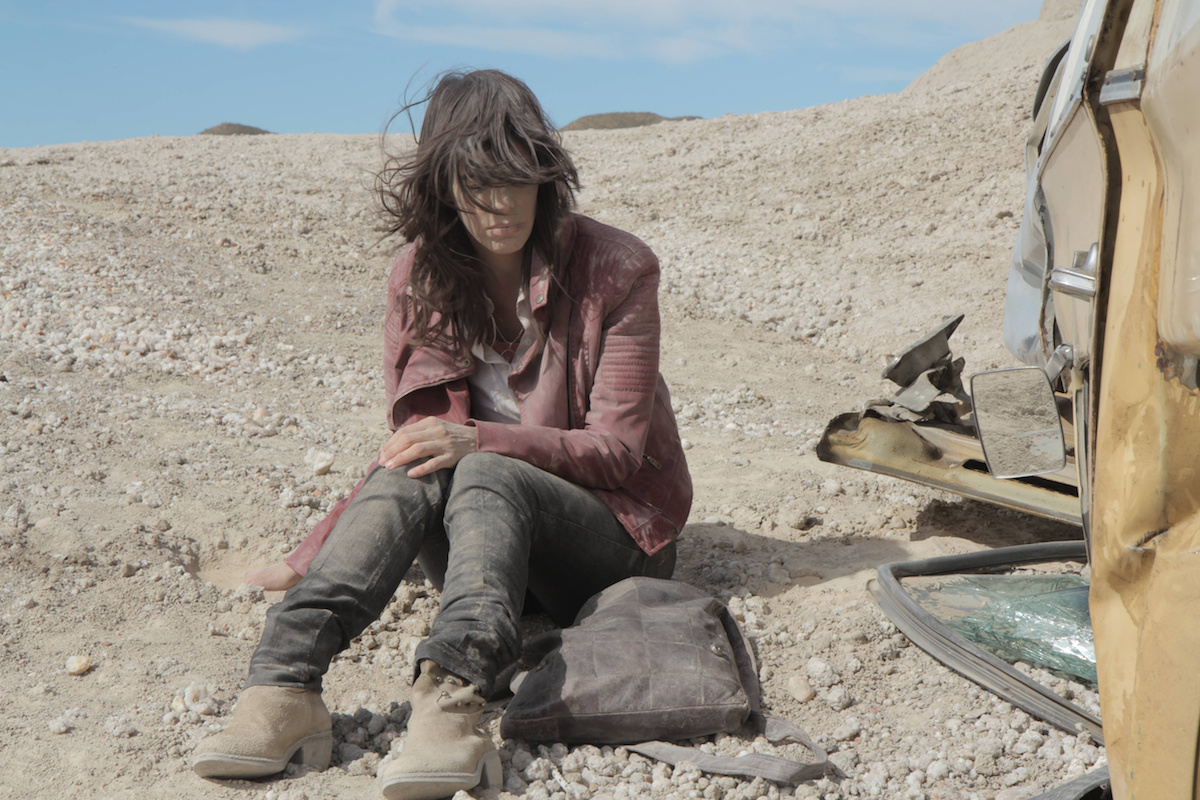 TO THE DESERT[/caption]
Twelve films produced in Argentina, Brazil, Chile, Costa Rica, the Dominican Republic, Mexico, Uruguay and Venezuela, make up the Horizontes Latinos section of the 2017 San Sebastian International Film Festival.
The Horizontes Latinos section is a selection of feature films not yet screened in Spain, produced totally or partially in Latin America, directed by filmmakers of Latin origin or which have as their setting or subject matter Latino communities in the rest of the world. Half of the titles in the section are first or second works.
Among the films is premiere of the winner of the two Films in Progress 30 awards in San Sebastian, La educación del Rey (Rey’s Education), first feature film from Santiago Esteves (Mendoza, Argentina, 1983), who has written and directed short films including Los crímenes (Best Iberoamerican Short Film and Critics’ Award at Huesca 2011) and has worked as an editor for Pablo Trapero, Mariano Llinás or Juan Villegas.
Another of the selected first films is La novia del desierto (The Desert Bride) by directors Cecilia Atán (Buenos Aires, 1978) and Valeria Pivato (Buenos Aires, 1973), which, having landed the Films in Progress Toulouse Award, was premiered in Un Certain Regard at the Cannes Festival and has just won the Jury Award for Best Debut Feature at the Lima Film Festival. The documentary by Atán, Madres de Plaza de Mayo, la historia (2016), was nominated for the Emmy Awards, and Pivato, who has worked with directors including Juan José Campanella, Walter Salles or Pablo Trapero, won the Patagonik International Screenwriters Competition with his Project Antes y después… y después otra vez.
Temporada de caza (Hunting Season, Films in Progress 31) is the first feature film by Natalia Garagiola (Buenos Aires, 1982), who will compete in Venice at the International Critics’ Week, an independent section organised by the Italian Union of Film Critics. One of Garagiola’s shorts, Yeguas y Cotorras (2012), was selected for the Critic’s Week at Cannes.
Gustavo Rondón (Caracas, 1977) has written, helmed and produced numerous shorts later screened at festivals such as Tribeca, Biarritz, Toulouse and Havana. The most recent, Nostalgia (2012) was selected to compete in Berlin. La familia (Films in Progress 30), which was screened at the Cannes Critics’ Week and has just won Jury Award for Best Film at Lima Film Festival, brings his feature directorial debut.
The filmography of Alexandra Latishev (San José, Costa Rica) contains the prizewinning short Irene (2014) and the documentary Los volátiles, winner of the Best Documentary Feature Film and Audience Awards at the Costa Rica Festival. Medea (Films in Progress 30), which competed at the BAFICI (Buenos Aires International Independent Film Festival), marks her debut in feature films.
After numerous experiences in the non-fictional field, in 2013 Marcela Said (Santiago de Chile, 1972) directed her first feature-length fiction, El verano de los peces voladores, Films in Progress Toulouse Award in 2013 which had its premiere at the Cannes Directors’ Fortnight. Horizontes Latinos will see the screening of her second film, Los perros (Films in Progress 31), after its presentation at the Cannes Critics’ Week.
Las olas (The Waves, Films in Progress, 30) is the third feature film from the director, screenwriter, actor and singer Adrián Biniez (Remedios de Escalada, Argentina, 1974), whose debut, Gigante (2009) won the Grand Jury Prize, the Alfred Bauer Award – in recognition of a film that “opens new perspectives on cinematic art” – and the Best First Feature Award at the Berlinale, as well as the Horizontes Award in San Sebastian.
Michel Franco (Mexico City, 1979) landed a special mention in San Sebastian with Después de Lucía (After Lucía, 2012), Best Feature Film in Un Certain Regard at Cannes. As a moviemaker he also won the Best Screenplay Award at Cannes for Chronic (2015). He also has a long and outstanding background as a producer: in 2015 he won the Best First Feature Award in Berlin for 600 millas (600 Miles,Gabriel Ripstein) plus the Golden Lion in Venice and a Special Mention in San Sebastian for Desde allá (From Afar, Lorenzo Vigas), both selected for Horizontes Latinos. Now he returns to the Festival as a director with Las hijas de Abril (April’s Daughters), having won the Jury Prize at Un Certain Regard.
Sebastián Lelio (Mendoza, Argentina, 1974) has a trajectory closely related to San Sebastian. His first film, La Sagrada Familia, competed in Horizontes Latinos in 2005 after its screening in Films in Progress. His fourth feature, Gloria, won the Films in Progress Award in San Sebastian in 2012. His latest film, Una mujer fantástica (A Fantastic Woman), Silver Bear for Best Screenplay at the Berlinale, will open the section.
Affonso Uchôa (Contagem, Brazil) and João Dumans (Belo Horizonte, Brazil) jointly wrote A vizinhança do tigre / The Hidden Tiger (2014). Here they repeat their collaboration as the directors of Arábia /Araby, selected for the Rotterdam Festival official competition and winner of a special mention at the BAFICI. Uchôa is the director of Mulher à tarde / Afternoon Woman (2010) and wrote with Marília Rocha A cidade onde envelheço / Where I Grow Old (2016), selected for Films in Progress Toulouse in 2015 and for Zabaltegi-Tabakalera last year.
Al desierto (To the Desert) is the new feature film by Ulises Rosell (Buenos Aires, 1970), after the award-winning Sofacama / Sofabed (2006) and El etnógrafo / The Ethnographer (2012). Rosell wrote and directed this story of a kidnapping and hike across the Patagonia desert to premier in San Sebastian.
Lastly, Cocote, which has just won the Signs of Life section Award at the Locarno Festival, is the third film from the Dominican director Nelson Carlo de los Santos Arias (Santo Domingo, 1985), who in 2015 shot Santa Teresa y otras historias,a radical adaptation of Roberto Bolaño’s novel 2666, screened in Toronto and winner of awards in Marseille and Mar del Plata.
All twelve feature films compete for the Horizontes Award and its 35,000 euros. The six first and second films in the selection (La educación de Rey, La familia, Medea, Arábia, La novia del desierto and Temporada de caza) are also contenders for the EROSKI Youth Award.
TO THE DESERT[/caption]
Twelve films produced in Argentina, Brazil, Chile, Costa Rica, the Dominican Republic, Mexico, Uruguay and Venezuela, make up the Horizontes Latinos section of the 2017 San Sebastian International Film Festival.
The Horizontes Latinos section is a selection of feature films not yet screened in Spain, produced totally or partially in Latin America, directed by filmmakers of Latin origin or which have as their setting or subject matter Latino communities in the rest of the world. Half of the titles in the section are first or second works.
Among the films is premiere of the winner of the two Films in Progress 30 awards in San Sebastian, La educación del Rey (Rey’s Education), first feature film from Santiago Esteves (Mendoza, Argentina, 1983), who has written and directed short films including Los crímenes (Best Iberoamerican Short Film and Critics’ Award at Huesca 2011) and has worked as an editor for Pablo Trapero, Mariano Llinás or Juan Villegas.
Another of the selected first films is La novia del desierto (The Desert Bride) by directors Cecilia Atán (Buenos Aires, 1978) and Valeria Pivato (Buenos Aires, 1973), which, having landed the Films in Progress Toulouse Award, was premiered in Un Certain Regard at the Cannes Festival and has just won the Jury Award for Best Debut Feature at the Lima Film Festival. The documentary by Atán, Madres de Plaza de Mayo, la historia (2016), was nominated for the Emmy Awards, and Pivato, who has worked with directors including Juan José Campanella, Walter Salles or Pablo Trapero, won the Patagonik International Screenwriters Competition with his Project Antes y después… y después otra vez.
Temporada de caza (Hunting Season, Films in Progress 31) is the first feature film by Natalia Garagiola (Buenos Aires, 1982), who will compete in Venice at the International Critics’ Week, an independent section organised by the Italian Union of Film Critics. One of Garagiola’s shorts, Yeguas y Cotorras (2012), was selected for the Critic’s Week at Cannes.
Gustavo Rondón (Caracas, 1977) has written, helmed and produced numerous shorts later screened at festivals such as Tribeca, Biarritz, Toulouse and Havana. The most recent, Nostalgia (2012) was selected to compete in Berlin. La familia (Films in Progress 30), which was screened at the Cannes Critics’ Week and has just won Jury Award for Best Film at Lima Film Festival, brings his feature directorial debut.
The filmography of Alexandra Latishev (San José, Costa Rica) contains the prizewinning short Irene (2014) and the documentary Los volátiles, winner of the Best Documentary Feature Film and Audience Awards at the Costa Rica Festival. Medea (Films in Progress 30), which competed at the BAFICI (Buenos Aires International Independent Film Festival), marks her debut in feature films.
After numerous experiences in the non-fictional field, in 2013 Marcela Said (Santiago de Chile, 1972) directed her first feature-length fiction, El verano de los peces voladores, Films in Progress Toulouse Award in 2013 which had its premiere at the Cannes Directors’ Fortnight. Horizontes Latinos will see the screening of her second film, Los perros (Films in Progress 31), after its presentation at the Cannes Critics’ Week.
Las olas (The Waves, Films in Progress, 30) is the third feature film from the director, screenwriter, actor and singer Adrián Biniez (Remedios de Escalada, Argentina, 1974), whose debut, Gigante (2009) won the Grand Jury Prize, the Alfred Bauer Award – in recognition of a film that “opens new perspectives on cinematic art” – and the Best First Feature Award at the Berlinale, as well as the Horizontes Award in San Sebastian.
Michel Franco (Mexico City, 1979) landed a special mention in San Sebastian with Después de Lucía (After Lucía, 2012), Best Feature Film in Un Certain Regard at Cannes. As a moviemaker he also won the Best Screenplay Award at Cannes for Chronic (2015). He also has a long and outstanding background as a producer: in 2015 he won the Best First Feature Award in Berlin for 600 millas (600 Miles,Gabriel Ripstein) plus the Golden Lion in Venice and a Special Mention in San Sebastian for Desde allá (From Afar, Lorenzo Vigas), both selected for Horizontes Latinos. Now he returns to the Festival as a director with Las hijas de Abril (April’s Daughters), having won the Jury Prize at Un Certain Regard.
Sebastián Lelio (Mendoza, Argentina, 1974) has a trajectory closely related to San Sebastian. His first film, La Sagrada Familia, competed in Horizontes Latinos in 2005 after its screening in Films in Progress. His fourth feature, Gloria, won the Films in Progress Award in San Sebastian in 2012. His latest film, Una mujer fantástica (A Fantastic Woman), Silver Bear for Best Screenplay at the Berlinale, will open the section.
Affonso Uchôa (Contagem, Brazil) and João Dumans (Belo Horizonte, Brazil) jointly wrote A vizinhança do tigre / The Hidden Tiger (2014). Here they repeat their collaboration as the directors of Arábia /Araby, selected for the Rotterdam Festival official competition and winner of a special mention at the BAFICI. Uchôa is the director of Mulher à tarde / Afternoon Woman (2010) and wrote with Marília Rocha A cidade onde envelheço / Where I Grow Old (2016), selected for Films in Progress Toulouse in 2015 and for Zabaltegi-Tabakalera last year.
Al desierto (To the Desert) is the new feature film by Ulises Rosell (Buenos Aires, 1970), after the award-winning Sofacama / Sofabed (2006) and El etnógrafo / The Ethnographer (2012). Rosell wrote and directed this story of a kidnapping and hike across the Patagonia desert to premier in San Sebastian.
Lastly, Cocote, which has just won the Signs of Life section Award at the Locarno Festival, is the third film from the Dominican director Nelson Carlo de los Santos Arias (Santo Domingo, 1985), who in 2015 shot Santa Teresa y otras historias,a radical adaptation of Roberto Bolaño’s novel 2666, screened in Toronto and winner of awards in Marseille and Mar del Plata.
All twelve feature films compete for the Horizontes Award and its 35,000 euros. The six first and second films in the selection (La educación de Rey, La familia, Medea, Arábia, La novia del desierto and Temporada de caza) are also contenders for the EROSKI Youth Award.
2017 San Sebastian International Film Festival Horizontes Latinos Program
UNA MUJER FANTÁSTICA (A FANTASTIC WOMAN) SEBASTIÁN LELIO (CHILE- GERMANY – SPAIN – USA) Cast: Daniela Vega, Francisco Reyes, Luis Gnecco, Paulina García, Néstor Cantillana, Alonso Torres, Cristián Chaparro, Senén Arancibia OPENING FILM (IN COMPETITION) Marina is a young waitress and wannabe singer; Orlando owns a printing company. Together they plan their future. When Orlando dies suddenly, Marina has to stand up to his family and society to show them what she truly is: a complex, strong, forthright and… fantastic woman. Teddy Award and Silver Bear for Best Screenplay at the Berlinale 2017. AL DESIERTO (TO THE DESERT) ULISES ROSELL (ARGENTINA – CHILE) Cast: Valentina Bassi, Jorge Sesán, José María Marcos, Germán De Silva, Gastón Salgado Driven by the insecurity of her working situation, Julia, an employee at the Comodoro Rivadavia (Argentina) casino, gives in to the temptations of Gwynfor, a laconic man of Welsh descent, who promises her an administrative job with the oil company he works for. By the time she realises her mistake they are already well into the desert as they set out on an arduous hike across the Patagonia plain. Hunting, sheltering in caves and abandoned buildings, with no way out in the middle of infinite distances, the difficult coexistence will change as the days pass. In a pickup truck, on horseback, guided by trackers, superintendent Hermes Prieto is hot on their heels, convinced of finding some kind of trace in the midst of the desert. ARÁBIA / ARABY AFFONSO UCHÔA, JOÃO DUMANS (BRAZIL) Cast: Aristides de Sousa, Murilo Caliari, Glaucia Vandeveld, Renato Novaes, Adriano Araújo, Renan Rovida, Wederson Neguinho, Renata Cabral Young André lives in an industrial neighbourhood in Ouro Preto, Minas Gerais, near an old aluminium factory. Once a week, his aunt Márcia, a voluntary nurse at the community hospital, visits himself and his younger brother to help them with the household chores while their mother is away. One day, one of the factory workers, Cristiano, a foreigner with a stormy background in the neighbourhood, suffers an accident at the factory. Márcia gives him first aid right in front of the factory, and asks André to go to Cristiano’s house to get his documents and some clothes. Entering the house, André comes across a mysterious notebook… COCOTE NELSON CARLO DE LOS SANTOS ARIAS (DOMINICAN REPUBLIC – ARGENTINA – GERMANY – QATAR) Cast: Vicente Santos, Judith Rodríguez, Yuberbi de la Rosa, Pedro Sierra, Isabel Spencer, José Miguel Fernander Alberto, an evangelical gardener, returns to his hometown for the funeral of his father, murdered by an influential man. To mourn the dead man, he is forced to participate in religious celebrations that go against both his will and his beliefs. LA EDUCACIÓN DEL REY (REY’S EDUCATION) SANTIAGO ESTEVES (ARGENTINA – SPAIN) Cast: Germán De Silva, Matías Encinas, Jorge Prado, Mario Jara, Martín Arrojo, Elena Schnell, Marcelo Lacerna, Esteban Lamothe Films in Progress 30 Bolting from his first ever heist, Reynaldo Galíndez, alias ‘Rey’, lands in the patio of the house inhabited by Carlos Vargas, a retired security guard. Vargas offers a deal: the young boy will repair the damage to his home in return for not being handed over to the police. The lessons given to the teenager by the former guard develop into a relationship not unlike the old legends of educating a king (for the “Rey” of his name, meaning “king”). But the agreement will start to fall apart when the loose ends of the robbery Reynaldo had been involved in start closing in around them. Films in Progress Industry Award and CAACI / Ibermedia TV Films in Progress Award in 2016. LA FAMILIA GUSTAVO RONDÓN CÓRDOVA (VENEZUELA – CHILE – NORWAY) Cast: Giovanny Garcia, Reggie Reyes Films in Progress 30 Twelve year-old Pedro roams the streets with his friends in the violent urban atmosphere of a working-class district of Caracas. When Pedro seriously injures another boy in a fight, his single father, Andrés, decides that they must make a run for it and hide. Although Andrés will realise that as a father he is incapable of controlling his son, the situation will bring them closer than they have ever been. LA NOVIA DEL DESIERTO ( THE DESERT BRIDE) CECILIA ATÁN, VALERIA PIVATO (ARGENTINA – CHILE) Cast: Paulina García, Claudio Rissi Films in Progress 31 Teresa (54) has worked for decades as a live-in maid in Buenos Aires. When the family sells the house, she is forced to take a job in a distant town. Though not particularly comfortable with the idea, she embarks on a journey through the desert. During her first stop in the land of the miracle-producing ‘Difunta Correa’ saint, she loses her bag with all her belongings. This incident leads her to cross paths with a travelling salesman, the only person who can help her. What seemed like the end of her world will prove to be her salvation. LAS HIJAS DE ABRIL (APRIL’S DAUGHTERS) MICHEL FRANCO (MEXICO) Cast: Emma Suárez, Ana Valeria Becerril, Hernán Mendoza, Joanna Larequi, Enrique Arrizon, Iván Cortés, Giovanna Zacarías, José Ángel García, Tony Dalton Valeria is 17 and pregnant. She lives in Puerto Vallarta with her step-sister Clara. Valeria doesn’t want April – the mother they haven’t seen for some time – to find out about her pregnancy. However Clara, compelled by financial difficulties and the responsibilities of having a baby in the house, decides to call her. Abril arrives with the intention of helping her daughters, but we soon understand why Valeria would have preferred her to stay away. LAS OLAS (THE WAVES) ADRIÁN BINIEZ (URUGUAY – ARGENTINA) Cast: Alfonso Tort, Julieta Zylberberg, Fabiana Charlo, Victoria Jorge, Ilana Hojman Films in Progress 30 Alfonso leaves work and heads for the beach. He dives into the sea and starts swimming. He surfaces on a beach where he and his family had been on holiday five years earlier. This is the start of a fantastic voyage through the different holidays and resorts he has visited during his lifetime: as a boy with his parents, on a mysterious island with his ex-wife, as a teenager with his friends, with Malaysian pirates and when camping in the same place with two different girlfriends in two consecutive years. LOS PERROS MARCELA SAID (CHILE – FRANCE) Cast: Antonia Zegers, Alfredo Castro, Rafael Spregelburd, Alejandro Sieveking Films in Progress 31 Mariana (42) belongs to the Chilean upper class; she spends her days managing an art gallery and learning how to ride a horse. Her riding instructor, Juan, 20 years her senior, is an ex-cavalry officer known as El Coronel, under investigation for human rights abuses committed during the Chilean dictatorship. When Mariana embarks on a romance with her mysterious teacher, she finds herself caught up in a complex situation from which she is loathe to escape on discovering her father’s close relationship with the man being investigated. MEDEA ALEXANDRA LATISHEV (COSTA RICA – ARGENTINA – CHILE) Cast: Liliana Biamonte, Javier Montenegro, Eric Calderón Films in Progress 30 María José’s life swings back and forth between the monotony of classes at the university, her eternally distant parents, rugby training and dares with her gay friend. Emotionally disconnected from her environment, when she meets Javier she tries to start a relationship with him. But none of her efforts to live a ‘normal’ life succeed. She harbours a secret that nobody notices: she’s a few months into her pregnancy. TEMPORADA DE CAZA (HUNTING SEASON ) NATALIA GARAGIOLA (ARGENTINA) Cast: Lautaro Bettoni, Germán Palacios, Boy Olmi, Rita Pauls Films in Progress 31 Nahuel is a teenager with an innate violent conduct. After his mother dies, he travels to Patagonia in Southern Argentina, where he encounters his biological father, who he hasn’t seen for more than a decade. Ernesto is a respected hunting guide who lives in the mountains with his second wife and daughters. The reunion is not an easy one, pride and resentment prevail in both father and son. They stubbornly resist any possible contact with one another. However, as the weeks go by and winter settles in, Nahuel starts giving in. Initial hostility gives place to curiosity, both towards his father’s universe of hunting and the life of a group of teenagers that he meets in the area. On his side, Ernesto’s roughness gives in to the undeniable love he has for his son…